John Hart Documents

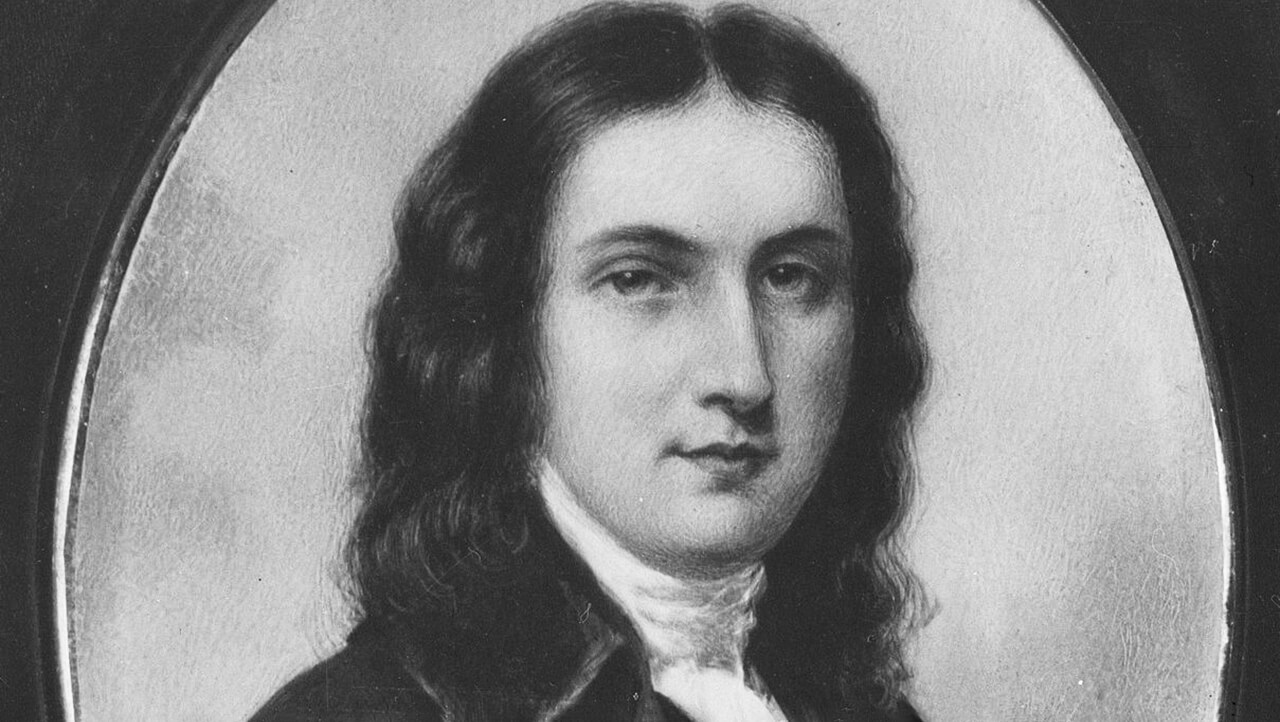
John Hart was a signer of the Declaration of Independence. He lived most of his life as a farmer and public official in New Jersey. This man’s Christian faith and character were as strong and evident as his patriotism. He donated a large parcel of ground on which to build the Baptist church in which he was an active member. Known as “honest John Hart” among his friends and neighbors, he was repeatedly elected to serve in both local and state offices. In his capacity as a local official, he regularly signed legal documents like these two below. These are two testimonies in the collection at WallBuilders are given by John Hart upon the administration of the estates of John Hobbs and [L. Horner]. As was customary in that day, he recognizes he was “sworn in on the Holy Evangelists of Almighty God” —that is, on the New Testament Gospels of Matthew,
Mark, Luke, and John that bear testimony to the life and ministry of Jesus Christ.
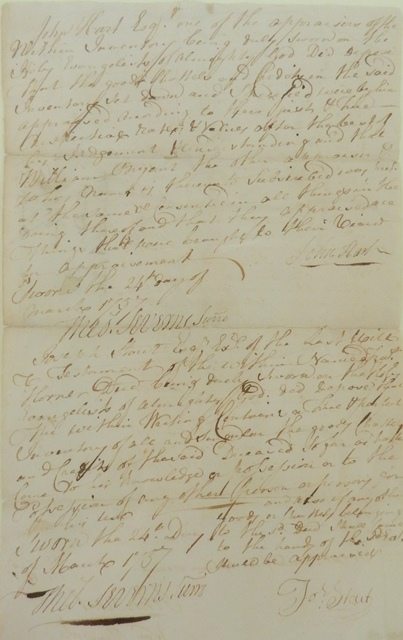

john-hart-document-1

John Hart Esq. one of the appraisers of the within inventory being duly sworn on the Holy Evangelists of Almighty God did depose that the goods and chattels and credits in the said inventory set down and specified were by him appraised according to those just and true respective [Goofert] and [Yaxely] after the best of his judgment and understanding and that William Bryant the other appraiser and whose name is hereunto subscribed every prof. of the same and consented in all things in the doing thereof and that they appraised all things that were brought to their view for appraisement.

Sworn the 24th day of March 1757

John Hart

Theo. Severns Jun.
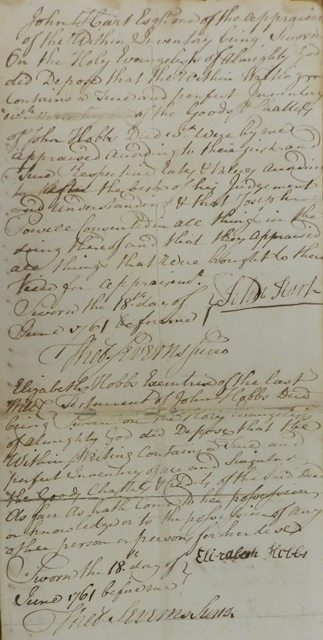


john-hart-document-2

John Hart Esq. one of the appraisers of the within inventory being sworn on the Holy Evangelists of Almighty God did depose that the within writings contains a true and perfect inventory of the goods and chattels of John Hobbs which were by him appraised according to their just and true respective [Earley] and [Valicey] according to the best of his judgment and understanding and that Joseph Powell consented in all things in the doing thereof and that they apprised all things that were brought to their view for appraisement.

Sworn the 18th day of June of 61 [uncertain]

John Hart

Theo. Severns Jun.
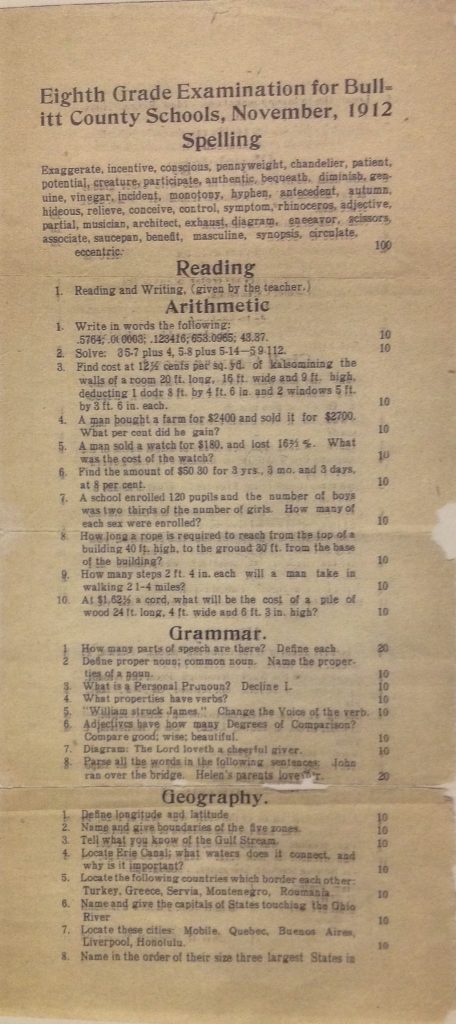
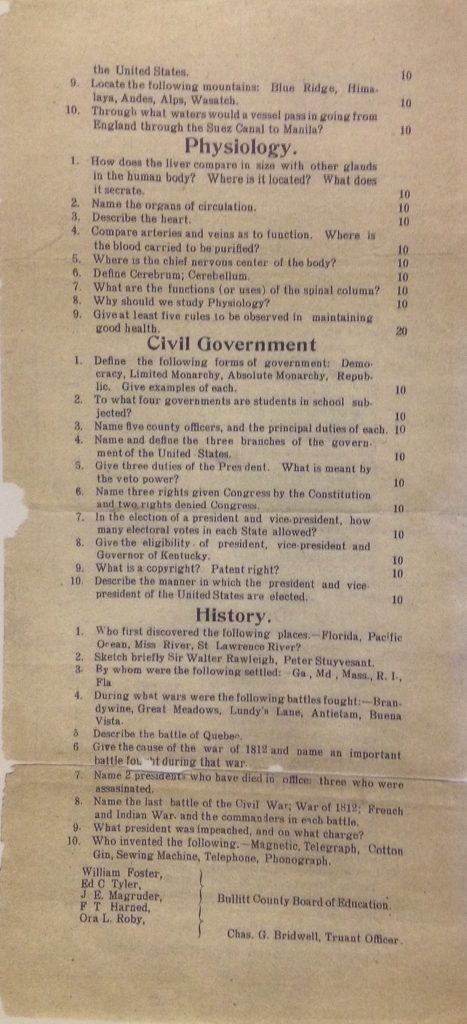
Eighth Grade Exit Exam

In the late 1800s, the 8th grade exit exam was a major milestone of education in the United States. In states like Kansas, students had to  correctly answer hard questions in subjects like reading, writing, arithmetic, geography, and US history to graduate from grammar school. For many students, especially in farming towns, this was the highest level of school they would attend. High schools existed, but they were mostly found in cities, and not every town had one. Passing the 8th grade exam meant a student was ready for work, to help on the farm, or even become a teacher. As time went on, some schools began to change how they tested students, but in the 1800s, these exams were a serious and important indicator of competency.

Below is an example of an 8th Grade Exam. Click here to see the answers to the questions.

Charles Carroll Letter

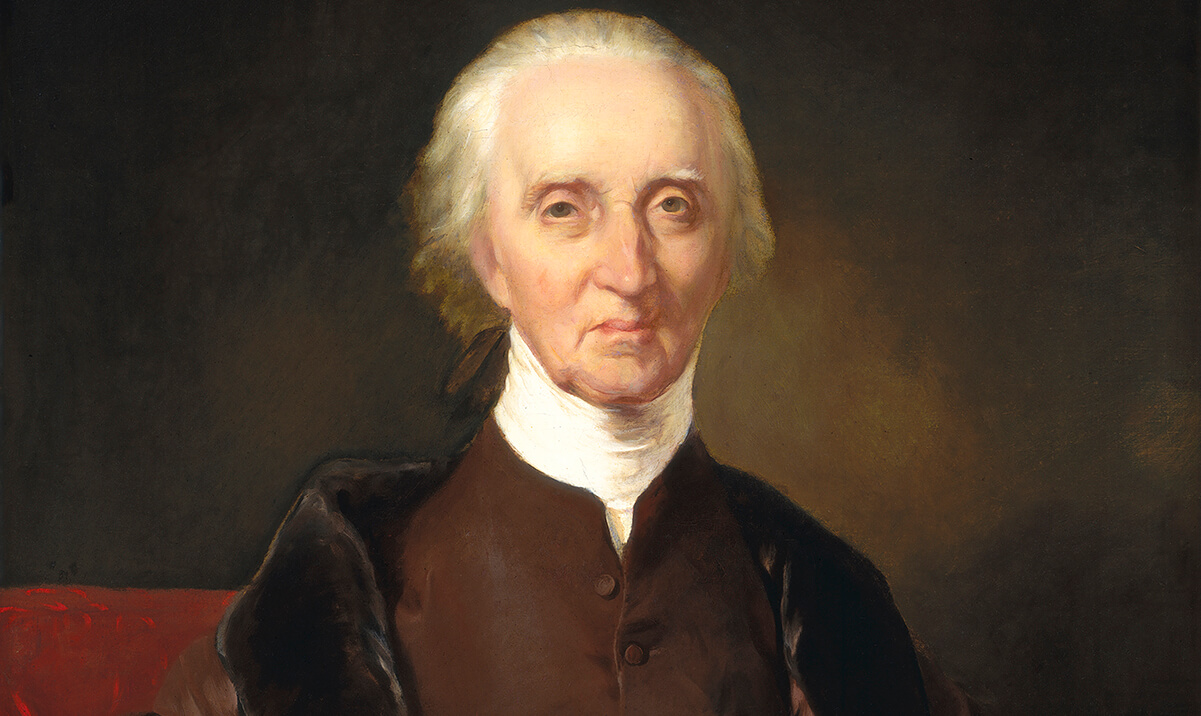
Charles Carroll (1737-1832)

Carroll’s legacy is cemented not just in his political service but also in his personal piety. His entire life stands as a powerful testament to the fact that for Charles Carroll of Carrollton, the fight for liberty and the defense of faith were one and the same.

He was an influential merchant from Maryland whose contributions to America’s Founding included:

  • Member of the Committee of Correspondence (1774)
  • Member of the State Council of Safety (1775)
  • Helped draft the Maryland Constitution (1776)
  • Member of the Continental Congress (1776-78) where he signed the Declaration of Independence
  • Delegate to the Constitutional Convention (1787) but did not attend
  • US Senator (1789-92) where he helped frame the Bill of Rights

At his death, he was the longest lived and last surviving signer of the Declaration and was considered the wealthiest citizen in America. He was the only Roman Catholic signer of the Declaration.


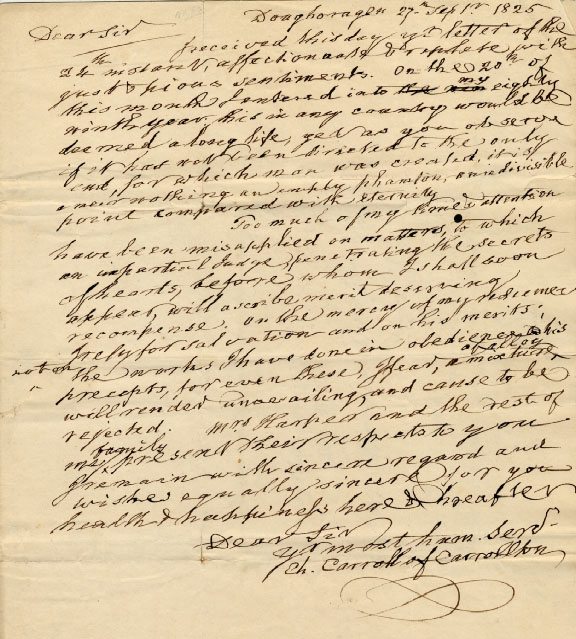
Nearing the end of his life, Charles Carroll expressed his strong faith in the redeeming power of Christ in this letter to his friend Dr. Charles Wharton (an Episcopal clergyman):

charles-carroll-letter-1


This is the text of Charles Carrolls’ letter:

Doughoragen 27th September 1825

Dear Sir

I received this day yr. [your] letter of the 24th instant, affectionate & replete with just & pious sentiments. On the 20th of this month I entered into my eighty-ninth year: This in any country would be deemed a long life, yet as you observe if it had not been directed to the only end, for which man was created, it is a near nothing an empty phantom, a indivisible point compared with eternity.

Too much of my time & attention have been misapplied on matters to which an impartial Judge, penetrating the secrets of hearts, before whom I shall soon appear, will ascribe merit deserving recompense. On the mercy of my redeemer I rely for salvation and on his merits; not on the works I have done in obedience to his precepts, for even these, I fear, a fallacy a mixture will render unavailing, and cause to be rejected. Mrs. Harper and the rest of my family present their respects to you. I remain with sincere regard and wishes equally sincere for your health and happiness here & hereafter.

Dear Sir

Yr.[your] most hum. Servt.[Servant]

Ch. Carroll of Carrollton