In Hoc Anno Domini

Wall Street Journal

December 24, 2007; Page A10

When Saul of Tarsus set out on his journey to Damascus the whole of the known world lay in bondage. There was one state, and it was Rome. There was one master for it all, and he was Tiberius Caesar. Everywhere there was civil order, for the arm of the Roman law was long. Everywhere there was stability, in government and in society, for the centurions saw that it was so.

But everywhere there was something else, too. There was oppression — for those who were not the friends of Tiberius Caesar. There was the tax gatherer to take the grain from the fields and the flax from the spindle to feed the legions or to fill the hungry treasury from which divine Caesar gave largess to the people. There was the impressor to find recruits for the circuses. There were executioners to quiet those whom the Emperor proscribed. What was a man for but to serve Caesar?

There was the persecution of men who dared think differently, who heard strange voices or read strange manuscripts. There was enslavement of men whose tribes came not from Rome, disdain for those who did not have the familiar visage. And most of all, there was everywhere a contempt for human life. What, to the strong, was one man more or less in a crowded world?

Then, of a sudden, there was a light in the world, and a man from Galilee saying, Render unto Caesar the things which are Caesar’s and unto God the things that are God’s.

And the voice from Galilee, which would defy Caesar, offered a new Kingdom in which each man could walk upright and bow to none but his God. Inasmuch as ye have done it unto one of the least of these my brethren, ye have done it unto me. And he sent this gospel of the Kingdom of Man into the uttermost ends of the earth.

So the light came into the world and the men who lived in darkness were afraid, and they tried to lower a curtain so that man would still believe salvation lay with the leaders.

But it came to pass for a while in divers places that the truth did set man free, although the men of darkness were offended and they tried to put out the light. The voice said, Haste ye. Walk while you have the light, lest darkness come upon you, for he that walketh in darkness knoweth not whither he goeth.

Along the road to Damascus the light shone brightly. But afterward Paul of Tarsus, too, was sore afraid. He feared that other Caesars, other prophets, might one day persuade men that man was nothing save a servant unto them, that men might yield up their birthright from God for pottage and walk no more in freedom.

Then might it come to pass that darkness would settle again over the lands and there would be a burning of books and men would think only of what they should eat and what they should wear, and would give heed only to new Caesars and to false prophets. Then might it come to pass that men would not look upward to see even a winter’s star in the East, and once more, there would be no light at all in the darkness.

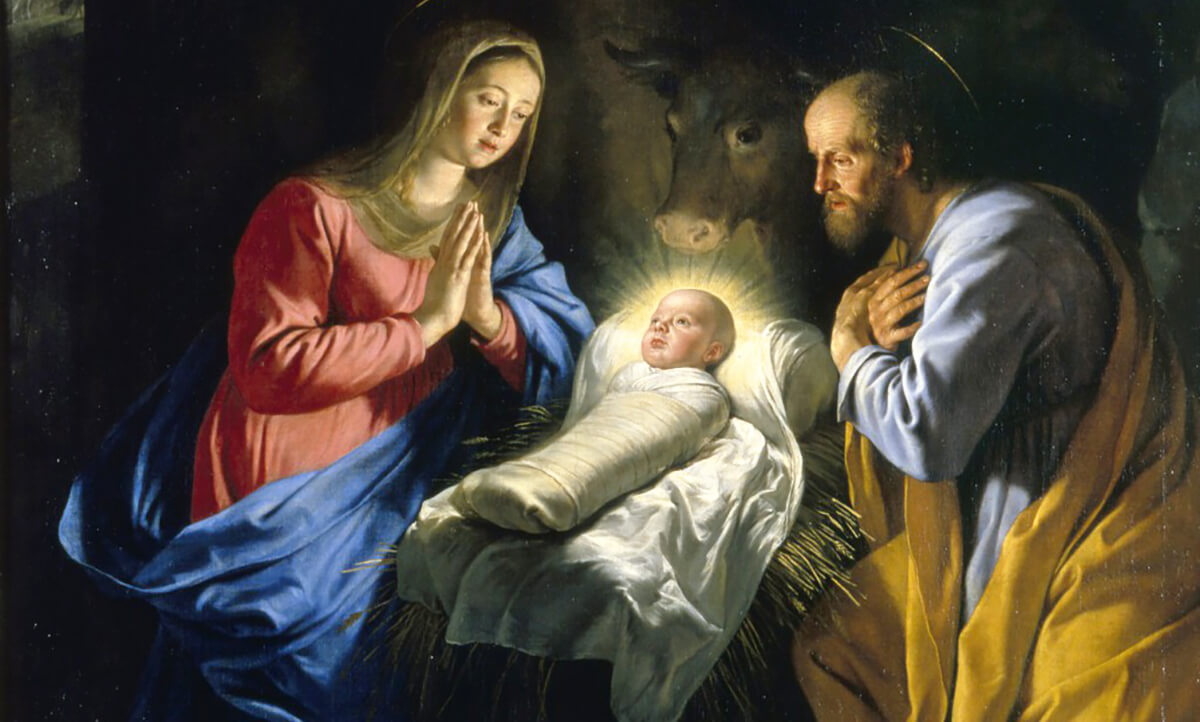
And so Paul, the apostle of the Son of Man, spoke to his brethren, the Galatians, the words he would have us remember afterward in each of the years of his Lord:
Stand fast therefore in the liberty wherewith Christ has made us free and be not entangled again with the yoke of bondage.

This editorial was written in 1949 by the late Vermont Royster and has been published annually since.

Evolution and the Law: “A Death Struggle Between Two Civilizations”

The Trial of the Century

The 1925 State v. Scopes[1] evolution-creation trial in Dayton, Tennessee, has been called “the world’s most famous court trial,” [2] and it was a trial that certainly did arrest the world’s attention. As William Jennings Bryan, the special prosecutor in the trial, noted,

We are told that more words have been sent across the ocean by cable to Europe and Australia about this trial than has been sent by cable in regard to anything else happening in the United States. [3]

Indeed, few other trials have produced such crowded courtrooms and worldwide media attention or have resulted in as many full-length movies and reenactments of its proceedings as has this trial.

Bryan believed that the trial had “stirred the world” because

this cause . . . goes deep. It is because it extends wide, and because it reaches into the future beyond the power of man to see. Here has been fought out a little case of little consequence as a case, but the world is interested because it raises an issue. [4]

Award-winning historian Henry Steele Commager described how that “issue” became a sensationalized spectacle:

The religious question—the wisdom of the State law forbidding the teaching of evolution in public schools—was, to be sure, confused by the legal one—the right of the State to enact such a law. Both public opinion and counsel largely ignored the legal and concentrated on the religious issue. It was appropriate that [William Jennings] Bryan should have appeared as counsel for the prosecution, for he was not only the most distinguished and eloquent of American fundamentalists but largely responsible for the enactment of anti-evolution laws in several southern States. It was less appropriate, perhaps, that Clarence Darrow should have been chief counsel for the defense, for in the eyes of most Americans he represented not modernist religion but irreligion, and his advocacy of evolution and assault upon fundamentalism enabled the prosecution to identify science with atheism. . . . Constitutionally, Bryan’s case was unimpeachable, for in a democracy, as Justice Holmes never tired of pointing out, the people have a right to make fools of themselves. Bryan, however, did not adopt this logical but embarrassing position. Neither he nor Darrow argued the constitutional issue, and their evasion was encouraged by the Court, the press, and public opinion. It was not young John T. Scopes, after all, who was on trial, but fundamentalism itself. To the delight of the newspapermen and the chagrin of the devout, the trial degenerated into a circus and a brawl. [5]

The trial had revolved around a 1925 Tennessee law which stated that “it shall be unlawful for any teacher in any of the Universities, normals and all other public schools of the State which are supported in whole or in part by the public school funds of the State, to teach any theory that denies the story of the divine creation of man as taught in the Bible and to teach instead that man has descended from a lower order of animals.” [6]

When substitute teacher John Scopes taught a biology class that he “classified man along with cats and dogs, cows, horses, monkeys, lions, horses and all
that,” [7] he was charged with violating that law.

At the trial level, district judge John Raulston allowed only the introduction of evidence and arguments which pertained to whether the law as written had been violated by John Scopes. The jury believed that it had been, and found Scopes guilty. The jury, however, requested the judge to levy the fine, [8] so the judge imposed on Scopes the minimum fine specified by the law for a conviction. On appeal to the State Supreme Court, the jury verdict was upheld but the fine was overturned, for the law had stipulated that the jury, not the judge, must determine the amount of the fine. [9]

The district court, in examining only whether Scopes had violated the law, had refused to consider either of two objections raised by Clarence Darrow and the Scopes defense team: (1) that the law prohibited teaching the scientific theory of evolution and therefore violated the State’s requirement “to cherish . . . science”; [10] and (2) that the law violated the constitutional prohibition against an establishment of religion.

On appeal, the State Supreme Court was willing to examine those two objections. On the first issue, the court upheld the law’s constitutionality, explaining:

Evolution, like prohibition, is a broad term. . . . [and i]t is only to the theory of the evolution of man from a lower type that the act before us was intended to apply, and much of the discussion we have heard is beside this case. [11]

Although the general characterization of the Scopes case was that of a legal showdown between the opposing beliefs of creation and evolution, as the court noted, it was not. The issue of the case actually was whether one specific variety of evolution teaching—and not all evolution teaching—might be banned. This was further confirmed in Justice Chambliss’ concurring opinion in which he pointed out that under the law, several theories of evolution, and even evolution in general, could still be taught:

Conceding that “the theory of evolution is altogether essential to the teaching of biology and its kindred sciences,” it will not be contended by Dr. [E. N.] Reinke [a professor of biology at Vanderbilt University relied upon by the defense team], or by learned counsel quoting from him, that the theory of evolution essentially involves the denial of the divine creation of man. . . . The theories of Drummond, Winchell, Fiske, Hibbens, Millikan, Kenn, Merriam, Angell, Cannon, Barnes, and a multitude of others, whose names are invoked in argument and brief, do not deny the story of the divine creation of man as taught in the Bible, evolutionists though they be. . . . Our laws approve no teaching of the Bible at all in the public schools, but require only that no theory shall be taught which denies that God is the Creator of man—that his origin is not thus to be traced. [12]

For these reasons, the Court rejected Darrow’s challenge to the law, and then added:

If the Legislature thinks that . . . the cause of education and the study of science generally will be promoted by forbidding the teaching of evolution in the schools of the state, we can conceive of no ground to justify the court’s interference. The courts cannot sit in judgment on such acts of the Legislature or its agents and determine whether or not the omission or addition of a particular course of study tends “to cherish science.” [13]

On the second objection raised against the law, the court rejected the argument that the law violated any constitutional prohibition against the establishment of religion, explaining:

We are not able to see how the prohibition of teaching the theory that man has descended from a lower order of animals gives preference to any religious establishment or mode of worship. So far as we know, there is no religious establishment or organized body that has in its creed or confession of faith any article denying or affirming such a theory. So far as we know, the denial or affirmation of such a theory does not enter into any recognized mode of worship. Since this cause has been pending in this court, we have been favored, in addition to briefs of counsel and various amici curiae, with a multitude of resolutions, addresses, and communications from scientific bodies, religious factions, and individuals giving us the benefit of their views upon the theory of evolution. Examination of these contributions indicates that Protestants, Catholics, and Jews are divided among themselves in their beliefs, and that there is no unanimity among the members of any religious establishment as to this subject. Belief or unbelief in the theory of evolution is no more a characteristic of any religious establishment or mode of worship than is belief or unbelief in the wisdom of the prohibition laws. It would appear that members of the same churches quite generally disagree as to these things. Furthermore, Chapter 277 of the Acts of 1925 requires the teaching of nothing. It only forbids the teaching of the evolution of man from a lower order of animals. [14]

Justice Chambliss, in his concurrence, further explained why nothing religious had been established:

Considering the caption and body of this act as a whole, it is seen to be clearly negative only, not affirmative. It requires nothing to be taught. It prohibits merely. And it prohibits, not the teaching of any theory of evolution, but that theory (of evolution) only that denies, takes issue with, positively disaffirms, the creation of man by God (as the Bible teaches), and that, instead of being so created, he is a product of, springs from, a lower order of animals. No authority is recognized or conferred by the laws of this state for the teaching in the public schools, on the one hand, of the Bible, or any of its doctrines or dogmas, and this act prohibits the teaching on the other hand of any denial thereof. It is purely an act of neutrality. Ceaseless and irreconcilable controversy exists among our citizens and taxpayers, having equal rights, touching matters of religious faith, and it is within the power of the Legislature to declare that the subject shall be excluded from the tax-supported institutions, that the state shall stand neutral, rendering “unto Caesar the things which be Caesar’s and unto God the things which be God’s,” and insuring the completeness of separation of church and state. [15]

Interestingly, while that court viewed upholding the law as an act of neutrality, contemporary courts have found State acts which are far more innocuous than that 1925 Tennessee law—acts expressly mandating neutrality—now to be unconstitutional establishments of religion. [16] For example, American Law Reports noted:

The Supreme Court held that the establishment clause was violated by Louisiana’s Balanced Treatment for Creation-Science and Evolution-Science in Public School Instruction Act, in Edwards v. Aguillard (1987) 482 US 578, 96 L Ed 2d 510, 107 S Ct 2573. The Act declared that it was enacted to protect academic freedom; required public schools to give balanced treatment to the “sciences” of creation and evolution in classroom lectures, textbooks, library materials, or other programs to the extent that they dealt in any way with the origin of man, life, the earth, or the universe; decreed that when creation or evolution is taught, each shall be taught as a theory rather than proven scientific fact; defined “Creation-Science” and “Evolution-Science” as the scientific evidence for, respectively, creation or evolution, and inferences therefrom; forbid discrimination against any public school teacher who chooses to be a creation scientist or to teach scientific data pointing to creationist; provided that instruction in the subject of origins is not required, but insisted on instruction in both creationist and evolutionary models if public schools chose to teach either. [17]

Significantly, even though the Louisiana statute specifically mandated that instruction be limited to an examination of “scientific data” and the “scientific evidence for, respectively, creation or evolution” and never mentioned either God or the Bible, the Court nevertheless found it to be an unconstitutional establishment of religion. As one legal observer insightfully noted, “The courts. . . . apparently find creationism to be a religious doctrine, but will not make evident the definition of religion which underlies their decisions.” [18]

Yet, why did the earlier Tennessee court find that a State statute that specifically acknowledged God in relation to creation was not an unconstitutional establishment of religion? Because, as Justice Chambliss explained, the law reflected the provisions of . . .

. . . our Constitution, and the fundamental Declaration lying back of it, through all of which runs recognition of and appeal to “God” and a life to come. The Declaration of Independence opens with a reference to “the laws of nature and nature’s God,” and holds this truth “to be self-evident, that all men are created equal, that they are endowed by their Creator,” etc., and concludes “with a firm reliance on the protection of Divine Providence.” The Articles of Confederation and Perpetual Union read, “And whereas it hath pleased the Great Governor of the world . . . [19]

Because the state law was consistent with the explicit language in our federal governing documents, and because it negated only “the right to teach in the public schools a denial of the existence, recognized by our Constitution, of the Creator of all mankind,” [20] it was upheld by the Court. Based, therefore, on the wording in the founding documents, Chambliss had concluded:

That the Legislature may prohibit the teaching of the future citizens and office holders to the State a theory that denies the Divine Creator will hardly be denied. [21]

Significantly, to reach this conclusion, the decision had cited three of the four documents identified in the U. S. Code as “organic laws”[22]—those documents that establish and define the operation of our government. Since those organic laws specifically fuse into the American structure of government the concept of a divine creator, a probing question is: may the judiciary nullify, or rule to be unconstitutional, a teaching expressly set forth in the documents it is charged with upholding?

The Timelessness of the Conflict

The response to this question often comes in the form of an objection: science has acquired new information unknown to those who framed our government; based, therefore, on this new information, the courts must reach conclusions at variance with those stipulated by the founding documents. Or, as Vermont Law School Professor Steven Wise argues,

Facts change and with them the scientific theories that assume those facts. . . . When facts change, the law that assumes those facts should change. [23]

However, it is a mistake to believe that the arguments about evolution actually postdate the framers of our documents. While uninformed laymen erroneously believe the theory of evolution to be a product of Charles Darwin in his first major work of 1859, the historical records are exceedingly clear that our framers were well-acquainted with the theories and principle teachings of evolution—as well as the science and philosophy both for and against that thesis—well before Darwin synthesized those long-standing teachings in his writings.

For example, Nobel Prize winner Bertrand Russell explains: “The general idea of evolution is very old; it is already to be found in Anaximander (sixth century B.C.). . . . [and] Descartes, Kant, [and] Laplace had advocated a gradual origin for the solar system in place of sudden creation.” [24] Professor Henry Fairfield Osborn, a zoologist and paleontologist, agrees, declaring that there are “ancient pedigrees for all that we are apt to consider modern. Evolution has reached its present fullness by slow additions in twenty-four centuries.” [25] He continues,

Evolution as a natural explanation of the origin of the higher forms of life . . . developed from the teaching of Thales and Anaximander into those of Aristotle. . . . and it is startling to find him, over two thousand years ago, clearly stating, and then rejecting, the theory of the survival of the fittest as an explanation of the evolution of adaptive structures. [26]

And British anthropologist Edward Clodd similarly affirms that,

The pioneers of evolution—the first on record to doubt the truth of the theory of special creation, whether as the work of departmental gods or of one Supreme Deity, matters not—lived in Greece about the time already mentioned; six centuries before Christ. [27]

For example, Anaximander (600 b.c.) introduced the theory of spontaneous generation; Diogenes (550 b.c.) introduced the concept of the primordial slime; Empedocles (495-455 b.c.) introduced the theory of the survival of the fittest and of natural selection; Democritus (460-370 b.c.) advocated the mutability and adaptation of species; the writings of Lucretius, before the birth of Christ, announced that all life sprang from “mother earth” rather than from any specific deity; Bruno (1548-1600) published works arguing against creation and for evolution in 1584-85; Leibnitz (1646-1716) taught the theory of intermedial species; Buffon (1707-1788) taught that man was a quadruped ascended from the apes, about which Helvetius also wrote in 1758; Swedenborg (1688-1772) advocated and wrote on the nebular hypothesis (the early “big bang”) in 1734, as did Kant in 1755; etc. It is a simple fact that countless works for (and against) evolution had been written for over two millennia prior to the drafting of our governing documents and that much of today’s current phraseology surrounding the evolution debate was familiar rhetoric at the time our documents were framed.

In fact, Dr. Henry Osborn, curator of the American Museum of Natural History in New York City, describes the third period in the history of evolution [28]—the period in which our framers lived—as a period which produced the evolution writings of

Linnaeus, Buffon, E[rasmus] Darwin, Lamarck, Goethe, Treviranus, Geof. St. Hilaire, St. Vincent, Is. St. Hilaire. Miscellaneous writers: Grant, Rafinesque, Virey, Dujardin, d’Halloy, Chevreul, Godron, Leidy, Unger, Carus, Lecoq, Schaafhausen, Wolff, Meckel, Von Baer, Serres, Herbert, Buch, Wells, Matthew, Naudin, Haldeman, Spencer, Chambers, Owen. [29]

Clearly, then, it was not in the absence of knowledge about the debate over evolution, but rather in its presence, that our framers made the decision to incorporate in our governing documents the principle of a creator.

Thomas Paine provides one example affirming this. Although Paine was the most openly and aggressively anti-religious of the founders, in his 1787 Discourse at the
Society of Theophilanthropists in Paris
, Paine nevertheless forcefully denounced the French educational system which taught students that man was the result of prehistoric cosmic accidents or had developed from some other species:

It has been the error of schools to teach astronomy, and all the other sciences and subjects of natural philosophy, as accomplishments only; whereas they should be taught theologically, or with reference to the Being who is the Author of them: for all the principles of science are of divine origin. Man cannot make, or invent, or contrive principles; he can only discover them, and he ought to look through the discovery to the Author.

When we examine an extraordinary piece of machinery, an astonishing pile of architecture, a well-executed statue, or a highly-finished painting where life and action are imitated, and habit only prevents our mistaking a surface of light and shade for cubical solidity, our ideas are naturally led to think of the extensive genius and talent of the artist.

When we study the elements of geometry, we think of Euclid. When we speak of gravitation, we think of Newton. How, then, is it that when we study the works of God in creation, we stop short and do not think of God? It is from the error of the schools in having taught those subjects as accomplishments only and thereby separated the study of them from the Being who is the Author of them. . . .

The evil that has resulted from the error of the schools in teaching natural philosophy as an accomplishment only has been that of generating in the pupils a species of atheism. Instead of looking through the works of creation to the Creator Himself, they stop short and employ the knowledge they acquire to create doubts of His existence. They labor with studied ingenuity to ascribe everything they behold to innate properties of matter and jump over all the rest by saying that matter is eternal.

And when we speak of looking through nature up to nature’s God, we speak philosophically the same rational language as when we speak of looking through human laws up to the power that ordained them.

God is the power of first cause, nature is the law, and matter is the subject acted upon.

But infidelity, by ascribing every phenomenon to properties of matter, conceives a system for which it cannot account and yet it pretends to demonstration. [30]

Paine certainly did not advocate this position as a result of religious beliefs or of any teaching in the Bible, for he believed that “the Bible is spurious” and “a book of lies, wickedness, and blasphemy.” [31] Yet, this anti-Bible Founder was nevertheless a strong supporter of teaching the theistic origins of man.

Theistic v. Non-Theistic Approaches

For the past twenty-five centuries, the debate has divided itself along two primary approaches. As Justice Chambliss noted:

Two theories of organic evolution are well recognized, one the theistic. . . . [and t]he other theory is known as the materialistic, which denies that God created man, that He was the first cause. [32]

Confirming this general distinction between approaches, Dr. Robert Clark from Cambridge notes:

Haeckel [1834-1919] claimed that spontaneous generation must be true, not because its truth could be confirmed in the laboratory, but because, otherwise, it would be necessary to believe in a Creator. . . . Compare the remark of Sir Charles Lyell [1797-1875, author of several works that influenced Darwin], “The German critics have attacked me vigorously, saying that by the impugning of the doctrine of spontaneous generation, I have left them nothing but the direct and miraculous intervention of the First Cause.” [33]

Yet, despite the fact that the arguments about evolution are frequently drawn toward religion, John Dewey accurately observed:

The vivid and popular features of the anti-Darwinian row tended to leave the impression that the issue was between science on one side and theology on the other. Such was not the case—the issue lay primarily within science itself, as Darwin himself early recognized. [34]

Indeed, this has always been, and still is, a hotly contested debate among highly credentialed scientists from both sides; and these debates over evolution continue to prove that establishing the origin of man is, scientifically speaking, an inquiry still surrounded by much hypothetical conjecture and debate. That is, while science is settled among all scientists on issues like gravity, fluid dynamics, heliocentricity, the laws of motion, etc., there still is no clear consensus—or anything approaching it—among scientists on the issue of the origins of man.

While the debate over the origins of man has always been between a theistic and a non-theistic explanation, among those who embrace the theistic view have been found—and still are found—three distinct approaches (although the latter two are not incompatible with the first): (1) intelligent-design (that which exists came into being by divine guidance, but the period of time required or the specifics of the process are unsettled, possibly unprovable, and therefore remain debatable); (2) theistic evolution (that which exists came into being over a long, slow passing of time through natural laws and processes but under divine guidance); and (3) special creation (that which exists came into being in six literal days). This, then, makes four separate historical approaches to the origins of man: three theistic, and one non-theistic.

In the non-theistic camp, [35] Empedocles (495-435 b.c.) was the father and original proponent of the evolution theory, followed by advocates such as Democritus (460-370 b.c.), Epicurus (342-270 b.c.), Lucretius (98-55 b.c.), Abubacer (1107-1185 a.d.), Bruno (1548-1600), Buffon (1707-1788), Helvetius (1715-1771), Erasmus Darwin (1731-1802), Lamarck (1744-1829), Goethe (1749-1832), Lyell (1797-1875), etc.

In the theistic camp, Anaxigoras (500-428 b.c.) was the father of intelligent design; that same belief was also expounded by such distinguished scientists and philosophers Descartes (1596-1650), Harvey (1578-1657), Newton (1642-1727), Kant (1729-1804), Mendel (1822-1884), Cuvier (1769-1827), Agassiz (1807-1873), etc. Significantly, even Charles Darwin (1809-1882), strongly influenced by the writings of Paley (1743-1805), [36] embraced the intelligent design position at the time that he wrote his celebrated work, explaining:

Another source of conviction in the existence of God, connected with the reason and not with the feelings, impresses me as having much more weight. This follows from the extreme difficulty, or rather impossibility, of conceiving this immense and wonderful universe, including man with his capacity of looking far backwards and far into futurity, as the result of blind chance or necessity. When thus reflecting I feel compelled to look to a First Cause having an intelligent mind in some degree analogous to that of man; and I deserve to be called a Theist. This conclusion was strong in my mind about the time, as far as I can remember, when I wrote the Origin of Species. [37]

John Dewey, an ardent 20th century proponent of Darwinism, explained why the intelligent design position—scientifically speaking—was reasonable:

The marvelous adaptation of organisms to their environment, of organs to the organism, of unlike parts of a complex organ—like the eye—to the organ itself; the foreshadowing by lower forms of the higher; the preparation in earlier stages of growth for organs that only later had their functioning—these things are increasingly recognized with the progress of botany, zoology, paleontology, and embryology. Together, they added such prestige to the design argument that by the later eighteenth century it was, as approved by the sciences of organic life, the central point of theistic and idealistic philosophy. [38]

(This position of intelligent design, also called the anthropic or teleological view, is now embraced by an increasing number of contemporary distinguished scientists, non-religious though many of them claim to be. [39])

The second camp within the theistic approach is theistic evolution, which was first propounded by Aristotle (384-322 b.c.). Other prominent expositors of this view included Gregory of Nyssa (331-396 a.d.), Augustine of Hippo (354-430 a.d.), St. Gregory the First (540-604 a.d.), St. Thomas Aquinas (1225-1274), Leibnitz (1646-1716), Swedenborg (1688-1772), Bonnet (1720-1793), and numerous contemporary scientists. In fact, many of Darwin’s contemporaries embraced this view, believing that “natural selection could be the means by which God has chosen to make man.” [40] As confirmed by Dr. James Rachels, professor at the University of Alabama at
Birmingham:

Mivart [1827-1900, a professor in Belgium] became the leader of a group of dissident evolutionists who held that, although man’s body might have evolved by natural selection, his rational and spiritual soul did not. At some point God had interrupted the course of human history to implant man’s soul in him, making him something more than merely a former ape. . . . Wallace [1823-1913, who advocated natural selection prior to Darwin] took a view very similar to that of Mivart: he held that the theory of natural selection applies to humans, but only up to a point. Our bodies can be explained in this way, but not our brains. Our brains, he said, have powers that far outstrip anything that could have been produced by natural selection. Thus he concluded that God had intervened in the course of human history to give man the “extra push” that would enable him to reach the pinnacle on which he now stands. . . . Natural selection, while it explained much, could not explain everything; in the end God must be brought in to complete the picture. [41]

In fact, Darrow himself, during the trial, admitted that this was a prominent position of many in that day, [42] and Dudley Malone, Darrow’s co-counsel, even declared:

[W]e shall show by the testimony of men learned in science and theology that there are millions of people who believe in evolution and in the stories of creation as set forth in the Bible and who find no conflict between the two. [43]

Interestingly, writers who chronicle the centuries-long history of the evolution debate [44] confirm that there have always been numerous evolutionists in both the theistic and the non-theistic camps, and much of the proceedings in the Scopes trial reaffirmed that a belief in evolution was not incompatible with teaching theistic origins and a belief in a divine creator.

The third camp, special (or literal) creation, was championed by Francisco Suarez (1548-1617) and later by Pasteur (1822-1895) as well as by subsequent contemporary scientists.

The history of this controversy through recent years and even previous centuries makes clear that scientific discovery has not significantly altered any of these four views. There have always been, and still continue to be, scientists in each group finding new scientific facts that they interpret to bolster their arguments. Remarkably, only judges seem comfortable in settling which side of an ongoing centuries-old scientific debate is correct.

Public Opinion on the Issue

Another noteworthy part of the Tennessee decision was the court’s desire to reach neutrality, as it explained, by teaching, on the one hand, neither the “Bible, or any of its doctrines or dogmas,” or, on the other hand, “teaching the denial of . . . divine creation,” because “it is too well established for argument that ‘the story of the divine creation of man as taught in the Bible’ is accepted—not ‘denied’—by millions of men and women.” [45]

Today, nearly a century-and-a-half after Darwin’s original work, and following literally thousands of writings by scientists and philosophers on all sides of the evolution controversy, the courts’ characterization in the Scopes decision still seems accurately to reflect the public’s sentiment today.

For example, in the 1920s, twenty state legislatures considered measures to prohibit the teaching of anti-theistic evolution; in the 1990s, the number of states that considered such measures was identical—twenty. [46] Polls also confirm that there has not been much shift in public opinion in recent decades. For example, in 1982, 9 percent of the nation believed in non-theistic origins, 38 percent in theistic evolution, and 44 percent in theistic special creation. [47] In 1998, an average was compiled of polls from the 1980s and 1990s, finding that during that period, 10 percent believed in non-theistic origins, 40 percent in theistic evolution, and 45 percent believed in theistic special creation. [48] Then a subsequent 1999 poll found that 9 percent believed in non-theistic origins, 40 percent in theistic evolution, and 47 percent in theistic special creation. [49]

Numerous other polls regularly confirm that from 85 to 90 percent of Americans embrace a theistic view, yet the courts simply do not permit this view to be presented, [50]
preferring instead what the Tennessee court had described as the “teaching of the denial” of the belief accepted “by millions of men and women.” The Supreme Court has indeed become a self-described “super board of education for every school district in the nation” [51] by prescribing non-theistic origins as the state orthodoxy throughout all public school classrooms.

An Informed Decision

Significantly, each provision of our governing documents reflects a deliberate choice based on specific reasoning, and as previously demonstrated, the evolution controversy was well developed at the time our founding documents were drafted. The framers therefore deliberately chose to incorporate into those documents not only the belief in theistic origins over that of non-theistic origins but also a belief in elected representation over hereditary leadership, the consent of the governed over monarchy, separation of powers over consolidation, bicameralism over unicameralism, republicanism over democracy, etc.

Consequently, the fact that a position for a divine creator is officially made a part of our founding documents—documents of government and not documents of religion—makes theistic origins a part of our political, not merely religious or even scientific, theory. Under our founding documents, therefore, the judiciary can no more disallow theism than it can disallow republicanism or separation of powers.

Yet, if the contemporary courts are correct that either the acknowledgment of God or the teaching of a divine creator is an unconstitutional establishment of religion under the First Amendment, then evidently one of the purposes for the First Amendment was to keep specific principles in the Declaration of Independence from being taught. While such a conclusion is illogical, it is nevertheless defended by asserting that the belief of a creator is incorporated into the Declaration rather than the Constitution, and that the Declaration is a separate document from, and is not to affect the interpretation of, the Constitution.

This argument is of recent origin, however, for well into the twentieth century, the Declaration and the Constitution were viewed as interdependent rather than as independent documents. In fact, the U. S. Supreme Court declared:

[T]he latter [the Constitution] is but the body and the letter of which the former [the Declaration of Independence] is the thought and the spirit, and it is always safe to read the letter of the Constitution in the spirit of the Declaration of Independence. [52]

No other conclusion logically can be reached since the Constitution directly attaches itself to the Declaration in Article VII by declaring:

Done in convention by the unanimous consent of the States present the seventeenth day of September in the Year of our Lord one thousand seven hundred and eighty seven, and of the independence of the United States of America the twelfth. (emphasis added)

Additional evidence that the framers viewed the Declaration as inseparable from the Constitution is seen by the fact that Presidents George Washington, John Adams, Thomas Jefferson, James Madison, et al., dated their government acts under the Constitution from the Declaration rather than the Constitution. [53]

Furthermore, the admission of territories as States into the Union was often predicated on an assurance by the State that the State’s. . .

. . . constitution, when formed, shall be republican, and not repugnant to the Constitution of the United States and the principles of the Declaration of Independence. [54]

The framers believed that the Declaration provided the core values by which the Constitution was to operate, and that the Constitution was not to be interpreted apart from those values. As John Quincy Adams explained in his famous oration, The Jubilee of the Constitution:

[T]he virtue which had been infused into the Constitution of the United States . . . was no other than the concretion of those abstract principles which had been first proclaimed in the Declaration of Independence. . . . This was the platform upon which the Constitution of the United States had been erected. Its virtues, its republican character, consisted in its conformity to the principles proclaimed in the Declaration of Independence and as its administration . . . was to depend upon the . . . virtue, or in other words, of those principles proclaimed in the Declaration of Independence and embodied in the Constitution of the United States. [55]

The framers never imagined that the Constitution could be interpreted to violate the values they had erected in the Declaration; for, under America’s government as originally established, a violation of the principles of the Declaration was just as serious as a violation of the provisions of the Constitution. Nonetheless, courts over the past half-century have isolated the two documents, now making them mutually exclusive.

A Battle of Civilizations

Returning to an examination of the Scopes case; since the point in question was not whether evolution teaching could be banned but rather whether evolution teaching that denied the principles of the founding documents could be banned, what, then, did the participants of the Scopes case see as the real issue? Strikingly, both sides believed that the case actually represented a struggle for society itself.

Scopes’ defense counsel Arthur Hays described the case as a “duel to the death,” [56] and prosecutor Gen. Thomas Stewart confirmed that it was an issue that “strikes at the very vitals of civilization.” [57] William Jennings Bryan called it “a duel between two great ideas,” [58] and Darrow, shortly after the trial started, deprecatingly acknowledged that he was arguing the case as if it were “a death struggle between two civilizations.” [59]

The participants on each side—like so many before and after them—understood that the ramifications of the question of theistic origins went far beyond any alleged scientific dispute and focused rather on what type of civilization America would experience. Interestingly, much of the debate in the trial actually addressed the societal ramifications that would be realized under each viewpoint.

Yet, how does a conflict between a theistic and a non-theistic view of the origins of man actually affect civilization? Because the view embraced determines a culture’s approach to the meaning of life, and therefore subsequently will define both the purpose of government and the manner in which it will interact with its citizens. As Princeton Professor Peter Singer explains:

In what sense does rejection of belief in a god imply rejection of the view that life has any meaning? If this world had been created by some divine being with a particular goal in mind, it could be said to have meaning, at least for that divine being. If we could know what the divine being’s purpose in creating us was, we could then know what the meaning of our life was for our creator. If we accepted our creator’s purpose (though why we should do that would need to be explained), we could claim to know the meaning of life.

When we reject belief in a god we must give up the idea that life on this planet has some preordained meaning. Life as a whole has no meaning. Life began, as the best available theories tell us, in a chance combination of molecules; it then evolved through random mutations and natural selection. All this just happened; it did not happen for any overall purpose. Now that it has resulted in the existence of beings who prefer some states of affairs to others, however, it may be possible for particular lives to be meaningful. [60]

As Singer observes, if there is a creator, then there can be a purpose and meaning—even an intrinsic value—to life; however, if there is no creator, then there is meaning only for “particular” lives. Thus, how government touches the lives of its citizens will be radically different, depending on which view is adopted.

For example, will all lives have intrinsic worth and therefore be protected equally by government, or will just “particular” lives have worth and therefore receive special protection and treatment? And if not all lives have equal worth, then who determines which lives will have worth—and what criteria will be used to make that determination? And if there is no creator, then there is no special purpose for a life—or a society—and in place of order and design instead will be policies reflecting chance and variableness; and if there is no design, then even morality itself must become relative, dependent upon time, place, and circumstances.

John Dewey, a strong supporter of Darwin, recognized the difference that a belief in design made to a society. As he acknowledged, a society that embraced the “design argument” was characterized by “purposefulness,” and “this purposefulness gave sanction and worth to the moral and religious endeavors of man.” [61] However, as he also recognized, “the Origin of Species introduced a mode of thinking that in the end was bound to transform the logic of knowledge, and hence the treatment of morals, politics, and religion.” [62]

In short, to embrace Darwin’s principles would result in a paradigm shift throughout the whole of society. As Commager confirmed:

The impact of Darwin. . . . repudiated the philosophical implications of the Newtonian system, substituted for the neat orderly universe governed by fixed laws, a universe in constant flux whose beginnings were incomprehensible and whose ends were unimaginable, reduced man to a passive role, and by subjecting moral concepts to its implacable laws deprived them of that authority which had for so long furnished consolation and refuge to bewildered man. [63]

Darrow recognized—and Dewey, Singer, and others subsequently confirmed—that Darwinism would result in a new approach to civilization. [64]

However, this difference in the societal—that is, the civilizational—effects proceeding from which view of the origins of man was adopted was already understood and articulated centuries ago both by the framers and by the political theorists on whom they relied. Therefore, their decision to invoke the belief in a creator into our form of government was willfully to establish an approach that would distinguish the American philosophy of a civilized society from the non-theistic approaches to civilization present in so many other nations of that day. [65]

The remainder of this work will document the various manners in which the judiciary’s rejection of theistic origins has dramatically altered the American civilization—her approach to law, morality, crime and punishment, and even the role, and the form, of government.

(Note: Whereas evolution in past generations could mean either theistic or non-theistic origins, as a result of court decisions over the past three decades, evolution is now understood to mean only the non-theistic view. In fact, even theistic evolution is currently called creationism and is seen to be “religious,” notwithstanding the fact that many of its proponents—including Darwin, Paine, Dewey, etc.—were not even remotely religious. Therefore, for the remainder of this work, the terms “evolution”
and “Darwinism” will, according to their contemporary usage, refer to the non-theistic approach to the origins of man.)

Uniqueness v. Speciesism

From the belief that a creator made human life (that, according to the Declaration of Independence, “all men are created”), and that human life was made with design or purpose, proceeded the ancillary belief that human life was therefore distinct. Consequently, not only was all human life equal in value (“all men are created equal”) [66] but also all human life was unique from and more important than other life; and so man must be a good steward of the world in which he is placed. [67] More, therefore, would be expected from man than from any other being in creation.

Pufendorf, [68] one of the chief political theorists on whom the framers relied and whom they highly recommended to following generations, [69] encapsulated this belief in these words:

[T]he word humanity import[s] that condition in which man is placed by his creator, who hath been pleased to endue him with excellencies and advantages in a high degree above all other animate beings. . . . and that ‘tis expected that he should maintain a course of life far different from that of brutes. [70]

William Blackstone, [71] in his famous Commentaries on the Laws, [72] similarly explained:

In the beginning of the world . . . the all-bountiful creator gave to man, “dominion over all the earth; and over the fish of the sea, and over the fowl of the air, and over every living thing that moveth upon the earth.” This is the only true and solid foundation of man’s dominion over external things, whatever airy metaphysical notions may have been started by fanciful writers upon this subject. The earth therefore, and all things therein, are the general property of all mankind, exclusive of other beings, from the immediate gift of the creator. [73]

Thus, from the belief in a creator came the ensuing belief that man was a unique species, alone endowed with superior rational and moral capacities, and that he held intrinsic worth surpassing that of what John Locke [74] had called “all inferior creatures,” [75] or all other species. Man’s life, therefore, had purpose—or, in the words of
John Dewey, “the classic notion of species carried with it the idea of purpose.” [76]

Darwin changed that view, asserting that man actually was not very special after all. As he explained, “Man, in his arrogance, thinks himself a great work, worthy of the interposition of a deity. More humble and, I believe, true, to consider him created from animals.” [77] Regarding this statement, Dr. James Rachels observed:

Darwin wrote these words in 1838, twenty-one years before he was to publish The Origin of Species. He would go on to support this idea with overwhelming evidence, and in doing so he would bring about a profound change in our conception of ourselves. [78]

Independent observers had quickly grasped the ramifications of this change in the value of man. In fact, one critic challenged Sir Charles Lyell (a writer who strongly influenced Darwin) on this very point. As Lyell reported, “one of Darwin’s reviewers put the alternative strongly by asking ‘whether we are to believe that man is modified mud or modified monkey.’ The mud is a great comedown from the ‘archangel ruined’.” [79] Because of Darwin, man was now just one of the animals, and as Commager noted:

The impact of Darwin. . . . was a blow to man rather than to God who, in any event, was better able to bear it, for if it relegated God to a dim first cause, it toppled Man from his exalted position as the end and purpose of creation, the crown of nature, and the image of God, and classified him prosaically with the anthropoids. [80]

Consequently, since man was now just one of the animals, English scholar Henry Salt urged in 1892 that

we must get rid of the antiquated notion of a ‘great gulf’ fixed between them [animals] and mankind and must recognize the common bond of humanity that unites all living beings in one universal brotherhood. [81]

And since man had now become part of one “universal brotherhood” with all other animals, then all shared the same future. That is, if man had a soul and a spirit, so did the animals; if they did not, neither did he. As Salt explained, “mankind and the lower animals have the same destiny before them, whether that destiny be for immortality or for annihilation.” [82] As Dr. Rachels so well summarized:

After Darwin, we can no longer think of ourselves as occupying a special place in creation—instead, we must realize that we are products of the same evolutionary forces, working blindly and without purpose, that shaped the rest of the animal kingdom. [83]

Dr. Margot Norris, professor at the University of California at Irvine, confirms, “Darwin collapsed the cardinal distinctions between animal and human.” [84] Princeton Professor Peter Singer agrees, observing that because of Darwin’s proposals, “Human beings now knew that they were not the special creation of God, made in the divine image and set apart from the animals; on the contrary, human beings came to realize that they were animals themselves.” [85] Therefore, as Henry Salt pointed out, “the term ‘animals,’ as applied to the lower races, is incorrect . . . since it ignores the fact that man is an animal no less than they.” [86]

Today, the belief that man is in any way different from, or superior to, other animal species is known as “speciesism” [87]—a term coined in 1920 by Oxford psychologist Richard Ryder. [88] Peter Singer, a founder of PETA (People for the Ethical Treatment of Animals) calls speciesism “a form of prejudice, immoral and indefensible in the same way that discrimination on the basis of race is immoral and indefensible.” [89] Just as a racist considers those from another race as inferior, a speciesist considers those from another species as inferior. A speciesist is simply a more universal form of a racist.

Dr. Steve Sapontzis, a professor at Cal State, argues that since man is not superior to other species, it is therefore wrong to be a speciesist. He asserts:

[I]t is not membership in any particular species that confers higher value on one’s life. It is the possession of intellectual abilities, which could belong to a wide variety of life forms. It is an empirical accident, a fluke of evolution, that only the human species has developed these abilities. [90]

North Carolina State University Professor Tom Regan concurs:

[I]t has long seemed to me that far too much moral importance is attached to being a person. . . . That someone is a person is morally relevant, certainly. But that being a person makes one morally superior, or confers on that individual moral rights no other living being can possibly possess: these seem to me to be more in the nature of arrogant dogma than reasoned belief. [91]

Dr. Marc Hauser, professor at Harvard, agrees:

To admire our species for its qualities is natural. To place us with the gods and angels, above all the others, is both pompous and boring. It is pompous because it places us on top of an intellectual pyramid without articulating the criteria for evaluation. It is boring because it ignores differences in thinking, and fails to search for an understanding of how different shades of mind evolved. [92]

Steven Wise, instructor of animal law courses at four universities, therefore ridicules as ‘imbecilic’ the belief that human beings are superior to other animals and charged with dominion over them. [93]

Very simply, all species are equal—or, in the words of Ingrid Newkirk, director of a powerful animal rights group, “A rat is a pig is a boy is a dog.” [94]

If there is no significant difference in value between the species, then the death of a member of a non-human species is as great a tragedy as the death of one from the human species. As Singer explains:

[W]hether a being is or is not a member of our species is, in itself no more relevant to the wrongness of killing it than whether it is or is not a member of our race. The belief that mere membership of our species, irrespective of other characteristics, makes a great difference to the wrongness of killing a being is a legacy of religious doctrines. [95]

In fact, when Dr. Regan was asked, “If you were aboard a lifeboat with a baby and a dog, and the boat capsized, would you rescue the baby or the dog?” Regan responded, “If it were a retarded baby, and bright dog, I’d save the dog.” [96]

With the rejection of the theistic approach to origins, all other life forms are now elevated in value to that once uniquely held by humans. This view has resulted in an aggressive animal rights movement. Dr. Jack Albright, professor at Purdue, summarizes the main tenets of the animal-rights non-speciesists:

[P]roponents of animal rights hold that animals must not be exploited in any manner. In other words, the only interactions humans should have with animals are those that occur by happenstance or those that are initiated by an animal. Animal rights advocates believe that animals have basic rights—many say, the same as people—to be free from confinement, pain, suffering, use in experiments, and death for reason of consumption by other animals (including humans). Thus, animal rights advocates oppose the use of animals for food, for clothing, for entertainment, for medical research, for product testing, for seeing-eye dogs, and as pets. . . . The animal rights proponents believe that humans have evolved to a point where they can live without any animal products—meat, milk, eggs, honey, leather, wool, fur, silk, by products, etc. These advocates offer a long list of concerns in support of the conclusion that neither medical researchers nor the cosmetic industry has the right to experiment on animals. They also conclude that the animal kingdom is exploited by hunters, zoos, circuses, rodeos, horse racing, horseback riding, the use of simians (small primates) to assist quadraplegics in wheelchairs, and by the keeping of animals as pets. [97]

Under this more “evolved” non-speciesist view, the alleged mistreatment of animals is often described in terms of human brutalities and compared to human atrocities. For example, the co-director of one national animal rights group declared: “Six million people died in concentration camps, but six billion broiler chickens will die this year in slaughter houses.” [98] Others, like Peter Singer, a candidate from the Green Party, make similar comparisons:

You cannot write objectively about the experiments of the Nazi concentration camp “doctors” on those they considered “subhuman” without stirring emotions; and the same is true of a description of some of the experiments performed today on nonhumans in laboratories in America, Britain, and elsewhere. [99]

Long time Cal State professor Steve Sapontzis agrees:

Believing that the superior value of human life justifies sport hunting, luxury furs, or veal production presumes a hidden, feudalistic premise. That is an easy presumption, however, when we are sure that we are and will remain at the top of the feudal power pyramid. That is, of course, just what we are sure of in our relation to animals, and why we can with such clear consciences continue to be Nazis to our animals. [100]

Singer also finds similarities with African-American slavery, declaring that what animals have endured “can only be compared with that which resulted from the centuries of tyranny by white humans over black humans.” [101] In fact, Dr. Susan Finsen, professor at Cal State, believes that those human atrocities—and even the current “exploitation of women, gays, third world peoples, etc., is bound up with the exploitation of animals.” [102] Singer therefore asserts, “It can no longer be maintained by anyone but a religious fanatic that man is the special darling of the whole universe, or that other animals were created to provide us with food.” [103]

Believing, then, that the death of an animal is the equivalent of a Nazi murder, non-speciesists make every effort to bring to bear the full force of the law to protect animals.
So strong is the movement resulting from this non-theistic belief of origins that courses on animal law are now being offered at Harvard, the University of California, Vermont Law School, Georgetown, John Marshall Law School, Tufts University, the University of Oregon, and a number of other prominent schools.

Seeking to remove any and all distinctions between humans and animals, the effort is underway to obtain not only legal “personhood status” for animals but also to win for them “[m]any of the ‘rights’ that humans consider profoundly dear, such as life, liberty, and the pursuit of happiness.” [104] Professor Steven Wise of the John Marshall Law School sets forth the goal:

For centuries, a Great Legal Wall has divided humans from every other species of animal in the West. On one side, every human is a person with legal rights; on the other, every non-human is a thing with no legal rights. Every animal rights lawyer knows that this barrier must be breached. [105]

The difficulties faced in ultimately achieving these legal rights for non-human animals—according to Professor Wise— is that:

Since “animal law” is primarily a matter of state concern, the battle for the legal personhood of non-human animals will have to proceed on fifty state fronts. [106]

Recognizing that non-human animals “have no more power to bring their own claims [before a court] than do human incompetents,” [107] Wise therefore recommends several methods by which humans might sue in behalf of non-human animals, including the seeking of guardianship, the use of the Federal Rules of Civil Procedure, intervening in a forfeiture action against non-human animals, etc. [108] Significantly, his methods have proven successful.

For example, in 1994, Taro, an Akita dog, was sent to “death row” for attacking and marring a young child, but New Jersey Governor Christine Todd Whitman signed an official state pardon for the dog on the basis of forfeiture intervention. [109] In 1998, the U. S. Court of Appeals for DC granted legal standing to a man suing on behalf of monkeys in a Long Island zoo. [110] And in 1993, the Federal Rules for Civil Procedures were extended to a dolphin, with the court declaring that the “rule could ‘apply to . . . non-human entities’.” [111]

With attorneys thus “fighting for the rights of the disenfranchised,” [112] an amazing cadre of suits now blurs the distinction between human animals and non-human animals. In fact, the rhetoric surrounding those cases increasingly describes non-human animals in terms that once were limited solely to humans.

For example, a family in Massachusetts, suing the owners of dogs that killed their sheep, is seeking more than just the traditional recovery for damages to their livestock. As they explain, because they were forced to watch “a lamb grow up without a mother” and to “live with this fear” of dogs, they are seeking “emotional damages and loss of companionship, just as if a child had been killed.” [113] In a separate case based on the injury of a pet at a kennel, a family sued for “emotional distress” because they “deem that animal as a part of their family [and] look at the animal as another person.” [114] In fact, damages were even awarded in one case because a dog “cried” when a vet worked on its teeth. [115]

Not only do such cases routinely employ once uniquely human rhetoric but also the cases now decide issues for animals based on how similar issues for humans would be determined. In fact, courts even acknowledge that in cases settling disputes over the possession of animals, they may “analogize it to a child custody case, inquiring into what was in the ‘best interests’ ” of the animal [116]—terms usually reserved for children in divorce proceedings. Therefore, in a “custody dispute” over a cat, the court made its determination based on what was in the “cat’s best interests,” thereby allowing it to remain where it had “lived, prospered, loved and been loved” for the previous four years.[117]

Also reflective of the use of traditional human descriptions is that of placing animals “in adoptive homes,” [118] of seeking damages for the loss of the “companionship, loyalty, security, and friendship” [119] of animals killed in “wrongful death” scenarios, and even of comparing the handling of a deceased pet in terms of “the anguish resulting from the mishandling of the body of a child.” [120]

Clearly, many distinctions between humans and animals, legally speaking, are blurring, as evidenced by the language in this ruling:

[Dogs] represent some of the best human traits, including loyalty, trust, courage, playfulness, and love. . . . At the same time, dogs typically lack the worst human traits, including avarice, apathy, pettiness, and hatred. Scientific research has provided a wealth of understanding to us that we cannot rightly ignore. We now know that mammals share with us a great many emotive and cognitive characteristics, and that the higher primates are very similar to humans neurologically and genetically. It is not simplistic, ill-informed sentiment that has led our society to observe with compassion the occasionally televised plights of stranded whales and dolphins. It is, on the contrary, a recognition of a kinship that reaches across species boundaries. The law must be informed by evolving knowledge and attitudes. [121]

Notice the adoption of the legal position that there is a “kinship” between man and other animals, and that the “kinship” reaches “across species boundaries” because of our “evolving knowledge and attitudes.”

This language diminishing legal distinctions between species—between “human animals” and “non-human” animals—is a direct result of the non-theistic approach to the origins of man. Clearly, Darwinism has changed the face of American law.

Each of the previous cases, and the new type of American civilization they represent, proceeds from acceptance of Darwin’s statement that “the differences between human beings and animals are not so great as is generally supposed.” [122] And science certainly seems to confirm Darwin’s thesis—as well as the position held by non-speciesists—for there is “scientific evidence suggesting that chimpanzees and humans diverged from the same evolutionary path and that their DNA is nearly 98.5 percent identical.” [123] Yet, as explained by Chapman University Professor Tibor Machan, it is not the similarities that are the most consequential element of the comparison between man and animals:

Indeed, while humans share about 97% of their DNA structure with some higher non-human animals, those last 3% are so vital that all of human civilization, religion, art, science, philosophy and, most importantly, their moral nature depends upon it. And this is attested to by most vegans [vegetarians]—e.g., when they appeal to human beings to deal with other animals in considerate ways rather than to other animals to do this. None of them turn to a lion, for example, to implore it not to kill the zebra or to do it more humanely. [124]

It is the three- percent that distinguishes the theistic view of man’s origin from the non-theistic view, as well as from the various societal and cultural consequences distinguishing each belief. As John Quincy Adams warned long ago, without a belief in theistic origins—in that three percent difference—“man will have no conscience. He will have no other law than that of the tiger and the shark.” [125]

Transcendency v. Relativism

If the human species is superior to other species, then, morally speaking, more should be expected from him than from other species. But what should be the standard for determining man’s morality? And what should be the authority for establishing the moral standards for man? And should those standards be established objectively or subjectively? The answers to these questions vary dramatically depending on whether a theistic or non-theistic approach is applied.

Under the theistic approach, man was not the source of the moral standards by which his conduct was to be governed. As James Wilson [126]explained:

When we view the inanimate and irrational creation around and above us, and contemplate the beautiful order observed in all its motions and appearances, is not the supposition unnatural and improbable that the rational and moral world should be abandoned to the frolics of chance or to the ravage of disorder? What would be the fate of man and of society was every one at full liberty to do as he listed without any fixed rule or principle of conduct, without a helm to steer him—a sport of the fierce gusts of passion, and the fluctuating billows of caprice? [127]

Blackstone had identified the source of what Wilson termed the “fixed rules or principles of conduct” which were to “steer” man:

Man, considered as a creature, must necessarily be subject to the laws of his creator, for he is entirely a dependant being. A being independent of any other has no rule to pursue but such as he prescribes to himself; but a state of dependence will inevitably oblige the inferior to take the will of Him on whom he depends as the rule of his conduct. . . . And consequently, as man depends absolutely upon his Maker for everything, it is necessary that he should in all points conform to his Maker’s will. This will of his maker is called the law of nature. . . . This law of nature, being coeval with mankind and dictated by God Himself, is of course superior in obligation to any other. It is binding over all the globe, in all countries, and at all times: no human laws are of any validity if contrary to this; and such of them as are valid derive all their force and all their authority, mediately or immediately, from this original. [128]

This “law of nature”—the “natural law” of which our framers so often spoke, and which they incorporated into our founding documents—was to be the basis for man’s moral standards. As Zephaniah Swift, author of America’s first legal text, explained:

[T]he transcendent excellence and boundless power of the Supreme Deity . . . impressed upon them [mankind] those general and immutable laws that will regulate their operation through the endless ages of eternity. . . . These general laws . . . are denominated the laws of nature. [129]

Others were equally succinct that man’s moral conduct was to conform to the “natural law” established by the creator. For example:

In the supposed state of nature, all men are equally bound by the laws of nature, or to speak more properly, the laws of the creator. [130] Samuel Adams

[T]he laws of nature and of nature’s God . . . of course presupposes the existence of a God, the moral ruler of the universe, and a rule of right and wrong, of just and unjust, binding upon man, preceding all institutions of human society and of government. [131] John Quincy Adams

[The] “law of nature” is a rule of conduct arising out of the natural relations of human beings established by the creator and existing prior to any positive precept [human law]. . . . These . . . have been established by the creator. [132] Noah Webster, legislator, judge

The natural law embodied transcendent values—values and truths which our framers described with adjectives such as “immutable,” “fixed,” “superior in obligation,” “paramount,” “binding upon man,” etc. These were principles and truths that, according to Montesquieu, [133] “do not change”; [134] or as Declaration signer Dr. Benjamin Rush had described it, it was a set of principles and laws “certain and universal in its operation upon all the
members of the community.” [135] Commager summarized this view and its effect on American government and civilization:

[T]he laws of England, happily transferred to America, were patterned on the laws of nature. A generation bathed in the Enlightenment pledged its lives, its fortunes, and its sacred honor to the conviction that the laws of Nature and Nature’s God required American independence and justified faith in the unalienable rights of life, liberty, and the pursuit of happiness. It was not surprising that Americans wrote natural law into their constitutions, enshrined it in their Bills of Rights, and pronounced it from their judicial tribunals. According to the philosophy of natural law, laws are discovered, not made. They are deduced from the nature of things rather than patterned on the needs of man. [136]

Therefore, under transcendent values, there were objective standards for morality: that is, murder (as opposed, for example, to justifiable homicide or self-defense) was always wrong, as was theft, perjury, and so many other immutable values enshrined in the traditional common law. Darwin’s views, however, embodied a converse approach to values. As Professor James Rachels explains, Darwinism poses . . .

. . . a problem for traditional morality. Traditional morality, no less than traditional religion, assumes that man is a “great work.” It grants to humans a moral status superior to that of any other creatures on earth. It regards human life, and only human life, as sacred, and it takes the love of mankind as its first and noblest virtue. What becomes of all this, if man is but a modified ape? [137]

Dr. David Wigdor, an analyst at Human Sciences Research, similarly affirms:

Natural law theorists argued that there were absolute, unchanging principles to which temporal laws must correspond. This doctrine of a higher law provided an alternative to the moral neutrality of the command theory, which accepted the legitimacy of any existing pattern of legal obligation. . . . Darwinism had undermined its [natural law’s] mechanical, formalistic elements, and apologists for business had discredited its claims to superior morality. [138]

Leading legal theorists who acknowledged their debt to Darwin’s ideas quickly implemented into the legal arena (and therefore throughout society and culture) a new approach which rejected transcendent values. For example, Justice Benjamin Cardozo (1870-1938), declared that law must no longer “work from pre-established truths of universal and inflexible validity” [139] because principles must “vary with changing circumstances” and “must be declared to be essentially relativistic.” [140] And legal educator Roscoe Pound (1870-1964) similarly advocated that legal “principles are not absolute but are relative to time and place” [141] because “ ‘nature’ did not mean to antiquity what it means to us who are under the influence of the idea of evolution.” [142]

Objective standards for morality were therefore replaced by new values that, according to Justice Oliver Wendell Holmes (1841-1935), would now be based on “the felt necessities of the time, the prevalent moral and political theories . . . [and] the prejudices which judges share with their fellowmen.” [143] Quite simply, under the non-theistic paradigm, transcendent, immutable values do not exist because, as explained by Singer, “they draw on presuppositions—religious, moral, metaphysical—that are now obsolete.” [144]

So, if man is not a unique species superior to the other species, and if there are no transcendent values to govern his behavior, what, then, is the standard for measuring his morality? From what source are his values to be derived? From the standards of behavior demonstrated by non-human animals—at least so say psychologists such as Dr. David Buss of the University of Texas, Dr. Randolph Neese of the University of Michigan, Dr. Douglas Kenrick of Arizona State, et al., from the emerging field known as evolutionary psychology. [145]

Robert Wright, an award-winning writer of The Sciences magazine who has studied in depth the works and writings of evolutionary psychologists, summarizes their findings on what man can learn about his own behavior based, for example, on the sexual behavior of animals:

By studying how the process of natural selection shaped the mind, evolutionary psychologists are painting a new portrait of human nature, with fresh detail about the feelings and thoughts that draw us into marriage—or push us out. . . . According to evolutionary psychology, it is “natural” for both men and women—at some times, under some circumstances—to commit adultery or to sour on a mate, to suddenly find a spouse unattractive, irritating, wholly unreasonable. . . . The premise of evolutionary psychology is simple. The human mind, like any other organ, was designed for the purpose of transmitting genes to the next generation; the feelings and thoughts it creates are best understood in these terms. . . . Feelings of lust, no less than the sex organs, are here because they aided reproduction directly. . . . According to evolutionary psychologists, our everyday, ever shifting attitudes toward a mate or prospective mate—trust, suspicion, rhapsody, revulsion, warmth, iciness—are the handiwork of natural selection that remain with us today because in the past they led to behaviors that helped spread genes. . . . [And] while both sexes are prone under the right circumstances to infidelity, men seem much more deeply inclined to actually acquire a second or third mate—to keep a harem. They are also more inclined toward the casual fling. Men are less finicky about sex partners. . . . There is no dispute among evolutionary psychologists over the basic source of this male open-mindedness. A woman, regardless of how many sex partners she has, can generally have only one offspring a year. For a man, each new mate offers a real chance for pumping genes into the future. . . . Lifelong monogamous devotion just isn’t natural. [146]

Darwin, by lowering the status of man to that of the animals, lowered the standard for human morality. As acknowledged by Professor James Rachels of UAB, “The whole idea of using animals as psychological models for humans is a consequence of Darwinism. Before Darwin, no one could have taken seriously the thought that we might learn something about the human mind by studying mere animals.” [147]

Yet consider the implications: if man is to establish his moral standards based on those displayed by the animals, then not only will monogamy become the exception rather than the rule but also our laws on theft and murder eventually must be discarded, for in nature, “might makes right”—possession is based solely on whatever can be taken and held by force. The implications are frightening for a civilization governed by the “values” of evolutionary morality rather than by the transcendent, immutable values derived from theistic origins.

God-Given, Inalienable Rights v. Man-Created, Alienable Rights

From the belief that there were immutable and transcendent values proceeded the belief that there were corresponding immutable and transcendent rights—or what the framers called inalienable rights. As Constitution signer John Dickinson explained, an inalienable right was a right “which God gave to you and which no inferior power has a right to take away.” [148] John Adams similarly attested that the inalienable rights of man were rights “antecedent to all earthly government; rights that cannot be repealed or restrained by human laws; rights derived from the great Legislator of the universe.” [149] It was from among such inalienable—or natural—rights that the framers specifically identified the right to life, liberty, property, self-protection, pursuit of happiness, etc.

Since, as John Adams explained, natural rights were not to be “repealed or restrained by human laws,” it was therefore—under the theistic view—the purpose of government to protect the natural rights that had been bestowed on man by his creator. As James Wilson confirmed, our government documents were drafted solely . . .

. . . to acquire a new security for the possession or the recovery of those rights to . . . which we were previously entitled by the immediate gift or by the unerring law of our all-wise and all-beneficent creator. [150]

Wilson therefore concluded that “every government which has not this in view as its principal object is not a government of the legitimate kind.” [151] Thomas Jefferson also asserted that government was “to declare and enforce only our natural rights and duties and to take none of them from us.” [152] In fact, Jefferson even queried, “can the liberties of a nation be thought secure when we have removed their only firm basis: a conviction in the minds of the people that these liberties are of the gift of God?” [153]

American government was built around the belief that there were inalienable rights that it was the purpose of government to protect, and those rights were protected so that man was free to enjoy the pursuit of happiness. As John Quincy Adams explained:

That bestowed as they [natural rights] were by God, their creator, they [humans] never could be divested of them, even by themselves, and much less could they be wrested from them by the might of others. . . . And hence the rights derived from it are declared to be inalienable. . . . And thus the acknowledgment of the unalienable right of man to life, liberty, and the pursuit of happiness, is at the same time an acknowledgment of the omnipotence, the omniscience, and the all-pervading goodness of God. Man thus endowed is a being of loftier port, of larger dimensions, of infinitely increased and multiplied powers, and of heavier and deeper responsibilities than man invested with no such attributes or capacities. . . . Now the position to which I would invite your earnest and anxious consideration is this: That the form of government founded upon the principle of the natural equality of mankind, and of which the unalienable rights of individual man are the cornerstone, is the form of government best adapted to the pursuit of happiness as well of every individual as of the community. . . . and I think I am fully warranted in adding that in proportion as the existing governments of the earth approximate to or recede from that standard, in the same proportion is the pursuit of happiness of the community and of every individual belonging to it, promoted or impeded, accomplished or demolished. [154]

However, under the new Darwinian view, the belief that there were certain rights of man which were to remain untouched by government was to change dramatically. In fact, Darwinian legal theorists began to assert that “[t]he fundamental weakness of conventional legal theory was its attempt to erect a closed system of immutable principles.” [155] As Roscoe Pound asserted, “legal principles are not absolute but are relative to time and place” and “the fiction [of absolutes] should be discarded.” [156] As he explained, “We are thinking of interests, claims, demands, not of rights.” [157] (emphasis added)

Since it was thus deemed that there were no natural rights pertaining to man, then the natural law theory of absolute rights and wrongs came under attack. Vocal opponents like Justice Oliver Wendell Holmes “did not just refuse to acknowledge the influence of natural law; he attacked natural law jurisprudence repeatedly and effectively. . . . His intellectual activity contributed to the decline of natural law theory in this century.” [158] With natural law discarded, there was no longer an inviolability for particular rights.

Perhaps the most perceptible illustration of this change in the role of government is seen in its approach to human life. As Dr. James Rachels insightfully observes:

The big issue in all this [Darwinism] is the value of human life. Darwin’s early readers—his friends as well as his enemies—worried that if they were to abandon the traditional conception of humans as exalted beings they could no longer justify the traditional belief in the value of human life. They were right to see this as a serious problem. The difficulty is that Darwinism leaves us with fewer resources from which to construct an account of the value of life. [159]

The consequence is that, according to Rachels, not only will views toward life vis a vis abortion change but also a “revised view of such matters as suicide and euthanasia . . . will result.” [160]

Formerly, a right to life was inalienable because it was bestowed upon man by a creator who had established that right superior to intrusion by government. [161] Currently, however, the right to life, regardless of its stage of development or age, from conception to advanced seniority, is subject to the discretion of government. As a result, not only has abortion become acceptable but so has infanticide. And academicians are now advocating—and logically so—not only euthanasia but also the termination of those lives considered to be below “normal.” How are such policy positions reached?

First, it must be accepted that man, rather than a creator, has the right to determine the outcome of life for humans. Once that proposition is accepted, then a distinction is made between “humans” and “persons.” That is, it is asserted that although someone may be human, that does not mean he is a person—and only persons, rather than humans, should have a right to life. As a common example, the fact that a human fetus or a human embryo is acknowledged to be a human is not pertinent to the decision of whether it should be destroyed, for it clearly is not a “person.”

As Dr. Michael Tooley, professor at Colorado University, explains, “The fact that a fetus developing inside a human female belongs to the biological species, Homo Sapiens, is not in itself morally significant. . . . [and] does not in itself make it wrong to destroy it.” [162] American University Professor Jeffrey Reiman agrees that being a human does not automatically guarantee a protection for life because “the assumption that being a human individual is enough to earn one moral protection of one’s life smacks of speciesism.” [163]

After accepting that fetuses are not persons and therefore are not entitled to a right to life, it is next insisted that even newborns are not persons and therefore they have no guaranteed right to life. As Dr. Tooley explains:

[T]he empirical evidence makes it most unlikely that newborn humans are quasi-persons, let alone persons. . . . [A]n entity cannot be a person unless it possesses, or has previously possessed, the capacity for thought. And the psychological and neurophysiological evidence makes it most unlikely that humans, in the first few weeks after birth, possess this capacity. No attempt was made to determine the precise time at which humans in general become persons or quasi-persons. I did suggest that in view of a number of quite significant developments clustering together at around ten to twelve weeks, it may be that humans become quasi-persons at about that time. [164]

Since a human after its birth is still not a person, it therefore has no innate or intrinsic value. Princeton’s professor of bio-ethics, Dr. Peter Singer, explains:

A week-old baby is not a rational and self-conscious being, and there are many nonhuman animals whose rationality, self-consciousness, awareness, capacity to feel, and so on, exceed that of a human baby a week or a month old. If the fetus does not have the same claim to life as a person, it appears that the newborn baby does not either, and the life of a newborn baby is of less value to it than the life of a pig, a dog, or a chimpanzee is to the nonhuman animal. . . . If we can put aside these emotionally moving but strictly irrelevant aspects of the killing of a baby we can see that the grounds for not killing persons do not apply to newborn infants. . . . Killing them, therefore, cannot be equated with killing normal human beings, or any other self-conscious beings. [165]

Professor Reiman agrees that since infants are not “persons,” they therefore do not “possess in their own right a property that makes it wrong to kill them.” Consequently, he argues that there are “permissible exceptions to the rule against killing infants that will not apply to the rule against killing adults and children.” [166]

However, even should a human infant eventually acquire sufficient age to achieve the status of a “person,” if it is a “flawed” person, then its life still need not be protected. As Singer argues:

Parents may, with good reason, regret that a disabled child was ever born. In that event the effect that the death of the child will have on its parents can be a reason for, rather than against, killing it. . . . [K]illing a disabled infant is not morally equivalent to killing a person. Very often it is not wrong at all. [167]

Reiman agrees:

I think (as do many philosophers, doctors, and parents) that ending the lives of severely handicapped newborns will be acceptable because it does not take from the newborns a life that they yet care about and because it is arguably compatible with, rather that violative of, our natural love for infants. [168]

And certainly if it is not wrong to kill a “flawed” child-person, then neither is it wrong to dispose of a “flawed” adult-person:

It may still be objected that to replace either a fetus or a newborn infant is wrong because it suggests to disabled people living today that their lives are less worth living than the lives of people who are not disabled. Yet it is surely flying in the face of reality to deny that, on average, this is so. [169]

And how, then, can the argument be resisted that the elderly who are becoming senile or who have diminished mental capacities are not also “flawed” adult-persons? After all, even though they . . .

. . . were once persons capable of choosing to live or die, but now, through accident or old age, have permanently lost this capacity. . . . In most respects, these human beings do not differ importantly from disabled infants. They are not self-conscious, rational, or autonomous, and so considerations of a right to life or of respecting autonomy do not apply. If they have no experiences at all, and can never have any again, their lives have no intrinsic value. [170]

When man can set arbitrary standards for deciding who lives and who dies by deciding which humans are “persons,” and which persons are “flawed,” then who might not become a disposable individual?

If the right to life is not inviolable, then neither are any of the other formerly unalienable rights. Princeton Professor Robert George, a long-time member of the U. S. Commission on Civil Rights, explains why the right to life, therefore, must always remain unalienable:

Our most basic rights—including the right to life—are inherent and in no way contingent on a grant from the state or any other merely human source. As an inherent right, the right to life, which, properly specified, is a right not to be killed either as an end in itself or a means to any other end, comes into being for us when we come into being. It is not a privilege that we earn by achieving a certain level of consciousness or intelligence or other ability; it is not something that comes or goes with age, size, stage of development, or condition of disability or dependency; it is certainly not something that depends on whether someone else happens to “want” us or would prefer, all things considered, that we not exist. [171]

Supreme Court Justice Joseph Story explained the danger in permitting government to disregard or even reject the transcendent, inalienable rights secured in our documents. Story declared:

There can be no freedom where there is no safety to property or personal rights. Whenever legislation . . . breaks in upon personal liberty or compels a surrender of personal privileges, upon any pretext, plausible or otherwise, it matters little whether it be the act of the many or the few, of the solitary despot or the assembled multitude; it is still in its essence tyranny. It matters still less what are the causes of the change; rather urged on by a spirit of innovation, or popular delusion, or State necessity (as it is falsely called), it is still power, irresponsible power, against right. [172]

Inalienable rights—the rights derived from that view of civilization which embraces a belief in theistic origins—were formerly shielded against the encroachments of civil government with the declaration enshrined in our documents that “We hold these truths to be self-evident, that all men . . . are endowed by their creator with certain unalienable rights, that among these are life, liberty, and the pursuit of happiness. . . . [And] that to secure these rights, governments are instituted among men.”

Personal Accountability v. Irresistible Biological Determinism

Under the framers’ theistic approach, it was possible for man to be morally self-restrained not only because he could conform to the transcendent values established by his creator but also because he would ultimately be accountable to his maker for his behavior. As even Darwin himself had explained, [173] without man’s knowledge of his own accountability to his creator, he would be no more responsible for his acts than any other animal:

A man who has no assured and ever present belief in the existence of a personal God or of a future existence with retribution and reward, can have for his rule of life, as far as I can see, only to follow those impulses and instincts which are the strongest or which seem to him the best ones. A dog acts in this manner. [174]

The founders had previously set forth this principle. As John Quincy Adams explained:

I have at all times been a sincere believer in the existence of a supreme creator of the world [and] of an immortal principle within myself, responsible to that creator for my conduct upon earth. [175]

Very simply, the belief in a creator to whom man was answerable produced in man a self-restraint and instilled in society an expectation of individual accountability. However, today it has become an acceptable thesis in many quarters that not only is man not accountable for his behavior but also that he is not even responsible for it. In fact, this view is frequently set forth by defendants in criminal proceedings and is especially demonstrated through their heavy reliance on The Diagnostic and Statistical Manual of Mental Disorders (DSM).

The DSM describes itself as providing “a classification of mental disorders” [176] that represents the “manifestation of a behavioral, psychological, or biological dysfunction in the individual.” [177] The DSM is reflective of what the Michigan Supreme Court describes as “the medical approach to understanding crime.” [178] And certainly, if a defendant does have a legitimate mental disorder, then he should not be held responsible for his crime (this position has long been held in American law). But how can it be ascertained whether a defendant does have a “legitimate” mental disorder?

Interestingly, what now constitutes a “legitimate” DSM “mental disorder” is determined either by the vote of a committee of psychiatrists or by majority vote of member psychiatrists at a given meeting. [179] Consequently, the “mental diseases” in the DSM are added, removed, or modified based on the vacillating opinions of the psychiatric community. [180]

Nevertheless, the DSM has become the authoritative voice in legal proceedings. In fact, whenever a mental disorder is raised as a defense, if it is not listed in the DSM, it is not given much credence; and in States like California, it must be in the DSM to be considered a legitimate “mental disorder.” [181] With such a heavy reliance on the DSM, it is not surprising that a recent Lexus search by the author found the DSM cited in legal cases on some 1,500 separate instances, usually to explain why defendants were not responsible for their behavior.

For example, the DSM was invoked to explain why a defendant should not be guilty . . .

  • of shooting three victims since he was suffering from DSM’s “dependent personality disorder” and “recurrent alcoholic breakouts due to alcohol and substance abuse”; [182]
  • of shooting his wife because he “was unable to understand the nature of his acts” since he suffered from DSM’s “Organic Mood Disorder”; [183]
  • of first-degree murder since he was suffering from DSM’s “chronic cocaine use” which leads to DSM’s “anti-social” and “maladaptive behavior”: [184]
  • of kidnapping and aggravated assault since he was suffering from an “anxiety disorder” aggravated by “voluntary intoxication”; [185]
  • of eight sexual offenses involving younger children since he had “a pedophiliac diagnosis, a mental disorder defined in . . . DSM”; [186]
  • of misapplying trust property in the amount of $600,000 since he suffered from DSM’s “compulsive gambling”; [187]
  • of attempted murder and the use of a handgun in a crime of violence since he suffered from “Dysthymic Disorder,” a “mental illness” characterized by a “disturbance of mood” in DSM; [188]
  • of second-degree forgery since he suffered from “methadone withdrawal,” an “opioid organic mental disorder” in DSM; [189]
  • of murder with malice since he suffered from “intermittent explosive disorder,” a “major psychiatric illness” in DSM; [190]
  • of second-degree murder since he suffered from “irresistible impulse,” a “borderline personality disorder” in DSM; [191]

There are seemingly countless other similar examples. In fact, national columnist John Leo, who has studied such cases, concludes:

[U]ncontrollable forces have been piling up at a record rate. . . . [W]e have Pete Rose’s disorder (pathological gambling, 312.31 in the Diagnostic and Statistical Manual of Mental Disorders), Marion Barry’s disease (alcoholism, 303.90), and [Richard] Berendzen’s [president of American University] impulse (telephone scatologia, 302.90). . . . The dread disease of caffeinism (305.90, supine dependence on cola or coffee) has already been cited in a criminal case or two. We have inhalant dependence (304.60, reliance on aromatic hydrocarbons) and solemn listings for difficulties of ordinary life (arithmetic and reading problems). . . . Law plus nutrition gives us many variations of the Twinkie defense (sugar made him kill). Law plus some dubious psychiatry gives us the promising anabolic-steroid defense. (A bodybuilder broke into six Maryland homes, set fire to three of them and stole cash and jewelry. A judge ruled him guilty but not criminally responsible because his frenzied use of anabolic steroids for weight lifting left him “suffering from organic personality syndrome.” No jail time.) Law plus the sociological excuse in disguise offers us the “homosexual panic” defense. (A man killed a homosexual who made a pass at him in San Francisco, then tried to argue in court that this violence was an involuntary triggering of sexual attitudes induced in him by his sheltered, small-town Texas upbringing. . . .) . . . In Los Angeles, a hacker named Kevin Mittnick copped a plea after being accused of breaking into a corporate computer system and stealing an expensive security program. . . . [The judge] saw him as the victim of an insidious Space Age ailment called computer addiction and sentenced him to a year’s treatment for this “new and growing” impulse disorder. . . . [W]e are probably in for a heavy wave of biological determinism. As gene mapping proceeds and the physiological correlates of behavior are discovered, we will hear even more arguments about irresistible forces. . . . The problem with all this is that you can’t run a society, or cope with its problems, if people are not held accountable for what they do. [192]

Interestingly, in 1920, Princeton Professor Walter Stace forewarned of the consequences of the “irresistible forces” and “biological determinism” introduced through Darwinism. As he explained:

If there is really no higher and lower, there is no better and no worse. It is just as good to be a murderer as to be a saint. Evil is the same as good. . . . [A]ll these values of higher and lower are mere delusions, “the human way of looking at things.” [193]

Commager confirms that the effect of Darwinism “could be traced in the realm of criminal law, where it shifted attention from the criminal, to the crime, and ultimately to the social background of crime.” [194] Defense attorney Clarence Darrow fully understood this implication of Darwinism, and he consequently consoled the inmates in Chicago’s prison system by explaining to them that they were merely victims of nature itself. He told them:

There is no such thing as crime as the word is generally understood. I do not believe there is any sort of distinction between the real moral condition of the people in and out of jail. One is just as good as the other. The people here can no more help being here than the people on the outside can avoid being outside. I do not believe that people are in jail because they deserve to be. They are in jail simply because they cannot avoid it on account of circumstances which are entirely beyond their control and for which they are in no way responsible. [195]

Under the theistic approach, however, man not only was responsible for his behavior but he also had a duty to treat others consistent with their own natural rights. As John Quincy Adams explained:

If, then, it be true that man is born with unalienable rights, among which are life, liberty, and the pursuit of happiness, it is equally true that he is born under the deepest and most indispensable duties . . . of exercising, maintaining, and supporting them by all the faculties, intellectual and physical, with which he has been provided . . . of holding and enjoying these rights with the inviolate respect and observance of the same rights in others. [196]

Locke similarly declared:

[F]or men, being all the workmanship of one omnipotent and infinitely wise maker. . . . ought he, as much as he can, to preserve the rest of mankind, and may not—unless it be to do justice to an offender—take away or impair the life, or what tends to the preservation of life, the liberty, health, limb, or goods of another. [197]

And according to Blackstone:

The creator. . . . has laid down only such laws as were founded in those relations of justice that existed in the nature of things antecedent to any positive precept [human law]. These are the eternal, immutable laws of good and evil, to which . . . He has enabled human reason to discover so far as they are necessary for the conduct of human actions. Such among others are these principles: that we should live honestly, should hurt nobody, and should render to every one his due. [198]

Since man was designed by his creator to “live honestly, hurt nobody, and render to every one his due,” to not “destroy one another” but rather to “preserve the rest of mankind,” to not “take away or impair the life, or what tends to the preservation of life, the liberty, health, limb, or goods of another” but to “exercise, maintain, and support” the “life, liberty, and the pursuit of happiness” in ourselves and in others, man therefore would be responsible to his creator for whether he had fulfilled the purpose for which he had been designed. As James Wilson explained:

That our creator has supreme right to prescribe a law for our conduct, and that we are under the most perfect obligation to obey that law, are truths established on the clearest and most solid principles. [199]

The belief in irresistible forces that cause individuals to be powerless over their own cognitive choices is simply another confirmation that the issue in Scopes was indeed “a death struggle between two civilizations.”

A Republic v. A Democracy?

One final consequence arising from a rejection of the belief in theistic origins is literally an altering of our form of government. That is, our framers, because of their belief in the transcendent values and inalienable rights derived from theistic origins, established America as a republic rather than as a democracy. While many today believe that there is no difference between the two, the framers knew that there was; they specifically rejected a democracy and deliberately chose a republic. As they explained:

[D]emocracies have ever been spectacles of turbulence and contention; have ever been found incompatible with personal security or the rights of property; and have, in general, been as short in their lives as they have been violent in their deaths. [200] James Madison

Remember, democracy never lasts long. It soon wastes, exhausts, and murders itself. There never was a democracy yet that did not commit suicide. [201]
John Adams

A democracy is a volcano which conceals the fiery materials of its own destruction. These will produce an eruption and carry desolation in their way. [202] The known propensity of a democracy is to licentiousness [excessive license] which the ambitious call, and ignorant believe to be, liberty. [203] Fisher Ames, a Framer of the Bill of Rights

We have seen the tumults of democracy terminate . . . as [it has] everywhere terminated, in despotism. . . . Democracy! savage and wild. Thou who wouldst bring down the virtuous and wise to thy level of folly and guilt. [204] Gouverneur Morris, Signer and Penman of the Constitution

[T]he experience of all former ages had shown that of all human governments, democracy was the most unstable, fluctuating, and short-lived. [205] John Quincy Adams

A simple democracy . . . is one of the greatest of evils. [206] Benjamin Rush, Signer of the Declaration

In democracy . . . there are commonly tumults and disorders. . . . Therefore a pure democracy is generally a very bad government. It is often the most tyrannical government on earth. [207] Noah Webster, responsible for Article I, Section I, ¶ 8 of the Constitution

Pure democracy cannot subsist long nor be carried far into the departments of state—it is very subject to caprice and the madness of popular rage. [208] John Witherspoon, Signer of the Declaration

It may generally be remarked that the more a government resembles a pure democracy the more they abound with disorder and confusion. [209] Zephaniah Swift, author of America’s first legal text

While few today can define the difference between a democracy and a republic, the difference rests in the origin of its rights. A democracy is ruled solely by majority (what the framers described as a “mobocracy” [210]); a republic is ruled by law, but not laws built solely on the vacillating whims of the people; rather, the laws were grounded in the transcendent values and inalienable rights established by the creator. As explained by several framers:

Human law must rest its authority ultimately upon the authority of that law which is Divine. [211] James Wilson, Signer of the Constitution; U. S. Supreme Court Justice

[T]he law . . . dictated by God Himself is, of course, superior in obligation to any other. It is binding over all the globe, in all countries, and at all times. No human laws are of any validity if contrary to this. [212] Alexander Hamilton, Signer of the Constitution

[The] law established by the Creator, which has existed from the beginning, extends over the whole globe, is everywhere and at all times binding upon mankind. . . . and is paramount to all human control. [213] Rufus King, Signer of the Constitution

The framers understood that transcendent values formed the basis of a republic, and that the purpose of a republic was to protect inalienable, natural rights. A democracy, however, based neither on transcendent values nor inalienable rights, was, as James Madison explained, “incompatible with personal security” and, according to Fisher Ames, tended toward licentiousness. [214]

So convinced were the framers of the superiority of a republic over a democracy that Article IV of the Constitutions requires that every State maintain a republican—as opposed to a democratic—form of government. This distinction was another of the specific characteristics of the nature of American government deliberately established in our governing documents. To reject the theistic origins of man is literally to reject the philosophy of inalienable rights upon which our form of government was constructed and which forms the basis of a republic.

An Organic, Living Document

Even though dramatic societal and governmental upheavals have been occasioned by the rejection of the theistic view of the origins of man originally incorporated in our documents, today an argument raised against continuing those values is that “times have changed” and therefore original intentions should be modernized. Or, in the language of former Chief-Justice Earl Warren (1891-1974) in Trop v. Dulles, constitutional interpretation . . .

must draw its meaning from the evolving standards of decency that mark the progress of a maturing society. [215]

The fact that governments do need to change (“evolve”) and to incorporate social adjustments (i.e., the ending of slavery, the granting of suffrage to women, etc.) makes the argument to “modernize” the governing documents appealing to many. And thus many followers of Darwin urge the need for the Constitution and other governing documents to be flexible, living, and organic—to evolve.

Perhaps the first individual successfully to champion this belief was Christopher Columbus Langdell (1826-1906), dean of the Harvard Law School. Langdell reasoned that since man evolved, then his laws must also evolve; and deciding that judges should guide the evolution of the Constitution, Langdell introduced the case law study method under which students would study the wording of judges’ decisions rather than the wording of the Constitution.

Under his case-law approach, history, precedent, and even many of the principles specifically enshrined in the governing documents, were deemed hindrances to the successful evolution of society. As John Dewey summarized:

The belief in political fixity, of the sanctity of some form of state consecrated by the efforts of our fathers and hallowed by tradition, is one of the stumbling blocks in the way of orderly and directed change. [216]

Justice Holmes agreed, urging that “the lawyer’s task . . . was to participate actively in freeing the law from those archaic doctrines that prevented the law from consciously fulfilling its role of promoting social policy,” [217] because “the justification of a law for us cannot be found in the fact that our fathers always have followed it. It must be found in some help which the law brings toward reaching a social end.” [218]

Justice Cardozo agreed, declaring:

If there is any law which is back of the sovereignty of the state, and superior thereto, it is not law in such a sense as to concern the judge or lawyer, however much it concerns the statesman or the moralist. [219]

Justice Louis Brandeis (1856-1941) therefore encouraged the Court to break new ground and lead society in new directions, urging, “If we would guide by the light of reason, we must let our minds be bold.” [220]

Even though individual Justices and legal educators had encouraged evolutionary law, it was not until Earl Warren (1891-1974) became Chief Justice that there was finally a majority of Justices on the Court willing to embrace that view. One of those Justices (now in the majority) was William Brennan (1906-1997), champion of what he termed “the evolving understanding of the Constitution,” “the ‘living’ Constitution,” “the freedom to reinterpret constitutional language,” “a malleable Constitution,” the Constitution’s “power of adaptation,” and “the Constitution’s ‘suppleness.’” [221]

Consequently, during Warren’s sixteen year tenure, the Court became a powerful societal force, striking down numerous long-standing historical practices while acknowledging that it was doing so without any previous precedent. [222] In short, the Court thus publicly affirmed that it had finally arrived at its fully evolutionary aspiration, no longer bound by history or precedent.

Under this current theory, judges are solely responsible for the evolution of the Constitution, and it is living and organic according to their decree. As Justice Cardozo acknowledged, “I take judge-made law as one of the existing realities of life.” [223] And Chief-Justice Charles Evans Hughes (1862-1948) similarly declared, “We are under a Constitution, but the Constitution is what the judges say it is.” [224]

Harvard Professor Steven Wise summarizes this radical revolution in legal theory occasioned by the adoption of Darwin’s principles:

“To understand the strong normative appeal of evolutionary models, one must first appreciate that American law, like biology at the time of Darwin, faces the problem of providing a theory of creation which does not invoke a Supreme Being.” E Donald Elliott, “The Evolutionary Tradition in Jurisprudence,” 85 Columbia Law Review 38, 91 (1985). Elliott, who believes that the manner in which law is affected by the ideas that it routinely borrows from other disciplines has been largely unexplored, sets sail
by chronicling how the Darwinian idea of evolution has affected the jurisprudential work of such legal scholars as Holmes, Wigmore and Corbin. Id. See also Jan Vetter, The Evolution of Holmes, Holmes and Evolution, 72 Cal. L. Rev. 343, 362 (1984) (“Holmes’ The Common Law is first of all an account of legal change, and its object in this respect is to exhibit the workings of Darwinian evolution in law”). Evolutionary jurisprudence was often shunned during the middle half of the twentieth century due to that period’s association of evolution with Spencer’s racist and reactionary Social Darwinism. Elliott, at 59, 76. It is shunned no longer. Id. See Roger D. Masters, Evolutionary Biology, Political Theory and the State, in Law, Biology & Culture—The Evolution of Law 171 (Margaret Gruter & Paul Bohannon eds., 1983). [225]

Yet, is the fact that the Constitution is now a living, malleable, evolving document, necessarily bad? After all, society does change and should not necessarily be bound by decisions made two centuries ago.

Significantly, the framers agreed with this thesis—they understood that times would change and therefore so should the Constitution. However, they would have vehemently disagreed with the mechanism by which this change occurs today.

The framers made clear that when the meaning, and thus the application, of any part of the Constitution was to be altered, it was to be at the hands of the people themselves, not at the feet of the judiciary or through the usurpation of any legislative body. For this reason, Article V was placed in the Constitution to establish the proper means whereby the people might “evolve” their government. As Samuel Adams explained:

[T]he people alone have an incontestable, unalienable, and indefeasible right to institute government and to reform, alter, or totally change the same when their protection, safety, prosperity, and happiness require it. And the federal Constitution, according to the mode prescribed therein, has already undergone such amendments in several parts of it as from experience has been judged necessary. [226]

George Washington also warned Americans to adhere strictly to this manner of changing the meaning of the Constitution:

If, in the opinion of the people, the distribution or the modification of the constitutional powers be in any particular wrong, let it be corrected by an amendment in the way which the Constitution designates. But let there be no change by usurpation; for though this in one instance may be the instrument of good, it is the customary weapon by which free governments are destroyed. [227]

Alexander Hamilton echoed this warning, declaring:

[The] Constitution is the standard to which we are to cling. Under its banners, bona fide [without deceit], we must combat our political foes, rejecting all changes but through the channel itself provides for amendments. [228]

Already, the people have “evolved” their Constitution twenty-eight times by abolishing slavery, granting full suffrage without regard to race or gender, replacing capitation taxes with progressive taxes, imposing term limits on presidents, reducing the voting age for youth, requiring Congress to face the electorate before a congressional pay hike can take effect, etc.

It is this method of “evolving” the Constitution set forth in that document which must be jealously followed. Therefore, if the belief in theistic origins, transcendent values, unalienable rights, or any other political doctrine established in our documents, is to change, it must be done by the people themselves, according to the process established in Article V. Any other method of change is an abuse of power and a usurpation of the rights of the people.

The real danger of societal evolution rests, then, not in the fact that corrections are needed but rather in the fact that those “corrections” are made by a small, elite, and unaccountable group—and often by individuals whose personal values do not reflect those of “we the people.” In fact, in a number of recent cases, the courts have unilaterally reversed the outcome of direct elections wherein the people clearly expressed their will. For example:

  • In Compassion in Dying v. Washington [229] and in Quill v. Vacco, [230] courts reversed the results of elections in Washington and New York in which the citizens had voted to forbid physician-assisted suicides;
  • In Missouri v. Jenkins, [231] although citizens voted down a proposed tax-increase, the courts nevertheless ordered the tax to be levied;
  • In Yniguez v. Arizona, [232] the courts reversed the results of the vote by Arizona citizens that English be the official language of the State;
  • In LULAC v. Wilson [233] and Gregorio T. v. Wilson, [234] the courts suspended the results of the California vote to withhold State-funded taxpayer services from those who are illegally in the country;
  • In Carver v. Nixon, [235] the courts set aside the results of a statewide election wherein Missouri citizens voted to approve campaign financing reform by setting limits on candidate contributions by individuals;
  • In U. S. Term Limits v. Thornton [236] and Thorsted v. Munro, [237] the courts overturned the results of elections in which citizens in Arkansas and Washington had voted to limit the terms of their elected officials; and
  • In Romer v. Evans, [238] the courts overturned a constitutional amendment approved by Colorado citizens to forbid awarding special, rather than just equal, rights to homosexuals.

There are numerous other examples [239] demonstrating that courts now reject the principle of “the consent of the governed” originally established in our governing documents and long held to be a core political doctrine in America. In fact, President George Washington, a Federalist, had declared:

[T]he fundamental principle of our Constitution . . . enjoins [requires] that the will of the majority shall prevail. [240]

And President Thomas Jefferson, an Anti-Federalist, had echoed:

[T]he will of the majority [is] the natural law of every society [and] is the only sure guardian of the rights of man. Perhaps even this may sometimes err. But its errors are honest, solitary and short-lived. [241]

Very simply, the allegedly evolving values of the nation have not been reflected in the Court’s evolution of the Constitution, the people have shown no inclination to alter either the view of theistic origins incorporated in our documents or of the type of civilization that proceeds from that belief. Until the people make that change, it is judicial tyranny to impose contrary beliefs on the people. And despite any well-meaning intentions that might rest behind such efforts, those other means are, as George Washington explained, “the customary weapon by which free governments are destroyed.”

Allowing the federal judiciary to be the final authoritative voice in determining what the people “need” not only smacks of elitism but also places America under what President Thomas Jefferson so aptly described as “the despotism of an oligarchy.” [242]

Societal Effects of the Paradigm Shift

With the judicial rejection of the theistic view inculcated in our governing documents, the legal view of the concept of human uniqueness has changed, as has the legal status of man—his worth, value, and dignity; the legal concept of transcendent rights and wrongs; the belief in inalienable rights with the role of government being the protector of man’s natural rights; the concept of moral accountability; etc. In short, a new paradigm for American government and culture has been established, and only those in denial of the obvious can claim that the controversy over evolution is still only a science debate rather than a civilization debate. Even defenders of evolution do not make such a naive claim.

For example, Harvard Professor Chauncy Wright (1830-1875) observed that evolution is applied to “every field of study from biology and cosmology to sociology and philosophy of history.” [243] English biologist and zoological Professor Sir Julian Huxley (1887-1975) (grandson of Sir Thomas Huxley, “Darwin’s bulldog” [244]), confirms that “subjects like linguistics, social anthropology, and comparative law and religion, began to be studied from an evolutionary angle, until today we are enabled to see evolution as a universal and all pervading process.” [245] Molleen Matsumura, network project director for the National Center for Science Education (NCSE), similarly attests that Darwinism is now used “to solve problems in medical research, agriculture, conservation, and. . . . all public discourse.” [246] Steven Wise agrees, declaring, “Darwin’s earthquake rumbled not just through science, but theology, philosophy, sociology, and inevitably, political science and the law.” As Commager correctly concludes, “Every institution was required to yield to its [evolution’s] sovereign claims: the church, the state, the family, property, law; every discipline was forced to adapt itself to its ineluctable pattern: history; economics, sociology, philology, art, literature, religion, ethics.” [247]

Based, therefore, on the far-reaching effect of evolution on every discipline and aspect of society, a work edited in part by Sir Julian Huxley asserts that, by way of simple definition, evolution properly may be considered a religion:

A religion is essentially an attitude to the world as a whole. Thus evolution, for example, may prove as powerful a principle to co-ordinate men’s beliefs and hopes as God was in the past. [248]

It appears that even the Supreme Court agrees with such a characterization.

In seeking to extend the provisions of explicitly theistic language in statutory laws and constitutional documents to include non-theists, the Court introduced a new standard for defining religion that would provide “religious” protections to non-theists. Thus, in United v. Seeger, the Court declared that “the test of belief ‘in a relation to a Supreme Being’ is whether a given belief that is sincere and meaningful occupies a place in the life of its [non-theistic] possessor parallel to that filled by the orthodox belief in God.” [249] The same position apparently was taken in Welsh v. United States, for as one court of appeals observed of that case, the “Justices who addressed the constitutional issue concluded that ‘religion’ should not be confined to a theistic definition.” [250]

Since for many the belief in non-theistic evolution is “an attitude to the world as a whole” and is a conviction that “occupies a place in the life of its possessor parallel to that filled by the orthodox belief in God,” then non-theistic evolution would certainly seem to qualify as a “religion” under the Court’s own standard. The choice, then, of which philosophy will direct American civilization is actually between two “religious” views: the traditional theistic view embraced by the people or the non-theistic “religious” view imposed by the courts.

The non-theistic approach rejected in the Scopes trial but subsequently established through federal court decisions unquestionably encompasses an approach to American civilization different from that specified by our governing documents. Yet, what America is, or becomes, or the civilization she chooses to have, should be the choice of the people not the edict of the judiciary.


Endnotes
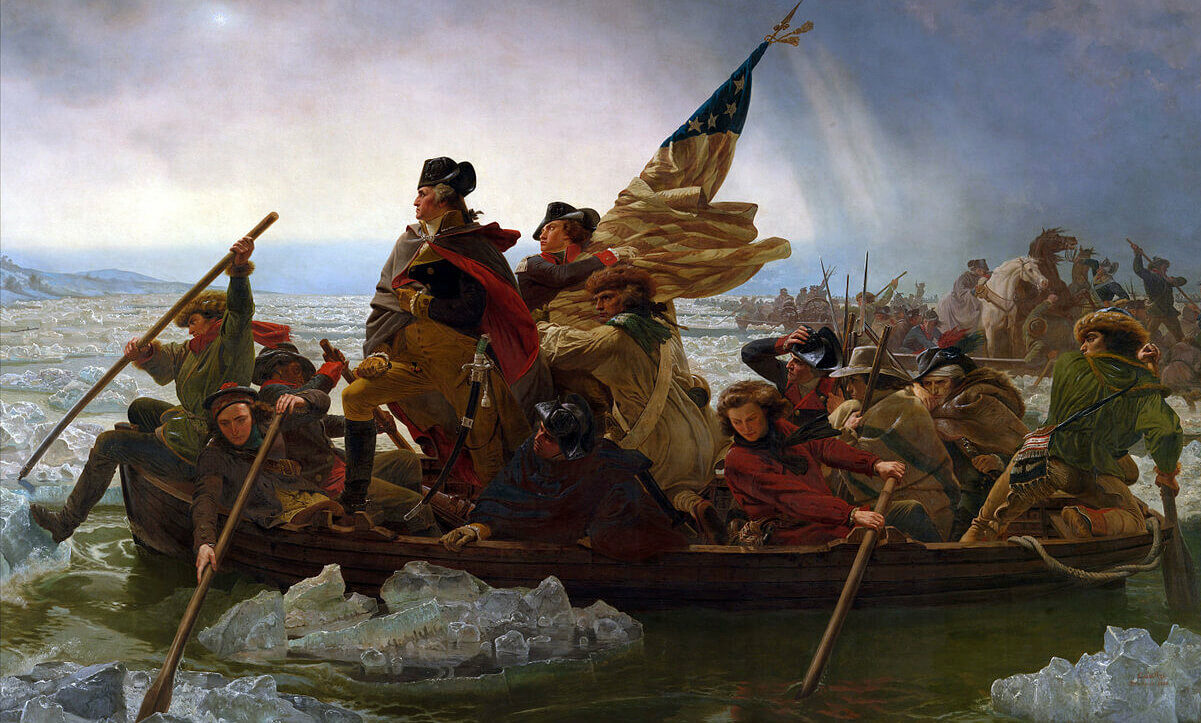
[1] The World’s Most Famous Court Trial: Tennessee Evolution Case; A Word for Word Report of the Famous Court Test of the Tennessee Anti-Evolution Act, at Dayton, July 10 to 21, 1925 (National Book Co. 1925) [hereinafter World’s Most Famous Court Trial] (Clarence Darrow, second day of the trial, July 13, 1925).

[2] World’s Most Famous Court Trial.

[3] Id. at 316

[4] Id.

[5] Henry Steele Commager, The American Mind 181-183 (1950).

[6] Scopes v. State 289 S. W. 363 (Tenn. 1927).

[7] World’s most famous, supra at 126.

[8] Id.at 313.

[9] Scopes, at 363.

[10] Id.at 363, 366.

[11] Id.at 364.

[12] Id. at 369 (Chambliss, J. concurring).

[13] Id. at 366.

[14] Scopes, at 367.

[15] Id. at 369 (Chambliss, J. concurring).

[16] It has only been in recent years that courts have adopted a different meaning for “establishment of religion” from that held by the judiciary for its first century-and-a-half. That is, prior to the mid-twentieth century, the prohibition against “an establishment of religion” was interpreted to mean just what James Madison had said it meant during the debates on the First Amendment—the establishment of a national church. See 1 Kate Mason Rowland, The Life of George Mason 244 (New York: G. P. Putnam’s Sons, 1892); see also 1 Congressional Debates 451 (Joseph Gales, ed., 1834) (James Madison on June 8, 1789); 4 The Debates in the Several State Conventions on the Adoption of the Federal Constitution (Jonathan Elliot, 1836) (Governor Samuel Johnston on July 30, 1788); Joseph Story, A Familiar Exposition of the Constitution of the United States 259-261, § 441, 444 (New York: Harper & Brothers, 1847); 3 Joseph Story, Commentaries on the Constitution of the United States 728, § 1871 (Boston: Hilliard, Gray, and Company, 1833); Reports of Committees of the House of Representatives Made During the First Session of the thirty-third Congress 1-9 (Washington: A. O. P. Nicholson, 1854); and The Reports of Committees of the Senate of the United States for the Second Session of the thirty-second Congress, 1852-53, at 1-4 (Washington: Robert Armstrong, 1853) which further confirm the original and long-standing meaning of “an establishment of religion.”

[17] Gregory Sarno and Alan Stephens, Annotation, Constitutionality of Teaching or Suppressing Teaching of Biblical Creationism or Darwinian Evolution Theory in Public Schools, 102 ALR Fed 537, 547-548, §6 (1991).

[18] Judith A. Villarreal, God and Darwin in the Classroom: The Creation/Evolution Controversy, 64 Chi.-Kent L. Rev. 335, 359 (1988).

[19] Scopes, 289 S. W. at 368 (Chambliss, J. concurring).

[20] Id. at 368.

[21] Id.

[22] “The Organic Laws of the United States of America” 1 U.S.C.A. Sec. 1 (West 1987), includes the Articles of Confederation, the Declaration of Independence, the Constitution, and the Northwest Ordinance.

[23] Steven M. Wise, How Nonhuman Animals Were Trapped in a Nonexistent Universe, 1 Anml L. 15, 42 (1995).

[24] Bertrand Russell, Human Knowledge: Its Scope and Limits 33-34 (1948).

[25] Henry Fairfield Osborn, From the Greeks to Darwin 1 (1924).

[26] Id. at 6.

[27] Edward Clodd, Pioneers of evolution from thales to huxley 3 (1897, reprinted 1972).

[28] Dr. Osborne identifies four periods of evolution: i. Greek Evolution—640 b.c. to 1600 a.d.; ii. Modern Evolution—1600-1800 a.d.; iii. Modern Inductive Evolution—1730-1850 a.d.; and iv. Modern Inductive Evolution—1858 to the present. Henry Fairfield Osborn, From the Greeks to Darwin 10-11 (1924).

[29] Id. at 11.

[30] 7 Thomas Paine, A Discourse at the Society of Theophilanthropists, Paris, in Age of Reason: Miscellaneous Essays for Third and Fourth Parts, in Life and Writings of Thomas Paine 2-8 (Daniel Edwin Wheeler, ed., 1908).

[31] 6 Thomas Paine, Age of Reason Part Second, January 27, 1794, in Age of Reason: Being an Investigation of True and Fabulous Theology in Two Parts, in Life and Writings of Thomas Paine 132 (Daniel Edwin Wheeler, ed., 1908).

[32] Scopes, 289 S. W. at 368 (Chambliss, J. concurring).

[33] Robert Clark, Darwin: Before and After, and Examination and Assessment 15 (1958).

[34] John Dewey, The Influence of Darwin on Philosophy, and Other Essays on Contemporary Thought 2 (1910).

[35] While multiple camps will occasionally lay claim to the same writer, theorist, or scientist, the individuals are listed according to the camp wherein the majority of writers now place them or in the camp with which their own writings best comport. For example, while many of the earliest writers believed in the Greek and Roman gods, they did not believe in a First Cause as the origin of man; they are therefore placed in the non-theistic origins camp. Similarly, other writers, such as Goethe and Bruno, were pantheists, believing that all of nature is god and that nature therefore created itself—that its origins simply sprang forth without a First Cause; these writers, too, are consequently placed in the camp of non-theistic origins.

[36] James Rachels, Created From Animals: The Moral Implications of Darwinism 10 (1990).

[37] Nora Barlow, The Autobiography of Charles Darwin, 1809-1882 at 92-93 (1958).

[38] John Dewey, The Influence of Darwin on Philosophy, and Other Essays on Contemporary Thought 11 (1910).

[39] Some of the contemporary academics and researchers embracing this position include Dr. Mike Behe of Lehigh University, Dr. Walter Bradley of Texas A & M, Dr. Sigrid Hartwig-Scherer of Ludwig-Maximilian University in Munich, Dr. Phillip Johnson and Dr. Jonathan Wells of the University of California at Berkeley, Dr. Robert Kaita of Princeton, Dr. Steven Meyer of Whitworth, Dr. Heinz Oberhummer of Vienna University, Dr. Siegfried Scherer of the Technical University of Munich, Dr. Jeff Schloss of Westmont, etc. There are numerous others that, to varying degrees, embrace the anthropic position, including, Dr. Brandon Carter of Cambridge, Dr. Frank Tipler of Tulane, Dr. Peter Berticci of Michigan State, Dr. George Gale of University of Missouri Kansas City, Dr. John Barrow of Sussux University, Dr. John Leslie of the University of Guelph, Dr. Heinz Pagels of Rockefeller University, Dr. John Earman of University of Pittsburgh.

[40] James Rachels, Created From Animals: The Moral Implications of Darwinism 3 (1990).

[41] Id. at 57-58.

[42] World’s Most Famous Court Trial supra note 1, at 83-84.

[43] Id. at 113 (Malone).

[44] Henry Fairfield Osborn, From the Greeks to Darwin (1924); see also, Peter J. Bowler, Evolution: The History of an Idea (1984); Edward Clodd, Pioneers of Evolution From Thales to Huxley (1897, reprint 1972); Robert Clark, Darwin: Before and After, and Examination and Assessment (1958).

[45] Scopes, 289 S. W. at 369 (Chambliss, J. concurring).

[46] Steve Benen, Science Test Church & State, July/August 2000.

[47] David W. Moore, Americans Support Teaching Creationism as Well as Evolution in Public Schools, Gallup News Service, Aug. 30, 1999.

[48] Stephen Huba, Biblical Version of Creation OK by Americans, Detroit News, Apr. 6, 1999 (citing a George Bishop poll, published in The Public Perspective, Aug./Sep. 1998).

[49] David W. Moore, Americans Support Teaching Creationism as Well as Evolution in Public Schools, Gallup News Service, Aug. 30, 1999.

[50] The courts have struck down as violations of the Constitution’s Establishment Clause: (1) an Arkansas anti-evolution statute (Epperson v. Arkansas, 1968, 393 U S 97, 21 L Ed 2d 228, 29 S CT. 226), (2) a Mississippi statute prohibiting the teaching that man ascended from lower life forms (Smith v. State, 1970, Miss, 242 So 2d 692); (3) the teaching of any view or form of what the courts call “creationism” (Wright v. Houston ISD, 1972, SD Tex 366 F Sup. 1208, affd (CA5 Tex) 486 F 2d 137 reh den (CA5 Tex), 487 F 2d 1401, reh den (CA5 Tex) 489 F 2d 1312, cert. den 417 US 369, 41 L Ed 2d 1140, 94 S Ct. 3173), (4) a statute declaring that teachings regarding the origins of man must be taught only as theories (Daniel v. Water (1975, CA6 Tenn) 515, F 2d 485, on remand (MD Tenn) 399 F Supp. 510; see also Steele v Waters (1975, Tenn) 527 SW2d 72), (5) a statute requiring “balanced-treatment” between competing views of the origins of man (McLean v. Arkansas Board of Education (1982), ED Ark) 529 F Supp 1255, later app (CA8 Ark) 723 F2d 45; see also Edwards v. Aguillard (1987) 482 U S 578, 96 L Ed 2d 510, 107 S Ct 2573) and (6) a policy requiring a disclaimer be issued for evolution textbooks stating that evolution was only one theory of the origins of man (Tangipahoa Parish Board of Education et al. v. Herb Freiler et al., 975 F. Supp. 819 (D. LA 1997), aff’d 185 F. 3d 337 (5th Cir. 1999, rehearing denied, 201 F. 3d 602 (2000), cert. denied (U. S. June 19, 2000) (No. 99-1625). Additionally, the courts have held that to discharge a teacher for teaching evolution was violating the Establishment Clause (Moore v. Garston County Board of Education (1973, WD NC) 357 F Supp 1037) whereas to discharge a teacher for teaching creation was protecting the Establishment Clause (Webster v. New Lenox School Dist. (1989, ND Ill) 1989 US Dist. LEXIS 6091). Furthermore, to teach evolution, or to use textbooks teaching evolution, does not violate a creationist’s religious rights (Mozert v. Hawkins County Board of Education (1987, CA6 Tenn) 827 F2d 1058, 102 ALR Fed 497, reh den (CA6) 1987 US ap Lexis 13833 and cert. den 484 US 1066, 98 L Ed 2d 993, 108 S Ct 1029).

[51] McCollum v. Bd. of Educ., 333 U. S. 203, 237 (1948).

[52] Ry. Co. v. Ellis, 165 U. S. 150, 160 (1897).

[53] See proclamations by George Washington on August 14, 1790; John Adams on July 22, 1797; Thomas Jefferson on July 16, 1803; James Madison on August 9, 1809; James Monroe on April 28, 1818; John Quincy Adams on March 17, 1827 Andrew Jackson on May 11, 1829, etc. 1-2 James D. Richardson, A Compilation of the Messages and Papers of the Presidents 1789-1897 (1899).

[54] 8 The Statutes at Large, Treaties, and Proclamations of the United States of America 31-48 (George P. Sanger, ed., 1866) (thirty-eighth Congress, Session 1, Chapter 37, Section 4, Colorado’s enabling act of March 21, 1864; Chapter 36, Section 4, Nevada’s enabling act of March 21, 1864; Chapter 59, Section 4, Nebraska’s enabling act of April 19, 1864). 34 The Statutes at Large of the United States of America (1907), (fifty-ninth Congress, Session 1, Chapter 3335, Section 3, Oklahoma’s enabling act of June 16, 1906; etc.).

[55] John Quincy Adams, The Jubilee of the Constitution. A Discourse Delivered at the Request of the New York Historical Society, in the City of New York, on Tuesday, the 30th of April 1789, at 83 (1839).

[56] World’s Most Famous Court Trial, supra note 1, at 170 (William Jennings Bryan quoting Arthur Garfield Hays).

[57] Id. at 198 (General A. Thomas Stewart).

[58] Id. at 170 (Bryan).

[59] Id. at 74.

[60] Peter Singer, Practical Ethics 331 (2d ed. 1993).

[61] John Dewey, The Influence of Darwin on Philosophy, and Other Essays on Contemporary Thought 10 (1910).

[62] Id. at 2.

[63] Henry Steele Commager, The American Mind: An Interpretation of American Thought and Character Since the 1880’s, at 83 (1950).

[64] Significantly, dictionaries utilize terms like “mode of thinking,” “morals,” “taste,” and “manners” to define the word “civilization”; and, as will be subsequently demonstrated, the mode of thinking, the morals, the taste, and the manners, each would be dramatically altered according to which view of origins was embraced.

[65] See, for example, George Washington’s Farewell Address in which, after comparing American government with that in France and across much of Europe, Washington reminded Americans that “of all the dispositions and habits which lead to political prosperity, religion and morality are indispensable supports.” George Washington, Address of George Washington. President of the United States . . . Prepatory to his Declination 22-23 (Baltimore: George and Henry S. Keatinge, 1796) This distinguished constitutional expert declared that religion was inseparable from America’s governmental philosophy. Other framers who made similar comparisons between America’s theistic approach and the non-theistic approaches of other nations such as France included Gouverneur Morris, (penman and signer of the Constitution) Gouverneur Morris, An Oration Delivered on Wednesday, June 29, 1814, at the request of a number of citizens of New York, in Celebration of the Recent Deliverance of Europe from the Yoke of Military Despotism (New York: Van Winkle and Wiley, 1814). Fisher Ames (a framer of the First Amendment and the Bill of Rights) Fisher Ames, “A Warning Voice,” in The New-England Palladium (Boston), April 17, 1804; see also VOL. I Works of Fisher Ames 226 (Seth Ames, ed., 1983). Noah Webster, (one of the first to call for a Constitution Convention and the individual most responsible for Article I, Section 8, ¶ 8 of the Constitution; etc) Noah Webster, The Revolution in France, Considered in Respect to its Progress and Effects (New York: George Bunce and Co., 1794).

[66] Critics assert that the framers did not see all life as equal and they point to slave-holding individuals among the founders as evidence supporting their charge. This reflects what regrettably, has become a common approach to the Founding Era: regardless of whether the topic is religion, morality, racism, wealth, etc., the tendency is to take the exception and portray it as the rule.

For example, on the slavery issue, while some framers did own slaves, rarely is anything said of the overwhelming majority of framers who did not own slaves and who rejected slavery. And rarely is it acknowledged that slavery was not the product of, nor was it an evil introduced by, the founders; rather, slavery had been introduced into America nearly a century-and-a-half before the founders and had been strongly enforced upon them by British law. In fact, many of the founders vigorously complained about the fact that every attempt they had made to end slavery and the slave trade in the Colonies (as Virginia had attempted in 1767 and Pennsylvania in 1774) had been vetoed by King George III.

Prior to the time of the framers, there had been few serious efforts to dismantle the institution of slavery. John Jay, an author of the Federalist Papers and the original Chief Justice of the U. S. Supreme Court, identified the American Revolution as the point at which the change in national attitude toward slavery first began. 3 John Jay, The Correspondence and Public Papers of John Jay 342 (Henry P. Johnston, ed., New York: G.P. Putnam’s Sons, 1891) (letter to the English Anti-Slavery Society in June 1788) Historically speaking, it was the founders who collectively initiated the first changes against slavery; and it was the Declaration that first began that official change.

In fact, many framers used the occasion of the adoption of the Declaration and the separation from Great Britain to end slavery in their own States, including Pennsylvania and Massachusetts in 1780, Massachusetts Constitution of 1780, art. I; Connecticut and Rhode Island in 1784, act passed in October 1777, 1 The Public Statute Laws of the State of Connecticut 623-625 (Hartford: Hudson and Goodwin, 1808); and act of Feb. 27, 1784, Rhode Island Session Laws 7-8 (Providence: Wheeler, 1784); Vermont in 1786, Vermont Constitution (1786); Art. I New Hampshire in 1792, New Hampshire Constitution (1792); Art. I New York in 1799, act passed on March 29, 1799, Laws of the State of New York, Passed at the twenty-second session, second meeting of the legislature 721-723 (Albany: Loring Andrews, 1799); and New Jersey in 1804, act passed Feb. 15, 1804, Laws of the State of New Jersey, Complied and Published Under the Authority of the Legislature 103-105 (Joseph Bloomfield, ed., Trenton: James J. Wilson, 1811). Additionally, the reason that Ohio, Indiana, Illinois, Michigan, Wisconsin, and Iowa never permitted slavery was a Congressional act, authored by Constitution signer Rufus King 1 Rufus King, The Life and Correspondence of Rufus King 288-289 (Charles King, ed., New York: G. P. Putnam’s Sons, 1894), and signed into law by President George Washington, An Act to provide for the Government of the territory North-West of the River Ohio, August 7, 1789, Acts Passed at a Congress of the United States of America 104 (Hartford: Hudson and Goodwin, 1791) that prohibited slavery in the federally held territories. An Ordinance for the Government of the Territory of theUnited States Northwest of the River Ohio, Art. VI, The Constitutions of the United States 366-367 (Trenton: Moore and Lake, 1813).

Furthermore, rarely is mention made of the fact that many of the founders were leaders of abolition societies—that Benjamin Franklin and Benjamin Rush founded America’s first anti-slavery society in 1774, that John Jay was president of a similar society in New York, that when signer of the Constitution William Livingston heard of the New York society, he, as Governor of New Jersey, volunteered to help the work of that society, etc. Other prominent Founding Fathers who were members of societies for ending slavery included Richard Bassett, James Madison, James Monroe, Bushrod Washington, Charles Carroll, William Few, John Marshall, Richard Stockton, Zephaniah Swift, and many more.

Similarly, nothing is said of the prominent anti-slavery positions of so many of the founders, including: Charles Carroll, 2 Kate Mason Rowland, The Life of Charles Carroll of Carrollton 1737-1832, at 321 (New York: G. P. Putnam’s Sons, 1898) (letter to Robert Goodloe Harper, April 23, 1820); John Dickinson, Charles J. Stille, The Life and Times of John Dickinson 324 (Philadelphia: J. P. Lippincott Company, 1891) (letter to George Logan on January 30, 1804); John Jay, 2 John Jay, The Life and
Times of John Jay
174 (William Jay, ed., New York: J. & J. Harper, 1833) (letter to the Rev. Dr. Richard Price on September 27, 1785); Richard Henry Lee, the first speech of Richard Henry Lee in the House of Burgesses of Virginia in 1 Richard Henry Lee, Memoir of the Life of Richard Henry Lee 19 (Richard Henry Lee, ed., Philadelphia: H. C. Carey and I. Lea, 1825); William Livingston, 5 William Livingston, The Papers of William Livingston 358 (Carl E. Prince, ed., 1988) (letter to James Pemberton on October 20, 1788); Luther Martin, Luther Martin, The Genuine Information 57 (Philadelphia: Eleazor Oswald, 1788). See also 1 The Debates in the Several State Conventions on the Adoption of the Federal Constitution 377 (Jonathan Elliot, ed., Washington, D. C.: Jonathan Elliot, 1836) (Luther Martin to Thomas Cockey Deye on January 27, 1788); George Mason, 3 The Debates in the Several State Conventions on the Adoption of the Federal Constitution 452 (Jonathan Elliot, ed., Washington, D. C.: Jonathan Elliot, 1836) (George Mason, June 15, 1788); Joseph Reed, William Armor, Lives of the Governors of Pennsylvania 223 (Philadelphia: James K. Simon, 1872); Benjamin Rush, Benjamin Rush, Minutes of the Proceedings of a Convention of Delegates from the Abolition Societies Established in Different Parts of the United States Assembled at Philadelphia 24 (Philadelphia: Zachariah Poulson, 1794); Noah Webster, Noah Webster, Effects of Slavery on Morals and Industry 48 (Hartford: Hudson and Goodwin, 1793); James Wilson, 2 James Wilson, The Works of the Honorable James Wilson 488 (Bird Wilson, ed., Philadelphia: Lorenzo Press, 1804) (Lecture on The Natural Rights of Individuals); John Witherspoon, 7 John Witherspoon, The Works of John Witherspoon 81 (Edinburgh: J. Ogle, 1815) (from Lectures on Moral Philosophy, Lecture X) etc.

The simple fact is that there was no substantial progress in racial civil rights until the Declaration of Independence; and the work the framers began in the Declaration was carried on for generations afterwards. In fact, the Declaration was invoked authoritatively by individuals such as Abraham Lincoln, speech at Lewiston, Illinois on August 17, 1858 in 2 Abraham Lincoln, The Collected Works of Abraham Lincoln 545-547 (Roy P. Basler, ed., 1953); Daniel Webster, Address on the Annexation of Texas, January 29, 1845, 15 Daniel Webster, Writings and Speeches of Daniel Webster Hitherto Uncollected Volume Three, Miscellaneous Papers Legal Arguments Early Addresses, Etc. in Writings and Speeches of Daniel Webster (1903); and John Quincy Adams John Quincy Adams, An Oration Delivered Before The Inhabitants Of The Town Of Newburyport at Their Request on the sixty-first Anniversary of the Declaration of Independence, July 4, 1837, at 50 (Newburyport: Charles Whipple, 1837) in their efforts to end slavery, and the words set forth by the framers in the Declaration were indispensable in achieving the passage of the 13th, 14th, and 15th Amendments securing permanent protection for racial civil rights.

[67] As Dr. Rachels explains, “In the biblical sources we find not only the idea that man has dominion over nature but also the contrasting notion that all of creation is to be revered as God’s handiwork. On this latter conception, man’s duty is to be a good steward of nature, not its exploiter.” James Rachels, Created From Animals: The Moral Implications of Darwinism 91 (1990) As Peter Singer confirms, “Religious ideas of man’s special role. . . . were interwoven with the newer, more benevolent attitude. Alexander Pope, for example, opposed the practice of cutting open fully conscious dogs by arguing that although ‘the inferior creation’ has been ‘submitted to our power’ we are answerable for the ‘mismanagement’ of it.” Peter Singer, Animal Liberation 210-211 (1975) quoting The Guardian, May 21, 1713.

Singer further notes, “It has been claimed that the first legislation protecting animals from cruelty was enacted by the Massachusetts Bay Colony in 1641. Section 92 of ‘The Body of Liberties,’ printed in that year, reads: ‘No man shall exercise any Tyranny or Cruelty towards any brute creature which are usually kept for man’s use’; and the following section requires a rest period for animals being driven.” Peter Singer, Animal Liberation 213 (1975). According to Singer, “For a fuller account, see Emily Leavet, Animals, and Their Legal Rights (1970).”

[68] Samuel Pufendorf (1632-1694) was a Dutch educator and public official. As a professor of law and nature at universities in Sweden and Germany, his legal writings have caused him to be titled—along with Hugo Grotius—as one of the two fathers of international law.

[69] Alexander Hamilton, The Farmer Refuted 5 (New York: James Rivington, 1775), reprinted in 1 Papers of Alexander Hamilton 81, 86 (1961). See also 7 John Witherspoon, Works of John Witherspoon 152 (Edinburgh: J. Ogle, 1815) (Lecture XVI, Of Oaths and Vows).

[70] Baron Samuel de Pufendorf, Of the Law of Nature and Nations, Eight Books 4 (Basil Kennet, ed., London: R. Sare 1717).

[71] Sir William Blackstone (1723-1780) was a British jurist and political philosopher. A professor of law at Oxford, his legal writings had a significant influence on the thinking of America’s framers. In fact, political science professors have documented that Blackstone was one of the three most-frequently-invoked political sources (along with John Locke and Baron Charles Montesquieu) by the framers in their political writings during the Founding Era (1760-1805). Donald S. Lutz, The Origins of American Constitutionalism 143 (1988).

[72] Blackstone’s Commentaries on the Laws of England (4 vols., 1766-1769) was probably the single most significant legal writing relied upon by the framers of our documents. In fact, Thomas Jefferson commented that American lawyers used Blackstone’s with the same dedication and reverence that Muslims used the Koran. 12 Thomas Jefferson, The Writings of Thomas Jefferson 392 (1904) (letter to Governor John Tyler on May 26, 1810). Edmund Burke noted that Blackstone’s works sold better in America than in England. John Wingate Thornton, The Pulpit of the American Revolution xxvii (Boston: Gould and Lincoln, 1860). Justice James Iredell, appointed to the Supreme Court by President George Washington, noted that Blackstone’s was the “manual of almost every student of law in the United States.” James Iredell’s Charge to the Grand Jury in the Case of Fries [9 Fed. Cas. 826, no. 5, 126 (C. C. D. Pa. 1799)]. In fact, legal educator Roscoe Pound confirms that Blackstone’s formed the basis of all legal studies and bar exams until well into the 20th century. Roscoe Pound, Spirit of the Common Law 150 (Boston: Marshall Jones Company, 1921).

[73] 2 William Blackstone, Commentaries on the Laws of England 2-3 (Philadelphia: Robert Bell, 1771).

[74] John Locke (1632-1704) was a British educator, diplomat, and political philosopher. He taught at Oxford, and his legal writings were heavily relied upon by America’s framers, especially in developing the concepts of social compact and the consent of the governed. In fact, political science professors have documented that Locke was one of the three most-frequently-invoked political sources (along with Sir William Blackstone and Baron Charles Montesquieu) by the framers in their political writings during the Founding Era (1760-1805). Donald S. Lutz, The Origins of American Constitutionalism 143 (1988).

[75] 4 John Locke, Works of John Locke 353-356 (12 ed., London: C. and J. Rivington, 1824).

[76] John Dewey, The Influence of Darwin on Philosophy, and Other Essays on Contemporary Thought 9-10 (1910).

[77] Charles darwin, Charles Darwin’s Notebooks 1836-1844, at 300 (1987).

[78] James Rachels, Created From Animals: The Moral Implications of Darwinism 1 (1990).

[79] Id. at 79.

[80] Henry Steele Commager, The American Mind: An Interpretation of American Thought and Character Since the 1880’s at 83 (1950).

[81] Henry S. Salt, Animals’ Rights Considered in Relation to Social Progress 8 (New York: Macmillan & Co., 1894).

[82] Id. at 9.

[83] Rachels, Created From Animals 1 (1990).

[84] Margot Norris, Beasts of the Modern Imagination 3 (1985).

[85] Peter Singer, Animal Liberation 214 (1975).

[86] Henry S. Salt, Animals’ Rights Considered in Relation to Social Progress 14-15 (New York: Macmillan & Co., 1894).

[87] The Oxford English Dictionary defines “speciesism” as “discrimination against or exploitation of certain animal species by human beings, based on an assumption of mankind’s superiority.” Jeffrey Reiman, Critical Moral Liberalism, Theory and Practice 207 (1997).

[88] Jeffrey Reiman, Critical Moral Liberalism, Theory and Practice 207 (1997).

[89] Peter Singer, Animal Liberation 255 (1975).

[90] Human-Animal Relationships Research Focus Group, Steve Sapontzis, abstract from his seminar on “Intellectual Superiority,” California State University, Hayward, on Feb. 27, 1999.

[91] Human-Animal Relationships Research Focus Group, Tom Regan, abstract from his seminar on “Putting People in Their Place,” California State University, Hayward, on Feb. 27, 1999.

[92] Marc D. Hauser, Wild Minds: What Animals Really Think 13 (2000).

[93] Steven M. Wise, Rattling the Cage: Toward Legal Rights For Animals 19 (2000).

[94] Stephen Chapman, Behind the Crusade Against Fur is a Bizarre Agenda, Chicago Tribune, Dec. 3, 1989. See also, Ingrid Newkirk confirming this statement on CNN’s “Crossfire” on Aug. 29, 2000.

[95] Peter Singer, Practical Ethics 150 (2d ed., 1993).

[96] Statement made by Tom Regan following his speech, “Animal Rights, Human Wrongs,” given at the University of Wisconsin at Madison on Oct. 27, 1989, during the question and answer session.

[97] Jack L. Albright, Animal Welfare Issues: A Critical Analysis, from the Animal Welfare Issues Compendium: A Collection of 14 Disscussion Papers, Sep. 1997, sponsored by U. S. Department of Agriculture. See also, Given Florio, Animal-Rights Efforts Gaining Legal Clout,” The Salt Lake Tribune, Dec. 5, 1999.

[98] Chip Brown, She’s a Portrait of Zealotry In Plastic Shoes,” Washington Post, Nov. 13, 1983.

[99] Peter Singer, Animal Liberation xi (1975).

[100] Human-Animal Relationships Research Focus Group, Steve Sapontzis, abstract from his seminar on “Intellectual Superiority,” California State University, Hayward, on Feb. 27, 1999.

[101] Peter Singer, Animal Liberation ix (1975).

[102] Susan Finsen, Obstacles to Legal Rights for Animals. Can We Get There From Here? 3 Anml L. i, iii (1997).

[103] Peter Singer, Animal Liberation 215 (1975).

[104] Gwendellyn Jo Earnshaw, Equity as a Paradigm for Sustainability: Evolving the Process Toward Interspecies Equity, 5 Anml L. 113, 122 (1999).

[105] Steven Wise, Animal Thing to Animal Person—Thoughts on Time, Place, and Theories, 5 Anml L. 61 (1999).

[106] Id. at, 5 Anml L. 61, 62.

[107] Id.

[108] Steven Wise, Animal Thing to Animal Person—Thoughts on Time, Place, and Theories, 5 Anml L. 61 (1999).

[109] Exec. Order No. 7 (Jan. 28, 1994) (Pardon issued by New Jersey Governor Christine Todd Whitman).

[110] Animal Legal Defense Fund Inc. v. Glickman, 332 U.S. App. D.C. 104, 154 F.3d 426 (D.C. Cir. 09/01/1998)

[111] Citizens to End Animal Suffering and Exploitation, Inc. v. New England Aquarium, 836 F. Supp. 45, 47-48 (D. Mass. 1993), cited by Steven Wise, Animal Thing to Animal Person—Thoughts on Time, Place, and Theories, 5 Anml L. 61, 65-66 (1999).

[112] Dana Coleman, How Lawyers Deal With Clients who Bark, The New Jersey Lawyer, Aug. 24, 1998.

[113] Living on Earth, (NPR radio broadcast, Mar. 3, 2000).

[114] Nichols v. Sukaro Kennels, 555 N.W.2d 689 (Iowa, 1996).

[115] Richard Willing, Under Law, Pets are Becoming Almost Human, USA Today, Sep. 13, 2000.

[116] Morgan v. Kroupa, 702 A.2d 630, 631 (Vt. 1997).

[117] Raymond v. Lachmann, 695 N.Y.S.2d 309 (N. Y. App. 1 Dept. 1999).

[118] Porter v. DiBiasio, 93 F.3d 301 (7th Cir. 1996).

[119] Jankoski v. Preiser Animal Hospital, Ltd., 510 N.E.2d 1084, 1085 (Ill.App. 1 Dist, 1987); see also Brousseau v. Rosenthal, 443 N.Y.2d 285, (N.Y.City Civ.Ct. 1980).

[120] La Porte v. Associated Independents, Inc., 163 So.2d 267, 269 (Sup. Ct. Fla., 1964).

[121] Bueckner v. Hamel, 886 S.W.2d 368, 377 (Tex.App.—Houston [1st Dist.] 1994) (Andell, J. concurring).

[122] Peter Singer, Animal Liberation 214 (1975).

[123] Gary Dorsey, Animal rights movement spawns new discipline: Animal law, The Detroit News, Feb. 29, 2000.

[124] Human-Animal Relationships Research Focus Group, Tibor R. Machan “Does Having Interest Mean Having Rights?” Chapman University, on Feb. 27, 1999.

[125] John Quincy Adams, Letters of John Quincy Adams to His Son on The Bible and Its Teachings 23 (Auburn: James M. Alden, 1859) (September 15, 1811).

[126] James Wilson (1742-1798) was a signer of both the Declaration of Independence and the Constitution—one of only six framers to hold that distinction. He was the second most active member of the Constitutional Convention, speaking on the floor of the Convention 168 times, and was subsequently appointed to the U. S. Supreme Court as an original Justice by President George Washington. Wilson is credited with starting the first organized legal training in America for law students and authored several legal works, including a 1792 Commentary on the Constitution of the United States of America and a three-volume set of legal lectures delivered to law students while Wilson was sitting as a Justice on the Court. James Wilson was a leading figure in the development of American constitutional law and was, perhaps more than any other individual, responsible for laying the foundation for a purely American system of jurisprudence.

[127] 1 James Wilson, The Works of the Honorable James Wilson 113-114 (Bird Wilson, ed., Philadelphia: Lorenzo Press, 1804).

[128] 1 William Blackstone, Commentaries on the Laws of England 39, 41 (Philadelphia: Robert Bell, 1771).

[129] 1 Zephaniah Swift, A System of the Laws of the State of Connecticut 6-7 (Windham: John Byrne, 1795).

[130] 4 Samuel Adams, Writings of Samuel Adams 356 (Harry Alonzo Cushing, ed., 1908) (to the Legislature of Massachusetts on January 17, 1794).

[131] John Quincy Adams, The Jubilee of the Constitution 13-14 (New York: Samuel Colman, 1839).

[132] Noah Webster, An American Dictionary of the English Language (New York: S. Converse, 1828), s.v. “law,” definitions #3 and #6.

[133] Baron Charles Secondat de Montesquieu (1689-1755) was a French elected official (president of the French parliament) and a political philosopher. He authored numerous essays on law, government, the military, taxation, economics, etc. His theories of checks and balances and separation of powers between the branches became an integral part of American constitutional philosophy. In fact, political science professors have documented that Montesquieu was the single most-frequently-invoked political source by the framers in their political writings during the Founding Era (1760-1805). Donald S. Lutz, The Origins of American Constitutionalism 143 (1988).

[134] 5 George Bancroft, Bancroft’s History of the United States 24 (Boston: Little, Brown and Company, 1859). See also 1 Baron Charles Secondat de Montesquieu, Spirit of Laws 18, ad passim (Philadelphia: Isaiah Thomas, 1802).

[135] 1 Benjamin Rush, Letters of Benjamin Rush 454 (L. H. Butterfield, ed., 1951) (to David Ramsay, March or April 1788).

[136] Henry Steele Commager, The American Mind: An Interpretation of American Thought and Character Since the 1880’s, at 367 (1950).

[137] James Rachels, Created From Animals: The Moral Implications of Darwinism 1 (1990).

[138] David Wigdor, Roscoe Pound Philosopher of Law 118 (1974).

[139] Andrew L. Kaufman, Cardozo 206 (1998).

[140] Moses J. Aronson, Cardozo’s Doctrine of Sociological Jurisprudence, reprinted from 4 Journal of Social Philosophy 36 (October 1938).

[141] Roscoe Pound, Spirit of the Common Law 172 (1921).

[142] Roscoe Pound, An Introduction to the Philosophy of Law 31 (1922).

[143] Oliver Wendell Holmes, Jr., The Common Law 5 (Boston: Little, Brown and Company, 1881).

[144] Peter Singer, Animal Liberation 193 (1975).

[145] Evolutionary psychology is a rapidly growing field with numbers of highly credentialed academics, including not only those listed above but also evolutionary psychologists like Dr. Donald Symons of the University of California at Santa Barbara, Dr. Martin Daly and Dr. Margo Wilson of McMaster University in Ontario, and numerous others. (See, for example, the list of contributors in the Handbook of Evolutionary Psychology: Ideas, Issues, and Applications by Charles Crawford and Dennis Krebs, published by the Department of Psychology, Simon Fraser University).

[146] Robert Wright, Our Cheating Hearts: Devotion and betrayal, marriage and divorce: how evolution shaped human love, Time Domestic, Aug. 15, 1994.

[147] James Rachels, Created From Animals: The Moral Implications of Darwinism 221 (1990).

[148] John Dickinson, Letters from A Farmer xlii (1903).

[149] Boston Gazette, Aug. 12, 1765; 3 John Adams, The Works of John Adams 449 (Charles Francis Adams, ed. Boston: Charles C. Little and James Brown, 1851) (from his Dissertation, 1765).

[150] 2 James Wilson, The Works of the Honorable James Wilson 454 (Bird Wilson, ed., Philadelphia: Lorenzo Press, 1804).

[151] Id. at 466.

[152] 4 Thomas Jefferson, Memoir, Correspondence, and Miscellanies 278 (Thomas Jefferson Randolph, ed., Boston: Gray and Bowen, 1830) (letter to Francis Gilmer on June 7, 1816).

[153] Thomas Jefferson, Notes on the State of Virginia 237, Query XVIII (Philadelphia: Mathew Carey, 1794).

[154] John Quincy Adams, An Oration Delivered Before the Cincinnati Astronomical Society, On the Occasion of Laying the Corner Stone of An Astronomical Observatory, On the 10th of November, 1843, at 12-15 (Cincinnati: Shepard & Co., 1843).

[155] David Wigdor, Roscoe Pound Philosopher of Law 187 (1974).

[156] Roscoe Pound, Spirit of the Common Law 172 (1921).

[157] Henry Steele Commager, The American Mind: An Interpretation of American Thought and Character Since the 1880’s, at 378 (1950).

[158] Michael Hoffheimer, Justice Holmes and the Natural Law 11 (1992).

[159] James Rachels, Created From Animals: The Moral Implications of Darwinism 197 (1990).

[160] Id. at 5.

[161] The framers were so convinced that all life came from God that they even called suicide “self-murder” [see for example, A Manual of the Laws of North Carolina (Raleigh: J. Gales, 1814), p. 190, s.v. “suicide”; Thomas Jefferson, The Jeffersonian Cyclopedia 599 §5585 (John P. Foley, ed., 1900), s.v., “self-murder”; 1 Richard Watson, Theoological Institutes: On the Evidences, Doctrines, Morals, and Institutions of Christianity 227 (New York: Carlton and Porter, 1857); 4 William Blackstone, Commentaries 188 (“Public Wrongs: Self-Murder”)] since man was terminating a life that he had not created and that was not his to give or take. This view was held for centuries, and even millennia, under the theistic origins approach. As Professor James Rachels documents, “St. Augustine, whose thought shaped much of our tradition, argued that ‘Christians have no authority for committing suicide in any circumstances whatever.’ His argument was based mainly on an appeal to authority. The sixth commandment says ‘Thou shalt not kill.’ Augustine pointed out that the commandment does not say ‘Thou shalt not kill thy neighbor’; it says only ‘Thou shalt not kill,’ period. Thus, he argued, the rule applies with equal force to killing oneself. . . . Kant [said] ‘But as soon as we examine suicide from the standpoint of religion we immediately see it in its true light. We have been placed in this world under certain conditions and for specific purposes. But a suicide opposes the purpose of his Creator; he arrives in the other world as one who has deserted his post; he must be looked upon as a rebel against God.’ ” James Rachels, Created From Animals: The Moral Implications of Darwinism 89-90 (1990). Perhaps Blackstone best summarized the framers overall view toward life in these words: “If any human law should allow, or enjoin, us to commit it [the taking of an innocent life], we are bound to transgress that human law.” 1 William Blackstone, Commentaries on the Laws of England 43 (Philadelphia: Robert Bell, 1771).

[162] Michael Tooley, Abortion and Infanticide 303-304 (1983).

[163] Jeffrey Reiman, Critical Moral Liberalism: Theory and Practice 193 (1997).

[164] Michael Tooley, Abortion and Infanticide 421 (1983).

[165] Peter Singer, Practical Ethics 169-182 (2d ed. 1993).

[166] Jeffrey Reiman, Critical Moral Liberalism: Theory and Practice 203 (1997).

[167] Peter Singer, Practical Ethics 183, 191 (2d ed. 1993).

[168] Jeffrey Reiman, Critical Moral Liberalism: Theory and Practice 203 (1997).

[169] Peter Singer, Practical Ethics 188 (2d ed. 1993).

[170] Id. at 191-192.

[171] Subcommittee on the Constitution, Committee on the Judiciary, U.S. House of Representatives, Hearing on H. R. 4292, the Born Alive Infants Protection Act, July 20, 2000, Testimony of Robert P. George, McCormick Professor of Jurisprudence, Princeton University.

[172] Joseph Story, A Discourse Pronounced Upon the Inauguration of the Author, as Dane Professor of Law in Harvard University, on the Twenty-fifth day of August, 1829, at 14 (Boston: Hilliard, Gray, Little, and Wilkins, 1829).

[173] It is significant that so many of those who today embrace what Darwinism has become so blatantly ignore what Darwin himself said both on morality and in support of intelligent design. As Dr. James Rachels, a Darwin supporter and a professor at the University of Alabama at Birmingham, observes, “Darwin himself had a good bit to say about morality and religion. But his remarks on these subjects are often ignored, or treated as only marginally interesting.” James Rachels, Created From Animals: The Moral Implications of Darwinism 5 (1990). Ironically, many of Darwin’s own words on morality and religion are now unacceptable under modern Darwinism.

[174] Nora Barlow, The Autobiography of Charles Darwin, 1809-1882, at 94 (1958).

[175] John Adams and John Quincy Adams, The Selected Writings of John and John Quincy Adams 397 (Adrienne Koch and William Peden, eds. 1946) (John Quincy Adams, Diary, March 19, 1843).

[176] Diagnostic and Statistical Manual of Mental Disorders, Fourth Edition, Text Revision, DSM-IV-TR at xxiv (2000).

[177] Id. at xxxi.

[178] People v. Allen, et al., 420 N.W.2d 499 (Mich. 1988).

[179] People v. Phillips, 175 Cal.Rptr. 703, (Cal. Ct. App. 1981).

[180] Plough v. State, 725 S.W.2d 494 (Tex. Ct. App. 1987).

[181] Ioakimedes v. Chambers, 71 Cal. App.3d 277, 357, (Cal. Rptr 1977); see also People v. Triplett, 144 Cal. App.3d 283, 192 Cal.Rptr. 537, (1983).

[182] State v. McCarroll, 1989 WL 155, 215 (Ohio App. 10 Dist.).

[183] State v. Blasus, 445 N.W.2d 535, (Minn., 1989).

[184] People v. Bell, 49 778 P.2d 129, (Cal., 1989).

[185] State v. DeMoss, 770 P.2d 441, (Kan., 1989).

[186] In re Michael B., 566 A.2d 446, (Con., 1995). See also State v. Clements, 734 P.2d 1096, (Kan. 1987).

[187] In the matter of Harvey Goldberg, 536 A.2d 224, (NJ, 1988).

[188] Djadi v. State, 528 A.2d 502, (Md. 1987).

[189] People v. Morino, 743 P.2d 49, (Col. 1987).

[190] Hicks v. State, 352 S.E.2d 762, (Ga., 1987).

[191] Godley v. Commonwealth, 343 S.E.2d 368, (Va. 1986).

[192] John Leo, The it’s-not-my-fault syndrome, U. S. News and World Report, Jn. 18, 1990.

[193] Walter Stace, A Critical History of Greek Philosophy 310 (1934).

[194] Henry Steele Commager, The American Mind: An Interpretation of American Thought and Character Since the 1880’s, at 380 (1950).

[195] Clarence S. Darrow, Crime and Criminals, An Address Delivered to the Prisoners in the Chicago County Jail 5-6 (1907).

[196] John Quincy Adams, An Oration Delivered Before the Cincinnati Astronomical Society, On the Occasion of Laying the Corner Stone of An Astronomical Observatory, On the 10th of November, 1843, at 14-15 (Cincinnati: Shepard & Co., 1843).

[197] 4 John Locke, Works of John Locke 341 (12th ed. London: C. and J. Rivington, 1824).

[198] 1 William Blackstone, Commentaries on the Laws of England 40 (Philadelphia: Robert Bell, 1771).

[199] 1 James Wilson, The Works of the Honorable James Wilson 108 (Bird Wilson, ed., Philadelphia: Lorenzo Press, 1804).

[200] The Federalist No. 10 (James Madison).

[201] 6 John Adams, The Works of John Adams 484 (Charles Francis Adams, ed., Boston: Charles C. Little and James Brown, 1851) (to John Taylor on April 15, 1814).

[202] Fisher Ames, Works of Fisher Ames 24 (Boston: T. B. Wait & Co., 1809) (speech on Biennial Elections, delivered January, 1788).

[203] Fisher Ames, The Dangers of American Liberty (February 1805), reprinted in Works of Fisher Ames 384 (Boston: T. B. Wait & Co., 1809).

[204] Gouverneur Morris, An Oration Delivered on Wednesday, June 29, 1814, at the Request of a Number of Citizens of New-York, in Celebration of the Recent Deliverance of Europe from the Yoke of Military Despotism 10, 22 (New York: Van Winkle and Wiley, 1814).

[205] John Quincy Adams, The Jubilee of the Constitution 53 (New York: Samuel Colman, 1839).

[206] 1 Benjamin Rush, Letters of Benjamin Rush 523 (L. H. Butterfield, ed., 1951) (letter to John Adams on July 21, 1789).

[207] Noah Webster, The American Spelling Book 103-104 (Boston: Isaiah Thomas and Ebenezer T. Andrews, 1801).

[208] 7 John Witherspoon, The Works of John Witherspoon 101 (Edinburgh: J. Ogle, 1815) (Lecture 12 on Civil Society).

[209] 1 Zephaniah Swift, A System of the Laws of the State of Connecticut 19 (Windham: John Byrne, 1795).

[210] see, for example, 1 Benjamin Rush, Letters of Benjamin Rush 498 (L. H. Butterfield, ed., 1951) (letter to John Adams on January 22, 1789).

[211] Of the General Principles of Law and Obligation, reprinted in 1 James Wilson, The Works of the Honorable James Wilson 104-105 (Bird Wilson, ed., Philadelphia: Lorenzo Press, 1804).

[212] 1 Alexander Hamilton, The Papers of Alexander Hamilton 87 (Harold C. Syrett, ed., 1961) (February 23, 1775), quoting 1 William Blackstone, Commentaries on the Law of England 41 (Philadelphia: Robert Bell, 1771).

[213] 6 Rufus King, The Life and Correspondence of Rufus King 276 (Charles R. King, ed., 1900) (letter to C. Gore on February 17, 1820).

[214] Interestingly, the framers often spoke of the French government as a democracy rather than the republic that the French themselves called their government. In the minds of the framers, simply titling a government a republic did not make it so if it lacked transcendent values or immutable rights or was ruled as a “mobocracy.” As Fisher Ames, a framer of the Bill of Rights, explained, “[I]t was only in name that she [France] ever was republican.” Dangerous Power of France, No. II in Fisher Ames, Works of Fisher Ames 323 (Boston: T. B. Wait & Co., 1809).

[215] Trop v. Dulles, 356 U. S. 86, 101 (1957).

[216] John Dewey, The Public and Its Problems 34 (1927).

[217] Michael Hoffheimer, Justice Holmes and the Natural Law 5 (1992).

[218] Oliver Wendell Holmes, Jr., The Law in Science—Science in Law, reprinted in Collected Legal Papers 225 (1920).

[219] Benjamin Cardozo, The Growth of the Law 49 (1924).

[220] New State Ice Company v. Leibmann, 285 U. S. 262, 311 (1932) (Brandies, J., dissenting).

[221] Reason and Passion: Justice Brennan’s Enduring Influence 18-19 (E. Joshua Rosenkranz and Bernard Schwartz eds., 1997).

[222] Abington v. Schempp, 374 U. S. 203, 220-221 (1963).

[223] Benjamin Cardozo, The Nature of the Judicial Process 10 (1921).

[224] Charles Evans Hughes, The Autobiographical Notes of Charles Evans Hughes 144 (David J. Danelski and Joseph S. Tulchin, eds., 1973) (speech at Elmira on May 3, 1907).

[225] Steven M. Wise, How Nonhuman Animals Were Trapped in a Nonexistent Universe, 1 Anml L. 15, 41 (1995).

[226] 4 Samuel Adams, The Writings of Samuel Adams 388 (Harry Alonzo Cushing, ed., 1908) (to the Legislature of Massachusetts on January 19, 1796).

[227] George Washington, Address of George Washington. President of the United States . . . Prepatory to his Declination 22 (Baltimore: George and Henry S. Keatinge, 1796).

[228] 6 Alexander Hamilton, Works of Alexander Hamilton 542 (John C. Hamilton, ed., New York: John F. Trow, 1851) (letter to James Bayard on April, 1802).

[229] Compassion in Dying v. Washington, No. 94-35534 (9th Cir. 1996).

[230] Quill v. Vacco, No. 95-7028 (2nd Cir. 1996).

[231] Missouri v. Jenkins, 58 L.W. 4480 (1990).

[232] Yniguez v. Arizona, 69 F. 3d 920 (1995).

[233] League of United Latin American Citizens v. Wilson, 908 F. Supp. 755 (C.D. Cal. 1995).

[234] Gregorio T. v. Wilson, 59 F. 3d 1002 (1996).

[235] Carver v. Nixon, 72 F. 3d 633 (8th Cir. 1995).

[236] U. S. Term Limits v. Thornton, 131 L. Ed. 2d 881 (1995).

[237] Thorsted v. Munro, 75 F. 3d 454 (1996).

[238] Romer v. Evans, 64 L.W. 4353 (1996).

[239] See, for example, Spokane Arcades v. Ray, 449 F. Supp. 1145 (1978); Lucas v. Colorado Gen. Assembly, 377 U. S. 713 (1964); Citizens Against Rent Control v. City of Berkeley, 454 U. S. 290 (1981).

[240] 1 James D. Richardson, A Compilation of the Messages and Papers of the Presidents, 1780-1897, at 164 (Published by the Authority of Congress, 1899) (from Washington’s Sixth Annual Address of November 19, 1794).

[241] Response to the Citizens of Albemarle on February 12, 1790, 16 Thomas Jefferson, The Papers of Thomas Jefferson 179 (Julian P. Boyd, ed., 1961).

[242] 15 Thomas Jefferson, The Writings of Thomas Jefferson 277 (1904) (letter to William Charles Jarvis on September 28, 1820).

[243] Philip P. Wiener, Evolution and the Founders of Pragmatism 6 (1949).

[244] Encyclopædia Britannica, s.v., “Huxley, Thomas Henry.”

[245] Richard L. Overman, “Comparing Origins Belief and Moral Views,” presented at the Fourth International Conference on Creationism, Pittsburgh, Pennsylvania on August 3-8, 1998, (quoting J. Huxley, Evolution and Genetics: What is Science 272 (1955)).

[246] Steve Benen, Science Test, Church & State, July/August 2000.

[247] Henry Steele Commager, The American Mind: An Interpretation of American Thought and Character Since the 1880’s, at 83 (1950).

[248] Growth of Ideas: Knowledge, Thought, Imagination 99 (Sir Julian Huxley, et al, eds., 1965) (Dr. H. G. Judge).

[249] United States v. Seeger, 300 U. S. 163, 165-166 (1965).

[250] Malnak v. Yogi, 592 F.2d 197, 205 (3rd Cir., 1979).

The Separation of Church and State

In 1947, in the case Everson v. Board of Education, the Supreme Court declared, “The First Amendment has erected a wall between church and state. That wall must be kept high and impregnable. We could not approve the slightest breach.” The “separation of church and state” phrase which they invoked, and which has today become so familiar, was taken from an exchange of letters between President Thomas Jefferson and the Baptist Association of Danbury, Connecticut, shortly after Jefferson became President.

The election of Jefferson – America’s first Anti-Federalist President – elated many Baptists since that denomination, by-and-large, was also strongly Anti-Federalist. This political disposition of the Baptists was understandable, for from the early settlement of Rhode Island in the 1630s to the time of the federal Constitution in the 1780s, the Baptists had often found themselves suffering from the centralization of power.

Consequently, now having a President who not only had championed the rights of Baptists in Virginia but who also had advocated clear limits on the centralization of government powers, the Danbury Baptists wrote Jefferson a letter of praise on October 7, 1801, telling him:

Among the many millions in America and Europe who rejoice in your election to office, we embrace the first opportunity . . . to express our great satisfaction in your appointment to the Chief Magistracy in the United States. . . . [W]e have reason to believe that America’s God has raised you up to fill the Chair of State out of that goodwill which He bears to the millions which you preside over. May God strengthen you for the arduous task which providence and the voice of the people have called you. . . . And may the Lord preserve you safe from every evil and bring you at last to his Heavenly Kingdom through Jesus Christ our Glorious Mediator.1

However, in that same letter of congratulations, the Baptists also expressed to Jefferson their grave concern over the entire concept of the First Amendment, including of its guarantee for “the free exercise of religion”:

Our sentiments are uniformly on the side of religious liberty: that religion is at all times and places a matter between God and individuals, that no man ought to suffer in name, person, or effects on account of his religious opinions, [and] that the legitimate power of civil government extends no further than to punish the man who works ill to his neighbor. But sir, our constitution of government is not specific. . . . [T]herefore what religious privileges we enjoy (as a minor part of the State) we enjoy as favors granted, and not as inalienable rights.2

In short, the inclusion of protection for the “free exercise of religion” in the constitution suggested to the Danbury Baptists that the right of religious expression was government-given (thus alienable) rather than God-given (hence inalienable), and that therefore the government might someday attempt to regulate religious expression. This was a possibility to which they strenuously objected-unless, as they had explained, someone’s religious practice caused him to “work ill to his neighbor.”

Jefferson understood their concern; it was also his own. In fact, he made numerous declarations about the constitutional inability of the federal government to regulate, restrict, or interfere with religious expression. For example:

[N]o power over the freedom of religion . . . [is] delegated to the United States by the Constitution. Kentucky Resolution, 17983
In matters of religion, I have considered that its free exercise is placed by the Constitution independent of the powers of the general [federal] government. Second Inaugural Address, 18054
[O]ur excellent Constitution . . . has not placed our religious rights under the power of any public functionary. Letter to the Methodist Episcopal Church, 18085
I consider the government of the United States as interdicted [prohibited] by the Constitution from intermeddling with religious institutions . . . or exercises. Letter to Samuel Millar, 18086

Jefferson believed that the government was to be powerless to interfere with religious expressions for a very simple reason: he had long witnessed the unhealthy tendency of government to encroach upon the free exercise of religion. As he explained to Noah Webster:

It had become an universal and almost uncontroverted position in the several States that the purposes of society do not require a surrender of all our rights to our ordinary governors . . . and which experience has nevertheless proved they [the government] will be constantly encroaching on if submitted to them; that there are also certain fences which experience has proved peculiarly efficacious [effective] against wrong and rarely obstructive of right, which yet the governing powers have ever shown a disposition to weaken and remove. Of the first kind, for instance, is freedom of religion.7

Thomas Jefferson had no intention of allowing the government to limit, restrict, regulate, or interfere with public religious practices. He believed, along with the other Founders, that the First Amendment had been enacted only to prevent the federal establishment of a national denomination – a fact he made clear in a letter to fellow-signer of the Declaration of Independence Benjamin Rush:

[T]he clause of the Constitution which, while it secured the freedom of the press, covered also the freedom of religion, had given to the clergy a very favorite hope of obtaining an establishment of a particular form of Christianity through the United States; and as every sect believes its own form the true one, every one perhaps hoped for his own, but especially the Episcopalians and Congregationalists. The returning good sense of our country threatens abortion to their hopes and they believe that any portion of power confided to me will be exerted in opposition to their schemes. And they believe rightly.8

Jefferson had committed himself as President to pursuing the purpose of the First Amendment: preventing the “establishment of a particular form of Christianity” by the Episcopalians, Congregationalists, or any other denomination.

Since this was Jefferson’s view concerning religious expression, in his short and polite reply to the Danbury Baptists on January 1, 1802, he assured them that they need not fear; that the free exercise of religion would never be interfered with by the federal government. As he explained:

Gentlemen, – The affectionate sentiments of esteem and approbation which you are so good as to express towards me on behalf of the Danbury Baptist Association give me the highest satisfaction. . . . Believing with you that religion is a matter which lies solely between man and his God; that he owes account to none other for his faith or his worship; that the legislative powers of government reach actions only and not opinions, I contemplate with sovereign reverence that act of the whole American people which declared that their legislature should “make no law respecting an establishment of religion or prohibiting the free exercise thereof,” thus building a wall of separation between Church and State. Adhering to this expression of the supreme will of the nation in behalf of the rights of conscience, I shall see with sincere satisfaction the progress of those sentiments which tend to restore to man all his natural rights, convinced he has no natural right in opposition to his social duties. I reciprocate your kind prayers for the protection and blessing of the common Father and Creator of man, and tender you for yourselves and your religious association assurances of my high respect and esteem.9

Jefferson’s reference to “natural rights” invoked an important legal phrase which was part of the rhetoric of that day and which reaffirmed his belief that religious liberties were inalienable rights. While the phrase “natural rights” communicated much to people then, to most citizens today those words mean little.

By definition, “natural rights” included “that which the Books of the Law and the Gospel do contain.”10 That is, “natural rights” incorporated what God Himself had guaranteed to man in the Scriptures. Thus, when Jefferson assured the Baptists that by following their “natural rights” they would violate no social duty, he was affirming to them that the free exercise of religion was their inalienable God-given right and therefore was protected from federal regulation or interference.

So clearly did Jefferson understand the Source of America’s inalienable rights that he even doubted whether America could survive if we ever lost that knowledge. He queried:

And can the liberties of a nation be thought secure if we have lost the only firm basis, a conviction in the minds of the people that these liberties are the gift of God? That they are not to be violated but with His wrath?11

Jefferson believed that God, not government, was the Author and Source of our rights and that the government, therefore, was to be prevented from interference with those rights. Very simply, the “fence” of the Webster letter and the “wall” of the Danbury letter were not to limit religious activities in public; rather they were to limit the power of the government to prohibit or interfere with those expressions.

Earlier courts long understood Jefferson’s intent. In fact, when Jefferson’s letter was invoked by the Supreme Court (only twice prior to the 1947 Everson case – the Reynolds v. United States case in 1878), unlike today’s Courts which publish only his eight-word separation phrase, that earlier Court published Jefferson’s entire letter and then concluded:

Coming as this does from an acknowledged leader of the advocates of the measure, it [Jefferson’s letter] may be accepted almost as an authoritative declaration of the scope and effect of the Amendment thus secured. Congress was deprived of all legislative power over mere [religious] opinion, but was left free to reach actions which were in violation of social duties or subversive of good order. (emphasis added)12

That Court then succinctly summarized Jefferson’s intent for “separation of church and state”:

[T]he rightful purposes of civil government are for its officers to interfere when principles break out into overt acts against peace and good order. In th[is] . . . is found the true distinction between what properly belongs to the church and what to the State.13

With this even the Baptists had agreed; for while wanting to see the government prohibited from interfering with or limiting religious activities, they also had declared it a legitimate function of government “to punish the man who works ill to his neighbor.”

That Court, therefore, and others (for example, Commonwealth v. Nesbit and Lindenmuller v. The People), identified actions into which – if perpetrated in the name of religion – the government did have legitimate reason to intrude. Those activities included human sacrifice, polygamy, bigamy, concubinage, incest, infanticide, parricide, advocation and promotion of immorality, etc.

Such acts, even if perpetrated in the name of religion, would be stopped by the government since, as the Court had explained, they were “subversive of good order” and were “overt acts against peace.” However, the government was never to interfere with traditional religious practices outlined in “the Books of the Law and the Gospel” – whether public prayer, the use of the Scriptures, public acknowledgements of God, etc.

Therefore, if Jefferson’s letter is to be used today, let its context be clearly given – as in previous years. Furthermore, earlier Courts had always viewed Jefferson’s Danbury letter for just what it was: a personal, private letter to a specific group. There is probably no other instance in America’s history where words spoken by a single individual in a private letter – words clearly divorced from their context – have become the sole authorization for a national policy. Finally, Jefferson’s Danbury letter should never be invoked as a stand-alone document. A proper analysis of Jefferson’s views must include his numerous other statements on the First Amendment.

For example, in addition to his other statements previously noted, Jefferson also declared that the “power to prescribe any religious exercise. . . . must rest with the States” (emphasis added). Nevertheless, the federal courts ignore this succinct declaration and choose rather to misuse his separation phrase to strike down scores of State laws which encourage or facilitate public religious expressions. Such rulings against State laws are a direct violation of the words and intent of the very one from whom the courts claim to derive their policy.

One further note should be made about the now infamous “separation” dogma. The Congressional Records from June 7 to September 25, 1789, record the months of discussions and debates of the ninety Founding Fathers who framed the First Amendment. Significantly, not only was Thomas Jefferson not one of those ninety who framed the First Amendment, but also, during those debates not one of those ninety Framers ever mentioned the phrase “separation of church and state.” It seems logical that if this had been the intent for the First Amendment – as is so frequently asserted-then at least one of those ninety who framed the Amendment would have mentioned that phrase; none did.

In summary, the “separation” phrase so frequently invoked today was rarely mentioned by any of the Founders; and even Jefferson’s explanation of his phrase is diametrically opposed to the manner in which courts apply it today. “Separation of church and state” currently means almost exactly the opposite of what it originally meant.


Endnotes

1 Letter of October 7, 1801, from Danbury (CT) Baptist Association to Thomas Jefferson, from the Thomas Jefferson Papers Manuscript Division, Library of Congress, Washington, D. C.
2 Id.
3 The Jeffersonian Cyclopedia, ed. John P. Foley (New York: Funk & Wagnalls, 1900), 977; Documents of American History, ed. Henry S. Cummager (NY: Appleton-Century-Crofts, Inc., 1948), 179.
4 March 4, 1805, Annals of the Congress of the United States (Washington: Gales and Seaton, 1852), Eighth Congress, Second Session, 78; James D. Richardson, A Compilation of the Messages and Papers of the Presidents, 1789-1897 (Published by Authority of Congress, 1899), I:379.
5 Thomas Jefferson, March 4, 1805, Writings of Thomas Jefferson, ed. Albert Ellery Bergh (Washington D. C.: The Thomas Jefferson Memorial Association, 1904), I:379.
6 Thomas Jefferson to the Rev. Samuel Millar, January 23, 1808, Memoir, Correspondence, and Miscellanies, From the Papers of Thomas Jefferson, ed. Thomas Jefferson Randolph (Boston: Gray and Bowen, 1830), IV:103-104.
7 Jefferson to Noah Webster, December 4, 1790, Writings, VIII:112-113.
8 Jefferson to Benjamin Rush, September 23, 1800, Writings, III:441.
9 Jefferson to the Danbury Baptist Association, January 1, 1802, Writings, XVI:281-282.
10 Richard Hooker, The Works of Richard Hooker (Oxford: University Press, 1845), I:207.
11 Thomas Jefferson, Notes on the State of Virginia (Philadelphia: Matthew Carey, 1794), 237.
12 Reynolds v. U. S., 98 U.S. 145, 164 (1878).
13 Reynolds at 163.

Judges: Should they be Elected or Appointed?

Some states have recently considered proposals that would abolish the election of State judges and replace it with a system of appointed judges who would face periodic retention elections. While supporters of this plan argue that retention elections will keep judges accountable to the voters, it is irrefutable that this plan will give judges a level of insulation from the public they have never before experienced and make them more unaccountable than ever before. The folly of this proposal is made clear both by history as well as the lessons of other States that have adopted such a plan.

From a historical perspective, the Founders of our country held succinct opinions on this issue. For example, two centuries ago when the colonists declared themselves independent from Great Britain and had opportunity to create their own governments, they promptly incorporated into America new and important judicial principles – of which the 1780 Massachusetts Constitution was typical in declaring:

All power residing originally in the people and being derived from them, the several magistrates and officers of government vested with authority – whether Legislative, Executive, or Judicial – are their substitutes and agents and are at all times accountable to them. [1] (emphasis added)

The Framers feared tyranny from the judiciary more than from the other two branches, so they placed deliberate limitations on the judiciary. As a result, the Federalist Papers reported that under their plan, “the Judiciary is beyond comparison the weakest of the three departments of power. . . . [and] the general liberty of the people can never be endangered from that quarter.” [2]

As part of that plan, the Framers took care to ensure that judges were accountable to the people at all times. Although federal judges were appointed and did not face election, the Founders made certain that federal judges would be easily removable from office through impeachment, a procedure that today is widely misunderstood and rarely used. While the current belief is that a judge may be removed only for the commission of a criminal offense or the violation of a statutory law, [3] it was not this way at the beginning. As Alexander Hamilton explained, “the practice of impeachments was a bridle” [4] — a way to keep judges accountable to the people. And what did the Framers believe were impeachable offenses? According to Justice Joseph Story, a “Father of American Jurisprudence”:

The offences to which the power of impeachment has been and is ordinarily applied. . . . are what are aptly termed political offences, growing out of personal misconduct, or gross neglect, or usurpation, or habitual disregard of the public interests. [5]

Under the Framers, impeachment occurred whenever a judge attempted to carry a personal agenda through the court; but today impeachment has become what Justice Story warned that it should never be: a power “so weak and torpid as to be capable of lulling offenders into a general security and indifference.” [6] The federal judiciary, because it now enjoys a level of insulation from the people that the Framers never intended and to which they today would vehemently object, is unafraid to reshape American culture and policy to mirror its own political whims and personal values.

Judges given increased levels of protection from the public feel freer to advance personal agendas, often manifesting the view expressed by Supreme Court Justice Benjamin Cardozo who declared that:

I take judge-made law as one of the existing realities of life. [7]

Americans should not have to fear “judge-made laws” as a reality of life. We elect our legislators to make our laws, and those states that elect judges elect them to apply those laws. If these states reject a system of accountable judges, they undoubtedly will face the same arrogance now so evident on the federal level – as when Supreme Court Chief-Justice Charles Evans Hughes declared:

We are under a Constitution, but the Constitution is what the judges say it is. [8]

Since the proclivity to reshape culture and values is so frequently displayed by unaccountable judges, why would a state want to adopt such a system? In fact, why would anyone even propose a system to give additional insulation to judges? Because – proponents answer – for judges to campaign to win the votes of citizens makes the judiciary a “political” branch and weakens the so-called “independence” of the judiciary. Yet, as Thomas Jefferson wisely observed:

It should be remembered as an axiom of eternal truth in politics that whatever power in any government is independent is absolute also. . . . Independence can be trusted nowhere but with the people in mass. [9]

And is anyone really so naivé as to believe that the current appointed “independent” federal judiciary has not become a political branch? As Jefferson had warned:

Our judges are as honest as other men and not more so. They have, with others, the same passions for party, for power, and the privilege of their corps. . . . [A]nd their power the more dangerous as they are in office for life and not responsible, as the other functionaries are, to the elective control. [10]

Contrary to what is asserted by the proponents of appointed judges and retention elections, for judges to campaign and win voter support actually prevents the judiciary from becoming a political branch because citizens can then insist that judges confine themselves to their constitutional roles rather than implement their own political agendas.

Another benefit of the direct elections of judges is the competition that occurs between candidates. In contested races, judicial candidates make public the beliefs of their opponents, thus allowing citizens the opportunity to make informed decisions about those whom they want to sit on the bench. On the other hand, if an individual is appointed rather than elected, his personal beliefs might remain unknown to the public until they manifest themselves in harmful judicial decisions. Furthermore, these appointed judges would have at least four uninterrupted, unrestrained years before they would face voters for the first time in a retention election – and even at that time, there would be no opponent to remind voters of egregious decisions.

Those proposing retention elections are not improving State government. Instead, they are violating one of its most sacred principles: they are removing power from the people — something to which Thomas Jefferson strenuously objected:

The exemption of the judges from that [from election] is quite dangerous enough. I know no safe depository of the ultimate powers of the society but the people themselves; and if we think them [the people] not enlightened enough to exercise their control with a wholesome discretion, the remedy is not to take it [control] from them, but to inform their discretion by education. [11]

Jefferson further declared:

[I]t is necessary to introduce the people into every department of government. . . . Were I called upon to decide whether the people had best be omitted in the legislative or judiciary department, I would say it is better to leave them out of the legislative. The execution of the laws is more important than the making of them. [12]

Understanding that “the execution of the laws is more important than the making of them,” many of our earliest statesmen supported the election of State judges. For example, Noah Webster, himself a judge and the man responsible for Article 1, Section 8, 8 of the U. S. Constitution, declared:

[M]en elected to office should be able men, men of talents equal to their stations, men of mature age, experience and judgment; men of firmness and impartiality. This is particularly true with regard to men who constitute tribunals of justice – the main bulwark of our rights. [13]

In addition to these historical lessons, recent experiences demonstrate that in States with an appointed judiciary, judges are quite comfortable in exerting political influence rather than simply upholding and applying State laws.

For example, in the 2002 election, the appointed New Jersey Supreme Court reviewed the State law declaring that a candidate’s name may be replaced on the ballot only if the “vacancy shall occur not later than the 51st day before the general election” and somehow decided that the 35th day before the election fulfilled the same legal requirements as the 51st day before the election. (Recall that the Democrat candidate was lagging far behind his Republican opponent in the polls; the Democrats convinced the unelected judges to place a more viable candidate on the ballot – in violation of the State law – and Democrats therefore won a U. S. Senate seat they were destined to lose.)

And who can forget the appointed Florida Supreme Court in the 2000 presidential election? Even though State law declared that all election vote tallies were to be submitted to the Secretary of State’s office by 5 PM on the 7th day following the election, and that results turned in past that time were to be ignored, those judges ruled that 5 PM on the 7th day really meant 5 PM on the 19th day, and that the word “ignored” really meant just the opposite – that the Secretary of State must accept all results, even those that did not comply with the law.

Judges facing regular elections would not have rendered decisions that ignored such clear legislative language (not to mention basic math or the common meaning of words). Elected judges know that if they make such agenda-driven decisions, they will face a plethora of opponents in their next race who will remind voters of their demonstrated contempt for State law.

Arrogant, elitist proposals that judges should be protected from citizens in this day of rampant judicial political agendas is unthinkable in our free society. History is too instructive on the necessity of direct judicial accountability for its lessons to be ignored today. And while judicial accountability through the use of impeachment on the federal level appears to be a thing of the past, judicial accountability through the direct election of State judges should not be.


Footnotes

[1] A Constitution or Frame of Government Agreed Upon by the Delegates of the People of the State of Massachusetts-Bay (Boston: Benjamin Edes & Sons, 1780), 9, Massachusetts, 1780, Part I, Article V.

[2] Alexander Hamilton, Federalist #78, Alexander Hamilton, John Jay, James Madison, The Federalist on the New Constitution (Philadelphia: Benjamin Warner, 1818), 419-420; Hamilton, Federalist #73, The Federalist (1818), 398.

[3] See, for example, Irving Brant, Impeachment: Trials & Errors (New York: Alfred Knopf, 1972); Warren S. Grimes, who argues that impeachment is a relic of the past and should be abandoned in his “Hundred-Ton-Gun Control: Preserving Impeachment as the Exclusive Removal Mechanism for Federal Judges,” UCLA Law Review (June 1991), 1254; U.S. v. Carol Bayless, 95 Cr. 533 (S.D. NY, 1996); the joint statement issued by current and former chief-judges of the United States Court of Appeals for the Second Circuit in response to widespread calls from several public officials for the impeachment of federal judge Frank Baer, Jr., March 28, 1996; Fort Worth Star Telegram, April 14, 1996, C-5, “Judicial Independence” by David Broder, writer for The Washington Post.

[4] Alexander Hamilton, Federalist #65, The Federalist (1818), 353.

[5] Joseph Story, Commentaries on the Constitution of the United States (Boston: Hilliard, Gray and Company, 1833), II:233-234, § 762.

[6] Story, Commentaries (1833) II:218, § 745.

[7] Benjamin Cardozo, The Nature of the Judicial Process (New Haven: Yale University Press, 1921), 10.

[8] Charles Evans Hughes, speech at Elmira on May 3, 1907, The Autobiographical Notes of Charles Evans Hughes, eds. David J. Danelski & Joseph S. Tulchin (Cambridge: Harvard University Press, 1973), 144.

[9] Thomas Jefferson to Judge Spencer Roane, September 6, 1819, Writings of Thomas Jefferson, ed. Albert Ellery Bergh (Washington, D. C.: The Thomas Jefferson Memorial Association, 1904), XV:213 214.

[10] Jefferson to William Charles Jarvis, September 28, 1820, Writings, ed. Bergh (1904), XV:277.

[11] Jefferson to William Charles Jarvis, September 28, 1820, Writings, ed. Bergh (1904), XV:278.

[12] Jefferson to M. L’Abbe Arnoud, July 19, 1789, Writings, ed. Bergh (1904), VII:422-423.

[13] Noah Webster, A Collection of Papers on Political, Literary, and Moral Subjects (New York: Webster & Clark, 1843), 303, Chapter XV.

Sample Letters to the Editor

We receive numerous requests from across the country to answer various editorials and letters-to-the-editor. The subject usually involves the religious persuasions of the Founding Fathers, the “separation of church and state,” the “Religious Right” & theocracy, etc. The following are but a few of many possible replies to such editorials. (Note: Unfortunately, we do not have the resources to respond to individual editorials or articles from newspapers all across the U.S., and we have found it is typically much more effective if local people respond to editorials in their own community. David Barton’s book, Original Intent, and the Resources section of our website contain information that is very useful in successfully refuting the vast majority of negative editorials encountered.)


“The Founding Fathers & Deism”

I notice that your newspaper has an ongoing debate concerning the religious nature of the Founding Fathers. A recent letter claimed that most of the Founding Fathers were deists, and pointed to Washington, Jefferson, Franklin, Paine, Hamilton, and Madison as proof. After making this charge, the writer acknowledged the “voluminous writings” of the Founders, but it appears that they not read those writings herself. However, this is no surprise since the U. S. Department of Education claims that only 5 percent of high schools graduates know how to examine primary source documentation.

Interestingly, the claims in this recent letter to the editor are characteristic of similar claims appearing in hundreds of letters to the editor across the nation. The standard assertion is that the Founders were deists. Deists? What is a deist? In dictionaries like Websters, Funk & Wagnalls, Century, and others, the terms “deist,” “agnostic,” and “atheist” appear as synonyms. Therefore, the range of a deist spans from those who believe there is no God, to those who believe in a distant, impersonal creator of the universe, to those who believe there is no way to know if God exists. Do the Founders fit any of these definitions?

None of the notable Founders fit this description. Thomas Paine, in his discourse on “The Study of God,” forcefully asserts that it is “the error of schools” to teach sciences without “reference to the Being who is author of them: for all the principles of science are of Divine origin.” He laments that “the evil that has resulted from the error of the schools in teaching [science without God] has been that of generating in the pupils a species of atheism.” Paine not only believed in God, he believed in a reality beyond the visible world.

In Benjamin Franklin’s 1749 plan of education for public schools in Pennsylvania, he insisted that schools teach “the necessity of a public religion . . . and the excellency of the Christian religion above all others, ancient or modern.” Consider also the fact that Franklin proposed a Biblical inscription for the Seal of the United States; that he chose a New Testament verse for the motto of the Philadelphia Hospital; that he was one of the chief voices behind the establishment of a paid chaplain in Congress; and that when in 1787 when Franklin helped found the college which bore his name, it was dedicated as “a nursery of religion and learning” built “on Christ, the Corner-Stone.” Franklin certainly doesn’t fit the definition of a deist.

Nor does George Washington. He was an open promoter of Christianity. For example, in his speech on May 12, 1779, he claimed that what children needed to learn “above all” was the “religion of Jesus Christ,” and that to learn this would make them “greater and happier than they already are”; on May 2, 1778, he charged his soldiers at Valley Forge that “To the distinguished character of patriot, it should be our highest glory to add the more distinguished character of Christian”; and when he resigned his commission as commander in-chief of the military on June 8, 1783, he reminded the nation that “without a humble imitation” of “the Divine Author of our blessed religion” we “can never hope to be a happy nation.” Washington’s own adopted daughter declared of Washington that you might as well question his patriotism as to question his Christianity.

Alexander Hamilton was certainly no deist. For example, Hamilton began work with the Rev. James Bayard to form the Christian Constitutional Society to help spread over the world the two things which Hamilton said made America great: (1) Christianity, and (2) a Constitution formed under Christianity. Only Hamilton’s death two months later thwarted his plan of starting a missionary society to promote Christian government. And at the time he did face his death in his duel with Aaron Burr, Hamilton met and prayed with the Rev. Mason and Bishop Moore, wherein he reaffirmed to him his readiness to face God should he die, having declared to them “a lively faith in God’s mercy through Christ, with a thankful remembrance of the death of Christ.” At that time, he also partook of Holy Communion with Bishop Moore.

The reader, as do many others, claimed that Jefferson omitted all miraculous events of Jesus from his “Bible.” Rarely do those who make this claim let Jefferson speak for himself. Jefferson’s own words explain that his intent for that book was not for it to be a “Bible,” but rather for it to be a primer for the Indians on the teachings of Christ (which is why Jefferson titled that work, “The Life and Morals of Jesus of Nazareth”). What Jefferson did was to take the “red letter” portions of the New Testament and publish these teachings in order to introduce the Indians to Christian morality. And as President of the United States, Jefferson signed a treaty with the Kaskaskia tribe wherein he provided—at the government’s expense—Christian missionaries to the Indians. In fact, Jefferson himself declared, “I am a real Christian, that is to say, a disciple of the doctrines of Jesus.” While many might question this claim, the fact remains that Jefferson called himself a Christian, not a deist.

James Madison trained for ministry with the Rev. Dr. John Witherspoon, and Madison’s writings are replete with declarations of his faith in God and in Christ. In fact, for proof of this, one only need read his letter to Attorney General Bradford wherein Madison laments that public officials are not bold enough about their Christian faith in public and that public officials should be “fervent advocates in the cause of Christ.” And while Madison did allude to a “wall of separation,” contemporary writers frequently refuse to allow Madison to provide his own definition of that “wall.” According to Madison, the purpose of that “wall” was only to prevent Congress from passing a national law to establish a national religion.

None of the Founders mentioned fit the definition of a deist. And as is typical with those who make this claim, they name only a handful of Founders and then generalize the rest. This in itself is a mistake, for there are over two hundred Founders (fifty-five at the Constitutional Convention, ninety who framed the First Amendment and the Bill of Rights, and fifty-six who signed the Declaration) and any generalization of the Founders as deists is completely inaccurate.

The reason that such critics never mention any other Founders is evident. For example, consider what must be explained away if the following signers of the Constitution were to be mentioned: Charles Pinckney and John Langdon—founders of the American Bible Society; James McHenry—founder of the Baltimore Bible Society; Rufus King—helped found a Bible society for Anglicans; Abraham Baldwin—a chaplain in the Revolution and considered the youngest theologian in America; Roger Sherman, William Samuel Johnson, John Dickinson, and Jacob Broom—also theological writers; James Wilson and William Patterson—placed on the Supreme Court by President George Washington, they had prayer over juries in the U. S. Supreme Court room; and the list could go on. And this does not even include the huge number of thoroughly evangelical Christians who signed the Declaration or who helped frame the Bill of Rights.

Any portrayal of any handful of Founders as deists is inaccurate. (If this group had really wanted some irreligious Founders, they should have chosen Henry Dearborne, Charles Lee, or Ethan Allen). Perhaps critics should spend more time reading the writings of the Founders to discover their religious beliefs for themselves rather than making such sweeping accusations which are so easily disproven.

(For more on this topic see: Thomas Paine Criticizes the Current Public School Science Curriculum, Franklin’s Appeal for Prayer at the Constitutional Convention, Was George Washington a Christian?, The Founders and Public Religious Expression, & James Madison and Religion in Public)


“Thomas Jefferson & the ‘wall of separation between
church and state.’”

In a recent letter on religion, the writer put supporters of public religious expression on one side and Thomas Jefferson on the other. This is logical given what most know about Jefferson’s “wall of separation between church and state.”

Jefferson penned that phrase to reassure the Danbury (CT) Baptist Association that because of separation of church and state, the government would never interfere with their public religious expressions. For the next 150 years, federal courts followed Jefferson’s intent and attached his separation metaphor to the Free Expression Clause of the First Amendment, thus consistently upholding public religious expressions. However, in 1947, the Supreme Court reversed itself and began applying the phrase to the Establishment Clause instead, thus causing federal courts to remove rather than preserve public religious expressions.

The proof is abundant that this was not Jefferson’s intent. For example, two days after Jefferson wrote his separation letter, he attended worship services in the U. S. Capitol where he heard the Rev. John Leland preach a sermon. (As President of the Senate, Jefferson had personally approved the use of the Capitol Building for Sunday worship services.) The many diaries of Members of Congress during that time confirm that during Jefferson’s eight years, he faithfully attended church services in the Capitol. In fact, he even ordered the Marine Band to play the worship services there. Jefferson also authorized weekly worship services at the War Department and the Treasury Building.

And on December 23, 1803, Jefferson’s administration negotiated – and the Senate ratified – a treaty with the Kaskaskia Indians that stated “the United States will give annually for seven years one hundred dollars for the support of a priest” to minister to the Indians (i.e., federal funds for Christian evangelism!) Jefferson also signed presidential documents, closing them with the appellation, “In the Year of our Lord Christ.” There are many similar surprising facts about Jefferson that are fully documented historically, but that have been ignored for the past 50 years.

So would religious conservatives and Thomas Jefferson really be on opposite sides of the church/state issue? Probably, for I doubt that conservatives would agree with using federal dollars for evangelization.

(For more on this topic see: The Separation of Church and State & Letters Between the Danbury Baptists and Thomas Jefferson)


“Theocracy”

In a recent letter, the writer took the same position as Americans United for Separation of Church and State (AU) and parroted AU’s offensive mantra, associating a theocracy or theocratic state with the “Religious Right.” Such claims are patently false.

First, to have a theocracy in America, the Constitution must be replaced with a totalitarian dictator who speaks on God’s behalf (i.e., a revival of “the Divine Right of Kings” doctrine). I challenge AU, or anyone else to identify which part of the “Religious Right” is calling for such a government.

Second, the “Religious Right” leaders are calling for an increased respect for the Constitution and its actual wording, urging citizens to exercise their constitutional right to vote. The real “crime” of these leaders is not that they want a theocracy (which they don’t) but that they rightfully want legislators to make national policy instead of judges. Should that occur, AU or groups like them could not win another battle, for Americans overwhelmingly reject their policies (e.g., “under God” in the Pledge – a phrase opposed by AU but supported by 87% of Americans).

The rabid opposition to public religious expressions is often irrational, In fact, a New Jersey bill proposing that students begin each day by reciting the first 56 words from the Declaration of Independence was loudly denounced as “a thinly-veiled attempt to put prayer in schools” – the first step on the road to a – you guessed it – “theocracy!” Reading the actual wording of the Declaration of Independence leads to a theocracy??? It is time for that term to become anathema in public discourse.

During the Civil Rights Era, we gradually learned that if certain pejoratives were invoked, the individual doing so was a racist. Similarly, today we need to learn that when the emotive and pejorative term “theocracy!” is invoked, it is usually by an intolerant secularist who wants all public religious expressions expunged from society.

(For more on this topic see: A Tale of Two Constitutions & Impeachment of Federal Judges)


* This article concerns a historical issue and may not have updated information.

Election 2004: A Moral Mandate?

Most observers were surprised by the scope of President Bush’s winning margin as well as the reasons for that margin. Few expected Bush to:

  • receive more popular votes (60.5 million) than any previous president, and almost 6 million more than Ronald Reagan received in his 1984 landslide victory;
  • become the first incumbent since FDR in 1936 to increase his own vote and the size of his majority in both the House and Senate;
  • be the first president in 16 years to win more than 50% of the popular vote.

Even those who expected President Bush to win did not expect “moral issues” to rank first among reasons for voting. Who could have imagined that moral issues would outdistance taxes, the economy, Iraq, terrorism, education, or health care?

Numerous indicators affirm that the election results were directly affected by voters’ views on basic Biblical issues. Before examining some of those significant indicators, consider the overall demographics of the election.

General 2004 Voter Demographics

118 million votes were cast in the election, up nearly 12% from the 105 million cast in 2000.

Evangelical Voters: 23% (27.1 million) of all votes cast were by evangelicals. Bush received 78% (21.2 million) of those evangelical votes, representing an amazing 35% of his total of 60.5 million votes. (In 2000, evangelicals cast 15 million votes (15% of the total) and Bush received 71 percent of those votes, representing 21 percent of his 50.5 million total votes.)

Undoubtedly, one of the reasons that moral issues ranked so high in this year’s election was the 80% increase in the number of evangelical voters from the 2000 election. (In 2000, 15 million evangelicals voted; in 2004, nearly 12 million more evangelicals voted – a total of 27.1 million). This surge was one of the factors in reelecting Bush and in increasing Republican gains in both the U. S. House and Senate.

Women Voters: The “gender gap” (first measured in the 1980 election) favors Democrats, but in this election the gap was narrowed to only 7%. Among married women, Bush received 54% of the vote to Kerry’s 45%, but Kerry won 62% of the votes of unmarried women.

Jewish Voters: Jewish voters continue to remain a loyal Democratic constituency, although President Bush expanded his support from 19% in 2000 to 25% in this election.

Catholic Voters: Catholics have been a strong Democratic constituency, but in this election, 52% of the 31 million Catholic voters supported President Bush, resulting in 3.3 million more Catholic voters for Bush than in 2000 (up from his 45% in 2000).

Hispanic Voters: Hispanics, another traditional Democratic block, accounted for 12% of the total vote with 7 million voters (1 million more than in 2000); President Bush won 44% of the Hispanic vote – the largest share for a Republican since recording began in 1972, and up from the 35% he received in 2000.

African American Voters: African Americans continue to be the Democrats’ most faithful constituency in recent elections, but President Bush increased his share of the black vote from 8% in 2000 to 11% in this election.

Urban Voters: Urban areas tend to be the most strongly-Democratic geographic regions of the nation (i.e., the blue areas on the map); yet in this election, urban support for Democrats fell from 71% in 2000 to 60%, prompting Democratic observers to lament that the blue areas on the map are becoming less blue.

Youth Voters: There were 4.6 million more youth voters (ages 18-29) in this election than in 2000. (18.4% of youth voted this year, compared with 16.4% in 2000). Youth supported Kerry by a margin of 54 to 44, but the divide was not nearly as great as predicted. The expected gains from “Rock the Vote,” “Vote for Change,” and the “Vote or Die” efforts of MTV and secular entertainment artists were largely offset by the “Redeem the Vote” efforts of Third Day and nearly three dozen other Christian bands.

General Trends: Bush did poorly among single women, the young, and those who rarely attend church, but he made considerable gains in most other areas. And while half of Kerry’s vote came from Hispanics, African Americans, and single women, Bush made gains in two of those three groups compared to his 2000 election numbers.

A Religious Divide Among Voters

Even though most election analyses examined the vote according to traditional demographics (i.e., by ethnic group, gender, age, etc.), it is probably more accurate to analyze this year’s vote according to the religious practice of voters. In fact, numerous polls leading up to the election indicated that the best predictor of how an individual would vote in this election was frequency of church attendance.

This divide first became apparent in 2000, when those who attended religious services more than once a week supported Bush by a margin of nearly 2-1 and those who never attended religious services supported Gore by the same margin. With an eye to the 2004 election, Washington Post writer Thomas Edsall reported: “Pollsters are finding that one of the best ways to discover whether a voter holds liberal or conservative value stands is to ask: How often do you go to church? Those who go often tend to be Republican, those who go rarely or not at all tend to be Democratic.”

The recent election numbers affirm that the same religious-practice divide of 2000 was again present in 2004, and that it extended across ethnic, gender, and age lines. In this election, 61% of Bush’s vote came from people from all faiths who attend services weekly (this group comprised 41% of the electorate); conversely, Kerry received the support of 62% of Americans who never attend worship (accounting for 14% of the electorate); and among occasional church goers, voters were split almost evenly between Republicans and Democrats. Among Catholics who attended Mass on a weekly basis, 56% voted for Bush, but among Catholics who did not attend Mass regularly, Kerry won. (Protestants reflected the same trend.) Ultimately, Bush received 52% of the Catholic vote, prompting AP writer Richard Ostling to observe, “The majority of Catholics preferred an anti-abortion Methodist incumbent to one of their own – underscoring that today’s religious divide cuts across denominational lines.” (The exception to this trend is among African Americans, who tend to be active church goers but who vote almost exclusively Democratic.)

State Marriage Initiatives

The most obvious indicator that Biblical issues directly affected the election results was visible in the results of the state marriage initiatives. Many liberal Democratic leaders early acknowledged that this issue might be a determining factor in this election – evidenced by their vigorous efforts to keep the marriage issue off state ballots. In state after state, if Democrats failed to kill the measure in the state legislature they turned to courts to have the issue removed from the ballot.

Democratic fears about this issue were confirmed in Missouri three months before the November election. Even though the marriage issue was placed on the primary rather than the general ballot – and despite the fact that pro-marriage advocates were outspent by a margin of 40-1 – the measure passed with 71% support amidst record voter turnout! Matt Franck of the St. Louis Post Dispatch accurately concluded, “values appeared to beat dollars at the ballot box.” (By the way, the report of this massive victory was relegated to page A-16 of the New York Times.)

If the Missouri results disturbed liberal Democrats and marriage opponents, the subsequent efforts in Ohio were even more distressing. After all, citizens there had only nine weeks to gather 323,000 signatures to place the issue on the ballot; yet at the end of those nine weeks, 557,000 signatures had been submitted – and 54,500 new voters registered to vote so they could express their political voice in support of traditional marriage.

When election night arrived, marriage proposals in 11 states had survived all legal attempts to remove the issue from the ballot, and almost 20 million Americans in those states voted on the marriage issue. Not only did the measure pass in all 11 states by an overall margin of 2-1, but support ranged from a low of 57% support in Oregon (still an impressive number) to an almost unimaginable 86% support in Mississippi. (Interestingly, the marriage measures also passed by wide margins in blue states won by Kerry, and 8 of the 11 states included a ban on civil unions as well as on same-sex marriages.)

Immediately after the results were announced, legal challenges were filed in 6 states to overturn the statewide elections on marriage. (Even if the state courts eventually uphold the election results, the votes could still be overturned by federal courts – which is why the Federal Marriage Amendment is being so vigorously pursued in Congress.) Support for marriage was also a defining issue in several U. S. Senate races – including that of Senate Minority Leader Tom Daschle, who was defeated by John Thune (the first time in 52 years that a Senate party leader has lost a re-election bid).

(The interesting counter-trend to the national pro-marriage movement was seen in Massachusetts, where all incumbent state legislators who had advocated same-sex marriage or unions were reelected.)

Clearly, the marriage issue was a powerful influence in state and federal elections; was it also influential in the presidential election? Undoubtedly. Although the mainstream media failed to report on the more than 40 major speeches that President Bush delivered on the marriage issue, voters still learned of those speeches and spoke loudly on Election Day. As Tony Perkins, head of the Family Research Council, noted: “At weddings they used to say, ‘Speak now or forever hold your peace.’ This shows that the people, when given the opportunity, speak very clearly.”

The Pro-Life Vote

In this election, 13% of all voters said they voted for pro-abortion candidates, but 25% of voters said they voted for pro-life candidates, obviously resulting in a distinct advantage for pro-life candidates.

Evidences of pro-life victories in this election are readily available. For example, the Susan B. Anthony List (an organization that endorses only pro-life candidates) placed almost $5 million into pro-life races, and Emily’s List (an organization that only endorses pro-abortion candidates) placed almost $45 million into pro-abortion races. Yet despite being outspent by more than 8-1, 80% of the candidates endorsed by Susan B. Anthony won, compared to only 39% of the candidates endorsed by Emily’s List. In fact, Susan B. Anthony candidates defeated six candidates backed by Emily’s List; 15 backed by Planned Parenthood; five by NARAL (the National Abortion Rights Action League); 11 by NOW’s PAC; and 11 by the pro-abortion Women’s Candidate Fund. (By the way, the 2002 and 2004 elections have added 19 new members to the U. S. Senate: 15 Republicans and four Democrats; all 15 Republicans are pro-life, but none of the Democrats are. The U. S. Senate has become significantly more pro-life over the last two elections.)

The pro-life as well as the marriage issue helped President Bush make significant gains in the Hispanic community. Bush ran ads on abortion and homosexual marriage in Spanish-language media and received the largest numbers of Hispanic votes ever received by a Republican president. One Hispanic voter seemed to sum up the feeling of many when he explained, “I voted for Bush based on his moral stance. Bush is pro-life, I’m pro-life. He believes marriage should be between a man and a woman, and so do I.”

(One amazing and almost inexplicable aspect of this election was the fact that 26% of those who oppose all abortions voted for Kerry – who opposes no abortions.)

The African American Vote

While the percentage increase of African Americans voting for President Bush appeared relatively small, the gain was actually much greater than it appears. While Bush received 8% support of the 10.8 million black voters in 2000 (that is, 864,000 votes), in this election he received the support of 11% of 13.2 million black voters (that is, 1.45 million votes – nearly a 70% increase in the actual number of individual African Americans voting for President Bush).

As suggested by columnist Gregory Kane of the Baltimore Sun, the cause for much of the African American increase in support for President Bush was his pro-life and pro-traditional marriage position. Just days after the election, Kane explained:

The first inkling I had that Sen. John Kerry would lose Tuesday’s election came exactly a week before, when I participated in a telephone conference call that the Massachusetts senator had with about 350 black clergy. After former President Bill Clinton introduced him, Kerry told the group that the issue of gay marriage was a red herring. “I ask you not to be diverted from the real issue in this case,” as if blowing off the moral issue that would eventually cost him the election weren’t enough, we have to look at what else was wrong with the picture: when you’re telling clergy folks that things many Christians regard as sins don’t matter, you might not want an admitted philanderer to be the guy introducing you. Earlier in the campaign, Kerry shared a stage with the Rev. Jesse Jackson, another fella not yet bitten by the monogamy bug, who [also] said moral issues in campaign 2004 were a diversion.

While overall African American support for Bush was at 11%, it was much higher in many battleground states, such as Ohio and Pennsylvania where African American support for Bush reached 16%.

The New Faces Elected

The voters’ support for life, faith, and traditional family produced an outstanding body of freshmen House and Senate members. Consider first the U. S. Senate results: nine new freshman Senators, seven of whom are pro-life (all the Republicans).

Following the election, veteran Senator Jon Kyl (R-AZ) observed, “In terms of the Republicans, with the exception of Don Nickles, every one of them is more conservative than the person they replaced.” The voting records as recorded by the American Conservative Union (ACU) confirm the truth of Kyl’s statement:

  • South Dakota: John Thune (former House Member; ACU: 92%) will replace Tom Daschle (ACU: 22%).
  • South Carolina: Jim DeMint (current House Member; ACU: 100%) will replace Fritz Hollings (ACU: 15%).
  • North Carolina: Richard Burr (current House Member; ACU: 96%) will replace John Edwards (ACU: 30%).
  • Louisiana: David Vitter (current House Member; ACU: 100%) will replace John Breaux (ACU: 42%).
  • Florida: Mel Martinez (a pro-life, pro-traditional marriage Secretary of HUD under President Bush) will replace Bob Graham (ACU: 20%).
  • Georgia: Johnny Isakson (current House Member; ACU: 96%) will replace Zell Miller (ACU: 47%)
  • Oklahoma: Tom Coburn (former House member; ACU: 97%) will replace retiring Don Nickles (ACU rating: 100%). (This is the seat in which Kyl correctly acknowledged that there would be little change.)

The new Republican Senators are not just conservative votes but rather are committed leaders. As freshman Tom Coburn expressed it:

I believe we have a deficit of moral courage in the United States Congress. We have many learned individuals who know what is right but have not the courage to stand against the moral corruption that is now attempting to undermine our republic. I believe we have lost sight of the moorings of the Constitution in that it was founded upon the principles of a Creator and that we have inalienable rights given by that Creator. We need leaders who are unashamed of their faith and understand its importance in the maintenance of a free society.

On the Democratic side, the two new freshmen Senators – Barack Obama (IL) and Ken Salazar (CO) – are both pro-abortion and both oppose marriage protection.

In the House, there are 39 new members: 23 freshman Republicans, 14 freshmen Democrats, and two undecided (two House races in Louisiana will have runoffs in December). Like the Senate, the Democratic House Members tend to be pro-abortion and the Republicans pro-life, including new pro-life and pro-family advocates Geoff Davis (KY), Bobby Jindal (LA), Patrick McHenry (NC), Virginia Foxx (NC), Jeff Fortenberry (NE), Ted Poe (TX), Kenny Marchant (TX), Louie Gohmert (TX), Michael McCaul (TX), Cathy McMorris (WA), Mike Sodrel (IN), Mike Fitzpatrick (PA), Bob Inglis (SC), Dave Reichert (WA), and many others. (Additionally, the House’s strongest pro-choice Republican was replaced by a much more conservative Member.)

Clearly, candidates embracing Biblical moral values did very well in this election as voters showed their preference for such leaders.

The Specter Response

The day following the election, when even the secular media was acknowledging a moral mandate from the election, pro-abortion Republican Senator Arlen Specterv(likely the next chairman of the Senate Judiciary Committee) appeared to issue a thinly veiled warning to the President to not send conservative pro-life judicial nominees before his committee.

Senate offices were immediately inundated with thousands of calls, asking Senators to deny Specter the committee chairmanship. That unorchestrated, spontaneous, and rapid response was in itself a major victory, demonstrating that citizens intend to remain engaged in the culture war on the policy side as well as the election side. This unexpected response from citizens has already had a profound effect inside the Senate.

As a result, Sen. Specter is rapidly backtracking. It is likely that he will publicly pledge not to oppose any of the President’s nominees, and as a result his fellow Senators may permit him to become chairman. Such a result ensures that the message delivered so clearly by citizens in the election will be paid attention to after the election.

(Interestingly, the new Senate Minority Leader for the Democrats is Sen. Harry Reid of Nevada. Reid’s pro-life record is not particularly strong, but he is one of the strongest pro-life Democratic Senators. Ironically, over the last three sessions of Congress, Reid has actually had a better pro-life voting record than Specter!)

Three Post Election Reactions

There have been three distinct visible reactions (not responses) to the election results from various groups of Democratic leaders and activists. The first reaction is reminiscent of the reaction of Democrats against Republicans 144 years ago.

The election of 1860 was characterized by a cultural divide over slavery. The upstart Republicans (having been founded only six years earlier, in 1854) had issued platforms setting forth bold declarations of equality and civil rights for all African-Americans and, condemning slavery, the Fugitive Slave Law, and the Dred Scott decision. The Democrat platforms, however, strongly defended slavery and supported both the Fugitive Slave Law and the Dred Scott decision.

When Americans in that election handed the presidency, the House, and the Senate to Republicans, it was obvious to Democrats what was about to happen: the anti-slavery and pro-civil rights positions of the Republicans were about to become reality. What was the response? Southern Democrats seceded – they left Congress and took their states with them, forming a new nation that described itself as the “slave-holding” Confederate States of America – a nation led by a Democrat U. S. Senator as its president and a Democrat U. S. Representative as its vice-president. (By the way, the fear of Democrats in that election came true: Republicans not only passed a constitutional amendment abolishing slavery while still fighting the Civil War but they also passed two dozen civil rights laws in only a decade, one of which banned all segregation; but the Supreme Court – being as out of touch with the wishes of that generation as it is with today’s – struck down that desegregation law.)

Now, a century-and-a-half later in 2004, with it being obvious to Democrats that Republicans intend to protect marriage, innocent human life, and reign in an activist judiciary, Democratic leaders such as Lawrence O’Donnell, Bob Beckel, and Geraldine Ferraro (as well as many rank-and-file Democrats) are once again making noise about secession. The proposed map they are circulating on the internet demonstrates their understanding of the cultural divide in this election: they propose that the 19 blue states won by Kerry join with Canada to form the “United States of Canada,” and that the remaining 31 red states be named “Jesusland.”

However, not all Democrats are seeking to secede; some are simply seeking psychotherapy. In fact, so many have sought help that mental health professionals have developed a new category for the disorder. According to Rob Gordon of the American Health Association, “We’re calling it ‘post-election selection trauma’.” What are the symptoms of this disorder? “They include feelings of extreme anger, despair, hopelessness, powerlessness, a failure to function behaviorally, a sense of disillusionment, of not wanting to vote anymore.” Gordon warns: “There are definitely people depressed by John Kerry’s loss, and this can easily lead to suicides like the one we saw up in New York this weekend.”

The third apparent post-election reaction is a deliberate attempt to reshape long-held definitions of established words, or doing what the dictionary describes as “new-speak” (the “deliberately ambiguous and contradictory language used to mislead and manipulate the public,” based on the term invented in the famous novel 1984). In other words, many liberals, understanding that they lost the election largely because of traditional moral values, are attempting to redefine the scope and universally understood meaning of those words. For example, the Rev. Robert Edgar, general secretary of the National Council of Churches, laments: “The religious right has successfully gotten out there shaping personal piety issues – civil unions, abortion – as almost the total content of ‘moral values.’ And yet . . . God doesn’t want 45 million Americans without health care.

Supporters of same-sex marriage are now asserting that it is “moral” to extend partnership rights to two men or two women who have “committed” themselves to each other, and pro-abortion advocates are now claiming that it is “moral” for a poor mother to have an abortion rather than bear a child she might not want. Since the election, the Left has begun chanting about “morals” and “values,” but giving those words their own new meanings.

Another frequently mentioned “moral value” involves taking care of the poor. As the Rev. Stephen Bouman explains, “One thing Jesus was absolutely clear about was helping the poor.” While it is true that the Bible does have much to say about helping the poor, it is also true that the Bible clearly prioritizes certain issues. Consider the fact that God took over 600 laws and reduced them into His “Top Ten” commandments. The protection of innocent life does make God’s Top Ten (#6), and the protection of the sanctity of marriage also makes God’s Top Ten (#7); however, taking care of the poor does not make God’s Top Ten, and to elevate that issue above what God has elevated is to usurp His authority and that of His Word.

Additionally, when George W. Bush, then Texas Governor first implemented faith-based programs in Texas, CBS News traveled to Fredericksburg, Texas, and reported that the same amount of welfare money that previously had taken care of 4 recipients in the government system was now taking care of hundreds of recipients in the faith-based welfare system. Therefore, it is apparent that the ability to better help the poor is dramatically increased by the implementation of faith-based
programs – something that most Democrats vehemently oppose and most Republicans strongly support.

Statistical indicators in the election – as well as the reactions and rhetoric of those who lost – clearly confirm that “moral issues” were a definitive and major influence in the outcome of this election. So was there a moral mandate delivered by voters on election night 2004? Many indicators would suggest that the answer may be, “Yes.”

* This article concerns a historical issue and may not have updated information.

Taking On The Critics

As an example of the kind of misportrayals and mischaracterizations that David Barton is subjected to by critics, we have provided the following excerpt from an article written by Barry Hankins, an associate director of Baylor University’s JM Dawson Institute of Church-State Studies. Hankins’ article was entitled Separation Of Church And State Is Not Just For Liberals, and is typical of works by secularism advocates in that while it purports to discuss the “history” of church-state separation, it fails to use historical sources but instead overwhelmingly relies on works from current sources rather than primary or original sources. (David Barton’s response is provided below the article excerpt.)

Separation Of Church And State Is Not Just For Liberals excerpt:

Close observers of this phenomenon will know that arguably the most prolific and effective proponent of the antiseparationist view is David Barton, the former math teacher and high school principal who founded Wall Builders, headquartered in Aledo, Texas. Barton barnstorms the country with high tech slide-show presentations purporting to prove that the founders intended to establish a nation that gave preference to Christianity. He has written the aptly titled The Myth of Separation. In all his books, tapes, and public addresses, Barton relies heavily on selected quotations from America’s founders.

Recently Robert Alley, professor emeritus at Richmond University and an expert on James Madison, questioned a Barton quote attributed to Madison. When Alley’s research revealed that Madison had probably never uttered the remark in question, Barton retracted it. In an astounding move, Barton also issued a published retraction of 11 other quotes, listing 10 as questionable and two, including the Madison quote, as false.[7] However, the flap does not seem to have slowed Barton’s juggernaut.

David Barton’s response:

August 30, 2003
Barry Hankins
J. M. Dawson Institute
Baylor University
Waco, TX 76798

Mr. Hankins:

I recently was given an article you had authored, “Separation of Church and State is not Just for Liberals.” The copy I received was undated; perhaps it is an older article; nevertheless, since I was a subject of your pen (and since you never took the time to consult me either to confirm or deny what you alleged about me), I thought I would present you with a few facts concerning the misrepresentations you made about me on page 1 of that article:

1. To my knowledge, the only time I have acknowledged or read anything that Robert Alley has written was his attack on me for speaking at Gov. George Allen’s Inauguration in January 1994. It may come as a complete surprise to you to learn that I neither read nor follow anything Robert Alley may or may not say about me, nor have I read any article by him about Madison or his writings.

2. Since I do not read Alley’s materials nor do I concern myself with his writings, he clearly had no influence on our publication of the “Questionable Quotes” list. Consider: we listed over a dozen questionable quotes but Alley apparently mentioned only the Madison quote; and you assert that was the reason we issued our much more extensive list? Ridiculous! In fact, to our knowledge, my article about the uncertainty of the Madison quote predated his; we did not change our position in response to anything he wrote; rather, I publicly announced that I would no longer use the Madison quote (and others) not because it was inaccurate but rather because I had determined to raise the scholarship of the debate from an academic level to the higher level of legal documentation known as “best evidence” – a level of documentation that most of those in your camp have yet to embrace.

(For example, In Search of Christian America, written by three PhDs from your viewpoint, purports to search the Founding Era (1760-1805) for evidences of official acknowledgments of Christianity and concludes that there is a lack of such evidence. However, of the hundreds of sources cited to reach that conclusion, some 80 percent were taken from sources published after 1950 – more than a century-and-a-half after the period they purport to investigate! Such disparate and dissimilar sources would be unacceptable in a court of law.)

3. Alley can neither claim that Madison “never” uttered the “quote in question” about the Ten Commandments nor that it was “false.” As you yourself know, Madison’s “Detached Memoranda” (surely one of your favorite documents) was not “discovered” until 1946. More Madison letters previously unknown are found regularly, often in the estates of recently deceased individuals who held private collections or inherited family heirlooms received directly from Madison’s hand. Furthermore, much of what is known about Madison and his diverse and often changing viewpoints frequently comes from Madison’s contemporaries rather than from his own writings.

For example, more of Madison’s succinct statements against slavery are available through his personal interviews with Harriet Martineau (published in the early 1800s) than from his own writings. Alley can no more claim that the Madison quote does not exist than I can claim that it does. However, I can show that the Madison “quote in question” has been in circulation for generations, and I can document it (as I did) to non-modern works and works by credentialed historians. Quite simply, neither I nor Alley can say whether or not the Madison quote is false; however, I simply decided that I would no longer quote academics, historians, or doctorates of history to establish what the Founders said (as you regularly do) but instead I would cite only primary source documentation that meets a legal standard of evidence. (I continue to challenge your side to meet the same standard.)

4. Your claim that “The flap does not seem to have slowed Barton’s juggernaut” is baseless and irrelevant simply because there was no flap other than what you attempted to concoct. Furthermore, the specific work you so recklessly demean (The Myth of Separation) provided over 750 footnoted citations. Therefore, for us to drop a dozen quotes from that work represented a trivially small percentage and no historical conclusion was changed.

For example, rather than continuing to use the uncertain James Madison quote on the Ten Commandments, I replaced it with irrefutably-documented statements by other Founders on the same subject – such as the Ten Commandments quote by John Adams (by the way, Adams – unlike Madison – actually signed the Bill of Rights and is an equally competent legal authority on the subject). As a result of my decision to elevate the level of documentation, we replaced The Myth of Separation with Original Intent – a work with over 1,400 footnotes (rather than the 750 in Myth), and a work that not only meets legal standards of scrutiny but that also arrives at the identical historical conclusions reached in The Myth of Separation.

5. On the other hand, I notice that in books from those of your perspective, few footnotes are presented. For example, in The Godless Constitution – an allegedly “scholarly” university text written by two prominent PhDs – no footnotes are provided. As they openly concede, “we have dispensed with the usual scholarly apparatus of footnotes.” While a work such as this with no footnotes is probably acceptable to you simply because of its conclusions, it would not pass legal muster for best evidence; yet my work which does pass the standards of legal scrutiny is completely unacceptable to you. Ironically you frequently embrace and laud the types of works that fail to meet the legal standard of “best evidence” while attacking and demeaning the ones that do.

I recognize that there can be honest differences of opinions between well-intentioned individuals; and I whole-heartedly support your right to free speech — including your right to make uninformed statements, present incomplete and inaccurate information, and offer complete mischaracterizations and misportrayals — as you have done in the part of your article addressing me. Regrettably, the section of your article about me neither meets the standards of basic journalism (where an individual attacked in an article is called and asked to respond to charges) nor of academic scholarship (where footnotes and documentation are provided).

In your defense, I did note that you provided one footnote to document my “false” quotes; however, the source of that documentation was actually an attack piece written against me by one of your closest allies — not quite an unbiased objective source! However, objective truth was probably never the goal of your article.

An old lawyers’ adage admonishes: “When you have the facts on your side, argue the facts. When you have the law on your side, argue the law. When neither is on your side, change the subject and question the motives of the opposition.” You seem to have chosen the latter course of action.

David Barton

[For more information on this issue please see Unconfirmed Quotations”]

The Bible, Slavery, and America’s Founders

America’s Founding Fathers are seen by some people today as unjust and hypocrites, for while they talked of liberty and equality, they at the same time were enslaving hundreds of thousands of Africans. Some allege that the Founders bear most of the blame for the evils of slavery. Consequently, many today have little respect for the Founders and turn their ear from listening to anything they may have to say. And, in their view, to speak of America as founded as a Christian nation is unthinkable (for how could a Christian nation tolerate slavery?).

It is certainly true that during most of America’s history most blacks have not had the same opportunities and protections as whites. From the time of colonization until the Civil War most Africans in America (especially those living in the South) were enslaved, and the 100 years following emancipation were marked with segregation and racism. Only in the last 30 years has there been closer to equal opportunities, though we still need continued advancement in equality among the races and race relations. But is the charge against the Founders justified? Are they to bear most of the blame for the evils of slavery? Can we speak of America as founded as a Christian nation, while at it’s founding it allowed slavery?

Understanding the answer to these questions is important for the future of liberty in America and advancement of racial equality. The secular view of history taught in government schools today does not provide an adequate answer. We must view these important concerns from a Biblical and providential perspective.

America’s Founders were predominantly Christians and had a Biblical worldview. If that was so, some say, how could they allow slavery, for isn’t slavery sin? As the Bible reveals to man what is sin, we need to examine what it has to say about slavery.

The Bible and Slavery The Bible teaches that slavery, in one form or another (including spiritual, mental, and physical), is always the fruit of disobedience to God and His law/word. (This is not to say that the enslavement of any one person, or group of people, is due to their sin, for many have been enslaved unjustly, like Joseph and numerous Christians throughout history.) Personal and civil liberty is the result of applying the truth of the Scriptures. As a person or nation more fully applies the principles of Christianity, there will be increasing freedom in every realm of life. Sanctification for a person, or nation, is a gradual process. The fruit of changed thinking and action, which comes from rooting sin out of our lives, may take time to see. This certainly applies historically in removing slavery from the Christian world.

Slavery is a product of the fall of man and has existed in the world since that time. Slavery was not a part of God’s original created order, and as God’s created order has gradually been re-established since the time of Christ, slavery has gradually been eliminated. Christian nations (those based upon Biblical principles) have led the way in the abolition of slavery. America was at the forefront of this fight. After independence, great steps were taken down the path of ending slavery – probably more than had been done by any other nation up until that time in history (though certainly more could have been done). Many who had settled in America had already been moving toward these ends. Unfortunately, the generations following the Founders did not continue to move forward in a united fashion. A great conflict was the outcome of this failure.

When God gave the law to Moses, slavery was a part of the world, and so the law of God recognized slavery. But this does not mean that slavery was God’s original intention. The law of Moses was given to fallen man. Some of the ordinances deal with things not intended for the original creation order, such as slavery and divorce. These will be eliminated completely only when sin is eliminated from the earth. God’s laws concerning slavery provided parameters for treatment of slaves, which were for the benefit of all involved. God desires all men and nations to be liberated. This begins internally and will be manifested externally to the extent internal change occurs. The Biblical slave laws reflect God’s redemptive desire, for men and nations.

Types of Slavery Permitted by the Bible

The Mosaic law permitted some types of slavery. These include:

  1. Voluntary servitude by the sons of Israel (indentured servants) Those who needed assistance, could not pay their debts, or needed protection from another were allowed under Biblical law to become indentured servants (see Ex. 21:2-6; Deut. 15:12-18). They were dependent on their master instead of the state. This was a way to aid the poor and give them an opportunity to get back on their feet. It was not to be a permanent subsidy. Many early settlers to America came as indentured servants. These servants were well treated and when released, given generous pay.
  2. Voluntary permanent slaves If indentured servants so chose, they could remain a slave (Ex. 21:2-6; Deut.. 15:16-17). Their ear was pierced to indicate this permanent subjection. The law recognized that some people want the security of enslavement. Today, there are some people who would rather be dependent upon government to provide their needs (and with that provision accepting their commands) than do what is necessary to live free from its provision and direction. Some even act in a manner that puts them in jail, desiring the care and provision they get more than personal freedom.
  3. Thief or criminal making restitution A thief who could not, or did not, make restitution was sold as a slave: “If a man steals . . . he shall surely make restitution; if he owns nothing, then he shall be sold for his theft” (Ex. 22:1,3). The servitude ceased when enough work was done to pay for the amount due in restitution.
  4. Pagans could be permanent slaves Leviticus 25:44-46 states: As for your male and female slaves whom you may have – you may acquire male and female slaves from the pagan nations that are around you. Then, too, it is out of the sons of the sojourners who live as aliens among you that you may gain acquisition, and out of their families who are with you, whom they will have produced in your land; they also may become your possession. You may even bequeath them to your sons after you, to receive as a possession; you can use them as permanent slaves. But in respect to your countrymen [brother], the sons of Israel, you shall not rule with severity over one another. In the Sabbath year all Hebrew debtors/slaves were released from their debts.. This was not so for foreigners (Deut. 15:3). Theologian R.J. Rushdoony writes, “since unbelievers are by nature slaves, they could be held as life-long slaves” 1 without piercing the ear to indicate their voluntary servitude (Lev. 25:44-46). This passage in Leviticus says that pagans could be permanent slaves and could be bequeathed to the children of the Hebrews. However, there are Biblical laws concerning slaves that are given for their protection and eventual redemption. Slaves could become part of the covenant and part of the family, even receiving an inheritance. Under the new covenant, a way was made to set slaves free internally, which should then be following by external preparation enabling those who were slaves to live at liberty, being self-governed under God.

Involuntary Servitude is Not Biblical

Exodus 21:16 says: “He who kidnaps a man, whether he sells him or he is found in his possession, shall surely be put to death.” Deuteronomy 24:7 states: “If a man is caught kidnapping any of his countrymen of the sons of Israel, and he deals with him violently, or sells him, then that thief shall die; so you shall purge the evil from among you.”

Kidnapping and enforced slavery are forbidden and punishable by death. This was true for any man (Ex. 21:16), as well as for the Israelites (Deut. 24:7). This was stealing a man’s freedom. While aspects of slavery are Biblical (for punishment and restitution for theft, or for those who prefer the security of becoming a permanent bondservant), the Bible strictly forbids involuntary servitude.

Any slave that ran away from his master (thus expressing his desire for freedom) was to be welcomed by the Israelites, not mistreated, and not returned. Deuteronomy 23:15-16 states:

You shall not hand over to his master a slave who has escaped from his master to you. He shall live with you in your midst, in the place which he shall choose in one of your towns where it pleases him; you shall not mistreat him. This implied slaves must be treated justly, plus they had a degree of liberty. Other slave laws confirm this. In addition, such action was a fulfillment of the law of love in both the Old and New Testaments. The law of God declares: “. . . you shall love your neighbor as yourself” (Lev. 19:17-18). Leviticus 19:33-34 clearly reveals that this applies to strangers and aliens as well: “The stranger, . . . you shall not do him wrong.. . . . you shall love him as yourself.”

It was forbidden to take the life or liberty of any other man. Rushdoony writes:

Thus, the only kind of slavery permitted is voluntary slavery, as Deuteronomy 23:15,16 makes very clear. Biblical law permits voluntary slavery because it recognizes that some people are not able to maintain a position of independence. To attach themselves voluntarily to a capable man and to serve him, protected by law, is thus a legitimate way of life, although a lesser one. The master then assumes the role of the benefactor, the bestower of welfare, rather that the state, and the slave is protected by the law of the state. A runaway slave thus cannot be restored to his master: he is free to go. The exception is the thief or criminal who is working out his restitution. The Code of Hammurabi decreed death for men who harbored a runaway slave; the Biblical law provided for the freedom of the slave. 2 Rushdoony also says that the selling of slaves was forbidden. Since Israelites were voluntary slaves, and since not even a foreign slave could be compelled to return to his master (Deut. 23:15, 16), slavery was on a different basis under the law than in non-Biblical cultures. The slave was a member of the household, with rights therein. A slave-market could not exist in Israel. The slave who was working out a restitution for theft had no incentive to escape, for to do so would make him an incorrigible criminal and liable to death. 3

When slaves (indentured servants) were acquired under the law, it was their labor that was purchased, not their person, and the price took into account the year of freedom (Lev. 25:44-55; Ex. 21:2; Deut. 15:12-13).

Laws related to slaves There are a number of laws in the Bible related to slavery. They include:

  1. Hebrew slaves (indentured servants) were freed after 6 years. If you buy a Hebrew slave, he shall serve for six years; but on the seventh he shall go out as a free man without payment (Ex. 21:2). If your kinsman, a Hebrew man or woman, is sold to you, then he shall serve you six years, but in the seventh year you shall set him free. And when you set him free, you shall not send him away empty-handed (Deut. 15:12-13). Hebrew slaves were to be set free after six years. If the man was married when he came, his wife was to go with him (Ex. 21:3). This law did not apply to non-Hebrew slaves (see point 4 under “Types of slavery permitted by the Bible” above), though, as mentioned, any slave showing a desire for freedom was to be safely harbored if they ran away. In violation of this law, many Christian slaves in America were not given the option of freedom after six years (and many escaped slaves were forcefully returned). To comply with the spirit and law of the Old and New Testament, non-Christian slaves should have been introduced by their master to Christianity, equipped to live in liberty, and then given the opportunity to choose to live free. Christianity would have prepared them to live in freedom.
  2. Freed slaves were released with liberal pay. When these slaves were set free they were not to be sent away empty handed. They were to be furnished liberally from the flocks, threshing floor, and wine vat (Deut. 15:12-15).
  3. Slaves were to be responsible. We have mentioned that some people prefer the security of enslavement to the uncertainty of living free. People who live free have certain responsibilities they must maintain. They cannot have the fruit of freedom without the responsibilities of freedom. It is within this context that the following law can be understood: “If he [a Hebrew slave] comes alone, he shall go out alone; if he is the husband of a wife, then his wife shall go out with him. If his master gives him a wife, and she bears him sons or daughters, the wife and her children shall belong to her master, and he shall go out alone.” (Ex. 21:3-4)
  4. Rushdoony comments: “The bondservant, however, could not have the best of both worlds, the world of freedom and the world of servitude. A wife meant responsibility: to marry, a man had to have a dowry as evidence of his ability to head a household. A man could not gain the benefit of freedom, a wife, and at the same time gain the benefit of security under a master.” 4 Marrying as a slave required no responsibility of provision or need of a dowry. He gained the benefits of marriage without the responsibilities associated with it. Rushdoony continues: “If he married while a bondservant, or a slave, he knew that in so doing he was abandoning either freedom or his family. He either remained permanently a slave with his family and had his ear pierced as a sign of subordination (like a woman), or he left his family. If he walked out and left his family, he could, if he earned enough, redeem his family from bondage. The law here is humane and also unsentimental. It recognizes that some people are by nature slaves and will always be so. It both requires that they be dealt with in a godly manner and also that the slave recognize his position and accept it with grace. Socialism, on the contrary, tries to give the slave all the advantages of his security together with the benefits of freedom, and, in the process, destroys both the free and the enslaved.” 5
  5. Runaway slaves were to go free. As mentioned earlier, Deuteronomy 23:15-16 says that a runaway slave was to go free. He was to be welcomed to live in any of the towns of Israel he chose. The Israelites were not to mistreat him. Rushdoony says that, “Since the slave was, except where debt and theft were concerned, a slave by nature and by choice, a fugitive slave went free, and the return of such fugitives was forbidden (Deut. 23:15,16).” This aspect of Biblical law was violated by American slavery and the United States Constitution (see Art. IV, Sec. 2, Par. 3). “Christians cannot become slaves voluntarily; they are not to become the slaves of men (1 Cor. 7:23), nor ‘entangled again with the yoke of bondage’ (Gal. 5:1).”6 Those who became Christians while slaves were to become free if they could (1 Cor. 7:21). If they could not, they were to exemplify the character of Christ (Eph. 6:5-9; Col. 4:1; 1 Tim. 6:1-2). Eventually, Christianity would overthrow slavery, not so much by denouncing it, but by promoting the equality of man under God, and teaching the principles of liberty and the brotherhood of mankind under Christ. It would be the responsibility of Christians, especially those who found themselves in a place of owning slaves (for example, many Christian Americans in the past inherited slaves) to teach such ideas, and then act accordingly. Many Christians in early America did just this. Phyllis Wheatley was introduced to Christianity by her masters, educated, and given her freedom. Many American Christians, in both North and South, at the time of the Civil War did much to educate slaves Biblically. Stonewall Jackson, who never owned slaves himself and was against slavery, conducted many classes in his church to educate slaves.
  6. Excessive punishment of slaves was forbidden. A slave could be punished by striking with a rod (Ex. 21:20-21), but if the punishment was excessive, the slave was to be given his freedom (Ex. 21:26-27; Lev. 24:17). This included knocking out the tooth or damaging the eye. This applied to indentured servants as well as other slaves. Since the owner would lose his investment in such a situation, there was a financial incentive for just treatment. Just treatment of slaves was required of the masters. Paul writes: “Masters, grant to your slaves justice and fairness, knowing that you too have a Master in heaven.” (Col. 4:1)
  7. Slaves could be brought into the covenant. Slaves could be circumcised (brought into the covenant) and then eat of the Passover meal (Ex. 12:43-44; Gen. 17:12-13). Slaves could also eat of holy things (Lev. 22:10-11).
  8. Slaves had some rights and position in the home and could share in the inheritance. (See Gen. 24:2 and Prov. 17:2.)
  9. Slaves were to rest on the Sabbath like everyone else. The Fourth Commandment applied to all (Ex. 20:8-11).

Female slave laws were for their protection. Exodus 21:4-11 gives some laws about female slaves, which served for their protection. These Hebrew female slaves were without family to assist them in their need or to help to provide security for them. These slaves laws were a way to protect them from abuse not faced by males and to keep them from being turned out into the street, where much harm could come to them.

Examination of the Biblical view of slavery enables us to more effectively address the assertion that slavery was America’s original sin. In light of the Scriptures we cannot say that slavery, in a broad and general sense, is sin. But this brief look at the Biblical slave laws does reveal how fallen man’s example of slavery has violated God’s laws, and America’s form of slavery in particular violated various aspects of the law, as well as the general spirit of liberty instituted by Christ.

The Christian foundation and environment of America caused most people to seek to view life from a Biblical perspective. Concerning slavery, they would ask “Is it Biblical?” While most of the Founders saw it was God’s desire to eliminate the institution, others attempted to justify it. At the time of the Civil War some people justified Southern slavery by appealing to the Bible. However, through this brief review of the Old Testament slave laws we have seen that American slavery violated some of these laws, not to mention the spirit of liberty instituted by the coming of Christ.

Slavery and the New Testament When Paul wrote how slaves and masters were to act (Eph. 6:5-9; Col. 4:1; 1 Tim. 6:1-2; Col. 3:22-25; Titus 2:9-10), he was not endorsing involuntary slavery or the Roman slave system. He was addressing the attitudes, actions, and matters of the heart of those Christians who found themselves in slavery or as slave owners. This encompassed many people, for half the population of Rome and a large proportion of the Roman Empire were slaves. Many people were converted to Christianity while slaves or slave owners, and many Christians were enslaved.

It is in this context that we can better understand the example of Paul, Onesimus, and Philemon. Onesimus, a slave of Philemon who apparently stole some money from his master and ran away, encountered Paul in Rome and became a Christian. Paul sent him back to his master carrying the letter to Philemon. Author of the famous Bible Handbook, Henry Halley writes:

The Bible gives no hint as to how the master received his returning slave. But there is a tradition that says his master did receive him, and took Paul’s veiled hint and gave the slave his liberty. That is the way the Gospel works. Christ in the heart of the slave made the slave recognize the social usages of his day, and go back to his master determined to be a good slave and live out his natural life as a slave. Christ in the heart of the master made the master recognize the slave as a Christian brother and give him his liberty. There is a tradition that Onesimus afterward became a bishop of Berea. 7

The Mosaic slave laws and the writings of Paul benefited and protected the slaves as best as possible in their situation. God’s desire for any who are enslaved is freedom (Luke 4:18; Gal. 5:1). Those who are set free in Christ then need to be prepared to walk in liberty. Pagan nations had a much different outlook toward slaves, believing slaves had no rights or privileges. Because of the restrictions and humane aspect of the Mosaic laws on slavery, it never existed on a large scale in Israel, and did not exhibit the cruelties seen in Egypt, Greece, Rome, Assyria and other nations.

Sinful man will always live in some form of bondage and slavery, as a slave to the state, to a lord or noble, or to other men. As a step in man’s freedom, God’s laws of slavery provided the best situation for those who find themselves in bondage. God’s ultimate desire is that all walk in the liberty of the gospel both internally and externally.

As the gospel principles of liberty have spread throughout history in all the nations, man has put aside the institution of overt slavery. However, since sinful man tends to live in bondage, different forms of slavery have replaced the more obvious system of past centuries. The state has assumed the role of master for many, providing aid and assistance, and with it more and more control, to those unable to provide for themselves. The only solution to slavery is the liberty of the gospel.

Brief History of Slavery Slavery has existed throughout the world since after the fall of man. Egypt and other ancient empires enslaved multitudes. Greece and Rome had many slaves, taken from nations they conquered. Slavery was a part of almost every culture. While some Christian nations had taken steps to end slavery, it was still an established part of most of the world when America began to be settled.

Many of the early settlers came to America as indentured servants, indebted to others for a brief period of time to pay for their passage. England at this time recognized the forced labor of the apprentice, the hired servant, convicts, and indentured servants. Some of these laborers were subject to whippings and other forms of punishment. These forms of servitude were limited in duration and “transmitted no claim to the servant’s children.” 8

According to Hugh Thomas in The Slave Trade, about 11,328,000 Africans were transported to the new world between 1440 and 1870. Of these about 4 million went to Brazil, 2.5 million to Spanish colonies, 2 million to the British West Indies, 1.6 million to the French West Indies, and 500,000 went to what became the United States of America. 9

A Dutch ship, seeking to unload its human cargo, brought the first slaves to Virginia in 1619. Over the next century a small number of slaves were brought to America. In 1700 there were not more than 20 to 30 thousand black slaves in all the colonies. There were some people who spoke against slavery (e.g. the Quakers and Mennonites) 10 and some political efforts to check slavery (as in laws of Massachusetts and Rhode Island), but these had little large scale effect. The colonies’ laws recognized and protected slave property. Efforts were made to restrict the slave trade in several colonies, but the British government overruled such efforts and the trade went on down to the Revolution.

When independence was declared from England, the legal status of slavery was firmly established in the colonies, though there were plenty of voices speaking out against it, and with independence those voices would increase.

America’s Founders and Slavery

Some people suggest today that all early Americans must have been despicable to allow such an evil as slavery. They say early America should be judged as evil and sinful, and anything they have to say should be discounted. But if we were to judge modern America by this same standard, it would be far more wicked – we are not merely enslaving people, but we are murdering tens of millions of innocent unborn children through abortion. These people claim that they would not have allowed slavery if they were alive then. They would speak out and take any measures necessary. But where is their outcry and action to end slavery in the Sudan today? (And slavery there is much worse than that in early America.)

Some say we should not listen to the Founders of America because they owned slaves, or at least allowed slavery to exist in the society. However, if we were to cut ourselves off from the history of nations that had slavery in the past we would have to have nothing to do with any people because almost every society has had slavery, including African Americans, for many African societies sold slaves to the Europeans; and up to ten percent of blacks in America owned slaves.

The Founders Believed Slavery Was Fundamentally Wrong

The overwhelming majority of early Americans and most of America’s leaders did not own slaves. Some did own slaves, which were often inherited (like George Washington at age eleven), but many of these people set them free after independence. Most Founders believed that slavery was wrong and that it should be abolished. William Livingston, signer of the Constitution and Governor of New Jersey, wrote to an anti-slavery society in New York (John Jay, the first Chief Justice of the U.S. Supreme Court and President of the Continental Congress, was President of this society):

I would most ardently wish to become a member of it [the anti-slavery society] and . . . I can safely promise them that neither my tongue, nor my pen, nor purse shall be wanting to promote the abolition of what to me appears so inconsistent with humanity and Christianity. . . . May the great and the equal Father of the human race, who has expressly declared His abhorrence of oppression, and that He is no respecter of persons, succeed a design so laudably calculated to undo the heavy burdens, to let the oppressed go free, and to break every yoke. 11

John Quincy Adams, who worked tirelessly for years to end slavery, spoke of the anti-slavery views of the southern Founders, including Jefferson who owned slaves:

The inconsistency of the institution of domestic slavery with the principles of the Declaration of Independence was seen and lamented by all the southern patriots of the Revolution; by no one with deeper and more unalterable conviction than by the author of the Declaration himself. No charge of insincerity or hypocrisy can be fairly laid to their charge. Never from their lips was heard one syllable of attempt to justify the institution of slavery. They universally considered it as a reproach fastened upon them by the unnatural step-mother country and they saw that before the principles of the Declaration of Independence, slavery, in common with every other mode of oppression, was destined sooner or later to be banished from the earth. Such was the undoubting conviction of Jefferson to his dying day. In the Memoir of His Life, written at the age of seventy-seven, he gave to his countrymen the solemn and emphatic warning that the day was not distant when they must hear and adopt the general emancipation of their slaves. “Nothing is more certainly written,” said he, “in the book of fate, than that these people are to be free.” 12

The Founding Fathers believed that blacks had the same God-given inalienable rights as any other peoples. James Otis of Massachusetts said in 1764 that “The colonists are by the law of nature freeborn, as indeed all men are, white or black.” 13

There had always been free blacks in America who owned property, voted, and had the same rights as other citizens. 14 Most of the men who gave us the Declaration and the Constitution wanted to see slavery abolished. For example, George Washington wrote in a letter to Robert Morris:

I can only say that there is not a man living who wishes more sincerely than I do to see a plan adopted for the abolition of it [slavery]. 15

Charles Carroll, Signer of Declaration from Maryland, wrote:

Why keep alive the question of slavery? It is admitted by all to be a great evil. 16

Benjamin Rush, Signer from Pennsylvania, stated:

Domestic slavery is repugnant to the principles of Christianity. . . . It is rebellion against the authority of a common Father. It is a practical denial of the extent and efficacy of the death of a common Savior. It is an usurpation of the prerogative of the great Sovereign of the universe who has solemnly claimed an exclusive property in the souls of men. 17

Father of American education, and contributor to the ideas in the Constitution, Noah Webster wrote:

Justice and humanity require it [the end of slavery] – Christianity commands it. Let every benevolent . . . pray for the glorious period when the last slave who fights for freedom shall be restored to the possession of that inestimable right. 18

Quotes from John Adams reveal his strong anti-slavery views:

Every measure of prudence, therefore, ought to be assumed for the eventual total extirpation of slavery from the United States. . . . I have, through my whole life, held the practice of slavery in . . . abhorrence. 19 My opinion against it [slavery] has always been known. . . . [N]ever in my life did I own a slave. 20

When Benjamin Franklin served as President of the Pennsylvania Society of Promoting the Abolition of Slavery he declared:

“Slavery is . . . an atrocious debasement of human nature.” 21

Thomas Jefferson’s original draft of the Declaration included a strong denunciation of slavery, declaring the king’s perpetuation of the slave trade and his vetoing of colonial anti-slavery measures as one reason the colonists were declaring their independence:

He [King George III] has waged cruel war against human nature itself, violating its most sacred rights of life and liberty in the persons of a distant people who never offended him, captivating and carrying them into slavery in another hemisphere. . . . Determined to keep open a market where MEN should be bought and sold, he has prostituted his negative for suppressing every legislative attempt to prohibit or restrain this execrable commerce. 22

Prior to independence, anti-slavery measures by the colonists were thwarted by the British government. Franklin wrote in 1773:

A disposition to abolish slavery prevails in North America, that many of Pennsylvanians have set their slaves at liberty, and that even the Virginia Assembly have petitioned the King for permission to make a law for preventing the importation of more into that colony. This request, however, will probably not be granted as their former laws of that kind have always been repealed. 23

The Founders took action against slavery

The founders did not just believe slavery was an evil that needed to be abolished, and they did not just speak against it, but they acted on their beliefs. During the Revolutionary War black slaves who fought won their freedom in every state except South Carolina and Georgia. 24

Many of the founders started and served in anti-slavery societies. Franklin and Rush founded the first such society in America in 1774. John Jay was president of a similar society in New York. Other Founding Fathers serving in anti-slavery societies included: William Livingston (Constitution signer), James Madison, Richard Bassett, James Monroe, Bushrod Washington, Charles Carroll, William Few, John Marshall, Richard Stockton, Zephaniah Swift, and many more. 25

As the Founders worked to free themselves from enslavement to Britain, based upon laws of God and nature, they also spoke against slavery and took steps to stop it. Abolition grew as principled resistance to the tyranny of England grew, since both were based upon the same ideas. This worked itself out on a personal as well as policy level, as seen in the following incident in the life of William Whipple, signer of the Declaration of Independence from New Hampshire. Dwight writes:

When General Whipple set out to join the army, he took with him for his waiting servant, a colored man named Prince, one whom he had imported from Africa many years before. He was a slave whom his master highly valued. As he advanced on his journey, he said to Prince, “If we should be called into an engagement with the enemy, I expect you will behave like a man of courage, and fight like a brave soldier for your country.” Prince feelingly replied, “Sir, I have no inducement to fight, I have no country while I am a slave. If I had my freedom, I would endeavor to defend it to the last drop of my blood.” This reply of Prince produced the effect on his master’s heart which Prince desired. The general declared him free on the spot. 26

The Founders opposed slavery based upon the principle of the equality of all men. Throughout history many slaves have revolted but it was believed (even by those enslaved) that some people had the right to enslave others. The American slave protests were the first in history based on principles of God-endowed liberty for all. It was not the secularists who spoke out against slavery but the ministers and Christian statesmen.

Before independence, some states had tried to restrict slavery in different ways (e.g. Virginia had voted to end the slave trade in 1773), but the English government had not allowed it. Following independence and victory in the war, the rule of the mother country was removed, leaving freedom for each state to deal with the slavery problem. Within about 20 years of the 1783 Treaty of Peace with Britain, the northern states abolished slavery: Pennsylvania and Massachusetts in 1780; Connecticut and Rhode Island in 1784; New Hampshire in 1792; Vermont in 1793; New York in 1799; and New Jersey in 1804.

The Northwest Ordinance (1787, 1789), which governed the admission of new states into the union from the then northwest territories, forbid slavery. Thus, Ohio, Indiana, Illinois, Michigan, Wisconsin, and Iowa all prohibited slavery. This first federal act dealing with slavery was authored by Rufus King (signer of the Constitution) and signed into law by President George Washington.

Although no Southern state abolished slavery, there was much anti-slavery sentiment. Many anti-slavery societies were started, especially in the upper South. Many Southern states considered proposals abolishing slavery, for example, the Virginia legislature in 1778 and 1796. When none passed, many, like Washington, set their slaves free, making provision for their well being. Following independence, “Virginia changed her laws to make it easier for individuals to emancipate slaves,” 27 though over time the laws became more restrictive in Virginia.

While most states were moving toward freedom for slaves, the deep South (Georgia, South Carolina, North Carolina) was largely pro-slavery. Yet, even so, the Southern courts before around 1840 generally took the position that slavery violated the natural rights of blacks. For example, the Mississippi Supreme Court ruled in 1818:

Slavery is condemned by reason and the laws of nature. It exists and can only exist, through municipal regulations, and in matters of doubt,…courts must lean in favorem vitae et libertatis [in favor of life and liberty]. 28

The same court ruled in 1820 that the slave “is still a human being, and possesses all those rights, of which he is not deprived by the positive provisions of the law.” 29

Free blacks were citizens and voted in most Northern states and Virginia, North Carolina, and South Carolina. In Baltimore prior to 1800, more blacks voted than whites; but in 1801 and 1809, Maryland began to restrict black voting and in 1835 North Carolina prohibited it. Other states made similar restrictions, but a number of Northern states allowed blacks to vote and hold office. In Massachusetts this right was given nearly a decade before the American Revolution and was never taken away, either before or after the Civil War.

Slavery and the Constitution

The issue of slavery was considered at the Constitutional Convention. Though most delegates were opposed to slavery, they compromised on the issue when the representatives from Georgia and South Carolina threatened to walk out. The delegates realized slavery would continue in these states with or without the union. They saw a strong union of all the colonies was the best means of securing their liberty (which was by no means guaranteed to survive). They did not agree to abolish slavery as some wanted to do, but they did take the forward step of giving the Congress the power to end the slave trade after 20 years. 30No nation in Europe or elsewhere had agreed to such political action.

Even so, many warned of the dangers of allowing this evil to continue. George Mason of Virginia told the delegates:

Every master of slaves is born a petty tyrant. They bring the judgement of heaven upon a country. As nations cannot be rewarded or punished in the next world, they must be in this. By an inevitable chain of causes and effects, Providence punishes national sins by national calamities. 31

Jefferson had written some time before this:

The whole commerce between master and slave is a perpetual exercise of the most boisterous passions, the most unremitting despotism on the one part, and degrading submissions on the other. . . . And with what execration should the statesman be loaded, who permitting one half the citizens thus to trample on the rights of the other. . . . And can the liberties of a nation be thought secure when we have removed their only firm basis, a conviction in the minds of the people that these liberties are of the gift of God? That they are not to be violated but with his wrath? Indeed I tremble for my country when I reflect that God is just: that his justice cannot sleep forever. 32

Constitutional Convention Delegate, Luther Martin, stated:

[I]t ought to be considered that national crimes can only be and frequently are punished in this world by national punishments; and that the continuance of the slave-trade, and thus giving it a national sanction and encouragement, ought to be considered as justly exposing us to the displeasure and vengeance of Him who is equally Lord of all and who views with equal eye the poor African slave and his American master. 33

Some today misinterpret the Constitutional provision of counting the slaves as three-fifths for purposes of representation as pro-slavery or black dehumanization. But it was a political compromise between the north and the south.. The three-fifths provision applied only to slaves and not free blacks, who voted and had the same rights as whites (and in some southern states this meant being able to own slaves). While the Southern states wanted to count the slaves in their population to determine the number of congressmen from their states, slavery opponents pushed to keep the Southern states from having more representatives, and hence more power in congress.

The Constitution did provide that runaway slaves would be returned to their owners (We saw previously that returning runaway slaves is contrary to Biblical slave laws, unless these slaves were making restitution for a crime.) but the words slave and slavery were carefully avoided. “Many of the framers did not want to blemish the Constitution with that shameful term.” The initial language of this clause was “legally held to service or labor,” but this was deleted when it was objected that legally seemed to favor “the idea that slavery was legal in a moral view.” 34

While the Constitution did provide some protection for slavery, this document is not pro-slavery. It embraced the situation of all 13 states at that time, the Founders leaving most of the power to deal with this social evil in the hands of each state. Most saw that the principles of liberty contained in the Declaration could not support slavery and would eventually overthrow it.

As delegate to the Constitutional Convention, Luther Martin put it:

Slavery is inconsistent with the genius of republicanism, and has a tendency to destroy those principles on which it is supported, as it lessens the sense of the equal rights of mankind, and habituates us to tyranny and oppression.35

We have seen that after independence the American Founders actually took steps to end slavery. Some could have done more, but as a whole they probably did more than any group of national leaders up until that time in history to deal with the evil of slavery. They took steps toward liberty for the enslaved and believed that the gradual march of liberty would continue, ultimately resulting in the complete death of slavery. The ideas they infused in the foundational civil documents upon which America was founded – such as Creator endowed rights and the equality of all men before the law – eventually prevailed and slavery was abolished. But not without great difficulty because the generations that followed failed to carry out the gradual abolition of slavery in America.

The View of Slavery Changes

Most of America’s Founders thought slavery would gradually be abolished. Roger Sherman said that “the abolition of slavery seemed to be going on in the U.S. and that the good sense of the several states would probably by degrees complete it.” 36 But it was not. Why?

  1. Succeeding generations did not have the character and worldview necessary to complete the task started by the Founders. Eternal vigilance is the price of liberty. Each generation must take up the cause of liberty, which is the cause of God, and fight the battle. While the majority view of the Founders was that American slavery was a social evil that needed to be abolished, many in later generations attempted to justify slavery, often appealing to the Scriptures (though, I believe, in error at many points, as mentioned earlier).
  2. American slavery was not in alignment with Biblical slave laws and God’s desire for liberty for all mankind. This inconsistency produced an institution that proved too difficult to gradually and peacefully abolish. Some Founders (like Henry and Jefferson) could not see how a peaceful resolution was possible and gave the “necessary evil” argument. Henry said: “As much as I deplore slavery, I see that prudence forbids its abolition.” 37 Jefferson was opposed to slavery yet he thought that once the slaves gained freedom, a peaceful coexistence of whites and blacks would be very difficult to maintain. Jefferson predicted that if the slaves were freed and lived in America, “Deep-rooted prejudices entertained by the whites’ ten thousand recollections, by the blacks, of the injuries they have sustained; new provocations; the real distinctions which nature has made and many other circumstances, will divide us into parties, and produce convulsions which will probably never end but in the extermination of the one or the other race.” 38 This is why many worked (especially many from Virginia, like James Monroe and James Madison) to set up a country in Africa (Liberia) where the freed slaves could live. Some at this time did not see integration as possible, and apart from the power of God, history has shown it is not possible, as there have been and are many ethnic wars. The church must lead the way in race relations, showing all believers are brothers in Christ, and all men have a common Creator.
  3. The invention of the cotton gin, which revived the economic benefit of slavery, also contributed to a shift in the thinking of many Americans. At the time of independence and the constitutional period most people viewed slavery as an evil that should and would be abolished. But by the 1830s, many people, including some Southern ministers, began to justify it. Some, like Calhoun, even said it was a positive thing. Others justified it by promoting the inequality of the races. Stephen Douglas argued that the Declaration only applied to whites, but Lincoln rejected that argument and sought to bring the nation back to the principles of the Declaration. In the end these principles prevailed.

The Civil War

It is not the intent of this article to examine the War between the States. 39 The causes behind the war were many. Certainly slavery was a part of the cause (and for a small number of wealthy and influential Southern slave owners, it was probably primary), but slavery was not the central issue for all people in the South. Most Southerners did not own slaves and most of those who did had only a small number. 40

States rights and perceived unconstitutional taxes were also motivations for secession. There were many abolitionists in the North, both Christian and non-Christian, who pushed for the war, seeing it as a means to end slavery. Though slavery was not initially the reason Lincoln sent troops into the South, he did come to believe that God wanted him to emancipate the slaves.

In all the complexities and tragedy of the war, God was at work fulfilling His providential purposes. Due to the sin of man, to his inability to deal with slavery in a Christian manner, and to other factors, a war erupted. Both good and bad in the root causes, produced good and bad fruit in the outcome of the war. 41

Though America’s Founders failed to accomplish all of their desires and wishes in dealing with the issue of slavery, the principles of equality and God-given rights they established in the American constitutional republic set into motion events leading to the end of slavery in the United States and throughout the world. That America was founded upon such Biblical principles is what made her a Christian nation, not that there was no sin in the Founders. It is because of the Christian foundations that America has become the most free, just, and prosperous nation in history. The Godly principles infused in her laws, institutions, and families have had immense impact in overthrowing tyranny, oppression, and slavery throughout the world.

Stephen McDowell, Author

Stephen McDowell is president of the Providence Foundation, a Christian educational organization whose mission is to spread liberty, justice, and prosperity among the nations by instructing individuals in a Biblical worldview.


Endnotes

1 R.J. Rushdoony, Institutes of Biblical Law, vol.1, p. 137.
2 Rushdoony, p. 286.
3 Rushdoony, pp. 485-486.
4 Rushdoony, p. 251.
5 Rushdoony, p. 251.
6 Rushdoony, p. 137.
7 Henry H. Halley, Halley’s Bible Handbook (Grand Rapids: Zondervan, 1965), p. 645.
8 Albert Bushnell Hart, The American Nation: A History (New York: Harper & Brothers, 1906), vol. 16, Slavery and Abolition, 1831-1841, p. 50.
9 “History of slavery is wide-ranging saga”, book review by Gregory Kane of The Slave Trade by Hugh Thomas (Simon and Schuster), in The Daily Progress, Charlottesville, Va., December 7, 1997.
10 The earliest known official protest against slavery in America was the Resolutions of Germantown, Pennsylvania Mennonites, February 18, 1688. See Documents of American History, Henry Steele Commager, editor (New York: F.S. Crofts & Co., 1944), 37-38.
11 William Livingston, The Papers of William Livingston, Carl E. Prince, editor (New Brunswick: Rutgers University Press, 1988), Vol. V, p. 255, to the New York Manumission Society on June 26, 1786. In “The Founding Fathers and Slavery” by David Barton, unpublished paper, p. 5.
12 John Quincy Adams, An Oration Delivered Before the Inhabitants of the Town of Newburyport, at Their Request, on the Sixty-First Anniversary of the Declaration of Independence, July 4th, 1837 (Newburyport: Charles Whipple, 1837), p. 50.
13 Rights of the Colonies, in Bernard Bailyn, ed., Pamphlets of the American Revolution (Cambridge: Harvard University Press, 1965), p. 439. In “Was the American Founding Unjust? The Case of Slavery,” by Thomas G. West, Principles, a quarterly review of The Claremont Institute, Spring/Summer 1992, p. 1.
14 Hart, p. 53.
15 Letter to Robert Morris, April 12, 1786, in George Washington: A Collection, ed. W.B. Allen (Indianapolis: Liberty Fund, 1988), p. 319.
16 Kate Mason Rowland, Life and Correspondence of Charles Carroll of Carrollton (New York & London: G.P. Putnam’s Sons, 1898), Vol. II, p. 321, to Robert Goodloe Harper, April 23, 1820. In Barton, p. 3.
17 Benjamin Rush, Minutes of the Proceedings of a Convention of Delegates from the Abolition Societies Established in Different Parts of the United States Assembled at Philadelphia (Philadelphia: Zachariah Poulson, 1794), p. 24.. In Barton, p. 4.
18 Noah Webster, Effect of Slavery on Morals and Industry (Hartford: Hudson and Goodwin, 1793), p. 48. In Barton, p. 4.
19 Adams to Robert J. Evans, June 8, 1819, in Adrienne Koch and William Peden, eds., Selected Writings of John and John Quincy Adams (New York: Knopf, 1946), p. 209. In West, p. 2.
20 John Adams, The Works of John Adams, Second President of the United States, Charles Francis Adams, ed. (Boston: Little, Brown, and Co., 1854), Vol. IX, pp. 92-93, to George Churchman and Jacob Lindley on January 24, 1801. In Barton, p. 3.
21 “An Address to the Public from the Pennsylvania Society for Promoting the Abolition of Slavery” (1789), in Franklin, Writings (New York: Library of America, 1987), p. 1154. In West, p. 2.
22 The Life and Selected Writings of Thomas Jefferson, Adrienne Koch and William Peden, eds. (New York: Random House, 1944), p. 25.
23 Benjamin Franklin, The Works of Benjamin Franklin, Jared Sparks, ed. (Boston: Tappan, Whittemore, and Mason, 1839), Vol. VIII, p. 42, to the Rev. Dean Woodward on April 10, 1773.
24 Benjamin Quarles, The Negro and the American Revolution (Chapel Hill: University of North Carolina Press, 1961), chaps. 4-6. In West, p. 2.
25 Barton, p. 5.
26 N. Dwight, The Lives of the Signers of the Declaration of Independence (New York: A.S. Barnes & Burr, 1860), p. 11.
27 West, p. 4.
28 Harry v. Decker & Hopkins (1818), in West, p. 4.
29 Mississippi v. Jones (1820), in West, p. 4.
30 Congress banned the exportation of slaves from any state in 1794, and in 1808 banned the importation of slaves. The individual states had passed similar legislation prior to 1808 as well. However, several Southern states continued to actively import and export slaves after their state ban went into effect.
31 Mark Beliles and Stephen McDowell, America’s Providential History (Charlottesville, Va.: Providence Foundation, 1991), p. 227.
32 Thomas Jefferson, Notes on the State of Virginia (Trenton: Wilson & Blackwell, 1803), Query XVIII, pp. 221-222.
33 Luther Martin, The Genuine Information Delivered to the Legislature of the State of Maryland Relative to the Proceedings of the General Convention Lately Held at Philadelphia (Philadelphia: Eleazor Oswald, 1788), p. 57. In Barton, p. 4.
34 West, p. 5. See Max Farrand, ed. The Records of the Federal Convention of 1787 (New Haven: Yale University Press, 1937), vol. 2, p. 417 (remarks on August 25), and pp. 601 (report of Committee of Style), 628 (Sept. 15). See also Madison’s Notes of Debates in the Federal Convention of 1787, August 25.
35 Luther Martin, Genuine Information (1788), in Herbert J. Storing, ed., The Complete Anti-Federalist (Chicago: University of Chicago Press, 1981), vol. 2, p. 62. In West, p. 6..
36 Remarks at the Constitutional Convention, August 22, Farrand, vol. 2, pp.. 369-72. In West, pp. 7-8.
37 Henry to Robert Pleasants, Jan. 18, 1773, in Philip B. Kurland and Ralph Lerner, eds. The Founders’ Constitution (Chicago: University of Chicago Press, 1987), vol. 1, p. 517; Elliot, Debates, vol. 3, p. 590. In West, p. 6. Henry also pointed out that convenience contributed to the continuation of slavery. He said: “Is it not surprising that at a time when the rights of humanity are defined with precision in a country above all others fond of liberty ‹ that, in such an age, and in such a country, we find men, professing a religion the most humane and gentle, adopting a principle as repugnant to humanity as it is inconsistent with the Bible and destructive to liberty? Believe me, I honor the Quakers for their noble efforts to abolish slavery. Every thinking, honest man regrets it in speculation, yet how few in practice from conscientious motives. Would any man believe that I am master of slaves of my own purchase? I am drawn along by the general inconvenience of living without them. I will not, I cannot justify it. For however culpable my conduct, I will so far pay my devoir to virtue as to won the excellence and rectitude of her precepts, and to lament my own non-conformity to them.” In John Hancock, Essays on the Elective Franchise; or, Who Has the Right to Vote (Philadelphia: Merrihew & Son, 1865), pp. 31-32.
38 Jefferson’s Notes, Query XIV, p. 188.
39 See America’s Providential History, chapter 16 for more on a providential view of the war.
40 See Hart, pp. 67 ff. Hart records that in 1860 only about 5% of the white population made a substantial profit of slave-keeping (a direct profit; many others benefited from the commerce associated with slavery). About 2% of this number (0.1% of the total white population) were large plantation owners who exerted much political influence. Some people have pointed out that only 3% of Southerners owned slaves. While this is technically true in some measure, it is misleading. The 3% reflects ownership by the head of the household and does not include all its inhabitants. Taking this into account, at the time of the Civil War about 19% of the population lived in households with slaves; and this was 19% of total population which included a large number of slaves. When you consider that in 6 Southern states (Alabama, Georgia, Florida, Louisiana, Mississippi, South Carolina), there were almost as many or more slaves than whites, this 19% figure actually represents 35%-45% of the white population (in those states) having a direct relation to a home that had slaves.
41 See America’s Providential History, chapter 16 for some positive and negative effects of the war.

Churches And Elections – What Is The Law?

Liberty Legal Institute

Kelly
J Shackelford
Chief Counsel
903 East 18th St., Suite 230
Plano, Texas 75074
972.423.8889 Fax: 972.423.8899
[email protected]

CHURCHES AND ELECTIONS-
WHAT IS THE LAW?

Many churches and pastors feel called by scriptureto “equip the saints” to represent Christ in all areas of our society, including the voting booth. Pastors should thus be supported in their goal of helping their members be good stewards in representing Christ in their civic duties. This is especially important in light of the fact that only 1 out of every 4 Christians in America is voting.

Unfortunately, many churches and pastors have been given false information in an attempt to scare them from acting as a pastor and impacting their culture for Christ. The law is actually very supportive of pastors and churches in fulfilling their mission to equip their saints. Even as a non-profit corporation, there is very little a church may not do.

CHURCHES MAY NOT:

1. Endorse or oppose a particular candidate.

2. Contribute to or raise $ for a candidate (including free use of church list)

CHURCHES MAY (among other activities):

1.  Register their members as voters

2. Pass out Voter’s Guides

3. Invite all candidates in a race to speak (O.K. if only one shows up)

4. Speak Directly about specific issues and legislation (abortion, marriage, etc.)

Individually, a pastor can do whatever he feels led to do-endorse, support a member’s campaign, etc. There are no limitations. The few limitations above that exist are only for the Church entity and only if the Church is a non-profit corporation.

Pastors should not be intimidated from acting as pastors, calling their people to vote and giving them info so they can best represent Christ in the voting booth.

Liberty Legal Institute (now First Liberty) is the state legal group in Texas associated with Focus on the Family. It protects churches and religious freedoms free of charge. At the time of this article, H.R. 235, the “Houses of Worship Free Speech Restoration Act,” is currently pending in Congress. This bill would amend the IRS Code of 1986 to restore the ability of churches and other houses of worship to freely participate in political campaigns.

James Madison and Religion in Public

In recent days, Michael Newdow – infamous for his successful initiation of the ruling striking down “under God” in the Pledge of Allegiance – has broadened his efforts and has filed suit against the use of chaplains in the U. S. House and Senate. In his public appearances defending this newest pursuit, Newdow cites James Madison’s quotes from his “Detached Memoranda” as his authority in opposing chaplains. Did Madison actually oppose chaplains in Congress? Yes, and no.

Madison’s religious views and activities are numerous, as are his writings on religion. They are at times self-contradictory, and his statements about religion are such that opposing positions can each invoke Madison as its authority. An understanding of Madison’s religious views is complicated by the fact that his early actions were at direct variance with his later opinions. Consider six examples of his early actions.

First, Madison was publicly outspoken about his personal Christian beliefs and convictions. For example, he encouraged his friend, William Bradford (who served as Attorney General under President Washington), to make sure of his own spiritual salvation:

[A] watchful eye must be kept on ourselves lest, while we are building ideal monuments of renown and bliss here, we neglect to have our names enrolled in the Annals of Heaven.1

Madison even desired that all public officials – including Bradford – would declare openly and publicly their Christian beliefs and testimony:

I have sometimes thought there could not be a stronger testimony in favor of religion or against temporal enjoyments, even the most rational and manly, than for men who occupy the most honorable and gainful departments and [who] are rising in reputation and wealth, publicly to declare their unsatisfactoriness by becoming fervent advocates in the cause of Christ; and I wish you may give in your evidence in this way.2

Second, Madison was a member of the committee that authored the 1776 Virginia Bill of Rights and approved of its clause declaring that:

It is the mutual duty of all to practice Christian forbearance, love, and charity toward each other3

Third, Madison’s proposed wording for the First Amendment demonstrates that he opposed only the establishment of a federal denomination, not public religious activities. His proposal declared:

The civil rights of none shall be abridged on account of religious belief or worship, nor shall any national religion be established. 4

(Madison reemphasized that position throughout the debates. 5 Fourth, in 1789, Madison served on the Congressional committee which authorized, approved, and selected paid Congressional chaplains. 6

Fifth, in 1812, President Madison signed a federal bill which economically aided a Bible Society in its goal of the mass distribution of the Bible. 7

Sixth, throughout his Presidency (1809-1816), Madison endorsed public and official religious expressions by issuing several proclamations for national days of prayer, fasting, and thanksgiving.8

These were the early actions of Madison. In later life Madison retreated from many of these positions, even declaring in his “Detached Memoranda” his belief that having paid chaplains and issuing presidential prayer proclamations were unconstitutional. Recent Courts have made a point of citing Madison’s “Detached Memoranda” in arguing against public religious expressions. 9

Significantly, the “Detached Memoranda” was “discovered” in 1946 in the papers of Madison biographer William Cabell Rives and was first published more than a century after Madison’s death by Elizabeth Fleet in the October 1946 William & Mary Quarterly. In that work, Madison expressed his opposition to many of his own earlier beliefs and practices and set forth a new set of beliefs formerly unknown even to his closest friends. Since Madison never made public or shared with his peers his sentiments found in the “Detached Memoranda,” and since his own public actions were at direct variance with this later writing, it is difficult to argue that it reflects the Founders’ intent toward religion.

There were fifty-five individuals directly involved in framing the Constitution at the Constitutional Convention, and an additional ninety in the first federal Congress that framed the First Amendment and Bill of Rights. Allowing for the overlap of nineteen individuals who were both at the Constitutional Convention and a part of the first Congress, 10 there were one hundred and twenty-six individual participants in the framing of the Constitution and the Bill of Rights. The records of the Constitutional Convention demonstrate that James Madison was often out of step with these Founders. The other delegates rejected Madison’s Virginia plan in preference for Roger Sherman’s Connecticut plan and voted down 40 of Madison’s 71 proposals (60 percent). 11 Nevertheless, today Madison is cited as if he is the only authority among the Founding Fathers and the only expert on the First Amendment and the Bill of Rights.

Was Madison responsible for the First Amendment and the Bill of Rights? Definitely not. In fact, during the Constitutional Convention, it was Virginian George Mason that advocated that a Bill of Rights be added to the Constitution, 12 but the other Virginians at the Convention – including James Madison – opposed any Bill of Rights and their position prevailed. 13Consequently, George Mason, Elbridge Gerry, Edmund Randolph, and others at the Convention refused to sign the new Constitution because of their fear of insufficiently bridled federal power. 14

Mason and the others returned to their home States to lobby against the ratification of the Constitution until a Bill of Rights was added. As a result of their voices (and numerous others who agreed with them), the ratification of the Constitution almost failed in Virginia, 15 Massachusetts, 16 New Hampshire, 17 and New York. 18 Rhode Island flatly refused to ratify it, 19 and North Carolina refused to do so until limitations were placed upon the federal government. 20 Although the Constitution was eventually ratified, a clear message had been delivered: there was strong sentiment demanding the inclusion of a Bill of Rights.

When the Constitution was considered for ratification, the reports from June 2 through June 25, 1788, make clear that in Virginia, Patrick Henry, George Mason, and Edmund Randolph led the fight for the Bill of Rights, again over James Madison’s opposition. 21 Henry’s passionate speeches of June 5 and June 7 resulted in Virginia’s motion that a Bill of Rights be added to the federal Constitution; and on June 25, the Virginia Convention selected George Mason to chair a committee to prepare a proposed Bill of Rights, 22 with Patrick Henry and John Randolph as members. 23 Mason incorporated Henry’s arguments as the basis of Virginia’s proposal on religious liberty. 24

Although Madison had opposed a Bill of Rights, he understood the grim political reality that without one, it was unlikely the new Constitution would receive widespread public acceptance. 25 Consequently, he withdrew his opposition, and in the federal House of Representatives he introduced his own versions of the amendments offered by his State.

Very little of Madison’s proposed religious wording made it into the final version of the First Amendment; and even a cursory examination of the Annals of Congress surrounding the formation of that Amendment quickly reveals the influence of Fisher Ames and Elbridge Gerry of Massachusetts, Samuel Livermore of New Hampshire, John Vining of Delaware, Daniel Carroll and Charles Carroll of Maryland, Benjamin Huntington, Roger Sherman, and Oliver Ellsworth of Connecticut, William Paterson of New Jersey, and others on that Amendment. 26

The failure to rely on Founders other than Madison seems to imply that no other Founders were qualified to address First Amendment issues or that there exists no pertinent recorded statements from the other Founders. Both implications are wrong: numerous Founders played pivotal roles; and thousands of their writings do exist.

However, if critics of public religious expression believe that only a Virginian may speak for the nation on the issue of religion (they usually cite either Madison or Jefferson), then why not George Mason, the “Father of the Bill of Rights”? Or Richard Henry Lee who not only framed Virginia’s proposals but who also was a Member of the first federal Congress where he helped frame the Bill of Rights? Or why not George Washington? Perhaps the reason that these other Virginians are ignored (as are most of the other Framers) is because both their words and actions unequivocally contradict the image portrayed by the one-sided picture of Madison given by those who cite only his “Detached Memoranda.”

George Washington provides a succinct illustration. During his inauguration, Washington took the oath as prescribed by the Constitution but added several religious components to that official ceremony. Before taking his oath of office, he summoned a Bible on which to take the oath, added the words “So help me God!” to the end of the oath, then leaned over and kissed the Bible. 27 His “Inaugural Address” was filled with numerous religious references, 28 and following that address, he and the Congress “proceeded to St. Paul’s Chapel, where Divine service was performed.” 29

Only weeks later, Washington signed his first major federal bill 30 – the Northwest Ordinance, drafted concurrently with the creation of the First Amendment. 31 That act stipulated that for a territory to become a State, the “schools and the means of education” in that territory must encourage the “religion, morality, and knowledge” that was “necessary to good government and the happiness of mankind.” 32 Conforming to this requirement, numerous subsequent State constitutions included that clause, 33 and it still appears in State constitutions today. 34 Furthermore, that law is listed in the current federal code, along with the Constitution, the Declaration, and the Articles of Confederation, as one of America’s four “organic” or foundational laws. 35

Finally, in his “Farewell Address,” Washington reminded the nation:

Of all the dispositions and habits which lead to political prosperity, religion and morality are indispensable supports. In vain would that man claim the tribute of patriotism, who should labor to subvert these great pillars of human happiness. . . . The mere politician, equally with the pious man, ought to respect and to cherish them. 36

Washington – indisputably a constitutional expert – declared that religion and morality were inseparable from government, and that no true patriot, whether politician or clergyman, would attempt to weaken the relationship between government and the influence of religion and morality.

Or why not cite the actions of the entire body of Founding Fathers? For example, in 1800, when Washington, D. C., became the national capital and the President moved into the White House and Congress into the Capitol, Congress approved the use of the Capitol building as a church building for Christian worship services. 37 In fact, Christian worship services on Sunday were also started at the Treasury Building and at the War Office. 38

John Quincy Adams, a U. S. Senator, made frequent references to these services. Typical of his almost weekly entries are these:

[R]eligious service is usually performed on Sundays at the Treasury office and at the Capitol. I went both forenoon and afternoon to the Treasury. October 23, 1803. 39

Attended public service at the Capitol, where Mr. Ratoon, an Episcopalian clergyman from Baltimore, preached a sermon. October 30, 1803. 40
The Rev. Mannasseh Cutler, a U. S. Congressman (as well as a chaplain in the Revolution and a physician and scientist) similarly recorded in 1804:

December 23, Sunday. Attended worship at the Treasury. Mr. [James] Laurie [pastor of the Presbyterian Church] alone [preached]. Sacrament [communion]. Full assembly. Three tables; service very solemn; nearly four hours. Cold day. 41

By 1867, the church in the Capitol had become the largest church in Washington, and the largest Protestant church in America. 42

There are numerous other public religious activities by the Founding Fathers that might be cited, and Madison participated and facilitated many of them. Yet Madison later privately renounced his own practices, thus distancing himself from his own beliefs and practices as well as those of the other Founders. Therefore, to use Madison’s “Detached Memoranda” as authoritative is a flagrant abuse of historical records, choosing a long unknown ex post facto document in preference to those concurrent with the framing and implementation of the First Amendment.

Newdow’s use of James Madison is typical of most revisionists: it gives only the part of the story with which he agrees and omits the part with which he disagrees. If Newdow wants to take the position that the “Founding Fathers” (plural) opposed the use of chaplains, then he must provide evidence from more than one Founder; he must show that the majority of the Founders opposed chaplains – something that he cannot do.

Endnotes

1 Letter of Madison to William Bradford (November 9, 1772), in 1 James Madison, The Letters and Other Writings of James Madison 5-6 (New York: R. Worthington 1884).

2 Letter of Madison to William Bradford (September 25, 1773), in 1 James Madison, The Papers of James Madison 66 (William T. Hutchinson ed., Illinois: University of Chicago Press 1962).

3 The Proceedings of the Convention of Delegates, Held at the Capitol in the City of Williamsburg, in the Colony of Virginia, on Monday the 6th of May, 1776, 103 (Williamsburg: Alexander Purdie 1776) (Madison on the Committee on May 16, 1776; the “Declaration of Rights” passed June 12, 1776).

4 The Debates and Proceedings in the Congress of the United States 451, 1st Cong., 1st Sess. (Washington, D. C.: Gales & Seaton 1834) (June 8, 1789).

5Debates and Proceedings 758-759 (1834 ed.) (August 15, 1789).

6 Debates and Proceedings 109 (1834 ed.) (April 9, 1789).

7 Debates and Proceedings in the Congress of the United States 1325, 12th Cong., 2nd Sess. (Washington: Gales & Seaton 1853) (“An Act for the relief of the Bible Society of Philadelphia. Be it enacted, &c., That the duties arising and due to the United States upon certain stereotype plates, imported during the last year into the port of Philadelphia, on board the ship Brilliant, by the Bible Society of Philadelphia, for the purpose of printing editions of the Holy Bible, be and the same are hereby remitted, on behalf of the United States, to the said society: and any bond or security given for the securing of the payment of the said duties shall be cancelled. Approved February 2, 1813.”)

8 James D. Richardson, A Compilation of the Messages and Papers of the Presidents, 1789-1897, 513 (Published by Authority of Congress 1899) (July 9, 1812), 532-533 (July 23, 1813), 558 (November 16, 1814), and 560-561 (March 4, 1815).

9 See, for example, Lee v. Weisman, 505 U.S. 577, 617 (1992); Marsh v. Chambers, 463 U.S. 783, 791 (1983); ACLU v. Capitol Square Review, 243 F.3d 289 (6th Cir. 2001); Sherman v. Cmty. Consol. Dist. 21, 980 F.2d 437 (7th Cir. 1992); American Jewish Congress v. City of Chicago, 827 F.2d 120 (7th Cir. 1787), and others.

10 Ten members of the Constitutional Convention also served in the first federal Senate (William Few, Richard Bassett, George Read, Pierce Butler, William Paterson, Robert Morris, Oliver Ellsworth, William Samuel Johnson, Caleb Strong, and John Langdon) and nine members of the Convention served in the first federal House (Abraham Baldwin, James Madison, Hugh Williamson, Daniel Carroll, George Clymer, Thomas Fitzsimons, Roger Sherman, Elbridge Gerry, and Nicholas Gilman).

11 Forrest McDonald, Novus Ordo Seclorum: The Intellectual Origins of the Constitution 208-209 (Lawrence, Kansas, 1985), compiled from The Records of the Federal Convention of 1787 (Max Farrand, ed., New Haven: Yale University Press, 1911), Vol. I, 216, 373, and Vol. II, 45, 306, 324-325, 345, 440, 500, and 617.

12 James Madison,The Papers of James Madison 1566 (Henry D. Gilpin, ed., Washington: Langress and O’Sullivan, 1840) (Wednesday, September 12, 1787); see also 2 Bancroft’s History of the Formation of the Constitution 209-210 (New York: D. Appleton and Company, 1882), and 2 Farrand’s Records of The Federal Convention 588 (September 12, 1787) and 637 (September 15, 1787).

13 Debates in the Several State Conventions on the Adoption of the Federal Constitution 306 (Jonathan Elliot, ed., Washington, 1836) (September 12, 1787).

14 Dictionary of American Biography, s.v., “George Mason,” “Edmund Randolph,” “Elbridge Gerry.”

15 Elliot’s Debates, Vol. III, 652-655, Virginia Ratification Debates, June 25, 1788.

16 Elliot’s Debates, Vol. II, 176-181, Massachusetts Ratification Debates, February 6, 1788.

17 A History of the New Hampshire Convention (Boston: Cupples & Hurd, 1888), 41-43, June 21, 1788.

18 Elliot’s Debates, Vol. II, 413, New York Ratification Debates, July 26, 1788.

19 Collections of the Rhode Island Historical Society (Providence: Knowles and Vose, 1843), Vol. V, 320-321, March 24, 1788.

20 Elliot’s Debates, Vol. IV, 242-251, North Carolina Ratification Debates, August 1-2, 1788.

21 Elliot’s Debates, Vol. III, 616-622, James Madison, Virginia Ratification Debates, June 24, 1788.

22 Life of George Mason, Vol. I, 244.

23 Elliot’s Debates, Vol. III, 655-656, Virginia Ratification Debates, June 25, 1788.

24 Patrick Henry, Life, Correspondence and Speeches, William Wirt Henry (New York: Charles Scribner’s Sons, 1891), Vol. I, 430-431; see also Rowland, Life
of George
Mason, Vol. I, 244; see also Elliot’s Debates, Vol. III, 659, Virginia Ratification Debates, June 27, 1788.

25 Debates and Proceedings 448-450 (1st Cong., 1st Sess) (June 8, 1789); see also Wallace v. Jaffree, 472 U. S. 38, 93-99 (1985) (Rehnquist, J., dissenting).

26 Debates and Proceedings 440-948 (1st Cong., 1st Sess.) (June 8- September 24, 1789, for the records chronicling the debates surrounding the framing of the First Amendment).

27 Life of George Washington 475 (New York: G. P. Putnam & Co., 1857); Mrs. C. M Kirkland Memoirs of Washington 438 (New York: D. Appleton & Company, 1870); Charles Carleton Coffin, Building the Nation 26 (New York: Harper & Brothers Publishers, 1882); etc.

28 Richardson, Messages and Papers 51-54 (April 30, 1789).

29 Annals of Congress 29 (April 30, 1789).

30 Acts Passed at a Congress of the United States of America Begun and Held at the City of New-York, on Wednesday the Fourth of March, in the Year 1789, 104 (Hartford: Hudson & Goodwin, 1791) (August 7, 1789).

31 Debates and Proceedings 685 (1st Cong., 1st Sess.) (July 21, 1789, passage by the House), and 1 Debates and Proceedings 57 (August 4, 1789, passage by the Senate).

32 Constitutions (1813) 364 (“An Ordinance of the Territory of the United States Northwest of the River Ohio,” Article III).

33 For example, State constitutions across the decades reflecting this requirement include the 1803 Ohio Constitution Constitutions (1813), 334, Ohio, 1802, Article 8, Section 3); the 1817 Mississippi Constitution The Constitutions of All the United States According to the Latest Amendments (Lexington, KY: Thomas T. Skillman, 1817), 389, Mississippi, 1817, Article 9, Section 16); the 1858 Kansas Constitution (House of Representatives, Mis. Doc. No. 44, 35th Cong., 2nd Sess., February 2, 1859, 3-4, Article 1, Section 7, of the Kansas Constitution); the 1875 Nebraska Constitution (M. B. C. True, A Manual of the History and Civil Government of the State of Nebraska (Omaha: Gibson, Miller, & Richardson, 1885), 34, Nebraska, 1875, Article 1, Section 4); etc.

34 The Constitution of North Carolina 42 (Raleigh: Rufus L. Edmisten, Secretary of State, 1989) (Article 9, Section 1); Constitution of the State of Nebraska 1-2 (Lincoln: Allen J. Beermann, Secretary of State, 1992) (Article 1, Section 4); Page’s Ohio Revised Code Annotated 24 (Cincinnati: Anderson Publishing Co., 1994) (Article 1, Section 7).

35 United States Code Annotated 1 (St. Paul: West Publishing Co., 1987) (“The Organic Laws of the United States of America”).

36 George Washington, Address of George Washington, President of the United States . . . Preparatory to His Declination 22-23 (Baltimore: George and Henry S. Keatinge, 1796).

37 Debates and Proceedings 797 (6th Cong., 2nd Sess.) (December 4, 1800).

38 John Quincy Adams, Memoirs of John Quincy Adams 265 (Charles Francis Adams ed., Philadelphia: J. B. Lippincott & Co. 1874) (October 23, 1803).

39 John Quincy Adams, Memoirs 265(October 23, 1803).

40 John Quincy Adams, Memoirs 268 (October 30, 1803).

41 William Parker Cutler & Julia Perkins Cutler, Life, Journals, and Correspondence of Rev. Manasseh Cutler, LL.D. 174 (Cincinnati: Robert Clarke & Co. 1888).

42 James Hutson, Chief of the Manuscript Division of the Library of Congress, Religion and the Founding of the American Republic 91 (Washington, D. C.: Library of Congress 1998).