Stansbury’s Elementary Catechism on the Constitution (1828)

A catechism is defined as “a set of formal questions put as a test” and can be on a variety of subjects.

An 1828 book by Arthur Stansbury presented a series of questions and answers on the U.S. Constitution. This work, Elementary Catechism on the Constitution of the United States: For the Use of Schools, is mentioned in this video by David Barton. Test your knowledge of the Constitution with this book — and below are a few questions from this catechism!


Q. Cannot all the people of a country govern themselves?

Q. Who is to determine whether any law is contrary to the Constitution or no, the people themselves?

Q. Suppose all the members of the Senate, or all the members of the House of Representatives do not attend a meeting, can those who do attend make laws without them?

Q. Who executes the laws which Congress have made, that is, who takes care that every body shall obey the laws?

Q. Can he [the answer to the above] make the law?

Q. How are the Judges of the Courts of the United States appointed?

Q. How long do they [these Judges] remain in office?

Q. Has the United States Government any power but such as is contained in the Constitution?


Stumped? See the answers below. And be sure to check out the complete book!


A.If every man was perfectly virtuous, and knew what would be best for himself and others, they might. But this is far from the case; and therefore the people of every country are and must be governed.

A. No: but certain persons whom they have appointed, [called Judges of the Supreme Court of the United States].

A. If more than one half are present, they have in most cases power to do whatever the whole number could have done. More than one half are called a Majority, less than one half are called a Minority. As many as are necessary to do business are called a Quorum.

A. The President of the United States.

A. Not at all. These two powers, of making law, and executing law, are kept by the Constitution, entirely separate; the power that makes the law cannot execute it,and the power the executes the law cannot make it. (The one of these powers is called the Legislative, and the other is called the Executive power.

A. By the president, with the advice and consent of the Senate.

A. During good behavior; that is, until they resign their office or are turned out of it for some great offence.

A. No.

The Founders As Christians

Note: this is a representative list only, there are many other quotes that could be listed.


Samuel Adams
Father of the American Revolution, Signer of the Declaration of Independence

I . . . recommend my Soul to that Almighty Being who gave it, and my body I commit to the dust, relying upon the merits of Jesus Christ for a pardon of all my sins.

(Will of Samuel Adams)


Charles Carroll
Signer of the Declaration of Independence

On the mercy of my Redeemer I rely for salvation and on His merits; not on the works I have done in obedience to His precepts.

(From an autographed letter in our possession written by Charles Carroll to Charles W. Wharton, Esq., on September 27, 1825.)


William Cushing
First Associate Justice Appointed by George Washington to the Supreme Court

Sensible of my mortality, but being of sound mind, after recommending my soul to Almighty God through the merits of my Redeemer and my body to the earth.

(Will of William Cushing)


John Dickinson
Signer of the Constitution

Rendering thanks to my Creator for my existence and station among His works, for my birth in a country enlightened by the Gospel and enjoying freedom, and for all His other kindnesses, to Him I resign myself, humbly confiding in His goodness and in His mercy through Jesus Christ for the events of eternity.

(Will of John Dickinson)


John Hancock
Signer of the Declaration of Independence

I John Hancock, . . . being advanced in years and being of perfect mind and memory-thanks be given to God-therefore calling to mind the mortality of my body and knowing it is appointed for all men once to die [Hebrews 9:27], do make and ordain this my last will and testament…Principally and first of all, I give and recommend my soul into the hands of God that gave it: and my body I recommend to the earth . . . nothing doubting but at the general resurrection I shall receive the same again by the mercy and power of God.

(Will of John Hancock)


Patrick Henry
Governor of Virginia, Patriot

This is all the inheritance I can give to my dear family. The religion of Christ can give them one which will make them rich indeed.

(Will of Patrick Henry)


John Jay
First Chief Justice of the US Supreme Court

Unto Him who is the author and giver of all good, I render sincere and humble thanks for His manifold and unmerited blessings, and especially for our redemption and salvation by His beloved son. He has been pleased to bless me with excellent parents, with a virtuous wife, and with worthy children. His protection has companied me through many eventful years, faithfully employed in the service of my country; His providence has not only conducted me to this tranquil situation but also given me abundant reason to be contented and thankful. Blessed be His holy name!

(Will of John Jay)


Daniel St. Thomas Jenifer
Signer of the Constitution

In the name of God, Amen. I, Daniel of Saint Thomas Jenifer . . . of dispossing mind and memory, commend my soul to my blessed Redeemer. . .

(Will of Daniel St. Thomas Jenifer)


Henry Knox
Revolutionary War General, Secretary of War

First, I think it proper to express my unshaken opinion of the immortality of my soul or mind; and to dedicate and devote the same to the supreme head of the Universe – to that great and tremendous Jehovah, – Who created the universal frame of nature, worlds, and systems in number infinite . . . To this awfully sublime Being do I resign my spirit with unlimited confidence of His mercy and protection.

(Will of Henry Knox)


John Langdon
Signer of the Constitution

In the name of God, Amen. I, John Langdon, . . . considering the uncertainty of life and that it is appointed unto all men once to die [Hebrews 9:27], do make, ordain and publish this my last will and testament in manner following, that is to say-First: I commend my soul to the infinite mercies of God in Christ Jesus, the beloved Son of the Father, who died and rose again that He might be the Lord of the dead and of the living . . . professing to believe and hope in the joyful Scripture doctrine of a resurrection to eternal life.

(Will of John Langdon)


John Morton
Signer of the Declaration of Independence

With an awful reverence to the great Almighty God, Creator of all mankind, I, John Morton . . . being sick and weak in body but of sound mind and memory-thanks be given to Almighty God for the same, for all His mercies and favors-and considering the certainty of death and the uncertainty of the times thereof, do, for the settling of such temporal estate as it hath pleased God to bless me with in this life . . .

(Will of John Morton)


Robert Treat Paine
Signer of the Declaration of Independence

I desire to bless and praise the name of God most high for appointing me my birth in a land of Gospel Light where the glorious tidings of a Savior and of pardon and salvation through Him have been continually sounding in mine ears.

(Robert Treat Paine, The Papers of Robert Treat Paine, eds. Stephen Riley & Edward Hanson (Boston: Massachusetts Historical Society, 1992), I:48.)

[W]hen I consider that this instrument contemplates my departure from this life and all earthly enjoyments and my entrance on another state of existence, I am constrained to express my adoration of the Supreme Being, the Author of my existence, in full belief of his providential goodness and his forgiving mercy revealed to the world through Jesus Christ, through whom I hope for never ending happiness in a future state, acknowledging with grateful remembrance the happiness I have enjoyed in my passage through a long life.

(Will of Robert Treat Paine)


Charles Cotesworth Pinckney
Signer of the Constitution

To the eternal, immutable, and only true God be all honor and glory, now and forever, Amen!

(Will of Charles Cotesworth Pinckney)


Rufus Putnam

Revolutionary War General, First Surveyor General of the United States

[F]irst, I give my soul to a holy, sovereign God Who gave it in humble hope of a blessed immortality through the atonement and righteousness of Jesus Christ and the sanctifying grace of the Holy Spirit. My body I commit to the earth to be buried in a decent Christian manner. I fully believe that this body shall, by the mighty power of God, be raised to life at the last day; ‘for this corruptable (sic) must put on incorruption and this mortal must put on immortality.’ [I Corinthians 15:53]

(Will of Rufus Putnam)


Benjamin Rush
Signer of the Declaration of Independence

My only hope of salvation is in the infinite, transcendent love of God manifested to the world by the death of His Son upon the cross. Nothing but His blood will wash away my sins. I rely exclusively upon it. Come, Lord Jesus! Come quickly!

(Benjamin Rush, The Autobiography of Benjamin Rush, ed. George Corner (Princeton: Princeton University Press for the American Philosophical Society, 1948), 166.)


Roger Sherman
Signer of the Declaration of Independence, Signer of the Constitution

I believe that there is one only living and true God, existing in three persons, the Father, the Son, and the Holy Ghost. . . . that the Scriptures of the Old and New Testaments are a revelation from God. . . . that God did send His own Son to become man, die in the room and stead of sinners, and thus to lay a foundation for the offer of pardon and salvation to all mankind so as all may be saved who are willing to accept the Gospel offer.

(Lewis Henry Boutell, The Life of Roger Sherman (Chicago: A. C. McClurg and Company, 1896), 272-273.)


Richard Stockton
Signer of the Declaration of Independence

I think it proper here not only to subscribe to the entire belief of the great and leading doctrines of the Christian religion, such as the Being of God, the universal defection and depravity of human nature, the divinity of the person and the completeness of the redemption purchased by the blessed Savior, the necessity of the operations of the Divine Spirit, of Divine Faith, accompanied with an habitual virtuous life, and the universality of the divine Providence, but also . . . that the fear of God is the beginning of wisdom; that the way of life held up in the Christian system is calculated for the most complete happiness that can be enjoyed in this mortal state; that all occasions of vice and immorality is injurious either immediately or consequentially, even in this life; that as Almighty God hath not been pleased in the Holy Scriptures to prescribe any precise mode in which He is to be publicly worshiped, all contention about it generally arises from want of knowledge or want of virtue.

(Will of Richard Stockton)


Jonathan Trumbull Sr.
Governor of Connecticut, Patriot

Principally and first of all, I bequeath my soul to God the Creator and Giver thereof, and body to the Earth . . . nothing doubting but that I shall receive the same again at the General Resurrection thro the power of Almighty God; believing and hoping for eternal life thro the merits of my dear, exalted Redeemer Jesus Christ.

(Will of Jonathan Trumbull)


John Witherspoon
Signer of the Declaration of Independence

I entreat you in the most earnest manner to believe in Jesus Christ, for there is no salvation in any other [Acts 4:12]. . . . [I]f you are not reconciled to God through Jesus Christ, if you are not clothed with the spotless robe of His righteousness, you must forever perish.

(John Witherspoon, “The Absolute Necessity of Salvation Through Christ,” January 2, 1758, The Works of John Witherspoon (Edinburgh: J. Ogle, 1815), V:276, 278.)

The Founders on Gambling

Continental Congress

Whereas true religion and good morals are the only solid foundations of public liberty and happiness: Resolved, That it be, and it is hereby earnestly recommended to the several states, to take the most effectual measures for the encouragement thereof, and for the suppressing theatrical entertainments, horse racing, gaming, and such other diversions as are productive of idleness, dissipation, and a general depravity of principles and manners.1


Laws of Connecticut

Gaming is an amusement, the propensity of which is deeply implanted in human nature. Mankind in the most unpolished state of barbarism and in the most refined periods of luxury and dissipation, are attached to this practice with an unaccountable ardor and fondness. To describe the pernicious consequences of it, the ruin and desolation of private families, and the promotion of idleness and dissipation, belong to a treatise on ethics.2


James Iredell

But there are two very dangerous vices, against which I must particularly caution you-gaming and drinking. The incitement to the first is the hope of gain. What incitement the other had, God knows-I know not. Now, how many men have made fortunes by gaming? Or have any? And how many have been ruined by it? Millions? God forbid any friend of mine should add to the number. Between two persons of equal skill the chance is equal, and one must infallibly lose. And when we again consider the innumerable harpies to be met with in all disguises, I would point at a gaming house as a place of utter destruction.3


Thomas Jefferson

In a world which furnishes so many employments which are useful, so many which are amusing, it is our own fault if we ever know what ennui [weariness; heaviness] is, or if we are ever driven to the miserable resources of gaming, which corrupts our dispositions, and teaches us a habit of hostility against all mankind.4

Any person who shall bet or play for money, or other goods, or who shall bet on the hands or sides of those who play at any game in a tavern, racefield, or other place of public resort, shall be deemed an infamous gambler, and shall not be eligible to any office of trust or honor within this state.5


Benjamin Rush

[Gaming] This disorder seizes gentlemen in some instances before breakfast in the morning, and continues with only short intervals for meals, till 11 o’clock at night. It affects some people in the night as well as the day, and on Sundays as well as week days. . . . This madness is of a destructive tendency, and often conducts persons afflicted with it to poverty, imprisonment, and an ignominious death.6


George Washington

I have always, so far as it was in my power, endeavored to discourage gaming in the camp; and always shall so long as I have the honor to preside there.7

All officers, non-commissioned officers and soldiers are positively forbid playing at cards, and other games of chance. At this time of public distress, men may find enough to do in the service of their God, and their Country, without abandoning themselves to vice and immorality.8

As few vices are attended with more pernicious consequences, in civil life; so there are none more fatal in a military one, than that of GAMING; which often brings disgrace and ruin upon officers, and injury and punishment upon the soldiery: And reports prevailing, which, it is to be feared are too well founded, that this destructive vice has spread its baneful influence in the army, and, in a peculiar manner, to the prejudice of the recruiting Service,-The Commander in Chief, in the most pointed and explicit terms, forbids ALL officers and soldiers, playing at cards, dice or at any games, except those of EXERCISE, for diversion; it being impossible, if the practice be allowed, at all, to discriminate between innocent play, for amusement, and criminal gaming, for pecuniary and sordid purposes. . . . The commanding officer of every corps is strictly enjoined to have this order frequently read, and strongly impressed upon the minds those under his command. Any officer, or soldier, or other person belonging to, or following, the army . . . presuming, under any pretence, to disobey this order, shall be tried by a General Court Martial.9

The last thing I shall mention, is first of importance and that is, to avoid gaming. This is a vice which is productive of every possible evil, equally injurious to the morals and health of its votaries. It is the child of avarice, the brother of inequity, and father of mischief. It has been the ruin of many worthy families; the loss of many a man’s honor; and the cause of suicide. To all those who enter the list, it is equally fascinating; the successful gamester pushes his good fortune till it is overtaken by a reverse; the losing gamester, in hopes of retrieving past misfortunes, goes on from bad to worse; till grown desperate, he pushes at everything; and loses his all. In a word, few gain by this abominable practice (the profit, if any, being diffused) while thousands are injured.10


Endnotes

1 October 12, 1778, Journals of the American Congress: From 1774 to 1788 (Washington: Way and Gideon, 1823), III:85.
2 Zephaniah Swift, A System of Laws of the State of Connecticut (Windham, CT: John Byrne, 1796), II:351.
3 James Iredell to Francis Iredell, Jr., June 15, 1771, The Papers of James Iredell (Raleigh, NC: North Carolina Division of Archives and History, 1976), I:68.
4 Thomas Jefferson to Martha Jefferson, 1787, S.E. Forman, The Life and Writings of Thomas Jefferson, (Indianapolis: Bowen-Merrill Company, 1900), 266.
5 The Papers of Thomas Jefferson (Princeton: Princeton University Press, 1950), 2:306. From “A Bill to Prevent Gaming,” part of series of bills proposed in a comprehensive effort led by Jefferson to revise the laws of Virginia.
6 Benjamin Rush, “On the Different Species of Mania,” The Selected Writings of Benjamin Rush (New York: Philosophical Library, 1947), 215.
7 George Washington to Robert Dinwiddie, February 2, 1756, The Writings of George Washington from the Original Manuscript Sources, 1745-1756 (Washington, DC: United States Government Printing Office, 1931), 1:297.
8 George Washington, “General Orders,” February 26, 1776, Writings of Washington (1931), 4:347.
9 George Washington, “General Orders,” May 8, 1777, Writings of Washington (1933), 8:28-29.
10 George Washington to his nephew, January 15, 1783, Writings of Washington (1936), 26:40.

Daniel Webster

Qualifications for Public Office

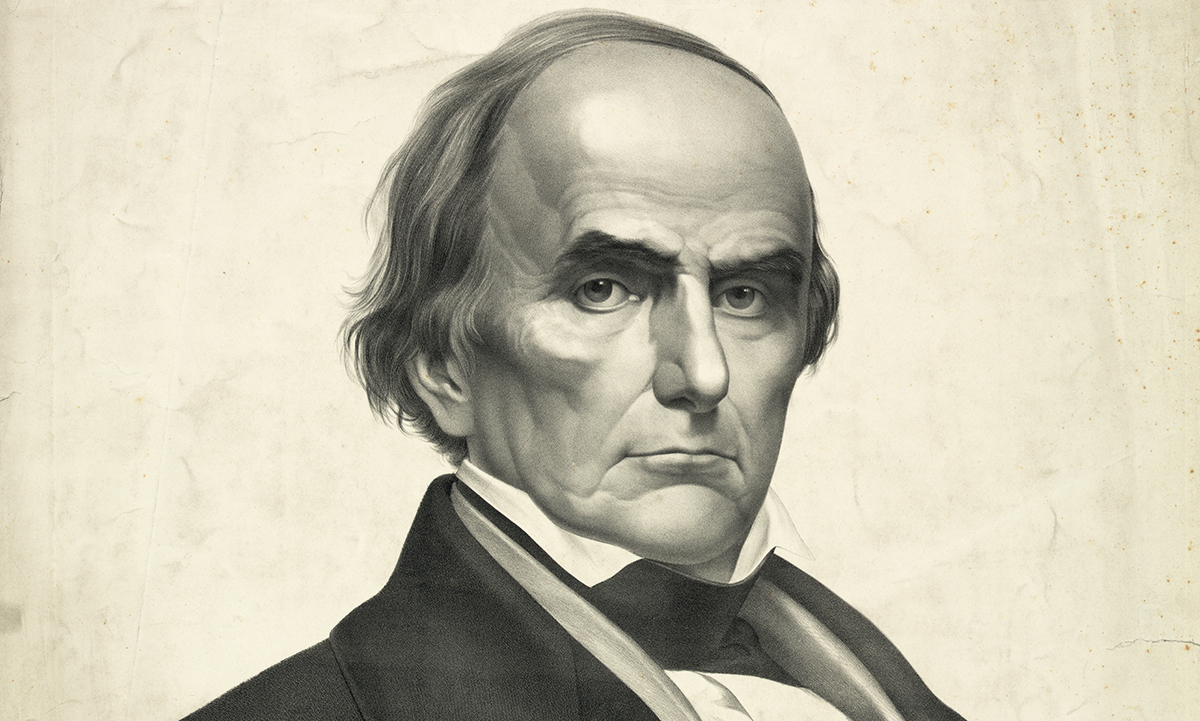
Daniel Webster, known as the “Defender of the Constitution,” was a famous orator and statesman who argued cases before the US Supreme Court, served as a US Congressman, a US Senator, and US Secretary of State. In testimony before the Massachusetts Constitutional Convention (transcribed below), Mr. Webster persuasively reasons for the peoples’ right to establish qualifications for their elected officials and acknowledges the importance of Massachusetts’ “respect and attachment to Christianity” through the retention of a constitutional provision requiring a profession of belief in the Christian religion as a qualification for holding public office.


Historical Introduction

In consequence of the separation of what is now the State of Maine from Massachusetts in the year 1820, it became necessary to make some change in the constitution of the Commonwealth. The opportunity was thought a favorable one for a general revision of that instrument, which had undergone no amendment since its adoption in 1780. Delegates were accordingly chosen by the people to meet in convention for this purpose. . . .Mr. Webster was among the delegates chosen by the town of Boston, and took an active and distinguished part in the business of the convention, both in committee-room and in debate.  As soon as the body was organized. . . [t]he subject of the official oaths and subscriptions required by the [current] constitution was referred to a committee . . . of which Mr. Webster was chairman. A report was made by this committee recommending that . . . a simple oath of allegiance to the Commonwealth, together with the oath of office, should be taken by all persons chosen or appointed to office. . . . and that a profession of belief in the Christian religion no longer be required as a qualification for office.

Daniel Webster’s remarks regarding the committee’s report provides compelling reasoning which should be considered by every American voter today. Webster’s comments emphasize the importance of Christian leaders and Christian principles in civil government. In the report, delivered on December 4th, 1820, Webster explained:

The Speech

It is obvious that the principal alteration proposed by the first resolution is the omission of the declaration of belief in the Christian religion as a qualification for office in the cases of the governor, lieutenant-governor, councillors, and members of the legislature. I shall content myself on this occasion with stating, shortly and generally, the sentiments of the select committee, as I understand them, on the subject of this resolution.

Two questions naturally present themselves. In the first place, Have the people a right, if in their judgment the security of their government and its due administration demand it, to require a declaration of belief in the Christian religion as a qualification or condition of office? On this question, a majority of the committee held a decided opinion. They thought the people had such a right. By the fundamental principle of popular and elective governments, all office is in the free gift of the people. They may grant or they may withhold it at pleasure; and if it be for them, and them only, to decide whether they will grant office, it is for them to decide, also, on what terms and what conditions they will grant it. Nothing is more unfounded than the notion that any man has a right to an office. This must depend on the choice of others, and consequently upon the opinions of others, in relation to his fitness and qualification for office. No man can be said to have a right to that which others may withhold from him at pleasure.

There are certain rights, no doubt, which the whole people, or the government as representing the whole people, owe to each individual in return for that obedience and personal service, and those proportionate contributions to the public burdens which each individual owes to the government. These rights are stated with sufficient accuracy, in the tenth article of the Bill of Rights, in this constitution. ” Each individual in society has a right to be protected by it in the enjoyment of his life, liberty, and property, according to the standing laws.” Here is no right of office enumerated; no right of governing others, or of bearing rule in the State. All bestowment of office remaining in the discretion of the people, they have of course a right to regulate it by any rules which they may deem expedient. Hence the people, by their constitution, prescribe certain qualifications for office respecting age, property, residence, and taxation. But if office, merely as such, were a right which each individual under the social compact was entitled to claim, all these qualifications would be excluded. Acknowledged rights are not subject, and ought not to be subject to any such limitation. The right of being protected in life, liberty, and estate is due to all and cannot be justly denied to any, whatever be their age, property, or residence in the State.

These qualifications, then, can only be made requisite as conditions for office on the ground that office is not what any man can demand as matter of right but rests in the confidence and good-will of those who are to bestow it. In short, it seems to me too plain to be questioned that the right of office is a matter of discretion and option, and can never be claimed by any man on the ground of obligation. It would seem to follow, then, that those who confer office may annex any such conditions to it as they think proper. If they prefer one man to another, they may act on that preference. If they regard certain personal qualifications, they may act accordingly, and ground of complaint is given to nobody. Between two candidates otherwise equally qualified, the people at an election may decide in favor of one because he is a Christian and against the other because he is not. They may repeat this preference at the next election on the same ground and may continue it from year to year.

Now, if the people may, without injustice, act upon this preference, and from a sole regard to this qualification, and refuse in any instance to depart from it, they have an equally clear right to prescribe this qualification beforehand as a rule for their future government. If they may do it, they may agree to do it. If they deem it necessary, they may so say beforehand. If the public will may require this qualification at every election as it occurs, the public will may declare itself beforehand and make such qualification a standing requisite. That cannot be an unjust rule, the compliance with which, in every case, would be right. This qualification has nothing to do with any man’s conscience. If he dislike the condition, he may decline the office in like manner as if he dislike the salary, the rank, or any thing else which the law attaches to it.

But however clear the right may be (and I can hardly suppose any gentleman will dispute it), the expediency of retaining the declaration is a more difficult question. It is said not to be necessary, because in this Commonwealth ninety-nine out of every hundred of the inhabitants profess to believe in the Christian religion. It is sufficiently certain, therefore, that persons of this description, and none others, will ordinarily be chosen to places of public trust. There is as much security, it is said, on this subject, as the necessity of the case requires. And as there is a sort of opprobrium incident to this qualification – a marking out, for observation and censorious remark, of a single individual, or a very few individuals, who may not be able to make the declaration – it is an act if not of injustice, yet of unkindness and of unnecessary rigor, to call on such individuals to make the declaration and to exclude them from office if they refuse to do so.

There is also another class of objections which have been stated. It has been said that there are many very devout and serious persons, persons who esteem the Christian religion to be above all price, to whom, nevertheless, the terms of this declaration seem somewhat too strong and intense. They seem, to these persons, to require the declaration of that faith which is deemed essential to personal salvation; and therefore not at all fit to be adopted as a declaration of belief in Christianity in a more popular and general sense. It certainly appears to me that this is a mistaken interpretation of the terms; that they imply only a general assent to the truth of the Christian revelation and, at most, to the supernatural occurrences which establish its authenticity. There may, however, and there appears to be, conscience in this objection; and all conscience ought to be respected. I was not aware, before I attended the discussions in the committee, of the extent to which this objection prevailed.

There is one other consideration to which I will allude, although it was not urged in committee. It is this. This qualification is made applicable only to the executive and the members of the legislature. It would not be easy, perhaps, to say why it should not be extended to the judiciary if it were thought necessary for any office. There can be no office in which the sense of religious responsibility is more necessary than in that of a judge; especially of those judges who pass, in the last resort, on the lives, liberty, and property of every man. There may be among legislators strong passions and bad passions. There may be party heats and personal bitterness. But legislation is in its nature general: laws usually affect the whole society; and if mischievous or unjust, the whole society is alarmed and seeks their repeal. The judiciary power, on the other hand, acts directly on individuals. The injured may suffer without sympathy or the hope of redress. The last hope of the innocent, under accusation and in distress, is in the integrity of his judges. If this fail, all fails; and there is no remedy on this side the bar of Heaven. Of all places, therefore, there is none which so imperatively demands that he who occupies it should be under the fear of God, and above all other fear, as the situation of a judge. For these reasons, perhaps, it might be thought that the constitution has not gone far enough if the provisions already in it were deemed necessary to the public security.

I believe I have stated the substance of the reasons which appeared to have weight with the committee. For my own part, finding this declaration in the constitution and hearing of no practical evil resulting from it, I should have been willing to retain it unless considerable objection had been expressed to it. If others were satisfied with it, I should be. I do not consider it, however, essential to retain it as there is another part of the constitution which recognizes, in the fullest manner, the benefits which civil society derives from those Christian institutions which cherish piety, morality, and religion. I am clearly of opinion that we should not strike out of the constitution all recognition of the Christian religion. I am desirous, in so solemn a transaction as the establishment of a constitution, that we should keep in it an expression of our respect and attachment to Christianity – not, indeed, to any of its peculiar forms but to its general principles.

(Source: Daniel Webster, The Writings and Speeches of Daniel Webster, (Boston: Little, Brown, & Company, 1903), III:3-7.)

John Witherspoon

Should Christians – Or Ministers – Run For Office?

Today’s critics assert that Christians should not be involved with politics or government, and especially that ministers should not be involved. Such opposition is not new. In fact, two centuries ago, Founding Father John Witherspoon delivered a sagacious rebuttal to these same objections.

John Witherspoon (1723-1794) was a distinguished Founding Father – the president of Princeton University, a signer of the Declaration of Independence, and a ratifier of the U.S. Constitution. He served on over 100 committees in Congress and was head of the Board of War (essentially, he was the congressional “boss” for Commander-in-Chief George Washington). But John Witherspoon was also a minister of the Gospel, he was the Rev. Dr. John Witherspoon! In fact, Dr. Witherspoon was the Billy Graham of his day, one of the most famous American ministers of that era, with volumes of published Gospel sermons.

A provision in the 1777 Georgia constitution reflected the belief that ministers should not be involved in politics. Supporters of this provision asserted the ministry of the Gospel was so important that ministers should not be distracted from their duty. (For example, the 1777 New York Constitution explained, “Whereas ministers of the Gospel are, by their profession, dedicated to the service of God and the care of souls and ought not to be diverted from the great duties of their function; therefore, no minister of the gospel . . . shall be eligible to . . . any civil office within this State.”) Following this same logic, the Georgia constitution declared, “No clergyman of any denomination shall be allowed a seat in the legislature.”

When Dr. Witherspoon learned of this prohibition, he penned the following tongue-in-cheek piece exposing the absurdity of that position. Interestingly, when Georgia wrote its third Constitution in 1798, a strong declaration of the rights of religious persons was inserted – a vast change from its first Constitution.


Following is Dr. Witherspoon’s writing on why ministers should be able to serve in State legislatures:

Sir,

In your paper of Saturday last, you have given us the new Constitution of Georgia, in which I find the following resolution, “No clergyman of any denomination shall be a member of the General Assembly.” I would be very well satisfied that some of the gentlemen who have made that an essential article of this constitution, or who have inserted and approve it in other constitutions, would be pleased to explain a little the principles, as well as to ascertain the meaning of it.

Perhaps we understand pretty generally, what is meant by a clergyman, viz. a person regularly called and set apart to the ministry of the gospel, and authorized to preach and administer the sacraments of the Christian religion. Now suffer me to ask this question: Before any man among us was ordained a minister, was he not a citizen of the United States, and if being in Georgia, a citizen of the state of Georgia? Had he not then a right to be elected a member of the assembly, if qualified in point of property? How then has he lost, or why is he deprived of this right? Is it by offence or disqualification? Is it a sin against the public to become a minister? Does it merit that the person, who is guilty of it should be immediately deprived of one of his most important rights as a citizen? Is not this inflicting a penalty which always supposes an offence? Is a minister then disqualified for the office of a senator or representative? Does this calling and profession render him stupid or ignorant? I am inclined to form a very high opinion of the natural understanding of the freemen and freeholders of the state of Georgia, as well as of their improvement and culture by education, and yet I am not able to conceive, but that some of those equally qualified, may enter into the clerical order: and then it must not be unfitness, but some other reason that produces the exclusion. Perhaps it may be thought that they are excluded from civil authority, that they may be more fully and constantly employed in their spiritual functions. If this had been the ground of it, how much more properly would it have appeared, as an order of an ecclesiastical body with respect to their own members. In that case I should not only have forgiven but approved and justified it; but in the way in which it now stands, it is evidently a punishment by loss of privilege, inflicted on those, who go into the office of the ministry; for which, perhaps, the gentlemen of Georgia may have good reasons, though I have not been able to discover them.

But besides the uncertainty of the principle on which this resolution is founded, there seems to me much uncertainty as to the meaning of it. How are we to determine who is or is not a clergyman? Is he only a clergyman who has received ordination from those who have derived the right by an uninterrupted succession from the apostles? Or is he also a clergyman, who is set apart by the imposition of hands of a body of other clergymen, by joint authority? Or is he also a clergyman who is set a part by the church members of his own society, without any imposition of hands at all? Or is he also a clergyman who has exhorted in a Methodist society, or spoken in a Quaker meeting, or any other religious assembly met for public worship? There are still greater difficulties behind: Is the clerical character indelible? There are some who have been ordained who occasionally perform some clerical functions, but have no pastoral charge at all. There are some who finding public speaking injurious to health, or from other reasons easily conceived, have resigned their pastoral charge, and wholly discontinued all acts and exercises of that kind; and there are some, particularly in New England, who having exercised the clerical office some time, and finding it less suitable to their talents than they apprehended, have voluntarily relinquished it, and taken to some other profession, as law, physic, or merchandize[sic]–Do these all continue clergymen, or do they cease to be clergymen, and by that cessation return to, or recover the honorable privileges of laymen?

I cannot help thinking that these difficulties are very considerable, and may occasion much litigation, if the article of the constitution stands in the loose, ambiguous form in which it now appears; and therefore I would recommend the following alterations, which I think will make every thing definite and unexceptionable.

“No clergyman, of any denomination, shall be capable of being elected a member of the Senate or House of Representatives, because {here insert the grounds of offensive disqualification, which I have not been able to discover} Provided always, and it is the true intent and meaning of this part of the constitution, that if at any time he shall be completely deprived of the clerical character by those by whom he was invested with it, as by deposition for cursing and swearing, drunkenness or uncleanness, he shall then be fully restored to all the privileges of a free citizen; his offence shall no more be remembered against him; but he may be chosen either to the Senate or House of Representatives, and shall be treated with all the respect due to his brethren, the other members of Assembly.”

(Source: John Witherspoon, The Works of John Witherspoon, (Edinburgh: J. Ogle, Parliament-Square, 1815), Vol. IX, pp 220-223.)

Letters Between the Danbury Baptists and Thomas Jefferson

(For the FBI forensic research on Thomas Jefferson’s letter click here. For an analysis of the context of this exchange between the Danbury Baptists and Jefferson, see Daniel Dreisbach’s “‘Sowing Useful Truths and Principles’: The Danbury Baptists, Thomas Jefferson, and the ‘Wall of Separation'” in the Journal of Church and State, Vol. 39, Summer 1997; or see David Barton’s article “The Separation of Church and State“)

Letter from the Danbury Baptists:

The address of the Danbury Baptist Association in the State of Connecticut, assembled October 7, 1801.
To Thomas Jefferson, Esq., President of the United States of America

Sir,
Among the many millions in America and Europe who rejoice in your election to office, we embrace the first opportunity which we have enjoyed in our collective capacity, since your inauguration , to express our great satisfaction in your appointment to the Chief Magistracy in the Unite States. And though the mode of expression may be less courtly and pompous than what many others clothe their addresses with, we beg you, sir, to believe, that none is more sincere.

Our sentiments are uniformly on the side of religious liberty: that Religion is at all times and places a matter between God and individuals, that no man ought to suffer in name, person, or effects on account of his religious opinions, [and] that the legitimate power of civil government extends no further than to punish the man who works ill to his neighbor. But sir, our constitution of government is not specific. Our ancient charter, together with the laws made coincident therewith, were adapted as the basis of our government at the time of our revolution. And such has been our laws and usages, and such still are, [so] that Religion is considered as the first object of Legislation, and therefore what religious privileges we enjoy (as a minor part of the State) we enjoy as favors granted, and not as inalienable rights. And these favors we receive at the expense of such degrading acknowledgments, as are inconsistent with the rights of freemen. It is not to be wondered at therefore, if those who seek after power and gain, under the pretense of government and Religion, should reproach their fellow men, [or] should reproach their Chief Magistrate, as an enemy of religion, law, and good order, because he will not, dares not, assume the prerogative of Jehovah and make laws to govern the Kingdom of Christ.

Sir, we are sensible that the President of the United States is not the National Legislator and also sensible that the national government cannot destroy the laws of each State, but our hopes are strong that the sentiment of our beloved President, which have had such genial effect already, like the radiant beams of the sun, will shine and prevail through all these States–and all the world–until hierarchy and tyranny be destroyed from the earth. Sir, when we reflect on your past services, and see a glow of philanthropy and goodwill shining forth in a course of more than thirty years, we have reason to believe that America’s God has raised you up to fill the Chair of State out of that goodwill which he bears to the millions which you preside over. May God strengthen you for the arduous task which providence and the voice of the people have called you–to sustain and support you and your Administration against all the predetermined opposition of those who wish to rise to wealth and importance on the poverty and subjection of the people.

And may the Lord preserve you safe from every evil and bring you at last to his Heavenly Kingdom through Jesus Christ our Glorious Mediator.

Signed in behalf of the Association,

Neh,h Dodge }
Eph’m Robbins } The Committee
Stephen S. Nelson }

*A cite for this letter could read:

Letter of Oct. 7, 1801 from Danbury (CT) Baptist Assoc. to Thomas Jefferson, Thomas Jefferson Papers, Manuscript Division, Library of Congress, Wash. D.C.


President Jefferson’s Reply:

Messrs. Nehemiah Dodge, Ephraim Robbins, and Stephen S. Nelson
A Committee of the Danbury Baptist Association, in the State of Connecticut.

Washington, January 1, 1802

Gentlemen,–The affectionate sentiment of esteem and approbation which you are so good as to express towards me, on behalf of the Danbury Baptist Association, give me the highest satisfaction. My duties dictate a faithful and zealous pursuit of the interests of my constituents, and in proportion as they are persuaded of my fidelity to those duties, the discharge of them becomes more and more pleasing.

Believing with you that religion is a matter which lies solely between man and his God, that he owes account to none other for his faith or his worship, that the legislative powers of government reach actions only, and not opinions, I contemplate with sovereign reverence that act of the whole American people which declared that their legislature would “make no law respecting an establishment of religion, or prohibiting the free exercise thereof,” thus building a wall of separation between Church and State. Adhering to this expression of the supreme will of the nation in behalf of the rights of conscience, I shall see with sincere satisfaction the progress of those sentiments which tend to restore to man all his natural rights, convinced he has no natural right in opposition to his social duties.

I reciprocate your kind prayers for the protection and blessing of the common Father and Creator of man, and tender you for yourselves and your religious association, assurances of my high respect and esteem.

Th Jefferson
Jan. 1. 1802

* A cite for this letter could read: Thomas Jefferson, The Writings of Thomas Jefferson, ed. Albert E. Bergh (Washington, DC: The Thomas Jefferson Memorial Association of the United States, 1904), XVI:281-282.

George Washington’s Farewell Address

(There is an outline and a select dictionary at the end of this Address.)

Friends and Fellow-Citizens:

The period for a new election of a citizen, to administer the Executive Government of the United States being not far distant, and the time actually arrived, when your thoughts must be employed in designating the person, who is to be clothed with that important trust, it appears to me proper, especially as it may conduce to a more distinct expression of the public voice, that I should now apprise you of the resolution I have formed to decline being considered among the number of those out of whom a choice is to be made.

I beg you at the same time to do me the justice to be assured, that this resolution has not been taken, without a strict regard to all the considerations appertaining to the relation which binds a dutiful citizen to his country; and that in withdrawing the tender of service, which silence in my situation might imply, I am influenced by no diminution of zeal for your future interest, no deficiency of grateful respect for your past kindness, but am supported by a full conviction that the step is compatible with both.

The acceptance of, and continuance hitherto in the office to which your suffrages have twice called me have been a uniform sacrifice of inclination to the opinion of duty and to a deference for what appeared to be your desire. I constantly hoped that it would have been much earlier in my power, consistently with motives which I was not at liberty to disregard, to return to that retirement from which I had been reluctantly drawn. The strength of my inclination to do this previous to the last election had even led to the preparation of an address to declare it to you; but mature reflection on the then perplexed and critical posture of our affairs with foreign nations, and the unanimous advice of persons entitled to my confidence impelled me to abandon the idea. I rejoice, that the state of your concerns, external as well
as internal, no longer renders the pursuit of inclination incompatible with the sentiment of duty, or propriety, and am persuaded, whatever partiality may be
retained for my services, that in the present circumstances of our country, you will not disapprove my determination to retire.

The impressions with which I first undertook the arduous trust were explained on the proper occasion. In the discharge of this trust, I will only say that I have, with good intentions, contributed towards the organization and administration of the government the best exertions of which a very fallible judgment was capable. Not unconscious in the outset of the inferiority of my qualifications, experience in my own eyes, perhaps still more in the eyes of others, has strengthened the motives to diffidence of myself; and every day the increasing weight of years admonishes me more and more that the shade of retirement is as necessary to me as it will be welcome. Satisfied that if any circumstances have given peculiar value to my services they were temporary, I have the consolation to believe that, while choice and prudence invite me to quit the political scene, patriotism does not forbid it.

In looking forward to the moment which is intended to terminate the career of my public life my feelings do not permit me to suspend the deep acknowledgment of that debt of gratitude, which I owe to my beloved country for the many honors it has conferred upon me; still more for the steadfast confidence with which it has supported me, and for the opportunities I have thence enjoyed of manifesting my inviolable attachment by services faithful and persevering, though in usefulness unequal to my zeal. If benefits have resulted to our country from these services, let it always be remembered to your praise and as an instructive example in our annals, that under circumstances in which the passions, agitated in every direction, were liable to mislead; amidst appearances sometimes dubious; vicissitudes of fortune often discouraging; in situations in which not unfrequently want of success has countenanced the spirit of criticism, the constancy of your support was the essential prop of the efforts and a guarantee of the plans by which they were effected. Profoundly penetrated with this idea, I shall carry it with me to my grave as a
strong incitement to unceasing vows that Heaven may continue to you the choicest tokens of its beneficence that your union and brotherly affection may be perpetual; that the free Constitution which is the work of your hands may be sacredly maintained; that its administration in every department may be stamped with wisdom and virtue; that, in fine, the happiness of the people of these States, under the auspices of liberty, may be made complete by so careful a preservation and so prudent a use of this blessing as will acquire to them the glory of recommending it to the applause, the affection, and adoption of every nation which is yet a stranger to it.

Here, perhaps, I ought to stop. But a solicitude for your welfare which cannot end but with my life, and the apprehension of danger natural to that solicitude, urge me on an occasion like the present to offer to your solemn contemplation and to recommend to your frequent review some sentiments which are the result of much reflection, of no inconsiderable observation, and which appear to me all important to the permanency of your felicity as a people. These will be offered to you with the more freedom as you can only see in them the disinterested warnings of a parting friend, who can possibly have no personal motive to bias his counsel. Nor can I forget as an encouragement to it your indulgent reception of my sentiments on a former and not dissimilar occasion.

Interwoven as is the love of liberty with every ligament of your hearts, no recommendation of mine is necessary to fortify or confirm the attachment.

The unity of government which constitutes you one people is also now dear to you. It is justly so, for it is a main pillar in the edifice of your real independence, the support of your tranquillity at home, your peace abroad, of your safety, of your prosperity, of that very liberty which you so highly prize. But as it is easy to foresee that from different causes and from different quarters much pains will be taken, many artifices employed, to weaken in your minds the conviction of this truth, as this is the point in your political fortress against which the batteries of internal and external enemies will be most constantly and actively (though often covertly and insidiously) directed, it is of infinite moment, that you should properly estimate the immense value of your national union to your collective and individual
happiness; that you should cherish a cordial, habitual, and immovable attachment to it; accustoming yourselves to think and speak of it as of the palladium of your political safety and prosperity; watching for its preservation with jealous anxiety; discountenancing whatever may suggest even a suspicion that it can in any event be abandoned, and indignantly frowning upon the first dawning of every attempt to alienate any portion of our country from the rest, or to enfeeble the sacred ties which now link together the various parts.

For this you have every inducement of sympathy and interest. Citizens by birth or choice of a common country, that country has a right to concentrate your affections. The name of American, which belongs to you in your national capacity, must always exalt the just pride of patriotism more than any appellation derived from local discriminations. With slight shades of difference, you have the same religion, manners, habits, and political principles. You have in a common cause fought and triumphed together. The independence and liberty you possess are the work of joint counsels, and joint efforts, of common dangers, sufferings, and successes.

But these considerations, however powerfully they address themselves to your sensibility, are greatly outweighed by those which apply more immediately to your interest. Here every portion of our country finds the most commanding motives for carefully guarding and preserving the union of the whole.

The North, in an unrestrained intercourse with the South, protected by the equal laws of a common government, finds in the productions of the latter great additional resources of maritime and commercial enterprise and precious materials of manufacturing industry. The South, in the same intercourse, benefiting by the same agency of the North, sees its agriculture grow and its commerce expand. Turning partly into its own channels the seamen of the North, it finds its particular navigation invigorated; and while it contributes in different ways to nourish and increase the general mass of the national navigation, it looks forward to the protection of a maritime strength to which itself is unequally adapted. The East, in a like intercourse with the West, already finds, and in the progressive improvement of interior communications by land and water will more and more find, a valuable vent for the commodities which it brings from abroad or manufactures at home. The West derives from the East supplies requisite to its growth and comfort, and what is perhaps of still greater consequence, it must of necessity owe the secure enjoyment of indispensable outlets for its own productions to the weight, influence, and the future maritime strength of the Atlantic side of the Union, directed by an indissoluble community of interest as one nation. Any other tenure by which the West can hold this essential advantage, whether derived from its own separate strength, or from an apostate and unnatural connection with any foreign power, must be intrinsically precarious.

While, then, every part of our country thus feels an immediate and particular interest in union, all the parts combined in the united mass of means and efforts cannot fail to find greater strength, greater resource, proportionately greater security from external danger, a less frequent interruption of their peace by foreign nations, and what is of inestimable value, they must derive from Union an exemption from those broils and wars between themselves which so frequently afflict neighboring countries not tied together by the same governments, which their own rivalries alone would be sufficient to produce, but which opposite foreign alliances, attachments, and intrigues would stimulate and embitter. Hence, likewise, they will avoid the necessity of those overgrown military establishments which, under any form of government, are inauspicious to liberty, and which are to be regarded as particularly hostile to republican liberty. In this sense it is, that your union ought to be considered as a main prop of your liberty, and that the love of the one ought to endear to you the preservation of the other.

These considerations speak a persuasive language to every reflecting and virtuous mind, and exhibit the continuance of the union as a primary object of patriotic desire. Is there a doubt whether a common government can embrace so large a sphere? Let experience solve it. To listen to mere speculation in such a case were criminal. We are authorized to hope that a proper organization of the whole, with the auxiliary agency of governments for the respective subdivisions, will afford a happy issue to the experiment. It is well worth a fair and full experiment. With such powerful and obvious motives to union affecting all parts of our country, while experience shall not have demonstrated its impracticability, there will always be reason to distrust the patriotism of those who in any quarter may endeavour to weaken its bands.

In contemplating the causes which may disturb our union it occurs as matter of serious concern that any ground should have been furnished for characterizing parties by geographical discriminations Northern and Southern, Atlantic and Western whence designing men may endeavor to excite a belief that there is a real difference of local interests and views. One of the expedients of party to acquire influence within particular districts is to misrepresent the opinions and aims of other districts. You cannot shield yourselves too much against the jealousies and heart burnings which spring from these misrepresentations; they tend to render alien to each other those who ought to be bound together by fraternal affection. The inhabitants of our Western country have lately had a useful lesson on this head. They have seen in the negotiation by the Executive and in the unanimous ratification by the Senate of the treaty with Spain, and in the universal satisfaction at that event
throughout the United States, a decisive proof how unfounded were the suspicions propagated among them of a policy in the General Government and in the Atlantic States unfriendly to their interests in regard to the Mississippi. They have been witnesses to the formation of two treaties – that with Great Britain and that with Spain – which secure to them everything they could desire in respect to our foreign relations towards confirming their prosperity. Will it not be their wisdom to rely for the preservation of these advantages on the union by which they were procured? Will they not henceforth be deaf to those advisers, if such there are, who would sever them from their brethren and connect them with aliens?

To the efficacy and permanency of your union a government for the whole is indispensable. No alliances, however strict, between the parts can be an adequate substitute. They must inevitably experience the infractions and interruptions which all alliances in all times have experienced. Sensible of this momentous truth, you have improved upon your first essay by the adoption of a Constitution of Government better calculated than your former for an intimate union and for the efficacious management of your common concerns. This Government, the offspring of our own choice, uninfluenced and unawed, adopted upon full investigation and mature deliberation, completely free in its principles, in the distribution of its powers, uniting security with energy, and containing within itself a provision for its own amendment, has a just claim to your confidence and your support. Respect for its authority, compliance with its laws, acquiescence in its measures, are duties enjoined by the fundamental maxims of true liberty. The basis of our political systems is the right of the people to make and to alter their constitutions of government. But the constitution which at any time exists till changed by an explicit and authentic act of the whole people is sacredly obligatory upon all. The very
idea of the power and the right of the people to establish government presupposes the duty of every individual to obey the established government.

All obstructions to the execution of the laws, all combinations and associations, under whatever plausible character, with the real design to direct, control, counteract, or awe the regular deliberation and action of the constituted authorities, are destructive of this fundamental principle and of fatal tendency. They serve to organize faction; to give it an artificial and extraordinary force; to put in the place of the delegated will of the nation the will of a party, often a small but artful and enterprising minority of the community, and, according to the alternate triumphs of different parties, to make the public administration the mirror of the ill-concerted and incongruous projects of faction rather than the organ of consistent and wholesome plans, digested by common councils and modified by mutual interests.

However combinations or associations of the above description may now and then answer popular ends, they are likely in the course of time and things to become potent engines by which cunning, ambitious, and unprincipled men will be enabled to subvert the power of the people, and to usurp for themselves the reins of government, destroying afterwards the very engines which have lifted them to unjust dominion.

Toward the preservation of your Government and the permanency of your present happy state, it is requisite not only that you steadily discountenance irregular oppositions to its acknowledged authority, but also that you resist with care the spirit of innovation upon its principles, however specious the pretexts. One method of assault may be to effect in the forms of the Constitution alterations which will impair the energy of the system, and thus to undermine what cannot be directly overthrown. In all the changes to which you may be invited remember that time and habit are at least as necessary to fix the true character of governments as of other human institutions; that experience is the surest standard by which to test the real tendency of the existing constitution of a country; that facility in changes upon the credit of mere hypothesis and opinion exposes to perpetual change, from the endless variety of hypothesis and opinion; and remember especially that for the efficient
management of your common interests in a country so extensive as ours a Government of as much vigor as is consistent with the perfect security of liberty is indispensable. Liberty itself will find in such a government, with powers properly distributed and adjusted, its surest Guardian. It is, indeed, little else than a name where the Government is too feeble to withstand the enterprises of faction, to confine each member of the society within the limits prescribed by the laws, and to maintain all in the secure and tranquil enjoyment of the rights of person and property.

I have already intimated to you the danger of parties in the State, with particular reference to the founding of them on geographical discriminations. Let me now take a more comprehensive view, and warn you in the most solemn manner against the baneful effects of the spirit of party generally.

This Spirit, unfortunately, is inseparable from our nature, having its root in the strongest passions of the human mind. It exists under different shapes in all governments, more or less stifled, controlled, or repressed; but in those of the popular form it is seen in its greatest rankness and is truly their worst enemy.

The alternate domination of one faction over another, sharpened by the spirit of revenge natural to party dissension, which in different ages and countries has perpetrated the most horrid enormities, is itself a frightful despotism. But this leads at length to a more formal and permanent despotism. The disorders and miseries which result gradually incline the minds of men to seek security and repose in the absolute power of an individual, and sooner or later the chief of some prevailing faction, more able or more fortunate than his competitors, turns this disposition to the purposes of his own elevation on the ruins of public liberty.

Without looking forward to an extremity of this kind (which nevertheless ought not to be entirely out of sight), the common and continual mischiefs of the spirit of party are sufficient to make it the interest and duty of a wise people to discourage and restrain it.

It serves always to distract the public councils, and enfeeble the public administration. It agitates the community with ill-founded jealousies and false alarms; kindles the animosity of one part against another; foments occasionally riot and insurrection. It opens the door to foreign influence and corruption, which find a facilitated access to the government itself through the channels of party passion. Thus the policy and the will of one country are subjected to the policy and will of another.

There is an opinion that parties in free countries are useful checks upon the administration of the government, and serve to keep alive the spirit of liberty. This within certain limits is probably true and in governments of a monarchical cast patriotism may look with indulgence, if not with favor, upon the spirit of party. But in those of the popular character, in governments purely elective, it is a spirit not to be encouraged. From their natural tendency it is certain there will always be enough of that spirit for every salutary purpose; and there being constant danger of excess, the effort ought to be by force of public opinion to mitigate and assuage it. A fire not to be quenched, it demands a uniform vigilance to prevent its bursting into a flame, lest, instead of warming, it should consume.

It is important, likewise, that the habits of thinking in a free country should inspire caution in those entrusted with its administration to confine themselves within their respective constitutional spheres, avoiding in the exercise of the powers of one department to encroach upon another. The spirit of encroachment tends to consolidate the powers of all the departments in one, and thus to create, whatever the form of government, a real despotism. A just estimate of that love of power and proneness to abuse it which predominates in the human heart is sufficient to satisfy us of the truth of this position. The necessity of reciprocal checks in the exercise of political power, by dividing and distributing it into different depositories, and constituting each the guardian of the public weal against invasions by the others, has been evinced by experiments ancient and modern, some of them in our country and under our own eyes. To preserve them must be as necessary as to institute them. If, in the opinion of the people, the distribution or modification of the constitutional powers be in any particular wrong, let it be corrected by an amendment in the way which the Constitution designates. But let there be no change by usurpation; for though this in one instance may be the instrument of good, it is the customary weapon by which free governments are destroyed. The precedent must always greatly overbalance in permanent evil any partial or transient benefit which the use can at any time yield.

Of all the dispositions and habits which lead to political prosperity, religion and morality are indispensable supports. In vain would that man claim the tribute of patriotism who should labor to subvert these great pillars of human happiness – these firmest props of the duties of men and citizens. The mere politician, equally with the pious man, ought to respect and to cherish them. A volume could not trace all their connections with private and public felicity. Let it simply be asked, “where is the security for property, for reputation, for life, if the sense of religious obligation desert the oaths which are the instruments of investigation in courts of justice?” And let us with caution indulge the supposition that morality can be maintained without religion. Whatever may be conceded to the influence of refined education on minds of peculiar structure, reason and experience both forbid us to expect that national morality can prevail in exclusion of religious principle.

It is substantially true that virtue or morality is a necessary spring of popular government. The rule indeed extends with more or less force to every species of free government. Who that is a sincere friend to it can look with indifference upon attempts to shake the foundation of the fabric?

Promote, then, as an object of primary importance, institutions for the general diffusion of knowledge. In proportion as the structure of a government gives force to public opinion, it is essential that public opinion should be enlightened.

As a very important source of strength and security, cherish public credit. One method of preserving it is to use it as sparingly as possible, avoiding occasions of expense by cultivating peace, but remembering also that timely disbursements to prepare for danger frequently prevent much greater disbursements to repel it; avoiding likewise the accumulation of debt, not only by shunning occasions of expense, but by vigorous exertions in times of peace to discharge the debts which unavoidable wars have occasioned, not ungenerously throwing upon posterity the burden which we ourselves ought to bear. The execution of these maxims belongs to your representatives; but it is necessary that public opinion should cooperate. To facilitate to them the performance of their duty it is essential that you should practically bear in mind that towards the payment of debts there must be revenue; that to have revenue there must be taxes; that no taxes can be devised which are not more or less inconvenient and unpleasant; that the intrinsic embarrassment inseparable from the selection of the proper objects (which is always a choice of difficulties), ought to be a decisive motive for a candid construction of the conduct of the Government in making it, and for a spirit of acquiescence in the measures for obtaining revenue which the public exigencies may at any time dictate.

Observe good faith and justice towards all nations. Cultivate peace and harmony with all. Religion and morality enjoin this conduct. And can it be that good policy does not equally enjoin it? It will be worthy of a free, enlightened, and at no distant period a great nation to give to mankind the magnanimous and too novel example of a people always guided by an exalted justice and benevolence. Who can doubt that in the course of time and things the fruits of such a plan would richly repay any temporary advantages which might be lost by a steady adherence to it? Can it be that Providence has not connected the permanent felicity of a nation with its virtue? The experiment, at least, is recommended by every sentiment which ennobles human nature. Alas! is it rendered impossible by its vices?

In the execution of such a plan nothing is more essential than that permanent, inveterate antipathies against particular nations and passionate attachments for others should be excluded, and that in place of them just and amicable feelings towards all should be cultivated. The nation which indulges towards another an habitual hatred or an habitual fondness is in some degree a slave. It is a slave to its animosity or to its affection, either of which is sufficient to lead it astray from its duty and its interest. Antipathy in one nation against another disposes each more readily to offer insult and injury, to lay hold of slight causes of umbrage, and to be haughty and intractable when accidental or trifling occasions of dispute occur. Hence frequent collisions, obstinate, envenomed, and bloody contests. The nation prompted by ill-will and resentment sometimes impels to war the government contrary to the best calculations of policy. The government sometimes participates in the national propensity, and adopts through passion what reason would reject. At other times it makes the animosity of the nation subservient to projects of hostility,
instigated by pride, ambition, and other sinister and pernicious motives. The peace often, sometimes perhaps the liberty, of nations has been the victim.

So, likewise, a passionate attachment of one nation for another produces a variety of evils. Sympathy for the favorite nation, facilitating the illusion of an imaginary common interest in cases where no real common interest exists, and infusing into one the enmities of the other, betrays the former into a participation in the quarrels and wars of the latter without adequate inducement or justification. It leads also to concessions to the favorite nation of privileges denied to others, which is apt doubly to injure the nation making the concessions by unnecessarily parting with what ought to have been retained, and by exciting jealousy, ill-will, and a disposition to retaliate in the parties from whom equal privileges are withheld; and it gives to ambitious, corrupted, or deluded citizens (who devote themselves to the favorite nation) facility to betray or sacrifice the interests of their own country without odium, sometimes even with popularity, gilding with the appearances of a virtuous sense of obligation, a commendable deference for public opinion, or a laudable zeal for public good the base or foolish compliances of ambition, corruption, or infatuation.

As avenues to foreign influence in innumerable ways, such attachments are particularly alarming to the truly enlightened and independent patriot. How many opportunities do they afford to tamper with domestic factions, to practise the arts of seduction, to mislead public opinion, to influence or awe the public councils! Such an attachment of a small or weak toward a great and powerful nation dooms the former to be the satellite of the latter. Against the insidious wiles of foreign influence (I conjure you to believe me, fellow-citizens), the jealousy of a free people ought to be constantly awake, since history and experience prove that foreign influence is one of the most baneful foes of republican government. But that jealousy, to be useful, must be impartial, else it becomes the instrument of the very influence to be avoided, instead of a defense against it. Excessive partiality for one foreign nation and excessive dislike of another cause those whom they actuate to see danger only on one side, and serve to veil and even second the arts of influence on the other. Real patriots who may resist the intrigues of the favorite are
liable to become suspected and odious, while its tools and dupes usurp the applause and confidence of the people to surrender their interests.

The great rule of conduct for us, in regard to foreign nations, is, in extending our commercial relations to have with them as little political connection as possible. So far as we have already formed engagements, let them be fulfilled with perfect good faith. Here let us stop.

Europe has a set of primary interests which to us have none or a very remote relation. Hence she must be engaged in frequent controversies, the causes of which are essentially foreign to our concerns. Hence, therefore, it must be unwise in us to implicate ourselves by artificial ties in the ordinary vicissitudes of her politics or the ordinary combinations and collisions of her friendships or enmities.

Our detached and distant situation invites and enables us to pursue a different course. If we remain one people, under an efficient government, the period is not far off when we may defy material injury from external annoyance; when we may take such an attitude as will cause the neutrality we may at any time resolve upon to be scrupulously respected; when belligerent nations, under the impossibility of making acquisitions upon us, will not lightly hazard the giving us provocation; when we may choose peace or war, as our interest, guided by our justice, shall counsel.

Why forgo the advantages of so peculiar a situation? Why quit our own to stand upon foreign ground? Why, by interweaving our destiny with that of any part of Europe, entangle our peace and prosperity in the toils of European ambition, rivalship, interest, humor, or caprice?

It is our true policy to steer clear of permanent alliances with any portion of the foreign world, so far, I mean, as we are now at liberty to do it; for let me not be understood as capable of patronizing infidelity to existing engagements. I hold the maxim no less applicable to public than to private affairs that honesty is always the best policy. I repeat, therefore, let those engagements be observed in their genuine sense. But in my opinion it is unnecessary and would be unwise to extend them.

Taking care always to keep ourselves by suitable establishments on a respectable defensive posture, we may safely trust to temporary alliances for extraordinary emergencies.

Harmony, liberal intercourse with all nations are recommended by policy, humanity, and interest. But even our commercial policy should hold an equal and impartial hand, neither seeking nor granting exclusive favors or preferences; consulting the natural course of things; diffusing and diversifying by gentle means the streams of commerce, but forcing nothing; establishing with powers so disposed, in order to give trade a stable course, to define the rights of our merchants, and to enable the Government to support them, conventional rules of intercourse, the best that present circumstances and mutual opinion will permit, but temporary and liable to be from time to time abandoned or varied as experience and circumstances shall dictate; constantly keeping in view that it is folly in one nation to look for disinterested favors from another; that it must pay with a portion of its independence for whatever it may accept under that character; that by such acceptance it may place itself in the condition of having given equivalents for nominal favors, and yet of being reproached with ingratitude for not giving more. There can be no greater error than to expect or calculate upon real favors from nation to nation. It is an illusion which experience must cure, which a just pride ought to discard.

In offering to you, my countrymen, these counsels of an old and affectionate friend I dare not hope they will make the strong and lasting impression I could wish – that they will control the usual current of the passions or prevent our nation from running the course which has hitherto marked the destiny of nations. But if I may even flatter myself that they may be productive of some partial benefit, some occasional good – that they may now and then recur to moderate the fury of party spirit, to warn against the mischiefs of foreign intrigue, to guard against the impostures of pretended patriotism – this hope will be a full recompense for the solicitude for your welfare by which they have been dictated.

How far in the discharge of my official duties I have been guided by the principles which have been delineated the public records and other evidences of my conduct must witness to you and to the world. To myself, the assurance of my own conscience is that I have at least believed myself to be guided by them.

In relation to the still subsisting war in Europe my proclamation of the 22d of April, 1793, is the index to my plan. Sanctioned by your approving voice and by that of your representatives in both Houses of Congress, the spirit of that measure has continually governed me, uninfluenced by any attempts to deter or divert me from it.

After deliberate examination, with the aid of the best lights I could obtain, I was well satisfied that our country, under all the circumstances of the case, had a right to take, and was bound in duty and interest to take, a neutral position. Having taken it, I determined as far as should depend upon me to maintain it with moderation, perseverance, and firmness.

The considerations which respect the right to hold this conduct it is not necessary on this occasion to detail. I will only observe, that, according to my understanding of the matter, that right, so far from being denied by any of the belligerent powers, has been virtually admitted by all.

The duty of holding a neutral conduct may be inferred, without any thing more, from the obligation which justice and humanity impose on every nation, in cases in which it is free to act, to maintain inviolate the relations of peace and amity towards other nations.

The inducements of interest for observing that conduct will best be referred to your own reflections and experience. With me a predominant motive has been to endeavor to gain time to our country to settle and mature its yet recent institutions, and to progress without interruption to that degree of strength and consistency which is necessary to give it, humanly speaking, the command of its own fortunes.

Though, in reviewing the incidents of my Administration, I am unconscious of intentional error, I am nevertheless too sensible of my defects not to think it probable that I may have committed many errors. Whatever they may be, I fervently beseech the Almighty to avert or mitigate the evils to which they may tend. I shall also carry with me the hope that my country will never cease to view them with indulgence, and that, after forty-five years of my life dedicated to its service with an upright zeal, the faults of incompetent abilities will be consigned to oblivion, as myself must soon be to the mansions of rest.

Relying on its kindness in this as in other things, and actuated by that fervent love toward it which is so natural to a man who views in it the native soil of himself and his progenitors for several generations, I anticipate with pleasing expectation that retreat in which I promise myself to realize without alloy the sweet enjoyment of partaking in the midst of my fellow citizens the benign influence of good laws under a free government – the ever-favorite object of my heart, and the happy reward, as I trust, of our mutual cares, labors, and dangers.

George Washington

OUTLINE

  1. Retirement from office.
    1. He realizes people must be thinking about his replacement, therefore he declines re-election.
    2. He has thought it through, and feels like it is in everyone’s best interest.
    3. He wanted to retire earlier, but foreign affairs and advice from those he respected caused him to “abandon the idea.”
    4. Now that everything is calm, he is persuaded that the people will not disapprove of this “determination to retire.”
    5. He is convinced his age forces retirement, and he welcomes the opportunity.
    6. He offers gratitude for the people’s support.
    7. He offers a blessing “that Heaven may continue to you the choicest tokens of its beneficence. . .”
  2. Scope of the Address.
    1. His sentiments are for the people’s “frequent review,” he wanted us to read and re-read the Address.
    2. His only motive was as a friend.
    3. He felt no need to recommend a love of liberty – it was already there.
  3. Unity of Government.
    1. Unity is a “main pillar” of “real independence”:
      1. for the support of “tranquility at home”
      2. for “your peace abroad”
      3. for “your safety”
      4. for “your prosperity”
      5. for “that very liberty which you so highly prize.”
    2. Common attributes of unity:
      1. same religion
      2. manners
      3. habits
      4. political principles.
    3. The most commanding motive is to preserve the “union of the whole.”
    4. The North, South, East, and West all depend on each other.
    5. Unity leads to greater strength, resources, and security.
    6. Unity will help “avoid the necessity of . . . overgrown military establishments” and will be the main “prop of your liberty.”
    7. He questions the patriotism of anyone who tries to “weaken its bands.”
    8. It was unity that brought two valuable treaties:
      1. with Great Britain
      2. with Spain.
    9. Government for the whole – via the Constitution – is indispensable; not just alliances between sections.
      1. the adoption of the Constitution was an improvement on the former “essay.”
      2. respect for its authority, compliance with its laws, and acquiescence in its measures are fundamental maxims of true liberty.
      3. the people’s right to alter constitutions is the basis of our political system.
  4. Spirit of Party.
    1. Parties are “potent engines” that men will use to take over the “reins of government.”
    2. Washington warns against parties’ “baneful effects”:
      1. leads to the absolute power of an individual
      2. “discourage and restrain” the spirit of party
      3. leads to “jealousies and false alarms”
      4. “animosity of one part against another”
      5. can lead to “riot and insurrection”
      6. opens “door to foreign influence and corruption”
      7. “it is a spirit not to be encouraged.”
  5. Spirit of Encroachment.
    1. Leads to “a real despotism.”
    2. There is a necessity of “reciprocal checks in the exercise of political power.”
    3. If a problem arises, correct it by an amendment, not by “usurpation.”
  6. Religion and Morality.
    1. Are “indispensable supports” for “political prosperity.”
    2. Are the “firmest props of the duties of Men and Country.”
    3. The oaths in our courts would be useless without “the sense of religious obligation.”
    4. “And let us with caution indulge the supposition, that morality can be maintained without religion.”
    5. “Reason and experience both forbid us to expect, that national morality can prevail in exclusion of religious principle.”
    6. “Promote, then, as an object of primary importance, institutions for the general diffusion of knowledge.”
  7. Debt.
    1. “Avoid occasions of expense by cultivating peace . . . .”
    2. “Timely disbursements to prepare for danger” are better than “greater disbursements to repel it.”
    3. Avoid debt: in time of peace, pay off debts..
    4. Public opinion should “cooperate” with their representatives to pay off debt.
    5. Some taxes are necessary even though “inconvenient and unpleasant.”
  8. Foreign Policy.
    1. We should exercise “good faith and justice towards all nations.”
      1. “religion and morality enjoin this conduct”
      2. we should be guided by “an exalted justice and benevolence.”
    2. Replace “inveterate antipathies” (hatred) and passionate attachments with “just and amicable feelings.”
      1. “passionate attachments” produce a variety of evils
      2. these attachments will lead you into “quarrels and wars”
      3. they will also lead to favoritism, conceding “privileges denied to others.”
    3. Foreign “attachments” are “alarming” because they open the door to foreigners who might:
      1. “tamper with domestic factions”
      2. “practise the arts of seduction”
      3. “mislead public opinion”
      4. influence “Public Councils.”
    4. “Foreign influence is one of the most baneful foes of Republican Government.”
    5. “The great rule of conduct for us”: “as little political connection as possible.”
      1. we should fulfill obligations, then stop
      2. we should not get involved in Europe’s affairs.
    6. Our “detached and distant situation . . . enables . . . a different course.”
    7. “Steer clear of permanent alliances with any portion of the foreign world.”
    8. However, we may have “temporary alliances, for extraordinary emergencies.”
    9. Maintain “a liberal intercourse with all nations.”
  9. Conclusion.
    1. Washington hopes his counsel will:
      1. “help moderate the fury of party spirit”
      2. “warn against the mischiefs of foreign intrigue”
      3. “guard against the impostures of pretended patriotism.”
    2. He believes himself to be guided by the “principles which have been delineated” above.
    3. A “neutral position” is the best course to take regarding the “subsisting war in Europe.”
      1. that neutrality is the right course has been “admitted by all.”
      2. our “motive has been to endeavor to gain time for our country to settle and mature” until America has “command of its own fortunes.”
    4. Washington asks “the Almighty” to correct any unintentional errors or defects from his administration.
    5. He looks forward to retiring and enjoying “good laws under a free government.”
    6. Closing words.

VOCABULARYacquiescence – agreement without protest. Consent.

actuate – put into motion. Motivate.

admonish – to counsel against. Caution.

alienate – to cause to become unfriendly. Exclude.

alliance – a formal pact between nations. Partnership.

animosity – bitter hostility. Hatred.

antipathies – strong feelings of hatred or opposition. Aversions.

apostate – abandoning one’s principles. Defective or Traitorous.

appellation – a name or title.

appertaining – relating to.

apprise – to give notice; to inform. Notify.

arduous – demanding great care, effort, or labor. Difficult.

artifices – subtle but base deceptions. Tricks.

assuage – make less burdensome or painful. Relieve.

auspice – protection or support. Authority.

auxiliary – giving assistance or support. Supplementary.

avert – to turn away. Prevent.

baneful – causing death, destruction, or ruin. Harmful.

belligerent – inclined or eager to fight. Hostile.

beneficence – a charitable act or gift. Kindness.

benevolence – an inclination to do kind or charitable acts. Goodness.

benign – tending to promote well-being. Beneficial.

beseech – to call upon earnestly. Request.

bias – to cause to have a prejudice view. Distort.

conceded – acknowledged as true, just, or proper. Given.

conjure – to call upon or entreat solemnly. Call upon.

consigned – turned over to another’s charge. Delivered.

consolation – the comforting in time of grief, defeat, or trouble. Comfort.

contemplation – thoughtful observation. Meditation.

countenanced – to give or express approval to. Approved.

covertly – concealed, hidden, or secret.

cultivate – promote the growth of. Develop.

deference – yielding to the wishes of another. Consideration.

deliberate – planned in advance. Intentional.

delineated – depicted in words or gestures. Outlined.

despotisms – political system with one man in absolute power. Oppression.

diffidence – the quality of lacking self-confidence. Humility.

diffusing – causing to spread freely. Spreading.

diffusion – the process of diffusing. Spreading.

diminution – reduction. Decrease.

disbursements – money paid out. Expenditures.

discriminations – acts based on prejudice. Prejudices.

dispositions – an habitual tendency or inclination. Tendencies.

diversifying – giving variety to. Varying.

dubious – causing doubt or uncertainty. Uncertain.

edifice – a building of imposing appearance or size. Structure.

efficacy – power to produce a desired effect. Effectiveness.

encroach – to advance beyond proper limits. Intrude.

enmities – deep-seated mutual hatred. Hostilities.

ennobles – raises in rank. Elevates.

envenomed – poisoned or embittered. Poisoned.

evinced – to show clearly or convincingly. Demonstrated.

exemption – a freedom from obligation or duty. Freedom.

exigencies – situations needing immediate attention. Necessities.

expedients – something adopted to meet an urgent need. Schemes.

facilitating – making something easier. Assisting.

fallible – capable of making an error. Imperfect.

felicity – great happiness or bliss. Happiness.

fervently – having great emotion or warmth. Earnestly.

hypothesis – something considered to be true. Assumption.

impostures – deceptions through false identities. Deceptions.

inauspicious – unfavorable.

incongruous – not consistent with what is logical, customary, or correct.
Disagreeable.

indispensable – not able to be done away with. Essential.

indissoluble – impossible to break or undo. Indestructible.

inducement – something that leads to action. Influence.

indulgent – granted as a favor or privilege. Agreeable.

inferred – figured out from evidence. Understood.

infidelity – lack of loyalty. disloyalty.

insidiously – spreading harm in a subtle way. Dishonestly.

instigated – stirred up or urged on. Aroused.

intercourse – communication between persons or groups. Business.

intimated – to announce or proclaim. Spoken.

intractable – hard to manage or govern. Stubborn.

intrigue – secret schemes or plots. Affairs.

intrinsic – having to do with the very nature of a thing. Natural.

inveterate – firmly established and deeply rooted. Established.

inviolate – not violated or changed. Unchanged.

invigorated – given strength and vitality. Energized.

inviolable – not able to be violated. Unchanging.

laudable – deserving approval. Praiseworthy.

magnanimous – noble of mind and heart. Idealistic.

maxim – fundamental principle or rule of conduct. Principle.

mitigate – to make less severe or intense. Weaken.

monarchy – a state ruled by an absolute ruler, such as a king or emperor.

obligatory – legally or morally binding. Required.

oblivion – the condition of being completely forgotten. Nonexistence.

obstinate – hard to manage, control, or subdue. Uncontrollable.

odium – a strong dislike for something. Disfavor.

pernicious – causing great harm and destruction. Destructive.

perpetrated – to be guilty of bringing something about. Committed.

perpetual – lasting for eternity. Unending.

plausible – appearing to be valid, likely, or acceptable. Believable.

posterity – future generations.

precarious – lacking in security and stability. Uncertain.

precedent – an act used as an example in future situations.

predominant – having great importance, influence, or authority. Important.

procured – obtained or acquired.

progenitors – a direct ancestor. Ancestors.

propensity – a tendency to do something. Tendency.

propagated – cause to multiply. Spread.

provocation – a reason to take action.

prudence – good judgment and common sense. Wisdom.

recompense – payment for something done. Repayment.

requisite – essential or required.

scrupulously – to do something with ethical considerations. Conscientiously.

seduction – the act of leading away from proper conduct. Misleading.

solicitude – the state of being concerned or eager. Concern.

specious – appearing to be true, but being false. Deceptive.

subservient – under the control of something. Subject.

subvert – to undermine the character, morals, or allegiance of. Overthrow.

suffrages – votes.

supposition – the idea that something is true. Idea.

tenure – the terms under which something is held. Terms.

tranquility – the state of being free from disturbance. Peace.

transient – passing away with time. Temporary.

umbrage – offense. Resentment.

usurpation – the seizing of power by force and without legal right. Overthrow.

vicissitudes – changes or variations. Changes.

vigilance – alert watchfulness. Watchfulness.

virtuous – morally excellent and righteous. Pure.

weal – the welfare of the community. Welfare.

Importance of Morality and Religion in Government

John Adams
Signer of the Declaration of Independence and Second President of the United States

[I]t is religion and morality alone which can establish the principles upon which freedom can securely stand. The only foundation of a free constitution is pure virtue.1

[W]e have no government armed with power capable of contending with human passions unbridled by morality and religion. . . . Our constitution was made only for a moral and religious people. It is wholly inadequate to the government of any other.2

The moment the idea is admitted into society, that property is not as sacred as the laws of God, and that there is not a force of law and public justice to protect it, anarchy and tyranny commence. If “Thou shalt not covet,” and “Thou shalt not steal,” were not commandments of Heaven, they must be made inviolable precepts in every society, before it can be civilized or made free.3

John Quincy Adams
Sixth President of the United States

The law given from Sinai was a civil and municipal as well as a moral and religious code; it contained many statutes . . . of universal application-laws essential to the existence of men in society, and most of which have been enacted by every nation which ever professed any code of laws.4

There are three points of doctrine the belief of which forms the foundation of all morality. The first is the existence of God; the second is the immortality of the human soul; and the third is a future state of rewards and punishments. Suppose it possible for a man to disbelieve either of these three articles of faith and that man will have no conscience, he will have no other law than that of the tiger or the shark. The laws of man may bind him in chains or may put him to death, but they never can make him wise, virtuous, or happy.5

Samuel Adams
Signer of the Declaration of Independence

[N]either the wisest constitution nor the wisest laws will secure the liberty and happiness of a people whose manners are universally corrupt.6

Fisher Ames
Framer of the First Amendment

Our liberty depends on our education, our laws, and habits . . . it is founded on morals and religion, whose authority reigns in the heart, and on the influence all these produce on public opinion before that opinion governs rulers.7

Charles Carroll of Carrollton
Signer of the Declaration of Independence

Without morals a republic cannot subsist any length of time; they therefore who are decrying the Christian religion, whose morality is so sublime & pure, [and] which denounces against the wicked eternal misery, and [which] insured to the good eternal happiness, are undermining the solid foundation of morals, the best security for the duration of free governments.8

Oliver Ellsworth
Chief-Justice of the Supreme Court

[T]he primary objects of government are the peace, order, and prosperity of society. . . . To the promotion of these objects, particularly in a republican government, good morals are essential. Institutions for the promotion of good morals are therefore objects of legislative provision and support: and among these . . . religious institutions are eminently useful and important. . . . [T]he legislature, charged with the great interests of the community, may, and ought to countenance, aid and protect religious institutions—institutions wisely calculated to direct men to the performance of all the duties arising from their connection with each other, and to prevent or repress those evils which flow from unrestrained passion.9

Benjamin Franklin
Signer of the Constitution and Declaration of Independence

[O]nly a virtuous people are capable of freedom. As nations become corrupt and vicious, they have more need of masters.10

I have lived, Sir, a long time, and the longer I live, the more convincing proofs I see of this truth, that God governs in the affairs of men. And if a sparrow cannot fall to the ground without His notice, is it probable that an empire can rise without his aid? We have been assured, Sir, in the Sacred Writings, that “except the Lord build the House, they labor in vain that build it.” I firmly believe this; and I also believe that without His concurring aid we shall succeed in this political building no better, than the Builders of Babel: We shall be divided by our partial local interests; our projects will be confounded, and we ourselves shall become a reproach and bye word down to future ages. And what is worse, mankind may hereafter from this unfortunate instance, despair of establishing governments by human wisdom and leave it to chance, war and conquest. I therefore beg leave to move that henceforth prayers imploring the assistance of Heaven, and its blessings on our deliberations be held in this Assembly every morning before we proceed to business, and that one or more of the clergy of this city be requested to officiate in that service.11

* For more details on this quote, click here.

Thomas Jefferson
Signer of the Declaration of Independence and Third President of the United States

Give up money, give up fame, give up science, give the earth itself and all it contains rather than do an immoral act. And never suppose that in any possible situation, or under any circumstances, it is best for you to do a dishonorable thing, however slightly so it may appear to you. Whenever you are to do a thing, though it can never be known but to yourself, ask yourself how you would act were all the world looking at you, and act accordingly. Encourage all your virtuous dispositions, and exercise them whenever an opportunity arises, being assured that they will gain strength by exercise, as a limb of the body does, and that exercise will make them habitual. From the practice of the purest virtue, you may be assured you will derive the most sublime comforts in every moment of life, and in the moment of death.12

The doctrines of Jesus are simple, and tend all to the happiness of mankind.13

I concur with the author in considering the moral precepts of Jesus as more pure, correct, and sublime than those of ancient philosophers.14

Richard Henry Lee
Signer of the Declaration of Independence

It is certainly true that a popular government cannot flourish without virtue in the people.15

James McHenry
Signer of the Constitution

[P]ublic utility pleads most forcibly for the general distribution of the Holy Scriptures. The doctrine they preach, the obligations they impose, the punishment they threaten, the rewards they promise, the stamp and image of divinity they bear, which produces a conviction of their truths, can alone secure to society, order and peace, and to our courts of justice and constitutions of government, purity, stability and usefulness. In vain, without the Bible, we increase penal laws and draw entrenchments around our institutions. Bibles are strong entrenchments. Where they abound, men cannot pursue wicked courses, and at the same time enjoy quiet conscience.16

Jedediah Morse
Patriot and “Father of American Geography”

To the kindly influence of Christianity we owe that degree of civil freedom, and political and social happiness which mankind now enjoys. . . . Whenever the pillars of Christianity shall be overthrown, our present republican forms of government, and all blessings which flow from them, must fall with them.17

William Penn
Founder of Pennsylvania

[I]t is impossible that any people of government should ever prosper, where men render not unto God, that which is God’s, as well as to Caesar, that which is Caesar’s.18

Pennsylvania Supreme Court

No free government now exists in the world, unless where Christianity is acknowledged, and is the religion of the country.19

Benjamin Rush
Signer of the Declaration of Independence

The only foundation for a useful education in a republic is to be laid in religion. Without this there can be no virtue, and without virtue there can be no liberty, and liberty is the object and life of all republican governments.20

We profess to be republicans, and yet we neglect the only means of establishing and perpetuating our republican forms of government, that is, the universal education of our youth in the principles of Christianity by the means of the Bible. For this Divine Book, above all others, favors that equality among mankind, that respect for just laws, and those sober and frugal virtues, which constitute the soul of republicanism.21

By renouncing the Bible, philosophers swing from their moorings upon all moral subjects. . . . It is the only correct map of the human heart that ever has been published. . . . All systems of religion, morals, and government not founded upon it [the Bible] must perish, and how consoling the thought, it will not only survive the wreck of these systems but the world itself. “The Gates of Hell shall not prevail against it.” [Matthew 1:18]22

Remember that national crimes require national punishments, and without declaring what punishment awaits this evil, you may venture to assure them that it cannot pass with impunity, unless God shall cease to be just or merciful.23

Joseph Story
Supreme Court Justice

Indeed, the right of a society or government to [participate] in matters of religion will hardly be contested by any persons who believe that piety, religion, and morality are intimately connected with the well being of the state and indispensable to the administrations of civil justice. The promulgation of the great doctrines of religion—the being, and attributes, and providence of one Almighty God; the responsibility to Him for all our actions, founded upon moral accountability; a future state of rewards and punishments; the cultivation of all the personal, social, and benevolent virtues—these never can be a matter of indifference in any well-ordered community. It is, indeed, difficult to conceive how any civilized society can well exist without them.24

George Washington
“Father of Our Country”

While just government protects all in their religious rights, true religion affords to government its surest support.25

Of all the dispositions and habits which lead to political prosperity, religion and morality are indispensable supports. In vain would that man claim the tribute of patriotism who should labor to subvert these great pillars of human happiness, these firmest props of the duties of man and citizens. The mere politician, equally with the pious man, ought to respect and to cherish them. A volume could not trace all their connexions with private and public felicity. Let it simply be asked, Where is the security for property, for reputation, for life, if the sense of religious obligation desert the oaths, which are the instruments of investigation in Courts of Justice?
And let us with caution indulge the supposition that morality can be maintained without religion. Whatever may be conceded to the influence of refined education on minds of peculiar structure, reason and experience both forbid us to expect that national morality can prevail in exclusion of religious principle. It is substantially true, that virtue or morality is a necessary spring of popular government. The rule, indeed, extends with more or less force to every species of free government. Who, that is a sincere friend to it, can look with indifference upon attempts to shake the foundation of the fabric?26

[T]he [federal] government . . . can never be in danger of degenerating into a monarchy, and oligarchy, an aristocracy, or any other despotic or oppressive form so long as there shall remain any virtue in the body of the people.27

* For the full text of Geo. Washington’s Farewell Address, click here.

Daniel Webster
Early American Jurist and Senator

[I]f we and our posterity reject religious instruction and authority, violate the rules of eternal justice, trifle with the injunctions of morality, and recklessly destroy the political constitution which holds us together, no man can tell how sudden a catastrophe may overwhelm us that shall bury all our glory in profound obscurity.28

Noah Webster
Founding Educator

The most perfect maxims and examples for regulating your social conduct and domestic economy, as well as the best rules of morality and religion, are to be found in the Bible. . . . The moral principles and precepts found in the scriptures ought to form the basis of all our civil constitutions and laws. These principles and precepts have truth, immutable truth, for their foundation. . . . All the evils which men suffer from vice, crime, ambition, injustice, oppression, slavery and war, proceed from their despising or neglecting the precepts contained in the Bible. . . . For instruction then in social, religious and civil duties resort to the scriptures for the best precepts.29

James Wilson
Signer of the Constitution

Far from being rivals or enemies, religion and law are twin sisters, friends, and mutual assistants. Indeed, these two sciences run into each other. The divine law, as discovered by reason and the moral sense, forms an essential part of both.30

Robert Winthrop
Former Speaker of the US House of Representatives

Men, in a word, must necessarily be controlled either by a power within them or by a power without them; either by the Word of God or by the strong arm of man; either by the Bible or by the bayonet.31


Endnotes

1 John Adams, The Works of John Adams, Second President of the United States, ed. Charles Francis Adams (Boston: Little, Brown, 1854), IX:401, to Zabdiel Adams on June 21, 1776.
2 John Adams, October 11, 1798, Works of Adams, ed. Adams (1854), IX:229.
3 John Adams, Works of Adams, ed. Adams (1851), VI:9.
4 John Quincy Adams, Letters of John Quincy Adams, to His Son, on the Bible and Its Teachings (Auburn: James M. Alden, 1850), 61.
5 John Quincy Adams, Letters of John Quincy (1850), 22-23.
6 Samuel Adams, The Public Advertiser, 1749, William V. Wells, The Life and Public Service of Samuel Adams (Boston: Little, Brown, & Co., 1865), I:22.
7 Fisher Ames, An Oration on the Sublime Virtues of General George Washington (Boston: Young & Minns, 1800), 23.
8 Charles Carroll to James McHenry, November 4, 1800, Bernard C. Steiner, The Life and Correspondence of James McHenry (Cleveland: The Burrows Brothers, 1907), p. 475.
9 Connecticut Courant (June 7, 1802), 3, Oliver Ellsworth, to the General Assembly of the State of Connecticut
10 Benjamin Franklin, The Writings of Benjamin Franklin, ed. Jared Sparks (Boston: Tappan, Whittemore and Mason, 1840), X:297, April 17, 1787.
11 James Madison, The Records of the Federal Convention of 1787, ed. Max Farrand (New Haven: Yale University Press, 1911), I:450-452, June 28, 1787.
12 Thomas Jefferson to his nephew Peter Carr, August 19, 1785, The Writings of Thomas Jefferson, ed. Albert Bergh (Washington, DC: Thomas Jefferson Memorial Assoc., 1903), V:82-83.
13 Thomas Jefferson, Writings of Jefferson, ed. Bergh (1904), XV:383.
14 Thomas Jefferson to Edward Dowse, April 19, 1803, Writings of Jefferson, ed. Bergh (1904), X:376-377.
15 Richard Henry Lee to Colonel Mortin Pickett, March 5, 1786, The Letters of Richard Henry Lee, ed. James Curtis Ballagh (New York: The MacMillan Company, 1914), II:411.
16 Bernard C. Steiner, One Hundred and Ten Years of Bible Society Work in Maryland, 1810-1920 (Maryland Bible Society, 1921), 14.
17 Jedidiah Morse, A Sermon, Exhibiting the Present Dangers and Consequent Duties of the Citizens of the United States of America (Hartford: Hudson and Goodwin, 1799), 9.
18 Fundamental Constitutions of Pennsylvania, 1682. Written by William Penn, founder of the colony of Pennsylvania.
19 Pennsylvania Supreme Court, 1824, Updegraph v. Commonwealth, 11 Serg. & R. 393, 406 (Sup.Ct. Penn. 1824).
20 Benjamin Rush, Essays, Literary, Moral and Philosophical (Philadelphia: Thomas and William Bradford, 1806), 8.
21 Benjamin Rush, Essays (1806), 93-94.
22 Benjamin Rush to John Adams, January 23, 1807, Letters of Benjamin Rush, ed. L. H. Butterfield (Princeton, NJ: Princeton University Press, 1951), 936.
23 Benjamin Rush, An Address to the Inhabitants of the British Settlements in America Upon Slave-Keeping (Boston: John Boyles, 1773), 30.
24 Joseph Story, A Familiar Exposition of the Constitution of the United States (New York: Harper & Brothers, 1847), 260, §442.
25 George Washington, address to the Synod of the Dutch Reformed Church in North America, October 9, 1789, The Writings of George Washington, ed. John C. Fitzpatrick (Washington, D.C.: U.S. Government Printing Office, 1932), XXX:432n.
26 George Washington, Address of George Washington, President of the United States . . . Preparatory to His Declination (Baltimore: George and Henry S. Keatinge, 1796), 22-23.
27 George Washington to Marquis De Lafayette, February 7, 1788, Writings of Washington, ed. Fitzpatrick (1939), XXIX:410.
28 Daniel Webster, “The Dignity and Importance of History,” February 23, 1852, The Writings and Speeches of Daniel Webster (Boston: Little, Brown, & Company, 1903), XIII:492.
29 Noah Webster, History of the United States, “Advice to the Young” (New Haven: Durrie & Peck, 1832), 338-340.
30 James Wilson, The Works of the Honourable James Wilson (Philadelphia: Bronson and Chauncey, 1804), I:106.
31 Robert Winthrop, “Either by the Bible or the Bayonet,” Addresses and Speeches on Various Occasions (Boston: Little, Brown & Co., 1852), 172.

Sermon – Ordination – 1779


The following sermon was preached by Samuel Williams at the ordination of John Prince. This sermon uses Luke 2:14 for a basis.


sermon-ordination-1779

The Influence of Christianity on Civil Society,

Represented In A

DISCOURSE

Delivered November 10, 1779,

At The

ORDINATION

Of The Reverend

Mr. JOHN PRINCE,

To the Pastoral Care of the First Church in
S A L E M

BY
SAMUEL WILLIAMS, A. M.
Pastor of the First Church in Bradford.

LUKE II. 14.
GLORY to GOD in the highest, and on earth peace, good will towards men.

Most of those great events that have nearly concerned the interests of mankind have been ushered into the world in such a manner, as made manifest the interposition of divine providence. This was the case with regard to the appearance of our Redeemer. On the earth everything was prepared for this great event. War had ceased, and universal peace took place among the nations of the earth. The age was distinguished by wisdom, science, and literary pursuits. The Roman empire was in its full glory: And the minds of men throughout the East Were in expectation of some better instruction than they had ever had in religious matters. In such an age, and when the affairs and minds of men were in such a state, the Son of God appeared.

And so great were the blessings he came to impart to men, that the blessed inhabitants of the heavenly world were themselves moved with joy on the great occasion. “There were in the same country,” saith the sacred historian, “shepherds abiding in the field, keeping watch over their flocks by night. And lo the angel of the Lord came upon them, and the glory of the Lord shone round about them: and they were sore afraid. And the angel said unto them, Fear not: for behold I bring you good tidings of great joy, which shall be to all people. For unto you is born this day in the city of David, a Saviour, which is Christ the Lord. And suddenly there was with the angel a multitude of the heavenly host, praising God, and saying, Glory to God in the highest, and on earth peace, good will towards men.” 1

Such was the manner in which Christianity was introduced into the world. And the design of it was worthy its heavenly original. Its aim is not only to make men blessed and happy in the world which is to come, but to promote their purity and felicity in that which now is. This is what the text holds out to our view. Nor can there be a more just or comprehensive account of the nature, de4sign and tendency of our holy religion than this, It is adapted and designed to bring glory to God in the heavens, and to advance the interests of peace and happiness among men while they continue on the earth.

In this view, I shall consider the words. And at a time when the minds of men are deeply engaged in attending to that wonderful preparation of circumstances, and singular combination of causes, by which the Ruler of the world is raising up a mighty and extensive Empire in this land; it may be a useful subject to remind men of the advantages they may derive from Religion, and what a happy tendency Christianity has to promote the interests of civil society.

And,

1. In the first place, The religion of Jesus Christ is well adapted to promote peace on earth and happiness to men, by its influence on the Minds and Manners of Men. All the blessings of which mankind are capable in their present and in their future state of existence, are very nearly connected with their governing tempers, habits, and manners. Pardon of sin, acceptance with their Maker now, justification at the last day, and an immortal state of life and glory, do all suppose a holy character in those who are made partakers of these blessings. And of all blessings the greatest and most important, is to be interested in the favour of God unto eternal life. If God be for us, who can be against us? And if he shall condemn, who is he that can justify? There is no superior tribunal to reverse his decrees: No higher power to alter his purpose: And no good thing can be wanting to those whom the Almighty shall delight to bless.

The same temper and conduct that qualifies men for these spiritual and future blessings, is that which alone can make them capable of a proper enjoyment and improvement of those which are of a civil and temporal nature. Established habits of vice, in their consequences and operations, will always render men incapable of freedom, government, and a proper regard to the public good. No virtuous attempts, no public measures, no useful institutions will succeed when the minds, habits, and morals of a people are become generally vicious and corrupt. The foundation therefore for all the blessings of religion, and for all the blessings of society must be laid in the dispositions, habits, and morals of men. And of consequence it must be one great and primary end of religion to form the hearts and lives of men to virtue; to root out the habits and practice of vice; and to introduce right tempers, views and pursuits: that is, to establish and keep up a permanent dominion over the minds and conduct of men. The Law-givers of all ages and countries have been fully sensible of this: And while they have tried the power of education, and the strength of laws, they have never failed to call in the aid of Religion; well knowing they could manage to advantage all the affairs of Society, if they could but give a right direction to the minds, the views, and the pursuits of mankind.

And here the religion of Jesus Christ will be found to be well adapted to do the most essential service to Civil Society. Its doctrines are a complete system of moral truth, teaching us all that is necessary to be known of our Maker and of ourselves. Its precepts are a pure system of morals, holding out our duty, and directing us how to conduct in all cases. It gives us the best helps and assistances that human nature has ever had. It holds out those prospects and promises to form us to virtue, of which mankind had no certainty before. And the threatenings to deter men from vice are taken from the most powerful of all considerations, those of eternal and never ending existence. “It gives to virtue its sweetest hopes, to impenitent vice its greatest fears, and to true penitence its best consolations.” 2 And what more can religion do to influence the minds and the conduct of men? Or which among all the religions that have ever been believed, is so well adapted to this end? Thus in respect to that which is the foundation of all present and of all future blessings, influencing the hearts and lives of men, Christianity is adapted to promote peace on earth, good will and happiness to men.

2. Another important blessing in respect to which the religion of Jesus is adapted to bring peace and happiness to men while they are on the earth, is, by its tendency and influence to promote their Freedom. While mankind have been looking for another and for a better state of existence, they have been anxious to enjoy the blessings their Creator designed for them in the present state: To have their rights, properties, possessions, and lives, in freedom; and to be secured from injustice, violence, and oppression. This has every where been found to be the genuine desire of Nature, and what all her children have been thirsting for. And it is a desire every way rational, and just; and one that is planted deep in the human mind by our great Creator. But although the sovereign Ruler of the world meant the heavenly gift for all his children, there have been but few ages and nations but what have sooner or later been deprived of this invaluable blessing. The evils and miseries that have succeeded the loss of it, in many places have been without number and without end. They that would have a particular account of them, must read the histories of mankind; and they will find that the relations of despotism, oppression, persecution, violence, and cruelty make much the largest part. Every consideration therefore of prudence, interest, and safety, require that a people who are growing up to a great and mighty empire, guard as much as possible against the most dreadful of all temporal calamities, the loss of their Freedom.

And this depends not a little on the nature and tendency of their religion. By introducing a religion which claimed a divine right to make its way by the sword, and to cut off all its opposers; and whose main aim was to establish the doctrine of unavoidable necessity and fate, Mahomet took a very sure step to establish the despotism that has ever since prevailed in his empire. In all those countries in which the dreadful tribunal of the inquisition has been established, and the clergy armed with a power of delivering over to the flames all they shall declare to be heretics, religion has served to destroy every idea of liberty in the minds of men. In all those formidable attacks that have been made on the liberties of England, it has been the constant practice of the court to engage the clergy to preach the doctrines of passive obedience and non-resistance, that the religion of the state might serve to enslave the nation. And wheresoever religion teaches abject submission to the vices of rulers, or serves to oppress and impoverish the people, or puts into the hands of the church the power of life and death, it will prove greatly unfriendly to the liberties of mankind. A religion that teaches the unlawfulness of self-defence, that fills the minds of men with superstitious fears and terrors, or that diverts them from truth and morals, to the useless severities of corporal sufferings, will naturally tend to sink the minds of men into the lowest submission and abasement; and to destroy that activity, spirit, courage, firmness, and magnanimity which lead a people to empire and to liberty.

God be thanked there is nothing of this nature in the religion of Jesus. With a spirit and tendency altogether the reverse, it recommends freedom of thought and enquiry, in every thing that concerns mankind. It teaches men to pursue their interest. It directs them to attend to the things that make for their happiness in every state of their existence. It requires them to oppose every thing that would bring them into bondage. And above all it inspires them with that grandeur and elevation of mind, that sublimity of sentiment, that conscious dignity of human nature, and that unconquerable regard to human happiness, which will ever be pushing them forward to the attainment and security of that liberty with which God has made them free. Thus in conformity to the doctrine of our Lord and his apostles, when men “know the truth, the truth will make them free.” John. 8:32. And “where the Spirit of the Lord is, there is liberty.” 2 Cor. 3:17. For it is the nature, genius, and tendency of his religion to produce and preserve it. Again,

3. The religion of Jesus Christ is adapted to promote peace on earth, good will and happiness to men, by its salutary influence on their Government. We know of no way in which the rights, properties, liberties and lives of men can be secured from violence and oppression, but by establishing some form of civil government among themselves. And wheresoever a community have established among themselves the dominion of equal laws, made by common consent, as the basis of their government, they have taken the surest step that human wisdom has yet discovered to secure to themselves the blessings of society. Such a government does not tend to infringe the liberties of mankind, but to preserve them: It does not take away any of the rights of human nature, but protects and confirms hem. “It does not even create any new subordinations of particular men to one another, but only gives security in those several stations, whether of authority and pre-eminence, or of subordination and dependence, which nature has established, and which must have arisen among mankind whether civil government had been instituted or not. The superiorities and distinctions arising from the relation of parents to their children; from the differences in the personal qualities and abilities of men; and from servitudes founded on voluntary compacts, must have existed in a state of nature, and would now take place were all men so virtuous as to leave no occasion for civil government.” 3 A government which is thus consistent with the natural equality of men, and which gives full scope for the exertion of all the rational powers, activity, and vigour of mankind, while it protects them at the same time from violence and injustice, is to be esteemed one of the greatest temporal blessings we are capable of receiving.

A rising empire cannot be too careful to obtain to invaluable a blessing, and to have it carefully preserved. And here a free state may derive much assistance from the religion of Jesus Christ. The mildness of its genius and precepts, is incompatible with despotic power, and lawless violence. The purity of its nature, institutions, and laws, is inconsistent with anarchy, confusion, and disorder. It gives to rulers such representations of their character and duty, and such rules of conduct, as apply with singular propriety to the important office that man bears in society, who is appointed to be a minister of God to us for good; who beareth not the sword in vain; who is an avenger to execute wrath upon him that doth evil; a terror not to good works but to the evil. Rom. 13: 3, 4, 5. It directs and requires the people to be subject (not indeed to lawless violence) but to all lawful authority not only for wrath, but for conscience sake; to submit to every ordinance of man for the Lord’s sake; I Pet. 2:13. and to render to Caesar the things that are Caesar’s, as well as unto God the things that are God’s. Matt. 22:21. And it gives to all, the most solemn and awful threatenings against that impiety which undermines the main pillars of society; against vice which more openly attacks it; and the spirit of contention, party and faction, which tends with still greater force to pull down the whole fabric. “How admirable the religion, which, while it seems only to have in view the felicity of the other life, constitutes the happiness of this.” 4 A free and equal government cannot have any support on which it may with more certainty rely, than what it will find in the genius, spirit, doctrines, and laws, of so pure, mile, and benevolent a religion. To this we may add,

4. The religion of Jesus Christ is also adapted to promote peace on earth, good will and happiness to men, by its happy tendency to promote everything that tends to the growth, progress, and improvement of civil Society. Such is the imperfection of human knowledge, and the mutable state of all human affairs, that it becomes us to speak with great modesty and caution as to the events of futurity. And yet if we may be allowed to reason from the preparations and tendencies of nature and providence, from the great principles of God’s moral government, or the operation and influence of natural causes, we cannot but conclude that an empire like that established among us, founded in freedom and virtue, must, in the progressive improvements of human affairs, exceed anything that has ever yet taken place among mankind. 5

It would tend much to promote this if more of the spirit of Christianity should be introduced into the nature of civil Policy than has ever yet been done. Integrity, equity and good faith, are allowed by all to be of the greatest necessity and utility in the concerns of individuals. It is a reproach to mankind that what is universally allowed to be so necessary in private life, should have been so little practiced in the administration of public affairs. There is no room to doubt but hat religion would essentially benefit civil society in this respect. An empire that shall firmly adopt and steadily adhere to the great principles of equity, righteousness, and public faith, will derive innumerable advantages from their public faith and virtue; which the deceitfulness of unrighteousness, with whatever subtlety it may be managed, will never secure.

And blessed will be that country that shall teach the nations of the earth to make more use of the religion of Jesus in the Wars that may yet take place. This dreadful evil is too often carried on with the most tragical scenes of undistinguished plunder, destruction and carnage. It is to be hoped the time will come when the religion of Jesus will introduce a greater regard to humanity: When it will teach monarchs to reverence the laws of nature and nations; and make the soldier feel a horror at the shedding of innocent blood. 6

Happy for men instead of being designed to destroy men’s lives, the religion of our Lord is adapted to enlarge their Numbers, and to promote their Increase. There have been times and places, in which the religion of a country has served to destroy its inhabitants. This is the case where persons fit for all the duties of life are encouraged to separate themselves from society, and to shut themselves up in the dust and silence of a cloister: And in the highest degree where celibacy, persecution, human sacrifices, and the more infernal butcheries of the inquisition have been enjoined. Institutions so unfriendly to the increase of mankind are as contrary to the nature of true religion, as they are to the good of society.—With a spirit and tendency entirely different, the religion of Christ aims to enlarge society by the most natural and virtuous union. It teaches families the most sober sense of virtue and duty. It requires diligence, industry, and honesty, in all the concerns of life. It makes the marriage union honorable in all. It requires its ministers and professors to be useful members of the state. It grants liberty of conscience, and requires brotherly love of all. A people possessed of all the advantages that arise from freedom, situation, climate, and soil, will find such a religion favorable to the most rapid increase.

The same benign tendency will be found in Christianity if we look forward to Improvements in social happiness. There are many things which conduce to the good of society, which we have reason to think may be carried to a much greater perfection than they have ever yet been. The full force of education has never yet been tried; and we have reason to believe that great improvements may be made in the means and methods of it. Observation, industry, and genius, may greatly enlarge the boundaries of science; and give to men much more extensive views in every branch of knowledge. All those various arts by which business is transacted, and nations lead to greatness, may be carried to a degree of perfection of which we have no conception at present. And what new remedies may be found against those evils which the vices of men are constantly producing; or whether, time, discipline, and experience, may not suggest some further methods to produce greater equality, friendship, virtue and happiness among men, is more than we can say.

But of this we are certain—Our blessed religion is every way calculated to assist the human mind in such enquiries. The freedom it gives to thought and enquiry, the blessings it promises to those who do good to mankind, and above all the amiable example of its divine Author who went about doing good, suggest the strongest motives to encourage and to provoke one another to such good works.

Thus in every view in which the interests of society are considered, it will be found that the religion we profess, the religion of Jesus Christ is adapted in all its parts to promote the good of the State: Or in the language of the text, The nature, genius, design, and spirit of it, is to do honor to God in the highest; and to promote peace on earth, and good will to men.

As a natural remark upon what has been said we may infer, That it is the indispensable duty of Society to encourage and promote religion. That the religion of the Gospel is founded in Truth, may be fairly inferred from its Utility. In all the sciences with which we are acquainted, whatever is true in practice, whatever succeeds in repeated experiments, we conclude is true in theory. The same methods of reasoning may be applied to moral subjects. And it is the conclusion of reason that that religion which is calculated to do the greatest good, has most of the spirit of truth, and is the most acceptable to God. 7 — And hence it is plainly our duty to take every lawful and prudent method in our power to promote the religion of God our Saviour. Youth should be trained up to reverence and regard the religion of their country. Seminaries of learning should explain and teach the great principles and doctrines of Nature and Grace. The ministers of religion should “preach, warning every man, and teaching every man in all wisdom; that we may present every man perfect in Christ Jesus.” Col. 1:28. The Christian magistrate should encourage this religion by his example, and protect the ministers and professors of it by law.

It has been made a question whether the civil magistrate, as such, ever ought to concern himself in matters of religion. So far as religion is a private thing, it ought to be viewed as a personal transaction between God and a devout soul. And in this respect society can have nothing to do with it. Of this nature is the right and exercise of private judgment and free enquiry, articles of faith, sentiments about discipline, ceremonies, forms, modes, and all matters that belong to the jurisdiction of conscience. Such things are and will be personal concerns: And the civil magistrate is not appointed or qualified, to judge or to act in them, for anybody but himself.—But religion is also a public concern. And so far as it is of a public nature, the State never was or can be without it; and therefore must unavoidably be concerned in it. A reverence to the Deity, public worship, and morality, are necessary to the existence and preservation of civil government. And hence an order of men will exist in every state, as public teachers of the people, and ministers of religion; whose conduct will greatly affect society: And the lowest light in which government can ever consider them is that of Custodes Morum, keepers of the morals of the people. And as to the support, restraint, or regulation that shall be necessary on their account, government must in all cases do what the public good requires. — I am sensible an endless scene of controversy may be raised about these matters by men whose business it is to defend their own interest and party. But in all such debates the only question that concerns the public, is What is right and best for society? And this ought always be determined, not by the narrow views, private interests, and intolerant spirit of religious parties, but by the general nature of Religion and Society.

The subject we have been considering may also serve to point out the wisdom and goodness of god in appointing the ministry of the gospel. That glorious Being who make known the most excellent religion, has also made provision that men may enjoy the blessings of it from one generation to another. With this view our Lord appointed pastors and teachers in his church to explain his religion, and to persuade men to embrace it. And no institution could be more necessary or beneficial to the interests of mankind. We cannot conceive how a church or a religion can exist without it. The body of mankind will always be in such a state, as to need constant instruction and persuasion in the things of religion. And nothing can be better suited to promote the interests of truth and virtue, than to have men trained up and devoted to their service. Men of serious minds and good abilities may be of great advantage to their brethren this way.

We rejoice My Brother, that you are found willing to devote yourself to this sacred office. A more useful one you could not have chosen. God grant it may be a happy one to you, and to your people. — Was there nothing more in the religion you are to teach than that it was designed to produce the greatest happiness among men on the earth, in this view it would be worthy of all acceptation. But you are sensible it has a greater and nobler object in view than this. The happiness, the blessedness it means to establish is a blessedness that will be imperfect and perpetual. Man is made for Immortality: His existence will reach out to futurity: It will take in, it will comprehend everlasting ages. And we are informed by unerring wisdom and truth, that our future state of existence will be happy or wretched according to our characters here. So that the great end and design of the religion of Jesus, is the greatest possible good an immortal creature is capable of receiving; —Perfect blessedness in that world and state where all will be eternal. And of this religion you are now to be a minister.

We doubt not, Sir, but that you find in your own heart such a regard to the religion of your Lord as that you can devote yourself to his service with great sincerity. But no good man will rest in any present attainments. The more you attain of the spirit of Christianity, the more you experience of the power of divine truth on your own heart, the more you resemble your great Lord and Master, the more pleasant you ministry will be to yourself, and the more profitable to your people.

You will be particularly careful that the doctrines you preach be the true doctrines of the Gospel of Jesus Christ. I do not mean to dictate to you on this point. I could easily give you an account of my own sentiments; and tell you what I believe to be the most important doctrines of the Gospel. But I never wish to see you pay an undue regard to the opinions of men. It has always been my advice that you should examine with caution indeed and with modesty, but with the greatest freedom in all religious matters. The cause of truth can never suffer by the most free enquiry. Let it therefore be your daily and your serious employment to study the holy Scriptures: And the doctrines which you there find, let these be the doctrines which you preach to others.

The success of your ministry, under God, will very much depend upon your conduct if you go before your people as an example to the believer in all the graces and duties of Christianity, the serious and sensible cannot but esteem you a good minister of Jesus Christ. But the want of seriousness, prudence, and steadiness, argues such a defect of judgment or lightness of character as nothing can excuse. Above all things be faithful to your God, to yourself, and to this people, that you may both save yourself and them that hear thee.

You must expect to meet with many difficulties and trials. Everything great and excellent will be attended with opposition. But you have many things to encourage and animate you. Your Lord has promised that he will be with you. And you are to labor in the best of all causes, that of truth and virtue. An ardor to promote this, distinguished those wise and great men in the heathen world, whose names have been handed down to us, attended with the ornaments of fame and glory. In this, Patriarchs and Prophets exerted themselves in the several periods of ancient time. This was the cause in which the Apostles of our Lord spent their days and their lives. In this the Angels of God have been employed : Yea and what is more, for this end the Son of God himself came down from heaven. — In such a cause what can be wanting to give firmness and to give dignity to the mind?

We ardently wish you the blessing of heaven in the whole course of your ministry. May you long go before this people as an example to the believer, their steady friend, and faithful minister. Be thou faithful unto death, and whatever may be your success, yet shall you be glorious in the eyes of the Lord, and your God shall be your strength.

Brethren of this Church and Society, we are now going at your request to ordain to the ministry a person who we trust will recommend himself more and more to your esteem. You must hear him with candor; you must encourage him with kindness; and have him highly in love for his works sake. The best way to profit by his ministry, is to keep up a serious sense of religion in your own hearts. No church can be under stronger obligations than you are to preserve the religion of Jesus pure and undefiled. Here those good men who came into this part of America for the sake of religion formed the first church. We reverence their memories: And when we look to their days, we cannot but admire the faith, virtue, and magnanimity, with which they were governed. It was their joy to see a church of Christ gathered in this land. But little did they imagine they were laying the foundation for a great and mighty empire: Or that the providence of God from so small beginnings would produce such important events as have already taken place. There is no instance in the history of mankind in which a regard to religion has produced such great and mighty effects: The grand errand into America ought never to be forgot. And you are distinguished among the churches of Christ in this land by the length of days, may you also be distinguished by the piety, the simplicity, the brotherly love, and the public spirit of ancient times.

We rejoice with you in your present prospects. May you and your minister prove mutual blessings here. And when your course shall be finished on the earth may you meet each other in that state where the good men of all ages shall be gathered, and where the spirits of the just shall be made perfect.

Permit me now, My Friends of this Assembly, to address you all on the things of you peace. There are times in which it may be expected that the minds of men should be roused up to attention to great and important objects. Such a time is present. God in his holy providence is now working wonders in the views of all mankind; and bringing about events which greatly concern our temporal interests. Every man ought to bear in mind that he is born to scenes infinitely greater, and more important than any you now behold. Yet a little while and the whole scene of temporal things will be no more. You will all be translated to another country; and you will enter upon an unchangeable state of existence. It is a matter of great moment whether you shall be poor or rich on the earth, in freedom or in bondage? And is it a matter of less concern whether you shalt be heirs of everlasting shame or glory? Is your state on the earth for a few fleeting years of such importance? And is it of less importance what shall be your state through endless ages?

Wherefore, my Hearers, as the ministry of reconciliation is committed to us, we beseech you in the most earnest manner, that you would attend in this your day to the things of your salvation. The only religion that will prove saving to you, is a believing, penitent, obedient submission to the Lord Jesus Christ. All that is sacred in religion, all that is valuable in nature, all that is eternal in duration should lead you to this. “For there is none other name under heaven given among men, whereby we must be saved.” Acts 4. 12. — Be persuaded then, Brethren, to make a proper improvement of all the advantages you now enjoy. By attending to your duty to God, you will most effectually discharge your duty to yourselves, to your families, and to your country. It is from the men of principle and virtue that we must look for peace and happiness on the earth : and it is such only that will be received to glory another day. God of his infinite mercy grant that this may be the case with each one of you through Jesus Christ our Lord.

The CHARGE, by the Rev. Mr. Diman.
As you Sir are, by the providence of God, called to the important work of the Ministry, and have signified your ready compliance with this call : We, as ministers of Christ, do now, in his name, solemnly separate and ordain you to the great work to which you are called. And we in a particular manner commit to your pastoral care the flock of Christ which usually meets in this house for divine worship.

And we solemnly charge you, before God, and the Lord Jesus Christ, the great Shepherd and Bishop of souls, that you use your utmost endeavors faithfully to perform the duties of your office, and fully to discharge the important trust reposed in you. And that in order hereto, you give yourself to reading, meditation and prayer; that you study the holy scripture, and make them your rule — preach the word, not the doctrines and commandments of men. Be instant in season and out of season; reprove, rebuke and exhort with all long-suffering and doctrine. Study to shew yourself approved of God; a workman that needeth not to be ashamed, rightly dividing the word of truth.

Administer the sacraments, baptism and the Lord’s supper to proper subjects. And dispense the discipline of the church according to Christ’s appointment, with prudence and impartiality fearing the face of no man; nor having any man’s peron in admiration because of advantage.

Finally we exhort and charge you to set a good example before your hearers : Pray and strive that the same mind may be in you that was in Christ. Follow his example, that your people may safely follow yours.

Thus we give you charge in the fight of god, and of Christ Jesus, who before Pontius Pilate, witnessed a good confession, that you keep this commandment without spot, unbreakable until the appearing of our Lord Jesus Christ.

And now Rev. and dear Sir, though we sincerely congratulate you on your being so happy as to have the unanimous suffrage of this people, in your present settlement with them; yet we thing it proper to caution you against depending too much on the long continuance of their esteem and affection. Many have had the same hopeful prospect that you now have, and have been disappointed. If some of those who now appear to be your warmest friends, should hereafter prove your worst enemies, it would be no more than what has happened in many instances, with respect to others. Not only common ministers, but inspired apostles have experienced this. The apostle Paul at his first preaching among the Galatians, was so greatly admired and beloved by them, that they would if it had been possible, have pulled out their eyes and given to him; yet their hearts were soon alienated from him, yea, and set against him; which caused him to expostulate with them saying, “Where is the blessedness which ye spake of? Am I become your enemy, because I tell you the truth?” Nay further, our blessed Saviour himself experienced it. They who seemed most joyfully to welcome him to Jerusalem, crying “hosanna to the son of David, blessed is he that cometh in the name of the Lord,” a few days after cryed out “crucify him, crucify him.”

If you dear Sir, should hereafter experience any treatment of this kind, thing not that some strange thing has happened to you. Be prepared for the worst: Arm yourself with fortitude and resolution: Fear God rather than man: Keep a good conscience, by keeping close to your duty: And if you thus secure the friendship of God, you need not fear what men can do to you. Their abuse of you will turn to your advantage. If you suffer with Christ, you will also be glorified with him.

Let not my Brethren of this flock of Christ, think that what I have now said, hath proceeded from any suspicion in me that they would be more likely than others, to treat their minister ill. This was far from my thoughts: I had in view the people at large, at this time of great degeneracy and wickedness. Now iniquity so greatly abounds, and the love of many is waxed so very cold: Now the Lord’s day is so shamefully profaned, and the ordinances of the Gospel neglected: Now the ministers of Christ, in general, are slighted, and many of them treated with cruel injustice, by being denied that support which was promised them, and to which they are entitled by the sacred law of God. By this means, some have been reduced to a state of poverty and distress, and then perhaps treated with still greater contempt, for their poverty, even by those who have brought it upon them. Some are treated ill by their hearers, as St. Paul was, because they tell them the truth; because they put them in mind of their wickedness and danger, and exhort them to repent and reform. Some prejudice their children and others against their ministers, not only by their hard speeches against them, but by refusing to attend their public performances; pretending that they can improve their time better at home. But alas, how do they improve it! How do they spend that precious time, which God, in mercy to us, hath set apart for those religious exercises whereby we may be trained up for another and better world? Perhaps in idleness or worldly business, and too often in that which is in itself sinful.

These I look upon to be some of the crying sins of the land, and what have a threatening aspect upon this people, and have therefore thought it a duty, on this occasion, to bear this public testimony against them. 8 If wickedness should increase much longer, as it has done a few years past, what shall we come to! Religion will be at an end, and consequently the well-being of this people: We can then expect nothing but destruction. My Brethren in the ministry, let us cry aloud and not spare: Let us shew the people their transgressions and sins—warn them of their danger, and exhort them to repent and reform, whether they will hear, or whether they will forbear. And if Israel be not gathered, and however ill we may be treated by wicked men, we shall be glorious in the eyes of the Lord.

My Brethren of this society, behold the man who, at your desire, hath now been solemnly set apart to the work of the ministry among you. You have manifested great regard for him; let not trifles—mere human infirmities abate it. Still esteem him highly in love for his work’s sake. Do all in your power to encourage his heart and strengthen his hands. Give him a sufficient support, that he may be as free as possible from all worldly cares: That he may give himself wholly to the work of the ministry, which we trust he is sincerely desirous to do. And may the Lord bless both him and you, and make you great mutual blessings. May you live in love and peace here, and at last meet and be happy together forever in God’s kingdom above. Amen.

The RIGHT HAND of FELLOWSHIP,
by the Rev. Mr. Barnard of Salem.
MY KINGDOM IS NOT OF THIS WORLD, said Jesus the divine Author of Christianity. It is founded upon a nobler basis, and is indebted for its support, to worthier measures.

Interest, a rapacious thirst for conquest and extensive dominion have been in general, the governing principle of political bodies: Ever intent upon these favorite objects, their declarations of amity, and most applauded acts of kindness, have been but a mere disguise, which at the instant they could seize them, has been thrown aside. Sad has been the consequence! War attended with base violations of faith, and wanton acts of cruelty, has almost continually subsisted between them, and when peace has been established, even peace, has been but the prelude of renewed contention and calamity.

But the nobler principle, which the Prince of peace meant should actuate his body the Church, is Love—that gentleness of foul which soothes every turbulent passion, and generous sympathy with others, which influences us to do them the kindest services. How happy would have been the Christian community, had its members uniformly proved themselves the disciples of Jesus, by loving one another!

But alas! the spirit of this world has entered this sacred enclosure, and as its influence is ever the same, it has here produced the same unhappy effects. The Church of Christ has divided into sects, and with ungodly and inhuman zeal have the different parties aimed at the preeminence. Instead of uniting to maintain peace and love, amidst variety of sentiments, and to promote unfeigned piety and virtue, the grand design of its institution, their zeal has been spent about trifles in comparison: They have traduced, anathematized, and butchered each other for the sake of speculative principles, uninfluential upon practice, and forms and ceremonies, which can never make men like to God.

The Right Hand of Fellowship, on such occasions as the present, I suppose was designed as evidential of a temper, opposite to that of party and private interest, and disposed to encourage every good man who takes upon himself the office of a Christian minister: This part of the solemnity of the day has been devolved upon me, by the council now convened.

I do therefore, DEAR BROTHER, give you this RIGHT HAND, in their name, as a testimony of our unfeigned friendship for you, and readiness to serve you, as a minister of Jesus. This HAND is given you not as a deceitful compliment according to the spirit of this world. But in sincerity and truth, which are the glory of the Christian character. This act you may esteem a most solemn declaration on our part, that you shall have a place near our hearts, and that we will improve every opportunity to serve you, while you, endeavor on yours, to promote the great interests of mankind by your Christian doctrines and example, which is the great end of your office; while you keep yourself distant from the spirit of party, and aim not by mean and ungodly arts to build up your own interest with the consistency and dignity of a good man and a Christian, we wish you, BROTHER, the best of divine blessings. May you in this state, in every thing respectable whom you succeed in this desk: And in that which is coming may you receive the plaudit of your Judge, and a crown of immortal glory.

My brethren of this Church, I feel happy this day, that as God in his wise providence, has seen fit to deprive you of the labors of your late Pastor, who was uncommonly dear to you: He has also seen fit so intimately to connect you with a person of Mr. Prince’s fine temper and respectable abilities. But I feel peculiarly so, when I consider, that this event unites our Churches together, which were originally of the same body in every Christian office of love and friendship.

May this divine temper be cherished by us with constant care, and diffuse itself through all our churches, that this town may be eminently a City of peace and love.


Endnotes

1 Verse 8, 9, 10, 11, and 13.

2 Littleton.

3 Dr. Price.

4 Montesquieu.

5 “Every thing tends to this point: The progress of good in the new hemisphere, and the progress of evil in the old. In proportion as our people are weakened, and resign themselves to each other’s dominion, population and agriculture will flourish in America; and the arts make a rapid progress: And that country rising out of nothing, will be fired with the ambition of appearing with glory in its turn on the face of the globe. O posterity! Ye peradventure will be more happy than your unfortunate and contemptible ancestors.” Abbe Raynal.

6 Let us set before our eyes, on the one hand, the continual massacres of the kings and generals of the Greeks and Romans; and, on the other, the destruction of people and cities by those famous conquerors—who ravaged Asia and we shall see, that we owe to Christianity, in government , a certain political law; and in war, a certain law of nations; benefits which human nature can never sufficiently acknowledge.” Montesquieu.

7 “Haec est Christianismi regula, haec illius exacta defer itio, hic vertex supra omnia eminens, publicae utilitati consulere.” Chrysostom.

8 What did our Saviour mention, in his lamentation over Jerusalem, as the grand procuring cause of their approaching destruction, but their ill treatment of the ministers of religion? Mat. 23: 37. O Jerusalem, Jerusalem, thou that killest the prophets, &c.

The Sermon on the Mount Carl Bloch, 1890

Sermon – Election – 1790, Massachusetts

sermon-election-1790-massachusettsThe Reverend Daniel Foster was born in 1750. He was ordained in 1788 (his father, the Rev. Isaac Foster, preached his ordination), and pastored a church in New Braintree, Massachusetts for many years. Daniel Foster had numerous sermons published, of which copies of five are know to be extant. In this election sermon, preached before Governor John Hancock, Lieutenant-Governor Samuel Adams, and both houses of the Massachusetts legislature, Rev. Foster provides an exemplary model of a pastor illuminating God’s governmental principles for the political leaders of his State. He lists the duties of magistrates as well as the duties of the people in a Christian country, and details God’s design for civil government.

Reverend Foster ends his sermon by directly addressing on a personal and individual level John Hancock, Samuel Adams, and the legislators. Foster’s sermon is loaded with Biblical wisdom; and he is an excellent example of a minister whose “lips keep knowledge [that] the people should seek the law from his mouth” (Malachi 2:7).


A
Sermon
Preached Before
His Excellency John Hancock, Esq.
Governor;
His Honor Samuel Adams, Esq.
Lieutenant-Governor;
The Honorable the
Council, Senate, and House of Representatives,
of the Commonwealth of Massachusetts,
May 26, 1790.
Being the day of
General Election

By Daniel Foster, A.M. Pastor of the Church in New Braintree.

Proverbs 8:16. By Me princes rule, and nobles, even all the judges of the earth

In compliance with the laudable example of our pious Ancestors, on such joyful anniversary occasions as this day presents us with we have assembled in the House of God, to offer our devout praises to him for what he has done for them, and for us, their children; to seek his direction and blessing upon our Political Fathers here present, in the discharge of the important trust reposed in them, and his smiles on this confederate rising Republic.

And as it has fallen to one of the least of the Ambassadors of Christ, to perform so essential a part of the exercise of the day, it will not be expected that he turn Statesman in this sacred place, or wander into all the affairs of government: But, in compliance with his character as a Minister, make such observations from the sacred text, as may be profitable for direction and encouragement, that the men of God here present, may be furnished to every good work.

This book was penned by King Solomon a man famed for wisdom and understanding throughout all the East.

That being who has an easy access to the human mind, appeared to him in Gibeon, in a vision of the night; and God said, ask what I shall give thee? And his request, “give therefore thy servant an understanding heart,” was so acceptable, that God gave him wisdom above all that were before him in Jerusalem; for the people soon perceived “that the wisdom of God was in him to do judgment.”

In these Proverbs of the wise man, we have the comprehensive duties we owe to God, and the world, made plain and easy, and enforced with the most powerful motives. By folly, the Preacher would be understood to mean vice and wickedness and by wisdom, grace and Christ.

In the text, the person speaking is doubtless Jesus Christ, who by the Apostle, is called “the wisdom of God, and the power of God.” “By me Princes rule, and Nobles, even all the Judges of the earth:” That is, by my Providence and appointment, they are advanced to rule and govern; and their government is merciful and righteous, happy and prosperous, by my council and assistance.

Ever since the apostasy; the blessed God, has pursued an uniform plan of grace, and government with the church, and the world. The merciful design of which, is to reduce to order, peace and happiness, his intelligent offspring. To prosecute this design, he has sent into the world the “PRINCE Of PEACE,” and given him a commission for acts of ministry and grace, magistracy and government.

The intervention of the new covenant, and the advent of Jesus its Mediator, gave birth to order and subordination in Heaven, and upon Earth.

In Heaven there are thrones, dominions, principalities and powers, angels and arch-angels; and upon earth, princes, nobles, and judges – and Christ is Head over them all.

The text leads us to speak of civil government, as ordained of God, in the hands of the mediator; of civil rulers, as holding their commission and authority under Christ; of their duty and dignity as his Ministers, and of the duty and privilege of the people under their administration.

I. That civil government is ordained of God in the hands of the Mediator, the Absolute necessity of order and government, for the existence and happiness of society, pleads its divine original: For without it, the affairs of mankind would fall into the utmost confusion and disorder.

The nature of man, as a sociable creature, would no doubt, have led him to some sort of government had sin never entered the world. But since sin has debased the noble nature of man, and spread itself through the whole world, both reason and revelation plead for government.

It is not a matter of human prudence only, but of necessity and moral obligation: And being enjoined by him who rules in the kingdoms of mortal men, it is an important mean of delivering us from the evils of the apostasy; and designed to prepare us for the more encouraging restraints the gospel enjoins.

Civil government, then, is a branch of the tree of life, and founded in, and built upon that covenant, sealed in Heaven by the oath of God, and upon earth by the blood of Christ.

He being commissioned by the Father to manage the great affairs of Empire, as well as of Zion.

“Yet have I set my King upon my holy Hill of Zion.” “The government shall be upon his shoulders.”

The kingdom of Christ, where he rules by his word and spirit, is his Church, a spiritual kingdom. But his commission extends to the Utmost ends of the earth.

“For the stone cut out of the mountain without hands, is to break in pieces all other kingdoms, and fill the earth.”

His kingdom will outlive all other kingdoms, and swallow them up; for he must reign till he hath “put down all rule and all authority and power.”

This implies that rule and authority among men, or which is the same thing, civil government, is a divine appointment, and that it is put into the hands of the Mediator to rule and govern the world. For when the great and important ends for which he received his mediatorial kingdom, shall be accomplished, he will put down both ministry and magistracy.

II. That civil rulers hold their commission and authority under Christ.

Not that Christ has pointed out the form of government, or the persons to rule and govern; in this sense his “kingdom is not of this world” But Christianity enforces the law of nature; and has confirmed the several constitutions of states and kingdoms, and called our obedience to the higher powers, as the gospel finds them.

The mode of government, and persons to govern, are submitted to the wisdom of men, in pursuance of a divine ordinance, that second causes might operate. It being the method of God to carry on the designs of his government in this world, by the instrumentality of subordinate Agents. When therefore, a people unite in a form of government, and choose persons to rule and govern them and pledge their faith to be obedient to, and support the government, “though it be but a man’s covenant, yet if it be confirmed, no man disannulleth or addeth thereunto.”

The Magistrate then, called to office by the voice of the people, and solemnly sworn, becomes an ordinance of God, and receives his authority from him, “by whom Princes rule, and Nobles, even all the Judges of the earth.”

And the apostle, when he enjoins obedience to civil rulers, “because the powers that be, are ordained of God,” means to include in his idea, the methods by which they become possessed of their power, and likewise the use and improvement they make of it: If they rule for God, and for good to the people, they are to be subjected to, otherwise, “we ought to obey God, rather than men.”

III. We come to speak of the duty and dignity of civil rulers, as the ministers of Christ.

1st. It is their duty to uphold the kingdom of Christ, which consists in “righteousness, and peace, and joy in the Holy Ghost.”

Religion is, and ever has been, considered the glory of a people; as it insures the favor and protection of Heaven.

Under the former dispensation, the Ark of God, which contained his laws, was a token of his presence and defense. Governor Eli, whose heart trembled for it, sustained the tidings of the of the death of his two Sons with fortitude; but when it was told him that the Ark of God was taken, he fell and died, and his Daughter refused to be comforted, though a Son was born; because the glory was departed from Israel, and the Ark of God was taken.

Under this dispensation, the gospel and its ordinances, are our glory and defense. And as magistrates are honored by Christ, and act under his banner, they should be careful to be his glory, and support his religion in the world.

All men should be possessed of a principle of piety and virtue; but none stand in greater need of it than those who are called to rule and govern.

Religion dignifies and enables the mind “refines and purifies the heart” fits men to act worthily their part on the stage of life, and shines with a peculiar luster in the Christian magistrate. This will procure for them honor in the sight of all men; “for those that honor me, I will honor.”

Saul was destitute of this principle; but desirous of its fruits and effects. Therefore he pressed the man of God, and laid hold on the skirt of his mantle, and it rent; saying “honor me now I pray thee, before the Elders of my people.”

This is the way to have the presence, and blessing of God with them, and upon their administration.

The seat of the magistrate is called the throne of God; “and he was caught up unto God, and into his throne.” As they have the image of God upon them as his Ministers, and act by his authority, it should be their care to have the image of God within them as men.

It is an honorable account we have of Judah, in a time of general revolt, the ten tribes went after Jeroboam; but Judah yet ruleth with God, and is faithful with the saints.

If religion is not honored and supported by men in places of public trust, the glory of the Lord will soon depart, and the fire of God be scattered over the city.

Rulers are called “the shields of the earth;” they are to protect the people from injuries among men, and likewise from the judgments of God. When God’s wrath was kindled against Israel, for their idolatry at the foot of the mount, we find Moses, that pious ruler, pleading the cause of the people, and he sounds his plea upon God’s covenant, and reminds him of his oath. And David, that man after God’s own heart, when he saw the Angel that smote the people, said, but these sheep, what have they done? “And the Lord said unto the Angel, it is enough, stay now thine hand.”

The attention Christian rulers pay to religion in their hearts, and in their government, will be their support when they are called to lay down their commission, and their lives; it will brighten the scene before them, and embalm their memories when they are dead.

2d. It is the duty of Christian rulers, to preserve and secure to the people, their liberties and properties.

The end and design of civil government is to secure the happiness of the whole community. For this, rulers are appointed; “he is the Minister of God to thee for good.”

The liberties of mankind have ever been held dear, for they are given are by God and nature. “With a great sum, obtained I this freedom,” says the chief Captain to Paul, who relied, “but I was born free.”

This has been and still is the voice of Americans; and our attention to the voice, which is from Heaven, has brought us into possession of the liberties and privileges, we this day enjoy.

An infringement on these, has ever awakened the fears, and kindled the resentment of an enlightened people! It has overturned empires and kingdoms, caused the stars to fall from Heaven, and princes to walk, as at this day, like servants on the earth!

In order to secure the liberties and privileges of the people, righteous and equitable laws should be made, and preserved. “That which is altogether just shall ye follow,” is an injunction from the First Magistrate in the universe.

We plead for a government of laws, not of men. The law is a rule to try all causes between man and man by; and it is a rule between the magistrate and subject it teaches the one how to rule, and the other how to obey.

They are the pillars on which the Commonwealth stands; to them we appeal for a redress of grievances, and into their hands we are willing to fall; but not into the hands of men. They are in scripture, called the foundations of the earth; and said to be out of course, when the magistrate is either ignorant of them, or neglects to support his authority in their execution.

3d. The Christian ruler will hear the complaints, and redress the grievances of the people he governs.

He will not with Rehoboam, reject the voice of the old men whose years have taught them wisdom, and apply to young men for counsel; answer the people with grievous words, and cause them to say in the bitterness of their souls, “what portion have we in David? Neither have we inheritance in the son of Jesse.” But he will enlighten the ignorant; and those that are out of the way, he will reduce to order and obedience, with the cords of law and love. He will follow the example of him by whom he rules, whose work and glory it is, to make peace and bind up the wounds of the people.

Christian rulers will consider the infancy of the people, and the burdens laid upon them, and be careful lest they over-drive, and so destroy the flock of God.

They will lessen the charges of government, and lighten every burden, as much as is consistent with the honor and well-being of government.

The cause of the widow, the fatherless, the orphan; the soldier, and him that has loaned hi money for the help of government, will come with peculiar grace before Christian rulers; who will hold themselves Heaven’s clients to vindicate their righteous claims; and plead their cause.

The credit of the Commonwealth, at home and abroad, is a matter that requires particular attention: In many instances its faith has been pledged. But Christian rulers will remember, that our father Abraham, was not justified by faith only; and add energy to our faith, that we may as a people, be justified in the sight of God, and the world.

4th. We come as proposed, to speak of the duty and privilege of the people under the administration of Christian rulers. And

1st. It is their duty to pray for them.

Government is an important trust, and though it be limited by righteous and equitable laws; yet such is the condition of human nature in this world, that the greatest and best of men are liable to err, and are insufficient to manage the great affairs of state, without direction and influence from Heaven.

God is the blessed and only potentate, his essential perfections are his blessedness, and enable him to manage an universal Empire! He stands in no need of his creatures’ wealth to maintain his crown, their power to effect his designs, or their wisdom to direct his counsels. But it is far otherwise with his vicegerents here on earth; though they are called gods, and clothed with authority from Christ and the people yet they are but men.

The affairs of government are often intricate and perplexing, and dangers eminent and threatening, so that rulers find occasion to adopt the language of the pious king of Judah, “neither know we what to do.”

We are divinely bound to pray “for all in authority,” that government might be equal and righteous, and that we might “lead a peaceable and quiet life, in all Godliness and honesty.”

It is the blessing of God, that makes government steady and effectual, and gives peace and quietness to the Commonwealth; and God will be sought unto, for such an inestimable blessing.

When we pray for them, we pray for the advancement of peace, and Godliness, this being the end for which government is instituted.

2d. It is the duty of the people, to support their rulers. That authority by which they govern, enjoins obedience from the people to all their righteous laws.

And as they have a painful preeminence above their fellow mortals, and an arduous and important trust committed to them by God, and the people; they should be freed from cares and troubles about the affairs of the world. “For this cause, pay you tribute also; for they are God’s Ministers, attending continually upon this very thing.” The advantages we enjoy tinder a righteous administration, entitle those who govern to large returns. Our persons and properties are secured, and we set under our own vine and fig-tree; being protected, by a government merciful and righteous.

When taxes are made for the support of government, there is a moral obligation on the people, to discharge them; for government which is an ordinance of God, could not subsist without such support.

Our blessed Lord set us an example worthy of imitation, when he sent Peter to the mouth of the fish, that he might receive money to pay their tribute. And enjoined upon us to “render to Caesar, the things that be Caesar’s.” A support, honor, love and obedience, are enjoined through the whole book of God, upon the people, as a just tribute due to those who govern.

It is the privilege of the people granted them by God and nature, to choose their own rulers.

Kingly government was never of divine appointment; but added, as the law was, “by reason of transgression.”

The government, early established in the world among the ancient Hebrews, was a free republic like ours, the sovereignty resided in the body of the people.

They were to choose able men; and they were called to give their assent to the laws given from Heaven, before they were put into execution.

When government is thus founded, according to the divine mind, and rulers chosen, they become representatives of the power and majesty of God; and important instruments employed by his providence and grace, in the administration of affairs in this lower world.

They are entrusted with the lives, liberties and properties of the people, For them prayer should be continually made, and to them obedience given, as God’s vicegerents, when they rule for him, and for good to the people.

People should be careful of censuring them, and increasing their burden and concern, lest they be reproved by him, who has forbid our “reviling the gods, or speaking evil of the rulers of the people.”

But when rulers neglect the great affairs of government “when they break not every yoke” plead not the cause of the injured and innocent, the widow and fatherless, the poor and needy, when they do not support religion, liberty, the arts and literature; the pillars of government will fall, and society throw off its pleasing apparel: “The sword shall be upon the arm, and upon the right eye of the magistrate” he shall lose his discernment in public measures, and his authority shall be taken away.

On the other hand when those in authority, move with dignity in their proper sphere, are God’s ministers for good; and people are subject for conscience sake, what a pleasing appearance does the Commonwealth put on! Such as once induced the prophet to exclaim “how goodly are thy tents, 0 Jacob, and thy tabernacles 0 Israel!”

From what has been said we may infer.

1st. That God in the scheme of grace by Christ, provided for the happiness of mankind in this world, as well as for their immortality and glory in the next. And foreseeing to what endless confusion and irregularity the world would tumble, without order and subordination: has with one stroke wrote himself, religion and government on the mind of man. – And has sent his son from Heaven to explain, and enforce, what, at first, he wrote on the mind of man, and to reign and govern in righteousness.

Civil government is designed to sub-serve the grace of the gospel; and the happiness it defuses through society in this world, should call forth our gratitude and praise to God, its author.

It smoothes the rugged road of life, gives the quiet and peaceable enjoyment of every blessing, and raises in the mind, the most exalted conceptions of that blessed Being, whose benevolent design, is to raise the virtuous among mankind, by small gradations, to happiness and perfection with himself.

Government is a link in the chain of everlasting mercy; and those who are obedient “for the Lord’s sake” who has appointed it, may expect that their path will shine more and more unto the perfect day.

2d. We infer. “That days of greater peace and happiness, then have ever dawned upon the church and world and before us in America” this we argue from the ability of Christ’s person, the extent of his commission, his going forth of old with our fathers; and the deliverance he hath wrought for this generation.

The kingdom of providence, and the kingdom of grace are his; and he manages the affairs of the one in subserviency to the other.

It has been the method of God from the beginning, to reveal the designs of his grace and mercy to the world by degrees.

He promised one, mighty to save, and able to govern soon after the apostasy in the garden; but four thousand years were numbered, before the desire of all nations came.

Since he appeared on the theater of life, the church and world have pressed on for ages, through, the fire of perfection: Deluges of blood, oppression and slaughter, but little benefited, to appearance, by his coming and death.

Till the Angel of the Lord pointed our forefathers to this Western World; a land where he determined to unfold the plan of redemption and government. Here they found a safe retreat from persecution and cruelty. Savage beasts and men vanished before them, like the dew before the rising sun.

Here the church was founded upon the doctrines of Christ, and the Apostles, which put forth her branches like the palm-tree, and bid fair to eclipse the glory of the world.

This awakened the fears of the country from whence they came, who were grieved at our greatness and envious at our rising glory, and attempted to take from us, our liberty, and this land God gave to our fathers; prepared chains to bind us to passive obedience, and drag us to perdition. The great charter was violated, and the laws that were to protect this infant world, infringed upon. “The foundations were all destroyed, and what could the righteous do?”

In that day of our distress, we appealed to the strength of Jehovah, and the justice of our cause: And God came from Teman, and the Holy One from Mount Paran, he stood and measured the earth, and drove asunder the nations, and confirmed us in the possession of this goodly land.

Under the direction, and by the assistance of Him, who administers on Heaven’s eternal plan, we are delivered from the horrors of war, and enjoy both civil and religious liberty!

We have been led to frame and adopt a constitution of government that is the wonder of the world; resembling that which God of old, gave the Israelites, the seed of Abraham his friend.

We shouted with heartfelt joy, when the political ark was brought to its place. Sing O Heavens for the Lord hath redeemed New England, and glorified himself in America!

When we look over these great events, we are constrained to cry out with the Patriarch, “surely the Lord is in this place, and we know it not.”

We are respected abroad among the nations of the earth, and united at home. God has put this honor upon us, and spoke peace to our borders.

The system of national government we have settled, we hope, will secure to us, and hand down to the generations to come, the liberties and privileges we have procured by our toil, treasures, and the blood of many of our virtuous sons.

The choicest blessings, religion, liberty and peace, were reserved in the counsels of God, for thee, O America!

And what God has done for our fathers, and for us of this generation, are but intimations of our future happiness and glory; that he will have a light before him in this Jerusalem, ’till the second coming of Him, who is the “light to lighten the Gentiles, and the glory of his people Israel.” Here the empire of Jesus is founded, and these are the halcyon days disclosed to the pious Prophet, in a vision of the night.

“And behold! one like the Son of Man came to the ancient of days, and there was given him dominion, glory and a kingdom; and his dominion is an everlasting dominion, which shall not pass away; and his kingdom, that, which shall not be destroyed.”

From the rise and present exaltation of America, we conclude she is to be the theater, where the latter day glory shall be displayed; and the medium through which religion, liberty and learning, shall be handed round creation.

3d. We infer: That Christ will vindicate the sacred rights of his government, in the utter destruction of all that oppose his reign.

It becomes rulers, ministers and people, to be willing subjects of this kingdom, that they may be the glory of Christ its King.

The impious and ungodly will be ensnared in their own plots and devises; and the Heavens will reveal their iniquity one day. “Kiss the Son, less he be angry, and ye perish from the way.”

True it is, God has done great things for us; he has delivered us from war, and invited us by the dawn of peace, to lay aside the dread artillery of death; he has given us a land that flows with milk and honey, and settled both church and state in peace.

But what is this to the sinners of my people, who live in intemperance, debauchery, pride and luxury, fraud and deceit; who violate God’s holy laws, neglect the duties of the gospel covenant, cast off fear, and restrain prayer before God.

Jesus, who is exalted at the head of the universal polity of Angels and men, when his wrath is kindled but a little, will dash such characters to pieces like a potter’s earthen vessel.

From the evil returns we have made to Heaven for past mercies, we have reason to fear the divine rebukes: “You only have I known of all the families of the earth, therefore I will punish you for your iniquities.

God brought his people of old to the borders of the promised land; but they murmured against Moses and Aaron, and were for making a Captain and returning into Egypt. This provoked Him who had done great things for them, to say “your carcasses shall fall in the wilderness, and ye shall know my breach of promise: But your little ones, them will I bring in, and they shall know the land which ye have despised.” So it will be with the wicked of this generation; with Balaam we behold the glory of America, but not nigh; we shall meet the grave, and the horrors of eternity; and our “sons will come to honor, and we know it not.”

We have solemn tidings this day from the mount of God: “The children of New England have forsaken my covenant: Do ye thus requite the Lord?” O foolish people and unwise!

Hear with what irresistible eloquence the prophet Isaiah pleads against the impenitent of this age and country; “Hear O Heavens, and give ear O Earth, for I have nourished and brought up children, and they have rebelled against me.”

O that we may as a people, know in this our day, the things of our peace, repent, and do our first works; that God may heal us, and bestow those blessings, he has encouraged us to hope for, from past mercies. Then shall we find the grave in peace, and leave this inheritance to our children’s children; who will read the history of our day, with amazement and veneration, and call us blessed, when we are sleeping in the dust!

But it is time that I close the subject with particular attention to the important political characters that compose so great a part of this respectable assembly.

And His Excellency the Governor and Commander in Chief of this Commonwealth, claims our first attention.

MAY IT PLEASE YOUR EXCELLENCY,

We rejoice to find, venerable sir, that you are again, by the suffrages of a free and independent State, called to fill the first seat of government. You are the man on whom the eyes of this Israel are set, that you should rule over us.

Your former services for these States, in the day of small things, and your administration government in this Commonwealth, are engraven on our hearts, as with the point of a diamond.

It was under your presidency and direction, that an ancient prophesy was literally accomplished, “a nation born in a day.” America declared free, sovereign and independent!

Your ardent love to your country, your indefatigable labor on her behalf, and your alms which have been distributed to the poor and needy, render you dear to this, and will, to the generations to come.

Time shall stop her course, and expire in eternity, before you will be forgotten. While religion, liberty, justice and benevolence, are counted valuable upon earth, your Excellency will have a name and praise in it.

An holy God has deprived you, of a promising son to bear up your name, when you become weak like other men, and are called to sleep with your fathers, and by him, who for so many years, was your worthy and pious contemporary in office: But he has left you a name better than that of many sons; one that will live in the breasts of virtuous Republicans, ’till our father Adam shall salute the arrival of his youngest son to the abodes of bliss.

We have not only a grateful remembrance of your past services for America, and this Commonwealth in particular, but we confide in your good disposition, and uncommon abilities, to fill with dignity, the seat of government, where Divine Providence has placed you.

Your Excellency will please to remember, that your authority comes from Christ, though by the mediation of the people; whose religion you will imbibe in your heart, and support in your government, that the people may take knowledge of you, that you have been with Him, by whom you rule.

The ministers of Christ, who are commissioned by the same authority that invests you, will meet your countenance and protection, though they act in another apartment in the house of Christ.

The University, that has given birth to so many important characters, both in church and state, leans forward, as it were, and whispers to you her son, to administer to her necessities.

We wish you the presence and blessing of Heaven, to enable you to act in your whole administration, under the influence of a principle of justice and mercy: This will entitle you to the love and esteem of a people you have made happy. This will yield you calmness of mind, under the bodily infirmities, God is pleased to inflict you with, and the cares and troubles of government, this will brighten the gloom of death, and give you boldness in the day of Christ.

May you long live to serve your God and generation; and when you are called to put off this mortal form, may your soul wing her way to yonder bright and intellectual world; where, from the mouth of your Divine Master, may you hear that blessed euge, “well done good and faithful servant, thou hast been faithful over a few things, I will make thee ruler over many things, enter thou into the joy of thy Lord.”

His Honor the Lieutenant Governor, claims our next respects, to whom the discourse is now addressed:

MAY IT PLEASE YOUR HONOR,

It has pleased God to spare your important life, to see the fruit of your labor and anxiety, in years past, and to awaken the attention of the people to call upon you, to exert your talents and abilities for the good of this Commonwealth, At a time when the voice of men, whose years have taught them, is needed.

Your integrity, patriotism and devotedness to the cause of your country, has given you favor, and kindled in the minds of the people esteem and veneration, that time will not obliterate.

The Recording Angle will not silently pass by your labor and attention, when we came over Jordan with our staff.

The laws of justice and gratitude, which are the laws of God, require that we accept it with thankfulness to you; and more especially to that God, who has made you so instrumental in delivering us from tyranny and oppressive power.

We have a recent remembrance of the critical day, when His Excellency and your Honor, were excluded a pardon of God and America, for their insults and cruelty.

You have lived to see your desires accomplished; the Temple of Liberty raised and the glory of America, founded through the world by the trump of Fame! Now your eyes behold this, you are ready to adopt the words of Simeon, when he clasped the infant Savior in his arms, “now lettest thou thy servant depart in peace, for I have seen thy salvation.”

We look to you, honored sir, and expect that you conspire with your best endeavors, to make easy and happy, this great people: And may a grateful people, by their returns of honor and justice, equal your past, and their expectations of your future services.

May God have you in his holy keeping; make the remainder of your days comfortable and happy, and when he shall see fit to discharge you from further services below, may you shine forth with resplendent glory in the kingdom of the Redeemer above.

And may the Honorable Council, so necessary and important a Branch in government, be counseled and directed of God; and in all matters that come before them, act with stability and firmness, being influenced by that wisdom which is from above.

May your piety and virtue, gentlemen, recommend you to the favor and protection of Heaven; and your integrity and uprightness of conduct, render you more and more objects of the love and confidence of your brethren. But if your labor and fidelity, should not meet the approbation of the world, as it is often the case, you will have within you, conscious worth before you, an animating prospect of the acceptance of God, and a reward in the world to come.

The Honorable the Senate, and the Honorable the House of Representatives, claim the attention of the Preacher, and to whom he would now turn his discourse.

You are this day, respectable gentleman, constituted the ordinance of God, for good; and, having received authority from Christ, and the people, you have before you a very weighty concern, to promote the best interest of the people, and see that the Commonwealth receive no detriment.

The multitude of your brethren have put confidence in you, and made you the keepers of their vineyard. You will regard, gentlemen, the sacred enclosure of Christ, and be nursing fathers to his church, and people. We look to you for equal and righteous laws, and a pattern of every virtue.

You will remember, that government came into the world, on the same benevolent errand its Divine Author did, not to perplex and destroy men’s lives, but to enlighten, reform, and save them: And if there are any laws too sanguine in the case of life and death, you will adopt some other punishment than that of sending souls unprepared, to the tribunal of God.

Be not unmindful, sirs, that the eyes of God are upon you in your public capacity: He observes what attention you pay to the concerns of the public, to the widow and fatherless, the poor and needy, and the cause of virtue and religion. To him you are accountable, and before his awful tribunal you must soon stand, with the meanest of your brethren.

You are called Gods, let your compassion to the poor, resemble that of the Father of Mercies.

Guard against pride, covetousness, and a disposition to bind heavy burdens on the people.

Lay aside party considerations and private designs, and do that which you can answer to God, and the people. Then you will be blessed and the blessings of many, ready to perish, will come upon you. And in the last grand revolution, when all distinctions, but those of a religious nature will be forever done away, you will meet the approbation of HIM, by whom you rule, and your reward will be great. We wish you divine direction, and a blessing, this day, out of the house of God.

Let this great and attentive Assembly, call to mind the duties they owe to God, and the world, and the obligations they are under to the faithful discharge of them.

Of infinite importance is it to us, Christian friend’s, that we are possessed of that faith in, and faithfulness to Christ, which the gospel constitution makes necessary, in order for us to obtain eternal life. If we are the subjects of divine grace, and act worthily our part on the stage of life, we may meet adversity with fortitude, and death with comfort – for it will reach us to a world, where God will be the sun, in which he will run through our souls with a torrent of delight. On this pleasing hope and joyful expectation, I will dismiss you, until that day, in which may the Preacher find mercy, and meet you all amongst the redeemed of the LORD – and the glory shall be given to HIM, who sitteth upon the throne, and to the LAMB, forever and ever; and let all the people say AMEN