Religious Freedom Day

Protect the Right of Conscience

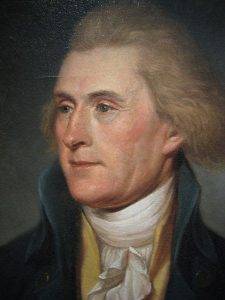
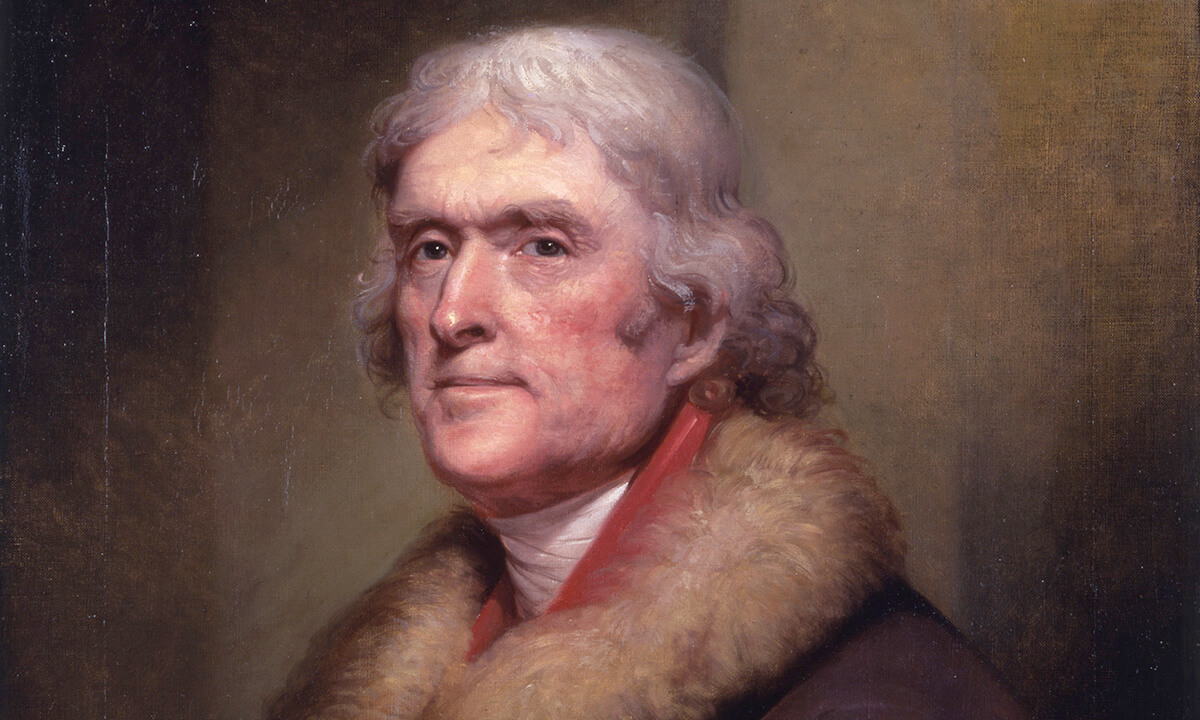
religious-freedom-day-1Religious Freedom Day is celebrated in America each year on January 16 — the date of the 1786 passage of Thomas Jefferson’s Virginia Statute of Religious Freedom. That Virginia statute, like similar ones passed in other states, was designed to give broad protections to religious freedoms, which were subsequently enshrined at the federal level in the First Amendment of the Constitution, which states:

Congress shall make no law respecting an establishment of religion or prohibiting the free exercise thereof.

The Founders viewed the First Amendment and the state measures as fully securing the inalienable rights of conscience — the right to hold specific religious beliefs and then act on and behave in accordance with those beliefs. Of all religious rights, they viewed the protection of religious conscience as the most important.

For example, Thomas Jefferson said:

religious-freedom-day-2No provision in our Constitution ought to be dearer to man than that which protects the rights of conscience against the enterprises of the civil authority.
And:

[O]ur rulers can have no authority over such natural rights, only as we have submitted to them. The rights of conscience we never submitted, we could not submit. We are answerable for them to our God.

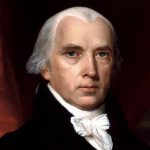
James Madison similarly declared:

religious-freedom-day-3

Government is instituted to protect property of every sort . . . Conscience is the most sacred of all property.

Sadly, in the 20th century, the rights of conscience were reduced primarily to the right of religious expression — a significant narrowing of original intent. Thus, protection was accorded to certain religious actions but no longer the motivations behind them. The U. S. Supreme Court established what it called the “Lemon Test” which protected religious expressions as long as there was no religious motivations behind them — that is, religious expressions were permitted only if they served a secular purpose and motivation. Thus the rights of conscience became largely irrelevant.

But in the 21st century, the First Amendment was narrowed even further so that the rights of religious conscience are no longer protected. Thus, if your religious conscience says that you cannot participate in a homosexual wedding, or in the funding and promotion of abortions, or if you hold religious beliefs saying that there is a difference in genders, you can be prosecuted.

So on Religious Freedom Day, let’s remember that the foundation of all of our religious liberties is the right of religious conscience. Let’s vigorously defend this right to those around us so that they, too, can recognize and protect the full scope of our religious freedoms.

* This article concerns a historical issue and may not have updated information.

American Revolution – Letter by Rev. Thomas Allen

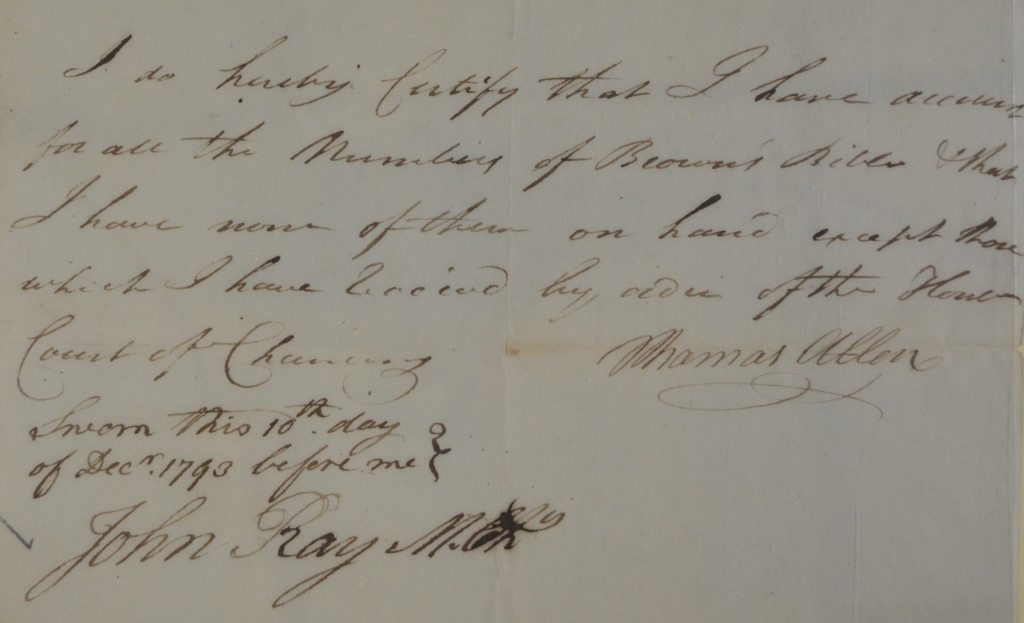
The Rev. Thomas Allen (1743-1810) was a minister at Pittsfield, Massachusetts and a soldier during the American Revolution. He fought in the Battle of Bennington and also served as chaplain in other battles. This letter from 1793 concerns what is called “Brown’s Bible” – an edition of the Bible printed in New York.


american-revolution-letter-by-rev-thomas-allen-1

I do hereby certify that I have accounted for all the numbers of Brown’s Bible & that I have more of them on hand except those which I have received by order of the Honb

Thomas Allen

Count of Chancery

Sworn this 10th Day

of Dec. 1793 before me

John Ray McKee

Read the Bible!

Importance of the Bible
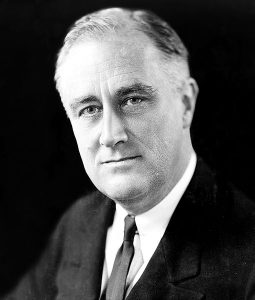
With Thanksgiving behind us, we now enter the time of the year in which President Franklin Roosevelt had urged Americans to spend time reading the Bible. Indisputably, the Bible is the book upon which our American republic rests – a fact attested to by many presidents:

read-the-bible-1“[The Bible] is the rock on which our Republic rests.” President Andrew Jackson
“The Bible. . . . is indispensable to the safety and permanence of our institutions.” President Zachary Taylor

“[T]he teachings of the Bible are so interwoven and entwined with our whole civic and social life that it would be . . . impossible for us to figure to ourselves what that life would be if these teachings were removed.” President Teddy Roosevelt

“Of the many influences that have shaped the United States of America into a distinctive Nation and people, none may be said to be more fundamental and enduring than the Bible.” President Ronald Reagan

Today, only 14% of Christians read the Bible daily, so most Americans have no knowledge of the most basic teachings of the Bible; and as Biblical knowledge declines, so does the strength and effectiveness of American institutions. Biblical knowledge is key to American longevity and prosperity.

Understanding this, in 1941, President Franklin Delano Roosevelt urged:

read-the-bible-2I suggest a nationwide reading of the Holy Scriptures during the period from Thanksgiving Day to Christmas…[G]o to…the Scriptures for a renewed and strengthening contact with those eternal truths and majestic principles which have inspired such such measure of true greatness as this nation has achieved.
This is an excellent recommendation! So commit yourself to reading and studying the Scriptures over the coming weeks. There are many good plans to help you, and even Bible apps that read the Bible to you. In fact, you can read through the entire Bible in only about 15 minutes each day over the course of a year. Psalm 11:3 asks: “If the foundations are destroyed, what can the righteous do?” Our foundations – the most important part of any structure – can be preserved by a knowledge of the Bible. So let’s follow President Roosevelt’s request to particularly spend the time between now and Christmas in reading and studying God’s Word.

The Truth about Columbus

The Truth about Columbus

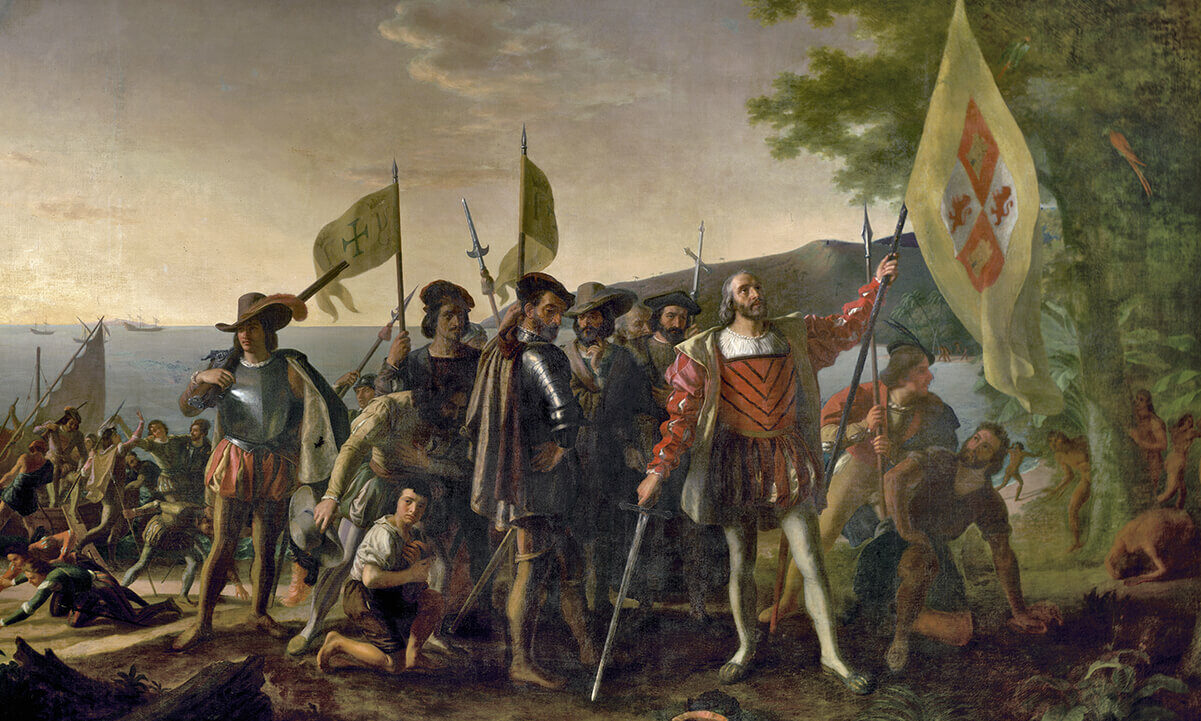
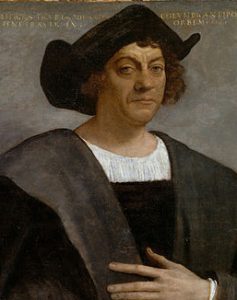
the-truth-about-columbus-1Columbus Day has become yet another occasion for tearing down our American heritage and heroes. Perhaps no other holiday in American history has so quickly gone from one honoring a venerated hero, to now portraying him as a genocidal exterminationist.
Academia, teachers, public schools, and others across the nation are now attacking Christopher Columbus in what appears to be a concerted effort to make children as repulsed by Columbus as they would be of the world’s most notorious criminal.

Columbus did have faults; but he also made indispensable positive contributions to America and American history. He deserves to be honored, not because he was perfect but because of his contributions.

Last week on Columbus Day, as both adults and children were told of the now-evil Columbus, many asked us questions about what was true concerning him. Following are some recommendations on how to find details about Columbus that are ignored today.


the-truth-about-columbus-2Have your children read Christopher Columbus: Across the Ocean Sea and watch “Drive Thru History America — Columbus, the Pilgrims, and Early Boston.” For adults and older readers, we highly recommend Dr. John Eidsmoe’s Columbus and Cortez.

And if you want to read an old classic about Columbus, check out Washington Irving’s (1783-1859) famous A History of the Life and Voyages of Christopher Columbus (1828), which was so popular that it went through an amazing 175 editions by the end of the century! (This book can be read or downloaded for free as a pdf from Google books.)

Proverbs 18:17 reminds us that one side always sounds good until you hear the other side. It is time for both students and adults to hear the other side — to hear the things that are no longer being taught today. Do all you can to vaccinate your family from the unrelenting attacks on those who contributed to make America a special and unique nation.

In God We Trust

On July 30, 1956, President Dwight Eisenhower signed legislation1 establishing “In God We Trust” as America’s national motto.2 As religious rights of conscience continue to be attacked, this is a good time to remember our national motto and renew our efforts to defend our religious rights.

The idea of America as a Christian nation has often been scoffed at by modern academia,3 religious leaders,4 and others.5 However, past Americans have acknowledged that America is a Christian nation and that the rights of religious conscience should be protected.

The United States Supreme Court issued a unanimous ruling declaring America to be a Christian nation,6 and hundreds of other American courts have acknowledged the same. In fact, Justice David Brewer, a member of that Court said:

in-god-we-trust-1[I]n what sense can [America] be called a Christian nation? Not in the sense that Christianity is the established religion or that the people are in any manner compelled to support it. . . . Neither is it Christian in the sense that all its citizens are either in fact or name Christians. On the contrary, all religions have free scope within our borders. Numbers of our people profess other religions, and many reject all. Nor is it Christian in the sense that a profession of Christianity is a condition of holding office or otherwise engaging in public service, or essential to recognition either politically or socially. . . . Nevertheless, we constantly speak of this republic as a Christian nation – in fact, as the leading Christian nation of the world.7
Secretary of the Treasury Salmon Chase,8 when looking into what should be printed on the currency of the nation, acknowledged:

in-god-we-trust-2No nation can be strong except in the strength of God, or safe except in His defense. The trust of our people in God should be declared on our national coins. You will cause a device to be prepared without unnecessary delay with a motto expressing in the fewest and tersest words possible this national recognition.9
There are many reasons that America has long been seen as such an exceptional nation — but those reasons are tied to the religious beliefs and the moral principles of the people that established America. On the anniversary of the national motto, it’s appropriate to recognize these religious beliefs and moral principles.

in-god-we-trust-3As George Washington told the nation when he left the presidency:
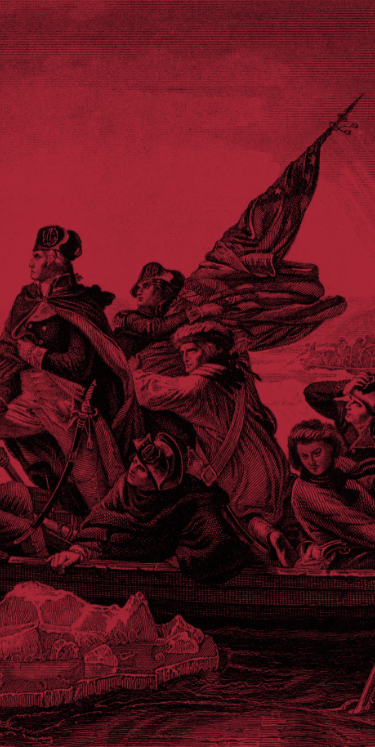
Of all the dispositions and habits which lead to political prosperity, religion and morality are indispensable supports. In vain would that man claim the tribute of patriotism who should labor to subvert these great pillars of human happiness, these firmest props of the duties of man and citizens.10


Endnotes

1 “Joint Resolution to Establish a National Motto of the United States,” July 30, 1956, here.
2 “36 U.S. Code § 302 – National motto,” here.
3 Kevin M. Kruse, “A Chrsitian Nation? Since When?” The New York Times, March 14, 2015; Richard White, “One Nation Under Gods,” Boston Review, March 22, 2017.
4 David Vesely, “Is America a Christian Nation? Columbus’ Vision,” Green Bay Press Gazette, April 28, 2016.
5 Shane Idelman, “Is America a Christian Nation? Fact vs. Fiction,” Charisma News, August 14, 2015.
6 David Barton, “Is America a Christian Nation?” WallBuilders.
7 Holy Trinity Church v. United States, 143 U.S. 457 (1892).
8 David J. Brewer, The United States a Christian Nation (Philadelphia: The John C. Winston Company, 1905), 12.
9 “Salmon P. Chase (1861-1864),” US Department of the Treasury, accessed November 14, 2023.
10 Salmon P. Chase to James Pollock, November 20, 1861, Thirty-Fourth Annual Report of the Director of the Mint to the Secretary of the Treasury (Washington: Government Printing Office, 1897), 107.

Sermons by Chaplains

American War for Independence Chaplains
 

Thomas Allen (1743-1810)

Thomas Allen volunteered as a chaplain during the revolutionary war and took up arms in the Battle of Bennington.


Manasseh Cutler (1742-1823)

Manasseh Cutler served as military chaplain for multiple American units during the Revolutionary War.


Timothy Dwight (1752-1817)

Timothy Dwight served as a chaplain in a Connecticut brigade and later became the president of Yale College.


Samuel Spring (1746-1819)

Samuel Spring served as a chaplain during the Revolutionary War (1775-1776) and carried a wounded Aaron Burr from the field during the Battle of Quebec.


Nathan Strong (1748-1816)

Nathan Strong became a chaplain in the patriot army during the American Revolution, and was a strong supporter of the American cause. He later was a chief founder and a manager of the Connecticut Missionary Society and was involved in the “Connecticut Evangelical Magazine.”


Benjamin Trumbull (1735-1820)

Benjamin Trumbull was a chaplain during the Revolutionary War and served as a minster for almost 60 years.


Samuel West (1730-1807)

Samuel West served as a chaplain during the Revolutionary War, joining just after the Battle of Bunker Hill. He later was a member of the Massachusetts state constitutional convention and a member of the Massachusetts convention that adopted the U.S. Constitution.


Civil War
John W. Sayers
John W. Sayers served as the chaplain for Camp Geary at Gettysburg in 1883 and delivered sermons as the Pennsylvania “post” chaplain of the Grand Army of the Republic (an organization of Union veterans) from 1894-1899.

Miscellaneous


Congressional Records on Chaplains

Below are several documents from Congressional records relating to pay for U.S. Army Chaplains. There is a “Memorial of Chaplains in the U.S. Army” dated January 17, 1862. Also, a “Letter from the Secretary of War” relating to pay for chaplains dated June 19, 1862. Finally, a “General Order” relating to pay for chaplains dated October 6, 1862.


congressional-records-on-chaplains-1 congressional-records-on-chaplains-2


congressional-records-on-chaplains-3 congressional-records-on-chaplains-4 congressional-records-on-chaplains-5


congressional-records-on-chaplains-6 congressional-records-on-chaplains-7


John Dickinson

Proclamation – Sabbath Day – 1782, Pennsylvania

John Dickinson (1732-1808) was a lawyer. He served in the Pennsylvania Assembly (1762, 1764), was a delegate to the Stamp Act Congress (1765); and was a member of the Continental Congress (1774-1776, 1779). He served as president of Pennsylvania (1782-1785) and was a signer of the Constitution (1787). Dickinson was also a brigadier general of the Pennsylvania Militia during the Revolution.

This proclamation was issued by John Dickinson as president of Pennsylvania on November 20, 1782 asking the people to observe the Lord’s Day and continue worshiping God.


proclamation-sabbath-day-1782-pennsylvania-1
By the President and Supreme  Executive Council of the Commonwealth of Pennsylvania,
A Proclamation.

As the best and greatest of Beings commanded mankind into existence with a capacity for happiness, bestowing upon them understanding and many “good gifts“; so when they, by an abuse of the blessings thus intrusted, had involved themselves in guilt and misery, his compassion was extended towards them, and in “his tender mercies,” not  only “seed time and harvest, and cold and heat, and summer and winter, and day and night,” were continued unto them, but “the eternal purposes” were revealed, and the heavenly treasuries opened, to restore the human race to the transcendent privilege from which by transgression they were fallen: AND in this “marvelous work,” the laws of righteousness have been with such infinite wisdom adjusted, and united to the obligation of nature, that while they jointly tended to promote the felicity of men in a future state, they evidently cooperate to advance their welfare in the present, and to offend against the sanctions of revelation, of the dictates of reason and conscience, is suredly to betray the joys of this life, as well as those of another.

Wherefore, as we are entirely persuaded that just impressions of the deity are the great supports of morality, AND As the experience of ages demonstrates, that regularity of manners is essential to the tranquility and prosperity of societies, AND the assistance of the Almighty, on which we rely, to establish the inestimable blessings our afflicted country is contending for, cannot be expected without an observance of his holy laws, We esteem it our principal and indispensable duty to endeavor, as much as we can, that a sense of these interesting truths may prevail in the hearts and appear in the lives of the inhabitants of this state; And Therefore have thought proper to issue this Proclamation, sincerely desiring that they seriously meditating on the many signal and unmerited  benefits of public and private import conferred upon them,  the affecting invitations  and munificent promises of divine goodness, and the “terrors set in array” against disobedient, may be urged to exert themselves in avoiding, discountenancing, and suppressing all vice, profaneness and immorality, and feeling a due gratitude, love, and veneration for their most gracious, all-wise, and omnipotent Benefactor, Sovereign, and Judge, and correspondent temper of resignation to the dispensations of his Supreme Government, may become a people “trusting in him, in whom they live and move and doing good.”

And to the intent that these desirable ends may be forwarded, all persons are herby fervently exhorted, to observe the Lord’s Day, commonly called Sunday, and thereon constantly to attend the worship of GOD, as a service pleasing to him who is, “a hearer of prayer,” and condescends to “inhabit the praises of his people,” and profitable to themselves; a neglect of which duty has, in multitude of instances, been the beginning of a deviation into the ways of presumption, that at length have led into the deepest distresses and severest sorrows:

And As the education of youth is of so much moment to themselves and to the commonwealth, which cannot flourish unless that important point be diligently regarded, the sentiments, dispositions, and habits begin then generally formed that pervade the rest of their lives, all parents, guardians, masters, and tutors are herby strenuously called upon, to discharge the high trust committed to them, and for which they must account, by a faithful attention; that those under their care may be nurtured in piety, filial reverence, submission to superiors in age or station, modesty, sincerity, benevolence, temperance,  industry, consistency of behavior, and frugality regulated by an humble reliance on Providence, and a kind respect for others; that their inexperienced minds may be by wholesome instructions fully convinced, that whatever employment they are designed for, virtue will be a chief promoter of success, and irregularity of conduct the greatest obstacle to it; that the intellectual faculties are aided by moral improvements, but weakened by illicit courses; and in brief, that Religion is the fiend of their peace, health and happiness; and that to displease their Maker, or trespass against their neighbor, is inevitably to inure themselves.

AND we expect and hereby require, that all well disposed persons, and especially those in places of authority, will by their conversation and demeanor encourage and promote piety and virtue, and to their utmost contribute to the rendering these qualities truly laudable and honorable, and the contrary practices justly shameful and contemptible; that thus the  influence of good men, and the dignity of the laws, may be combined in repressing the follies and insolencies of scorners and profligates, in directing the weak and thoughtless, and in preserving them from the pernicious contagion of evil examples; AND for further promoting such reformation, it is hereby enjoined, that all magistrates, and others whom it may concern, be very vigilant and exact in discovering, prosecuting, and punishing all persons who shall be guilty of profanation of the Lord’s Day, commonly called Sunday, blasphemy, profane swearing or cursing, drunkenness, lewdness, or other dissolute or immoral practices; that they suppress all gaming houses, and other disorderly houses, that they put in execution the act of General Assembly, entitled, “An Act for the suppression of Vice and Immorality,” and all other laws now in force for the punishing and suppressing any vice, profaneness or immorality: AND for the more effectual proceeding herein, all Judges and Justice, having cognizance in the premises, are directed to give strict charges at their respective Courts and Sessions, for the due prosecution and punishment of all who shall presume to offend in any of the kinds aforesaid; and also of all  such as, contrary to their duty, shall be remiss or negligent in putting the laws in execution: And that they do at their respective  Courts and Sessions cause this Proclamation to be publicly read, immediately before the charge is given: AND every Minister of the Gospel is requested strongly to inculcate in the respective congregations where they officiate, a love of piety and virtue, and an abhorrence of vice, profaneness, and immorality.

Given in council, under the hand of the President, and the Seal of the State, at Philadelphia, this twentieth day of November, in the year of our Lord one thousand seven hundred and eighty two.

John Dickinson.

Attest.
T. Matlack,,  Secretary.

God Save the Commonwealth.

Proclamation – Thanksgiving Day – 1795


This is the text of a proclamation for a day of Public Thanksgiving and Prayer, issued by George Washington when he served as President. It was published in the Columbian Centinel on January 1, 1795. (See another national Thanksgiving proclamation issued by George Washington in 1789.)


proclamation-thanksgiving-day-1795-1
Published
BY AUTHORITY,

A PROCLAMATION:
By the PRESIDENT of the UNITED
STATES OF AMERICA.
proclamation-thanksgiving-day-1795-2

When we review the calamities, which afflict so many other nations, the present condition of the United States affords much matter of consolation and satisfaction. Our exemption hitherto from foreign war – an increasing prospect of the continuance of that exemption – the great degree of internal tranquility we have enjoyed – the recent confirmation of that tranquility by the suppression of an insurrection which so wantonly threatened it – the happy course of public affairs in general – the unexampled prosperity of all classes of our citizens; are circumstances which peculiarly mark our situation with indications of the Divine beneficence towards us. In such a state of things it is, in an especial manner, our duty as people, with devout reverence and affectionate gratitude, to acknowledge our many and great obligations to Almighty God and to implore Him to continue and confirm the blessings we experience.

Deeply penetrated with this sentiment, I, George Washington, President of the United States, do recommend to all religious societies and denominations, and to all persons whomsoever, within the United States, to set apart and observe Thursday, the nineteenth day of February next, as a day of public thanksgiving and prayer: and on that day to meet together and render their sincere and hearty thanks to the great Ruler of nations for the manifold and signal mercies which distinguish our lot as a nation. particularly for the possession of constitutions of government which unite and, by their union, establish liberty with order; for the preservation of peace, foreign and domestic; and for the seasonable control, which has been given to a spirit of disorder, in the suppression of the late insurrection; and generally for the prosperous course of our affairs, public and private; and, at the same time, humbly and fervently to beseech the kind Author of these blessings. graciously to prolong them to us – to imprint on our hearts a deep and solemn sense of our obligations to Him for them – to teach us rightly to estimate their immense value – to preserve us from the arrogance of prosperity and from hazarding the advantages we enjoy by delusive pursuits – to dispose us to merit the continuance of His favors by not abusing them, by our gratitude for them, and by a correspondent conduct as citizens and as men – to render this country, more and more, a propitious asylum for the unfortunate of other countries – to extend among us true and useful knowledge – to diffuse and establish habits of sobriety, order, morality, and piety – and, finally, to impart all blessings we possess or ask for ourselves, to the whole family of mankind.

In testimony whereof, I have caused the seal of the United States of America, to be affixed to these presents, and signed the same with my hand. Done, at the city of Philadelphia, the first day of January, 1795, and of the independence of the United States of America, the nineteenth.

Go Washington,
President of the United States

EDMUND RANDOLPH, Secretary of State.

The Separation of Church and State

In 1947, in the case Everson v. Board of Education, the Supreme Court declared, “The First Amendment has erected a wall between church and state. That wall must be kept high and impregnable. We could not approve the slightest breach.” The “separation of church and state” phrase which they invoked, and which has today become so familiar, was taken from an exchange of letters between President Thomas Jefferson and the Baptist Association of Danbury, Connecticut, shortly after Jefferson became President.

The election of Jefferson – America’s first Anti-Federalist President – elated many Baptists since that denomination, by-and-large, was also strongly Anti-Federalist. This political disposition of the Baptists was understandable, for from the early settlement of Rhode Island in the 1630s to the time of the federal Constitution in the 1780s, the Baptists had often found themselves suffering from the centralization of power.

Consequently, now having a President who not only had championed the rights of Baptists in Virginia but who also had advocated clear limits on the centralization of government powers, the Danbury Baptists wrote Jefferson a letter of praise on October 7, 1801, telling him:

Among the many millions in America and Europe who rejoice in your election to office, we embrace the first opportunity . . . to express our great satisfaction in your appointment to the Chief Magistracy in the United States. . . . [W]e have reason to believe that America’s God has raised you up to fill the Chair of State out of that goodwill which He bears to the millions which you preside over. May God strengthen you for the arduous task which providence and the voice of the people have called you. . . . And may the Lord preserve you safe from every evil and bring you at last to his Heavenly Kingdom through Jesus Christ our Glorious Mediator.1

However, in that same letter of congratulations, the Baptists also expressed to Jefferson their grave concern over the entire concept of the First Amendment, including of its guarantee for “the free exercise of religion”:

Our sentiments are uniformly on the side of religious liberty: that religion is at all times and places a matter between God and individuals, that no man ought to suffer in name, person, or effects on account of his religious opinions, [and] that the legitimate power of civil government extends no further than to punish the man who works ill to his neighbor. But sir, our constitution of government is not specific. . . . [T]herefore what religious privileges we enjoy (as a minor part of the State) we enjoy as favors granted, and not as inalienable rights.2

In short, the inclusion of protection for the “free exercise of religion” in the constitution suggested to the Danbury Baptists that the right of religious expression was government-given (thus alienable) rather than God-given (hence inalienable), and that therefore the government might someday attempt to regulate religious expression. This was a possibility to which they strenuously objected-unless, as they had explained, someone’s religious practice caused him to “work ill to his neighbor.”

Jefferson understood their concern; it was also his own. In fact, he made numerous declarations about the constitutional inability of the federal government to regulate, restrict, or interfere with religious expression. For example:

[N]o power over the freedom of religion . . . [is] delegated to the United States by the Constitution. Kentucky Resolution, 17983
In matters of religion, I have considered that its free exercise is placed by the Constitution independent of the powers of the general [federal] government. Second Inaugural Address, 18054
[O]ur excellent Constitution . . . has not placed our religious rights under the power of any public functionary. Letter to the Methodist Episcopal Church, 18085
I consider the government of the United States as interdicted [prohibited] by the Constitution from intermeddling with religious institutions . . . or exercises. Letter to Samuel Millar, 18086

Jefferson believed that the government was to be powerless to interfere with religious expressions for a very simple reason: he had long witnessed the unhealthy tendency of government to encroach upon the free exercise of religion. As he explained to Noah Webster:

It had become an universal and almost uncontroverted position in the several States that the purposes of society do not require a surrender of all our rights to our ordinary governors . . . and which experience has nevertheless proved they [the government] will be constantly encroaching on if submitted to them; that there are also certain fences which experience has proved peculiarly efficacious [effective] against wrong and rarely obstructive of right, which yet the governing powers have ever shown a disposition to weaken and remove. Of the first kind, for instance, is freedom of religion.7

Thomas Jefferson had no intention of allowing the government to limit, restrict, regulate, or interfere with public religious practices. He believed, along with the other Founders, that the First Amendment had been enacted only to prevent the federal establishment of a national denomination – a fact he made clear in a letter to fellow-signer of the Declaration of Independence Benjamin Rush:

[T]he clause of the Constitution which, while it secured the freedom of the press, covered also the freedom of religion, had given to the clergy a very favorite hope of obtaining an establishment of a particular form of Christianity through the United States; and as every sect believes its own form the true one, every one perhaps hoped for his own, but especially the Episcopalians and Congregationalists. The returning good sense of our country threatens abortion to their hopes and they believe that any portion of power confided to me will be exerted in opposition to their schemes. And they believe rightly.8

Jefferson had committed himself as President to pursuing the purpose of the First Amendment: preventing the “establishment of a particular form of Christianity” by the Episcopalians, Congregationalists, or any other denomination.

Since this was Jefferson’s view concerning religious expression, in his short and polite reply to the Danbury Baptists on January 1, 1802, he assured them that they need not fear; that the free exercise of religion would never be interfered with by the federal government. As he explained:

Gentlemen, – The affectionate sentiments of esteem and approbation which you are so good as to express towards me on behalf of the Danbury Baptist Association give me the highest satisfaction. . . . Believing with you that religion is a matter which lies solely between man and his God; that he owes account to none other for his faith or his worship; that the legislative powers of government reach actions only and not opinions, I contemplate with sovereign reverence that act of the whole American people which declared that their legislature should “make no law respecting an establishment of religion or prohibiting the free exercise thereof,” thus building a wall of separation between Church and State. Adhering to this expression of the supreme will of the nation in behalf of the rights of conscience, I shall see with sincere satisfaction the progress of those sentiments which tend to restore to man all his natural rights, convinced he has no natural right in opposition to his social duties. I reciprocate your kind prayers for the protection and blessing of the common Father and Creator of man, and tender you for yourselves and your religious association assurances of my high respect and esteem.9

Jefferson’s reference to “natural rights” invoked an important legal phrase which was part of the rhetoric of that day and which reaffirmed his belief that religious liberties were inalienable rights. While the phrase “natural rights” communicated much to people then, to most citizens today those words mean little.

By definition, “natural rights” included “that which the Books of the Law and the Gospel do contain.”10 That is, “natural rights” incorporated what God Himself had guaranteed to man in the Scriptures. Thus, when Jefferson assured the Baptists that by following their “natural rights” they would violate no social duty, he was affirming to them that the free exercise of religion was their inalienable God-given right and therefore was protected from federal regulation or interference.

So clearly did Jefferson understand the Source of America’s inalienable rights that he even doubted whether America could survive if we ever lost that knowledge. He queried:

And can the liberties of a nation be thought secure if we have lost the only firm basis, a conviction in the minds of the people that these liberties are the gift of God? That they are not to be violated but with His wrath?11

Jefferson believed that God, not government, was the Author and Source of our rights and that the government, therefore, was to be prevented from interference with those rights. Very simply, the “fence” of the Webster letter and the “wall” of the Danbury letter were not to limit religious activities in public; rather they were to limit the power of the government to prohibit or interfere with those expressions.

Earlier courts long understood Jefferson’s intent. In fact, when Jefferson’s letter was invoked by the Supreme Court (only twice prior to the 1947 Everson case – the Reynolds v. United States case in 1878), unlike today’s Courts which publish only his eight-word separation phrase, that earlier Court published Jefferson’s entire letter and then concluded:

Coming as this does from an acknowledged leader of the advocates of the measure, it [Jefferson’s letter] may be accepted almost as an authoritative declaration of the scope and effect of the Amendment thus secured. Congress was deprived of all legislative power over mere [religious] opinion, but was left free to reach actions which were in violation of social duties or subversive of good order. (emphasis added)12

That Court then succinctly summarized Jefferson’s intent for “separation of church and state”:

[T]he rightful purposes of civil government are for its officers to interfere when principles break out into overt acts against peace and good order. In th[is] . . . is found the true distinction between what properly belongs to the church and what to the State.13

With this even the Baptists had agreed; for while wanting to see the government prohibited from interfering with or limiting religious activities, they also had declared it a legitimate function of government “to punish the man who works ill to his neighbor.”

That Court, therefore, and others (for example, Commonwealth v. Nesbit and Lindenmuller v. The People), identified actions into which – if perpetrated in the name of religion – the government did have legitimate reason to intrude. Those activities included human sacrifice, polygamy, bigamy, concubinage, incest, infanticide, parricide, advocation and promotion of immorality, etc.

Such acts, even if perpetrated in the name of religion, would be stopped by the government since, as the Court had explained, they were “subversive of good order” and were “overt acts against peace.” However, the government was never to interfere with traditional religious practices outlined in “the Books of the Law and the Gospel” – whether public prayer, the use of the Scriptures, public acknowledgements of God, etc.

Therefore, if Jefferson’s letter is to be used today, let its context be clearly given – as in previous years. Furthermore, earlier Courts had always viewed Jefferson’s Danbury letter for just what it was: a personal, private letter to a specific group. There is probably no other instance in America’s history where words spoken by a single individual in a private letter – words clearly divorced from their context – have become the sole authorization for a national policy. Finally, Jefferson’s Danbury letter should never be invoked as a stand-alone document. A proper analysis of Jefferson’s views must include his numerous other statements on the First Amendment.

For example, in addition to his other statements previously noted, Jefferson also declared that the “power to prescribe any religious exercise. . . . must rest with the States” (emphasis added). Nevertheless, the federal courts ignore this succinct declaration and choose rather to misuse his separation phrase to strike down scores of State laws which encourage or facilitate public religious expressions. Such rulings against State laws are a direct violation of the words and intent of the very one from whom the courts claim to derive their policy.

One further note should be made about the now infamous “separation” dogma. The Congressional Records from June 7 to September 25, 1789, record the months of discussions and debates of the ninety Founding Fathers who framed the First Amendment. Significantly, not only was Thomas Jefferson not one of those ninety who framed the First Amendment, but also, during those debates not one of those ninety Framers ever mentioned the phrase “separation of church and state.” It seems logical that if this had been the intent for the First Amendment – as is so frequently asserted-then at least one of those ninety who framed the Amendment would have mentioned that phrase; none did.

In summary, the “separation” phrase so frequently invoked today was rarely mentioned by any of the Founders; and even Jefferson’s explanation of his phrase is diametrically opposed to the manner in which courts apply it today. “Separation of church and state” currently means almost exactly the opposite of what it originally meant.


Endnotes

1 Letter of October 7, 1801, from Danbury (CT) Baptist Association to Thomas Jefferson, from the Thomas Jefferson Papers Manuscript Division, Library of Congress, Washington, D. C.
2 Id.
3 The Jeffersonian Cyclopedia, ed. John P. Foley (New York: Funk & Wagnalls, 1900), 977; Documents of American History, ed. Henry S. Cummager (NY: Appleton-Century-Crofts, Inc., 1948), 179.
4 March 4, 1805, Annals of the Congress of the United States (Washington: Gales and Seaton, 1852), Eighth Congress, Second Session, 78; James D. Richardson, A Compilation of the Messages and Papers of the Presidents, 1789-1897 (Published by Authority of Congress, 1899), I:379.
5 Thomas Jefferson, March 4, 1805, Writings of Thomas Jefferson, ed. Albert Ellery Bergh (Washington D. C.: The Thomas Jefferson Memorial Association, 1904), I:379.
6 Thomas Jefferson to the Rev. Samuel Millar, January 23, 1808, Memoir, Correspondence, and Miscellanies, From the Papers of Thomas Jefferson, ed. Thomas Jefferson Randolph (Boston: Gray and Bowen, 1830), IV:103-104.
7 Jefferson to Noah Webster, December 4, 1790, Writings, VIII:112-113.
8 Jefferson to Benjamin Rush, September 23, 1800, Writings, III:441.
9 Jefferson to the Danbury Baptist Association, January 1, 1802, Writings, XVI:281-282.
10 Richard Hooker, The Works of Richard Hooker (Oxford: University Press, 1845), I:207.
11 Thomas Jefferson, Notes on the State of Virginia (Philadelphia: Matthew Carey, 1794), 237.
12 Reynolds v. U. S., 98 U.S. 145, 164 (1878).
13 Reynolds at 163.