Thoughts on 2 Chronicles 5-7
King David, blessed by God throughout his long life, envisioned building a majestic temple to honor the Lord. But God told David that it would instead be his son, Solomon, who would construct the building. So David prepared everything his son would need. When later King Solomon successfully completed the temple, he gathered the nation together and dedicated the new structure with a time of prayer and praise (2 Chronicles 5-7). The spirit of God filled the temple and fell on those present. God promising Solomon that He would hear and answer prayers prayed from that location. Significantly, our Founding Fathers invoked this incident and this passage at a significant moment early in the political life of a young America.
On September 25, 1789, the very first federal Congress had just finished framing the Bill of Rights—the Capstone of the Constitution. On that notable day, the official records of Congress report:
Mr. [Elias] Boudinot said he could not think of letting the session pass over without offering an opportunity to all the citizens of the United States of joining with one voice in returning to Almighty God their sincere thanks for the many blessings He had poured down upon them. With this view, therefore, he would move the following resolution:
Resolved, That a joint committee of both Houses be directed to wait upon the President of the United States to request that he would recommend to the people of the United States a day of public thanksgiving and prayer, to be observed by acknowledging with grateful hearts the many signal favors of Almighty God. . . .
Mr. [Roger] Sherman justified the practice of thanksgiving on any signal [remarkable] event not only as a laudable one in itself but as warranted by a number of precedents in Holy Writ – for instance, the solemn thanksgivings and rejoicings which took place in the time of Solomon after the building of the temple was a case in point [2 Chronicles 5-7, 1 Kings 7-8]. This example he thought worthy of Christian imitation on the present occasion, and he would agree with the gentleman who moved the resolution. Mr. Boudinot quoted further precedents from the practice of the late Congress and hoped the motion would meet a ready acquiescence [approval]. The question was now put on the resolution and it was carried in the affirmative.1
Congress delivered it recommendation to President George Washington, who happily concurred. He issued America’s first federal proclamation for a Day of Prayer and Thanksgiving. That proclamation declared:
Whereas it is the duty of all nations to acknowledge the providence of Almighty God, to obey His will, to be grateful for His benefits, and humbly to implore His protection and favor. . . . Now, therefore, I do recommend . . . that we may then all unite in rendering unto Him our sincere and humble thanks for His kind care and protection of the people of this country. . . . And also that we may then unite in most humbly offering our prayers and supplications to the great Lord and Ruler of Nations, and beseech Him to pardon our national and other transgressions . . . to promote the knowledge and practice of true religion and virtue.2
Notice that George Washington said that nations—not just individuals, but nations—have four duties: (1) to acknowledge the providence of Almighty God, (2) to obey His will, (3) to be grateful for His benefits, and (4) humbly to implore His protection and favor. This proclamation, along with the several other calls to prayer issued during his administration, was written by Washington himself. Whereas other presidents had chaplains of Congress write their proclamations.3
America observed its first federal day of thanksgiving because Founding Fathers in Congress were thoroughly familiar with the Bible and found precedent for such a day from 2 Chronicles 5-7—one of many American practices with a Biblical basis.
Endnotes
1 September 25, 1789, The Debates and Proceedings in the Congress of the United States, Joseph Gales, editor (Washington: Gales and Seaton, 1834) I:949-950.
2 The Providence Gazette and Country Journal (Providence: October 17, 1789), 1. George Washington, “A Proclamation,” issued on October 3, 1789, observance date November 26, 1789.
3 Joseph H. Jones, The Life of Ashbel Green (New York: Robert Carter and Brothers, 1849), 270-271.
Still looking for answers? Visit our FAQ page
More Resources
America Reads the Bible!
Just as Ezra read the Word aloud to the people of Israel (Nehemiah 8:1–3), awakening revival and repentance, inspiring them to rebuild the temple, and working with Nehemiah to mobilize the people to rebuild Jerusalem’s walls, America Reads the Bible is a sacred opportunity to call our nation back to its spiritual foundations. Through a […]
His Desire to Answer Prayer
Thoughts on Matthew 6 Prayer has always been central to Biblical faith, highlighted in dozens of examples throughout the Scriptures, and was therefore also deeply embedded in American life. In fact, colonial, state, and federal governments issued over 1,400 official calls to prayer between 1620 and 1815.1 The Founding Fathers clearly were convinced of the […]
Worth Riding a Hundred Miles to Hear
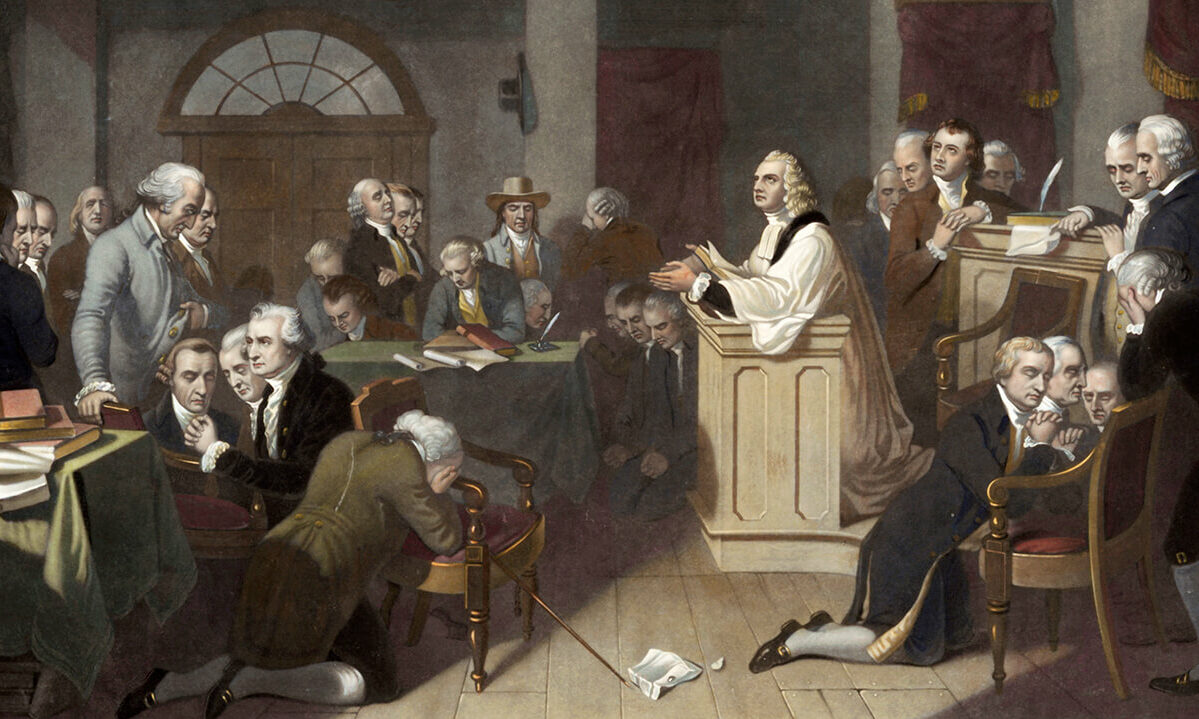
Thoughts on Psalm 35 By September 1774, the tensions between America and Great Britain had been escalating for a decade and were reaching a boiling point. But despite those differences, Americans were largely still loyal to Great Britain. The colonies were vigorously pursuing reconciliation. The British, however, rejected those overtures and even responded with military […]
Know the Truth and Protect Your Freedoms.
Still looking for answers? Visit our FAQ page

Stay Informed with the Latest Resources
Enter your email address to receive our regular newsletter, with important information and updates right in your inbox!