Thoughts on Jeremiah 17:9
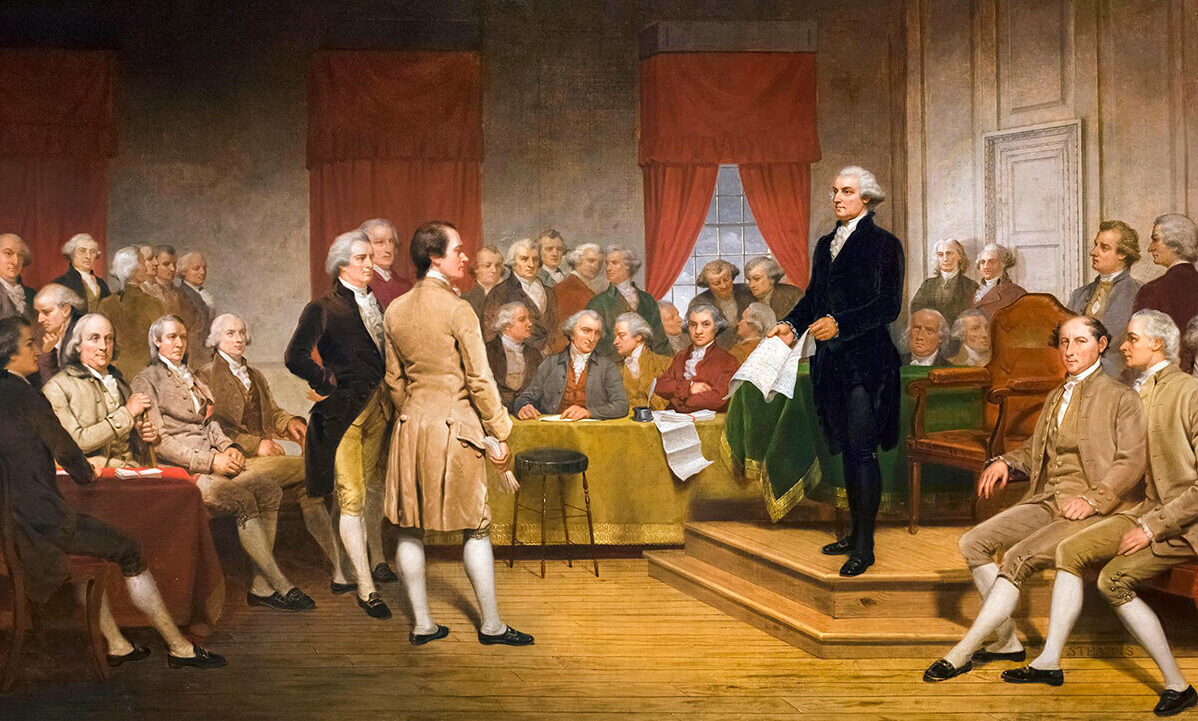
The separation of powers and reciprocal checks and balances incorporated throughout the Constitution is still heralded as one of the most important features of American government, enabling it not only to survive but to thrive for over two centuries. History is filled with opposite examples showing that when government power was centralized in one body or leader, that government always became abusive and resulted in national ruin. The Founding Fathers not only had these examples of history to guide them, but they had the wisdom found in the Bible.
The love of power, and our propensity to abuse it, finds its root in the human heart. Jeremiah 17:9 declares: “The heart is more deceitful than all else and is desperately sick; who can understand it?” This wellknown verse encapsulated what Calvinistic ministers and theologians termed the “depravity of man” (that the natural heart of man easily embraced moral and civil degradation). It was a frequent topic for sermons in the Founding Era. The Founding Fathers understood the significance of this verse and openly cited it, as when John Adams reminded Americans:
Let me conclude by advising all men to look into their own hearts, which they will find to be “deceitful above all things and desperately wicked” [Jeremiah 17:9].1
Those ignorant of the Bible often believe in the innate goodness of man—that man will naturally do what is right. However, experience regularly confirms the opposite: without a heart regenerated by the power of God, man will routinely do what is wrong. Adams specifically rejected any notion of the innate goodness of man, especially when it came to government:
To expect self-denial from men when they have a majority in their favor, and consequently power to gratify themselves, is to disbelieve all history and universal experience – it is to disbelieve revelation and the Word of God, which informs us “the heart is deceitful above all things and desperately wicked” [Jeremiah 17:9]. . . . There is no man so blind as not to see that to talk of founding a government upon a supposition that nations and great bodies of men left to themselves will practice a course of self-denial is either to babble like a newborn infant or to deceive like an unprincipled impostor.2
And even those who had experienced a regenerated heart through the power of God in Christ nevertheless knew enough about the truth of this verse and human nature to not even fully trust themselves to be above corruption. As John Quincy Adams confessed:
I believe myself sincere; but the heart is deceitful above all things and desperately wicked [Jeremiah 17:9]. I do not believe the total depravity of man, but I am deeply conscious of the frailty of my own nature.3
Understanding this principle from Jeremiah 17—a principle that was accepted by all sides of the theological spectrum—the Founders knew that government would be much safer if all power did not repose in the same authority. Making practical application of this Biblical truth, they divided and checked power between branches so that if one branch behaved wickedly, the other two might still check and stop it. As George Washington explained:
A just estimate of that love of power and proneness to abuse it which predominates in the human heart is sufficient to satisfy us of the truth of this position. The necessity of reciprocal checks in the exercise of political power by dividing and distributing it into different depositories . . . has been evinced [demonstrated] by experiments ancient and modern, some of them in our country and under our own eyes.4
James Madison agreed:
What is government itself but the greatest of all reflections on human nature? If men were angels, no government would be necessary. In framing a government which is to be administered by men over men, the great difficulty lies in this: you must first enable the government to control the governed, and in the next place oblige it to control itself.5
This remarkable feature of American government—the separation of powers and reciprocal checks and balances—can be attributed to the Founders’ understanding of Jeremiah 17:9.
Endnotes
1 John Adams, “On Private Revenge III,” published in the Boston Gazette, September 5, 1763, The Works of John Adams, ed. Charles Francis Adams (Boston: Charles C. Little and James Brown, 1851), 3:443.
2 John Adams, A Defense of the Constitutions of Government of the United States of America (London: John Stockdale, 1794), 3:289, “Letter VI. The Right Constitution of a Commonwealth, examined.”
3 John Quincy Adams, diary entry of November 16, 1842, Memoirs of John Quincy Adams, ed. Charles Francis Adams (Philadelphia: J.B. Lippincott & Co, 1876), XI:270.
4 George Washington, Address of George Washington, President of the United States, and Late Commander in Chief of the American Army, to the People of the United States, Preparatory to His Declination (Baltimore: Christopher Jackson, 1796), 13.
5 Alexander Hamilton, John Jay, & James Madison, The Federalist on the New Constitution; Written in 1788 (Philadelphia: Benjamin Warner, 1818), 281, Federalist #51 likely by James Madison.
Still looking for answers? Visit our FAQ page
More Resources
America Reads the Bible!
Just as Ezra read the Word aloud to the people of Israel (Nehemiah 8:1–3), awakening revival and repentance, inspiring them to rebuild the temple, and working with Nehemiah to mobilize the people to rebuild Jerusalem’s walls, America Reads the Bible is a sacred opportunity to call our nation back to its spiritual foundations. Through a […]

His Desire to Answer Prayer
Thoughts on Matthew 6 Prayer has always been central to Biblical faith. Scripture is replete with stories of the efficacy of prayer. It is not surprising then that the practice of prayer was deeply embedded in early American life. In fact, colonial, state, and federal governments issued over 1,400 official calls to prayer between 1620 […]
Worth Riding a Hundred Miles to Hear
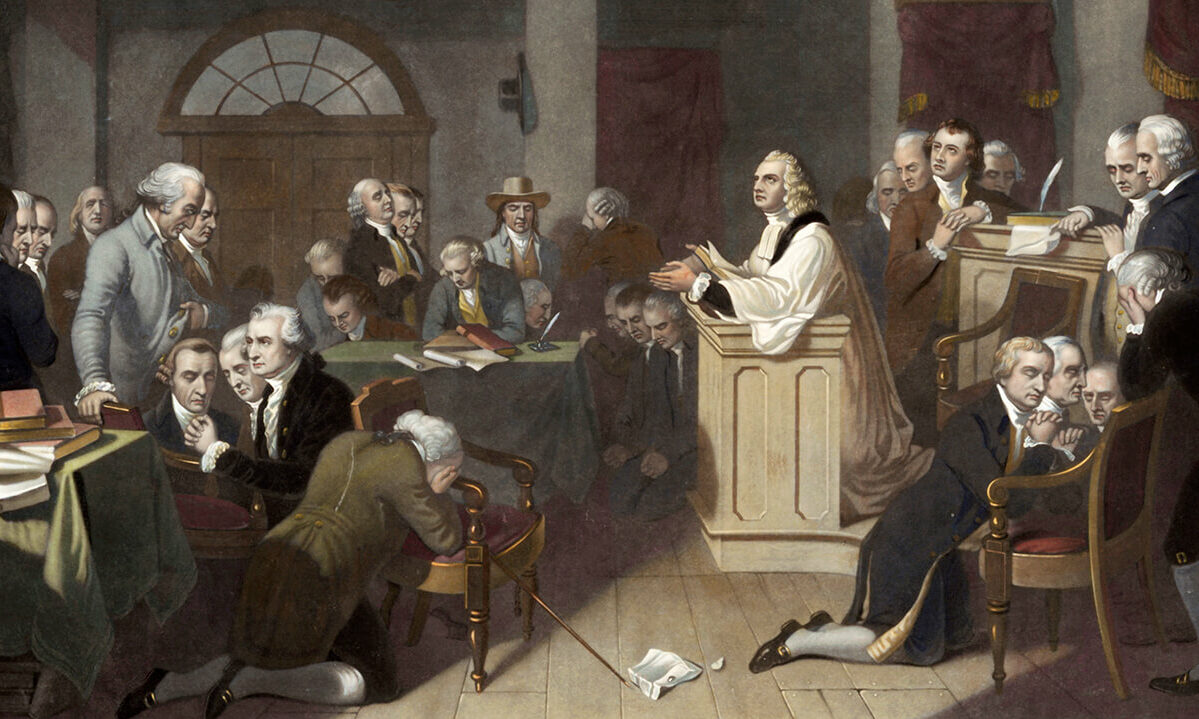
Thoughts on Psalm 35 By September 1774, the tensions between America and Great Britain had been escalating for a decade and were reaching a boiling point. But despite that strain, Americans were largely still loyal to Great Britain. The colonies were vigorously pursuing reconciliation. The British, however, rejected their overtures and even responded with military […]
Know the Truth and Protect Your Freedoms.
Still looking for answers? Visit our FAQ page

Stay Informed with the Latest Resources
Enter your email address to receive our regular newsletter, with important information and updates right in your inbox!