Thoughts on Deuteronomy 5
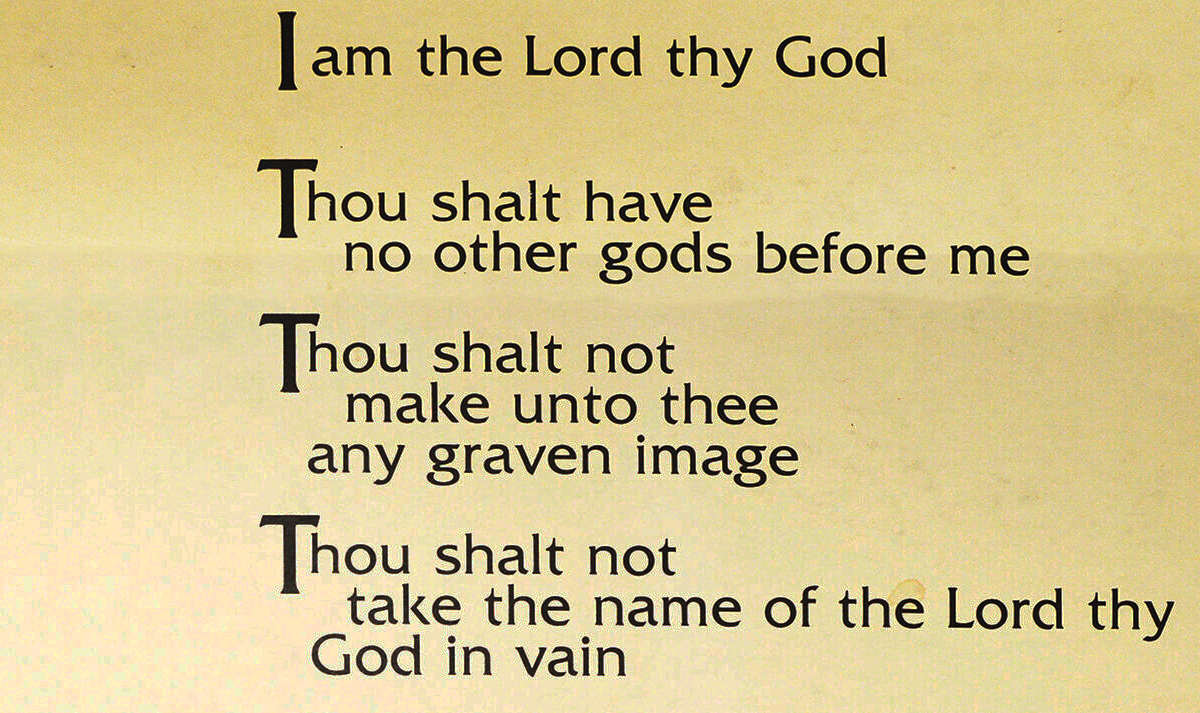
It is difficult to argue that any single work has had a greater or more far-reaching impact through four centuries of American life, law, and culture than the Ten Commandments. As such, the fact that their public display would become a matter of current debate or prohibition is almost unthinkable. And yet it is.
The Ten Commandments are the embodiment of the Moral Law (one of the four types of law in the Bible) and formed the foundation for general morals in America as encompassed in the Common Law. Their repetition here in Deuteronomy 5 provides an opportunity to demonstrate that they were also the impetus for specific American statutory laws.
The original delivery of the commandments in Exodus was to the children of Israel immediately after God had delivered them from Egypt and established them as an independent nation. Now they are being repeated to the younger generation, some forty years later, as they are preparing to finally enter the Promised Land. After suffering the delay and the pain of watching their parents perish in the wilderness because of their continual disobedience and refusal to enter (Numbers 14:29), Moses is renewing the covenant with them. The Ten Commandments are not mere dictates of obligation; they are lifegiving promises that if adhered to would bring blessing and prosperity. God promised that it would go well with them, and they would prolong their days in the land that they were about to possess.
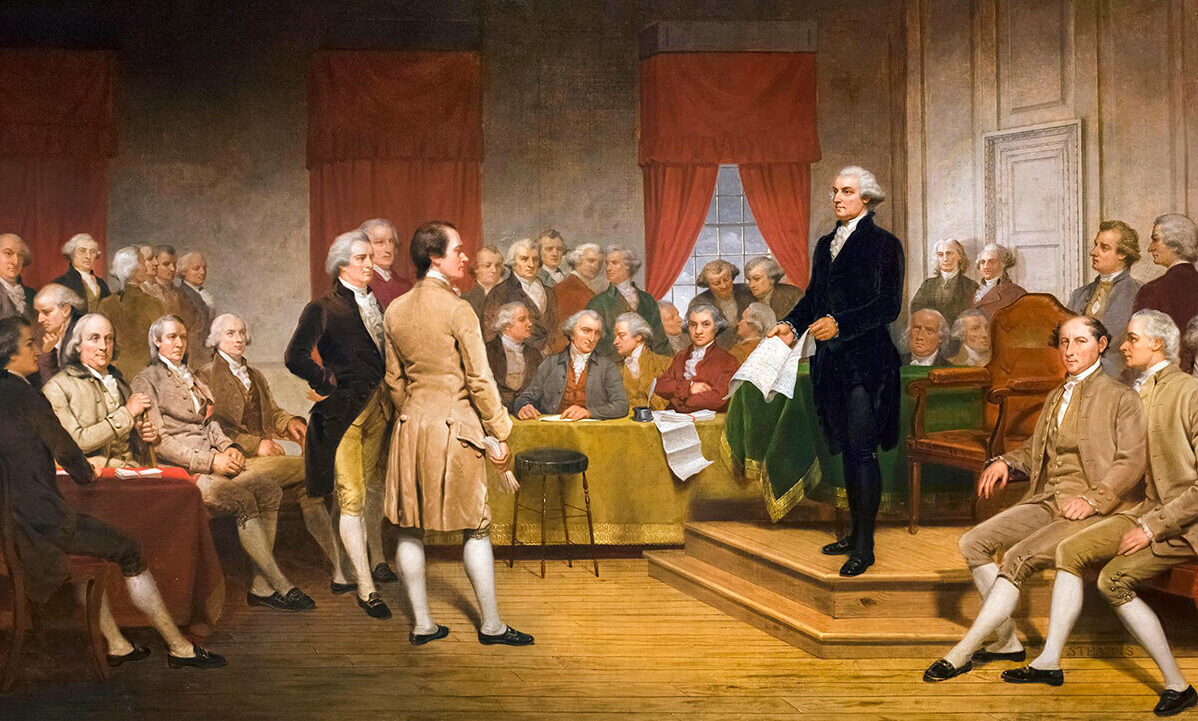
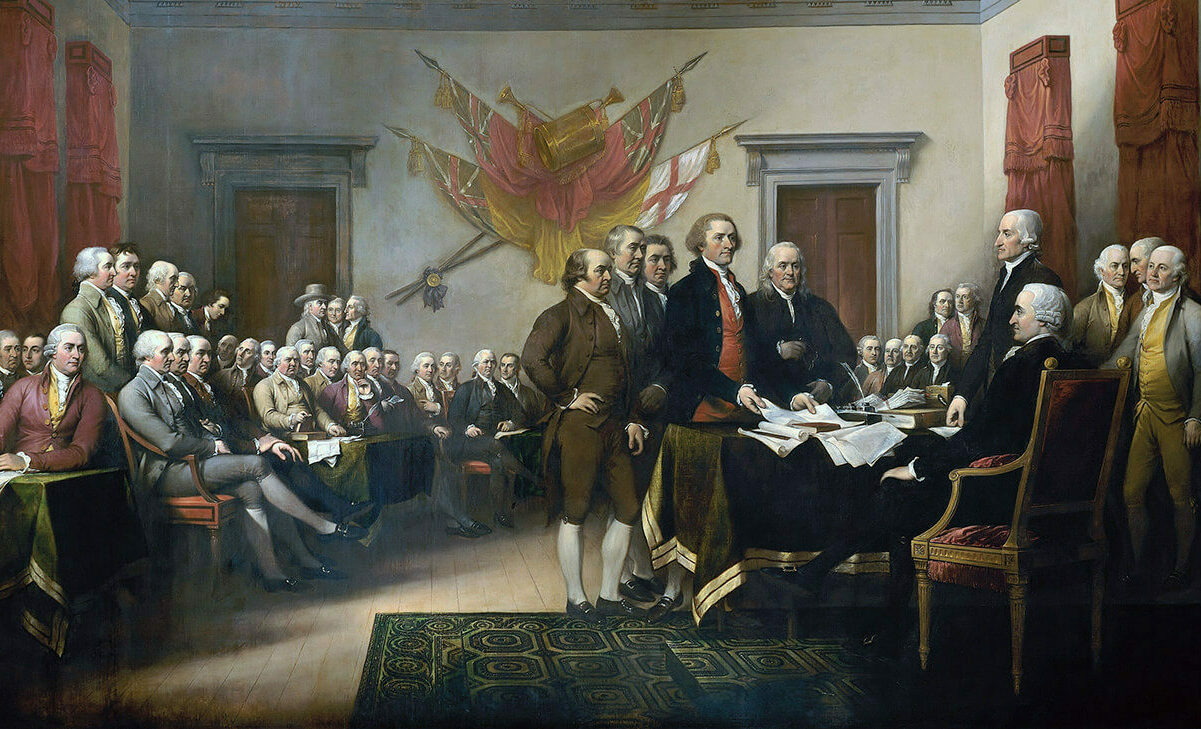
Such promise was not lost upon our Founding Fathers who openly endorsed the application of the Ten Commandments to civil law in America. statesman John Quincy Adams declared:
The law given from Sinai was a civil and municipal as well as a moral and religious code; it contained many statutes . . . of universal application—laws essential to the existence of men in society, and most of which have been enacted by every nation which ever professed any code of laws.1
Founder and educator Noah Webster agreed:
Where will you find any code of laws among civilized men in which the commands and prohibitions are not founded on Christian principles? I need not specify the prohibition of murder, robbery, theft, trespass.2
These laws are essential to the existence of men in society, and yet some critics today object to displaying the Commandments on such spurious grounds that there are too many versions—that the Lutherans have a version, as do the Jewish, Catholic, and Orthodox faiths; and that the Protestants have several different versions.3 They thus argue that with so many different versions, public displays of any of them will always invoke a “deep theological dispute” and therefore should be avoided.4 But this claim is ridiculous.
What distinguishes the various “versions” are primarily the different ways in which they are numbered. In the original Hebrew text, the Ten Commandments appear in paragraph form, with no numbers or verses; but as they were translated into subsequent texts, various faiths and branches of Christianity chose to number them differently. For example, the first command in the Jewish version is usually the prologue in most Protestant versions; but both contain the same content. The different numberings are merely superficial manmade contrivances for ease of identification, but all versions cover the same subject matter.
Yet no matter how the commandments are numbered, each finds direct application in American laws. A few examples (chosen from dozens of similar ones) are presented below.
1. Have No Other Gods.
This command was directly incorporated into the first written code of laws enacted in America: those of the Virginia Colony in 1610.5 The subsequent Massachusetts legal code of 1641 and that of Connecticut in 1642 similarly declared:
If any man after legal conviction shall have or worship any other god but the Lord God, he shall be put to death. Deut. 13.6, 10, Deut. 17.2, 6, Ex. 22.20.6
2. Have No Idols.
Typical of the civil laws on this command was a 1680 New Hampshire law declaring:
Idolatry. It is enacted by ye Assembly and ye authority thereof, yet if any person having had the knowledge of the true God openly and manifestly have or worship any other god but the Lord God, he shall be put to death. Ex. 22.20, Deut. 13.6 and 10.7
Note: reading such early statutes and the ones that follow can give the impression that the death penalty was freely applied to almost any crime in America, but such was definitely not the case. This fact becomes apparent when comparing American laws with European laws from the same period. As noted by early American historian Daniel Dorchester:
When the Mayflower left England [in 1620], thirty-one offenses were punishable with death in the mother country. By the middle of that century, the black list had enlarged to 223, of which 176 were without the benefit of the clergy [there were no exceptions]. How far in advance the New England colonies were is evident from the fact that not a single colony code recognized more than fifteen capital crimes.8
That might still strike us as severe, but when understood in context, realize that having a copy of the Scriptures for themselves, in their own language, to study and learn what God was like as revealed in His Word was a relatively new development. Prior to this it was rare and sometimes even illegal for an individual to possess a Bible. The populace could then be kept ignorant and easily controlled by those in power who regularly committed horrible atrocities in God’s Name. Given that, it is quite remarkable just how quickly these early forefathers began to learn for themselves that God was not like those who had misrepresented Him for their own aims. (For a more complete discussion of this subject, please see the commentary for Psalm 119:11 in The Founders’ Bible.)
3. Honor God’s Name.
Civil laws based on this commandment were divided into two categories: (1) laws prohibiting swearing and profanity, and (2) laws prohibiting blasphemy. Noah Webster confirmed that both were derived from this commandment:
When in obedience to the Third Commandment of the Decalogue you would avoid profane swearing, you are to remember that this alone is not a full compliance with the prohibition which comprehends all irreverent words or actions and whatever tends to cast contempt on the Supreme Being or on His Word and ordinances [i.e., blasphemy].9
Numerous statutory laws were enacted as a result of the Third Command.10
4. Honor the Sabbath Day.
From the beginning, every American colony enacted civil laws to honor the Sabbath.11 That legal recognition continued over subsequent centuries. For example, during the American Revolution, Commander-in-Chief George Washington issued numerous military orders directing that his troops observe the Sabbath:
The Commander in Chief directs that Divine service be performed every Sunday at 11 o’clock. . . . It is expected that officers of all ranks will by their attendance set an example to their men.12
Following the Revolution, the states continued to honor the Sabbath. For example, Vermont enacted a ten-part Sabbath law in 1787;13 Massachusetts enacted an eleven-part law in 1791;14 Virginia enacted an extensive eight-part law (written by Thomas Jefferson) in 1792;15 New Jersey enacted a twenty-one-part law in 1798;16 New Hampshire enacted a fourteen-part law in 1799;17 Maine enacted a thirteen-part law in 1821;18 and other states did the same.19
When the U.S. Constitution was written in 1787, it, too, honored the traditional Christian Sabbath. Article I, Section 7, ¶ 2, stipulates that the president has ten days to sign a law, “Sundays excepted.” This “Sundays Excepted” clause had previously appeared in the state constitutions, and so the historical understanding of this clause at both the state and federal levels was summarized by numerous courts, including the 1912 Supreme Court of Missouri:
It is provided that if the Governor does not return a bill within 10 days (Sundays excepted). . . . Can any impartial mind deny that it contains a recognition of the Lord’s Day as a day exempted by law from all worldly pursuits? The framers of the Constitution, then, recognized Sunday as a day to be observed, acting themselves under a law which exacted a compulsive observance of it. . . . Sunday was recognized as a day of rest.20
Other courts were equally candid about Sabbath laws and their relation to the Ten Commandments. For example, in 1950, the Supreme Court of Mississippi affirmed:
The Sunday laws have a Divine origin. . . . After the six days of creation, the Creator Himself rested on the seventh. Genesis, Chapter 2, verses 2 and 3. Thus, the Sabbath was instituted as a day of rest. The original example was later confirmed as a commandment when the law was handed down from Mt. Sinai: “Remember the Sabbath day, to keep it holy” [Exodus 20:8].21
In 1967, the Supreme Court of Pennsylvania similarly declared:
“Remember the Sabbath day to keep it holy; six days shalt thou labor and do all thy work; but the seventh day is the Sabbath of the Lord thy God. In it thou shalt not do any work” [Deuteronomy 5:12-14]. This Divine pronouncement became part of the Common Law inherited by the thirteen American colonies and by the sovereign states of the American union.22
The modern U.S. Supreme Court asserts that even to this day, states have the right to enact laws honoring the Sabbath.23
5. Honor Your Parents.
A 1642 Connecticut law specifically cited the Decalogue as the basis for its civil laws related to honoring parents:
If any child or children above sixteen years old and of sufficient understanding shall curse or smite their normal father or mother, he or they shall be put to death unless it can be sufficiently testified that the parents have been very unChristianly negligent in the education of such children, or so provoke them by extreme and cruel correction that they have been forced thereunto to preserve themselves from death [or] maiming. Ex. 21:17, Lev. 20, Ex. 20:15.24
Three centuries later, a 1934 Louisiana appeals court affirmed the continuing influence of the Fifth Command on civil laws:
“Honor thy father and thy mother” is as much a command of the municipal law as it is a part of the Decalogue, regarded as holy by every Christian people. “A child,” says the code, “whatever be his age, owes honor and respect to his father and mother.”25
6. Do not murder.
A 1641 Massachusetts law declared:
Ex. 21.12, Numb. 35.13, 14, 30, 31. If any person commit any willful murder, which is manslaughter committed upon premeditated malice, hatred, or cruelty not in a man’s necessary and just defense, nor by mere casualty against his will, he shall be put to death. Ex. 21.14. If any person shall slay another through guile, either by poisoning or other such devilish practice, he shall be put to death.26
Similar provisions derived from the prohibition in the Ten Commandments can be found in the laws of the early colonies and subsequently of the independent states—laws spanning the centuries. Consequently, courts have been very candid in acknowledging the Decalogue as the origin of American civil murder laws, such as when a 1932 Kentucky appeals court asserted:
Following the promulgation of Moses at Mt. Sinai has required of each and every one of its citizens that “Thou shalt not murder” [Exodus 20:13]. If that law is violated, the one guilty of it has no right to demand more than a fair trial, and if, as a result thereof, the severest punishment for the crime is visited upon him, he has no one to blame but himself.27
7. Do not commit adultery.
Directly citing the Decalogue, a 1641 Massachusetts law declared:
If any person committeth adultery with a married or espoused wife, the adulterer and adulteress shall surely be put to death. Ex. 20.14.28
For three centuries, colonies and states based their adultery policies on the Decalogue. For example, a 1787 Vermont law stated:
Whereas the violation of the marriage covenant is contrary to the command of God [Exodus 20:14] and destructive to the peace of families: be it therefore enacted by the general assembly of the State of Vermont that if any man be found in bed with another man’s wife, or woman with another’s husband, . . . &c.29
In 1898, the highest criminal court in Texas declared:
“Thou shalt not commit adultery” is our law as well as the law of the Bible.30
And in 1955, the Washington Supreme Court likewise ruled:
Adultery, whether promiscuous or not, violates one of the Ten Commandments and the statutes of this state.31
8. Do Not Steal.
Early colonial laws are easily cited for evidence of the Decalogue’s influence on this prohibition, but consider more recent declarations, such as from the 1951 Louisiana Supreme Court, which recognized:
In the Ten Commandments, the basic law of all Christian countries, is found the admonition “Thou shalt not steal.”32
In 1940, the Supreme Court of California had similarly declared:
“Thou shalt not steal” applies with equal force and propriety to the industrialist of a complex civilization as to the simple herdsman of ancient Israel.33
And in 1914, a federal court ruled that the Constitution’s “takings clause” prohibiting government seizure of private property was an embodiment of the Decalogue’s Eighth Command against theft, including government theft.34
9. Do not perjure yourself.
A 1642 Connecticut law declared:
If any man rise up by false witness, wittingly and of purpose to take away any man’s life, he shall be put to death. Deut. 19:16, 18, 19.35
For over three centuries, civil laws against perjury were openly acknowledged to be derived from the Decalogue, as when the 1924 Oregon Supreme Court declared:
No official is above the law. “Thou shalt not bear false witness” is a command of the Decalogue, and that forbidden act is denounced by statute as a felony.36
10. Do not covet.
The Tenth Command actually forms the basis for many of the prohibitions given in the other commandments. That is, a violation of this commandment frequently precedes a violation of the others, particularly the command against stealing. As William Penn, the framer of the original laws of Pennsylvania, acknowledged:
He that covets can no more be a moral man than he that steals since he does so in his mind. Nor can he be one that robs his neighbor of his credit, or that craftily undermines him of his trade or office.37
Founding Father John Adams also granted the importance of this commandment:
The moment the idea is admitted into society that property is not as sacred as the laws of God, and that there is not a force of law and public justice to protect it, anarchy and tyranny commence. If “Thou shalt not covet” and “Thou shalt not steal” were not commandments of Heaven, they must be made inviolable precepts in every society before it can be civilized or made free.38
Many courts have acceded the numerous other categories of laws to which this provision of the Decalogue directly applies.
For example, in 1895, the California Supreme Court cited this prohibition as the basis of civil laws against defamation.39 In 1904, the Court of Appeals in West Virginia cited it as the basis of laws preventing election fraud.40 In 1951, the Oregon Supreme Court cited this part of the Decalogue as the basis of civil laws against modern forms of cattle rustling.41 And in 1958, a Florida appeals court cited it as the basis of laws targeting white-collar crime. 42 There are numerous other examples establishing that this commandment of the Decalogue had a substantial influence on many other civil laws.
Conclusion
There are hundreds more examples irrefutably demonstrating the substantial influence of the Ten Commandments on American civil law. So clear and compelling is the historical evidence that it has been consistently acknowledged by courts across America, such as when the 1917 Supreme Court of North Carolina affirmed:
Our laws are founded upon the Decalogue, not that every case can be exactly decided according to what is there enjoined, but we can never safely depart from this short but great declaration of moral principles without founding the law upon the sand instead of upon the eternal rock of justice and equity.43
In 1950, the Florida Supreme Court similarly pointed out:
A people unschooled about the sovereignty of God, the Ten Commandments, and the ethics of Jesus could never have evolved the Bill of Rights, the Declaration of Independence, and the Constitution. There is not one solitary fundamental principle of our democratic policy that did not stem directly from the basic moral concepts as embodied in the Decalogue and the ethics of Jesus.44
In short, the Ten Commandments not only formed the basis of the Moral Law in America but were also a direct influence on its civil statutory laws. The effect of the commandments produced a truly civilized society, for as a matter of civil policy it matters not one whit if my neighbor is an atheist or opponent of Christianity, but if he will nevertheless govern his behavior by the basic values found in the Ten Commandments—that is, if he will refrain from killing me, stealing my property, or taking my wife—he will make a good citizen, regardless of whether or not he holds any specific religious beliefs. As John Adams affirmed, even if the Ten Commandments “were not commandments of Heaven, they must be made inviolable precepts in every society before it can be civilized or made free.”45
Endnotes
1 John Quincy Adams, Letters of John Quincy Adams, to His Son, on the Bible and Its Teachings (Auburn: James M. Alden, 1850), 61, 70-71.
2 Noah Webster, “Reply to a Letter of David McClure on the Subject of the Proper Course of Study in the Girard College, Philadelphia,” October 25, 1836, A Collection of Papers on Political, Literary and Moral Subjects (New York: Webster & Clark, 1843), 291-292.
3 Glassroth v. Moore, 333 F.3d 1282, 1285 (2003), cert. denied, 540 U.S. 1000; Professor Paul Finkelman, “The Ten Commandments on the Courthouse Lawn and Elsewhere,” Fordham Law Review (2005), 73:1477-1520.
4 Van Orden v. Perry, 545 U.S. 677, n16 (2005) (Stevens, J., dissenting).
5 “Articles, Laws, and Orders, Divine, Politic and Martial for the Colony of Virginia,” 1610-1611, For the Colony in Virginea Britannia Lawes Divine, Morall and Martiall, etc., Compiled by William Strachey, ed., David H. Flaherty (Charlottesville: The University Press of Virginia, 1969), 10.
6 “Massachusetts Body Of Liberties,” 1641, Documents of the Constitution of England and America, from Magna Charta to the Federal Constitution of 1789, ed. Francis Bowen (Cambridge: John Bartlett, 1854), 71.
7 “General Laws and Liberties of New Hampshire, Cappitall Laws, Idollitry, Section 1” 1680, Documents and Records related to the Province of New-Hampshire, ed., Nathaniel Bouton (Concord: George E. Jenks, State Printer, 1867), 383.
8 Daniel Dorchester, Christianity in the United States from the First Settlement Down to the Present Time (New York: Phillips & Hunt, 1895), 122.
9 Noah Webster, Letters to a Young Gentleman Commencing His Education (New Haven: Howe & Spalding, 1823), 8.
10 See, for example, “Articles, Laws, and Orders, Divine, Politic and Martial for the Colony of Virginia,” 1610-1611, For the Colony in Virginea Britannia Lawes Divine, Flaherty (1969), 10-11; The Code of 1650 (Hartford: Silas Andrus, 1825), 30; and many others.
11 “Articles, Laws, and Orders, Divine, Politic and Martial for the Colony of Virginia,” 1610-1611, For the Colony in Virginea Britannia Lawes Divine, Flaherty (1969), 11; “General Laws and Liberties of New Hampshire,” 1680, 383; Charles J. Hoadly, Records of the Colony or Jurisdiction of New Haven, From May, 1653, to the Union, Together With the New Haven Code of 1656 (Hartford: Chase, Lockwood and Company, 1858), 605; “An Act to Restrain People from Labor on the First Day of the Week,” passed October 4, 1705, Laws of the Commonwealth of Pennsylvania (Philadelphia: John Bioren, 1810), I:25-26; “Title 160: Sunday,” 1741, Alphabetical Digest of the Public Statute Law of South Carolina (Charleston: John Hoff, 1814), 2:272-275; “Vice and Immorality, Section IV,” A Manual of The Laws of North Carolina (Raleigh: J. Gales and W. Boylan, 1808), 2:229; “An Act for the Due Observation of the Sabbath, or Lord’s Day,” The Public Statute Laws of the State of Connecticut (Hartford: Hudson and Goodwin, 1808), I:577-578; etc.
12 George Washington, The Writings of George Washington, ed. John C. Fitzpatrick (Washington, DC: United States Government Printing Office, 1934), 11:342-343; General Orders, Cambridge, August 5, 1775, 3:402-403; General Orders, Head-Quarters, Morristown, April 12, 1777, 7:407; General Orders, Head-Quarters, Morristown, May 17, 1777, 8:77, General Orders, Head-Quarters, Morristown, May 24, 1777, 8:114; General Orders, Head-Quarters, Middle Brook, May 31, 1777, 8:153; General Orders, Head-Quarters, Middle Brook, June 28, 1777, 8:308; General Orders, Head-Quarters, Pennybacker’s Mills, September 27, 1777, 9:275; General Orders, Head-Quarters, Perkiomy, October 7, 1777, 9:329; etc.
13 “An Act for the Due Observation of the Sabbath,” passed March 9, 1787, Statutes of the State of Vermont (Bennington: Anthony Haswell, 1791), 155-157.
14 “Of the Observance of the Lord’s Day and the Prevention and Punishment of Immorality,” The Revised Statutes of the Commonwealth of Massachusetts (Boston: Dutton & Wentworth, 1836), 385-386.
15 “An Act for the Effectual Suppression of Vice, and Punishing the Disturbers of Religious Worship, and Sabbath Breakers,” passed December 26, 1792, The Revised Code of the Laws of Virginia (Richmond: Thomas Ritchie, 1819), I:554-556. See also ThomasJefferson, The Papers of Thomas Jefferson, ed. Julian P. Boyd (Princeton: Princeton University Press, 1950), II:322.
16 “An Act for Suppressing Vice and Immorality,” passed March 16, 1798, Laws of the State of New Jersey (New Brunswick: Abraham Blauvelt, 1800), 329-333.
17 “An Act for the Better Observation of the Lord’s Day, and for Repealing All the Laws Heretofore Made for that Purpose,” passed December 24, 1799, Constitution and Laws of the State of New Hampshire (Dover: Samuel Bragg, 1805), 290-293.
18 “An Act Providing for the Due Observation of the Lord’s Day,” Laws of the State of Maine (Hallowell: Calvin Spaulding, 1822), 67-71.
19 See, for example, James Coffield Mitchell, The Tennessee Justices’ Manual (Nashville: J. C. Mitchell and C. C. Norvell, 1834), 427-428; George C. Edwards, A Treatise on the Powers and Duties of Justices of the Peace and Town Officers, in the State of New York (Ithaca: Mack, Andrus, and Woodruff, 1836), 386-387; etc.
20 State v. Chicago, B. & Q. R. Co., 143 S.W. 785, 803 (Mo. 1912).
21 Paramount-Richards Theatres v. City of Hattiesburg, 49 So.2d 574, 577 (Miss. 1950).
22 Bertera’s Hopewell Foodland, Inc. v. Masters, 236 A.2d 197, 200-201 (Pa. 1967).
23 McGowan v. Maryland, 366 U. S. 420 (1961).
24 “Capital Laws of Connecticut,” 1642, The Blue Laws of New Haven Colony, Usually Called Blue Laws of Connecticut (Hartford: Case, Tiffany & Co., 1838), 103.
25 Ruiz v. Clancy, 157 So. 737, 738 (La. Ct. App. 1934), citing Caldwell v. Henmen, 5 Rob. 20.
26 “Massachusetts Body Of Liberties,” 1641, Documents of the Constitution of England and America, from Magna Charta to the Federal Constitution of 1789, ed. Francis Bowen (Cambridge: John Bartlett, 1854), 72.
27 Young v. Commonwealth, 245 Ky. 570, 53 S.W.2d 963 (Ky. Ct. App. 1932).
28 “Massachusetts Body Of Liberties,” 1641, Documents of the Constitution, ed. Bowen (1854), 72.
29 “An Act Against Adultery, Polygamy, and Fornication,” passed March 8, 1787, Statutes of the State of Vermont (Bennington: Anthony Haswell, 1791), 16-17.
30 Hardin v. State, 39 Tex.Crim. 426 (1898).
31 Schreifels v. Schreifels, 287 P.2d 1001, 1005 (Wash. 1955).
32 Succession of Onorato, 51 So.2d 804, 810 (La. 1951).
33 Hollywood Motion Picture Equipment Co. v. Furer, 105 P.2d 299, 301 (Cal. 1940).
34 Pennsylvania Co. v. United States, 214 F. 445, 455 (W.D.Pa. 1914).
35 “Capital Laws of Connecticut,” 1642, The Blue Laws of New Haven Colony, Usually Called Blue Laws of Connecticut (Hartford: Case, Tiffany & Co., 1838), 103.
36 Watts v. Gerking, 228 P. 135, 141 (Or. 1924).
37 William Penn, Fruits of Solitude, In Reflections and Maxims Relating To The Conduct of Human Life (London: James Phillips, 1790), 132.
38 John Adams, A Defense of the Constitutions of Government of the United States of America (Philadelphia: William Young, 1797), 3:217.
39 Weinstock, Lubin & Co. v. Marks, 42 P. 142, 145 (Cal. 1895).
40 Doll v. Bender, 47 S.E. 293, 300-01 (W.Va. 1904) (Dent, J. concurring).
41 Swift & Co. v. Peterson, 233 P.2d 216, 231 (Or. 1951).
42 Chisman v. Moylan, 105 So.2d 186, 189 (Fla. Dist. Ct. App. 1958).
43 Commissioners of Johnston County v. Lacy, 93 S.E. 482, 487 (N.C. 1917).
45 John Adams, A Defense of the Constitutions of Government of the United States of America (Philadelphia: William Young, 1797), 3:217.
Still looking for answers? Visit our FAQ page
More Resources
America Reads the Bible!
Just as Ezra read the Word aloud to the people of Israel (Nehemiah 8:1–3), awakening revival and repentance, inspiring them to rebuild the temple, and working with Nehemiah to mobilize the people to rebuild Jerusalem’s walls, America Reads the Bible is a sacred opportunity to call our nation back to its spiritual foundations. Through a […]
His Desire to Answer Prayer
Thoughts on Matthew 6 Prayer has always been central to Biblical faith, highlighted in dozens of examples throughout the Scriptures, and was therefore also deeply embedded in American life. In fact, colonial, state, and federal governments issued over 1,400 official calls to prayer between 1620 and 1815.1 The Founding Fathers clearly were convinced of the […]
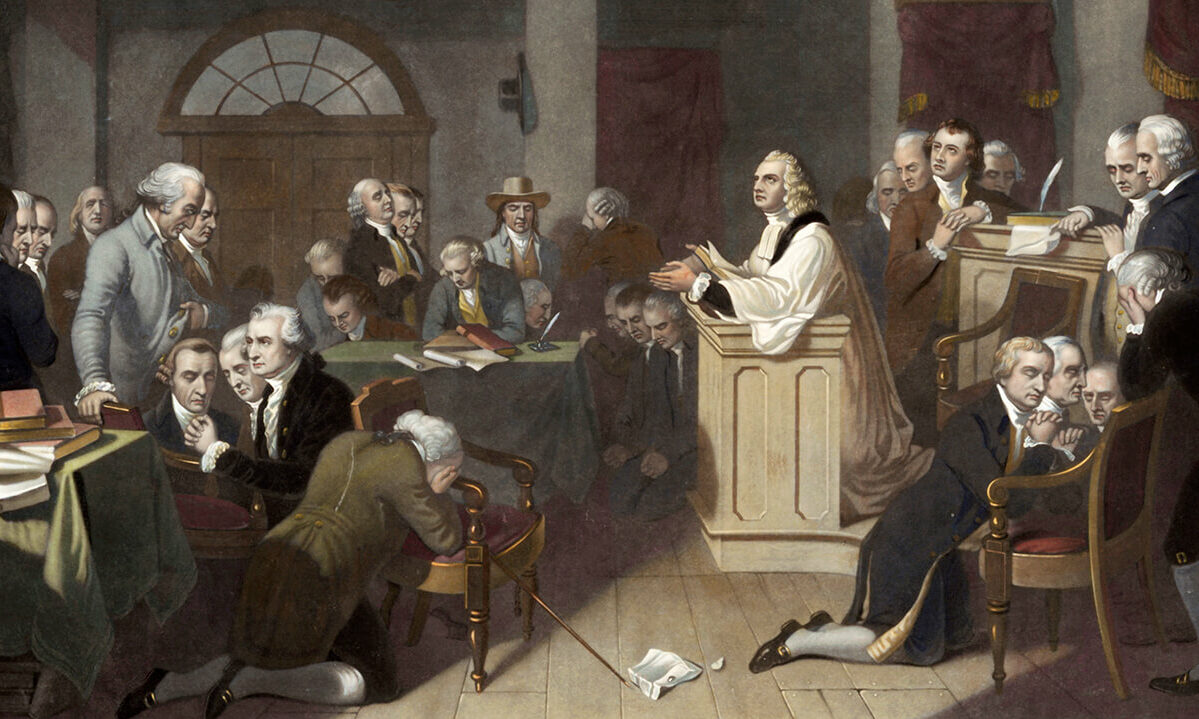
Worth Riding a Hundred Miles to Hear
Thoughts on Psalm 35 By September 1774, the tensions between America and Great Britain had been escalating for a decade and were reaching a boiling point. But despite those differences, Americans were largely still loyal to Great Britain. The colonies were vigorously pursuing reconciliation. The British, however, rejected those overtures and even responded with military […]
Know the Truth and Protect Your Freedoms.
Still looking for answers? Visit our FAQ page

Stay Informed with the Latest Resources
Enter your email address to receive our regular newsletter, with important information and updates right in your inbox!