Thoughts on Proverbs 14:34
America’s Founding Fathers were not only concerned for their own generation but also for posterity—about future generations. In fact, when they wrote the U.S. Constitution, they candidly acknowledged that they had done so to “secure the blessings of liberty to ourselves and our posterity.” The Rev. Mathias Burnet eflecting this ideal in an Election Sermon preached to the Connecticut legislature:
To God and posterity you are accountable [for your rights and your rulers]. . . . Let not your children have reason to curse you for giving up those rights and prostrating those institutions which your fathers delivered to you. 1
He reminded citizens that they would answer to God for whether or not they had preserved the rights entrusted to them. And they would answer to posterity.
Patrick Henry held identical sentiments. When he passed away in 1799, his executers opened and read his personal legal documents and his will. Included was an original copy of the 1765 Stamp Act Resolutions (early precursors to the American Revolution). These were originally passed by the Virginia Legislature, of which he had been a member. On the back of those resolutions Henry penned a handwritten message, knowing it would be read at his death. He recounted the early colonial resistance to British policy that eventually resulted in the American Revolution, and then concluded with this warning:
Whether this [the American Revolution] will prove a blessing or a curse will depend upon the use our people make of the blessings which a gracious God hath bestowed on us. If they are wise, they will be great and happy. If they are of a contrary character, they will be miserable. Righteousness alone can exalt them as a nation [Proverbs 14:34]. Reader!—whoever thou art, remember this!—and in thy sphere practice virtue thyself and encourage it in others. P. Henry 2
Whether or not America will prosper into the future depends on its righteousness today. But how is national righteousness measured? Dozens of Bible passages (like Deuteronomy 28, 1 Kings 18, 1 Chronicles 21) affirm that national righteousness is defined by national policies and their allignment with God’s standards. As Samuel Adams advised, only God-honoring policies can exalt a nation:
[Divine] revelation assures us that “Righteousness exalteth a nation” [Proverbs 14:34]. Communities are dealt with in this world by the wise and just Ruler of the Universe. He rewards or punishes them according to their general character. 3
Civic Righteousness and Civil Rights
Across the pages of American history both political and religious leaders have regularly cited this verse. For example, Frederick Douglass, who was a preacher and famous political leader long before and after the Civil War, told citizens:
I have one great political idea. . . . That idea is an old one. It is widely and generally assented to; nevertheless, it is very generally trampled upon and disregarded. The best expression of it, I have found in the Bible. It is in substance, “Righteousness exalteth a nation; sin is a reproach to any people” [Proverbs 14:34]. Sir, this constitutes my politics – the negative and positive of my politics, and the whole of my politics. . . . I feel it my duty to do all in my power to infuse this idea into the public mind, that it may speedily be recognized and practiced upon by our people. 4
Douglass believed that every political concern should be guided by issues of righteousness. But too often today, political concerns (and votes) are instead guided by issues of economics—what is good for the economy, my job, my pocketbook, etc. When Jesus’ disciples focused on such worries—food, clothing, finances, and homes—He reminded them to “seek first the kingdom of God and His righteousness,” and all of their physical needs would be provided (Matthew 6:33). Strikingly, when a nation pursues economics over righteousness, it generally loses both. Notice how frequently secular nations find themselves facing burgeoning and unsolvable economic problems. The only way to preserve economic prosperity is by pursuing righteousness in public policy.
The Rev. Francis Grimke understood this. He was born to a slave mother in 1850 in South Carolina, and served as a valet in the Confederate army until Emancipation. After the war, he attended Lincoln University, Howard University, and Princeton Theological Seminary, and became a minister in Washington, D.C. He had lived through the Civil War as a boy, and as a young man survived the barbarity of the Ku Klux Klan during Reconstruction. Then in the early 1900s, he watched the second revival of the Klan as it marched openly in parades in Washington, D.C. Even members of Congress participated.
Grimke personally witnessed America’s literal split, and now the resurgence of the Klan. While he believed he nation would remain united, he delivered a sermon in 1909, warning what America’s future would be should we ever foresake righteousness:
The Stars and Stripes—the old flag—will float . . . over all these states. . . . If the time ever comes when we shall go to pieces, it will . . . [be] from inward corruption—from the disregard of right principles . . . from losing sight of the fact that “Righteousness exalteth a nation, but that sin is a reproach to any people” [Proverbs 14:34]. . . . The secession of the southern states in 1860 was a small matter with the secession of the Union itself from the great principles enunciated in the Declaration of Independence, in the Golden Rule, in the Ten Commandments, in the Sermon on the Mount. Unless we hold, and hold firmly to these great fundamental principles of righteousness . . . our Union . . . will be “only a covenant with death and an agreement with hell” [Isaiah 28:18]. If it continues to exist, it will be a curse and not a blessing. 5
Blessings for Posterity
When selecting public officials, Christians must not be concerned about their pocketbooks or their jobs. The foremost concern should be whether that official will advance policies upholding Biblical standards of righteousness. Biblical rights and wrongs on moral issues must always take precedence over economic, environmental, healthcare, energy, or any other issues. Whether and in what condition America will continue to exist in the future completely depends on if citizens will embrace and apply Proverbs 14:34 in both their private and their civic lives.
Endnotes
1 Matthias Burnet, An Election Sermon, Preached at Hartford, on the Day of the Anniversary Election, May 12, 1803 (Hartford: Hudson and Goodwin, 1803), 27.
2 Patrick Henry, Patrick Henry: Life, Correspondence and Speeches, ed. William Wirt Henry (New York: Charles Scribner’s Sons, 1891), 1:81-82, from a handwritten endorsement on the back of the paper containing the resolutions of the Virginia Assembly in 1765 concerning the Stamp Act.
3 Samuel Adams to John Scollay, April 30, 1776, The Writings of Samuel Adams, ed. Harry Alonzo Cushing (New York: G. P. Putnam’s Sons, 1907), 3:286.
4 Frederick Douglass, speech delivered at Ithaca, New York, October 14, 1852, The Frederick Douglass Papers, ed. John Blassingame (New Haven: Yale University Press, 1982), 2:397.
5 Rev. Francis J. Grimke, from “Equality of Right for All Citizens, Black and White, Alike,” March 7, 1909, Masterpieces of Negro Eloquence, ed. Alice Moore Dunbar (Johnson Reprint Corporation, 1970), 348-349.
Still looking for answers? Visit our FAQ page
More Resources

Georgia and Prayer
On February 5, 2026, David Barton was selected by the Georgia State Senate as Chaplain of the Day and opened its session with prayer. In his prayer, he thanked God for the blessings bestowed upon the state and its leaders, and asked that the prayers offered over Georgia across the previous three centuries would be […]

Freemasonry in the Founding Era
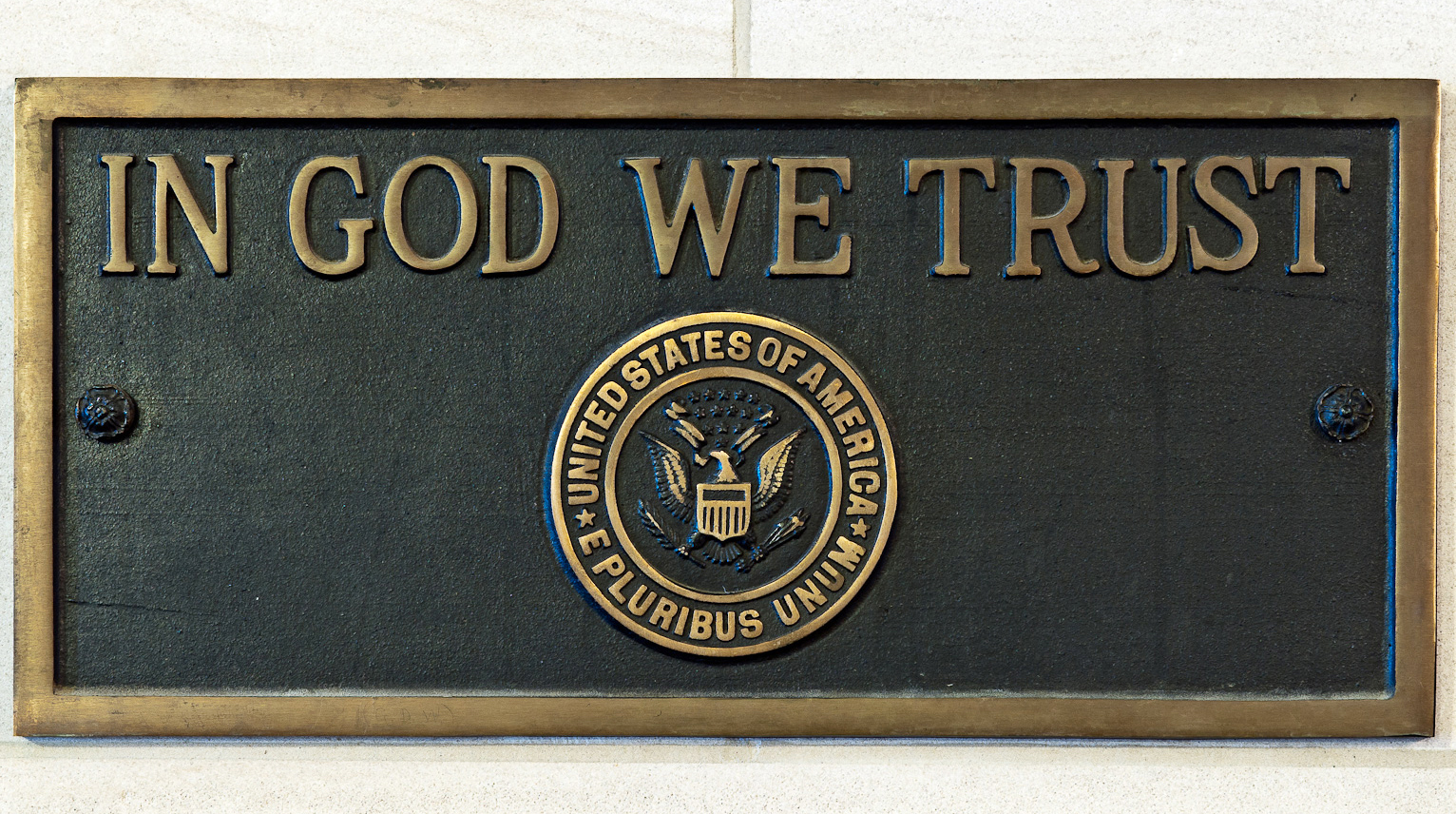
In God We Trust
Know the Truth and Protect Your Freedoms.
Still looking for answers? Visit our FAQ page

Stay Informed with the Latest Resources
Enter your email address to receive our regular newsletter, with important information and updates right in your inbox!