Thoughts on Matthew 6
Prayer has always been central to Biblical faith. Scripture is replete with stories of the efficacy of prayer. It is not surprising then that the practice of prayer was deeply embedded in early American life. In fact, colonial, state, and federal governments issued over 1,400 official calls to prayer between 1620 and 1815.1 The Founding Fathers clearly were convinced of the effectiveness of prayer.
John Jay, the original chief justice on the US Supreme Court, believed that the fact that God told us to pray, and how to pray and what to pray for, were clear indications that He wanted to answer our prayers. He explained:
Had it not been the purpose of God that His will should be done on earth as it is done in heaven, He would not have commanded us to pray for it. That command implies a prediction and a promise that in due season it shall be accomplished.2
Jay’s reference is to the Lord’s Prayer, when Jesus’ disciples came to Him and asked Him to teach them to pray. To which He replied:
Pray, then, in this way: ‘Our Father who is in heaven, hallowed be Your name. Your kingdom come. Your will be done, on earth as it is in heaven. Give us this day our daily bread. And forgive us our debts, as we also have forgiven our debtors. And do not lead us into temptation, but deliver us from evil. [For Yours is the kingdom and the power and the glory forever. Amen.’] (Matthew 6:9-13)
This prayer, well known to the Founding Fathers, appeared in American public school textbooks for over two centuries. An elderly John Quincy Adams recalled that it was one of the first things he had learned as a youngster:
My mother was the daughter of a Christian clergyman . . . In that same spring and summer of 1775 [when I was only seven], she taught me to repeat daily after the Lord’s Prayer before rising from bed, the Ode of Collins on the patriot warriors [a patriotic poem]. . . .Now—seventy-one years after they were thus taught me—I repeat them from memory.3
Early American statesman John Chandler Davis conversed with Adams about the Lord’s Prayer shortly before the latter’s death in 1848. Davis recounted:
In 1847, I became well acquainted with him and frequently met with him and talked with him in the House of Representatives. I remember one morning in 1847 that I met him before the House was called to order. He was very feeble. It was not long before the subject of religion was introduced by Mr. Adams. Among other things I remember his saying, “There are two prayers I love to say: the first is The Lord’s Prayer, and because the Lord taught it; and the other is what seems to be a child’s prayer, “Now I lay me down to sleep,” etc., and I love to say this because it suits me. And,” he added, “I love this prayer so much that I have been repeating it every night for very many years past, and I say it yet – and I expect to say it my last night on earth if I am conscious. But,” said he, “I have added a few words to the prayer so as to express my trust in Christ, and also to acknowledge what I ask for I ask as a favor and not because I deserve it. This is it,” said he, and then he repeated it as he was in the habit of saying it: “Now I lay me down to sleep, I pray the Lord my soul to keep; if I should die before I wake, I pray the Lord my soul to take – for Jesus’ sake. Amen.” This was in 1847. He died in 1848 while I was living in Washington, and I have no doubt but that the “child’s prayer that just suited” him was reverently repeated every night until he died.4
Jesus taught His disciples to pray the Lord’s Prayer, something many Founding Fathers faithfully embraced. The Lord’s Prayer serves as a time-tested guide for our own prayers that comes with a clear indication of God’s desire to answer them. As John Jay knew to be true, the Lord’s Prayer leads to answered prayer.
Endnotes
1 DeLoss Love, The Fast and Thanksgiving Days of New England (Boston: Houghton, Mifflin and Company, 1895), 464-514.
2 John Jay at the Annual Meeting, May 8, 1823, The Life of John Jay, with Selections of his Correspondence and Miscellaneous Papers, ed. William Jay (New York: J. & J. Harper, 1833), 1:503.
3 John Quincy Adams, The Memoirs of John Quincy Adams, ed. Charles Francis Adams (Philadelphia: J. B. Lippincott & Co., 1874), I:5-6.
4 John C. Davis, “John Quincy Adams” The Churchman, June 14, 1890; reprinted as “Child-Likeness of the Old Man Eloquent,” in The Sunday School Union (1890), XXXII:415.
Still looking for answers? Visit our FAQ page
More Resources
Georgia and Prayer
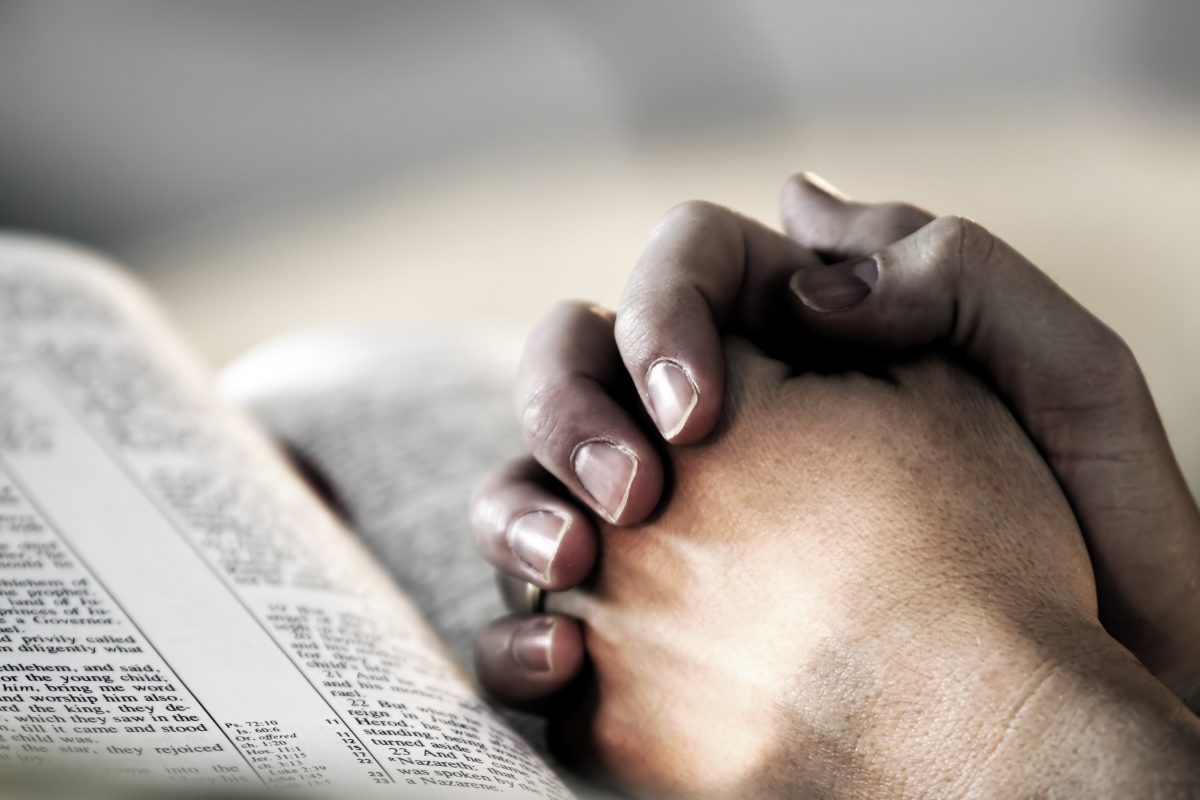
On February 5, 2026, David Barton was selected by the Georgia State Senate as Chaplain of the Day and opened its session with prayer. In his prayer, he thanked God for the blessings bestowed upon the state and its leaders, and asked that the prayers offered over Georgia across the previous three centuries would be […]
Freemasonry in the Founding Era
In God We Trust
Know the Truth and Protect Your Freedoms.
Still looking for answers? Visit our FAQ page

Stay Informed with the Latest Resources
Enter your email address to receive our regular newsletter, with important information and updates right in your inbox!