Part 3 – Faith in the Marketplace
In this final article on the historic role of American pastors, we look at the influence of the young nation’s ministers in furthering biblical principles in government and society.
Political Preachers
Christian clergy not only largely defined America’s unique political theory and even defended it in military combat, but they were also leaders in the national legislative councils to help implement those ideals. For example, Rev. Dr. John Witherspoon was a member of the Continental Congress who served during the Revolution on the Board of War as well as on over one hundred congressional committees.1 Other ministers who served in the Continental Congress included Revs. Joseph Montgomery, Hugh Williamson, John Zubly, and more.
Numerous ministers also served in state legislatures, such as Rev. Jacob Green of New Jersey, who helped oust the British colonial government and was chairman of the committee that drafted the state’s original constitution in 1776;2 Rev. Frederick Augustus Muhlenberg, who was influential in Pennsylvania ;3 Rev. Samuel Stillman, who helped draft Massachusetts’ 1780 constitution;4 etc.
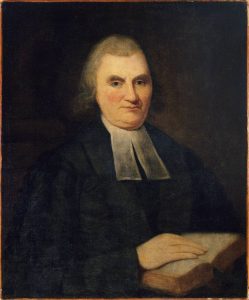
When hostilities ceased, Christian ministers led in the movement for a federal constitution. For example, Revs. Jeremy Belknap, Samuel Stanhope Smith, John Witherspoon, and James Manning began pointing out the defects of the Articles of Confederation.5 And when the US Constitution was finally complete and submitted to the states for ratification, nearly four dozen clergymen were elected as ratifying delegates,6 many of whom played key roles in securing its adoption in their respective states.
Following the adoption of the new federal Constitution, ministers were highly active in celebrating its ratification. For example, of the parade in Philadelphia, signer of the Declaration Benjamin Rush boasted:
The clergy formed a very agreeable part of the procession. They manifested by their attendance their sense of the connection between religion and good government. They. . . . marched arm in arm with each other to exemplify the Union.7
When the first federal Congress under the new Constitution convened, several ministers were Members, including Revs. Frederick and Peter Muhlenberg, Abiel Foster, Benjamin Contee, Abraham Baldwin, and Paine Wingate.
Ministers were intimately involved in every aspect of introducing, defining, and securing America’s civil and religious liberties. A 1789 Washington, D.C., newspaper enthusiastically reported:
Our truly patriotic clergy boldly and zealously stepped forth and bravely stood our distinguished sentinels to watch and warn us against approaching danger; they wisely saw that our religious and civil liberties were inseparably connected and therefore warmly excited and animated the people resolutely to oppose and repel every hostile invader. . . . May the virtue, zeal and patriotism of our clergy be ever particularly remembered.8
Ministers Train the Next Generation
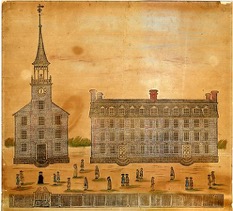
Besides their contributions to government and civil and religious liberty, the Black Robe Regiment was also largely responsible for education in America. Understanding that only a literate people well versed in the teachings of the Bible could sustain free and enlightened government, ministers established an education system that would teach and preserve the religious principles so indispensable to those civil and religious liberties.
Consequently, in 1635 the Puritans established America’s first public school,9 and in 1647 passed America’ first public education law (“The Old Deluder Satan Act”10). In 1636, Harvard University was established through the generosity of Puritan minister John Harvard. Following that, ten Congregational ministers founded Yale;11 Princeton by Presbyterian ministers Jonathan Dickinson, John Pierson, and Ebenezer Pemberton;12 William and Mary by Episcopal minister James Blair;13 Dartmouth by Congregational minister Eleazar Wheelock;14 etc.
For the next two-and-a-half centuries Gospel ministers founded and led American educational institutions. By 1860, ninety-one percent of all college presidents were ministers of the Gospel, as were more than a third of all university faculty members.15 Of the 246 colleges founded by the close of that year, only seventeen were not affiliated with some denomination;16 and by 1884, eighty-three percent of America’s 370 colleges still remained denominational colleges.17 Noah Webster (the “Schoolmaster to America”) confirmed, “to them [the clergy] is popular education in this country more indebted than to any other class of men.”18
The Pastors Praised
Throughout the founding of our nation, both enemy and patriot alike agreed America owed her establishment to the tireless involvement of the American pulpit. For example, John Adams rejoiced that “the pulpits have thundered”19 and specifically identified several ministers among the “characters the most conspicuous, the most ardent, and influential” in the “awakening and a revival of American principles and feelings” that led to American independence.20
Subsequent generations faithfully reported the great and positive influence of the Revolutionary clergy. For example:
As a body of men, the clergy were pre-eminent in their attachment to liberty. The pulpits of the land rang with the notes of freedom.21 The American Quarterly Register [MAGAZINE], 1833
If Christian ministers had not preached and prayed, there might have been no revolution as yet; or had it broken out, it might have been crushed.22 Bibliotheca Sacra [BRITISH PERIODICAL], 1856
The ministers of the Revolution were, like their Puritan predecessors, bold and fearless in the cause of their country. No class of men contributed more to carry forward the Revolution and to achieve our independence than did the ministers. . . . By their prayers, patriotic sermons, and services [they] rendered the highest assistance to the civil government, the army, and the country.23 B. F. Morris, HISTORIAN, 1864
The Constitutional Convention and the written Constitution were the children of the pulpit.24 Alice Baldwin, HISTORIAN, 1918
Had ministers been the only spokesman of the rebellion—had Jefferson, the Adamses, and [James] Otis never appeared in print, the political thought of the Revolution would have followed almost exactly the same line. . . . In the sermons of the patriot ministers . . . we find expressed every possible refinement of the reigning political faith.25 Clinton Rossiter, HISTORIAN, 1953
The American clergy were faithful exponents of the fullness of God’s Word, applying its principles to every aspect of life, shaping America’s institutes and culture. They were also at the forefront of proclaiming liberty, resisting tyranny, and opposing any encroachments on God-given rights and freedoms. In 1898, Methodist bishop and church historian Charles Galloway rightly observed of these ministers:
Mighty men they were, of iron nerve and strong hand and unblanched cheek and heart of flame. God needed not reeds shaken by the wind, not men clothed in soft raiment [Matthew 11:7-8], but heroes of hardihood and lofty courage. . . . And such were the sons of the mighty who responded to the Divine call.26
Ministers during the Revolutionary period were not unique; they were simply continuing what ministers had been doing to shape American government and culture in the century and a half preceding the Revolution.
Conclusion
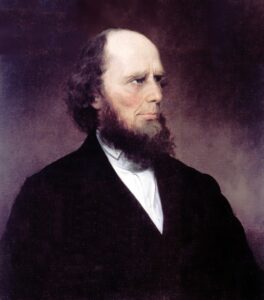
History demonstrates that America’s elective governments, her educational system, and a number of other positive aspects of American life and culture were the product of biblically thinking pastors and Christian leaders. Today, however, as the church’s influence has waned, many of these institutions have come under unprecedented attack and our traditional freedoms have been significantly eroded. It is time for America’s ministers to understand and reclaim their important, God-given positions of influence. Rev. Charles Finney, a leader of the Second Great Awakening, reminded ministers in his day:
Brethren, our preaching will bear its legitimate fruits. If immorality prevails in the land, the fault is ours in a great degree. If there is a decay of conscience, the pulpit is responsible for it. If the public press lacks moral discrimination, the pulpit is responsible for it. If the church is degenerate and worldly, the pulpit is responsible for it. If the world loses its interest in religion, the pulpit is responsible for it. If Satan rules in our halls of legislation, the pulpit is responsible for it. If our politics become so corrupt that the very foundations of our government are ready to fall away, the pulpit is responsible for it. Let us not ignore this fact, my dear brethren; but let us lay it to heart and be thoroughly awake to our responsibility in respect to the morals of this nation.27
America once again needs the type of courageous ministers that cause her enemies to fear, and the righteous to rejoice. It is time to reinvigorate the Black Robe Regiment!
Continue The Series
Discover the many ways that colonial pastors shaped their communities and eventually American independence. (Part 1)
Discover how American ministers not only laid the foundation for American Independence, but also put their lives on the line to secure it. (Part 2)
1 Varnum Lansing Collins, President Witherspoon: A Biography (Princeton: Princeton University Press, 1925), 2:4.
2 William B. Sprague, Annals of the American Pulpit (New York: Robert Carter & Brothers, 1856), 3:138.
3 “Frederick Augustus Conrad Muhlenberg, 1780 – 1783,” Pennsylvania House of Representatives, accessed October 12, 2026, https://www.palegis.us/house/house-speaker-biographies/speaker-results/house-speaker-biography?bioId=113.
4 Patriot Preachers of the American Revolution, ed. Frank Moore (Boston: Gould and Lincoln: 1860), 260.
5 See for example: Jeremy Belknap, The Belknap Papers, Collections of the Massachusetts Historical Society, Fifth Series (Boston: By the Society, 1877), 2:206-207, letter to Ebenezer Hazard, May 19, 1783; Michael Kraus, “Charles Nisbet and Samuel Stanhope Smith— Two Eighteenth Century Educators,” The Princeton University Library Chronicle 6, no. 1 (1944), 32, letter dated February 4, 1785, in the Princeton University Manuscript File; James Manning to Nathan Miller, September 28, 1786, manuscript in the Rhode Island State Archives; James H. Smylie, American Clergymen and the Constitution of the United States of America, 1781-1796 (New Jersey: Princeton Theological Seminary, doctoral dissertation 1958), 127-129, 139, 143.
6 James H. Smylie, American Clergymen and the Constitution of the United States of America, 1781-1796 (New Jersey: Princeton Theological Seminary, doctoral dissertation 1958), 176-181.
7 Benjamin Rush, Letters of Benjamin Rush, ed. L. H. Butterfield (Princeton: American Philosophical Society, 1951), I:474, to Elias Boudinot, “Observations on the Federal Procession in Philadelphia,” July 9, 1788.
8 Gazette of the United States (Washington, DC: May 9, 1789), 1, “Extract from “American Essays, The Importance of the Protestant Religion Politically Considered.”
9 BLS History, Boston Latin School, accessed August 31, 2026, https://www.bls.org/apps/pages/index.jsp?uREC_ID=206116&type=d.
10 Records of the Governor and Company of the Massachusetts Bay in New England, ed., Nathaniel B. Shurtleff (Boston: William White, 1853), II:203, November 11, 1647. Connecticut followed suit a few years later. See, The Code of 1650, Being a Compilation of the Earliest Laws and Orders of the General Court of Connecticut (Hartford: Silas Andrus, 1822), 92.
11 “An Act for Liberty to Erect a Collegiate School” Yale Charter, 1701, Archives at Yale, accessed October 12, 2026, https://archives.yale.edu/repositories/12/digital_objects/223080; see also, Noah Webster, Letters to a Young Gentleman Commencing His Education (New Haven: Howe & Spalding, 1823), 237.
12 John Maclean, History of the College of New Jersey, from its Origin in 1746 to the Commencement of 1854 (Philadelphia: J.B. Lippincott & Co., 1877), I:70.
13 The History of the College of William and Mary, from its Foundation, 1660, to 1874 (Richmond: J. W. Randolph & English, 1874), 37-38.
14 “Eleazar Wheelock,” Dartmouth, accessed August 31, 2026, https://president.dartmouth.edu/people/eleazar-wheelock.
15 James Tunstead Burtchaell, “The Decline and Fall of the Christian College I,” First Things, May 1991, 24; Charles B. Galloway, Christianity and the American Commonwealth (Nashville: Methodist Episcopal Church, South, 1898), 198.
16 E. P. Cubberley, Public Education in the United States (Boston: Houghton, Mifflin Co., 1919), 204.
17 Galloway, Christianity (1898), 209-210.
18 Noah Webster, A Collection of Papers on Political, Literary, and Moral Subjects (New York: Webster and Clark, 1843), 293, from his “Reply to a Letter of David McClure on the Subject of the Proper Course of Study in the Girard College,” Philadelphia. New Haven, October 25, 1836.”
19 John Adams, The Works of John Adams, ed. Charles Francis Adams (Boston: Charles C. Little and James Brown, 1851), III:476, “The Earl of Clarendon to William Pym,” January 20, 1766.
20 Adams, Works, ed. Adams (1850), X:284, to Hezekiah Niles, February 13, 1818; X:271-272, to William Wirt, January 5, 1818.
21 “History of Revivals of Religion, From the Settlement of the Country to the Present Time,” The American Quarterly Register (Boston: Perkins and Marvin, 1833), 5:217.
22 Alpheus Packard, “Nationality,” Bibliotheca Sacra (1856), XIII:193, Article VI.
23 Benjamin F. Morris, Christian Life and Character of the Civil Institutions of the United States (Philadelphia: George W. Childs, 1864), 334.
24 Alice M. Baldwin, The New England Clergy and the American Revolution (Durham: Duke University Press, 1958), 134.
25 Clinton Rossiter, Seedtime of the Republic (New York: Harcourt, Brace and Co., 1953), 328-329.
26 Galloway, Christianity and the American Commonwealth (1898), 77.
27 Charles Finney, “The Decay of Conscience,” The [New York] Independent, December 4, 1873, 5.
Still looking for answers? Visit our FAQ page
More Resources
America’s Black Robe Regiment Part 2
Part 2 – Patriot Preachers In this, the second in the series on America’s Black Robe Regiment, we will chronicle how Revolutionary American ministers earned this epithet, and why they would become a target of the enemy. The Black Robe Regiment (or “the black Regiment”) was the slur used by the British to refer to […]
America’s Black Robe Regiment Part 1
For our first two centuries, Americans recognized and appreciated the indispensable role of ministers of the Gospel in securing both our civil and religious liberties. But in recent years, American culture has sequestered and sidelined her pastors. The universal church and her leaders were pushed out of the public square and told to stay in […]
Georgia and Prayer
On February 5, 2026, David Barton was selected by the Georgia State Senate as Chaplain of the Day and opened its session with prayer. In his prayer, he thanked God for the blessings bestowed upon the state and its leaders, and asked that the prayers offered over Georgia across the previous three centuries would be […]
Know the Truth and Protect Your Freedoms.
Still looking for answers? Visit our FAQ page

Stay Informed with the Latest Resources
Enter your email address to receive our regular newsletter, with important information and updates right in your inbox!