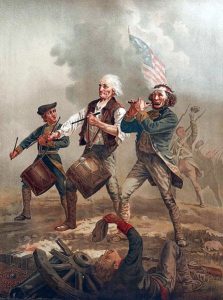
On This Day In History: July 29, 1775

on-this-day-in-history-july-29-1775-1With the recent hostility against military chaplains, it is worth recalling the distinguished history of the chaplain corps as it celebrates its 240th birthday.

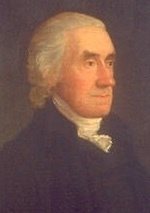
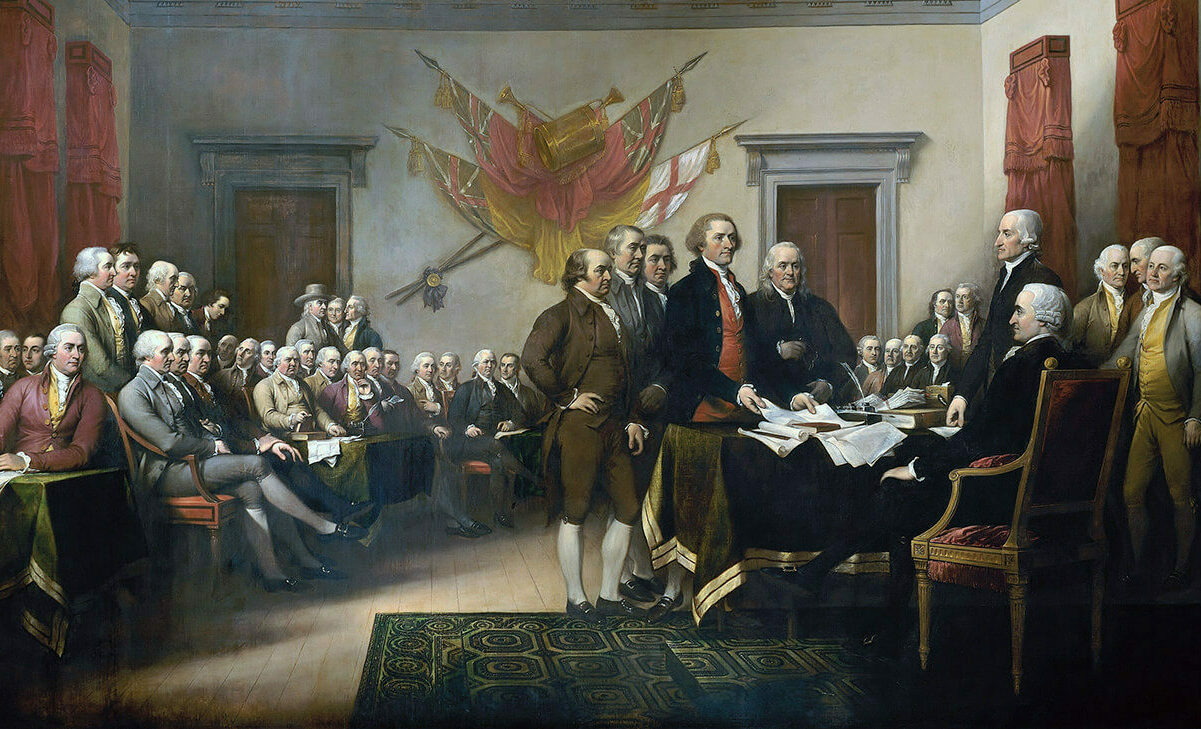
On July 29, 1775, the Army Chaplain Corps was organized by the Continental Congress. Numerous famous leaders have served as military chaplains, including Robert Treat Paine, a signer of the Declaration of Independence.

WallBuilders has numerous original sermons preached by those who served as Revolutionary War chaplains, including Manasseh Cutler (chaplain to four different units), Benjamin Trumbull (also a noted historian), and Timothy Dwight (who later became President of Yale).

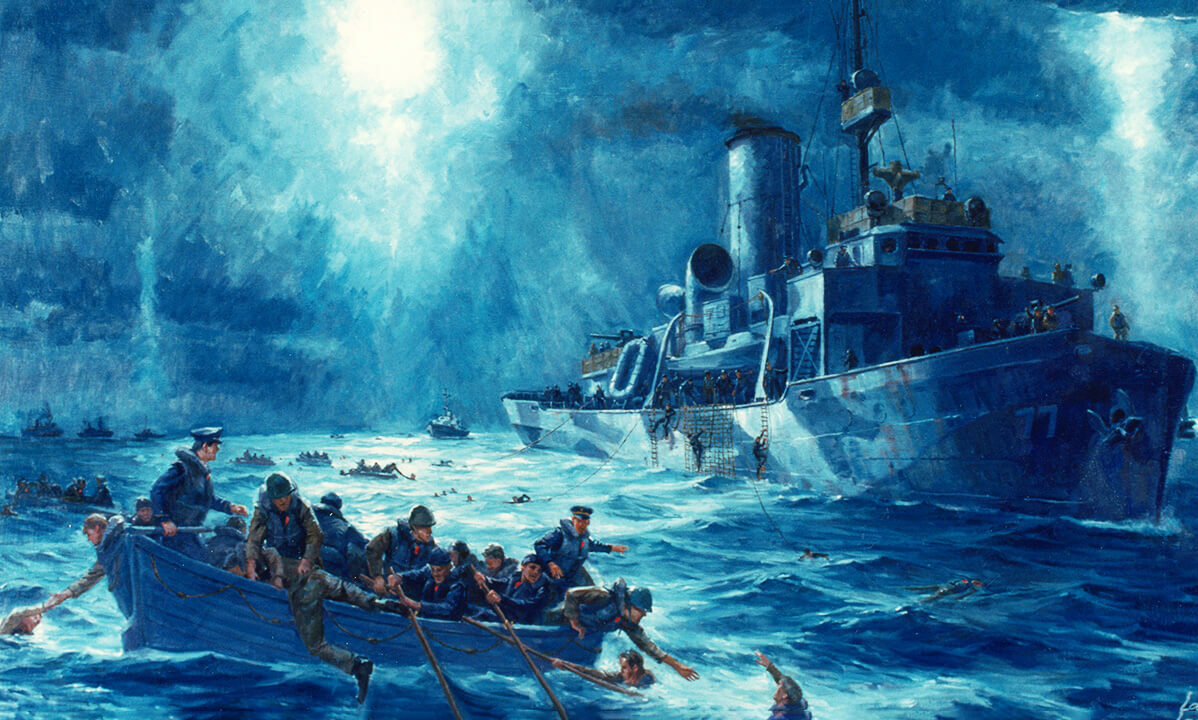
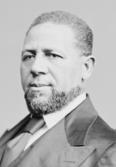
on-this-day-in-history-july-29-1775-2The rich legacy of the service and sacrifice of chaplains continued long after the American Revolution. For example, Hiram Rhodes Revels, America’s first black U.S. Senator, was a chaplain during the Civil War. James Naismith, who invented the game of basketball, was a chaplain in WWI. During WWII, the “Four Chaplains” gave their lives to save hundreds of soldiers during the sinking of the Dorchester.
Although Chaplains are now under direct assault from Progressives and Secularists, their work is indispensable to the spiritual, mental, and emotional well-being of America soldiers, sailors, and airmen.

So, Happy Birthday to the military chaplain corps!

The Pony Express

The Pony Express & Religion

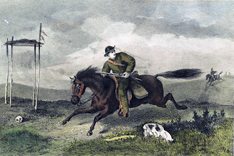
the-pony-express-1William H. Russell, Alexander Majors, and William B. Waddell founded the Pony Express in an attempt to provide faster communication between the more populated portions of America and the far West, especially California. The Pony Express was a group of young riders on horseback covering about 2,000 miles over the course of ten days, transporting mail from the East to the West, and then back.
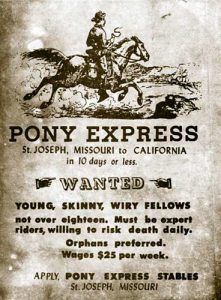
On April 3, 1860 the first Pony Express riders departed from St. Joseph, Missouri, headed toward Sacramento, California. Along the arduous journey, each rider covered around 100 miles before handing off the route to another rider, usually covering a combined 250 miles each day.

the-pony-express-2The recruitment poster pictured on the left described the qualifications for employment: “Young, skinny, wiry fellows, not over eighteen. Must be expert riders, willing to risk death daily. Orphans preferred. Wages $25 per week.” These young riders faced all sorts of difficulties on their journey, including attacks by Indians, dangerous weather, and the general rigors of riding cross-country on horse back at a full gallop. (Find out more about the young riders for the Pony Express in the article for 1 Samuel 3:4 in The Founders’ Bible.)

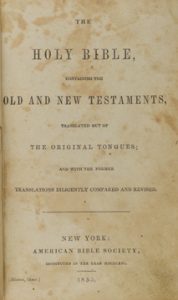
Alexander Majors wanted these young men to have spiritual support along with the physical support the company provided them (i.e., horses, gear, relay stations, etc.). A Bible was therefore given to every rider and also left at each of the more than 150 stations along the trail.

the-pony-express-3Among the many items WallBuilders owns is one of these very rare Pony Express Bibles (title page pictured on the right). This particular Bible was presented to Robert James Halligan (1833-1908) who worked for Alexander Majors during the time of the Pony Express and after it was disbanded.
The Pony Express was only in existence for nineteen months and ended when the transcontinental telegraph reached California in October 1861. During the short time of its operation, some 200 riders covered 650,000 miles.

The Pony Express is another of the many famous aspects of American history with a tie to America’s Christian heritage.

Happy Easter!

Easter and America

happy-easter-1Easter is celebrated across the world as one of the most significant Christian holy days. It is when Christians pause to remember the great sacrifice of Jesus on the cross as well as the ultimate triumph of His resurrection.
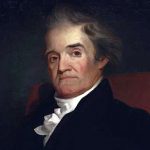
happy-easter-2As Noah Webster, author in 1828 of America’s first English-language dictionary, affirmed:
A festival of the Christian church observed in commemoration of our Savior’s resurrection. It answers to the pascha or Passover of the Hebrews, and most nations still give it this name.

Across the centuries of American history, our leaders have regularly commented on the applicability of Easter and the resurrection of Jesus to various aspects of our daily life.

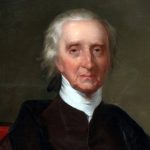
For example, signer of the Declaration of Independence Charles Carroll viewed Easter as the power for salvation, explaining:

happy-easter-3The approaching festival of Easter, and the merits and mercies of our Redeemer copiosa assudeum redemptio have lead me into this chain of meditation and reasoning, and have inspired me with the hope of finding mercy before my Judge, and of being happy in the life to come — a happiness I wish you to participate with me by infusing into your heart a similar hope.
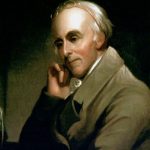
Benjamin Rush, another signer of the Declaration, pointed out how that Jesus’ resurrection not only redeemed man to God but also to each other. He noted:

happy-easter-4He forgave the crime of murder on His cross; and after His resurrection, He commanded His disciples to preach the gospel of forgiveness, first at Jerusalem, where He well knew His murderers still resided. These striking facts are recorded for our imitation and seem intended to show that the Son of God died, not only to reconcile God to man but to reconcile men to each other.
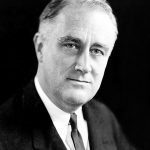
President Franklin Roosevelt saw in Easter a clear message for youth. Addressing a group of young people in 1936, he told them:

happy-easter-5Yesterday, Christendom celebrated Easter—the anniversary of the Resurrection of Our Lord Who, at the beginning of His ministry was thirty years of age and at His death was only thirty-three. Christianity began with youth, and through the last two thousand years, the spirit of youth repeatedly has revitalized it.

And President Ronald Reagan reminded the nation of the hope that came to Christians through Easter:

happy-easter-6Beginning today and culminating on Sunday morning, Christians will celebrate with their families the resurrection of Christ, His victory over death. We will remember that He gave His body and His blood—washing clean the faults and the shortcomings of the world. In our rejoicing we will renew the hope that is ours through the risen Lord.

Easter is indeed a special day! So, from all of us at WallBuilders, Happy Easter

(As you celebrate this day, you may want to take a little time to read this historical Easter sermon from WallBuilders’ collection.)

Women Heroes

Courageous Women During the American Revolution

The contributions of women to the American Revolution are often neglected today. Many women demonstrated exemplary courage during this time. Here are a few examples.

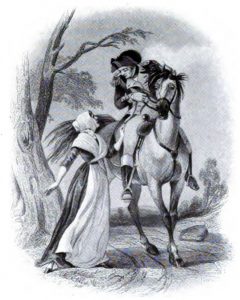
In April, 1777, a large British force arrived in Fairfield, Connecticut. Marching through nearby Danbury, they searched for American supplies and burned property owned by patriots.1 A messenger from Danbury was sent to Col. Henry Ludington, the leader of a nearby militia, alerting him to what was happening and seeking his help. His militia was scattered throughout the countryside and  someone was needed to alert them and round them up. The Danbury messenger was exhausted from his ride and also unfamiliar with the area, so Sybil Ludington, Col. Ludington’s 16 year-old daughter, carried the message, riding throughout the night, across 40 miles of dangerous country.2 The militia gathered, and unable to save Danbury, were involved in the Battle of Ridgefield on April 27, 1777.

It was not just the men who signed the Declaration of Independence who risked death or imprisonment, or suffered personal tragedy, but their wives often did so as well — such as Elizabeth Lewis, wife of Declaration signer Francis Lewis.3 The Lewis’ home was in Long Island, and during the British occupation there, soldiers were dispatched to capture Elizabeth and destroy their property.4 As troops approached, a ship opened fire at the house (a cannonball even struck right beside where she stood) but Elizabeth refused to yield or retreat. The British captured her, holding her in dreary conditions with little food and no change of clothes. After several months, she was eventually freed through the efforts of George Washington and Congress but her health never recovered and she died in 1779.women-heroes-3

Several women worked actively as spies for the American cause, supplying the army with much needed intelligence. For example, Lydia Darrah, hosted a meeting of British officers in December, 1777. Listening in secret to their meeting, and learning of their plans to attack George Washington’s army at White Marsh, she alerted the Americans, who were able to prepare for the planned surprise attack.5 Another example is Jane Thomas. Her husband, Col. John Thomas, was a prisoner of the British for fourteen months.6 On a visit to him, she learned of plans to attack the Americans at Cedar Spring. Riding almost sixty miles, she alerted them to danger, giving them time to prepare their defense against the British.7

These and many additional examples show that women of the Revolution played key roles in America’s fight for independence and should be honored during Women’s History Month.

* Originally published: Dec. 31, 2016


Endnotes

1 Richard Buel, “The Burning of Danbury,” ConnecticutHistory.org, accessed May 8, 2025.
2 Martha J. Lamb & Mrs. Burton Harrison, History of the city of New York (New York: A.S. Barnes Company, 1896), II:159-160; Willis Fletcher Johnson, Colonel Henry Ludington: A Memoir (New York: 1907), 89-90; National Postal Museum, “Sybil Ludington,” Smithsonian, accessed May 8, 2025.
3 Benson Lossing, Biographical Sketches of the Signers of the Declaration of American Independence (New York: George F. Cooledge & Brother, 1848), 71-73.
4 “Elizabeth Annesley Lewis,” The Pioneer Mothers of America (New York: G. P. Putnam’s Sons, 1912), 3:119-126; L. Carroll Judson, A Biography of the Signers of the Declaration of Independence (Philadelphia: J. Dobson, 1839), 64-66.
5 Elizabeth F. Ellet, The Women of the American Revolution (New York: Baker and Scribner, 1848), 171-177
6 “Col. John and Jane Thomas,” The Historical Marker Database, accessed May 8, 2025.
7 Ellet, Women of the American Revolution (1848), 250-260.

united states flag

This Day in History: Star Spangled Banner

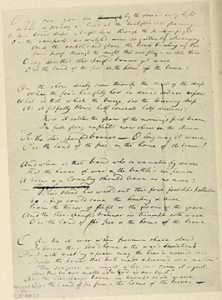
On March 3, 1931, an Act of Congress made the Star Spangled Banner America’s national anthem, but the history of that song goes back almost two centuries.

this-day-in-history-star-spangled-banner-2Following the American Revolution, Americans hoped to live in peace but France and England became engaged in a conflict that drew America back into war. The British captured American ships on the high seas and forced American sailors (around 10,000 of them) to fight for England. The United States declared war. Known as the War of 1812, it lasted until 1815.

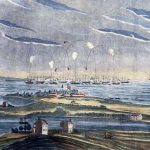
During the war, in August 1814, England invaded Washington, D.C., setting fire to the Capitol, White House, and other government buildings. The British then marched to Baltimore, Maryland, and on September 13 began bombarding Fort McHenry.

this-day-in-history-star-spangled-banner-3At that time, attorney Francis Scott Key was aboard a British ship negotiating the release of a friend. Throughout the long night, he watched the attack on Fort McHenry, fearing its fall, but when morning arrived, the American flag was still flying — the fort had survived the attack.

Inspired by these events, Francis Scott Key wrote down a few lines about the attack while still on board the ship and then wrote several more lines after reaching shore. Shortly thereafter they were published as a poem titled “Defence of Fort M’Henry.” Set to music in November of that year, it was named “The Star Spangled Banner.”

The song became popular during the Civil War and remained so well into the 20th century before finally being officially made America’s national anthem. As we celebrate its anniversary, let’s remember the many blessings God has bestowed on this nation, and the corresponding duties that we and our fellow-citizens have to preserve those blessings.


You can watch David Barton’s short history of the Star Spangled Banner, or you can purchase a high-resolution copy to show to your church, school, or other group.


Black Soldiers in the Revolution

Sadly, today we are routinely taught the negatives of American history — we emphasis the bad and the ugly with nearly no mention of the good. Consequently, we hear the many ways that Americans did not always live up to the ideals of our founding, especially that black Americans were despised and enslaved. This is indeed part of the story, but there is much more. For example, on the positive side, did you know that many black Americans played key roles in the War for Independence? Consider just three.

James Armistead1 black-soldiers-in-the-revolution-1from Virginia worked closely with Marquis de Lafayette.2 He was able to infiltrate the camp of the patriot-turned-traitor, Benedict Arnold (then a British general after his defection from the Americans), and later the camp of British General Lord Cornwallis. Armistead obtained vital information about British plans and troop movements that he fed back to Lafayette and George Washington. His information allowed the American forces to initiate the Battle of Yorktown,3 which led to the end of the American Revolution. For his military services, Armistead was granted a retirement pension from Virginia.4

In December 1776, the second-in-command of the American Army, General Charles Lee, was taken prisoner by the British.5 To obtain his release, a prisoner exchange for a British general of the same rank was needed. Lt. Col. William Barton therefore undertook a daring plan to slip into the British stronghold at Newport, Rhode Island, capture British General Richard Prescott, and return him to the American side before the British learned of his capture.6 Cassell's History of the United States Barton hand-selected about forty elite soldiers, who silently slipped past the main British force and overpowered the guards protecting the general. They had only to break down the door to his room and grab Prescott. One of the black commandos on the mission, Prince Sisson – a powerful man – stepped forward and charged the door. Using his own head as a battering ram, the locked door gave way and Prince entered the quarters and seized the surprised general.7 The group safely returned with Prescott, who was subsequently exchanged for General Charles Lee. The daring act of Sisson is still celebrated to this day.

Wentworth Cheswell, black-soldiers-in-the-revolution-3grandson of a slave, had a long career in public office.7 Elected in 1768 as a town constable in New Hampshire, he became one of the first blacks elected to office in America. In 1770, he was a town selectman, considered as one of the “town fathers” in the community. Other public offices he held included that of Auditor, Assessor, Coroner, Moderator (presiding over town meetings), and Justice of the Peace.8 In the latter role, he oversaw trials, settled disputes, and executed legal documents. Altogether, Cheswell held some form of public office for 49 years. During the Revolution, he was a messenger for the Committee of Safety, carrying intelligence and messages back and forth between strategic operational centers. It was in this position that Cheswell made an all-night ride, similar to the one undertaken by Paul Revere, warning citizens of imminent British invasion. In 1777, Cheswell enlisted in a company of Light Horse Volunteers commanded by Colonel John Langdon, who later became a signer of the U.S. Constitution.9 Cheswell has a lasting legacy as a patriot, teacher, church leader, historian, archeologist, educator, judge, and elected official. He is a black patriot worthy of honoring and remembering.

In the WallBuilders library, we are blessed to have some military pay documents that were issued to various black soldiers during the Revolution10 (such as those pictured below) as well as some documents signed by Wentworth Cheswell11 (pictured above).

black-soldiers-in-the-revolution-4
black-soldiers-in-the-revolution-5

Let’s put some of the good stories back into Black History Month by acknowledging courageous black patriots in the American Revolution.


Endnotes

1 “Black History Issue 2004,” WallBuilders.
2 “Marquis de Lafayette,” National Park Service, accessed January 31, 2024.
3 “Battle of Yorktown begins,” History, updated September 2020.
4 “James Armistead,” Biography, July 2, 2020.
5 lack History Issue 2004,” WallBuilders; William Nell, The Colored Patriots of the American Revolution (Boston: Robert F. Wallcut, 1855), 127.
6 “Barton, William,” Appletons’ Cyclopaedia of American Biography, eds. James Grant Wilson & John Fiske (New York: D. Appleton & Company, 1888), I:188; Nell, Colored Patriots (1855), 127.
7 “A Black Patrioti: Wentworth Cheswell,” WallBuilders.
8 “Cheswell,” PBS, accessed January 31, 2024; “Wentworth Cheswell,” Britannica Kids, accessed January 31, 2024.
9 “John Langdon: New Hampshire,” Robert K. Wright, Jr. & Morris J. MacGregor, Jr., Solider-Statesmen of the Constitution (Washington, DC: Center of Military History United States Army, 1987), 100-102.
10 “Black Revolutionary War Soldiers Pay,” WallBuilders.
11 “Wentworth Cheswell Documents,” WallBuilders.

Presidents Day

American Exceptionalism — and Our Responsibility to Preserve It

presidents-day-1America is a blessed nation. We enjoy a level of political stability, 1 creative innovation, 2 and national prosperity 3 unknown by any other country in the world. Our uniqueness has been affirmed by presidents across the generations — as when President Thomas Jefferson said:

[T]he comparison of our government with those of Europe is like a comparison of heaven and hell.

President Calvin Coolidge identified God and His principles as the reason for the difference:

presidents-day-2[T]he authority of law, the right to equality, liberty, and property under American institutions, have for their foundation reverence for God. If we could imagine that to be swept away, these institutions of our American government could not long survive.

President Herbert Hoover acknowledged that the intangibles were the key:

Th[e] unparalleled rise of the American man and woman was not alone the result of riches in lands or forests or mines; it sprang from ideas and ideals, which liberated the mind and stimulated the exertion of a people.

Our founding documents embodied this “reverence for God” and the “ideas and ideals” that were the product of that respect. Understanding this, President Harry Truman warned:

presidents-day-4The Constitution and the Declaration of Independence can live only as long as they are enshrined in our hearts and minds. If they are not so enshrined, they would be no better than mummies in their glass cases, and they could in time become idols whose worship would be a grim mockery of the true faith. Only as these documents are reflected in the thoughts and acts of Americans can they remain symbols of a power that can move the world.

This year, we have an opportunity to preserve the great God-given ideals articulated in our nation’s founding documents. We can vote for a president (and other leaders) who fully embrace a respect for God and His principles, and the ideas that flow from Him.

The Scriptures remind us in Proverbs 14:34 that “Righteousness exalts a nation, but sin is a reproach to any people.” Our Founding Fathers often repeated this verse, as did leaders across subsequent generations.1 Our first concern as a Christian voter is therefore not our pocketbook or the economy but rather whether a candidate will advance policies upholding Biblical standards of righteousness.

Make sure you keep these values foremost whenever you vote in any election. (If you need more information about voting, including registering to vote, or if you want to see voter guides, please visit Christian Voter Guide.)

presidents-day-6On Presidents Day — and with a presidential election directly in front of us — let’s remember the words of President George Washington and make sure that his concern does not become a reality in our generation:

No country upon earth ever had it more in its power to attain these blessings than United America. Wondrously strange, then, and much to be regretted indeed would it be, were we to neglect the means and to depart from the road which Providence has pointed us to so plainly; I cannot believe it will ever come to pass.


Endnotes

1 See, for example, the number of Constitutions other countries have had in the time we have had one: France (15), Brazil (7), Russia (4), Poland (7), Iraq (4), South Korea (6), China (4), and many more.

2 With only four percent of the world’s population, every year America produces more patents than the rest of the world combined. And also has won more than fifty percent of the world’s Nobel Prizes in various categories.

3 America produces an amazing twenty-eight percent of the world’s entire gross domestic product (GDP).

4 See examples in The Founders Bible article on Proverbs 14:34.

* This article concerns a historical issue and may not have updated information

Celebrating the Constitution

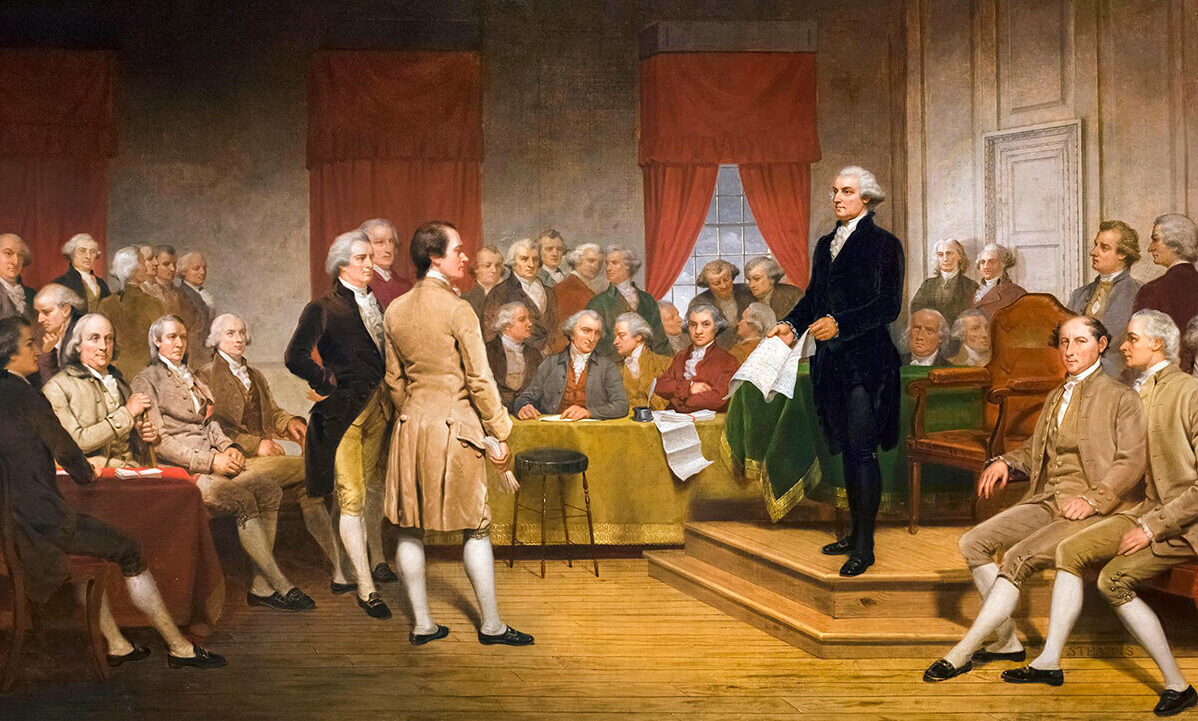
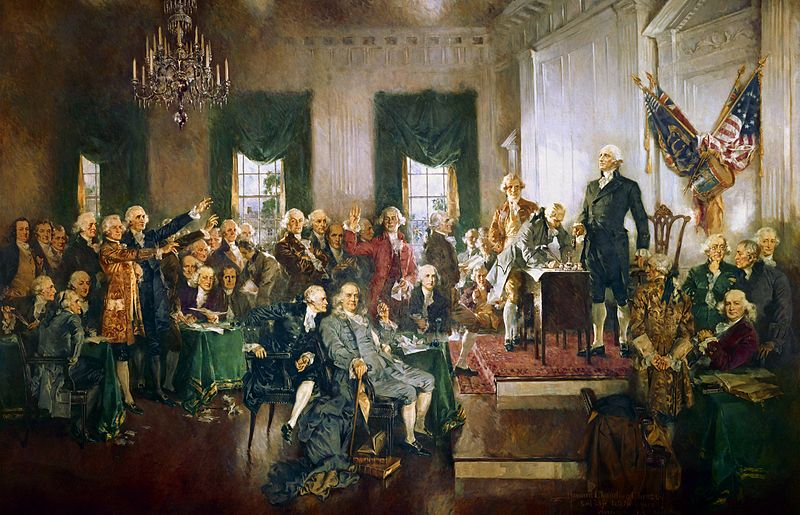
The Convention of 1787 was the capstone in a chain of events that led to the creation of the U.S. Constitution.

celebrating-the-constitution-1America’s first attempt at a national governing document was in 1777 with the Articles of Confederation.1 It went into effect in 1781, but its deficiencies were quickly apparent,2 so in 1786, the Annapolis Convention called for a body to assemble to address its many weaknesses.3 What is known as the Constitutional Convention then gathered in Philadelphia in 1787.4

The debates on the Constitution did not go smoothly at first. In fact, Benjamin Franklin recommended they begin daily prayers to help the process along.5 Eventually they came together to produce the Constitution — the most successful governing document in world history. It was signed on September 17, 1787,6 a day we now celebrate as “Constitution Day.” Many delegates expressed their belief that writing the Constitution would not have been possible without the Divine aid they personally witnessed and openly acknowledged. Alexander Hamilton said:

For my own part, I sincerely esteem it a system which without the finger of God never could have been suggested and agreed upon by such a diversity of interests.7

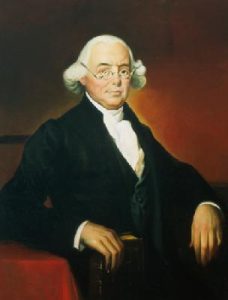
celebrating-the-constitution-2James Madison agreed:

It is impossible for the man of pious reflection not to perceive in it the finger of the Almighty Hand which has been so frequently and signally extended to our relief in the critical stages of the Revolution.8

Benjamin Franklin and George Washington also expressed similar convictions.9

celebrating-the-constitution-3Many delegates involved with writing the Constitution were trained in theology or ministry,10 including Abraham Baldwin, James Wilson, Hugh Williamson, Oliver Ellsworth and others. The Constitution was then sent to the states to be ratified,11 and about four dozen clergymen were elected from among the various states as delegates to ratify the Constitution.12 The influence of Biblical faith on that document was apparent, and under it, Americans have been blessed!

As President Calvin Coolidge affirmed:

[T]he more I study [the Constitution], the more I have come to admire it, realizing that no other document devised by the hand of man ever brought so much progress and happiness to humanity.13 To live under the American Constitution is the greatest political privilege that has ever occurred to the human race.14

Because the Constitution is such a unique and remarkable document, federal law requires that every year on Constitution Day, all public schools must hold a special program on the Constitution.15 Sadly, few schools follow this law. But that should not keep every citizen from celebrating that document. Each of us should read and know that document, and teach it to others. So read the Constitution for yourself, and check out these resources that can be used in public schools to teach the Constitution on Constitution Day.16 Share this information with schools, educators, and students around you!


Endnotes

1 “Articles of Confederation: Primary Documents in American History,” Library of Congress, accessed December 13, 2023.
2 See, for example, “Policies and Problems of the Confederation Government,” Library of Congress, accessed December 13, 2023; “Defencies of the Confederation,” The Founders Constitution.
3 “Appendix A: The Annapolis Convention,” Soldier-Statesmen of the Constitution (Washington, DC: Center of Military History, 1987), 265.
4 “The Constitution: How Did it Happen?” National Archives, accessed December 13, 2023.
5 James Madison’s Notes on the Convention, June 28, 1787, Max Farrand, The Records of the Federal Convention of 1787 (New Haven: Yale University Press, 1911), I:450-452.
6 “Constitution of the United States: Primary Documents in American History,” Library of Congress, accessed December 13, 2023.
7 Alexander Hamilton to Mr. Childs, Wednesday, October 17, 1787, The Federalist and Other Contemporary Papers on the Constitution of the United States, ed. E.H. Scott (New York: Scott, Foresman and Company, 1894), 646.
8 James Madison, Federalist #37, Alexander Hamilton, John Jay, & James Madison, The Federalist (Philadelphia: Benjamin Warner, 1818), 194.
9 Benjamin Franklin, “A Comparison of the Conduct of the Ancient Jews and of the Anti-Federalists in the United States of America,” The Works of Benjamin Franklin, ed. Jared Sparks (Boston: Tappan, Whittemore, and Mason, 1837), V:162; George Washington to Marquis de Lafayette, February 7, 1788, The Writings of George Washington, ed. Jared Sparks (Boston: Russell, Odiorne, and Metcalf, 1835), IX:317.
10 See WallBuilders article, “No Professor Fea, the Founders Did Not Want Ministers to Stay out of Politics.”
11 “Observing Constitution Day,” National Archives, accessed December 13, 2023.
12 See WallBuilders article, “No Professor Fea, the Founders Did Not Want Ministers to Stay out of Politics.”
13 Calvin Coolidge, “Autobiography of College Days,” Hearst’s International Combined with Cosmopolitan (NY: International Magazine Company, August 1929), LXXXVII:2:37.
14 James M. Beck, “What is the Constitution?” Our World Weekly (March 16, 1925), II:7:102.
15 “Constitution Day and Citizenship Day,” US Code.
16 “Constitution Day Teacher Resources,” Library of Congress; “Teachers Guide: Commemorating Constitution Day,” National Endowment for the Humanities; “Commemorating Constitution Day and Citizenship Day,” US Department of Education.

Ringing of the Liberty Bell

Ringing of the Liberty Bell


ringing-of-the-liberty-bell-1The Liberty Bell is an iconic part of America’s history.

In 1751, on the 50th anniversary of Pennsylvania’s 1701 first charter of liberties the Pennsylvania Assembly ordered a bell from London to be used as part of the commemoration festivities. It arrived on September 1, 1752 and was hung in the tower of the State House in 1753.

Sadly, the bell cracked the first time it was pealed, so the local Philadelphia foundry of Pass and Stow melted down the bell and recast it. But many citizens were displeased with the sound of the bell, so it was once again melted down, recast, and then rehung in the tower.

It was originally known as the “State House Bell.” It was some fifty years after the Revolution, in the midst of the growing national divide over the slavery issue, that abolitionists renamed it the Liberty Bell. It was called this because of the Bible inscription from Leviticus 25:10 emblazoned around the top of the bell — “Proclaim Liberty Throughout All the Land Unto All the Inhabitants thereof.” Its new name was popular among the public and became its permanent name.

Across the years, the Liberty Bell rang many times in September as part of several notable events in American history. For example:

    • September 1764 — It rang to call together the State Assembly, which voted to request that its official representative in London “use his endeavors to obtain a repeal or at least an amendment of the [Sugar Act]” — one of the underlying causes of the American War for Independence.
    • September 1765 — It rang to call together the Assembly to discuss the Stamp Act, another one of the onerous British policies that spurred independence.
    • September 1770 — It rang to assemble citizens, who passed a resolve stating that Parliament’s taxes violated the rights of Pennsylvania citizens.
    • September 1777 — It was transported by wagon to the Zion Reformed Church in Allentown to protect it from the British who, it was widely thought, would take the bell and melt it down to use for ammunition.
    • September 1824 — It rang to welcome hero Marquis de Lafayette (who was visiting America) to Independence Hall.

Of course, there were many other important times that the Liberty Bell was rung, including on July 8, 1776 to call citizens to assemble together outside the State House for a special announcement. At that time, the new Declaration of Independence was read to them by Col. John Nixon.

This month, we remember the famous Liberty Bell, named because of its Bible verse, as another example of the rich religious heritage of the United States.

Our nation’s history is full of wonderful stories like this one. At WallBuilders, we are often asked by legislators, courts, and schools to share such information about our rich moral, religious, and constitutional heritage. 

United States Navy

The US Navy dates its origins back to 1775. It began with an August 26, 1775 instruction from Rhode Island to their representatives in the Continental Congress to call for the establishment of a navy, explaining that “every principle, Divine and human, require us to obey that great and fundamental Law of Nature — self preservation — until peace shall be restored upon constitutional principles.”

united-states-navy-1The Continental Congress, not in session at that time, took up the issue when it returned and on October 13, 1775, the Continental Navy was created. The Continental Navy peaked at 31 ships in 1777 and contributed to key victories, but by the war’s end in 1783, it had shrunk amid losses. It was fully disbanded in 1785 after the Treaty of Paris.

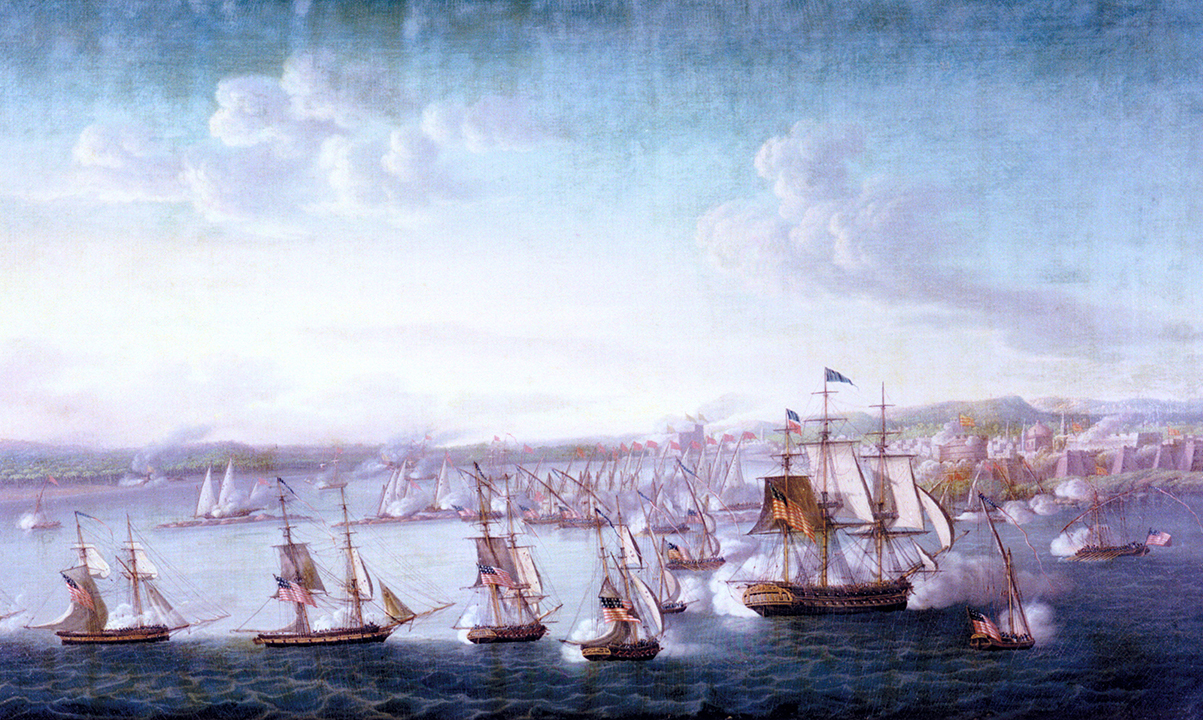
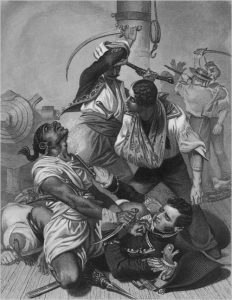
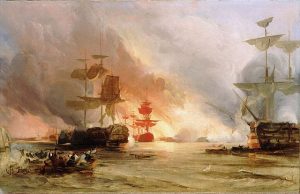
This action, however, left American commercial ships in the Mediterranean unprotected. So in 1784, five Muslim nations began attacking American ships and killing and enslaving sailors. With no Navy to deter these terrorists, the United States government’s only recourse was to make huge extortion payments to the terrorists in exchange for their promise to limit future attacks. Frustrated by the navy’s absence and mounting pirate ransoms, President Washington urged Congress to rebuild in 1794, authorizing six frigates. Congress agreed and President John Adams executed and expanded the plan during the 1798 Quasi-War with France. President Thomas Jefferson then used the Navy to launch America’s first war on Muslim terrorists, defeating them and ending their attacks against American citizens and interests.

united-states-navy-2Following this, the Navy slowly shrank in size until it numbered only 40 combat-ready ships by the beginning of the Civil War (the Confederates had none, though they built a formidable ironclad force). The War resulted in a naval build up on both sides, with several major naval battles. (Pictured on the right, is the Battle of Hampton Roads, the first encounter between ironclad armored ships.)

After the War, the Navy once again shrank, but during WWII, it was rebuilt. By the end of 1945, the US Navy consisted of over 1,300 major combat ships (such as battleships, cruisers, aircraft carriers, destroyers, and submarines), over 83,000 mine laying ships and landing craft, with over 3.3 million naval personnel.

Military cutbacks under the Obama administration once again dramatically reduced the size of the Navy, leaving only 275 ships and 330,000 active duty naval personnel, with 100,000 reserves.

The pattern is clear: when we dramatically cut the military, we invite outside attacks. So, while remembering the origins of the US Navy, let’s pray for all those that serve in that branch — and indeed, for those who serve in all branches of our Armed Forces to keep Americans safe around the world!