Brave Soldiers of the Cross

America’s Military Chaplains
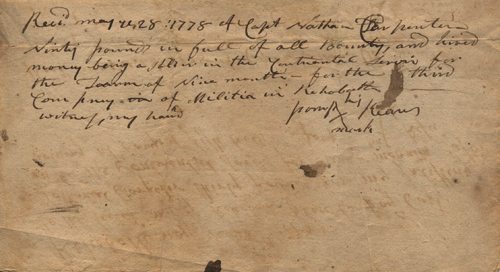
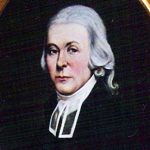
brave-soldiers-of-the-cross-1On August 16th, 1777, two hundred and thirty-nine years ago, the Battle of Bennington was fought by a band of volunteers opposing the advance of British General Burgoyne’s army. Among these volunteers was Chaplain Thomas Allen, the “Fighting Parson of Bennington.” Before the battle began, he led his soldiers in prayer that God would grant victory. (In WallBuilders’ collection, you can see a note from him, as well as read a sermon he preached years later.)

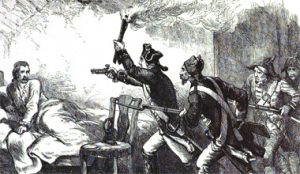
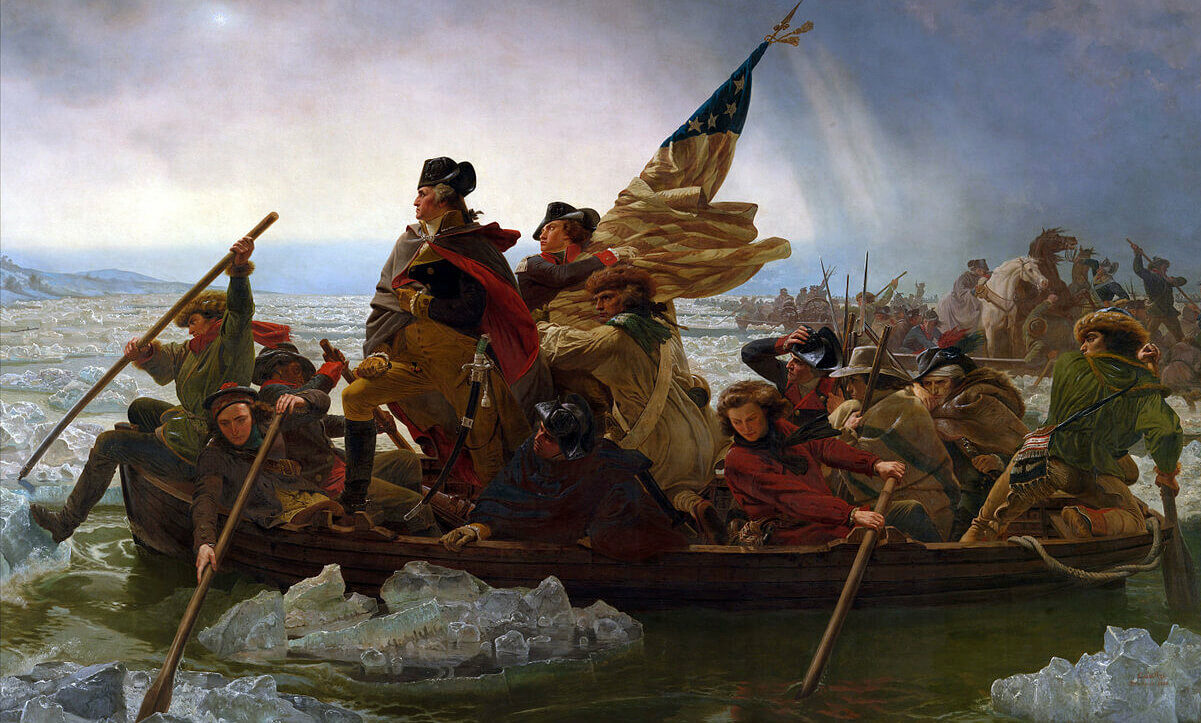
Other notable chaplains in the War for Independence included Benjamin Trumbull, who in one battle sat on his horse in full view of the enemy, firing his musket and ducking behind the horse’s neck if ever a bullet came close.

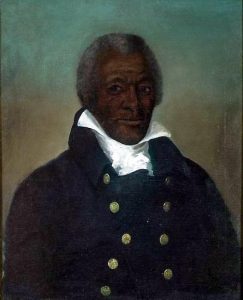
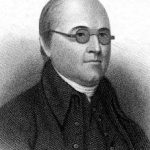
Samuel Springbrave-soldiers-of-the-cross-2 was another courageous chaplain, serving as part of the 1775 expedition into Quebec with Arnold’s army. Before deploying, he preached a sermon to the troops from Exodus 33:15: “Lord if your Spirit does not go with us, then do not send us.” Spring starved along with the rest of the army on the mission, and they all rejoiced when a moose was finally shot to help relieve their extreme hunger.

The Rev. William Emerson was at the Battle of Concord in 1775 to help spiritually encourage those fighting the British. Dressed in his black clerical robes, and with his musket in hand, he exhorted the others, “Let us stand our ground! If we die, let us die here!” Encouraging a frightened 18-year-old, he told him, “Stand your ground, Harry! Your cause is just, and God will bless you!”

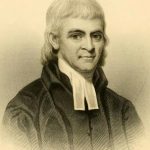
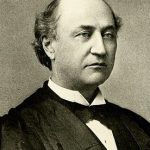
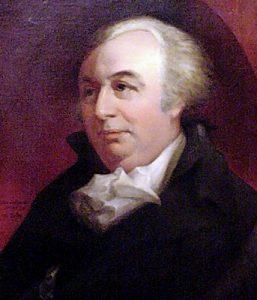
brave-soldiers-of-the-cross-3Timothy Dwight (pictured on the left), who had read the Bible by age 4 and began a self study of Latin at age 6, volunteered for the Continental Army when his college was threatened by the British. He once preached a sermon to the troops that was so relevant to what was specifically occurring at that time that American General Israel Putnam actually questioned whether his text was in the Bible or whether he had invented it; it was indeed from the Bible.
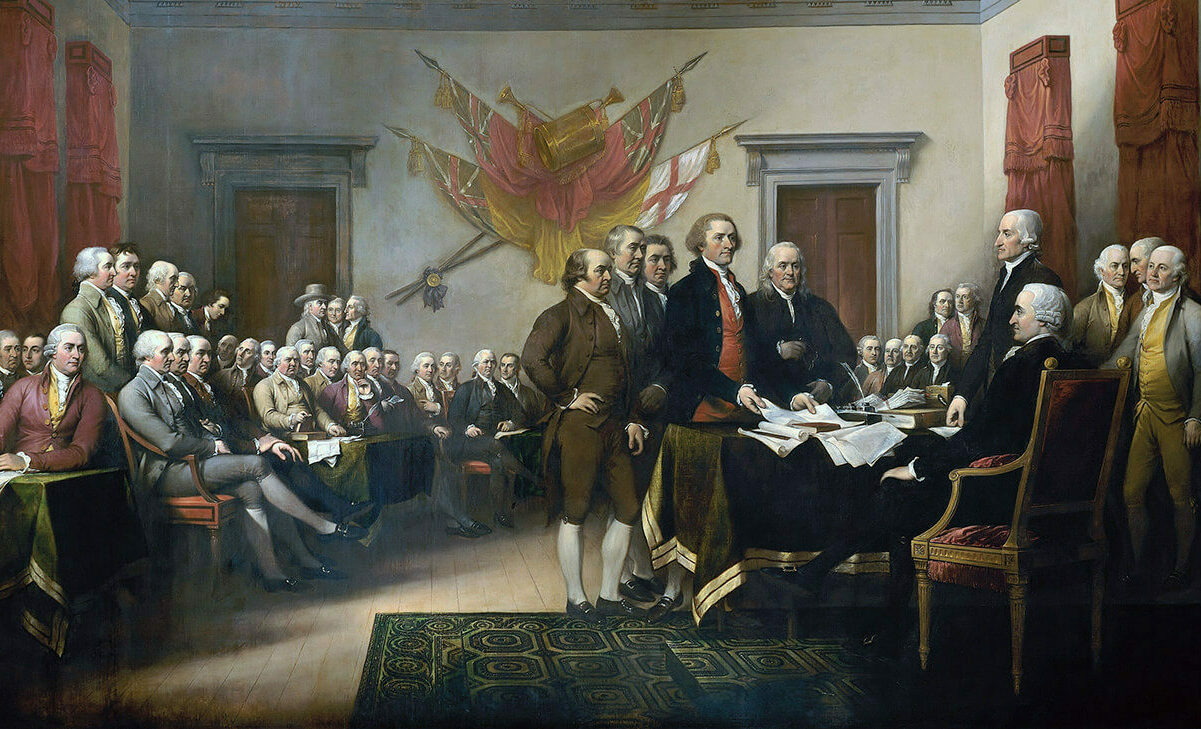
There are numerous other notable chaplains in the Revolution, including signer of the Declaration, Robert Treat Paine. You can read some of their sermons in WallBuilders’ library as well as learn more about their astounding lives and deeds.

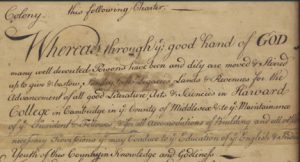
brave-soldiers-of-the-cross-4An ardent champion of military chaplains was George Washington. One of the first things he did as a young officer in the French and Indian War was to petition Virginia Governor Robert Dinwiddie to provide a chaplain for the troops. When Dinwiddie refused, Washington himself filled that role. When he became Commander-in-Chief during the Revolution, he issued several general orders respecting chaplains — such as this one from 1777 referencing a Day of Thanksgiving declared by the Continental Congress.
America has a long, proud history of military chaplains, but today they are under attack. As we remember the Battle of Bennington, let’s remember the long history of our military chaplains and pray for and support those chaplains that serve our Armed Forces today.

In God We Trust

On July 30, 1956, President Dwight Eisenhower signed legislation1 establishing “In God We Trust” as America’s national motto.2 As religious rights of conscience continue to be attacked, this is a good time to remember our national motto and renew our efforts to defend our religious rights.

The idea of America as a Christian nation has often been scoffed at by modern academia,3 religious leaders,4 and others.5 However, past Americans have acknowledged that America is a Christian nation and that the rights of religious conscience should be protected.

The United States Supreme Court issued a unanimous ruling declaring America to be a Christian nation,6 and hundreds of other American courts have acknowledged the same. In fact, Justice David Brewer, a member of that Court said:

in-god-we-trust-1[I]n what sense can [America] be called a Christian nation? Not in the sense that Christianity is the established religion or that the people are in any manner compelled to support it. . . . Neither is it Christian in the sense that all its citizens are either in fact or name Christians. On the contrary, all religions have free scope within our borders. Numbers of our people profess other religions, and many reject all. Nor is it Christian in the sense that a profession of Christianity is a condition of holding office or otherwise engaging in public service, or essential to recognition either politically or socially. . . . Nevertheless, we constantly speak of this republic as a Christian nation – in fact, as the leading Christian nation of the world.7
Secretary of the Treasury Salmon Chase,8 when looking into what should be printed on the currency of the nation, acknowledged:

in-god-we-trust-2No nation can be strong except in the strength of God, or safe except in His defense. The trust of our people in God should be declared on our national coins. You will cause a device to be prepared without unnecessary delay with a motto expressing in the fewest and tersest words possible this national recognition.9
There are many reasons that America has long been seen as such an exceptional nation — but those reasons are tied to the religious beliefs and the moral principles of the people that established America. On the anniversary of the national motto, it’s appropriate to recognize these religious beliefs and moral principles.

in-god-we-trust-3As George Washington told the nation when he left the presidency:
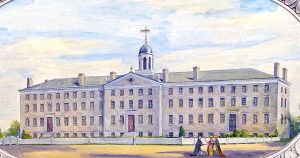
Of all the dispositions and habits which lead to political prosperity, religion and morality are indispensable supports. In vain would that man claim the tribute of patriotism who should labor to subvert these great pillars of human happiness, these firmest props of the duties of man and citizens.10


Endnotes

1 “Joint Resolution to Establish a National Motto of the United States,” July 30, 1956, here.
2 “36 U.S. Code § 302 – National motto,” here.
3 Kevin M. Kruse, “A Chrsitian Nation? Since When?” The New York Times, March 14, 2015; Richard White, “One Nation Under Gods,” Boston Review, March 22, 2017.
4 David Vesely, “Is America a Christian Nation? Columbus’ Vision,” Green Bay Press Gazette, April 28, 2016.
5 Shane Idelman, “Is America a Christian Nation? Fact vs. Fiction,” Charisma News, August 14, 2015.
6 David Barton, “Is America a Christian Nation?” WallBuilders.
7 Holy Trinity Church v. United States, 143 U.S. 457 (1892).
8 David J. Brewer, The United States a Christian Nation (Philadelphia: The John C. Winston Company, 1905), 12.
9 “Salmon P. Chase (1861-1864),” US Department of the Treasury, accessed November 14, 2023.
10 Salmon P. Chase to James Pollock, November 20, 1861, Thirty-Fourth Annual Report of the Director of the Mint to the Secretary of the Treasury (Washington: Government Printing Office, 1897), 107.

America’s Founders at College

Too many indisputable facts from American history are ignored today because they impede the direction many progressives want to move culture. For example, while they claim that the Founders were largely secularists, few today know that most of them were graduates of colleges or universities that specialized in training ministers of the Gospel.
americas-founders-at-college-1Princeton was founded in 1746, and John Witherspoon, a Gospel minister and signer of the Declaration of Independence, was the college’s president from 1768-1794. He trained scores of individuals who became national and state leaders. Princeton required that “every student shall attend worship in the college hall morning and evening.”

Yale University, founded in 1701, had Thomas Clap as its president from 1740-1766, when many of the Founders attended school there. Clap affirmed:

The original end and design of colleges was to instruct, educate, and train up persons for the work of the ministry.

americas-founders-at-college-2Harvard University was founded in 1636. (Pictured on the right is the original 1650 Harvard incorporation charter from the WallBuilders library.) Josiah Quincy, Harvard’s president from 1829 to 1845, noted:

[T]he College was conducted as a theological institution. . . having religion for its basis and chief object.

Altogether, 29 signers of the Declaration graduated from religiously-founded universities. But to acknowledge this today would certainly contradict the common educational assertion that our Founders were largely atheists, agnostics, and deists who wanted a secular country. But those assertions are not true.

americas-founders-at-college-3Gouverneur Morris, a signer of the Constitution and the most active member of the Constitutional Convention, openly asserted:

Religion is the only solid basis of good morals; therefore, education should teach the precepts of religion and the duties of man towards God.

In fact, he warned:

There must be religion. What that ligament is torn, society is disjointed and its members perish. . . . The most important of all lessons is the denunciation of ruin to every state that rejects the precepts of religion.

Take note, America! This is a good warning to remember today.

In Four Centuries of American Education you can find out more about the deeply religious nature of education in early America and how Bible-based public education continued literally for centuries, ending only in recently years.

The Declaration Racist? Ha!

Louisiana Representative says The American Founding Is Bad

Study after study has demonstrated that rudimentary civic knowledge has plummeted in recent years. Many states have therefore taken specific steps to help ensure that students have a familiarity with our most basic governing documents. In Louisiana, Rep. Valerie Hodges introduced such a bill. Following the lead of states like Texas, Oklahoma, Kansas, Arkansas, Florida, Michigan, and others, her bill stipulated that Louisiana students recite the famous fifty-six words that form the heart of the Declaration of Independence:

“We hold these truths to be self-evident, that all men are created equal, that they are endowed by their Creator with certain unalienable rights, that among these are life, liberty and the pursuit of happiness. That to secure these rights, governments are instituted among men, deriving their just powers from the consent of the governed.”

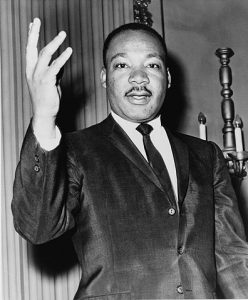
State Rep. Barbara Norton vehemently objected to this bill. She avowed that those words from the Declaration were not true, and relied heavily on Dr. Martin Luther King as the basis of her argument. She believed that equality did not exist until Dr. King, and that words from the Declaration should not be part of student studies.

Rep. Norton’s response is disappointing on many levels, and it certainly demonstrates that Rep. Norton knows little of American history and even less about black history as it relates to the Declaration of Independence.
the-declaration-racist-ha-3For example, she stressed the importance of Dr. King but apparently did not realize that in his famous “I Have A Dream” speech, as well as many of his sermons, he quoted extensively and favorably from the Declaration of Independence:
“When the architects of our republic wrote the magnificent words of the Constitution and the Declaration of Independence, they were signing a promissory note to which every American was to fall heir. This note was a promise that all men, yes, black men as well as white men, would be guaranteed the unalienable rights of life, liberty, and the pursuit of happiness.” – “I Have A Dream” speech, Washington, 1963

“It wouldn’t take us long to discover the substance of that dream. It is found in those majestic words of the Declaration of Independence – words lifted to cosmic proportions: ‘We hold these truths to be self-evident, that all men are created equal, that they are endowed by God, Creator, with certain inalienable Rights, that among these are Life, Liberty, and the pursuit of Happiness.’ This is a dream. It’s a great dream. The first saying we notice in this dream is an amazing universalism. It doesn’t say “some men,” it says “all men.” It doesn’t say “all white men,” it says “all men,” which includes black men. It does not say “all Gentiles,” it says “all men,” which includes Jews. It doesn’t say “all Protestants,” it says “all men,” which includes Catholics. It doesn’t even say “all theists and believers,” it says “all men,” which includes humanists and agnostics. . . I still have a dream this morning that truth will reign supreme and all of God’s children will respect the dignity and worth of human personality. And when this day comes, the morning stars will sing together and the sons of God will shout for joy. “We hold these truths to be self-evident that all men are created equal, that they are endowed by their Creator with certain inalienable rights, that among these are life, liberty, and the pursuit of happiness.” – July 4th, 1965, at Ebenezer Baptist Church, Atlanta, Georgia

By Rep. Norton denouncing the famous words from the Declaration, she might as well denounce Dr. King’s “I Have a Dream” speech, for it emphasized the same content she opposed.
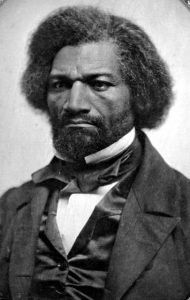
the-declaration-racist-ha-5But Dr. King wasn’t the first black civil rights activist to praise the Declaration of Independence. Frederick Douglass, who had himself been a slave, stated:
The principles contained in that instrument [the Declaration of Independence] are saving principles. Stand by those principles, be true to them on all occasions, in all places, against all foes, and at whatever cost.

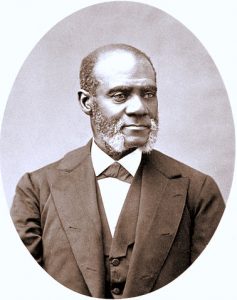
the-declaration-racist-ha-6And Henry Highland Garnet, who like Douglass was born in slavery and also escaped, became the first black man to officially speak at the U. S. Capitol. Following the passage of the Thirteenth Amendment to abolish slavery in February 1865, the House asked Garnet to preach a sermon celebrating that momentous event. In his two-hour discourse, Garnet told listeners:

The Declaration [of Independence] was a glorious document. Sages admired it, and the patriotic of every nation reverenced the God-like sentiments which it contained.

Clearly, black civil rights advocates praised the sentiments contained in the Declaration of Independence. (Significantly, the Declaration was heavily relied upon by abolitionists to aid their cause, and the women’s rights movement based their documents directly on the Declaration of Independence.) It’s too bad that Rep. Norton wants to withhold from students a knowledge of the document that black leaders praised for almost two centuries.

Memorial Day

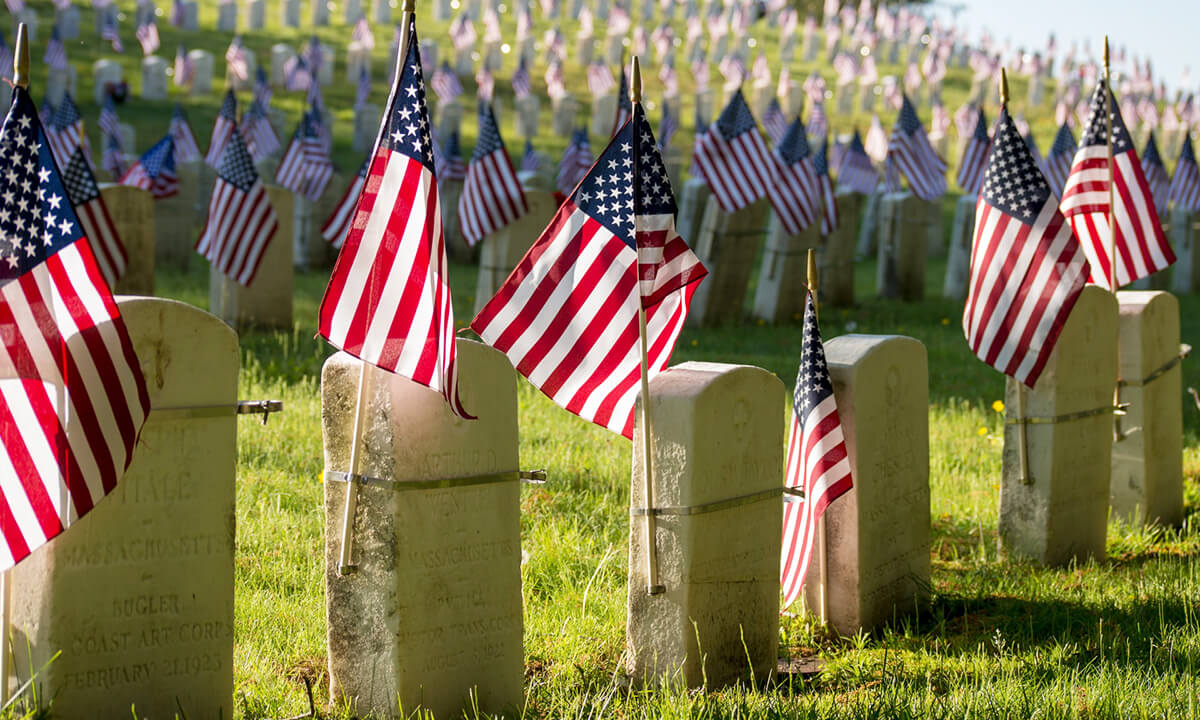
memorial-day-1America has a long history of military members who have shown extraordinary courage, with many willingly giving their lives to secure the freedoms our nation enjoys, freedoms we often take for granted. On Memorial Day (originally known as Decoration Day1) we honor the sacrifice of these brave men and women.
World War II (1941-1945) was an especially deadly war, with over 400,000 Americans being killed2 in famous military engagements such as the Battle of the Bulge and D-Day as well as in many other lesser known battles.3 Each life lost, whether in a major or an obscure battle, helped win peace and end tyranny. There were many heroes in that war, sung and unsung.

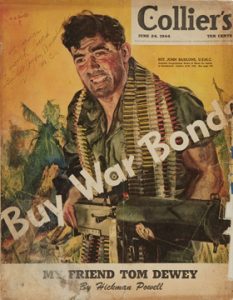
memorial-day-2One amazing example of heroism occurred during the Campaign of Guadalcanal (August 1942-February 1943).4 Sergeant John Basilone and his handful of men were responsible for holding back a Japanese assault of thousands on October 24-25, 1942. Basilone, throughout this engagement, personally repaired and manned multiple machine guns. At times, he was unable to shoot his guns over the piles of dead Japanese who fell at the brink of his hill. When his small detachment ran low, Basilone fought his way through the Japanese lines to resupply critically-needed ammunition. The Americans eventually won this long campaign. As a result of his actions, Basilone was awarded the Congressional Medal of Honor.5 (The picture on the left is of a magazine personally signed by Basilone, one of the many World War II treasures we have in WallBuilders’ Collection.)
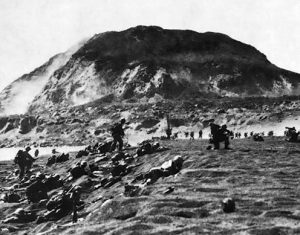
memorial-day-3Later in the war at the Battle of Iwo Jima (February 19-March 26, 1945),6 Basilone came ashore with the first wave of Marines. Shortly after landing, his unit was trapped by machine guns from Japanese blockhouses. Basilone worked his way around one of these blockhouses and single-handedly destroyed it. Later, as he was making his way towards an airfield, he came across an American tank trapped in a minefield. While under fire, he guided the tank out of the minefield and to safety. He was later killed by flying shrapnel. Basilone was awarded the Navy Cross for his courageous actions during the battle.7
There are many additional stories of heroic and noble acts by American soldiers throughout our history. Each Memorial Day as we remember the military members who lost their lives in battle, let us honor the courage they showed.


Endnotes

1 “Memorial Day History,” US Department of Veterans Affairs, accessed May 20, 2025.
2 “Research Starters: US Military by the Numbers,” The National WWII Museum, accessed May 20, 2025; “Explore WWII History,” The National WWII Museum, accessed May 20, 2025.
3 “The Battle of the Bulge,” US Army, accessed May 20, 2025; “Why D-Day Matters,” dday.org, accessed May 20, 2025; Kennedy Hickman, “World War II Battles,” April 25, 2019, ThoughtCo..
4 “FIRST OFFENSIVE: The Marine Campaign for Guadalcanal by Henry I. Shaw, Jr.,” National Park Service, accessed May 20, 2025.
5 “John “Manila John” Basilone,” Congressional Medal of Honor Society, accessed May 20, 2025.
6 Lt. Col. Whitman S. Bartley, USMC, Iwo Jima: Amphibious Epic (Historical Section, Division of Public Information Headquarters, U.S. Marine Corps: 1954).
7 “John A. “Maila John” Basilone,” The United States Navy Memorial, accessed May 20, 2025.

The USS Arizona sinks after it's bombed during the Pearl Harbor attacks in 1941.

Remembering Pearl Harbor

Pearl Harbor Day

remembering-pearl-harbor-1December 7, 1941 — the day Pearl Harbor was treacherously attacked by the Japanese — was described by President Franklin Delano Roosevelt as “a date which will live in infamy.” It was the worst naval disaster in American history, and brought declarations of war by Japan, Germany, and Italy against the United States, and by America against them. For four long years, American men and women served and died on the battlefields of Europe and the Pacific, fighting tyranny and eventually bringing liberty across the world.

Shortly after the initial attack on Pearl Harbor, President Roosevelt called America to a time of prayer, explaining:

The year 1941 has brought upon our Nation a war of aggression… Our strength – as the strength of all men everywhere – is of greater avail as God upholds us. Therefore, I…do hereby appoint the first day of the year 1942 as a day of prayer, of asking forgiveness for our shortcomings of the past, of consecration to the tasks of the present, of asking God’s help in days to come. We need His guidance that this people may be humble in spirit but strong in the conviction of the right – steadfast to endure sacrifice and brave to achieve a victory of liberty and peace.

remembering-pearl-harbor-2Three weeks later on January 6, 1942, he delivered his State of the Union Address, reminding America:

The world is too small to provide adequate living room for both Hitler and God. In proof of that, the Nazis have now announced their plan for enforcing their new German, pagan religion all over the world — a plan by which the Holy Bible and the Cross of Mercy would be displaced by Mein Kampf and the swastika and the naked sword.

(Pictured on the right is a WWII fund-raising poster from the WallBuilders library that was produced by the US government, depicting President Roosevelt’s words.) He understood that what began at Pearl Harbor was a spiritual conflict — an attack on the religion of the Bible — and that prayer would be a necessary spiritual weapon in that battle.

Today as we commemorate Pearl Harbor Day, we are still engaged in a spiritual struggle for the soul of the nation. And just as America did 75 years ago, we, too, should likewise seek God in prayer – seek His wisdom, ask forgiveness for our sins, and lift up before Him our honored military and their precious families. Remember to turn to God on this special day.

Read the Bible!

Importance of the Bible
With Thanksgiving behind us, we now enter the time of the year in which President Franklin Roosevelt had urged Americans to spend time reading the Bible. Indisputably, the Bible is the book upon which our American republic rests – a fact attested to by many presidents:

read-the-bible-1“[The Bible] is the rock on which our Republic rests.” President Andrew Jackson

“The Bible. . . . is indispensable to the safety and permanence of our institutions.” President Zachary Taylor

“[T]he teachings of the Bible are so interwoven and entwined with our whole civic and social life that it would be . . . impossible for us to figure to ourselves what that life would be if these teachings were removed.” President Teddy Roosevelt

“Of the many influences that have shaped the United States of America into a distinctive Nation and people, none may be said to be more fundamental and enduring than the Bible.” President Ronald Reagan

Today, only 14% of Christians read the Bible daily, so most Americans have no knowledge of the most basic teachings of the Bible; and as Biblical knowledge declines, so does the strength and effectiveness of American institutions. Biblical knowledge is key to American longevity and prosperity.

Understanding this, in 1941, President Franklin Delano Roosevelt urged:

read-the-bible-2I suggest a nationwide reading of the Holy Scriptures during the period from Thanksgiving Day to Christmas…[G]o to…the Scriptures for a renewed and strengthening contact with those eternal truths and majestic principles which have inspired such such measure of true greatness as this nation has achieved.

This is an excellent recommendation! So commit yourself to reading and studying the Scriptures over the coming weeks. There are many good plans to help you, and even Bible apps that read the Bible to you. In fact, you can read through the entire Bible in only about 15 minutes each day over the course of a year. Psalm 11:3 asks: “If the foundations are destroyed, what can the righteous do?” Our foundations – the most important part of any structure – can be preserved by a knowledge of the Bible. So let’s follow President Roosevelt’s request to particularly spend the time between now and Christmas in reading and studying God’s Word.

Honor America’s Veterans

honor-americas-veterans-1The Korean War Memorial in Washington D.C. reminds us: “Freedom is not free!” Americans have long understood this, and across the generations 42 million men and women — serving as soldiers, sailors, and airmen — have been willing to give their time, talents, and even their lives to protect America and her cherished freedoms. To honor these courageous citizens, November 11, is set aside as Veteran’s Day.

By way of background, following the horrors of World War I, President Woodrow Wilson declared November 11 of 1919 to be “Armistice Day” to celebrate the peace brought about as a result of ending the war. Twenty years later, the federal government made “Armistice Day” a federal holiday, and in 1954, it was renamed to “Veteran’s Day” to honor all who served in the military. Over subsequent years, the day on which it was celebrated varied, but its purpose remained the same: to remember and express appreciation for our veterans.
honor-americas-veterans-2General George C. Marshall, a famous military leader during World War II, summarized the mission of these warriors when he declared:

“We are determined that before the sun sets on this terrible struggle, our flag will be recognized throughout the world as a symbol of freedom on the one hand and of overwhelming force on the other.”

On Veteran’s Day, be sure to thank a veteran for their service. Perhaps even take time out of your day to visit some veterans at a local nursing home, where sometimes many have been tragically abandoned or have no family members remaining. And let’s also remember those who sacrificed so much for us across the centuries, from the American Revolution to World War II to the War on Terror. May we never cease to be thankful — and to express that gratitude — for those who are willing to give so much for the rest of us.

The Truth about Columbus

The Truth about Columbus

the-truth-about-columbus-1Columbus Day has become yet another occasion for tearing down our American heritage and heroes. Perhaps no other holiday in American history has so quickly gone from one honoring a venerated hero, to now portraying him as a genocidal exterminationist.

Academia, teachers, public schools, and others across the nation are now attacking Christopher Columbus in what appears to be a concerted effort to make children as repulsed by Columbus as they would be of the world’s most notorious criminal.

Columbus did have faults; but he also made indispensable positive contributions to America and American history. He deserves to be honored, not because he was perfect but because of his contributions.

Last week on Columbus Day, as both adults and children were told of the now-evil Columbus, many asked us questions about what was true concerning him. Following are some recommendations on how to find details about Columbus that are ignored today.


the-truth-about-columbus-2Have your children read Christopher Columbus: Across the Ocean Sea and watch “Drive Thru History America — Columbus, the Pilgrims, and Early Boston.” For adults and older readers, we highly recommend Dr. John Eidsmoe’s Columbus and Cortez.

And if you want to read an old classic about Columbus, check out Washington Irving’s (1783-1859) famous A History of the Life and Voyages of Christopher Columbus (1828), which was so popular that it went through an amazing 175 editions by the end of the century! (This book can be read or downloaded for free as a pdf from Google books.)

Proverbs 18:17 reminds us that one side always sounds good until you hear the other side. It is time for both students and adults to hear the other side — to hear the things that are no longer being taught today. Do all you can to vaccinate your family from the unrelenting attacks on those who contributed to make America a special and unique nation.

Republic v. Democracy

Founders & Democracy

We have grown accustomed to hearing that we are a democracy; such was never the intent. The form of government entrusted to us by our Founders was a republic, not a democracy. 1 Our Founders had an opportunity to establish a democracy in America and chose not to. In fact, the Founders made clear that we were not, and were never to become, a democracy:

[D]emocracies have ever been spectacles of turbulence and contention; have ever been found incompatible with personal security, or the rights of property; and have, in general, been as short in their lives as they have been violent in their deaths. 2 James Madison

Remember, democracy never lasts long. It soon wastes, exhausts, and murders itself. There never was a democracy yet that did not commit suicide. 3 John Adams

A democracy is a volcano which conceals the fiery materials of its own destruction. These will produce an eruption and carry desolation in their way. 4 The known propensity of a democracy is to licentiousness [excessive license] which the ambitious call, and ignorant believe to be liberty. 5 Fisher Ames, Author of the House Language for the First Amendment

We have seen the tumult of democracy terminate . . . as [it has] everywhere terminated, in despotism. . . . Democracy! savage and wild. Thou who wouldst bring down the virtuous and wise to thy level of folly and guilt. 6 Gouverneur Morris, Signer and Penman of the Constitution

[T]he experience of all former ages had shown that of all human governments, democracy was the most unstable, fluctuating and short-lived. 7 John Quincy Adams

A simple democracy . . . is one of the greatest of evils. 8 Benjamin Rush, Signer of the Declaration

In democracy . . . there are commonly tumults and disorders. . . . Therefore a pure democracy is generally a very bad government. It is often the most tyrannical government on earth. 9 Noah Webster

Pure democracy cannot subsist long nor be carried far into the departments of state, it is very subject to caprice and the madness of popular rage. 10 John Witherspoon, Signer of the Declaration

It may generally be remarked that the more a government resembles a pure democracy the more they abound with disorder and confusion. 11 Zephaniah Swift, Author of America’s First Legal Text

Many Americans today seem to be unable to define the difference between the two, but there is a difference, a big difference. That difference rests in the source of authority.

Democracy & Republic Definitions

A pure democracy operates by direct majority vote of the people. When an issue is to be decided, the entire population votes on it; the majority wins and rules.

A republic differs in that the general population elects representatives who then pass laws to govern the nation.

A democracy is the rule by majority feeling (what the Founders described as a “mobocracy” 12). A republic is rule by law.

If the source of law for a democracy is the popular feeling of the people, then what is the source of law for the American republic? According to Founder Noah Webster:

[O]ur citizens should early understand that the genuine source of correct republican principles is the Bible, particularly the New Testament, or the Christian religion. 13

The American Republic

The transcendent values of Biblical natural law were the foundation of the American republic. Consider the stability this provides: in our republic, murder will always be a crime, for it is always a crime according to the Word of God. however, in a democracy, if majority of the people decide that murder is no longer a crime, murder will no longer be a crime.

America’s immutable principles of right and wrong were not based on the rapidly fluctuating feelings and emotions of the people but rather on what Montesquieu identified as the “principles that do not change.” 14

Benjamin Rush similarly observed:

[W]here there is no law, there is no liberty; and nothing deserves the name of law but that which is certain and universal in its operation upon all the members of the community. 15

In the American republic, the “principles which did not change” and which were “certain and universal in their operation upon all the members of the community” were the principles of Biblical natural law. In fact, so firmly were these principles ensconced in the American republic that early law books taught that government was free to set its own policy only if God had not ruled in an area. For example, Blackstone’s Commentaries explained:

To instance in the case of murder: this is expressly forbidden by the Divine. . . . If any human law should allow or enjoin us to commit it we are bound to transgress that human law. . . . But, with regard to matters that are . . . not commanded or forbidden by those superior laws such, for instance, as exporting of wool into foreign countries; here the . . . legislature has scope and opportunity to interpose. 16

The Founders echoed that theme:

All [laws], however, may be arranged in two different classes. 1) Divine. 2) Human. . . . But it should always be remembered that this law, natural or revealed, made for men or for nations, flows from the same Divine source: it is the law of God. . . . Human law must rest its authority ultimately upon the authority of that law which is Divine. 17 James Wilson, Signer of the Constitution; U. S. Supreme Court Justice

[T]he law . . . dictated by God Himself is, of course, superior in obligation to any other. It is binding over all the globe, in all countries, and at all times. No human laws are of any validity if contrary to this. 18Alexander Hamilton, Signer of the Constitution

[T]he . . . law established by the Creator . . . extends over the whole globe, is everywhere and at all times binding upon mankind. . . . [This] is the law of God by which he makes his way known to man and is paramount to all human control. 19 Rufus King, Signer of the Constitution

Conclusion

The Founders understood that Biblical values formed the basis of the republic and that the republic would be destroyed if the people’s knowledge of those values should ever be lost.

A republic is the highest form of government devised by man, but it also requires the greatest amount of human care and maintenance. If neglected, it can deteriorate into a variety of lesser forms, including a democracy (a government conducted by popular feeling); anarchy (a system in which each person determines his own rules and standards); oligarchy (a government run by a small council or a group of elite individuals): or dictatorship (a government run by a single individual). As John Adams explained:

[D]emocracy will soon degenerate into an anarchy; such an anarchy that every man will do what is right in his own eyes and no man’s life or property or reputation or liberty will be secure, and every one of these will soon mould itself into a system of subordination of all the moral virtues and intellectual abilities, all the powers of wealth, beauty, wit, and science, to the wanton pleasures, the capricious will, and the execrable [abominable] cruelty of one or a very few. 20

Understanding the foundation of the American republic is a vital key toward protecting it.


Endnotes

1 An example of this is demonstrated in the anecdote where, having concluded their work on the Constitution, Benjamin Franklin walked outside and seated himself on a public bench. A woman approached him and inquired, “Well, Dr. Franklin, what have you done for us?” Franklin quickly responded, “My dear lady, we have given to you a republic–if you can keep it.” Taken from “America’s Bill of Rights at 200 Years,” by former Chief Justice Warren E. Burger, printed in Presidential
Studies Quarterly
(Summer 1991), XXI:3:457. This anecdote appears in numerous other works as well.

2 Alexander Hamilton, John Jay, James Madison, The Federalist on the New Constitution (Philadelphia: Benjamin Warner, 1818), 53, #10, James Madison.

3 John Adams to John Taylor, April 15, 1814, The Works of John Adams, ed. Charles Francis Adams (Boston: Charles C. Little and James Brown, 1850), VI:484.

4 Fisher Ames, Speech on Biennial Elections, delivered January, 1788, Works of Fisher Ames (Boston: T. B. Wait & Co., 1809), 24.

5 Ames, “The Dangers of American Liberty,” February 1805, Works (1809), 384.

6 Gouverneur Morris, An Oration Delivered on Wednesday, June 29, 1814, at the Request of a Number of Citizens of New-York, in Celebration of the Recent Deliverance of Europe from the Yoke of Military Despotism (New York: Van Winkle and Wiley, 1814), 10, 22.

7 John Quincy Adams, The Jubilee of the Constitution. A Discourse Delivered at the Request of the New York Historical Society, in the City of New York on Tuesday, the 30th of April 1839; Being the Fiftieth Anniversary of the Inauguration of George Washington as President of the United States, on Thursday, the 30th of April, 1789 (New York: Samuel Colman, 1839), 53.

8 Benjamin Rush to John Adams, July 21, 1789, The Letters of Benjamin Rush, ed. L. H. Butterfield (Princeton: Princeton University Press for the American Philosophical Society, 1951), I:523.

9 Noah Webster, The American Spelling Book: Containing an Easy Standard of Pronunciation: Being the First Part of a Grammatical Institute of the English Language, To Which is Added, an Appendix, Containing a Moral Catechism and a Federal Catechism (Boston: Isaiah Thomas and Ebenezer T. Andrews, 1801), 103-104.

10 John Witherspoon, Lecture 12 on Civil Society, The Works of John Witherspoon (Edinburgh: J. Ogle, 1815), VII:101.

11 Zephaniah Swift, A System of the Laws of the State of Connecticut (Windham: John Byrne, 1795), I:19.

12 See, for example, Benjamin Rush to John Adams, January 22, 1789, Letters, ed. Butterfield (1951), I:498.

13 Noah Webster, History of the United States (New Haven: Durrie & Peck, 1832), 6.

14 George Bancroft, History of the United States from the Discovery of the American Continent (Boston: Little, Brown & Co., 1859), V:24; Baron Charles Secondat de Montesquieu, Spirit of the Laws (Philadelphia: Isaiah Thomas, 1802), I:17-23, and ad passim.

15 Rush to David Ramsay, March or April 1788, Letters, ed. Butterfield (1951), I:454.

16 William Blackstone, Commentaries on the Laws of England (Philadelphia: Robert Bell, 1771), I:42-43.

17 James Wilson, “Of the General Principles of Law and Obligation,” The Works of the Honorable James Wilson, ed. Bird Wilson (Philadelphia: Lorenzo Press, 1804), I:103-105.

18 Alexander Hamilton, The Papers of Alexander Hamilton, ed. Harold C. Syrett (New York: Columbia University Press, 1961), I:87, February 23, 1775, quoting Blackstone, Commentaries (1771), I:41.

19 Rufus King to C. Gore, February 17, 1820, The Life and Correspondence of Rufus King, ed. Charles R. King (New York: G. P. Putnam’s Sons, 1900), VI:276.

20 John Adams, The Papers of John Adams, ed. Robert J. Taylor (Cambridge: Belknap Press, 1977), I:83, from “An Essay on Man’s Lust for Power, with the Author’s Comment in 1807,” written on August 29, 1763, but first published by John Adams in 1807.