The Importance of Voting and Christian Involvement in the Political Arena

John Adams

We electors have an important constitutional power placed in our hands; we have a check upon two branches of the legislature . . . the power I mean of electing at stated periods [each] branch. . . . It becomes necessary to every [citizen] then, to be in some degree a statesman, and to examine and judge for himself of the tendency of political principles and measures. Let us examine, then, with a sober, a manly . . . and a Christian spirit; let us neglect all party [loyalty] and advert to facts; let us believe no man to be infallible or impeccable in government any more than in religion; take no man’s word against evidence, nor implicitly adopt the sentiments of others who may be deceived themselves, or may be interested in deceiving us.1


Samuel Adams

Let each citizen remember at the moment he is offering his vote that he is not making a present or a compliment to please an individual – or at least that he ought not so to do; but that he is executing one of the most solemn trusts in human society for which he is accountable to God and his country.2

Nothing is more essential to the establishment of manners in a State than that all persons employed in places of power and trust be men of unexceptionable characters. The public cannot be too curious concerning the character of public men.3


Matthias Burnett

Consider well the important trust . . . which God . . . [has] put into your hands. . . . To God and posterity you are accountable for [your rights and your rulers]. . . . Let not your children have reason to curse you for giving up those rights and prostrating those institutions which your fathers delivered to you. . . . [L]ook well to the characters and qualifications of those you elect and raise to office and places of trust. . . . Think not that your interests will be safe in the hands of the weak and ignorant; or faithfully managed by the impious, the dissolute and the immoral. Think not that men who acknowledge not the providence of God nor regard His laws will be uncorrupt in office, firm in defense of the righteous cause against the oppressor, or resolutly oppose the torrent of iniquity. . . . Watch over your liberties and privileges – civil and religious – with a careful eye.4


Frederick Douglass

I have one great political idea. . . . That idea is an old one. It is widely and generally assented to; nevertheless, it is very generally trampled upon and disregarded. The best expression of it, I have found in the Bible. It is in substance, “Righteousness exalteth a nation; sin is a reproach to any people” [Proverbs 14:34]. This constitutes my politics – the negative and positive of my politics, and the whole of my politics. . . . I feel it my duty to do all in my power to infuse this idea into the public mind, that it may speedily be recognized and practiced upon by our people.5


Charles Finney

[T]he time has come that Christians must vote for honest men and take consistent ground in politics or the Lord will curse them. . . . Christians have been exceedingly guilty in this matter. But the time has come when they must act differently. . . . Christians seem to act as if they thought God did not see what they do in politics. But I tell you He does see it – and He will bless or curse this nation according to the course they [Christians] take [in politics].6


James Garfield

Now more than ever the people are responsible for the character of their Congress. If that body be ignorant, reckless, and corrupt, it is because the people tolerate ignorance, recklessness, and corruption. If it be intelligent, brave, and pure, it is because the people demand these high qualities to represent them in the national legislature. . . . [I]f the next centennial does not find us a great nation . . . it will be because those who represent the enterprise, the culture, and the morality of the nation do not aid in controlling the political forces.7


Francis Grimke

If the time ever comes when we shall go to pieces, it will . . . be . . . from inward corruption – from the disregard of right principles . . . from losing sight of the fact that “Righteousness exalteth a nation, but that sin is a reproach to any people” [Proverbs 14:34]. . . .[T]he secession of the Southern States in 1860 was a small matter with the secession of the Union itself from the great principles enunciated in the Declaration of Independence, in the Golden Rule, in the Ten Commandments, in the Sermon on the Mount. Unless we hold, and hold firmly to these great fundamental principles of righteousness…our Union…will be “only a covenant with death and an agreement with hell.”8


Alexander Hamilton

A share in the sovereignty of the state, which is exercised by the citizens at large, in voting at elections is one of the most important rights of the subject, and in a republic ought to stand foremost in the estimation of the law.9


John Jay

Providence has given to our people the choice of their rulers, and it is the duty, as well as the privilege and interest of our Christian nation, to select and prefer Christians for their rulers.10

The Americans are the first people whom Heaven has favored with an opportunity of deliberating upon and choosing the forms of government under which they should live.11


Thomas Jefferson

The elective franchise, if guarded as the ark of our safety, will peaceably dissipate all combinations to subvert a Constitution, dictated by the wisdom, and resting on the will of the people.12

[T]he rational and peacable instrument of reform, the suffrage of the people.13

[S]hould things go wrong at any time, the people will set them to rights by the peaceable exercise of their elective rights.14


William Paterson

When the righteous rule, the people rejoice; when the wicked rule, the people groan.15


William Penn

Governments, like clocks, go from the motion men give them; and as governments are made and moved by men, so by them they are ruined too. Wherefore governments rather depend upon men than men upon governments. Let men be good and the government cannot be bad. . . . But if men be bad, let the government be never so good, they will endeavor to warp and spoil it to their turn. . . .[T]hough
good laws do well, good men do better; for good laws may want [lack] good men and be abolished or invaded by ill men; but good men will never want good laws nor suffer [allow] ill ones.16


Daniel Webster

Impress upon children the truth that the exercise of the elective franchise is a social duty of as solemn a nature as man can be called to perform; that a man may not innocently trifle with his vote; that every elector is a trustee as well for others as himself and that every measure he supports has an important bearing on the interests of others as well as on his own.17


Noah Webster

In selecting men for office, let principle be your guide. Regard not the particular sect or denomination of the candidate – look to his character. . . . When a citizen gives his suffrage to a man of known immorality he abuses his trust; he sacrifices not only his own interest, but that of his neighbor, he betrays the interest of his country.18

When you become entitled to exercise the right of voting for public officers, let it be impressed on your mind that God commands you to choose for rulers, “just men who will rule in the fear of God.” The preservation of government depends on the faithful discharge of this duty; if the citizens neglect their duty and place unprincipled men in office, the government will soon be corrupted; laws will be made, not for the public good so much as for selfish or local purposes; corrupt or incompetent men will be appointed to execute the laws; the public revenues will be sqandered on unworthy men; and the rights of the citizens will be violated or disregarded. If a republican government fails to secure public prosperity and happiness, it must be because the citizens neglect the divine commands, and elect bad men to make and administer the laws.19


John Witherspoon

Those who wish well to the State ought to choose to places of trust men of inward principle, justified by exemplary conversation. . . .[And t]he people in general ought to have regard to the moral character of those whom they invest with authority either in the legislative, executive, or judicial branches.20


Endnotes

1 John Adams as ‘U’ to the Boston Gazette, August 29, 1763, The Papers of John Adams, ed. Robert J. Taylor (Cambridge: Belknap Press, 1977), 1:81.
2 Samuel Adams in the Boston Gazette, April 16, 1781, The Writings of Samuel Adams, ed. Harry Alonzo Cushing (New York: G.P. Putnam’s Sons, 1907), IV:256.
3 Samuel Adams to James Warren, November 4, 1775, Writings of Samuel Adams, ed. Cushing (1907), III:236-237.
4 Matthias Burnett, An Election Sermon, Preached at Hartford, on the Day of the Anniversary Election, May 12, 1803 (Hartford: Printed by Hudson & Goodwin, 1803), 27-28.
5 Frederick Douglass speech delivered at Ithaca, New York, October 14th, 1852, The Frederick Douglass Papers, ed. John Blassingame (New Haven: Yale University Press, 1982), 2:397.
6 Charles G. Finney, Lectures on Revivals of Religion (New York: Fleming H. Revell Company, 1868), 281-282.
7 James A. Garfield, “A Century of Congress,” July, 1877, The Works of James Abram Garfield, ed. Burke Hinsdale (Boston: James R. Osgood and Company, 1883), II:486, 489.
8 Rev. Francis J. Grimke, from “Equality of Right for All Citizens, Black and White, Alike,” March 7, 1909, published in Masterpieces of Negro Eloquence, ed. Alice Moore Dunbar (New York: Dover Publications, Inc., 2000), 246-247.
9 Alexander Hamilton, The Papers of Alexander Hamilton, ed. Harold C. Syrett (New York, Columbia University Press, 1962), III:544-545.
10 John Jay, The Correspondence and Public Papers of John Jay, ed. Henry P. Johnston (New York: G.P. Putnams Sons, 1890), IV:365.
11 John Jay, The Correspondence and Public Papers of John Jay, ed. Henry P. Johnston (New York: G.P. Putnams Sons, 1890), I:161.
12 Thomas Jefferson, The Writings of Thomas Jefferson, ed. Albert Bergh (Washington: Thomas Jefferson Memorial Association, 1903), 10:235.
13 Thomas Jefferson, The Works of Thomas Jefferson, ed. Paul Leicester Ford (New York: G.P. Putnam’s Sons, 1905), 12:136.
14 Thomas Jefferson, The Works of Thomas Jefferson, ed. Paul Leicester Ford (New York: G.P. Putnam’s Sons, 1905), 10:245.
15 Supreme Court Justice William Paterson reminding his fellow justices of Proverbs 29:2. United States Oracle (Portsmouth, NH), May 24, 1800.
16 William Penn quoted from: Thomas Clarkson, Memoirs of the Private and Public Life of William Penn (London: Richard Taylor and Co., 1813), I:303.
17 Daniel Webster Remarks at a Receiption to the Ladies of Richmond, Virginia, October 5, 1840, The Works of Daniel Webster (Boston: Little, Brown, and Company, 1853), II:108.
18 Noah Webster, Letters to a Young Gentleman Commencing His Education to which is subjoined a Brief History of the United States (New Haven: S. Converse, 1823), 18, 19.
19 Noah Webster, History of the United States (New Haven: Durrie & Peck, 1832), 336-337.
20 John Witherspoon, The Works of John Witherspoon (Edinburgh: J. Ogle, 1815), IV:266, 277.

America’s Most Biblically-Hostile U. S. President

When one observes President Obama’s unwillingness to accommodate America’s four-century long religious conscience protection through his attempts to require Catholics to go against their own doctrines and beliefs, one is tempted to say that he is anti-Catholic. But that characterization would not be correct. Although he singled out Catholics, he equally targeted traditional Protestant beliefs. So since he has attacked Catholics and Protestants, one is tempted to say that he is anti-Christian. But that, too, would be inaccurate. He has been equally disrespectful in his appalling treatment of religious Jews in general and Israel in particular. So perhaps the most accurate description of his antipathy toward Catholics, Protestants, religious Jews, and the Jewish nation would be to characterize him as anti-Biblical. And then when his hostility toward Biblical people of faith is contrasted with his preferential treatment of Muslims and Muslim nations, it further strengthens the accuracy of the anti-Biblical descriptor. In fact, there have been numerous clearly documented times when his pro-Islam positions have been the cause of his anti-Biblical actions.

Listed below in chronological order are (1) numerous records of his attacks on Biblical persons or organizations; (2) examples of the hostility toward Biblical faith that have become evident in the past three years in the Obama-led military; (3) a listing of his open attacks on Biblical values; and finally (4) a listing of numerous incidents of his preferential deference for Islam’s activities and positions, including letting his Islamic advisors guide and influence his hostility toward people of Biblical faith.

1. Acts of hostility toward people of Biblical faith:

  • December 2009-2016 – The annual White House Christmas cards, rather than focusing on Christmas or faith, instead highlight things such as the family dogs. And the White House Christmas tree ornaments include figures such as Mao Tse-Tung and a drag queen. [1]
  • May 2016 – President Obama appoints a transgender to the Advisory Council on Faith-Based Neighborhood Partnerships — an act of overt disdain and hostility toward traditional faith religions. [2]
  • September 2015 – For White House and State Department dinners, the president deliberately invites guests that he knows will be offensive to the Pope and who openly opposed his message, but he and the State Department very carefully avoid inviting guests that oppose or would offended the dictators of countries such as Cuba and China. [3]
  • June 2013 – The Obama Department of Justice defunds a Young Marines chapter in Louisiana because their oath mentioned God, and another youth program because it permits a voluntary student-led prayer. [4]
  • February 2013 – The Obama Administration announces that the rights of religious conscience for individuals will not be protected under the Affordable Care Act. [5]
  • January 2013 – Pastor Louie Giglio is pressured to remove himself from praying at the inauguration after it is discovered he once preached a sermon supporting the Biblical definition of marriage.[6]
  • February 2012 – The Obama administration forgives student loans in exchange for public service, but announces it will no longer forgive student loans if the public service is related to religion. [7]
  • January 2012 – The Obama administration argues that the First Amendment provides no protection for churches and synagogues in hiring their pastors and rabbis. [8]
  • December 2011 – The Obama administration denigrates other countries’ religious beliefs as an obstacle to radical homosexual rights. [9]
  • November 2011 – President Obama opposes inclusion of President Franklin Roosevelt’s famous D-Day Prayer in the WWII Memorial. [10]
  • November 2011 – Unlike previous presidents, Obama studiously avoids any religious references in his Thanksgiving speech. [11]
  • August 2011 – The Obama administration releases its new health care rules that override religious conscience protections for medical workers in the areas of abortion and contraception. [12]
  • April 2011 – For the first time in American history, Obama urges passage of a non-discrimination law that does not contain hiring protections for religious groups, forcing religious organizations to hire according to federal mandates without regard to the dictates of their own faith, thus eliminating conscience protection in hiring. [13]
  • February 2011 – Although he filled posts in the State Department, for more than two years Obama did not fill the post of religious freedom ambassador, an official that works against religious persecution across the world; he filled it only after heavy pressure from the public and from Congress. [14]
  • January 2011 – After a federal law was passed to transfer a WWI Memorial in the Mojave Desert to private ownership, the U. S. Supreme Court ruled that the cross in the memorial could continue to stand, but the Obama administration refused to allow the land to be transferred as required by law, and refused to allow the cross to be re-erected as ordered by the Court. [15]
  • November 2010 – Obama misquotes the National Motto, saying it is “E pluribus unum” rather than “In God We Trust” as established by federal law. [16]
  • October 19, 2010 – Obama begins deliberately omitting the phrase about “the Creator” when quoting the Declaration of Independence – an omission he has made on no less than seven occasions. [17]
  • May 2009 – Obama declines to host services for the National Prayer Day (a day established by federal law) at the White House. [18]
  • April 2009 – When speaking at Georgetown University, Obama orders that a monogram symbolizing Jesus’ name be covered when he is making his speech. [19]
  • April 2009 – In a deliberate act of disrespect, Obama nominated three pro-abortion ambassadors to the Vatican; of course, the pro-life Vatican rejected all three. [20]
  • February 2009 – Obama announces plans to revoke conscience protection for health workers who refuse to participate in medical activities that go against their beliefs, and fully implements the plan in February 2011. [21]
  • April 2008 – Obama speaks disrespectfully of Christians, saying they “cling to guns or religion” and have an “antipathy to people who aren’t like them.” [22]

2. Acts of hostility from the Obama-led military toward people of Biblical faith:

  • October 2016 – Obama threatens to veto a defense bill over religious protections contained in it.[23]
  • June 2016 – A military prayer breakfast whose speaker was highly decorated Delta Force Lt. General Jerry Boykin (ret) was cancelled because Boykin was a traditional value Christian who has voiced his support for natural marriage and his opposition to Islamic extremism. (The atheist critic behind the cancellation had complained that Boykin as a “homophobic, Islamophobic, fundamentalist Christian extremist.”)[24]
  • April 2016 – At the orders of a commander, a 33-year Air Force veteran was forcibly and physically removed by four other airmen because he attempted to use the word “God” in a retirement speech.[25]
  • February 2016 – After a complaint was received, a Bible was removed from a display inside a Veterans Clinic.[26]
  • March 2015 – A decorated Navy chaplain was prohibited from fulfilling his duty of comforting the family (or any member of the unit) after the loss of a sailor because it was feared that he would say something about faith and God. He was even banned from the base on the day of the sailor’s memorial service. [27]
  • March 2015 – A highly decorated Navy SEAL chaplain was relieved of duty for providing counseling that contained religious views on things such as faith, marriage, and sexuality. [28]
  • June 2014 – Official U. S. government personnel, both civilian and military, in Bahrain (a small Arabic nation near Saudi Arabia, Iraq, and Iran) must wear clothing that facilitates the religious observance of the Islamic holy month of Ramadan. [29]
  • March 2014 – Maxell Air Force Base suddenly bans Gideons from handing out Bibles to willing recruits, a practice that had been occurring for years previously. [30]
  • December 2013 – A naval facility required that two nativity scenes — scenes depicting the event that caused Christmas to be declared a national federal holiday — be removed from the base dining hall and be confined to the base chapel, thus disallowing the open public acknowledgment of this national federal holiday. [30]
  • December 2013 – An Air Force base that allowed various public displays ordered the removal of one simply because it contained religious content. [32]
  • October 2013 – A counter-intelligence briefing at Fort Hood tells soldiers that evangelical Christians are a threat to Americans and that for a soldier to donate to such a group “was punishable under military regulations.” [33]
  • October 2013 – Catholic priests hired to serve as military chaplains are prohibited from performing Mass services at base chapels during the government financial shutdown. When they offered to freely do Mass for soldiers, without regard to whether or not the chaplains were receiving pay, they are still denied permission to do so. [34]
  • October 2013 – The Air Force Academy, in response to a complaint from Mikey Weinstein’s Military Religious Freedom Foundation, makes “so help me God” optional in cadets’ honor oath. [35]
  • August 2013 – A Department of Defense military training manual teaches soldiers that people who talk about “individual liberties, states’ rights, and how to make the world a better place” are “extremists.” It also lists the Founding Fathers — those “colonists who sought to free themselves from British rule” — as examples of those involved in “extremist ideologies and movements.” [36]
  • August 2013 – A Senior Master Sergeant was removed from his position and reassigned because he told his openly lesbian squadron commander that she should not punish a staff sergeant who expressed his views in favor of traditional marriage. [37]
  • August 2013 – The military does not provide heterosexual couples specific paid leave to travel to a state just for the purpose of being married, but it did extend these benefits to homosexual couples who want to marry, thus giving them preferential treatment not available to heterosexuals. [38]
  • August 2013 – The Air Force, in the midst of having launched a series of attacks against those expressing traditional religious or moral views, invited a drag queen group to perform at a base. [39]
  • July 2013 – When an Air Force sergeant with years of military service questioned a same-sex marriage ceremony performed at the Air Force Academy’s chapel, he received a letter of reprimand telling him that if he disagreed, he needed to get out of the military. His current six-year reenlistment was then reduced to only one-year, with the notification that he “be prepared to retire at the end of this year.” [40]
  • July 2013 – An Air Force chaplain who posted a website article on the importance of faith and the origin of the phrase “There are no atheists in foxholes” was officially ordered to remove his post because some were offended by the use of that famous World War II phrase.[41]
  • June 2013 – The U. S. Air Force, in consultation with the Pentagon, removed an inspirational painting that for years has been hanging at Mountain Home Air Force Base because its title was “Blessed Are The Peacemakers” — a phrase from Matthew 5:9 in the Bible. [42]
  • June 2013 – The Obama administration “strongly objects” to a Defense Authorization amendment to protect the constitutionally-guaranteed religious rights of soldiers and chaplains, claiming that it would have an “adverse effect on good order, discipline, morale, and mission accomplishment.” [43]
  • June 2013 – At a joint base in New Jersey, a video was made, based on a Super Bowl commercial, to honor First Sergeants. It stated: “On the eighth day, God looked down on His creation and said, ‘I need someone who will take care of the Airmen.’ So God created a First Sergeant.” Because the video mentioned the word “God,” the Air Force required that it be taken down. [44]
  • June 2013 – An Army Master Sergeant is reprimanded, threatened with judicial action, and given a bad efficiency report, being told he was “no longer a team player,” because he voiced his support of traditional marriage at his own promotion party. [45]
  • May 2013 – The Pentagon announces that “Air Force members are free to express their personal religious beliefs as long as it does not make others uncomfortable. “Proselytizing (inducing someone to convert to one’s faith) goes over that line,” [46] affirming if a sharing of faith makes someone feel uncomfortable that it could be a court-marital offense [47] — the military equivalent of a civil felony.
  • May 2013 – An Air Force officer was actually made to remove a personal Bible from his own desk because it “might” appear that he was condoning the particular religion to which he belonged. [48]
  • April 2013 – Officials briefing U.S. Army soldiers placed “Evangelical Christianity” and “Catholicism” in a list that also included Al-Qaeda, Muslim Brotherhood, and Hamas as examples of “religious extremism.” [49]
  • April 2013 – The U.S. Army directs troops to scratch off and paint over tiny Scripture verse references that for decades had been forged into weapon scopes. [50]
  • April 2013 – The Air Force creates a “religious tolerance” policy but consults only a militant atheist group to do so — a group whose leader has described military personnel who are religious as ‘spiritual rapists’ and ‘human monsters’ [51] and who also says that soldiers who proselytize are guilty of treason and sedition and should be punished to hold back a “tidal wave of fundamentalists.” [52]
  • January 2013 – President Obama announced his opposition to a provision in the 2013 National Defense Authorization Act protecting the rights of conscience for military chaplains. [53]
  • June 2012 – Bibles for the American military have been printed in every conflict since the American Revolution, but the Obama Administration revokes the long-standing U. S. policy of allowing military service emblems to be placed on those military Bibles. [54]
  • May 2012 – The Obama administration opposed legislation to protect the rights of conscience for military chaplains who do not wish to perform same-sex marriages in violation of their strongly-held religious beliefs. [55]
  • April 2012 – A checklist for Air Force Inns will no longer include ensuring that a Bible is available in rooms for those who want to use them. [56]
  • February 2012 – The U. S. Military Academy at West Point disinvites three star Army general and decorated war hero Lieutenant General William G. (“Jerry”) Boykin (retired) from speaking at an event because he is an outspoken Christian. [57]
  • February 2012 – The Air Force removes “God” from the patch of Rapid Capabilities Office (the word on the patch was in Latin: Dei). [58]
  • February 2012 – The Army ordered Catholic chaplains not to read a letter to parishioners that their archbishop asked them to read. [59]
  • November 2011 – The Air Force Academy rescinds support for Operation Christmas Child, a program to send holiday gifts to impoverished children across the world, because the program is run by a Christian charity. [60]
  • November 2011 – President Obama opposes inclusion of President Franklin Roosevelt’s famous D-Day Prayer in the WWII Memorial. [61]
  • November 2011 – Even while restricting and disapprobating Christian religious expressions, the Air Force Academy pays $80,000 to add a Stonehenge-like worship center for pagans, druids, witches and Wiccans at the Air Force Academy. [62]
  • September 2011 – Air Force Chief of Staff prohibits commanders from notifying airmen of programs and services available to them from chaplains. [63]
  • September 2011 – The Army issues guidelines for Walter Reed Medical Center stipulating that “No religious items (i.e. Bibles, reading materials and/or facts) are allowed to be given away or used during a visit.” [64]
  • August 2011 – The Air Force stops teaching the Just War theory to officers in California because the course is taught by chaplains and is based on a philosophy introduced by St. Augustine in the third century AD – a theory long taught by civilized nations across the world (except now, America). [65]
  • June 2011 – The Department of Veterans Affairs forbids references to God and Jesus during burial ceremonies at Houston National Cemetery. [66]
  • January 2010 – Because of “concerns” raised by the Department of Defense, tiny Bible verse references that had appeared for decades on scopes and gunsights were removed. [67]

3. Acts of hostility toward Biblical values:

  • October 2015 – The administration attempts to pick opponents for court cases dealing with Obamacare contraception mandate. [68]
  • March 2014 – The Obama administration seeks funding for every type of sex-education — except that which reflects traditional moral values. [69]
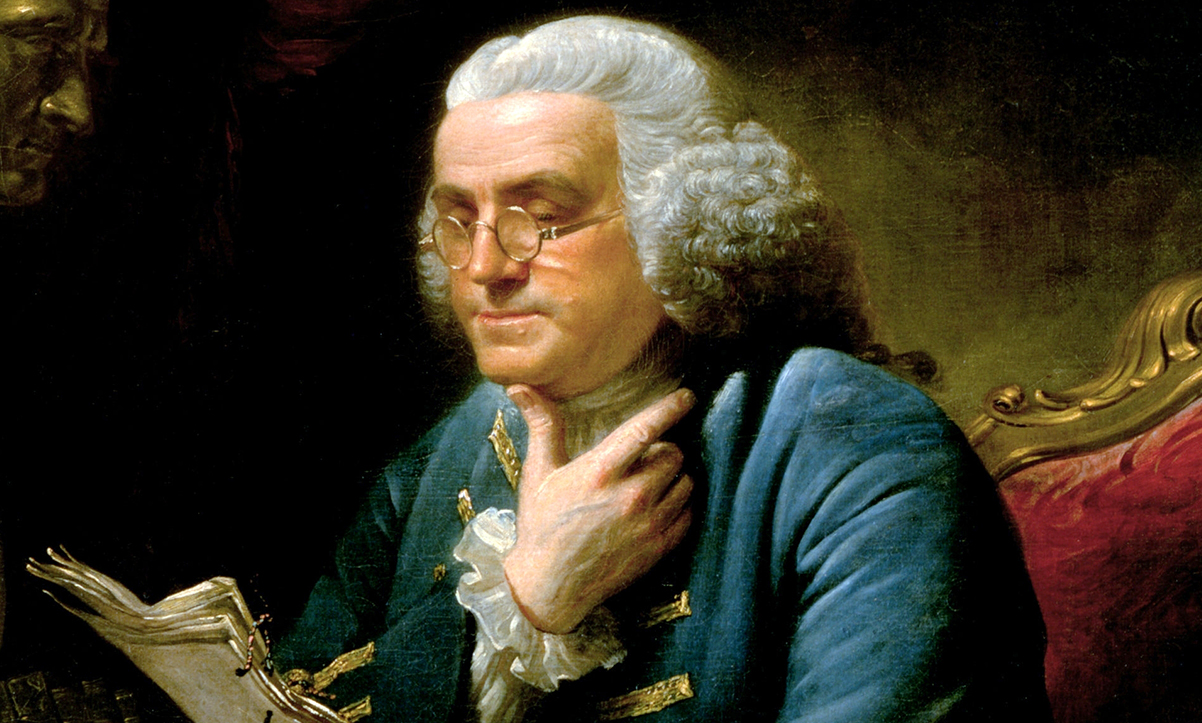
  • August 2013 – Non-profit charitable hospitals, especially faith-based ones, will face large fines or lose their tax-exempt status if they don’t comply with new strangling paperwork requirements related to giving free treatment to poor clients who do not have Obamacare insurance coverage. [70] Ironically, the first hospital in America was founded as a charitable institution in 1751 by Benjamin Franklin, and its logo was the Good Samaritan, with Luke 10:35 inscribed below him: “Take care of him, and I will repay thee,” being designed specifically to offer free medical care to the poor. [71] Benjamin Franklin’s hospital would likely be fined unless he placed more resources and funds into paperwork rather than helping the poor under the new faith-hostile policy of the Obama administration.
  • August 2013 – USAID, a federal government agency, shut down a conference in South Korea the night before it was scheduled to take place because some of the presentations were not pro-abortion but instead presented information on abortion complications, including the problems of “preterm births, mental health issues, and maternal mortality” among women giving birth who had previous abortions. [72]
  • June 2013 – The Obama Administration finalizes requirements that under the Obamacare insurance program, employers must make available abortion-causing drugs, regardless of the religious conscience objections of many employers and even despite the directive of several federal courts to protect the religious conscience of employers. [73]
  • April 2013 – The United States Agency for Internal Development (USAID), an official foreign policy agency of the U.S. government, begins a program to train homosexual activists in various countries around the world to overturn traditional marriage and anti-sodomy laws, targeting first those countries with strong Catholic influences, including Ecuador, Honduras, and Guatemala. [74]
  • December 2012 – Despite having campaigned to recognize Jerusalem as Israel’s capital, President Obama once again suspends the provisions of the Jerusalem Embassy Act of 1995 which requires the United States to recognize Jerusalem as the capital of Israel and to move the American Embassy there. [75]
  • July 2012 – The Pentagon, for the first time, allows service members to wear their uniforms while marching in a parade – specifically, a gay pride parade in San Diego. [76]
  • October 2011 – The Obama administration eliminates federal grants to the U.S. Conference of Catholic Bishops for their extensive programs that aid victims of human trafficking because the Catholic Church is anti-abortion. [77]
  • September 2011 – The Pentagon directs that military chaplains may perform same-sex marriages at military facilities in violation of the federal Defense of Marriage Act. [78]
  • July 2011 – Obama allows homosexuals to serve openly in the military, reversing a policy originally instituted by George Washington in March 1778. [79]
  • March 2011 – The Obama administration refuses to investigate videos showing Planned Parenthood helping alleged sex traffickers get abortions for victimized underage girls. [80]
  • February 2011 – Obama directs the Justice Department to stop defending the federal Defense of Marriage Act. [81]
  • September 2010 – The Obama administration tells researchers to ignore a judge’s decision striking down federal funding for embryonic stem cell research. [82]
  • August 2010 – The Obama administration Cuts funding for 176 abstinence education programs. [83]
  • July 2010 – The Obama administration uses federal funds in violation of federal law to get Kenya to change its constitution to include abortion. [84]
  • September 16, 2009 – The Obama administration appoints as EEOC Commissioner Chai Feldblum, who asserts that society should “not tolerate” any “private beliefs,” including religious beliefs, if they may negatively affect homosexual “equality.” [85]
  • July 2009 – The Obama administration illegally extends federal benefits to same-sex partners of Foreign Service and Executive Branch employees, in direction violation of the federal Defense of Marriage Act. [86]
  • May 2009 – The White House budget eliminates all funding for abstinence-only education and replaces it with “comprehensive” sexual education, repeatedly proven to increase teen pregnancies and abortions. [87] He continues the deletion in subsequent budgets. [88]
  • May 2009 – Obama officials assemble a terrorism dictionary calling pro-life advocates violent and charging that they use racism in their “criminal” activities. [89]
  • March 2009 – The Obama administration shut out pro-life groups from attending a White House-sponsored health care summit. [90]
  • March 2009 – Obama orders taxpayer funding of embryonic stem cell research. [91]
  • March 2009 – Obama gave $50 million for the UNFPA, the UN population agency that promotes abortion and works closely with Chinese population control officials who use forced abortions and involuntary sterilizations. [92]
  • January 2009 – Obama lifts restrictions on U.S. government funding for groups that provide abortion services or counseling abroad, forcing taxpayers to fund pro-abortion groups that either promote or perform abortions in other nations. [93]
  • January 2009 – President Obama’s nominee for deputy secretary of state asserts that American taxpayers are required to pay for abortions and that limits on abortion funding are unconstitutional. [94]

4. Acts of preferentialism for Islam:

  • April – September 2015 – The administration negotiates a deal to stop economic sanctions of Iran because of nuclear power development, despite the warnings and concern of Israel. [95]
  • February 2012 – The Obama administration makes effulgent apologies for Korans being burned by the U. S. military, [96] but when Bibles were burned by the military, numerous reasons were offered why it was the right thing to do. [97]
  • October 2011 – Obama’s Muslim advisers block Middle Eastern Christians’ access to the White House. [98]
  • August 2010 – Obama speaks with great praise of Islam and condescendingly of Christianity. [99]
  • August 2010 – Obama went to great lengths to speak out on multiple occasions on behalf of building an Islamic mosque at Ground Zero, while at the same time he was silent about a Christian church being denied permission to rebuild at that location. [100]
  • April 2010 – Christian leader Franklin Graham is disinvited from the Pentagon’s National Day of Prayer Event because of complaints from the Muslim community. [101]
  • April 2010 – The Obama administration requires rewriting of government documents and a change in administration vocabulary to remove terms that are deemed offensive to Muslims, including jihad, jihadists, terrorists, radical Islamic, etc. [102]
  • May 2009 – While Obama does not host any National Day of Prayer event at the White House, he does host White House Iftar dinners in honor of Ramadan. [103]
  • 2010 – While every White House traditionally issues hundreds of official proclamations and statements on numerous occasions, this White House avoids traditional Biblical holidays and events but regularly recognizes major Muslim holidays, as evidenced by its 2010 statements on Ramadan, Eid-ul-Fitr, Hajj, and Eid-ul-Adha. [104]

Many of these actions are literally unprecedented – this is the first time they have happened in four centuries of American history. The hostility of President Obama toward Biblical faith and values is without equal from any previous American president.

This relates to an issue that is not current as of 2024.


Endnotes

[1] Todd Starnes, “No Christmas in White House Holiday Card,” Fox News Radio, 2011; Todd Starnes, “White House “Holiday” Card Spotlights Dog, Not Christmas,” Fox News Radio, 2012; “White House Christmas Decor Featuring Mao Zedong Comes Under Fire,” Fox News, December 24, 2009.
[3] Jonah Goldberg, “Obama Respects Dictators More Than Popes,” National Review, September 19, 2015.
[4] Todd Starnes, “DOJ Defunds At-Risk Youth Programs over “God” Reference,” Townhall, June 25, 2013.
[5] Steven Ertelt, “Obama Admin’s HHS Mandate Revision Likely Excludes Hobby Lobby,” LifeNews.com, February 1, 2013; Dan Merica, “Obama proposal would let religious groups opt-out of contraception mandate,” CNN, February 1, 2013.
[6] Sheryl Gay Stolberg, “Minister Backs Out of Speech at Inaugural,” New York Times, January 10, 2013; Eric Marrapodi, “Giglio bows out of inauguration over sermon on gays,” CNN, January 10, 2013.
[7] Audrey Hudson, “Obama administration religious service for student loan forgiveness,” Human Events, February 15, 2012.
[8] Ted Olson, “Church Wins Firing Case at Supreme Court,” Christianity Today, January 11, 2012.
[9] Hillary Rodham Clinton, “Remarks in Recognition of International Human Rights Day,” U.S. Department of State, December 6, 2011.
[10] Todd Starns, “Obama Administration Opposes FDR Prayer at WWII Memorial,” Fox News, November 4, 2011.
[11] Joel Siegel, “Obama Omits God From Thanksgiving Speech, Riles Critics,” ABC News, November 25, 2011.
[12] Chuck Donovan, “HHS’s New Health Guidelines Trample on Conscience,” Heritage Foundation, August 2, 2011.
[13] Chris Johnson, “ENDA passage effort renewed with Senate introduction,” Washington Blade, April 15, 2011.
[14] Marrianne Medlin, “Amid criticism, President Obama moves to fill vacant religious ambassador post,” Catholic News Agency, February 9, 2011; Thomas F. Farr, “Undefender of the Faith,” Foreign Policy, April 5, 2012.
[15] LadyImpactOhio, “ Feds sued by Veterans to allow stolen Mojave Desert Cross to be rebuilt,” Red State, January 14, 2011.
[17] Meredith Jessup, “Obama Continues to Omit ‘Creator’ From Declaration of Independence,” The Blaze, October 19, 2010.
[18] Johanna Neuman, “Obama end Bush-era National Prayer Day Service at White House,” Los Angeles Times, May 7, 2009.
[19] Jim Lovino, “Jesus Missing From Obama’s Georgetown Speech,” NBC Washington, April 17, 2009.
[20] Chris McGreal, “Vatican vetoes Barack Obama’s nominees for U.S. Ambassador,” The Guardian, April 14, 2009.
[21] Aliza Marcus, “Obama to Lift ‘Conscience’ Rule for Health Workers,” Bloomberg, February 27, 2009; Sarah Pulliam Baily, “Obama Admin. Changes Bush ‘Conscience’ Rule for Health Workers,” Christianity Today, February 18, 2011.
[22] Sarah Pulliam Baily, “Obama: ‘They cling to guns or religion’,” Christianity Today, April 13, 2008.
[23] Roger Severino, “President Obama Threatens to Veto Defense Bill That Protects Religious Liberty,” Charisma News,October 28, 2016.
[26] Todd Starnes, “Bible removed from POW/MIA display inside VA clinic,” Fox News, February 29, 2016.
[27]Todd Starnes, “Navy bans chaplain from ministering to family of dead soldier,” Fox News, March 24, 2015.
[29] Hendrick Simoes, “US personnel in Bahrain prepare for Ramadan,” Stars and Stripes, June 26, 2014.
[30] Todd Starnes, “Bible controversy hits Air Force base,” Fox News, March 15, 2014.
[32] Todd Starnes, “Air Force removes Nativity scene,” Fox News, December 9, 2013.
[34] Todd Starnes, “Catholic priests in military face arrest for celebrating Mass,” Fox News, October 5, 2013; The Brody File, “Priest: Obama Admin. Denied Mass to Catholics,” CBN News, October 8, 2013.
[35] Stephen Losey, “Academy makes ‘God’ optional in cadets’ oath,” Air Force Times, October 25, 2013.
[39] Melanie Korb, “Air Force Invites Drag Queens to Perform on ‘Diversity Day’,” Charisma News, August 19, 2013.
[41] Todd Starnes, “Chaplain Ordered to Remove Religious Essay From Military Website,” FoxNews Radio, July 24, 2013.
[42] Hellen Cook, “Pentagon Censors Christian Art,” Christian News Wire, January 21, 2010.
[43] Todd Starnes, “Obama ‘Strongly Objects’ to Religious Liberty Amendment,” Townhall, June 12, 2013.
[44] Todd Starnes, “Air Force Removes Video that Mentions God,” Fox News Radio. June 7, 2013.
[45] Todd Starnes, “Army Punishes Soldier who Served Chick-fil-A,” Fox News Radio, June 5, 2013.
[48] Todd Starnes, “Air Force Officer Told to Remove Bible from Desk,” Townhall.com, May 3, 2013.
[49] Jack Minor, “Military Warned ‘evangelicals’ No. 1 Threat,” WND, April 5, 2013.
[50] Todd Starnes, “Army Removes Bible Reference from Scopes,” Fox News Radio, April 22, 2013.
[51]Chaplain endorsers ask Air Force for equal time,” Alliance Defending Freedom, April 30, 2013.
[52] Todd Starnes, “Pentagon: Religious Proselytizing is Not Permitted,” Fox News Radio, April 30, 2013.
[56] Markeshia Ricks, “Bible checklist for Air Force lodges going away,” Air Force Times, April 16, 2012.
[57] Ken Blackwell, “Gen. Boykin Blocked At West Point,” cnsnews.com, February 1, 2012.
[59] Todd Starnes, “Army Silences Catholic Chaplains,” Fox News Radio, February 6, 2012.
[60]Air Force Academy Backs Away from Christmas Charity,” Fox News Radio, November 4, 2011.
[61] Todd Starnes, “Obama Administration Opposes FDR Prayer at WWII Memorial,” Fox News, November 4, 2011.
[62] Jenny Dean, “Air Force Academy adapts to pagans, druids, witches and Wiccans,” Los Angeles Times, November 26, 2011.
[63] “Maintaining Government Neutrality Regarding Religion,” Department of the Air Force, September 1, 2011.
[64] “Wounded, Ill, and Injured Partners in Care Guidelines,” Department of the Navy (accessed on February 29, 2012).
[67] Todd Spangler, “U.S. firm to remove Bible references from gun sights,” USA Today, January 21, 2010.
[69] Steven Ertelt, “President Obama’s Budget Eliminates Abstinence Education Programs,” Life News, March 5, 2014; Jennifer Liberto, “Sex abstinence program among Obama’s targeted cuts,” CNN Money, March 5, 2014.
[71]The Story of the Creation of the Nation’s First Hospital,” University of Pennsylvania Health System (accessed August 14, 2013).
[72] Wendy Wright,” USAID Rep Shuts Down Workshop on Abortion Complications,” Catholic Family & Human Rights Institute, August 9, 2013.
[73] “Obama Administration Ignores Outcries, Finalizes HHS Mandate Targeting Religious Freedom,” Liberty Counsel, July 1, 2013; Baptist Press, “Moore, others: Final mandate rules fail,” Townhall, July 1, 2013.
[75] Ken Blackwell, “Guest Opinion: Take a Risk for Peace. Move our Embassy to Jerusalem!,” Catholic Online, June 5, 2013.
[77] Jerry Markon, “Health, abortion issues split Obama administration and Catholic groups,” Washington Post, October 31, 2011.
[78] Luis Martinez, “Will Same Sex Marriages Pose a Dilemma for Military Chaplains?,” ABC News, October 12, 2011.
[79] Elisabeth Bumiller, “Obama Ends ‘Don’t Ask, Don’t Tell’ Policy,” New York Times, July 22, 2011; George Washington, The Writings of George Washington, John C. Fitzpatrick, editor (Washington: U. S. Government Printing Office, 1934), Vol. XI, pp. 83-84, from General Orders at Valley Forge on March 14, 1778.
[80] Steven Ertelt, “Obama Admin Ignores Planned Parenthood Sex Trafficking Videos,” LifeNews, March 2, 2011.
[81] Brian Montopoli, “Obama administration will no longer defend DOMA,” CBSNews, February 23, 2011.
[82] Steven Ertelt, “President Barack Obama’s Pro-Abortion Record: A Pro-Life Compilation,” LifeNews, February 11, 2012.
[86] “Memorandum for the Heads of Executive Departments and Agencies,” The White House, June 17, 2009.
[88] Steven Ertelt, “Obama Budget Funds Sex Ed Over Abstinence on 16-1 Margin,” LifeNews, February 14, 2011.
[92] Steven Ertelt, “ Obama Administration Announces $50 Million for Pro-Forced Abortion UNFPA,” LifeNews, March 26, 2009; Steven Ertelt, “President Barack Obama’s Pro-Abortion Record: A Pro-Life Compilation,” LifeNews, February 11, 2012.
[93] Jeff Mason and Deborah Charles, “Obama lifts restrictions on abortion funding,” Reuters, January 23, 2009.
[94]Obama pick: Taxpayers must fund abortions,” World Net Daily, January 27, 2009.
[96] Masoud Popalzai and Nick Paton Walsh, “ Obama apologizes to Afghanistan for Quran burning,” CNN, February 23, 2012.
[99] Chuck Norris, “ President Obama: Muslim Missionary? (Part 2),” Townhall.com, August 24, 2010; Chuck Norris, “President Obama: Muslim Missionary?,” Townhall.com, August 17, 2010.
[100] Barack Obama, “Remarks by the President at Iftar Dinner,” The White House, August 13, 2010; “Obama Comes Out in Favor of Allowing Mosque Near Ground Zero,” Fox News, August 13, 2010; Pamela Geller, “Islamic Supremacism Trumps Christianity at Ground Zero,” American Thinker, July 21, 2011.
[103] Barack Obama, “ Remarks by the President at Iftar Dinner,” The White House, September 1, 2009; Kristi Keck, “ Obama tones down National Day of Prayer observance,” CNN, May 6, 2009; Dan Gilgoff, “ The White House on National Day of Prayer: A Proclamation, but No Formal Ceremony,” U.S. News, May 1, 2009.
[104]WH Fails to Release Easter Proclamation,” Fox Nation, April 25, 2011; “President Obama ignores most holy Christian holiday; AFA calls act intentional,” American Family Association (accessed on February 29, 2012).
* This article concerns a historical issue and may not have updated information.

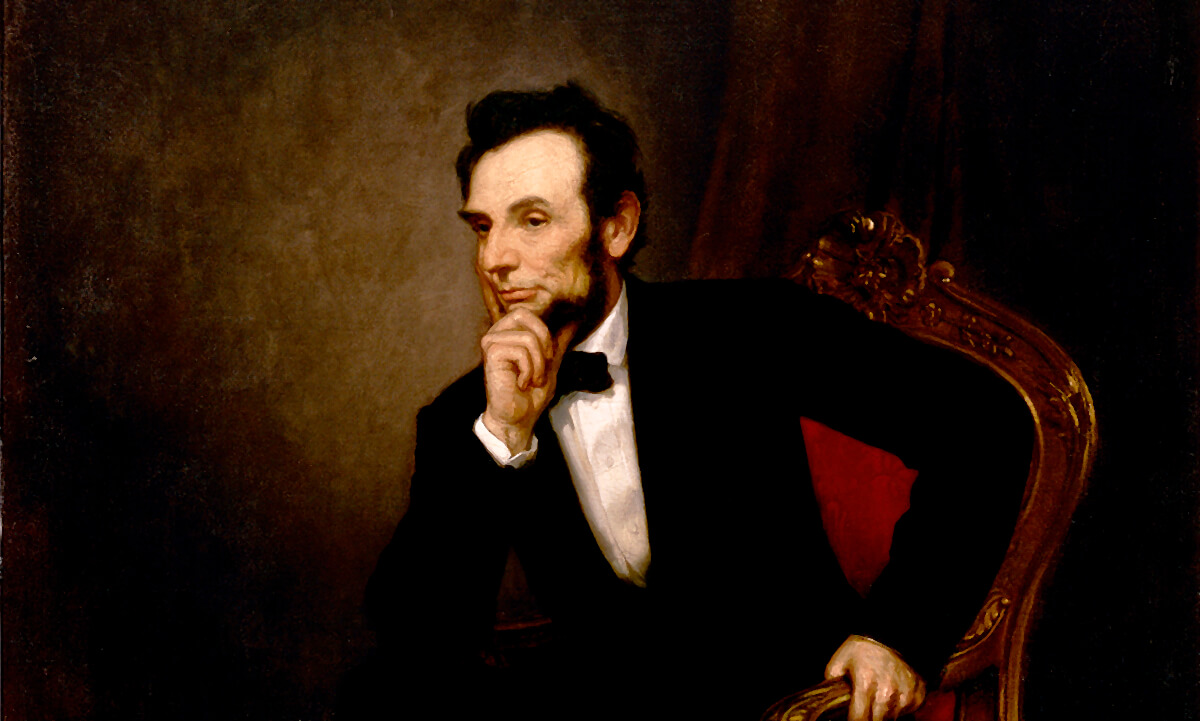
Abraham Lincoln’s Second Inaugural Address

Fellow-Countrymen:

At this second appearing to take the oath of the Presidential office there is less occasion for an extended address than there was at the first. Then, a statement somewhat in detail of a course to be pursued seemed fitting and proper. Now, at the expiration of four years, during which public declarations have been constantly called forth on every point and phase of the great contest which still absorbs the attention and engrosses the energies of the nation, little that is new could be presented. The progress of our arms, upon which all else chiefly depends, is as well known to the public as to myself, and it is, I trust, reasonably satisfactory and encouraging to all. With high hope for the future, no prediction in regard to it is ventured.

On the occasion corresponding to this four years ago all thoughts were anxiously directed to an impending civil war. All dreaded it, all sought to avert it. While the inaugural address was being delivered from this place, devoted altogether to saving the Union without war, insurgent agents were in the city seeking to destroy it without war–seeking to dissolve the Union and divide effects by negotiation. Both parties deprecated war, but one of them would make war rather than let the nation survive, and the other would accept war rather than let it perish, and the war came.

One-eighth of the whole population were colored slaves, not distributed generally over the Union, but localized in the southern part of it. These slaves constituted a peculiar and powerful interest. All knew that this interest was somehow the cause of the war. To strengthen, perpetuate, and extend this interest was the object for which the insurgents would rend the Union even by war, while the Government claimed no right to do more than to restrict the territorial enlargement of it. Neither party expected for the war the magnitude or the duration which it has already attained. Neither anticipated that the cause of the conflict might cease with or even before the conflict itself should cease. Each looked for an easier triumph, and a result less fundamental and astounding. Both read the same Bible and pray to the same God, and each invokes His aid against the other. It may seem strange that any men should dare to ask a just God’s assistance in wringing their bread from the sweat of other men’s faces, but let us judge not, that we be not judged. The prayers of both could not be answered. That of neither has been answered fully. The Almighty has His own purposes. “Woe unto the world because of offenses; for it must needs be that offenses come, but woe to that man by whom the offense cometh.” If we shall suppose that American slavery is one of those offenses which, in the providence of God, must needs come, but which, having continued through His appointed time, He now wills to remove, and that He gives to both North and South this terrible war as the woe due to those by whom the offense came, shall we discern therein any departure from those divine attributes which the believers in a living God always ascribe to Him? Fondly do we hope, fervently do we pray, that this mighty scourge of war may speedily pass away. Yet, if God wills that it continue until all the wealth piled by the bondsman’s two hundred and fifty years of unrequited toil shall be sunk, and until every drop of blood drawn with the lash shall be paid by another drawn with the sword, as was said three thousand years ago, so still it must be said “the judgments of the Lord are true and righteous altogether.”

With malice toward none, with charity for all, with firmness in the right as God gives us to see the right, let us strive on to finish the work we are in, to bind up the nation’s wounds, to care for him who shall have borne the battle and for his widow and his orphan, to do all which may achieve and cherish a just and lasting peace among ourselves and with all nations.

Delivered on Saturday, March 4, 1865


John Jay on the Biblical View of War

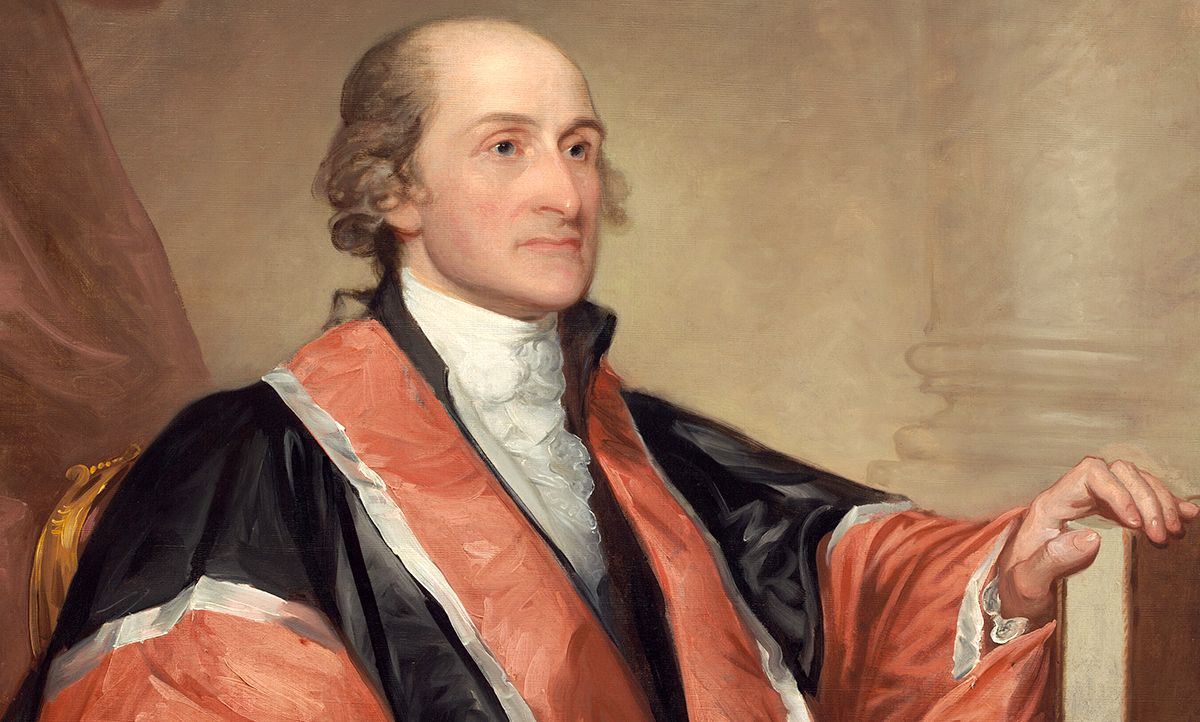
john-jay-on-the-biblical-view-of-warFounding Father John Jay (1745-1829) was appointed by President George Washington as the first Chief Justice of the United States Supreme Court. In addition to serving on the Supreme Court, Jay had a very distinguished history of public service. He was a member of the Continental Congress (1774-76, 1778-79) and served as President of Congress (1778-79). He helped write the New York State constitution (1777) and authored the first manual on military discipline (1777). Jay served as Chief-Justice of New York Supreme Court (1777-78) and was minister to Spain (1779). He signed the final peace treaty with Great Britain (1783) and he was elected as Governor of New York (1795- 1801).
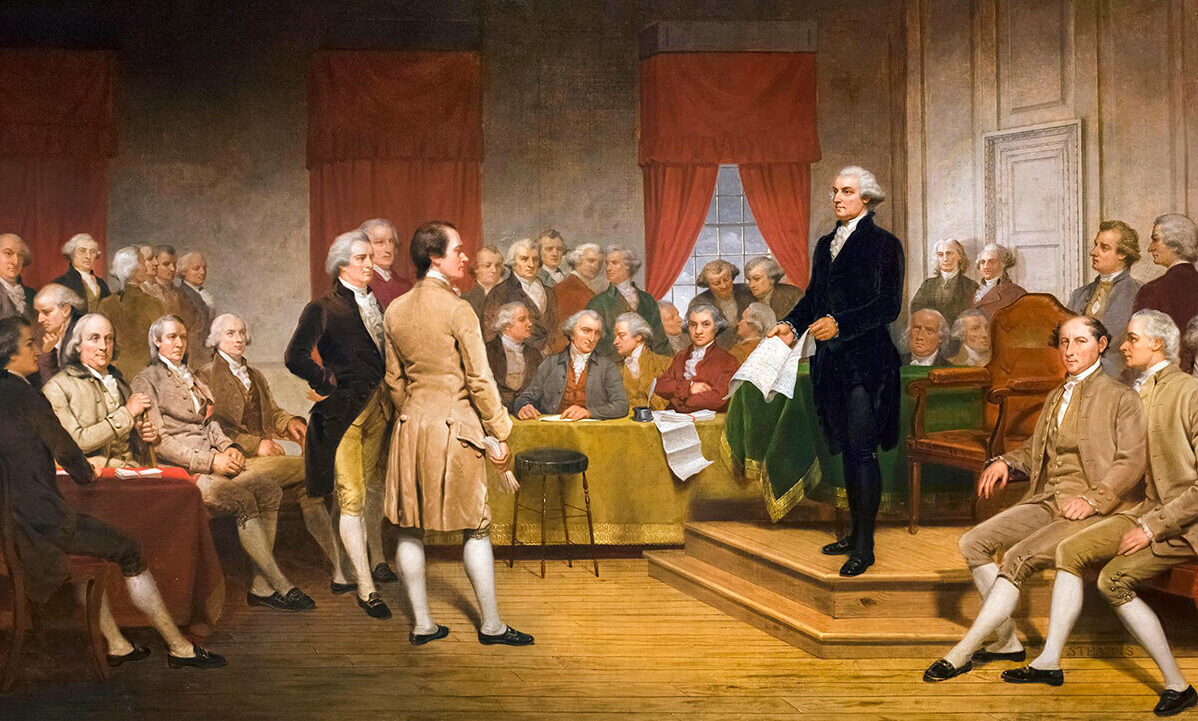
Jay is also famous as one of the three coauthors, along with James Madison and Alexander Hamilton, of the Federalist Papers, which were instrumental in securing the ratification of the federal Constitution.

John Jay was a strong Christian, serving both as vice-president of the American Bible Society (1816-21) and its president (1821- 27). In this series of letters, John Jay expounds on the Biblical view of war.


Letter 1

Whether war of every description is prohibited by the gospel, is one of those questions on which the excitement of any of the passions can produce no light. An answer to it can result only from careful investigation and fair reasoning.

It appears to me that the gospel not only recognizes the whole moral law, and extends and perfects our knowledge of it, but also enjoins on all mankind the observance of it. Being ordained by a legislator of infinite wisdom and rectitude, and in whom there is “no variableness,” it must be free from imperfection, and therefore never has, nor ever will require amendment or alteration. Hence I conclude that the moral law is exactly the same now that it was before the flood.

That all those wars and fightings are unlawful, which proceed from culpable desires and designs (or in Scripture language from lusts), on the one side or on the other, is too clear to require proof. As to wars of an opposite description, and many such there have been, I believe they are as lawful to the unoffending party in our days, as they were in the days of Abraham. He waged war against and defeated the five kings. He piously dedicated a tenth of the spoils; and, instead of being blamed, was blessed.

What should we think of a human legislator who should authorize or encourage infractions of his own laws ? If wars of every kind and description are prohibited by the moral law, I see no way of reconciling such a prohibition with those parts of Scripture which record institutions, declarations, and interpositions of the Almighty which manifestly evince the contrary. If every war is sinful, how did it happen that the sin of waging any war is not specified among the numerous sins and offenses which are mentioned and reproved in both the Testaments?

To collect and arrange the many facts and arguments which relate to this subject would require more time and application than I am able to bestow. The aforegoing are hinted merely to exhibit some of the reasons on which my opinion rests.

It certainly is very desirable that a pacific disposition should prevail among all nations. The most effectual way of producing it is by extending the prevalence and influence of the gospel. Real Christians will abstain from violating the rights of others, and therefore will not provoke war.

Almost all nations have peace or war at the will and pleasure of rulers whom they do not elect, and who are not always wise or virtuous. Providence has given to our people the choice of their rulers, and it is the duty as well as the privilege and interest of our Christian nation to select and prefer Christians for their rulers.

Letter 2

In my letter to you of the 16th October last, I hinted that I might perhaps write and send you a few more lines on the question, whether war of every description is forbidden by the gospel.

I will now add some remarks to those which were inserted in my answer to your first letter. In that answer, the lawfulness of war, in certain cases, was inferred from those Divine positive institutions which authorized and regulated it. For although those institutions were not dictated by the moral law, yet they cannot be understood to authorize what the moral law forbids.

The moral or natural law was given by the Sovereign of the universe to all mankind; with them it was co-eval, and with them it will be co-existent. Being rounded by infinite wisdom and goodness on essential right, which never varies, it can require no amendment or alteration.

Divine positive ordinances and institutions, on the other hand, being founded on expediency, which is not always perpetual or immutable, admit of, and have received, alteration and limitation in sundry instances.

There were several Divine positive ordinances and institutions at very early periods. Some of them were of limited obligation, as circumcision; others of them were of universal obligation, as the Sabbath, marriage, sacrifices, the particular punishment for murder.

The Lord of the Sabbath caused the day to be changed. The ordinances of Moses suffered the Israelites to exercise more than the original liberty allowed to marriage, but our Savior repealed that indulgence. When sacrifices had answered their purpose as types of the great Sacrifice, etc., they ceased. The punishment for murder has undergone no alteration, either by Moses or by Christ.

I advert to this distinction between the moral law and positive institutions, because it enables us to distinguish the reasonings which apply to the one, from those which apply only to the other—ordinances being mutable, but the moral law always the same.

To this you observe, by way of objection, that the law was given by Moses, but that grace and truth came by Jesus Christ; and hence that, even as it relates to the moral law, a more perfect system is enjoined by the gospel than was required under the law, which admitted of an eye for an eye, and a tooth for a tooth, tolerating a spirit of retaliation. And further, that, if the moral law was the same now that it was before the flood, we must call in question those precepts of the gospel which prohibit some things allowed of and practiced by the patriarchs.

It is true that the law was given by Moses, not however in his individual or private capacity, but as the agent or instrument, and by the authority of the Almighty. The law demanded exact obedience, and proclaimed: “Cursed is every one that contineth not in all things which are written in the book of the law to do them.” The law was inexorable, and by requiring perfect obedience, under a penalty so inevitable and dreadful, operated as a schoolmaster to bring us to Christ for mercy.

Mercy, and grace, and favor did come by Jesus Christ; and also that truth which verified the promises and predictions concerning him, and which exposed and corrected the various errors which had been imbibed respecting the Supreme Being, his attributes, laws, and dispensations. Uninspired commentators have dishonored the law, by ascribing to it, in certain cases, a sense and meaning which it did not authorize, and which our Savior rejected and reproved.

The inspired prophets, on the contrary, express the most exalted ideas of the law. They declare that the law of the Lord is perfect, that the statutes of the Lord are right; and that the commandment of the Lord is pure; that God would magnify the law and make it honorable, etc.

Our Savior himself assures us that he came not to destroy the law and the prophets, but to fulfill; that whoever shall do and teach the commandments, shall be called great in the kingdom of heaven; that it is easier for heaven and earth to pass, than one tittle of the law to fail. This certainly amounts to a full approbation of it. Even after the resurrection of our Lord, and after the descent of the Holy Spirit, and after the miraculous conversion of Paul, and after the direct revelation of the Christian dispensation to him, he pronounced this memorable encomium on the law, viz.: “The law is holy, and the commandments holy, just, and good.”

It is true that one of the positive ordinances of Moses, to which you allude, did ordain retaliation, or, in other words, a tooth for a tooth. But we are to recollect that it was ordained, not as a rule to regulate the conduct of private individuals towards each other, but as a legal penalty or punishment for certain offenses. Retaliation is also manifest in the punishment prescribed for murder—life for life. Legal punishments are adjusted and inflicted by the law and magistrate, and not by unauthorized individuals. These and all other positive laws or ordinances established by Divine direction, must of necessity be consistent with the moral law. It certainly was not the design of the law or ordinance in question, to encourage a spirit of personal or private revenge. On the contrary, there are express injunctions in the law of Moses which inculcate a very different spirit; such as these: “Thou shalt not avenge, nor bear any grudge against the children of thy people; but thou shalt love thy neighbor as thyself.” “Love the stranger, for ye were strangers in Egypt.” “If thou meet thy enemy’s ox or his ass going astray, thou shalt surely bring it back to him,” etc., etc.

There is reason to believe that Solomon understood the law in its true sense, and we have his opinion as to retaliation of injuries, viz.: “Say not, I will recompense evil; but wait upon the Lord, and He will save thee.” Again: “Say not, I will do to him as he hath done to me. I will render to the man according to his work.” And again:” If thine enemy be hungry, give him bread to eat; and if he be thirsty, give him water to drink; for thou shalt heap coals of fire upon his head, and the Lord shall reward thee.”

But a greater than Solomon has removed all doubts on this point. On being asked by a Jewish lawyer, which was the great commandment in the law, our Savior answered: “Thou shalt love the Lord thy God with all thy heart, and with all thy soul, and with all thy mind. This is the first and the great commandment, and the second is like unto it: Thou shalt love thy neighbor as thyself. On these two commandments hang all the law and the prophets.” It is manifest, therefore, that the love of God and the love of man are enjoined by the law; and as the genuine love of the one comprehends that of the other, the apostle assures us that “Love is the fulfilling of the law.”

It is, nevertheless, certain, that erroneous opinions respecting retaliation, and who were to be regarded as neighbors, had long prevailed, and that our Savior blamed and corrected those and many other unfounded doctrines.

That the patriarchs sometimes violated the moral law, is a position not to be disputed. They were men, and subject to the frailties of our fallen nature. But I do not know nor believe, that any of them violated the moral law by the authority or with the approbation of the Almighty. I can find no instance of it in the Bible. Nor do I know of any action done according to the moral law, that is censured or forbidden by the gospel. On the contrary, it appears to me that the gospel strongly enforces the whole moral law, and clears it from the vain traditions and absurd comments which had obscured and misapplied certain parts of it.

As, therefore, Divine ordinances did authorize just war, as those ordinances were necessarily consistent with the moral law, and as the moral law is incorporated in the Christian dispensation, I think it follows that the right to wage just and necessary war is admitted, and not abolished, by the gospel.

You seem to doubt whether there ever was a just war, and that it would puzzle even Solomon to find one.

Had such a doubt been proposed to Solomon, an answer to it would probably have been suggested to him by a very memorable and interesting war which occurred in his day. I allude to the war in which his brother Absalom on the one side, and his father David on the other, were the belligerent parties. That war was caused by, and proceeded from, “the lusts” of Absalom, and was horribly wicked. But the war waged against him by David was not caused by, nor did proceed from, “the lusts” of David, but was right, just, and necessary. Had David submitted to be dethroned by his detestable son, he would, in my opinion, have violated his moral duty and betrayed his official trust.

Although just war is not forbidden by the gospel in express terms, yet you think an implied prohibition of all war, without exception, is deducible from the answer of our Lord to Pilate, viz.: “If my kingdom were of this world, then would my servants fight,” etc.

At the conclusion of the Last Supper, our Lord said to his disciples: “He that hath no sword, let him now sell his garment and buy one,” They answered: “Lord, here are two swords.” He replied: “It is enough.”

It is not to be presumed that our Lord would have ordered swords to be provided, but for some purpose for which a sword was requisite; nor that he would have been satisfied with two, if more had been necessary.

Whatever may have been the purposes for which swords were ordered, it is certain that the use of one of those swords soon caused an event which confirmed the subsequent defense of our Lord before Pilate, and also produced other important results. When the officers and their band arrived, with swords and with staves, to take Jesus, they who were about him saw what would follow. “They said unto him: Lord, shall we smite with the sword?” It does not appear that any of the eleven disciples who were with him, except one, made the least attempt to defend him. But Peter, probably inferring from the order for swords, that they were now to be used, proceeded to “smite a servant of the high-priest, and cut off his right ear.” Jesus (perhaps, among other reasons, to abate inducements to prosecute Peter for that violent attack) healed the ear.

He ordered Peter to put his sword into its sheath, and gave two reasons for it. The first related to himself, and amounted to this, that he would make no opposition, saying: “The cup which my Father hath given me, shall I not drink?” The second related to Peter, viz., they who take the sword, shall perish by the sword; doubtless meaning that they who take and use a sword, as Peter had just done, without lawful authority, and against lawful authority, incur the penalty and risk of perishing by the sword. This meaning seems to be attached to those words by the occasion and circumstances which prompted them. If understood in their unlimited latitude, they would contradict the experience and testimony of all ages, it being manifest that many military men die peaceably in their beds.

The disciples did believe and expect that Jesus had come to establish a temporal kingdom. “They trusted that it had been he which should have redeemed Israel.” “They knew not the Scripture, that he must rise again from the dead; questioning one with another what the rising from the dead should mean.” Even after his resurrection, they appear to have entertained the same belief and expectation; for on the very day he ascended, they asked him: “Lord, wilt thou at this time restore the kingdom to Israel?”

The order for swords, and the declaration that two were enough, tended to confirm that belief and expectation, and to inspire a confidence that he who had commanded the winds and the waves, and had raised the dead to life, was able, as well as willing, to render the two swords sufficient to vanquish his enemies. Could anything less than such a firm belief and confidence have prompted eleven such men, and with only two swords among them, to offer to “smite with the sword” the armed band, which, under officers appointed by the Jewish rulers, had come to apprehend their Master?

Great must have been the disappointment and astonishment of the disciples, when Jesus unexpectedly and peaceably submitted to the power and malice of his enemies, directing Peter to sheath his sword, and hinting to him the danger he had incurred by drawing it: amazed and terrified, they forsook him and fled. This catastrophe so surprised and subdued the intrepidity of Peter, that he was no longer “ready to go with his Master to prison and to death.”

It seems that perplexity, consternation, and tumultuous feelings overwhelmed his faith and reflection, and that his agitations, receiving fresh excitement from the danger and dread of discovery, which soon after ensued, impelled him with heedless precipitation to deny his Master. This denial proved bitter to Peter, and it taught him and others that spiritual strength can be sustained only by the spiritual bread which cometh down from heaven.

The Jews accused Jesus before Pilate of aspiring to the temporal sovereignty of their nation, in violation of the legal rights of Caesar. Jesus, in his defense, admitted that he was king, but declared that his kingdom was not of this world. For the truth of this assertion, he appealed to the peaceable behavior of his adherents, saying:” If my kingdom were of this world, then would my servants fight, that I should not be delivered to the Jews, but now is my kingdom not from hence.”

Pilate, who doubtless well knew what had been the conduct of Jesus, both before and at the time of his apprehension, was satisfied, but the Jews were not. They exclaimed: “If thou let this man go, thou art not Caesar’s friend; whosoever maketh himself a king, speaketh against Caesar.” “We have no king but Caesar.”

You and I understand the words in question very differently. Is there the least reason to infer from the belief and conduct of the disciples, that they were restrained from fighting by the consideration that their Master’s kingdom was not of this world? On the contrary, did they not believe and expect that he had come to restore one of the kingdoms of this world to Israel? The fact is, that they were ready and willing to fight. Did they not ask him: “Lord, shall we smite with the sword?” It was his will, therefore, and not their will, which restrained them from fighting; and for that restraint he assigned a very conclusive reason, viz., because his kingdom was not of this world.

To the advancement and support of his spiritual sovereignty over his spiritual kingdom, soldiers and swords and corporeal exertions were inapplicable and useless. But, on the other hand, soldiers and swords and corporeal exertions are necessary to enable the several temporal rulers of the states and kingdoms of this world to maintain their authority and protect themselves and their people; and our Savior expressly declared that if his kingdom had been of this world, then would his servants fight to protect him; or, in other words, that then, and in that case, he would not have restrained them from fighting. The lawfulness of such fighting, therefore, instead of being denied, is admitted and confirmed by that declaration.

This exposition coincides with the answer given by John the Baptist (who was “filled with the Holy Ghost”) to the soldiers who asked him what they should do, viz.: “Do violence to no man, neither accuse any falsely, and be content with your wages.” Can these words be rationally understood as meaning that they should receive wages for nothing; or that, when ordered to march against the enemy, they should refuse to proceed; or that, on meeting the enemy, they should either run away, or passively submit to be captured or slaughtered? This would be attaching a meaning to his answer very foreign to the sense of the words in which he expressed it.

Had the gospel regarded war as being in every case sinful, it seems strange that the apostle Paul should have been so unguarded as, in teaching the importance of faith, to use an argument which clearly proves the lawfulness of war, viz.: “That it was through faith that Gideon, David, and others waxed valiant in fight, and turned to flight the armies of aliens”; thereby confirming the declaration of David, that it was God who had “girded him with strength to battle; and had taught his hands to war, and his fingers to fight.”

The gospel appears to me to consider the servants of Christ as having two capacities or characters, with correspondent duties to sustain and fulfill.

Being subjects of his spiritual kingdom, they are bound in that capacity to fight, pursuant to his orders, with spiritual weapons, against his and their spiritual enemies.

Being also subjects and partakers in the rights and interests of a temporal or worldly state or kingdom, they are in that capacity bound, whenever lawfully required, to fight with weapons in just and necessary war, against the worldly enemies of that state or kingdom.

Another view may be taken of the subject. The depravity which mankind inherited from their first parents, introduced wickedness into the world. That wickedness rendered human government necessary to restrain the violence and injustice resulting from it. To facilitate the establishment and administration of government, the human race became, in the course of Providence, divided into separate and distinct nations. Every nation instituted a government, with authority and power to protect it against domestic and foreign aggressions. Each government provided for the internal peace and security of the nation, by laws for punishing their offending subjects. The law of all the nations prescribed the conduct which they were to observe towards each other, and allowed war to be waged by an innocent against an offending nation, when rendered just and necessary by unprovoked, atrocious, and unredressed injuries.

Thus two kinds of justifiable warfare arose: one against domestic malefactors; the other against foreign aggressors. The first being regulated by the law of the land; the second by the law of nations; and both consistently with the moral law.

As to the first species of warfare, in every state or kingdom, the government or executive ruler has, throughout all ages, pursued, and often at the expense of blood, attacked, captured, and subdued murderers, robbers, and other offenders; by force confining them in chains and in prisons, and by force inflicting on them punishment; never rendering to them good for evil, for that duty attaches to individuals in their personal or private capacities, but not to rulers or magistrates in their official capacities. This species of war has constantly and universally been deemed just and indispensable. On this topic the gospel is explicit. It commands us to obey the higher powers or ruler. It reminds us that “he beareth not the sword in vain”; that “he is the minister of God, and a revenger to execute wrath upon him that doeth evil.” Now, if he is not to bear the sword in vain, it follows that he is to use it to execute wrath on evildoers, and consequently to draw blood and to kill on proper occasions.

As to the second species of warfare, it certainly is as reasonable and as right that a nation be secure against injustice, disorder, and rapine from without as from within; and therefore it is the right and duty of the government or ruler to use force and the sword to protect and maintain the rights of his people against evildoers of another nation. The reason and necessity of using force and the sword being the same in both cases, the right or the law must be the same also.

We are commanded to render to our government, or to our Caesar, “the things that are Caesar’s” that is, the things which belong to him, and not the things which do not belong to him. And surely this command cannot be construed to intend or imply that we ought to render to the Caesar of another nation more than belongs to him.

In case some powerful Caesar should demand of us to receive and obey a king of his nomination, and unite with him in all his wars, or that he would commence hostilities against us, what answer would it be proper for us to give to such a demand? In my opinion, we ought to refuse, and vigorously defend our independence by arms. To what other expedient could we have recourse? I cannot think that the gospel authorizes or encourages us, on such an occasion, to abstain from resistance, and to expect miracles to deliver us.

A very feeble unprepared nation, on receiving such a demand, might hesitate and find it expedient to adopt the policy intimated in the gospel, viz.: “What king, going to war against another king, sitteth not down first and consulteth whether he be able with ten thousand to meet him that cometh against him with twenty thousand; or else he sendeth an embassage, and desireth conditions of peace “—that is, makes the best bargain he can.

If the United States should unanimously resolve never more to use the sword, would a certified copy of it prove to be an effectual Mediterranean passport? Would it reform the predatory rulers of Africa, or persuade the successive potentates of Europe to observe towards us the conduct of real Christians? On the contrary, would it not present new facilities, and consequently produce new excitements, to the gratification of avarice and ambition?

It is true that even just war is attended with evils, and so likewise is the administration of government and of justice; but is that a good reason for abolishing either of them? They are means by which greater evils are averted. Among the various means necessary to obviate or remove, or repress, or to mitigate the various calamities, dangers, and exigencies, to which in this life we are exposed, how few are to be found which do not subject us to troubles, privations, and inconveniences of one kind or other. To prevent the incursion or continuance of evils, we must submit to the use of those means, whether agreeable or otherwise, which reason and experience prescribe.

It is also true, and to be lamented, that war, however just and necessary, sends many persons out of this world who are ill prepared for a better. And so also does the law in all countries. So also does navigation, and other occupations. Are they therefore all sinful and forbidden?

However desirable the abolition of all wars may be, yet until the morals and manners of mankind are greatly changed, it will be found impracticable. We are taught that national sins will be punished, and war is one of the punishments. The prophets predict wars at so late a period as the restoration of the Israelites. Who or what can hinder the occurrence of those wars?

I nevertheless believe, and have perfect faith in the prophecy, that the time will come when “the nations will beat their swords into plowshares, and their spears into pruning-hooks; when nation shall not lift up sword against nation, neither shall they learn war any more.” But does not this prophecy clearly imply, and give us plainly to understand, that in the meanwhile, and until the arrival of that blessed period, the nations will not beat their swords into plowshares, nor their
spears into pruning-hooks; that nation will not forbear to lift up sword against nation, nor cease to learn war?

It may be asked, Are we to do nothing to hasten the arrival of that happy period? Literally, no created being can either accelerate or retard its arrival. It will not arrive sooner nor later than the appointed time.

There certainly is reason to expect, that as great providential events have usually been preceded and introduced by the intervention of providential means to prepare the way for them, so the great event in question will be preceded and introduced in like manner. It is, I think, more than probable, that the unexpected and singular cooperation and the extra ordinary zeal and efforts of almost all Christian nations to extend the light and knowledge of the gospel, and to inculcate its doctrines, are among those preparatory means. It is the duty of Christians to promote the prevalence and success of such means, and to look forward with faith and hope to the result of them.

But whatever may be the time or the means adopted by Providence for the abolition of war, I think we may, without presumption, conclude that mankind must be prepared and fitted for the reception, enjoyment, and preservation of universal permanent peace, before they will be blessed with it. Are they as yet fitted for it? Certainly not. Even if it was practicable, would it be wise to disarm the good before “the wicked cease from troubling?” By what other means than arms and military force can unoffending rulers and nations protect their rights against unprovoked aggressions from within and from without? Are there any other means to which they could recur, and on the efficacy of which they could rely? To this question I have not as yet heard, nor seen, a direct and precise answer.


John Jay  John Murray, October 12, 1816 & April 15, 1818, The Correspondence and Public Papers of John Jay,
ed. Henry Johnston (New York: G. P. Punam’s Sons, 1893), IV:391-393, 403-419.

The Founders As Christians

Note: this is a representative list only, there are many other quotes that could be listed.


Samuel Adams
Father of the American Revolution, Signer of the Declaration of Independence

I . . . recommend my Soul to that Almighty Being who gave it, and my body I commit to the dust, relying upon the merits of Jesus Christ for a pardon of all my sins.

(Will of Samuel Adams)


Charles Carroll
Signer of the Declaration of Independence

On the mercy of my Redeemer I rely for salvation and on His merits; not on the works I have done in obedience to His precepts.

(From an autographed letter in our possession written by Charles Carroll to Charles W. Wharton, Esq., on September 27, 1825.)


William Cushing
First Associate Justice Appointed by George Washington to the Supreme Court

Sensible of my mortality, but being of sound mind, after recommending my soul to Almighty God through the merits of my Redeemer and my body to the earth.

(Will of William Cushing)


John Dickinson
Signer of the Constitution

Rendering thanks to my Creator for my existence and station among His works, for my birth in a country enlightened by the Gospel and enjoying freedom, and for all His other kindnesses, to Him I resign myself, humbly confiding in His goodness and in His mercy through Jesus Christ for the events of eternity.

(Will of John Dickinson)


John Hancock
Signer of the Declaration of Independence

I John Hancock, . . . being advanced in years and being of perfect mind and memory-thanks be given to God-therefore calling to mind the mortality of my body and knowing it is appointed for all men once to die [Hebrews 9:27], do make and ordain this my last will and testament…Principally and first of all, I give and recommend my soul into the hands of God that gave it: and my body I recommend to the earth . . . nothing doubting but at the general resurrection I shall receive the same again by the mercy and power of God.

(Will of John Hancock)


Patrick Henry
Governor of Virginia, Patriot

This is all the inheritance I can give to my dear family. The religion of Christ can give them one which will make them rich indeed.

(Will of Patrick Henry)


John Jay
First Chief Justice of the US Supreme Court

Unto Him who is the author and giver of all good, I render sincere and humble thanks for His manifold and unmerited blessings, and especially for our redemption and salvation by His beloved son. He has been pleased to bless me with excellent parents, with a virtuous wife, and with worthy children. His protection has companied me through many eventful years, faithfully employed in the service of my country; His providence has not only conducted me to this tranquil situation but also given me abundant reason to be contented and thankful. Blessed be His holy name!

(Will of John Jay)


Daniel St. Thomas Jenifer
Signer of the Constitution

In the name of God, Amen. I, Daniel of Saint Thomas Jenifer . . . of dispossing mind and memory, commend my soul to my blessed Redeemer. . .

(Will of Daniel St. Thomas Jenifer)


Henry Knox
Revolutionary War General, Secretary of War

First, I think it proper to express my unshaken opinion of the immortality of my soul or mind; and to dedicate and devote the same to the supreme head of the Universe – to that great and tremendous Jehovah, – Who created the universal frame of nature, worlds, and systems in number infinite . . . To this awfully sublime Being do I resign my spirit with unlimited confidence of His mercy and protection.

(Will of Henry Knox)


John Langdon
Signer of the Constitution

In the name of God, Amen. I, John Langdon, . . . considering the uncertainty of life and that it is appointed unto all men once to die [Hebrews 9:27], do make, ordain and publish this my last will and testament in manner following, that is to say-First: I commend my soul to the infinite mercies of God in Christ Jesus, the beloved Son of the Father, who died and rose again that He might be the Lord of the dead and of the living . . . professing to believe and hope in the joyful Scripture doctrine of a resurrection to eternal life.

(Will of John Langdon)


John Morton
Signer of the Declaration of Independence

With an awful reverence to the great Almighty God, Creator of all mankind, I, John Morton . . . being sick and weak in body but of sound mind and memory-thanks be given to Almighty God for the same, for all His mercies and favors-and considering the certainty of death and the uncertainty of the times thereof, do, for the settling of such temporal estate as it hath pleased God to bless me with in this life . . .

(Will of John Morton)


Robert Treat Paine
Signer of the Declaration of Independence

I desire to bless and praise the name of God most high for appointing me my birth in a land of Gospel Light where the glorious tidings of a Savior and of pardon and salvation through Him have been continually sounding in mine ears.

(Robert Treat Paine, The Papers of Robert Treat Paine, eds. Stephen Riley & Edward Hanson (Boston: Massachusetts Historical Society, 1992), I:48.)

[W]hen I consider that this instrument contemplates my departure from this life and all earthly enjoyments and my entrance on another state of existence, I am constrained to express my adoration of the Supreme Being, the Author of my existence, in full belief of his providential goodness and his forgiving mercy revealed to the world through Jesus Christ, through whom I hope for never ending happiness in a future state, acknowledging with grateful remembrance the happiness I have enjoyed in my passage through a long life.

(Will of Robert Treat Paine)


Charles Cotesworth Pinckney
Signer of the Constitution

To the eternal, immutable, and only true God be all honor and glory, now and forever, Amen!

(Will of Charles Cotesworth Pinckney)


Rufus Putnam

Revolutionary War General, First Surveyor General of the United States

[F]irst, I give my soul to a holy, sovereign God Who gave it in humble hope of a blessed immortality through the atonement and righteousness of Jesus Christ and the sanctifying grace of the Holy Spirit. My body I commit to the earth to be buried in a decent Christian manner. I fully believe that this body shall, by the mighty power of God, be raised to life at the last day; ‘for this corruptable (sic) must put on incorruption and this mortal must put on immortality.’ [I Corinthians 15:53]

(Will of Rufus Putnam)


Benjamin Rush
Signer of the Declaration of Independence

My only hope of salvation is in the infinite, transcendent love of God manifested to the world by the death of His Son upon the cross. Nothing but His blood will wash away my sins. I rely exclusively upon it. Come, Lord Jesus! Come quickly!

(Benjamin Rush, The Autobiography of Benjamin Rush, ed. George Corner (Princeton: Princeton University Press for the American Philosophical Society, 1948), 166.)


Roger Sherman
Signer of the Declaration of Independence, Signer of the Constitution

I believe that there is one only living and true God, existing in three persons, the Father, the Son, and the Holy Ghost. . . . that the Scriptures of the Old and New Testaments are a revelation from God. . . . that God did send His own Son to become man, die in the room and stead of sinners, and thus to lay a foundation for the offer of pardon and salvation to all mankind so as all may be saved who are willing to accept the Gospel offer.

(Lewis Henry Boutell, The Life of Roger Sherman (Chicago: A. C. McClurg and Company, 1896), 272-273.)


Richard Stockton
Signer of the Declaration of Independence

I think it proper here not only to subscribe to the entire belief of the great and leading doctrines of the Christian religion, such as the Being of God, the universal defection and depravity of human nature, the divinity of the person and the completeness of the redemption purchased by the blessed Savior, the necessity of the operations of the Divine Spirit, of Divine Faith, accompanied with an habitual virtuous life, and the universality of the divine Providence, but also . . . that the fear of God is the beginning of wisdom; that the way of life held up in the Christian system is calculated for the most complete happiness that can be enjoyed in this mortal state; that all occasions of vice and immorality is injurious either immediately or consequentially, even in this life; that as Almighty God hath not been pleased in the Holy Scriptures to prescribe any precise mode in which He is to be publicly worshiped, all contention about it generally arises from want of knowledge or want of virtue.

(Will of Richard Stockton)


Jonathan Trumbull Sr.
Governor of Connecticut, Patriot

Principally and first of all, I bequeath my soul to God the Creator and Giver thereof, and body to the Earth . . . nothing doubting but that I shall receive the same again at the General Resurrection thro the power of Almighty God; believing and hoping for eternal life thro the merits of my dear, exalted Redeemer Jesus Christ.

(Will of Jonathan Trumbull)


John Witherspoon
Signer of the Declaration of Independence

I entreat you in the most earnest manner to believe in Jesus Christ, for there is no salvation in any other [Acts 4:12]. . . . [I]f you are not reconciled to God through Jesus Christ, if you are not clothed with the spotless robe of His righteousness, you must forever perish.

(John Witherspoon, “The Absolute Necessity of Salvation Through Christ,” January 2, 1758, The Works of John Witherspoon (Edinburgh: J. Ogle, 1815), V:276, 278.)

Benjamin Franklin’s letter to Thomas Paine

Benjamin Franklin (1706-90) was a printer, author, inventor, scientist, philanthropist, statesman, diplomat, and public official. He was the first president of the Pennsylvania Society for Promoting the Abolition of Slavery (1774); a member of the Continental Congress (1775-76) where he signed the Declaration of Independence (1776); a negotiator and signer of the final treaty of peace with Great Britain (1783); and a delegate to the Constitutional Convention where he signed the federal Constitution (1787); Franklin was one of only six men who signed both the Declaration and the Constitution. He wrote his own epitaph, which declared: “The body of Benjamin Franklin, printer, like the cover of an old book, its contents torn out, stripped of its lettering, and guilding, lies here, food for worms. But the work shall not be lost; for it will, as he believed, appear once more in a new and more elegant edition, revised and corrected by the Author.”


Benjamin Franklin was frequently consulted by Thomas Paine for advice and suggestions regarding his political writings, and Franklin assisted Paine with some of his famous essays. This letter1 is Franklin’s response to a manuscript Paine sent him that advocated against the concept of a providential God.

TO THOMAS PAINE.
[Date uncertain.]

DEAR SIR,

I have read your manuscript with some attention. By the argument it contains against a particular Providence, though you allow a general Providence, you strike at the foundations of all religion. For without the belief of a Providence, that takes cognizance of, guards, and guides, and may favor particular persons, there is no motive to worship a Deity, to fear his displeasure, or to pray for his protection. I will not enter into any discussion of your principles, though you seem to desire it. At present I shall only give you my opinion, that, though your reasonings are subtile and may prevail with some readers, you will not succeed so as to change the general sentiments of mankind on that subject, and the consequence of printing this piece will be, a great deal of odium drawn upon yourself, mischief to you, and no benefit to others. He that spits against the wind, spits in his own face.

But, were you to succeed, do you imagine any good would be done by it? You yourself may find it easy to live a virtuous life, without the assistance afforded by religion; you having a clear perception of the advantages of virtue, and the disadvantages of vice, and possessing a strength of resolution sufficient to enable you to resist common temptations. But think how great a portion of mankind consists of weak and ignorant men and women, and of inexperienced, inconsiderate youth of both sexes, who have need of the motives of religion to restrain them from vice, to support their virtue, and retain them in the practice of it till it becomes habitual, which is the great point for its security. And perhaps you are indebted to her originally, that is, to your religious education, for the habits of virtue upon which you now justly value yourself. You might easily display your excellent talents of reasoning upon a less hazardous subject, and thereby obtain a rank with our most distinguished authors. For among us it is not necessary, as among the Hottentots, that a youth, to be raised into the company of men, should prove his manhood by beating his mother.

I would advise you, therefore, not to attempt unchaining the tiger, but to burn this piece before it is seen by any other person; whereby you will save yourself a great deal of mortification by the enemies it may raise against you, and perhaps a good deal of regret and repentance. If men are so wicked with religion, what would they be if without it. I intend this letter itself as a proof of my friendship, and therefore add no professions to it; but subscribe simply yours,

B. Franklin

Paine later published his Age of Reason, which infuriated many of the Founding Fathers. John Adams wrote, “The Christian religion is, above all the religions that ever prevailed or existed in ancient or modern times, the religion of wisdom, virtue, equity and humanity, let the Blackguard [scoundrel, rogue] Paine say what he will.”2

Samuel Adams wrote Paine a stiff rebuke, telling him, “[W]hen I heard you had turned your mind to a defence of infidelity, I felt myself much astonished and more grieved that you had attempted a measure so injurious to the feelings and so repugnant to the true interest of so great a part of the citizens of the United States.”3

Benjamin Rush, signer of the Declaration, wrote to his friend and signer of the Constitution John Dickinson that Paine’s Age of Reason was “absurd and impious”;4 Charles Carroll, a signer of the Declaration, described Paine’s work as “blasphemous writings against the Christian religion”;5 John Witherspoon said that Paine was “ignorant of human nature as well as an enemy to the Christian faith”;6 and Elias Boudinot, President of Congress, even published the Age of Revelation—a full-length rebuttal to Paine’s work.7 Patrick Henry, too, wrote a refutation of Paine’s work which he described as “the puny efforts of Paine.”8

When William Paterson, signer of the Constitution and a Justice on the U. S. Supreme Court, learned that some Americans seemed to agree with Paine’s work, he thundered, “Infatuated Americans, why renounce your country, your religion, and your God?”9 Zephaniah Swift, author of America’s first law book, noted, “He has the impudence and effrontery [shameless boldness] to address to the citizens of the United States of America a paltry performance which is intended to shake their faith in the religion of their fathers.”10 John Jay, an author of the Federalist Papers and the original Chief-Justice of the U. S. Supreme Court, was comforted by the fact that Christianity would prevail despite Paine’s attack, “I have long been of the opinion that the evidence of the truth of Christianity requires only to be carefully examined to produce conviction in candid minds.”11 In fact, Paine’s views caused such vehement public opposition that he spent his last years in New York as “an outcast” in “social ostracism” and was buried in a farm field because no American cemetery would accept his remains.12


Endnotes

1 Benjamin Franklin to [Thomas Paine], undated, The Private Correspondence of Benjamin Franklin, ed. William Temple Franklin (London: Henry Colburn, 1818), I:274-275.

2 John Adams diary entry for July 26, 1796, The Works of John Adams, ed. Charles Francis Adams (Boston: Charles Little and James Brown, 1841), III:421.

3 Samuel Adams to Thomas Paine, November 30, 1802, William V. Wells, The Life and Public Services of Samuel Adams (Boston: Little, Brown, and Company, 1865), III:372-373.

4 Benjamin Rush to John Dickinson, February 16, 1796, Letters of Benjamin Rush, ed. L. H. Butterfield (Princeton: Princeton University Press, 1951), II:770.

5 Joseph Gurn, Charles Carroll of Carrollton (New York: P. J. Kennedy & Sons, 1932), 203.

6 John Witherspoon, “The Dominion of Providence over the Passions of Men,” May 17, 1776, The Works of the Reverend John Witherspoon (Philadelphia: William W. Woodward, 1802), III:24,n. 2.

7 Elias Boudinot to his daughter, The Age of Revelation (Philadelphia: Asbury Dickins, 1801), xii-xiv.

8 Patrick Henry to his daughter Betsy, August 20, 1796, S. G. Arnold, The Life of Patrick Henry of Virginia (Auburn and Buffalo: Miller, Orton and Mulligan, 1854), 250; George Morgan, Patrick Henry (Philadelphia: J. B. Lippincott Company, 1929), 366 n; Bishop William Meade, Old Churches, Ministers, and Families of Virginia (Philadelphia: J. B. Lippincott Company, 1857), II:12.

9 John E. O’Conner, William Paterson: Lawyer and Statesman (New Brunswick: Rutgers University Press, 1979), 244, from a Fourth of July Oration in 1798.

10 Zephaniah Swift, A System of Laws of the State of Connecticut (Windham: John Byrne, 1796), II:323-324.

11 John Jay to Rev. Uzal Ogden, February 14, 1796, William Jay, The Life of John Jay (New York: J. & J. Harper, 1833), II:266.

12 “Paine, Thoams,” Dictionary of American Biography.

The Founders on Gambling

Continental Congress

Whereas true religion and good morals are the only solid foundations of public liberty and happiness: Resolved, That it be, and it is hereby earnestly recommended to the several states, to take the most effectual measures for the encouragement thereof, and for the suppressing theatrical entertainments, horse racing, gaming, and such other diversions as are productive of idleness, dissipation, and a general depravity of principles and manners.1


Laws of Connecticut

Gaming is an amusement, the propensity of which is deeply implanted in human nature. Mankind in the most unpolished state of barbarism and in the most refined periods of luxury and dissipation, are attached to this practice with an unaccountable ardor and fondness. To describe the pernicious consequences of it, the ruin and desolation of private families, and the promotion of idleness and dissipation, belong to a treatise on ethics.2


James Iredell

But there are two very dangerous vices, against which I must particularly caution you-gaming and drinking. The incitement to the first is the hope of gain. What incitement the other had, God knows-I know not. Now, how many men have made fortunes by gaming? Or have any? And how many have been ruined by it? Millions? God forbid any friend of mine should add to the number. Between two persons of equal skill the chance is equal, and one must infallibly lose. And when we again consider the innumerable harpies to be met with in all disguises, I would point at a gaming house as a place of utter destruction.3


Thomas Jefferson

In a world which furnishes so many employments which are useful, so many which are amusing, it is our own fault if we ever know what ennui [weariness; heaviness] is, or if we are ever driven to the miserable resources of gaming, which corrupts our dispositions, and teaches us a habit of hostility against all mankind.4

Any person who shall bet or play for money, or other goods, or who shall bet on the hands or sides of those who play at any game in a tavern, racefield, or other place of public resort, shall be deemed an infamous gambler, and shall not be eligible to any office of trust or honor within this state.5


Benjamin Rush

[Gaming] This disorder seizes gentlemen in some instances before breakfast in the morning, and continues with only short intervals for meals, till 11 o’clock at night. It affects some people in the night as well as the day, and on Sundays as well as week days. . . . This madness is of a destructive tendency, and often conducts persons afflicted with it to poverty, imprisonment, and an ignominious death.6


George Washington

I have always, so far as it was in my power, endeavored to discourage gaming in the camp; and always shall so long as I have the honor to preside there.7

All officers, non-commissioned officers and soldiers are positively forbid playing at cards, and other games of chance. At this time of public distress, men may find enough to do in the service of their God, and their Country, without abandoning themselves to vice and immorality.8

As few vices are attended with more pernicious consequences, in civil life; so there are none more fatal in a military one, than that of GAMING; which often brings disgrace and ruin upon officers, and injury and punishment upon the soldiery: And reports prevailing, which, it is to be feared are too well founded, that this destructive vice has spread its baneful influence in the army, and, in a peculiar manner, to the prejudice of the recruiting Service,-The Commander in Chief, in the most pointed and explicit terms, forbids ALL officers and soldiers, playing at cards, dice or at any games, except those of EXERCISE, for diversion; it being impossible, if the practice be allowed, at all, to discriminate between innocent play, for amusement, and criminal gaming, for pecuniary and sordid purposes. . . . The commanding officer of every corps is strictly enjoined to have this order frequently read, and strongly impressed upon the minds those under his command. Any officer, or soldier, or other person belonging to, or following, the army . . . presuming, under any pretence, to disobey this order, shall be tried by a General Court Martial.9

The last thing I shall mention, is first of importance and that is, to avoid gaming. This is a vice which is productive of every possible evil, equally injurious to the morals and health of its votaries. It is the child of avarice, the brother of inequity, and father of mischief. It has been the ruin of many worthy families; the loss of many a man’s honor; and the cause of suicide. To all those who enter the list, it is equally fascinating; the successful gamester pushes his good fortune till it is overtaken by a reverse; the losing gamester, in hopes of retrieving past misfortunes, goes on from bad to worse; till grown desperate, he pushes at everything; and loses his all. In a word, few gain by this abominable practice (the profit, if any, being diffused) while thousands are injured.10


Endnotes

1 October 12, 1778, Journals of the American Congress: From 1774 to 1788 (Washington: Way and Gideon, 1823), III:85.
2 Zephaniah Swift, A System of Laws of the State of Connecticut (Windham, CT: John Byrne, 1796), II:351.
3 James Iredell to Francis Iredell, Jr., June 15, 1771, The Papers of James Iredell (Raleigh, NC: North Carolina Division of Archives and History, 1976), I:68.
4 Thomas Jefferson to Martha Jefferson, 1787, S.E. Forman, The Life and Writings of Thomas Jefferson, (Indianapolis: Bowen-Merrill Company, 1900), 266.
5 The Papers of Thomas Jefferson (Princeton: Princeton University Press, 1950), 2:306. From “A Bill to Prevent Gaming,” part of series of bills proposed in a comprehensive effort led by Jefferson to revise the laws of Virginia.
6 Benjamin Rush, “On the Different Species of Mania,” The Selected Writings of Benjamin Rush (New York: Philosophical Library, 1947), 215.
7 George Washington to Robert Dinwiddie, February 2, 1756, The Writings of George Washington from the Original Manuscript Sources, 1745-1756 (Washington, DC: United States Government Printing Office, 1931), 1:297.
8 George Washington, “General Orders,” February 26, 1776, Writings of Washington (1931), 4:347.
9 George Washington, “General Orders,” May 8, 1777, Writings of Washington (1933), 8:28-29.
10 George Washington to his nephew, January 15, 1783, Writings of Washington (1936), 26:40.

Daniel Webster

Qualifications for Public Office

Daniel Webster, known as the “Defender of the Constitution,” was a famous orator and statesman who argued cases before the US Supreme Court, served as a US Congressman, a US Senator, and US Secretary of State. In testimony before the Massachusetts Constitutional Convention (transcribed below), Mr. Webster persuasively reasons for the peoples’ right to establish qualifications for their elected officials and acknowledges the importance of Massachusetts’ “respect and attachment to Christianity” through the retention of a constitutional provision requiring a profession of belief in the Christian religion as a qualification for holding public office.


Historical Introduction

In consequence of the separation of what is now the State of Maine from Massachusetts in the year 1820, it became necessary to make some change in the constitution of the Commonwealth. The opportunity was thought a favorable one for a general revision of that instrument, which had undergone no amendment since its adoption in 1780. Delegates were accordingly chosen by the people to meet in convention for this purpose. . . .Mr. Webster was among the delegates chosen by the town of Boston, and took an active and distinguished part in the business of the convention, both in committee-room and in debate.  As soon as the body was organized. . . [t]he subject of the official oaths and subscriptions required by the [current] constitution was referred to a committee . . . of which Mr. Webster was chairman. A report was made by this committee recommending that . . . a simple oath of allegiance to the Commonwealth, together with the oath of office, should be taken by all persons chosen or appointed to office. . . . and that a profession of belief in the Christian religion no longer be required as a qualification for office.

Daniel Webster’s remarks regarding the committee’s report provides compelling reasoning which should be considered by every American voter today. Webster’s comments emphasize the importance of Christian leaders and Christian principles in civil government. In the report, delivered on December 4th, 1820, Webster explained:

The Speech

It is obvious that the principal alteration proposed by the first resolution is the omission of the declaration of belief in the Christian religion as a qualification for office in the cases of the governor, lieutenant-governor, councillors, and members of the legislature. I shall content myself on this occasion with stating, shortly and generally, the sentiments of the select committee, as I understand them, on the subject of this resolution.

Two questions naturally present themselves. In the first place, Have the people a right, if in their judgment the security of their government and its due administration demand it, to require a declaration of belief in the Christian religion as a qualification or condition of office? On this question, a majority of the committee held a decided opinion. They thought the people had such a right. By the fundamental principle of popular and elective governments, all office is in the free gift of the people. They may grant or they may withhold it at pleasure; and if it be for them, and them only, to decide whether they will grant office, it is for them to decide, also, on what terms and what conditions they will grant it. Nothing is more unfounded than the notion that any man has a right to an office. This must depend on the choice of others, and consequently upon the opinions of others, in relation to his fitness and qualification for office. No man can be said to have a right to that which others may withhold from him at pleasure.

There are certain rights, no doubt, which the whole people, or the government as representing the whole people, owe to each individual in return for that obedience and personal service, and those proportionate contributions to the public burdens which each individual owes to the government. These rights are stated with sufficient accuracy, in the tenth article of the Bill of Rights, in this constitution. ” Each individual in society has a right to be protected by it in the enjoyment of his life, liberty, and property, according to the standing laws.” Here is no right of office enumerated; no right of governing others, or of bearing rule in the State. All bestowment of office remaining in the discretion of the people, they have of course a right to regulate it by any rules which they may deem expedient. Hence the people, by their constitution, prescribe certain qualifications for office respecting age, property, residence, and taxation. But if office, merely as such, were a right which each individual under the social compact was entitled to claim, all these qualifications would be excluded. Acknowledged rights are not subject, and ought not to be subject to any such limitation. The right of being protected in life, liberty, and estate is due to all and cannot be justly denied to any, whatever be their age, property, or residence in the State.

These qualifications, then, can only be made requisite as conditions for office on the ground that office is not what any man can demand as matter of right but rests in the confidence and good-will of those who are to bestow it. In short, it seems to me too plain to be questioned that the right of office is a matter of discretion and option, and can never be claimed by any man on the ground of obligation. It would seem to follow, then, that those who confer office may annex any such conditions to it as they think proper. If they prefer one man to another, they may act on that preference. If they regard certain personal qualifications, they may act accordingly, and ground of complaint is given to nobody. Between two candidates otherwise equally qualified, the people at an election may decide in favor of one because he is a Christian and against the other because he is not. They may repeat this preference at the next election on the same ground and may continue it from year to year.

Now, if the people may, without injustice, act upon this preference, and from a sole regard to this qualification, and refuse in any instance to depart from it, they have an equally clear right to prescribe this qualification beforehand as a rule for their future government. If they may do it, they may agree to do it. If they deem it necessary, they may so say beforehand. If the public will may require this qualification at every election as it occurs, the public will may declare itself beforehand and make such qualification a standing requisite. That cannot be an unjust rule, the compliance with which, in every case, would be right. This qualification has nothing to do with any man’s conscience. If he dislike the condition, he may decline the office in like manner as if he dislike the salary, the rank, or any thing else which the law attaches to it.

But however clear the right may be (and I can hardly suppose any gentleman will dispute it), the expediency of retaining the declaration is a more difficult question. It is said not to be necessary, because in this Commonwealth ninety-nine out of every hundred of the inhabitants profess to believe in the Christian religion. It is sufficiently certain, therefore, that persons of this description, and none others, will ordinarily be chosen to places of public trust. There is as much security, it is said, on this subject, as the necessity of the case requires. And as there is a sort of opprobrium incident to this qualification – a marking out, for observation and censorious remark, of a single individual, or a very few individuals, who may not be able to make the declaration – it is an act if not of injustice, yet of unkindness and of unnecessary rigor, to call on such individuals to make the declaration and to exclude them from office if they refuse to do so.

There is also another class of objections which have been stated. It has been said that there are many very devout and serious persons, persons who esteem the Christian religion to be above all price, to whom, nevertheless, the terms of this declaration seem somewhat too strong and intense. They seem, to these persons, to require the declaration of that faith which is deemed essential to personal salvation; and therefore not at all fit to be adopted as a declaration of belief in Christianity in a more popular and general sense. It certainly appears to me that this is a mistaken interpretation of the terms; that they imply only a general assent to the truth of the Christian revelation and, at most, to the supernatural occurrences which establish its authenticity. There may, however, and there appears to be, conscience in this objection; and all conscience ought to be respected. I was not aware, before I attended the discussions in the committee, of the extent to which this objection prevailed.

There is one other consideration to which I will allude, although it was not urged in committee. It is this. This qualification is made applicable only to the executive and the members of the legislature. It would not be easy, perhaps, to say why it should not be extended to the judiciary if it were thought necessary for any office. There can be no office in which the sense of religious responsibility is more necessary than in that of a judge; especially of those judges who pass, in the last resort, on the lives, liberty, and property of every man. There may be among legislators strong passions and bad passions. There may be party heats and personal bitterness. But legislation is in its nature general: laws usually affect the whole society; and if mischievous or unjust, the whole society is alarmed and seeks their repeal. The judiciary power, on the other hand, acts directly on individuals. The injured may suffer without sympathy or the hope of redress. The last hope of the innocent, under accusation and in distress, is in the integrity of his judges. If this fail, all fails; and there is no remedy on this side the bar of Heaven. Of all places, therefore, there is none which so imperatively demands that he who occupies it should be under the fear of God, and above all other fear, as the situation of a judge. For these reasons, perhaps, it might be thought that the constitution has not gone far enough if the provisions already in it were deemed necessary to the public security.

I believe I have stated the substance of the reasons which appeared to have weight with the committee. For my own part, finding this declaration in the constitution and hearing of no practical evil resulting from it, I should have been willing to retain it unless considerable objection had been expressed to it. If others were satisfied with it, I should be. I do not consider it, however, essential to retain it as there is another part of the constitution which recognizes, in the fullest manner, the benefits which civil society derives from those Christian institutions which cherish piety, morality, and religion. I am clearly of opinion that we should not strike out of the constitution all recognition of the Christian religion. I am desirous, in so solemn a transaction as the establishment of a constitution, that we should keep in it an expression of our respect and attachment to Christianity – not, indeed, to any of its peculiar forms but to its general principles.

(Source: Daniel Webster, The Writings and Speeches of Daniel Webster, (Boston: Little, Brown, & Company, 1903), III:3-7.)

John Witherspoon

Should Christians – Or Ministers – Run For Office?

Today’s critics assert that Christians should not be involved with politics or government, and especially that ministers should not be involved. Such opposition is not new. In fact, two centuries ago, Founding Father John Witherspoon delivered a sagacious rebuttal to these same objections.

John Witherspoon (1723-1794) was a distinguished Founding Father – the president of Princeton University, a signer of the Declaration of Independence, and a ratifier of the U.S. Constitution. He served on over 100 committees in Congress and was head of the Board of War (essentially, he was the congressional “boss” for Commander-in-Chief George Washington). But John Witherspoon was also a minister of the Gospel, he was the Rev. Dr. John Witherspoon! In fact, Dr. Witherspoon was the Billy Graham of his day, one of the most famous American ministers of that era, with volumes of published Gospel sermons.

A provision in the 1777 Georgia constitution reflected the belief that ministers should not be involved in politics. Supporters of this provision asserted the ministry of the Gospel was so important that ministers should not be distracted from their duty. (For example, the 1777 New York Constitution explained, “Whereas ministers of the Gospel are, by their profession, dedicated to the service of God and the care of souls and ought not to be diverted from the great duties of their function; therefore, no minister of the gospel . . . shall be eligible to . . . any civil office within this State.”) Following this same logic, the Georgia constitution declared, “No clergyman of any denomination shall be allowed a seat in the legislature.”

When Dr. Witherspoon learned of this prohibition, he penned the following tongue-in-cheek piece exposing the absurdity of that position. Interestingly, when Georgia wrote its third Constitution in 1798, a strong declaration of the rights of religious persons was inserted – a vast change from its first Constitution.


Following is Dr. Witherspoon’s writing on why ministers should be able to serve in State legislatures:

Sir,

In your paper of Saturday last, you have given us the new Constitution of Georgia, in which I find the following resolution, “No clergyman of any denomination shall be a member of the General Assembly.” I would be very well satisfied that some of the gentlemen who have made that an essential article of this constitution, or who have inserted and approve it in other constitutions, would be pleased to explain a little the principles, as well as to ascertain the meaning of it.

Perhaps we understand pretty generally, what is meant by a clergyman, viz. a person regularly called and set apart to the ministry of the gospel, and authorized to preach and administer the sacraments of the Christian religion. Now suffer me to ask this question: Before any man among us was ordained a minister, was he not a citizen of the United States, and if being in Georgia, a citizen of the state of Georgia? Had he not then a right to be elected a member of the assembly, if qualified in point of property? How then has he lost, or why is he deprived of this right? Is it by offence or disqualification? Is it a sin against the public to become a minister? Does it merit that the person, who is guilty of it should be immediately deprived of one of his most important rights as a citizen? Is not this inflicting a penalty which always supposes an offence? Is a minister then disqualified for the office of a senator or representative? Does this calling and profession render him stupid or ignorant? I am inclined to form a very high opinion of the natural understanding of the freemen and freeholders of the state of Georgia, as well as of their improvement and culture by education, and yet I am not able to conceive, but that some of those equally qualified, may enter into the clerical order: and then it must not be unfitness, but some other reason that produces the exclusion. Perhaps it may be thought that they are excluded from civil authority, that they may be more fully and constantly employed in their spiritual functions. If this had been the ground of it, how much more properly would it have appeared, as an order of an ecclesiastical body with respect to their own members. In that case I should not only have forgiven but approved and justified it; but in the way in which it now stands, it is evidently a punishment by loss of privilege, inflicted on those, who go into the office of the ministry; for which, perhaps, the gentlemen of Georgia may have good reasons, though I have not been able to discover them.

But besides the uncertainty of the principle on which this resolution is founded, there seems to me much uncertainty as to the meaning of it. How are we to determine who is or is not a clergyman? Is he only a clergyman who has received ordination from those who have derived the right by an uninterrupted succession from the apostles? Or is he also a clergyman, who is set apart by the imposition of hands of a body of other clergymen, by joint authority? Or is he also a clergyman who is set a part by the church members of his own society, without any imposition of hands at all? Or is he also a clergyman who has exhorted in a Methodist society, or spoken in a Quaker meeting, or any other religious assembly met for public worship? There are still greater difficulties behind: Is the clerical character indelible? There are some who have been ordained who occasionally perform some clerical functions, but have no pastoral charge at all. There are some who finding public speaking injurious to health, or from other reasons easily conceived, have resigned their pastoral charge, and wholly discontinued all acts and exercises of that kind; and there are some, particularly in New England, who having exercised the clerical office some time, and finding it less suitable to their talents than they apprehended, have voluntarily relinquished it, and taken to some other profession, as law, physic, or merchandize[sic]–Do these all continue clergymen, or do they cease to be clergymen, and by that cessation return to, or recover the honorable privileges of laymen?

I cannot help thinking that these difficulties are very considerable, and may occasion much litigation, if the article of the constitution stands in the loose, ambiguous form in which it now appears; and therefore I would recommend the following alterations, which I think will make every thing definite and unexceptionable.

“No clergyman, of any denomination, shall be capable of being elected a member of the Senate or House of Representatives, because {here insert the grounds of offensive disqualification, which I have not been able to discover} Provided always, and it is the true intent and meaning of this part of the constitution, that if at any time he shall be completely deprived of the clerical character by those by whom he was invested with it, as by deposition for cursing and swearing, drunkenness or uncleanness, he shall then be fully restored to all the privileges of a free citizen; his offence shall no more be remembered against him; but he may be chosen either to the Senate or House of Representatives, and shall be treated with all the respect due to his brethren, the other members of Assembly.”

(Source: John Witherspoon, The Works of John Witherspoon, (Edinburgh: J. Ogle, Parliament-Square, 1815), Vol. IX, pp 220-223.)

Letters Between the Danbury Baptists and Thomas Jefferson

(For the FBI forensic research on Thomas Jefferson’s letter click here. For an analysis of the context of this exchange between the Danbury Baptists and Jefferson, see Daniel Dreisbach’s “‘Sowing Useful Truths and Principles’: The Danbury Baptists, Thomas Jefferson, and the ‘Wall of Separation'” in the Journal of Church and State, Vol. 39, Summer 1997; or see David Barton’s article “The Separation of Church and State“)

Letter from the Danbury Baptists:

The address of the Danbury Baptist Association in the State of Connecticut, assembled October 7, 1801.
To Thomas Jefferson, Esq., President of the United States of America

Sir,
Among the many millions in America and Europe who rejoice in your election to office, we embrace the first opportunity which we have enjoyed in our collective capacity, since your inauguration , to express our great satisfaction in your appointment to the Chief Magistracy in the Unite States. And though the mode of expression may be less courtly and pompous than what many others clothe their addresses with, we beg you, sir, to believe, that none is more sincere.

Our sentiments are uniformly on the side of religious liberty: that Religion is at all times and places a matter between God and individuals, that no man ought to suffer in name, person, or effects on account of his religious opinions, [and] that the legitimate power of civil government extends no further than to punish the man who works ill to his neighbor. But sir, our constitution of government is not specific. Our ancient charter, together with the laws made coincident therewith, were adapted as the basis of our government at the time of our revolution. And such has been our laws and usages, and such still are, [so] that Religion is considered as the first object of Legislation, and therefore what religious privileges we enjoy (as a minor part of the State) we enjoy as favors granted, and not as inalienable rights. And these favors we receive at the expense of such degrading acknowledgments, as are inconsistent with the rights of freemen. It is not to be wondered at therefore, if those who seek after power and gain, under the pretense of government and Religion, should reproach their fellow men, [or] should reproach their Chief Magistrate, as an enemy of religion, law, and good order, because he will not, dares not, assume the prerogative of Jehovah and make laws to govern the Kingdom of Christ.

Sir, we are sensible that the President of the United States is not the National Legislator and also sensible that the national government cannot destroy the laws of each State, but our hopes are strong that the sentiment of our beloved President, which have had such genial effect already, like the radiant beams of the sun, will shine and prevail through all these States–and all the world–until hierarchy and tyranny be destroyed from the earth. Sir, when we reflect on your past services, and see a glow of philanthropy and goodwill shining forth in a course of more than thirty years, we have reason to believe that America’s God has raised you up to fill the Chair of State out of that goodwill which he bears to the millions which you preside over. May God strengthen you for the arduous task which providence and the voice of the people have called you–to sustain and support you and your Administration against all the predetermined opposition of those who wish to rise to wealth and importance on the poverty and subjection of the people.

And may the Lord preserve you safe from every evil and bring you at last to his Heavenly Kingdom through Jesus Christ our Glorious Mediator.

Signed in behalf of the Association,

Neh,h Dodge }
Eph’m Robbins } The Committee
Stephen S. Nelson }

*A cite for this letter could read:

Letter of Oct. 7, 1801 from Danbury (CT) Baptist Assoc. to Thomas Jefferson, Thomas Jefferson Papers, Manuscript Division, Library of Congress, Wash. D.C.


President Jefferson’s Reply:

Messrs. Nehemiah Dodge, Ephraim Robbins, and Stephen S. Nelson
A Committee of the Danbury Baptist Association, in the State of Connecticut.

Washington, January 1, 1802

Gentlemen,–The affectionate sentiment of esteem and approbation which you are so good as to express towards me, on behalf of the Danbury Baptist Association, give me the highest satisfaction. My duties dictate a faithful and zealous pursuit of the interests of my constituents, and in proportion as they are persuaded of my fidelity to those duties, the discharge of them becomes more and more pleasing.

Believing with you that religion is a matter which lies solely between man and his God, that he owes account to none other for his faith or his worship, that the legislative powers of government reach actions only, and not opinions, I contemplate with sovereign reverence that act of the whole American people which declared that their legislature would “make no law respecting an establishment of religion, or prohibiting the free exercise thereof,” thus building a wall of separation between Church and State. Adhering to this expression of the supreme will of the nation in behalf of the rights of conscience, I shall see with sincere satisfaction the progress of those sentiments which tend to restore to man all his natural rights, convinced he has no natural right in opposition to his social duties.

I reciprocate your kind prayers for the protection and blessing of the common Father and Creator of man, and tender you for yourselves and your religious association, assurances of my high respect and esteem.

Th Jefferson
Jan. 1. 1802

* A cite for this letter could read: Thomas Jefferson, The Writings of Thomas Jefferson, ed. Albert E. Bergh (Washington, DC: The Thomas Jefferson Memorial Association of the United States, 1904), XVI:281-282.