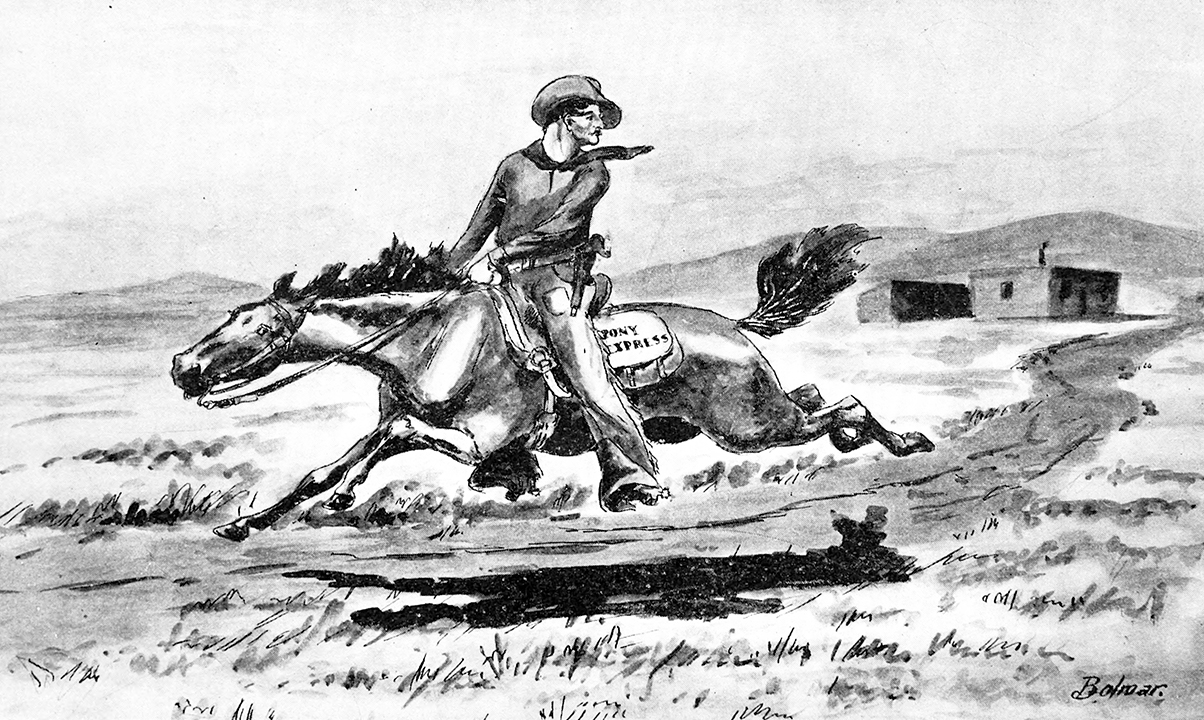
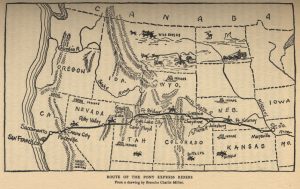
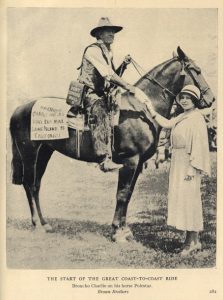
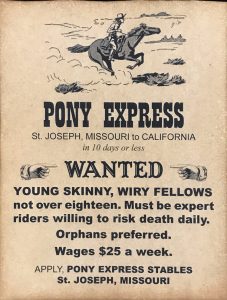
Charlie Miller, (1850-1955), nicknamed “Broncho Charlie” (this nickname came about as a result of his job of busting broncs for ranchers), was the youngest Pony Express rider at age 11. Later, he worked for Buffalo Bill’s Wild West show. He also fought in WWI at the age of 67; at age 81, delivered letters on horseback from New York City to San Fransisco to celebrate the 70th anniversary of the Pony Express; and at age 92, he applied to join the Army for WWII but was turned down.
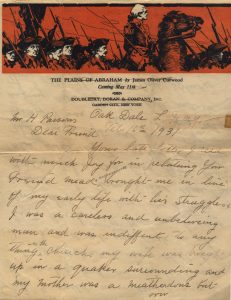
In this letter from 1931, Charlie (sometimes spelled “Charley”) recounts his conversion to Christianity. [The transcript has added punctuation and paragraphs for easier reading, though the original spelling has been retained.]
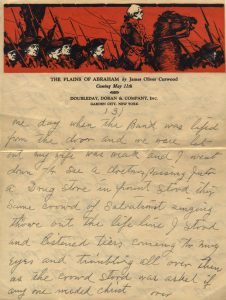
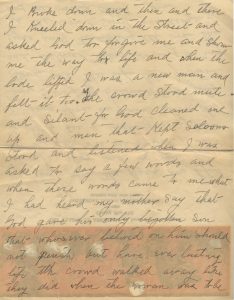
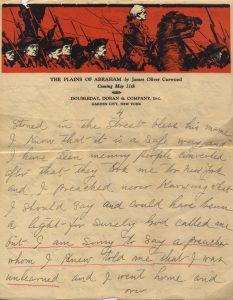
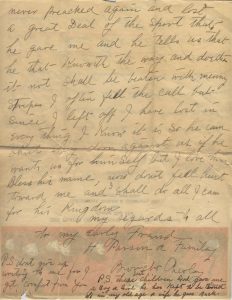
Transcript
Oak Dale L N.Y.
Feb 16th 1931
Mr H Parsons
Dear Friend,
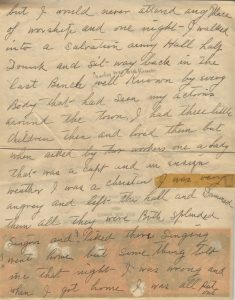
Your late letter I read with much joy. For in relating your friend Mead’s experience brought me in line of my early life with his struggles. I was a careless and unbelieving man and was indifferent to any thing – re the church. My wife was brought up in a Quaker surrounding and my mother was a meathodous {sic} but I would never attend any place of worship.
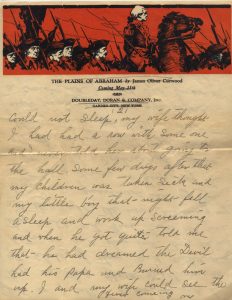
And one night I walked into a Salvation Army hall half drunk and sit way back in the last bench – Charley was well known by everybody that had seen my actions around the town. I had three little children than, and loved them. But when asked by two workers, one a lady that was a capt and an ensign, weather {sic} I was a Christian, I was very angry and left the hall and dammed them all. They were both splendid singers and I liked there {sic} singing. I went home but something told me that night I was wrong, and when I got home I was all put out, could not sleep. My wife thought I had had a row with someone and I never told her about going to the hall.
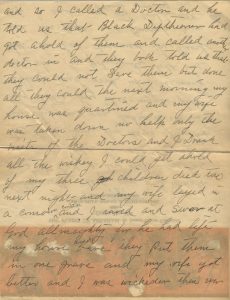
Some few days after that my children was taken sick and my little boy, that night, fell asleep and woke up screaming. And when he got quite, told me that he had dreamed the Devil had his papa and burned him up. I and my wife could see the fever coming. And so I called a doctor and he told us that Black Diphtheria had got a hold of them. And called another doctor in and they both told us that they could not save them but done all they could.
The next morning my house was quarantined and my wife was taken down. No help, only the visits of the doctors. And I drank all the wiskey {sic} I could git {sic} ahold of. My three children died the next night – and my wife layed {sic} in a comatose condition. And I raved and swor {sic} at God Allmighty {sic} for he had left my home bare. They put them in one grave, and my wife got better, and I was wickeder than ever.
One day when the band was lifted from the door and we were let out, my wife was weak, and I went down to see a doctor. Passing into a drug store, in front stood this same crowd of Salvationist singing, throwe {sic} out the life line. I stood and listened, tiers {sic} coming to my eyes and trembling all over. Then as the crowd stood, was asked if any one needed Christ. I broke down and then and there I kneeled down in the street and asked God to forgive me and show me the way, the life. And when the lode {sic} lifted, I was a new man and felt it too.
The crowd stood mute and silant {sic} for God cleaned me up. And men that kept saloons stood and listened when I was asked to say a few words. And when these words came to me, what I had heard my mother say, that God gave his only begotten son that whosoever believed on him should not perish but have ever lasting life. The crowd walked away like they did when the woman was to be stoned in the street. Bless his name.
I know that it is a safe way and I have seen menny {sic} people converted after that. They took me to New York and I preached, never knowing what I should say. And could have been a light, for surely God had called me. But I am sorry to say a preacher whom I knew told me that I was unlearned. And I went home and never preached again and lost a great deal of the Spirit that he gave me. And he tells us that he that knoweth the way and doeth it not, shall be beaten with many stripes. I often feel the call but since I left off I have lost in everything. I know it is so he can shut every door against us if he wants us for himself but I love him. Bless his name.
Now don’t’ feel hurt toward me and I shall do all I can for his kingdom.
My regards to all.
To my early friend,
H Parsons & Family
Broncho Charley
P.S. Don’t give up writing to me for I get comfort from you.
P.S. These last children God gave me, a boy & girl, he has kept to be [blessing] of in my old age & wife he gave back.


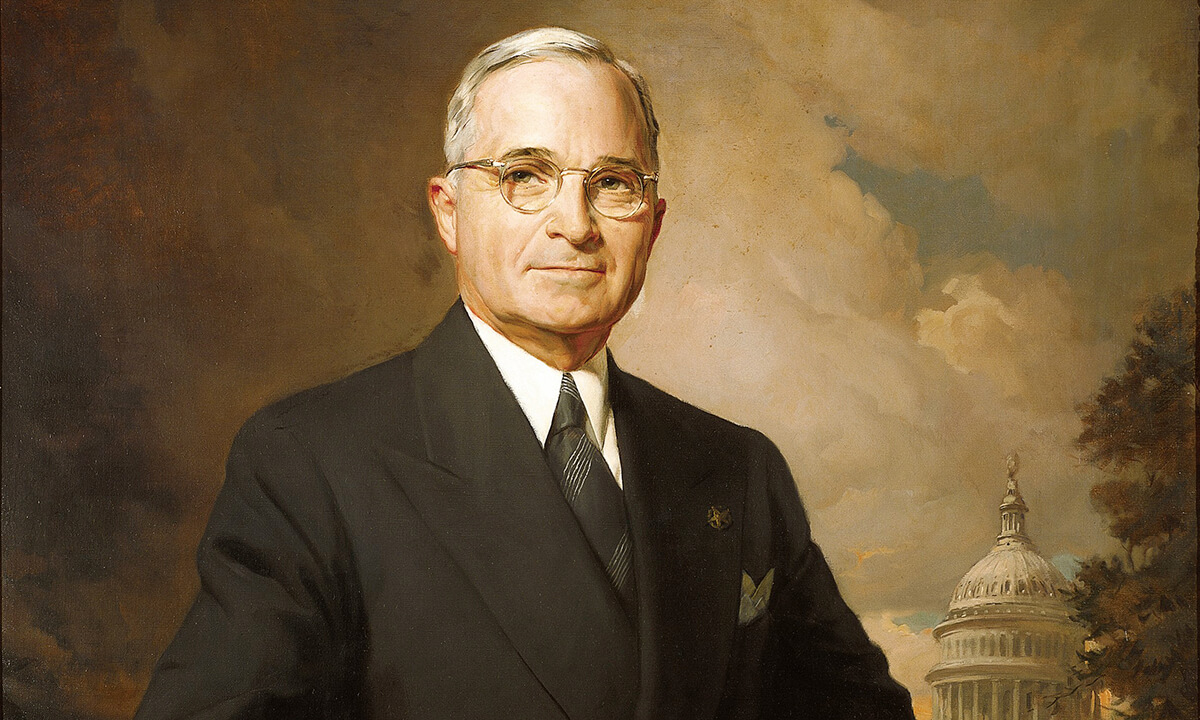
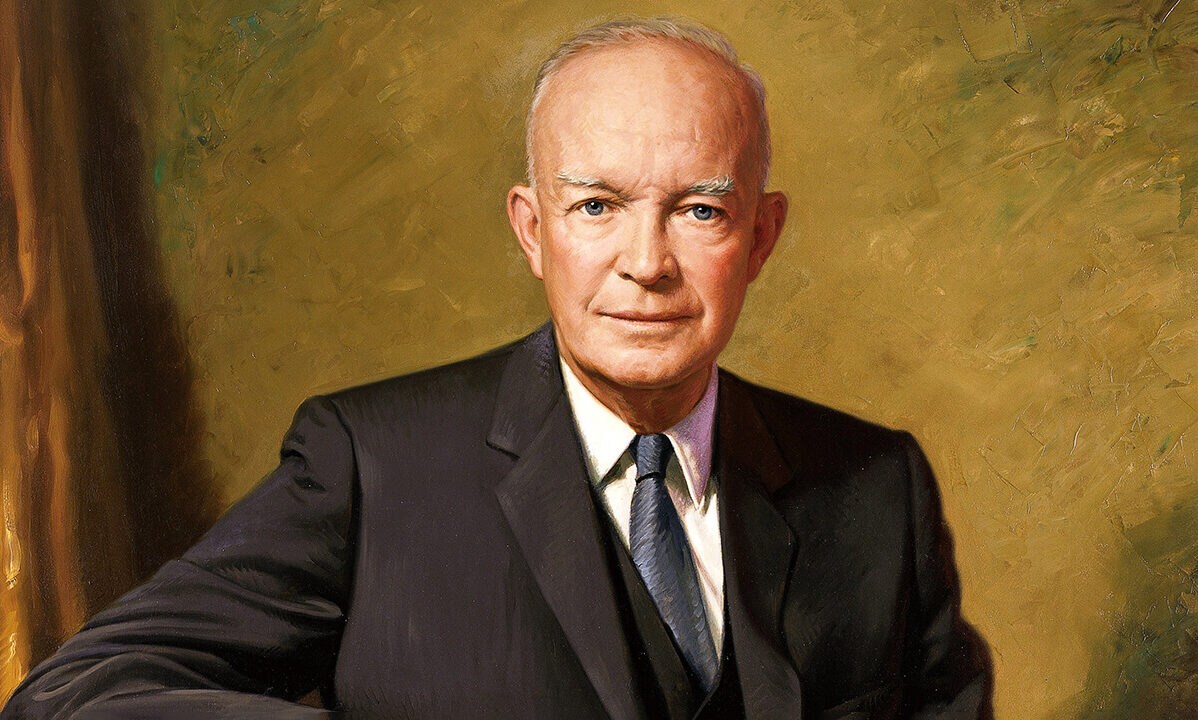
 February 7 is a notable historical day for the acknowledgment of God in modern America: it is the day that a sermon was preached before President Dwight D. Eisenhower, suggesting that the words “under God” be added to the pledge. The sermon was preached by the Rev. George M. Docherty, pastor of New York Avenue Presbyterian Church in Washington, D. C.
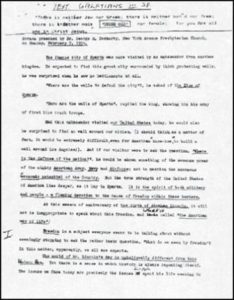 There was something missing in the pledge, and that which was missing was the characteristics and definitive factor in the American way of life. Indeed apart from the mention of the phrase, the United States of America, it could be the pledge of any republic. In fact, I could hear little Muscovites repeat a similar pledge to their hammer and sickle flag in Moscow with equal solemnity.
 Our nation is founded on a fundamental belief in God, and the first and most important reason for the existence of our government is to protect the God-given rights of our citizens. . . . Indeed, Mr. President, over one of the doorways to this very Chamber inscribed in the marble are the words “In God We Trust.” Unless those words amount to more than a carving in stone, our country will never be able to defend itself.
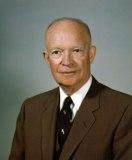 From this day forward, the millions of our school children will daily proclaim in every city and town, every village and rural school house, the dedication of our nation and our people to the Almighty. To anyone who truly loves America, nothing could be more inspiring than to contemplate this rededication of our youth, on each school morning, to our country’s true meaning. . . . In this way we are reaffirming the transcendence of religious faith in America’s heritage and future; in this way we shall constantly strengthen those spiritual weapons which forever will be our country’s most powerful resource, in peace or in war.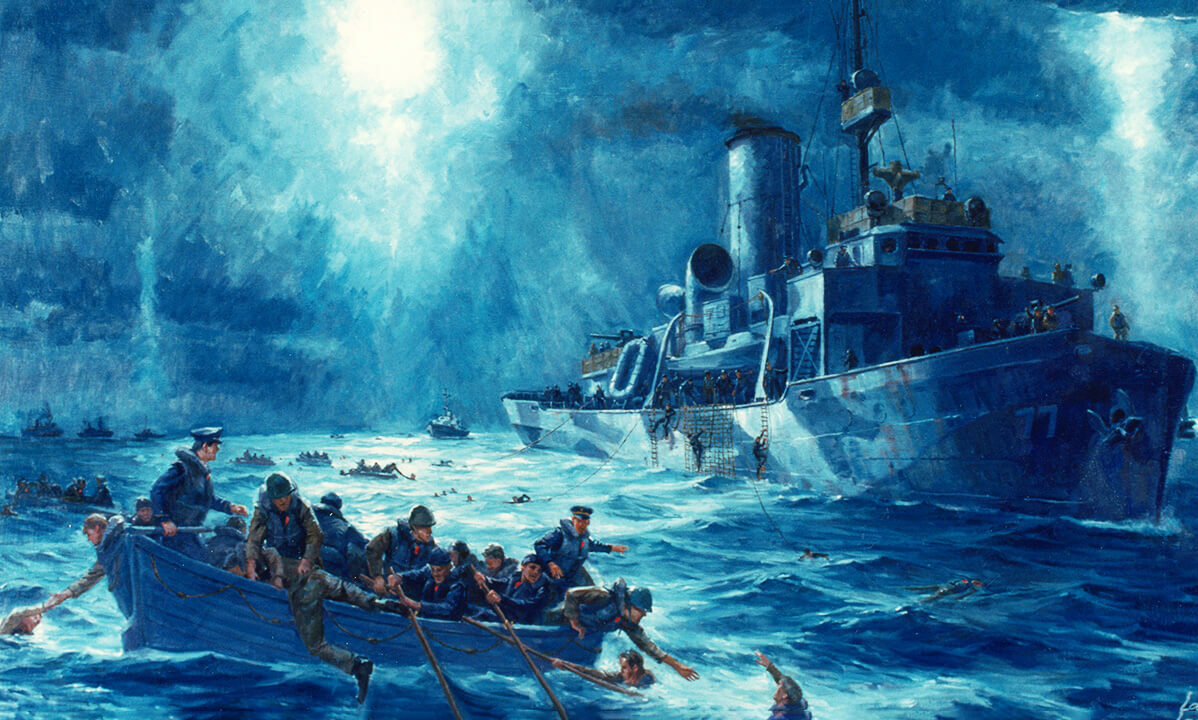
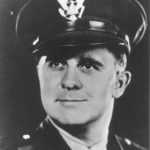
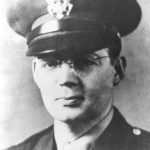
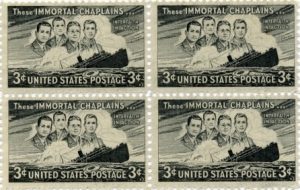 that the last thing they saw was the four chaplains standing together on the submerging deck – a Jew, a Methodist, a Catholic, and a Dutch Reformed – their arms locked together and their voices raised in prayer and song as the ship forever slipped beneath the freezing waters.
 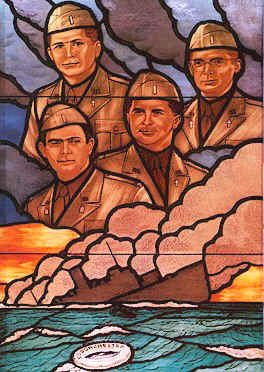 Their belief, their faith, in His word enabled them to conquer death.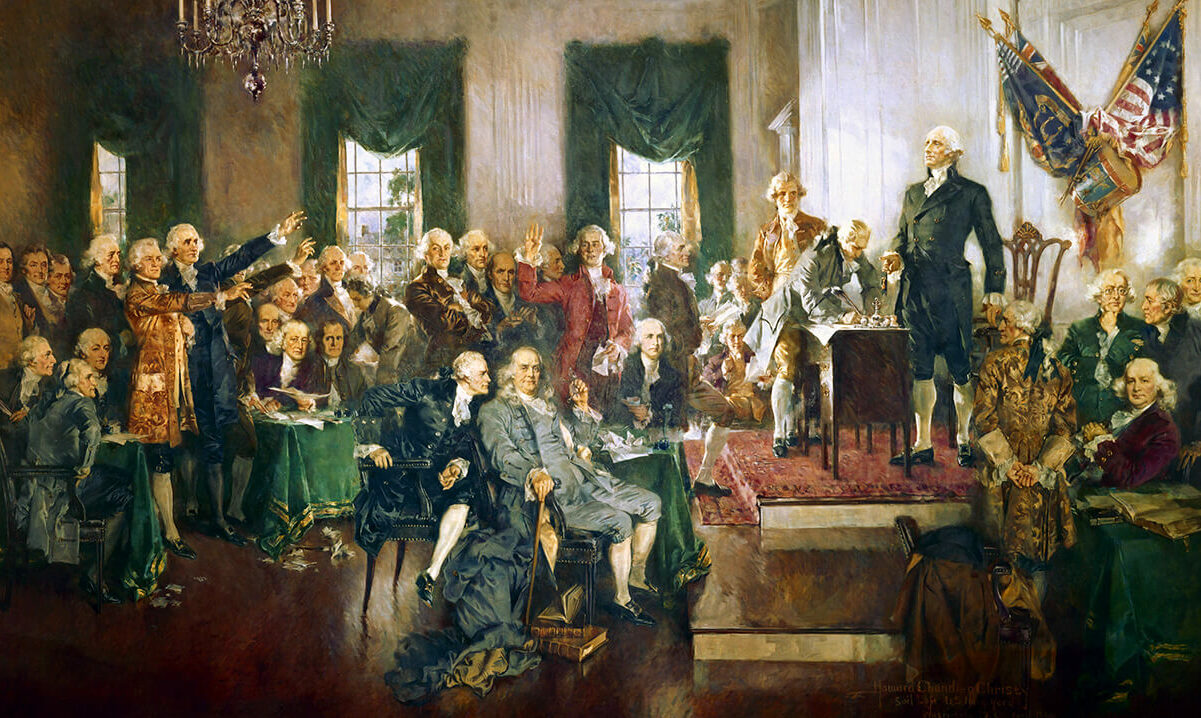
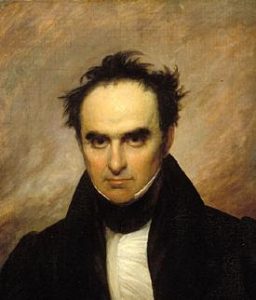 Daniel Webster, an ardent and outspoken Christian known as “the Defender of the US Constitution,”
 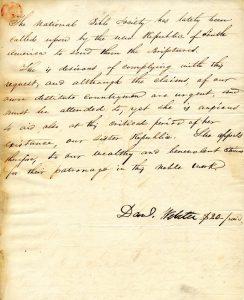 Additionally, WallBuilders posted from our massive collection of original documents a letter that Daniel wrote in an attempt to help provide Bibles to the people of South America.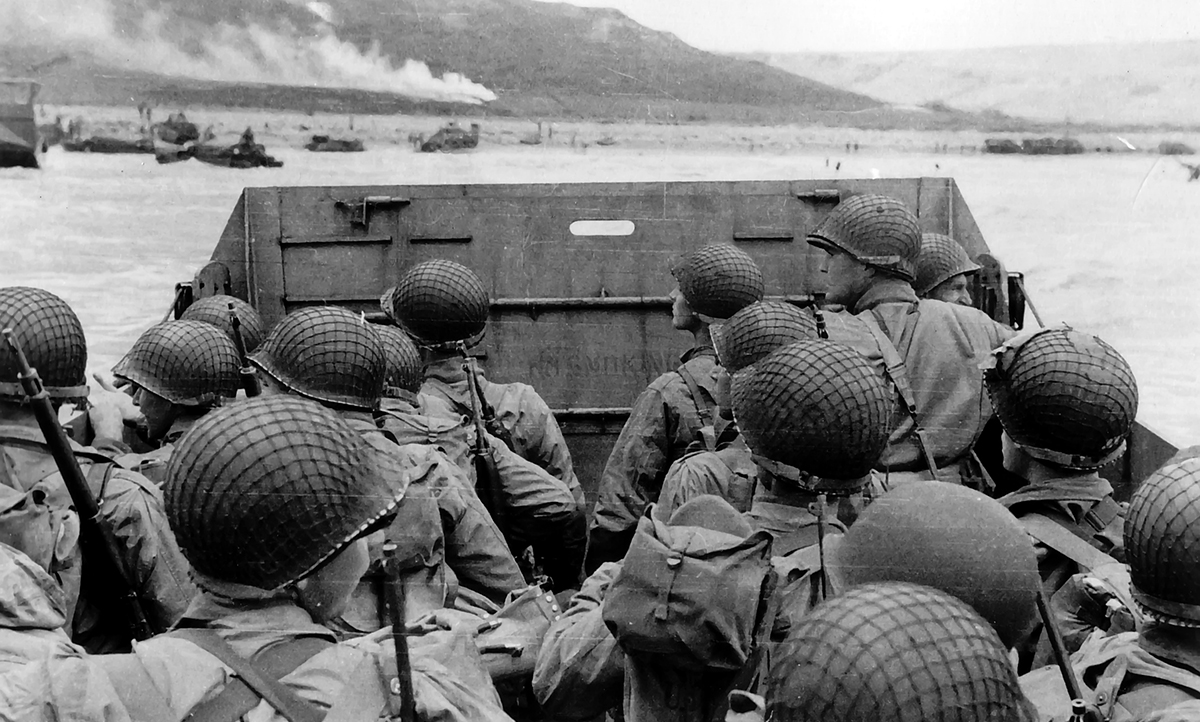
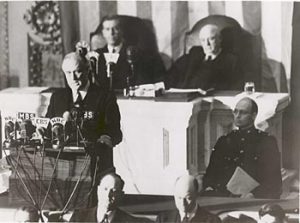 However, all of that changed with the bombing of Pearl Harbor in 1941. In his famous “date which will live in infamy” message to Congress requesting that the United States officially declare war on Japan, President Roosevelt stated, “With confidence in our armed forces — with the unbounding determination of our people — we will gain the inevitable triumph — so help us God.”
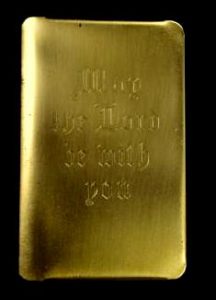 This confidence in God and our military (along with his concern for individual American soldiers) was later evident in what is now known as The Heart-Shield Bible. These Bibles (used during World War II) were designed to fit securely into the chest pocket of a soldier’s uniform. The metal plates were securely attached to the front cover of the Bible to stop a bullet from reaching the soldier’s heart (which they did on several occasions). In our library at WallBuilders we have several of these World War II Bibles. In the back is a section of psalms and hymns, including “My Country ‘Tis of Thee,” “America the Beautiful,” and “The Star Spangled Banner.” In the front, there is a note to the soldiers directly from President Franklin D. Roosevelt.
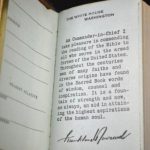 As Commander-in-Chief I take pleasure in commending the reading of the Bible to all who serve in the armed forces of the United States. Throughout the centuries men of many faiths and diverse origins have found in the Sacred Book words of wisdom, counsel and inspiration. It is a foundation of strength and now, as always, an aid in attaining the highest aspirations of the human soul.
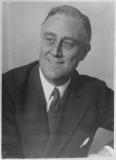 We cannot read the history of our rise and development as a Nation without reckoning with the place the Bible has occupied in shaping the advances of the Republic. . . . Where we have been truest and most consistent in obeying its precepts we have attained the greatest measure of contentment and prosperity; where it has been to us as the words of a book that is sealed, we have faltered in our way, lost our range finders, and found our progress checked. It is well that we observe this anniversary of the first publishing of our English Bible. The time is propitious to place a fresh emphasis upon its place and worth in the economy of our life as a people.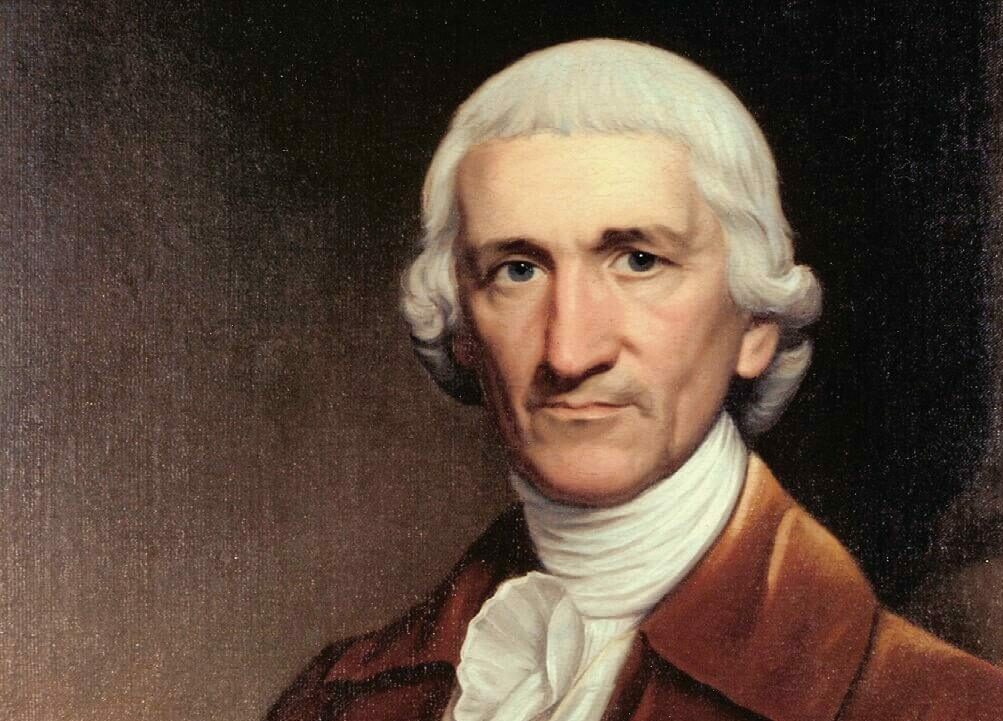
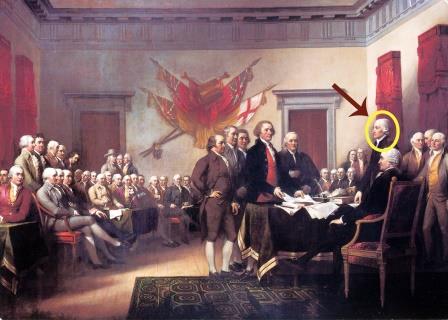 Though never a member of that august body, as Secretary of the Continental Congress for over fifteen years, Thomson had a front-row seat to the birth of the nation and his fingerprints are all over America’s establishing documents. For example, the copy of the Declaration of Independence included with the official Journals of Congress were in Thomson’s handwriting, and he was one of only two people who actually signed it on July 4th.
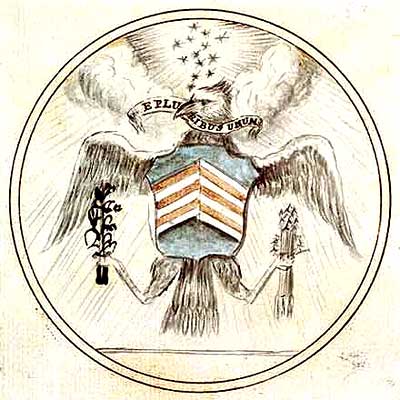 Thomson is also responsible for the Great Seal of the United States, which he prepared and Congress approved in 1782.
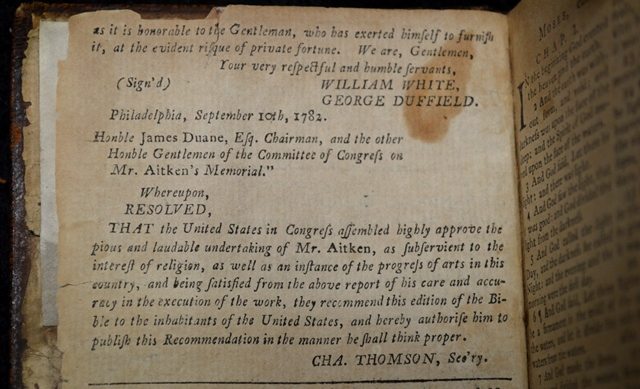 Thomson was also responsible for the first American translation of the Greek Septuagint (the full Greek Bible) into English in 1808 – a labor of love that consumed nearly two decades of his life.
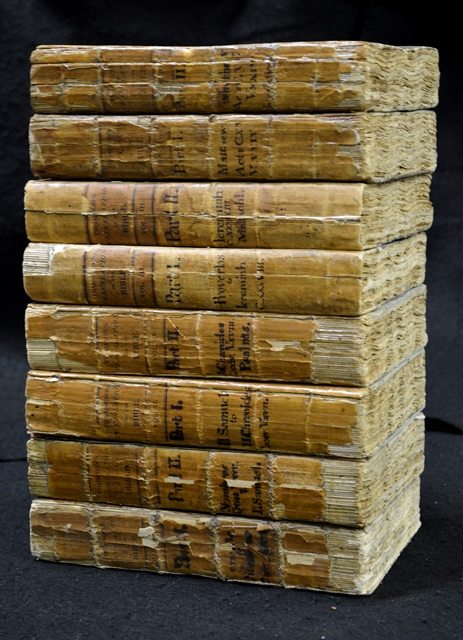 Thomson also produced an eight-volume set in which every other page was blank, thus allowing readers space to write notes on the Scriptures as they studied them.
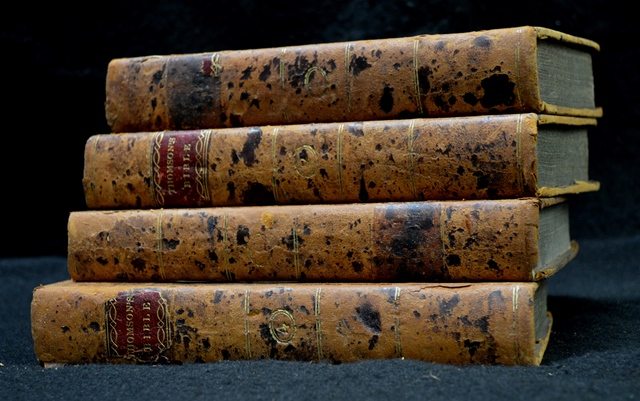 In 1815, Thomson published his famous Synopsis of the Four Evangelists, in which he took all the passages from the four Gospels and arranged them chronologically, producing something like one super long Gospel, with all Jesus’ words and acts arranged sequentially. Today, we call such a work a synoptic Gospel.