 Today, most Americans are taught Black History from a southern point of view. That is, they are exposed to the slave trade and the atrocities of slavery that were common in the South but hear nearly nothing about the many positive things that occurred in the North.
For example, who has been taught about Wentworth Cheswell1 — the first black elected to office in America, in 1768 in New Hampshire? Or the election of Black American Thomas Hercules to office in Pennsylvania in 1793?2 Or that in Massachusetts, blacks routinely voted in colonial elections? Or that when the Constitution was ratified in Maryland, more Blacks than Whites voted in Baltimore? Such stories are absent from textbooks today.
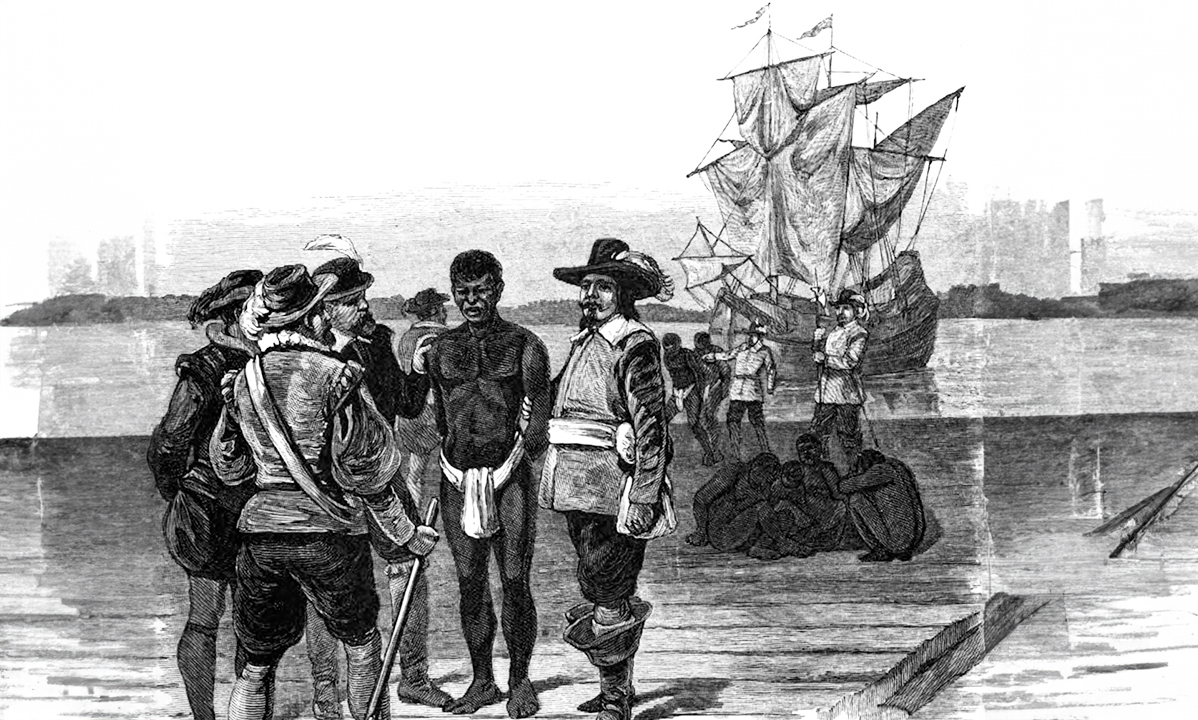
History is properly to teach the good, the bad, and the ugly — all of it; but students today usually get only the bad and the ugly, rarely the good. For example, students are regularly told that the first load of slaves sailed up the James River in Virginia in 1619 and thus slavery was introduced into America,3 but few learn about the first slaves that arrived in the Massachusetts Colony set up by the Christian Pilgrims and Puritans. When that slave ship arrived in Massachusetts, the ship’s officers were arrested and imprisoned, and the kidnapped slaves were returned to Africa at the Colony’s expense.4 That positive side of history is untold today.
Similarly, most Americans are unaware that American colonies passed anti-slavery laws before the American Revolution, but that those laws were vetoed by Great Britain, who insisted on the continuance of slavery in America. In fact, several Founders who owned slaves while British citizens freed them once America declared her independence. Sadly, we have been taught to identify Founding Fathers who owned slaves but are unaware of the greater number who opposed slavery or worked with anti-slavery societies.
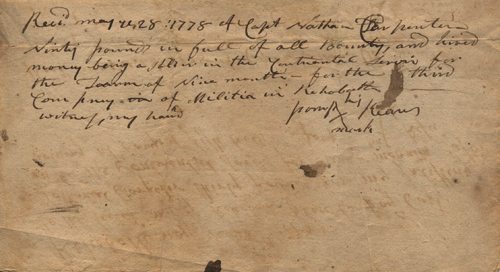
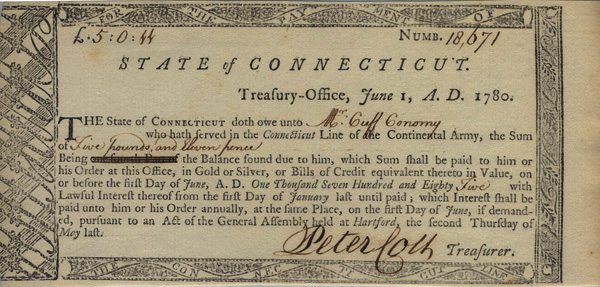
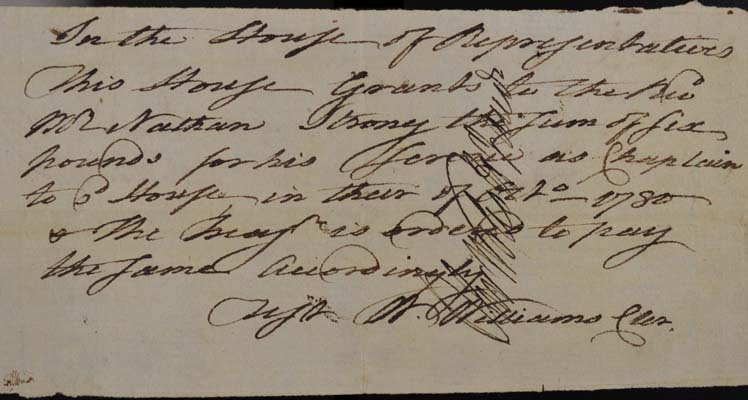
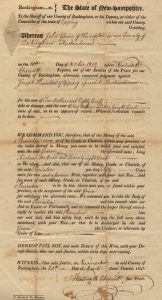
WallBuilders owns numerous documents showing these positive aspects of Black History, including of praiseworthy efforts to end oppression of African Americans.

For example, the 1774 letter on the right is from Quaker John Townsend, who wrote to inquire after an African slave he had earlier sold. He wanted to reacquire that slave in order to “have the opportunity to set her free.” (The Quakers, like several colonial denominations, firmly opposed slavery and pushed their members to do all possible to end the evil.)
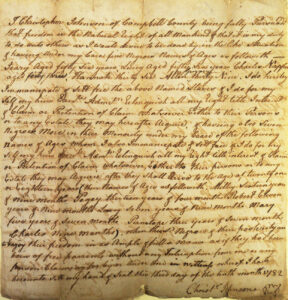 In this 1782 document, Christopher Johnson, a soldier in the American Revolution, declares that he is “fully persuaded that freedom is the natural rights of all mankind & that it is my duty to do unto others as I would desire to be done by in the like situation.” Having fought a war to win his own political freedom, and invoking the Golden Rule delivered by Jesus in Matthew 7:12, he freed (that is, manumitted) his slaves.
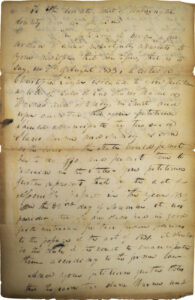
In this 1837 document, Dorcas, a Black American who is “a free woman of color,” petitions the court to recognize the legality of two slaves that were freed. According to the Tennessee Act of 1831,5 freed slaves were required to move out of the state, but the subsequent act of 18336 permitted slaves to remain in the state if they had received their freedom prior to 1831. In her letter, Dorcas affirms that “the said two slaves, Warner and Nancy” had received “their freedom long before the passage of the act of 1831” and asks the court to take appropriate action for ensuring their freedom.
On our website, there are many more such documents and many inspiring stories, illustrating a side of Black History of which few Americans are told today.
Endnotes
1 “A Black Patriot: Wentworth Cheswell,” WallBuilders, https://wallbuilders.com/resource/a-black-patriot-wentworth-cheswell/.
2 National Gazette (Philadelphia, Pennsylvania), Wed, Jul 24, 1793, 2; “Extract of a letter from Eaton, dated the 9th of July, 1793,” The Pennsylvania Journal, or, Weekly Advertiser (Philadelphia, Pennsylvania), Wed, Jul 24, 1793, 4.
3 “Slavery,” Harper’s Encyclopaedia of United States History, ed. Benson Lossing (New York: Harper & Brothers, 1974); W. O. Blake, The History of Slavery and the Slave Trade (Columbus: J. & H. Miller, 1858), 98.
4 Blake, History of Slavery (1858), 370-371; Thomas R.R. Cobb, An Inquiry into the Law of Negro Slavery (Philadelphia: T. & J. W. Johnson & Co., 1858), I:cxlvii-cxlviii; W. E. Burghardt DuBois, The Suppression of the AfricanSlave-Trade to the United States of America (New York: Social Science Press, 1954), 30.
5 “Emancipation: 1831–Chapter 102,” A Compilation of the Statutes of Tennessee, Of a General and Permanent Nature, From the Commencment of the Government to the Present Time, eds. R. L. Caruthers & A. O. P. Nicholson (Nashville: James Smith, 1836), 279.
6 “An Act to explain an act, entitled “an act concerning free persons of color, and for other purpose,” passed December 16, 1831,” November 23, 1833, Public Acts Passed at the First Session of the Twentieth General Assembly of the State of Tennessee 1833 (Nashville: Allen A. Hall & F. S. Heiskell, 1833), 99-100.

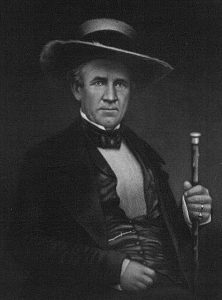
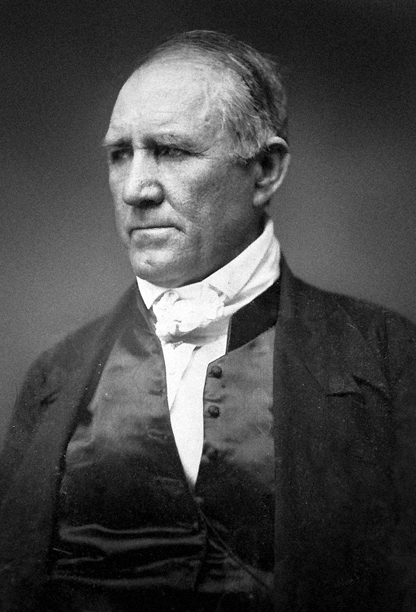 …I certainly can see no more impropriety in ministers of the Gospel, in their vocation, memorializing [petitioning] Congress than politicians or other individuals. . . . Because they are ministers of the Gospel, they are not disfranchised of political rights and privileges and . . . they have a right to spread their opinions on the records of the nation. . . . The great Redeemer of the World enjoined duties upon mankind; and there is [also] the moral constitution from which we have derived all the excellent principles of our political Constitution – the great principles upon which our government, morally, socially, and religiously is founded. Then, sir, I do not think there is anything very derogatory to our institutions in the ministers of the Gospel expressing their opinions. They have a right to do it. No man can be a minister without first being a man. He has political rights; he has also the rights of a missionary of the Savior, and he is not disfranchised by his vocation. . . . He has a right to interpose his voice as one of its citizens against the adoption of any measure which he believes will injure the nation. . . . [Ministers] have the right to think it is morally wrong, politically wrong, civilly wrong, and socially wrong. . . . and if they denounce a measure in advance, it is what they have a right to do.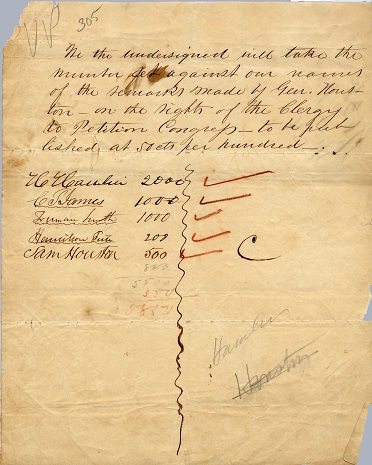
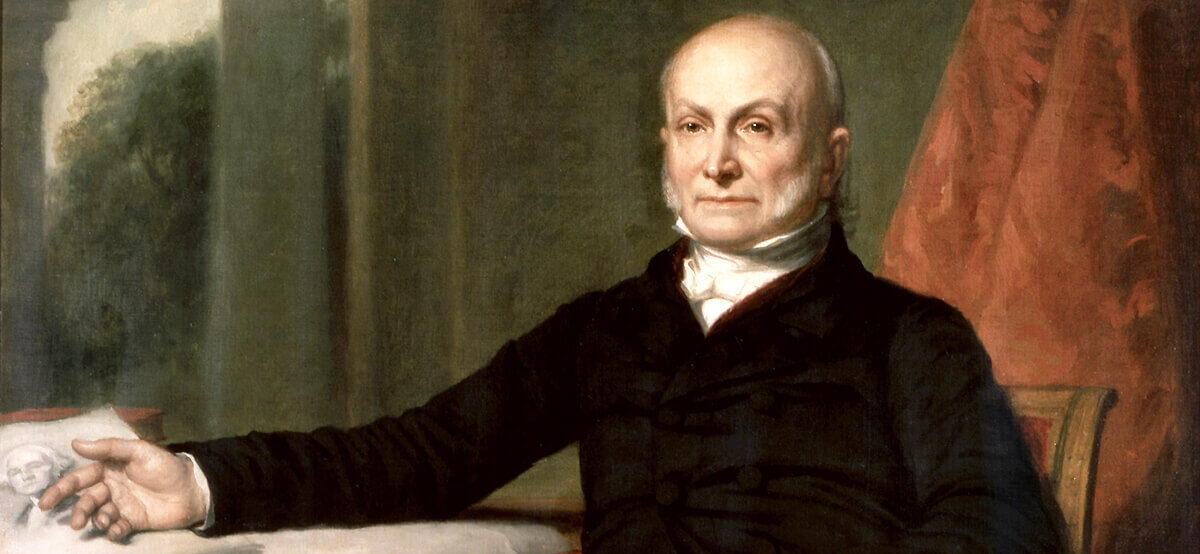
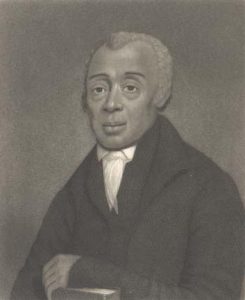 Black History Month is a special time to focus on black history, which interestingly often involves not just Black Americans but also those of other races. As famous Black American minister Richard Allen reminded his brethren during the Founding Era, “Many of the white people have been instruments in the hands of God for our good [and] are now pleading our cause with earnestness and zeal.”
 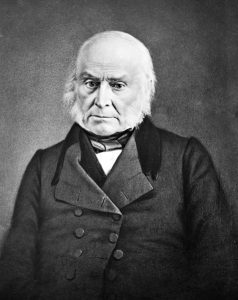 Adams also led the legal defense of the African slaves in the famous Amistad case
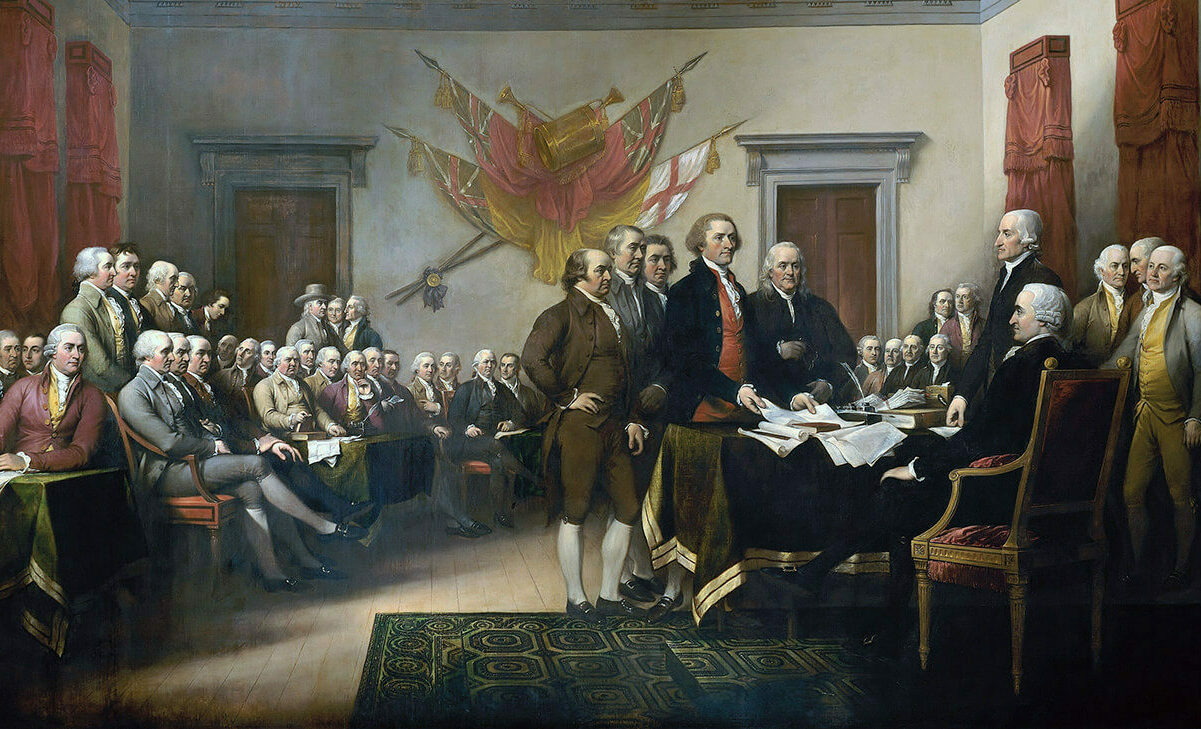
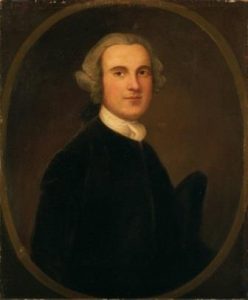 Richard Stockton was one of the 56 signers of the Declaration of Independence. He was one of those who literally gave his life for American liberty. October 1,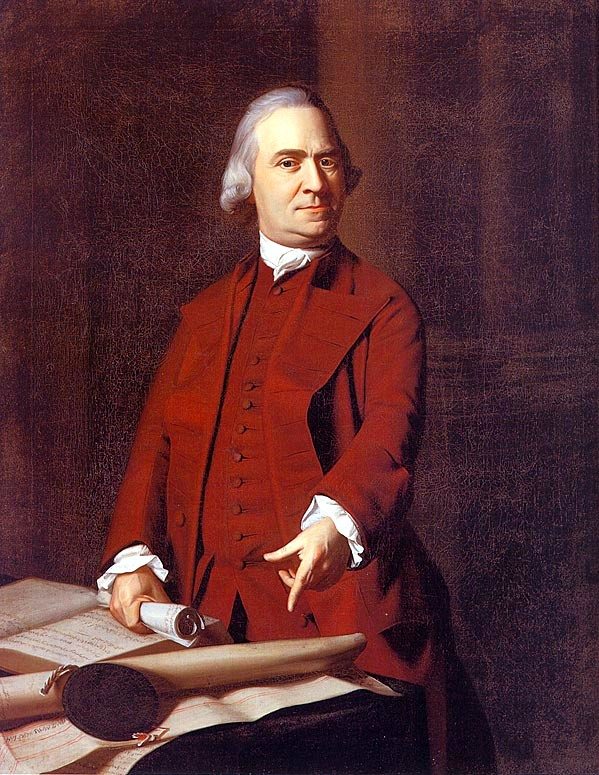
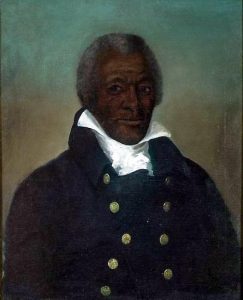 from Virginia worked closely with Marquis de Lafayette.
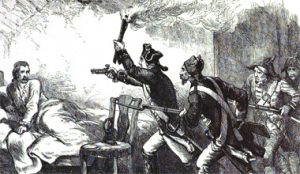 Barton hand-selected about forty elite soldiers, who silently slipped past the main British force and overpowered the guards protecting the general. They had only to break down the door to his room and grab Prescott. One of the black commandos on the mission, Prince Sisson – a powerful man – stepped forward and charged the door. Using his own head as a battering ram, the locked door gave way and Prince entered the quarters and seized the surprised general.
 grandson of a slave, had a long career in public office.