Bible Society Reports

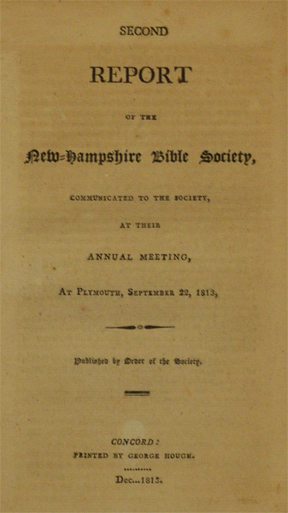
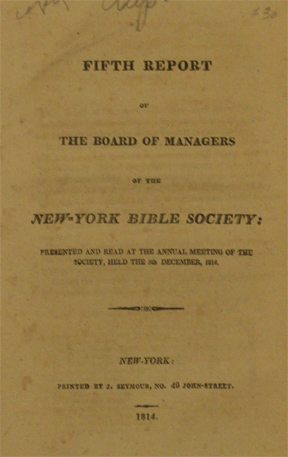
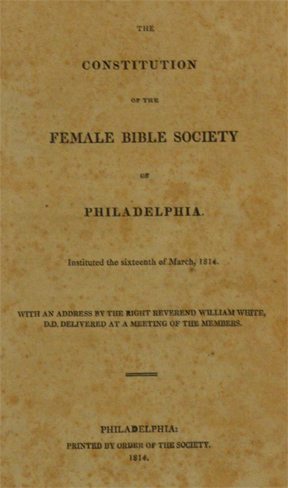
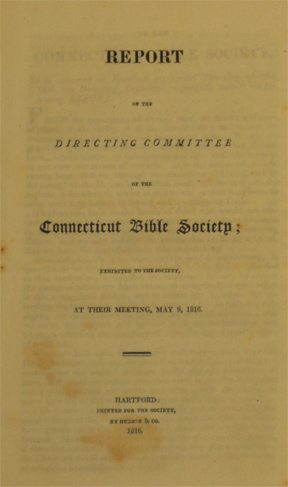
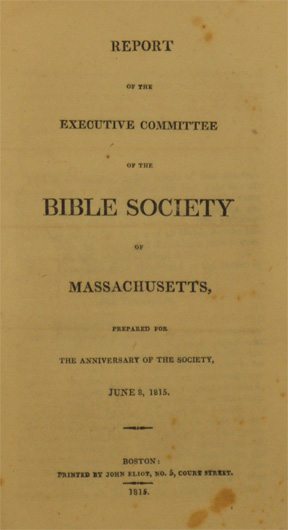
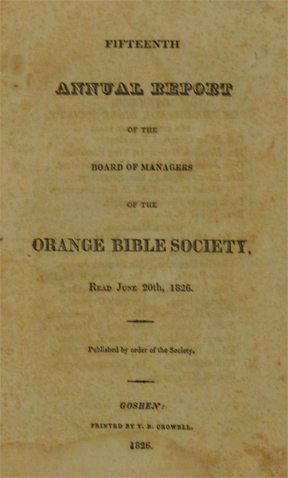
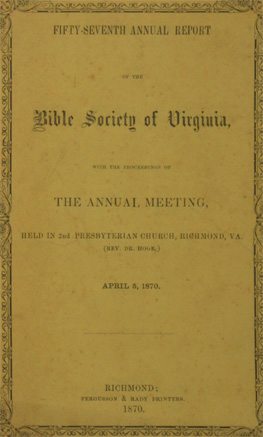
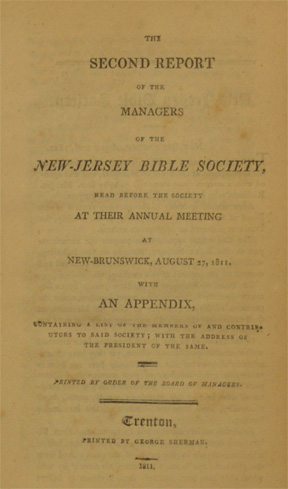
The Philadelphia Bible Society, America’s first Bible society, was officially organized on December 12, 1808. By 1816, 121 more Bible societies had been started across the nation. Below, from the WallBuilders library, is a group of reports from various 19th century Bible societies. At WallBuilders, we also have an original Bible published by the Philadelphia Bible Society.


bible-society-reports-1 bible-society-reports-2 bible-society-reports-3 bible-society-reports-4 bible-society-reports-5 bible-society-reports-6 bible-society-reports-7 bible-society-reports-8

Benjamin Rush Personal Bible Study

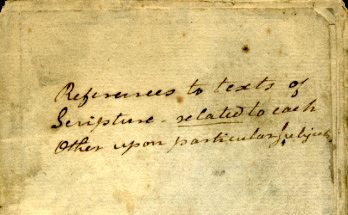
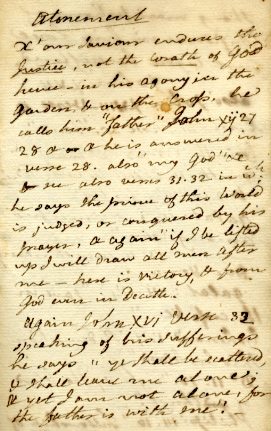
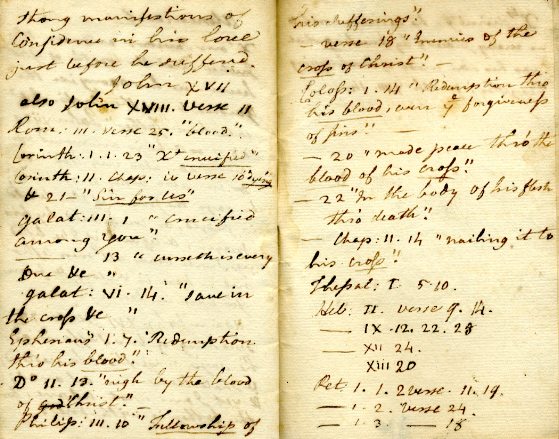
Founding Father Benjamin Rush’s handwritten personal Bible study booklet entitled “References to Texts of Scriptures Related to Each Other Upon Particular Subjects.” In it he listed scriptures under various topics and wrote his own notes on those scriptures. We have included excerpts of the booklet below.


benjamin-rush-personal-bible-study-1
Booklet Cover


benjamin-rush-personal-bible-study-2benjamin-rush-personal-bible-study-3

Rush recorded three pages of scriptures and notes regarding
“Atonement”


benjamin-rush-personal-bible-study-4
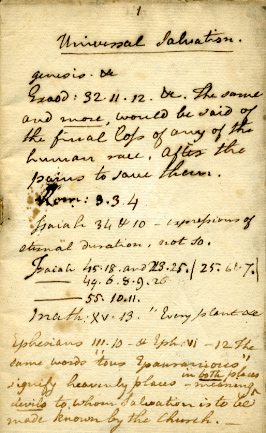
“Universal Salvation”

Rush cataloged scriptures such as Exodus 32:11-12; Romans
5:3-4; Isaiah 49:6,8-9; Matthew 15:13; etc. under the title “Universal Salvation”


benjamin-rush-personal-bible-study-5
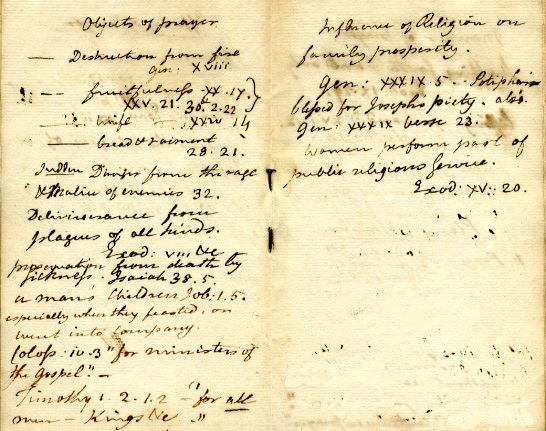
“Objects of Prayer” & “Influences
of Religion on Family Prosperity”

Rush’s notes on scripture passages related to prayer and
God’s blessings
(Note: nail used in book seam)


benjamin-rush-personal-bible-study-6
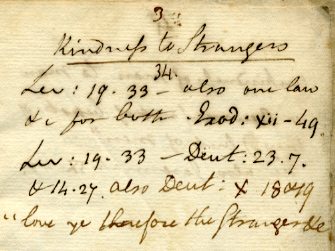
“Kindness to Strangers”

Rush lists Leviticus 19:33, Exodus 12:49, Deuteronomy 23:7
and other verses under the heading “Kindness to Strangers”


benjamin-rush-personal-bible-study-7
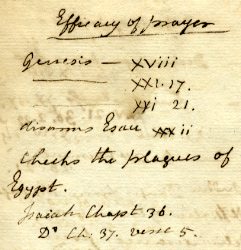
“Efficacy of Prayer”

Rush’s scriptures on the effectiveness of prayer include
Genesis chapter 18 and 21:17 & 21.


Benjamin Rush

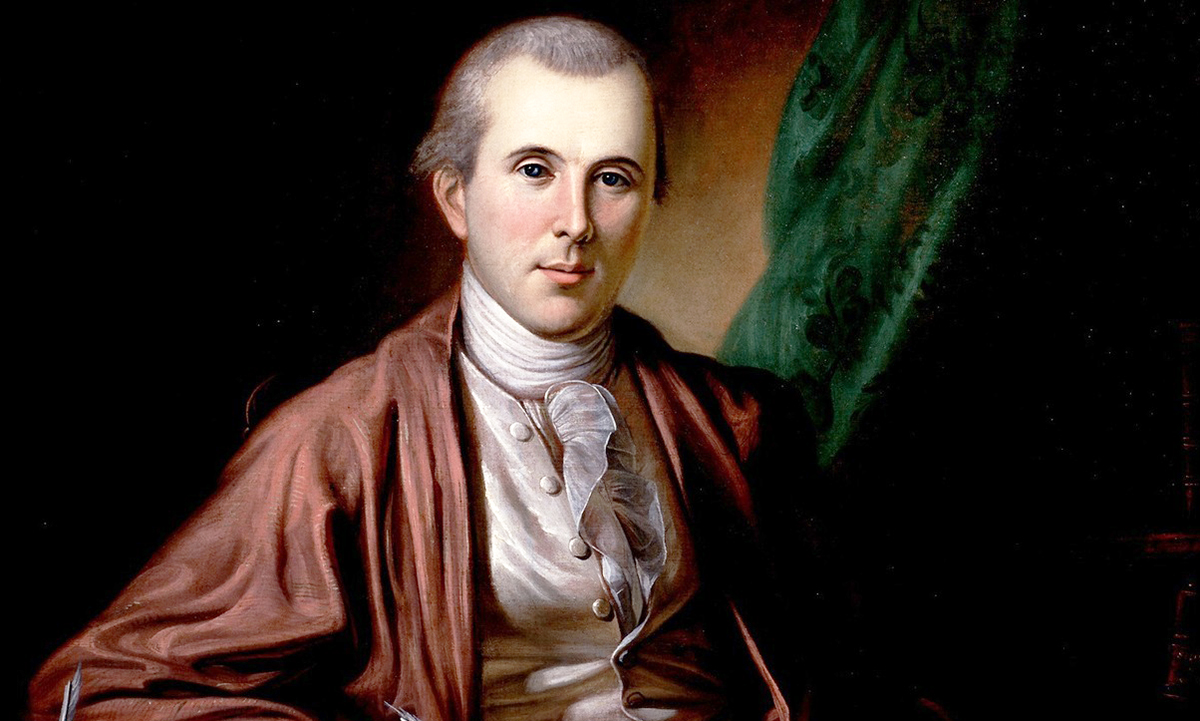
(1745-1813) Rush was a physician, educator, philanthropist, and statesman. He graduated from Princeton (1760) and then studied medicine in Philadelphia, Edinburgh, London, and Paris. He served in the Continental Congress (1776-77) and signed the Declaration of Independence (1776). Rush also: suggested to Thomas Paine that he write Common Sense (1776) and supplied the title for it as well as helped publish it; was Surgeon-General of the Continental Army (1777-78); and was one of the founders of Dickinson College (1783). He was an influential delegate to the State ratification convention for the federal Constitution (1787), and along with James Wilson, one of the principal coauthors of the Pennsylvania constitution (1789-90). Rush served as Treasurer of the U. S. Mint under Presidents John Adams, Thomas Jefferson, and James Madison (1797-1813). He mediated a reconciliation between long time political rivals John Adams and Thomas Jefferson; was a founder of the Pennsylvania Society for Promoting the Abolition of Slavery (1774) and its president; founder and Vice-president of the Philadelphia Bible Society (1808-13); member of the First Day Society of Philadelphia (1790); and a member of the Abolition Society (1794-97). Benjamin Rush is called the “Father of American Medicine” for his numerous medical discoveries.

Manumission – Quaker – 1774


manumission-quaker-1774-1 manumission-quaker-1774-2


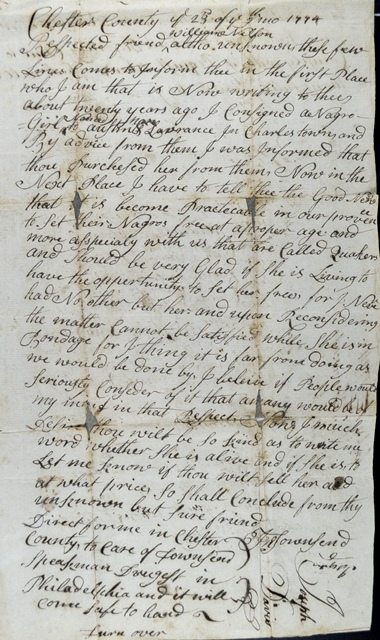
Chester County of 23 of  Juno 1774
Respected friend, William Nelson altho unknown these few lines comes to inform thee in the first place who I am that is now writing to thee, about twenty years ago I consigned a negro girl named Mary to Anthony Lawrence in Charlestown and by advise from them was informed that thou purchased her from them. Now in the next place I have to tell thee the goodness that is become practicable in our provence to set their negroes free at a proper age and more especially with us that are called Quakers and should be very glad if she is living to have the opportunity to set her free for I never had no other but her and upon reconsidering the matter cannot be satisfied while she is bondage for I thing it is far from doing as we could be done by, I believe if people would seriously consider of it that many would be of my mind in that respect. Now I much believ thou wilt be so kind as to write me word whether she is alive and if she is, at what price, so shall conclude from thy unknown but sure friend.
J. Townsend
Direct for me in Chester
County to of Townsend
Speakman Doggest in
Philadelphia and it will come
Safe to hand

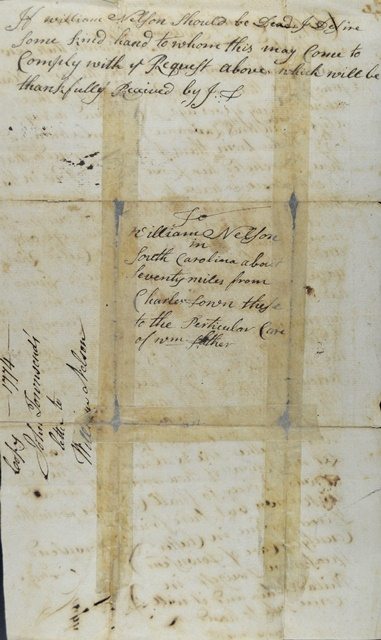
If William Nelson should be dead, I desire some kind hand to whom this may come to comply with of request above, which will be thankfully receive by J.T.

Philadelphia Bible Society Constitution

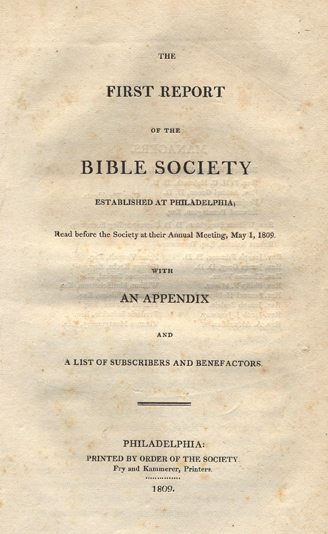
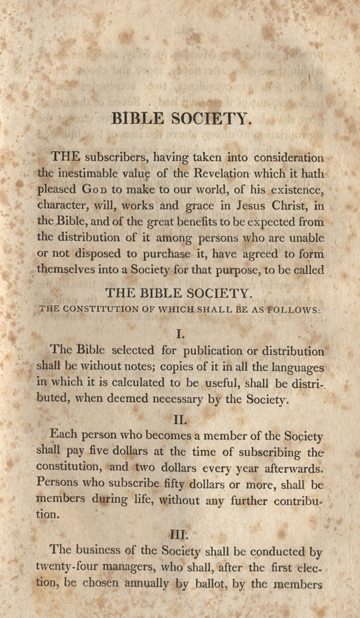
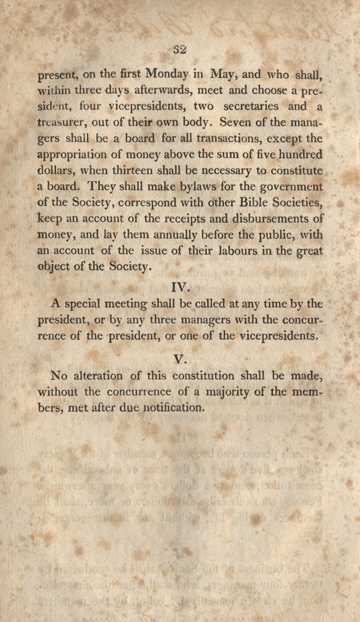
The Philadelphia Bible Society, America’s first Bible society, was officially organized on December 12, 1808. Rev. Dr. William White was president of the society and Declaration signer Benjamin Rush was a vice president. By 1816, 121 more Bible societies had been started across the nation.

Below, from WallBuilders’ Collection, is the Philadelphia Bible Society constitution, published in 1809. See also this title page from the first Bible printed by the Philadelphia Bible Society.


philadelphia-bible-society-constitution-1
philadelphia-bible-society-constitution-2

philadelphia-bible-society-constitution-3

A Defence of the Use of the Bible in Schools

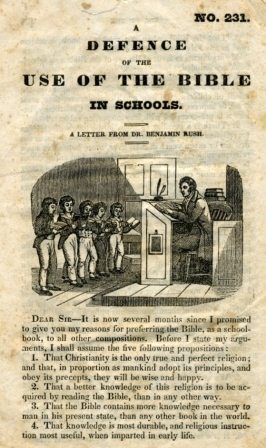
The following is part of the transcript from a letter written in 1791, which was published by the American Tract Society in 1830.


a-defence-of-the-use-of-the-bible-in-schools-1
Dear Sir:
It is now several months since I promised to give you my reasons for preferring the Bible as a schoolbook to all other compositions.  Before I state my arguments, I shall assume the five following propositions:

  1. That Christianity is the only true and perfect religion; and that in proportion as mankind adopt its principles and obey its precepts they will be wise and happy.
  2. That a better knowledge of this religion is to be acquired by reading the Bible than in any other way.
  3. That the Bible contains more knowledge necessary to man in his present state than any other book in the world.
  4. That knowledge is most durable, and religious instruction most useful, when imparted in early life.
  5. That the Bible, when not read in schools, is seldom read in any subsequent period of life.

My arguments in favor of the use of the Bible as a schoolbook are founded,
I. In the constitution of the human mind.

  1. The memory is the first faculty which opens in the minds of children.  Of how much consequence, then, must it be to impress it with the great truths of Christianity, before it is preoccupied with less interesting subjects.
  2. There is a peculiar aptitude in the minds of children for religious knowledge.  I have constantly found them, in the first six or seven years of their lives, more inquisitive upon religious subjects than upon any others. And an ingenious instructor of youth has informed me that he has found young children more capable of receiving just ideas upon the most difficult tenets of religion than upon the most simple branches of human knowledge.  It would be strange if it were otherwise, for God creates all His means to suit His ends.  There must, of course, be a fitness between the human mind and the truths which are essential to it happiness.
  3. The influence of early impressions is very great upon subsequent life; and in a world where false prejudices do so much mischief, it would discover great weakness not to oppose them by such as are true.  I grant that many men have rejected the impressions derived from the Bible; but how much soever these impressions may have been despised, I believe no man was ever early instructed in the truths of the Bible without having been made wiser or better by the early operation of these impressions upon his mind.  Every just principle that is to be found in the writings of Voltaire is borrowed from the Bible; and the morality of Deists, which has been so much admired and praised where it has existed, has been, I believe, in most cases, the effect of habits produced by early instruction in the principles of Christianity.
  4. We are subject, by a general law of our natures, to what is called habit.  Now, if the study of the Scriptures be necessary to our happiness at any time of our life, the sooner we begin to read them, the more we shall probably be attached to them; for it is peculiar to all the acts of habit, to become easy, strong, and agreeable by repetition.

For the whole text of Dr. Rush’s letter, see Rush’s Essays.

John Hancock – A Brief – 1788


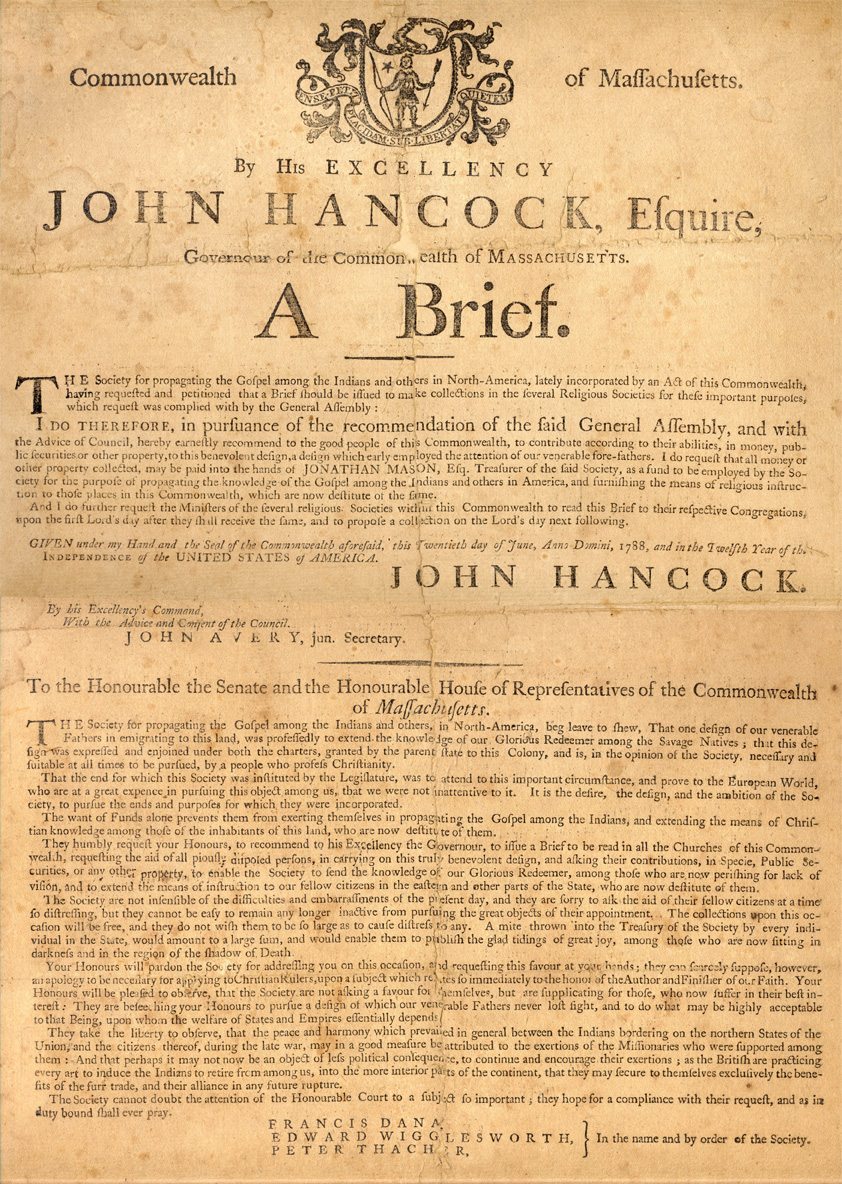
This is a brief issued by Governor John Hancock on June 20, 1788. It includes his request for the people of Massachusetts “to contribute to their abilities, in money, public securities or other property” to the Society for Propagating the Gospel among the Indians and others in North-America who had originally requested a brief be issued. The transcript below has been changed to reflect modern spelling and grammar.


john-hancock-a-brief-1788-1

Commonwealth of Massachusetts.

By His EXCELLENCY

JOHN HANCOCK, Esquire,

Governour of the Commonwealth of Massachusetts.

A Brief.

The society for propagating the Gospel among the Indians and others in North-America, lately incorporated by an Act of this Commonwealth, having requested and petitioned that a Brief should be issued to make collections in the several Religious Societies for these important purposes, which request was complied with by the General Assembly:

I DO THEREFORE, in pursuance of the recommendation of the said General Assembly, and with the Advice of Council, hereby earnestly recommend to the good people of this Commonwealth, to contribute to their abilities, in money, public securities or other property, to this benevolent design, a design which early employed the attention of our venerable fore-fathers. I do request that all money or other property collected, may be paid into the hands of JONATHAN MASON, Esq. Treasurer of the said Society, as a fund to be employed the Society for the purpose of propagating the knowledge of the Gospel among the Indians and others in America, and furnishing the means of religious instruction to those places in this Commonwealth, which are now destitute of the same.
And I do further request the Ministers of the several religious Societies within this Commonwealth to read this Brief to their respective Congregations, upon the first Lord’s day after they shall receive the same, and to propose a collection on the Lord’s day next following.

GIVEN under my Hand and the Seal of the Commonwealth aforesaid, this Twentieth day of June, Anno Domini, 1788, and in the Twelfth Year of the Independence of the UNITED STATES of AMERICA.

JOHN HANCOCK.

By his Excellency’s Command,
With the Advice and Consent of the Council,
JOHN AVERY, jun. Secretary.


To the Honorable the Senate and the Honorable House of Representatives of the Commonwealth of Massachusetts.

The Society for propagating the Gospel among the Indians and others in North-
America, beg leave to show, That one design of our venerable Fathers in emigrating to this land, was professedly to extend the knowledge of our Glorious Redeemer among the Savage Natives; that this design was expressed and enjoined under both the charters, granted by the parent state to this Colony, and is, in the opinion of the Society, necessary and suitable at all times to be pursued, by a people who profess Christianity.

That the end for which this Society was instituted by the Legislature, was to attend to this important circumstance, and prove to the European World, who are at a great expense in pursing this object among us, that we were not inattentive to it. It is the desire, the design, and the ambition of the Society, to pursue the ends and purposes for which they were incorporated.

The want of Funds alone prevents them from exerting themselves in propagating the Gospel among the Indians, and extending the means of Christian knowledge among those of the inhabitants of this land, who are now destitute of them.

They humbly request your Honors, to recommend to his Excellency the Governor, to issue a Brief to be read in all the Churches of this Commonwealth, requesting the said of all piously disposed persons, in carrying on this truly benevolent design, and asking their contributions, in Specie, Public Securities, or any other property, to enable the said Society to send the knowledge of our Glorious Redeemer, among those who are now perishing for lack of vision, and to extend the means of instruction to our fellow citizens in the eastern and other parts of the State, who are now destitute of them.

The Society are not insensible of the difficulties and embarrassments of the present day, and they are sorry to ask the aid of their fellow citizens at a time so distressing, but they cannot be easy to remain any longer inactive from pursuing the great objects of their appointment. The collections upon this occasion will be free, and they do not wish them to be so large as to cause distress to any. A mite thrown into the Treasury of the Society by every individual in the State, would amount to a large sum, and would enable them to publish the glad tidings of great joy, among those who are now sitting in darkness and in the region of the shadow of Death.

Your Honors will pardon the Society for addressing you on this occasion, and requesting this favor at your hands; they can scarcely suppose, however, an apology to be necessary for applying to Christian Rulers, upon a subject which relates so immediately to the honor of the Author and Finisher of our Faith. Your Honors will be pleased to observe, that the Society are not asking a favor for themselves, but are supplicating for those, who now suffer in their best interest: They are beseeching your Honors to pursue a design of which our venerable Fathers never lost sight, and to do what may be highly acceptable to that Being, upon whom the welfare of States and Empires essentially depends.

They take the liberty to observe, that the peace and harmony which prevailed in general between the Indians bordering on the northern States of the Union, and the citizens thereof, during the late war, may in a good measure be attributed to the exertions of the Missionaries who were supported among them: And that perhaps it may not now be an object of less political consequence, to continue and encourage their exertions; as the British are practicing every art to induce the Indians to retire from among us, into the more interior parts of the continent, that they may secure to themselves exclusively the benefits of the fur trade, and their alliance in any further rupture.

The Society cannot doubt the attention of the Honorable Court to a subject so important; they hope for a compliance with their request, and as in duty bound shall ever pray.

FRANCIS DANA, ⎬ In the name and by order of the Society.
EDWARD WIGGLESWORTH, ⎬ [In the name and by order of the Society.]
PETER THACHER, ⎬ [In the name and by order of the Society.]

July 4th Prayer

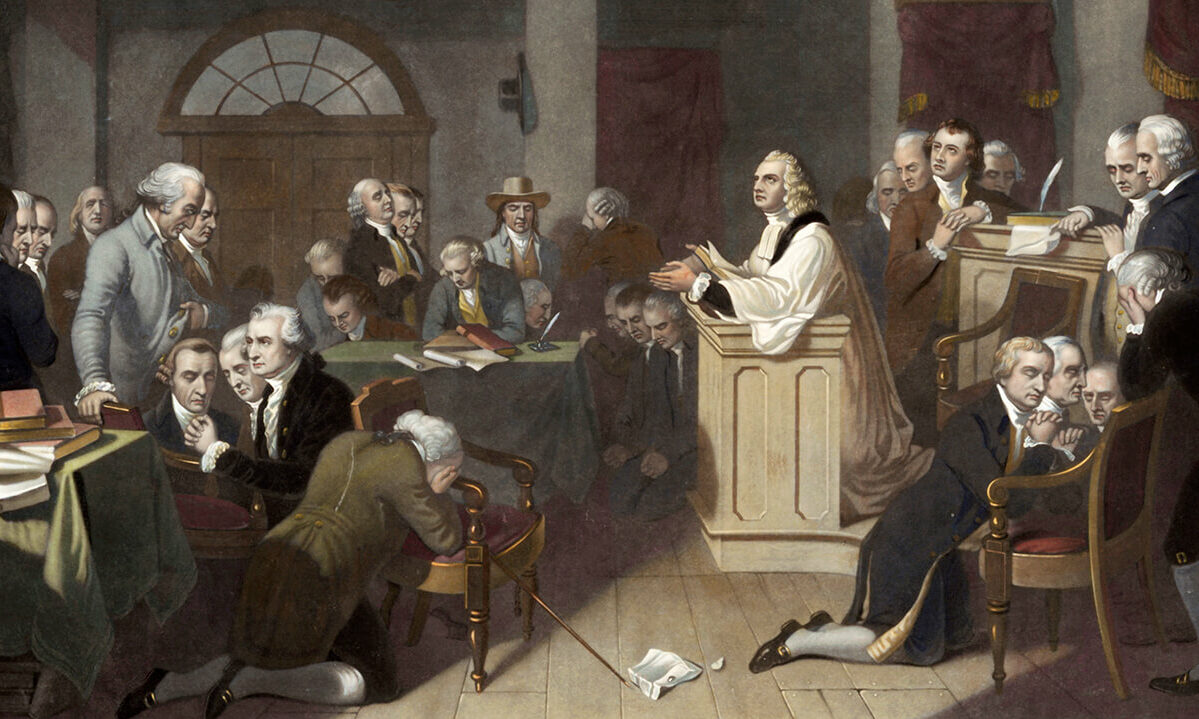
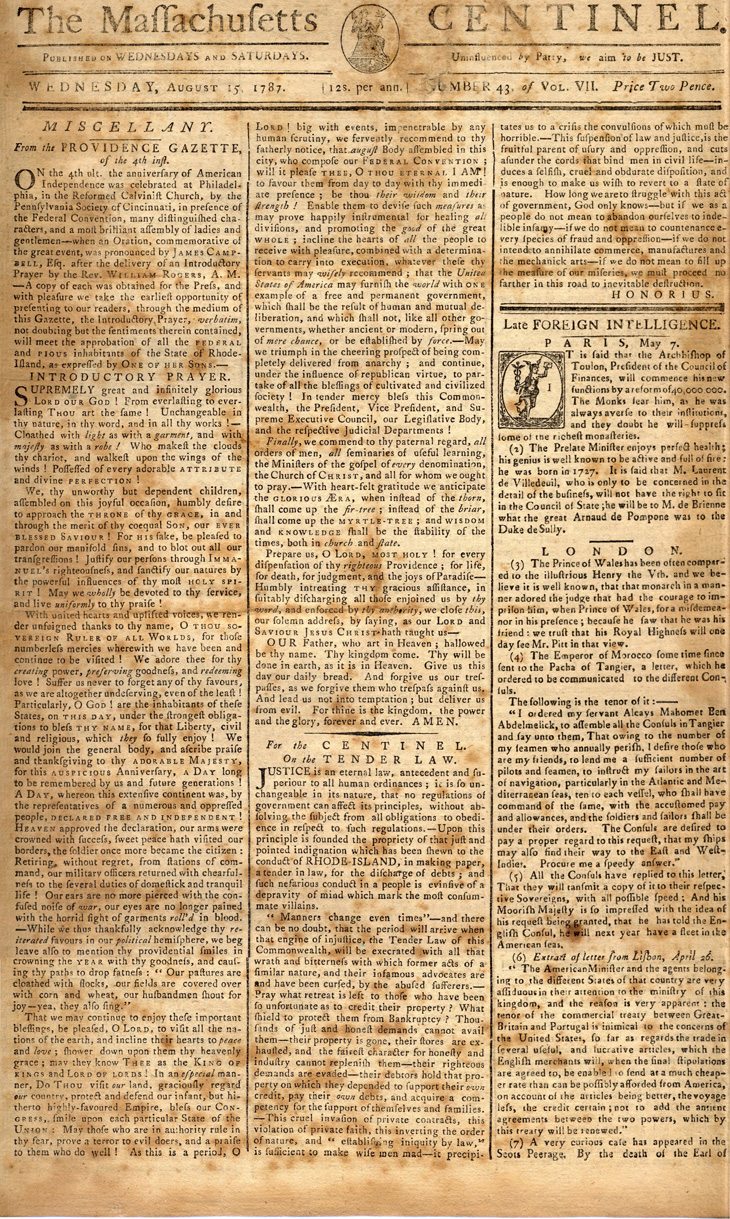
In response to Benjamin Franklin’s call to seek God that was made on June 28, 1787,1 the Rev. William Rogers prayed2 before the service that was held at the Reformed Calvinist Church in Philadelphia on July 4th of that year. The below text is taken from The Massachusetts Centinel on August 15, 1787.

july-4th-prayer-1


On the 4th ult. the anniversary of American Independence was celebrated at Philadelphia, in the Reformed Calvinist Church, by the Pennsylvania Society of Cincinnati, in presence of the Federal Convention, many distinguished characters, and a most brilliant assembly of ladies and gentlemen – when in Oration, commemorative of the great event, was pronounced by JAMES CAMPBELL, Esq. after the delivery of an Introductory Prayer by the Rev. WILLIAM ROGERS, A. M. – A copy of each was obtained of the Press, and with pleasure we take the earliest opportunity of presenting to our readers, through the medium of this Gazette, the Introductory Prayer, verbatim, not doubting but the sentiments therein contained, will meet the approbation of all the FEDERAL and PIOUS inhabitants of the State of Rhode Island, as expressed by ONE OF HER SONS. –

INTRODUCTORY PRAYER.
Supremely great and infinitely glorious Lord our God! From everlasting to everlasting Thou art the same! Unchangeable in thy nature, in thy word, in all thy works! – Cloathed with light as with a garment, and with majesty as with a robe! Who maketh the clouds thy chariot, and walkest upon the wings of the winds! Possessed of every adorable ATTRIBUTE and divine PERFECTION!

We, thy unworthy but dependent children, assembled on this joyful occasion, humbly desire to approach the THRONE of thy GRACE, in and through the merit of thy coequal SON, our EVER BLESSED SAVIOUR! For HIS sake, be pleased to pardon our manifold sins, and to blot out all our transgressions! Justify our persons through IMMANUEL’S righteousness, and sanctify our natures by the powerful influences of thy most HOLY SPIRIT! May we wholly be devoted to thy service, and live uniformly to thy praise!

With united hearts and uplifted voices, we render unfeigned thanks to thy name, O THOU SOVEREIGN RULER OF ALL WORLDS, for those numberless mercies wherewith we have been and continue to be visited! We adore thee for thy creating power, preserving goodness, and redeeming love! Suffer us never to forget any of thy favours, as we are altogether undeserving, even of the least! Particularly, O God! Are the inhabitants of these States, on THIS DAY, under the strongest obligations to bless THY NAME, for that Liberty, civil and religious, which they so fully enjoy! We would join the general body, and ascribe praise and thanksgiving to thy ADORABLE MAJESTY, for this AUSPICIOUS Anniversary, a DAY long to be remember by us and future generations! A DAY, whereon this extensive continent was, by the representatives of a numerous and oppressed people, DECLARED FREE AND INDEPENDENT! HEAVEN approved the declaration, our arms were crowed with success, sweet peace hath visited our borders, the soldier once more became the citizen: Retiring, without regret, from stations of command, our military officers returned with cheerfulness to the several duties of domestic and tranquil life! Our ears are not more pierced with the confused noise of war, our eyes are no longer pained with the horrid fight of garments roll’d in blood. – While we thus thankfully acknowledge thy reiterated favours in our political hemisphere, we beg leave also to mention thy providential smiles in crowning the YEAR with thy goodness, and causing thy paths to drop fatness: “Our pastures are cloathed with flocks, our fields are covered over with corn and wheat, our husbandmen shout for joy – yea, they also sing.”

That we may continue to enjoy these important blessing, be pleased, O Lord, to visit all the nations of the earth, and incline their hearts to peace and love; shower down upon them thy heavenly grace; may they know THEE as the KING OF KINGS and LORD OF LORDS! In an especial manner, DO THOU visit our land, graciously regard our country, protect and defend our infant, but hitherto highly favoured Empire, bless our CONGRESS, smile upon each particular State of the UNION: May those who are in authority rule in thy fear, prove a terror to evil doers, and a praise to them who do well! As this is a period, O LORD! big, with events, impenetrable by any human scrutiny, we fervently recommend to thy fatherly notice, that august Body assembled in this city, who compose our FEDERAL CONVENTION; will it please THEE, O THOU ETERNAL I AM! to favour them from day to day with thy immediate presence; be thou their wisdom and their strength! Enable them to devise such measures as may prove happily instrumental for healing all divisions, and promoting the good of the great WHOLE; incline the hearts of all the people to receive with pleasure, combined with a determination to carry into execution, whatever these thy servants may wisely recommend; that the United States of America may furnish the world with ONE example of a free and permanent government, which shall be the result of human and mutual deliberation, and which shall not, like all other governments, whether ancient or modern, spring out of mere chance, or be established by force. – May we triumph in the cheering prospect of being completely delivered from anarchy; and continue, under the influence of republican virtue, to partake of all the blessings of cultivated and civilized society! In tender mercy bless this Commonwealth, the President, Vice President, and Supreme Executive Council, our Legislative Body, and the respective Judicial Departments!

Finally, we commend to thy paternal regard, all orders of men, all seminaries of useful learning, the Ministers of the gospel of every denomination, the Church of CHRIST, and all for whom we ought to pray. – With heart-felt gratitude we anticipate the GLORIOUS ERA, when instead of the thorn, shall come up the fir-tree; instead of the briar, shall come up the MYRTLE-TREE; and WISDOM and KNOWLEDGE shall be the stability of the times, both in church and state.

Prepare us, O LORD, MOST HOLY! For ever dispensation of thy righteous Providence; for life, for death, for judgment, and the joys of Paradise – Humbly intreating THY gracious assistance, in suitably discharging all those enjoined us by thy word, and enforced by thy authority, we close this, our solemn address, by saying, as our Lord and SAVIOUR JESUS CHRIST hath taught us –

OUR Father, who art in Heaven; hallowed be thy name. Thy kingdom come. Thy will be done in earth, as it is in Heaven. Give us this day our daily bread. And forgive us our trespasses, as we forgive them who trespass against us. And lead us not into temptation; but deliver us from evil. For thine is the kingdom, the power and the glory, forever and ever. AMEN.3


Endnotes

1 See “Franklin’s Appeal for Prayer at the Constitutional Convention,” WallBuilders.
2 “William Rogers,” University of Pennsylvania, accessed December 18, 2023.
3 The Massachusetts Centinel, August 15, 1787, 1.
John Quincy Adams Graduates from Harvard

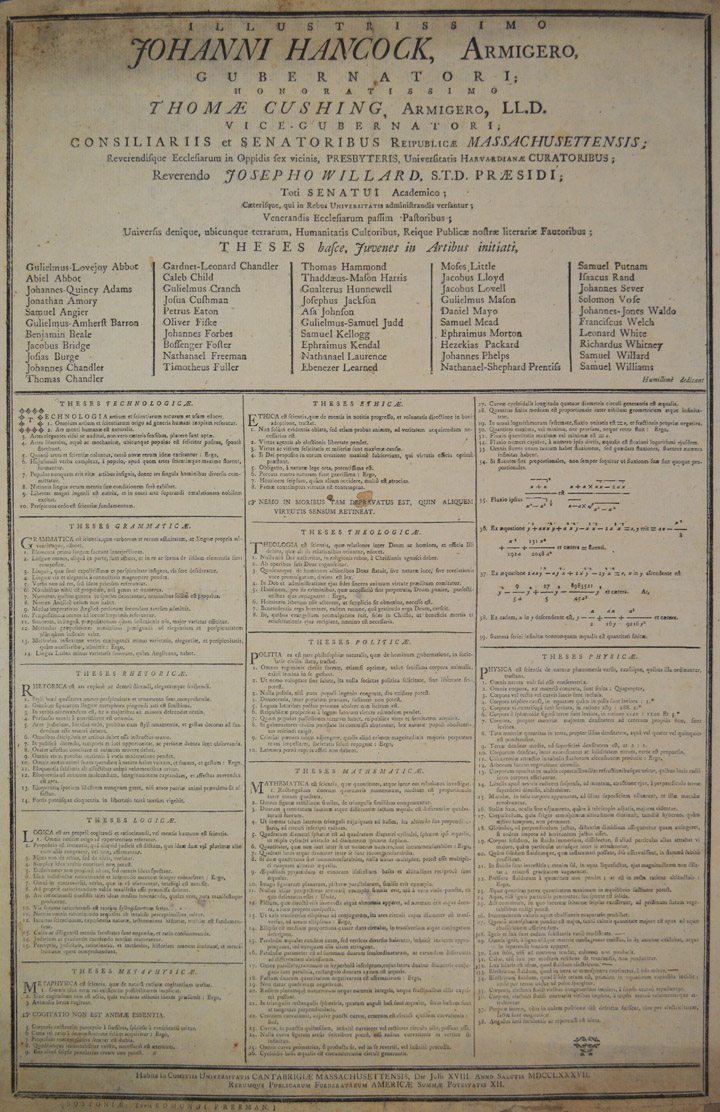
Harvard University was founded in 1636 and was incorporated in May 1650. Many of America’s early leaders graduated from Harvard – including John Quincy Adams. Below is a broadside from the WallBuilders library that lists the graduating class of 1787 (John Quincy Adams is listed in the first column) along with the thesis topics of that class.

john-quincy-adams-graduates-from-harvard-1

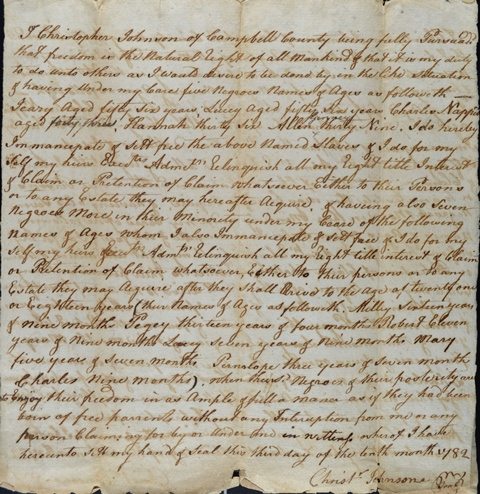
Manumission – Christopher Johnson – 1782


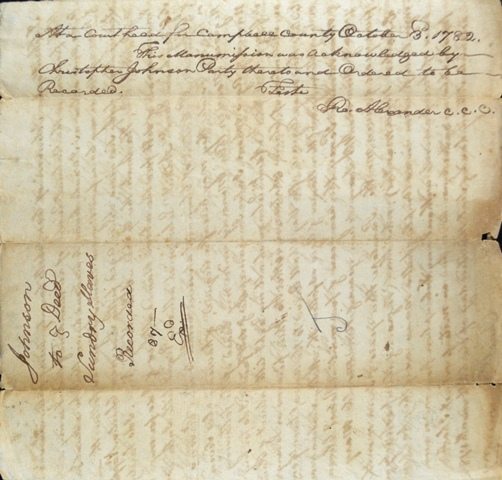
manumission-christopher-johnson-1782

manumission-christopher-johnson-1782-1


I Christopher Johnson of Campbell County being fully persuaded that freedom is the natural rights of all mankind & that it is my duty to do unto others as I would desire to be done by in the like situation & having under my care five negroes names & ages as followeth – Ieary aged fifty-six years, Succy aged fifty six years, Charles Nappier aged forty years, Hannay thirty six, Allen Ginnery thirty nine. I do hereby emancipate & set free the above names slaves & I do for my self, my heirs Execters Administers religioquick all of my right tittle interest and claim as Retentions of Claim whatever either to their persons or to any estate they may hereafter acquire of having also seven negroes more in their minority under my care of the following names of ages whom I also emancipate & set free & I do for my self, my heirs, executors, administers relinquicsh all my right title interest & claim or pretention of claim whatsoever, either to their persons or to any estate they may acquire after they share arrive to the age at twenty one or eitgheten years (their names & ages as followeth. Molly sixteen years & nine months, Peggy thirteen years & four months, Robert eleven years & nine months, Lacey seven years & nine months, Mary five years & seven months, Penelope three years & seven months, Charles nine months) when these negroes & their posterity are to enjoy their freedom in as ample & full a manor as if they had been born of free parents without any interuption from me or any persons claiming for by or under and in witness whereof I have hereunto set my hand of seal this third day of the tenth month 1782
Christopher Johnson

BACK
Johnson to Deed Sundry Slaves Recorded 7—
At a Court here for  Campbell County October 13, 1782.
This manumission was acknowledged by Christopher Johnson Party thereto and order to be recorded.
Estate The. Alexander c.c.c.

Aitken Bible

Prior to the American Revolution, the only English Bibles in the colonies were imported either from Europe or England. Publication of the Bible was regulated by the British government, and required a special license. Robert Aitken’s Bible was the first known English-language Bible to be printed in America, and also the only Bible to receive Congressional approval. Aitken’s Bible, sometimes referred to as “The Bible of the Revolution,” is one of the rarest books in the world, with few copies still in existence today.


aitken-bible-1


History of the Aitken Bible

On January 21, 1781, Robert Aitken presented a “memorial” [petition] to Congress offering to print “a neat Edition of the Holy Scriptures for the use of schools.” This is the text of that memorial:

To the Honourable The Congress of the United States of America
The Memorial of Robert Aitken of the City of Philadelphia, Printer

Humbly Sheweth

That in every well regulated Government in Christendom The Sacred Books of the Old and New Testament, commonly called the Holy Bible, are printed and published under the Authority of the Sovereign Powers, in order to prevent the fatal confusion that would arise, and the alarming Injuries the Christian Faith might suffer from the Spurious and erroneous Editions of Divine Revelation. That your Memorialist has no doubt but this work is an Object worthy the attention of the Congress of the United States of America, who will not neglect spiritual security, while they are virtuously contending for temporal blessings. Under this persuasion your Memorialist begs leave to, inform your Honours That he both begun and made considerable progress in a neat Edition of the Holy Scriptures for the use of schools, But being cautious of suffering his copy of the Bible to Issue forth without the sanction of Congress, Humbly prays that your Honours would take this important matter into serious consideration & would be pleased to appoint one Member or Members of your Honourable Body to inspect his work so that the same may be published under the Authority of Congress. And further, your Memorialist prays, that he may be commissioned or otherwise appointed & Authorized to print and vend Editions of, the Sacred Scriptures, in such manner and form as may best suit the wants and demands of the good people of these States, provided the same be in all things perfectly consonant to the Scriptures as heretofore Established and received amongst us.

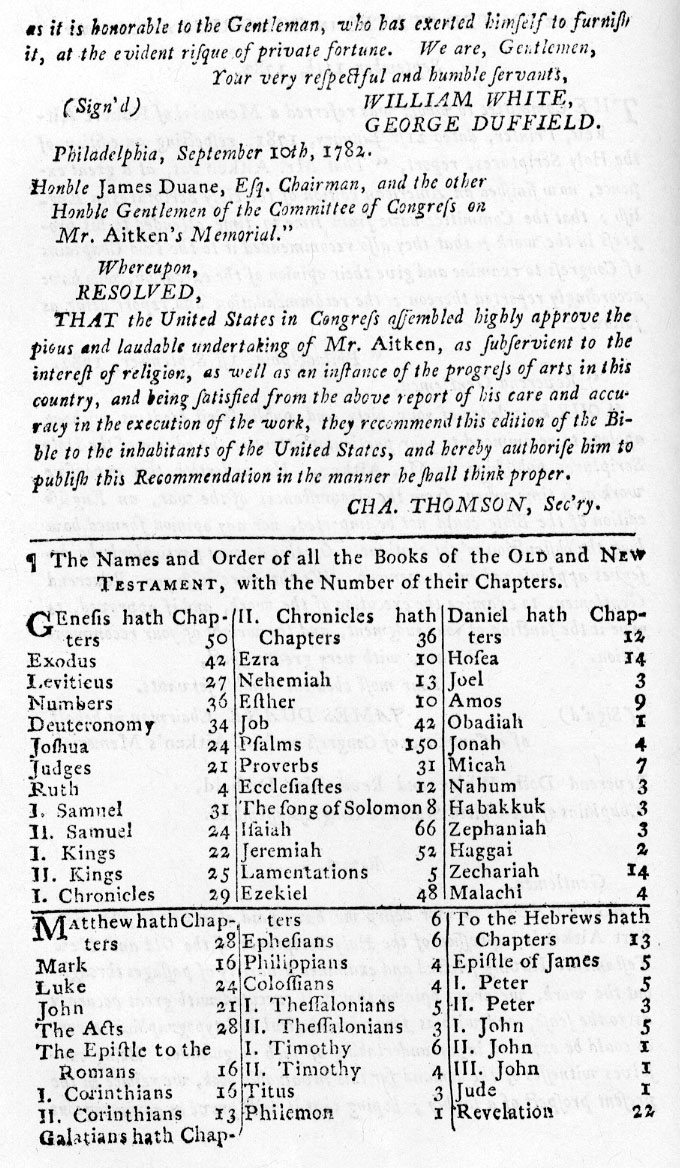
After appointing a committee to study the project, Congress acted on September 12, 1782, by “highly approv[ing of] the pious and laudable undertaking of Mr. Aitken.” The endorsement by Congress was printed in the Aitken Bible:

aitken-bible-2

The endorsement was signed by Charles Thomson, who was Secretary of the Continental Congress at the time as well as a signer of the Declaration of Independence. Thomson is also famous for “Thomson’s Bible,” the first American translation of the Greek Septuagint, published in 1808. (Thomson was an accomplished theologian, publishing such works as “A Regular History of the Conception, Birth, Doctrine, Miracles, Death, Resurrection, and Ascension of Jesus Christ.”)

Robert Aitken printed three documents in the front of his Bible, the report of the committee established to review his memorial; the report of the Congressional Chaplains; and Congresses endorsement. Below is the text of these documents.


BY THE UNITED STATES IN
CONGRESS ASSEMBLED:

September 12th, 1782.

THE Committee to whom was referred a Memorial of Robert Aitken, printer, dated 21st January, 1781, respecting an edition of the Holy Scriptures, report, “That Mr. Aitken has, at a great expense, now finished an American edition of the Holy Scriptures in English; that the Committee have from time to time attended to his progress in the work; that they also recommended it to the two Chaplains of Congress to examine and give their opinion of the execution, who have accordingly reported thereon; the recommendation and report being as follows:

“Philadelphia, 1st September, 1782.

“Reverend Gentlemen,
“Our knowledge of our piety and public spirit leads us without apology to recommend to your particular attention the edition of the Holy Scriptures publishing by  Mr. Aitken. He undertook this expensive work at a time when, from the circumstances f the war, and English edition of the Bible could not be imported, nor any opinion formed how long the obstruction might continue. On this account particularly he deserves applause and encouragement. We therefore wish you, Reverend Gentlemen, to examine the execution of the work, and if approved, to give the sanction of our judgment, and the weigh of your recommendation.

We are, with very great respect,
Your most obedient humble servants.
(Sign’d) JAMES DUANE, Chairman in behalf
of a Committee of Congress on Mr. Atken’s Memorial.

Reverend Doct. White and Revd. Mr. Duffield, Chaplains of the United States in Congress assembled.

Report.

Gentlemen,
AGREEABLY to your desire we have paid attention to Mr. Robert Aitken’s impression of the Holy Scriptures of the Old and New Testament. Having selected and examined a variety of passages throughout the work, we are of opinion that it is executed with great accuracy as to the sense, and with as few grammatical and typographical errors as could be expected in an undertaking of such magnitude. Being ourselves witnesses of the demand for this invaluable book, we rejoice in the present prospect of a supply; hoping that it will prove as advantageous as it is honorable to the Gentleman, who has exerted himself to furnish it, at the evident risk of private fortune. We are, Gentlemen, Your very respectful and humble servants,

(Sign’d) WILLIAM WHITE,
GEORGE DUFFIELD.

Philadelphia, September 10th, 1782.

Honble James Duane, Esq. Chairman, and the other
Honble Gentlemen of the Committee of Congress on
Mr. Aitken’s Memorial.”

Whereupon,
RESOLVED,
THAT the United States in Congress assembled highly approve the pious and laudable undertaking of Mr. Aitken, as subservient to the interest of religion, as well as an instance of the progress of arts in this country, and being satisfied from the above report of his care and accuracy in the execution of the work, they recommend this edition of the Bible to the inhabitants of the United States, and hereby authorize him to publish this Recommendation in the manner he shall think proper.

CHA. THOMSON, Sec’ry.


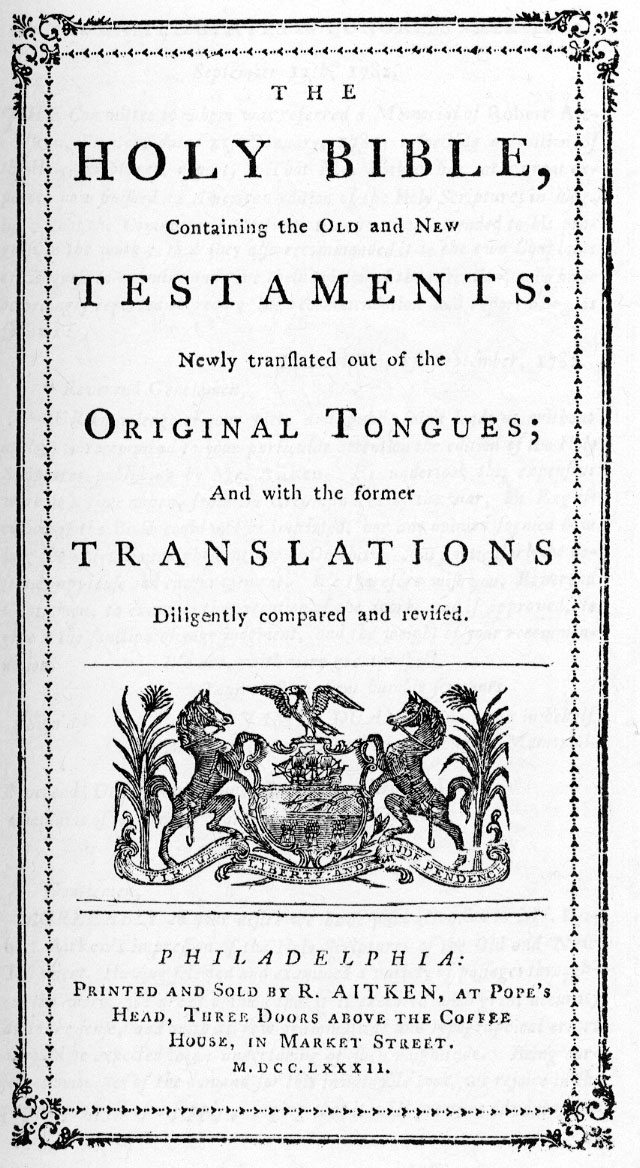
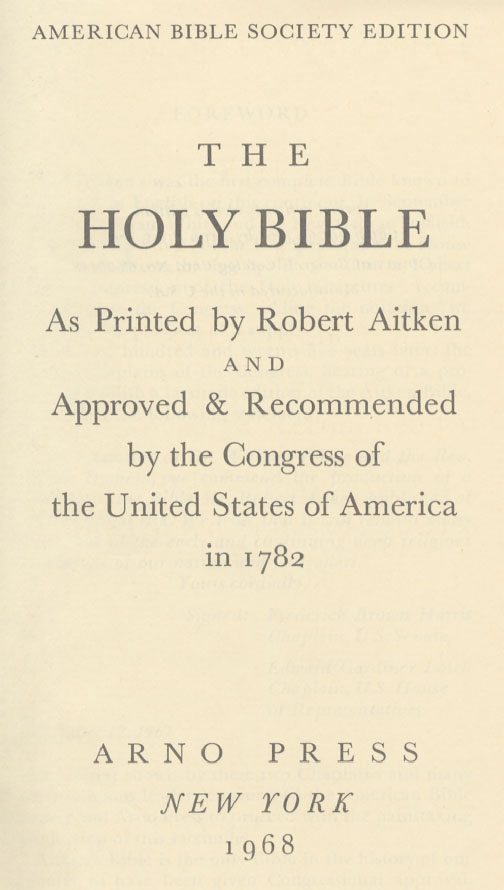
In 1968, the American Bible Society reprinted the Aitken Bible, this is the title page of that reprint:

aitken-bible-3