Will of Richard Stockton

Richard Stockton was a signer of the Declaration of Independence from New Jersey. Stockton was a lawyer and during the Revolution he was a member of the Continental Congress. Richard was taken prisoner by loyalists and during this time, his possessions were burned and his wealth reduced. He never recovered from his time as a prisoner and died in February, 1781.

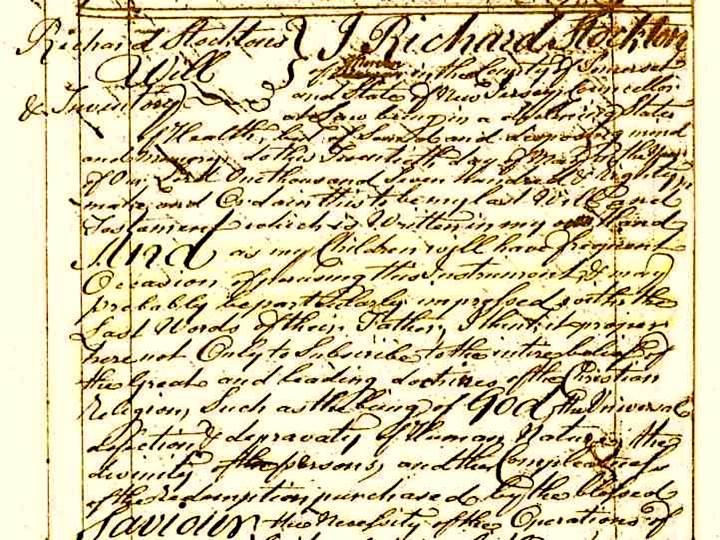
The text and image below are from Richard Stockton’s May 20, 1780 will. The complete 1780 will is held by the New Jersey State Archives.


will-of-richard-stockton-1

“…And as my children will have frequent occasion of perusing this instrument, and may probably be particularly impressed with the last words of their father, I think it proper here not only to subscribe to the entire belief of the great and leading doctrines of the Christian Religion, such as the Being of God, the universal defection and depravity of human nature, the divinity of the person and the completeness of the redemption purchased by the blessed Saviour, the necessity of the operations of the divine Spirit; of divine Faith, accompanied with an habitual virtuous life, and the universality of the divine Providence: but also, in the bowels of a father’s affection, to exhort and charge them, that the fear of God is the beginning of wisdom, that the way of life held up in the Christian system, is calculated for the most complete happiness that can be enjoyed in this mortal state; that all occasions of vice and immorality is injurious either immediately or consequentially; even in this life; that as Almighty God hath not been pleased in the holy Scriptures to prescribe any precise mode in which he is to be publickly worshipped, all contention about it generally arises from want of knowledge or want of virtue. I have therefore no particular advice to leave with my children upon this subject, saving that they deliberately and conscienciously, in the beginning of life, determine for themselves, with which denomination of Christians they can, the most devoutly and profitably worship God; that after such determination they statedly adhere to such denomination without being given to change; and without contending with or judging others who may think or act differently upon a matter so immaterial to substantial virtue and piety. That distinguished abilities, stations and authority are only desireable as occasions of doing greater private and public good, but that their footsteps being invariably masked with envy and opposition, make them enemies to private peace, and therefore unless public life is evidently pointed out by divine providence it should rather be avoided than coveted. Of the temporal estate with which it hath pleased Almighty God in his bountiful providence to bless me, I hereby make the disposition following…”

Attempted Capture of John Hancock and Samuel Adams

On April 18, 1775, Paul Revere and William Dawes set out to warn militias across the Massachusetts countryside of approaching British troops. These troops had been sent to Concord to confiscate the weapons there and dispatched to “bring back the bodies of Messr. Hancock and Adams.”

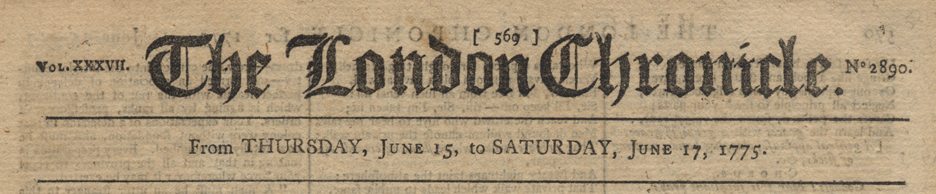
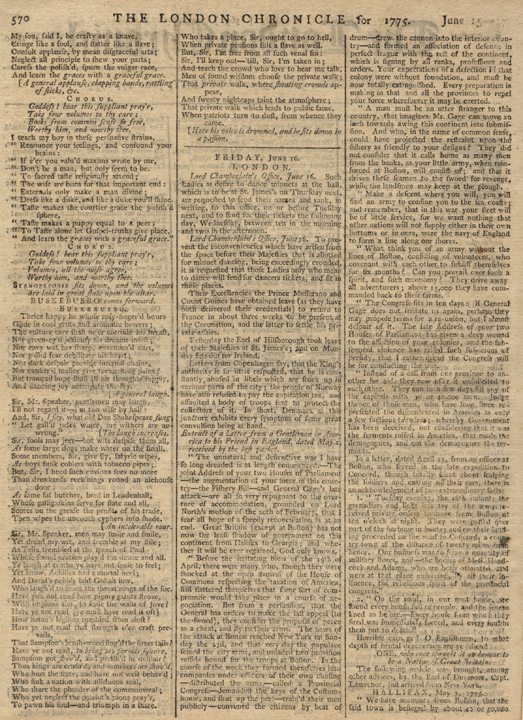
Below is a June 15-17, 1775 newspaper from the WallBuilders library with an account by a soldier in this mission.


attempted-capture-of-john-hancock-and-samuel-adams-1

The relevant letter excerpts are at the bottom right of this newspaper page.

attempted-capture-of-john-hancock-and-samuel-adams-2

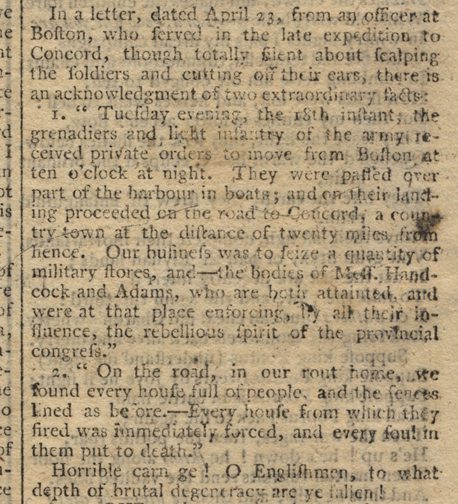
This is the letter as it was printed in the newspaper. Transcript inserted below the picture.

attempted-capture-of-john-hancock-and-samuel-adams-3

In a letter, dated April 23, from an officer at Boston, who served in the late expedition to Concord, though totally silent about scalping the soldiers, and cutting off their ears, there is an acknowledgment of two extraordinary facts:

1. “Tuesday evening, the 18th instant, the grenadiers and light infantry of the army received private orders to move from Boston at ten o’clock at night. They were passed over part of the harbour in boats; and on their landing proceeded on the road to Concord, a country town at the distance of twenty miles from hence. Our business was to seize a quantity of military stores, and – the bodies of Mess. Handcock and Adams, who are both attainted and were at that place enforcing, by all their influence, the rebellious spirit of the provincial congress.” (emphasis added)

2. “On the road, in our rout home, we found every house full of people, and the fences lined as before. – Every house from which they fired, was immediately forced, and every soul in them put to death.”

Horrible carnage! O, Englishmen, to what depth of brutal degeneracy are ye fallen!

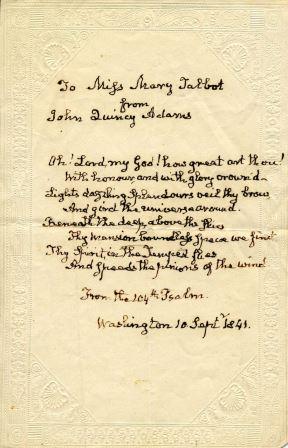
The 104th Psalm by John Quincy Adams

John Quincy Adams, sixth President of the United States was well known for his use of words. The below handwritten poem, dated September 10, 1841 and transcribed from the 104th Psalm, is a wonderful example of not only Adams’ appreciation for the Word of God, but also of his firm conviction and faith in God.


the-104th-psalm-by-john-quincy-adams-1

To Miss Mary Talbot
from
John Quincy Adams

Oh! Lord, my God! How great art Thou!
With honour, and with glory crown’d
Lights dazzling splendours veil thy brow,
And gird the universe around.

Beneath the deep, above the skies
Thy mansion boundless space we find.
Thy Spirit in the Tempest flies
And spreads the pinions of the wind.

From the 104th Psalm

Washington 10 Sept. 1841

Manumission – Dorcas – 1837


To the County Court of Washington County now in session

The petition of Dorcas, a free woman of color respectfully represents to your worships that here to from, that is to say, on   7th of August 1833, a certain Christopher Taylor, executed to you petitioners a bill of sale of two slaves named Warner and Nancy, in trust and upon condition that your petitioners should emancipate to the two said slaves Warner and Nancy as soon as the laws of the state would permit her to do so, and permit them to remain in the State. You petitioners further represent that by to Act of Assembly passed in the year 1833 on the 23rd day of November, it was provided that if any slaves had in good faith contracted for their freedom previous to the passage of the Act of 1831, it should in the duty of the court to emancipate them according to the former laws –

And your petitions presented notes that the said two slaves, Warner and Nancy had in good faith contracted and agreed with the said Christopher Taylor for their freedom long before the passage of the act of 1831. She herein prays your worships that you will emancipate the said two slaves Warner and Nancy as the laws in such cases made and provided direct; and as in duty bound XXX wish ever XXX

Dorcas
Jan 2, 1837

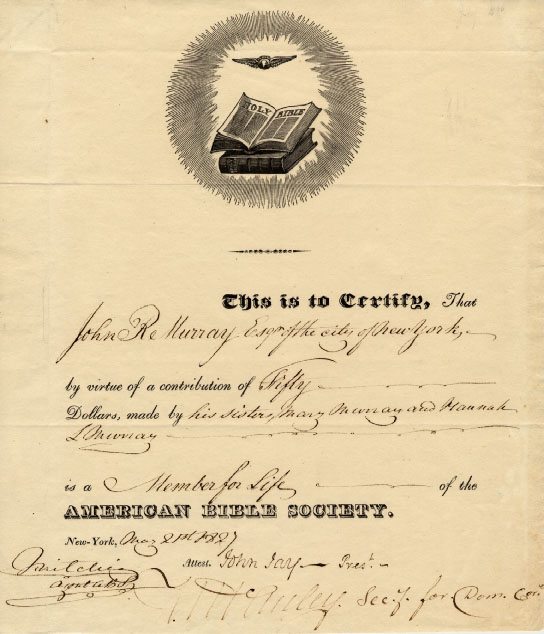
American Bible Society Certificate Signed by John Jay

John Jay (1745-1829) was an attorney, public official, diplomat, jurist. He was member of the Continental Congress (1774-76, 1778-79) where he was President of Congress (1778-79) and helped write the New York State constitution (1777). Jay also authored first manual on military discipline (1777) and served as Chief-Justice of the New York Supreme Court (1777-78). During the War for Independnece, he was appointed minister to Spain (1779) and also signed the final peace treaty with Great Britain (1783). Jay, along with James Madison and Alexander Hamilton, authored The Federalist Papers, which were instrumental in securing the ratification of the US Constitution. Under President George Washington, he was appointed first Chief-Justice of the U. S. Supreme Court (1789-95) and later declined a reappointment as Chief-Justice by President John Adams. Jay later served as Governor of New York (1795- 1801).

John Jay was also vice-president of the American Bible Society at its beginning, from 1816-21, and was president from 1821-27. Below is a membership certificate signed by him as president of the American Bible Society.


american-bible-society-certificate-signed-by-john-jay-1


This is to Certify, That John R Murray, Esqr. Of the city of New York, by virtue of a contribution of Fifty Dollars, made by his sisters, Mary Murray, and Hannah  L. Murray is a member for life of the

American Bible Society. 

New York, May 21st 1827
Attest. John Jay – Prest.[President] –
Jnitelies[?] Agent ABS
T. McAuley Secy. for Dom. Cores

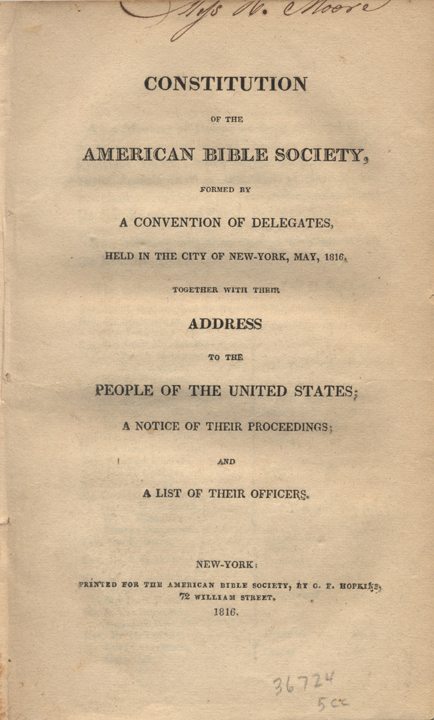
The American Bible Society Constitution

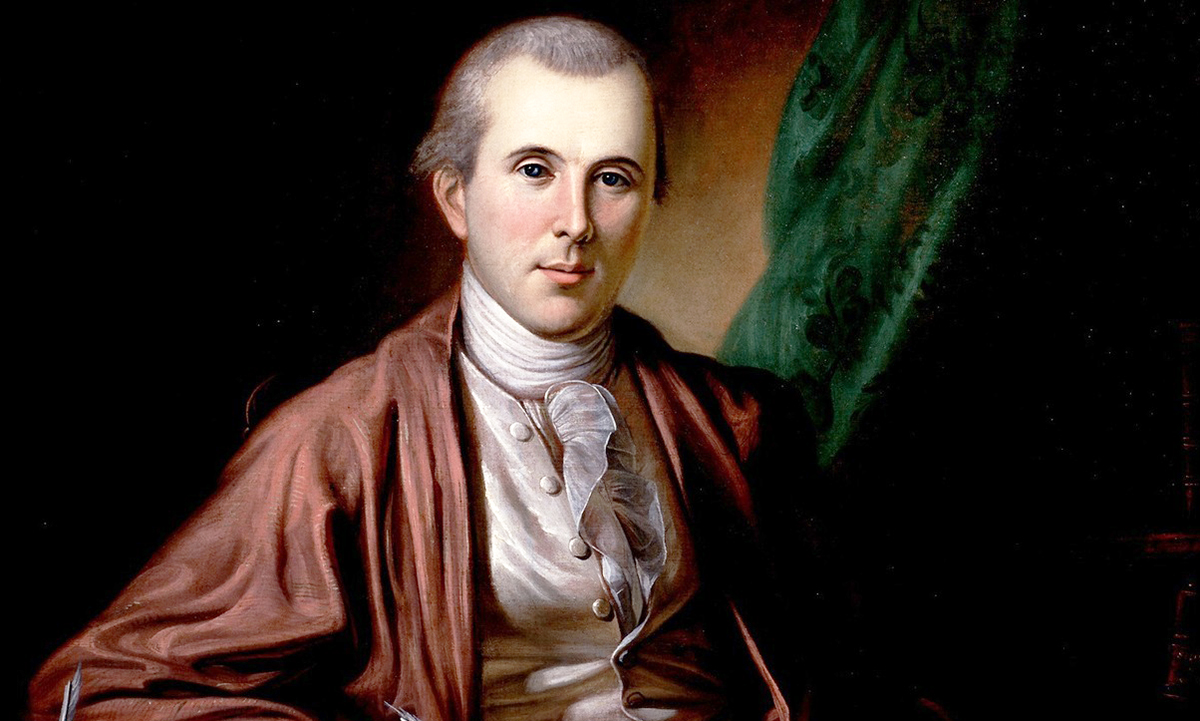
Bible societies in America date back to 1809 when Declaration Signer Benjamin Rush helped establish the first Bible society in America. By 1816, 121 more Bible societies had been started across the nation, many of them with the help of key Founding Fathers. The American Bible Society, founded in 1816, was the first national Bible society. The original officers of the Society included: signers of the U. S. Constitution, revolutionary generals, U.S. Supreme Court Justices, a U.S. Attorney General, a U.S. Secretary of the Treasury, state governors, and others.

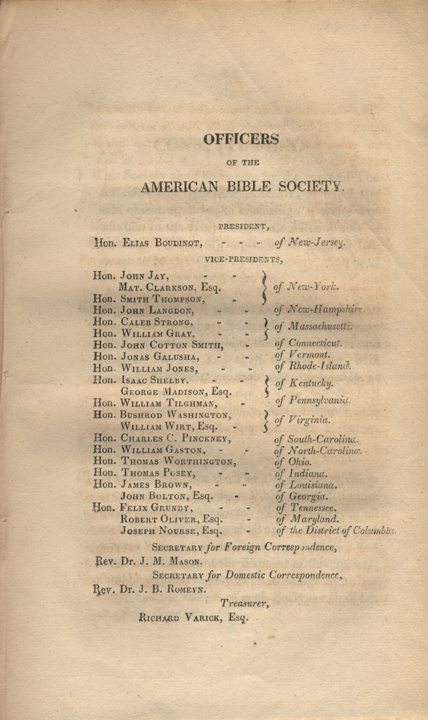
WallBuilders vast collection of original documents includes an original constitution of the American Bible Society as well as a first Bible printed by that society. Below are the title page and officers page for the 1816 American Bible Society Constitution.


the-american-bible-society-1

the-american-bible-society-2


OFFICERS
OF THE
AMERICAN BIBLE SOCIETY.
 

President,

Hon. Elias Boudinot,         of New-Jersey.

Vice-Presidents,

Hon. John Jay,                   of New-York.
Mat. Clarkson, Esq.       of New-York.
Hon. Smith Thompson,       of New-York.
Hon. John Langdon,           of New-Hampshire.
Hon. Caleb Strong,             of Massachusetts.
Hon. William Gray,             of Massachusetts.
Hon. John Cotton Smith,     of Connecticut.
Hon. Jonas Galusha,           of Vermont.
Hon. William Jones,            of Rhode-Island.
Hon. Isaac Shelby,              of Kentucky.
George Madison, Esq.      of Kentucky.
Hon. William Tilghman,        of Pennsylvania.
Hon. Bushrod Washington,   of Virginia.
William Wirt, Esq.           of Virginia.
Hon. Charles C. Pinckney,    of South-Carolina.
Hon. William Gaston,           of North-Carolina.
Hon. Thomas Worthington,  of Ohio.
Hon. Thomas Pusey,           of Indiana.
Hon. James Brown,             of Louisiana.
John Bolton, Esq.           of Georgia.
Hon. Felix Grundy,               of Tennessee.
Robert Olivers, Esq.         of Maryland.
Joseph Nourse, Esq.         of the District of Columbia.

Secretary for Foreign Correspondence,

Rev. Dr. J. M. Mason.

Secretary for Domestic Correspondence,

Rev. Dr. J. B. Romevn.

Treasurer,

Richard Varick, Esq.

First American Bible Society Bible

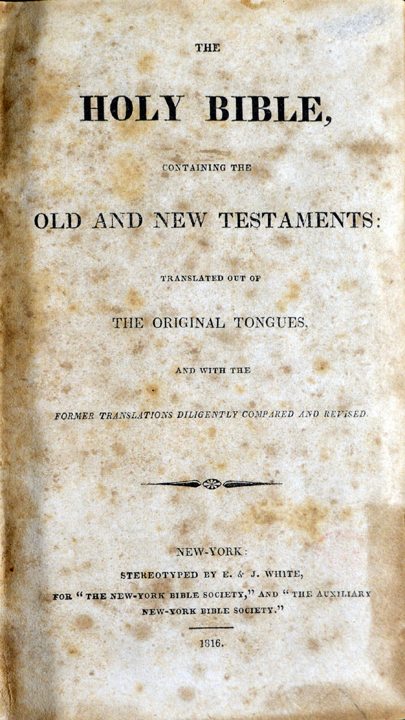
The 1816 American Bible Society Bible
The American Bible Society, founded in 1816, was the first national Bible society in America. The original officers of the Society included: signers of the U. S. Constitution, revolutionary generals, U.S. Supreme Court Justices, a U.S. Attorney General, a U.S. Secretary of the Treasury, state governors, and others. WallBuilders vast collection of original documents includes an original constitution of the American Bible Society as well as a first Bible printed by that society. Below is the title page for this society’s first Bible, printed in 1816.


first-american-bible-society-bible-1

Philadelphia Bible Society Bible

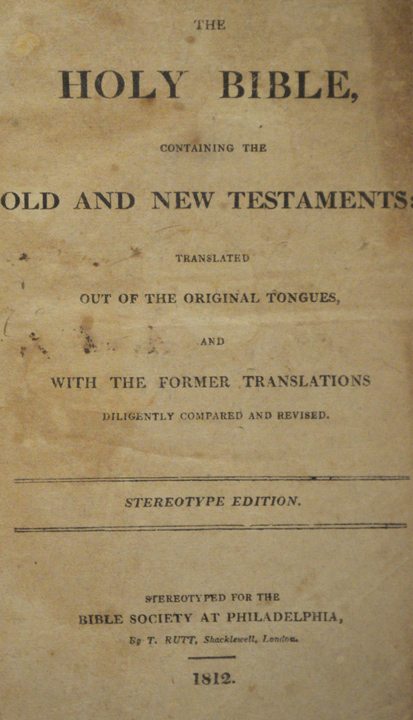
The Philadelphia Bible Society, America’s first Bible society, was officially organized on December 12, 1808. Rev. Dr. William White was president of the society and Declaration signer Benjamin Rush was a vice president. By 1816, 121 more Bible societies had been started across the nation.

Below, from WallBuilders’ Collection, is the title page of an original Bible published by the Philadelphia Bible Society in 1812. This was the first Bible printed in America to use stereotype plates.


philadelphia-bible-society-bible-1

Abigail Adams’ Letter

abigail-adams-letter-1

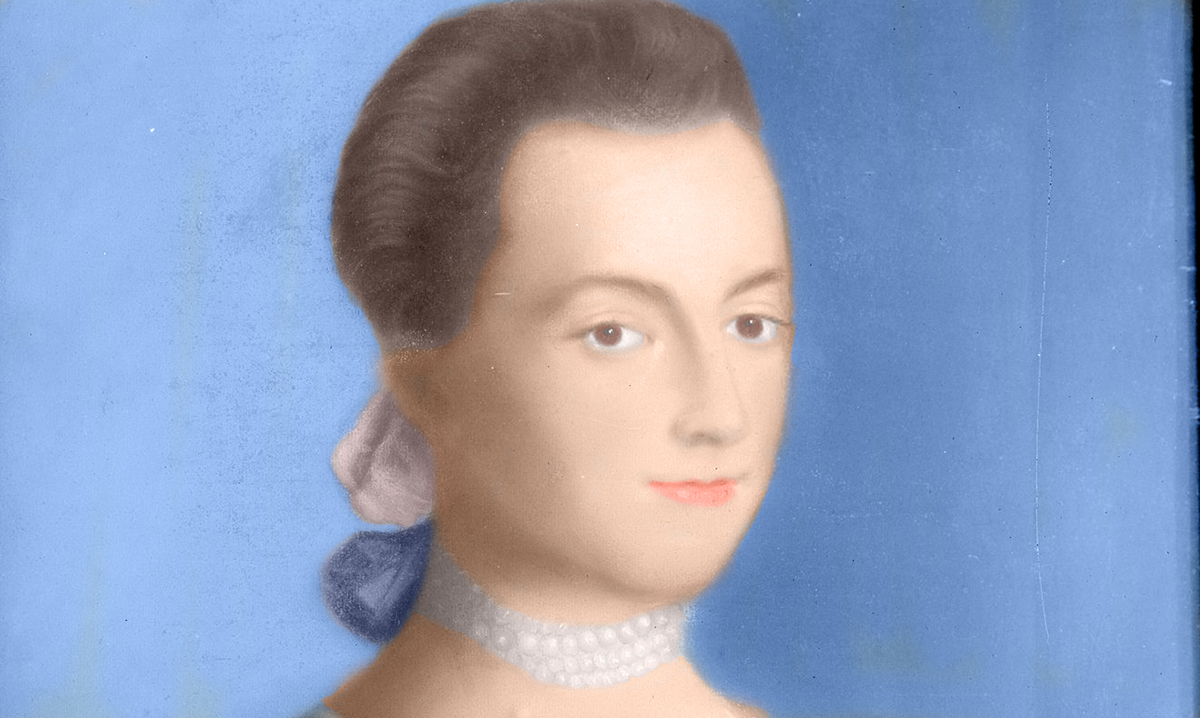
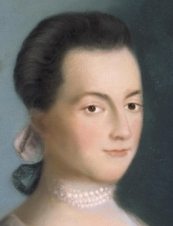
Abigail Smith Adams (1744-1818) was the second of three daughters born to a well-respected family, her father being a Congregationalist minister in Massachusetts.1 Due to her poor health in her early life Abigail had no formal education.2 In fact, at a time when female education was “neglected” and it had become “fashionable…to ridicule female learning,” 3 Abigail rose above this to become “qualified for eminent usefulness in her distinguished position as the companion of one great statesman, and the guide of another.” 4

Her strong religious convictions and intellect led her to be considered her husband’s “trusted advisor” 5 as she regularly wrote him information concerning what was happening in America throughout the Revolution. 6  Her Christian faith is evidenced not only by a statue of her and John Quincy Adams that has been placed outside the church in Quincy, Massachusetts where she was buried, 7  but also by her many religious references throughout her letters. 8

For example, as Abigail Adams reported to her husband, John Adams after the Battle of Bunker Hill:

The race is not to the swift, nor the battle to the strong; but the God of Israel is he, that giveth strength and power unto His people. Trust in Him at all times, ye people, pour our your hearts before Him; God is a refuge for us.” Charlestown is laid in ashes. The battle began upon our entrechments upon Bunker’s Hill, Saturday morning about three o’clock, and has not ceased yet, and it is now three o’clock Sabbath afternoon. It is expected they will come over the Neck tonight, and a dreadful battle muse ensue. Almighty God, cover the heads of our countrymen, and be a shield to our dear friends!9

In 1778, when John Quincy was 11 years old and accompanying his father on a diplomatic mission to France, Abigail gave him the following advice:
abigail-adams-letter-2Adhere to those religious sentiments and principles which were early instilled into your mind and remember that you are accountable to your Maker for all your words and actions….

[D]ear as you are to me, I would much rather you should have found your grave in the ocean you have crossed, or that any untimely death crop you in your infant years, than see you an immoral, profligate, or graceless child….

Young as you are, the cruel war, into which we have been compelled by the haughty tyrant of Britain and the bloody emissaries of his vengeance, may stamp upon your mind this certain truth, that the welfare and prosperity of all countries, communities, and, I may add, individuals, depend upon their morals. 10

Another reflection of Abigail’s strong Christian faith is seen in a handwritten letter of Abigail’s that WallBuilders possesses.

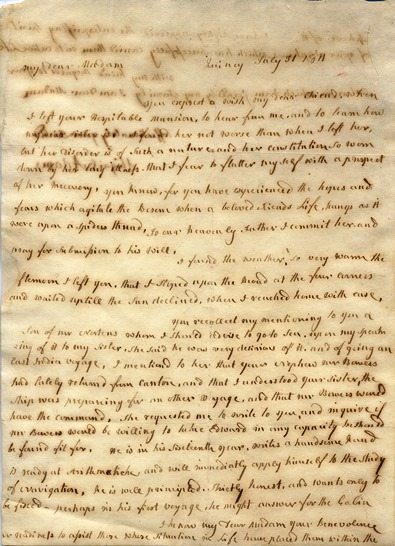
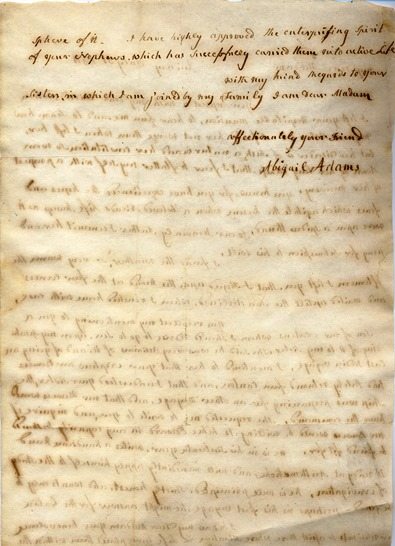
In this letter to a friend on July 31, 1811, Abigail spoke a little about her older sister (Mary Cranch) and the illness that eventually resulted in her death later that year, 11 acknowledging that “to our heavenly Father I commit her.” The handwritten letter, along with its transcription is included below.

In 1818, Abigail contracted typhoid fever and passed away on October 28, 1818, but she left a legacy as a woman who “exercised great and far-reaching influence in her day and generation.” 12 For additional information about Abigail Adams, see the book Wives of the Signers, published by WallBuilders.
abigail-adams-letter-3

abigail-adams-letter-4

Quincy July 31, 1811

My Dear Madam,

You expressed a wish my dear friend when I left your hospitable mansion to hear from me and to learn how my dear sister is. I found her not worse than when I left her, but her disorder is of such a nature and her constitution so worn down by her long illness that I fear to flatter myself with the prospect of her recovery. You know, for you have experienced the hopes and fears which agitate the bosom when a beloved friends life hangs as if were upon a spiders thread.

To our heavenly Father I commit her and pray for submission to His will.

I found the weather so very warm the [a]fternoon I left you, that I stayed upon the road at the four corners and waited until the sun declined, when I reached home with ease.

You recollect my mentioning to you a son of Mr. Nortens whom I should advise to go to sea. Upon my speaking to my sister she said he was very desirous of it and of going on an East India voyage. I mentioned to her that your son had lately returned from Canton and that I understood your sister, the ship was preparing for another voyage and that Mr. Bowers would have command. She requested me to write to you and inquire if Mr. Bowers would be willing to take Edward in any capacity he should be found fit for. He is in his sixteenth year, writes a handsome hand, is ready at arithmetic [sic] and will immediately apply himself to the study of navigation. He is well principled, strictly honest, and wants only to be fixed – perhaps in his first voyage, he might answer for the cabin.

I know my dear madam your benevolence in readiness to assist those whose situation in life have placed them within the sphere of it. I have highly enjoyed the enterprising spirit of your nephews which has successfully carried them into active life.

With my kind regards to your sister, in which I am joined by my family, I am dear madam

Affectionately your friend,

Abigail Adams


Endnotes

1 Letters of Abigail Adams, the Wife of John Adams with an Introductory Memoir by her Grandson Charles Francis Adams, ed. Charles Francis Adams (Boston: Wilkins, Carter, and Company, 1848), xxiv; Elizabeth Ellet, Women of the Revolution (New York: Baker and Scribner, 1849), II:26; Charles Francis Adams, Familiar Letters of John Adams and His Wife Abigail Adams, During the Revolution (New York: Hurd and Houghton, 1876), xi.
2 Letters of Abigail Adams, ed. Adams (1848), xxiv; Adams, Familiar Letters (1876), xi.
3 Abigail Adams to John Adams, June 30, 1788, Letters of Abigail Adams, ed. Adams (1848), 99.
4 Ellet, Women of the Revolution (1849), II:31.
5 “John Adams and the Massachusetts Constitution,” Mass.gov, accessed November 1, 2023, https://www.mass.gov/guides/john-adams-the-massachusetts-constitution; Ellet, Women of the Revolution (1849), II:31.
6 See for exampleLetters of Abigail Adams, ed. Adams (1848); Adams, Familiar Letters (876).
7 “Abigail Adams Historical Marker,” The Historical Marker Database, accessed November 1, 2023, https://www.hmdb.org/m.asp?m=18502.
8 See for exampleLetters of Abigail Adams, ed. Adams (1848); Adams, Familiar Letters (1876).
9 Abigail Adams to John Adams, June 18, 1775, Letters of Mrs. Adams, ed. Adams (1848), 40.
10 Abigail Adams to John Quincy Adams, June, 1778, Letters of Mrs. Adams, ed. Adams (1848), 122-125
11 Ellet, Women of the Revolution (1849), II:34.
12 Harry Clinton Green and Mary Wolcott Green, The Pioneer Mothers of America (New York: G.P. Putnam’s Sons, 1912), 3:32.
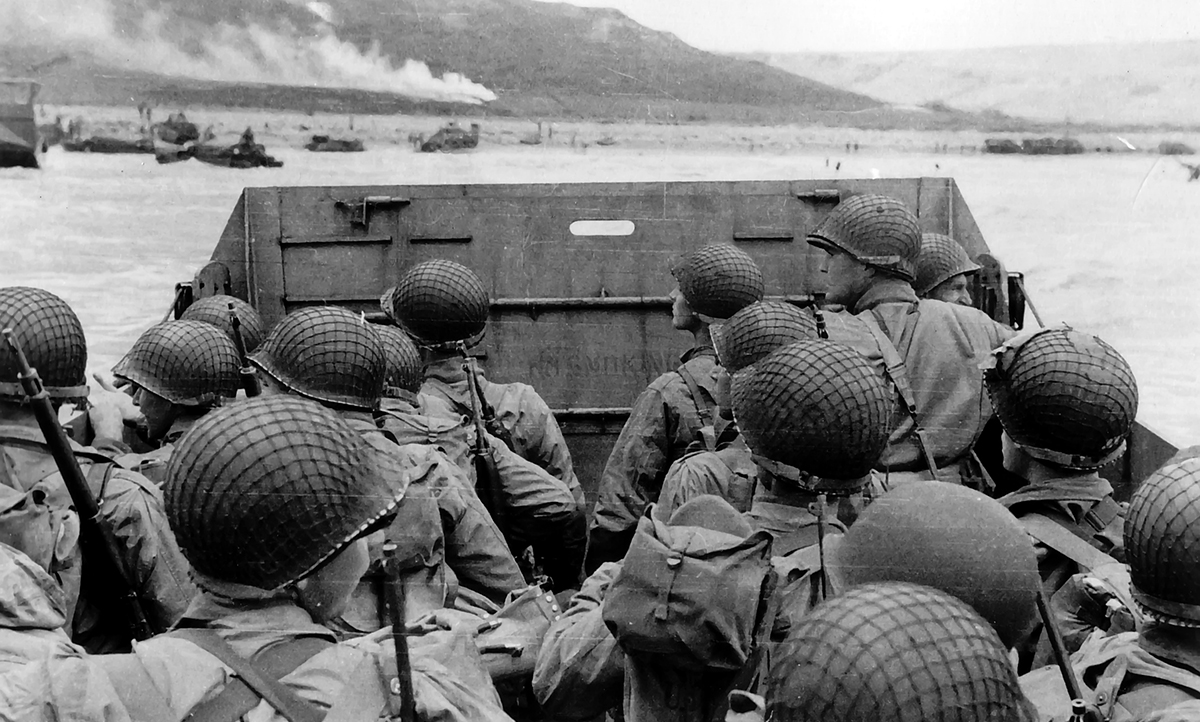
American troops land at Omaha Beach during the D-Day landings of 1944.

War Bond Posters

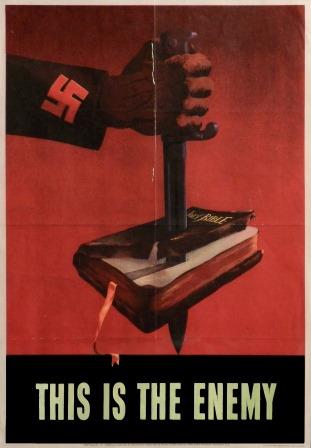
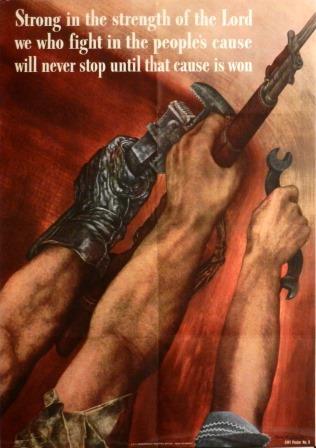
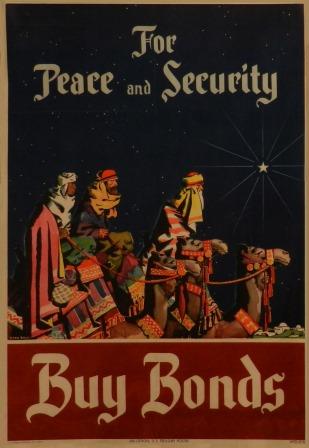
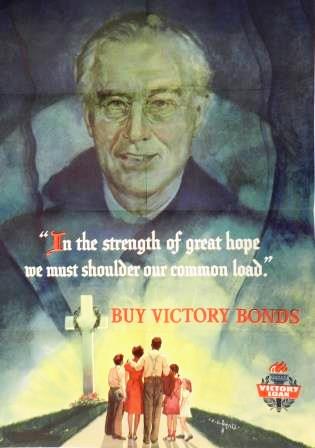
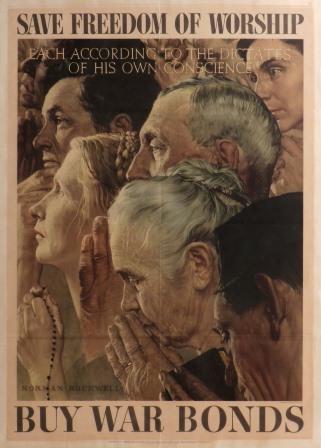
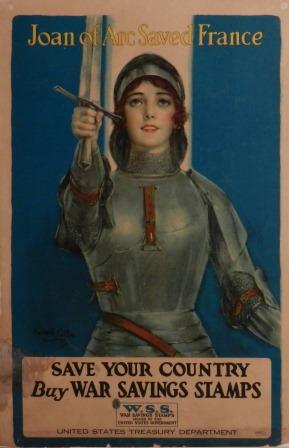
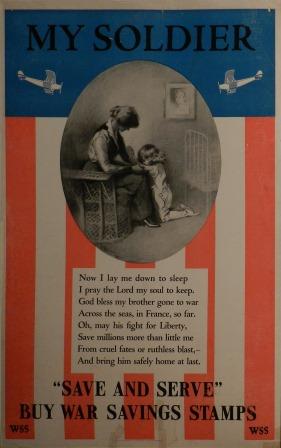
During WWI and WWI, war bonds were sold by the U.S. Treasury Department to help fund the war efforts. To promote the bonds and encourage their purchase by citizens, the government produced posters that would promote patriotism and stir pro-American feelings. Below are some of the official posters printed by the U.S. Government Printing Office; notice that each has a strong religious theme. For example, in the WWII posters, the enemy is attacking the Bible — the book that represented the heart and core of America and her beliefs and values. Notice that in the poster with President Franklin D. Roosevelt, a family is gathered around a cross. Others contain Bible themes and even point to the birth of Christ. Among the WWI posters is a mother and child offering a prayer, and an image of religious leader and hero Joan of Arc. Such messages, conveyed by the official mechanisms of the federal government, were never seen to be unconstitutional nor were they even questioned by citizens. To the contrary, Christian and Biblical principles were seen as indivisible from America.


World War II Posters

war-bond-posters-1          war-bond-posters-2

war-bond-posters-3          war-bond-posters-4

war-bond-posters-5


World War I Posters

war-bond-posters-6          war-bond-posters-7