On This Day in History: June 28, 1787

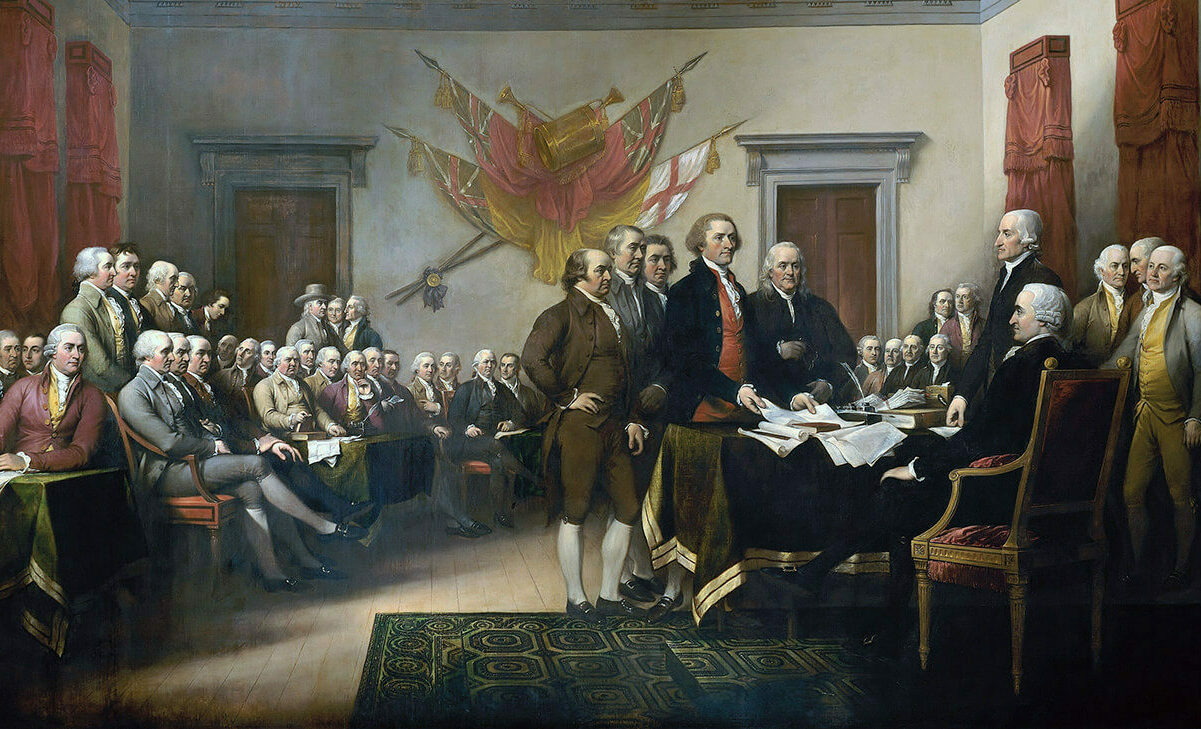
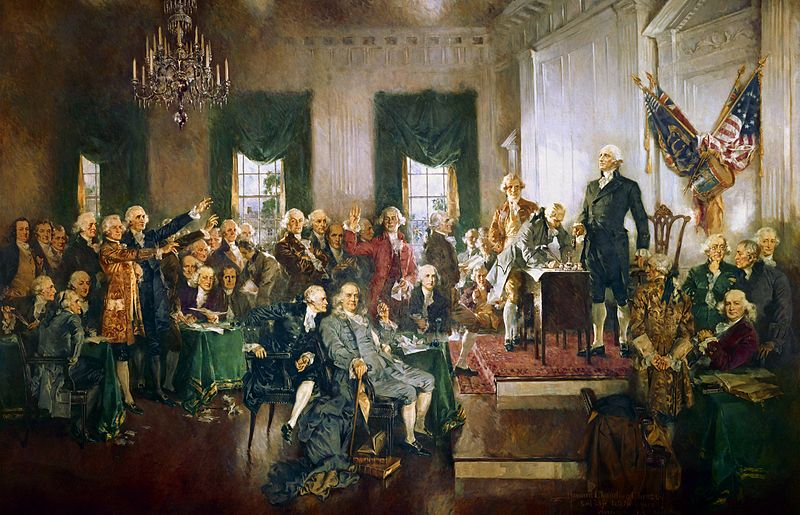
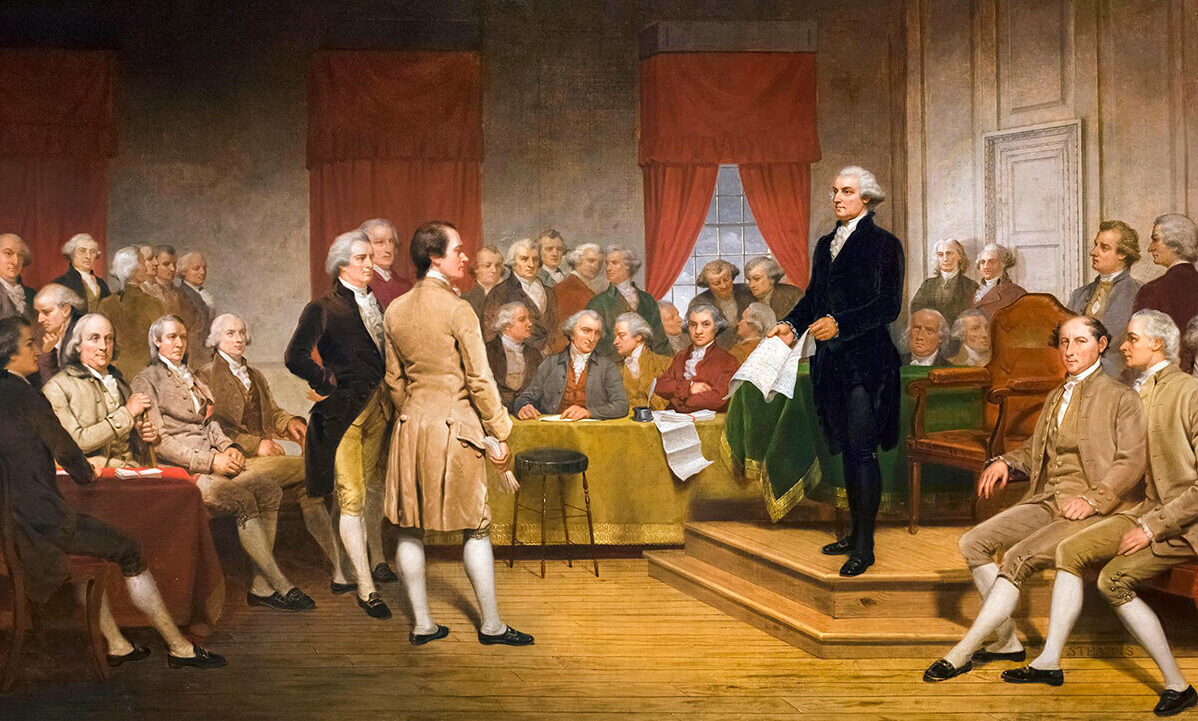
In June, 1787, The Constitutional Convention was in full swing in Philadelphia.

  • Do you know how many delegates attended the Constitutional Convention?
  • Do you know how many delegates signed the Constitution?
  • Who was the oldest delegate?
  • Who was the youngest delegate?

(Answers at the bottom)


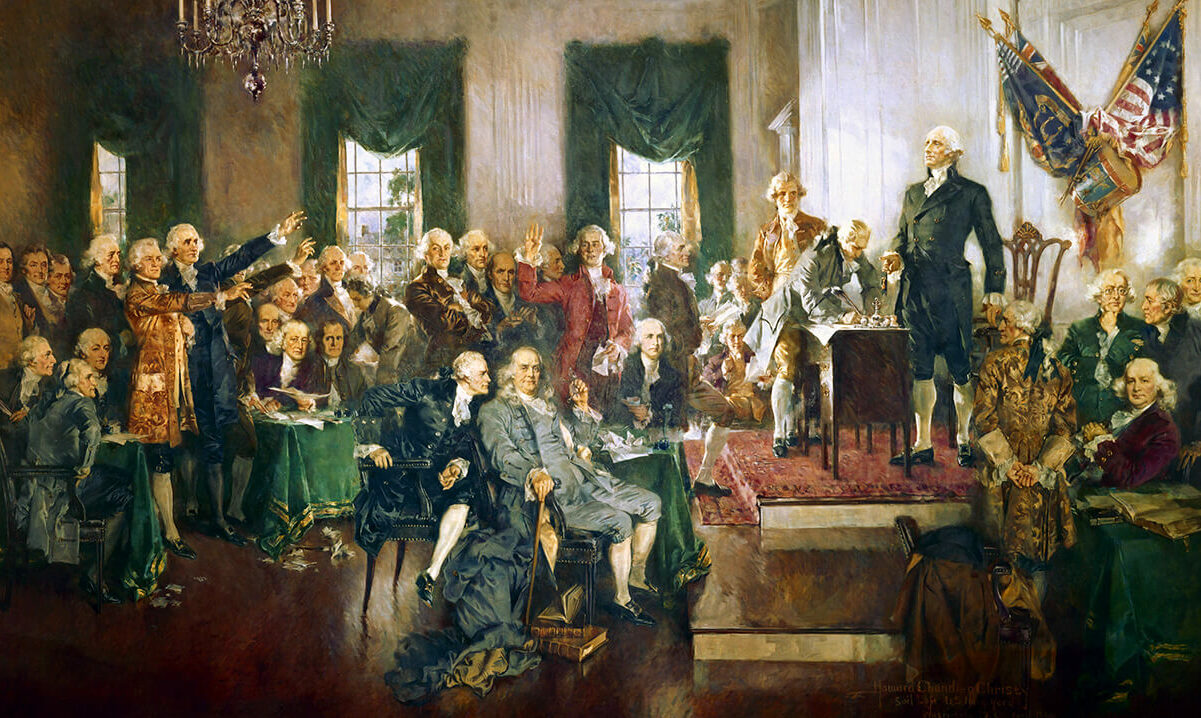
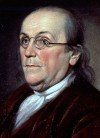
The Constitutional Convention was called in an effort to seek solutions to problems the nation experienced under the Articles of Confederation. The gathering started with optimism, but after five weeks of frequent disagreements, they were almost at a full impasse. Addressing their frustration, on June 28, delegate Benjamin Franklin told the others:

on-this-day-in-history-june-28-1787-1In this situation of this assembly, groping, as it were, in the dark to find political truth, and scarce able to distinguish it when presented to us, how has it happened, sir, that we have not hitherto once thought of humbly applying to the Father of Lights to illuminate our understandings? In the beginning of the contest with Britain when we were sensible of danger, we had daily prayers in this room for the Divine Protection. Our prayers, sir, were heard, and they were graciously answered. . . And have we now forgotten that powerful Friend? or do we imagine we no longer need His assistance? I have lived, sir, a long time; and the longer I live, the more convincing proofs I see of this truth: that God governs in the affairs of men. And if a sparrow cannot fall to the ground without His notice, is it probable that an empire can rise without His aid? We have been assured, sir, in the Sacred Writings that except the Lord build the House, they labor in vain that build it. I firmly believe this; and I also believe that without His concurring aid, we shall succeed in this political building no better than the builders of Babel . . . and we ourselves shall become a reproach and a byword down to future ages. I therefore beg leave to move, that henceforth prayers imploring the assistance of Heaven, and its blessings on our deliberations, be held in this Assembly every morning before we proceed to business. 1
The Convention then adjourned for three days. During that time, they gathered at the Calvinist Reformed Church in Philadelphia, where the Rev. William Rogers prayed a special prayer over the Constitutional Convention (WallBuilders has a 1787 newspaper that records this prayer), and according to George Washington, they also “hear[d] an oration on the anniversary of independence.” 2

Following those three days, the Convention reconvened and experienced unexpected success. Ten weeks later they had finished the U. S. Constitution (under which America has become the longest on-going constitutional republic in the world), and the Founders were quick to acknowledge God’s help in their endeavors.

Alexander Hamilton is reported to have declared:

For my own part, I sincerely esteem it a system which without the finger of God never could have been suggested and agreed upon by such a diversity of interests. 3

James Madison agreed:

It is impossible for the man of pious reflection not to perceive in it the finger of that Almighty Hand which has been so frequently and signally extended to our relief in the critical stages of the Revolution. 4

As far as these delegates were concerned, the finger of God – that is, His Divine power – had guided their writing of the Constitution. Benjamin Franklin also believed this to be the case, explaining:

[I] beg I may not be understood to infer that our general Convention was Divinely inspired when it formed the new federal Constitution . . . [yet] I can hardly conceive a transaction of such momentous importance to the welfare of millions now existing (and to exist in the posterity of a great nation) should be suffered to pass without being in some degree influenced, guided, and governed by that omnipotent, omnipresent, and beneficent Ruler in Whom all inferior spirits “live and move and have their being” [Acts 17:28]. 5

Others delegates declared the same, so as we remember the call to prayer that Franklin delivered on this day, let’s also follow George Washington’s advice “to acknowledge the providence of Almighty God, to obey His will, to be grateful for His benefits, and humbly to implore His protection and favor.” 6

  • Do you know how many delegates attended the Constitutional Convention?
    55 total delegates attended the Constitutional Convention.
  • Do you know how many delegates signed the Constitution?
    39 men signed the Constitution.
  • Who was the oldest delegate?
    At 81 years old, Benjamin Franklin was the oldest delegate.
  • Who was the youngest delegate?
    At 26 years old, Jonathan Dayton from New Jersey was the youngest delegate.

1 James Madison’s Notes on the Convention for June 28, 1787, Max Farrand, The Records of the Federal Convention of 1787 (New Haven: Yale University Press, 1911), I:451-452.
2 George Washington, diary entry for July 4, 1787, The Writings of George Washington, ed. Worthington Chauncey Ford (New York: G. P. Putnam’s Sons, 1891), XI:148.
3 Alexander Hamilton to Mr. Childs, Wednesday, October 17, 1787, Alexander Hamilton, John Jay, James Madison and Other Men of Their Time, The Federalist and Other Contemporary Papers on the Constitution of the United States, ed. E.H. Scott (New York: Scott, Foresman and Company, 1894), 2:646, .
4 James Madison, Federalist #37, Alexander Hamilton, John Jay, & James Madison, The Federalist (Philadelphia: Benjamin Warner, 1818), 194.
5 Benjamin Franklin, “A Comparison of the Conduct of the Ancient Jews and of the Anti-Federalists in the United States of America,” The Works of Benjamin Franklin, ed. Jared Sparks (Boston: Tappan, Whittemore, and Mason, 1837), V:162.
6 George Washington, “Thanksgiving Proclamation,” The Providence Gazette and Country Journal (October 17, 1789).

The American Bible Society

the-american-bible-society-2The Bible has often been described as the book that built America. As President Franklin Roosevelt affirmed:
We cannot read the history of our rise and development as a Nation without reckoning with the place the Bible has occupied in shaping the advances of the Republic. 1

Significantly, it was many of America’s Founding Fathers who worked actively to spread the Bible and its influence across America.

the-american-bible-society-3For example, Benjamin Rush (a signer of the Declaration of Independence) in 1809 helped establish the first Bible Society in America. 2 By 1816, 121 more Bible societies had been started across the nation, many of them with the help of key Founding Fathers. 3(Information relating to early Bible societies is available in the commentary for Psalm 119 in The Founders Bible.)
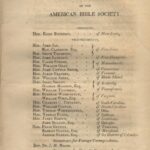
This was particularly true with the American Bible Society – the first national Bible society in America. WallBuilders vast collection of original documents includes the original constitution of the Society as well as the first Bible printed by them. The list of the first officers of the Society is a who’s who of American political leaders at the time, and included signers of the U. S. Constitution, revolutionary generals, U. S. Supreme Court Justices, U. S. Attorney General, U. S. Secretary of the Treasury, state governors, and others. 4

For more information on the American Bible Society see David Barton’s short video about this remarkable organization.


Endnotes

1 Franklin D. Roosevelt, “Statement on the Four Hundredth Anniversary of the Printing of the English Bible,” The American Presidency Project, October 6, 1935.
2 The First Report of the Bible Society Established at Philadelphia; Read Before the Society at Their Annual Meeting, May 1, 1809 (Philadelphia: Fry and Kammerer, 1809), 2.
3 The Eighth Report of the Bible Society of Philadelphia; Read Before the Society, May 1, 1816 (Philadelphia: Will Fry, 1816), pp. 44-52.
4 Constitution of the American Bible Society, Formed by a Convention of Delegates Held in the City of New-York, May, 1816 (New York: G. F. Hopkins, 1816), 7.

It Happened in March

There are two specific March “firsts” from American history that center on presidential appointments.
it-happened-in-march-1

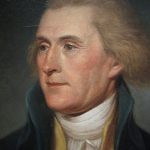
On March 22, 1790, Thomas Jefferson began serving as America’s first Secretary of State under the Constitution. This appointment had been made by President George Washington and approved by the U. S. Senate in September of 1789.1 As the Secretary of State, Jefferson’s primary job to be “the president’s chief foreign affairs adviser.”2 He also took on other major responsibilities as well — such as laying out the grounds for the brand new federal capital that was to be build in Washington, DC.
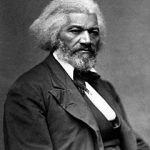
it-happened-in-march-2On March 18, 1877, Frederick Douglass became the first African American confirmed by the U. S. Senate to serve in a presidential appointment.3 He had been selected by President Rutherford B. Hayes to be the Marshal of Washington, D.C  — a position established to “support the federal courts.”4 His responsibilities included serving “the subpoenas, summonses, writs, warrants and other process issued by the courts, [making] all the arrests and [handling] all the prisoners.”5 Prior to this appointment, Douglass had held various positions under previous presidents, but none had required Senate confirmation. In all, Douglass served under four Republican presidents.6

Endnotes

1 Thomas Jefferson Papers, “The Early Republic, 1784-1789,” Library of Congress, accessed on March 18, 2015; “Former Secretaries of State,” U.S. Department of State (accessed on March 18, 2015); Office of the Historian, “A Short History of the Department of State,” U.S. Department of State, accessed on March 18, 2015.
2Duties of the Secretary of State,” U.S. Department of State, January 20, 2009.
3Frederick Douglass,” White House Historical Association, accessed on March 18, 2015.
4History – Broad Range of Authority,” U.S. Marshals Service, accessed on March 18, 2015.
5History – Broad Range of Authority,” U.S. Marshals Service, accessed on March 18, 2015.
6People: Frederick Douglass,” National Park Service, accessed on March 18, 2015.

John Quincy Adams – Abolitionist, President, & Father

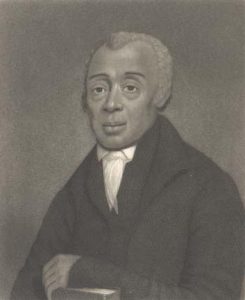
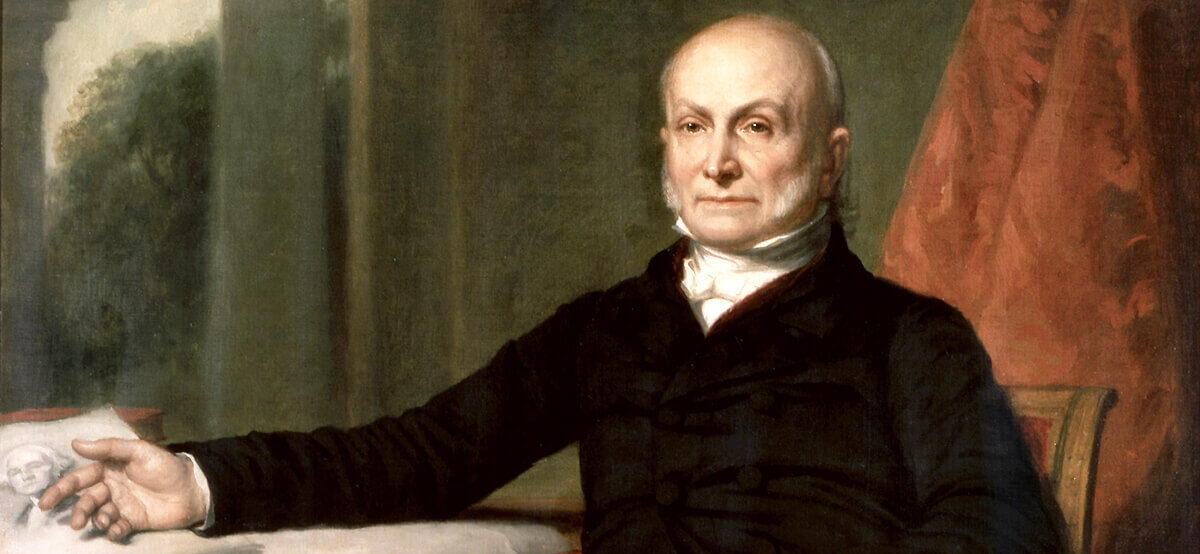
john-quincy-adams-abolitionist-president-father-1Black History Month is a special time to focus on black history, which interestingly often involves not just Black Americans but also those of other races. As famous Black American minister Richard Allen reminded his brethren during the Founding Era, “Many of the white people have been instruments in the hands of God for our good [and] are now pleading our cause with earnestness and zeal.” [1]
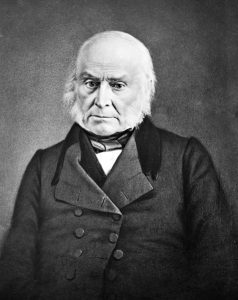
John Quincy Adams was one of the many Americans who had a direct hand in shaping black history for the good. (By the way, to learn about many of America’s remarkable untold black heroes, check out our website section on Black History.)

Adams spent nearly seven decades in public service for America, including as a foreign diplomat, Secretary of State, U. S. Senator, President of the United States, and then as the only President to serve as a US Congressman after his Presidency. [2] He became famous for introducing anti-slavey petitions into what was at that time a pro-slavery Congress. In fact, his fellow Congressmen were so disgusted with these petitions that they enacted a “gag-rule” banning the introduction of any petition addressing the abolition of slavery.  But Adams persisted and was so relentless in the pursuit of liberty and equality for Black Americans that he became known as “The Hellhound of Abolition.” [3]

john-quincy-adams-abolitionist-president-father-3Adams also led the legal defense of the African slaves in the famous Amistad case [4] llater made a Hollywood movie starring Anthony Hopkins). The Amistad was a Spanish ship carrying newly enslaved Africans, who revolted during the voyage, killed the captain, and took over the boat. The ship was brought to port in the United States, where the Spanish survivors charged the Africans with mutiny and murder. John Quincy Adams successfully defended them before the U. S. Supreme Court, which declared the Africans free. These Africans were later transported safely back to the freedom of their homes in Africa. [5]
John Quincy Adams’ firm position in behalf of the equality of all men, regardless of color, was drawn especially from Bible teachings. In fact, he specifically cited Jesus’ teaching in Luke 4 as an authority for his position against slavery. Not surprisingly, Adams openly stressed the importance of reading the Bible.

In fact, when he had been a diplomat serving under President James Madison, Adams wrote a series of nine letters to his son instructing him on the importance of reading the Bible and how to get the most from his reading. A public demand for these letters led to their 1848 publication as a book for young Americans.


Endnotes

[1] Richard Allen, The Life Experience and Gospel Labors of the Right Rev. Richard Allen (New York: Abingdon Press, 1983), p. 73, from his “Address to the People of Color in the United States.
[2] Appletons’ Cyclopedia of American Biography (New York: D. Appleton & Co., 1889), Vol. I, s.v. “John Quincy Adams.” See also, American President, “John Quincy Adams,” The Miller Center (accessed: February 5, 2015), “John Quincy Adams,” National Historic Park, (accessed: February 5, 2015).
[3] History, Art & Archives, “The House ‘Gag Rule’,” United States House of Representatives (accessed: February 5, 2015). See also, Appletons’ Cyclopedia of American Biography (New York: D. Appleton & Co., 1889), Vol. I, s.v. “John Quincy Adams;” John Quincy Adams, The Diary of John Quincy Adams, Allan Nevins, editor (New York: Longmans, Green, and Co., 1929), p. 525, June 11, 1841; James Schouler, History of the United States of America Under the Constitution (New York: Dodd, Meade, and Company, 1889), Vol. IV, pp. 423-424.
[4]Teaching with Documents: The Amistad Case,” National Archives (accessed: February 5, 2015).
[5]Teaching with Documents: The Amistad Case,” National Archives (accessed: February 5, 2015). See also, Office of the Historian, “Milestones 1830-1860: The Amistad Case, 1839,” U.S. Department of State (accessed: February 5, 2015).

The Pony Express

The Pony Express & Religion

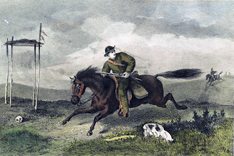
the-pony-express-1William H. Russell, Alexander Majors, and William B. Waddell founded the Pony Express in an attempt to provide faster communication between the more populated portions of America and the far West, especially California. The Pony Express was a group of young riders on horseback covering about 2,000 miles over the course of ten days, transporting mail from the East to the West, and then back.
On April 3, 1860 the first Pony Express riders departed from St. Joseph, Missouri, headed toward Sacramento, California. Along the arduous journey, each rider covered around 100 miles before handing off the route to another rider, usually covering a combined 250 miles each day.

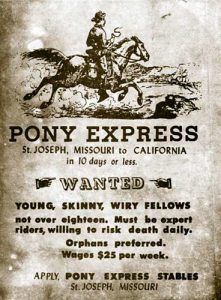
the-pony-express-2The recruitment poster pictured on the left described the qualifications for employment: “Young, skinny, wiry fellows, not over eighteen. Must be expert riders, willing to risk death daily. Orphans preferred. Wages $25 per week.” These young riders faced all sorts of difficulties on their journey, including attacks by Indians, dangerous weather, and the general rigors of riding cross-country on horse back at a full gallop. (Find out more about the young riders for the Pony Express in the article for 1 Samuel 3:4 in The Founders’ Bible.)

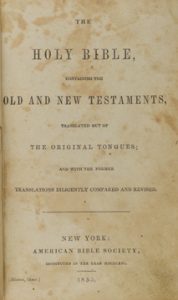
Alexander Majors wanted these young men to have spiritual support along with the physical support the company provided them (i.e., horses, gear, relay stations, etc.). A Bible was therefore given to every rider and also left at each of the more than 150 stations along the trail.

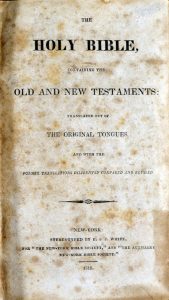
the-pony-express-3Among the many items WallBuilders owns is one of these very rare Pony Express Bibles (title page pictured on the right). This particular Bible was presented to Robert James Halligan (1833-1908) who worked for Alexander Majors during the time of the Pony Express and after it was disbanded.
The Pony Express was only in existence for nineteen months and ended when the transcontinental telegraph reached California in October 1861. During the short time of its operation, some 200 riders covered 650,000 miles.

The Pony Express is another of the many famous aspects of American history with a tie to America’s Christian heritage.

Test Your Knowledge: John Quincy Adams

How much do you know about John Quincy Adams?
Take the following quiz to find out!

(Answers at the bottom.)

1. How old was John Quincy Adams when he accompanied his father John Adams (who had been appointed as ambassador) to France, where he became his secretary?

2. Who told John Quincy Adams “[I] would much rather you should have found your grave in the ocean you have crossed, or that any untimely death crop you in your infant years, than see you an immoral, profligate, or graceless child…”?

3. True or False: John Quincy Adams was 18 years old when he received a congressional appointment as secretary to Francis Dana, the American ambassador to Russia.

4. True or False: John Quincy Adams was one of three individuals who served in the U.S. House of Representatives after being President of the United States.

5. True or False: The House of Representatives passed a gag rule to keep John Quincy Adams from introducing petitions calling for the abolition of slavery.

6. What famous Supreme Court case did Adams argue on behalf of a group of captured Africans who had revolted and regained their freedom while on board a ship transporting them into slavery?


Evacuation Day

test-your-knowledge-john-quincy-adams-1March 17 is annually celebrated in Boston as “Evacuation Day,” commemorating the departure of the British from the city after an eleven month occupation at the start of the American Revolution.1 April 19, 1775 through March 17, 1776 was the Siege of Boston. This time encompasses some of the early events of the American Revolution, including the Battles of Lexington and Concord,2 the Battle of Bunker Hill,3 and George Washington taking command of the American army.4
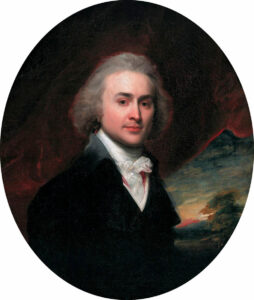
John Quincy Adams, whose family lived near Boston, personally watched the Battle of Bunker Hill at the age of 8.5 Just a few months before, he had performed military drills with the local militia and Minutemen — an event that John Quincy remembered in detail over 50 years later!6

John Quincy Adams spent 68 years of his life in public service for America. Today, on Evacuation Day, his is truly a life worth honoring.


How did you do?

1. He was 10 years old. John Adams went to France in February, 1778 (in his diary, he even talks about a battle his vessel had in early March during the ocean crossing7). John Quincy Adams, born on July 11, 1767, would have been several months shy of his 11th birthday when he accompanied his father.

2. Abigail Adams. See the complete letter from Abigail to John Quincy.8

3. False. John Quincy Adams was 14 years old when he was appointed as Francis Dana’s secretary and translator.9

4. False. Nineteen Presidents have served in the House of Representatives,10 but John Quincy Adams is the only one who was elected to Congress after being president.11

5. True. The “gag rule” was passed by each Congress from 1836-1844, and John Quincy Adams was the leader in the effort that eventually repealed this rule.12

6. United States v. The Amistad, decided in 1841. John Quincy Adams was 73 years old at the time.13 This event is depicted in the famous Hollywood movie Amistad.


Endnotes

1 “The Siege of Boston,” Massachusetts Historical Society, accessed December 8, 2023.
2 “Lexington and Concord,” ushistory.org, accessed December 8, 2023.
3 Bernard Bailyn, “The Battle of Bunker Hill,” Massachusetts Historical Society, accessed December 8, 2023.
4 “Washington takes command of Continental Army in 1775,” April 15, 2016, US Army.
5 “Letter (draft) from John Quincy Adams to Joseph Sturge, March 1846,” Massachusetts Historical Society.
6 John Quincy Adams, entry for August 20, 1827, Memoirs of John Quincy Adams, ed. Charles Francis Adams (Philadelphia: J. B. Lippincott & Co., 1875), VII:325.
7 John Adams, entry for March 14, 1778, The Works of John Adams, ed. Charles Francis Adams (Boston: Charles C. Little and James Brown, 1851), III:108.
8 Abigail Adams to John Quincy Adams, June 1778, Letters of Mrs. Adams, ed. Charles Francis Adams (Boston: Charles C. Little and James Brown, 1840), I:122-125.
9 Office of the Historian, “Biographies of the Secretaries of State: John Quincy Adams (1767–1848),” Department of State, accessed December 8, 2023.
10 “House Members Who Served as President,” United States House of Representatives, accessed December 8, 2023.
11 “The Election of John Quincy Adams of Massachusetts,” United States House of Representatives, accessed December 8, 2023.
12 “The House “Gag Rule”,” United States House of Representatives, accessed December 8, 2023.
13 “The Amistad Case,” National Archives, accessed December 8, 2023.

united states flag

This Day in History: Star Spangled Banner

On March 3, 1931, an Act of Congress made the Star Spangled Banner America’s national anthem, but the history of that song goes back almost two centuries.

this-day-in-history-star-spangled-banner-2Following the American Revolution, Americans hoped to live in peace but France and England became engaged in a conflict that drew America back into war. The British captured American ships on the high seas and forced American sailors (around 10,000 of them) to fight for England. The United States declared war. Known as the War of 1812, it lasted until 1815.

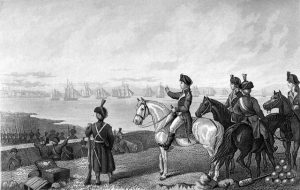
During the war, in August 1814, England invaded Washington, D.C., setting fire to the Capitol, White House, and other government buildings. The British then marched to Baltimore, Maryland, and on September 13 began bombarding Fort McHenry.

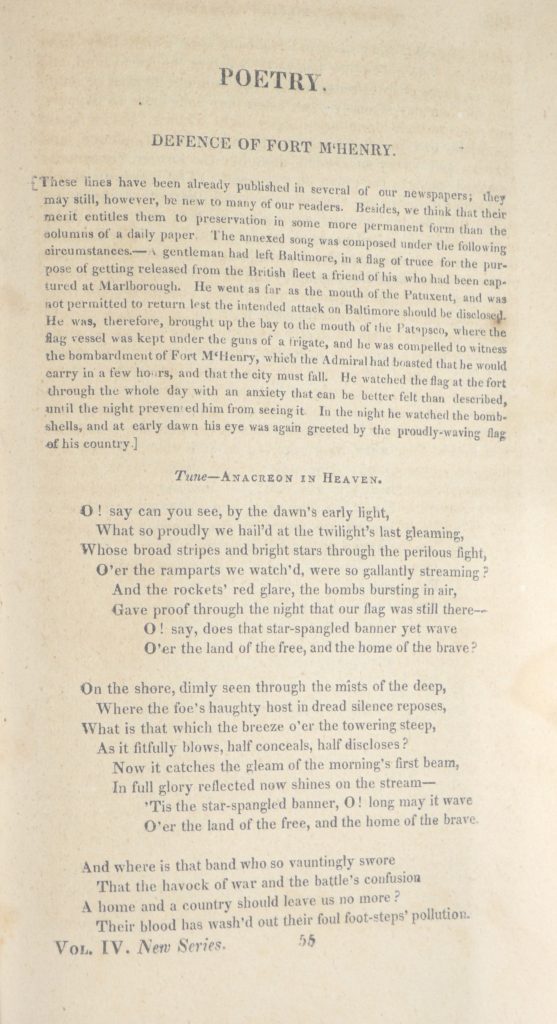
this-day-in-history-star-spangled-banner-3At that time, attorney Francis Scott Key was aboard a British ship negotiating the release of a friend. Throughout the long night, he watched the attack on Fort McHenry, fearing its fall, but when morning arrived, the American flag was still flying — the fort had survived the attack.

Inspired by these events, Francis Scott Key wrote down a few lines about the attack while still on board the ship and then wrote several more lines after reaching shore. Shortly thereafter they were published as a poem titled “Defence of Fort M’Henry.” Set to music in November of that year, it was named “The Star Spangled Banner.”

The song became popular during the Civil War and remained so well into the 20th century before finally being officially made America’s national anthem. As we celebrate its anniversary, let’s remember the many blessings God has bestowed on this nation, and the corresponding duties that we and our fellow-citizens have to preserve those blessings.


You can watch David Barton’s short history of the Star Spangled Banner, or you can purchase a high-resolution copy to show to your church, school, or other group.


A Family’s Enduring Political Legacy

a-familys-enduring-political-legacy-1

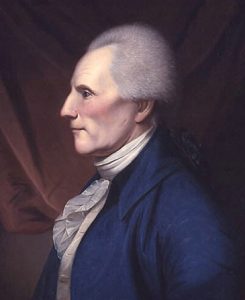
Richard Henry Lee was a prominent Founding Father whose influence helped shape several key documents that made America so distinctive among the nations of the world.

He was a signer of the Declaration of Independence and became a president of the Continental Congress. After the Constitutional Convention, he was a leading influence in the movement that led to a federal Bill of Rights to protect individual rights, and as an original US Senator from Virginia, he became an actual framer of the federal Bill of Rights (the first ten amendments to the U.S. Constitution).

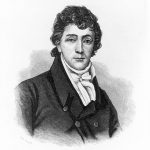
a-familys-enduring-political-legacy-2 Richard Henry Lee was part of a large family that was something of a political dynasty for the better part of two centuries. His father, Thomas, served as governor of Virginia prior to the American Revolution. His brother, Philip, served in the state legislature, and another brother, Henry, was governor of Virginia after the Revolution. Another of his brothers, Francis Lightfoot Lee (pictured to the right), was also a state legislator and he signed the Declaration of Independence along with his brother, Richard (the only pair of brothers to sign the Declaration).
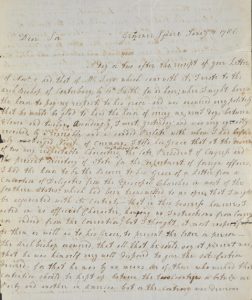
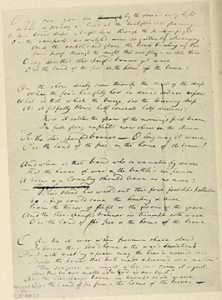
a-familys-enduring-political-legacy-3 After the American Revolution ended, and while serving as President of the Continental Congress in 1784-1785, Richard wrote to John Adams (then serving as ambassador to England), urging him to assure the Archbishop of Canterbury (the senior bishop of the state-established British Anglican church) that Episcopalian Americans would not be resistant to bishops appointed from England. This letter was enclosed with a letter sent by John Jay on November 1, 1785. On January 4, 1786, John Adams replied to John Jay with the account of his meeting with the Archbishop.
One of the many original items WallBuilders is blessed to have in our library is Richard Henry Lee’s original handwritten copy of John Adams’ January 4, 1786 letter. This letter can be viewed in its entirety on the WallBuilders website.

The national legacy of Founder Richard Henry Lee is one that has spanned the generations, and even today we still feel the positive influences from his leadership.

John Dickinson

Delegate from Pennsylvania and Delaware
Signer of the Constitution

john-dickinson-1

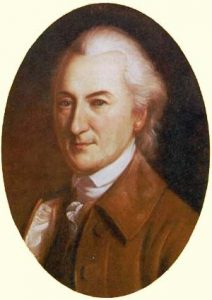
Even though John Dickinson served in the Congress that approved the Declaration, and Dickinson and James Wilson were both painted in Trumbull’s “The Declaration of Independence,” of the two, only Wilson signed the document. Dickinson refused to sign because he thought the act might be a bit hasty. Nevertheless, his contributions to the nation were significant. For example:

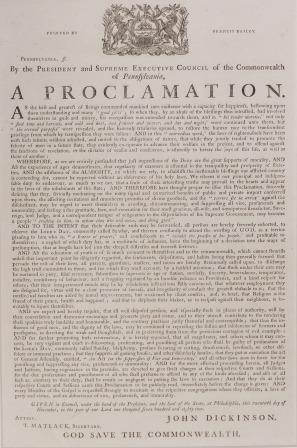
Dickinson originally represented Pennsylvania in the Continental Congress, and when he resigned his military position in Pennsylvania, he moved to Delaware, where he served that state in the Continental Congress. He also became President, or Governor, of Delaware and then held that same position in Pennsylvania. As President of Pennsylvania, he issued a proclamation asking the people to observe the Lord’s Day and remain steadfast in their worship of God.

john-dickinson-2

After the Revolution, Dickinson became chairman of the Annapolis Convention, which was the precursor to the Constitutional Convention. When the Constitution was later written, he became a signer and then wrote letters under the pen name Fabius to advocate its passage. He died in Delaware in 1808, having been a significant influence on the formation of the United States and its government.

 john-dickinson-3

The Courts and Religion: Are they Inimical?

James Wilson
Signer of the Declaration of Independence, Signer of the Constitution
Original Justice of the United States Supreme Court

the-courts-and-religion-are-they-inimical-1

James Wilson had a great influence during the American Founding but has been called “the lost Founder” because of his relative modern obscurity.

He was born to a poor family in Scotland 273 years ago today (on September 14, 1742), but managed to attend universities in Glasgow, St. Andrews, and Edinburgh. [1] At the age of 21, he immigrated to America and soon began tutoring at Philadelphia College. He studied law under John Dickinson, a fellow signer of the Declaration of Independence. [2] [John Dickinson was actually a signer of the Constitution, not the Declaration of Independence. For additional information, please see our correction update.]

In 1768, he wrote a pamphlet arguing for American independence but it considered too radical for the times. When public opinion later shifted, it was finally published. Thomas Jefferson copied portions of it for his own use, and it is conceivable that parts of Wilson’s essay even influenced the language of the Declaration. Compare the similarity of Wilson’s writing with the wording of the Declaration:

“All men are by nature equal and free. No one has a right to any authority over another without his consent. All lawful government is founded on the consent of those who are subject to it. Such consent was given with a view to ensure and to increase the happiness of the governed above what they could enjoy in an independent and unconnected state of nature. The consequence is that the happiness of the society is the first law of every government.”  ~ James Wilson“We hold these truths to be self-evident: that all men are created equal, that they are endowed by their Creator with certain unalienable rights, that among these are life, liberty and the pursuit of happiness. That to secure these rights, governments are instituted among men, deriving their just powers from the consent of the governed, …” ~Declaration of Independence

the-courts-and-religion-are-they-inimical-2Wilson served as a Pennsylvania delegate to the Continental Congress, where he voted for and signed the Declaration of Independence. He later was a member of the Constitutional Convention, where he signed the Constitution. [3]

Under the new federal government, President George Washington appointed Wilson as an original justice on the U. S. Supreme Court, where he served for 9 years until his death on August 28, 1798. He was buried at Christ Church in Philadelphia. [4]

Over recent years, the federal courts have become particularly unfriendly to Christianity and religious faith, but it was not that way under Justice Wilson. In fact, Wilson started America’s first organized legal training while he served on the Court, and he told students:

Far from being rivals or enemies, religion and law are twin sisters, friends, and mutual assistants. Indeed these two sciences run into each other. . . . All [laws], however, may be arranged in two different classes. 1) Divine. 2) Human. . . . But it should always be remembered that this law, natural or revealed, made for men or for nations, flows from the same Divine source: it is the law of God. . . . Human law must rest its authority ultimately upon the authority of that law which is Divine. [5]


Endnotes

1 Nicholas Pederson, “The Lost Founder: James Wilson in American Memory,”  Yale Journal of Law & the Humanities, 22:2:3, (May 8, 2013); Robert K. Wright, Jr. and Morris J. MacGregor, Jr., “James Wilson: Pennsylvania,” Soldier-Statesmen of the Constitution (Center of Military History, Washington, D.C., 1987).
2 “James Wilson,” Signers of the Declaration of Independence (2014).
3James Wilson, Pennsylvania,” Charters of Freedom: America’s Founding Fathers (accessed September 8, 2015).
4 L. Carroll Judson, A Biography of the Signers of the Declaration of Independence (Philadelphia : J. Dobson, and Thomas, Cowperthwait & Co., 1839), 130-131; “James Wilson, Pennsylvania,” Charters of Freedom: America’s Founding Fathers (accessed September 8, 2015).
5 James Wilson, The Works of the Honourable James Wilson (Philadelphia: Bronson and Chauncey, 1804), I:106 & 103-105.