Sermon – Fasting – 1836, Massachusetts

David Peabody (1805-1839) Biography:

David Peabody grew up working the family farm in Massachusetts. When 15 years old, he told his father he wanted to attend college. His father consented and in 1821, Peabody entered Dummer Academy, where he began the study of Latin, to prepare him for college. He soon realized his personal need of salvation, but it was three years before he acted on it. In 1824, he entered Dartmouth College.

To cover his expenses, Peabody worked as a teacher while attending college, but the stress took a toll on him. After graduating in 1828, he returned home to regain his strength, working as the assistant editor of the New Hampshire Observer of Portsmouth. He began attending the Theological Seminary in Andover and also agreed to run a Young Ladies’ Select School at Portsmouth, but once again the physical strain took its toll and he was forced to resign.

To regain his strength, Peabody moved south to Prince Edward County, Virginia, and began working privately as a tutor for a prominent family. After creating a plan of study for the children, he returned to study at Union Theological Seminary.

In 1831, he received his license to preach from the West Hanover Presbytery and began pastoring a church. Six months later, his health had returned so he left the church and moved back north. In 1832 he became pastor of First Church in Lynn, Massachusetts, but three years later he suffered a serious hemorrhage. He resigned his pastorate and went to work for the Massachusetts Sabbath School Society. His health improved, so he took the pastorate of a Calvinist church in Worchester, but later that year the hemorrhage returned and so he retired.

The following year, his health had improved and he reentered the ministry, only to experience another relapse. On the advice of his doctor, he took a sea voyage and then wintered in St. Francisville, Louisiana. While there, he preached to both black and white congregations, returning to his flock in the north the following spring. He worked hard preaching but by 1838 experienced yet another relapse. To recuperate his health, he and a friend traveled in Vermont and New Hampshire, and while there he was offered the position of Professor of Rhetoric at Dartmouth College. Believing that a change from pastor to professor would lighten the strain on his body, he accepted the position. His health was improving, until he was struck with pleurisy, but this time he refused to slow down and died six months later, at the age of thirty-four. A number of his works were published during his lifetime.


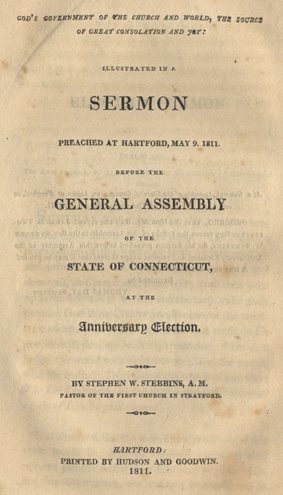
The conduct of Men,

Considered in contrast with the Law of God.

A

DISCOURSE,

DELIVERED IN THE CALVINIST CHURCH, WORCESTER,

ON FAST DAY, APRIL 7, 1836.

BY D. PEABODY,

PASTOR OF SAID CHURCH.

PUBLISHED BY REQUEST.


WORCESTER:

PRINTED BY HENRYJ. HOWLAND.

1836. 


ADVERTISEMENT.

It may be due to those readers of the following Discourse who heard it from the Pulpit, to state, that, as it was originally prepared in a double form, and delivered with sundry extemporaneous additions, it was found necessary, in preparing it for the press, to make several alterations; which, it is believed however, do neither change its character, nor detract from what little value it may have possessed.

DISCOURSE. 

DANIEL 9:5.

“We have sinned, and have committed iniquity, and have done wickedly, and have rebelled, even by departing from thy precepts, and from thy judgments.”

                In pursuing the rain of reflection naturally suggested by the text, it will be my object, my hearers, to lead you to look at the world—at man—in contrast with the Law of God; to furnish you with some views of human character on a large scale, as it appears in the light which is reflected from the Decalogue; and hence to deduce moties to humiliation and prayer.  You are perfectly aware, indeed, that the world lieth in wickedness; and you need no arguments to convince you, that man, as a race, is opposed to the divine Law.  All this is familiar, because often affirmed and illustrated; all this, too, is to your minds unquestionable, because you see the evidence of it both on the pages of Revelation, and in living exhibition around you.  But we need something more than conviction, something more than knowledge.  We need a frequent repetition of well known lessons, a fresh representation of admitted truths, with such variations of light and position, as shall, in some degree, impart novelty to what is old, and impressiveness to what is familiar.

            Some men are disposed to complain of us, that we make the world far worse than it really is; that we spread over it shades of depravity much darker than do actually exist, except here and there in the lives of those who are to be regarded rather as anomalies than as fair examples of human character; and that we carefully shut out from view the bright sports of innocence and joy, which no unjaundiced eye can fail to discover.  These men, however, we apprehend, are either not over-zealous students of the Bible; or else they imagine, that when that antiquated book was written, human nature was vastly worse than it is at present.

            But what is the present moral condition of the world?  What is its actual state, compared not with any Utopian scheme of excellence and virtue, not with any standard of perfection which man has devised,—but with the universal, the unchanging, the only obligatory standard—the law of God?  Why, in sober truth, its state is such, that a holy and impartial observer—suppose an angel that has never sinned—who should critically survey it in all its operations and principles of action, would conclude at once that men had banded together in one general conspiracy to set the divine laws at defiance, except as far as the observance of them is found indispensable exception; but it makes nothing against our position; for when men act in accordance with law only because their own temporal interest requires it, they cannot be said, in any proper religious sense, to obey law, but only to obey the impulses of a selfish nature.  From such an impartial survey, we should be prepared to return to our closets with something of the penitential sorrow of the Prophet, and mourn over what we had discovered in the midst of ourselves and everywhere among men, saying, “we have sinned, and have committed iniquity, and have done wickedly, and have rebelled, even by departing from thy precepts and from thy judgments.”

            Let us see, then, in what this departure consists;—let us compare the conduct of men extensively with the requisitions of the Decalogue, fixing on those points—since we cannot on all—in which the contrast is most strikingly apparent, or which are peculiarly worthy of attention.

            Take the first and second Commandments; which together require that men have no other gods but Jehovah, and that they render to him, as a spirit, spiritual worship.  With these in your hand, travel abroad among men, and make your observations.  First, visit if you will,—though these are not within the province of our immediate concern,—the four hundred and eighty millions of Pagans, three fifths of the human family, who, to a man, have set their faces against God; and here and there a tribe only excepted, have changed his glory into the corruptible image of men, birds, four footed beasts, and creeping things.  All that portion of the race you must set aside at once as palpable transgressors of the fundamental and universal law—that law which constitutes the basis of the whole moral code.  If from them you turn to the Jews and Mohammedans,—in the one you discern a people, who, though professing to worship the God of Abraham, have long since virtually rejected him; for of them the Savior said, “He that despiseth me, despiseth him that sent me;”—and in the other, a people, who, amidst many corrupt notions of the Deity, have in truth elevated their Prophet above his throne.  How far all these are from obeying that comprehensive rule, which requires all men to render unto God a spiritual and undivided homage, is sufficiently apparent. 

            But not to linger on ground so remote, and so little a matter of our concern to-day, you will come back and cast your eye over what is passing in nominally Christian communities.  And you will say—“Surely men here have no other gods but Jehovah.”  But tell me can He be said to be their God whom they never affectionately acknowledge; whom they never devoutly worship; to whom they erect no altar in their dwellings; whose word and ordinances they regard with indifference; towards whom they feel in their hearts no reverence and no love!  If Jehovah be their God, why not serve him; why not confess him before the world; why not make at least some decided demonstration of their homage and attachment?  Is it enough that they do not put themselves to the trouble of openly and boldly denying him?  Enough that they do not announce to the world that they are idolators or atheists?  Judge ye,—for if the Lord be God, he is a great God and a jealous; and if he is chosen by you as your God, you will worship him, ay, in spirit and in truth,—judge ye, how many such worshippers the eye of Omniscience discerns among all the thousands of decent, honest, kind hearted, moral, church-going men in Christian lands!  Of how many can the Omniscient Searcher of hearts say—“They have no other gods before me?”  If by their fruits we are to know them, few, alas! We must judge, are the spiritual worshippers of God.

            Again: Repeat your tour of observation with another article of the Decalogue:  “Thou shalt not take the name of the Lord thy God in vain.”  Profane oaths and blasphemies, it is well known, abound among the heathen; and it is a remarkable and melancholy fact, that the first sentences of a Christian language which pagans learn to pronounce, are generally—at least to a great extent—sentences of profaneness and blasphemy.  So true is this, that travelers in heathen countries have often been surprised by a salutation accompanied by an oath, in their own tongue, when the speaker could scarcely pronounce any other word in the language.

            Of the frequency of this vice among ourselves, you are sufficiently aware.  You have daily examples of it, in various forms more or less gross among almost all ages and classes in society, from the brisk gentlemen of the bar-room and the theatre, down to the unruly and vulgar school-boy.  By some men, and some too who profess to be men of sense and respectability, one might suspect, a covenant had been entered into with their lips, that they should never utter the sacred name of God, except in connection with an oath!  They know not how to approach their Maker in prayer; but they can dare him to vengeance on themselves or their fellow men just to give expression to momentary anger, or,—what is if possible still more contemptuous of Heaven,—to impart grace to a period or pungency to wit!  Such is the treatment, from vast numbers, which this third most easy and reasonable requisition of the Divine Law receives.

            Again:  God demands, in his immutable Law, that one day in seven shall be consecrated peculiarly to him, as a day of holy rest.  The voice in which this demand was originally made known, seems, either with full emphasis or in fainter echoes, to have gone abroad everywhere among men, and been reiterated down through their successive generations.  But, my hearers, take another survey, and see how this law has been observed.  By a great majority, the day has been employed merely to mark into convenient divisions the lapse of time.  Some have regulated by it the seasons of licentious festivity and idolatrous worship—sad perversion surely of its original design!

            But,—to turn to a more important inquiry,—what is the manner of its observance among Christians?  How and to what extent, does it appear that they who bear the Christian name, are in this point obedient to the Law of God?  Why, my hearers, you shall find a numerous class of them who regard the Sabbath of our times as a mere human institution.  They observe it, not because it has been consecrated by divine authority, but because it is required by human convenience.  They honor it not as arising from an ordinance of Heaven, and, of course, they honor not the ordinance whence it arises; but because they consider it as, on the whole, a happy accident of custom, and even perhaps essential to the good order and well-being of society.  God and his Law they leave entirely out of view; and the Sabbath, in their estimation, has little more to do with either, than have the stated terms of legislative assemblies and judicial courts.

            Another numerous class acknowledge the divine origin and binding authority of the Christian Sabbath; but still suppose it to be designed as a day of rest from labor for the refreshment and reinvigoration of the exhausted body and mind; and not at all as a day holy unto the Lord for purposes of spiritual worship and improvement.  Consequently, with them it is a holy day—a season of relaxation and amusement.  Possibly they may be found in the sanctuary occasionally in the morning or evening;—but it is to gratify friends, or to fall in with established customs, or to break up the monotony of the week’s affairs.—Their motives in all this are essentially the same with those, which require on the Lord’s Day a particularly sumptuous entertainment or a ride for pleasure, as a necessary part of its sacred observances.  They cannot imagine what harm there can be in a little social visiting, with its edifying accompaniment of gossip and gaiety; and if the evening should pass away without a friendly call given or received, why then the holy season has been to them altogether incomplete and unsatisfactory.

            And even of that other class, who feel in some measure, or profess to feel, the claims of the Christian Sabbath upon them, as the day of God, the feast day of the soul, the seed time for the harvests of eternity,—how few devote its precious hours to the sublime purposes for which they were appointed!  How, even by the best class that can be selected among men, is the intent of the Divine Law, as interpreted by the principles and examples of Christianity, frustrated and lost!  Some deem the season well spent, if they have placed themselves within hearing of the ordinary number of sermons and prayers in the house of God, or kept their eye running over the pages of some religious book,—no matter whether or not the mind apprehends or retains a single truth, or whether or not a single devotional feeling is stirred in the soul.  Some plead hard the necessity of laboring, at particular times, on this day; and would rather run the risk of diminishing, by their example, the respect that is felt for it in a hundred hearts, than hazard the loss of injury, from the contingency of bad weather, of a little precarious property.  On this principle, the farmer drives his team afield, to save a half eared crop from a gathering storm; and the man of business indulges himself and his family in a ride to a neighboring town; or commences or prosecutes a journey to a distant mart of trade; and our wise legislators enact laws requiring the transportation of the mail, and the employing of thousands of hands, and the famishing of thousands of souls; and continue their deliberations on important questions almost till the very dawn of the holy morning—all on the day which they hold to be sacred to religion and to God; and all, I say, on the same principle, That man’s secular profit or convenience may set aside the laws of Heaven.  It is nothing more nor less than this.  Not one of them can offer any apology for such a desecration of the Sabbath, that does not involve the principle—that mere human profit or convenience may in these cases,—and if in these cases, why not in any other?—countervail the ordinances of Infinite wisdom.

            Our country is deeply stained with the guilt of violating the Fourth Commandment.  The stain is upon our Statute Books; upon our legislative halls; upon our rulers;—and upon the common body of the people.  Touching this matter, we are a guilty nation:—are we not guilty, too, as individuals?  Certainly it becomes us to be silent concerning the nation’s guilt, so long as we allow ourselves to act—though perhaps on a smaller scale—on the same unhallowed principle.  In view of all this, we surely have occasion to humble ourselves before the Lord to-day, and to say with the Prophet, “We have sinned, and have committed iniquity, and have done wickedly, and have rebelled, even by departing from thy statutes and from thy judgments.”

            Turn now a rapid but honest glance on what is passing in domestic circles.  Suspend the precept, “Honor thy father and thy mother,” in the interior of every dwelling; and under it write the multiplied and diversified delinquencies which occur in every household—the unkind words, the disobedient acts, the disrespectful demeanor, the ill wishes, the unuttered heartburnings, and longings for freedom from parental restraint, together with all other varieties of this sin;—do this, not merely in heathen communities, which are proverbial for a want of natural affection,—but among ourselves, where Christianity has labored to exert its purifying power; and then collect the scattered items into one aggregate amount, and weigh them in the balance of the Sanctuary; and say whether there be not matter here, if the Divine Law is to be strictly interpreted, of deep humiliation before God.  Is there not a growing prevalence of this sin amongst us, which calls not only for grief and self abasement, but also for active efforts to stay the evil and avert the consequences?

            But there is one point on which, you may flatter yourselves, that the most patient and critical scrutiny, will be able to detect no guilt, except among the most inhuman and ferocious of the race.  “Thou shalt not kill.”  Rarely, you may imagine, is this law broken.  Well, then, before you pronounce with confidence, take some post of extensive observation, and note down your discoveries.  Confine your view, if you will, to our own Christian community.  Let us see with what scrupulosity this Sixth great command of God is obeyed.  How often, in the intercourse of life, do you perceive this and that man angry with his brother without cause!  They, according to the moral code of Jesus Christ, are murderers.  If they cherish anger in their hearts, so that it becomes a settled passion, they are, in temper and spirit, chargeable with the murder’s guilt.  It is not necessary, however, to dwell on cases so little tangible.

            Look up, now, to the higher walks of life.  Who is he whom you see blustering and storming at his fellow in a hurricane of passion?  It is a man of honor, who has been entrusted perhaps with the responsibility of enacting laws for you and your country.  The delicate scarf-skin of his honor has been wounded by some unkind remark of his friend;—and now, when the violence of anger ought to be subsiding in feelings of forgiveness, he coolly intimates the necessity of reciprocal compliments of pistol-shot to atone for the insult and restore friendship.  The challenge in due time and form is given and accepted.  Look once more, and see these dignified personages, at the hour appointed, stealing away with their attendants to some solitary glen, on this honorable errand.  The ground is measured—the arms are prepared—the preliminaries are completed—the signal is given, followed by the flash and the peal;—and whether both fall, or one, or neither, they leave the ground, dead or alive—murderers, murderers in the sight of God and man.

            And these tragedies, as we well know, are acted over by our lawmakers—not to speak of others encouraged by their example—so frequently that the appellation of duelist applied to them excites no surprise; and sometimes almost within sight of the Capitol.  Not a few of our most admired statesmen, are men who have thus aimed the weapon of death at a fellow’s breast, and perhaps left the field stained with his blood.  And, tell me, as they go back to their sacred work of preserving and enriching the ark of our liberties, does not that blood follow them; and as they put forth their hands to write or seal our laws, does not that blood mark and remain upon the parchment—unseen indeed by men, but read by Omniscience, and heard, too, in its cry to Heaven for vengeance on a guilty land?

            There are those,—and their number is not small, as recent occurrences testify,—who seem to care nothing for the shedding of blood, whether of one man or of thousands; who would be willing to involve the country in war, and commit it to all the direful consequences of war, for the sake of a few millions of dollars, or for some other reason, if possible more insignificant, for which this was held up as a mere pretext and disguise.  Happily, indeed, through a merciful Providence, the dreaded event has been forestalled.  But how must God regard a people on whom he has lavished the riches of his goodness, who to so great an extent and for so unworthy a reason, were almost on the point of sending forth their ships to belch death on the ocean, and drawing up their troops to cut down every one of their once honored allies who should land on the shore!

            These suggestions are made in the spirit—not of a political partisan, but simply of a plain advocate of the principles of the Divine Law.

            Would, my hearers, that the work of death in our land ended here.  But—to pass over that common waste and destruction of the vital energy by means of animal indulgences, which might be set down to the score of suicide—there are ways not yet alluded to, in which men are ready to engage in the wholesale sacrifice of life.  Distillers and venders of intoxicating liquor are yet found among us.  In a single town in this Commonwealth, five thousand hogsheads, it is said, are manufactured annually.  Nor is this the only manufactory general of this essence of misery and death.  Many a fountain, it is true, and we would be grateful for the fact, has been dried up; but you may still see them scattered here and there over almost the whole surface of the country, pouring out their deadly streams, to be distributed wherever man’s beastly appetite or love of gold may convey them.  And observe, as these streams flow on, how every place through which they pass, is accursed.  Disorder, poverty, famine, crime, disease, and death, hold their revels along their borders, and laugh and batten amid the desolations which the poisonous waves spread around them in their course. 

            And to facilitate the work of destruction, there are, very fortunately, men holding some a more and some a less honorable rank, according to the kind of service to be performed in the general business, who regularly divide and subdivide these streams into smaller currents, and distribute the precious poison for the public good at so much per gallon and so much per glass, that all those families and individuals may be accommodated, who are disposed to ruin their health, squander their estate, and make shipwreck of their souls,—and are able to pay the rumseller for the privilege.

            So extensively is this business still carried on in the midst of us, and so prolific is it in all the varieties of human woe, that it would seem as if our Great Enemy might cheerfully consent never more—except as the legitimate fruit of this—to breath famine or pestilence from his shriveled lips, or sound the alarm of war among the nations.  One might suppose, that, insatiate as he is, this alone, since it is so easy to obtain auxiliaries often of very respectable character in the work, might suffice to glut his ravenous appetite with victims, and stay the greedy yearnings of his malice.

            Ah! My hearers, here is matter of grief and humiliation.  From this cause, there is blood on our country;—is there not blood on some of our own hands?

            In relation also to the Seventh Commandment—for in this review we must omit none of the Commandments of God—a careful examination would disclose guilt around us, of the extent and deep dyed aggravation of which we are little aware.  I shall not dwell here on those offences against the law of purity, which, being confined to the imagination and the heart, are known only to conscience and to God; but which, as Jesus Christ assures us, are regarded as positive transgressions.  Nor shall I do more than allude to those dens of wickedness which the persevering efforts of good men have not yet been able to remove from our cities and large towns; to the purlieus of our theatres, and other chambers of abomination which, though perhaps on a small scale, would, if opened, “shame the eye of day.”  I should hardly be believed, should I fully describe to you the systematic exertions of wicked men, acting by a common understanding and concert in many of our large towns, with the manifest design of corrupting the young and unsuspecting; and preparing them to become hereafter a prey to the grossest seductions of vice.  Such an association of profligates has actually been discovered, within a comparatively short period, together with their obscene pictures and other machinery of like character, with which they carry on their infernal plans.  And this is only a sight glance, a mere surface view of the evil, as it exists in the community.  Such is its prevalence in our most populous cities, that it is often found unsafe for unsuspecting innocence to trust itself, even in respectable families, without the most vigilant protection.  The young and the aged, the married and unmarried, the respected and the despised, are frequently alike guilty.  My hearers, it is my sober belief, that if we were fully apprised of the extent to which this sin, in its various forms, prevails; how many licentious practices, natural and unnatural, exist among us; and what wide spread mischief, moral and physical, is their legitimate result,—we should start back with horror to find in the midst of ourselves, so many foul features of resemblance to the people of Sodom whom God destroyed.  There is in the community a generation of vipers gliding often under a specious disguise,—possibly there may be some of them in our own neighborhood;—and it becomes families to be on their guard, lest they discover “the trail of the serpent” when too late to escape the poison.  Let mothers, let fathers, let confiding youth, beware!

            Verily we have reason to enter into our closets to-day, and mourn over the guilt which rests upon us as a people and as individuals; and to say, “O God, we are ashamed and blush to lift up our faces unto thee; for our iniquities are increased over our heads, and our trespass is grown up unto the heavens.”

            Look abroad then with a microscopic eye;—and what do you discover?  Is there no unfairness here—not in singular and solitary instances, but in the common business transactions of men?  Is there no study to take advantage, in as honest and polite a way as possible,—but nevertheless to take advantage,—of the ignorance, or the necessities, or the vices of other men?

            In the first place, of their ignorance.  Is there never a concerted scheme among merchants, or an attempt made by individuals of them, to raise or keep up the market, for the express purpose of augmenting their own gains at the purchaser’s expense, who is ignorant that the balance of trade requires a reduction?  I do not speak here of professed merchants exclusively; but of all who are engaged in buying and selling;—and I ask, if they do not often contrive to turn to their advantage the ignorance of those with whom they have dealings, by concealing the true state of the market, or by managing to keep it up where it cannot justly be held?

            Again:  In respect to the quality of what is manufactured, or bought or sold, is there not frequently a dishonest use made of the ignorance of others?  Is it not common with the manufacturer and vender, to make the commodity pass for more than its real value; and with the purchaser, to labor to obtain it for less, crying, It is naught, It is naught, while the bargain is pending, and then, when he has accomplished his purpose, boasting of his adroitness and success?  And does the mechanic in his work, study durability and good service, as much as strict honesty would require?  Or, is his eye rather on the number of articles he turns off and the amount of profit he gains; and does he not often laugh in his sleeve over the ignorance and gullibility of those who may be so unfortunate as to purchase his fabrics for their use?  These may serve as examples of what I mean by taking advantage of another’s ignorance.  And, unless I mistake, this is not a rare thing among men who would be held respectable.

            In the second place, advantage is often taken of another’s necessities.  Suppose that a time of great scarcity is seen to be approaching.  Immediately the price of the “staff of life” is raised, and raised sometimes quite above the reach of the poor.  What is the consequence?  Numbers of them are reduced to great suffering, if not to absolute starvation.  But a few are enriched, enriched by the misery and destruction of their neighbors.  This may serve as an example of a numerous class of cases of similar kind.  I know they are vindicated on the ground of the universal laws of trade.  But are they, can they be vindicated by the holy Law of God?  Is there a whit more regard paid here to the rights and well-being of these men, than is paid by the high-way robber to those of the man whose property he seizes?  In the one case, the alternative presented, is the payment of the price demanded, or death by starvation: in the other, the tribute of your purse, or death by the bullet or the bludgeon.  In the one, a demand is made, backed by necessity; in the other, by violence.  And in the sight of God, what, judge ye, is the difference between the two, in point of honesty and justice?

            And, in the third place, would not a careful observer discover a large class of men, who gladly turn to their advantage the vices of others?  Who would sell to another the material of his ruin, but for the profit of it.  It is said, indeed, that it is an equitable bargain; that on each side there is so much given and so much received, forming a true and satisfactory balance.  One party receives his lucre, and the other his poison, and both are content.  But suppose a man calls on you for a half gill of aqua-fortis to drink, under the insane but honest impression that it will do him good; and offers you the fair market price for it; and you sell it to him.  Is it, think ye, in the eye of God, an equitable bargain?  Our standard, be it remembered, is not human law, but divine.  And according to this standard, in other words, in the sight of God, is it an equitable bargain?  Is the article, so used, of any value to the purchaser.  Does he not pay you for that which is infinitely worse than worthless, when applied to such purposes?  And if you should engage in the business of such traffic, would you not, in addition to all other guilt, the guilt especially of being accessory to another man’s self-destruction, which comes under the prohibition of the commandment, “Thou shalt not kill,” would you not be guilty of taking from him that for which you return no proper equivalent—nothing but misery and death;–and so come, to say the least, fearfully near the confines both of murder and robbery?  True the purchaser imagines he receives and equivalent; but you know he does not.  He consents freely to be imposed on and deluded; but you know it is a delusion.  Is it, then, as viewed by a God of justice, a sufficient vindication?  Can the imagination of a man whose vices have made him, on this one point, insane, and who under this insanity, offers you a purse of gold for a few gallons of deadly poison, can his imagination constitute the traffic honest, in which you are engaged?  What is it but turning to your advantage the hallucinations of vice, and taking from a fellow man, with his consent, under a delusion, it is true, that money which enriches you, but is paid back to him in no equivalent—nothing but disease and death, both of the body and the soul!  And this is palpably condemned by the obvious principles of the Divine Law.

            The law, which in terms forbids Slander,—“Thou shalt not bear false witness against thy neighbor,” may be considered, like all others in the Decalogue, as embracing in its prohibition a large class of sins, but aimed specifically at the highest of the class.  In a direct, liberal application, it seems to forbid slander only.  But interpreted more generally, yet in perfect accordance with acknowledged principles of interpretation, it will be found to prohibit falsehood of perhaps every conceivable kind.  A very large proportion, certainly,—indeed I believe it correct to say, the whole, of the falsehood which is uttered, tends in some way or other to the injury of our fellow men.  It may not be aimed directly against their character: yet it may be equally against their happiness.  If a man deceives in trade, or by falsifying a promise, or in any other of a thousand ways which might be mentioned, he violates the spirit of this law, quite as much, it may be, as if he sought to injure his neighbor’s reputation.

            Write, then, this law on every door-post; inscribe it on the inner walls of every dwelling; and let it stand emblazoned in every place where men congregate for business or pleasure;—and as each breath of slander or injurious falsehood passes over it, let it send back a power that shall silence the tongue of the offender;—and my hearers, how much worse than wasted breath would be saved; how much more quiet would be the public haunts of men, and how much less loquacious, allow me to speak it, would often be the private coteries of women!

            Should we extend this prohibition so as to embrace all the varieties of falsehood, what a vast amount of guilt should we find in every community and neighborhood!  Even if it was in his haste only, that David exclaimed—“All men are liars”—we are compelled by a deliberate survey, to admit that few are entirely innocent of the transgression.  It cannot be concealed that there is much of practical, if not of literal, verbal lying in almost every branch of the intercourse which man carries on with man.  It abounds in the commercial, and, if possible, still more in the political world.  It has well nigh come to this in our country, that a politician who, on all occasions, boldly speaks the truth and acts the truth, must be set down as scarcely better than a driveller.  The cunning, necessary for political promotion and glory, is little else than consummate skill in violating the ninth Commandment.  And when that skill is possessed by any individual, who has talents enough to enlist in his favor more than one half the tongues and presses of the people in the same unholy art—his success is sure.

            Let me not be misunderstood.  I speak not in accusation of a party, but rather in rebuke of a sin, which is too extensively characteristic of the people.  To whatever political party we look, and to whatever sphere of action, we find sufficient evidence of the prevalence of this sin, to cover us with shame and confusion.

            But once more:  The Law of God finally forbids all Covetousness.  This is a disposition of the heart, an internal principle of action, a root from which springs no inconsiderable proportion of the vices and crimes most common in the world.1  To give a brief and summary definition of it, it is an inordinate desire of natural, worldly good—of that good or that measure of good, real or imaginary, which it is not proper that we should possess, either because it belongs to another, or would be injurious to us.  It seems to have been originally, and to be still, the first principle of evil, the elementary germ of sin in the heart.  Most wisely, then, does the holy Decalogue close with this prohibition.  The axe, in its final blow, is here laid at the root of the tree; and were this law obeyed, the whole aspect of the sinful world would be changed.  Avarice would no longer grind the face of the poor, and hoard its ungodly grains.  Ambition would no longer aspire at power, and trample on the rights of men.  Sensuality would no longer spread snares for the unwary and riot in polluted pleasures.  Pride would give place to humility, and vanity to meekness.  Envy would be exchanged for sympathetic joy; and anger, malice, and revenge, for pity, grief, and love.  We should be greeted with the smile of contentment and the song of gratitude, instead of the lowering brow of care and the bitter plaint of repining.  And in all habitations and along all the walks of men, we should breathe the balmy atmosphere of cheerfulness and peace.

            But, alas, what a contrast to this, does the actual condition of the world around us present!  What is it, I might almost inquire, that puts every wheel in society in motion,–that keeps all its active elements astir,—but some form or other of Covetousness, an inordinate desire of worldly good?  How much of this is embodied in the enterprising schemes of speculators and merchants!  How much of it enters into the patriotism of the statesman and the fervid eloquence of the orator!  How much of it is couched under that zeal for the public good, so loudly professed by partisan sycophants and aspiring demagogues!  Subtract this principle with its kindred adjuncts from the motives which stir and govern the world,—substituting nothing else in its place,—and almost the whole machinery of life would stand still.  Here and there would remain a spring still operating, of a temper and elasticity drawn from above; but with this exception, it would be like destroying the principle of gravitation in nature, causing every orb in the firmament to stop in its course.  It is covetousness, too often, that, with the help of winds and waves, wafts our Commerce over every stormy sea, and to every sickly shore.  It is Covetousness, too often, that smiles at the counter and presides over the day-book of the tradesman.  It is Covetousness, too often, that urges on the march of improvement in husbandry and the arts, clothing the earth with richer harvests, and making the most ungovernable elements subserve the convenience and comfort of men.  It is Covetousness, too often, that drowns the noise of our water courses with the din of machinery, and causes our villages to resound with the hum of business.  It is Covetousness, too often, that distils in the honey of flattery or the gall of invective from the Editor’s pen, and throws off the sheets of political cant from a hireling press.  It is Covetousness, always, that oils the lying lips of the cheat; and gives dexterity to the hand of the gamester; and emboldens the thief on his nightly errand; and nerves the assassin’s arm for its deed of death; and feeds the fires of the distillery, and pours off, and transports, and distributes its sublimated poison.  It is Covetousness, always, that sits snug in its abundance, closing its ear against the cry from Zion’s wastes at home, and the habitations of cruelty abroad; that prompts the perjurer’s oath, and by the aid of law filches the bread of the widow and the fatherless; and sends forth the adulterer at midnight, and fills peaceful homes with shame, infamy, and wretchedness; and rivets the chains of Slavery; and presses the foot of despotism on the neck of nations; and deluges empires with blood.

            Such is Covetousness,—so powerful as a principle, so subtle, so diffusive, so universal in its operation.  It finds its way into almost every channel of human feeling and action, sometimes mingling itself with better principles, frequently producing valuable results, but always corrupting and degrading the soul.

            And what a dark picture must this be to the eye of a holy God!  The law has gone forth from his mouth,—Thou shalt not covet; and as he looks down to see if there be any that do understand and obey, and with the exception of here and there a bright spot partially redeemed from the common waste, beholds the whole world alive and busy with the workings of Covetousness, must not his displeasure be enkindled, as it was against Israel, when he said, “For the iniquity of his Covetousness was I wroth, and smote him!”

            Perhaps in no country, certainly in no Christian country, is this sin more prevalent and more pernicious in its influence, than our own.  The facilities thrown here in every man’s way, for the attainment of wealth, honor, and power, tend directly to cultivate this passion, and give it a disastrous supremacy over the mind.  They have undeniably had this effect; and Covetousness is one of our crying, national sins.

            Thus have we taken a rapid survey of the condition of the world, as it appears in contrast with the Law of God.  And surely every step of our progress, every discovery we have made, has furnished fresh matter of sorrow—fresh occasion for humiliation and fervent prayer for forgiveness before the Lord.  We might have paused, at different points in our progress, to notice what lights there are, in connection with the shades of the picture; but the shades, deep, heavy, and almost unrelieved, form the appropriate object of our attention to-day.  The first Table of the Law, prescribing summarily the duties which we owe to God; and the second Table also, prescribing in the same summary manner the duties which we owe to man,—both the more forcibly enjoined for the use of the negative and prohibitory form,—we have seen to be transgressed, to a deplorable extent, among all classes of mankind.  Except by a remnant, God is not worshipped in spirit and in truth; his reverend name is blasphemed; and his Sabbath violated by multitudes.  Parents are dishonored, it is feared, to an increasing extent; life is often wantonly sacrificed; adultery, in its protean form and fair disguise, steals abroad through the community; virtual fraud often marks the commercial transactions, of men; slander and falsehood are so common as to have become almost a necessary art; and Covetousness is the mighty spring of action and enterprise throughout our busy world.

            This picture is not too darkly drawn.  The pencil has been dipped in no deeper colors than those employed by the pencil of inspiration; nor than those which an eye that has gazed on Sinai’s brightness, discovers in the present state and character of mankind.  There is no view which can be taken of men and their doings, so mournful and mortifying, as that which presents them in full-drawn contrast with the Divine Law.  While we honestly endeavor to form a true estimate of the character of men, holding in one hand the Tables of the Decalogue, radiating light from every line, and unrolling with the other the dark moral map of the world, we are constrained to say, “We have sinned, and have committed iniquity, and have done wickedly, and have rebelled, even by departing from the precepts and from the judgments of our God.  O Lord, to us belongeth confusion of face, because we have sinned against thee.”  Such a view, as far as time allowed, I have labored to set fully and faithfully before you.  Let your minds dwell upon it, my hearers, while in your closets, you bow down at the Mercy Seat, humbly confessing your guilt and earnestly imploring pardon.  Let a sense of guilt,—of guilt personal—for are we not personally involved in the prevailing iniquities?—of guilt national—for we as a people have grievously transgressed,—rest on every heart, till with sincere penitence and earnest longings for mercy, you can pray, “O Lord, hear; O Lord, forgive; O Lord hearken and do; defer not, for thine own sake, O my God.”  “Turn us, O God of our salvation, and cause thine anger towards us to cease.”

            But, my hearers, if the view which we have taken, should be productive of nothing more than mortification and sorrow, our labor will have been in vain.  Let it be a godly sorrow, working repentance, that ye may receive damage by us in nothing.  Send up not only your importunate supplications for forgiveness, but like Israel, when they returned from their backsliding, enter into a covenant to seek the Lord God with all the heart and, like Jehoshaphat, when he not only sought the God of his fathers, but walked in his commandments.

            Ye who love Zion, the design of this day calls you to double your diligence, watchfulness, and fidelity.  Let the multitude of your thoughts within you, prompt the individual inquiry—“Lord what wilt thou have me to do?”  “What can I do to stay this mighty tide of iniquity!  Let all on whose hearts the Divine Law has been inscribed anew, array themselves close and strong against those sins which abound in the land, and with untiring perseverance and with all the power of example, influence, and prayer, labor to suppress them.

            Let the young also set their faces as a flint against them.  To you, under God, is soon to be committed, all that remains of the hope of our country.  Fall in carelessly with the prevailing tide of sin, and the last rays of that hope are extinguished.  Take for your guide the eternal laws of Heaven, and better omens will yet cheer us; the clouds will pass away from the sky; and our sun, now threatening to fall from his mid-day height, will still rejoice, as a strong man, to run his race of glory.

            Finally; God calls upon you all, to day, my hearers, to array yourselves under the banner and in support of his righteous Law; relying on his strength, to plant yourselves in eternal opposition to sin, wherever and in whatever form it exists; and to toil on, year after year, in the conflict, till, at least in your own heart, the victory shall be complete.  This is the day to commence the work.  For to keep a Fast acceptable unto God, is not merely for a man “to afflict his soul, and bow down his head as a bulrush, and spread sackcloth and ashes under him.—But, to loose the bands of wickedness”—(whether they bind your own souls, my hearers, or the souls of other men;) to undo the heavy burdens; to set the oppressed free; and to break every yoke; to deal thy bread to the hungry; to bring the poor that are cast out to thy house;”—in short, to act under the constant impulse of a spirit of heavenly benevolence, irrevocably pledged to a war against sin, to the defense of right, to the relief of woe.  “Then shall thy light break forth as the morning, and thine health shall spring forth speedily; and thy righteousness shall go before thee; and the glory of the Lord shall be thy reward.”


END.


1 “In this disposition seem naturally to be involved, Ambition, Avarice, and Voluptuous wishes for its attainment [the attainment of the good sought]; and out of it to spring as consequences, Pride, Vanity, and criminal Sensuality, in its enjoyment; Envy towards those who possess more of it than ourselves; Anger and Malice towards those who hinder us from acquiring it: Revenge towards those who have deprived us of it; Falsehood as the means of achieving and securing it; Forgetfulness and therefore Ingratitude with respect to such as give it; and Impiety, and consequent Rebellion, Repining, and Profaneness towards Him from whom we receive less of it, than our unreasonable wishes demand.” Dwight’s Ser. 129.(Return)


Sermon – Fasting – 1841, Pennsylvania

John Alonzo Clark (1801-1843) Biography:

Clark’s father and grandfather were both involved in the American War for Independence, and he was born in Massachusetts shortly after Thomas Jefferson became president. Clark was the youngest of eleven siblings, and grew up as a sickly child. Coming from a long line of relatives who were openly professing Christians (and with two of his own brothers being Episcopalian ministers), he early became interested in spiritual things, aspiring to become a minister. In 1823, he graduated from Union College in New York, and in 1826 became an Episcopal missionary to the state. He then became the assistant rector (or priest) of Christ Church in New York City. In 1832, he accepted the pastorate of a very small congregation at Grace Church in Providence, Rhode Island. Under his leadership, the church grew rapidly, and he also began a number of home churches and actively evangelized from home to home in the community (an activity that was unusual in that day). In 1835, he became pastor at St. Andrew’s Church in Philadelphia, where he worked for two years before his already poor health began to fail even more rapidly. He spent a year in Europe, trying to recuperate (a trip that led to his two-volume work “Glimpses of the Old World”), but the trip did not improve his health. By 1843, he permanently retired from the ministry and died shortly thereafter, having been the author of a number of written works over his lifetime.


A STRICKEN PEOPLE’S CONFESSION.


A


DISCOURSE,


PREACHED IN


ST. ANDREW’S CHURCH, PHILADELPHIA,


BY


REV. JOHN A. CLARK, D. D.


May 14, 1841,


On the occasion of the National Fast recommended by his Excellency John Tyler, President of the United States.


PHILADELPHIA:

HOOKER & AGNEW.

1841.

PREFACE.


            The following Correspondence is inserted merely by way of preface to explain the occasion of the publication of this Discourse.

Philadelphia, May 14, 1841.


REV. AND DEAR SIR:

            At a meeting of the Vestry of St. Andrew’s convened immediately after divine service in the morning, the following Resolution was unanimously adopted.

            “Resolved, That the Rector be requested to furnish the Vestry with a copy of the Sermon preached by him this morning, for publication; and that the Wardens be requested to make the application.”

            In compliance with the Resolution of the Vestry, we respectfully solicit from you a copy of the Discourse for publication.

With great regard we are

Sincerely and truly your’s

C. STEVENSON,

LAMBERT DUY,      Church Wardens.


Rev. John A. Clark, D. D.

Rector of St. Andrew’s Church.


Philadelphia, May 15, 1841.


C. STEVENSON, ESQ.

LAMBERT DUY,                  Church Wardens.


GENTLEMEN:

            I have just received your communication, enclosing a Resolution of the Vestry, requesting a copy of my Sermon preached yesterday morning, on the occasion of our national fast, for publication.  The request quite surprised me, as the Discourse which you would thus honour is of the most unpretending character, and was prepared in a very feeble state of health, and without the remotest expectation that it would be desired for publication.  I hope the feelings of personal kindness on the part of the Vestry towards me—multiplied and unceasing expressions of which I am happy to record I have continued to receive during my whole connexion with St. Andrew’s Church, a period of six years—I hope their feelings of personal kindness have not prompted them, in this instance, to prefer a request which, if granted, their after and more mature judgment will not approve.

            The views I endeavoured to present in my Sermon yesterday, are such as the events transpiring around us have forced upon my attention.  I am not aware, however, that there is anything connected with these views, new or original, and I am sure that there is nothing in the mode in which they were presented, deserving the publicity you would give them.

            Still, as I am desirous ever to gratify those who have in so many ways sought to promote my comfort, and have uniformly evinced towards me so much personal regard and kindness—if in the honest judgment of the individuals composing the Vestry, it is believed that the publication of the Discourse will be useful, in the smallest degree, in arresting the progress of those national sins, which now unhappily darken and overshadow our land—and in leading the minds of our fellow countrymen to the love and practice of that “righteousness” which alone can “exalt a nation”—it shall be at their disposal.

With great regard, dear sirs,

I am sincerely and truly

Your friend and pastor,

JOHN A. CLARK.


Philadelphia, May 24, 1841.

REV. AND DEAR SIR:

            We have received your note of the 15h inst., and laid the same before the Vestry, and we beg leave to assure you that the opinion of the Vestry remains unchanged in relation to the expediency of publishing your Fast-day Sermon.  They believe that the views it contains are such as the great majority of the people would do well to hold and act upon; and they are convinced that its publication would tend to the good of those into whose hands it might fall.  With these feelings they were induced to request your consent to its publication, and further reflection has served but to increase their desire that this step might be taken.

We are, very respectfully,

            Your most obedient servants,

            G. STEVENSON,

            LAMBERT DUY,      Church Wardens.


Rev. John A. Clark, D. D.


                                                                                                            Philadelphia, June 1, 1841.


C. STEVENSON, ESQ.

LAMBERT DUY, ESQ.        Church Wardens.


GENTLEMEN:


            In consequence of my absence from the city, I have not till now had an opportunity of replying to your second letter, bearing date of the 24h ult., in which the request is still reiterated on the part of the Vestry for my Sermon, preached on the occasion of our recent national fast, for publication.  Having already left the matter wholly to the verdict of the Vestry—I herewith send you a copy of the Discourse.

            With great regard,

            I am, gentlemen, truly

            Your affectionate friend,

            JOHN A. CLARK.


DISCOURSE.


            “Thou art just in all that is brought upon us; for thou hast done right, but we have done wickedly.”—NEHEMIAH, ix 33.

We are presented, in the chapter from which our test is taken, with the affecting scene of a whole nation congregated in one vast assembly, to observe a solemn national fast.  They appear clothed in sackcloth, with earth upon their heads: and among their confessions to Almighty God, whose hand now lay heavy upon them, are the words of our test—Thou art just in all that is brought upon us; for thou hast done right, but we have done wickedly.

            These words seem well suited to the occasion upon which we have assembled, and will naturally lead to a train of reflections in keeping with this day—a day in which a great and mighty nation, in conformity with the suggestion of their chief magistrate, are bowing themselves down in deep humiliation before that august Being whose breath called them into existence, and who in just displeasure has smitten them with the rod of chastisement.

            We are assembled here this morning in the sanctuary of God, in compliance with the Proclamation of our present Chief Magistrate, who has recommended to the people of the United States, of every religious denomination, to observe this as a day of FASTING and PRAYER—“and to join with one accord in humble and reverential approach to Him in whose hands we are, invoking Him to inspire us with a proper spirit and temper of heart and mind, under the frowns of His providence, and still to bestow his gracious benedictions upon our government and our country.”1

            We may truly say, that “the frowns of God’s providence” are upon the nation:—and glad we are to know, that this truth is recognized and admitted by one who now, by the fiat of that same Providence, sits at the helm of our government.  Truly can we take up the sad response, and say—the frowns of God’s providence are upon us.  Most emphatically do the words of ancient Judah’s holy seer depict the state of things around us at this moment, when he said, the land mourneth!”  Yes:  the land mourneth!  It mourneth, because God hath smitten us with the rod of his displeasure.  He hath smitten us, not simply once, or twice, but many times; and this in a great variety of ways.  Just now again he hath repeated the blow, and stricken us at a point and in a way which justifies the appropriation to ourselves of the strong language of Israel’s pathetic lament—the Lord hath covered us with a cloud in his anger, and cast down from heaven unto the earth the beauty of Israel.

            And if the inquiry be made—what is our duty at this moment, and under these circumstances?  We reply, unquestionably it is to imitate smitten and stricken Israel—to look up and say, to Him whose chastening hand is upon us—“Thou art just in all that is brought upon us; for thou hast done right, but we have done wickedly.”

            The leading idea—the main position—in our text, is the assertion of the entire justice of God in the infliction of judgments upon Israel in the case referred to, and consequently in all cases, and in reference to all nations upon whom he in his wisdom sees fit to lay his chastening hand.

            This idea, and the truth it asserts, we shall endeavour to elucidate, and distinctly set forth, in the remarks offered on the present occasion.

            Before we proceed to this main position, however, we desire to call your attention to three preliminary considerations, which will greatly tend to illustrate and confirm this position.

            1.  And first I would remark, that all the nations of the earth are under the control of Jehovah.  This idea is necessarily involved in the fact of a divine government, and of an overruling Providence.  This idea, with its various ramifications, runs through every part of the divine record.  In the test itself there is a distinct recognition of this truth.  Why should it be said, that God was “just in all that was brought upon” the Jewish nation, unless all that befell them came from His hand—unless their destiny was under His control?  And it is not merely of the Hebrew people, in reference to whom the scriptures affirm that Jehovah exerts a controlling power—but in reference to every people and tribe.  It is in this sense that he is emphatically described “THE KING OF NATIONS;” and it is distinctly affirmed that “by Him Kings reign and Princes decree justice.”  His ability to control the destiny and to regulate the movement of nations, is described in the most sublime strains by the Prophet—“Behold the nations are as a drop of a bucket, and are counted as the small dust of the balance.”  “Have ye not known?  Have ye not heard?  Hath it not been told you from the beginning?  Have ye not understood from the foundations of the earth?  It is he that sitteth upon the circle of the earth; and the inhabitants thereof are as grasshoppers, that stretcheth out the heavens as a curtain, and spreadeth them out as a tent to dwell           in: that bringeth the Princes to nothing:  He maketh the judges of the earth as vanity.  Yea, they shall not be planted; yea, they shall not be sown; yea, their stock shall not take root in the earth:  And He shall also blow upon them, and they shall wither, and the whirlwind shall take them away as stubble.”

            So indisputable is Jehovah’s control over all nations, that in designating Jeremiah to the Prophetic office, who was to predict, as God’s messenger, the fall and rise of many people, he says to him—“See, I have this day set thee over the nations and over the kingdoms, to root out and to pull down, and to destroy and to throw down—to build and to plant.”

            The idea of this absolute divine control over nations, is still more graphically depicted in a subsequent chapter of the same Prophet—“The word came to Jeremiah, saying—Arise and go down to the potter’s house, and there will I cause thee to hear my words.  Then I went down to the potter’s house, and behold he wrought a work on the wheels.  And the vessel that he made of clay was marred in the hand of the potter:  So he made it again another vessel, as seemed good to the potter to make it.  Then the word of the Lord came to me, saying—O house of Israel, Cannot I do with you, as this potter? Saith the Lord.  Behold, as the clay is in the potter’s hand, so are ye in mine hand, O house of Israel.  At what instant I shall speak concerning a nation, and concerning a kingdom, to pluck up, and pull down, and to destroy it:  If that nation against whom I have pronounced, turn from their evil, I will repent of the evil that I thought to do unto them.  And at what instant I shall speak concerning a nation, and concerning a kingdom, to build and to plant it:   If it do evil in my sight, that it obey not my voice, then I will repent of the good wherewith I said I would benefit them.”

            No language could more explicitly assert the absolute control of Jehovah over the nations of the earth than this.  They are all in his hand, as the clay is in the hand of the potter.  He can mould them as he pleases.  He can destroy them when he chooses—and out of their ruins raise up other nations and empires.  When the Lord would punish Israel, he employs “the Assyrian” “as the rod of his anger.”  But when the king of Assyria would come against Israel contrary to the will of Jehovah, he “puts a hook into his nose,” and “a bridle into his lips,” and “turns him back by the way by which he came.”  When God hath any purpose to accomplish, “he lifteth up an ensign on the mountains,” and “all the inhabitants of the world and dwellers on the earth, see it,” and are moved.  When “the nations rush like the rushing of many waters,” “God rebukes them, and they flee far off, and are chased as the chaff of the mountains before the wind, and like a rolling thing before the whirlwind.”

            The eternal Jehovah causes Palestinato be “dissolved”—“Moab” to “howl”—Damascus to be taken away from being a city, and converted into a ruinous heap”—“the Egyptians” to be “given into the hand of a cruel lord”—“Tyre to be laid waste, so that there is no house—no entering in.”—Yea, adds the prophet, “behold the Lord maketh the earth empty, and maketh it waste, and turneth it upside down, and scattereth abroad the inhabitants thereof.”  Do not these statements show the entire sovereignty of God over the nations of the earth?  Does not Jehovah most distinctly assert his indisputable control over nations, and kingdoms, and empires, when he says in reference to a wicked prince, “remove the diadem, and take off the crown; I will overturn, overturn, overturn it, until he come whose right it is; and I will give it to him?”  Is not God the Lord of the whole earth, and of all the creatures that move upon it?  Is he not the universal, uncontrolled, and uncontrollable sovereign?  Are not all creatures in his hand?  Unquestionably they are!  And as God controls the destiny of individuals, orders their lot, and numbers the very hairs of their heads, in like manner does he control the destiny of nations.  The hearts of kings, the deliberations of senates, the issues of war, the wealth and prosperity of nations, are all in the hand of God.  Look at the great empires that have risen, and filled the earth with their fame.  Where are they now?  Swept into oblivion!  In the hour of their highest prosperity, God foresaw and foretold their ruin.  His decree sealed their fate.  The history of Tyre, of Babylon, of Egypt, of Greece, of Rome, and especially of the Jews, demonstrates the truth that all the nations of the earth are under the control of Jehovah.  The traveller in the oriental world, whose feet treads upon the dust of Babylon, once “the glory of kingdoms, the beauty of Chaldee’s excellency”—or upon the marble ruins of Gaza—or within the rocky places of Petra—or amid the broken pillars of ancient Thyatira, is constrained to see and feel that cities, and kingdoms, and empires, rise, and flourish, and decay, at the bidding of God.  All nations are wholly under his control.

            2.  Again we remark, that all nations are not only under Jehovah’s control, but under his moral government.  Nations have a moral responsibility as well as individuals.  God holds them accountable for their conduct just as strictly as he does individuals, and will just as certainly punish them for their sins.  Hence, it is said of Israel, “The Lord hath afflicted her for the multitude of her transgressions”2  And again, “Jerusalem hath grievously sinned: therefore she is removed.”3  Nations are punished for national sins.  Those are regarded as national sins which pervade the great mass of the people.  Those also are accounted as national sins which are connived at, or sanctioned, either by legislative acts, or by the example and influence of individuals who are appointed to govern the nation, or who are the official representatives of the people, chosen or appointed by the nation to enact her laws and to conduct her government.

            This, then, is to be distinctly noted: the sins of the great mass of the people—the sanction of wrong on the part of government—and the open depravity of the rulers of any people, all come under the class of national sins.  As the moral governor of the universe, and a God of justice, Jehovah must punish these sins.  What was the destruction of Sodom and the cities of the Plain—what was the fall of Tyre, and Babylon, and Jerusalem, but an illustration of this very principle—that God holds nations morally accountable to him for their national acts?  It was not until the drunken Chaldean king in that night of his fatal revel, as he sat amid his thousand lords, commanded the sacred vessels which had been taken out of the temple of the house of God which was at Jerusalem, to be brought—it was not until those sacred vessels were used as common wine cups by “the king and his princes, his rulers and his concubines,” lifting up their voices in profane songs, “praising the gods of gold and of silver, or brass, of iron, of wood, and of stone”—it was not until this last heaven-daring act of desecration, that the fingers of that mysterious hand came forth and wrote upon the plaster of the wall the doom of the king and the nation.  That very night Belshazzar was slain, and Darius the Median took the kingdom.”

            Does not God hold nations morally accountable to him for their conduct as nations?  Look at Nineveh!  Consider Jonah’s commission!  “The word of the Lord came unto Jonah the son of Amittai, saying, Arise, go to Nineveh, that great city, and cry against it; for their wickedness is come up before me.”  And what was the proclamation tht Jonah was to make?  Simply this!  “Yet forty days, and Nineveh shall be destroyed.”  Nineveh was an immense city—the seat of a great empire—containing a population among which there were more than sixty thousand of so tender an age that they “knew not their right hand from their left.”  These were to be involved in the general destruction.  Though individually innocent, yet as a part of the nation, they shared the national guilt, and were to be involved in the national destruction.  Within forty days, Nineveh, then flourishing in the zenith of its glory, was to be laid in utter ruins; its doom was sealed; and it was to perish on account of its wickedness.  A messenger is sent by the Almighty to proclaim this through its streets—“Yet forty days, and Nineveh shall be destroyed!”  Had this message been unheeded, just as sure as God is on his throne that city, like Sodom, would have been whelmed in destruction.  But “the people of Nineveh believed God, and proclaimed a fast, and put on sackcloth, from the greatest of them even to the least of them.  For word came unto the king of Nineveh; and he arose from his throne, and he laid his robe from him, and covered him with sackcloth, and sat in ashes.  And he caused it to be proclaimed and published through Nineveh, (by the decree of the king and his nobles,) saying, Let neither man nor beast, herd nor flock, taste any thing; let them not feed, nor drink water.  But let man and beast be covered with sackcloth, and cry mightily unto God; yea, let them turn every one from his evil way, and from the violence that is in their hands.  Who can tell if God will turn and repent, and turn away from his fierce anger, that we perish not?  And God saw their works that they turned from their evil way; and God repented of the evil that he had said that he would do unto them; and he did it not.”  Here we see fully carried out, that principle in the divine government, which Jehovah himself had laid down, and upon which he acts in the administration of that government as it respects nations.  “At what instant I shall speak concerning a kingdom, to pluck up and pull down and to destroy it; if that nation against whom I have pronounced, turn from their evil, I will repent of the evil that I thought to do unto them.”  You see, therefore, that the divine government under which nations as well as individuals are placed, is a moral government.  Sin in nations as well as in individuals, displeases God, and he will certainly empty upon them the vials of his displeasure.

            3.  Again:  I remark that God punishes nations for national sins, by the infliction of TEMPORAL JUDGMENTS.  It is only here that they have a corporate and national existence.  Individuals, each one for himself, will for their personal sins have at last to meet the retributions of Christ’s judgment-seat.  But God judgeth the nations, and awards to them their allotments, while they still have a name and local habitation upon the theatre of this world’s existence. 

            The instruments which God employs for the execution of his displeasure upon  any people whose sins cry to heaven for vengeance, are multiplied and various.  He has infinite resources at his command.  War, and pestilence and famine, and flame and flood, are all ministers that wait upon his beck.  He can, at his pleasure, open the windows of heaven, and break up the fountains of the great deep, to drown a sinful world.  He can cause the heavens to empty a deluge of fire upon the cities of the plain.  He can turn the waters of Egypt into blood, and send death into every habitation.  He can bring up locusts upon the land to eat up every green thing.  He can “make the heavens as brass, and the earth as iron.”  He can “smite with a consumption, and with a fever, and with an inflammation, and with an extreme burning, and with the sword, and with blasting, and with mildew.”  He can make the embattled thousands of Assyria, the rod of his anger to punish Israel; and he can send the angel of destruction into the camp of the Assyrians to “punish the stout heart of the king of Assyria, and the glory of his high looks,” by smiting with the silent withering touch of death, a hundred and eighty-five thousand of his armed warriors in a single night.4  That same God who did such wonders in ancient times, still lives; and still holds the same sway over the nations of the earth.  He still abhors sin; and still possesses infinite expedients by which to execute his displeasure upon the nations that cast away his fear, and trample upon his law.  God punishes nations now, as he did formerly, for their sins.  He punished Israel.  Though they were his peculiar people—though they were highly exalted above all other nations, he would not allow sin in them to go unrebuked.  When they cast his law behind them, he held them responsible not only as individuals, but as a nation.  He therefore brought upon them national judgments.  He therefore brought upon them national judgments.  He caused them to be carried away captive.  He allowed the crimson tide of war to roll over their land.  He sent multiplied judgments upon them.  He wrested from them their property, and subjected them to a foreign yoke.

            Now the position laid down in our text is, that in the infliction of these various judgments, God acts strictly in accordance with the principles of rectitude and justice.  The history of the Jews, as far as their case is concerned, most strikingly demonstrates this position.  This, at the time they observed the great national fast referred to in our text, they distinctly acknowledged.  Their language in their humble confession to Almighty God, was “Thou art just in all that is brought upon us; for thou hast done right, but we have done wickedly.”  God had in all respects acted as a righteous governor.  In all the inflictions of judgment upon the nation, he had proceeded no farther than was necessary to uphold his moral government, and to indicate his deep and changeless displeasure against sin.

            And what was affirmed of Jehovah in that case, may be affirmed of the divine administration in every case.  “Thou art just in all that is brought upon us; for thou hast done right, but we have done wickedly.”

            The great truth asserted in our text, would lose much of its force on this occasion, and the object for which we are assembled in a great measure be defeated, did I not in this connexion call your attention particularly to the undoubted fact, that God has been displeased with us as a nation.  During the last ten years he has rebuked us in a variety of ways, and spoken out his displeasure in tones that have been reverberated through the whole land.  How solemnly did he speak to this whole nation, when he permitted the Asiatic cholera to be wafted on the wings of the wind across the great deep, and bade it hang like a dark cloud of death over every city in our land!  Was not the voice of God in that pestilence!  With what awful tread it marched from place to place, filling all hearts with dismay, and sweeping thousands into eternity!  And when the moral impression of this awful visitation faded away like “the morning cloud and early dew,” Jehovah again spoke to us in flame and fire.  A mighty conflagration was kindled in the very centre of the great mart and metropolis of our land, which no human power could stay, till edifice after edifice, and block after block had fallen, and millions of property had been swept away in one fatal night.5 

            Since that period, how often, how emphatically, how distinctly, has the Most High spoken to us by tempest,6 and by flood, on the sea and on the land!  Since that period, what unwonted scenes have been acted upon our great rivers, and bays, and along our coast!  Were not the three combined elements of flame, and frost, and flood, manifestly the ministers of the Lord, and acting in obedience to his word, when in a single night—in a single hour—they became the dread executioners to sweep hundreds from time to eternity; and in the sudden, awful, and bitter bereavement they occasioned, carried grief and mourning through the whole land!7

            But, more particularly, and no less distinctly, has God spoken in the silent, noiseless, but deadly blight that has fallen upon our national prosperity.  We were prosperous; we were heaping up wealth; thousands were enjoying perfect ease of circumstances a few years since.  A wonderful change, however, has come over the land.  The wheels of business have suddenly stopped.  The sinews of trade have been cut in sunder.  The affluent have become poor; men who considered themselves rich, have seen their property melt away like the dew of morning.  Individuals who supposed that they had a competence for life, have unexpectedly found poverty staring them in the face.  And all this has occurred in a time of peace—when no enemy had been among us to lay waste and destroy—when no civil commotion had occurred to shake the pillars of our government—when everything upon which national prosperity is supposed to depend, seemed auspicious—and at a period when the earth has not withheld her bounties, but has poured forth her productions with unwonted profusion.  Now, men may speculate, and theorize, and ascribe this to a variety of secondary causes; but if we are not atheists, if we do not shut out God altogether from the government of the world, we shall see His hand in this.  “Shall there be evil in a city,” or a land, “and the Lord hath not done it?”  Whatever may have been the proximate, political or natural causes that have brought these disastrous influences upon us, the hand of God has most assuredly been in it.  We can read our sin in our punishment.  “The Lord hath done that which he had devised.”8

            Men, however, did not choose to look at the matter under this aspect.  God’s hand was not seen.  They looked to secondary causes.  Still, however much, and however honestly they differed, in relation to the causes which they supposed had involved the nation in this wide-spread disaster, and borne it down to the very dust in depression; all were ready to concede the fact of the disastrous state in which our country was involved.  Various were the expedients devised to roll away this dark cloud of adversity.  But among all the propositions which the wise counselors suggested, how few thought or said—“Bring hither the ephod, and let us inquire of the Lord.”9  Men undertook to settle this matter themselves; some in one way, and some in another.  A large majority of the nation looked for relief in the elevation of a new and favourite candidate to the Presidential chair.  The nation was agitated to its very centre to compass his election.  He was proclaimed the successful candidate.  He was inducted into office with the accustomed ceremonies, amid assembled thousands of his countrymen.  Combining in his character every public and private virtue, all hearts began to be drawn towards him, and all eyes were fixed upon his movements.  Every step that he took, seemed to be directed with so much caution, and to proceed from such singleness of heart, that public expectation fastened still more intensely upon him every day, as the agent that was to extricate the nation from all its difficulties.  In all this, it is to be feared, men looked not to God, but to human instrumentality.  They forgot that it was for their sins that the nation’s prosperity had been cloven down.  And, therefore, in the midst of the people’s acclamations of triumph, while the laurels which were hung around their representative head at his inauguration, were still fresh and blooming, God stretched forth his hand, and suddenly touched him with death.  No one had anticipated such an event.  Of the hundreds that saw and heard him on the day of his inauguration, who thought of his dying before the expiration of his Presidential term?  “His eye was bright; his voice was clear; his step was firm; no part of his iron constitution gave signs of failing.”  But, one short month was scarcely completed, amid the cares and toils of government, and the news flew through the land—The President is dead!

            Now, the point to which we wish to call your attention, is, that in this—that in all that has been brought upon us—God has been rebuking us.  He has done right.  The pestilence, the flame, the flood, the commercial depression, the fall of our beloved President; all these are to be regarded as so many successive tokens of God’s displeasure against our national sins.

            Have we not national sins?  Can there be any question in relation to our having “done wickedly” as a nation?  No people under heaven ever enjoyed more civil liberty than we.  In soil, and climate, and laws, and advantages of education, and religious privileges, God has distinguished us above all the nations of the earth.  And yet, what wretched returns have we made to him for all this!  What sins and enormities disgrace our land!  Go through the whole Decalogue, and see what command has not been openly trampled in the dust by this nation.  Some of the Legislatures of our States have scoffingly rejected, and driven out with scorn from their legislative halls, all recognition of God and of his control.10  In how many instances have the legislators of our land, in the very temples of justice, trampled on all laws, human and divine, cherishing and uttering sentiments full of murder and blood!  How often have they set at defiance all decency; being notorious for drunkenness, and debauchery, and every evil work!  How often have they desecrated the Sabbath, and profaned the name of Jehovah, and scoffed at religion!  These things our rulers have but too frequently done.  And God has seen it all.  This, however, is only a small part of our national guilt.

            As in the days of one of Israel’s prophets, so now with great force and truth it may be said, “because of swearing, the land mourneth!”  Profanity is one of the crying sins of our land.  Go from one end of our country to the other, and all along our rail-roads, and canals, and navigable rivers, and national roads, you will hear one continued volley of profane oaths bursting upon your ears; and that, in utter contempt and defiance of that divine precept proclaimed from the burning top of Sinai, “Thou shall not take the name of the Lord thy God in vain.”  We are not strangers to these things.  We can scarcely walk along through a single street of our city, without having our ears assailed with oaths, and curses, and awful profanity.  God sees all this, and keep a record of it in the book of his remembrance.

            Drunkenness is another sin of our land.  Notwithstanding all the laudable efforts that have been made to suppress intemperance, this sin, like a wide spreading pestilence, stalks abroad everywhere through the land; the foul minister of disease, and ruin, and death.  In a statistical calculation made recently by an intelligent clergyman of this city, from accurate data which he had collected, it was stated, that the amount paid annually in our country, for intoxicating drinks, exceeded the amount paid out to sustain the government, to sustain all our schools, to sustain the preaching of the gospel at home, to sustain our charitable institutions, and all our missionary operations: that a larger number of persons had been destroyed since the declaration of American Independence, by intemperate drinking, than had ever been called into the field to defend our country in all the several wars in which this nation has been engaged: and that at the present moment, so wide spreading is this evil, if you were to allow twelve hours for each day, there is on an average a drunkard committed to the grave, somewhere in the United States, every six minutes each day, from one end of the year to the other.  What an idea does this give us of the extent and frequency of this terrible sin of drunkenness!  And does not the Holy One of Israel see and abhor all this?  And will he not visit for these things?  What does he mean when he says to Israel, “Woe to the crown of pride, to the drunkards of Ephraim, whose glorious beauty is a fading flower, which are the head of the fat valleys of them that are overcome with wine!  Behold, the Lord hath a mighty and strong one, which, as a tempest of hail, and a destroying storm, as a flood of mighty waters overflowing, shall cast down to the earth with the hand.  The crown of pride, the drunkards of Ephraim, shall be trodden under feet.”11

            Licentiousness is another of our national sins.  Of all the sins that defile the earth, none can be more hateful to God than this!  And yet its extent, especially in our large towns and cities, is truly awful and appalling.  Were it proper or possible to give statistics here, what startling facts would be brought to light!  How many thousands and tens of thousands is this sin yearly hurrying forward to a ruined eternity!  And how many who wish to claim high respectability in society, and to be ranked even among the virtuous, give countenance and support to this vice!  O, what scenes of pollution does the all-seeing eye of God behold around us on every side!  The only wonder is, that having drunk so deep into Sodom’s sin, we have not, ere this, shared its fate.

            But I pass on to another point.  Among the causes which have operated to involve the nation in great and crying sins, and which have contributed to the utter shipwreck of private character, is the undue love of money, which has pervaded the whole mass of society, and spread its infection through all classes like a fearful pestilence.  Men everywhere, in all ranks and stations in society, were “in haste to be rich.”  The old paths of patient toil and honest industry were deserted, and new ways devised, by which the object of men’s pursuit could be more speedily attained.  Hence, those extensive schemes of speculation, and of wholesale gambling, which in their operation have fallen with suh disastrous influence upon the most safely vested interest in the country.  This mania for speculation, not only scattered the fortune of thousands to the winds, but exerted a most deleterious moral influence upon the public mind.  It seemed to crush and obliterate the few vestiges of moral sense that had remained in the human mind.  This was manifested in a variety of ways.  The whole country began speedily to put on a new aspect.  Singly, and in masses, men hesitated not to adopt new courses of action.  They no longer waited around the gates of justice, but, in many instances, trampled down into the dust all respect for law and authority.  The mob undertook to be umpire, and to settle all questions in a summary way, by an appeal to the excited passions of the worst portion of the community.  There is nothing that has stained the fair honour of our country with so foul a blot—nothing which has made us so much the sport and by-word of European nations—and nothing, we may believe, which has been more offensive in the eye of God, than the existence and toleration of mobs in this land.  Our own city has participated in the guilt, and been the theatre upon which one of these disgraceful scenes has been acted.12

            Alas, what elements of depravity are around us!  The workings of iniquity are seen under ten thousand varied manifestations.  It seems as though the crime and corruption of the old world had been transplanted here, and was springing up with increased vigour on our soil.

            Among the sins which are rife around us, we must not forget to mention that of systematic gambling.  How many rooms—how many dwellings in this city—are yearly rented for the express purpose of carrying on this nefarious business, and exclusively devoted to this object!  And how many individuals are there that calculate to get their livelihood by this system of deliberate robbery!13

            Another of the crying sins of our land, is the desecration of the Sabbath.  In the early history of this country, there was nothing that ore strikingly characterized those venerable men who cleared away the mighty forest, and planted the first germ of our nation, than their strict and conscientious observance of the Sabbath.  They proceeded upon the plain and obvious principle, that they were not to look for success in their various enterprises, unless they feared God and kept his commandments.  And to them the Most High acted on that rule of his government, declared by the man of God to Eli, “them that honour me, I will honour.”  While our fathers honoured God, the banner of prosperity waved over our country, and we were overshadowed with the blessings of the Most High.  But a new order of things for many years past has sprung up among us.  The ancient reverence for the Lord’s day has greatly declined.  Men have allowed their love of pleasure, and of gain, to urge them on to an utter disregard of the command so sacredly enjoined by the Almighty, remember the Sabbath-day and keep it holy.  Where can you now go, and not see crowds around you on every side, trampling this sacred injunction of Jehovah in the dust?  And alas, this sin is participated in by almost all classes in society!  This disregard of divine authority does not escape the omniscient eye!

            Again:  So common has dueling become in this country—that it may with great propriety be mentioned as one of our national sins.  How long, and by what distinguished names has this barbarous and heaven-daring sin been upheld and practiced in our country!  And even to this present moment, how many there are that would contend that it was their privilege to avenge any imaginary or real wrongs they have suffered—by the pistol, or the bowie-knife!

            What law of Jehovah has not been set at defiance by the nation?  Look around!  What acts of peculation, of embezzlement, of high-handed fraud, have been committed, not only by private individuals but by officers of public institutions—by those holding high official stations under government!  What dishonesties—what derelictions from the path of rectitude have been practiced—what forgeries have been committed—what developments of depravity—what tales of murder and bloodshed have come to our ears, or have been acted in our very streets!  And does not God see and abhor all these?

            I might here specify several other national sins that lift up a mighty voice to heaven, calling down upon us the wrath of God.—But I pass over these, and close by remarking, that the greatest of all our national sins is the neglect and contempt with which the gospel of Christ is treated; and the utter disregard which has been manifested to the various and multiplied rebukes which Jehovah hath put forth to recall and reclaim this nation.

            Though to all the people of this land, there has been proffered and proclaimed a free and full and everlasting salvation—a salvation purchased by the tears and toil and agony and death of the incarnate Son of God—these riches of infinite grace have been utterly neglected or despised!  Of the seventeen millions that form the entire mass of our nation, by far the great majority act and live just as they would if Christ had never come here on the errand of their redemption—had never poured out his precious blood for their salvation!  How few in all this land have truly received and truly submitted to the glorious gospel of the Son of God!  God’s greatest gift to man—that gift which filled all heaven with amazement—has been scorned and rejected by millions in this land.  This, I repeat it, is our greatest sin—the neglect or rejection of Him who came down from heaven for our redemption.

            And we have not only closed our ears to the sound of the gospel—but to the voice of God as he has been speaking in his various providences.  Who hath heard and regarded his voice?  Who, under these various divine rebukes which we have noticed, hath turned from his evil ways and humbled himself under the mighty hand of God!  And though God’s long-suffering and forbearance with us have been so distinguished—where shall we find any proper sense of gratitude at all commensurate with the extent of this goodness!  Indeed, how few, how very few in all this land have any adequate conception of the goodness of Jehovah to us as a nation!  What multitudes and multitudes have set him utterly at defiance!

            Now, when you consider the forgetfulness and neglect of God of which this nation has been guilty—when you consider what an immense amount of crime is spread over all this land, and how the depravity of the people has broken forth in every form;—and then, when you consider in connexion with this, that God claims to be the moral governor of this nation, and that he has determined to punish our national sins with national judgments, can you be surprised at what has befallen us?  Do you not rather wonder that he hath dealt so gently with us?  Who that reflects will not unite with Israel and say—“Thou art just in all that is brought upon us; for thou hast done right, but we have done wickedly?” 

            But we must hasten to a close.  Allow me to call your attention in conclusion, to three practical deductions.

            1.  It becomes us first of all to acknowledge the justice of God in his dealings with us.  He has chastened us.  We see his hand in the various calamities that have befallen us.  It was the Lord that took away our chief magistrate.  He took him away on account of the sins of the people.  This was JUST on the part of God.  We deserved it.  Our sins deserved it.  “Thou art just in all that is brought upon us; for thou hast done right, but we have done wickedly.”

            2.  At this time, we are especially called upon to confess and bewail our sins.  Even if we have not personally participated in those national sins to which we have alluded, yet as members of this great national compact, we all share in the guilt, and so we must in the punishment of our national sins.  We are bound therefore to confess them before God, and to mourn over them, and seek for pardon, that the divine displeasure shall no longer rest upon us as a nation.  How sad it is to remember, that the good old General who had fought for his country so many battles, and had now reached the evening of life, and was garnering up his hopes for heaven, and diffusing happiness by his presence in the domestic circle—had he been left in his happy home might have passed many more years on the earth—but when he was torn from that retirement, and invested with the robes of office, and placed at the head of the nation, then the nation’s sins came upon him, and he was cut down for their sake.  We trust he has gone to a world where sin is unknown.  But it becomes as none the less to humble ourselves before Almighty God, for those sins which called down this last heavy stroke upon our country.

            3.  And, finally, it becomes us on this occasion not only to acknowledge the justice of God in all that he has done—not only to confess our sins before the Lord, but to pray and labour for a universal reformation through the land.  What will all our confessions, and rebukes, and fasting, amount to, if we go on in sin just as we have hitherto done?  Listen to the divine word, “Is not this the fast I have chosen?  To loose the bands of wickedness; to undo the heavy burdens, and to let the oppressed go free, and that ye break every yoke?  Is it not to deal thy bread to the hungry, and that thou bring the poor that are cast out to thy house?  When thou seest the naked, that thou over him, and that thou hide not thyself from thine own flesh?”  In other words, we are to seek to bring about a great and extended reformation—to roll away that load of sin which presses down this nation, “as a cart is pressed down that is full of sheaves.”  For this we are to labour and pray without ceasing.  Let us begin with ourselves.  Let us embrace if we have hitherto neglected to do so, at once, the Lord Jesus as our Saviour.  Let us break off every sin, and seek to have the light of our example such as becometh the gospel of Christ.  Let us do wickedly no more, but live as enlightened, free, Christian men, ever remembering that it is “righteousness” alone that will save, preserve, and “exalt” our “nation.”

            Let this day be spent by all in prayer.  Let us seek the face of the Lord, not only in public but in private.  Humble prayer to God is mighty, and it is the duty to which we are now especially called.  Let us not fail to call upon God, with one accord, for his mercy and for his blessings.  If we—if all thus humble themselves before the Lord—thus call upon his name, we may hope that for the sake of our great Intercessor he will turn, and show mercy upon us, and continue to bless us in all our interests as a nation.

END.


1 The Proclamation of President Tyler, recommending the 14th of May as a day of Fasting, is a document that ought to be preserved—and is couched in the following terms:
“When a Christian people feel themselves to be overtaken by a great public calamity, it becomes them to humble themselves under the dispensation of Divine Providence, to recognize His righteous government over the children of men, to acknowledge his goodness in time past, as well as their own unworthiness, and to supplicate His merciful protection for the future.
“The death of William Henry Harrison, late President of the United States, so soon after his elevation to that high office, is a bereavement peculiarly calculated to be regarded as a heavy affliction, and to impress all minds with a sense of the uncertainty of human things, and of the dependence of nations, as well as individuals, upon our Heavenly Parent.
“I have thought, therefore, that I should be acting in conformity with the general expectation and feelings of the community, in recommending as I now do to the people of the United States, of every religious denomination, that according to their several modes and forms of worship, they observe a day of fasting and prayer, by such religious services as may be suitable to the occasion:—And I recommend Friday , the fourteenth day of May next, for that purpose; to the end that, on that day, we may all with one accord join in humble and reverential approach to Him in whose hands we are, invoking Him to inspire us with a proper spirit and temper of heart and mind, under these frowns of His providence, and still to bestow His gracious benedictions upon our Government and our country.
John Tyler.
Washington, April 13, 1841.
(Return)
2 Lament. Jer. i. 5. (Return)
3 Id. 8. (Return)
4 See Isaiah xxxvii. 36, and also Isaiah x. 12. (Return)
5 In the great fire in New York in 1836, it was supposed that between twenty and twenty-five millions of property were destroyed. (Return)
6 We shall not soon forget the tornado of 1840, that in one moment laid Natchez in ruins; beneath which, so many of its inhabitants were ensepulcherd. (Return)
7 Among the disasters above referred to, we may mention the stranding of the Barque Mexico, on Hempstead Beach, south shore of Long Island, in January, 1837, by which catastrophe one hundred and sixteen lives were lost, many of the sufferers having frozen to death; the burning of the Ben Sherod on the Mississippi river, in May, 1837, by which not less than two hundred persons were buried beneath the flood; the destruction of the Steam Packet Home on Ocracoke Island, off the coast of North Carolina, in October, 1837, in which ninety persons sunk like lead to the depths of the ocean; the loss of the Pulaski off Cape Lookout, on the coast of North Carolina, by the explosion of its steam-boiler, in June, 1838, in which more than one hundred and twenty persons perished; and finally, the awful conflagration of the Lexington on Long Island Sound, during a cold wintry night in January, 1840, in which more than one hundred and thirty souls, hemmed in by fire, and frost, and the devouring flood, were driven from their last hold on life, and engulfed in the dark deep waters. (Return)
8 Lament. Jer. Ii, 17. (Return)
9 I Samuel xxiii. 9. See also Dr. Humphrey’s Sermon on the death of Harrison. (Return)
10 Were we to confine ourselves merely to our own State, we might be furnished with facts that too nearly make up the outlines of this sad picture. There has been no recognition of Religion in the person of a chaplain, in our State Legislature, since the adoption of the Constitution in 1790. Some two or three years since a proposition was made in the Senate to appoint a chaplain, or rather to invite the clergy of Harrisburgh to officiate alternately in that capacity. After a long discussion, the resolution was rejected by a large vote—we believe not less than two-thirds of that body. This was but too manifestly saying we have no need of God, nor of his guidance, in our legislative deliberations. Can we be surprised at the crippled and maimed state of our public financial affairs? Whether men acknowledge it or not, there is a God in heaven that ruleth over all. And we would ask with one of old—“Who hath hardened himself against him and prospered?” (Return)
11 Isaiah xxviii. 1, 2, 3. (Return)
12 We allude to the burning of Pennsylvania Hall. (Return)
13 There are parts of Philadelphia, and those in the very centre of the most peaceable and respectable neighbourhoods, in which within a single stone’s throw, there are said to be not less than twenty of these gambling establishments. (Return)

A God-Given Inalienable Right

One of the first rights to be protected in early America was the right of conscience – the right to believe differently on issues of religious faith. As John Quincy Adams explained, this right was a product of Christianity:

Jesus Christ. . . . came to teach and not to compel. His law was a Law of Liberty. He left the human mind and human action free. 1

Early American legal writer Stephen Cowell (1800-1872) agreed:

Nonconformity, dissent, free inquiry, individual conviction, mental independence, are forever consecrated by the religion of the New Testament. 2

President Franklin D. Roosevelt likewise declared:

We want to do it the voluntary way – and most human beings in all the world want to do it the voluntary way. We do not want to have the way imposed. . . . That would not follow in the footsteps of Christ. 3

The Scriptures teach that there will be differences of conscience (cf. 1 Corinthians 8) and that if an individual “wounds a weak conscience of another, you have sinned against Christ” (v. 12). We are therefore instructed to respect the differing rights of conscience (v. 13). (See also I Corinthians 10:27-29.) Extending toleration for the rights of conscience is urged throughout the New Testament. (See also Romans 14:3, 15:7, Ephesians 4:2, Colossians 3:13, etc.)

Leaders who knew the Scriptures therefore protected those rights. For example, in 1640, the Rev. Roger Williams established Providence, penning its governing document declaring:

We agree, as formerly hath been the liberties of the town, so still, to hold forth liberty of conscience. 4

Similar protections also appear in the 1649 Maryland “Toleration Act,” 5 the 1663 Charter for Rhode Island, 6 the 1664 Charter for Jersey, 7 the 1665 Charter for Carolina, 8 the 1669 Constitutions of Carolina, 9 the 1676 Charter for West Jersey, 10 the 1701 Charter for Delaware, 11 and the 1682 Frame of Government for Pennsylvania. 12 John Quincy Adams affirmed that: “The transcendent and overruling principle of the first settlers of New England was conscience.” 13

Then when America separated from Great Britain in 1776 and the states created their very first state constitutions, they openly acknowledged Christianity and jointly secured religious toleration, non-coercion, and the rights of conscience. For example, the 1776 constitution of Virginia declared:

That religion, or the duty which we owe to our Creator and the manner of discharging it, can be directed only by reason and conviction, not by force or violence; and therefore all men are equally entitled to the free exercise of religion according to the dictates of conscience; and that it is the mutual duty of all to practice Christian forbearance, love, and charity towards each other. 14

Similar clauses appeared in the constitutions of New Jersey (1776), 15 North Carolina (1776), 16 Pennsylvania (1776), 17 New York (1777), 18 Vermont (1777), 19 South Carolina (1778), 20 Massachusetts (1780), 21 New Hampshire (1784), 22 etc. Today, the safeguard for the rights of conscience pioneered by Christian leaders is a regular feature of state constitutions. 23

The Founding Fathers were outspoken about the importance of this God-given inalienable right. For example, signer of the Constitution William Livingston declared:

Consciences of men are not the objects of human legislation. . . . [H]ow beautiful appears our [expansive] constitution in disclaiming all jurisdiction over the souls of men, and securing (by a never-to-be-repealed section) the voluntary, unchecked, moral suasion of every individual. 24

And John Jay, the original Chief Justice of the U. S. Supreme Court, similarly rejoiced that:

Security under our constitution is given to the rights of conscience and private judgment. They are by nature subject to no control but that of Deity, and in that free situation they are now left. 25

President Thomas Jefferson likewise declared that the First Amendment was an “expression of the supreme will of the nation in behalf of the rights of conscience.” 26

But President Obama disagrees with what for four centuries in American history has formerly been an inalienable right. He has specifically singled out and attacked the rights of religious and moral conscience, seeking to coerce dissenters into accepting his own beliefs. While Biblical teachings result in protection for differences of opinion on religious issues, secularists demand conformity of belief and practice to their own secular standards; they are especially intolerant of any differences that stem from Biblical faith.

While the President has targeted the Catholic Church for its religious beliefs, his attacks on religious conscience were ongoing, beginning shortly after he first took office when he first announced his plans to repeal religious conscience protection for medical workers. (We have posted on our website a piece showing the extreme and consistent hostility of this President against Biblical faith and values. As proven by his own actions and words, he is the most anti-Biblical president in American history.)


1 John Quincy Adams, A Discourse on Education Delivered at Braintree, Thursday, October 24th, 1839 (Boston: Perkins & Marvin, 1840), 17-18.

2 Stephen Colwell, Politics for American Christians: A World upon our Example as a Nation, our Labour, our Trade, Elections, Education, and Congressional Legislation (Philadelphia: Lippincott, Grambo & Co. 1852), 82.

3 “Franklin D. Roosevelt, “Christmas Greeting to the Nation,” American Presidency Project, December 24, 1940, https://www.presidency.ucsb.edu/node/209414.

4 “Plantation Agreement at Providence,” The Avalon Project, August 27 – September 6, 1640, https://avalon.law.yale.edu/17th_century/ri01.asp.

5 William MacDonald, Select Charters and Other Documents Illustrative of American History 1606-1775 (New York: MacMillan Company, 1899), 104-106.

6 “Plantation Agreement at Providence August 27 – September 6, 1640,” The Federal and State Constitutions, Colonial Charters and Other Organic Laws, ed. Francis Newton Thorpe (Washington: Government Printing Office, 1909), VI:3211; “Charter of Rhode Island and Providence Plantations,” The Avalon Project, July 15, 1663, https://avalon.law.yale.edu/17th_century/ri01.asp.

7 “The Concession and Agreement of the Lords Proprietors of the Province of New Caesarea, or New Jersey,” The Avalon Project, 1664, https://avalon.law.yale.edu/17th_century/nj05.asp.

8 “Charter of Carolina,” The Avalon Project, June 30, 1665, https://avalon.law.yale.edu/17th_century/nc03.asp.

9 “Fundamental Constitution of Carolina,” The Avalon Project, March 1, 1669, https://avalon.law.yale.edu/17th_century/nc05.asp.

10 “The Charter or Fundamental Laws of West New Jersey,” The Avalon Project, 1676, https://avalon.law.yale.edu/17th_century/nj05.asp.

11 “Charter of Delaware,“ The Avalon Project, 1701, https://avalon.law.yale.edu/18th_century/de01.asp.

12 “ Frame of Government of Pennsylvania,“ The Avalon Project, May 5, 1682, https://avalon.law.yale.edu/17th_century/pa04.asp.

13 John Quincy Adams, A Discourse on Education Delivered at Braintree, Thursday, October 24th, 1839 (Boston: Perkins & Marvin, 1840), 28.

14 “Constitution of Virginia: Bill of Rights,” The American’s Guide: Comprising the Declaration of Independence; the Articles of Confederation; the Constitution of the United States, and the Constitutions of the Several States Composing the Union (Philadelphia: Hogan & Thompson, 1845), 180.

15 “Constitution of New Jersey,” The Avalon Project, 1776, https://avalon.law.yale.edu/18th_century/nj15.asp.

16 Constitutions of the Several Independent States of America (Boston: Norman & Bowen, 1785), 132.

17 Constitutions of the Several Independent States of America (Boston: Norman & Bowen, 1785), 77.

18 “The Constitution of New York,” The Avalon Project, April 20, 1777, https://avalon.law.yale.edu/18th_century/ny01.asp 1777.

19 The Federal and State Constitutions, Colonial Charters, and Other Organic Laws, 3d. Francis Newton Thorpe (Washington: Government Printing Office, 1909), VI:3740.

20 Constitutions of the Several Independent States of America, (Boston: Norman & Bowen, 1785), 152-154.

21 Constitutions of the Several Independent States of America (Boston: Norman & Bowen, 1785), 6.

22 Constitutions of the Several Independent States of America (Boston: Norman & Bowen, 1785), 3-4.

23 “State Policies in Brief: Refusing to Provide Health Services,” Guttmacher Institute, March 1, 2012, https://www.guttmacher.org/statecenter/spibs/spib_RPHS.pdf.

24 William Livingston, The Papers of William Livingston, eds. Carl E. Prince, et al (Trenton: New Jersey Historical Commission, 1980), 2:235-237, writing as “Cato,” February 18, 1778.

25 Benjamin F. Morris, Christian Life and Character of the Civil Institutions of the United States, Developed in the Official and Historical Annals of the Republic (Philadelphia: George W. Childs, 1864), 152.

26 Thomas Jefferson to Messrs. Nehemiah Dodge, Ephraim Robbins, and Stephen S. Nelson, A Committee of the Danbury Baptist Association, in the State of Connecticut, January 1, 1802 Writings of Thomas Jefferson, ed. Albert Ellery Bergh (Washington D.C.: Thomas Jefferson Memorial Association, 1904), XVI:281-282.

* This article concerns a historical issue and may not have updated information.

Who was known as “First in war, First in peace, First in the hearts of his countrymen”?

This month marks the 217th anniversary of George Washington’s famous Farewell Address ending his remarkable career of public service. To understand the impact of Washington’s unique leadership, it is worth reviewing a few incidents from his life.
George Washington began his military career as an officer over the Virginia militia and then later as an aide-de-camp to British General Edward Braddock during the French and Indian War.1
Washington’s military advice in that War was very wise, but was rejected by the British.2 During the famous Battle of the Monongahela outside of Pittsburgh, Washington repeatedly escaped death through what he later described as miraculous intervention by God. In fact, an Indian chief who fought against him in that battle3 later traveled a long distance to meet Washington, whom he described as one who “cannot die in battle”4 because he clearly was “under the protection of the Great Spirit.”5 (For the full story of God’s Divine intervention in this battle, be sure to get the audiobook Bulletproof George Washington, read by famous Disney legend Dean Jones.)

Washington’s strong religious faith was evident on numerous occasions throughout the French and Indian War, and early artists later made lithographs capturing some of those reported incidents. One was a lithograph showing George reading the Bible to his troops, and another was Washington fulfilling the role of chaplain at the death of British commander Edward Braddock.

His firm reliance on God was evident throughout all of his endeavors, including in his General Orders to his troops during the American Revolution. And just as had occurred during the French and Indian War, God’s protection of Washington’s life was also evident during the American War for Independence.6

Following the end of the Revolution and the writing and adoption of the Constitution, Washington was unanimously chosen as the nation’s first President — the only president to receive a unanimous electoral college vote.7 From his inauguration (which included seven distinctly religious activities) to his retirement from public service, George Washington repeatedly demonstrated his firm reliance on God, openly acknowledging Him in public prayer proclamations (such as those of 1789 and 1795), speeches 8 and messages. 9 So well established was Washington’s Christian character, that decades after his death, sermons were still being preached to honor his life.
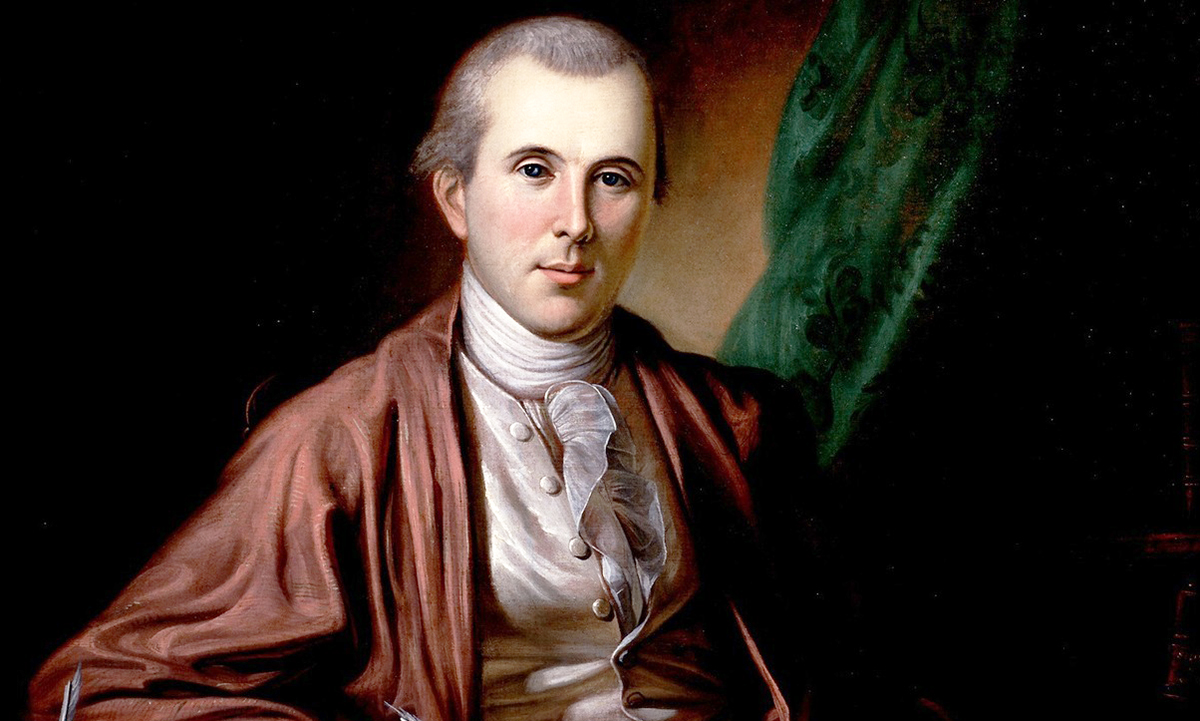
Washington affirmed his strong religious beliefs in his final public message to Americans: his “Farewell Address” of September 17, 1796. That message is considered to be among the most significant political speeches ever delivered by any president,10 and subsequent presidents recommended to Americans that they read and study that Address.11 (We have it available in Documents of Freedom.)

Because of his significant influence, it is no surprise that Washington was lovingly titled by his contemporaries as the man who was “First in war, First in peace, First in the hearts of his countrymen.”12


Endnotes

1 David Ramsay, The Life of George Washington (Baltimore: Joseph Jewett and Cushing & Sons, 1832), 13; John S.C. Abbott, American Pioneers and Patriots. George Washington, or Life in America One Hundred Years Ago (New York: Dodd & Mead Publishers, 1875), 82, James K. Paulding, A Life of Washington (Alberdeen: George Clark and Son, 1848), 41-42.
2 Ramsay, Life of Washington (1832), 13-14; Abbott, American Pioneers (1875), 85-86; Paulding, Life of Washington (1848), 43-44.
3 Ramsay,Life of Washington (1832), 14-15; Abbott, American Pioneers (1875), 91-93, Paulding, Life of Washington (1848), 44-45.
4 George Washington Parke Custis, Recollections and Private Memoirs of Washington by His Adopted Son (New York: Derby & Jackson, 1860), 375; Eugene Parsons, Great Americans of History George Washington: A Character Sketch (Milwaukee, WI: H.G. Campbell Publishing Company, 1898), 30-31, Washington Irving, Life of George Washington (New York: G. P. Putnam & Co., 1856), I:368.
5 Custis, Recollections (1860), 375; Irving, Life of Washington (1856), I:368; Parsons, Great Americans of History (1898), 31.
6 See for example, Jared Sparks, The Life of George Washington (Boston: Ferdinand Andrews, 1839) 205-217; Hon. J. T. Headley, The Illustrated Life of Washington (New York: G. & F. Bill, 1859) 214-216.
7 James Grant Wilson and John Fiske, Appletons’ Cyclopedia of American Biography (New York: D. Appleton and Company, 1889), 6, “Washington, George.”
8 See for example, George Washington, A Compilation of the Messages and Papers of the Presidents, ed. James D. Richardson (New York: Bureau of National Literature, Inc., 1897), I:179, Reply of the President to an Address of the Senate, December 12, 1795.
9 See for example, George Washington, Messages and Papers of the Presidents, ed. Richardson (1897), I:44., First Inaugural Address in the City of New York, April 30, 1789.
10Washington’s Farewell Address,” Library of Congress: Religion and the Founding of the American Republic, (July 23, 2012); “February 22, 1862: Washington’s Farewell Address,” United States Senate.
11 See for example, James Madison, The Writings of James Madison, Letter to Thomas Jefferson, February 8, 1825.
12 Eulogies and Orations on the Life and Death of General George Washington, First President of the United States of America (Boston: Manning & Loring, 1800), 17, “Funeral Oration on the Death of General Washington. Delivered at the Request of Congress, Dec. 26, 1799. By Major-General Henry Lee.”

Dr. Benjamin Rush


Take the Benjamin Rush Quiz!

  1. Which two former Presidents did Benjamin Rush help reconcile?
  2. What was the name of the society that Benjamin Rush helped form to start Sunday Schools?
  3. What other Founding Father helped Benjamin Rush found America’s first anti-slavery society?
  4. How many colleges and universities did Benjamin Rush help establish?
  5. What was the name of the colonial law requiring children to know how to read, and establishing public schools for that purpose?


Dr. Benjamin Rush, a signer of the Declaration of Independence, was considered by John Adams to be one of America’s three most notable Founding Fathers, ranking alongside George Washington and Benjamin Franklin. 1 But his contributions to America were not purely political, even though those were very significant. 2

Rush is also known as the “Father of American Medicine.” 3 He was a founding member of America’s first Bible Society 4 and is credited with helping begin the American Sunday School movement. 5  He helped organize America’s first Anti-Slavery society 6 and was a leader in the national abolition movement. 7 He held multiple university professorships, 8 and is properly titled “The Father of Public Schools Under the Constitution,” being an advocate for free public schools for all youth. 9

As families across the nation send millions of children back to school 10 each year, it is a good time to review the intent behind America’s original educational system: for students to receive a sound academic education based on God’s Word. 11

In fact, in 1791, Dr. Rush wrote a lengthy piece providing a dozen or so reasons why America would continue teaching the Bible in our public schools.


How Did You Do?

  1. Which two former Presidents did Benjamin Rush help reconcile?
    John Adams and Thomas Jefferson (To see the story behind the reconciliation, read this article.)
  2. What was the name of the society that Benjamin Rush helped form to start Sunday Schools?
    First Day Schools
  3. What other Founding Father helped Benjamin Rush found America’s first anti-slavery society?
    Benjamin Franklin (To see what the Founding Fathers thought of slavery, see here.)
  4. How many colleges and universities did Benjamin Rush help establish?
    Five (The College of Philadelphia, the University of the State of Pennsylvania, the Young Ladies’ Academy of Philadelphia, Dickinson College, and Franklin College)
  5. What was the name of the colonial law requiring children to know how to read, and establishing public schools for that purpose?
    The Old Deluder Satan Act (For additional information, check out Four Centuries of American Education.)

Endnotes

1 John Adams to Richard Rush, May 5, 1813, National Archives. See also, John Sanderson, Biography of the Signers to the Declaration of Independence (Philadelphia: R. W. Pomeroy, 1823), IV:285; John Adams to Richard Rush, May 5, 1813, L. H. Butterfield, “The Reputation of Benjamin Rush,” Pennsylvania History, January 1950, XVII:1:9.
2 For example, Dr. Rush pushed for the ratification of the U.S. Constitution, as well as adoption of the 1790 Pennsylvania State Constitution. He was appointed Treasurer of the U.S. Mint by President John Adams, a position which he held under Presidents Thomas Jefferson and James Madison.
3 Thomas D. Mitchell, The Character of Rush (Philadelphia: Published by the Class, John H. Gihon, Printer, 1848), 4.
4 The First Report of the Bible Society Established at Philadelphia; Read before the Society at their Annual Meeting, May 1, 1809 (Philadelphia: Printed by Order of the Society; Fry and Kammerer, Printers, 1809); “Rush, Benjamin,” Dictionary of American Biography.
5 Edwin Wilber Rice, The Sunday-School Movement and the American Sunday-School Union (Philadelphia: American Sunday School Union, 1917 ), 44-45.
6 Constitution of the Pennsylvania Society for Promoting the Abolition of Slavery, and the Relief of Free Negroes, Unlawfully Held in Bondage. Begun in the Year 1774, and Enlarged on the 23rd of April, 1787. (Philadelphia: Francis Bailey, 1788), 8; “Rush, Benjamin,” Dictionary of American Biography; Thomas Clarkson, Abolition of the African Slave-Trade, by the British Parliament (Augusta: P.A. Brinsmade, 1830), 1:66-69.
7 Centennial Anniversary of the Pennsylvania Society, for Promoting the Abolition of Slavery, the Relief of Free Negroes Unlawfully Held in Bondage, and for Improving the Condition of the African Race (Philadelphia: Grant, Faires, & Rodgers, 1875), 15.
8Benjamin Rush,” University of Pennsylvania, accessed October 26, 2023.
9 David Ramsay, An Eulogium upon Benjamin Rush, M. D. (Philadelphia: Bradford and Inskeep, 1813), 107; Benjamin Rush, “Of the Mode of Education Proper in a Republic,” Essays, Literary, Moral and Philosophical (Philadelphia: Thomas and Samuel F. Bradford, 1798), 6-20.
10Public and private elementary and secondary teachers, enrollment, and pupil/teacher ratios: Selected years, fall 1955 through fall 2021,” National Center for Education Statistics, accessed October 26, 2023.
11 Alexis de Tocqueville, The Republic of the United States of America and Its Political Institutions, Reviewed and Examined, trans., Henry Reeves (Garden City, NY: A. S. Barnes & Co., 1851), 41; Edward Kendall, Travels through the Northern Parts of the United States, in the Years 1807 and 1808 (New York: I. Riley, 1809), I:270-271.

The Barbary Powers Wars

What important American victory in the Barbary Powers Wars occurred on this date in 1801?

(*See below for the answer.)

The Barbary Powers Wars were the first wars officially declared against America following our victory in the War for Independence. 1 Muslim terrorists from five different Islamic nations (Turkey, Tunis, Morocco, Algiers, and Tripoli) were making indiscriminate attacks against the property and interests of what they claimed to be “Christian” nations (America, England, France, Spain, Portugal, Denmark, Sweden, etc.). 2 These Muslim terrorists (called Barbary, that is, barbaric “pirates” by most Americans) attacked American civilian and commercial merchant ships wherever they found them, seizing the cargo and enslaving the crew. 3
In 1784, Congress dispatched three diplomats – John Adams, Benjamin Franklin, and Thomas Jefferson – to negotiate with these Muslim nations and end the unprovoked attacks. 4 They found this to be a difficult task, for the attacking of ships and the taking of Christians by Muslims had been a widespread problem for centuries. 5

The Muslims found they could finance their wars and terror operations by enslaving and then selling captured seamen. (The Muslims took 1.25 million captive slaves in that period. 6) Because this was such a widespread and recurring problem, other Christian nations formed standing organizations to raise money to purchase enslaved seamen. As Jefferson explained:

There is here an order of priests called the Mathurins, the object of whose institutions is the begging of alms for the redemption of captives. About eighteen months ago, they redeemed three hundred, which cost them about fifteen hundred livres [$1,500] apiece. They have agents residing in the Barbary States, who are constantly employed in searching and contracting for the captives of their nation, and they redeem at a lower price than any other people can. 7
Ransoming Americans was no less expensive, and therefore was a very profitable trade for the Muslim terrorists. 8 Additionally, the Muslim nations would sign treaties with the attacked nations, including America, providing that for an annual “tribute” (perhaps $1 million a year, along with the “gift” of several frigates), that they would perhaps refrain from further attacks. By 1795, such “peace” payments to Muslim terrorists comprised a full sixteen percent of the entire federal budget!  9

Among the many treaties signed with Muslim nations during this period was the famous 1797 treaty with Tripoli. It was one of the many treaties in which each country officially recognized the religion of the other in an attempt to prevent further escalation into a “Holy War” 10 such as had existed between Christians and Muslims in the Middle Ages.

The Muslims considered that all Christian nations were like those of the Crusades, when Christians fought Muslims simply because they were Muslims. 11  However, America was definitely not like the European Christian nations from medieval times, for we did not kill Muslims, Jews, or any one else for their faith. In fact, many Founding Fathers talked about how different America as a Christian nation was from the European Christian nations; 12 and the American treaties, including the Treaty of Tripoli, made this very point.

Significantly, secularists regularly cite one clause from that treaty in devious attempts to make it appear that the Founding Fathers emphatically avowed that America was not a Christian nation. They thus quote from that treaty the line declaring “The government of the United States is in no sense founded on the Christian religion . . . ” This declaration certainly seems to be straightforward – until you discover that the critics only used part of the quote. Notice what the full, unedited clause states:

As the government of the United States of America is not in any sense founded on the Christian religion as it has in itself no character of enmity against the laws, religion or tranquility of Musselmen [Muslims]. and as the said States [America] have never entered into any war or act of hostility against any Mahometan nation, it is declared by the parties that no pretext arising from religious opinions shall ever produce an interruption of the harmony existing between the two countries. 13 (emphasis added)

This clause from the Treaty of Tripoli simply affirms that America was not one of the European Christian nations with an inherent hostility toward Muslims, and that America had never been part of arbitrary wars against Muslims such as had characterized the Crusades. This clause definitely does not deny or undermine America’s strong Christian heritage – unless you wrongly place a period in the middle of the sentence, as secularist critics do.
When Thomas Jefferson became president in 1801, he decided that it was time to take military action to end the two-decades-old unprovoked Muslim terrorist attacks against Americans. 14 Using the brand new American Navy to transport the U. S. Marines overseas (President George Washington had called for the construction of a navy in 1795, and President John Adams had overseen its construction 15), General William Eaton took the American military and proceeded to the same region of the world where Americans are still being attacked today. He then led a successful five-year campaign to free captured Americans and crush Muslim terrorist forces. 16 Tripoli (now called Libya) finally capitulated and signed a treaty on America’s terms in 1805, thus ending their aggressions – at least for a while. 17
(By the way, it was from the Marine’s role in that first War on Terror from 1801-1805 that the U. S. Marines derive part of the opening line of their hymn: “From the halls of Montezuma to the shores of Tripoli . . .”)
Shortly after President James Madison took office, he became engulfed in the War of 1812. With America preoccupied in a second war against the British, Algerian Muslim terrorists again began attacking Americans. But upon concluding the war with the British, President James Madison dispatched the American military and warships against three Muslim nations: Algiers, Tunis, and Tripoli. 18 America (with the assistance of Great Britain and the Netherlands) subdued those Muslim nations and brought them to the peace table, where they freed all the enslaved Christians. 19
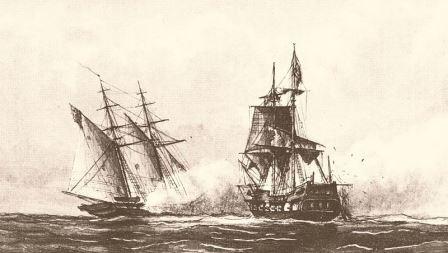
*On this date in history, the U.S.S. Enterprise captured the Trioplitan ship known as the Tripoli. While the terrorists sustained heavy losses, the Americans did not lose a single man in the battle. 20


Endnotes

1 Thomas Clark, Naval History of the United States, from the Commencement of the Revolutionary War to the Present Time (Philadelphia: M. Stiles, 1814), 1:140; James H. Morgan, Register of the Military Order of Foreign wars of the United States (New York: The National Commandery, 1900), 11-19.
2 Richard O’Brian to Thomas Jefferson, June 8, 1786, Naval Documents Related  to the United States Wars with the Barbary Powers, ed. Claude A. Swanson (Washington: United States Government Printing Office, 1939), 1:1-6; A General View of the Rise, Progress, and Brilliant Achievements of the American Navy Down to the Present Time (Brooklyn: 1828), 70-71; “Barbary Pirates,” The Encyclopedia Britannica, ed. Hugh Chisholm (New York: The Encyclopedia Britannica Company, 1910), 383.
3 Julian Hawthorne et. al., United States from the Discovery of the North American Continent up to the Present Time (New York: James Schouler, 1894), 3:17-20; Forward written by President Franklin D. Roosevelt, December 30, 1958, Naval Documents, ed. Swanson (1939), 1; Theodore Lyman, The Diplomacy of the United States (Boston: Wells and Lilly, 1828), 2:338-342.
4 Thomas Jefferson to William Carmichael, November 4, 1785, The Writings of Thomas Jefferson, ed. Andrew A. Lipscomb (Washington, D. C.: The Thomas Jefferson Memorial Association, 1903), V:195; Garner W. Allen, Our Navy and the Barbary Corsairs (Boston: Houghton, Mifflin, and Company, 1905) 28.
5 “Barbary Pirates,” The Encyclopedia Britannica, ed. Hugh Chisholm (New York: The Encyclopedia Britannica Company, 1910), 383.
6 Robert Davis, Christian Slaves, Muslim Masters: White Slavery in the Mediterranean, the Barbary Coast and Italy, 1500-1800 (Palgrave Macmillan, 2004).
7 Thomas Jefferson to John Adams, January 11, 1787, The Writings of Thomas Jefferson, ed. Andrew A. Lipscomb (Washington, D. C.: The Thomas Jefferson Memorial Association, 1903), VI:47-48.
8 No. 43: Prisoners at Algiers, American State Papers: Documents, Legislative and Executive, of the Congress of the United States (Washington: Gales and Seaton), 1:100-101.
9 The federal budget was $6,115,000 in 1795; a payment of nearly $1 million was given that year to Algiers alone, not including what was given to the other Barbary Powers.  See US Department of Commerce, Bureau of the Census, Historical Statistics of the United States (White Plains, NY: Kraus International Publications, 1989), 1106; George Washington to the Secretary of the Treasury, May 29, 1794, The Writings of George Washington, ed. John C Fitzpatrick (Washington: Government Printing Office, 1940), 33:385.
10 See, for example, the 1786 Treaty with Morocco: Articles 10, 11, 17 and 24; the 1795 Treaty with Algiers: Article 17; the 1815 Treaty with Algiers: Article 13; the 1816 Treaty with Algiers: Articles 14 and 15; the 1796 Treaty with Tripoli: Article 11; the 1805 Treaty with Tripoli: Article 14; and the 1797 Treaty with Tunis: Forward.
11 Thomas Edward Watson, The Life and Times of Thomas Jefferson (New York: D. Appleton and Company, 1903), 247-249.
12 See for example, John Jay, “Address to the Annual Meeting of the American Bible Society,” May 8, 1823, Correspondence and Public Papers of John Jay, ed. Henry Johnston (New York: G. P. Putnam’s Sons, 1893), IV:491; John Quincy Adams, An Oration Delivered Before the Inhabitants of the Town of Newburyport at Their Request on the Sixty-First Anniversary of the Declaration of Independence (Newburyport: Charles Whipple, 1837), 17; John Adams in a speech to both  houses of Congress, November 23, 1797, The Works of John Adams, ed. Charles Francis Adams (Boston: Little, Brown and Company, 1854), IX:121; Noah Webster, History of the United States (New Haven: Durrie & Peck, 1832), 339, “Advice to the Young”; Daniel Webster, Mr. Webster’s Speech in Defence of the Christian Ministry and In Favor of the Religious Instruction of the Young. Delivered in the Supreme Court of the United States, February 10, 1844, in the Case of Stephen Girard’s Will (Washington, DC: Gales and Seaton, 1844), 12-13.
13 Acts Passed at the First Session of the Fifth Congress of the United States of America (Philadelphia: William Ross, 1797), 43-44.
14 Thomas Jefferson, “Second Annual Message,” December 15, 1802, The Writings of Thomas Jefferson (Washington, D.C.: Taylor & Maury, 1854), 8:17; Thomas Jefferson, “Autobiography,” 1821, The Writings of Thomas Jefferson, ed. Paul Leicester Ford (New York: G.P. Putnam’s Sons, 1892), I:91-93; Elizabeth Huff, “The First Barbary War,” Monticello, accessed December 1, 2023.
15 “The Reestablishment of the Navy, 1787-1801,” Naval History Bibliography.
16  William Grimshaw, The History of the United States, From Their First Settlement as Colonies to the Cession of Florida, in Eighteen Hundred and Twenty-One, (Philadelphia: Benjamin Warner, 1821), 194-195; Charles Prentiss, The Life of the Late Gen. William Eaton; Several Years an Officer in the United States’ Army, Consul at the Regency of Tunis on the Coast of Barbary, and Commander of the Christian and Other Forces That Marched from Egypt Through the Desert of Barca, in 1805, and Conquered the City of Derne, Which Led to the Treaty of Peace Between the United States and the Regency of Tripoli; Principally Collected from His Correspondence and Other Manuscripts (Brookfield: E. Merriam & Co., 1813).
17 “The Barbary Wars, 1801-1805,” National Museum of the US Navy, accessed October 7, 2025.
18 John Quincy Adams, The Lives of James Madison and James Monroe (Buffalo: Geo. H. Derby and Co., 1850), 93; “Barbary Wars, 1801-1805 and 1815-1816,” US Department of State: Office of the Historian, accessed October 7, 2025.
19  James Madison, “Seventh Annual Message,” December 5, 1815, The Writings of James Madison, ed. Gaillard Hunt (United States: G.P. Putnam’s Sons, 1908), VIII:33; Perceval Barton Lord, Algiers, with Notices of the Neighbouring States of Barbary, (London: Whittaker & Co., 1835), 50-60.
20 Garner W. Allen, Our Navy and the Barbary Corsairs (Boston: Houghton, Mifflin, and Company, 1905), 96; Naval Documents, ed. Swanson (1939), 1:538-540.

Noah Webster

As the school year comes to a close, this is a good time to remember a man who had a profound impact on America’s educational system: Noah Webster.

Noah was born on October 16, 1758 in Hartford, Connecticut 1 and had four brothers and sisters. 2 At the age of sixteen, he went off to Yale, 3 where he was twice called to go out as a soldier in the American Revolution. 4

After completing college, he became a schoolteacher. 5 Recognizing the importance of providing an American rather than a British education, Noah began writing distinctly American books 6 that taught children Americanized spellings, readings, and pronunciations as well as American history. 7 Noah was adamant that just as America had worked hard to become an independent Nation, she also needed a uniform language. 8 His profound influence in shaping America’s educational system earned him the title “Schoolmaster to America.” 9
Among his many remarkable achievements, the one for which he is probably most widely known today is his Webster’s Dictionary. In 1806, he produced an early small dictionary that provided proper spellings and meanings of words. 10 But he followed that with years of learning some twenty different languages so that he could trace the origins of English words back to their original roots in various languages, and then create a definition for the words based on those translations. 11 As he explained, “I spent ten years in making a Synopsis of twenty languages, viz.,  the Chaldaic, Syriac, Hebrew, Samaritan, Arabic, Ethiopic, and Persian; the Hiberno Celtic or native Irish; the Anglo-Saxon, German, Dutch, Swedish, Danish; Greek, Latin, Italian, Spanish, French, Russian, and English, to which may be added the Armoric and Welsh.” 12 In 1828, his massive dictionary was finally finished, containing some 70,000 words.

Strikingly, his strong Biblical faith is evident throughout the dictionary, and he frequently used Scriptures to help illustrate the meanings of words. (See, for example, the graphic of the word “wisdom” to the left.)
Five years later, taking what he had learned from his extensive work on the dictionary, Noah published an updated version of the King James Bible, replacing outdated ancient words with their more modern meanings. For example, he replaced the King James word “kine” with its modern equivalent, “cow or cattle.” Noah believed strongly in the inerrancy of God’s Word, so wanting to ensure that he had changed none of the doctrinal meanings of the Scriptures with his word changes, in the preface to his Bible he listed all the specific words that he had updated so that people would know and could investigate for themselves exactly what he had and had not changed. This 1833 Bible is considered the first “modern” language American translation.13 While preparing both his Dictionary and the Bible, Noah wrote many letters that reveal his deep love for God and the Scriptures. (We have posted some of those original letters which we own on our WallBuilders website.)
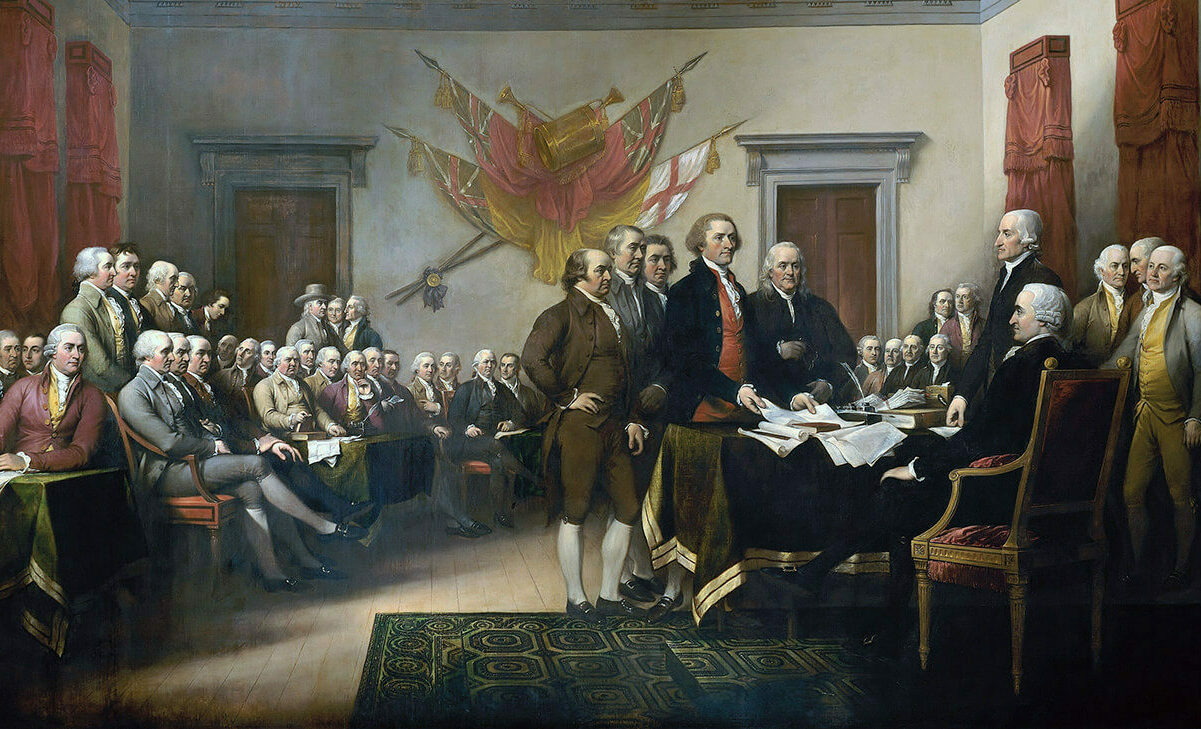
Another example of Noah’s strong Christian faith is found in a letter that he wrote in 1809. This letter was so well received that it was later printed in a magazine as a stand-alone article (The Peculiar Doctrines of the Gospel Explained and Defended).

Having spent his life working to improve educational content and make the Word of God more readable for the common man, Noah Webster died 170 years ago on May 28, 1843. 14


Endnotes

1 Horace E. Scudder, American Men of Letters, Noah Webster (Boston: Houghton Mifflin and Company, 1882), 2.
2 Emily Ellsworth Fowler Ford, Notes on the Life of Noah Webster, ed. Emily Ellsworth Ford Skeel (New York: Privately printed, 1912), I:15; Scudder, American Men of Letters (1882), 3.
3 Scudder, American Men of Letters (1882), 4; Ford, Notes on the Life of Noah Webster, ed. Skeel (1912), I:14-15.
4 Henry Phelps Johnston, Yale and Her Honor Roll in the American Revolution (New York: Privately Printed, 1888), 11-14,77-78, 341; Scudder, American Men of Letters (1882), 5-7.
5 Scudder, American Men of Letters (1882), 8-9.
6 Scudder, American Men of Letters (1882) 33-35.
7 Scudder, American Men of Letters (1882) 34-38, 277-278.
8 Scudder, American Men of Letters (1882) 242-243, 277.
9 Harry R. Warfeel, Noah Webster: Schoolmaster to America (New York: The MacMillan Company, 1936); see also reprints of Webster’s works such as William Webster, A Sequel to Webster’s Elementary Spelling Book (Philadelphia: J. B. Lippincott Company, 1845).
10  Scudder, American Men of Letters (1882) 216.
11 Noah Webster, An American Dictionary of the English Language (New York: S. Converse, 1828), 1:Preface; Scudder, American Men of Letters (1882) 236.
12 Noah Webster to Samuel Lathan Mitchell, December 12, 1823, Letters of Noah Webster, ed. Harry R. Warfel (New York: Library Publishers, 1953), 410.
13 The Holy Bible, Containing the Old and New Testaments in the Common Version, ed. Noah Webster (New Haven: Durrie & Peck, 1833), Preface.
14 Scudder, American Men of Letters (1882) 279.

John Hart – Quiet Farmer. Selfless Patriot.

“Having put his hand to the plow, he would not turn back.”

When fifty-six men of varying backgrounds, temperaments, means, and abilities, mutually pledged “our Lives, our Fortunes and our sacred Honor,” the words were not mere platitudes. Each knowingly signed his name. Many, if not most of those men lost loved ones and homes. Many accumulated great financial debt resulting in bankruptcy or loss of their properties. None sacrificed his honor.

Such was John Hart, signer of the Declaration from New Jersey and one of the many noted Christians among the Founding Fathers. Unlike some other Founders, Hart left little by way of written testimony. But his Christian character was widely attested to by those who knew him best. WallBuilders’ museum features some legal documents signed by John Hart and in which he affirms the legal oaths, on “the Holy Evangelists of Almighty God” (i.e., the entirety of the Scriptures). Significantly, many colonial oaths were not merely taken on the Bible, but used this specific stronger language.1

Not much is known about John Hart’s younger years, including not even the exact year he was born (ca. 1711-1715). He learned bravery and patriotism from his father who helped raise a volunteer army, named “The Jersey Blues,” to assist in the French and Indian War.2

Also like his father, John became a gentleman farmer, acquiring a large property where he raised grains for his mill, a multitude of livestock, and reared his 13 children. He was a natural leader in his community and in his church. His reputation as “Honest John Hart” earned him the confidence and respect of those around him.3 Although he preferred to remain on his farm, he answered duty’s call to public service time and time again. Over the course of 29 years he held several local and state offices. He early became interested in the cause of freedom, even helping to select New Jersey’s delegates to the Stamp Act Congress in 1765.4

John Hart was himself elected to the Continental Congress where, somewhere near the age of 60, he voted for the Declaration of Independence with “unusual zeal.”5 Since the British army was already ravaging New York at the time, he fully understood the eminent personal cost entailed by affixing his name to the Declaration of Independence. And it wasn’t long before he realized those consequences.

The British Army quickly swept into New Jersey. His property was pillaged by Hessian mercenaries. His two eldest sons were serving in the Continental Army and his remaining children had to flee their home. John was chased from his dying wife’s bedside and hunted by the enemy. He wandered about the countryside to avoid discovery by the British, rarely sleeping in the same place two nights in a row. In fact, he even had to sleep in the “resting place of a large dog” to avoid detection by a nearby British patrol.6  Several times, he was forced to flee as fast as he could to “save his neck” since he had been “marked for vengeance” by the British.7

John was never even tempted by the pardons offered by the British for “rebels” who would recant and declare their loyalty to the Crown.

Eventually, he was able to return to his destroyed home in 1777 and regather his scattered family. He began to restore his farm and property, but his health was permanently broken and he never fully recovered from the physical hardships of strain and exposure. His farm was later sold off to cover debts incurred during the war. He died before the end of the War, having yet witnessed the freedom for which he sacrificed so much.  We owe much to men such as John Hart who gave his all so that future generations might live in freedom and security.

To learn more about John Hart’s faith and character and that of his wife’s, read Lives of the Signers and Wives of the Signers (both reprinted by WallBuilders).


Endnotes

1. See, for example, Joseph Brevard, An Alphabetical Digest of the Public Statue Law of South Carolina (Charleston: John Hoff, 1814), II:86, “Oaths-Affirmations,” 1731; Oliver H. Prince, A Digest of the Laws of the State of Georgia (Milledgeville: Grantland & Orme, 1822), 3, “An Act for the case of Dissenting Protestants, within this province, who may be scrupulous of taking an oath, in respect to the manner and form of administering the same,” passed December 13, 1756; Samuel Nevill, The Acts of the General Province of New Jersey (Woodbridge, NJ: James Parker, 1761), 135, “An Act for the Raising and Maintaining One Hundred and Twenty Effective Men, for the Defense of the Frontiers of the Colony of New Jersey,” passed June 3, 1757; John Haywood, A Manual of the Laws of North Carolina (Raleigh: J. Gales, 1814), 34, “Oaths and Affirmations. 1777”.

2. John Sanderson, Biography of the Signers to the Declaration of Independence, (Philadelphia: TR.W. Pomeroy, 1827), 9:94; L. Carroll Judson, A Biography of the Signers of the Declaration of Independence, and of Washington and Patrick Henry (Philadelphia: J. Dobson, and Thomas, Cowperthwait & Co., 1839), 189.

3.  Sanderson, Biography of the Signers (1827), 9:99; Rev. Charles A. Goodrich, Lives of the Signers of the Declaration of Independence (New York: Thomas Mather, 1836), 228.

4. Benson J. Lossing, Biographical Sketches of the Signers of the Declaration of American Independence (New York: George F. Cooledge and Brother, 1848), 88.

5. Robert W. Lincoln, Lives of the Presidents of the United States; with Biographical Notices of the Signers of the Declaration of Independence (New York: William W. Reed, 1833), 360.

6. Lincoln, Lives of the Presidents (1833), 360; Sanderson, Biography of the Signers (1827), 9:113.

7. Judson, A Biography of the Signers (1839), 191; Lossing, Biographical Sketches of the Signers (1848), 88.

Founding Fathers on Prayer

David Barton was interviewed about the National Day of Prayer in 2016. This interview provides useful historical information that you might be interested in sharing with your friends and neighbors. The four questions David was asked appears below, along with his answers.

Why is it important that we pray for our country and its peoples?

First, because God tells us to (1 Timothy 2:1-4), and it is important that we obey Him (John 14:15, Acts 5:32). Second, because God answers prayer (Matthew 21:22, John 14:13-14). Third, God honors prayer and turns His attention to those who pray. He takes note of people who pray and His ear remains open to them (such as in 2 Chronicles 7:14). Fourth, prayer not only gives God a vehicle by which He can respond and answer prayers but prayer also changes those who pray, for praying helps us to be God-conscious, and when we are God-conscious as individuals, our behavior is different than if we rarely think about God (Romans 1:28). I think that George Washington incorporated many of these elements when he explained why he called the nation’s first federal day of prayer. According to President Washington, “It is the duty of all nations to acknowledge the providence of Almighty God, to obey His will, to be grateful for His benefits, and humbly to implore His protection and favor.”1

Cite an example that stands out to you of how prayer changed the course of the United States or accomplished a monumental goal.

There are numerous moments, but I’ll choose the answered prayers attested to by Founding Father Benjamin Franklin. About five weeks into the Constitutional Convention of 1787 when they were attempting to draft the U. S. Constitution, their efforts were a signal failure. As things were beginning to break up and delegates return home to their states, Franklin challenged them and called them to prayer. He told them:
In this situation of this Assembly, groping as it were in the dark to find political truth, and scarce able to distinguish it when presented to us, how has it happened, sir, that we have not hitherto once thought of humbly applying to the Father of Lights to illuminate our understanding? In the beginning of the contest with Great Britain, when we were sensible of danger, we had daily prayer in this room for the Divine protection. Our prayers, sir, were heard, and they were graciously answered. All of us who were engaged in the struggle must have observed frequent instances of a superintending Providence in our favor. . . . And have we now forgotten that powerful Friend? Or do we imagine we no longer need His assistance? I have lived, sir, a long time, and the longer I live, the more convincing proofs I see of this truth – that God governs in the affairs of men. And if a sparrow cannot fall to the ground without His notice, is it probable that an empire can rise without His aid? We have been assured, sir, in the Sacred Writings, that “except the Lord build the House, they labor in vain that build it.” I firmly believe this; and I also believe that without His concurring aid we shall succeed in this political building no better than the builders of Babel. . . . I therefore beg leave to move that henceforth prayers imploring the assistance of Heaven, and its blessings on our deliberations, be held in this Assembly every morning before we proceed to business.2

Notice that Franklin openly acknowledged that their frequent prayers throughout the Revolution had been answered. Hence, America became an independent nation rather than remain a subjugated British colony. That is just one example of how answered prayer changed the course of the nation. But to return to the Constitutional Convention, Washington recorded that they went to church to hear an address.3 At the church, the Rev. William Rogers had a special prayer for the Constitutional Convention:
[W]e fervently recommend to thy fatherly notice . . . our federal convention. . . . [F]avor them, from day to day, with thy immediate presence; be Thou their wisdom and their strength! Enable them to devise such measures as may prove happily instrumental for healing all divisions and promoting the good of the great whole; . . . that the United States of America may furnish the world with one example of a free and permanent government. . . . May we . . . continue, under the influence of republican virtue, to partake of all the blessings of cultivated and civilized society.4

Franklin believed their prayers over the Convention had been answered. After five weeks of failure, following the recess and time of prayer, they reconvened and in only ten weeks produced the document that has become the longest on-going constitution in the history of the world. Franklin definitely saw a difference after the recess and prayer. While he was not willing to say that the finished Constitution was inspired in the same sense as the Bible, he nevertheless believed that it was the product of God’s direct intervention, explaining:
[I] beg I may not be understood to infer that our general Convention was Divinely inspired when it formed the new federal Constitution . . . [yet] I can hardly conceive a transaction of such momentous importance to the welfare of millions now existing (and to exist in the posterity of a great nation) should be suffered to pass without being in some degree influenced, guided, and governed by that omnipotent, omnipresent, and beneficent Ruler in Whom all inferior spirits “live and move and have their being” [Acts 17:28].5

Other delegates agreed. Alexander Hamilton is reported to have declared:

For my own part, I sincerely esteem it a system which without the finger of God never could have been suggested and agreed upon by such a diversity of interests.6

James Madison agreed, and reported:

It is impossible for the man of pious reflection not to perceive in it a finger of that Almighty Hand which has been so frequently and signally extended to our relief in the critical stages of the Revolution.7

As far as these delegates were concerned, the finger of God – that is, His Divine power – had guided their writing of the Constitution. George Washington (president of the Convention) similarly attested:
As to my sentiments with respect to the merits of the new Constitution, I will disclose them without reserve. . . . It appears to me then little short of a miracle that the delegates from so many different states . . . should unite in forming a system of national government.8

Benjamin Rush, a signer of the Declaration from Philadelphia who closely monitored the proceedings, concurred, openly testifying:

I do not believe that the Constitution was the offspring of inspiration, but I am as perfectly satisfied that the Union of the States in its form and adoption is as much the work of a Divine Providence as any of the miracles recorded in the Old and New Testament were the effects of a Divine power.9

So, I would point to the independence of America and the creation of its unique Constitution and government as direct answers to prayer.

An excellent book recording other such moments of answered prayer is by Georgia State Senator Barry Loudermilk.10

In your estimation, what happens to a country when it drifts away from God?

When a country drifts away from God, God drifts away from that country. When God drifts away from the country, His blessings also leave. Founding Father Samuel Adams (“The Father of the American Revolution”) fully understood this and reminded citizens:
May every citizen in the army and in the country have a proper sense of the Deity upon his mind and an impression of that declaration recorded in the Bible: “Him that honoreth Me I will honor, but he that despiseth Me shall be lightly esteemed” [1 Samuel 2:30].11

Numerous other Founding Fathers understood this truth and clearly expressed it. In fact, political leaders for generations embraced this belief. For this reason, President Abraham Lincoln reminded the nation in the midst of the Civil War:

[I]t is the duty of nations as well . . . and to recognize the sublime truth announced in the Holy Scriptures and proven by all history that those nations only are blessed whose God is the Lord [Psalm 33:12]. . . . But we have forgotten God. We have forgotten the gracious hand which preserved us in peace and multiplied and enriched and strengthened us, and we have vainly imagined in the deceitfulness of our hearts that all these blessings were produced by some superior wisdom and virtue of our own. Intoxicated with unbroken success, we have become too self-sufficient to feel the necessity of redeeming and preserving grace – too proud to pray to the God that made us.12

Jeremiah 8 elucidates the problems that come when a nation drifts from God:

Since they have rejected the word of the Lord, what kind of wisdom do they have? Therefore I will give their wives to other men and their fields to new owners . . . They dress the wound of my people as though it were not serious, saying “Peace, peace” when there is no peace . . . they have no shame at all; they do not even know how to blush. So they will fall among the fallen . . . I will take away their harvest, there will be no figs on the tree, and their leaves will wither. What I have given them will be taken away.

So, there is much consequence when a nation turns from God. After all, Psalms 9:17 warns, “The wicked shall be turned into hell, and all the nations that forget God.” God expects individuals to remember and acknowledge Him, but He also expects nations to do the same. Proverbs 3:5-6 reminds us that in all our ways (public as well as private) we are to acknowledge Him; Psalm 79:6 and Jeremiah 10:25 call for God’s wrath upon all nations that do not call upon His name; and the warranty of 1 Samuel 2:30 that “Those who honor Me I will honor, and those who despise Me will be disdained” was delivered to the nation’s civil leaders, not religious ones.

If you could lead the entire country in prayer this National Day of Prayer, what would you pray for? What should our collective prayer be for this country?

I would definitely pray for our leaders and those in authority, as we are commanded to do (1 Timothy 2:1-4). However, I would probably pray even more for America’s Christians. Founding Father Samuel Adams reminds us that “While the people are virtuous, they cannot be subdued, but when once they lose their virtue, they will be ready to surrender their liberties to the first external or internal invader.”13 Benjamin Franklin agreed, declaring “Only a virtuous people are capable of freedom. As nations become corrupt and vicious, they have more need of masters.”14 So why does this apply to Christians? Because George Barna, an eminent national pollster who especially surveys issues related to Biblical thinking and values, reports that of the thousands of surveys he has conducted over recent decades, “of more than 70 moral behaviors we study, when we compare Christians to non-Christians, we rarely find substantial differences.”15 So, there is almost no difference in the way that Christians and non-Christians behave in most moral areas. Barna further investigated how many American Christians actually hold a Biblical worldview – how many of them view the world around them through the filter of Biblical truth. Barna used a very simple standard for measuring the answer to that question:
For the purposes of the survey, a “Biblical worldview” was defined as believing [1] that absolute moral truth exists; [2] the Bible is totally accurate in all of the principles it teaches; [3] Satan is considered to be a real being or force, not merely symbolic; [4] a person cannot earn their way into Heaven by trying to be good or do good works; [5] Jesus Christ lived a sinless life on earth; and [6] God is the all-knowing, all-powerful Creator of the world Who still rules the universe today. In the research, anyone who held all of those beliefs was said to have a Biblical worldview.16

So what percent of Christians agreed with these six fundamental, timeless doctrines of orthodox Biblical Christianity? Only 9 percent!17 – Significantly, nine out of every ten Christians did not believe these most elemental doctrines of the Bible. And among Born-Again Christians (again, those who are considered most serious about their faith), only 19% held a Biblical worldview on these six non-negotiables of Christianity.18

It was common among the Founding Fathers that many of them read through the Bible from cover to cover once every year. As John Quincy Adams affirmed, “I have myself for many years made it a practice to read the Bible once every year.”19 Yet this has become very rare among Christians today. We do not know our own guidebook; and too often it is read merely as a devotional book rather than as a book to affect and regulate every aspect of our thinking and behavior. Our modern understanding of the Bible is so shallow that we cannot point to the verses that historically were used to form the basis of the free-enterprise system, the republican form of government, the common school movement, the civil rights movement, the impetus for written governing documents and limited government, including Bills of Rights. Yet, all of these institutions and movements came from the Bible. In fact, notice how many presidents (not ministers of the Gospel, which is who we would expect to say these things today, but rather it was political leaders who) recognized this truth:

“The experiment is made and has completely succeeded – it can no longer be called in question whether authority in magistrates [civil leaders] and obedience of citizens can be grounded on reason, morality, and the Christian religion.”20 “The general principles on which the fathers achieved independence were. . . . the general principles of Christianity.”21 President John Adams
“[The Bible] is the rock on which our Republic rests.”22 President Andrew Jackson

“It was for the love of the truths of this great Book [the Bible] that our fathers abandoned their native shores for the wilderness. . . . The same truths sustained them in their resolutions to become a free nation; and guided by the wisdom of this Book, they founded a government under which we have grown from three millions, . . . and from being but a stock on the borders of this continent we have spread from the Atlantic to the Pacific.”23 “The Bible. . . . is indispensable to the safety and permanence of our institutions.”24 President Zachary Taylor

“[The Bible] is the best gift God has given to men. All the good the Savior gave to the world was communicated through this book. But for it, we could not know right from wrong.”25 President Abraham Lincoln
“No candid observer will deny that whatever of good there may be in our American civilization is the product of Christianity. Still less can he deny that the grand motives which are working for the elevation and purification of our society are strictly Christian. . . . A belief in Jesus Christ is the very fountainhead of everything that is desirable and praiseworthy in our civilization, and this civilization is the flower of time.”26 “[T]he teachings of the Bible are so interwoven and entwined with our whole civic and social life that it would be literally – I do not mean figuratively, I mean literally – impossible for us to figure to ourselves what that life would be if these teachings were removed.”27
President Teddy Roosevelt

“America was born to exemplify that devotion to the elements of righteousness which are derived from the revelations of Holy Scripture.”28 President Woodrow Wilson

“American life is builded, and can alone survive, upon . . . [the] fundamental philosophy announced by the Savior nineteen centuries ago.”29 President Herbert Hoover

“In the formative days of the Republic, the directing influence the Bible exercised upon the fathers of the Nation is conspicuously evident. . . .We cannot read the history of our rise and development as a Nation without reckoning with the place the Bible has occupied in shaping the advances of the Republic.”30 “I suggest a nationwide reading of the Holy Scriptures during the period from Thanksgiving Day to Christmas. . . . [G]o to . . . the Scriptures for a renewed and strengthening contact with those eternal truths and majestic principles which have inspired such measure of true greatness as this nation has achieved.”31 President Franklin D. Roosevelt

“In this great country of ours has been demonstrated the fundamental unity of Christianity and democracy.”32 “The fundamental basis of this Nation’s law was given to Moses on the Mount. The fundamental basis of our Bill of Rights comes from the teachings which we get from Exodus and St. Matthew, from Isaiah and St. Paul. I don’t think we emphasize that enough these days.”33 President Harry Truman

“[R]eligious faith is the foundation of free government.”34 “[T]his relationship between a spiritual faith – a religious faith – and our form of government is so clearly defined and so obvious that we should really not need to identify a man as unusual because he recognizes it.”35 President Dwight D. Eisenhower

“Of the many influences that have shaped the United States of America into a distinctive Nation and people, none may be said to be more fundamental and enduring than the Bible. Deep religious beliefs stemming from the Old and New Testaments of the Bible inspired many of the early settlers of our country . . . [and] laid the foundation for the spirit of nationhood that was to develop in later decades. The Bible and its teachings helped form the basis for the Founding Fathers’ abiding belief in the inalienable rights of the individual – rights which they found implicit in the Bible’s teachings of the inherent worth and dignity of each individual. This same sense of man patterned . . . the ideals set forth in the Declaration of Independence and the Constitution.”36 President Ronald Reagan
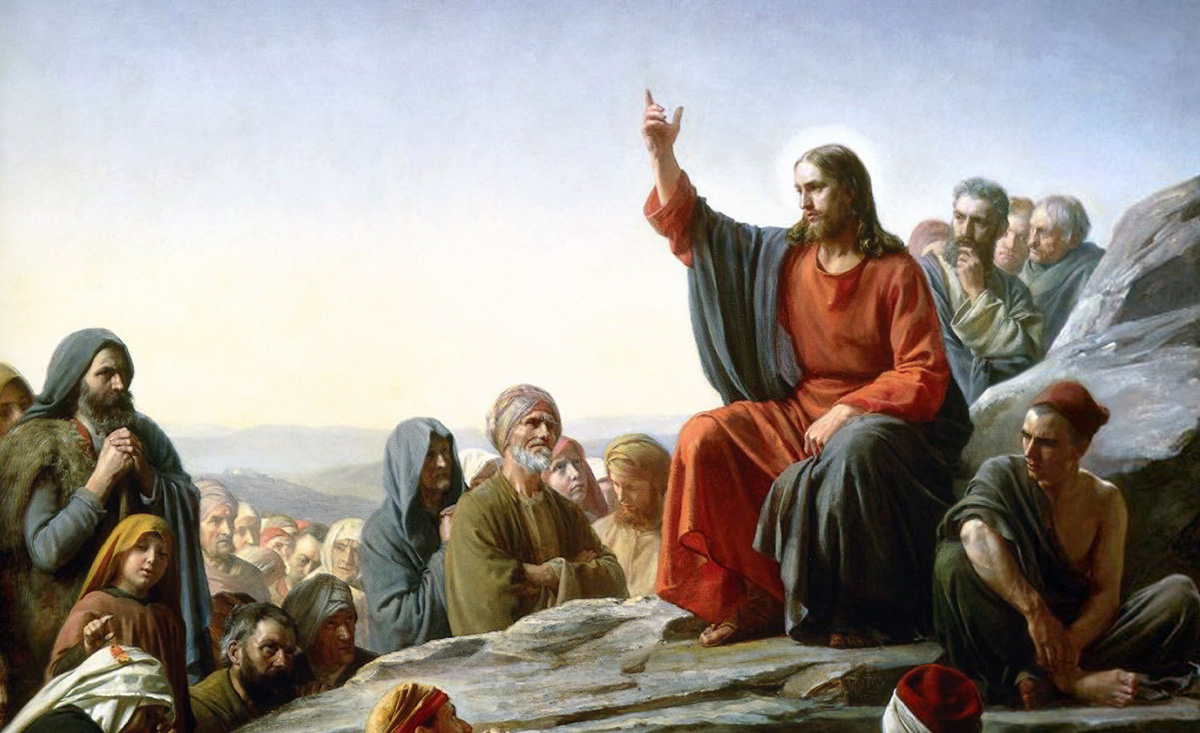
There are many others as well.

Most Christians today no longer know, recognize, or even agree with what our political leaders (much less our ministers) used to openly declare about the Bible and its influence. So, while I would pray for our leaders, I would especially pray for Christian citizens — that they would again begin to read, study, know, and understand the Bible. American can be no stronger than its citizens, and whether the citizens will be strong (and virtuous) depends on whether they know the Bible (cf. Matthew 22:29).


Endnotes

1 George Washington proclamation for a National Thanksgiving, October 3, 1789, Jared Sparks, The Life of George Washington (London: Henry Colburn, 1839), II:302.
2 James Madison’s Notes on the Convention, June 28, 1787, Max Farrand, The Records of the Federal Convention of 1787 (New Haven: Yale University Press, 1911), I:450-452
3 George Washington, diary entry for July 4, 1787, The Writings of George Washington, ed. Worthington Chauncey Ford (New York: G. P. Putnam’s Sons, 1891), XI:148: “And (the Convention having adjourned for the purpose) went to hear an Oration on the anniversary of Independence…”
4 The Massachusetts Centinel (August 15, 1787), 1.
5 Benjamin Franklin, “A Comparison of the Conduct of the Ancient Jews and of the Anti-Federalists in the United States of America,” no date, The Works of Benjamin Franklin, ed. Jared Sparks (Boston: Tappan, Whittemore, and Mason, 1837), V:162.
6 Alexander Hamilton, John Jay, James Madison and Other Men of Their Time, Alexander Hamilton to Mr. Childs, October 17, 1787 The Federalist and Other Contemporary Papers on the Constitution of the United States, ed. E.H. Scott (New York: Scott, Foresman and Company, 1894), 646.
7 James Madison, Federalist #37, Alexander Hamilton, John Jay, & James Madison, The Federalist (Philadelphia: Benjamin Warner, 1818), 194.
8 George Washington to Marquis de Lafayette, February 7, 1788, The Writings of George Washington, ed. Jared Sparks (Boston: Russell, Odiorne, and Metcalf, 1835), IX:317.
9 Benjamin Rush to Elias Boudinot, July 9, 1788, Letters of Benjamin Rush, ed. L. H. Butterfield (Princeton, New Jersey: American Philosophical Society, 1951), I:475.
10 Barry Loudermilk, And Then They Prayed. Moments in American History Impacted by Prayer (Campbell, CA: FastPencil, 2011).
11 Samuel Adams, article signed “Vindex” originally published in the Boston Gazette, June 12, 1780, The Writings of Samuel Adams, ed. Harry Alonzo Cushing (New York: G. P. Putnam’s Sons, 1908), IV:189.
12 Abraham Lincoln, Proclamation Appointing a National Fast Day, March 30, 1863, Complete Works of Abraham Lincoln, eds. John G. Nicolay & John Hay (New York: Tandy-Thomas Company, 1894), VIII:235-236.
13 Samuel Adams to James Warren, February 12, 1779, Writings of Samuel Adams, ed. Cushing (1905), IV:124.
14 Benjamin Franklin, April 17, 1787, The Writings of Benjamin Franklin, ed. Jared Sparks (Boston: Tappan, Whittemore and Mason, 1840), X:297.
15 Christine Wicker, “Dumbfounded by divorce. Survey inspires debate over why faith isn’t a bigger factor in marriage,” Dallas Morning News, 2000.
16 “Barna Survey Examines Changes in Worldview Among Christians over the Past 13 Years,” The Barna Group, March 6, 2009.
17 “Barna Survey Examines Changes in Worldview Among Christians over the Past 13 Years,”The Barna Group, March 6, 2009.
18 “Barna Survey Examines Changes in Worldview Among Christians over the Past 13 Years,” The Barna Group March 6, 2009.
19 John Quincy Adams, Letters of John Quincy Adams to His Son on the Bible and Its Teachings (Auburn, NY: Derby, Miller, & Co., 1848), 10-11.
20 John Adams, “A Defence of the Constitutions of Government of the United States of America: Preface,” Works of John Adams, ed. Adams (1850), IV:293.
21 John Adams to Thomas Jefferson, June 28, 1813, Works of John Adams, ed. Adams (1850), X:45-46.
22 Ronald Reagan, “Proclamation 5018 – Year of the Bible, 1983,” February 3rd, 1983, The American Presidency Project. See the same quote in a proclamation from President George H. W. Bush on February 22, 1990, “International Year of Bible Reading,” Code of Federal Regulations (Washington, D. C.: U. S. Government Printing Office, 1991), 21.
23 Inaugural Address, March 5, 1849, Zachary Taylor 1784-1850 Millard Fillmore 1800-1874: Chronology Documents, Bibliographical Aids, ed. John J. Farrell (Dobbs Ferry, New York: Oceana Publications, Inc., 1971), 27; Stephen Abbott Northrop, A Cloud of Witnesses (Portland: American Heritage Ministries, 1987, reprinted from the 1894 work), 447-448.
24 “The President and the Bible,” New York Semi-Weekly Tribune (Wednesday, May 9, 1849) IV:100:1.
25 Abraham Lincoln, “Reply to Committee of Colored People of Baltimore Who Presented Him with a Bible,” Complete Works, eds. Nicolay & Hay (1894), Two:574.
26 “Our Nation, A Product of Christianity,” Springfield Republican (1884), editorial.
27 Theodore Roosevelt, “On Reading the Bible: Delivered before the Members of the Bible Society, 1901,” Modern Eloquence, ed. Thomas B. Reed (Philadelphia: John D. Morris and Company, 1903), XV:1770-1776.
28 Woodrow Wilson, An Address in Denver on the Bible, May 7, 1911, The Papers of Woodrow Wilson, ed. Arthur S. Link (Princeton, New Jersey: Princeton University Press, 1977), 23:20.
29 Herbert Hoover, “Radio Address to the Nation on Unemployment Relief,” October 18, 1931, Public Papers of the Presidents of the United States (Washington: United States Government Printing Office, 1976), 490.
30 Franklin D. Roosevelt, “Statement on the Four Hundredth Anniversary of the Printing of the English Bible,” October 6th, 1935, The American Presidency Project.
31 Franklin D. Roosevelt, “Proclamation – Thanksgiving Day, 1944,” November 1, 1944, The American Presidency Project.
32 Harry S. Truman, “Address at Lighting of the National Community Christmas Tree on the White House Grounds,” December 24, 1946, The American Presidency Project.
33 Harry S. Truman, “Address Before the Attorney General’s Conference on Law Enforcement Problems,” February 15, 1950, The American Presidency Project.
34 Dwight Eisenhower, “Remarks Upon Lighting the National Community Christmas Tree,” December 24, 1953, The American Presidency Project.
35 Dwight Eisenhower, “Remarks to the First National Conference on the Spiritual Foundations of American Democracy,” November 9, 1954, The American Presidency Project.
36 Ronald Reagan, “Proclamation 5018 – Year of the Bible, 1983,” February 3, 1983, The American Presidency Project.

* Originally published: January 4, 2017.

* This article concerns a historical issue and may not have updated information.

The Sermon on the Mount Carl Bloch, 1890

Sermon – Election – 1811, Connecticut


This election sermon was preached by Rev. Stephen W. Stebbins in Connecticut on May 9, 1811.


sermon-election-1811-connecticut

GOD’S GOVERNMENT OF THE CHURCH AND WORLD; THE SOURCE
OF GREAT CONSOLATION AND JOY:

ILLUSTRATED IN A

SERMON

PREACHED AT HARTFORD, MAY 9, 1811.

BEFORE THE

GENERAL ASSEMBLY

OF THE

STATE OF CONNECTICUT,

AT THE

ANNIVERSARY ELECTION

BY STEPHEN W. STEBBINS, A. M.
PASTOR OF THE FIRST CHURCH IN STRATFORD.


At a General Assembly of the State of Connecticut, holden at Hartford, in said State, on the second Thursday of May, A. D. 1811.

ORDERED, That the Hon. Mr. Daggett, and Jabez H. Tomlinson, Esq. return the thanks of this Assembly to the Rev. Stephen W. Stebbins, for his Sermon preached before this Assembly at the Anniversary Election, and request a copy thereof that it may be printed.

A true copy of record,
Examined by
THOMAS DAY, Secretary


ELECTION SERMON.

PSALM xcvii. 1

The Lord reigneth, let the earth rejoice, let the multitude of Isles be glad thereof.

SEVERAL Psalms preceding this, contain encomiums upon the divine perfections. The Psalmist takes notice of the works of God, both in creation and providence. He represents God to be acting above all, as Creator and Preserver; and then calls upon the heavens to rejoice, and the earth to be glad; because God their Creator would observe the strictest conformity to justice, goodness and truth, in his providential dealings with his creatures. “He shall judge the world with righteousness, and the people with his truth.” Then follow the words of our text: The Lord reigneth, let the earth rejoice, let the multitude of Isles be glad thereof.

It is observed, that the more literal rendering of this verse would be, Jehovah reigneth, the earth shall rejoice: yea the multitude of Isles shall be glad. Under this construction, our text may be considered as a direct prophecy of the coming of Christ; of the conversion of the Gentiles, and of their joy and felicity under his reign. And it leads us, in contemplating the divine government, to view God, both as Creator and Preserver of the world, and as Redeemer and Saviour of the church.

It may not, therefore, be unsuitable to the present occasion, and it is hoped it will not prove uninteresting to this numerous assembly, to notice some things which are either expressed or implied in the text.

In the first place, we will attempt to show what is implied in the assertion, “The Lord reigneth.”

This I take to be an affirmation of the sovereign and universal providence of God, exercised in the oversight, preservation and government of the world. The word reign signifies to rule, or command as a sovereign prince. It is to govern, order and direct. This is the prerogative of one invested with regal power. Whenever we read, either in sacred or profane history, that a king reigned, such a number of years, we understand, that, for that space of time, he exercised supreme authority and command over his subjects. Again,

The word reign sometimes signifies to influence, by presenting motives to the view of the understanding. In this way the affections of the heart are engaged, and the actions of the life are governed. Thus sin is said to have reigned unto death: that is, said to have reigned unto death: that is, it had usurped an unreasonable and destructive power over men. Thus also grace is said to reign: that is, the infinitely free and rich mercy of God takes possession of the hearts of all them who believe, and reigns with benign authority, through the righteousness of mediator unto eternal life. The subjects of this grace are delivered from the dominion of sin; and do earnestly seek to conform themselves to such impressions as are made upon their understandings and hearts by the word and spirit of God. The reigning power of sin is destroyed in them, so that it can no longer influence them as it did before grace was implanted in the heart. All the powers of body and soul are now consecrated to the service of God, and employed as instruments of righteousness to his glory.

Further, To reign also implies the exercise of paternal care and protecting love towards good and loyal subjects. It signifies the execution of an office which has for its object the greatest good of community. Supreme authority should always be regulated by a principle of love. God promised that the kings of Israel should be nursing fathers to the people. By the expression, therefore, the Lord reigneth, we may understand that he rules, governs and orders all the works of his hands; that he directs and controls the thoughts and actions of his creatures; and constantly preserves and upholds them in being. These several acts of the deity, considered together, form the idea of providence, and whenever in the remaining part of this discourse I use the word providence, I would be understood to mean God’s government, direction and preservation of all his creatures.

We will, in the second place, mention some evidences of the truth of the assertion the Lord reigneth.

Notwithstanding human reason boasts of her knowledge of the causes of those effects which every day meet our eye.; and vain philosophy has ascribed to nature and to second causes, the various appearances which we behold in the world; yet the inspired writers resolve all these things into the immediate providence of God. This indeed is the truest reason, the soundest philosophy, and the best divinity. For it is as much the work of divine providence to manage and maintain the stated laws of nature, as it is a work peculiar to God to create a world. As much of the power and providence of God are to be seen in the natural and common occurrences of life, as in the extraordinary and supposed unaccountable events which have sometimes happened. The incomprehensible power and wisdom of God are as conspicuous in the light of the sun, which we every day behold, as in the blaze of a comet, which appears to the inhabitants of the earth not above once in several centuries.

A general providence with regard to day and night, summer and winter, cannot be denied by any who allow the existence of a God of unlimited power and wisdom. If there be such a God, the general and stated course of nature, and all second causes, are ordered and limited by him. Matter has not power of itself to exist or to move, much less has it power to produce with such exactness all the changes and various revolutions which we see in the creation, and which subserve the convenience of man. These must therefore be produced by some intelligent being, which is either God himself, or some other being by him invested with sufficient power and authority to do it; for nothing can happen without the knowledge and permission of that being who is both omniscient and almighty. Whoever allows the Bible to be inspired, and given by God, must confess it is by his appointment, that while the earth remaineth, seed time and harvest, cold and heat, day and night do not cease; he must also confess that it is God who directeth all things under the whole heaven. This is what none can with any reason deny; for to deny a general providence is in effect to deny the existence of God.

In regard to a particular providence over all men, and all the various occurrences in the world, I would observe, that the smallest and most minute events are as much under God’s direction and control as the greatest and most stupendous. While the heavens declare God’s glory, and the firmament showeth his handy work, while the wonderful order and harmony in which the heavenly bodies move and are preserved demonstrate an almighty Protector and Ruler, it is no less evident that such a being preserves the several parts of this globe, that he hath set bounds to the sea, that he satisfies the desolate and waste ground, that he causes the bud of the tender herb to open, and that he provideth for the raven his food. All this the God of providence has plainly told us in his word. He is very particular in recounting the objects of his providential care, and even mentions such inconsiderable creatures as to leave no room to doubt that his providence descends to the smallest.

Though God doth according to his will in the armies of heaven above, yet he doth not neglect the earth beneath. Though his hand has fashioned the stars, and his power sustains them in being, yet even a sparrow doth not fall to the ground without his notice; and so particular is his providence, that the very hairs of our heads are all numbered. Even those things which happen according to the stated laws of nature, are ordered and brought about by the providence of God. Though we are so accustomed to the course of nature that we seldom observe and admire the finger of God in it; yet surely, as the Psalmist speaks, “fire and hail, snow and vapor, and stormy wind fulfill his word.” And his providence sometimes works contrary to the ordinary course of nature. Several instances of this kind are recorded in scripture. It was the providence of God which caused the sun and moon to stand still, at the word of Joshua; which influenced the ravens to feed Elijah; and which preserved the persons and the clothes of the three children amidst the raging flames of the furnace.

The providence of God also directs and governs the thoughts of men; for it is written, “The Lord turneth the heart of man, as the rivers of water whithersoever he will.” We are not however to suppose that the Divine Being acts arbitrarily or capriciously; or so as to exclude human freedom: neither are we to imagine that man is independent of God, so as to live and act without his knowledge and sustaining power. Man is not a mere passive being, whose thoughts and affections are mechanical; but he retains his freedom of will, though he is often influenced by motives, which are presented by divine providence. God, who has appointed its proper end to everything, hath also appointed the beginning; and all the means by which that end is attained. The children of Jacob were perfectly free and voluntary, in selling their brother Joseph into Egypt; yet Joseph, speaking to them about it, says, “Ye thought evil against me: but God meant it for good, to save much people alive.” It appeared to have happened by mere chance, that Saul met the prophet Samuel; but the Lord had previously said to the prophet, “To morrow I will send thee a man of the tribe of Benjamin.” We read “The lot is cast into the lap; but the whole disposal thereof is of the Lord.” Though the eleven apostles determined by lot, who should succeed Judas, yet they evidently supposed God’s providence would order the issue. “Thou, Lord,” said they, “who knowest the hearts of all men, show whether of these two thou hast chosen.”

Again, God’s providence preserves every individual. This is an unquestionable fact. God’s governing men, seems in some measure to imply his preservation of them. Innumerable evils lie all around us, and the arrows of death fly invisibly in every place. If the wise and good providence of God did not direct our feet, and uphold our goings, we should meet death wherever we went. Though many actions and occurrences of life may seem accidental to us, it is impossible they should be so to God. His understanding is infinite, and comprehends at one view, not only things past and present, but even those which lie in the remotest depths of futurity. Once more,

The providence of God is conspicuous, and may well be admired, when we reflect upon the great and extensive dispensations of it, which have appeared in our world; in causing the most flourishing countries, and populous kingdoms to be ravaged and depopulated by a small number; in causing the wicked to fall into the pit, which they had made for others; in raising powerful states, from small beginnings, even a few defenceless individuals; in making the knowledge of those accounted wise to prove ignorance and folly, and turning their counsels backward. Instances might be brought in support of each of these particulars, from sacred and profane history, and from our own observation. But enough has been said to prove that an invisible hand guides all the affairs of the world; that an unseen providence sits at the helm of universal government. As that directs, everything on earth happens; as that directs, nature herself obeys; and as that disposes, so are the circumstances of individuals and nations; and such will be the state of the church and of the world.

It is proper to observe in this connection, that although God be the Supreme Ruler of heaven and earth, and so independent that he is not accountable to any for his acts of government, yet he always exercises his authority according to rules of the most consummate wisdom, spotless righteousness, unblemished integrity, and diffusive goodness. He reigns, not by an unreasonable determination of will, or a capricious humor, but by a constitution the most wisely framed, and by laws which are all holy, just and good; so that his conduct may most effectually secure the important ends of his government.

The Supreme Ruler of the world, is stiled the only wise God. He says, “Counsel is mine, and sound wisdom: I am understanding.” This attribute appears with surprising brightness, in God’s government of the world. When the methods of providence are the most unsearchable in the view of mortal man, there is reason to cry out, “O the depth both of the wisdom and knowledge of God!” He fully understands the nature and powers of all creatures; the several relations and dependencies of all things, and the fitness of means to their proposed ends. Hence all his acts are according to rules of the most perfect wisdom. All the wheels of his providence are so turned, as to subserve the design of his government in regard to his subjects, and manifest that he who reigneth is “great in counsel.” The Lord also reigns in righteousness. Clouds and darkness may sometimes encircle the ways of providence, yet righteousness and judgment are always the habitation of God’s throne. The Lord is a just God, and can do no wrong to any of his creatures. Nothing can be more opposite to the divine government, than injustice and oppression. There is no iniquity with the Lord, nor respect of persons, nor taking of gifts. I have already hinted that God is a being of infinite compassion and tenderness. This is an essential property of his government over his people. “Like as a father pitieth his children, so the Lord pitieth them that fear him. In all their afflictions he is afflicted.” And when he sees it needful to correct them he does it with a father’s hand.

Thirdly, It was suggested at the beginning of this discourse, that our text may be viewed as a direct prophecy of the coming of the Messiah, and of the felicity of the Gentiles under his reign. I would therefore observe, that while God’s government tends to the good of the world, it is especially designed for the direction, support and defence of his church. Jehovah hath given the brightest display of his adorable attributes in the administration of his Son, whom he hath set as king upon his holy hill of Zion. In his regal office, Jesus Christ gives law, and exercises authority; he brings his people to yield a willing and watchful obedience to all his precepts; he affords them his protection, and overrules all things for their good; he restrains and conquers their enemies, and will, at the last day, sit in judgment and pronounce sentence upon the whole rational creation.

To the inquiry, by what means the kingdom of Christ is advanced and maintained in the world, we may reply, that the gospel is the chief instrument in the hands of the eternal Spirit, by which the divine Jesus subdues all things to himself. This gospel was once preached throughout the Roman empire; but its glorious light was soon circumscribed by very narrow limits. Darkness covered the earth, and gross darkness the people. The spreading of Christ’s kingdom in the world was prevented for a long time, by ignorance, superstition and bigotry, which possessed the minds of men. And there are several things which still operate as hindrances to the conversion of sinner, and to the enlargement of Christ’s kingdom in the world, which must be removed out of the way, before the nations of the earth will become the kingdoms of our Lord Jesus Christ.

One of these, is that spirit of discord and division which unhappily prevails among professing Christians. This has prejudiced the minds of many againt Christianity, and led them to conclude that it is not so excellent in its nature, nor so beneficial in its tendency, as its advocates declare. Heathen nations form their opinion of religion, very much from the conduct of its professors. Alas! that this should exhibit so melancholy a picture! Now, before the general extension of Christ’s kingdom in the world, we may conclude that both Jew and Gentile will be united. That variety of opinions, which now divides men into so many sects and parties, shall in a great measure cease, and the happy age of Christianity shall return, in which it may again be said, “The multitude of them that believed, were of one heart and of one soul.”

Another thing which hath greatly hindered the conversion of sinners, is the impurity, sensuality and worldliness of those who are stiled Christians. The unholy lives of Christian professors cast a stumbling block in the way, and harden both Jews and Gentiles in their opposition to the gospel.

Again, Men of corrupt minds have also arisen, by whom some parts of the Bible are represented to be of doubtful authority; and other parts of it are wholly discarded. In this most daring and systematic attempt to withstand the force of light and truth, the sacred code of Christian faith is mutilated and perverted; the divinity of the Son of God the personal existence of the Holy Spirit, with other important and essential doctrines of the gospel, are openly denied; and an impious attempt is made to take away the foundation of hope and safety for perishing sinners, which God has laid in Zion.

But these and all other obstacles in the way of the conversion of sinners, and of the increase of the church, shall in due time be removed. Whatever enemies set themselves to oppose Christ, and his reign, shall surely be vanquished, and utterly overthrown in the end.

I would now observe that there are many prophecies in scripture of the great increase and flourishing state of the church of God, by the conversion and accession of the heathen nations to it. This subject is set forth in such ample and exalted terms, as plainly show that the prophecies have not yet received their full accomplishment. Hence we are led to believe that a day is coming when, through an abundant effusion of the Holy Spirit, the kingdoms of this world shall more generally become the kingdoms of our Lord Jesus Christ.

At the Reformation in Germany, the day of gospel light and liberty began to dawn on the nations, and ever since that period there hath been a gradual increase of the light. We have reason to believe that the revolutions which have taken place, within the space of twenty or thirty years past, are probably designed to prepare the way of the Lord Jesus; as the earthquake, the tempest, and the fire, prepared Elijah for “the still small voice, in which God was.” Amidst these commotions which have agitated the nations of Christendom, a missionary spirit hath been excited to an extraordinary degree, and greater exertions have been made to spread the savor of the knowledge of Jesus Christ among all nations, than have appeared at any other period since the days of the apostles. The king of Zion hath sent, and is now sending forth ministers, as heralds to proclaim the acceptable year of the Lord, to many poor and long benighted nations, for whose souls no man cared. Oh, may a double portion of the spirit rest on the several societies which are formed, and on all gospel ministers and missionaries which are employed, for the purpose of communicating and extending, far and wide, the knowledge of the holy scriptures, and of salvation by Jesus Christ. And may their united efforts and personal labors be crowned with abundant success. “The harvest truly is plenteous, but the laborers are few. Pray ye, therefore, the Lord of the harvest, that he would send forth laborers into his harvest.”

The present period is a crisis replete with great events. The Lord of hosts is shaking all nations. And shall Christians be silent, unconcerned and inactive spectators? No; it is our duty to pray for the day “when the eyes of the blind shall be opened, and the ears of the deaf unstopped; when the lame man shall leap as a hart; and the tongue of the dumb shall sing. When in the wilderness, waters shall break out, and streams in the desert.”

In the last great conflict between the church of Christ and her enemies, before the church’s peace and rest, the kings of the earth, and the whole world are represented as gathered together for battle. And Christ is represented as riding forth, having on his head many crowns, and on his vesture a name written, “King of Kings, and Lord of Lords.” This we may well suppose signifies that he is going to that conquest, whereby Satan’s kingdom shall be wholly overthrown, and that kingdom be set up which shall never be moved, and in which all the true friends and loyal subjects of Jesus Christ shall find sure defence, and experience almighty and everlasting protection.

I scarcely need observe that the authority, protection and munificence of our glorious King, demand of us implicit obedience. The faith, which welcomes his salvation, works by love, and ensures a cheerful and conscientious attention to his commands. All the precepts of scripture are either the mandates of Christ our King, to those who rejoice in his government, and share the blessings of his peaceful reign, or they constitute that law which is the ministration of death and condemnation to his enemies.

How greatly then does it concern us to enquire and to ascertain whose government we are under, and who is king over us? Does Christ, or does Satan and the world sway the scepter over our souls? His subjects ye are to whom ye yield obedience. It is but mockery to give Christ the empty titles of Lord and King, while ye give your real service to sin and Satan. This is to imitate the Jews, who bowed the knee to him and cried, hail, master; and then conspired in putting him to death. Then are ye his disciples when ye do whatsoever he commands. May we, my fellow citizens, be found so doing; and then we shall be in perfect safety, amidst all the dangers and calamities of this world, and be received up to a kingdom of everlasting righteousness, peace and joy; when all the enemies of Zion and her king will be brought forth and slain before him. The Lord’s portion is his people; his counsel shall stand; and he will do all his pleasure.

I would now, in the fourth place, show that there is reason to rejoice that the Lord reigneth.

This is evident from a survey of the perfections and government of Jehovah. It is matter of rejoicing to any kingdom or state, that those who are set to bear rule in them, be endowed with wisdom, justice and goodness. Now, the Almighty Ruler of the world is infinitely superior to any created being, in wisdom; he is righteous in all his ways, and holy in all his works, and his government is perfectly wise and holy, just and good. There is, therefore, abundant reason to rejoice that the Lord reigns, when we view him as the Creator and Preserver of the world; but if we consider him as the Redeemer and Saviour of the church, there is still greater reason to rejoice.

Jesus Christ, the king of Zion, when he appeared upon earth, was not indeed arrayed with outward grandeur, nor surrounded with external pomp, like earthly kings; but on the contrary, he came clothed with humility, and submitted to a state of poverty. Yet it is said by the prophets, “Rejoice, O daughter of Zion! Shout, O daughter of Jerusalem! Behold thy King cometh unto thee; he is just, and having salvation; lowly, and riding upon an ass.” He appeared indeed, without form or comeliness in the eye of the men of this world; and was despised and rejected by them. But still he is the “Wonderful Counselor, the mighty God, the everlasting Father, and the Prince of Peace.” He rules all worlds with righteousness, and is constituted head over all things for the good of his church.

The mode of administration in Christ’s kingdom, is likewise infinitely superior to any which is practiced among earthly kingdoms. It is not conducted with carnal policy; nor are the subjects of it ever forced to comply with its mandates, contrary to their wills; for the Lord Jesus makes his people willing as well as obedient in the day of his power; he works in them to will as well as to do his good pleasure. He draws them with the cords of love, as with the bands of a man; not by might, nor by power, but by the Spirit of the Lord. The administration of Jesus brings everything into sweet subjection.

The laws of his kingdom are written not only in his statute book, the Bible, but are copied out, by his Spirit on the hearts of his subjects in correspondent principles and affections. Human laws are imperfect, but the Law of the Lord is perfect, converting the soul; the statutes of the Lord are pure, making wise the simple. The promises of Zion’s King are likewise exceedingly great and precious. He promises and bestows upon his subjects pardon and peace, righteousness and eternal life. How many and powerful are our inducements to e Christ’s willing and obedient servants; and how strong are the reasons to rejoice in his government and dominion!

I now proceed to some application of what has been said.

1. The Lord reigneth. Let not individuals complain under affliction. God is the Judge of all the earth, and he will do right. His wisdom is sometimes unsearchable by us, but we know that he can never be unrighteous in his dealings with any of his creatures. His mercy is infinite, and all the present afflictions of his people are intended as means of good unto them. Assured of this, we should suffer no murmuring thoughts to arise in our minds though now we may not comprehend the purposes of God, in all dispensations of his providence. Our present views are often too much limited by time and sense, but God’s dealings with men in this world have reference to another state. Hence an afflictive providence, which is painful at present, may occasion our future joy, and prove an introduction to permanent happiness.

2. From a view of the character and end of God’s government it is very justly inferred, “that his church may derive consolation in the darkest seasons. If like the bush which Moses saw at Horeb, she be in the midst of devouring flames, she shall not be consumed. Faithful is the holy one of Israel. He hath said, I will never leave thee nor forsake thee. Nothing can defeat the purposes of infinite wisdom, rectitude and goodness; but all things are governed in subordination to the divine plan. In this world we behold the distress of nations; we see the church threatened, both by the lukewarmness of her friends and the malice of her enemies; but let us check all anxiety by calling to mind that the Lord reigneth, and that he is the refuge and strength of his people. He will bring good out of evil, light out of darkness, and order out of confusion. The righteous endure affliction but for a short time. They will not long behold the triumphs of the wicked, but will soon rise to dominion, and shine forth as the sun in the kingdom of their Father. If we be reconciled to the government of God, we need not fear the power of wicked men and devils.” The Father hath set his king upon his holy hill of Zion in defiance and contempt of all those who say, let us break his bonds asunder, and cast his cords away from us. He governs all events in the manner which may best promote the safety and happiness of his church and of true believers.

3. The preceding observations may serve to remind my fellow laborers in the gospel, of the vast importance of the work to which they are called. Do we sustain the office of pastors and teachers in the church of God; and are we ambassadors of Jesus Christ? Let us remember the dignity, condescension and benevolence of our divine Master. Let us remember the end and design of our office. Let us consider how Paul the great Apostle to the Gentiles and his faithful associates preached and fulfilled their ministry; and also how they had their conversation in the world. They made Jesus Christ the chief subject of their discourses; they endeavoured to extol and glorify him. And they called on men of every rank, as sinners, to accept of his salvation; to submit to his authority, and to become his obedient subjects and servants. They spake and wrote of Jesus Christ in such a manner, as might most effectually enlarge and establish his empire, over the consciences, the hearts and lives of men.

If we, my brethren, imbibe the same spirit which the Apostles imbibed, and make their conduct and manner of preaching, the model of ours, we may hope for the gracious presence of Christ, and that by his Spirit, he will cause the great ends of our ministry to be answered in the reformation of men’s lives, and the eternal salvation of their souls.

In all communications we make to our fellow sinners, we should remember our common mortality. Of our fathers and brethren in the ministry in this state, several have been removed by death during the last year. 1 While we lament the desolations which God is thus making in his sanctuary, let us pray that he would raise up and continue a succession of faithful and laborious, serious and spiritual ministers in all the churches. While we drop a tear at the remembrance of our departed brethren, let the admonition which our divine Master is thus giving us be heedfully regarded. Let us remember that each one of us, who yet survives, is drawing after; as there are innumerable gone before to the land of silence. And let it b considered that Jesus Christ our Lord is witness to all our conduct in this life; he knows all our thoughts, designs and affections, and marks with approbation all humble and benevolent exertions for the advancement of his kingdom in the world.

A question therefore, which with propriety we may put to our consciences, is this: “Have our exertions been suited to the design, and awful responsibility of the trust which our divine master hath committed to us, by putting us into the ministry. If the great head of the church should meet us, and solemnly ask us, “What have you done for the advancement of my kingdom in the world, should we not be filled with confusion, and our faces be covered with blushing? In a short time,” my brethren, “we must have such a meeting, and be called to answer such a question.” We should therefore give all diligence that we may be found of our Judge in peace, and accepted of him in that day. The applause of thousands is but an empty sound, when compared with that of, “Well done, good and faithful servant, enter into the joy of thy Lord.” All the honors and possessions of this world are lighter than vanity, when laid in the balance with that unfading crown of glory, which every faithful minister of the gospel may expect when the chief Shepherd shall appear.

4. Our subject deserves the most serious attention of our honored rulers; with whom the important public concerns of the state are entrusted. The Lord who reigns in Heaven, and among the inhabitants of the earth, is uniformly revealed in scripture as omnipresent and omniscient. He is represented as a God who searches the hearts and tries the reins of all the children of men; as one who loves righteousness and hates iniquity. His universal presence and inspection are indeed necessary to the present administration of his providential government, and to his righteous distribution of rewards and punishments in the judgment of the great day. It is therefore proper for all of every rank and station often to reflect, that while the Lord sitteth on his throne in the heavens, his eyes run to and fro, throughout the whole earth, and that he will show himself strong in behalf of those whose hearts are perfect before him. It is under his kind and protecting providence that the legislative body of the state is again collected in this city; and that the members of it are here present before God. His eye now seeth them, and will be continually upon them from the commencement to the conclusion of their session. He is, and will be present, both as a critical observer, and a righteous judge.

He beholds, with approbation, those wise and faithful servants who conform to the moral character of the Supreme Ruler of the Universe, and who make his administration the pattern and standard of theirs. He observes their unwearied endeavours to possess their minds with political wisdom, that they may fully comprehend the duties of their station, and their uncorrupted fidelity in discharging those duties; their careful attention to the removal of every needless burden, and the redress of every real grievance. He sees their solicitude to remove whatever endeavours that it may be impartially administered to all of every rank, and in every part of the community. He observes their vigilance and firmness in causing the laws to be duly regarded and executed the fortitude and steadiness with which they oppose themselves to all evil doers and workers of iniquity; with what zeal and ardor they labor for the suppression of vice and immorality, so utterly ruinous to individuals, and to communities, both from natural tendency, and the righteous judgment of God. He regards their meekness, self-denial and patience; their prudence, paternal affection and public spirit, and that patriotism and god-like benevolence, which animates to the noblest exertions for the public good. He particularly notices, with approbation, the serious reference they cultivate to his all-seeing eye; and the habitual influence which this has upon the temper of their hearts, as well as the discharge of the duties of their stations, and all the duties of life.

The great Governor of the world is also present with those in authority, as a righteous judge. He critically observes the deportment of the whole, and of each individual; and takes cognizance whenever they lose sight of the great end of their appointment. That all-piercing eye, which pervades the universe, and penetrates every disguise, perfectly discerns the character of those who constitute an assembly of rulers over men. He perfectly knows the various views they have, and the different improvement they make of their talents and opportunities. They are raised above their brethren, not that they may shine in affluence, and fare sumptuously every day; much less that they may indulge to inglorious ease and sloth; and least of all that they should pervert judgment and justice; but that having a more extended circle of duty, they may be more extensively useful.

If, however, there are any who neglect the business of their station, who permit their talents to lie by them useless, as though folded in a napkin; if, content with the honors and profits of preferment, they leave the duties of it to be performed by others,. He who stands in the midst of their assembly observes it. If through their delinquency, judgment is turned away backward, and justice standeth afar off; if truth falleth in the street, and equity cannot enter, the Lord sees it. If they forbear to deliver those who are drawn unto death, and those who are ready to perish; if they say, behold, we knew it not, doth not He that pondereth the heart, consider it? And He that keepeth their soul, doth not He know it? And shall He not render to every man according to his works?

And now, will not the consideration of the presence of the Lord, in the assembly of political rulers, most powerfully engage them to a conscientious and faithful discharge of their official duties? If their minds are possessed with a lively sense of his immediate inspection, and of their accountableness to him, they will, they must attend to the important affairs which come before them with great solemnity of spirit. Every matter which is suggested or submitted to their consideration will be impartially examined, and nothing will be suffered to pas merely upon the account of its plausible appearance. In every debate the enquiry will be, not what measure will most contribute to my popularity, to secure my present station, or advance me to an higher office; nor what will be most for my personal interest, or the advantage of those with whom I am particularly connected; but what is fit and right in itself; and in the view of my most calm and serious thoughts, and when divested as much as possible of all passion and prejudice. In fine, what will stand the awful trial of the Supreme Governor of the universe, and meet his final approbation.

Faithful rulers, acting uniformly under the influence of this most excellent principle, have the fairest prospect of securing the acceptance and approbation of their fellow citizens, and thereby of protracting the period and enlarging the sphere of their usefulness. But whatever returns are made them by their fellow men, God is not unrighteous to forget their work and labor of love. That peace of his which passeth all understanding shall possess their hearts, and prove their support under every present pressure. And in the nearest views of dissolution, the testimony of their consciences, that they have walked before God with a perfect heart, that they have served their generation according to the will of God, and have had their conversation in the world, in godly sincerity, and as the grace of God teaches, will inspire them with love and gratitude, and cause them to rejoice in hope of glory.

To conclude. Let the whole body of this people be persuaded to approve themselves worthy of rulers of this noble character, by aspiring after an holy conformity to God. And then they may be assured that the Lord who reigns in heaven and on earth, and who has all hearts in his hand, and all events at his disposal, will cause them to possess the blessing.

And now, what remains but that we lift up our hearts to God in heaven, that he would make us a wise, virtuous and holy people, and give us rulers to go in and out before us, who shall indeed be his ministers unto us, and our children for good. And if God will answer us, and make our rulers and this people the willing and obedient subjects of the divine government, we shall be an happy people.

The mountains will bring forth peace, and the little hills righteousness. Our land shall not be called desolate nor forsaken, for the glory of the Lord shall arise and shine upon it. God himself shall arise and save us; and we shall send our praises on high, and sing with the church. “Blessed be the Lord God, the God of Israel, who only doth wonderous things, and blessed be his glorious name.” The Lord reigneth, let the earth rejoice, let the multitude of Isles be glad thereof.

AMEN.


Endnotes

1. Rev. Judah Champion, Litchfield; Rev. James Johnson, Weston; Rev. Allen Olcott, East-Hartford, who had been for several years Pastor of the first church in Farmington; Rev. Lemuel Tyler, Preston; Rev. Israel B. Woodward, Wolcott; Rev. Israel Ward, Danbury.