The United States of . . . Not America

by David Barton

Here’s a simple question: “What is America’s first-protected, most-important, and longest-cherished politically-protected right?” The answer? The rights of religious conscience. But the Supreme Court of Washington State just became another [1] in the line of recent courts [2] who know nothing of, or don’t care about this inalienable right.

The early colonists arriving in America came largely seeking this right. In Europe, the governments consistently told them how to practice their faith, and punished them if they did not do what the government wanted; [3] but the religious-minded colonists believed that no one but God could tell them how to practice their faith.

The Pilgrims journeyed to America in 1620 to escape the hounding government persecution in England, [4] as did 20,000 Puritans in the 1630s. [5] In 1632, government-persecuted Catholics fled to America; [6] in 1654, persecuted Jews from Portugal; [7] in 1680, persecuted Quakers arrived here, [8] as did persecuted Anabaptists from Germany in 1683, [9] up to 400,000 persecuted Protestants from France in 1685; [10] and so forth. These settlers, having been punished for exercising their rights of religious conscience, promptly enshrined these rights in their own governing documents, including Rhode Island in 1640, [11] Maryland in 1649, [12] Jersey in 1664, [13] Carolina in 1665, [14] Pennsylvania in 1682, [15] and so forth. [16] As John Quincy Adams affirmed, “The transcendent and overruling principle of the first settlers of New England was conscience.” [17]

In 1776 when America separated from Great Britain, the rights of religious conscience were once again promptly preserved in the new state constitutions [18] and then in the federal Constitution. According to the Founding Fathers, this was one of the most important rights they protected:

“No provision in our Constitution ought to be dearer to man than that which protects the rights of conscience.[19] “[O]ur rulers can have no authority over such natural rights only as we have submitted to them. The rights of conscience we never submitted. [20]It is inconsistent with the spirit of our laws and Constitution to force tender consciences.” [21] Thomas Jefferson

“Government is instituted to protect property of every sort. . . . Conscience is the most sacred of all property.” [22] James Madison, Signer of the Constitution

“[T]he rights of conscience and private judgment. . . . are by nature subject to no control but that of Deity, and in that free situation they are now left.” [23] John Jay, an Author of the Federalist Papers and original Chief Justice of the U. S. Supreme Court

“Consciences of men are not the objects of human legislation . . . The state [does not] have any concern in the matter. For in what manner doth it affect society . . . in what outward form we think it best to pay our adoration to God?” [24] William Livingston, signer of the U. S. Constitution

Based on this long tradition, today . . .

Conscientious objectors are not forced to fight in wars; [25]

Jehovah’s Witnesses are not required to say the Pledge of Allegiance in public schools; [26]

The Amish are not required to complete the standard twelve years of education; [27]

Christian Scientists are not forced to have their children vaccinated or undergo medical procedures often required by state laws; [28]

Seventh-Day Adventists cannot be penalized for refusing to work on Saturday; [29]

And there are many additional examples.

It was because the rights of religious conscience were so important that they were specifically protected in the constitutions of the individual states—such as that of Washington, which declares:

Absolute freedom of conscience in all matters of religious sentiment, belief, and worship shall be guaranteed to every individual; and no one shall be molested or disturbed in person or property on account of religion . . . [30]

But despite the clarity of this clause, we now get word that the Washington Supreme Court has ruled that Baronelle Stutzman, a devout and pious Christian florist . . .

was bound by state law to use her artistic talents to design floral arrangements to celebrate what she viewed as an immoral event: a gay wedding. The pretext for overriding the florist’s rights to free speech and religious liberty was Washington’s so-called “public accommodations law,” which required the owner, Barronelle Stutzman, to provide goods and services to customers “regardless” of their sexual orientation. [31]

Several things are wrong with this decision.

First, Baronelle has been economically-fined and governmentally-coerced to use her talents and skills in a way that violates her sincerely-held religious beliefs.

Second, the explicit wording of the Washington State constitution has been completely ignored by the Washington State Supreme Court. In essence, a Washington state court has deemed the Washington state constitution to be unconstitutional, just because they don’t want to uphold its provisions.

Third, the court elevated a state law (their “public accommodations law”) above the state constitution; but constitutions always trump statutory laws—always.

Fourth, John Adams described us as “a government of laws and not of men,” [32] but decisions like this make us just the opposite: the personal predilections of judges are now routinely placed above constitutional provisions duly enacted by the people.

Two centuries ago, Thomas Jefferson rejoiced that “the comparison of our governments with those of Europe is like a comparison of heaven and hell,” [33] but this happy distinction is now disappearing. Because of this ruling (and dozens more like it in recent years), America is becoming more and more like the tyrannical governments of Europe that millions of early colonists fled in order to be free from the government persecution of their inalienable rights of religious conscience.


Endnotes

[1] “Washington court rules against florist in gay wedding case,” Fox News, February 16, 2017 (at: https://www.foxnews.com/us/2017/02/16/washington-court-rules-against-florist-in-gay-wedding-case.html); David French, “Washington’s Supreme Court Imposes Its Progressive Faith on a Christian Florist,” National Review, February 16, 2017 (at: https://www.nationalreview.com/article/444989/washington-supreme-court-christian-florist-religious-freedom-gay-discrimination-case).

[2] See, for example, Warren Richey, “How the push for gay rights is reshaping religious liberty in America,” The Christian Science Monitor, July 11, 2016 (at: https://www.csmonitor.com/USA/Justice/2016/0711/How-the-push-for-gay-rights-is-reshaping-religious-liberty-in-America); Liz Fields, “Judge Orders Colorado Bakery to Cater for Same-Sex Weddings,” ABCNews, December 7, 2013 (at: https://abcnews.go.com/US/judge-orders-colorado-bakery-cater-sex-weddings/story?id=21136505);  Ted Olsen, “N.M. Supreme Court: Photographers Can’t Refuse Gay Weddings,” Christianity Today, August 22, 2013 (at:
https://www.christianitytoday.com/gleanings/2013/august/nm-supreme-court-photographers-cant-refuse-gay-weddings.html).

[3] See, for example, “Religion and the Founding of the American Republic,” Library of Congress
(at:
https://www.loc.gov/exhibits/religion/rel01.html); George Bancroft, History of the United States (Boston: Charles C. Little and James Brown, 1848), Vol. I, p. 275; Samuel Macpherson Janney, The Life of William Penn: With Selections form His Correspondence and Autobiography (Philadelphia: Lippincott, Grambo & Co., 1852), pp. 52-56.

[4] “About the Pilgrims: Religion,” Pilgrim Hall Museum (at: https://www.pilgrimhallmuseum.org/ap_religion.htm) (accessed on February 20, 2017).

[5] Lynn Betlock, “New England’s Great Migration,” GreatMigration.org, 2003 (at: https://www.greatmigration.org/new_englands_great_migration.html).

[6] “The Charter of Maryland, June 20, 1632,” Archives of Maryland Online (at: https://msa.maryland.gov/megafile/msa/speccol/sc2900/sc2908/000001/000549/html/am549–3.html) (accessed on February 20, 2017).

[7] David Grubin, “The Jewish Americans: Introduction,” PBS (at: https://www.pbs.org/jewishamericans/jewish_life/) (accessed on February 20, 2017).

[8] Religion and the Founding of the American Republic, “Americas as a Religious Refuge: The Seventeenth Century, Part 2,” Library of Congress (at: https://loc.gov/exhibits/religion/rel01-2.html) (accessed on February 20, 2017).

[9] “Timeline: Amish in America,” PBS (at: https://www.pbs.org/wgbh/americanexperience/features/timeline/amish/) (accessed on February 20, 2017).

[10] Religion and the Founding of the American Republic, “Americas as a Religious Refuge: The Seventeenth Century, Part 2,” Library of Congress (at: https://loc.gov/exhibits/religion/rel01-2.html) (accessed on February 20, 2017).

[11] “Plantation Agreement at Providence: August 27-September 6, 1640,” The Avalon Project (at: https://avalon.law.yale.edu/17th_century/ri01.asp).

[12] William MacDonald, Select Charters and Other Documents Illustrative of American History 1606-1775 (New York: MacMillan Company, 1899), p. 104-106 (at: https://books.google.com/books?id=1C0PAAAAYAAJ&pg=PA104#v=onepage&q&f=false).

[13] “The Concession and Agreement of the Lords Proprietors of the Province of New Caesarea, or New Jersey, 1664,” The Avalon Project (at: https://avalon.law.yale.edu/17th_century/nj02.asp).

[14] “Charter of Carolina; June 30, 1665,” The Avalon Project (at: https://avalon.law.yale.edu/17th_century/nc04.asp).

[15]Frame of Government of Pennsylvania, May 5, 1682,” The Avalon Project (at: https://avalon.law.yale.edu/17th_century/pa04.asp).

[16] See, for example, The Federal and State Constitutions, Colonial Charters and Other Organic Laws, Francis Newton Thorpe, editor (Washington: Government Printing Office, 1909), Vol. VI, p. 3211, “Charter of Rhode Island and Providence Plantations-1663;” “The Charter or Fundamental Laws of West New Jersey, 1676,” The Avalon Project (at: https://avalon.law.yale.edu/17th_century/nj05.asp); “Charter of Delaware, 1701,” The Avalon Project (at: https://avalon.law.yale.edu/18th_century/de01.asp).

[17] John Quincy Adams, A Discourse on Education. Delivered at Braintree, Thursday, Oct. 24, 1839 (Boston: Perkins & Marvin, 1640), p. 28 (at: https://books.google.com/books?id=vu1RAAAAcAAJ&pg=PA28#v=onepage&q&f=false).

[18] See these many state constitutions. Virginia, 1776: The American’s Guide: Comprising the Declaration of Independence; the Articles of Confederation; the Constitution of the United States, and the Constitutions of the Several States Composing the Union (Philadelphia: Hogan & Thompson, 1845), p. 180; New Jersey, 1776: “The Constitution of 1776,” The State of New Jersey (at: https://www.state.nj.us/njfacts/njdoc10a.htm); Delaware, 1776: Constitutions of the Several Independent States of America, (Boston: Norman & Bowen, 1785), p. 91; North Carolina, 1776: Constitutions of the Several Independent States of America, (1785), p. 132; Pennsylvania, 1776: Constitutions of the Several Independent States of America, (1785), p. 77; South Carolina, 1778: Constitutions of the Several Independent States of America, (1785), pp. 152-154; Massachusetts, 1780: Constitutions of the Several Independent States of America, (1785), p. 6; New Hampshire, 1784: Constitutions of the Several Independent States of America, (1785), pp. 3-4; Vermont, 1777: The Federal and State Constitutions, Colonial Charters, and Other Organic Laws, Francis Newton Thorpe, editor (Washington: Government Printing Office, 1909), Vol. VI, p. 3740.

[19] Thomas Jefferson, The Writings of Thomas Jefferson, H. A. Washington, editor (New York: Ricker, Thorne & Co., 1854), Vol. VIII, p. 147, to the Society of the Methodist Episcopal Church at New London, Connecticut, February 4, 1809 (at: https://books.google.com/books?id=aiI7AQAAMAAJ&pg=PA147#v=onepage&q&f=false).

[20] Thomas Jefferson, The Writings of Thomas Jefferson, H. A. Washington, editor (New York: Ricker, Thorne & Co., 1854), Vol. VIII, p. 400, “Notes on Virginia: Query XVII” (at: https://books.google.com/books?id=wyYWAAAAYAAJ&pg=PA400#v=onepage&q&f=false).

[21] Thomas Jefferson, The Writings of Thomas Jefferson, Paul Leicester Ford, editor (New York: G. P. Putnam’s Sons, 1893), Vol. II, p. 430, “Proclamation Concerning Paroles,” January 19, 1781 (at: https://books.google.com/books?id=BGYSAAAAYAAJ&pg=PA430#v=onepage&q&f=false).

[22] James Madison, The Writings of James Madison, Gaillard Hunt, editor (New York: G. P. Putnam’s Sons, 1906), Vol. VI, p. 102, “Property,” originally published in The National Gazette, March 29, 1792 (at: https://books.google.com/books?id=zn5DAQAAIAAJ&pg=PA102#v=onepage&q&f=false). 

[23] William Jay, The Life of John Jay (New York: J. & J. Harper, 1833), Vol. I, p. 82 (at: https://books.google.com/books?id=S_c5AAAAcAAJ&pg=PA82#v=onepage&q&f=false).

[24] H. Niles, Principles and Acts of the Revolution in America (Baltimore: William Ogden Niles, 1822), pp. 306-307, “Remarks on liberty of conscience, ascribed to his excellency William Livingston, governor of New Jersey, 1778” (at: https://books.google.com/books?id=l2UFAAAAQAAJ&pg=PA306&#v=onepage&q&f=false).

[25] “Conscientious Objection and Alternative Service,” Selective Service System (at: https://www.sss.gov/consobj) (accessed on February 20, 2017).

[26] West Virginia State Board of Education v. Barnette, 319 U.S. 624 (1943).

[27] Wisconsin v. Yoder, 406 U.S. 205 (1972).

[28] See, for example, “Vaccination Exemptions,” The College of Physicians of Philadelphia (at: https://www.historyofvaccines.org/content/articles/vaccination-exemptions) (accessed on February 21, 2017).

[29] See, for example, “U.S. Law Allowing Adventists to Miss Work on Sabbath Turns 50,” Adventist Review, July 16, 2014 (at: https://www.adventistreview.org/church-news/u.s.-law-allowing-adventists-to-miss-work-on-sabbath-turns-50).

[30] Constitution of the State of Washington, Amendment 34 (passed 1958).

[31] David French, “Washington’s Supreme Court Imposes Its Progressive Faith on a Christian Florist,” National Review, February 16, 2017 (at: https://www.nationalreview.com/article/444989/washington-supreme-court-christian-florist-religious-freedom-gay-discrimination-case).

[32] John Adams, The Works of John Adams, Charles Francis Adams, editor (Boston: Charles C. Little and James Brown, 1851), Vol. IV, p. 404, “A Defence of the Constitutions of Government of the United States of America,” 1778 (at: https://books.google.com/books?id=a2QSAAAAYAAJ&pg=PA404#v=onepage&q&f=false).

[33] Thomas Jefferson, The Writings of Thomas Jefferson, H. A. Washington, editor (New York: John C. Riker, 1853), Vol. II, p. 249, to Joseph Jones on August 14, 1787 (at: https://books.google.com/books?id=azY7AQAAMAAJ&pg=PA249#v=onepage&q&f=false).

Trump the Theocrat?

by David Barton

In 1945, George Orwell penned Animal Farm. One of his characters was Squealer the pig, who arbitrarily redefined words so that they would mean what he wanted. As Orwell explained about Squealer, “he could turn black into white” as part of his attempt to get the other animals to accept his message. [1] It appears that Secular Progressives are the modern Squealer.

According to them, Donald Trump has now shown us who he really is: a Theocrat.[2] Never mind that leading up to the election, we were all fed a steady diet of how irreligious he was. [3] That doesn’t matter anymore. Now he’s a Theocrat!

Ironically, they don’t even call the Pope a theocrat, and especially not their Sharia Supremacist friends seeking to install a global caliphate. The term “Theocrat!” is so repulsive that it is reserved solely for Donald Trump and those who support him.

They are so repulsed by traditional religion that they exploded in derision after First Lady Melania Trump recited the Lord’s Prayer at a rally in Florida. [4] And then when a public meeting in Louisiana was opened with prayer and the Pledge of Allegiance, it was repeatedly interrupted with vocal outbursts and heckling. [5] All of this was nauseating to them, but then—horror of horrors!—Trump promised to restore constitutional protections for the rights of religious conscience and to level the political playing field to allow people of faith to have the same constitutional free speech rights that secular folks have. [6] That announcement was so terrifying it caused a Washington Post columnist to warn the nation that “Much-dreaded ‘sharia law,’ or something resembling it, may well be coming to the United States.” [7] Wow.

Let’s see if I get this right: if you want to restore the constitutional free speech rights of all citizens, including pastors (rights which were unconstitutionally removed by Senator Lyndon Baines Johnson in 1954 [8]), and if you want to protect the constitutional rights of religious conscience (which, historically speaking, is America’s first-protected, most-important, and longest-cherished politically-protected right [9]), then you are establishing a “Theocracy”?

To quote a famous line from Inigo Montoya in the popular movie Princess Bride: “You keep using that word, I do not think it means what you think it means.”

I understand that it might be difficult for Secular Progressives to know the meaning of a word as simple as “theocracy.” Most of them probably went first to public school and then attended an “elite” academic college afterwards, and study after study affirms that most of those who attend such institutions no longer receive even a rudimentary knowledge of basic historical facts [10] (and they certainly don’t get much logic or common sense).

So just for clarity, here’s the simple definition of “theocracy”:

·         “A system of government in which priests rule in the name of God, or a god.” (Oxford Dictionary) [11]

·         “A form of government [with] the God’s or deity’s laws being interpreted by the ecclesiastical authorities.” “A system of government by priests claiming a divine commission.” (dictionary.com) [12]

·         “Government ruled by…religious authority.” (American Heritage Dictionary) [13]

Do they really believe that Trump is a priest, or an ecclesiastical authority? How silly! And a theocracy also uses coercion and force to enforce its beliefs and dogmas. Furthermore, it excludes input from the people—no elections. So by definition, a constitutional republic with open elections, such as America has, cannot be a theocracy (but let’s not confuse them with something so simple).

However, there is one other important fact that Secular Progressives ignore: just as religion can be the basis of a theocracy, according to the US Supreme Court, so, too, can non-religion. Back in 1965, the Court held (and reiterated many times since) that all that is required to be a “religion” is “whether a given belief that is sincere and meaningful occupies a place in the life of its possessor parallel to that filled by the orthodox belief in God.” [14] The Court has therefore repeatedly ruled that Progressives, Humanists, Satanists, Atheists, Evolutionists, and other such secularist groups are just as religious as Bible-based groups, and so each of these secularist groups now receives the same religious tax-deductible standing as traditional religious groups.

So, if what Trump believes can represent a theocracy, so, too, can what Secular Progressives believe. In fact, Secular Progressives are more likely to be truly theocratic, for they regularly exercise coercion to force dissenters to adopt their beliefs. If you doubt this, just ask the bakers, [15] florists, [16] photographers, [17] clerks, [18] chaplains, [19] and others [20] who have tried to avoid participating in the Progressives’ religious rites to their great goddess of the Sexual Revolution, whether abortion, homosexuality, transgenderism, or other manifestations of the LGBT agenda. (Significantly, Romans 2:21-23 in the Bible points out that critics are often guilty of the very crimes and shortcomings they accuse others of. That certainly appears to be so in this case.)

So how does the charge of “Theocracy!” relate to what Trump and his administration is doing? It doesn’t—unless you are Squealer the pig.


Endnotes

[1] George Orwell, Animal Farm (New York: Harcourt, Brace and Company, 1946, 1st American Edition), p. 16.

[2] See, for example, David Leonhardt, “Trump Flirts With Theocracy,” The New York Times, January 30, 2017; Catherine Rampell, “Religious law may be coming to America. But it’s not sharia; it’s Christian,” The Washington Post, February 2, 2017. 

[3] See, for example, Steve Benen, “Trump’s religious talk causes unease among social conservatives,” MSNBC, July 21, 2015; Jack Jenkins, “The Real Reason Trump is Winning Evangelical Support: They’re Just Not That ‘Religious’,” ThinkProgress, January 27, 2016; Rebecca Kaplan, “Pope Francis: Donald Trump ‘is not Christian’,” CBS News, February 18, 2016.

[5] Tim Morris, “‘Won, they booed the name of Jesus’: Sen. Cassidy town hall,” The Times-Picayune, February 23, 2017.

[6] Ryan T. Anderson, “Mr. President: Don’t Cave to Liberal Fearmongering. Protect Religious Freedom,” The Daily Signal, February 2, 2017; Sarah Posner, “Leaked Draft of Trump’s Religious Freedom Order Reveals Sweeping Plans to Legalize Discrimination,” The Investigative Fund, February 1, 2017.

[7] Ian Tuttle, “Donald Trump, Theocrat?National Review, February 3, 2017.

[8] Michelle Terry, “How the Johnson Amendment Threatens Churches’ Freedoms,” ACLJ (accessed February 27, 2017).

[9] David Barton, “Biblical Christianity: The Origin of the Rights of Conscience,” WallBuilders, December 29, 2016; David Barton, “A God-Given Inalienable Right,” WallBuilders, January 4, 2017.

[10] See, for example, Jennifer Kabbany, “Top 30 Liberal Arts Colleges in Nation Don’t Require U.S. History Survey Course,” The College Fix, January 28, 2014; Douglas Belkin, “Study Finds Many Colleges Don’t Require Core Subjects Like History, Government,” The Wall Street Journal, October 15, 2014; W. Gardner Selby, “Don Willett: Elite universities mostly don’t require history majors to take American history,” PolitiFact, January 30, 2017.

[11]theocracy,” Oxford Dictionaries (accessed on February 27, 2017).

[12]theocracy,” Dictionary.com (accessed on February 27, 2017).

[13]theocracy,” American Heritage Dictionary (accessed on February 27, 2017).

[14] United States v. Seeger, 380 U.S. 163, 166 (1965).

[17] Ted Olsen, “N.M. Supreme Court: Photographers Can’t Refuse Gay Weddings,” Christianity Today, August 22, 2013.

[18]Clerk Defies Order, Won’t Issue Gay Marriage Licenses,” CBN News, August 13, 2015; “Clerk Who Said ‘No’ to Gay Couples Won’t Be Alone in Court,” The New York Times, September 2, 2015.

[20] See, for example, Billy Hallowell, “Sportscaster and Former NFL Player Who Says He Was Fired Over Anti-Gay Comments Vows to Fight Back: ‘Own Up to Making a Mistake’,” The Blaze, October 1, 2013; and see many more examples in the annual report “Undeniable: The Survey of Hostility to Religion in America,” First Liberty, January 27, 2016.

Religious Activities at Presidential Inaugurations

by David Barton

Americans have long believed that civic ceremonies such as presidential inaugurations should include religious activities. Recently, some individuals and groups have raised objections to these activities, often arguing that they violate the Founders’ supposed commitment to secularizing the public square by separating church and state.1 These arguments have no historical foundation, as can be seen by briefly considering America’s first presidential inauguration.

Constitutional experts abounded at George Washington’s inauguration. The inauguree himself was a signer of the Constitution, and one-fourth of the members of the Congress that organized and directed his inauguration had also been delegates to the Constitutional Convention. 2 This body certainly knew what was, and was not constitutional.

George Washington’s First Inauguration

The first inauguration occurred on April 30, 1789, at Federal Hall in New York City (the city served as the nation’s capital in 1789-1790). Extensive preparations for that event were made by Congress, with the cooperative help of a body of fourteen clergy, including ministers from different denominations and a rabbi.3

Local papers reported the first of these activities:

[O]n the morning of the day on which our illustrious President will be invested with his office, the bells will ring at nine o’clock, when the people may go up to the house of God and in a solemn manner commit the new government, with its important train of consequences, to the holy protection and blessing of the Most High. An early hour is prudently fixed for this peculiar act of devotion and it is designed wholly for prayer. 4

As the day proceeded, things appeared to be moving smoothly. But as the parade carrying Washington by horse-drawn carriage was nearing Federal Hall, it was realized that no Bible had been obtained for administering the oath. Today this would not be a problem for some civic officials, but in that era it would have been highly unusual to take an oath without a Bible.

Oaths in American History

In the Christian West, oath taking had long been held to be an innately religious activity. Many early colonial and state laws required oaths to be taken on the Bible. Some states even specified that they were to be taken “on the holy evangelists of Almighty God” 5 —that is, on the Bible, but with special emphasis on the Gospels. Requirements also routinely stipulated that “So help me God” be part of the official oath,6 and multiple states specifically required that the person taking the oath, “after repeating the words, ‘So help me God,’ shall kiss the Holy Gospels.” 7 These general provisions—in place at the time of the federal Constitution—were retained for generations.8

With this as the standard practice for oath-taking, a Bible was certainly needed. So Parade Marshal Jacob Morton hurried off and soon returned with a large 1767 King James Bible.

Bible & the Presidential Oath at the 1st Inauguration

The inaugural ceremony was conducted on the balcony at Federal Hall. With a huge crowd gathered below to watch the proceedings, the Bible was laid upon a crimson velvet cushion held by Samuel Otis, Secretary of the US Senate. New York Chancellor Robert Livingston administered the oath of office. (He was on the five-man committee charged with drafting the Declaration of Independence, but before he could affix his signature to the document he was called back to New York to guide his state through the Revolution. Because Livingston was the highest ranking judicial official in New York, he was chosen to administer the oath to President Washington.) Standing beside them were many distinguished officials, including Vice President John Adams, future Supreme Court Chief Justice John Jay, and Generals Henry Knox and Philip Schuyler.

When it came time to take the oath, Washington placed his left hand upon the Bible, which had been opened at random to Genesis 49,9 raised his right, and swore to “faithfully execute the office of President of the United States, and will to the best of my ability, preserve, protect and defend the Constitution of the United States.” He then bent over, reverentially kissed the Bible, and then likely added the words “So help me God.”

Oaths in the Various States

Significantly, twelve of the thirteen colonies at the time required the use of that phrase when taking an oath, 10 and the thirteenth colony required a declared belief in God just to hold office. 11 While no contemporary records verify this addition to his oath, it would have been highly unusual if he had neglected to do so; and we can be confident that the absence of these words would certainly have been noted in contemporary accounts.

Many of Washington’s actions related to oath-taking have clear antecedents in the Bible. For example, God declared: “I RAISED MY HAND IN AN OATH . . .” (Ezekiel 20:15, 23; 36:7; Psalm 106:26) and the Scripture further affirms that “The Lord has sworn by His RIGHT hand” (Isaiah 62:8). And when God’s people were instructed how to take an oath, they were told: “You shall . . . take oaths IN HIS NAME” (Deuteronomy 10:20), which is reflected with our use of the phrase “So help me God.”

Founders on Oaths

America’s Founders repeatedly affirmed that oath taking is an inherently religious activity. For example (emphasis added in each quote):

[An] oath—the strongest of religious ties.12 JAMES MADISON, SIGNER OF THE CONSTITUTION

[In o]ur laws . . . by the oath which they prescribe, we appeal to the Supreme Being so to deal with us hereafter as we observe the obligation of our oaths. The Pagan world were and are without the mighty influence of this principle which is proclaimed in the Christian system. 13 RUFUS KING, SIGNER OF THE CONSTITUTION

Oaths in this country are as yet universally considered as sacred obligations. 14 JOHN ADAMS, SIGNER OF THE DECLARATION, FRAMER OF THE BILL OF RIGHTS

An oath is an appeal to God, the Searcher of Hearts, for the truth of what we say and always expresses or supposes an imprecation [calling down] of His judgment upon us if we prevaricate [lie]. An oath, therefore, implies a belief in God and His Providence and indeed is an act of worship. . . . In vows, there is no party but God and the person himself who makes the vow.15 JOHN WITHERSPOON, SIGNER OF THE DECLARATION

The Constitution enjoins an oath upon all the officers of the United States. This is a direct appeal to that God Who is the avenger of perjury. Such an appeal to Him is a full acknowledgment of His being and providence. 16 OLIVER WOLCOTT, SIGNER OF THE DECLARATION

According to the modern definition [1788] of an oath, it is considered a “solemn appeal to the Supreme Being for the truth of what is said by a person who believes in the existence of a Supreme Being and in a future state of rewards and punishments . . .” 17JAMES IREDELL, RATIFIER OF THE CONSTITUTION, EARLY U. S. SUPREME COURT JUSTICE

The Constitution had provided that all the public functionaries of the Union, not only of the general [federal] but of all the state governments, should be under oath or affirmation for its support. The homage of religious faith was thus superadded to all the obligations of temporal law to give it strength. 18JOHN QUINCY ADAMS, PRESIDENT

George Washington, in his famous Farewell Address at the end of his presidency, pointedly warned Americans never to let the oath-taking process become secular:

[W]here is the security for property, for reputation, for life, if the sense of religious obligation desert the oaths . . . ?19

Clearly, in the Founding Era, the act of taking an oath was considered an intrinsically religious activity.

Eyewitness Account of the 1st Inauguration

After George Washington finished taking his oath, Chancellor Livingston proclaimed “It is done!” Turning to the crowd assembled below, he shouted, “Long live George Washington —the first President of the United States!” That shout was echoed and re-echoed by the crowd. As reported by one eyewitness:

It would seem extraordinary that the administration of an oath, a ceremony so very common and familiar, should in so great a degree excite the public curiosity. But the circumstances of his election—the impression of his past services—the concourse of spectators – the devout fervency with which he repeated the oath—and the reverential manner in which he bowed down and kissed the Sacred Volume—all these conspired to render it one of the most august and interesting spectacle ever exhibited on this globe. It seemed, from the number of witnesses, to be a solemn appeal to Heaven and earth at once. Upon the subject of this great and good man, I may perhaps be an enthusiast, but I confess that I was under an awful and religious persuasion that the gracious Ruler of the Universe was looking down at that moment with peculiar complacency [satisfaction] on an act, which to a part of His creatures was so very important. Under this impression, when the Chancellor pronounced in a very feeling manner, “Long live George Washington,” my sensibility was wound up to such a pitch that I could do not more than wave my hat with the rest, without the power of joining in the repeated acclamations which rent the air.20

Washington’s Inauguration Address

Washington and the other officials then left the balcony and went inside Federal Hall to the Senate Chamber, where he delivered the first Inaugural Address to a joint session of Congress. He began by emphasizing that it would be peculiarly improper to omit in this first official act my fervent supplications to that Almighty Being Who rules over the universe, Who presides in the councils of nations, and Whose providential aids can supply every human defect – that His benediction may consecrate to the liberties and happiness of the people of the United States a government instituted by themselves for these essential purposes. 21

Washington then called his listeners to remember and acknowledge God:

In tendering this homage [act of worship] to the Great Author of every public and private good, I assure myself that it expresses your sentiments not less than my own, nor those of my fellow-citizens at large less than either. No people can be bound to acknowledge and adore the Invisible Hand which conducts the affairs of men more than those of the United States. Every step by which they have advanced to the character of an independent nation seems to have been distinguished by some token of Providential Agency. . . . [and] we ought to be no less persuaded that the propitious [favorable] smiles of Heaven can never be expected on a nation that disregards the eternal rules of order and right which Heaven itself has ordained.22

Washington concluded the address by offering a heartfelt closing prayer:

I shall take my present leave—but not without resorting once more to the benign Parent of the Human Race in humble supplication [prayer] that . . . His Divine blessing may be equally conspicuous in the enlarged views, the temperate consultations, and the wise measures on which the success of this government must depend.23

Church After Inauguration

After the address, Congress had stipulated:

That after the oath shall have been administered to the President, he—attended by the Vice-President and members of the Senate and House of Representatives—proceed to St. Paul’s Chapel to hear Divine service.24

So, agreeable to the congressional resolution:

The President, the Vice-President, the Senate, and House of Representatives, &c., then proceeded to St. Paul’s Chapel, where Divine Service was performed by the chaplain of Congress. 25

The president and Congress went en masse to church, where the service was conducted by The Right Reverend Samuel Provoost—the Episcopal Bishop of New York who had been chosen chaplain of the Senate the preceding week. 26 He performed the service according to The Book of Common Prayer, including prayers taken from Psalms 144–150, administering the sacrament of Holy Communion, and Scripture readings from the book of Acts, I Kings, and the Third Epistle of John. 27

After the church service Congress returned to Federal Hall where it adjourned, thus concluding the official inaugural activities.

Conclusion

The first presidential inauguration included at least eight distinctly religious activities: (1) a time of public prayer preceding the inauguration (today, this often occurs through an official prayer breakfast preceding the inauguration); (2) the use of the Bible to administer the oath; (3) solemnifying the oath with multiple religious expressions (placing a hand on the Bible, saying “So help me God,” and kissing the Bible); (4) prayers offered by the president himself; (5) religious content in the inaugural address; (6) the president calling the people to pray or acknowledge God; (7) official church worship services; and (8) clergy-led prayers. These have been repeated, in whole or part, in every subsequent inauguration. 28

From the earliest colonial settlements to the first presidential inauguration, Americans believed that religious practices should play an important role in civic ceremonies. There is no reason to think America’s Founders desired to change these practices, and every reason to believe they firmly embraced them.


Endnotes

1 See, for example, “ FFRF asks Trump to eject religion and prayer from public oath-taking,” Freedom From Religion Foundation, January 3, 2017; Newdow v. Roberts, 603 F.3d 1002, Ct. of Appeals, Dist. of Columbia (2010); Newdow v. Bush, USDC, District of Columbia, Civil Action No. 04-2208 (JDB), opinion rendered January 14, 2005.

2 Significantly, many of the U. S. Senators at the first Inauguration had been delegates to the Constitutional Convention that framed the Constitution including William Samuel Johnson, Oliver Ellsworth, George Read, Richard Bassett, William Few, Caleb Strong, John Langdon, William Paterson, Robert Morris, and Pierce Butler; and many members of the House had been delegates to the Constitutional Convention, including Roger Sherman, Abraham Baldwin, Daniel Carroll, Elbridge Gerry, Nicholas Gilman, Hugh Williamson, George Clymer, Thomas Fitzsimmons, and James Madison.

3 See, for example, The Jewish Encyclopedia (New York: Funk and Wagnalls Company, 1907), XI:160, “Gershom Mendez Seixas.”

4 The Daily Advertiser, (New York, April 23, 1789), 2.

5 See, for example, the laws of Georgia, both before and after the federal Constitution: Oliver H. Prince, A Digest of the Laws of the State of Georgia (Milledgeville: Grantland & Orme, 1822), 3, “An Act for the case of Dissenting Protestants, within this province, who may be scrupulous of taking an oath, in respect to the manner and form of administering the same,” passed December 13, 1756 and South Carolina: Joseph Brevard, An Alphabetical Digest of the Public Statue Law of South Carolina (Charleston: John Hoff, 1814), II:86, “Oaths-Affirmations.”

6 See Connecticut as an example. For policies on this before the federal Constitution: R.R. Hinman, A.M., Letters From the English Kings and Queens, Charles II, James II, William and Mary, Anne, George II, &C., To the Governors of the Colony of Connecticut, Together With the Answers Thereto, From 1635 to 1749; And Other Original, Ancient, Literary and Curious Documents, Compiled From Files and Records in the Office of the Secretary of the State of Connecticut (Hartford: John B. Eldredge, Printer, 1836), 26-28. For policies on this following the federal Constitution, see: The Public Statute Laws of the State of Connecticut (Hartford: Hudson and Goodwin, 1808), 535, Title CXXII: Oaths, Ch. 1, Sec. 6, law passed in May, 1742; 540, Title CXXII: Oaths, Ch. 1, Sec. 25, law passed in May, 1726; 541, Title CXXII: Oaths, Ch. 1, Sec. 30 & 32, law passed in May, 1718.

For additional examples of states requiring people being sworn into office to say “so help me God” see: The Federal and State Constitution, Colonial Charters, and Other Organic Laws, ed. Francis Newton Thorpe (Washington: Government Printing Office, 1909), I:523, 1638-1639. Fundamental Orders of Connecticut; II:780, 1777. Georgia Constitution, Art. XIV-XV; III:1909, 1780. Massachusetts Constitution, Ch. VI; IV:2468, 1784. New Hampshire Constitution, “Oaths and Subscriptions”; VI:3255, 1778. Constitution of South Carolina, Sec. XXXVI. Laws of the State of Delaware (New Castle: Samuel and John Adams, 1797), II:1261, Ch. XCVIII, Sec. 29.

Laws of Maryland, Made Since MDCCLXIII (Annapolis: Frederick Green, 1787), Ch. V from “A Session of the General Assembly of Maryland…in the year of our Lord one thousand seven hundred and seventy-seven”. William Patterson, Laws of the State of New-Jersey (Newark: Matthias Day, 1800), 376, “An Act prescribing certain oaths,” February 20, 1799. The Public Laws of the State of Rhode-Island and Providence Plantations (Providence: Miller & Hutchens, 1822), 109, 111, “An Act to establish a Supreme Judicial Court,” passed from 1729-1822. Abridgment of the Public Permanent Laws of Virginia (Richmond: Augustine Davis, 1796), 219-220, “Oaths,” December 22, 1792, the text of many of the oaths listed here come from 1779.

7 John Haywood, A Manual of the Laws of North Carolina (Raleigh: J. Gales, 1814), 34, “Oaths and Affirmations. 1777”; Laws of the State of New-York (New York: Thomas Greenleaf, 1798), 21, “Chap. XXV: An Act to dispense with the usual mode of administering oaths, in favor of persons having conscientious scruples respecting the same, Passed 1st of April, 1778”; James Parker, Conductor Generalis: Or the Office, Duty and Authority of the Justices of the Peace (New York: John Patterson, 1788), 302-304, “Of oaths in general”.

8 George C. Edward, A Treatise on the Powers and Duties of Justices of the Peace and Town Officers, in the State of New York (Ithaca: Mack, Andrus & Woodruff, 1836), 91, “Of the proceedings on the trial.”

9 See, for example, “The 1st Presidential Inauguration,” Joint Congressional Committee on Inaugural Ceremonies (accessed on January 17, 2017).

10 Laws requiring some version of “so help me God” are found in all original 13 colonies except Pennsylvania. American Political Thought (Spring 2014), 3:1:55, Mark David Hall, “Madison’s Memorial and Remonstrance, Jefferson’s Statute for Religious Liberty, and the Creation of the First Amendment.”

11 The Pennsylvania Constitution of 1776 required legislators to swear or affirm, “I do believe in one God, the Creator and Governor of the universe, the Rewarder of the good and the Punisher of the wicked. And I do acknowledge the Scriptures of the Old and New Testament to be given by Divine inspiration” [The Constitutions of the Several Independent States of America (Boston: Norman and Bowen, 1785), 81, Pennsylvania, 1776, Chapter II, Section 10]. The Pennsylvania Constitution of 1790 required that the official “acknowledges the being of a God and a future state of rewards and punishments” [The American’s Guide: Comprising the Declaration of Independence; the Articles of Confederation; the Constitution of the United States; and the Constitutions of the Several States Composing the Union (Philadelphia: Towar, J. & D. M. Hogan, 1830), 168, Pennsylvania, 1790, Art. 9].

12 James Madison, The Writings of James Madison, ed. Gaillard Hunt (New York: G.P. Putnam’s Sons, 1904), V:30, to Thomas Jefferson on October 24, 1787.

13 Reports of the Proceedings and Debates of the Convention of 1821, Assembled for the Purpose of Amending The Constitution of the State of New York (Albany: E. and E. Hosford, 1821), 575, Rufus King, October 30, 1821.

14 John Adams, The Works of John Adams, ed. Charles Francis Adams (Boston: Little, Brown and company, 1854), IX:229, to the Officers of the First Brigade of the Third Division of the Militia of Massachusetts on October 11, 1798.

15 John Witherspoon, The Works of John Witherspoon (Edinburgh: J. Ogle, 1815), VII:139, 142, from his “Lectures on Moral Philosophy,” Lecture 16 on Oaths and Vows.

16 Jonathan Elliot, The Debates in the Several State Conventions on the Adoption of the Federal Constitution (Washington: Printed for the Editor, 1836), II:202, Oliver Wolcott on January 9, 1788.

17 Elliot, Debates (1836), IV:196, James Iredell on July 30, 1788.

18 John Quincy Adams, The Jubilee of the Constitution. A Discourse Delivered at the Request of the New York Historical Society, in the City of New York, on Tuesday, the 30th of April, 1839; Being the Fiftieth Anniversary of the Inauguration of George Washington as President of the United States, on Thursday, the 30th of April, 1789 (New York: Samuel Colman, 1839), 62.

19 George Washington, Address of George Washington, President of the United States . . . Preparatory to His Declination (Baltimore: George and Henry S. Keatinge, 1796), 23.

20 Gazette of the United States (May 9-13, 1789), 3, “Extract of a letter from New-York, May 3;” The American Museum: Or Repository of Ancient and Modern Fugitive Pieces, & c. Prose and Poetical (Philadelphia: Matthew Carey, 1789), V:505.

21 The Debates and Proceedings in the Congress of the United States, ed. Joseph Gales (Washington: Gales & Seaton, 1834), Vol. I, p. 27; George Washington, Messages and Papers of the Presidents, ed. James D. Richardson (Washington, D.C.: 1899), 1:44-45, April 30, 1789.

22 Debates and Proceedings (1834), I:27-29, April 30, 1789.

23 Debates and Proceedings (1834), I:27-29, April 30, 1789.

24 In the Senate: Debates and Proceedings (1834), I:25, April 27, 1789; in the House: Debates and Proceedings (1834), I:241, April 29, 1789.

25 Debates and Proceedings (1834), I:29, April 30, 1789.

26 Clarence W. Bowen, The History of the Centennial Celebration of the Inauguration of George Washington (New York, D. Appleton & Co., 1892), 54; “About the Senate Chaplain,” United States Senate, accessed June 24, 2025.

27 Book of Common Prayer (Oxford: W. Jackson & A. Hamilton, 1784), s.v., April 30th. For evidence that George Washington participated in that communion, see Peter Lillback, Sacred Fire (Bryn Mawr, PA: Dickinson Press, 2006), 420-423.

28 The religious activities that took place during Barack Obama’s inauguration ceremony in 2009 were fewer than those at Washington’s Inauguration but did include prayer before and after the oath of office, using a Bible during the oath, saying “so help me God” at the end of the oath [“The 56th Presidential Inauguration,” Joint Congressional Committee on Inaugural Ceremonies], religious content in the inaugural address [“President Barack Obama’s Inaugural Address,” The White House, January 21, 2009], and attending a prayer service the day after the inauguration [Amanda Ruggeri, “For President Obama, a Somber, Inclusive Inaugural Prayer Service,” U.S. News & World Report, January 21, 2009].


* This article concerns a historical issue and may not have updated information.
Presidential Protestors Don’t Understand America

by David Barton
The Inauguration of Donald Trump was remarkable in many ways, not the least of which was that six different individuals offered prayers, with four of those prayers ending in Jesus’ name and the other two openly quoting from the Bible. 1 Clearly absent was the typical government-mandated politically-correct prayer. Ministers were once again allowed to pray according to the dictates of their own conscience, as originally intended by the US Constitution.

Another unique feature of his Inauguration was the large number of protesters present. Most were Millennials, and while some focused on single subjects (e.g., immigration, global warming, Obamacare) others were still protesting the general election results. 2 Among the latter group, a common protest sign was, “Trump is not my president.” But that statement says more about our education system than it does about those who held the signs. It affirms the failure of American education in four areas: American history, government, Constitution, and truth.

First, the sign was intended to express their outrage over the fact that Hillary won the popular vote by 2.9 million votes (out of 128.8 million cast) but lost the presidency 3 —an outcome they believed was unprecedented in the history of American elections. Only it wasn’t. The identical thing has happened in several other presidential elections. 4 Shame on schools for not teaching basic American history and why such outcomes occur.

Second, the message on the sign was rooted in the protestors’ mistaken belief that America is a democracy. But we are not. Those who formed our government hated democracies and wisely protected us from them. For example, James Madison affirmed that “democracies have ever been spectacles of turbulence and contention [and] incompatible with personal security or the rights of property.” 5Founder Fisher Ames warned, “A democracy is a volcano which conceals the fiery materials of its own destruction,” 6 and John Adams lamented that democracy “never lasts long….There never was a democracy yet that did not commit suicide.” 7 For thousands of years, democracies have consistently proved to be a source of lurking disaster—an unpredictable form of government where passions and selfishness are allowed to prevail over reason and deliberation. America was therefore established as a constitutional republic—what John Adams described as “a government of laws and not of men.” 8 Shame on schools for not teaching basic American government.

Third, the “Trump is not my president” sign affirmed their unawareness of how presidents are to be elected according to the Constitution—an election process that mirrors our federal bicameral system. For example, Wyoming has half-a-million citizens, but California has 39 million. So in the US House, Wyoming gets only one Congressman while California gets fifty-three, and California will beat Wyoming on every vote in the House. The popular vote of the House will always prevail in that chamber. But in the Senate, California gets only two Senators—the same as Wyoming; the representation is solely by state, and every state has equal voting strength with all others. This is a prominent feature in our federal system. A bill is not passed merely by the House, which reflects the popular vote; it also must be passed in the Senate, which reflects the vote by states.

The protesters believe that only the national popular vote matters (which Hillary won—barely). But even though she garnered the votes of most of the largest cities in America, she did not win the majority of the states, cities, or counties. In fact, Trump won 30 of the 50 states, more than 80 percent of America’s 3,141 counties, and an equally lop-sided percentage of its 35,000 cities. 9 The protestors were unaware (as are most Americans) that the Constitution establishes an election system that balances diverse measurements. Shame on schools for not teaching the Constitution.

Finally, the declaration that “Trump is not my president” establishes personal opinion as the ultimate measure of right and wrong—that truth is whatever I believe or declare it to be. (Polling today shows that two of three Americans believe that there are no moral absolutes 10 —that every individual is his own arbiter of what is right and wrong, or moral.) But the problem with this is that there are absolutes. Jump off the Empire State Building and see what happens. On the way down you may personally object to what is happening, or be offended by it, or even vehemently disagree with it, but none of that will change the results. There is no alternate reality. None. Shame on schools for teaching students to elevate personal opinion above absolute facts.

It’s time that Americans demand that their schools once again teach American history (so students know that the popular vote winner does not always win the presidential election), American government (so they know we are a republic and not a democracy), the Constitution (so they understand our bicameral federal and election system), and absolute truth (that personal opinion must submit to truth and reality). If we don’t make these changes, we will not want to imagine, much less experience, the horrifying results from the warning attributed to Abraham Lincoln that “The philosophy of the schoolroom in one generation will be the philosophy of government in the next.” God help America if citizens don’t act to change our schools.


Endnotes

1. See, for example, Charlene Aaron, “Unprecedented Prayer on Display at Trump Inauguration,” CBN News, January 21, 2017.

2. See, for example, “Police injured, more than 200 arrested at Trump inauguration protests in DC,” CNN, January 21, 2017; “Anti-Trump protests enter second week,” CBSNews, November 2016; John Clarke, “Protests will aim to disrupt Trump inauguration: organizers,” AOL, January 13, 2017.

3. See, for example, John Merline, “It’s Official: Clinton’s Popular Vote Win Came Entirely from California,” Investor’s Business Daily, December 16, 2016; Rachel Sklar, “Donald Trump still can’t escape Clinton,” The Washington Post, January 20, 2017.

4. Candidate’s who lost the popular vote but still won the Presidency include: John Quincy Adams, Rutherford B. Hayes, Benjamin Harrison, and George W. Bush. See D’Angelo Gore, “A short history lesson on presidents winning without the popular vote,USA Today, November 7, 2016.

5. Aleander Hamilton, James Madison, and John Jay, The Federalist, on the New Constitution, Written in the Year 1788 (Washington: Jacob Gideon, Jr., 1818), 62, “No. X by James Madison.”

6. Fisher Ames, Works of Fisher Ames (Boston: T. B. Wait & Co., 1809), 24, “Speech in the convention of Massachusetts, on Biennial Elections,” January 1788.

7. John Adams, The Works of John Adams, Charles Francis Adams, editor (Boston: Charles C. Little and James Brown, 1851), VI:484, “Letters to John Taylor, of Caroline, Virginia, in Reply to His Strictures on Some Parts of the Defence of the American Constitutions,” 1814.

8. John Adams, The Works of John Adams, Charles Francis Adams, editor (Boston: Charles C. Little and James Brown, 1851), IV:106, “Novanglus: No. VII,” 1775.

9. Michael Patrick Leahy, “Donald Trump Won 7.5 Million Popular Vote Landslide in Heartland,” Breitbart, November 15, 2016.

10.“The End of Absolutes: America’s New Moral Code,” Barna, May 25, 2016.

World Trade Center Cross

While Christians are regularly accused by secularists and atheists of being intolerant and coercive, often it is exactly the opposite. This has been demonstrated again this past week.

Most Americans are aware of the remarkable 9/11 World Trade Center Cross that has been on display since the collapse of the Twin Towers following the fateful terrorist attacks. After its discovery among the rubble, that cross became an instant symbol of hope and optimism for first responders, families of the victims, and America at large. That cross has been on temporary display at Ground Zero since recovery efforts began almost a decade ago. But now that the famous cross is being moved to its permanent home inside the 9/11 Memorial and Museum, a lawsuit has been filed against the cross by the American Atheist Association.

Ironically, Dave Silverman, head of the atheist organization who filed the suit, claims the object of their suit is really only “some rubble that represents a cross.” He called it “truly ridiculous” that such a random pile of steel should “become a Christian icon.”

Dave! If it is only a random pile of rubble, then why file suit? After all, every day across America, as loggers cut down trees, the trunks randomly fall across each other to form crosses; so why not sue the loggers? And everywhere an oilfield crew drops a load of pipe for a new well, the joints of pipe randomly roll across each other to form various crosses; so why not sue the drillers? Apparently Silverman and the American Atheists must not really believe that the 9/11 cross is so random. In fact, why do they insist on getting so wrought up over something and Someone they claim doesn’t even exist?!

Somehow, so many atheists and secularists just can’t seem to allow people of faith to enjoy their constitutionally-guaranteed “free exercise of religion” in public; instead, they are consistently and aggressively intolerant of Christian faith and they want to coerce citizens not to publicly express their faith. Romans 2:20-21 talks about how often someone is actually guilty of that which they accuse others – and atheists and secularists certainly seem to be the intolerant and coercive ones, rather than the Christians they accuse.

Strikingly, there is an official symbol and logo for atheism, yet there is no flurry of lawsuits filed by Christians to keep atheists from expressing their beliefs or their symbols. But there are plenty the other way, including the ongoing and the recent lawsuits against the Mojave Desert War Memorial Cross to honor those who fell in WWI, the Mt. Soledad Memorial Cross to honor those who fell in the Korean War, the crosses erected to honor fallen State Troopers in Utah, the Bald Knob Cross of Peace, the Anderson County Cross erected by a pastor on his own property, the Prayer Garden Cross erected by a private organization, the city seals of Los Angeles, Redlands, Wauwatosa, Zion, Edmond, and many similar cases.

Crosses have always been an important part of the public culture and landscape in America. After all, inside the Rotunda of the Capitol is the massive painting of Christopher Columbus landing in the New World with the cross in tow, the Cape Henry Cross commemorating the cross erected when the first settlers landed in Virginia, the St. Clements Island Cross commemorating the cross erected when the first settlers landed in Maryland, the Peace Cross of St. George’s County in Maryland, the large cross engraved in stone outside the U. S. Federal Courthouse in Washington, D. C., the crosses engraved in the Memorial Stones inside the Washington Monument, and many others.

Atheists and secularists seem determined to continue their intolerance of faith and their efforts to coerce others into secularism. The good news is that because of the religious and strongly Christian nature of the American people for the past four centuries, they will have no shortage of high-visibility targets to pursue – such as the World Trade Center Memorial Cross in New York City!

God bless!

* This article concerns a historical issue and may not have updated information.
Congressional Prayer Caucus

One of the unique and overlooked parts of our national capitol is the Congressional Prayer Room. This room was opened in 1954, the same year in which Congress added the phrase “under God” to the pledge of allegiance. In front of the chapel is an inspired stained-glass window portraying George Washington kneeling in prayer. Around the widow is the scripture Psalm 16:1 declaring, “Preserve me, O God, for in Thee do I put my trust.” This verse remains an inspiration to Congressional leaders today.

Most citizens are unaware that every week Congress is in session, as votes begin, dozens of congressional Members meet in Room 219 of the Capitol (directly across from the House Chamber) to join together in extended prayer for the country. In 2005, a small group of members of the U.S. House of Representatives gathered to begin praying for our nation to return to its Judeo-Christian principles. Today, these meetings have grown to include more then 50 members who still meet to pray about important Congressional issues. The Prayer Caucus has been bold in defending religious liberties and public religious expressions, including at the Washington Monument, the Capitol Visitor Center, veterans’ funeral ceremonies, and many other areas where officials had ordered the removal of public acknowledgments of God. With the many attacks on our Godly Congressmen and women it is important to recognize these Godly leaders who boldly stand for truth on the front lines.

There are a number of ways you can support this important group!

Prayer

God commands us in Scripture to pray for those in authority over us. I Timothy  2:1-2 states, “Therefore I exhort first of all that supplications, prayers, intercessions, and giving of thanks be made for all men, for kings and all who are in authority.

The Prayer Caucus invites Americans across the nations to join them in prayer. A list of Prayer Caucus members is available so you may pray for each member specifically.

Connect

Sign up for The Prayer Caucus’ Newsletter. You can also follow them on social network sites, such as X and Facebook, to stay informed about upcoming issues facing our nation and how you can be a part of this movement!

Spread the Word

As an individual you have the most influence on your friends and family! You are in a position to have a real impact on the course our country takes, so exercise your voice and share with your loved ones about those standing for righteousness on the national level!

Because we live in a world that is quick to focus on the negative, we are often unaware of the many positive movements in our nation and begin to disparage. Let’s take this opportunity to celebrate some of the many good things our leaders are doing and actively join them in our fight to promote and preserve America’s Judeo-Christian principles!

God Bless!

Vindicating American Exceptionalism

America has a wonderful spiritual and constitutional legacy. It is no surprise that Secularists, Atheists, Leftists, and Liberals have relentlessly attacked every aspect of that heritage. They must sever citizens from a knowledge of their true history if they are to succeed in moving the country in a new direction.

Such attacks are to be expected, but what is surprising that some who would be described as conservative Christians have now joined with them and become leaders in the attack on America’s rich Christian heritage. They are trying to convince Christians not only that America does not have a Biblical foundation but specifically that the Founding Fathers were largely pagans who represented the spirit of the Anti-Christ. They further assert that Christians should not be involved in the political arena or similar areas of culture.

The DVDs by these Christians impugning America’s foundations have recently received wide distribution in some church circles thus created much confusion among many sincere believers who have respectfully asked us to help them sort out the facts and discern the truth. We have prepared a detailed response to these insidious attacks so that Christians can be better equipped to defend and assert America’s Biblical foundations.

It is time for God-fearing Americans to become better informed about America’s remarkable moral, religious, and constitutional foundations and to reject and aggressively rebut efforts of those who would attempt to undermine the positive aspects of America’s extraordinary heritage – a heritage that has provided unprecedented blessings, and a heritage for which we should be humbly grateful to Almighty God.

We hope that you find this report to be helpful, and hope you will distribute this information to others willing to defend America’s foundations.

God bless!

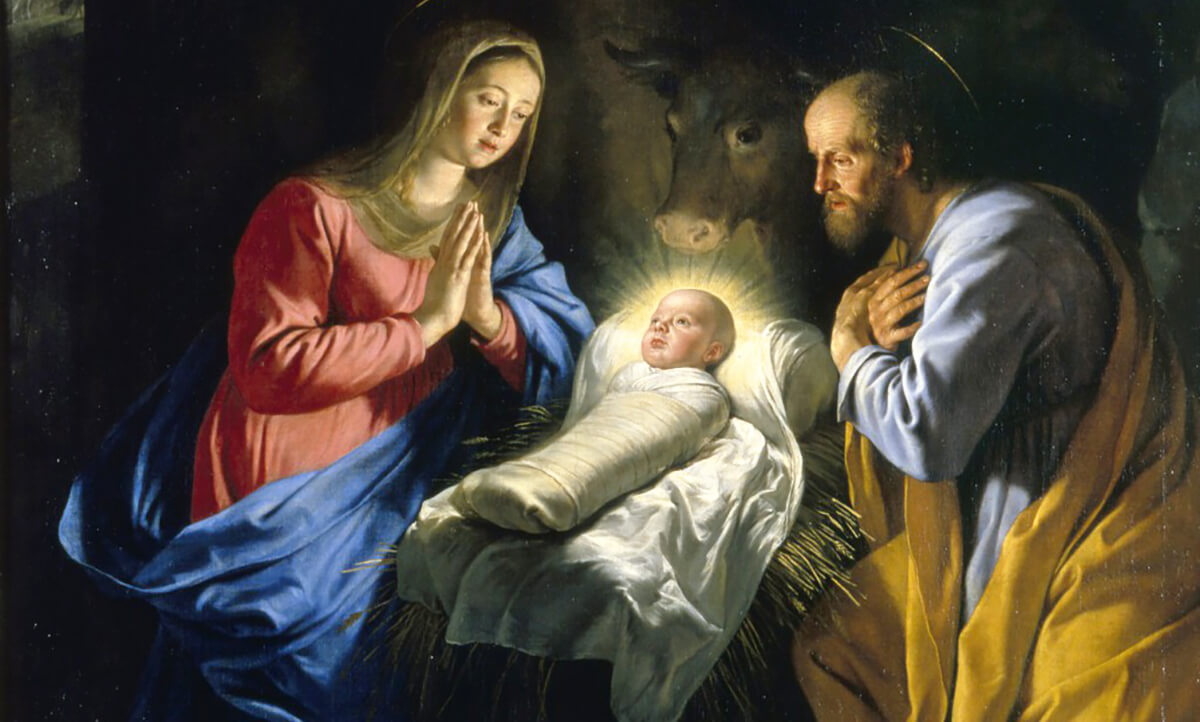
Remembering the Reason for Christmas


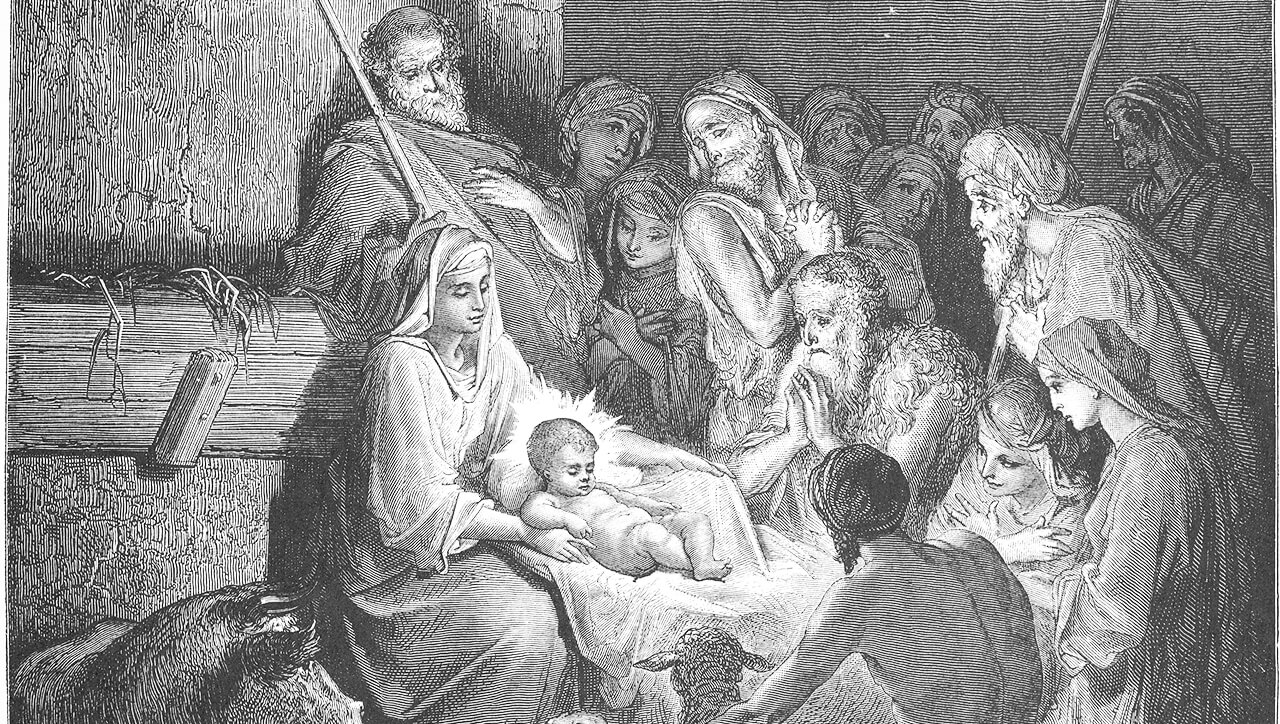
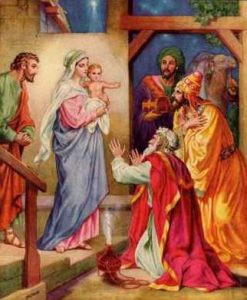
In recent years, a growing number of public officials and bodies have worked to reduce Christmas to a secular holiday, obscuring and at times even denying its origins. This is why it is always inspirational to recall the Christmas words of leaders from previous generations.

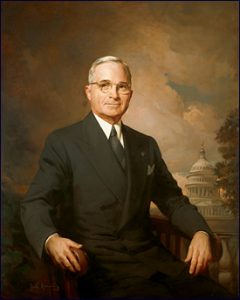
For example, in his Christmas Eve address of 1949, President Harry Truman told the nation:

Since returning home, I have been reading again in our family Bible some of the passages which foretold this night. . . . We miss the spirit of Christmas if we consider the Incarnation as an indistinct and doubtful, far-off event unrelated to our present problems. We miss the purport of Christ’s birth if we do not accept it as a living link which joins us together in spirit as children of the ever-living and true God. In love alone – the love of God and the love of man – will be found the solution of all the ills which afflict the world today.

And on Christmas Eve, 1952, he declared:

Through Jesus Christ the world will yet be a better and a fairer place. This faith sustains us today as it has sustained mankind for centuries past. This is why the Christmas story, with the bright stars shining and the angels singing, moves us to wonder and stirs our hearts to praise. Now, my fellow countrymen, I wish for all of you a Christmas filled with the joy of the Holy Spirit, and many years of future happiness with the peace of God reigning upon this earth.

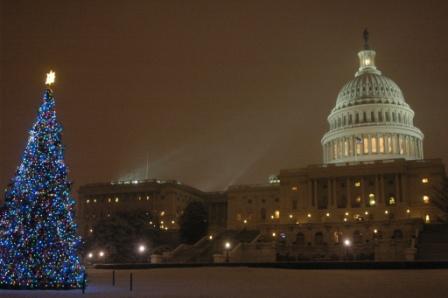
This week there was a refreshing throwback to the spirit of the leaders of previous generations. The occasion was the lighting of the Christmas tree at the U. S. Capitol.

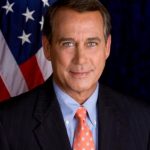
During those ceremonies, Speaker of the U. S. House John Boehner reminded the nation:

Though winter is upon us, the Christmas tree flourishes as a symbol of everlasting life. That life and light, of course, is Christ, whose birth to Mary fulfilled a prophecy of joy and salvation. Out in the fields where the shepherds slept, the angels broke the silence by singing, “Glory to God in the highest, and on Earth peace, goodwill toward men.” We best serve this story by serving one another . . . by showing it is more blessed to give than to receive, especially when so many of our fellow citizens are without jobs and in need.  For Christmas is not a distant historical event. It is a
spirit, always bringing us closer to each other and closer to the peace of which the angels sang. So on behalf of my wife, Debbie, our two girls, my 11 brothers and sisters, and all the Boehners, I wish one and all a very Merry Christmas.

Kudos to Speaker Boehner for his courage and historical accuracy. And in the words written by Christian author Charles Dickens in 1843, and spoken by Tiny Tim in The Christmas Carol, “May God bless us, every one!”

Merry Christmas!

Addressing Mass Murder and Violent Crime

In the wake of the heart-rending massacre at Sandy Hook Elementary School, a cry has arisen for gun control. But such calls are misdirected. The lessons of Scriptures and history are clear that the key is controlling what is in one’s heart, not what is in one’s hand. As the great Daniel Webster reminded a crowd at the U. S. Capitol:

[T]he cultivation of the religious sentiment represses licentiousness . . . inspires respect for law and order, and gives strength to the whole social fabric. 1 Whatever makes men good Christians, makes them good citizens. 2

The Founders understood that the inside was the most important focus, not the outside. This is why Thomas Jefferson believed the teachings of Jesus were so effective, explaining:

The precepts of philosophy, and of the Hebrew code, laid hold of actions only. He [Jesus] pushed his scrutinies into the heart of man, erected his tribunal in the region of his thoughts, and purified the waters at the fountain head.3

While civil law prohibits murder, the Bible addresses it before it occurs—while it is still only a thought in the heart (see Matthew 5:22-28). As John Quincy Adams explained:

Human legislators can undertake only to prescribe the actions of men: they acknowledge their inability to govern and direct the sentiments of the heart. . . . It is one of the greatest marks of Divine favor . . . that the Legislator gave them rules not only of action but for the government of the heart.4

The Founders were clear that only the Scriptures provide effective “rules for the government of the heart” and thus help prevent the crimes which originate internally:

Love to God and love to man is the substance of religion; when these prevail, civil laws will have little to do.5 John Witherspoon, Signer of the Declaration

Without the restraints of religion and social worship, men become savages. 6 Benjamin Rush, Signer of the Declaration

I have always said, and always will say, that the studious perusal of the Sacred Volume will make better citizens, better fathers, and better husbands. 7 Thomas Jefferson, President, Signer of the Declaration

In vain, without the Bible, we increase penal laws and draw entrenchments around our institutions. Bibles are strong entrenchments. Where they abound, men cannot pursue wicked courses. 8 James McHenry, Signer of the Constitution

Men, in a word, must necessarily be controlled either by a power within them or by a power without them; either by the Word of God or by the strong arm of man; either by the Bible or by the bayonet.9 Robert Winthrop, Early Speaker of the U.S. House

So . . . if Congress and the media want to have a debate, let it be over what is put into the heart, not the hand – over returning instruction in moral and religious principles to schools and the public arena. In the meantime, there are already some measures that are completely legal and which you can help expand across the country:

  1. Get a Bible course in public schools around you
  2. Start a Good News Club in a nearby public school
  3. Get your legislature to pass a law authorizing an elective course on the Bible, such as those already passed in Texas, Tennessee, Arizona, and other states.

1 Daniel Webster, Address Delivered at the Laying of the Cornerstone of the Addition to the Capitol, July 4, 1851 The Works of Daniel Webster (Boston: Little, Brown, & Co., 1853), II:615.
2 Webster, “Discourse Delivered at Plymouth,” December 22, 1820, Works of Webster (Boston: Little, Brown, & Co., 1853), I:44.
3 Thomas Jefferson to Benjamin Rush, April 21, 1803, Jefferson’s “Syllabus of an Estimate of the Merit of the Doctrines of Jesus, Compared with Those of Others,” Memoir, Correspondence, and Miscellanies, From the Papers of Thomas Jefferson, ed. Thomas Jefferson Randolph (Boston: Gray and Bowen, 1830), III:509. See also William Linn, The Life of Thomas Jefferson (Ithaca, New York: Mack & Andrus, 1834), 265.
4 John Quincy Adams, Letters of John Quincy Adams to His Son, on the Bible and Its Teachings (Auburn, New York: Derby, Miller, and Co., 1848), 62.
5 John Witherspoon, The Works of John Witherspoon (Edinburgh: 1805), VII:119.
6 Benjamin Rush, “To American Farmers About to Settle in New Parts of the United States,” March 1789, Letters of Benjamin Rush, ed. L. H. Butterfield (Princeton: The American Philosophical Society, 1951), I:505.
7 Daniel Webster to Professor Pease on June 15, 1852, The Writings and Speeches of Daniel Webster Hitherto Uncollected (Boston: Little, Brown, & Company, 1903), IV:656-657, originally appearing in The National Magazine: Devoted to Literature, Art, and Religion. July to December, 1858, ed. James Floy (New York: Carolton & Porter, 1858), XIII:178-179
8 Bernard C. Steiner, One Hundred and Ten Years of Bible Society Work in Maryland, 1810-1920 (Baltimore: The Maryland Bible Society, 1921), 14.
9 Robert Winthrop, Address Delivered at the Annual Meeting of the Massachusetts Bible Society in Boston, May 28, 1849 Addresses and Speeches on Various Occasions (Boston: Little, Brown and Co., 1852), 172.

* This article concerns a historical issue and may not have updated information.
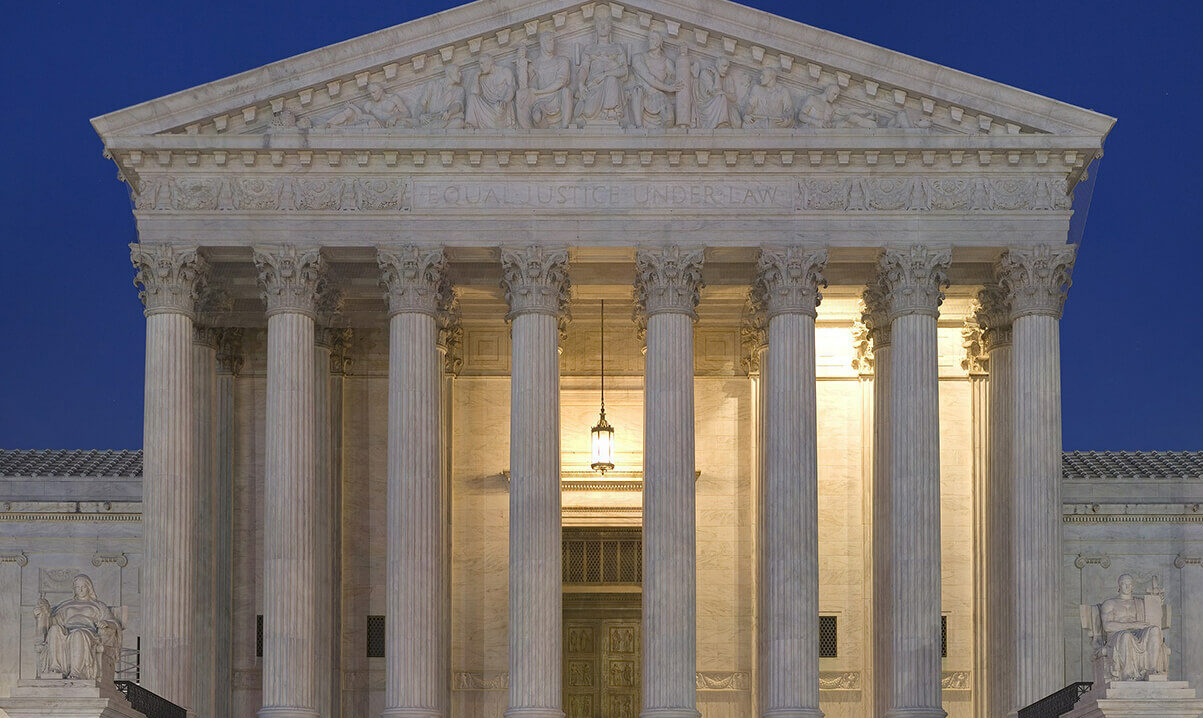
Late Summer 1998

A “Do-Nothing Congress”? Says Who?

America is unquestionably engaged in a culture war. On one side are Christians and other devout people of faith who embrace traditional and Christian family values, and on the other side are the secularists, humanists, separationists, and others who want a society free from Christian influence or traditions. The battlegrounds for the culture war are the primary power centers of the pulpit, education, government, and media. How are we doing in each?

Generally, the pulpit is still strongly supportive of Christian values in public; while occasionally silent, only rarely is it antagonistic. Despite positive gains in recent years, by and large the education establishment remains generally hostile to Christian values. In government, the Executive and the Judicial branches demonstrate a clear hostility while the Legislative branch is becoming an ally. And although the media is beginning to improve (as evidenced by the explosion of conservative talk-radio), the major outlets continue to be hostile. Yet, despite the fact that three of the four power centers currently reject Christian values, the overwhelming majority of Americans embrace those values, as confirmed by polls on belief in God, church attendance, support for school prayer, opposition to sodomy, support of traditional marriage, etc.

Therefore, since those parties advancing anti-Christian values are actually in the minority, to gain public support, they must do everything they can to portray themselves as the majority, pursuing reasonable and rational goals. Thus, they publicize their own victories (which means highlighting our defeats) while minimizing word of their defeats (by suppressing the reports of our victories).

An excellent example of this tactic is the media’s current characterization that we have a “do-nothing Congress.” This charge means either that (1) Congress actually has done nothing (at least according to the media’s agenda) or (2) Congress has furthered the Christian values agenda, and thus every effort must be made to halt this progress. Both suppositions are correct, especially the second one. As proof, consider the following facts:

Protecting Human Life

  • Congress expanded the Hyde Amendment ban on taxpayer-financed abortions in federal health programs to also include managed-care arrangements, Medicaid, Title X family planning assistance, Title XX social services Block Grants to States, and the Children’s Health-Insurance Block-Grant Program (Public Law 105-33).
  • Congress restored the ban–which President Clinton had lifted–on taxpayer-financed abortions in U.S. military facilities (Public Law 104-106), on abortion coverage in the federal employees health benefits program (Public Law 104-52), on taxpayer-financed abortions in the District of Columbia (Public Law 104-134), and on taxpayer-financed abortions in federal prisons (Public Law 104-134).
  • Congress permanently prohibited the American Council of Graduate Medical Education from forcing medical schools to require the performance of abortions (Public Law 104-134).
  • Congress also banned abortion litigation by the Legal Services Corporation (a government funded legal service), federal funding for assisted suicide and euthanasia (Public Law 105-12), and taxpayer-funded human embryo research (Public Law 104-134).
  • Congress has twice banned the gruesome practice of partial-birth abortions, and has fallen short of the two-thirds vote necessary to override President Clinton’s veto by only three votes in the Senate.

Promoting Marriage and the Family

  • Congress passed the “Defense of Marriage Act” which (1) federally defines “marriage” as “the union of one man and one woman as man and wife” for purposes of all federal benefits, and (2) allows each State (rather than unelected judges) to define marriage according to their traditions and values (Public Law 104-199).
  • Congress enacted several strong pro-marriage provisions as part of welfare reform, including a bonus system to reward States which reduce out-of-wedlock birth rates without increasing abortions (Public Law 104-193).
  • Congress enacted a permanent $500 per-child tax credit (Public Law 105-34) and passed homemaker IRAs so that work-at-home spouses could set aside up to $2,000 a year in a tax-deferred retirement savings (Public Law 104-188).
  • Congress made major reforms in adoption policies, including enacting (1) a $5,000 tax credit for adoption expenses, (2) a $6,000 tax credit for hard-to-place special-needs children, (3) a ban on “race matching” by adoption agencies so minority children can be placed in any loving family (Public Law 104-188), and (4) an accelerated procedure for moving abused and neglected children from foster homes into adoptive homes (Public Law 105-89).

Religious Liberties

  • Congress has advanced a number of religious liberty bills, including the first ever vote on a School Prayer Amendment by both the Judiciary Committee and the whole House, a bill to penalize those countries who participate in or condone the persecution of Christians and other people of faith (e.g., China, Sudan, Pakistan, Laos, etc.), a bill to protect the public display of the Ten Commandments, and a number of other positive bills. While not all of these bills were signed into law by the President, nevertheless, this is the best session the Congress has had on the issue of religious liberty in recent memory.
  • Congress passed a bill to allow faith-based charities to participate in delivering welfare benefits (Public Law 104-193).

Education

  • Of the 260 federal education programs overseen by the House Education Committee, 105 of the programs have been eliminated.
  • Congress passed a permanent ban on funding for Clinton’s federal testing scheme (the foundation for his plan for a national curriculum).
  • Congress killed a proposed new tax on education benefits for the children of school faculty members–a tax specifically targeted at teachers in religious schools (this was a big win for private religious schools).
  • Congress enacted educational IRAs to cover expenses for public, private, and home schools, and passed a school-choice voucher bill for students in Washington, D. C., (both bills were vetoed by the President).

Morality

  • Congress banned the funding of obscene art (Public Law 104-134), the distribution of indecent or patently offensive material to minors over the Internet (Public Law 104-104), the sale of pornography at military facilities (Public Law 104-106), and taxpayer-funded needle-exchange programs.
  • Congress strengthened child pornography laws (Public Law 104-71).
  • Congress funded $50 million dollars for abstinence-education programs (Public Law 104-193).
  • Congress moved against the gambling industry, appointing pro-family hero Kay James as the Chairman of the National Gambling Impact Commission to investigate and report on the effects of gambling (Public Law 104-169).

Other Issues

Also, Congress has pursued a number of measures to reverse judicial activism and to limit judicial intrusiveness and micromanagement. Additionally, Congress prohibited the United Nations command of U. S. troops, but that bill–like so many other good bills–was vetoed by the President.

Upcoming Votes

There are still a number of important votes scheduled for the final weeks of this Congress, including:

  • A ban (for the third time) on partial-birth abortions.
  • A ban on transporting minors across State lines in order to evade parental-consent or parental-notification abortion restrictions.
  • A ban on discrimination against homeschoolers and Christian schoolers in college admissions.
  • A Constitutional Amendment to prohibit the desecration of the flag.

Obviously, Congress has done much to advance Christian and traditional family values, and just as obviously, most citizens have not heard of these victories. Instead, they have been told that we elected a “do-nothing Congress.”

To understand the reason for this fallacious charge, recall how this Congress came to be. Between 1988 and 1994, the numbers of evangelical Christian voters rapidly increased. Those Evangelical voters were largely responsible for the infamous “Voter Revolution” of 1994 followed by the 1996 Senate elections. Those two elections swept scores of conservative Christians into Congress and thus changed not only the composition but also the agenda of the Congress. The secularists understand that they are in serious trouble if Christians return to the polls in 1998. And what better way to keep Christians home in this year’s elections than by telling them that all their hard work of recent years was a complete waste of time–that all it produced was a “do-nothing Congress.”

Unfortunately, many Christians have believed this propaganda. But the truth is that we are making a difference–our efforts are having an effect! Don’t be talked out of your vote in November! Remember the advice of two ministers of the Gospel, James A. Garfield and Charles Finney. Finney–a leader in America’s Second Great Awakening–reminded the Christians of his day that:

The Church must take right ground in regard to politics. . . . The time has come that Christians must vote for honest men and take consistent ground in politics. . . . God cannot sustain this free and blessed country which we love and pray for unless the Church will take right ground. Politics are a part of a religion in such a country as this, and Christians must do their duty to the country as a part of their duty to God. . . . [God] will bless or curse this nation according to the course they [Christians] take [in politics].

Then, fifty years later, James A. Garfield, our 20th President, reminded the Christians in his day:

Now, more than ever before, the people are responsible for the character of their Congress. If that body be ignorant, reckless, and corrupt, it is because the people tolerate ignorance, recklessness, and corruption. If it be intelligent, brave, and pure, it is because the people demand these high qualities to represent them in the national legislature. . . . If the next centennial does not find us a great nation . . . it will be because those who represent the enterprise, the culture, and the morality of the nation do not aid in controlling the political forces.

The message of the last two centuries still resounds for us today. We must “take right ground in regard to politics” and “aid in controlling the political forces” by being active in this year’s elections.

One of the tools which can help motivate those around you to be involved is our award-winning video “Keys to Good Government.” I encourage you to get a copy of this video and show it to you family, friends, church, and others within your sphere of influence. Our duty is not only to vote, but to vote for the right type of leaders. As Proverbs 29:2 reminds us, “When the righteous rule, the people rejoice; when the wicked rule, the people groan.” This video will help motivate citizens to vote–and to vote according to Biblical principles.