Read the Bible!

Importance of the Bible
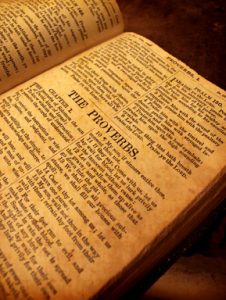
With Thanksgiving behind us, we now enter the time of the year in which President Franklin Roosevelt had urged Americans to spend time reading the Bible. Indisputably, the Bible is the book upon which our American republic rests – a fact attested to by many presidents:

read-the-bible-1“[The Bible] is the rock on which our Republic rests.” President Andrew Jackson

“The Bible. . . . is indispensable to the safety and permanence of our institutions.” President Zachary Taylor

“[T]he teachings of the Bible are so interwoven and entwined with our whole civic and social life that it would be . . . impossible for us to figure to ourselves what that life would be if these teachings were removed.” President Teddy Roosevelt

“Of the many influences that have shaped the United States of America into a distinctive Nation and people, none may be said to be more fundamental and enduring than the Bible.” President Ronald Reagan

Today, only 14% of Christians read the Bible daily, so most Americans have no knowledge of the most basic teachings of the Bible; and as Biblical knowledge declines, so does the strength and effectiveness of American institutions. Biblical knowledge is key to American longevity and prosperity.

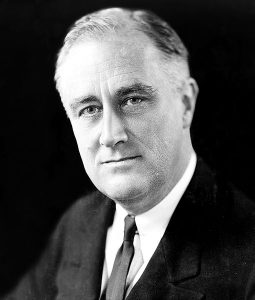
Understanding this, in 1941, President Franklin Delano Roosevelt urged:

read-the-bible-2I suggest a nationwide reading of the Holy Scriptures during the period from Thanksgiving Day to Christmas…[G]o to…the Scriptures for a renewed and strengthening contact with those eternal truths and majestic principles which have inspired such such measure of true greatness as this nation has achieved.

This is an excellent recommendation! So commit yourself to reading and studying the Scriptures over the coming weeks. There are many good plans to help you, and even Bible apps that read the Bible to you. In fact, you can read through the entire Bible in only about 15 minutes each day over the course of a year. Psalm 11:3 asks: “If the foundations are destroyed, what can the righteous do?” Our foundations – the most important part of any structure – can be preserved by a knowledge of the Bible. So let’s follow President Roosevelt’s request to particularly spend the time between now and Christmas in reading and studying God’s Word.

Honor America’s Veterans

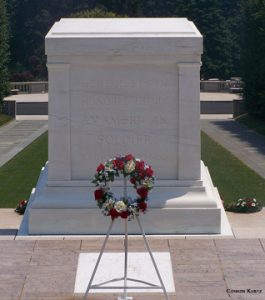
honor-americas-veterans-1The Korean War Memorial in Washington D.C. reminds us: “Freedom is not free!” Americans have long understood this, and across the generations 42 million men and women — serving as soldiers, sailors, and airmen — have been willing to give their time, talents, and even their lives to protect America and her cherished freedoms. To honor these courageous citizens, November 11, is set aside as Veteran’s Day.

By way of background, following the horrors of World War I, President Woodrow Wilson declared November 11 of 1919 to be “Armistice Day” to celebrate the peace brought about as a result of ending the war. Twenty years later, the federal government made “Armistice Day” a federal holiday, and in 1954, it was renamed to “Veteran’s Day” to honor all who served in the military. Over subsequent years, the day on which it was celebrated varied, but its purpose remained the same: to remember and express appreciation for our veterans.
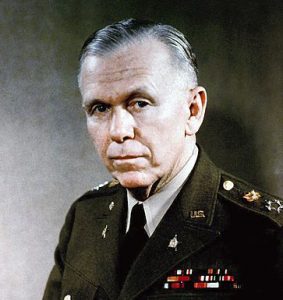
honor-americas-veterans-2General George C. Marshall, a famous military leader during World War II, summarized the mission of these warriors when he declared:

“We are determined that before the sun sets on this terrible struggle, our flag will be recognized throughout the world as a symbol of freedom on the one hand and of overwhelming force on the other.”

On Veteran’s Day, be sure to thank a veteran for their service. Perhaps even take time out of your day to visit some veterans at a local nursing home, where sometimes many have been tragically abandoned or have no family members remaining. And let’s also remember those who sacrificed so much for us across the centuries, from the American Revolution to World War II to the War on Terror. May we never cease to be thankful — and to express that gratitude — for those who are willing to give so much for the rest of us.

In God We Trust

On July 30, 1956, President Dwight Eisenhower signed legislation1 establishing “In God We Trust” as America’s national motto.2 As religious rights of conscience continue to be attacked, this is a good time to remember our national motto and renew our efforts to defend our religious rights.

The idea of America as a Christian nation has often been scoffed at by modern academia,3 religious leaders,4 and others.5 However, past Americans have acknowledged that America is a Christian nation and that the rights of religious conscience should be protected.

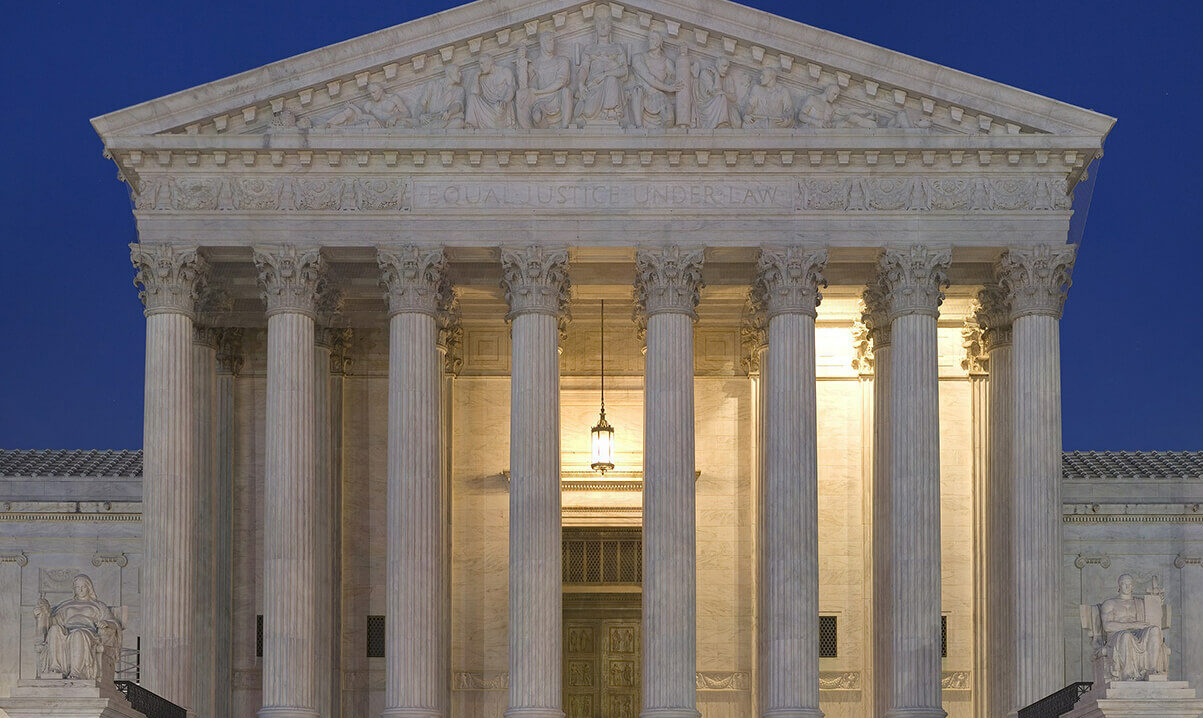
The United States Supreme Court issued a unanimous ruling declaring America to be a Christian nation,6 and hundreds of other American courts have acknowledged the same. In fact, Justice David Brewer, a member of that Court said:

in-god-we-trust-1[I]n what sense can [America] be called a Christian nation? Not in the sense that Christianity is the established religion or that the people are in any manner compelled to support it. . . . Neither is it Christian in the sense that all its citizens are either in fact or name Christians. On the contrary, all religions have free scope within our borders. Numbers of our people profess other religions, and many reject all. Nor is it Christian in the sense that a profession of Christianity is a condition of holding office or otherwise engaging in public service, or essential to recognition either politically or socially. . . . Nevertheless, we constantly speak of this republic as a Christian nation – in fact, as the leading Christian nation of the world.7

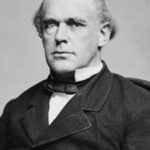
Secretary of the Treasury Salmon Chase,8 when looking into what should be printed on the currency of the nation, acknowledged:

in-god-we-trust-2No nation can be strong except in the strength of God, or safe except in His defense. The trust of our people in God should be declared on our national coins. You will cause a device to be prepared without unnecessary delay with a motto expressing in the fewest and tersest words possible this national recognition.9

There are many reasons that America has long been seen as such an exceptional nation — but those reasons are tied to the religious beliefs and the moral principles of the people that established America. On the anniversary of the national motto, it’s appropriate to recognize these religious beliefs and moral principles.

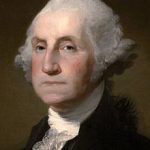
in-god-we-trust-3As George Washington told the nation when he left the presidency:

Of all the dispositions and habits which lead to political prosperity, religion and morality are indispensable supports. In vain would that man claim the tribute of patriotism who should labor to subvert these great pillars of human happiness, these firmest props of the duties of man and citizens.10


Endnotes

1 “Joint Resolution to Establish a National Motto of the United States,” July 30, 1956, here.
2 “36 U.S. Code § 302 – National motto,” here.
3 Kevin M. Kruse, “A Chrsitian Nation? Since When?” The New York Times, March 14, 2015; Richard White, “One Nation Under Gods,” Boston Review, March 22, 2017.
4 David Vesely, “Is America a Christian Nation? Columbus’ Vision,” Green Bay Press Gazette, April 28, 2016.
5 Shane Idelman, “Is America a Christian Nation? Fact vs. Fiction,” Charisma News, August 14, 2015.
6 David Barton, “Is America a Christian Nation?” WallBuilders.
7 Holy Trinity Church v. United States, 143 U.S. 457 (1892).
8 David J. Brewer, The United States a Christian Nation (Philadelphia: The John C. Winston Company, 1905), 12.
9 “Salmon P. Chase (1861-1864),” US Department of the Treasury, accessed November 14, 2023.
10 Salmon P. Chase to James Pollock, November 20, 1861, Thirty-Fourth Annual Report of the Director of the Mint to the Secretary of the Treasury (Washington: Government Printing Office, 1897), 107.

The Declaration Racist? Ha!

Louisiana Representative says The American Founding Is Bad

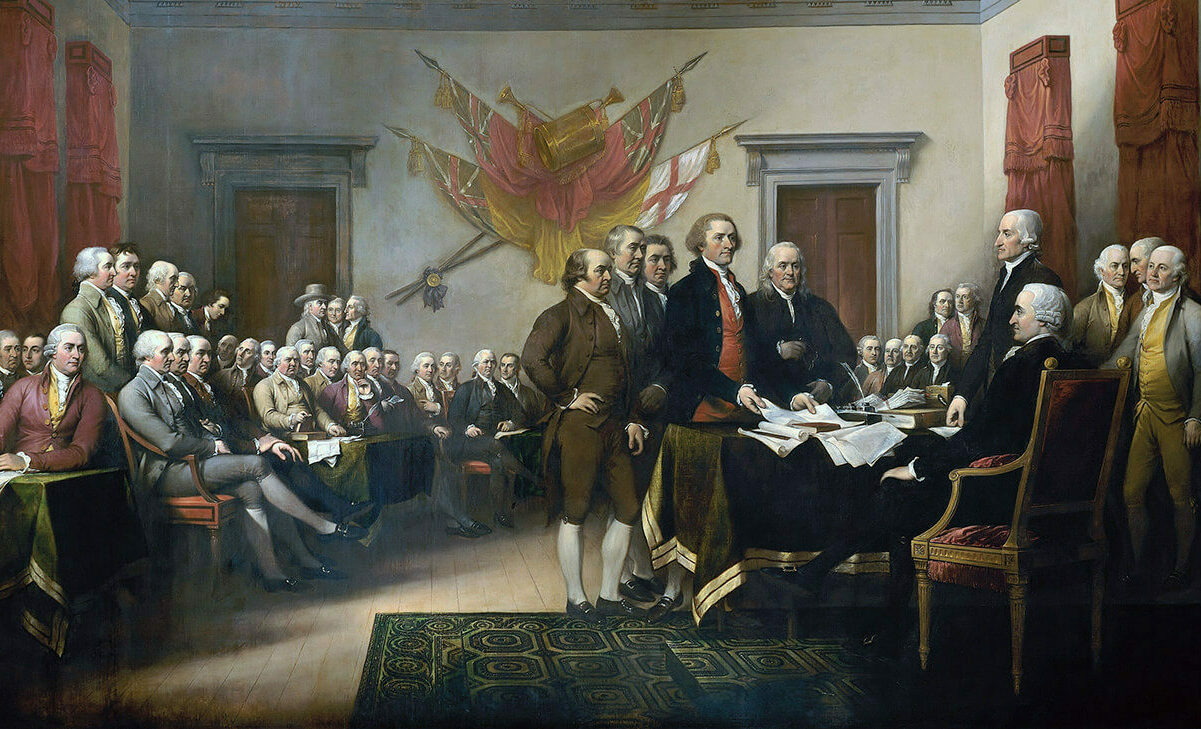
Study after study has demonstrated that rudimentary civic knowledge has plummeted in recent years. Many states have therefore taken specific steps to help ensure that students have a familiarity with our most basic governing documents. In Louisiana, Rep. Valerie Hodges introduced such a bill. Following the lead of states like Texas, Oklahoma, Kansas, Arkansas, Florida, Michigan, and others, her bill stipulated that Louisiana students recite the famous fifty-six words that form the heart of the Declaration of Independence:

“We hold these truths to be self-evident, that all men are created equal, that they are endowed by their Creator with certain unalienable rights, that among these are life, liberty and the pursuit of happiness. That to secure these rights, governments are instituted among men, deriving their just powers from the consent of the governed.”

State Rep. Barbara Norton vehemently objected to this bill. She avowed that those words from the Declaration were not true, and relied heavily on Dr. Martin Luther King as the basis of her argument. She believed that equality did not exist until Dr. King, and that words from the Declaration should not be part of student studies.

Rep. Norton’s response is disappointing on many levels, and it certainly demonstrates that Rep. Norton knows little of American history and even less about black history as it relates to the Declaration of Independence.
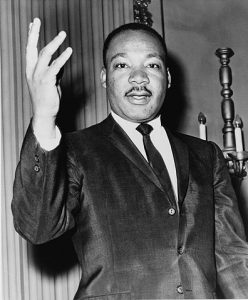
the-declaration-racist-ha-3For example, she stressed the importance of Dr. King but apparently did not realize that in his famous “I Have A Dream” speech, as well as many of his sermons, he quoted extensively and favorably from the Declaration of Independence:

“When the architects of our republic wrote the magnificent words of the Constitution and the Declaration of Independence, they were signing a promissory note to which every American was to fall heir. This note was a promise that all men, yes, black men as well as white men, would be guaranteed the unalienable rights of life, liberty, and the pursuit of happiness.” – “I Have A Dream” speech, Washington, 1963

“It wouldn’t take us long to discover the substance of that dream. It is found in those majestic words of the Declaration of Independence – words lifted to cosmic proportions: ‘We hold these truths to be self-evident, that all men are created equal, that they are endowed by God, Creator, with certain inalienable Rights, that among these are Life, Liberty, and the pursuit of Happiness.’ This is a dream. It’s a great dream. The first saying we notice in this dream is an amazing universalism. It doesn’t say “some men,” it says “all men.” It doesn’t say “all white men,” it says “all men,” which includes black men. It does not say “all Gentiles,” it says “all men,” which includes Jews. It doesn’t say “all Protestants,” it says “all men,” which includes Catholics. It doesn’t even say “all theists and believers,” it says “all men,” which includes humanists and agnostics. . . I still have a dream this morning that truth will reign supreme and all of God’s children will respect the dignity and worth of human personality. And when this day comes, the morning stars will sing together and the sons of God will shout for joy. “We hold these truths to be self-evident that all men are created equal, that they are endowed by their Creator with certain inalienable rights, that among these are life, liberty, and the pursuit of happiness.” – July 4th, 1965, at Ebenezer Baptist Church, Atlanta, Georgia

By Rep. Norton denouncing the famous words from the Declaration, she might as well denounce Dr. King’s “I Have a Dream” speech, for it emphasized the same content she opposed.
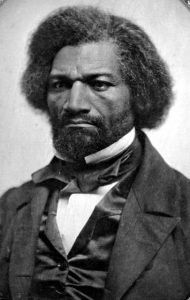
the-declaration-racist-ha-5But Dr. King wasn’t the first black civil rights activist to praise the Declaration of Independence. Frederick Douglass, who had himself been a slave, stated:

The principles contained in that instrument [the Declaration of Independence] are saving principles. Stand by those principles, be true to them on all occasions, in all places, against all foes, and at whatever cost.

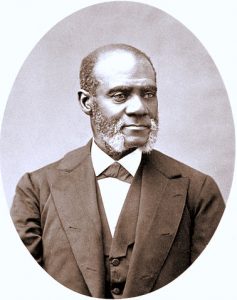
the-declaration-racist-ha-6And Henry Highland Garnet, who like Douglass was born in slavery and also escaped, became the first black man to officially speak at the U. S. Capitol. Following the passage of the Thirteenth Amendment to abolish slavery in February 1865, the House asked Garnet to preach a sermon celebrating that momentous event. In his two-hour discourse, Garnet told listeners:

The Declaration [of Independence] was a glorious document. Sages admired it, and the patriotic of every nation reverenced the God-like sentiments which it contained.

Clearly, black civil rights advocates praised the sentiments contained in the Declaration of Independence. (Significantly, the Declaration was heavily relied upon by abolitionists to aid their cause, and the women’s rights movement based their documents directly on the Declaration of Independence.) It’s too bad that Rep. Norton wants to withhold from students a knowledge of the document that black leaders praised for almost two centuries.

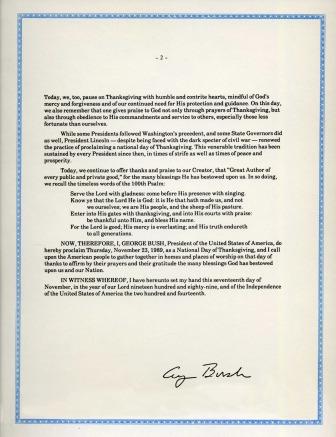
Proclamation – Thanksgiving Day – 1989


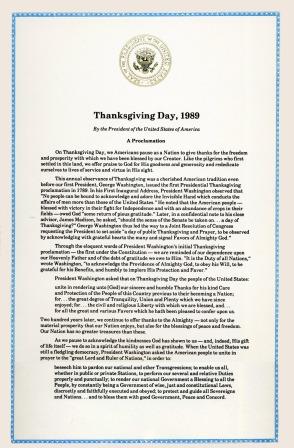
This is the text of a Proclamation for a National Day of Thanksgiving. The proclamation was issued on November 17, 1989, declaring November 23, 1989 as a day of thanksgiving to be observed by the nation.


proclamation-thanksgiving-day-1989-1
proclamation-thanksgiving-day-1989-2


Thanksgiving Day, 1989

By the President of the United States

A Proclamation

On Thanksgiving Day, we Americans pause as a Nation to give thanks for the freedom and prosperity with which we have been blessed by our Creator. Like the pilgrims who first settled in this land, we offer praise to God for His goodness and generosity and rededicate ourselves to lives of service and virtue in His sight.

This annual observance of Thanksgiving was a cherished American tradition even before our first President, George Washington, issued the first Presidential Thanksgiving proclamation in 1789. In his first Inaugural Address, President Washington observed that “No people can be bound to acknowledge and adore the Invisible Hand which conducts the affairs of men more than those of the United States.” He noted that the American people – blessed with victory in their fight for Independence and with an abundance of crops in their fields – owed God “some return of pious gratitude.” Later, in a confidential note to his close advisor, James Madison, he asked “should the sense of the Senate be taken on … a day of Thanksgiving?” George Washington thus led the way to a Joint Resolution of Congress requesting the President to set aside “a day of public Thanksgiving and Prayer, to be observed by acknowledging with grateful hearts the many and signal Favors of Almighty God.”

Through the eloquent words of President Washington’s initial Thanksgiving proclamation – the first under the Constitution – we are reminded of our dependence upon our Heavenly Father and of the debt of gratitude we owe to Him. “It is the Duty of all Nations,” wrote Washington, “to acknowledge the Providence of almighty God, to obey his Will, to be grateful for his Benefits, and humbly to implore His Protection and Favor.”

President Washington asked that on Thanksgiving Day the people of the United States:

unite in rendering unto [God] our sincere and humble Thanks for his kind Care and Protection of the People of this Country previous to their becoming a Nation; for … the great degree of Tranquility, Union and Plenty which we have since enjoyed; for … the civil and religious Liberty with which we are blessed, and … for all the great and various Favors which he hath been pleased to confer upon us.

Two hundred years later, we continue to offer thanks to the Almighty – not only for the material prosperity that our Nation enjoys, but also for the blessings of peace and freedom. Our Nation has no greater treasures than these.

As we pause to acknowledge the kindnesses God has shown to us – and, indeed, His gift of life itself – we do so in a spirit of humility as well as gratitude. When the United States was still a fledgling democracy, President Washington asked the American people to unite in prayer to the “great Lord and ruler of Nations,” in order to:

beseech him to pardon our national and other Transgressions; to enable us all, whether in public or private Stations, to perform our several and relative Duties properly and punctually; to render our national Government a blessing to all the People, by constantly being a Government of wise, just and constitutional Laws, discreetly and faithfully executed and obeyed; to protect and guide all Sovereigns and Nations … and to bless them with good Government, peace and Concord.

Today, we, too, pause on Thanksgiving with humble and contrite hearts, mindful of God’s mercy and forgiveness and of our continued need for His protection and guidance. On this day, we also remember that one gives praise to God not only through prayers of thanksgiving, but also through obedience to His commandments and service to others, especially those less fortunate than ourselves.

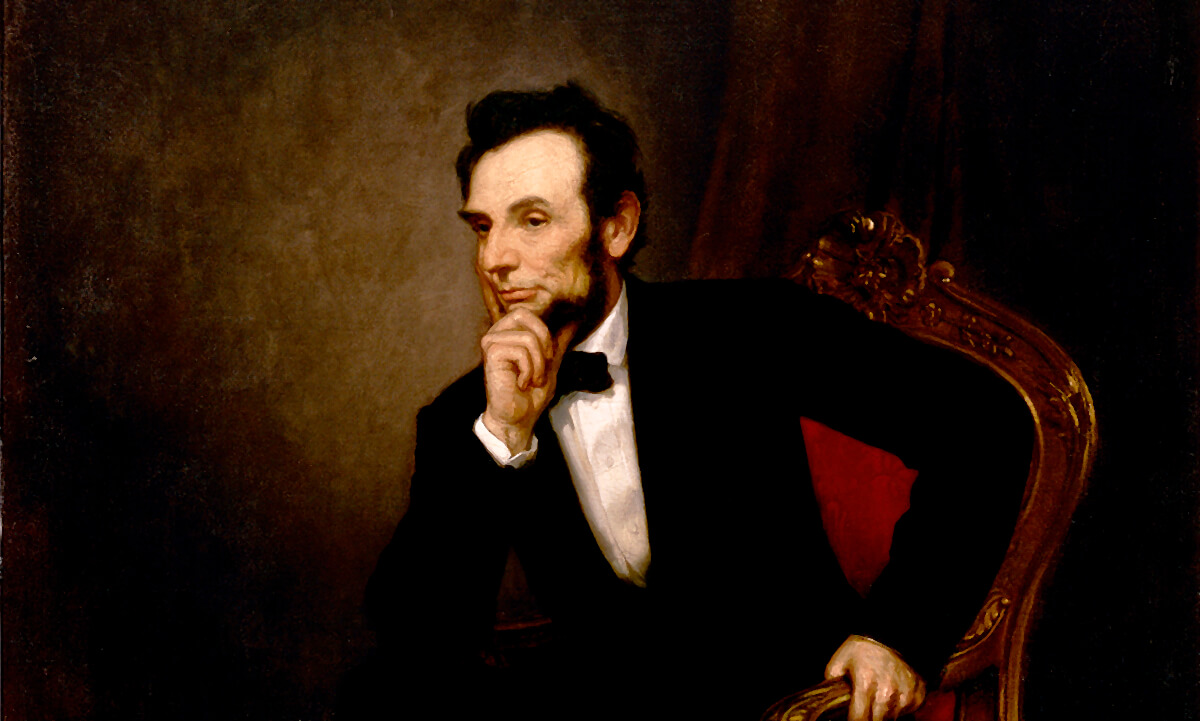
While some Presidents followed Washington’s precedent, and some State Governors did as well, President Lincoln – despite being faced with the dark specter of civil war – renewed the practice of proclaiming a national day of Thanksgiving. This venerable tradition has been sustained by every President since then, in times of strife as well as times of peace and prosperity.

Today, we continue to offer thanks and praise to our Creator, that “Great Author of every public and private good,” for the many blessings He has bestowed upon us. In so doing, we recall the timeless words of the 100th Psalm:

Serve the Lord with gladness: come before His presence with singing. Know ye that the Lord He is God: it is He that hath made us, and not we ourselves; we are His people, and the sheep of His pasture. Enter into His gates with thanksgiving, and into His courts with praise: be thankful unto Him, and bless His name. For the Lord is good; His mercy is everlasting; and His truth endureth to all generations.

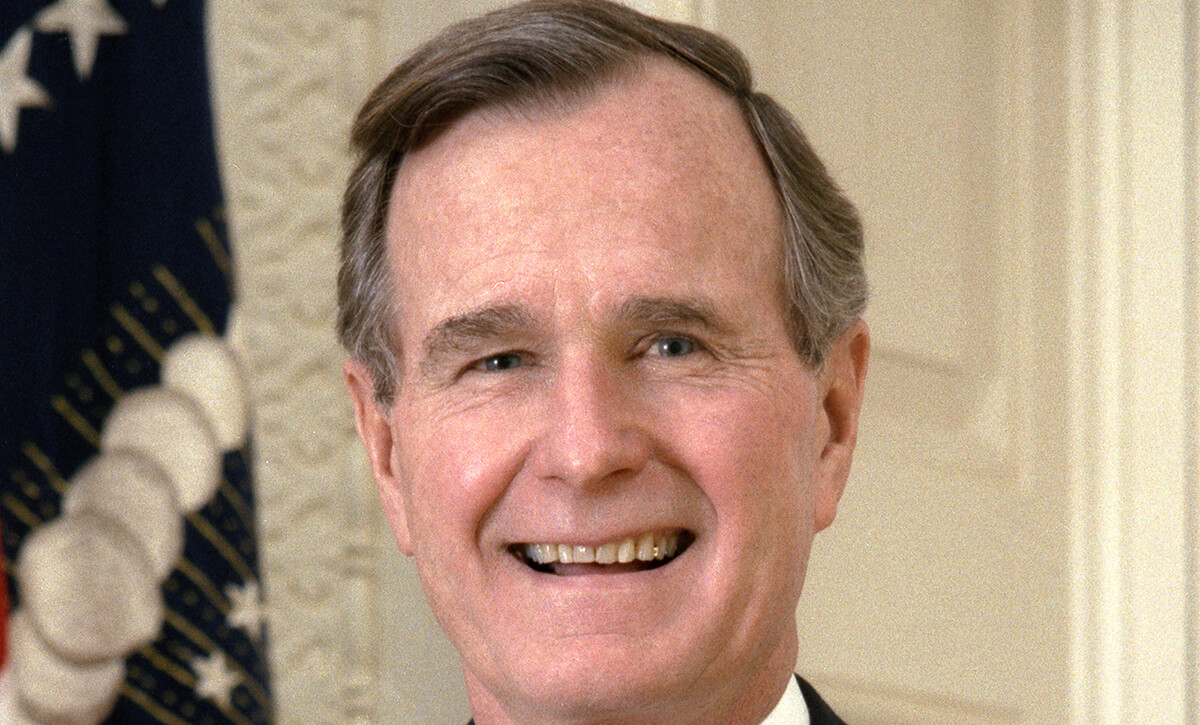
NOW, THEREFORE, I, GEORGE BUSH, President of the United States of America, do hereby proclaim Thursday, November 23, 1989, as a National Day of Thanksgiving, and I call upon the American people to gather together in homes and places of worship on that day of thanks to affirm by their prayers and their gratitude the many blessings God has bestowed upon us and our Nation.

IN WITNESS WHEREOF, I have hereunto set my hand this seventeenth day of November, in the year of our Lord nineteen hundred and eighty-nine, and of the Independence of the United States of America the two hundred and fourteenth.

GEORGE BUSH

A Godless Constitution?: A Response to Kramnick and Moore

In their provocative polemic The Godless Constitution: The Case Against Religious Correctness (W. W. Horton, 1996), Cornell University professors Isaac Kramnick and R. Laurence Moore argue that the God-fearing framers of the U. S. Constitution “created an utterly secular state” unshackled from the intolerant chains of religion. They purportedly find evidence for this thesis in the constitutional text, which they describe as radically “godless” and distinctly secular. Their argument, while an appealing antidote to the historical assertions of the religious right, is superficial and misleading.

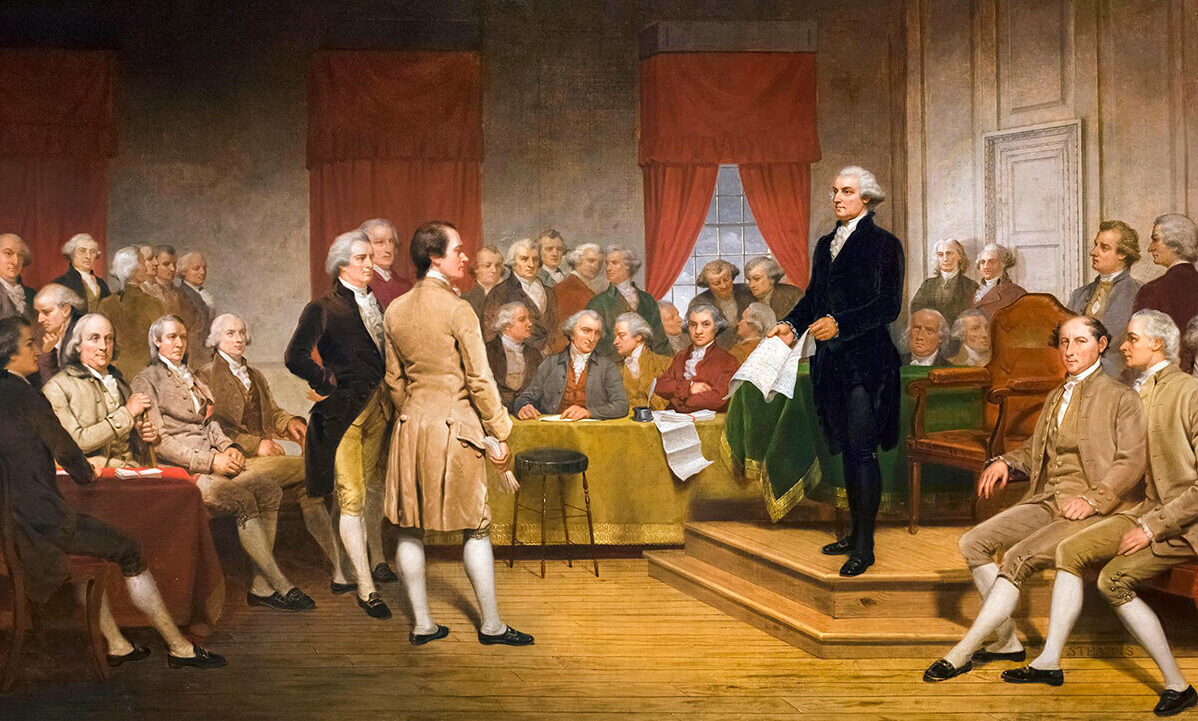
There were, indeed, anti-Federalist critics of the Constitution who complained bitterly that the document’s failure to invoke the Deity and include explicit Christian references indicated, at best, indifference or, at worst, hostility toward Christianity. This view, however, did not prevail in the battle to ratify the Constitution. The professor’s inordinate reliance on the Constitution’s most vociferous critics to describe and define that document results in misleading, if not erroneous, conclusions. Furthermore, like the extreme anti-Federalists of 1787, the professors misunderstand the fundamental nature of the federal regime and its founding charter.

The U. S. Constitution’s lack of a Christian designation had little to do with a radical secular agenda. Indeed, it had little to do with religion at all. The Constitution was silent on the subject of God and religion because there was a consensus that, despite the framer’s personal beliefs, religion was a matter best left to the individual citizens and their respective state governments (and most states in the founding era retained some form of religious establishment). The Constitution, in short, can be fairly characterized as “godless” or secular only insofar as it deferred to the states on all matters regarding religion and devotion to God.

Relationships between religion and civil government were defined in most state constitutions, and the framers believed it would be inappropriate for the federal government to encroach upon or usurp state jurisdiction in this area. State and local governments, not the federal regime, it must be emphasized, were the basic and vital political units of the day. Thus, it was fitting that the people expressed religious preferences and affiliations through state and local charters.

Professors Kramnick and Moore find further evidence for a godless Constitution in the Article VI religious test ban. Here, too, they misconstrue the historical record. Their argument rests on the false premise that, in the minds of the framers, support for the Article VI ban was a repudiation of state establishments of religion and a ringing endorsement of a radically secular polity. The numerous state constitutions written between 1776 and 1787 in which sweeping religious liberty and nonestablishment provisions coexisted with religious test oaths confirm the poverty of this assumption. The founding generation, in other words, generally did not regard such measures as incompatible.

The Article VI ban (applicable to federal officeholders only) was not driven by a radical secular agenda or a renunciation of religious tests as a matter of principle. The fact that religious tests accorded with popular wishes is confirmed by their inclusion in the vast majority of revolutionary era state constitutions.

Professors Kramnick and Moore also blithely ignore Article I, sec. 2 of the U. S. Constitution, which deferred to state qualifications for the electors of members of the U. S. House of Representatives. This provision is significant since the constitutional framers of 1787 knew that in some states–such as South Carolina–the requisite qualifications for suffrage included religious belief.

Significantly, there were delegates at the Constitutional Convention in Philadelphia who endorsed the Article VI ban but had previously crafted religious tests for their respective state constitutions. The constitutional framers did not appreciate this apparent contradiction, which arises under a secular construction of Article VI. The framers believed, as a matter of federalism, that the Constitution denied the national government all jurisdiction over religion, including the authority to administer religious tests. Many in founding generation supported a federal test ban because they valued religious tests required under state laws, and they feared that a federal test might displace existing state test oaths and religious establishments. In other words, support for the Article VI ban was driven in part by a desire to preserve and defend the instruments of “religious establishment” (specifically, religious test oaths) that remained in the states.

The late-eighteenth-century view of oaths and religious test bans is illustrated in state constitutions of the era. The Tennessee Constitution of 1796 included the language of the Article VI test ban; however, the same constitution states that “no person who denies the being of God, or a future state of rewards and punishments, shall hold any office in the civil department of this State.” Adopting a standard definition of oaths, the Kentucky Constitution of 1792, which omitted an express religious test but prescribed a basic oath of office, stated that required oaths and affirmations “shall be esteemed by the legislature [as] the most solemn appeal to God.” This understanding of oaths, which was largely unchallenged in the founding era and frequently repeated in the state ratifying conventions, suggests that the US Constitution, contrary to Professors Kramnick and Moore, was not entirely devoid of religious affirmations and did not create an utterly secular polity. The argument was made in ratifying conventions that the several constitutionally required oaths implicitly countenanced an acknowledgment of God (which, in a sense, constituted a general, nondenominational religious “test”), while the Article VI test ban merely proscribed sect-specific oaths for federal officeholders.

The debates in Article VI in state ratifying conventions further indicate that few, if any, delegates denied the advantage of placing devout Christians in public office. The issue warmly debated was the efficacy of a national religious test for obtaining this objective.

The Godless Constitution’s lack of clear documentation is a disappointment. In order to examine the book’s thesis more fully, I attempted to document the claims and quotations in the second chapter, which sets forth the case that the “principal architects of our national government envisioned a godless Constitution and a godless politics.” It was readily apparent why these two university professors, who live in the world of footnotes, avoided them in this tract. The book is replete with misstatements or mischaracterizations of fact and garbled quotations. For example, the professors conflate two separate sections of New York Constitution of 1777 to support the claim that it “self-consciously repudiated tests” (p. 31). Contrary to this assertion, neither constitutional section expressly mentions religious tests and, indeed, test oaths were retained in the laws of New York well into the nineteenth century. The Danbury Baptists, for another example, did not ask Jefferson to designate “a fast day for national reconciliation” (pp.97, 119).

The book illustrates what is pejoratively called “law office history.” That is, the authors, imbued with the adversary ethic, selectively recount facts, emphasizing data that support their own prepossessions and minimizing significant facts that complicate or conflict with their biases. The professors warn readers of this on the second page when they describe their book as a “polemic” that will ” lay out the case for one” side of the debate on the important “role of religion in public and political life.”

The suggestion that the U. S. Constitution is godless because it makes only brief mention of the Deity and Christian custom is superficial and misguided. Professors Kramnick and Moore succumb to the temptation to impose twentieth-century values on eighteenth-century text. Their book is less an honest appraisal of history than a partisan tract written for contemporary battles. They frankly state their desire that this polemic will rebut the “Christian nation” rhetoric of the religious right. Unfortunately, their historical analysis is as specious as the rhetoric they criticize.

Copyright 1997 by Daniel L. Dreisbach. All rights reserved. Used by permission of the author.

Daniel L. Dreisbach, D. Phil. (Oxford University) and J. D. (University of Virginia), is an associate professor at American University in Washington, D. C.. He is the author of Religion and Politics in the Early Republic (University Press of Kentucky, 1996), and Real Threat and Mere Shadow: Religious Liberty and the First Amendment (Crossway Books, 1987).

SUGGESTED READING

Dreisbach, Daniel, L. Thomas Jefferson and the Wall of Separation Between Church and State (NYU Press, 2003).

“‘Sowing Useful Truths and Principles’: The Danbury Baptists, Thomas Jefferson, and the ‘Wall of Separation.'” Journal of Church and State 39 (Summer 1997).

“In Search of a Christian Commonwealth: An Examination of Selected Nineteenth-Century Commentaries on References to God and the Christian Religion in the United States Constitution.” Baylor Law Review 48 (1996): 927-1000.

“The Constitution’s Forgotten Religion Clause: Reflections on the Article VI Religious Test Ban.” Journal of Church and State 38 (1996): 261-295.
In Hoc Anno Domini

Wall Street Journal

December 24, 2007; Page A10

When Saul of Tarsus set out on his journey to Damascus the whole of the known world lay in bondage. There was one state, and it was Rome. There was one master for it all, and he was Tiberius Caesar. Everywhere there was civil order, for the arm of the Roman law was long. Everywhere there was stability, in government and in society, for the centurions saw that it was so.

But everywhere there was something else, too. There was oppression — for those who were not the friends of Tiberius Caesar. There was the tax gatherer to take the grain from the fields and the flax from the spindle to feed the legions or to fill the hungry treasury from which divine Caesar gave largess to the people. There was the impressor to find recruits for the circuses. There were executioners to quiet those whom the Emperor proscribed. What was a man for but to serve Caesar?

There was the persecution of men who dared think differently, who heard strange voices or read strange manuscripts. There was enslavement of men whose tribes came not from Rome, disdain for those who did not have the familiar visage. And most of all, there was everywhere a contempt for human life. What, to the strong, was one man more or less in a crowded world?

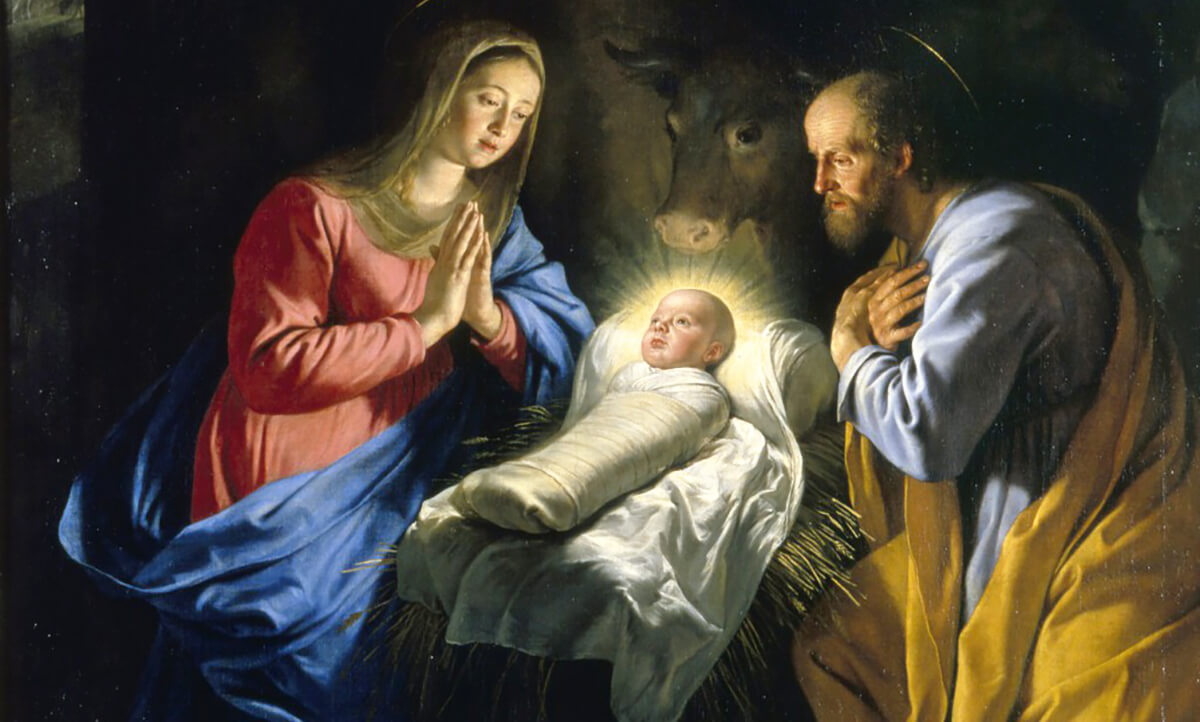
Then, of a sudden, there was a light in the world, and a man from Galilee saying, Render unto Caesar the things which are Caesar’s and unto God the things that are God’s.

And the voice from Galilee, which would defy Caesar, offered a new Kingdom in which each man could walk upright and bow to none but his God. Inasmuch as ye have done it unto one of the least of these my brethren, ye have done it unto me. And he sent this gospel of the Kingdom of Man into the uttermost ends of the earth.

So the light came into the world and the men who lived in darkness were afraid, and they tried to lower a curtain so that man would still believe salvation lay with the leaders.

But it came to pass for a while in divers places that the truth did set man free, although the men of darkness were offended and they tried to put out the light. The voice said, Haste ye. Walk while you have the light, lest darkness come upon you, for he that walketh in darkness knoweth not whither he goeth.

Along the road to Damascus the light shone brightly. But afterward Paul of Tarsus, too, was sore afraid. He feared that other Caesars, other prophets, might one day persuade men that man was nothing save a servant unto them, that men might yield up their birthright from God for pottage and walk no more in freedom.

Then might it come to pass that darkness would settle again over the lands and there would be a burning of books and men would think only of what they should eat and what they should wear, and would give heed only to new Caesars and to false prophets. Then might it come to pass that men would not look upward to see even a winter’s star in the East, and once more, there would be no light at all in the darkness.

And so Paul, the apostle of the Son of Man, spoke to his brethren, the Galatians, the words he would have us remember afterward in each of the years of his Lord:
Stand fast therefore in the liberty wherewith Christ has made us free and be not entangled again with the yoke of bondage.

This editorial was written in 1949 by the late Vermont Royster and has been published annually since.

Judges: Should they be Elected or Appointed?

Some states have recently considered proposals that would abolish the election of State judges and replace it with a system of appointed judges who would face periodic retention elections. While supporters of this plan argue that retention elections will keep judges accountable to the voters, it is irrefutable that this plan will give judges a level of insulation from the public they have never before experienced and make them more unaccountable than ever before. The folly of this proposal is made clear both by history as well as the lessons of other States that have adopted such a plan.

From a historical perspective, the Founders of our country held succinct opinions on this issue. For example, two centuries ago when the colonists declared themselves independent from Great Britain and had opportunity to create their own governments, they promptly incorporated into America new and important judicial principles – of which the 1780 Massachusetts Constitution was typical in declaring:

All power residing originally in the people and being derived from them, the several magistrates and officers of government vested with authority – whether Legislative, Executive, or Judicial – are their substitutes and agents and are at all times accountable to them. [1] (emphasis added)

The Framers feared tyranny from the judiciary more than from the other two branches, so they placed deliberate limitations on the judiciary. As a result, the Federalist Papers reported that under their plan, “the Judiciary is beyond comparison the weakest of the three departments of power. . . . [and] the general liberty of the people can never be endangered from that quarter.” [2]

As part of that plan, the Framers took care to ensure that judges were accountable to the people at all times. Although federal judges were appointed and did not face election, the Founders made certain that federal judges would be easily removable from office through impeachment, a procedure that today is widely misunderstood and rarely used. While the current belief is that a judge may be removed only for the commission of a criminal offense or the violation of a statutory law, [3] it was not this way at the beginning. As Alexander Hamilton explained, “the practice of impeachments was a bridle” [4] — a way to keep judges accountable to the people. And what did the Framers believe were impeachable offenses? According to Justice Joseph Story, a “Father of American Jurisprudence”:

The offences to which the power of impeachment has been and is ordinarily applied. . . . are what are aptly termed political offences, growing out of personal misconduct, or gross neglect, or usurpation, or habitual disregard of the public interests. [5]

Under the Framers, impeachment occurred whenever a judge attempted to carry a personal agenda through the court; but today impeachment has become what Justice Story warned that it should never be: a power “so weak and torpid as to be capable of lulling offenders into a general security and indifference.” [6] The federal judiciary, because it now enjoys a level of insulation from the people that the Framers never intended and to which they today would vehemently object, is unafraid to reshape American culture and policy to mirror its own political whims and personal values.

Judges given increased levels of protection from the public feel freer to advance personal agendas, often manifesting the view expressed by Supreme Court Justice Benjamin Cardozo who declared that:

I take judge-made law as one of the existing realities of life. [7]

Americans should not have to fear “judge-made laws” as a reality of life. We elect our legislators to make our laws, and those states that elect judges elect them to apply those laws. If these states reject a system of accountable judges, they undoubtedly will face the same arrogance now so evident on the federal level – as when Supreme Court Chief-Justice Charles Evans Hughes declared:

We are under a Constitution, but the Constitution is what the judges say it is. [8]

Since the proclivity to reshape culture and values is so frequently displayed by unaccountable judges, why would a state want to adopt such a system? In fact, why would anyone even propose a system to give additional insulation to judges? Because – proponents answer – for judges to campaign to win the votes of citizens makes the judiciary a “political” branch and weakens the so-called “independence” of the judiciary. Yet, as Thomas Jefferson wisely observed:

It should be remembered as an axiom of eternal truth in politics that whatever power in any government is independent is absolute also. . . . Independence can be trusted nowhere but with the people in mass. [9]

And is anyone really so naivé as to believe that the current appointed “independent” federal judiciary has not become a political branch? As Jefferson had warned:

Our judges are as honest as other men and not more so. They have, with others, the same passions for party, for power, and the privilege of their corps. . . . [A]nd their power the more dangerous as they are in office for life and not responsible, as the other functionaries are, to the elective control. [10]

Contrary to what is asserted by the proponents of appointed judges and retention elections, for judges to campaign and win voter support actually prevents the judiciary from becoming a political branch because citizens can then insist that judges confine themselves to their constitutional roles rather than implement their own political agendas.

Another benefit of the direct elections of judges is the competition that occurs between candidates. In contested races, judicial candidates make public the beliefs of their opponents, thus allowing citizens the opportunity to make informed decisions about those whom they want to sit on the bench. On the other hand, if an individual is appointed rather than elected, his personal beliefs might remain unknown to the public until they manifest themselves in harmful judicial decisions. Furthermore, these appointed judges would have at least four uninterrupted, unrestrained years before they would face voters for the first time in a retention election – and even at that time, there would be no opponent to remind voters of egregious decisions.

Those proposing retention elections are not improving State government. Instead, they are violating one of its most sacred principles: they are removing power from the people — something to which Thomas Jefferson strenuously objected:

The exemption of the judges from that [from election] is quite dangerous enough. I know no safe depository of the ultimate powers of the society but the people themselves; and if we think them [the people] not enlightened enough to exercise their control with a wholesome discretion, the remedy is not to take it [control] from them, but to inform their discretion by education. [11]

Jefferson further declared:

[I]t is necessary to introduce the people into every department of government. . . . Were I called upon to decide whether the people had best be omitted in the legislative or judiciary department, I would say it is better to leave them out of the legislative. The execution of the laws is more important than the making of them. [12]

Understanding that “the execution of the laws is more important than the making of them,” many of our earliest statesmen supported the election of State judges. For example, Noah Webster, himself a judge and the man responsible for Article 1, Section 8, 8 of the U. S. Constitution, declared:

[M]en elected to office should be able men, men of talents equal to their stations, men of mature age, experience and judgment; men of firmness and impartiality. This is particularly true with regard to men who constitute tribunals of justice – the main bulwark of our rights. [13]

In addition to these historical lessons, recent experiences demonstrate that in States with an appointed judiciary, judges are quite comfortable in exerting political influence rather than simply upholding and applying State laws.

For example, in the 2002 election, the appointed New Jersey Supreme Court reviewed the State law declaring that a candidate’s name may be replaced on the ballot only if the “vacancy shall occur not later than the 51st day before the general election” and somehow decided that the 35th day before the election fulfilled the same legal requirements as the 51st day before the election. (Recall that the Democrat candidate was lagging far behind his Republican opponent in the polls; the Democrats convinced the unelected judges to place a more viable candidate on the ballot – in violation of the State law – and Democrats therefore won a U. S. Senate seat they were destined to lose.)

And who can forget the appointed Florida Supreme Court in the 2000 presidential election? Even though State law declared that all election vote tallies were to be submitted to the Secretary of State’s office by 5 PM on the 7th day following the election, and that results turned in past that time were to be ignored, those judges ruled that 5 PM on the 7th day really meant 5 PM on the 19th day, and that the word “ignored” really meant just the opposite – that the Secretary of State must accept all results, even those that did not comply with the law.

Judges facing regular elections would not have rendered decisions that ignored such clear legislative language (not to mention basic math or the common meaning of words). Elected judges know that if they make such agenda-driven decisions, they will face a plethora of opponents in their next race who will remind voters of their demonstrated contempt for State law.

Arrogant, elitist proposals that judges should be protected from citizens in this day of rampant judicial political agendas is unthinkable in our free society. History is too instructive on the necessity of direct judicial accountability for its lessons to be ignored today. And while judicial accountability through the use of impeachment on the federal level appears to be a thing of the past, judicial accountability through the direct election of State judges should not be.


Footnotes

[1] A Constitution or Frame of Government Agreed Upon by the Delegates of the People of the State of Massachusetts-Bay (Boston: Benjamin Edes & Sons, 1780), 9, Massachusetts, 1780, Part I, Article V.

[2] Alexander Hamilton, Federalist #78, Alexander Hamilton, John Jay, James Madison, The Federalist on the New Constitution (Philadelphia: Benjamin Warner, 1818), 419-420; Hamilton, Federalist #73, The Federalist (1818), 398.

[3] See, for example, Irving Brant, Impeachment: Trials & Errors (New York: Alfred Knopf, 1972); Warren S. Grimes, who argues that impeachment is a relic of the past and should be abandoned in his “Hundred-Ton-Gun Control: Preserving Impeachment as the Exclusive Removal Mechanism for Federal Judges,” UCLA Law Review (June 1991), 1254; U.S. v. Carol Bayless, 95 Cr. 533 (S.D. NY, 1996); the joint statement issued by current and former chief-judges of the United States Court of Appeals for the Second Circuit in response to widespread calls from several public officials for the impeachment of federal judge Frank Baer, Jr., March 28, 1996; Fort Worth Star Telegram, April 14, 1996, C-5, “Judicial Independence” by David Broder, writer for The Washington Post.

[4] Alexander Hamilton, Federalist #65, The Federalist (1818), 353.

[5] Joseph Story, Commentaries on the Constitution of the United States (Boston: Hilliard, Gray and Company, 1833), II:233-234, § 762.

[6] Story, Commentaries (1833) II:218, § 745.

[7] Benjamin Cardozo, The Nature of the Judicial Process (New Haven: Yale University Press, 1921), 10.

[8] Charles Evans Hughes, speech at Elmira on May 3, 1907, The Autobiographical Notes of Charles Evans Hughes, eds. David J. Danelski & Joseph S. Tulchin (Cambridge: Harvard University Press, 1973), 144.

[9] Thomas Jefferson to Judge Spencer Roane, September 6, 1819, Writings of Thomas Jefferson, ed. Albert Ellery Bergh (Washington, D. C.: The Thomas Jefferson Memorial Association, 1904), XV:213 214.

[10] Jefferson to William Charles Jarvis, September 28, 1820, Writings, ed. Bergh (1904), XV:277.

[11] Jefferson to William Charles Jarvis, September 28, 1820, Writings, ed. Bergh (1904), XV:278.

[12] Jefferson to M. L’Abbe Arnoud, July 19, 1789, Writings, ed. Bergh (1904), VII:422-423.

[13] Noah Webster, A Collection of Papers on Political, Literary, and Moral Subjects (New York: Webster & Clark, 1843), 303, Chapter XV.

Analyzing Legislation

Overview

  • Briefly state the problem or issue addressed by this bill.
  • What relationships are affected by this bill? (e.g., parent to child, husband and wife, business to business, contracts, state to citizen, state to business, etc.)
  • Does this bill address a general and widespread problem, or is it based on a worst-case scenario? (e.g., because one homeschool parent mistreats his child, not all homeschool parents need to be regulated.)
  • What facts and what sources are documented to prove that this is a widespread, general problem warranting legislation?
  • Is this the least restrictive manner for government to address the issue?
  • What is the philosophical worldview of the bill’s chief sponsor?
  • Are there any aspects of this bill, either direct or indirect, which are addressed by the Bible? If so, does this bill contradict any Biblical teaching?

An Appropriate Function of State Government-A Recognition of Proper Jurisdictions

Acknowledging and adoring an overruling Providence, . . . with all these blessings, what more is necessary to make us a happy and prosperous people? Still one thing more, fellow-citizens-a wise and frugal government, which shall restrain men from injuring one another, which shall leave them otherwise free to regulate their own pursuits of industry and improvement, and shall not take from the mouth of labor the bread it has earned. This is the sum of good government, and this is necessary to close the circle of our felicities. THOMAS JEFFERSON1

Does this bill:

  • address an issue which falls under the unique jurisdiction of State government? If so, what is the legitimate State interest?
  • usurp power from another jurisdiction (e.g., family, church, private business, local community)?

Limited Government

Government is aptly compared to architecture; if the superstructure is too heavy for the foundation, the building totters, though assisted by outward props. BENJAMIN FRANKLIN2

Does this bill:

  • limit or expand, government size, powers, or intrusiveness?
  • provide provisions to ensure accountability and observability by the citizens?
  • micromanage the activities or establish an intrusive mandate, either funded or unfunded, on citizens, businesses, families, or communities?
  • make government a provider of goods or services or does it seek a free-market solution?

Empowering the People and Local Communities

I am not among those who fear the people. THOMAS JEFFERSON3

All political power is inherent in the people, and all free governments are founded on their authority, and instituted for their benefit. TEXAS CONSTITUTION4

I wish . . . never to see all offices transferred to [the Capitol], where, further withdrawn from the eyes of the people, they may more secretly be bought and sold as at market. THOMAS JEFFERSON5

Here, the people are masters of the government: [in other places] the government is master of the people. JAMES WILSON, U. S. Supreme Court Justice and Signer of the Declaration and the Constitution6

Does this bill:

  • take rights from the people?
  • interfere with any inalienable rights?
  • restrict the liberty of the law-abiding citizen in his peaceful pursuits?
  • assume that “everyone” is guilty, and must prove themselves innocent? (e.g., require all employers to prove that they are not hiring illegal immigrants.)
  • protect the people from themselves or their own ignorance?
  • benefit citizens in general, or just a narrow constituency?
  • promote local controls?

Spending and Taxes

I . . . place economy among the first and most important of republican virtues, and public debt as the greatest of the dangers to be feared. THOMAS JEFFERSON7

On new spending: When you incline to have new clothes, look first well over the old ones, and see if you cannot shift with them another year, either by scouring, mending, or even patching if necessary. Remember, a patch on your coat and money in your pocket is better and more creditable than a writ on your back and no money to take it off. BENJAMIN FRANKLIN8

To constrain the brute force of the people, [the European governments] deem it necessary to . . . take from them, as from bees, so much of their earnings. . . . And these earnings they apply to maintain their privileged orders in splendor and idleness, to fascinate the eyes of the people. THOMAS JEFFERSON9

On hidden taxes: Direct taxes are not . . . easily levied on the . . . inhabitants of our wide extended country; [but] what is paid in the price of merchandise is less felt by the consumer, and less the cause of complaint. BENJAMIN FRANKLIN10

Does this bill:

  • cost money or increase taxes?
  • provide a visible tax, or a tax hidden in the price or products or services?
  • establish a permanent entitlement?
  • use taxes for penalty, social control, or reform?

Business Impact

Industry and constant employment are great preservatives of the morals and virtue of a nation. BENJAMIN FRANKLIN11

America, under an efficient government, will be the most favorable country of any in the world for persons of industry and frugality. GEORGE WASHINGTON12

Does this bill:

  • discourage free enterprise?
  • discourage entrepreneurship?
  • affect the tax burden on businesses?
  • negatively impact businesses?
  • make businessmen serve as government bookkeepers or file clerks?
  • restrict the employee and employer from deciding between themselves an equitable wage and working environment?
  • restrict the employer from designing, producing, and pricing his goods or services?
  • restrict the consumer in his free choice of services or purchases?

Family Preservation and Strengthening

Marriage was not originated by human law. When God created Eve, she was a wife to Adam; they then and there occupied the status of husband to wife and wife to husband. . . .The truth is that civil government has grown out of marriage . . . which created homes, and population, and society, from which government became necessary. . . . [Marriages] will produce a home and family that will contribute to good society, to free and just government, and to the support of Christianity. . . . It would be sacrilegious to apply the designation “a civil contract” to such a marriage. It is that and more; a status ordained by God. TEXAS SUPREME COURT IN GRIGSBY V. REIB13

Whether we consult the soundest deductions of reason, or resort to the best information conveyed to us by history, or listen to the undoubted intelligence communicated in Holy Writ, we shall find that to the institution of marriage the true origin of society must be traced. By that institution the felicity of Paradise was consummated. . . . Legislators have with great [correctness]. . . provided, as far as municipal law can provide, against the violation of rights indispensably essential to the purity and harmony of [marriage]. JAMES WILSON, U. S. Supreme Court Justice and Signer of the Declaration and the Constitution14

Does this bill:

  • foster the traditional family structure?
  • strengthen, or weaken, the stability of the family and, particularly, the marital commitment?
  • interfere with the fundamental right of parents to direct the upbringing, supervision, and education of their children?
  • substitute governmental activity for a family function or responsibility?
  • increase or decrease family earnings?

Private Property and Individual Rights

[It] is not a just government, nor is property secure under it, where arbitrary restrictions . . . deny to part of its citizens [the] free use of their facilities. JAMES MADISON15

Does this bill:

  • limit, control, or destroy a person’s right to own and use his property, and that which lies above and beneath it?
  • use a citizen’s property for the government’s or someone else’s profit?

Strengthening Morality and Individual Accountability

Only a virtuous people are capable of freedom. As nations become corrupt and vicious, they have more need of masters. BENJAMIN FRANKLIN16

The great pillars of all government and of social life [are] virtue, morality, and religion. This is the armor, my friend, and this alone, that renders us invincible. PATRICK HENRY17

Does this bill:

  • strengthen or weaken traditional moral values?
  • require personal accountability for actions?
  • provide favorable treatment of one group to the detriment of another?
  • force citizens to subsidize government-financed expenditures that violate their traditional moral or religious beliefs?
  • promote a positive work ethic?

Endnotes

1 Thomas Jefferson, “Inaugural Address,” March 4, 1801, The American Presidency Project.
2 Benjamin Franklin, “On Government” in the Pennsylvania Gazette, April 1, 1736, The Works of Dr. Benjamin Franklin (Philadelphia: William Duane, 1809) IV:340.
3 Thomas Jefferson to Samuel Kerchival, July 12, 1816, National Archives.
4 Texas State Constitution Preamble, 1876, Texas Law.
5 Thomas Jefferson to William Johnson, June 12, 1823, National Archives.
6 James Wilson, The Works of James Wilson, ed. James DeWitt Andrews (Chicago: Callaghan & Company, 1896), I:384.
7 Thomas Jefferson to William Plumer, July 21, 1816, National Archives.
8 Poor Richard’s Almanac, “Plan for Saving One Hundred Thousand Pounds,” 1756, The Works of Benjamin Franklin, ed. Jared Sparks (Boston: Tappan and Dennet, 1844), II:90.
9 Thomas Jefferson to William Johnson, June 12, 1823, National Archives.
10 Benjamin Franklin to M. le Veillard, February 17, 1788, The Private Correspondence of Benjamin Franklin, ed. William Temple Franklin (London: Henry Colburn, 1818), I:235.
11 Benjamin Frnaklin, “Information to Those Who would Remove to America,” The Complete Works in Philosophy, Politics, and Morals of the Late Dr. Benjamin Franklin (London: J. Johnson, 1806), III:408.
12 George Washington to Richard Henderson, June 19, 1788, National Archives.
13 Grigsby v. Reib, 105 Tex. 597, 153 S.W. 1124 (Tex. 1913).
14 James Wilson, The Works of the Honourable James Wilson, ed. Bird Wilson (Philadelphia: Lorenzo Press, 1804), II:476.
15 James Madison, “Property” from the National Gazette, March 29, 1792, The Writings of James Madison, ed. Gaillard Hunt (New York: G. P. Puntam’s Sons, 1906), VI:102.
16 Benjamin Franklin to Abbes Chalut & Arnaud, April 17, 1787, The Works of Benjamin Franklin (MA: Hilliard, Gray & Co., 1840), X:297.
17 Patrick Henry to John Blair, January 1799, The Life of Patrick Henry of Virginia, ed. S. G. Arnold (NY: Miller, Orton, and Mulligan, 1857), 254.

Political Parties and Morality

On Saturday, December 19, 1998, President William Jefferson Clinton became only the second President in American history to be impeached. Charged by a majority of the House with the crimes of perjury before a grand jury and the abuse of power, the impeachment vote was lambasted as completely partisan and therefore meaningless, having no moral authority.

Truly, the vote was almost totally partisan; only a handful of Democrats voted for the impeachment of the President; and only a handful of Republicans voted against it. But does the impeachment vote mean less because it was partisan? Or is there, perhaps, a more important reason-a hidden message-underlying this clear division among party lines?

Despite the harsh and demeaning Democratic rhetoric against the impeachment vote, it must not be categorized as only another “partisan” political vote. Instead, it should be considered as being another vote in a long ongoing series of Congressional votes on moral issues. After all, lying under oath, and engaging in illicit sexual relations with a subordinate in the workplace, are indisputably moral concerns.

When the impeachment vote is examined as a moral vote rather than a vote of politics, it is not surprising that it should be partisan. After all, on nearly all Congressional votes on traditional moral issues in recent years, the dividing line has been almost completely partisan.

For example, on the moral issue of protecting innocent human life, it is the Democrats who have caused the continuation of partial-birth abortions and protected and defended this reprehensible moral misbehavior. (Eighty-two percent of Senate Democrats voted to allow partial-birth abortions while only eleven percent of Republicans did so.)

Similarly, votes on the moral issue of sodomy, like the impeachment vote, are usually decided along partisan lines. It is the Democrats who consistently vote for the protection of the homosexuals’ “lifestyle,” seek to reward their sexual misconduct with special benefits, and pursue the extension of this behavior throughout society. (For example, eighty-seven percent of Senate Democrats voted to increase protection for the homosexual lifestyle1 while only seventeen percent of Republicans did so.)

And on the issue of voluntary school prayer and the public acknowledgment of God, the dividing lines are almost completely partisan-as evidenced by the vote in Congress on the school prayer amendment. (Eighty-seven percent of House Democrats opposed voluntary school prayer while only twelve percent of Republicans did so.)

Similar partisan distinctions could be shown with almost every other moral issue, whether it be preserving parental rights or teaching pre-marital abstinence to young people. Clearly, the Democrats in Congress generally oppose traditional moral values and only rarely demonstrate any desire to hold individuals accountable for violating established mores. Therefore, when the vote on impeachment is considered as just another vote on a moral issue, the partisan results become completely predictable.

There truly is a difference between Congressional Republicans and Democrats, and nowhere is this difference more evident than on traditional moral values. The Democrats’ cry of “partisanship” is simply a smokescreen to divert attention from the lack of a moral compass that permeates their Party.

However, in the wake of the impeachment vote, the Democrats are finally clamoring for something that America actually does need: bi-partisanship. America does need two parties standing up for what is morally right-America does need two parties demanding accountability for the acts of all individuals regardless of their social position-America does need two parties seeking to preserve the moral foundations of the nation. Up to now, the only thing preventing this bi-partisanship is the Democrats.

The current partisanship exists only because the overwhelming majority of Democrats demand on the defense of what is morally indefensible and refuse to join with the overwhelming majority of Republicans who continue to defend what is morally right. It is time for Democrats to heed their own call and become bi-partisan, joining with the Republicans in defending America’s great moral values.

David Barton
December 21, 1998

1 The vote was recorded on ENDA-the Employment Non-Discrimination Act- which extended special protections and special status for homosexuals.

* This article concerns a historical issue and may not have updated information.