Sacrifices of Wives of the Declaration Signers

Here are some inspiring stories1 of women in American history. We hope they are an encouragement!

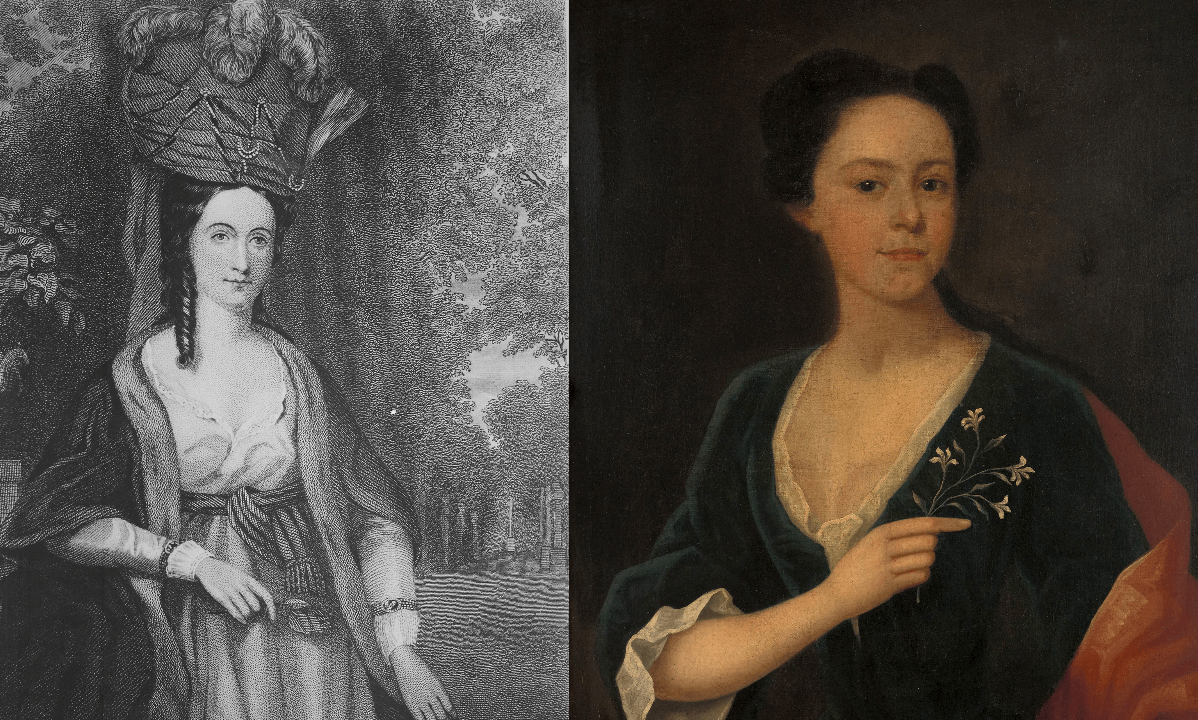
Mary Morris (wife of Robert Morris2) fled her home with her four young children (the oldest being only 7) as the British approached Philadelphia. Getting to safety, she wrote to her husband recounting her flight: “I long to give you an account of the many difficulties and uneasiness we have experienced in this journey. Indeed my spirits were very unable to the task after that greatest conflict, flying from home.”3

Gertrude Read (wife of Declaration signer George Read4) and her four young children were frequently left alone under continual threat5 as the British marched through and occupied parts of the state. Yet, despite the long separations from her husband and the many times she had to move her family to safety, a biographer of George Read notes, “she never was dejected…she animated his fortitude by her firmness.”6

As the British made their way to Princeton in the early years of the war, Annis Stockton7 (wife of Declaration signer Richard Stockton), personally secured numerous state papers to keep them safe from the British. When Richard heard8 of the British approach, he quickly acted to get his family (including six children) to safety. He, himself, was arrested the very evening his family got to safety, and remained in horrible prison conditions until Congress was able to arrange better accommodations. He never fully recovered and died in 1781.

Mary Bartlett (wife of Declaration signer Josiah Bartlett) also faced many hardships. In 1774, arsonists9 (assumed to be Loyalists opposed to Josiah’s support of the Americans) burned down the Bartlett’s home. Mary did not despair but simply moved her 12 children to the family’s farm. A biographer noted that she managed the farm herself and “in all her letters to her husband and her children, there is not one word of regret at his course or pity for herself, left alone to bear the double duties incumbent upon her.”10


Endnotes

1 “Women Heroes,” WallBuilders.
2 John Sanderson, Biography of the Signers of the Declaration of Independence (Philadelphia: R. W. Pomeroy, 1824), V:189-375.
3 Henry Clinton Greene & Mary Wolcott Greene, The Pioneer Mothers of America (NY: G. P. Putnam’s Sons, 1922), 3:159.
4 “Read, George,” ed. Dumas Malone, Dictionary of American Biography (NY: Charles Scribner’s Sons, 1935), 15:422-424.
5 Greene & Greene, Pioneer Mothers (1922), 3:211.
6 John Sanderson, Biography of the Signers of the Declaration of Independence (Philadelphia: R. W. Pomeroy, 1824), IV:27.
7 Greene & Greene, Pioneer Mothers (1922), 3:133.
8 “Stockton, Richard,” ed. Malone, DAB (1936), 18:45-46.
9 “Josiah Bartlett,” National Park Service, July 4, 2004.
10 Greene & Greene, Pioneer Mothers (1922), 3:12-13.

Is the Declaration Racist?

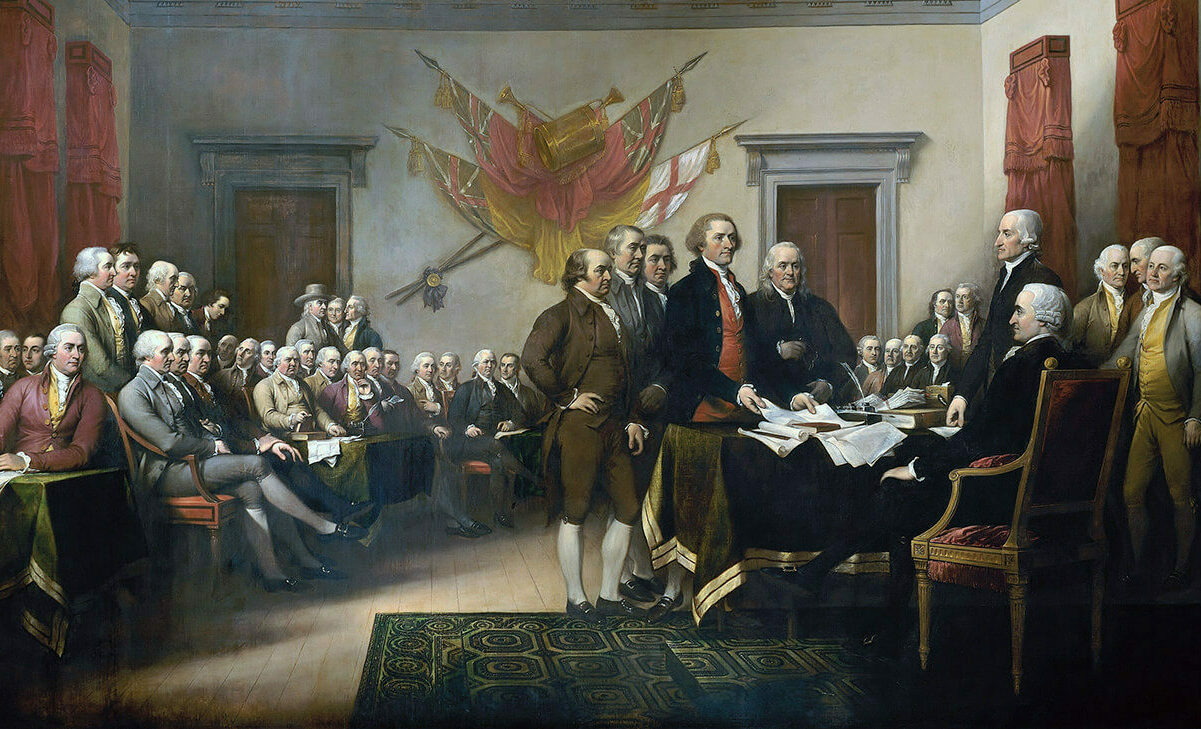
On July 4, 1776 a group of Americans approved a document declaring the United States of America free from English rule. This document was the Declaration of Independence, the nation’s birth certificate. The Declaration is currently being attacked as a racist document. Is this true?

Thomas Jefferson, the author of this document, laid out the reasons the American colonies were declaring themselves independent. One of the grievances he included in his original draft of the Declaration said:

He [King George III] has waged cruel war against human nature itself, violating its most sacred rights of life and liberty in the persons of a distant people who never offended him, captivating and carrying them into slavery in another hemisphere….Determined to keep open a market where MEN should be bought and sold, he has prostituted his negative for suppressing every legislative attempt to prohibit or to restrain this execrable commerce.
This grievance was not included the final copy of the Declaration because of the objection of two states, but its inclusion by Thomas Jefferson shows how serious the issue of slavery was taken by our Founding Fathers.

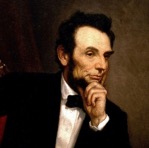
For many generations the Declaration of Independence was recognized as being a document that brought “freedom to the slave [and] liberty to the captives” (John Quincy Adams). For example, Abraham Lincoln spoke about the importance of the Declaration as an equality document:

In their [the Founders] enlightened belief, nothing stamped with the Divine image and likeness was sent into the world to be trodden on, and degraded and imbruted by its fellows. They grasped not the whole race of man then living, but they reached forward and seized upon the farthest posterity…[I]f you have been taught doctrines conflicting with the great landmarks of the Declaration of Independence…if you have been inclined to believe that all men are not created equal in those inalienable rights enumerated by our chart of liberty, let me entreat you to…come back to the truths that are in the Declaration of Independence.
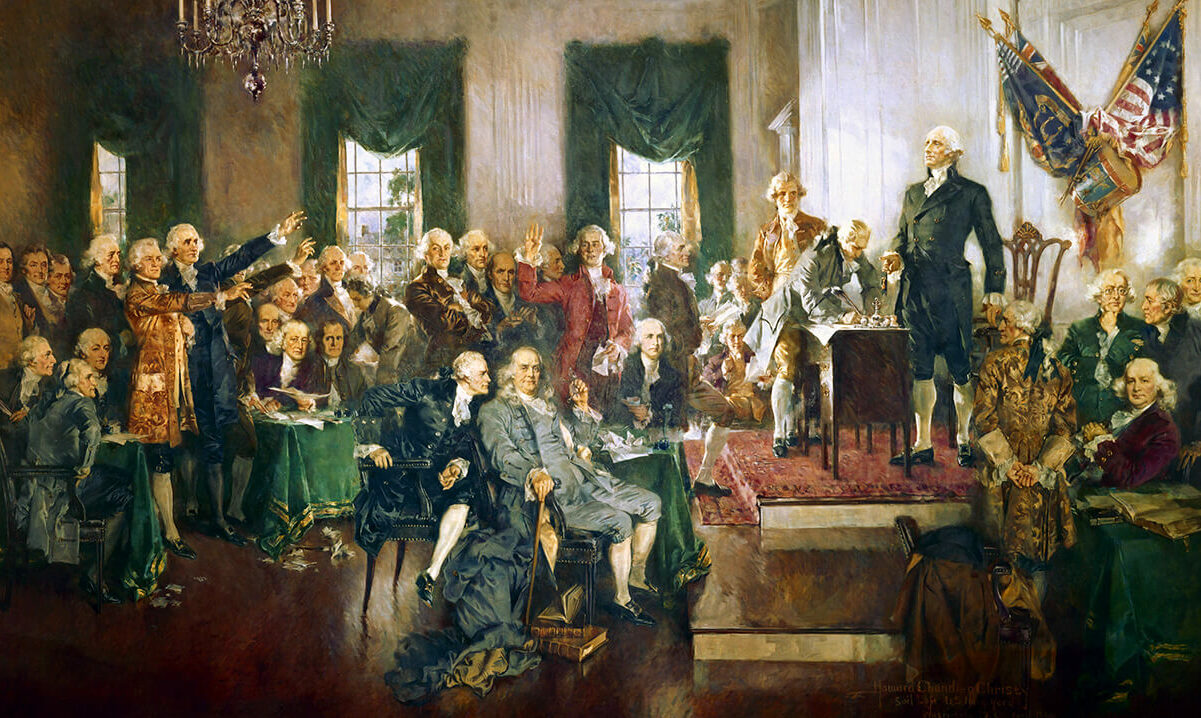
In honor of the lasting truths set forth in the Declaration of Independence, let’s celebrate Independence Day in a way that was recommended by John Adams:

It ought to be commemorated, as the day of deliverance, by solemn acts of devotion to God Almighty.

Signers of the Declaration Resource Page

So many today know very little about the fifty-six men who signed the Declaration of Independence. They pledged their “lives, fortunes, and sacred honor” to preserve the important freedoms enshrined in that document. Their legacy, in the form of the Declaration, has lasted throughout the centuries as America has grown and prospered and that legacy deserves to be remembered! Below we’ve collected some resources so that you can become better acquainted with these brave men.

Biographical Websites

US History.org, Signers of the Declaration of Independence: http://www.ushistory.org/DECLARATION/signers/index.html

National Park Service, Signers of the Declaration Biographical Sketches: https://www.nps.gov/parkhistory/online_books/declaration/bioa.htm

Descendants of the Signers of the Declaration of Independence: https://www.dsdi1776.com/signer/

Biographical Books

John Sanderson, Biography of the Signers: https://catalog.hathitrust.org/Record/007911419

Lives of the Signershttps://shop.wallbuilders.com/index.php/lives-of-the-signers-of-the-declaration.html

Wives of the Signershttps://shop.wallbuilders.com/index.php/wives-of-the-signers-book.html

WallBuilders’ Articles

America’s Birthday Over the Centuries: https://wallbuilders.com/resource/happy-fourth-of-july/

Happy Independence Day!: https://wallbuilders.com/resource/happy-independence-day/

4th of July: https://wallbuilders.com/resource/4th-july-article

Dr. Benjamin Rush: https://wallbuilders.com/resource/dr-benjamin-rush

James Wilson: https://wallbuilders.com/resource/james-wilson

Secretary of the Continental Congress Charles Thomson: https://wallbuilders.com/resource/secretary-of-the-continental-congress-charles-thomson/

FAQ: Difficulties and Sacrifices of the Declaration Signers: https://wallbuilders.com/resource/faq-difficulties-and-sacrifices-of-the-declaration-signers

Their Lives, Fortunes and Sacred Honor: Richard Stockton: https://wallbuilders.com/resource/lives-fortunes-sacred-honor-richard-stockton

Who Was Charles Carroll?: https://wallbuilders.com/resource/who-was-charles-carroll

John Hart – Quiet Farmer. Selfless Patriot: https://wallbuilders.com/resource/the-cost-of-signing-the-declaration-of-independence/

Courageous Women During the American Revolution: https://wallbuilders.com/resource/women-heroes

Sacrifices of Wives of the Declaration Signers: https://wallbuilders.com/resource/sacrifices-of-wives-of-the-declaration-signers/

Other Articles & Websites

National Archives, The Signers’ Gallery: https://www.archives.gov/founding-docs/signers-gallery

National Archives, Signers of the Declaration of Independence: https://www.archives.gov/founding-docs/signers-factsheet

Library of Congress, Thomas Jefferson, June 1776, Rough Draft of the Declaration of Independence: https://www.loc.gov/resource/mtj1.001_0545_0548/?st=gallery

Architect of the Capitol, Declaration of Independence Painting: https://www.aoc.gov/explore-capitol-campus/art/declaration-independence

Architect of the Capitol, Key to the Declaration of Independence Painting: https://www.aoc.gov/sites/default/files/painting_key_declaration-of-independence_aoc.png

James Wilson

Quiz


1. What was James Wilson’s country of birth?

2. True or False: James Wilson signed the Constitution but not the Declaration of Independence.

3. True or False: At the Constitutional Convention, Wilson was one of the relatively inactive members.

4. Who appointed Wilson to the Supreme Court?

5. True or False: During the War for Independence, Wilson was sent to negotiate with the Indians.

6. What teaching position did Wilson hold concurrent to his time in the Supreme Court?


A Lost Founder

One Founding Father we should definitely remember was James Wilson, born on September 14, 1742. Take the above quiz and see what you know about him!

In the modern rewriting of our American history, some of our nation’s Founding Fathers have been wrongly misportrayed as people not worthy of study, but most have simply been ignored. As a consequence, many worthy heroes are now forgotten. Fortunately, the Scriptures encourage us to study the past: “For whatever things were written before were written for our learning” (Romans 15:4).

James Wilson can teach us much that is relevant today, including about the important role that religion plays in civil law:

Far from being rivals or enemies, religion and law are twin sisters, friends, and mutual assistants. Indeed these two sciences run into each other. The Divine law, as discovered by reason and the moral sense, forms an essential part of both.1

Take some time to learn about James Wilson, and then share what you learn with others. Wilson is one of the heroes who helped make America a great nation!


How did you do? Check your answers!

1. Wilson was born in Scotland in 1742, he immigrated to America in 1766.2

2. False. James Wilson signed both the Declaration of Independence3 and the Constitution.4

3. False. James Wilson was the second most-active delegate at the Constitutional Convention, speaking 168 times on the floor of the Convention.5

4. George Washington. James Wilson was one of the original Supreme Court justices, serving from 1789 to 1798.6

5. True.7

6. Professor of Law at the University of Pennsylvania. Wilson organized the first systematic legal training in America, teaching classes to law students while simultaneously sitting as a Justice on the US Supreme Court.8 Prior to Wilson’s law classes, law students were largely individually trained and apprenticed in the law.


Endnotes

1 James Wilson, The Works of the Honourable James Wilson, ed. Bird Wilson (Philadelphia: Lorenzo Press, 1804), III:106.
2 “James Wilson,” B. J. Lossing, Biographical Sketches of the Signers of the Declaration of American Independence (New York: George F. Cooledge, 1848), 126.
3 “Signers of the Declaration: Biographical Sketches,” National Park Service, accessed December 15, 2023.
4 “Signers of the Constitution: Biographical Sketches,” National Park Service, accessed December 15, 2023.
5 See, for example, Mark David Hall, “Justice, Law, and the Creation of the American Republic: The Forgotten Legacy of James Wilson,” June 1, 2009, The Heritage Foundation; “Forgotten Founders: Gouverneur Morris,” June 8, 2020, National Constitution Center.
6 “Wilson, James,” Biographical Directory of the United States Congress, accessed December 15, 2023.
7 “James Wilson,” Lossing, Biographical Sketches of the Signers (1848), 128.
8 “A Biography of James Wilson,” University of Groningen, accessed December 15, 2023.

Happy Independence Day!

America’s Birthday

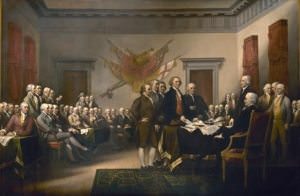
On July 4, 1776 a group of Americans approved a document declaring the United States of America free from English rule. This document was the Declaration of Independence,1 and each year on July 4th we celebrate the birthday of this courageous action!
The Declaration of Independence is the nation’s birth certificate.2 Thomas Jefferson, the primary author of the Declaration,3 outlined its purpose:

When forced, therefore, to resort to arms for redress, an appeal to the tribunal of the world was deemed proper for our justification. This was the object of the Declaration of Independence. Not to find out new principles, or new arguments, never before thought of, not merely to say things which had never been said before; but to place before mankind the common sense of the subject, in terms so plain and firm as to command their assent, and to justify ourselves in the independent stand we are compelled to take. Neither aiming at originality of principle or sentiment, nor yet copied from any particular and previous writing, it was intended to be an expression of the American mind.4

John Adams, in informing his wife, Abigail, of the events preceding the passage of the Declaration, stated:

I am well aware of the toil and blood and treasure that it will cost us to maintain this Declaration and support and defend these states. Yet through all the gloom, I can see the rays of ravishing light and glory–I can see that the end is more than worth all the means and that posterity will triumph in that day’s transaction.5

Across the generations, many others have heralded the importance of the Declaration. For example, Civil War hero Ulysses S. Grant saw it as one of the many evidences of God’s guidance:

In all these marked stages of national progress, from the Declaration of Independence to the recent amendments of the Constitution, it is impossible not to perceive a providential series and succession of events.6

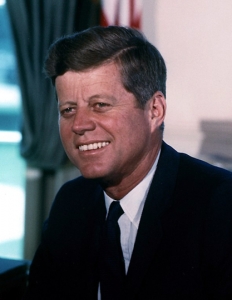
And President John F. Kennedy’s words about the Declaration are as stirring today as they were when they were originally delivered decades ago:

[The] Declaration unleashed not merely a revolution against the British but a revolution in human affairs. Its authors were highly conscious of its worldwide implications. And George Washington declared that liberty and self-government everywhere were, in his words, “finally staked on the experiment entrusted to the hands of the American people.” This prophecy has been borne out….This doctrine of national independence has shaken the globe, and it remains the most powerful force anywhere in the world today.7
As we celebrate the birthday of America, don’t forget the many sacrifices made long ago by the signers of the Declaration on our behalf!

“On this special day, the birthday of our nation, in the midst of all the joyous celebrations let us take a moment to remember the debt of thanks we owe to those who came before us, to the same God who guides us all, and to the spirit of faith and patriotism which still makes America ‘the land of the free and the home of the brave’.”
Ronald Reagan8


Endnotes

1 “Declaration of Independence: Primary Documents in American History,” Library of Congress, accessed June 24, 2025.
2 “The Declaration of Independence,” National Archives, accessed June 24, 2025.
3 Thomas Jefferson to James MAdison, August 30, 1823, Memoirs, Correspondence, and Private Papers of Thomas Jefferson, ed. Thomas Jefferson Randolph (London: Henry Colburn and Richard Bentley, 1829), III:385.
4 Thomas Jefferson to Henry Lee, May 8, 1825, The Writings of Thomas Jefferson, ed. Paul Leicester Ford (New York: G. P. Putnam’s Sons, 1899), X:343.
5 John Adams to Abigail Adams, July 3, 1776, The Works of John Adams, ed. Charles Francis Adams (Boston: Little, Brown, and Company, 1856), I:232.
6 Ulysses S. Grant, “Special Message,” July 14, 1870, The American Presidency Project.
7 John F. Kennedy, “Address at Independence Hall, Philadelphia,” July 4, 1962, The American Presidency Project.
8 Ronald Reagan, “Radio Address to the Nation on the Observance of Independence Day,” July 3, 1982, The American Presidency Project.

Their Lives, Fortunes and Sacred Honor: Richard Stockton

The signers of the Declaration of Independence pledged their “lives, fortunes, and sacred honor” so that they and their posterity (us!) could enjoy both spiritual and civil liberties to a degree unknown in the world at that time. That pledge literally cost many of them their lives and fortunes. Some of the 56 signers who sacrificed much include John Hancock, Robert Morris, and John Hart. Richard Stockton was another who paid a great price.
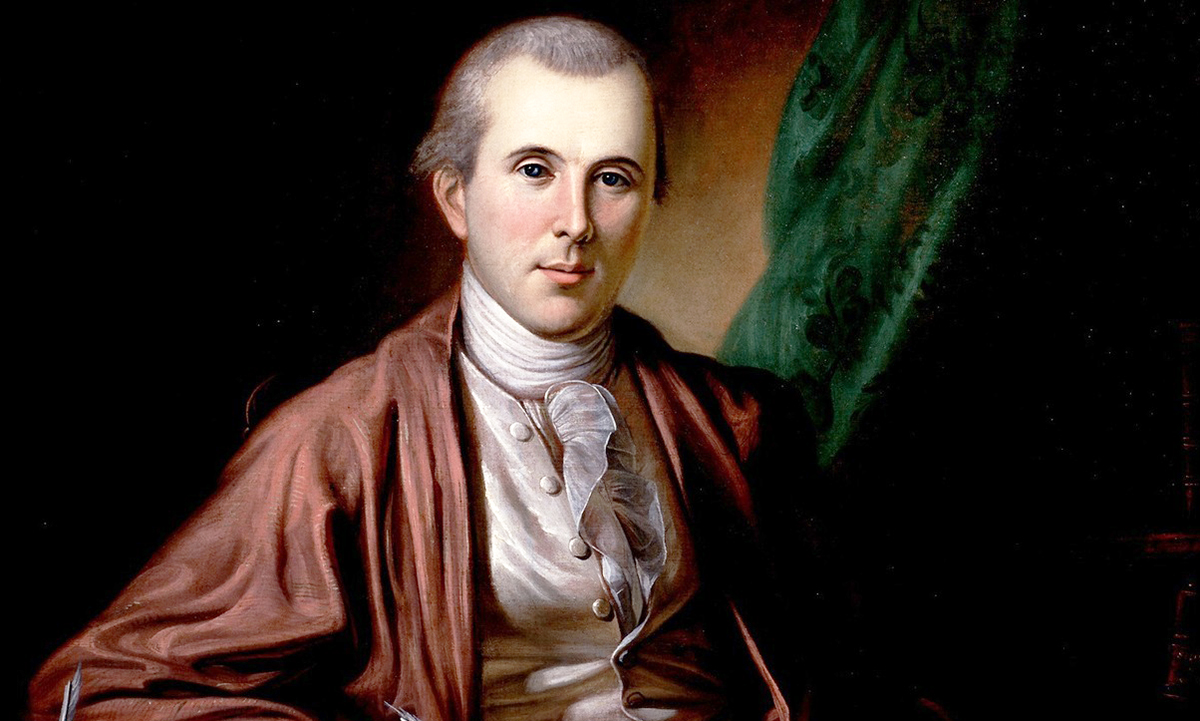
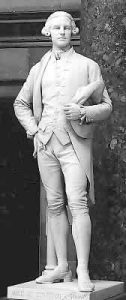
Born October 1, 1730, near Princeton, New Jersey, 1 he attended what we now know as Princeton College and became one of their trustees, having been trained as an attorney. His commitment to advance and strengthen the College brought him to the British Isles before the Revolution, where he was consulted by many British leaders as to the condition of affairs in America. 2 He was also presented to King George III, who was very impressed with Stockton. 3 Upon his return to America, he became a leader in state government and then a justice on the New Jersey Supreme Court. 4 When the king’s assault on American liberties increased, Stockton sided with the Americans and was chosen a delegate to the Continental Congress, 5 where he signed the Declaration of Independence as a representative for New Jersey. 6

Stockton was kidnapped from his home by neighbors who were Loyalists (Americans who supported the King of England). 7 He was “dragged from his bed by night, stripped and plundered of his property8 and “treated with the utmost rigor and indignity.” 9 He was placed in a notoriously brutal prison in the middle of winter and was denied even the basic necessities, subjected to the most cruel treatment. 10

When the Continental Congress learned of his plight, they interceded on his behalf. 11He was eventually released but never regained his health. 12 While imprisoned, Stockton’s library, papers and other property was burned or destroyed, and his farm left desolate and inoperable. 13 As a result of his cruel treatment, Stockton died on February 28, 1781, 14 never getting to experience the national freedom for which he had sacrificed so much.

Richard Stockton left us a legacy of patriotism, bravery, and of unwavering devotion to the Christian faith. 15 In fact, in his last will and testament, he pointedly set forth for his children, who at that point were being deprived of their father as a result of the cruel British treatment, the central tenets of Christianity, strongly encouraging them to embrace and follow them.

Richard Stockton is one of the forgotten heroes of American history. To learn more about him and other Founding Fathers, be sure to check out the WallBuilders store for Lives of the Signers of the Declaration of Independence.


Endnotes

1 Rev. Charles A. Goodrich, Lives of the Signers of the Declaration of Independence (Hartford: R.G.H. Huntington, 1842), 204-205. See also, Robert W. Lincoln, Lives of the Presidents of the United States; with Biographical Notices of the Signers of the Declaration of Independence (New York: William W. Reed, 1833), 393.
2 Alexander Leitch, “Stockton, Richard,” Princeton Companion (1978). See also, Carroll Judson, A Biography of the Signers of the Declaration of Independence, and of Washington and Patrick Henry (Philadelphia: J. Dobson, and Thomas, Cowperthwait & Co., 1839), 68; John C. Glynn, Jr. and Kathryn Glynn “Richard Stockton,The Society of the Descendents of the Signers of the Declaration of Independence (2008); Goodrich, Lives of the Signers (1842), 205.
3 John Sanderson, Sanderson’s Biography of the Signers to the Declaration of Independence, ed. Robert T. Conrad (Philadelphia: Thomas, Cowperthwait & Co., 1846), 220.
4 Judson, Biography of the Signers (1839), 68. See also, Lincoln, Lives of the Presidents (1833), 393.
5 Goodrich, Lives of the Signers (1842), 207.
6 Sanderson, Sanderson’s Biography of the Signers, ed. Conrad (1846), 219-220.
7 Sanderson, Sanderson’s Biography of the Signers, ed. Conrad (1846), 222.
8 Sanderson, Sanderson’s Biography of the Signers, ed. Conrad (1846), 222.
9 Lincoln, Lives of the Presidents (1833), 393.
10 Goodrich, Lives of the Signers (1842), 207. See also, Judson, Biography of the Signers (1839), 69.
11 Sanderson, Sanderson’s Biography of the Signers , ed. Conrad (1846), 222-223. See also Judson, Biography of the Signers (1839), 69-70.
12 Lincoln, Lives of the Presidents of the United States (1833), 393.  See also Goodrich, Lives of the Signers (1842), 208.
13 Judson, Biography of the Signers (1839), 70.
14 Judson,  Biography of the Signers (1839), 70. See also, Sanderson, Sanderson’s Biography of the Signers, ed.Conrad (1846), 223; Lincoln, Lives of the Presidents (1833), 393; Goodrich, Lives of the Signers (1842), 208.
15 Judson, Biography of the Signers (1839), 70.

Dr. Benjamin Rush


Take the Benjamin Rush Quiz!

  1. Which two former Presidents did Benjamin Rush help reconcile?
  2. What was the name of the society that Benjamin Rush helped form to start Sunday Schools?
  3. What other Founding Father helped Benjamin Rush found America’s first anti-slavery society?
  4. How many colleges and universities did Benjamin Rush help establish?
  5. What was the name of the colonial law requiring children to know how to read, and establishing public schools for that purpose?


Dr. Benjamin Rush, a signer of the Declaration of Independence, was considered by John Adams to be one of America’s three most notable Founding Fathers, ranking alongside George Washington and Benjamin Franklin. 1 But his contributions to America were not purely political, even though those were very significant. 2

Rush is also known as the “Father of American Medicine.” 3 He was a founding member of America’s first Bible Society 4 and is credited with helping begin the American Sunday School movement. 5  He helped organize America’s first Anti-Slavery society 6 and was a leader in the national abolition movement. 7 He held multiple university professorships, 8 and is properly titled “The Father of Public Schools Under the Constitution,” being an advocate for free public schools for all youth. 9

As families across the nation send millions of children back to school 10 each year, it is a good time to review the intent behind America’s original educational system: for students to receive a sound academic education based on God’s Word. 11

In fact, in 1791, Dr. Rush wrote a lengthy piece providing a dozen or so reasons why America would continue teaching the Bible in our public schools.


How Did You Do?

  1. Which two former Presidents did Benjamin Rush help reconcile?
    John Adams and Thomas Jefferson (To see the story behind the reconciliation, read this article.)
  2. What was the name of the society that Benjamin Rush helped form to start Sunday Schools?
    First Day Schools
  3. What other Founding Father helped Benjamin Rush found America’s first anti-slavery society?
    Benjamin Franklin (To see what the Founding Fathers thought of slavery, see here.)
  4. How many colleges and universities did Benjamin Rush help establish?
    Five (The College of Philadelphia, the University of the State of Pennsylvania, the Young Ladies’ Academy of Philadelphia, Dickinson College, and Franklin College)
  5. What was the name of the colonial law requiring children to know how to read, and establishing public schools for that purpose?
    The Old Deluder Satan Act (For additional information, check out Four Centuries of American Education.)

Endnotes

1 John Adams to Richard Rush, May 5, 1813, National Archives. See also, John Sanderson, Biography of the Signers to the Declaration of Independence (Philadelphia: R. W. Pomeroy, 1823), IV:285; John Adams to Richard Rush, May 5, 1813, L. H. Butterfield, “The Reputation of Benjamin Rush,” Pennsylvania History, January 1950, XVII:1:9.
2 For example, Dr. Rush pushed for the ratification of the U.S. Constitution, as well as adoption of the 1790 Pennsylvania State Constitution. He was appointed Treasurer of the U.S. Mint by President John Adams, a position which he held under Presidents Thomas Jefferson and James Madison.
3 Thomas D. Mitchell, The Character of Rush (Philadelphia: Published by the Class, John H. Gihon, Printer, 1848), 4.
4 The First Report of the Bible Society Established at Philadelphia; Read before the Society at their Annual Meeting, May 1, 1809 (Philadelphia: Printed by Order of the Society; Fry and Kammerer, Printers, 1809); “Rush, Benjamin,” Dictionary of American Biography.
5 Edwin Wilber Rice, The Sunday-School Movement and the American Sunday-School Union (Philadelphia: American Sunday School Union, 1917 ), 44-45.
6 Constitution of the Pennsylvania Society for Promoting the Abolition of Slavery, and the Relief of Free Negroes, Unlawfully Held in Bondage. Begun in the Year 1774, and Enlarged on the 23rd of April, 1787. (Philadelphia: Francis Bailey, 1788), 8; “Rush, Benjamin,” Dictionary of American Biography; Thomas Clarkson, Abolition of the African Slave-Trade, by the British Parliament (Augusta: P.A. Brinsmade, 1830), 1:66-69.
7 Centennial Anniversary of the Pennsylvania Society, for Promoting the Abolition of Slavery, the Relief of Free Negroes Unlawfully Held in Bondage, and for Improving the Condition of the African Race (Philadelphia: Grant, Faires, & Rodgers, 1875), 15.
8Benjamin Rush,” University of Pennsylvania, accessed October 26, 2023.
9 David Ramsay, An Eulogium upon Benjamin Rush, M. D. (Philadelphia: Bradford and Inskeep, 1813), 107; Benjamin Rush, “Of the Mode of Education Proper in a Republic,” Essays, Literary, Moral and Philosophical (Philadelphia: Thomas and Samuel F. Bradford, 1798), 6-20.
10Public and private elementary and secondary teachers, enrollment, and pupil/teacher ratios: Selected years, fall 1955 through fall 2021,” National Center for Education Statistics, accessed October 26, 2023.
11 Alexis de Tocqueville, The Republic of the United States of America and Its Political Institutions, Reviewed and Examined, trans., Henry Reeves (Garden City, NY: A. S. Barnes & Co., 1851), 41; Edward Kendall, Travels through the Northern Parts of the United States, in the Years 1807 and 1808 (New York: I. Riley, 1809), I:270-271.

John Hart – Quiet Farmer. Selfless Patriot.

“Having put his hand to the plow, he would not turn back.”

When fifty-six men of varying backgrounds, temperaments, means, and abilities, mutually pledged “our Lives, our Fortunes and our sacred Honor,” the words were not mere platitudes. Each knowingly signed his name. Many, if not most of those men lost loved ones and homes. Many accumulated great financial debt resulting in bankruptcy or loss of their properties. None sacrificed his honor.

Such was John Hart, signer of the Declaration from New Jersey and one of the many noted Christians among the Founding Fathers. Unlike some other Founders, Hart left little by way of written testimony. But his Christian character was widely attested to by those who knew him best. WallBuilders’ museum features some legal documents signed by John Hart and in which he affirms the legal oaths, on “the Holy Evangelists of Almighty God” (i.e., the entirety of the Scriptures). Significantly, many colonial oaths were not merely taken on the Bible, but used this specific stronger language.1

Not much is known about John Hart’s younger years, including not even the exact year he was born (ca. 1711-1715). He learned bravery and patriotism from his father who helped raise a volunteer army, named “The Jersey Blues,” to assist in the French and Indian War.2

Also like his father, John became a gentleman farmer, acquiring a large property where he raised grains for his mill, a multitude of livestock, and reared his 13 children. He was a natural leader in his community and in his church. His reputation as “Honest John Hart” earned him the confidence and respect of those around him.3 Although he preferred to remain on his farm, he answered duty’s call to public service time and time again. Over the course of 29 years he held several local and state offices. He early became interested in the cause of freedom, even helping to select New Jersey’s delegates to the Stamp Act Congress in 1765.4

John Hart was himself elected to the Continental Congress where, somewhere near the age of 60, he voted for the Declaration of Independence with “unusual zeal.”5 Since the British army was already ravaging New York at the time, he fully understood the eminent personal cost entailed by affixing his name to the Declaration of Independence. And it wasn’t long before he realized those consequences.

The British Army quickly swept into New Jersey. His property was pillaged by Hessian mercenaries. His two eldest sons were serving in the Continental Army and his remaining children had to flee their home. John was chased from his dying wife’s bedside and hunted by the enemy. He wandered about the countryside to avoid discovery by the British, rarely sleeping in the same place two nights in a row. In fact, he even had to sleep in the “resting place of a large dog” to avoid detection by a nearby British patrol.6  Several times, he was forced to flee as fast as he could to “save his neck” since he had been “marked for vengeance” by the British.7

John was never even tempted by the pardons offered by the British for “rebels” who would recant and declare their loyalty to the Crown.

Eventually, he was able to return to his destroyed home in 1777 and regather his scattered family. He began to restore his farm and property, but his health was permanently broken and he never fully recovered from the physical hardships of strain and exposure. His farm was later sold off to cover debts incurred during the war. He died before the end of the War, having yet witnessed the freedom for which he sacrificed so much.  We owe much to men such as John Hart who gave his all so that future generations might live in freedom and security.

To learn more about John Hart’s faith and character and that of his wife’s, read Lives of the Signers and Wives of the Signers (both reprinted by WallBuilders).


Endnotes

1. See, for example, Joseph Brevard, An Alphabetical Digest of the Public Statue Law of South Carolina (Charleston: John Hoff, 1814), II:86, “Oaths-Affirmations,” 1731; Oliver H. Prince, A Digest of the Laws of the State of Georgia (Milledgeville: Grantland & Orme, 1822), 3, “An Act for the case of Dissenting Protestants, within this province, who may be scrupulous of taking an oath, in respect to the manner and form of administering the same,” passed December 13, 1756; Samuel Nevill, The Acts of the General Province of New Jersey (Woodbridge, NJ: James Parker, 1761), 135, “An Act for the Raising and Maintaining One Hundred and Twenty Effective Men, for the Defense of the Frontiers of the Colony of New Jersey,” passed June 3, 1757; John Haywood, A Manual of the Laws of North Carolina (Raleigh: J. Gales, 1814), 34, “Oaths and Affirmations. 1777”.

2. John Sanderson, Biography of the Signers to the Declaration of Independence, (Philadelphia: TR.W. Pomeroy, 1827), 9:94; L. Carroll Judson, A Biography of the Signers of the Declaration of Independence, and of Washington and Patrick Henry (Philadelphia: J. Dobson, and Thomas, Cowperthwait & Co., 1839), 189.

3.  Sanderson, Biography of the Signers (1827), 9:99; Rev. Charles A. Goodrich, Lives of the Signers of the Declaration of Independence (New York: Thomas Mather, 1836), 228.

4. Benson J. Lossing, Biographical Sketches of the Signers of the Declaration of American Independence (New York: George F. Cooledge and Brother, 1848), 88.

5. Robert W. Lincoln, Lives of the Presidents of the United States; with Biographical Notices of the Signers of the Declaration of Independence (New York: William W. Reed, 1833), 360.

6. Lincoln, Lives of the Presidents (1833), 360; Sanderson, Biography of the Signers (1827), 9:113.

7. Judson, A Biography of the Signers (1839), 191; Lossing, Biographical Sketches of the Signers (1848), 88.

Charles Thomson – the Life of the Cause of Liberty

America’s founding was blessed by the contributions of many individuals who are little, or even completely unknown to us today. Charles Thomson is one such unsung patriot.

In 1774 he was beginning to make a name for himself as a patriotic leader in Philadelphia. John Adams noted, “This Charles Thompson is the Sam Adams of Philadelphia — the Life of the Cause of Liberty, they say.”1

secretary-of-the-continental-congress-charles-thomson-2Though never a member of that august body, as Secretary of the Continental Congress for over fifteen years, Thomson had a front-row seat to the birth of the nation and his fingerprints are all over America’s establishing documents. For example, the copy of the Declaration of Independence included with the official Journals of Congress were in Thomson’s handwriting, and he was one of only two people who actually signed it on July 4th.2

secretary-of-the-continental-congress-charles-thomson-3 Thomson is also responsible for the Great Seal of the United States, which he prepared and Congress approved in 1782.3

As the First Congress took its place under the new government created by the Constitution, Thomson retired from that long-term post. His last official act was personally notifying George Washington that he had been unanimously selected the President of the United States.4

But Thomson was not only a great patriot and supporter of the American cause, he was also a champion of the Word of God. In fact, his name is associated with some of America’s earliest Bible editions.

For example, his name, as Secretary of Congress, is found in the introduction to “The Bible of the Revolution,” which was the first Bible printed in English in America. That Bible was printed by Robert Aitken, the official printer of the Continental Congress. Aitken described his Bible as “a neat edition of the Holy Scriptures for the use of schools.”5 It was reviewed and approved by a committee of the Continental Congress, and published with the official congressional endorsement prominently in the front. (All of the original books pictured below that are associated with Charles Thomson are from our collection at WallBuilders.)

secretary-of-the-continental-congress-charles-thomson-5 Thomson was also responsible for the first American translation of the Greek Septuagint (the full Greek Bible) into English in 1808 – a labor of love that consumed nearly two decades of his life.6 Called Thomson’s Bible, it is a four volume-set that is considered one of the most scholarly of American Bible translations.

secretary-of-the-continental-congress-charles-thomson-7 Thomson also produced an eight-volume set in which every other page was blank, thus allowing readers space to write notes on the Scriptures as they studied them.
secretary-of-the-continental-congress-charles-thomson-6 In 1815, Thomson published his famous Synopsis of the Four Evangelists, in which he took all the passages from the four Gospels and arranged them chronologically, producing something like one super long Gospel, with all Jesus’ words and acts arranged sequentially. Today, we call such a work a synoptic Gospel.

George Washington praised Thomson’s dedication, “Your Services have been important, as your patriotism was distinguished” He added his belief that “Posterity will find your Name so honorably connected…”7 Sadly, today, Charles Thomson has become a forgotten Founding Father, but his influence, both politically and spiritually, permanently shaped the course of America and blessed American life.

February 14, 2024 This post has been updated to correct information regarding Thomson’s American translation of the Bible. 


Endnotes

1 John Adams, diary entry from August 30, 1774, Adams Family Papers, Massachusetts Historical Society, accessed November 1, 2023.
2 John Hancock was the second and the other delegates signed weeks later. Journals of the Continental Congress 1774-1779, edited from the original records in the Library of Congress by Worthington Chauncey Ford, Chief, Division of Manuscripts, Washington DC: Government Printing Office, 1905, The Avalon Project, Yale Law School, accessed November 1, 2023.
3  “Original Design of the Great Seal of the United States (1782),” Milestone Documents, National Archives, updated October 23, 2023.
4 Lewis R. Harley, Charles Thomson: Patriot and Scholar (Norristown, PA: Historical Society of Montgomery County, 1897), 28-29.
5 The Holy Bible as Printed by Robert Aitken and Approved & Recommended by the Congress of the United States of America in 1782, reprinted (New York: Arno Press, 1968), Introduction.
6 Harley, Charles Thomson: Patriot and Scholar (1897), 33-34.
7 George Washington to Charles Thomson, July 24, 1789, Founders Online, National Archives, accessed November 1, 2023.

Draftsman of the Declaration

Independence Day is the annual anniversary of the Continental Congress approving the Declaration of Independence on July 4th, 1776. That fateful day not only sealed the future for those brave men who approved that document but that paper also established the principles by which America became the most successful nation of the past three centuries.

Of the fifty-six men who signed this document, the final to pass away was Charles Carroll, who died at the age of 95. Before his passing, New York City asked him to inscribe his final thoughts on a copy of the Declaration. On it he wrote that he was “Grateful to Almighty God for the blessings which, through Jesus Christ Our Lord, He has conferred on my beloved country in her emancipation.” 1 Significantly, this Founding Father, in looking back over what had occurred as a result of the Declaration, wanted to specifically thank Jesus for what had happened with America.

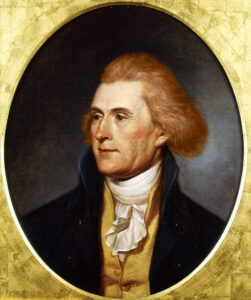
The two signers of the Declaration to precede Charles Carroll in death were John Adams and Thomas Jefferson. Both had been on the committee to draft the Declaration, and both died on the 50th anniversary of that document – on July 4, 1826. 2

Of the two, Thomas Jefferson is considered the penman of the Declaration, and many today do not know much about his beliefs or actions. Significantly, he was not only a strong advocate for political and national freedom but also for spiritual freedom.

In fact, throughout his life, he freely gave numerous financial contributions to Gospel ministers and missionaries and supported their work and office. 3 Perhaps this is not surprising, for as Governor of Virginia and a member of the Board of the College of William and Mary, he stipulated that the professors “appoint from time to time a missionary of approved veracity to the several tribes of Indians.” 4 When he became President of the United States, he signed a treaty that included a provision of $300 to “assist the said Kaskaskia tribe in the erection of a church” and to provide “annually for seven years one hundred dollars towards the support of a [Catholic] priest.” 5

draftsman-of-the-declaration-2

He also signed three federal acts setting aside government lands for the sole use of religious groups so that Moravian missionaries might be assisted in “promoting Christianity.” 6 In 1804, he prepared a volume of the key teachings of Jesus to be distributed among the Indians. 7 Today’s secularist critics (and the uninformed) claim that Jefferson excluded the supernatural from this work, but that was definitely not the case, for it contained Jesus healing the sick, raising the dead, and casting out demons, as well as Jesus’ teachings about heaven, hell, and the resurrection. 8

There is much to celebrate about our Declaration and those who produced it. As we honor the birthday of our nation, let’s remember President Jefferson’s wise declaration that:

No nation has ever existed or been governed without religion – nor can be. The Christian religion is the best religion that has been given to man and I, as Chief Magistrate of this nation, am bound to give it the sanction of my example. 9

Articles from WallBuilders:

Thomas Jefferson and Religion at the University of Virginia
The Founders And Public Religious Expressions
4th of July Article


Endnotes

1  Charles Carroll, The Life of Charles Carroll of Carrollton (New York: G. P. Putnam’s Sons, 1898), II:title page, “Copy of Declaration of Independence, New York City Library,” August 2, 1826. See also, Lewis A. Leonard, Life of Charles Carroll of Carrollton (New York: Moffit, Yard and Co., 1918), 256-257.
2Declaration of Independence,” National ArchivesSee also, The Works of John Adams, Second President of the United States, ed. Charles Francis Adams (Boston: Little, Brown, and Co. 1850), I:222; Daniel Webster, Adams and Jefferson, ed. Albert F. Blaisdell (New York: Clark & Maynard Publishers, c. 1885), 8-9.
3 See for example, David Barton, The Jefferson Lies (Aledo, TX: WallBuilder Press, 2020), 193-200.
4 Thomas Jefferson, The Works of Thomas Jefferson, ed. Paul Leicester Ford (New York: G. P. Putnam’s Sons, 1904), II:434-435, “A Bill for Amending the Constitution of the College of William and Mary.”
5 The Public Statutes at Large of the United States of America, ed. Richard Peters (Boston: Charles C. Little and James Brown, 1846), VII:79, Article III, “A Treaty Between the United States and the Kaskaskia Tribe of Indians,” December 23, 1803. See also Wallace v. Jaffree, 472 U. S. 38, at 103 (1985), Rehnquist, J. (dissenting).
6 For additional information, see David Barton, The Jefferson Lies (Aledo, TX: WallBuilder Press, 2020), xx-xxviii.
7 For additional information, see David Barton, The Jefferson Lies (Aledo, TX: WallBuilder Press, 2020), xxxviii-xl, 103-110.
8 See for example, Jefferson’s “Bible”  The Life and Morals of Jesus of Nazareth, ed. Judd Patton (Grove City: American Book Distributors, 1996), xiv, summarizing the 1983 Dickinson W. Adams, Jefferson’s Extracts from the Gospels, which was a reconstruction of Jefferson’s Philosophy of Jesus; Charles B. Sanford, The Religious Life of Thomas Jefferson (Charlottesville: University Press of Virginia, 1984);  Mark Beliles, Thomas Jefferson’s Abridgement of the Words of Jesus of Nazareth (Charlottesville: Mark Beliles, 1993).
9 James Hutson, Religion and the Founding of the American Republic (Washington: Library of Congress, 1998), 96, quoting from a handwritten history in possession of the Library of Congress, “Washington Parish, Washington City,” by Rev. Ethan Allen.