Meditating on God’s Word

Thoughts on Psalm 4:4

The Bible places great emphasis on the meditation of God and His Word. In fact, the Bible makes clear that you cannot grow spiritually without meditating on His Word.

Perhaps the best way to describe the importance of meditation is to liken it to the process of digestion. It is important to consume food (or to use a spiritual analogy based on Matthew 6:11 and 4:4, to consume the Word of God). But if what we consume is not broken down and digested so that it can be absorbed by the body, it renders no nutritional benefit. In fact, there are medical maladies whereby individuals can actually consume large amounts of food but die of starvation because the body does not break down and digest the food. So too, with the intake of God’s Word.

First Timothy 4:15 commands “meditate on these things; give yourself entirely to them, that your progress may be evident to all” (NKJV). Notice the sequence: if you (1) mediate on these things, (2) your growth and maturity will become evident to everyone. Similarly, Joshua 1:8 commands us to (1) meditate in His Word day and night, then (2) your way will be prosperous and you will have good success. Other verses that emphasize the importance of meditation include Psalm 63:6, Psalm 119:15, 99.

In both the spiritual and the physical realms, it is not how fast or how much you consume that is important, but how much you digest. And digestion takes time. You have to go over and over the same content similar to a cow chewing its cud. After cows have eaten, they lie still and ruminate—chew on what they ingested to allow full digestion and extract all the nutrition.

When you read God’s word (which should be done daily), be sure to meditate on what you just read. Take time to ask yourself questions:

  • Who — To whom was this passage written?
  • What — What was the theme of this passage?
  • When and Where — What were the circumstances and events that surrounded this message?
  • Why — Why was the message in this passage given?
  • How — How will I apply what is in this passage to my own life? What changes must I make in my own speaking, thinking, or behavior?

This meditation will move our spiritual lives beyond merely taking the “milk” of God’s Word to fully consuming its “solid food” (Hebrews 5:12-14).

The Way of the Righteous

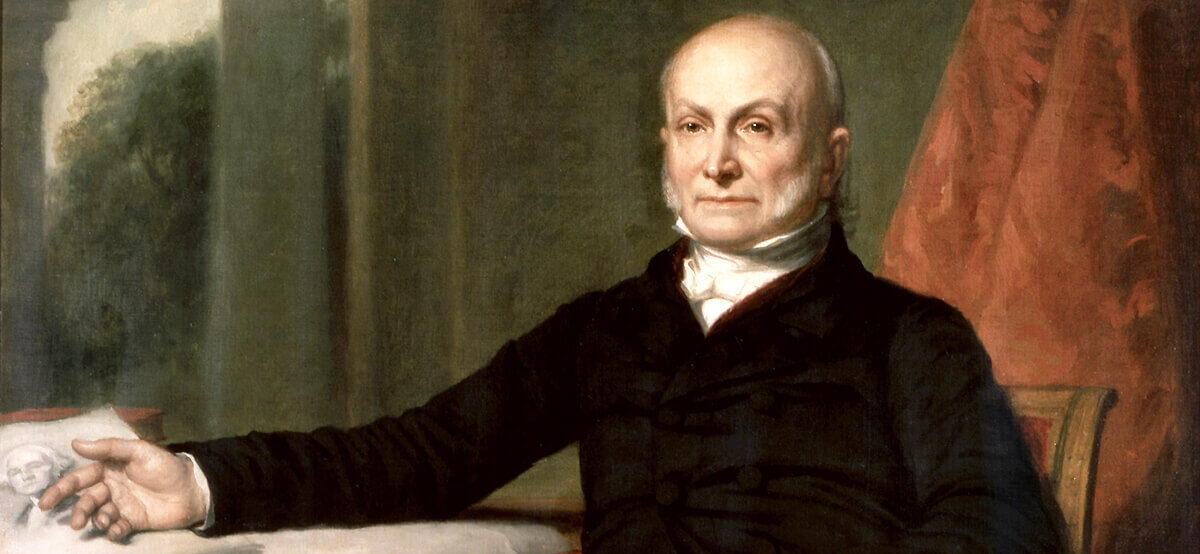
John Quincy Adams was one of many Founding Fathers who had consumed much of God’s Word. He shared:

My custom is to read four or five chapters every morning immediately after rising from my bed. It employs about an hour of my time and seems to me the most suitable manner of beginning the day.1

In addition to his regular daily readings, every Sunday he usually covered additional chapters, frequently studying and comparing translations of the Bible in several different languages (of which he could speak seven). One Sunday in 1826, while serving as president of the United States, he recorded:

Heard Mr. [Robert] Little [pastor of a church Adams attended] from Psalm 119:133: “Order my steps in Thy Word, and let not any iniquity have dominion over me.” A desultory [spontaneous] and impressive moral discourse [sermon], setting forth by various illustrations the different modes by which iniquity [sin] may obtain dominion over us. Among his quotations from Scripture was that of the first seven verses of the fifth chapter of Isaiah (the song of the vineyard that brought forth wild grapes). In this instance, as in numberless others, I was struck with the careless inattention of my own mind when reading the Bible. I had read the chapter of Isaiah, containing this parable I dare say fifty times, and it was altogether familiar to my memory; but I had never perceived a fiftieth part of its beauty and sublimity. The closing verse of the parable, especially which points the moral of the allegory, speaks with irresistible energy: “For the vineyard of the Lord of hosts is the house of Israel, and the men of Judah His pleasant plant, and He looked for judgment, but behold oppression – for righteousness, but behold a cry” [Isaiah 5:7].2

Significantly, Adams was fifty-eight when he made this diary entry, and it had been his practice from his youth to read through the entire Bible every year.3 So despite having already read this passage from Isaiah “I dare say fifty times,” he still saw something brand new in it. As he confessed, “I was struck with the careless inattention of my own mind when reading the Bible.” It is for this reason that meditation receives such an emphasis in the Bible. We must read God’s Word every day; but we must also take time to digest what we read—to “meditate within your own heart…and be still” (Psalm 4:4).


Endnotes

1 John Quincy Adams, Letters of John Quincy Adams, to His Son on the Bible and Its Teachings (New York: Derby, Miller, & Co., 1848), 11-12.

2 John Quincy Adams, diary entry for November 5, 1826, Memoirs of John Quincy Adams, ed. Charles Francis Adams (Philadelphia: J.B. Lippincott & Co., 1874), 7:168-169.

3 Adams, Letters of John Quincy Adams, to His Son (1848), 10-11.

The Duty of Nations

Thoughts on Psalm 9:17

Proverbs 3:5–6 reminds us that in all our ways (public as well as private) we are to acknowledge Him. And while it is wisdom for individuals, it is also true of nations. In response to the idolatry of others or their failure to acknowledge God, Psalm 79:6 and Jeremiah 10:25 call for God’s wrath upon all nations that do not call upon His name. And the warranty of 1 Samuel 2:30 that “Those who honor Me I will honor, and those who despise Me will be lightly esteemed” was delivered to civil leaders, not religious ones.

The psalmist said, “The wicked return to Sheol, even all the nations who forget God” (Psalm 9:17). Whenever we stop acknowledging Him, whether as individuals or a nation, we soon forget Him, and at that point we are in trouble. Understanding this truth, President George Washington emphatically declared:

It is the duty of all nations to acknowledge the providence of Almighty God, to obey His will, to be grateful for His benefits, and humbly to implore His protection and favor.1

Notice the four duties that Washington said pertained to nations:

  1. Acknowledge God
  2. Obey His will
  3. Be grateful for His aid
  4. Implore His protection and favor

President John Adams concurred:

The safety and prosperity of nations ultimately and essentially depend on the protection and the blessing of Almighty God, and the national acknowledgment of this truth is . . . an indispensable duty which the people owe to Him.2

President Thomas Jefferson agreed, and in his First Inaugural Address reminded the nation that which was “necessary to make us a happy and a prosperous people” was “acknowledging and adoring an overruling Providence.”3

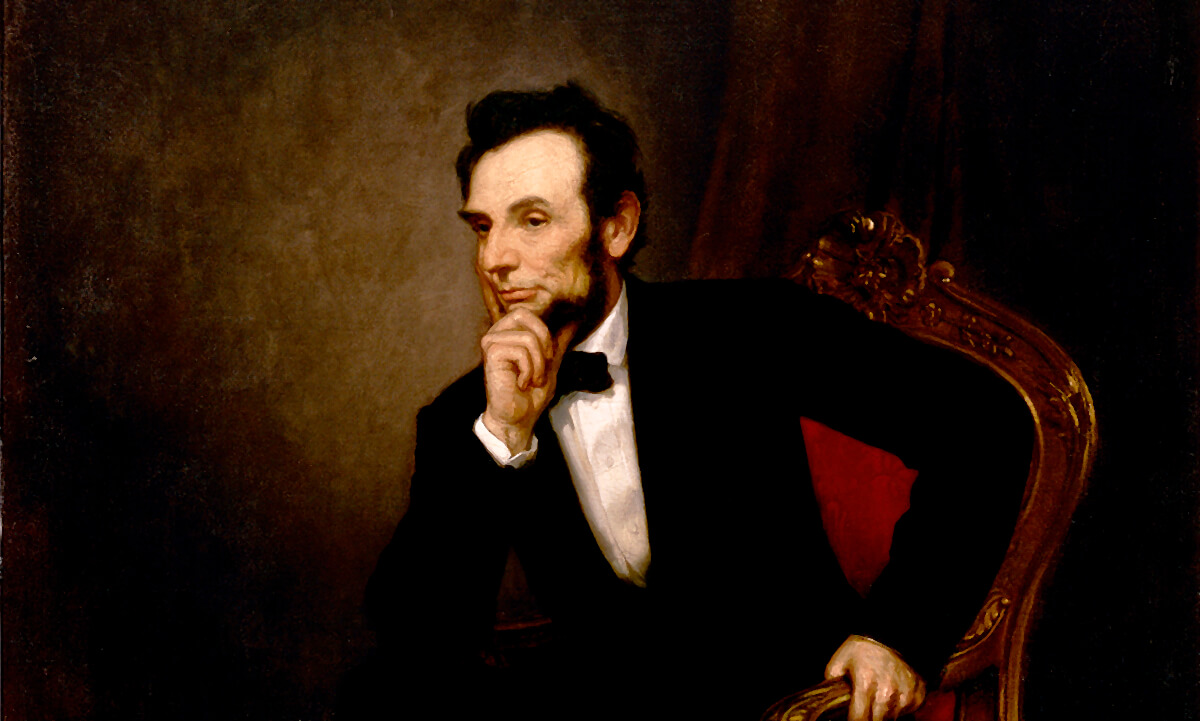
The conviction that America should publicly acknowledge God was frequently expressed by our national leaders. In fact, President Abraham Lincoln did so and warned the nation in his day that it was beginning to forget God:

It is the duty of nations as well . . . and to recognize the sublime truth announced in the Holy Scriptures and proven by all history that those nations only are blessed whose God is the Lord [Psalm 33:12]. . . . But we have forgotten God. We have forgotten the gracious hand which preserved us in peace and multiplied and enriched and strengthened us, and we have vainly imagined in the deceitfulness of our hearts that all these blessings were produced by some superior wisdom and virtue of our own. Intoxicated with unbroken success, we have become too self-sufficient to feel the necessity of redeeming and preserving grace—too proud to pray to the God that made us.4

For this reason, President Lincoln called the nation to a time of public humiliation, fasting, and prayer so that it would once again remember God.

Acknowledging God Today

Remembering and honoring God at the national level begins with simple acknowledgment of God. Modern disputes over things such as the National Motto, the inclusion of “under God” in the Pledge of Allegiance, public displays of the Ten Commandments or nativity scenes, and prayer at athletic events, school meetings, or political gatherings are not in fact small or trivial matters. Such public acknowledgments are not coercive, but rather simple, encouraging reminders with a long history underscoring the value and wisdom of honoring God. The Founding Fathers would never have supported any public policy that prohibited such expressions and cause us as a nation to forget God.


Endnotes

1 George Washington, “A Proclamation” printed in The Providence Gazette and Country Journal (October 17, 1789), 1. See also George Washington, “Proclamation for a National Thanksgiving,” Writings of George Washington, ed. Jared Sparks (Boston: American Stationers Company, 1837), XII:119.

2 John Adams, “Proclamation for a National Fast,” March 23, 1798, The Works of John Adams, Second President of the United States, ed. Charles Francis Adams (Boston: Charles C. Little and James Brown, 1851), IX:169.

3 Thomas Jefferson, “First Inaugural Address,” March 4, 1801, The Papers of Thomas Jefferson, ed. Barbara B. Oberg (Princeton: Princeton University Press, 2006), 33:150.

4 Abraham Lincoln, “A Proclamation” printed in The Liberator (April 24, 1863), 3. See also Abraham Lincoln, , “A Proclamation Appointing a National Fast-Day,” The Writings of Abraham Lincoln, ed. Arthur Brooks Lapsley (New York: G. P. Putnam’s Sons, 1923), 6:270–271.

Worth Riding a Hundred Miles to Hear

Thoughts on Psalm 35

By September 1774, the tensions between America and Great Britain had been escalating for a decade and were reaching a boiling point. But despite that strain, Americans were largely still loyal to Great Britain. The colonies were vigorously pursuing reconciliation. The British, however, rejected their overtures and even responded with military force. British governors in America also disbanded legislative assemblies (i.e., Governors Dunsmore and Boutetout in Virginia and Wright in Georgia), attempting to impose hardfisted tyrannical rule.

The colonies decided that the time had come to act together rather than individually. In May 1774, Virginia called for a Continental Congress,1 as did New York2 and others. They hoped that by speaking with a unified voice, Britain would no longer ignor their grievances and they could reach an understanding. Specifically, they were seeking a repeal of the Intolerable or Coercive Acts, including those disbanding colonial juries, replacing elected American officials with unelected ones appointed by the Crown, and requiring British troops to be boarded in private homes

On September 5, 1774, forty-five delegates gathered in Philadelphia in what became known as the First Continental Congress. While each delegate was a significant figure in his own colony, most were unknown to the others. Incidentally, many went on to become nationally recognized political or military leaders, or even US Presidents.

Prayer Proposed

The delegates met one another and contemplated their course of action. John Adams reported their very first proposal after organizing themselves:

When the Congress first met, Mr. [Thomas] Cushing [of Massachusetts] made a motion that it should be opened with prayer.3

This apparently harmless suggestion met unexpected stiff resistance:

It was opposed by Mr. [John] Jay of New York and Mr. [John] Rutledge of South Carolina because we were so divided in religious sentiments—some Episcopalians, some Quakers, some Anabaptists, some Presbyterians, and some Congregationalists—that we could not join in the same act of worship.4

Strikingly, both of the opponents (Jay and Rutledge) were devoted Christians. In fact, John Jay (an author of the Federalist Papers and the original chief justice of the US Supreme Court) was a founder and president of the American Bible Society. He also wrote lengthy evangelical treatises on the Scriptures. These pious individuals opposed an opening prayer because the various delegates came from many different Christian denominations.

Today, it seems strange that a denominational difference might prevent one Christian from praying with another, but not then. Most of the colonies had official state-established denominations (i.e., Anglicans in Virginia, South Carolina, Maryland, North Carolina, and New York;  Congregationalists in Connecticut, New Hampshire, and Massachusetts). The government-sanctioned denomination would sometimes persecute and even kill those from other denominations who preached or conducted religious services without authorization from the official church.5 But God had been preparing the colonists to overcome these abuses by helping Christians focus on the major Biblical teachings on which they all agreed rather than the nonessential denominational doctrines.

Whitefield’s “Faather Abraham” Sermon

This groundwork was laid by the national revival known as the Great Awakening (1730-1770) and was especially facilitated through the influence of English evangelist George Whitefield. Whitefield made seven missionary journeys to America, preaching across the country for thirty-four years on horseback, delivering 18,000 sermons.6 It is estimated that eighty percent of all Americans heard him preach,7 and his “Father Abraham” sermon was one of his more famous ones.

John Adams heard that sermon and recounted its message to Thomas Jefferson. In that sermon, Whitefield pretended to be at the gates of Heaven talking to Abraham:

He [Whitefield] began: “Father Abraham,” with his hands and eyes gracefully directed to the heavens (as I have more than once seen him): “Father Abraham, whom have you there with you? Have you Catholics?” “No.” “Have you Protestants?” “No.” “Have you Churchmen?” [Anglicans].“No.” “Have you Dissenters?” [Congregationalists]. “No.” “Have you Presbyterians?” “No.” “Quakers?” “No.” “Anabaptists?” [Baptists, Amish, Mennonites]. “No.” “Whom have you there? Are you alone?” “No.” “My brethren, you have the answer to all these questions in the words of my next text: “He who feareth God and worketh righteousness, shall be accepted of Him’’ [Acts 10:35].8 God help us all to forget having names and to become Christians in deed and in truth.9

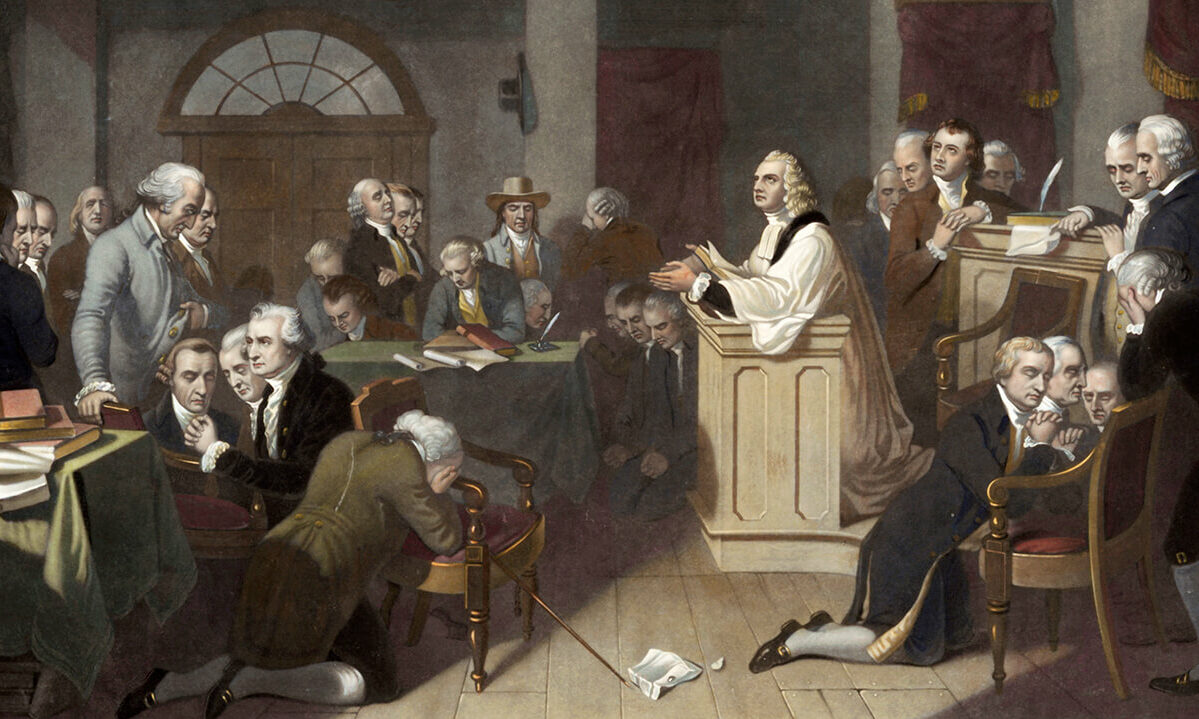
Samuel Adams took the message of Whitefield’s popular “Father Abraham” sermon and practically applied it in that first gathering of Congress. After hearing Jay and Rutledge oppose the motion for prayer, he “arose and said he was no bigot, and could hear a prayer from a gentleman of piety and virtue, who was at the same time a friend to his country.”10 Adams added that because he was from Boston, he “was a stranger in Philadelphia, but had heard that [Rev.] Mr. [Jacob] Duché [pronounced Dooshay] deserved that character, and therefore he moved that Mr. Duché, an Episcopalian clergyman, might be desired to read prayers to the Congress tomorrow morning.”11

It is significant that Samuel Adams—an ardent Congregationalist (Puritan)—personally suggested having an Episcopal clergyman from the Church of England (a denomination greatly disliked by Congregationalists) deliver the original opening prayer in Congress. By this suggestion, Adams was implementing the Acts 10:35 message so long preached by Whitefield.

Interestingly, seventy years later in arguments before the US Supreme Court, the great Daniel Webster recalled this example, reminding the justices:

At the meeting of the first Congress, there was a doubt in the minds of many about the propriety of opening the session with prayer; and the reason assigned was, as here, the great diversity of opinion and religious belief. Until at last Mr. Samuel Adams, with his gray hairs hanging about his shoulders and with an impressive venerableness now seldom to be met with . . . rose in that assembly, and with the air of a perfect Puritan said it did not become men professing to be Christian men who had come together for solemn deliberation in the hour of their extremity to say that there was so wide a difference in their religious belief that they could not, as one man, bow the knee in prayer to the Almighty, Whose advice and assistance they hoped to obtain. . . . And depend upon it, that where there is a spirit of Christianity, there is a spirit which rises above form, above ceremonies, independent of sect or creed, and the controversies of clashing doctrines.12

When Two or More are Gathered

Adams’ Whitefield-like rebuke penetrated the hearts of the other delegates:

[Cushing’s] motion was seconded, and passed in the affirmative. Mr. [Peyton] Randolph [of Virginia], our President, waited on Mr. Duché. . . Accordingly, next morning he appeared with his clerk and in his pontificals.13

In the culture of that day, prayer was not nearly so casual as it is today; it was very formal. As Benjamin Franklin once noted, clergy “officiated” in prayer.14 And recall that when Samuel Adams moved for Jacob Duché to “read prayers in the established form,” Duché agreed and arrived “with his clerk and in his pontificals.” (He entered the assembly with an entourage and in his special ceremonial robes.) Prayers over public bodies at that time involved an orthodox ceremonial formality that deliberately conveyed a majestic reverence for Almighty God.

But Duché did much more than just “officiate” by “reading” prayers from the Book of Common Prayer. Surprising everyone present, he launched into an unforeseen but passionate and spontaneous prayer. According to John Adams:

Mr. Duché, unexpectedly to everybody, struck out into an extemporary prayer which filled the bosom of every man present.15

What was the effect?

I must confess I never heard a better prayer or one so well pronounced. . . .with such fervor, such ardor, such earnestness and pathos, and in language so elegant and sublime. . . .It has had an excellent effect upon everybody here.16

Several delegates including Samuel Adams,17 Joseph Reed,18 and Samuel Ward;19  commented on Duché’s remarkable prayer. Silas Deane reported that Duché’s prayer. . .

was worth riding one hundred mile to hear. He. . .prayed without book about ten minutes so pertinently, with such fervency, purity, and sublimity of style and sentiment, and with such an apparent sensibility of the scenes and business before us, that even Quakers shed tears.20

By the way, Deane’s comment that it was a prayer “worth riding one hundred mile to hear” is significant. In that day, riding one hundred miles meant three days in the saddle. Deane admitted that he would have willingly spent three days on horseback just to reach that gathering and hear that prayer. And the prayer was so powerful that it caused even the stern Quakers (the group most persecuted by Duché’s Anglican denomination) to “shed tears” as they listened.

While the exact wording of that first prayer is not known, we can ascertain the type of prayer from Duché’s continued service in the Second Continental Congress. Shortly after the Declaration of Independence was approved, Duché was appointed congressional chaplain21 and delivered this stirring prayer:

O Lord our heavenly Father, high and mighty King of kings and Lord of lords. . .over all the kingdoms, empires, and governments, look down in mercy, we beseech Thee, on these American States who have fled to Thee from the rod of the oppressor and thrown themselves on Thy gracious protection, desiring to be henceforth dependent only on Thee; to Thee have they appealed for the righteousness of their cause; to Thee do they now look up for that countenance and support which Thou alone canst give; take them, therefore, Heavenly Father, under Thy nurturing care; give them wisdom in council, and valor in the field; defeat the malicious designs of our cruel adversaries; convince them of the unrighteousness of their cause. . . .All this we ask in the name and through the merits of Jesus Christ, Thy Son and our Savior, Amen!22

Scripture Applied

A year later, it did not appear as if his prayer would be answered. The Americans had lost battle after battle, and British troops had invaded and seized his hometown of Philadelphia. During this gloomy outlook, Duché wrote George Washington, predicting American defeat and urging him to retract the Declaration of Independence. Washington refused, and Congress declared Duché a traitor, whereupon he fled to Great Britain. But late in life, after receiving permission from President Washington, Duché returned to America where he spent his remaining years.

But in that first gathering of Congress he did not just pray. According to John Adams, Duché also. . .

read the collect [Scriptures] for the seventh day of September, which was the thirty-fifth Psalm. You must remember this was the next morning after we heard the horrible rumor of the cannonade of Boston. I never saw a greater effect upon an audience. It seemed as if Heaven had ordained that Psalm to be read on that morning. . . .It has had an excellent effect upon everybody here. I must beg you to read that Psalm. . . .Read this letter and the 35th Psalm to [your friends]. Read it to your father [the Rev. William Smith, church pastor].23

Significantly, when the delegates gathered in Philadelphia, they heard a rumor that Boston was under attack. The Founders’ distress was palpable. They were still British citizens, and their own British army and navy was now besieging them. But Psalm 35 spoke directly to their growing fears.

Silas Deane noted that “the lessons [Scriptures] of the day, which were accidentally extremely applicable.24 John Adams agreed that the reading of Psalm 35 on that day was not only “most admirably adapted” but also that was “Providential.”25

Significantly, when the Book of Common Prayer was written in 1662 under King Charles II, Psalm 35 was designated for reading on September 7 of each year. (Other assigned daily passages studied in Congress that morning included Amos 9, Matthew 8, and Psalm 36.) The fact that Psalm 35 was assigned to that day over a century earlier confirmed to the Founders that God knew what they would be facing and was watching over them. As one Founding Father expressed it, “the liberties of America are the object of Divine protection.”26

As you read Psalm 35, place yourself in the Founders’ circumstances. Imagine their mindset on that day, and consider the uncertainty that must have gripped their souls. Since this Psalm contains the prayers of a defenseless people attacked by a much stronger adversary, it is easy to understand why it so impacted the nation’s first Congress.


Endnotes

1 “An association, signed by 89 members of the late House of Bugesses,” May 27, 1774, Library of Congress, http://hdl.loc.gov/loc.rbc/rbpe.17801200.

2 “Letter from the New York Committee of Fifty-One to the Boston Committee of Correspondence; May 23, 1774,” The Avalon Project, http://avalon.law.yale.edu/18th_century/letter_ny_comm_1774.asp.

3John Adams to Abigail Adams, September 16, 1774, Familiar Letters of John Adams and His Wife Abigail Adams, During the Revolution, ed. Charles Francis Adams (Boston: Houghton, Mifflin and Company, 1875), 37.

4 John Adams to Abigail Adams, September 16, 1774, Familiar Letters, ed. Adams (1875), 37.

5 See, for example, James Madison to William Bradford, Jr., January 24, 1774, The Writings of James Madison (New York: G.P. Putnam’s Sons, 1900), 1:21; James Underwood and William Burke, The Dawn of Religious Freedom in South Carolina (Columbia: University of South Carolina Press, 2006), 167; Robert Semple, A History of the Rise and Progress of the Baptists in Virginia (Richmond: Robert Semple, 1810), 14, 29-30; A Companion to Thomas Jefferson, ed. Francis Cogliano, editor (Chichester: John Wiley & Sons, 2011), 78; Cyclopedia of Methodism, ed. Matthew Simpson (Philadelphia: Everts & Stewart, 1878), s.v. “Virginia.”

6 See, for example, John Gillies, Memoirs of Rev. George Whitefield (Middletown: Hunt & Noyes, 1838), 273; N. F. Bryant, The Household Monthly (Boston: N.F. Bryant, December 1859), III:3: 237, “Whitefield in America.”

7 See, for example, “George Whitefield: Did you Know,” April 1, 1993, Christian History; Dave Schleck, “CW to Recreate Visit of Famous Preacher,” December 15, 1995, Daily Press; Stephen Gorham, “The Divine Dramatist: George Whitefield and the Full Flowering of the Great Awakening,” February 26, 2012, American History, Suite 101.

8 John Adams to Thomas Jefferson, December 3, 1813, The Writings of Thomas Jefferson, ed. Andrew A. Lipscomb (Washington, DC: The Thomas Jefferson Memorial Association, 1904), XIV:19-20.

9 Stephen Mansfield, Forgotten Founding Father: The Heroic Legacy of George Whitefield (Nashville: Cumberland House, 2001), 86.

10 John Adams to Abigail Adams, September 16, 1774, Familiar Letters, ed. Adams (1875), 37.

11 John Adams to Abigail Adams, September 16, 1774, Familiar Letters, ed. Adams (1875), 37.

12 Daniel Webster, Mr. Webster’s Speech in Defence of the Christian Ministry, and In Favor of the Religious Instruction of the Young (Washington, DC: Gales and Seaton, 1844), 36-37.

13 John Adams to Abigail Adams, September 16, 1774, Familiar Letters, ed. Adams (1875), 37.

14 The Works of Benjamin Franklin, ed. John Bigelow (New York: G.P. Putnam’s Sons, 1904), XI:378, “Motion for Prayers in the [Constitutional] Convention.”

15 John Adams to Abigail Adams, September 16, 1774, Familiar Letters, ed. Adams (1875), 37.

16 John Adams to Abigail Adams, September 16, 1774, Familiar Letters, ed. Adams (1875), 37.

17 Samuel Adams to Joseph Warren, September 9, 1774, Letters of Delegates to Congress, ed. Paul H. Smith (Washington, DC: Library of Congress, 1976), I:55.

18 John Adams diary entry of September 10, 1774 The Works of John Adams, Second President of the United States, ed. Charles Francis Adams (Boston: Little, Brown and Company, 1850), II:377-378.

19 Samuel Ward’s diary entry of September 7, 1774, Letters of Delegates, ed. Smith (1976), I:45.

20 Silas Deane to Elizabeth Deane, September 7, 1774, The Silas Deane Papers (New York: New York Historical Society, 1887), I:20.

21 July 9, 1776, The Journals of the Continental Congress (Washington, DC: Government Printing Office, 1906), V:530.

22 James Thatcher, A Military Journal (Boston: Richardson and Lord, 1823), 145n.

23 John Adams to Abigail Adams, September 16, 1774, Familiar Letters, ed. Adams (1875), 37.

24 Silas Deane to Elizabeth Deane, September 7, 1774, Silas Deane Papers (1887), I:20.

25 John Adams diary entry of September 7, 1774, Works of John Adams, ed. Adams (1850), II:368.

26 George Washington, General Orders of September 26, 1780, The Writings of George Washington, ed. John C. Fitzpatrick (Washington: United States Government Printing Office, 1937), XX:95.

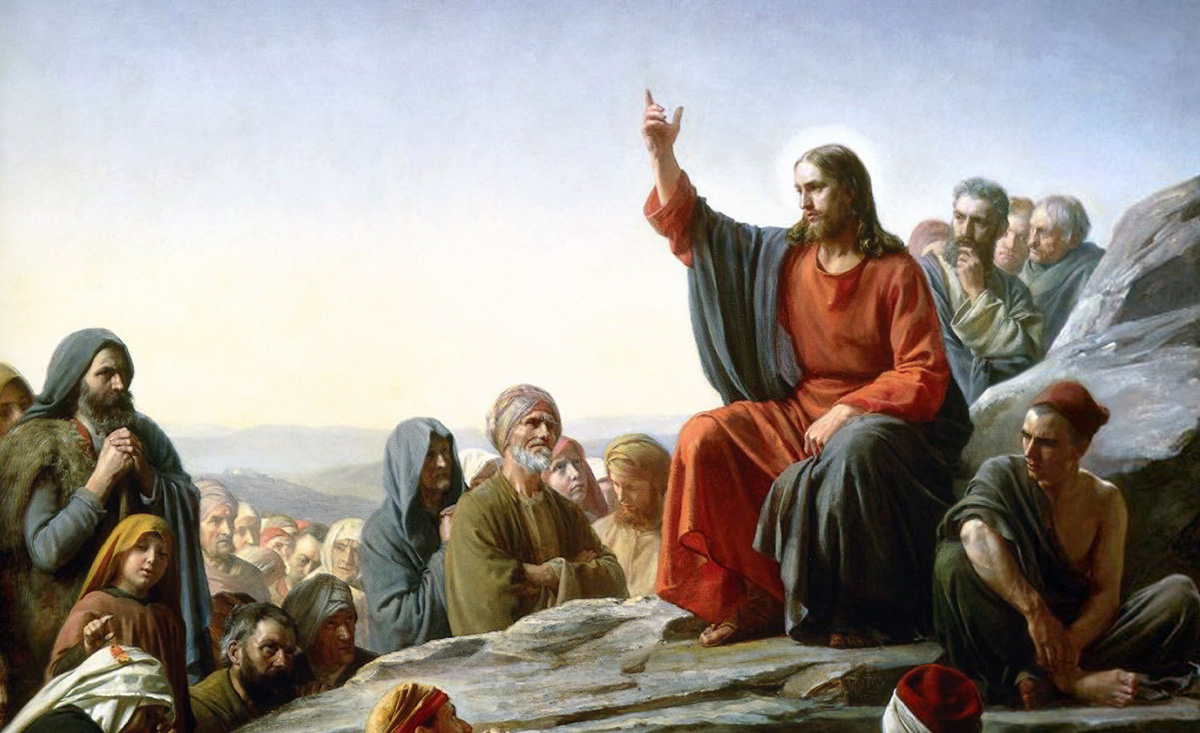
The Sermon on the Mount Carl Bloch, 1890

His Desire to Answer Prayer

Thoughts on Matthew 6

Prayer has always been central to Biblical faith. Scripture is replete with stories of the efficacy of prayer. It is not surprising then that the practice of prayer was deeply embedded in early American life. In fact, colonial, state, and federal governments issued over 1,400 official calls to prayer between 1620 and 1815.1 The Founding Fathers clearly were convinced of the effectiveness of prayer.

John Jay, the original chief justice on the US Supreme Court, believed that the fact that God told us to pray, and how to pray and what to pray for, were clear indications that He wanted to answer our prayers. He explained:

Had it not been the purpose of God that His will should be done on earth as it is done in heaven, He would not have commanded us to pray for it. That command implies a prediction and a promise that in due season it shall be accomplished.2

Jay’s reference is to the Lord’s Prayer, when Jesus’ disciples came to Him and asked Him to teach them to pray. To which He replied:

Pray, then, in this way: ‘Our Father who is in heaven, hallowed be Your name. Your kingdom come. Your will be done, on earth as it is in heaven. Give us this day our daily bread. And forgive us our debts, as we also have forgiven our debtors. And do not lead us into temptation, but deliver us from evil. [For Yours is the kingdom and the power and the glory forever. Amen.’] (Matthew 6:9-13)

This prayer, well known to the Founding Fathers, appeared in American public school textbooks for over two centuries. An elderly John Quincy Adams recalled that it was one of the first things he had learned as a youngster:

My mother was the daughter of a Christian clergyman . . . In that same spring and summer of 1775 [when I was only seven], she taught me to repeat daily after the Lord’s Prayer before rising from bed, the Ode of Collins on the patriot warriors [a patriotic poem]. . . .Now—seventy-one years after they were thus taught me—I repeat them from memory.3

Early American statesman John Chandler Davis conversed with Adams about the Lord’s Prayer shortly before the latter’s death in 1848. Davis recounted:

In 1847, I became well acquainted with him and frequently met with him and talked with him in the House of Representatives. I remember one morning in 1847 that I met him before the House was called to order. He was very feeble. It was not long before the subject of religion was introduced by Mr. Adams. Among other things I remember his saying, “There are two prayers I love to say: the first is The Lord’s Prayer, and because the Lord taught it; and the other is what seems to be a child’s prayer, “Now I lay me down to sleep,” etc., and I love to say this because it suits me. And,” he added, “I love this prayer so much that I have been repeating it every night for very many years past, and I say it yet – and I expect to say it my last night on earth if I am conscious. But,” said he, “I have added a few words to the prayer so as to express my trust in Christ, and also to acknowledge what I ask for I ask as a favor and not because I deserve it. This is it,” said he, and then he repeated it as he was in the habit of saying it: “Now I lay me down to sleep, I pray the Lord my soul to keep; if I should die before I wake, I pray the Lord my soul to take – for Jesus’ sake. Amen.” This was in 1847. He died in 1848 while I was living in Washington, and I have no doubt but that the “child’s prayer that just suited” him was reverently repeated every night until he died.4

Jesus taught His disciples to pray the Lord’s Prayer, something many Founding Fathers faithfully embraced. The Lord’s Prayer serves as a time-tested guide for our own prayers that comes with a clear indication of God’s desire to answer them. As John Jay knew to be true, the Lord’s Prayer leads to answered prayer.


Endnotes

1 DeLoss Love, The Fast and Thanksgiving Days of New England (Boston: Houghton, Mifflin and Company, 1895), 464-514.

2 John Jay at the Annual Meeting, May 8, 1823, The Life of John Jay, with Selections of his Correspondence and Miscellaneous Papers, ed. William Jay (New York: J. & J. Harper, 1833), 1:503.

3 John Quincy Adams, The Memoirs of John Quincy Adams, ed. Charles Francis Adams (Philadelphia: J. B. Lippincott & Co., 1874), I:5-6.

4 John C. Davis, “John Quincy AdamsThe Churchman, June 14, 1890; reprinted as “Child-Likeness of the Old Man Eloquent,” in The Sunday School Union (1890), XXXII:415.

Stepping Stones

Thoughts on 1 Chronicles 17:11-12

King David was an accomplished statesman, musician, poet, soldier, and visionary. He sought God with his whole heart, passionately seeking to honor and serve Him throughout his long life, notwithstanding occasional and even serious slips along the way.

As a reflection of his deep love for God, David wanted to give Him a permanent and visible place of prominence with a majestic temple to replace the tent used in the wilderness. By David’s own words, “the house to be built for the Lord must be exceedingly magnificent, famous, and glorious throughout all countries” (1 Chronicles 22:5).

David’s intentions were honorable and his heart pure. God was pleased with his desire but made clear that he was not to build the temple. His son Solomon would build it instead (1 Chronicles 17:11-12, 22:9-10, 28:6). When David realized that his heart’s desire would not be accomplished in his lifetime, he was not discouraged. But began working to prepare things for the next generation. He cut stones and collected iron, bronze, and cedar trees in abundance. He “made abundant preparations before his death” (1 Chronicles 22:2-5). David was also diligent to pass on the vision to his son (1 Chronicles 22:6, 11-13) and even relayed the specific plans that God had given for the temple (1 Chronicles 28:11-12, 19-20).

The transmission of a vision from one generation to the next in order to secure its fulfillment is common throughout the Bible. For example, Moses led the people out of Egypt and set them firmly on the path to the Promised Land, but then he handed them off to the much younger Joshua to finish the task. Similarly, God told the older prophet Elijah to find and train the younger Elisha. Elisha then performed twice as many miracles as Elijah. Likewise, Jesus passed on His vision for the world to His disciples to continue.

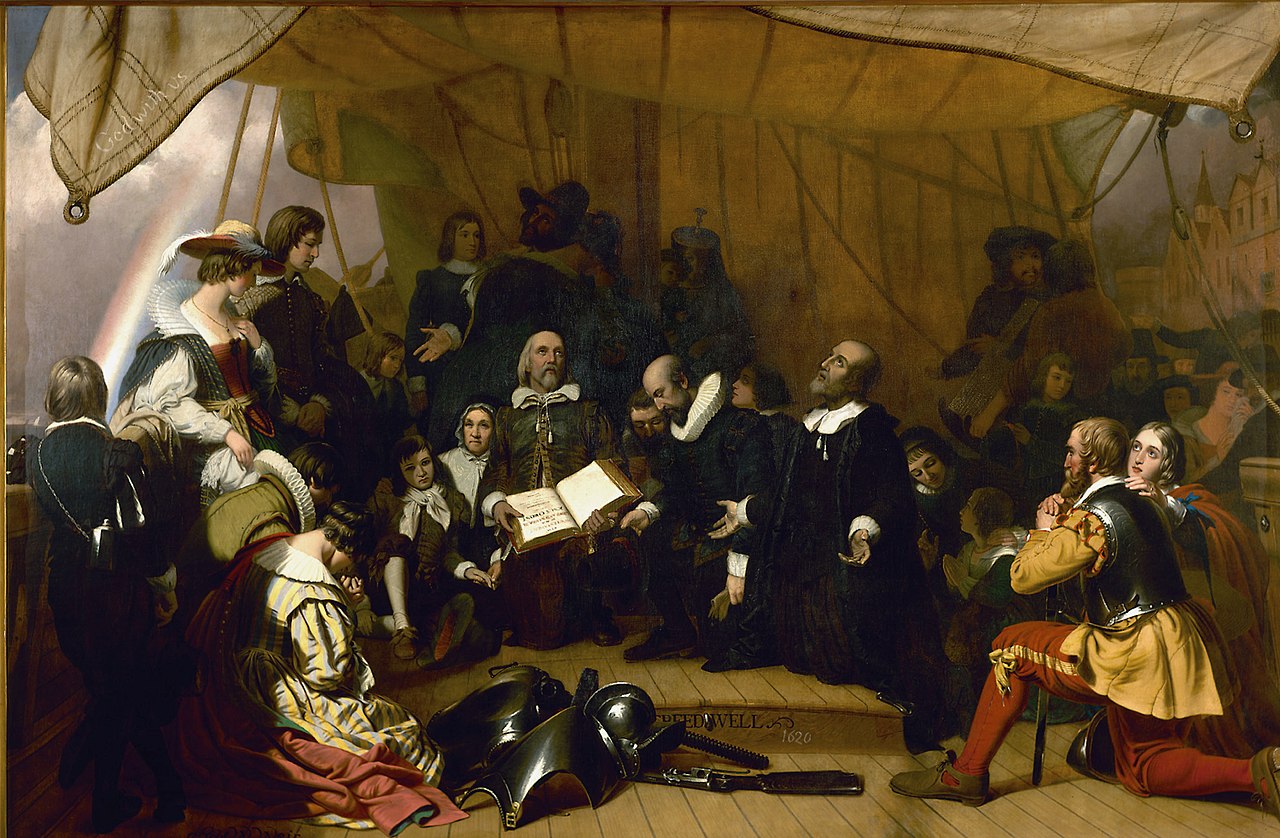
The Pilgrims also followed this pattern. Upon arriving in America in 1620, they announced in the Mayflower Compact (the first government document written in America) that their mission was undertaken “for the glory of God and the advancement of the Christian faith.”1 They had come with the laudable goal of evangelizing the new country.

Their first year in America proved to be extremely difficult. By the end of that winter, over half had died, thereby doubling the workload on the rest. And by the end of the second year, half of the remaining survivors had also died, leaving only one-fourth from the original group. Struggling to survive in that harsh wilderness was grueling work and a round-the-clock occupation. It became apparent that their ardent desire to establish a fully functioning Christian colony and to bring all of those around them to Christian faith would not occur in their lifetime.

So, like David, they worked hard to prepare everything they could for the coming generation: training, equipping, and then transmitting to them the vision and responsibility. As explained by the Pilgrims’ governor, William Bradford:

Lastly (and which was not least), a great hope and inward zeal they [the Pilgrims] had of laying some good foundations (or at least to make some way thereunto) for the propagating and advancing of the Gospel of the kingdom of Christ in those remote parts of the world, yea, though they should be but even as stepping stones unto others for the performing of so great a work.2

Stepping-stones. Significantly, one generation was willing to become a stepping-stone for the next. Figuratively speaking, they worked to move the ball as far down field as possible before handing it off to their descendants to score. What a fantastic lesson to learn and practice today: if you see that you will not accomplish the lofty goals you have set for yourself or that you believe God has given you, it doesn’t mean that you are a failure. Don’t quit and drop out in discouragement. Instead, find those who are younger and equip, train, and pass the vision on to them.

Many of the national challenges before us will require trans-generational solutions, which is fully Biblical. We can and must do everything we can right now. But we must also train the rising generation with an understanding of the stewardship that will be placed in their hands. Each of us must work diligently to make ourselves stepping stones for future generations.


Endnotes

1Agreement Between the Settlers of New-Plymouth, November 11th, 1620,” Ebenezer Hazard, Historical Collections: Consisting of State Papers, and Other Authentic Documents; Intended as Materials for an History of the United States of America (Philadelphia: T. Dobson, 1792), 1:119.
2 William Bradford, History of Plymouth Plantation (Boston: Little, Brown, and Company, 1856), 24.

The Heart of a Grateful Nation

Thoughts on 2 Chronicles 5-7

King David, blessed by God throughout his long life, envisioned building a majestic temple to honor the Lord. But God told David that it would instead be his son, Solomon, who would construct the building. So David prepared everything his son would need. When later King Solomon successfully completed the temple, he gathered the nation together and dedicated the new structure with a time of prayer and praise (2 Chronicles 5-7). The spirit of God filled the temple and fell on those present. God promising Solomon that He would hear and answer prayers prayed from that location. Significantly, our Founding Fathers invoked this incident and this passage at a significant moment early in the political life of a young America.

On September 25, 1789, the very first federal Congress had just finished framing the Bill of Rights—the Capstone of the Constitution. On that notable day, the official records of Congress report:

Mr. [Elias] Boudinot said he could not think of letting the session pass over without offering an opportunity to all the citizens of the United States of joining with one voice in returning to Almighty God their sincere thanks for the many blessings He had poured down upon them. With this view, therefore, he would move the following resolution:

Resolved, That a joint committee of both Houses be directed to wait upon the President of the United States to request that he would recommend to the people of the United States a day of public thanksgiving and prayer, to be observed by acknowledging with grateful hearts the many signal favors of Almighty God. . . .

Mr. [Roger] Sherman justified the practice of thanksgiving on any signal [remarkable] event not only as a laudable one in itself but as warranted by a number of precedents in Holy Writ – for instance, the solemn thanksgivings and rejoicings which took place in the time of Solomon after the building of the temple was a case in point [2 Chronicles 5-7, 1 Kings 7-8]. This example he thought worthy of Christian imitation on the present occasion, and he would agree with the gentleman who moved the resolution. Mr. Boudinot quoted further precedents from the practice of the late Congress and hoped the motion would meet a ready acquiescence [approval]. The question was now put on the resolution and it was carried in the affirmative.1

Congress delivered it recommendation to President George Washington, who happily concurred. He issued America’s first federal proclamation for a Day of Prayer and Thanksgiving. That proclamation declared:

Whereas it is the duty of all nations to acknowledge the providence of Almighty God, to obey His will, to be grateful for His benefits, and humbly to implore His protection and favor. . . . Now, therefore, I do recommend . . . that we may then all unite in rendering unto Him our sincere and humble thanks for His kind care and protection of the people of this country. . . . And also that we may then unite in most humbly offering our prayers and supplications to the great Lord and Ruler of Nations, and beseech Him to pardon our national and other transgressions . . . to promote the knowledge and practice of true religion and virtue.2

Notice that George Washington said that nations—not just individuals, but nations—have four duties: (1) to acknowledge the providence of Almighty God, (2) to obey His will, (3) to be grateful for His benefits, and (4) humbly to implore His protection and favor. This proclamation, along with the several other calls to prayer issued during his administration, was written by Washington himself. Whereas other presidents had chaplains of Congress write their proclamations.3

America observed its first federal day of thanksgiving because Founding Fathers in Congress were thoroughly familiar with the Bible and found precedent for such a day from 2 Chronicles 5-7—one of many American practices with a Biblical basis.


Endnotes

1 September 25, 1789, The Debates and Proceedings in the Congress of the United States, Joseph Gales, editor (Washington: Gales and Seaton, 1834) I:949-950.

2 The Providence Gazette and Country Journal (Providence: October 17, 1789), 1. George Washington, “A Proclamation,” issued on October 3, 1789, observance date November 26, 1789.

3 Joseph H. Jones, The Life of Ashbel Green (New York: Robert Carter and Brothers, 1849), 270-271.

The Rock Upon Which Our Republic Rests

Thoughts on 2 Kings 23

There are numerous Biblical occasions when civil leaders urged a national reading of God’s Word. For example, under righteous King Josiah of Israel:

The king went up to the house of the Lord with all the men of Judah, and with him all the inhabitants of Jerusalem—the priests and the prophets and all the people, both small and great. And he read in their hearing all the words of the Book of the Covenant which had been found in the house of the Lord (2 Kings 23:2).

Ezra also assembled the nation to read the Word of God (Nehemiah 8:1-3), and Moses likewise instructed the people to gather together and read God’s Word so that they might know it, obey it, and teach it to the rising generation, for by so doing, they would remain blessed as a nation (Deuteronomy 31:11-13).

America’s national leaders continued to follow this pattern. President Franklin Roosevelt proposed:

I suggest a nationwide reading of the Holy Scriptures during the period from Thanksgiving Day to Christmas. . . . Go to . . . the Scriptures for a renewed and strengthening contact with those eternal truths and majestic principles which have inspired such measure of true greatness as this nation has achieved.1

(Today, National Bible Week is still officially commemorated one week of the period between Thanksgiving and Christmas. But sadly few citizens know of its existence, and sadder still even fewer observe it.)

Why would President Roosevelt publicly call the nation to a time of Scripture reading? Because of its proven beneficial influence:

In the formative days of the Republic, the directing influence the Bible exercised upon the fathers of the Nation is conspicuously evident. . . . We cannot read the history of our rise and development as a Nation without reckoning with the place the Bible has occupied in shaping the advances of the Republic.2

On the same basis, President Ronald Reagan declared a national “Year of the Bible,” explaining:

Of the many influences that have shaped the United States of America into a distinctive Nation and people, none may be said to be more fundamental and enduring than the Bible. . . . The Bible and its teachings helped form the basis for the Founding Fathers’ abiding belief in the inalienable rights of the individual – rights which they found implicit in the Bible’s teachings of the inherent worth and dignity of each individual. This same sense of man patterned . . . the ideals set forth in the Declaration of Independence and the Constitution. . . . There could be no more fitting moment than now to reflect . . . upon the wisdom revealed to us in the [Bible].3

President Teddy Roosevelt similarly affirmed:

[T]he teachings of the Bible are so interwoven and entwined with our whole civic and social life that it would be literally—I do not mean figuratively, I mean literally—impossible for us to figure to ourselves what that life would be if these teachings were removed. We would lose almost all the standards by which we now judge both public and private morals—all the standards toward which we, with more or less resolution, strive to raise ourselves. Almost every man who has by his life-work added to the sum of human achievement of which the race is proud—of which our people are proud – almost every such man has based his lifework largely upon the teachings of the Bible. . . . Among the very greatest men, a disproportionately large number have been diligent and close students of the Bible at first hand. . . . So I plead not merely for training of the mind but for . . . the moral and spiritual training that have always been found in and that have ever accompanied the study of this Book—this Book, which in almost every civilized tongue can be described as “The Book.”4

Teddy wanted everyone to know the Bible, and a reason that he had been so thoroughly impressed by President Abraham Lincoln was his personal mastery of the Bible. As he explained:

Lincoln—sad, patient, kindly Lincoln, who after bearing upon his weary shoulders for four years a greater burden than that borne by any other man of the nineteenth century laid down his life for the people whom living he had served as well—built up his entire reading upon his early study of the Bible. He had mastered it absolutely – mastered it as later he mastered only one or two other books (notably Shakespeare) —mastered it so that he became almost “a man of one Book,” who knew that Book and who instinctively put into practice what he had been taught therein.5

Indeed, it is extremely difficult to find any of Lincoln’s major speeches not laced throughout with Scriptures, so it is therefore not surprising that in speaking of the Bible, Lincoln declared:

It is the best gift God has given to men. All the good the Savior gave to the world was communicated through this Book. But for it, we could not know right from wrong. 6

President Zachary Taylor also stressed how important it was that every citizen, especially young citizens, know the Bible:

The Bible is the best of books and I wish it were in the hands of everyone. It is indispensable to the safety and permanence of our institutions; a free government cannot exist without religion and morals, and there cannot be morals without religion, nor religion without the Bible. Especially should the Bible be placed in the hands of the young. It is the best schoolbook in the world. . . . I would that all of our people were brought up under the influence of that Holy Book.7

President Harry Truman, speaking at a conference of law enforcement officials assembled from across the nation, reminded them:

The fundamental basis of this Nation’s law was given to Moses on the Mount. The fundamental basis of our Bill of Rights comes from the teachings which we get from Exodus and St. Matthew, from Isaiah and St. Paul. I don’t think we emphasize that enough these days.8

President Andrew Jackson likewise declared of the Bible that “it is the rock on which our Republic rests.”9

And President Grant, on the 100th anniversary of American Independence exhorted, “Hold fast to the Bible as the sheet-anchor of your liberties; write its precepts in your heats, and practice them in your lives. To the influence of this Book we are indebted for all the progress made in true civilization, and to this we must look for our guide in the future.”10

There are many other examples demonstrating that America’s leaders understood the importance of God’s Word to the nation and publicly urged the reading and knowledge of it, just as ancient leaders such as Moses, Ezra, and Josiah had done. It is important that every citizen personally study, learn, and live by God’s Word, teaching it to their children and also electing at the local, county, state, and federal level leaders who know and honor the principles of “The Book.”


Endnotes

1 Franklin D. Roosevelt, “Proclamation 2629—Thanksgiving Day, 1944,” November 1, 1944, American Presidency Project, https://www.presidency.ucsb.edu/node/210843.

2 Franklin D. Roosevelt, “Statement on the Four Hundredth Anniversary of the Printing of the English Bible,” October 6, 1935, American Presidency Project, https://www.presidency.ucsb.edu/node/209257.

3 Ronald Reagan, “Proclamation 5018—Year of the Bible, 1983,” February 3rd, 1983, American Presidency Project, https://www.presidency.ucsb.edu/node/262128.

4 Theodore Roosevelt, “On Reading the Bible: Delivered before the Members of the Bible Society,” 1901, Modern Eloquence, ed. Thomas B. Reed (Philadelphia: John D. Morris and Company, 1903), XV:1770-1776.

5 Roosevelt, “On Reading the Bible: Delivered before the Members of the Bible Society,” 1901, Modern Eloquence, ed. Reed (1903), XV:1770-1776.

6 Abraham Lincoln, “Reply to Committee of Colored People of Baltimore Who Presented Him with a Bible,” Complete Works Comprising his Speeches, Letters, State Papers, and Miscellaneous Writings, John Nicolay and John Hay, editors (New York: The Century Co., 1894), 2:574.

7The President and the Bible,” New York Semi-Weekly Tribune (Wednesday, May 9, 1849), IV:100:1.

8 Harry S. Truman, “Address Before the Attorney General’s Conference on Law Enforcement Problems,” February 15, 1950, American Presidency Project, https://www.presidency.ucsb.edu/node/230655.

9 Ronald Reagan, “Proclamation 5018—Year of the Bible, 1983,” February 3rd, 1983, American Presidency Project, https://www.presidency.ucsb.edu/node/262128; see the same quote in a proclamation from President George H. W. Bush, “International Year of Bible Reading,” February 22, 1990, Code of Federal Regulations (Washington, D. C.: U. S. Government Printing Office, 1991), 21.

10 Ulysses Grant, “Message of President Grant to the Children and Youth of the U.S.” card in WallBuilders Museum collection.

FAQ: Inalienable Rights

Claimed in the Declaration of Independence as “unalienable rights,” inalienable rights are those that are not under the purview of the government – those rights that are inherent to each person.1 They are also sometimes referred to as natural rights, because they could only be granted by God. America’s Founding Fathers emphasized inalienable rights throughout their writings since they were considered most valuable and to be closely guarded.

Liberties dearer to you than your lives, “which God gave to you and which no inferior power has a right to take away.” JOHN DICKINSON “Penman of the Revolution”2

The sacred rights of mankind are not to be rummaged for among old parchments or musty records. They are written, as with a sunbeam, in the whole volume of human nature by the hand of the Divinity itself; and can never be erased or obscured by mortal power. ALEXANDER HAMILTON3

That all men are by nature equally free and independent, and have certain inherent rights, of which, when they enter into a state of society, they cannot, by any compact, deprive or divest their posterity; namely, the enjoyment of life and liberty, with the means of acquiring and possessing property, and pursuing and obtaining happiness and safety. VIRGINIA DECLARATION OF RIGHTS (1776)4

Some of the inalienable rights the Founders specifically mentioned included:5

  • Life
  • Liberty
  • Private Property
  • Conscience (specifically relating to worshipping God)
  • Self-Preservation or “Personal Security”
  • Happiness
  • Private Judgment or “Self-Direction”
  • Association
  • Right to Necessary Things (air, water, earth)

Additional Resources

Biblical Christianity: The Origin of the Right of Conscience

A God-Given Inalienable Right

The Founders on the Second Amendment

The Founders Bible

The Second Amendment


Endnotes

1 Noah Webster, “inalienable,” An American Dictionary of the English Language (New York: S. Converse, 1828). Today there is a question of whether the correct term is “inalienable” (as now used in contemporary English) or “unalienable” (as it originally appeared in the Declaration). As seen in this definition by Noah Webster (a soldier in the American War for Independence, and a judge and legislator afterwards), “unalienable” is a synonym for “inalienable.”

2 John Dickinson, letter to the Society of Fort St. David’s, 1768, Letters from a Farmer in Pennsylvania, ed. R. T. H. Halsey (New York: The Outlook Company, 1903), xlii.

3Alexander Hamilton, “The Farmer Refuted,” February 5, 1775,” The Works of Alexander Hamilton, ed. John C. Hamilton (New York: John F. Trow, 1850), II:80.

4 The Virginia Declaration of Rights, adopted unanimously June 12, 1776, Virginia Convention of Delegates, drafted by George Mason, The Avalon Project, Yale Law School, accessed December 4, 2023, https://avalon.law.yale.edu/18th_century/virginia.asp.

5. See, for example: Samuel Adams, “The Rights of The Colonists, A List of Violations of Rights and a Letter of Correspondence, Adopted by the Town of Boston, November 20, 1772,” The Life and Public Service of Samuel Adams, ed. William V. Wells (Boston: Little, Brown and Company, 1865), I:502. Samuel Adams, An Oration Delivered at the State House, in Philadelphia, to a Very Numerous Audience; on Thursday the 1st of August, 1776 (London: J. Johnson, 1776), 4. The Massachusetts Constitution 1780, drafted by John Adams, “A Declaration of the Rights of the Inhabitants of the Commonwealth of Massachusetts.” James Madison, “Property,” from the National Gazette, March 29, 1792, The Writings of James Madison, ed. Gaillard Hunt (New York: G. P. Putnam’s Sons, 1906), VI:101-102. James Wilson, “Of Crimes Against the Right of Individuals to Personal Safety,” The Works of the Honourable James Wilson, ed. Bird Wilson (Philadelphia: Lorenzo Press, 1804), III:84-85. John Witherspoon, Lectures on Moral Philosophy; Lecture X, “Of Politics,” The Works of John Witherspoon (Edinburgh: Ogle & Aikman, 1805), VII:77-78.

FAQ: Difficulties and Sacrifices of the Declaration Signers

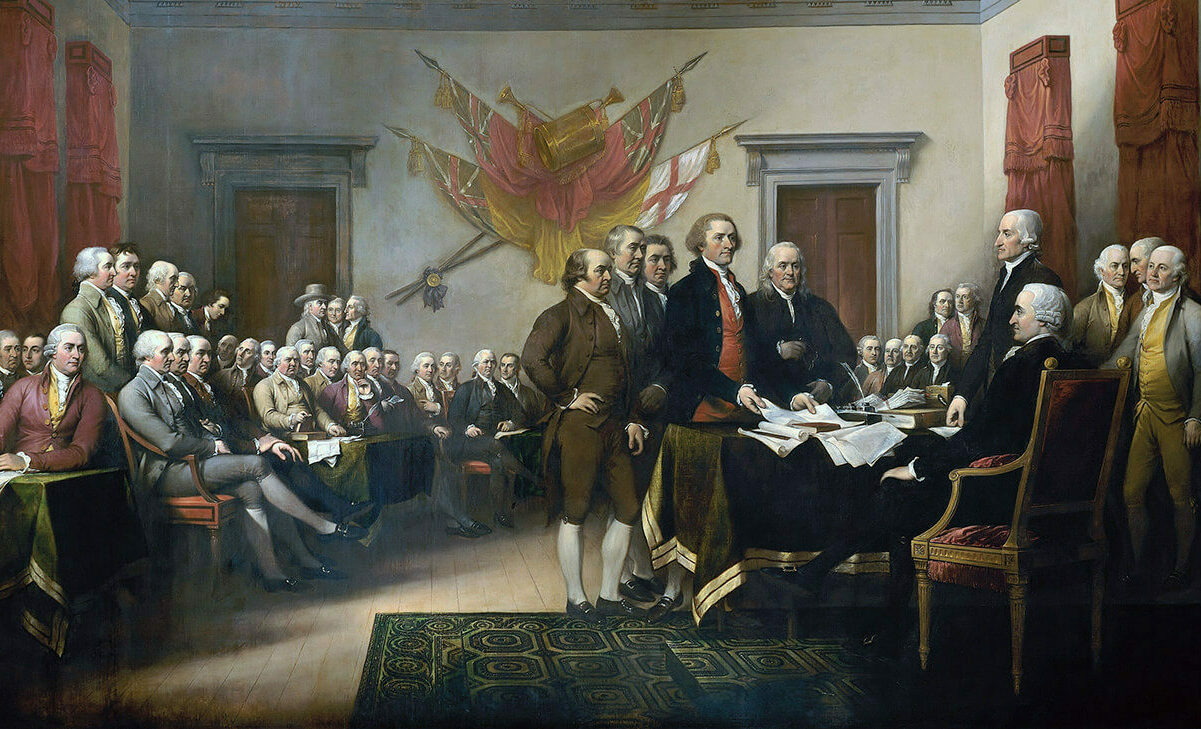
There were a total of 56 men who signed the Declaration of Independence in 1776. They knew their signatures could cost them their lives but willingly signed anyway. Many, in fact, did make sacrifices and had to endure hard times as a result of their courageous action. Several would not live to witness the independence they had devoted their “lives, fortune, and sacred honor” to achieve. Below are just a few of the numerous examples.

Two signers suffered battle wounds: George Walton and Thomas Heyward, both of whom were also held as prisoners of war. Similarly, Arthur Middleton and Richard Stockton experienced imprisonment. Many signers were forced to flee their homes to evade capture. This group included Francis Hopkinson, John Hart, George Clymer, Thomas Jefferson, Arthur Middleton, Lyman Hall, Francis Lewis, and William Floyd.

Moreover, 17 signers lost their homes or property. For instance, Josiah Bartlett and William Ellery’s residences were set ablaze. Lewis Morris faced property destruction and severe damage to his home. George Clymer endured the loss of his belongings and Lyman Hall had his property confiscated. John Hart’s house was looted while his mill and crops were destroyed. Richard Stockton, Francis Lewis, and Reverend John Witherspoon endured looted property and burnt libraries.

Additionally, several signers suffered family hardship. For example, two of Abraham Clark’s sons were taken as prisoners; Francis Lewis’ wife was held captive for months, resulting in broken health and leading to her untimely death; and John Witherspoon’s eldest son lost his life during the Battle of Germantown.

Discover more about the courageous Signers of the Declaration in the historical reprint Lives of the Signers. Read also, the hardships their wives shared in the companion book Wives of the Signers. Additional articles include:

FAQ: Declaration Signers as Ministers

While a number of Declaration signers received training as ministers, only a few were actively engaged in ministry at the time of signing. Notable among them was John Witherspoon, who was fulfilling a ministerial role. Robert Treat Paine was a military chaplain, and Lyman Hall had been a minister prior to the War for Independence. However, many other signers should be noted for their ministry work.

Francis Hopkinson, for instance, was a church music director and choir leader, and also compiled a famous American hymnbook. Roger Sherman wrote the doctrinal creed for his denomination in Connecticut. Benjamin Rush started Sunday School in America and helped to found the country’s first Bible Society. James Wilson trained as a clergyman in Scotland but became an attorney, teaching students the Biblical basis of civil law. And there are many others.

In fact, at least 29 of the signers had been trained in schools whose primary purpose was the preparation of ministers (listed below). They attended universities and seminaries of learning such as Harvard, Yale, William and Mary, Princeton, Cambridge, and Westminster. You can read about each of these Declaration signers in WallBuilders’ book Lives of the Signers.

  1. John Adams
  2. Samuel Adams
  3. Carter Braxton
  4. Charles Carroll
  5. William Ellery
  6. Elbridge Gerry
  7. Lyman Hall
  8. John Hancock
  9. Benjamin Harrison
  10. Joseph Hewes
  11. William Hooper
  12. Francis Hopkinson
  13. Thomas Jefferson
  14. Francis Lewis
  15. Philip Livingston
  16. Thomas Lynch
  17. Arthur Middleton
  18. Lewis Morris
  19. Thomas Nelson Jr.
  20. William Paca
  21. Robert Treat Paine
  22. Benjamin Rush
  23. James Smith
  24. Richard Stockton
  25. William Williams
  26. James Wilson
  27. John Witherspoon
  28. Oliver Wolcott
  29. George Wythe