Christian Faith Quotes by Signers of the Declaration

Below are statements by the Signers of the Declaration on Christian faith and the Bible!

John Adams

The Holy Ghost carries on the whole Christian system in His truth. Not a baptism, not a marriage, not a sacrament can be administered but by the Holy Ghost….There is no authority civil or religious – there can be no legitimate government – but what is administered by the Holy Ghost.1

The Christian religion is, above all the religions that ever prevailed or existed in ancient or modern times, the religion of wisdom, virtue, equity and humanity.2

I have examined all [religions], and the result is that the Bible is the best book in the world.3

The general principles on which the fathers achieved independence were….the general principles of Christianity….I will avow that I then believed, and now believe, that those general principles of Christianity are as eternal and immutable as the existence and attributes of God.4

Without religion, this world would be something not fit to be mentioned in polite company: I mean hell.5

Suppose a nation in some distant region should take the Bible for their only law book and every member should regulate his conduct by the precepts there exhibited….What a Eutopia – what a Paradise would this region be!6

If “Thou shalt not covet,” and “Thou shalt not steal,” were not commandments of Heaven, they must be made inviolable precepts in every society before it can be civilized or made free.7

The Bible….is the most republican book in the world.8

Samuel Adams

I rely upon the merits of Jesus Christ for a pardon of all my sins.9

The name of the Lord (says the Scripture) is a strong tower; thither the righteous flee and are safe [Proverbs 18:10]. Let us secure His favor and He will lead us through the journey of this life and at length receive us to a better.10

I conceive we cannot better express ourselves than by humbly supplicating the Supreme Ruler of the world…that the confusions that are and have been among the nations may be overruled for the promoting and speedily bringing on the holy and happy period when the kingdoms of our Lord and Savior Jesus Christ may be everywhere established, and the people willingly bow to the scepter of Him who is the Prince of Peace.11

[The rights of the colonists] may be best understood by reading and carefully studying the institutes of the great Law Giver and Head of the Christian Church, which are to be found clearly written and promulgated in the New Testament.12

He also called on the State of Massachusetts to pray that…

  • the peaceful and glorious reign of our Divine Redeemer may be known and enjoyed throughout the whole family of mankind.13
  • we may with one heart and voice humbly implore His gracious and free pardon through Jesus Christ, supplicating His Divine aid…[and] above all to cause the religion of Jesus Christ, in its true spirit, to spread far and wide till the whole earth shall be filled with His glory.14

Josiah Bartlett

Firstly, I commit my soul into the hands of God, its great and benevolent author.15

He also called on the people of New Hampshire…

to confess before God their aggravated transgressions and to implore His pardon and forgiveness through the merits and mediation of Jesus Christ…[t]hat the knowledge of the Gospel of Jesus Christ may be made known to all nations, pure and undefiled religion universally prevail, and the earth be fill with the glory of the Lord.16

Charles Carroll

On the mercy of my Redeemer I rely for salvation, and on His merits; not on the works that I have done in obedience to His precepts.17

Without morals a republic cannot subsist any length of time; they therefore who are decrying the Christian religion, whose morality is so sublime & pure, [and] which denounces against the wicked eternal misery, and [which] insured to the good eternal happiness, are undermining the solid foundation of morals, the best security for the duration of free governments.18

[I am] grateful to Almighty God for the blessings which, through Jesus Christ Our Lord, He had conferred on my beloved country.19

I….give and bequeath my soul to God who gave it, my body to the earth, hoping that through and by the merits, sufferings, and mediation of my only Savior and Jesus Christ, I may be admitted into the Kingdom prepared by God for those who love, fear and truly serve Him.20

Benjamin Franklin

As to Jesus of Nazareth, my opinion of whom you particularly desire, I think the system of morals and His religion as He left them to us, the best the world ever saw or is likely to see.21

I have lived, Sir, a long time, and the longer I live, the more convincing proofs I see of this truth, that God governs in the affairs of men. And if a sparrow cannot fall to the ground without His notice [Matthew 10:29, Luke 12:6], is it probable that an empire can rise without his aid [Daniel 4:17, Psalm 75:7]? We have been assured, Sir, in the Sacred Writings, that “except the Lord build the House, they labor in vain that build it” [Psalm 127:1]. I firmly believe this; and I also believe that without His concurring aid we shall succeed in this political building no better than the Builders of Babel [Genesis 11:1-9].22

The body of Benjamin Franklin, printer, like the cover of an old book, its contents torn out, and stripped of its lettering and guilding, lies here, food for worms. Yet the work itself shall not be lost; for it will, as he believed, appear once more in a new and more beautiful edition, corrected and amended by the Author.23 (Franklin’s eulogy that he wrote for himself)

Benjamin Franklin founded the University of Pennsylvania, assuring citizens that very clear lessons would be taught students “showing the necessity of a public religion…and the excellency of the Christian religion above all others, ancient or modern.” 24

Elbridge Gerry

He called on the State of Massachusetts to pray that…

  • with one heart and voice we may prostrate ourselves at the throne of heavenly grace and present to our Great Benefactor sincere and unfeigned thanks for His infinite goodness and mercy towards us from our birth to the present moment for having above all things illuminated us by the Gospel of Jesus Christ, presenting to our view the happy prospect of a blessed immortality.25
  • And for our unparalleled ingratitude to that Adorable Being Who has seated us in a land irradiated by the cheering beams of the Gospel of Jesus Christ…let us fall prostrate before offended Deity, confess sincerely and penitently our manifold sins and our unworthiness of the least of His Divine favors, fervently implore His pardon through the merits of our mediator.26
  • And deeply impressed with a scene of our unparalleled ingratitude, let us contemplate the blessings which have flowed from the unlimited grave and favor of offended Deity, that we are still permitted to enjoy the first of Heaven’s blessings: the Gospel of Jesus Christ.27

John Hancock

Sensible of the importance of Christian piety and virtue to the order and happiness of a state, I cannot but earnestly commend to you every measure for their support and encouragement.28

He also called on the State of Massachusetts to pray…

  • that all nations may bow to the scepter of our Lord and Savior Jesus Christ and that the whole earth may be filled with his glory.29
  • that the spiritual kingdom of our Lord and Savior Jesus Christ may be continually increasing until the whole earth shall be filled with His glory.30
  • to confess their sins and to implore forgiveness of God through the merits of the Savior of the World.31
  • to cause the benign religion of our Lord and Savior Jesus Christ to be known, understood, and practiced among all the inhabitants of the earth.32
  • to confess their sins before God and implore His forgiveness through the merits and mediation of Jesus Christ, our Lord and Savior.33
  • to pray that universal happiness may be established in the world, that all may bow to the scepter of our Lord Jesus Christ, and the whole earth be filled with His glory.34
  • that He would finally overrule all events to the advancement of the Redeemer’s kingdom and the establishment of universal peace and good will among men.35
  • that the kingdom of our Lord and Savior Jesus Christ may be established in peace and righteousness among all the nations of the earth.36
  • that with true contrition of heart we may confess our sins, resolve to forsake them, and implore the Divine forgiveness, through the merits and mediation of Jesus Christ, our Savior….And finally to overrule all the commotions in the world to the spreading the true religion of our Lord Jesus Christ in its purity and power among all the people of the earth.37

John Hart

Thanks be given unto Almighty God therefore, and knowing that it is appointed for all men once to die and after that the judgment [Hebrews 9:27]…principally, I give and recommend my soul into the hands of Almighty God who gave it and my body to the earth to be buried in a decent and Christian like manner…to receive the same again at the general resurrection by the mighty power of God.

Stephen Hopkins

We finally beg leave to assert that the first planters of these colonies were pious Christians…[and] to this day, all have…maintained peace and practiced Christianity. 38

Samuel Huntington

It becomes a people publicly to acknowledge the over-ruling hand of Divine Providence and their dependence upon the Supreme Being as their Creator and Merciful Preserver…and with becoming humility and sincere repentance to supplicate the pardon that we may obtain forgiveness through the merits and mediation of our Lord and Savior Jesus Christ. 39

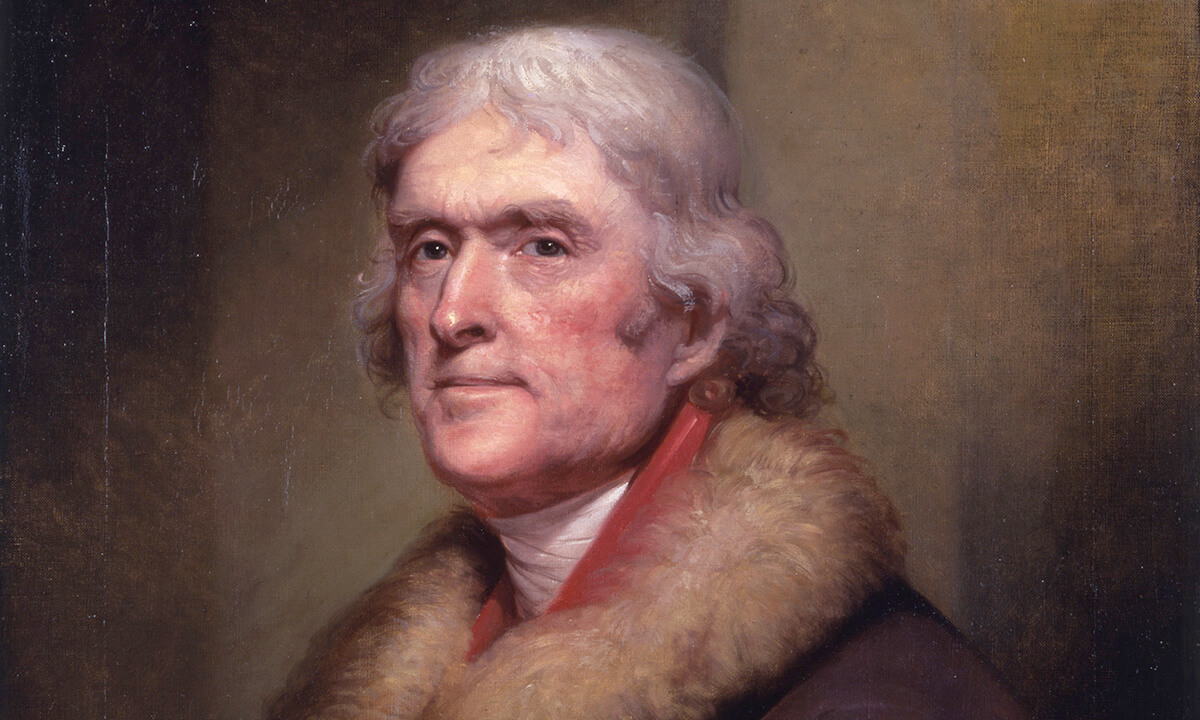
Thomas Jefferson

The practice of morality being necessary for the well-being of society, He [God] has taken care to impress its precepts so indelibly on our hearts that they shall not be effaced by the subtleties of our brain. We all agree in the obligation of the moral principles of Jesus and nowhere will they be found delivered in greater purity than in His discourses.40

The doctrines of Jesus are simple, and tend all to the happiness of man.41

I am a Christian in the only sense in which He wished anyone to be: sincerely attached to His doctrines in preference to all others.42

I am a real Christian – that is to say, a disciple of the doctrines of Jesus Christ.43

Richard Henry Lee

It is certainly true that a popular government cannot flourish without virtue in the people. 44

When Richard Henry Lee died in 1794, his papers and correspondence, including numerous handwritten letters from other leading Founding Fathers, were passed on to his grandson, who compiled those documents into a two-volume work published in 1825. After having studied these personal letters from America’s leading statesmen, the grandson described the great body of men who founded the nation in these words:

The wise and great men of those days were not ashamed publicly to confess the name of our blessed Lord and Savior Jesus Christ! In behalf of the people, as their representatives and rulers, they acknowledged the sublime doctrine of his mediation!45

Thomas McKean

In the case Respublica v. John Roberts, 46 John Roberts was sentenced to death after a jury found him guilty of treason. Chief Justice McKean then told him:

You will probably have but a short time to live. Before you launch into eternity, it be­hooves you to improve the time that may be allowed you in this world: it behooves you most seriously to reflect upon your past conduct; to repent of your evil deeds; to be incessant in prayers to the great and merciful God to forgive your manifold transgressions and sins; to teach you to rely upon the merit and passion of a dear Redeemer, and thereby to avoid those regions of sorrow – those doleful shades where peace and rest can never dwell, where even hope cannot enter. It behooves you to seek the [fellowship], advice, and prayers of pious and good men; to be [persistent] at the Throne of Grace, and to learn the way that leadeth to happiness. May you, reflecting upon these things, and pursuing the will of the great Father of light and life, be received into [the] company and society of angels and archangels and the spirits of just men made perfect; and may you be qualified to enter into the joys of Heaven – joys unspeakable and full of glory! 47

John Morton

With an awful reverence to the Great Almighty God, Creator of all mankind, being sick and weak in body but of sound mind and memory, thanks be given to Almighty God for the same.

Robert Treat Paine

I desire to bless and praise the name of God most high for appointing me my birth in a land of Gospel Light where the glorious tidings of a Savior and of pardon and salvation through Him have been continually sounding in mine ears…. I believe the Bible to be the written word of God and to contain in it the whole rule of faith and manners.48

I am constrained to express my adoration of the Supreme Being, the Author of my existence, in full belief of His Providential goodness and His forgiving mercy revealed to the world through Jesus Christ, through whom I hope for never ending happiness in a future state.49

Benjamin Rush

My only hope of salvation is in the infinite transcendent love of God manifested to the world by the death of His Son upon the Cross [John 3:16-17]. Nothing but His blood will wash away my sins [Acts 22:16]. I rely exclusively upon it. Come, Lord Jesus! Come quickly! [Revelation 22:20].50

The Gospel of Jesus Christ prescribes the wisest rules for just conduct in every situation of life. Happy they who are enabled to obey them in all situations!…My only hope of salvation is in the infinite tran­scendent love of God manifested to the world by the death of His Son upon the Cross. Noth­ing but His blood will wash away my sins [Acts 22:16]. I rely exclusively upon it. Come, Lord Jesus! Come quickly! [Revelation 22:20]51

By renouncing the Bible, philosophers swing from their moorings upon all moral subjects….It is the only correct map of the human heart that ever has been published.52

Christianity is the only true and perfect religion; and…in proportion as mankind adopt its principles and obey its precepts, they will be wise and happy….The Bible contains more knowledge necessary to man in his present state than any other book in the world.53

The Bible, when not read in schools, is seldom read in any subsequent period of life…. It should be read in our schools in preference to all other books [because] it contains the greatest portion of that kind of knowledge which is calculated to produce private and public happiness.54

In contemplating the political institutions of the United States, I lament that we waste so much time and money in punishing crimes and take so little pains to prevent them. We profess to be republicans, and yet we neglect the only means of establishing and perpetuating our republican forms of government, that is, the universal education of our youth in the principles of Christianity by means of the Bible. For this Divine Book, above all others, favors that equality among mankind, that respect for just laws, and those sober and frugal virtues which constitute the soul of rebpulicanism.55

The great enemy of the salvation of man, in my opinion, never invented a more effective means of limiting Christianity from the world than by persuading mankind that it was improper to read the Bible at schools.56

The religion I mean to recommend in this place is that of the New Testament….All its doctrines and precepts are calculated to promote the happiness of society and the safety and well-being of civil government.57

The greatest discoveries in science have been made by Christian philosophers and…there is the most knowledge in those countries where there is the most Christianity. 58

Roger Sherman

I subscribe to the entire belief of the great and leading doctrines of the Christian religion, such as the being of God; the universal defection and depravity of human nature; the Divinity of the person and the completeness of the redemption purchased by the blessed Savior; the necessity of the opera­tions of the Divine Spirit; of Divine faith accompanied with an habitual virtuous life….[I] exhort and charge that the fear of God is the beginning of wisdom, that the way of life held up in the Christian system is calculated for the most complete happiness that can be enjoyed in this mortal state.59

I believe that there is one only liv­ing and true God, existing in three persons, the Father, the Son, and the Holy Ghost, the same in substance, equal in power and glory. That the Scriptures of the Old and New Tes­taments are a revelation from God, and a complete rule to direct us how we may glorify and enjoy Him….That He made man at first perfectly holy; that the first man sinned, and as he was the public head of his posterity, they all became sinners in consequence of his first transgres­sion, are wholly indisposed to that which is good and inclined to evil, and on account of sin are liable to all the miseries of this life, to death, and to the pains of hell forever. I believe that God…did send His own Son to become man, die in the room and stead of sinners, and thus to lay a foundation for the offer of pardon and salvation to all mankind, so as all may be saved who are willing to accept the Gospel offer….I believe a visible church to be a congregation of those who make a credible profession of their faith in Christ, and obedi­ence to Him, joined by the bond of the covenant….I believe that the sacraments of the New Testament are baptism and the Lord’s Supper….I believe that the souls of believers are at their death made perfectly holy, and immediately taken to glory: that at the end of this world there will be a resurrec­tion of the dead, and a final judgment of all mankind, when the righteous shall be publicly acquitted by Christ the Judge and admitted to everlasting life and glory, and the wicked be sentenced to everlasting punishment.60

God commands all men everywhere to repent. He also commands them to believe on the Lord Jesus Christ, and has assured us that all who do repent and believe shall be saved….[G]od…has absolutely promised to bestow them on all these who are willing to accept them on the terms of the Gospel – that is, in a way of free grace through the atonement. “Ask and ye shall receive [John 16:24]. Whosoever will, let him come and take of the waters of life freely [Revelation 22:17]. Him that cometh unto me I will in no wise cast out” [John 6:37].61

It is the duty of all to acknowledge that the Divine Law which requires us to love God with all our heart and our neighbor as ourselves, on pain of eternal damnation, is Holy, just, and good….The revealed law of God is the rule of our duty.62

True Christians are assured that no temptation (or trial) shall happen to them but what they shall be enabled to bear; and that the grace of Christ shall be sufficient for them.63

Of Sherman, it was reported: “The volume which he consulted more than any other was the Bible. It was his custom, at the commencement of every session of Congress, to purchase a copy of the Scriptures, to peruse it daily, and to present it to one of his children on his return.”64

Thomas Stone

Shun all giddy, loose, and wicked company; they will corrupt and lead you into vice and bring you to ruin. Seek the company of sober, virtuous and good people… which will lead [you] to solid happiness. 65

James Wilson

Human law must rest its authority ultimately upon the authority of that law which is Divine….Far from being rivals or enemies, religion and law are twin sisters, friends, and mutual assistants. Indeed, these two sciences run into each other….Our all-gracious Creator, Preserver, and Ruler has been pleased to discover and enforce His laws by a revelation given to us immediately and directly from Himself. This revelation is contained in the Holy Scriptures.66

John Witherspoon

I…entreat you in the most earnest manner to believe in Jesus Christ, for “there is no salvation in any other” [acts 4:12]….If you are not reconciled to God through Jesus Christ, if you are not clothed with the spotless robe of His righteousness, you must forever perish.67

No man, whatever be his character or whatever be his hope, shall enter into rest unless he be reconciled to God though Jesus Christ.68

There is no salvation in any other than in Jesus Christ of Nazareth [Acts 4:12].69

Christ Jesus – the promise of old made unto the fathers, the hope of Israel [Acts 28:20], the light of the world [John 8:12], and the end of the law for righteousness to every one that believeth [Romans 10:4] – is the only Savior of sinners, in opposition to all false religions and every uninstituted rite; as He Himself says (John 14:6): “I am the way, and the truth, and the life: no man cometh unto the Father but by Me.”70

It is very evident that both the prophets in the Old Testament and the apostles in the New are at great pains to give us a view of the glory and dignity of the person of Christ. With what magnificent titles is He adorned! What glorious attributes are ascribed to him!… All these conspire to teach us that He is truly and properly God – God over all, blessed forever!71

He is the best friend to American liberty who is the most sincere and active in promoting true and undefiled religion, and who sets himself with the greatest firmness to bear down profanity and immorality of every kind. Whoever is an avowed enemy of God, I scruple not to call him an enemy to his country.72

Oliver Wolcott

Through various scenes of life, God has sustained me. May He ever be my unfailing friend; may His love cherish my soul; may my heart with gratitude acknowledge His goodness; and may my desires be to Him and to the remembrance of His name….May we then turn our eyes to the bright objects above, and may God give us strength to travel the upward road. May the Divine Redeemer conduct us to that seat of bliss which He himself has prepared for His friends; at the approach of which every sorrow shall vanish from the human heart and endless scenes of glory open upon the enraptured eye. There our love to God and each other will grow stronger, and our pleasures never be dampened by the fear of future separation. How indifferent will it then be to us whether we obtained felicity by travailing the thorny or the agreeable paths of life – whether we arrived at our rest by passing through the envied and unfragrant road of greatness or sustained hardship and unmerited reproach in our journey. God’s Providence and support through the perilous perplexing labyrinths of human life will then forever excite our astonishment and love. May a happiness be granted to those I most tenderly love, which shall continue and increase through an endless existence. Your cares and burdens must be many and great, but put your trust in that God Who has hitherto supported you and me; He will not fail to take care of those who put their trust in Him….It is most evident that this land is under the protection of the Almighty, and that we shall be saved not by our wisdom nor by our might, but by the Lord of Host Who is wonderful in counsel and Almighty in all His operations. 73


Endnotes

1 John Adams to Dr. Benjamin Rush, December 21, 1809, from an original in the WallBuilders Collection, here.

2 John Adams diary entry for July 26, 1796, Massachusetts Historical Society, https://www.masshist.org/digitaladams/archive/doc?id=D46&bc=%2Fdigitaladams%2Farchive%2Fbrowse%2Fdiaries_by_number.php.

3 “Image 4 of John Adams to Thomas Jefferson, December 25, 1813,” Library of Congress, https://www.loc.gov/resource/mtj1.047_0129_0134/?sp=4&st=image.

4 “Image 3 of John Adams to Thomas Jefferson, June 28, 1813,” Library of Congress, https://www.loc.gov/resource/mtj1.046_0922_0925/?sp=3&st=image.

5 John Adams to Thomas Jefferson, April 19, 1817, National Archives, https://founders.archives.gov/documents/Adams/99-02-02-6744.

6 John Adams diary entry for February 22, 1756, Massachusetts Historical Society, https://www.masshist.org/digitaladams/archive/doc?id=D1&bc=%2Fdigitaladams%2Farchive%2Fbrowse%2Fdiaries_by_number.php.

7 John Adams, A Defense of the Constitution of Government of the United States of America (Philadelphia: William Young, 1797), III:217.

8 John Adams to Benjamin Rush, February 2, 1807, National Archives, https://founders.archives.gov/documents/Adams/99-02-02-5166.

9 Samuel Adams Last Will, December 29, 1790, original in the Massachusetts Judicial Archives.

10 Samuel Adams to Elizabeth Adams, December 26, 1776, The New York Public Library Digital Collection, https://digitalcollections.nypl.org/items/cfa19e60-0e20-0134-4fef-00505686d14e?canvasIndex=0.

11 Samuel Adams, Proclamation for a Day of Fasting, March 20, 1797, from the WallBuilders Collection.

12 Samuel Adams, The Life and Public Services of Samuel Adams, ed. William V. Wells (Boston: Little, Brown, and Company, 1865), I:504.

13 Samuel Adams, A Proclamation For a Day of Public Fasting, Humiliation and Prayer, October 14, 1795, from the WallBuilders Collection, here.

14 Samuel Adams, “Proclamation. February 19, 1794,” The Writings of Samuel Adams, ed. Harry Alonzo Cushing (New York: G. P. Putnam’s Sons, 1908), IV:361-362.

15 Josiah Bartlett, Last Will, February 26, 1795, original in the New Hampshire Historical Society.

16 Josiah Bartlett, Proclamation for a Day of Fasting and Prayer, March 17, 1792, from the WallBuilders Collection.

17 Charles Carroll to Charles W. Wharton, September 27, 1825, from the WallBuilders Collection, here.

18 Charles Carroll to James McHenry, November 4, 1800, Bernard C. Steiner, The Life and Correspondence of James McHenry (Cleveland: The Burrows Brothers, 1907), 475.

19 Lewis A. Leonard, Life of Charles Carroll of Carrollton (New York: Moffit, Yard & Co, 1918), 256-257.

20 Will of Charles Carroll, December 1, 1718, Kate Mason Rowland, Life of Charles Carroll of Carrollton (New York: G.P. Putnam’s Sons, 1890), II:373-374 (later replaced by a subsequent will not containing this phrase, although he expressed this sentiment on several subsequent occasions, including repeatedly in the latter years of his life).

21 Benjamin Franklin to Ezra Stiles, March 9, 1790, Works of Benjamin Franklin, ed. John Bigelow (New York: G.P. Putnam’s Sons, 1904), 185.

22 Benjamin Franklin, June 28, 1787, James Madison, The Papers of James Madison, ed. Henry D. Gilpin (Washington DC: Langtree and O’Sullivan, 1840), II:984-985.

23 Benjamin Franklin, Works of the Late Doctor Benjamin Franklin (Dublin: P. Wogan, P. Byrne, J. More, and W. Janes, 1793), II:149.

24 Benjamin Franklin, Proposals Relating to the Education of Youth in Pennsylvania (Philadelphia, 1749), 22.

25 Elbridge Gerry, Proclamation for a Day of Thanksgiving and Praise, October 24, 1810, in the WallBuilders Collection.

26 Elbridge Gerry, Proclamation for a Day of Fasting and Prayer, March 13, 1811, in the WallBuilders Collection.

27 Elbridge Gerry, Proclamation for a Day of Fasting and Prayer, March 6, 1812, in the WallBuilders Collection.

28 Abram English Brown, John Hancock, His Book (Boston: Lee and Shepard, 1898), 269.

29 John Hancock, Proclamation for a Day of Public Thanksgiving, October 28, 1784, in the WallBuilders Collection, here.

30 John Hancock, Proclamation for a Day of Public Thanksgiving, October 29, 1788, in the WallBuilders Collection.

31 John Hancock, Proclamation For a Day of Fasting and Prayer, March 16, 1789, in the WallBuilders Collection.

32 John Hancock, Proclamation for a Day of Thanksgiving and Praise, September 16, 1790, in the WallBuilders Collection.

33 John Hancock, Proclamation for a Day of Fasting and Prayer, February 11, 1791, in the WallBuilders Collection.

34 John Hancock, A Proclamation For a Day of Public Thanksgiving, October 5, 1791, in the WallBuilders Collection, here.

35 John Hancock, Proclamation for a Day of Fasting, Prayer and Humiliation, February 24, 1792, in the WallBuilders Collection.

36 John Hancock, Proclamation for a Day of Public Thanksgiving, October 25, 1792, in the WallBuilders Collection, here.

37 John Hancock, Proclamation for Day of Public Fasting, Humiliation and Prayer, March 4, 1793, in the WallBuilders Collection, here.

38 Stephen Hopkins, The Rights of Colonies Examined (Providence: William Goddard, 1765), 23-24.

39 Samuel Huntington, A Proclamation for a Day of Fasting, Prayer and Humiliation, March 9, 1791, in the WallBuilders Collection.

40 “Image 1 of Thomas Jefferson to James Fishback, September 27, 1809, with Copy, Not Sent,” Library of Congress, https://www.loc.gov/resource/mtj1.044_0270_0273/?sp=1.

41 “Image 1 of Thomas Jefferson to Dr. Benjamin Waterhouse, June 26, 1822,” Library of Congress, https://www.loc.gov/resource/mtj1.053_0253_0254/?sp=1.

42 “Image 1 of Thomas Jefferson to Benjamin Rush, April 21, 1803, with Syllabus of an Estimate of the Merit of the Doctrines of Jesus, with Copies,” Library of Congress, https://www.loc.gov/resource/mtj1.028_0191_0199/?sp=1.

43 “Image 1 of Thomas Jefferson to Charles Thomson, January 9, 1816,” Library of Congress, https://www.loc.gov/resource/mtj1.048_0745_0746/?sp=1.

44 Richard Henry Lee to Mortin Pickett, March 5, 1786, The Letters of Richard Henry Lee, ed. James Curtis Ballagh (New York: The MacMillan Company, 1914), II:411.

45 Richard Henry Lee, Memoir of the Life of Richard Henry Lee, and His Correspondence, ed. Richard Henry Lee (Philadelphia: H.C. Carey and I. Lea, 1825), 1:201.

46 A. J. Dallas, Reports of Cases Ruled and Adjudged in the Courts of Pennsylvania (Phila­delphia: P. Byrne, 1806), p. 39, Respublica v. John Roberts, Pa. Sup. Ct. 1778.

47 William B. Reed, Life and Correspondence of Joseph Reed (Philadelphia: Lindsay and Blakiston, 1847), II:36-37.

48 Robert Treat Paine, Confession of Faith, 1749, The Papers of Robert Treat Paine, eds. Stephen T. Riley & Edward W. Hanson (Boston: Massachusetts Historical Society, 1992), I:48-49.

49 From the Last Will & Testament of Robert Treat Paine, attested May 11, 1814.

50 Benjamin Rush, The Autobiography of Benjamin Rush, ed. George Corner (Princeton: Princeton University Press for the American Philosophical Society, 1948), 166.

51 Rush, Autobiography, ed. Corner (1948), 165-166.

52 Benjamin Rush to John Adams, January 23, 1807, National Archives, https://founders.archives.gov/documents/Adams/99-02-02-5162.

53] Benjamin Rush, “A Defence of the Use of the Bible as a School Book,” Essays, Literary, Moral & Philosophical (Philadelphia: Thomas & Samuel F. Bradford, 1798), 93.

54 Rush, “A Defence of the Use of the Bible as a School Book,” Essays (1798), 94, 100.

55 Rush, “A Defence of the Use of the Bible as a School Book,” Essays (1798), 112.

56 Benjamin Rush to Jeremy Belknap, July 13, 1789, Letters of Benjamin Rush, ed. L. H. Butterfield (Princeton, NJ: Princeton University Press, 1951), I:521.

57 Rush, “Of the Mode of Education Proper in a Republic,” Essays (1798), 8.

58 Benjamin Rush, “Thoughts upon Female Education,” Essays (1798), 84.

59 Will of Richard Stockton, dated May 20, 1780.

60 Lewis Henry Boutell, The Life of Roger Sherman (Chicago: A. C. McClurg and Company, 1896), 271-273.

61 Roger Sherman to Samuel Hopkins, June 28, 1790, Correspondence Between Roger Sherman and Samuel Hopkins (Worcester, MA: Charles Hamilton, 1889), 9.

62 Roger Sherman to Samuel Hopkins, June 28, 1790, Correspondence (1889), 10.

63 Roger Sherman to Samuel Hopkins, October 1790, Correspondence (1889), 26.

64] The Globe (Washington, DC: August 15, 1837), 1.

65 Thomas Stone to his son, October 1787, John Sanderson, Biography of the Signers to the Declaration of Independence (Philadelphia: R. W. Pomeroy, 1824), IX:333.

66 James Wilson, The Works of the Honourable James Wilson, ed. Bird Wilson (Philadelphia: Bronson and Chauncey, 1804), I:104-106, 137-138.

67 John Witherspoon, “The Absolute Necessity of Salvation Through Christ,” January 2, 1758, The Works of John Witherspoon (Edinburgh: J. Ogle, 1815), V:276, 278.

68 Witherspoon, “Absolute Necessity of Salvation,” January 2, 1758, Works (1815), V:245.

69 Witherspoon, “Absolute Necessity of Salvation,” January 2, 1758, Works (1815), V:248.

70 John Witherspoon, “Absolute Necessity of Salvation,” January 2, 1758, Works (1815), V:255.

71 Witherspoon, “Absolute Necessity of Salvation,” January 2, 1758, Works (1815), V:267.

72 John Witherspoon, The Works of the Reverend John Witherspoon (Philadelphia: William W. Woodward, 1802), III:42.

73 Oliver Wolcott to Laura Wolcott, April 10, 1776, Letters of Delegates to Congress, ed. Paul H. Smith (Washington DC: Library of Congress, 1978), 3:502-503.
America’s 250th Anniversary Resources for the Whole Family

This year we have a unique and extraordinary opportunity to explore our American story. And there are a wealth of educational resources available to your family. Immerse yourself in all things patriotic and historical with the following offerings from like-minded organizations and even initiatives from our federal government. Through these materials and opportunities, you will come to better appreciate the many blessings we enjoy!

Events

As part of the Freedom 250 Network, WallBuilders is excited to share some of these once-in-a-lifetime opportunities for your family. Be sure to see the list of all the Freedom 250 events here.

America Prays— White House
The White House invites you to pray for our country. Come May 17th for a day of worship on the National Mall (in person or via stream). And join thousands of your neighbors in praying 10 minutes a week through July 4. Usher in our next 250 years as One Nation Under God.

Freedom Truck Mobile Museums— PragerU / Hillsdale College
Six mobile museums, known as “Freedom Trucks,” are crisscrossing the country bringing the story of American independence to a city near you. Enjoy interactive and inspiring content for visitors of all ages, and artifacts from our very own American Journey Experience. See official dates and locations here.

Freedom Plane National Tour— National Archives
Since the entire nation can’t all visit Washington DC this year, the National Archives is coming to you, allowing a unique glimpse at rare documents fundamental to America’s founding. See the website for tour dates and locations.

Educational Media

The Story of America video series — Hillsdale College
This captivating series explores elements of America’s founding from the “shot heard around the world” to the last signature on the Declaration of Independence. Narrators include J.D. Vance, Pete Hegseth, Michael Knowles, Brian Kilmeade, and many more.

The Founders Museum — White House
Hear the Founders’ stories in their own words. Watch the Signers of Declaration, America’s Founding Fathers, Ladies of the Revolution, and Events that Paved the Way for Independence come to life.

The Unsung Heroes of the Revolution — PragerU
In another of PragerU’s popular 5-minute video series, Eric Metaxas shares the lives and legacies of individuals who were key in securing America’s freedom. While you’re at it, check out their other educational series including US History, Colonial America, or their free course on America’s Founding Fathers.

For Kids

Inspire your youngsters with creative activities especially released for this commemoration. Now is a great time to find patriotic coloring books, a giant coloring tablecloth for your kitchen table, games, and puzzles. Collect the commorative Semiquincentennial coins offered by the US Mint.

Star Spangled Adventures — Real Life Network
When screen time is absolutely necessary for the littles, these short adventures are the way to go. Introduce your young patriots to heroes such as John and Abigail Adams , or follow Washington as he crossed the Delaware River. Witness adventures from Columbus’ search for the new world to the Wright Brothers mastering flight.

America 250 Unit Study – Master Books
This six-week course will help your kids understand and appreciate the freedoms we celebrate. The curriculum focuses on the Biblical responsibilities of citizens, and includes history, civics, literature, geography, Scripture memory, and activities like timelines, crafts, and recipes. Your student will understand that true freedom found in the Gospel. It’s written for middle and high school students but includes project options for youngsters as well. Start now to finish by July 4th!

Travel

Washington DC Guide App — Lost Tours
Taking your family to Washington DC this year? Bring along a helpful historian in your pocket. Enjoy commentary from knowledgeable historians such as David Barton and William Federer as they tell the stories of sites as you visit. More American landmarks and cities coming soon!

The Heritage Guide to Historical Sites — The Heritage Foundation
Use this interactive map to help plan your next family vacation around some of America’s most treasured historical sites including battlefields, presidents’ homes, monuments, and museums. Each site is rated for historical accuracy, ideological bias, and family content. This is the travel tool we’ve all been waiting for!

From 250th Commemorative Passports to highlighting battlefields of the American Revolution, Federal agencies like the Department of Transportation and the National Park Service have joined in the spirit of the celebration by offering some wonderful educational ideas for your family. Don’t forget to check their websites when you plan your family vacation.

Thomas Jefferson Quiz

Thomas Jefferson Quiz

Did you know that Thomas Jefferson was given two baby bear cubs as president of the United States?

Zebulon Pike was part of an expedition that explored the Louisiana Purchase. On his trip, he discovered two grizzly bear cubs that he sent to President Thomas Jefferson. (Interestingly, Pike’s Peak was named after Zebulon Pike.) Zebulon Pike wrote a letter to Thomas Jefferson when he sent the cubs and Thomas Jefferson later acknowledged the gift with a letter of his own.

Take the quiz below to find out more about Thomas Jefferson!

/10
32

THOMAS JEFFERSON

From unusual animals to giant wheels of cheese, the third President of the United States carved out a prominent place in American history. Take this quiz to see how much you know about Thomas Jefferson!

1 / 10

About how much did the giant Mammoth Cheese sent to Thomas Jefferson in 1802 weigh?

2 / 10

Where is Thomas Jefferson's book collection now?

Guess the three word answer! Click the "Check" button to see if you are right!

3 / 10

Which document did Thomas Jefferson write?

4 / 10

Who helped Thomas Jefferson and John Adams become friends again?

5 / 10

Thomas Jefferson was President during which American war?

6 / 10

Thomas Jefferson died on the same day as _____.

Enter first & last name, then click the "Check" button.

7 / 10

True or False. Thomas Jefferson believed that churches and religion should stay out of the government.

8 / 10

What position did Thomas Jefferson hold while George Washington was president?

9 / 10

True or False. Jefferson cut out parts of the Bible he didn't like to make "The Jefferson Bible."

10 / 10

What colony/state was Thomas Jefferson from?

Your score is

The average score is 64%

Declaration Hub

Introduction

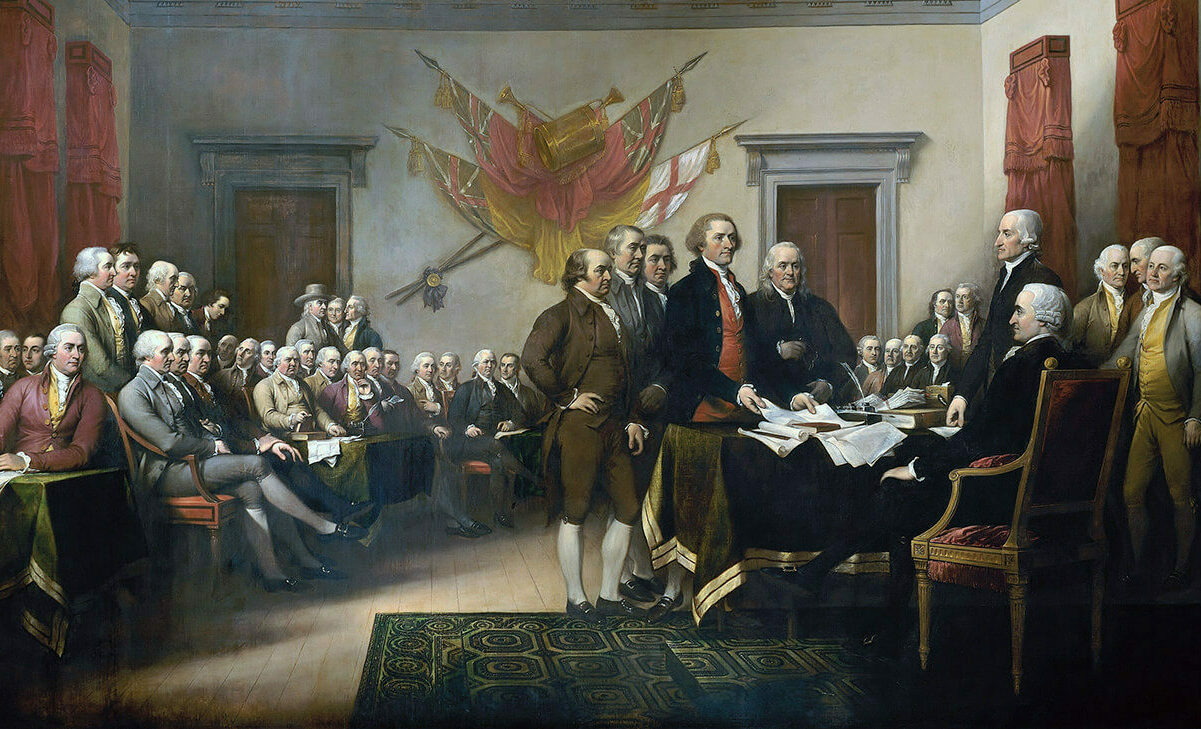
The Declaration of Independence, adopted by the Continental Congress on July 4, 1776, serves as America’s birth certificate and one of the most important documents in human history. It announced the separation of the thirteen American colonies from Great Britain and stated the key principles on which the new nation would be founded.

As Thomas Jefferson wrote in its famous preamble:

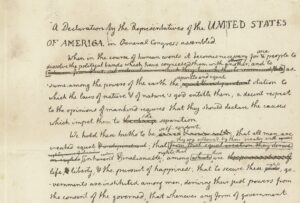
When in the course of human events, it becomes necessary for one people to dissolve the political bands which have connected them with another. We hold these truths to be self-evident, that all men are created equal, that they are endowed by their Creator with certain unalienable Rights, that among these are Life, Liberty, and the pursuit of Happiness.

These words justified the colonies’ break from tyranny and expressed a vision of government that is delegated its just powers by the consent of the governed. This was a groundbreaking idea based on the recognition of God-given rights.

The fifty-six signers of the Declaration pledged their lives, fortunes, and sacred honor to this cause.

Some History

Growing tensions between the American colonies and Britain led to the push for independence. Oppressive taxes, the Intolerable Acts, and limits on colonial freedoms fueled anger. In January 1776, Thomas Paine’s pamphlet Common Sense inspired many colonists to support breaking away from Britain.1

On June 7, 1776, Richard Henry Lee of Virginia proposed a resolution in the Continental Congress, stating that “these United Colonies are, and of right ought to be, free and independent States.”2 Congress then chose a Committee of Five—Thomas Jefferson (the primary author), John Adams, Benjamin Franklin, Roger Sherman, and Robert Livingston—to write a formal declaration.3

After intense debate and revisions (including the removal of a passage condemning the slave trade to secure unity4), Congress adopted the document. John Dunlap printed broadsides that night, spreading the news across the colonies.5

John Adams, writing to his wife Abigail on July 3, 1776, foresaw the day’s enduring legacy:

The Second Day of July 1776 will be the most memorable epoch in the History of America. I am apt to believe that it will be celebrated by succeeding Generations, as the great anniversary Festival… It ought to be solemnized with Pomp and Parade, with Shews, Games, Sports, Guns, Bells, Bonfires, and Illuminations from one End of this Continent to the other from this Time forward forever more.6

Although Adams anticipated celebrations on July 2 (the day the independence vote was held), history has adopted July 4 as Independence Day—the day the world was informed why America chose freedom.

The signers knew the risks: by declaring independence, they committed an act of treason against the British Crown, punishable by death. Yet, as Adams reflected, “posterity will triumph in that day’s transaction.”7

This hub explores the Declaration’s text, its courageous signers (including original documents and letters from several), and valuable resources for further study.

Timeline

  • June 7, 1776       Richard Henry Lee proposes independence.
  • June 11, 1776     Committee of Five appointed to draft the Declaration.
  • June 28, 1776    Draft presented to Congress.
  • July 2, 1776        Congress votes for independence (12 colonies in favor; New York abstains initially).
  • July 4, 1776        Declaration adopted and approved.
  • August 2, 1776  Most delegates sign the engrossed parchment copy.

The Text of the Declaration

The Declaration of Independence is remarkably concise—containing fewer than 1,400 words—yet it powerfully combines a philosophical defense of liberty with a detailed indictment of King George III’s abuses. The document is structured in four main parts:

  • The Preamble: States the necessity of explaining separation and introduces the famous self-evident truths.
  • A Statement of Rights and Principles: Outlines the purpose of government and the people’s right to alter or abolish it when it becomes destructive.
  • The List of Grievances: Presents 27 specific charges against the King.
  • The Resolution of Independence: Formally declares the colonies free and independent states.

These primary sources allow you to read the Declaration exactly as the Founders wrote, edited, and presented it to the world.

Primary Sources

Signers of the Declaration

The fifty-six men who signed the Declaration of Independence were not mythical figures—they were husbands, fathers, merchants, lawyers, farmers, and ministers who knowingly risked everything for the cause of liberty. By affixing their names to the document, they committed an act of treason against the British Crown, fully aware that failure could mean ruin or death. Yet they declared, in the document’s closing words, that “for the support of this Declaration, with a firm reliance on the protection of divine Providence, we mutually pledge to each other our Lives, our Fortunes and our sacred Honor.”

Many of these signers paid a heavy personal price: homes destroyed, families displaced, fortunes lost, and some imprisoned or hunted by British forces.8 Their courage and sacrifice laid the foundation for the nation we enjoy today.

WallBuilders is privileged to preserve and present original letters, documents, and artifacts from several of these brave patriots, offering a rare glimpse into their faith, character, and commitment. Below are highlighted resources featuring some of the signers and their stories.

Additional Helpful Resources

Explore the Declaration of Independence further through these trusted primary sources and educational tools. These resources provide everything from original manuscripts and images to classroom-ready materials, helping readers of all ages deepen their understanding of America’s founding document and the courageous men who signed it.

Additional Resources


Endnotes

1 Thomas Paine, Common Sense: Addressed to the Inhabitants of America (Philadelphia: 1776).
2 Richard Henry Lee’s handwritten resolution from the National Archives: https://www.archives.gov/milestone-documents/lee-resolution. See also, June 7, 1776, Journals of the American Congress: From 1774 to 1788 (Washington: Way and Gideon, 1823), 1:368.
3 June 11, 1776, Journals of the American Congress (1823), I:369.
4 “Thomas Jefferson, June 1776, Rough Draft of the Declaration of Independence,” Library of Congress, https://www.loc.gov/resource/mtjx.mtjbib000156/?st=gallery.
5 “Dunlap Broadside [Declaration of Independence],” July 4, 1776, National Archives, https://catalog.archives.gov/id/301682.
6 John Adams to Abigail Adams, July 3, 1776, Massachusetts Historical Society, https://www.masshist.org/digitaladams/archive/doc?id=L17760703jasecond.
7 John Adams to Abigail Adams, July 3, 1776, Massachusetts Historical Society, https://www.masshist.org/digitaladams/archive/doc?id=L17760703jasecond.
8 “FAQ: Difficulties and Sacrifices of the Declaration Signers,” WallBuilders, https://wallbuilders.com/resource/faq-difficulties-and-sacrifices-of-the-declaration-signers/.

America Reads the Bible!

Just as Ezra read the Word aloud to the people of Israel (Nehemiah 8:1–3), awakening revival and repentance, inspiring them to rebuild the temple, and working with Nehemiah to mobilize the people to rebuild Jerusalem’s walls, America Reads the Bible is a sacred opportunity to call our nation back to its spiritual foundations. Through a public, continuous reading of the entire Bible in our nation’s capital by our national leaders from all spheres of influence, we believe God can spark revival in individual hearts and inspire Americans to carry the Word forward in their lives and communities into the next 250 years of our national story.

April 18-25, 2026 in Washington, D.C.

Join a historic, week-long, continuous Bible-reading — reigniting America’s spiritual foundation as we celebrate 250 years of freedom!

Discipleship Resources from WallBuilders

  1. Worth Riding a Hundred Miles to Hear – Psalm 35
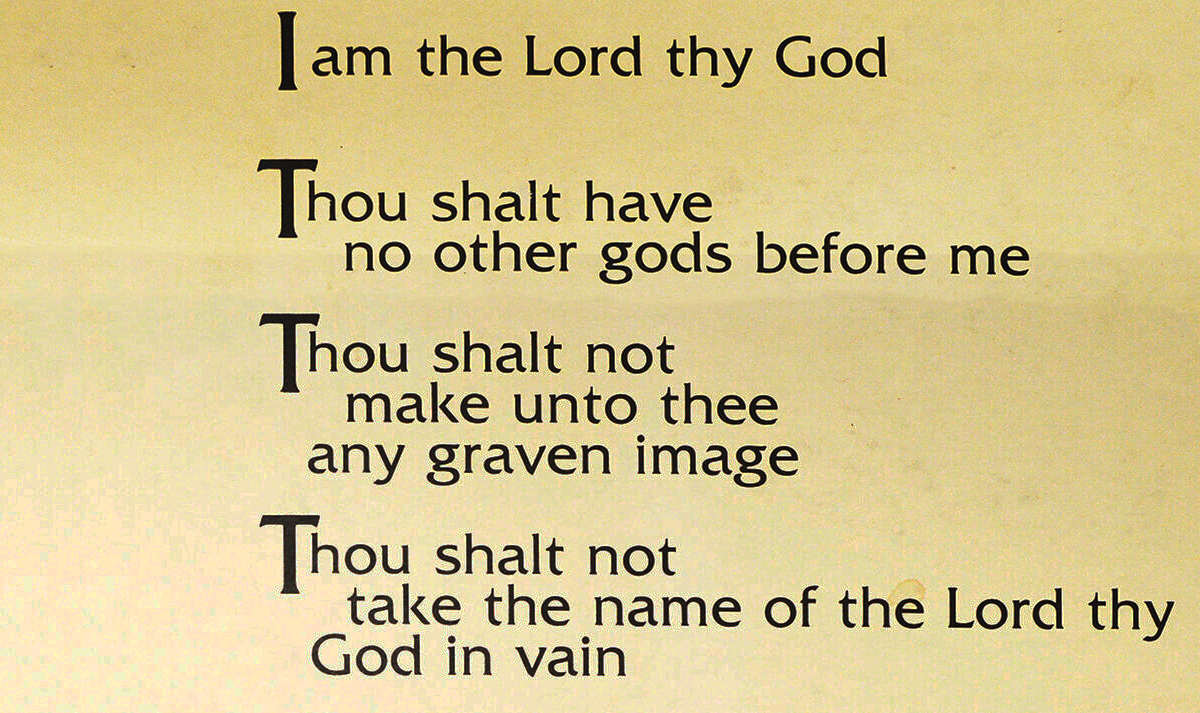
  2. The Ten Commandments: The Basis for a Free and Civilized Society – Deuteronomy 5
  3. The Revelatory Source for the Constitutional Separation of Powers – Jeremiah 17:9
  4. Calling the Nation to Prayer and Fasting – Ezra 8
  5. The Heart of a Grateful Nation – II Chronicles 5-7
  6. His Desire to Answer Prayer – Matthew 6
  7. Meditating on God’s Word – Psalm 4:4
  8. What Good Can I Do This Day? – Acts 10:38
  9. The Duty of Nations – Psalm 9:17
  10. Righteousness Exalts a Nation – Proverbs 14:34
  11. Stepping Stones – I Chronicles 17:11-12
  12. The Rock Upon Which Our Republic Rests – II Kings 23

Devotional articles taken from from The Founders’ Bible available from WallBuilders.

The Ten Commandments: The Basis for a Free and Civilized Society

Thoughts on Deuteronomy 5

It is difficult to argue that any single work has had a greater or more far-reaching impact through four centuries of American life, law, and culture than the Ten Commandments. As such, the fact that their public display would become a matter of current debate or prohibition is almost unthinkable. And yet it is.

The Ten Commandments are the embodiment of the Moral Law (one of the four types of law in the Bible) and formed the foundation for general morals in America as encompassed in the Common Law. Their repetition here in Deuteronomy 5 provides an opportunity to demonstrate that they were also the impetus for specific American statutory laws.

The original delivery of the commandments in Exodus was to the children of Israel immediately after God had delivered them from Egypt and established them as an independent nation. Now they are being repeated to the younger generation, some forty years later, as they are preparing to finally enter the Promised Land. After suffering the delay and the pain of watching their parents perish in the wilderness because of their continual disobedience and refusal to enter (Numbers 14:29), Moses is renewing the covenant with them. The Ten Commandments are not mere dictates of obligation; they are lifegiving promises that if adhered to would bring blessing and prosperity. God promised that it would go well with them, and they would prolong their days in the land that they were about to possess.

Such promise was not lost upon our Founding Fathers who openly endorsed the application of the Ten Commandments to civil law in America. statesman John Quincy Adams declared:

The law given from Sinai was a civil and municipal as well as a moral and religious code; it contained many statutes . . . of universal application—laws essential to the existence of men in society, and most of which have been enacted by every nation which ever professed any code of laws.1

Founder and educator Noah Webster agreed:

Where will you find any code of laws among civilized men in which the commands and prohibitions are not founded on Christian principles? I need not specify the prohibition of murder, robbery, theft, trespass.2

These laws are essential to the existence of men in society, and yet some critics today object to displaying the Commandments on such spurious grounds that there are too many versions—that the Lutherans have a version, as do the Jewish, Catholic, and Orthodox faiths; and that the Protestants have several different versions.3 They thus argue that with so many different versions, public displays of any of them will always invoke a “deep theological dispute” and therefore should be avoided.4 But this claim is ridiculous.

What distinguishes the various “versions” are primarily the different ways in which they are numbered. In the original Hebrew text, the Ten Commandments appear in paragraph form, with no numbers or verses; but as they were translated into subsequent texts, various faiths and branches of Christianity chose to number them differently. For example, the first command in the Jewish version is usually the prologue in most Protestant versions; but both contain the same content. The different numberings are merely superficial manmade contrivances for ease of identification, but all versions cover the same subject matter.

Yet no matter how the commandments are numbered, each finds direct application in American laws. A few examples (chosen from dozens of similar ones) are presented below.

1. Have No Other Gods.

This command was directly incorporated into the first written code of laws enacted in America: those of the Virginia Colony in 1610.5 The subsequent Massachusetts legal code of 1641 and that of Connecticut in 1642 similarly declared:

If any man after legal conviction shall have or worship any other god but the Lord God, he shall be put to death. Deut. 13.6, 10, Deut. 17.2, 6, Ex. 22.20.6

2. Have No Idols.

Typical of the civil laws on this command was a 1680 New Hampshire law declaring:

Idolatry. It is enacted by ye Assembly and ye authority thereof, yet if any person having had the knowledge of the true God openly and manifestly have or worship any other god but the Lord God, he shall be put to death. Ex. 22.20, Deut. 13.6 and 10.7

Note: reading such early statutes and the ones that follow can give the impression that the death penalty was freely applied to almost any crime in America, but such was definitely not the case. This fact becomes apparent when comparing American laws with European laws from the same period. As noted by early American historian Daniel Dorchester:

When the Mayflower left England [in 1620], thirty-one offenses were punishable with death in the mother country. By the middle of that century, the black list had enlarged to 223, of which 176 were without the benefit of the clergy [there were no exceptions]. How far in advance the New England colonies were is evident from the fact that not a single colony code recognized more than fifteen capital crimes.8

That might still strike us as severe, but when understood in context, realize that having a copy of the Scriptures for themselves, in their own language, to study and learn what God was like as revealed in His Word was a relatively new development. Prior to this it was rare and sometimes even illegal for an individual to possess a Bible. The populace could then be kept ignorant and easily controlled by those in power who regularly committed horrible atrocities in God’s Name. Given that, it is quite remarkable just how quickly these early forefathers began to learn for themselves that God was not like those who had misrepresented Him for their own aims. (For a more complete discussion of this subject, please see the commentary for Psalm 119:11 in The Founders’ Bible.)

3. Honor God’s Name.

Civil laws based on this commandment were divided into two categories: (1) laws prohibiting swearing and profanity, and (2) laws prohibiting blasphemy. Noah Webster confirmed that both were derived from this commandment:

When in obedience to the Third Commandment of the Decalogue you would avoid profane swearing, you are to remember that this alone is not a full compliance with the prohibition which comprehends all irreverent words or actions and whatever tends to cast contempt on the Supreme Being or on His Word and ordinances [i.e., blasphemy].9

Numerous statutory laws were enacted as a result of the Third Command.10

4. Honor the Sabbath Day.

From the beginning, every American colony enacted civil laws to honor the Sabbath.11 That legal recognition continued over subsequent centuries. For example, during the American Revolution, Commander-in-Chief George Washington issued numerous military orders directing that his troops observe the Sabbath:

The Commander in Chief directs that Divine service be performed every Sunday at 11 o’clock. . . . It is expected that officers of all ranks will by their attendance set an example to their men.12

Following the Revolution, the states continued to honor the Sabbath. For example, Vermont enacted a ten-part Sabbath law in 1787;13 Massachusetts enacted an eleven-part law in 1791;14 Virginia enacted an extensive eight-part law (written by Thomas Jefferson) in 1792;15 New Jersey enacted a twenty-one-part law in 1798;16 New Hampshire enacted a fourteen-part law in 1799;17 Maine enacted a thirteen-part law in 1821;18 and other states did the same.19

When the U.S. Constitution was written in 1787, it, too, honored the traditional Christian Sabbath. Article I, Section 7, ¶ 2, stipulates that the president has ten days to sign a law, “Sundays excepted.” This “Sundays Excepted” clause had previously appeared in the state constitutions, and so the historical understanding of this clause at both the state and federal levels was summarized by numerous courts, including the 1912 Supreme Court of Missouri:

It is provided that if the Governor does not return a bill within 10 days (Sundays excepted). . . . Can any impartial mind deny that it contains a recognition of the Lord’s Day as a day exempted by law from all worldly pursuits? The framers of the Constitution, then, recognized Sunday as a day to be observed, acting themselves under a law which exacted a compulsive observance of it. . . . Sunday was recognized as a day of rest.20

Other courts were equally candid about Sabbath laws and their relation to the Ten Commandments. For example, in 1950, the Supreme Court of Mississippi affirmed:

The Sunday laws have a Divine origin. . . . After the six days of creation, the Creator Himself rested on the seventh. Genesis, Chapter 2, verses 2 and 3. Thus, the Sabbath was instituted as a day of rest. The original example was later confirmed as a commandment when the law was handed down from Mt. Sinai: “Remember the Sabbath day, to keep it holy” [Exodus 20:8].21

In 1967, the Supreme Court of Pennsylvania similarly declared:

“Remember the Sabbath day to keep it holy; six days shalt thou labor and do all thy work; but the seventh day is the Sabbath of the Lord thy God. In it thou shalt not do any work” [Deuteronomy 5:12-14]. This Divine pronouncement became part of the Common Law inherited by the thirteen American colonies and by the sovereign states of the American union.22

The modern U.S. Supreme Court asserts that even to this day, states have the right to enact laws honoring the Sabbath.23

5. Honor Your Parents.

A 1642 Connecticut law specifically cited the Decalogue as the basis for its civil laws related to honoring parents:

If any child or children above sixteen years old and of sufficient understanding shall curse or smite their normal father or mother, he or they shall be put to death unless it can be sufficiently testified that the parents have been very unChristianly negligent in the education of such children, or so provoke them by extreme and cruel correction that they have been forced thereunto to preserve themselves from death

[or]

maiming. Ex. 21:17, Lev. 20, Ex. 20:15.24

Three centuries later, a 1934 Louisiana appeals court affirmed the continuing influence of the Fifth Command on civil laws:

“Honor thy father and thy mother” is as much a command of the municipal law as it is a part of the Decalogue, regarded as holy by every Christian people. “A child,” says the code, “whatever be his age, owes honor and respect to his father and mother.”25

6. Do not murder.

A 1641 Massachusetts law declared:

Ex. 21.12, Numb. 35.13, 14, 30, 31. If any person commit any willful murder, which is manslaughter committed upon premeditated malice, hatred, or cruelty not in a man’s necessary and just defense, nor by mere casualty against his will, he shall be put to death. Ex. 21.14. If any person shall slay another through guile, either by poisoning or other such devilish practice, he shall be put to death.26

Similar provisions derived from the prohibition in the Ten Commandments can be found in the laws of the early colonies and subsequently of the independent states—laws spanning the centuries. Consequently, courts have been very candid in acknowledging the Decalogue as the origin of American civil murder laws, such as when a 1932 Kentucky appeals court asserted:

Following the promulgation of Moses at Mt. Sinai has required of each and every one of its citizens that “Thou shalt not murder” [Exodus 20:13]. If that law is violated, the one guilty of it has no right to demand more than a fair trial, and if, as a result thereof, the severest punishment for the crime is visited upon him, he has no one to blame but himself.27

7. Do not commit adultery.

Directly citing the Decalogue, a 1641 Massachusetts law declared:

If any person committeth adultery with a married or espoused wife, the adulterer and adulteress shall surely be put to death. Ex. 20.14.28

For three centuries, colonies and states based their adultery policies on the Decalogue. For example, a 1787 Vermont law stated:

Whereas the violation of the marriage covenant is contrary to the command of God [Exodus 20:14] and destructive to the peace of families: be it therefore enacted by the general assembly of the State of Vermont that if any man be found in bed with another man’s wife, or woman with another’s husband, . . . &c.29

In 1898, the highest criminal court in Texas declared:

“Thou shalt not commit adultery” is our law as well as the law of the Bible.30

And in 1955, the Washington Supreme Court likewise ruled:

Adultery, whether promiscuous or not, violates one of the Ten Commandments and the statutes of this state.31

8. Do Not Steal.

Early colonial laws are easily cited for evidence of the Decalogue’s influence on this prohibition, but consider more recent declarations, such as from the 1951 Louisiana Supreme Court, which recognized:

In the Ten Commandments, the basic law of all Christian countries, is found the admonition “Thou shalt not steal.”32

In 1940, the Supreme Court of California had similarly declared:

“Thou shalt not steal” applies with equal force and propriety to the industrialist of a complex civilization as to the simple herdsman of ancient Israel.33

And in 1914, a federal court ruled that the Constitution’s “takings clause” prohibiting government seizure of private property was an embodiment of the Decalogue’s Eighth Command against theft, including government theft.34

9. Do not perjure yourself.

A 1642 Connecticut law declared:

If any man rise up by false witness, wittingly and of purpose to take away any man’s life, he shall be put to death. Deut. 19:16, 18, 19.35

For over three centuries, civil laws against perjury were openly acknowledged to be derived from the Decalogue, as when the 1924 Oregon Supreme Court declared:

No official is above the law. “Thou shalt not bear false witness” is a command of the Decalogue, and that forbidden act is denounced by statute as a felony.36

10. Do not covet.

The Tenth Command actually forms the basis for many of the prohibitions given in the other commandments. That is, a violation of this commandment frequently precedes a violation of the others, particularly the command against stealing. As William Penn, the framer of the original laws of Pennsylvania, acknowledged:

He that covets can no more be a moral man than he that steals since he does so in his mind. Nor can he be one that robs his neighbor of his credit, or that craftily undermines him of his trade or office.37

Founding Father John Adams also granted the importance of this commandment:

The moment the idea is admitted into society that property is not as sacred as the laws of God, and that there is not a force of law and public justice to protect it, anarchy and tyranny commence. If “Thou shalt not covet” and “Thou shalt not steal” were not commandments of Heaven, they must be made inviolable precepts in every society before it can be civilized or made free.38

Many courts have acceded the numerous other categories of laws to which this provision of the Decalogue directly applies.

For example, in 1895, the California Supreme Court cited this prohibition as the basis of civil laws against defamation.39 In 1904, the Court of Appeals in West Virginia cited it as the basis of laws preventing election fraud.40 In 1951, the Oregon Supreme Court cited this part of the Decalogue as the basis of civil laws against modern forms of cattle rustling.41 And in 1958, a Florida appeals court cited it as the basis of laws targeting white-collar crime. 42 There are numerous other examples establishing that this commandment of the Decalogue had a substantial influence on many other civil laws.

Conclusion

There are hundreds more examples irrefutably demonstrating the substantial influence of the Ten Commandments on American civil law. So clear and compelling is the historical evidence that it has been consistently acknowledged by courts across America, such as when the 1917 Supreme Court of North Carolina affirmed:

Our laws are founded upon the Decalogue, not that every case can be exactly decided according to what is there enjoined, but we can never safely depart from this short but great declaration of moral principles without founding the law upon the sand instead of upon the eternal rock of justice and equity.43

In 1950, the Florida Supreme Court similarly pointed out:

A people unschooled about the sovereignty of God, the Ten Commandments, and the ethics of Jesus could never have evolved the Bill of Rights, the Declaration of Independence, and the Constitution. There is not one solitary fundamental principle of our democratic policy that did not stem directly from the basic moral concepts as embodied in the Decalogue and the ethics of Jesus.44

In short, the Ten Commandments not only formed the basis of the Moral Law in America but were also a direct influence on its civil statutory laws. The effect of the commandments produced a truly civilized society, for as a matter of civil policy it matters not one whit if my neighbor is an atheist or opponent of Christianity, but if he will nevertheless govern his behavior by the basic values found in the Ten Commandments—that is, if he will refrain from killing me, stealing my property, or taking my wife—he will make a good citizen, regardless of whether or not he holds any specific religious beliefs. As John Adams affirmed, even if the Ten Commandments “were not commandments of Heaven, they must be made inviolable precepts in every society before it can be civilized or made free.45


Endnotes

1 John Quincy Adams, Letters of John Quincy Adams, to His Son, on the Bible and Its Teachings (Auburn: James M. Alden, 1850), 61, 70-71.
2 Noah Webster, “Reply to a Letter of David McClure on the Subject of the Proper Course of Study in the Girard College, Philadelphia,” October 25, 1836, A Collection of Papers on Political, Literary and Moral Subjects (New York: Webster & Clark, 1843), 291-292.
3 Glassroth v. Moore, 333 F.3d 1282, 1285 (2003), cert. denied, 540 U.S. 1000; Professor Paul Finkelman, “The Ten Commandments on the Courthouse Lawn and Elsewhere,” Fordham Law Review (2005), 73:1477-1520.
4 Van Orden v. Perry, 545 U.S. 677, n16 (2005) (Stevens, J., dissenting).
5Articles, Laws, and Orders, Divine, Politic and Martial for the Colony of Virginia,” 1610-1611, For the Colony in Virginea Britannia Lawes Divine, Morall and Martiall, etc., Compiled by William Strachey, ed., David H. Flaherty (Charlottesville: The University Press of Virginia, 1969), 10. 
6Massachusetts Body Of Liberties,” 1641, Documents of the Constitution of England and America, from Magna Charta to the Federal Constitution of 1789, ed. Francis Bowen (Cambridge: John Bartlett, 1854), 71.
7General Laws and Liberties of New Hampshire, Cappitall Laws, Idollitry, Section 1” 1680, Documents and Records related to the Province of New-Hampshire, ed., Nathaniel Bouton (Concord: George E. Jenks, State Printer, 1867), 383. 
8 Daniel Dorchester, Christianity in the United States from the First Settlement Down to the Present Time (New York: Phillips & Hunt, 1895), 122.
9 Noah Webster, Letters to a Young Gentleman Commencing His Education (New Haven: Howe & Spalding, 1823), 8.
10 See, for example, “Articles, Laws, and Orders, Divine, Politic and Martial for the Colony of Virginia,” 1610-1611, For the Colony in Virginea Britannia Lawes Divine, Flaherty (1969), 10-11; The Code of 1650 (Hartford: Silas Andrus, 1825), 30; and many others.
11Articles, Laws, and Orders, Divine, Politic and Martial for the Colony of Virginia,” 1610-1611, For the Colony in Virginea Britannia Lawes Divine, Flaherty (1969), 11; “General Laws and Liberties of New Hampshire,” 1680, 383; Charles J. Hoadly, Records of the Colony or Jurisdiction of New Haven, From May, 1653, to the Union, Together With the New Haven Code of 1656 (Hartford: Chase, Lockwood and Company, 1858), 605; “An Act to Restrain People from Labor on the First Day of the Week,” passed October 4, 1705, Laws of the Commonwealth of Pennsylvania (Philadelphia: John Bioren, 1810), I:25-26; “Title 160: Sunday,” 1741, Alphabetical Digest of the Public Statute Law of South Carolina (Charleston: John Hoff, 1814), 2:272-275; “Vice and Immorality, Section IV,A Manual of The Laws of North Carolina (Raleigh: J. Gales and W. Boylan, 1808), 2:229; “An Act for the Due Observation of the Sabbath, or Lord’s Day,The Public Statute Laws of the State of Connecticut (Hartford: Hudson and Goodwin, 1808), I:577-578; etc.
12 George Washington, The Writings of George Washington, ed. John C. Fitzpatrick (Washington, DC: United States Government Printing Office, 1934), 11:342-343; General Orders, Cambridge, August 5, 1775, 3:402-403; General Orders, Head-Quarters, Morristown, April 12, 1777, 7:407; General Orders, Head-Quarters, Morristown, May 17, 1777, 8:77, General Orders, Head-Quarters, Morristown, May 24, 1777, 8:114; General Orders, Head-Quarters, Middle Brook, May 31, 1777, 8:153; General Orders, Head-Quarters, Middle Brook, June 28, 1777, 8:308; General Orders, Head-Quarters, Pennybacker’s Mills, September 27, 1777, 9:275; General Orders, Head-Quarters, Perkiomy, October 7, 1777, 9:329; etc.
13An Act for the Due Observation of the Sabbath,” passed March 9, 1787, Statutes of the State of Vermont (Bennington: Anthony Haswell, 1791), 155-157.
14Of the Observance of the Lord’s Day and the Prevention and Punishment of Immorality,The Revised Statutes of the Commonwealth of Massachusetts (Boston: Dutton & Wentworth, 1836), 385-386.
15An Act for the Effectual Suppression of Vice, and Punishing the Disturbers of Religious Worship, and Sabbath Breakers,” passed December 26, 1792, The Revised Code of the Laws of Virginia (Richmond: Thomas Ritchie, 1819), I:554-556. See also ThomasJefferson, The Papers of Thomas Jefferson, ed. Julian P. Boyd (Princeton: Princeton University Press, 1950), II:322.
16An Act for Suppressing Vice and Immorality,” passed March 16, 1798, Laws of the State of New Jersey (New Brunswick: Abraham Blauvelt, 1800), 329-333. 
17An Act for the Better Observation of the Lord’s Day, and for Repealing All the Laws Heretofore Made for that Purpose,” passed December 24, 1799, Constitution and Laws of the State of New Hampshire (Dover: Samuel Bragg, 1805), 290-293.
18An Act Providing for the Due Observation of the Lord’s Day,Laws of the State of Maine (Hallowell: Calvin Spaulding, 1822), 67-71.
19 See, for example, James Coffield Mitchell, The Tennessee Justices’ Manual (Nashville: J. C. Mitchell and C. C. Norvell, 1834), 427-428; George C. Edwards, A Treatise on the Powers and Duties of Justices of the Peace and Town Officers, in the State of New York (Ithaca: Mack, Andrus, and Woodruff, 1836), 386-387; etc.
20 State v. Chicago, B. & Q. R. Co., 143 S.W. 785, 803 (Mo. 1912).
21 Paramount-Richards Theatres v. City of Hattiesburg, 49 So.2d 574, 577 (Miss. 1950).
22 Bertera’s Hopewell Foodland, Inc. v. Masters, 236 A.2d 197, 200-201 (Pa. 1967).
23 McGowan v. Maryland, 366 U. S. 420 (1961).
24Capital Laws of Connecticut,” 1642, The Blue Laws of New Haven Colony, Usually Called Blue Laws of Connecticut (Hartford: Case, Tiffany & Co., 1838), 103.
25 Ruiz v. Clancy, 157 So. 737, 738 (La. Ct. App. 1934), citing Caldwell v. Henmen, 5 Rob. 20.
26Massachusetts Body Of Liberties,” 1641, Documents of the Constitution of England and America, from Magna Charta to the Federal Constitution of 1789, ed. Francis Bowen (Cambridge: John Bartlett, 1854), 72.
27 Young v. Commonwealth, 245 Ky. 570, 53 S.W.2d 963 (Ky. Ct. App. 1932).
28Massachusetts Body Of Liberties,” 1641, Documents of the Constitution, ed. Bowen (1854), 72.
29An Act Against Adultery, Polygamy, and Fornication,” passed March 8, 1787, Statutes of the State of Vermont (Bennington: Anthony Haswell, 1791), 16-17.
30 Hardin v. State, 39 Tex.Crim. 426 (1898).
31 Schreifels v. Schreifels, 287 P.2d 1001, 1005 (Wash. 1955).
32 Succession of Onorato, 51 So.2d 804, 810 (La. 1951).
33 Hollywood Motion Picture Equipment Co. v. Furer, 105 P.2d 299, 301 (Cal. 1940).
34 Pennsylvania Co. v. United States, 214 F. 445, 455 (W.D.Pa. 1914).
35Capital Laws of Connecticut,” 1642, The Blue Laws of New Haven Colony, Usually Called Blue Laws of Connecticut (Hartford: Case, Tiffany & Co., 1838), 103.
36 Watts v. Gerking, 228 P. 135, 141 (Or. 1924).
37 William Penn, Fruits of Solitude, In Reflections and Maxims Relating To The Conduct of Human Life (London: James Phillips, 1790), 132.
38 John Adams, A Defense of the Constitutions of Government of the United States of America (Philadelphia: William Young, 1797), 3:217.
39 Weinstock, Lubin & Co. v. Marks, 42 P. 142, 145 (Cal. 1895).
40 Doll v. Bender, 47 S.E. 293, 300-01 (W.Va. 1904) (Dent, J. concurring).
41 Swift & Co. v. Peterson, 233 P.2d 216, 231 (Or. 1951).
42 Chisman v. Moylan, 105 So.2d 186, 189 (Fla. Dist. Ct. App. 1958).
43 Commissioners of Johnston County v. Lacy, 93 S.E. 482, 487 (N.C. 1917).
44 State v. City of Tampa, 48 So.2d 78, 79 (Fla. 1950).
45 John Adams, A Defense of the Constitutions of Government of the United States of America (Philadelphia: William Young, 1797), 3:217.

The Revelatory Source for the Constitutional Separation of Powers

Thoughts on Jeremiah 17:9 

The separation of powers and reciprocal checks and balances incorporated throughout the Constitution is still heralded as one of the most important features of American government, enabling it not only to survive but to thrive for over two centuries. History is filled with opposite examples showing that when government power was centralized in one body or leader, that government always became abusive and resulted in national ruin. The Founding Fathers not only had these examples of history to guide them, but they had the wisdom found in the Bible.

The love of power, and our propensity to abuse it, finds its root in the human heart. Jeremiah 17:9 declares: “The heart is more deceitful than all else and is desperately sick; who can understand it?” This wellknown verse encapsulated what Calvinistic ministers and theologians termed the “depravity of man” (that the natural heart of man easily embraced moral and civil degradation). It was a frequent topic for sermons in the Founding Era. The Founding Fathers understood the significance of this verse and openly cited it, as when John Adams reminded Americans:

Let me conclude by advising all men to look into their own hearts, which they will find to be “deceitful above all things and desperately wicked” [Jeremiah 17:9].1

Those ignorant of the Bible often believe in the innate goodness of man—that man will naturally do what is right. However, experience regularly confirms the opposite: without a heart regenerated by the power of God, man will routinely do what is wrong. Adams specifically rejected any notion of the innate goodness of man, especially when it came to government:

To expect self-denial from men when they have a majority in their favor, and consequently power to gratify themselves, is to disbelieve all history and universal experience – it is to disbelieve revelation and the Word of God, which informs us “the heart is deceitful above all things and desperately wicked” [Jeremiah 17:9]. . . . There is no man so blind as not to see that to talk of founding a government upon a supposition that nations and great bodies of men left to themselves will practice a course of self-denial is either to babble like a newborn infant or to deceive like an unprincipled impostor.2

And even those who had experienced a regenerated heart through the power of God in Christ nevertheless knew enough about the truth of this verse and human nature to not even fully trust themselves to be above corruption. As John Quincy Adams confessed:

I believe myself sincere; but the heart is deceitful above all things and desperately wicked [Jeremiah 17:9]. I do not believe the total depravity of man, but I am deeply conscious of the frailty of my own nature.3

Understanding this principle from Jeremiah 17—a principle that was accepted by all sides of the theological spectrum—the Founders knew that government would be much safer if all power did not repose in the same authority. Making practical application of this Biblical truth, they divided and checked power between branches so that if one branch behaved wickedly, the other two might still check and stop it. As George Washington explained:

A just estimate of that love of power and proneness to abuse it which predominates in the human heart is sufficient to satisfy us of the truth of this position. The necessity of reciprocal checks in the exercise of political power by dividing and distributing it into different depositories . . . has been evinced [demonstrated] by experiments ancient and modern, some of them in our country and under our own eyes.4

James Madison agreed:

What is government itself but the greatest of all reflections on human nature? If men were angels, no government would be necessary. In framing a government which is to be administered by men over men, the great difficulty lies in this: you must first enable the government to control the governed, and in the next place oblige it to control itself.5

This remarkable feature of American government—the separation of powers and reciprocal checks and balances—can be attributed to the Founders’ understanding of Jeremiah 17:9.


Endnotes

1 John Adams, “On Private Revenge III,” published in the Boston Gazette, September 5, 1763, The Works of John Adams, ed. Charles Francis Adams (Boston: Charles C. Little and James Brown, 1851), 3:443.

2 John Adams, A Defense of the Constitutions of Government of the United States of America (London: John Stockdale, 1794), 3:289, “Letter VI. The Right Constitution of a Commonwealth, examined.”

3 John Quincy Adams, diary entry of November 16, 1842, Memoirs of John Quincy Adams, ed. Charles Francis Adams (Philadelphia: J.B. Lippincott & Co, 1876), XI:270.

4 George Washington, Address of George Washington, President of the United States, and Late Commander in Chief of the American Army, to the People of the United States, Preparatory to His Declination (Baltimore: Christopher Jackson, 1796), 13.

5 Alexander Hamilton, John Jay, & James Madison, The Federalist on the New Constitution; Written in 1788 (Philadelphia: Benjamin Warner, 1818), 281, Federalist #51 likely by James Madison.

What Good Can I Do This Day?

Thoughts on Acts 10:38

Founding Father John Quincy Adams gave his life to his faith, his family, and his country. He lived to be eighty years old and actively worked more than sixty of those years for the benefit of others. His service included diplomatic missions to five nations, serving as a state senator, US senator, secretary of state, and US president. And while every other president before and after him permanently retired from public life after leaving office, John Quincy Adams did not. On retirement, he was elected to the US House of Representatives, where he would spend nine terms. He eventually died in the US Capitol. Although he declared “I had not the slightest desire to be elected to Congress,”1 he still served because his neighbors desired his leadership and elected him for that purpose. Adams believed that it was his Christian duty to serve when called upon rather than indulging a personal wish to retire to a quiet unencumbered life.

In Congress, he took up the fight to end slavery at a time when the overwhelming majority in Congress did not want to even discuss the subject. He undertook a relentless personal crusade to secure the Declaration of Independence’s promise of “life, liberty, and the pursuit of happiness” for all individuals, regardless of race. But by choosing that path, he walked a difficult road. As he lamented, “The best actions of my life make me nothing but enemies.”2 Yet he did not quit, for he believed that “his service belonged to the nation.”3

He was consistently on the front lines in any quest to improve the lives of citizens and combat injustice. When he was seventy-four and had been fighting brutal congressional battles for over a decade, he wrote:

I deem it the duty of every Christian man, when he betakes himself to his nightly pillow, in self-examination to say, “What good have I done this day? Ay! And what evil have I done that may be repaired or repented of?” Nor should he rise from that pillow the next morning till after the inquiry, “What good can I do, and to whom, this day?” I have made this my rule for many years, with superadded prayer to the Lord of all—the Giver of every good gift for light [James 1:17]—for discernment, for guidance, for self-control, for a grateful heart to feel and acknowledge all His blessings, for humble resignation to His will, and submission to His chastisements. . . .Jesus Christ went about doing good [Acts 10:38]; I would do the same.4

John Quincy Adams understood that God places each of us here not to pursue own pleasure, but so that we might glorify God through serving and helping others. May the Spirit of God anoint us as well to imitate Jesus and personally “go about doing good.


Endnotes

1 John Quincy Adams, diary entry for September 18, 1830, Memoirs of John Quincy Adams, ed. Charles Francis Adams (Philadelphia: J. B. Lippincott & Co., 1876), 8:240.

2Adams, diary entry for October 25, 1833, Memoirs of John Quincy Adams, ed. Adams (1876), 9:26.

3 Dictionary of American Biography, ed. Allen Johnson (New York: Charles Scribner’s Sons, 1928), 1:92.

4 Adams, diary entry for November 16, 1842, Memoirs of John Quincy Adams, ed. Adams (1876), 2:269-270.


Calling the Nation to Prayer and Fasting

Thoughts on Ezra 8

In Ezra 7, Babylonian King Artaxerxes commissioned the priest Ezra to gather Jewish captives, return to their ancient homeland, and set up a civil government. They were also to rebuild the holy temple in Jerusalem, which had lain in ruins for decades. In chapter 8, Ezra assembled the people. But before they set out on their dangerous trek:

Then I proclaimed a fast there at the river of Ahava, that we might humble ourselves before our God to seek from Him a safe journey for us, our little ones, and all our possessions. For I was ashamed to request from the king troops and horsemen to protect us from the enemy on the way, because we had said to the king, “The hand of our God is favorably disposed to all those who seek Him, but His power and His anger are against all those who forsake Him.” So we fasted and sought our God concerning this matter, and He listened to our entreaty (vv. 21–23).

He called for a time of fasting and prayer to beseech the Lord’s intervention and assistance. And as Ezra attested, God answered their prayers. They journeyed safely to Jerusalem and successfully restored both the temple and civil government in their homeland.

The practice of calling the nation to a time of corporate prayer and fasting is repeated frequently throughout the Scriptures. For example, when the Ammonites came against Israel, King Jehoshaphat “turned his attention to seek the Lord, and proclaimed a fast throughout all Judah. So Judah gathered together to seek help from the Lord” (II Chronicles 20:3–4). Esther called the people to a time of prayer and fasting before she begged the king to save the Jews from the death decree issued by wicked Haman (Esther 4:16). And when Jonah warned the people of Nineveh of God’s intended judgment on them, “the people of Nineveh believed in God; and they called a fast and put on sackcloth from the greatest to the least of them” (Jonah 3:5), and their destruction was averted.

This Biblical model was repeated hundreds of times in early America.1 In fact, on eight separate occasions during the American Revolution, the Continental Congress called the nation to a time of humiliation, fasting, and prayer.2 Founding Fathers who were state governors likewise called their own states to prayer and fasting. These included signers of the Declaration Matthew Thornton,3 Samuel Adams,4 John Hancock,5 Samuel Huntington,6 Caesar Rodney,7 and signers of the Constitution John Dickinson,8 John Langdon,9 John Gilman,10 William Livingston,11 and others. This pattern—repeated so often before, during, and after the American Revolution—continued under the Constitution by U.S. presidents.

The XYZ Affair

During Washington’s presidency, France and Great Britain were at war with each other. So Great Britain blockaded American ships coming to Europe for fear they might be aiding the French. In 1794, John Jay negotiated a treaty (aka: the Jay Treaty) with the British to ease the growing tensions. But when the Jay Treaty was ratified in 1796, the French (still at war with Great Britain) responded by seizing 300 American ships to prevent supplies from reaching the British.

The following year in an attempt to prevent war with France, President John Adams dispatched three diplomats to negotiate with French officials. But before they could meet, the French agents demanded as preconditions: (1) a formal apology from President Adams, (2) a $10-million low-interest loan to the French government, and (3) a $250,000 personal bribe to the French foreign minister, Charles Tallyrand. Of course, the Americans refused.

The French continued to seize American ships and threatened an invasion of the United States. Congress therefore authorized a military buildup and began preparations for war. Adams’ political opponents believed he was exaggerating the situation and demanded proof of his claims. For which he released a report including the official diplomatic correspondence, but with the French agents’ names redacted (they were identified only as W, X, Y, and Z).

On seeing the documents, Americans were outraged. A formal declaration of war against France was narrowly averted. But an unofficial naval war (now called the Quasi-War), was unavoidable. Before France eventually signed a treaty with America in 1800, and war with France loomed, President Adams called the nation to a time of prayer and fasting:

Seasons of difficulty and of danger . . . are a loud call to repentance and reformation; and as the United States of America are at present placed in a hazardous and afflictive situation by the unfriendly disposition, conduct, and demands of a foreign power, evinced [proved] by repeated refusals to receive our messengers of reconciliation and peace, by depredations [attacks] on our commerce, and the infliction of injuries on very many of our fellow citizens while engaged in their lawful business on the seas. . . . I have therefore thought it fit to recommend . . . a day of solemn humiliation, fasting, and prayer.12

War of 1812

Nearly three decades after the American Revolution, the British had not kept many of the promises made at the end of the war. In fact, British encroachments on American ships and property were increasing. The result was the War of 1812, sometimes called the Second American Revolution. President James Madison regularly called the nation to prayer and fasting throughout the war, explaining on one of those occasions:

I do therefore recommend [a day of prayer and fasting] . . . for the devout purposes of . . . acknowledging the transgressions which might justly provoke the manifestations of His Divine displeasure; of seeking His merciful forgiveness and His assistance in the great duties of repentance and amendment; and especially of offering fervent supplications that in the present season of calamity and war, He would take the American people under His peculiar care and protection—that He would guide their public councils, animate their patriotism, and bestow His blessing on their arms . . . and, finally, that turning the hearts of our enemies from the violence and injustice which sway their councils against us, He would hasten a restoration of the blessings of peace.13

Civil War

In late 1860, it appeared that a national conflict was imminent. President James Buchanan called the nation to a time of prayer and fasting, reminding the country:

In this the hour of our calamity and peril, to Whom shall we resort for relief but to the God of our fathers? His omnipotent arm only can save us from the awful effects of our own crimes and follies—our own ingratitude and guilt towards our Heavenly Father. Let us, then, with deep contrition and penitent sorrow, unite in humbling ourselves before the Most High, in confessing our individual and national sins. . . . Let our fervent prayers ascend to His Throne that He would not desert us in this hour of extreme peril, but remember us as He did our fathers in the darkest days of the Revolution and preserve our Constitution and our Union, the work of their hands, for ages yet to come. . . .Let me invoke every individual, in whatever sphere of like he may be placed, to feel a personal responsibility to God and his country for keeping this day holy.14

And while in the midst of that bloody Civil War, President Abraham Lincoln called the nation to a day of humiliation, fasting, and prayer, explaining in most profound terms:

It is the duty of nations as well as of men to own their dependence upon the overruling power of God, to confess their sins and transgressions in humble sorrow yet with assured hope that genuine repentance will lead to mercy and pardon, and to recognize the sublime truths announced in the Holy Scriptures and proven by all history that those nations only are blessed whose God is the Lord. And insomuch as we know that by His Divine law, nations, like individuals, are subjected to punishments and chastisements in this world, may we not justly fear that the awful calamity of civil war which now desolates the land may be but a punishment inflicted upon us for our presumptuous sins, to the needful end of our national reformation as a whole people? We have been recipients of the choicest bounties of Heaven. We have been preserved these many years in peace and prosperity. We have grown in numbers, wealth, and power as no other nation has ever grown. But we have forgotten God—we have forgotten the gracious hand which preserved us in peace and multiplied and enriched and strengthened us, and we have vainly imagined in deceitfulness of our hearts that all these blessings were produced by some superior wisdom and virtue of our own. Intoxicated with unbroken success, we have become too self-sufficient to feel the necessity of redeeming and preserving grace—too proud to pray to the God that made us! It behooves us, then, to humble ourselves before the offended Power, to confess our national sins, and to pray for clemency and forgiveness. . . . All this being done in sincerity and truth, let us then rest humbly in the hope authorized by the Divine teachings that the united cry of the Nation will be heard on high and answered with blessings, no less than the pardon of our national sins and restoration of our now divided and suffering country to its former happy condition of unity and peace.15

Times of corporate humiliation and prayer were called in times of national danger and also in times of national tragedy. For example, in 1841 when President William Henry Harrison died, President John Tyler called the country to a time of special prayer:

When a Christian people feel themselves to be overtaken by a great public calamity, it becomes them to humble themselves under the dispensation of Divine Providence, to recognize His righteous government over the children of men, to acknowledge His goodness in time past as well as their own unworthiness, and to supplicate His merciful protection for the future.16

President Andrew Johnson held a similar day of humiliation, mourning, and prayer following the death of Abraham Lincoln.17 As did President Chester Arthur on the death of President James Garfield.18

Modern Examples

The US observed several days of national prayer during both World War I19 and World War II.20 And presidents George W. Bush and Donald Trump both issued prayer proclamations in response to natural disasters or epidemics.21

America has long followed the Biblical precedent of observing times of corporate prayer and fasting. But this is a spiritual discipline that every Christian would do well to personally develop (Matthew 9:15). After all, Jesus noted that some situations in our lives change only through prayer and fasting (Matthew 17:21). And it allows us to spend time in concentrated prayer in our relationship with the Lord.


Endnotes

1 See Deloss Love, The Fast and Thanksgiving Days of New England (Boston: Houghton, Mifflin and Company, 1895), 464–514.

2 See the Journals of the American Congress from 1774 to 1788 (Washington: Way and Gideon, 1823) for June 12, 1775; March 16, 1776; December 11, 1776; March 7, 1778; March 20, 1779; March 11, 1780; March 20, 1781; and March 19, 1782.

3 Matthew Thornton, “A Proclamation for a Day of Humiliation, Fasting and Prayer,” June 22, 1775, Evans #14275.

4 Samuel Adams, “A Proclamation for a Day of Fasting, Humiliation, and Prayer,” April 2, 1795, Broadside in the WallBuilders Collection; Samuel Adams, “A Proclamation for a Day of Solemn Fasting and Prayer,” May 4, 1797, Independent Chronicle (March 30, 1797).

5 John Hancock, “A Proclamation for a Day of Fasting and Prayer,” Independent Chronicle and the Universal Advertiser, March 26, 1789, 1; John Hancock, “A Proclamation for a Day of Fasting, Humiliation and Prayer,” April 25, 1782, Evans #17593; John Hancock, “A Proclamation for a Day of Public Fasting and Prayer,” May 15, 1783, Evans #18024; John Hancock, “A Proclamation for a Day of Humiliation, Fasting, and Prayer,” April 17, 1788, Evans #21236; John Hancock, “A Proclamation for a Day of Fasting and Prayer,” March 31, 1797, Evans #23549; John Hancock, “A Proclamation for a Day of Fasting, Humiliation, and Prayer,” March 29, 1792, Evans #24519; John Hancock, “A Proclamation for a Day of Public Fasting, Humiliation and Prayer,” April 11, 1793, Broadside in the WallBuilders Collection.

6 Samuel Huntington, “A Proclamation for a Day of Fasting, Humiliation, and Prayer,” April 17, 1788, Evans #21761; Samuel Huntington, “A Proclamation for a Day of Fasting, Humiliation, and Prayer,” Pennsylvania Packet or General Advertiser, March 4, 1780, 3; Samuel Huntington, “A Proclamation for a Day of Fasting, Humiliation, and Prayer,” March 31, 1791, Evans #23284; Samuel Huntington, “A Proclamation for a Day of Fasting, Humiliation, and Prayer,” April 12, 1792, Evans #24218; Samuel Huntington, “A Proclamation for a Day of Humiliation, Fasting and Prayer,” April 17, 1793, Dunlap’s Daily American Advertiser, March 30, 1793, 3; Samuel Huntington, “A Proclamation for a Day of Fasting, Humiliation, and Prayer,” April 22, 1789, Evans #21018; Samuel Huntington, “Proclamation for a Day of Fasting, Humiliation, and Prayer,” March 28, 1789, from Broadside in the WallBuilders Collection.

7 Caesar Rodney, “A Proclamation for a Day of Fasting, Humiliation, and Prayer,” May 6, 1779, Evans #43623.

8 John Dickinson, “A Proclamation for a Day of Public Prayer,” November 19, 1781, Evans #17134.

9 John Langdon, “A Proclamation for a Day of Public Fasting and Prayer,” April 6, 1786, Evans #19824.

10 John Taylor Gilman, “A Proclamation for a Day of Fasting, Humiliation, and Prayer,” April 19, 1804, Broadside in the WallBuilders Collection.

11 William Livingston, “A Proclamation for a Day of Fasting and Humiliation,” January 17, 1777, The Papers of William Livingston, ed. Carl E. Prince (New Jersey Historical Commission, 1979), I:200.

12 John Adams, “A Proclamation for a Day of Solemn Humiliation, Fasting and Prayer,” May 9, 1798, Russell’s Commercial Gazette (April 4, 1798); John Adams, “A Proclamation for a Day of Humiliation, Fasting and Prayer,” March 6, 1799, The Works of John Adams, Second President of the United States, ed. Charles Francis Adams (Boston: Little, Brown, and Company, 1854), 9:572.

13 James Madison, ”A Proclamation for a Day of Public Prayer,Connecticut Mirror (July 20, 1812), 3; James Madison, “A Proclamation for a Day of Public Prayer,” July 23, 1813, Independent Chronicle (July 29, 1813), 3–4; James Madison, “A Proclamation for a Day of Humiliation, Fasting and Prayer,” January 12, 1815, The Yankee (November 25, 1814), 2.

14 James Buchanan, “A Proclamation for a Day of Humiliation, Fasting, and Prayer,” January 4, 1861, from a Broadside in the WallBuilders Collection.

15 Abraham Lincoln, “A Proclamation for a Day of Humiliation, Fasting, and Prayer,” April 30, 1863, The Liberator (April 24, 1863), 3. See also, “A Proclamation for a Day of Humiliation, Fasting, and Prayer,” August 12, 1861, in the WallBuilders Collection; “A Proclamation for a Day of Fasting and Prayer,” July 17, 1864, Burlington Daily Hawk-Eye (July 14, 1864), 3.

16 John Tyler, “A Proclamation for a Day of Fasting and Prayer,” April 13, 1841, A Compilation of the Messages and Papers of the Presidents, ed. James D. Richardson (U.S. Bureau of National Literature and Art, 1910), 4:33.

17 Andrew Johnson, “The President’s Proclamation of a Day of Humiliation and Mourning,” May 25, 1865, The New York Herald (April 25, 1865), 8.

18 Chester A. Arthur, “A Proclamation for a Day of Humiliation and Mourning,” September 26, 1881, from a handwritten draft in the WallBuilders Collection.

19 Woodrow Wilson, Proclamation 1445—Decoration Day, May 11, 1918.

20 Franklin D. Roosevelt, Proclamation 2418—Day of Prayer, August 7, 1940; Proclamation 2531—Day of Prayer, December 22, 1941; Proclamation 2602—Day of Prayer, December 3, 1943; Harry S. Truman, Proclamation 2651—Victory in Europe: Day of Prayer, May 8, 1945; and Proclamation 2660—Victory in the East: Day of Prayer, August 16, 1945.

21 George W Bush, Proclamation 7462—National Day of Prayer and Remembrance for the Victims of the Terrorist Attacks on September 11, 2001, September 13, 2001; Proclamation 7925— National Day of Prayer and Remembrance for Victims of Hurricane Katrina, September 8, 2005, voluntary, and separate from regular National Day of Prayer from May of that year; Donald J Trump, Proclamation 9634— National Day of Prayer for Victims of Hurricane Harvey and for Our National Recover Efforts, September 1, 2017; Proclamation 9997-— National Day of Prayer for All Americans Affected by the Coronavirus Pandemic and for Our National Response, March 14, 2020.

Righteousness Exalts a Nation

Thoughts on Proverbs 14:34

America’s Founding Fathers were not only concerned for their own generation but also for posterity—about future generations. In fact, when they wrote the U.S. Constitution, they candidly acknowledged that they had done so to “secure the blessings of liberty to ourselves and our posterity.” The Rev. Mathias Burnet eflecting this ideal in an Election Sermon preached to the Connecticut legislature:

To God and posterity you are accountable [for your rights and your rulers]. . . . Let not your children have reason to curse you for giving up those rights and prostrating those institutions which your fathers deliv­ered to you. 1

He reminded citizens that they would answer to God for whether or not they had preserved the rights entrusted to them. And they would answer to posterity.

Patrick Henry held identical sentiments. When he passed away in 1799, his executers opened and read his personal legal documents and his will. Included was an original copy of the 1765 Stamp Act Resolutions (early precursors to the American Revolution). These were originally passed by the Virginia Legislature, of which he had been a member. On the back of those resolutions Henry penned a handwritten message, knowing it would be read at his death. He recounted the early colonial resistance to British policy that eventually resulted in the American Revolution, and then concluded with this warning:

Whether this [the American Revolution] will prove a blessing or a curse will depend upon the use our people make of the blessings which a gracious God hath bestowed on us. If they are wise, they will be great and happy. If they are of a contrary character, they will be miserable. Righteousness alone can exalt them as a nation [Proverbs 14:34]. Reader!—whoever thou art, remember this!—and in thy sphere practice virtue thyself and encourage it in others. P. Henry 2

Whether or not America will prosper into the future depends on its righteousness today. But how is national righteousness measured? Dozens of Bible passages (like Deuteronomy 28, 1 Kings 18, 1 Chronicles 21) affirm that national righteousness is defined by national policies and their allignment with God’s standards. As Samuel Adams advised, only God-honoring policies can exalt a nation:

[Divine] revelation assures us that “Righteousness exalteth a nation” [Proverbs 14:34]. Communities are dealt with in this world by the wise and just Ruler of the Universe. He rewards or punishes them according to their general character. 3

Civic Righteousness and Civil Rights

Across the pages of American history both political and religious leaders have regularly cited this verse. For example, Frederick Douglass, who was a preacher and famous political leader long before and after the Civil War, told citizens:

I have one great political idea. . . . That idea is an old one. It is widely and generally assented to; nevertheless, it is very generally trampled upon and disregarded. The best expression of it, I have found in the Bible. It is in substance, “Righteousness exalteth a nation; sin is a reproach to any people” [Proverbs 14:34]. Sir, this constitutes my politics – the negative and positive of my politics, and the whole of my politics. . . . I feel it my duty to do all in my power to infuse this idea into the public mind, that it may speedily be recognized and practiced upon by our people. 4

Douglass believed that every political concern should be guided by issues of righteousness. But too often today, political concerns (and votes) are instead guided by issues of economics—what is good for the economy, my job, my pocketbook, etc. When Jesus’ disciples focused on such worries—food, clothing, finances, and homes—He reminded them to “seek first the kingdom of God and His righteousness,” and all of their physical needs would be provided (Matthew 6:33). Strikingly, when a nation pursues economics over righteousness, it generally loses both. Notice how frequently secular nations find themselves facing burgeoning and unsolvable economic problems. The only way to preserve economic prosperity is by pursuing righteousness in public policy.

The Rev. Francis Grimke understood this. He was born to a slave mother in 1850 in South Carolina, and served as a valet in the Confederate army until Emancipation. After the war, he attended Lincoln University, Howard University, and Princeton Theological Seminary, and became a minister in Washington, D.C. He had lived through the Civil War as a boy, and as a young man survived the barbarity of the Ku Klux Klan during Reconstruction. Then in the early 1900s, he watched the second revival of the Klan as it marched openly in parades in Washington, D.C. Even members of Congress participated.

Grimke personally witnessed America’s literal split, and now the resurgence of the Klan. While he believed he nation would remain united, he delivered a sermon in 1909, warning what America’s future would be should we ever foresake righteousness:

The Stars and Stripes—the old flag—will float . . . over all these states. . . . If the time ever comes when we shall go to pieces, it will . . . [be] from inward corruption—from the disregard of right principles . . . from losing sight of the fact that “Righteousness exalteth a nation, but that sin is a reproach to any people” [Proverbs 14:34]. . . . The secession of the southern states in 1860 was a small matter with the secession of the Union itself from the great principles enunciated in the Declaration of Independence, in the Golden Rule, in the Ten Commandments, in the Sermon on the Mount. Unless we hold, and hold firmly to these great fundamental principles of righteousness . . . our Union . . . will be “only a covenant with death and an agreement with hell” [Isaiah 28:18]. If it continues to exist, it will be a curse and not a blessing. 5

Blessings for Posterity

When selecting public officials, Christians must not be concerned about their pocketbooks or their jobs. The foremost concern should be whether that official will advance policies upholding Biblical standards of righteousness. Biblical rights and wrongs on moral issues must always take precedence over economic, environmental, healthcare, energy, or any other issues. Whether and in what condition America will continue to exist in the future completely depends on if citizens will embrace and apply Proverbs 14:34 in both their private and their civic lives.


Endnotes

1 Matthias Burnet, An Election Sermon, Preached at Hartford, on the Day of the Anniversary Election, May 12, 1803 (Hartford: Hudson and Goodwin, 1803), 27.

2 Patrick Henry, Patrick Henry: Life, Correspondence and Speeches, ed. William Wirt Henry (New York: Charles Scribner’s Sons, 1891), 1:81-82, from a handwritten endorsement on the back of the paper containing the resolutions of the Virginia Assembly in 1765 concerning the Stamp Act.

3 Samuel Adams to John Scollay, April 30, 1776, The Writings of Samuel Adams, ed. Harry Alonzo Cushing (New York: G. P. Putnam’s Sons, 1907), 3:286.

4 Frederick Douglass, speech delivered at Ithaca, New York, October 14, 1852, The Frederick Douglass Papers, ed. John Blassingame (New Haven: Yale University Press, 1982), 2:397.

5 Rev. Francis J. Grimke, from “Equality of Right for All Citizens, Black and White, Alike,” March 7, 1909, Masterpieces of Negro Eloquence, ed. Alice Moore Dunbar (Johnson Reprint Corporation, 1970), 348-349.