The Constitutional Convention
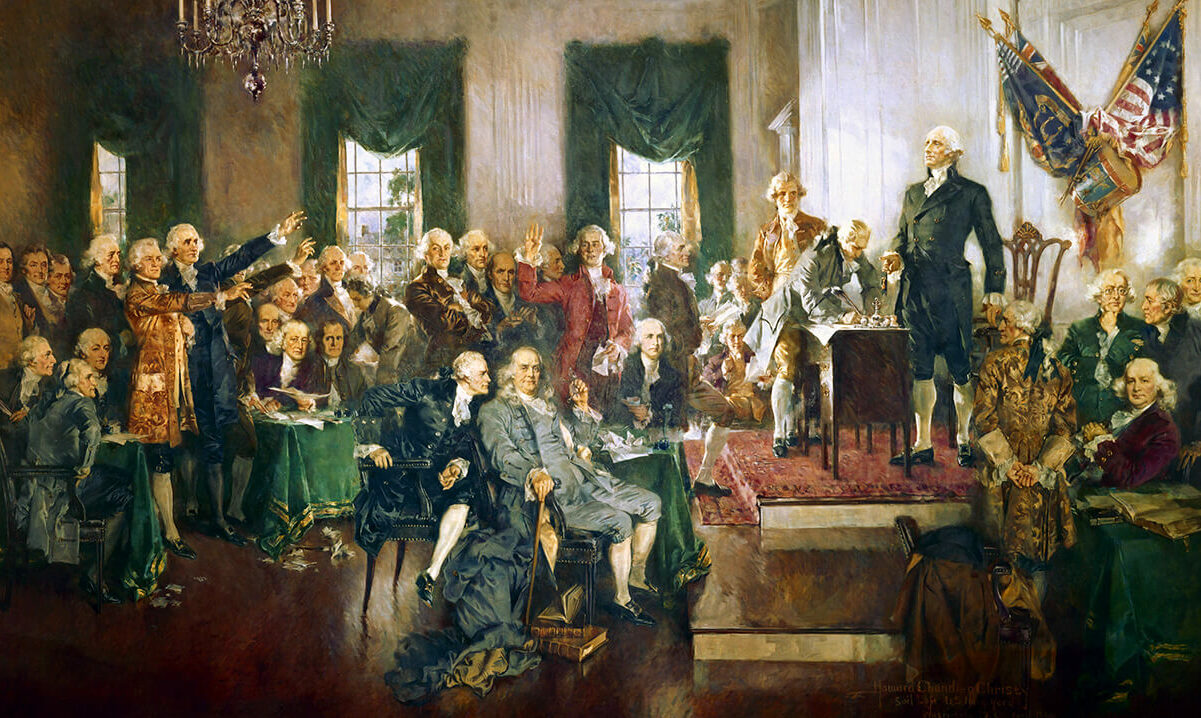
Although authorized by the Congress of the Confederation, the Constitutional Convention of 1787 was nevertheless cloaked with secrecy and confidentiality. The official papers of the Convention sat in the Department of State, untouched, until 1818. Yet in retrospect, the gathering reveals both the men and the issues they faced during the founding era. Through analysis of both the Philadelphia debates and the various ratification conventions, we realize the concerns and needs of a developing nation.
Men of means and education pursued a limited, federal government capable of providing political and economic stability in a land of diverse sectional interests. The fight for freedom had been experiential; much of the struggle for structure and unity would be theoretical. The doctrines of scholars would meet with the practical necessities of an emerging nation, resulting in a balanced blend of pragmatism and principle, the Constitution of the United States of America.
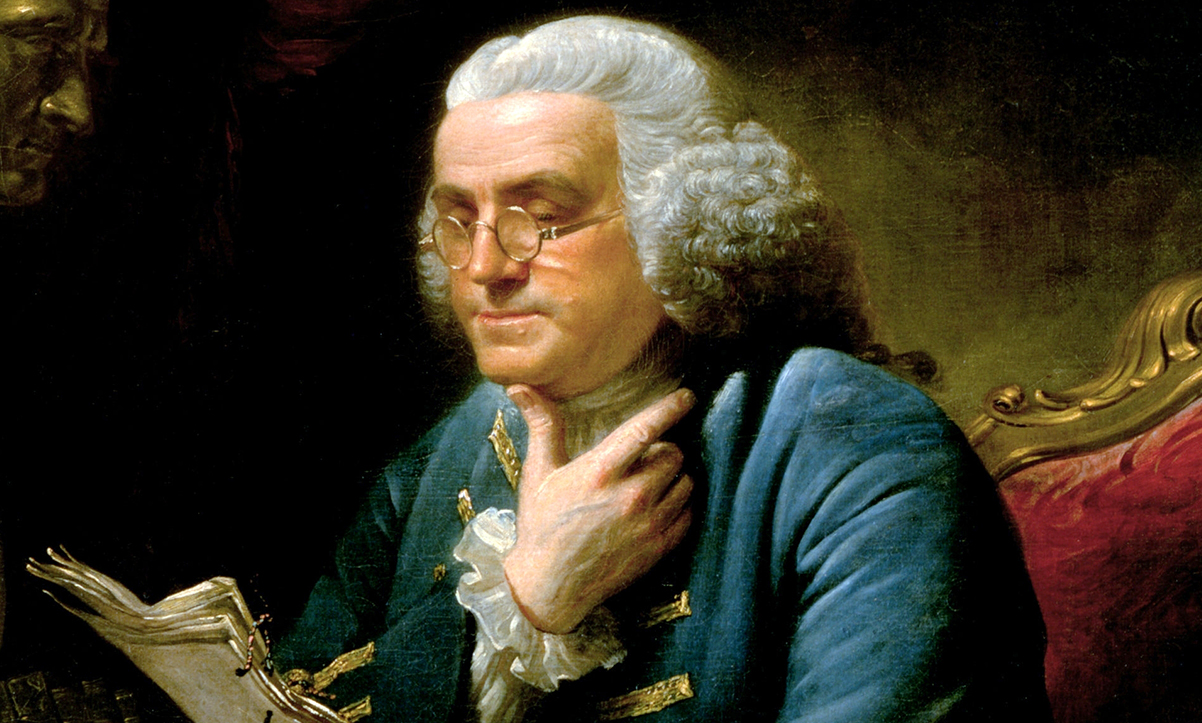
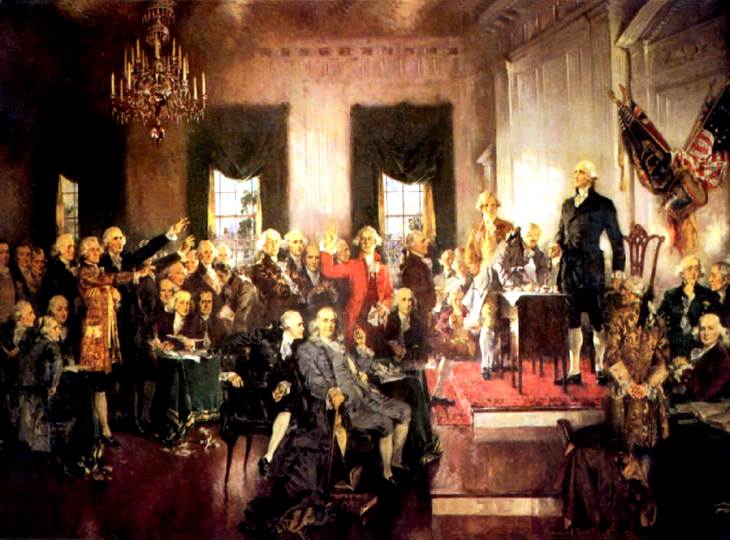
However, one of the most controversial issues, State’s representation, could have nullified the entire process. Tempers flared and interests clashed as the delegates sought their respective goals. It was within this quagmire of divisiveness that the elder statesman, Benjamin Franklin, offered his famous appeal for harmony and conciliation, an appeal for God’s intervention.
His solicitation seems almost out of character with our current understanding of the man. Wasn’t he a deist, believing in the clockmaker God who stepped back to watch the hands of time move toward eternity? Could God govern in the affairs of men, or nations, from such a distance? Perhaps Franklin’s appeal for prayer was out of despair and desperation; perhaps he was senile as some suggest; or perhaps we have misunderstood Franklin’s deism, misreading the man in the coonskin cap.
William Steele’s Account
Confusion still surrounds Franklin’s efforts, however. The primary source of this confusion appears to be a letter from William Steele to his son, Jonathan. Written in September 1825, the letter contained William’s recollection of a conversation with General Jonathan Dayton. (Dayton was a member of the Constitutional Convention and afterwards Speaker of the House of Representatives). This account also found its way into at least one national periodical, the National Intelligencer, and other sources as well. As Steele tells it, Dayton offered this account of Franklin’s words:
We have arrived, Mr. President . . . at a very momentous and interesting crisis in our deliberations. Hitherto our views have been as harmonious, and our progress as great as could reasonably have been expected. But now an unlooked for and formidable obstacle is thrown in our way, which threatens to arrest our course, and, if not skillfully removed, to render all our fond hopes of a constitution abortive.
It is, however, to be feared that the members of this Convention are not in a temper, at this moment, to approach the subject in which we differ, in this spirit. I would, therefore, propose, Mr. President, that, without proceeding further in this business at this time, the Convention shall adjourn for three days, in order to let the present ferment pass off, and to afford time for a more full, free, and dispassionate investigation of the subject; and I would earnestly recommend to the members of this Convention, that they spend the time of this recess, not in associating with their own party, and devising new arguments to fortify themselves in their old opinions, but that they mix with members of opposite sentiments, lend a patient ear to their reasonings, and candidly allow them all the weight to which they may be entitled; and when we assemble again, I hope it will be with a determination to form a constitution, if not such an one as we can individually, and in all respects, approve, yet the best, which, under existing circumstances, can be obtained.
(Here the countenance of Washington brightened, and a cheering ray seemed to break in upon the gloom which had recently covered our political horizon.) The doctor continued:
Before I sit down, Mr. President, I will suggest another matter; and I am really surprised that it has not been proposed by some other member at an earlier period of our deliberations. I will suggest, Mr. President, that propriety of nominating and appointing, before we separate, a chaplain to this Convention, whose duty it shall be uniformly to assemble with us, and introduce the business of each day by and address to the Creator of the universe, and the Governor of all nations, beseeching Him to preside in our council, enlighten our minds with a portion of heavenly wisdom, influence our hearts with a love of truth and justice, and crown our labors with complete and abundant success!
The doctor sat down, and never did I [General Dayton] behold a countenance at once so dignified and delighted as was that of Washington, at the close of the address! Nor were the members of the Convention, generally less affected. The words of the venerable Franklin fell upon our ears with a weight and authority, even greater than we may suppose an oracle to have had in a Roman Senate! A silent admiration superseded, for a moment, the expression of that assent and approbation which was strongly marked on almost every countenance.
The Recess
According to Steele, Dayton then recalled Alexander Hamilton’s protest and sarcastic refusal to accept “foreign aid.” And then he continued:
Washington fixed his eye upon the speaker [Hamilton], with a mixture of surprise and indignation, while he uttered this impertinent and impious speech, and then looked around to ascertain in what manner it affected others. They did not leave him a moment to doubt; no one deigned to reply, or take the smallest notice of the speaker, but the motion for appointing a chaplain was instantly seconded and carried; whether under the silent disapprobation of Mr. H___, or his solitary negative, I do not recollect. The motion for an adjournment was then put and carried unanimously, and the Convention adjourned accordingly.
The three days of recess were spent in the manner advised by Doctor Franklin. The opposite parties mixed with each other, and a free and frank interchange of sentiments took place. On the fourth day we assembled again, and if great additional light had not been thrown on the subject, every unfriendly feeling had been expelled; and a spirit of conciliation had been cultivated, which promised, at least, a calm and dispassionate reconsideration of the subject [state’s representation].
William Steele closed the letter confident he had “faithfully stated the facts” motivated by a desire to “perpetuate the facts.” From this source, and others, one might easily draw the conclusion that Franklin’s efforts brought a harmonious reconciliation to the Convention.
James Madison’s Letter
James Madison, however, in a letter to Jared Sparks on April 8, 1831, referred to this account as “erroneously given, with every semblance of authenticity.” And then in another letter to Thomas S. Grimke (January 6, 1834), Madison went further in his clarification concerning the “proposition of Doctor Franklin in favor of a religious service in the Federal Convention.” He said:
The proposition was received and treated with the respect due to it; but the lapse of time which had preceded, with consternations growing out of it, had the effect of limiting what was done, to a reference of the proposition to a highly respectable Committee.
He then continued:
That the communication [Steele’s account of Dayton’s testimony] was erroneous is certain; whether from misapprehension or misrecollection, uncertain.
Journal of the Constitutional Convention
Madison’s Journal originally contained a summary of Franklin’s words. However, in a later revision, he inserted the speech as written in Franklin’s own handwriting. It is the authoritative source concerning the Convention.
Mr. President
The small progress we have made after 4 or five weeks close attendance & continual reasonings with each other,”our different sentiments on almost every question, several of the last producing as many noes and ays, is methinks a melancholy proof of the imperfection of the Human Understanding. We indeed seem to feel our own want of political wisdom, some we have been running about in search of it. We have gone back to ancient history for models of Government, and examined the different forms of those Republics which having been formed with the seeds of their own dissolution now no longer exist. And we have viewed Modern States all round Europe, but find none of their Constitutions suitable to our circumstances.
In this situation of this Assembly, groping as it were in the dark to find political truth, and scarce able to distinguish it when presented to us, how has it happened, Sir, that we have not hitherto once thought of humbly applying to the Father of lights to illuminate our understandings? In the beginning of the Contest with G. Britain, when we were sensible of danger we had daily prayer in this room for the divine protection. ”Our prayers, Sir, were heard, and they were graciously answered. All of us who were engaged in the struggle must have observed frequent instances of a Superintending providence in our favor. To that kind providence we owe this happy opportunity of consulting in peace on the means of establishing our future national felicity. And have we now forgotten that powerful friend? I have lived, Sir, a long time, and the longer I live, the more convincing proofs I see of this truth- that God governs in the affairs of men. And if a sparrow cannot fall to the ground without his notice, is it probable that an empire can rise without his aid? We have been assured, Sir, in the sacred writings, that “except the Lord build the House they labour in vain that build it.” I firmly believe this; and I also believe that without his concurring aid we shall succeed in this political building no better than the Builders of Babel: We shall be divided by our little partial local interests; our projects will be confounded, and we ourselves shall become a reproach and byword down to future ages. And what is worse, mankind may hereafter from this unfortunate instance, despair of establishing Governments be Human Wisdom and leave it to chance, war and conquest.
I therefore beg leave to move, that henceforth prayers imploring the assistance of Heaven, and its blessings on our deliberations, be held in this Assembly every morning before we proceed to business, and that one or more of the Clergy of the City be requested to officiate in that service.
Mr. Sherman (from Connecticut) seconded the motion.
Mr. Hamilton and several others expressed their apprehensions that however proper such a resolution might have been at the beginning of the convention, it might at this late day, 1, bring on it some disagreeable animadversions [criticisms], and 2, lead the public to believe that the embarrassments and dissensions within the Convention, had suggested this measure. It was answered by [Dr. Franklin], Mr. Sherman and others, that the past omission of a duty could not justify a further omission, that the rejection of such a proposition would expose the Convention to more unpleasant animadversions than the adoption of it: and that the alarm out of doors that might be excited for the state of things within, would at least be as likely to good as ill.
Mr. Williamson, observed that the true cause of the omission could not be mistaken. The Convention had no funds.
Mr. Randolph proposed in order to give a favorable aspect to the measure, that a sermon be preached at the request of the convention on the 4th of July, the anniversary of Independence; and thenceforward prayers be used in the Convention every morning. Dr. Franklin seconded this motion. After several unsuccessful attempts for silently postponing the matter by adjourning was at length carried, without any vote on the motion.
Franklin’s Account
But the final word in this discussion comes from Franklin’s own pen. In John Bigelow’s, The Works of Benjamin Franklin, a footnote (pg. 378) referring to Franklin’s speech states:
To the original draft of this speech there is the following note appended in the handwriting of Dr. Franklin: “The convention, except three or four persons, thought prayer unnecessary.” [This same notation is given as a footnote on page 452 of Max Farrand’s Records of the Federal Convention.]
Bigelow continues by saying “the time which had elapsed without prayers in the convention, sufficiently explains the failures of Franklin’s motions.”
Analysis of the Accounts
The response to Franklin’s motion should not be viewed as an atheistic or deistic expression from the delegates. In their view, prayer was an official ceremony. It required ordained clergy to “officiate,” (as Franklin noted) and the funds to pay them (as Williamson observed). It was not as simple as asking “Brother George” to ask God’s blessings on their deliberations. This was not the general approach to religion during this time in history. Orthodox formality was the preferable style and manner, at least in official settings. For example, when Rev. Duche offered the first prayer in the Continental Congress, he appeared “with his clerk and in his pontificals, and read several prayers in the established form.” Granted, he also unexpectedly “struck out into an extemporary prayer,” but the point is made: religious formality was the order of the day.
Those orders were followed a few days later at the Reformed Calvinist Lutheran Church. In response to Franklin’s appeal, Virginia’s Mr. Randolph offered a counter proposal. He recommended that a “sermon be preached at the request of the convention on the 4th of July, the anniversary of Independence, & thence forward prayers be used in ye Convention every morning.” One report has Washington leading most of the Convention delegates to the church, where James Campbell preached a sermon trusting in the wisdom of the delegates to establish a “free and vigorous government.”
As it turns out, after the Convention, and nine days after the first Constitutional Congress convened with a quorum (April 9, 1789), they implemented Franklin’s recommendation. Two chaplains of different denominations were appointed, one to the House and one to the Senate, with a salary of $500 each. This practice continues today, posing no threat to the First Amendment. How could it? The men who authorized the chaplains wrote the Amendment.
Conclusion
The real strength of Franklin’s motion, from the conservative viewpoint, is as an example of his supposed “deism,” which is a far cry from what some would make it out to be. Franklin obviously felt that God governed in the affairs of men, not exactly the general understanding of today’s deism. But many people attempt to anachronously impose today’s definition upon Franklin, Jefferson, and others, implying they had nothing whatsoever to do with religion. This is usually done to support a broad, separationist approach to religion and government, which is inconsistent with the words and deeds of those who created America’s political system.
Franklin, as well as all of the Framers of the Constitution, realized the value of religion in society. And they realized the value of prayer in the weightier matters of politics. As it turns out, Dr. Franklin was not senile at all; he was simply asking for divine assistance in what proved to be the formation of our American system. Perhaps there were no “official” prayers during the Convention, but denying that the delegates wanted God’s blessing and direction, now that would be senility.
Summary
- An 1825 letter gave an erroneous account of Franklin’s appeal.
- Various periodicals circulated the story, assuming it to be correct.
- Numerous others have presented the inaccurate details.
- Madison’s 1831 letter called the account erroneous.
- Madison’s 1834 letter clarified:
The proposition was received and treated with the respect due to it; but the lapse of time which had preceded, with consternations growing out of it, had the effect of limiting what was done, to a reference of the proposition to a highly respectable Committee.
- Franklin drafted his appeal, and Madison included the written speech in his revised Journal.
- Franklin offers the final say on the matter:
The convention, except three or four persons, thought prayer unnecessary.
- However, Virginia’s Mr. Randolph offered a counter proposal: a July Fourth Sermon at the Convention’s request, followed by morning prayers. Washington led most of the delegates to hear the sermon and enjoy the festivities.
- Although they did not bring in Chaplains, the first Congress instituted a Chaplaincy program that exists to this day.

 The rights of religious conscience were then enshrined at the federal level in the
 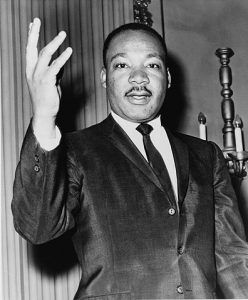 Also celebrated today is the birthday of the Rev. Martin Luther King Jr. This pastor practiced many First Amendment rights, including not only that of free-exercise of religion but also assembly, petition, and speech. Dr. King’s use of non-violent protests during the Civil Rights movement caused him to receive the
 I have lived, Sir, a long time, and the longer I live, the more convincing proofs I see of this truth- that God governs in the affairs of men. And if a sparrow cannot fall to the ground without His notice, is it probable that an empire can rise without His aid? We have been assured, Sir, in the sacred writings, that “except the Lord build the House they labor in vain that build it.” I firmly believe this; and I also believe that without His concurring aid we shall succeed in this political building no better than the Builders of Babel.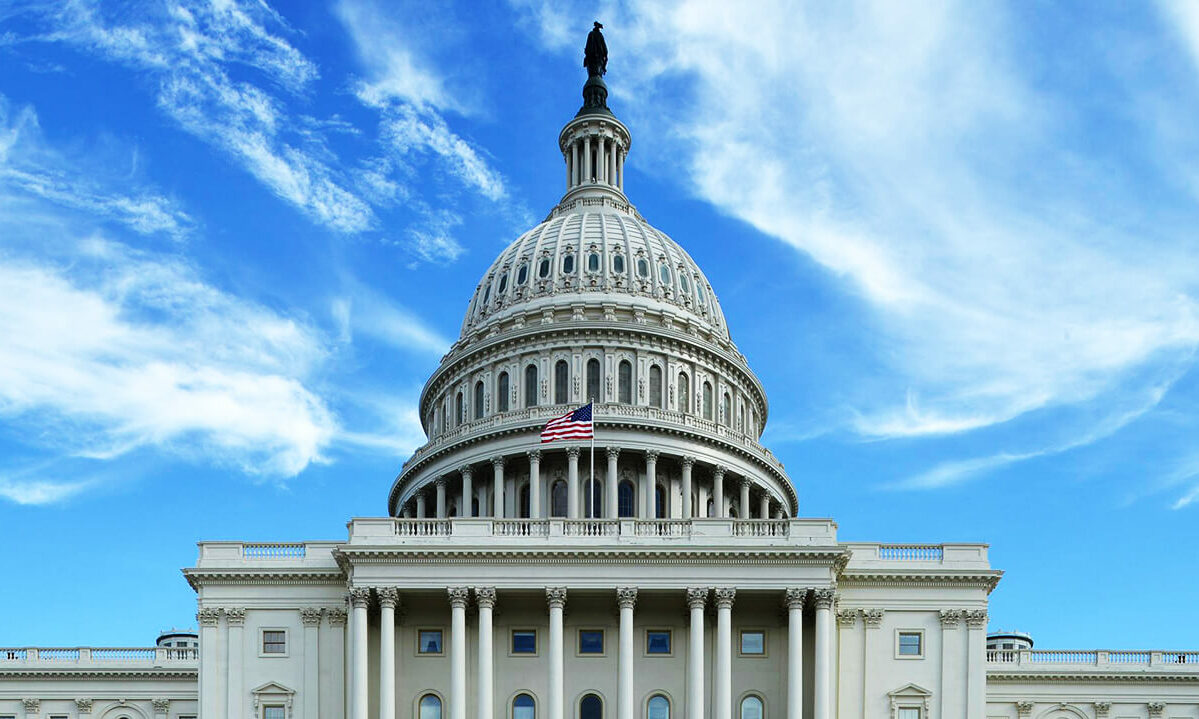
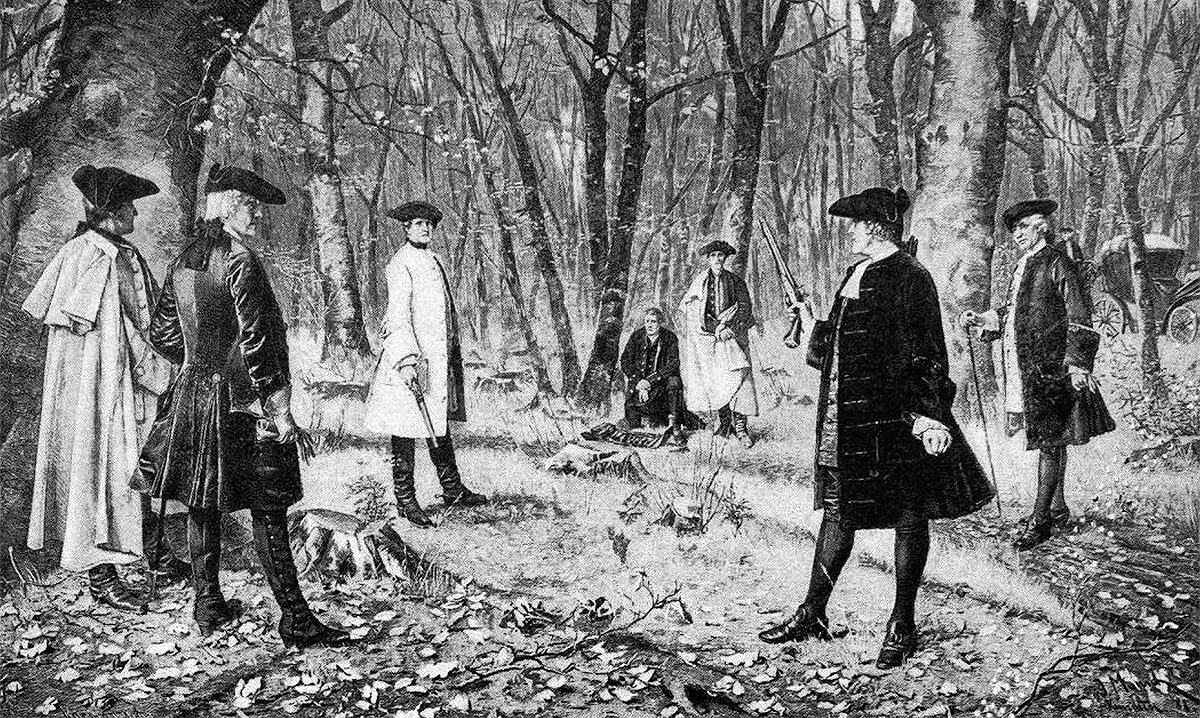
 The right . . . of bearing arms . . . is declared to be inherent in the people. Fisher Ames, A Framer of the Second Amendment in the First Congress
 In the wake of the heart-rending massacre at Sandy Hook Elementary School,
  The Founders understood that the inside was the most important focus, not the outside. This is why Thomas Jefferson believed the teachings of Jesus were so effective, explaining: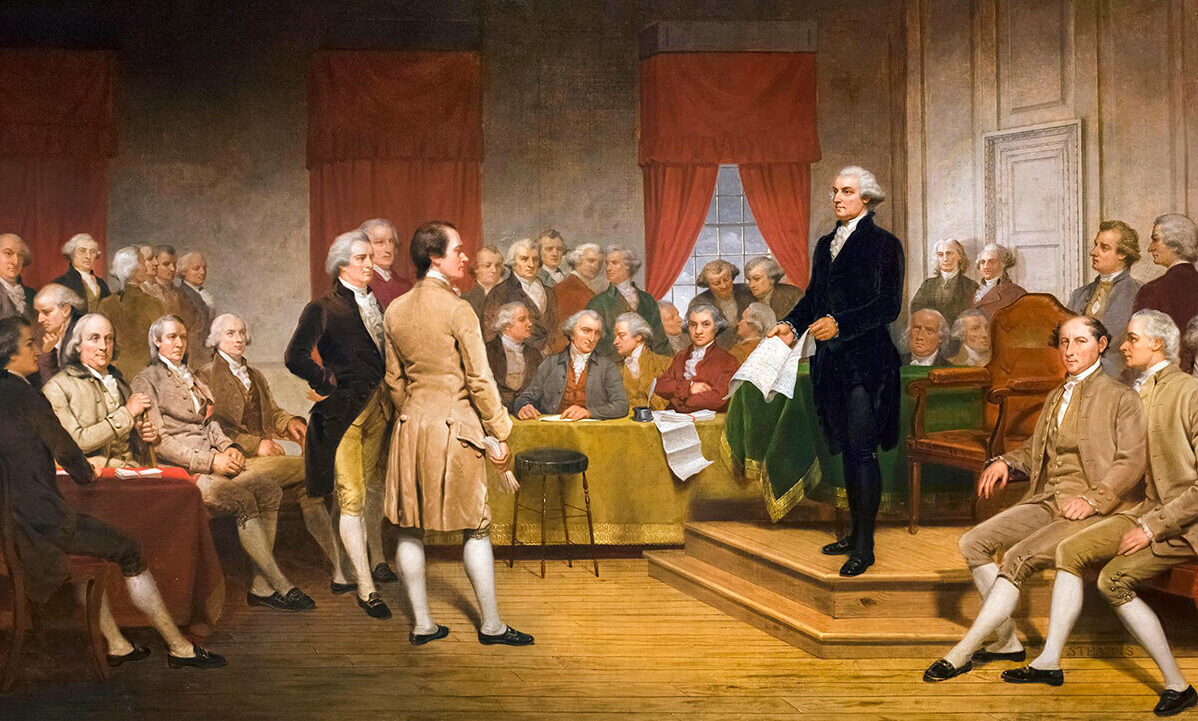
 [I] beg I may not be understood to infer that our general Convention was Divinely inspired when it formed the new federal Constitution . . . [yet] I can hardly conceive a transaction of such momentous importance to the welfare of millions now existing (and to exist in the posterity of a great nation) should be suffered to pass without being in some degree influenced, guided, and governed by that omnipotent, omnipresent, and beneficent Ruler in Whom all inferior spirits “live and move and have their being” [Acts 17:28].
 As to my sentiments with respect to the merits of the new Constitution, I will disclose them without reserve. . . . It appears to me then little short of a miracle that the delegates from so many different states . . . should unite in forming a system of national government.
 In this situation of this assembly, groping, as it were, in the dark to find political truth, and scarce able to distinguish it when presented to us, how has it happened, sir, that we have not hitherto once thought of humbly applying to the Father of Lights to illuminate our understandings? In the beginning of the contest with Britain when we were sensible of danger, we had daily prayers in this room for the Divine Protection. Our prayers, sir, were heard, and they were graciously answered. . . And have we now forgotten that powerful Friend? or do we imagine we no longer need His assistance? I have lived, sir, a long time; and the longer I live, the more convincing proofs I see of this truth: that God governs in the affairs of men. And if a sparrow cannot fall to the ground without His notice, is it probable that an empire can rise without His aid? We have been assured, sir, in the Sacred Writings that except the Lord build the House, they labor in vain that build it. I firmly believe this; and I also believe that without His concurring aid, we shall succeed in this political building no better than the builders of Babel . . . and we ourselves shall become a reproach and a byword down to future ages. I therefore beg leave to move, that henceforth prayers imploring the assistance of Heaven, and its blessings on our deliberations, be held in this Assembly every morning before we proceed to business.
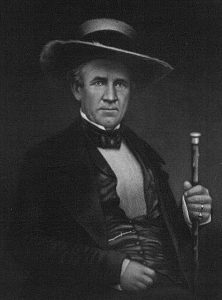
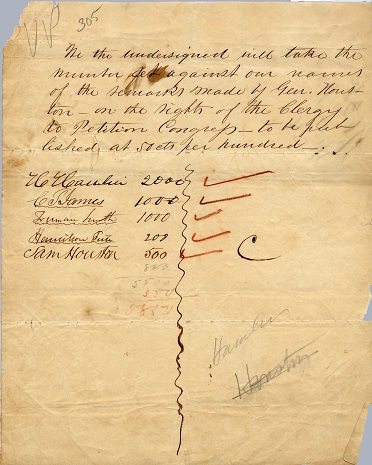
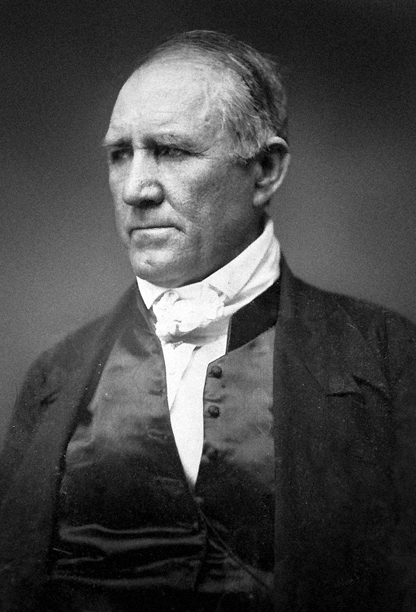 …I certainly can see no more impropriety in ministers of the Gospel, in their vocation, memorializing [petitioning] Congress than politicians or other individuals. . . . Because they are ministers of the Gospel, they are not disfranchised of political rights and privileges and . . . they have a right to spread their opinions on the records of the nation. . . . The great Redeemer of the World enjoined duties upon mankind; and there is [also] the moral constitution from which we have derived all the excellent principles of our political Constitution – the great principles upon which our government, morally, socially, and religiously is founded. Then, sir, I do not think there is anything very derogatory to our institutions in the ministers of the Gospel expressing their opinions. They have a right to do it. No man can be a minister without first being a man. He has political rights; he has also the rights of a missionary of the Savior, and he is not disfranchised by his vocation. . . . He has a right to interpose his voice as one of its citizens against the adoption of any measure which he believes will injure the nation. . . . [Ministers] have the right to think it is morally wrong, politically wrong, civilly wrong, and socially wrong. . . . and if they denounce a measure in advance, it is what they have a right to do.