Righteousness Exalts a Nation

Thoughts on Proverbs 14:34

America’s Founding Fathers were not only concerned for their own generation but also for posterity—about future generations. In fact, when they wrote the U.S. Constitution, they candidly acknowledged that they had done so to “secure the blessings of liberty to ourselves and our posterity.” The Rev. Mathias Burnet eflecting this ideal in an Election Sermon preached to the Connecticut legislature:

To God and posterity you are accountable [for your rights and your rulers]. . . . Let not your children have reason to curse you for giving up those rights and prostrating those institutions which your fathers deliv­ered to you. 1

He reminded citizens that they would answer to God for whether or not they had preserved the rights entrusted to them. And they would answer to posterity.

Patrick Henry held identical sentiments. When he passed away in 1799, his executers opened and read his personal legal documents and his will. Included was an original copy of the 1765 Stamp Act Resolutions (early precursors to the American Revolution). These were originally passed by the Virginia Legislature, of which he had been a member. On the back of those resolutions Henry penned a handwritten message, knowing it would be read at his death. He recounted the early colonial resistance to British policy that eventually resulted in the American Revolution, and then concluded with this warning:

Whether this [the American Revolution] will prove a blessing or a curse will depend upon the use our people make of the blessings which a gracious God hath bestowed on us. If they are wise, they will be great and happy. If they are of a contrary character, they will be miserable. Righteousness alone can exalt them as a nation [Proverbs 14:34]. Reader!—whoever thou art, remember this!—and in thy sphere practice virtue thyself and encourage it in others. P. Henry 2

Whether or not America will prosper into the future depends on its righteousness today. But how is national righteousness measured? Dozens of Bible passages (like Deuteronomy 28, 1 Kings 18, 1 Chronicles 21) affirm that national righteousness is defined by national policies and their allignment with God’s standards. As Samuel Adams advised, only God-honoring policies can exalt a nation:

[Divine] revelation assures us that “Righteousness exalteth a nation” [Proverbs 14:34]. Communities are dealt with in this world by the wise and just Ruler of the Universe. He rewards or punishes them according to their general character. 3

Civic Righteousness and Civil Rights

Across the pages of American history both political and religious leaders have regularly cited this verse. For example, Frederick Douglass, who was a preacher and famous political leader long before and after the Civil War, told citizens:

I have one great political idea. . . . That idea is an old one. It is widely and generally assented to; nevertheless, it is very generally trampled upon and disregarded. The best expression of it, I have found in the Bible. It is in substance, “Righteousness exalteth a nation; sin is a reproach to any people” [Proverbs 14:34]. Sir, this constitutes my politics – the negative and positive of my politics, and the whole of my politics. . . . I feel it my duty to do all in my power to infuse this idea into the public mind, that it may speedily be recognized and practiced upon by our people. 4

Douglass believed that every political concern should be guided by issues of righteousness. But too often today, political concerns (and votes) are instead guided by issues of economics—what is good for the economy, my job, my pocketbook, etc. When Jesus’ disciples focused on such worries—food, clothing, finances, and homes—He reminded them to “seek first the kingdom of God and His righteousness,” and all of their physical needs would be provided (Matthew 6:33). Strikingly, when a nation pursues economics over righteousness, it generally loses both. Notice how frequently secular nations find themselves facing burgeoning and unsolvable economic problems. The only way to preserve economic prosperity is by pursuing righteousness in public policy.

The Rev. Francis Grimke understood this. He was born to a slave mother in 1850 in South Carolina, and served as a valet in the Confederate army until Emancipation. After the war, he attended Lincoln University, Howard University, and Princeton Theological Seminary, and became a minister in Washington, D.C. He had lived through the Civil War as a boy, and as a young man survived the barbarity of the Ku Klux Klan during Reconstruction. Then in the early 1900s, he watched the second revival of the Klan as it marched openly in parades in Washington, D.C. Even members of Congress participated.

Grimke personally witnessed America’s literal split, and now the resurgence of the Klan. While he believed he nation would remain united, he delivered a sermon in 1909, warning what America’s future would be should we ever foresake righteousness:

The Stars and Stripes—the old flag—will float . . . over all these states. . . . If the time ever comes when we shall go to pieces, it will . . . [be] from inward corruption—from the disregard of right principles . . . from losing sight of the fact that “Righteousness exalteth a nation, but that sin is a reproach to any people” [Proverbs 14:34]. . . . The secession of the southern states in 1860 was a small matter with the secession of the Union itself from the great principles enunciated in the Declaration of Independence, in the Golden Rule, in the Ten Commandments, in the Sermon on the Mount. Unless we hold, and hold firmly to these great fundamental principles of righteousness . . . our Union . . . will be “only a covenant with death and an agreement with hell” [Isaiah 28:18]. If it continues to exist, it will be a curse and not a blessing. 5

Blessings for Posterity

When selecting public officials, Christians must not be concerned about their pocketbooks or their jobs. The foremost concern should be whether that official will advance policies upholding Biblical standards of righteousness. Biblical rights and wrongs on moral issues must always take precedence over economic, environmental, healthcare, energy, or any other issues. Whether and in what condition America will continue to exist in the future completely depends on if citizens will embrace and apply Proverbs 14:34 in both their private and their civic lives.


Endnotes

1 Matthias Burnet, An Election Sermon, Preached at Hartford, on the Day of the Anniversary Election, May 12, 1803 (Hartford: Hudson and Goodwin, 1803), 27.

2 Patrick Henry, Patrick Henry: Life, Correspondence and Speeches, ed. William Wirt Henry (New York: Charles Scribner’s Sons, 1891), 1:81-82, from a handwritten endorsement on the back of the paper containing the resolutions of the Virginia Assembly in 1765 concerning the Stamp Act.

3 Samuel Adams to John Scollay, April 30, 1776, The Writings of Samuel Adams, ed. Harry Alonzo Cushing (New York: G. P. Putnam’s Sons, 1907), 3:286.

4 Frederick Douglass, speech delivered at Ithaca, New York, October 14, 1852, The Frederick Douglass Papers, ed. John Blassingame (New Haven: Yale University Press, 1982), 2:397.

5 Rev. Francis J. Grimke, from “Equality of Right for All Citizens, Black and White, Alike,” March 7, 1909, Masterpieces of Negro Eloquence, ed. Alice Moore Dunbar (Johnson Reprint Corporation, 1970), 348-349.

The Duty of Nations

Thoughts on Psalm 9:17

Proverbs 3:5–6 reminds us that in all our ways (public as well as private) we are to acknowledge Him. And while it is wisdom for individuals, it is also true of nations. In response to the idolatry of others or their failure to acknowledge God, Psalm 79:6 and Jeremiah 10:25 call for God’s wrath upon all nations that do not call upon His name; and the warranty of 1 Samuel 2:30 that “Those who honor Me I will honor, and those who despise Me will be lightly esteemed” was delivered to civil leaders, not religious ones.

The psalmist said, “The wicked return to Sheol, even all the nations who forget God” (Psalm 9:17). Whenever we stop acknowledging Him, whether as an individual or a nation, we then begin to forget Him, and at that point we are in trouble. Understanding this truth, President George Washington emphatically declared:

It is the duty of all nations to acknowledge the providence of Almighty God, to obey His will, to be grateful for His benefits, and humbly to implore His protection and favor.1

Notice the four duties that Washington said pertained to nations:

  1. Acknowledge God
  2. Obey His will
  3. Be grateful for His aid
  4. Implore His protection and favor

President John Adams concurred and similarly declared:

The safety and prosperity of nations ultimately and essentially depend on the protection and the blessing of Almighty God, and the national acknowledgment of this truth is . . . an indispensable duty which the people owe to Him.2

President Thomas Jefferson agreed, and in his First Inaugural Address reminded the nation that the first thing “necessary to make us a happy and a prosperous people” was “acknowledging and adoring an overruling Providence.”3

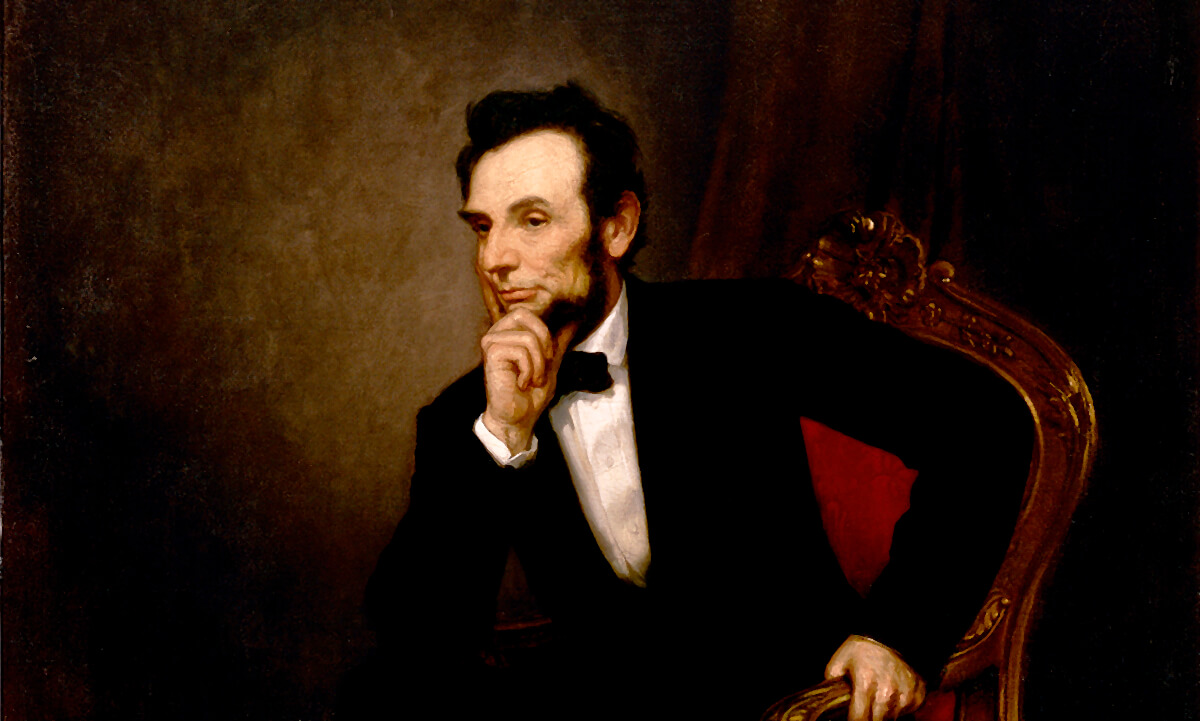
The conviction that America should publicly acknowledge God was frequently expressed by our national leaders. In fact, President Abraham Lincoln not only did so but even warned the nation in his day that it was beginning to forget God:

It is the duty of nations as well . . . and to recognize the sublime truth announced in the Holy Scriptures and proven by all history that those nations only are blessed whose God is the Lord [Psalm 33:12]. . . . But we have forgotten God. We have forgotten the gracious hand which preserved us in peace and multiplied and enriched and strengthened us, and we have vainly imagined in the deceitfulness of our hearts that all these blessings were produced by some superior wisdom and virtue of our own. Intoxicated with unbroken success, we have become too self-sufficient to feel the necessity of redeeming and preserving grace—too proud to pray to the God that made us.4

For this reason, President Lincoln called the nation to a time of public humiliation, fasting, and prayer so that it would once again remember God.

Remembering and honoring God at the national level begins with simple acknowledgment of God. Therefore modern conflicts over things such as the National Motto, the inclusion of “under God” in the Pledge of Allegiance, public displays of the Ten Commandments or nativity scenes, and prayer at athletic events, school meetings, or political gatherings are not small or trivial matters. The presence of such public acknowledgments is not coercive, but rather simple, encouraging reminders with a long history of precedent underscoring the value and wisdom of honoring God. The Founding Fathers would never have supported any public policy that would prohibit such expressions and thus invite us as a nation to forget God.


Endnotes

1 George Washington, “A Proclamation” printed in The Providence Gazette and Country Journal (October 17, 1789), 1. See also George Washington, “Proclamation for a National Thanksgiving,” Writings of George Washington, ed. Jared Sparks (Boston: American Stationers Company, 1837), XII:119.

2 John Adams, “Proclamation for a National Thanksgiving,” March 23, 1798, The Works of John Adams, Second President of the United States, ed. Charles Francis Adams (Boston: Charles C. Little and James Brown, 1851), IX:169.

3 Thomas Jefferson, “First Inaugural Address,” March 4, 1801, The Papers of Thomas Jefferson, ed. Barbara B. Oberg (Princeton, NJ: Princeton University Press, 2006), 33:150.

4 Abraham Lincoln, “A Proclamation” printed in The Liberator (April 24, 1863), 3. See also Abraham Lincoln, , “A Proclamation Appointing a National Fast-Day,” The Writings of Abraham Lincoln, ed. Arthur Brooks Lapsley (New York: G. P. Putnam’s Sons, 1923), 6:270–271.

Worth Riding a Hundred Miles to Hear

Thoughts on Psalm 35

By September 1774, the tensions between America and Great Britain had been escalating for a decade and were reaching a boiling point. But despite those differences, Americans were largely still loyal to Great Britain. The colonies were vigorously pursuing reconciliation. The British, however, rejected those overtures and even responded with military force, such as turning their guns on Americans in the 1770 Boston Massacre. British governors in America also disbanded legislative assemblies (such as Governors Dunsmore and Boutetout in Virginia and Governor James Wright in Georgia), attempting to impose hardfisted tyrannical rule.

The colonies decided that the time had come to act together rather than individually. In May 1774, Virginia called for a Continental Congress,1 as did New York2 and others. They hoped that by speaking with a unified voice, Britain would no longer ignor their grievances and they could reach an understanding. Specifically, they were seeking a repeal of the Intolerable or Coercive Acts, including those disbanding colonial juries, replacing elected American officials with unelected ones appointed by the British Crown, and requiring British troops to be boarded in private American homes

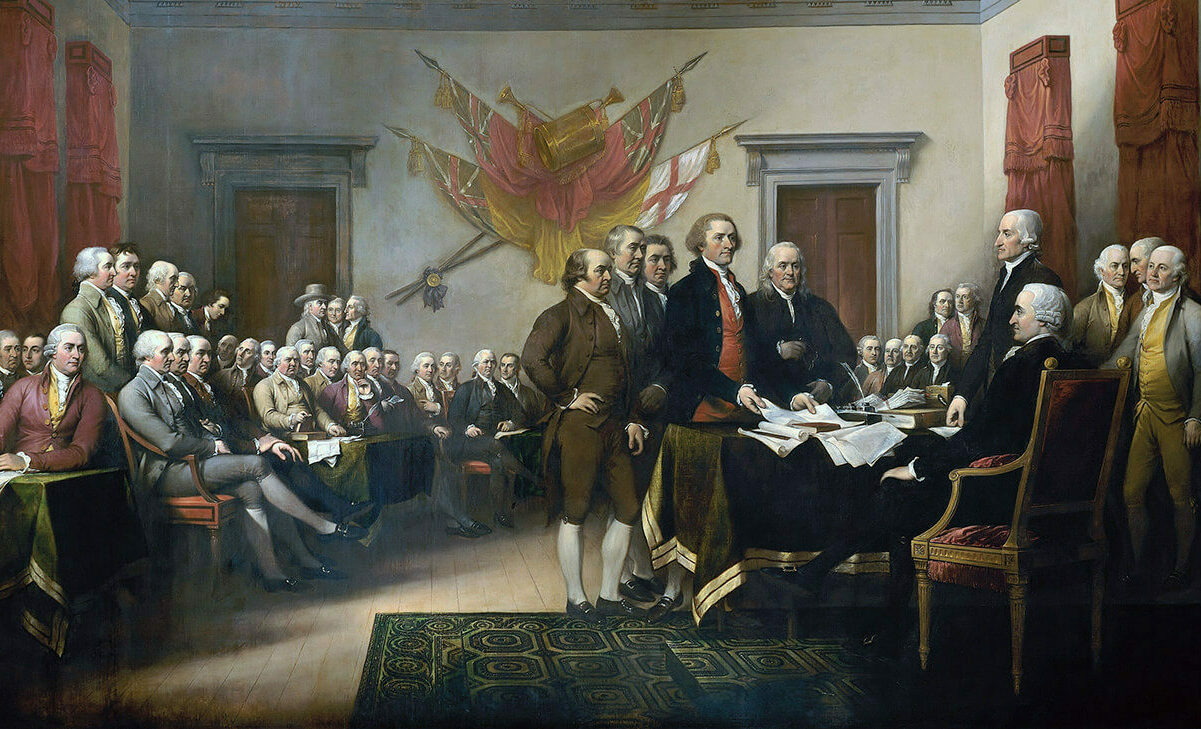
On September 5, 1774, forty-five delegates gathered in Philadelphia in what became known as the First Continental Congress. While each delegate was a significant figure in his own colony, most were unknown to the others. Incidentally, many went on to become nationally recognized leaders, eventually signing the Declaration or Constitution, leading the military, or even becoming US Presidents.

As the delegates met one another and contemplated their course of action, John Adams reported their very first proposal after organizing themselves:

When the Congress first met, Mr. [Thomas] Cushing [of Massachusetts] made a motion that it should be opened with prayer.3

This apparently harmless suggestion met unexpected stiff resistance:

It was opposed by Mr. [John] Jay of New York and Mr. [John] Rutledge of South Carolina because we were so divided in religious sentiments—some Episcopalians, some Quakers, some Anabaptists, some Presbyterians, and some Congregationalists—that we could not join in the same act of worship.4

Strikingly, both of the opponents (Jay and Rutledge) were devoted Christians. In fact, John Jay (who became an author of the Federalist Papers and the original Chief Justice of the US Supreme Court) was a founder and president of the American Bible Society and even wrote lengthy evangelical treatises on the Scriptures. These pious individuals opposed an opening prayer because the various delegates came from many different Christian denominations.

Today, it seems strange that a denominational difference might prevent one Christian from praying with another, but not then. Most of the colonies had official state-established denominations (such as the Anglicans in Virginia, South Carolina, Maryland, North Carolina, and New York; and the Congregationalists in Connecticut, New Hampshire, and Massachusetts). The governmentally preferred denomination would sometimes persecute and even kill those from other denominations who preached or conducted their own religious services without official authorization from the state church.5 But God had been at work in the colonies, preparing to overcome these abuses by helping Christians focus on the major Biblical teachings on which they all agreed rather than the non-essential denominational doctrines that separated them.

The groundwork for this change came through the national revival known as the Great Awakening (1730-1770) and was especially facilitated through the influence of English evangelist George Whitefield. Whitefield made seven missionary journeys to America, preaching across the country for thirty-four years on horseback, delivering 18,000 sermons.6 It is estimated that eighty percent of all Americans heard him preach,7 and his “Father Abraham” sermon was one of his more famous ones.

John Adams heard that sermon and recounted its message to Thomas Jefferson. In that sermon, Whitefield pretended to be at the gates of Heaven talking to Abraham:

He [Whitefield] began: “Father Abraham,” with his hands and eyes gracefully directed to the heavens (as I have more than once seen him): “Father Abraham, whom have you there with you? Have you Catholics?” “No.” “Have you Protestants?” “No.” “Have you Churchmen?” [Anglicans].“No.” “Have you Dissenters?” [Congregationalists]. “No.” “Have you Presbyterians?” “No.” “Quakers?” “No.” “Anabaptists?” [Baptists, Amish, Mennonites]. “No.” “Whom have you there? Are you alone?” “No.” “My brethren, you have the answer to all these questions in the words of my next text: “He who feareth God and worketh righteousness, shall be accepted of Him’’ [Acts 10:35].8 God help us all to forget having names and to become Christians in deed and in truth.9

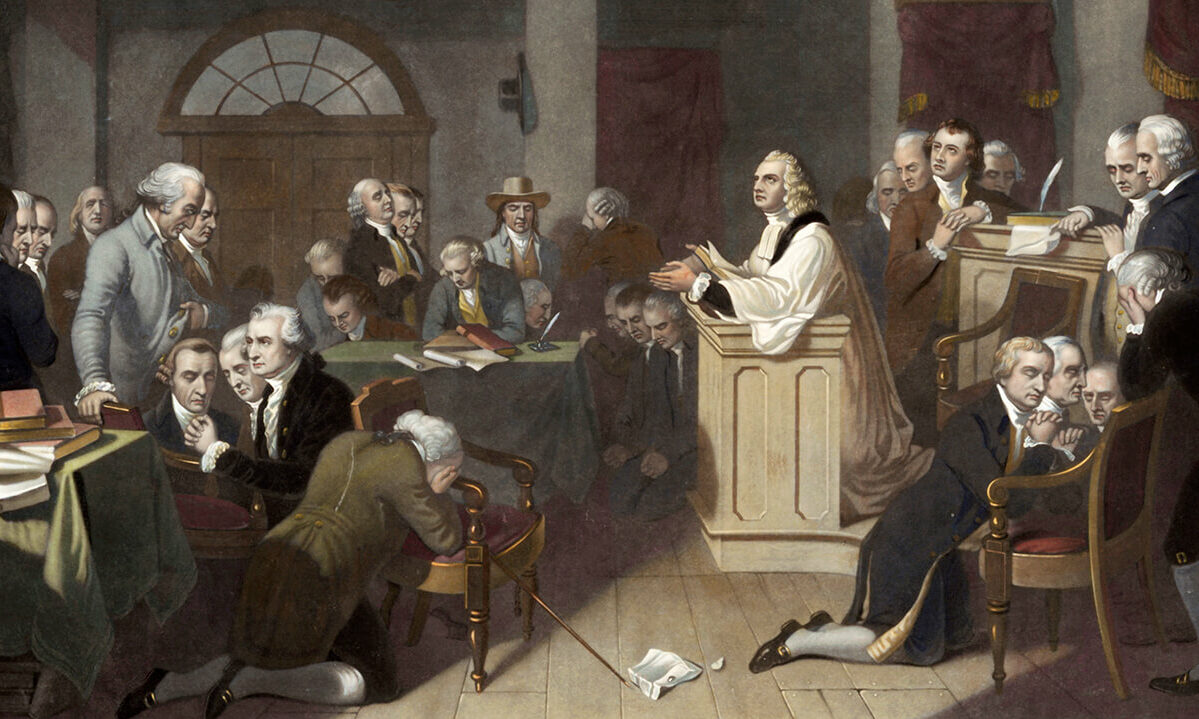
Samuel Adams had taken the message of Whitefield’s popular “Father Abraham” sermon and gave it practical application in that first gathering of Congress. After hearing Jay and Rutledge oppose the motion for prayer, he “arose and said he was no bigot, and could hear a prayer from a gentleman of piety and virtue, who was at the same time a friend to his country.”10 Adams then acknowledged that because he was from Boston, he “was a stranger in Philadelphia, but had heard that [the Rev.] Mr. [Jacob] Duché (pronounced Dushay) deserved that character, and therefore he moved that Mr. Duché, an Episcopalian clergyman, might be desired to read prayers to the Congress tomorrow morning.”11

It is significant that Samuel Adams—an ardent Congregationalist (a Puritan)—personally suggested having an Episcopalian clergyman from the Church of England (a denomination greatly disliked by Congregationalists) deliver the original opening prayer in Congress. By this suggestion, Adams was implementing the Acts 10:35 message so long preached by Whitefield.

Interestingly, seventy years later in arguments before the US Supreme Court, the great Daniel Webster recalled this example to the Justices, reminding them:

At the meeting of the first Congress, there was a doubt in the minds of many about the propriety of opening the session with prayer; and the reason assigned was, as here, the great diversity of opinion and religious belief. Until at last Mr. Samuel Adams, with his gray hairs hanging about his shoulders and with an impressive venerableness now seldom to be met with . . . rose in that assembly, and with the air of a perfect Puritan said it did not become men professing to be Christian men who had come together for solemn deliberation in the hour of their extremity to say that there was so wide a difference in their religious belief that they could not, as one man, bow the knee in prayer to the Almighty, Whose advice and assistance they hoped to obtain. . . . And depend upon it, that where there is a spirit of Christianity, there is a spirit which rises above form, above ceremonies, independent of sect or creed, and the controversies of clashing doctrines.12

Adams’ Whitefield-like rebuke penetrated the hearts of the other delegates:

[Cushing’s] motion was seconded, and passed in the affirmative. Mr. [Peyton] Randolph [of Virginia], our President, waited on Mr. Duché. . . Accordingly, next morning he appeared with his clerk and in his pontificals.13

In the culture of that day, prayer was not nearly so casual as it is today; it was very formal. As Benjamin Franklin once noted, clergy “officiated” in prayer.14 And recall that when Samuel Adams moved for Jacob Duché to “read prayers in the established form,” Duché agreed to do so, arriving “with his clerk and in his pontificals”—that is, he entered the assembly with an entourage and in his special ceremonial robes. Prayers over public bodies at that time involved an orthodox ceremonial formality that deliberately conveyed a majestic reverence for Almighty God.

But Duché did much more than just “officiate” by “reading” prayers from the Book of Common Prayer. Surprising everyone present, he launched into an unforeseen but passionate and spontaneous prayer. According to John Adams:

Mr. Duché, unexpectedly to everybody, struck out into an extemporary prayer which filled the bosom of every man present.15

What was the effect?

I must confess I never heard a better prayer or one so well pronounced. . . .with such fervor, such ardor, such earnestness and pathos, and in language so elegant and sublime. . . .It has had an excellent effect upon everybody here.16

Several delegates commented on Duché’s remarkable prayer, including Samuel Adams,17 Joseph Reed,18 and Samuel Ward;19 and Silas Deane reported that Duché’s prayer. . .

was worth riding one hundred mile to hear. He. . .prayed without book about ten minutes so pertinently, with such fervency, purity, and sublimity of style and sentiment, and with such an apparent sensibility of the scenes and business before us, that even Quakers shed tears.20

By the way, Deane’s comment that it was a prayer “worth riding one hundred mile to hear” is significant. In that day, riding one hundred miles meant three days in the saddle. Deane admitted that he would have willingly spent three days on horseback just to reach that gathering and hear that prayer. And the prayer delivered by this Anglican minister was so powerful that it even caused even the stern Quakers (the group most frequently persecuted by Duché’s Anglican denomination) to “shed tears” as they listened to it.

While the exact wording of that first prayer is not known, an indication of the type of prayers prayed by Duché can be ascertained in the Second Continental Congress. Shortly after the Declaration of Independence was approved, Duché was appointed congressional chaplain21 and delivered this stirring prayer:

O Lord our heavenly Father, high and mighty King of kings and Lord of lords. . .over all the kingdoms, empires, and governments, look down in mercy, we beseech Thee, on these American States who have fled to Thee from the rod of the oppressor and thrown themselves on Thy gracious protection, desiring to be henceforth dependent only on Thee; to Thee have they appealed for the righteousness of their cause; to Thee do they now look up for that countenance and support which Thou alone canst give; take them, therefore, Heavenly Father, under Thy nurturing care; give them wisdom in council, and valor in the field; defeat the malicious designs of our cruel adversaries; convince them of the unrighteousness of their cause. . . .All this we ask in the name and through the merits of Jesus Christ, Thy Son and our Savior, Amen!22

A year later, it did not appear as if his prayer would be answered. The Americans had lost battle after battle, and British troops had invaded and seized his hometown of Philadelphia. In the midst of this gloomy outlook, Duché wrote George Washington, predicting defeat for the Americans and urging him to retract the Declaration of Independence. Washington refused, and Congress declared Duché a traitor, whereupon he fled to Great Britain. But late in life, after receiving permission from President Washington, Duché returned to America where he spent his remaining years.

But returning to that first gathering, Congress did not just pray. According to John Adams, Duché also. . .

read the collect [Scriptures] for the seventh day of September, which was the thirty-fifth Psalm. You must remember this was the next morning after we heard the horrible rumor of the cannonade of Boston. I never saw a greater effect upon an audience. It seemed as if Heaven had ordained that Psalm to be read on that morning. . . .It has had an excellent effect upon everybody here. I must beg you to read that Psalm. . . .Read this letter and the 35th Psalm to [your friends]. Read it to your father [the Rev. William Smith, church pastor].23

Significantly, when the delegates gathered in Philadelphia, they heard a rumor that Boston was under attack. The Founders’ distress was palpable; they were still British citizens, and their own British army and navy was now besieging them. But Psalm 35 spoke directly to their growing fears.

Delegate Silas Deane noted that “the lessons [Scriptures] of the day, which were accidentally extremely applicable,”24 and John Adams agreed, affirming that the reading of Psalm 35 on that day was not only “most admirably adapted” but also that was “Providential.”25

Significantly, when the Book of Common Prayer was written in 1662 under King Charles II, Psalm 35 had been designated for reading on September 7 of each year (other passages also assigned for that day and studied in Congress that morning included Amos 9, Matthew 8, and Psalm 36). The fact that Psalm 35 had been assigned to that day well over a century earlier affirmed to the Founders that God knew what they would be facing at that time, thus confirming to them that He was watching over them—that, as one Founding Father expressed it, “the liberties of America are the object of Divine protection.”26

As you read Psalm 35, place yourself in the Founders’ circumstances, imagine their mindset on that day, and consider the fear that must have tried to grip their souls. Since this Psalm contains the prayers of an innocent and defenseless people attacked by a much stronger adversary, it is easy to understand why it so impacted the nation’s first Congress.


Endnotes

1 “An association, signed by 89 members of the late House of Bugesses,” May 27, 1774, Library of Congress, http://hdl.loc.gov/loc.rbc/rbpe.17801200.

2 “Letter from the New York Committee of Fifty-One to the Boston Committee of Correspondence; May 23, 1774,” The Avalon Project, http://avalon.law.yale.edu/18th_century/letter_ny_comm_1774.asp.

3John Adams to Abigail Adams, September 16, 1774, Familiar Letters of John Adams and His Wife Abigail Adams, During the Revolution, ed. Charles Francis Adams (Boston: Houghton, Mifflin and Company, 1875), 37.

4 John Adams to Abigail Adams, September 16, 1774, Familiar Letters, ed. Adams (1875), 37.

5 See, for example, James Madison to William Bradford, Jr., January 24, 1774, The Writings of James Madison (New York: G. P. Putnam’s Sons, 1900), 21; James Underwood and William Burke, The Dawn of Religious Freedom in South Carolina (Columbia: University of South Carolina Press, 2006), 167; Robert Semple, A History of the Rise and Progress of the Baptists in Virginia (Richmond: Robert Semple, 1810), 14, 29-30; A Companion to Thomas Jefferson, ed. Francis Cogliano, editor (Chichester: John Wiley & Sons, 2011), 78; Cyclopedia of Methodism, ed. Matthew Simpson (Philadelphia: Everts & Stewart, 1878), s.v. “Virginia.”

6 See, for example, John Gillies, Memoirs of Rev. George Whitefield (Middletown: Hunt & Noyes, 1838), 273; N. F. Bryant, The Household Monthly (Boston: N. F. Bryant, December 1859), III:3: 237, “Whitefield in America.”

7 See, for example, “George Whitefield: Did you Know,” April 1, 1993, Christian History; Dave Schleck, “CW to Recreate Visit of Famous Preacher,” December 15, 1995, Daily Press; Stephen Gorham, “The Divine Dramatist: George Whitefield and the Full Flowering of the Great Awakening,” February 26, 2012, American History, Suite 101.

8 John Adams to Thomas Jefferson, December 3, 1813, The Writings of Thomas Jefferson, ed. Andrew A. Lipscomb (Washington, DC: The Thomas Jefferson Memorial Association, 1904), XIV:19-20.

9 Stephen Mansfield, Forgotten Founding Father: The Heroic Legacy of George Whitefield (Nashville: Cumberland House, 2001), 86.

10 John Adams to Abigail Adams, September 16, 1774, Familiar Letters, ed. Adams (1875), 37.

11 John Adams to Abigail Adams, September 16, 1774, Familiar Letters, ed. Adams (1875), 37.

12 Daniel Webster, Mr. Webster’s Speech in Defence of the Christian Ministry, and In Favor of the Religious Instruction of the Young (Washington, D. C.: Gales and Seaton, 1844), 36-37.

13 John Adams to Abigail Adams, September 16, 1774, Familiar Letters, ed. Adams (1875), 37.

14 The Works of Benjamin Franklin, ed. John Bigelow (New York: G. P. Putnam’s Sons, 1904), XI:378, “Motion for Prayers in the [Constitutional] Convention.”

15 John Adams to Abigail Adams, September 16, 1774, Familiar Letters, ed. Adams (1875), 37.

16 John Adams to Abigail Adams, September 16, 1774, Familiar Letters, ed. Adams (1875), 37.

17 Samuel Adams to Joseph Warren, September 9, 1774, Letters of Delegates to Congress, ed. Paul H. Smith (Washington, D. C.: Library of Congress, 1976), I:55.

18 John Adams diary entry of September 10, 1774 The Works of John Adams, Second President of the United States, ed. Charles Francis Adams (Boston: Little, Brown and Company, 1850), II:377-378.

19 Samuel Ward’s diary entry of September 7, 1774, Letters of Delegates, ed. Smith (1976), I:45.

20 Silas Deane to Elizabeth Deane, September 7, 1774, The Silas Deane Papers (New York: New York Historical Society, 1887), I:20.

21 July 9, 1776, The Journals of the Continental Congress (Washington, D. C.: Government Printing Office, 1906), V:530.

22 James Thatcher, A Military Journal (Boston: Richardson and Lord, 1823), 145n.

23 John Adams to Abigail Adams, September 16, 1774, Familiar Letters, ed. Adams (1875), 37.

24 Silas Deane to Elizabeth Deane, September 7, 1774, Silas Deane Papers (1887), I:20.

25 John Adams diary entry of September 7, 1774, Works of John Adams, ed. Adams (1850), II:368.

26 George Washington, General Orders of September 26, 1780, The Writings of George Washington, ed. John C. Fitzpatrick (Washington: United States Government Printing Office, 1937), XX:95.
The Heart of a Grateful Nation

Thoughts on 2 Chronicles 5-7

King David, blessed by God throughout his long life, envisioned building a majestic temple to honor the Lord. But God told David that it would instead be his son, Solomon, who would construct the building. So David prepared everything his son would need. When later King Solomon successfully completed the temple, he gathered the nation together and dedicated the new structure with a time of prayer and praise (2 Chronicles 5-7). The spirit of God filled the temple and fell on those present. God promising Solomon that He would hear and answer prayers prayed from that location. Significantly, our Founding Fathers invoked this incident and this passage at a significant moment early in the political life of a young America.

On September 25, 1789, the very first federal Congress had just finished framing the Bill of Rights—the Capstone of the Constitution. On that notable day, the official records of Congress report:

Mr. [Elias] Boudinot said he could not think of letting the session pass over without offering an opportunity to all the citizens of the United States of joining with one voice in returning to Almighty God their sincere thanks for the many blessings He had poured down upon them. With this view, therefore, he would move the following resolution:

Resolved, That a joint committee of both Houses be directed to wait upon the President of the United States to request that he would recommend to the people of the United States a day of public thanksgiving and prayer, to be observed by acknowledging with grateful hearts the many signal favors of Almighty God. . . .

Mr. [Roger] Sherman justified the practice of thanksgiving on any signal [remarkable] event not only as a laudable one in itself but as warranted by a number of precedents in Holy Writ – for instance, the solemn thanksgivings and rejoicings which took place in the time of Solomon after the building of the temple was a case in point [2 Chronicles 5-7, 1 Kings 7-8]. This example he thought worthy of Christian imitation on the present occasion, and he would agree with the gentleman who moved the resolution. Mr. Boudinot quoted further precedents from the practice of the late Congress and hoped the motion would meet a ready acquiescence [approval]. The question was now put on the resolution and it was carried in the affirmative.1

Congress delivered it recommendation to President George Washington, who happily concurred. He issued America’s first federal proclamation for a Day of Prayer and Thanksgiving. That proclamation declared:

Whereas it is the duty of all nations to acknowledge the providence of Almighty God, to obey His will, to be grateful for His benefits, and humbly to implore His protection and favor. . . . Now, therefore, I do recommend . . . that we may then all unite in rendering unto Him our sincere and humble thanks for His kind care and protection of the people of this country. . . . And also that we may then unite in most humbly offering our prayers and supplications to the great Lord and Ruler of Nations, and beseech Him to pardon our national and other transgressions . . . to promote the knowledge and practice of true religion and virtue.2

Notice that George Washington said that nations—not just individuals, but nations—have four duties: (1) to acknowledge the providence of Almighty God, (2) to obey His will, (3) to be grateful for His benefits, and (4) humbly to implore His protection and favor. This proclamation, along with the several other calls to prayer issued during his administration, was written by Washington himself. Whereas other presidents had chaplains of Congress write their proclamations.3

America observed its first federal day of thanksgiving because Founding Fathers in Congress were thoroughly familiar with the Bible and found precedent for such a day from 2 Chronicles 5-7—one of many American practices with a Biblical basis.


Endnotes

1 September 25, 1789, The Debates and Proceedings in the Congress of the United States, Joseph Gales, editor (Washington: Gales and Seaton, 1834) I:949-950.

2 The Providence Gazette and Country Journal (Providence: October 17, 1789), 1. George Washington, “A Proclamation,” issued on October 3, 1789, observance date November 26, 1789.

3 Joseph H. Jones, The Life of Ashbel Green (New York: Robert Carter and Brothers, 1849), 270-271.

Thanksgiving in America Tract

This printable tract contains a brief history of America’s Thanksgiving holiday and includes quotes from notable Founders excerpted from their Thanksgiving proclamations. See the complete text below and download it for your personal use!


The tradition of Thanksgiving as a time to focus on God and thank Him for His blessings dates back almost four centuries in America. While thanksgiving celebrations occurred as early as 1541 in Texas, and 1607 at Cape Henry, Virginia, it is from the Pilgrim festival of 1621 that we derive the current tradition of Thanksgiving.

The Pilgrims (a congregation of Bible-loving English Christians) set sail for America on September 6, 1620, and for two months braved the harsh elements of a storm-tossed sea. Upon arriving in what is now Massachusetts, and unprepared for the harsh New England winter, nearly half of them died before spring.

Emerging from that grueling winter, the Pilgrims were surprised when an Indian named Samoset approached them and greeted them in their own language, explaining to them that he had learned English from fishermen and traders. A week later, Samoset returned with a friend named Squanto, who also spoke English. Squanto lived with the Pilgrims and accepted their Christian faith.

Squanto taught the Pilgrims much about how to live in the New World, and he and Samoset helped forge a peace treaty that lasted for generations between the Pilgrims and the Wampanoag Indians. Pilgrim Governor William Bradford described Squanto as “a special instrument sent of God for [our] good.”

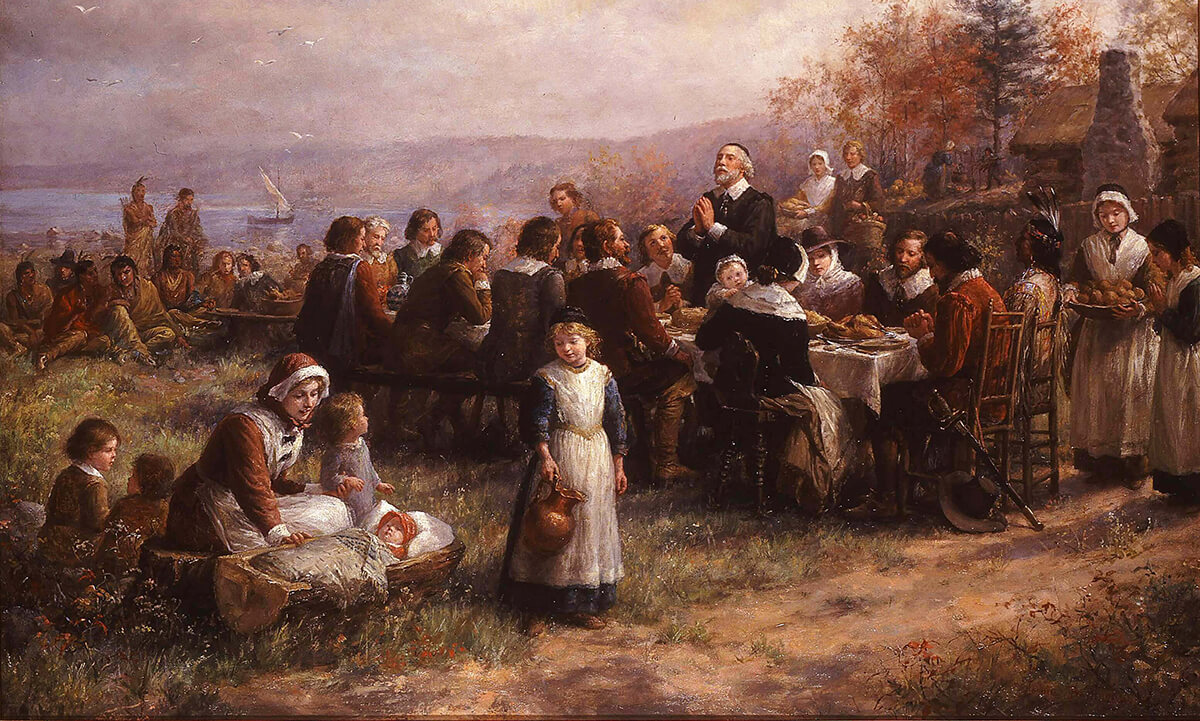
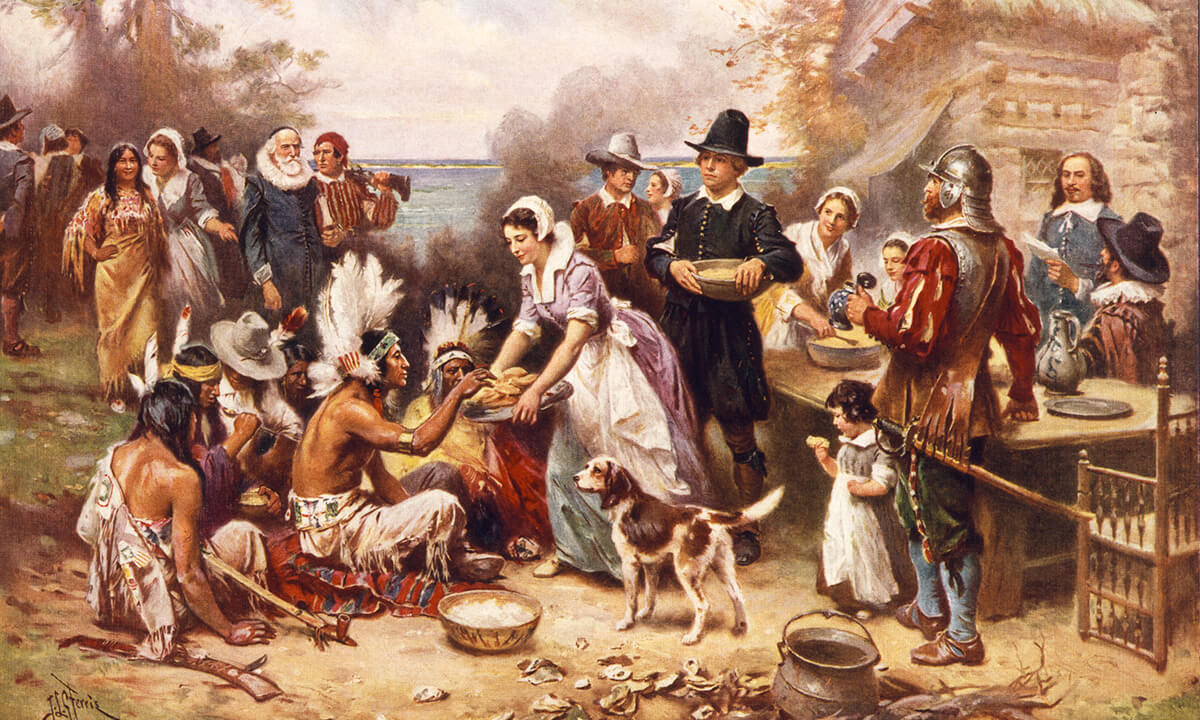
That summer, the Pilgrims, through hard work, prayer and the assistance of helpful Indians, reaped a bountiful harvest. As Pilgrim Edward Winslow affirmed, “God be praised, we had a good increase of Indian corn”; “by the goodness of God, we are…far from want.” The grateful Pilgrims therefore declared a time in the Fall to thank God and to celebrate with their Indian friends—America’s first Thanksgiving festival.

Ninety Wampanoag Indians joined the fifty-three Pilgrims for three days of feasting (which included shellfish, lobsters, turkey, corn bread, berries, deer, and other foods), athletic competition and play (the young Pilgrim and Wampanoag men engaged in races, wrestling matches, and athletic events, while the older men engaged in shooting competitions), and prayer and thanksgiving (for God’s providence in watching over and providing for them).

This celebration began an annual tradition that slowly spread to the entire nation. Americans now celebrate a Day of Thanksgiving each November as part of our long American tradition of openly and publicly acknowledging God.

Among the many examples of the open acknowledge of God is the Declaration of Independence, which declares:

We hold these truths to be self-evident, that all men are created equal, that they are endowed by their Creator with certain unalienable rights, that among these are life, liberty and the pursuit of happiness.”

As Thomas Jefferson affirmed: “And can the liberties of a nation be thought secure when we have removed their only firm basis—a conviction in the minds of the people that these liberties are the gift of God?

It was standard practice for our leaders across the generations to acknowledge God as the Source of our national rights and blessings, and to give thanks to Him.

Some people believe America has strayed from the strong religious convictions of previous generations. Perhaps, but an important question is not just “Where is our country’s faith?” but rather “Where do you stand on faith?” Have you thankfully acknowledged the providence of Almighty God in your own life?

As you celebrate Thanksgiving, remember to retain the original gratefulness to God that has always been the spirit of this, the oldest of all American holidays.

Give thanks to the LORD, call on his name; make known among the nations what he has done. PSALM 105:1

“It is the duty of all nations to acknowledge the providence of Almighty God, to obey His will, to be grateful for His benefits, and humbly to implore His protection and favor….Now, therefore, I do recommend …that we may all unite in rendering unto Him our sincere and humble thanks for His kind care and protection.” George Washington

“It is therefore recommended…[a day] for solemn thanksgiving and praise, that with one heart and one voice the good people may express the grateful feelings of their hearts and…join the penitent confession of their manifold sins…and their humble and earnest supplication that it may please God, through the merits of Jesus Christ, mercifully to forgive and blot them out of remembrance…and to prosper the means of religion for the…enlargement of that kingdom which consisteth in righteousness, peace and joy in the Holy Ghost [Romans 14:17]” Continental Congress, 1777

“It be recommended to the several states…a day of public and solemn thanksgiving to Almighty God…to beseech Him that He would…pour out His Holy Spirit on all ministers of the Gospel; that He would…spread the light of Christian knowledge through the remotest corners of the earth…[and] that He would establish these United States upon the basis of religion and virtue.” Thomas Jefferson

“The year that is drawing towards it close has been filled with the blessings of fruitful fields and healthful skies…We are prone to forget the Source from which they come….They are the gracious gifts of the Most High God….I do, therefore, invite my fellow-citizens…[to] observe…a Day of Thanksgiving and Prayer to our beneficent Father, Who dwelleth in the heavens.” Abraham Lincoln

“I…appoint…a day of public thanksgiving and praise,…rendering to God the tribute of praise for His unmerited goodness towards us…in continuing to us… the Holy Scriptures which are able to enlighten and make us wise to eternal salvation….[We] present our humble and penitent supplication…that He would… cause the benign religion of our Lord and Savior Jesus Christ to be known, understood, and practiced among all the inhabitants of the earth.” John Hancock

Download the complete tract here!


* To see more original Thanksgiving proclamations issued by presidents, governors, and other leaders over generations visit our Resources page and filter by “Proclamations” and “Holidays.”

** Learn the history of Thanksgiving through a few of WallBuilders’ articles, starting here.

George Washington First Becomes a National Leader

George Washington First Becomes a National Leader

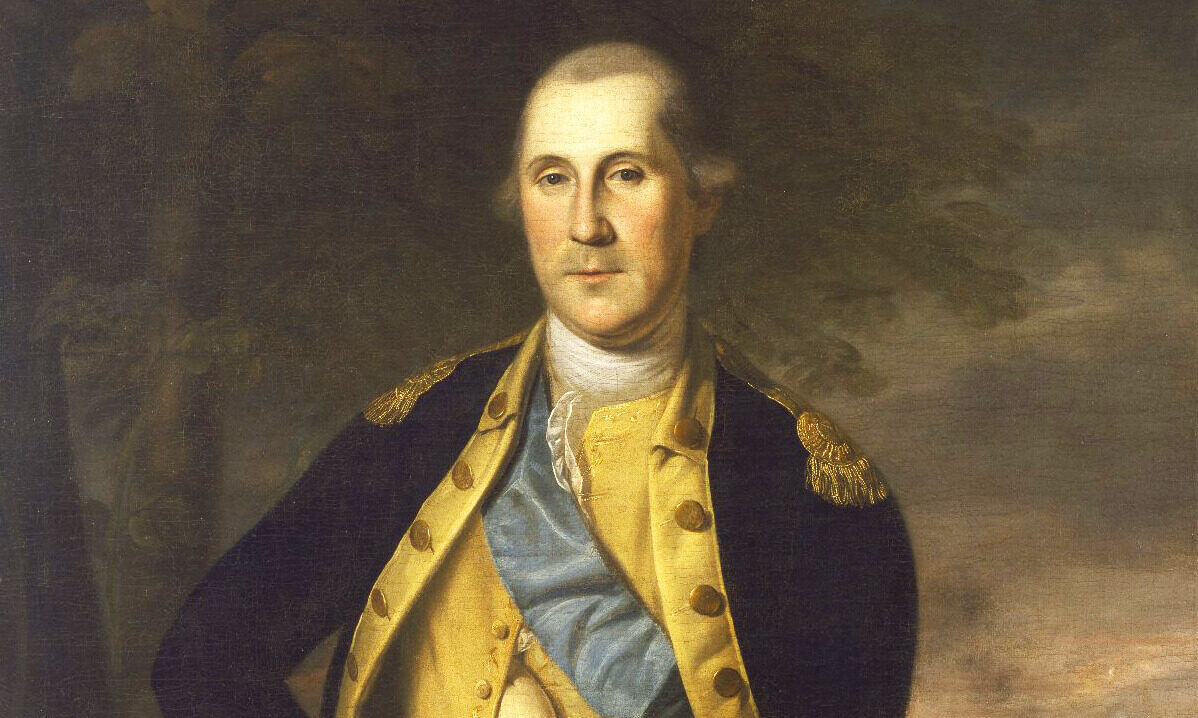
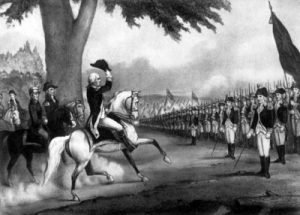
george-washington-first-becomes-a-national-leader-1On July 3, 1775 George Washington took command of the newly formed Continental Army.1 Congress had selected him — one of its own members — to organize the farmers and local militia groups into an army capable of defeating the world’s greatest military power.2 Quite an undertaking!
One of his first orders to the new American military set a clear tone of what he expected from his troops and also told us much about his character. In that order, Washington urged that

“…every officer and man will endeavor so as to live and act as becomes a Christian soldier, defending the dearest rights and liberties of his country.”3

That his troops display Christian character was important to Washington, and he later additionally charged them:

“To the distinguished character of Patriot, it should be our highest glory to add the more distinguished character of Christian.”4

He also issued orders prohibiting swearing,5 profanity,6 and gambling.7 He clearly set a very high moral standard for his troops, but it was not more than what he expected from himself. In fact, while just a young boy, he copied out 110 maxims concerning good behavior and manners. Called his “Rules of Civility,” he lived by them throughout his life, and they were especially apparent during his time as a soldier.

george-washington-first-becomes-a-national-leader-2Washington longed for military life from the time he was a young boy, and he got his first experience during the French and Indian War, two decades before the American Revolution. He should have been killed in the Battle of the Monongahela, but his life was saved by God’s Divine intervention. As he told his brother:
“[I] now exist and appear in the land of the living by the miraculous care of Providence that protected me beyond all human expectation; I had four bullets through my coat and two horses shot under me and yet escaped unhurt.”8

(Similar instances of his life being spared during the Revolutionary War are in the The Founders’ Bible article, “George Washington: The Soldier Who Could Not Die”).

It was as a result of what he did in the French and Indian War that he was first vaulted into the national spotlight. In fact, a famous military sermon preached in 1755 by the Rev. Samuel Davies (considered the greatest pulpit orator in American history) specifically singled out the young George Washington for special attention because of what happened in that battle.9

george-washington-first-becomes-a-national-leader-3It was largely because of Washington’s experiences in that early war that he was chosen by his fellow citizens as a member of Congress, and then chosen by his peers in Congress as Commander-In-Chief.10 He led America on to a successful conclusion of the Revolutionary War, oversaw the formation of the United States Constitution,11 and guided us through the implementation of our new government as our first president. He is rightly honored as “The Father of His Country.”12
Washington fully understood that the important part he had played in America’s formation was by the direction of God, acknowledging: “I have only been an instrument in the hands of Providence.”13

Let’s remember to honor one of the key individuals responsible for America’s independence: George Washington.

Special Notes: The remarkable story of George Washington is told in The Bulletproof George Washington. And his 110 Rules of Civility are still available today. Several of Washington’s religious and moral orders to his troops are found in the booklet The Spirit of the American Revolution. All of these are available in the WallBuilders store.


Endnotes

1 US Army Center of Military History, “Washington takes command of Continental Army in 1775,” April 15, 2016, US Army; “Creating a Continental Army,” Library of Congress, accessed July 1, 2025.
2 Washington Irving, Life of George Washington (Leipzig: Bernhard Tauchnitz, 1856), II:1.
3 George Washington, “General Orders,” July 9, 1776, The Writings of George Washington, ed. John C. Fitzpatrick (Washington: United States Government Printing Office, 1932), 5:245.
4 Washington, “General Orders,” May 2, 1778, Writings of Washington, ed. Fitzpatrick (1934), 11:343.
5 Jared Sparks, The Writings of Washington, (Boston: Ferdinand Andrews, 1840), III:491n.
6 Washington, “General Orders,” August 3, 1776, Writings of Washington, ed. Fitzpatrick (1932), 5:367.
7 Washington, “General Orders,” February 26, 1776, Writings of Washington, ed. Fitzpatrick (1931), 4:347.
8 Washington to John Augustine Washington, July 18, 1755 Writings of Washington, ed. Fitzpatrick (1931), 1:152.
9 Samuel Davies, Religion and Patriotism: The Constituents of a Good Soldier. A Sermon Preached to Captain Overton’s independnet company of volunteers, raised in Hanover County, Virginia, August 17, 1755 (Philadelphia: 1756), 10n.
10 “George Washington’s Commission as Commander in Chief: Primary Documents in American History,” Library of Congress, accessed July 1, 2025.
11 “Creating the United States: Convention and Ratification,” Library of Congress, accessed July 1, 2025; “The Constitutional Convention of 1787,” September 17, 2023, National Park Service.
12 See, for example, S. G. Arnold, The Life of George Washington, First President of the United States (New York: T. Mason, 1840), 8.
13 George Washington to Lucretia Wilhelmina Van Winter, March 30, 1785, Founders Online.

First Prayer in Congress

On September 5, 1774, the First Continental Congress met at Carpenters’ Hall in Philadelphia. Among the delegates who attended were George Washington, Patrick Henry, Samuel Adams, John Adams, John Jay, and many other notables.1 This meeting was important since it was the first time the colonies united on a large scale (though one colony was not represented), thus the tone it set would be crucial for America’s future. The congress had been called to address increasing British tyranny,2 including the Intolerable Acts, which had ended self-government in Massachusetts and shut down the port of Boston to commercial shipments.3

On the second day of the gathering, Congress got down to business. There was a call to open the meeting with prayer, but some delegates doubted they could pray together since there were different denominations present.4

Samuel Adams ended the debate when he announced that he was not a bigot and could “hear a prayer” from anyone “who was at the same time a friend to his country.” He then nominated Rev. Jacob Duché to conduct the prayers.5 It was amidst all these circumstances that on the third day, September 7th, the Rev. Duché led the first prayer in Congress.6

Delegate Silas Deane reported Duché prayed for a full ten minutes and then read the Scripture for the day.7

John Adams related to his wife how much this time of prayer meant for the attendees:

[Rev. Duché] read several prayers in the established form, and then read the collect for the seventh day of September, which was the thirty-fifth Psalm. You must remember, this was the next morning after we heard the horrible rumor of the cannonade of Boston. I never saw a greater effect upon an audience. It seemed as if Heaven had ordained that Psalm to be read on that morning.8

That time of prayer united the delegates despite their differences. In fact, Daniel Webster, “Defender of the Constitution,”9 later reminded the US Supreme Court of the unifying power of prayer:

Mr. Duché read the Episcopal service of the Church of England and then, as if moved by the occasion, he broke out into extemporaneous prayer. And those men who were then about to resort to force to obtain their rights, were moved to tears; and flood of tears, Mr. Adams says, ran down the cheeks of the pacific Quakers who formed part of the most interesting assembly. Depend upon it, where there is a spirit of Christianity, there is a spirit which rises above form, above forms, independent of sect or creed, and the controversies of clashing doctrines.10

It was prayer and the Scriptures that united the Founding Fathers, and they can still unite us today.


Endnotes

1 “First Continental Congress,” ushistory.org, accessed September 4, 2024, https://www.ushistory.org/declaration/related/congress.html?R6wF9AvbqY=C2A7B9B226BE11CE692F46F316C45D8F.

2 “10d. First Continental Congress,” ushistory.org, accessed September 4, 2024, https://www.ushistory.org/US/10d.asp?R6wF9AvbqY=C2A7B9B226BE11CE692F46F316C45D8F.

3 “American Revolution: The Intolerable Acts,” July 10, 2017, ThoughtCo., https://www.thoughtco.com/the-intolerable-acts-2361386.

4 John Adams to Abigail Adams, September 16, 1774, Letters of John Adams, Addressed to His Wife, ed. Charles Francis Adams (Boston: Charles C. Little and James Brown, 1841), 23.

5 Ibid.

6 “Wednesday, September 7, 1774, A.M.,” Journals of The American Congress: From 1774 to 1788 (Washington: Way and Gideon, 1823), I:8.

7 Silas Deane to Elizabeth Deane, The Deane Papers (NY: New York Historical Society, 1887), I:20.

8 John Adams to Abigail, September 16, 1774, Letters of John Adams (1841), 23-24.

9 See, for example, Daniel Webster For Young Americans: Comprising the Greatest Speeches of “The Defender of the Constitution” (Boston: Little, Brown, and Company, 1903).

10 Speech delivered in the Supreme Court on February 20, 1844, The Works of Daniel Webster (Boston: Little, Brown and Company, 1860), VI:162.

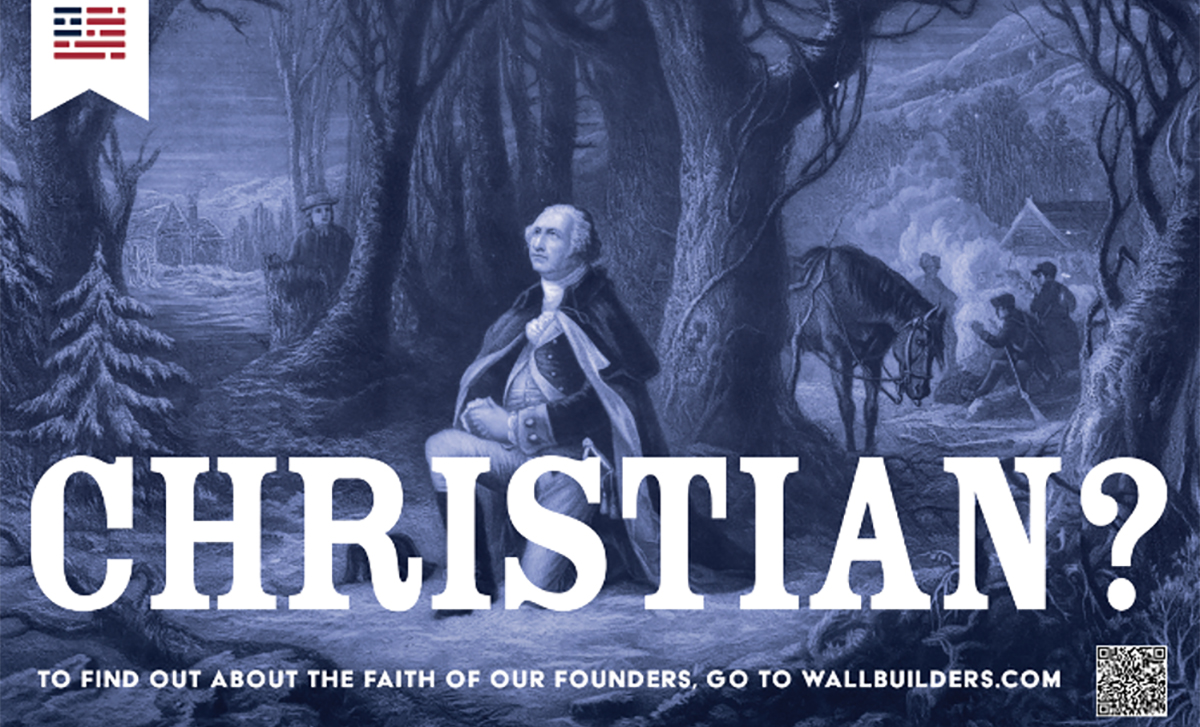
Court Orders D.C. Transit Authority to Accept and Run Unconstitutionally Rejected Ads

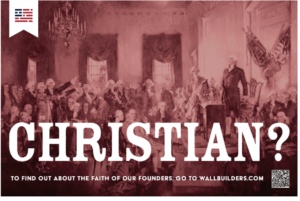
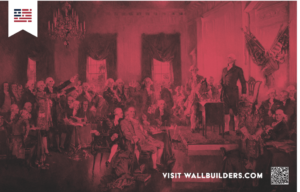
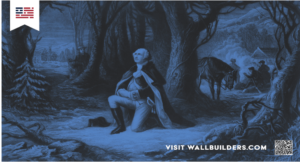
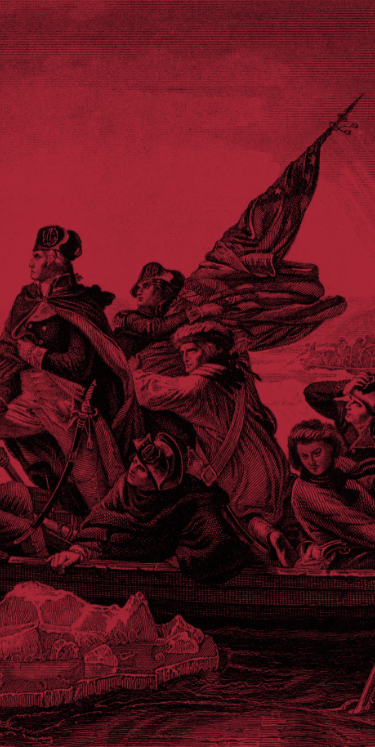
In December 2023, First Liberty, ACLU, and Steptoe filed a lawsuit on behalf of WallBuilders relating to ads that were rejected by the DC Transit Authority. (See more about the history of this issue here.) We now have great news!

“Judge Beryl A. Howell of the U.S. District Court for the District of Columbia ordered the Washington Metropolitan Area Transit Authority (“WMATA”) to accept and run four advertisements that it had unconstitutionally rejected. The court ruled that WMATA’s ban on issue ads violates the First Amendment’s requirement that restrictions on speech be reasonable.”

Read the full Press Release from First Liberty here.

These ads have already started to appear in Washington DC! You can follow WallBuilders’ social media accounts (Facebook, Instagram, and X) to stay updated.

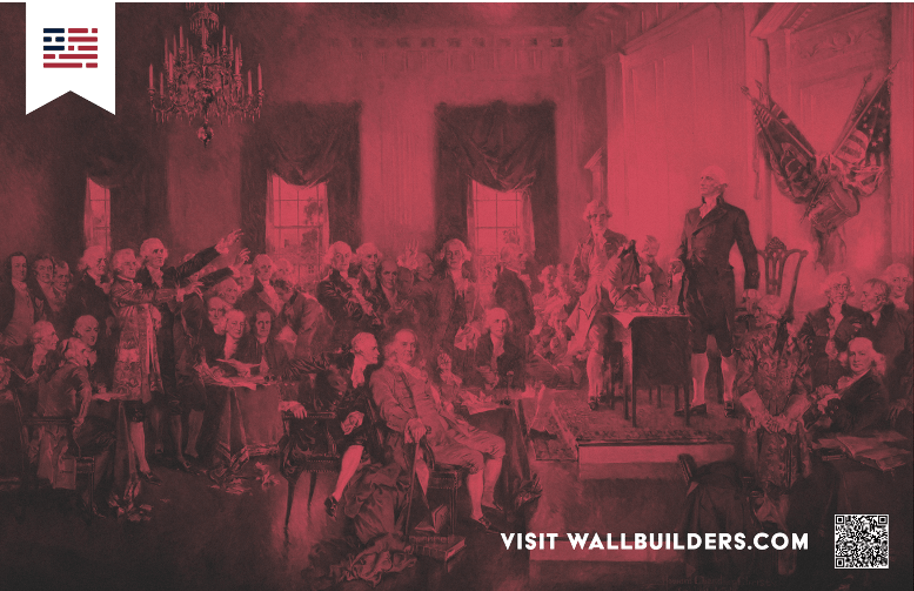
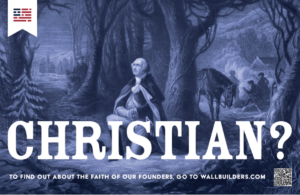
The ads link to a collection of quotes by numerous Founding Fathers via our article “The Founding Fathers on Jesus, Christianity and the Bible”: https://wallbuilders.com/resource/the-founding-fathers-on-jesus-christianity-and-the-bible/.

Support WallBuilders’ Mission! Donate here!

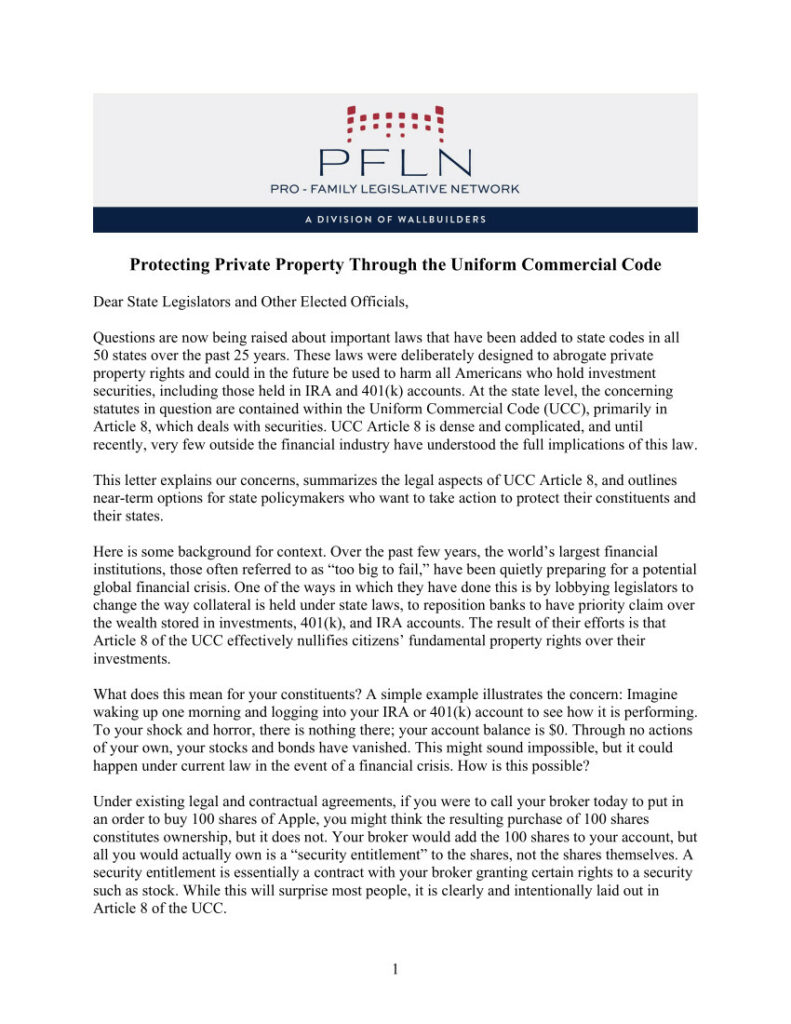
Protecting Private Property Through the Uniform Commercial Code

Protecting Private Property Through the Uniform Commercial Code

Questions are now being raised about important laws that have been added to state codes in all 50 states over the past 25 years. These laws were deliberately designed to abrogate private property rights and could in the future be used to harm all Americans who hold investment securities, including those held in IRA and 401(k) accounts. At the state level, the concerning statutes in question are contained within the Uniform Commercial Code (UCC), primarily in Article 8, which deals with securities.

WallBuilders’ Pro-Family Legislative Network (PFLN), and other organizations and leaders, urge state legislators to carefully consider this alarming infringement on private property.

This letter explains our concerns, summarizes the legal aspects of UCC Article 8, and outlines near-term options for state policymakers who want to take action to protect their constituents and their states. Read the full letter for additional information.

What can you do to help?

Share this Information: We encourage you to forward this to your friends, family and state legislators to help make them aware of this critical issue in your state’s uniform commercial code.

Stay Apprised of the Issue: If this issue is important to you, sign up for our Concerned Citizens legislative update email and we will keep you apprised of this issue.

Sign the Letter: If you represent an organization, or are an elected official who would like to sign this letter, please email us for consideration.

Contribute: If you would like to support this effort to help us brief more lawmakers across the country on this matter, please consider making a tax-deductible donation to WallBuilders Pro-Family Legislative Network Fund.

Lawsuit Challenges D.C. Transit Authority for Violating the First Amendment

In December 2023, First Liberty, ACLU, and Steptoe filed a lawsuit on behalf of WallBuilders.

First Liberty Press Release

Lawsuit Challenges D.C. Transit Authorit – First Liberty

First Liberty Article

https://firstliberty.org/news/ads-about-americas-religious-history-not-allowed/ 

WallBuilders Rejected Ads


WallBuilders Article

These ads would have linked to a collection of quotes by numerous Founding Fathers via our article “The Founding Fathers on Jesus, Christianity and the Bible”: https://wallbuilders.com/resource/the-founding-fathers-on-jesus-christianity-and-the-bible/

Additional Information & Questions

We have asked our attorneys to handle all media inquiries. Please contact Jeremy Dys at 304-881-5196 or [email protected]. Thank you.