Who Was Charles Carroll? Take the Quiz!

Charles Carroll of Carrollton

Who in the world is Charles Carroll? Sadly, few Americans today know the answer to this question. Test your knowledge of this famous Founding Father by taking the following quiz!

  1. True or False: Charles Carroll was the last surviving signer of the Declaration of Independence.
  2. True or False: He was present for the vote on the Declaration of Independence.
  3. True or False: He was involved with a bill for the abolition of slavery in Maryland.
  4. True or False: He helped create a major railroad company in America.
  5. How many children did Carroll have?
  6. Charles Carroll was the only signer of the Declaration to be a member of what religious group?

Charles Carroll was one of the signers of the Declaration of Independence, helped draft the 1776 original constitution of Maryland, and was an original United States Senator where he helped frame the Bill of Rights.

At WallBuilders, we have a vast collection of historical documents, including several handwritten letters from Charles Carroll. In an interesting one from 1825 to Charles Wharton (an Episcopal clergyman), Carroll makes a very clear statement about his personal faith, declaring:

Too much of my time & attention have been misapplied on matters to which an impartial Judge, penetrating the secrets of hearts, before whom I shall soon appear, will ascribe merit deserving recompense. On the mercy of my redeemer I rely for salvation and on His merits; not on the works I have done in obedience to His precepts [Ephesians 2:8-9].


How did you do? Check your answers below!


  1. True: Charles Carroll died on November 14, 1832.
  2. False: The actual vote for the Declaration of Independence took place on July 4, 1776, but Carroll was not present for the vote.
  3. True: In December 1789, Charles Carroll was on the committee in the Maryland state senate who were instructed to confer on a bill for the “gradual abolition of slavery.” Carroll reported on behalf of the committee in favor of discussing this bill, but his recommendation was ignored and the bill did not pass.
  4. True: Charles Carroll helped establish the Baltimore & Ohio Railroad Company in 1828.
  5. Seven
  6. Catholic

*Originally Posted: January 2, 2017

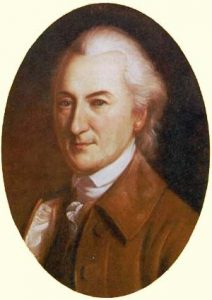
John Dickinson

Delegate from Pennsylvania and Delaware
Signer of the Constitution

john-dickinson-1

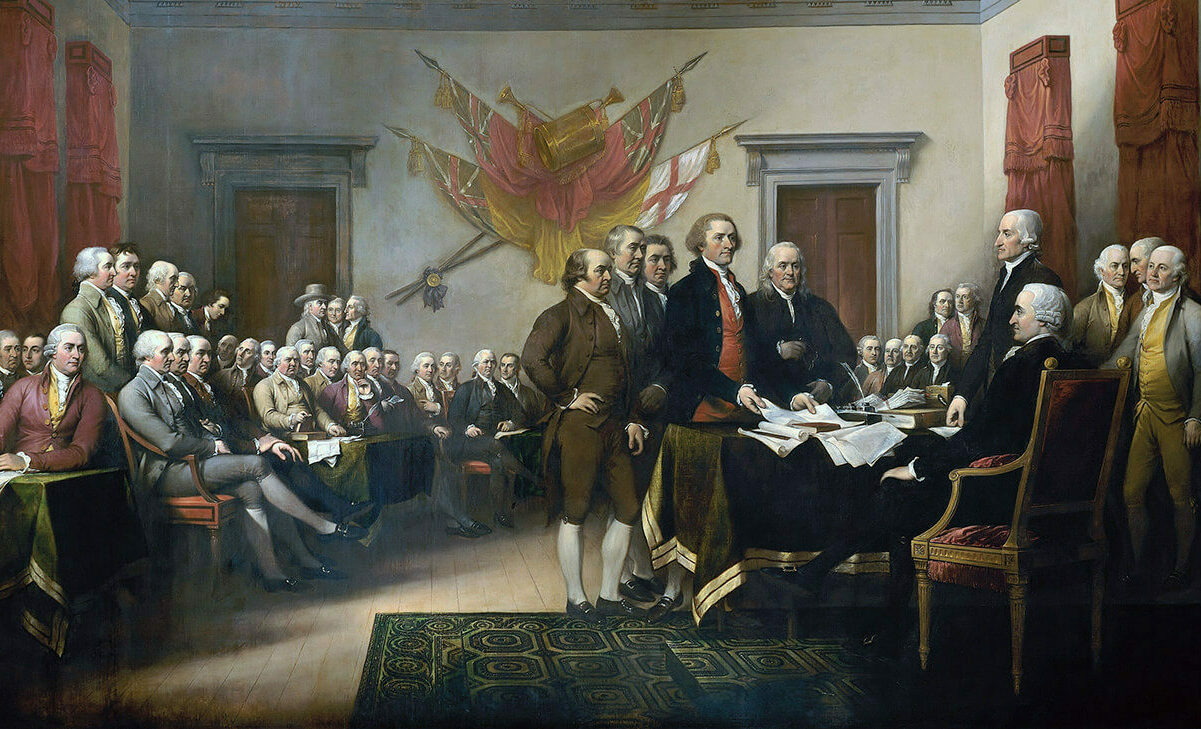
Even though John Dickinson served in the Congress that approved the Declaration, and Dickinson and James Wilson were both painted in Trumbull’s “The Declaration of Independence,” of the two, only Wilson signed the document. Dickinson refused to sign because he thought the act might be a bit hasty. Nevertheless, his contributions to the nation were significant. For example:

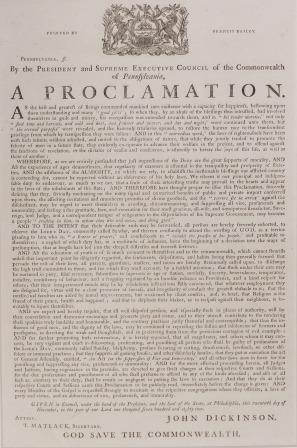
Dickinson originally represented Pennsylvania in the Continental Congress, and when he resigned his military position in Pennsylvania, he moved to Delaware, where he served that state in the Continental Congress. He also became President, or Governor, of Delaware and then held that same position in Pennsylvania. As President of Pennsylvania, he issued a proclamation asking the people to observe the Lord’s Day and remain steadfast in their worship of God.

john-dickinson-2

After the Revolution, Dickinson became chairman of the Annapolis Convention, which was the precursor to the Constitutional Convention. When the Constitution was later written, he became a signer and then wrote letters under the pen name Fabius to advocate its passage. He died in Delaware in 1808, having been a significant influence on the formation of the United States and its government.

 john-dickinson-3

The Courts and Religion: Are they Inimical?

James Wilson
Signer of the Declaration of Independence, Signer of the Constitution
Original Justice of the United States Supreme Court

the-courts-and-religion-are-they-inimical-1

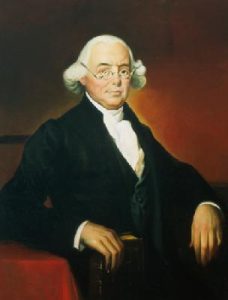
James Wilson had a great influence during the American Founding but has been called “the lost Founder” because of his relative modern obscurity.

He was born to a poor family in Scotland 273 years ago today (on September 14, 1742), but managed to attend universities in Glasgow, St. Andrews, and Edinburgh. [1] At the age of 21, he immigrated to America and soon began tutoring at Philadelphia College. He studied law under John Dickinson, a fellow signer of the Declaration of Independence. [2] [John Dickinson was actually a signer of the Constitution, not the Declaration of Independence. For additional information, please see our correction update.]

In 1768, he wrote a pamphlet arguing for American independence but it considered too radical for the times. When public opinion later shifted, it was finally published. Thomas Jefferson copied portions of it for his own use, and it is conceivable that parts of Wilson’s essay even influenced the language of the Declaration. Compare the similarity of Wilson’s writing with the wording of the Declaration:

“All men are by nature equal and free. No one has a right to any authority over another without his consent. All lawful government is founded on the consent of those who are subject to it. Such consent was given with a view to ensure and to increase the happiness of the governed above what they could enjoy in an independent and unconnected state of nature. The consequence is that the happiness of the society is the first law of every government.”  ~ James Wilson“We hold these truths to be self-evident: that all men are created equal, that they are endowed by their Creator with certain unalienable rights, that among these are life, liberty and the pursuit of happiness. That to secure these rights, governments are instituted among men, deriving their just powers from the consent of the governed, …” ~Declaration of Independence

the-courts-and-religion-are-they-inimical-2Wilson served as a Pennsylvania delegate to the Continental Congress, where he voted for and signed the Declaration of Independence. He later was a member of the Constitutional Convention, where he signed the Constitution. [3]

Under the new federal government, President George Washington appointed Wilson as an original justice on the U. S. Supreme Court, where he served for 9 years until his death on August 28, 1798. He was buried at Christ Church in Philadelphia. [4]

Over recent years, the federal courts have become particularly unfriendly to Christianity and religious faith, but it was not that way under Justice Wilson. In fact, Wilson started America’s first organized legal training while he served on the Court, and he told students:

Far from being rivals or enemies, religion and law are twin sisters, friends, and mutual assistants. Indeed these two sciences run into each other. . . . All [laws], however, may be arranged in two different classes. 1) Divine. 2) Human. . . . But it should always be remembered that this law, natural or revealed, made for men or for nations, flows from the same Divine source: it is the law of God. . . . Human law must rest its authority ultimately upon the authority of that law which is Divine. [5]


Endnotes

1 Nicholas Pederson, “The Lost Founder: James Wilson in American Memory,”  Yale Journal of Law & the Humanities, 22:2:3, (May 8, 2013); Robert K. Wright, Jr. and Morris J. MacGregor, Jr., “James Wilson: Pennsylvania,” Soldier-Statesmen of the Constitution (Center of Military History, Washington, D.C., 1987).
2 “James Wilson,” Signers of the Declaration of Independence (2014).
3James Wilson, Pennsylvania,” Charters of Freedom: America’s Founding Fathers (accessed September 8, 2015).
4 L. Carroll Judson, A Biography of the Signers of the Declaration of Independence (Philadelphia : J. Dobson, and Thomas, Cowperthwait & Co., 1839), 130-131; “James Wilson, Pennsylvania,” Charters of Freedom: America’s Founding Fathers (accessed September 8, 2015).
5 James Wilson, The Works of the Honourable James Wilson (Philadelphia: Bronson and Chauncey, 1804), I:106 & 103-105.

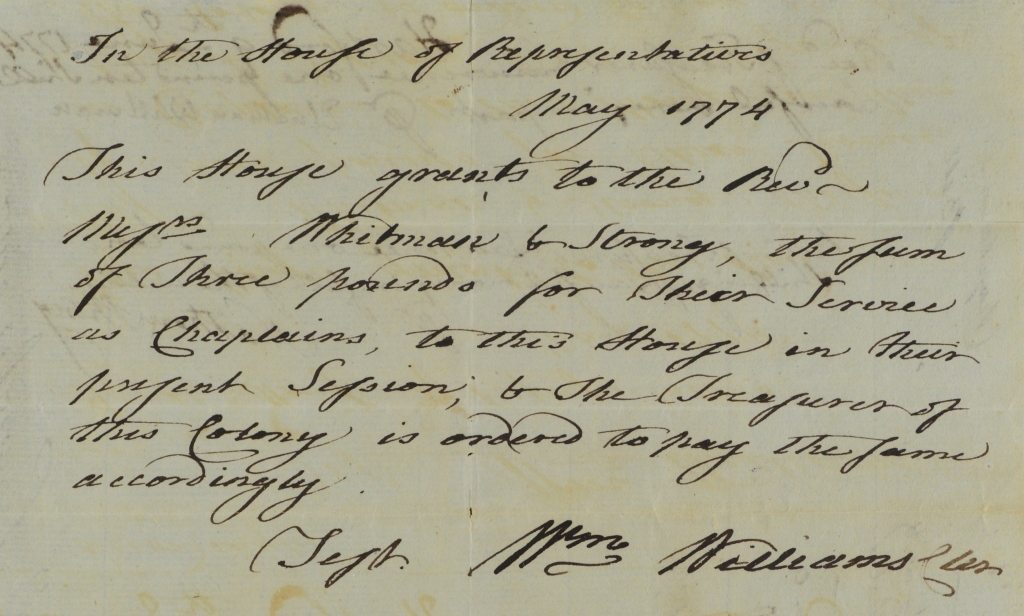
William Williams Letter

William Williams was a signer of the Declaration of Independence from Connecticut. This letter from 1774 deals with the Colony of Connecticut hiring and paying chaplains.


american-revolution-william-williams-letter-1

In the House of Representatives

May 1774

This House grants to the Rev. Meyrs Whitman & Strong, the sum of three pounds for their service as chaplains, to this House in this present session, & the taxpayers of this Colony is order to pay the sums accordingly.

Signed Wm Williams

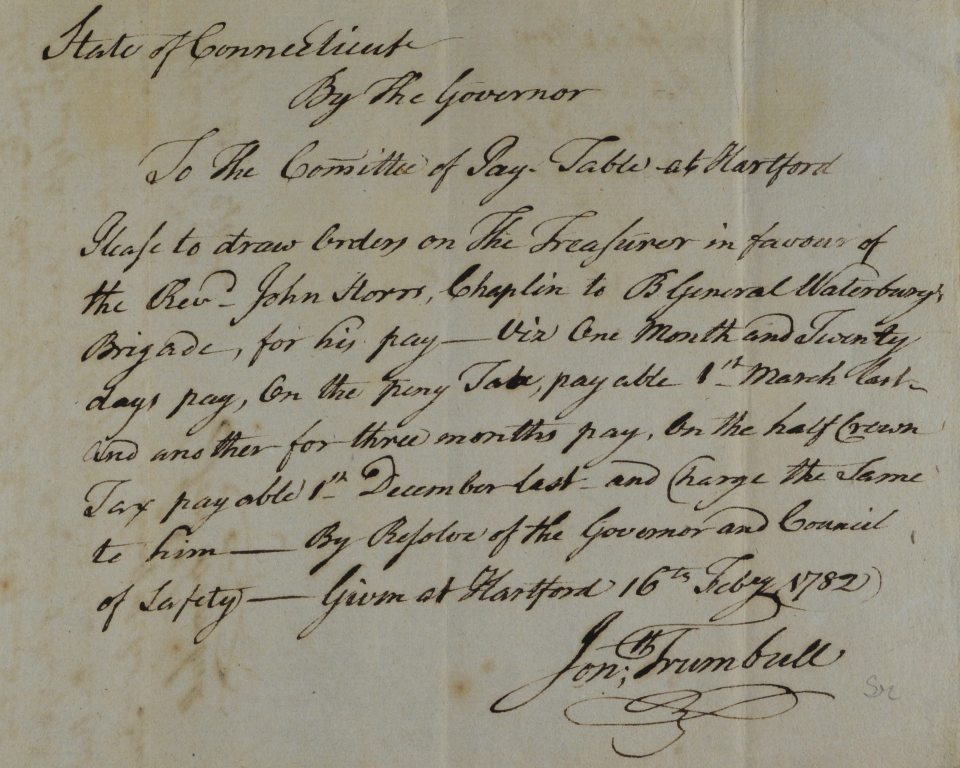
American Revolution – Letter by Governor Jonathan Trumbull

Jonathan Trumbull (1710-1785) was a Governor of the Colony of Connecticut for many years, serving before, during, and after the American War for Independence. (The Trumbull family was very influential in Connecticut, and one of his sons also became governor of the state.)

This letter, dated February 16, 1782 requests payment for Chaplain Horn, who served in Brigadier General David Waterbury’s Brigade.


american-revolution-letter-by-governor-jonathan-trumbull-1

State of Connecticut

By the Governor

To the Committee of Pay-Tables at Hartford

Please to draw bonds on the Treasury in favors of the Rev. John Horn, Chaplain to B. General Waterbury’s Brigade, for his pay – via one month and twenty days pay, on the pay table, payable 1st March cash and another of three months pay, on the half crown. Tax payable 1st December last and charge the some to him – By Requst of the Governor and Council of Safety – Given at Hartford 16th Feby 1782

Jon Trumbull


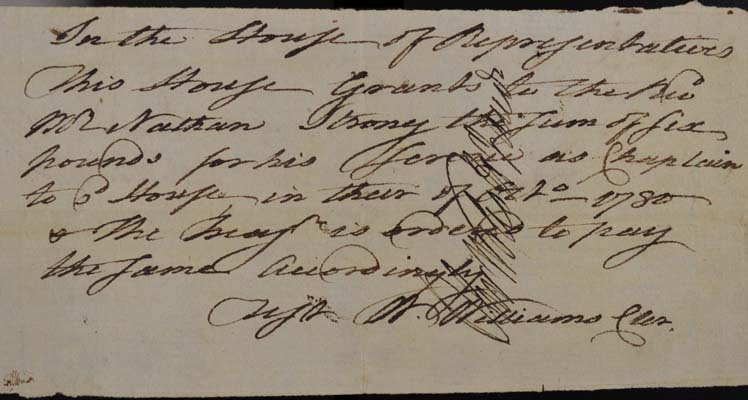
William Williams and Oliver Wolcott Treasury Note

Both William Williams and Oliver Wolcott were signers of the Declaration of Independence from Connecticut. This treasury note from 1780 deals with the House of Representatives of Connecticut hiring and paying a chaplain.


william-williams-and-oliver-wolcott-treasury-note-1

In the House of Representatives

This House grants to the Rev. Mr. Nathan Strong the sum of six pounds for his services as Chaplain to s’d (said) House in their of Oct 1780. The treasurer is ordered to pay the same accordingly.

Signed Wm Williams
(Superimposed) Oliver Wolcott

Celebrating the Constitution

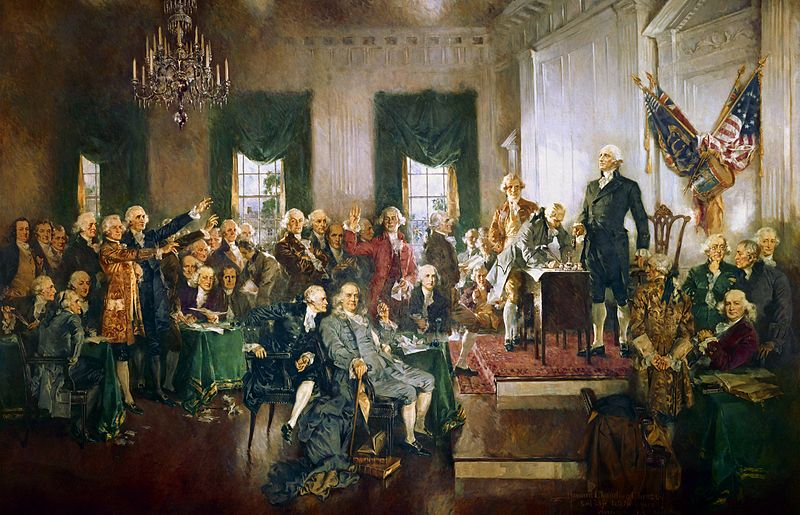
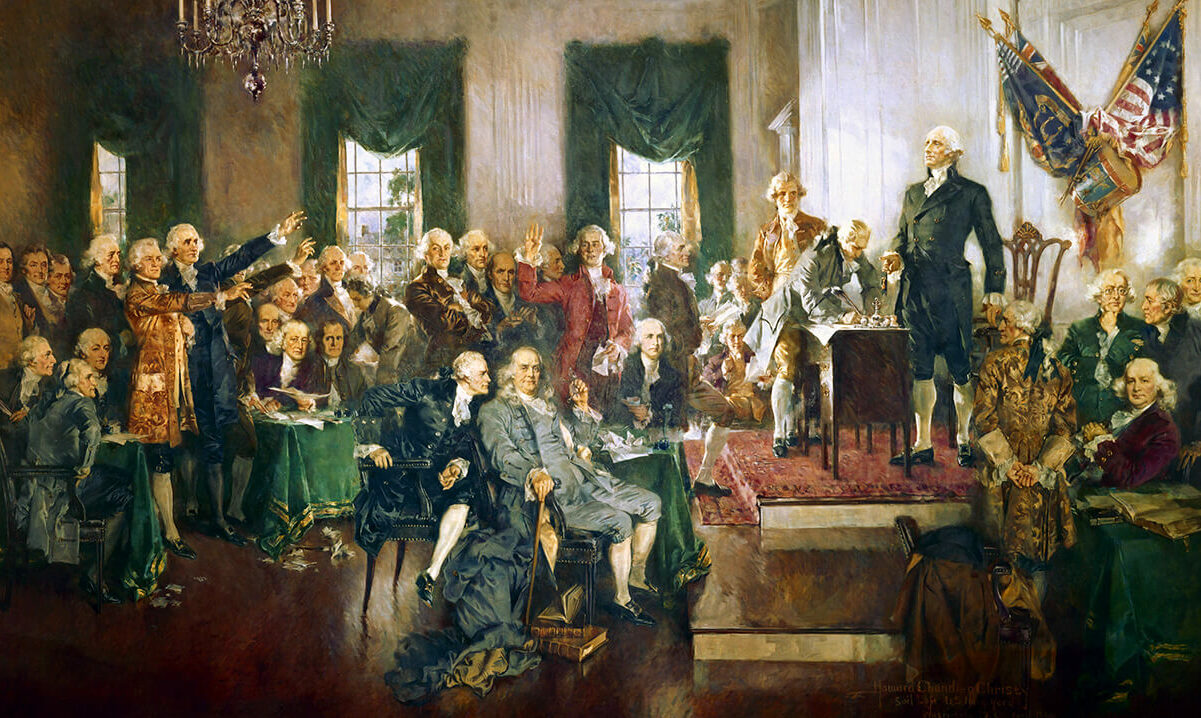
The Convention of 1787 was the capstone in a chain of events that led to the creation of the U.S. Constitution.
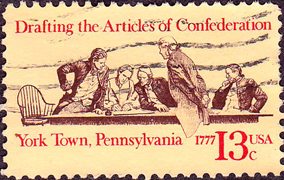
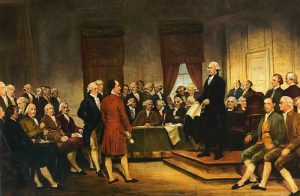
celebrating-the-constitution-1America’s first attempt at a national governing document was in 1777 with the Articles of Confederation.1 It went into effect in 1781, but its deficiencies were quickly apparent,2 so in 1786, the Annapolis Convention called for a body to assemble to address its many weaknesses.3 What is known as the Constitutional Convention then gathered in Philadelphia in 1787.4

The debates on the Constitution did not go smoothly at first. In fact, Benjamin Franklin recommended they begin daily prayers to help the process along.5 Eventually they came together to produce the Constitution — the most successful governing document in world history. It was signed on September 17, 1787,6 a day we now celebrate as “Constitution Day.” Many delegates expressed their belief that writing the Constitution would not have been possible without the Divine aid they personally witnessed and openly acknowledged. Alexander Hamilton said:

For my own part, I sincerely esteem it a system which without the finger of God never could have been suggested and agreed upon by such a diversity of interests.7

celebrating-the-constitution-2James Madison agreed:

It is impossible for the man of pious reflection not to perceive in it the finger of the Almighty Hand which has been so frequently and signally extended to our relief in the critical stages of the Revolution.8

Benjamin Franklin and George Washington also expressed similar convictions.9
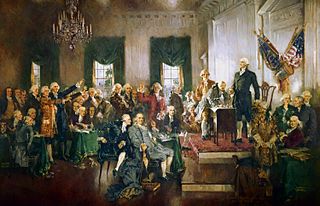
celebrating-the-constitution-3Many delegates involved with writing the Constitution were trained in theology or ministry,10 including Abraham Baldwin, James Wilson, Hugh Williamson, Oliver Ellsworth and others. The Constitution was then sent to the states to be ratified,11 and about four dozen clergymen were elected from among the various states as delegates to ratify the Constitution.12 The influence of Biblical faith on that document was apparent, and under it, Americans have been blessed!

As President Calvin Coolidge affirmed:

[T]he more I study [the Constitution], the more I have come to admire it, realizing that no other document devised by the hand of man ever brought so much progress and happiness to humanity.13 To live under the American Constitution is the greatest political privilege that has ever occurred to the human race.14

Because the Constitution is such a unique and remarkable document, federal law requires that every year on Constitution Day, all public schools must hold a special program on the Constitution.15 Sadly, few schools follow this law. But that should not keep every citizen from celebrating that document. Each of us should read and know that document, and teach it to others. So read the Constitution for yourself, and check out these resources that can be used in public schools to teach the Constitution on Constitution Day.16 Share this information with schools, educators, and students around you!


Endnotes

1 “Articles of Confederation: Primary Documents in American History,” Library of Congress, accessed December 13, 2023.
2 See, for example, “Policies and Problems of the Confederation Government,” Library of Congress, accessed December 13, 2023; “Defencies of the Confederation,” The Founders Constitution.
3 “Appendix A: The Annapolis Convention,” Soldier-Statesmen of the Constitution (Washington, DC: Center of Military History, 1987), 265.
4 “The Constitution: How Did it Happen?” National Archives, accessed December 13, 2023.
5 James Madison’s Notes on the Convention, June 28, 1787, Max Farrand, The Records of the Federal Convention of 1787 (New Haven: Yale University Press, 1911), I:450-452.
6 “Constitution of the United States: Primary Documents in American History,” Library of Congress, accessed December 13, 2023.
7 Alexander Hamilton to Mr. Childs, Wednesday, October 17, 1787, The Federalist and Other Contemporary Papers on the Constitution of the United States, ed. E.H. Scott (New York: Scott, Foresman and Company, 1894), 646.
8 James Madison, Federalist #37, Alexander Hamilton, John Jay, & James Madison, The Federalist (Philadelphia: Benjamin Warner, 1818), 194.
9 Benjamin Franklin, “A Comparison of the Conduct of the Ancient Jews and of the Anti-Federalists in the United States of America,” The Works of Benjamin Franklin, ed. Jared Sparks (Boston: Tappan, Whittemore, and Mason, 1837), V:162; George Washington to Marquis de Lafayette, February 7, 1788, The Writings of George Washington, ed. Jared Sparks (Boston: Russell, Odiorne, and Metcalf, 1835), IX:317.
10 See WallBuilders article, “No Professor Fea, the Founders Did Not Want Ministers to Stay out of Politics.”
11 “Observing Constitution Day,” National Archives, accessed December 13, 2023.
12 See WallBuilders article, “No Professor Fea, the Founders Did Not Want Ministers to Stay out of Politics.”
13 Calvin Coolidge, “Autobiography of College Days,” Hearst’s International Combined with Cosmopolitan (NY: International Magazine Company, August 1929), LXXXVII:2:37.
14 James M. Beck, “What is the Constitution?” Our World Weekly (March 16, 1925), II:7:102.
15 “Constitution Day and Citizenship Day,” US Code.
16 “Constitution Day Teacher Resources,” Library of Congress; “Teachers Guide: Commemorating Constitution Day,” National Endowment for the Humanities; “Commemorating Constitution Day and Citizenship Day,” US Department of Education.
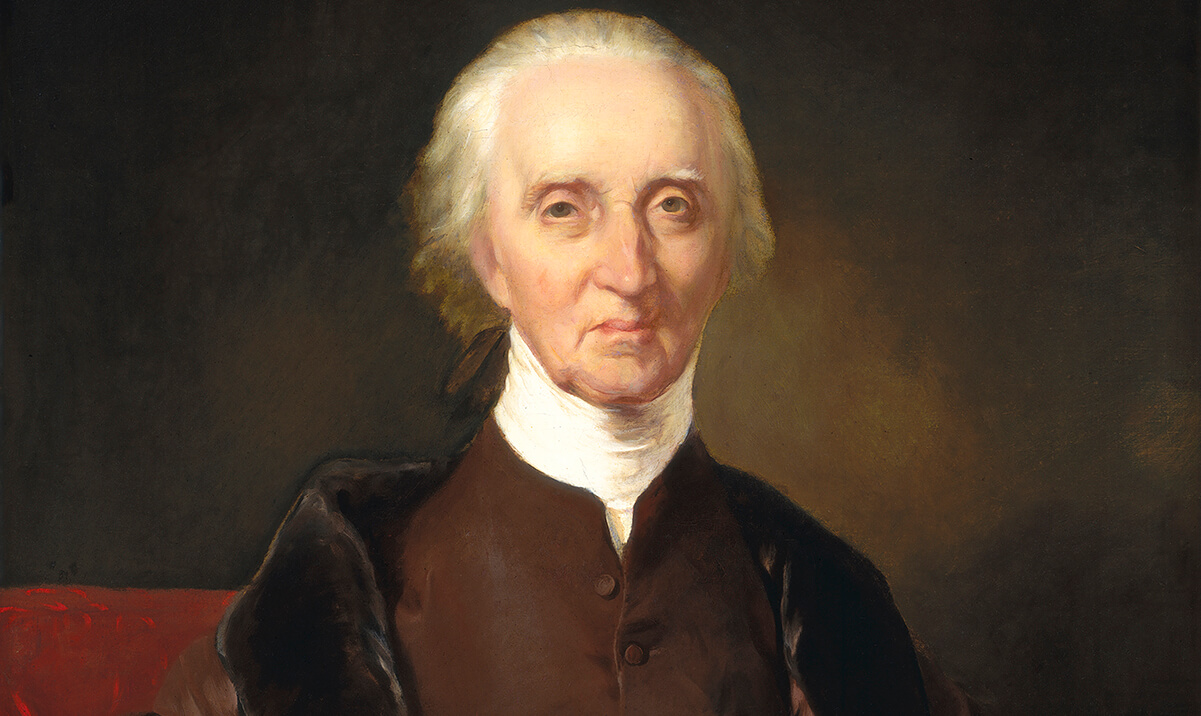
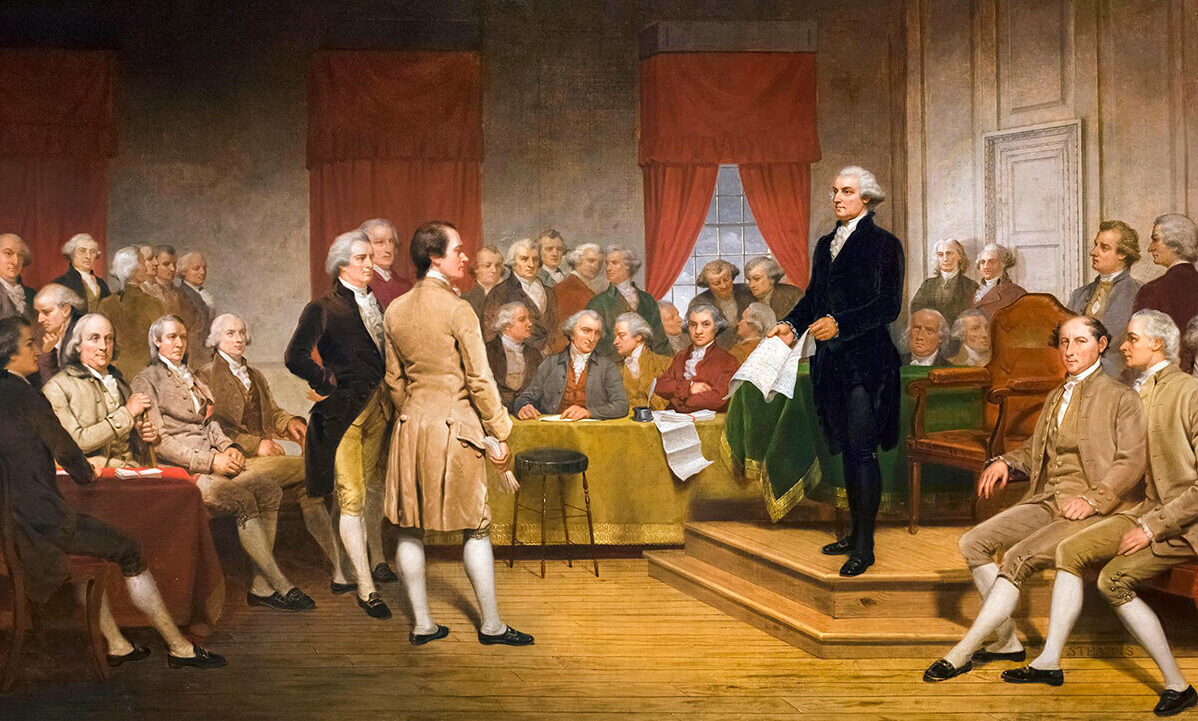
America’s Founders at College

Too many indisputable facts from American history are ignored today because they impede the direction many progressives want to move culture. For example, while they claim that the Founders were largely secularists, few today know that most of them were graduates of colleges or universities that specialized in training ministers of the Gospel.
americas-founders-at-college-1Princeton was founded in 1746, and John Witherspoon, a Gospel minister and signer of the Declaration of Independence, was the college’s president from 1768-1794. He trained scores of individuals who became national and state leaders. Princeton required that “every student shall attend worship in the college hall morning and evening.”

Yale University, founded in 1701, had Thomas Clap as its president from 1740-1766, when many of the Founders attended school there. Clap affirmed:

The original end and design of colleges was to instruct, educate, and train up persons for the work of the ministry.

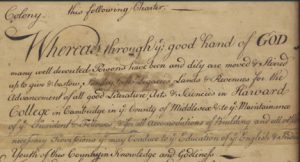
americas-founders-at-college-2Harvard University was founded in 1636. (Pictured on the right is the original 1650 Harvard incorporation charter from the WallBuilders library.) Josiah Quincy, Harvard’s president from 1829 to 1845, noted:

[T]he College was conducted as a theological institution. . . having religion for its basis and chief object.

Altogether, 29 signers of the Declaration graduated from religiously-founded universities. But to acknowledge this today would certainly contradict the common educational assertion that our Founders were largely atheists, agnostics, and deists who wanted a secular country. But those assertions are not true.

americas-founders-at-college-3Gouverneur Morris, a signer of the Constitution and the most active member of the Constitutional Convention, openly asserted:

Religion is the only solid basis of good morals; therefore, education should teach the precepts of religion and the duties of man towards God.

In fact, he warned:

There must be religion. What that ligament is torn, society is disjointed and its members perish. . . . The most important of all lessons is the denunciation of ruin to every state that rejects the precepts of religion.

Take note, America! This is a good warning to remember today.

In Four Centuries of American Education you can find out more about the deeply religious nature of education in early America and how Bible-based public education continued literally for centuries, ending only in recently years.

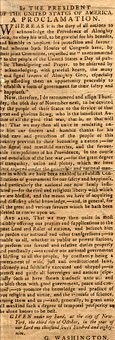
Proclamation – Thanksgiving Day – 1789

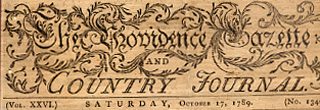
This is the text of George Washington’s October 3, 1789 national Thanksgiving Proclamation; as printed in The Providence Gazette and Country Journal, on October 17, 1789. (See another national Thanksgiving proclamation issued by George Washington in 1795.)


proclamation-thanksgiving-day-1789-1

By the President of the United States of America.
A Proclamation.

proclamation-thanksgiving-day-1789-2Whereas it is the duty of all nations to acknowledge the providence of Almighty God, to obey His will, to be grateful for His benefits, and humbly to implore His protection and favor; and whereas both Houses of Congress have, by their joint committee, requested me “to recommend to the people of the United States a day of public thanksgiving and prayer, to be observed by acknowledging with grateful hearts the many and signal favors of Almighty God, especially by affording them an opportunity peaceably to establish a form of government for their safety and happiness.”
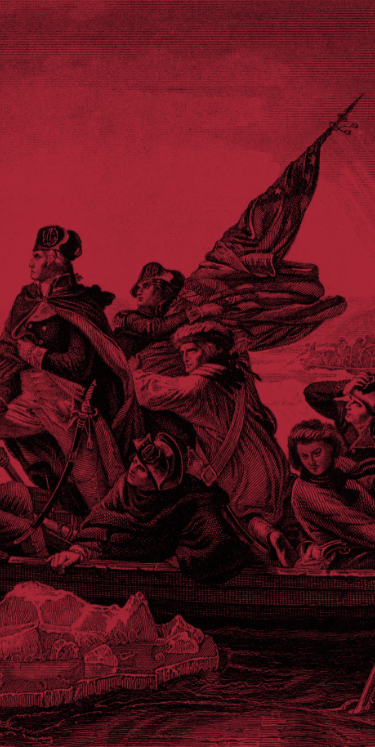
Now, therefore, I do recommend and assign Thursday, the 26th day of November next, to be devoted by the people of these States to the service of that great and glorious Being who is the beneficent author of all the good that was, that is, or that will be; that we may then all unite in rendering unto Him our sincere and humble thanks for His kind care and protection of the people of this country previous to their becoming a nation; for the signal and manifold mercies and the favorable interpositions of His providence in the course and conclusion of the late war; for the great degree of tranquility, union, and plenty which we have since enjoyed; for the peaceable and rational manner in which we have been enabled to establish constitutions of government for our safety and happiness, and particularly the national one now lately instituted; for the civil and religious liberty with which we are blessed, and the means we have of acquiring and diffusing useful knowledge; and, in general, for all the great and various favors which He has been pleased to confer upon us.

And also that we may then unite in most humbly offering our prayers and supplications to the great Lord and Ruler of Nations, and beseech Him to pardon our national and other transgressions; to enable us all, whether in public or private stations, to perform our several and relative duties properly and punctually; to render our National Government a blessing to all the people by constantly being a Government of wise, just, and constitutional laws, discreetly and faithfully executed and obeyed; to protect and guide all sovereigns and nations (especially such as have shown kindness to us), and to bless them with good governments, peace, and concord; to promote the knowledge and practice of true religion and virtue, and the increase of science among them and us; and, generally, to grant unto all mankind such a degree of temporal prosperity as He alone knows to be best.

Given under my hand, at the city of New York, the third day of October, in the year of our Lord one thousand seven hundred and eighty-nine.

G. Washington.

Proclamation – Thanksgiving Day – 1784, Massachusetts

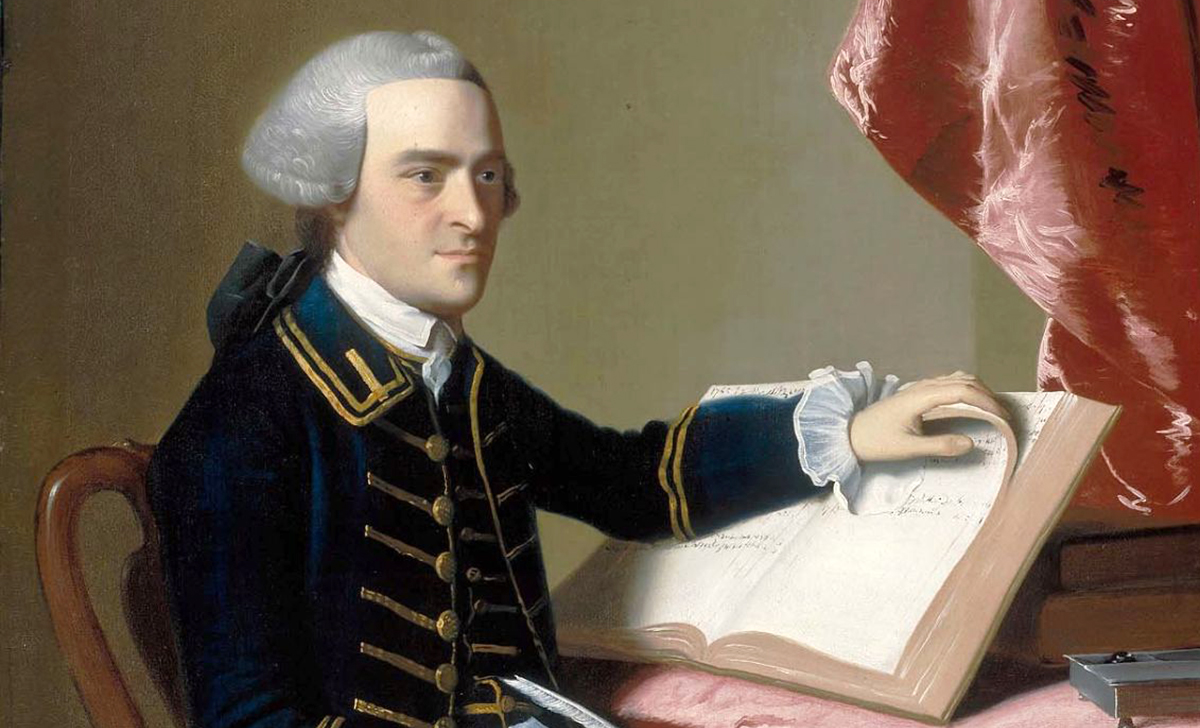
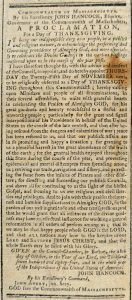
John Hancock (1737-1793) was a signer of the Declaration of Independence, the president of the Continental Congress, and governor of Massachusetts. It was during his time as governor that he issued the following October 28, 1784 proclamation declaring a day of Thanksgiving for November 25, 1784. The proclamation text and image is taken from Thomas’s Massachusetts Spy dated November 11, 1784.


COMMONWEALTH OF MASSACHUSETTS.
By His Excellency, JOHN HANCOCK, Esquire,
Governor of the Commonwealth of Massachusetts,
A PROCLAMATION,
For a Day of THANKSGIVING.
????????????????????????????????????

It being our indispensable duty as a people, in a public and religious manner, to acknowledge the preserving and Governing providence of Almighty God, and more especially to celebrate the Divine Goodness in the various blessings conferred upon us in the course of the year past.

I have therefore thought fit, with the advice and consent of the Council, to appoint, and do hereby appoint THURSDAY the Twenty-Fifth Day of NOVEMBER next, to be religiously observed as a Day of THANKSGIVING throughout this Commonwealth; hereby calling upon Ministers and people of all denominations, in their several assemblies, to unite with grateful hearts in celebrating the Praises of Almighty GOD, of His great goodness and bounty vouchsafed [given] to a sinful and unworthy people; particularly for the great and signal interpositions of His Providence in behalf of the United States in the course of the late contest, and that after being rescued from the dangers and calamities of war; peace has been restored to us, and that our public affairs are in so promising and happy a situation; for granting to us a plentiful harvest in the great abundance of the fruits of the earth; for the general health enjoyed throughout this State during the course of the year, and preventing epidemical and mortal distempers from spreading among us; reviving our trade, navigation and fishery and protecting the same from the insults of Pirates and other disasters; for directing and succeeding our public Councils, and above all for continuing to us the light of the blessed Gospel, and securing to us our religious and civil liberties and privileges. And to join with their praises their earnest and humble supplications to Almighty GOD, for the pardon of our past ingratitude and other transgressions; and that He would grant that all instances of the Divine goodness may have an effectual influence for working a general reformation in all orders of persons among us; that so we may be that happy people, whose GOD is the LORD, and that ALL nations may bow to the scepter of our LORD and SAVIOR JESUS CHRIST, and that the whole Earth may be filled with His Glory.

GIVEN at the Council-Chamber in Boston, the 28th day of October, in the Year of our Lord, one Thousand seven hundred and eighty-four, and in the ninth year of the Independence of the United Sates of America.

JOHN HANCOCK.

By his Excellency’s Command,
JOHN AVERY, Jun. Secretary
GOD save the Commonwealth of MASSACHUSETTS.