How much do you know about John Quincy Adams?
Take the following quiz to find out!
(Answers at the bottom.)
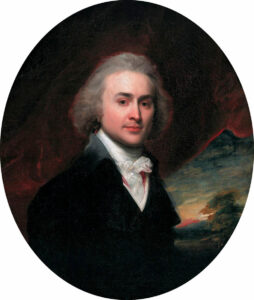
1. How old was John Quincy Adams when he accompanied his father John Adams (who had been appointed as ambassador) to France, where he became his secretary?
2. Who told John Quincy Adams “[I] would much rather you should have found your grave in the ocean you have crossed, or that any untimely death crop you in your infant years, than see you an immoral, profligate, or graceless child…”?
3. True or False: John Quincy Adams was 18 years old when he received a congressional appointment as secretary to Francis Dana, the American ambassador to Russia.
4. True or False: John Quincy Adams was one of three individuals who served in the U.S. House of Representatives after being President of the United States.
5. True or False: The House of Representatives passed a gag rule to keep John Quincy Adams from introducing petitions calling for the abolition of slavery.
6. What famous Supreme Court case did Adams argue on behalf of a group of captured Africans who had revolted and regained their freedom while on board a ship transporting them into slavery?
Evacuation Day
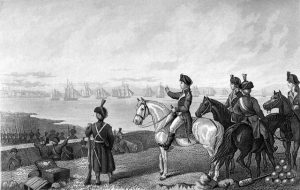 March 17 is annually celebrated in Boston as “Evacuation Day,” commemorating the departure of the British from the city after an eleven month occupation at the start of the American Revolution.1 April 19, 1775 through March 17, 1776 was the Siege of Boston. This time encompasses some of the early events of the American Revolution, including the Battles of Lexington and Concord,2 the Battle of Bunker Hill,3 and George Washington taking command of the American army.4
John Quincy Adams, whose family lived near Boston, personally watched the Battle of Bunker Hill at the age of 8.5 Just a few months before, he had performed military drills with the local militia and Minutemen — an event that John Quincy remembered in detail over 50 years later!6
John Quincy Adams spent 68 years of his life in public service for America. Today, on Evacuation Day, his is truly a life worth honoring.
How did you do?
1. He was 10 years old. John Adams went to France in February, 1778 (in his diary, he even talks about a battle his vessel had in early March during the ocean crossing7). John Quincy Adams, born on July 11, 1767, would have been several months shy of his 11th birthday when he accompanied his father.
2. Abigail Adams. See the complete letter from Abigail to John Quincy.8
3. False. John Quincy Adams was 14 years old when he was appointed as Francis Dana’s secretary and translator.9
4. False. Nineteen Presidents have served in the House of Representatives,10 but John Quincy Adams is the only one who was elected to Congress after being president.11
5. True. The “gag rule” was passed by each Congress from 1836-1844, and John Quincy Adams was the leader in the effort that eventually repealed this rule.12
6. United States v. The Amistad, decided in 1841. John Quincy Adams was 73 years old at the time.13 This event is depicted in the famous Hollywood movie Amistad.
Endnotes
1 “The Siege of Boston,” Massachusetts Historical Society, accessed December 8, 2023.
2 “Lexington and Concord,” ushistory.org, accessed December 8, 2023.
3 Bernard Bailyn, “The Battle of Bunker Hill,” Massachusetts Historical Society, accessed December 8, 2023.
4 “Washington takes command of Continental Army in 1775,” April 15, 2016, US Army.
5 “Letter (draft) from John Quincy Adams to Joseph Sturge, March 1846,” Massachusetts Historical Society.
6 John Quincy Adams, entry for August 20, 1827, Memoirs of John Quincy Adams, ed. Charles Francis Adams (Philadelphia: J. B. Lippincott & Co., 1875), VII:325.
7 John Adams, entry for March 14, 1778, The Works of John Adams, ed. Charles Francis Adams (Boston: Charles C. Little and James Brown, 1851), III:108.
8 Abigail Adams to John Quincy Adams, June 1778, Letters of Mrs. Adams, ed. Charles Francis Adams (Boston: Charles C. Little and James Brown, 1840), I:122-125.
9 Office of the Historian, “Biographies of the Secretaries of State: John Quincy Adams (1767–1848),” Department of State, accessed December 8, 2023.
10 “House Members Who Served as President,” United States House of Representatives, accessed December 8, 2023.
11 “The Election of John Quincy Adams of Massachusetts,” United States House of Representatives, accessed December 8, 2023.
12 “The House “Gag Rule”,” United States House of Representatives, accessed December 8, 2023.
13 “The Amistad Case,” National Archives, accessed December 8, 2023.
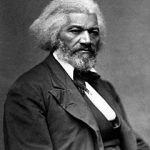 On March 18, 1877, Frederick Douglass became the first African American confirmed by the U. S. Senate to serve in a presidential appointment.3 He had been selected by President Rutherford B. Hayes to be the Marshal of Washington, D.C — a position established to “support the federal courts.”4 His responsibilities included serving “the subpoenas, summonses, writs, warrants and other process issued by the courts, [making] all the arrests and [handling] all the prisoners.”5 Prior to this appointment, Douglass had held various positions under previous presidents, but none had required Senate confirmation. In all, Douglass served under four Republican presidents.6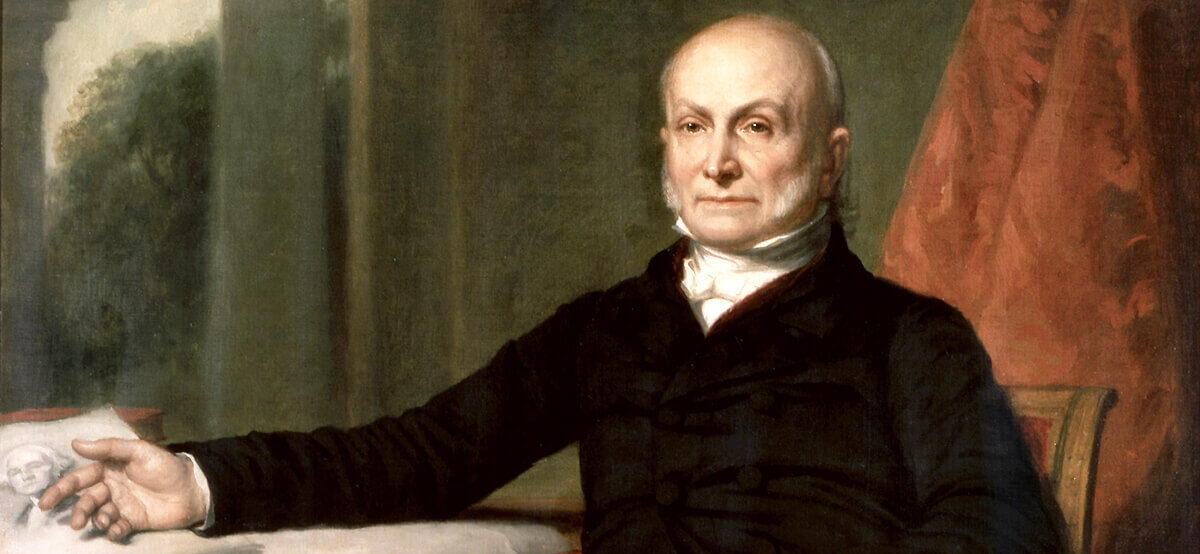
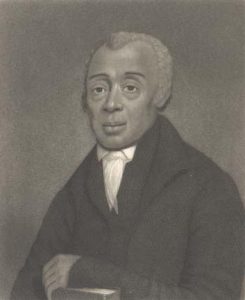 Black History Month is a special time to focus on black history, which interestingly often involves not just Black Americans but also those of other races. As famous Black American minister Richard Allen reminded his brethren during the Founding Era, “Many of the white people have been instruments in the hands of God for our good [and] are now pleading our cause with earnestness and zeal.”
 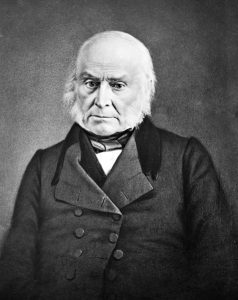 Adams also led the legal defense of the African slaves in the famous Amistad case
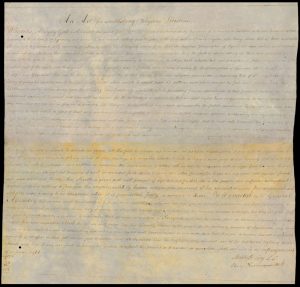 January 16, 1786, was the day that the Virginia Assembly adopted the
  1779
1779 
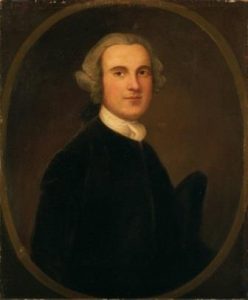 Richard Stockton was one of the 56 signers of the Declaration of Independence. He was one of those who literally gave his life for American liberty. October 1,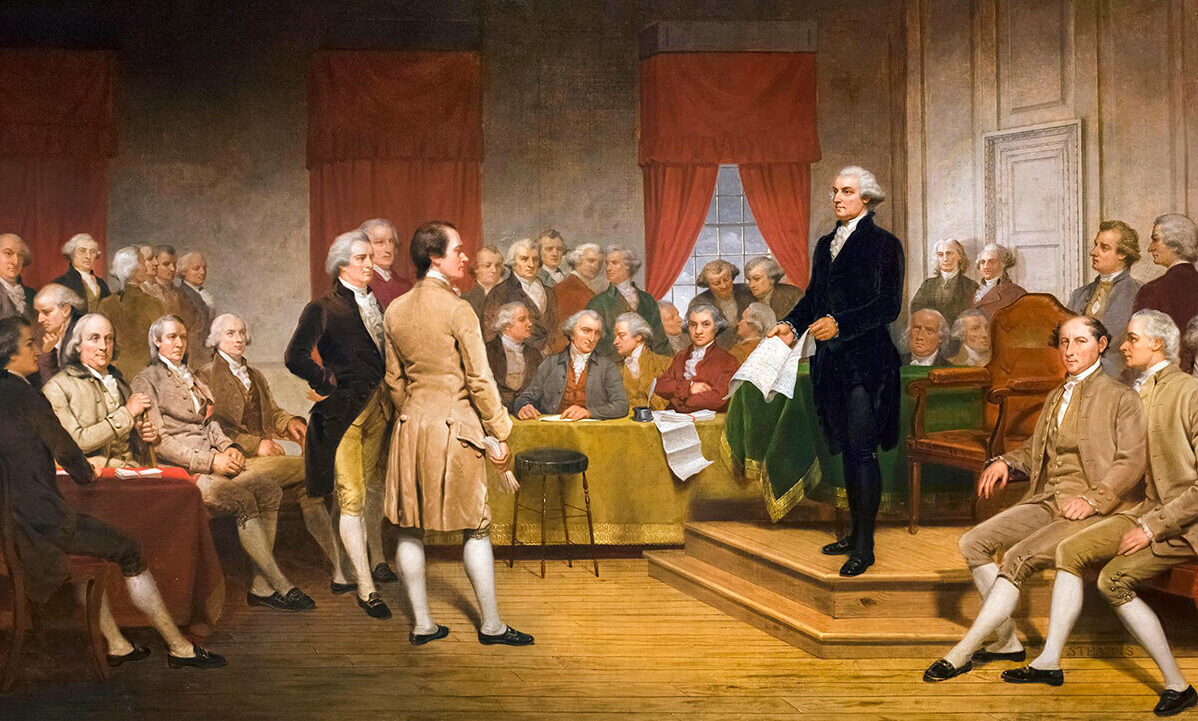
 A Founding Father who exerted great influence in our constitutional government was Alexander Hamilton. As a delegate to the Constitutional Convention of 1787, and one of its thirty-nine signers, he played what would be considered a minor role in the debates of the Convention itself. However he (along with John Jay and James Madison) became one of the three men most responsible for the adoption and ratification of the Constitution through the writing and publication of a series of articles which became known as The Federalist Papers.
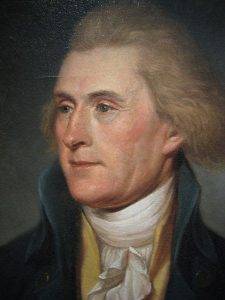
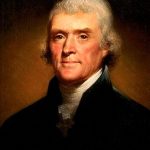 (By the way, during that election cycle in 1800, a number of ministers preached and published pulpit sermons against Jefferson, including Hamilton’s good friend, the Rev. John Mitchell Mason.)
 Easter is celebrated across the world as one of the most significant Christian holy days. It is when Christians pause to remember the great sacrifice of Jesus on the cross as well as the ultimate triumph of His resurrection.
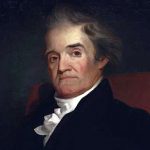 As Noah Webster, author in 1828 of America’s
 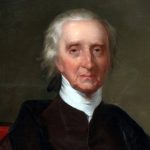 The approaching festival of Easter, and the merits and mercies of our Redeemer copiosa assudeum redemptio have lead me into this chain of meditation and reasoning, and have inspired me with the hope of finding mercy before my Judge, and of being happy in the life to come — a happiness I wish you to participate with me by infusing into your heart a similar hope.
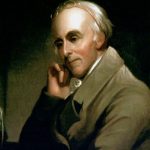 He forgave the crime of murder on His cross; and after His resurrection, He commanded His disciples to preach the gospel of forgiveness, first at Jerusalem, where He well knew His murderers still resided. These striking facts are recorded for our imitation and seem intended to show that the Son of God died, not only to reconcile God to man but to reconcile men to each other.
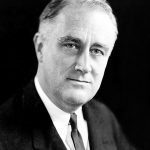 Yesterday, Christendom celebrated Easter—the anniversary of the Resurrection of Our Lord Who, at the beginning of His ministry was thirty years of age and at His death was only thirty-three. Christianity began with youth, and through the last two thousand years, the spirit of youth repeatedly has revitalized it.
 Beginning today and culminating on Sunday morning, Christians will celebrate with their families the resurrection of Christ, His victory over death. We will remember that He gave His body and His blood—washing clean the faults and the shortcomings of the world. In our rejoicing we will renew the hope that is ours through the risen Lord.
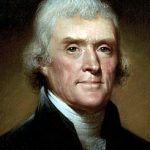 America is a blessed nation. We enjoy a level of political stability,
 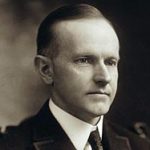 [T]he authority of law, the right to equality, liberty, and property under American institutions, have for their foundation reverence for God. If we could imagine that to be swept away, these institutions of our American government could not long survive.
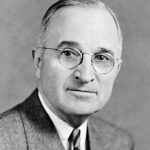 The Constitution and the Declaration of Independence can live only as long as they are enshrined in our hearts and minds. If they are not so enshrined, they would be no better than mummies in their glass cases, and they could in time become idols whose worship would be a grim mockery of the true faith. Only as these documents are reflected in the thoughts and acts of Americans can they remain symbols of a power that can move the world.
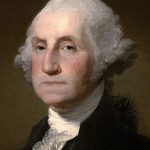 On Presidents Day — and with a presidential election directly in front of us — let’s remember the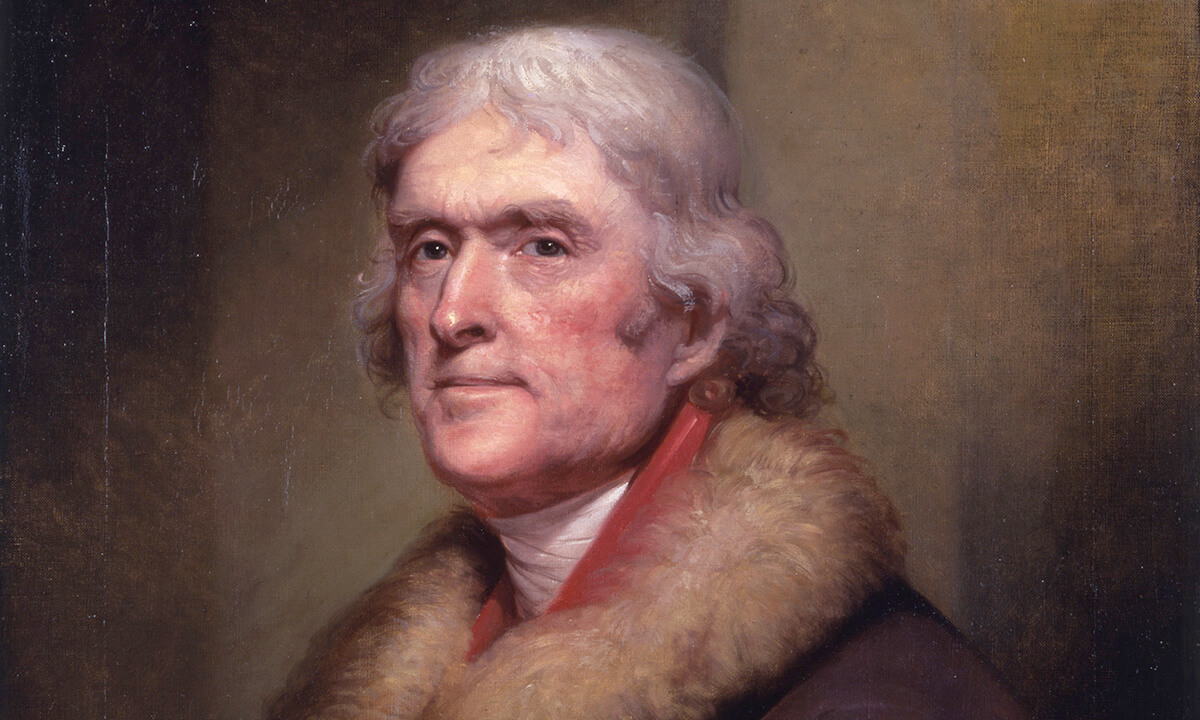
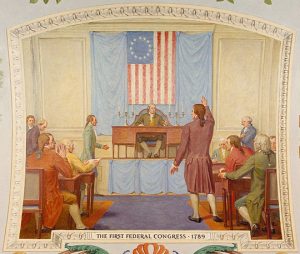
 No provision in our Constitution ought to be dearer to man than that which protects the rights of conscience against the enterprises of the civil authority.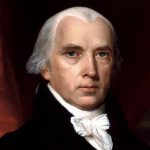
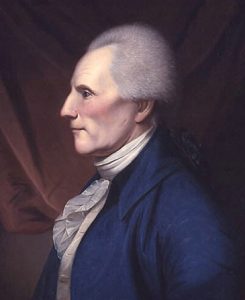
 Richard Henry Lee was part of a large family that was something of a political dynasty for the better part of two centuries. His father, Thomas, served as
 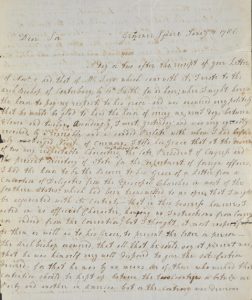 After the American Revolution ended, and while serving as President of the Continental Congress in 1784-1785, Richard