John Quincy Adams Graduates from Harvard

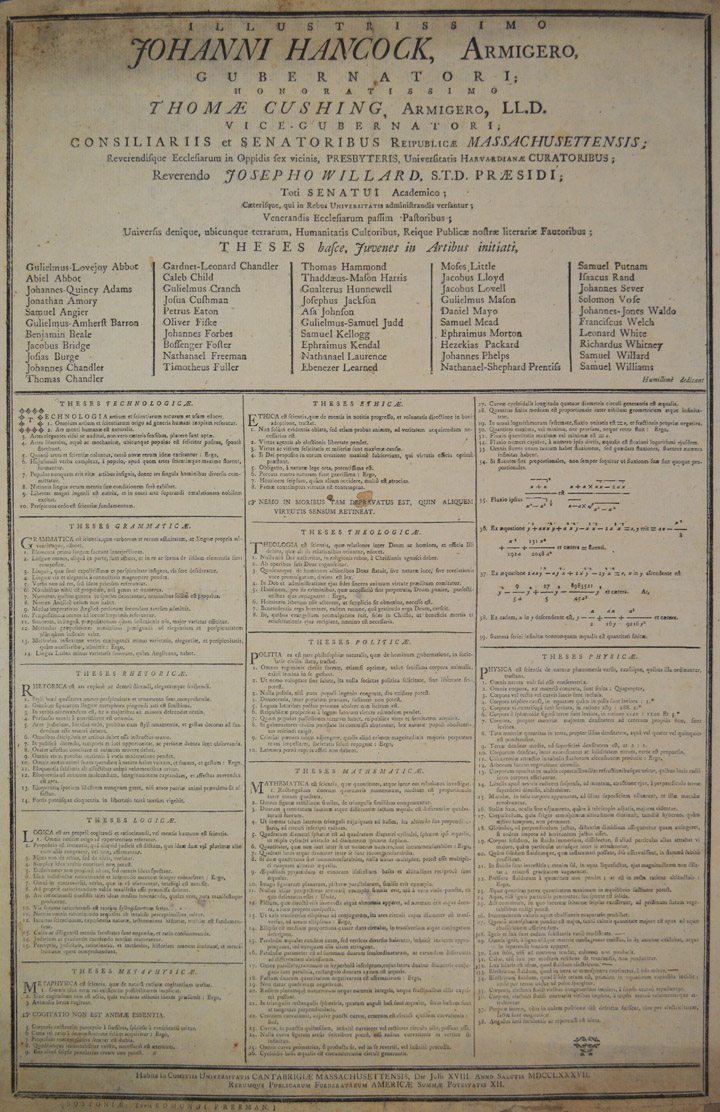
Harvard University was founded in 1636 and was incorporated in May 1650. Many of America’s early leaders graduated from Harvard – including John Quincy Adams. Below is a broadside from the WallBuilders library that lists the graduating class of 1787 (John Quincy Adams is listed in the first column) along with the thesis topics of that class.


john-quincy-adams-graduates-from-harvard-1

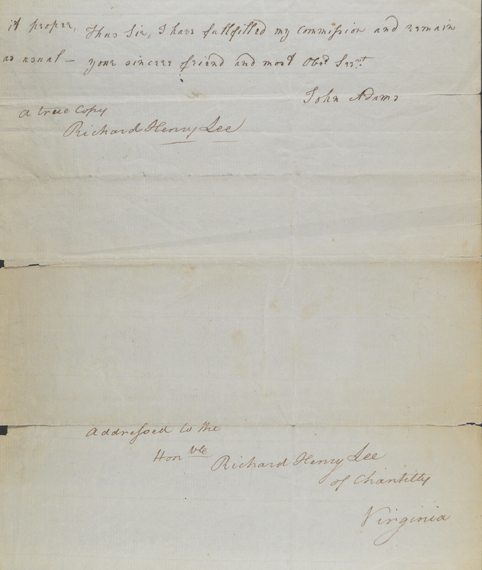
Richard Henry Lee Copy of John Adams Letter

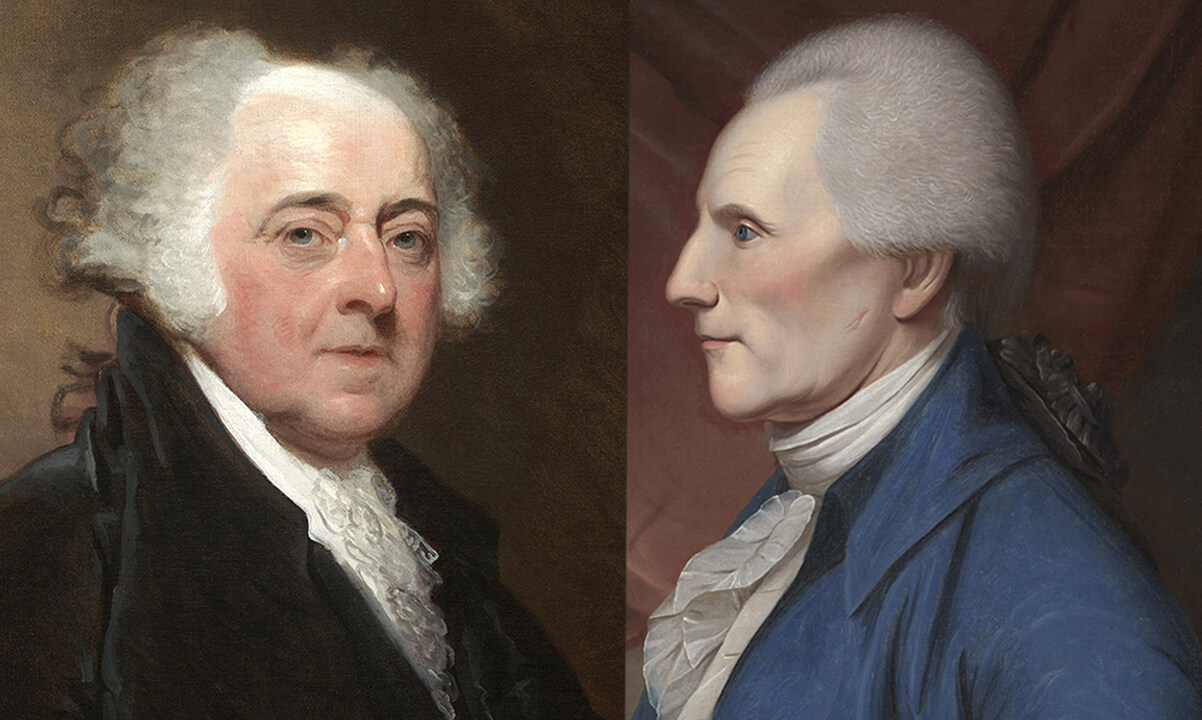
While serving as President of the Continental Congress in 1785, Richard Henry Lee wrote to John Adams, who was serving as ambassador to England, urging him to assure the Archbishop of Canterbury that Episcopalian Americans were not resistant to bishops appointed from England. This letter was enclosed with a letter sent by John Jay on November 1, 1785. On January 4, 1786, John Adams replied to John Jay with the account of his meeting with the Archbishop.

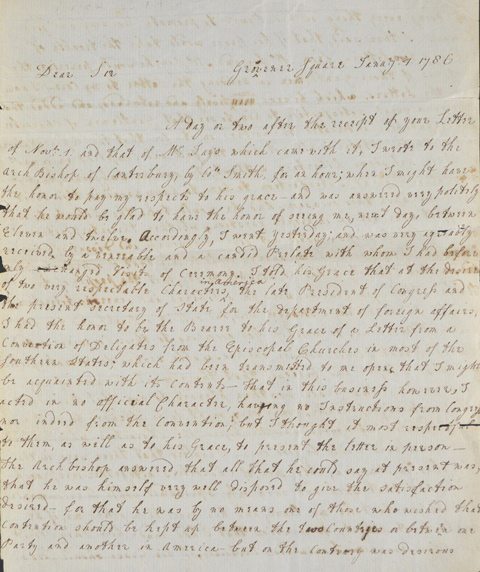
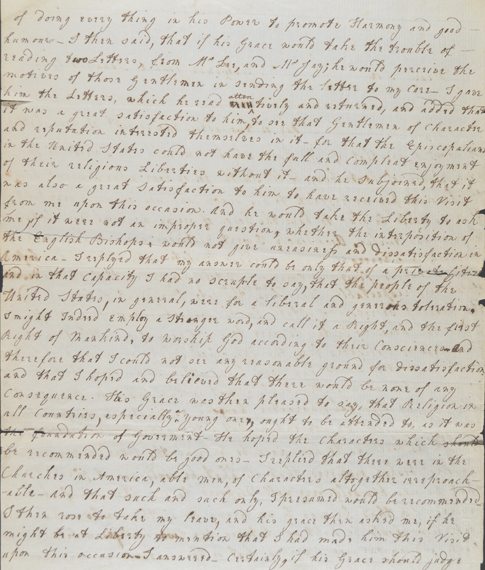
WallBuilders has Richard Henry Lee’s handwritten copy of John Adams’ January 4, 1786 letter. The below transcript has paragraph breaks added in for easier readability.


richard-henry-lee-copy-of-john-adams-letter-1
richard-henry-lee-copy-of-john-adams-letter-2
richard-henry-lee-copy-of-john-adams-letter-3

Grosvenor Square Januy. 4 1786

Dear Sir,

A day or two after the receipt of your letter of Novb. 1, and that of Mr. Lee’s which came with it, I wrote to the Archbishop of Canterbury, by Col. Smith, for an hour; when I might have the honor to pay my respects to his Grace – and was answered very politely that he would be glad to have the honor of seeing me, next day, between eleven and twelve. Accordingly, I went yesterday, and was very agreeably received by a venerable and a candid Prelate with whom I had before only exchanged visits of ceremony.

I told his Grace that at the desire of two very respectable characters in America, the late President of Congress and the present secretary of State for the department of foreign affairs, I had the honor to be the bearer to his Grace of a letter from a convention of delegates from the Episcopal Churches in most of the southern States; which had been transmitted to me open that I might be acquainted with its contents. – That in this business however, I acted in no official character, having no instructions from Congress nor indeed from the convention; but I thought it most respectful to them, as well as to his Grace, to present the letter in person. The Archbishop answered that all that he could say at present was, that he was himself very well disposed to give the satisfaction desired – for that he was by no means one of those who wished that contention should be kept up between the two countries or between one party and another in America – but on the contrary was desirous of doing every thing in his power to promote harmony and good humour.

I then said, that if his Grace would take the trouble of reading two letters, from Mr. Lee, and Mr. Jay; he would perceive the motives of those gentlemen in sending the letter to my care. – I gave him the letters, which he read attentively and returned, and added that it was a great satisfaction to him, to see that gentlemen of character and reputation interested themselves in it – for that the Episcopalians in the United States could not have the full and complete enjoyment of their religious liberties without it – and he subjoined, that it was also a great satisfaction to him to have received this visit from me upon this occasion and he would take the liberty to ask me, if it were not an improper question, whether the interposition of the English Bishops, would not give uneasiness and dissatisfaction in America. – I replied that my answer could be only that of a private citizen and in that capacity I had no scruple to say, that the people of the United States, in general, were for a liberal and generous toleration. I might indeed employ a stronger word, and call it a right, and the first right of mankind, to worship God according to their consciences – and therefore that I could not see any reasonable ground for dissatisfaction, and that I hoped and believed that there would be none of any consequence. His Grace was then pleased to say, that religion in all countries, especially a young one, ought to be attended to, as it was the foundation of government. – He hoped the characters which should be recommended would be good ones. – I replied that there were in the churches in America, able men of characters altogether irreproachable, and that such and such only, I presumed would be recommended.

I then rose to take my leave, and his Grace then asked me, if he might be at liberty to mention that I had made him this visit upon this occasion. I answered, certainly, if his Grace should judge it proper.

Thus, sir, I have fulfilled my commission, and remain as usual – your sincere friend and most obed servt.

John Adams.

A true copy
Richard Henry Lee.

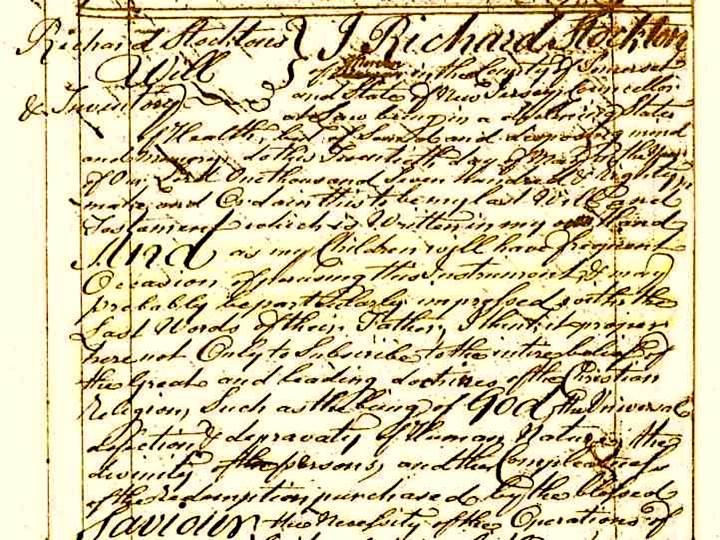
Will of Richard Stockton

Richard Stockton was a signer of the Declaration of Independence from New Jersey. Stockton was a lawyer and during the Revolution he was a member of the Continental Congress. Richard was taken prisoner by loyalists and during this time, his possessions were burned and his wealth reduced. He never recovered from his time as a prisoner and died in February, 1781.

The text and image below are from Richard Stockton’s May 20, 1780 will. The complete 1780 will is held by the New Jersey State Archives.


will-of-richard-stockton-1

“…And as my children will have frequent occasion of perusing this instrument, and may probably be particularly impressed with the last words of their father, I think it proper here not only to subscribe to the entire belief of the great and leading doctrines of the Christian Religion, such as the Being of God, the universal defection and depravity of human nature, the divinity of the person and the completeness of the redemption purchased by the blessed Saviour, the necessity of the operations of the divine Spirit; of divine Faith, accompanied with an habitual virtuous life, and the universality of the divine Providence: but also, in the bowels of a father’s affection, to exhort and charge them, that the fear of God is the beginning of wisdom, that the way of life held up in the Christian system, is calculated for the most complete happiness that can be enjoyed in this mortal state; that all occasions of vice and immorality is injurious either immediately or consequentially; even in this life; that as Almighty God hath not been pleased in the holy Scriptures to prescribe any precise mode in which he is to be publickly worshipped, all contention about it generally arises from want of knowledge or want of virtue. I have therefore no particular advice to leave with my children upon this subject, saving that they deliberately and conscienciously, in the beginning of life, determine for themselves, with which denomination of Christians they can, the most devoutly and profitably worship God; that after such determination they statedly adhere to such denomination without being given to change; and without contending with or judging others who may think or act differently upon a matter so immaterial to substantial virtue and piety. That distinguished abilities, stations and authority are only desireable as occasions of doing greater private and public good, but that their footsteps being invariably masked with envy and opposition, make them enemies to private peace, and therefore unless public life is evidently pointed out by divine providence it should rather be avoided than coveted. Of the temporal estate with which it hath pleased Almighty God in his bountiful providence to bless me, I hereby make the disposition following…”

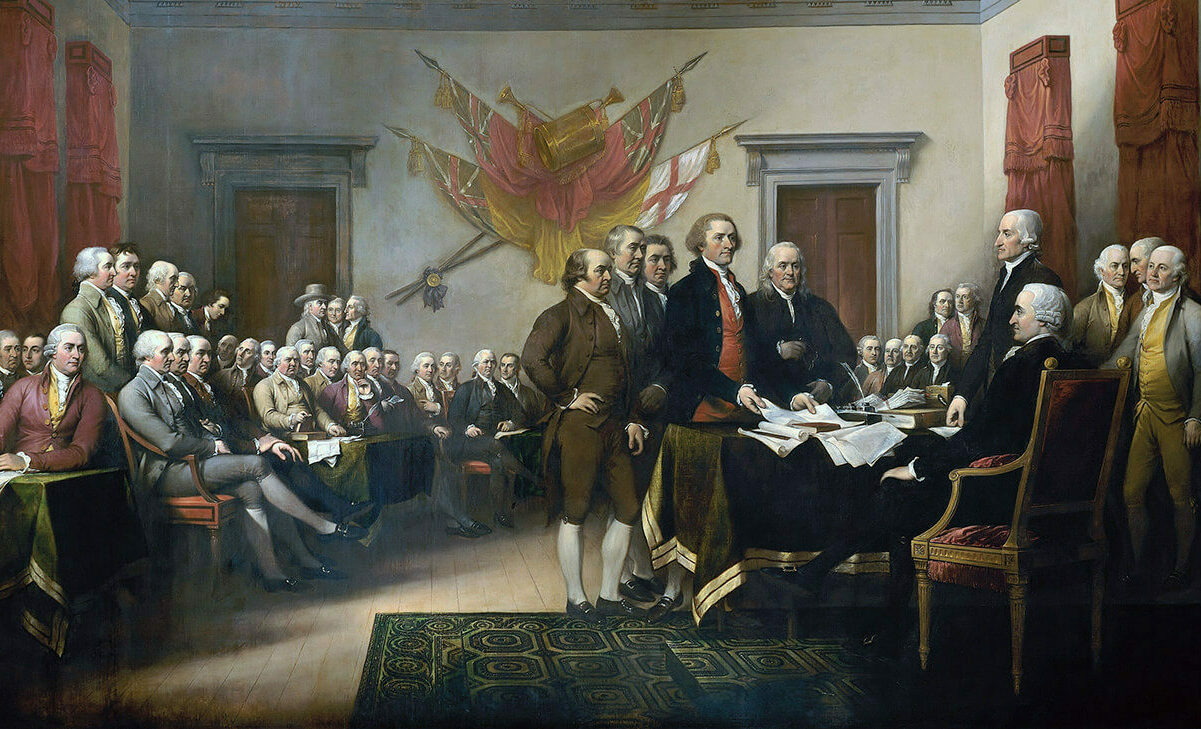
The Declaration of Independence

When in the course of human events, it becomes necessary for one people to dissolve the political bands which have connected them with another, and to assume among the powers of the earth the separate and equal station to which the laws of nature and of nature’s God entitles them, a decent respect to the opinions of mankind requires that they should declare the causes which impel them to the separation.

We hold these truths to be self-evident, that all men are created equal, that they are endowed by their Creator with certain unalienable rights, that among these are life, liberty and the pursuit of happiness. That to secure these rights, governments are instituted among men, deriving their just powers from the consent of the governed. That whenever any form of government becomes destructive of these ends, it is the right of the people to alter or to abolish it and to institute new government, laying its foundation on such principles and organizing its powers in such form as to them shall seem most likely to effect their safety and happiness. Prudence, indeed, will dictate that governments long established should not be changed for light and transient causes; and accordingly, all experience hath shown that mankind are more disposed to suffer while evils are sufferable than to right themselves by abolishing the forms to which they are accustomed. But when a long train of abuses and usurpations, pursuing invariably the same object, evinces a design to reduce them under absolute despotism, it is their right, it is their duty, to throw off such government and to provide new guards for their future security. Such has been the patient sufferance of these Colonies; and such is now the necessity which constrains them to alter their former systems of governments. The history of the present King of Great Britain is a history of repeated injuries and usurpations, all having in direct object the establishment of an absolute tyranny over these States. To prove this, let facts be submitted to a candid world.

He has refused his assent to laws, the most wholesome and necessary for the public good.

He has forbidden his Governors to pass laws of immediate and pressing importance, unless suspended in their operation till his assent should be obtained; and when so suspended, he has utterly neglected to attend to them.

He has refused to pass other laws for the accommodation of large districts of people unless those people would relinquish the right of representation in the legislature, a right inestimable to them and formidable to tyrants only.

He has called together legislative bodies at places unusual, uncomfortable, and distant from the depository of their public records, for the sole purpose of fatiguing them into compliance with his measures.

He has dissolved representative Houses repeatedly for opposing with manly firmness his invasion on the rights of the people.

He has refused for a long time, after such dissolutions, to cause others to be elected; whereby the legislative powers, incapable of annihilation, have returned to the people at large for their exercise; the State remaining in the meantime exposed to all the dangers of invasion from without and convulsions within.

He has endeavored to prevent the population of these States; for that purpose obstructing the laws for naturalization of foreigners; refusing to pass others to encourage their migrations hither, and raising the conditions of new appropriations of lands.

He has obstructed the administration of justice by refusing his assent to laws for establishing judiciary powers.

He has made judges dependent on his will alone for the tenure of their offices and the amount and payment of their salaries.

He has erected a multitude of new offices and sent hither swarms of officers to harass our people and eat out their substance.

He has kept among us, in times of peace, standing armies without the consent of our legislature.

He has affected to render the military independent of and superior to the civil power.

He has combined with others to subject us to a jurisdiction foreign to our constitution and unacknowledged by our laws; giving his assent to their acts of pretended legislation:

For quartering large bodies of armed troops among us:

For protecting them, by a mock trial, from punishment for any murders which they should commit on the inhabitants of these States:

For cutting off our trade with all parts of the world:

For imposing taxes on us without our consent:

For depriving us in many cases of the benefits of trial by jury:

For transporting us beyond seas to be tried for pretended offenses:

For abolishing the free system of English laws in a neighboring province, establishing therein an arbitrary government, and enlarging its boundaries so as to ren-der it at once an example and fit instrument for introducing the same absolute rule into these Colonies:

For taking away our charters, abolishing our most valuable laws, and altering fundamentally the forms of our governments:

For suspending our own legislatures, and declaring themselves invested with power to legislate for us in all cases whatsoever.

He has abdicated government here, by declaring us out of his protection and waging war against us.

He has plundered our seas, ravaged our coasts, burnt our towns, and destroyed the lives of our people.

He is at this time transporting large armies of foreign mercenaries to compleat the works of death, desolation and tyranny, already begun with circumstances of cruelty and perfidy scarcely paralleled in the most barbarous ages, and totally unworthy the head of a civilized nation.

He has constrained our fellow citizens taken captive on the high Seas to bear Arms against their country, to become the executioners of their friends and brethren, or to fall themselves by their hands.

He has excited domestic insurrections amongst us, and has endeavoured to bring on the inhabitants of our frontiers, the merciless Indian savages, whose known rule of warfare, is an undistinguished destruction of all ages, sexes and conditions.

In every stage of these oppressions we have petitioned for redress in the most humble terms: Our repeated petitions have been answered only by repeated injury. A Prince whose character is thus marked by every act which may define a tyrant, is unfit to be the ruler of a free people.

Nor have we been wanting in attentions to our Brittish brethren. We have warned them from time to time of attempts by their legislature to extend an unwarrantable jurisdiction over us. We have reminded them of the circumstances of our emigration and settlement here. We have appealed to their native justice and magnanimity and we have conjured them by the ties of our common kindred to disavow these usurpations which would inevitably interrupt our connections and correspondence. They, too, have been deaf to the voice of justice and of consanguinity. We must, therefore, acquiesce in the necessity which denounces our separation and hold them, as we hold the rest of mankind, enemies in war, in peace friends.

We, therefore, the Representatives of the United States of America, in general Congress assembled, appealing to the Supreme Judge of the world for the rectitude of our intentions, do, in the name and by the authority of the good people of these Colonies, solemnly publish and declare that these United Colonies are, and of right ought to be, free and independent States; that they are absolved from all allegiance to the British Crown and that all political connection between them and the State of Great Britain is and ought to be totally dissolved; and that as free and independent States, they have full power to levy war, conclude peace, contract alliance, establish commerce, and do all other acts and things which independent States may of right do. And for the support of this Declaration, with a firm reliance on the protection of Divine Providence, we mutually pledge to each other our lives, our fortunes, and our sacred honor.

Signers of the Declaration of Independence

NEW HAMPSHIRE: Josiah Bartlett, William Whipple, Matthew Thornton

MASSACHUSETTS: John Hancock, John Adams, Samuel Adams, Robert Treat Paine

RHODE ISLAND: Elbridge Gerry, Stephen Hopkins, William Ellery

CONNECTICUT: Roger Sherman, Samuel Huntington, William Williams, Oliver Wolcott

NEW YORK: William Floyd, Philip Livingston, Francis Lewis, Lewis Morris

NEW JERSEY: Richard Stockton, John Witherspoon, Francis Hopkinson, John Hart, Abraham Clark

PENNSYLVANIA: Robert Morris, Benjamin Rush, Benjamin Franklin, John Morton, George Clymer, James Smith, George Taylor, James Wilson, George Ross

DELAWARE: Ceasar Rodney, George Read, Thomas McKean

MARYLAND: Samuel Chase, Thomas Stone, William Paca, Charles Carroll of Carrollton

VIRGINIA: George Wythe, Richard Henry Lee, Thomas Jefferson, Benjamin Harrison, Thomas Nelson, Jr., Francis Lightfoot Lee, Carter Braxton

NORTH CAROLINA: William Hooper, Joseph Hewes, John Penn

SOUTH CAROLINA: Edward Rutledge, Thomas Heyward, Jr., Thomas Lynch, Jr., Authur Middleton

GEORGIA: Button Gwinnett, Lyman Hall, George Walton
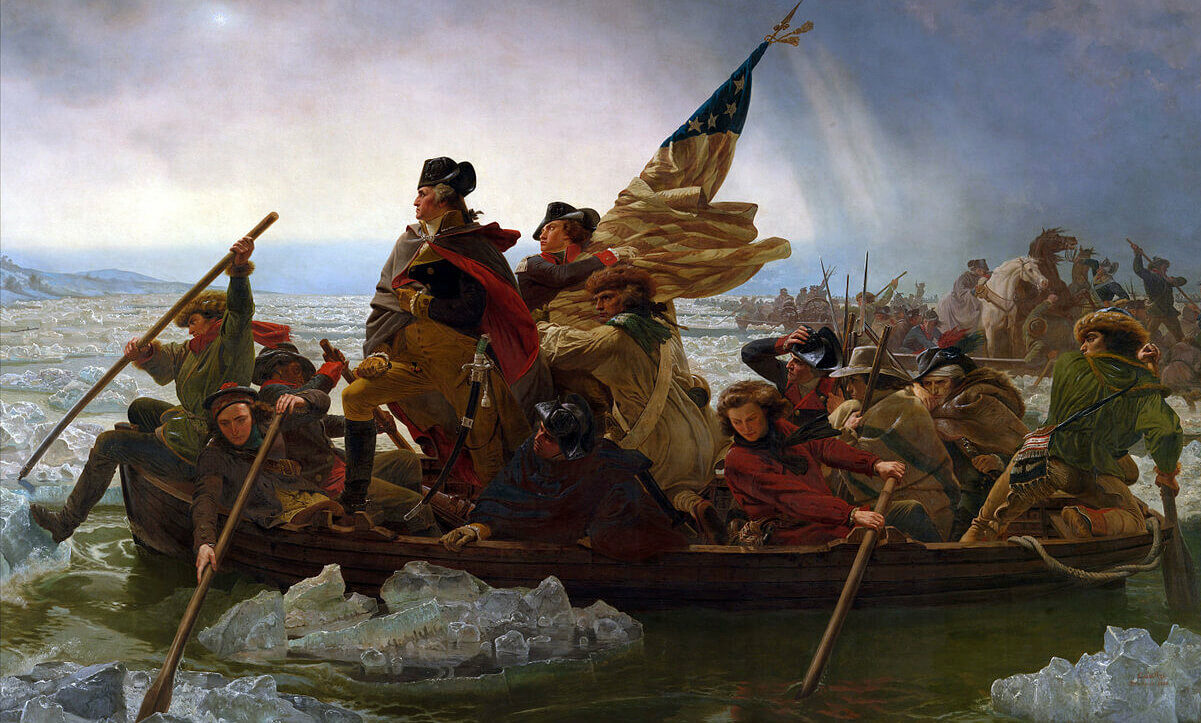
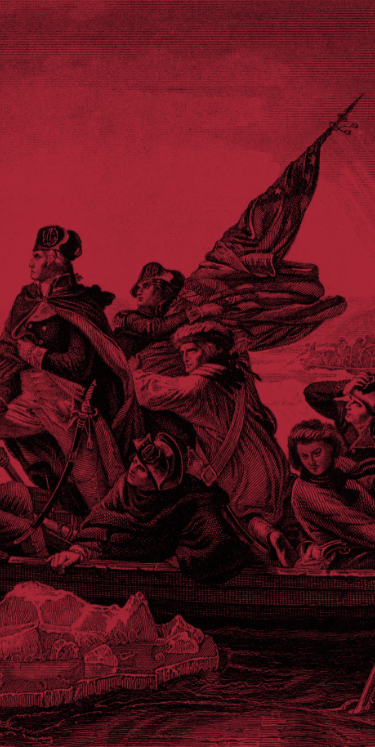
Battle of Trenton

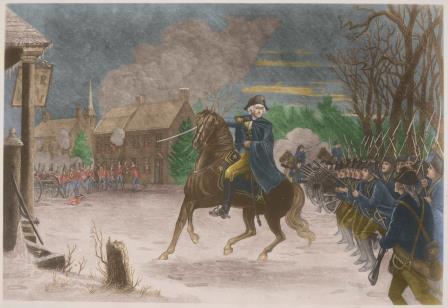
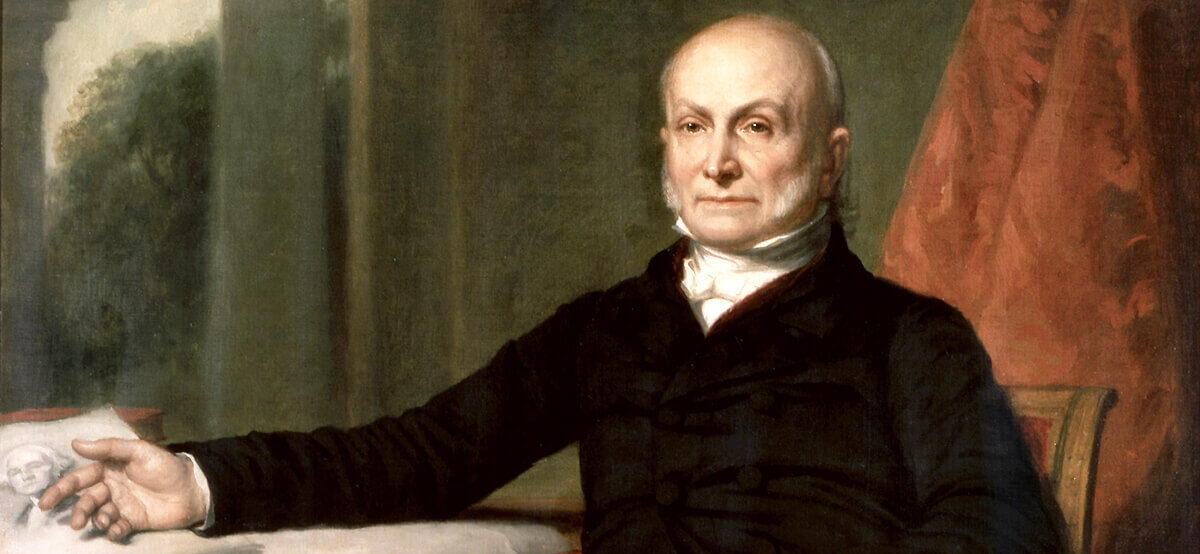
Below is a picture depicting George Washington in the Battle of Trenton. George Washington’s horse was wounded during the battle.1 The Battle of Trenton marked a significant victory for the American Army. They carried that momentum into another victory a few days later at the Battle of Princeton. Below is an account of God’s Divine protection of Washington.

battle-of-trenton-1

Historical Account

The heroism of Washington on the field of Princeton is matter of history. We have often enjoyed a touching reminiscence of that ever-memorable event from the late Colonel Fitzgerald. Who was aid to the chief, and who never related the story of his general’s danger and almost miraculous preservation, without adding to his tale the homage of a tear

The aid-de-camp had been ordered to bring up the troops from the rear of the column, when the band under General Mercer became engaged. Upon returning to the spot where he had left the commander-in-chief, he was no longer there. And, upon looking around, the aid discovered him endeavoring to rally the line which had been thrown into disorder by a rapid on-set of the foe.

Washington, after several ineffectual efforts to restore the fortunes of the fight, is seen to rein up his horse, with his head to the enemy, and in that position to become immovable. It was a last appeal to his soldiers, and seemed to say, Will you give up your general to the foe? Such an appeal was not made in vain. The discomfitted Americans rally on the instant, and form into line. The enemy halt, and dress their line.

The American chief is between the adverse posts, as though he had been placed there, a target for both. The arms of both lines are levelled. Can escape from death be possible? Fitzgerald, horror-struck at the danger of his beloved commander, dropped the reins upon his horse’s neck, and drew his hat over his face, that he might not see him die. A roar of musketry succeeds, and then a shout. It is the shout of victory.

The aid-de-camp ventures to raise his eyes, and 0, glorious sight! The enemy are broken and flying, while dimly amidst the glimpses of the smoke is seen the chief. “Alive, unharmed, and without a wound,” waving his hat, and cheering his comrades to the pursuit.

Colonel Fitzgerald, celebrated as one of the finest horsemen in the American army, now dashed his rowels in his charger’s flanks, and, heedless of the dead and dying in his way, flew to the side of his chief, exclaiming, “Thank God! your excellency is safe!” The favorite aid, a gallant and warm-hearted son of Erin, a man of thews and sinews, and “albeit unused to the melting mood,” now gave loose rein to his feelings, and wept like a child, for joy.

Washington, ever calm amid scenes of the greatest excitement, affectionately grasped the hand of his aid and friend, and then ordered—”Away, my dear colonel, and bring up the troops—the day is our own!”2


Endnotes

1 Bulletin of Information for Cavalry Officers (Washington: October 1920), 510.
2 George Washington Parke Custis, Recollections and Private Memoirs of Washington, by His Adopted Son (New York: Derby & Jackson, 1860), 190-192.

Attempted Capture of John Hancock and Samuel Adams

On April 18, 1775, Paul Revere and William Dawes set out to warn militias across the Massachusetts countryside of approaching British troops. These troops had been sent to Concord to confiscate the weapons there and dispatched to “bring back the bodies of Messr. Hancock and Adams.”

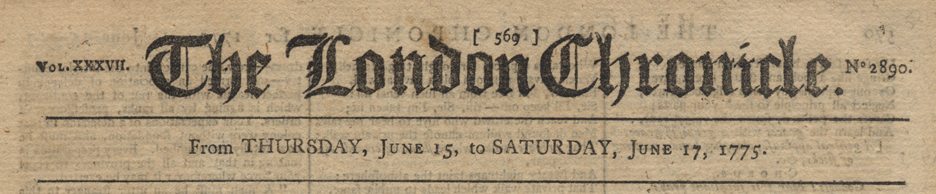
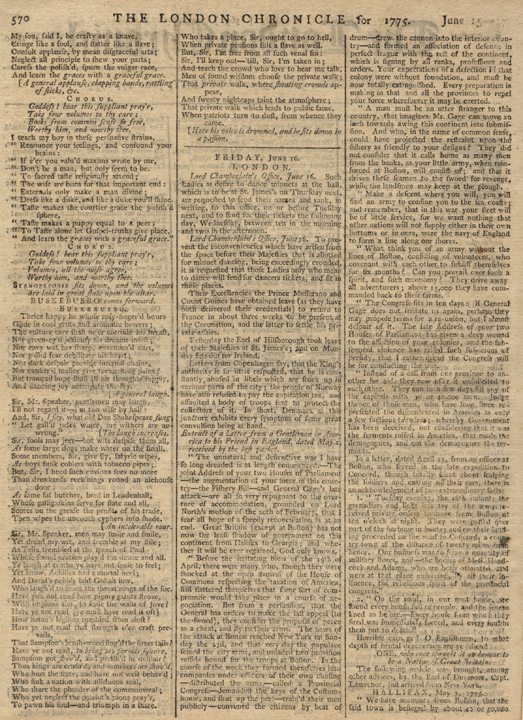
Below is a June 15-17, 1775 newspaper from the WallBuilders library with an account by a soldier in this mission.


attempted-capture-of-john-hancock-and-samuel-adams-1

The relevant letter excerpts are at the bottom right of this newspaper page.

attempted-capture-of-john-hancock-and-samuel-adams-2

This is the letter as it was printed in the newspaper. Transcript inserted below the picture.

attempted-capture-of-john-hancock-and-samuel-adams-3

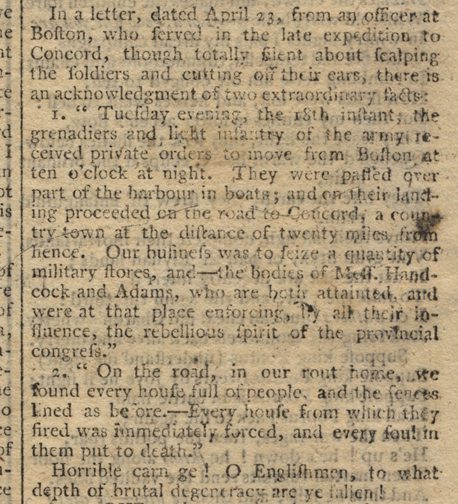
In a letter, dated April 23, from an officer at Boston, who served in the late expedition to Concord, though totally silent about scalping the soldiers, and cutting off their ears, there is an acknowledgment of two extraordinary facts:

1. “Tuesday evening, the 18th instant, the grenadiers and light infantry of the army received private orders to move from Boston at ten o’clock at night. They were passed over part of the harbour in boats; and on their landing proceeded on the road to Concord, a country town at the distance of twenty miles from hence. Our business was to seize a quantity of military stores, and – the bodies of Mess. Handcock and Adams, who are both attainted and were at that place enforcing, by all their influence, the rebellious spirit of the provincial congress.” (emphasis added)

2. “On the road, in our rout home, we found every house full of people, and the fences lined as before. – Every house from which they fired, was immediately forced, and every soul in them put to death.”

Horrible carnage! O, Englishmen, to what depth of brutal degeneracy are ye fallen!

John Adams Letter to Benjamin Rush

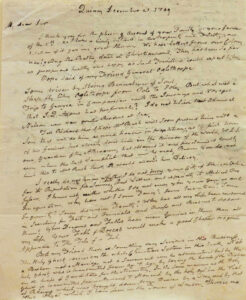
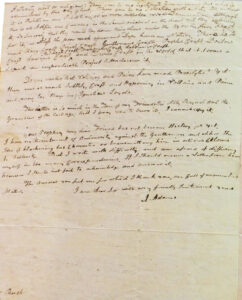
The following is the original December 21, 1809 letter by John Adams to Benjamin Rush, followed by the transcription. The transcript has been modified from the original to include modern grammar and spelling.


Quincy December 21, 1809

My dear Sir

I thank you for the pleasing account of your family in your favor of the 5th as I have a lively interest in their prosperity and felicity, your relation of it gave me great pleasure. We have letters from our colony navigating the Baltic, dated at Christiansand. They had been so far as prosperous and healthy and happy as such travelers could expect to be.

Pope said of my friend General Oglethorpe.
Some driven by strong benevolence of soul shall fly like Oglethorpe from pole to pole. But what was a trip to Georgia in comparison with the journeys and voyages that J.Q. Adams has performed? I do not believe that Admiral Nelson ever ran greater risks at Sea.

Tell Richard that I hope Mrs. Rush will soon present him with a son that will do him as much honor in proportion as the first born of his genius has already done him in the opinion of the world. W.S.S. our guardian of the Athenaum has obtained it and proclaims it loudly everywhere the best pamphlet that will be read. Be sure you do not hint this to Mrs. Rush Junr. It would alarm her delivery.

I really do not know whether I do not envy your city of Philadelphia for its reputation for science, arts, and letters and especially its medical professor. I know not, neither whether I do not envy you your genius and inspiration. Why have I not some fancy? Some invention? Some ingenuity? Some discursive faculty? Why has all my life been consumed in searching for facts and principles and proofs and reasons to support them? Your dreams and fables have more genius in them than all my life. Your Fable of Dorcas would make a good chapter or a good appendix to the Tale of a Tub.

But my friend there is something very serious in this business. The Holy Ghost carries on the whole Christian system in this Earth. Not a baptism, not a marriage, not a Sacrament can be administered but by the Holy Ghost, who is transmitted from age to age by laying the hands of the Bishop on the heads of candidates for the Ministry. In the same manner as the Holy Ghost is transmitted from monarch to monarch by the holy oil in the vial at Rheims which was brought down from Heaven by a dove and by that other phial [vial] which I have seen in the Tower of London. There is no authority civil or religious: There can be no legitimate government but that which is administered by this Holy Ghost. There can be no salvation without it. All without it is rebellion and perdition, or in more orthodox words damnation. Although this is all artifice and cunning in the sacred original in the heart, yet they all believe it so sincerely that they would lay down their lives under the ax or the fiery fagot [bundle of wood used for burning individuals at the stake] for it. Alas, the poor weak ignorant dupe human nature. There is so much king craft, priest craft, gentlemen’s craft, people’s craft, doctors craft, lawyers craft, merchants craft, tradesmen’s craft, laborers craft and Devil’s craft in the world that it seems a desperate [hopeless] and impractical project to undeceive it.

Do you wonder that Voltaire and Paine have made proselytes [converts]? Yet there [is] near as much subtlety, craft and hypocrisy in Voltaire and Paine and more too than in Ignatious Loyola [a Spanish knight who was a founder of the Jesuits].

This letter is so much in the tone of my friend the Abbe Raynal [a French writer] and the grumblers of the last age, that I pray you to burn it. I cannot copy it.

Your prophecy, my dear friend, has not become history as yet. I have no resentment of animosity against the gentleman and abhor the idea of blackening his character or transmitting him in odious colors to posterity. But I write with difficulty and am afraid of diffusing myself in too many correspondences. If I should receive a letter from him however I should not fail to acknowledge and answer it.

The Auroras you lent me for which I thank you are full of momentous matter.

I am dear sir with every friendly sentiment yours, J. Adams.

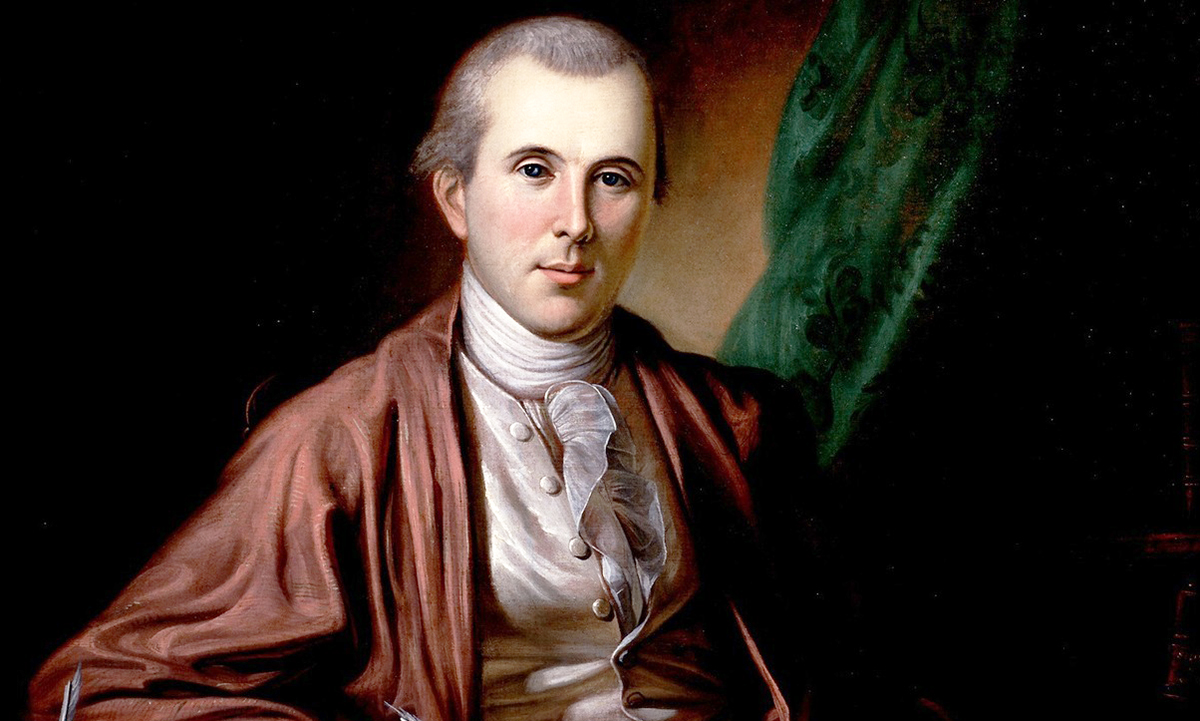
Dr. Rush

*WallBuilders has an article about the dream of Benjamin Rush (which this Adams letter is in response to) and the reconciliation of Adams and Jefferson in 1812. To read this article click here.

Philadelphia Bible Society Constitution

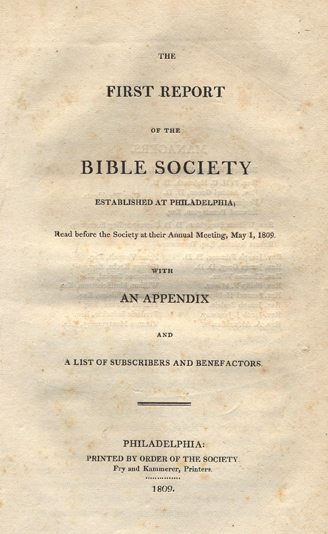
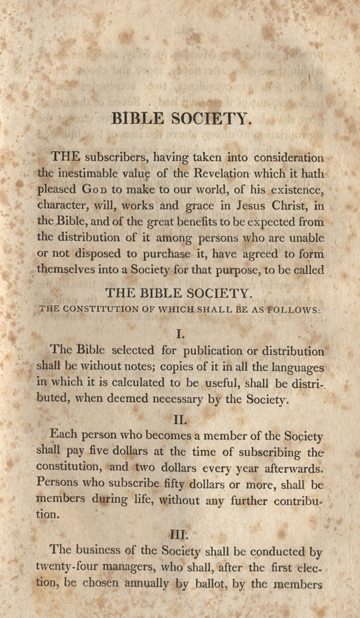
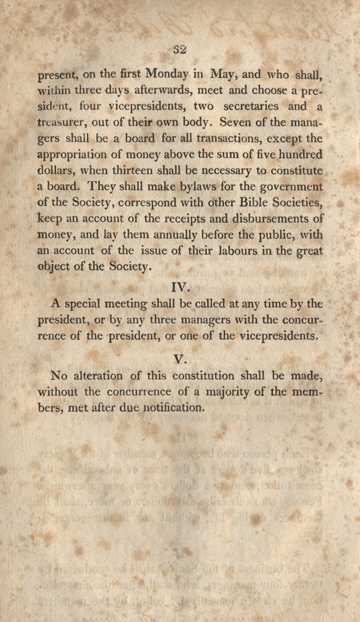
The Philadelphia Bible Society, America’s first Bible society, was officially organized on December 12, 1808. Rev. Dr. William White was president of the society and Declaration signer Benjamin Rush was a vice president. By 1816, 121 more Bible societies had been started across the nation.

Below, from WallBuilders’ Collection, is the Philadelphia Bible Society constitution, published in 1809. See also this title page from the first Bible printed by the Philadelphia Bible Society.


philadelphia-bible-society-constitution-1
philadelphia-bible-society-constitution-2

philadelphia-bible-society-constitution-3

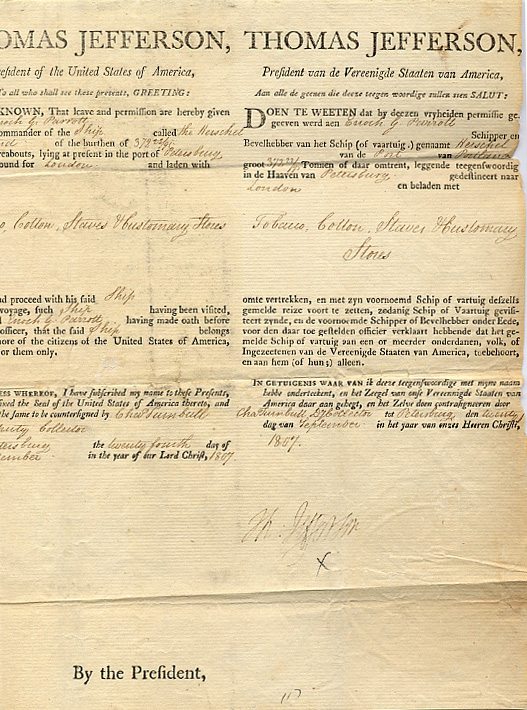
Thomas Jefferson Document


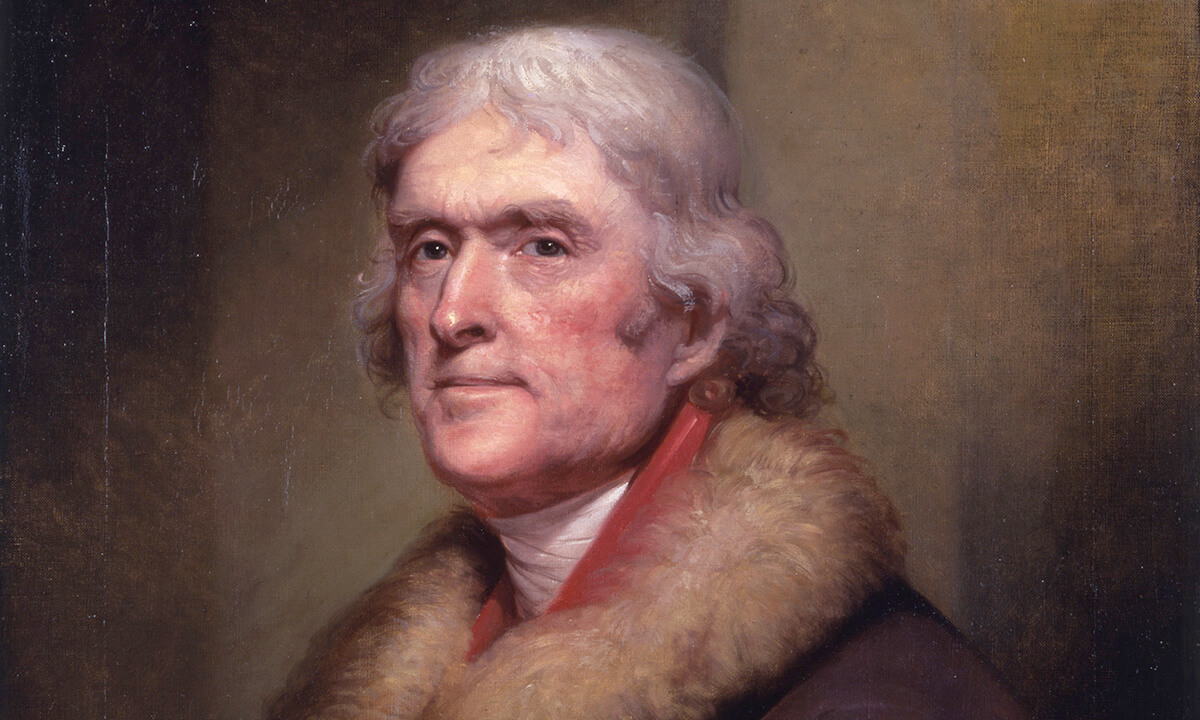
Following is an original document in our possession, signed by Thomas Jefferson on September 24, 1807. This document is permission for a ship called the Herschel to proceed on its journey to the port of London. The interesting characteristic of this document is the use of the phrase “in the year of our Lord Christ.” Many official documents say “in the year of our Lord,” but we have found very few that include the word “Christ.” However, this is the explicitly Christian language that President Thomas Jefferson chose to use in official public presidential documents.


thomas-jefferson-document

Jacob Broom Letter

Jacob Broom (1752-1810) was a farmer, surveyor, businessman, public official, and philanthropist. He prepared military maps for General George Washington prior to the Battle of Brandywine (1777) and held numerous local political positions throughout his life. Broom was member of the Delaware legislature (1784-86, 1788); and a delegate to the Constitutional Convention where he signed the federal Constitution (1787). He is probably one of the least known signers of the Constitution.


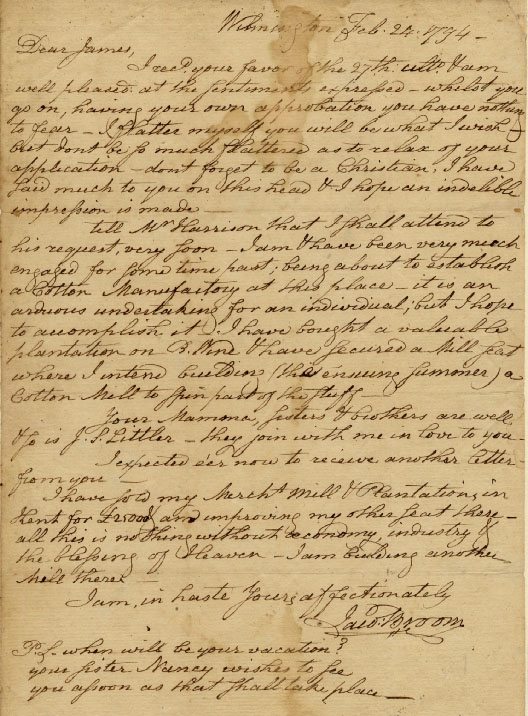
In this letter, Jacob expresses fatherly pride and reminds his son James to remember what he had been taught and “be a Christian”:

jacob-broom-letter-1


This is the text of Jacob Broom’s letter:

Wilmington Feb. 24,1794

Dear James,

I recd.[received] your favor of the 27th ulti [last] & am well pleased at the sentiments expressed – whilst you go on, having your own approbation you have nothing to fear – I flatter myself you will be what I wish but don’t be so much flattered as to relax of your application – don’t forget to be a Christian, I have said much to you on this head [topic of discourse] & I hope an indelible impression is made –

Tell Mr. Harrison that I shall attend to his request, very soon – I am & have been very much engaged for some time past; being about to establish a Cotton Manufactory at this place – it is an arduous undertaking for an individual; but I hope to accomplish it – I have bought a valuable plantation on B. Wine and have secured a Mill seat [site] where I intend building (the ensuing summer) a Cotton Mill to spin part of the stuff [note: Broom built the first cotton mill at Brandywine in 1795 near Wilmington, DE] –

Your mamma, sisters & brothers are well & so is J.S. Littler – they join with me in love to you –

I expected sir now to receive another letter from you –

I have sold my Mercht.[Merchant] Mill & Plantations in Kent for 25,000 I am improving my other seat there – all this is nothing without economy, industry & the blessing of Heaven – I am building another Mill there –

I am, in haste yours affectionately

Jaco Broom

P.S. when will be your vacation? Your sister Nancy wishes to see you as soon as that shall take place –