Is the Declaration Racist?

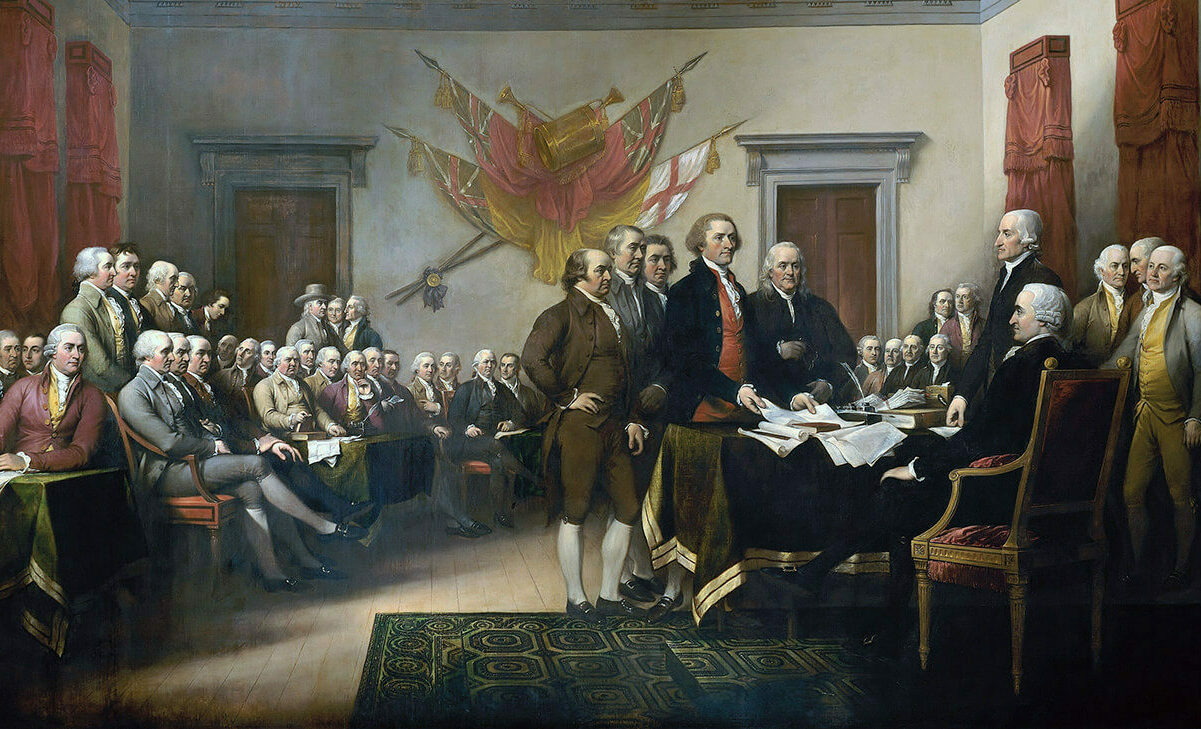
On July 4, 1776 a group of Americans approved a document declaring the United States of America free from English rule. This document was the Declaration of Independence, the nation’s birth certificate. The Declaration is currently being attacked as a racist document. Is this true?

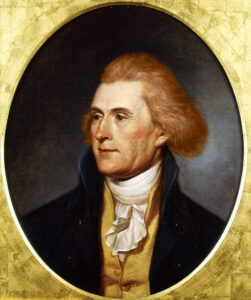
Thomas Jefferson, the author of this document, laid out the reasons the American colonies were declaring themselves independent. One of the grievances he included in his original draft of the Declaration said:

He [King George III] has waged cruel war against human nature itself, violating its most sacred rights of life and liberty in the persons of a distant people who never offended him, captivating and carrying them into slavery in another hemisphere….Determined to keep open a market where MEN should be bought and sold, he has prostituted his negative for suppressing every legislative attempt to prohibit or to restrain this execrable commerce.
This grievance was not included the final copy of the Declaration because of the objection of two states, but its inclusion by Thomas Jefferson shows how serious the issue of slavery was taken by our Founding Fathers.

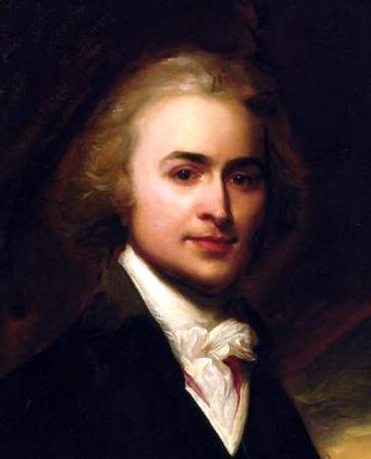
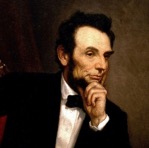
For many generations the Declaration of Independence was recognized as being a document that brought “freedom to the slave [and] liberty to the captives” (John Quincy Adams). For example, Abraham Lincoln spoke about the importance of the Declaration as an equality document:

In their [the Founders] enlightened belief, nothing stamped with the Divine image and likeness was sent into the world to be trodden on, and degraded and imbruted by its fellows. They grasped not the whole race of man then living, but they reached forward and seized upon the farthest posterity…[I]f you have been taught doctrines conflicting with the great landmarks of the Declaration of Independence…if you have been inclined to believe that all men are not created equal in those inalienable rights enumerated by our chart of liberty, let me entreat you to…come back to the truths that are in the Declaration of Independence.
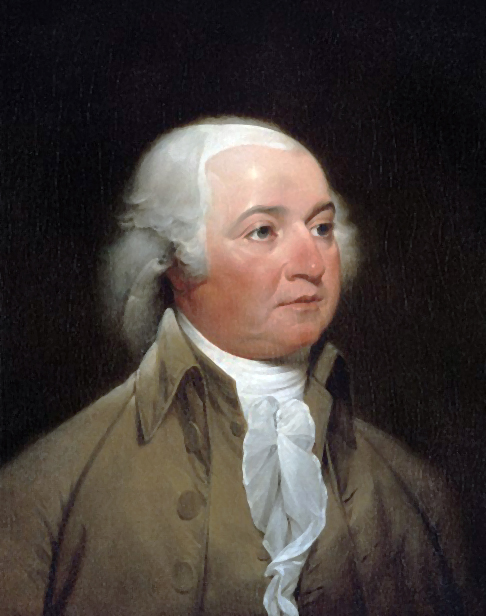
In honor of the lasting truths set forth in the Declaration of Independence, let’s celebrate Independence Day in a way that was recommended by John Adams:

It ought to be commemorated, as the day of deliverance, by solemn acts of devotion to God Almighty.

An Inspiring Relationship

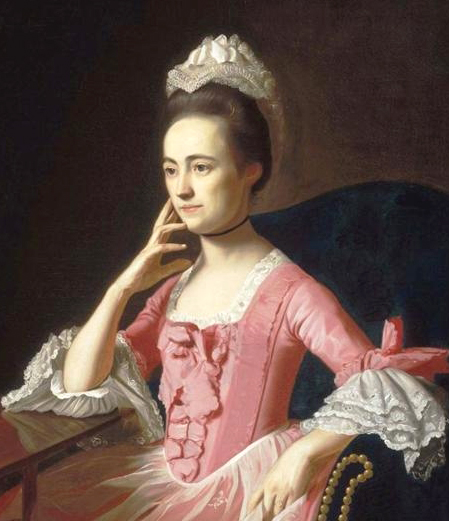
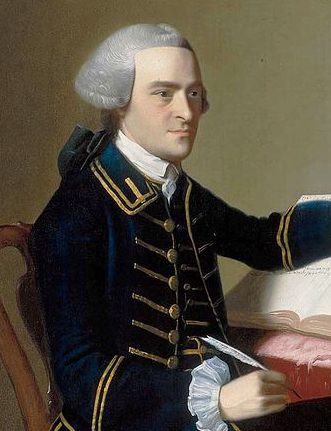
The enduring love and affection between Founding Father John Hancock and his wife Dorothy is a story worthy of Valentine’s Day.

Dorothy Quincy Hancock was born about 10 years after her famous husband, John. In April 1775 during their engagement, the two were visiting the small town of Lexington, just outside of Boston. Dorothy stayed with Lydia Hancock (John’s aunt) and John stayed with Pastor Jonas Clark. They both witnessed the first battle of the American War for Independence: the Battle of Lexington Green. (The following account is related in the 1912 book The Pioneer Mothers of America, reprinted by WallBuilders as Wives of the Signers):

On April 18th….Dr. Joseph Warren hastily dispatched Paul Revere on the ride that has made his name immortal. About midnight, Revere galloped up to the Rev. Mr. Clark’s house….By daybreak, one hundred and fifty men had mustered for the defense. John Hancock, with gun and sword, prepared to go out and fight with the minute-men, but [Samuel] Adams checked him….Hancock…went with him back through the rear of the house and garden to a thickly wooded hill where they could watch the progress of events. Dorothy Quincy and Aunt Lydia remained in the house, as no danger was apprehended there, and so by chance were eye witnesses of the first battle of the Revolution. Dorothy watched the fray from her bedroom window and in her narration of it notes: “Two men are being brought into the house. One, whose head has been grazed by a ball, insisted that he was dead, but the other, who was shot through the arm, behaved better.”

Dorothy helped minister to the wounded men.

The Hancock’s were married four months later, but since John was president of the Continental Congress, the two were forced to spend much time apart. Many of John’s letters to her reveal his deep affection for her.

My Dear Dear Dolly….I shall make out as well as I can, but I assure you, my Dear Soul, I long to have you here….When I part from you again it must be a very extraordinary occasion….I was exceeding glad to hear from you & hope soon to receive another letter.

My Dearest Dolly: No Congress today, and I have been as busily employed as you can conceive–quite lonesome, and in a domestic situation that ought to be relieved as speedily as possible! This relief depends upon you, and the greater dispatch [haste] you make, and the sooner you arrive here, the more speedy will be my relief!

Valentine’s Day is a good time to learn more about the loving relationships so common among our Founders and their wives.

Fatherly Advice

Each year on Father’s Day we celebrate our fathers and thank them for all the ways they bless us (a practice we should carry with us throughout the year!). In addition to our own fathers, we also have national fathers for whom we can be thankful and who were also great fathers to their family.

John Adams, signer of the Declaration of Independence and America’s second President, was the father of six children. During the War for Independence he spent much time in public service and away from his family. Not wanting to neglect his children, he and Abigail Adams wrote letters to each other about how the children’s education should proceed, including these suggestions:

The education of our children is never out of my mind. Train them to virtue. Habituate them to industry [hard work], activity, and spirit [endurance]. Make them consider every vice as shameful and unmanly. Fire them with ambition to be useful. Make them disdain to be destitute of any useful or ornamental knowledge or accomplishment. Fix their ambition upon great and solid objects, and their contempt upon little, frivolous, and useless ones. (August 1774)

It should be your care, therefore, and mine, to elevate the minds of our children and exalt their courage; to accelerate and animate their industry and activity; to excite in them an habitual contempt of meanness, abhorrence of injustice and inhumanity, and an ambition to a excel in every capacity, faculty, and virtue. If we suffer their minds to grovel and creep in infancy, they will grovel all their lives.(October 1775)

John Quincy Adams grew up under this instruction. He became our nation’s sixth President, and was the father of four children. In his many years of public service, he would often spend extended periods away from his family. Wanting to encourage and advise his children during these times, especially on growing strong spiritually, he wrote a series of letters giving his son advice on how to read and study the Bible. In one of these letters, he said:
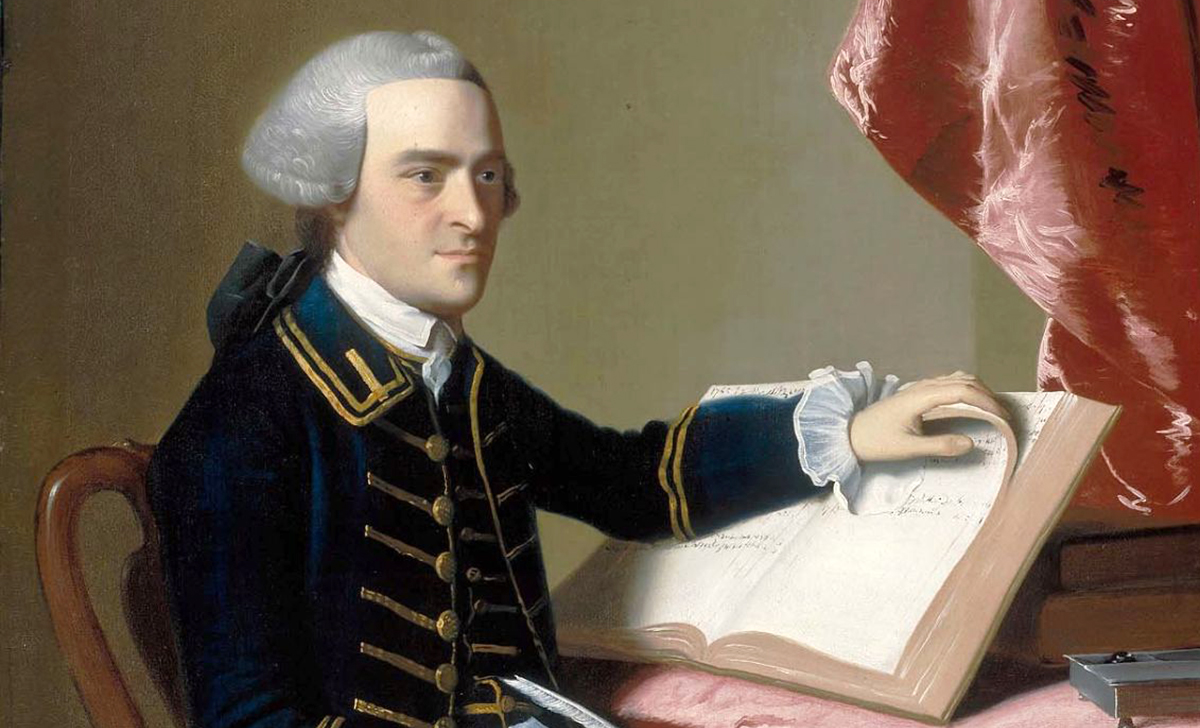
I advise you, my son, in whatever you read, and most of all in reading the Bible, to remember that it is for the purpose of making you wiser and more virtuous. I have myself, for many years, made it a practice to read through the Bible once every year. I have always endeavored to read it with the same spirit and temper of mind, which I now recommend to you: that is, with the intention and desire that it may contribute to my advancement in wisdom and virtue.

This advice from our Founding Fathers is definitely worth remembering.

America’s Exceptional History of Anti-Slavery

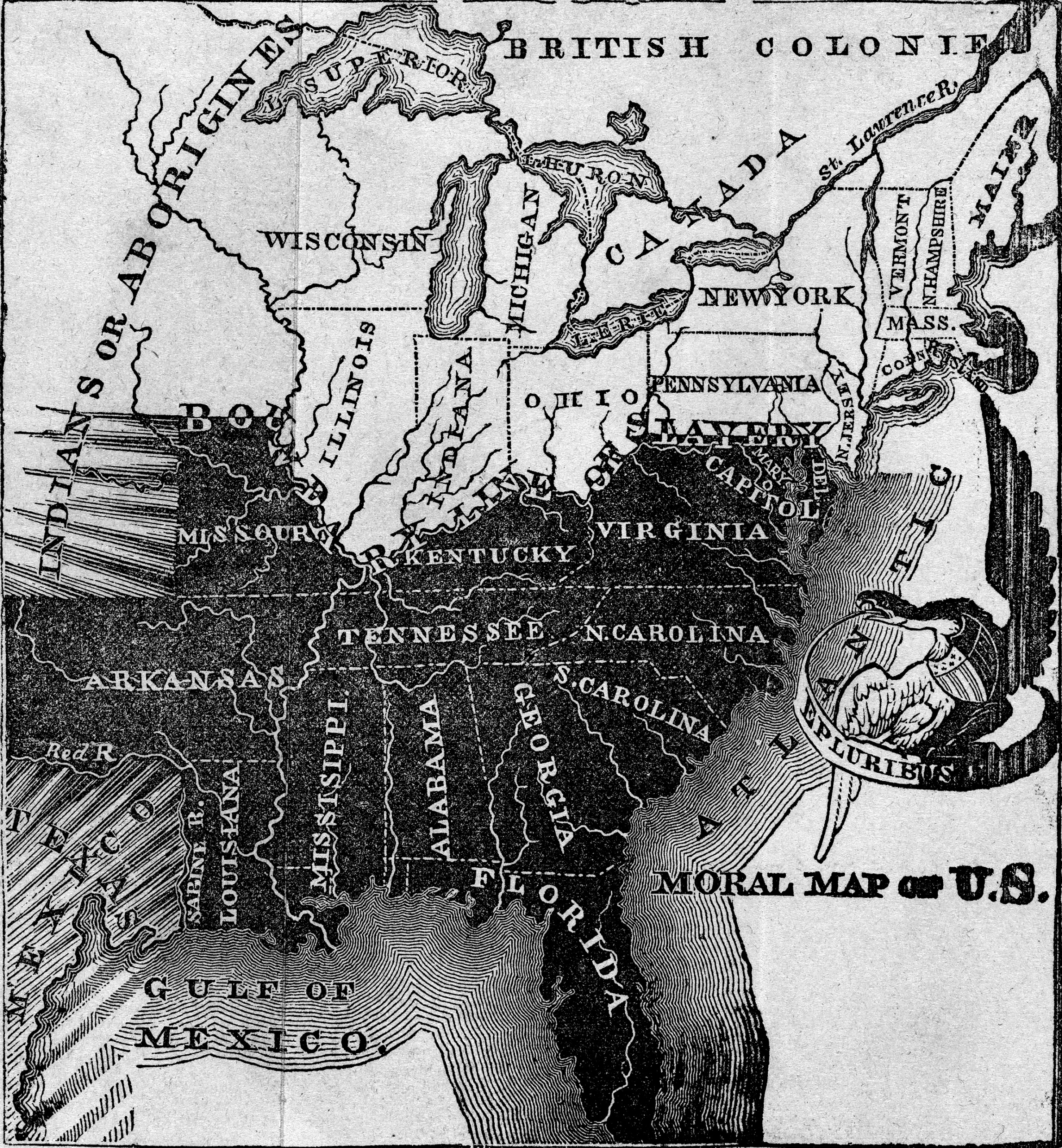
“Moral Map of the US”

Recently the idea of American Exceptionalism has been ridiculed in academic and political circles with entire books dedicated to the purpose of tearing down any thought of an ethical America.[i] Much of this recent shift centers around America’s record on slavery. For instance, organizations such as the New York Times have started initiatives declaring that the “true founding” was not until the introduction of slavery 1619[ii] and that the “founding ideals were false” due to the existence of slavery.[iii]

The shift to a negative perspective of America largely stems from the revisionist school of history beginning in the 1960’s and culminating with Howard Zinn’s monumental 1980 People’s History of the United States. This book popularized the historiographical approach of doing “history from the bottom up,” which means telling the story of America through the interpretive lens of oppression. A fellow activist historian of Zinn’s, Staughton Lynd explains the fundamental premises underlying this approach in his Doing History from the Bottom Up. In their interpretive model, “was founded on crimes against humanity directed at…enslaved African Americans,” and therefore must be evil.[iv]

Such anti-American revisionism forgets that America’s record of anti-slavery actually is exceptional compared to the rest of the world. Rarely do revisionists remember that over half of the American states had passed laws abolishing slavery by 1804, nearly thirty years before William Wilberforce effected the similar results in England. This wide-scale abolitionism was planted by the Biblical beliefs of several early colonies, was watered by the advocacy and action of the patriots during the American Revolution, and finally brought forth fruit through the establishment of a Constitutional Republic designed to advance liberty and defend the ideals of the Declaration.

A careful review of the colonial anti-slavery context, the development of abolitionist thought during the War for Independence, and the staunch leadership of the pro-freedom Founding Fathers reveals how America led the way in abolishing slavery. Instead of the modern academic narrative which attempts to debunk American exceptionalism, history shows that America was exceptional in their struggle for emancipation.

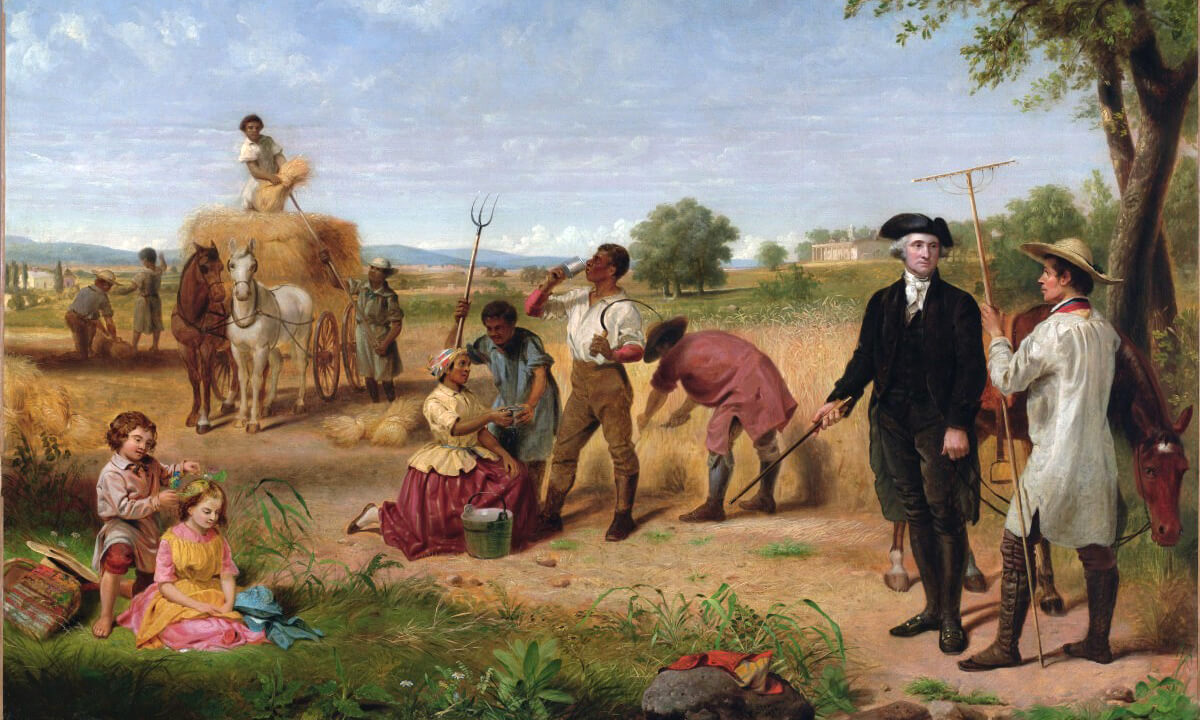
As mentioned earlier, by 1804 all of the New England states as well as Vermont, New York, and New Jersey had either completely abolished slavery or enacted positive laws for the gradual abolition of it. This is four years before the Federal Congress ends the slave trade, and almost three decades before England votes to follow suit and abolishes slavery. The American wave of emancipation constituted the largest group of people who had voluntarily freed their slaves up to that point in modern history.

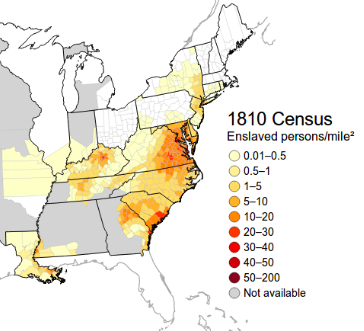
The 1810 census documents that the total population of those states—Massachusetts (Maine included), New Hampshire, Rhode Island, Connecticut, Vermont, Pennsylvania, New York, and New Jersey—stood at 3,486,675.[v]  This was approximately 48% of the total population, slave and free, of the United States at that time. Although not entirely free of slavery due to the gradual emancipation laws in states such as New York and New Jersey, the total percentage of the population waiting for emancipation was only 0.9% in states originally a colony. So, by 1804 half of America had succeeded in passing laws for the abolition of slavery, and only six years later they had been 99% effective in accomplishing that goal. Nobody else in the world was anywhere close to what those Northern States had succeeded in doing—in this America was exceptional.
Massachusetts itself has the honor of being the only state to have totally abolished slavery by the time the first census was completed in 1790, and Vermont was not far behind with only seventeen slaves left to be liberated by their laws.[vi] Massachusetts also receives distinction for passing potentially the earliest anti-slavery law in the American colonies within the 1641 enactment of the Massachusetts Body of Liberties. The tenth capital crime in that legal code stated that, “if any man stealeth a man or mankind, he shall surely be put to death. Ex. xxi.16.”[vii] Taken from the Bible as evidenced by the scriptural citation, manstealing was interpreted by the New England colonists to include what they considered improper enslavement—later it was to expand to all vestiges of slavery.

Blackstone describes manstealing as, “the forcible abduction or stealing away of a man, woman, or child, from their own country, and sending them into another.”[viii] Going further to say, “this is unquestionably a very heinous crime, as it robs the king of his subjects, banishes a man from his country, and may in its consequences be productive of the most cruel and disagreeable hardships.”[ix]

This law was not simply an empty letter either, and when the first instance of manstealing occurred in 1646 the General Court of Massachusetts was vigorous in its prosecution. The record explains that:

The General Court, conceiving themselves bound by the first opportunity to bear witness against the heinous and crying sin of man stealing, as also to proscribe such timely redress for what is past, and such a law for the future as may sufficiently deter all others belonging to us to have to do in such vile and most odious courses, justly abhorred of all good and just men, do order that the negro interpreter, with others unlawfully taken, be, by the first opportunity, (at the charge of the country for present,) sent to his native country of Ginny, and a letter with him of the indignation of the Court thereabouts, and justice hereof, desiring of honored Governor would please put this order in execution.[x]

Interestingly, the Court chose to go farther than the law necessarily required, deciding to send back the slaves at the cost of the community. After making arrangements for the liberated slaves, the General Court then, “appointed a committee to examine witnesses and draw up the case about Captain Smith and Mr. Kezar killing stealing, and wronging of the negroes, etc.”[xi] This response to the arrival of a slave ship is markedly different than when the first one arrived on the shores of Jamestown, and it indicates an entirely different culture which from an extremely early period looked down upon the slave trade.

Religion Fueled Anti-Slavery

Their reliance upon the Bible to begin to understand their relationship to slavery led New Englanders down a dramatically different path than both the Southern colonies and the world. Instead of viewing enslavement as a natural product of race, they understood it arose out of either personal misfortunes (such as debt) or bad choices (such as crime). The New England slaves therefore attained levels of rights unheard of practically anywhere else.

The Puritans’ idea of a “Bible commonwealth” relied upon the Mosaic laws for much of their own statutes concerning servitude. Therefore, slaves had an increased level of social status with rights including the right to own property, testify in court against white men, wives could not be compelled to testify against their husbands, had legal standing to sue which included suing their masters for freedom.[xii] Additionally, enslaved people had the equal procedural rights within the courtroom which, together with the right to sue, led many slaves to advocate for freedom through the New England government.[xiii]

The wider context of slavery both domestically and globally makes North America’s record even more exceptional. First it must be noted that slavery has existed within every culture historically documented. In fact, the story of American slavery begins long before Christopher Columbus ever dreamed of sailing across the ocean sea. The native tribes he discovered all had slaves and on a whole it is estimated that 20 to 40 percent of native populations were slaves, making the native Americans on par with the slave empires of Greece and Rome.[xiv] This native American tradition of slavery continued uninterrupted by colonization, and by 1860, 12.5% of the population in the Indian Nations were black slaves, equaling one slave for every eight Indians.[xv]

Expanding the scope of inquiry even wider, throughout the nearly 400 years of the trans-Atlantic slave trade 12,521,337 Africans were taken to be slaves around the world. Only a small minority of that number ever embarked to the areas that would become the United States—305,326 to be exact, totaling 2.4%.[xvi] For comparison, Spain and her territories received 1,061,524 slaves during that same period representing nearly 8.5%, and France only barely received more with 11% (1,381,404). Next was Great Britain with 3,259,441 slaves taken from Africa, meaning that over one quarter (26%) of all slaves sourced from the African continent were intended for English lands. That, however, pales in comparison to Portugal and Brazil, where 5,848,266 enslaved humans were shipped—nearly 47% of the total number. Even the Netherland had more stake in the trans-Atlantic slave trade than America did, themselves accounting for 554,336 and 4.4%.[xvii]

What is more, slavery both globally and in America was never simply white on black. Just as every people group has owned slaves, every people group has correspondingly been enslaved. Prior to the 1700s there were more white slaves globally than there were black slaves.[xviii] In fact, early records from Massachusetts reveal that in December of 1738 several white men were sentenced to slavery for a variety of crimes. One had been an indentured servant who physically assaulted the man he was working for, and then “did conspire also against the life of his said whole common wealth,” and two others for theft alongside breaking and entering.[xix] The next year the Massachusetts court similarly sentenced another white criminal to slavery for attempted rape.[xx]
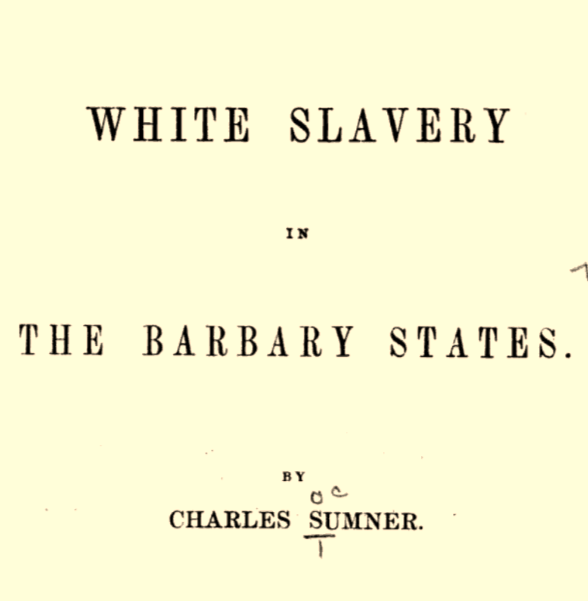
In addition to white slavery in America, Americans themselves were sold into slavery in the Barbary Coast of North Africa after being captured by Muslim slave traders. Charles Sumner, the famous abolitionist and founder or the Republican party, documented that fourteen men from Boston and Philadelphia would fetch $34,792 in the African slave market of 1785.[xxi] Beyond just the American sailors, the Muslim Barbary Pirates conducted extensive slave raids along the European coast, meaning that:

“Between 1530 and 1780 there were almost certainly a million and quite possibly as many as a million and a quarter white, European Christians enslaved by the Muslims of the Barbary Coast.”[xxii]

Just as there were white slaves both in America and the world, there also were black slave masters. Carter Woodson, often considered the “Father of Black History,” conducted a close study of the 1830 census data in order to investigate rates of free blacks who themselves owned slaves. His research revealed that, out of those free blacks who were eligible to own slaves (head of households living in states which would later join the Confederacy), 16% of them owned black slaves.[xxiii] Certain states, however, stand out in their relatively high frequency. South Carolina for instance saw 43% of eligible free black people own slaves, 40% in Louisiana, 26% in Mississippi, 25% in Alabama, and 20% in Georgia.[xxiv] Such statistical data simply shows just how varied the institution of slavery was throughout both history and the American story—far from the monolithic image presented by revisionists.

With so much of the world having been embroiled with slavery and the slave trade for hundreds of years, it makes the actions of America not only unique but remarkable. By the time the 18th century began, many of the northern colonies began passing laws which established duties on importing slaves. The intent was for such acts cut away the slaver’s profit margin and therefore making it economically undesirable to import slaves into those regions. In 1700 elements of the Massachusetts citizenry petitioned the legislature for restrictive duty on slaves “to discourage the bringing of them” of forty shillings.[xxv] The next year the colony sought to set a limit to the period of slavery that a person could serve, and in 1705 they were successful in obtaining a four-pound import duty.[xxvi] Rhode Island had passed a slightly smaller duty two years earlier of a still substantial three-pounds.[xxvii]

Other colonies such as New York and Pennsylvania attempt to pass even more restrictive bills regulating the slave trade into relative non-existence but many of their efforts were vetoed by the authority of the Crown.[xxviii] The Royal veto of anti-slavery measures, often because of the economic benefit which England derived from the global trade, became a common response to colonial attempts at restricting slavery.

Nearly seventy years later such practices nearly made it into the Declaration of Independence after appearing in Thomas Jefferson’s draft and being approved by Benjamin Franklin and John Adams. The grievance against the slave trade was the longest out of all of them, occupying the better part of a page in addition to having the most words underlined or capitalized outside of the title. The grievance in the draft reported to Congress read as follows:

He has waged cruel war against human nature itself, violating its most sacred rights of life and liberty in the persons of distant people, who never offended him, captivating and carrying them into slavery in another hemisphere, or to incur miserable death in their transportation tither. This piratical warfare, the opprobrium of infidel powers, is the warfare of the Christian king of Great Britain. Determined to keep open a market where Men should be bought and sold, he has prostituted his negative for suppressing every legislative attempt to prohibit or to restrain this execrable commerce.[xxix]

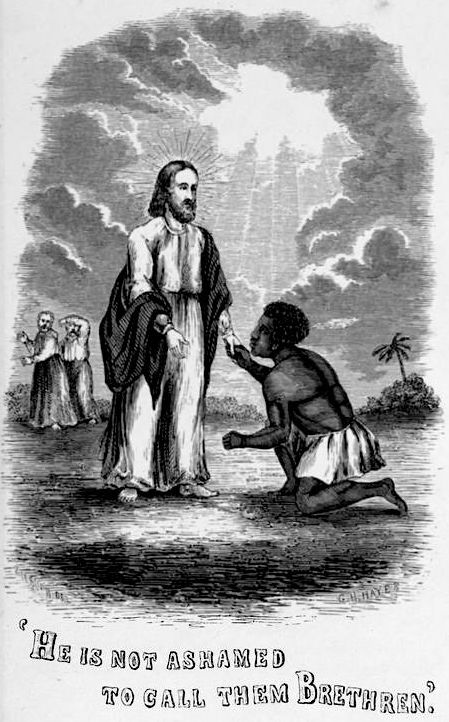
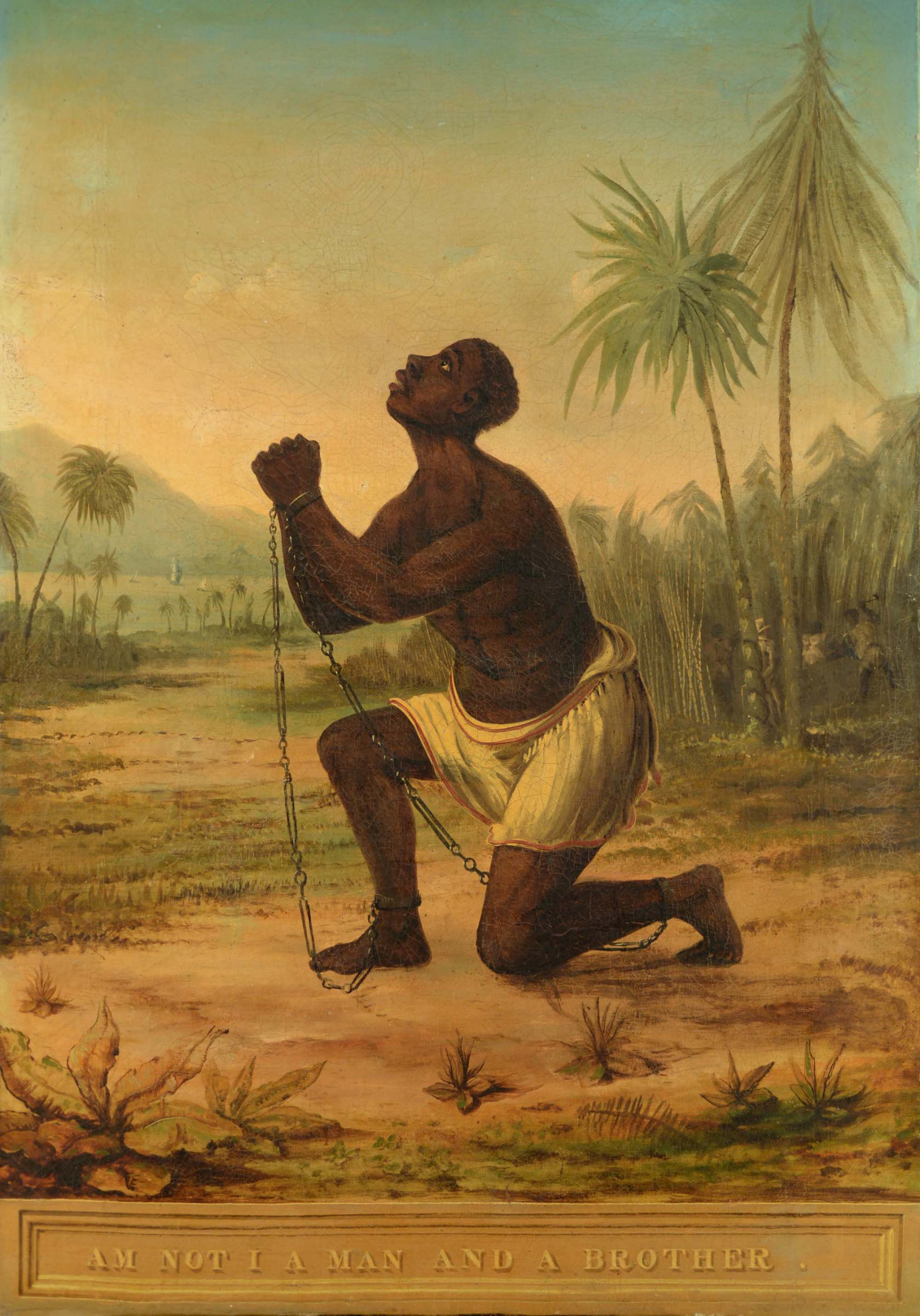
“Am I not a man and a brother.”

Many other Founding Fathers agreed with Jefferson—in fact, the majority of Founding Fathers agreed with him. Only two states voted against the grievance thus keeping it out of the final Declaration of Independence.

(It should also be noted that although many today claim that when the Declaration states that “all men are created equal” the Founding Fathers really meant to say “all white men are created equal,” Jefferson himself explicitly identifies slaves as men and thereby included in the American promise.)

With over a century of anti-slavery activity, it should come as no surprise to see a dramatic increase in manumissions and widespread emancipation during and immediately following the War for Independence. From 1790 to 1810 the number of free blacks in America increased from 59,466 to 108,395, displaying a growth rate of 82%. The next decade saw that number expand another 72% to 186,446.[xxx] While the number continued to grow albeit at a lower rate of growth in the years leading up to the Civil War, those first two decades of the American Republic saw the strongest rate of voluntary emancipation ever recorded up to that time. It is this period which Arthur Zilversmit calls the First Emancipation.[xxxi]

John Adams, an attorney prior to becoming a politician, recalled the environment of emancipation during those years saying:

“I was concerned in several Causes, in which Negroes sued for their Freedom before the Revolution.…I never knew a Jury, by a Verdict to determine a Negro to be a slave—They always found them free.”[xxxii]

During the Revolution itself many slaves who fought for freedom from England also achieved freedom from slavery, being manumitted on account of their service. William Whipple, signer of the Declaration and General under Washington, freed his slave, Prince Whipple during campaign after realizing the incongruity of his own actions.[xxxiii] Another veteran of the Revolutionary War, a slave named Prime, was actually re-enslaved after the war but, with the help of anti-slavery advocates, he successfully petitioned for his emancipation, winning his freedom not only on the battlefield but in the courtroom as well.

Upon examining this period, renown historian Benjamin Quarles remarked that the War for Independence and the environment leading up to it empowered the black population with the tools and personal agency to reach for their freedom as Americans. He writes that the slaves, “gave a personal interpretation to the theory of natural rights and the slogans of liberty and independence,” and many white leaders who were awakening to the injustice helped them in that greater revolution.[xxxiv]

This brief examination of the overarching facts and context concerning America’s early history with slavery shows that the story is infinitely more nuanced than the revisionist narratives propagated by Zinn, Lynd, and the New York Times. The real history, however, reveals that America’s record for anti-slavery is exceptional when placed in the context of the world at that time. Instead of presenting a view of history as if it Jamestown won the ideological battle for America, historians today must realize that the tree of slavery was choked out by the tree of liberty. That the ideas of Plymouth overcame those of Jamestown.

The story of the northern colonies, when properly told, shows that America was among the first places in the world to lead a successful fight against slavery in both word and deed. Furthermore, the anti-slavery Founding Fathers paved the path which many of the global abolitionist followed in the decades to come. America ought not to be remembered as a land of oppression but rather one of liberation. The New World has been the frontier of freedom from the beginning, being the first to struggle for emancipation and find large-scale success. Those small American Republics, carved out of the wilderness, showed a level of civilization unheard of at that early period, passing anti-slavery and abolition laws before virtually anywhere else in the world. America was indeed exceptional—a seedbed of liberty for themselves and the rest of the world.


[i] Andrew Bacevich, The Limits of Power: The End of American Exceptionalism (New York: Holt Paperbacks, 2009); Godfrey Hodgson, The Myth of American Exceptionalism (New Haven: Yale University Press, 2010).

[ii] “The 1619 Project,” The New York Times (accessed December 5, 2019), https://www.nytimes.com/interactive/2019/08/14/magazine/1619-america-slavery.html

[iii] Nikole Hannah-Jones, “Our Democracy’s Founding Ideals were False When They were Written,” The New York Times (December 5, 2019), https://www.nytimes.com/interactive/2019/08/14/magazine/black-history-american-democracy.html

[iv] Staughton Lynd, Doing History from the Bottom Up: On E. P. Thompson, Howard Zinn, and Rebuilding the Labor Movement from Below (Chicago: Haymarket Books, 2014), xii.

[v] Aggregate Amount of Each Description of Persons Within the United States of America, and the Territories Thereof (Washington: 1811), 1.

[vi] The American Almanac and Repository of Useful Knowledge for the Year 1858 (Boston: Crosby, Nicholas, and Company, 1858), 214.

[vii] Francis Bowen, editor, Documents of the Constitution of England and America, from Magna Charta to the Federal Constitution of 1789, (Cambridge: John Bartlett, 1854), 72.

[viii] William Blackstone, Commentaries on the Laws of England (London: A. Strahan and W. Woodfall, 1795), 4.218-219.

[ix] Ibid., 4.219.

[x] Nathaniel Shurtleff, Records of the Governor and Company of the Massachusetts Bay in New England (Boston: William Whites, 1853), 1.168.

[xi] Ibid., 1.176.

[xii] Arthur Zilversmit, The First Emancipation: The Abolition of Slavery in the North (Chicago: The University of Chicago Press, 1968), 19.

[xiii] Ibid.

[xiv] Fernando Santos-Granero, Vital Enemies: Slavery, Predation, and the Amerindian Political Economy of Life (Austin: University of Texas Press, 2009), 226-227.

[xv] Joseph Kennedy, Preliminary Reports on the Eighth Census, 1860 (Washington DC: Government Printing Office, 1862), 11.

[xvi] “Trans-Atlantic Slave Trade – Estimates,” Slave Voyages, https://www.slavevoyages.org/assessment/estimates (accessed December 6, 2019).

[xvii] Ibid.

[xviii] Philip Morgan, “Origins of American Slavery,” Organization of American History Magazine of History, Vol. 19, No. 4 (July 2005), p. 53

[xix] Nathaniel Shurtleff, Records of the Governor and Company of the Massachusetts Bay in New England (Boston: William Whites, 1853), 1.246.

[xx] Ibid., 1.269.

[xxi] Charles Sumner, White Slaves in the Barbary States (Boston: William D. Ticknor and Company, 1847), 32.

[xxii] Robert Davis, “Counting European on the Barbary Coast,” Past &Present, No. 172 (August 2001), 118.

[xxiii] Thomas J. Pressly, “‘The Known World’ of Free Black Slaveholders: A Research Note on the Scholarship of Carter G. Woodson,” The Journal of African American History 91, no. 1 (2006): 85.

[xxiv] Ibid.

[xxv] Zilversmit, The First Emancipation, 51.

[xxvi] Ibid.

[xxvii] Ibid.

[xxviii] Ibid., 47-49.

[xxix] Thomas Jefferson, The Works of Thomas Jefferson, edited by Paul Leicester Ford (New York: G. P. Putnam’s Sons, 1904), 210-211.

[xxx] Kennedy, Preliminary Reports, 7.

[xxxi] Zilversmit, The First Emancipation.

[xxxii] Collections of the Massachusetts Historical Society (Boston: Massachusetts Historical Society, 1877), 401-402.

[xxxiii] William Nell, Colored Patriots of the American Revolution (Boston: Robert Wallcut, 1855), 198.

[xxxiv] Benjamin Quarles, “The Revolutionary War as a Black Declaration of Independence,” Slavery and Freedom in the Age of the American Revolution, edited by Ira Berlin (Charlottesville: The University Press of Virginia, 1983), 285.

*Originally published: April 6, 2020

* This article concerns a historical issue and may not have updated information.

The State of Judicial Selections: The Missouri Plan and How it Fails

Introduction

Since much public policy is now created by the judiciary, the federal judicial system in America receives increasingly more attention from politicos, pundits, and reporters. Federal judicial appointments are often closely watched, as are cases at the US Supreme Court. Yet despite the attention, the original intent of the judiciary is not well understood today. And ironically, although 90 percent of all cases are heard at the state rather than the federal level,[i] the role and operation of the state judicial system is almost completely overlooked. With so much resting on state courts, how those judges are selected is undeniably important. Texas has recently become a center of attention for this issue.

Texas currently selects its judges by a vote of citizens through popular elections, but some want this to change. Due to the rise of Democratic voters in the larger urban areas of the state (such as Dallas and Houston), some Republican-leaning groups are urging a move away from allowing the people to choose their judges. Instead they urge the adoption of what has become known as the “Missouri Plan” (also known as “Merit Selection” or “Assisted Selection”), which eliminates contested judicial elections. However, as will be documented below, this so-called “Merit Selection” is based on subjective personal opinions rather than any objective standard of measurement. Instead of advancing well-prepared constitutional judges to seats, the “Missouri Plan” consolidates power into the hands of an unelected and unaccountable group of administrators, making the state judiciary more partisan and polarized.

Before examining the results of Merit Selection in other states, how does the plan work? While there is some difference in the way various states employ this system, the overarching details are similar. A small group of undemocratically appointed commissioners of supposed elite legal “experts” choose a tiny handful of nominees for a particular judgeship. The governor then picks one of those privately-selected nominees to become judge, and that largely ends the process.

But who are these “experts” that choose a state’s judges for the people of that state? In some states, the members of that small nominating commission are appointed by the governor, but usually the private state bar, legal associations, the legislature, the governor, and sometimes sitting judges split the choice of commissioners. Nearly 75% of the board members end up being lawyers,[ii] which has become such a problem that some states have passed laws limiting the number of attorneys that may be appointed. Texas is now being urged to accept this system as a replacement for having voters choose the judges who will rule over them.

Texas, The Nation, And Various Other Methods

A prominent group arguing for this shift is Texans for Lawsuit Reform (TLR), an organization that has achieved many good things in the past, including major substantive tort reform. On its website, TLR explains why Texans should no longer be allowed to choose their judges:
Texas is one of only a few states that elects its judges.[1] Because there are often so many judges on the ballot and because these are often lower-profile election contests, many Texans simply don’t have enough knowledge about the candidates for judicial office to make informed decisions. Many voters cast their votes for judges based on party affiliation or name recognition, since they have no knowledge of the relative merits of the candidates. Historically, this has led to groups of long-serving, competent, experienced judges being swept out of office based on nothing other than partisan affiliation.[iii] (emphasis added)

Their aim is to prevent larger blue cities from electing an increasing number of Democrat judges rather than Republican ones by moving Texas away from democratically contested elections. But before examining whether adopting the Missouri Plan (or any of its derivatives) would be good for Texas, it is worthwhile to review the six different types of state judicial selection systems currently in use.

Nonpartisan Elections:

Used by 15 states, this is the most popular method. These are contested races in which judicial candidates do not formally identify with any official party—Democrat, Republican, or otherwise. This is done in hopes of encouraging voters to look deeper into the candidates’ actual record on issues and past a simple party designation. (The first non-partisan judicial election took place in 1873.[iv])

The Missouri Plan (Assisted Appointment, Merit System)

The second most popular system is the Missouri Plan, with a total of 14 states employing it at the State Supreme Court level. Begun in Missouri in 1940, it expanded rapidly, but since 1994 states have stopped adopting it, opting instead to retain their older systems.[v]

Gubernatorial Appointment

Also known as the federal model, the governor makes judicial appointments that then go before the legislative branch for confirmation. This method is currently used by 10 states, especially in the New England area. Originally, every new state that entered the Union after 1789 adopted the federal model but by the mid-to-late-1800s, most had moved to popular elections. In fact, since 1847, Hawaii has been the only state to enter the Union and select the federal model; the rest have opted for some form of citizen elections.[vi]

Partisan Elections

In 1832, Mississippi first moved away from the federal model and adopted partisan elections. New York followed suit in 1846, and then most of the rest of the nation.[vii] By the time the Civil War was fully underway, 70 percent of the states used contested partisan judicial elections,[viii] but some have since chosen other elections.

Hybrid

California, Maryland, and New Mexico use a hybrid system that merges the Missouri Plan with elements of the federal model—notably legislative confirmation. This retains at least a portion of the original constitutional checks and balances, but like the full-blown Missouri Plan, it often utilizes methods that keep the process of choosing judges excluded from the public.

Legislative Appointment

Used only in Virginia and South Carolina, this is the least common system. The legislature selects judges in a manner similar to the way Senators were chosen for the US Senate prior to the addition of the 17th Amendment to the Constitution in 1913, and has the option of reappointing those judges once their initial term has been completed.[ix] 

The Philosophy Behind the Missouri Plan

With the push to adopt the Missouri Plan/Merit Selection in Texas, it is important to examine whether it justifies abandoning longstanding citizen voting traditions. Supporters offer two primary reasons for adopting a new system.

The first argument was presented above by Texans for Lawsuit Reform (TLR): “Texans simply don’t have enough knowledge” to make “informed decisions.”[x] This premise leads them to conclude that an unelected body of supposed experts (on whom TLR hopes to have substantial influence) is more likely to choose the type of judges TLR would prefer to have on the bench. 

In one regard, TLR is absolutely right that an educated citizenry is vital for a healthy and vigorous political life. As Thomas Jefferson affirmed, “If a nation expects to be ignorant and free in a state of civilization, it expects what never was and never will be.”[xi]

Signer of the Declaration Samuel Huntington agreed, declaring:

While the great body of freeholders are acquainted with the duties which they owe to their God, to themselves, and to men, they will remain free. But if ignorance and depravity should prevail, they will inevitably lead to slavery and ruin.[xii]

But if the problem TLR is trying to solve is citizen ignorance, the solution is citizen education, not reducing their rights and increasing an already over-bloated and unaccountable government bureaucracy. Informing citizens may not be the shortest or easiest route to their objectives, but it is undoubtedly the best for preserving political freedom.

The second argument for the Missouri Plan is that Merit Selection will stop corruption. Supporters allege that judicial corruption occurs because elections not only invite special interest money but they make judges too accountable to the people. As one group explained, “justices should be freed from wondering if their rulings will affect their job security.”[xiii] Proponents believe that if both money and the people are removed from the process, there will be less corruption.

Of course, this argument ignores the fact that the appointing commissioners also have their own vested interests and personal opinions as to how things should go in the judiciary, and they will select candidates accordingly. And if the concern is that special interest groups are “buying off” judges through donations, giving more political power to an unelected body is not the solution. There is no direct accountability for that body, their biases are not transparent, and recourse is difficult if not impossible to achieve, which increases rather than reduces opportunities for political malfeasance.

At its base, the Missouri Plan violates three core constitutional principles originally set forth by the Framers of our documents.

Three Fundamental Constitutional Principles the Missouri Plan Violates

1. Accountability

The first question that should always be asked with any political decision is, “How does this measure affect our liberty? —does it increase or reduce the rights and power of the citizenry?” If any part of the government is made less accountable, that proposal will be destructive of constitutional integrity.
Revolutionary patriot and signer of the Declaration Elbridge Gerry affirmed, “The origin of all power is in the people, and they have an incontestable right to check the creatures of their own creation.”[xiv] Whenever the people lose their ability to hold governmental bodies accountable for the execution of their public trust, it is a fundamental infringement on the rights of the people.

Defenders of the Missouri Plan claim their system does provide methods of recourse for the people, but even a cursory glance shows that the committee selection process is perhaps the least accountable system of all. The logic is so backward that one of the groups actively promoting this plan strangely argues that it is good “because concentrating power in one decision maker promotes greater accountability”[xv]

The lessons of history are clear and its voices of experience unanimous: whenever power becomes more concentrated, it generates increased autonomy, decreased accountability, and diminished freedom.

2. Preserving Constitutional Checks and Balances

Proponents of the Missouri Plan claim that citizen accountability over the judiciary is retained through judicial retention elections. (A retention election is one in which only the name of the sitting judge is on the ballot. A citizen simply votes yes or no for that judge, and if enough citizens vote no, then that judge is removed and the commission will select someone else to be judge.)

Not surprisingly, under this system the incumbent is reelected more than 99 percent of the time.[xvi] The reason for this is simple: in a contested election there is an opponent to point out and publicize what the incumbent has done wrong; without this, citizens rarely know that a wrong has occurred. (By the way, if citizens are too uneducated to make the initial selection of a good judge, why do proponents believe they will make a wiser choice in a retention election?)

Despite claims to the contrary, Merit Selection is not a neutral system that chooses the best judges. To the contrary, it can be even more partisan and polarizing than popular elections. As an example, in Missouri from 1995 to 2008, Democrats received just over half of the general election vote, but of judges selected by the Merit System who made political contributions, 87 percent of them donated to the Democrat party.[xvii] Clearly, judges chosen by Merit Selection accurately reflects the beliefs of those who chose them, not the beliefs of the voters in the state they are to judge.

3. Maintaining Judicial Oversight

America’s concern with having judges not directly accountable to the people can be traced back to well before the American War for Independence. For example, in 1765, after years of living under British appointed judges, Founding Fathers like Samuel Adams began advocating for increased judicial accountability.[xviii] Consequently, when the Declaration of Independence was penned, four of its 27 grievances addressed judicial abuses, specifically lamenting that the King had “made judges dependent on his will alone for the tenure of their office and the amount and payment of their salaries.” This was Britain’s version of a “Merit Selection” system.

The Constitution sought to correct this by greatly limiting the power of the Judicial Branch. As Federalist 78 affirmed, the judiciary in America:

has no influence over either the sword or the purse—no direction either of the strength or of the wealth of the society—and can take no active resolution whatever. It may truly be said to have neither force nor will.… [T]he judiciary is, beyond comparison, the weakest of the three departments of power.…[and] the general liberty of the people can never be endangered from that quarter.[xix] (emphasis added)

Jefferson explained why the Judiciary should never be independent from the people:

It should be remembered as an axiom of eternal truth in politics that whatever power in any government is independent is absolute also…. Independence can be trusted nowhere but with the people in mass.[xx]
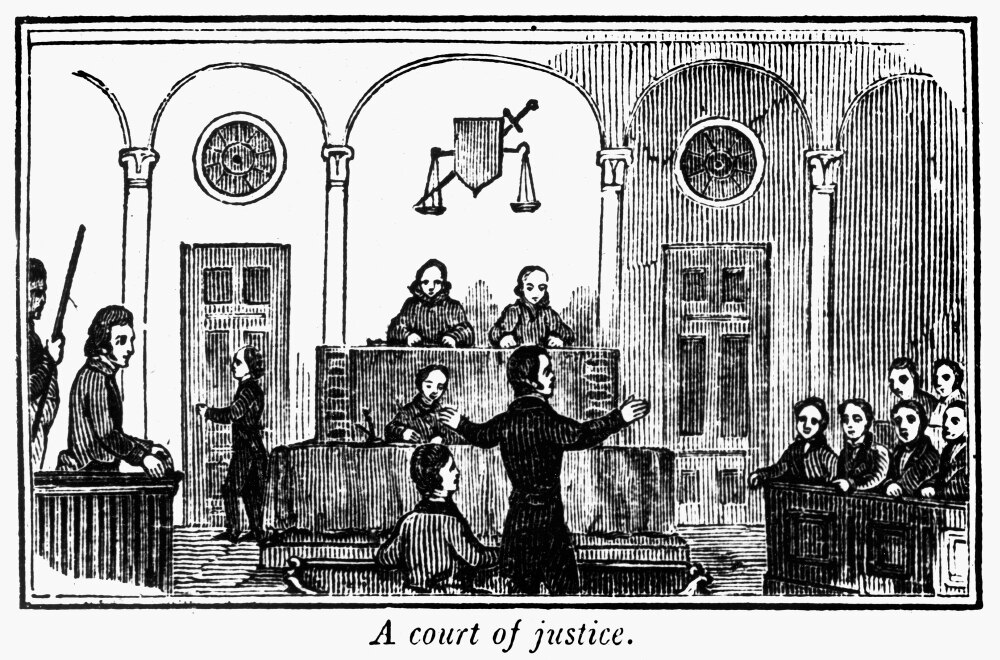
In fact, he specifically argued that if the people were to be left out of any branch, it definitely should not be the judiciary:

We think, in America, that it is necessary to introduce the people into every department of government….Were I called upon to decide whether the people had best be omitted in the legislative or judiciary department, I would say it is better to leave them out of the legislative. The execution of the laws is more important than the making them.[xxi]

Because the impact from an unaccountable judiciary can be so substantial, it was intentionally designed to be what the Federalist Papers had called “the weakest branch.” At the federal level, judges were to be kept in check by the threat of impeachment, and unlike today, that was not an empty threat during the Founding Era. A number of judges were impeached and removed due to improper judicial behavior, including offenses such as rudeness to witnesses, profanity in the courtroom, judicial high-handedness, and judicial activism.[xxii]

Joseph Hopper Nicholas (who served in the federal Congress under Presidents John Adams and Thomas Jefferson) led several of the judicial removal efforts. When some objected that the judiciary should be more independent, he warned:

Give them [judges] the powers and the independence now contended for and.…your government becomes a despotism and they become your rulers. They are to decide upon the lives, the liberties, and the property of your citizens; they have an absolute veto upon your laws by declaring them null and void at pleasure.…If all this be true—if this doctrine be established in the extent which is now contended for—the Constitution is not worth the time we are now spending on it. It is—as it has been called by its enemies—mere parchment, for these judges, thus rendered omnipotent, may overleap the Constitution and trample on your laws.[xxiii]

Massachusetts understood this, and its state constitution made the point that all three branches—including the judiciary—were to be accountable to the people. (Ratified in 1780, the Massachusetts constitution is still in use today, making it the only active constitution in the world older than the US Constitution.) Written by notables such as John Adams, John Hancock, Sam Adams, and others, it declared:

All power residing originally in the people and being derived from them, the several magistrates and officers of government vested with authority—whether Legislative, Executive, or Judicial—are their substitutes and agents and are at all times accountable to them. [xxiv] (emphasis added)

Today an “independent judiciary” (meaning one unaccountable to the people or any other branch) has become the standard advanced by anti-constitutional Progressive groups such as Open Society (Soros funded), the Brennan Center for Justice, and the Equal Justice Initiative. Groups like these join TLR in their claim that the American people can’t be trusted to choose the right judge through regular elections and therefore a Merit Selection system such as the Missouri Plan is needed. (These groups fully understand that it is easier for them to influence or take over a small appointing commission than the full electorate of a state.) 

Conclusion

In summary, the primary arguments for “Merit Selection” are: (1) the people lack the capacity to “appoint for themselves judges and officers” (Deuteronomy 16:18), and (2) elections, which make judges accountable, cause judges to become too political. The Founding Fathers believed the opposite on both points.

Concerning the first, Thomas Jefferson pointed out that if voters are ill-informed, the remedy certainly is not to reduce their involvement with the judiciary:

When the Legislative or Executive functionaries act unconstitutionally, they are responsible to the people in their elective capacity. The exemption of the judges from that is quite dangerous enough. I know no safe depository of the ultimate powers of the society but the people themselves; and if we think them [the people] not enlightened enough to exercise their control with a wholesome discretion, the remedy is not to take it from them, but to inform their discretion by education. This is the true corrective of abuses of constitutional power.[xxv]

Concerning the second point (that judges should not be directly accountability to the people), signer of the Constitution John Dickinson queried “what innumerable acts of injustice may be committed—and how fatally may the principles of liberty be sapped—by a succession of judges utterly independent of the people?”[xxvi] Abraham Lincoln likewise affirmed that if judges are given the final word without accountability to the people, then “the people will have ceased to be their own rulers, having…resigned their government into the hands of that eminent tribunal.”[xxvii]
If America is to remain a strong constitutional republic, we must protect the safeguards established by our forefathers to disperse power and authority. The safest repository was and always will be the citizens—and if the citizens lack proper knowledge, the correct solution is citizen education, not a return to the same authoritarian practices the British once employed against our colonial ancestors.

Thomas Jefferson reminded us of the fundamental principle of American government that should guide our considerations in the question of whether a system such as the Missouri Plan is worthy:

[T]he will of the majority—the natural law of every society—is the only sure guardian of the rights of man. Perhaps even this may sometimes err, but its errors are honest, solitary and short-lived. Let us then, my dear friends, forever bow down to the general reason of the society. We are safe with that, even in its deviations, for it soon returns again to the right way.[xxviii]

The American experiment rests upon the basic premise that we would rather suffer from the ignorant errors of the people than the deliberate machinations of a political elite. To voluntarily surrender the rights of the people for fear they might vote for the wrong party is to betray both today’s citizens as well as the great historical sacrifices made in order for Americans to make their own political choices.

The creation of a body of unelected bureaucrats deciding who will be the people’s judges weakens liberty, politicizes courts, and reduces accountability. In Texas (as well as the rest of America), the Missouri Plan/Merit Selection should be rejected.


Endnotes

[1] To the contrary, 21 states use the direct election of judges (both partisan and non-partisan), far more states than use any of the other five systems.

[i] Anisha Singh, “State or Federal Court,” Center for American Progress (August 8, 2016), here.

[ii] Douglas Keith, Judicial Nominating Commissions (New York: Brennen Center for Justice, 2019), 1, here.

[iii] “Courts and Judges,” Texans for Lawsuit Reform (accessed December 9, 2019), here.

[iv] Larry Berkson, “Judicial Selection in the United States: A Special Report,” American Judicial Society (April 2010), here.

[v] John Kowal, “Judicial Selection for the 21st Century,” The Brennan Center for Justice (June 6, 2016), here.

[vi] “Nonpartisan Election of Judges,” Ballotpedia (accessed December 17, 2019), here

[vii] Laura Zaccari, “Judicial Elections: Recent Developments, Historical Perspective, and Continued Viability,” Richmond Journal of Law and the Public Interest (Summer 2004), 139, here.

[viii] “Nonpartisan Election of Judges,” Ballotpedia (accessed December 17, 2019), here

[ix] Laura Zaccari, “Judicial Elections: Recent Developments, Historical Perspective, and Continued Viability,” Richmond Journal of Law and the Public Interest (Summer 2004), 143, here.

[x] “Courts and Judges,” Texans for Lawsuit Reform (accessed December 9, 2019), here.

[xi] Thomas Jefferson, “To Charles Yancey, January 6, 1816,” Writings of Thomas Jefferson, Albert Bergh, editor (Washington, DC: Thomas Jefferson Memorial Assoc., 1904), 14.384.

[xii] Jonathan Elliot, editor. Debates in the Several State Conventions on the Adoption of the Federal Constitution (Washington, DC: Printed for the Editor, 1836), 2.200, see Samuel Huntington, January 9, 1788.

[xiii] Alicia Bannon, Choosing State Judges: A Plan for Reform (New York: Brennan Center for Justice, 2018), 1, here.

[xiv] Elbridge Gerry, “Observations On the New Constitution, and on the Federal and State Conventions, By a Columbian Patriot,” Pamphlets on the Constitution of the United States (Brooklyn: 1888), 6, here.

[xv] Alicia Bannon, Choosing State Judges: A Plan for Reform (New York: Brennan Center for Justice, 2018), 9, here.

[xvi] Deborah O’Malley, “Defense of the Elected Judiciary,” The Heritage Foundation (September 9, 2010), here.

[xvii] Brian Fitzpatrick, “Politics of Merit Selection,” Missouri Law Review Volume 74 Issue 3 (Summer 2009), 698, here.

[xviii] See, Samuel Adams, “Instructions of the Town of Boston to its Representatives in the General Court. September 1765,” The Writings of Samuel Adams (New York: G. P. Putnam’s Sons, 1904), 1.9; Samuel Adams, “The House of Representatives of Massachusetts to Dennys De Berdt. January 12, 1768,” The Writings of Samuel Adams (New York: G. P. Putnam’s Sons, 1904), 144; Samuel Adams, “The House of Representatives of Massachusetts to the Marquis of Rockingham. January 22, 1768,” The Writings of Samuel Adams (New York: G. P. Putnam’s Sons, 1904), 172; “Samuel Adams to Joseph Warren, Dec. 9, 1772,” The Warren-Adams Correspondence (Boston: The Massachusetts Historical Society, 1915), 1.14-15.

[xix]  James Madison, John Jay & Alexander Hamilton, The Federalist (Philadelphia: Benjamin Warner, 1818), pp. 419-420.

[xx] Thomas Jefferson, Writings of Thomas Jefferson, Albert Ellery Bergh, editor (Washington D.C.: The Thomas Jefferson Memorial Association, 1904), Vol. XV, pp. 213-214, to Judge Spencer Roane on September 6, 1819.

[xxi] Thomas Jefferson, Writings of Thomas Jefferson, Albert Ellery Bergh, editor (Washington D.C.: The Thomas Jefferson Memorial Association, 1904), Vol. VII, pp. 422-423, to M. L’Abbe Arnoud on July 19, 1789.

[xxii] Debates and Proceedings, Fifth Congress, First Session, July 8, 1797, 499-502; Debates and Proceedings, Seventh Congress, Second Session, March 3, 1803, 645 (Congress voted not to print the actual articles of impeachment against Pickering; See Debates and Proceedings, Eight Congress, First Session, March 24, 1804, 298); Register of the Debates in Congress, Twenty0First Congress, First Session, April 26, 1830, 383, and May 4, 1830, 411-413.

[xxiii] The Debates and Proceedings in the Congress of the United States (Washington: Gales & Seaton, 1851), Seventh Congress, 1st Session, pp. 823-824, February 27, 1802.

[xxiv] A Constitution or Frame of Government Agreed Upon by the Delegates of the People of the State of Massachusetts-Bay (Boston: Benjamin Edes & Sons, 1780), p. 9, Massachusetts, 1780, Part I, Article V.

[xxv] The Writings of Thomas Jefferson, Andrew A. Lipscomb, editor (Washington, DC: The Thomas Jefferson Memorial Association, 1904), Vol. XV, p. 278, to William Charles Jarvis, September 28, 1820.

[xxvi] John Dickinson, Letters from a Farmer in Pennsylvania, to the Inhabitants of the British Colonies (New York: The Outlook Company, 1903), p. 92, Letter IX.

[xxvii] The Works of Abraham Lincoln, John H. Clifford, editor (New York: The University Society Inc., 1908), Vol. V, pp. 142-143, “First Inaugural Address,” March 4, 1861.

[xxviii] Thomas Jefferson, “II. The Response, 12 February 1790,” Founders Online (accessed December 11, 2019), here.

John & Abigail Adams

The story of John and Abigail Adams is an example of lasting love, affection, trust, and openness.

Abigail was born in 1744 to a Congregationalist minister; she had limited formal education, but her self-education was extensive. John Adams, born in 1735, was an attorney when he met Abigail in 1761. After an initial rocky start at their first meeting (John was not impressed with Abigail or her sisters, and Abigail’s mother was not impressed with him), they would court over the course of the next three years. During their courtship, John wrote this letter to Abigail:

Dear Miss Adorable, I hereby order you to give [me] as many kisses and as many hours of your company after 9 o’clock as [I] shall please to demand, and charge them to my account.

John and Abigail married on October 25, 1764. Throughout their 54 years of marriage (Abigail died in 1818 & John in 1826), they shared an extensive correspondence of over 1,100 letters. In this massive correspondence, they addressed topics from politics to everyday life, from their family to their love for each other. (These letters have been preserved and printed in various forms.)

Here are just a few examples of the many letters they exchanged:

I dare not express to you at 300 miles how ardently I long for your return. I have some very miserly wishes and cannot consent to your spending one hour in town till, at least, I have had you twelve. The idea plays about my heart, unnerves my hand whilst I write, [and] awakens all the tender sentiments that years have increased and matured. (Abigail to John: October 16, 1774 — written when John was serving in the Continental Congress)

[I] pray you to come on [as] soon as possible….As to money to bear your expenses, you must, if you can, borrow of some friend enough to bring you here. If you cannot borrow enough, you must sell horses, oxen, sheep, cows, anything at any rate rather than not come on. If no one will take the place, leave it to the birds of the air and the beasts of the field. (John to Abigail: May 14, 1789 — written when John was serving as the first Vice-President)

Take some time to learn about the loving relationships that existed between many of our Founding Father and Founding Mothers!

Signers of the Declaration Resource Page

So many today know very little about the fifty-six men who signed the Declaration of Independence. They pledged their “lives, fortunes, and sacred honor” to preserve the important freedoms enshrined in that document. Their legacy, in the form of the Declaration, has lasted throughout the centuries as America has grown and prospered and that legacy deserves to be remembered! Below we’ve collected some resources so that you can become better acquainted with these brave men.

Biographical Websites

US History.org, Signers of the Declaration of Independence: http://www.ushistory.org/DECLARATION/signers/index.html

National Park Service, Signers of the Declaration Biographical Sketches: https://www.nps.gov/parkhistory/online_books/declaration/bioa.htm

Descendants of the Signers of the Declaration of Independence: https://www.dsdi1776.com/signer/

Biographical Books

John Sanderson, Biography of the Signers: https://catalog.hathitrust.org/Record/007911419

Lives of the Signershttps://shop.wallbuilders.com/index.php/lives-of-the-signers-of-the-declaration.html

Wives of the Signershttps://shop.wallbuilders.com/index.php/wives-of-the-signers-book.html

WallBuilders’ Articles

America’s Birthday Over the Centuries: https://wallbuilders.com/resource/happy-fourth-of-july/

Happy Independence Day!: https://wallbuilders.com/resource/happy-independence-day/

4th of July: https://wallbuilders.com/resource/4th-july-article

Dr. Benjamin Rush: https://wallbuilders.com/resource/dr-benjamin-rush

James Wilson: https://wallbuilders.com/resource/james-wilson

Secretary of the Continental Congress Charles Thomson: https://wallbuilders.com/resource/secretary-of-the-continental-congress-charles-thomson/

FAQ: Difficulties and Sacrifices of the Declaration Signers: https://wallbuilders.com/resource/faq-difficulties-and-sacrifices-of-the-declaration-signers

Their Lives, Fortunes and Sacred Honor: Richard Stockton: https://wallbuilders.com/resource/lives-fortunes-sacred-honor-richard-stockton

Who Was Charles Carroll?: https://wallbuilders.com/resource/who-was-charles-carroll

John Hart – Quiet Farmer. Selfless Patriot: https://wallbuilders.com/resource/the-cost-of-signing-the-declaration-of-independence/

Courageous Women During the American Revolution: https://wallbuilders.com/resource/women-heroes

Sacrifices of Wives of the Declaration Signers: https://wallbuilders.com/resource/sacrifices-of-wives-of-the-declaration-signers/

Other Articles & Websites

National Archives, The Signers’ Gallery: https://www.archives.gov/founding-docs/signers-gallery

National Archives, Signers of the Declaration of Independence: https://www.archives.gov/founding-docs/signers-factsheet

Library of Congress, Thomas Jefferson, June 1776, Rough Draft of the Declaration of Independence: https://www.loc.gov/resource/mtj1.001_0545_0548/?st=gallery

Architect of the Capitol, Declaration of Independence Painting: https://www.aoc.gov/explore-capitol-campus/art/declaration-independence

Architect of the Capitol, Key to the Declaration of Independence Painting: https://www.aoc.gov/sites/default/files/painting_key_declaration-of-independence_aoc.png

Proclamation – Thanksgiving – 1779, Virginia

Thomas Jefferson (1743-1826) was involved in many professions throughout his life. He was a lawyer, a member of the Virginia House of Burgesses (1769-1775), served in the Continental Congress (1775-1776) where he drafted the Declaration of Independence, was governor of Virginia (1779-1781), and the U.S. minister to France (1785-1789). Jefferson also served as the first Secretary of State under George Washington, was Vice President under John Adams, and was the nation’s third President. During his time as governor of Virginia, Jefferson issued the following proclamation on November 11, 1779 calling for a statewide day of thanksgiving and prayer on December 9, 1779.

The text of this proclamation can be found in The Papers of Thomas Jefferson, ed. Julia P. Boyd (Princeton: Princeton University Press, 1951), 3:177-179.


Whereas the Honourable the General Congress, impressed with a grateful sense of the goodness of Almighty God, in blessing the greater part of this extensive continent with plentiful harvests, crowning our arms with repeated successes, conducting us hitherto safely through the perils with which we have been encompassed and manifesting in multiplied instances his divine care of these infant states, hath thought proper by their act of the 20th day of October last, to recommend to the several states that Thursday the 9th of December next be appointed a day of publick and solemn thanksgiving and prayer, which act is in these words, to wit.

“Whereas it becomes us humbly to approach the throne of Almighty God, with gratitude and praise, for the wonders which His goodness has wrought in conducting our forefathers to this western world; for His protection to them and to their posterity, amidst difficulties and dangers; for raising us their children from deep distress, to be numbered among the nations of the earth; and for arming the hands of just and mighty Princes in our deliverance; and especially for that He hath been pleased to grant us the enjoyment of health and so to order the revolving seasons, that the earth hath produced her increase in abundance, blessing the labours of the husbandman, and spreading plenty through the land; that He hath prospered our arms and those of our ally, been a shield to our troops in the hour of danger, pointed their swords to victory, and led them in triumph over the bulwarks of the foe; that He hath gone with those who went out into the wilderness against the savage tribes; that He hath stayed the hand of the spoiler, and turned back his meditated destruction; that He hath prospered our commerce, and given success to those who sought the enemy on the face of the deep; and above all, that he Hath diffused the glorious light of the Gospel, whereby, through the merits of our gracious Redeemer, we may become the heirs of His eternal glory. Therefore,

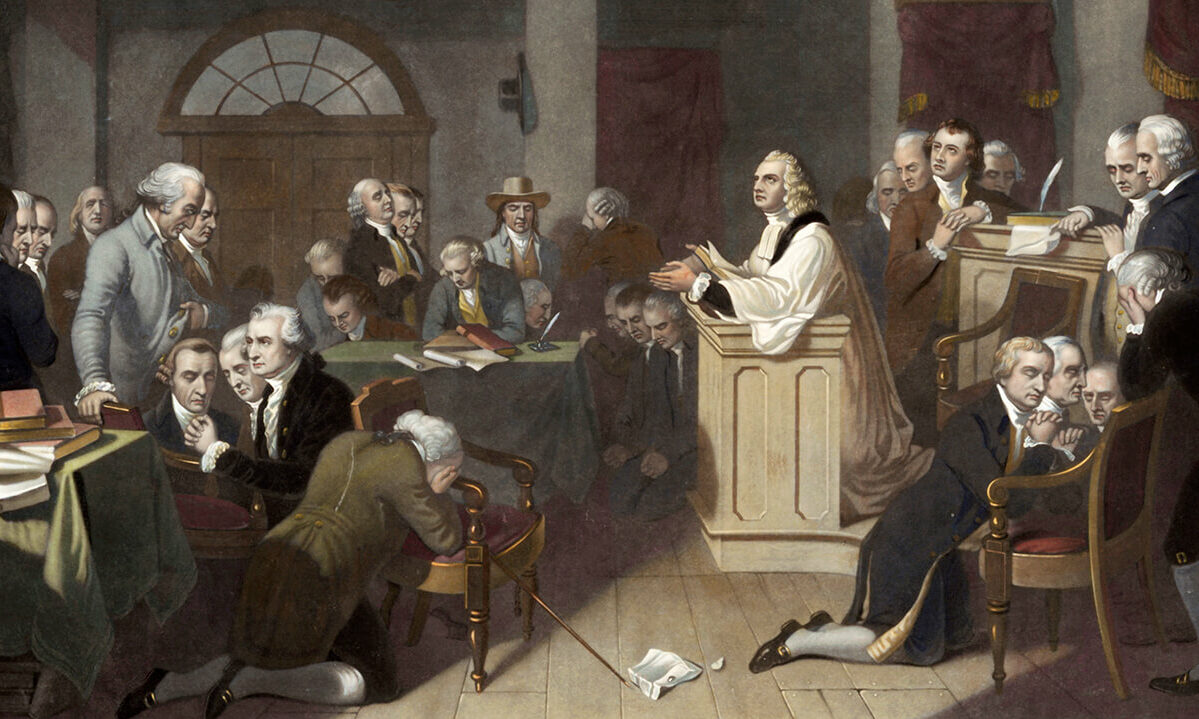
George Washington, Patrick Henry, and members of the First Continental Congress join with Rev. Jacob Duché in prayer.

Resolved, that it be recommended to the several states to appoint THURSDAY the 9th of December next, to be a day of publick and solemn THANKSGIVING to Almighty God, for his mercies, and of PRAYER, for the continuance of His favour and protection to these United States; to beseech Him that he would be graciously pleased to influence our publick Councils, and bless them with wisdom from on high, with unanimity, firmness and success; that He would go forth with our hosts and crown our arms with victory; that He would grant to His church, the plentiful effusions of divine grace, and pour out His Holy Spirit on all Ministers of the Gospel; that He would bless and prosper the means of education, and spread the light of Christian knowledge through the remotest corners of the earth; that He would smile upon the labours of His people, and cause the earth to bring forth her fruits in abundance, that we may with gratitude and gladness enjoy them; that He would take into His holy protection, our illustrious ally, give him victory over his enemies, and render him finally great, as the father of his people, and the protector of the rights of mankind; that He would graciously be pleased to turn the hearts of our enemies, and to dispence the blessings of peace to contending nations.

That he would in mercy look down upon us, pardon all our sins, and receive us into his favour; and finally, that he would establish the independence of these United States upon the basis of religion and virtue, and support and protect them in the enjoyment of peace, liberty and safety.”

I do therefore by authority from the General Assembly issue this my proclamation, hereby appointing Thursday the 9th day of December next, a day of publick and solemn thanksgiving and prayer to Almighty God, earnestly recommending to all the good people of this commonwealth, to set apart the said day for those purposes, and to the several Ministers of religion to meet their respective societies thereon, to assist them in their prayers, edify them with their discourses, and generally to perform the sacred duties of their function, proper for the occasion.

Given under my hand and the seal of the commonwealth, at Williamsburg, this 11th day of November, in the year of our Lord, 1779, and in the fourth of the commonwealth.

THOMAS JEFFERSON

John & Abigail Adams Anniversary

October 25th, is the wedding anniversary of John and Abigail Adams. They were married on this date in 1764 when John was 29 years old and Abigail 20.

After an initial rocky start at their first meeting in 1761 (John was not impressed with Abigail or her sisters, and Abigail’s mother was not impressed with him), they would court over the course of the next three years and then marry.

The numerous letters between them (over 1,100) has left us a wonderful and heart-touching record of their life and times. The letters cover topics from their love for each other to everyday life, from politics to raising their children (they had 6 children, with 4 living to adulthood)–they talked about it all!

Here are just a few examples of their lasting loving relationship:

Dear Miss Adorable, I hereby order you to give [me] as many kisses and as many hours of your company after 9 o’clock as [I] shall please to demand, and charge them to my account. (John to Abigail: October 4, 1762)

I dare not express to you at 300 miles how ardently I long for your return. I have some very miserly wishes and cannot consent to your spending one hour in town till, at least, I have had you twelve. The idea plays about my heart, unnerves my hand whilst I write, [and] awakens all the tender sentiments that years have increased and matured. (Abigail to John: October 16, 1774)

[I] pray you to come on [as] soon as possible….As to money to bear your expenses, you must, if you can, borrow of some friend enough to bring you here. If you cannot borrow enough, you must sell horses, oxen, sheep, cows, anything at any rate rather than not come on. If no one will take the place, leave it to the birds of the air and the beasts of the field. (John to Abigail: May 14, 1789)


Defending Thomas Jefferson – John Birch Society v. Jefferson

The John Birch Society, an advocacy group for a more limited and constitutional government, released a video concerning Thomas Jefferson called Myth v. Fact, narrated by the Society’s CEO Art Thompson. They argue that Thomas Jefferson was actually an anti-American traitor who tried to take down the American government. This charge is that it is just not true.

The John Birch Society’s argument is founded upon half-truths—not only are key statements clearly taken out of context but they also ignore all evidence that contradicts the conclusion they want to prove. One of the most laudable features of American government and culture is that our Founders wisely created a system that enables justice and truth to prevail.

In fact, the Due Process clauses of the Bill of Rights exist to help achieve this singular objective: the accused has the right to present evidence in his or her behalf. These indispensable protections in our American system are built upon the simple Biblical principle that declares “The one who states his case first seems right, until the other comes and examines him” (Proverbs 18:17). The John Birch Society made its case by excluding key pieces of evidence that actually disprove the point they seek to make. You will get to see what they excluded, and look at Jefferson’s own actual word and will see that far from being anti-American, he was a lifelong patriot who strove for American advancement throughout his life.

Against Jefferson

Art Thompson’s primary evidence against Jefferson is an infamous 1796 letter to an Italian friend of Jefferson, Philip Mazzei. Jefferson’s letter is primarily about routine business transactions and general small talk. The anti-Jefferson party in America, however, seized upon one paragraph; Thomas also relies on this paragraph to reach his conclusions. (Interestingly, though, he never actually reads any section of that paragraph). Anti-Jeffersonians have used this letter against Jefferson ever since it was originally written, and Thompson does the same. Significantly, the charges Thompson makes here are no different than what Jefferson’s political rivals made over 200 years ago.

The paragraph on which Thompson relies for his errant conclusions relates to Jefferson’s private reflections about the bitter factionalism that was then breaking out in American politics. This letter was written at the end of George Washington’s presidency, at a time when the first political parties were developing in America: the Federalists and the Anti-Federalists (also known as Republicans, or Democratic-Republicans). Jefferson, the Anti-Federalist, was then engaged in a presidential campaign against John Adams, the Federalist.

It was perhaps the bitterest, nastiest, and most divisive political campaign in the history of American politics. Jefferson saw the contest as the elitists against the people. He was concerned that many new politicians working their way into American government were far too sympathetic to the high-handed British system that the American people had thrown off during the American War for Independence.

During the campaign, Jefferson’s Federalist opponents made outrageous claims against him, including that he was a murderer, an atheist, a thief, and aiding foreign convicts. Reports alledged that he was secretly plotting the destruction and overthrow of the Constitution. His critics also accused him of defrauding a widow and her children, and said he planned to abolish the navy and starve the farmers.1 And if that wasn’t enough, citizens were warned that if Jefferson were elected, he would confiscate and burn every Bible in America.2

Thomas Jefferson’s 1796 Letter

Of course, all of these claims were false—all of them, but these attacks were swirling around Jefferson at the time he wrote his French friend—this was the atmosphere in which his comments were made. In that letter, Jefferson told his friend:

The aspect of our politics has wonderfully changed since you left us. In place of that noble love of liberty and republican government which carried us triumphantly through the war, an Anglican, monarchical and aristocratical party [i.e., the Federalists] has sprung up, whose avowed object is to draw over us the substance as they have already done the forms of the British government. The main body of our citizens, however, remain true to their republican principles; the whole landed interest is with them and so is a great mass of talents. Against us are the Executive, the Judiciary, two out of three branches of the legislature, all of the officers of the government, all who want to be officers, all timid men who prefer the calm of despotism to the boisterous sea of liberty, British merchants and Americans trading on British capitals, speculators and holders in the banks and public funds a contrivance invented for the purposes of corruption and for assimilating us in all things, to the rotten as well as the sound parts of the British model.

It would give you a fever were I to name to you the apostates who have gone over to these heresies, men who were Samsons in the field and Solomons in the council but who have had their heads shorn by the harlot England. In short we are likely to preserve the liberty we have obtained only by unremitting labors and perils. But we shall preserve them, and our mass of weight and wealth on the good side is so great as to leave no danger that force will ever be attempted against us. We have only to awake and snap the Lilliputian cords with which they have been entangling us during the first sleep which succeeded our labors.3

Notice that there is absolutely no anti-American sentiment embedded within the text. The Jefferson critics from the 1700’s and of today both try to twist it to say that Jefferson is some kind of undercover French operative trying to undermine the government, but what in the letter suggests that? Nothing. (This is likely why critics such as Art Thompson summarize their view of the letter rather than actually quoting direct text from it.)

To the contrary Jefferson is bewailing that there are some who actually are trying to undermine the republican form of government by making America a monarchy, or at the very least more British—that is, more of an elitist system where the people themselves have little actual power or voice. Jefferson, in fact, actually attacks the very thing which he is being accused of doing by Mr. Thompson. Jefferson, from the Declaration, to his Presidency, and to his passing, always stood against monarchism and boldly defended republicanism. (By the way, “republicanism” was defined in the dictionaries of that day as being rooted in a government “in which the exercise of the sovereign power is lodged in representatives elected by the people.”4 It is what President Abraham Lincoln later described as “a government of the people, by the people, and for the people.”5)

Analysis of the Letter

The portion of the letter, along with several paragraphs of French commentary, was printed in French papers after being delivered to them by Jefferson’s friend, and the recipient of his letter, Philip Mazzei. (Mazzei was an Italian who helped Virginia obtain arms during the American War for Independence, and become a friend of Jefferson at that point. He later spent time in France as the French sought to throw off their monarchal political system and free the people.) This French paper, with its own spin of Jefferson’s words, was then sent to America and translated back into English. At this point, the anti-Jefferson media picked up the twice translated piece and with the excerpt they lifted from the letter, viciously attacked Jefferson.

According to his personal policy, Jefferson never publicly responded to the name-calling, preferring instead to let the insults die out on their own. He based this strategy off of three considerations. First, he felt that responding to outrageous claims appeared to justify them.6 Second, Jefferson trusted that in the end his virtue would triumph over his enemies’ lies.7 And lastly, he believed that the people would eventually see through the lies and side with the truth.8

Jefferson even acknowledged that he could have successfully pursued legal action against many of his enemies who made such false allegations in the press, remarking:

I know that I might have filled the courts of the United States with actions for these slanders, and have ruined perhaps many persons who are not innocent. But this would be no equivalent to the loss of [my own] character. I leave them, therefore, to the reproof of their own consciences. If these do not condemn them, there will yet come a day when the false witness will meet a Judge [God] Who has not slept over his [the false accusers’] slanders [cf Proverbs 19:5].9

This mode of action, however, did not work entirely, and even 30 years later (not to mention now 200 years later) some of his most bitter enemies resorted to drudging the false claims out to throw renewed insults at Jefferson.10

Other Attacks on Jefferson

Timothy Pickering

One such example is a libelous attack by Timothy Pickering, an Alexandrian Federalist with a long-standing grudge against Jefferson.11 An ardent lifelong Federalist, Pickering always fought against anything Jefferson did and religiously supported English policies. At one point, Pickering even attempted to lead a secessionist movement in New English but failed miserably, effectively ending his political career at the same time.

Pickering parroted the tone of arguments the anti-Jefferson media made then and the John Birch Society makes now. In effect, imagine if someone based their history exclusively on CNN’s view of Trump, or Fox’s view on Obama. It is remarkably bad historical practice to get information exclusively from the person’s enemies, but that is exactly what the video does. Thomson today uses the same letter, the same ad hominem, and the same vitriol which was used over 200 years ago.

Jefferson, in response to Pickering attack, eventually broke his silence on the Mazzei letter. He wrote to Martin Van Buren on June 29, 1824, explaining the details of the letter. In his typically systematic fashion, Jefferson walked through every objection to his words and conduct.

In his original letter, Jefferson had stated that “men who were Samsons in the field and Solomons in the council…had their heads shorn by the harlot England.” Jefferson’s critics at the time claimed that this clause was a clear attack on George Washington, with whom Jefferson had so closely served throughout the Federal Era (that is, from 1760 until Washington’s death in 1799). Jefferson directly denied that he criticized Washington in the Mazzei letter, saying that:

The other allegation respecting myself is equally false.…I do affirm that there never passed a word, written or verbal, directly or indirectly, between General Washington and myself, on the subject of that letter. He would never had degraded himself so far as to take to himself the imputation in that letter on the ‘Samsons in combat.’ the whole story is a fabrication, and I defy the framers of it, and all mankind to produce a scrip of a pen between General Washington and myself on the subject, or any other evidence more worthy of credit than the suspicions, suppositions and presumptions.12

After calling out the complete lack of evidence for the claim that he was attacking Washington, Jefferson flatly declared that those who had launched these attacks were those who were:

Boiling with party passions, and—under the dominion of these—readily welcoming fancies for facts. But come the story from whomsoever it might, it is an unqualified falsehood.13

Thomas Jefferson’s Explanation

Having dismissed the whole affair in general terms, Jefferson then turned his attention to the specific nature of the Mazzei letter. He denied that anything in his statements were either false or treasonous, and pointed out the context of those short remarks in the otherwise lengthy letter:

This letter to Mazzei has been a precious theme of crimination for federal malice. It was a long letter of business in which was inserted a single paragraph only of political information as to the state of our country. In this information there was not one word which would not then have been, or would not now be approved, by every republican in the U.S. looking back to those times.14

Jefferson then noted that when the French had reprinted a few clauses taken out of context from the letter, that an additional paragraph of their own commentary was added as if Jefferson himself had written that commentary. American papers later reprinted that section as if it were Jefferson’s own words (which they were not), and that it was this section what had caused most of the criticisms and attacks against him. He explained that only a short portion of his original letter was:

extracted and translated [and] got into a Paris paper at a time when the persons in power there were laboring under very general disfavor, and their friends were eager to catch even at straws to buoy them up. To them, therefore, I have always imputed the interpolation of an entire paragraph additional to mine, which makes me charge my own country with ingratitude and injustice to France. There was not a word in my letter respecting France or any of the proceedings or relations between this country and that. Yet this interpolated [that is, added or inserted] paragraph has been the burthen [grievous weight] of federal calumny [slander and defamation], has been constantly quoted by them, made the subject of unceasing and virulent abuse, and is still quoted…as if it were genuine and really written by me.15

Letter Lost Its Meaning

Even today, critics such as Thompson fail to realize that much of the animosity against Jefferson stemmed from that fake paragraph, and they use it to condemn Jefferson—but he did not write it! In their defense, however, it is at least understandable that some confusion might still persist because, as Jefferson notes, even other distinguished patriots and friends, such Chief Justice John Marshall, had believed the false reports.16

Jefferson further noted that in the translation of his letter from its original English, into Italian, then into French, and then back into English, the letter itself became so mutated and transformed that in many cases the anti-Jefferson newspapers were able to make it mean whatever they wanted it to. He focused specifically on one single word which significantly affected the interpretation of the letter:

The genuine paragraph, retranslated, through Italian & French into English, as it appeared here in a Federal paper, besides the mutilated hue which these translations and retranslations of it produced generally, gave a mistranslation of a single word which entirely perverted [changed] its meaning, and made it a pliant and fertile text of misrepresentation of my political principles. The original [paragraph in my letter], speaking of an Anglican, monarchical, and aristocratical party which had sprung up since he had left us, states their object to be “to draw over us the substance, as they had already done the forms of the British government.”

Now the forms here meant were the levies, birth-days, the pompous cavalcade to the State house on a meeting of Congress, the formal speech from the throne, the procession of Congress in a body to re-echo the speech in an answer, etc., etc., but the translator here, by substituting form in the singular number for forms in the plural, made it mean the frame or organization of our government, or it’s form of legislature, executive, and judiciary authorities, co-ordinate and independent, to which form it was to be inferred that I was an enemy. In this sense they always quoted it, and in this sense Mr. Pickering still quotes it…and countenances the inference.17

While Jefferson loved America, he did not appreciate the more extreme wing of the Federalist party which looked back longingly at the monarchical institutions of England. He was concerned that soon a faction might gain power and undo the Revolution, murmuring like the Israelites did after being brought up out of Egypt [Exodus 16:2-3].

Conclusion

As his life and letters clearly prove, Jefferson wasn’t some anti-American operative controlled by the French, the Jacobins (radical French political party responsible for the atrocities in the French Revolution), the Illuminati (a secret fraternal organization originally similar to Freemasonry), or another group of suspicious intent. Jefferson was the patriot of the Declaration, espousing the limited nature of government, the inalienable rights of citizens, and the sovereignty of the people under God, and was unwavering in his support of a republican vision of America. He made it clear that his dominate principle in government was that, “I would rather be exposed to the inconveniencies attending too much liberty than those attending too small a degree of it.”18

The errors in the video produced by the John Birch Society are unfortunate. They are the same errors made today by many who judge a person, group, movement, or event based upon the accusations of their opponents alone. If Mr. Thompson wishes to make Jefferson a traitor, he must do more than vaguely reference a single letter—a letter taken completely out of context, and a letter openly rebutted by Jefferson himself. Jefferson wrote over 19,000 letters, and to charge the writer of the Declaration of Independence with treason based upon only 7 sentences out of the millions he wrote is laughable at best, insidious at worst.


Endnotes

1 See, for example, Charles Warren, Odd Byways in American History (Cambridge: Harvard University Press, 1942), 127-128; Dumas Malone, Jefferson and the Ordeal of Liberty (Boston: Little, Brown and Company, 1962), 3:481; Charles O. Lerche, Jr., “Jefferson and the Election of 1800: A Case Study in the Political Smear,” The William and Mary Quarterly (October 1948), 3rd Series:V:4:466-491.
2 Wilburn E. MacClenny, The Life of Rev. James O’Kelly and the Early History of the Christian Church in the South (Suffolk: Edwards & Broughton Printing Company, 1910), 171-173.
3 Thomas Jefferson to Philip Mazzei, 24 April 1796, Founders Online.
4 Noah Webster, Webster’s American Dictionary, 1828, s.v., “republic.”
5 Abraham Lincoln, “Address at the Dedication of the Gettysburg National Cemetery”, November 19, 1863, Complete Works (New York: The Century Co., 1907), 2:439.
6 Thomas Jefferson to Dr. Logan, June 20, 1816, The Works of Thomas Jefferson (1905), XI:366.
7 Jefferson to Thomas Seymour, February 11, 1807, The Writings of Thomas Jefferson, XI:155.
8 Thomas Jefferson to Wilson C. Nicholas, June 13, 1809, Memoir, Correspondence, and Miscellanies, IV:129.
9 Jefferson to Uriah McGregory, August 13, 1800, Memoir, Correspondence, and Miscellanies, III:439, here.
10 For more information see, Jefferson’s Letter to Philip Mazzei The Papers of Thomas Jefferson, (Princeton University Press, 2002), 29:73-88.
11 See, “Timothy Pickering,” , accessed December 11, 2018.
12 Thomas Jefferson to Martin Van Buren, 29 June 1824, Founders Early Access (University of Virginia Press).
13 Jefferson to Van Buren, 29 June 1824, Founders Early Access (University of Virginia Press).
14 Jefferson to Van Buren, 29 June 1824, Founders Early Access (University of Virginia Press).
15 Thomas Jefferson to Van Buren, 29 June 1824, Founders Early Access (University of Virginia Press).
16 Jefferson to Van Buren, 29 June 1824, Founders Early Access (University of Virginia Press).
17 Jefferson to Van Buren, 29 June 1824, Founders Early Access (University of Virginia Press).
18 Thomas Jefferson to Archibald Stuart, December 23, 1791, Founders Online.