Inspiring America: Nathan Hale

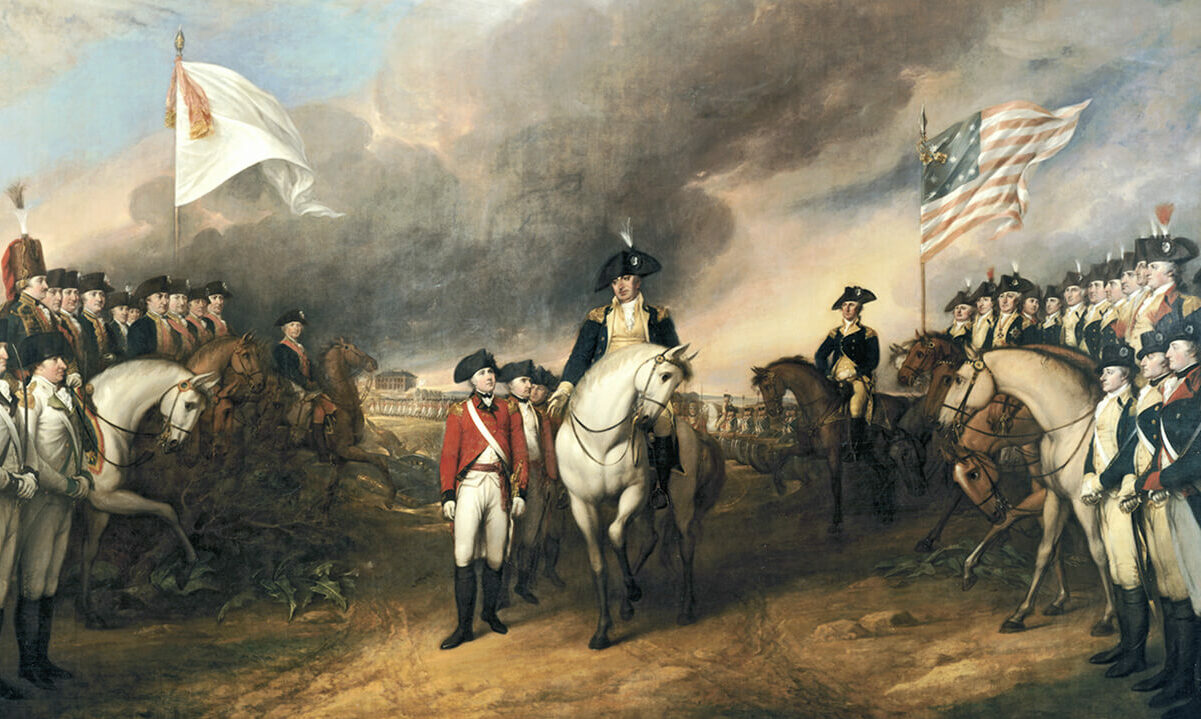
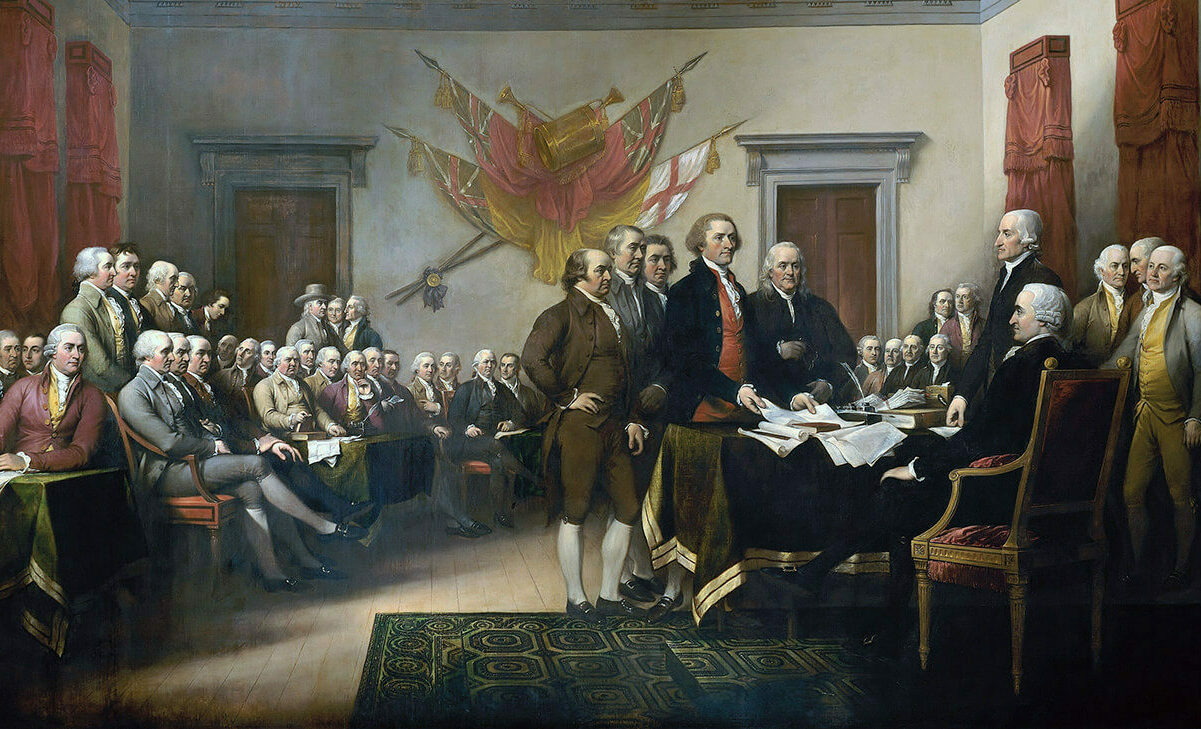
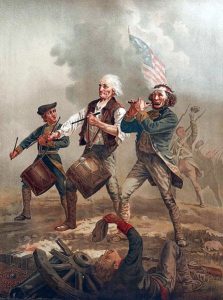
inspiring-america-nathan-hale-2The year 1776 is well known in American history. Obviously, it is directly associated with the signing of the Declaration of Independence, but it is also the year Nathan Hale gave his life for America. [1] A simple schoolteacher, he wanted to serve his country. [2] Military intelligence about the British was badly needed, which meant doing undercover work as a spy. [3] He volunteered for this assignment. His friends warned him that he would fail, for he did not know how to lie — often a requisite trait for a good spy. [4]

He seemed to be succeeding in his mission and was returning to the American Army, when one of his relatives turned him in to the British, who captured him on September 21, 1776.  [5] The British executed him the following day, denying his last request for a Bible to comfort him. His last words before he was hung were, “I only regret that I have but one life to lose for my country.” [6]

inspiring-america-nathan-hale-3These words have inspired generations of Americans, and were regularly taught to school students. But in recent years, Nathan Hale and heroes like him have largely disappeared from American public education as well as many history books. We need to reintroduce American students (and even adults) to our forgotten heroes and thus ignite the patriotic spirit in younger generations. As children across the nation have now returned to school, help inspire a child that you know with the amazing legacy left us by those who have come before.

One way to do this is through uplifting books designed for youth. For example, Patriots, Redcoats, & Spies is an historical novel tracing the efforts of two teenage boys fighting for the American cause by carrying out a secret mission as spies. Just like Nathan Hale, these fourteen year old boys also fight hardships and discovery at every turn. Find out what happens to them in Patriots, Redcoats, & Spies!

We also have some two dozen biographies designed for young Americans in our Biographies series. Give your child — or children you know, or even yourself — a chance to learn about some of the greats in American history, including Abigail Adams, the Wright Brothers, George Washington Carver, and so many others. Get inspired with accounts of the heroes who made America great.


[1] Dictionary of American History, James Truslow Adams, editor (New York: Charles Scribner’s Sons, 1940), Vol. III, p. 5.

[2] I. W. Stuart, Life of Captain Nathan Hale, The Martyr-Spy of the American Revolution (Hartford: F.A. Brown, 1856), pp. 28-44.

[3] Benson J. Lossing. Seventeen Hundred and Seventy-Six, or the War of Independence; A History of the Anglo-American, From the Period of the Union of the Colonies Against the French, to the Inauguration of Washington, the First President of the United States of America (New York: Edward Walker, 1847), p. 206 note.

[4] Mrs. Maria Campbell, Revolutionary Services and Civil Life of General William Hull (New York: D. Appleton & Co., 1848) p. 35. See also, Benson J. Lossing, The Two Spies: Nathan Hale and John Andre, (New York: De. Applerton and Company, 1886), p. 14.

[5] Dictionary of American History, James Truslow Adams, editor (New York: Charles Scribner’s Sons, 1940),  Vol. III, p. 5. See also, I.W. Stuart, Life of Captain Nathan Hale, the martyr-spy of the American revolution (Hartford : F. A. Brown; 1856), p. 110; and George Dudley Seymour, Documentary Life of Nathan Hale, Comprising All Available Official and Private Documents Bearing on the Life of the Patriot (New-Haven: Privately Printed for the Author, The Tuttle, Morehouse & Taylor Company, 1941), p. 158, “Colonel Greene’s Picture of Nathan Hale as a School-Teacher: Testimony of Samuel Green respecting Nathan Hale given to me [Isaac W. Stuart]; and by me taken in the historical hall January, 1847.”

[6] Dictionary of American History, James Truslow Adams, editor (New York: Charles Scribner’s Sons, 1940), Vol. III, p. 5, see also George Dudley Seymour, Documentary Life of Nathan Hale, Comprising All Available Official and Private Documents Bearing on the Life of the Patriot (New-Haven: Privately Printed for the Author, The Tuttle, Morehouse & Taylor Company, 1941), p. 310.
Islamic Terrorism: Two Hundred Years Old?

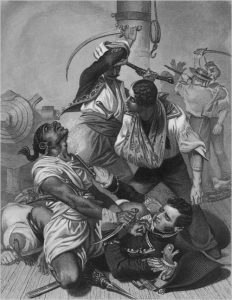
Brutal events in the Middle East continue to receive high billing in news headlines: beheadings and shootings by ISIS; the slaughter of Christians; increased attacks against numerous nations; the U.S. Embassy in Libya evacuated; and so forth. Such news always comes with concern, but these type of reports are not new.Most Americans are unaware that Islamic terrorists have been attacking Americans from the time that we became an independent nation.

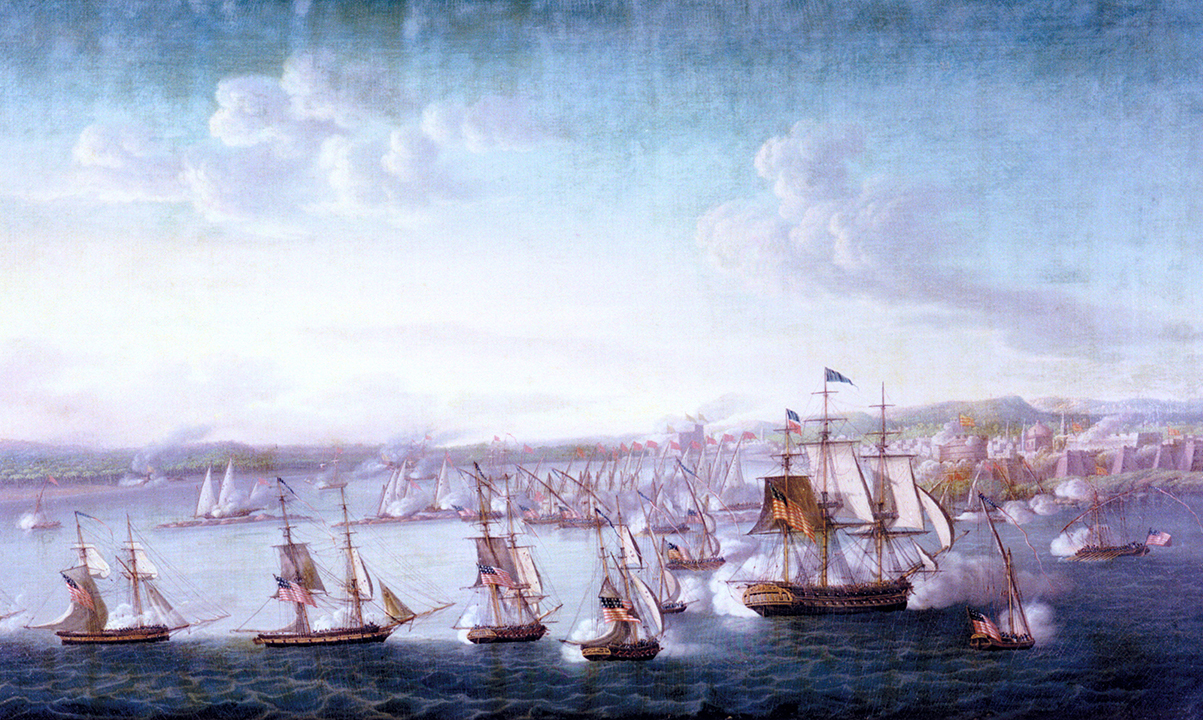
islamic-terrorism-two-hundred-years-old-1 When the American Revolution ended in 1783, America turned its attention to dealing with five Muslim nations that regularly targeted Americans overseas: Tunis, Morocco, Algiers, Tripoli, and Turkey. So in 1784, the Continental Congress dispatched John Adams, Benjamin Franklin, and Thomas Jefferson to try to negotiate an end to the unprovoked attacks. The diplomatic efforts largely failed, and the aggression continued.
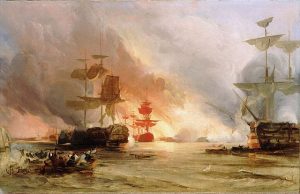
By the time that Jefferson took office as president 17 years later in 1801, almost one-fifth of the federal budget was being spent to placate the terrorists. Deciding that it was time for the attacks to come to an end, Jefferson took the brand-new Navy, loaded the ships with Marines, and dispatched them to end the constant threat.

islamic-terrorism-two-hundred-years-old-2After five years of fighting terrorist forces and freeing captured Americans, Tripoli finally signed a treaty and the hostilities ceased — temporarily. But when America became embroiled in the War of 1812, Algerian terrorists began once again to attack American ships.
In 1815 when peace was reached with the British, President James Madison sent the military against Algiers, Tunis, and Tripoli. Finally, on August 9, 1815 — two hundred years ago (>and 31 years after the conflict began) — a peace treaty was signed. To read the documents of the first American War Against Terror and to see the terrorists’ motivations for attacking Americans is just like watching today’s news reports. To help understand what is happening now and what will be required to end the conflict, David Barton shares the history of America’s First War on Terror.

American Revolution – Letter by Rev. Thomas Allen

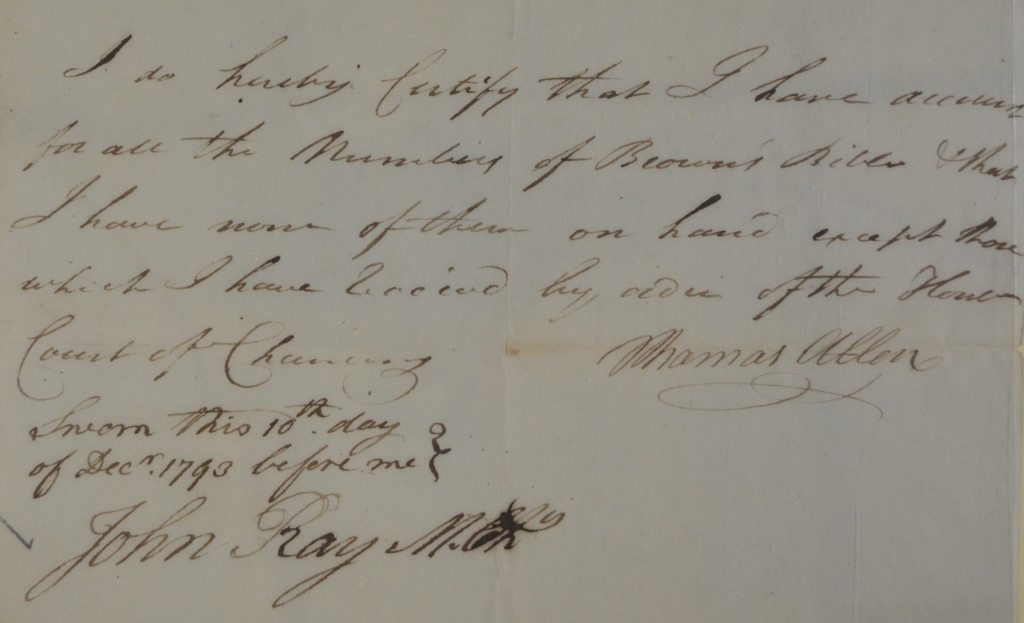
The Rev. Thomas Allen (1743-1810) was a minister at Pittsfield, Massachusetts and a soldier during the American Revolution. He fought in the Battle of Bennington and also served as chaplain in other battles. This letter from 1793 concerns what is called “Brown’s Bible” – an edition of the Bible printed in New York.


american-revolution-letter-by-rev-thomas-allen-1

I do hereby certify that I have accounted for all the numbers of Brown’s Bible & that I have more of them on hand except those which I have received by order of the Honb

Thomas Allen

Count of Chancery

Sworn this 10th Day

of Dec. 1793 before me

John Ray McKee

William Williams Letter

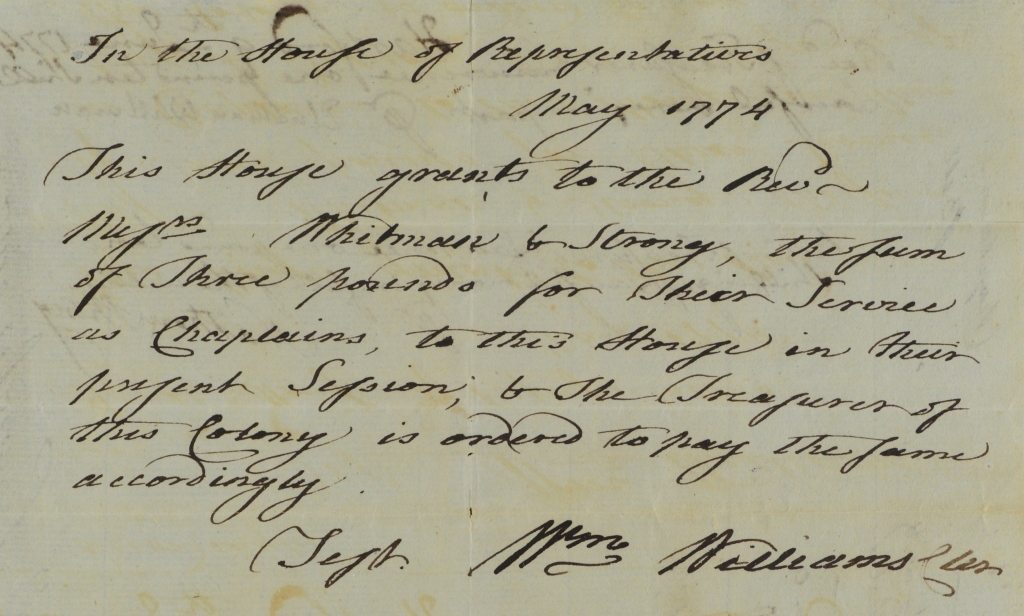
William Williams was a signer of the Declaration of Independence from Connecticut. This letter from 1774 deals with the Colony of Connecticut hiring and paying chaplains.


american-revolution-william-williams-letter-1

In the House of Representatives

May 1774

This House grants to the Rev. Meyrs Whitman & Strong, the sum of three pounds for their service as chaplains, to this House in this present session, & the taxpayers of this Colony is order to pay the sums accordingly.

Signed Wm Williams

American Revolution – Letter by Governor Jonathan Trumbull

Jonathan Trumbull (1710-1785) was a Governor of the Colony of Connecticut for many years, serving before, during, and after the American War for Independence. (The Trumbull family was very influential in Connecticut, and one of his sons also became governor of the state.)

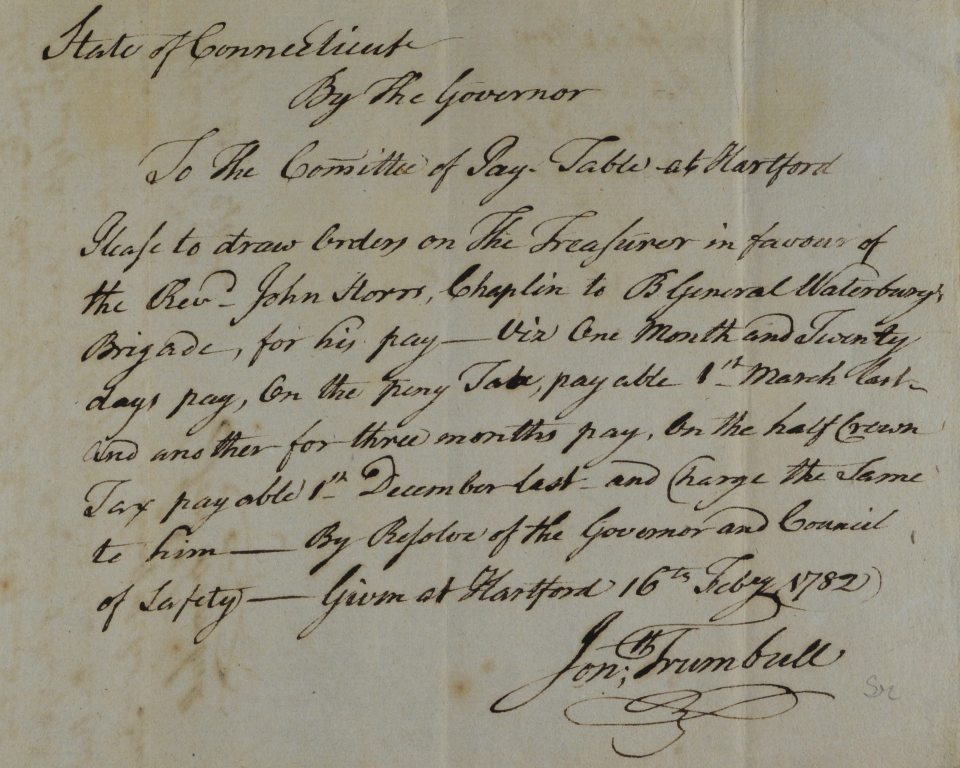
This letter, dated February 16, 1782 requests payment for Chaplain Horn, who served in Brigadier General David Waterbury’s Brigade.


american-revolution-letter-by-governor-jonathan-trumbull-1

State of Connecticut

By the Governor

To the Committee of Pay-Tables at Hartford

Please to draw bonds on the Treasury in favors of the Rev. John Horn, Chaplain to B. General Waterbury’s Brigade, for his pay – via one month and twenty days pay, on the pay table, payable 1st March cash and another of three months pay, on the half crown. Tax payable 1st December last and charge the some to him – By Requst of the Governor and Council of Safety – Given at Hartford 16th Feby 1782

Jon Trumbull


Letter by James Buchanan

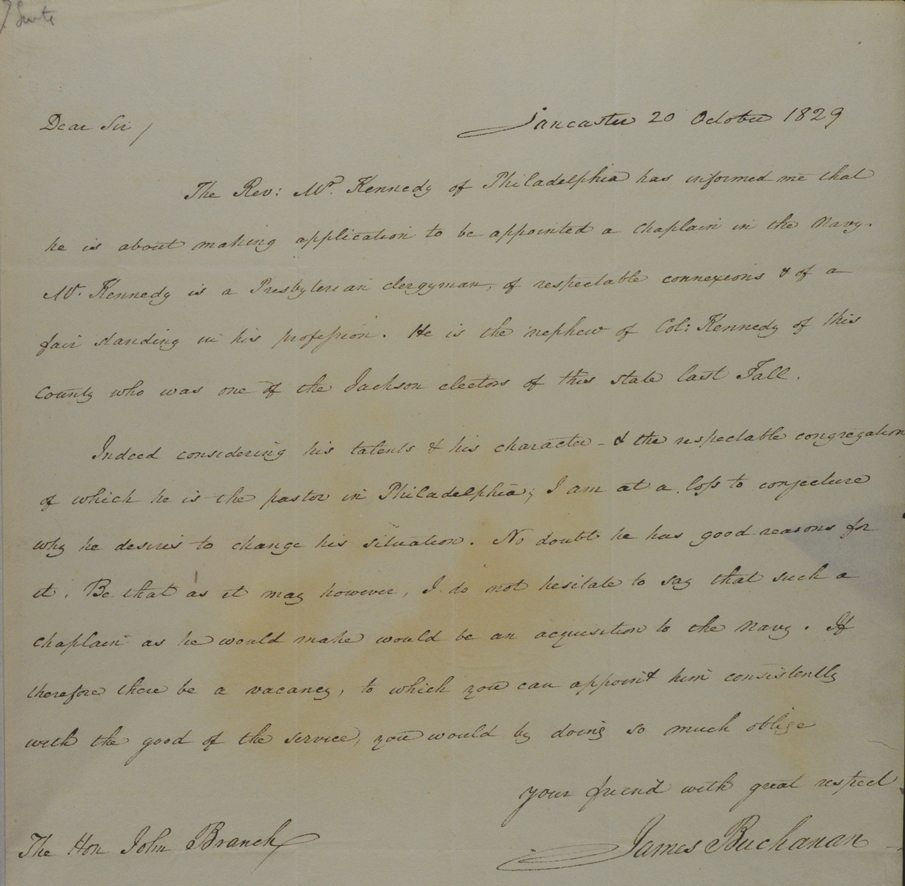
During his service as a Congressman, wrote a letter to Secretary of the Navy John Branch, recommending William Kennedy, a Presbyterian minister, be considered for a Navy Chaplain position.


letter-by-james-buchanan-1

Lancaster 20, October 1829

Dear Sir,

The Rev. Wm Kennedy of Philadelphia has informed me that he is about making application to be appointed a chaplain in the Navy. W. Kennedy is a Presbyterian Clergyman of respectable connexions & of a fair standing in his profession. He is the nephew of Col. Kennedy of this County who was one of the Jackson elections of the State Const Ball.

Indeed considering his talents & his character & the respectable congregation of which he is the pastor in Philadelphia, I am at a loss to conjecture why he desires to change his situation. No doubt he has good reasons for it. Be that as it may however, I do not hesitate to say that such a chaplain as he would make would be an acquisition to the Navy. If therefore there be a vacancy, to which you can appoint him consistently with the good of the services, you would by doing so much oblige.

Your friend with great respect
James Buchanan

The Hon. John Branch

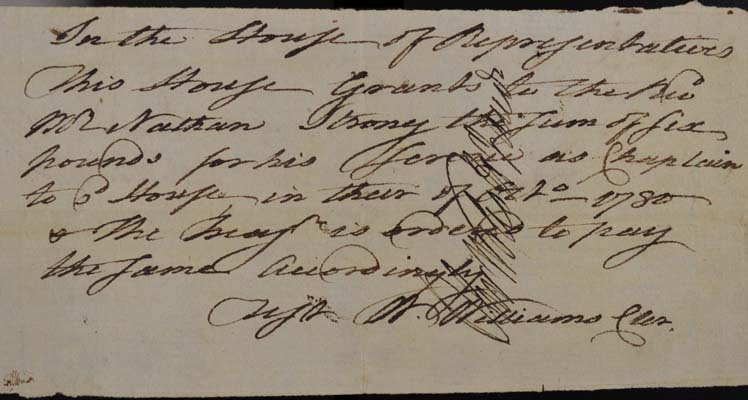
William Williams and Oliver Wolcott Treasury Note

Both William Williams and Oliver Wolcott were signers of the Declaration of Independence from Connecticut. This treasury note from 1780 deals with the House of Representatives of Connecticut hiring and paying a chaplain.


william-williams-and-oliver-wolcott-treasury-note-1

In the House of Representatives

This House grants to the Rev. Mr. Nathan Strong the sum of six pounds for his services as Chaplain to s’d (said) House in their of Oct 1780. The treasurer is ordered to pay the same accordingly.

Signed Wm Williams
(Superimposed) Oliver Wolcott

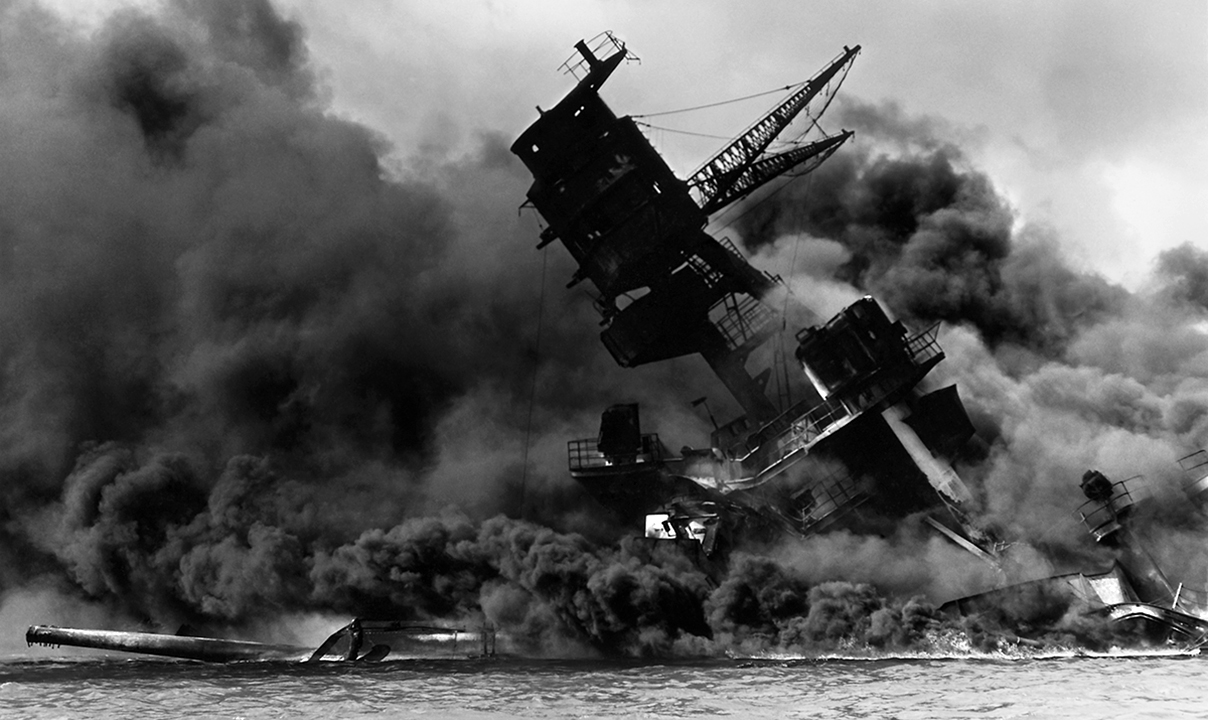
The USS Arizona sinks after it's bombed during the Pearl Harbor attacks in 1941.

Remembering Pearl Harbor

Pearl Harbor Day

remembering-pearl-harbor-1December 7, 1941 — the day Pearl Harbor was treacherously attacked by the Japanese — was described by President Franklin Delano Roosevelt as “a date which will live in infamy.” It was the worst naval disaster in American history, and brought declarations of war by Japan, Germany, and Italy against the United States, and by America against them. For four long years, American men and women served and died on the battlefields of Europe and the Pacific, fighting tyranny and eventually bringing liberty across the world.
Shortly after the initial attack on Pearl Harbor, President Roosevelt called America to a time of prayer, explaining:

The year 1941 has brought upon our Nation a war of aggression… Our strength – as the strength of all men everywhere – is of greater avail as God upholds us. Therefore, I…do hereby appoint the first day of the year 1942 as a day of prayer, of asking forgiveness for our shortcomings of the past, of consecration to the tasks of the present, of asking God’s help in days to come. We need His guidance that this people may be humble in spirit but strong in the conviction of the right – steadfast to endure sacrifice and brave to achieve a victory of liberty and peace.

remembering-pearl-harbor-2Three weeks later on January 6, 1942, he delivered his State of the Union Address, reminding America:
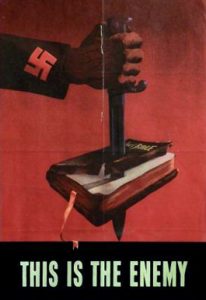
The world is too small to provide adequate living room for both Hitler and God. In proof of that, the Nazis have now announced their plan for enforcing their new German, pagan religion all over the world — a plan by which the Holy Bible and the Cross of Mercy would be displaced by Mein Kampf and the swastika and the naked sword.

(Pictured on the right is a WWII fund-raising poster from the WallBuilders library that was produced by the US government, depicting President Roosevelt’s words.) He understood that what began at Pearl Harbor was a spiritual conflict — an attack on the religion of the Bible — and that prayer would be a necessary spiritual weapon in that battle.

Today as we commemorate Pearl Harbor Day, we are still engaged in a spiritual struggle for the soul of the nation. And just as America did 75 years ago, we, too, should likewise seek God in prayer – seek His wisdom, ask forgiveness for our sins, and lift up before Him our honored military and their precious families. Remember to turn to God on this special day.

Honor America’s Veterans

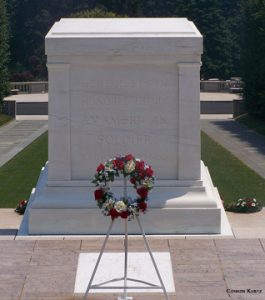
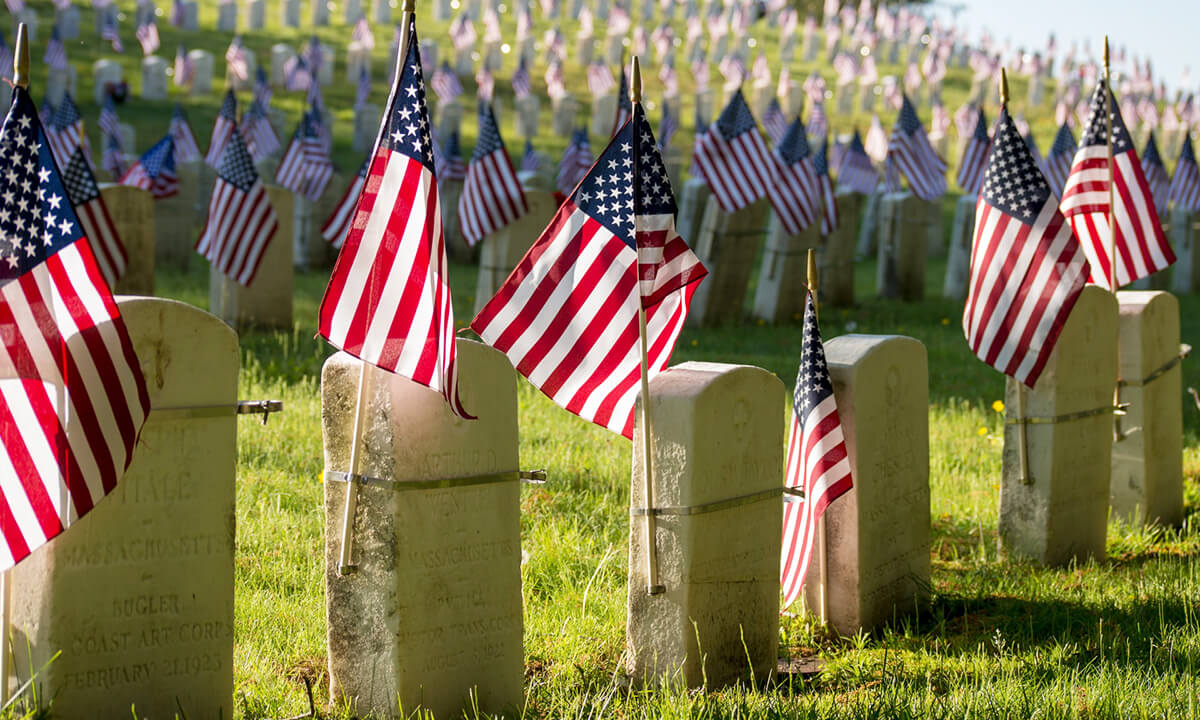
honor-americas-veterans-1The Korean War Memorial in Washington D.C. reminds us: “Freedom is not free!” Americans have long understood this, and across the generations 42 million men and women — serving as soldiers, sailors, and airmen — have been willing to give their time, talents, and even their lives to protect America and her cherished freedoms. To honor these courageous citizens, November 11, is set aside as Veteran’s Day.
By way of background, following the horrors of World War I, President Woodrow Wilson declared November 11 of 1919 to be “Armistice Day” to celebrate the peace brought about as a result of ending the war. Twenty years later, the federal government made “Armistice Day” a federal holiday, and in 1954, it was renamed to “Veteran’s Day” to honor all who served in the military. Over subsequent years, the day on which it was celebrated varied, but its purpose remained the same: to remember and express appreciation for our veterans.
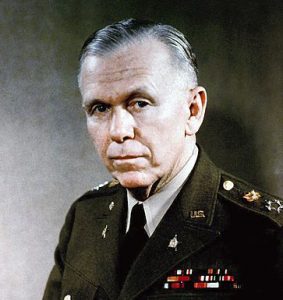
honor-americas-veterans-2General George C. Marshall, a famous military leader during World War II, summarized the mission of these warriors when he declared:
“We are determined that before the sun sets on this terrible struggle, our flag will be recognized throughout the world as a symbol of freedom on the one hand and of overwhelming force on the other.”

On Veteran’s Day, be sure to thank a veteran for their service. Perhaps even take time out of your day to visit some veterans at a local nursing home, where sometimes many have been tragically abandoned or have no family members remaining. And let’s also remember those who sacrificed so much for us across the centuries, from the American Revolution to World War II to the War on Terror. May we never cease to be thankful — and to express that gratitude — for those who are willing to give so much for the rest of us.

United States Navy

The US Navy dates its origins back to 1775. It began with an August 26, 1775 instruction from Rhode Island to their representatives in the Continental Congress to call for the establishment of a navy, explaining that “every principle, Divine and human, require us to obey that great and fundamental Law of Nature — self preservation — until peace shall be restored upon constitutional principles.”

united-states-navy-1The Continental Congress, not in session at that time, took up the issue when it returned and on October 13, 1775, the Continental Navy was created. The Continental Navy peaked at 31 ships in 1777 and contributed to key victories, but by the war’s end in 1783, it had shrunk amid losses. It was fully disbanded in 1785 after the Treaty of Paris.
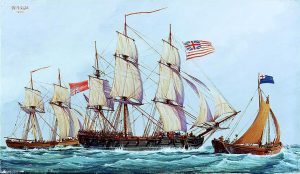
This action, however, left American commercial ships in the Mediterranean unprotected. So in 1784, five Muslim nations began attacking American ships and killing and enslaving sailors. With no Navy to deter these terrorists, the United States government’s only recourse was to make huge extortion payments to the terrorists in exchange for their promise to limit future attacks. Frustrated by the navy’s absence and mounting pirate ransoms, President Washington urged Congress to rebuild in 1794, authorizing six frigates. Congress agreed and President John Adams executed and expanded the plan during the 1798 Quasi-War with France. President Thomas Jefferson then used the Navy to launch America’s first war on Muslim terrorists, defeating them and ending their attacks against American citizens and interests.

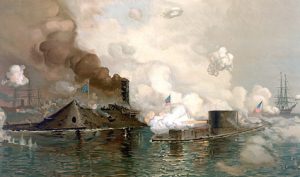
united-states-navy-2Following this, the Navy slowly shrank in size until it numbered only 40 combat-ready ships by the beginning of the Civil War (the Confederates had none, though they built a formidable ironclad force). The War resulted in a naval build up on both sides, with several major naval battles. (Pictured on the right, is the Battle of Hampton Roads, the first encounter between ironclad armored ships.)
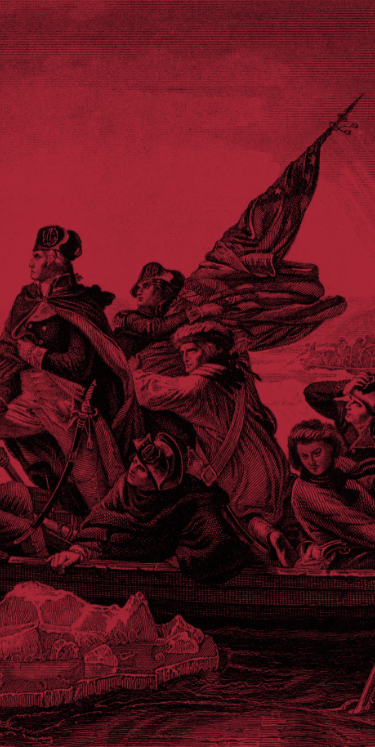
After the War, the Navy once again shrank, but during WWII, it was rebuilt. By the end of 1945, the US Navy consisted of over 1,300 major combat ships (such as battleships, cruisers, aircraft carriers, destroyers, and submarines), over 83,000 mine laying ships and landing craft, with over 3.3 million naval personnel.

Military cutbacks under the Obama administration once again dramatically reduced the size of the Navy, leaving only 275 ships and 330,000 active duty naval personnel, with 100,000 reserves.

The pattern is clear: when we dramatically cut the military, we invite outside attacks. So, while remembering the origins of the US Navy, let’s pray for all those that serve in that branch — and indeed, for those who serve in all branches of our Armed Forces to keep Americans safe around the world!