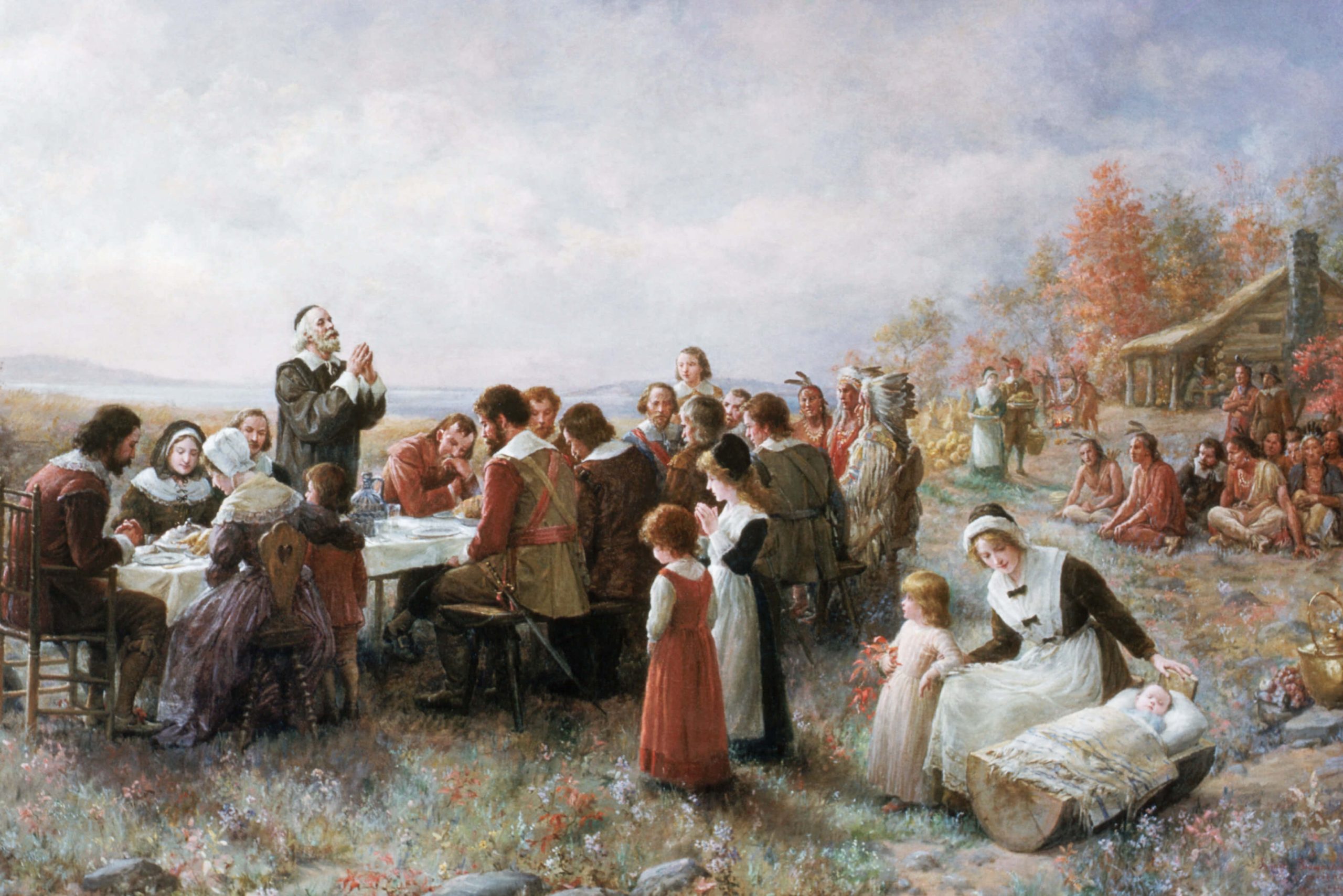
Proclamation – Thanksgiving Day – 1863


This is the text of the October 3, 1863 Abraham Lincoln national Thanksgiving Day Proclamation.


proclamation-thanksgiving-day-1863-1


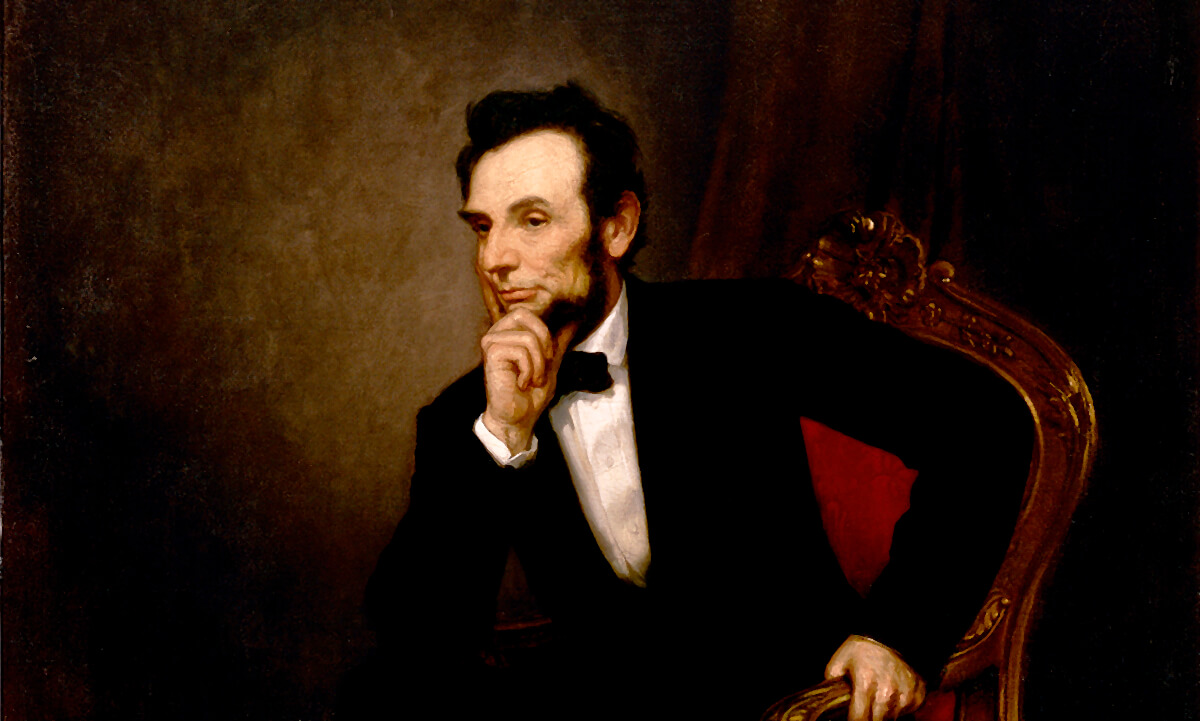
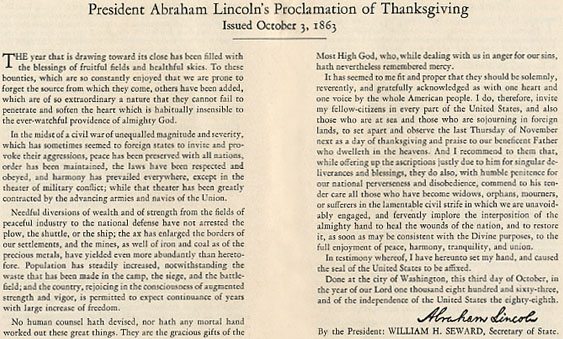
President Abraham Lincoln’s
Proclamation of Thanksgiving

Issued, October 3, 1863

The year that is drawing towards its close has been filled with the blessings of fruitful fields and healthful skies. To these bounties, which are so constantly enjoyed that we are prone to forget the source from which they come, others have been added, which are of so extraordinary a nature, that they cannot fail to penetrate and soften even the heart which is habitually insensible to the ever watchful providence of Almighty God.

In the midst of a civil war of unequaled magnitude and severity, which has sometimes seemed to invite and provoke the aggressions of foreign States, peace has been preserved with all nations, order has been maintained, the laws have been respected and obeyed, and harmony has prevailed everywhere, except in the theater of military conflict; while that theater has been greatly contracted by the advancing armies and navies of the Union.

The needful diversions of wealth and strength from the fields of peaceful industry to the national defense have not arrested the plough, the shuttle or the ship. The axe has enlarged the borders of our settlements, and the mines, as well of iron and coal as of the precious metals, have yielded even more abundantly than heretofore. Population has steadily increased, notwithstanding the waste that has been made in the camp, the siege and the battlefield; and the country, rejoicing in the consciousness of augmented strength and vigor, is permitted to expect continuance of years with large increase of freedom.

No human counsel hath devised, nor hath any mortal hand worked out these great things. They are the gracious gifts of the Most High God, who, while dealing with us in anger for our sins, hath nevertheless remembered mercy.

It has seemed to me fit and proper that they should be solemnly, reverently and gratefully acknowledged as with one heart and voice by the whole American people; I do, therefore, invite my fellow citizens in every part of the United States, and also those who are at sea and those who are sojourning in foreign lands, to set apart and observe the last Thursday of November next as a Day of Thanksgiving and Prayer to our beneficent Father, who dwelleth in the heavens. And I recommend to them that, while offering up the ascriptions justly due to him that, for such singular deliverances and blessings; they do also, with humble penitence for our national perverseness and disobedience, commend to His tender care all those who have become widows, orphans, mourners or sufferers in the lamentable civil strife in which we are unavoidably engaged, and fervently implore the interposition of the Almighty hand to heal the wounds of the nation and to restore it, as soon as may be consistent with the Divine purposes, to the full enjoyment of peace, harmony, tranquility, and union.

In testimony whereof I have hereunto set my hand and caused the seal of the United States to be affixed.

Done at the city of Washington this third day of October, in the year of our Lord one thousand eight hundred and sixty-three, and of the independence of the United States the eighty-eighth.

Abraham Lincoln

By the President: William H. Seward, Secretary of State.

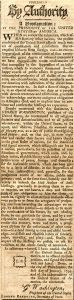
Proclamation – Thanksgiving Day – 1795


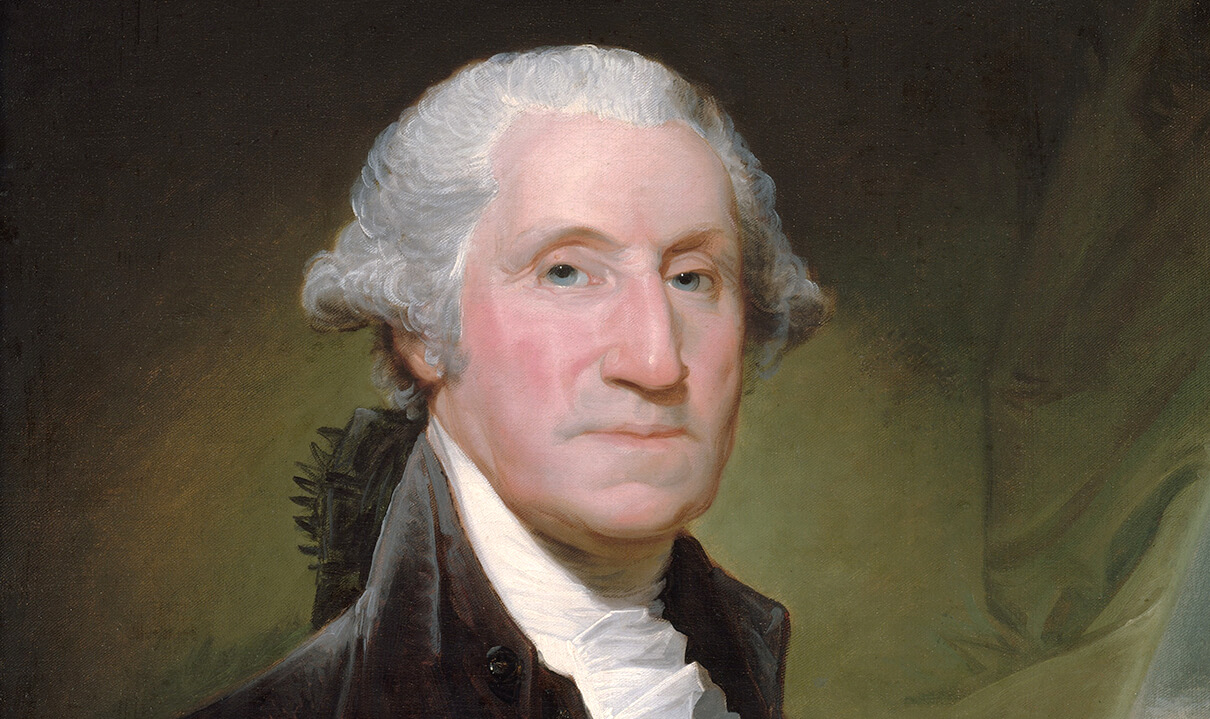
This is the text of a proclamation for a day of Public Thanksgiving and Prayer, issued by George Washington when he served as President. It was published in the Columbian Centinel on January 1, 1795. (See another national Thanksgiving proclamation issued by George Washington in 1789.)


proclamation-thanksgiving-day-1795-1
Published
BY AUTHORITY,

A PROCLAMATION:
By the PRESIDENT of the UNITED
STATES OF AMERICA.
proclamation-thanksgiving-day-1795-2

When we review the calamities, which afflict so many other nations, the present condition of the United States affords much matter of consolation and satisfaction. Our exemption hitherto from foreign war – an increasing prospect of the continuance of that exemption – the great degree of internal tranquility we have enjoyed – the recent confirmation of that tranquility by the suppression of an insurrection which so wantonly threatened it – the happy course of public affairs in general – the unexampled prosperity of all classes of our citizens; are circumstances which peculiarly mark our situation with indications of the Divine beneficence towards us. In such a state of things it is, in an especial manner, our duty as people, with devout reverence and affectionate gratitude, to acknowledge our many and great obligations to Almighty God and to implore Him to continue and confirm the blessings we experience.

Deeply penetrated with this sentiment, I, George Washington, President of the United States, do recommend to all religious societies and denominations, and to all persons whomsoever, within the United States, to set apart and observe Thursday, the nineteenth day of February next, as a day of public thanksgiving and prayer: and on that day to meet together and render their sincere and hearty thanks to the great Ruler of nations for the manifold and signal mercies which distinguish our lot as a nation. particularly for the possession of constitutions of government which unite and, by their union, establish liberty with order; for the preservation of peace, foreign and domestic; and for the seasonable control, which has been given to a spirit of disorder, in the suppression of the late insurrection; and generally for the prosperous course of our affairs, public and private; and, at the same time, humbly and fervently to beseech the kind Author of these blessings. graciously to prolong them to us – to imprint on our hearts a deep and solemn sense of our obligations to Him for them – to teach us rightly to estimate their immense value – to preserve us from the arrogance of prosperity and from hazarding the advantages we enjoy by delusive pursuits – to dispose us to merit the continuance of His favors by not abusing them, by our gratitude for them, and by a correspondent conduct as citizens and as men – to render this country, more and more, a propitious asylum for the unfortunate of other countries – to extend among us true and useful knowledge – to diffuse and establish habits of sobriety, order, morality, and piety – and, finally, to impart all blessings we possess or ask for ourselves, to the whole family of mankind.

In testimony whereof, I have caused the seal of the United States of America, to be affixed to these presents, and signed the same with my hand. Done, at the city of Philadelphia, the first day of January, 1795, and of the independence of the United States of America, the nineteenth.

Go Washington,
President of the United States

EDMUND RANDOLPH, Secretary of State.

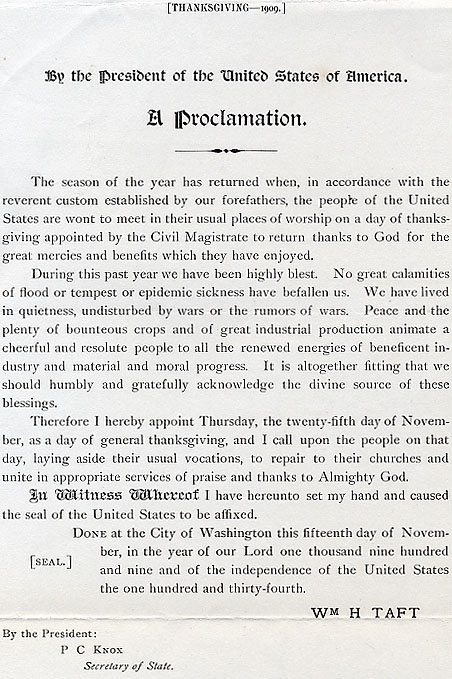
Proclamation – Thanksgiving Day – 1909


This is the text of a Thanksgiving Day proclamation issued by President William Howard Taft on November 15, 1909.

[Thanksgiving- 1909.]

By the
President of the United States of America.

A
Proclamation.

proclamation-thanksgiving-day-1909-1The season of the year has returned when, in accordance with the reverent custom established by our forefathers, the people of the United States are wont [accustomed] to meet in their usual places of worship on a day of thanksgiving appointed by the Civil Magistrate to return thanks to God for the great mercies and benefits which they have enjoyed.

During this past year we have been highly blest. No great calamities of flood or tempest or epidemic sickness have befallen us. We have lived in quietness, undisturbed by wars or the rumors of wars. Peace and the plenty of bounteous crops and of great industrial production animate a cheerful and resolute people to all the renewed energies of beneficent industry and material and moral progress. It is altogether fitting that we should humbly and gratefully acknowledge the divine source of these blessings.

Therefore I appoint Thursday, the twenty-fifth day of November, as a day of general thanksgiving, and I call upon the people on that day, laying aside their usual vocations, to repair to their churches and unite in appropriate services of praise and thanks to Almighty God.

In Witness Whereof I have hereunto set my hand and caused the seal of the United States to be affixed.

Done at the City of Washington this fifteenth day of November, in the year of our Lord one thousand nine hundred and nine and of the independence of the United States the one hundred and thirty-fourth.

Wm H Taft

By the President:

P.C. Knox

Secretary of State.

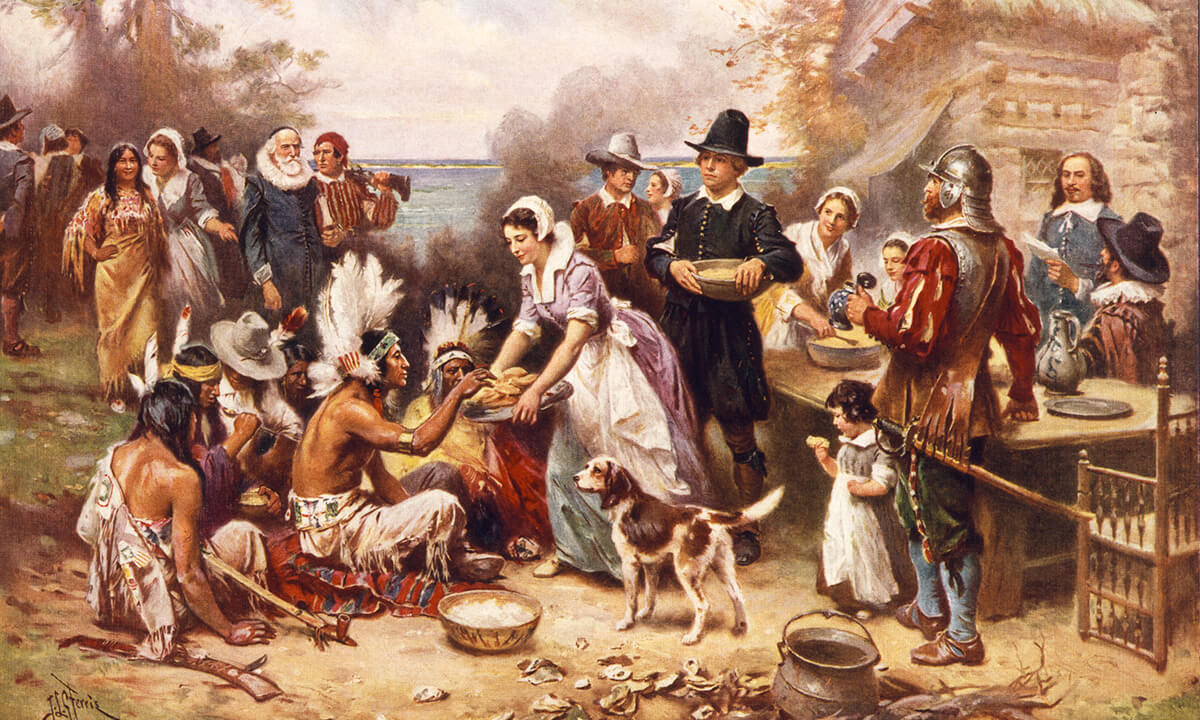
Proclamation – Thanksgiving Day – 1887


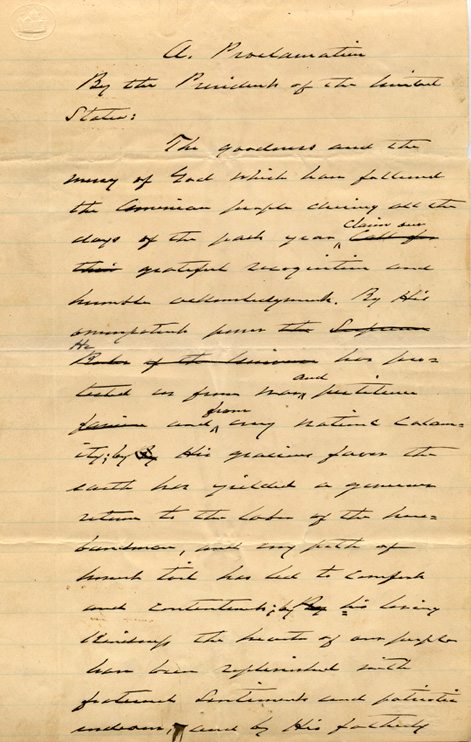
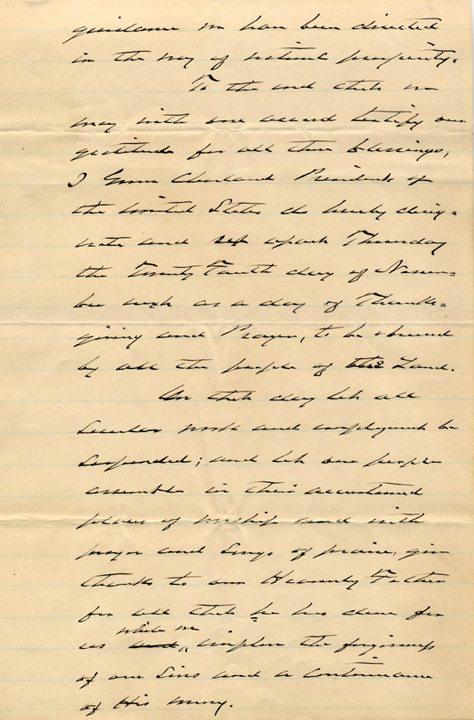
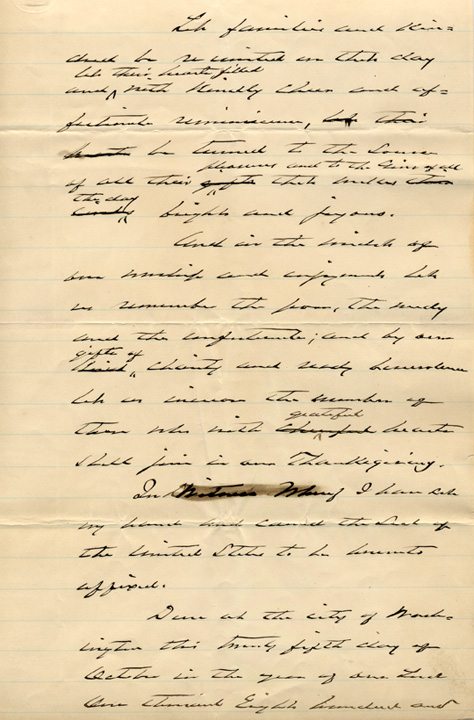
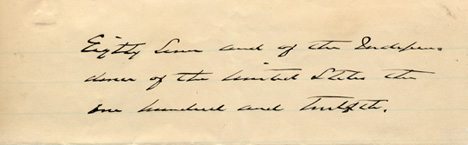
The following is the text of the handwritten Proclamation for a Day of Thanksgiving and Prayer issued by Grover Cleveland, President of the United States. The proclamation was issued October 25, 1887 and was declaring November 24, 1887 the day of Thanksgiving.


proclamation-thanksgiving-day-1887-1
proclamation-thanksgiving-day-1887-2
proclamation-thanksgiving-day-18873
proclamation-thanksgiving-day-1887-4
A Proclamation
By the President of the United States:

The goodness and the mercy of God, which have followed the American people during all the days of the past year claim our grateful recognition and humble acknowledgment. By His omnipotent power He has protected us from war and pestilence and from every national calamity; by His gracious favor the earth has yielded a generous return to the labor of the husbandman, and every path of honest toil has led to comfort and contentment; by His loving kindness the hearts of our people have been replenished with fraternal sentiment and patriotic endeavor, and by His Fatherly guidance we have been directed in the way of national prosperity.

To the end that we may with one accord testify our gratitude for all these blessings, I, Grover Cleveland, President of the United States, do hereby designate and set apart Thursday, the twenty-fourth day of November next as a day of Thanksgiving and Prayer, to be observed by all the people of the land.

On the day let all secular work and employment be suspended; and let our people assemble in their accustomed places of worship and with prayer and songs of praise, give thanks to our Heavenly Father for all that He has done for us while we implore the forgiveness of our sins and a continuance of His mercy.

Let families and kindred be reunited on that day and let their hearts, filled with kindly cheer and affectionate reminiscence, be turned to the source of all their pleasures and to the Giver of all that makes the day bright and joyous.

And in the midst of our worship and enjoyments let us remember the poor, the needy, and the unfortunate; and by our gifts of charity and ready benevolence let us increase the number of those who with grateful hearts shall join in our Thanksgiving.

In witness whereof I have set my hand and caused the seal of the United States to be hereunto affixed.

Done at the city of Washington, this twenty-fifth day of October in the year of our Lord one thousand eight hundred and eighty-seven, and of the Independence of the United States the one hundred and twelfth.

Proclamation – Thanksgiving Day – 1989


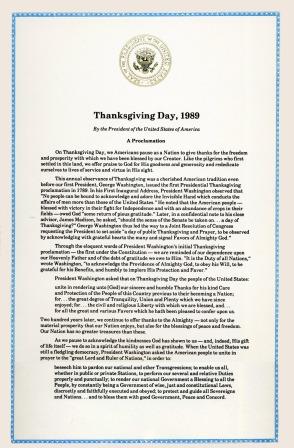
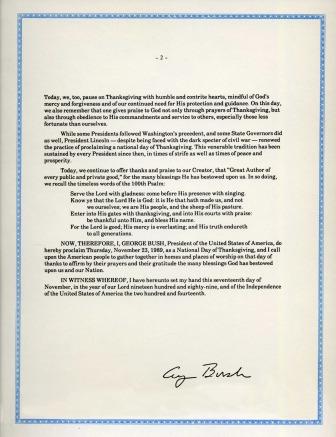
This is the text of a Proclamation for a National Day of Thanksgiving. The proclamation was issued on November 17, 1989, declaring November 23, 1989 as a day of thanksgiving to be observed by the nation.


proclamation-thanksgiving-day-1989-1
proclamation-thanksgiving-day-1989-2


Thanksgiving Day, 1989

By the President of the United States

A Proclamation

On Thanksgiving Day, we Americans pause as a Nation to give thanks for the freedom and prosperity with which we have been blessed by our Creator. Like the pilgrims who first settled in this land, we offer praise to God for His goodness and generosity and rededicate ourselves to lives of service and virtue in His sight.

This annual observance of Thanksgiving was a cherished American tradition even before our first President, George Washington, issued the first Presidential Thanksgiving proclamation in 1789. In his first Inaugural Address, President Washington observed that “No people can be bound to acknowledge and adore the Invisible Hand which conducts the affairs of men more than those of the United States.” He noted that the American people – blessed with victory in their fight for Independence and with an abundance of crops in their fields – owed God “some return of pious gratitude.” Later, in a confidential note to his close advisor, James Madison, he asked “should the sense of the Senate be taken on … a day of Thanksgiving?” George Washington thus led the way to a Joint Resolution of Congress requesting the President to set aside “a day of public Thanksgiving and Prayer, to be observed by acknowledging with grateful hearts the many and signal Favors of Almighty God.”

Through the eloquent words of President Washington’s initial Thanksgiving proclamation – the first under the Constitution – we are reminded of our dependence upon our Heavenly Father and of the debt of gratitude we owe to Him. “It is the Duty of all Nations,” wrote Washington, “to acknowledge the Providence of almighty God, to obey his Will, to be grateful for his Benefits, and humbly to implore His Protection and Favor.”

President Washington asked that on Thanksgiving Day the people of the United States:

unite in rendering unto [God] our sincere and humble Thanks for his kind Care and Protection of the People of this Country previous to their becoming a Nation; for … the great degree of Tranquility, Union and Plenty which we have since enjoyed; for … the civil and religious Liberty with which we are blessed, and … for all the great and various Favors which he hath been pleased to confer upon us.

Two hundred years later, we continue to offer thanks to the Almighty – not only for the material prosperity that our Nation enjoys, but also for the blessings of peace and freedom. Our Nation has no greater treasures than these.

As we pause to acknowledge the kindnesses God has shown to us – and, indeed, His gift of life itself – we do so in a spirit of humility as well as gratitude. When the United States was still a fledgling democracy, President Washington asked the American people to unite in prayer to the “great Lord and ruler of Nations,” in order to:

beseech him to pardon our national and other Transgressions; to enable us all, whether in public or private Stations, to perform our several and relative Duties properly and punctually; to render our national Government a blessing to all the People, by constantly being a Government of wise, just and constitutional Laws, discreetly and faithfully executed and obeyed; to protect and guide all Sovereigns and Nations … and to bless them with good Government, peace and Concord.

Today, we, too, pause on Thanksgiving with humble and contrite hearts, mindful of God’s mercy and forgiveness and of our continued need for His protection and guidance. On this day, we also remember that one gives praise to God not only through prayers of thanksgiving, but also through obedience to His commandments and service to others, especially those less fortunate than ourselves.

While some Presidents followed Washington’s precedent, and some State Governors did as well, President Lincoln – despite being faced with the dark specter of civil war – renewed the practice of proclaiming a national day of Thanksgiving. This venerable tradition has been sustained by every President since then, in times of strife as well as times of peace and prosperity.

Today, we continue to offer thanks and praise to our Creator, that “Great Author of every public and private good,” for the many blessings He has bestowed upon us. In so doing, we recall the timeless words of the 100th Psalm:

Serve the Lord with gladness: come before His presence with singing. Know ye that the Lord He is God: it is He that hath made us, and not we ourselves; we are His people, and the sheep of His pasture. Enter into His gates with thanksgiving, and into His courts with praise: be thankful unto Him, and bless His name. For the Lord is good; His mercy is everlasting; and His truth endureth to all generations.

NOW, THEREFORE, I, GEORGE BUSH, President of the United States of America, do hereby proclaim Thursday, November 23, 1989, as a National Day of Thanksgiving, and I call upon the American people to gather together in homes and places of worship on that day of thanks to affirm by their prayers and their gratitude the many blessings God has bestowed upon us and our Nation.

IN WITNESS WHEREOF, I have hereunto set my hand this seventeenth day of November, in the year of our Lord nineteen hundred and eighty-nine, and of the Independence of the United States of America the two hundred and fourteenth.

GEORGE BUSH

Was George Washington a Christian?

This is a question often asked today, and it arises from the efforts of those who seek to impeach Washington’s character by portraying him as irreligious. Interestingly, Washington’s own contemporaries did not question his Christianity but were thoroughly convinced of his devout faith–a fact made evident in the first-ever compilation of the The Writings of George Washington, published in the 1830s.

That compilation of Washington’s writings was prepared and published by Jared Sparks (1789-1866), a noted writer and historian. Sparks’ herculean historical productions included not only the writings of George Washington (12 volumes) but also Benjamin Franklin (10 volumes) and Constitution signer Gouverneur Morris (3 volumes). Additionally, Sparks compiled the Library of American Biography (25 volumes), The Diplomatic Correspondence of the American Revolution (12 volumes), and the Correspondence of the American Revolution (4 volumes). In all, Sparks was responsible for some 100 historical volumes. Additionally, Sparks was America’s first professor of history–other than ecclesiastical history–to teach at the college level in the United States, and he was later chosen president of Harvard.

Jared Sparks’ decision to compile George Washington’s works is described by The Dictionary of American Biography. It details that Sparks began . . .

. . . what was destined to be his greatest life work, the publication of the writings of George Washington. [Supreme Court] Justice Bushrod Washington, [the nephew of George Washington, the executor of the Washington estate, and] the owner of the Washington manuscripts, was won over by an offer to share the profits, through the friendly mediation of Chief Justice [of the Supreme Court, John] Marshall [who from 1804-1807 had written a popular five volume biography of George Washington], who also consented to take an equal share, twenty-five per cent, with the owner. In January 1827, Sparks found himself alone at Mount Vernon with the manuscripts. An examination of them extending over three months showed that years would be required for the undertaking; and with the owner’s consent, Sparks carried off the entire collection, eight large boxes, picking up on the way to Boston a box of diplomatic correspondence from the Department of State, and the [General Horatio] Gates manuscripts from the New York Historical Society. Not content with these, he searched or caused to be searched public and private archives for material, questioned survivors of the Revolution, visited and mapped historic sites. In 1830, for instance, he followed [Benedict] Arnold’s [1775] route to Quebec. The first of the twelve volumes of The Writings of George Washington to be published (vol. II) appeared in 1834 and the last (vol. I, containing the biography) in 1837.

In Volume XII of these writings, Jared Sparks delved into the religious character of George Washington, and included numerous letters written by the friends, associates, and family of Washington which testified of his religious character. Based on that extensive evidence, Sparks concluded:

To say that he [George Washington] was not a Christian would be to impeach his sincerity and honesty. Of all men in the world, Washington was certainly the last whom any one would charge with dissimulation or indirectness [hypocrisies and evasiveness]; and if he was so scrupulous in avoiding even a shadow of these faults in every known act of his life, [regardless of] however unimportant, is it likely, is it credible, that in a matter of the highest and most serious importance [his religious faith, that] he should practice through a long series of years a deliberate deception upon his friends and the public? It is neither credible nor possible.

One of the letters Sparks used to arrive at his conclusion was from Nelly Custis-Lewis. While Nelly technically was the granddaughter of the Washingtons, in reality she was much more.

When Martha [Custis] married George, she was a widow and brought two young children (John and Martha–also called Patsy) from her first marriage into her marriage with George. The two were carefully raised by George and Martha, later married, and each had children of their own. Unfortunately, tragedy struck, and both John and Patsy died early (by 1781). John left behind his widow and four young children ranging in age from infancy to six years old.

At the time, Washington was still deeply involved in guiding the American Revolution and tried unsuccessfully to convince Martha’s brother to raise the children. The young widow of John was unable to raise all four, so George and Martha adopted the two younger children: Nelly Parke Custis and George Washington Parke Custis, both of whom already were living at Mount Vernon.

Nelly lived with the Washingtons for twenty years, from the time of her birth in 1779 until 1799, the year of her marriage and of George Washington’s untimely death. She called George and Martha her “beloved parents whom I loved with so much devotion, to whose unceasing tenderness I was indebted for every good I possessed.”

Nelly was ten years old when Washington was called to the Presidency, and she grew to maturity during his two terms. During that time, she traveled with Washington and walked amidst the great foreign and domestic names of the day. On Washington’s retirement, she returned with the family to Mount Vernon. Nelly was energetic, spry, and lively, and was the joy of George Washington’s life. She served as a gracious hostess and entertained the frequent guests to Mount Vernon who visited the former President.

On Washington’s birthday in 1799, Nelly married Washington’s private secretary, Lawrence Lewis. They spent several months on an extended honeymoon, visiting friends and family across the country. On their return to Mount Vernon, she was pregnant and late that year gave birth to a daughter. A short few weeks later, on December 14, General Washington was taken seriously ill and died.

Clearly, Nelly was someone who knew the private and public life of her “father” very well. Therefore, Jared Sparks, in searching for information on Washington’s religious habits, dispatched a letter to Nelly, asking if she knew for sure whether George Washington indeed was a Christian. Within a week, she had replied to Sparks, and Sparks included her letter in Volume XII of Washington’s writings in the lengthy section on Washington’s religious habits. Of that specific letter, Jared Sparks explained:

I shall here insert a letter on this subject, written to me by a lady who lived twenty years in Washington’s family and who was his adopted daughter, and the granddaughter of Mrs. Washington. The testimony it affords, and the hints it contains respecting the domestic habits of Washington, are interesting and valuable.”

Woodlawn, 26 February, 1833.

Sir,

I received your favor of the 20th instant last evening, and hasten to give you the information, which you desire.

Truro [Episcopal] Parish is the one in which Mount Vernon, Pohick Church [the church where George Washington served as a vestryman], and Woodlawn [the home of Nelly and Lawrence Lewis] are situated. Fairfax Parish is now Alexandria. Before the Federal District was ceded to Congress, Alexandria was in Fairfax County. General Washington had a pew in Pohick Church, and one in Christ Church at Alexandria. He was very instrumental in establishing Pohick Church, and I believe subscribed [supported and contributed to] largely. His pew was near the pulpit. I have a perfect recollection of being there, before his election to the presidency, with him and my grandmother. It was a beautiful church, and had a large, respectable, and wealthy congregation, who were regular attendants.

He attended the church at Alexandria when the weather and roads permitted a ride of ten miles [a one-way journey of 2-3 hours by horse or carriage]. In New York and Philadelphia he never omitted attendance at church in the morning, unless detained by indisposition [sickness]. The afternoon was spent in his own room at home; the evening with his family, and without company. Sometimes an old and intimate friend called to see us for an hour or two; but visiting and visitors were prohibited for that day [Sunday]. No one in church attended to the services with more reverential respect. My grandmother, who was eminently pious, never deviated from her early habits. She always knelt. The General, as was then the custom, stood during the devotional parts of the service. On communion Sundays, he left the church with me, after the blessing, and returned home, and we sent the carriage back for my grandmother.

It was his custom to retire to his library at nine or ten o’clock where he remained an hour before he went to his chamber. He always rose before the sun and remained in his library until called to breakfast. I never witnessed his private devotions. I never inquired about them. I should have thought it the greatest heresy to doubt his firm belief in Christianity. His life, his writings, prove that he was a Christian. He was not one of those who act or pray, “that they may be seen of men” [Matthew 6:5]. He communed with his God in secret [Matthew 6:6].

My mother [Eleanor Calvert-Lewis] resided two years at Mount Vernon after her marriage [in 1774] with John Parke Custis, the only son of Mrs. Washington. I have heard her say that General Washington always received the sacrament with my grandmother before the revolution. When my aunt, Miss Custis [Martha’s daughter] died suddenly at Mount Vernon, before they could realize the event [before they understood she was dead], he [General Washington] knelt by her and prayed most fervently, most affectingly, for her recovery. Of this I was assured by Judge [Bushrod] Washington’s mother and other witnesses.

He was a silent, thoughtful man. He spoke little generally; never of himself. I never heard him relate a single act of his life during the war. I have often seen him perfectly abstracted, his lips moving, but no sound was perceptible. I have sometimes made him laugh most heartily from sympathy with my joyous and extravagant spirits. I was, probably, one of the last persons on earth to whom he would have addressed serious conversation, particularly when he knew that I had the most perfect model of female excellence [Martha Washington] ever with me as my monitress, who acted the part of a tender and devoted parent, loving me as only a mother can love, and never extenuating [tolerating] or approving in me what she disapproved of others. She never omitted her private devotions, or her public duties; and she and her husband were so perfectly united and happy that he must have been a Christian. She had no doubts, no fears for him. After forty years of devoted affection and uninterrupted happiness, she resigned him without a murmur into the arms of his Savior and his God, with the assured hope of his eternal felicity [happiness in Heaven]. Is it necessary that any one should certify, “General Washington avowed himself to me a believer in Christianity?” As well may we question his patriotism, his heroic, disinterested devotion to his country. His mottos were, “Deeds, not Words”; and, “For God and my Country.”

With sentiments of esteem,

I am, Nelly Custis-Lewis

George Washington’s adopted daughter, having spent twenty years of her life in his presence, declared that one might as well question Washington’s patriotism as question his Christianity. Certainly, no one questions his patriotism; so is it not rather ridiculous to question his Christianity? George Washington was a devout Episcopalian; and although as an Episcopalian he would not be classified as an outspoken and extrovert “evangelical” Founder as were Founding Fathers like Benjamin Rush, Roger Sherman, and Thomas McKean, nevertheless, being an Episcopalian makes George Washington no less of a Christian. Yet for the current revisionists who have made it their goal to assert that America was founded as a secular nation by secular individuals and that the only hope for America’s longevity rests in her continued secularism, George Washington’s faith must be sacrificed on the altar of their secularist agenda.

For much more on George Washington and the evidences of his strong faith, examine the following sources:

  • George Washington, The Writings of George Washington, Jared Sparks, editor (Boston: Ferdinand Andrews, Publisher, 1838), Vol. XII, pp. 399-411.
  • George Washington, The Religious Opinions of Washington, E. C. M’Guire, editor (New York: Harper & Brothers, 1836).
  • William Johnson, George Washington The Christian (1917).
  • William Jackson Johnstone, How Washington Prayed (New York: The Abingdon Press, 1932).
  • The Messages and Papers of the Presidents, James D. Richardson, editor (Published by the Authority of Congress, 1899), Vol. I, pp. 51-57 (1789), 64 (1789), 213-224 (1796), etc.
  • George Washington, Address of George Washington, President of the United States, Late Commander in Chief of the American Army, to the People of the United States, Preparatory to his Declination (Baltimore: George & Henry S. Keatinge, 1796), pp. 22-23.
  • George Washington, The Maxims of Washington (New York: D. Appleton and Co., 1855).

* Originally Posted: Dec. 31, 2016.

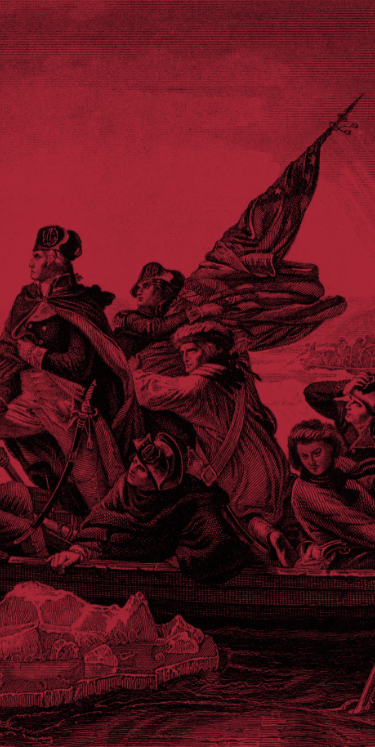
A Review of A&E’s “The Crossing”

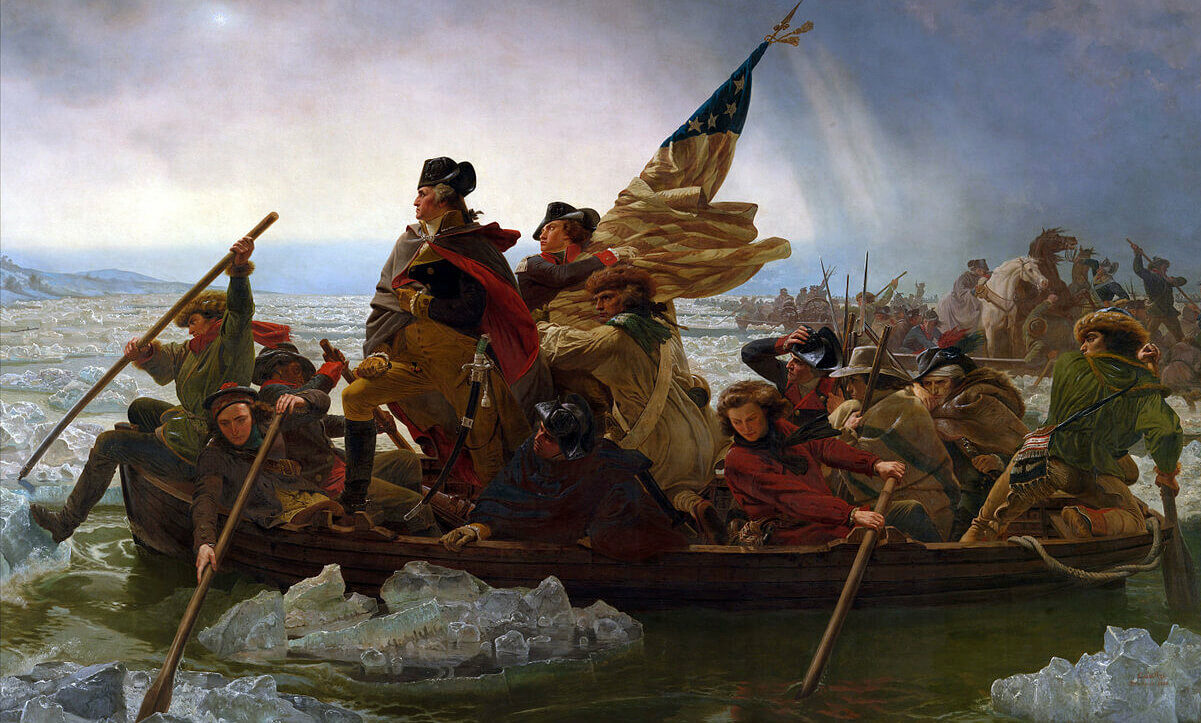
The recent showing on the A&E Network of “The Crossing” has resulted in a flurry of questions being raised about the character and personal habits of Commander-in-Chief George Washington. Specifically, was he as profane with his language as portrayed in the film?

“The Crossing” was A&E’s movie version of Howard Fast’s book by the same name. Howard Fast, who has authored over seventy novels, describes his work as “American historiography”; that is, it is a combination of history and biography written in a novel form.

It is Washington’s dialogue in this movie which has raised the most questions. Yet, it is the dialogue which is its least historical portion; that is, there is no exact record of the conversations which occurred prior to and during the crossing. While there are soldier’s and staff’s remembrances of the topics and tones of the discussions and even of a few occasional phrases, there simply exists no historical records documenting the full conversations themselves. This portion of the historiography of the “the Crossing” makes it a novel. Interestingly, however, the George Washington in the movie “the Crossing” is much more profane than the George Washington in the book “The Crossing.” In fact, some of the profane words used in the movie are actually words of recent origin, having had no previous historical usage.

Nonetheless, accepting that the dialogue is the least accurate element of “The Crossing,” the question still remains, was the portrayal of George Washington as a leader given to verbal profanity an accurate historical portrayal? Fortunately, there is much available primary-source historical information (from both military documents and eye-witnesses of that time) which provides a clear and indisputable answer to this question: No, the use of profanity was not a part of the leadership style of George Washington. In fact, the records are clear that the opposite was true.

George Washington’s own personal aversion to profanity was first documented nearly thirty years before “The Crossing” of 1776. In 1746, Washington wrote out his famous “Rules of Civility.” His Rule 22 declared:

Use no reproachful language against any one, neither curse, nor revile.1

A decade later, and still nearly twenty years before “The Crossing,” Washington first documented his personal aversion to profanity in the
military. In 1756, during the French and Indian War as a young colonel commanding Virginian forces during that conflict, Washington told his superior, Lt. Gov. Robert Dinwiddie:

[T]his I am certain of, and can call my conscience and what, I suppose, will still be a more demonstrable proof in the eyes of the world, my orders, to witness how much I have–both by threats and persuasive means–endeavored to discountenance gaming, drinking, swearing, and irregularities of every other kind; while I have, on the other hand, practiced every artifice to inspire a laudable emulation in the officers for the service of their country and to encourage the soldiers in the unerring exercise of their duty. 2

Several weeks later, Washington issued the following order to his troops:

Colonel Washington has observed that the men of his regiment are very profane and reprobate. He takes this opportunity to inform them of his great displeasure at such practices and assures them that if they do not leave them off, they shall be severely punished. The officers are desired, if they hear any man swear or make use of an oath or execration, to order the offender twenty-five lashes immediately, without court-martial. For the second offense, he will be more severely punished.3

Washington’s firm opposition to profanity in the military never wavered, as evidenced by military orders he issued on several occasions throughout the American Revolution. For example:

The General most earnestly requires and expects a due observance of those articles of war established for the government of the army which forbid profane cursing, swearing and drunkenness; and in the like manner requires and expects of all officers and soldiers not engaged on actual duty, a punctual attendance on Divine Service to implore the blessings of Heaven upon the means used for our safety and defense. 4 GENERAL ORDERS, CAMBRIDGE, JULY 4, 1775

The General is sorry to be informed that the foolish and wicked practice of profane cursing and swearing (a vice heretofore little known in an American Army) is growing into fashion; he hopes the officers will, by example as well as influence, endeavor to check it, and that both they and the men will reflect that we can have little hopes of the blessing of heaven on our arms if we insult it by our impiety and folly; added to this, it is a vice so mean and low, without any temptation, that every man of sense and character detests and despises it.5 GENERAL ORDERS, NEW YORK, AUGUST 3, 1776

It is much to be lamented that the foolish and scandalous practice of profane swearing is exceedingly prevalent in the American Army. Officers of every rank are bound to discourage it, first by their example, and then by punishing offenders. As a mean to abolish this and every other species of immorality, Brigadiers are enjoined to take effectual care to have Divine Service duly performed in their respective brigades. 6 GENERAL ORDERS, MIDDLEBROOK, MAY 31, 1777

Purity of morals being the only sure foundation of public happiness in any country, and highly conducive to order, subordination, and success in an army, it will be well worthy the emulation of officers of every rank and class to encourage it both by the influence of example and the penalties of authority. It is painful to see many shameful instances of riot and licentiousness
among us; the wanton practice of swearing has risen to a most disgusting height. A regard to decency should
conspire with a sense of morality to banish a vice productive of neither advantage of pleasure. 7 GENERAL ORDERS, FREDERICKSBURG, OCTOBER 21, 1778

There is a clear and consistent message throughout his orders: General Washington did not tolerate the practice of swearing in the military. It is therefore reasonable to assume that he would have been a leader in propagating that which he so sternly opposed? Hardly. “The Crossing” has mis-portrayed this element of the character and nature of General Washington.

In fact, on only one occasion during the lengthy forty-year military career of General Washington was he accused of cursing or profanity. That occasion allegedly occurred during during the Battle of Monmouth in 1778 when General Charles Lee displayed gross cowardice in the face of the British and ordered the American troops under his command to retreat. The retreat became a general rout until General Washington arrived, rallied the troops, reformed the scattered bands, and attacked.

Washington, irritated with General Lee for direct disobedience to his orders, removed Lee from the control of any troops following an angry exchange with him on the field of battle. Some charge that this heated argument Washington swore at Lee. Lee later demanded an apology from Washington for the way he had been humiliated on the battle field, but Washington refused. Lee was afterwards court-martialed, found guilty, and given a twelve-month suspended sentence for disobedience to direct orders, misbehavior before the enemy, and disrespect to the Commander-in-Chief.

Interestingly, even W. E. Woodward, an early twentieth-century revisionist historian very critical of Washington, found no basis for believing that general Washington used profanity even on this occasion. Woodward explained:

The question as to whether Washington swore on this occasion has stirred the American nation for five generations. . . . Washington may have sworn in his heated interview with Lee, but it does not appear in the evidence; and I think it a very doubtful legend. The story of his swearing at Monmouth rests on the unofficial testimony of people given years after the occurrence, and in the form of loose reminiscences. . . . In the whole mass of testimony produced at the Lee court-martial, there is not one word about swearing. Much of this testimony was given by friends of Lee, and Lee himself presented a defense in writing in which he said that he endeavored to reproduce Washington’s words literally. At the court-martial he was Washington’s mortal enemy, and it seems that if Washington had given him a good cursing–which would have been a breach of military courtesy–Lee would have set down something about it in his paper. . . . Evidently he [Washington] repented quickly his loss of temper at Monmouth, for shortly after his altercation with Lee he turned to that general, who was still hanging around swollen with injured pride, and mildly directed him to take command of the rallied troops.8

Even historians harshest in their criticism of George Washington find little basis for believing that Washington swore, Yet, even if this one occasion is accepted, there still is absolutely no substantiation for the type of loose and flowing profanity which characterized Washington during “The Crossing.”

In fact, those who knew and served with Washington during his military career described him in the opposite terms. For example, General Henry Lee said of Washington that:

To his equals he was condescending, to his inferiors kind . . . [V]ice shuddered in his presence, and virtue always felt his fostering hand. The purity of his private character gave effulgence to his public virtues. 9

Similarly, David Ramsay, military surgeon during the Revolution, said of Washington that:

His private character, as well as his public one, will bear the strictest scrutiny. He. . . . carried the spirit of piety with him, both in his private life and public administration. 10

And General Alexander Hamilton confirmed the general character of Washington when, upon Washington’s death in 1799, he declared:

If virtues can secure happiness in another world, he [Washington] is happy. 11

While many of the military and historical facts, dates, names, and places portrayed in A&E’s “The Crossing” may be accurate and correct, the portrayal of the flawed moral character of the Commander-in-Chief is historically inaccurate.

Footnotes

1 Jared Sparks, The Life of George Washington (Boston: Ferdinand Andrews, 1839), p. 514.

2 George Washington, The Writings of George Washington, John C. Fitzpatrick, editor (Washington: U. S. Printing Office, 1931), Vol. I, p. 317, to Robert Dinwiddie on April 18, 1756.

3 George Washington, The Writings of George Washington, Jared Sparks, editor (Boston: Ferdinand Andrews, 1836), Vol. II, p. 167, n, from his “Orderly Book,” an undated order issued between June 25 and August 4, 1756.

4 Washington, Writings, Vol. III, p. 309, General Orders, Head Quarters, Cambridge, July 4, 1775.

5 Washington, Writings, Vol. V, p. 367, General Orders, Head Quarters, New York, August 3, 1776.

6 Washington, Writings, Vol. VIII, p. 152-53, General Orders, Head Quarters, Middle-Brook, May 31, 1777.

7 Washington, Writings, Vol. XIII, p. 118-19, General Orders, Head Quarters, Fredericksburg, October 21, 1778.

8 W. E. Woodward, George Washington, The Image and The Man, W. E. Woodward (New York: Boni and Liveright, 1926), pp. 352-353.

9 A Memory of Washington: Compromising a Sketch of his Life and Character; and the National Testimonials of Respect–Also a Collection of Eulogies and Orations (Newport, RI: Oliver Farnsworth, 1800), p. 99, from the eulogy on Washington by General Henry Lee, December 26, 1799.

10 E. C. M’Guire, Religious Opinions and Character of Washington (New York: Harper & Brothers, 1836), p. 362, from the eulogy on Washington by David Ramsay, on January 15, 1800.

11 Alexander Hamilton, The Works of Alexander Hamilton, John C. Hamilton, editor (New York: John F. Trow, 1851), Vol. VI, p. 415, to M. Leer on January 2, 1800.
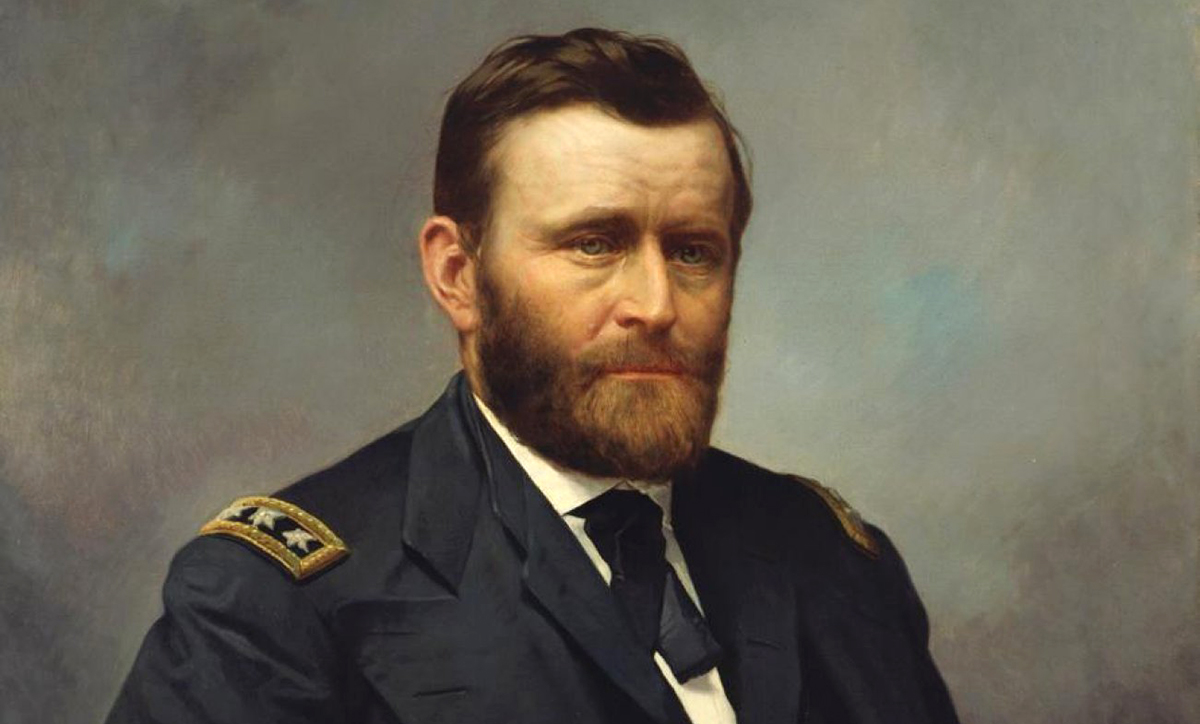

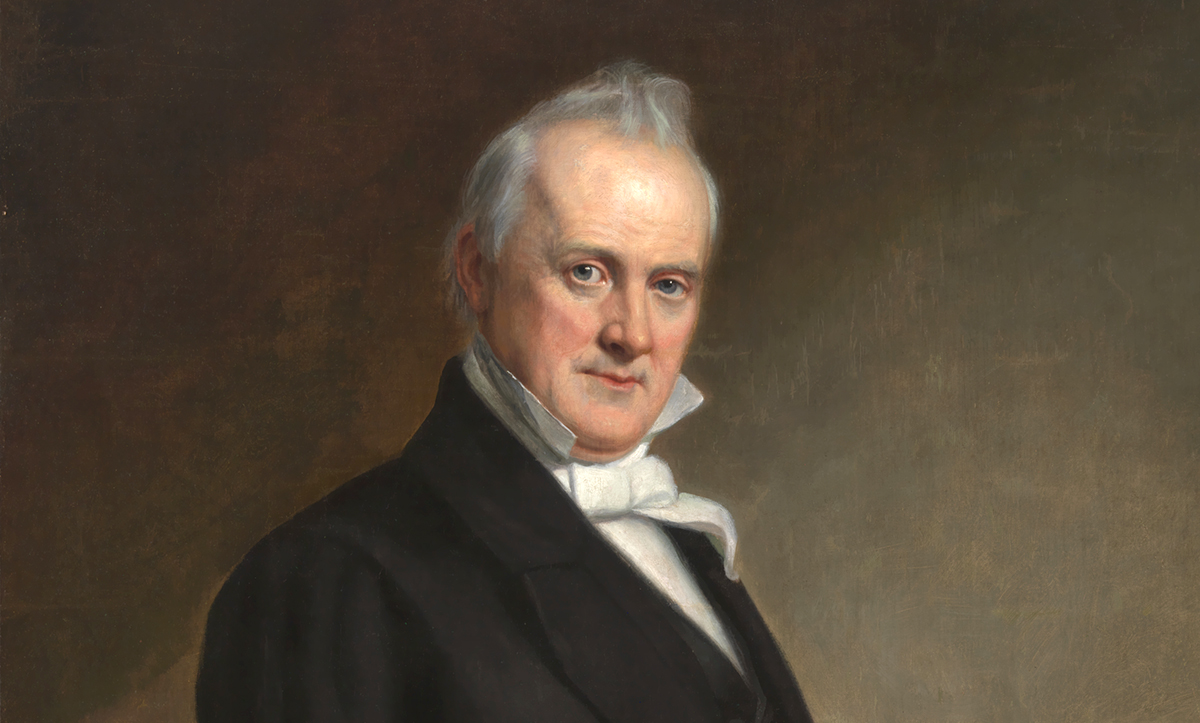
James Buchanan

Proclamation – Humiliation Fasting and Prayer – 1860

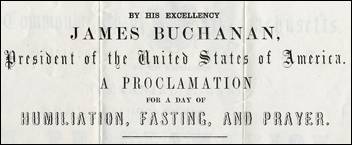
proclamation-humiliation-fasting-and-prayer-1860-1

By His Excellency

James Buchanan,

President of the United States of America.

A Proclamation

For a Day of
Humiliation, Fasting, & Prayer.


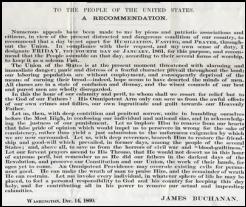
To the People of the United States.

A Recommendation.

Numerous appeals have been made to me by pious and patriotic associations and citizens, in view of the present distracted and dangerous condition of our country, to recommend that a day be set apart for Humiliation, Fasting and Prayer throughout the Union.
proclamation-humiliation-fasting-and-prayer-1860-2

In compliance with their request and my own sense of duty, I designate Friday, the 4th of January 1861, for this purpose, and recommend that the People assemble on that day, according to their several forms of worship, to keep it as a solemn Fast.

The Union of the States is at the present moment threatened with alarming and immediate danger; panic and distress of a fearful character prevails throughout the land; our laboring population are without employment, and consequently deprived of the mans of earning their bread. Indeed, hope seems to have deserted the minds of men. All classes are in a state of confusion and dismay, and the wisest counsels of our best and purest men are wholly disregarded.

In this the hour of our calamity and peril, to whom shall we resort for relief but to the God of our fathers? His omnipotent arm only can save us from the awful effects of our own crimes and follies — our own ingratitude and guilt towards our Heavenly Father.

Let us, then, with deep contrition and penitent sorrow, unite in humbling ourselves before the Most High, in confessing our individual and national sins, and in acknowledging the injustice of our punishment. Let us implore Him to remove from our hearts that false pride of opinion which would impel us to persevere in wrong for the sake of consistency, rather than yield a just submission to the unforeseen exigencies by which we are now surrounded. Let us with deep reverence beseech him to restore the friendship and good will which prevailed in former days among the people of the several States; and, above all, to save us from the horrors of civil war and “blood-guiltiness.” Let our fervent prayers ascend to His Throne that He would not desert us in this hour of extreme peril, but remember us as he did our fathers in the darkest days of the revolution; and preserve our Constitution and our Union, the work of their hands, for ages yet to come.

An Omnipotent Providence may overrule existing evils for permanent good. He can make the wrath of man to praise Him, and the remainder of wrath he can restrain. — Let me invoke every individual, in whatever sphere of like he may be placed, to feel a personal responsibility to God and his country for keeping this day holy, and for contributing all in his power to remove our actual and impending calamities.

James Buchanan.

Washington,
Dec. 14, 1860.

Christmas-As Celebrated by the Presidents

Even though Christmas did not become a national holiday until 1870, it has a centuries old history in America. Interestingly, in colonial America, the southern regions that were more directly linked to High-Church traditions (e.g., Anglicans, Catholics, Episcopalians) celebrated Christmas; but the northern regions especially linked to Low-Church traditions (e.g., Congregationalists, Baptists, Quakers) did not. Those Low-Church colonists associated the pomp and grandeur of Christmas celebrations directly with the autocratic leaders and monarchs in Europe that they so opposed.

Massachusetts therefore passed an anti-Christmas law in 1659, and it was not until the 1830s and 1840s that Christmas celebrations became accepted in New England (although as late as 1870, a student missing school on Christmas Day in Boston public schools could be punished or expelled). But by the 1880s, Christmas celebrations were finally accepted across the country and began to appear at the White House. For example:

  • In 1889, the first indoor decorated tree was placed in the White House, and in 1895, electric lights were added.
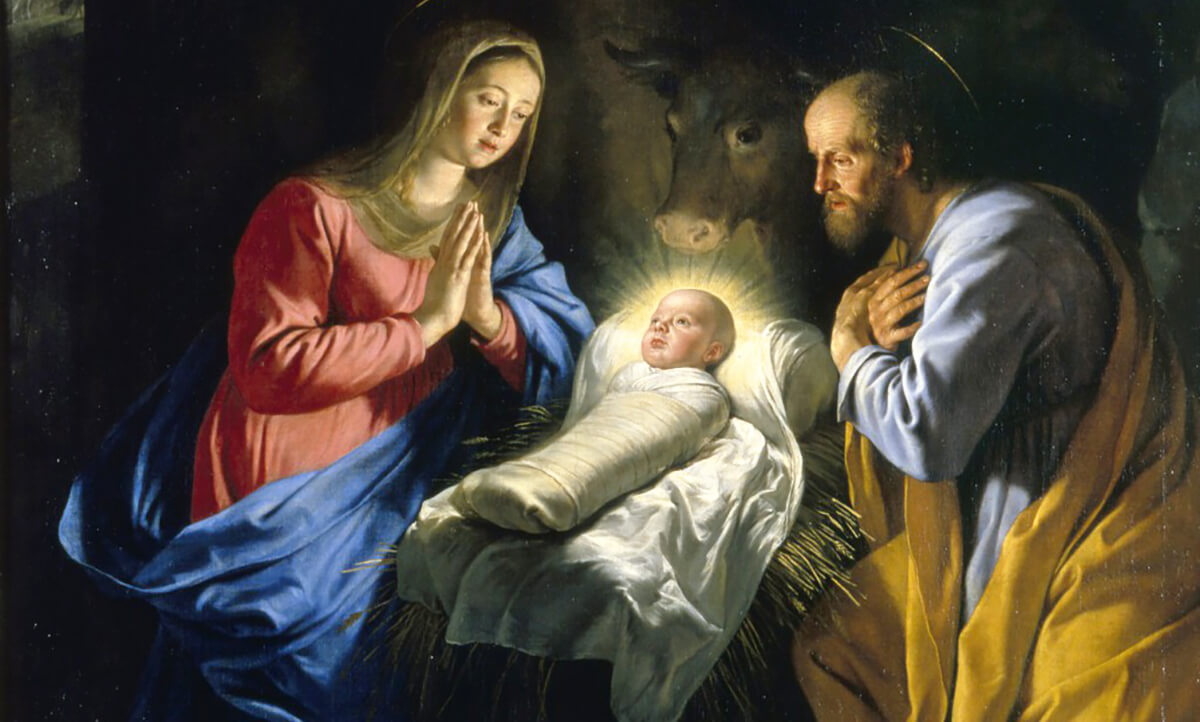
  • In 1923, the first National Christmas Tree Lighting Ceremony was held. In 1954 it was named the Pageant of Peace but in 1969 it became embroiled in a legal controversy over the use of religious symbols. In 1973, the nativity scene that had always been part of the Pageant was no longer allowed, but in 1984, it returned.
  • In 1953, the first White House Christmas card was created by President Dwight Eisenhower. (Ike was an artist in his own right and allowed six of his own paintings to be used as Christmas gifts and cards.) President Kennedy’s 1963 Christmas card was the first to include an explicitly religious element, featuring a photo of a nativity scene. And in 2001, the first White House Christmas card to contain a Scripture was chosen by Laura Bush. It quoted Psalm 27: “Thy face, Lord, do I seek. I believe that I shall see the goodness of the Lord in the Land of the Living” – a Scripture she had chosen on September 16 (only 5 days after 9/11), based on a special sermon preached at Camp David.

Christmas was celebrated by our national leaders as a religious holiday, not the secular holiday it has become.

For example, every Christmas Eve, President Teddy Roosevelt and his family would pile into the family sleigh (later the motor car) and travel to a Christmas service at Christ Church in Oyster Bay, New York. Following the pastor’s sermon, Teddy would deliver one of his famous “sermonettes” on the true meaning of Christmas and then close the service with one of his favorite hymns, “Christmas By the Sea.”

President Franklin Roosevelt would set up and decorate a tree on Christmas Eve, gather the family round him, and either read Charles Dickens’ “A Christmas Carol” or recite it from memory. (The original story is quite different from the modern movies by that name and is well worth the read.) He would also deliver explicitly religious Christmas Eve messages to the nation. For example, in 1944 following D-Day, he said:

Here, at home, we will celebrate this Christmas Day in our traditional American way – because of its deep spiritual meaning to us; because the teachings of Christ are fundamental in our lives; and because we want our youngest generation to grow up knowing the significance of this tradition and the story of the coming of the immortal Prince of Peace and good will. . . . [FDR then prayed a prayer for the troops, and closed with:] We pray that with victory will come a new day of peace on earth in which all the Nations of the earth will join together for all time. That is the spirit of Christmas, the holy day. May that spirit live and grow throughout the world in all the years to come.

(I recommend you go online to the American Presidency Project and look up and especially read some Christ-centered Christmas messages from Presidents, such as that of Franklin Roosevelt in 1935, Harry Truman in 1949 or 1952, Ronald Reagan in 1982 or 1985, George W. Bush in 2003, and there are many additional examples. You should also watch President Reagan deliver one of his Christmas addresses.)

In recent years, there has been a relentless push from secularists and progressives to transform Christmas. Schools, government offices, and many commercial stores have replaced Merry Christmas with Happy Holidays to appease critics, not realizing that 93% of Americans celebrate Christmas, and 97% are not bothered by the use of the phrase “Merry Christmas.” Yet far too often, the 3% seems to drive public policy; Americans need to push back.

Gratefully, religious Jews have been some of the strongest advocates for keeping Christmas a religious celebration. For example, Burt Prelutsky, a Jewish columnist for a number of national publications, declares:

I never thought I’d live to see the day that Christmas would become a dirty word. . . . How is it, one well might ask, that in a Christian nation this is happening? . . . Speaking as a member of a minority group – and one of the smaller ones at that – I say it behooves those of us who don’t accept Jesus Christ as our savior to show some gratitude to those who do, and to start respecting the values and traditions of the overwhelming majority of our fellow citizens, just as we keep insisting that they respect ours. Merry Christmas, my friends!

Orthodox Jewish Rabbi Daniel Lapin agrees:

Secular fundamentalism has successfully injected into American culture the notion that the word “Christmas” is deeply offensive. . . . Anti-Christianism is unhealthy for all Americans; but I warn my brethren that it will prove particularly destructive for Jews. . . . Let us all go out of our way to wish our many wonderful Christian friends – a very merry Christmas. Just remember, America’s Bible belt is our safety belt.

So . . . Merry Christmas!!!

America’s Religious Heritage As Demonstrated in Presidential Inaugurations

Religious activities at presidential inaugurations have become the target of criticism in recent years, 1 with legal challenges being filed to halt activities as simple as inaugural prayers and the use of “so help me God” in the presidential oath.2 These critics – evidently based on a deficient education – wrongly believe that the official governmental arena is to be aggressively secular and religion-free. The history of inaugurations provides some of the most authoritative proof of the fallacy of these modern arguments.

In fact, since America’s first inauguration in 1789 included seven distinct religious activities, that original inauguration is worthy of review. Every inauguration since 1789 has included numerous of those activities.

The First Inauguration
americas-religious-heritage-as-demonstrated-in-presidential-inaugurations

Constitutional experts abounded at America’s first inauguration. Not only was the first inauguree (George Washington) a signer of the Constitution but numerous drafters of the Constitution were serving in the Congress that organized and directed that first inauguration. In fact, just under one fourth of the members of the first Congress had been delegates to the Convention that wrote the Constitution.3 Furthermore, the identical Congress that directed and oversaw these inaugural activities also penned the First Amendment. Having therefore produced both the Constitution and all of its clauses on religion, they clearly knew what types of religious activities were and were not constitutional. Clearly, then, the religious activities that occurred at the first inauguration may well be said to have the approval and imprimatur of the greatest collection of constitutional experts America has ever known. Therefore, a review of the religious activities acceptable in that first inauguration will provide guidance for citizens in general and critics in particular.

The first inauguration occurred in New York City. (New York City served as the nation’s capital for the first year of the new federal government; for the next ten, Philadelphia was the capital city; in 1800, the federal government moved to Washington, D. C. for its permanent home). George Washington had been at home at Mt. Vernon when Charles Thomson, Secretary of the Continental Congress, notified him that he had been unanimously elected as the nation’s first president.

americas-religious-heritage-as-demonstrated-in-presidential-inaugurations-2 On receiving this news, Washington departed from Mt. Vernon and began his trek toward New York City, stopping first at Fredericksburg, Virginia, to visit his mother, Mary¬ – the last time the two would see each other. Mary was eighty-two and suffering from incurable breast cancer. Mary parted with her son, giving him her blessings and offering him her prayers, telling him: “You will see me no more; my great age and the disease which is rapidly approaching my vitals, warn me that I shall not be long in this world. Go, George; fulfill the high destinies which Heaven appears to assign to you; go, my son, and may that Heaven’s and your mother’s blessing be with you always.” 4 Washington did go, and he did indeed fulfill the high destinies assigned him by Heaven. A moving painting was made of her giving him her final charge; his mother passed away a few months after that final meeting.

Leaving his mother, Washington continued northward toward New York City. In town after town along the way, special dinners and celebrations were held – including in Alexandria, Georgetown, Baltimore, Philadelphia, Trenton, and other locations. Finally reaching Elizabethtown, New Jersey, Washington boarded a barge that carried him the rest of the way, where another celebration awaited him upon entering New York Harbor.

On April 30th, 1789, George Washington was to be inaugurated on the balcony outside Federal Hall. (Federal Hall was originally named Old Hall, but New York City – in an effort to convince the new federal government that the City was serious about becoming the national capital – remodeled the structure, renaming it Federal Hall. The House and Senate met in two chambers inside that Hall, and the inauguration took place on the remodeled building’s balcony.) Incidentally, religious activities had been planned to precede the inauguration, with the people of New York City being called to a time of prayer. The papers in the Capital City reported on that scheduled activity:

[O]n the morning of the day on which our illustrious President will be invested with his office, the bells will ring at nine o’clock, when the people may go up to the house of God and in a solemn manner commit the new government, with its important train of consequences, to the holy protection and blessing of the Most high. An early hour is prudently fixed for this peculiar act of devotion and . . . is designed wholly for prayer. 5

The preparations for the inauguration had been extensive; everything had been well planned; the event seemed to be proceeding smoothly. The parade carrying Washington by horse-drawn carriage to the swearing-in was nearing Federal Hall when it was realized that no Bible had been obtained for administering the oath. Parade Marshal Jacob Morton hurried to the nearby Masonic Lodge and grabbed its large 1767 King James Bible.

americas-religious-heritage-as-demonstrated-in-presidential-inaugurations-3

The Bible was laid upon a crimson velvet cushion (held by Samuel Otis, Secretary of the Senate) and, with a huge crowd gathered below watching the ceremony on the balcony, New York Chancellor Robert Livingston was to administer the oath of office. (Robert Livingston had been one of the five Founders who had drafted the Declaration of Independence; however, he was called back to New York to help his State through the Revolution before he could affix his signature to the very document he had helped write. As Chancellor, Livingston was the highest ranking judicial official in New York.) Beside Livingston and Washington stood several distinguished officials, including Vice President John Adams, original Supreme Court Chief Justice John Jay, Generals Henry Knox and Philip Schuyler, and a number of others. The Bible was opened at random to the latter part of Genesis; Washington placed his left hand upon the open Bible, raised his right, and then took the oath of office prescribed by the Constitution. Washington then bent over and kissed the Bible, reverently closed his eyes, and said, “So help me God!” Chancellor Livingston then proclaimed, “It is done!” Turning to the crowd assembled below, he shouted, “Long live George Washington – the first President of the United States!” That shout was echoed and re-echoed by the crowd below.

Critics today claim that George Washington never added “So help me God!” to his oath 6 – that associating religious intent with the oath is of recent origins. After all, the presidential oath of office as prescribed in Article II of the Constitution simply states:

I do solemnly swear (or affirm) that I will faithfully execute the office of President of the United States, and will to the best of my ability, preserve, protect and defend the Constitution of the United States.

But overlooked by many today is the fact that the Framers of our government considered an oath to be inherently religious – something George Washington affirmed when he appended the phrase “So help me God” to the end of the oath. In fact, it was universally acknowledged by every American legal scholar of that day that any legally-binding oath was overtly religious in nature. As signer of the Declaration John Witherspoon succinctly explained:

An oath is an appeal to God, the Searcher of Hearts, for the truth of what we say and always expresses or supposes an imprecation [a calling down] of His judgment upon us if we prevaricate [lie]. An oath, therefore, implies a belief in God and His Providence and indeed is an act of worship. . . . Persons entering on public offices are also often obliged to make oath that they will faithfully execute their trust. . . . In vows, there is no party but God and the person himself who makes the vow.7

Signer of the Constitution Rufus King similarly affirmed:

[B]y the oath which they [the laws] prescribe, we appeal to the Supreme Being so to deal with us hereafter as we observe the obligation of our oaths. The Pagan world were and are without the mighty influence of this principle which is proclaimed in the Christian system – their morals were destitute of its powerful sanction while their oaths neither awakened the hopes nor fears which a belief in Christianity inspires. 8

James Iredell, a ratifier of the Constitution and a U. S. Supreme Court justice appointed by George Washington, also confirmed:

According to the modern definition [1788] of an oath, it is considered a “solemn appeal to the Supreme Being for the truth of what is said by a person who believes in the existence of a Supreme Being and in a future state of rewards and punishments according to that form which would bind his conscience most.” 9

The great Daniel Webster – considered the foremost lawyer of his time 10 – also declared:

“What is an oath?” . . . [I]t is founded on a degree of consciousness that there is a Power above us that will reward our virtues or punish our vices. . . . [O]ur system of oaths in all our courts, by which we hold liberty and property and all our rights, are founded on or rest on Christianity and a religious belief. 11
americas-religious-heritage-as-demonstrated-in-presidential-inaugurations-4

Clearly, at the time the Constitution was written, an oath was a religious obligation. George Washington understood this, and at the beginning of his presidency had prayed “So help me God” with his oath; at the end of his presidency eight years later in 1796 in his “Farewell Address,” he reaffirmed that an oath was religious when he pointedly queried:

[W]here is the security for property, for reputation, for life, if the sense of religious obligation desert the oaths . . . ? 12

Numerous other authoritative sources affirm that oaths were inherently religious. 13

The evidence is clear: from a constitutional viewpoint, the administering of a presidential oath was the administering of a religious obligation – something that was often acknowledged during presidential inaugurations following Washington’s. For example, during his 1825 inauguration, John Quincy Adams declared:

I appear, my fellow-citizens, in your presence and in that of Heaven to bind myself by the solemnities of religious obligation to the faithful performance of the duties allotted to me in the station to which I have been called. 14

Subsequent presidents made similar acknowledgments:

HERBERT HOOVER: This occasion is not alone the administration of the most sacred oath which can be assumed by an American citizen. It is a dedication and consecration under God to the highest office in service of our people. 15

FRANKLIN DELANO ROOSEVELT: As I stand here today, having taken the solemn oath of office in the presence of my fellow countrymen – in the presence of our God . . . 16

JOHN F. KENNEDY: For I have sworn before you and Almighty God the same solemn oath our forebears prescribed nearly a century and three quarters ago. 17

RICHARD NIXON: I have taken an oath today in the presence of God and my countrymen to uphold and defend the Constitution of the United States. 18

There were others as well. 19 The taking of the presidential oath is a religious action – or what Founding Father John Witherspoon had called “an act of worship.” 20

Returning to Washington’s inauguration, following the taking of the oath on the Bible, Washington and the officials then departed the balcony and went inside Federal Hall to the Senate Chamber where Washington delivered his Inaugural Address. From the outset of that first-ever presidential address, Washington – as his first very official act – set a religious tone by expressing his own heartfelt prayer to God:

Such being the impressions under which I have – in obedience to the public summons – repaired to [arrived at] the present station, it would be peculiarly improper to omit in this first official act my fervent supplications to that Almighty Being Who rules over the universe, Who presides in the councils of nations, and Whose providential aids can supply every human defect – that His benediction may consecrate to the liberties and happiness of the people of the United States a government instituted by themselves for these essential purposes. 21

The remainder of Washington’s address was no less strongly religious; he even called on his listeners to remember and acknowledge God:

In tendering this homage [act of worship] to the Great Author of every public and private good, I assure myself that it expresses your sentiments not less than my own, nor those of my fellow-citizens at large less than either. No people can be bound to acknowledge and adore the Invisible Hand which conducts the affairs of men more than those of the United States. Every step by which they have advanced to the character of an independent nation seems to have been distinguished by some token of Providential Agency; and in the important revolution just accomplished in the system of their united government [i.e., the creation and adoption of the Constitution] . . . cannot be compared with the means by which most governments have been established without some return of pious gratitude. . . .

These reflections, arising out of the present crisis, have forced themselves too strongly on my mind to be suppressed. . . . [T]he foundation of our national policy will be laid in the pure and immutable principles of private morality . . . since there is no truth more thoroughly established than that there exists in the economy and course of nature an indissoluble union between virtue and happiness – between duty and advantage – between the genuine maxims of an honest and magnanimous policy and the solid rewards of public prosperity and felicity; since we ought to be no less persuaded that the propitious [favorable] smiles of Heaven can never be expected on a nation that disregards the eternal rules of order and right which Heaven itself has ordained. . . .

Having thus imparted to you my sentiments as they have been awakened by the occasion which brings us together, I shall take my present leave; but not without resorting once more to the benign Parent of the Human Race in humble supplication that . . . His divine blessing may be equally conspicuous in the enlarged views, the temperate consultations, and the wise measures on which the success of this government must depend. 22
americas-religious-heritage-as-demonstrated-in-presidential-inaugurations-5

Washington and the Members of Congress then marched in a procession to St. Paul’s Church for Divine Service. That Congress should have gone to church en masse as part of the inauguration was no surprise, for Congress had itself scheduled these inaugural services.

That is, while the new Constitution had established the presidency, it stipulated nothing specific about the inaugural activities. It was therefore within the authority of Congress to help direct those activities. The Senate therefore acted:

Resolved, That after the oath shall have been administered to the President, he – attended by the Vice-President and members of the Senate and House of Representatives – proceed to St. Paul’s Chapel to hear Divine service. 23

The House quickly approved the same resolution. 24 Once the presidential oath had been administered and the inaugural address delivered, according to official congressional records:

The President, the Vice-President, the Senate, and House of Representatives, &c., then proceeded to St. Paul’s Chapel, where Divine Service was performed by the chaplain of Congress. 25
americas-religious-heritage-as-demonstrated-in-presidential-inaugurations-6

The service at St. Paul’s was conducted by The Right Reverend Samuel Provoost – the Episcopal Bishop of New York, who had been chosen chaplain of the Senate the week preceding the inauguration. The service was performed according to The Book of Common Prayer, and included a number of prayers taken from Psalms 144-150 as well as Scripture readings and lessons from the book of Acts, I Kings, and the Third Epistle of John. 26

– – – ◊ ◊ ◊ – – –
The very first inauguration – conducted under the watchful eye of those who had framed our government and written its Constitution – incorporated numerous religious activities and expressions. That first inauguration set the constitutional precedent for all other inaugurations; and the activities from that original inauguration that have been repeated in whole or part in every subsequent inauguration include: (1) the use of the Bible to administer the oath; (2) the religious nature of the oath and including “So help me God”; (3) inaugural prayers by the president; (4) religious content in the inaugural addresses; (5) the president calling the people to pray or acknowledge God; (6) inaugural worship services; and (7) clergy-led inaugural prayers.


Endnotes

1 A number of legal authorities, university professors, and news writers have criticized inaugural religious activities. See, for example, Alan M. Dershowitz, “Bush Starts Off by Defying the Constitution,” Los Angeles Times, Wednesday, January 24, 2001 Metro section, Part B, 9; Larry Judkins, Religion Page Editor, Sacramento Valley Mirror, “Dershowitz Piece Misleading: All Presidents Flaunt Constitution,” in Positive Atheism Magazine, Thursday, January 25, 2001; “President Bush Announces Religious Agenda on Inauguration Day,” Americans United for Separation of Church and State, January 20, 2001; et. Al.

2 Noted atheist Michael Newdow filed suit in federal court to have prayers barred from the Presidential Inauguration of 2001, 2005, and in 2009 to have inaugural prayers halted and to prevent the Chief-Justice of the U. S. Supreme Court from saying “So help me God” when administering the oath of office to the president.

3 Significantly, many of the U. S. Senators at the first Inauguration had been delegates to the Constitutional Convention that framed the Constitution including William Samuel Johnson, Oliver Ellsworth, George Read, Richard Bassett, William Few, Caleb Strong, John Langdon, William Paterson, Robert Morris, and Pierce Butler; and many members of the House had been delegates to the Constitutional Convention, including Roger Sherman, Abraham Baldwin, Daniel Carroll, Elbridge Gerry, Nicholas Gilman, Hugh Williamson, George Clymer, Thomas Fitzsimmons, and James Madison.

4 Benson J. Lossing, Our Country: A Household History for All Readers (New York: Henry J. Johnson, 1877), IV:1121.

5 The Daily Advertiser, (New York: April 23, 1789), 2.

6 See, for example, Newdow v. Roberts, complaint filed by Newdow on December 29, 2008, 20-21, par. 103-104 of the complaint. See also Cathy Lynn Grossman, “No proof Washington said ‘so help me God’ – will Obama,” USA Today, January 9, 2009.

7 John Witherspoon, “Lectures on Moral Philosophy,” The Works of John Witherspoon (Edinburgh: J. Ogle, 1815), VII:139-140, 142.

8 Rufus King, October 30, 1821, Reports of the Proceedings and Debates of the Convention of 1821, Assembled for the Purpose of Amending The Constitution of the State of New York (Albany: E. and E. Hosford, 1821), 575.

9 Jonathan Elliot, The Debates in the Several State Conventions, on the Adoption of the Federal Constitution (Washington: 1836), IV:196, James Iredell, July 30, 1788.

10 Dictionary of American Biography, s. v. “Webster, Daniel.”

11 Daniel Webster, Mr. Webster’s Speech in Defense of the Christian Ministry and in Favor of the Religious Instruction of the Young, Delivered in the Supreme Court of the United States, February 10, 1844, in the Case of Stephen Girard’s Will (Washington: Gales and Seaton, 1844), 43, 51.

12 George Washington, Address of George Washington, President of the United States . . . Preparatory to His Declination (Baltimore: George and Henry S. Keatinge, 1796), 23.

13 See, for example, James Coffield Mitchell, The Tennessee Justice’s Manual and Civil Officer’s Guide (Nashville: Mitchell and C. C. Norvell, 1834), 457-458; City Council of Charleston v. S.A. Benjamin, 2 Strob. 508, 522-524 (Sup. Ct. S.C. 1846); and many other legal sources.

14 John Quincy Adams, Messages and Papers of the Presidents, ed. James D. Richardson (Washington, D.C.: 1900), 2:860, March 4th 1825.

15 Herbert Hoover, “Inaugural Address,” March 4, 1929, The American Presidency Project.

16 Franklin D. Roosevelt, “Inaugural Address,” January 20, 1945, The American Presidency Project.

17 John F. Kennedy, “Inaugural Address,” January 20, 1961, The American Presidency Project.

18 Richard Nixon, “Inaugural Address,” January 20, 1969, The American Presidency Project.

19 Warren G. Harding, “Inaugural Address,” March 4, 1921, The American Presidency Project; Jimmy Carter, “Inaugural Address,” January 20, 1977, The American Presidency Project.

20 John Witherspoon, The Works of John Witherspoon (Edinburgh: J. Ogle, 1815), VII:139, from his “Lectures on Moral Philosophy,” Lecture 16 on Oaths and Vows.

21 The Debates and Proceedings in the Congress of the United States, ed. Joseph Gales (Washington: Gales & Seaton, 1834), I:27. See also George Washington, Messages and Papers of the Presidents, James D. Richardson, editor (Washington, D.C.: 1899), 1:44-45, April 30, 1789.

22 Debates and Proceedings (1834) I:27-29, April 30, 1789.

23 Debates and Proceedings (1834), I:25, April 27, 1789.

24 Debates and Proceedings (1834), I:241, April 29, 1789.

25 Debates and Proceedings (1834) I:29, April 30, 1789.

26 Book of Common Prayer (Oxford: W. Jackson & A. Hamilton, 1784), s.v., April 30th.