America Reads the Bible!

Just as Ezra read the Word aloud to the people of Israel (Nehemiah 8:1–3), awakening revival and repentance, inspiring them to rebuild the temple, and working with Nehemiah to mobilize the people to rebuild Jerusalem’s walls, America Reads the Bible is a sacred opportunity to call our nation back to its spiritual foundations. Through a public, continuous reading of the entire Bible in our nation’s capital by our national leaders from all spheres of influence, we believe God can spark revival in individual hearts and inspire Americans to carry the Word forward in their lives and communities into the next 250 years of our national story.

April 18-25, 2026 in Washington, D.C.

Join a historic, week-long, continuous Bible-reading — reigniting America’s spiritual foundation as we celebrate 250 years of freedom!

Discipleship Resources from WallBuilders

  1. Worth Riding a Hundred Miles to Hear – Psalm 35
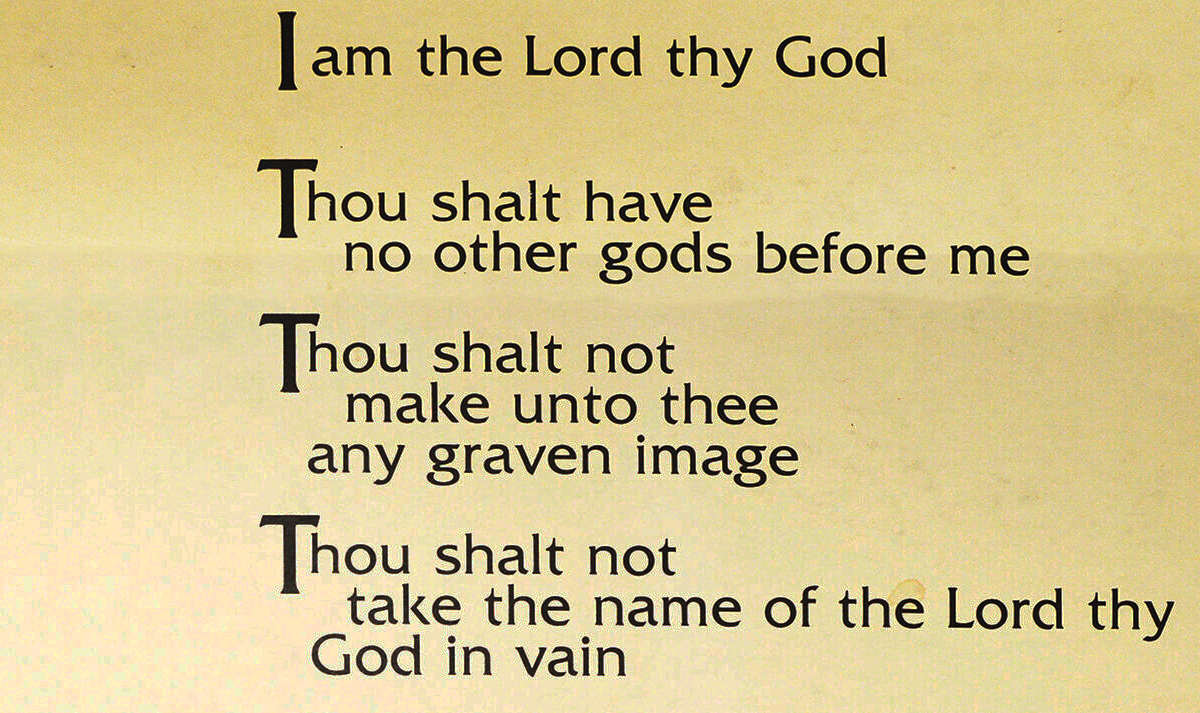
  2. The Ten Commandments: The Basis for a Free and Civilized Society – Deuteronomy 5
  3. The Revelatory Source for the Constitutional Separation of Powers – Jeremiah 17:9
  4. Calling the Nation to Prayer and Fasting – Ezra 8
  5. The Heart of a Grateful Nation – II Chronicles 5-7
  6. His Desire to Answer Prayer – Matthew 6
  7. Meditating on God’s Word – Psalm 4:4
  8. What Good Can I Do This Day? – Acts 10:38
  9. The Duty of Nations – Psalm 9:17
  10. Righteousness Exalts a Nation – Proverbs 14:34
  11. Stepping Stones – I Chronicles 17:11-12
  12. The Rock Upon Which Our Republic Rests – II Kings 23

Devotional articles taken from from The Founders’ Bible available from WallBuilders.

The Ten Commandments: The Basis for a Free and Civilized Society

Thoughts on Deuteronomy 5

It is difficult to argue that any single work has had a greater or more far-reaching impact through four centuries of American life, law, and culture than the Ten Commandments. As such, the fact that their public display would become a matter of current debate or prohibition is almost unthinkable. And yet it is.

The Ten Commandments are the embodiment of the Moral Law (one of the four types of law in the Bible) and formed the foundation for general morals in America as encompassed in the Common Law. Their repetition here in Deuteronomy 5 provides an opportunity to demonstrate that they were also the impetus for specific American statutory laws.

The original delivery of the commandments in Exodus was to the children of Israel immediately after God had delivered them from Egypt and established them as an independent nation. Now they are being repeated to the younger generation, some forty years later, as they are preparing to finally enter the Promised Land. After suffering the delay and the pain of watching their parents perish in the wilderness because of their continual disobedience and refusal to enter (Numbers 14:29), Moses is renewing the covenant with them. The Ten Commandments are not mere dictates of obligation; they are lifegiving promises that if adhered to would bring blessing and prosperity. God promised that it would go well with them, and they would prolong their days in the land that they were about to possess.

Such promise was not lost upon our Founding Fathers who openly endorsed the application of the Ten Commandments to civil law in America. statesman John Quincy Adams declared:

The law given from Sinai was a civil and municipal as well as a moral and religious code; it contained many statutes . . . of universal application—laws essential to the existence of men in society, and most of which have been enacted by every nation which ever professed any code of laws.1

Founder and educator Noah Webster agreed:

Where will you find any code of laws among civilized men in which the commands and prohibitions are not founded on Christian principles? I need not specify the prohibition of murder, robbery, theft, trespass.2

These laws are essential to the existence of men in society, and yet some critics today object to displaying the Commandments on such spurious grounds that there are too many versions—that the Lutherans have a version, as do the Jewish, Catholic, and Orthodox faiths; and that the Protestants have several different versions.3 They thus argue that with so many different versions, public displays of any of them will always invoke a “deep theological dispute” and therefore should be avoided.4 But this claim is ridiculous.

What distinguishes the various “versions” are primarily the different ways in which they are numbered. In the original Hebrew text, the Ten Commandments appear in paragraph form, with no numbers or verses; but as they were translated into subsequent texts, various faiths and branches of Christianity chose to number them differently. For example, the first command in the Jewish version is usually the prologue in most Protestant versions; but both contain the same content. The different numberings are merely superficial manmade contrivances for ease of identification, but all versions cover the same subject matter.

Yet no matter how the commandments are numbered, each finds direct application in American laws. A few examples (chosen from dozens of similar ones) are presented below.

1. Have No Other Gods.

This command was directly incorporated into the first written code of laws enacted in America: those of the Virginia Colony in 1610.5 The subsequent Massachusetts legal code of 1641 and that of Connecticut in 1642 similarly declared:

If any man after legal conviction shall have or worship any other god but the Lord God, he shall be put to death. Deut. 13.6, 10, Deut. 17.2, 6, Ex. 22.20.6

2. Have No Idols.

Typical of the civil laws on this command was a 1680 New Hampshire law declaring:

Idolatry. It is enacted by ye Assembly and ye authority thereof, yet if any person having had the knowledge of the true God openly and manifestly have or worship any other god but the Lord God, he shall be put to death. Ex. 22.20, Deut. 13.6 and 10.7

Note: reading such early statutes and the ones that follow can give the impression that the death penalty was freely applied to almost any crime in America, but such was definitely not the case. This fact becomes apparent when comparing American laws with European laws from the same period. As noted by early American historian Daniel Dorchester:

When the Mayflower left England [in 1620], thirty-one offenses were punishable with death in the mother country. By the middle of that century, the black list had enlarged to 223, of which 176 were without the benefit of the clergy [there were no exceptions]. How far in advance the New England colonies were is evident from the fact that not a single colony code recognized more than fifteen capital crimes.8

That might still strike us as severe, but when understood in context, realize that having a copy of the Scriptures for themselves, in their own language, to study and learn what God was like as revealed in His Word was a relatively new development. Prior to this it was rare and sometimes even illegal for an individual to possess a Bible. The populace could then be kept ignorant and easily controlled by those in power who regularly committed horrible atrocities in God’s Name. Given that, it is quite remarkable just how quickly these early forefathers began to learn for themselves that God was not like those who had misrepresented Him for their own aims. (For a more complete discussion of this subject, please see the commentary for Psalm 119:11 in The Founders’ Bible.)

3. Honor God’s Name.

Civil laws based on this commandment were divided into two categories: (1) laws prohibiting swearing and profanity, and (2) laws prohibiting blasphemy. Noah Webster confirmed that both were derived from this commandment:

When in obedience to the Third Commandment of the Decalogue you would avoid profane swearing, you are to remember that this alone is not a full compliance with the prohibition which comprehends all irreverent words or actions and whatever tends to cast contempt on the Supreme Being or on His Word and ordinances [i.e., blasphemy].9

Numerous statutory laws were enacted as a result of the Third Command.10

4. Honor the Sabbath Day.

From the beginning, every American colony enacted civil laws to honor the Sabbath.11 That legal recognition continued over subsequent centuries. For example, during the American Revolution, Commander-in-Chief George Washington issued numerous military orders directing that his troops observe the Sabbath:

The Commander in Chief directs that Divine service be performed every Sunday at 11 o’clock. . . . It is expected that officers of all ranks will by their attendance set an example to their men.12

Following the Revolution, the states continued to honor the Sabbath. For example, Vermont enacted a ten-part Sabbath law in 1787;13 Massachusetts enacted an eleven-part law in 1791;14 Virginia enacted an extensive eight-part law (written by Thomas Jefferson) in 1792;15 New Jersey enacted a twenty-one-part law in 1798;16 New Hampshire enacted a fourteen-part law in 1799;17 Maine enacted a thirteen-part law in 1821;18 and other states did the same.19

When the U.S. Constitution was written in 1787, it, too, honored the traditional Christian Sabbath. Article I, Section 7, ¶ 2, stipulates that the president has ten days to sign a law, “Sundays excepted.” This “Sundays Excepted” clause had previously appeared in the state constitutions, and so the historical understanding of this clause at both the state and federal levels was summarized by numerous courts, including the 1912 Supreme Court of Missouri:

It is provided that if the Governor does not return a bill within 10 days (Sundays excepted). . . . Can any impartial mind deny that it contains a recognition of the Lord’s Day as a day exempted by law from all worldly pursuits? The framers of the Constitution, then, recognized Sunday as a day to be observed, acting themselves under a law which exacted a compulsive observance of it. . . . Sunday was recognized as a day of rest.20

Other courts were equally candid about Sabbath laws and their relation to the Ten Commandments. For example, in 1950, the Supreme Court of Mississippi affirmed:

The Sunday laws have a Divine origin. . . . After the six days of creation, the Creator Himself rested on the seventh. Genesis, Chapter 2, verses 2 and 3. Thus, the Sabbath was instituted as a day of rest. The original example was later confirmed as a commandment when the law was handed down from Mt. Sinai: “Remember the Sabbath day, to keep it holy” [Exodus 20:8].21

In 1967, the Supreme Court of Pennsylvania similarly declared:

“Remember the Sabbath day to keep it holy; six days shalt thou labor and do all thy work; but the seventh day is the Sabbath of the Lord thy God. In it thou shalt not do any work” [Deuteronomy 5:12-14]. This Divine pronouncement became part of the Common Law inherited by the thirteen American colonies and by the sovereign states of the American union.22

The modern U.S. Supreme Court asserts that even to this day, states have the right to enact laws honoring the Sabbath.23

5. Honor Your Parents.

A 1642 Connecticut law specifically cited the Decalogue as the basis for its civil laws related to honoring parents:

If any child or children above sixteen years old and of sufficient understanding shall curse or smite their normal father or mother, he or they shall be put to death unless it can be sufficiently testified that the parents have been very unChristianly negligent in the education of such children, or so provoke them by extreme and cruel correction that they have been forced thereunto to preserve themselves from death [or] maiming. Ex. 21:17, Lev. 20, Ex. 20:15.24

Three centuries later, a 1934 Louisiana appeals court affirmed the continuing influence of the Fifth Command on civil laws:

“Honor thy father and thy mother” is as much a command of the municipal law as it is a part of the Decalogue, regarded as holy by every Christian people. “A child,” says the code, “whatever be his age, owes honor and respect to his father and mother.”25

6. Do not murder.

A 1641 Massachusetts law declared:

Ex. 21.12, Numb. 35.13, 14, 30, 31. If any person commit any willful murder, which is manslaughter committed upon premeditated malice, hatred, or cruelty not in a man’s necessary and just defense, nor by mere casualty against his will, he shall be put to death. Ex. 21.14. If any person shall slay another through guile, either by poisoning or other such devilish practice, he shall be put to death.26

Similar provisions derived from the prohibition in the Ten Commandments can be found in the laws of the early colonies and subsequently of the independent states—laws spanning the centuries. Consequently, courts have been very candid in acknowledging the Decalogue as the origin of American civil murder laws, such as when a 1932 Kentucky appeals court asserted:

Following the promulgation of Moses at Mt. Sinai has required of each and every one of its citizens that “Thou shalt not murder” [Exodus 20:13]. If that law is violated, the one guilty of it has no right to demand more than a fair trial, and if, as a result thereof, the severest punishment for the crime is visited upon him, he has no one to blame but himself.27

7. Do not commit adultery.

Directly citing the Decalogue, a 1641 Massachusetts law declared:

If any person committeth adultery with a married or espoused wife, the adulterer and adulteress shall surely be put to death. Ex. 20.14.28

For three centuries, colonies and states based their adultery policies on the Decalogue. For example, a 1787 Vermont law stated:

Whereas the violation of the marriage covenant is contrary to the command of God [Exodus 20:14] and destructive to the peace of families: be it therefore enacted by the general assembly of the State of Vermont that if any man be found in bed with another man’s wife, or woman with another’s husband, . . . &c.29

In 1898, the highest criminal court in Texas declared:

“Thou shalt not commit adultery” is our law as well as the law of the Bible.30

And in 1955, the Washington Supreme Court likewise ruled:

Adultery, whether promiscuous or not, violates one of the Ten Commandments and the statutes of this state.31

8. Do Not Steal.

Early colonial laws are easily cited for evidence of the Decalogue’s influence on this prohibition, but consider more recent declarations, such as from the 1951 Louisiana Supreme Court, which recognized:

In the Ten Commandments, the basic law of all Christian countries, is found the admonition “Thou shalt not steal.”32

In 1940, the Supreme Court of California had similarly declared:

“Thou shalt not steal” applies with equal force and propriety to the industrialist of a complex civilization as to the simple herdsman of ancient Israel.33

And in 1914, a federal court ruled that the Constitution’s “takings clause” prohibiting government seizure of private property was an embodiment of the Decalogue’s Eighth Command against theft, including government theft.34

9. Do not perjure yourself.

A 1642 Connecticut law declared:

If any man rise up by false witness, wittingly and of purpose to take away any man’s life, he shall be put to death. Deut. 19:16, 18, 19.35

For over three centuries, civil laws against perjury were openly acknowledged to be derived from the Decalogue, as when the 1924 Oregon Supreme Court declared:

No official is above the law. “Thou shalt not bear false witness” is a command of the Decalogue, and that forbidden act is denounced by statute as a felony.36

10. Do not covet.

The Tenth Command actually forms the basis for many of the prohibitions given in the other commandments. That is, a violation of this commandment frequently precedes a violation of the others, particularly the command against stealing. As William Penn, the framer of the original laws of Pennsylvania, acknowledged:

He that covets can no more be a moral man than he that steals since he does so in his mind. Nor can he be one that robs his neighbor of his credit, or that craftily undermines him of his trade or office.37

Founding Father John Adams also granted the importance of this commandment:

The moment the idea is admitted into society that property is not as sacred as the laws of God, and that there is not a force of law and public justice to protect it, anarchy and tyranny commence. If “Thou shalt not covet” and “Thou shalt not steal” were not commandments of Heaven, they must be made inviolable precepts in every society before it can be civilized or made free.38

Many courts have acceded the numerous other categories of laws to which this provision of the Decalogue directly applies.

For example, in 1895, the California Supreme Court cited this prohibition as the basis of civil laws against defamation.39 In 1904, the Court of Appeals in West Virginia cited it as the basis of laws preventing election fraud.40 In 1951, the Oregon Supreme Court cited this part of the Decalogue as the basis of civil laws against modern forms of cattle rustling.41 And in 1958, a Florida appeals court cited it as the basis of laws targeting white-collar crime. 42 There are numerous other examples establishing that this commandment of the Decalogue had a substantial influence on many other civil laws.

Conclusion

There are hundreds more examples irrefutably demonstrating the substantial influence of the Ten Commandments on American civil law. So clear and compelling is the historical evidence that it has been consistently acknowledged by courts across America, such as when the 1917 Supreme Court of North Carolina affirmed:

Our laws are founded upon the Decalogue, not that every case can be exactly decided according to what is there enjoined, but we can never safely depart from this short but great declaration of moral principles without founding the law upon the sand instead of upon the eternal rock of justice and equity.43

In 1950, the Florida Supreme Court similarly pointed out:

A people unschooled about the sovereignty of God, the Ten Commandments, and the ethics of Jesus could never have evolved the Bill of Rights, the Declaration of Independence, and the Constitution. There is not one solitary fundamental principle of our democratic policy that did not stem directly from the basic moral concepts as embodied in the Decalogue and the ethics of Jesus.44

In short, the Ten Commandments not only formed the basis of the Moral Law in America but were also a direct influence on its civil statutory laws. The effect of the commandments produced a truly civilized society, for as a matter of civil policy it matters not one whit if my neighbor is an atheist or opponent of Christianity, but if he will nevertheless govern his behavior by the basic values found in the Ten Commandments—that is, if he will refrain from killing me, stealing my property, or taking my wife—he will make a good citizen, regardless of whether or not he holds any specific religious beliefs. As John Adams affirmed, even if the Ten Commandments “were not commandments of Heaven, they must be made inviolable precepts in every society before it can be civilized or made free.45


Endnotes

1 John Quincy Adams, Letters of John Quincy Adams, to His Son, on the Bible and Its Teachings (Auburn: James M. Alden, 1850), 61, 70-71.
2 Noah Webster, “Reply to a Letter of David McClure on the Subject of the Proper Course of Study in the Girard College, Philadelphia,” October 25, 1836, A Collection of Papers on Political, Literary and Moral Subjects (New York: Webster & Clark, 1843), 291-292.
3 Glassroth v. Moore, 333 F.3d 1282, 1285 (2003), cert. denied, 540 U.S. 1000; Professor Paul Finkelman, “The Ten Commandments on the Courthouse Lawn and Elsewhere,” Fordham Law Review (2005), 73:1477-1520.
4 Van Orden v. Perry, 545 U.S. 677, n16 (2005) (Stevens, J., dissenting).
5Articles, Laws, and Orders, Divine, Politic and Martial for the Colony of Virginia,” 1610-1611, For the Colony in Virginea Britannia Lawes Divine, Morall and Martiall, etc., Compiled by William Strachey, ed., David H. Flaherty (Charlottesville: The University Press of Virginia, 1969), 10. 
6Massachusetts Body Of Liberties,” 1641, Documents of the Constitution of England and America, from Magna Charta to the Federal Constitution of 1789, ed. Francis Bowen (Cambridge: John Bartlett, 1854), 71.
7General Laws and Liberties of New Hampshire, Cappitall Laws, Idollitry, Section 1” 1680, Documents and Records related to the Province of New-Hampshire, ed., Nathaniel Bouton (Concord: George E. Jenks, State Printer, 1867), 383. 
8 Daniel Dorchester, Christianity in the United States from the First Settlement Down to the Present Time (New York: Phillips & Hunt, 1895), 122.
9 Noah Webster, Letters to a Young Gentleman Commencing His Education (New Haven: Howe & Spalding, 1823), 8.
10 See, for example, “Articles, Laws, and Orders, Divine, Politic and Martial for the Colony of Virginia,” 1610-1611, For the Colony in Virginea Britannia Lawes Divine, Flaherty (1969), 10-11; The Code of 1650 (Hartford: Silas Andrus, 1825), 30; and many others.
11Articles, Laws, and Orders, Divine, Politic and Martial for the Colony of Virginia,” 1610-1611, For the Colony in Virginea Britannia Lawes Divine, Flaherty (1969), 11; “General Laws and Liberties of New Hampshire,” 1680, 383; Charles J. Hoadly, Records of the Colony or Jurisdiction of New Haven, From May, 1653, to the Union, Together With the New Haven Code of 1656 (Hartford: Chase, Lockwood and Company, 1858), 605; “An Act to Restrain People from Labor on the First Day of the Week,” passed October 4, 1705, Laws of the Commonwealth of Pennsylvania (Philadelphia: John Bioren, 1810), I:25-26; “Title 160: Sunday,” 1741, Alphabetical Digest of the Public Statute Law of South Carolina (Charleston: John Hoff, 1814), 2:272-275; “Vice and Immorality, Section IV,A Manual of The Laws of North Carolina (Raleigh: J. Gales and W. Boylan, 1808), 2:229; “An Act for the Due Observation of the Sabbath, or Lord’s Day,The Public Statute Laws of the State of Connecticut (Hartford: Hudson and Goodwin, 1808), I:577-578; etc.
12 George Washington, The Writings of George Washington, ed. John C. Fitzpatrick (Washington, DC: United States Government Printing Office, 1934), 11:342-343; General Orders, Cambridge, August 5, 1775, 3:402-403; General Orders, Head-Quarters, Morristown, April 12, 1777, 7:407; General Orders, Head-Quarters, Morristown, May 17, 1777, 8:77, General Orders, Head-Quarters, Morristown, May 24, 1777, 8:114; General Orders, Head-Quarters, Middle Brook, May 31, 1777, 8:153; General Orders, Head-Quarters, Middle Brook, June 28, 1777, 8:308; General Orders, Head-Quarters, Pennybacker’s Mills, September 27, 1777, 9:275; General Orders, Head-Quarters, Perkiomy, October 7, 1777, 9:329; etc.
13An Act for the Due Observation of the Sabbath,” passed March 9, 1787, Statutes of the State of Vermont (Bennington: Anthony Haswell, 1791), 155-157.
14Of the Observance of the Lord’s Day and the Prevention and Punishment of Immorality,The Revised Statutes of the Commonwealth of Massachusetts (Boston: Dutton & Wentworth, 1836), 385-386.
15An Act for the Effectual Suppression of Vice, and Punishing the Disturbers of Religious Worship, and Sabbath Breakers,” passed December 26, 1792, The Revised Code of the Laws of Virginia (Richmond: Thomas Ritchie, 1819), I:554-556. See also ThomasJefferson, The Papers of Thomas Jefferson, ed. Julian P. Boyd (Princeton: Princeton University Press, 1950), II:322.
16An Act for Suppressing Vice and Immorality,” passed March 16, 1798, Laws of the State of New Jersey (New Brunswick: Abraham Blauvelt, 1800), 329-333. 
17An Act for the Better Observation of the Lord’s Day, and for Repealing All the Laws Heretofore Made for that Purpose,” passed December 24, 1799, Constitution and Laws of the State of New Hampshire (Dover: Samuel Bragg, 1805), 290-293.
18An Act Providing for the Due Observation of the Lord’s Day,Laws of the State of Maine (Hallowell: Calvin Spaulding, 1822), 67-71.
19 See, for example, James Coffield Mitchell, The Tennessee Justices’ Manual (Nashville: J. C. Mitchell and C. C. Norvell, 1834), 427-428; George C. Edwards, A Treatise on the Powers and Duties of Justices of the Peace and Town Officers, in the State of New York (Ithaca: Mack, Andrus, and Woodruff, 1836), 386-387; etc.
20 State v. Chicago, B. & Q. R. Co., 143 S.W. 785, 803 (Mo. 1912).
21 Paramount-Richards Theatres v. City of Hattiesburg, 49 So.2d 574, 577 (Miss. 1950).
22 Bertera’s Hopewell Foodland, Inc. v. Masters, 236 A.2d 197, 200-201 (Pa. 1967).
23 McGowan v. Maryland, 366 U. S. 420 (1961).
24Capital Laws of Connecticut,” 1642, The Blue Laws of New Haven Colony, Usually Called Blue Laws of Connecticut (Hartford: Case, Tiffany & Co., 1838), 103.
25 Ruiz v. Clancy, 157 So. 737, 738 (La. Ct. App. 1934), citing Caldwell v. Henmen, 5 Rob. 20.
26Massachusetts Body Of Liberties,” 1641, Documents of the Constitution of England and America, from Magna Charta to the Federal Constitution of 1789, ed. Francis Bowen (Cambridge: John Bartlett, 1854), 72.
27 Young v. Commonwealth, 245 Ky. 570, 53 S.W.2d 963 (Ky. Ct. App. 1932).
28Massachusetts Body Of Liberties,” 1641, Documents of the Constitution, ed. Bowen (1854), 72.
29An Act Against Adultery, Polygamy, and Fornication,” passed March 8, 1787, Statutes of the State of Vermont (Bennington: Anthony Haswell, 1791), 16-17.
30 Hardin v. State, 39 Tex.Crim. 426 (1898).
31 Schreifels v. Schreifels, 287 P.2d 1001, 1005 (Wash. 1955).
32 Succession of Onorato, 51 So.2d 804, 810 (La. 1951).
33 Hollywood Motion Picture Equipment Co. v. Furer, 105 P.2d 299, 301 (Cal. 1940).
34 Pennsylvania Co. v. United States, 214 F. 445, 455 (W.D.Pa. 1914).
35Capital Laws of Connecticut,” 1642, The Blue Laws of New Haven Colony, Usually Called Blue Laws of Connecticut (Hartford: Case, Tiffany & Co., 1838), 103.
36 Watts v. Gerking, 228 P. 135, 141 (Or. 1924).
37 William Penn, Fruits of Solitude, In Reflections and Maxims Relating To The Conduct of Human Life (London: James Phillips, 1790), 132.
38 John Adams, A Defense of the Constitutions of Government of the United States of America (Philadelphia: William Young, 1797), 3:217.
39 Weinstock, Lubin & Co. v. Marks, 42 P. 142, 145 (Cal. 1895).
40 Doll v. Bender, 47 S.E. 293, 300-01 (W.Va. 1904) (Dent, J. concurring).
41 Swift & Co. v. Peterson, 233 P.2d 216, 231 (Or. 1951).
42 Chisman v. Moylan, 105 So.2d 186, 189 (Fla. Dist. Ct. App. 1958).
43 Commissioners of Johnston County v. Lacy, 93 S.E. 482, 487 (N.C. 1917).
45 John Adams, A Defense of the Constitutions of Government of the United States of America (Philadelphia: William Young, 1797), 3:217.

The Revelatory Source for the Constitutional Separation of Powers

Thoughts on Jeremiah 17:9 

The separation of powers and reciprocal checks and balances incorporated throughout the Constitution is still heralded as one of the most important features of American government, enabling it not only to survive but to thrive for over two centuries. History is filled with oposite examples showing that when government power was centralized in one body or leader, that government always became abusive and resulting in national ruin. The Founding Fathers not only had these examples of history to guide them, but they had the wisdom found in the Bible.

The love of power, and our propensity to abuse it, finds its root in the human heart. Jeremiah 17:9 declares: “The heart is more deceitful than all else and is desperately sick; who can understand it?” This wellknown verse encapsulated what Calvinistic ministers and theologians termed the “depravity of man” (that the natural heart of man easily embraced moral and civil degradation). It was a frequent topic for sermons in the Founding Era. The Founding Fathers understood the significance of this verse and openly cited it, as when John Adams reminded Americans:

Let me conclude by advising all men to look into their own hearts, which they will find to be “deceitful above all things and desperately wicked” [Jeremiah 17:9].1

Those ignorant of the Bible often believe in the innate goodness of man—that man will naturally do what is right. However, experience regularly confirms the opposite: without a heart regenerated by the power of God, man will routinely do what is wrong. Adams specifically rejected any notion of the innate goodness of man, especially when it came to government:

To expect self-denial from men when they have a majority in their favor, and consequently power to gratify themselves, is to disbelieve all history and universal experience – it is to disbelieve revelation and the Word of God, which informs us “the heart is deceitful above all things and desperately wicked” [Jeremiah 17:9]. . . . There is no man so blind as not to see that to talk of founding a government upon a supposition that nations and great bodies of men left to themselves will practice a course of self-denial is either to babble like a newborn infant or to deceive like an unprincipled impostor.2

And even those who had experienced a regenerated heart through the power of God in Christ nevertheless knew enough about the truth of this verse and human nature to not even fully trust themselves to be above corruption. As John Quincy Adams confessed:

I believe myself sincere; but the heart is deceitful above all things and desperately wicked [Jeremiah 17:9]. I do not believe the total depravity of man, but I am deeply conscious of the frailty of my own nature.3

Understanding this principle from Jeremiah 17—a principle that was accepted by all sides of the theological spectrum—the Founders knew that government would be much safer if all power did not repose in the same authority. Making practical application of this Biblical truth, they divided and checked power between branches so that if one branch behaved wickedly, the other two might still check and stop it. As George Washington explained:

A just estimate of that love of power and proneness to abuse it which predominates in the human heart is sufficient to satisfy us of the truth of this position. The necessity of reciprocal checks in the exercise of political power by dividing and distributing it into different depositories . . . has been evinced [demonstrated] by experiments ancient and modern, some of them in our country and under our own eyes.4

James Madison agreed:

What is government itself but the greatest of all reflections on human nature? If men were angels, no government would be necessary. In framing a government which is to be administered by men over men, the great difficulty lies in this: you must first enable the government to control the governed, and in the next place oblige it to control itself.5

This remarkable feature of American government—the separation of powers and reciprocal checks and balances—can be attributed to the Founders’ understanding of Jeremiah 17:9.


Endnotes

1 John Adams, “On Private Revenge III,” published in the Boston Gazette, September 5, 1763, The Works of John Adams, ed. Charles Francis Adams (Boston: Charles C. Little and James Brown, 1851), 3:443.

2 John Adams, A Defense of the Constitutions of Government of the United States of America (London: John Stockdale, 1794), 3:289, “Letter VI. The Right Constitution of a Commonwealth, examined.”

3 John Quincy Adams, diary entry of November 16, 1842, Memoirs of John Quincy Adams, ed. Charles Francis Adams (Philadelphia: J.B. Lippincott & Co, 1876), XI:270.

4 George Washington, Address of George Washington, President of the United States, and Late Commander in Chief of the American Army, to the People of the United States, Preparatory to His Declination (Baltimore: Christopher Jackson, 1796), 13.

5 Alexander Hamilton, John Jay, & James Madison, The Federalist on the New Constitution; Written in 1788 (Philadelphia: Benjamin Warner, 1818), 281, Federalist #51 likely by James Madison.

What Good Can I Do This Day?

Thoughts on Acts 10:38

Founding Father John Quincy Adams gave his life to his faith, his family, and his country. He lived to be eighty years old and actively worked more than sixty of those years for the benefit of others. His service included diplomatic missions to five nations, serving as a state senator, US senator, secretary of state, and US president. And while every other president before and after him permanently retired from public life after leaving office, John Quincy Adams did not. On retirement, he was elected to the US House of Representatives, where he would spend nine terms. He eventually died in the US Capitol. Although he declared “I had not the slightest desire to be elected to Congress,”1 he still served because his neighbors desired his leadership and elected him for that purpose. Adams believed that it was his Christian duty to serve when called upon rather than indulging a personal wish to retire to a quiet unencumbered life.

In Congress, he took up the fight to end slavery at a time when the overwhelming majority in Congress did not want to even discuss the subject. He undertook a relentless personal crusade to secure the Declaration of Independence’s promise of “life, liberty, and the pursuit of happiness” for all individuals, regardless of race. But by choosing that path, he walked a difficult road. As he lamented, “The best actions of my life make me nothing but enemies.”2 Yet he did not quit, for he believed that “his service belonged to the nation.”3

He was consistently on the front lines in any quest to improve the lives of citizens and combat injustice. When he was seventy-four and had been fighting brutal congressional battles for over a decade, he wrote:

I deem it the duty of every Christian man, when he betakes himself to his nightly pillow, in self-examination to say, “What good have I done this day? Ay! And what evil have I done that may be repaired or repented of?” Nor should he rise from that pillow the next morning till after the inquiry, “What good can I do, and to whom, this day?” I have made this my rule for many years, with superadded prayer to the Lord of all—the Giver of every good gift for light [James 1:17]—for discernment, for guidance, for self-control, for a grateful heart to feel and acknowledge all His blessings, for humble resignation to His will, and submission to His chastisements. . . .Jesus Christ went about doing good [Acts 10:38]; I would do the same.4

John Quincy Adams understood that God places each of us here not to pursue own pleasure, but so that we might glorify God through serving and helping others. May the Spirit of God anoint us as well to imitate Jesus and personally “go about doing good.


Endnotes

1 John Quincy Adams, diary entry for September 18, 1830, Memoirs of John Quincy Adams, ed. Charles Francis Adams (Philadelphia: J. B. Lippincott & Co., 1876), 8:240.

2Adams, diary entry for October 25, 1833, Memoirs of John Quincy Adams, ed. Adams (1876), 9:26.

3 Dictionary of American Biography, ed. Allen Johnson (New York: Charles Scribner’s Sons, 1928), 1:92.

4 Adams, diary entry for November 16, 1842, Memoirs of John Quincy Adams, ed. Adams (1876), 2:269-270.


Calling the Nation to Prayer and Fasting

Thoughts on Ezra 8

In Ezra 7, Babylonian King Artaxerxes commissioned the priest Ezra to gather Jewish captives, return to their ancient homeland, and set up a civil government. They were also to rebuild the holy temple in Jerusalem, which had lain in ruins for decades. In chapter 8, Ezra assembled the people. But before they set out on their dangerous trek:

Then I proclaimed a fast there at the river of Ahava, that we might humble ourselves before our God to seek from Him a safe journey for us, our little ones, and all our possessions. For I was ashamed to request from the king troops and horsemen to protect us from the enemy on the way, because we had said to the king, “The hand of our God is favorably disposed to all those who seek Him, but His power and His anger are against all those who forsake Him.” So we fasted and sought our God concerning this matter, and He listened to our entreaty (vv. 21–23).

He called for a time of fasting and prayer to beseech the Lord’s intervention and assistance. And as Ezra attested, God answered their prayers. They journeyed safely to Jerusalem and successfully restored both the temple and civil government in their homeland.

The practice of calling the nation to a time of corporate prayer and fasting is repeated frequently throughout the Scriptures. For example, when the Ammonites came against Israel, King Jehoshaphat “turned his attention to seek the Lord, and proclaimed a fast throughout all Judah. So Judah gathered together to seek help from the Lord” (II Chronicles 20:3–4). Esther called the people to a time of prayer and fasting before she begged the king to save the Jews from the death decree issued by wicked Haman (Esther 4:16). And when Jonah warned the people of Nineveh of God’s intended judgment on them, “the people of Nineveh believed in God; and they called a fast and put on sackcloth from the greatest to the least of them” (Jonah 3:5), and their destruction was averted.

This Biblical model was repeated hundreds of times in early America.1 In fact, on eight separate occasions during the American Revolution, the Continental Congress called the nation to a time of humiliation, fasting, and prayer.2 Founding Fathers who were state governors likewise called their own states to prayer and fasting. These included signers of the Declaration Matthew Thornton,3 Samuel Adams,4 John Hancock,5 Samuel Huntington,6 Caesar Rodney,7 and signers of the Constitution John Dickinson,8 John Langdon,9 John Gilman,10 William Livingston,11 and others. This pattern—repeated so often before, during, and after the American Revolution—continued under the Constitution by U.S. presidents.

The XYZ Affair

During Washington’s presidency, France and Great Britain were at war with each other. So Great Britain blockaded American ships coming to Europe for fear they might be aiding the French. In 1794, John Jay negotiated a treaty (aka: the Jay Treaty) with the British to ease the growing tensions. But when the Jay Treaty was ratified in 1796, the French (still at war with Great Britain) responded by seizing 300 American ships to prevent supplies from reaching the British.

The following year in an attempt to prevent war with France, President John Adams dispatched three diplomats to negotiate with French officials. But before they could meet, the French agents demanded as preconditions: (1) a formal apology from President Adams, (2) a $10-million low-interest loan to the French government, and (3) a $250,000 personal bribe to the French foreign minister, Charles Tallyrand. Of course, the Americans refused.

The French continued to seize American ships and threatened an invasion of the United States. Congress therefore authorized a military buildup and began preparations for war. Adams’ political opponents believed he was exaggerating the situation and demanded proof of his claims. For which he released a report including the official diplomatic correspondence, but with the French agents’ names redacted (they were identified only as W, X, Y, and Z).

On seeing the documents, Americans were outraged. A formal declaration of war against France was narrowly averted. But an unofficial naval war (now called the Quasi-War), was unavoidable. Before France eventually signed a treaty with America in 1800, and war with France loomed, President Adams called the nation to a time of prayer and fasting:

Seasons of difficulty and of danger . . . are a loud call to repentance and reformation; and as the United States of America are at present placed in a hazardous and afflictive situation by the unfriendly disposition, conduct, and demands of a foreign power, evinced [proved] by repeated refusals to receive our messengers of reconciliation and peace, by depredations [attacks] on our commerce, and the infliction of injuries on very many of our fellow citizens while engaged in their lawful business on the seas. . . . I have therefore thought it fit to recommend . . . a day of solemn humiliation, fasting, and prayer.12

War of 1812

Nearly three decades after the American Revolution, the British had not kept many of the promises made at the end of the war. In fact, British encroachments on American ships and property were increasing. The result was the War of 1812, sometimes called the Second American Revolution. President James Madison regularly called the nation to prayer and fasting throughout the war, explaining on one of those occasions:

I do therefore recommend [a day of prayer and fasting] . . . for the devout purposes of . . . acknowledging the transgressions which might justly provoke the manifestations of His Divine displeasure; of seeking His merciful forgiveness and His assistance in the great duties of repentance and amendment; and especially of offering fervent supplications that in the present season of calamity and war, He would take the American people under His peculiar care and protection—that He would guide their public councils, animate their patriotism, and bestow His blessing on their arms . . . and, finally, that turning the hearts of our enemies from the violence and injustice which sway their councils against us, He would hasten a restoration of the blessings of peace.13

Civil War

In late 1860, it appeared that a national conflict was imminent. President James Buchanan called the nation to a time of prayer and fasting, reminding the country:

In this the hour of our calamity and peril, to Whom shall we resort for relief but to the God of our fathers? His omnipotent arm only can save us from the awful effects of our own crimes and follies—our own ingratitude and guilt towards our Heavenly Father. Let us, then, with deep contrition and penitent sorrow, unite in humbling ourselves before the Most High, in confessing our individual and national sins. . . . Let our fervent prayers ascend to His Throne that He would not desert us in this hour of extreme peril, but remember us as He did our fathers in the darkest days of the Revolution and preserve our Constitution and our Union, the work of their hands, for ages yet to come. . . .Let me invoke every individual, in whatever sphere of like he may be placed, to feel a personal responsibility to God and his country for keeping this day holy.14

And while in the midst of that bloody Civil War, President Abraham Lincoln called the nation to a day of humiliation, fasting, and prayer, explaining in most profound terms:

It is the duty of nations as well as of men to own their dependence upon the overruling power of God, to confess their sins and transgressions in humble sorrow yet with assured hope that genuine repentance will lead to mercy and pardon, and to recognize the sublime truths announced in the Holy Scriptures and proven by all history that those nations only are blessed whose God is the Lord. And insomuch as we know that by His Divine law, nations, like individuals, are subjected to punishments and chastisements in this world, may we not justly fear that the awful calamity of civil war which now desolates the land may be but a punishment inflicted upon us for our presumptuous sins, to the needful end of our national reformation as a whole people? We have been recipients of the choicest bounties of Heaven. We have been preserved these many years in peace and prosperity. We have grown in numbers, wealth, and power as no other nation has ever grown. But we have forgotten God—we have forgotten the gracious hand which preserved us in peace and multiplied and enriched and strengthened us, and we have vainly imagined in deceitfulness of our hearts that all these blessings were produced by some superior wisdom and virtue of our own. Intoxicated with unbroken success, we have become too self-sufficient to feel the necessity of redeeming and preserving grace—too proud to pray to the God that made us! It behooves us, then, to humble ourselves before the offended Power, to confess our national sins, and to pray for clemency and forgiveness. . . . All this being done in sincerity and truth, let us then rest humbly in the hope authorized by the Divine teachings that the united cry of the Nation will be heard on high and answered with blessings, no less than the pardon of our national sins and restoration of our now divided and suffering country to its former happy condition of unity and peace.15

Times of corporate humiliation and prayer were called in times of national danger and also in times of national tragedy. For example, in 1841 when President William Henry Harrison died, President John Tyler called the country to a time of special prayer:

When a Christian people feel themselves to be overtaken by a great public calamity, it becomes them to humble themselves under the dispensation of Divine Providence, to recognize His righteous government over the children of men, to acknowledge His goodness in time past as well as their own unworthiness, and to supplicate His merciful protection for the future.16

President Andrew Johnson held a similar day of humiliation, mourning, and prayer following the death of Abraham Lincoln.17 As did President Chester Arthur on the death of President James Garfield.18

Modern Examples

The US observed several days of national prayer during both World War I19 and World War II.20 And presidents George W. Bush and Donald Trump both issued prayer proclamations in response to natural disasters or epidemics.21

America has long followed the Biblical precedent of observing times of corporate prayer and fasting. But this is a spiritual discipline that every Christian would do well to personally develop (Matthew 9:15). After all, Jesus noted that some situations in our lives change only through prayer and fasting (Matthew 17:21). And it allows us to spend time in concentrated prayer in our relationship with the Lord.


Endnotes

1 See Deloss Love, The Fast and Thanksgiving Days of New England (Boston: Houghton, Mifflin and Company, 1895), 464–514.

2 See the Journals of the American Congress from 1774 to 1788 (Washington: Way and Gideon, 1823) for June 12, 1775; March 16, 1776; December 11, 1776; March 7, 1778; March 20, 1779; March 11, 1780; March 20, 1781; and March 19, 1782.

3 Matthew Thornton, “A Proclamation for a Day of Humiliation, Fasting and Prayer,” June 22, 1775, Evans #14275.

4 Samuel Adams, “A Proclamation for a Day of Fasting, Humiliation, and Prayer,” April 2, 1795, Broadside in the WallBuilders Collection; Samuel Adams, “A Proclamation for a Day of Solemn Fasting and Prayer,” May 4, 1797, Independent Chronicle (March 30, 1797).

5 John Hancock, “A Proclamation for a Day of Fasting and Prayer,” Independent Chronicle and the Universal Advertiser, March 26, 1789, 1; John Hancock, “A Proclamation for a Day of Fasting, Humiliation and Prayer,” April 25, 1782, Evans #17593; John Hancock, “A Proclamation for a Day of Public Fasting and Prayer,” May 15, 1783, Evans #18024; John Hancock, “A Proclamation for a Day of Humiliation, Fasting, and Prayer,” April 17, 1788, Evans #21236; John Hancock, “A Proclamation for a Day of Fasting and Prayer,” March 31, 1797, Evans #23549; John Hancock, “A Proclamation for a Day of Fasting, Humiliation, and Prayer,” March 29, 1792, Evans #24519; John Hancock, “A Proclamation for a Day of Public Fasting, Humiliation and Prayer,” April 11, 1793, Broadside in the WallBuilders Collection.

6 Samuel Huntington, “A Proclamation for a Day of Fasting, Humiliation, and Prayer,” April 17, 1788, Evans #21761; Samuel Huntington, “A Proclamation for a Day of Fasting, Humiliation, and Prayer,” Pennsylvania Packet or General Advertiser, March 4, 1780, 3; Samuel Huntington, “A Proclamation for a Day of Fasting, Humiliation, and Prayer,” March 31, 1791, Evans #23284; Samuel Huntington, “A Proclamation for a Day of Fasting, Humiliation, and Prayer,” April 12, 1792, Evans #24218; Samuel Huntington, “A Proclamation for a Day of Humiliation, Fasting and Prayer,” April 17, 1793, Dunlap’s Daily American Advertiser, March 30, 1793, 3; Samuel Huntington, “A Proclamation for a Day of Fasting, Humiliation, and Prayer,” April 22, 1789, Evans #21018; Samuel Huntington, “Proclamation for a Day of Fasting, Humiliation, and Prayer,” March 28, 1789, from Broadside in the WallBuilders Collection.

7 Caesar Rodney, “A Proclamation for a Day of Fasting, Humiliation, and Prayer,” May 6, 1779, Evans #43623.

8 John Dickinson, “A Proclamation for a Day of Public Prayer,” November 19, 1781, Evans #17134.

9 John Langdon, “A Proclamation for a Day of Public Fasting and Prayer,” April 6, 1786, Evans #19824.

10 John Taylor Gilman, “A Proclamation for a Day of Fasting, Humiliation, and Prayer,” April 19, 1804, Broadside in the WallBuilders Collection.

11 William Livingston, “A Proclamation for a Day of Fasting and Humiliation,” January 17, 1777, The Papers of William Livingston, ed. Carl E. Prince (New Jersey Historical Commission, 1979), I:200.

12 John Adams, “A Proclamation for a Day of Solemn Humiliation, Fasting and Prayer,” May 9, 1798, Russell’s Commercial Gazette (April 4, 1798); John Adams, “A Proclamation for a Day of Humiliation, Fasting and Prayer,” March 6, 1799, The Works of John Adams, Second President of the United States, ed. Charles Francis Adams (Boston: Little, Brown, and Company, 1854), 9:572.

13 James Madison, ”A Proclamation for a Day of Public Prayer,Connecticut Mirror (July 20, 1812), 3; James Madison, “A Proclamation for a Day of Public Prayer,” July 23, 1813, Independent Chronicle (July 29, 1813), 3–4; James Madison, “A Proclamation for a Day of Humiliation, Fasting and Prayer,” January 12, 1815, The Yankee (November 25, 1814), 2.

14 James Buchanan, “A Proclamation for a Day of Humiliation, Fasting, and Prayer,” January 4, 1861, from a Broadside in the WallBuilders Collection.

15 Abraham Lincoln, “A Proclamation for a Day of Humiliation, Fasting, and Prayer,” April 30, 1863, The Liberator (April 24, 1863), 3. See also, “A Proclamation for a Day of Humiliation, Fasting, and Prayer,” August 12, 1861, in the WallBuilders Collection; “A Proclamation for a Day of Fasting and Prayer,” July 17, 1864, Burlington Daily Hawk-Eye (July 14, 1864), 3.

16 John Tyler, “A Proclamation for a Day of Fasting and Prayer,” April 13, 1841, A Compilation of the Messages and Papers of the Presidents, ed. James D. Richardson (U.S. Bureau of National Literature and Art, 1910), 4:33.

17 Andrew Johnson, “The President’s Proclamation of a Day of Humiliation and Mourning,” May 25, 1865, The New York Herald (April 25, 1865), 8.

18 Chester A. Arthur, “A Proclamation for a Day of Humiliation and Mourning,” September 26, 1881, from a handwritten draft in the WallBuilders Collection.

19 Woodrow Wilson, Proclamation 1445—Decoration Day, May 11, 1918.

20 Franklin D. Roosevelt, Proclamation 2418—Day of Prayer, August 7, 1940; Proclamation 2531—Day of Prayer, December 22, 1941; Proclamation 2602—Day of Prayer, December 3, 1943; Harry S. Truman, Proclamation 2651—Victory in Europe: Day of Prayer, May 8, 1945; and Proclamation 2660—Victory in the East: Day of Prayer, August 16, 1945.

21 George W Bush, Proclamation 7462—National Day of Prayer and Remembrance for the Victims of the Terrorist Attacks on September 11, 2001, September 13, 2001; Proclamation 7925— National Day of Prayer and Remembrance for Victims of Hurricane Katrina, September 8, 2005, voluntary, and separate from regular National Day of Prayer from May of that year; Donald J Trump, Proclamation 9634— National Day of Prayer for Victims of Hurricane Harvey and for Our National Recover Efforts, September 1, 2017; Proclamation 9997-— National Day of Prayer for All Americans Affected by the Coronavirus Pandemic and for Our National Response, March 14, 2020.

Righteousness Exalts a Nation

Thoughts on Proverbs 14:34

America’s Founding Fathers were not only concerned for their own generation but also for posterity—about future generations. In fact, when they wrote the U.S. Constitution, they candidly acknowledged that they had done so to “secure the blessings of liberty to ourselves and our posterity.” The Rev. Mathias Burnet eflecting this ideal in an Election Sermon preached to the Connecticut legislature:

To God and posterity you are accountable [for your rights and your rulers]. . . . Let not your children have reason to curse you for giving up those rights and prostrating those institutions which your fathers deliv­ered to you. 1

He reminded citizens that they would answer to God for whether or not they had preserved the rights entrusted to them. And they would answer to posterity.

Patrick Henry held identical sentiments. When he passed away in 1799, his executers opened and read his personal legal documents and his will. Included was an original copy of the 1765 Stamp Act Resolutions (early precursors to the American Revolution). These were originally passed by the Virginia Legislature, of which he had been a member. On the back of those resolutions Henry penned a handwritten message, knowing it would be read at his death. He recounted the early colonial resistance to British policy that eventually resulted in the American Revolution, and then concluded with this warning:

Whether this [the American Revolution] will prove a blessing or a curse will depend upon the use our people make of the blessings which a gracious God hath bestowed on us. If they are wise, they will be great and happy. If they are of a contrary character, they will be miserable. Righteousness alone can exalt them as a nation [Proverbs 14:34]. Reader!—whoever thou art, remember this!—and in thy sphere practice virtue thyself and encourage it in others. P. Henry 2

Whether or not America will prosper into the future depends on its righteousness today. But how is national righteousness measured? Dozens of Bible passages (like Deuteronomy 28, 1 Kings 18, 1 Chronicles 21) affirm that national righteousness is defined by national policies and their allignment with God’s standards. As Samuel Adams advised, only God-honoring policies can exalt a nation:

[Divine] revelation assures us that “Righteousness exalteth a nation” [Proverbs 14:34]. Communities are dealt with in this world by the wise and just Ruler of the Universe. He rewards or punishes them according to their general character. 3

Civic Righteousness and Civil Rights

Across the pages of American history both political and religious leaders have regularly cited this verse. For example, Frederick Douglass, who was a preacher and famous political leader long before and after the Civil War, told citizens:

I have one great political idea. . . . That idea is an old one. It is widely and generally assented to; nevertheless, it is very generally trampled upon and disregarded. The best expression of it, I have found in the Bible. It is in substance, “Righteousness exalteth a nation; sin is a reproach to any people” [Proverbs 14:34]. Sir, this constitutes my politics – the negative and positive of my politics, and the whole of my politics. . . . I feel it my duty to do all in my power to infuse this idea into the public mind, that it may speedily be recognized and practiced upon by our people. 4

Douglass believed that every political concern should be guided by issues of righteousness. But too often today, political concerns (and votes) are instead guided by issues of economics—what is good for the economy, my job, my pocketbook, etc. When Jesus’ disciples focused on such worries—food, clothing, finances, and homes—He reminded them to “seek first the kingdom of God and His righteousness,” and all of their physical needs would be provided (Matthew 6:33). Strikingly, when a nation pursues economics over righteousness, it generally loses both. Notice how frequently secular nations find themselves facing burgeoning and unsolvable economic problems. The only way to preserve economic prosperity is by pursuing righteousness in public policy.

The Rev. Francis Grimke understood this. He was born to a slave mother in 1850 in South Carolina, and served as a valet in the Confederate army until Emancipation. After the war, he attended Lincoln University, Howard University, and Princeton Theological Seminary, and became a minister in Washington, D.C. He had lived through the Civil War as a boy, and as a young man survived the barbarity of the Ku Klux Klan during Reconstruction. Then in the early 1900s, he watched the second revival of the Klan as it marched openly in parades in Washington, D.C. Even members of Congress participated.

Grimke personally witnessed America’s literal split, and now the resurgence of the Klan. While he believed he nation would remain united, he delivered a sermon in 1909, warning what America’s future would be should we ever foresake righteousness:

The Stars and Stripes—the old flag—will float . . . over all these states. . . . If the time ever comes when we shall go to pieces, it will . . . [be] from inward corruption—from the disregard of right principles . . . from losing sight of the fact that “Righteousness exalteth a nation, but that sin is a reproach to any people” [Proverbs 14:34]. . . . The secession of the southern states in 1860 was a small matter with the secession of the Union itself from the great principles enunciated in the Declaration of Independence, in the Golden Rule, in the Ten Commandments, in the Sermon on the Mount. Unless we hold, and hold firmly to these great fundamental principles of righteousness . . . our Union . . . will be “only a covenant with death and an agreement with hell” [Isaiah 28:18]. If it continues to exist, it will be a curse and not a blessing. 5

Blessings for Posterity

When selecting public officials, Christians must not be concerned about their pocketbooks or their jobs. The foremost concern should be whether that official will advance policies upholding Biblical standards of righteousness. Biblical rights and wrongs on moral issues must always take precedence over economic, environmental, healthcare, energy, or any other issues. Whether and in what condition America will continue to exist in the future completely depends on if citizens will embrace and apply Proverbs 14:34 in both their private and their civic lives.


Endnotes

1 Matthias Burnet, An Election Sermon, Preached at Hartford, on the Day of the Anniversary Election, May 12, 1803 (Hartford: Hudson and Goodwin, 1803), 27.

2 Patrick Henry, Patrick Henry: Life, Correspondence and Speeches, ed. William Wirt Henry (New York: Charles Scribner’s Sons, 1891), 1:81-82, from a handwritten endorsement on the back of the paper containing the resolutions of the Virginia Assembly in 1765 concerning the Stamp Act.

3 Samuel Adams to John Scollay, April 30, 1776, The Writings of Samuel Adams, ed. Harry Alonzo Cushing (New York: G. P. Putnam’s Sons, 1907), 3:286.

4 Frederick Douglass, speech delivered at Ithaca, New York, October 14, 1852, The Frederick Douglass Papers, ed. John Blassingame (New Haven: Yale University Press, 1982), 2:397.

5 Rev. Francis J. Grimke, from “Equality of Right for All Citizens, Black and White, Alike,” March 7, 1909, Masterpieces of Negro Eloquence, ed. Alice Moore Dunbar (Johnson Reprint Corporation, 1970), 348-349.

Stepping Stones

Thoughts on 1 Chronicles 17:11-12

King David was an accomplished statesman, musician, poet, soldier, and visionary. He sought God with his whole heart, passionately seeking to honor and serve Him throughout his long life, notwithstanding occasional and even serious slips along the way.

As a reflection of his deep love for God, David wanted to give Him a permanent and visible place of prominence with a majestic temple to replace the tent used in the wilderness. By David’s own words, “the house to be built for the Lord must be exceedingly magnificent, famous, and glorious throughout all countries” (1 Chronicles 22:5).

David’s intentions were honorable and his heart pure. God was pleased with his desire but made clear that he was not to build the temple. His son Solomon would build it instead (1 Chronicles 17:11-12, 22:9-10, 28:6). When David realized that his heart’s desire would not be accomplished in his lifetime, he was not discouraged. But began working to prepare things for the next generation. He cut stones and collected iron, bronze, and cedar trees in abundance. He “made abundant preparations before his death” (1 Chronicles 22:2-5). David was also diligent to pass on the vision to his son (1 Chronicles 22:6, 11-13) and even relayed the specific plans that God had given for the temple (1 Chronicles 28:11-12, 19-20).

The transmission of a vision from one generation to the next in order to secure its fulfillment is common throughout the Bible. For example, Moses led the people out of Egypt and set them firmly on the path to the Promised Land, but then he handed them off to the much younger Joshua to finish the task. Similarly, God told the older prophet Elijah to find and train the younger Elisha. Elisha then performed twice as many miracles as Elijah. Likewise, Jesus passed on His vision for the world to His disciples to continue.

The Pilgrims also followed this pattern. Upon arriving in America in 1620, they announced in the Mayflower Compact (the first government document written in America) that their mission was undertaken “for the glory of God and the advancement of the Christian faith.”1 They had come with the laudable goal of evangelizing the new country.

Their first year in America proved to be extremely difficult. By the end of that winter, over half had died, thereby doubling the workload on the rest. And by the end of the second year, half of the remaining survivors had also died, leaving only one-fourth from the original group. Struggling to survive in that harsh wilderness was grueling work and a round-the-clock occupation. It became apparent that their ardent desire to establish a fully functioning Christian colony and to bring all of those around them to Christian faith would not occur in their lifetime.

So, like David, they worked hard to prepare everything they could for the coming generation: training, equipping, and then transmitting to them the vision and responsibility. As explained by the Pilgrims’ governor, William Bradford:

Lastly (and which was not least), a great hope and inward zeal they [the Pilgrims] had of laying some good foundations (or at least to make some way thereunto) for the propagating and advancing of the Gospel of the kingdom of Christ in those remote parts of the world, yea, though they should be but even as stepping stones unto others for the performing of so great a work.2

Stepping-stones. Significantly, one generation was willing to become a stepping-stone for the next. Figuratively speaking, they worked to move the ball as far down field as possible before handing it off to their descendants to score. What a fantastic lesson to learn and practice today: if you see that you will not accomplish the lofty goals you have set for yourself or that you believe God has given you, it doesn’t mean that you are a failure. Don’t quit and drop out in discouragement. Instead, find those who are younger and equip, train, and pass the vision on to them.

Many of the national challenges before us will require trans-generational solutions, which is fully Biblical. We can and must do everything we can right now. But we must also train the rising generation with an understanding of the stewardship that will be placed in their hands. Each of us must work diligently to make ourselves stepping stones for future generations.


Endnotes

1Agreement Between the Settlers of New-Plymouth, November 11th, 1620,” Ebenezer Hazard, Historical Collections: Consisting of State Papers, and Other Authentic Documents; Intended as Materials for an History of the United States of America (Philadelphia: T. Dobson, 1792), 1:119.
2 William Bradford, History of Plymouth Plantation (Boston: Little, Brown, and Company, 1856), 24.

The Heart of a Grateful Nation

Thoughts on 2 Chronicles 5-7

King David, blessed by God throughout his long life, envisioned building a majestic temple to honor the Lord. But God told David that it would instead be his son, Solomon, who would construct the building. So David prepared everything his son would need. When later King Solomon successfully completed the temple, he gathered the nation together and dedicated the new structure with a time of prayer and praise (2 Chronicles 5-7). The spirit of God filled the temple and fell on those present. God promising Solomon that He would hear and answer prayers prayed from that location. Significantly, our Founding Fathers invoked this incident and this passage at a significant moment early in the political life of a young America.

On September 25, 1789, the very first federal Congress had just finished framing the Bill of Rights—the Capstone of the Constitution. On that notable day, the official records of Congress report:

Mr. [Elias] Boudinot said he could not think of letting the session pass over without offering an opportunity to all the citizens of the United States of joining with one voice in returning to Almighty God their sincere thanks for the many blessings He had poured down upon them. With this view, therefore, he would move the following resolution:

Resolved, That a joint committee of both Houses be directed to wait upon the President of the United States to request that he would recommend to the people of the United States a day of public thanksgiving and prayer, to be observed by acknowledging with grateful hearts the many signal favors of Almighty God. . . .

Mr. [Roger] Sherman justified the practice of thanksgiving on any signal [remarkable] event not only as a laudable one in itself but as warranted by a number of precedents in Holy Writ – for instance, the solemn thanksgivings and rejoicings which took place in the time of Solomon after the building of the temple was a case in point [2 Chronicles 5-7, 1 Kings 7-8]. This example he thought worthy of Christian imitation on the present occasion, and he would agree with the gentleman who moved the resolution. Mr. Boudinot quoted further precedents from the practice of the late Congress and hoped the motion would meet a ready acquiescence [approval]. The question was now put on the resolution and it was carried in the affirmative.1

Congress delivered it recommendation to President George Washington, who happily concurred. He issued America’s first federal proclamation for a Day of Prayer and Thanksgiving. That proclamation declared:

Whereas it is the duty of all nations to acknowledge the providence of Almighty God, to obey His will, to be grateful for His benefits, and humbly to implore His protection and favor. . . . Now, therefore, I do recommend . . . that we may then all unite in rendering unto Him our sincere and humble thanks for His kind care and protection of the people of this country. . . . And also that we may then unite in most humbly offering our prayers and supplications to the great Lord and Ruler of Nations, and beseech Him to pardon our national and other transgressions . . . to promote the knowledge and practice of true religion and virtue.2

Notice that George Washington said that nations—not just individuals, but nations—have four duties: (1) to acknowledge the providence of Almighty God, (2) to obey His will, (3) to be grateful for His benefits, and (4) humbly to implore His protection and favor. This proclamation, along with the several other calls to prayer issued during his administration, was written by Washington himself. Whereas other presidents had chaplains of Congress write their proclamations.3

America observed its first federal day of thanksgiving because Founding Fathers in Congress were thoroughly familiar with the Bible and found precedent for such a day from 2 Chronicles 5-7—one of many American practices with a Biblical basis.


Endnotes

1 September 25, 1789, The Debates and Proceedings in the Congress of the United States, Joseph Gales, editor (Washington: Gales and Seaton, 1834) I:949-950.

2 The Providence Gazette and Country Journal (Providence: October 17, 1789), 1. George Washington, “A Proclamation,” issued on October 3, 1789, observance date November 26, 1789.

3 Joseph H. Jones, The Life of Ashbel Green (New York: Robert Carter and Brothers, 1849), 270-271.

The Rock Upon Which Our Republic Rests

Thoughts on 2 Kings 23

There are numerous Biblical occasions when civil leaders urged a national reading of God’s Word. For example, under righteous King Josiah of Israel:

The king went up to the house of the Lord with all the men of Judah, and with him all the inhabitants of Jerusalem—the priests and the prophets and all the people, both small and great. And he read in their hearing all the words of the Book of the Covenant which had been found in the house of the Lord (2 Kings 23:2).

Ezra also assembled the nation to read the Word of God (Nehemiah 8:1-3), and Moses likewise instructed the people to gather together and read God’s Word so that they might know it, obey it, and teach it to the rising generation, for by so doing, they would remain blessed as a nation (Deuteronomy 31:11-13).

America’s national leaders continued to follow this pattern. President Franklin Roosevelt proposed:

I suggest a nationwide reading of the Holy Scriptures during the period from Thanksgiving Day to Christmas. . . . Go to . . . the Scriptures for a renewed and strengthening contact with those eternal truths and majestic principles which have inspired such measure of true greatness as this nation has achieved.1

(Today, National Bible Week is still officially commemorated one week of the period between Thanksgiving and Christmas. But sadly few citizens know of its existence, and sadder still even fewer observe it.)

Why would President Roosevelt publicly call the nation to a time of Scripture reading? Because of its proven beneficial influence:

In the formative days of the Republic, the directing influence the Bible exercised upon the fathers of the Nation is conspicuously evident. . . . We cannot read the history of our rise and development as a Nation without reckoning with the place the Bible has occupied in shaping the advances of the Republic.2

On the same basis, President Ronald Reagan declared a national “Year of the Bible,” explaining:

Of the many influences that have shaped the United States of America into a distinctive Nation and people, none may be said to be more fundamental and enduring than the Bible. . . . The Bible and its teachings helped form the basis for the Founding Fathers’ abiding belief in the inalienable rights of the individual – rights which they found implicit in the Bible’s teachings of the inherent worth and dignity of each individual. This same sense of man patterned . . . the ideals set forth in the Declaration of Independence and the Constitution. . . . There could be no more fitting moment than now to reflect . . . upon the wisdom revealed to us in the [Bible].3

President Teddy Roosevelt similarly affirmed:

[T]he teachings of the Bible are so interwoven and entwined with our whole civic and social life that it would be literally—I do not mean figuratively, I mean literally—impossible for us to figure to ourselves what that life would be if these teachings were removed. We would lose almost all the standards by which we now judge both public and private morals—all the standards toward which we, with more or less resolution, strive to raise ourselves. Almost every man who has by his life-work added to the sum of human achievement of which the race is proud—of which our people are proud – almost every such man has based his lifework largely upon the teachings of the Bible. . . . Among the very greatest men, a disproportionately large number have been diligent and close students of the Bible at first hand. . . . So I plead not merely for training of the mind but for . . . the moral and spiritual training that have always been found in and that have ever accompanied the study of this Book—this Book, which in almost every civilized tongue can be described as “The Book.”4

Teddy wanted everyone to know the Bible, and a reason that he had been so thoroughly impressed by President Abraham Lincoln was his personal mastery of the Bible. As he explained:

Lincoln—sad, patient, kindly Lincoln, who after bearing upon his weary shoulders for four years a greater burden than that borne by any other man of the nineteenth century laid down his life for the people whom living he had served as well—built up his entire reading upon his early study of the Bible. He had mastered it absolutely – mastered it as later he mastered only one or two other books (notably Shakespeare) —mastered it so that he became almost “a man of one Book,” who knew that Book and who instinctively put into practice what he had been taught therein.5

Indeed, it is extremely difficult to find any of Lincoln’s major speeches not laced throughout with Scriptures, so it is therefore not surprising that in speaking of the Bible, Lincoln declared:

It is the best gift God has given to men. All the good the Savior gave to the world was communicated through this Book. But for it, we could not know right from wrong. 6

President Zachary Taylor also stressed how important it was that every citizen, especially young citizens, know the Bible:

The Bible is the best of books and I wish it were in the hands of everyone. It is indispensable to the safety and permanence of our institutions; a free government cannot exist without religion and morals, and there cannot be morals without religion, nor religion without the Bible. Especially should the Bible be placed in the hands of the young. It is the best schoolbook in the world. . . . I would that all of our people were brought up under the influence of that Holy Book.7

President Harry Truman, speaking at a conference of law enforcement officials assembled from across the nation, reminded them:

The fundamental basis of this Nation’s law was given to Moses on the Mount. The fundamental basis of our Bill of Rights comes from the teachings which we get from Exodus and St. Matthew, from Isaiah and St. Paul. I don’t think we emphasize that enough these days.8

President Andrew Jackson likewise declared of the Bible that “it is the rock on which our Republic rests.”9

And President Grant, on the 100th anniversary of American Independence exhorted, “Hold fast to the Bible as the sheet-anchor of your liberties; write its precepts in your heats, and practice them in your lives. To the influence of this Book we are indebted for all the progress made in true civilization, and to this we must look for our guide in the future.”10

There are many other examples demonstrating that America’s leaders understood the importance of God’s Word to the nation and publicly urged the reading and knowledge of it, just as ancient leaders such as Moses, Ezra, and Josiah had done. It is important that every citizen personally study, learn, and live by God’s Word, teaching it to their children and also electing at the local, county, state, and federal level leaders who know and honor the principles of “The Book.”


Endnotes

1 Franklin D. Roosevelt, “Proclamation 2629—Thanksgiving Day, 1944,” November 1, 1944, American Presidency Project, https://www.presidency.ucsb.edu/node/210843.

2 Franklin D. Roosevelt, “Statement on the Four Hundredth Anniversary of the Printing of the English Bible,” October 6, 1935, American Presidency Project, https://www.presidency.ucsb.edu/node/209257.

3 Ronald Reagan, “Proclamation 5018—Year of the Bible, 1983,” February 3rd, 1983, American Presidency Project, https://www.presidency.ucsb.edu/node/262128.

4 Theodore Roosevelt, “On Reading the Bible: Delivered before the Members of the Bible Society,” 1901, Modern Eloquence, ed. Thomas B. Reed (Philadelphia: John D. Morris and Company, 1903), XV:1770-1776.

5 Roosevelt, “On Reading the Bible: Delivered before the Members of the Bible Society,” 1901, Modern Eloquence, ed. Reed (1903), XV:1770-1776.

6 Abraham Lincoln, “Reply to Committee of Colored People of Baltimore Who Presented Him with a Bible,” Complete Works Comprising his Speeches, Letters, State Papers, and Miscellaneous Writings, John Nicolay and John Hay, editors (New York: The Century Co., 1894), 2:574.

7The President and the Bible,” New York Semi-Weekly Tribune (Wednesday, May 9, 1849), IV:100:1.

8 Harry S. Truman, “Address Before the Attorney General’s Conference on Law Enforcement Problems,” February 15, 1950, American Presidency Project, https://www.presidency.ucsb.edu/node/230655.

9 Ronald Reagan, “Proclamation 5018—Year of the Bible, 1983,” February 3rd, 1983, American Presidency Project, https://www.presidency.ucsb.edu/node/262128; see the same quote in a proclamation from President George H. W. Bush, “International Year of Bible Reading,” February 22, 1990, Code of Federal Regulations (Washington, D. C.: U. S. Government Printing Office, 1991), 21.

10 Ulysses Grant, “Message of President Grant to the Children and Youth of the U.S.” card in WallBuilders Museum collection.

The mushroom clouds from the Hiroshima and Nagasaki atomic bombs.

Hiroshima, Obama, and American Morals

 On May 27, 2016, President Obama visited Hiroshima – the only American president to do so since the city was hit by an atomic bomb on August 6, 1945. That bomb hastened the end of World War II and helped halt further war deaths in the Pacific Theater beyond the 20 million lives already lost. 1

Both supporters and opponents scrutinized the president’s speech to see whether he would issue any direct apology for America’s having dropped atomic bombs, thereby extinguishing between 200,000 and 250,000 Japanese lives. 2 The president carefully stayed on script and delivered no overt apology, but even the mainstream media did not miss the fact that by simply appearing at Hiroshima he was issuing an indirect apology:

A majority of Japanese people view the atomic bombings as inhumane attacks — war crimes for which the United States has never been punished. . . . Hiroshima is a decidedly one-sided location; the United States dropped an atomic bomb on Japan. At this setting one country is victim, the other assailant. 3 Washington Post

No American president has visited Hiroshima or Nagasaki in the 71 years since the attacks because of concerns the trip would be perceived as an apology for the two bombings that helped bring an end to World War II. 4 ABC News

The president wrote in a Washington Post op-ed in late March, “As the only nation ever to use nuclear weapons, the United States has a moral obligation to continue to lead the way in eliminating them.” “Moral obligation”? . . . Why would America assume a “moral obligation” if not because the nation was guilty of some ill-advised, even immoral, action? 5 US News

A visit would inevitably be construed by many as a de facto U.S. apology. . . It would be seen as vindication for Japanese claims of victimization, encouraging those in Japan who still deny responsibility for a war of aggression. . . . The goal of a presidential visit to the nuclear bombing sites is to finally come to terms with the morally difficult decisions made in World War II.6 The Diplomat

A Moral Revolution?

The media recognized that the issue of morals was inseparable from any official visit to Hiroshima, and as expected, the president did address that issue in his speech. According to President Obama:

The scientific revolution that led to the splitting of an atom requires a moral revolution as well. That is why we come to this place [Hiroshima]. We stand here, in the middle of this city, and force ourselves to imagine the moment the bomb fell. We force ourselves to feel the dread of children confused by what they see. We listen to a silent cry. We remember all the innocents killed across the arc of that terrible war, and the wars that came before, and the wars that would follow. Mere words cannot give voice to such suffering, but we have a shared responsibility to look directly into the eye of history and ask what we must do differently to curb such suffering again. Someday the voices of the hibakusha [survivors of the bombings] will no longer be with us to bear witness. But the memory of the morning of August 6th, 1945 must never fade. That memory allows us to fight complacency. It fuels our moral imagination. It allows us to change. . . . We can tell our children a different story – one that describes a common humanity; one that makes war less likely and cruelty less easily accepted. We see these stories in the hibakusha [survivors of the bombings] – the woman who forgave a pilot who flew the plane that dropped the atomic bomb, because she recognized that what she really hated was war itself. 7

Notice the interesting moral perspective communicated by the president. He asks that we imagine the suffering in Hiroshima – the dread of the children; the voice from the victims of the bombings; the silent cry. He also praises the forgiveness of the Japanese woman who forgave the American pilot who dropped the bomb. All of these statements point us toward the Japanese viewpoint. Human and losses are always tragic, but viewing them with a factually-accurate perspective is crucial.

Take for example, the woman who forgave the Americans. Did she also forgive her Emperor for the treacherous and unprovoked surprise attack on Pearl Harbor that killed 2,403 Americans and wounded 1,178, 8 thus bringing America into the war? Did she forgive Japan for declaring war on America when we were working diligently to stay out of the war and be uninvolved? Did she forgive the Japanese military leaders for keeping the war against America going long after the rest of the world had surrendered? America would not have dropped atomic boms without these three Japanese-initiated events. So why are the Americans the transgressors who need to be forgiven?

And empathizing with children is important. But shouldn’t we likewise imagine the cries of the American children whose fathers were mercilessly slaughtered by the Japanese in the Bataan Death March, or killed in the many other Japanese atrocities that in both brutality and scope parallel the war crimes perpetrated by the Nazis in Europe? Throughout the War Japan engaged in active genocides, including against its Asian neighbors in Korea, Manchuria, the Philippines, and China. (It is estimated that in China alone some ten million innocents were exterminated by the Japanese. 9) Japan’s military philosophy was barbaric with no respect for human life.

For example, Japanese officers reportedly held a competition to see which officer could kill 100 people with his sword first, with a runoff to determine a winner. 10 They callously burned alive American prisoners after capture. 11 Others had their heads smashed in with sledgehammers. 12 There are always brutalities and atrocities in war. But as historian Mark Felton termed it, with the Japanese “murder [was] the rule rather than the exception.” 13 There is a reason that after the war, war-crime trials were held in Japan and not just Germany.

President Obama’s acknowledgment that Hiroshima calls for a moral revolution is a common view among Progressives, who repeatedly blame America for much of the evil in the world. Even the 2014 study guide for the Advanced Placement Test for high school U. S. History (written by the College Board, headed by Progressive educator David Coleman) told students that “the decision to drop the atomic bomb raised questions about American values.” 14 Following public outrage, the College Board modified that statement to read: “The use of atomic bombs hastened the end of the war and sparked debates about the morality of using atomic weapons.” 15 The change was an improvement, but it still preserved the view that the use of an atomic weapon was symbolic of America’s lack of morality. Other sources echo that belief:

Truman’s decision was a barbaric act that brought negative long-term consequences to the United States. 16

The . . . use of such a weapon was simply inhumane. Hundreds of thousands of civilians with no democratic rights to oppose their militarist government, including women and children, were vaporized, turned into charred blobs of carbon, horrifically burned, buried in rubble, speared by flying debris, and saturated with radiation. 17

The American government was accused [by modern Progressive writers] of racism on the grounds that such a device would never have been used against white civilians. 18

There are many similar claims. But what is missing is the compelling evidence that given what was occurring in Japan at that time, employing the atomic bomb was actually the more moral thing to do. Two categories of proof fully demonstrate this: (1) The reason the atomic bomb was used, and (2) The manner in which it was used. Consider the definitive evidence for each category.

The Reason the Atomic Bomb was dropped on Japan

Interestingly, there are many legitimate parallels between the Japanese military of World War II and ISIS more recently. In addition to the Japanese practices of open beheadings, mass executions, and other grotesque forms of torture intended to generate fear and terror among those they were seeking to subdue and control, they also specialized in suicide bombers. In fact, they leveled more than 2,000 suicide bombing attacks against Americans during the war, resulting in substantial losses of American lives. 19 Also, the Japanese military forcibly took Korean women and used them as sex slaves for their soldiers 20 in a manner similar to what ISIS terrorists do with non-Muslim women.

In World War II, America and the Allied Forces fought simultaneously on both the European and Pacific fronts. But late in the War they focused the bulk of their efforts on the European Theater until Germany and Italy finally capitulated. At that time, Japan, the remaining major Axis power, was losing battle after battle to Allied Forces in the Pacific but still refused to surrender along with their comrade nations.

With the war in Europe ended, Japan and the Pacific became the unitary focus of Allied military action. As American and Allied forces worked closer to Japan in victory after victory, they extended multiple informal opportunities to surrender to Japan before the official surrender declaration from the Potsdam Conference. But Japan rejected all offers. 21 The Allies therefore planned an assault on Japan similar to that which had ended the war in Europe.

They would conduct a D-Day style invasion followed by Allied troops incrementally fighting their way across the island until they finally took complete control, forcing the surrender that all sides knew was inevitable. Significantly, Japanese leaders fully understood that they could no longer win. But they wanted to extract as high a price as possible with their loss. Japanese leaders were defiant, determined to fight to the end regardless of the cost in human lives. As one foreign policy expert explained:

As U.S. forces in the Pacific advanced toward Japan, its people were committing suicide in hordes rather than face capture. Anticipating a land invasion, Japan’s leaders were preparing their people for a fight to the finish, conscripting boys as young as 15 and teaching them how to kill incoming U.S. troops and conduct kamikaze operations. 22

(Notice yet another similarity between the Japanese military and ISIS: training youth for suicide bombing missions.)

The Allies drew up plans for “Operation Downfall” – the code name assigned to the planned invasion of Japan. As part of the preparations, they prepared estimated casualties, calculating the probable loss of lives, both Japanese and Allied.

General Curtis Lemay, commander of the B-29 force that would be central to any invasion of Japan, was informed that the operation would result in at least 500,000 American deaths. 23 A study done for President Truman’s Secretary of War Henry Stimson estimated American casualties at 1.7 to 4 million (including up to 800,000 deaths), and from 5 to 10 million Japanese fatalities, depending on their level of determined resistance. 24 The projections included several million more casualties for other Allied Forces, which included nations such as Great Britain, China, Canada, and Australia. Evaluations thus placed the body count at around 7 million on the low side, to 14 million on the upper end.

President Truman understood the scope of the new atomic weapon at his disposal. But the other nations had no such conception for such a bomb had never been used before. Truman therefore went to extraordinary lengths to warn the Japanese of what was to come if they did not surrender (amazing details on this will be presented shortly). He finally had a choice to make. He could continue fighting with traditional weapons until the Japanese finally surrendered, which was estimated to be another half year, costing millions of lives in the process. 25 Or he could use an atomic bomb, which might result in 100,000 deaths per bomb. These deaths would be tragic but the numbers paled in comparison to the potential loss of millions of lives. The psychological shock of the use of such a weapon should rapidly push the enemy toward an immediate surrender. Given the situation, there was no moral dilemma. Truman chose to save millions of Japanese and Allied lives by using the atomic bomb.

The Manner in which the Atomic Bomb was Used on Japan

Prior to the decision to use atomic bombs, Allied Forces conducted incendiary bombings against Japanese military production areas. The Tokyo bombings of March 9-10, 1945, alone killed 100,000. 26 (Note that this death toll from traditional warfare was higher than that caused by the atomic bomb dropped on Hiroshima, or the one on Nagasaki.) Despite the high mortality numbers from traditional warfare, the Japanese not only refused to surrender but actually became more recalcitrant, preparing their people for continued fighting.

Months earlier, on June 15, 1944, the US military launched a bloody but successful weeks-long campaign to recapture the strategic island of Saipan. Located less than 1,500 miles from Tokyo, it provided a base from which Allied bombers could reach Japan and a key location from which to launch an invasion. A 50,000-watt radio station (KSAI) was also constructed there, so Allied bombers could track its radio broadcast waves as a beacon safely back to the tiny island in the middle of the Pacific.

Saipan also became the center of Allied communication. Utilizing the radio station, the US Office of War Information began broadcasting important information and messages directly to the Japanese people, bypassing their fanatical leaders. They also constructed a print shop. Prior to Allied bombings, B-29s dropped 63 million leaflets across Japan, warning citizens about the specific cities that had been targeted for bombing, and urging civilians to flee and avoid those areas. 27 However, Japanese military officials ordered the arrest of any citizen who read the leaflets, or did not turn them into local authorities.

On the other side of the world Allied leaders gathered in Potsdam, Germany, on July 26, 1945, to establish terms of surrender for Japan. The resulting Potsdam Proclamation called for “disarmament and abolition of the Japanese military; elimination of military influence in political forums; Allied occupation of Japan; liberation of Pacific territories gained by Japan since 1914; swift justice for war criminals; maintenance of non-military industries; establishment of freedom of speech, religion, and thought; and introduction of respect for fundamental human rights.” 28 If the Japanese rejected these terms, the result would be “prompt and utter destruction.” 29

The Allies knew that Japanese leaders would say nothing to their people about this offer, so the radio station on Saipan began broadcasting the Proclamation directly into Japan even before it reached Japanese leaders through official channels. And B-29s also dropped 3 million leaflets (see some of these leaflets from the WallBuilders library here) telling the people about the Proclamation. But on July 27, Japan officially rejected the proposal, thus continuing the war. 30

The next day, July 28, bombers dropped one million leaflets over the 35 Japanese cities (including Hiroshima and Nagasaki) targeted for bombing in coming days, urging citizens to evacuate those cities. That leaflet (with its picture of five B-29s releasing their cargo of bombs) specifically warned:

Read this carefully as it may save your life or the life of a relative or friend.

In the next few days, some or all of the cities named on the reverse side will be destroyed by American bombs. These cities contain military installations and workshops or factories which produce military goods. We are determined to destroy all of the tools of the military clique which they are using to prolong this useless war. But, unfortunately, bombs have no eyes.

So, in accordance with America’s humanitarian policies, the American Air Force, which does not wish to injure innocent people, now gives you warning to evacuate the cities named and save your lives. America is not fighting the Japanese people but is fighting the military clique which has enslaved the Japanese people.

The peace which America will bring will free the people from the oppression of the military clique and mean the emergence of a new and better Japan. You can restore peace by demanding new and good leaders who will end the war. We cannot promise that only these cities will be among those attacked but some or all of them will be, so heed this warning and evacuate these cities immediately. 31

Understandably, the crews scheduled to bomb those areas were concerned for their own safety, for the leaflets not only told the Japanese military exactly what was about to occur but also where. Nevertheless, humanitarian concerns for Japanese civilians remained foremost in American thinking, even jeopardizing the lives of Allied pilots and crews.

America specifically avoided bombing the Emperor’s palace or the historic temple area of Kyoto. But after days of bombings, “Japan’s Air Defense General Headquarters reported that out of 206 cities, 44 had been almost completely wiped out, while 37 others, including Tokyo, had lost over 30 percent of their built-up areas.” 32 But despite the increasingly extensive devastation, Japan still refused to surrender.

Bombings alone had proved insufficient to end the war. The only remaining traditional warfare option was a full-scale land invasion of Japan, which could produce the millions of casualties predicted in the various official reports. Facing this prospect, President Truman therefore approved the B-29 Enola Gay dropping the atomic bomb “Little Boy” over Hiroshima. The devastation that occurred is a matter of historical record.

Japan still refused to surrender. President Truman publicly and explicitly warned Japan that unless they ended the war quickly, more such bombs would be forthcoming:

We are now prepared to obliterate more rapidly and completely every productive enterprise the Japanese have above ground in any city. We shall destroy their docks, their factories, and their communications. Let there be no mistake; we shall completely destroy Japan’s power to make war. 33

B-29s then dropped five million leaflets across Japan, warning citizens:

TO THE JAPANESE PEOPLE:

America asks that you take immediate heed of what we say on this leaflet.

We are in possession of the most destructive explosive ever devised by men. A single one of our newly developed atomic bombs is actually the equivalent in explosive power to what 2000 of our giant B-29’s can carry on a single mission. This awful fact is one for you to ponder and we solemnly assure you it is grimly accurate.

We have just begun to use this weapon against your homeland. If you still have any doubt, make inquiry as to what happened to Hiroshima when just one atomic bomb fell on that city.

Before using this bomb to destroy every resource of the military by which they are prolonging this useless war, we ask that you now petition the Emperor to end the war. Our President has outlined for you the thirteen consequences of an honorable surrender. We urge that you accept these consequences and begin the work of building a new, better, and peace-loving Japan.

You should take steps now to cease military resistance. Otherwise, we shall resolutely employ this bomb and all other superior weapons to promptly and forcefully end the war.

EVACUATE YOUR CITIES 34

The radio station on Saipan also began broadcasting warnings every fifteen minutes directly to the Japanese people. America had undertaken every means possible to prevent dropping the first bomb, and did so again with the second one. Yet even days after the bomb on Hiroshima, the Japanese leadership remained unmoved. So on August 9, 1945, America dropped a second atomic bomb, “Fat Man,” over Nagasaki.

By 2AM the following morning (August 10), following extensive debates by Japanese authorities, Emperor Hirohito ordered acceptance of the surrender terms of the Potsdam Declaration. At 7AM the Japanese Cabinet transmitted word to the Allies that they accepted most of the terms, but insisted that the Emperor remain the sovereign ruler of the empire. Allied leaders tentatively agreed to this change so long as “from the moment of surrender, the authority of the Emperor and the Japanese Government to rule the state shall be subject to the Supreme Commander of the Allied powers.” 35 They awaited Japan’s official acceptance of this provision.

While awaiting the Japanese response, the Allies temporarily halted further bombing of Japan. The decision to end the war was now back in the hands of Japan’s leaders, but the people still knew nothing of Japan’s official offer of surrender. So the radio station on Saipan began announcing the news to the people, and the printing presses went into high-speed production. On August 12, B-29s dropped five million leaflets telling the Japanese:

These American planes are not dropping bombs on you today. American planes are dropping these leaflets instead because the Japanese Government has offered to surrender, and every Japanese has a right to know the terms of that offer and the reply made to it by the United States Government on behalf of itself, the British, the Chinese, and the Russians. Your government now has a chance to end the war immediately. You will see how the war can be ended by reading the two following official statements. 36

(The two statements included in the leaflet were the text of the Japanese offer to surrender, and the Allied response.)

On August 14, 1945, Japanese leaders accepted the terms and officially surrendered.

Conclusion

Neither bomb came as a surprise to the Japanese. They had been forewarned what would happen, and they chose a path of preventable destruction. Both bombs were dropped as a result of choices made by the Japanese leadership. Therefore, any “moral dilemma” that exists should center on Japanese decisions, not American ones.

By the way, Japan still has never officially apologized to America for the attack on Pearl Harbor. And Japan has other World War II skeletons in its closet that are just now being openly addressed. As one news service reported:

Japan and South Korea have only recently reached a compromise agreement to finally offer compensation and apology to the so-called “comfort women” compelled into sexual service in Japan’s wartime brothels. It remains a fragile agreement, not yet implemented, and many other wartime issues — such as the compensation for hundreds of thousands of Asians and Allied POWs dragooned into forced labor — remain unresolved. 37

Also indicative of positive American morals, after the war was over America rebuilt Japan – something it had no obligation to do. American General Douglas MacArthur guided Japan through transformational reforms in military, political, economic, and social areas. 38 An international military tribunal swiftly punished Japanese war crimes and war criminals and abolished official military Shintoism. America poured emergency food relief and economic aid into the nation, also extending $2.2 billion to Japan 39 (about $15.2 billion today). Under American leadership, the people were raised, women elevated, the economy rebuilt, and the country democratized. The transformation under American leadership was so thorough that by 1952, Japan was openly accepted back into the world community of nations.

From the American side, what happened at Hiroshima demonstrates no need for any “moral revolution,” as President Obama called it. Contrary to the claims of critics, the use of the bomb did not show a lack of morality on the part of America. On the contrary. The true immorality would have been for America to allow the war to drag on for another year, costing millions of lives, when it could have been stopped quickly, ending further deaths. No civilized person should ever want to take innocent life but rather should always seek to preserve it. The use of the atomic bomb did exactly that, saving the lives of millions, both Japanese and Allied.

Originally written Summer, 2016. Updated October, 2024. 


Endnotes

1 There was a total of 60 million casualties during WWII (45 million civilian and 15 million military deaths). See “By the Numbers: World-Wide Deaths,” National WWII Museum, accessed June 24, 2016. Chinese civilian deaths alone numbered in the millions. See Micheal Clodfelter, Warfare and Armed Conflicts Fourth Edition (Jefferson, NC: McFarland & Company Inc., 2017), 367.

2 See, for example, “Hiroshima and Nagasaki Death Toll,” UCLA, accessed June 24, 2016; “The Atomic Bombings of Hiroshima and Nagasaki: Chapter 10 – Total Casualties,” The Avalon Project, accessed June 24, 2016.

3 Jennifer Lind, “As Obama goes to Hiroshima, here are 3 principles for a successful visit (with no apologies),” Washington Post, May 26, 2016.

4 Margaret Chadbourn, “A Look at Whether Obama Should Visit Hiroshima and Nagasaki,” ABC News, May 9, 2016.

5 Lawrence J. Haas, “Don’t Apologize for Hiroshima: The president mustn’t express guilt over U.S. use of nuclear weapons during World War II,” US News, April 19, 2016.

6 Gi-Wook Shin and Daniel Sneider, “Should President Obama Visit Hiroshima?The Diplomat, April 16, 2016.

7 “Remarks by President Obama and Prime Minister Abe of Japan at Hiroshima Peace Memorial,” The White House, May 27, 2016.

8 “Pearl Harbor by the Numbers,” Pearl Harbor, May 27, 2017.

9 Professor R.J. Rummel estimates that there were over 10 million Chinese civilian casualties during the Sino-Japanese war. – R.J. Rummel, China’s Bloody Century (New Brunswick, NJ: Transaction Publishers, 1991), 103.

10 “The Contest to Cut Down 100 People,” google.com, English translations of 4 Japanese articles from 1937; see also Bob Wakabayashi, “The Nanking 100-Man Killing Contest Debate: War Guilt amid Fabricated Illusions, 1971-75,” Journal of Japanese Studies, Vol. 26, 307-340.

11 “The Palawan Massacre: The Story from One of its Few Survivors,” Warfare History Network, from an article in the WWII Quarterly, Spring 2019, Vol. 10, No. 3.

12 Michael Sturma, Surface and Destroy, The Submarine Gun War in the Pacific (University Press of Kentucky, 2011).

13 Mark Felton, The Slaughter at Sea, The Story of Japan’s Naval War Crimes (South Yorkshire, UK: Pen & Sword Books Ltd., 2007).

14 The College Board, AP United States History Course and Exam Description (September 2014), 71.

15 The College Board, AP Course and Exam Description: AP United States History (Fall 2015), 75.

16 “The Decision to Drop the Bomb,” U.S. History (accessed on June 20, 2016).

17 “Reasons Against Dropping the Atomic Bomb” History on the Net, accessed September 25, 2024.

18 “The Decision to Drop the Bomb,” U.S. History, accessed June 20, 2016.

19 Saul David, “The Divine Wind: Japan’s Kamikaze Pilots of World War II,” The National WWII Museum, May 19, 2020.

20 Comfort Women Speak: Testimony by Sex Slaves of the Japanese Military, Includes new United Nations Human Rights report, ed. Sangmie Choi Schellstede (New York: Holmes & Meier, 2000).

21 Foreign Minister Togo Shigenori, The Cause of Japan (New York: Simon and Schuster, 1956), 313.

22 Lawrence J. Haas, “Don’t Apologize for Hiroshima: The president mustn’t express guilt over U.S. use of nuclear weapons during World War II,” US News, April 19, 2016.

23 Thomas M. Coffey, Iron Eagle: The Turbulent Life of General Curtis LeMay, (New York: Crown Publishers, 1986), 147.

24 Richard B. Frank, Downfall: The End of the Imperial Japanese Empire (New York: Random House, 1999), 340; see also, Samuel J. Cox, “H-057-1: Operations Downfall and Ketsugo – November 1945,” Naval History and Heritage Command, January, 2021.

25 Reports of General MacArthur: The Campaigns of MacArthur in the Pacific, Vol. 1 (1994 Reprint), “‘Downfall’ The Plan for the Invasion of Japan.”

26 “Hellfire on Earth: Operation MEETINGHOUSE,” The National WWII Museum, March 8, 2020.

27 Richard S. R. Hubert, “The OWI Saipan Operation,” Official Report to US Information Service, Washington, 1946,  Richard S. R. Hubert Papers, Hoover Institution Library & Archives, charts pp. 88-89 .

28 Josette H. Williams, “The Information War in the Pacific, 1945,” Studies in Intelligence (2002), Vol 46, No 3, referencing “Proclamation by the Head of Governments, United States, China, and the United Kingdom,” Potsdam, Germany, July 26, 1945.

29 “Proclamation by the Head of Governments, United States, China, and the United Kingdom,” Potsdam, Germany, July 26, 1945.

30 Foreign Minister Togo Shigenori, The Cause of Japan (New York: Simon and Schuster, 1956), 313.

31 Richard S. R. Hubert, “The OWI Saipan Operation,” Official Report to US Information Service, Washington, 1946, Richard S. R. Hubert Papers, Hoover Institution Library & Archives, charts pp. 88-89, cited in Josette H. Williams, “The Information War in the Pacific, 1945,” Studies in Intelligence (2002), Vol 46, No 3. For an image of this leaflet and its translation, see “WWII Japanese Leaflets,” WallBuilders, May 29, 2023.

32 OWI [Office of War Information] Daily Digest, series 7, no. 46, 23 August 1945 cited in Josette H. Williams, “The Information War in the Pacific, 1945,” Studies in Intelligence (2002), Vol 46, No 3.

33 Harry S. Truman, “Statement by the President Announcing the Use of the A-Bomb at Hiroshima,” August 6, 1945, The American Presidency Project, accessed October 3, 2024.

34  Lilly Rothman, “See a Leaflet Dropped on Japanese Cities Right Before World War II Ended,” Time, December 14, 2015.

35 Richard B. Frank, Downfall: The End of the Imperial Japanese Empire (New York: Random House, 1999), 302.

36 Josette H. Williams, “The Information War in the Pacific, 1945,” Studies in Intelligence (2002), Vol 46, No 3.

37 Gi-Wook Shin and Daniel Sneider, “Should President Obama Visit Hiroshima?The Diplomat, April 16, 2016.

38  “Occupation and Reconstruction of Japan, 1945-52,” Department of State, accessed June 24, 2016.

39 Nina Serafino, et. al, U.S. Occupation Assistance: Iraq, Germany and Japan Compared (Congressional Research Services, 2006), 14, “Table 2. Japan: U.S. Assistance FY1946-1952.”