“Give Me Liberty, or Give Me Death”

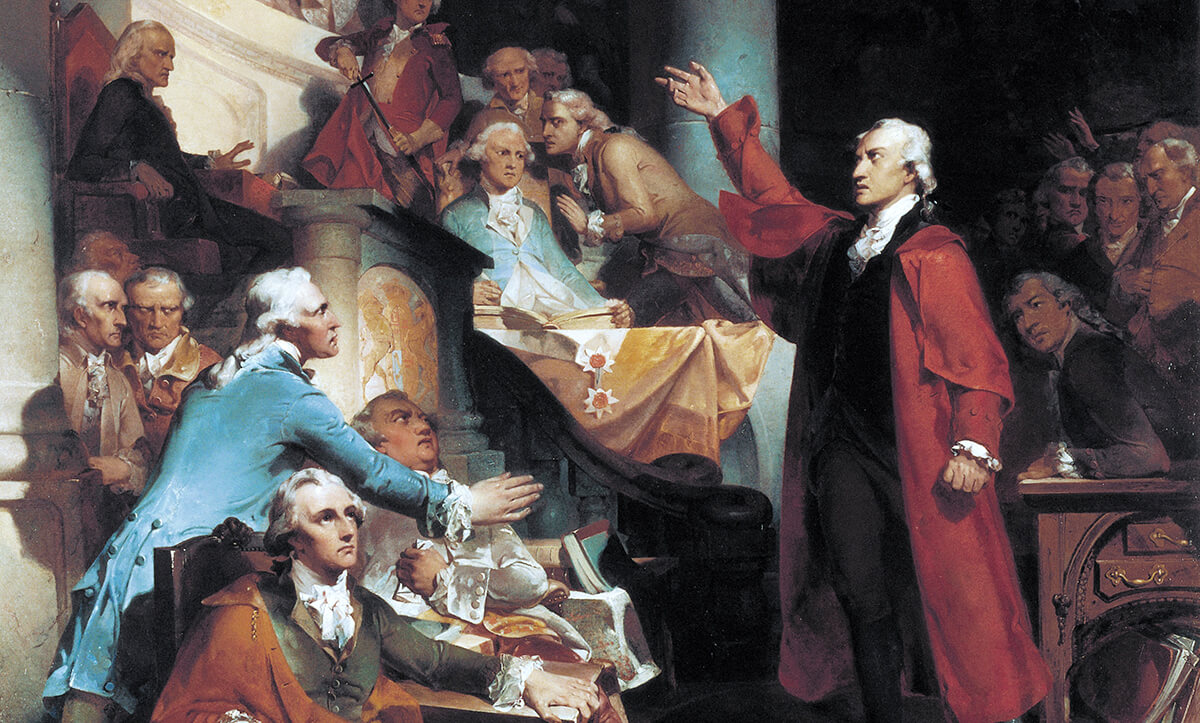
On March 23, 1775, Patrick Henry delivered one of the most famous speeches in American history. While some of his words are still familiar today, many Americans are unaware of the turbulent times preceding his celebrated address.

In the 1760s, Parliament passed numerous laws directly violating the rights of the colonists, including the Sugar Act (1764), the Stamp Act (1765), and many others. Patrick Henry, a member of the Virginia House of Burgesses, was one of many who objected. When the Stamp Act was repealed in 1766, the joy was so widespread that a Boston minister preached a notable sermon celebrating the event!

But the repeal of the Stamp Act was only a temporary reprieve. In 1767 came the hated Townshend Revenue Acts, which led to additional boycotts and protests. When the British sent troops to America to enforce these acts, it led to the shooting down of five Americans in what became known as the Boston Massacre. The Townshend Acts were finally repealed, but in 1774 they were replaced by even worse laws known as the Intolerable Acts.

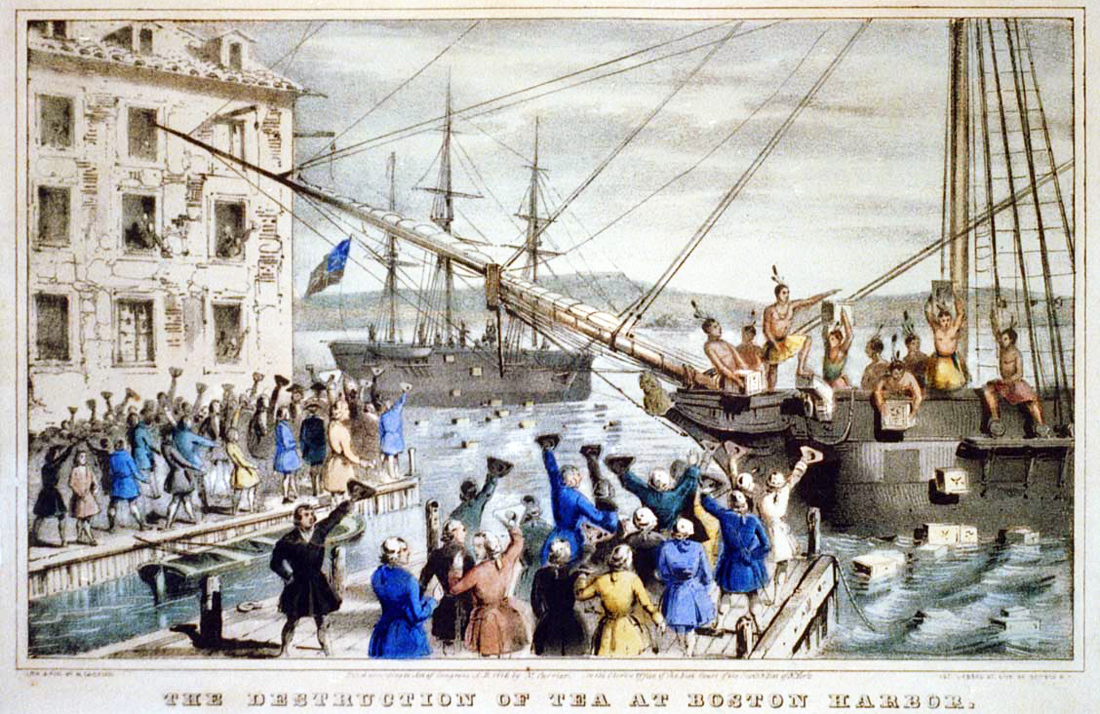
The British became more hard-fisted, and following the Boston Tea Party, they closed almost all commercial shipments, effectively ended self-government in Massachusetts, and required the people to house British troops in private homes. It was against the backdrop of this turmoil that Patrick Henry rose to speak.

Some had argued that the American Colonies were too weak to do anything against the British (one of the world’s greatest powers at that time), but in his March 23, 1775 speech, Henry replied:

Three millions of people armed in the holy cause of liberty and in such a country as that which we possess are invincible by any force which our enemy can send against us. Besides, sir, we shall not fight our battles alone. There is a just God Who presides over the destines of nations, and Who will raise up friends to fight our battles for us. The battle, sir, is not to the strong alone; it is to the vigilant, the active, the brave. . . .Gentlemen may cry, peace, peace — but there is no peace. The war is actually begun! The next gale that sweeps from the north will bring to our ears the clash of resounding arms! Our brethren are already in the field! . . . . Is life so dear, or peace so sweet as to be purchased at the price of chains and slavery? Forbid it, Almighty God! I know not what course others may take; but as for me, give me liberty, or give me death!

Significantly, Henry’s speech was heavily punctuated with quotations from numerous Bible verses. (See the commentary surrounding Matthew 12 in the Founders’ Bible for more about this, also showing how Bible verses appeared throughout numerous famous speeches by our Founding Fathers.) Not long after his speech came the Battles of Lexington and Concord, beginning the American War for Independence. So March 23rd marks the anniversary of one of the most famous speeches heralding American independence! (You can even purchase a parchment reprint of this famous speech from WallBuilders.)

Columbus and Sex Slavery

I have now reached that point, that there is no man so vile but thinks it his right to insult me. The day will come when the world will reckon it a virtue to him who has not given his consent to their abuse.1

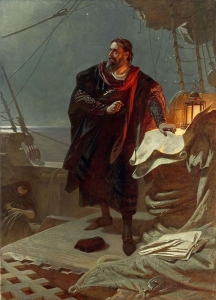
Columbus wrote these words off the coast of Spain, bound in chains. An official officer sent by the King and Queen to investigate allegations of misconduct shipped Columbus and his brothers back to Spain in 1500 after usurping power and allying himself with the armed rebels. Columbus penned the above letter as a vindication of his conduct to Ferdinand and Isabela, and in a sense, his claim proved to be prophetic. As soon as the Sovereigns discovered the imprisonment of Columbus, they ordered him released and to appear before them in order to address the accusations. After hearing Columbus’s defense, they cleared him of all charges. The allegations were not credible and proved to be false upon investigation. Columbus was restored.
Today, the legacy of Columbus finds itself in a similar situation. Columbus Day yearly becomes a battlefield where supposed experts once again drudge up these same old allegations and tout them as some new revelation. One of the most common, and therefore ridiculous, claims is that Columbus trafficked the native women in sex slavery.

Sources ranging from Wikipedia2 to the equally laughable Snopes3 make this accusation. The Huffington Post likewise claims Columbus “supervised the selling of native girls into sexual slavery,” and that he “makes a modern villain like Saddam Hussein look like a pale codfish.”4

They base such a claim on a quote from the same exact letter referenced above. The detractors read a single sentence out of context, and then push their misreading as fact. They quote Columbus as condoning and participating in sex slavery because in his letter he writes:

For one woman they give a hundred castellanos, as for a farm; and this sort of trading is very common, and there are already a great number of merchants who go in search of girls; there are at this moment from nine or ten on sale; they fetch a good price, let their age be what it will.5

This, they say, proves Columbus a villain. However, if we just continue reading the paragraph, Columbus is not at all saying this is a good thing. In fact, he lists these actions in the middle of a long explanation of all the atrocities which a rebelling faction committed. He goes on to lament:

I declare solemnly that a great number of men have been to the Indies, who did not deserve baptism in the eyes of God or men, and who are now returning thither.”6

From even just the slightest bit of context, we discover that the truth is actually exactly opposite of the accusations. What is even more remarkable, is that the same crowd who makes these historical distortions, also overlook the sexual exploitation committed by some of the indigenous people.

During Columbus’ voyages, he came across several islands ruled by a people know as the Caribs (where we get the word Caribbean). He found villages comprised of mostly women who had been enslaved and taken away from their homes. One of the leading crewmen describes that:

These captive women told us that the Carribbee men use them with such cruelty as would scarcely be believed; and that they eat the children which they bear to them, only bringing up those which they have by their native wives.7

This is beastly and truly horrific. Want to talk about sexual exploitation and abuse? There it is. We often think that the New World which Columbus discovered was populated only by kind and peaceful natives. This, however, couldn’t be further from the truth. As you dive into the real, eye-witness accounts of the pre-Columbian world, you discover what Columbus and the later explorers encountered—a land filled with cannibalism, slavery, polygamy, sex trafficking, and even genocide against other tribes.

We will be the first to tell you no one is perfect. The Bible is clear, “all have sinned, and come short of the glory of God” (Romans 3:23). And that certainly includes Columbus, who was far from perfect. But, in the remarkable drama of discovering the New World, Columbus was certainly not the villain he’s portrayed as today.


Endnotes

1 Christopher Columbus, “Letter of the Admiral to the (quondam) nurse of the Prince John, written near the end of the year 1500,” Select Letters of Christopher Columbus (London: Hakluyt Society, 1870), 153-154.
2 “History of Sexual Slavery in the United States,” Wikipedia, accessed October 8, 2018.
3 “Did Christopher Columbus Seize, Sell, and Export Sex Slaves?” Snopes, accessed October 8, 2018.
4 Eric Kasum, “Columbus Day? True Legacy: Cruelty and Slavery,” Huffington Post, October 10, 2010.
5 Columbus, “Letter of the Admiral to the (quondam) nurse of the Prince John,” Select Letters (1870), 165.
6 Columbus, “Letter of the Admiral to the (quondam) nurse of the Prince John,” Select Letters (1870), 165.
7 “Letter of Dr. Diego Alvarez Chanca,” Smithsonian Miscellaneous Collections (Washington: Smithsonian Institution, 1907), 48:440.

Discovering Columbus

Columbus on Trial

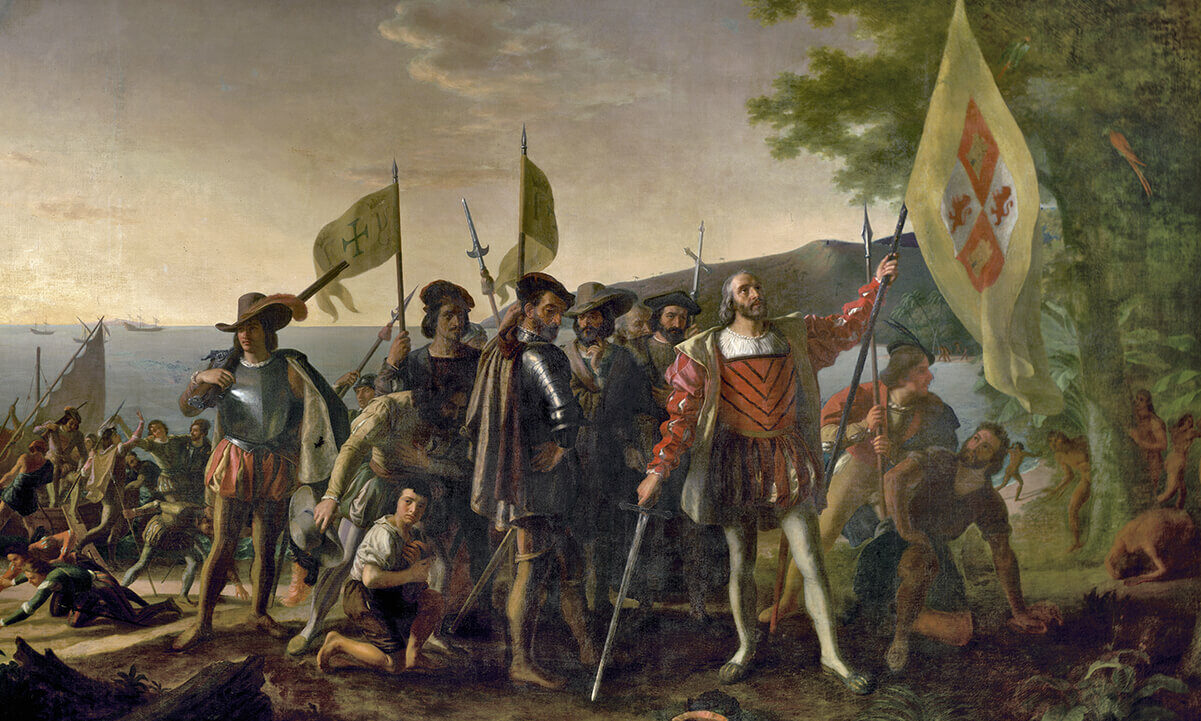
For over 500 year Christopher Columbus enjoyed a seat in the pantheon of American history. Being the discoverer of the New World came with well earned advantages. During the early days of our nation books, poems, and statues were made celebrating the man and his mission. Cities were named in his honor, even the seat of the American Government was christened the District of Columbia. There were some that even thought of making it the United States of Columbia.  The Admiral of the Ocean Sea (Columbus’s official title) was so important to the American ethos, that one of the first vessels in the Navy was the USS Columbus.

For years, the first thing children learned in school about America was the old rhyme ” In fourteen hundred ninety-two;
Columbus sailed the ocean blue.” In many respects, the story of the United States begins with Christopher Columbus. With so much legacy spanning over several centuries, it comes as a shock to discover that the Discoverer has suddenly become public enemy number one. Every Columbus Day more and more communities destroy their monuments and re-baptize the day as Indigenous People’s Day.  Each year, anti-Columbus elements bring out more and wilder accusations in attempts to re-write the history books.

In order to present the facts, the history, and the truth, we have spent years gathering resources and combing through the records to uncover what really happened when the Old World encountered the New. This page will serve as the port of departure for people who want to explore past and find the truth about Columbus.

Is he a man we should remember? Was he a hero? What can we learn from his experiences? The answers to these questions and many more like them are available below. Go through the modern lies and the historical facts surrounding Columbus, and clink on the pictures below to read the in depth articles!

Columbus’s primarily sought gold in order to provide for the needs of the Church, both for evangelism and to fund a crusade to retake Jerusalem from Muslim invaders. Learn how Columbus put God over gold: https://wallbuilders.com/resource/columbus-god-over-gold/

Columbus fought against both the native practice of sexual exploitation and the trafficking which Spanish rebels started. In fact, he actually liberated several villages of women who had been forced into sexual servitude. To learn more read here: https://wallbuilders.com/resource/columbus-and-sex-slavery/

Although Columbus was sent back in chains, it was for false allegations from which he was entirely exonerated. After the trial all of his rights and privileges were restored with the exception of his governorship.

In addition to being largely self-taught, Columbus was one of the best navigators the world has ever seen. For nearly 400 years scientists and seamen both acknowledged this fact. Read here to learn more about how Columbus wasn’t an idiot: https://wallbuilders.com/resource/columbus-wasnt-an-idiot/

Records show that the only time Columbus warred against the natives was in defense or when called upon by his native allies. The leading cause of death among the Indians was not war, but diseases. Watch PragerU’s video for more information: https://www.youtube.com/watch?v=HxYVbC283uM

The cultures which Columbus encountered were barbaric, with tribes conquering, enslaving, and cannibalizing each other to the point of complete extermination. For an in depth explanation read here: https://wallbuilders.com/resource/before-the-west-was-won-pre-columbian-morality/; for a brief overview to share read this: https://wallbuilders.com/resource/no-noble-savage-the-world-columbus-found/

No Noble Savage: The World Columbus Found

All arguments making Christopher Columbus a villain comparable with Adolf Hitler1 or Saddam Hussain 2 start with the premise that the world he discovered was populated by peaceful inhabitants who lived in a golden age. It was only with the introduction of the white man, critics claim, that this paradise was destroyed by the tyrannical oppression perpetuated by the European Christians.

The current romanticized presentation of the native cultures is the underlying assumption which permits the narrative that Columbus was a villain. Academics push this to justify tearing down statues of the explorer and removing his name from the calendar.  Proponents of the alternative to Columbus Day—which they call Indigenous People’s Day—are also proponents of alternative history.

Howard Zinn, in his massively influential yet famously inaccurate work A People’s History of the United States, propagated this myth of the noble savage:

So, Columbus and his successors were not coming into an empty wilderness, but into a world which in some places was as densely populated as Europe itself, where the culture was complex, where human relations were more egalitarian than in Europe, and where the relations among men, women, children, and nature were more beautifully worked out than perhaps any place in the world.3

According to Zinn (and most if not all of the modern outcry against Columbus can be traced to his book), the indigenous people were far more advanced in their social morality than the Europeans. This, of course, leads to the conclusion that the white man was (and still is) a racist tyrant oppressing whomever he might. This leads to the conclusion that America was (and still is) one of the worst nations in all of history.

“A Certain Innocence” – Codex Magliabecchiano

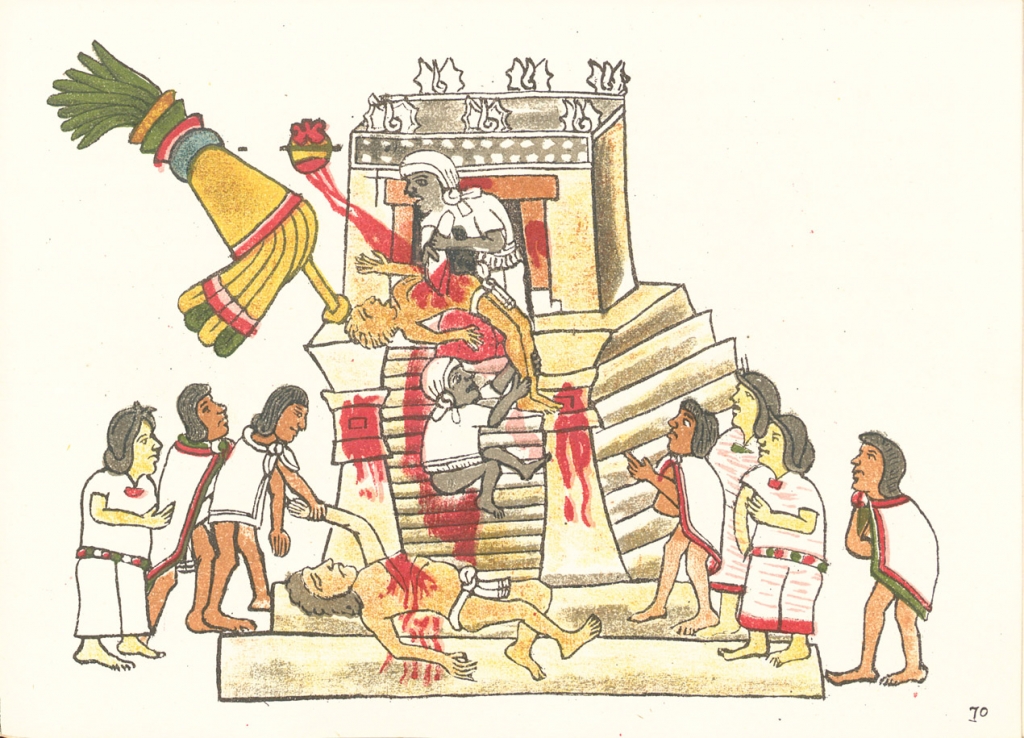
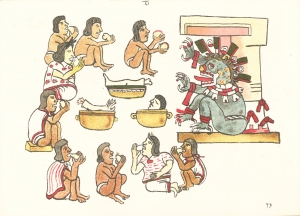
What Zinn and his followers fail to account for are the facts. The world Columbus discovered was full of slavery, murder, genocide, sodomy, sexual exploitation, and general barbarity. Zinn only mentions the famous atrocities of the Aztec culture in passing to say that, “the cruelty of the Aztecs, however, did not erase a certain innocence.”4 Let’s take a look at the “certain innocence” prevalent in the cultures encountered by Columbus and the other pre-Columbian natives.

Although the first tribe (led by the chieftain Guacanagari) was extremely friendly to Columbus—so much so that the Columbus even declared that, “a better race there cannot be, and both the people and the lands are in such quantity that I know not how to write it”5—they were not the pacifistic society often portrayed. This first tribe was part of the Taino community which occupied many of the islands in the West Indies. They held those islands, however, because they themselves had conquered, driven out, and replaced the earlier Siboney culture. The Taino domination was so complete that Columbus only ever encountered one such Siboney native.6

The Taino’s warrior culture was noticeably lacking when compared to the truly savage culture of the Carib (or Canib) tribes. These indigenous peoples (from whose name we derive both the words “Caribbean” and “cannibal”) were feared by the Taino because of the constant raids and attacks. During his first voyage, the Taino told Columbus about “extremely ferocious…eaters of human flesh” who “visit all the Indian islands, and rob and plunder whatever they can.”7

Columbus and his shipmates had extensive encounters with the Caribs during the subsequent voyages. The things they saw corresponded exactly with the description giving by their Taino friends, and many other atrocities which they had failed to mention.

For instance, the Caribs would spend up to a decade plundering any particular island until they completely depopulated it through slavery and cannibalism.8 Specifically, on these campaigns they would cannibalize the men and enslave the women and young boys. One of Columbus’s crew member left us with a description of what the Caribs would do to their captives, saying that he found:

twelve very beautiful and very fat women from 15 to 16 years old, together with two boys of the same age. These had the genital organ cut to the belly; and this we thought had been done in order to prevent them from meddling with their wives or maybe to fatten them up and later eat them. These boys and girls had been taken by the above mentioned Caribs;9

The testimony by the Taino of cannibalism was confirmed by the amount of human bones and even cooking limbs found in the villages.10  Another shipmate on the voyage, the lead doctor, also related in depth the terrible acts of the Caribs. He explained:

In their wars upon the inhabitants of the neighboring islands, these people capture as many of the women as they can, especially those who are young and handsome, and keep them as body servants and concubines; and so great a number do they carry off, that in fifty houses we entered no man was found, but all were women. Of that large number of captive females more than twenty handsome women came away voluntarily with us.

When the Caribbees take any boys as prisoners of war, they remove their organs, fatten the boys until they grow to manhood and then, when they wish to make a great feast, they kill and eat them, for they say the flesh of boys and women is not good to eat. Three boys thus mutilated came fleeing to us when we visited the houses.11

Cannibalism – Codex Magliabechiano

The same doctor describes another instance where they came to a Carib slave camp and:

As soon as these women learned that we abhor such kind of people because of their evil practice of eating human flesh, they felt delighted…. These captive women told us that the Carribbee men use them with such cruelty as would scarcely be believed; and that they eat the children which they bear to them, only bringing up those which they have by their native wives. Such of their male enemies as they can take away alive, they bring here to their homes to make a feast of them, and those who are killed in battle they eat up after the fighting is over. They claim that the flesh of man is so good to eat that nothing like it can be compared to it in the world; and this is pretty evident, for of the human bones we found in their houses everything that could be gnawed had already been gnawed, so that nothing else remained of them but what was too hard to be eaten. In one of the houses we found the neck of a man undergoing the process of cooking in a pot, preparatory for eating it.

This authentic eyewitness picture of the indigenous people is radically different that the one presented by Zinn. If this is what he means by “certain innocence” what does guilt looks like? Remember, these are the people of whom he proclaimed that their “relations among men, women, children, and nature were more beautifully worked out than perhaps any place in the world.” It may comes as a shock to Zinn, but no one ought to consider slavery, sexual exploitation, and infant cannibalism as “beautifully worked out.”

This is the New World which Columbus discovered. It wasn’t filled with friendly, peaceful, tribes, but people numerous and warlike. It is against this backdrop that we must evaluate the actions of Columbus and not the fabricated history created by fake historians like Howard Zinn and his followers.


Endnotes

1 Russel Means, quoted by Dinesh D’Souza in “The Crimes of Christopher Columbus,” First Things, November 1995.
2 Eric Kasum, “Columbus Day? True Legacy: Cruelty and Slavery,” Huffington Post, October 10, 2010.
3 Howard Zinn, A People’s History of the United States (New York: Harper Collins, 2015), 21.
4 Howard Zinn, A People’s History of the United States (New York: Harper Collins, 2015), 11.
5 Christopher Columbus, The Journal of Christopher Columbus, trans. Clements Markham (London: Hakluyt Society, 1893), 131.
6 Samuel Morrison, Admiral of the Ocean Sea (New York: MJF Books, 1970), 464.
7 Christopher Columbus, “Letter sent by Columbus to Chancellor of the Exchequer, respecting the Islands found in the Indies,” Select Letters of Christopher Columbus, trans. R. H. Major (London: Hakluyt Society, 1870), 14.
8 “Michele de Cuneo’s Letter on the Second Voyage, 28 October 1495,” Journals and Other Documents on the Life and Voyages of Christopher Columbus, trans. Samuel Morrison (New York: Heritage Press, 1963), 219.
9 “Michele de Cuneo’s Letter on the Second Voyage, 28 October 1495,” Journals and Other Documents, trans. Morrison (1963), 211-212.
10 “Letter of Dr. Diego Alvarez Chanca,” Smithsonian Miscellaneous Collections (Washington: Smithsonian Institution, 1907), 48:438, 440.
11 “Letter of Dr. Diego Alvarez Chanca,” Smithsonian Miscellaneous Collections (Washington: Smithsonian Institution, 1907), 48:442.

A Preacher and the President

President James Garfield–
A Minister of God

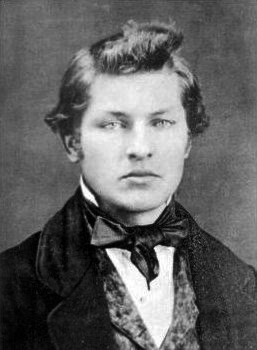
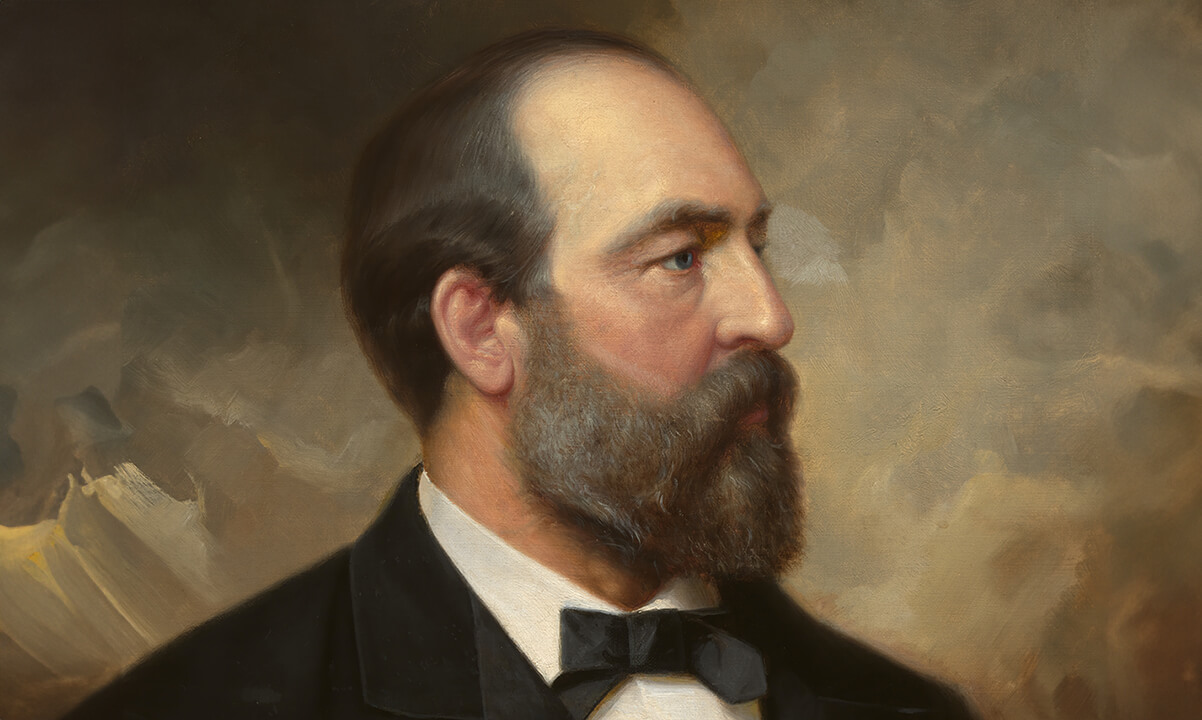
James Garfield, the 20th president of the United States, was a Gospel minister, thus clearly contradicting today’s errant notion that religious leaders are not to be involved with civil government. Sadly, few know much about Garfield partly because of the deliberate secularization of American history but also because of his short presidency.

Garfield was born in Ohio in 1831–the last president to be born in a log cabin. He grew up working on the family farm before going to work on a canal boat at age 16. An 1881 biography recounts an occasion when he unexpectedly fell into the river:

James was awakened out of a very sound sleep…He began to uncoil a rope to steady the boat through a lock it was approaching. The rope caught somehow on the edge of the deck and resisted several pulls that he made to extricate it. At last it yielded but, in the rebound, sent him headlong over the bow into the water…Death seemed inevitable. Fortunately his hand seized the rope in the darkness…and he drew himself, hand over hand, upon deck. He saw that he had been saved as by a miracle…’What saved me that time? It must have been God. I could not have saved myself’…During the time that he was thus reflecting he was trying to throw the rope so that it would catch in the crevice. Again and again he coiled the rope and threw it; but it would neither kink nor catch…It was but a few weeks after the last immersion before James was quite severely attacked by ague, a diseases that prevailed somewhat in that region…The captain settled with James…and James started for home…As he drew near the house, he could see the light of the fire through the window…Looking in at the window, he beheld her [his mother] kneeling in the corner, with a book open in the chair before her…her eyes were turned heavenward; she was praying. He listened and he distinctly heard, “Oh, turn unto me, and have mercy upon me! Give Thy strength unto Thy servant, and save the son of Thine handmaid!’
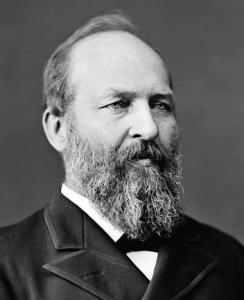
His mother’s statement struck his heart, but it was two years later in 1850 before he became a Christian.

Throughout his life, Garfield was involved in multiple career fields. He was self-taught in law, served as a Union military general in the Civil War, and was a member of the House of Representatives (where he was a key leader in passing numerous civil rights bills to secure racial equality), and he also served as an ordained minister during the Second Great Awakening.

One of the many unique items related to James Garfield in the WallBuilders’ collection is an 1858 letter in which Garfield recited details from a series of services he preached:

We have just closed our meeting with happy results. There were 34 addition[s]. 31 by immersion…I have spoken 19 discourses in our meeting here.

President James Garfield was inaugurated president on March 4, 1881, and later that year on July 2, he was shot by an assassin. The doctors were unable to find and remove the bullet, and on September 19, 1881, he finally succumbed to the complications related to the medical treatment. (Interestingly, Alexander Graham Bell attempted unsuccessfully to find the bullet using a metal detector.)

Garfield reminded citizens of the important role they played in keeping American government healthy and strong, telling Americans:

[N]ow more than ever before, the people are responsible for the character of their Congress. If that body be ignorant, reckless, and corrupt, it is because the people tolerate ignorance, recklessness, and corruption. If it be intelligent, brave, and pure, it is because the people demand these high qualities to represent them in the national legislature. . . . [I]f the next centennial does not find us a great nation . . . it will be because those who represent the enterprise, the culture, and the morality of the nation do not aid in controlling the political forces.

The life of President James A. Garfield should be an inspiration to Americans today, especially to Christians and Americans of faith.

Siege of Yorktown

Ending of a War

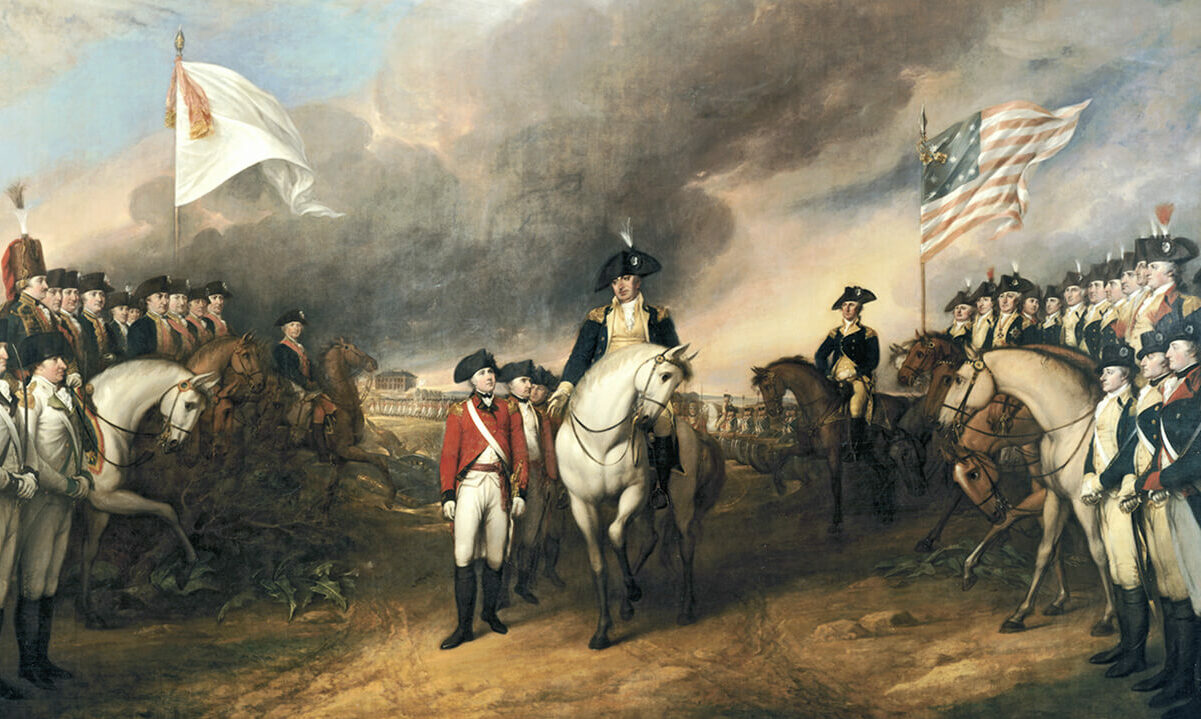
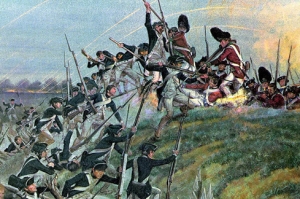
The Siege of Yorktown is recognized as the final major military action in the War for Independence. This three-week long battle (September 28-October 19, 1781) secured American independence after 6 years of active fighting. Some interesting aspects surrounding the siege of Yorktown makes this victory even more amazing.
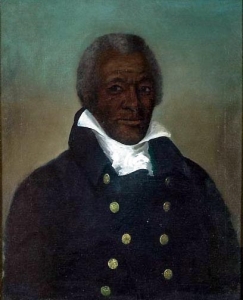
For example, a black man, James Armistead, played a major role in securing the victory. A Virginia slave who wanted to help his country, four months before the battle, working with General Marquis de Lafayette, he successfully infiltrated the camp of British commander Lord Cornwallis, serving as a spy for the American forces. Armistead was able to collect intelligence on British movements and sent it back to George Washington. Lafayette later petitioned for Armistead’s freedom (in Virginia, it took an act of the legislature to free a slave for meritorious service), and after being freed, Armistead was granted a retirement pension for his military service.

Cornwallis was heavily outnumbered (there were some 17,600 American/French troops against his 8,300 British troops), so on October 16, he attempted a last-ditch attack. (In the WallBuilders’ Collection we have an unexploded mortar shell–pictured on the left.) Under the cover of darkness, the British attempted to flee but a storm arose, forcing them to remain.


Running short of supplies and with reinforcements not arriving, the British surrendered on October 19. George Bancroft, the “Father of American History,” recorded how the Continental Congress responded upon hearing the good news:

When the letters of Washington announcing the capitulation [surrender] reached Congress, that body, with the people streaming in their train [that is, following them], went in procession to the Dutch Lutheran church to return thanks to Almighty God.

And John Hancock issued a proclamation announcing the victory and calling for a time of thanksgiving and prayer to God Almighty. (We have an original of this proclamation in the WallBuilders Collection.)

So it was in October 1781, that the battle of Yorktown was won, and Americans openly thanked God for His role in protecting America. Now is a good time for us likewise offer thanks for the blessings He has bestowed on our nation.

Happy Independence Day!

America’s Birthday

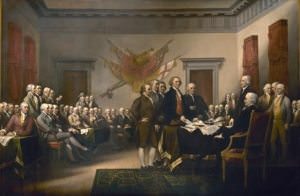
On July 4, 1776 a group of Americans approved a document declaring the United States of America free from English rule. This document was the Declaration of Independence,1 and each year on July 4th we celebrate the birthday of this courageous action!
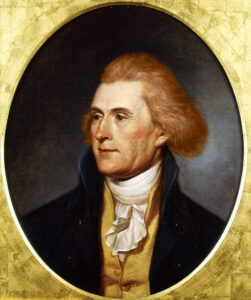
The Declaration of Independence is the nation’s birth certificate.2 Thomas Jefferson, the primary author of the Declaration,3 outlined its purpose:

When forced, therefore, to resort to arms for redress, an appeal to the tribunal of the world was deemed proper for our justification. This was the object of the Declaration of Independence. Not to find out new principles, or new arguments, never before thought of, not merely to say things which had never been said before; but to place before mankind the common sense of the subject, in terms so plain and firm as to command their assent, and to justify ourselves in the independent stand we are compelled to take. Neither aiming at originality of principle or sentiment, nor yet copied from any particular and previous writing, it was intended to be an expression of the American mind.4
John Adams, in informing his wife, Abigail, of the events preceding the passage of the Declaration, stated:

I am well aware of the toil and blood and treasure that it will cost us to maintain this Declaration and support and defend these states. Yet through all the gloom, I can see the rays of ravishing light and glory–I can see that the end is more than worth all the means and that posterity will triumph in that day’s transaction.5

Across the generations, many others have heralded the importance of the Declaration. For example, Civil War hero Ulysses S. Grant saw it as one of the many evidences of God’s guidance:

In all these marked stages of national progress, from the Declaration of Independence to the recent amendments of the Constitution, it is impossible not to perceive a providential series and succession of events.6

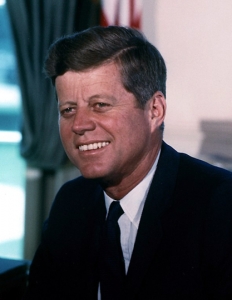
And President John F. Kennedy’s words about the Declaration are as stirring today as they were when they were originally delivered decades ago:

[The] Declaration unleashed not merely a revolution against the British but a revolution in human affairs. Its authors were highly conscious of its worldwide implications. And George Washington declared that liberty and self-government everywhere were, in his words, “finally staked on the experiment entrusted to the hands of the American people.” This prophecy has been borne out….This doctrine of national independence has shaken the globe, and it remains the most powerful force anywhere in the world today.7
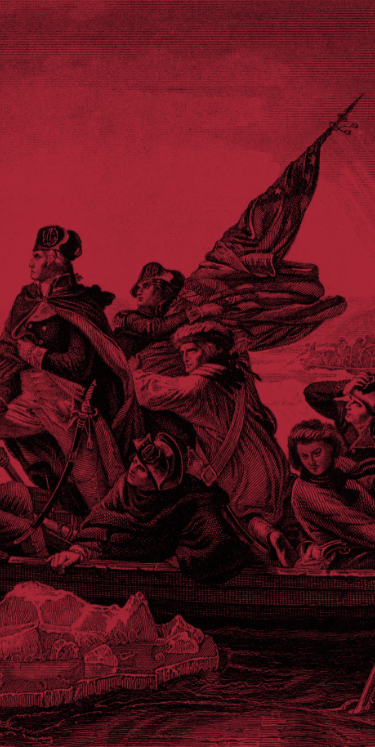
As we celebrate the birthday of America, don’t forget the many sacrifices made long ago by the signers of the Declaration on our behalf!

“On this special day, the birthday of our nation, in the midst of all the joyous celebrations let us take a moment to remember the debt of thanks we owe to those who came before us, to the same God who guides us all, and to the spirit of faith and patriotism which still makes America ‘the land of the free and the home of the brave’.”
Ronald Reagan8


Endnotes

1 “Declaration of Independence: Primary Documents in American History,” Library of Congress, accessed June 24, 2025.
2 “The Declaration of Independence,” National Archives, accessed June 24, 2025.
3 Thomas Jefferson to James MAdison, August 30, 1823, Memoirs, Correspondence, and Private Papers of Thomas Jefferson, ed. Thomas Jefferson Randolph (London: Henry Colburn and Richard Bentley, 1829), III:385.
4 Thomas Jefferson to Henry Lee, May 8, 1825, The Writings of Thomas Jefferson, ed. Paul Leicester Ford (New York: G. P. Putnam’s Sons, 1899), X:343.
5 John Adams to Abigail Adams, July 3, 1776, The Works of John Adams, ed. Charles Francis Adams (Boston: Little, Brown, and Company, 1856), I:232.
6 Ulysses S. Grant, “Special Message,” July 14, 1870, The American Presidency Project.
7 John F. Kennedy, “Address at Independence Hall, Philadelphia,” July 4, 1962, The American Presidency Project.
8 Ronald Reagan, “Radio Address to the Nation on the Observance of Independence Day,” July 3, 1982, The American Presidency Project.

Darwin and Race

When Charles Darwin released his famous book, On the Origin of Species, in 1859, a jolt shook the scientific world with seemingly innumerable consequences. One such result was the notable increase of radical propositions justifying racism veiled in the language of science.

Darwin hints at his own racist views within the sub-title of his monolithic book which reads in full:

On The Origin of Species by Means of Natural Selection, or the Preservation of Favoured Races in the Struggle for Life1

Interestingly, modern editions, like the one published by the American Museum of Natural History, dispense with the majority of Darwin’s title, preferring instead to cut everything beyond “On the Origin of Species.”2

Readers of Darwin will note, however, that the scientist was an ardent abolitionist. In his younger days he followed closely the efforts of Wilberforce and the anti-slavery forces, writing in 1833:

I have watched how steadily the general feeling, as shown at elections, has been rising against Slavery. What a proud thing for England if she is the first European nation which utterly abolishes it! I was told before leaving England that after living in slave countries all my opinions would be altered; the only alteration I am aware of is forming a much higher estimate of the negro character. It is impossible to see a negro and not feel kindly towards him; such cheerful, open, honest expressions and such fine muscular bodies.3

With such being the case, the question becomes, “how much higher did Darwin’s estimate become?” It is good that he did not consider slavery to be justified, but did he consider the enslaved to be equal to himself? The answer is a clear “no.”

In his book The Descent of Man, which explores the theory of natural selection and its implications upon humanity, Darwin offers an explanation for the “great break in the organic chain,” which some pointed to as evidence contradicting his theories, saying that, “these breaks depend merely on the number of related forms which have become extinct.” He then proceeds to give an illustration making his meaning clear:

At some future period, not very distant from as measured by centuries, the civilized races of man will almost certainly exterminate, and replace, the savage races throughout the world….The break will then be rendered wider, for it will intervene between man in a more civilized state, as we may hope, than the Caucasian, and some apes as low as a baboon, instead of as at present between the negro or Australian and the gorilla.4

Darwin has presented a scale displaying his perceptions of the graduated development of species. He hoped that, by means of the “preservation of favored races,” the biological gap between species will be more like the distance between the white man and baboon, instead of the closely related (as he views it) black man and gorilla. When discussing the way that the different “races” or “sub-species” of man have developed, he posits that:

Some of these, for instance the Negro and European, are so distinct that, if specimens had been brought to a naturalist without any further information, they would undoubtedly have been considered by him as good and true species.5

In accordance with this view of the natural supremacy of white people over black, he did not refrain from employing derogatory vocabulary when writing to his peers. In a discussion concerning the manner of certain ants which seemingly enslaved some of their fellow ants, he remarks:

I have now seen a defeated marauding party, and I have seen a migration from one nest to another of the slave-makers, carrying their slaves (who are HOUSE, and not field n—-rs) in their mouths!6

And he even would refer to his own editorial labors he spent on his books with the same baneful analogy:

But on my life no n—-r with lash over him could have worked harder at clearness than I have done.7

Galton

So we see that even though Darwin was personally against the institution of slavery, he still fully considered his own “race” to be widely superior to blacks, and employed the vernacular of the plantation when speaking in the safety of his letters. He viewed the world through racist eyes and his theory reflects that truth.

No one best exemplifies the inherent racism found in Darwin’s Preservation of the Favored Races than his cousin and fellow scientist, Francis Galton. Galton was a man who applied himself widely to the various scientific fields, but most of all to theories of racial development which he termed “eugenics.” Much of his work is based off that of Darwin, and the two conversed through letters until the latter passed. In Galton’s major work, Inquiries into Human Faculty and its Development, he advocated for the gradual extermination of the “lower races” through deliberate breeding of the higher “stock.” He concludes that:

The question then arises as to the way in which man can assist in the order of events. I reply, by furthering the course of evolution. He may use his intelligence to discover and expedite the changes that are necessary to adapt circumstance to race and race to circumstance, and his kindly sympathy will urge him to effect them mercifully.8

Galton himself attempted to “further the course of evolution” through a variety of means and methods. Most outrageously, he proposed colonizing Africa with the Chinese in hopes that the latter would breed-out the former, extinguishing the inhabitants of that continent entirely. He writes:

My proposal is to make the encouragement of the Chinese settlements at one or more suitable places on the East Coast of Africa a part of our national policy, in the belief that the Chinese immigrants would not only maintain their position, but that they would multiply and their descendants supplant the inferior Negro race. I should expect the large part of the African seaboard, now sparsely occupied by lazy, palavering savages…might in a few years be tenanted by industrious, order loving Chinese…9

In the same year, Darwin wrote to Galton praising another one of his incredible plans for genetically improving the world through selective breeding of humans in tones of intellectual agreement (if some doubt of its practicability):

Though I see so much difficulty, the object seems a grand one; and you have pointed out the sole feasible, yet I fear utopian, plan of procedure in improving the human race.10

With so much having been done by Darwin, which was then expounded upon by Galton, it should come as no surprise that the Southern apologists and white supremacists in America readily took to the writings of the two cousins as certain vindication of their position. One such piece of writing, out of the many which exist, is the 1905 essay by Benjamin K. Hays entitled, Natural Selection and the Race Problem.11 After breaking down the way Darwin’s theory applies to humanity, Hays turns his attention to the American situation:

And the black man—what of him?

As he was known to the ancient Egyptians, to the Greek and to the  Roman, even so is he found in his African home today. At the dawn of history he was fully developed, and during the past three thousand years he has not made one step of progress. Independently, he has shown no power to advance. The superiority of the American negro to his African brother, who is a savage and cannibal, is due to slavery, and could have been acquired in no other way. Men who ascribe debased characteristics of the negro to slavery show a short-sightedness that is pitiable. The present attainment of the American negro has been solely the result of his close personal contact with the white man.

Nor should it be forgotten that most of the leaders in the negro race are men with Anglo-Saxon blood in their veins who partake more of their Caucasian than of their Ethiopian lineage. Some of these are splendid men, who are making heroic efforts to elevate the negro race. Others of mixed blood are vicious and turbulent. These are the men who create trouble.

Left to itself, a negro population lapses into barbarism….The negro has been domesticated, but the question is, will he ever become an integral part of Anglo-American civilization….The black man has never been a competitor, but has always been subservient to the white race. And just so long as he remains subservient his position is secure, and just so soon as he becomes a competitor his fate is sealed.12

Hays very simply applies the Darwinian theory to his perception of America, drawing the same conclusions which Galton and Darwin himself reached. In the latter half of the essay, Hays turns his attention to how the racial tension in American could be resolved. He concludes only two options exist for African-Americans; submission or destruction. Hays synthesizes the natural extension of Darwin’s beliefs saying:

The weak has ever been dominated by the strong, and where the strong cannot control it will destroy. As long as a weaker race will render service, it will be protected by the stronger.

But whenever and wherever the weaker becomes a competitor of the stronger, the Struggle for Existence will be brief, and the relentless hand of Natural Selection will place the weaker in the list of those that are numbered with the past13

Clearly, the work of Darwin and his successors lead toward racist and destructive conclusions which have been used since their inception to justify oppression. Southern slaveholders and their later apologists used Darwinism as a balm for their consciences, vindicating their actions with the words of the “Father of Evolution.”


Endnotes

1 Charles Darwin, On the Origin of Species by Means of Natural Selection, or the Preservation of Favoured Races in the Struggle for Life (London: John Murray, 1859).
2 Charles Darwin, On the Origin of Species: A digital edition of the 1859 London Origin of Species, ed. Adam M. Goldstein (New York: American Museum of Natural History, 2011).
3 Charles Darwin to Miss C. Darwin, May 22, 1833, The Life and Letters of Charles Darwin, ed. Francis Darwin (London: John Murray, 1888), I:246.
4 Charles Darwin, The Descent of Man and Selection in Relation to Sex (London: John Murray, 1871), I:201.
5 Darwin, The Descent of Man (1871), II:388.
6 Charles Darwin to J.D. Hooker, July 13, 1858, Life and Letters, ed. Darwin (1888), II:129.
7 Charles Darwin to J.D. Hooker, May 11, 1859, Life and Letters, ed. Darwin (1888), II:156.
8 Francis Galton, Inquiries into Human Faculty and its Development (London: MacMillan and Co., 1883) , 334-335.
9 “Africa for the Chinese,” The Times, June 5, 1873.
10 Charles Darwin to Francis Galton, January 4, 1873, “Correspondence between Charles Darwin and Francis Galton,” Galton.org.
11 Benjamin K. Hays, Natural Selection and the Race Problem (Charlotte: Charlotte Medical Journal, 1905).
12 Hays, Natural Selection (1905), 8-10.
13 Hays, Natural Selection (1905), 20-21.

Black History Resources

Below is a compilation of various resources and biographies for several black history related people and events.


American War for Independence Soldiers

James Armistead
Biographical Resources:
WallBuilders
Biography
Black Past
US Army
The Black Phalanx; A History of the Negro Soldiers of the United States in the Wars of 1775-1812, 1861-’65 , pp. 50-51.

The Battle of Bunker Hill
Peter Salem Resources:
PBS
Black Past
National Museum of African American History & Culture
The Colored Patriots of the American Revolution, pp. 20-21.

Salem Poor Resources:
Black Past
AAREG

Washington Crossing the Delaware
Prince Whipple Resources:
Whipple Website
Black Past
The Colored Patriots of the American Revolution, pp. 198-199.

Oliver Cromwell Resources:
The Colored Patriots of the American Revolution, pp. 160-162.

The Battle of Lexington
Prince Estabrook Resources:
WallBuilders
PBS
Historical Marker Database
The Essex Gazette (April 25, 1775), where he’s listed among the wounded.

“Prince” Sisson
Biographical Resources:
WallBuilders
Camp Fire of the Afro-American; or the Colored Man as a Patriot, p. 141.
The Colored Patriots of the American Revolution, p. 127.


17th & 18th Century People

Crispus Attucks
Biographical Resources:
PBS
Dictionary of American Biography

Wentworth Cheswill
Biographical Resources:
PBS
WallBuilders

Documents:
WallBuilders’ Collection

Anthony Johnson
Biographical Resources:
PBS
Black Past
Encyclopedia Virginia
Journal of Negro History, pp. 233-237

Phillis Wheatley
Biographical Resources:
PBS
Biography
Poetry Foundation
National Women’s History Museum

Poetry:
Phillis Wheatley, Poems on Various Subjects, Religious and Moral (1887 edition)


19th Century People & Events

William Nell
Biographical Resources:
Black Past
African American Registry

His Works:
The Colored Patriots of the American Revolution
Services of Colored Americans in the Wars of 1776 and 1812

Robert Smalls
Biographical Resources:
WallBuilders
National Park Service
Biographical Directory of the US Congress
US House of Representatives

Carter Woodson
Biographical Resources:
National Park Service
Biography

His Works:
A Century of Negro Migration
The History of the Negro Church
The Negro in Our History
Free Negro Owners of Slaves in the United States in 1830
The Negro Wage Owner
African Heroes and Heroines
The Education of the Negro Prior to 1861
Negro Makers of History
The Rural Negro


20th Century Events & People

Lynching in America
Excerpt from WallBuilders’ 2003 Black History Issue Newsletter:

Of all forms of violent intimidation, lynchings were by far the most effective. Between 1882 and 1964, 4,743 persons were lynched — 3,446 blacks and 1,297 whites.

1964 Civil Rights Bill Resources
National Park Service
National Archives

Rev. Dr. Martin Luther King, Jr
Biographical Resources:
Nobel Prize
Louisiana State University

On the Declaration of Independence:

If our nation had done nothing more in its whole history than to create just two documents, its contribution to civilization would be imperishable. The first of these documents is the Declaration of Independence and the other is that which we are here to honor tonight, the Emancipation Proclamation. All tyrants, past, present and future, are powerless to bury the truths in these declarations, no matter how extensive their legions, how vast their power and how malignant their evil. The Declaration of Independence proclaimed to a world, organized politically and spiritually around the concept of the inequality of man, that the dignity of human personality was inherent in man as a living being. The Emancipation Proclamation was the offspring of the Declaration of Independence. It was a constructive use of the force of law to uproot a social order which sought to separate liberty from a segment of humanity.

When the architects of our republic wrote the magnificent words of the Constitution and the Declaration of Independence, they were signing a promissory note to which every American was to fall heir. This note was a promise that all men, yes, black men as well as white men, would be guaranteed the “unalienable Rights” of “Life, Liberty and the pursuit of Happiness.”


Pastors

Rev. Richard Allen
Biographical Resources:
PBS
Black Past
Biography
The Life Experience and Gospel Labors of the Rt. Rev. Richard Allen…Written by Himself and Published by His Request (Philadelphia: 1880)

Rev. Frederick Douglass
Biographical Resources:
White House Historical Association
National Park Service
Narrative of the Life of Frederick Douglass, An American Slave. Written by Himself (Boston: 1847)

Rev. Henry Highland Garnet
Biographical Resources:
Black Past
PBS

Sermon at the Capitol:
Available in its entirety on Google Books.

Rev. Lemuel Haynes
Biographical Resources:
Black Past
PBS
Sketches of the Life and Character of the Rev. Lemuel Haynes (New York: 1837)
The Colored Patriots of the American Revolution, pp. 123-124.

Rev. Harry Hoosier
Biographical Resources:
WallBuilders
Indiana Public Radio

Rev. Absalom Jones
Biographical Resources:
Black Past
PBS


Books & Other Resources

African American Perspectives
Freedmen’s Bureau Online
Harper’s Weekly
Neglected Voices
Services of Colored Americans in the Wars of 1776 and 1812
The Black Phalanx; A History of the Negro Soldiers of the United States in the Wars of 1775-1812, 1861-’65
The Colored Patriots of the American Revolution


WallBuilders Black History Products

First Black Legislators Print
Setting the Record Straight: American History in Black & White
Other Products

“The General Principles of Christianity” – Context Leading to Adams’ June 28, 1813, Letter to Jefferson

When writing to Thomas Jefferson on June 28, 1813, John Adams discusses the fact that America achieved independence through the general principles of Christianity. The letter itself, however, was the culmination of events which began nearly fifteen years earlier.

Adams and Jefferson were friends for many years but fell out after the events of the presidential election of 1800. By the year 1813 Jefferson and Adams had resumed their friendship after the repeated urgings of Dr. Benjamin Rush.1 This newly revived friendliness, however, was significantly tested when private letters written by Jefferson to Dr. Joseph Priestly were published in the biography of Rev. Theophilus Lindsey. One of the letters from 18012 included apparent and harsh censures of Adams’ policies. Upon readings this book Adams wrote to Jefferson on May 29, 1813, saying, “I wish to know if you have seen this book. I have much to say on the subject.”3

After waiting for twelve days without a response, Adams again took up his pen on June 10, 1813, and went through the 1801 Jefferson letter responding to the various claims made against him. Adams focused on the part where Jefferson had quoted him, writing: “The President himself declaring that we were never to expect to go beyond them in real science.”4 In the original letter to Rev. Priestly, Jefferson explains his disgust at this alleged statement by the then President Adams, exclaiming:

Those who live by mystery & charlantanerie, fearing you would render them useless by simplifying the Christian philosophy, – the most sublime & benevolent, but most perverted system that ever shone on man, – endeavored to crush your well-earnt & well-deserved fame.”5

Responding to these now twelve year old charges, Adams declared:

The sentiment that you have attributed to me in your letter to Dr. Priestley, I totally disclaim, and demand, in the French sense of the word, of you the proof. It is totally incongruous to every principle of my mind and every sentiment of my heart.6

Four days later Adams wrote another letter to Jefferson continuing the project of rebuffing Jefferson’s claims from 1801, but this time focusing mainly on the “alien law.”7

On June 15, 1813, Jefferson responded to the initial letter from May 29. The existence of the biography and even the person of Theophilus Lindsey was entirely new information to him. After looking back upon his own copies of the letters sent to the Dr. Priestly, Jefferson began explaining these letters. He told Adams that, “it was a confidential communication of reflections on these from one friend to another, deposited in his bosom, and never meant to trouble the public mind.”8 He further explained:

Still less must they [readers of the letters in question] consider it as looking personally towards you. You happen, indeed, to be quoted, because you happened to express more pithily than had been done by themselves, one of the mottos of the party. This was in your answer to the address of the young men of Philadelphia.9

At the end of the letter Jefferson makes clear that he sees no need to drag up things from so long ago remarking: “I should see with reluctance the passions of that day rekindled in this, while so many of the actors are living, and all are too near the scene not to participate in sympathies with them. About the facts you and I cannot differ; because truth is our mutual guide.”10

Upon receiving Jefferson’s letter, Adams retrieved his response to the address of the young men of Philadelphia from 1798, fifteen years prior.11 Adams then proceeded to correct Jefferson’s misconception of what had been said. The young men of Philadelphia had addressed Adams during the time when hostilities with France where high, assuring the President that they were, “accentuated by the same principles on which our forefathers achieved their independence.”12 In answer to this Adams admonished them to hold fast to those fundamental principles:

Science and morals are the great pillars on which this country has been raised to its current population, opulence, and prosperity. Without wishing to damp the ardor of curiosity, or influence the freedom of inquiry, I will haphazard a prediction, that after the most industrious  and impartial researches, the longest liver of you all will find no principles, institutions, or systems of education more fit, in general, to be transmitted to your posterity than those you have received from your ancestors.13

It was from this statement that Jefferson had drawn the criticism that Adams thought no improvement could be made upon the sciences of the ancestors, thereby implying that he was one of those who preferred “mystery and charlantanerie” over the simplicity of Christianity. Perceiving Jefferson’s misunderstanding, Adams described the principles which he referred to in his 1798 letter. He began by walking through what his answer did not mean:

Could my answer be understood by any candid reader or hearer, to recommend to all the others the general principles, institutions, or systems of education of the Roman Catholics, of those of the Quakers, or those of the Presbyterians, or those of the Philosophers? No.14

Adams here dismissed any idea that he attempted to propagate and employ for personal power a “most perverted system” of values instead of that “most sublime and benevolent” form of Christianity. Carrying on, Adams revealed what he truly meant, saying:

The general principles in which the fathers achieved independence, were the only principles on which that beautiful assembly of young men could unite, and these principles only could be intended by them in their address, or by me in my answer. And what were these general principles? I answer, the general principles of Christianity, in which all those sects were united, and the general principles of English and American liberty…15

Adams explained to Jefferson that in actuality they both desired the same ends – that the simplicity of those general principles of the Christian faith be maintained by the younger generation just as it had been by their own.


Endnotes

1 Cf. https://wallbuilders.com/resource/benjamin-rush-dream-about-john-adams-and-thomas-jefferson/

2 Thomas Jefferson to Doctor Joseph Priestly, March 21, 1801, The Works of Thomas Jefferson, ed. Paul Ford (New York: G. P. Putnam’s Sons, 1905), IX:216.

3 John Adams to Thomas Jefferson, May 29, 1813, Founders Archives.

4 John Adams, The Works of John Adams, ed. Charles Francis Adams (Boston: Little, Brown and Company, 1856), X:40.

5 Jefferson, Works of Jefferson, IX:217.

6 Adams, Works of Adams, X:41.

7 Adams, Works of Adams, X:42.

8 Jefferson, Works of Jefferson, XI:294.

9 Jefferson, Works of Jefferson, XI:294.

10 Jefferson, Works of Jefferson, IX:296.

11 Adams, Works of Adams, IX:187.

12 Adams, Works of Adams, X:44.

13 Adams, Works of Adams, X:44.

14 Adams, Works of Adams, X:45.

15 Adams, Works of Adams, X:45.