When Charles Darwin released his famous book, On the Origin of Species, in 1859, a jolt shook the scientific world with seemingly innumerable consequences. One such result was the notable increase of radical propositions justifying racism veiled in the language of science.
Darwin hints at his own racist views within the sub-title of his monolithic book which reads in full:
On The Origin of Species by Means of Natural Selection, or the Preservation of Favoured Races in the Struggle for Life1
Interestingly, modern editions, like the one published by the American Museum of Natural History, dispense with the majority of Darwin’s title, preferring instead to cut everything beyond “On the Origin of Species.”2
Readers of Darwin will note, however, that the scientist was an ardent abolitionist. In his younger days he followed closely the efforts of Wilberforce and the anti-slavery forces, writing in 1833:
I have watched how steadily the general feeling, as shown at elections, has been rising against Slavery. What a proud thing for England if she is the first European nation which utterly abolishes it! I was told before leaving England that after living in slave countries all my opinions would be altered; the only alteration I am aware of is forming a much higher estimate of the negro character. It is impossible to see a negro and not feel kindly towards him; such cheerful, open, honest expressions and such fine muscular bodies.3
With such being the case, the question becomes, “how much higher did Darwin’s estimate become?” It is good that he did not consider slavery to be justified, but did he consider the enslaved to be equal to himself? The answer is a clear “no.”
In his book The Descent of Man, which explores the theory of natural selection and its implications upon humanity, Darwin offers an explanation for the “great break in the organic chain,” which some pointed to as evidence contradicting his theories, saying that, “these breaks depend merely on the number of related forms which have become extinct.” He then proceeds to give an illustration making his meaning clear:
At some future period, not very distant from as measured by centuries, the civilized races of man will almost certainly exterminate, and replace, the savage races throughout the world….The break will then be rendered wider, for it will intervene between man in a more civilized state, as we may hope, than the Caucasian, and some apes as low as a baboon, instead of as at present between the negro or Australian and the gorilla.4
Darwin has presented a scale displaying his perceptions of the graduated development of species. He hoped that, by means of the “preservation of favored races,” the biological gap between species will be more like the distance between the white man and baboon, instead of the closely related (as he views it) black man and gorilla. When discussing the way that the different “races” or “sub-species” of man have developed, he posits that:
Some of these, for instance the Negro and European, are so distinct that, if specimens had been brought to a naturalist without any further information, they would undoubtedly have been considered by him as good and true species.5
In accordance with this view of the natural supremacy of white people over black, he did not refrain from employing derogatory vocabulary when writing to his peers. In a discussion concerning the manner of certain ants which seemingly enslaved some of their fellow ants, he remarks:
I have now seen a defeated marauding party, and I have seen a migration from one nest to another of the slave-makers, carrying their slaves (who are HOUSE, and not field n—-rs) in their mouths!6
And he even would refer to his own editorial labors he spent on his books with the same baneful analogy:
But on my life no n—-r with lash over him could have worked harder at clearness than I have done.7
So we see that even though Darwin was personally against the institution of slavery, he still fully considered his own “race” to be widely superior to blacks, and employed the vernacular of the plantation when speaking in the safety of his letters. He viewed the world through racist eyes and his theory reflects that truth.
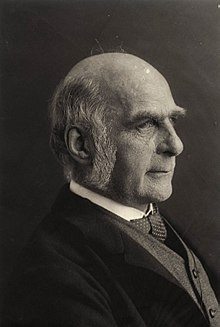
No one best exemplifies the inherent racism found in Darwin’s Preservation of the Favored Races than his cousin and fellow scientist, Francis Galton. Galton was a man who applied himself widely to the various scientific fields, but most of all to theories of racial development which he termed “eugenics.” Much of his work is based off that of Darwin, and the two conversed through letters until the latter passed. In Galton’s major work, Inquiries into Human Faculty and its Development, he advocated for the gradual extermination of the “lower races” through deliberate breeding of the higher “stock.” He concludes that:
The question then arises as to the way in which man can assist in the order of events. I reply, by furthering the course of evolution. He may use his intelligence to discover and expedite the changes that are necessary to adapt circumstance to race and race to circumstance, and his kindly sympathy will urge him to effect them mercifully.8
Galton himself attempted to “further the course of evolution” through a variety of means and methods. Most outrageously, he proposed colonizing Africa with the Chinese in hopes that the latter would breed-out the former, extinguishing the inhabitants of that continent entirely. He writes:
My proposal is to make the encouragement of the Chinese settlements at one or more suitable places on the East Coast of Africa a part of our national policy, in the belief that the Chinese immigrants would not only maintain their position, but that they would multiply and their descendants supplant the inferior Negro race. I should expect the large part of the African seaboard, now sparsely occupied by lazy, palavering savages…might in a few years be tenanted by industrious, order loving Chinese…9
In the same year, Darwin wrote to Galton praising another one of his incredible plans for genetically improving the world through selective breeding of humans in tones of intellectual agreement (if some doubt of its practicability):
Though I see so much difficulty, the object seems a grand one; and you have pointed out the sole feasible, yet I fear utopian, plan of procedure in improving the human race.10
With so much having been done by Darwin, which was then expounded upon by Galton, it should come as no surprise that the Southern apologists and white supremacists in America readily took to the writings of the two cousins as certain vindication of their position. One such piece of writing, out of the many which exist, is the 1905 essay by Benjamin K. Hays entitled, Natural Selection and the Race Problem.11 After breaking down the way Darwin’s theory applies to humanity, Hays turns his attention to the American situation:
And the black man—what of him?
As he was known to the ancient Egyptians, to the Greek and to the Roman, even so is he found in his African home today. At the dawn of history he was fully developed, and during the past three thousand years he has not made one step of progress. Independently, he has shown no power to advance. The superiority of the American negro to his African brother, who is a savage and cannibal, is due to slavery, and could have been acquired in no other way. Men who ascribe debased characteristics of the negro to slavery show a short-sightedness that is pitiable. The present attainment of the American negro has been solely the result of his close personal contact with the white man.
Nor should it be forgotten that most of the leaders in the negro race are men with Anglo-Saxon blood in their veins who partake more of their Caucasian than of their Ethiopian lineage. Some of these are splendid men, who are making heroic efforts to elevate the negro race. Others of mixed blood are vicious and turbulent. These are the men who create trouble.
Left to itself, a negro population lapses into barbarism….The negro has been domesticated, but the question is, will he ever become an integral part of Anglo-American civilization….The black man has never been a competitor, but has always been subservient to the white race. And just so long as he remains subservient his position is secure, and just so soon as he becomes a competitor his fate is sealed.12
Hays very simply applies the Darwinian theory to his perception of America, drawing the same conclusions which Galton and Darwin himself reached. In the latter half of the essay, Hays turns his attention to how the racial tension in American could be resolved. He concludes only two options exist for African-Americans; submission or destruction. Hays synthesizes the natural extension of Darwin’s beliefs saying:
The weak has ever been dominated by the strong, and where the strong cannot control it will destroy. As long as a weaker race will render service, it will be protected by the stronger.
But whenever and wherever the weaker becomes a competitor of the stronger, the Struggle for Existence will be brief, and the relentless hand of Natural Selection will place the weaker in the list of those that are numbered with the past13
Clearly, the work of Darwin and his successors lead toward racist and destructive conclusions which have been used since their inception to justify oppression. Southern slaveholders and their later apologists used Darwinism as a balm for their consciences, vindicating their actions with the words of the “Father of Evolution.”
Endnotes
1 Charles Darwin, On the Origin of Species by Means of Natural Selection, or the Preservation of Favoured Races in the Struggle for Life (London: John Murray, 1859).
2 Charles Darwin, On the Origin of Species: A digital edition of the 1859 London Origin of Species, ed. Adam M. Goldstein (New York: American Museum of Natural History, 2011).
3 Charles Darwin to Miss C. Darwin, May 22, 1833, The Life and Letters of Charles Darwin, ed. Francis Darwin (London: John Murray, 1888), I:246.
4 Charles Darwin, The Descent of Man and Selection in Relation to Sex (London: John Murray, 1871), I:201.
5 Darwin, The Descent of Man (1871), II:388.
6 Charles Darwin to J.D. Hooker, July 13, 1858, Life and Letters, ed. Darwin (1888), II:129.
7 Charles Darwin to J.D. Hooker, May 11, 1859, Life and Letters, ed. Darwin (1888), II:156.
8 Francis Galton, Inquiries into Human Faculty and its Development (London: MacMillan and Co., 1883) , 334-335.
9 “Africa for the Chinese,” The Times, June 5, 1873.
10 Charles Darwin to Francis Galton, January 4, 1873, “Correspondence between Charles Darwin and Francis Galton,” Galton.org.
11 Benjamin K. Hays, Natural Selection and the Race Problem (Charlotte: Charlotte Medical Journal, 1905).
12 Hays, Natural Selection (1905), 8-10.
13 Hays, Natural Selection (1905), 20-21.

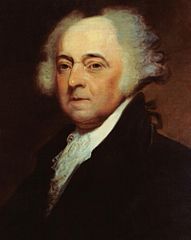 When writing to Thomas Jefferson on June 28, 1813, John Adams discusses the fact that America achieved independence through the general principles of Christianity. The letter itself, however, was the culmination of events which began nearly fifteen years earlier.
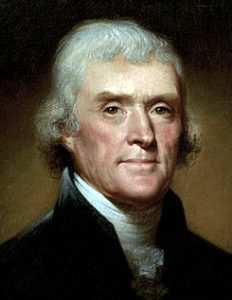 After waiting for twelve days without a response, Adams again took up his pen on June 10, 1813, and went through the 1801 Jefferson letter responding to the various claims made against him. Adams focused on the part where Jefferson had quoted him, writing: “The President himself declaring that we were never to expect to go beyond them in real science.”




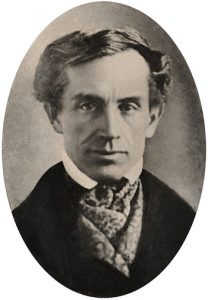 On
On 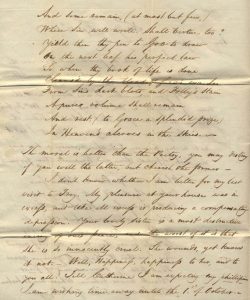 Biblical faith permeated Morse’s life. For example, in an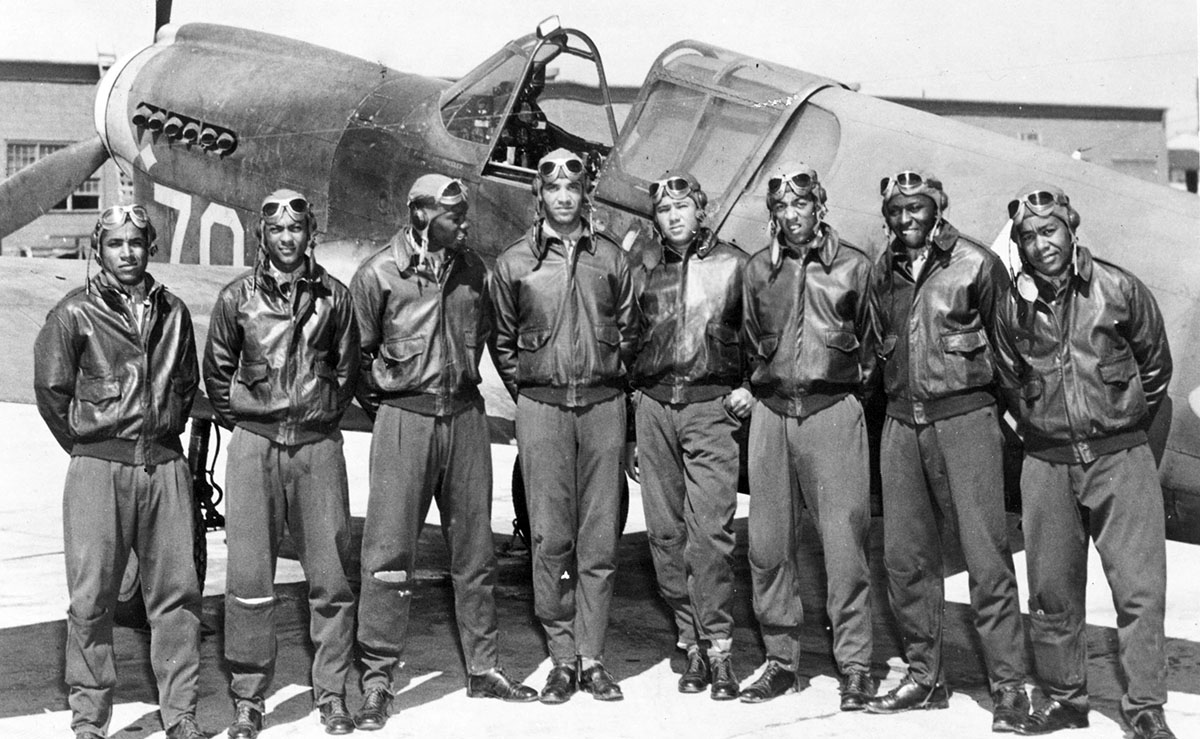
 In
In 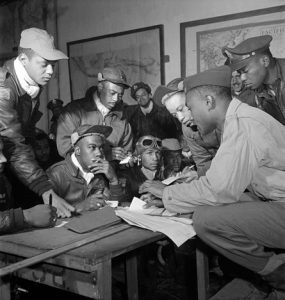 The “Red Tails” flew over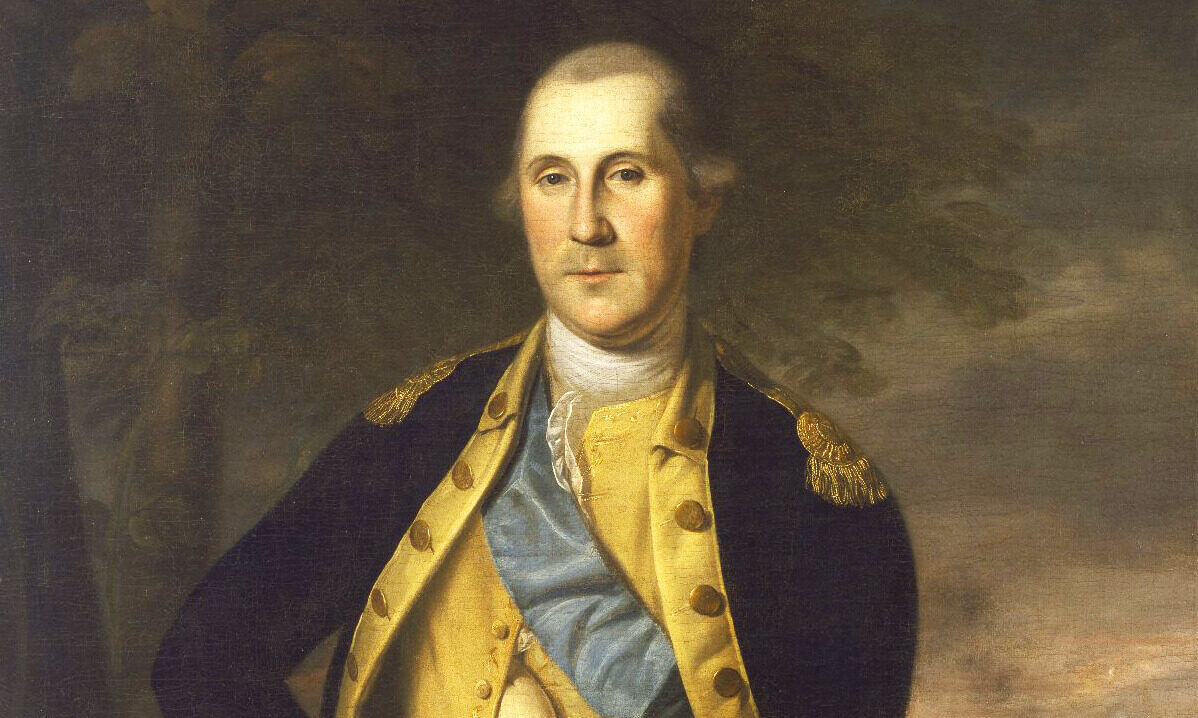
 June 14th is the birthday of the Army, created by the Continental Congress on June 14, 1775.
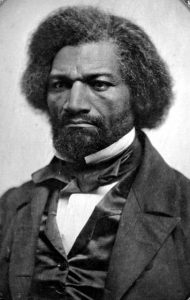 We must never forget that the loyal soldiers who rest beneath this sod flung themselves between the nation and the nation destroyers. If today we have a country not boiling in an agony of blood (like France)–if now we have a united country, no longer cursed by the hell-black system of human bondage–if the American name is no longer a by-word and a hissing to a mocking earth–if the Star-Spangled Banner floats only over free American citizens in every quarter of the land, and our country has before it a long and glorious career of justice, liberty, and civilization–we are indebted to the unselfish devotion of the noble army who rest in these honored graves all around us.
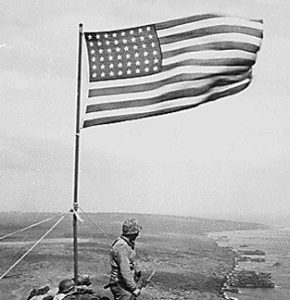 And in WWII, General George Marshall spoke about the mission of the United States: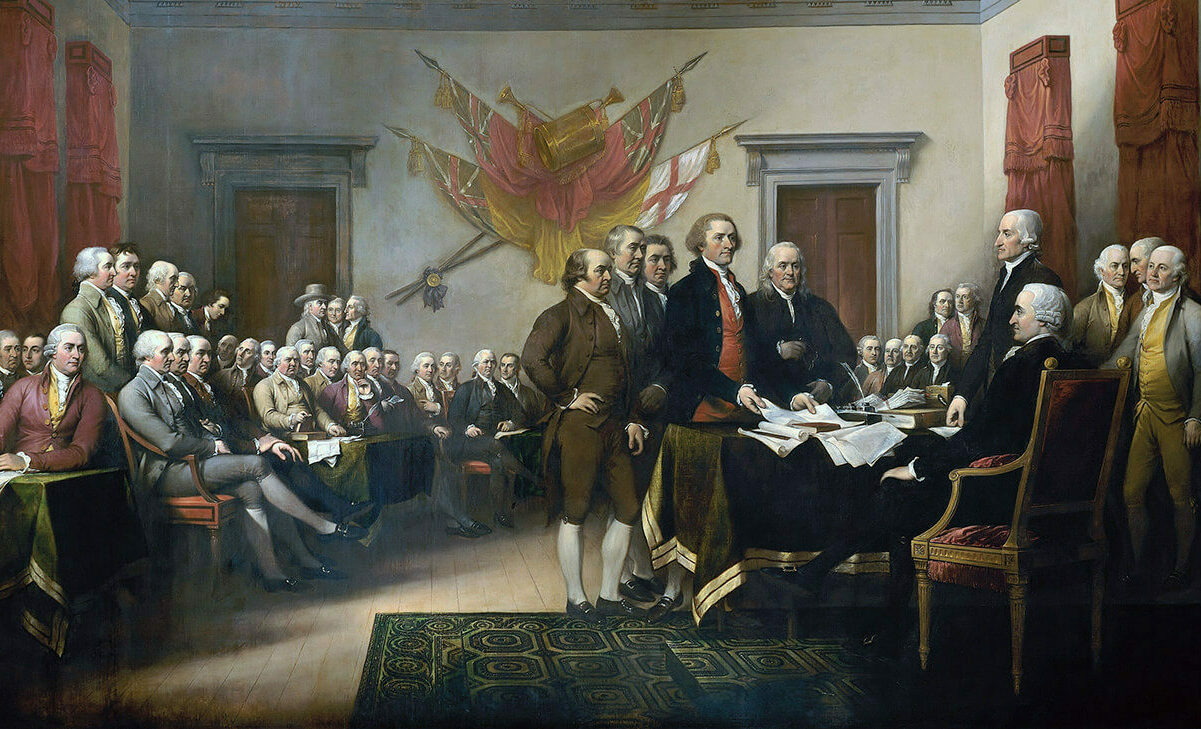
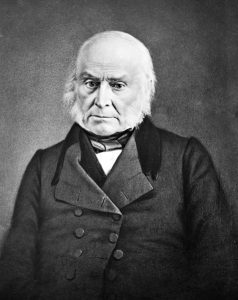 I advise you, my son, in whatever you read, and most of all in reading the Bible, to remember that it is for the purpose of making you wiser and more virtuous. I have myself, for many years, made it a practice to read through the Bible once every year. I have always endeavored to read it with the same spirit and temper of mind, which I now recommend to you: that is, with the intention and desire that it may contribute to my advancement in wisdom and virtue.
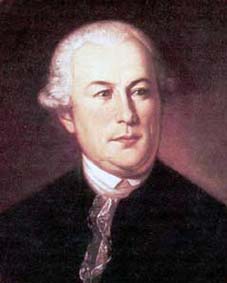 I was much mortified to find the whole force of this man’s vain genius pointed at the youth of America….This awful consequence created some alarm in my mind lest at any future day you, my beloved child, might take up this plausible address of infidelity….I have endeavored to…show his extreme ignorance of the Divine Scriptures…not knowing that “they are the power of God unto salvation, to everyone that believeth” [Romans 1:16].