David Barton was interviewed about the National Day of Prayer in 2016. This interview provides useful historical information that you might be interested in sharing with your friends and neighbors. The four questions David was asked appears below, along with his answers.
Why is it important that we pray for our country and its peoples?
First, because God tells us to (1 Timothy 2:1-4), and it is important that we obey Him (John 14:15, Acts 5:32). Second, because God answers prayer (Matthew 21:22, John 14:13-14). Third, God honors prayer and turns His attention to those who pray. He takes note of people who pray and His ear remains open to them (such as in 2 Chronicles 7:14). Fourth, prayer not only gives God a vehicle by which He can respond and answer prayers but prayer also changes those who pray, for praying helps us to be God-conscious, and when we are God-conscious as individuals, our behavior is different than if we rarely think about God (Romans 1:28). I think that George Washington incorporated many of these elements when he explained why he called the nation’s first federal day of prayer. According to President Washington, “It is the duty of all nations to acknowledge the providence of Almighty God, to obey His will, to be grateful for His benefits, and humbly to implore His protection and favor.”1
Cite an example that stands out to you of how prayer changed the course of the United States or accomplished a monumental goal.
 There are numerous moments, but I’ll choose the answered prayers attested to by Founding Father Benjamin Franklin. About five weeks into the Constitutional Convention of 1787 when they were attempting to draft the U. S. Constitution, their efforts were a signal failure. As things were beginning to break up and delegates return home to their states, Franklin challenged them and called them to prayer. He told them:
In this situation of this Assembly, groping as it were in the dark to find political truth, and scarce able to distinguish it when presented to us, how has it happened, sir, that we have not hitherto once thought of humbly applying to the Father of Lights to illuminate our understanding? In the beginning of the contest with Great Britain, when we were sensible of danger, we had daily prayer in this room for the Divine protection. Our prayers, sir, were heard, and they were graciously answered. All of us who were engaged in the struggle must have observed frequent instances of a superintending Providence in our favor. . . . And have we now forgotten that powerful Friend? Or do we imagine we no longer need His assistance? I have lived, sir, a long time, and the longer I live, the more convincing proofs I see of this truth – that God governs in the affairs of men. And if a sparrow cannot fall to the ground without His notice, is it probable that an empire can rise without His aid? We have been assured, sir, in the Sacred Writings, that “except the Lord build the House, they labor in vain that build it.” I firmly believe this; and I also believe that without His concurring aid we shall succeed in this political building no better than the builders of Babel. . . . I therefore beg leave to move that henceforth prayers imploring the assistance of Heaven, and its blessings on our deliberations, be held in this Assembly every morning before we proceed to business.2
 Notice that Franklin openly acknowledged that their frequent prayers throughout the Revolution had been answered. Hence, America became an independent nation rather than remain a subjugated British colony. That is just one example of how answered prayer changed the course of the nation. But to return to the Constitutional Convention, Washington recorded that they went to church to hear an address.3 At the church, the Rev. William Rogers had a special prayer for the Constitutional Convention:
[W]e fervently recommend to thy fatherly notice . . . our federal convention. . . . [F]avor them, from day to day, with thy immediate presence; be Thou their wisdom and their strength! Enable them to devise such measures as may prove happily instrumental for healing all divisions and promoting the good of the great whole; . . . that the United States of America may furnish the world with one example of a free and permanent government. . . . May we . . . continue, under the influence of republican virtue, to partake of all the blessings of cultivated and civilized society.4
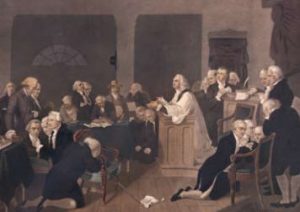 Franklin believed their prayers over the Convention had been answered. After five weeks of failure, following the recess and time of prayer, they reconvened and in only ten weeks produced the document that has become the longest on-going constitution in the history of the world. Franklin definitely saw a difference after the recess and prayer. While he was not willing to say that the finished Constitution was inspired in the same sense as the Bible, he nevertheless believed that it was the product of God’s direct intervention, explaining:
[I] beg I may not be understood to infer that our general Convention was Divinely inspired when it formed the new federal Constitution . . . [yet] I can hardly conceive a transaction of such momentous importance to the welfare of millions now existing (and to exist in the posterity of a great nation) should be suffered to pass without being in some degree influenced, guided, and governed by that omnipotent, omnipresent, and beneficent Ruler in Whom all inferior spirits “live and move and have their being” [Acts 17:28].5
Other delegates agreed. Alexander Hamilton is reported to have declared:
For my own part, I sincerely esteem it a system which without the finger of God never could have been suggested and agreed upon by such a diversity of interests.6
James Madison agreed, and reported:
It is impossible for the man of pious reflection not to perceive in it a finger of that Almighty Hand which has been so frequently and signally extended to our relief in the critical stages of the Revolution.7
 As far as these delegates were concerned, the finger of God – that is, His Divine power – had guided their writing of the Constitution. George Washington (president of the Convention) similarly attested:
As to my sentiments with respect to the merits of the new Constitution, I will disclose them without reserve. . . . It appears to me then little short of a miracle that the delegates from so many different states . . . should unite in forming a system of national government.8
Benjamin Rush, a signer of the Declaration from Philadelphia who closely monitored the proceedings, concurred, openly testifying:
I do not believe that the Constitution was the offspring of inspiration, but I am as perfectly satisfied that the Union of the States in its form and adoption is as much the work of a Divine Providence as any of the miracles recorded in the Old and New Testament were the effects of a Divine power.9
So, I would point to the independence of America and the creation of its unique Constitution and government as direct answers to prayer.
An excellent book recording other such moments of answered prayer is by Georgia State Senator Barry Loudermilk.10
In your estimation, what happens to a country when it drifts away from God?
 When a country drifts away from God, God drifts away from that country. When God drifts away from the country, His blessings also leave. Founding Father Samuel Adams (“The Father of the American Revolution”) fully understood this and reminded citizens:
May every citizen in the army and in the country have a proper sense of the Deity upon his mind and an impression of that declaration recorded in the Bible: “Him that honoreth Me I will honor, but he that despiseth Me shall be lightly esteemed” [1 Samuel 2:30].11
Numerous other Founding Fathers understood this truth and clearly expressed it. In fact, political leaders for generations embraced this belief. For this reason, President Abraham Lincoln reminded the nation in the midst of the Civil War:
[I]t is the duty of nations as well . . . and to recognize the sublime truth announced in the Holy Scriptures and proven by all history that those nations only are blessed whose God is the Lord [Psalm 33:12]. . . . But we have forgotten God. We have forgotten the gracious hand which preserved us in peace and multiplied and enriched and strengthened us, and we have vainly imagined in the deceitfulness of our hearts that all these blessings were produced by some superior wisdom and virtue of our own. Intoxicated with unbroken success, we have become too self-sufficient to feel the necessity of redeeming and preserving grace – too proud to pray to the God that made us.12
Jeremiah 8 elucidates the problems that come when a nation drifts from God:
Since they have rejected the word of the Lord, what kind of wisdom do they have? Therefore I will give their wives to other men and their fields to new owners . . . They dress the wound of my people as though it were not serious, saying “Peace, peace” when there is no peace . . . they have no shame at all; they do not even know how to blush. So they will fall among the fallen . . . I will take away their harvest, there will be no figs on the tree, and their leaves will wither. What I have given them will be taken away.
So, there is much consequence when a nation turns from God. After all, Psalms 9:17 warns, “The wicked shall be turned into hell, and all the nations that forget God.” God expects individuals to remember and acknowledge Him, but He also expects nations to do the same. Proverbs 3:5-6 reminds us that in all our ways (public as well as private) we are to acknowledge Him; Psalm 79:6 and Jeremiah 10:25 call for God’s wrath upon all nations that do not call upon His name; and the warranty of 1 Samuel 2:30 that “Those who honor Me I will honor, and those who despise Me will be disdained” was delivered to the nation’s civil leaders, not religious ones.
If you could lead the entire country in prayer this National Day of Prayer, what would you pray for? What should our collective prayer be for this country?
I would definitely pray for our leaders and those in authority, as we are commanded to do (1 Timothy 2:1-4). However, I would probably pray even more for America’s Christians. Founding Father Samuel Adams reminds us that “While the people are virtuous, they cannot be subdued, but when once they lose their virtue, they will be ready to surrender their liberties to the first external or internal invader.”13 Benjamin Franklin agreed, declaring “Only a virtuous people are capable of freedom. As nations become corrupt and vicious, they have more need of masters.”14 So why does this apply to Christians? Because George Barna, an eminent national pollster who especially surveys issues related to Biblical thinking and values, reports that of the thousands of surveys he has conducted over recent decades, “of more than 70 moral behaviors we study, when we compare Christians to non-Christians, we rarely find substantial differences.”15 So, there is almost no difference in the way that Christians and non-Christians behave in most moral areas. Barna further investigated how many American Christians actually hold a Biblical worldview – how many of them view the world around them through the filter of Biblical truth. Barna used a very simple standard for measuring the answer to that question:
For the purposes of the survey, a “Biblical worldview” was defined as believing [1] that absolute moral truth exists; [2] the Bible is totally accurate in all of the principles it teaches; [3] Satan is considered to be a real being or force, not merely symbolic; [4] a person cannot earn their way into Heaven by trying to be good or do good works; [5] Jesus Christ lived a sinless life on earth; and [6] God is the all-knowing, all-powerful Creator of the world Who still rules the universe today. In the research, anyone who held all of those beliefs was said to have a Biblical worldview.16
So what percent of Christians agreed with these six fundamental, timeless doctrines of orthodox Biblical Christianity? Only 9 percent!17 – Significantly, nine out of every ten Christians did not believe these most elemental doctrines of the Bible. And among Born-Again Christians (again, those who are considered most serious about their faith), only 19% held a Biblical worldview on these six non-negotiables of Christianity.18
It was common among the Founding Fathers that many of them read through the Bible from cover to cover once every year. As John Quincy Adams affirmed, “I have myself for many years made it a practice to read the Bible once every year.”19 Yet this has become very rare among Christians today. We do not know our own guidebook; and too often it is read merely as a devotional book rather than as a book to affect and regulate every aspect of our thinking and behavior. Our modern understanding of the Bible is so shallow that we cannot point to the verses that historically were used to form the basis of the free-enterprise system, the republican form of government, the common school movement, the civil rights movement, the impetus for written governing documents and limited government, including Bills of Rights. Yet, all of these institutions and movements came from the Bible. In fact, notice how many presidents (not ministers of the Gospel, which is who we would expect to say these things today, but rather it was political leaders who) recognized this truth:
 “The experiment is made and has completely succeeded – it can no longer be called in question whether authority in magistrates [civil leaders] and obedience of citizens can be grounded on reason, morality, and the Christian religion.”20 “The general principles on which the fathers achieved independence were. . . . the general principles of Christianity.”21 President John Adams
“[The Bible] is the rock on which our Republic rests.”22 President Andrew Jackson
“It was for the love of the truths of this great Book [the Bible] that our fathers abandoned their native shores for the wilderness. . . . The same truths sustained them in their resolutions to become a free nation; and guided by the wisdom of this Book, they founded a government under which we have grown from three millions, . . . and from being but a stock on the borders of this continent we have spread from the Atlantic to the Pacific.”23 “The Bible. . . . is indispensable to the safety and permanence of our institutions.”24 President Zachary Taylor
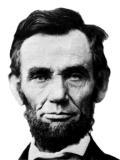 “[The Bible] is the best gift God has given to men. All the good the Savior gave to the world was communicated through this book. But for it, we could not know right from wrong.”25 President Abraham Lincoln
“No candid observer will deny that whatever of good there may be in our American civilization is the product of Christianity. Still less can he deny that the grand motives which are working for the elevation and purification of our society are strictly Christian. . . . A belief in Jesus Christ is the very fountainhead of everything that is desirable and praiseworthy in our civilization, and this civilization is the flower of time.”26 “[T]he teachings of the Bible are so interwoven and entwined with our whole civic and social life that it would be literally – I do not mean figuratively, I mean literally – impossible for us to figure to ourselves what that life would be if these teachings were removed.”27
President Teddy Roosevelt
“America was born to exemplify that devotion to the elements of righteousness which are derived from the revelations of Holy Scripture.”28 President Woodrow Wilson
“American life is builded, and can alone survive, upon . . . [the] fundamental philosophy announced by the Savior nineteen centuries ago.”29 President Herbert Hoover
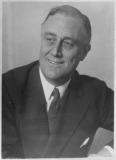 “In the formative days of the Republic, the directing influence the Bible exercised upon the fathers of the Nation is conspicuously evident. . . .We cannot read the history of our rise and development as a Nation without reckoning with the place the Bible has occupied in shaping the advances of the Republic.”30 “I suggest a nationwide reading of the Holy Scriptures during the period from Thanksgiving Day to Christmas. . . . [G]o to . . . the Scriptures for a renewed and strengthening contact with those eternal truths and majestic principles which have inspired such measure of true greatness as this nation has achieved.”31 President Franklin D. Roosevelt
“In this great country of ours has been demonstrated the fundamental unity of Christianity and democracy.”32 “The fundamental basis of this Nation’s law was given to Moses on the Mount. The fundamental basis of our Bill of Rights comes from the teachings which we get from Exodus and St. Matthew, from Isaiah and St. Paul. I don’t think we emphasize that enough these days.”33 President Harry Truman
“[R]eligious faith is the foundation of free government.”34 “[T]his relationship between a spiritual faith – a religious faith – and our form of government is so clearly defined and so obvious that we should really not need to identify a man as unusual because he recognizes it.”35 President Dwight D. Eisenhower
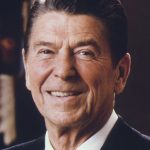 “Of the many influences that have shaped the United States of America into a distinctive Nation and people, none may be said to be more fundamental and enduring than the Bible. Deep religious beliefs stemming from the Old and New Testaments of the Bible inspired many of the early settlers of our country . . . [and] laid the foundation for the spirit of nationhood that was to develop in later decades. The Bible and its teachings helped form the basis for the Founding Fathers’ abiding belief in the inalienable rights of the individual – rights which they found implicit in the Bible’s teachings of the inherent worth and dignity of each individual. This same sense of man patterned . . . the ideals set forth in the Declaration of Independence and the Constitution.”36 President Ronald Reagan
There are many others as well.
Most Christians today no longer know, recognize, or even agree with what our political leaders (much less our ministers) used to openly declare about the Bible and its influence. So, while I would pray for our leaders, I would especially pray for Christian citizens — that they would again begin to read, study, know, and understand the Bible. American can be no stronger than its citizens, and whether the citizens will be strong (and virtuous) depends on whether they know the Bible (cf. Matthew 22:29).
Endnotes
1 George Washington proclamation for a National Thanksgiving, October 3, 1789, Jared Sparks, The Life of George Washington (London: Henry Colburn, 1839), II:302.
2 James Madison’s Notes on the Convention, June 28, 1787, Max Farrand, The Records of the Federal Convention of 1787 (New Haven: Yale University Press, 1911), I:450-452
3 George Washington, diary entry for July 4, 1787, The Writings of George Washington, ed. Worthington Chauncey Ford (New York: G. P. Putnam’s Sons, 1891), XI:148: “And (the Convention having adjourned for the purpose) went to hear an Oration on the anniversary of Independence…”
4 The Massachusetts Centinel (August 15, 1787), 1.
5 Benjamin Franklin, “A Comparison of the Conduct of the Ancient Jews and of the Anti-Federalists in the United States of America,” no date, The Works of Benjamin Franklin, ed. Jared Sparks (Boston: Tappan, Whittemore, and Mason, 1837), V:162.
6 Alexander Hamilton, John Jay, James Madison and Other Men of Their Time, Alexander Hamilton to Mr. Childs, October 17, 1787 The Federalist and Other Contemporary Papers on the Constitution of the United States, ed. E.H. Scott (New York: Scott, Foresman and Company, 1894), 646.
7 James Madison, Federalist #37, Alexander Hamilton, John Jay, & James Madison, The Federalist (Philadelphia: Benjamin Warner, 1818), 194.
8 George Washington to Marquis de Lafayette, February 7, 1788, The Writings of George Washington, ed. Jared Sparks (Boston: Russell, Odiorne, and Metcalf, 1835), IX:317.
9 Benjamin Rush to Elias Boudinot, July 9, 1788, Letters of Benjamin Rush, ed. L. H. Butterfield (Princeton, New Jersey: American Philosophical Society, 1951), I:475.
10 Barry Loudermilk, And Then They Prayed. Moments in American History Impacted by Prayer (Campbell, CA: FastPencil, 2011).
11 Samuel Adams, article signed “Vindex” originally published in the Boston Gazette, June 12, 1780, The Writings of Samuel Adams, ed. Harry Alonzo Cushing (New York: G. P. Putnam’s Sons, 1908), IV:189.
12 Abraham Lincoln, Proclamation Appointing a National Fast Day, March 30, 1863, Complete Works of Abraham Lincoln, eds. John G. Nicolay & John Hay (New York: Tandy-Thomas Company, 1894), VIII:235-236.
13 Samuel Adams to James Warren, February 12, 1779, Writings of Samuel Adams, ed. Cushing (1905), IV:124.
14 Benjamin Franklin, April 17, 1787, The Writings of Benjamin Franklin, ed. Jared Sparks (Boston: Tappan, Whittemore and Mason, 1840), X:297.
15 Christine Wicker, “Dumbfounded by divorce. Survey inspires debate over why faith isn’t a bigger factor in marriage,” Dallas Morning News, 2000.
16 “Barna Survey Examines Changes in Worldview Among Christians over the Past 13 Years,” The Barna Group, March 6, 2009.
17 “Barna Survey Examines Changes in Worldview Among Christians over the Past 13 Years,”The Barna Group, March 6, 2009.
18 “Barna Survey Examines Changes in Worldview Among Christians over the Past 13 Years,” The Barna Group March 6, 2009.
19 John Quincy Adams, Letters of John Quincy Adams to His Son on the Bible and Its Teachings (Auburn, NY: Derby, Miller, & Co., 1848), 10-11.
20 John Adams, “A Defence of the Constitutions of Government of the United States of America: Preface,” Works of John Adams, ed. Adams (1850), IV:293.
21 John Adams to Thomas Jefferson, June 28, 1813, Works of John Adams, ed. Adams (1850), X:45-46.
22 Ronald Reagan, “Proclamation 5018 – Year of the Bible, 1983,” February 3rd, 1983, The American Presidency Project. See the same quote in a proclamation from President George H. W. Bush on February 22, 1990, “International Year of Bible Reading,” Code of Federal Regulations (Washington, D. C.: U. S. Government Printing Office, 1991), 21.
23 Inaugural Address, March 5, 1849, Zachary Taylor 1784-1850 Millard Fillmore 1800-1874: Chronology Documents, Bibliographical Aids, ed. John J. Farrell (Dobbs Ferry, New York: Oceana Publications, Inc., 1971), 27; Stephen Abbott Northrop, A Cloud of Witnesses (Portland: American Heritage Ministries, 1987, reprinted from the 1894 work), 447-448.
24 “The President and the Bible,” New York Semi-Weekly Tribune (Wednesday, May 9, 1849) IV:100:1.
25 Abraham Lincoln, “Reply to Committee of Colored People of Baltimore Who Presented Him with a Bible,” Complete Works, eds. Nicolay & Hay (1894), Two:574.
26 “Our Nation, A Product of Christianity,” Springfield Republican (1884), editorial.
27 Theodore Roosevelt, “On Reading the Bible: Delivered before the Members of the Bible Society, 1901,” Modern Eloquence, ed. Thomas B. Reed (Philadelphia: John D. Morris and Company, 1903), XV:1770-1776.
28 Woodrow Wilson, An Address in Denver on the Bible, May 7, 1911, The Papers of Woodrow Wilson, ed. Arthur S. Link (Princeton, New Jersey: Princeton University Press, 1977), 23:20.
29 Herbert Hoover, “Radio Address to the Nation on Unemployment Relief,” October 18, 1931, Public Papers of the Presidents of the United States (Washington: United States Government Printing Office, 1976), 490.
30 Franklin D. Roosevelt, “Statement on the Four Hundredth Anniversary of the Printing of the English Bible,” October 6th, 1935, The American Presidency Project.
31 Franklin D. Roosevelt, “Proclamation – Thanksgiving Day, 1944,” November 1, 1944, The American Presidency Project.
32 Harry S. Truman, “Address at Lighting of the National Community Christmas Tree on the White House Grounds,” December 24, 1946, The American Presidency Project.
33 Harry S. Truman, “Address Before the Attorney General’s Conference on Law Enforcement Problems,” February 15, 1950, The American Presidency Project.
34 Dwight Eisenhower, “Remarks Upon Lighting the National Community Christmas Tree,” December 24, 1953, The American Presidency Project.
35 Dwight Eisenhower, “Remarks to the First National Conference on the Spiritual Foundations of American Democracy,” November 9, 1954, The American Presidency Project.
36 Ronald Reagan, “Proclamation 5018 – Year of the Bible, 1983,” February 3, 1983, The American Presidency Project.
* Originally published: January 4, 2017.
* This article concerns a historical issue and may not have updated information.
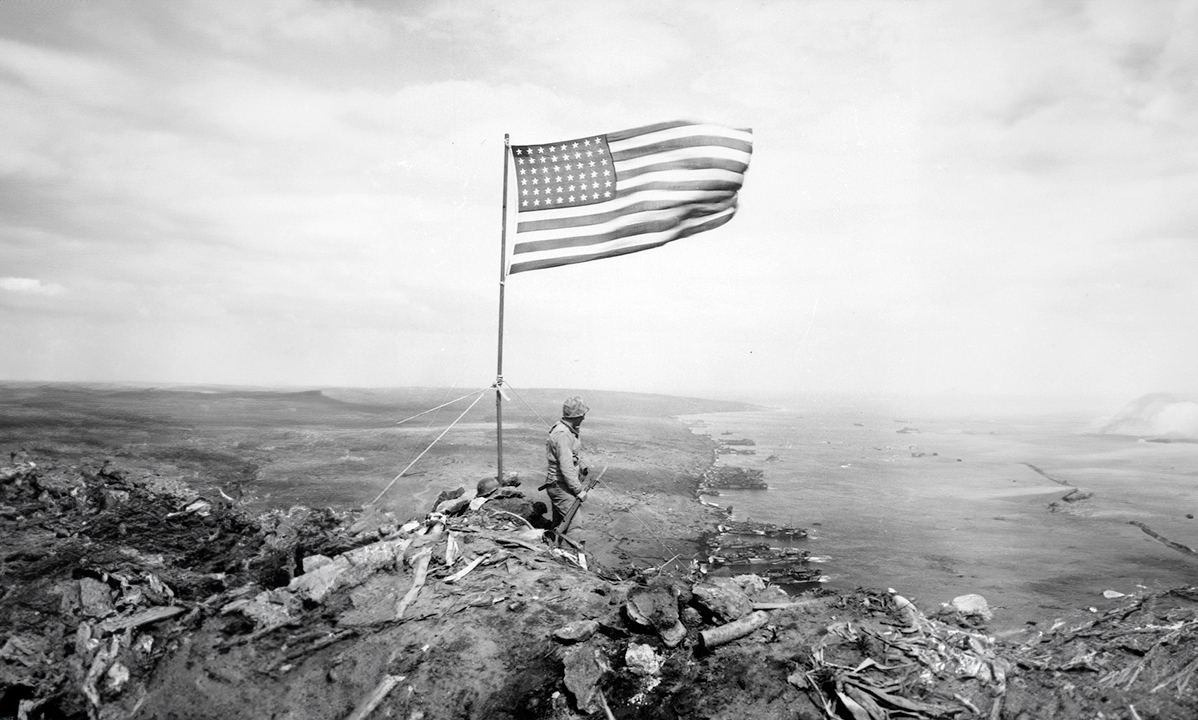
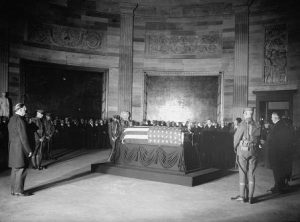 This holiday (originally known as Armistice Day) was established to remember the 1918 signing of the Armistice Treaty and to honor the heroes of World War I. [1] In 1921, Congress resolved to build a tomb to honor the men who died overseas. Sergeant Edward Younger was given the task of choosing one of four unknown American soldiers to bring home for burial. [2] When the Navy ship Olympia arrived in Washington on November 9th with the body of the fallen soldier, America responded. The Cavalry band played “Onward Christian Soldiers” as the casket was taken to the U.S. Capitol, where the soldier was laid in State. President Warren G. Harding, governmental officials, and thousands of Americans paid their respects to this fallen soldier. [3]
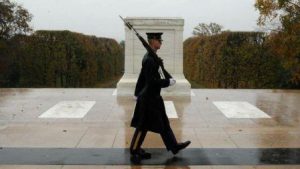 On the morning of November 11th, this soldier was given a military procession to Arlington National Cemetery and buried at what is known today as the Tomb of the Unknown Soldier. This tomb has been guarded around the clock by dedicated servicemen and women since 1948. [4] The honor for the sacrifice of this soldier was recently once again evident when the guards refused to leave their post during Hurricane Sandy, which was reminiscent the soldiers’ determination to guard the tomb during Hurricane Isabel in 2003. [5]
 are willing to sacrifice their lives for our freedom should be celebrated and venerated.

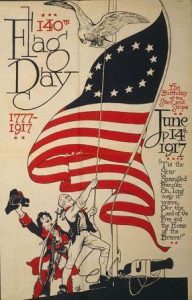 June 14th is Flag Day which commemorates the day in 1777 when the Continental Congress passed a resolution “that the flag of the thirteen United States be thirteen stripes, alternate red and white; that the union be thirteen stars, white in a blue field, representing a new constellation.”
 I have lived, Sir, a long time, and the longer I live, the more convincing proofs I see of this truth- that God governs in the affairs of men. And if a sparrow cannot fall to the ground without His notice, is it probable that an empire can rise without His aid? We have been assured, Sir, in the sacred writings, that “except the Lord build the House they labor in vain that build it.” I firmly believe this; and I also believe that without His concurring aid we shall succeed in this political building no better than the Builders of Babel.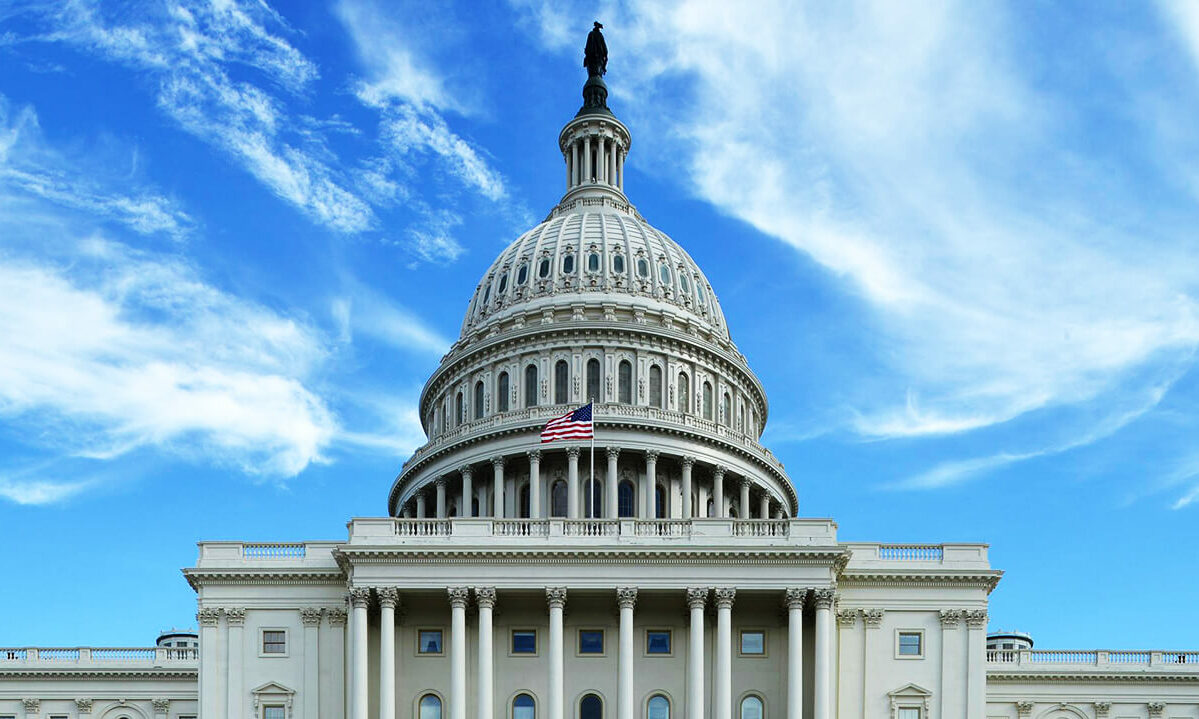
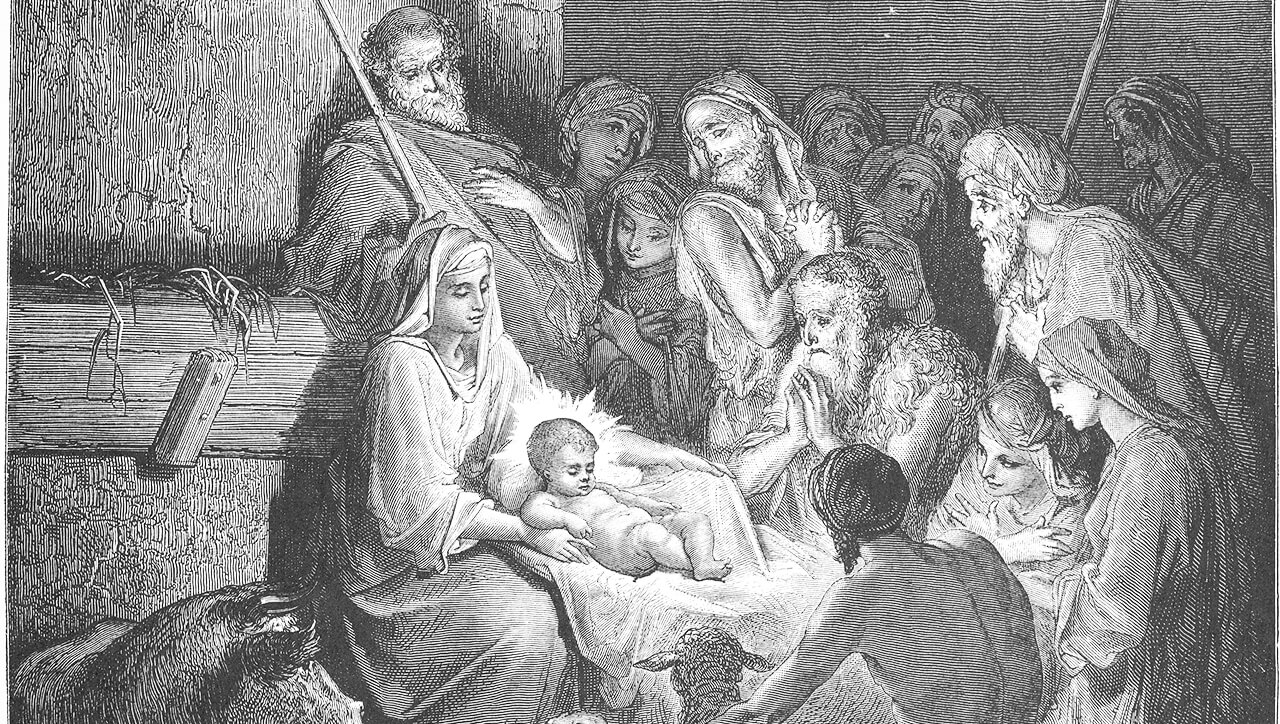
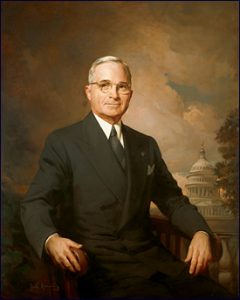 Since returning home, I have been reading again in our family Bible some of the passages which foretold this night. . . . We miss the spirit of Christmas if we consider the Incarnation as an indistinct and doubtful, far-off event unrelated to our present problems. We miss the purport of Christ’s birth if we do not accept it as a living link which joins us together in spirit as children of the ever-living and true God. In love alone – the love of God and the love of man – will be found the solution of all the ills which afflict the world today.
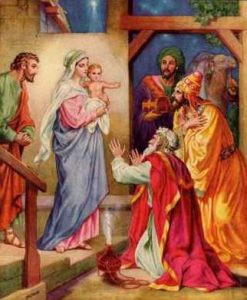 Through Jesus Christ the world will yet be a better and a fairer place. This faith sustains us today as it has sustained mankind for centuries past. This is why the Christmas
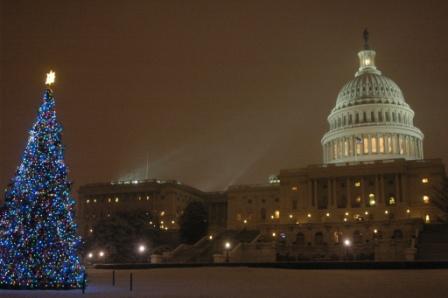
 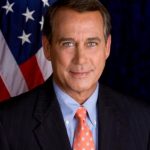 Though winter is upon us, the Christmas tree flourishes as a symbol of everlasting life. That life and light, of course, is Christ, whose birth to Mary fulfilled a prophecy of joy and salvation. Out in the fields where the shepherds slept, the angels broke the silence by singing, “Glory to God in the highest, and on Earth peace, goodwill toward men.” We best serve this story by serving one another . . . by showing it is more blessed to give than to receive, especially when so many of our fellow citizens are without jobs and in need.
  spirit, always bringing us closer to each other and closer to the peace of which the angels sang. So on behalf of my wife, Debbie, our two girls, my 11 brothers and sisters, and all the Boehners, I wish one and all a very Merry Christmas.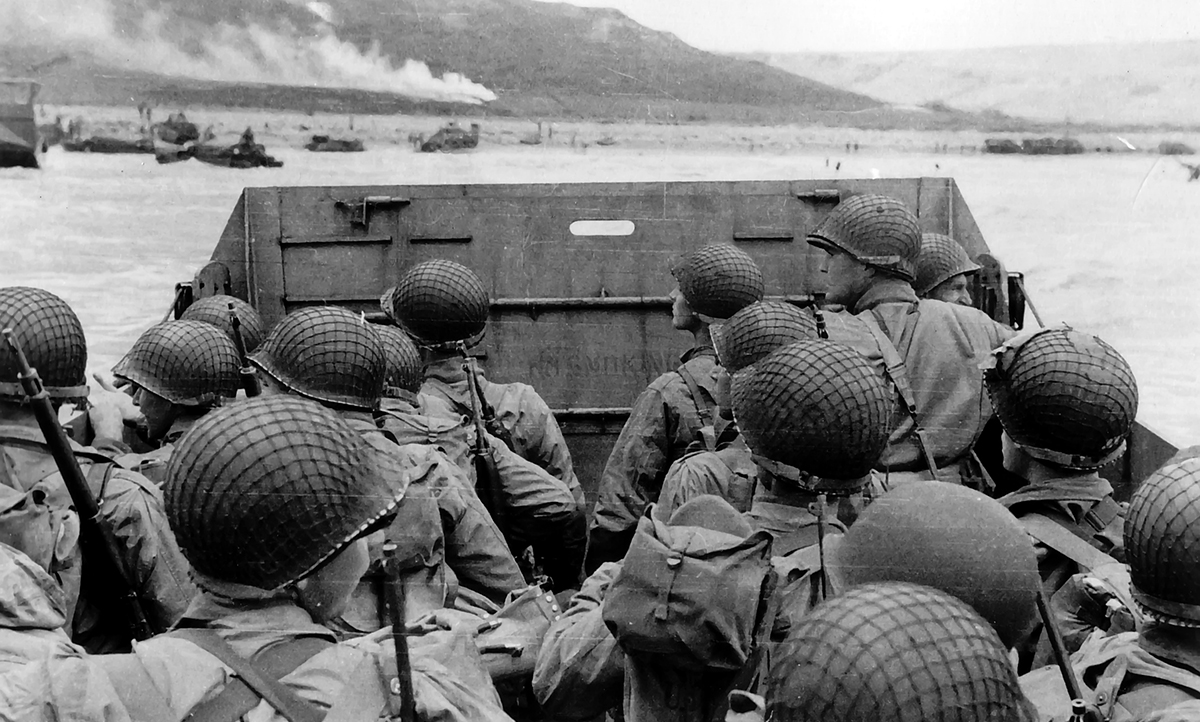
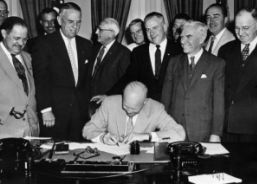 But in 1954, following both WWII and the Korean War, President Eisenhower signed an act renaming the holiday Veterans Day
 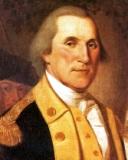 But veterans were respected and honored long before any official holiday was established, including by George Washington in his June 8, 1783
 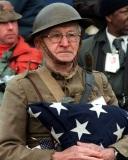 On this special day when we pause to reflect on the sacrifices made across the years by men and women willing to lay down their lives to protect and defend our Constitution, our freedoms, and our way of life, let’s be proactive in our gratitude. Thank a veteran or active military member in uniform, attend a Veterans Day parade, pray for the military families, and remind those around you of the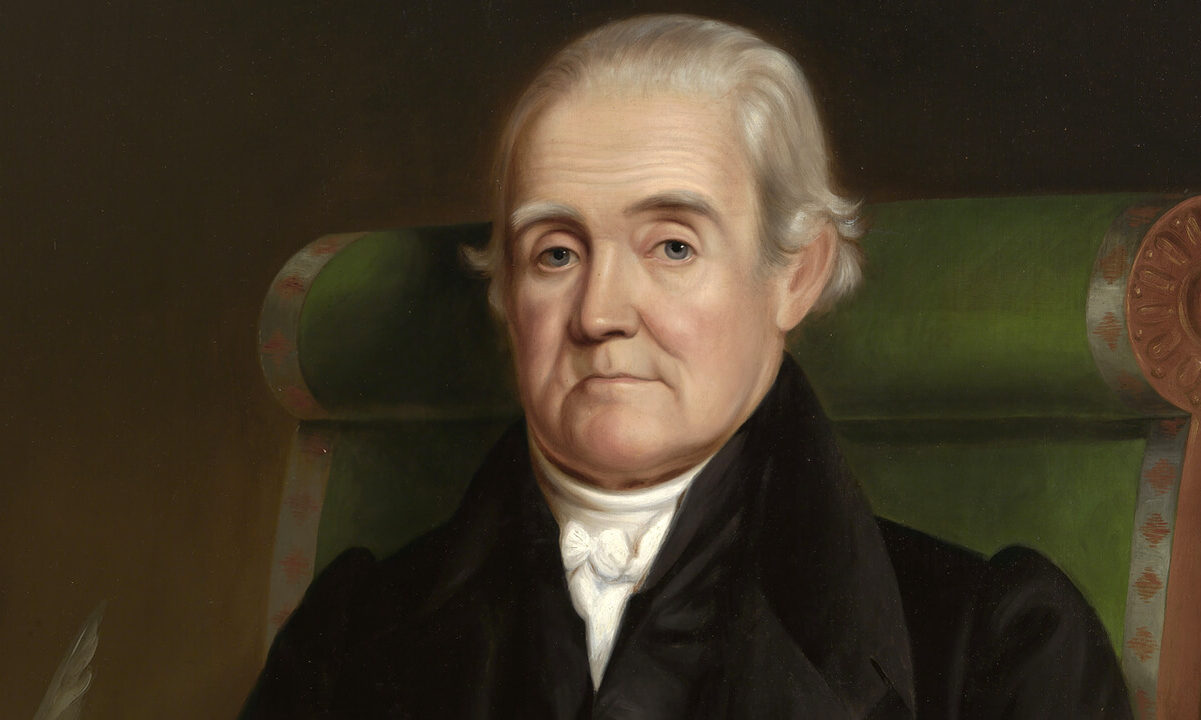
 After completing college, he became a schoolteacher.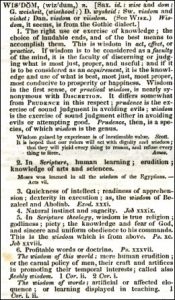
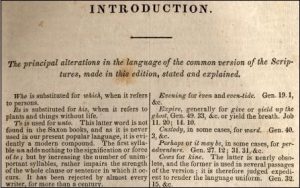 Five years later, taking what he had learned from his extensive work on the dictionary, Noah published an updated version of the King James Bible, replacing outdated ancient words with their more modern meanings. For example, he replaced the King James word “kine” with its modern equivalent, “cow or cattle.” Noah believed strongly in the inerrancy of God’s Word, so wanting to ensure that he had changed none of the doctrinal meanings of the Scriptures with his word changes, in the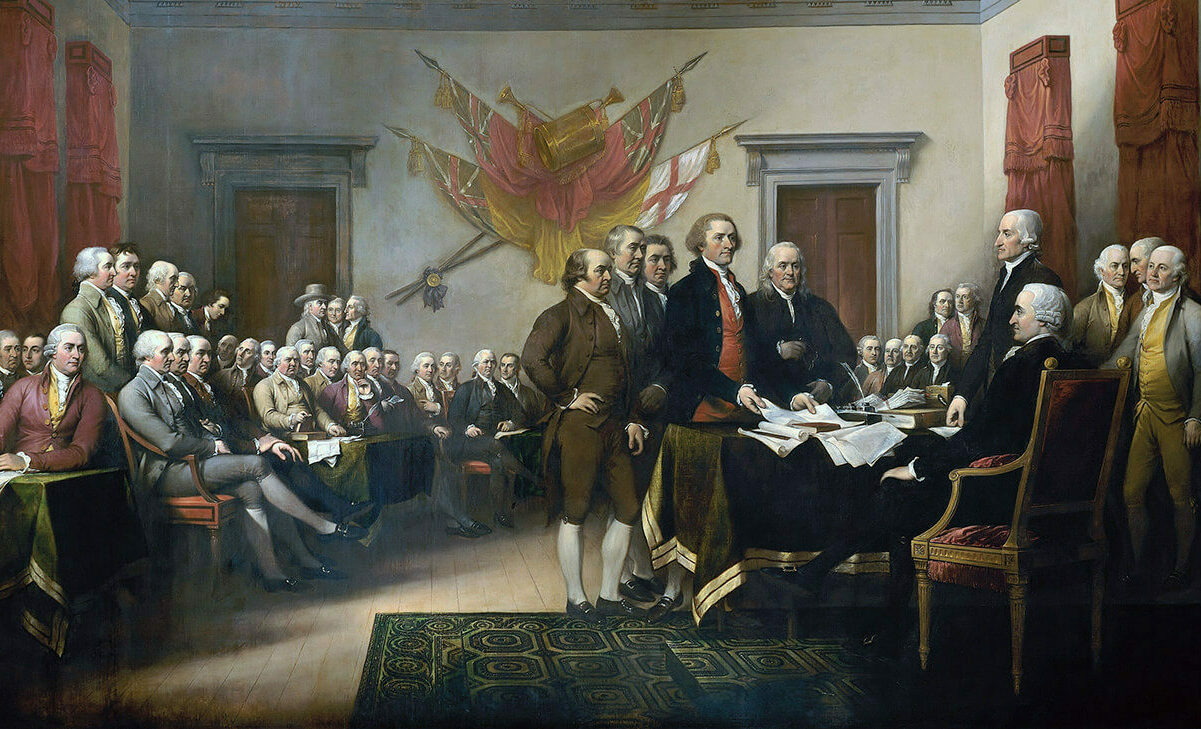

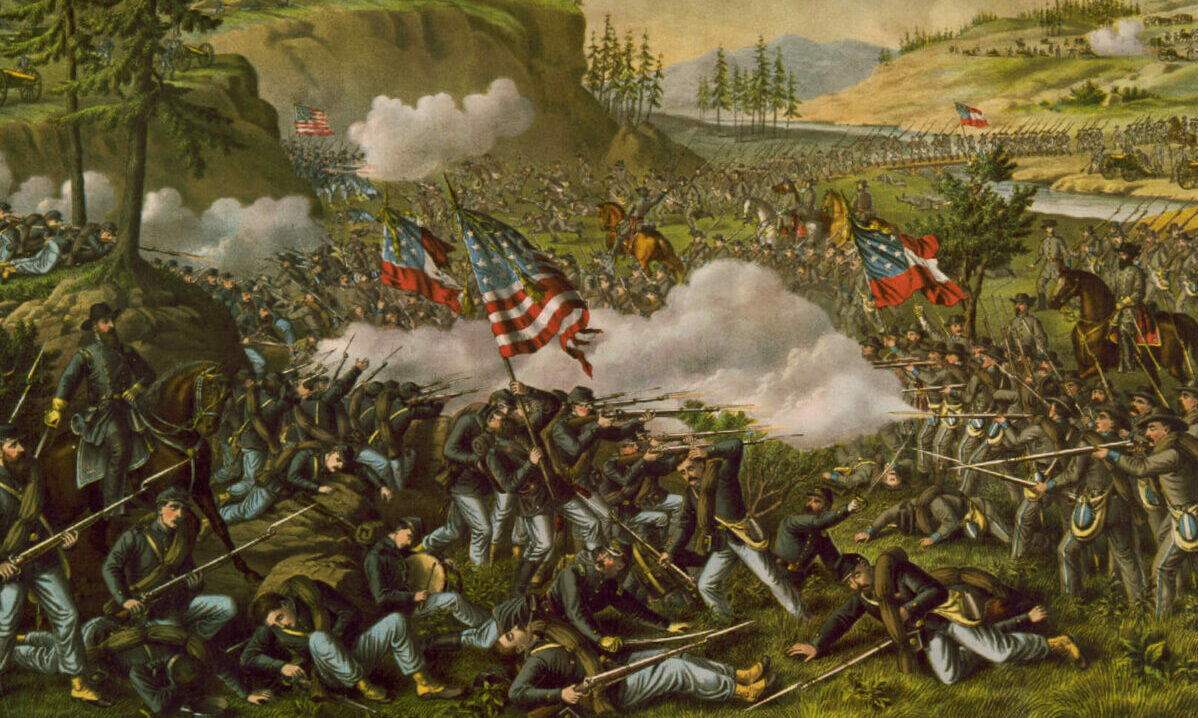
 An anniversary occurs each April of an 1861 event: the formation of the Twelfth Massachusetts Regiment. Benjamin F. Cook, who enlisted as a Union private in the Civil War and quickly rose through the ranks, was later tasked by his comrades with documenting the history of that regiment.
 Webster concluded that speech by stating: