The Truth about Columbus

The Truth about Columbus

the-truth-about-columbus-1Columbus Day has become yet another occasion for tearing down our American heritage and heroes. Perhaps no other holiday in American history has so quickly gone from one honoring a venerated hero, to now portraying him as a genocidal exterminationist.

Academia, teachers, public schools, and others across the nation are now attacking Christopher Columbus in what appears to be a concerted effort to make children as repulsed by Columbus as they would be of the world’s most notorious criminal.

Columbus did have faults; but he also made indispensable positive contributions to America and American history. He deserves to be honored, not because he was perfect but because of his contributions.

Last week on Columbus Day, as both adults and children were told of the now-evil Columbus, many asked us questions about what was true concerning him. Following are some recommendations on how to find details about Columbus that are ignored today.


the-truth-about-columbus-2Have your children read Christopher Columbus: Across the Ocean Sea and watch “Drive Thru History America — Columbus, the Pilgrims, and Early Boston.” For adults and older readers, we highly recommend Dr. John Eidsmoe’s Columbus and Cortez.

And if you want to read an old classic about Columbus, check out Washington Irving’s (1783-1859) famous A History of the Life and Voyages of Christopher Columbus (1828), which was so popular that it went through an amazing 175 editions by the end of the century! (This book can be read or downloaded for free as a pdf from Google books.)

Proverbs 18:17 reminds us that one side always sounds good until you hear the other side. It is time for both students and adults to hear the other side — to hear the things that are no longer being taught today. Do all you can to vaccinate your family from the unrelenting attacks on those who contributed to make America a special and unique nation.

Celebrating the Constitution

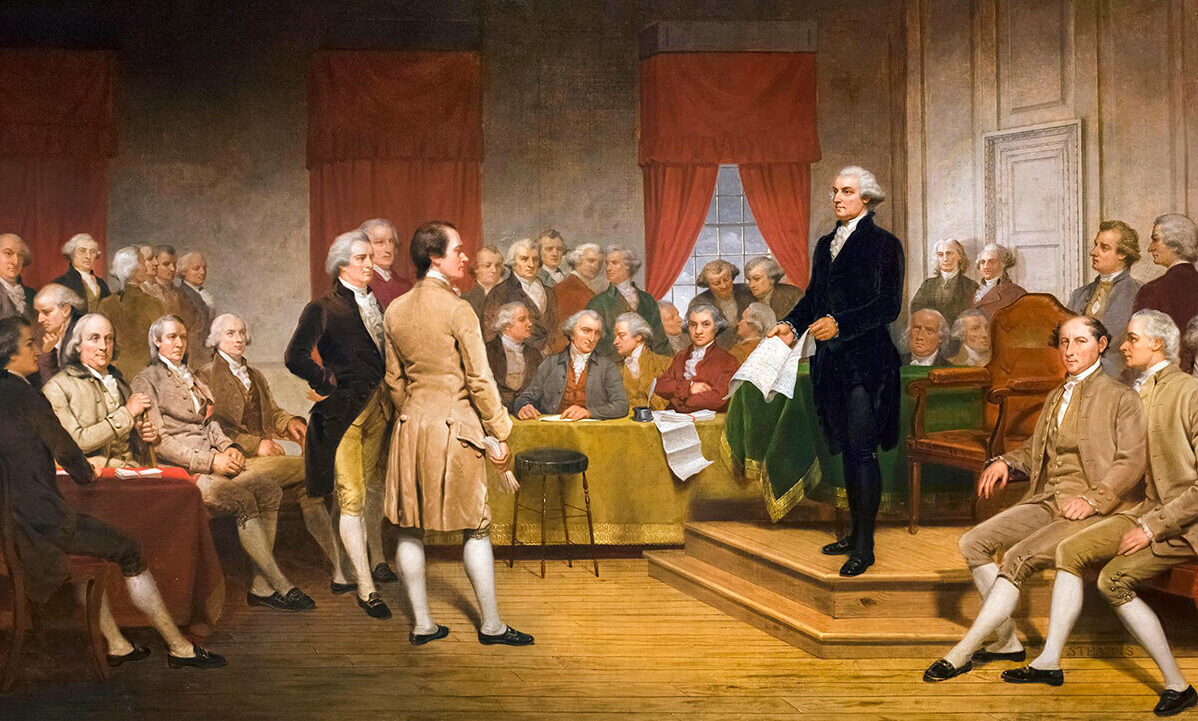
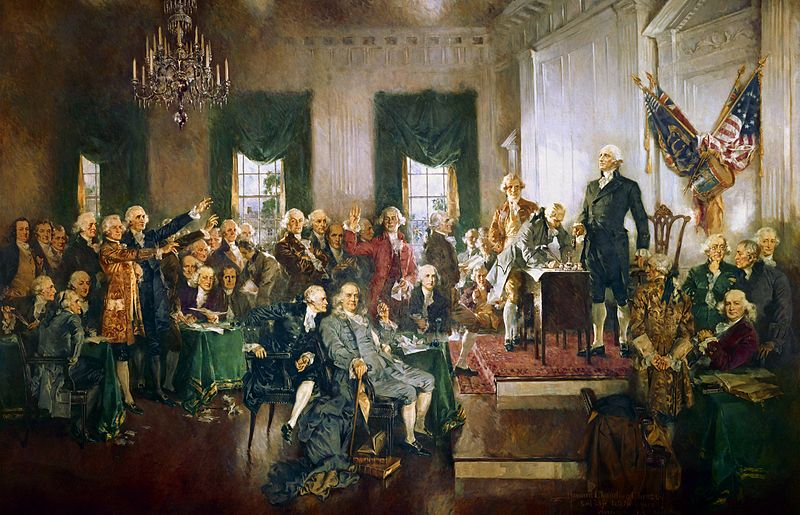
The Convention of 1787 was the capstone in a chain of events that led to the creation of the U.S. Constitution.

celebrating-the-constitution-1America’s first attempt at a national governing document was in 1777 with the Articles of Confederation.1 It went into effect in 1781, but its deficiencies were quickly apparent,2 so in 1786, the Annapolis Convention called for a body to assemble to address its many weaknesses.3 What is known as the Constitutional Convention then gathered in Philadelphia in 1787.4

The debates on the Constitution did not go smoothly at first. In fact, Benjamin Franklin recommended they begin daily prayers to help the process along.5 Eventually they came together to produce the Constitution — the most successful governing document in world history. It was signed on September 17, 1787,6 a day we now celebrate as “Constitution Day.” Many delegates expressed their belief that writing the Constitution would not have been possible without the Divine aid they personally witnessed and openly acknowledged. Alexander Hamilton said:

For my own part, I sincerely esteem it a system which without the finger of God never could have been suggested and agreed upon by such a diversity of interests.7

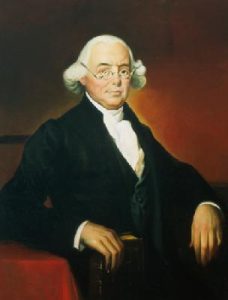
celebrating-the-constitution-2James Madison agreed:

It is impossible for the man of pious reflection not to perceive in it the finger of the Almighty Hand which has been so frequently and signally extended to our relief in the critical stages of the Revolution.8

Benjamin Franklin and George Washington also expressed similar convictions.9

celebrating-the-constitution-3Many delegates involved with writing the Constitution were trained in theology or ministry,10 including Abraham Baldwin, James Wilson, Hugh Williamson, Oliver Ellsworth and others. The Constitution was then sent to the states to be ratified,11 and about four dozen clergymen were elected from among the various states as delegates to ratify the Constitution.12 The influence of Biblical faith on that document was apparent, and under it, Americans have been blessed!

As President Calvin Coolidge affirmed:

[T]he more I study [the Constitution], the more I have come to admire it, realizing that no other document devised by the hand of man ever brought so much progress and happiness to humanity.13 To live under the American Constitution is the greatest political privilege that has ever occurred to the human race.14

Because the Constitution is such a unique and remarkable document, federal law requires that every year on Constitution Day, all public schools must hold a special program on the Constitution.15 Sadly, few schools follow this law. But that should not keep every citizen from celebrating that document. Each of us should read and know that document, and teach it to others. So read the Constitution for yourself, and check out these resources that can be used in public schools to teach the Constitution on Constitution Day.16 Share this information with schools, educators, and students around you!


Endnotes

1 “Articles of Confederation: Primary Documents in American History,” Library of Congress, accessed December 13, 2023.
2 See, for example, “Policies and Problems of the Confederation Government,” Library of Congress, accessed December 13, 2023; “Defencies of the Confederation,” The Founders Constitution.
3 “Appendix A: The Annapolis Convention,” Soldier-Statesmen of the Constitution (Washington, DC: Center of Military History, 1987), 265.
4 “The Constitution: How Did it Happen?” National Archives, accessed December 13, 2023.
5 James Madison’s Notes on the Convention, June 28, 1787, Max Farrand, The Records of the Federal Convention of 1787 (New Haven: Yale University Press, 1911), I:450-452.
6 “Constitution of the United States: Primary Documents in American History,” Library of Congress, accessed December 13, 2023.
7 Alexander Hamilton to Mr. Childs, Wednesday, October 17, 1787, The Federalist and Other Contemporary Papers on the Constitution of the United States, ed. E.H. Scott (New York: Scott, Foresman and Company, 1894), 646.
8 James Madison, Federalist #37, Alexander Hamilton, John Jay, & James Madison, The Federalist (Philadelphia: Benjamin Warner, 1818), 194.
9 Benjamin Franklin, “A Comparison of the Conduct of the Ancient Jews and of the Anti-Federalists in the United States of America,” The Works of Benjamin Franklin, ed. Jared Sparks (Boston: Tappan, Whittemore, and Mason, 1837), V:162; George Washington to Marquis de Lafayette, February 7, 1788, The Writings of George Washington, ed. Jared Sparks (Boston: Russell, Odiorne, and Metcalf, 1835), IX:317.
10 See WallBuilders article, “No Professor Fea, the Founders Did Not Want Ministers to Stay out of Politics.”
11 “Observing Constitution Day,” National Archives, accessed December 13, 2023.
12 See WallBuilders article, “No Professor Fea, the Founders Did Not Want Ministers to Stay out of Politics.”
13 Calvin Coolidge, “Autobiography of College Days,” Hearst’s International Combined with Cosmopolitan (NY: International Magazine Company, August 1929), LXXXVII:2:37.
14 James M. Beck, “What is the Constitution?” Our World Weekly (March 16, 1925), II:7:102.
15 “Constitution Day and Citizenship Day,” US Code.
16 “Constitution Day Teacher Resources,” Library of Congress; “Teachers Guide: Commemorating Constitution Day,” National Endowment for the Humanities; “Commemorating Constitution Day and Citizenship Day,” US Department of Education.

Ringing of the Liberty Bell

Ringing of the Liberty Bell


ringing-of-the-liberty-bell-1The Liberty Bell is an iconic part of America’s history.

In 1751, on the 50th anniversary of Pennsylvania’s 1701 first charter of liberties the Pennsylvania Assembly ordered a bell from London to be used as part of the commemoration festivities. It arrived on September 1, 1752 and was hung in the tower of the State House in 1753.

Sadly, the bell cracked the first time it was pealed, so the local Philadelphia foundry of Pass and Stow melted down the bell and recast it. But many citizens were displeased with the sound of the bell, so it was once again melted down, recast, and then rehung in the tower.

It was originally known as the “State House Bell.” It was some fifty years after the Revolution, in the midst of the growing national divide over the slavery issue, that abolitionists renamed it the Liberty Bell. It was called this because of the Bible inscription from Leviticus 25:10 emblazoned around the top of the bell — “Proclaim Liberty Throughout All the Land Unto All the Inhabitants thereof.” Its new name was popular among the public and became its permanent name.

Across the years, the Liberty Bell rang many times in September as part of several notable events in American history. For example:

    • September 1764 — It rang to call together the State Assembly, which voted to request that its official representative in London “use his endeavors to obtain a repeal or at least an amendment of the [Sugar Act]” — one of the underlying causes of the American War for Independence.
    • September 1765 — It rang to call together the Assembly to discuss the Stamp Act, another one of the onerous British policies that spurred independence.
    • September 1770 — It rang to assemble citizens, who passed a resolve stating that Parliament’s taxes violated the rights of Pennsylvania citizens.
    • September 1777 — It was transported by wagon to the Zion Reformed Church in Allentown to protect it from the British who, it was widely thought, would take the bell and melt it down to use for ammunition.
    • September 1824 — It rang to welcome hero Marquis de Lafayette (who was visiting America) to Independence Hall.

Of course, there were many other important times that the Liberty Bell was rung, including on July 8, 1776 to call citizens to assemble together outside the State House for a special announcement. At that time, the new Declaration of Independence was read to them by Col. John Nixon.

This month, we remember the famous Liberty Bell, named because of its Bible verse, as another example of the rich religious heritage of the United States.

Our nation’s history is full of wonderful stories like this one. At WallBuilders, we are often asked by legislators, courts, and schools to share such information about our rich moral, religious, and constitutional heritage. 

United States Navy

The US Navy dates its origins back to 1775. It began with an August 26, 1775 instruction from Rhode Island to their representatives in the Continental Congress to call for the establishment of a navy, explaining that “every principle, Divine and human, require us to obey that great and fundamental Law of Nature — self preservation — until peace shall be restored upon constitutional principles.”

united-states-navy-1The Continental Congress, not in session at that time, took up the issue when it returned and on October 13, 1775, the Continental Navy was created. The Continental Navy peaked at 31 ships in 1777 and contributed to key victories, but by the war’s end in 1783, it had shrunk amid losses. It was fully disbanded in 1785 after the Treaty of Paris.

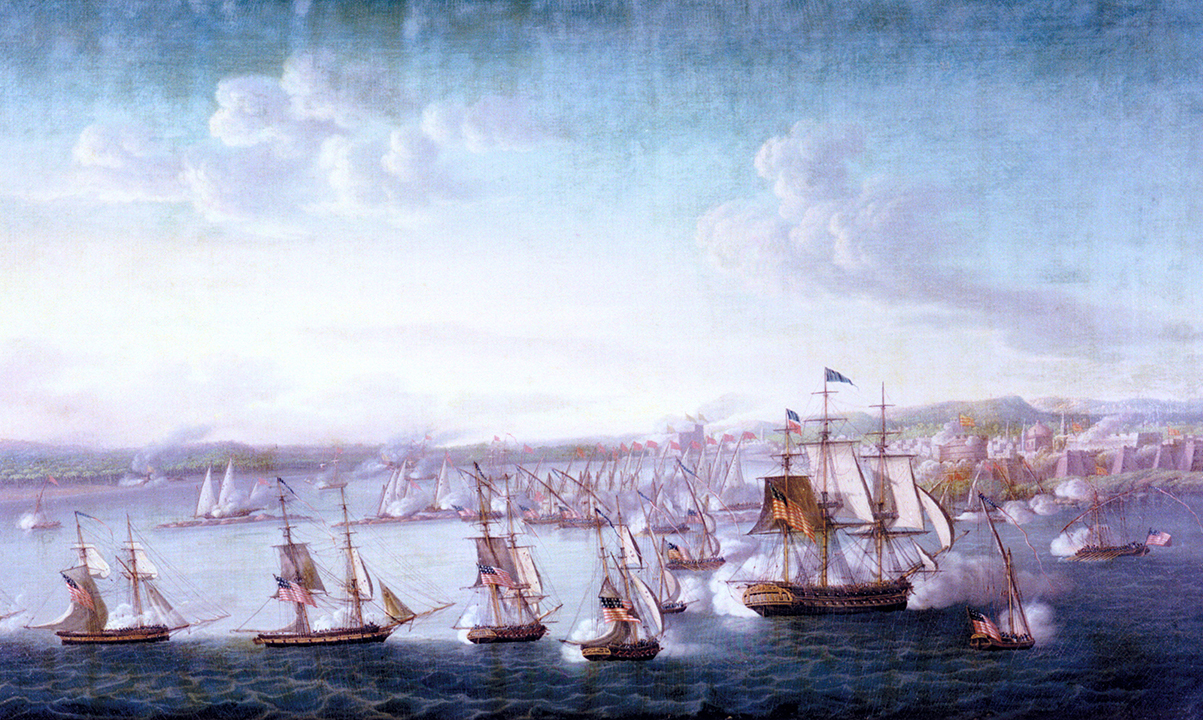
This action, however, left American commercial ships in the Mediterranean unprotected. So in 1784, five Muslim nations began attacking American ships and killing and enslaving sailors. With no Navy to deter these terrorists, the United States government’s only recourse was to make huge extortion payments to the terrorists in exchange for their promise to limit future attacks. Frustrated by the navy’s absence and mounting pirate ransoms, President Washington urged Congress to rebuild in 1794, authorizing six frigates. Congress agreed and President John Adams executed and expanded the plan during the 1798 Quasi-War with France. President Thomas Jefferson then used the Navy to launch America’s first war on Muslim terrorists, defeating them and ending their attacks against American citizens and interests.

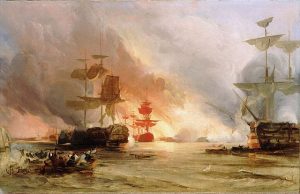
united-states-navy-2Following this, the Navy slowly shrank in size until it numbered only 40 combat-ready ships by the beginning of the Civil War (the Confederates had none, though they built a formidable ironclad force). The War resulted in a naval build up on both sides, with several major naval battles. (Pictured on the right, is the Battle of Hampton Roads, the first encounter between ironclad armored ships.)

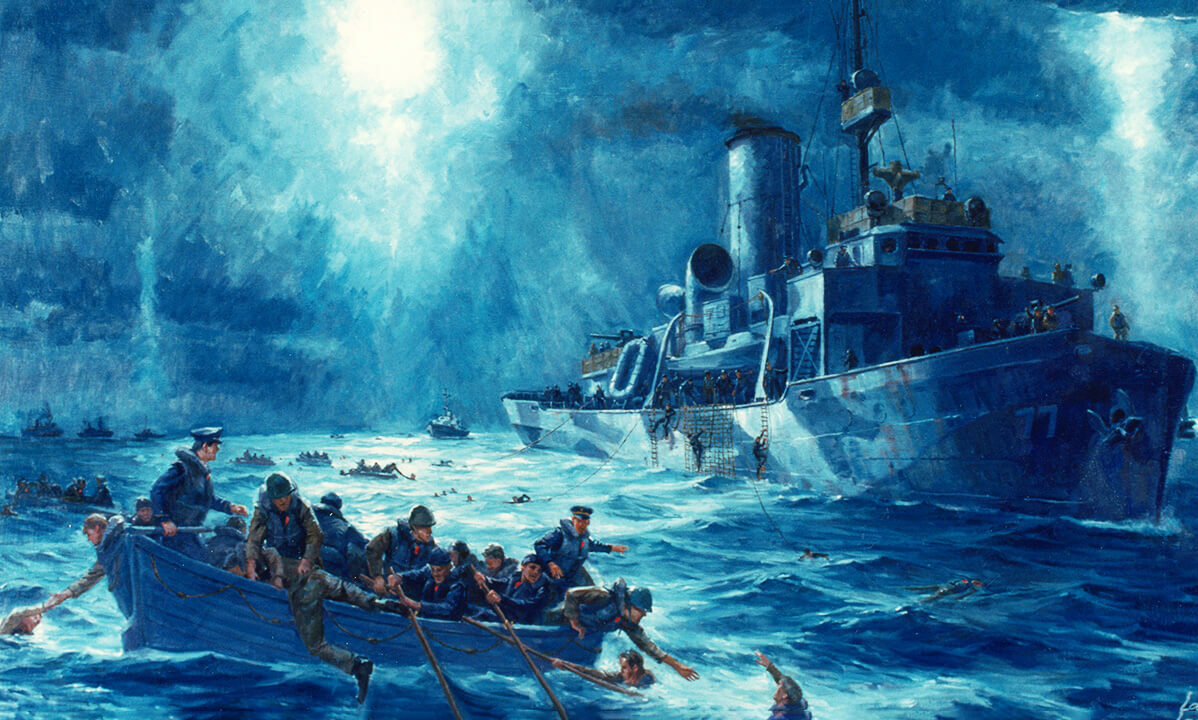
After the War, the Navy once again shrank, but during WWII, it was rebuilt. By the end of 1945, the US Navy consisted of over 1,300 major combat ships (such as battleships, cruisers, aircraft carriers, destroyers, and submarines), over 83,000 mine laying ships and landing craft, with over 3.3 million naval personnel.

Military cutbacks under the Obama administration once again dramatically reduced the size of the Navy, leaving only 275 ships and 330,000 active duty naval personnel, with 100,000 reserves.

The pattern is clear: when we dramatically cut the military, we invite outside attacks. So, while remembering the origins of the US Navy, let’s pray for all those that serve in that branch — and indeed, for those who serve in all branches of our Armed Forces to keep Americans safe around the world!

Brave Soldiers of the Cross

America’s Military Chaplains
brave-soldiers-of-the-cross-1On August 16th, 1777, two hundred and thirty-nine years ago, the Battle of Bennington was fought by a band of volunteers opposing the advance of British General Burgoyne’s army. Among these volunteers was Chaplain Thomas Allen, the “Fighting Parson of Bennington.” Before the battle began, he led his soldiers in prayer that God would grant victory. (In WallBuilders’ collection, you can see a note from him, as well as read a sermon he preached years later.)

Other notable chaplains in the War for Independence included Benjamin Trumbull, who in one battle sat on his horse in full view of the enemy, firing his musket and ducking behind the horse’s neck if ever a bullet came close.

Samuel Springbrave-soldiers-of-the-cross-2 was another courageous chaplain, serving as part of the 1775 expedition into Quebec with Arnold’s army. Before deploying, he preached a sermon to the troops from Exodus 33:15: “Lord if your Spirit does not go with us, then do not send us.” Spring starved along with the rest of the army on the mission, and they all rejoiced when a moose was finally shot to help relieve their extreme hunger.

The Rev. William Emerson was at the Battle of Concord in 1775 to help spiritually encourage those fighting the British. Dressed in his black clerical robes, and with his musket in hand, he exhorted the others, “Let us stand our ground! If we die, let us die here!” Encouraging a frightened 18-year-old, he told him, “Stand your ground, Harry! Your cause is just, and God will bless you!”

brave-soldiers-of-the-cross-3Timothy Dwight (pictured on the left), who had read the Bible by age 4 and began a self study of Latin at age 6, volunteered for the Continental Army when his college was threatened by the British. He once preached a sermon to the troops that was so relevant to what was specifically occurring at that time that American General Israel Putnam actually questioned whether his text was in the Bible or whether he had invented it; it was indeed from the Bible.

There are numerous other notable chaplains in the Revolution, including signer of the Declaration, Robert Treat Paine. You can read some of their sermons in WallBuilders’ library as well as learn more about their astounding lives and deeds.

brave-soldiers-of-the-cross-4An ardent champion of military chaplains was George Washington. One of the first things he did as a young officer in the French and Indian War was to petition Virginia Governor Robert Dinwiddie to provide a chaplain for the troops. When Dinwiddie refused, Washington himself filled that role. When he became Commander-in-Chief during the Revolution, he issued several general orders respecting chaplains — such as this one from 1777 referencing a Day of Thanksgiving declared by the Continental Congress.

America has a long, proud history of military chaplains, but today they are under attack. As we remember the Battle of Bennington, let’s remember the long history of our military chaplains and pray for and support those chaplains that serve our Armed Forces today.

In God We Trust

On July 30, 1956, President Dwight Eisenhower signed legislation1 establishing “In God We Trust” as America’s national motto.2 As religious rights of conscience continue to be attacked, this is a good time to remember our national motto and renew our efforts to defend our religious rights.

The idea of America as a Christian nation has often been scoffed at by modern academia,3 religious leaders,4 and others.5 However, past Americans have acknowledged that America is a Christian nation and that the rights of religious conscience should be protected.

The United States Supreme Court issued a unanimous ruling declaring America to be a Christian nation,6 and hundreds of other American courts have acknowledged the same. In fact, Justice David Brewer, a member of that Court said:

in-god-we-trust-1[I]n what sense can [America] be called a Christian nation? Not in the sense that Christianity is the established religion or that the people are in any manner compelled to support it. . . . Neither is it Christian in the sense that all its citizens are either in fact or name Christians. On the contrary, all religions have free scope within our borders. Numbers of our people profess other religions, and many reject all. Nor is it Christian in the sense that a profession of Christianity is a condition of holding office or otherwise engaging in public service, or essential to recognition either politically or socially. . . . Nevertheless, we constantly speak of this republic as a Christian nation – in fact, as the leading Christian nation of the world.7

Secretary of the Treasury Salmon Chase,8 when looking into what should be printed on the currency of the nation, acknowledged:

in-god-we-trust-2No nation can be strong except in the strength of God, or safe except in His defense. The trust of our people in God should be declared on our national coins. You will cause a device to be prepared without unnecessary delay with a motto expressing in the fewest and tersest words possible this national recognition.9

There are many reasons that America has long been seen as such an exceptional nation — but those reasons are tied to the religious beliefs and the moral principles of the people that established America. On the anniversary of the national motto, it’s appropriate to recognize these religious beliefs and moral principles.

in-god-we-trust-3As George Washington told the nation when he left the presidency:

Of all the dispositions and habits which lead to political prosperity, religion and morality are indispensable supports. In vain would that man claim the tribute of patriotism who should labor to subvert these great pillars of human happiness, these firmest props of the duties of man and citizens.10


Endnotes

1 “Joint Resolution to Establish a National Motto of the United States,” July 30, 1956, here.
2 “36 U.S. Code § 302 – National motto,” here.
3 Kevin M. Kruse, “A Chrsitian Nation? Since When?” The New York Times, March 14, 2015; Richard White, “One Nation Under Gods,” Boston Review, March 22, 2017.
4 David Vesely, “Is America a Christian Nation? Columbus’ Vision,” Green Bay Press Gazette, April 28, 2016.
5 Shane Idelman, “Is America a Christian Nation? Fact vs. Fiction,” Charisma News, August 14, 2015.
6 David Barton, “Is America a Christian Nation?” WallBuilders.
7 Holy Trinity Church v. United States, 143 U.S. 457 (1892).
8 David J. Brewer, The United States a Christian Nation (Philadelphia: The John C. Winston Company, 1905), 12.
9 “Salmon P. Chase (1861-1864),” US Department of the Treasury, accessed November 14, 2023.
10 Salmon P. Chase to James Pollock, November 20, 1861, Thirty-Fourth Annual Report of the Director of the Mint to the Secretary of the Treasury (Washington: Government Printing Office, 1897), 107.

America’s Founders at College

Too many indisputable facts from American history are ignored today because they impede the direction many progressives want to move culture. For example, while they claim that the Founders were largely secularists, few today know that most of them were graduates of colleges or universities that specialized in training ministers of the Gospel.
americas-founders-at-college-1Princeton was founded in 1746, and John Witherspoon, a Gospel minister and signer of the Declaration of Independence, was the college’s president from 1768-1794. He trained scores of individuals who became national and state leaders. Princeton required that “every student shall attend worship in the college hall morning and evening.”

Yale University, founded in 1701, had Thomas Clap as its president from 1740-1766, when many of the Founders attended school there. Clap affirmed:

The original end and design of colleges was to instruct, educate, and train up persons for the work of the ministry.

americas-founders-at-college-2Harvard University was founded in 1636. (Pictured on the right is the original 1650 Harvard incorporation charter from the WallBuilders library.) Josiah Quincy, Harvard’s president from 1829 to 1845, noted:

[T]he College was conducted as a theological institution. . . having religion for its basis and chief object.

Altogether, 29 signers of the Declaration graduated from religiously-founded universities. But to acknowledge this today would certainly contradict the common educational assertion that our Founders were largely atheists, agnostics, and deists who wanted a secular country. But those assertions are not true.

americas-founders-at-college-3Gouverneur Morris, a signer of the Constitution and the most active member of the Constitutional Convention, openly asserted:

Religion is the only solid basis of good morals; therefore, education should teach the precepts of religion and the duties of man towards God.

In fact, he warned:

There must be religion. What that ligament is torn, society is disjointed and its members perish. . . . The most important of all lessons is the denunciation of ruin to every state that rejects the precepts of religion.

Take note, America! This is a good warning to remember today.

In Four Centuries of American Education you can find out more about the deeply religious nature of education in early America and how Bible-based public education continued literally for centuries, ending only in recently years.

The Declaration Racist? Ha!

Louisiana Representative says The American Founding Is Bad

Study after study has demonstrated that rudimentary civic knowledge has plummeted in recent years. Many states have therefore taken specific steps to help ensure that students have a familiarity with our most basic governing documents. In Louisiana, Rep. Valerie Hodges introduced such a bill. Following the lead of states like Texas, Oklahoma, Kansas, Arkansas, Florida, Michigan, and others, her bill stipulated that Louisiana students recite the famous fifty-six words that form the heart of the Declaration of Independence:

“We hold these truths to be self-evident, that all men are created equal, that they are endowed by their Creator with certain unalienable rights, that among these are life, liberty and the pursuit of happiness. That to secure these rights, governments are instituted among men, deriving their just powers from the consent of the governed.”

State Rep. Barbara Norton vehemently objected to this bill. She avowed that those words from the Declaration were not true, and relied heavily on Dr. Martin Luther King as the basis of her argument. She believed that equality did not exist until Dr. King, and that words from the Declaration should not be part of student studies.

Rep. Norton’s response is disappointing on many levels, and it certainly demonstrates that Rep. Norton knows little of American history and even less about black history as it relates to the Declaration of Independence.
the-declaration-racist-ha-3For example, she stressed the importance of Dr. King but apparently did not realize that in his famous “I Have A Dream” speech, as well as many of his sermons, he quoted extensively and favorably from the Declaration of Independence:

“When the architects of our republic wrote the magnificent words of the Constitution and the Declaration of Independence, they were signing a promissory note to which every American was to fall heir. This note was a promise that all men, yes, black men as well as white men, would be guaranteed the unalienable rights of life, liberty, and the pursuit of happiness.” – “I Have A Dream” speech, Washington, 1963

“It wouldn’t take us long to discover the substance of that dream. It is found in those majestic words of the Declaration of Independence – words lifted to cosmic proportions: ‘We hold these truths to be self-evident, that all men are created equal, that they are endowed by God, Creator, with certain inalienable Rights, that among these are Life, Liberty, and the pursuit of Happiness.’ This is a dream. It’s a great dream. The first saying we notice in this dream is an amazing universalism. It doesn’t say “some men,” it says “all men.” It doesn’t say “all white men,” it says “all men,” which includes black men. It does not say “all Gentiles,” it says “all men,” which includes Jews. It doesn’t say “all Protestants,” it says “all men,” which includes Catholics. It doesn’t even say “all theists and believers,” it says “all men,” which includes humanists and agnostics. . . I still have a dream this morning that truth will reign supreme and all of God’s children will respect the dignity and worth of human personality. And when this day comes, the morning stars will sing together and the sons of God will shout for joy. “We hold these truths to be self-evident that all men are created equal, that they are endowed by their Creator with certain inalienable rights, that among these are life, liberty, and the pursuit of happiness.” – July 4th, 1965, at Ebenezer Baptist Church, Atlanta, Georgia

By Rep. Norton denouncing the famous words from the Declaration, she might as well denounce Dr. King’s “I Have a Dream” speech, for it emphasized the same content she opposed.
the-declaration-racist-ha-5But Dr. King wasn’t the first black civil rights activist to praise the Declaration of Independence. Frederick Douglass, who had himself been a slave, stated:

The principles contained in that instrument [the Declaration of Independence] are saving principles. Stand by those principles, be true to them on all occasions, in all places, against all foes, and at whatever cost.

the-declaration-racist-ha-6And Henry Highland Garnet, who like Douglass was born in slavery and also escaped, became the first black man to officially speak at the U. S. Capitol. Following the passage of the Thirteenth Amendment to abolish slavery in February 1865, the House asked Garnet to preach a sermon celebrating that momentous event. In his two-hour discourse, Garnet told listeners:

The Declaration [of Independence] was a glorious document. Sages admired it, and the patriotic of every nation reverenced the God-like sentiments which it contained.

Clearly, black civil rights advocates praised the sentiments contained in the Declaration of Independence. (Significantly, the Declaration was heavily relied upon by abolitionists to aid their cause, and the women’s rights movement based their documents directly on the Declaration of Independence.) It’s too bad that Rep. Norton wants to withhold from students a knowledge of the document that black leaders praised for almost two centuries.

Memorial Day

memorial-day-1America has a long history of military members who have shown extraordinary courage, with many willingly giving their lives to secure the freedoms our nation enjoys, freedoms we often take for granted. On Memorial Day (originally known as Decoration Day1) we honor the sacrifice of these brave men and women.

World War II (1941-1945) was an especially deadly war, with over 400,000 Americans being killed2 in famous military engagements such as the Battle of the Bulge and D-Day as well as in many other lesser known battles.3 Each life lost, whether in a major or an obscure battle, helped win peace and end tyranny. There were many heroes in that war, sung and unsung.

memorial-day-2One amazing example of heroism occurred during the Campaign of Guadalcanal (August 1942-February 1943).4 Sergeant John Basilone and his handful of men were responsible for holding back a Japanese assault of thousands on October 24-25, 1942. Basilone, throughout this engagement, personally repaired and manned multiple machine guns. At times, he was unable to shoot his guns over the piles of dead Japanese who fell at the brink of his hill. When his small detachment ran low, Basilone fought his way through the Japanese lines to resupply critically-needed ammunition. The Americans eventually won this long campaign. As a result of his actions, Basilone was awarded the Congressional Medal of Honor.5 (The picture on the left is of a magazine personally signed by Basilone, one of the many World War II treasures we have in WallBuilders’ Collection.)

memorial-day-3Later in the war at the Battle of Iwo Jima (February 19-March 26, 1945),6 Basilone came ashore with the first wave of Marines. Shortly after landing, his unit was trapped by machine guns from Japanese blockhouses. Basilone worked his way around one of these blockhouses and single-handedly destroyed it. Later, as he was making his way towards an airfield, he came across an American tank trapped in a minefield. While under fire, he guided the tank out of the minefield and to safety. He was later killed by flying shrapnel. Basilone was awarded the Navy Cross for his courageous actions during the battle.7

There are many additional stories of heroic and noble acts by American soldiers throughout our history. Each Memorial Day as we remember the military members who lost their lives in battle, let us honor the courage they showed.


Endnotes

1 “Memorial Day History,” US Department of Veterans Affairs, accessed May 20, 2025.
2 “Research Starters: US Military by the Numbers,” The National WWII Museum, accessed May 20, 2025; “Explore WWII History,” The National WWII Museum, accessed May 20, 2025.
3 “The Battle of the Bulge,” US Army, accessed May 20, 2025; “Why D-Day Matters,” dday.org, accessed May 20, 2025; Kennedy Hickman, “World War II Battles,” April 25, 2019, ThoughtCo..
4 “FIRST OFFENSIVE: The Marine Campaign for Guadalcanal by Henry I. Shaw, Jr.,” National Park Service, accessed May 20, 2025.
5 “John “Manila John” Basilone,” Congressional Medal of Honor Society, accessed May 20, 2025.
6 Lt. Col. Whitman S. Bartley, USMC, Iwo Jima: Amphibious Epic (Historical Section, Division of Public Information Headquarters, U.S. Marine Corps: 1954).
7 “John A. “Maila John” Basilone,” The United States Navy Memorial, accessed May 20, 2025.

The USS Arizona sinks after it's bombed during the Pearl Harbor attacks in 1941.

Remembering Pearl Harbor

Pearl Harbor Day

remembering-pearl-harbor-1December 7, 1941 — the day Pearl Harbor was treacherously attacked by the Japanese — was described by President Franklin Delano Roosevelt as “a date which will live in infamy.” It was the worst naval disaster in American history, and brought declarations of war by Japan, Germany, and Italy against the United States, and by America against them. For four long years, American men and women served and died on the battlefields of Europe and the Pacific, fighting tyranny and eventually bringing liberty across the world.

Shortly after the initial attack on Pearl Harbor, President Roosevelt called America to a time of prayer, explaining:

The year 1941 has brought upon our Nation a war of aggression… Our strength – as the strength of all men everywhere – is of greater avail as God upholds us. Therefore, I…do hereby appoint the first day of the year 1942 as a day of prayer, of asking forgiveness for our shortcomings of the past, of consecration to the tasks of the present, of asking God’s help in days to come. We need His guidance that this people may be humble in spirit but strong in the conviction of the right – steadfast to endure sacrifice and brave to achieve a victory of liberty and peace.

remembering-pearl-harbor-2Three weeks later on January 6, 1942, he delivered his State of the Union Address, reminding America:

The world is too small to provide adequate living room for both Hitler and God. In proof of that, the Nazis have now announced their plan for enforcing their new German, pagan religion all over the world — a plan by which the Holy Bible and the Cross of Mercy would be displaced by Mein Kampf and the swastika and the naked sword.

(Pictured on the right is a WWII fund-raising poster from the WallBuilders library that was produced by the US government, depicting President Roosevelt’s words.) He understood that what began at Pearl Harbor was a spiritual conflict — an attack on the religion of the Bible — and that prayer would be a necessary spiritual weapon in that battle.

Today as we commemorate Pearl Harbor Day, we are still engaged in a spiritual struggle for the soul of the nation. And just as America did 75 years ago, we, too, should likewise seek God in prayer – seek His wisdom, ask forgiveness for our sins, and lift up before Him our honored military and their precious families. Remember to turn to God on this special day.