Statement: David Barton on The Jefferson Lies

Statement: David Barton on The Jefferson Lies

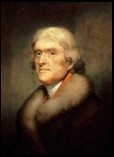
The announcement that Thomas Nelson has pulled The Jefferson Lies because it has “lost confidence” in the work has become national news. However, while Thomas Nelson may have “lost confidence” in the work, others have not and thus the book has already been picked up by a much larger national publisher and distributor. Even at the time Nelson dropped the work, they admitted that it was still selling very well.

As is the case with all of our published items, we go above and beyond with original source documentation so that people can be thoroughly confident when they see the truth of history for themselves. We find it regrettable that Thomas Nelson never contacted us with even one specific area of concern before curtly notifying us they had dropped the work. Had they done so, we would have been happy to provide them with the thorough and extensive historical documentation for any question or issue they raised; they never asked. The Jefferson Lies has not been pulled from publication and it will continue to sell nationally.

The Jefferson Lies: Taking on the Critics

For generations, America recognized an equality of individualism that made the carpenter as important as the university president and the shopkeeper the equal of the statesman. But today, under the influence of Poststructuralism, America has begun to divide itself into groups based not only on identity (e.g., black/white/Latino, straight/gay, union/right-to-work, conservative/liberal, etc.) but also on distinctions such as economic income, social standing, and even degree of academic knowledge – and especially in the latter category as pretentious scholars in law and academics claim exclusive knowledge they believe places them above ordinary citizens.

For example, I repeatedly hear legislators urge that a bill be passed so that they can find out from the judges whether or not it is constitutional. They apparently believe that only a small group is capable of unraveling the meaning of the Constitution and have forgotten that it is actually a very simple document that can be read in its entirety in less than twenty minutes. In fact, it is so easy to understand that for decades, school children took an annual written exam to demonstrate their mastery of its content; and popular texts included the 1828 Catechism on the Constitution by Arthur Stansbury – a work for elementary students. Thankfully, citizens have begun bypassing America’s frequently haughty academic aristocracy – evidenced by the fact that two recent modern-language editions of The Federalist Papers have become national best-sellers.

And just as they have done with the Constitution, academic elitists have also tried to make themselves the sole caretakers of historical knowledge, holding that history is too complicated, with too many intricacies for the average person to understand. They even become intolerant of those who try to break through these false barriers and open history to the average citizen. I personally know this to be true, for I often find myself the object of their attacks.

I have penned numerous best-selling history works, and characteristic of each is a heavy reliance on primary-source documentation. Across the past twenty years, I have amassed a collection of some 100,000 originals (or certified copies of originals) predating 1812, including hand-written documents and works of those who framed and signed the Declaration of Independence, the Constitution, and the Bill of Rights. Not many individuals in America have read more original works (or fewer modern ones) than I have; and the general public has responded enthusiastically to this history based on original documentation.

In fact, notice how these types of history books regularly appear on the New York Times bestseller list. Whether it is David McCullough’s John Adams, Glenn Beck’s Being George Washington, Newt Gingrich’s Valley Forge, or my own The Jefferson Lies, people are willing to pay good money to learn the simple uncomplicated history that used to be taught in school.

Conversely, typical history works by modern elitist professors generally sell very poorly; and seeing their own influence wane, they often lash out and condescendingly criticize the more popular documentary works. But this practice is not new. After all, when the Apostle Paul began to attract a growing following, some of the intellectuals of his day who were losing standing “went wild with jealousy and tore into Paul, contradicting everything he was saying,” “sowing mistrust and suspicion in the minds of the people” (Acts 13:44-45, 14:2).

After The Jefferson Lies, rose to a New York Times best-seller, similar attacks were launched against it from academic elitists. I will address three of these attacks below, but first, I must tackle their oft-repeated talking-point that I am not a qualified historian – a claim they make to cast a shadow of doubt over all the facts I present. However, this charge, like their others, is completely false. After all, I am:

  • Recognized as an historical expert by both state and federal courts;
  • Called to testify as an historical expert by both the federal and state legislatures;
  • Selected as an historical expert by State Boards of Education across the nation to assist in writing history and social studies standards for those states;
  • Consulted as an historical expert by public school textbook publishers, helping write best-selling history texts used in public schools and universities across the nation.

Their real objection is that I make history uncomplicated, and thus make them irrelevant. In fact, the very point of The Jefferson Lies was to allow Jefferson to speak for himself through his 19,000 letters, thereby eliminating the need for the educational elitists who for the past fifty years have anointed themselves as Jefferson’s sole interpreters.

Consider some of their objections against The Jefferson Lies.

Warren Throckmorton and Michael Coulter

A common mantra for today’s academics is “Publish or die.” Believing that if they are not publishing something new that their academic career is regressing, they therefore regularly “discover” something they believe to be a new revelation on some obscure micropoint of history, and then, as if having received an earth-shattering revelation, write an article or book giving their personal opinions about it. Significantly, however, the public does not respond well to these works, for publishers claim that with few exceptions most academic scholars’ books sell only two hundred or so copies a year.1

Professors Warren Throckmorton and Michael Coulter, in their work penned against The Jefferson Lies, begin by candidly admitting that they are critiquing “Barton and religious conservatives in general,”2 thereby openly confessing their hostility toward me and my personal religious beliefs. As they acknowledge up front, and as will be evident below, their real problem with The Jefferson Lies is much more about its worldview than its historical content.(Throckmorton is a psychology professor at Grove College currently writing about sexual orientation and identity, and Coulter teaches political science there.)

For example, early in the book I applaud American Exceptionalism, which I define as “the belief that America is blessed and enjoys unprecedented stability, prosperity, and liberty as a result of the institutions and policies produced by unique ideas such as God-given inalienable rights, individualism, limited government, full republicanism, and an educated and virtuous citizenry.”3 But Throckmorton and Coulter launch into a lengthy exegesis, quoting a number of liberal professors to prove that American Exceptionalism is a bad thing, not something good.4 So from the start, these two make clear that they object to the philosophy I set forth that America’s blessings, prosperity, and liberties are the result of God-given rights and ideas.

Another insightful moment in their critique occurs when these two try to explain away those 100,000 originals that form much of the basis of my historical works. They attempt to dismiss those works by stating, “While he [Barton] does have a nice collection of Bibles and signatures, he also has a lot of old newspapers which have little relevance to the claims he makes.”5

Notwithstanding the fact that they’ve never seen my collection and therefore don’t know what I do have, their comment about old newspapers is particularly revealing. Every genuine historian knows that old newspapers have great significance; in fact, it is hard to underestimate the importance of old newspapers in the way that these two have done. While newspapers do not replace primary source writings when such are available, there are definitely many times that newspapers themselves become the primary source documents and therefore cannot be dismissed out of hand as these two professors have done.

Significantly, many of the writings of the Founding Fathers, including the indispensable Federalist Papers, first appeared as newspaper articles; and old newspapers regularly contain noteworthy historical information found in no other source. For example, nowhere in George Washington’s writings does he say that he leaned over and kissed the Bible at his inauguration, but numerous old newspapers reporting those proceedings establish that fact (along with reporting the six other religious activities that occurred at his inauguration). So, contrary to their preposterous claim, old newspapers do have much relevance, not only to my claims but also those made by many other historical writers as well.

Furthermore, while my collection does include a “nice collection of Bibles and signatures,” it also has scores of full-length books by Founding Fathers as well as countless legal works, court rulings, religious sermons, military writings, original documents from black history, women’s history, and writings in scores of other areas. Yet even if it were nothing more than a “nice collection of Bibles and signatures,” that would still be significant, for that collection contains Bibles such as the John Thompson Bible of 1798, which documents Jefferson’s role in helping print that Bible – an aspect of Jefferson’s actions that these professors foolishly dismiss as being insignificant.

But aside from their flawed view about the importance of specific types of original documents, consider some of the absurdities contained in their critique. For example, Throckmorton and Coulter object to my statement that, “In 1803, President Jefferson signed a treaty with the Kaskaskia tribe to provide them Christian ministry and teaching.”6 To prove their objection, they quote the treaty, including the part stating:

And whereas, the greater part of the said [Kaskaskia] tribe have been baptised [sic] and received into the Catholic church to which they are much attached, the United States will give annually for seven years one hundred dollars towards the support of a priest of that religion, who will engage to perform for the said tribe the duties of his office and also to instruct as many of their children as possible in the rudiments of literature. And the United States will further give the sum of three hundred dollars to assist the said tribe in the erection of a church.7

This treaty is signed at the bottom by President Thomas Jefferson and Secretary of State James Madison.

So, let’s see: I state that Jefferson signed a treaty “with the Kaskaskia tribe to provide them Christian ministry and teaching,” and the two provide the part of the treaty proving that it does. I made the simple statement; they show documentation that the statement was correct; end of story, right? Hardly! After proving that the treaty does indeed have that provision, they then launch into a lengthy explanation attempting to show why that provision is really not important. It is amusing to see the lengths to which they go in their convoluted attempts to explain why historical documents do not really mean what they actually say.

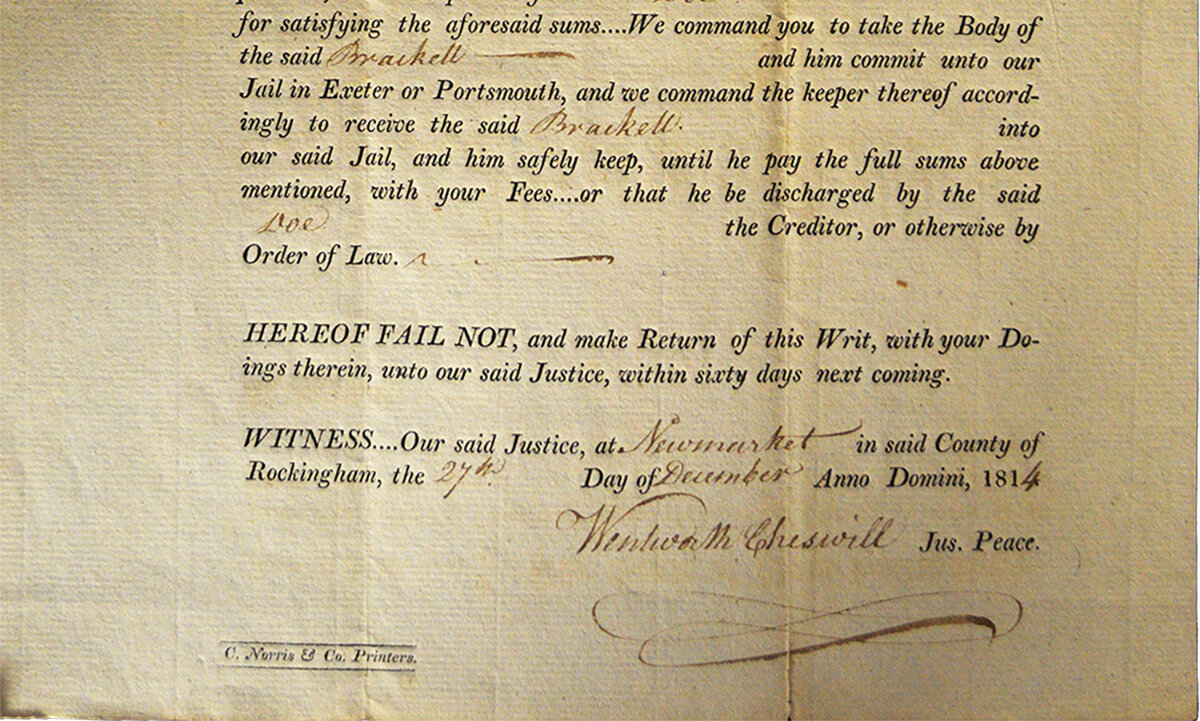
Similarly, I state that “Other presidential actions of Jefferson include . . . closing presidential documents with the appellation, ‘In the year of our Lord Christ’.”8 I then include in the book a picture of such a signed document. But Throckmorton and Coulter dismiss that document with the statement that “we know of no other document signed by Jefferson with the phrase ‘in the year of our Lord Christ’ printed on the form.”9 So apparently, since they personally know of no other similar documents, then the one I showed apparently means nothing (at least to them). Significantly, however, we personally own other such Jefferson documents; and literally scores, if not hundreds, of similar Jefferson documents are contained in other libraries and archives. But because these professors don’t personally know about them, then they apparently don’t exist! Clearly, so strong are their own personal predilections about Jefferson that they won’t even allow what they see with their own eyes to alter their predetermined conclusions.

Throckmorton and Coulter also object to my statement that “in 1798, Jefferson personally helped finance the printing of one of America’s groundbreaking editions of the Bible. That Bible was a massive, two-volume folio set that was not only the largest Bible ever published in America to that time, but it was also America’s first hot-pressed Bible.”10 That Bible, published by John Thompson, is known as the Thompson Bible; but Throckmorton and Coulter claim that Jefferson subscribing, or helping fund this Bible, is an insignificant and irrelevant thing:

At the completion of the effort [the Bible], the printers compiled a list of subscribers for placement at the end of the second volume. . . . [A]ccording to the subscriber’s list, 1272 people paid to receive one [sic] these Bibles, with Jefferson’s name listed among the subscribers. . . . Certainly, several Founders subscribed. . . . The subscribers were not investors in the project. The investors in the project were printers, John Thompson and Abraham Small.11

As they do so often throughout their critique, they entirely miss the primary point obviously being made in that section of the book – which is that individuals associate their name and money only in projects with which they have a general philosophical agreement, as Jefferson did here. But if they are right that being a subscriber is trivial and irrelevant, then if we should someday see a racist anti-Semitic publication with Throckmorton’s name listed as a subscriber, we should dismiss it as meaningless??? Hardly! Being a subscriber to a work tells us something of what that person believes and supports – which is why it is significant that Jefferson’s name appeared in the Thompson Bible and that he also offered to help finance other Bibles as well.

Furthermore, the Thompson Bible was one of many examples I provided to demonstrate occasions where Jefferson helped promote/fund/print the traditional unedited Bible. But Throckmorton and Coulter deliberately ignore this broader point and devolve into a pointless discussion about what a subscriber is. On multiple occasions, these two acknowledge that the particular fact I set forth did indeed happen but then try to shift the focus away from the self-evident simplicity of that which appears in the original documents.

(By the way, contrary to their errant claim, subscribers definitely were investors, for frequent was the occasion when printers were unable to publish a work due to a lack of subscribers.12 It was common that if printers or authors did not have sufficient up-front, in-hand funds from subscribers, the work was not printed; so subscribers definitely were investors in the work.)

Another of their oft-repeated complaints is that I don’t include enough of what they personally consider to be negative things about Jefferson. But part of the reason I wrote my book was to reintroduce the numerous good things about Jefferson that so many of today’s Deconstructionist scholars refuse to acknowledge. Strikingly, if most of today’s academics were to write a biography about the Biblical David, they would undoubtedly include what occurred with Bathsheba, Uriah, Absalom, and Adonijah but completely ignore David’s role as the courageous shepherd who slew the lion and the bear, the fearless youth who defeated Goliath, the beloved leader venerated by his nation, and the tender and repentant individual who was a devout worshipper of God – they would highlight the bad and downplay the good.

Sadly, many of today’s academics miss the big things in history and focus on the miniscule. They would have fit well into medieval times, when the scholars of that era vigorously debated what they believed to be the compelling issues of that day – such as how many angels would fit on the point of a needle,13 or whether God in His majesty could create a rock so big that God in His power could not move it. They were completely out of touch with society and even accelerated its decline by remaining focused on meaningless trivia and minutia – or as Jesus said, they were able to find what they believed to be the microscopic speck of sawdust in someone else’s eye but completely miss the obvious plank in their own.

Clay S. Jenkinson

Clay Jenkinson also wrote a scathing review of The Jefferson Lies. He is described as “an American humanities scholar, author, and educator” who “co-hosts public radio’s The Jefferson Hour” and “lectures at Dickinson State University and Bismarck State College.”14 Interestingly, to prove me wrong, Jenkinson uses the very historical malpractices that my book is written to expose – including lifting very short phrases from lengthy historical writings and making them say the reverse of what they actually say.

For example, I provide scores of Jefferson’s own writings and declarations to conclusively demonstrate that he was not a deist; but Jenkinson completely dismisses all of that documentation on the basis of six words that Jefferson told his nephew: “Question with boldness the existence of God.” However, I also used that same six-word phrase in my book – only I printed the entire part of that letter (several pages long) containing that phrase. Jefferson explained that if someone was willing, with an open mind, to “question with boldness the existence of God,” that he would end up proving beyond any shadow of a doubt that there truly was a God.15 But Jenkinson lifted and used the six-word phrase completely out of context to make it say the opposite of what Jefferson said.

Additionally, Jenkinson, like Throckmorton and Coulter, admits major points I make in The Jefferson Lies but then also tries to explain them away. For example, I show that even though modern scholars repeatedly claim that Jefferson omitted everything related to the Divine and the supernatural from his so-called “Jefferson Bible,” that he actually included Jesus raising the dead, healing the sick, casting out demons, calling Himself the Son of God, speaking of His Second Coming, etc.16 Jenkinson admits that Jefferson did include these passages but then dismisses them as unimportant by (1) first pointing out that all other scholars similarly dismiss those passages, and (2) then giving his own personal opinion that Jefferson really didn’t believe what he included in that work.17 This ploy is called “psychohistory,” and results when a modern so-called “psychological” analysis is applied to the actions of a person long dead; “psychobabble” is the result of such an analysis. This trick enables folks like Jenkinson (and scholars like him) to assert that he personally knows what Jefferson was secretly thinking two centuries ago, so therefore whatever Jefferson actually said or did should be completely ignored.

Strikingly, Jenkinson’s attempt to prove me wrong involves: (1) lifting short phrases out of context from Jefferson’s lengthy works; (2) imputing to Jefferson sinister motives that lack historical evidence and can be proven only in the inner workings of Jenkinson’s own mind; and (3) invoking what other academics say about Jefferson rather than using Jefferson’s own words – the very historical malpractices that The Jefferson Lies was written to combat.

Alan Pell Crawford

Alan Crawford, a journalist and author, also penned a review very critical of The Jefferson Lies; and like the others, he, too, resorts to the tools of modern historical malpractice in order to discount the clear message of historical documents. For example, in summarizing my views about Jefferson, Crawford claims:

That Jefferson might have been what we would think of as a deist or even a Unitarian, as many historians believe, Mr. Barton also disputes. Jefferson was “pro-Christian and pro-Jesus,” he says, although he concedes that the president did have a few qualms about “specific Christian doctrines.” The doctrines Jefferson rejected – the Divinity of Christ, the Resurrection, the Trinity – are what place him in the camp of the deists and Unitarians in the first place.18

Significantly, in the chapter on Jefferson’s religious beliefs, I document that Jefferson went through several religious phases during his life. In the first half of his life, he held orthodox Christian views, and in his “Notes on Religion, 1776,” he consistently expounded what orthodox Christians still believe today. In middle life, his faith faltered when his beloved wife unexpectedly died, but he eventually retained his orthodox beliefs. But many decades later in the last years of his life, he embraced what was known as Christian Restoration or Christian Primitivism, which promoted Unitarianism and called into question some orthodox Christian doctrines, thus reversing his beliefs of earlier decades.

But Crawford, ignoring Jefferson’s many writings documenting his changing religious phases, instead asserts that Jefferson was a Unitarian for his entire life. On what grounds does he claim this? – on the basis of any Jefferson writing? No. Rather, he says it is because “many historians believe . . .” So, like the other critics, Crawford refuses to allow Jefferson to speak for himself but instead believes that only modern academics like himself can speak for Jefferson.

Crawford further claims that “No Jefferson scholar to my knowledge has ever concluded that Jefferson was an ‘atheist,’ as Mr. Barton suggests.”19 But by this claim, Crawford proves that he has not even read the book he is critiquing, for I begin each chapter with a list of documented quotations from modern writers and scholars repeating a particular lie about Jefferson, and I certainly did that in this chapter as well. But Crawford, like Throckmorton and Coulter, says “to my knowledge,” thus again limiting historical truth to his own personal experience rather than to objective documents and facts.

— — — ◊ ◊ ◊ — — —
It is striking that the negative critiques of The Jefferson Lies revolve around the academic arrogance that says “Unless we tell you so, it just can’t be; we are the sole gatekeepers of historical truth.” But Governor Mike Huckabee, in speaking of my approach to history, stated: “In typical Barton style, every syllable is given scholarly research and backed up with source documents. Those who hate America and God’s Word won’t like it, but they won’t be able to discredit it.” Clearly, academics such as Throckmorton, Coulter, Jenkinson, Crawford, et. al., simply don’t like what the self-evident documentation actually proves.

I find it refreshing and uplifting that ordinary citizens today are hungry to be reconnected with their simple and clearly-documented history – they want to rediscover America’s greatness, find a renewed national purpose, and learn how to get the nation back on track; but just like the citizens in Nehemiah 3:5, Americans have likewise found that most of today’s academics are like the “nobles who would not put their shoulders to the work.” Indeed, far too many scholars, rather than helping restore the nation, insist on destroying American Exceptionalism – on teaching students why they should apologize for America rather than appreciate it. But most Americans today definitely do not agree with these academic elitists – which is why the published attacks of Throckmorton et. al. do not sell well but books like The Jefferson Lies do.

For those who may have been influenced by seeing a negative critique of The Jefferson Lies, I urge you to read the book yourself, examine its 756 footnotes, and allow Jefferson to speak on his own behalf. I predict that if you do, you will be persuaded by the abundance of primary source documentation and will quickly see through the shallow motives behind the critics’ self-serving and disingenuous attacks.


Endnotes

1 See, for example, “How many copies does an average university press book sell?” Political Science Job Rumors (accessed on July 9, 2012); “Sales Statistics,” How Publishing Really Works, March 17, 2009; Steven Piersanti, “The 10 Awful Truths about Book Publishing,” Berrett-Koehler Publishers, July 26, 2007; etc.

2 Warren Throckmorton and Michael Coulter, Getting Jefferson Right: Fact Checking Claims about Our Third President (Grove City, PA: Warren Throckmorton, 2012), “On getting American history wrong.”

3 David Barton, The Jefferson Lies: Exposing the Myths You’ve Always Believed About Thomas Jefferson (Nashville: Thomas Nelson, 2012), xix.

4 Throckmorton and Coulter, Getting Jefferson Right (2012), “On getting American history wrong.”

5 Warren Throckmorton and Michael Coulter, “The Book David Barton Doesn’t Want You To Read,” Religion Dispatches, June 11, 2012.

6 Barton, The Jefferson Lies (2012), 71.

7 Throckmorton and Coulter, Getting Jefferson Right (2012), “Did Jefferson provide missionaries to the Kaskaskia Indians?”

8 Barton, The Jefferson Lies 2012), 136.

9 Throckmorton and Coulter, Getting Jefferson Right (2012), “Did Jefferson sign presidential documents “In the Year of Our Lord Christ?”

10 Barton, The Jefferson Lies (2012), 68.

11 Throckmorton and Coulter, Getting Jefferson Right (2012), “Most Beautiful Production of Its Nature Hitherto Seen.”

12 See, for example, “Art by the Book,” The Age, July 22, 2006; “Phillis Wheatley,” Answers.com (accessed on July 11, 2012); Richard Gray, A History of American Literature (West Sussex: Blackwell Publishers, 2012), 155; “A Pair of Albums, Each Titled ‘Sketches of Custome by Coke Smyth,’ Containing Original Watercolours,” AbeBooks.com, book description for John Richard Coke Smyth, A Pair of Albums, Each Titled Sketches of Costume, 1835, accessed on July 11, 2012; “William Hogarth Biography,” Hogarth Biography, accessed on July 11, 2012; and many others.

13 Richard Baxter, The Reasons of the Christian Religion (London: R. White, 1667), 530.

14Clay S. Jenkinson,“ Wikipedia, accessed on July 6, 2012.

15 Barton, The Jefferson Lies (2012), 61-63, quoting Thomas Jefferson, Memoirs, Correspondence, and Miscellanies, ed. Thomas Jefferson Randolph (Boston: Gray and Bowen, 1830), 2:216-218.

16 Barton, The Jefferson Lies (2012), 73, 80.

17 Clay S. Jenkinson, “Review of David Barton’s Book The Jefferson Lies: Exposing the Myths You’ve Always Believed about Thomas Jefferson,” The Thomas Jefferson Hour, June 3, 2012.

18 Alan Pell Crawford, “A Still Unsettling Founding Figure,” The Wall Street Journal, April 13, 2012.

19 Alan Pell Crawford, “A Still Unsettling Founding Figure,” The Wall Street Journal, April 13, 2012.

* This article concerns a historical issue and may not have updated information.
The Aitken Bible and Congress

Prior to the American Revolution, the only English Bibles in the colonies were imported either from Europe or England. Publication of the Bible was regulated by the British government, and an English language Bible could not be printed without a special license from the British government; all English language Bibles had to bear the imprint of the Crown. However, other language Bibles were printed in America, including America’s first – the Eliot Bible (1661-1663), by John Eliot, the “Apostle to the Indians,” but his Bible was in the Massachusetts Indian language. Bibles could also be printed in French, Spanish, Latin, Greek, other Indian languages – just about anything but English.

Because English language Bibles could not be printed in America but had to be imported, when the Revolution began and the British began to blockade all materials coming to America, the ability to obtain such Bibles ended. Therefore, in 1777, America began experiencing a shortage of several important commodities, including Bibles. On July 7, a request was placed before Congress to print or import more, because “unless timely care be used to prevent it, we shall not have Bibles for our schools and families and for the public worship of God in our churches.”1 Congress concurred with that assessment and announced: “The Congress desire to have a Bible printed under their care and by their encouragement.”2 A special committee overseeing that project therefore recommended:

[T]he use of the Bible is so universal and its importance so great, . . . your Committee recommend that Congress will order the Committee of Commerce to import 20,000 Bibles from Holland, Scotland, or elsewhere, into the different ports of the States of the Union.3

Congress agreed with the committee’s recommendation and ordered Bibles imported.4 While those Bibles were ordered imported by Congress, there is no indication that any ever arrived.

(Interestingly, decades later in 1854, when a group claimed that the government was violating the separation of church and state by allowing government-sponsored religious activities in public, James Meacham of the House Judiciary Committee responded with a lengthy report refuting their claims. In so doing, he specifically cited that 1777 act of Congress, noting:

I do not deem it out of place to notice one act of many to show that Congress was not indifferent to the religious interests of the people and they were not peculiarly afraid of the charge of uniting Church and State. On the 11th of September, 1777, a committee having consulted with Dr. Allison [an early congressional chaplain] about printing an edition of thirty thousand Bibles, and finding that they would be compelled to send abroad for type and paper with an advance of £10,272, 10s [over $2 million in today’s currency], Congress voted to instruct the Committee on Commerce to import twenty thousand Bibles from Scotland and Holland into the different ports of the Union. The reason assigned was that the use of the book was so universal and important. Now, what was passing on that day? The army of Washington was fighting the battle of Brandywine; the gallant soldiers of the Revolution were displaying their heroic though unavailing valor; twelve hundred soldiers were stretched in death on that battlefield; Lafayette was bleeding; the booming of the cannon was heard in the hall where Congress was sitting [in Philadelphia] – in the hall from which Congress was soon to be a fugitive. At that important hour, Congress was passing an order for importing twenty thousand Bibles; and yet we have never heard that they were charged by their generation of any attempt to unite Church and State or surpassing their powers to legislate on religious matters.5)

Four years later, in January of 1781, Robert Aitken (publisher of the Pennsylvania Magazine in Philadelphia) petitioned Congress for permission to print an English-language Bible on his presses in America rather than import the Bibles. In his memorial to Congress, Aitken said “your Memorialist begs leave to, inform your Honours That he both begun and made considerable progress in a neat Edition of the Holy Scriptures for the use of schools” and went on to say “your Memorialist prays, that he may be commissioned or otherwise appointed & Authorized to print and vend Editions of, the Sacred Scriptures, in such manner and form as may best suit the wants and demands of the good people of these States.”6 Congress appointed a committee7 that was to “from time to time [attend] to his progress in the work; that they also [recommend] it to the two Chaplains of Congress to examine and give their opinion of the execution.”8 The committee, comprised of Founding Fathers James Duane, Thomas McKean, and John Witherspoon,9 reported back to Congress in September of 1782 giving its full approval. They also included assurances from the two chaplains of Congress that “Having selected and examined a variety of passages throughout the work, we are of opinion that it is executed with great accuracy as to the sense, and with as few grammatical and typographical errors as could be expected in an undertaking of such magnitude.”10 Congress gave Aitken a ringing endorsement in the form of a congressional resolution to “publish this Recommendation in the manner he shall think proper”11 to help sell and circulate the Bible. The complete text of this Congressional resolution is:

Whereupon,
RESOLVED,
THAT the United States in Congress assembled highly approve the pious and laudable undertaking of Mr. Aitken, as subservient to the interest of religion, as well as an instance of the progress of arts in this country, and being satisfied from the above report of his care and accuracy in the execution of the work, they recommend this edition of the Bible to the inhabitants of the United States, and hereby authorize him to publish this Recommendation in the manner he shall think proper.12

Robert Aitken then proceeded to print his Bible, now known as the Aitken Bible or the Bible of the Revolution. That Bible – approved by the Founding Fathers in Congress – was the first English-language Bible to be printed in America. Records show that of the 10,000 originally printed by Aitken, 30-40 total copies still exist13 (5-10 of which are in private hands); one of these existing Bibles is at WallBuilders.

(Incidentally, on May 30, 1783, the Rev. John Rodgers, a military chaplain and close friend of George Washington, suggested to his Commander-in-Chief that one of these congressionally approved Bibles be given to every member of the Continental Army. Washington was highly pleased with the suggestion but regretfully noted that Roger’s proposal had arrived too late – Congress had just disbanded the Continental Army, retaining only a skeleton force. Washington lamented:

Your proposition respecting Mr. Aitkin’s Bibles would have been particularly noticed by me – had it been suggested in season… It would have pleased me if Congress should have made such an important present to the brave fellows who have done so much for the security of their country’s rights and establishment.14)

Of this Bible, and of Congress’ direct role in its creation and distribution, one early historian observed:

Who, in view of this fact, will call in question the assertion that this is a Bible nation? Who will charge the government with indifference to religion when the first Congress of the states assumed all the rights and performed all the duties of a Bible Society long before such an institution had an existence in the world!15

You can view the Congressional actions concerning the Aitken Bible in the WallBuilders “Library” section here.


Endnotes

1 Letters of Delegates to Congress, ed. Paul H. Smith (Washington: Library of Congress, 1981), 7:311, n1.
2 Letters of Delegates, ed. Smith (1981), VII:311, “Committee on Publishing a Bible to Sundry Philadelphia Printers,” July 7, 1777.
3 Journals of the Continental Congress (Washington: Government Printing Office, 1907), VIII:734, September 11, 1777.
4 Journals of the Continental Congress (1907), VIII:735, September 11, 1777.
5 Reports of Committees of the House of Representatives, Made During the First Session of the Thirty-Third Congress (Washington: A. P. Nicholson, 1854), II:126, “Rep. No. 124: Chaplains in Congress and in the Army and Navy,” March 27, 1854.
6 The Holy Bible as Printed by Robert Aitken and Approved & Recommended by the Congress of the United States of America in 1782 (New York: Arno Press, 1968), Introduction to this Aitken Bible reprint.
7 Journals of the Continental Congress (1912), XIX:91, January 26, 1781.
8 Journals of the Continental Congress (1907), XXIII:572-573, September 12, 1782.
9 Journals of the Continental Congress (1907), XXIII:572, September 12, 1782.
10 Journals of the Continental Congress (1907), XXIII:573, September 12, 1782.
11 Journals of the Continental Congress (1907), XIII:574, September 12, 1782; The Holy Bible, Containing the Old and New Testaments (Philadelphia: Robert Aitken, 1782).
12 Journals of the Continental Congress (1907), XIII:574, September 12, 1782; The Holy Bible (1782).
13 “ The First English Language Bible Published in North America,” Library of Congress, accessed on March 29, 2012.
14 George Washington to John Rodgers on June 11, 1783, The Writings of George Washington from the Original Manuscript Sources, 1745-1799, ed. John C. Fitzpatrick (Washington: Government Printing Office, 1938), 27:1.
15 W. P. Strickland, History of the American Society from its Organization to the Present Time (New York: Harper and Brothers, 1849), 20-21.

Did George Washington Actually Say “So Help Me God” During His Inauguration?

By David Barton1

In December 2008 following the election of Barack Obama as president, noted atheist Michael Newdow filed suit to prohibit religious acknowledgments or activities from being part of the inaugural ceremonies, specifically seeking to halt the inclusion of “So help me God” as part of the presidential oath as well as halt inaugural prayers by clergy.2

Newdow has an established record of bringing suits to eradicate long-standing public religious practices, including to:

  • remove “under God” from the Pledge of Allegiance3
  • eliminate “In God We Trust” (the National Motto) from coins and currency4
  • prohibit California textbooks from mentioning Biblical events found in Genesis 1-35
  • exclude clergy prayers from presidential inaugurations6
  • reverse the time-honored tax exemptions for housing provided by churches to clergy7
  • abolish chaplains hired by Congress8

Newdow insists that his quest for a completely secular public square is based on constitutional mandates, Founding Fathers’ intent, and American history. Regarding the latter, in his 2008 lawsuit, Newdow claimed that the use of the phrase “So help me God” in presidential oaths was of relatively recent origin – that George Washington had not used the phrase and that it did not become part of legal oaths, especially for presidents, until the inauguration of President Chester A. Arthur in 1881.9 Although courts and scholars have routinely rejected Newdow’s preposterous historical assertions, this specific one, for some inexplicable reason, gained traction among some media and academics, pitting them against many distinguished historical authorities.

The Chief Historian of the United States Capitol Historical Society, the Library of Congress, the U. S. Supreme Court (and numbers of its Justices), the Joint Congressional Committee on Inaugural Ceremonies, the Architect of the Capitol, and other notables have affirmed that “so help me God” is a traditional practice dating back to George Washington. Significantly, for almost two centuries, it was universally accepted that “So help me God” had actually been said as part of the official oathtaking process, but Newdow and his fellow travelers insist that everyone except themselves has been wrong for the past two centuries.10

One of those who agrees with Newdow is Matthew Goldstein, a regular writer for atheist and secularist sites. To help prove his case, he cites with approval an article by USA Today claiming that there is “no eyewitness documentation he [Washington] ever added ‘so help me God’.”11 (So USA Today is now an authoritative historical source? Really?) Other secularist voices have joined the chorus, including attorney/writer Jim Bendat, who claims that George Washington’s use of “So help me God” is a “legend”;12 Professor Peter Henriques of George Mason University calls it a “myth,” adding that any such claim to the contrary “is almost certainly false”;13 and Charles Haynes of the First Amendment Center says that not only is it a “popular myth” but also that it’s time to completely get rid of “So help me God” as part of the oath.14

What is the historical basis for claiming that George Washington did not say “So help me God” as part of the presidential oath? According to Newdow and other critics, no records of the day specifically show Washington reciting the phrase, therefore he did not say it.

Numerous historical documents and practices disproving Newdow’s claim will be shown below, but first consider the historical unreasonableness of claiming that someone did not do something unless it is specifically written that he did so. Even Wikipedia characterizes this type of logic as an “appeal to ignorance” – an approach asserting that something is false only because it has not been proven true – that the lack of evidence for one view is substitutionary proof that another view is true.15

Consider all the inaugural absurdities that can be “proven” under the approach taken by Newdow. For example, since there is no detailed record that President James Monroe did not launch into a string of profanities at his inauguration, then he certainly must have done so; and since no one wrote on Inauguration Day 1825 that the sun rose in the east and set in the west, then it must have been otherwise. These scenarios are ridiculous, but they illustrate the inherent fallacies in the methodology used by Newdow.

Three specific strands of historical evidence will be presented below that demonstrate the absurdity of the modern claims. First, at least seven different religious activities were part of the first inauguration, thus the proceedings were indisputably heavily religiously-permeated. Second, the entirety of American legal practice at that time, including the specific stipulations of statutory law, required the phrase “So help me God” be part of any oath administered by or to government officials. Third, Washington himself, and numerous other Founding Fathers, repeatedly affirmed that an oath of office was a religious act; they explicitly rejected any notion that an oath was secular.

1. RELIGIOUS ACTIVITIES AT GEORGE WASHINGTON’S INAUGURATION

Constitutional experts abounded in 1789 at America’s first presidential inauguration. Not only was the inauguree a signer of the Constitution but one fourth of the members of the Congress that organized and directed his inauguration had been delegates with him to the Constitutional Convention that produced the Constitution.16 Furthermore, this very same Congress also penned the First Amendment and its religious clauses. Because Congress, perhaps more than any other, certainly knew what was constitutional, the religious activities that were part of the first inauguration may well be said to have had the approval and imprimatur of the greatest congressional collection of constitutional experts America has ever known.

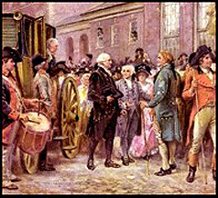
That inauguration occurred in New York City, which served as the nation’s capital during the first year of the new federal government. The preparations had been extensive; everything had been well planned.

The papers reported on the first inaugural activity:

[O]n the morning of the day on which our illustrious President will be invested with his office, the bells will ring at nine o’clock, when the people may go up to the house of God and in a solemn manner commit the new government, with its important train of consequences, to the holy protection and blessing of the Most High. An early hour is prudently fixed for this peculiar act of devotion and . . . is designed wholly for prayer.17

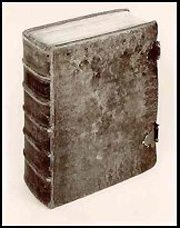
As subsequent activities progressed, things seemed to be proceeding smoothly, but as the parade carrying Washington by horse-drawn carriage to the swearing-in was nearing Federal Hall, it was realized that no Bible had been obtained for administering the oath, and the law required that a Bible be part of the ceremony. Parade Marshal Jacob Morton therefore hurried off and soon returned with a large 1767 King James Bible.

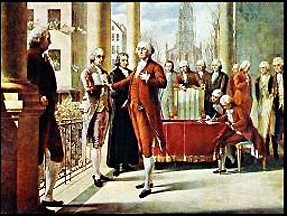
The ceremony was conducted on the balcony at Federal Hall; and with a huge crowd gathered below watching the proceedings, the Bible was laid upon a crimson velvet cushion held by Samuel Otis, Secretary of the Senate. New York Chancellor Robert Livingston then administered the oath of office. (He was one of the five Founders who drafted the Declaration of Independence, but had been called back to New York to help guide his state through the Revolution before he could affix his signature to the document he had helped write. Because Livingston was the highest ranking judicial official in New York, he was chosen to administer the oath of office to President Washington.)

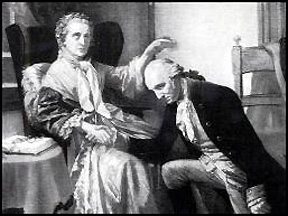
Standing beside Livingston and Washington were many distinguished officials, including Vice President John Adams, Supreme Court Chief Justice John Jay, Generals Henry Knox and Philip Schuyler, and several others. The Bible was opened (at random) to Genesis 49;18 Washington placed his left hand upon the open Bible, raised his right, took the oath of office, then bent over and reverently kissed the Bible. Chancellor Livingston proclaimed, “It is done!” Turning to the crowd assembled below, he shouted, “Long live George Washington – the first President of the United States!” That shout was echoed and re-echoed by the crowd. Washington and the other officials then departed the balcony and went inside Federal Hall to the Senate Chamber where Washington delivered his Inaugural Address.

In that first-ever presidential address, Washington opened with a heartfelt prayer, explaining that . . .

it would be peculiarly improper to omit in this first official act my fervent supplications to that Almighty Being Who rules over the universe, Who presides in the councils of nations, and Whose providential aids can supply every human defect – that His benediction may consecrate to the liberties and happiness of the people of the United States a government instituted by themselves for these essential purposes.19

Washington’s inaugural address was strongly religious, and he called his listeners to remember and acknowledge God:

In tendering this homage [act of worship] to the Great Author of every public and private good, I assure myself that it expresses your sentiments not less than my own, nor those of my fellow-citizens at large less than either. No people can be bound to acknowledge and adore the Invisible Hand which conducts the affairs of men more than those of the United States. Every step by which they have advanced to the character of an independent nation seems to have been distinguished by some token of Providential Agency. . . . [and] we ought to be no less persuaded that the propitious [favorable] smiles of Heaven can never be expected on a nation that disregards the eternal rules of order and right which Heaven itself has ordained.20

Having finished his address, Washington offered its closing prayer:

Having thus imparted to you my sentiments as they have been awakened by the occasion which brings us together, I shall take my present leave – but not without resorting once more to the benign Parent of the Human Race in humble supplication [prayer] that . . . His Divine blessing may be equally conspicuous in the enlarged views, the temperate consultations, and the wise measures on which the success of this government must depend.21

The next inaugural activities then began – activities arranged by Congress itself when the Senate directed:

That after the oath shall have been administered to the President, he – attended by the Vice-President and members of the Senate and House of Representatives – proceed to St. Paul’s Chapel to hear Divine service.22

The House had approved the same resolution,23 so the president and Congress thus went en masse to church as an official body. As affirmed by congressional records:

The President, the Vice-President, the Senate, and House of Representatives, &c., then proceeded to St. Paul’s Chapel, where Divine Service was performed by the chaplain of Congress.24

The service at St. Paul’s was conducted by The Right Reverend Samuel Provoost – the Episcopal Bishop of New York, who had been chosen chaplain of the Senate the week preceding the inauguration.25 He performed the service according to The Book of Common Prayer, including prayers taken from Psalms 144-150 and Scripture readings and Bible lessons from the book of Acts, I Kings, and the Third Epistle of John.26

(Significantly, in his lawsuit Newdow claimed not only that “So help me God” was of recent derivation but also that the “practice of including clergy to pray at presidential inaugurations began in 1937.”27 That claim, like so many of his others, is obviously wrong: the Rev. Provoost had offered clergy-led prayers during Washington’s inaugural activities a century-and-a-half before Newdow claimed they began.)

Significantly, seven distinctly religious activities were included in this first presidential inauguration that have been repeated in whole or part in every subsequent inauguration: (1) the use of the Bible to administer the oath; (2) solemnifying the oath with multiple religious expressions (placing a hand on the Bible, saying “So help me God,” and then kissing the Bible); (3) prayers offered by the president himself; (4) religious content in the inaugural address; (5) the president calling on the people to pray or acknowledge God; (6) church inaugural worship services; and (7) clergy-led prayers.

2. THE LEGAL STATUS OF OATHS AT THE TIME OF WASHINGTON’S INAUGURATION

Significantly, long before and long after the adoption of the Constitution, the legal requirements for oathtaking specifically stipulated that “So help me God!” be part of the official oath of all legal process, whether the oaths were taken by elected officials, appointed judges, jurors, or witnesses in a court of law.

This fact is readily demonstrated by a survey of existing laws at the time – such as those of CONNECTICUT (which will be seen were reflective of what was typical in the other states). Connecticut’s original 1639 legal code governing its very first election required that elected officials were to “swear by the great and dreadful name of the everliving God . . . so help me God, in the name of the Lord Jesus Christ.”28 When new oath laws were subsequently passed in 1718, 1726, 1731, 1742, etc., all retained the same general form, including the mandatory use of “So help me God.” Those same provisions were retained long after the federal Constitution was adopted.29

GEORGIA required that elected officials, judges, jurors, and witnesses take their oath “in the presence of Almighty God . . . so help me God,” and not only that they take their oath on the Bible but specifically “on the holy evangelists of Almighty God.”30 (Like the other states, this provision was the same long before and after the adoption of the federal Constitution.)

NORTH CAROLINA required “the party to be sworn to lay his hand upon the Holy Evangelists of Almighty God . . . and after repeating the words, ‘So help me God,’ shall kiss the Holy Gospels.”31 In SOUTH CAROLINA, officials were also required to take their “oath on the Holy Evangelists of Almighty God.”32

Other states had similar requirements, but consider those in place in NEW YORK when President Washington was sworn in by the state’s top judicial official. At that time, New York law required that “the usual mode of administering oaths” be followed (i.e., “So help me God”) and that the person taking the oath place his hand upon the Gospels and then kiss the Gospels at the conclusion of the oath.33 (Like the other states, these provisions remained the legal standard long after the inauguration.34)

Standard oath forms, both state and federal, still in use even decades after Washington’s inauguration, retained those phrases. See some examples below – and notice that each is from a period decades prior to the time that Newdow claims the practice began:

sohelpmegod1

sohelpmegod2sohelpmegod3

(These are just a few of the many original oath-related documents personally owned by the author;
countless others are found in the records of the Library of Congress)

Clearly, using the phrase “So help me God” (as well as placing one’s hand on and then kissing the Bible) was established legal practice throughout the Founding Era.

No one disputes that Washington placed his hand on the Bible or that he kissed it, so why is it now claimed that he did not say “So help me God”? Are critics saying that Washington would not have done the easiest of the three legally required parts of oathtaking? Or would they prefer that officials stop saying “So help me God” but kiss the Bible instead? Their argument is ludicrous. Furthermore, the omission of “So help me God” from the oathtaking ceremony in the Founding Era would have been a clear and obvious aberration from established legal practice of the day, therefore it is the omission of that phrase rather than its inclusion that would have been particularly noticed and commented upon by observers; but such an omission was never mentioned by any witness.

3. THE FOUNDING FATHERS’ VIEWS:
WERE OATHS INHERENTLY RELIGIOUS OR INHERENTLY SECULAR?

Five locations in the U. S. Constitution address oaths to be taken by federal officials. As has already been shown, oath clauses were not a unique or original innovation of the federal Constitution but were already in use in each of the states and the national Congress long before the Constitution was written and remained in force long thereafter.

Significantly, every existing law or legal commentary from before, during, and after the writing of the Constitution unanimously affirmed that the taking of any oath by any public official was always an inherently religious activity; and numerous Framers and early legal scholars agreed (emphasis added in each quote):

[An] oath – the strongest of religious ties.35 JAMES MADISON, SIGNER OF THE CONSTITUTION

[In o]ur laws . . . by the oath which they prescribe, we appeal to the Supreme Being so to deal with us hereafter as we observe the obligation of our oaths. The Pagan world were and are without the mighty influence of this principle which is proclaimed in the Christian system.36 RUFUS KING, SIGNER OF THE CONSTITUTION, FRAMER OF THE BILL OF RIGHTS

Oaths in this country are as yet universally considered as sacred obligations.37 JOHN ADAMS, SIGNER OF THE DECLARATION, FRAMER OF THE BILL OF RIGHTS

An oath is an appeal to God, the Searcher of Hearts, for the truth of what we say and always expresses or supposes an imprecation [calling down] of His judgment upon us if we prevaricate [lie]. An oath, therefore, implies a belief in God and His Providence and indeed is an act of worship. . . . In vows, there is no party but God and the person himself who makes the vow.38 JOHN WITHERSPOON, SIGNER OF THE DECLARATION

The Constitution enjoins an oath upon all the officers of the United States. This is a direct appeal to that God Who is the avenger of perjury. Such an appeal to Him is a full acknowledgment of His being and providence.39 OLIVER WOLCOTT, SIGNER OF THE DECLARATION, GOVERNOR

According to the modern definition [1788] of an oath, it is considered a “solemn appeal to the Supreme Being for the truth of what is said by a person who believes in the existence of a Supreme Being and in a future state of rewards and punishments . . .”40 JAMES IREDELL, RATIFIER OF THE CONSTITUTION, U. S. SUPREME COURT JUSTICE APPOINTED BY GEORGE WASHINGTON

The Constitution had provided that all the public functionaries of the Union not only of the general [federal] but of all the state governments should be under oath or affirmation for its support. The homage of religious faith was thus superadded to all the obligations of temporal law to give it strength.41 JOHN QUINCY ADAMS, PRESIDENT

“What is an oath?” . . . [I]t is founded on a degree of consciousness that there is a Power above us that will reward our virtues or punish our vices. . . . [O]ur system of oaths in all our courts, by which we hold liberty and property and all our rights, are founded on or rest on Christianity and a religious belief.42 DANIEL WEBSTER, “DEFENDER OF THE CONSTITUTION”

There are many other similar declarations.43 And America’s leading legal authorities and reference sources likewise affirmed that taking an oath was a religious activity. For example, in 1793, Zephaniah Swift, author of America’s first law book, declared:

An oath is a solemn appeal to the Supreme Being that he who takes it will speak the truth, and an imprecation of His vengeance if he swears false.44

In 1816, Chancellor James Kent, considered to be one of the two “Fathers of American Jurisprudence,” noted that an oath of office was a “religious solemnity” and that to administer an oath was “to call in the aid of religion.”45

In 1828, Founding Father Noah Webster, an attorney and a judge, defined an “oath” as:

A solemn affirmation or declaration made with an appeal to God for the truth of what is affirmed. The appeal to God in an oath implies that the person imprecates [calls down] His vengeance and renounces His favor if the declaration is false, or (if the declaration is a promise) the person invokes the vengeance of God if he should fail to fulfill it.46

In 1834, a popular judicial handbook declared:

Judges, justices of the peace, and all other persons who are or shall be empowered to administer oaths shall . . . require the party to be sworn to lay his hand upon the Holy Evangelists of Almighty God in token of his engagement to speak the truth as he hopes to be saved in the way and method of salvation pointed out in that blessed volume; and in further token that if he should swerve from the truth, he may be justly deprived of all the blessings of the Gospels and be made liable to that vengeance which he has imprecated on his own head; and after repeating the words, “So help me God,” shall kiss the holy Gospels as a scale of confirmation to said engagement.47

In 1839, Bouvier’s Law Dictionary, considered one of America’s most popular law dictionaries (and still widely used by courts even today), stated that an oath was:

[A] religious act by which the party invokes God not only to witness the truth and sincerity of his promise but also to avenge his imposture or violated faith. . . . . Oaths are taken in various forms; the most usual is upon the Gospel by taking the book [the Bible] in the hand; the words commonly used are, “You do swear that,” &c., “so help you God,” and then kissing the book. . . . Another form is by the witness or party promising, holding up his right hand while the officer repeats to him, “You do swear by Almighty God, the searcher of hearts, that,” &c., “And this as you shall answer to God at the great day.”48

In 1854, the House Judiciary Committee affirmed:

Laws will not have permanence or power without the sanction of religious sentiment – without a firm belief that there is a Power above us that will reward our virtues and punish our vices.49

Early legal historian James Tyler penned an extensive work on the historical and legal nature and form of oaths and concluded:

The object of the form of adjuration [oath] should be to point out this: to show that we are not calling the attention of God to man, but the attention of man to God. . . . [T]he mode now universally adopted among us is imprecatory – the invoking of God’s vengeance in case we do not fulfill our engagement to speak the truth, or perform the specific duty, “So help me God.”50

Significantly, courts had agreed with the conclusions of the Founding Fathers and early legal authorities, issuing numerous declarations making the same affirmations.51 Even school textbooks in that day taught students that in the American constitutional process, an oath was always a religious act.52

Additional sources could be cited, but the evidence is unequivocal that the taking of an oath was universally considered to be a religious activity. For this reason a secular oath was not admissible before a court of law,53 and well into the latter half of the twentieth century, even the U. S. Supreme Court continued to reaffirm the religious nature of oaths.54 After all, as one early court noted, to remove the religious meaning of oaths and to exclude the Bible on which they were sworn would make “an oath . . . a most idle ceremony.”55

Returning to Washington’s inauguration, he took the presidential oath of office as prescribed in Article II of the Constitution – an oath he had helped write:

I do solemnly swear (or affirm) that I will faithfully execute the office of President of the United States, and will to the best of my ability, preserve, protect and defend the Constitution of the United States.

Why was the phrase “So help me God” not specifically included in the Constitution as part of the prescribed wording? Because to have added it would have been redundant: that phrase, as well as placing one’s hand on and then kissing the Bible, was already standard legal practice; there was no reason to duplicate in the Constitution what was already universally required both by law and tradition.

Significantly, Washington was so concerned that the oathtaking process remain inherently religious that in his famous Farewell Address at the end of his presidency, he pointedly warned Americans to never let it become secular:

[W]here is the security for property, for reputation, for life, if the sense of religious obligation desert the oaths . . . ?56

— — — ◊ ◊ ◊ — — —
The evidence is clear that the legal requirements for the performance of oaths long before and after the adoption of the Constitution stipulated that “So help me God!” be part of the legal process. In the critics’ attempts to weaken the religious nature of the oath by suggesting the absence of “So help me God” from Washington’s inauguration, they have actually strengthened the case that the phrase was indeed used by providing the opportunity to unequivocally demonstrate that (1) the laws and legal practices at that time required that religious acknowledgment and phraseology be part of the oathtaking process, and (2) George Washington and the other Founders saw an oath as inherently religious and would have reprobated any attempt to make it secular.


Endnotes

1 David Barton is the President of WallBuilders, a national pro-family organization that presents America’s forgotten history and heroes, with an emphasis on our moral, religious and constitutional heritage. Barton is the author of numerous best-selling books, with the subjects being drawn largely from his massive library of tens of thousands of original writings from the Founding Era. His exhaustive research has rendered him an expert in historical and constitutional issues. He serves as a consultant to state and federal legislators, has participated in several cases at the Supreme Court, was involved in the development of History/Social Studies standards for public schools in numerous states, and has helped produce history textbooks now used in schools across the nation. David has received numerous national and international awards, including multiple Who’s Who in Education, DAR’s Medal of Honor, and the George Washington Honor Medal from the Freedoms Foundation at Valley Forge.

2 Newdow v. Roberts, 603 F.3d 1002, Ct. of Appeals, Dist. of Columbia (2010).

3 Elk Gove Unified School District v. Newdow, 542 U.S. 1 (2004).

4 Newdow v. Lefevre, 598 F.3d 638, Ct. of Appeals, 9th Cir. (2010).

5 “Michael Newdow Joins CAPEEM’s Legal Team,” December 17, 2007, Capeem.org.

6 Newdow v. Roberts, 603 F.3d 1002, Ct. of Appeals, Dist. of Columbia (2010).

7 “FFRF v. Geithner Parsonage Exemption,” Freedom from Religion Foundation, accessed on November 23, 2011.

8 Newdow v. Eagen, 309 F. Supp. 2d 29, Dist. Court of Columbia (2004).

9 See, for example, Newdow v. Roberts, Complaint 1:08-cv-02248-RBW (2008). See also Cathy Lynn Grossman, “No proof Washington said ‘so help me God’ – will Obama,” USA Today, January 9, 2009.

10 “So Help Me God in Presidential Oaths,” nonbeliever.org, accessed November 23, 2011.

11 Cathy Lynn Grossman, “No proof Washington said ‘so help me God’ — will Obama?” January 9, 2009, USA Today.

12 Jim Bendat, Democracy’s Big Day: The Inauguration of our President 1789-2009 (New York: iUniverse Star, 2008), 21.

13 Peter R. Henriques, “ ‘So Help Me God’: A George Washington Myth that Should Be Discarded,” January 12, 2009, History News Network.

14 Charles C. Haynes, “Inside the First Amendment: Are ‘so help me God,’ inaugural prayer still appropriate?” January 18, 2009, First Amendment Center.

15 “Argument from Ignorance,” Wikipedia, accessed November 23, 2011.

16 Significantly, many of the U. S. Senators at the first Inauguration had been delegates to the Constitutional Convention that framed the Constitution including William Samuel Johnson, Oliver Ellsworth, George Read, Richard Bassett, William Few, Caleb Strong, John Langdon, William Paterson, Robert Morris, and Pierce Butler; and many members of the House had been delegates to the Constitutional Convention, including Roger Sherman, Abraham Baldwin, Daniel Carroll, Elbridge Gerry, Nicholas Gilman, Hugh Williamson, George Clymer, Thomas Fitzsimmons, and James Madison.

17 The Daily Advertiser (New York: April 23, 1789), 2.

18 Clarence W. Bowen, The History of the Centennial Celebration of the Inauguration of George Washington (New York, D. Appleton & Co., 1892), 52, Illustration; “The George Washington Inaugural Bible,” National Park Service, accessed June 24, 2025.

19 The Debates and Proceedings in the Congress of the United States, ed. Joseph Gales (Washington: Gales & Seaton, 1834), I:27; George Washington, Messages and Papers of the Presidents, ed. James D. Richardson (Washington, D.C.: 1899), 1:44-45, April 30, 1789.

20 Debates and Proceedings, ed. Gales (1834), I:27-29, April 30, 1789.

21 Debates and Proceedings, ed. Gales (1834), I:27-29, April 30, 1789.

22 Debates and Proceedings, ed. Gales (1834), I:25, April 27, 1789.

23 Debates and Proceedings, ed. Gales (1834), I:241, April 29, 1789.

24 Debates and Proceedings, ed. Gales (1834), I:29, April 30, 1789.

25 Bowen, History of the Centennial (1892), 54; “About the Senate Chaplain,” United States Senate, accessed June 24, 2025.

26 Book of Common Prayer (Oxford: W. Jackson & A. Hamilton, 1784), s.v., April 30th.

27 Newdow v. Roberts, Complaint 1:08-cv-02248-RBW (2008).

28 R.R. Hinman, A.M., Letters From the English Kings and Queens, Charles II, James II, William and Mary, Anne, George II, &C., To the Governors of the Colony of Connecticut, Together With the Answers Thereto, From 1635 to 1749; And Other Original, Ancient, Literary and Curious Documents, Compiled From Files and Records in the Office of the Secretary of the State of Connecticut (Hartford: John B. Eldredge, Printer, 1836), 26-28.

29 The Public Statute Laws of the State of Connecticut (Hartford: Hudson and Goodwin, 1808), 535, Title CXXII: Oaths, Ch. 1, Sec. 6, law passed in May, 1742; 540, Title CXXII: Oaths, Ch. 1, Sec. 25, law passed in May, 1726; 541, Title CXXII: Oaths, Ch. 1, Sec. 30 & 32, law passed in May, 1718.

30 “An Act for the case of Dissenting Protestants, within this province, who may be scrupulous of taking an oath, in respect to the manner and form of administering the same,” passed December 13, 1756, Oliver H. Prince, A Digest of the Laws of the State of Georgia (Milledgeville: Grantland & Orme, 1822), 3.

31 “Oaths and Affirmations. 1777,” John Haywood, A Manual of the Laws of North Carolina (Raleigh: J. Gales, 1814), 34.

32 Joseph Brevard, An Alphabetical Digest of the Public Statue Law of South Carolina (Charleston: John Hoff, 1814), II:86, “Oaths-Affirmations.”

33 Laws of the State of New- York (New York: Thomas Greenleaf, 1798), 21, “Chap. XXV: An Act to dispense with the usual mode of administering oaths, in favor of persons having conscientious scruples respecting the same, Passed 1st of April, 1778”; James Parker, Conductor Generalis: Or the Office, Duty and Authority of the Justices of the Peace (New York: John Patterson, 1788), 302-304, “Of oaths in general.”

34 George C. Edward, A Treatise on the Powers and Duties of Justices of the Peace and Town Officers, in the State of New York (Ithaca: Mack, Andrus & Woodruff, 1836), 91, “Of the proceedings on the trial.”

35 James Madison, observations by Madison on the vices of the political system of the United States, April 23, 1787, The Writings of James Madison, ed. Gaillard Hunt (New York: G.P. Putnam’s Sons, 1901), 2:367.

36 Rufus King, October 30, 1821, Reports of the Proceedings and Debates of the Convention of 1821, Assembled for the Purpose of Amending The Constitution of the State of New York (Albany: E. and E. Hosford, 1821), 575.

37 John Adams to the Officers of the First Brigade of the Third Division of the Militia of Massachusetts, October 11, 1798, The Works of John Adams, ed. Charles Francis Adams (Boston: Little, Brown and company, 1854), IX:229.

38 John Witherspoon, “Lectures on Moral Philosophy,” The Works of John Witherspoon (Edinburgh: J. Ogle, 1815), VII:139, 142.

39 Oliver Wolcott, January 9, 1788, Jonathan Elliot, The Debates in the Several State Conventions on the Adoption of the Federal Constitution (Washington: Printed for the Editor, 1836), II:202.

40 James Iredell, July 30, 1788, Elliot, Debates (1836), IV:196.

41 John Quincy Adams, The Jubilee of the Constitution (New York: Samuel Colman, 1839), 62.

42 Daniel Webster, Mr. Webster’s Speech in Defense of the Christian Ministry and in Favor of the Religious Instruction of the Young, Delivered in the Supreme Court of the United States, February 10, 1844, in the Case of Stephen Girard’s Will (Washington: Gales and Seaton, 1844), 43, 51.

43 See, for example, Zephaniah Swift, A System of Laws of the State of Connecticut (Windham: John Byrne, 1796), II:238; Jacob Rush, Charges and Extracts of Charges on Moral and Religious Subjects (Philadelphia Geo Forman, 1804), 34-35, 37, 40; Daniel Webster, Speech in Defence of the Christian Ministry (1844), 43, 5; From an original document in our possession, executed by John Hart on March 24, 1757; Updegraph v. The Commonwealth, 11 S. & R. 394 (Sup. Ct. Pa. 1824); City Council of Charleston v. S.A. Benjamin, 2 Strob. 508, 522-524 (Sup. Ct. S.C. 1846).

44 Swift, System of Laws (1796), II:238.

45 James Kent, Memoirs and Letters of James Kent, ed. William Kent (Boston: Little, Brown, and Company, 1898), 164.

46 Noah Webster, A Dictionary of the English Language (New York: S. Converse, 1828), s.v. “oath.”

47 James Coffield Mitchell, The Tennessee Justice’s Manual and Civil Officer’s Guide (Nashville: Mitchell and C. C. Norvell, 1834), 457-458.

48 John Bouvier, A Law Dictionary Adapted to the Constitution and Laws of the United States of America, and of the Several States of the American Union (Philadelphia: T. & J. W. Johnson, 1839), s.v. “oath.”

49 “Rep. No. 124. Chaplains in Congress and in the Army and Navy,” March 27, 1854, Reports of Committees of the House of Representatives Made During the First Session of the Thirty-Third Congress (Washington: A. O. P. Nicholson, 1854), 8.

50 James Endell Tyler, Oaths; Their Origin, Nature, and History (London: John W. Parker, 1834), 14, 57.

51 See, for example, People v. Ruggles, 8 Johns 545, 546 (1811); Commonwealth v. Wolf, 3 Serg. & R. 48, 50 (1817); City Council of Charleston v. S.A. Benjamin, 2 Strob. 508, 522-524 (Sup. Ct. S.C. 1846); and many others.

52 William Sullivan, The Political Class Book (Boston: Richardson, Lord, and Holbrook, 1831), 139, §392.

53 Alexis de Tocqueville, The Republic of the United States of American and Its Political Institutions, Reviewed and Examined, trans. Henry Reeves (Garden City, NY: A. S. Barnes & Co., 1851), I:334, 344n. See also Daniel Webster, Speech in Defence of the Christian Ministry (1844), 43; Joseph Story, Life and Letters of Joseph Story, ed. William W. Story (Boston: Charles C. Little and James Brown, 1851), II:8-9; Swift, System of Laws (1796), II:238.

54 Abington v. Schempp, 374 U.S. 203 (1963).

55 Updegraph v. The Commonwealth, 11 S. & R. 394 (Sup. Ct. Pa. 1824).

56 George Washington, Address of George Washington, President of the United States . . . Preparatory to His Declination (Baltimore: George and Henry S. Keatinge, 1796), 23.

“One Nation Under God”

by David Barton1

Despite America’s great diversity, nothing unifies Americans more than their support for public acknowledgments of God. Consider:

  • 93% want “In God we Trust” to remain on coins and currency2
  • 90% support keeping “under God” in the Pledge3
  • 84% support references to God in schools, government buildings, and public settings4
  • 82% support voluntary school prayer5
  • 76% support Ten Commandments displays on public property6

There are few other subjects on which over three-fourths of Americans consistently agree; and while the Left complains that religious expressions are divisive, the evidence proves otherwise; religious expressions have unified Americans from the beginning.

In fact, at the first-ever meeting of Congress in 1774 when it was suggested that Congress open with prayer, some delegates predicted that the act would be divisive,7 but John Adams reported exactly the opposite, noting that “it has had an excellent effect upon everybody here.”8 Several Supreme Court Justices still believe that such acts are unifying, noting:

[T]he founders of our Republic knew…that nothing, absolutely nothing, is so inclined to foster among religious believers of various faiths a toleration – no, an affection – for one another than voluntarily joining in prayer together to God Whom they all worship and seek.9

Yet the public acknowledgement of God was more than just a pleasant practice in early America; it actually formed the basis of our government philosophy – a philosophy set forth in eighty-four simple words in the Declaration of Independence:

We hold these truths to be self-evident: that all men are created equal, that they are endowed by their Creator with certain unalienable rights; that among these are life, liberty and the pursuit of happiness; that to secure these rights, governments are instituted among men, deriving their just powers from the consent of the governed. That whenever any form of government becomes destructive of these ends, it is the right of the people to alter or to abolish it and to institute new government.10

Thus, five immutable principles constitute the heart and soul of American government:

1. Government acknowledges that there is a Creator
2. Government acknowledges that the Creator gives specific inalienable rights to man
3. Government acknowledges that it exists to protect God-given rights
4. Government acknowledges that below the level of God-given rights, government powers are to be operated only with the permission of citizens – i.e., with the “consent of the governed”
5. If government fails to meet the four standards above, the people have an inalienable right to abolish that government and institute a new one that does observe the four criteria above.

Significantly, without a public and official recognition of God, there is no hope of limited government, for rights come only from God or from man. If rights come from God, then we can require man to protect those rights – as we did in the Declaration, Constitution, and Bill of Rights. But if our rights come from man, then man is permitted to regulate or abolish those rights, and government’s power over our lives therefore becomes absolute and unlimited, as has been the growing trend since the 1990s.

The Founders understood that irrevocable limitations can be placed on government only when God is recognized as the source of our rights; they also understood that if we became complacent in our recognition of God as the center of our lives and government, then we would lose our liberties. As Thomas Jefferson warned:

[C]an the liberties of a nation be thought secure when we have removed their only firm basis: a conviction in the minds of the people that these liberties are of the gift of God? – that they are not to be violated but with His wrath?11

According to Jefferson, the only “firm basis” of our national liberties is a “conviction in the minds of the people” that our liberties are from God and that government cannot intrude into those liberties without incurring God’s wrath.

President George Washington likewise admonished:

[I]t is the duty of all nations to acknowledge the providence of Almighty God, to obey His will, to be grateful for His benefits, and humbly to implore His protection and favor.12

President John Adams similarly urged:

[T]he safety and prosperity of nations ultimately and essentially depend on the protection and the blessing of Almighty God, and the national acknowledgment of this truth is an indispensable duty which the people owe to Him.13

And Samuel Adams agreed, reminding Americans:

May every citizen . . . have a proper sense of the Deity upon his mind and an impression of the declaration recorded in the Bible, “Him that honoreth Me I will honor, but he that despiseth Me shall be lightly esteemed” [I Samuel 2:30].14

To restore honor and restore America, we first must restore God to His rightful place in our own lives and thinking. We must then reintroduce those original principles back into the public arena, thus restoring the foundation on which our Declaration and Constitution were built and the only foundation which allows them to operate as intended.

It is time for us to re-embrace the truth of President Reagan’s warning that:

If we ever forget that we’re one nation under God, then we will be a nation gone under.15


Endnotes

1 This is an op-ed article that David Barton wrote for a national website.
2 Dana Blanton, “FOX Poll: Courts Driving Religion Out of Public Life; Christianity Under Attack,” Fox News, December 1, 2005 (November 29-30, 2005 poll results).
3 Dana Blanton, “FOX Poll: Courts Driving Religion Out of Public Life; Christianity Under Attack,” Fox News, December 1, 2005 (November 29-30, 2005 poll results).
4 See, “Vast Majority in U.S. Support ‘Under God’,” CNN, June 29, 2002; Howard Fineman, “One Nation, Under… Who?” The Daily Beast, July 7, 2002.
5 Dana Blanton, “FOX Poll: Courts Driving Religion Out of Public Life; Christianity Under Attack,” Fox News, December 1, 2005 (November 29-30, 2005 poll results).
6 Dana Blanton, “FOX Poll: Courts Driving Religion Out of Public Life; Christianity Under Attack,” Fox News, December 1, 2005 (November 29-30, 2005 poll results).
7 John Adams, Letters of John Adams Addressed to His Wife, ed. Charles Francis Adams (Boston: Charles C. Little and James Brown, 1841), I:23-24, to Abigail Adams on September 16, 1774. See also Journals of the Continental Congress (Washington, D. C.: Government Printing Office, 1904), I:26-27, September 6-7, 1774.
8 Adams, Letters of John Adams, ed. Adams (Boston: Charles C. Little and James Brown, 1841), I:23-24, to Abigail Adams on September 16, 1774.
9 Lee v. Weisman, 120 L. Ed. 2d 467, 519 (1992) (Scalia, J., dissenting).
10 The Declaration of Independence.
11 Thomas Jefferson, Notes on the State of Virginia (Philadelphia: Matthew Carey, 1794), Query XVIII, 236-237.
12 Jared Sparks, The Life of George Washington (London: Henry Colburn, 1839), II:302, proclamation for a National Thanksgiving on October 3, 1789.
13 John Adams, The Works of John Adams, Second President of the United States, ed. Charles Francis Adams (Boston: Little, Brown, and Company, 1854), IX:169, proclamation for a National Thanksgiving on March 23, 1798.
14 Samuel Adams, The Writings of Samuel Adams, ed. Harry Alonzo Cushing (New York: G. P. Putnam’s Sons, 1908), IV:189, article signed “Vindex” originally published in the Boston Gazette on June 12, 1780.
15 Ronald Reagan, “Remarks at a Ecumenical Prayer Breakfast in Dallas, Texas,” The American Presidency Project, August 23, 1984.

* This article concerns a historical issue and may not have updated information.
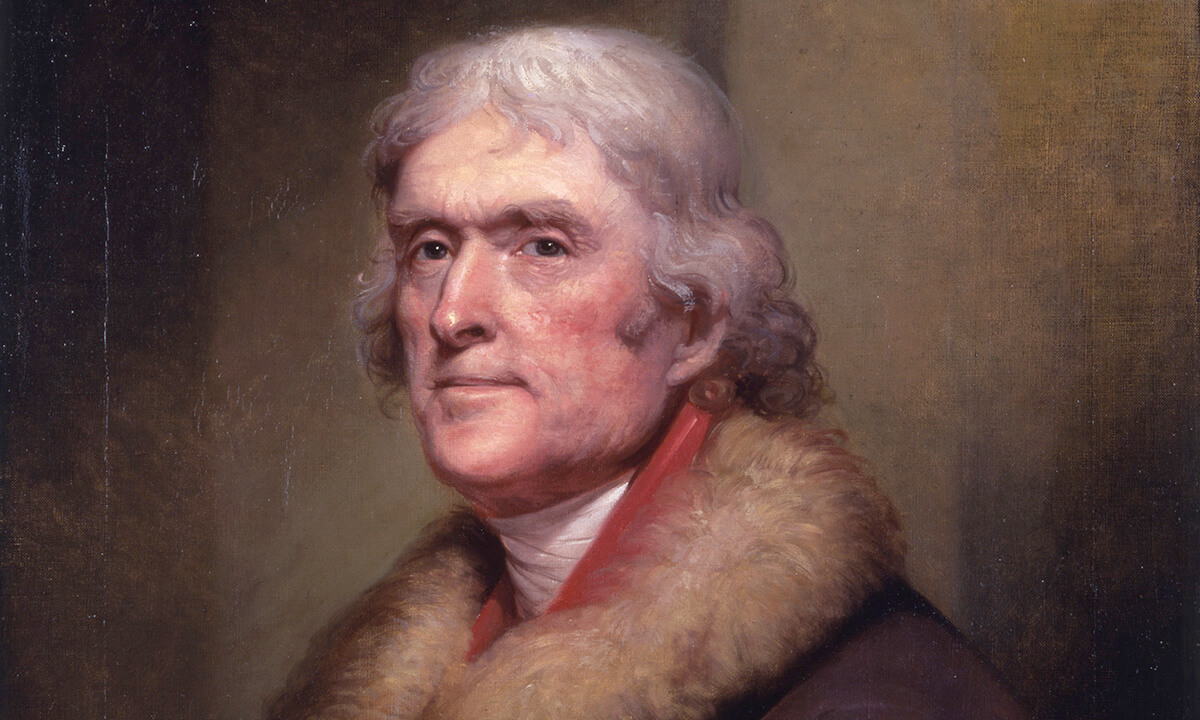
Federal Judges: Demigods?

By David Barton

You may recall pictures of Supreme Court Justice Ruth Bader Ginsburg sitting on the front row in Congress sleeping during President Obama’s State of the Union Address. News later broke explaining why: “I wasn’t 100% sober.”1

A State of the Union message is a constitutionally-mandated duty (Article II, Section 3), and for those who respect the Constitution, this address is serious stuff. But apparently not to Justice Ginsburg – which probably is not surprising given that her rulings routinely reflect a general dismissal of the Constitution and that she publicly advises leaders in other nations to seek something better than the U. S. Constitution for their country.2

Regardless, it is certain that public intoxication by a Supreme Court justice does not inspire faith in the Judiciary. Luther Martin (one of the 55 delegates who framed the U. S. Constitution) warned: “It is necessary that the supreme judiciary should have the confidence of the people,”3 and to ensure this, the Founders made certain that the federal bench could be ridded of those who embarrassed or misused it.

Citizens today might be dubious of such a statement, for we have long been told (and wrongly so) that federal judges have lifetime appointments. They do not – and it was the Founding Fathers themselves who specifically stipulated that federal judges could serve only for the duration of “good behavior” (Article III, Section 1). So as long as a judge acted right, he could stay on the bench, but if he acted otherwise he could be removed. Nowhere in the Constitution is there any mention of, much less guarantee for lifetime appointments for judges.

The first federal judge to be removed from the bench came at the behest of President Thomas Jefferson. That judge, John Pickering, was no obscure lightweight. Originally placed on the federal bench by President George Washington, Pickering had been a framer of the New Hampshire Constitution, served as the state’s governor, was selected as a delegate to frame the U. S. Constitution (but declined), and was subsequently a ratifier of the federal Constitution. So why was he removed? Among the reasons given was public intoxication (as well as a public disrespect for God).4 The Founding Fathers considered this to be bad behavior for a judge.

Don’t think I am calling for the removal of Ginsburg for her recent faux pas. Rather, I am pointing out that the current notion that federal judges are unaccountable because they have lifetime appointments is one of the greatest lies of our lifetime.

Consider historical reasons given by Congress why federal judges should be removed from the bench:

  • In 1804, Supreme Court Justice Samuel Chase was impeached for judicial high-handedness and for excluding evidence from a trial.5
  • In 1830, federal judge James H. Peck was impeached for judicial high-handedness.6
  • In 1862, federal judge West H. Humphreys was impeached for supporting the secession movement.7
  • In 1904, federal judge Charles Swayne was impeached for financial improprieties and judicial high-handedness.8
  • In 1912, federal circuit judge Robert W. Archibald was impeached for judicial high-handedness and misconduct.9
  • In 1926, federal judge George W. English was impeached for judicial high-handedness and profanity.10

Judicial high-handedness? Yes. In fact, U. S. Supreme Court Chief-Justice John Marshall observed:

[T]he present doctrine seems to be that a Judge giving a legal opinion contrary to the opinion of the legislature is liable to impeachment.11

Let’s admit it. The Founding Fathers were experts on the Constitution; today’s legal professors and media pundits who claim that federal judges can only be removed for the commission of serious crimes and felonies are not. The Founders made clear that federal judges did not have lifetime appointments and were to be accountable for their behavior while on the bench.

If America ever again expects the federal courts to be just one of three so-called “co-equal” branches rather than the supreme branch they have become, then we must recover the notion that our federal judges are not unaccountable demigods.

Thomas Jefferson’s warning from two centuries ago is still very much alive for us today:

[T]o consider the judges as the ultimate arbiters of all constitutional questions [is] a very dangerous doctrine indeed, and one which would place us under the despotism of an oligarchy. Our judges are as honest as other men and not more so. They have, with others, the same passions for party, for power, and the privilege of their corps. . . . [A]nd their power the more dangerous as they are in office for life and not responsible, as the other functionaries are, to the elective control. The Constitution has erected no such single tribunal.12


Endnotes

1 Richard Wolf, “Justice Ginsburg: Not ‘100% sober’ at State of the Union,” USA Today, February 13, 2015.

2Ginsburg to Egyptians: I wouldn’t use U.S. Constitution as a model,” Fox News, February 6, 2012.

3 James Madison, The Papers of James Madison…And His Reports of Debates in the Federal Convention (Washington: Langtree & O’Sullivan, 1840), Vol. II, p. 1166, July 21, 1787, Luther Martin.

4 The Debates and Proceedings in the Congress of the United States (Washington: Gales and Seaton, 1852), Eighth Congress, First Session, 322, January 4, 1803. See also John Randolph Tucker, The Constitution of the United States (Chicago: Callaghan & Co., 1899) I:421-422, § 200 (g).

5 The Debates and Proceedings in the Congress of the United States (Washington: Gales and Seaton, 1852), Eighth Congress, First Session, 272, March 13, 1804, & 1237-1240, March 26, 1804. See also Tucker, The Constitution of the United States (1899) I:422, § 200 (g).

6 Register of the Debates in Congress, Comprising the Leading Debates and Incidents of the First Session of the Twenty-First Congress (Washington: Gales and Seaton, 1830), VI:383, April 26, 1830 & 411-413, May 4, 1830. See also Tucker, The Constitution of the United States (1899) I:422, § 200 (g).

7 John C. Rives, The Congressional Globe: Containing the Debates and Proceedings of the Second Session of the Thirty-Seventh Congress (Washington: Congressional Globe Office, 1862), 2277, May 22, 1862. See also Floyd M. Riddick, Parliamentarian of the Senate, Procedure and Guidelines for Impeachment Trials in the United States Senate (Washington, D. C.: U. S. Government Printing Office, 1974), 13 n, May 22, 1862; Tucker, The Constitution of the United States (1899) I:422, § 200 (g).

8 Proceedings and Debates, Fifty-Eighth Congress, Third Session, XXXIX:1281-1283, January 24, 1905 (See the content of his impeachment trial). See also Floyd M. Riddick, Procedure and Guidelines for Impeachment Trials in the United States Senate (Washington, D. C.: U. S. Government Printing Office, 1974), 12 n.

9 Proceedings and Debates, Sixty-Second Congress, Second Session, XLVIII:9051-9053, July 15, 1912 (See the content of his impeachment trial). See also Riddick, Procedure and Guidelines for Impeachment Trials (1974), 12 n.

10 Proceedings and Debates, Sixty-Ninth Congress, First Session, LXVII:6:6585-6589, March 30, 1926 (See the content of his impeachment trial). See also Riddick, Procedure and Guidelines for Impeachment Trials (1974), 11 n.

11 Albert J. Beveridge, The Life of John Marshall (Boston: Houghton, Mifflin Company, 1919), III:177. See also John Marshall, The Papers of John Marshall, ed. Charles F. Hobson (Chapel Hill: University of North Carolina Press, 1990), VI:347, to Samuel Chase on January 23, 1805.

12 Thomas Jefferson, The Writings of Thomas Jefferson, ed. H. A. Washington (Washington, D.C.: Taylor & Maury, 1854), VII:178, to William Charles Jarvis on September 28, 1820.

John Locke – A Philosophical Founder of America

John Locke (1632-1704) is one of the most important, but largely unknown names in American history today. A celebrated English philosopher, educator, government official, and theologian, it is not an exaggeration to say that without his substantial influence on American thinking, there might well be no United States of America today – or at the very least, America certainly would not exist with the same level of rights, stability of government, and quality of life that we have enjoyed for well over two centuries.

Historians – especially of previous generations – were understandably effusive in their praise of Locke. For example:

  • In 1833, Justice Joseph Story, author of the famed Commentaries on the Constitution, described Locke as “a most strenuous asserter of liberty”1 who helped establish in this country the sovereignty of the people over the government,2 majority rule with minority protection,3 and the rights of conscience.4
  • In 1834, George Bancroft, called the “Father of American History,” described Locke as “the rival of ‘the ancient philosophers’ to whom the world had ‘erected statues’,”5 and noted that Locke esteemed “the pursuit of truth the first object of life and . . . never sacrificed a conviction to an interest.”6
  • In 1872, historian Richard Frothingham said that Locke’s principles – principles that he said were “inspired and imbued with the Christian idea of man” – produced the “leading principle [of] republicanism” that was “summed up in the Declaration of Independence and became the American theory of government.”7
  • In the 1890s, John Fiske, the celebrated nineteenth-century historian, affirmed that Locke brought to America “the idea of complete liberty of conscience in matters of religion” allowing persons with “any sort of notion about God” to be protected “against all interference or molestation,”8 and that Locke should “be ranked in the same order with Aristotle.”9

Such acknowledgments continued across the generations; and even over the past half century, U. S. presidents have also regularly acknowledged America’s debt to John Locke:

  • President Richard Nixon affirmed that “John Locke’s concept of ‘life, liberty and property’” was the basis of “the inalienable rights of man” in the Declaration of Independence.10
  • President Gerald Ford avowed that “Our revolutionary leaders heeded John Locke’s teaching ‘Where there is no law, there is no freedom’.”11
  • President Ronald Reagan confirmed that much in America “testif[ies] to the power and the vision of free men inspired by the ideals and dedication to liberty of John Locke . . .”12
  • President Bill Clinton reminded the British Prime Minister that “Throughout our history, our peoples have reinforced each other in the living classroom of democracy. It is difficult to imagine Jefferson, for example, without John Locke before him.”13
  • President George W. Bush confessed that “We’re sometimes faulted for a naive faith that liberty can change the world, [but i]f that’s an error, it began with reading too much John Locke . . .”14

The influence of Locke on America was truly profound; he was what we now consider to be a renaissance man – an individual skilled in numerous areas and diverse subjects. He had been well-educated and received multiple degrees from some of the best institutions of his day, but he also pursued extensive self-education in the fields of religion, philosophy, education, law, and government – subjects on which he authored numerous substantial works, most of which still remain in print today more than three centuries after he published them.

In 1689, Locke penned his famous Two Treatises of Government. The first treatise (i.e., a thorough examination) was a brilliant Biblical refutation of Sir Robert Filmer’s Patriarcha in which Filmer had attempted to produce Biblical support for the errant “Divine Right of Kings” doctrine. Locke’s second treatise set forth the fundamental principles defining the proper role, function, and operation of a sound government. Significantly, Locke had ample opportunity to assert such principles, for he spent time under some of England’s worst monarchs, including Charles I, Charles II, and James II.

In 1664, Locke penned “Questions Concerning the Law of Nature” in which he asserted that human reason and Divine revelation were fully compatible and were not enemies – that the Law of Nature actually came from God Himself. (This work was not published, but many of its concepts appeared in his subsequent writings.)

In 1667, he privately penned his “Essay Concerning Toleration,” first published in 1689 as A Letter Concerning Toleration. This work, like his Two Treatises, was published anonymously, for it had placed his very life in danger by directly criticizing and challenging the frequent brutal oppression of the government-established and government-run Church of England. (Under English law, the Anglican Church and its 39 Doctrinal Articles were the measure for all religious faith in England; every citizen was required to attend an Anglican Church. Dissenters who opposed those Anglican requirements were regularly persecuted or even killed. Locke objected to the government establishing specific church doctrines by law, argued for a separation of the state from the church, and urged religious toleration for those who did not adhere to Anglican doctrines.) When Locke’s position on religious toleration was attacked by defenders of the government-run church, he responded with A Second Letter Concerning Toleration (1690), and then A Third Letter for Toleration (1692) – both also published anonymously.

In 1690, Locke published his famous Essay Concerning Human Understanding. This work resulted in his being called the “Father of Empiricism,” which is the doctrine that knowledge is derived primarily from experience. Rationalism, on the other hand, places reason above experience; and while Locke definitely did not oppose reason, his approach to learning was more focused on the practical, whereas rationalism was more focused on the theoretical.

In 1693, Locke published Some Thoughts Concerning Education. Originally a series of letters written to his friend concerning the education of a son, in them Locke suggested the best ways to educate children. He proposed a three-pronged holistic approach to education that included (1) a regimen of bodily exercise and maintenance of physical health (that there should be “a sound mind in a sound body”15), (2) the development of a virtuous character (which he considered to be the most important element of education), and (3) the training of the mind through practical and useful academic curriculum (also encouraging students to learn a practical trade). Locke believed that education made the individual – that “of all the men we meet with, nine parts of ten are what they are, good or evil, useful or not, by their education.”16 This book became a run-away best-seller, being printed in nearly every European language and going through 53 editions over the next century.

Locke’s latter writings focused primarily on theological subjects, including The Reasonableness of Christianity as Delivered in the Scriptures (1695), A Vindication of the Reasonableness of Christianity (1695), A Second Vindication of the Reasonableness of Christianity (1697), A Common-Place-Book to the Holy Bible (1697), which was a re-publication of what he called Graphautarkeia, or, The Scriptures Sufficiency Practically Demonstrated (1676), and finally A Paraphrase and Notes on the Epistles of St. Paul to the Galatians, 1 and 2 Corinthians, Romans, Ephesians (published posthumously in 1707).

In his Reasonableness of Christianity, Locke urged the Church of England to reform itself so as to allow inclusion of members from other Christian denominations – i.e., the Dissenters. He recommended that the Church place its emphasis on the major things of Christianity (such as an individual’s relationship with Jesus Christ) rather than on lesser things (such as liturgy, church hierarchy and structure, and form of discipline). That work also defended Christianity against the attacks of skeptics and secularists, who had argued that Divine revelation must be rejected because truth could be established only through reason.

(While these are some of Locke’s better known works, he also wrote on many other subjects, including poetry and literature, medicine, commerce and economics, and even agriculture.)

The impact of Locke’s writings had a direct and substantial influence on American thinking and behavior in both the religious and the civil realms – an influence especially visible in the years leading up to America’s separation from Great Britain. In fact, the Founding Fathers openly acknowledged their debt to Locke:

  • John Adams praised Locke’s Essay on Human Understanding, openly acknowledging that “Mr. Locke . . . has steered his course into the unenlightened regions of the human mind, and like Columbus, has discovered a new world.”17
  • Declaration signer Benjamin Rush said that Locke was not only “an oracle as to the principles . . . of government”18 (an “oracle” is a wise authority whose opinions are not questioned) but that in philosophy, he was also a “justly celebrated oracle, who first unfolded to us a map of the intellectual world,”19 having “cleared this sublime science of its technical rubbish and rendered it both intelligible and useful.”20
  • Benjamin Franklin said that Locke was one of “the best English authors” for the study of “history, rhetoric, logic, moral and natural philosophy.”21
  • Noah Webster, a Founding Father called the “Schoolmaster to America,” directly acknowledged Locke’s influence in establishing sound principles of education.22
  • James Wilson (a signer of the Declaration and the Constitution, and an original Justice on the U. S. Supreme Court) declared that “The doctrine of toleration in matters of religion . . . has not been long known or acknowledged. For its reception and establishment (where it has been received and established), the world has been thought to owe much to the inestimable writings of the celebrated Locke…”23
  • James Monroe, a Founding Father who became the fifth President of the United States, attributed much of our constitutional philosophy to Locke, including our belief that “the division of the powers of a government . . . into three branches (the legislative, executive, and judiciary) is absolutely necessary for the preservation of liberty.”24
  • Thomas Jefferson said that Locke was among “my trinity of the three greatest men the world had ever produced.”25

And just as the Founding Fathers regularly praised and invoked John Locke, so, too, did numerous famous American ministers in their writings and sermons.26 Locke’s influence was substantial; and significantly, the closer came the American Revolution, the more frequently he was invoked.

For example, in 1775, Alexander Hamilton recommended that anyone wanting to understand the thinking in favor of American independence should “apply yourself without delay to the study of the law of nature. I would recommend to your perusal . . . Locke.”27

And James Otis – the mentor of both Samuel Adams and John Hancock – affirmed that:

The authority of Mr. Locke has . . . been preferred to all others.28

Locke’s specific writing that most influenced the American philosophy of government was his Two Treatises of Government. In fact, signer of the Declaration Richard Henry Lee saw the Declaration of Independence as being “copied from Locke’s Treatise on Government29– and modern researchers agree, having authoritatively documented that not only was John Locke one of three most-cited political philosophers during the Founding Era30 but that he was by far the single most frequently-cited source in the years from 1760-1776 (the period leading up to the Declaration of Independence).31

Among the many ideas articulated by Locke that subsequently appeared in the Declaration was the theory of social compact, which, according to Locke, was when:

Men. . . . join and unite into a community for their comfortable, safe, and peaceable living one amongst another in a secure enjoyment of their properties and a greater security against any that are not of it.32

Of that theory, William Findley, a Revolutionary soldier and a U. S. Congressman, explained:

Men must first associate together before they can form rules for their civil government. When those rules are formed and put in operation, they have become a civil society, or organized government. For this purpose, some rights of individuals must have been given up to the society but repaid many fold by the protection of life, liberty, and property afforded by the strong arm of civil government. This progress to human happiness being agreeable to the will of God, Who loves and commands order, is the ordinance of God mentioned by the Apostle Paul and . . . the Apostle Peter.33

Locke’s theory of social compact is seen in the Declaration’s phrase that governments “derive their just powers from the consent of the governed.”

Locke also taught that government must be built firmly upon the transcendent, unchanging principles of natural law that were merely a subset of God’s greater law:

[T]he Law of Nature stands as an eternal rule to all men, legislators as well as others. The rules that they make for other men’s actions must . . . be conformable to the Law of Nature, i.e., to the will of God.34

[L]aws human must be made according to the general laws of Nature, and without contradiction to any positive law of Scripture, otherwise they are ill made.35

For obedience is due in the first place to God, and afterwards to the laws.36

The Declaration therefore acknowledges “the laws of nature and of nature’s God,” thus not separating the two but rather affirming their interdependent relationship – the dual connection between reason and revelation which Locke so often asserted.

Locke also proclaimed that certain fundamental rights should be protected by society and government, including especially those of life, liberty, and property37– three rights specifically listed as God-given inalienable rights in the Declaration. As Samuel Adams (the “Father of the American Revolution” and a signer of the Declaration) affirmed, man’s inalienable rights included “first, a right to life; secondly, to liberty; thirdly, to property”38– a repeat of Locke’s list.

Locke had also asserted that:

[T]he first and fundamental positive law of all commonwealths is the establishing of the Legislative power. . . . [and no] edict of anybody else . . . [can] have the force and obligation of a law which has not its sanction [approval] from that Legislative which the public has chosen.39

The Founders thus placed a heavy emphasis on preserving legislative powers above all others. In fact, of the 27 grievances set forth in the Declaration of Independence, 11 dealt with the abuse of legislative powers – no other topic in the Declaration received nearly as much attention. The Founders’ conviction that the Legislative Branch was above both the Executive and Judicial branches was also readily evident in the U. S. Constitution, with the Federalist Papers affirming that “the legislative authority necessarily predominates”40 and “the judiciary is beyond comparison the weakest of the three departments of power.”41

Locke also advocated the removal of a leader who failed to fulfill the basic functions of government so eloquently set forth in his Two Treatises;42 the Declaration thus declares that “whenever any form of government becomes destructive of these ends, it is the right of the people to alter or to abolish it and to institute new government.”

In short, when one studies Locke’s writings and then reads the Declaration of Independence, they will agree with John Quincy Adams’ pronouncement that:

The Declaration of Independence [was] . . . founded upon one and the same theory of government . . . expounded in the writings of Locke.43

But despite Locke’s substantial influence on America, today he is largely unknown; and his Two Treatises are no longer intimately studied in America history and government classes. Perhaps the reason for the modern dismissal of this classic work is because it was so thoroughly religious: Locke invoked the Bible in at least 1,349 references in the first treatise, and 157 times in the second44– a fact not lost on the Founders. As John Adams openly acknowledged:

The general principles on which the Fathers achieved independence. . . . were the general principles of Christianity. . . . Now I will avow that I then believed (and now believe) that those general principles of Christianity are as eternal and immutable as the existence and attributes of God. . . . In favor of these general principles in philosophy, religion, and government, I [c]ould fill sheets of quotations from . . . [philosophers including] Locke – not to mention thousands of divines and philosophers of inferior fame.45

Given the fact that previous generations so quickly recognized the Christian principles that permeated all of Locke’s diverse writings, it is not surprising that they considered him a theologian.46 Ironically, however, many of today’s writers and so-called professors and scholars specifically call Locke a deist or a forerunner of Deism.47 But since Locke included repeated references to God and the Scriptures throughout his writings, and since he wrote many works specifically in defense of religious topics, then why is he currently portrayed as being anti-religious? It is because in the past fifty-years, American education has become thoroughly infused with the dual historical malpractices of Deconstructionism and Academic Collectivism.

Deconstructionism is a philosophy that “tends to deemphasize or even efface [i.e., malign and smear] the subject” by posing “a continuous critique” to “lay low what was once high”48 and “tear down the ancient certainties upon which Western Culture is founded.”49 In other words, it is a steady flow of belittling and negative portrayals about the heroes, institutions, and values of Western civilization, especially if they reflect religious beliefs. The two regular means by which Deconstructionists accomplish this goal are (1) to make a negative exception appear to be the rule, and (2) deliberate omission.

These harmful practices of Deconstructionists are exacerbated by the malpractice of Academic Collectivism, whereby scholars quote each other and those from their group rather than original sources. Too many writers today simply repeat what other modern writers say, and this “peer-review” becomes the standard for historical truth rather than an examination of actual original documents and sources.

Reflecting these dual negative influences of Deconstructionism and Academic Collectivism in their treatment of John Locke, many of today’s “scholars” simply lift a few short excerpts from his hundreds of thousands of written words and then present those carefully selected extracts in such a way as to misconstrue his faith and make it seem that he was irreligious. Or more frequently, Locke’s works are simply omitted from academic studies, being replaced only with a professor’s often inaccurate characterization of Locke’s beliefs and writings.

Significantly, the charge that Locke is a deist and a freethinker is not new; it has been raised against him for over three centuries. It first originated when Locke advocated major reforms in the Church of England (such as the separation of the state from the church and the extension of religious toleration to other Christian denominations); Anglican apologists who stung from his biting criticism sought to malign him and minimize his influence; they thus accused him of irreligion and deism. As affirmed by early English theologian Richard Price:

[W]hen . . . Mr. Locke’s Essay on the Human Understanding was first published in Britain, the persons readiest to attend to it and to receive it were those who have never been trained in colleges, and whose minds, therefore, had never been perverted by an instruction in the jargon of the schools. [But t]o the deep professors [i.e., clergy and scholars] of the times, it appeared (like the doctrine taught in his book, on the Reasonableness of Christianity) to be a dangerous novelty and heresy; and the University of Oxford in particular [which trained only Anglicans] condemned and reprobated the author.50

The Founding Fathers were fully aware of the bigoted motives behind the attacks on Locke’s Christian beliefs, and they vigorously defended him from those false charges. For example, James Wilson (signer of the Declaration and Constitution) asserted:

I am equally far from believing that Mr. Locke was a friend to infidelity [a disbelief in the Bible and in Christianity51]. . . . The high reputation which he deservedly acquired for his enlightened attachment to the mild and tolerating doctrines of Christianity secured to him the esteem and confidence of those who were its friends. The same high and deserved reputation inspired others of very different views and characters . . . to diffuse a fascinating kind of lustre over their own tenets of a dark and sable hue. The consequence has been that the writings of Mr. Locke, one of the most able, most sincere, and most amiable assertors of Christianity and true philosophy, have been perverted to purposes which he would have deprecated and prevented [disapproved and opposed] had he discovered or foreseen them.52

Thomas Jefferson agreed. He had personally studied not only Locke’s governmental and legal writings but also his theological ones; and his summary of Locke’s views of Christianity clearly affirmed that Locke was not a deist. According to Jefferson:

Locke’s system of Christianity is this: Adam was created happy and immortal…. By sin he lost this so that he became subject to total death (like that of brutes [animals]) – to the crosses and unhappiness of this life. At the intercession, however, of the Son of God, this sentence was in part remitted…. And moreover to them who believed, their faith was to be counted for righteousness [Romans 4:3,5]. Not that faith without works was to save them; St. James, chapter 2 says expressly the contrary [James 2:14-26]…. So that a reformation of life (included under repentance) was essential, and defects in this would be made up by their faith; i. e., their faith should be counted for righteousness [Romans 4:3,5]…. The Gentiles; St. Paul says, Romans 2:13: “the Gentiles have the law written in their hearts,” [A]dding a faith in God and His attributes that on their repentance, He would pardon them; (1 John 1:9) they also would be justified (Romans 3:24). This then explains the text “there is no other name under heaven by which a man may be saved” [Acts 4:12], i. e., the defects in good works shall not be supplied by a faith in Mahomet, Fo [Buddha], or any other except Christ.53

In short, Locke was not the deist thinker that today’s shallow and often lazy academics so frequently claim him to be; and although Locke is largely ignored today, his influence both on American religious and political thinking was substantial, directly shaping key beliefs upon which America was established and under which she continues to operate and prosper.

Americans need to revive a widespread awareness of John Locke and his specific ideas that helped produce American Exceptionalism so that we can better preserve and continue the blessings of prosperity, stability, and liberty that we have enjoyed for the past several centuries.


Endnotes

1 Joseph Story, Commentaries on the Constitution of the United States (Boston: Hilliard, Gray, and Company 1833), I:299, n2.

2 Story, Commentaries (1833), II:57, n2.

3 Story, Commentaries 1833), I:293, n2; I:299, n2; I:305-306.

4 Story, Commentaries (1833), III:727.

5 George Bancroft, History of the United States of America (Boston: Little, Brown, and Company, 1858; first edition Boston: Charles Bowen, 1834), II:150.

6 Bancroft, History of the United States (1858; first edition 1834),  II:144.

7 Richard Frothingham, The Rise of the Republic of the United States (Boston: Little, Brown, and Company, 1872), 165.

8 John Fiske, Old Virginia and Her Neighbors (New York: Houghton, Mifflin and Company, 1897), II:274.

9 John Fiske, Critical Period of American History: 1783-1789 (New York: Mifflin and Company, 1896), 225.

10 Richard Nixon, “Message to the Congress Transmitting the Report of the American Revolution Bicentennial Commission,” The American Presidency Project, September 11, 1970.

11 Gerald Ford, “Address at the Yale University Law School Sesquicentennial Convocation Dinner,” The American Presidency Project, April 25, 1975.

12 Ronald Reagan, “Toasts of the President and Queen Elizabeth II of the United Kingdom at a Dinner Honoring the Queen in San Francisco, California,” The American Presidency Project, March 3, 1983.

13 William Clinton, “Remarks at the State Dinner Honoring Prime Minister Tony Blair of the United Kingdom,” The American Presidency Project, February 5, 1998.

14 George W. Bush, “Remarks at Whitehall Palace in London, United Kingdom,” The American Presidency Project, November 19, 2003.

15 John Locke, The Works of John Locke (London: Arthur Bettesworth, John Pemberton, and Edward Simon, 1722), III:1, “Some Thoughts Concerning Education.”

16 Locke, Works (1722), III:1, “Some Thoughts Concerning Education.”

17 John Adams, The Works of John Adams, ed. Charles Francis Adams (Boston: Little, Brown and Company, 1856), I:53, to Jonathan Sewall on February 1760.

18 Benjamin Rush, The Selected Writings of Benjamin Rush, ed. Dagobert D. Runes (New York: The Philosophical Library, Inc., 1947), 78, “Observations on the Government of Pennsylvania.”

19 Benjamin Rush, Medical Inquiries and Observations (Philadelphia: T. Dobson, 1793), II:17, “An Inquiry into the Influence of Physical Causes upon the Moral Faculty.”

20 Rush, Medical Inquiries (1794), I:332, “Duties of a Physician.”

21 Benjamin Franklin, The Works of Benjamin Franklin, ed. Jared Sparks (Boston: Tappan & Whittemore, 1836), II:131, “Sketch of an English School.”

22 Noah Webster, A Collection of Papers on Political, Literary and Moral Subjects (New York: Webster & Clark, 1843), 308, “Modes of Teaching the English Language.”

23 James Wilson, The Works of the Honourable James Wilson, ed. Bird Wilson (Philadelphia: Lorenzo Press, 1804), 1:6-7, “Of the Study of the Law in the United States.”

24 James Monroe, The Writings of James Monroe, ed. Stanislaus Murray Hamilton (New York: G. P. Putnam’s Sons, 1898), I:325, “Some Observations on the Constitution, &c.”

25 Thomas Jefferson, The Writings of Thomas Jefferson, ed. Henry Augustine Washington (Washington, D. C.: Taylor & Maury, 1853), V:559, to Dr. Benjamin Rush on January 16, 1811.

26 See, for example, REV. JARED ELIOT IN 1738 Jared Eliot, Give Caesar His Due. Or, Obligation that Subjects are Under to Their Civil Rulers (London: T. Green, 1738), 27, Evans # 4241. REV. ELISHA WILLIAMS IN 1744 Elisha Williams, The Essential Rights and Liberties of Protestants. A Seasonable Plea for the Liberty of Conscience, and the Right of Private Judgment, in Matters of Religion (Boston: S. Kneeland and T. Gaben, 1744), 4, Evans # 5520. Rev. JONATHAN EDWARDS IN 1754 Jonathan Edwards, A Careful and Strict Inquiry into the Modern Prevailing Notions of That Freedom of Will, which is Supposed to be Essential to Moral Agency, Virtue and Vice, Reward and Punishment, Praise and Blame (Boston: S. Kneeland, 1754), 138-140, 143, 164, 171-172, 353-354. REV. WILLIAM PATTEN, 1766 William Patten, A Discourse Delivered at Hallifax in the County of Plymouth, July 24th, 1766 (Boston: D. Kneeland, 1766), 17-18n, Evans # 10440. REV. STEPHEN JOHNSON, 1766 Stephen Johnson, Some Important Observations, Occasioned by, and Adapted to, the Publick Fast, Ordered by Authority, December 18th, A. D. 1765. On Account of the Peculiar Circumstances of the Present Day (Newport: Samuel Hall, 1766), 22n-23n, Evans # 10364. REV. JOHN TUCKER, 1771 John Tucker, A Sermon Preached at Cambridge Before His Excellency Thomas Hutchinson, Esq., Governor; His Honor Andrew Oliver, Esq., Lieutenant-Governor; the Honorable His Majesty’s Council; and the Honorable House of Representatives of the Province of the Massachusetts-Bay in New England, May 29th, 1771 (Boston: Richard Draper, 1771), 19, Evans # 12256. REV. SAMUEL STILLMAN, 1779 Samuel Stillman, A Sermon Preached before the Honourable Council and the Honourable House of Representatives of the State of Massachusetts-Bay, in New-England at Boston, May 26, 1779. Being the Anniversary for the Election of the Honorable Council (Boston: T. and J. Fleet, 1779), 22-25, and many others.

27 Alexander Hamilton, The Papers of Alexander Hamilton, ed. Harold C. Syrett (New York: Columbia University Press, 1961), I:86, from “The Farmer Refuted,” February 23, 1775.

28 James Otis, A Vindication of the Conduct of the House of Representatives of the Province on the Massachusetts-Bay: Most Particularly in the Last Session of the General Assembly (Boston: Edes & Gill, 1762), 20n.

29 Thomas Jefferson, The Writings of Thomas Jefferson, ed. Andrew A. Lipscomb (Washington, D.C.: The Thomas Jefferson Memorial Association, 1904), XV:462, to James Madison on August 30, 1823.

30 Donald S. Lutz, The Origins of American Constitutionalism (Baton Rouge: Louisiana State University Press, 1988), 143.

31 Lutz, Origins 1988), 143.

32 John Locke, Two Treatises of Government (London: A. Bettesworth, 1728), II:206-207, Ch. VIII, §95.

33 William Findley, Observations on “The Two Sons of Oil” (Pittsburgh: Patterson and Hopkins 1812), 35.

34 Locke, Two Treatises (1728), II:233, Ch. XI, §135.

35 Locke, Two Treatises (1728), II:234, Ch. XI, §135 n., quoting Hooker’s Eccl. Pol. 1. iii, sect. 9.

36 John Locke, The Works of John Locke (London: T. Davison, 1824), V:22, “A Letter Concerning Toleration.”

37 See, for example, Locke, Works (1824), V:10, “A Letter Concerning Toleration”; Locke, Two Treatises (1728), II:146, 188, 199, 232-233, passim; etc.

38 Samuel Adams, The Writings of Samuel Adams, ed. Harry Alonzo Cushing (New York: G. P. Putnam’s Sons, 1906), I:351, from “The Rights Of The Colonists, A List of Violations Of Rights and A Letter Of Correspondence, Adopted by the Town of Boston, November 20, 1772,” originally published in the Boston Record Commissioners’ Report, XVIII:94-108.

39 Locke, Two Treatises (1728), II:231,Ch. XI, §134.

40 Alexander Hamilton, John Jay, and James Madison, The Federalist, or the New Constitution Written in 1788 (Philadelphia: Benjamin Warner, 1818), 281, Federalist #51 by Alexander Hamilton.

41 Hamilton, Jay, and Madison, The Federalist (1818), 420, Federalist #78 by Alexander Hamilton.

42 Locke, Two Treatises (1728), II:271, Ch. XVI, § 192.

43 John Quincy Adams, The Jubilee of the Constitution. A Discourse Delivered at the Request of the New York Historical Society, in the City of New York, on Tuesday, the 30th of April, 1839; Being the Fiftieth Anniversary of the Inauguration of George Washington as President of the United States, on Thursday, the 30th of April, 1789 (New York: Samuel Colman, 1839), 40.

44 Locke, Two Treatises (1728), passim.

45 John Adams, The Works of John Adams, ed. Charles Francis Adams (Boston: Little, Brown and Company, 1856), X:45-46, to Thomas Jefferson on June 28, 1813.

46 See, for example, Richard Watson, Theological Institutes: Or a View of the Evidences, Doctrines, Morals, and Institutions of Christianity (New York: Carlton and Porter, 1857), I:5, where Watson includes John Locke as a theologian.

47 See, for example, Concise Oxford Dictionary of World Religions, ed. John Bowker (Oxford: Oxford University Press, 2000), 151; Franklin L. Baumer, Religion and the Use of Skepticism (New York: Harcourt, Brace, & Company), 57-59; James A. Herrick, The Radical Rhetoric of the English Deists: The Discourse of Skepticism, 1680-1750 (Columbia, SC: University of South Carolina Press, 1997), 15; Kerry S. Walters, Rational Infidels: The American Deists (Durango, CO: Longwood Academic, 1992), 24, 210; Kerry S. Walters, The American Deists: Voices of Reason and Dissent in the Early Republic (Lawrence: University Press of Kansas, 1992), 6-7; John W. Yolton, John Locke and the Way of Ideas (Oxford: Oxford University Press, 1956), 25, 115.

48 Jack M. Balkin, “Tradition, Betrayal, and the Politics of Deconstruction – Part II,” Yale University, 1998.

49 Kyle-Anne Shiver, “Deconstructing Obama,” AmericanThinker.com, July 28, 2008.

50 Richard Price, Observations on the Importance of the American Revolution and the Means of Making it a Benefit to the World (Boston: True and Weston, 1818), 24.

51 Noah Webster, An American Dictionary of the English Language (New York: S. Converse, 1828), s.v. “infidel.”

52 James Wilson, The Works of the Honourable James Wilson, ed. Bird Wilson (Philadelphia: Lorenzo Press, 1804), I:67-68, “Of the General Principles of Law and Obligation.”

53 Thomas Jefferson, The Works of Thomas Jefferson, ed. Paul Leicester Ford (New York: G. P. Putnam’s Sons, 1904), II:253-254, “Notes on Religion,” October, 1776.

President Obama’s Misguided Sense of Moral Equivalency

President Obama made headlines by comparing historic Christianity with modern radical Islam. Cautioning Christians, he warned:

And lest we get on our high horse and think this is unique to some other place, remember that during the Crusades and Inquisition, people committed terrible deeds in the name of Christ. In our home country, slavery and Jim Crow all too often was justified in the name of Christ. . . . So this is not unique to one group or one religion. 1

The indignation over these remarks was prompt. Even HBO personality Bill Maher – an ardent secularist who has described himself as an atheist – affirmed the president’s error. He noted that to make such a criticism of Christianity requires going back to ancient centuries long ago, while the problem of radical Islam is a very real one right now.

Louisiana Gov. Bobby Jindal agreed, declaring: “The Medieval Christian threat is under control, Mr. President. Please deal with the Radical Islamic threat today.”

He added:

It was nice of the President to give us a history lesson at the Prayer breakfast. Today, however, the issue right in front of his nose, in the here and now, is the terrorism of Radical Islam, the assassination of journalists, the beheading and burning alive of captives. We will be happy to keep an eye out for runaway Christians, but it would be nice if he would face the reality of the situation today. 2

Pat Buchanan, national columnist and former presidential candidate, concurred:

He’s trying to give them all [i.e., radical Islamicists] equivalence to what happened in the 11th century to what’s happening today? It’s astonishing. . . . Can the president not see the reality of his own time that he’s got to retreat centuries to find what he thinks might be a moral equivalence? 3

Former Arkansas Gov. Mike Huckabee went even further. Referring to the president’s recent comment that global warming and climate change is the greatest threat facing America today, Huckabee quipped: “…I believe that most of us would think that a beheading is a far greater threat to an American than a sunburn.” 4

Historians and political philosophers from across the centuries have long affirmed what the president refuses to acknowledge: a people’s dominant religion (or lack thereof) always exerts a significant influence in shaping their government and behavior. For example, Baron Charles Montesquieu, the most-popular political philosopher of the Founding Era, 5 undertook a perusal of a thousand years of world history to assess the impact of religion (especially Islam and Christianity) upon government. He concluded:

The Christian religion is a stranger to mere despotic power. . . . [Christian rulers] are more disposed to be directed by laws and more capable of perceiving that they cannot do whatever they please. While the Mahometan princes incessantly give or receive death, the religion of the Christians renders their princes . . . less cruel. 6

Many others reached the same finding – including famous American diplomat and U. S. President John Quincy Adams, who noted:

[The] law of nations as practiced among Christian nations . . . is founded upon the principle that the state of nature between men and between nations is a state of peace. But there was a Mohometan law of nations which considered the state of nature as a state of war. 7

A half-century later, historian Charles Galloway confirmed:

The Koran puts a premium upon war, offering the highest rewards to those who slay the greatest number of infidels. Mohammed’s cardinal principle (that the end justifies the means) consecrated every form of deception and lying, and encouraged every sort of persecution and violence. . . . The citizen is the slave of the state; he has no rights to be respected. Mohammedanism is an absolute despotism. 8

Half-a-century after Galloway, England’s Prime Minister Winston Churchill (who was also a noted historian) concurred:

How dreadful are the curses which Mohammedanism lays on its votaries [followers]! Besides the fanatical frenzy, which is as dangerous in a man as hydrophobia in a dog, there is this fearful fatalistic apathy. The effects are apparent in many countries, improvident habits, slovenly systems of agriculture, sluggish methods of commerce, and insecurity of property exist wherever the followers of the Prophet rule or live. A degraded sensualism deprives this life of its grace and refinement and the next of its dignity and sanctity. The fact that in Mohammedan law every woman must belong to some man as his absolute property, either as a child, a wife, or a concubine, must delay the final extinction of slavery until the faith of Islam has ceased to be a great power among men. Individual Moslems may show splendid qualities, … but the influence of the religion paralyses the social development of those who follow it. No stronger retrograde force exists in the world. Far from being moribund, Mohammedanism is a militant and proselytizing faith. It has already spread throughout Central Africa, raising fearless warriors at every step; and were it not that Christianity is sheltered in the strong arms of science – the science against which it had vainly struggled – the civilization of modern Europe might fall as fell the civilization of ancient Rome. 9

Based on the obvious difference between the effects of Islam and Christianity upon a nation, Montesquieu concluded:

A moderate [non-violent, non-coercive] government is most agreeable to the Christian religion, and a despotic government to the Mahometan. . . . From the characters of the Christian and Mahometan religions, we ought without any further examination to embrace the one and reject the other; for it is much easier to prove that religion ought to humanize the manners of men than that any particular religion is true. 10

Significantly, if one tabulates the loss of lives occasioned by so-called Christian governments over the 2,000 year history of Christianity (such as the Inquisition, and even the Crusades – which were largely Christian attempts to repel militant Muslim jihadist invasions made into Judeo-Christian regions 11), a very generous count of the total deaths that may be laid at the doorstep of Christianity is about five million. But the number of lives lost at the hands of secular, non-, and anti-Christian leaders and governments in just the 20th century alone is well over 100 million.

That includes the 1.5 million Christian Armenians massacred by Muslim Turks 12 on just one occasion beginning in 1915; the 62 million killed by the secular Soviet Communists; the 35 million by the secular Chinese Communists; the 1.7 million by the secular Vietnamese Communists; the 1 million in the Polish Ethnic Cleansing; the 1 million in Yugoslavia; the 1.7 million in North Korea 13, and other non- or anti-Christian regimes.

And the number of deaths perpetrated by such leaders is enormous, including the murder of 42.7 million by Joseph Stalin; Mao Tse-tung, 37.8 million; Adolf Hitler, 20.9 million; Vladimir Lenin, 4 million; Tojo Hideki, 4 million; Pol Pot of the Khmer Rouge, 1 million; Yahya Khan, 1.5 million; 14 and so forth. Thus the number of lives lost at the hands of anti-Christians in just the past century is more than 20 times greater than those lost at the hands of Christians in the entire previous twenty centuries.

And since the President mentioned the Inquisition, in nearly four centuries of the brutal Spanish Inquisition, between 3,000 and 5,000 individuals were put to death 15 — an average of nine to fourteen deaths a year across that time. But last year alone (2014), Muslims executed 4,344 Christians, 16 thus killing as many in one year as Christians did in nearly four centuries. Additionally, when including just the publicized incidents, Muslims have killed some 11,334 innocents in terrorist attacks since 1980 17, with thousands if not tens-of-thousands more dead as a result of the non-reported killings in Egypt, Libya, Syria, Afghanistan, and other countries as groups such as the Muslim Brotherhood, Al Qaeda, and Islamic State have attempted to take control in recent years.

And regarding the president’s specific allusion to Christianity and slavery, Jewish writer and national news editor Ben Shapiro correctly noted:

Christians obliterated slavery. Christians obliterated Jim Crow. Modern slavery is largely perpetrated by Muslims. Modern Jim Crow is certainly perpetrated by Muslims under Sharia law. 18

By the way, if the president’s defenders wish to invoke the American witch trials of 1692-1693 (which the president did not mention, but which American academics often do), then you can include 27 lost lives at the hands of Christians over that two-year span 19 (but you must also note that it was Christian ministers who took the lead in bringing those trials to a close 20). Yet 27 American lives lost over two years is hardly an equivalent comparison to the 3,000 American lives lost on just one day in September 2001 at the hands of Muslim terrorists.

Sorry, Mr. President, but there is absolutely no moral equivalency with your comparison. You have failed to recognize the reality of history and its consistent lesson that the application and practice of the Bible and its teachings elevates a society and civilizes its institutions. By comparing modern Muslim terrorists with medieval Christians you have, once again, totally missed the mark.


Endnotes

1Remarks by the President at National Prayer Breakfast,” The White House (February 5, 2015).
2 “Governor Jindal to President Obama,” Office of the Governor: State of Louisiana (February 6, 2015).
3Obama: Christians Did Bad Things ‘in the Name of Christ’,”NewsMax (February 5, 2015).
4Obama Says US Not in ‘Religious War’ Against Radical Islamists; Sen. Graham Asserts the Opposite,” The Christian Post (February 2, 2015).
5 Donald S. Lutz, The Origins of American Constitutionalism (Baton Rouge: Louisiana State University Press, 1988), 143.
6 Charles Secondat de Montesquieu, Spirit of Laws (London: J. Nourse and P. Vaillant, 1752), II:147.
7 John Quincy Adams, The Jubilee of the Constitution (New York: Samuel Colman, 1839), 73.
8 Charles B. Galloway, Christianity and the American Commonwealth (Nashville, TN: Publishing House Methodist Episcopal Church, 1898), 39-41.
9 Sir Winston Churchill, The River War (London: Longmans, Green, and Co., 1899), II:248-250.
10 Montesquieu, Spirit of Laws (1752), II:147.
11 Paul Crawford, “Four Myths about the Crusades,” First Principles(April 21, 2011). See also, Bill Warner, “Jihad vs. Crusades,” Center for the Study of Political Islam (August 20, 2014).
12 “Frequently Asked Questions,” Armenian Genocide Institute (accessed February 12, 2015).
13 R. J. Rummel, Death By Government (New Brunswick: Transaction Publishers, 1994), 4.
14  Rummel, Death By Government (1994), 8.
15 Llorente, Juan Antonio, The history of the inquisition of Spain, from the time of its establishment to the reign of Ferdinand VII (London, Printed for G. B. Whittaker, 1826), 14; Charles T. Gorham, The Spanish Inquisition (London : Watts & Co., 1916), 115; “Spanish Inquisition,” New World Encyclopedia (February 14, 2009).
16Persecution: Christian Deaths at Hands of Muslims Doubled in 2014, Study Warns It Will Only Get Worse,” The Gospel Herald Society (January 9, 2015).
17List of Islamic terrorist attacks,” Wikipedia, (February 4, 2015).
18Obama Rips Bible, Praises Koran,” Breitbart (February 6, 2015).
19 Of the 27, 14 women and 5 men were tried, found guilty and hanged; another man was tortured to death by crushing because he refused to cooperate with the court by not answering their questions. To persuade him to talk they took him to a field and put a board on him with rocks, they increased the number of rocks until he would cooperate but he continued to refuse and was crushed to death. He was therefore never convicted but is considered the 20th victim as he was on trial for being a wizard. And 7 individuals died in prison awaiting trial; one was a baby in prison with her mother, who was awaiting trial as a witch. “The Salem Witch Trials of 1692,” Salem Witch Museum, January 13, 2011 (accessed February 13,2015) per the museum’s Department of Education.
20 Dictionary of American Biography, ed. Allen Johnson (New York: Charles Scribber’s Sons, 1929), s.v. “Increase Mather” and “Thomas Brattle.” See also Charles Wentworth Upham, Salem Witchcraft (New York: F. Ungar Pub. Co., 1959), 2:304-305; Mark Gribben, “Salem Witch Trials: Reason Returns,” Court TV: Crime Library (accessed on February 28, 2013); David D. Hall, Witch-Hunting in Seventeenth-Century New England (Boston: Northeastern University Press, 1991), 350, 354 fn25; Jonathan Kirsch, The Grand Inquisitor’s Manual (New York: HarperOne, 2008), 245.

Deconstructionism and the Left

by David Barton

Groups such as the American Civil Liberties Union (ACLU), Americans United for the Separation of Church and State (AU), the Freedom From Religion Foundation (FFRF), the Anti-Defamation League (ADL), People For the American Way (PAW), American Atheists (AA), the Baptist Joint Committee (BJC), and many similar groups are among those included within the movement know as “The Left.”

The Left can be described by various terms (including “postmodernists,” “progressives,” “secularists,” “social Darwinists,” etc.), and the many groups within the Left utilize tactics encompassed within what is known as deconstructionism and poststructuralism. It is helpful to define the above terms so as to recognize when they appear (even if under a different name) and thus be better equipped to neutralize their harmful efforts. As the Scriptures remind us:

  • We don’t want to unwittingly give Satan an opening for yet more mischief – we’re not oblivious to his sly ways! 2 Corinthians 2:11 (The Message)
  • Your enemy prowls around like a roaring lion looking for someone to devour. 1 Peter 5:8
  • Be wise as serpents and harmless as doves. Matthew 10:16

Postmodern

While “postmodern” can be defined as advocating “a radical reappraisal of modern assumptions about culture, identity, and history”1 (that is, attacking and enfeebling traditional values such as marriage, life, public religious expressions, private property protections, free market economics, etc.), to define “postmodern” in this narrow manner actually wrongly minimizes its much larger goals and objectives. “Postmodern” is actually the description of a comprehensive worldview that employs the tactics associated with deconstructionism and poststructuralism – the dual poisons by which it produces its “radical reappraisal of modern assumptions about culture, identity, and history.”

Deconstruction

According to sources that are familiar with and that also utilize this particular practice (such as the online encyclopedia Wikipedia as well as many academics, professors, authors, and journalists), “Deconstruction” is the scheme of attacking the foundation on which a belief is based.2 According to Yale Professor Jack Balkin, deconstruction “effaces [maligns, smears, and undermines] the subject”3 by posing “a continuous critique” to “lay low what was once high.”4 The popular objects of attack by Deconstructionists – that is, the things they most frequently “efface” – include “the Constitution, tradition, the family, or the history and culture of American sexual and domestic values”5 in order “to tear down the ancient certainties upon which Western Culture is founded.”6 The result of deconstructionism is a steady flow of belittling and negative portrayals of Western institutions, beliefs, and values.

A common tactic used by Deconstructionists to “deconstruct” and “efface” America’s traditional constitutional, moral, and religious values is to identify an exception or an anomaly and then publicize it as if it were commonplace and standard.

As an example of how deconstructionism works, imagine that a magnificent skyscraper of over 100 stories has just been built – a beautiful new structure that will house hundreds of businesses and sustain thousands of permanent jobs in a modern and luxurious state-of-the-art facility. Deconstructionists would turn public opinion against that elegant facility by releasing a series of sniping stories and news “reports” – they would claim that the carpet on the lobby of the 4th floor is of a ridiculous color – that one of the windows on the 32nd floor is not properly aligned and is out of square – that the women’s restroom on the 58th floor is sexist because it lacks a sufficient number of stalls – or that an office on the 83rd floor is too small to make an efficient working space for the already oppressed American worker so frequently exploited by big business.

Even though there are tens of thousands of windows in that building, they will focus on just one; and while there are hundreds of offices of all sizes throughout the building, they will attack just one; and while there are a thousand restroom stalls throughout the structure, they denounce just one; and although there are 100 lobbies in the structure, they will condemn just one (even if the other 99 are completely praiseworthy). In short, Deconstructionists emit a relentless stream of criticism about a few narrow and carefully selected items in order to shape a generally negative impression in the minds of citizens – i.e., that the skyscraper is of inferior and shoddy workmanship – that it discriminates against women – that the designers were incompetent, etc. Citizens will hear nothing from Deconstructionists about the tens of thousands of positive attributes in the structure but only a continual recitation of a handful of its alleged insufficiencies.

While the example of a skyscraper was chosen, Deconstructionists apply the same strategy in their portrayal of America and American history. (The deconstructionism of America and of Western values and institutions is a standard practice in academia today and is willingly cooperated with by large segments of the national media, who were trained in those same academic deconstructionist institutions.) As a result, most citizens today know more about why America, Christianity, and Western civilization is bad than why it is good – they can tell you about every “wart” that has ever appeared in the history of the nation but can tell you nothing about the phenomenal successes, prosperity, and stability that have made America the most exceptional nation in the world.

As an anecdotal affirmation of how thoroughly deconstructionism has permeated academia and culture, when I speak at law schools – schools in advanced post-graduate studies, full of America’s best and brightest students – I regularly display a slide of the famous painting of the “Signers of the Declaration of Independence” by artist John Trumbull. I then ask the students which of the 56 signers in that famous painting they can identify. At every law school where I have been, students immediately locate Benjamin Franklin and Thomas Jefferson but none of the other 54. They have been trained to recognize the two least religious signers and then have wrongly been told that Jefferson and Franklin were typical of the religious beliefs of the others, not realizing that 29 of the 56 signers held what today are called seminary or Bible-school degrees, and that many other signers who held no such degrees were nevertheless outspoken about the positive influence of Christianity in their lives and the culture. In short, today’s students have been taught to recognize the exception rather than the rule.

Likewise, I also ask students whether the Founding Fathers were a collective group of racists, bigots, and slaveholders, and immediately I receive an emphatic “Yes!” I then ask students to identify which of the 56 signers in the painting owned slaves. All immediately point out Thomas Jefferson, but no one has ever pointed out a second example. They have been taught that the Founding Fathers were racists; they know that Thomas Jefferson owned slaves; and apparently that proves that all the Founders owned slaves. Yet the overwhelming majority of the signers of the Declaration were anti-slavery; and it was their leadership that not only founded America’s first abolition societies but that also led to the abolition of slavery in numerous states following America’s separation from Great Britain in 1776. But because of the relentless use of deconstructionist tactics in pointing out everything that has ever gone wrong in America (and largely ignoring the things that have gone right), Americans today know more about the exceptions than the rule.

Significantly, Alexis de Tocqueville (a French political leader and historian who traversed America in 1831 and then wrote the famous book Democracy in America in 1835) extolled:

The position of the Americans is quite exceptional, and it may be believed that no democratic people will ever be placed in a similar one.7

That pronouncement resulted in the coining of the phrase “American Exceptionalism” to express the belief that America is extraordinary as a result of the unique and distinctive ideas that were part of the fabric of American government – ideas such as inalienable rights, individualism, limited government, full republicanism, separation of powers, checks and balances, and an educated and virtuous citizenry. Those ideas produced a national unity that encompassed America’s great diversity of race, ethnicity, and religion, thus causing President Calvin Coolidge to exclaim:

To live under the American Constitution is the greatest political privilege that was ever accorded to the human race.8

Yet Deconstructionists, rather than appreciating American Exceptionalism and being proud of America and its many successes, instead will point out only what they consider to be its flaws in their concentrated efforts to “lay low” America and American values.

Poststructuralism

According to Professor John Lye of Brock University, “Poststructuralism is marked by a rejection of totalizing, essentialist, foundationalist concepts” – concepts which include a rejection of components such as “the will of God” or the “reality of truth.”9 Poststructuralism not only rejects absolutes but is also “a-historical” (that is, it is non- or anti-historical), rejecting “objectivity” and “value-laden hierarchy,”10 believing instead that a meaning for something is constructed by each individual for himself and that meanings may shift and change based on that individual’s personal views.11

Poststructuralism also believes that persons have value not on the basis of who they are individually but rather on the basis of the groups with which they identify.12 This creates what is known as “identity politics,” whereby America is no longer composed of “Americans” but rather of various groups – i.e., of Gay Americans, Feminists, Union Members, Latinos, Blacks, Indians, Youth, Seniors, Socialists, Conservatives, Liberals, etc. A political manifestation of poststructuralism is seen in the manner in which Congress passes “hate crimes” laws determining which groups will receive protection (such as gays and lesbians) and which groups will not (such as veterans and seniors).

Poststructuralism undercuts nationalism by encouraging citizens to “view themselves as members of their interest group first, with the concerns of their nation and the wider community coming second.”13 It further degrades nationalism by emphasizing minority influence,14 inferring that the majority is inherently tyrannical and that majority-rule therefore must be set aside in order to achieve “justice” – that political power must be placed not in the hands of the larger whole but rather in the hands of smaller often unelected subgroups (such as the judiciary, administrative agencies, executive czars, etc.).

For two centuries prior to the mainstreaming of poststructuralism, America was accurately characterized by the phrase E Pluribus Unum (the Latin term that appears on the Great Seal of the United States), meaning “Out of many, one”, thus emphasizing that although there was much variety in America, there was a common unity that overcame all diversity. But poststructuralism instead emphasizes E Unum Pluribus – that is, “Out of one, many,” thus dividing the nation into separate groups and components with no unifying commonality between any of them (except their alleged “oppression” by the nation in general and the majority in particular).

Because poststructuralism rejects absolute truths in favor of individual interpretations (a condition lamented in Judges 21:25 that “everyone did that which was right in his own eyes”), individual anarchy against traditional unifying national values is encouraged and group affiliation is elevated above national identity. In short, in poststructuralism, being an American is not important but being part of some subgroup is.

Progressive

A “Progressive” is one opposed to maintaining things the way they are in respect to traditional values, culture, or the institutions of Western civilization (e.g., they want to change free-market economics, republicanism in government, the respected role of churches and religion, etc.). While “Progressive” is a synonym for liberals or leftists in politics, most liberals prefer to identify themselves as “Progressive,” believing that this label evokes a less negative public reaction than calling themselves “Liberal.”15

According to national polling, progressives (i.e., liberals) are “less religious on average than other ideological groups”16 and tend to support government-controlled and government-regulated businesses in preference to free-market competitive economics; socialism and collective ownership in preference to absolute protection for private property; the subjugation of individual inalienable rights to group rights; etc. Progressives reject not only the specific Biblical teachings undergirding each of these traditional societal traits but also the long and successful history of Western civilization that has been the result of applying those Biblical teachings in society.

A review of the numerous pieces of legislation introduced and supported both by “Progressives” in Congress and by Congress’ “Progressive Caucus” clearly affirms that Progressives and Liberals are anti- traditional American values and institutions.

Secularist

The term “Secularist” is by far the easiest term to define and means “a rejection or exclusion of religion and religious considerations,”17 especially from public arenas. Secularists object to public religious expressions or activities (whether by groups or individuals) and are particularly offended by religious rhetoric from leaders in public positions. Secularists are accurately described in Romans 1:28 as those who “did not think it worthwhile to retain the knowledge of God.”

Secularists frequently justify their opposition to public religious expressions either by (1) wrongly invoking “separation of church and state” (which they direct not against the “State,” as was its historical and proper usage, but rather against individuals), or (2) wrongly claiming that public religious expressions are improper because our government was built upon a so-called “godless constitution”18 and that America has been great throughout its four centuries of existence because its public policy remained secular.

Postmodern

Postmodern” was defined at the beginning; and it is clear that the term comprises all of the aforementioned subcategories. It represents the comprehensive worldview characterized by a general rejection of the foundations (especially the political and spiritual ones) of traditional Western thought, civilization, and institutions. Hence, postmodernists reject not only absolutes such as truth, the inherent value of a single individual, and the importance of national unity but also concepts such as objectivity or knowing original intent or original meaning in either history or law.

As Barbara Epstein of the University of California at Santa Cruz explains, postmodernists tend to be individuals “who regard themselves as left, progressive, feminist, concerned with racism and homophobia”19 – they tend to be liberal, anti-free market, pro-socialist, anti-traditional values, and pro-gay. They also are generally hostile to the United States and to Israel.20

The Left

The most encompassing term by which postmodernists (whether as liberals, progressives, secularists, social Darwinists, etc.) may be identified is “The Left.” As Epstein explains:

Many people, inside and outside the world of postmodernism (and for that matter inside and outside the Left), have come to equate postmodernism with the Left. There are many academic departments and programs that associate themselves with progressive politics in which the subculture of postmodernism holds sway.21

Therefore, terms such “the Left” and “postmodern” are synonymous, describing those individuals or groups (including all of those groups mentioned at the beginning, such as the ACLU, AU, FFRF, ADL, PAW, AA, BJC, etc.) that embrace the philosophies of progressivism and secularism and which use the tactics of deconstructionism and poststructuralism.


Endnotes

1 “Post-Modern,” Merriam-Webster’s Online Dictionary, accessed on May 29, 2009, https://www.merriam-webster.com/dictionary/post-modern.

2 “Deconstruction,” Wikipedia, accessed on June 4, 2009, https://en.wikipedia.org/wiki/Deconstructionism .

3 Jack M. Balkin, “Tradition, Betrayal, and the Politics of Deconstruction – Part II,” Yale University, 1998, https://openyls.law.yale.edu/bitstream/handle/20.500.13051/2183/Tradition__Betrayal__and_the_Politics_of_Deconstruction.pdf.

4 Jack M. Balkin, “Tradition, Betrayal, and the Politics of Deconstruction – Part II,” Yale University, 1998, https://openyls.law.yale.edu/bitstream/handle/20.500.13051/2183/Tradition__Betrayal__and_the_Politics_of_Deconstruction.pdf.

5 Jack M. Balkin, “Tradition, Betrayal, and the Politics of Deconstruction – Part II,” Yale University, 1998, https://openyls.law.yale.edu/bitstream/handle/20.500.13051/2183/Tradition__Betrayal__and_the_Politics_of_Deconstruction.pdf.

6 Kyle-Anne Shiver, “Deconstructing Obama,” AmericanThinker, July 28, 2008, https://www.americanthinker.com/articles/2008/07/deconstructing_obama.html.

7 Alexis De Tocqueville, Democracy in America, Part the Second, The Social Influence of Democracy, Henry Reeve, translator (New York: J. & H. G. Langley, 1840), 36-37.

8 James M. Beck, The Constitution of the United States, 1787-1927, eds. Edwin L. Miller & C.C. Barnes (New York: George H. Doran Company, 1927), viii, a letter from the White House by Calvin Coolidge, December 12, 1924.

9 Dr. John Lye, “Some Post-Structural Assumptions,” Brock University, 1997,.

10 Dr. John Lye, “Some Post-Structural Assumptions,” Brock University, 1997.

11 “Poststructuralist Approaches,” cnr.edu, accessed on October 13, 2009.

12 Dr. John Lye, “Some Post-Structural Assumptions,” Brock University, 1997.

13 “Identity Politics,” Barnes & Noble, accessed on June 15, 2011; “Stanford Encyclopedia of philosophy, Identity Politics,” Stanford University, accessed June, 16 2011, https://leibniz.stanford.edu/friends/preview/identity-politics/. See also “Identity Politics” or “Paticularism,” Merriam-Webster, https://www.merriam-webster.com/dictionary/particularism?show=0&t=1308259578.

14 “Identity Politics,” Barnes & Noble, accessed on June 15, 2011, https://www.barnesandnoble.com/w/identity-politics-frederic-p-miller/1020513165.

15 “Progressivism,” Wikipedia, accessed on June 4, 2009, https://en.wikipedia.org/wiki/Progressivism.

16 Jessica Trounstine, “What do Progressives Believe?,” Common Wealth Institute, May 6, 2008.

17 “Secularist,” Merriam-Webster’s Dictionary, accessed on May 29, 2009, https://www.merriam-webster.com/dictionary/secularist.

18 See, for example, Isaac Kramnick and Laurence Moore, The Godless Constitution (New York: W.W. Norton & Company, 1996); Susan Jacoby, “Original Intent,” Mother Jones, December 2005; Brooke Allen, “Our Godless Constitution,” The Nation, February 21, 2005; Jill Goetz, “Authors argue the religious right is wrong about the Constitution,” Cornell Univeristy; etc.

19 Barbara Epstein at the University of California-Santa Cruz, in “Postmodernism and the Left,” New Politics, 6:2 (new series), Winter 1997.

20 David Horowitz, “Defining the Left,” Front Page Magazin, March 2, 2005.

21 Barbara Epstein at the University of California-Santa Cruz, in “Postmodernism and the Left,” New Politics, 6:2 (new series), Winter 1997.

* This article concerns a historical issue and may not have updated information.
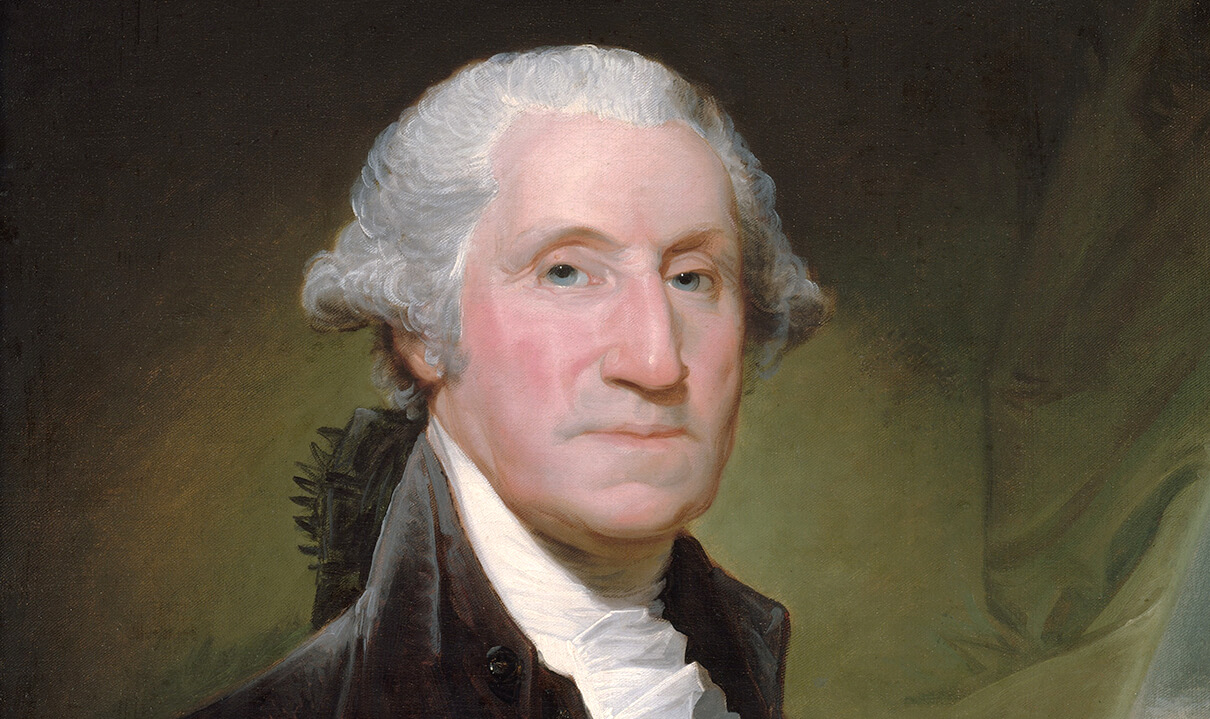
Bob Barr Crosses the Line

Bob Barr Crosses the Line
In a July 8th debate, Congressional candidate Bob Barr accused his opponent, Barry Loudermilk, of a most serious offense. Barr claimed that Loudermilk had accepted the endorsement of a man who’s been “roundly and uniformly criticized, with facts, for taking positions that are anti-Semitic.” That same evening, Barr sent out a tweet calling Loudermilk’s endorser an “anti- Israel anti-Semitic radical.”

In most cases, such accusations should set off alarm bells in the Jewish community. But not so this time. Barr’s charges are not only false, they’re entirely backwards. This alleged hater of Israel and the Jews, David Barton, is actually one of Israel’s most important allies in America today.

The Republican Party continues to be dominated by two overlapping voting blocs: Christian conservatives and tea party conservatives. Among these groups, there are few leaders who are as influential and respected as Barton. Thus as some national figures have endeavored to turn these conservative voters against Israel, Israel’s supporters have turned to Barton for help. It is no exaggeration to say that Barton has played a pivotal role in ensuring that conservatives continue to be among the most pro-Israel voters in America.

My appreciation for David Barton comes not only from what I’ve read about him, but from long hours working with him on behalf of a strong U.S.-Israel relationship. Barton has invited me to his conferences to teach rising conservative leaders about the importance of supporting Israel. And when I’ve needed help organizing leadership missions to Israel, Barton has not only provided me with valuable contacts; he’s volunteered to join me in leading the trips.

I have traveled across Israel multiple times with David Barton. I have seen his joy at the sites of Israel’s triumphs. I’ve seen his resolve in discussions of Israel’s challenges. I’ve seen his tears at Yad Vashem. This man’s support for Israel and the Jewish people is not merely academic, it is visceral. No matter how bad things get for Israel or Jews around the world, I know that David Barton will continue to stand by our side. I wish I could say the same for other prominent leaders I’ve known.

Despite his years of hard work on behalf of Israel, Barton stands accused of anti-Semitism because back in 1991, he spoke at two events – one hosted by Scriptures for America and the other by Kingdom Covenant College – which were allegedly organized by individuals affiliated with the “Christian Identity Movement.” The Anti-Defamation League has accused the Christian Identity Movement of racism and anti-Semitism.

Barton speaks to hundreds of groups across the country every year. He had no knowledge that some involved in these two events were accused of beliefs which he so deeply abhors. Thus his appearance at these events was, at worst, a vetting failure. We should remember, however, that in the pre-Internet days of 1991 such vetting was far more difficult to do, especially with reference to a movement that is typically described as “loosely affiliated” and “shadowy.”

Such guilt by association simply doesn’t work when the nexus is so tenuous. This is exactly why earlier this month Barton won a defamation lawsuit against two Texas politicians who made a claim almost identical to Barr’s. Even Right Wing Watch – a devoted critic of Barton’s Constitutional analysis – has had the decency to note that “We have listened to literally thousands of hours of Barton’s programs and presentations and he can be justifiably criticized for a lot of things, but being anti-Semitic … should not be among them.”

Of course if anyone should be wary of guilt by association, it’s Bob Barr. In 1998 – when there was an internet for easy vetting — Barr himself spoke to a group called the Council of Conservative Citizens. The ADL has accused the CCC of having a “racist agenda.” When the Anti-Defamation league criticized Barr for this appearance, Barr apologized and claimed that he was unaware of these allegations.

While Bob Barr is spreading distortion, David Barton has been teaching truths. Barton has taught me things about the Jewish contributions to America and the American Revolution that I had never known. In fact, Barton was the one who introduced me to one of my favorite quotes from an American Founder.

On July 4, 1788 a parade was held in Philadelphia to celebrate the ratification of the Constitution. Founding father Benjamin Rush attended the parade, and he reported that a diverse group of clergy played a prominent role in its lead. In particular, Rush noted that:

Pains were taken to connect ministers of the most dissimilar religious principles together…. The rabbi of the Jews locked in the arms of two ministers of the Gospel was a most delightful sight. There could not have been a more happy emblem.

This vision of America which David Barton taught me is one to which he has dedicated his life. It is a vision which all Americans should hold sacred. As he flails for traction, Bob Barr should be careful to do no violence to so lofty an ideal.