The 2010 Election: The News Inside the News

David Barton
Traditional media coverage on Election Night provided a general overview of the most obvious political shifts but largely ignored the massive pro-life, pro-family, and conservative gains that occurred. This report will provide a general summary of the elections and will also report many results of particular interest to God-fearing conservative voters.

Federal Election Results: An Historic Shift

On the surface, Republicans did well, gaining more U. S. House seats than in any election for the past 72 years:1

  • In 1938, Republicans picked up 80 seats in the House
  • In 1946, 56 seats
  • In 1966, 47
  • In 1994, 54

Republicans gained 63 seats – the most since 1938. But it would be a mistake to assume that voters simply chose Republicans in this election. To the contrary, like the four previous landmark elections cited above, voters decisively chose to reject the liberalism exuded by national Democrat leaders; Republicans were simply the beneficiaries:

  • In 1938, following six years of President Roosevelt’s “New Deal” expansionism, voters overwhelmingly rejected further growth of the federal government.
  • In 1946, they rejected the revival of the “New Deal” under President Harry Truman.
  • In 1966, following three years of President Johnson’s “Great Society” federal growth, voters halted any further expansion of government.
  • In 1994, they put a stop to President Bill Clinton’s attempt to expand the federal government through “Hillarycare,” also ending his radical social agenda (e.g., lifting the ban on homosexuals in the military, protecting partial-birth abortions, etc.).

Election 2010 was a similar voter repudiation of the explosive growth of federal government under national Democrat leaders (i.e., the takeover of health care and student loans, government bailouts of private businesses, “stimulus” spending bills, etc.); it was also a resounding affirmation of limited government and conservatism, both economic and social.

While some national pundits argued that the Republican victories were the result of an “enthusiasm gap” (that is, Republican voters were highly motivated to go to the polls but Democrat voters were not), such was definitely not the case. In this election, the numbers of voters from each side was exactly equal: 35% of voters were Republican, and 35% were Democrat.2 (In recent elections, the comparative percentage of Democrat and Republican voters has remained relatively close.3) The difference in this election was not a greater turnout of Republicans or a suppressed turnout of Democrats but rather that non-affiliated independent voters overwhelmingly chose conservative candidates (running primarily as Republicans) and rejected liberal ones (represented primarily by Democrats)4 – a 37-point swing in their decision from only four years ago.5

Some additional interesting election statistics:

  • In every state in the nation, self-identified conservatives outnumber self-identified liberals; and in 25 of the states, conservatives outnumbered liberals 2 to 1.6
  • Overall, 42% of voters self-identified as conservative, and 20% as liberal7– a 22% gap. (In 2006 and 2008, it was only a 12% gap.8)
  • Tea Party supporters made up 41% of voters.9
  • Voter turnout was slightly higher in 2010 than in 2006, projected at 42% in this election (i.e., 90 million), which is 6.2 million more than voted in 2006 in the last mid-term election (83.8 million).10 (Mid-term elections are always smaller in turnout than presidential elections, so comparisons are best made of mid-term to mid-term, and presidential to presidential.)
  • Voter turnout increased in nine states, especially Florida, Minnesota, and Texas, but decreased in other states, such as Ohio and Pennsylvania.

Given the conservative nature of voters this election, it is not surprising that the average new freshman in the House and Senate is more conservative than the Member he replaced. In fact, in several states not traditionally conservative, numerous congressional seats switched from liberal to conservative, including Republicans gaining 6 congressional seats in New York; 5 each in Pennsylvania and Ohio; 3 in Illinois; and 2 each in Colorado, Michigan, and Wisconsin. They even gained ground in traditionally conservative states, including 4 more seats in Florida; 3 each in Virginia, Tennessee, and Texas; and 2 each in Arizona, Arkansas, Indiana, Mississippi, and New Hampshire. By the way, in traditionally liberal Wisconsin, not only did liberals lose 2 congressional seats, they also lost a U. S. Senate Seat, the Governorship, the State Senate, and the State House – the only state to lose control of so many levels of government in this election.

While the changes toward conservatism were substantial, nearly all of the national news coverage focused only on fiscal conservatism; but statistics affirm that the election was also about social conservatism. For example, exit polling showed that among conservative voters:

  • When asked what was needed to get America back on track, reducing spending and restoring values were equally important.11
  • A majority of voters said members of Congress and political leaders are ignoring our religious heritage.12
  • 53% of the voters opposed homosexual marriage.13
  • Christian conservatives comprised 28.8 million, or 32% of all voters14– the highest recorded percentage of any election.15

Furthermore:

  • 30% of all voters said that the abortion issue affected their vote; 22% said they voted for pro-life candidates, and 8% for pro-abortion candidates, thus providing pro-life candidates a 14-point advantage over abortion voters.16 That large advantage provided the margin of victory for pro-life candidates in many otherwise close races.

Interestingly, exit polling has long demonstrated that the frequency of church attendance is the best indicator of whether an individual will vote conservative or liberal. As Washington Post writer Thomas Edsall had reported: “Pollsters are finding that one of the best ways to discover whether a voter holds liberal or conservative value stands is to ask: How often do you go to church? Those who go often tend to be Republican, those who go rarely or not at all tend to be Democrat.”17 In 2010, that tendency was again reaffirmed:

  • Among Born-Again or Evangelical voters, 77% voted for Republicans – up 7% from four years ago.18
  • White Protestants voted for Republicans over Democrats by a 69% to 28% margin – up 8% from four years ago.19
  • White Catholics voted for Republicans over Democrats by a 59% to 39% margin – up 10% from four years ago;20 and among all Catholic voters, 54% voted for Republicans, an increase of 12% from two years ago.21

But on the other hand:

  • Those who have no religious affiliation supported Democrats over Republicans by a 68% to 30% margin (although this is an 8% improvement from four years ago).22

Exit polling from this year’s election makes clear that conservative people of faith carried their values with them into the voting booth – something that they did not do two years ago in 2008 (as will be seen below).

Another disappointing number from two years ago was that only 14% of churches provided voter guides or urged parishioners to vote, compared to 27% in 2006. In 2008, WallBuilders created a website (www.ChristianVoterGuide.com and www.Judeo-ChristianVoterGuide.com) in order to make conservative, pro-family state voter guides available to voters in every state. This year, a mailing was sent to 285,000 of the 325,000 houses of worship in America, urging pastors, rabbis, and priests to get voter guides from those websites and distribute them to their congregations or synagogue, resulting in more than 140,000 website hits from that mailing.

Because values mattered to voters, there was more cohesion between economic and social conservatives than in recent elections. Consequently, nearly all the conservative candidates who won this year were not only economic but also social conservatives.

For example, in the U. S. Senate, 16 new freshmen were elected: 3 Democrats and 13 Republicans. (The 3 Democrats all replaced Democrats, and 7 of the 13 Republicans replaced Republicans, with the other 6 replacing Democrats). Of the 13 freshmen Republican Senators, 12 are conservative and pro-life (Mark Kirk of Illinois is not); and of the 3 Democrat freshmen, 1 is pro-life. Thus, 13 of the 16 new Senators are pro-life – an 81% pro-life class. (Compare this year’s freshman Senate class with that of 2008, which was only 14% pro-life.)

Similarly, of the 97 new freshmen in the U. S. House, 81 are pro-life – an 84% pro-life class. In fact, this election resulted in a net gain of 52 pro-life seats in the House! (Of the 97 freshmen, 33 seats showed no change, with 26 pro-life freshman replacing pro-life predecessors, and 7 pro-abortion freshmen replacing the same. There were 3 seats where a pro-abortion freshman replaced a pro-life predecessor, 40 seats where a pro-life freshman replaced a pro-abortion predecessor, an additional 15 seats where a solid pro-life freshman replaced a predecessor with a mixed pro-life voting record, and 6 where the pro-life positions of the freshman are unknown.)23 As a result of the election, Congressman Chris Smith (R-NJ), co-chair of the House Pro-Life Caucus, announced that “January will mark the beginning of the arguably most pro-life House ever.”24 (Compare this year’s freshman House class with that of 2008, which was only 40% pro-life.)

While voters overwhelmingly chose pro-life candidates in this election, apparently, Democrats became increasingly less tolerant of pro-lifers in their own ranks. For example, Democrats for Life raised only $7,989 and gave only $7,309 to 14 candidates,25 while the Republican National Coalition for Life raised almost ten-times as much ($67,152), and gave $77,045 to 60 candidates.26 And in states such as Hawaii, during the Democrat primary in September, most pro-life Democrat incumbents were defeated and replaced with a pro-abortion Democrat. But outside of Democrat-only circles, the general population did elect some proven conservative pro-life Democrats, including Congressmen Mike McIntyre and Heath Shuler of North Carolina.

(By the way, non-liberal Democrats appear to be a shrinking group. Before the election, there were 54 Democrats in the Blue Dog Caucus, which is composed of conservative to moderate Democrat House Members. Only 26 from that group were re-elected.)27

Some other interesting facts about the new Republican freshman class:

  • 2 black Republicans were elected to positions never before held by any black representative. There are 6 new Latino Republicans in Congress (5 in the House, 1 in the Senate), and 9 new female Republicans (8 in the House, and 1 in the Senate). All of these new freshmen are pro-life; and the addition of these new women increases by 60% the number of pro-life women in the U. S. House.
  • 8 freshmen are military veterans, most of whom served in Iraq and Afghanistan.28 They all support victory on the battlefield in both countries and also hold a very strong national security position.29 These 8 more than double the number of like-minded War on Terror veterans already serving in Congress and will form the new Victory Caucus. Significantly, however, every War on Terror veteran who ran as a challenger and who held an anti-war position was defeated, as were 2 incumbent anti-war Iraqi war veterans.30
  • All of the new Republican Latino members ran on the Arizona-style immigration position that the media and liberals so denounce – that is, securing the borders, enforcing existing laws, controlling immigration, and opposing amnesty.
  • The new freshman class is very strongly pro-Israel, replacing many incumbents who were openly critical of Israel.
  • 3 of the new Republican Senate Freshmen (Marco Rubio, Pat Toomey, and Ron Johnson) are openly and unabashedly pro-American Exceptionalism, boldly advocating Americanism, God-given unalienable rights, the Free Market, and constitutionalism.

And finally, there is the Congressional Prayer Caucus. Most citizens are unaware that every week Congress is in session, as votes begin, dozens of congressional Members meet in Room 219 of the Capitol (directly across from the House Chamber) to join together in extended prayer for the country. The Prayer Caucus has been bold in defending religious liberties and public religious expressions, including at the Washington Monument, the Capitol Visitor Center, veterans’ funeral ceremonies, and many other areas where officials had ordered the removal of public acknowledgments of God. (To see something of their admirable work, www.CPCFoundation.com.) Significantly, of the 62 Members of the Congressional Prayer Caucus running for re-election, 61 were returned – a percentage much, much higher than the House at large.

State Election Results

Clearly, the federal election results went heavily in favor of conservatives (and Republicans), but the state level results were even more dramatically pointed in that direction.

There are a total of 99 State legislative chambers (Nebraska has a unicameral government with only one chamber). As the 2010 election began, the balance of power in 25 of those chambers was such that it could change hands. When Election Night ended, Republicans lost control of no chambers but Democrats lost control of 20.

Heading into Election Day, Democrats held 783 more state legislative seats than Republicans, but when the night ended, Republicans held a 523 seat advantage.31 Republicans gained 690 state legislative seats (with several still undecided).32 They not only gained 134 seats in New Hampshire, 41 in Minnesota, 28 in Maine, etc., but they also made massive gains even in chambers where they already held control. For example, Republicans held a slim 77 to 73 majority in the Texas State House, but on Election Night jumped to a 99 to 51 majority. And in Tennessee, the State House went from a 2 seat majority to a 31 seat supermajority. Amazingly, Republicans lost seats in only 5 of the 99 legislative chambers (the Senates of Hawaii, Mississippi, Maryland, and Massachusetts, and the House in Delaware; Republicans were already in the minority in all 5 states).

Republicans currently control both chambers in 25 states, and one chamber in 6 more states. They have not controlled this many legislatures since 1928.33

And just as a number of state legislative chambers changed control, so too did a number of Governors’ Mansions: 15 switched hands, 11 to Republican, 3 to Democrat, and 1 to Independent (one is still undecided). Republican governors currently outnumber Democrat governors by a margin of 29 to 19, with 1 Independent.

Republicans now hold a trifecta (that is, they control the state house, senate, and governorship) in 20 states, while Democrats hold a trifecta in only 11. Several of these new trifectas are historic. For example, the last time Republicans controlled Alabama government, Robert E. Lee was still alive. (Since the election, thirteen Democrat legislators have switched to Republican in states including Alabama, Georgia, Maine, South Dakota, and Louisiana; expect this pattern to be repeated in other states as conservative Democrats feel less and less at home in the Democrat Party.) Minnesota government had never been under Republican control before this election, and North Carolina is now in Republican control for the first time since 1870.

As an interesting aside, the Louisiana House also flipped to Republican control as a result of this year’s election, even though there were no state legislative races in Louisiana. (Louisiana is one of five states, along with Mississippi, Kentucky, Virginia, and New Jersey that hold state elections in the years between federal elections.) Nevertheless, following the nationwide conservative tsunami, a Democrat State House member announced that he was changing parties, thus giving Republicans control of that chamber for the first time since Reconstruction.

State Effects on the Federal Congress

State legislative results have a direct effect on the composition of the federal Congress through the process of decennial redistricting – a process required by the Constitution in Art. 1, Sec. 2, Par. 3. Every ten years, a census is conducted to determine the national population, and the total population is then divided by 435 (the number of Members in the House) to determine the number of citizens in each congressional district. Once that number is ascertained, new congressional lines are drawn and elections are held. In this case, the census was conducted in 2010; state legislatures will redraw lines in 2011; and congressional elections under the new lines will be held in 2012, and those lines will remain in place for the next decade.

Because state legislatures draw the lines in most states, the party that controls the legislature will draw the lines in a manner more favorable to their party. Thus, states like New York make it easier for Democrats to be elected, and states like Texas make it easier for Republicans to be elected. However, redrawing lines becomes especially significant when the population has shifted in such a manner that a state either gains or loses a congressional seat.

Over the past decade, millions of citizens in the north have moved toward the south where the economy is much better. As a result, Texas is gaining 4 congressional seats and Florida 2; Arizona, Georgia, Nevada, South Carolina, Washington, and Utah will each gain 1. Since most of those states are controlled by Republicans, it is likely that lines will be drawn to make it easier to elect Republicans to Congress in these new districts. States losing a congressional seat include Illinois, Iowa, Louisiana, Massachusetts, New Jersey, Michigan, Missouri, and Pennsylvania, and New York and Ohio will lose 2 seats. Since most of the seats to be eliminated are currently held by Democrats, it is likely that Democrat numbers in Congress will be reduced.

As a result of the state legislative changes on election night, the redistricting process could result in a 20-25 seat federal congressional gain for Republicans – a gain that could last for the next decade.

State Judicial Races

Just as conservatives gained control of state legislatures and governorships, they also re-gained control of judiciaries in Alabama, Michigan, North Carolina, Texas, and other states.

One of the most dramatic wins of the night (and one of my personal favorites) was in Iowa, where 3 of the Iowa Supreme Court Justices who handed down a 2009 decision to allow same-sex marriage were turned out of office by the voters. This is the first time in the nearly fifty year history of judicial retention elections in Iowa that any Supreme Court justice was defeated, and in this case, all 3 that appeared on the ballot were defeated.

Significantly, the removal of any judge in a retention election is so rare (99% of all state judges facing retention elections are retained34) that their positions are essentially lifetime appointments. The removal of these liberal judges sent shockwaves throughout the judiciary across the nation, delivering a clear message that voters can and will hold judges accountable if they abandon their traditional role and instead try to become judicial legislators. (To see something of the story behind this remarkable victory, go to DallasBlog.com and read the article by Dr. Richard G. Lee on “Behind the Fall of Iowa’s Judicial Gods.”35)

State Ballot Initiatives

With very few exceptions, voters across the nation expressed conservative positions in their decisions on 160 ballot initiatives in 37 states. For example:

  • Oklahoma said that their judges must base their rulings on federal and state law, not international or Sharia law. (However, an Islamic group has already filed suit against the measure, and a federal judge has granted a temporary injunction in their favor.)
  • Arizona and Oklahoma joined Missouri in allowing their citizens to say “no” to federal health care.
  • Arkansas, South Carolina, and Tennessee approved a constitutional right to hunt, thus pushing back against liberal animal rights groups.
  • California rejected the legalization of marijuana, and Oregon and South Dakota rejected medical marijuana.
  • Arizona, South Carolina, South Dakota, and Utah passed constitutional amendments to protect the right to secret ballots in union elections, pushing back against President Obama’s promise to allow workers to unionize without a secret ballot.
  • Washington rejected a state income tax.
  • Indiana placed a cap on property taxes.
  • Kansas passed a constitutional amendment securing the right of citizens to bear arms.
  • Missouri and Montana voted to prohibit new taxes on the sale of property (i.e., no capital gains taxes on property).
  • California and Washington passed measures making it harder to tax citizens by requiring a legislative supermajority to approve a new tax.
  • Missouri passed a measure that allows citizens to decide on the taxes on their earnings.
  • Nevada rejected a measure to allow lawmakers to change taxes without a vote of the people.
  • Rhode Island overwhelmingly rejected a name change for its state. (This was the second of my personal favorites of the night. The official title of Rhode Island is “State of Rhode Island and Providence Plantations,” given when the two colonies merged in 1663. Liberal legislators asserted that the use of “plantation” was a racist term, despite the fact that Rhode Island’s Governor Stephen Hopkins – a Founding Father and signer of the Declaration – signed America’s first anti-slavery law; and the colony’s founder Roger Williams had excellent relations with American Indians. Rhode Island was long a model of early American justice and civil rights; and citizens overwhelmingly rejected – by a 78% to 22% margin – the liberal attempt to rewrite their state’s history!)

A Few State Disappointments

Despite the numerous conservative victories in states across the nation, there were a few underperforming states, including Arizona, Colorado, Washington, California, and Hawaii. For example, in Arizona, many of the congressional seats that were expected to change hands from liberal to conservative failed to do so, and the state also passed a measure legalizing medical marijuana. Colorado experienced similar statewide underperformance, and their initiative on the unborn failed by a large margin (it was the only pro-life initiative in the nation this year). This is not to say that some conservative gains were not made in most of those states; they were; it is just that they were not nearly as broad as in other states. (By the way, as noted earlier, Hawaii was one of only a handful of states in which conservatives and Republicans actually lost ground. As a result, the current composition of Hawaii’s 25 member state senate is now 24 Democrats and 1 Republican. What a lonely senator!)

A few of the disappointments included:

  • Colorado did not opt out of federal health care mandates, pass tax limitation amendments, approve the personhood amendment, or prohibit the increase of state debt through loans.
  • Massachusetts did not reduce state sales tax from 6.25% to 3%.
  • Arizona passed medical marijuana, and did not protect the right to hunt and fish.
  • Maine narrowly allowed a casino (but opponents have announced a call for a recount).
  • California did not suspend the “Global Warming Act.”
  • Washington voted to allow the state to run its own liquor stores.

Yet notwithstanding these few losses, Election Day was an overwhelming success for God-fearing conservatives, both social and fiscal.

An Interesting Side Note – “Hollywood Stays Home”

Compared to the presidential election of 2008, Hollywood stars stayed out of this election. According to Stephen Zunes, a professor at the University of San Francisco, the Obama administration has not been living up to Hollywood expectations. As he explains, “The more left-wing of the celebrities feel that Obama and the Democrat Congress haven’t been liberal enough (i.e., still in Iraq, escalating in Afghanistan, no single-payer health care (or even public option), no climate legislation, etc.) and are therefore part of the ‘enthusiasm gap’.”36

A Big Loser

Liberals and Democrats were the election’s biggest collective loser, but perhaps the biggest individual loser was George Soros.

Soros is the secularist billionaire who has invested so heavily into severing America from its traditional religious, moral, and constitutional foundations. He has been tactically brilliant, advancing his dangerous agenda through scores of well-coordinated but seemingly unconnected groups, gaining control over numerous powerful but relatively unglamorous political positions that exercise tremendous influence over the direction of the states and thus the nation.

Considered one of the most powerful men on earth, Soros has sought to further his secularist, progressive, socialist agenda by distributing (so far) more than $5 billion through numerous allied groups (e.g., Open Society Institute, Tides Foundation, ACLU, America Coming Together, Media Matters, America Votes, Center for American Progress, MoveOn.org, etc.). Soros unabashedly opposes free market economics, the American military, and our constitutional form of government; seeks a massive expansion of government, including welfare programs, socialized medicine, and amnesty for illegal aliens; supports the elimination of all prisons and the release of all inmates; supports abortion and opposes traditional marriage and all forms of traditional morality; supports anti-American Arab groups and defends anti-American terrorists; opposes tax cuts of any type; opposes American sovereignty and supports complete globalism; promotes radical environmentalism; supports unilateral disarmament and the placing of American foreign policy under the control of the United Nations and the placing of American criminal policy under the control of the World Court; etc.37

Much of Soros’ effort to fundamentally transform America has occurred at the state level by seeking to place his like-minded operatives into the more unglamorous but nevertheless influential political positions of state judges and secretaries of state, and he also works heavily for the passage of specific state ballot initiatives. Soros had experienced almost unbridled success in recent elections, but in 2010, his agenda became one of the biggest election losers.

For example, he has already spent over $45 million38 to “remake the judiciary and fundamentally change the way judges are selected.”39 His plan is to move state judges as far away from voters as possible, having judges chosen instead by groups of elitist lawyers appointed by the governor or some other state official.40 After being appointed, the judges only have to face the voters in periodic retention elections – a plan that, as noted above, amounts essentially to a lifetime appointment.41 Soros wants judges to be unaccountable to, and independent from citizens – much in the same way that federal judges in recent decades have also wrongly become independent and unaccountable. But not only did Soros suffer a setback with the Iowa judges being turned out, but in Nevada, the Soros-backed initiative on appointing rather than electing judges was overwhelmingly rejected by a 57% to 42% margin.42

(By the way, other Soros-supported ballot initiatives that lost on Election Night included California’s plan to legalize marijuana, and its plan to keep redistricting in the hands of the extremely liberal Democrat state legislature rather than in the hands of a citizens’ commission.43 Gratefully, several Soros-backed measures went down at the hands of the people.)

In addition to Soros’ judicial activities, another area in which he is heavily involved is his “Secretary of State Project,”44 which is his effort “to elect Secretaries of State around the country willing to impose Democrat-friendly election laws in an attempt to tilt the playing field in their favor on Election Day.”45 Soros clearly understands the axiom delivered long ago by Communist leader Joseph Stalin, who declared: “The people who cast the votes decide nothing. The people who count the votes decide everything.”46

Consider how Soros’ involvement with secretaries of states impacted the 2008 U. S. Senate race between Democrat Al Franken and Republican Norm Coleman. The Secretary of State who oversaw the recount was Mark Ritchie, a Soros-backed official. Ritchie was so overtly partisan during the recount that even national newspapers questioned the integrity of the recount process, noting that almost all of the voting “errors” that Ritchie “discovered” in the state went in Franken’s favor.47 As the Wall Street Journal reported:

Mr. Franken’s gains so far are 2.5 times the corrections made for Barack Obama in the state, and nearly three times the gains for Democrats across Minnesota Congressional races. . . . Mr. Franken’s “new” votes equal more than all the changes for all the precincts in the entire state for the Presidential, Congressional and statehouse races combined.48

Soros’ “Secretary of State Project” was undertaken to “tilt the playing field in the Democrats’ direction,” and Soros’ Mark Ritchie certainly did that.

Another example is Soros-backed Colorado Secretary of State Bernie Buescher. When the attempt was made to place a pro-life personhood initiative on the ballot this election, Buescher unilaterally changed the normal rules of engagement, actually shortening the normal time allotted to collect signatures for that measure, thus making it much more difficult to get it before the people.49

It is clear why Soros has focused so much money on gaining the positions of secretaries of state (as well as of judges and ballot initiatives): they have significant impact in moving forward a secular progressive agenda with less interference from the people. Nevertheless, despite Soros’ efforts, 17 of the 26 secretaries of state up for election this year were won by Republicans;50 and several Soros-backed candidates lost or were voted out of office.

Thankfully, at the level of state judges, secretaries of state, and state ballot initiatives, George Soros’ anti-American agenda was one of the biggest losers on Election Night!

Some Other Pro-Family Victories

The biggest winner on Election Night was definitely America’s conservative pro-family voter. And in addition to the numerous gains already mentioned (e.g., in the federal Congress, state legislatures, and ballot initiatives), there were also many other momentous pro-family victories that night.

For example, last year in 2009, Maine legislators passed and the governor signed a gay marriage law, but citizens objected and mounted a drive to place the issue on the ballot. The necessary signatures were gathered, and in November 2009, citizens vetoed the gay marriage law passed by the legislature. In this election, voters continued to make their voice heard on this issue, replacing 22 of the legislators who had voted for same-sex marriage last year with 22 who supported traditional marriage; they also elected a new governor who supports traditional marriage. With this change, traditional marriage in Maine is now safe for the foreseeable future.

Similarly, New Hampshire passed a gay marriage law in early 2010; but this election likewise removed dozens of legislators who had supported the law (recall that an amazing 134 seats changed hands), placing both the House and the Senate into the hands of conservative Republicans. Plans are currently underway to secure a vote on a constitutional amendment to permanently ban homosexual marriage.

In Minnesota, the new Republican controlled house and senate now ensure that a homosexual marriage initiative will not make it through that legislature.

In El Paso, Texas, city leaders had given medical benefits to gay partners of city employees, but voters rolled back that policy by a 55% to 45% margin.51

And because of the gains in Missouri, of the 34 members of the state senate, 29 are now pro-life; and of the 163 members of the state house, at least 126 are now pro-life, thus making Missouri a rock-solid, pro-life, veto-proof legislature.

— — — ◊ ◊ ◊ — — —
Reviewing this year’s election results makes it seem as if citizens had taken their marching orders from President Ronald Reagan’s speech of March 8, 1985, in which he declared:

I said, “This is a wonderful time to be alive,” and I meant that. I meant that we’re lucky not to live in pale and timid times. We’ve been blessed with the opportunity to stand for something – for liberty and freedom and fairness. And these are things worth fighting for – worth devoting our lives to. And we have good reason to be hopeful and optimistic. We’ve made much progress already. So, let us go forth with good cheer and stout hearts – happy warriors out to seize back a country and a world to freedom.

Voters this year did indeed seem to be happy warriors, taking back their country to freedom.

But as voters, we have to remember that this election was not an event – it was only a single step in a lifelong process of involvement and civic engagement, requiring us not only to be involved in every election but also to always carry our conservative religious, moral, and constitutional values with us as we vote (and we must also stay actively involved between elections). To use President Reagan’s phrase, “we’ve made much progress”; but really we have only just begun. So let’s stay engaged and finish the job, no matter what happens or how long it takes.

God bless!

David Barton


Endnotes

1 “The Four-Year Majority,” Wall Street Journal, November 3, 2010 (at: https://online.wsj.com/article/SB10001424052748704462704575590871101994524.html?mod=WSJ_hpp_RIGHTTopCarousel_1).

2 “CNN National Exit Polls, Election 2010,” CNN.com (at: https://www.cnn.com/ELECTION/2010/results/polls/#USH00p1) (accessed on November 19, 2010).

3 See “CNN National Exit Polls, Election 2006,“ CNN.com (at:
https://us.cnn.com/ELECTION/2006/pages/results/states/US/H/00/epolls.0.html
);
“CNN National Exit Polls, Election 2008,” CNN.com (at:
https://www.cnn.com/ELECTION/2008/results/polls/#USP00p1
).

4 In 2010, 37% of Independents voted Democrat and 56% voted Republican. See “CNN National Exit Polls, Election 2010,” CNN.com (at: https://www.cnn.com/ELECTION/2010/results/polls/#USH00p1). This was quite a reversal from previous elections. For example, in 2008, 52% of Independents voted Democrat and 44% voted Republican. See “CNN National Exit Polls, Election 2008,” CNN.com (at:
https://www.cnn.com/ELECTION/2008/results/polls/#USP00p1
). In 2006, 57% of Independents voted Democrat and 39% voted Republican. See “CNN National Exit Polls, Election 2006,” CNN.com (at:
https://us.cnn.com/ELECTION/2006/pages/results/states/US/H/00/epolls.0.html
).

5 From the 2006 midterm elections to the 2010 elections, there was a 37 point swing in favor of the Republican Party; and from the 2008 to the 2010 elections, there was a 27 point swing in favor of the Republican Party. It was these Republican-voting independents who gave the winning margin to conservatives, represented especially by Republicans, in the 2010 elections. See “CNN National Exit Polls, Election 2010,” CNN.com (at: https://www.cnn.com/ELECTION/2010/results/polls/#USH00p1); “CNN National Exit Polls, Election 2006,” CNN.com (at:
https://us.cnn.com/ELECTION/2006/pages/results/states/US/H/00/epolls.0.html
). “CNN National Exit Polls, Election 2008,” CNN.com (at:

https://www.cnn.com/ELECTION/2008/results/polls/#USP00p1
).

6 Lydia Saad, “Political Ideology: “Conservative” Label Prevails in the South,” Gallup.com, August 14, 2009 (at: https://www.gallup.com/poll/122333/Political-Ideology-Conservative-Label-Prevails-South.aspx#2).

7 CNN National Exit Polls, Election 2010, CNN.com (at: https://www.cnn.com/ELECTION/2010/results/polls/#USH00p1) (accessed on November 19, 2010).

8 CNN National Exit Polls, Election 2006, CNN.com
https://us.cnn.com/ELECTION/2006/pages/results/states/US/H/00/epolls.0.html
, (accessed on November 19, 2010);
“CNN National Exit Polls, Election 2008,” CNN.com (at:
https://www.cnn.com/ELECTION/2008/results/polls/#USP00p1
) (accessed on November 19, 2010).

9 “CNN National Exit Polls, Election 2010,” CNN.com (at: https://www.cnn.com/ELECTION/2010/results/polls/#USH00p1) (accessed on November 19, 2010).

10 Matthew Daly, “Voter turnout increases from last midterm in 2006,” WashingtonPost.com, November 3, 2010 (at: https://www.washingtonpost.com/wp-dyn/content/article/2010/11/03/AR2010110305169.html).

11 “FFC National Survey,” FFCoalition.com, November 3, 2010 (at: https://www.ffcoalition.com/2010/11/03/ffc-national-survey/).

12 “FFC National Survey,” FFCoalition.com, November 3, 2010 (at: https://www.ffcoalition.com/2010/11/03/ffc-national-survey/).

13 “CNN National Exit Polls, Election 2010,” CNN.com (at: https://www.cnn.com/ELECTION/2010/results/polls/#USH00p1) (accessed on November 19, 2010).

14 “FFC National Survey,” Faith and Freedom Coalition, November 3, 2010 (at: https://www.ffcoalition.com/2010/11/03/ffc-national-survey/).

15 “FFC National Survey,” FFCoalition.com, November 3, 2010 (at: https://www.ffcoalition.com/2010/11/03/ffc-national-survey/).

16 Dave Andrusko, “Abortion, Abortion Funding, Public Opinion, and the Mid-Term Elections,” National Right to Life News, November 3, 2010 (at: https://www.nrlc.org/News_and_Views/Nov10/nv110310part2.html).

17 Thomas B. Edsall, “Voter Values Determine Political Affiliation,” Washington Post, March 26, 2001 (at: https://www.washingtonpost.com/ac2/wp-dyn/A56905-2001Mar25).

18 Pew Forum on Religion & Public Life, “Religion in the 2010 Elections,” Pew Research Center Publications, November 3, 2010 (at: https://pewresearch.org/pubs/1791/2010-midterm-elections-exit-poll-religion-vote).

19 Pew Forum on Religion & Public Life, “Religion in the 2010 Elections,” Pew Research Center Publications, November 3, 2010 (at: https://pewresearch.org/pubs/1791/2010-midterm-elections-exit-poll-religion-vote).

20 Pew Forum on Religion & Public Life, “Religion in the 2010 Elections,” Pew Research Center Publications, November 3, 2010 (at: https://pewresearch.org/pubs/1791/2010-midterm-elections-exit-poll-religion-vote).

21 Pew Forum on Religion & Public Life, “Religion in the 2010 Elections,” Pew Research Center Publications, November 3, 2010 (at: https://pewresearch.org/pubs/1791/2010-midterm-elections-exit-poll-religion-vote).

22 Pew Forum on Religion & Public Life, “Religion in the 2010 Elections,” Pew Research Center Publications, November 3, 2010 (at: https://pewresearch.org/pubs/1791/2010-midterm-elections-exit-poll-religion-vote).

23 Dianne Edmondson, “Pro-Life Victories Are Sweet!” Republican National Coalition for Life E-Notes, November 5, 2010 ( at: https://www.rnclife.org/e-notes/2010/nov10/10-11-05.html).

24 “Rep. Smith: New U.S. House Arguably Most Pro-Life Ever,” LifeSiteNews.com, November 5, 2010 (at: https://www.lifesitenews.com/ldn/2010/nov/10110501.html).

25 “Committee (C00414219) Summary Reports – 2009-2010 Cycle, DEMOCRATS FOR LIFE OF AMERICA INC PAC,” Federal Election Commission (at: https://query.nictusa.com/cgi-bin/cancomsrs/?_10+C00414219) (accessed on November 21, 2010); “Committees And Candidates Supported/Opposed, DEMOCRATS FOR LIFE OF AMERICA INC PAC,” Federal Election Commission (at: https://query.nictusa.com/cgi-bin/com_supopp/2009_C00414219) (accessed on November 21, 2010).

26 “Committee (C00255406) Summary Reports – 2009-2010 Cycle, REPUBLICAN NATIONAL COALITION FOR LIFE POLITICAL ACTION COMMITTEE,” Federal Election Commission (at: https://query.nictusa.com/cgi-bin/cancomsrs/?_10+C00255406) (accessed on November 21, 2010); “Committees And Candidates Supported/Opposed, REPUBLICAN NATIONAL COALITION FOR LIFE POLITICAL ACTION COMMITTEE,” Federal Election Commission (at: https://query.nictusa.com/cgi-bin/com_supopp/2009_C00255406) (accessed on November 21, 2010). A letter from Dianne Edmondson, Executive Director of the Republican National Coalition for Life, confirmed that the RNCL PAC contributed to 60 candidates in this election cycle.

27 Matthew Shaffer, “Blue Dog Dems: How Did They Fare?” National Review Online, November 3, 2010 (at: https://www.nationalreview.com/corner/252400/blue-dog-dems-how-did-they-fare-matthew-shaffer).

28 “Elected Candidates from Operation 10-in-10,” Vets for Freedom Political Action Committee (at: https://www.vetsforfreedom.org/pac/Operation10-in-10/) (accessed November 24, 2010).

29 All eight freshmen veterans were endorsed by the VFF-PAC, whose mission is “to help Iraq & Afghanistan veterans – who believe in succeeding on the battlefield and in advancing strong U. S. national security policies – get elected to the United States Congress.” “VFF-PAC Mission,” Vets for Freedom Political Action Committee (at: https://www.vetsforfreedom.org/pac/about/) (accessed November 24, 2010).

30 Pete Hegseth, “The New Victory Caucus in Congress,” National Review Online, November 4, 2010 (at: https://www.nationalreview.com/corner/252476/new-victory-caucus-congress-pete-hegseth).

31 Greg Janetka, “Most states which saw legislative chambers switch to Republican were won by Obama in 2008,” Ballotpedia, November 4, 2010 (at: https://ballotpedia.org/wiki/index.php/Most_states_which_saw_legislative_chambers_switch_to_Republican_were_won_by_Obama_in_2008).

32 “Republicans Exceed Expectations in 2010 State Legislative Elections,” National Conference of State Legislatures, November 3, 2010 (at: https://ncsl.org/?tabid=21634); see also “Dem State Lawmakers Defecting To GOP Post-election,” CBSNews.com, November 29, 2010 (at: https://www.cbsnews.com/stories/2010/11/29/ap/national/main7100495.shtml).

33 Huma Khan, “Will Redistricting Be a Bloodbath for Democrats?” ABC News, November 4, 2010 (at: https://abcnews.go.com/Politics/republicans-historic-win-state-legislatures-vote-2010-election/story?id=12049040).

34 David W. Neubauer and Stephen S. Meinhold, Judicial Process: Law, Courts, and Politics in the United States, Fifth Edition (Boston: Wadsworth Cengage Learning, 2010), p. 187 (at: https://books.google.com/books?id=qG9K5q7Q9NQC).

35 Dr. Richard G. Lee, “Behind the Fall of Iowa’s Judicial Gods,” DallasBlog.com, November 23, 2010 (at: https://www.dallasblog.com/201011231007382/guest-viewpoint/behind-the-fall-of-iowa-s-judicial-gods.html).

36 Hollie McKay, “Liberal Hollywood Quiet for 2010 Midterm Elections, Experts Say,” Fox News, October 26, 2010 (at: https://www.foxnews.com/entertainment/2010/10/26/hollywood-celebrities-vote-elections-midterms-enthusiasm-gap/).

37 “Guide to the George Soros Network,” Discover The Networks (at: https://www.discoverthenetworks.org/viewSubCategory.asp?id=589) (accessed on November 19, 2010); Glenn Beck, “Soros Exposed: Research on the Progressive Puppet Master,” GlennBeck.com, November 11, 2010 (at: https://www.glennbeck.com/content/articles/article/198/47856/);
“Organizations Funded Directly by George Soros and his Open Society Institute,” Discover The Networks, July 2007 (at: https://www.discoverthenetworks.org/Articles/orgsfundeddirectly%20.html).

38 “Justice Hijacked,” A report published by American Justice Partnership, September 2010 (at:
https://www.americanjusticepartnership.com/hijacked.php
).

39 Bob Unruh, “Report: Soros spent millions to ‘undermine’ judiciary,” WorldNetDaily,
September 09, 2010 (at: https://www.wnd.com/?pageId=201409).

40 Bob Unruh, “Exposed! George Soros’ scheme for ‘elite’ judiciary,” WorldNetDaily, October 30, 2010 (at: https://www.wnd.com/?pageId=220849).

41 David W. Neubauer and Stephen S. Meinhold, Judicial Process: Law, Courts, and Politics in the United States, Fifth Edition (Boston: Wadsworth Cengage Learning, 2010), p. 187 (at: https://books.google.com/books?id=qG9K5q7Q9NQC).

42 Tom McClusky, “Altered States: Pro-family victories were seen everywhere,” The Cloakroom, the Blog of FRC Action, November 5, 2010 (at: https://www.thecloakroomblog.com/2010/11/altered-states-pro-life-victories-were-seen-everywhere/).

43 “Soros-Sponsored Candidates, Ballot Initiatives Go Down on Election Day,” Fox News, November 4, 2010 (at: https://www.foxnews.com/politics/2010/11/04/soros-sponsored-candidates-ballot-initiatives-election-day/).

44 “‘Secretary of State Project’ Website” (at: https://www.secstateproject.org/).

45 Mark Hemingway, “You know who was a big loser in this election? George Soros.” Washington Examiner, November 3, 2010 (at: https://www.washingtonexaminer.com/opinion/blogs/beltway-confidential/you-know-who-was-a-big-loser-in-this-election-george-soros-106640398.html).

46 Matthew Vadum, “Soros-supported ‘Secretary of State Project’ dealt blow in midterm elections,” The Daily Caller, November 9, 2010 (at: https://dailycaller.com/2010/11/09/soros-supported-secretary-of-state-project-dealt-blow-in-midterm-elections/).

47 Ed Lasky, “The Soros Connection in the Minnesota Senate Race Vote Count,” American Thinker, November 17, 2008 (at: https://www.americanthinker.com/2008/11/the_soros_connection_in_the_mi.html).

48 “Mischief in Minnesota?” Review & Outlook, The Wall Street Journal, November 12, 2008 (at: https://online.wsj.com/article/SB122644940271419147.html).

49 “Colorado deadline for personhood amendment moved up,” Ballotpedia, January 25, 2010 (at: https://www.ballotpedia.org/wiki/index.php/Colorado_deadline_for_personhood_amendment_moved_up). There were so many complications created by Buescher, including the failure to communicate ID rules to notaries, that it resulted in a voter lawsuit against him over his actions on this initiative.

50 Mark Hemingway, “You know who was a big loser in this election? George Soros.” Washington Examiner, November 3, 2010 (at: https://www.washingtonexaminer.com/opinion/blogs/beltway-confidential/you-know-who-was-a-big-loser-in-this-election-george-soros-106640398.html).

51 Marty Schladen, “City ready to reverse partner benefits vote,” El Paso Times, November 16, 2010 (at: https://www.elpasotimes.com/news/ci_16613774).

The White House Attack on Religion Continues: Repealing Conscience Protection

by David Barton

Some of the first acts of the Obama presidential administration make it clear that there has been a dramatic change in the way that traditional religious faith is going to be handled at the White House. For example, when the White House website went public immediately following President Obama’s inauguration, it dropped the previously prominent section on the faith-based office.

A second visible change was related to hiring protections for faith-based activities and organizations. On February 5, 2009, President Obama announced that he would no longer extend the same unqualified level of hiring protections observed by the previous administration but instead would extend those traditional religious protections to faith-based organizations only on a “case-by-case” basis.1

Significantly, hiring protections allow religious organizations to hire those employees who hold the same religious convictions as the organization. As a result, groups such as Catholic Relief Services can hire just Catholics; and the same is true with Protestant, Jewish, and other religious groups. With hiring protections, religious groups cannot be forced to hire those who disagree with their beliefs and values – for example, Evangelical organizations cannot be required to hire homosexuals, pro-life groups don’t have to hire pro-choice advocates, etc.

Hiring protections are inherent within the First Amendment’s guarantee for religious liberty and right of association, and were additionally statutorily established in Title VII of the 1964 Civil Rights Act. Congress subsequently strengthened those protections, declaring that any “religious corporation, association, education institution, or society” could consider the applicants’ religious faith during the hiring process.2 The Supreme Court upheld hiring protections in 1987,3 and Congress has included those protections in numerous federal laws.4 But when Democrats regained Congress in 2007, on a party-line vote they began removing hiring protections for faith-based organizations.5

The current concern about the weakening of traditional faith-based hiring protections was heightened when the White House announced President Obama’s commitment to “pass the Employment Non-Discrimination Act, to prohibit discrimination based on sexual orientation.”6 This act fully repeals faith-based hiring protections related to Biblical standards of morality and behavior, thus directly attacking the theological autonomy of churches, synagogues, and every other type of religious organization by not allowing them to choose whether or not they want to hire homosexuals onto their ministry staffs.

The administration’s third attack on religion occurred in the President’s stimulus bill, which included a provision specifically denying stimulus funds to renovate higher educational facilities “(i) used for sectarian instruction or religious worship; or (ii) in which a substantial portion of the functions of the facilities are subsumed in a religious mission.”7 As Republican Senator Jim DeMint (SC) explained, “any university or college that takes any of the money in this bill to renovate an auditorium, a dorm, or student center could not hold a National Prayer Breakfast.”8 Sen. DeMint therefore introduced an amendment to “allow the free exercise of religion at institutions of higher education that receive funding,”9 but his amendment was defeated along a party-line vote.

The fourth attack on tradition religious faith appeared in President Obama’s 2010 proposed budget, which included a seven-percent cut in the deduction for charitable giving. Experts calculate that this will result in a drop of $6 billion in contributions to charitable organizations, including to religious groups.10

The fifth attack was the White House’s announcement that it will repeal conscience protection for health care workers who refuse to participate in abortions or other health activities that violate their consciences.11

In order to fully understand the far-reaching ramifications of this announcement, it will be helpful to review the history of conscience protection in the United States.

— — — ◊ ◊ ◊ — — —

Today’s liberals and secularists attempt to relegate the effects of America’s Judeo-Christian heritage exclusively to the realm of a personal theological choice, ignoring the fact that Judeo-Christian teachings also encompass a philosophy of living that is directly proportional to the degree of civil liberty enjoyed in a society. Early statesman Dewitt Clinton (1769-1828) correctly recognized that Biblical faith applies not just “to our destiny in the world to come” but also “in reference to its influence on this world,” and therefore must always “be contemplated in [these] two important aspects.”12

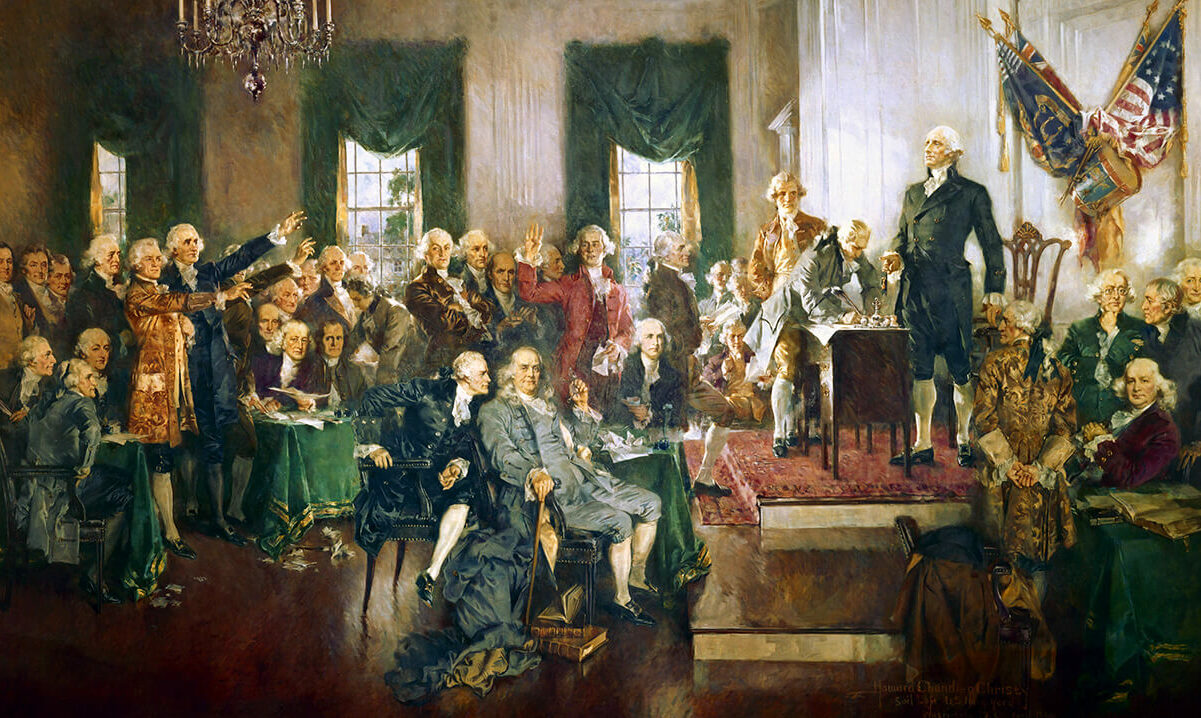
While today’s post-modern critics refuse to acknowledge the dual aspects of Judeo-Christian faith, America’s Framers wisely recognized and heartily endorsed the influence of those teachings on the civil arena – especially on the formation of America’s unique republican (i.e., elective ) form of government:

The Bible. . . . [i]s the most republican book in the world.13 JOHN ADAMS, SIGNER OF THE DECLARATION, FRAMER OF THE BILL OF RIGHTS, U. S. PRESIDENT

I have always considered Christianity as the strong ground of republicanism. . . . It is only necessary for republicanism to ally itself to the Christian religion to overturn all the corrupted political . . . institutions in the world.14 BENJAMIN RUSH, SIGNER OF THE DECLARATION, RATIFIER OF THE U. S. CONSTITUTION

[T]he genuine source of correct republican principles is the Bible, particularly the New Testament or the Christian religion. . . . and to this we owe our free constitutions of government.15 NOAH WEBSTER, REVOLUTIONARY SOLDIER, LEGISLATOR, JUDGE

They . . . who are decrying the Christian religion . . . are undermining . . . the best security for the duration of free governments.16 CHARLES CARROLL, SIGNER OF THE DECLARATION, FRAMER OF THE BILL OF RIGHTS

[T]o the free and universal reading of the Bible . . . men were much indebted for right views of civil liberty.17 DANIEL WEBSTER, “DEFENDER OF THE CONSTITUTION”

Scores of other Framers, statesmen, and courts made similarly succinct declarations about how the Judeo-Christian Scriptures not only shaped republicanism18 but also many other unique aspects of our civil culture.

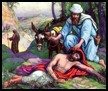
For example, when Benjamin Franklin founded America’s first hospital, he chose the Bible’s story of the Good Samaritan for its logo, with the passage from Luke 10:35 beneath: “Take care of him and I will repay thee.” Significantly, it was Jesus Who not only taught that it was proper to help the hurt (Luke 10:25-37) but He also taught that it was proper to feed the hungry, befriend the stranger, clothe the needy, visit the bedridden, and support the imprisoned (Matthew 25:34-40) – and to do so for strangers (Luke 10:27-37) as well as for enemies (Matthew 9:35-39). His teachings provide the true standard for charitable relief and civil benevolence.

the-white-house-attack-on-religion-continues-repealing-conscience-protection-5

Scriptural teachings were so important to society at large that America’s most famous public school textbooks taught students Biblical teachings such as the Good Samaritan;19 and even today, states continue to pass “Good Samaritan” statutes to protect willing volunteers (i.e., Good Samaritans) from legal liability for good-faith assistance efforts. Incontrovertibly, Biblical teaching such as the Good Samaritan, the Golden Rule (“Do unto others and you would have them do unto you” Matthew 7:12), and many others have elevated the culture; and even though these specific teachings are exclusive to Christianity, their primary application is to civil society.

The Framers thus properly recognized Christian teachings as the basis of America’s great civil benevolence – its unprecedented willingness to help others:

Christian benevolence makes it our indispensable duty to lay ourselves out to serve our fellow-creatures to the utmost of our power.20 JOHN ADAMS

[T]he doctrines promulgated by Jesus and His apostles [include] lessons of peace, of benevolence, of meekness, of brotherly love, [and] of charity.21 JOHN QUINCY ADAMS, U. S. PRESIDENT

Let the religious element in man’s nature be neglected . . . and he becomes the creature of selfish passion. . . . [T]he cultivation of the religious sentiment . . . incites to general benevolence.22 DANIEL WEBSTER

Christianity . . . introduce[ed] a better and more enlightened sense of right and justice. . . . It taught the duty of benevolence to strangers.23 JAMES KENT, “FATHER OF AMERICAN JURISPRUDENCE”

The Christian philosophy, in its tenderness for human infirmities, strongly inculcates principles of . . . benevolence.24 RICHARD HENRY LEE, SIGNER OF THE DECLARATION, FRAMER OF THE BILL OF RIGHTS

Significantly, nations that are primarily secular in their orientation (or those predominated by non-Judeo-Christian religions such as Islam, Hinduism, Zoroastrianism, Buddhism, Shinto, Confucianism, Jainism, Taoism, Sikhism, Bahá’í, Diasporic, Juche, etc.) rarely become involved in benevolent endeavors, and certainly are not aggressive in organizing humanitarian relief. In fact, when the massive tsunami devastated Muslim Indonesia in 2004, other Muslim nations did little to assist a nation of their own faith, yet America – even though considered by Indonesia’s dominant religion to be the “Great Satan” – was quickly on the scene, providing assistance in money, supplies, labor, and technology.

The benevolence that characterizes America – the compassion and humanitarianism that we have inculcated into our culture – is the unique product of the Bible; and non- and even anti-religious Americans have been trained in Biblical benevolence as characteristic of our culture (even if they do not recognize the source of that principle!).

The Ten Commandments provide another example of Biblical teachings that are also primarily societal. As our early leaders noted:

If “Thou shalt not covet,” and “Thou shalt not steal,” were not commandments of Heaven, they must be made inviolable precepts in every society before it can be civilized or made free.25 JOHN ADAMS

The law given from Sinai was a civil and municipal as well as a moral and religious code . . . laws essential to the existence of men in society and most of which have been enacted by every nation which ever professed any code of laws.26 JOHN QUINCY ADAMS

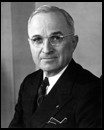
The fact that Biblical teachings provided so many positive effects on society has been understood by American leaders for over two centuries. For example, President Harry S. Truman acknowledged:

the-white-house-attack-on-religion-continues-repealing-conscience-protection-8

The fundamental basis of this Nation’s law was given to Moses on the Mount. The fundamental basis of our Bill of Rights comes from the teachings which we get from Exodus and St. Matthew, from Isaiah and St. Paul. I don’t think we emphasize that enough these days.27

President Teddy Roosevelt agreed:

The Decalogue and the Golden Rule must stand as the foundation of every successful effort to better either our social or our political life.28

In short, the Judeo-Christian system is the basis of many of our cherished civil traits – including our current affection for and commitment to protecting the RIGHTS OF CONSCIENCE.

According to America’s first dictionary, “CONSCIENCE” is:

Internal judgment of right and wrong; the principle within us that decides on the lawfulness or unlawfulness of our own actions and instantly approves or condemns them. Conscience is first occupied in ascertaining our duty before we proceed to action, then in judging of our actions when performed. Conscience is called by some writers the moral sense.29

That dictionary then gave a Biblical example to illustrate the meaning of the word:

Being convicted by their own conscience, they went out one by one. John 8.30

Significantly, Christ and His Apostles made the rights of conscience a repeated subject of emphasis, with thirty references to that topic in the New Testament alone. The warning is even issued that if an individual “wounds a weak conscience of another, you have sinned” (1 Corinthians 8:12). Christians were therefore instructed to respect the differing rights of conscience (v. 13). (See also I Corinthians 10:27-29.) Christianity set forth clear protection for the rights of conscience.

However, in the twelve centuries that comprised the Dark Ages, the church sadly abandoned those doctrines; but beginning in the fifteenth century, Biblical leaders began to re-embrace those original teachings. As a result, Menno Simons in Friesland (central Europe),31 Jacobus Arminius in Netherlands,32 John Calvin in France,33 and others, advocated a return to protection for the rights of conscience. Subsequent writers, including Christian philosophers such as John Locke and Charles Montesquieu, also encouraged protection for the rights of conscience that had been reintroduced by Christian leaders.34

Those renewed Biblical teachings on protecting the rights of conscience were eventually carried to America, where they took root and grew to maturity at a rapid rate, having been planted in virgin soil completely uncontaminated by the apostasy of the previous twelve centuries. Hence, Christianity – especially as imported to America – became the world’s single greatest historical force in securing non-coercion and the rights of conscience.

For example, in 1640 when the Rev. Roger Williams established Providence, he penned its governing document declaring:

We agree, as formerly hath been the liberties of the town, so still, to hold forth liberty of conscience.35

Similar protections also became part of subsequent early American documents, including the 1649 Maryland “Toleration Act,”36 the 1663 charter for Rhode Island,37 the 1664 Charter for Jersey,38 the 1665 Charter for Carolina,39 and the 1669 Constitutions of Carolina.40 Christian minister William Penn incorporated the same protections into the governing documents he authored, including in 1676 for West Jersey,41 in 1682 for Pennsylvania,42 and in 1701 for Delaware.43 There are many additional examples.

Historically speaking, it was the followers of Biblical Christianity who vigorously pursued and first achieved the protection for the rights of conscience that subsequently became a central characteristic of the American civil fabric. Even Roscoe Pound (1870-1964; a professor at four different law schools and the Dean of the law schools at Harvard and the University of Nebraska) acknowledged that it was the Biblical-minded Puritans who first brought these rights to the forefront of civil protection;44 and in the words of an 1824 court:

[B]efore [the American colonial] period, the principle of liberty of conscience appeared in the laws of no people, the axiom of no government, the institutes of no society, and scarcely in the temper of any man.45

So thoroughly was American thinking inculcated with protecting conscience that when America separated from Great Britain in 1776, the original state constitutions immediately secured the rights of conscience so long expounded by Christian leaders. (See, for example, the constitutions of Virginia, 1776;46 Delaware, 1776;47 North Carolina, 1776;48 Pennsylvania, 1776;49 New Jersey, 1776;50 Vermont, 1777;51 New York, 1777;52 South Carolina, 1778;53 Massachusetts, 1780;54> New Hampshire, 1784;55 etc.)

America’s Framers openly praised those protections. For example, Governor William Livingston (a devout Christian and a signer of the U. S. Constitution) declared:

Consciences of men are not the objects of human legislation.56

John Jay (an author of the Federalist Papers, original Chief Justice of the U. S. Supreme Court, and President of the American Bible Society) likewise rejoiced that:

Security under our constitution is given to the rights of conscience.57

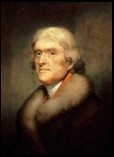
Thomas Jefferson (a signer of the Declaration and a U. S. President) repeatedly praised America’s protections for the rights of conscience:

the-white-house-attack-on-religion-continues-repealing-conscience-protection-10

No provision in our Constitution ought to be dearer to man than that which protects the rights of conscience.58

[O]ur rulers can have no authority over such natural rights only as we have submitted to them. The rights of conscience we never submitted.59

A right to take the side which every man’s conscience approves . . . is too precious a right – and too favorable to the preservation of liberty – not to be protected.60

It is inconsistent with the spirit of our laws and Constitution to force tender consciences.61

James Madison (a signer of the Constitution, a framer of the Bill of Rights, and a U. S. President) similarly affirmed:

Government is instituted to protect property of every sort. . . . [and] conscience is the most sacred of all property.62

Clearly, the right of conscience was a precious right under our Constitution. Today, the safeguards for the rights of conscience originally pioneered by Christian leaders now appear in forty-seven state constitutions and have been extended to cover many diverse areas of life. Consequently:

  • pacifists and conscientious objectors are not forced to fight in wars;63
  • Jehovah’s Witnesses are not required to say the Pledge of Allegiance in public schools;64
  • the Amish are not required to complete the standard compulsory twelve years of education;65
  • Christian Scientists are not forced to have their children vaccinated or undergo medical procedures often required by state laws;66
  • Muslim and Jewish men are not required to shave their beards in jobs that otherwise require employees to be clean-shaven;67
  • Seventh-Day Adventists cannot be penalized for refusing to work at their jobs on Saturday;68

and there are many additional examples.

America has a centuries-long and cherished tradition of protection for the rights of conscience, but President Obama has announced that he will rescind regulations protecting those rights for medical workers.

Significantly, immediately after the Supreme Court’s Roe v. Wade abortion-on-demand decision, Congress promptly passed medical conscience protection to prohibit discrimination against doctors and nurses who for conscience sake declined to participate in abortions; the law even ordered that federal funds be withheld from medical institutions not providing conscience protection.69 (Those federal requirements were included in a series of acts from the 1970s through 2008.70)

While medical conscience protections originally centered on abortion,71 they were soon expanded to include other controversial medical areas, including sterilization,72 contraception,73 and executions.74 More recent areas of medical conscience concern include issues related to artificial insemination of lesbian couples, “surrogate” motherhood, cloning, embryonic stem-cell procedures, and euthanasia.

In fact, many doctors and pharmacists are completely unwilling to prescribe abortifacient drugs or to dispense the life-ending drugs associated with Washington State’s law authorizing euthanasia.

Even though conscience protections for medial personnel are deeply-rooted in federal law, a recent review found that federal funds were improperly being given to medical facilities and programs that did not provide conscience protection for workers – a violation of federal law. Therefore, Mike Leavitt, the former Secretary of the Department of Health and Human Services, instituted new regulations to “cut off federal funding for any state or local government, hospital, health plan, clinic or other entity that does not accommodate doctors, nurses, pharmacists and other employees who refuse to participate in care they find ethically, morally, or religiously objectionable.”75

As the Department of Health and Human Services explained: “Over the past three decades, Congress enacted several statutes to safeguard the freedom of health care providers to practice according to their conscience. The new regulation will increase awareness of and compliance with these laws.”76 Under those regulations, some 584,000 health-care organizations must provide written certification that they are in compliance with current federal laws on conscious protection or else lose federal funding (or even return funding they have already received).

The response of pro-abortion advocates to enforcing the existing conscience protection regulations was immediate:

  • In the U. S. Senate in 2008, Senators Patty Murray (D-Wash) and Hillary Rodham Clinton (D-N.Y) filed S. 2077 to invalidate the conscience protection regulations.
  • In 2009, the ACLU and pro-abortion groups filed a lawsuit against the regulations.78
  • President Obama announced that he would rescind the conscience protections.79

It is regrettable not only that the President should actively encourage non-enforcement of existing federal laws but that he should also seek to coerce healthcare workers to participate in performing abortions or other medical practices that violate their moral, ethical, or religious convictions.

The response of many physicians to the President’s announcement was clear and unambiguous. For example, U. S. Senator Tom Coburn (a practicing ob/gyn physician who is strongly pro-life) announced:

“I think a lot of us will go to jail.” . . . Coburn meant that doctors, himself included, are willing to defy the law before agreeing to perform medical procedures that violate their conscience.80

Regrettably, with the repeal of medical conscience protection regulations, many healthcare professionals may be forced to choose between their conscience and their career. Yet, why stop here? Why not force Jehovah’s Witnesses to say the Pledge of Allegiance or forfeit access to public education? Or why not require pacifists to go to war or lose government benefits such as Social Security or Medicaid? Every one of these coercive scenarios should be reprehensible to citizens – and so, too, should be the repeal of conscience protection for healthcare workers.

Protection for the rights of conscience and non-coercion is just one more reason that Biblical Judeo-Christianity is so beneficial to a culture, and why religious influence must be preserved in America today and secularism must be resisted. History – both ancient and modern – demonstrates that neither secular, Islamic, Hindu, Buddhist, nor any other non-Judeo-Christian nation offers the societal benefits enjoyed in Judeo-Christian America.


Endnotes

1 David Brody, The Brody File, “The Faith-Based ‘Hiring Protection’ Issue,” February 5, 2009 (at: https://www.cbn.com/cbnnews/535994.aspx).

2 “Title VII of the Civil Rights Act of 1964,” The U.S. Equal Employment Opportunity Commission (at: https://www.eeoc.gov/policy/vii.html).

3 Corporation of the Presiding Bishop of the Church of Jesus Christ of Latter-Day Saints v. Amos, 483 U.S. 327 (1987).

4 President Clinton signed four such laws, including the 1996 Welfare Reform Act and the 1998 Community Services Block Grant Act. In the 108th Congress, hiring protections for faith-based organizations were included in Head Start and the Workforce Investment Act (WIA). Congress also reaffirmed hiring protections for private schools that participate in the D.C. voucher program enacted in the Fiscal 2004 Omnibus Appropriations Act. See, for example, “Public Law 104-193, 104th Congress,” GPO.gov, August 22, 1996 (at: https://frwebgate.access.gpo.gov/cgi-bin/getdoc.cgi?dbname=104_cong_public_laws&docid=f:publ193.104); “Community Services Block Grant Act,” National Community Action Foundation (accessed on March 12, 2009).

5 See, for example, “Conference Report on H.R. 1429 – Improving Head Start Act of 2007,” which notes “Representative Fortuno [Republican] sought to add hiring protections to the Head Start Reauthorization by offering an amendment in Committee, but the amendment failed along a party line vote. Rep. Fortuno also submitted his amendment to Rules when H.R. 1429 was brought to the House floor for a vote, but the [Democrat] Rules Committee did not allow his amendment. During debate on H.R. 1429, the Republican Motion to Recommit offered would have allowed faith-based organizations that receive Head Start funding to be able to hire individuals based upon religious affiliation or belief. The MTR explicitly prohibited federal funds from being used for worship, instruction or proselytization. The MTR would have also prohibited the federal government from requiring a faith-based organization to alter its form of internal governance or remove religious art, icons, scripture, or other symbols. While the House debated the issue of faith-based hiring protections, the Senate bill did not include language to allow faith-based organizations to be providers. This conference report codifies the provision which allows faith-based organizations to be providers, however, it does not contain language that would provide hiring protections to such organizations. Simply, this conference report would mean that faith-based organizations that run Head Start programs would have to hire any person who has the appropriate credentials, even if he or she does not agree with the faith or adhere to the mission of the employing organization.” See this at Republican Study Committee, November 14, 2007.

6 The White House, “The Agenda; Civil Rights; Combat Employment Discrimination” (at: https://www.whitehouse.gov/agenda/civil_rights/).

7. “H.R. 1: American Recovery and Reinvestment Act of 2009,” Thomas, February 17, 2009 (at: https://thomas.loc.gov/home/approp/app09.html), “Title XIV: State Fiscal Stabilization Fund, Sec. 14004. Uses of Funds by Institutions of Higher Education.”

8 “Congressional Record,” Thomas, February 5, 2009, S1650 (at: https://thomas.loc.gov/home/r111query.html).

9 “U.S. Senate Roll Call Votes: On the Amendment (DeMint Amdt. No. 189),” United States Senate, February 5, 2009 (at: https://www.senate.gov/legislative/LIS/roll_call_lists/roll_call_vote_cfm.cfm?congress=111&session=1&vote=00047).

10 Karin Hamilton, “Will Obama tax plan hurt religious groups?,” USA Today, March 22, 2009 (at: https://www.usatoday.com/news/religion/2009-03-22-obama-church-giving_N.htm).

11 See, for example, David Stout, “Obama Set to Undo ‘Conscience’ Rule for Health Workers,” New York Times, February 27, 2009.

12 William W. Campbell, The Life and Writings of DeWitt Clinton (New York: Baker and Scribner, 1849), p. 305, in an address delivered to the American Bible Society, May 8, 1823.

13 John Adams and Benjamin Rush, The Spur of Fame: Dialogues of John Adams and Benjamin Rush 1805-1813, John A. Schutz, editor (Indianapolis: Liberty Fund, Inc., 1966) p. 82, letter from John Adams to Benjamin Rush, February 2, 1807.

14 Benjamin Rush, Letters of Benjamin Rush, L. H. Butterfield, editor (Princeton: Princeton University Press, 1951), Vol. II, pp. 820-821, letter to Thomas Jefferson, August 22, 1800.

15 Noah Webster, History of the United States (New Haven: Durrie & Peck, 1832), p. 6, 300.

16 Bernard C. Steiner, The Life and Correspondence of James McHenry (Cleveland: The Burrows Brothers, 1907), p. 475, letter from Charles Carroll to James McHenry, November 4, 1800.

17 Daniel Webster, Address Delivered at Bunker Hill, June 17, 1843, on the Completion of the Monument (Boston: Tappan and Dennet, 1843), p. 17.

18 See, for example, John Adams, The Works of John Adams, Charles Francis Adams, editor (Boston: Little, Brown, and Company, 1854), Vol. IX, p. 636, letter to Benjamin Rush, August 28, 1811; John Hancock, Independent Chronicle (Boston newspaper), November 2, 1780, last page; Abram English Brown, John Hancock, His Book (Boston: Lee and Shepard, 1898), p. 269, “Inaugural Address: 1780;” Updegraph v. Commonwealth; 11 Serg. & R. 393, 406 (Sup.Ct. Penn. 1824); Jedidiah Morse, A Sermon, Exhibiting the Present Dangers and Consequent Duties of the Citizens of the United States of America (Hartford: Hudson and Goodwin, 1799), p. 9; Jacob Rush, Charges and Extracts of Charges on Moral and Religious Subjects (Philadelphia Geo Forman, 1804), p. 58, “A Charge on Patriotism,” April, 1799; K. Alan Snyder, Defining Noah Webster: Mind and Morals in the Early Republic (New York: University Press of America, 1990), p. 253, letter to James Madison, October 16, 1829; Noah Webster, A Collection of Papers on Political, Literary, and Moral Subjects (New York: Webster and Clark, 1843), p. 292, “Reply to a Letter of David McClure on the Subject of the Proper Course of Study in the Girard College, Philadelphia,” October 25, 1836; John Witherspoon, The Works of the Rev. John Witherspoon (Philadelphia: William W. Woodard, 1802), Vol. III, pp. 41-42, 46, “The Dominion of Providence Over the Passions of Men,” May 17, 1776; and many, many others.

19 William H. McGuffey, McGuffey First Reader (Cincinnati: Truman and Smith, 1836-1853), Lesson XX, p. 47.

20 John Adams, Familiar Letters of John Adams and His Wife Abigail Adams, During the Revolution (Boston: Houghton, Mifflin and Company, 1875), p. 118, letter to Abigail Adams, October 29, 1775.

21 John Quincy Adams, An Oration Delivered Before the Inhabitants of the Town of Newburyport at Their Request on the Sixty-First Anniversary of the Declaration of Independence (Newburyport: Morss and Brewster, 1837), p. 61.

22 Daniel Webster, The Works of Daniel Webster (Boston: Little, Brown and Company, 1853), Vol. II, p. 615, “The Addition to the Capitol,” July 4, 1851.

23 James Kent, Commentaries on American Law (New York: O. Halsted, 1826), Vol. I, p. 10.

24 Richard Henry Lee, The Letters of Richard Henry Lee, James Curtis Ballagh, editor (New York: The Macmillan Company, 1914), Vol. II, p. 343, letter to Samuel Adams, March 14, 1785.

25 John Adams, A Defense of the Constitution of Government of the United States of America (Philadelphia: William Young, 1797), Vol. III, p. 217, “The Right Constitution of a Commonwealth Examined,” Letter VI.

26 John Quincy Adams, Letters of John Quincy Adams to His Son on the Bible and Its Teachings (Aubrun, NY: Derby, Miller & Co, 1848), p. 61.

27 Harry S. Truman, “Address Before the Attorney General’s conference on Law Enforcement Problems,” February 15, 1950, American Presidency Project (at: https://www.presidency.ucsb.edu/ws/?pid=13707).

28 Theodore Roosevelt, American Ideals, The Strenuous Life, Realizable Ideals (New York: Charles Scribner’s Sons, 1926), pp. 498-499.

29 Noah Webster, Dictionary (1828), s. v. “conscience.”

30 Noah Webster, Dictionary (1828), s. v. “conscience.”

31 Menno Simon, The Complete Works of Menno Simon (Ann Arbor: University of Michigan Library, 2005), p. 118, “A Brief Complaint or Apology of the Despised Christians and Exiled Strangers,” (at: https://www.hti.umich.edu/cgi/t/text/text-idx?c=moa;cc=moa;rgn=main;view=text;idno=AGV9043.0002.001); or (at: https://www.hti.umich.edu/cgi/t/text/pageviewer-idx?c=moa;cc=moa;idno=AGV9043.0002.001;seq=118).

32 “The Works of James Arminius: Vol. 2, Disputation LVI on the Power of the Church in Enacting Laws,” Christian Classics Ethereal Library (at: https://www.ccel.org/ccel/arminius/works2.txt) (accessed on March 12, 2009).

33 John Calvin, Institutes of the Christian Religion (Grand Rapids, MI: William B. Eerdmans Publishing Co., 1989), Book 3: Chapter 19, §14, p. 140, Book IV, Chapter 10, Sec. 5, pp. 416-417 (at: https://www.ccel.org/ccel/calvin/institutes.txt).

34 John Locke, A Letter Concerning Toleration (York: Wilson, Spence and Mawman, 1788), pp. 17-25, 31-33, 45, 55, 65-69, 89, 91, 93, John Locke, “A Letter Concerning Toleration,” The Founders Constitution (at: https://press-pubs.uchicago.edu/founders/documents/amendI_religions10.html) (accessed on March 17, 2009). See also Baron de Montesquieu, “Spirit of Laws,” The Founders Constitution, Bk. 12, Chs. 4, 5, 1748 (at: https://press-pubs.uchicago.edu/founders/documents/amendI_religions12.html).

35 “Plantation Agreement at Providence,” The Avalon Project, August 27 – September 6, 1640 (at: https://avalon.law.yale.edu/17th_century/ri01.asp).

36 William MacDonald, Select Charters and Other Documents Illustrative of American History 1606-1775 (New York: MacMillan Company, 1899), p. 104-106, “Maryland Toleration Act,” April, 1649.

37 The Federal and State Constitutions, Colonial Charters and Other Organic Laws, Francis Newton Thorpe, editor (Washington: Government Printing Office, 1909), Vol. VI, p. 3211, “Charter of Rhode Island and Providence Plantations-1663.”

38 “The Concession and Agreement of the Lords Proprietors of the Province of New Caesarea, or New Jersey,” The Avalon Project, 1664 (at: https://avalon.law.yale.edu/17th_century/nj02.asp).

39 “Charter of Carolina,” June 30, 1665, The Avalon Project (at: https://avalon.law.yale.edu/17th_century/nc04.asp).

40 “Fundamental Constitution of Carolina,” March 1, 1669, The Avalon Project, (at: https://avalon.law.yale.edu/17th_century/nc05.asp).

41 “The Charter or Fundamental Laws of West New Jersey,” 1676, The Avalon Project (at: https://avalon.law.yale.edu/17th_century/nj05.asp).

42 “Frame of Government of Pennsylvania,” May 5, 1682, The Avalon Project (at: https://avalon.law.yale.edu/17th_century/pa04.asp).

43 “Charter of Delaware,” October 28, 1701, University of Maryland (at: https://www.stateconstitutions.umd.edu/Thorpe/display.aspx?ID=119).

44 Roscoe Pound, The Spirit of the Common Law (Boston: Marshall Jones Company, 1921), p. 42.

45 Updegraph v. The Commonwealth, 11 S. & R. 394 (Sup. Ct. Pa. 1824).

46 The American’s Guide: Comprising the Declaration of Independence; the Articles of Confederation; the Constitution of the United States, and the Constitutions of the Several States Composing the Union (Philadelphia: Hogan & Thompson, 1845), p. 180, Virginia, June 12, 1776, Art. XVI, “Bill of Rights.”

47 Constitutions of the Several Independent States of America (Boston: Norman & Bowen, 1785), p. 91, Delaware, September 10, 1776, Art. 2, “A Declaration of Rights and Fundamental Rules of the Delaware State.”

48 Constitutions of the Several Independent States of America (Boston: Norman & Bowen, 1785), p. 132, North Carolina, December 18, 1776, Art. 19, “A Declaration of Rights.”

49 Constitutions of the Several Independent States of America (Boston: Norman & Bowen, 1785), p. 77, Pennsylvania, September 28, 1776, Ch. 1, Art. 2, “A Declaration of the Rights of the Inhabitants of the State of Pennsylvania.”

50 Constitutions of the Several Independent States of America (Boston: Norman & Bowen, 1785), p. 73, New Jersey, July 2, 1776, Art. XVIII, “Constitution of New Jersey.”

51 The Federal and State Constitutions, Colonial Charters, and Other Organic Laws, Francis Newton Thorpe, editor (Washington: Government Printing Office, 1909), Vol. VI, p. 3740, Vermont, July 8, 1777, Ch. 1, Art. III, “A Declaration of the Rights of the Inhabitants of the State of Vermont.”

52 The Constitutions of the Several Independent States of America (Boston: Norman & Bowen, 1785), p. 67, New York, April 20, 1777, Art. 38, “Constitution of New York.”

53 Constitutions of the Several Independent States of America (Boston: Norman & Bowen, 1785), pp. 152-154, South Carolina, March 19, 1778, Art. 38, “Constitution of the State of South Carolina.”

54 Constitutions of the Several Independent States of America (Boston: Norman & Bowen, 1785), p. 6, Massachusetts, March 2, 1780, Part 1, Art. II, “A Declaration of Rights of the Inhabitants of the Commonwealth of Massachusetts.”

55 Constitutions of the Several Independent States of America (Boston: Norman & Bowen, 1785), pp. 3-4, New Hampshire, June, 1784, Part 1, Art. 1, No. 5, “The Bill of Rights.”

56 B. F. Morris, Christian Life and Character of the Civil Institutions of the United States, Developed in the Official and Historical Annals of the Republic (Philadelphia: George W. Childs, 1864) pp. 162-163.

57 B. F. Morris, Christian Life and Character of the Civil Institutions of the United States, Developed in the Official and Historical Annals of the Republic (Philadelphia: George W. Childs, 1864), p. 152.

58 Thomas Jefferson, The Writings of Thomas Jefferson, Andrew A. Lipscomb, editor (Washington, D.C.: The Thomas Jefferson Memorial Association, 1904), Vol. XVI, p. 332, letter to the Society of the Methodist Episcopal Church at New London, CT, February 4, 1809.

59 Thomas Jefferson, Notes on the State of Virginia (Philadelphia: Matthew Carey, 1794), Query XVII, p. 213.

60 Thomas Jefferson, The Papers of Thomas Jefferson, Julian P. Boyd, editor (Princeton: Princeton University Press, 1953), Vol. VIII, p. 260, letter to Katherine Sprowle Douglas, July 5, 1785.

61 Thomas Jefferson, Papers (1951), Vol. IV, p. 404, “Proclamation Concerning Paroles,” January 19, 1781.

62 James Madison, The Writings of James Madison, Gaillard Hunt, editor (New York: G. P. Putnam’s Sons, 1906), Vol. VI, p. 102, “Property,” from the National Gazette, March 29, 1792.

63 United States v. Seeger, 380 U.S. 163 (1965).

64 West Virginia State Board of Education v. Barnette, 319 U.S. 624 (1943).

65 Wisconsin v. Yoder, 406 U.S. 205 (1972).

66 See, for example, “Some parents falsely claim religious objections to child vaccines,” Associated Press, October 27, 2007.

67 Potter v. District of Columbia, Civil Action No. 01-1189 (D.D.C. Sept. 28, 2007).

68 Hobbie v. Unemployment Appeals Commission of Florida, 480 U.S. 136 (1987); Sherbert v. Verner, 374 U.S. 398, 409 (1963).

69 42 U.S.C. § 300a-7.

70 See, Federal Register: December 19, 2008 (Volume 73, Number 245), Rules and Regulations, Pages 78071-78101, from the Federal Register Online via GPO Access, DOCID:fr19de08-20, Page 78071, Part VI, Department of Health and Human Services. A series of acts from 1970-2004 were passed on this issue, including the Public Health Service Act of 1996, and the Weldon Act of 2004. See also “Testimony Re: Abortion Non-Discrimination Act: The Committee on Energy and Commerce,” The Protection of Conscience Project, July 11, 2002.

71 See, for example, 42 U.S.C. § 300a-7(b) (prohibiting public discrimination against individuals and entities that object to performing abortions on the basis of religious beliefs or moral convictions); 42 U.S.C. § 300a-7(c) (prohibiting entities from discriminating against physicians and health care personnel who object to performing abortions on the basis of religious beliefs or moral convictions); 42 U.S.C. § 300a-7(e) (prohibiting entities from discriminating against applicants who object to participating in abortions on the basis of religious beliefs or moral convictions); 42 U.S.C. § 238n (prohibiting discrimination against individuals and entities that refuse to perform abortions or train in their performance); 20 U.S.C. § 1688 (ensuring that federal sex discrimination standards do not require educational institutions to provide or pay for abortions or abortion benefits).

72 See, for example, 42 U.S.C. § 300a-7(b) (prohibiting public discrimination against individuals and entities that object to performing sterilizations on the basis of religious beliefs or moral convictions); 42 U.S.C. § 300a-7(c) (prohibiting entities from discriminating against physicians and health care personnel who object to performing sterilizations on the basis of religious beliefs or moral convictions); 42 U.S.C. § 300a-7(e) (prohibiting entities from discriminating against applicants who object to participating in sterilizations on the basis of religious beliefs or moral convictions).

73 See, for example, Treasury and General Government Appropriations Act, 2002, Pub. L. No. 107-67, § 641, 115 Stat. 514, 554-5 (prohibiting health plans participating in the federal employee health benefits program from discriminating against individuals who, for religious or moral reasons, refuse to prescribe or otherwise provide for contraceptives, and protecting the right of health plans that have religious objections to contraceptives to participate in the program).

74 See, for example, 18 U.S.C. § 3597(b) (providing that no state correctional employee or federal prosecutor shall be required, as a condition of employment or contractual obligation, to participate in any federal death penalty case or execution if contrary to his or her moral or religious convictions).

75 Rob Stein, “Rule Shields Health Workers Who Withhold Care Based on Beliefs,” Washington Post, December 19, 2008, Page A10 (at: https://www.washingtonpost.com/wp-dyn/content/article/2008/12/18/AR2008121801556.html).

76 “News Release: HHS Issues Final Regulation to Protect Health Care Providers from Discrimination,” U.S. Department of Health and Human Services, December 18, 2008.

77 “S. 20: To Prohibit the Implementation or Enforcement of Certain Regulations,” Thomas, November 20, 2008. See also “Senators Clinton and Murray Introduce Legislation to Stop New HHS Rule that Would Undermine Women’s Health Care,” United States Senate, November 20, 2008.

78 “ACLU Files Lawsuit Against Conscience Protection Rules,” Catholic News Agency, January 17, 2009.

79 “Health Workers ‘Conscience’ Rule Set to Be Voided,” The Washington Post, February 28, 2009, A01 (at: https://www.washingtonpost.com/wp-dyn/content/article/2009/02/27/AR2009022701104.html).

80 Josiah Ryan, “U. S. Senator Says He Would Practice Civil Disobedience If Obama Repeals Abortion ‘Conscience Clause’,” CNSNews, March 2, 2009.

* This article concerns a historical issue and may not have updated information.

Health Care and the Constitution

In 2010, after a year of contentious debate, it became clear that the House intended to pass the health care bill by whatever means necessary, even if it required the use of a “deem and pass” procedure whereby Members would not vote directly on the bill. After a massive public outcry arose against that unconstitutional proposal (Article I, § 7, ¶ 2, and § 5, ¶ 3 direct that “the votes of both Houses shall be determined by yeas and nays” on a measure rather than just “deeming” it passed), Rep. Chris Van Hollen (D-MD), head of the Democrat Congressional Campaign Committee, urged Democrat House Members to remain quiet and avoid talking about the unconstitutional process in an attempt to lessen the political backlash.1

That procedure ultimately was not used, but once the health care bill passed, voters demanded of congressional leaders the constitutional provision that authorized the federal takeover of health care. In answering that question, Rep. John Conyers (D-MI) replied: “Under several clauses – the Good and Welfare Clause and a couple others. All the scholars – the constitutional scholars that I know (I’m chairman of the Judiciary committee, as you know) – they all say that there’s nothing unconstitutional in this bill.”2

Of course, there is no Good and Welfare Clause in the Constitution, but assuming that Conyers simply made an honest mistake, he likely was referring to the General Welfare Clause, which appears in two locations:

We the people of the United States, in order to form a more perfect union, establish justice, ensure domestic tranquility, provide for the common defense, promote THE GENERAL WELFARE, and secure the blessings of liberty to ourselves and our posterity, do ordain and establish this Constitution for the United States of America. PREAMBLE TO THE CONSTITUTION

The Congress shall have power to lay and collect taxes, duties, imposts, and excises to pay the debts and provide for the common defense and GENERAL WELFARE of the United States. ART. 1, SEC. 8, PAR. 1

House Majority Leader Steny Hoyer (D-MD) agreed that “Congress has ‘broad authority’ to force Americans to purchase” health care “so long as it was trying to promote ‘the general welfare’.”3

(Rep. James Clyburn – the No. 3 ranking Democrat in the House – did not invoke the General Welfare Clause but instead candidly admitted, “Most of what we do down here is not authorized by the Constitution.”4)

The attempt by congressional leaders to invoke the General Welfare Clause as a cover for an unconstitutional act is nothing new. In 1792 when New England was suffering a crisis in one of its most important economic industries (fishing), some Congressmen proposed that federal funds be used to subsidize that troubled industry. James Madison quickly asserted that such a proposal was unconstitutional, explaining:

Those who proposed the Constitution knew, and those who ratified the Constitution also knew that this is . . . a limited government tied down to specified powers. . . . It was never supposed or suspected that the old Congress could give away the money of the states to encourage agriculture or for any other purpose they pleased.5

Madison then warned about the consequences of allowing Congress to expand the narrow meaning of the “General Welfare Clause”:

If Congress can employ money indefinitely to the “general welfare,” and are the sole and supreme judges of the “general welfare,” then they may take the care of religion into their own hands; they may appoint teachers in every state, county, and parish and pay them out of their public treasury; they may take into their own hands the education of children, establishing in like manner schools throughout the United States; they may assume the provision for the poor; they may undertake the regulation of all roads other than post-roads; in short, everything from the highest object of state legislation down to the most minute object of police would be thrown under the power of Congress, for every object I have mentioned would admit of the application of money, and might be called, if Congress pleased, provisions for the “general welfare.”6

According to Madison, if the original intent of the General Welfare Clause were ever expanded, then Congress would begin an unbridled intrusion into areas that were deliberately designed by the Constitution to be under the control of the state and local governments. Two specific aspects of the Constitution were intended to prohibit such federal encroachments: (1) the Enumerated Powers Doctrine, and (2) the Bill of Rights – specifically the Ninth and Tenth Amendments.

Concerning the first, the Constitution authorizes Congress to address only eighteen specifically enumerated (that is, individually listed) areas and responsibilities; this is called the Enumerated Powers Doctrine. As affirmed by Thomas Jefferson:

Congress has not unlimited powers to provide for the general welfare but is restrained to those specifically enumerated, and . . . it was never meant they should provide for that welfare but by the exercise of the enumerated powers.7

Many other Founders were equally outspoken about Congress’ limitations under the Enumerated Powers Doctrine. In fact, this doctrine was so well understood that in America’s first several decades, presidents had only four cabinet level departments: the Secretary of State, the Secretary of War, the Secretary of the Treasury, and the Attorney General (occasionally there was also a separate Secretary of the Navy, but many presidents often placed him under the Secretary of War). Today, however, there are almost four times as many cabinet level positions, including a Secretary of Agriculture, Labor, Commerce, Housing, Education, Transportation, Energy, and many others.8 Each of those areas was also very important two centuries ago, but because the Constitution had placed these areas under the jurisdiction of state governments, there was no federal presence involved in them.

Concerning the second point (the Bill of Rights), the Founding Fathers – dedicated students of history, government, and human nature that they were – knew that the federal government would invariably try to step beyond its enumerated powers; they therefore added the Ninth and Tenth Amendments to the Constitution, directly stipulating that all areas not specifically listed in the Constitution were to remain under the jurisdiction of the states and local governments, which thus included areas such as education, criminal justice, energy, agriculture, and many others. As Thomas Jefferson affirmed:

I consider the foundation of the Constitution as laid on this ground: that “all powers not delegated to the United States by the Constitution, nor prohibited by it to the states, are reserved to the states or to the people” [the Tenth Amendment]. . . . To take a single step beyond the boundaries thus specially drawn around the powers of Congress is to take possession of a boundless field of power, no longer susceptible of any definition.9

James Madison agreed:

I declare it as my opinion that [if] the power of Congress be established in the latitude contended for, it would subvert the very foundations . . . of the limited government established by the people of America.10

Jefferson further explained:

Our country is too large to have all its affairs directed by a single government. Public servants at such a distance and from under the eye of their constituents . . . will invite the public agents to corruption, plunder, and waste. . . . What an augmentation of the field for jobbing, speculating, plundering, office-building, and office-hunting would be produced by an assumption of all the state powers into the hands of the federal government!11

As Jefferson summarized it:

The states can best govern our home concerns, and the [federal] government our foreign ones.12

Significantly, health care issues often arose in early America – as when various dangerous fevers would periodically appear, ravaging American cities and killing scores of citizens. Concerning health care issues, the Founders specifically placed domestic health care into the hands of the state governments, leaving issues of international health care in the hands of the federal government. As Thomas Jefferson affirmed, the federal government was “to certify with exact truth, for every vessel sailing from a foreign port, the state of health respecting this fever which prevails at the place from which she sails,” but that “the state authorities [are] charged with the care of the public health.”13 Under the Constitution, states were to handle domestic health care issues, and the federal government foreign ones.

Notwithstanding the fact that a majority of Congressmen voted for the recent passage of the unconstitutional health care bill, there are many in Congress who do understand the constitutionally limited powers of Congress. Dozens of these Congressmen formed the Constitution Caucus, chaired by Rep. Scott Garrett (R-NJ), and many of its Members have made outstanding efforts to return Congress to its constitutional role; two such measures are highlighted below.

Rep. John Shadegg (R-AZ)

Every session since John has been in Congress, he has introduced “The Enumerated Powers Act” which would require “that all bills introduced in the U. S. Congress include a statement setting forth the specific constitutional authority under which the law is being enacted.”14 As Shadegg explains, “The Enumerated Powers Act will help slow the flood of unconstitutional legislation and force Congress to reexamine the proper role of the federal government.”15

Not surprisingly, leaders of Congress have not allowed this bill to move forward, nevertheless, what a refreshing idea that Congress should provide constitutional authority for the actions it takes and the bills it passes!

Rep. Mike Conaway (R-TX)

Federal law establishes September 17 (the day the Constitution was signed in 1787) as Constitution Day, requiring that on that day every school receiving federal funding spend time studying the Constitution. Despite the law, a survey found that the majority of high school students had never heard of Constitution Day, and only ten percent could recall any such school celebration the prior year.16 However, Congressman Conaway believed that not just school students but also Members of Congress and their staff should also study the Constitution on that day, so he introduced a congressional resolution to that effect. When the a committee chairman heard the resolution, he told Mike, “That’s the stupidest idea I’ve ever heard!” – an attitude far too common among many in Congress.

Nonetheless, Mike (and many other Congressmen like him) continues to study the Constitution regularly. In fact, Mike always carries a pocket Constitution with him and each time he reads through it, he writes the date on the flyleaf of the booklet – a practice he began even before he became a Member of Congress.

— — — ◊ ◊ ◊ — — —
Founding Father John Jay wisely advised:

Every member of the State ought diligently to read and to study the constitution of his country. . . . By knowing their rights, they will sooner perceive when they are violated and be the better prepared to defend and assert them.17

The only way that more Congressmen will begin to study the Constitution is if “We The People” study it first and then, through the power of our voice, calls, letters, and votes, insist that our elected officials also know and observe it.


Endnotes

1 “Van Hollen memo lays out time line and messaging,” Politico.com, March 12, 2010 (at: https://www.politico.com/livepulse/0310/Van_Hollen_memo_lays_out_time_line_and_messaging_.html).
2 Kerry Picket, “Conyers fabricates constitutional law citing ‘good and welfare’ clause,” Washington Times, March 23, 2010.
3 Matt Cover, “Hoyer Says Constitution’s General Welfare Clause Empowers Congress to Order Americans to Buy Health Insurance,” CNSNews.com, October 21, 2009.
4 David A. Patten, “Napolitano: Supreme Court to Strike Down Obamacare,” Friday, 26 Mar 2010, Newsmax.com.
5 James Madison on “The Cod Fishery Bill,” February 7, 1792, Jonathan Elliott, The Debates in the Several State Conventions on the Adoption of the Federal Constitution (Washington: 1936), 4:428.
6 James Madison on “The Cod Fishery Bill,” February 7, 1792, Elliott, Debates in the Several State Conventions (1936), 4:429.
7 Thomas Jefferson to Albert Gallatin, June 16, 1817, The Writings of Thomas Jefferson, ed. Andrew A. Lipscomb (Washington, D. C.: The Thomas Jefferson Memorial Association, 1904), XV:133.
8 “The Cabinet,” WhiteHouse.gov (at: https://www.whitehouse.gov/administration/cabinet) (accessed March 30, 2010); “Cabinet Level Departments,” National Defense Industrial Association (accessed March 30, 2010).
9 Jefferson’s opinion against the constitutionality of a National Bank, February 15, 1791, Writings of Jefferson, ed. Lipscomb (1903), III:146, .
10 James Madison on “The Cod Fishery Bill,” February 7, 1792, Elliott, Debates in the Several State Conventions (1936), 4:429.
11 Thomas Jefferson to Gideon Granger, August 13, 1800, Writings of Jefferson, ed. Lipscomb (1903), X:167-168, .
12 Thomas Jefferson to Judge William Johnson, June 12, 1823, Writings of Jefferson, ed. Lipscomb (1903), XV:450.
13 Journal of the Senate of the United States of America, 1789-1873, Message by President Thomas Jefferson “To the Senate and House of Representatives of the United States of America,” on Tuesday, December 3, 1805 (at: https://memory.loc.gov/cgi-bin/query/r?ammem/hlaw:@field%28DOCID+@lit%28sj0044%29%29); Thomas Jefferson, “Fifth Annual Message,” The American Presidency Project, December 3, 1805, https://www.presidency.ucsb.edu/node/202789.
14 “Text of H.R. 450: Enumerated Powers Act,” Govtrack.us, January 9, 2009, https://www.govtrack.us/congress/billtext.xpd?bill=h111-450.
15 John Shadegg, “Enumerated Powers Act,” JohnShadegg.com.
16 David Yalof and Ken Dautrich, survey conductors, “New Constitution Day Survey,” John S. and James L. Knight Foundation, September 20, 2007.
17 John Jay, The Correspondence and Public Papers of John Jay, ed. Henry P. Johnston (New York: G. P. Putnam’s Sons, 1890), I:163-164, from his Charge to the Grand Jury of Ulster County, September 9, 1777.

Hobby Lobby – They Got It Right

An article appeared in Fredericksburg.com, complaining about a Fourth of July ad run by Hobby Lobby that included several quotes reflecting the religious heritage of America. The Fredericksburg article claimed that three of the historical declarations made in the ad were inaccurate, but historical documentation demonstrates that it is the critics and not Hobby Lobby who were errant in their claims.

A. Complaint in Article:

As referenced in the ad, John Jay did write a letter in which he declared it “the duty, as well as the privilege and interest of our Christian nation, to select and prefer Christians for their rulers.” This reminds us that, along with their visionary striving for human rights, many of the Founders were tainted with the prejudices of their times. Fortunately, they got it right in Article VI of the Constitution: “[N]o religious test shall ever be required as a qualification to any office or public trust under the United States.” Otherwise, presumably with the blessing of Hobby Lobby’s owners, we’d have told Rep. Eric Cantor and Sen. Joseph Lieberman, “Sorry, you need not apply.”1

Answer:

Founding Father John Jay (author of the Federalist Papers and the original Chief Justice of the U. S. Supreme Court) did indeed declare:

Providence has given to our people the choice of their rulers, and it is the duty (as well as the privilege and interest) of our Christian nation to select and prefer Christians for their rulers.2

The claim that choosing a leader on the basis of his faith is a direct violation of Article VI in the Constitution is flat wrong. The Founders made clear that the Article VI prohibition was an explicit limitation only on the powers of the federal government, not on those of citizens. As Supreme Court Justice Joseph Story affirmed: “it [Article VI] was deemed advisable to exclude from the national government all power to act upon the subject.”3 The Founders believed that an investigation of the religious views of a candidate was appropriate if undertaken by the voters, but not by the federal government.

Justice Theophilus Parsons, a ratifier of the federal Constitution, succinctly explained:

It has been objected that the Constitution provides no religious test by oath and [that] we may have in power unprincipled men, atheists, and pagans. No man can wish more ardently than I do that all our public offices may be filled by men who fear God and hate wickedness [Exodus 18:21], but it must remain with the electors to give the government this security. . . . [T]he only evidence we can have of the sincerity and excellency of a man’s religion is a good life, and I trust that such evidence will be required of every candidate by every elector.4

Signer of the Constitution Richard Dobbs Spaight agreed:

I do not suppose an infidel or any such person will ever be chosen to any office unless the people themselves be of the same opinion.5

Therefore, while the federal government is explicitly prohibited from investigating anyone’s religious views, it is completely constitutional for voters to do so. As one court explained in 1837:

The distinction is a sound one between a religion preferred by law, and a religion preferred by the people without the coercion of law – between a legal establishment (which the present Constitution expressly forbids) . . . and a religious creed freely chosen by the people for themselves.6

Article VI limits only the power of the federal government, not the power of the people.

[Personal note from David Barton: Perhaps a more accurate modern translation for the intent of Jay’s statement would be that it is the duty of Christians to select and prefer for office those who hold a Biblical viewpoint. Quite frankly, many Jews, such as Rabbis Daniel Lapin and Aryeh Spero, are much more Biblically aligned in their values and principles than many so-called Christians; and I would personally work hard to elect them to office over many professing Christians. In fact, one hundred percent of the time I would vote for traditional-Biblical-value Jew Eric Cantor over anti-traditional-Biblical-value Christian Barack Obama, and I think John Jay would have done the same. But that being said, the choice is still every individual’s to make; the people have the constitutional right, unaffected by Article VI, to use whatever test they wish in the selection of their leaders, including a personal religious test – as many Muslims, Jews, and atheists also do every time they vote.]

B. Complaint in Article:

The Hobby Lobby ad grossly distorts the sense of the court’s ruling in Vidal v. Girard’s Executors (1844) by strategically altering a key word. Here’s how the ad quotes the decision: “Why may not the Bible, and especially the New Testament, be read and taught as a divine revelation in [schools]?” This, the ad explains, was from a “Unanimous Decision Commending and Encouraging the Use of the Bible in Government-Run Schools.” Far from it. The ad misquotes, substituting “schools” for the true wording in the decision, which was “the college”–specifically, Girard College. The real story: Multimillionaire Stephen Girard bequeathed property to the city of Philadelphia, intending to set up a school for poor orphans. His will stipulated:

“I enjoin and require that no ecclesiastic, missionary, or minister of any sect whatsoever shall ever hold or exercise any station or duty whatever in the said college, nor shall any such person ever be admitted for any purpose, or as a visitor, within the premises. [M]y desire is that all the instructors and teachers in the college shall take pains to instill into the minds of the scholars the purest principles of morality, so that, on their entrance into active life, they may, from inclination and habit, evince benevolence towards their fellow creatures and a love of truth, sobriety, and industry, adopting at the same time such religious tenets as their matured reason may enable them to prefer.”

Clearly, Girard opposed using his charitable school to promote any specific religious faith. Girard’s heirs contested the will on grounds that Philadelphia couldn’t legally take this property in trust. That’s the issue the court was deciding, and it ruled for Girard and his will. The opinion discusses religious training not in order to rule in its favor in “schools” but to show that Girard’s will couldn’t be shown to have “impugned or repudiated” Christianity in endowing his “college.” Supreme Court decisions are full of such explanatory comments. The ones cited in the Hobby Lobby ad aren’t “Declaring America a Christian Nation” any more than Oliver Wendell Holmes Jr. made Nazi-style eugenics into official public policy with his infamous conclusion “Three generations of imbeciles are enough” in Buck v. Bell (1927).7

Answer:

First, the word “college” is indeed used in the original Court ruling; and Girard “college” still exists today, training children from grades one through twelve. So Girard “college” is actually not a “college” in the modern sense that the word is used today, but by today’s standards it is rather a pre-secondary “school” – an elementary, junior high, and high school, but it is not a college as understood today. Therefore, the use of the word “[school]” in place of the word “college” accurately reflects the object of the Court’s declaration and correctly portrays its intent.

Secondly, the Court did rule – definitively and unanimously so – in favor of religious instruction in this government-administered school run by the City of Philadelphia. As the Court announced:

It is unnecessary for us, however, to consider what would be the legal effect of a devise in Pennsylvania for the establishment of a school or college for the propagation of Judaism, or Deism, or any other form of infidelity. Such a case is not to be presumed to exist in a Christian country.8

This is a forthright declaration by the Court strongly endorsing that some form of religious education (i.e., what the Court described as “Divine revelation”) must indeed be taught at the school, and that some “form of infidelity” (i.e., lack of religious instruction) was not to be part of this government-administered education.

C. Complaint in Article

In Church of the Holy Trinity v. U.S. (1892), the issue to be decided wasn’t the religious affiliation of the U.S.; it was whether a U.S. church had the right to hire a pastor from outside the country, in spite of a federal law barring any employer from recruiting foreign workers. Its remarks about the prevalence of Christianity were to show that Congress did not intend that its labor law be used to prevent a congregation from choosing its own pastor.9

Answer:

In the 1892 U. S. Supreme Court decision Church of the Holy Trinity v. United States is found this succinct statement:

[N]o purpose of action against religion can be imputed to any legislation, state or national because this is a religious people. . . . [T]his is a Christian nation.”10

Critics assert that this forthright declaration is historically irrelevant because it is not part of the Court’s actual ruling on the employment issue. However, a quick review of the short sixteen-page ruling in this case unequivocally refutes this assertion.

At issue in the case was an 1885 federal immigration law declaring:

[I]t shall be unlawful for any person, company, partnership, or corporation, in any manner whatsoever to . . . in any way assist or encourage the importation . . . of any alien or . . . foreigners into the United States . . . under contract or agreement . . . to perform labor or service of any kind.11

This law appeared to be a straightforward ban on hiring foreign labor. So when the Church of the Holy Trinity in New York employed a clergyman from England as its pastor, the U. S. Attorney’s office brought suit against the church. The Supreme Court examined the issue and then rendered a unanimous ruling.

In the first eight pages of the ruling, the Court established that the law’s sole purpose had been to halt the influx of almost slave-like Chinese foreign labor being exploited to construct the western railroads, not limit the hiring of foreigners in general. Therefore, while the church’s hiring of the minister had violated the literal wording of the law, the law clearly had not been designed to affect the hiring of a pastor. The Court therefore held that it would be an absurd application of the law to prosecute the church for hiring a minister of its choice, and then explained that if the intent of the law had been to prevent the church from hiring a minister, then the law would have been unconstitutional.

To show why any law restricting the church would have been unconstitutional, in the final eight pages of its ruling the Court systematically reviewed scores of historical precedents to show that America was indeed a Christian nation; and since it was a Christian nation, then any law that would hinder the spread or propagation of Christianity would be unconstitutional.12 After citing those precedents, including several previous judicial holdings declaring America to be a Christian nation,13 the Court then concluded:

There is no dissonance in these declarations. There is a universal language pervading them all, having one meaning; they affirm and reaffirm that this is a religious nation. These are not individual sayings – declarations of private persons: they are organic [legal, governmental] utterances; they speak the voice of the entire people. . . . These, and many other matters which might be noticed, add a volume of unofficial declarations to the mass of organic utterances that this is a Christian nation.14

According to the Court, the employment issue was closed because America was a Christian nation, so the Christian nation declaration was central to the Court’s ruling on the employment/hiring issue.


Endnotes

1 “July 4 ad exaggerated our Christian heritage: William W. Ziegler’s op-ed column on Hobby Lobby and their Christian ad,” fredericksburg.com, July 22, 2012.
2 John Jay to John Murray, Jr., October 12, 1816, William Jay, The Life of John Jay (New York: J. & J. Harper, 1833), II:376, .
3 Joseph Story, Commentaries on the Constitution of the United States (Boston: Hilliard, Gray, and Company, 1833), III:731, §1873.
4 Theophilus Parsons, Memoir of Theophilus Parsons (Boston: Ticknor and Fields, 1859), 97-98. See also Theophilus Parsons, Massachusetts, January 23, 1788, The Debates in the Several State Conventions on the Adoption of the Federal Constitution, ed. Jonathan Elliot (Washington: Jonathan Elliot, 1836), II:107-108.
5 Richard Dobbs Spaight, North Carolina, July 30, 1788, Debates in the Several State Conventions, ed. Elliot (1836), IV:208.
6 State v. Chandler, 2 Harr. 553, 2 Del. 553, 1837 WL 154 (Del.Gen.Sess. 1837).
7 “July 4 ad exaggerated our Christian heritage: William W. Ziegler’s op-ed column on Hobby Lobby and their Christian ad,” fredericksburg.com, July 22, 2012.
8 Vidal v. Girard’s Executors, 43 U. S. 127, 198 (1844).
9 “July 4 ad exaggerated our Christian heritage: William W. Ziegler’s op-ed column on Hobby Lobby and their Christian ad,” fredericksburg.com, July 22, 2012.
10 Church of the Holy Trinity v. U. S., 143 U. S. 457, 465, 470-471 (1892).
11 Church of the Holy Trinity v. U. S., 143 U. S. 457, 458 (1892).
12 Church of the Holy Trinity v. U. S., 143 U. S. 457, 465-470 (1892).
13 Church of the Holy Trinity v. U. S., 143 U. S. 457, 470-471 (1982).
14 Church of the Holy Trinity v. U. S., 143 U. S. 457, 470-471 (1892).

* This article concerns a historical issue and may not have updated information.

Unconfirmed Quotations

confirmed

Unconfirmed Quotations
In his 1989 book Myth of Separation, WallBuilders’ founder David Barton argued that the Founding Fathers would be appalled by the government-enforced secularization of the public square that became widespread in the latter half of the twentieth-century. In the course of making his argument, he utilized a number of quotations from America’s Founders that he found in secondary sources on the subject. He carefully cited each quotation. However, he subsequently realized that some of the quotations he used for Myth of Separation came from sources other than original ones.

Scholars and popular historians routinely utilize secondary sources or take quotations from these sources,1 but when David returned to this subject for his 1996 book Original Intent, he decided to only rely on quotations that could be found in original primary source material. In an effort to be thoroughly transparent, he placed the handful of secondary quotations from Myth of Separation on an “Unconfirmed Quotations” list which he posted on WallBuilders’ website. At that time, he challenged writers on all sides of the debate over religion in the Founding Era to stop relying on secondary sources and quotations from later eras and instead to utilize original sources.

Although many people, including several respected academics, have told David that they admire his honesty and transparency, others have attempted to use this practice against him. For instance, in a recent critique of David’s work, Professor Gregg Frazer of The Master’s College writes:

Having been confronted over the use of false quotes, Barton was forced to acknowledge their illegitimacy in some way on his website. There, he describes them as “unconfirmed” – as if there is some doubt about their legitimacy. In a computer age with search capabilities, we know that these quotes are false – the fact that they are listed as “unconfirmed” reflects a stubborn attempt to hold onto them and to suggest to followers that they might be true. That is made worse by the fact that under these “unconfirmed” quotes are paragraphs maintaining that the bogus quote is something that the person might have said.2

What an interesting reward for trying to be honest and transparent.

As stated in the piece “Taking on the Critics,” David was not confronted by any individual or group about these quotes. To the contrary, he was the first to step forward and challenge all sides in the historical debate over religion in the Founding to “raise the bar” and use only quotations that could be verified by primary sources.

Calling these unconfirmed quotes “bogus” implies that they were simply made up by David. Yet each and every one of them can be found in secondary sources, which David cited in his earlier works; and many academics, especially on the secularist side, continue to rely on secondary sources for their authorities. But Frazer and others suggest that David and WallBuilders live in a fantasy world where they stubbornly engage in wishful thinking that these unconfirmed quotations are accurate. However, Frazer ignores the fact that WallBuilders has been able to confirm some quotations on our original list. The now Confirmed Quotations are listed below, followed by those that remain unconfirmed in original documents.

Original sources for these latter quotes may yet be found. After all, James Madison’s detached memoranda, much beloved by secularists, did not surface until 1946. And original letters and documents from Founders are still being discovered today in dusty archives, private estates, and other uncatalogued sources. Additionally, existing collections are still being digitized and regularly added to the web, thus steadily increasing the field of searchable materials for these unconfirmed quotes. While WallBuilders has now located original sources for several of the quotes (see below), we continue to recommend that individuals refrain from using those that still remain on the Unconfirmed list until such time that an original primary source may be found; or if using these quotes, clearly identify that they come from a secondary and not a primary source.

Confirmed Quotations
#1: Benjamin Franklin

“Whosoever shall introduce into public affairs the principles of primitive Christianity will change the face of the world.”
Benjamin Franklin

This particular quote has been used in many works since the 1970s that seek to remind Americans of our religious heritage.3 It originally appeared on WallBuilders’ “Unconfirmed” list, but we are now able to report that we have found an early primary source that attributes this message to Franklin.

In initial attempts to document this quote, David found it in George Bancroft’s 1866 History of the United States, which stated:

He [Franklin] remarked to those in Paris who learned of him the secret of statesmanship: “He who shall introduce into public affairs the principles of primitive Christianity will change the face of the world.”4

This is no insignificant source, for Bancroft is considered “The Father of American History.” He is most famous for his thorough, systematic history of the nation published in ten volumes from 1854-1878. Contrary to the claims of Gregg Frazer and other critics, David did not simply invent this quote. It appeared in one of the greatest histories of the United States ever written! But adhering to his own standards, David stopped using this quote until it could be confirmed in an original source. However, such a source was recently discovered.

Before turning to the quotation, it may be useful to provide some context. In 1776 Franklin was sent by America as an ambassador to France, a position he held until 1785. He was beloved by the French, and he offered them many useful and friendly recommendations, including political advice for those who would listen.5 Shortly after Franklin’s death in 1790, Jacques Mallet Du Pan, a French journalist and political leader, published his historical memoirs, in which he reported:

Franklin often told his disciples in Paris that whoever should introduce the principles of primitive Christianity into the political state would change the whole order of society.6

While this 1793 work does not contain the word-for-word quotation regularly cited today, its similarity is obvious and it clearly communicates the main idea in the quotation. One reason for the difference may be that because the work was written in French, there are variations in how a particular translator renders that statement into English.7

It may be objected that a second-hand account of what someone said is not as reliable as, say, a letter clearly penned by Franklin in which he writes the same quotation. We agree. And yet students of the American founding repeatedly utilize such sources. For instance, speeches made in the Federal Convention of 1787 are regularly quoted as if they were directly spoken by particular delegates, although in most (but not all) cases what is being quoted is James Madison’s notes of those speeches.

Those who wish to deny America’s Christian heritage will undoubtedly brush off Du Pan’s account of Franklin’s views. Yet those interested in an accurate account of religion in the American Founding cannot afford to be so dismissive of this important find.


Confirmed Quotations
#2: Thomas Jefferson

“I have always said and always will say that the studious perusal of the Sacred Volume will make us better citizens.”
Thomas Jefferson

This quote, also used in numerous modern works,8 appears in an 1869 book edited by Samuel W. Bailey;9 but because it did not appear in Jefferson’s works or writings, and because the occasion in which it might have been spoken by him could not be identified, it was left as unconfirmed. Its source, however, has now been found: the writings of the great Daniel Webster (1782-1852).

Webster was part of the second generation of American statesmen. Born at the end of the American Revolution, he grew up with the speeches of Presidents George Washington, John Adams, Thomas Jefferson, and James Madison. Following his own entry into politics, he became a leading national figure, serving almost a decade in the U. S. House, nearly two decades in the U. S. Senate, and being Secretary of State for three different Presidents.

Webster gained a reputation as an exceptional orator. He was considered the greatest attorney in his generation and personally argued and won numerous cases before the U. S. Supreme Court.10 His strong commitment to the principles of law and the Constitution earned him the title “The Defender of the Constitution.”

In 1852, Webster described a conversation he had with Thomas Jefferson, reporting:

Many years ago I spent a Sabbath with Thomas Jefferson at his residence in Virginia. It was in the month of June, and the weather was delightful. While engaged in discussing the beauties of the Bible, the sound of the bell broke upon our ears, when, turning to the sage of Monticello, I remarked, “How sweetly – how very sweetly sounds that Sabbath bell!” The distinguished statesman for a moment seemed lost in thought, and then replied: “Yes, my dear Webster; yes, it melts the heart, it calms the passions, and makes us boys again.” . . . “[British statesman Edmund] Burke,” said he, “never uttered a more important truth than when he exclaimed that a ‘religious education was the cheap defense of nations’.” “Raikes [the founder of the Sunday School movement in England],” said Mr. Jefferson, “has done more for our country than the present generation will acknowledge. Perhaps when I am cold, he will obtain his reward. I hope so – earnestly hope so. I am considered by many, Mr. Webster, to have little religion; but now is not the time to correct errors of this sort. I have always said, and always will say, that the studious perusal of the Sacred Volume will make better citizens, better fathers, and better husbands.”11

So, while the quote is not found in Thomas Jefferson’s personal writings, it was recorded by a respected eye-witness. Because this quote fits well with Jefferson’s numerous attempts to promote the study of the Bible (thoroughly documented in The Jefferson Lies), it seems reasonable to attribute it to him.


Confirmed Quotations
#3: John Quincy Adams

“The highest glory of the American Revolution was this: it connected, in one indissoluble bond, the principles of civil government with the principles of Christianity.”
John Quincy Adams

This quote has also had wide circulation in recent decades.12 It appeared as early as 1860 in John Wingate Thornton’s The Pulpit of the American Revolution, which reprinted a number of sermons preached during the Revolution. In that work, Thornton stated:

Thus the church polity [form of government] of New England begat like principles in the state. The pew and the pulpit had been educated to self-government. They were accustomed “TO CONSIDER.” The highest glory of the American Revolution, said John Quincy Adams, was this: it connected, in one indissoluble bond, the principles of civil government with the principles of Christianity.13

Initially, this quote was not found in any of Adams’ own writings; and it seemed unlikely that Thornton was reporting what Adams had personally told him, so we therefore placed it on the Unconfirmed list. We have now found the origin of this quote. It turns out that Thornton had simply, but accurately, summarized an opening section from one of Adams’ famous published orations: his 1837 Fourth of July address at Newburyport, Massachusetts.

Adams began that discourse by observing that Christmas and the Fourth of July were America’s two most-celebrated holidays, and that the two were connected. He queried of his audience that day:

Why is it that next to the birthday of the Savior of the World, your most joyous and most venerated festival returns on this day [July 4th]? . . . Is it not that in the chain of human events, the birthday of the nation is indissolubly linked with the birthday of the Savior? That it forms a leading event in the progress of the Gospel dispensation? Is it not that the Declaration of Independence first organized the social compact on the foundation of the Redeemer’s mission upon earth? That it laid the corner stone of human government upon the first precepts of Christianity, and gave to the world the first irrevocable pledge of the fulfillment of the prophecies, announced directly from Heaven at the birth of the Savior and predicted by the greatest of the Hebrew prophets six hundred years before?14

Comparing Adams’ original 1837 quotation with Thornton’s 1860 summation of it, one immediately sees the origin of Thornton’s statement. He had accurately related the essence of Adams’ message; and while he never presented his statement as being an exact quotation from Adams, those who used Thornton’s work in subsequent generations assumed that it was. Consequently, this Unconfirmed Quotation originally attributed to Adams can now be replaced with his exact statement as delivered in his 1837 speech.


Confirmed Quotations
#4: Supreme Court

“Our laws and our institutions must necessarily be based upon and embody the teachings of the Redeemer of mankind. It is impossible that it should be otherwise. In this sense and to this extent, our civilizations and our institutions are emphatically Christian.”
Supreme Court

This quotation, too, appeared in numerous modern works15 and was identified as being a quote from the “Supreme Court.” Those who used the quote assumed that it was from the U. S. Supreme Court, but when searching the Court’s opinions, it was not found, even though it was consistent with the tone and rhetoric of the U. S. Supreme Court’s “Christian nation” decision in Church of the Holy Trinity v. United States (1892).16 Not finding the quote in that case, the next thought was that it perhaps appeared in Supreme Court Justice David Brewer’s book subsequently written on the same subject after he had penned the language in the Court’s unanimous decision in the Holy Trinity case. While he definitely used phrases similar to this quotation,17 it did not appear in his work. But after more than a decade of searching, this quote was finally found; and it definitely was from a ruling by a “Supreme Court” – the 1883 Illinois Supreme Court!18 This quote is now authenticated and can be cited, providing that it is attributed to the proper court.


Confirmed Quotations
#5: Samuel Adams

“A general dissolution of principles and manners will more surely overthrow the liberties of America than the whole force of the common enemy. While the people are virtuous they cannot be subdued; but when once they lose their virtue they will be ready to surrender their liberties to the first external or internal invader.”
Samuel Adams

This quote was found in multiple modern works about the Founding Fathers and the Founding Era.19 But because it lacked primary source documentation, this statement was held as suspect. But eventually this exact quote was found in a letter from Samuel Adams to fellow patriot James Warren on February 12, 1779,20 and thus it has been removed from the Unconfirmed list and placed it on the Confirmed list.

Unconfirmed Quotations
#1: George Washington

“It is impossible to rightly govern the world without God and the Bible.”
George Washington

This quotation, used in numerous modern works,21 also appeared in a number of books in the 1800s and early 1900s.22 It is not found in any modern, critical edition of Washington’s writings, but it appears as early as 1835, when James K. Paulding (a Secretary of the Navy) reports Washington as saying:

It is impossible to account for the creation of the universe without the agency of a Supreme Being. It is impossible to govern the universe without the aid of a Supreme Being.23

The similarity between this and the unconfirmed quotation is obvious, and a subsequent paraphrase of these words could have generated the quote in question. It is unlikely that Paulding actually heard Washington say these words, but this early record should not be lightly dismissed. And the tone and rhetoric of this currently unconfirmed quotation is consistent with Washington’s numerous statements on religion. For an extensive selection of his religious sayings, see:

  • Maxims of Washington: Political, Social, Moral, and Religious, John F. Schroeder, editor (New York: D. Appleton and Company, 1855). This work has been reprinted multiple times since 1855, including by The Mount Vernon Ladies Association in 1942. However, due to unwise editorial changes made by the modern editor, John Riley, in the most recent edition, the current version is considered unreliable. We therefore highly recommend older versions.
  • William J. Johnson, George Washington The Christian (New York: The Abingdon Press, 1919; reprinted in 1976 by Mott Media, and in 1992 by Christian Liberty Press).
  • George Washington, The Writings of George Washington, Jared Sparks, editor (Boston: Hilliard, Gray and Co., 1837), Vol. 12, pp. 399-411, “The Religious Opinions and Habits of Washington.”

There are numerous indications of Washington’s lifelong conviction concerning the inseparability of God, and specifically Christianity, from both private and public life. Notice some of the many examples in which he expressed this belief:

To his brother-in-law:

I was favored with your epistle [letter] wrote on a certain 25th of July when you ought to have been at church, praying as becomes every good Christian man who has as much to answer for as you have. Strange it is that you will be so blind to truth that the enlightening sounds of the Gospel cannot reach your ear, nor no examples awaken you to a sense of goodness. Could you but behold with what religious zeal I hye [i.e., hie – that is, hasten] me to church on every Lord’s Day, it would do your heart good, and fill it, I hope, with equal fervency.24

To his military troops:

While we are zealously performing the duties of good citizens and soldiers, we certainly ought not to be inattentive to the higher duties of religion. To the distinguished character of Patriot, it should be our highest glory to add the more distinguished character of Christian.25>

To a church:

I readily join with you, that “while just government protects all in their religious rights, true religion affords to government its surest support.”26

To the nation:

Of all the dispositions and habits which lead to political prosperity, religion and morality are indispensable supports. In vain would that man claim the tribute of patriotism who should labor to subvert these great pillars of human happiness – these firmest props of the duties of man and citizens. The mere politician, equally with the pious man, ought to respect and to cherish them. A volume could not trace all their connections with private and public felicity.27

There is certainly abundant evidence to support thesis of the quotation in question as generally consistent with Washington’s beliefs, although the exact wording of this quotation currently remains unconfirmed.

Unconfirmed Quotations
#2: Patrick Henry

“It cannot be emphasized too strongly or too often that this great nation was founded, not by religionists, but by Christians; not on religions, but on the gospel of Jesus Christ!”
Patrick Henry

This quote, which has been utilized in numerous works over recent decades;28 seems to have first appeared in The Virginia magazine in 1956.29 Few could dispute that this quotation is consistent with Henry’s life and character.

Henry’s dedication to the Christian faith, and even his use of what today would be considered evangelical rhetoric, is seen repeatedly throughout his life. For example, on one occasion when attacked by critics who attempted to weaken his standing by publicly diminishing his religiosity, he told his daughter:

Amongt other strange things said of me, I hear it is said by the deists that I am one of their number; and, indeed, that some good people think I am no Christian. This thought gives me much more pain than the appellation of Tory [i.e., being called a traitor]; because I think religion of infinitely higher importance than politics; and I find much cause to reproach myself that I have lived so long and have given no decided and public proofs of my being a Christian. But, indeed, my dear child, this is a character which I prize far above all this world has, or can boast.30

Henry repeatedly demonstrated his firm commitment to Christianity. For example, not only did he distribute Soame Jennings’ 1776 book, View of the Internal Evidence of Christianity31 but he also made clear that he “looked to the restraining and elevating principles of Christianity as the hope of his country’s institutions.”32 And when Thomas Paine penned his Age of Reason attacking religion in general and Christianity and the Bible in particular, Henry wrote a refutation of what he described as “the puny efforts of Paine.”33 But after reading Bishop Richard Watson’s Apology for the Bible written against Paine, Henry deemed that work sufficient and decided not to publish his own.34

When Henry passed away in 1799, his personal legal documents and his will were opened and publicly read by his executors. Included with his will was an original copy of the 1765 Stamp Act Resolutions (early precursors to the American Revolution) passed by the Virginia Legislature, of which Henry had been a member. On the back of those resolutions Henry penned a handwritten message, knowing it would be read at his death. He recounted the early colonial resistance to British policy that eventually resulted in the American Revolution, and then concluded with this warning:

Whether this [the American War for Independence] will prove a blessing or a curse will depend upon the use our people make of the blessings which a gracious God hath bestowed on us. If they are wise, they will be great and happy. If they are of a contrary character, they will be miserable. Righteousness alone can exalt them as a nation [Proverbs 14:34]. Reader! – whoever thou art, remember this! – and in thy sphere practice virtue thyself and encourage it in others. P. Henry35

And in his will, after having dispersed his earthy possessions to his family, he told them:

This is all the inheritance I can give my dear family. The religion of Christ can give them one which will make them rich indeed.36

There are many similar quotes; so while the specific statement above is currently unconfirmed, it is certainly consistent with the tone and rhetoric of other of Henry’s declarations about Christianity.

Unconfirmed Quotations
#3: James Madison

“We have staked the whole future of American civilization, not upon the power of government, far from it. We have staked the future of all of our political institutions upon the capacity of each and all of us to govern ourselves . . . according to the Ten Commandments of God.”
James Madison

This quotation, like the others in this list, has been used in numerous modern works as well as works dating back to 1939.37 These words have not been found in any of Madison’s writings. However, the key thought of the necessity of individual self-government according to a Biblical standard is reflective of Madison’s expressed beliefs.

For example, in Federalist #39, Madison speaks of “that honorable determination which animates every votary of freedom to rest all our political experiments on the capacity of mankind for self-government.”38 He also spoke of Christianity as “the religion which we believe to be of Divine origin”39 and as “the best and purest religion.”40 It is consistent that he would favorably view God’s standards as the measure for the governance and guidance of society. In fact, he declared:

[T]he belief in a God All-Powerful, wise, and good is so essential to the moral order of the world and to the happiness of man that arguments which enforce it cannot be drawn from too many sources nor adapted with too much solicitude to the different characters and capacities to be impressed with it.41

Despite other quotations consistent with the emphasis of the one in question above, this specific quotation remains unconfirmed, and it should not be used unless it can be verified in an original primary source document.

Summary

Christians, of all people, should be known for their honesty. In David’s early works on religion and the Founders, he used quotations that he had every reason to believe were accurate. When he began to have questions about the validity of a few of these quotations, he publically acknowledged that they may not be accurate. Since 1996 he has been able to confirm some of these quotations, and has ceased to use those that he has not been able to confirm.

As the historical debates continue over the relation of church and state and the faith of the Founding Fathers, all involved should pursue the highest standard of scholarship. Anyone writing on this subject is encouraged to document their sources, and to always take quotations from primary rather than secondary sources.


Endnotes

1 See, for instance, Mark A. Noll, Nathan O. Hatch, and George M. Marsden, The Search for Christian America (Westchester: Crossway Books, 1983), passim and especially 73 (citing various secondary source to support the profoundly erroneous assertion that “The God of the founding fathers was a benevolent deity, not far removed from the God of eighteenth-century Deists or nineteenth century Unitarians.”); John Fea, Was America Founded as a Christian Nation: A Historical Introduction (Louisville: Westminster John Knox Press, 2011),118-19, 258 (quoting John Calvin from Gregg Frazer’s 2004 doctoral dissertation rather than the readily available Institutes of the Christian Religion); and, worst of all, Isaac Kramnick and R. Laurence Moore, The Godless Constitution: The Case Against Religious Correctness (New York: W.W. Norton, 1996) (within which the authors do not feel compelled to cite any sources whatsoever!).

2 From a hostile written review of David Barton and WallBuilders written by Gregg Frazer at the request of Jay Richards. That written critique was subsequently passed on to David Barton on August 13, 2012, by the Rev. James Robison, to whom Jay Richards had distributed it.

3 See, for example, Peter Marshall and David Manuel, The Light and the Glory (NJ: Fleming H. Revell Co., 1977), 370; Stephen McDowell, America’s Providential History (Charlottesville, VA: Providence Foundation, 1989), 1; William Federer, America’s God and Country: Encyclopedia of Quotations (Coppell, TX: Fame Publishing, Inc., 1994), 246; Martin H. Manser, Westminster Collection of Christian Quotations (Westminster: John Knox Press, 2001), 151; Classics of American Political and Constitutional Thought, Scott J. Hammond, Kevin R. Hardwick, Howard L. Lubert, editors (Indianapolis: Hackett Publishing Company, 2007), II:228.

4 George Bancroft, History of the United States, From the Discovery of the American Continent (Boston: Little, Brown and Company, 1866), IX:492.

5 See, for example, Benjamin Franklin, Two Tracts: Information to Those Who Would Remove to America. And, Remarks Concerning the Savages of North America (London: 1784), 3-24, “Information to Those Who Would Remove to America.”

6 M. Mallet Du Pan, Considerations on the Nature of the French Revolution, and on the Causes which Prolong its Duration Translated from the French (London: J. Owen, 1793), 31.

7 The original reads: “Francklin répéta plus d’une fois à ses éleves de Paris, que celui qui transporteroit dans l’état politique les principes du christianisme primitif, changeroit la face de la société.” Jacques Mallet du Pan, Considerations Sur La Nature De La Révolution De France (Londres: Chez Emm. Flon, 1793), 28.

8 See, for example, Stephen McDowell, America’s Providential History (Charlottesville, VA: Providence Foundation, 1989), 178; John Vernon McGee, Thru the Bible (Nashville, TN: Thomas Nelson, 1991; originally printed in 1975), no page number; Dag Heward-Mills, BASIC Theology (Florida: Xulon Press, 2011), 29.

9 Homage of Eminent Persons to The Book, ed. Samuel W. Bailey (New York: Rand, Avery, & Frye, 1869), 67.

10 See, for example, Joseph Banvard, Daniel Webster: His Life and Public Services (Chicago: The Werner Co, 1895), 131-132.

11 Daniel Webster, The Writings and Speeches of Daniel Webster Hitherto Uncollected (Boston: Little, Brown, & Company, 1903), IV:656-657, to Professor Pease on June 15, 1852; originally appearing in The National Magazine: Devoted to Literature, Art, and Religion. July to December, 1858, ed. James Floy (New York: Carolton & Porter, 1858), XIII:178-179, August, 1858.

12 See, for example, Stephen McDowell, America’s Providential History (Charlottesville, VA: Providence Foundation, 1989), 146; William Federer, America’s God and Country: Encyclopedia of Quotations (Coppell, TX: Fame Publishing, Inc., 1994), 18; William Federer, Treasury of Presidential Quotes (St. Louis, MO: Amerisearch, 2004), 459; D. James Kennedy and Jerry Newcombe, How Would Jesus Vote? A Christian Perspective on the Issues (New York: Random House, 2010), 28.

13 John Wingate Thornton, The Pulpit of the American Revolution (Boston: Gould And Lincoln, 1860), xxix.

14 John Quincy Adams, An Oration Delivered Before the Inhabitants of the Town of Newburyport, at Their Request, on the Sixty-first Anniversary of the Declaration of Independence, July 4th, 1837 (Newburyport: Charles Whipple, 1837), 5-6.

15 See, for example, Stephen McDowell, America’s Providential History (Charlottesville, VA: Providence Foundation, 1989), 178; William Federer, America’s God and Country: Encyclopedia of Quotations (Coppell, TX: Fame Publishing, Inc., 1994), 72; Joseph P. Hester, Ten Commandments: A Handbook of Religious, Legal and Social Issues (Jefferson, NC: McFarland & Company, 2002), 138l.

16 For example, “These, and many other matters which might be noticed, add a volume of unofficial declarations to the mass of organic utterances that this is a Christian nation.” Church of the Holy Trinity v. United States, 143 U. S. 457, 471 (1892).

17 Justice David J. Brewer, author of the 1892 Holy Trinity opinion, wrote a 1905 book, The United States: A Christian Nation. Brewer opened his work with these words: “This republic [the United States] is classified among the Christian nations of the world. It was so formally declared by the Supreme Court of the United States. . . . Nevertheless, we constantly speak of this republic as a Christian nation – in fact, as the leading Christian nation of the world.” David J. Brewer, The United States A Christian Nation (Philadelphia: John C. Winston Company, 1905), 11-12.

18 Richmond v. Moore, 107 Ill. 429, 1883 WL 10319 (Ill.), 47 Am.Rep. 445 (Ill. 1883).

19 See, for example, Stephen McDowell, America’s Providential History (Charlottesville, VA: Providence Foundation, 1989), 179; Stephen McDowell and Mark Beliles, Liberating the Nations: Biblical Principles of Government, Education, Economics, & Politics (Charlottesville, VA: Providence Foundation, 1995), 14; William Federer, America’s God and Country: Encyclopedia of Quotations (Coppell, TX: Fame Publishing, Inc., 1994), 23; Peter Marshall and David B. Manuel, Jr., The Light and the Glory: 1492-1793 (Grand Rapids, MI: Fleming H. Revell, 1977; revised 2009), 11; Ira Stoll, Samuel Adams: A Life (New York: Simon and Schuster, 2008), 203.

20 Samuel Adams, The Writings of Samuel Adams, ed. Harry Alonzo Cushing (New York: G. P. Putnam’s Sons, 1905), IV:124, to James Warren on February 12, 1779.

21 See, for example, William J. Federer, America’s God and Country: Encyclopedia of Quotations (Coppell, TX: Fame Publishing Inc., 1994), 660; Henry H. Halley, Halley’s Bible Handbook (Grand Rapids: Zondervan, 2008; originally printed 1927), 18, “Notable Sayings About the Bible”; Martin H. Manser, Westminster Collection of Christian Quotations (Westminster: John Knox Press, 2001), 152.

22 See, for example, Howard H. Russell, A Lawyer’s Examination of the Bible (New York: Fleming H. Revell, 1893), 40, The Bible in New York. A Quarterly Review of the New York Bible Society (New York: November 1910), III:9:8, “What Some Men Have Said About the Bible,” Samuel Strahl Lappin, The Training of the Church: A Series of Thirty-Five Lessons Designed to Aid Those Who Would Know More, Do More and Be More in the Services of Jesus Christ (Cincinnati: Standard Publishing Company, 1911), 26, The Bible Champion, Jay Benson Hamilton, editor (New York: Bible League of North America, 1914), XVII:2:85 February 1914; Thomas M. Iden, The Upper Room Bulleton: 1920-1921 (Ann Arbor, MI: Ann Arbor Press, 1921), VII:3:35, October 23, 1920, “United States Presidents and the Bible,” John Calvin Leonard, Herald and Presbyter (Cincinnati: 1921), XCII:38:3, September 21, 1921.

23 James K. Paulding, A Life of Washington (New York: Harper & Brothers, 1835), II:209.

24 George Washington, The Writings of George Washington, ed. John C. Fitzpatrick (Washington, D. C.: U. S. Government Printing Office, 1940), 37:484, to Burwell Bassett, August 28, 1762.

25 Washington, Writings of Washington, ed. Fitzpatrick (1934), 11:342-343, General Orders of May 2, 1778.

26 Washington, Writings of Washington, ed. Fitzpatrick (1939), 30:432 n., from his address to the Synod of the Dutch Reformed Church in North America in October, 1789.

27 George Washington, Address of George Washington, President of the United States . . . Preparatory to His Declination (Baltimore: George and Henry S. Keatinge, 1796), 22-23.

28 See, for example, Stephen McDowell, America’s Providential History (Charlottesville, VA: Providence Foundation, 1989), 184; William Federer, America’s God and Country: Encyclopedia of Quotations (Coppell, TX: Fame Publishing, Inc., 1994), 289; Joseph P. Hester, The Ten Commandments: A Handbook of Religious, Legal and Social Issues (NC: McFarland & Company, Inc., 2003), 137; Newt Gingrich, Vince Haley, A Nation Like No Other: Why American Exceptionalism Matters (Houston: Regency Publishing, 2011), 76.

29 See, for example, information at Snopes.com.

30 S. G. Arnold, The Life of Patrick Henry (Auburn: Miller, Orton & Mulligan, 1854), 250, to his daughter Betsy on August 20, 1796.

31 Patrick Henry, Life, Correspondence and Speeches, ed. William Wirt Henry (New York: Charles Scribner’s Sons, 1891), II:490.

32 Henry, Life, Correspondence, ed. Henry (1891), II:621.

33 Arnold, Life of Henry (Auburn and Buffalo: Miller, Orton and Mulligan, 1854), 250, to his daughter Betsy on August 20, 1796.

34 George Morgan, The True Patrick Henry (Philadelphia: J. B. Lippincott Company, 1907), 366 n. See also, Bishop William Meade, Old Churches, Ministers, and Families of Virginia (Philadelphia: J. B. Lippincott Company, 1857), II:12.

35 Henry, Life, Correspondence, ed. Henry (1891), I:81-82, from a handwritten endorsement on the back of the paper containing the resolutions of the Virginia Assembly in 1765 concerning the Stamp Act.

36 From a copy of Henry’s Last Will and Testament, dated November 20, 1798, obtained from Patrick Henry Memorial Foundation, Red Hill, Brookneal, VA.

37 See, for example, Harold K. Lane, Liberty! Cry Liberty! (Boston: Lamb and Lamb Tractarian Society, 1939), 32-33; Frederick Nyneyer, First Principles in Morality and Economics: Neighborly Love and Ricardo’s Law of Association (South Holland; Libertarian Press, 1958), 31; Rus Walton, Biblical Principles of Importance to Godly Christians (New Hampshire: Plymouth Rock Foundation, 1984), 361; Stephen McDowell and Mark Beliles, Principles for the Reformation of the Nations (Charlottesville: Providence Press, 1988), 102; Stephen McDowell and Mark Beliles, The Spirit of the Constitution (Charlottesville: Providence Press, n.d.); Stephen McDowell and Mark Beliles, America’s Providential History (Charlottesville: Providence Press, 1989), 263-264; William Federer, America’s God and Country: Encyclopedia of Quotations (Coppell, TX: Fame Publishing, Inc., 1994), 411; Gary DeMar, God and Government: A Biblical and Historical Study (Atlanta: American Vision Press, 1982), 1:137-138.

38 Alexander Hamilton, John Jay, and James Madison, The Federalist, on the New Constitution Written in 1788 (Philadelphia: Benjamin Warner, 1818), 203-204, James Madison, Number 39.

39 James Madison, A Memorial and Remonstrance, on the Religious Rights of Man; Written in 1784-5, At the Request of the Religious Society of Baptists in Virginia (Washington City: S. C Ustick, 1828),5-6.

40 Religion and Politics in the Early Republic: Jasper Adams and the Church-State Debate, ed. Daniel L. Dreisbach (Kentucky: University Press of Kentucky, 1996), 117, letter from James Madison, September, 1833.

41 James Madison, “The James Madison Papers,” Library of Congress, to Rev. Frederick Beasley on November 20, 1825.

Unconfirmed Quotation: Franklin Principles of Primitive Christianity

confirmed

Unconfirmed Quotation

“Whosoever shall introduce into public affairs the principles
of primitive Christianity will change the face of the world.”
– Benjamin Franklin

This particular quotation above has been used in many works since the 1970s that seek to remind Americans of our religious heritage.1 In fact, David used it in the Myth of Separation (1989), but around 1995, when he was preparing Original Intent and was unable to find this quote in any primary source, he stopped using it and WallBuilders put it on our “Unconfirmed Quotations” list. But we are now able to report that we have found an early primary source that does attribute the core of this quotation to Franklin.

Before we get to the quote, we would remind readers that in the early 1990s, David challenged historical writers on all sides of the debate over religion in the Founding Era to stop relying on secondary sources and quotations from later Eras and to instead utilize original sources. As an act of good faith, David went through his earlier works and not only removed quotations that could not be verified from original sources, he publicly announced them on WallBuilders’ website. Although many people, including several respected academics, have told him that they admire his honesty and transparency, others have attempted to use this practice against him. For instance, in a recent critique of David’s work, Professor Gregg Frazer of The Master’s College writes:

Having been confronted over the use of false quotes, Barton was forced to acknowledge their illegitimacy in some way on his website. There, he describes them as “unconfirmed” – as if there is some doubt about their legitimacy. In a computer age with search capabilities, we know that these quotes are false – the fact that they are listed as “unconfirmed” reflects a stubborn attempt to hold onto them and to suggest to followers that they might be true. That is made worse by the fact that under these “unconfirmed” quotes are paragraphs maintaining that the bogus quote is something that the person might have said.2

So much for honesty and transparency.

As we clearly state in our piece “Taking on the Critics”, we were not confronted by any individual or group about these quotes. To the contrary, we were the first to step forward and challenge all sides in the historical debate over religion in the Founding to “raise the bar” and use only quotations that could be verified by primary sources.

Calling these unconfirmed quotes “bogus” implies that they were simply made up by David. Yet each and every one of them can be found in reputable secondary sources such as George Bancroft’s A History of the United States (1866).

Frazer suggests that David and WallBuilders live in a fantasy world where they stubbornly engage in wishful thinking that these unconfirmed quotations are accurate. He ignores the fact that we have been able to confirm numerous of these quotations. We clearly list and document this fact.

With respect to the above quotation from Franklin, David originally cited it to works from the 1970s (see footnote 1 above). But in searching backwards to find a primary source, he found it in George Bancroft’s 1866 History of the United States, which stated:

He [Franklin] remarked to those in Paris who learned of him the secret of statesmanship: “He who shall introduce into public affairs the principles of primitive Christianity will change the face of the world.”3

This is no insignificant source, for Bancroft is considered “The Father of American History.” He is most famous for his thorough, systematic history of the nation published in ten volumes from 1854-1878). David did not simply make this quote up. It appeared in one of the greatest histories of the United States ever written! But, adhering to his own standards, he stopped using it until it could be confirmed in an original source. As noted, above, we have found such a source.

Here is its context: Franklin had been sent by America as an ambassador to France in 1776, a position in which he served until 1785. He was highly beloved by the French, and he offered them many useful and friendly recommendations including political advice to those who would listen.4 Shortly after Franklin’s death in 1790, Jacques Mallet Du Pan, a French journalist and leader, published his historical memoirs, in which he reported:

Franklin often told his disciples in Paris that whoever should introduce the principles of primitive Christianity into the political state would change the whole order of society.5

While this 1793 work does not contain the word for word quotation so often cited today, it clearly communicates the main ideas in the quotation. One reason for the difference may be because the work was written in French, so there may be some variations in how a particular translator renders that statement into English.6

It may be objected that a second-hand account of what someone said is not as reliable, say, a letter clearly penned by Franklin in which he writes the same quotation. We agree. And yet students of the American founding repeatedly utilize such sources. For instance, speeches made in the Federal Convention of 1787 are regularly quoted as if they were directly spoken by particular delegates, although in most (but not all) cases what is being quoted is Madison’s notes of the speeches.

Those who wish to deny America’s Christian heritage will undoubtedly brush off Du Pan’s account of Franklin’s views. Yet those interested in an accurate account of religion in the American Founding cannot afford to be so dismissive of this intriguing find.


Endnotes

1 See, for example, Peter Marshall and David Manuel, The Light and the Glory (NJ: Fleming H. Revell Co., 1977), 370; Stephen McDowell, America’s Providential History (Charlottesville, VA: Providence Foundation, 1989), 1; William Federer, America’s God and Country: Encyclopedia of Quotations (Coppell, TX: Fame Publishing, Inc., 1994), 246; Martin H. Manser, Westminster Collection of Christian Quotations (Westminster: John Knox Press, 2001), 31; Classics of American Political and Constitutional Thought, Scott J. Hammond, Kevin r. Hardwick, Howard L. Lubert, editors (Indianapolis: Hackett Publishing Company, 2007), II:228.

2 From a written review on David Barton and WallBuilders conducted by Dr. Gregg Frazer at the request of Dr. Jay Richards. That written critique was subsequently passed on to David Barton on August 13, 2012, by the Rev. James Robison, who had received it from Jay Richards.

3 George Bancroft, History of the United States, From the Discovery of the American Continent (Boston: Little, Brown and Company, 1866), IX:492.

4 See, for example, Benjamin Franklin, Two Tracts: Information to Those Who Would Remove to America. And, Remarks Concerning the Savages of North America (London: 1784), 3-24, “Information to Those Who Would Remove to America.”

5 M. Mallet Du Pan, Considerations on the Nature of the French Revolution, and on the Causes which Prolong its Duration Translated from the French (London: J. Owen, 1793), 31.

6 The original reads: “Francklin répéta plus d une fois à ses Paris que celui qui transporteroit état politique les principes du christianisme changeroit la face de la société.” Jacques Mallet du Pan, Considerations sur la nature de la revolution de France (Londres, 1793), 28.

Statement: David Barton on The Jefferson Lies

Statement: David Barton on The Jefferson Lies

The announcement that Thomas Nelson has pulled The Jefferson Lies because it has “lost confidence” in the work has become national news. However, while Thomas Nelson may have “lost confidence” in the work, others have not and thus the book has already been picked up by a much larger national publisher and distributor. Even at the time Nelson dropped the work, they admitted that it was still selling very well.

As is the case with all of our published items, we go above and beyond with original source documentation so that people can be thoroughly confident when they see the truth of history for themselves. We find it regrettable that Thomas Nelson never contacted us with even one specific area of concern before curtly notifying us they had dropped the work. Had they done so, we would have been happy to provide them with the thorough and extensive historical documentation for any question or issue they raised; they never asked. The Jefferson Lies has not been pulled from publication and it will continue to sell nationally.

The Jefferson Lies: Taking on the Critics

For generations, America recognized an equality of individualism that made the carpenter as important as the university president and the shopkeeper the equal of the statesman. But today, under the influence of Poststructuralism, America has begun to divide itself into groups based not only on identity (e.g., black/white/Latino, straight/gay, union/right-to-work, conservative/liberal, etc.) but also on distinctions such as economic income, social standing, and even degree of academic knowledge – and especially in the latter category as pretentious scholars in law and academics claim exclusive knowledge they believe places them above ordinary citizens.

For example, I repeatedly hear legislators urge that a bill be passed so that they can find out from the judges whether or not it is constitutional. They apparently believe that only a small group is capable of unraveling the meaning of the Constitution and have forgotten that it is actually a very simple document that can be read in its entirety in less than twenty minutes. In fact, it is so easy to understand that for decades, school children took an annual written exam to demonstrate their mastery of its content; and popular texts included the 1828 Catechism on the Constitution by Arthur Stansbury – a work for elementary students. Thankfully, citizens have begun bypassing America’s frequently haughty academic aristocracy – evidenced by the fact that two recent modern-language editions of The Federalist Papers have become national best-sellers.

And just as they have done with the Constitution, academic elitists have also tried to make themselves the sole caretakers of historical knowledge, holding that history is too complicated, with too many intricacies for the average person to understand. They even become intolerant of those who try to break through these false barriers and open history to the average citizen. I personally know this to be true, for I often find myself the object of their attacks.

I have penned numerous best-selling history works, and characteristic of each is a heavy reliance on primary-source documentation. Across the past twenty years, I have amassed a collection of some 100,000 originals (or certified copies of originals) predating 1812, including hand-written documents and works of those who framed and signed the Declaration of Independence, the Constitution, and the Bill of Rights. Not many individuals in America have read more original works (or fewer modern ones) than I have; and the general public has responded enthusiastically to this history based on original documentation.

In fact, notice how these types of history books regularly appear on the New York Times bestseller list. Whether it is David McCullough’s John Adams, Glenn Beck’s Being George Washington, Newt Gingrich’s Valley Forge, or my own The Jefferson Lies, people are willing to pay good money to learn the simple uncomplicated history that used to be taught in school.

Conversely, typical history works by modern elitist professors generally sell very poorly; and seeing their own influence wane, they often lash out and condescendingly criticize the more popular documentary works. But this practice is not new. After all, when the Apostle Paul began to attract a growing following, some of the intellectuals of his day who were losing standing “went wild with jealousy and tore into Paul, contradicting everything he was saying,” “sowing mistrust and suspicion in the minds of the people” (Acts 13:44-45, 14:2).

After The Jefferson Lies, rose to a New York Times best-seller, similar attacks were launched against it from academic elitists. I will address three of these attacks below, but first, I must tackle their oft-repeated talking-point that I am not a qualified historian – a claim they make to cast a shadow of doubt over all the facts I present. However, this charge, like their others, is completely false. After all, I am:

  • Recognized as an historical expert by both state and federal courts;
  • Called to testify as an historical expert by both the federal and state legislatures;
  • Selected as an historical expert by State Boards of Education across the nation to assist in writing history and social studies standards for those states;
  • Consulted as an historical expert by public school textbook publishers, helping write best-selling history texts used in public schools and universities across the nation.

Their real objection is that I make history uncomplicated, and thus make them irrelevant. In fact, the very point of The Jefferson Lies was to allow Jefferson to speak for himself through his 19,000 letters, thereby eliminating the need for the educational elitists who for the past fifty years have anointed themselves as Jefferson’s sole interpreters.

Consider some of their objections against The Jefferson Lies.

Warren Throckmorton and Michael Coulter

A common mantra for today’s academics is “Publish or die.” Believing that if they are not publishing something new that their academic career is regressing, they therefore regularly “discover” something they believe to be a new revelation on some obscure micropoint of history, and then, as if having received an earth-shattering revelation, write an article or book giving their personal opinions about it. Significantly, however, the public does not respond well to these works, for publishers claim that with few exceptions most academic scholars’ books sell only two hundred or so copies a year.1

Professors Warren Throckmorton and Michael Coulter, in their work penned against The Jefferson Lies, begin by candidly admitting that they are critiquing “Barton and religious conservatives in general,”2 thereby openly confessing their hostility toward me and my personal religious beliefs. As they acknowledge up front, and as will be evident below, their real problem with The Jefferson Lies is much more about its worldview than its historical content.(Throckmorton is a psychology professor at Grove College currently writing about sexual orientation and identity, and Coulter teaches political science there.)

For example, early in the book I applaud American Exceptionalism, which I define as “the belief that America is blessed and enjoys unprecedented stability, prosperity, and liberty as a result of the institutions and policies produced by unique ideas such as God-given inalienable rights, individualism, limited government, full republicanism, and an educated and virtuous citizenry.”3 But Throckmorton and Coulter launch into a lengthy exegesis, quoting a number of liberal professors to prove that American Exceptionalism is a bad thing, not something good.4 So from the start, these two make clear that they object to the philosophy I set forth that America’s blessings, prosperity, and liberties are the result of God-given rights and ideas.

Another insightful moment in their critique occurs when these two try to explain away those 100,000 originals that form much of the basis of my historical works. They attempt to dismiss those works by stating, “While he [Barton] does have a nice collection of Bibles and signatures, he also has a lot of old newspapers which have little relevance to the claims he makes.”5

Notwithstanding the fact that they’ve never seen my collection and therefore don’t know what I do have, their comment about old newspapers is particularly revealing. Every genuine historian knows that old newspapers have great significance; in fact, it is hard to underestimate the importance of old newspapers in the way that these two have done. While newspapers do not replace primary source writings when such are available, there are definitely many times that newspapers themselves become the primary source documents and therefore cannot be dismissed out of hand as these two professors have done.

Significantly, many of the writings of the Founding Fathers, including the indispensable Federalist Papers, first appeared as newspaper articles; and old newspapers regularly contain noteworthy historical information found in no other source. For example, nowhere in George Washington’s writings does he say that he leaned over and kissed the Bible at his inauguration, but numerous old newspapers reporting those proceedings establish that fact (along with reporting the six other religious activities that occurred at his inauguration). So, contrary to their preposterous claim, old newspapers do have much relevance, not only to my claims but also those made by many other historical writers as well.

Furthermore, while my collection does include a “nice collection of Bibles and signatures,” it also has scores of full-length books by Founding Fathers as well as countless legal works, court rulings, religious sermons, military writings, original documents from black history, women’s history, and writings in scores of other areas. Yet even if it were nothing more than a “nice collection of Bibles and signatures,” that would still be significant, for that collection contains Bibles such as the John Thompson Bible of 1798, which documents Jefferson’s role in helping print that Bible – an aspect of Jefferson’s actions that these professors foolishly dismiss as being insignificant.

But aside from their flawed view about the importance of specific types of original documents, consider some of the absurdities contained in their critique. For example, Throckmorton and Coulter object to my statement that, “In 1803, President Jefferson signed a treaty with the Kaskaskia tribe to provide them Christian ministry and teaching.”6 To prove their objection, they quote the treaty, including the part stating:

And whereas, the greater part of the said [Kaskaskia] tribe have been baptised [sic] and received into the Catholic church to which they are much attached, the United States will give annually for seven years one hundred dollars towards the support of a priest of that religion, who will engage to perform for the said tribe the duties of his office and also to instruct as many of their children as possible in the rudiments of literature. And the United States will further give the sum of three hundred dollars to assist the said tribe in the erection of a church.7

This treaty is signed at the bottom by President Thomas Jefferson and Secretary of State James Madison.

So, let’s see: I state that Jefferson signed a treaty “with the Kaskaskia tribe to provide them Christian ministry and teaching,” and the two provide the part of the treaty proving that it does. I made the simple statement; they show documentation that the statement was correct; end of story, right? Hardly! After proving that the treaty does indeed have that provision, they then launch into a lengthy explanation attempting to show why that provision is really not important. It is amusing to see the lengths to which they go in their convoluted attempts to explain why historical documents do not really mean what they actually say.

Similarly, I state that “Other presidential actions of Jefferson include . . . closing presidential documents with the appellation, ‘In the year of our Lord Christ’.”8 I then include in the book a picture of such a signed document. But Throckmorton and Coulter dismiss that document with the statement that “we know of no other document signed by Jefferson with the phrase ‘in the year of our Lord Christ’ printed on the form.”9 So apparently, since they personally know of no other similar documents, then the one I showed apparently means nothing (at least to them). Significantly, however, we personally own other such Jefferson documents; and literally scores, if not hundreds, of similar Jefferson documents are contained in other libraries and archives. But because these professors don’t personally know about them, then they apparently don’t exist! Clearly, so strong are their own personal predilections about Jefferson that they won’t even allow what they see with their own eyes to alter their predetermined conclusions.

Throckmorton and Coulter also object to my statement that “in 1798, Jefferson personally helped finance the printing of one of America’s groundbreaking editions of the Bible. That Bible was a massive, two-volume folio set that was not only the largest Bible ever published in America to that time, but it was also America’s first hot-pressed Bible.”10 That Bible, published by John Thompson, is known as the Thompson Bible; but Throckmorton and Coulter claim that Jefferson subscribing, or helping fund this Bible, is an insignificant and irrelevant thing:

At the completion of the effort [the Bible], the printers compiled a list of subscribers for placement at the end of the second volume. . . . [A]ccording to the subscriber’s list, 1272 people paid to receive one [sic] these Bibles, with Jefferson’s name listed among the subscribers. . . . Certainly, several Founders subscribed. . . . The subscribers were not investors in the project. The investors in the project were printers, John Thompson and Abraham Small.11

As they do so often throughout their critique, they entirely miss the primary point obviously being made in that section of the book – which is that individuals associate their name and money only in projects with which they have a general philosophical agreement, as Jefferson did here. But if they are right that being a subscriber is trivial and irrelevant, then if we should someday see a racist anti-Semitic publication with Throckmorton’s name listed as a subscriber, we should dismiss it as meaningless??? Hardly! Being a subscriber to a work tells us something of what that person believes and supports – which is why it is significant that Jefferson’s name appeared in the Thompson Bible and that he also offered to help finance other Bibles as well.

Furthermore, the Thompson Bible was one of many examples I provided to demonstrate occasions where Jefferson helped promote/fund/print the traditional unedited Bible. But Throckmorton and Coulter deliberately ignore this broader point and devolve into a pointless discussion about what a subscriber is. On multiple occasions, these two acknowledge that the particular fact I set forth did indeed happen but then try to shift the focus away from the self-evident simplicity of that which appears in the original documents.

(By the way, contrary to their errant claim, subscribers definitely were investors, for frequent was the occasion when printers were unable to publish a work due to a lack of subscribers.12 It was common that if printers or authors did not have sufficient up-front, in-hand funds from subscribers, the work was not printed; so subscribers definitely were investors in the work.)

Another of their oft-repeated complaints is that I don’t include enough of what they personally consider to be negative things about Jefferson. But part of the reason I wrote my book was to reintroduce the numerous good things about Jefferson that so many of today’s Deconstructionist scholars refuse to acknowledge. Strikingly, if most of today’s academics were to write a biography about the Biblical David, they would undoubtedly include what occurred with Bathsheba, Uriah, Absalom, and Adonijah but completely ignore David’s role as the courageous shepherd who slew the lion and the bear, the fearless youth who defeated Goliath, the beloved leader venerated by his nation, and the tender and repentant individual who was a devout worshipper of God – they would highlight the bad and downplay the good.

Sadly, many of today’s academics miss the big things in history and focus on the miniscule. They would have fit well into medieval times, when the scholars of that era vigorously debated what they believed to be the compelling issues of that day – such as how many angels would fit on the point of a needle,13 or whether God in His majesty could create a rock so big that God in His power could not move it. They were completely out of touch with society and even accelerated its decline by remaining focused on meaningless trivia and minutia – or as Jesus said, they were able to find what they believed to be the microscopic speck of sawdust in someone else’s eye but completely miss the obvious plank in their own.

Clay S. Jenkinson

Clay Jenkinson also wrote a scathing review of The Jefferson Lies. He is described as “an American humanities scholar, author, and educator” who “co-hosts public radio’s The Jefferson Hour” and “lectures at Dickinson State University and Bismarck State College.”14 Interestingly, to prove me wrong, Jenkinson uses the very historical malpractices that my book is written to expose – including lifting very short phrases from lengthy historical writings and making them say the reverse of what they actually say.

For example, I provide scores of Jefferson’s own writings and declarations to conclusively demonstrate that he was not a deist; but Jenkinson completely dismisses all of that documentation on the basis of six words that Jefferson told his nephew: “Question with boldness the existence of God.” However, I also used that same six-word phrase in my book – only I printed the entire part of that letter (several pages long) containing that phrase. Jefferson explained that if someone was willing, with an open mind, to “question with boldness the existence of God,” that he would end up proving beyond any shadow of a doubt that there truly was a God.15 But Jenkinson lifted and used the six-word phrase completely out of context to make it say the opposite of what Jefferson said.

Additionally, Jenkinson, like Throckmorton and Coulter, admits major points I make in The Jefferson Lies but then also tries to explain them away. For example, I show that even though modern scholars repeatedly claim that Jefferson omitted everything related to the Divine and the supernatural from his so-called “Jefferson Bible,” that he actually included Jesus raising the dead, healing the sick, casting out demons, calling Himself the Son of God, speaking of His Second Coming, etc.16 Jenkinson admits that Jefferson did include these passages but then dismisses them as unimportant by (1) first pointing out that all other scholars similarly dismiss those passages, and (2) then giving his own personal opinion that Jefferson really didn’t believe what he included in that work.17 This ploy is called “psychohistory,” and results when a modern so-called “psychological” analysis is applied to the actions of a person long dead; “psychobabble” is the result of such an analysis. This trick enables folks like Jenkinson (and scholars like him) to assert that he personally knows what Jefferson was secretly thinking two centuries ago, so therefore whatever Jefferson actually said or did should be completely ignored.

Strikingly, Jenkinson’s attempt to prove me wrong involves: (1) lifting short phrases out of context from Jefferson’s lengthy works; (2) imputing to Jefferson sinister motives that lack historical evidence and can be proven only in the inner workings of Jenkinson’s own mind; and (3) invoking what other academics say about Jefferson rather than using Jefferson’s own words – the very historical malpractices that The Jefferson Lies was written to combat.

Alan Pell Crawford

Alan Crawford, a journalist and author, also penned a review very critical of The Jefferson Lies; and like the others, he, too, resorts to the tools of modern historical malpractice in order to discount the clear message of historical documents. For example, in summarizing my views about Jefferson, Crawford claims:

That Jefferson might have been what we would think of as a deist or even a Unitarian, as many historians believe, Mr. Barton also disputes. Jefferson was “pro-Christian and pro-Jesus,” he says, although he concedes that the president did have a few qualms about “specific Christian doctrines.” The doctrines Jefferson rejected – the Divinity of Christ, the Resurrection, the Trinity – are what place him in the camp of the deists and Unitarians in the first place.18

Significantly, in the chapter on Jefferson’s religious beliefs, I document that Jefferson went through several religious phases during his life. In the first half of his life, he held orthodox Christian views, and in his “Notes on Religion, 1776,” he consistently expounded what orthodox Christians still believe today. In middle life, his faith faltered when his beloved wife unexpectedly died, but he eventually retained his orthodox beliefs. But many decades later in the last years of his life, he embraced what was known as Christian Restoration or Christian Primitivism, which promoted Unitarianism and called into question some orthodox Christian doctrines, thus reversing his beliefs of earlier decades.

But Crawford, ignoring Jefferson’s many writings documenting his changing religious phases, instead asserts that Jefferson was a Unitarian for his entire life. On what grounds does he claim this? – on the basis of any Jefferson writing? No. Rather, he says it is because “many historians believe . . .” So, like the other critics, Crawford refuses to allow Jefferson to speak for himself but instead believes that only modern academics like himself can speak for Jefferson.

Crawford further claims that “No Jefferson scholar to my knowledge has ever concluded that Jefferson was an ‘atheist,’ as Mr. Barton suggests.”19 But by this claim, Crawford proves that he has not even read the book he is critiquing, for I begin each chapter with a list of documented quotations from modern writers and scholars repeating a particular lie about Jefferson, and I certainly did that in this chapter as well. But Crawford, like Throckmorton and Coulter, says “to my knowledge,” thus again limiting historical truth to his own personal experience rather than to objective documents and facts.

— — — ◊ ◊ ◊ — — —
It is striking that the negative critiques of The Jefferson Lies revolve around the academic arrogance that says “Unless we tell you so, it just can’t be; we are the sole gatekeepers of historical truth.” But Governor Mike Huckabee, in speaking of my approach to history, stated: “In typical Barton style, every syllable is given scholarly research and backed up with source documents. Those who hate America and God’s Word won’t like it, but they won’t be able to discredit it.” Clearly, academics such as Throckmorton, Coulter, Jenkinson, Crawford, et. al., simply don’t like what the self-evident documentation actually proves.

I find it refreshing and uplifting that ordinary citizens today are hungry to be reconnected with their simple and clearly-documented history – they want to rediscover America’s greatness, find a renewed national purpose, and learn how to get the nation back on track; but just like the citizens in Nehemiah 3:5, Americans have likewise found that most of today’s academics are like the “nobles who would not put their shoulders to the work.” Indeed, far too many scholars, rather than helping restore the nation, insist on destroying American Exceptionalism – on teaching students why they should apologize for America rather than appreciate it. But most Americans today definitely do not agree with these academic elitists – which is why the published attacks of Throckmorton et. al. do not sell well but books like The Jefferson Lies do.

For those who may have been influenced by seeing a negative critique of The Jefferson Lies, I urge you to read the book yourself, examine its 756 footnotes, and allow Jefferson to speak on his own behalf. I predict that if you do, you will be persuaded by the abundance of primary source documentation and will quickly see through the shallow motives behind the critics’ self-serving and disingenuous attacks.


Endnotes

1 See, for example, “How many copies does an average university press book sell?” Political Science Job Rumors (accessed on July 9, 2012); “Sales Statistics,” How Publishing Really Works, March 17, 2009; Steven Piersanti, “The 10 Awful Truths about Book Publishing,” Berrett-Koehler Publishers, July 26, 2007; etc.

2 Warren Throckmorton and Michael Coulter, Getting Jefferson Right: Fact Checking Claims about Our Third President (Grove City, PA: Warren Throckmorton, 2012), “On getting American history wrong.”

3 David Barton, The Jefferson Lies: Exposing the Myths You’ve Always Believed About Thomas Jefferson (Nashville: Thomas Nelson, 2012), xix.

4 Throckmorton and Coulter, Getting Jefferson Right (2012), “On getting American history wrong.”

5 Warren Throckmorton and Michael Coulter, “The Book David Barton Doesn’t Want You To Read,” Religion Dispatches, June 11, 2012.

6 Barton, The Jefferson Lies (2012), 71.

7 Throckmorton and Coulter, Getting Jefferson Right (2012), “Did Jefferson provide missionaries to the Kaskaskia Indians?”

8 Barton, The Jefferson Lies 2012), 136.

9 Throckmorton and Coulter, Getting Jefferson Right (2012), “Did Jefferson sign presidential documents “In the Year of Our Lord Christ?”

10 Barton, The Jefferson Lies (2012), 68.

11 Throckmorton and Coulter, Getting Jefferson Right (2012), “Most Beautiful Production of Its Nature Hitherto Seen.”

12 See, for example, “Art by the Book,” The Age, July 22, 2006; “Phillis Wheatley,” Answers.com (accessed on July 11, 2012); Richard Gray, A History of American Literature (West Sussex: Blackwell Publishers, 2012), 155; “A Pair of Albums, Each Titled ‘Sketches of Custome by Coke Smyth,’ Containing Original Watercolours,” AbeBooks.com, book description for John Richard Coke Smyth, A Pair of Albums, Each Titled Sketches of Costume, 1835, accessed on July 11, 2012; “William Hogarth Biography,” Hogarth Biography, accessed on July 11, 2012; and many others.

13 Richard Baxter, The Reasons of the Christian Religion (London: R. White, 1667), 530.

14Clay S. Jenkinson,“ Wikipedia, accessed on July 6, 2012.

15 Barton, The Jefferson Lies (2012), 61-63, quoting Thomas Jefferson, Memoirs, Correspondence, and Miscellanies, ed. Thomas Jefferson Randolph (Boston: Gray and Bowen, 1830), 2:216-218.

16 Barton, The Jefferson Lies (2012), 73, 80.

17 Clay S. Jenkinson, “Review of David Barton’s Book The Jefferson Lies: Exposing the Myths You’ve Always Believed about Thomas Jefferson,” The Thomas Jefferson Hour, June 3, 2012.

18 Alan Pell Crawford, “A Still Unsettling Founding Figure,” The Wall Street Journal, April 13, 2012.

19 Alan Pell Crawford, “A Still Unsettling Founding Figure,” The Wall Street Journal, April 13, 2012.

* This article concerns a historical issue and may not have updated information.

The Aitken Bible and Congress

Prior to the American Revolution, the only English Bibles in the colonies were imported either from Europe or England. Publication of the Bible was regulated by the British government, and an English language Bible could not be printed without a special license from the British government; all English language Bibles had to bear the imprint of the Crown. However, other language Bibles were printed in America, including America’s first – the Eliot Bible (1661-1663), by John Eliot, the “Apostle to the Indians,” but his Bible was in the Massachusetts Indian language. Bibles could also be printed in French, Spanish, Latin, Greek, other Indian languages – just about anything but English.

Because English language Bibles could not be printed in America but had to be imported, when the Revolution began and the British began to blockade all materials coming to America, the ability to obtain such Bibles ended. Therefore, in 1777, America began experiencing a shortage of several important commodities, including Bibles. On July 7, a request was placed before Congress to print or import more, because “unless timely care be used to prevent it, we shall not have Bibles for our schools and families and for the public worship of God in our churches.”1 Congress concurred with that assessment and announced: “The Congress desire to have a Bible printed under their care and by their encouragement.”2 A special committee overseeing that project therefore recommended:

[T]he use of the Bible is so universal and its importance so great, . . . your Committee recommend that Congress will order the Committee of Commerce to import 20,000 Bibles from Holland, Scotland, or elsewhere, into the different ports of the States of the Union.3

Congress agreed with the committee’s recommendation and ordered Bibles imported.4 While those Bibles were ordered imported by Congress, there is no indication that any ever arrived.

(Interestingly, decades later in 1854, when a group claimed that the government was violating the separation of church and state by allowing government-sponsored religious activities in public, James Meacham of the House Judiciary Committee responded with a lengthy report refuting their claims. In so doing, he specifically cited that 1777 act of Congress, noting:

I do not deem it out of place to notice one act of many to show that Congress was not indifferent to the religious interests of the people and they were not peculiarly afraid of the charge of uniting Church and State. On the 11th of September, 1777, a committee having consulted with Dr. Allison [an early congressional chaplain] about printing an edition of thirty thousand Bibles, and finding that they would be compelled to send abroad for type and paper with an advance of £10,272, 10s [over $2 million in today’s currency], Congress voted to instruct the Committee on Commerce to import twenty thousand Bibles from Scotland and Holland into the different ports of the Union. The reason assigned was that the use of the book was so universal and important. Now, what was passing on that day? The army of Washington was fighting the battle of Brandywine; the gallant soldiers of the Revolution were displaying their heroic though unavailing valor; twelve hundred soldiers were stretched in death on that battlefield; Lafayette was bleeding; the booming of the cannon was heard in the hall where Congress was sitting [in Philadelphia] – in the hall from which Congress was soon to be a fugitive. At that important hour, Congress was passing an order for importing twenty thousand Bibles; and yet we have never heard that they were charged by their generation of any attempt to unite Church and State or surpassing their powers to legislate on religious matters.5)

Four years later, in January of 1781, Robert Aitken (publisher of the Pennsylvania Magazine in Philadelphia) petitioned Congress for permission to print an English-language Bible on his presses in America rather than import the Bibles. In his memorial to Congress, Aitken said “your Memorialist begs leave to, inform your Honours That he both begun and made considerable progress in a neat Edition of the Holy Scriptures for the use of schools” and went on to say “your Memorialist prays, that he may be commissioned or otherwise appointed & Authorized to print and vend Editions of, the Sacred Scriptures, in such manner and form as may best suit the wants and demands of the good people of these States.”6 Congress appointed a committee7 that was to “from time to time [attend] to his progress in the work; that they also [recommend] it to the two Chaplains of Congress to examine and give their opinion of the execution.”8 The committee, comprised of Founding Fathers James Duane, Thomas McKean, and John Witherspoon,9 reported back to Congress in September of 1782 giving its full approval. They also included assurances from the two chaplains of Congress that “Having selected and examined a variety of passages throughout the work, we are of opinion that it is executed with great accuracy as to the sense, and with as few grammatical and typographical errors as could be expected in an undertaking of such magnitude.”10 Congress gave Aitken a ringing endorsement in the form of a congressional resolution to “publish this Recommendation in the manner he shall think proper”11 to help sell and circulate the Bible. The complete text of this Congressional resolution is:

Whereupon,
RESOLVED,
THAT the United States in Congress assembled highly approve the pious and laudable undertaking of Mr. Aitken, as subservient to the interest of religion, as well as an instance of the progress of arts in this country, and being satisfied from the above report of his care and accuracy in the execution of the work, they recommend this edition of the Bible to the inhabitants of the United States, and hereby authorize him to publish this Recommendation in the manner he shall think proper.12

Robert Aitken then proceeded to print his Bible, now known as the Aitken Bible or the Bible of the Revolution. That Bible – approved by the Founding Fathers in Congress – was the first English-language Bible to be printed in America. Records show that of the 10,000 originally printed by Aitken, 30-40 total copies still exist13 (5-10 of which are in private hands); one of these existing Bibles is at WallBuilders.

(Incidentally, on May 30, 1783, the Rev. John Rodgers, a military chaplain and close friend of George Washington, suggested to his Commander-in-Chief that one of these congressionally approved Bibles be given to every member of the Continental Army. Washington was highly pleased with the suggestion but regretfully noted that Roger’s proposal had arrived too late – Congress had just disbanded the Continental Army, retaining only a skeleton force. Washington lamented:

Your proposition respecting Mr. Aitkin’s Bibles would have been particularly noticed by me – had it been suggested in season… It would have pleased me if Congress should have made such an important present to the brave fellows who have done so much for the security of their country’s rights and establishment.14)

Of this Bible, and of Congress’ direct role in its creation and distribution, one early historian observed:

Who, in view of this fact, will call in question the assertion that this is a Bible nation? Who will charge the government with indifference to religion when the first Congress of the states assumed all the rights and performed all the duties of a Bible Society long before such an institution had an existence in the world!15

You can view the Congressional actions concerning the Aitken Bible in the WallBuilders “Library” section here.


Endnotes

1 Letters of Delegates to Congress, ed. Paul H. Smith (Washington: Library of Congress, 1981), 7:311, n1.
2 Letters of Delegates, ed. Smith (1981), VII:311, “Committee on Publishing a Bible to Sundry Philadelphia Printers,” July 7, 1777.
3 Journals of the Continental Congress (Washington: Government Printing Office, 1907), VIII:734, September 11, 1777.
4 Journals of the Continental Congress (1907), VIII:735, September 11, 1777.
5 Reports of Committees of the House of Representatives, Made During the First Session of the Thirty-Third Congress (Washington: A. P. Nicholson, 1854), II:126, “Rep. No. 124: Chaplains in Congress and in the Army and Navy,” March 27, 1854.
6 The Holy Bible as Printed by Robert Aitken and Approved & Recommended by the Congress of the United States of America in 1782 (New York: Arno Press, 1968), Introduction to this Aitken Bible reprint.
7 Journals of the Continental Congress (1912), XIX:91, January 26, 1781.
8 Journals of the Continental Congress (1907), XXIII:572-573, September 12, 1782.
9 Journals of the Continental Congress (1907), XXIII:572, September 12, 1782.
10 Journals of the Continental Congress (1907), XXIII:573, September 12, 1782.
11 Journals of the Continental Congress (1907), XIII:574, September 12, 1782; The Holy Bible, Containing the Old and New Testaments (Philadelphia: Robert Aitken, 1782).
12 Journals of the Continental Congress (1907), XIII:574, September 12, 1782; The Holy Bible (1782).
13 “ The First English Language Bible Published in North America,” Library of Congress, accessed on March 29, 2012.
14 George Washington to John Rodgers on June 11, 1783, The Writings of George Washington from the Original Manuscript Sources, 1745-1799, ed. John C. Fitzpatrick (Washington: Government Printing Office, 1938), 27:1.
15 W. P. Strickland, History of the American Society from its Organization to the Present Time (New York: Harper and Brothers, 1849), 20-21.

Did George Washington Actually Say “So Help Me God” During His Inauguration?

By David Barton1

In December 2008 following the election of Barack Obama as president, noted atheist Michael Newdow filed suit to prohibit religious acknowledgments or activities from being part of the inaugural ceremonies, specifically seeking to halt the inclusion of “So help me God” as part of the presidential oath as well as halt inaugural prayers by clergy.2

Newdow has an established record of bringing suits to eradicate long-standing public religious practices, including to:

  • remove “under God” from the Pledge of Allegiance3
  • eliminate “In God We Trust” (the National Motto) from coins and currency4
  • prohibit California textbooks from mentioning Biblical events found in Genesis 1-35
  • exclude clergy prayers from presidential inaugurations6
  • reverse the time-honored tax exemptions for housing provided by churches to clergy7
  • abolish chaplains hired by Congress8

Newdow insists that his quest for a completely secular public square is based on constitutional mandates, Founding Fathers’ intent, and American history. Regarding the latter, in his 2008 lawsuit, Newdow claimed that the use of the phrase “So help me God” in presidential oaths was of relatively recent origin – that George Washington had not used the phrase and that it did not become part of legal oaths, especially for presidents, until the inauguration of President Chester A. Arthur in 1881.9 Although courts and scholars have routinely rejected Newdow’s preposterous historical assertions, this specific one, for some inexplicable reason, gained traction among some media and academics, pitting them against many distinguished historical authorities.

The Chief Historian of the United States Capitol Historical Society, the Library of Congress, the U. S. Supreme Court (and numbers of its Justices), the Joint Congressional Committee on Inaugural Ceremonies, the Architect of the Capitol, and other notables have affirmed that “so help me God” is a traditional practice dating back to George Washington. Significantly, for almost two centuries, it was universally accepted that “So help me God” had actually been said as part of the official oathtaking process, but Newdow and his fellow travelers insist that everyone except themselves has been wrong for the past two centuries.10

One of those who agrees with Newdow is Matthew Goldstein, a regular writer for atheist and secularist sites. To help prove his case, he cites with approval an article by USA Today claiming that there is “no eyewitness documentation he [Washington] ever added ‘so help me God’.”11 (So USA Today is now an authoritative historical source? Really?) Other secularist voices have joined the chorus, including attorney/writer Jim Bendat, who claims that George Washington’s use of “So help me God” is a “legend”;12 Professor Peter Henriques of George Mason University calls it a “myth,” adding that any such claim to the contrary “is almost certainly false”;13 and Charles Haynes of the First Amendment Center says that not only is it a “popular myth” but also that it’s time to completely get rid of “So help me God” as part of the oath.14

What is the historical basis for claiming that George Washington did not say “So help me God” as part of the presidential oath? According to Newdow and other critics, no records of the day specifically show Washington reciting the phrase, therefore he did not say it.

Numerous historical documents and practices disproving Newdow’s claim will be shown below, but first consider the historical unreasonableness of claiming that someone did not do something unless it is specifically written that he did so. Even Wikipedia characterizes this type of logic as an “appeal to ignorance” – an approach asserting that something is false only because it has not been proven true – that the lack of evidence for one view is substitutionary proof that another view is true.15

Consider all the inaugural absurdities that can be “proven” under the approach taken by Newdow. For example, since there is no detailed record that President James Monroe did not launch into a string of profanities at his inauguration, then he certainly must have done so; and since no one wrote on Inauguration Day 1825 that the sun rose in the east and set in the west, then it must have been otherwise. These scenarios are ridiculous, but they illustrate the inherent fallacies in the methodology used by Newdow.

Three specific strands of historical evidence will be presented below that demonstrate the absurdity of the modern claims. First, at least seven different religious activities were part of the first inauguration, thus the proceedings were indisputably heavily religiously-permeated. Second, the entirety of American legal practice at that time, including the specific stipulations of statutory law, required the phrase “So help me God” be part of any oath administered by or to government officials. Third, Washington himself, and numerous other Founding Fathers, repeatedly affirmed that an oath of office was a religious act; they explicitly rejected any notion that an oath was secular.

1. RELIGIOUS ACTIVITIES AT GEORGE WASHINGTON’S INAUGURATION

Constitutional experts abounded in 1789 at America’s first presidential inauguration. Not only was the inauguree a signer of the Constitution but one fourth of the members of the Congress that organized and directed his inauguration had been delegates with him to the Constitutional Convention that produced the Constitution.16 Furthermore, this very same Congress also penned the First Amendment and its religious clauses. Because Congress, perhaps more than any other, certainly knew what was constitutional, the religious activities that were part of the first inauguration may well be said to have had the approval and imprimatur of the greatest congressional collection of constitutional experts America has ever known.

That inauguration occurred in New York City, which served as the nation’s capital during the first year of the new federal government. The preparations had been extensive; everything had been well planned.

The papers reported on the first inaugural activity:

[O]n the morning of the day on which our illustrious President will be invested with his office, the bells will ring at nine o’clock, when the people may go up to the house of God and in a solemn manner commit the new government, with its important train of consequences, to the holy protection and blessing of the Most High. An early hour is prudently fixed for this peculiar act of devotion and . . . is designed wholly for prayer.17

As subsequent activities progressed, things seemed to be proceeding smoothly, but as the parade carrying Washington by horse-drawn carriage to the swearing-in was nearing Federal Hall, it was realized that no Bible had been obtained for administering the oath, and the law required that a Bible be part of the ceremony. Parade Marshal Jacob Morton therefore hurried off and soon returned with a large 1767 King James Bible.

The ceremony was conducted on the balcony at Federal Hall; and with a huge crowd gathered below watching the proceedings, the Bible was laid upon a crimson velvet cushion held by Samuel Otis, Secretary of the Senate. New York Chancellor Robert Livingston then administered the oath of office. (He was one of the five Founders who drafted the Declaration of Independence, but had been called back to New York to help guide his state through the Revolution before he could affix his signature to the document he had helped write. Because Livingston was the highest ranking judicial official in New York, he was chosen to administer the oath of office to President Washington.)

Standing beside Livingston and Washington were many distinguished officials, including Vice President John Adams, Supreme Court Chief Justice John Jay, Generals Henry Knox and Philip Schuyler, and several others. The Bible was opened (at random) to Genesis 49;18 Washington placed his left hand upon the open Bible, raised his right, took the oath of office, then bent over and reverently kissed the Bible. Chancellor Livingston proclaimed, “It is done!” Turning to the crowd assembled below, he shouted, “Long live George Washington – the first President of the United States!” That shout was echoed and re-echoed by the crowd. Washington and the other officials then departed the balcony and went inside Federal Hall to the Senate Chamber where Washington delivered his Inaugural Address.

In that first-ever presidential address, Washington opened with a heartfelt prayer, explaining that . . .

it would be peculiarly improper to omit in this first official act my fervent supplications to that Almighty Being Who rules over the universe, Who presides in the councils of nations, and Whose providential aids can supply every human defect – that His benediction may consecrate to the liberties and happiness of the people of the United States a government instituted by themselves for these essential purposes.19

Washington’s inaugural address was strongly religious, and he called his listeners to remember and acknowledge God:

In tendering this homage [act of worship] to the Great Author of every public and private good, I assure myself that it expresses your sentiments not less than my own, nor those of my fellow-citizens at large less than either. No people can be bound to acknowledge and adore the Invisible Hand which conducts the affairs of men more than those of the United States. Every step by which they have advanced to the character of an independent nation seems to have been distinguished by some token of Providential Agency. . . . [and] we ought to be no less persuaded that the propitious [favorable] smiles of Heaven can never be expected on a nation that disregards the eternal rules of order and right which Heaven itself has ordained.20

Having finished his address, Washington offered its closing prayer:

Having thus imparted to you my sentiments as they have been awakened by the occasion which brings us together, I shall take my present leave – but not without resorting once more to the benign Parent of the Human Race in humble supplication [prayer] that . . . His Divine blessing may be equally conspicuous in the enlarged views, the temperate consultations, and the wise measures on which the success of this government must depend.21

The next inaugural activities then began – activities arranged by Congress itself when the Senate directed:

That after the oath shall have been administered to the President, he – attended by the Vice-President and members of the Senate and House of Representatives – proceed to St. Paul’s Chapel to hear Divine service.22

The House had approved the same resolution,23 so the president and Congress thus went en masse to church as an official body. As affirmed by congressional records:

The President, the Vice-President, the Senate, and House of Representatives, &c., then proceeded to St. Paul’s Chapel, where Divine Service was performed by the chaplain of Congress.24

The service at St. Paul’s was conducted by The Right Reverend Samuel Provoost – the Episcopal Bishop of New York, who had been chosen chaplain of the Senate the week preceding the inauguration.25 He performed the service according to The Book of Common Prayer, including prayers taken from Psalms 144-150 and Scripture readings and Bible lessons from the book of Acts, I Kings, and the Third Epistle of John.26

(Significantly, in his lawsuit Newdow claimed not only that “So help me God” was of recent derivation but also that the “practice of including clergy to pray at presidential inaugurations began in 1937.”27 That claim, like so many of his others, is obviously wrong: the Rev. Provoost had offered clergy-led prayers during Washington’s inaugural activities a century-and-a-half before Newdow claimed they began.)

Significantly, seven distinctly religious activities were included in this first presidential inauguration that have been repeated in whole or part in every subsequent inauguration: (1) the use of the Bible to administer the oath; (2) solemnifying the oath with multiple religious expressions (placing a hand on the Bible, saying “So help me God,” and then kissing the Bible); (3) prayers offered by the president himself; (4) religious content in the inaugural address; (5) the president calling on the people to pray or acknowledge God; (6) church inaugural worship services; and (7) clergy-led prayers.

2. THE LEGAL STATUS OF OATHS AT THE TIME OF WASHINGTON’S INAUGURATION

Significantly, long before and long after the adoption of the Constitution, the legal requirements for oathtaking specifically stipulated that “So help me God!” be part of the official oath of all legal process, whether the oaths were taken by elected officials, appointed judges, jurors, or witnesses in a court of law.

This fact is readily demonstrated by a survey of existing laws at the time – such as those of CONNECTICUT (which will be seen were reflective of what was typical in the other states). Connecticut’s original 1639 legal code governing its very first election required that elected officials were to “swear by the great and dreadful name of the everliving God . . . so help me God, in the name of the Lord Jesus Christ.”28 When new oath laws were subsequently passed in 1718, 1726, 1731, 1742, etc., all retained the same general form, including the mandatory use of “So help me God.” Those same provisions were retained long after the federal Constitution was adopted.29

GEORGIA required that elected officials, judges, jurors, and witnesses take their oath “in the presence of Almighty God . . . so help me God,” and not only that they take their oath on the Bible but specifically “on the holy evangelists of Almighty God.”30 (Like the other states, this provision was the same long before and after the adoption of the federal Constitution.)

NORTH CAROLINA required “the party to be sworn to lay his hand upon the Holy Evangelists of Almighty God . . . and after repeating the words, ‘So help me God,’ shall kiss the Holy Gospels.”31 In SOUTH CAROLINA, officials were also required to take their “oath on the Holy Evangelists of Almighty God.”32

Other states had similar requirements, but consider those in place in NEW YORK when President Washington was sworn in by the state’s top judicial official. At that time, New York law required that “the usual mode of administering oaths” be followed (i.e., “So help me God”) and that the person taking the oath place his hand upon the Gospels and then kiss the Gospels at the conclusion of the oath.33 (Like the other states, these provisions remained the legal standard long after the inauguration.34)

Standard oath forms, both state and federal, still in use even decades after Washington’s inauguration, retained those phrases. See some examples below – and notice that each is from a period decades prior to the time that Newdow claims the practice began:

sohelpmegod1

sohelpmegod2sohelpmegod3

(These are just a few of the many original oath-related documents personally owned by the author;
countless others are found in the records of the Library of Congress)

Clearly, using the phrase “So help me God” (as well as placing one’s hand on and then kissing the Bible) was established legal practice throughout the Founding Era.

No one disputes that Washington placed his hand on the Bible or that he kissed it, so why is it now claimed that he did not say “So help me God”? Are critics saying that Washington would not have done the easiest of the three legally required parts of oathtaking? Or would they prefer that officials stop saying “So help me God” but kiss the Bible instead? Their argument is ludicrous. Furthermore, the omission of “So help me God” from the oathtaking ceremony in the Founding Era would have been a clear and obvious aberration from established legal practice of the day, therefore it is the omission of that phrase rather than its inclusion that would have been particularly noticed and commented upon by observers; but such an omission was never mentioned by any witness.

3. THE FOUNDING FATHERS’ VIEWS:
WERE OATHS INHERENTLY RELIGIOUS OR INHERENTLY SECULAR?

Five locations in the U. S. Constitution address oaths to be taken by federal officials. As has already been shown, oath clauses were not a unique or original innovation of the federal Constitution but were already in use in each of the states and the national Congress long before the Constitution was written and remained in force long thereafter.

Significantly, every existing law or legal commentary from before, during, and after the writing of the Constitution unanimously affirmed that the taking of any oath by any public official was always an inherently religious activity; and numerous Framers and early legal scholars agreed (emphasis added in each quote):

[An] oath – the strongest of religious ties.35 JAMES MADISON, SIGNER OF THE CONSTITUTION

[In o]ur laws . . . by the oath which they prescribe, we appeal to the Supreme Being so to deal with us hereafter as we observe the obligation of our oaths. The Pagan world were and are without the mighty influence of this principle which is proclaimed in the Christian system.36 RUFUS KING, SIGNER OF THE CONSTITUTION, FRAMER OF THE BILL OF RIGHTS

Oaths in this country are as yet universally considered as sacred obligations.37 JOHN ADAMS, SIGNER OF THE DECLARATION, FRAMER OF THE BILL OF RIGHTS

An oath is an appeal to God, the Searcher of Hearts, for the truth of what we say and always expresses or supposes an imprecation [calling down] of His judgment upon us if we prevaricate [lie]. An oath, therefore, implies a belief in God and His Providence and indeed is an act of worship. . . . In vows, there is no party but God and the person himself who makes the vow.38 JOHN WITHERSPOON, SIGNER OF THE DECLARATION

The Constitution enjoins an oath upon all the officers of the United States. This is a direct appeal to that God Who is the avenger of perjury. Such an appeal to Him is a full acknowledgment of His being and providence.39 OLIVER WOLCOTT, SIGNER OF THE DECLARATION, GOVERNOR

According to the modern definition [1788] of an oath, it is considered a “solemn appeal to the Supreme Being for the truth of what is said by a person who believes in the existence of a Supreme Being and in a future state of rewards and punishments . . .”40 JAMES IREDELL, RATIFIER OF THE CONSTITUTION, U. S. SUPREME COURT JUSTICE APPOINTED BY GEORGE WASHINGTON

The Constitution had provided that all the public functionaries of the Union not only of the general [federal] but of all the state governments should be under oath or affirmation for its support. The homage of religious faith was thus superadded to all the obligations of temporal law to give it strength.41 JOHN QUINCY ADAMS, PRESIDENT

“What is an oath?” . . . [I]t is founded on a degree of consciousness that there is a Power above us that will reward our virtues or punish our vices. . . . [O]ur system of oaths in all our courts, by which we hold liberty and property and all our rights, are founded on or rest on Christianity and a religious belief.42 DANIEL WEBSTER, “DEFENDER OF THE CONSTITUTION”

There are many other similar declarations.43 And America’s leading legal authorities and reference sources likewise affirmed that taking an oath was a religious activity. For example, in 1793, Zephaniah Swift, author of America’s first law book, declared:

An oath is a solemn appeal to the Supreme Being that he who takes it will speak the truth, and an imprecation of His vengeance if he swears false.44

In 1816, Chancellor James Kent, considered to be one of the two “Fathers of American Jurisprudence,” noted that an oath of office was a “religious solemnity” and that to administer an oath was “to call in the aid of religion.”45

In 1828, Founding Father Noah Webster, an attorney and a judge, defined an “oath” as:

A solemn affirmation or declaration made with an appeal to God for the truth of what is affirmed. The appeal to God in an oath implies that the person imprecates [calls down] His vengeance and renounces His favor if the declaration is false, or (if the declaration is a promise) the person invokes the vengeance of God if he should fail to fulfill it.46

In 1834, a popular judicial handbook declared:

Judges, justices of the peace, and all other persons who are or shall be empowered to administer oaths shall . . . require the party to be sworn to lay his hand upon the Holy Evangelists of Almighty God in token of his engagement to speak the truth as he hopes to be saved in the way and method of salvation pointed out in that blessed volume; and in further token that if he should swerve from the truth, he may be justly deprived of all the blessings of the Gospels and be made liable to that vengeance which he has imprecated on his own head; and after repeating the words, “So help me God,” shall kiss the holy Gospels as a scale of confirmation to said engagement.47

In 1839, Bouvier’s Law Dictionary, considered one of America’s most popular law dictionaries (and still widely used by courts even today), stated that an oath was:

[A] religious act by which the party invokes God not only to witness the truth and sincerity of his promise but also to avenge his imposture or violated faith. . . . . Oaths are taken in various forms; the most usual is upon the Gospel by taking the book [the Bible] in the hand; the words commonly used are, “You do swear that,” &c., “so help you God,” and then kissing the book. . . . Another form is by the witness or party promising, holding up his right hand while the officer repeats to him, “You do swear by Almighty God, the searcher of hearts, that,” &c., “And this as you shall answer to God at the great day.”48

In 1854, the House Judiciary Committee affirmed:

Laws will not have permanence or power without the sanction of religious sentiment – without a firm belief that there is a Power above us that will reward our virtues and punish our vices.49

Early legal historian James Tyler penned an extensive work on the historical and legal nature and form of oaths and concluded:

The object of the form of adjuration [oath] should be to point out this: to show that we are not calling the attention of God to man, but the attention of man to God. . . . [T]he mode now universally adopted among us is imprecatory – the invoking of God’s vengeance in case we do not fulfill our engagement to speak the truth, or perform the specific duty, “So help me God.”50

Significantly, courts had agreed with the conclusions of the Founding Fathers and early legal authorities, issuing numerous declarations making the same affirmations.51 Even school textbooks in that day taught students that in the American constitutional process, an oath was always a religious act.52

Additional sources could be cited, but the evidence is unequivocal that the taking of an oath was universally considered to be a religious activity. For this reason a secular oath was not admissible before a court of law,53 and well into the latter half of the twentieth century, even the U. S. Supreme Court continued to reaffirm the religious nature of oaths.54 After all, as one early court noted, to remove the religious meaning of oaths and to exclude the Bible on which they were sworn would make “an oath . . . a most idle ceremony.”55

Returning to Washington’s inauguration, he took the presidential oath of office as prescribed in Article II of the Constitution – an oath he had helped write:

I do solemnly swear (or affirm) that I will faithfully execute the office of President of the United States, and will to the best of my ability, preserve, protect and defend the Constitution of the United States.

Why was the phrase “So help me God” not specifically included in the Constitution as part of the prescribed wording? Because to have added it would have been redundant: that phrase, as well as placing one’s hand on and then kissing the Bible, was already standard legal practice; there was no reason to duplicate in the Constitution what was already universally required both by law and tradition.

Significantly, Washington was so concerned that the oathtaking process remain inherently religious that in his famous Farewell Address at the end of his presidency, he pointedly warned Americans to never let it become secular:

[W]here is the security for property, for reputation, for life, if the sense of religious obligation desert the oaths . . . ?56

— — — ◊ ◊ ◊ — — —
The evidence is clear that the legal requirements for the performance of oaths long before and after the adoption of the Constitution stipulated that “So help me God!” be part of the legal process. In the critics’ attempts to weaken the religious nature of the oath by suggesting the absence of “So help me God” from Washington’s inauguration, they have actually strengthened the case that the phrase was indeed used by providing the opportunity to unequivocally demonstrate that (1) the laws and legal practices at that time required that religious acknowledgment and phraseology be part of the oathtaking process, and (2) George Washington and the other Founders saw an oath as inherently religious and would have reprobated any attempt to make it secular.


Endnotes

1 David Barton is the President of WallBuilders, a national pro-family organization that presents America’s forgotten history and heroes, with an emphasis on our moral, religious and constitutional heritage. Barton is the author of numerous best-selling books, with the subjects being drawn largely from his massive library of tens of thousands of original writings from the Founding Era. His exhaustive research has rendered him an expert in historical and constitutional issues. He serves as a consultant to state and federal legislators, has participated in several cases at the Supreme Court, was involved in the development of History/Social Studies standards for public schools in numerous states, and has helped produce history textbooks now used in schools across the nation. David has received numerous national and international awards, including multiple Who’s Who in Education, DAR’s Medal of Honor, and the George Washington Honor Medal from the Freedoms Foundation at Valley Forge.

2 Newdow v. Roberts, 603 F.3d 1002, Ct. of Appeals, Dist. of Columbia (2010).

3 Elk Gove Unified School District v. Newdow, 542 U.S. 1 (2004).

4 Newdow v. Lefevre, 598 F.3d 638, Ct. of Appeals, 9th Cir. (2010).

5 “Michael Newdow Joins CAPEEM’s Legal Team,” December 17, 2007, Capeem.org.

6 Newdow v. Roberts, 603 F.3d 1002, Ct. of Appeals, Dist. of Columbia (2010).

7 “FFRF v. Geithner Parsonage Exemption,” Freedom from Religion Foundation, accessed on November 23, 2011.

8 Newdow v. Eagen, 309 F. Supp. 2d 29, Dist. Court of Columbia (2004).

9 See, for example, Newdow v. Roberts, Complaint 1:08-cv-02248-RBW (2008). See also Cathy Lynn Grossman, “No proof Washington said ‘so help me God’ – will Obama,” USA Today, January 9, 2009.

10 “So Help Me God in Presidential Oaths,” nonbeliever.org, accessed November 23, 2011.

11 Cathy Lynn Grossman, “No proof Washington said ‘so help me God’ — will Obama?” January 9, 2009, USA Today.

12 Jim Bendat, Democracy’s Big Day: The Inauguration of our President 1789-2009 (New York: iUniverse Star, 2008), 21.

13 Peter R. Henriques, “ ‘So Help Me God’: A George Washington Myth that Should Be Discarded,” January 12, 2009, History News Network.

14 Charles C. Haynes, “Inside the First Amendment: Are ‘so help me God,’ inaugural prayer still appropriate?” January 18, 2009, First Amendment Center.

15 “Argument from Ignorance,” Wikipedia, accessed November 23, 2011.

16 Significantly, many of the U. S. Senators at the first Inauguration had been delegates to the Constitutional Convention that framed the Constitution including William Samuel Johnson, Oliver Ellsworth, George Read, Richard Bassett, William Few, Caleb Strong, John Langdon, William Paterson, Robert Morris, and Pierce Butler; and many members of the House had been delegates to the Constitutional Convention, including Roger Sherman, Abraham Baldwin, Daniel Carroll, Elbridge Gerry, Nicholas Gilman, Hugh Williamson, George Clymer, Thomas Fitzsimmons, and James Madison.

17 The Daily Advertiser (New York: April 23, 1789), 2.

18 Clarence W. Bowen, The History of the Centennial Celebration of the Inauguration of George Washington (New York, D. Appleton & Co., 1892), 52, Illustration; “The George Washington Inaugural Bible,” National Park Service, accessed June 24, 2025.

19 The Debates and Proceedings in the Congress of the United States, ed. Joseph Gales (Washington: Gales & Seaton, 1834), I:27; George Washington, Messages and Papers of the Presidents, ed. James D. Richardson (Washington, D.C.: 1899), 1:44-45, April 30, 1789.

20 Debates and Proceedings, ed. Gales (1834), I:27-29, April 30, 1789.

21 Debates and Proceedings, ed. Gales (1834), I:27-29, April 30, 1789.

22 Debates and Proceedings, ed. Gales (1834), I:25, April 27, 1789.

23 Debates and Proceedings, ed. Gales (1834), I:241, April 29, 1789.

24 Debates and Proceedings, ed. Gales (1834), I:29, April 30, 1789.

25 Bowen, History of the Centennial (1892), 54; “About the Senate Chaplain,” United States Senate, accessed June 24, 2025.

26 Book of Common Prayer (Oxford: W. Jackson & A. Hamilton, 1784), s.v., April 30th.

27 Newdow v. Roberts, Complaint 1:08-cv-02248-RBW (2008).

28 R.R. Hinman, A.M., Letters From the English Kings and Queens, Charles II, James II, William and Mary, Anne, George II, &C., To the Governors of the Colony of Connecticut, Together With the Answers Thereto, From 1635 to 1749; And Other Original, Ancient, Literary and Curious Documents, Compiled From Files and Records in the Office of the Secretary of the State of Connecticut (Hartford: John B. Eldredge, Printer, 1836), 26-28.

29 The Public Statute Laws of the State of Connecticut (Hartford: Hudson and Goodwin, 1808), 535, Title CXXII: Oaths, Ch. 1, Sec. 6, law passed in May, 1742; 540, Title CXXII: Oaths, Ch. 1, Sec. 25, law passed in May, 1726; 541, Title CXXII: Oaths, Ch. 1, Sec. 30 & 32, law passed in May, 1718.

30 “An Act for the case of Dissenting Protestants, within this province, who may be scrupulous of taking an oath, in respect to the manner and form of administering the same,” passed December 13, 1756, Oliver H. Prince, A Digest of the Laws of the State of Georgia (Milledgeville: Grantland & Orme, 1822), 3.

31 “Oaths and Affirmations. 1777,” John Haywood, A Manual of the Laws of North Carolina (Raleigh: J. Gales, 1814), 34.

32 Joseph Brevard, An Alphabetical Digest of the Public Statue Law of South Carolina (Charleston: John Hoff, 1814), II:86, “Oaths-Affirmations.”

33 Laws of the State of New- York (New York: Thomas Greenleaf, 1798), 21, “Chap. XXV: An Act to dispense with the usual mode of administering oaths, in favor of persons having conscientious scruples respecting the same, Passed 1st of April, 1778”; James Parker, Conductor Generalis: Or the Office, Duty and Authority of the Justices of the Peace (New York: John Patterson, 1788), 302-304, “Of oaths in general.”

34 George C. Edward, A Treatise on the Powers and Duties of Justices of the Peace and Town Officers, in the State of New York (Ithaca: Mack, Andrus & Woodruff, 1836), 91, “Of the proceedings on the trial.”

35 James Madison, observations by Madison on the vices of the political system of the United States, April 23, 1787, The Writings of James Madison, ed. Gaillard Hunt (New York: G.P. Putnam’s Sons, 1901), 2:367.

36 Rufus King, October 30, 1821, Reports of the Proceedings and Debates of the Convention of 1821, Assembled for the Purpose of Amending The Constitution of the State of New York (Albany: E. and E. Hosford, 1821), 575.

37 John Adams to the Officers of the First Brigade of the Third Division of the Militia of Massachusetts, October 11, 1798, The Works of John Adams, ed. Charles Francis Adams (Boston: Little, Brown and company, 1854), IX:229.

38 John Witherspoon, “Lectures on Moral Philosophy,” The Works of John Witherspoon (Edinburgh: J. Ogle, 1815), VII:139, 142.

39 Oliver Wolcott, January 9, 1788, Jonathan Elliot, The Debates in the Several State Conventions on the Adoption of the Federal Constitution (Washington: Printed for the Editor, 1836), II:202.

40 James Iredell, July 30, 1788, Elliot, Debates (1836), IV:196.

41 John Quincy Adams, The Jubilee of the Constitution (New York: Samuel Colman, 1839), 62.

42 Daniel Webster, Mr. Webster’s Speech in Defense of the Christian Ministry and in Favor of the Religious Instruction of the Young, Delivered in the Supreme Court of the United States, February 10, 1844, in the Case of Stephen Girard’s Will (Washington: Gales and Seaton, 1844), 43, 51.

43 See, for example, Zephaniah Swift, A System of Laws of the State of Connecticut (Windham: John Byrne, 1796), II:238; Jacob Rush, Charges and Extracts of Charges on Moral and Religious Subjects (Philadelphia Geo Forman, 1804), 34-35, 37, 40; Daniel Webster, Speech in Defence of the Christian Ministry (1844), 43, 5; From an original document in our possession, executed by John Hart on March 24, 1757; Updegraph v. The Commonwealth, 11 S. & R. 394 (Sup. Ct. Pa. 1824); City Council of Charleston v. S.A. Benjamin, 2 Strob. 508, 522-524 (Sup. Ct. S.C. 1846).

44 Swift, System of Laws (1796), II:238.

45 James Kent, Memoirs and Letters of James Kent, ed. William Kent (Boston: Little, Brown, and Company, 1898), 164.

46 Noah Webster, A Dictionary of the English Language (New York: S. Converse, 1828), s.v. “oath.”

47 James Coffield Mitchell, The Tennessee Justice’s Manual and Civil Officer’s Guide (Nashville: Mitchell and C. C. Norvell, 1834), 457-458.

48 John Bouvier, A Law Dictionary Adapted to the Constitution and Laws of the United States of America, and of the Several States of the American Union (Philadelphia: T. & J. W. Johnson, 1839), s.v. “oath.”

49 “Rep. No. 124. Chaplains in Congress and in the Army and Navy,” March 27, 1854, Reports of Committees of the House of Representatives Made During the First Session of the Thirty-Third Congress (Washington: A. O. P. Nicholson, 1854), 8.

50 James Endell Tyler, Oaths; Their Origin, Nature, and History (London: John W. Parker, 1834), 14, 57.

51 See, for example, People v. Ruggles, 8 Johns 545, 546 (1811); Commonwealth v. Wolf, 3 Serg. & R. 48, 50 (1817); City Council of Charleston v. S.A. Benjamin, 2 Strob. 508, 522-524 (Sup. Ct. S.C. 1846); and many others.

52 William Sullivan, The Political Class Book (Boston: Richardson, Lord, and Holbrook, 1831), 139, §392.

53 Alexis de Tocqueville, The Republic of the United States of American and Its Political Institutions, Reviewed and Examined, trans. Henry Reeves (Garden City, NY: A. S. Barnes & Co., 1851), I:334, 344n. See also Daniel Webster, Speech in Defence of the Christian Ministry (1844), 43; Joseph Story, Life and Letters of Joseph Story, ed. William W. Story (Boston: Charles C. Little and James Brown, 1851), II:8-9; Swift, System of Laws (1796), II:238.

54 Abington v. Schempp, 374 U.S. 203 (1963).

55 Updegraph v. The Commonwealth, 11 S. & R. 394 (Sup. Ct. Pa. 1824).

56 George Washington, Address of George Washington, President of the United States . . . Preparatory to His Declination (Baltimore: George and Henry S. Keatinge, 1796), 23.