Religious Acknowledgments in the Capitol Visitor Center

Religious Acknowledgments
in the Capitol Visitor Center
by David Barton in the 1990s, the construction of a U. S. Capitol Visitor Center (a structure separate from but attached to the U. S. Capitol) was proposed to better control the flow of tourists throughout the Capitol building. The official ground-breaking ceremony occurred in June 2000, but following the 9/11 terrorist attacks, there was a renewed emphasis on building the Center as a means to provide better security at the Capitol and protect Members of Congress. (Prior to 9/11, the Capitol was open day or night to any citizen who wanted to enter.)


In August 2002, construction began on the Capitol Visitor Center (CVC), and in 2004, we were asked by leading Members of Congress to help them monitor the content of the hundreds of displays and exhibits in the proposed CVC. Those leaders understood the importance of presenting accurate information throughout the CVC, for 15,000 people go through the Capitol each day, including thousands of school children.

We were given full access to the proposed content for the CVC and we closely monitored those materials, filing regular reports with congressional leadership. We found much objectionable content including not only inaccurate historical facts but especially a deliberate omission and even censoring of the rich religious history of the Capitol. An astute government researcher accurately noted that historical omission is one of the most effective means of producing a slanted bias:

[L]iberal and secular bias is primarily accomplished by exclusion. . . . Such a bias is much harder to observe than a positive vilification or direct criticism, but it is the essence of censorship. It is effective not only because it is hard to observe (it isn’t there) and therefore hard to counteract, but also because it makes only the liberal, secular positions familiar and plausible.

We detailed for the congressional leaders the many omissions and the liberal left secular bias evident across the hundreds of displays in the CVC. Much of the objectionable content was changed and the inaccurate material corrected – until congressional leadership changed following the 2006 elections. Since that time, there has been a full reversion to the liberal bias and historically inaccurate content originally evident in the displays.

Several House Members intervened with specific attempts to correct some of those problems – including former Congresswoman Marilyn Musgrave (R-CO), who in October 2007 introduced HR 3908:


To direct the Architect of the Capitol to ensure that the Pledge of Allegiance to the Flag and the national motto “In God We Trust” are each displayed prominently in the Capitol Visitor Center on a permanent basis and to prohibit the Architect from removing or refusing to include language or other content from exhibits and materials relating to the Capitol Visitor Center on the grounds that the language or content includes a religious reference or Judeo-Christian content.

The new congressional leadership refused to act on her bill – or to act on additional recommendations offered by other Members.

Those Members therefore concluded that the general public needed to be made aware of the situation within the CVC so that they could apply pressure to Congress. To that end, in early July 2008, we began work on an 8-minute video to highlight some of the many problems with the CVC. (That short video – “The War on God in America” – can be viewed on YouTube.)

While working on that DVD, on July 23, 2008, we were asked to give a formal briefing about the problems within the CVC to a group of several dozen House Members. Eight days later on July 31, 2008, 108 House Members sent a letter to the Architect of the Capitol (responsible for the construction of the CVC), expressing their deep concern over what they saw (or rather, what they did not see) in the CVC, explaining:

We have been troubled to learn in recent weeks that some aspects of the new CVC – including displays, videos, and historic interpretations – may be historically incomplete and reflect an apathetic disposition toward our nation’s religious history. . . . It is clear that those who designed and developed the displays produced products excluding any significant references to God or faith. . . . In fact, not only is our national motto, “In God We Trust,” not a central theme of the CVC, it has been totally excluded from any effective presentation. . . . Some omitted facts are so glaringly obvious that to exclude them offers a distorted view of American history that is not acceptable to us and that we believe will ultimately not be acceptable to the American taxpayers. None of us should want to construct a $621 million shrine to political correctness that does not accurately reflect a significant part of American history.

Under this growing pressure, the Architect promised to make changes – including the addition of the National Motto. Amazingly, the part of the Visitor Center designed to replicate the actual House Chamber omitted its prominent phrase “In God We Trust,” even though it’s boldly displayed in the actual House Chamber (and it is also displayed in the actual Senate Chamber). However, despite the promises, no changes were made by the Architect. (The Architect had previously been a central figure in the national controversy about prohibiting the word “God” from the personal flag certificates that Members of Congress award to individuals to commemorate notable achievements and events.)

Shortly after that letter was sent to the Architect, our “War on God in America” video was released. Many Members posted it on their own websites and even showed it at town hall meetings to urge citizens to put pressure on congressional leadership. Media stories and viral marketing also spread the word, thus further increasing the public pressure. In September 2008, an opportunity finally arose in Congress to make positive changes.

When the CVC was originally proposed in the 1990s, it was projected to be a $71 million structure. By 2000, the proposed price had risen to $265 million, and when construction finally began in 2002, the predicted price tag had soared to $368 million, with construction to be finished in 2004. However, construction was not finished until late 2008, and the price tag was $621 million – four years late and hundreds of millions of dollars over budget. Because of the numerous cost overruns, the CVC repeatedly returned to Congress seeking more money, and in September 2008 they sought the final monies necessary to finish the facility and open it to the public in December 2008. Additionally, HR 5159 was introduced to transfer the permanent administrative authority over the CVC from the congressional oversight committees and move it to the Architect of the Capitol. This situation offered Members an opportunity to leverage positive changes in the CVC.

Sen. Jim DeMint (R-SC), supported by Sen. Tom Coburn (R-OK) and Sen. Roger Wicker (R-MS), placed a hold (that is, a complete stop) on the CVC transfer bill unless specific positive additions regarding religious content were made. Although Senate leadership warned DeMint that “Delaying the opening of the CVC has serious security implications . . . [and] significant financial consequences,” Sen. DeMint held firm.


On September 25, 2008, DeMint agreed to release the measure if (1) the National Motto and the Pledge of Allegiance were engraved in stone in the CVC, and (2) the errant declaration was removed that E Pluribus Unum was the national motto. On September 26, Senate leadership agreed to his terms (although complaining that adding the National Motto and the Pledge would cost an additional $150,000). Having achieved this victory, on September 27, Sen. DeMint took to the Senate floor to announce the agreement and highlight some of the problems within the CVC:

In touring the CVC, I found the exhibits to be politically incorrect, left leaning, and secular in nature. The secular aspects were especially surprising because of the deep connection between faith and the Capitol and our Judeo Christian traditions. . . . The first thing you are confronted with once you have entered the CVC is the phrase “E. Pluribus Unum” engraved in stone above a mockup of the Capitol dome. A panel next to the dome describes E. Pluribus Unum as our Nations’ motto. This is not only completely false but also offensive to the 90 percent of Americans who approve of our Nation’s actual motto “In God We trust,” signed into law by President Dwight Eisenhower in 1956. Unfortunately, nowhere in the CVC will you find the words “In God We Trust” engraved in stone. The acknowledgment of God and our Nation’s motto has been left out of the CVC. In fact, the massive replica of the House Chamber omits the “In God We Trust” from above the Speaker’s chair. We are now told they are planning to fix this “mistake,” but on my tour 2 days ago, it was still missing. Also missing are the words to our Pledge of Allegiance – the only words spoken each morning by both Chambers of Congress.

The Architect of the Capitol, under increasing pressure and media attention, finally relented and placed “In God We Trust” in pinned bronze letters above the section in the Visitor Center designed to replicate the actual House Chamber.

Over on the House side, Congressman Louie Gohmert (R-TX) declared that the CVC was a “$600 million dollar godless pit,” and the108 Members of the House who had earlier written the Architect of the Capitol authorized Rep. Randy Forbes (R-VA) – head of the Congressional Prayer Caucus – to negotiate on their behalf with House leadership. On September 26, 2008, Randy laid out their demands for the CVC, explaining:


As Chairman of the Congressional Prayer Caucus, I am writing on behalf of over 100 Members of Congress who recently contacted the Acting Architect of the Capitol sharing our concerns about the historical inaccuracies in the Capitol Visitor Center (CVC). Specifically, we are concerned about the lack of content that accurately represents our nation’s religious history and the principles on which our nation was founded. . . . We are requesting that the following changes be made to the new CVC before it opens on December 2, 2008:

  • That the phrase “Our Nation’s Motto” be removed from the plaque describing the engraving of E. Pluribus Unum;
  • That “In God We Trust” be engraved in stone in a prominent location within the CVC and that the panel describing the engraving include the proper recognition of this phrase as our national motto;
  • That the Pledge of Allegiance be engraved in stone in a prominent location within the CVC;
  • That there be a significant permanent display of religious history in the U. S. Capitol, reflecting the rich tradition that prayer, acknowledgment of God, and Judeo-Christian traditions have played throughout the history of the Capitol, and comparable in size relative to other themed displays; and
  • That there be an ongoing effort to investigate and correct historical inaccuracies throughout the Center.

On October 1, 2008, Randy submitted eight essential items to be included in the permanent display on the Judeo-Christian religious history in the Capitol, including:

1. History of the Chaplaincy of the House and Senate, to include a list of the chaplains who have served and the different faith backgrounds of each.

2. History of the Capitol as a Church, including the fact that (1) religious services took place in the Capitol when Congress was in session and was an official function of Congress, and (2) that in 1867 the Capitol was the largest church in Washington with 2000 people attending weekly.

3. A list of the “firsts” who preached or prayed at the Capitol and excerpts of their text, such as: Dorothy Ripley – first woman to preach in the Capitol (1806) [President Jefferson was in attendance]; Bishop John England – first Catholic to preach in Capitol (President John Quincy Adams present, 1826); Morris Raphall – first Jewish Rabbi to open the House in prayer (1860); Henry Highland Garnet – first African American to speak in Congress, and he preached a sermon…just two weeks after the 13th Amendment passed (February 12, 1865);

4. “God Bless America” sung in unison by the Members of Congress on the steps of the Capitol on 9-11 after the terrorist attacks.

5. Photos/reference to Members reading during the Annual Bible Reading/National Day of Prayer events;

6. Congressional Resolutions Requesting Presidential Proclamations for days of Thanksgiving and Prayer (Washington and Lincoln’s Thanksgiving Proclamations);

7. The Aitken Bible of 1782 – “Bible of the Revolution” (with an informational placard explaining that it is the first English Bible printed in America and the first Bible ever to be printed as an Act of Congress);

8. Lincoln’s Bible and his 2nd Inaugural address next to the table at his side during the speech.

On October 2, 2008, House leadership agreed to Randy’s demands (just as the Senate had agreed to Sen. DeMint’s demands), but when the CVC opened two months later on December 2, 2008, still nothing had been done – the engravings had not been added, nor was there a permanent display of Judeo-Christian influence in the history of the Capitol.

National media outlets (such as The Washington Post, The Hill, National Review, The Washington Times, the Seattle Times, and many others) covered the CVC opening and talked candidly about its anti-religious bias and historical content problems. Senator DeMint also issued a press release that strongly criticized the CVC for ignoring its agreement to include the National Motto and the Pledge of Allegiance. He noted that the new structure “fails to appropriately honor our religious heritage that has been critical to America’s success. . . . You cannot accurately tell the history of America or its Capitol by ignoring the religious heritage of our Founders and the generations since who relied on their faith for strength and guidance. . . . The CVC’s most prominent display proclaims faith not in God, but in government.” Many pro-family groups (including the American Family Association, the Family Research Council, and others) also spread the word; citizens responded and called congressional leaders, but still nothing happened.

On May 20, 2009, Congressman Dan Lungren (R-CA)
quietly introduced a measure (very similar to Marilyn Musgrave’s original 2007 proposal) that would embody the agreements reached by the Senate and the House regarding the engravings in the CVC (at least 160 other Members of the House co-signed his measure). Working diligently with leaders of a few specific committees, but in a low-key unpublicized manner, Dan was able to garner agreement in both the House and Senate to pass H.Con.Res.131: “Directing the Architect of the Capitol to engrave the Pledge of Allegiance to the Flag and the National Motto of `In God we trust’ in the Capitol Visitor Center.” That measure was approved by the House on July 9, 2009, and by the Senate on July 10, 2009. (Because it was not a public law but only a decision by Congress of the policy to be followed within its own building, the measure did not require the president’s signature.)

As soon as the measure passed, the Freedom From Religion Foundation (located in Madison, Wisconsin) promptly filed suit in federal court to prevent the phrases from being inscribed inside the CVC. However, on September 21, 2009, the day that the Architect of the Capitol was officially served with the lawsuit, the phrase “One Nation Under God” had already been finished. And before the lawsuit was scheduled for trial before a federal judge, by November 25, the Pledge of Allegiance had also been engraved inside the CVC.


Consequently, if any federal judge orders those phrases to be removed, they will literally have to tear down part of the CVC in order to remove the acknowledgments of God from the building! Many have joked about how Washington, D. C. would have to be sandblasted if the acknowledgment of God were ever ordered removed from public buildings, and the CVC is now another in the already long list of such structures (e.g., the Library of Congress, the Jefferson Memorial, the Lincoln Memorial, the Washington Memorial, the White House, the federal courts building, the U. S. Supreme Court, Union Station, etc.).

The Capitol Visitor Center is the latest in a lengthy tradition of federal buildings in Washington, D., C., including public acknowledgments of God. The fact that this tradition has continued is due to the hard work and committed leadership of several Members of Congress in both the House and Senate, including Sen. Jim DeMint, Rep. Randy Forbes, Rep. Dan Lungren, and others.

Calling Muslims to the Capitol?


As nations such as Canada, Great Britain, the Netherlands (and many others in Europe) have become more secular, they have demonstrated a willingness to embrace virtually anything – anything except their traditional Christian foundations. In fact, they now regularly repudiate those foundations, promoting abortion, legalizing homosexual marriage, and changing their traditional legal codes. And accepting the falsehood that all beliefs are equal and that truth is relative, they have even been willing to incorporate Islamic Sharia law into their legal codes in order to protect the special practices of some Muslims living among them. This has energized many Muslims in those countries and they are displaying a new boldness that is vocal, visible, and demonstrably assertive.

Each year, nearly 5,000 Muslim “honor killings” occur across the world (a practice whereby parents kill children who allegedly bring “dishonor” on Islam by dating non-Muslims, wearing western garb, converting to another religion, etc.).

Dozens of those murders are committed in Europe, but in many of these formerly Christian nations, those who commit the “honor killings” (i.e., the murder of their own children) often go unpunished since the death of their child was “required” by Islamic law (now included in the legal law of the land). Additionally, many public personalities across Europe who criticized Islam have been murdered, causing Parliaments in the Netherlands and other European countries to forbid criticism of Islam in an effort to prevent further murders. These nations, having given up precious ground, are now having difficulty retaking it.

Historically, on this continent Christian America adopted an open free-market approach to all religions from the beginning. American Christians then (and now) were not fearful of other religions. They were confident that Christianity would prevail on its own merits and they therefore followed the Biblical precedent set forth in both the Old and New Testaments of simply presenting God’s word in a straightforward manner, expecting that the Holy Spirit will confirm His word in the hearts of hearers. Christians believe that on a level playing field, Christianity will always prevail through the voluntary choice of the people.

As a result, Christian America welcomed all religions, with Muslims arriving here by 1619, Jews establishing their first synagogue in 1654, and Buddhists, Hindus, and others also being present from the early days. Significantly, only America extended (and continues to extend) a free-market religious tolerance to others while still preserving the core societal values of our Christian heritage. But the culture has begun to shift. The level playing field is being eroded. As in Europe, Christianity is being knocked down and Islam elevated.

For example, a federal court of appeals ruled that public schools in nine western states can require a three week indoctrination to the Islamic faith
in which all junior high students must pretend they are Muslims and offer prayers to Allah (students are further encouraged to take Islamic names, call each other by those names, wear Islamic garb, participate in Jihad games, and read the Koran during those three weeks). Yet that very court also ruled that it was unconstitutional for those same students to voluntarily mention “under God” in the Pledge of Allegiance. Likewise, a federal court on the east coast ruled that public schools may display Islamic holiday symbols but not Christian ones. And the University of Michigan recently spent $25,000 of taxpayer money to install foot-washing facilities to accommodate the religious practices of Muslim students but made no similar expenditure on behalf of students from any other religion.

As a result of such actions, many Muslims are exercising a new boldness in America. In fact, Muslim “honor killings” have now arrived in the United States (most recently in Texas); and just a few weeks ago, direct action was taken to prevent the honor-killing of a 17-year old Muslim girl in Ohio who converted to Christianity and, in fear of her life, fled from her parents to Florida.

American Muslims have also enjoyed the direct support of President Obama. In April of 2010, he traveled to Egypt where he told the Muslim world that America no longer considers itself a Christian nation. He later traveled to Turkey and announced that America was one of the largest Muslim nations in the world (despite the fact that 78% of Americans claim to be Christians but only 1% claim to be Muslims). Then in May 2010, President Obama refused to invite Christian and Jewish leaders to the White House to participate in the National Day of Prayer (as former presidents have done), but in September, he did invite Muslim leaders to the White House for a special Muslim Ramadan celebration to commemorate Allah delivering the Koran to his prophet Mohammed.

Heartened by this new encouragement, Muslim leaders called 50,000 observant Muslims to come to the Capitol on Friday, September 25, 2010 for a day of Jummah (Friday congregational prayer). The sponsors promised that from 4 a.m. to 7 p.m., “the Athan [the call given five times each day for Muslims to participate in mandatory prayer] would be chanted on Capitol Hill, echoing off of the Lincoln Memorial, the Washington Monument and other great edifices that surround Capitol Hill.” The goal of this event was that “the peace, beauty and solidarity of Islam will shine through America’s capitol.” In fact, the website for this unprecedented event proudly and unabashedly declared, “Our Time Has Come!”

As Bible-believing people, let’s pray – and please encourage others to participate with you, that America’s heart will turn back to God. We know that our contest is with spiritual forces (Ephesians 6:12), and we firmly believe that He Who is within us is greater than any other god or force (1 John 4:4), so I encourage you to fill America with prayer to the True God this coming Friday.

God Bless!

David Barton

P. S. This call for Christians to pray this Friday is not a prayer “competition” between Christianity and Islam, nor is it a spiritual Christian “jihad” or “holy war” (what an oxymoronic term – a holy war!). After all, in I Kings 18, Elijah encouraged the prophets of the god Baal to take more time in their praying; he didn’t object to their prayers, he just wanted to make sure that he was able to make his own prayers to the True God. This Friday offers a similar opportunity for those who fear God and believe His Scriptures to offer up their own prayers to Him.

The American Revolution: Was it an Act of Biblical Rebellion?

Was the American Revolution an act of rebellion against God and the Bible? Many today claim that it was. For example, John McArthur (Pastor of Grace Community Church and host of the national radio program “Grace to You”) asserts:

People have mistakenly linked democracy and political freedom to Christianity. That’s why many contemporary evangelicals believe the American Revolution was completely justified, both politically and scripturally. They follow the arguments of the Declaration of Independence, which declares that life, liberty, and the pursuit of happiness are Divinely endowed rights. . . . But such a position is contrary to the clear teachings and commands of Romans 13:1-7. So the United States was actually born out of a violation of New Testament principles, and any blessings God has bestowed on America have come in spite of that disobedience by the Founding Fathers.1

Oklahoma church leader Albert Soto similarly claims:

The Colonists’ act of rebellion flies in the face of [Romans 13:1,2]. Did they overlook this verse? No, these were not men ignorant of Scripture. In fact, they used Scripture to support their cause in the most devious of ways. The deception that prevailed during this period of history was immense. God and Scripture was the vehicle of mobilization that unified the cause, gave it credence, and allowed the Deist leaders at the top to move the masses toward rebellion. Scripture was the Forefathers’ most useful tool of propaganda.2

Others hold the same position.3 In fact, Dr. Daryl Cornett of Mid-America Theological Seminary maintains that the American Revolution occurred because . . .

Deistic and Unitarian tendencies in regards to religion. . . . were of such strength that even orthodox Christians were swept up into rebellion against their governing authorities. . . . Those Christians who supported physical resistance against the tyranny of Britain generally turned to Enlightenment rhetoric for validation, propped up by poor exegesis and application of the Bible.

While such charges certainly reflect the personal views of these critics, they definitely do not accurately reflect the extended theological debates that occurred at the time of the American Revolution. In fact, contrary to Dr. Cornett’s claim that the Founding Fathers “turned to Enlightenment rhetoric for validation” of the American Revolution, the topic of civil disobedience and resistance to governing authorities had been a subject of serious theological inquiries for centuries before the Enlightenment. This was especially true during the Reformation, when the subject was directly addressed by theologians such as Frenchman John Calvin,4 German Martin Luther,5 Swiss Reformation leader Huldreich Zwingli,6 and numerous others.7

It was not strange that such Biblical discussions should have arisen in that period, for many tyrannical civil leaders who felt personally threatened by Biblical Reformation teachings attempted to suppress the spread of those teachings through bloody purges, brutal tortures, and barbaric persecutions – such as when French leaders conducted the famous St. Bartholomew’s Day Massacre in 1572, resulting in 110,000 Reformation followers being killed, or when Henry VIII (1491-1547) similarly utilized public executions and burnings at the stake (a practice continued by Edward VI, Mary, Elizabeth I, and subsequent monarchs). In fact, those civil leaders even deliberately enacted laws specifically prohibiting Reformation adherents from practicing their Scriptural beliefs.

Facing such civil opposition, Reformation leaders turned to the Bible and found much guidance on the subject of civil disobedience and resistance to tyrannical civil authority. In fact, numerous famous heroes of the Bible – including many of those listed in the “Faith Hall of Fame” in Hebrews 11 as well as in other passages – were accorded their special position of honor because they committed civil disobedience (e.g., Daniel, the Three Hebrew Children, the Hebrew midwives, Rahab, Moses, etc.; and the Apostles in Acts 4-5 also declared their willingness to be civilly disobedient against tyrannical commands of civil and religious rulers).

Some of the important theological works on the subject of civil disobedience and resistance published during that time included the 1556 Short Treatise of Politic Power and of the True Obedience which Subjects Owe to Kings and Other Civil Governors by Bishop John Poynet (1516-1566), and the 1579 Vindiciae Contra Tyrannos (A Defense Of Liberty Against Tyrants), published by French Reformation theologian Philippe Duplessis-Mornay (1549-1623) and French Reformation leader Hubert Languet (1518-1581) in response to the horrific St. Bartholomew Day Massacre. Both works undertook an in-depth Biblical examination of how God’s people throughout the Scriptures had responded to civil rulers, including both good and bad rulers. Those theological discussions continued in England during the brutal reign of Henry VIII (1491-1547), the repressive abuses of James I (1566-1625), and the ruthless rule of the Tudor monarchs, including that of Bloody Mary (1516-1558).

In fact, James I, in addition to using brutal persecutions and murders to help combat the theological teachings and writings leveled against him, even ordered Church leaders (recall that James I was the official head of the English Church) to concoct two new “church” doctrines: (1) the Divine Right of Kings (that kings stand in the place of God, representing Him to the people), and (2) Complete Submission and Non-Resistance to Authority (that because kings have an allegedly Divine position, they are not to be resisted – ever, for any reason). Not surprisingly, Reformation followers openly opposed James’ “irrational and unscriptural doctrines,”8 thus prompting him to level even harsher persecutions against them, including mutilation, hanging, and disemboweling.

In 1644, at a time of unlimited monarchies wherein the king was the absolute law, Scottish theologian Samuel Rutherford penned the important theological work Lex Rex, demonstrating that the law is king rather than vice versa. For asserting that Biblical position, Rutherford was eventually charged by British monarchy with high treason but died before he could be tried. Not surprisingly, Lex Rex was banned by the Crown and every person who had a copy was ordered to turn it in to a king’s official.
James II continued the persecution of believers, and not surprisingly, the theological debates also continued. For example, when clergyman Abednego Seller penned a defense of James’ reign, urging complete obedience to the Crown in his Passive Obedience Prov’d to be the Doctrine of the Church of England, from the Reformation to These Times (London, 1689), clergyman Samuel Johnson responded with An Answer to the History of Passive Obedience (London, 1689).

Significantly, the many theological writings penned during these brutal and tyrannical reigns provided the underpinning for the Glorious Revolution of 1688 in which: (1) tyrannical monarchs were set aside; (2) England made its first attempts to separate State from Church and thus end religious tyranny and murders wrongly committed in the name of Christ; and (3) representative government was instituted under William of Orange (1650-1702).

When British autocratic tyranny began to increase toward America preceding the Revolution, those ancient theological debates were renewed. The Quakers and Anglicans adopted the position set forth by King James I (and subsequently embraced by Dr. Cornett, Rev. MacArthur, and others of today’s critics), but the Presbyterians, Lutherans, Baptists, Congregationalists, and most other denominations of that day adopted the theological viewpoint presented by Luther, Calvin, Zwingli, Rutherford, Poynet, Mornay, Languet, Johnson, and other theologians across the centuries. In fact, John Adams specifically recommended the theological works of Poynet (A Short Treatise of Politic Power, 1556) and Duplessis-Mornay and (A Defense Of Liberty Against Tyrants, 1579) to readers who wanted to understand the theological thinking in the American founding.9

On the basis of those numerous historic theological writings (which, significantly, had also been regularly preached from American pulpits for decades prior to the American Revolution10), Americans embraced two specific theological positions that guided their thinking and conduct in the conflict with Great Britain.

The first was that most Christian denominations during the Founding Era held that while they were forbidden to overthrow the institution of government and live in anarchy, they were not required blindly to submit to every law and policy. Those in the Founding Era understood that the general institution of government was unequivocally ordained by God and was not to be overthrown, but that did not mean that God approved every specific government; God had ordained government in lieu of anarchy – He opposed anarchy, rebellion, lawlessness, and wickedness and wanted civil government in society. Therefore, a crucial determination in the colonists’ Biblical exegesis was whether opposition to authority was simply to resist the general institution of government (an institution ordained by God Himself), or whether it was instead to resist tyrannical leaders who had themselves rebelled against God. (The Scriptural model for this position was repeatedly validated when God Himself raised up leaders such as Gideon, Ehud, Jepthah, Samson, and Deborah to throw off tyrannical governments – leaders subsequently praised in Hebrews 11:32 for those acts of faith.) That the Founders held the view that the institution of government is not to be opposed but that tyranny is, is a position clearly evident in their writings.
For example, Founding Father James Otis explained that the only king who had a “Divine right” was God Himself; beyond that, God had ordained that power should rest with the people (c.f., Exodus 18:21, Deuteronomy 1:15-16, etc.):

Has it [government] any solid foundation? – any chief cornerstone. . . ? I think it has an everlasting foundation in the unchangeable will of God. . . . Government. . . . is by no means an arbitrary thing depending merely on compact or human will for its existence. . . . There can be no prescription old enough to supersede the law of nature and the grant of God Almighty, Who has given to all men a natural right to be free; and they have it ordinarily in their power to make themselves so if they please….If both those powers are retained in the hands of the many (where nature seems to have placed them originally), the government is a simple democracy, or a government of all over all. . . . [God is] the only monarch in the universe Who has a clear and indisputable right to absolute power because He is the only one Who is omniscient as well as omnipotent.11

Founding Father John Dickinson (a signer of the Constitution) also affirmed that spiritual view:

Kings or parliaments could not give the rights essential to happiness. . . . We claim them from a higher source – from the King of kings and Lord of all the earth. They are not annexed to us by parchments and seals. They are created in us by the decrees of Providence, which establish the laws of our nature. They are born with us, exist with us, and cannot be taken from us by any human power without taking our lives.12

In fact, Samuel Adams (the “Father of the American Revolution” and a signer of the Declaration of Independence) specifically recommended a study of the Scriptures in order to understand the basis of America’s struggle against a tyrannical king, explaining that:

The Rights of the Colonists as Christians. . . . may be best understood by reading and carefully studying the institutes of the great Law Giver and Head of the Christian Church, which are to be found clearly written and promulgated in the New Testament.13

The Founders clearly believed that they were not in rebellion to God’s ordained institution of civil government; they were only resisting tyranny and not the institution itself. In fact, Rev. Jacob Duché (a supporter of the British) argued from the Bible in favor of the American position, explaining:

Inasmuch as all rulers are in fact the servants of the public and appointed for no other purpose than to be “a terror to evil-doers and a praise to them that do well” [c.f., Rom. 13:3], whenever this Divine order is inverted – whenever these rulers abuse their sacred trust by unrighteous attempts to injure, oppress, and enslave those very persons from whom alone, under God, their power is derived – does not humanity, does not reason, does not Scripture, call upon the man, the citizen, the Christian of such a community to “stand fast in that liberty wherewith Christ….hath made them free!” [Galatians 5:1] The Apostle enjoins us to “submit to every ordinance of man for the Lord’s sake,” but surely a submission to the unrighteous ordinances of unrighteous men, cannot be “for the Lord’s sake,” for “He loveth righteousness and His countenance beholds the things that are just.”14

Despite the Americans embracing what they believed to be a fully-supported Biblical position, some British leaders nevertheless specifically accused the Americans of anarchy and rebellion – a charge to which John Quincy Adams forcefully responded:

[T]here was no anarchy. . . . [T]he people of the North American union and of its constituent states were associated bodies of civilized men and Christians in a state of nature but not of anarchy. They were bound by the laws of God (which they all) and by the laws of the Gospel (which they nearly all) acknowledged as the rules of their conduct.15 (emphasis added)

Declaration signer Francis Hopkinson (also a church musician and choir leader) agreed:

Q. It has often been said, that America is in a state of rebellion. Tell me, therefore, what is Rebellion?
A. It is when a great number of people, headed by one or more factious leaders, aim at deposing their lawful prince without any just cause of complaint in order to place another on his throne.

Q. Is this the case of the Americans?
A. Far otherwise.16

Reflective of the Founding Father’s belief that they were not rebelling against God or resisting ordained government but only tyranny was the fact that the first national motto proposed for America in August 1776 was “Rebellion to tyrants is obedience to God”17 – a summation of the famous 1750 sermon18 preached by the Rev. Dr. Jonathan Mayhew (a principle figure in the Great Awakening).

The second Scriptural viewpoint overwhelmingly embraced by most Americans during the Revolutionary Era was that God would not honor an offensive war, but that He did permit civil self-defense (e.g., Nehemiah 4:13-14 & 20-21, Zechariah 9:8, 2 Samuel 10:12, etc.). The fact that the American Revolution was an act of self-defense and was not an offensive war undertaken by the Americans remained a point of frequent spiritual appeal for the Founding Fathers. After all, Great Britain had attacked America, not vice versa; the Americans had never fired the first shot – not in the Boston Massacre of 1770, the bombing of Boston and burning of Charlestown in 1774, or in the attacks on Williamsburg, Concord, or Lexington in 1775.

Illustrative of this belief was the famous command to the Lexington Minutemen, “Don’t fire unless fired upon!” Yet, having been fired upon without having broken any law, the Americans believed they had a Biblical right to self-defense. In fact, the Rev. Peter Powers, in a famous sermon he preached in front of the Vermont Legislature in 1778,19 specifically noted that America had “taken up arms in its own defense”20 – that she had no initiated the conflict but was only defending herself after being attacked.

The Framers’ writings repeatedly emphasized this point of spiritual appeal. For example, Founding Father Francis Hopkinson made this clear in his 1777 work “A Political Catechism”:

Q. What is war?
A. The curse of mankind; the mother of famine and pestilence; the source of complicated miseries; and the undistinguishing destroyer of the human species.

Q. How is war divided?
A. Into offensive and defensive.

Q. What is the general object of an offensive war? . . .
A. [F]or the most part, it is undertaken to gratify the ambition of a prince, who wishes to subject to his arbitrary will a people whom God created free, and to gain an uncontrolled dominion over their rights and property. . . .

Q. What is defensive war?
A. It is to take up arms in opposition to the invasions of usurped power and bravely suffer present hardships and encounter present dangers, to secure the rights of humanity and the blessings of freedom to generations yet unborn.

Q. Is even defensive war justifiable in a religious view?
A. The foundation of war is laid in the wickedness of mankind . . . . God has given man wit to contrive, power to execute, and freedom of will to direct his conduct. It cannot be but that some, from a depravity of will, will abuse these privileges and exert these powers to the injury of others; and the oppressed would have no safety nor redress but by exerting the same powers in their defense and it is our duty to set a proper value upon and defend to the utmost our just rights and the blessings of life, otherwise a few miscreants [unprincipled individuals] would tyrannize over the rest of mankind, and make the passive multitude the slaves of their power. Thus it is that defensive is not only justifiable but an indispensable duty.

Q. Is it upon these principles that the people of America are resisting the arms of Great Britain, and opposing force with force?
A. Strictly so. . . . And may Heaven prosper their virtuous undertaking!21

Founding Father James Wilson (a signer of both the Declaration and the Constitution, and an original Justice on the U. S. Supreme Court) affirmed:

The defense of one’s self . . . is not, nor can it be, abrogated by any regulation of municipal law. This principle of defense is not confined merely to the person; it extends to the liberty and the property of a man. It is not confined merely to his own person; it extends to the persons of all those to whom he bears a peculiar relation – of his wife, of his parent, of his child. . . . As a man is justified in defending, so he is justified in retaking his property. . . . Man does not exist for the sake of government, but government is instituted for the sake of man.22

According to the Founders’ Biblical understanding, the fact that they were engaged in a defensive action made all the difference – they believed that they could boldly approach God and sincerely seek His aid and blessing in such a situation. In fact, so cognizant were American leaders they that they would account to God for their actions – and so convinced were they that they would be held innocent before Him – that the flag of the Massachusetts Army proclaimed “An Appeal to God,” and the flag of the Massachusetts Navy likewise declared an “Appeal to Heaven.”23

The Continental Congress also issued a manifesto reflecting a similar tone of submission to God:

We, therefore, the Congress of the United States of America, do solemnly declare and proclaim that. . . . [w]e appeal to the God Who searcheth the hearts of men for the rectitude of our intentions; and in His holy presence declare that, as we are not moved by any light or hasty suggestions of anger or revenge, so through every possible change of fortune we will adhere to this our determination.24

Believing that they were thus operating under fundamental Biblical principles, Founding Father Samuel Adams therefore boldly warned British officials:

There is One above us Who will take exemplary vengeance for every insult upon His majesty. You know that the cause of America is just. You know that she contends for that freedom to which all men are entitled – that she contends against oppression, rapine, and more than savage barbarity. The blood of the innocent is upon your hands, and all the waters of the ocean will not wash it away. We again make our solemn appeal to the God of heaven to decide between you and us. And we pray that, in the doubtful scale of battle, we may be successful as we have justice on our side, and that the merciful Savior of the world may forgive our oppressors.25

Significantly, the Americans had been militarily attacked for well over two years before they finally announced a separation; and for eleven years preceding that announcement (from 1765 to 1776), they had diligently pursued reconciliation and not conflict, offering documents such as their famous appeal of 1775 and the May 1776 “Olive Branch Petition,” each of which was submitted in a completely submissive and conciliatory tone. Reflective of this tone was the writing of Founding Father Stephen Hopkins (a signer of the Declaration and Governor of Rhode Island) in which he explained to the British:

We finally beg leave to assert that the first planters of these colonies were pious Christians – were faithful [British] subjects who, with a fortitude and perseverance little known and less considered, settled these wild countries by God’s goodness and their own amazing labors [and] thereby added a most valuable dependence to the crown of Great-Britain; were ever dutifully subservient to her interests; so taught their children that not one has been disaffected to this day but all have honestly obeyed every royal command and cheerfully submitted to every constitutional law; . . . have carefully avoided every offensive measure . . . have never been troublesome or expensive to the mother country; have kept due order and supported a regular government; have maintained peace and practiced Christianity; and in all conditions and in every relation have demeaned themselves as loyal, as dutiful, and as faithful subjects ought; and that no kingdom or state hath, or ever had, colonies more quiet, more obedient, or more profitable than these have ever been.26

The Rev. Dr. John Witherspoon (also a signer of the Declaration) also affirmed:

On the part of America, there was not the most distant thought of subverting the government or of hurting the interest of the people of Great Britain, but of defending their own privileges from unjust encroachment; there was not the least desire of withdrawing their allegiance from the common sovereign [King George III] till it became absolutely necessary – and indeed, it was his own choice.27

Significantly, as Dr. Witherspoon had correctly noted, it was Great Britain who had terminated the entreaties; in fact, during the last two years of America’s appeals, her peaceful pleas were directly met by armed military force. King George III dispatched 25,000 British troops to invade his own Colonies, enter the homes of his own citizens to take their private possessions and goods, and imprison them without trials – all in violation of his own British Common Law, English Bill of Rights, and Magna Carta (centuries old documents that formed the basis of the covenant between British rulers and citizens). Only when those governmental covenants had been broken by their rulers and America had been directly attacked did the Americans respond in self-defense.

On the basis of these two theological understandings (that God Himself had ordained the institution of civil government, and that God had explicitly authorized civil self-defense) the Founding Fathers and the majority of American Christians in that day believed that they were conducting themselves in a manner that was not in rebellion to God or the Scriptures.

Consequently, Dr. Cornett’s claim, as well as those of John MacArthur and other critics, that the Founders “generally turned to Enlightenment rhetoric for validation, propped up by poor exegesis and application of the Bible” merely reflects the side that they have taken in the historic theological debate – the same as if they had been 1776 Quakers arguing against Presbyterians, or Anglicans against Congregationalists. However, just because these modern critics may disagree with the theology of Calvin, Luther, Zwingli, Mornay, Rutherford, and other theologians does not mean that from an historical viewpoint the Americans’ approach was “propped up by poor exegesis and application of the Bible,” or that the Founders “generally turned to Enlightenment rhetoric for validation.” It simply means that today’s critics are either uninformed about the actual historical and theological writings from the Reformation through the Revolution, or that they disagree with the theological positions held by the Founding Fathers, theologians, and ministers of that era, but it does not mean that there was no Biblical basis for the American Revolution.

In fact, the spiritual nature of America’s resistance was so clear even to the British that in the British Parliament:

Sir Richard Sutton read a copy of a letter relative to the government of America from a [Crown-appointed] governor in America to the Board of Trade [in Great Britain] showing that. . . . If you ask an American, “Who is his master?” He will tell you he has none – nor any governor but Jesus Christ.28

Such spiritual declarations – confirming what was readily evident even to America’s opponents – certainly are not consistent with what critics inaccurately claim is the Unitarian, Deistic, and Secular Enlightenment rebellion basis of the American Revolution.


Endnotes

1 Dr. John MacArthur, see his declaration that “the truth of the matter is that our own nation was borne out of a violation of this biblical text.” “The Christian and Government: The Christian’s Responsibility to Government – Part 1,” January 6, 1985, Grace to You, https://www.gty.org/library/sermons-library/45-97/the-christians-responsibility-to-government-part-1.

2 Albert Soto, “The American Revolution Rebellion” A True Church

3 For example, see Dr. Jack Arnold, “Dare You Resist Your Government? Romans 13: 2-4,”IIIM [Third Millennium] Magazine Online, April 16-April 22, 2001, Vol. 3, No. 16, http://cleartheology.com/expo/45Romans/NT.Arnold.Rom.59.html; Dr. John Brug, “The Christian’s Dual Citizenship: Concerning the American Revolution”; Pastor Robert L. Deffinbaugh, “Was the American Revolution Biblically Supported?” August 8, 2008, https://www.bible.org/page.php?page_id=6084; etc.

4 John Calvin, Institutes of the Christian Religion, trans. Henry Beveridge (Edinburgh: Calvin Translation Society, 1845, the first English translation by Thomas Norton was published in London: 1561, the original Latin version was published in 1536), 4:Ch. 20, https://www.ccel.org/ccel/calvin/institutes.vi.xxi.html.

5 Martin Luther, Temporal Authority: To What Extent Should it be Obeyed? (1523), https://www.uoregon.edu/~sshoemak/323/texts/luther~1.htm.

6 Americanized Encyclopedia Britannica (Chicago: Belford-Clarke Co., 1890), 6456-6457, s.v. “Huldreich Zwingli.”

7 John Harty, The Catholic Encyclopedia. (New York: Robert Appleton Company, 1912), “Tyrannicide,” https://www.newadvent.org/cathen/15108a.htm; Rev. John C. Rager, “Catholic Sources and the Declaration of Independence,” The Catholic Mind, Vol. XXVIII, No. 13, July 8, 1930, https://www.catholiceducation.org/en/controversy/common-misconceptions/catholic-sources-and-the-declaration-of-independence.html.

8 J. M. Mathews, The Bible and Civil Government, in a Course of Lectures (New York: Robert Carter & Brothers, 1851), 231.

9 John Adams, A Defense of the Constitutions of Government of the United States of America (Philadelphia: William Young, 1797), III:210-211.

10 See, for example, numerous sermons cited in Alice M. Baldwin, The New England Clergy and the American Revolution (New York: Frederick Ungar, 1958), 22-23, 26, 27-28, 34-37, 65-68, 86-87, 89-95,101-104; sermons by Jonathan Mayhew, A Discourse Concerning the Unlimited Submission and Non-Resistance to the Higher Powers (Boston: 1750), 37-41, Jonathan Ellis, The Justice of the Present War against the French in America, and the Principles that Should Influence us in the Undertaking Asserted: A Sermon Preached to the Soldiers, Sept 22, A.D. 1755. from I Sam. Xviii. 17 (Newport: J. Franklin, 1755), John A. Lidenius, The Lawfulness of Defensive War. A Sermon Preached before the Members of the Church; at Chiechester, in the County of Chester, and Province of Pennsylvania, upon their Association for Defense, February 14, 1756 (Philadelphia: James Chattin, 1756), etc.

11 James Otis, The Rights of the British Colonies Asserted and Proved (Boston: J. Williams 1766), 11, 13, 16-18,

12 John Dickinson, The Political Writings of John Dickinson (Wilmington: Bonsal and Niles, 1801), I:111.

13 Samuel Adams, The Life and Public Services of Samuel Adams, ed. William V. Wells (Boston: Little, Brown, and Company, 1865), I:504.

14 Jacob Duche, The Duty of Standing Fast in our Spiritual and Temporal Liberties, A Sermon Preached in Christ Church, July 7, 1775. Before the First Battalion of the City and Liberties of Philadelphia (Philadelphia: James Humphreys, Jr., 1775), 13-14.

15 John Quincy Adams, An Address Delivered at the Request of the Committee of Arrangements for the Celebrating the Anniversary of Independence at the City of Washington on the Fourth of July 1821 upon the Occasion of Reading The Declaration of Independence (Cambridge: Hilliard and Metcalf, 1821), 28.

16 Francis Hopkinson, The Miscellaneous Essays and Occasional Writings of Francis Hopkinson, Esq. (Philadelphia: T. Dobson, 1792), I:115-116.

17 John Adams, Letters of John Adams, Addressed to His Wife, ed. Charles Francis Adams (Boston: Charles C. Little and James Brown, 1841), I:152, letter to Abigail Adams, August 14, 1776.

18 Jonathan Mayhew, A Discourse Concerning the Unlimited Submission and Non-Resistance to the Higher Powers (New York: Arno Press & The New York Times, 1968, originally printed in Boston: 1750), 37-41.

19 The Rev. Peter Powers, Jesus Christ the true King and Head of Government; A Sermon Preached before the General Assembly of the State of Vermont, on the Day of Their First Election, March 12, 1778 at Windsor (Newbury-Port: Printed by John Michael, 1778).

20 The Rev. Peter Powers, Jesus Christ the true King and Head of Government…..March 12, 1778, 18.

21 Francis Hopkinson, Miscellaneous Essays and Occasional Writings (1792), I:111-115.

22 James Wilson, The Works of the Honorable James Wilson, ed. Bird Wilson (Philadelphia: Bronson and Chuncey, 1804), II:496-497.

23 Journals of the House of Representatives of Massachusetts. 1776 (Watertown, MA: 1776), 51:III:196-197, April 29, 1776.

24 Samuel Adams, The Writings of Samuel Adams, ed. Harry Alonzo Cushing (New York: G. P. Putnam’s Sons, 1904), IV:86, “Manifesto of the Continental Congress,” October 30, 1778.

25 Samuel Adams, Writings, ed. Cushing (1904),  IV:38, to the Earl of Carlisle and Others, July 16, 1778.

26 Stephen Hopkins, The Grievances of the American Colonies Candidly Examined (London: J. Almon, 1766), 45-48.

27 John Witherspoon, The Works of John Witherspoon (Edinburgh: J. Ogle, 1815), IX:250, “The Druid,” Number III.

28 Hezekiah Niles, Principles and Acts of the Revolution in America (Baltimore: William Ogden Niles, 1822), 198.

A Black Patriot: Wentworth Cheswell

BLACK REVOLUTIONARY ERA PATRIOT
Wentworth Cheswell
(1746-1817)
At WallBuilders we strive to “present America’s forgotten history and heroes, with an emphasis on our moral, religious, and constitutional heritage,” so Wentworth Cheswell (sometimes Chiswell or Cheswill) is a perfect subject for our attention.

He was the grandson of black slave Richard Cheswell (who early gained his freedom and in 1717 and became the first black to own property in the colony of New Hampshire); and he was the son of Hopestill Cheswell, a notable homebuilder who built the homes of several patriot leaders, including John Paul Jones and the Rev. Samuel Langdon. Wentworth was named after the famous Wentworth family, from whom came several state governors, including Benning Wentworth – the governor at the time of Wentworth’s birth.

In 1763, Wentworth began attending an academy in Byfield, Massachusetts (30 miles from his home), where for four years he received an extensive education, studying Latin, Greek, swimming, horsemanship, reading, writing, and arithmetic.

In 1767, he returned home and became a schoolteacher, also marrying Mary Davis (they eventually had 13 children – 4 sons and 9 daughters). At the age of 21, he had already become an established and educated property owner and a stalwart in his local church, even holding a church pew.

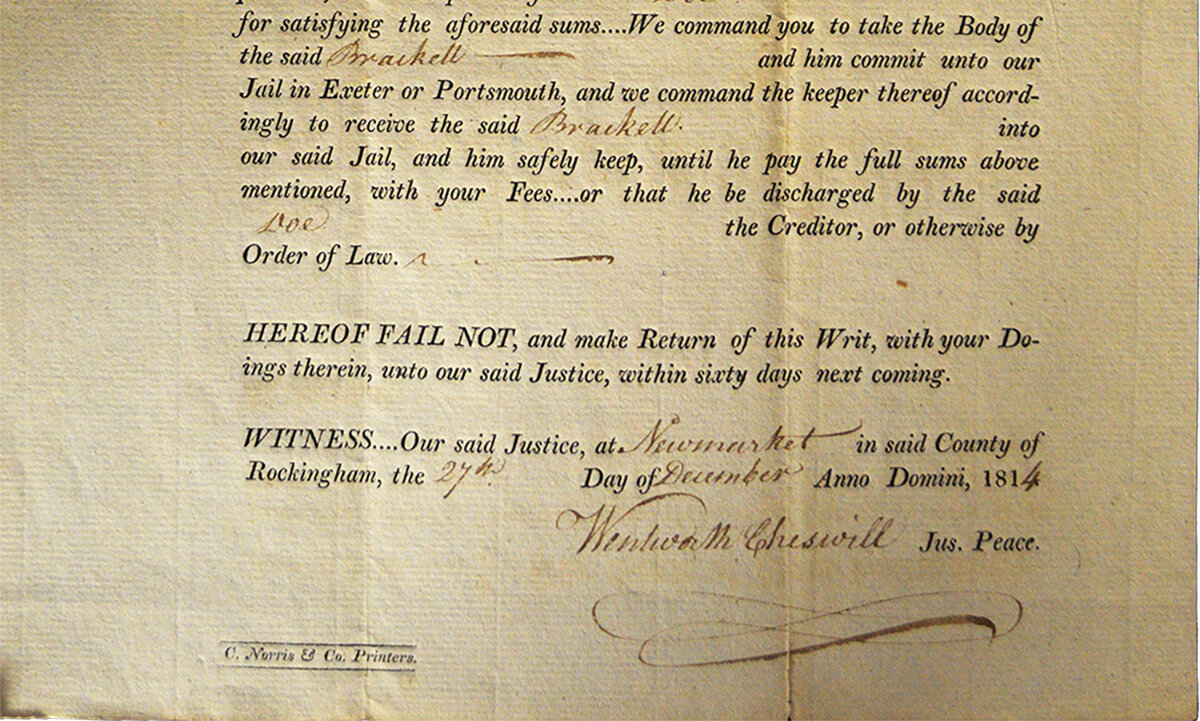
The following year, Wentworth was elected town constable – the first of many offices he held throughout his life. Two years later in 1770, he was elected town selectman (the selectmen were considered the “town fathers” of a community). Other town offices in which he served included seven years as Auditor, six years as Assessor, two years as Coroner, seven years as town Moderator (presiding over town meetings), and twelve years as Justice of the Peace, overseeing trials, settling disputes, and executing deeds, wills, and legal documents. (View an 1813 document signed by Cheswell as justice of the peace.) For half a century – including every year from 1768 until 1817 – Wentworth held some position in local government.

In addition to his civic service, Wentworth was also a patriot leader. In fact, the town selected him as the messenger for the Committee of Safety – the central nervous system of the American Revolution that carried intelligence and messages back and forth between strategic operational centers. Serving in that position, Wentworth undertook the same task as Paul Revere, making an all-night ride to warn citizens of imminent British invasion.

In April 1776, he signed a document in which he pledged, “at the risk of . . . live and fortune,” to take up arms to resist the British, and in September 1777, he enlisted in a company of Light Horse Volunteers commanded by Colonel John Langdon (Langdon later became one of the 55 Founding Fathers who drafted the U. S. Constitution, then a framer of the Bill of Rights, and later the New Hampshire governor). Langdon’s company made a 250-mile march to Saratoga, New York, to join with the Continental Army under General Horatio Gates to defeat British General Burgoyne at the Battle of Saratoga – the first major American victory in the Revolution.

After returning from Saratoga, in the spring of 1778, Wentworth was elected to the convention to draft the state’s first constitution, but some unknown event prevented his attendance.

Wentworth also served as Newmarket’s unofficial historian, copying town records from 1727 (including the records of various church meetings) and chronicling old stories of the town as well as its current events. Additionally, having investigated and made extensive notes on numerous artifacts and relics he discovered in the region around Newmarket, he is considered the state’s first archeologist. Therefore, when the Rev. Jeremy Belknap published his famous three-volume History of New Hampshire (1784-1792), he relied on (and openly acknowledged) much information he gleaned from Wentworth.

In 1801, Wentworth helped start the town library to preserve and disseminate useful knowledge and virtue. His commitment to providing helpful information is not surprising, for not only had he become a school teacher in 1767 but in 1776 he was elected as one of five men to regulate and oversee the schools of Newmarket.

In 1817, in his 71st year of age, Wentworth succumbed to typhus fever and was buried on the family farm, where other members of his family were later buried. In fact, when his daughter Martha died (his last surviving heir), her will provided that any members or descendants of the family could forever forward be buried on the farm. Unfortunately, that family graveyard long lay in disrepair, but in recent years friends and family have managed to restore it.

The legacy of Wentworth Cheswell is a lasting one: a patriot, teacher, and church leader; an historian, archeologist, and educator; a judge and official elected to numerous offices (he is considered the first black American elected to office in America). He is truly one of our forgotten patriots but he is a laudable example for all Americans – a hero worth remembering and honoring.


Sources:
William C. Nell, The Colored Patriots of the American Revolution, With Sketches of Several Distinguished Colored Persons: To Which is Added a Brief Survey of the Conditions and Prospects of Colored Americans (Boston: Robert F. Wallcut, 1855), pp. 120-121.

Sidney and Emma Nogrady Kaplan, The Black Presence in the Era of the American Revolution, Revised Edition (Amherst: The University of Massachusetts Press, 1989), pp. 200-202.

Thomas Truxtun Moebs, Black Soldiers-Black Sailors-Black Ink: Research Guide on African-Americans in U.S. Military History, 1526-1900 (Chesapeake Bay: Moebs Publishing Company, 1994), pp. 226, 259, 280.


Thomas Jefferson and Religion at the University of Virginia

Thomas Jefferson and Religion at the University of Virginia
by Dr. Mark Beliles 1 and Dr. David Barton 2
It is a common assertion among many academic writers today that Thomas Jefferson, in what those writers wrongly allege to be Jefferson’s disdain for religion in general and Christianity in particular, founded the University of Virginia as America’s first explicitly secular school. For example, according to Dr. Daryl Cornett of Mid-America Theological Seminary:

Jefferson also founded the first intentionally secularized university in America. His vision for the University of Virginia was for education finally free from traditional Christian dogma. He had a disdain for the influence that institutional Christianity had on education. At the University of Virginia there was no Christian curriculum and the school had no chaplain. Its faculty were religiously Deists and Unitarians.

Many other professors make similar claims:

  • After Jefferson left the presidency in 1809, he embarked on what has unequivocally been determined as his finest architectural design achievement: the University of Virginia….A Deist and a Secular Humanist, Jefferson rejected the religious tradition that had provided the foundation for the colonial universities. 3 PROFESSOR ANITA VICKERS, PENN STATE UNIVERSITY
  • The university which Thomas Jefferson established at Charlottesville in Virginia was America’s first real state university….[I]ts early orientation was distinctly and purposely secular. 4 PROFESSOR JOHN BRUBACHER, YALE UNIVERSITY, UNIVERSITY OF MICHIGAN; PROFESSOR WILLIS RUDDY, FAIRLEIGH DICKINSON UNIVERSITY
  • The University of Virginia affords the first historical instance in any country in which the university was deliberately and purposefully conceived as an agency of the realm of the secular state. 5 PROFESSOR LEWIS P. SIMPSON, LOUISIANA STATE UNIVERSITY
  • Thomas Jefferson’s University of Virginia, founded in 1819…became the first purely secular institution. 6 PROFESSOR CATHERINE COOKSON, VIRGINIA WESLEYAN COLLEGE
  • No part of the regular school day was set aside for religious worship….Jefferson did not permit the room belonging to the university to be used for religious purposes. 7 PROFESSOR LEONARD LEVY, SOUTHERN OREGON STATE UNIVERSITY, CLAREMONT GRADUATE SCHOOL

Sadly, the current academic over-emphasis on peer-review among professors has caused many to develop the regrettable tendency of heavily reading, quoting, and citing each other rather than actual historical documents related to the object of their inquiry. That is, rather than saying “Thomas Jefferson says that the University of Virginia was founded in order to . . .”, they instead say, “Professor _____ says that Thomas Jefferson founded the University of Virginia in order to . . .” Consequently, when one academic writer makes a particular claim, many others repeat that claim as though it were indisputable fact – even if that claim can be factually disproved. As a result of this modern academic malpractice, four oft-repeated claims have emerged about Jefferson’s founding of the University of Virginia:

1. Jefferson founded a deliberately secular university
2. Jefferson sought out Unitarians to be its faculty
3. Jefferson barred religious activities and instruction from the program of the school
4. Affirming its commitment to secularism, the University of Virginia had no chaplain

It will be seen below that numerous original documents incontestably disprove these four assertions, including Jefferson’s own writings, the records of the University of Virginia, the writings of those involved in the formation of the University, and other public records of that day.

Was the University of Virginia Founded as a Secular University?
Three distinctive features characterized most universities founded in America prior to the University of Virginia. Those universities commonly: (1) were founded and controlled by one particular denomination, (2) housed a theological seminary for that denomination, and (3) had a minister from that denomination serving as president of the university.

Illustrative of this pattern, in 1636, Harvard was founded by and for CONGREGATIONALISTS to train Congregationalist ministers (as was Yale in 1701 and Dartmouth in 1769); in 1692, the College of William and Mary was founded by and for the ANGLICANS to train Anglican ministers (as was the University of Pennsylvania in 1740, Kings College in 1754, and the College of Charleston in 1770); in 1746, Princeton was founded by and for PRESBYTERIANS (as was Dickinson in 1773 and Hampden-Sydney in 1775); in 1764, the College of Rhode Island (now Brown University) was founded by the BAPTISTS; in 1766, Queens College (now Rutgers) was founded by and for the DUTCH REFORMED; in 1780, Transylvania University was founded by and for the DISCIPLES OF CHRIST; etc.

Jefferson and his Board of Visitors (i.e., Regents) founded the University of Virginia as a school not affiliated with only one denomination; it was specifically founded as a trans-denominational school. Consequently, it did not incorporate the three features so commonly associated with other universities at that time, thus causing modern critics wrongly to claim that it was founded as a secular university.

In implementing a trans-denominational approach, Jefferson was embracing the position that had been nationally set forth by an evangelical Presbyterian clergyman, Samuel Knox of Baltimore, whom Jefferson later asked to be his first faculty member at the University of Virginia. 8 In 1799, Knox penned an educational policy piece proposing the formation of a state university that would not have just one specific theological school but rather would invite many denominations to establish schools at the university; the various denominations would therefore all work together in mutual cooperation rather than in competition. 9 Jefferson agreed with this philosophy, and it was this model that he employed at the University of Virginia.

Significantly, thirty years earlier, Jefferson had begun actively promoting Christian non-preferentialism in his famous 1786 Virginia Statute of Religious Freedom, which disestablished the Anglican Church as the only legally recognized and established denomination in Virginia and instead placed all Christian denominations on an even footing. Because the charter for the new University had been issued by the state legislature, the school was required to conform to the denominational non-preferentialism set forth in the Virginia Statute and the Virginia Constitution.

Since the University would have no single denominational seminary but rather the seminaries of many denominations, Jefferson and the Visitors (i.e., Regents) decided that there should be no clergyman as university president and no specified Professor of Divinity, either of which might wrongly cause the public to think that the University favored the particular denomination with which the university president or Professor of Divinity was affiliated. 10 As Jefferson explained:

In conformity with the principles of our constitution which places all sects [denominations] of religion on an equal footing – with the jealousies of the different sects in guarding that equality from encroachment and surprise, and with the sentiments of the legislature in favor of freedom of religion manifested on former occasions [as in the Virginia Statute for Religious Freedom] – we have proposed no Professor of Divinity. 11

But the fact that the school would have no Professor of Divinity did not mean that religious instruction would not take place. To the contrary, Jefferson personally ensured that religious instruction would occur, directing that the teaching of . . .

the proofs of the being of a God – the Creator, Preserver, and Supreme Ruler of the Universe – the Author of all the relations of morality and of the laws and obligations these infer – will be within the province of the Professor of Ethics. 12

Jefferson made sure that the teaching of religion to students definitely would occur, but he merely placed it under a professor different than was traditionally used; Jefferson absolutely did not eliminate religious instruction. In fact, he wanted it clearly understood that not having a Professor of Divinity definitely did not mean that the University would be secular:

It was not, however, to be understood that instruction in religious opinions and duties was meant to be precluded by the public authorities as indifferent to the interests of society. On the contrary, the relations which exist between man and his Maker – and the duties resulting from those relations – are the most interesting and important to every human being and the most incumbent on his study and investigation. 13

(Incidentally, in 1896 after the trans-denominational reputation of the school was fully established, a Bible lectureship was established by the University; by 1909, it had become a full Professorship of Divinity.)

Jefferson also made clear that the religious instruction which would occur at the University would incorporate the numerous religious beliefs on which Christian denominations agreed rather than just the specific theological doctrines of any one particular denomination. As he explained, “provision…was made for giving instruction in…the earliest and most respected authorities of the faith of every sect [denomination] and for courses of ethical lectures developing those moral obligations in which all sects agree.” 14

(This trans-denominational approach to teaching Christian beliefs and morals was so common in America that famous writer Alexis de Tocqueville reported:

The sects [denominations] which exist in the United States are innumerable. They all differ in respect to the worship which is due from man to his Creator, but they all agree in respect to the duties which are due from man to man. Each sect adores the Deity in its own peculiar manner, but all the sects preach the same moral law in the name of God….[A]lmost all the sects of the United States are comprised within the great unity of Christianity, and Christian morality is everywhere the same. 15

Jefferson made clear to the public on multiple occasions and in several different writings that religious and moral instruction definitely would be part of regular academic instruction at the University of Virginia. He also expounded on his design to invite many denominations to participate in student instruction:

We suggest the expediency of encouraging the different religious sects to establish, each for itself, a professorship of their own tenets on the confines of the university so near as that their students may attend the lectures there and have the free use of our library and every other accommodation we can give them….[B]y bringing the sects [denominations] together and mixing them with the mass of other students, we shall soften their asperities [harshness], liberalize and neutralize their prejudices [prejudgment without an examination of the facts], and make the general religion a religion of peace, reason, and morality. 16

Jefferson observed that a positive benefit of this approach was that it “would give to the sectarian Schools of Divinity the full benefit of the public [university] provisions made for instruction” 17 and “leave every sect to provide as they think fittest the means of further instruction in their own peculiar tenets.” 18 Jefferson also pointed out that an additional benefit of this arrangement would be that “such establishments would offer the further and great advantage of enabling the students of the University to attend religious exercises with the Professor of their particular sect.” 19 The students would be offered many denominational choices, and Jefferson made clear that students would be expected to participate in the various denominational schools. 20

Jefferson’s nondenominational approach caused Presbyterians, Baptists, Methodists, and others to give the University the friendship and support necessary to make the new school succeed. Consider Presbyterian minister John Holt Rice as an example.

Holt was a nationally-known religious leader. In 1813, he helped found the Virginia Bible Society 21 (of which Jefferson was a significant financial contributor 22 ); in 1818 he started the Virginia Evangelical and Literary Magazine to emphasize Christianizing the culture and report on various revivals across the country; in 1819, he was elected national moderator of the General Assembly of the Presbyterian Church; and in 1822, he was offered the presidency of Princeton but instead accepted the Chair of Theology at Hampden-Sydney College. Rice – an evangelical Presbyterian – fully supported the University of Virginia 23 and worked diligently “in creating a popular sentiment favorable to the passage of the University bill [in the General Assembly].” 24

Rice’s support of Jefferson’s school was no small endorsement and was representative of the support that the school received from other denominations. They understood that the University of Virginia was not secular but rather trans-denominational. As the official Centennial of the University of Virginia affirmed in 1921, “Thomas Jefferson…aimed no blow at any religious influence that might be fostered by it. The blow was at sectarianism only.” 25 (emphasis added)

Clearly, Jefferson’s own writings and the records of the University absolutely refute the notion that he founded a secular university; and clergyman, historian, and author Anson Phelps Stokes (second-in-command at Yale and then resident canon at the National Cathedral in Washington, D. C.) correctly concluded about Jefferson that “even in establishing a quasi-state university on broad lines, the greatest liberal who took part in founding our government felt that instruction in the fundamentals of Christian theism and Christian worship were both important and proper.” 26

(Incidentally, another indicator of the non-secular nature of the University what that when construction began in 1817, a special prayer was offered at the laying of the cornerstone, in the presence of Jefferson, Madison and Monroe, beseeching “Almighty God, without invocation to Whom no work of importance should be begun, bless this undertaking and enable us to carry it on with success – protect this college, the object of which institution is to instill into the minds of youth principles of sound knowledge, to inspire them with the love of religion and virtue, and prepare them for filling the various situations in society with credit to themselves and benefit to their country.” 27 Significantly, it was Jefferson and his Board of Visitors who made the arrangements and approved both the prayer and the Scriptures for that ceremony.)

Was Jefferson’s Faculty Composed of Unitarians?
Jefferson had agreed with the Rev. Samuel Knox’s plan of excluding a clergyman from being either the university president or the Professor of Divinity but he certainly had no such concerns about clergymen on the teaching faculty at the University. In fact, as previously noted, in 1817, Jefferson specifically made the Rev. Knox his very first faculty selection, asking him to be the Professor of Languages, Belles Lettres, Rhetoric, History and Geography. 28 It is a noteworthy commentary that this Presbyterian minister – known for publishing a tract against the religious beliefs of famous Unitarian Joseph Priestley 29 – was offered the very first teaching position at Jefferson’s University. (Interestingly, through a miscommunication, Knox did not respond to the offer in a timely fashion so his teaching slot was finally offered to someone else. 30 )

Jefferson eventually settled on ten teaching positions at the University; 31 and significantly, when those positions were filled, notwithstanding the errant claims of modern critics, none of the professors was Unitarian. In fact, two of the original professors hired by Jefferson (George Tucker, Professor of Moral Philosophy, and Robley Dunglison, Professor of Anatomy and Medicine) were later asked about Jefferson’s views on the religious beliefs of the professors he had selected – specifically, had Jefferson sought to fill the faculty with Deists or Unitarians? To that question, Professor Dunglison replied:

I have not the slightest reason for believing that Mr. Jefferson was in any respect guided in his selection of professors of the University of Virginia by religious considerations…. In all my conversations with Mr. Jefferson, no reference was made to the subject. I was an Episcopalian, so was Mr. Tucker, Mr. Long, Mr. Key, Mr. Bonnycastle, and Dr. Emmet. Dr. Blaettermap, I think, was a Lutheran, but I do not know so much about his religion as I do about that of the rest. There certainly was not a Unitarian among us. 32 (emphasis added)

Professor Tucker agreed, declaring:

I believe that all the first professors belonged to the Episcopal Church, except Dr. Blaetterman, who, I believe, was a German Lutheran….I don’t remember that I ever heard the religious creeds of either professors or Visitors [Regents] discussed or inquired into by Mr. Jefferson – or anyone else. 33

Jefferson simply did not delve into the denominational affiliations or specific religious beliefs of his faculty; what he sought was professors who had proper knowledge and deportment. As he once told his close friend and fellow-patriot and co-signer of the Declaration of Independence, Dr. Benjamin Rush:

For thus I estimate the qualities of the mind: 1. good humor; 2. integrity; 3. industry; 4. science. The preference of the first to the second quality may not at first be acquiesced in, but certainly we had all rather associate with a good-humored, light-principled man than with an ill-tempered rigorist in morality. 34

It was by applying such standards that Jefferson once invited Thomas Cooper to be Professor of Chemistry and Law, 35 but when it became known that Cooper was a Unitarian, a public outcry arose against him and Jefferson and the University withdrew its offer to him. 36

Obviously, this type of original documentary evidence concerning Jefferson and the religious views of his faculty is ignored by many of today’s writers and educators. However, Professor Roy Honeywell of Eastern Michigan University did review the original historical evidence rather than just the claims of other professors, and he correctly concluded:

In general, Jefferson seems to have ignored the religious affiliations of the professors. His objection to ministers was because of their active association with sectarian groups – in his day a fruitful source of social friction. The charge that he intended the University to be a center of Unitarian influence is totally groundless. 37

There simply is no historical merit to the claim that Jefferson sought out Unitarians or Deists in order to make the school a seedbed of Unitarianism.

Did Jefferson Bar Religious Instruction from the Academic Program?
It was in 1818 that Jefferson and the Visitors first released to the public their plan for the new University. As already noted, Jefferson announced that the school would be trans-denominational and that religious instruction would be provided to students by the Professor of Ethics. But Jefferson also took additional steps to ensure that religious instruction would occur.

For example, he directed the Professor of Ancient Languages to teach Biblical Greek, Hebrew, and Latin to students so that they would be equipped to read and study the “earliest and most respected authorities of the Christian Faith.” 38 Wanting the writings of those Christian authorities and “the writings of the most respected authorities of every sect [denomination]” 39 to be placed in the university library, Jefferson asked James Madison to prepare such a list for the library. 40

In September 1824, Madison returned his list to Jefferson in which he included the works of the Alexandrian Fathers (the early Alexandrian church fathers included Clement, Origen, Pantaenus, Cyril, Athanasius, and Didymus the Blind); Latin authors such as St. Augustine; the writings of St. Aquinas and other Christian leaders from the Middle Ages; and the works of Erasmus, Luther, Calvin, Socinius, and Bellarmine from the Reformation era. Madison’s list also included more modern theologians and religious writers such as Grotius, Tillotson, Hooker, Pascal, Locke, Newton, Butler, Clarke, Wollaston, Edwards, Mather, Penn, Wesley, Priestley, Price, Leibnitz, and Paley. 41

In addition to the religious instruction by the Professor of Ancient Language, Jefferson succinctly stated that he had personally arranged the curriculum so that religious study would also be an inseparable part of the study of law and political science. 42 It is clear that Jefferson took numerous steps to secure religious instruction as part of academic studies.

But Jefferson not only sought to ensure that students would study about God, he also made provision for them to worship God. In the early planning stages of the University, he had stipulated “that a building…in the middle of the grounds may be called for in time in which may be rooms for religious worship”; 43 later, he specifically ordered that in the University Rotunda, “one of its large elliptical rooms on its middle floor shall be used for…religious worship” and that “the students of the University will be free and expected to attend.” 44 (emphasis added).

Clearly, the modern claim that there was no Christian curriculum at the University of Virginia is demonstrably false not only by Jefferson’s own writings but also by those of University Visitors such as James Madison.

Did the University of Virginia Have Chaplains?
A fourth modern claim made about the University of Virginia is that it had no chaplains. This charge is easily disproved by numbers of original documents, including newspaper ads run by the University to recruit its students. For example, in ads run in the Washington newspaper, The Globe, the Rev. Mr. Tuston – identified in the ad as the chaplain of the University – discussed religious life at the school, noting:

[F]or several years after its operations commenced [founded in 1819, it opened to students in 1825]….It was by many supposed that infidelity was interwoven with the very elements of its existence, and consequently its early history was overhung with the clouds of discouragement. How far these prejudices were just may be ascertained from the fact (not generally known) that in the original organization of this establishment, the privilege of erecting Theological Seminaries on the territory [grounds] belonging to the university was cheerfully extended to every Christian denomination within the limits of the State.

In the present arrangement for religious services at the University, you have all the evidence that can with propriety be asked respecting the favorable estimate which is placed upon the subject of Christianity.

The chaplains, appointed annually and successively from the four prominent denominations in Virginia [Episcopalian, Presbyterian, Baptist, and Methodist], are supported by the voluntary contributions of professors and students….

Beside the regular services of the Sabbath, we have….also a Sabbath School in which several of the pious students are engaged.

The monthly concert for prayer is regularly observed in the pavilion which I occupy.

In all these different services we have enjoyed the presence and the smiles of an approving Redeemer….[and i]t has been my pleasure on each returning Sabbath to hold up before my enlightened audience the cross of Jesus – all stained with the blood of Him that hung upon it – as the only hope of the perishing. 45 (emphasis added)

Another ad run by the University similarly noted:

Religious services are regularly performed at the University by a chaplain, who is appointed in turn from the four principal denominations of the State. And by a resolution of the Faculty, ministers of the Gospel and young men preparing for the ministry may attend any of the schools without the payment of fees to the professors. 46 (emphasis added)

It was the custom of that day that all faculty members receive their salaries from fees paid by the students directly to the professors, but the University waived those fees for students studying for the Gospel ministry. If the University of Virginia truly held the secular orientation claimed by so many of today’s writers, then why did it extend preferential treatment to students pursuing religious careers? Surely a truly secular university would give preference to secular-oriented students rather than religiously-oriented ones – something the University of Virginia did not do.

The University of Virginia did indeed have chaplains – albeit not in its first three years. At the beginning when the University was establishing its reputation as a non-denominational university, there was no appointed chaplain for the same reasons there had been no clergyman as president and no Professor of Divinity: an ordained clergyman in any of those three positions might send an incorrect signal that the University was aligned with the denomination of that specific clergyman. Furthermore, clergymen representing each seminary were on campus and available to minister to students. But by 1829, the non-denominational direction of the University had been established, so President Madison (who became Rector of the University after Jefferson’s death in 1826) announced “that [permanent] provision for religious instruction and observance among the students would be made by…services of clergymen.” 47

The University therefore extended official recognition to one primary chaplain for the students, with the chaplain position to rotate annually among the major denominations. (According to Jefferson, “about 1/3 of our state is Baptist, 1/3 Methodist, and of the remaining 1/3, two parts may be Presbyterian and one part Anglican.” 48 ) In 1829, Presbyterian clergyman Rev. Edward Smith became the first chaplain – an official university position, but unpaid. In 1833 after three-fourths of the students pledged their own money for the chaplain’s support, Methodist William Hammett became the first paid chaplain, leading Sunday worship and daily morning prayer meetings in the Rotunda. In 1855, the University built a parsonage to provide a residence on the grounds for the university chaplain. Significantly, many of the University of Virginia’s chaplains went on to famous religious careers, including Episcopalian Joseph Wilmer, Presbyterians William White, William H. Ruffner, and Robert Dabney, Baptists Robert Ryland and John Broaddus, and many others.

Clearly, the University of Virginia did have chaplains, and it placed a strong emphasis on the spiritual preparedness of its students through the important ministry of those chaplains.

— — — ◊ ◊ ◊ — — —

The charge that Jefferson founded the University of Virginia as a secular institution that excluded traditional religious instruction from students and instead inculcated them in the principles of Deism and Unitarianism is completely false. In fact, if anyone examines the original primary source documents and then claims otherwise, they are (to use the words of military chaplain William Biederwolf, 1867-1939) just as likely to “look all over the sky at high noon on a cloudless day and not see the sun.” 49


Endnotes

1. Mark Beliles is founder of the Providence Foundation and vice-President of its Biblical Worldview University. Mark is chairman of the City of Charlottesville’s Historic Resources Committee and the annual “Governor Jefferson Thanksgiving Festival,” has convened a number of academic symposiums at the University of Virginia, and lectures throughout the United States, Asia, Africa, and Europe. He earned his PhD from Whitefield Theological Seminary (dissertation: Churches and Politics in Jefferson’s Virginia). Beliles’ extensive primary source documentary research on Jefferson highlights Jefferson’s founding of the Calvinistical Reformed Church of Charlottesville during the Revolution and then demonstrates that Jefferson’s subsequent rejection of Trinitarian language and creeds later in life was mainly from the influence of the evangelical “primitive” and “restoration” church movement that arose in the Central Virginia Piedmont rather than being the result of secular European Enlightenment, New England Unitarianism, or Deism. For more information contact Mark Beliles at [email protected] or call 434-249-4032.

2. David Barton is the author of numerous books and the president of WallBuilders, a national pro-family organization dedicated to “presenting America’s forgotten history and heroes, with an emphasis on our moral, religious, and constitutional heritage.” a consultant to state and federal legislators and has been involved in several federal court cases, including at the U.S. Supreme Court. He personally owns thousands of original documents from the Founding Era, including handwritten documents of the signers of the Declaration of Independence and the Constitution. Barton has been appointed by State Educational Boards in California, Texas, and other states to help write the history and government standards for students in those states. He has served as an editor for national publishers of school history textbooks. Barton is the recipient of several national and international awards, including the Daughters of the American Revolution Medal of Honor (1998), the George Washington Honor Medal (2006, 1995), Who’s Who in America (2009, 2008, 2000, 1999, 1998, 1997), Who’s Who in the World (2009, 2008, 2004, 2000, 1999, 1998, 1997, 1996), Who’s Who in American Education (2007, 2004, 1997, 1996), International Who’s Who of Professionals (1996), Two Thousand Notable American Men Hall of Fame (1995), Who’s Who Among Outstanding Americans (1994), Who’s Who in the South and Southwest (2001, 1999, 1997, 1995), Outstanding Young Men in America (1990), and numerous other awards. He is the author of numerous books and holds a B.A. from Oral Roberts University and an Honorary Doctorate of Letters from Pensacola Christian College. Time Magazine has listed him as one of the 25 Most Influential Evangelicals in America.

3. Anita Vickers, The New Nation (Westport, CN: Greenwood Press, 2002), p. 74.

4. John S. Brubacher & Willis Rudy, Higher Education in Transition: A History of American Colleges and Universities (Transaction Books, 1997), pp. 147-149.

5. Lewis P. Simpson, Imagining Our Time: Recollections and Reflections on American Writing (Baton Rouge: Louisiana State University Press, 2007), p. 47. See also Lewis P. Simpson, “Jefferson and the Crisis of the American University,” The Virginia Quarterly Review, 2000, pp. 388-402 (at: https://www.vgronline.org/articles/2000/summer/simpson-jefferson).

6. Encyclopedia of Religious Freedom, Catherine Cookson, editor (Taylor & Francis, 2003), p. 140.

7. Leonard Levy, “Jefferson, Religion and the Public Schools,” Separation of Church and State (at: https://candst.tripod.com/tnppage/jeffschl.htm), from Levy’s book Jefferson and Civil Liberties: The Darker Side (1989).

8. Thomas Jefferson, The Writings of Thomas Jefferson, Andrew A. Lipscomb, editor (Washington, D.C.: The Thomas Jefferson Memorial Association, 1904), Vol. XIX, pp. 365-366, “Minutes of the Visitors of Central College,” July 28, 1817. Jefferson also wrote a letter to Knox on February 12, 1810, discussing the proper training of youth – America’s next generation of national leaders. As Jefferson correctly observed to Knox, “The boys of the rising generation are to be the men of the next, and the sole guardians of the principles we deliver over to them.” (See Jefferson, Writings, (1904), Vol. XII, pp. 359-361, letter to Rev. Samuel Knox, February 12, 1810.)

9. Samuel Knox, Essay on the Best System of Liberal Education (Baltimore: Warner and Hanna, 1799), pp. 78-79.

10. Henry Randall’s early biography of Jefferson (published in 1858) explains that, “The omission in the plan of the University to make provision for religious instruction [by establishing a specific Professor of Divinity] has been misconstrued by many candid persons because they have not understood the true nature of that institution. They look round on the American colleges and see such a provision generally made in them. But these schools have mostly been founded by particular sects… [If Virginia’s state university] was placed under the religious supervision or influence of any particular sect, the public money of all sects would be used for the benefit of one.” See Henry S. Randall, The Life of Thomas Jefferson (New York: Derby & Jackson, 1858), Vol. III, pp. 469-470.

11.Thomas Jefferson, “Report of the Commissioners for the University of Virginia,” August 4, 1818 [The Rockfish Gap Report], from The University of Virginia (at: https://etext.virginia.edu/etcbin/toccer-new2?id=JefRock.sgm&images=images/modeng&data=/texts/english/modeng/parsed&tag=public&part=1&division=div1). See also Jefferson, Writings (1904), Vol. XIX, pp. 413-414, Board of Visitors, Minutes, October 7, 1822.

12. Thomas Jefferson, “Report of the Commissioners for the University of Virginia,” August 4, 1818 [The Rockfish Gap Report], from The University of Virginia (at: https://etext.virginia.edu/etcbin/toccer-new2?id=JefRock.sgm&images=images/modeng&data=/texts/english/modeng/parsed&tag=public&part=1&division=div1).

13. Jefferson, Writings (1904), Vol. XIX, p. 414, Board of Visitors, Minutes, October 7, 1822.

14. Jefferson, Writings (1904), Vol. XIX, p. 414, Board of Visitors, Minutes, October 7, 1822.

15. Alexis De Tocqueville, Democracy in America, (New York: A.S. Barnes & Co., 1851), Vol. I, p. 331.

16. Jefferson, Writings (1904), Vol. XIX, pp. 405-406, letter to Dr. Thomas Cooper, November 2, 1822.

17. Jefferson, Writings (1904), Vol. XIX, p. 415, Board of Visitors, Minutes, October 7, 1822.

18. Thomas Jefferson, “Report of the Commissioners for the University of Virginia,” August 4, 1818 [The Rockfish Gap Report], from The University of Virginia (at: https://etext.virginia.edu/etcbin/toccer-new2?id=JefRock.sgm&images=images/modeng&data=/texts/english/modeng/parsed&tag=public&part=1&division=div1).

19. Jefferson, Writings (1904), Vol. XIX, pp. 415-416, Board of Visitors, Minutes, October 7, 1822.

20. Jefferson, Writings (1904), Vol. XIX, pp. 449-450, A Meeting of the Visitors of the University of Virginia on Monday the 4th of October, 1824.

21. William Henry Foote, Sketches of Virginia, Historical and Biographical (Philadelphia: J.B. Lippincott & Co., 1856), p. 325. See also Address of the Managers of the Bible Society of Virginia to the Public (Richmond: Samuel Pleasants, 1814), p. 8.

22. Thomas Jefferson, Writings (1904), Vol. XIV, p. 81, letter to Samuel Greenhow, January 31, 1814.

23. See, for example, his articles expressing his strong support in his Virginia Evangelical and Literary Magazine, such as that in Vol. I, 1818, p. 548 (printed in A.J. Morrison, The Beginnings of Public Education in Virginia, 1776-1860 (Richmond: Davis Bottom, 1917), p. 38), wherein after announcing his support, he promised to return to the subject as often as necessary, declaring: “The writer of this will return to it again and again, and however feeble his abilities, will give them, in their best exercise, to an affair so deeply involving the best interests of his country.”

24. Philip Alexander Bruce, History of the University of Virginia, 1819-1919 (New York: The MacMillian Company, 1920), Vol. I, p. 204.

25. The Centennial of the University of Virginia 1819-1921, John Calvin Metcalf, editor (New York: G. P. Putnam’s Sons, 1922), p. 6.

26. Anson Phelps Stokes, Church and State in the United States (New York: Harper & Bothers Publishers, 1950), Vol. I, p. 338.

27. Alexander Garrett, “Outline of Cornerstone Ceremonies,” October 6, 1817, from The University of Virginia (at: https://etext.virginia.edu/etcbin/toccer-new2?id=Jef1Gri.sgm&images=images/modeng&data=/texts/english/modeng/parsed&tag=public&part=47&division=div1). See also Dumas Malone, Jefferson and His Time: The Sage of Monticello (Boston: Little, Brown and Company, 1981), Vol. VI, p. 265.

28. Jefferson, Writings (1904), Vol. XIX, pp. 365-366, “Minutes of the Visitors of Central College,” July 28, 1817. Jefferson also wrote a letter to Knox on February 12, 1810, discussing the proper training of youth – America’s next generation of national leaders. As Jefferson correctly observed to Knox, “The boys of the rising generation are to be the men of the next, and the sole guardians of the principles we deliver over to them.” (See Jefferson, Writings, (1904), Vol. XII, pp. 359-361, letter to Rev. Samuel Knox, February 12, 1810.)

29. Samuel Knox, The Scriptural doctrine of future punishment vindicated : in a discourse from these words, “And these shall go away into everlasting punishment, but the righteous into life eternal.” Math. XXV, & 46th. : To which are prefixed some prefatory strictures on the lately avowed religious principles of Joseph Priestley, L.L.D. F.R.S. &c. &c. Particularly in a discourse delivered by him in the church of the Universalists, in Philadelphia, and published in1796. –Entitled: “Unitarianism explained and defended” &c (Georgetown: Green, English & Co., 1796).

30. See Jefferson, Writings (1904), Vol. XIX, p. 367, Board of Visitors, Minutes, Charlottesville, October 7, 1817, and Jefferson, Writings (1904), Vol. XIX, p. 390, Board of Visitors, Minutes, October 2-3, 1820.

31. In the 1818 report by Jefferson and the Board of Visitors, Jefferson announced: “We are further of opinion, that after declaring by law that certain sciences shall be taught in the University, fixing the number of professors they require, which we think should, at present, be ten.” See Thomas Jefferson, “Report of the Commissioners for the University of Virginia,” August 4, 1818 [The Rockfish Gap Report], from The University of Virginia (athttps://etext.virginia.edu/etcbin/toccer-new2?id=JefRock.sgm&images=images/modeng&data=/texts/english/modeng/parsed&tag=public&part=1&division=div1).

32. Henry S. Randall, The Life of Thomas Jefferson (New York: Derby & Jackson, 1858), Vol. III, pp. 467-468, letter from Robley Dunglison to Henry S. Randall, June 1, 1856.

33. Randall, The Life of Thomas Jefferson (1858), Vol. III, p. 467, letter from George Tucker to Henry S. Randall, May 28, 1856.

34. Jefferson, Writings (1904), Vol. XI, p. 413, letter to Benjamin Rush, January 3, 1808.

35. See Jefferson, Writings (1904), Vol. XIX, p. 367, Board of Visitors, Minutes, Charlottesville, October 7, 1817.

36. Jefferson, Writings (1904), Vol. XIX, p. 389, Board of Visitors, Minutes, October 2-3, 1820. See also “Thomas Cooper (US Politician),” Wikipedia, October 8, 2008 (at: https://en.wikipedia.org/wiki/Thomas_Cooper_(US_politician); “Thomas Cooper Society,” University of South Carolina, February 20, 2008 (at: https://www.sc.edu/library/develop/tcsinfo.html).

37. Roy Honeywell, The Educational Work of Thomas Jefferson (Cambridge: Harvard University Press, 1931), p. 92.

38. Thomas Jefferson, “Report to the President and Directors of the Literary Fund,” The Avalon Project, October 7, 1822 (at: https://avalon.law.yale.edu/19th_century/jeffrep3.asp). Thomas Jefferson, “Report of the Commissioners for the University of Virginia,” August 4, 1818 [The Rockfish Gap Report], from The University of Virginia (at: https://etext.virginia.edu/etcbin/toccer-new2?id=JefRock.sgm&images=images/modeng&data=/texts/english/modeng/parsed&tag=public&part=1&division=div1).

39. Thomas Jefferson, “Report to the President and Directors of the Literary Fund,” The Avalon Project, October 7, 1822 (at: https://avalon.law.yale.edu/19th_century/jeffrep3.asp).

40. In a letter on August 8, 1824, Jefferson said “I have undertaken to make out a catalogue of books for our library, being encouraged to it by the possession of a collection of yellowed catalogues; and, knowing no one capable to whom we could refer the task, it has been laborious far beyond my expectation, having already devoted 4 hours a day to it for upwards of two months and the whole day for some time past and not yet in sight of the end. It will enable us to judge what the object will cost. The chapter in which I am most at a loss is that of divinity, and knowing that in your early days you bestowed attention on this subject, I wish you could suggest to me any works really worthy of place in the catalogue.” Thomas Jefferson, “The Papers of Thomas Jefferson,” Library of Congress, letter to James Madison, August 8, 1824 (at: https://memory.loc.gov/cgi-bin/ampage?collId=mtj1&fileName=mtj1page054.db&recNum=725&itemLink=/ammem/collections/jefferson_papers/mtjser1.html&linkText=7&tempFile=./temp/~ammem_kF9i&filecode=mtj&itemnum=1&ndocs=1).

41. James Madison, The Writings of James Madison, Gaillard Hunt, editor (New York: G.P. Putnam’s Sons, 1910), Vol. IX, pp. 203- 207, letter to Thomas Jefferson, September 10, 1824.

42. Jefferson, Writings (1904), Vol. XVI, p. 19, letter to Judge Augustus B. Woodward, March 24, 1824.

43. Thomas Jefferson, “Report of the Commissioners for the University of Virginia,” August 4, 1818 [The Rockfish Gap Report], from The University of Virginia (at: https://etext.virginia.edu/etcbin/toccer-new2?id=JefRock.sgm&images=images/modeng&data=/texts/english/modeng/parsed&tag=public&part=1&division=div1) called for this building and the stated purpose of religious worship in it; the subsequent reports Jefferson, Writings (1904), Vol. XIX, p. 394, Board of Visitors, Minutes, October 2-3, 1820; Jefferson, Writings, Vol. XIX, pp. 411-412, Board of Visitors, Minutes, October 7, 1822; and Jefferson, Writings, Vol. XIX, pp. 449-450, Board of Visitors, Minutes, October 4, 1824 reaffirmed that purpose.

44. Jefferson, Writings (1904), Vol. XIX, pp. 449-450, “A Meeting of the Visitors of the University of Virginia on Monday the 4th of October, 1824.”

45. The Globe (Washington, D. C.), September 8, 1837, Vol. VII, No. 75, p. 2, Advertisement for the University of Virginia, printing a copy of a letter from the Rev. Mr. Tuston, the Chaplain of the University of Virginia to Richard Duffield, Esq. (originally printed in the Charlestown Free Press).

46. The Globe (Washington, D. C.), August 2, 1843, Vol. VIII, No. 42, p. 2, University of Virginia advertisement.

47. James Madison, “The Papers of James Madison,” Library of Congress, letter to Chapman Johnson, May 1, 1828 (at: https://memory.loc.gov/cgi-bin/ampage?collId=mjm&fileName=22/mjm22.db&recNum=379&itemLink=D?mjm:13:./temp/~ammem_LjNU::).

48. Thomas Jefferson, The Life and Selected Writing of Thomas Jefferson, Adrienne Koch and Williams Peden, editors (New York: Random House, Inc., 1944), p. 697, letter to Thomas Cooper, March 13, 1820.

49. Encyclopedia of Religious Quotations, Frank Mead, editor (New Jersey: Fleming H. Revell Company, 1965), p. 50, quoting William Biederwolf.
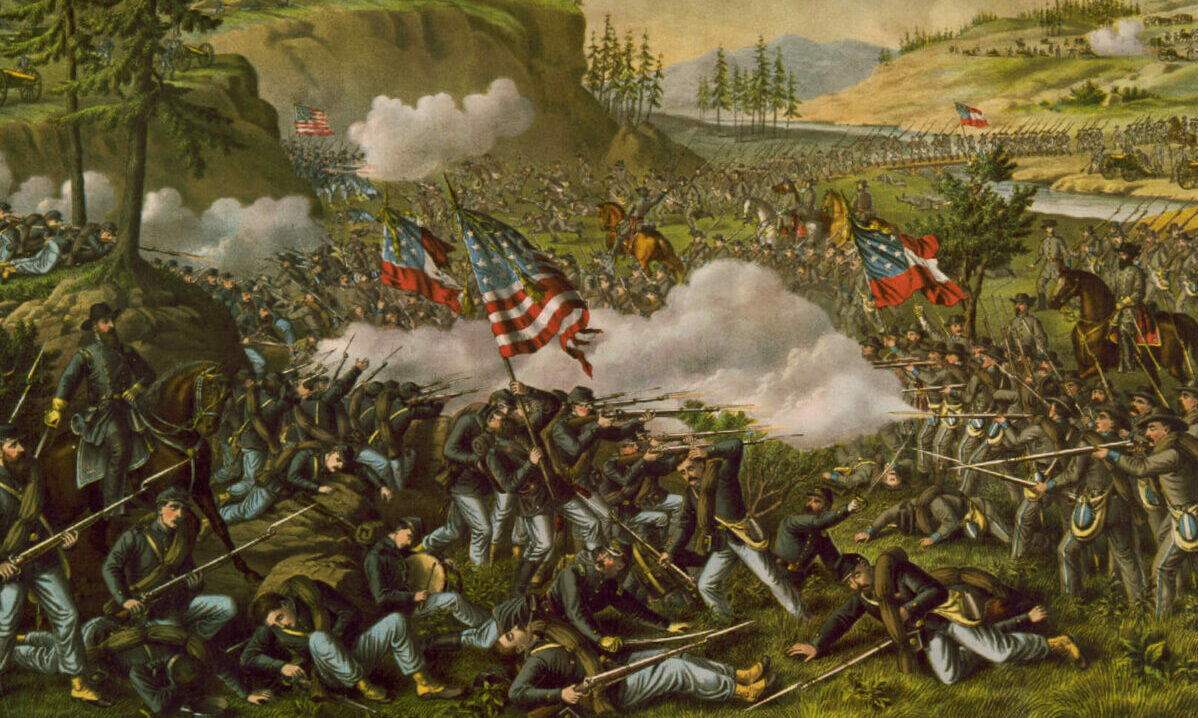
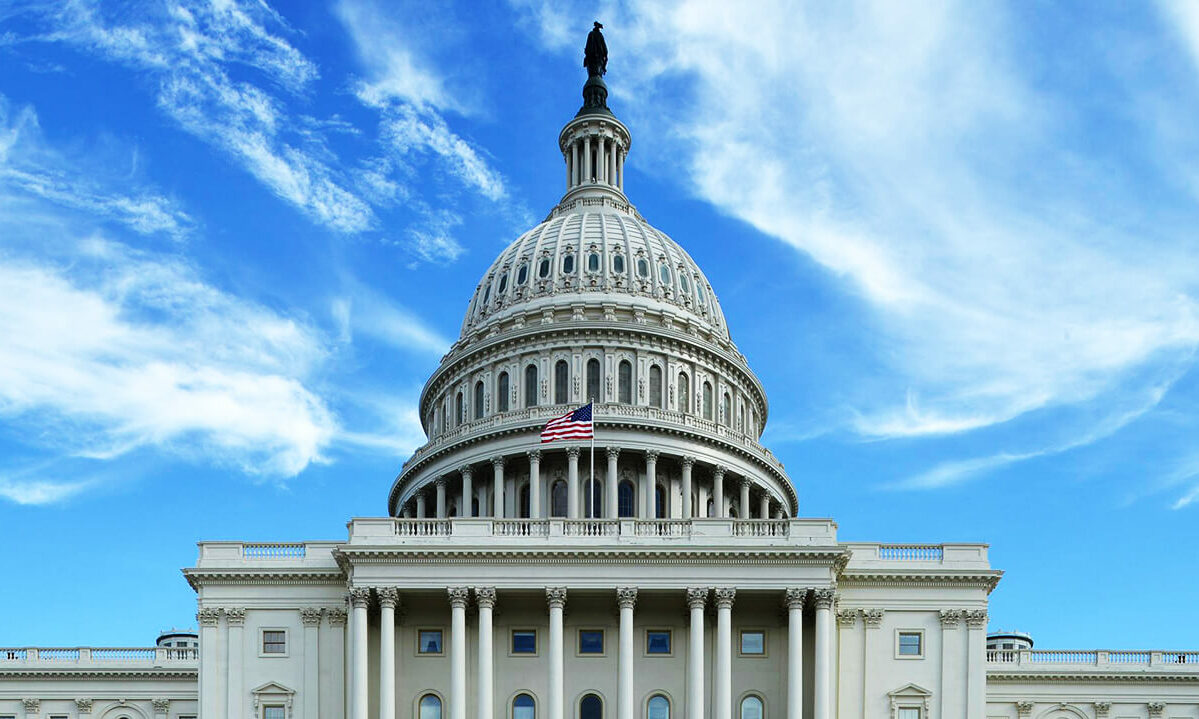
 

America’s Religious Heritage As Demonstrated in Presidential Inaugurations

Religious activities at presidential inaugurations have become the target of criticism in recent years, 1 with legal challenges being filed to halt activities as simple as inaugural prayers and the use of “so help me God” in the presidential oath.2 These critics – evidently based on a deficient education – wrongly believe that the official governmental arena is to be aggressively secular and religion-free. The history of inaugurations provides some of the most authoritative proof of the fallacy of these modern arguments.

In fact, since America’s first inauguration in 1789 included seven distinct religious activities, that original inauguration is worthy of review. Every inauguration since 1789 has included numerous of those activities.

The First Inauguration
americas-religious-heritage-as-demonstrated-in-presidential-inaugurations

Constitutional experts abounded at America’s first inauguration. Not only was the first inauguree (George Washington) a signer of the Constitution but numerous drafters of the Constitution were serving in the Congress that organized and directed that first inauguration. In fact, just under one fourth of the members of the first Congress had been delegates to the Convention that wrote the Constitution.3 Furthermore, the identical Congress that directed and oversaw these inaugural activities also penned the First Amendment. Having therefore produced both the Constitution and all of its clauses on religion, they clearly knew what types of religious activities were and were not constitutional. Clearly, then, the religious activities that occurred at the first inauguration may well be said to have the approval and imprimatur of the greatest collection of constitutional experts America has ever known. Therefore, a review of the religious activities acceptable in that first inauguration will provide guidance for citizens in general and critics in particular.

The first inauguration occurred in New York City. (New York City served as the nation’s capital for the first year of the new federal government; for the next ten, Philadelphia was the capital city; in 1800, the federal government moved to Washington, D. C. for its permanent home). George Washington had been at home at Mt. Vernon when Charles Thomson, Secretary of the Continental Congress, notified him that he had been unanimously elected as the nation’s first president.

americas-religious-heritage-as-demonstrated-in-presidential-inaugurations-2 On receiving this news, Washington departed from Mt. Vernon and began his trek toward New York City, stopping first at Fredericksburg, Virginia, to visit his mother, Mary¬ – the last time the two would see each other. Mary was eighty-two and suffering from incurable breast cancer. Mary parted with her son, giving him her blessings and offering him her prayers, telling him: “You will see me no more; my great age and the disease which is rapidly approaching my vitals, warn me that I shall not be long in this world. Go, George; fulfill the high destinies which Heaven appears to assign to you; go, my son, and may that Heaven’s and your mother’s blessing be with you always.” 4 Washington did go, and he did indeed fulfill the high destinies assigned him by Heaven. A moving painting was made of her giving him her final charge; his mother passed away a few months after that final meeting.
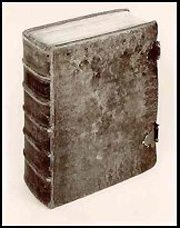
Leaving his mother, Washington continued northward toward New York City. In town after town along the way, special dinners and celebrations were held – including in Alexandria, Georgetown, Baltimore, Philadelphia, Trenton, and other locations. Finally reaching Elizabethtown, New Jersey, Washington boarded a barge that carried him the rest of the way, where another celebration awaited him upon entering New York Harbor.

On April 30th, 1789, George Washington was to be inaugurated on the balcony outside Federal Hall. (Federal Hall was originally named Old Hall, but New York City – in an effort to convince the new federal government that the City was serious about becoming the national capital – remodeled the structure, renaming it Federal Hall. The House and Senate met in two chambers inside that Hall, and the inauguration took place on the remodeled building’s balcony.) Incidentally, religious activities had been planned to precede the inauguration, with the people of New York City being called to a time of prayer. The papers in the Capital City reported on that scheduled activity:

[O]n the morning of the day on which our illustrious President will be invested with his office, the bells will ring at nine o’clock, when the people may go up to the house of God and in a solemn manner commit the new government, with its important train of consequences, to the holy protection and blessing of the Most high. An early hour is prudently fixed for this peculiar act of devotion and . . . is designed wholly for prayer. 5

The preparations for the inauguration had been extensive; everything had been well planned; the event seemed to be proceeding smoothly. The parade carrying Washington by horse-drawn carriage to the swearing-in was nearing Federal Hall when it was realized that no Bible had been obtained for administering the oath. Parade Marshal Jacob Morton hurried to the nearby Masonic Lodge and grabbed its large 1767 King James Bible.

americas-religious-heritage-as-demonstrated-in-presidential-inaugurations-3

The Bible was laid upon a crimson velvet cushion (held by Samuel Otis, Secretary of the Senate) and, with a huge crowd gathered below watching the ceremony on the balcony, New York Chancellor Robert Livingston was to administer the oath of office. (Robert Livingston had been one of the five Founders who had drafted the Declaration of Independence; however, he was called back to New York to help his State through the Revolution before he could affix his signature to the very document he had helped write. As Chancellor, Livingston was the highest ranking judicial official in New York.) Beside Livingston and Washington stood several distinguished officials, including Vice President John Adams, original Supreme Court Chief Justice John Jay, Generals Henry Knox and Philip Schuyler, and a number of others. The Bible was opened at random to the latter part of Genesis; Washington placed his left hand upon the open Bible, raised his right, and then took the oath of office prescribed by the Constitution. Washington then bent over and kissed the Bible, reverently closed his eyes, and said, “So help me God!” Chancellor Livingston then proclaimed, “It is done!” Turning to the crowd assembled below, he shouted, “Long live George Washington – the first President of the United States!” That shout was echoed and re-echoed by the crowd below.

Critics today claim that George Washington never added “So help me God!” to his oath 6 – that associating religious intent with the oath is of recent origins. After all, the presidential oath of office as prescribed in Article II of the Constitution simply states:

I do solemnly swear (or affirm) that I will faithfully execute the office of President of the United States, and will to the best of my ability, preserve, protect and defend the Constitution of the United States.

But overlooked by many today is the fact that the Framers of our government considered an oath to be inherently religious – something George Washington affirmed when he appended the phrase “So help me God” to the end of the oath. In fact, it was universally acknowledged by every American legal scholar of that day that any legally-binding oath was overtly religious in nature. As signer of the Declaration John Witherspoon succinctly explained:

An oath is an appeal to God, the Searcher of Hearts, for the truth of what we say and always expresses or supposes an imprecation [a calling down] of His judgment upon us if we prevaricate [lie]. An oath, therefore, implies a belief in God and His Providence and indeed is an act of worship. . . . Persons entering on public offices are also often obliged to make oath that they will faithfully execute their trust. . . . In vows, there is no party but God and the person himself who makes the vow.7

Signer of the Constitution Rufus King similarly affirmed:

[B]y the oath which they [the laws] prescribe, we appeal to the Supreme Being so to deal with us hereafter as we observe the obligation of our oaths. The Pagan world were and are without the mighty influence of this principle which is proclaimed in the Christian system – their morals were destitute of its powerful sanction while their oaths neither awakened the hopes nor fears which a belief in Christianity inspires. 8

James Iredell, a ratifier of the Constitution and a U. S. Supreme Court justice appointed by George Washington, also confirmed:

According to the modern definition [1788] of an oath, it is considered a “solemn appeal to the Supreme Being for the truth of what is said by a person who believes in the existence of a Supreme Being and in a future state of rewards and punishments according to that form which would bind his conscience most.” 9

The great Daniel Webster – considered the foremost lawyer of his time 10 – also declared:

“What is an oath?” . . . [I]t is founded on a degree of consciousness that there is a Power above us that will reward our virtues or punish our vices. . . . [O]ur system of oaths in all our courts, by which we hold liberty and property and all our rights, are founded on or rest on Christianity and a religious belief. 11
americas-religious-heritage-as-demonstrated-in-presidential-inaugurations-4

Clearly, at the time the Constitution was written, an oath was a religious obligation. George Washington understood this, and at the beginning of his presidency had prayed “So help me God” with his oath; at the end of his presidency eight years later in 1796 in his “Farewell Address,” he reaffirmed that an oath was religious when he pointedly queried:

[W]here is the security for property, for reputation, for life, if the sense of religious obligation desert the oaths . . . ? 12

Numerous other authoritative sources affirm that oaths were inherently religious. 13

The evidence is clear: from a constitutional viewpoint, the administering of a presidential oath was the administering of a religious obligation – something that was often acknowledged during presidential inaugurations following Washington’s. For example, during his 1825 inauguration, John Quincy Adams declared:

I appear, my fellow-citizens, in your presence and in that of Heaven to bind myself by the solemnities of religious obligation to the faithful performance of the duties allotted to me in the station to which I have been called. 14

Subsequent presidents made similar acknowledgments:

HERBERT HOOVER: This occasion is not alone the administration of the most sacred oath which can be assumed by an American citizen. It is a dedication and consecration under God to the highest office in service of our people. 15

FRANKLIN DELANO ROOSEVELT: As I stand here today, having taken the solemn oath of office in the presence of my fellow countrymen – in the presence of our God . . . 16

JOHN F. KENNEDY: For I have sworn before you and Almighty God the same solemn oath our forebears prescribed nearly a century and three quarters ago. 17

RICHARD NIXON: I have taken an oath today in the presence of God and my countrymen to uphold and defend the Constitution of the United States. 18

There were others as well. 19 The taking of the presidential oath is a religious action – or what Founding Father John Witherspoon had called “an act of worship.” 20

Returning to Washington’s inauguration, following the taking of the oath on the Bible, Washington and the officials then departed the balcony and went inside Federal Hall to the Senate Chamber where Washington delivered his Inaugural Address. From the outset of that first-ever presidential address, Washington – as his first very official act – set a religious tone by expressing his own heartfelt prayer to God:

Such being the impressions under which I have – in obedience to the public summons – repaired to [arrived at] the present station, it would be peculiarly improper to omit in this first official act my fervent supplications to that Almighty Being Who rules over the universe, Who presides in the councils of nations, and Whose providential aids can supply every human defect – that His benediction may consecrate to the liberties and happiness of the people of the United States a government instituted by themselves for these essential purposes. 21

The remainder of Washington’s address was no less strongly religious; he even called on his listeners to remember and acknowledge God:

In tendering this homage [act of worship] to the Great Author of every public and private good, I assure myself that it expresses your sentiments not less than my own, nor those of my fellow-citizens at large less than either. No people can be bound to acknowledge and adore the Invisible Hand which conducts the affairs of men more than those of the United States. Every step by which they have advanced to the character of an independent nation seems to have been distinguished by some token of Providential Agency; and in the important revolution just accomplished in the system of their united government [i.e., the creation and adoption of the Constitution] . . . cannot be compared with the means by which most governments have been established without some return of pious gratitude. . . .

These reflections, arising out of the present crisis, have forced themselves too strongly on my mind to be suppressed. . . . [T]he foundation of our national policy will be laid in the pure and immutable principles of private morality . . . since there is no truth more thoroughly established than that there exists in the economy and course of nature an indissoluble union between virtue and happiness – between duty and advantage – between the genuine maxims of an honest and magnanimous policy and the solid rewards of public prosperity and felicity; since we ought to be no less persuaded that the propitious [favorable] smiles of Heaven can never be expected on a nation that disregards the eternal rules of order and right which Heaven itself has ordained. . . .

Having thus imparted to you my sentiments as they have been awakened by the occasion which brings us together, I shall take my present leave; but not without resorting once more to the benign Parent of the Human Race in humble supplication that . . . His divine blessing may be equally conspicuous in the enlarged views, the temperate consultations, and the wise measures on which the success of this government must depend. 22
americas-religious-heritage-as-demonstrated-in-presidential-inaugurations-5

Washington and the Members of Congress then marched in a procession to St. Paul’s Church for Divine Service. That Congress should have gone to church en masse as part of the inauguration was no surprise, for Congress had itself scheduled these inaugural services.

That is, while the new Constitution had established the presidency, it stipulated nothing specific about the inaugural activities. It was therefore within the authority of Congress to help direct those activities. The Senate therefore acted:

Resolved, That after the oath shall have been administered to the President, he – attended by the Vice-President and members of the Senate and House of Representatives – proceed to St. Paul’s Chapel to hear Divine service. 23

The House quickly approved the same resolution. 24 Once the presidential oath had been administered and the inaugural address delivered, according to official congressional records:

The President, the Vice-President, the Senate, and House of Representatives, &c., then proceeded to St. Paul’s Chapel, where Divine Service was performed by the chaplain of Congress. 25
americas-religious-heritage-as-demonstrated-in-presidential-inaugurations-6

The service at St. Paul’s was conducted by The Right Reverend Samuel Provoost – the Episcopal Bishop of New York, who had been chosen chaplain of the Senate the week preceding the inauguration. The service was performed according to The Book of Common Prayer, and included a number of prayers taken from Psalms 144-150 as well as Scripture readings and lessons from the book of Acts, I Kings, and the Third Epistle of John. 26

– – – ◊ ◊ ◊ – – –
The very first inauguration – conducted under the watchful eye of those who had framed our government and written its Constitution – incorporated numerous religious activities and expressions. That first inauguration set the constitutional precedent for all other inaugurations; and the activities from that original inauguration that have been repeated in whole or part in every subsequent inauguration include: (1) the use of the Bible to administer the oath; (2) the religious nature of the oath and including “So help me God”; (3) inaugural prayers by the president; (4) religious content in the inaugural addresses; (5) the president calling the people to pray or acknowledge God; (6) inaugural worship services; and (7) clergy-led inaugural prayers.


Endnotes

1 A number of legal authorities, university professors, and news writers have criticized inaugural religious activities. See, for example, Alan M. Dershowitz, “Bush Starts Off by Defying the Constitution,” Los Angeles Times, Wednesday, January 24, 2001 Metro section, Part B, 9; Larry Judkins, Religion Page Editor, Sacramento Valley Mirror, “Dershowitz Piece Misleading: All Presidents Flaunt Constitution,” in Positive Atheism Magazine, Thursday, January 25, 2001; “President Bush Announces Religious Agenda on Inauguration Day,” Americans United for Separation of Church and State, January 20, 2001; et. Al.

2 Noted atheist Michael Newdow filed suit in federal court to have prayers barred from the Presidential Inauguration of 2001, 2005, and in 2009 to have inaugural prayers halted and to prevent the Chief-Justice of the U. S. Supreme Court from saying “So help me God” when administering the oath of office to the president.

3 Significantly, many of the U. S. Senators at the first Inauguration had been delegates to the Constitutional Convention that framed the Constitution including William Samuel Johnson, Oliver Ellsworth, George Read, Richard Bassett, William Few, Caleb Strong, John Langdon, William Paterson, Robert Morris, and Pierce Butler; and many members of the House had been delegates to the Constitutional Convention, including Roger Sherman, Abraham Baldwin, Daniel Carroll, Elbridge Gerry, Nicholas Gilman, Hugh Williamson, George Clymer, Thomas Fitzsimmons, and James Madison.

4 Benson J. Lossing, Our Country: A Household History for All Readers (New York: Henry J. Johnson, 1877), IV:1121.

5 The Daily Advertiser, (New York: April 23, 1789), 2.

6 See, for example, Newdow v. Roberts, complaint filed by Newdow on December 29, 2008, 20-21, par. 103-104 of the complaint. See also Cathy Lynn Grossman, “No proof Washington said ‘so help me God’ – will Obama,” USA Today, January 9, 2009.

7 John Witherspoon, “Lectures on Moral Philosophy,” The Works of John Witherspoon (Edinburgh: J. Ogle, 1815), VII:139-140, 142.

8 Rufus King, October 30, 1821, Reports of the Proceedings and Debates of the Convention of 1821, Assembled for the Purpose of Amending The Constitution of the State of New York (Albany: E. and E. Hosford, 1821), 575.

9 Jonathan Elliot, The Debates in the Several State Conventions, on the Adoption of the Federal Constitution (Washington: 1836), IV:196, James Iredell, July 30, 1788.

10 Dictionary of American Biography, s. v. “Webster, Daniel.”

11 Daniel Webster, Mr. Webster’s Speech in Defense of the Christian Ministry and in Favor of the Religious Instruction of the Young, Delivered in the Supreme Court of the United States, February 10, 1844, in the Case of Stephen Girard’s Will (Washington: Gales and Seaton, 1844), 43, 51.

12 George Washington, Address of George Washington, President of the United States . . . Preparatory to His Declination (Baltimore: George and Henry S. Keatinge, 1796), 23.

13 See, for example, James Coffield Mitchell, The Tennessee Justice’s Manual and Civil Officer’s Guide (Nashville: Mitchell and C. C. Norvell, 1834), 457-458; City Council of Charleston v. S.A. Benjamin, 2 Strob. 508, 522-524 (Sup. Ct. S.C. 1846); and many other legal sources.

14 John Quincy Adams, Messages and Papers of the Presidents, ed. James D. Richardson (Washington, D.C.: 1900), 2:860, March 4th 1825.

15 Herbert Hoover, “Inaugural Address,” March 4, 1929, The American Presidency Project.

16 Franklin D. Roosevelt, “Inaugural Address,” January 20, 1945, The American Presidency Project.

17 John F. Kennedy, “Inaugural Address,” January 20, 1961, The American Presidency Project.

18 Richard Nixon, “Inaugural Address,” January 20, 1969, The American Presidency Project.

19 Warren G. Harding, “Inaugural Address,” March 4, 1921, The American Presidency Project; Jimmy Carter, “Inaugural Address,” January 20, 1977, The American Presidency Project.

20 John Witherspoon, The Works of John Witherspoon (Edinburgh: J. Ogle, 1815), VII:139, from his “Lectures on Moral Philosophy,” Lecture 16 on Oaths and Vows.

21 The Debates and Proceedings in the Congress of the United States, ed. Joseph Gales (Washington: Gales & Seaton, 1834), I:27. See also George Washington, Messages and Papers of the Presidents, James D. Richardson, editor (Washington, D.C.: 1899), 1:44-45, April 30, 1789.

22 Debates and Proceedings (1834) I:27-29, April 30, 1789.

23 Debates and Proceedings (1834), I:25, April 27, 1789.

24 Debates and Proceedings (1834), I:241, April 29, 1789.

25 Debates and Proceedings (1834) I:29, April 30, 1789.

26 Book of Common Prayer (Oxford: W. Jackson & A. Hamilton, 1784), s.v., April 30th.

Christmas With the Presidents

The White House observance of Christmas before the twentieth century was not an official event. First families decorated the house modestly with greens and privately celebrated the Yuletide with family and friends.

Christmas in Early America: the Pilgrims and Puritans of New England found no Biblical precedent for a public celebration of Christmas (recall that the goal of these groups was to simplify religious worship and to cut away all religious rituals and celebrations not specifically cited in the Bible); nothing in the Bible established any date for the birth of Christ; the holiday was instead established by Roman tradition, thus making it – in their view – one of the many “pagan” holidays that had been inculcated into the corrupt church that had persecuted them, and which they and other religious leaders wished to reform. Consequently, Christmas in New England remained a regular working day. In fact, Massachusetts passed an anti-Christmas law in 1659 declaring: “Whosoever shall be found observing any such day as Christmas . . . shall pay for each offense five shillings as a fine to the country.” The law was repealed in 1681, but the holiday still was not celebrated by religious non-conformists or dissenters (i.e., the Puritans and Pilgrims); it usually was celebrated only by a few Anglicans (later Episcopalians), Catholics, and other more formal or high-church-tradition New England families. It was not until the 1830s and 1840s that Christmas celebrations were just beginning to be accepted in New England (primarily due to the influence of large-scale Christmas celebrations in cities such as New York) – although as late as 1870 in Boston public schools, a student missing school on Christmas Day could be punished or expelled. By the 1880s, however, Christmas celebrations had finally become as accepted in New England as they were in other parts of the country. 2

White House Tree History Christmas Tree Trivia

  • In 1889, the tradition of a placing an indoor decorated tree in the White House began on Christmas morning during the Presidency of Benjamin Harrison.
  • In 1895, First Lady Frances Cleveland created a “technology savvy” tree when she hung electric lights on the White House tree (electricity was introduced into the White House in 1891).
  • 1901-1909, Teddy Roosevelt banned the Christmas tree from the White House for environmental reasons.
  • In 1923, President Calvin Coolidge started the National Christmas Tree Lighting Ceremony now held every year on the White House lawn.
  • In 1929, First Lady Lou Henry Hoover established the custom of decorating an official (and not just a personal) tree in the White House – a tradition that has remained with the First Ladies.
  • In 1953, the Eisenhowers sought out Hallmark Cards to assist them in creating a presidential Christmas card – the beginning of the official White House Christmas card.
  • In 1954, the annual Christmas tree lighting ceremony is named the Pageant of Peace. It is held each year in early December to light the National Christmas Tree and includes performances by popular entertainers before the lighting of the National Christmas Tree by the President. The National Christmas Tree remains lit through January 1.
  • In 1961, First Lady Jacqueline Kennedy began the tradition of Christmas Tree themes when she decorated the Christmas tree in toy trimmings from the Nutcracker Suite ballet by Tchaikovsky.
  • In 1963, the first Christmas card to include an explicitly religious element was the Kennedy card featuring a photo of a Nativity Scene set up in the East Room of the White House. Jack and Jacqueline had signed 30 cards before their final trip to Dallas. None was ever mailed. The National Christmas Tree that year was not lit until December 22nd because of a national 30-day period of mourning following President Kennedy’s assassination.
  • In 1969, the Pageant of Peace was embroiled in legal controversy over the use of religious symbols, and in 1973, the nativity scene that had always been part of the pageant was no longer allowed.
  • In 1979, the National Christmas Tree was not lighted except for the top ornament. This was done in honor of the American hostages in Iran….
  • In 1981, President Ronald Reagan authorized the first official White House ornament, copies of which were made available for purchase.
  • In 1981, Barbara Bush took the first of twelve rides in a cherry-picker to hang the star at the top of the National Christmas Tree.
  • In 1984, the Nativity Scene was allowed to return to the Pageant of Peace, and when the National Christmas Tree was lit on December 13th, temperatures were in the 70s, making it one of the warmest tree lightings in history.
  • In 2001, the first White House Christmas card to contain a Scripture was chosen by Laura Bush. Quoting from Psalm 27, it said “Thy face, Lord, do I seek. I believe that I shall see the goodness of the Lord in the Land of the Living,” which is what Laura Bush believed would happen after the tragedy of September 11. She chose that Scripture on September 16 (only 5 days after 9/11) based on a sermon the chaplain had preached at Camp David. The Bushes regularly used Scriptures on their Christmas cards.

George & Martha Washington (1789-1797)

At a time when Christmas was still quite controversial in a new nation, Martha Washington’s holiday receptions were stiff and regal affairs, quite befitting the dignity of the office of President of the United States and invitations were much desired by the local gentry. A Christmas party was given by the Washington’s for members of Congress on Christmas Day, 1795, at which a bountiful feast was served to the guests – all men with the exception of the First Lady!

The festivities at the Mount Vernon plantation in Virginia would start at daybreak with a Christmas fox hunt. It was followed by a hearty mid-day feast that included “Christmas pie,” dancing, music, and visiting that sometimes did not end for a solid week.

Andrew & Rachel Jackson (1829-1837)

From the earliest times memorable parties have been held for the president’s children or grand-children. One of the most elaborate was President Andrew Jackson’s “frolic” for the children of his household in 1834. This party included games, dancing, a grand dinner, and ended with an indoor “snowball fight” with specially made cotton balls.

Abraham & Mary Todd Lincoln (1861-1865)

During the first Christmas of the war (1861), Mrs. Lincoln arranged flowers, read books, helped serve meals, talked with the staff, and cared for the wounded at Campbell’s and Douglas hospitals. She personally raised a thousand dollars for Christmas dinners and donated a similar amount for oranges and lemons when she heard that there was a threat of scurvy.

During the Christmas season of 1863, the Lincolns’ son, Tad, had accompanied his father on hospital visits and noticed the loneliness of the wounded soldiers. Deeply moved, the boy asked his father if he could send books and clothing to these men. The President agreed and packages signed “From Tad Lincoln” were sent to area hospitals that Christmas.

One Christmas Tad Lincoln befriended the turkey that was to become Christmas dinner. He interrupted a cabinet meeting to plead with his father to spare the bird. The President obliged by writing a formal pardon for the turkey named Jack.

Benjamin & Caroline Harrison (1889-1893)

In 1889, President Benjamin Harrison, his grandchildren, and extended family gathered around the first indoor White House Christmas tree.

Grover & Francis Cleveland (1885-1889; 1893-1897)

When Grover Cleveland first became President in 1885, there was no Christmas tree during the first Cleveland administration, but when daughters Ruth, Esther, and Marion were born, this changed in the second administration. In 1894, three years after electricity was introduced in the White House, the first electric lights on a family tree delighted the young daughters of President Grover Cleveland.

Mrs. Cleveland’s main Christmas activity, rather than entertaining and decorating, was her work with the Christmas Club of Washington to provide food, clothing, and toys to poor children in the D.C. area. She took the time to wrap and distribute gifts to the children and sat with them for a Punch and Judy show. Although Christmas Club charities in Washington date back to the 1820’s, no previous first lady had taken as prominent a role in these activities as Frances Cleveland, who helped set a tradition of good works carried on by many other First Ladies.

Theodore & Edith Roosevelt (1901-1909)

President Theodore Roosevelt, an avowed conservationist, did not approve of cutting trees for Christmas decorations. However, his son Archie smuggled in a small tree that was decorated and hidden in a closet in the upstairs sewing room.

The Theodore “Teddy” Roosevelt family Christmas traditions were quite simple. On Christmas Eve, they would pile into the family sleigh (later the motor car) and travel to Christ Church in Oyster Bay, New York. Following the pastor’s sermon, TR would deliver one of his famous “sermonettes” on the meaning of the holiday. The service would close with one of his favorite hymns “Christmas By the Sea.” On Christmas morning, gifts would be opened and then the family would spend the day hiking, playing games, and going for sleigh rides.

For many years TR played Santa Claus at a school in Oyster Bay, New York, listening to the children and then giving them Christmas presents that he had selected himself.

Calvin & Grace Coolidge (1923-1929)

In 1923, President Calvin Coolidge touches a button and lights up the first national Christmas tree to grace the White House grounds. (Until 1923, holiday celebrations were local in nature.) It was the first to be decorated with electric lights – a strand of 2,500 red, white and green bulbs. While radio station WCAP broadcast the event to possibly a million Americans, the President gave no speech. The evening centered, instead, on Christmas carols and other festive music performed at the tree-lighting ceremony, including by the Epiphany Church choir and the U.S. Marine Band. Later that evening, President Coolidge and first lady Grace were treated to carols sung by members of Washington D.C.’s First Congregational Church.

That year, the erection of a National Christmas Tree was the first of several holiday practices instituted during the Coolidge Presidency that are still with us today. It was 1927 when President Coolidge issued a holiday message to the nation – and then only a brief one written by his own hand on White House stationery. Its text was carried in newspapers across the land on Christmas Day. Finally, in 1928, on his last Christmas Eve in office, the President delivered to the nation via radio the first tree-lighting speech. It was 49 words in length.

Herbert & Lou Hoover (1929-1933)

First Lady Lou Henry Hoover established the custom of decorating an official (and not just a personal) tree in the White House in 1929. Since that time, the honor of trimming a principal White House Christmas tree on the state floor has belonged to our first ladies.

Christmas 1929 was memorable for the Hoovers because an electrical fire broke out in the West Wing of the White House during a children’s party. The Oval Office was gutted, but Mrs. Hoover kept the party going. The Marine Band, meanwhile, played Christmas carols at a volume calculated to drown out the sound of the arriving fire engines.

The following year the same children were invited back for another party at which time each child was given a toy fire engine as a memento. The invitations to the 1930 party read as follows: “This is not like the Christmas parties you usually go to…for Santa Claus has sent word that he is not going to be able, by himself, to take care of all the little girls and boys he wants to this year, and he has asked other people to help him as much as possible. So if you bring some presents with you, we will send them all to him to distribute.” The party was an enormous success.

Hoover, December 25th, 1931

Your annual Christmas service . . . is a dramatic and inspiring event of national interest. It symbolizes and vivifies our greatest Christian festival with its eternal message of unselfishness, joy, and peace. 3

Franklin & Eleanor Roosevelt (1933-1945)

Eleanor initiated Christmas planning each year. Her gift giving list included over 200 names. She began buying gifts in January and regularly put things away in her special “Christmas Closet.” Throughout the year she added new items – gifts for family, friends, and almost everyone on the White House Staff. Each October, she would take over a storage room on the third floor of the White House to wrap the gifts. On Christmas, Franklin would be so interested in the gifts for others that it might be three or four days after Christmas before he was persuaded to open his own.

For the President, Christmas was a time for family and close friends. The tree was set up on Christmas Eve and the President directed his grandchildren in the placement of every ornament. After the tree was decorated, FDR had the grandchildren gather around while he read Charles Dickens’ “A Christmas Carol” or recited it from memory. Following the reading, the children would race upstairs to the President’s bedroom where they would hang their stockings on his mantel.

FDR, December 24th, 1935

Around the Manger of the Babe of Bethlehem “all Nations and kindreds and tongues” [Revelation 7:9] find unity. . . . The spirit of Christmas breathes an eternal message of peace and good-will to all men. We pause, therefore, on this Holy Night and . . . rejoice that nineteen hundred years ago, heralded by angels, there came into the world One whose message was of peace, who gave to all mankind a new commandment of love. In that message of love and of peace we find the true meaning of Christmas. And so I greet you with the greeting of the Angels on that first Christmas at Bethlehem which, resounding through centuries, still rings out with its eternal message: “Glory to God in the highest, and on earth peace, good-will to men.” 4

FDR, December 24th, 1939

In the happiness of this Eve of the most blessed day in the year, I give to all of my countrymen the old, old greeting – “Merry Christmas – Happy Christmas.” . . . Let us rather pray that we may be given strength to live for others – to live more closely to the words of the Sermon on the Mount and to pray that peoples in the nations which are at war may also read, learn and inwardly digest these deathless words. May their import reach into the hearts of all men and of all nations. I offer them as my Christmas message:

“Blessed are the poor in spirit: for theirs is the kingdom of heaven.
“Blessed are they that mourn: for they shall be comforted.
“Blessed are the meek: for they shall inherit the earth.
“Blessed are they which do hunger and thirst after righteousness: for they shall be filled.
“Blessed are the merciful: for they shall obtain mercy.
“Blessed are the pure in heart: for they shall see God.
“Blessed are the peacemakers: for they shall be called the children of God.
“Blessed are they which are persecuted for righteousness’ sake: for theirs is the kingdom of heaven.” 5

FDR, December 24th, 1941 (Following Pearl Harbor)

There are many men and women in America – sincere and faithful men and women – who are asking themselves this Christmas. . . . How can we meet and worship with love and with uplifted spirit and heart in a world at war, a world of fighting and suffering and death? . . . How can we put the world aside . . . to rejoice in the birth of Christ? . . . And even as we ask these questions, we know the answer. There is another preparation demanded of this Nation beyond and beside the preparation of weapons and materials of war. There is demanded also of us the preparation of our hearts – the arming of our hearts. And when we make ready our hearts for the labor and the suffering and the ultimate victory which lie ahead, then we observe Christmas Day – with all of its memories and all of its meanings – as we should. Looking into the days to come, I have set aside a day of prayer. 6

FDR, December 24th, 1944 (Following D-Day)

Here, at home, we will celebrate this Christmas Day in our traditional American way – because of its deep spiritual meaning to us; because the teachings of Christ are fundamental in our lives; and because we want our youngest generation to grow up knowing the significance of this tradition and the story of the coming of the immortal Prince of Peace and Good Will. [He then led in a prayer for the troops] We pray that with victory will come a new day of peace on earth in which all the Nations of the earth will join together for all time. That is the spirit of Christmas, the holy day. May that spirit live and grow throughout the world in all the years to come. 7

Harry & Bess Truman (1945-1953)

It became a tradition for the First Family to go home to Independence, Missouri, for Christmas. The Chief Executive, however, always remained in Washington until after the staff party on Christmas Eve.

Truman, December 24th, 1945

This is the Christmas that a war-weary world has prayed for through long and awful years. . . . We meet in the spirit of the first Christmas, when the midnight choir sang the hymn of joy: “Glory to God in the highest, and on earth peace, good will toward men.” Let us not forget that the coming of the Savior brought a time of long peace to the Roman World. . . . From the manger of Bethlehem came a new appeal to the minds and hearts of men: “A new commandment I give unto you, that ye love one another.” . . . Would that the world would accept that message in this time of its greatest need! . . . We must strive without ceasing to make real the prophecy of Isaiah: “They shall beat their swords into plowshares and their spears into pruning-hooks: nation shall not lift up sword against nation, neither shall they learn war any more.” In this day, whether it be far or near, the Kingdoms of this world shall become indeed the Kingdom of God and He will reign forever and ever, Lord of Lords and King of Kings. 8

Truman, December 24th, 1949

Since returning home, I have been reading again in our family Bible some of the passages which foretold this night. . . . We miss the spirit of Christmas if we consider the Incarnation as an indistinct and doubtful, far-off event unrelated to our present problems. We miss the purport of Christ’s birth if we do not accept it as a living link which joins us together in spirit as children of the ever-living and true God. In love alone – the love of God and the love of man – will be found the solution of all the ills which afflict the world today. 9

Truman, December 24th, 1950 (During the Korean War)

At this Christmastime we should renew our faith in God. We celebrate the hour in which God came to man. It is fitting that we should turn to Him. . . . But all of us – at home, at war, wherever we may be – are within reach of God’s love and power. We all can pray. We all should pray. . . . We should pray for a peace which is the fruit of righteousness. The Nation already is in the midst of a Crusade of Prayer. On the last Sunday of the old year, there will be special services devoted to a revival of faith. I call upon all of you to enlist in this common cause. . . . We are all joined in the fight against the tyranny of communism. Communism is godless. Democracy is the harvest of faith – faith in one’s self, faith in one’s neighbors, faith in God. Democracy’s most powerful weapon is not a gun, tank, or bomb. It is faith. . . . Let us pray at this Christmastime for the wisdom, the humility, and the courage to carry on in this faith. 10

Truman, December 24th, 1952

Through Jesus Christ the world will yet be a better and a fairer place. This faith sustains us today as it has sustained mankind for centuries past. This is why the Christmas story, with the bright stars shining and the angels singing, moves us to wonder and stirs our hearts to praise. Now, my fellow countrymen, I wish for all of you a Christmas filled with the joy of the Holy Spirit, and many years of future happiness with the peace of God reigning upon this earth. 11

Dwight & Mamie Eisenhower (1953-1961)

Unlike other Presidents who distinguished political from household staff, the Eisenhowers brought both together (more than 500 in all) for a Christmas party each year. For the White House staff, Mamie purchased gifts in area department stores, personally wrapping each one to save money.

President Eisenhower took a personal interest in the gifts and cards that were sent from the White House. Ike was an artist in his own right and allowed six of his own paintings to be used as Christmas gifts and cards during his administration. In eight years, Hallmark produced a prodigious 38 different Christmas cards and gift prints for the President and First Lady. No previous administration, nor any since Eisenhower’s, has sent such a variety of holiday greetings from the White House.

For the Christmas of 1958, Mamie pulled out all the stops in decorating the White House. She had 27 decorated trees, carols were piped into every room and greenery was wrapped around every column.

John & Jacqueline Kennedy (1961-1963)

In 1961, First Lady Jacqueline Kennedy began the tradition of selecting a theme for the official White House Christmas tree. She decorated a tree placed in the oval Blue Room with ornamental toys, birds and angels modeled after Tchaikovsky’s Nutcracker Suite.

The first card to contain an explicitly religious element was in 1963, which featured a photo of a crèche set up in the East Room of the White House. Kennedy and his wife, Jacqueline, had signed 30 cards before their final trip to Dallas where he was assassinated. None of these cards were ever mailed.

Lyndon & Ladybird Johnson (1963-1969)

Lyndon and Ladybird Johnson spent four of their six presidential Christmases in Texas rather than Washington. The Christmas of 1967 (the 7th) was special for the Johnsons because their daughter, Lynda, was married to Charles Robb in the White House on December 9th with 650 guests in attendance. The celebrating continued during Christmas and they spent that Christmas in Washington, the first in seven years.

The Johnsons final Christmas in the White House in 1968 was a time of reflection for them and the opportunity to say goodbye to their friends. On December 23rd, President Johnson sent Christmas greetings to the American troops in Southeast Asia, which included his two sons-in-law.

The First Lady committed herself to the beautification of America and the planting of trees. Except for their unplanned first Christmas in the Executive Mansion, all the cards and gift prints of later years were to feature trees.

LBJ, December 22nd, 1963

We were taught by Him whose birth we commemorate that after death there is life. . . . In these last 200 years we have guided the building of our Nation and our society by those principles and precepts brought to earth nearly 2,000 years ago on that first Christmas. 12

LBJ, December 15th, 1967

In a few days we shall all celebrate the birth of His Holiness on earth. . . . We shall acknowledge the Kingdom of a Child in a world of men. That Child – we should remember – grew into manhood Himself, preached and moved men in many walks of life, and died in agony. But His death – so the Christian faith tells us – was not the end. For Him, and for millions of men and women ever since, it marked a time of triumph – when the spirit of life triumphed over death. 13

Richard & Pat Nixon (1969-1974)

The Vietnam War was going strong when the Nixons entered the White House in 1969. Pat Nixon personally supervised an elaborate plan for decorating the White House. For the first time in a quarter century, wreaths were hung in every window. In the Great Hall stood a 19-foot fir tree with ornaments that featured the flowers of the fifty states. In response to the National Christmas Tree, war protestors set up their own tree and decorated it with soda pop cans and tin foil peace symbols.

Christmas celebrations during the following years were often filled with controversy and difficulty. In 1969, the Pageant of Peace was embroiled in legal controversy over the use of religious symbols, and in 1973, the nativity scene that had always been part of the pageant was no longer allowed.

Gerald & Betty Ford (1974-1977)

In 1975, to honor America’s upcoming bicentennial celebration, the National Christmas Tree was decorated with 4,600 red, white, and blue ornaments and 12,000 lights. On the top of the 45-foot blue spruce sat a 4-foot gold and green replica of the Liberty Bell. There were also 13 smaller trees representing the 13 colonies and 44 other trees placed in a row representing states and territories.

Ford, December 18th, 1975

As we gather here before our Nation’s Christmas tree, symbolic of the communion of Americans at Christmastime, we remind ourselves of the eternal truths by which we live. . . . In our 200 years, we Americans have always honored the spiritual testament of 2,000 years ago. We embrace the spirit of the Prince of Peace so that we might find peace in our own hearts and in our own land, and hopefully in the world as well. 14

Jimmy & Rosayln Carter (1977-1981)

One of the most interesting and controversial aspects of the Carters Presidential Christmases concerned greeting cards. In 1977, the Carters ordered and sent 60,000 Christmas cards, substantially more than any previous administration. In 1978, the number jumped to 100,000 and in 1979 when there were 105,000, President Carter finally established a White House committee to look into the problem of too many Christmas cards!

The hostage crisis in Iran dominated the holiday celebrations of 1979 and 1980. In 1979, the National Christmas Tree and fifty surrounding trees each showed a single light, one for each of the hostages. The President promised to turn on the other lights when the hostages were freed. Because the hostages were still in captivity, the following year the lights on the tree were turned on for 417 seconds on Christmas Eve – one second for each day they had been held.

Carter, December 15th, 1977

Christmas has a special meaning for those of us who are Christians, those of us who believe in Christ, those of us who know that almost 2,000 years ago, the Son of Peace was born to give us a vision of perfection, a vision of humility, a vision of unselfishness, a vision of compassion, a vision of love. 15

Carter, December 18th, 1980

In the first Christmas, the people who lived in the land of the Jews were hoping for a Messiah. They prayed God to send them that savior, and when the shepherds arrived at the place to see their prayers answered they didn’t find a king, they found a little baby. And I’m sure they were very disappointed to see that God had not answered their prayers properly, but we Christians know that the prayers had been answered in a very wonderful way. God knew how to answer prayer. 16

Ronald & Nancy Reagan (1981-1989)

In 1981, President Ronald Reagan began another custom by authorizing the first official White House ornament, copies of which were made available for purchase.

In 1984, the Nativity Scene was allowed to return to the Pageant of Peace.

Christmas in Illinois, where both Ronald and Nancy Reagan grew up, was a sharp contrast to their Christmases in Washington. The President has recalled that his family never had a really fancy Christmas. During the Depression, when they couldn’t afford a Christmas tree, his mother would decorate a table or make a cardboard fireplace out of a packing box.

Reagan, December 23rd, 1981 (click here to listen to this)

At this special time of year, we all renew our sense of wonder in recalling the story of the first Christmas in Bethlehem, nearly 2,000 year ago. Some celebrate Christmas as the birthday of a great and good philosopher and teacher. Others of us believe in the Divinity of the child born in Bethlehem, that He was and is the promised Prince of Peace. . . . Tonight, in millions of American homes, the glow of the Christmas tree is a reflection of the love Jesus taught us. . . . Christmas means so much because of one special child. 17

Reagan, December 16th, 1982

In this holiday season, we celebrate the birthday of One Who, for almost 2,000 years, has been a greater influence on humankind than all the rulers, all the scholars, all the armies and all the navies that ever marched or sailed, all put together. He brought to the world the simple message of peace on Earth, good will to all mankind. Some celebrate the day as marking the birth of a great and good man, a wise teacher and prophet, and they do so sincerely. But for many of us it’s also a holy day, the birthday of the Prince of Peace, a day when “God so loved the world” that He sent us His only begotten Son to assure forgiveness of our sins. 18

Reagan, December 15th, 1983

Many stories have been written about Christmas. Charles Dickens’ “Carol” is probably the most famous. Well, I’d like to read some lines from a favorite of mine called, “One Solitary Life,” which describes for me the meaning of Christmas. [He then read the full story.] . . . I have always believed that the message of Jesus is one of hope and joy. I know there are those who recognize Christmas Day as the birthday of a great and good man, a wise teacher who gave us principles to live by. And then there are others of us who believe that He was the Son of God, that He was Divine. If we live our lives for truth, for love, and for God, we never need be afraid. 19

Reagan, December 12th, 1985

We do not know the exact moment the Christ Child was born, only what we would have seen if we’d been standing there as we stand here now: Suddenly, a star from heaven shining in our eyes, shining with brilliant beauty across the skies, a star pointing toward eternity in the night, like a great ring of pure and endless light, and then all was calm, and all was bright. Such was the beginning of one solitary life that would shake the world as never before or since. When we speak of Jesus and of His life, we speak of a man revered as a prophet and teacher by people of all religions, and Christians speak of someone greater – a man Who was and is Divine. He brought forth a power that is infinite and a promise that is eternal, a power greater than all mankind’s military might, for His power is Godly love, love that can lift our hearts and soothe our sorrows and heal our wounds and drive away our fears. . . . If each of us could give but a fraction to one another of what He gave to the whole human family, how many hearts could heal, how much sorrow and pain could be driven away. 20

George & Barbara Bush (1989-1993)

Mrs. Bush took particular pleasure in hosting a special party for homeless children from the Central Union Mission in Washington, DC. She distributed special Christmas bags filled with gifts and then read them Christmas stories. She sometimes would tell the stories in her own words, giving it her own personal touch.

The First Lady added her own special touches to the holiday with her annual cherry picker ride to hang the star at the top of the National Christmas Tree, a trip she took 12 times beginning in the Reagan Administration as the wife of the Vice President.

Bush, December 18th, 1989

During the beautiful and holy season of Christmas, our hearts are filled with the same wonder, gratitude, and joy that led the psalmist of old to ask, “When I consider Thy heavens, the work of Thy fingers, the moon and the stars, which Thou hast ordained, What is man, that Thou art mindful of him? And the son of man, that Thou visitest him?” At Christmas, we, too, rejoice in the mystery of God’s love for us – love revealed through the gift of Christ’s birth. Born into a family of a young carpenter and his wife, in a stable shared by beasts of the field, our Savior came to live among ordinary men. Yet, in time, the miraculous nature of this simple event became clear. Christ’s birth changed the course of history, bringing the light of hope to a world dwelling in the darkness of sin and death. Today, nearly 2,000 years later, the shining promise of that first Christmas continues to give our lives a sense of peace and purpose. Our words and deeds, when guided by the example of Christ’s life, can help others share in the joy of man’s Redemption. 21

Bill & Hillary Clinton (1993-2001)

Clinton, December 22nd, 1997

The beloved Christmas story itself is a story of light, for, as the Gospel of John tells us, Jesus came into the world as “the true Light” [John 1:9] that illumines all humankind. Almost 2,000 years later, that Light still shines amid the dark places of our world. 22

Clinton, December 21st, 1999

Saint Matthew’s Gospel tells us that on the first Christmas 2000 years ago, a bright star shone vividly in the eastern sky, heralding the birth of Jesus and the beginning of His hallowed mission as teacher, healer, servant, and savior. . . . His luminous teachings have brought hope and joy to generations of believers. . . . His timeless message of God’s enduring and unconditional love for each and every person continues to strengthen and inspire us. . . . Love, peace, joy, hope – so many beautiful words are woven through our Christmas songs and prayers and traditions. 23

George & Laura Bush (2001-2009)

George W. Bush is the first president to choose a Yule card with a Scripture. First lady Laura Bush supervises the card selection. She picked cards with Bible verses when her husband was governor and has continued to do so in the White House.

In 2001 George and Laura incorporated a scripture depicting their faith in post 9/11 times. It said “Thy face, Lord do I seek. I believe that I shall see the goodness of the Lord in the Land of the Living.” Psalm 27. Laura Bush believed that this is what really happened after the tragedy of September 11.

In 2004 George and Laura sent holiday cards with a Bible verse from Psalms (95:2): “Let us come before him with Thanksgiving and extol him with music and song.”

Bush, December 6th, 2001

Now once again, we celebrate Christmas in a time of testing, with American troops far from home. . . . It is worth recalling the words from a beautiful Christmas hymn. In the third verse of “Oh Holy Night” we sing, “His law is love, and His gospel is peace. Chains ye shall break, for the slave is our brother. And in His name all oppression shall cease. . . . We fight so that oppression may cease, and even in the midst of war, we pray for peace on Earth and good will to men. 24

Bush, December 4th, 2003

Throughout the Christmas season our thoughts turn to a star in the east, seen 20 centuries ago, and to a light that can guide us still. . . . The story of Christmas is familiar to us all, and it still holds a sense of wonder and surprise. When the good news came first to a young woman from Nazareth, her response was understandable. She asked, “How can this be?” The news would bring difficulty to her family and suspicion upon herself. Yet, Mary gave her reply, “Be it unto me according to Thy word.” The wait for a new king had been long, and the manner of his arrival was not as many had expected. The king’s first cries were heard by shepherds and cattle. He was raised by a carpenter’s son. Yet this one humble life lifted the sights of humanity forever. And in His words we hear a voice like no other. . . . We don’t know all of God’s ways, yet the Christmas story promises that God’s purpose is justice and His plan is peace. At times this belief is tested. During the Civil War, Longfellow wrote a poem that later became a part of a Christmas carol, “Hate is strong and mocks the song of peace on Earth, good will to men.” That poem also reminds us that hate is not the final word: “Then pealed the bells more loud and deep, `God is not dead, nor doth He sleep, the wrong shall fail, the right prevail, with peace on Earth, good will to men.”‘ 25


Endnotes

1. Much of the general information in this piece concerning the Christmas practices of the presidents is directly excerpted from the primary sources: “Background Info: Christmas at the White House,” White House Historical Association; “Christmas at the White House,” Herbert Hoover Presidential Library-Museum (at: https://hoover.archives.gov/exhibits/WHChristmas/index.html); and from the White House (at: https://www.whitehousechristmas.com/WHC/default.ASPX). The direct presidential quotes related to Christmas are each individually footnoted.

2. The information on historic Christmas in early America is taken from Celebrate Liberty (2003), David Barton, editor, pp. 192-193, n, available at https://wallbuilders.com/store/product170.html.

3.Herbert Hoover, “Message to the Nation’s Christmas Trees Association,” The American Presidency Project, December 25, 1931, (at: https://www.presidency.ucsb.edu/ws/?pid=22957).

4. Franklin D. Roosevelt, “Christmas Greeting to the Nation,” The American Presidency Project, December 24, 1935, (at: https://www.presidency.ucsb.edu/ws/?pid=15005).

5. Franklin D. Roosevelt, “Radio Christmas Greeting to the Nation,” The American Presidency Project, December 24, 1939, (at: https://www.presidency.ucsb.edu/ws/?pid=15854).

6. Franklin D. Roosevelt, “Christmas Eve Message to the Nation,” The American Presidency Project, December 24, 1941, (at: https://www.presidency.ucsb.edu/ws/?pid=16073).

7. Franklin D. Roosevelt, “Address to the Nation,” The American Presidency Project, December 24, 1944, (at: https://www.presidency.ucsb.edu/ws/?pid=16485).

8. Harry S. Truman, “Address at the Lighting of the National Community Christmas Tree on the White House Grounds,” The American Presidency Project, December 24, 1945, (at: https://www.presidency.ucsb.edu/ws/?pid=12250).

9. Harry S. Truman, “Address in Connection With Lighting of the National Community Christmas Tree on the White House Grounds,” The American Presidency Project, December 24, 1949, Harry S. Truman’s Christmas Eve Broadcast, (at: https://www.presidency.ucsb.edu/ws/?pid=13373).

10. Harry S. Truman, “Address Recorded for Broadcast on the Occasion of the Lighting of the National Community Christmas Tree on the White House Grounds,” The American Presidency Project, December 24, 1950, (at: https://www.presidency.ucsb.edu/ws/?pid=13698).

11. Harry S. Truman, “Remarks Upon Lighting the National Community Christmas Tree,” The American Presidency Project, December 24, 1952, Harry S. Truman’s Christmas Eve Broadcast, (at: https://www.presidency.ucsb.edu/ws/?pid=14368).

12. Lyndon B. Johnson, “Remarks at the Lighting of the Nation’s Christmas Tree,” The American Presidency Project, December 22, 1963, Lyndon B. Johnson’s Christmas Eve Radio and T.V. Broadcast, (at: https://www.presidency.ucsb.edu/ws/?pid=26587).

13. Lyndon B. Johnson, “Remarks at the Lighting of the Nation’s Christmas Tree,” The American Presidency Project, December 15, 1967, (at: https://www.presidency.ucsb.edu/ws/?pid=28610).

14. Gerald R. Ford, “Remarks at the Lighting of the National Community Christmas Tree,” The American Presidency Project, December 18, 1975, (at: https://www.presidency.ucsb.edu/ws/?pid=5445).

15. Jimmy Carter, “Christmas Pageant of Peace Remarks on Lighting the National Community Christmas Tree,” The American Presidency Project, December 15, 1977, (at: https://www.presidency.ucsb.edu/ws/?pid=7019).

16.Jimmy Carter, “Christmas Pageant of Peace Remarks on Lighting the National Community Christmas Tree,” The American Presidency Project, December 18, 1980, (at: https://www.presidency.ucsb.edu/ws/?pid=44421).

17. Ronald Reagan, “Address to the Nation About Christmas and the Situation in Poland,” The American Presidency Project, December 23, 1981, Reagan’s Christmas Address from the Oval Office, (at: https://www.presidency.ucsb.edu/ws/?pid=43384).

18. Ronald Reagan, “Remarks on Lighting the National Community Christmas Tree,” The American Presidency Project, December 16, 1982, (at: https://www.presidency.ucsb.edu/ws/?pid=42123).

19. Ronald Reagan, “Remarks on Lighting the National Community Christmas Tree,” The American Presidency Project, December 15, 1983, (at: https://www.presidency.ucsb.edu/ws/?pid=40873).

20. Ronald Reagan, “Remarks on Lighting the National Christmas Tree,” The American Presidency Project, December 12, 1985, (at: https://www.presidency.ucsb.edu/ws/?pid=38161).

21 George H. Bush, “Message on the Observance of Christmas,” The American Presidency Project, December 18. 1989, (at: https://www.presidency.ucsb.edu/ws/?pid=17953).

22. William J. Clinton, “Message on the Observance of Christmas,” The American Presidency Project, December 22, 1997, (at: https://www.presidency.ucsb.edu/ws/?pid=53733).

23. William J. Clinton, “Message on the Observance of Christmas,” The American Presidency Project, December 21, 1999, (at: https://www.presidency.ucsb.edu/ws/?pid=57106).

24. George W. Bush, “Remarks on Lighting the National Christmas Tree,” The American Presidency Project, December 6, 2001, (at: https://www.presidency.ucsb.edu/ws/?pid=73502).

25. George W. Bush, “Remarks on Lighting the National Christmas Tree,” The American Presidency Project, December 4, 2003, (at: https://www.presidency.ucsb.edu/ws/?pid=63610).


Confronting Civil War Revisionism: Why The South Went To War

The rewriting of history in any area is possible only if: (1) the public does not know enough about specific events to object when a wrong view is introduced; or (2) the discovery of previously unknown historical material brings to light new facts that require a correction of the previous view. However, historical revisionism – the rewriting “of an accepted, usually long-standing view especially a revision of historical events and movements” 1 – is successful only through the first means.

Over the past sixty years, many groups, exploiting a general lack of public knowledge about particular movements or events, have urged upon the public various revisionist views in order to justify their particular agenda. For example, those who use activist courts to advance policies they are unable to pass through the normal legislative process defend judicial abuse by asserting three historically unfounded doctrines: (1) the judiciary is to protect the minority from the majority; (2) the judiciary exists to review and correct the acts of elective bodies; and (3) the judiciary is best equipped to “evolve” the culture to the needs of an ever-changing society. These claims are directly refuted by original constitutional writings, especially The Federalist Papers. (See also the WallBuilders’ book, Restraining Judicial Activism.)

Likewise, those who pursue a secular public square seek to justify their agenda by asserting that the Founding Fathers: (1) were atheists, agnostics, and deists, and (2) wrote into the Constitution a strict separation of church and state requiring the exclusion of religious expressions from the public arena. These claims are also easily rebuttable through the Founders’ own writings and public acts. (See also the WallBuilders’ book, Original Intent.)

A third example of historical revisionism involves the claim that the 1860-1861 secession of the Southern States which caused the Civil War was not a result of the slavery issue but rather of oppressive federal economic policies. For example, a plaque in the Texas State Capitol declares:

confronting-civil-war-revisionism-why-the-south-went-to-war

Because we desire to perpetuate, in love and honor, the heroic deeds of those who enlisted in the Confederate Army and upheld its flag through four years of war, we, the children of the South, have united together in an organization called “Children of the Confederacy,” in which our strength, enthusiasm, and love of justice can exert its influence. We therefore pledge ourselves to preserve pure ideals; to honor our veterans; to study and teach the truths of history (one of the most important of which is that the war between the states was not a rebellion nor was its underlying cause to sustain slavery), and to always act in a manner that will reflect honor upon our noble and patriotic ancestors. (emphasis added)

Other sources make the same false claim, 2 but four notable categories of Confederate records disprove these claims and indisputably show that the South’s desire to preserve slavery was indisputably the driving reason for the formation of the Confederacy.

1. Southern Secession Documents

From December 1860 through August 1861, the southern states met individually in their respective state conventions to decide whether to secede from the Union. On December 20, 1860, South Carolina became the first state to decide in the affirmative, and its secession document repeatedly declared that it was leaving the Union to preserve slavery:

[A]n increasing hostility on the part of the non-slaveholding [i.e., northern] states to the institution of slavery has led to a disregard of their obligations. . . . [T]hey have denounced as sinful the institution of slavery. . . . They have encouraged and assisted thousands of our slaves to leave their homes [through the Underground Railroad]. . . . A geographical line has been drawn across the Union, and all the states north of that line have united in the election of a man to the high office of President of the United States [Abraham Lincoln] whose opinions and purposes are hostile to slavery. He is to be entrusted with the administration of the common government because he has declared that “Government cannot endure permanently half slave, half free,” and that the public mind must rest in the belief that slavery is in the course of ultimate extinction. . . . The slaveholding states will no longer have the power of self-government or self-protection [over the issue of slavery] . . . 3

Following its secession, South Carolina requested the other southern states to join them in forming a southern Confederacy, explaining:

We . . . [are] dissolving a union with non-slaveholding confederates and seeking a confederation with slaveholding states. Experience has proved that slaveholding states cannot be safe in subjection to non-slaveholding states. . . . The people of the North have not left us in doubt as to their designs and policy. United as a section in the late presidential election, they have elected as the exponent of their policy one [Abraham Lincoln] who has openly declared that all the states of the United States must be made Free States or Slave States. . . . In spite of all disclaimers and professions [i.e., measures such as the Corwin Amendment, written to assure the southern states that Congress would not abolish slavery], there can be but one end by the submission by the South to the rule of a sectional anti-slavery government at Washington; and that end, directly or indirectly, must be the emancipation of the slaves of the South. . . . The people of the non-slaveholding North are not, and cannot be safe associates of the slaveholding South under a common government. . . . Citizens of the slaveholding states of the United States! . . . South Carolina desires no destiny separate from yours. . . . We ask you to join us in forming a Confederacy of Slaveholding States. 4

On January 9, 1861, Mississippi became the second state to secede, announcing:

Our position is thoroughly identified with the institution of slavery – the greatest material interest of the world. . . . [A] blow at slavery is a blow at commerce and civilization. That blow has been long aimed at the institution and was at the point of reaching its consummation. There was no choice left us but submission to the mandates of abolition or a dissolution of the Union, whose principles had been subverted to work out our ruin. That we do not overstate the dangers to our institution [slavery], a reference to a few facts will sufficiently prove. The hostility to this institution commenced before the adoption of the Constitution and was manifested in the well-known Ordinance of 1787. [On July 13, 1787, when the nation still governed itself under the Articles of Confederation, the Continental Congress passed the Northwest Ordinance (which Mississippi here calls the “well-known Ordinance of 1787”). That Ordinance set forth provisions whereby the Northwest Territory could become states in the United States, and eventually the states of Ohio, Indiana, Illinois, Michigan, Wisconsin, and Minnesota were formed from that Territory. As a requirement for statehood and entry into the United States, Article 6 of that Ordinance stipulated: “There shall be neither slavery nor involuntary servitude in the said territory.”

When the Constitution replaced the Articles of Confederation, the Founding Fathers re-passed the “Northwest Ordinance” to ensure its continued effectiveness under the new Constitution. Signed into law by President George Washington on August 7, 1789, it retained the prohibition against slavery.
As more territory was gradually ceded to the United States (the Southern Territory – Mississippi and Alabama; the Missouri Territory – Missouri and Arkansas; etc.), Congress applied the requirements of the Ordinance to those new territories. Mississippi had originally entered the United States under the requirement that it not allow slavery, and it is here objecting not only to that requirement of its own admission to the United States but also to that requirement for the admission of other states.]. . . It has grown until it denies the right of property in slaves and refuses protection to that right on the high seas [Congress banned the importation of slaves into America in 1808], in the territories [in the Northwest Ordinance of 1789, the Missouri Compromise of 1820, the Compromise of 1850, and the Kansas-Nebraska Act of 1854], and wherever the government of the United States had jurisdiction. . . . It advocates Negro equality, socially and politically. . . . We must either submit to degradation and to the loss of property [i.e., slaves] worth four billions of money, or we must secede from the Union framed by our fathers to secure this as well as every other species of property. 5

(Notice that the Union’s claim that blacks and whites were equal both “socially and politically” was a claim too offensive for southern Democrat states to tolerate.)

Following its secession, Mississippi sent Fulton Anderson to the Virginia secession convention, where he told its delegates that Mississippi had seceded because they had unanimously approved a document “setting forth the grievances of the Southern people on the slavery question.” 6

On January 10, 1861, Florida became the third state to secede. In its preliminary resolutions setting forth reasons for secession, it acknowledged:

All hope of preserving the Union upon terms consistent with the safety and honor of the Slaveholding States has been finally dissipated by the recent indications of the strength of the anti-slavery sentiment in the Free States. 7

On January 11, 1861, Alabama became the fourth state to secede. Like the three states before her, Alabama’s document cited slavery; and it also cited the 1860 election victory of the Republicans as a further reason for secession, specifically condemning . . .

. . . the election of Abraham Lincoln and Hannibal Hamlin to the offices of President and Vice-President of the United States of America by a sectional party [the Republicans], avowedly hostile to the domestic institutions [slavery] and to the peace and security of the people of the State of Alabama . . . 8

Georgia similarly invoked the 1860 Republican victory as a cause for secession, explaining:

A brief history of the rise, progress, and policy of anti-slavery and the political organization into whose hands the administration of the federal government has been committed [i.e., the Republican Party] will fully justify the pronounced verdict of the people of Georgia [in favor of secession]. The party of Lincoln, called the Republican Party under its present name and organization, is of recent origin. It is admitted to be an anti-slavery party. . . . The prohibition of slavery in the territories, hostility to it everywhere, the equality of the black and white races, disregard of all constitutional guarantees in its favor, were boldly proclaimed by its [Republican] leaders and applauded by its followers. . . . [T]he abolitionists and their allies in the northern states have been engaged in constant efforts to subvert our institutions [i.e., slavery]. 9

Why was the Republican election victory a cause for secession? Because the Republican Party had been formed in May of 1854 on the almost singular issue of opposition to slavery (see WallBuilders’ work, American History in Black and White). Only six years later (in the election of 1860), voters gave Republicans control of the federal government, awarding them the presidency, the House, and the Senate.

The Republican agenda was clear, for every platform since its inception had boldly denounced slavery. In fact, when the U. S. Supreme Court delivered the 1857 Dred Scott ruling protecting slavery and declaring that Congress could not prohibit it even in federal territories, 10 the Republican platform strongly condemned that ruling and reaffirmed the right of Congress to ban slavery in the territories. 11 But setting forth an opposite view, the Democrat platform praised the Dred Scott ruling 12 and the continuation of slavery 13 and also loudly denounced all anti-slavery and abolition efforts. 14

The antagonistic position between the two parties over the slavery issue was clear; so when voters gave Republicans control of the federal government in 1860, southern slave-holding Democrat states saw the proverbial “handwriting on the wall” and promptly left the United States before Republicans could make good on their anti-slavery promises. It was for this reason that so many of the seceded states referenced the Republican victory in their secession documents.

It was not just southern Democrats who viewed the election of Lincoln and the Republicans as the death knell for slavery; many northern Democrats held the same view. In fact, New York City Democrat Mayor Fernando Wood not only attacked the Republican position on slavery but he also urged New York City to join with the South and secede, explaining:

With our aggrieved brethren of the Slave States, we have friendly relations and a common sympathy. We have not participated in the warfare upon their constitutional rights [of slaveholding] or their domestic institutions [slavery]. . . . It is certain that a dissolution [secession of the State of New York from the Union] cannot be peacefully accomplished except by the consent of the [Republican New York] Legislature itself. . . . [and] it is not probable that a partisan [Republican] majority will consent to a separation. . . . [So] why should not New York City, instead of supporting by her contributions in revenue two-thirds of the expenses of the United States, become also equally independent [i.e., secede]? . . . In this she would have the whole and united support of the southern states. 15

Other northern Democrats also assailed the anti-slavery positions of the Republicans – including Samuel Tilden (a New York state assemblyman and later the chair of the state Democrat Party, state governor, and then presidential candidate). Tilden affirmed that southern secession be could halted only if Republicans publicly abandoned their anti-slavery positions:

[T]he southern states will not by any possibility accept the avowed creed of the Republican Party as the permanent policy of the federative government as to slavery. . . . Nothing short of the recession [drawing back] of the Republican Party to the point of total and absolute non-action on the subject of slavery in the states and territories could enable it to reconcile to itself the people of the South. 16

Even the editorial page of the New York World endorsed the Democrats’ pro-slavery positions and condemned Republicans:

We cannot ask the South – we will not ask anybody – to live contentedly under a government . . . which burdens white men with oppressive debt and grinding taxation to try an unconstitutional experiment of giving freedom to Negroes. . . . A proposal for an abolition peace can never gain a hearing in the South. If the Abolition Party [Republicans] continues in power, the separation is final, [both] in feeling and in fact. 17

However, returning to an examination of southern secession documents, on January 19, 1861, Georgia became the fifth state to secede. Georgia then dispatched Henry Benning to Virginia to encourage its secession. At the Virginia convention, Benning explained to the delegates:

What was the reason that induced George to take the step of secession? That reason may be summed up in one single proposition: it was a conviction – a deep conviction on the part of Georgia – that a separation from the North was the only thing that could prevent the abolition of her slavery. This conviction was the main cause. 18

On January 26, 1861, Louisiana became the sixth state to secede. Days later, Texas was scheduled to hold its secession convention, and Louisiana sent Commissioner George Williamson to urge Texas to secede. Williamson told the Texas delegates:

Louisiana looks to the formation of a Southern Confederacy to preserve the blessings of African slavery. . . . Louisiana and Texas have the same language, laws, and institutions. . . . and they are both so deeply interested in African slavery that it may be said to be absolutely necessary to their existence and is the keystone to the arch of their prosperity. . . . The people of Louisiana would consider it a most fatal blow to African slavery if Texas either did not secede or, having seceded, should not join her destinies to theirs in a Southern Confederacy. . . . As a separate republic, Louisiana remembers too well the whisperings of European diplomacy for the abolition of slavery in the times of annexation [Great Britain abolished slavery in 1833; by 1843, southern statesmen were alleging – without evidence – that Great Britain was involved in a plot to abolish slavery in America. Southern voices therefore called for the immediate annexation of pro-slavery Texas into the United States in order to increase pro-slavery territory, but anti-slavery leaders in Congress – including John Quincy Adams and Daniel Webster – opposed that annexation. Their opposition was initially successful; and in his diary entry for June 10 & 17, 1844, John Quincy Adams enthused: “The vote in the United States Senate on the question of [admitting Texas] was, yeas, 16; nays, 35. I record this vote as a deliverance, I trust, by the special interposition of Almighty God. . . . The first shock of slave democracy is over. Moloch [a pagan god requiring human sacrifices] and Mammon [the god of riches] have sunk into momentary slumber. The Texas treason is blasted for the hour.” That victory, however, was only temporary; in 1845, Texas was eventually admitted as a slaveholding state.] not to be apprehensive of bolder demonstrations from the same quarter and the North in this country. The people of the slaveholding states are bound together by the same necessity and determination to preserve African slavery. The isolation of any one of them from the others would make her a theatre for abolition emissaries from the North and from Europe. Her existence would be one of constant peril to herself and of imminent danger to other neighboring slave-holding communities. . . . and taking it as the basis of our new government, we hope to form a slave-holding confederacy . . . 19

Williamson’s encouragement to the Texans turned out to be unnecessary, for on February 1, 1861, even before he arrived from Louisiana, Texas had already become the seventh state to secede. In its secession document, Texas announced:

[Texas] was received as a commonwealth, holding, maintaining, and protecting the institution known as Negro slavery – the servitude of the African to the white race within [Texas] – a relation that had existed from the first settlement of her wilderness by the white race and which her people intended should exist in all future time. Her institutions and geographical position established the strongest ties between her and other slaveholding states of the Confederacy. . . . In all the non-slave-holding states . . . the people have formed themselves into a great sectional party [i.e., the Republican Party] . . . based upon an unnatural feeling of hostility to these southern states and their beneficent and patriarchal system of African slavery, proclaiming the debasing doctrine of equality of all men irrespective of race or color – a doctrine at war with nature, in opposition to the experience of mankind, and in violation of the plainest revelations of divine law. They demand the abolition of Negro slavery throughout the Confederacy, the recognition of political equality between the white and Negro races, and avow their determination to press on their crusade against us so long as a Negro slave remains in these states. . . . By the secession of six of the slave-holding states, and the certainty that others will speedily do likewise, Texas has no alternative but to remain in an isolated connection with the North or unite her destinies with the South. 20

On April 17, 1861, Virginia became the eighth state to secede. It, too, acknowledged that the “oppression of the southern slave-holding states” (among which it numbered itself) had motivated its decision. 21

On May 8, 1861, Arkansas became the ninth state to join the Confederacy. Albert Pike (a prominent Arkansas newspaper owner and author of numerous legal works who became a Confederate general) explained why secession was unavoidable:

No concessions would now satisfy (and none ought now to satisfy) the South but such as would amount to a surrender of the distinctive principles by which the Republican Party coheres [exists], because none other or less would give the South peace and security. That Party would have to agree that in the view of the Constitution, slaves are property – that slavery might exist and should be legalized and protected in territory hereafter to be acquired to the southwest [e.g., New Mexico, Arizona, etc.], and that Negroes and mulattoes cannot be citizens of the United States nor vote at general elections in the states. . . . For that Party to make these concessions would simply be to commit suicide and therefore it is idle to expect from the North – so long as it [the Republican Party] rules there – a single concession of any value. 22

As Pike knew, the federal government under the Republicans was unwilling to abandon its anti-slavery positions; therefore the only recourse for the guarantee of continued slavery in Arkansas was secession – which Arkansas did.

Eventually, North Carolina and Tennessee became the tenth and eleventh states to secede, thus finishing the formation of the new nation that titled itself the Slave-Holding Confederate States of America. Southern secession documents indisputably affirm that the South’s desire to preserve slavery was the driving force in its secession and thus a primary cause of the Civil War.

2. The Declarations of Congressmen who left Congress to Join the Confederacy

Beginning on January 21, 1861, southern Democrats serving in Congress began resigning en masse to join the Confederacy. During this time, many stood in their respective federal legislative chambers and delivered their farewell statements unequivocally affirming what the secession documents clearly declared.

For example, Democrat U. S. Senator Alfred Iverson of Georgia bluntly told his peers:

I may safely say, however, that nothing will satisfy them [the seceded states] or bring them back short of a full and explicit recognition and guarantee of the safety of their institution of domestic slavery. 23

Democrat U. S. Senator Robert Toombs of Georgia (soon to become the Secretary of State for the Confederacy, and then a general in the Confederate Army) declared that the seceded South would return to the Union only if their pro-slavery demands were agreed to:

What do these Rebels demand? First, that the people of the United States shall have an equal right to emigrate and settle in the present or an future acquired territories with whatever property they may possess (including slaves). . . . The second proposition is that property in slaves shall be entitled to the same protection from the government of the United States, in all of its departments, everywhere, which the Constitution confers the power upon it to extend to any other property. . . . We demand in the next place . . . that a fugitive slave shall be surrendered under the provisions of the Fugitive Slave Act of 1850 without being entitled either to a writ of habeas corpus or trial by jury or other similar obstructions of legislation. . . . Slaves – black “people,” you say – are entitled to trial by jury. . . . You seek to outlaw $4,000,000,000 of property [slaves] of our people in the territories of the United States. Is not that a cause of war? . . . My distinguished friend from Mississippi [Mr. Jefferson Davis], another moderate gentleman like myself, proposed simply to get a recognition that we had the right to our own – that man could have property in man – and it met with the unanimous refusal even of the most moderate, Union-saving, compromising portion of the Republican party. . . . Mr. Lincoln thus accepts every cardinal principle of the Abolitionists; yet he ignorantly puts his authority for abolition upon the Declaration of Independence, which was never made any part of the public law of the United States. . . . Very well; you not only want to break down our constitutional rights – you not only want to upturn our social system – your people not only steal our slaves and make them freemen to vote against us – but you seek to bring an inferior race into a condition of equality, socially and politically, with our own people. 24 (emphasis added)

Democrat U. S. Senator Clement Clay of Alabama (soon to become a foreign diplomat for the Confederacy) also expounded the same points:

Not a decade, nor scarce a lustrum [five year period], has elapsed since [America’s] birth that has not been strongly marked by proofs of the growth and power of that anti-slavery spirit of the northern people which seeks the overthrow of that domestic institution [slavery] of the South, which is not only the chief source of her prosperity but the very basis of her social order and state polity. . . . No sentiment is more insulting or more hostile to our domestic tranquility, to our social order, and our social existence, than is contained in the declaration that our Negroes are entitled to liberty and equality with the white man. . . . To crown the climax of insult to our feelings and menace of our rights, this party nominated to the presidency a man who not only endorses the platform but promises in his zealous support of its principles to disregard the judgment of your courts [i.e., Lincoln had indicated that he would ignore the Supreme Court’s egregious Dred Scott decision], the obligations of your Constitution, and the requirements of his official oath, by approving any bill prohibiting slavery in the territories of the United States. 25

Democrat U. S. Senator John Slidell of Louisiana (soon to be a Confederate diplomat to France and Great Britain), echoed the same grievances:

We all consider the election of Mr. Lincoln, with his well-known antecedents and avowed [anti-slavery] principles and purposes . . . as conclusive evidence of the determined hostility of the Northern masses to our institutions. We believe that he conscientiously entertains the opinions which he has so often and so explicitly declared, and that having been elected on the [anti-slavery] issues thus presented, he will honestly endeavor to carry them into execution. While now [as a result of secession] we have no fears of servile insurrection [i.e. a slave revolt], even of a partial character, we know that his inauguration as President of the United States, with our assent, would have been considered by many of our slaves as the day of their emancipation. 26

Democrat U. S. House Representative William Yancey (who became a Confederate diplomat to Europe and then a Confederate Senator) similarly complained:

[The North is] united in pronouncing slavery a political and social evil. . . . There exists but one party that, either in spirit or sentiment, manifests any disposition to stand by the South and the Constitution, and that is the Democratic Party. . . . The institution of slavery. . . . exists for the benefit of the South and is its chief source of wealth and power; and now in the hour of its peril – assailed by the great Northern antagonistic force [the Republicans and abolitionists] – it must look to the South alone for protection. . . . The question then, naturally arises, what protection have we against the arbitrary course of the Northern majority? . . . The answer is . . . withdraw from it [i.e., secede]! 27

Perhaps the no-holds-barred pro-slavery position of Democrats and southern states was best summarized by Democrat U. S. Senator Judah P. Benjamin of Louisiana (who became the first Attorney General of the Confederacy, then its Secretary of War, and finally its Secretary of State), who declared:

I never have admitted any power in Congress to prohibit slavery in the territories anywhere, upon any occasion, or at any time.28 (emphasis added)

Once the South seceded and organized its Confederate government, it immediately sought official diplomatic recognition from Great Britain and France, wrongly believing that by halting the export of Southern cotton into those nations they could strong-arm them into an official recognition of the Confederacy. But Great Britain and Europe already held large stores of cotton in reserve and also had access to textile imports from other nations, so the poorly conceived Confederate plan was unsuccessful.

France had been willing to extend official recognition to the Confederacy but would not do so unless Great Britain did the same. But Charles Francis Adams (U. S. Minister to England, and the son of John Quincy Adams and grandson of John Adams) rallied anti-slavery forces in Europe and England to successfully lobby Great Britain not to extend official recognition to the Confederacy. Those early diplomatic successes by the Union were bolstered by President Lincoln’s 1862 announcement of the Emancipation Proclamation freeing slaves in the American states in rebellion – an act very popular among working-class Britons. By October 1863, the Confederacy, not having received the official support it so badly needed, expelled British representatives from southern states.

Although Great Britain never extended official recognition, she did indirectly assist the South in many ways, including supplying the Confederacy with naval cruisers that pillaged Union merchant shipping and also providing weapons to southern troops, including the Whitworth rifle (considered one of the most accurate rifles in the Civil War). A number of Britons even crossed the ocean to serve in the Confederate Army; and in some British ranks, the sympathy for the Confederacy was so strong that after popular Confederate General Stonewall Jackson was accidentally shot down by his own troops, the mourning was just as visible in parts of England as it had been throughout the Confederacy. Some in the British press even likened the death of Jackson to that of their own national hero, Lord Nelson; and a British monument to General Jackson was even commissioned, paid for, and transported to Richmond, Virginia by Confederate sympathizers in Great Britain.

Christian leaders in France – seeing Britain’s unofficial support for the slave-holding Confederacy – dispatched a fiery letter to British clergy, strongly urging them to oppose every British effort to help the Confederacy. As the French clergy explained:

No more revolting spectacle has ever been before the civilized world than a Confederacy – consisting mainly of Protestants – forming itself and demanding independence, in the nineteenth century of the Christian era, with a professed design of maintaining and propagating slavery. The triumph of such a cause would put back the progress of Christian civilization and of humanity a whole century. 29

Foreign observers clearly saw what southern Democrat U. S. Representatives and Senators in Congress had already announced: the Civil War was the result of the South’s desire to perpetuate slavery.

3. The Confederate Constitution

On February 9, 1861 (following the secession of the seventh state), the seceded states organized their new Confederate government, electing Jefferson Davis (a resigned Democrat U. S. Senator from Mississippi) as their national president and Alexander Stephens (a resigned Democrat U. S. Representative from Georgia) as their national vice-president. On March 11 (only a week after the inauguration of Abraham Lincoln as President [Confederate apologists not only claim that slavery was not the central issue to the Confederacy but they also frequently portray Abraham Lincoln as a dictator, tyrant, atheist, homosexual, incompetent, drunk, etc. To “prove” this view, they rely heavily on The Real Lincoln by Thomas Dilorenzo (2002), The Real Lincoln by Charles Minor (1901), and Herndon’s Lincoln by William H. Herndon (1888). These three books (and a few others) portray Lincoln in a negative light, but literally hundreds of other scholarly biographies written about Lincoln – including by Pulitzer Prize-winning historians such as Carl Sandburg, Ida Tarbell, Garry Wills, Merrill Peterson, Don Fehrenbacher, and others – reached an opposite conclusion.
A similar corollary would be to study the life of Jesus only by reading The DaVinci Code or The Last Temptation of Christ, or to study the life of George Washington only by using W. E. Woodward’s George Washington: The Image and the Man. In both cases, those writings present a view of that person but hundreds of other writings present an opposite and more accurate view; so, too, with Lincoln. The view of Lincoln presented by Confederate apologists is indeed a view, but it is contradicted by scores of other writers who, after examining all the historical evidence, reached an opposite conclusion.]), a constitution was adopted for the new confederacy of slave-holding states – a constitution that explicitly protected slavery in numerous clauses:

ARTICLE I, Section 9, (4) No bill of attainder, ex post facto law, or law denying or impairing the right of property in Negro slaves shall be passed.
ARTICLE IV, Section 2, (1) The citizens of each state . . . shall have the right of transit and sojourn in any state of this Confederacy with their slaves and other property; and the right of property in said slaves shall not be thereby impaired.
ARTICLE IV, Section 2, (3) [A] slave or other person held to service or labor in any state or territory of the Confederate States under the laws thereof, escaping or lawfully carried into another, shall . . . be delivered up on claim of the party to whom such slave belongs.
ARTICLE IV, Section 3, (3) The Confederate States may acquire new territory. . . . In all such territory, the institution of Negro slavery as it now exists in the Confederate States shall be recognized and protected by Congress and by the Territorial government; and the inhabitants of the several Confederate States and Territories shall have the right to take to such Territory any slaves lawfully held by them in any of the States or Territories of the Confederate States. 30

Ironically, southern apologists claim that the Confederacy was formed to preserve “states’ rights,” yet the Confederacy expressly prohibited any state from exercising its own “state’s right” to end slavery. Clearly, the Confederacy’s real issue was the preservation of slavery at all costs – even to the point that it constitutionally forbade the abolition of slavery by any of its member states.

4. Declaration of Confederate Vice-President Alexander Stephens

On March 21, 1861 (less than two weeks after the Confederacy had formed its constitution), Confederate Vice-President Alexander Stephens delivered a policy speech setting forth the purpose of the new government. That speech was entitled “African Slavery: The Corner-Stone of the Southern Confederacy.” In it, Stephens first acknowledged that the Founding Fathers – even those from the South – had never intended for slavery to remain in America:

The prevailing ideas entertained by him [Thomas Jefferson] and most of the leading statesmen at the time of the formation of the old Constitution were that the enslavement of the African was in violation of the laws of nature – that it was wrong in principle – socially, morally, and politically. It was an evil they knew not well how to deal with, but the general opinion of the men of that day was that somehow or other, in the order of Providence, the institution would be evanescent [temporary] and pass away. 31

What did Vice-President Stephens and the new Confederate nation think about these anti-slavery ideas of the Founding Fathers?

Those ideas, however, were fundamentally wrong. They rested upon the assumption of the equality of races. This was an error. . . . and the idea of a government built upon it. . . . Our new government [the Confederate States of America] is founded upon exactly the opposite idea; its foundations are laid – its cornerstone rests – upon the great truth that the Negro is not equal to the white man. That slavery – subordination to the superior [white] race – is his natural and moral condition. This – our new [Confederate] government – is the first in the history of the world based upon this great physical, philosophical, and moral truth. 32 (emphasis added)

Notice that by the title (as well as the content) of his speech, Confederate Vice-President Stephens affirmed that slavery was the central issue distinguishing the Confederacy.

Were Economic Policies a Major Factor in Secession?

Many southern apologists assert that the primary cause of the Civil War was unjust economic policies imposed on the South by northerners in Congress, 33 but secession records refute that claim. In fact, of the eleven secession documents, only five mention economic issues – and each was in direct conjunction with slavery. For example:

Our position is thoroughly identified with the institution of slavery – the greatest material interest of the world. Its labor supplies the product which constitutes by far the largest and most important portions of commerce of the earth. These products are peculiar to the climate verging on the tropical regions; and by an imperious law of nature, none but the black race can bear exposure to the tropical sun. These products have become necessities of the world, and a blow at slavery is a blow at commerce and civilization. 34 MISSISSIPPI

Texas [and] Louisiana . . . have large areas of fertile, uncultivated lands peculiarly adapted to slave labor; and they are both so deeply interested in African slavery that it may be said to be absolutely necessary to their existence and is the keystone to the arch of their prosperity. 35 LOUISIANA

They [the northern abolitionists in Congress] have impoverished the slave-holding states by unequal and partial legislation [attempting to abolish slavery], thereby enriching themselves by draining our substance. 36 TEXAS

We had shed our blood and paid our money for its [slavery’s] acquisition. . . . [But b]y their [the North’s] declared principles and policy they have outlawed $3,000,000,000 of our property [i.e., slaves] in the common territories of the Union. . . . To avoid these evils, we . . . will seek new safeguards for our liberty, equality, security, and tranquility [by forming the Confederacy]. 37 GEORGIA

We prefer, however, our system of industry . . . by which starvation is unknown and abundance crowns the land – by which order is preserved by an unpaid police and many fertile regions of the world where the white man cannot labor are brought into usefulness by the labor of the African, and the whole world is blessed by our productions. 38 SOUTH CAROLINA

Clearly, even the economic reasons set forth by the South as causes for secession were directly related to slavery. Therefore, to claim that economic policies and not slavery was the cause of the Civil War is to make a distinction where there is no difference.

Summary

Numerous categories of official Confederate documents affirm that slavery was indeed the primary issue that drove the secession movement and was central to the rebellion; it is therefore blatant and unmitigated revisionism to assert – as do Confederate apologists – that “one of the most important” of the “truths of history” is “that the War Between the States was not a rebellion nor was its underlying cause to sustain slavery.” 39

[Many southerners ardently insist on describing the conflict as “The War Between the States” and strenuously object to use of the descriptor “Civil War” (see, for example, “Let’s Say ‘War Between The States’ “ (at: https://www.civilwarpoetry.org/FAQ/wbts.html)). However, cursory examinations of dozens of Confederate documents, as well as histories of the war written by Confederates immediately following the conflict, demonstrate that the descriptor they themselves most frequently used was “Civil War.” (Other descriptors used much less often by southern authors include “War Between the States,” “War of Southern Secession,” and “War for Southern Independence.”) Therefore, the assertion that the term “Civil War” is an inaccurate or biased title for the conflict is refuted by an examination of Confederate soldiers and historians who lived at the time of that conflict. While the question of whether the conflict constituted a “rebellion” was not addressed by this work, a simple query raises a significant implication: If the “war between the states” was not a “rebellion” (as modern southern apologists assert), then why did southern leaders during the Civil War describe themselves and other southern participants as “Rebels” – a derivate of the word “rebellion”? The simple descriptor “Rebels” used by the Confederates themselves certainly suggests that they certainly viewed the Civil War as a “Rebellion.”]


Endnotes

1.The American Heritage Dictionary of the English Language, Fourth Edition, © 2004, by Houghton Mifflin Company.

2. “Derby, Kansas Middle School Suspension Denounced by Sons of Confederate Veterans,” Sons of Confederate Veterans which declares “[T]he War Between the States was fought over issues such as the rights of individual states to set their own tariffs, establish their own governments, and receive full profit from their agricultural production. . . . the question of slavery was brought into the war by Lincoln in late 1862 as an emotional one to bolster the sagging Northern war effort . . .”; and “Children of the Confederacy: Creed,” United Daughters of the Confederacy which declares “We, therefore pledge ourselves . . . to study and teach the truths of history (one of the most important of which is, that the War Between the States was not a rebellion, nor was its underlying cause to sustain slavery)”; etc.

3.Edward McPherson, The Political History of the United States of America During the Great Rebellion (Washington: Philip & Solomons, 1865), 15-16, “Declaration of the Immediate Causes Which Induce and Justify the Secession of South Carolina from the Federal Union,” December 24, 1860.

4.Convention of South Carolina, “Address of South Carolina to Slaveholding States,” Teaching American History, December 25, 1860.

5. “A Declaration of the Immediate Causes which Induce and Justify the Secession of the State of Mississippi from the Federal Union, January 9, 1861.”

6. Addresses Delivered Before the Virginia State Convention, February 1861 (Richmond: Wyatt M. Elliott, 1861), “Address of Hon. Fulton Anderson, of Mississippi,” 7.

7. Orville Victor, The History, Civil, Political and Military, of the Southern Rebellion (New York: James D. Torrey, 1861), 1:194, Florida, “Preliminary Resolution Prior to Secession,” January 7, 1861.

8. Victor, The History (1861) 1:195, “An Ordinance to dissolve the union between the State of Alabama and the other States united under the compact styled ‘The Constitution of the United States of America,’” January 11, 1861.

9. “A Declaration of the Causes which Impel the State of Georgia to Secede from the Federal Union, January 29, 1861.”

10. Dred Scott v. Sanford, 60 U. S. 393, at 449-52 (1856). The Dred Scott decision is arguably the first example of judicial activism by the Supreme Court: it struck down the congressional law of 1820 prohibiting the extension of slavery into certain federal territories.

11. Thomas Hudson McKee, The National Conventions and Platforms of All Political Parties, 1789-1905 (New York: Burt Franklin, 1906), 98, Republican Platform of 1856.

12. See, for example, the Democrat Platform following the Dred Scott decision; not only was there no condemnation of decision, but the platform instead declared: “The Democrat Party will abide by the decision of the Supreme Court of the United States upon these questions of constitutional law.” McKee, Platforms, 108.

13. See, for example, the Democrat Platform of 1856 declaring: “That Congress has no power under the Constitution, to interfere with or control the domestic institutions of the several States. . . . [And] the Democratic party will resist all attempts at renewing, in Congress or out of it, the agitation of the slavery question under whatever shape or color the attempt may be made. . . . [T]he only sound and safe solution of the ‘slavery question.’ . . . [is] non-interference by Congress with slavery in state and territory, or in the District of Columbia.” McKee, Platforms, 91-92.

14. See, for example, the Democrat Platform of 1856 declaring: “All efforts of the abolitionists, or others, made to induce Congress to interfere with questions of slavery, or to take incipient steps in relation thereto, are calculated to lead to the most alarming and dangerous consequences; and that all such efforts have an inevitable tendency to diminish the happiness of the people and endanger the stability and permanency of the Union.” McKee, Platforms, 91.

15. “Civil War Era: Mayor Wood’s Recommendation of the Secession of New York City,” TeachingAmericanHistory.org, January 6, 1861.

16. The Union! It’s Dangers! And How they can be Averted. Letters from Samuel J. Tilden to Hon. William Kent (New York: 1860), 14-15.

17. William P. Rogers, The Three Secession Movements in the United States (Boston: John Wilson and Son, 1876), 16-17, quoting an editorial in the New York World, September 1, 1864, “The Democratic Platform.”

18. Addresses Delivered Before the Virginia State Convention, February 1861 (Richmond: Wyatt M. Elliott, 1861), “Address of Hon. Henry L. Benning, of Georgia,” 21.

19. Journal of the Secession Convention of Texas, ed. E. W. Winkler (Austin Printing Company, 1912), 122-123, address of George Williamson, Commissioner from Louisiana, February 11, 1861.

20. “A Declaration of the Causes which Impel the State of Texas to Secede from the Federal Union, February 2, 1861.”

21. “An Ordinance to repeal the ratification of the Constitution of the United State of America by the State of Virginia, April 17, 1861.”

22. Southern Pamphlets on Secession, November 1860 – April 1861, ed. Jon Wakelyn (Chapel Hill: University of North Carolina Press, 1996), 334, 338, “State or Province? Bond or Free?” by Albert Pike, March 4, 1861.

23. Congressional Globe, 36th Congress, 2nd Session (Washington: Congressional Globe Office, 1861), 589, January 28, 1861; Thomas Ricaud Martin, The Great Parliamentary Battle and the Farewell Addresses of Southern Senators on the Eve of the Civil War (New York and Washington: Neale Publishing Co., 1905), 214, farewell speech of Alfred Iverson, January 28, 1861.

24. Congressional Globe, 36th Congress, 2nd Session (1861), 268-270, January 7, 1861; Martin, The Great Parliamentary Battle (1905), 148-152, 167, 169, 170-171, 172, farewell speech of Robert Toombs, January 7, 1861.

25. Congressional Globe, 36th Congress, 2nd Session (1861), 486, January 21, 1861; Martin, The Great Parliamentary Battle (1905), 202, 204, farewell speech of Clement Clay, January 21, 1861.

26. Congressional Globe, 36th Congress, 2nd Session (1861), 721, February 4, 1861; Martin, The Great Parliamentary Battle (1905), 222-223, farewell speech of John Slidell, February 4, 1861.

27. The Secession Crisis, 1860-1861, ed. P. J. Staudenraus (Chicago: Rand McNally, 1963), 16-18, speech of William Yancey, delivered at Columbus, Georgia, in 1855.

28. Congressional Globe, 36th Congress, 2nd Session (1861), p. 238, January 3, 1861; Martin, The Great Parliamentary Battle (1905), 222-223, speech of Judah P. Benjamin, January 3, 1861.

29. William J. Jackman, History of the American Nation (Chicago: K Gaynor, 1911), 4:1124.

30. “Constitution of the Confederate States; March 11, 1861,” Avalon Project; Edward McPherson, The Political History of the United States of America During the Great Rebellion (Washington: Philip & Solomons, 1865), 98-99.

31. Echoes From The South (New York: E. B. Treat & Co., 1866), 85; The Pulpit and Rostrum: Sermons, Orations, Popular Lectures, &c. (New York: E. D. Barker, 1862), 69-70, “African Slavery, the Cornerstone of the Southern Confederacy,” by Alexander Stephens, Vice President of the Confederacy.

32. Echoes From The South (1866), 85-86; The Pulpit and Rostrum (1862), 69-70, “African Slavery, the Cornerstone of the Southern Confederacy,” by Alexander Stephens, Vice President of the Confederacy.

33. Mike Scruggs, “Understanding the Causes of the Uncivil War,” Georgia Heritage Council, June 4, 2005; Charles Oliver, “Southern Nationalism – United States Civil War,” Reason, August, 2001, where he is talking about Charles Adams viewing “the Civil War as a fight about taxes, specifically tariffs.”

34. “A Declaration of the Immediate Causes which Induce and Justify the Secession of the State of Mississippi from the Federal Union,” January 9, 1861.

35. Journal of the Secession Convention of Texas, ed. E. W. Winkler (Austin Printing Company, 1912),122-123, address of George Williamson, Commissioner from Louisiana, February 11, 1861.

36. “A Declaration of the Causes which Impel the State of Texas to Secede from the Federal Union, February 2, 1861.”

37. “Georgia Declaration of Secession,” January 29, 1861.

38. Edward McPherson, The Political History of the United States of America During the Great Rebellion (Washington: Philip & Solomons, 1865), 15, “Declaration of the Immediate Causes Which Induce and Justify the Secession of South Carolina from the Federal Union,” December 24, 1860.

39. Plaque from the Children of the Confederacy hanging inside the Texas State Capitol. See also “Children of the Confederacy: Creed,” United Daughters of the Confederacy.

John Adams: Was He Really an Enemy of Christians? Addressing Modern Academic Shallownes

At WallBuilders, we are truly blessed by God, owning tens of thousands of original documents from the American Founding – documents clearly demonstrating the Christian and Biblical foundations both of America and of so many of her Founding Fathers and early statesmen. We frequently post original documents on our website so that others may enjoy them and learn more about many important aspects of America’s rich moral, religious, and constitutional heritage that are widely unknown or misportrayed today.

Posted in the “Historical Documents” section of our website is a, letter from John Adams to Dr. Benjamin Rush (a close friend of Adams and a co-signer of the Declaration of Independence). That letter was Adams’ reply to a remarkable letter written him by Dr. Rush on October 17, 1809, describing a dream Rush believed God had given him about Adams. WallBuilders providentially obtained this original letter from an amazing presidential collection of a 100+ year old Floridian woman.

We often use quotes from that letter, including Adams’ bold declaration that:

The Holy Ghost carries on the whole Christian system in this Earth. Not a baptism, not a marriage, not a sacrament can be administered but by the Holy Ghost. . . . There is no authority, civil or religious – there can be no legitimate government – but that which is administered by this Holy Ghost. There can be no salvation without it. All without it is rebellion and perdition, or in more orthodox words, damnation.1

This letter certainly contains profound Christian content, but that is not particularly surprising, for Adams wrote dozens of letters with similarly powerful Christian declarations. Also not surprising is the fact that liberals and atheists have attacked this letter and its content; they dismiss it with the excuse that Adams didn’t really mean what he said in the letter, or that it was code for something different from what he actually said. But what was surprising and unexpected is that this letter and its remarkable content did not set well with some Christians, especially Chris Pinto. Pinto has produced videos claiming not only that America does not have a Biblical foundation but specifically asserting that the Founding Fathers were largely pagans who represented the spirit of the Anti-Christ. He believes that Christians should not be involved in the political arena or similar areas of culture.2

Pinto seems to have developed a fixation with WallBuilders, joining with liberals and atheists to demean it and the Founding Fathers. For example, in one video he prepared against me and the Founding Fathers, he specifically addressed the John Adams letter we posted, claiming:

Barton makes it appear as if John Adams was speaking favorably about the Holy Ghost in a letter he wrote to Benjamin Rush. In reality, Adams was mocking the idea of “Holy Ghost authority” and called Christians “dupes” for believing in it.3

Pinto concludes:

In truth, the letter Barton is presenting provides some of the most damning evidence found anywhere, and is consistent with many of the writings of the Revolutionaries, proving their contempt for Bible-based Christianity. In this letter, John Adams was not speaking in approval of the Holy Ghost, but was rather mocking the idea of it and of the faith of true Christians. . . . Adams did not believe the Holy Ghost was real, and he spoke about it in what can only be called insulting and irreverent terms.4

Normally, we simply ignore these types of absurd claims, for we believe that the truth speaks for itself and that it will always eventually prevail. In fact, this is why we post so many original and hand-written Founding documents and letters online – we want individuals to see and read them for themselves to be personally aware of what is and is not true. It is important to follow the model praised by the Apostle Paul in Acts 17:11: always check original sources to establish truth. This is why we heavily document quotes and facts back to original sources – such as our best-selling book Original Intent: it contains some 1,700 footnotes, the vast majority of which are dated to primary-source documents published while the Founders were still alive.

(By the way, a notable ACLU attorney decided he would disprove our thesis that the Founding Fathers were largely Christian. He therefore took Original Intent and undertook a project to expose what he considered to be its falsehoods; he went back and checked our quotes against the original sources cited in the book. At the end of his research, he concluded that we had understated the faith of the Founders – that there was actually much more evidence to support their Christian faith than even what we had cited. This ACLU attorney was completely converted and went on to become an eminent court of appeals judge – all because he followed Paul’s model of Acts 17:11 and checked the evidence for himself. We have numerous similar testimonials of the dramatic change that has occurred in individuals who investigated the original facts for themselves.)

So although we typically do not respond to critics such as Pinto, in this case, his videos have confused many Christians who have respectfully asked us to help them sort out the facts and discern the truth. Hence we have chosen to address Pinto’s patently false claims about John Adams.

Significantly, Pinto reached his conclusions that John Adams was mocking the Holy Spirit only by ignoring, omitting, or not understanding lengthy and important segments of Adams’ letter (which is why we posted the complete letter online: to make it much harder for individuals to twist and distort its true meaning). When the segments that Pinto ignored or did not understand are returned to the letter, it becomes obvious that his premises have been infected with three of the five historical malpractices that characterize the current study of history: Modernism, Minimalism, and Deconstructionism (the other two of the five are Poststructuralism and Academic Collectivism, which Pinto also uses in other areas of his videos).

Modernism is the practice of analyzing historical incidents and persons as if they lived now rather than in the past. Modernism separates history from its context and setting – a practice that regularly produces flawed conclusions.

An illustration of Modernism is the manner in which today’s textbooks uniformly portray the colonial Puritans as intolerant Christians because of the witch trials in which twenty-seven individuals died.5 But universally ignored is the fact that witch trials were occurring across the world at that time, not just in America; and in Europe alone, 500,000 were put to death,6 including 30,000 in England, 75,000 in France, and 100,000 in Germany.7 Additionally, the American witch trials lasted two months, but the European trials lasted for years.8 Furthermore, the Massachusetts witch trials were brought to a close when Christian leaders such as the Rev. John Wise, the Rev. Increase Mather, and Thomas Brattle challenged the trials because Biblical rules of evidence and Due Process were not being followed in the courts.9 Consequently:

The trials were stopped by Governor Phipps in October, 1692, and five years later the Massachusetts Court publicly repented and set apart a special day of fasting and prayer, that prayers might be offered, asking for forgiveness for “the late tragedy raised amongst us by Satan,” while the twelve jurors published a declaration of sorrow for accepting insufficient evidence against the accused, and Judge Sewall rose in his pew in the South Church and made public confession of his sense of guilt.10

This is no attempt to defend the inexcusable twenty-seven deaths, but it is undeniable that the so-called “intolerant” conduct of the Puritans was light-years ahead of their “enlightened” contemporaries throughout the rest of the “civilized” Old World of Europe. As early church historian Charles Galloway affirmed, when the Puritans “are compared to their brothers in England and all Europe, they stand out as reformers of the most advanced and majestic type.”11 To accurately portray historic events and individuals (whether it is the Puritans or John Adams), their words and actions must be measured not by today’s thinking and customs but rather in light of what was occurring in their own times – which is what Pinto does not do.

Let’s begin by looking at the extended portion of the letter that Pinto claims contains Adams’ alleged blasphemy against the Holy Spirit:

The Holy Ghost carries on the whole Christian system in this Earth. Not a baptism, not a marriage, not a sacrament can be administered but by the Holy Ghost, Who is transmitted from age to age by laying the hands of the Bishop on the heads of candidates for the ministry. In the same manner, as the Holy Ghost is transmitted from monarch to monarch by the holy oil in the vial at Rheims which was brought down from Heaven by a dove and by that other phial [vial] which I have seen in the Tower of London. There is no authority civil or religious, there can be no legitimate government but what is administered by this Holy Ghost. There can be no salvation without it. All without it is rebellion and perdition, or in more orthodox words, damnation. Although this is all artifice and cunning in the sacred original in the heart, yet they all believe it so sincerely that they would lay down their lives under the ax or the fiery fagot [bundle of wood used for burning individuals at the stake] for it. Alas, the poor weak ignorant dupe, human nature. There is so much king craft, priest craft, gentlemens craft, peoples craft, doctors craft, lawyers craft, merchants craft, tradesmens craft, laborers craft, and Devils craft in the world that it seems a desperate [hopeless] and impractical project to undeceive it. Do you wonder that Voltaire and Paine have made proselytes [converts]? Yet there [is] near as much subtlety, craft, and hypocrisy in Voltaire and Paine, and more, too, than in Ignatius Loyola [a Spanish knight who was a founder of the Jesuits].12

Recall from above that in Pinto’s analysis of this section he claims that Adams . . .

was mocking the idea of “Holy Ghost authority” and called Christians “dupes” for believing in it. . . . Adams was not speaking in approval of the Holy Ghost, but was rather mocking the idea of it and of the faith of true Christians. . . . Adams did not believe the Holy Ghost was real, and he spoke about it in what can only be called insulting and irreverent terms.13

Is Pinto correct? Was Adams mocking Christians and the Holy Ghost? Absolutely not – which will be irrefutably proved below. But the fact that Pinto believes that Adams is insulting Christians and the Holy Spirit demonstrates not only that he employed Modernism but also the second device of historical malpractice: Minimalism.

Minimalism is an unreasonable insistence on over-simplicity – on using simplistic platitudes to reduce everything to monolithic causes and linear effects. As an example, citizens today are regularly taught that America separated from Great Britain because of “taxation without representation,” yet that issue was only one of twenty-seven grievances listed in the Declaration of Independence – and it was actually one of the lesser complaints. While only one grievance in the Declaration addressed taxation without representation, eleven addressed the abuse of representative powers; seven the abuse of military powers; four the abuse of judicial powers; and two the stirring up of domestic insurrection. Taxation without representation was only grievance number seventeen out of the twenty-seven, listed alongside Great Britain’s suppression of immigration and her interference with our foreign trade. While the taxation issue was given little emphasis in the Declaration, Minimalism causes it to virtually be the only issue covered today, thus giving citizens a skewed view of the American Revolution and what caused it.

Minimalism is what Pinto practices in his analysis of Adams’ letter. Rather than delving into the complex areas of church history that Adams directly references several times in the letter, Pinto just dismisses them out of hand, rashly claiming that Adams was being irreverent.

Six key phrases Adams used in the letter unequivocally prove that he was not mocking the Holy Spirit or Christianity:

  • “monarch to monarch”
  • “the holy oil in the vial at Rheims”
  • “brought down from Heaven by a dove”
  • “that other phial which I have seen in the Tower of London”
  • “king craft”
  • “priest craft”

Each of these phrases is a direct reference to a particular period and a definite incident in church history – a history early set forth and ably expounded by the Rev. John Wise (1652-1725) of Massachusetts, considered by prominent historians as one of the six greatest intellectual leaders responsible for shaping American thinking.14 Wise’s works and sermons were read and widely studied across early America, including by the leading patriots and Founding Fathers. Wise divided the general history of Christianity into three epochs, and all six of Adams’ phrases refer to specific occurrences in one of those periods.

Period I includes the three centuries of Christianity immediately following the life of Christ. According to Wise, this was “the most refined and purest time, both as to faith and manners, that the Christian church has been honored with.”15 Period I is the “Period of Purity,” and Jesus’ followers throughout that time largely did just what He had taught them to do.

Period II spans the next twelve centuries, and according to Wise, it was a period that “openly proclaimed itself to the scandal of the Christian religion.”16 The State took control of the Church, with the State decreeing Christianity to be the official religion of the State and all other religions illegal.17 This was a time of “the secularization of the Church and the depravation of Christianity”18– a time when the State seized and corrupted the Church and its doctrines, wrongly asserting “that one of the chief duties of an imperial ruler was to place his sword at the service of the Church and orthodoxy.”19 Christianity became coercive through brutal civil laws attempting to enforce theological orthodoxy.

This age was characterized by autocratic leaders in both State and Church, with monarchies and theocracies (usually oppressive ones) as the primary forms of governance. The Founders frequently described Period II as a time of “kingcraft” and “priestcraft” – a time when kings and priests joined together against the people, using selfish ambition to gain personal wealth and power.20

Period II is called the “Period of Apostasy” or “Period of Corruption,” and during this time, the Church was no longer a collection of individuals joined together in a voluntary association; instead it became a civil hierarchy overseeing a massive organization and numerous facilities. The individual follower of Christ was no longer of consequence; the common man was forbidden access to the Scriptures and education; tyrannical leaders became the pinnacle of consideration. The emphasis shifted from the personal to the structural, from the individual to the institutional – an anti-Biblical paradigm that prevailed for the next twelve centuries. Nearly all the negative incidents in world history associated with Christianity (e.g., the Inquisition, wholesale murder of Jews, tortures, etc.) are almost exclusively from this period of Christian corruption.

Period III, according to Wise, is that which “began a glorious reformation.” Wise explains: “Many famous persons, memorable in ecclesiastical history, being moved by the Spirit of God and according to Holy Writ, led the way in the face of all danger . . . for the good of Christendom.”21 Early seeds of this change began with the efforts of numerous Christian leaders, including John Wycliffe (1320-1384), called the “Morning Star of the Reformation.” Nearly two dozen other Christian leaders also worked to spread Bible teachings across their respective countries, including Englishmen such as Thomas Cranmer, William Tyndale, John Rogers, and Miles Coverdale; Czechs such as John Huss and Jerome of Prague; Germans Martin Luther, Thomas Münzer, Andreas Carlstadt, and Kaspar von Schwenkfeld; Swiss Ulrich Zwingli; Frenchmen William Farel and John Calvin; Scotsmen John Knox and George Wishart; Dutchmen Jacobus Arminius, Desiderius Erasmus, and Menno Simons; and others.

This third era, called the “Period of Reformation,” emphasized a return to the Bible as the guidebook for all aspects of life and living. It therefore rekindled many of Christianity’s original teachings, including the Priesthood of the Believer (emphasizing that the individual had direct access to God without need of assistance from any official in Church or State) and Justification by Faith (emphasizing the importance of personal faith and an individual’s personal relationship with the Savior). The renewed Period III Biblical emphasis on the individual altered the way that both Church and State were viewed, thus resulting in new demands and expectations being placed upon each. Self-government and freedom of conscience were advocated for both institutions.

But such Bible teachings were not embraced by all, for they threatened the previously uncontested power of tyrants. Consequently, ruthless leaders in both State and Church initiated bloody purges, utilizing the most cruel tortures and barbaric persecutions to suppress the followers of the renewed Biblical teachings. For example, French leaders conducted the famous St. Bartholomew’s Day Massacre of September 17, 1585, eventually killing 110,000 French Reformation followers (i.e., Huguenots). Some 400,000 others fled France to avoid death and persecution, with many coming to America, especially South Carolina and New York.

Similarly, English leaders such as King Henry VIII attempted to suppress the Reformation’s individualistic teachings by public executions and burnings at the stake; and Edward VI, Mary, Elizabeth I, and subsequent monarchs continued those efforts. In fact, King James I even concocted two revolutionary new government-church “doctrines” to help him suppress the growing influence of Reformation teachings in England: the Divine Right of Kings, and Complete Submission and Non-Resistance to Authority.

Not surprisingly, Reformation followers (often known as “Dissenters” for opposing, or dissenting against, the autocratic and tyrannical practices of both State and Church) openly opposed James’ “irrational and unscriptural doctrines,”22 thus prompting him to level additional brutal persecutions against them, including mutilation, hanging, and disemboweling. The Pilgrims came to Massachusetts in 1620 to escape the hounding persecution of King James, and a decade later, 20,000 Puritans also fled England after many received life sentences (or had their noses slit, ears cut off, or a brand placed on their foreheads) for adhering to Reformation teachings.

Despite the brutal worldwide persecution, the Reformation eventually prevailed, resulting in massive changes in both State and Church, finally bringing to an end the corrupt practices of Period II Christianity. The impact of Reformation Christianity upon nations during this period was almost exclusively positive, especially in America, where Reformation teachings took root and grew more quickly than in the rest of the world, having been planted in virgin soil completely uncontaminated by the apostasy of the previous twelve centuries.

American Founding Fathers and leaders (including John Adams) made a clear distinction between America’s Period III Christianity and Europe’s Period II Christianity. For example, Noah Webster emphatically declared:

The ecclesiastical establishments of Europe which serve to support tyrannical governments are not the Christian religion, but abuses and corruptions of it.23

Daniel Webster agreed, rejoicing that American Christianity was . . .

Christianity to which the sword and the fagot [bundles of wood for burning individuals at the stake] are unknown – general tolerant Christianity is the law of the land!24

Other Founding Fathers made similar distinctions, including John Jay (the original Chief Justice of the U. S. Supreme Court and a co-author of the Federalist Papers), who declared that the Period III Christianity practiced in America was “wise and virtuous,”25 and John Quincy Adams described it as “civilized”26– terms certainly not associated with Period II Christianity.

Significantly, the six phrases identified above from Adams’ letter all refer to specific Period II perversions of orthodox Biblical teachings regarding the Holy Spirit; but Pinto, in his practice of Modernism and Minimalism, ignored all of Adams’ references to this. Consider what Pinto missed by disregarding Adams’ first three aforementioned phrases: “monarch to monarch,” “the holy oil in the vial at Rheims,” and “brought down from Heaven by a dove.”

In 496 AD in the city of Reims, Clovis was converted to Christianity and anointed King of France. Four centuries later, the Archbishop of Reims, attempting to convince the people that kings were the sovereign choice of God to rule the nation, claimed that when Clovis was about to be made king, the anointing oil could not be found. Perplexed as to what to do, the Archbishop claimed that God Himself miraculously sent from Heaven a dove (which church leaders believed to be the Holy Spirit) that carried down to earth a vial of special anointing oil.

This oil was kept in the Cathedral of Reims, and over the next millennia was used to anoint every French king (except one). Whenever the oil was moved or utilized in a coronation, it was accompanied by fifty guards, led by a high priest adorned in golden garb and jewels – reminiscent of the high priest in the Bible moving the Ark of the Covenant.

French tyrants in Church and State used this so-called “doctrine” that holy oil was carried from Heaven by the Holy Spirit to keep the people subjugated to the deplorable heresy of the Divine Right of Kings – a doctrine hated by every Reformation follower and student of the Bible. Thus Adams’ statement that “the Holy Ghost is transmitted from monarch to monarch by the holy oil in the vial at Rheims which was brought down from Heaven by a dove” is a direct reference to very specific and corrupt church doctrines of Period II.

Given the power that the oil of Reims exercised over the minds of the people, it is not surprising that monarchs in other nations, including England, wanted something similar for their own use. English king Edward II (1284-1327 AD) therefore claimed that the anointing oil he used for his coronation was given by the Virgin Mary directly to St. Thomas of Canterbury, who performed the ceremony. This vial of oil was kept safely sequestered under lock and key, to be used only for anointing new kings. This is what Adams described as “that other phial [vial] which I have seen in the Tower of London.” Adams had been America’s diplomat to France and to England, and he had first-hand knowledge of how their “holy” oil and its accompanying doctrine was used in both countries to subjugate the people under the influence of “kingcraft” and “priestcraft” – two more key phrases that Pinto also disregarded.

Adams despised the claim that either the French and British vials of oil had been brought from Heaven by the Holy Spirit. He believed that this false doctrine had caused incomparable suffering in the world. The French people finally came to the same conclusion, for following the French Revolution, they entered the Cathedral at Reims and broke the vial of oil so that it could never again be used to anoint another French tyrant to rule their nation.

Now having a general grasp of this period of both church and world history to which Adams specifically refers in his letter, reexamine his words with this background in mind.

Adams begins by first establishing the accepted doctrine of the Holy Spirit according to Period III Reformation Christianity, telling Rush:

But my friend there is something very serious in this business. The Holy Ghost carries on the whole Christian system in this Earth. Not a baptism, not a marriage, not a sacrament can be administered but by the Holy Ghost, Who is transmitted from age to age by laying the hands of the bishop on the heads of candidates for the ministry.27

This statement is sound, solid, orthodox Christian doctrine. But Adams then contrasts that positive statement about the Holy Spirit with the perverted doctrine from Period II:

In the same manner, as the Holy Ghost is transmitted from monarch to monarch by the holy oil in the vial at Rheims which was brought down from Heaven by a dove and by that other phial [vial] which I have seen in the Tower of London.28

Notice his use of the very important phrase: “In the same manner, as . . .” That is, having stated the right doctrine of the Holy Ghost, he now looks at the distortion of it – at how it was presented falsely “in the same manner,” but this time not in regards to “candidates for the ministry” (i.e., the Church, which is the proper use), but rather by wrongly teaching that the Holy Ghost is transferred from king to king (i.e., the State, which is not the proper use) by way of the oil brought from Heaven. Concerning this perverted view of the Holy Spirit from Period II, Adams laments:

Although this is all artifice and cunning in the sacred original in the heart, yet they all believe it so sincerely that they would lay down their lives under the ax or the fiery fagot [bundle of wood used for burning individuals at the stake] for it. Alas, the poor weak ignorant dupe, human nature. There is so much king craft, priest craft, gentlemens craft, peoples craft, doctors craft, lawyers craft, merchants craft, tradesmens craft, laborers craft, and Devils craft in the world that it seems a desperate [hopeless] and impractical project to undeceive it.29

Adams clearly is not condemning Christianity or Biblical doctrine regarding the Holy Ghost, but is rather reproaching its twisting during Period II, noting that those who follow the Divine Right of Kings maldoctrine are willing to die for their belief “under the ax or the fiery fagots,” and thus suffer from that “poor weak ignorant dupe, human nature” – that is, human depravity is on full display, and so thoroughly convinced of the truth of this maldoctrine were its followers that it even seemed a waste of time to Adams to try to convince them otherwise.

By the way, many today do not understand the historical use of the term “priestcraft”; it is not a derogatory term used against ministers of the Gospel. As explained by one of the most famous evangelical Christian preachers of the Founding Era, Baptist minister John Leland:

By Priest-Craft, no contempt is designed to be cast upon any of the Lord’s priest’s, from Melchizedeck to Zecharias, nor upon any of the ministers of Christ, either those who have been remarkably endowed with power from on high to work miracles, &c. or those of ordinary endowments, who have been governed by supreme love to the Savior and benevolence to mankind. These, to the world, have been like the stars of night. But by priest-craft is intended the rushing into the sacred work for the sake of ease, wealth, honor, and ecclesiastical dignity. Whether they plead lineal succession or Divine impulse, their course is directed for self-advantage. By good words and fair speeches, they deceive the simple; and [use] solemn threatening of fines, gibbets [the gallows], or the flames of hell to those who do not adhere to their institutes.30

But to Americans such as John Leland and John Adams, the possibility of government officials placing church officials over America (i.e., “kingcraft” and “priestcraft”) was not something of the ancient past – it was still a potential imminent danger to be feared and fiercely repelled. In fact, John Adams repeatedly avowed that one of the principal causes behind the American Revolution had been the possibility of having the king appoint a bishop over America.31

Adams letter to Rush merely reinforces the contempt that he and most Americans had for the autocratic Divine Right of Kings doctrine – a doctrine still believed by many at that time to have been delivered directly from Heaven by the Holy Spirit Himself. Adams saw this as a complete perversion of true Bible teachings regarding the role of the Holy Spirit. He therefore queried of Rush:

Do you wonder that Voltaire and Paine have made proselytes [converts]? Yet there [is] near as much subtlety, craft, and hypocrisy in Voltaire and Paine, and more, too, than in Ignatious Loyola [a Spanish knight who was a founder of the Jesuits].32

That is, given the bad “Christian” teachings that caused so much misery and suffering across Europe, it was not surprising that atheists and anti-religionists such as Voltaire and Paine had such a strong following. It remains an unfortunate fact to this day that non-Biblical Christianity and non-Biblical Christians still drive people away from the Christian faith rather than to it. As affirmed by the Apostle Paul in Romans 2:24, “God’s name is blasphemed among the Gentiles because of you” – that is, it is God’s people who often give God a bad name among non-believers. (The prophet Nathan stated the same message in 2 Samuel 12:24 when he said to David, “By this deed, you have given great occasion to the enemies of the Lord to blaspheme.”)

The final evidence that Adams was not being disrespectful to the Holy Ghost or Christians in his letter is seen in his closing statement to Rush that:
Your prophecy, my dear friend, has not become history as yet.33

This is a very respectful reference to the dream Rush believed that God had given him. There is nothing derogatory or scornful in Adams’ reference to “prophecy” – a direct and positive product of the Holy Spirit (2 Peter 1:21).

Chris Pinto, in his analysis of Adams letter, has managed to ignore more than a millennia of church and world history in his unreasonable attempt to brand John Adams a heretic and blasphemer of the Holy Spirit. And adding insult to his malpractice injury, he also ignored more than thirty volumes of Adams’ published writings, containing hundreds of positive letters and repeated favorable references to religion and Christianity. Thus, Pinto’s claim about Adams’ irreligion is directly refuted not only by the context of the letter itself but also by the powerful evidence of the lifelong proven faith and character of John Adams.

In fact, in the very next letter Adams wrote Rush following letter that Pinto attacks, Adams vigorously defended Christianity against the attack made upon it by Thomas Paine, telling Rush:

He [Thomas Paine] understood neither government nor religion. . . . His billingsgate [vile and vulgar attack] . . . will never discredit Christianity, which will hold its ground in some degree as long as human nature shall have anything moral or intellectual left in it. The Christian religion. . . . will last as long as the world. Neither savage nor civilized man without a revelation could ever have discovered or invented it. Ask me not, then, whether I am a Catholic or Protestant, Calvinist or Arminian. As far as they are Christians, I wish to be a fellow-disciple with them all.34

This letter certainly does not reflect either the tone or the attitude of an heretic who would attack and blaspheme the Holy Spirit. Consider some of the scores of other quotes by John Adams, and contrast them with the anti-religious image that Pinto wrongly attempts to draw of Adams:

Suppose a nation in some distant region should take the Bible for their only law book and every member should regulate his conduct by the precepts there exhibited. . . . What a Eutopia – what a Paradise would this region be!35 1756
I sat next to John Adams in Congress, and upon my whispering to him and asking him if he thought we should succeed in our struggle with Great Britain, he answered me, “Yes – if we fear God and repent of our sins.” This anecdote will, I hope, teach my boys that it is not necessary to disbelieve Christianity or to renounce morality in order to arrive at the highest political usefulness or fame.36 1777, Benjamin Rush, Reporting His Conversation with Adams

The idea of infidelity [a disbelief in the inspiration of the Scriptures or the Divine origin of Christianity37] cannot be treated with too much resentment or too much horror. The man who can think of it with patience is a traitor in his heart and ought to be execrated [denounced] as one who adds the deepest hypocrisy to the blackest treason.38 1778

[All persons elected must] make and subscribe the following declaration, viz. “I do declare that I believe the Christian religion and have firm persuasion of its truth.”39 1780, Constitution of Massachusetts (Adams wan an Author of this Clause)

On motion of the Hon. Mr. [John] Adams, Voted, That the Convention will attend morning prayers daily, and that the gentlemen of the clergy of every denomination be requested to officiate in turn.40 1788, Massachusetts Convention to Ratify the U. S. Constitution

The Christian religion is, above all the religions that ever prevailed or existed in ancient or modern times, the religion of wisdom, virtue, equity and humanity, let the blackguard [scoundrel, rogue] Paine say what he will.41 1796

As the safety and prosperity of nations ultimately and essentially depend on the protection and the blessing of Almighty God, and the national acknowledgment of this truth is not only an indispensable duty which the people owe to Him. . . . I have therefore thought fit to recommend . . . a day of solemn humiliation, fasting, and prayer that the citizens of these States . . . offer their devout addresses to the Father of Mercies.42 1798

[W]e have no government armed with power capable of contending with human passions unbridled by morality and religion. . . . Our Constitution was made only for a moral and religious people. It is wholly inadequate to the government of any other.43 1798

The Bible contains the most profound philosophy, the most perfect morality, and the most refined policy that ever was conceived upon earth. . . .The curses against fornication and adultery, and the prohibition of every wanton glance or libidinous ogle at a woman, I believe to be the only system that ever did or ever will preserve a republic in the world. . . . I say then that national morality never was and never can be preserved without the utmost purity and chastity in women; and without national morality a republican government cannot be maintained.44 1807

I think there is nothing upon this earth more sublime and affecting than the idea of a great nation all on their knees at once before their God, acknowledging their faults and imploring His blessing and protection.45 1809

[I]t is notorious enough that I have been a church-going animal for seventy-six years from the cradle.46 1811
The general principles on which the fathers achieved independence were . . . . the general principles of Christianity. . . . I will avow that I then believed (and now believe) that those general principles of Christianity are as eternal and immutable as the existence and attributes of God.47 1813

I have examined all [religions], . . . and the result is that the Bible is the best book in the world.48 1813

Without religion, this world would be something not fit to be mentioned in polite company: I mean hell.49 1817

There are numerous similar quotes by Adams. This certainly is not the profile of an individual who would blaspheme the Holy Spirit, Christianity, or religion.

One other point that illustrates the absurd results which occur under Modernism is John Adams’ request that Rush burn the letter after he reads it:

This letter is so much in the tone of my friend the Abbe Raynal [a French writer] and the grumblers of the last age, that I pray you to burn it.50

Critics also point to this phrase as yet another proof that Adams was blaspheming Christians – that he did not want his true sacrilegious opinions to be known, so he asked Rush to burn the letter. But just as Pinto apparently had no idea what Adams meant when he referenced the oil at Reims or in the Tower of London, apparently critics did not know that a request to burn letters was a common practice in that era (especially for former presidents), regardless of the topic covered in the letter.

For example, after the death of George Washington in 1799, Martha burned all of the letters that had passed between them (only three remain today).51 George also asked friends to burn letters he sent them.52

It was the same with Thomas Jefferson. Even with individuals whom he completely trusted, he would often ask his friends to return the letter after they read it,53 or else burn, destroy, or keep its contents private.54

James Madison also destroyed much of his correspondence, and Dolly Madison did the same with hers. In fact, in much of her correspondence that did survive, she often asked her recipients to burn her letter after reading it.55 Even individuals who wrote to Madison asked that he burn their letter.56

John Adams had the same practice.57

Pinto’s preposterous analysis of Adams’ letter is based on the flawed practices of Modernism and Minimalism. Unfortunately, he repeats these same practices throughout his other videos, frequently taking deep multi-faceted issues, failing to recognize or acknowledge crucial references to historical events or practices, and presenting an especially negative view of history. It is for this reason that Pinto is also a Deconstructionist.

Deconstructionism (another of the five malpractices in the modern study of history) is an approach that “tends to deemphasize or even efface the subject” – that is, to malign or smear the subject by posing “a continuous critique” to “lay low what was once high.”58 It is a steady flow of belittling and malicious portrayals of traditional heroes, beliefs, values, and institutions. Deconstructionists happily point out everything that can possibly be portrayed as a flaw, even if they have to distort information to do it; yet they remain ominously silent about the multitude of reasons to be proud of America, her many heroes, and her many successes. As a result of the work of Deconstructionists, most Americans today can recite more of what’s wrong with America and the Founding Fathers than what’s right.

It is time for Americans, and especially Christians, to become better informed about America’s remarkable moral, religious, and constitutional foundations and to reject the efforts of Deconstructionists who attempt to undermine so many positive aspects of America’s extraordinary heritage – a heritage that has provided unprecedented blessings, and a heritage for which we should be humbly grateful to Almighty God.


Endnotes

1 John Adams letter to Dr. Benjamin Rush on December 21, 1809, from an original in WallBuilders’ Collection.

2 See, for example, a series of podcasts “The Hidden Faith of the Founding Fathers,” Waking Jonah, accessed June 13, 2011.

3 Chris Pinto, “David Barton Approves of Sharia Law in America and Misleads Jon Stewart?,” Worldview Times, April 10, 2011.

4 Chris Pinto, “David Barton Approves of Sharia Law in America and Misleads Jon Stewart?,” Worldview Times, April 10, 2011.

5 Of the 27, 14 women and 5 men were tried, found guilty and hung; 1 man was tortured to death by crushing because he refused to cooperate with the court and answer their questions. To persuade him to talk they took him to a field and put a board on him with rocks, they increased the number of rocks until he would cooperate but he continued to refuse and was crushed to death. He was therefore never convicted but he is considered the 20th victim as he was on trial for being a wizard. And 7 individuals died in prison awaiting trial; one was a baby in prison with her mother, who was awaiting trial as a witch. Salem Witch Museum, January 13, 2011, per the museum’s Department of Education.

6 William Warren Sweet, The Story of Religion in America (New York: Harper & Brothers, 1950), 61.

7 Charles B. Galloway, Christianity and the American Commonwealth (Nashville: Publishing House Methodist Episcopal Church, 1898), 110.

8 Galloway, Christianity and American (1898), 110.

9 Dictionary of American Biography, s.v. “Mather, Increase” and “Brattle, Thomas.” See also “The Salem Witch Trials: Reason Returns,” Court TV: Crime Library, accessed February 3, 2011.

10 Sweet, Story of Religion (1950), 62.

11 Galloway, Christianity and American (1898), 90.

12 John Adams letter to Dr. Benjamin Rush on December 21, 1809, from an original in WallBuilders’ Collection.

13 Chris Pinto, “David Barton Approves of Sharia Law in America and Misleads Jon Stewart?,” Worldview Times, April 10, 2011.

14 Clinton Rossiter, Seedtime of the Republic: Origin of the American Tradition of Political Liberty (New York: Harcourt, Brace & Co., 1953),  2.

15 John Wise, A Vindication of the Government of New-England Churches (Boston: John Boyles, 1772), 3.

16 Wise, Vindication of the Government (1772), 5.

17 “Medieval Sourcebook: Banning of Other Religions, Theodosian Code XVI.1.2,” Fordham University.

18 Samuel Smith Harris, The Relation of Christianity to Civil Society (New York: Thomas Whittaker, 1883), 62.

19 Joseph Blötzer, transcribed by Matt Dean, “Inquisition,” The Catholic Encyclopedia (New York: Robert Appleton Company. Nihil Obstat, October 1, 1910), VIII, Remy Lafort, S.T.D., Censor. Imprimatur. +John Cardinal Farley, Archbishop of New York.

20 Noah Webster, An American Dictionary of the English Language (New Haven, 1828), s.v., “kingcraft” and “priestcraft.”

21 Wise, Vindication of the Government (1772), 6.

22 J. M. Mathews, The Bible and Civil Government, in a Course of Lectures (New York: Robert Carter & Brothers, 1851), 231.

23 Noah Webster, History of the United States (New Haven: Durrie & Peck, 1832), 339.

24 Daniel Webster, Mr. Webster’s Speech in Defense of the Christian Ministry and In favor of the Religious Instruction of the Young. Delivered in the Supreme Court of the United States, February 10, 1844, in the Case of Stephen Girard’s Will (Washington: Gales and Seaton, 1844), 52.

25 John Jay, “Charge to the Grand Jury of Ulster County,” September 9,1777, William Jay, The Life of John Jay (New York:J. &J. Harper, 1833), 80.

26 John Quincy Adams, An Oration Delivered Before the Inhabitants of the Town of Newburyport at Their Request on the Sixty-First Anniversary of the Declaration of Independence (Newburyport: Charles Whipple, 1837), 17.

27 John Adams letter to Dr. Benjamin Rush on December 21, 1809, from an original in WallBuilders’ Collection.

28 John Adams letter to Dr. Benjamin Rush on December 21, 1809, from an original in WallBuilders’ Collection.

29 John Adams letter to Dr. Benjamin Rush on December 21, 1809, from an original in WallBuilders’ Collection.

30 John Leland, The Writings of the Late Elder John Leland, Including Some Events in His Life (New York: G. W. Wood, 1845), 484.

31 John Adams to Dr. Jedediah Morse, December 2, 1815, The Works of John Adams, Second President of the United States, ed. Charles Francis Adams (Boston: Little, Brown and Company, 1856), X:185. See also letter from John Adams to Jonathan Mason, August 31, 1820, National Archives.

32 John Adams letter to Dr. Benjamin Rush on December 21, 1809, from an original in WallBuilders’ Collection.

33 John Adams letter to Dr. Benjamin Rush on December 21, 1809, from an original in WallBuilders’ Collection.

34 Adams to Benjamin Rush, January 21,1810, Works of John Adams, ed. Adams (1854), IX:626- 267.

35 Adams, diary entry for February 22, 1756, Works of John Adams, ed. Adams (1850), II:6-7.

36 Benjamin Rush to John Adams on February 24, 1790, Letters of Benjamin Rush, ed. L. H. Butterfield (NJ: American Philosophical Society, 1951), I:534.

37 Noah Webster, An American Dictionary of the English Language (1828), s.v. “infidelity.”

38 John Adams to James Warren, August 4, 1778, Papers of John Adams, ed. Robert J. Taylor (Cambridge: The Belknap Press, 1983), 6:348.

39 A Constitution or Frame of Government Agreed Upon by the Delegates of the People of the State of Massachusetts-Bay (Boston: Benjamin Edes & Sons, 1780), 44, Chapter VI, Article I.

40 The Debates in the Several Conventions, on the Adoption of the Federal Constitution, ed. Jonathan Elliot (Washington: Printed for the Editor, 1836), II:2, Massachusetts Convention, January 9, 1788.

41 John Adams diary entry for July 26, 1796, Works of John Adams, ed. Adams (1856), III:421.

42 Adams, “Proclamation for a National Fast on March 23, 1798,” Works of John Adams, ed. Adams (1854), IX:169.

43 Adams to the Officers of the First Brigade of the Third Division of the Militia of Massachusetts, October 11, 1798, Works of John Adams, ed. Adams (1854), IX:229.

44 John Adams to Benjamin Rush, February 2, 1807, Old Family Letters, ed. Alexander Biddle (Philadelphia: J. B. Lippincott Company, 1892), 127-128.

45 John Adams, Works of John Adams, ed. Adams (1854), IX:291, originally published in the Boston Patriot, 1809, Letter XIII.

46 Adams to Benjamin Rush, August 28, 1811, Works of John Adams, ed. Adams, editor (1854), IX:637.

47 John Adams to Thomas Jefferson, June 28, 1813, The Writings of Thomas Jefferson, ed. Andrew A. Lipscomb (Washington, D. C.: The Thomas Jefferson Memorial Association, 1904), XIII:293.

48 John Adams to Thomas Jefferson, December 25, 1813, Works of John Adams, ed. Adams (1856), X:85.

49 Adams to Thomas Jefferson, April 19, 1817, Works of John Adams, ed. Adams (1856), X:254.

50 John Adams letter to Dr. Benjamin Rush on December 21, 1809, from an original in WallBuilders’ Collection.

51 “Slide Four—A Family Man: A Letter to Martha,” The University of Virginia, accessed June 6, 2011.

52 See, for example, George Washington to Arthur Young, December 12, 1793, Letters from His Excellency General Washington to Arthur Young (London: B. McMillan, 1801), 159; George Washington to Clement Biddle, July 20, 1790, The Writings of George Washington, ed. Worthington Chauncey Ford (New York: G. P. Putnam’s Sons, 1891), XI:490; George Washington to George William Fairfax, June 25, 1786, The Writings of George Washington, ed. Jared Sparks (Boston: Russell, Odiorne, and Metcalf, and Hilliard, Gray, and Co., 1835), IX:175.

53 Thomas Jefferson to John Adams, August 22, 1813, Memoir, Correspondence, and Miscellanies, ed. Thomas Jefferson Randolph (Charlottesville: F. Carr, and Co., 1829), IV:206; Jefferson to F. A. Van Der Kemp, April 25, 1816, Writings of Jefferson, ed. Lipscomb (1903), XV:1.

54 See, for example, Thomas Jefferson, The Works of Thomas Jefferson, ed. Paul Leicester Ford (New York: G. P. Putnam’s Sons, 1905), IX:459, note. See also Jefferson to William Short, April 13, 1820, Memoir, ed. Randolph (1830), IV:320; Benjamin Rush to Thomas Jefferson, May 5, 1803, Letters, ed. Butterfield (1951), II:863-864; Thomas Jefferson to James Madison, May 11, 1785, The Works of Thomas Jefferson, ed. Paul Leicester Ford (New York: G. P. Putnam’s Sons, 1904), IV:413; Jefferson to Elbridge Gerry, January 26, 1799, Works of Jefferson, ed. Ford (1905), IX; Jefferson to Horatio Gates Spafford, January 10, 1816, Works of Jefferson, ed. Ford (1905), Vol. XI; Jefferson to James Cheetham, January 17, 1802, Works of Jefferson, ed. Ford (1905), IX.

55 “James Madison’s Nieces and Nephews,” University of Virginia Press, accessed June 8, 2011.

56 See, for example, James Madison to Joseph C. Cabell, September 7, 1829, The Writings of James Madison, ed. Gaillard Hunt (New York: G.P. Putnam’s Sons, 1900), IX.

57 See, for example, John Adams to John Tudor, July 23, 1774, Works of John Adams, ed. Adams (856), IX.

58 Jack M. Balkin, “Tradition, Betrayal, and the Politics of Deconstruction – Part II,” Yale University, 1998.

Christmas-As Celebrated by the Presidents

Even though Christmas did not become a national holiday until 1870, it has a centuries old history in America. Interestingly, in colonial America, the southern regions that were more directly linked to High-Church traditions (e.g., Anglicans, Catholics, Episcopalians) celebrated Christmas; but the northern regions especially linked to Low-Church traditions (e.g., Congregationalists, Baptists, Quakers) did not. Those Low-Church colonists associated the pomp and grandeur of Christmas celebrations directly with the autocratic leaders and monarchs in Europe that they so opposed.

Massachusetts therefore passed an anti-Christmas law in 1659, and it was not until the 1830s and 1840s that Christmas celebrations became accepted in New England (although as late as 1870, a student missing school on Christmas Day in Boston public schools could be punished or expelled). But by the 1880s, Christmas celebrations were finally accepted across the country and began to appear at the White House. For example:

  • In 1889, the first indoor decorated tree was placed in the White House, and in 1895, electric lights were added.
  • In 1923, the first National Christmas Tree Lighting Ceremony was held. In 1954 it was named the Pageant of Peace but in 1969 it became embroiled in a legal controversy over the use of religious symbols. In 1973, the nativity scene that had always been part of the Pageant was no longer allowed, but in 1984, it returned.
  • In 1953, the first White House Christmas card was created by President Dwight Eisenhower. (Ike was an artist in his own right and allowed six of his own paintings to be used as Christmas gifts and cards.) President Kennedy’s 1963 Christmas card was the first to include an explicitly religious element, featuring a photo of a nativity scene. And in 2001, the first White House Christmas card to contain a Scripture was chosen by Laura Bush. It quoted Psalm 27: “Thy face, Lord, do I seek. I believe that I shall see the goodness of the Lord in the Land of the Living” – a Scripture she had chosen on September 16 (only 5 days after 9/11), based on a special sermon preached at Camp David.

Christmas was celebrated by our national leaders as a religious holiday, not the secular holiday it has become.

For example, every Christmas Eve, President Teddy Roosevelt and his family would pile into the family sleigh (later the motor car) and travel to a Christmas service at Christ Church in Oyster Bay, New York. Following the pastor’s sermon, Teddy would deliver one of his famous “sermonettes” on the true meaning of Christmas and then close the service with one of his favorite hymns, “Christmas By the Sea.”

President Franklin Roosevelt would set up and decorate a tree on Christmas Eve, gather the family round him, and either read Charles Dickens’ “A Christmas Carol” or recite it from memory. (The original story is quite different from the modern movies by that name and is well worth the read.) He would also deliver explicitly religious Christmas Eve messages to the nation. For example, in 1944 following D-Day, he said:

Here, at home, we will celebrate this Christmas Day in our traditional American way – because of its deep spiritual meaning to us; because the teachings of Christ are fundamental in our lives; and because we want our youngest generation to grow up knowing the significance of this tradition and the story of the coming of the immortal Prince of Peace and good will. . . . [FDR then prayed a prayer for the troops, and closed with:] We pray that with victory will come a new day of peace on earth in which all the Nations of the earth will join together for all time. That is the spirit of Christmas, the holy day. May that spirit live and grow throughout the world in all the years to come.

(I recommend you go online to the American Presidency Project and look up and especially read some Christ-centered Christmas messages from Presidents, such as that of Franklin Roosevelt in 1935, Harry Truman in 1949 or 1952, Ronald Reagan in 1982 or 1985, George W. Bush in 2003, and there are many additional examples. You should also watch President Reagan deliver one of his Christmas addresses.)

In recent years, there has been a relentless push from secularists and progressives to transform Christmas. Schools, government offices, and many commercial stores have replaced Merry Christmas with Happy Holidays to appease critics, not realizing that 93% of Americans celebrate Christmas, and 97% are not bothered by the use of the phrase “Merry Christmas.” Yet far too often, the 3% seems to drive public policy; Americans need to push back.

Gratefully, religious Jews have been some of the strongest advocates for keeping Christmas a religious celebration. For example, Burt Prelutsky, a Jewish columnist for a number of national publications, declares:

I never thought I’d live to see the day that Christmas would become a dirty word. . . . How is it, one well might ask, that in a Christian nation this is happening? . . . Speaking as a member of a minority group – and one of the smaller ones at that – I say it behooves those of us who don’t accept Jesus Christ as our savior to show some gratitude to those who do, and to start respecting the values and traditions of the overwhelming majority of our fellow citizens, just as we keep insisting that they respect ours. Merry Christmas, my friends!

Orthodox Jewish Rabbi Daniel Lapin agrees:

Secular fundamentalism has successfully injected into American culture the notion that the word “Christmas” is deeply offensive. . . . Anti-Christianism is unhealthy for all Americans; but I warn my brethren that it will prove particularly destructive for Jews. . . . Let us all go out of our way to wish our many wonderful Christian friends – a very merry Christmas. Just remember, America’s Bible belt is our safety belt.

So . . . Merry Christmas!!!