History of the Black Robe Regiment

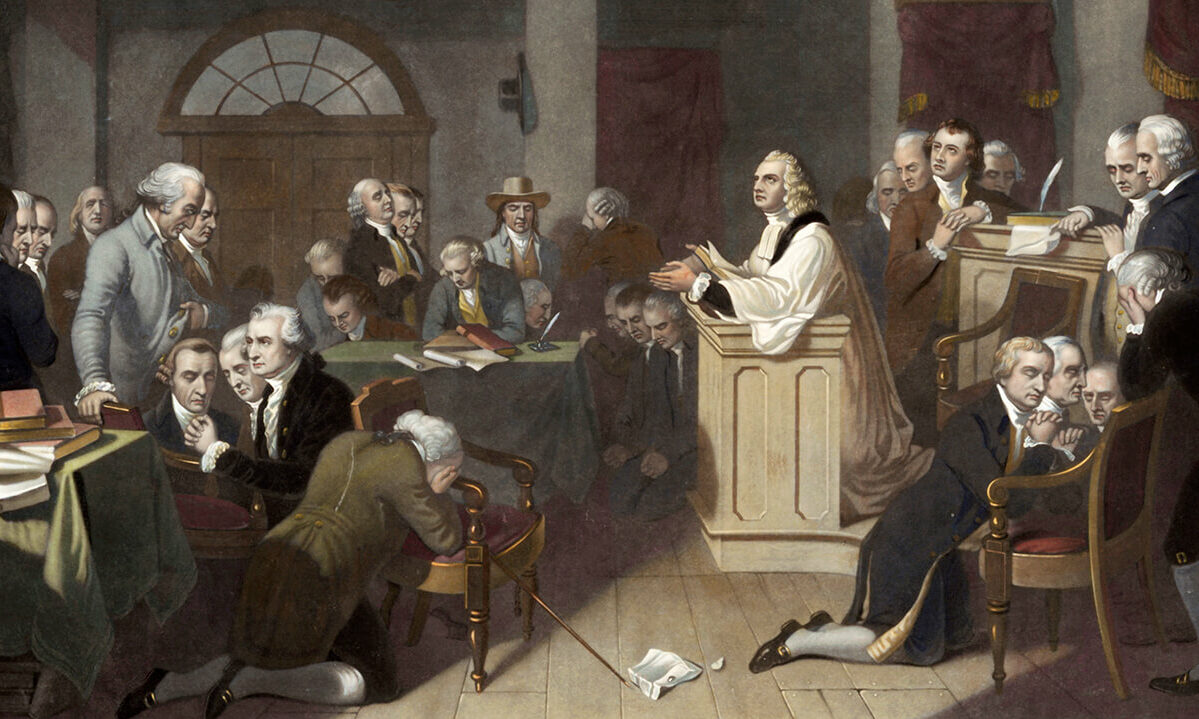
The Black Robed Regiment was the name that the British placed on the courageous and patriotic American clergy during the Founding Era (a backhanded reference to the black robes they wore).1 Significantly, the British blamed the Black Regiment for American Independence,2 and rightfully so, for modern historians have documented that:

There is not a right asserted in the Declaration of Independence which had not been discussed by the New England clergy before 1763.3

It is strange to today’s generation to think that the rights listed in the Declaration of Independence were nothing more than a listing of sermon topics that had been preached from the pulpit in the two decades leading up to the American Revolution, but such was the case.

Influence of The Clergy

But it was not just the British who saw the American pulpit as largely responsible for American independence and government, our own leaders agreed. For example, John Adams rejoiced that “the pulpits have thundered4 and specifically identified several ministers as being among the “characters the most conspicuous, the most ardent, and influential” in the “awakening and a revival of American principles and feelings” that led to American independence.5

Across subsequent generations, the great and positive influence of the Revolutionary clergy was faithfully reported. For example:

As a body of men, the clergy were pre-eminent in their attachment to liberty. The pulpits of the land rang with the notes of freedom.6 The American Quarterly Register [MAGAZINE], 1833

If Christian ministers had not preached and prayed, there might have been no revolution as yet – or had it broken out, it might have been crushed.7 Bibliotheca Sacra [BRITISH PERIODICAL], 1856

The ministers of the Revolution were, like their Puritan predecessors, bold and fearless in the cause of their country. No class of men contributed more to carry forward the Revolution and to achieve our independence than did the ministers. . . . [B]y their prayers, patriotic sermons, and services [they] rendered the highest assistance to the civil government, the army, and the country.8 B. F. Morris, HISTORIAN, 1864

The Constitutional Convention and the written Constitution were the children of the pulpit.9 Alice Baldwin, HISTORIAN, 1918

Had ministers been the only spokesman of the rebellion – had Jefferson, the Adamses, and [James] Otis never appeared in print – the political thought of the Revolution would have followed almost exactly the same line. . . . In the sermons of the patriot ministers . . . we find expressed every possibly refinement of the reigning political faith.10 Clinton Rossiter, HISTORIAN, 1953

The American clergy were faithful exponents of the fullness of God’s Word, applying its principles to every aspect of life, thus shaping America’s institutes and culture. They were also at the forefront of proclaiming liberty, resisting tyranny, and opposing any encroachments on God-given rights and freedoms. In 1898, Methodist bishop and church historian Charles Galloway rightly observed of these ministers:

Mighty men they were, of iron nerve and strong hand and unblanched cheek and heart of flame. God needed not reeds shaken by the wind, not men clothed in soft raiment [Matthew 11:7-8], but heroes of hardihood and lofty courage. . . . And such were the sons of the mighty who responded to the Divine call.11

But the ministers during the Revolutionary period were not necessarily unique; they were simply continuing what ministers had been doing to shape American government and culture in the century and a half preceding the Revolution.

Clergy in American Colonies

For example, the early settlers who arrived in Virginia beginning in 1606 included ministers such as the Revs. Robert Hunt, Richard Burke, William Mease, Alexander Whitaker, William Wickham, and others. In 1619 they helped form America’s first representative government: the Virginia House of Burgesses, with its members elected from among the people.12 That legislature met in the Jamestown church and was opened with prayer by the Rev. Mr. Bucke; the elected legislators then sat in the church choir loft to conduct legislative business.13 As Bishop Galloway later observed:

[T]he first movement toward democracy in America was inaugurated in the house of God and with the blessing of the minister of God.14

In 1620, the Pilgrims landed in Massachusetts to establish their colony. Their pastor, John Robinson, charged them to elect civil leaders who would not only seek the “common good” but who would also eliminate special privileges and status between governors and the governed15 – a radical departure from the practice in the rest of the world at that time. The Pilgrims eagerly took that message to heart, organizing a representative government and holding annual elections.16 By 1636, they had also enacted a citizens’ Bill of Rights – America’s first.17

In 1630, the Puritans arrived and founded the Massachusetts Bay Colony, and under the leadership of their ministers, they, too, established representative government with annual elections.18 By 1641, they also had established a Bill of Rights (the “Body of Liberties”)19 – a document of individual rights drafted by the Rev. Nathaniel Ward.20

In 1636, the Rev. Roger Williams established the Rhode Island Colony and its representative form of government,21 explaining that “the sovereign, original, and foundation of civil power lies in the people.”22

The same year, the Rev. Thomas Hooker (along with the Revs. Samuel Stone, John Davenport, and Theophilus Eaton) founded Connecticut.23 They not only established an elective form of government24 but in a 1638 sermon based on Deuteronomy 1:13 and Exodus 18:21, the Rev. Hooker explained the three Biblical principles that had guided the plan of government in Connecticut:

I. [T]he choice of public magistrates belongs unto the people by God’s own allowance.

II. The privilege of election . . . belongs to the people . . .

III. They who have power to appoint officers and magistrates [i.e., the people], it is in their power also to set the bounds and limitations of the power and place.25

Colonial Charters & Constitutions

From the Rev. Hooker’s teachings and leadership sprang the “Fundamental Orders of Connecticut” – America’s first written constitution (and the direct antecedent of the federal Constitution).26 But while Connecticut produced America’s first written constitution, it definitely had not produced America’s first written document of governance, for such written documents had been the norm for every colony founded by Bible-minded Christians. After all, this was the Scriptural model: God had given Moses a fixed written law to govern that nation – a pattern that recurred throughout the Scriptures (c.f., Deuteronomy 17:18-20, 31:24, II Chronicles 34:15-21, etc.). As renowned Cornell University professor Clinton Rossiter affirmed:

[T]he Bible gave a healthy spur to the belief in a written constitution. The Mosaic Code, too, was a higher law that men could live by – and appeal to – against the decrees and whims of ordinary men.27

Written documents of governance placed direct limitations on government and gave citizens maximum protection against the whims of selfish leaders. This practice of providing written documents had been the practice of American ministers before the Rev. Hooker’s constitution of 1638 and continued long after.

For example, in 1676, New Jersey was chartered and then divided into two religious sub-colonies: Puritan East Jersey and Quaker West Jersey; each had representative government with annual elections.28 The governing document for West Jersey was written by Christian minister William Penn. It declared:

We lay a foundation for after ages to understand their liberty . . . that they may not be brought in bondage but by their own consent, for we put the power in the people.29

Under Penn’s document . . .

Legislation was vested in a single assembly elected by all the inhabitants; the elections were to be by secret ballot; the principle of “No taxation without representation” was clearly asserted; freedom of conscience, trial by jury, and immunity from arrest without warrant were guaranteed.30

In 1681, Penn wrote the Frame of Government for Pennsylvania. It, too, established annual elections and provided numerous guarantees for citizen rights.31

Clergy Helped Secure Liberties

There are many additional examples, but it is indisputable that ministers played a critical role in instituting and securing many of America’s most significant civil rights and freedoms. As Founding Father Noah Webster affirmed:

The learned clergy . . . had great influence in founding the first genuine republican governments ever formed and which, with all the faults and defects of the men and their laws, were the best republican governments on earth. At this moment, the people of this country are indebted chiefly to their institutions for the rights and privileges which are enjoyed.32

Daniel Webster (the great “Defender of the Constitution”) agreed:

[T]o the free and universal reading of the Bible in that age men were much indebted for right views of civil liberty.33

Because Christian ministers established in America freedoms and opportunities not generally available even in the mother country of Great Britain, they were also at the forefront of resisting encroachments on the civil and religious liberties that they had helped secure.

For example, when crown-appointed Governor Edmund Andros tried to seize the charters of Rhode Island, Connecticut, and Massachusetts, revoke their representative governments, and force the establishment of the British Anglican Church upon them, opposition to Andros’ plan was led by the Revs. Samuel Willard, Increase Mather, and especially the Rev. John Wise.34 The Rev. Wise was even imprisoned by Andros for his resistance but he remained an unflinching voice for freedom, penning in 1710 and 1717 two works forcefully asserting that democracy was God’s ordained government in both Church and State,35 thus causing historians to title him “The Founder of American Democracy.”36

And when Governor Berkley refused to recognize Virginia’s self-government, Quaker minister William Edmundson and the Rev. Thomas Harrison led the opposition.37 When Governor Thomas Hutchinson ignored the elected Massachusetts legislature, the Rev. Dr. Samuel Cooper led the opposition.38 And a similar pattern was followed when Governor William Burnet dissolved the New Hampshire legislature, Governor Botetourt disbanded the Virginia House of Burgesses, Governor James Wright disbanded the Georgia Assembly, etc.

Leading To War for Independence

And because American preachers consistently opposed encroachments on civil and religious liberties, when the British imposed on Americans the 1765 Stamp Act (an early harbinger of the rupture between the two nations soon to follow), at the vanguard of the opposition to that act were the Revs. Andrew Eliot, Charles Chauncey, Samuel Cooper, Jonathan Mayhew, and George Whitefield39 (Whitefield even accompanied Benjamin Franklin to Parliament to protest the Act and assert colonial rights).40 In fact, one of the reasons that American resistance to the Stamp Act became so widespread was because the “clergy fanned the fire of resistance to the Stamp Act into a strong flame.”41

Five years later in 1770 when the British opened fire on their own citizens in the famous “Boston Massacre,” ministers again stepped to the forefront, boldly denouncing that abuse of power. A number of sermons were preached on the subject, including by the Revs. John Lathrop, Charles Chauncey, and Samuel Cooke;42 the Massachusetts House of Representatives even ordered that Rev. Cooke’s sermon be printed and distributed.43

As tensions with the British continued to grow, ministers such as the Rev. George Whitefield44 and the Rev. Timothy Dwight45 became some of the earliest leaders to advocate America’s separation from Great Britain.

There are many additional examples, but the historical records respecting the leadership of the clergy were so clear that in 1851, distinguished historian Benson Lossing concluded:

[T]he Puritan preachers also promulgated the doctrine of civil liberty – that the sovereign was amenable to the tribunal of public opinion and ought to conform in practice to the expressed will of the majority of the people. By degrees their pulpits became the tribunes of the common people; and . . . on all occasions, the Puritan ministers were the bold asserters of that freedom which the American Revolution established.46

Clergy Fight in the War

However, Christian ministers did not just teach the principles that led to independence, they also participated on the battlefield to secure that independence. One of the numerous examples is the Rev. Jonas Clark.

When Paul Revere set off on his famous ride, it was to the home of the Rev. Clark in Lexington that he rode. Patriot leaders John Hancock and Samuel Adams were lodging (as they often did) with the Rev. Clark. After learning of the approaching British forces, Hancock and Adams turned to Pastor Clark and inquired of him whether the people were ready to fight. Clark unhesitatingly replied, “I have trained them for this very hour!47 When the original alarm sounded in Lexington to warn of the oncoming British menace, citizens gathered at the town green, and according to early historian Joel Headley:

There they found their pastor the [Rev. Clark] who had arrived before them. The roll was called and a hundred and fifty answered to their names . . . . The church, the pastor, and his congregation thus standing together in the dim light [awaiting the Redcoats], while the stars looked tranquilly down from the sky above them.48

The British did not appear at that first alarm, and the people returned home. At the subsequent alarm, they reassembled, and once the sound of the battle subsided, some eighteen Americans lay on Lexington Green; seven were dead – all from the Rev. Clark’s church.49 Headley therefore concluded, “The teachings of the pulpit of Lexington caused the first blow to be struck for American Independence,”50 and historian James Adams added that “the patriotic preaching of the Reverend Jonas Clark primed those guns.”51

When the British troops left Lexington, they fought at Concord Bridge and then headed back to Boston, encountering increasing American resistance on their return. Significantly, many who awaited the British along the road were local pastors (such as the Rev. Phillips Payson52 and the Rev. Benjamin Balch53) who had heard of the unprovoked British attack on the Americans, taken up their own arms, and then rallied their congregations to meet the returning British. As word of the attack spread wider, pastors from other areas also responded.

For example, when word reached Vermont, the Rev. David Avery promptly gathered twenty men and marched toward Boston, recruiting additional troops along the way,54 and the Rev. Stephen Farrar of New Hampshire led 97 of his parishioners to Boston.55 The ranks of resistance to the British swelled through the efforts of Christian ministers who “were far more effective than army recruiters in rounding up citizen-soldiers.”56

Weeks later when the Americans fought the British at Bunker Hill, American ministers again delved headlong into the fray. For example, when the Rev. David Grosvenor heard that the battle had commenced, he left from his pulpit – rifle in hand – and promptly marched to the scene of action,57 as did the Rev. Jonathan French.58

This pattern was common through the Revolution – as when the Rev. Thomas Reed marched to the defense of Philadelphia against British General Howe;59 the Rev. John Steele led American forces in attacking the British;60 the Rev. Isaac Lewis helped lead the resistance to the British landing at Norwalk, Connecticut;61 the Rev. Joseph Willard raised two full companies and then marched with them to battle;62 the Rev. James Latta, when many of his parishioners were drafted, joined with them as a common soldier;63 and the Rev. William Graham joined the military as a rifleman in order to encourage others in his parish to do the same64. Furthermore:

Of Rev. John Craighead it is said that “he fought and preached alternately.” Rev. Dr. Cooper was captain of a military company. Rev. John Blair Smith, president of Hampden-Sidney College, was captain of a company that rallied to support the retreating Americans after the battle of Cowpens. Rev. James Hall commanded a company that armed against Cornwallis. Rev. William Graham rallied his own neighbors to dispute the passage of Rockfish Gap with Tarleton and his British dragoons.65

Clergy Targeted by British

There are many additional examples. No wonder the British dubbed the patriotic American clergy the “Black Regiment.”66 But because of their strong leadership, ministers were often targeted by the British. As Headley confirms:

[T]here was a class of clergymen and chaplains in the Revolution whom the British, when they once laid hands on them, treated with the most barbarous severity. Dreading them for the influence they wielded and hating them for the obstinacy, courage, and enthusiasm they infused into the rebels, they violated all the usages of war among civilized nations in order to inflict punishment upon them.67

Among these was the Rev. Naphtali Daggett, President of Yale. When the British approached New Haven to enter private homes and desecrate property and belongings, Daggett offered stiff and at times almost single-handed resistance to the British invasion, standing alone on a hillside, repeatedly firing his rifle down at the hundreds of British troops below. Eventually captured, over a period of several hours the British stabbed and pricked Daggett multiple times with their bayonets. Local townspeople lobbied the British and eventually secured the release of the preacher, but Daggett never recovered from those wounds, which eventually caused his death.68 When the Rev. James Caldwell offered similar resistance in New Jersey, the British burned his church and he and his family were murdered.69

The British abused, killed, or imprisoned many other clergymen,70 who often suffered harsher treatment and more severe penalties than did ordinary imprisoned soldiers.71 But the British targeted not just ministers but also their churches. As a result, of the nineteen church buildings in New York City, ten were destroyed by the British,72 and most of the churches in Virginia suffered the same fate.73 This pattern was repeated throughout many other parts of the country.

John Wise

Truly, Christian ministers provided courageous leadership throughout the Revolution, and as briefly noted earlier, they had also been largely responsible for laying its intellectual foundation. To understand more of their influence, consider the Rev. John Wise.

As early as 1687, the Rev. Wise was already teaching that “taxation without representation is tyranny,”74 the “consent of the governed” was the foundation of government,75 and that “every man must be acknowledged equal to every man.”76 In 1772 with the Revolution on the horizon, two of Wise’s works were reprinted by leading patriots and the Sons of Liberty to refresh America’s understanding of the core Biblical principles of government.77 (The first printing sold so fast that a quick second reprint was quickly issued.78) Significantly, many of the specific points made by Wise in that work subsequently appeared four years later in the very language of the Declaration of Independence. As historian Benjamin Morris affirmed in 1864:

[S]ome of the most glittering sentences in the immortal Declaration of Independence are almost literal quotations from this [1772 reprinted] essay of John Wise. . . . It was used as a political text-book in the great struggle for freedom.79

And decades later when President Calvin Coolidge delivered a 1926 speech in Philadelphia on the 150th anniversary of the Declaration of Independence, he similarly acknowledged:

The thoughts [in the Declaration] can very largely be traced back to what John Wise was writing in 1710.80

It was Christian ministers such as John Wise (and scores like him) who, through their writings and countless sermons (such as their Election Sermons and other sermons on the Biblical principles of government) laid the intellectual basis for American Independence.

Clergy Involvement in Politics

Christian clergy largely defined America’s unique political theory and even defended it in military combat, but they were also leaders in the national legislative councils in order to help implement what they had conceived and birthed. For example, the Rev. Dr. John Witherspoon was a member of the Continental Congress who served during the Revolution on the Board of War as well as on over 100 congressional committees.81 Other ministers who served in the Continental Congress included the Revs. Joseph Montgomery, Hugh Williamson, John Zubly, and more.

Numerous ministers also served in state legislatures – such as the Rev. Jacob Green of New Jersey, who helped set aside the British government in that state and was made chairman of the committee that drafted the state’s original constitution in 1776;82 the Rev. Frederick Augustus Muhlenberg, who helped draft Pennsylvania’s 1776 constitution;83 the Rev. Samuel Stillman, who helped draft Massachusetts’ 1780 constitution;84 etc.

When hostilities ceased at the end of the Revolution, Christian ministers led in the movement for a federal constitution. For example, the Revs. Jeremy Belknap, Samuel Stanhope Smith, John Witherspoon, and James Manning began pointing out the defects of the Articles of Confederation,85 and when the Constitution was finally complete and submitted to the states for ratification, nearly four dozen clergymen were elected as ratifying delegates,86 many of whom played key roles in securing its adoption in their respective states.

Following the adoption of the new federal Constitution, ministers were highly active in celebrating its ratification. For example, of the parade in Philadelphia, signer of the Declaration Benjamin Rush happily reported:

The clergy formed a very agreeable part of the procession. They manifested by their attendance their sense of the connection between religion and good government. They. . . . marched arm in arm with each other to exemplify the Union.87

When the first federal Congress under the new Constitution convened, several ministers were Members, including the Revs. Frederick Augustus and John Peter Gabriel Muhlenberg, Abiel Foster, Benjamin Contee, Abraham Baldwin, and Paine Wingate.

Lasting Influence of American Ministers

Ministers were intimately involved in every aspect of introducing, defining, and securing America’s civil and religious liberties. A 1789 Washington, D. C., newspaper therefore proudly reported:

[O]ur truly patriotic clergy boldly and zealously stepped forth and bravely stood our distinguished sentinels to watch and warn us against approaching danger; they wisely saw that our religious and civil liberties were inseparably connected and therefore warmly excited and animated the people resolutely to oppose and repel every hostile invader. . . . [M]ay the virtue, zeal and patriotism of our clergy be ever particularly remembered.88

Incidentally, besides their contributions to government and civil and religious liberty, the Black Robed Regiment was also largely responsible for education in America. Ministers, understanding that only a literate people well versed in the teachings of the Bible could sustain free and enlightened government, therefore established an education system that would teach and preserve the religious principles so indispensable to the civil and religious liberties they forcefully advocated.

Consequently, in 1635 the Puritans established America’s first public school,89 and in 1647 passed America’ first public education law (“The Old Deluder Satan Act”90). And Harvard University was founded through the direction of Puritan minister John Harvard;91 Yale was founded by ten congregational ministers;92 Princeton by Presbyterian ministers Jonathan Dickinson, John Pierson, and Ebenezer Pemberton;93 William and Mary by Episcopal minister James Blair;94 Dartmouth by Congregational minister Eleazar Wheelock;95 etc.

This trend of Gospel ministers founding and leading American educational institutions continued for the next two-and-a-half centuries, and by 1860, ninety-one percent of all college presidents were ministers of the Gospel – as were more than a third of all university faculty members.96 Of the 246 colleges founded by the close of that year, only seventeen were not affiliated with some denomination;97 and by 1884, eighty-three percent of America’s 370 colleges still remained denominational colleges.98 As Founding Father Noah Webster (the “Schoolmaster to America”) affirmed, “to them [the clergy] is popular education in this country more indebted than to any other class of men.”99

Conclusion

In short, history demonstrates that America’s elective governments, her educational system, and many other positive aspects of American life and culture were the product of Biblical-thinking Christian clergy and leaders. Today, however, as the influence of the clergy has waned, many of these institutions have come under unprecedented attack and many of our traditional freedoms have been significantly eroded. It is time for America’s clergy to understand and reclaim the important position of influence they have been given. As the Rev. Charles Finney – a leader of the Second Great Awakening – reminded ministers in his day:

Brethren, our preaching will bear its legitimate fruits. If immorality prevails in the land, the fault is ours in a great degree. If there is a decay of conscience, the pulpit is responsible for it. If the public press lacks moral discrimination, the pulpit is responsible for it. If the church is degenerate and worldly, the pulpit is responsible for it. If the world loses its interest in religion, the pulpit is responsible for it. If Satan rules in our halls of legislation, the pulpit is responsible for it. If our politics become so corrupt that the very foundations of our government are ready to fall away, the pulpit is responsible for it. Let us not ignore this fact, my dear brethren; but let us lay it to heart, and be thoroughly awake to our responsibility in respect to the morals of this nation.100

America once again needs the type of courageous ministers described by Bishop Galloway:

Mighty men they were, of iron nerve and strong hand and unblanched cheek and heart of flame. God needed not reeds shaken by the wind, not men clothed in soft raiment [Matthew 11:7-8], but heroes of hardihood and lofty courage. . . .And such were the sons of the mighty who responded to the Divine call.101

It is time to reinvigorate the Black Robed Regiment!


Endnotes

1 Boston Gazette, December 7, 1772, article by “Israelite,” and Boston Weekly Newsletter, January 11, 1776, article by Peter Oliver, British official. See also Peter Oliver, Peter Oliver’s Origin & Progress of the American Rebellion, eds. Douglas Adair and John A. Schutz (San Marino California: The Huntington Library, 1961), 29, 41-45; Carl Bridenbaugh, Mitre and Sceptre (New York: Oxford University Press, 1962), 334; Alice M. Baldwin, The New England Clergy and the American Revolution (New York: Frederick Ungar, 1958), 98, 155.

2 Alpheus Packard, “Nationality,” Bibliotheca Sacra and American Biblical Repository (London: Andover: Warren F. Draper, 1856), XIII:193, Article VI. See also Benjamin Franklin Morris, Christian Life and Character of the Civil Institutions of the United States (Philadelphia: George W. Childs, 1864), 334-335.

3 Baldwin, New England Clergy (1958), 170.

4 John Adams, The Works of John Adams, ed. Charles Francis Adams (Boston: Charles C. Little and James Brown, 1851), III:476, “The Earl of Clarendon to William Pym,” January 20, 1766.

5 Adams, Works, ed. Adams (1850), X:284, to Hezekiah Niles, February 13, 1818; X:271-272, to William Wirt, January 5, 1818.

6 “History of Revivals of Religion, From the Settlement of the Country to the Present Time,” The American Quarterly Register (Boston: Perkins and Marvin, 1833), 5:217; Morris, Christian Life and Character (1864), 334-335.

7 Alpheus Packard, “Nationality,” Bibliotheca Sacra (1856), XIII:193, Article VI; Morris, Christian Life and Character (1864), 334-335.

8 Morris, Christian Life and Character (1864), 334-335.

9 Baldwin, New England Clergy (1958), 134.

10 Clinton Rossiter, Seedtime of the Republic (New York: Harcourt, Brace and Co., 1953), 328-329.

11 Charles B. Galloway, Christianity and the American Commonwealth (Nashville, TN: Publishing House Methodist Episcopal Church, 1898), 77.

12 “The First Legislative Assembly at Jamestown, Virginia,” September 4, 2022, National Park Service, https://www.nps.gov/jame/learn/historyculture/the-first-legislative-assembly.htm.

13 Galloway, Christianity (1898), 1131-114; John Fiske, Civil Government in the United States Considered with some Reference to Its Origins (Boston: Houghton, Mifflin & Co., 1890), 146.

14 Galloway, Christianity (1898), 114.

15 Old South Leaflets (Boston: Directors of the Old South Work), 372, “Words of John Robinson (1620)”; “John Robinson’s Farewell Letter to the Pilgrims, July 1620,” Pilgrim Hall Museum, https://pilgrimhall.org/pdf/John_Robinson_Farewell_Letter_to_Pilgrims.pdf.

16 “Plymouth Colony Legal Structure,”1998, Plymouth Colony Archive Project, http://www.histarch.illinois.edu/plymouth/ccflaw.html; Robert Baird, Religion in America (New York: Harper & Brothers, 1845), 51.

17 “Plymouth Colony Legal Structure,”1998, Plymouth Colony Archive Project, http://www.histarch.illinois.edu/plymouth/ccflaw.html.

18 Henry William Elson, History of the United States of America (New York: The MacMillan Company, 1904), Ch. IV, 103-111.

19 “Plymouth Colony Legal Structure,”1998, Plymouth Colony Archive Project, http://www.histarch.illinois.edu/plymouth/ccflaw.html.

20 George Bancroft, History of the United States from the Discovery of the American Continent (Boston: Little, Brown & Co., 1858), I:416-417; Galloway, Christianity (1898), 124-125; Old South Leaflets, 261-280, “The Body of Liberties: The Liberties of the Massachusetts Colonie in New England, 1641.”

21 “Charter of Rhode Island and Providence Plantations,” July 15, 1663, The Avalon Project, https://avalon.law.yale.edu/17th_century/ri04.asp.

22 Baldwin, New England Clergy (1958), 27, quoting Roger Williams’ The Bloody Tenet, 137, quoted by Isaac Backus, Church History of New England, I. 62 of 1839.

23 “Timeline: Settlement of the Colony of Connecticut,” Connecticut History Online, May 26, 2021, https://connecticuthistory.org/timeline-settlement-of-the-colony-of-connecticut/.

24 The Federal and State Constitutions, Colonial Charters, and Other Organic Laws, ed. Francis Newton Thorpe (Washington: Government Printing Office, 1909), 1:534, “Charter of Connecticut-1662.”

25 Rossiter, Seedtime (1953), 171.

26 John Fiske, The Beginnings of New England (Boston: Houghton, Mifflin & Co., 1898), 127-128.

27 Rossiter, Seedtime (1953), 32.; J. M. Mathews, The Bible and Civil Government, in a Course of Lectures (New York: Robert Carter & Brothers, 1851), 67-68.

28 “Province of West New Jersey in America,” November 25, 1681, Art. I, The Avalon Project, https://avalon.law.yale.edu/17th_century/nj08.asp; “The Fundamental Constitutions for the Province of East New Jersey in America, Anno Domini 1683,” Art. II-III, The Avalon Project, https://avalon.law.yale.edu/17th_century/nj10.asp.

29 Ernest Sutherland Bates, American Faith (New York: W. W. Norton & Company Inc., 1940), 186-187.

30 Bates, American Faith (1940), 186-187.

31 “Charter for the Province of Pennsylvannia-1681,” The Avalon Project, https://avalon.law.yale.edu/17th_century/pa01.asp.

32 Noah Webster, Letters of Noah Webster, ed. Harry R. Warfel (New York: Library Publishers, 1953), 455, to David McClure, October 25, 1836.

33 Daniel Webster, Address Delivered at Bunker Hill, June 17, 1843, on the Completion of the Monument (Boston: T. R. Marvin, 1843), 31.

34 Fiske, Beginnings of New England (1898),  267-272.

35 John Wise, A Vindication of the Government of New- England Churches (Boston: John Boyles, 1772), 45.

36 J. M. Mackaye, “The Founder of American Democracy,” The New England Magazine (September 1903), XXIX:1:73-83.

37 John Fiske, Old Virginia and Her Neighbors (Boston: Houghton, Mifflin, and Company, 1901), II:57 & I:306, 311.

38 Dictionary of American Biography (New York: Charles Scribner’s Sons, 1930), s.v. “Samuel Cooper.”

39 Baldwin, New England Clergy (1958), 90; Stephen Mansfield, Forgotten Founding Father: The Heroic Legacy of George Whitefield (Cumberland House, 2001), 112.

40 Mansfield, Forgotten Founding Father (2001), 112.

41 Baldwin, New England Clergy (1958), 30.

42 Claude H. Van Tyne, The Causes of the War of Independence (Boston: Houghton Mifflin Company, 1922), 362.

43 John Wingate Thornton, Pulpit of the American Revolution (Boston: Gould and Lincoln, 1860), 147-148; Van Tyne, Causes of the War of Independence (1922),  362.

44 Bancroft, History of the United States (1858), V:193.

45 Morris, Christian Life and Character (1864), 367-368.

46 Benjamin Lossing, Pictorial Fieldbook of the Revolution (New York: Harper & Brothers, 1851), I:440.

47 Franklin Cole, They Preached Liberty (New York: Fleming H. Revell, 1941), 34.

48 J. T. Headley, The Chaplains and Clergy of the Revolution (New York: Charles Scribner, 1864), 79.

49 Headley, Chaplains and Clergy (1864), 79-82

50 Headley, Chaplains and Clergy (1864), 82.

51 James L. Adams, Yankee Doodle Went to Church: The Righteous Revolution of 1776 (Old Tappan, NJ: Fleming H. Revell Company, 1989), 22.

52 Cole, They Preached Liberty (1941), 36.

53 Cole, They Preached Liberty (1941), 36.

54 Cole, They Preached Liberty (1941), 36.

55 Cole, They Preached Liberty (1941), 36.

56 Adams, Yankee Doodle (1989), 153.

57 Cole, They Preached Liberty (1941), 36.

58 Cole, They Preached Liberty (1941), 36.

59 Headley, Chaplains and Clergy (1864), 68.

60 Headley, Chaplains and Clergy (1864), 69; Appleton’s Cyclopedia of American Biography, s.v. “John Steele.”

61 Headley, Chaplains and Clergy (1864), 71-72.

62 Cole, They Preached Liberty (1941), 36.

63 Headley, Chaplains and Clergy (1864), 72.

64 Headley, Chaplains and Clergy (1864), 69.

65 Daniel Dorchester, Christianity in the United States from the First Settlement Down to the Present Time (New York: Phillips & Hunt, 1888), 265.

66 Boston Gazette, December 7, 1772, article by “Israelite,” and Boston Weekly Newsletter, January 11, 1776, article by Peter Oliver, British official. See also Oliver, Peter Oliver’s Origin & Progress, eds. Adair and Schutz (1961), 29, 41-45; Bridenbaugh, Mitre and Sceptre (1962), 334; Baldwin, New England Clergy (1958), 98, 155.

67 Headley, Chaplains and Clergy (1864), 58.

68 William Buell Sprague, Annals of the American Pulpit: Trinitarian Congregation (New York: Robert Carter & Brothers, 1857), 482.

69 Morris, Christian Life and Character (1864), 350.

70 Dorchester, Christianity in the United States (1888), 265.

71 Headley, Chaplains and Clergy (1864), 58.

72 Dorchester, Christianity in the United States (1888), 266.

73 Dorchester, Christianity in the United States (1888), 267.

74 Linda Stewart, “The Other Cape,” April 2001, American Heritagehttps://www.americanheritage.com/other-cape.

75 Rossiter, Seedtime (1953), 219.

76 J. M. Mackaye, “The Founder of American Democracy,” The New England Magazine (September 1903), XXIX:1:73-83.

77 J. M. Mackaye, “The Founder of American Democracy,” The New England Magazine (September 1903), XXIX:1:73-83.

78 Van Tyne, Causes of the War of Independence (1922), I:357.

79 Wise, Vindication of the Government of New England Churches: and the Churches’ Quarrel Espoused (Boston: Congregational Board of Publication, 1860), xx-xxi, “Introductory Remarks” by Rev. J. S. Clark; Morris, Christian Life and Character (1864), 341

80 Calvin Coolidge, “Speech on the One Hundred and Fiftieth Anniversary of the Declaration of Independence,” July 5, 1926, The American Presidency Project, https://www.presidency.ucsb.edu/node/267359.

81 Political Sermons of the American Founding Era: 1730-1805, ed. Ellis Sandoz (Indianapolis, Liberty Fund: 1998), 1:530, from Sermons 17 on John Witherspoon intro.

82 Morris, Christian Life and Character (1864), 366.

83 William Warren Sweet, The Story of Religion in America (New York: Harper & Brothers Publishers, 1950), 182.

84 Frank Moore, Patriot Preachers of the American Revolution (Boston: Gould and Lincoln: 1860), 260.

85 James Hutchinson Smylie, American Clergymen and the Constitution of the United States of America (New Jersey: Princeton Theological Seminary, doctoral dissertation 1958), 127-129, 139, 143.

86 John Eidsmoe, Christianity and the Constitution (Grand Rapids, MI: Baker Books, 1987), 352, n.15.

87 Benjamin Rush, Letters of Benjamin Rush, ed. L. H. Butterfield (Princeton: American Philosophical Society, 1951), I:474, to Elias Boudinot, “Observations on the Federal Procession in Philadelphia,” July 9, 1788.

88 Gazette of the United States (Washington, D.C.: May 9, 1789), 1, quoting from “Extract from “American Essays: The Importance of the Protestant Religion Politically Considered.”

89 “BLS History,” Boston Latin School, accessed June 4, 2024, https://www.bls.org/apps/pages/index.jsp?uREC_ID=206116&type=d.

90 Records of the Governor and Company of the Massachusetts Bay in New England, ed., Nathaniel B. Shurtleff (Boston: William White, 1853), II:203, November 11, 1647. Connecticut followed suit a few years later. See, The Code of 1650, Being a Compilation of the Earliest Laws and Orders of the General Court of Connecticut (Hartford: Silas Andrus, 1825), p. 90.

91 Appleton‘s Cyclopedia of American Biography (New York: D. Appleton and Company, 1888), s.v. “John Harvard.”

92 Noah Webster, Letters to a Young Gentleman Commencing His Education (New Haven: Howe & Spalding, 1823), 237.

93 John Maclean, History of the College of New Jersey, from its Origin in 1746 to the Commencement of 1854 (Philadelphia: J.B. Lippincott & Co., 1877), I:70.

94 The History of the College of William and Mary, from its Foundation, 1660, to 1874 (Richmond, VA: J.W. Randolph & English, 1874), 95.

95 “Eleazar Wheelock,” Dartmouth, accessed June 4, 2024, https://president.dartmouth.edu/people/eleazar-wheelock.

96 Warren A. Nord, Religion & American Education (North Carolina: The University of North Carolina Press, 1995), 84, quoting from James Tunstead Burtchaell, “The Decline and Fall of the Christian College I,” First Things, May 1991, p. 24; George Marsden, The Soul of the American University (New York: Oxford University Press, 1992), 11; Galloway, Christianity (1898), 198.

97 E. P. Cubberley, Public Education in the United States (Boston: Houghton, Mifflin Co., 1919), 204; Luther A. Weigle, The Pageant of America: American Idealism, ed. Ralph Henry Gabriel (Yale University Press, 1928), X:315.

98 Galloway, Christianity (1898), 209-210.

99 Noah Webster, A Collection of Papers on Political, Literary, and Moral Subjects (New York: Webster and Clark, 1843), 293, from his “Reply to a Letter of David McClure on the Subject of the Proper Course of Study in the Girard College, Philadelphia. New Haven, October 25, 1836.”

100 The Christian Treasury Containing Contributions from Ministers and Members of Various Evangelical Denominations (Edinburgh: Johnstone, Hunter and Co., 1877), 203.

101 Galloway, Christianity (1898), 77.
God’s People Want to Know

This 2015 survey by Dr. George Barna asked theologically conservative Christians the areas in which they felt that they needed additional teaching from the pulpit. Here are a just a few highlights:

  • Among the national sample of spiritually active Christian conservatives and moderates, only one in ten people (10%) said their church has been very involved in the election process in the last two voting cycles (2012, 2014). Four out of ten said their church was somewhat involved. The remaining one-half said their church was not involved.
  • Christian conservatives indicated they want their church to get in the game: six out of ten (58%) said they want their church to be more involved in the election process. Among the Christian conservatives, 61% want greater involvement; among the politically moderate Christians only one-quarter (23%) want heightened church engagement.
  • A majority of the survey respondents said it is “extremely important” for their pastor to preach or teach the congregation about the following issues:
      • Abortion 71%
      • Religious persecution 61%
      • Sexual identity 56%
      • Israel 54%
      • Poverty 54%
      • Cultural restoration 53%

See the complete report here.

How to Research: Know Your Sources

So, you want to take a deeper dive into an historical period, event or person. Or maybe you’ve been assigned to write a history paper for a class. In this age of abundant information even knowing where to start can be intimidating. What is true? What information can you trust? The following guidelines will help you choose the best sources and understand the benefits and potential pitfalls of each kind.

Primary

Definition A primary source is an account from someone either personally involved in an event or a witness to it, or in some way was personally acquainted with the subject. These may include first-person or eyewitness accounts like letters, essays, journals, and autobiographies. The report of a Civil War battle by an officer who fought in it would be a primary source.

Pros It’s firsthand knowledge. Primary sources will provide the truest sense of character and historical context since the author is living in the same time and environment.

Cons An author who is too close to the subject might lose some objectivity because he is emotionally colored by his personal connection. This is the case with Seward’s Life of John Quincy Adams which is a wonderful read. But because of his well-deserved admiration for Adams, Seward tends to embellish conversations and events.

Contemporary Secondary

Definition Contemporary secondary sources are items such as newspaper reports or letters from people who might not have been firsthand witnesses but nevertheless, were aware of the subject.

Pros These types of sources help provide corroboration for primary sources and also give context to the time period. For example, Bancroft’s History of the United States relies on various accounts of the same event from different sources to round out a more complete history.

Cons There may be a reliance on hearsay. Hearsay is not permissible as legal evidence and should not be relied on alone for historical narrative.

Bias and agendas have always existed. Much of what is currently wrongly believed about Thomas Jefferson’s religion and morality, is the direct result of newspaper articles printed by Federalist leaning publications that wanted to discredit him during the 1800 presidential election.1

Academic Modern

Definition Academic modern sources would include later books and journal articles by historians who have specialized in a particular subject. These works should only be referenced if they include thorough notes to primary sources, and you have researched the authors.

Pros Materials may have been discovered and/or are accessible now that haven’t been for earlier publications. For example, a biography about famous British naval captain, Edward Pellew, written one hundred years after his death, included letters from a chest full of his papers that were discovered with an acquaintance years after his contemporary biography had been written. The inclusion of these additional primary documents gave a fuller picture of his life and character.

Later sources also provide a retrospective view of an event, after the consequences are evident. For example, the popular reaction to the Missouri Compromise while it was being debated and passed, was broad dismay by Founding Fathers like Thomas Jefferson who thought it signaled the death of the Union. His opinion eventually cooled, taking a more hopeful, wait-and-see attitude. Looking back from two hundred years later, history has proven his first response was in fact, accurate.

Theodore Roosevelt’s The Naval War of 1812 is another example of a later work proving helpful. Written almost a century after the war, he compares and contrasts earlier narratives, pointing out the inaccuracies of both the British and the American historians, and the bias of the authors, whose patriotic zeal sometimes colored their accounts.

Cons Judgements made are necessarily subjective.

Online Sources

Definition Online sources include digital articles and content from anyone and everyone. Note: many primary and secondary sources are available in digital format online now. Here, we are distinguishing other online content from those source types mentioned above.

Pros Accessibility! Web articles may sometimes provide quick references to names and dates, and subject summaries to launch your research. It is almost never well documented, if at all.

Cons Online content can create circular referencing for which there is no true source. It is easy to find yourself on a merry-go-round of one site quoting another site, quoting another site—none of which is actually backed by primary sources. Example: several websites referenced a 1916 executive order by President Woodrow Wilson requiring the Star-Spangled Banner be played at all military ceremonies.2 Further research revealed that the websites just quoted one another. The order did not appear in any archives and even the Woodrow Wilson Presidential Library was unable to confirm that it existed.

Digital sources can disappear even with archival tools such as the Wayback Machine. Always save images or pdfs of your digital sources.

Digital content can also be subtly changed and manipulated without an obvious record. This is known as stealth editing. Publications will regularly change online headlines or portions of their articles without issuing formal retractions or corrections. And online dictionaries will change or update the meanings of words to fit a current narrative, rather than providing a true standard of usage.

Bonus Tips

What do you do with sources that conflict? Go with the earlier or primary source, except in the few exceptions given above.

More is better. Look for confirmation among sources as long as they aren’t just citing one another.

Notes don’t necessarily mean authoritative – Wikipedia is “footnoted” but almost never to a primary source.

Happy hunting! (See our other “How to Research” articles here.)


Endnotes

1 For examples of these character attacks, see David Barton, The Jefferson Lies (Aledo, TX: WallBuilder Press, 2012) and Barton: The American Story: Building the Republic (2024), 118.

2 See, for example, “1931 ‘The Star-Spangled Banner’ becomes the Official National Anthem,” This Day in History, History.com, updated March 2, 2021; Andrew Glass, “‘Star-Spangled Banner’ becomes U.S. national anthem, March 3, 1931,” Politico, March 03, 2018.

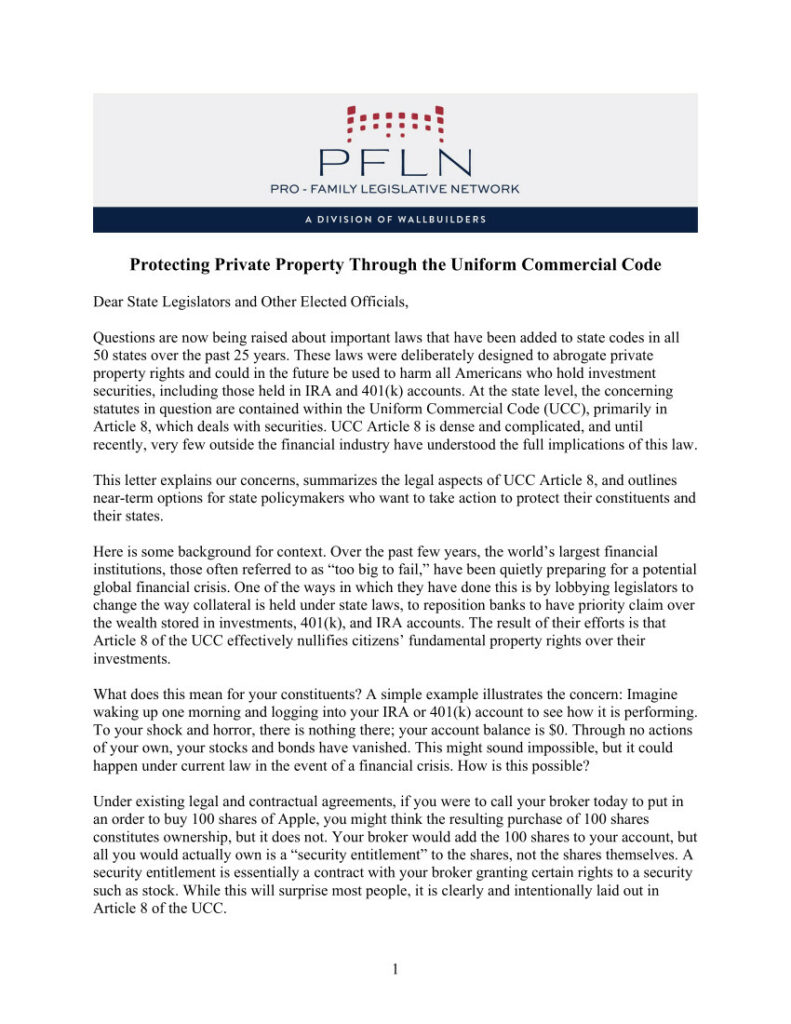
Protecting Private Property Through the Uniform Commercial Code

Protecting Private Property Through the Uniform Commercial Code

Questions are now being raised about important laws that have been added to state codes in all 50 states over the past 25 years. These laws were deliberately designed to abrogate private property rights and could in the future be used to harm all Americans who hold investment securities, including those held in IRA and 401(k) accounts. At the state level, the concerning statutes in question are contained within the Uniform Commercial Code (UCC), primarily in Article 8, which deals with securities.

WallBuilders’ Pro-Family Legislative Network (PFLN), and other organizations and leaders, urge state legislators to carefully consider this alarming infringement on private property.

This letter explains our concerns, summarizes the legal aspects of UCC Article 8, and outlines near-term options for state policymakers who want to take action to protect their constituents and their states. Read the full letter for additional information.

What can you do to help?

Share this Information: We encourage you to forward this to your friends, family and state legislators to help make them aware of this critical issue in your state’s uniform commercial code.

Stay Apprised of the Issue: If this issue is important to you, sign up for our Concerned Citizens legislative update email and we will keep you apprised of this issue.

Sign the Letter: If you represent an organization, or are an elected official who would like to sign this letter, please email us for consideration.

Contribute: If you would like to support this effort to help us brief more lawmakers across the country on this matter, please consider making a tax-deductible donation to WallBuilders Pro-Family Legislative Network Fund.

Lawsuit Challenges D.C. Transit Authority for Violating the First Amendment

In December 2023, First Liberty, ACLU, and Steptoe filed a lawsuit on behalf of WallBuilders.

First Liberty Press Release

Lawsuit Challenges D.C. Transit Authorit – First Liberty

First Liberty Article

https://firstliberty.org/news/ads-about-americas-religious-history-not-allowed/ 

WallBuilders Rejected Ads


WallBuilders Article

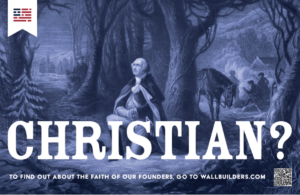
These ads would have linked to a collection of quotes by numerous Founding Fathers via our article “The Founding Fathers on Jesus, Christianity and the Bible”: https://wallbuilders.com/resource/the-founding-fathers-on-jesus-christianity-and-the-bible/

Additional Information & Questions

We have asked our attorneys to handle all media inquiries. Please contact Jeremy Dys at 304-881-5196 or [email protected]. Thank you.

How to Research: Confirming a Quote

It is so tempting to repost that witty or motivational quote on the pretty picture, only to stop and wonder, “Did Ben Franklin really say that?” We are often asked about confirming quotes attributed to historical figures. Here’s a guide to help you through the process.

  1. Start by searching on platforms like Google Books or Internet Archive, which host extensive collections of books from the last several hundred years. Keep in mind that you may need to try different combinations of words or phrases from the quote during this process.
  2. When you find a list of sources with the quote, prioritize the oldest sources. Remember, you’re looking for primary sources such as the person’s writings or autobiography.
  3. If you successfully confirm the quote using sites such as Google Books or Internet Archive, you’re done! If not, proceed to the next step.
  4. If the initial search through broad collections of books is unsuccessful, conduct a more thorough exploration of the person’s works. You can look for specific online collections or in physical works that may be available at a library. Many writings by American Founding Fathers, for example, are accessible online (refer to our Helpful Links page).
  5. If none of these searches confirm the quote, it’s advisable to refrain from using it until you can verify it at a potential future date.

We hope this information aids your investigation efforts! Explore our other How to Research articles for additional tips.

The American Story: Building the Republic Endnotes

Most Americans recognize the names George Washington, John Adams, Thomas Jefferson, and James Madison, but few can tell you their stories—much less that of James Monroe, John Quincy Adams, or Andrew Jackson. These seven men from the Founding Ear were America’s first presidents. They established our republic on the foundation of the Constitution and its liberties.

But who were they? Were they good or bad leaders? How did they become presidents? Did they follow the Constitution or abandon its principles?

Their lives reflect the opportunities America offers. Farmers, attorneys, military veterans, and philosophers, they each rose to the highest ranks of political leadership. From very different backgrounds, all loved their nation. Each had shortcomings (some far more than others) as well as stellar shining moments. Some preserved our strong foundations and some abandoned core constitutional principles.

The stories of each of these presidents are fascinating, instructive, and compelling. And why not? After all, these are the men who built the republic.

In this document, you will see the complete endnotes for this work. Thank you!

The American Story Building the Republic_Endnotes

David Barton: A Dominionist and Reconstructionist?

Over the past several decades, numbers of my detractors have resorted to making extremist claims about me intended to create distrust or even fear in the minds of those who might hear me. By so doing, they hope potential listeners or readers will reject my message out of hand before even considering the evidence. One common ridiculous claim is that I am a Dominionist (someone who wants to reinstitute Old Testament law and establish a theocracy).

As a result, over the years, I have received questions like this one:

Does David adhere to or teach Dominion Theology or “Kingdom Now” theology? That is in part, that the Church of Jesus Christ will bring in God’s reign of righteousness rather than it happening through the physical return of Jesus Christ?

I disagree with Dominion and Kingdom Now theology and I am not a Dominionist.

Additionally, to establish a theocracy in America would require the abolition of our elective constitutional government. I have worked for decades to educate Americans about the history, excellence, and importance of the US Constitution. I am passionate about knowing and applying it and preserving its principles through the elective voting process. Since having elections precludes the possibility of a theocracy, and since I am such a strong promoter of citizen involvement in the election process, I definitely don’t seek a theocracy.

Furthermore, I am clearly on record about the definite limits of Old Testament law in modern culture. (As an example, see my commentary accompanying Exodus 20 in the very popular Founders’ Bible1.)

The evidence is abundant that their claims are wrong.

The allegations about me and Dominionism originated decades ago, almost exclusively from defamatory articles of atheist and anti-religious writers. Over subsequent years, many individuals doing casual web searches of my name found those earlier articles and innocently accepted their wild claims and then repeated or reposted them without any serious investigation of the truth. As a result, today scores of newer articles brand me as something I am not, and never have been.

Understanding the Original Claims

Examining the writings of those who originally made these errant claims two decades ago, it is clear that the issues the critics considered to be reflective of Dominionism were actually issues that were mainstream across the depth and breadth not only of the Christian community but of much of the nation. Notice the things they pointed to as evidence of Christian support for Dominionism.

According to Eric La Freniere, at the time a columnist for the Daily News Record, one of the most obvious indicators of those who seek a Theocracy is their belief that traditional marriage is to be between one man and one woman (what they often describe as following Old Testament law). He warned that to vote for any state constitutional amendment to protect traditional marriage (which was extremely popular in the 2000s and the 2010s, with support up to 70% in some states2) was “to cast a vote for Dominionism….the righteous religious-political movement to reclaim America as a Christian nation.”3 If La Freniere was correct, the tens of millions of voters in the 31 states who passed a state marriage amendment4 (before the US Supreme Court redefined marriage in 20155) were all part of the Christian Dominionist movement.

Author and journalist Chip Berlet agreed, asserting that the “anti-democratic tendencies in the Christian Right6 concerning marriage amendments proved their Dominionist and Theocratic beliefs. By the way, notice his oxymoronic logic: having citizens publicly vote on marriage amendments placed on the public ballot through the elected legislative process was “anti-democratic.”

Chris Hedges in Harper’s Magazine linked such Dominionists to Adolf Hitler and fascism,7 asserting that conservative Christians were so dangerous that it was acceptable to confront and defeat them outside “the old polite rules of democracy8—that is, the normal rules of constitutional republicanism could be set aside in order to defeat Christians. So is it Christians or the Secular Left who is really anti-democratic?

The Southern Poverty Law Center similarly warned that “Dominionist” Christians “seek to impose Old Testament law on the United States,” and that this desire runs “all the way to the [George W.] Bush White House.”9 What indications did they have of this Dominionism? —what role did the George W. Bush White House have in imposing “Old Testament law on the United States”? They, too, pointed to the state marriage amendments, and the further fact that President Bush had openly endorsed a federal Marriage Amendment.10

A Michigan newspaper (Eastern Echo) likewise alerted voters that a candidate running for Governor was part of Dominionism—that he was “seek[ing] to legislate American life under an ultimate authority of a right-wing interpretation of the Bible.”11 What made him a Dominionist? He not only supported traditional marriage but even opposed embryonic stem cell research. Clearly, he was a religious extremist seeking to impose Old Testament law on Michigan.12

Political commentator and writer Kevin Phillips added that “Christian Reconstructionists” also describe the separation of church and state as a “myth.”13 During the time he made these claims, some 1,800 legal incidents related to “separation of church and state” had occurred.14 Christian attorneys argued that the proper application of the historic separation of church and state did not mean people of faith could not express their faith in public, and that they had the same right to express their beliefs that secular folks did. But for secularists, the “separation of church and state” requires full secularization; therefore, those Christians arguing for equal protection were pursuing a “myth” and attempting to establish a Theocracy. (In recent years the US Supreme Court has issued a series of landmark decisions constitutionally repudiating the extremist views of the secularists, and, according to these arguments, they, too, are apparently Dominionists.)

More Claims

Numerous books and other seemingly countless articles used similar extremist rhetoric in attacking the Christian leaders who supported what were typically mainstream public issues.15 National Jewish writer and columnist Stanley Kurtz reviewed many of those writings and sarcastically summarized the ridiculous claims about Christians he found in those attack pieces:

What is the real agenda of the religious far Right? I’ll tell you what it is. These nuts want to take over the federal government and suppress other religions through genocide and mass murder rather than through proselytizing. They want to reestablish slavery. They want to reduce women to near-slavery by making them property, first of their fathers, and then of their husbands. They want to execute anyone found guilty of pre-martial, extramaritial, or homosexual sex. They want to bring back the death penalty for witchcraft. But aren’t extremists like this far from political power? On the contrary, the political and religious movement called “Dominionism” has gained control of the Republican Party, and taken over Congress and the White House as well. Once they take over the judiciary, the conversion of America to a theocracy will be sealed. The Dominionists are very close to achieving their goal. Once they have the courts in their hands, a willing Dominionist Republican-controlled Congress can simply extend the death penalty to witchcraft, adultery, homosexuality, and heresy. The courts will uphold all this once conservatives are in control, since [Supreme Court Justice Antonin] Scalia himself appears to be a Dominionist.16

Kurtz then singled out one of the voices making these ridiculous claims, Kathryn Yurica. He noted that she and her extremist accusations were actually mainstream among a considerable number of secularist groups:

Yurica’s article [“The Despoiling of America”] is so wild-eyed and strange that it would barely be worth mentioning were Yurica not a featured speaker at a recent conference called, “Examining the Real Agenda of the Religious Far Right.” That conference . . . was supported by the National Council of Churches, People for the American Way, The Nation, The Village Voice, and United Americans for Separation of Church and State.17

The speakers at that conference identified five congressional policies they believed provided absolute proof that America was being placed under Old Testament law by Christian Dominionists. What were those five theocratic policies?

(1) Enacting tax cuts;
(2) Funding faith-based programs;
(3) Decreasing welfare spending;
(4) Giving the Federal Communication Commission additional tools to crackdown on indecency on television; and
(5) Attempts to end judicial filibusters.18

Horrors! Once Christians begin enacting tax cuts, the next thing they’ll do is stone rebellious children and publicly pillory adulterers! Yet as Kurtz noted, most of what were labeled Dominionist views were rational positions widely embraced by a majority of the population.

Interestingly, a much later 2020 study claimed that more than half of all Americans today are Dominionists who want a Christian Nation.19 Really??? At a time when public polls show church attendance,20 Bible reading,21 and Biblical worldview22 are at record lows, more than half the nation are Christian Dominionists? This claim is just as absurd today as it has been for the past several decades. (A brilliant rebuttal of that study and its ridiculous conclusion was done by Prof. Mark David Hall in his “Tilting at Windmills: The ‘Threat’ of Christian Nationalism.”23)

Perhaps Supreme Court Attorney David French, who has handled countless federal court cases in his career, best summarized the ludicrous nature of the false call of Dominionism:

If originalist legal arguments and a call to return our country to its founding constitutional ideals constitute dominionism, which social conservatives aren’t dominionist? Is free speech a dominionist concept? What about religious liberty? How about protecting life and ensuring that it cannot be taken without due process of law? We’re all dominionists now.24

In summary, holding traditionally conservative and constitutional positions is what it meant to be a Dominionist when the term became popular some 20 years ago and when it was first applied to me. Those who used the term intended that it should scare unknowing citizens away from fearsome “Dominionist” leaders such as Justice Anthony Scalia, President George Bush, House Speaker Newt Gingrich, or me, all of whom publicly supported traditional marriage, opposed abortion and embryonic stem cell research, and thought voluntary prayer was appropriate in schools. This is how I came to be labeled a “Dominionist.”

David Barton


Endnotes

1 The Founders Bible (Newbury Park, CA: Shiloh Road, 2017), Exodus 20.
2 See, for example, ballot measures passed with 70% or greater approval in 2004 for Arkansas, Georgia, Kentucky, Mississippi, North Dakota, and Oklahoma (“Ballot Measures,” 2004, CNN); in 2006 for South Carolina and Tennessee (“Ballot Measures,” 2006, CNN); and numerous other ballot measures throughout the early 2000s for states with a pass rating of over 50% but lower than 70% (“Ballot Measures, 2008, CNN; “Approved Amendments,” Wikipedia, accessed on March 14, 2022).
3 Eric La Freniers, “You Can Vote For Dominionism,” Daily News-Record, October 31, 2006.
4 See, for example, constitutional amendments passed in Alabama, Alaska, Arkansas, Arizona, California, Colorado, Georgia, Florida, Hawaii, Idaho, Kansas, Kentucky, Louisiana, Michigan, Mississippi, Missouri, Montana, Nebraska, Nevada, North Carolina, North Dakota, Ohio, Oklahoma, Oregon, South Carolina, South Dakota, Tennessee, Texas, Utah, Virginia, and Wisconsin: “Approved Amendments,” Wikipedia, accessed on March 14, 2022.
5 Obergefell v. Hodges, 576 U.S. 644 (2015).
6 Chip Berlet, “The Christian Right & Theocracy,” Political Research Associates, accessed on March 14, 2022.
7 Chris Hedges, “Soldiers of Christ,” Harpers Magazine, May 5, 2005; Stanley Kurtz, “Dominionist Domination,” National Review, May 2, 2005.
8 Chris Hedges, “Soldiers of Christ,” Harpers Magazine, May 5, 2005; Stanley Kurtz, “Dominionist Domination,” National Review, May 2, 2005.
9 Mark Potok, “Democracy vs. Theocracy,” Southern Poverty Law Center, October 19, 2006.
10 George W. Bush, “Remarks on the Constitutional Amendment Protecting Marriage,” The White House, February 24, 2004.
11 Staff Edit / In Our Opinion, “Governor campaign fails to address issues,” Eastern Echo, October 30, 2006.
12 “Motors and Voters: Michigan’s Gubernatorial Race,” Wall Street Journal, 2006.
13 Kevin Phillips, American Theocracy: The Peril and Politics of Radical Religion, Oil, and Borrowed Money in the 21st Century (Viking, 2006), 233.
14 See the publication Undeniable by First Liberty, available at https://firstliberty.org/undeniable/.
15 See, for example, Tony Kiddie, Republican Jesus: How the Right Had Rewritten the Gospels (University of California Press, 2021); James C. Sanford, Blueprint for Theocracy: The Christian Right’s Vision for America (Metacomet Books, 2014); Michael L. Weinstein and Davin Seay, With God On Our Side: One Man’s War Against an Evangelical Coup in America’s Military (Thomas Dunne Books, 2013); Sam Harris, Letter to a Christian Nation: A Challenge to the Faith of America (Transworld, 2011); Clyde Wilcox, Onward Christian Soldiers? The Religious Right in American Politics (New York: Routledge, 2011); Michael Lerner, The Left Hand of God: Taking Back Our Country from the Religious Right (Harper San Francisco, 2006); Damon Linker, The Theocons: Secular America Under Siege (Doubleday, 2009); Robin Rex Meyers, Why the Christian Right is Wrong: A Minister’s Manifesto for Taking Back Your Faith, Your Flag, Your Future (San Francisco: Jossey-Bass, 2006); Phillips, American Theocracy (2006); Jim Wallis, God’s Politics: Why the Right Gets It Wrong and the Left Doesn’t Get It (HarperCollins, 2006); Bill Press, How the Republicans Stole Christmas: the Republican Party’s Declared Monopoly on Religion and What Democrats Can Do to Take it Back (Crown Publishing Group, 2005); Clint Willis, Jesus is Not a Republican: the Religious Right’s War on America (De Capo Press, 2005); Philip Gold, Take Back the Right : How the Neocons and the Religious Right have Betrayed the Conservative Movement (Basic Books, 2004); Jan G. Linn, What’s Wrong with the Christian Right (Florida: Brown Walker Press, 2004); Douglas Anthony Long, Fundamentalists and Extremists (2002); Rob Boston, Close Encounters with the Religious Right: Journeys into the Twilight Zone of Religion and Politics (New York: Prometheus Books, 2000); Frederick Clarkson, Eternal Hostility: The Struggle Between Theocracy and Democracy (University of Michigan, 1997); William Curtis Martin, With God on Our Side: the Rise of the Religious Right in America (Broadway Books, 1996); Bruce Barron, Heaven on Earth? The Social & Political Agendas of Dominion Theology (Zondervan, 1992); Sara Diamond, Spiritual Warfare: The Politics of the Christian Right (New York: Black Rose Books, 1989); and numerous others.
16 Stanley Kurtz, “Dominionist Domination,” National Review, May 2, 2005.
17 Stanley Kurtz, “Dominionist Domination,” National Review, May 2, 2005.
18 Jon Ward, “Left aims to smite ‘theocracy’ movement,” The Washington Times, May 1, 2005.
19 Andrew Whitehead and Samuel Perry, Taking America Back for God: Christian Nationalism in the United States (New York: Oxford University Press, 2020), 25.
20 Jeffery M. Jones, “U.S. Church Membership Falls Below Majority for First Times,” Gallup, March 29, 2021.
21 Alec Gallup & Wendy W. Simmons, “Six in Ten Americans Read Bible at Least Occasionally: Percentage of frequent readers has decreased over last decade,” Gallup, October 20, 2000.
22 George Barna, “Perceptions about Biblical Worldview and Its Application,” Center for Biblical Worldview, May 2021, 6.
23 Mark David Hall, “Tilting at Windmills: The “Threat” of Christian Nationalism,” Standing for Freedom, February 8, 2022.
24 David French, “I’m a Dominionist? I Had No Idea,” National Review, September 1, 2011.

Enumerated Powers

“The powers not delegated [i.e., enumerated] to the United States by the Constitution, nor prohibited by it to the states, are reserved to the states respectively, or to the people.” Tenth Amendment of the Constitution

Enumerated powers are the particular powers granted to Congress (those which are specifically listed) in the US Constitution. There are seventeen such enumerated powers.

Article I, Section 8 lists the first fifteen powers enumerated to, or permissible for the federal government. Articles II-VII add no additional powers but define how to apply the powers enumerated in Article I.

For example, Article II identifies the president as Commander-in-Chief over the military, but this is not a new power since the Preamble already authorized the federal government “to provide for the common defense.” Likewise, the president’s Article II authority to “make treaties” and “appoint ambassadors” is part of the Article I provision “to regulate commerce with foreign nations.”

The Thirteenth and the Fourteenth Amendments to the Constitution added two additional federal powers. (But the other twenty-five Amendments to the Constitution added no federal powers.) With these two additional federal powers, the total number of constitutionally-authorized federal jurisdictions, or enumerated powers, is seventeen.

The Enumerated Powers Listed in the Constitution

The enumerated powers permissible to the federal government are:

  1. To raise revenue to pay off debt, protect the nation, and fulfill the specific obligations established in the enumerated powers. (“To lay and collect taxes, duties, imposts and excises, to pay the debts and provide for the common defense and general welfare of the United States”)
  2. “Borrow money on the credit of the United States.”
  3. Protect the free-enterprise system and ensure free flow of commerce. (“To regulate commerce with foreign nations, and among the several states, and with the Indian tribes”)
  4. Establish immigration laws and processes. (“To establish an uniform rule of naturalization”)
  5. Establish the bankruptcy laws and processes. (“and uniform laws on the subject of bankruptcies throughout the United States”)
  6. Establish national currency, monitor its supply and value, and punish counterfeiters of that currency. (“To coin money, regulate the value thereof, and of foreign coin, and fix the standard of weights and measures” and “provide for the punishment of counterfeiting the securities and current coin of the United States”)
  7. “Establish post offices and post roads.”
  8. Protect the private property (including the ideas, and the product of those ideas) of inventors, authors, and artists. (“To promote the progress of science and useful arts by securing for limited times to authors and inventors the exclusive right to their respective writings and discoveries”)
  9. If Congress so wishes, create and regulate federal courts. (“To constitute tribunals inferior to the Supreme Court”)
  10. To enforce international laws and prosecute offenses against it: “Define and punish piracies and felonies committed on the high seas, and offences against the law of nations.”
  11. “Declare war, grant letters of marque and reprisal, and make rules concerning captures on land and water.”
  12. To provide funding for and establish the size and operation of a national military. (“To raise and support armies, but no appropriation of money to that use shall be for a longer term than two years; to provide and maintain a navy; to make rules for the government and regulation of the land and naval forces”)
  13. To call forth and train state militias for national needs. (“To provide for calling forth the militia to execute the laws of the union, suppress insurrections, and repel invasions; to provide for organizing, arming, and disciplining the militia, and for governing such part of them as may be employed in the service of the United States, reserving to the States respectively the appointment of the officers and the authority of training the militia according to the discipline prescribed by Congress”)
  14. Oversee and manage all federal property, including Washington, DC, as well as bases, federal buildings, and so forth. (“To exercise exclusive legislation in all cases whatsoever over such District (not exceeding ten miles square) as may by cession of particular States and the acceptance of Congress become the seat of the government of the United States, and to exercise like authority over all places purchased by the consent of the legislature of the State in which the same shall be, for the erection of forts, magazines, arsenals, dock-yards, and other needful buildings”)
  15. “To make all laws which shall be necessary and proper for carrying into execution the foregoing powers, and all other owners vested by this Constitution in the government of the United States, or in any department or officer thereof.”
  16. To prevent slavery. (a power added by the Thirteenth Amendment)
  17. To prevent states from violating individual constitutional freedoms and inalienable rights secured to every individual in the federal Constitution. (a power added by the Fourteenth Amendment)

Some Founding Fathers on Enumerated Powers

“The powers delegated [that is, enumerated] by the proposed Constitution to the federal government are few and defined. Those which are to remain in the state governments are numerous and indefinite. The former [i.e., federal powers] will be exercised principally on external objects, as war, peace, negotiation, and foreign commerce; with which last the power of taxation will, for the most part, be connected. The powers reserved to the several states will extend to all the objects which in the ordinary course of affairs concern the lives, liberties, and properties of the people, and the internal order, improvement, and prosperity of the state. The operations of the federal government will be most extensive and important in times of war and danger; those of the state governments in times of peace and security.” James Madison1

“The state governments may be regarded as constituent and essential parts of the federal government; whilst the latter [i.e., the federal] is no wise essential to the operation or organization of the former [i.e., the states].” James Madison2

(Warning what would eventually occur if Congress used the General Welfare Clause of the Constitution to become involved in more than its specifically enumerated powers):

“If Congress can apply money indefinitely to the ‘general welfare,’ and are the sole and supreme judges of the ‘general welfare,’ they may take the care of religion into their own hands; they may establish teachers in every state, county, and parish, and pay them out of the public treasury; they may take into their own hands the education of children, establishing in like manner schools throughout the Union; they may undertake the regulation of all roads other than post roads. In short, everything, from the highest object of state legislation down to the most minute object of police would be thrown under the power of Congress, for every object I have mentioned would admit the application of money, and might be called, if Congress pleased, provisions for the ‘general welfare’.” James Madison3

“I consider the foundation of the Constitution as laid on this ground that ‘all powers not delegated to the United States, by the Constitution, nor prohibited by it to the states, are reserved to the states or to the people’ [quoting the Tenth Amendment]. To take a single step beyond the boundaries thus specially drawn around the powers of Congress is to take possession of a boundless field of power, no longer susceptible of any definition.” Thomas Jefferson4

“I am not a friend to a very energetic [activist] government. It is always oppressive.” Thomas Jefferson5

“What an augmentation [growth] of the field for jobbing, speculating, plundering, office-building, and office-hunting would be produced by an assumption of all the state powers into the hands of the [federal] government. The true theory of our Constitution is surely the wisest and best: that the States are independent as to everything within themselves, and united as to everything respecting foreign nations. Let the [federal] government be reduced to foreign concerns only.” Thomas Jefferson6

(The Founders did not list all the powers the state possessed, but rather listed the few that the federal government was allowed to perform; all other powers belonged to the states.)

“In forming a federal constitution, which ex vi termine, supposes state governments existing, and which is only to manage a few great national concerns, we often find it easier to enumerate particularly the powers to be delegated to the federal head than to enumerate particularly the individual rights to be reserved.” Richard Henry Lee7

“[The Tenth A]mendment is a mere affirmation of what, upon any just reasoning, is a necessary rule of interpreting the Constitution. Being an instrument of limited and enumerated powers, it follows irresistibly that what is not conferred, is withheld, and belongs to the state authorities.” Supreme Court Justice Joseph Story8

“What is to become of constitutions of government if they are to rest not upon the plain [meaning] of their words but upon conjectural enlargements and restrictions to suit the temporary passions and interests of the day? Let us never forget that our constitutions of government are solemn instruments, addressed to the common sense of the people and designed to fix and perpetuate their rights and their liberties. They are not to be frittered away to please the demagogues of the day. They are not to be violated to gratify the ambition of political leaders. They are to speak in the same voice now and forever. They are of no man’s private interpretation. They are ordained by the will of the people and can be changed only by the sovereign command of the people.” Supreme Court Justice Joseph Story9


Endnotes

1 James Madison, No. XLV, The Federalist on the New Constitution Written in the Year 1788 (Washington, DC: Jacob Gideon, 1818), 292.

2 Madison, No. XLV, The Federalist (1818), 290.

3 Madison, February 6, 1792, The Debates and Proceedings in the Congress of the United States (Washington, DC: Gales and Seaton, 1849), 2nd Cong., 1st Sess., 388.

4 Thomas Jefferson, “Opinion against the constitutionality of a National Bank,” February 15, 1791, The Writings of Thomas Jefferson, ed. H. A. Washington (Washington, DC: Taylor & Maury, 1854), VII:556.

5 Jefferson to Madison, December 20, 1787, Memoir, Correspondence, and Miscellanies from the Papers of Thomas Jefferson, ed. Thomas Jefferson Randolph (Charlottesville: F. Carr & Co., 1829), II:276.

6 Jefferson to Gideon Granger, August 13, 1800, Memoir, Correspondence, and Miscellanies, ed. Randolph (1829) III:437.

7 [Richard Henry Lee], “Letter XVI,” January 20, 1788, An Additional Number of Letters from the Federal Farmer to the Republican (1788), 143.

8 Joseph Story, Commentaries on the Constitution of the United States (Boston: Hilliard, Gray, and Company, 1833), III:752.

9 Story, Commentaries on the Constitution (1833), III:754.

Lesson 5: American Republic (Early 1800s–Modern Era)

Lesson 5: American Republic (Early 1800s–Modern Era)

America holds a unique position as the most prosperous nation in the world.

Is this unprecedented prosperity the result of America’s great natural resources? Probably not, for many nations have greater natural resources than America. (America ranks only 65thin percentage of agriculturally farmable land,[1] in crude oil reserves,[2] in iron reserves,[3] in uranium reserves,[4] and so forth.) Yet despite having less key resources, America takes what it has and makes it go further than other nations.

Is our prosperity due to special qualities found in the immigrants who have come to America in such large numbers over the past four centuries, including those who originally founded our colonies and our states? No, for many of those same people had been starving in Europe (and elsewhere) before coming to America, but then prospered after arriving here.

Then perhaps America’s uniqueness stems from the fact that we work hard—a trait that has long characterized Americans. In fact, this specific virtue has been a part of the American ethos for so long that Founding Father Benjamin Franklin even forewarned immigrants about this unique characteristic they would find here when they arrived:

[M]ost people cultivate their own lands or follow some handicraft or merchandise [business]; very few [are] rich enough to live idly….People do not inquire concerning a stranger, “What is he?”but [rather], “What can he do?”If he has any useful art [skill], he is welcome and if he exercises it and behaves well, he will be respected by all that know him; but a mere “Man of Quality” who, on that account, wants to live upon the public by some office or salary will be despised and disregarded….Industry [hard work] and constant employment are great preservatives of the morals and virtue of a nation. Hence bad examples to youth are more rare in America, which must be a comfortable consideration to parents.[5]

The tendency to work hard that became so closely associated with Americans was known as the “Puritan Work Ethic”—a reference to the hard work so evident among our early religious Puritan and Pilgrim settlers, and a trait that characterized Americans for generations thereafter. But while hard work has definitely contributed to America’s prosperity and success, it was not the source of our unparalleled innovation, creativity, and stability.

So what was the key?

It was people living in an atmosphere of freedom and Christian liberty produced by having a Biblical view of man, family, education, government, law, and economics. With this freedom came a new era of liberty; and the wide-ranging and unprecedented scope of religious, civil, and economic freedom that became available in so many spheres gave rise to advancements in all areas of life. The result was an outburst of human energy and creativity that resulted in an exponential increase of innovations and inventions, which then produced widespread wealth never before seen in human history.

(Of course, creativity and innovation has certainly been demonstrated by millions of individual Bible-minded persons not in America; but never before had an entire nation made so many positive contributions. And the US Constitution helps safeguard this creativity through patent and copyright laws, which reflect the Bible’s directives for private property protection. After all, the product of a man’s brain as well as whatever he physically produces with his own hands are his own private property and therefore to be protected.)

Here are a few examples of countless inventions from Americans that changed the face of the world in their day, and also laid the groundwork for even greater discoveries to be made in our day. Each of these advances dramatically reduced the time of production required for a task, thereby increasing the efficiency and speed of service. This exponentially multiplied productivity and income creation, thereby making greater prosperity available for all.

  • Cotton gin (1793)—greatly lowered the cost (and labor) of separating cotton fibers from the seed, thus making cotton-growing (one of America’s largest agricultural products and exports at that time) many times more profitable.
  • Steamboat (1807)—made possible the mass transportation of passengers and cargo on long distances across waterways (rivers and oceans), vastly reducing the time of travel and increasing productivity.
  • Railroad (1826)—made possible the mass transportation of passengers and cargo across land.
  • Steam locomotive (1826)—greatly increased the power behind transportation, thus allowing larger loads to be moved in a shorter time.
  • McCormick reaper (1831)—did in a few hours what previously had taken days to complete, thus making agriculture more productive and profitable.
  • Telegraph (1837)—allowed almost instantaneous communication over long distances.
  • Deere plow (1837)—combined iron and steel into an agricultural plow that cut through harder ground that had long been uncultivable by wooden plows, thus opening millions of new acres to agricultural food production.
  • Goodyear vulcanized rubber (1839)—previously, rubber did not last long and would melt or crack in extreme temperatures, but vulcanization gave longevity to equipment that before had only been short-lived.
  • Sewing machine (1844)—led to quicker sewing times than what could be done by hand, increasing both productivity and profitability.
  • Washing machine (1858)—allowed easier and quicker washing of clothes.
  • Transatlantic cable (1858)—connected America with Europe, resulting in almost instant communication between the countries which before had required weeks.
  • The elevator (1854)—made vertical transportation of people and cargo quicker and safer.
  • Transcontinental railroad line (1869)—connected the east coast of America with the west coast, making it possible to travel from coast to coast in days rather than months.

These inventions all shortened the time needed to perform essential tasks. And the more time individuals had available, the more they could produce; the larger the income they could receive; and the greater the prosperity they experienced.

Thousands of other inventions produced in America also changed the world. This occurred not only in the areas of technology and industry (highlighted above) but also medicine, business, and many other arenas. Dramatic changes similarly occurred in social movements as well, including the abolition of slavery, recognition of women’s rights, and the end of industrial child labor. In short, individual freedom, coupled with the ability to benefit from one’s own ideas and hard work, caused America to become the most inventive, prosperous, and freest nation in history.

Let’s look at interesting stories behind some of the innovations that revolutionized life and uplifted mankind.

Leaders in Industry, Technology, and Science

Cyrus McCormick and His Reaper (1831)

Cyrus McCormick

Cyrus (1809-1884) was born on a farm in the Shenandoah Valley of Virginia. Throughout his childhood, he watched his father work tirelessly but unsuccessfully to invent a reaper (a grain-harvesting machine). Inspired in part by his father’s attempts, as well as Cyrus’ own back-breaking work of harvesting grain by hand (the way it had been done for thousands of years), he became the first person to invent a working reaper.

McCormick Reaper

Cyrus’ successful test of this new machinery occurred on a small patch of wheat on the family farm in July 1831. A few days later, he gave a public demonstration, and with his reaper, drawn by two horses, he cut six acres of oats in an afternoon. Previously, it would have taken six laborers with scythes, or twenty-four laborers with sickles to achieve the same results. Thus, his reaper produced up to twenty-four times more than hand-harvesting, and in the same amount of time.

The following year, he gave another public demonstration, this time to almost a hundred spectators. They were amazed, and his father was elated, declaring “It makes me feel proud to have a son do what I could not do.”[6] (Cyrus was the 47thperson to secure a patent for a reaper, but his was the first that actually worked. He had combined seven different mechanical operations to make it function successfully.)

For thousands of years, the amount of crops that farmers planted was based upon the labor available for harvesting the fields. If there were not many workers available, not much seed was planted. And then when the crop finally ripened, it had to be gathered quickly or the grain would rot in the field and be lost. But Cyrus’ reaper made it possible to harvest many times more than ever before, and to do so much more quickly.

His reaper had the potential to revolutionize agriculture, but the problem he faced was how to publicize it. If farmers knew about the reaper and what it would do for them, it could forever change their lives and futures. Cyrus struggled to get word out about his reaper, all the time losing money. He even lost his farm to creditors.

Workshop where McCormick invented his reaper

Cyrus began to build a business of advertising the reaper. He traveled the country promoting it, becoming known as “The Reaper Man.” He actually worked harder and longer to build his business than he did to build his reaper. In fact, it was nine years after his first public demonstration before he actually sold his first reaper.

After that, word spread quickly and demand increased; so, in 1839 he opened a small factory near his father’s house. As his reapers continued to sell, he needed to expand; but he knew that his home of Virginia was not the place to do so, for most grain farming was done in the Midwest; that’s where he needed to go. So he opened a factory in Illinois in what was at that time a small town known as Chicago. His business steadily grew until it literally swept the nation and the world.

In traveling the country, Cyrus saw the best of America; but he also saw its worst. According to one of his early biographers:

In his earlier journey’s through the Middle West, McCormick was distressed at the rough immorality of the new settlements. “I see a great deal of profanity and infidelity in this country, enough to make the heart sick,” he wrote in 1845. These towns and villages needed more preachers and better preachers, he thought. Consequently, soon after he had acquired his first million dollars, he determined to establish the best possible college for the education of ministers. He almost stunned with joy the Western friends of higher education for ministers by offering them $100,000 with which to establish a school of theology in Chicago. Thus was founded the Northwest Theological Seminary, afterwards named the McCormick Theological Seminary which, in its fifty years of life, has given a Christian education to thousands of young men.[7]

Cyrus’ invention literally changed the world. And he did it by relying on the power of free market economics and its Biblical principle of serving others. He created something that blessed farmers, greatly increasing the wealth-creation potential of everyone who used his machine. And when farmers purchased his reapers, that in turn became an economic blessing back to Cyrus. This is the heart of Biblical free-market economics: create something that blesses consumers, who then reward the producer by purchasing his product.

Cyrus helped elevate millions of people out of poverty. It was noted of him that “He did more than any other member of the human race to abolish the famine of the cities and the drudgery of the farm—to feed the hungry and straighten the bent backs of the world.”[8]

Samuel F.B. Morse and the Telegraph (1832)

Samuel F.B. Morse said of his telegraph, “Not what hath man, but ‘What hath God wrought!'”

Samuel F.B. Morse (1791-1872) was a distinguished artist, painting portraits of the leading Americans in his day. But he was also a dedicated Christian who believed God led him to invent the telegraph. His discovery was one of the most revolutionary technological advances in history, ranking with the movable-type printing press in its overall impact on the world.

In 1832, Morse created the telegraph by directing a small electric current through a wire to be received on the other end.[9] Electricity had never before been harnessed in this manner, and no message had ever been transmitted over wires.

Plaque in the US Capitol commemorating Morse’s invention and the first words it transmitted-a Scripture: “What hath God wrought!”

Over the next decade, he worked to improve the telegraph, and in 1844 he sent the first inter-city message from the US Capitol Building in Washington DC to Baltimore. Since spoken words could not be electronically transmitted at that point in history, he communicated through a series of short electric signals, or pulses, which later became known as the Morse Code. (That code, heavily used over the next century, is still in use today.)

His message took only a few moments to cover the forty miles to Baltimore. Before that it would have taken a full day of riding in a stagecoach or on horseback for the same message to be delivered the same distance. The communication revolution had begun.

Significantly, the first message sent had been a Bible phrase from Numbers 23:23: “What hath God wrought!”[10] (Morse had allowed young Annie Ellsworth to choose the message. She was the daughter of the man who helped him obtain a patent for the telegraph.) Of that Bible phrase, Morse wrote:

Nothing could have been more appropriate than this devout exclamation at such an event when an invention which creates such wonder, and about which there has been so much skepticism, is taken from the land of visions and becomes a reality.[11]

Samuel F.B. Morse exhibiting the telegraph. Alexander Hamilton affirmed in the Federalist Papers that the free enterprise system encourages invention.

Morse’s remarkable invention was the result of private sector innovation without the control of government. But in Europe, it was different: the telegraph was controlled and run by government. The difference between the two approaches was evident. As a New York newspaper reported:

While England by her government has got, with great labor, 175 miles of telegraph into operation…the United Sates, with her individual enterprise, has now in successful operation 1,269 miles. This is American enterprise.[12]

Morse Telegraph 1837

This comparison reflects the difference in the freedom-centered free market philosophy of America and the government-centered socialistic philosophy of Europe. Americans remain a creative and productive people because they have the freedom to pursue their ideas and to benefit from the fruit of their own creativity; but government control, regulation, and taxes always stifle both innovation and productivity.

Under America’s free market system, improvement in the telegraph advanced rapidly. By 1858, a 2,000 mile-long telegraphic cable had been laid across the Atlantic Ocean, allowing direct telegraphic communications between the United States and Europe. And only three years later (1861), a transcontinental telegraph line had been laid across America, connecting San Francisco with the east coast. Messages that had previously taken weeks or months to deliver by boat, stage, or horseback could now arrive in only minutes. No wonder a newspaper of the day described Morse’s telegraph as “unquestionably the greatest invention of the age.”[13]

Morse was pleased with the impact his invention had, and he openly acknowledged that God gave him the idea. As he told his brother:

That sentence of Annie Ellsworth’s was Divinely indited [composed], for it is in my thoughts day and night. “What hath God wrought!” [Numbers 23:23]. It is His work, and He alone could have carried me thus far through all my trials and enabled me to triumph over the obstacles, physical and moral, which opposed me. “Not unto us, not unto us, but to Thy name, O Lord, be all the praise”[Psalm 115:1]. I begin to fear now the effects of public favor, lest it should kindle that pride of heart and self-sufficiency which dwells in my own as well as in others’ breasts, and which, alas, is so ready to be inflamed by the slightest spark of praise. I do indeed feel gratified, and it is right I should rejoice with fear [Psalm 2:11], and I desire that a sense of dependence upon and increased obligation to the Giver of every good and perfect gift [James 1:17] may keep me humble and circumspect.[14]

In a speech years later, Morse continued to acknowledge God as the Source of the idea that revolutionized the communication world, telling the crowd:

If not a sparrow falls to the ground without a definite purpose in the plans of Infinite Wisdom [Matthew 10:29], can the creation of an instrumentality so vitally affecting the interests of the whole human race [i.e., the telegraph] have an origin less humble than the Father of every good and perfect gift [James 1:17]? I am sure I have the sympathy of such an assembly as is here gathered if, in all humility and in the sincerity of a grateful heart, I use the words of inspiration in ascribing honor and praise to Him to Whom first of all and most of all it is pre-eminently due. “Not unto us, not unto us, but to God be all the glory”[Psalm 115:1]. Not what hath man, but “What hath God wrought!” [Numbers 23:23].[15]

Matthew Maury and Ocean and Air Currents (1842)

Matthew Maury

Matthew Maury (1806-1873) used the Bible as the basis of discoveries that transformed science and improved the quality of life for all mankind. Some of his contributions include:

  • Being titled “The Father of Oceanography,” “The Pathfinder of the Seas,” and “The Father of Naval Meteorology”
  • Charting ocean currents and mapping out sea and shipping routes for steamers in the North Atlantic
  • Serving as a key consultant in laying the transatlantic telegraph cable
  • Charting wind currents, developing the Naval Observatory (1833), and proposing the National Weather Bureau
Maury Monument statue in Richmond
  • Being instrumental in founding the US Naval Academy and inventing military weapons such as the first floating mines and first electric torpedoes
  • Writing many influential science books

Maury loved the oceans and spent his early life at sea. But while ashore between voyages, he was seriously injured in a freak stagecoach accident, crushing his leg and causing a permanent lameness. Unable to return to the sea, he focused his attention on things related to it. His discoveries forever changed both oceanography and meteorology, and he openly acknowledged the Bible as the source of his inspiration in the areas where he made his greatest contributions.

For example, he affirmed that what he found in Psalm 8:8 opened his understanding to new realms in oceanography. That Bible verse says:

Lord, Thou madest man to have dominion over the works of Thy hands; Thou hast put all things under his feet—all sheep and oxen, yea, and the beasts of the field; the fowl of the air, and the fish of the sea, and whatsoever passeth through the paths of the seas.

Matthew Maury said concerning Psalm 8:8, “If God says there are paths in the sea, I am going to find them!”

The phrase “paths of the seas” particularly struck Maury. He reasoned that if God said there were paths in the sea, then there definitely were; and he was going to find them—and he did. He discovered “pathways” in the ocean—places where sea currents in certain locations moved much faster than the waters around them. If ships sailed in these “pathways of the seas,” then their sailing time was significantly reduced, thus making more trips possible in less time and greatly increasing the efficiency and profitability of shipping. Maury charted these “pathways of the seas,” and his maps showing these pathways revolutionized both naval travel and commercial shipping.

Another Bible verse that struck Maury (and that also resulted in a major scientific discovery) was Ecclesiastes 1:6: “The wind goes toward the south and turns around to the north;the wind whirls about continually and comes again on its circuit.”Seeing this verse, and believing what it said about the wind moving in set patterns, Maury investigated and found pathways in the air—what are now known as jet streams. By learning the circuits of these air currents, weather was better understood and more accurate predictions therefore became possible, thus birthing modern meteorology.

That the Bible was central to Maury’s scientific work is affirmed by multiple memorials and sculptures erected to honor him. For example, when a monument to him was dedicated in 1929 in Richmond, Virginia, the newspaper noted that “Against his chair is the Bible, from which he drew inspiration for his explorations. The sculptor has caught amazingly the spirit of the man.”[16] And a 1923 monument erected to him in Goshen Pass, Virginia, includes a bronze plaque declaring: “His Inspiration, Holy Writ: Psalms 8 & 107, verses 8, 23, & 24; Ecclesiastes Chap. 1, verse 8.”[17]

Today, many deny that the Bible can be used for scientific purposes; and interestingly, that same objection was also present in Maury’s day. As Maury affirmed:

I have been blamed by men of science, both in this country and in England, for quoting the Bible in confirmation of the doctrines of physical geography. The Bible, they say, was not written for scientific purposes and is therefore of no authority in matters of science. I beg pardon! The Bible is authority for everything it touches….The Bible is true, and science is true….They are both true; and when your men of science, with vain and hasty conceit, announce the discovery of disagreement between them, rely upon it: the fault is not with the Witness or His records, but with the “worm” [sinful human] who essays [attempts] to interpret evidence which he does not understand.[18]

Countless tens of millions of people across the world—including those alive today—have benefited from Maury’s Bible-based discoveries; and even in his day he heard from many grateful individuals—including a ship captain, who wrote thanking him…

not only for pointing out the most speedy route for ships to follow over the ocean but also teaching us sailors to look about us and recognize the wonderful manifestations of the wisdom and goodness of the great God, by which we are constantly surrounded. For myself, I am free to confess that for many years I commanded a ship; and although never insensible of the beauties of nature upon sea and land, I yet feel that until I took up your work I had been traversing the ocean blindfold[ed]. I did not think on—I did not know—the amazing combinations of all the works of Him Whom you so beautifully term “The First Great Thought.” I feel that aside from any pecuniary [monetary] profit to myself from your labors [by reducing my sailing times], you have done me good as a man. You have taught me to look above, around, and beneath me, and to recognize God’s hand in every element by which I am surrounded. I am grateful—most grateful—for this personal benefit.[19]

Maury’s Bible-based scientific discoveries revolutionized science and blessed all mankind.

George Washington Carver and the Peanut

George W. Carver (1860s-1943) was born into slavery just before the close of the Civil War. His mother, after being freed from slavery, chose to stay in Missouri with the Moses Carver family who had owned them. But raiders kidnapped and carried off both she and baby George. Moses, having no cash, offered a man 40 acres and a horse if he would find the mother and child. The man brought back baby George but was unable to find his mother. George grew up on the Carver farm, and like many in the South he grew up in poverty.

As a child he loved the forests, plants, and all things related to botany. He was observant of nature and very inquisitive, asking many questions. When he was about ten, he left the farm and worked his way through high school, saving money for college. But sadly, when the college discovered he was black, they did not admit him. A kind couple helped him go to a school for artists, but he later could find no jobs for an artist. Carver eventually ended up at Iowa State Agricultural College, where he studied his first love: agriculture.

After obtaining his degree, he was invited by Booker T. Washington to teach at his newly formed Tuskegee Institute in Alabama. He accepted, and the discoveries he made over subsequent years not only transformed the South but many other nations as well.

George Washington Carver said the secret of his success came from the Bible.

Much of the economy of the southeastern United States was based on cotton production, but centuries of growing cotton had depleted the soil, causing an inferior crop. And the invasion of the boll weevil (an insect that devours cotton) further decreased productivity. The South needed something else—a different crop. Carver changed the economy of the South by championing the peanut. In fact, he discovered over 300 uses for it.

From the peanut he made many other foods, including soups, beverages, mixed pickles, sauces, ground meal, and both instant and dry coffee. From the peanut he also made linoleum, metal polish, salve, plastics, bleach, tan remover, wood filler, washing powder, paper, ink, shaving cream, rubbing oil, shampoo, axle grease, and synthetic rubber. And from it he produced milk that would not curdle in cooking and from which long-lasting cream and cheese could be made. All of this from the tiny peanut! (He also worked with many other plants as well, even making more than 100 different products from sweet potatoes.)

Carver related how he came to focus on the peanut:

I asked the Great Creator what the universe was made for. “Ask for something more in keeping with that little mind of yours,” He replied. [So I asked] “What was man made for?”

“Little man, you still want to know too much. Cut down the extent of your request and improve the intent.”

Then I told the Creator I wanted to know all about the peanut. He replied that my mind was too small to know all about the peanut, but He said He would give me a handful of peanuts. And God said, “Behold, I have given you every herb bearing seed, which is upon the face of the earth…to you it shall be for meat….I have given every green herb for meat: and it was so. [Genesis 1:29-30]”

I carried the peanuts into my laboratory and the Creator told me to take them apart and resolve them into their elements. With such knowledge as I had of chemistry and physics, I set to work to take them apart. I separated the water, the fats, the oils, the gums, the resins, sugars, starches, pectoses, pentosans, amino acids. There! I had the parts of the peanuts all spread out before me.[20]

I looked at Him [God], and He looked at me. “Now, you know what the peanut is.”

“Why did You make the peanut?”

The Creator said, “I have given you three laws; namely, compatibility, temperature, and pressure. All you have to do is take these constituents and put them together, observing these laws, and I will show you why I made the peanut.”

I therefore went on to try different combinations of the parts under different conditions of temperature and pressure, and the result was what you see.[21]

Carver stated: “My purpose alone must be God’s purpose-to increase the welfare and happiness of His people.”

For his amazing work, Carver received numerous awards and became advisor to many world leaders, including President Franklin Roosevelt, Mahatma Gandhi, and Thomas Edison. In all his work, he never failed to acknowledge God. Significantly, Carver’s many discoveries were the result of hard work and prayer. He would rise every morning at 4:00AM, begin the day by reading the Bible, and seek God concerning what He wanted him to do that day. He explained:

I discover nothing in my laboratory. If I come here of myself I am lost. But I can do all things through Christ [Philippians 4:13]. I am God’s servant—His agent, for here God and I are alone. I am just the instrument through which He speaks, and I would be able to do more if I were to stay in closer touch with Him. With my prayers I mix my labors, and sometimes God is pleased to bless the results.[22]

Carver sought to serve God and bless other people. In fact, when Thomas Edison offered him a job with a very large salary, Carver turned it down so he could continue his agricultural work in his laboratory, which he called “God’s little workshop.”

Toward the end of his long life, he summarized his achievements by explaining: “The secret of my success? It is simple. It is found in the Bible, ‘In all thy ways acknowledge Him and He shall direct thy paths’ [Proverbs 3:6].”[23]

— — — ⧫ ⧫ ⧫ — — —

The contributions of individuals such as Cyrus McCormick, Samuel F.B. Morse, Matthew Maury, and George Washington Carver are just a few from the many who made significant technological and scientific advances within the atmosphere of Christian liberty that permeated the American republic. But Christians were prominent leaders not only in science and technology but also in business.

Leaders in Business

John Wanamaker and the Department Store

John Wanamaker

John Wanamaker (1838-1922) was a business pioneer who founded the modern department store. He developed the customer-centered, service-oriented business model that has become so common today. Interestingly, the business path he took was shaped by an experience he had in early life.

One Christmas Eve while a young boy, he went to a jewelry store in Philadelphia to buy his mother a gift. He recalled:

I had only a few dollars saved up for the purpose. I wanted to buy the best thing these dollars would buy. I guess I took a long time to look at the things in the jewelry cases. The jeweler was growing impatient. Finally I said, “I’ll take that,” indicating a piece. Just what it was I do not recall.

The jeweler began wrapping it up. Suddenly I saw another piece that I thought would better please my mother. “Excuse me, sir,” I said, “but I have changed my mind. I’ll take this piece instead of the one you are wrapping.”

You can imagine my surprise and chagrin when the jeweler answered, “It’s too late now. You’ve bought the first piece and you must keep it.” I was too abashed to protest. I took what I had first bought, but as I went out of the store I said to myself:

“When I have a store of my own, the people shall have what they want…and what they ought to have.”[24]

This incident demonstrating business’s general lack of concern for the wishes of the customer, and its absence of flexibility and service, shaped his thinking for the successful business he would later create.

When Wanamaker eventually introduced his new philosophy of business in Philadelphia, it was based upon the Bible’s Golden Rule. (The Golden Rule is found in Matthew 7:12, when Jesus said: “Do to others what you would have them do to you.”)

Sometimes he was mockingly called “Pious John” by those who thought religion had no place in business. Nevertheless, he ran his business and treated others the way he would want to be treated as a customer. The result was that he built one of the most successful businesses in history by serving people and blessing others.

Among the revolutionary new things Wanamaker introduced was the one-price system. Before this, there were no fixed prices, so customers would haggle and bargain with the salespeople for lower prices, but he began the practice of having a price tag that gave the actual selling price. He also marked the quality of the goods he was selling, labeling them as high, medium, or poor so that the customer would know exactly what he was buying. And he offered a money-back guarantee. In short, John birthed the service-oriented store. It had a unique spirit—a distinctive personality; and people who visited the store, regardless of whether or not they bought items, felt refreshed from their visits.

John applied the Golden Rule not only to his customers but also to his employees. He offered them better working conditions, vacation time, fewer work hours per week, retirement plans, medical plans, paid educational opportunities, and a better overall work environment (including lockers, cafeterias, and recreation clubs). He also pioneered store comforts such as a restaurant inside the store, storewide heating and ventilation, elevators, electric lights, and ease of access, which blessed both his customers and his employees. And his employees were service-oriented—they worked to please the customer and keep his or her well-being in mind.

Wanamaker’s Philadelphia store

Wanamaker’s Philadelphia store steadily grew, and he eventually built a newer, larger one—in fact, it was the largest store in the world. He saw it as a new kind of store—something completely different in business—and it was dedicated by President William Howard Taft, who called John “the greatest merchant in America.”[25] Thirty thousand people attended the grand opening, and President Taft told the crowd that John’s department store was “one of the most important instrumentalities in modern life for the promotion of comfort among the people.” He predicted it would be “a model for all other stores of the same kind throughout the country and throughout the world.”[26]

Wanamaker, in addition to his pioneer work in business, is also called the “Father of Modern Advertising.” He placed daily ads about his products and their prices in newspapers to let consumers know what he had and what it cost. Other merchants began to follow his lead, and the result was an influx of advertising money into newspapers that actually allowed them to lower their prices. This gave birth to the modern newspaper and magazine, making them affordable and available to all.

Others began to study Wannamaker’s stores to learn successful economic principles. But the secret was simple: a dedication tablet placed on his store testified that his success was due to “Freedom of competition and the blessing of God.”[27] He believed strongly in individual enterprise and the free market system, affirming that “Business thrives on competition….and [the] people’s interests in getting better merchandise and lower prices are always improved when competition is unstifled!”[28]

Because Wannamaker followed Biblical teachings not only in his business but also in his personal life, he therefore worked hard six days a week, just as the Bible directed (Exodus 20:9), and likewise did notwork on the Sabbath (Exodus 34:21). Instead, each Sabbath he taught in Sunday School and church—a practice he followed for seventy years.

Wanamaker, a strong Christian, was a world leader in business, introducing many practices that today have become commonplace across the globe.

Leaders in Education

As noted in the previous lesson, education for every child was a Biblical idea. It motivated the early colonists to start schools and colleges and is why the Bible was their central textbook. Their Bible-centered approach to education predominated well into the twentieth century, and some of the greatest and most influential educators in American history were dedicated Christians.

Noah Webster 

Noah Webster

One of the most notable educators of the nineteenth century was Noah Webster (1758-1843), known as “The Schoolmaster to America.”[29] He served as a soldier during the American War for Independence, and then as a judge and legislator afterwards. He was one of the first Americans to call for a Constitution Convention and was active in helping ratify the Constitution once it was written.

Prior to the war, Americans had been heavily dependent on British textbooks, which, of course, were filled with British thinking and philosophy. After the war ended, Webster wisely recognized that for America to continue to exist as the independent nation she had become, her schools needed textbooks that reflected our own unique American way of thinking and governing. He therefore began writing and publishing purely American texts for the classroom, including works on spelling, grammar, literature, agriculture, banking, history, government, manners, medicine, and numerous other subjects.

Webster’s first textbook was his speller, published in 1783. It standardized spelling in America and introduced purely American spellings, such as “labor,” “honor,” and “public” to replace the British spellings of “labour,” “honour,” and “publick.” This speller dominated education for the next century and a half, eventually becoming known as the “Blue-Back Speller” because of the distinctive blue color of its cover. Selling an astounding 100 million copies (and this was at a time when the population of America was much smaller than today),[30] its premise was that “God’s Word, contained in the Bible, has furnished all necessary rules to direct our conduct.”[31]

Webster repeatedly stressed that the basis of American education in all subjects must rest upon Christianity:

In my view, the Christian religion is the most important and one of the first things in which all children under a free government ought to be instructed….No truth is more evident to my mind than that the Christian religion must be the basis of any government intended to secure the rights and privileges of a free people.[32]

In addition to his textbooks, Webster also recognized that we needed an American dictionary, so he began working on one. His would have full definitions of words (something not common to dictionaries at that time) and include many purely American words found in no other dictionary (such as “skunk,” “hickory,” “chowder,” and thousands more). For twenty years, Webster kept a list of words for which he could find no definition—words that he would include in his dictionary.

As he began to define each word, he found he needed to know its origin—where it came from and how it had been used in previous ages. Seeking to understand the original language from which a particular word was derived, Webster personally learned twenty-eight languages.[33]

When his An American Dictionary of the English Language was finally published in 1828, it contained 70,000 words, with 12,000 words and 40,000 definitions not found in any previous dictionary.[34]

To illustrate the context of the words he was defining, Webster provided sentences within the definition to show how that word was used. Significantly, a high percentage of the sentences he provided as examples were Bible verses.

For example, after defining the word “man,” examples he gave to illustrate its usage included:

And God said, Let us make man in our image, after our likeness, and let them have dominion. Genesis 1.

Man that is born of a woman is of few days and full of trouble. Job 14.

My spirit will not always strive with man. Genesis 6.

There hath no temptation taken you but such as is common to man. 1 Corinthians 10.

It is written, man shall not live by bread alone. Matthew 4.[35]

Similarly, after defining “heart,” his examples were:

Webster’s definition of immoral reflects the Biblical worldview of early America.

The heart is deceitful above all things [Jeremiah 17:9]. Every imagination of the thoughts of the heart is evil continually [Genesis 6:5]. We read of an honest and good heart [Luke 8:15], and an evil heart of unbelief [Hebrews 3:12], a willing heart [Exodus 35:5, 22], a heavy heart [Proverbs 25:20], sorrow of heart [Nehemiah 2:2], a hard heart [Exodus 7:14], a proud heart [Proverbs 16:5], a pure heart [Matthew 5:8]. The heart faints in adversity [Isaiah 1:5, Proverbs 24:10; Deuteronomy 20:8], or under discouragement, that is, courage fails [Joshua 2:11]; the heart is deceived [Isaiah 44:20], enlarged [2 Corinthians 6:11], reproved, lifted up [2 Chronicles 26:16], fixed [Psalm 57:7], established [Psalm 112:8], moved, &c.[36]

Webster was so committed to doing everything for the Lord (including even his massive dictionary) that in the preface to that famous work, he openly dedicated it to God.[37]

(By the way, since its original publication in 1828, Webster’s dictionary has undergone extensive censorship to remove its Christian content; so although the most popular dictionary in America continues to bear his name, it no longer reflects the spirit of the original. Fortunately, reprints and online copies of his original 1828 dictionary are still readily accessible for use today and are highly recommended for those who wish to retain and promote a Biblical view of the English language and its usage.)

In addition to the many texts Webster penned, he also was largely responsible for the copyright and patent clause in the US Constitution,[38] which protects the creativity and innovation of individuals in the arts and sciences as well as in technology, literature, music, and all other areas. He also published magazines and newspapers (including the American Minerva, Commercial Advertiser, The Herald, and The New York Spectator), founded a college (Amherst), published the first modern-language version of the English Bible (1833), and raised seven children.

As one textbook later noted of Webster, he was one of the most influential men in American history:

Only two [other] men have stood on the New World whose fame is so sure to last: Columbus, its discover and Washington, its savior. Webster is, and will be its great teacher; and these three make our trinity of fame.[39]

Another work declared of him:

Who taught millions to read but not one to sin.[40]

Noah Webster educated generations of Americans in the same Biblical worldview that caused America to become the most free and prosperous nation the world has seen.

William McGuffey 

William McGuffey

Another of America’s most famous educators was William Holmes McGuffey (1800-1873), a Presbyterian minister, author, and university professor. For his significant impact on education, he has been titled “The Schoolmaster of the Nation”[41] — a title very similar to that of Webster, which is not surprising since he, too, had such a significant influence on American education. He is best known for his McGuffey Readers, which sold an amazing 122 million copies in its first 75 years.[42] For nearly a century, those readers were standard throughout the country, and even more than 120 years later in the 1960s, they were still selling 30,000 copies a year.[43]

McGuffey openly acknowledged the Bible as a significant influence on his readers. For example, in the Preface to the Fourth Reader, he wrote:

From no Source has the author drawn more copiously in his selections, than from the sacred Scriptures. For this he certainly apprehends no censure. In a Christian country, that man is to be pitied who at this day can honestly object to imbuing the minds of youth with the language and spirit of the Word of God.[44]

Professor John Westerhoff of Duke University described the overall content of McGuffey’s works:

From the First to the Fourth Reader, belief in the God of the Old and New Testaments is assumed. When not mentioned directly, God is implied: “You cannot steal the smallest pin…without being seen by the eye that never sleeps.” More typically, however, lessons make direct references to the Almighty: “God makes the little lambs bring forth wool, that we may have clothes to keep us warm….All that live get life from God….The humble child went to God in penitence and prayer….All who take care of you and help you were sent by God. He sent his Son to show you His will, and to die for your sake.”[45]

So William McGuffey and Noah Webster—perhaps the two most significant influences on public education in the nineteenth century—were both open and dedicated Christians, as was the content of the famous textbooks they produced.

Westward Expansion
Gail Borden was the first person baptized west of the Mississippi River.

At the time America achieved her independence from Great Britain, most Americans lived along the eastern coast near the Atlantic Ocean. But as Americans began moving west, many new states were added, including Kentucky, Tennessee, Ohio, and Louisiana. Expansion steadily continued ever further westward until reaching the Pacific Ocean.

A significant part of westward expansion was President Thomas Jefferson’s purchase of the Louisiana Territory from France in 1803, which nearly doubled the size of the United States. Meriwether Lewis and William Clark first explored the region, and many other famous explorers followed them, including Jedidiah Smith, the first to find an overland route to California from the east. Smith was a courageous frontiersman who always carried his Bible with him, sharing God with other trappers and pioneers.

Another notable leader in westward expansion was Daniel Boone. He blazed the Wilderness Road through the Cumberland Gap into Kentucky and then opened other trails heading even farther west. And there was also John Chapman (known as Johnny Appleseed). He was a missionary explorer who worked his way westward, sowing the Word of God to the pioneers he encountered as well as providing them both spiritual and physical sustenance.

Texas (after it achieved independence from Mexico) became another western addition to the United States. One of the leaders in Texas independence was Gail Borden, a newspaper publisher who also printed important papers for the Texas government. In 1840, a Baptist minister arrived in Galveston (the first Baptist minister in that part of Texas), where Gail and his wife Penelope lived. Gail was baptized in the Gulf of Mexico—reportedly the first baptism west of the Mississippi River.[46] He later became famous for inventing condensed milk—an important food supply for those moving west.

Many other Christians were among the famous western trailblazers.

Government

Significantly, every American president has self-identified as a Christian and referenced God in his inaugural addresses and speeches.Additionally, the majority of governmental leaders in the nineteenth century were also professing Christians, just as they had been in the Founding Era.

US Senator Daniel Webster

Daniel Webster

One of the many notable Christian statesmen was Daniel Webster. He served almost a decade in the US House, nearly two decades in the US Senate, and was the Secretary of State for three different presidents. Webster was considered the greatest attorney in his generation and personally argued and won numerous cases before the US Supreme Court. In fact, it is reported that opposing attorneys, when learning they would be facing Webster, would sometimes withdraw from a case rather than face his genius.[47]

Webster is also considered the greatest orator in the history of the US Senate. Significantly, he believed that to become a great orator, one must study the Word of God and read the Bible aloud.[48] One of his friends and associates testified:

[H]e loved and he read that priceless volume [the Bible] as it ought to be loved and read….He read it aloud to his family every Sunday morning, and often delivered extempore sermons of great power and eloquence. He never made a journey without carrying a copy with him; and [I] testify that [I] never listened to the story of the Savior or heard one of the prophecies of Isaiah when it sounded so superbly eloquent as when coming from his lips.[49]

Webster’s old Senate desk is still in use today in the current Senate Chamber. He inscribed his name in the bottom of that desk with a penknife (and other Senators followed his example). Interestingly, Webster developed a love for penknives at an early age. In fact, one of his first school teachers, Master James Tappan, told the story of how Daniel got his first penknife (at around age 6-8):

Daniel was always the brightest boy in the school….He would learn more in five minutes than any boy in five hours….One Saturday, I remember, I held up a handsome new jack-knife to the scholars and said the boy who would commit to memory the greatest number of verses in the Bible by Monday morning should have it. Many of the boys did well; but when it came to Daniel’s turn to recite, I found that he had committed so much [to memory] that after hearing him repeat some sixty or seventy verses, I was obliged to give up, he telling me that there were several chapters yet that he had learned. Daniel got that jack-knife.[50]

Webster’s love for the Bible remained with him throughout his life and is often seen in his political speeches as well as his legal works. (For example, he argued a Supreme Court case that resulted in a unanimous ruling that American public schools would definitely teach the Bible.[51]) He understood that obedience to God’s truth produces great blessings for a nation, pointing out that “Whatever makes men good Christians, makes them good citizens.”[52]

James Garfield 

James Garfield

James A. Garfield (1831-1881) was born in Ohio in 1831—the last president to be born in a log cabin. He grew up working on the family farm, was self-taught in law, became a university president, served as a Union military general in the Civil War, and after the war was a Congressman (where he was a key leader in passing numerous civil rights bills to secure racial equality). He also served as an ordained minister during the Second Great Awakening.

On March 4, 1881, James Garfield was inaugurated 20thPresident of the United States, but only four months later was shot by an assassin. The doctors were unable to find and remove the bullet, and on September 19,1881, he finally succumbed to the complications related to their medical treatment of his wound. But had it not been for God’s Providence, he would have died many years earlier while a young boy and not have accomplished all he did.

Early in his life, Garfield worked on a canal boat, but he was unable to swim—which almost proved fatal one dark night when he fell into the water. The rest of the crew was asleep and unaware of what had happened. While gasping for breath and trying to stay above water, Garfield grabbed hold of a tow rope that had accidentally fallen into the water. As he was sinking, he somehow managed to throw a loop in the rope around a fixture on the deck of the barge above him. He then pulled himself to safety, being saved from certain drowning.

Once on deck, for the next three hours Garfield attempted to throw the same rope around the same fixture, but was unable to duplicate the feat that had saved his life. He concluded that God had intervened and spared him and as a result he gave himself wholly to God. He went on to attend seminary[53] and became a minister for the Disciples of Christ denomination, leading people to Christ[54] and publically debating God’s creation against evolutionists.[55] He influenced the public sector in many different ways, including being elected to Congress and eventually the presidency.

Garfield wisely reminded Americans to remember their civil responsibilities as stewards of the nation, telling them:

[N]ow, more than ever before, the people are responsible for the character of their Congress. If that body be ignorant, reckless, and corrupt, it is because the people tolerate ignorance, recklessness, and corruption. If it be intelligent, brave, and pure, it is because the people demand these high qualities to represent them in national legislature….[I]f the next centennial does not find us a great nation, with a great and worthy Congress, it will be because those who represent the enterprise, the culture, and the morality of the nation do not aid in controlling the political forces.[56]

William McKinley

William McKinley (1843-1901) was born in Ohio in 1843 and raised by devoutly Christian parents.

William McKinley

In the mid-nineteenth century, many people were being converted to the fast-growing Methodist revivalist movement, and William was one of them. He became a Christian at a camp meeting when he was ten, and in 1859, after attending another series of camp meetings, he was baptized and became a full member of the Methodist Church. He intended to pursue becoming a Christian minister, but the Civil War intervened.

McKinley joined the Twenty-Third Ohio Volunteer Infantry, which was so devout that it was called “the psalm-singers of the Western Reserve” (the Western Reserve was the northeastern region of Ohio).[57] McKinley reported that there were “religious exercises in the company twice a day, prayer meetings twice a week, and preaching in the regiment once on a Sabbath.”[58] He even called himself a soldier of Jesus.[59]

In 1897, McKinley was elected the 25thPresident of the United States, and his strong Christian faith was apparent in his speeches. For example, in his First Inaugural Address (1897), he said: “Our faith teaches that there is no safer reliance than upon the God of our fathers, who has so singularly favored the American people in every national trial, and who will not forsake us so long as we obey His commandments and walk humbly in His footsteps.[60] Midway through his first term, he declared: “My belief embraces the Divinity of Christ and a recognition of Christianity as the mightiest factor in the world’s civilization.[61]

As president, he regularly read the Bible and often hosted “hymn sings” (a type of worship service) in the White House. One biographer stated, “His evenings were spent with Mrs. McKinley and friends, often reading the Bible aloud until ten.”[62]

Numerous friends affirmed his strong Christian faith, including his pastor, Methodist Bishop Edward Andrews, who said of him: “He believed in God and in Jesus Christ, through Whom God was revealed. He accepted the Divine law of the Scripture; he based his hope on Jesus Christ, the appointed and only Redeemer of men.”[63]

In 1901, during the first year of his second term, McKinley was assassinated. At that tragic moment, his lifelong Christian faith once again became evident: after being shot, he immediately forgave his assassin, blurting out, “Don’t let them hurt him!”[64] A week later he died, softly singing the words of his favorite hymn, “Nearer, My God to Thee.” As he passed into eternity, his last words were, “His will be done.”[65]

The Second Great Awakening

The Founders of America believed that liberty could not be maintained without Godly character in both citizens and leaders. Without such character, a free society will become immoral and depraved, for the government will become more hard-fisted and tyrannical in order to combat the bad behavior resulting from the lack of morality. Thus, a loss of liberty, freedom, and prosperity always begins with a decay of morality.

At the beginning of the nineteenth century (that is, in the early 1800s), the War for Independence and the positive influence of religion and morality that had been so apparent during the American Founding was waning. This noticeable decline was affirmed even by the public prayer proclamations of that period, which called for true religion to be rekindled and spread across the land.[66] Those prayers were eventually answered in a national revival historians now call the Second Great Awakening.

That Awakening spanned the decades preceding the Civil War, having first begun in Kentucky before spreading to other states. In that revival, many people were converted or came back to the Christian faith, and many new churches and Christian denominations were started.

Leaders in the Second Great Awakening included notables such as Barton Stone, James McGready, John McGee, Harry Hoosier, Lorenzo Dow, Charles Clay, and Peter Cartwright. Numerous circuit-riding preachers traveled throughout the frontier of America, setting it aflame with the Gospel. In fact, legendary Methodist Bishop Francis Asbury (1745-1816) spent 45 years spreading the Gospel and founding schools, largely from horseback.

Perhaps the best-known name of that national revival was the Rev. Charles Finney (1792-1875). At least a hundred-thousand Americans became Christians under his ministry,[67] and he further transformed the culture by his extensive influence on thousands of other pastors.

Interestingly, Finney believed that specific things could be done to create a revival, and so he taught the science of revival in his famous Lectures on Revival of Religion.[68]

The personal story of Finney is very unusual, for he became a Christian by studying to become an attorney. This seems implausible today, but not then. While studying his legal textbooks, Finney was struck by their constant references to the Bible as the basis of all civil and moral law. As a result, he began to seriously study the Bible, which eventually led to his conversion.[69] He then became a minister, helping bring both religious and moral reformation to the nation.

Finney was an ardent abolitionist and led churches and clergy across the country to boldly speak out on that issue. In fact, his abolition work was an important factor in ending slavery in America. He also became president of a college, and his school was one of the first in America to treat blacks and whites, men and women, as equals.

The Rev. Richard Allen (1760-1831) was another significant figure in the Awakening, especially in its early years. In 1816, he founded the African Methodist Episcopal (AME) denomination (the first black denomination in America), but his personal story began much earlier.

Statue of Marcus Whitman in the US Capitol with his bible in one hand and medical bag in the other.

While a slave in Maryland, Allen became a Christian after a traveling circuit-riding Methodist minister preached on the plantation where he lived. Allen later influenced his master to become a Christian, and was able to purchase his freedom, after which he moved to Philadelphia and became a minister, preaching to both black and white congregations. He also served in the American War for Independence and over subsequent years built many churches, often helped by his friend, signer of the Declaration Benjamin Rush.

Just as many notable spiritual leaders stepped to the forefront during the Second Great Awakening, many Christian organizations were also started in that time, including numerous Bible societies. In fact, Founding Father Benjamin Rush helped organize the first one in 1809,[70] and over the next eight years, 120 additional ones were birthed.[71]

In 1816, the American Bible Society (the first national Bible Society) was formed, and dozens of local, state, and regional Bible societies linked arms with them. Its national officers included notables such as Elias Boudinot (president of the Continental Congress and a framer of the Bill of Rights), John Jay (the first Chief Justice of the US Supreme Court), John Quincy Adams (President of the US), John Marshall (Supreme Court Chief Justice), John Langdon and Charles Cotesworth Pinckney (signers of the Constitution), Smith Thompson (Secretary of the Navy), William Wirt (US Attorney General), and many other distinguished historical figures.

In addition to Bible societies, the revival also gave impetus for the founding of numerous abolition societies, philanthropic organizations, the American Tract Society, the American Sunday School Union, the YMCA (Young Men’s Christian Association), YWCA (Young Women’s Christian Association), and other such national Christian groups that helped change the spiritual and cultural direction of America.

Missionaries and Mission Movements
In the winter of 1842-43, Marcus Whitman made a daring trip over the Rocky Mountains and then returned and traveled to Washington DC to meet with President John Tyler and Secretary of State Daniel Webster (above), urging them to not give away the Oregon Territory to Great Britain in exchange for Northern Canada.

The work of sending Christian missionaries to teach the Bible in remote locations around the country and the world expanded greatly in the eighteenth century. As seen in Lessons 1 and 2, a central motivation for the colonization of the original thirteen colonies had been the desire to propagate the Gospel. This same motive continued to influence the establishment of later states as well.

For example, the Rev. Jason Lee was a principal force in founding the state of Oregon,[72] and missionaries Marcus and Narcissa Whitman were key in establishing the states of Washington and Idaho.[73] In fact, the Whitmans were instrumental in opening the West to settlers, blazing what became known as the Oregon Trail.[74]

In 1836, on their original westward trek, when their small party reached the Continental Divide (the mountain ridge that divides the eastern from the western United States) on July 4, 1836, a member of their expedition, the Rev. Henry Harmon Spalding, reported: “They alighted from their horses and kneeling on the other half of the continent, with the Bible in one hand and the American flag in the other, took possession of it as the home of American mothers and of the Church of Christ.”[75] After successfully completing the journey, the Whitmans returned east and led other settlers in the first great emigration to Oregon in 1843. They are just another in the long line of Christians who helped establish the entirety of what has become the continental United States.

The End of Slavery

At the time the early colonists came to America, slavery existed across the world. Initially, it was forbidden in the American colonies, but by the middle of the 17thcentury (the mid-1600s), that prohibition had sadly changed and slavery instead began to be protected by law. There were attempts to restrict and stop its expansion in the colonies, but such laws had limited success, so slavery steadily grew across America, just as it had elsewhere on the globe. (In the three-and-a-half centuries of the African slave trade, some 10.7 million Africans were captured and taken as slaves to other nations, of which 42 percent were taken to Brazil, 10 percent to Jamaica, and so forth, with 3.6 percent being taken to North America.[76]

The American War for Independence was a turning point in the national attitude against slavery, and it was the Founding Fathers who contributed greatly to that change. Many of them denounced Great Britain for imposing upon the colonies the evil of slavery, and then not allowing America to end the slave trade. For example, in the Declaration of Independence Thomas Jefferson had vigorously complained:

Thomas Jefferson

He [King George III] has waged cruel war against human nature itself, violating its most sacred rights of life and liberty in the persons of a distant people who never offended him, captivating and carrying them into slavery in another hemisphere or to incur miserable death in their transportation thither….Determined to keep open a market where men should be bought and sold, he has prostituted his negative for suppressing every legislative attempt to prohibit or to restrain this execrable commerce [that is, he has opposed efforts to prohibit the slave trade].[77]

(Regrettably, the pro-slavery states of South Carolina and Georgia successfully demanded the removal of this denunciation of the slave trade.[78] The reason they won on this issue was that nothing could appear in the Declaration unless it had complete agreement from all thirteen states—as the Declaration itself attested, what was in that document was only the “unanimous declaration of the thirteen United States of America.”)

Benjamin Franklin, echoing what Jefferson had said, likewise affirmed that whenever the Americans had attempted to end slavery, the British government thwarted those attempts. He explained that…

Benjamin Franklin

a disposition to abolish slavery prevails in North America, that many of Pennsylvanians have set their slaves at liberty, and that even the Virginia Assembly have petitioned the King for permission to make a law for preventing the importation of more into that colony. This request, however, will probably not be granted as their former laws of that kind have always been repealed [by the king].[79]

For many of the Founders, their feelings against slavery went beyond words. For example, in 1774, Benjamin Franklin and Benjamin Rush founded in Pennsylvania the first anti-slavery society in America.[80] John Jay (original Chief Justice of the US Supreme Court) was president of a similar society in New York;[81] and when William Livingston (a signer of the Constitution and the Governor of New Jersey) heard of that New York society, he wrote them, offering:

I would most ardently wish to become a member of it [the society in New York] and…I can safely promise them that neither my tongue, nor my pen, nor purse shall be wanting to promote the abolition of what to me appears so inconsistent with humanity and Christianity….May the great and the equal Father of the human race, Who has expressly declared His abhorrence of oppression, [Proverbs 14:31, 22:16], and that He is no respecter of persons [Acts 10:34; Romans 2:11], succeed a design so laudably calculated to undo the heavy burdens, to let the oppressed go free, and to break every yoke [Isaiah 58:6].[82]

Other prominent Founding Fathers who were members of societies for ending slavery included Gunning Bedford Jr, Richard Bassett, James Madison, James Monroe, Francis Scott Key, Bushrod Washington, Charles Carroll, William Few, John Marshall, Richard Stockton, Zephaniah Swift, and many more. In fact, based in part on the efforts of such Founders, Pennsylvania and Massachusetts began abolishing slavery in 1780;[83] Connecticut and Rhode Island did so in 1784;[84] Vermont in 1786;[85] New Hampshire in 1792;[86] New York in 1799;[87] and New Jersey in 1804.[88]

The rapid anti-slavery progress during this period of American history was not surprising since the majority of the Founding Fathers were anti-slavery.

Interestingly, extensive research has been conducted to determine individual Founder’s views on the issue of slavery. Almost a hundred individuals comprise the group of Founding Fathers who signed the Declaration or the Constitution. Of that group, some have no recorded position on the subject; but of those who did express a view on slavery, over two-thirds opposed it, freed their own slaves, or belonged to anti-slavery societies.

Somewhere less than one-third of the Founders were pro-slavery, and there is no justification for their view. It is wrong. (Not surprisingly, these pro-slavery Founders came largely from Georgia, South Carolina, and North Carolina—the same three states that had vociferously objected to Jefferson’s denunciation of the slave trade in the Declaration of Independence.) Openly pro-slavery Founders included William Hooper and Richard Dobbs Spaight of North Carolina, Charles Pinckney and Charles Cotesworth Pinckney of South Carolina, and Abraham Baldwin of Georgia.

The anti-slavery Founders (who far outnumber the pro-slavery Founders) can be divided into three general categories.

The first includes those Founders who never owned a slave, such as John Adams, Roger Sherman, Alexander Hamilton, and Samuel Adams.

The second includes Founders who owned slaves before America became independent (during the time the king was vetoing American anti-slavery laws), but who freed their slaves after separating from Great Britain. Among this group are Founders such as Benjamin Franklin, John Hancock, Benjamin Rush, William Whipple, and John Dickinson. (Ironically, even though this group includes some of the nation’s most outspoken advocates against slavery, many critics today nonetheless wrongly characterize the Founders in this group as pro-slavery slave-holders.[89])

The third group includes Founders who owned slaves throughout their lives but spoke openly against slavery, and sometimes even became part of anti-slavery organizations and movements. This situation confuses many today, for how can one own slaves and at the same time be anti-slavery? Because most of the Founders in this third category lived in the state of Virginia, where the laws made it very difficult, and in some cases impossible for them to free their own slaves.

For a modern parallel to perhaps better understand the unique situation in Virginia, consider a pro-life mother in China. Despite how much she might personally object to abortion, for decades China maintained a coercive one-child policy, forcibly requiring the abortion of any second child.[90] So how could a mother possibly have an abortion (or even multiple abortions) and still be pro-life? Because she lived in a country where the laws not only prevented but also made illegal what she desperately wanted. While this is an imperfect comparison, it nevertheless suggests the difficulty faced by some of the slave-owning Founders from Virginia who had inherited their slaves (often at a young age) and were not at liberty under state law to set them free.

The restrictiveness of Virginia’s laws on slavery is illustrated by the case of Robert Carter. In 1791, he freed his 500 slaves, but because Virginia law was so restrictive, over sixty years later in 1852 (and long after Carter’s death) his heirs were still working to free his slaves.[91] Facing such difficulties, some Virginians simply packed up and left their homes, moving all their possessions and slaves to a different state where the law permitted them to be freed.[92] Understandably, however, many Virginians did not abandon their family and ancestral homes; they were thus required to live under the onerous state slave laws.

Significantly, a number of the Founders from Virginia, including George Washington, Thomas Jefferson, and James Madison, openly opposed slavery and even worked to change the laws at the state level (where their efforts were routinely defeated) as well as the federal level (where they were sometimes successful).

George Washington

For example, George Washington (who inherited slaves when he was only eleven years old[93]) declared that “there is not a man living who wishes more sincerely than I do to see a plan adopted for the abolition of it [slavery].” In fact, he promised that his efforts to achieve full freedom for slaves “shall never be wanting[lacking].”[94] He was never successful in advancing this objective in his home state of Virginia, but he was more successful at the national level.

For example, as president in 1789, he signed a federal law that prohibited slavery in any federal territories that would become states in the United States.[95] As a result, Ohio, Indiana, Illinois, Wisconsin, Minnesota, Michigan, and other states entered the union as anti-slavery states. In 1794, he signed another federal anti-slavery law, this one banning any exportation of slaves, thus preventing America from contributing to the growth of the slave trade.[96] Such federal efforts were also made by slave-owning President Thomas Jefferson (also of Virginia, who inherited slaves when he was twenty-one years old[97]). The Constitution had specifically given Congress the power to end the slave trade in 1808. (No nation in Europe or elsewhere had agreed to such strong political action at that time in world history.) When the specified time arrived, President Thomas Jefferson eagerly signed the federal law banning the importation of slaves into America.[98] He also personally organized anti-slavery activities in federal territories (including Ohio, Indiana, and Illinois) to ensure that they remained slave-free when they became states.[99] Multiple times over previous decades Jefferson had pressed for the abolition of slavery at both the state and national levels, but his efforts were unsuccessful. Despite this, he openly declared:

[T]here is nothing I would not sacrifice to a practicable plan of abolishing every vestige of this moral and political depravity [i.e. slavery].[100]

For the two-thirds of the Founders included in one of the three anti-slavery categories, most of their opposition to slavery stemmed from the Bible. As signer of the Declaration Benjamin Rush affirmed:

Domestic slavery is repugnant to the principles of Christianity….It is rebellion against the authority of a common Father—it is a practical denial of the extent and efficacy of the death of a common Savior—it is an usurpation of the prerogative of the great Sovereign of the universe, Who has solemnly claimed an exclusive property in the souls of men.[101]

Frederick Douglass

Despite the fact that at least two-thirds of the Founders opposed slavery and spoke or worked against it, many critics today wrongly claim that they were a collective group of slave-holders and racists.[102] In their attempts to denigrate and dismiss the American Founding, they even assert that the Constitution was a pro-slavery document.

To prove this, they often point to the Three-Fifths Clause in the Constitution, claiming that it says blacks are only three-fifths of a person.[103] But this is wrong. The three-fifths clause was an actually an anti-slavery clause in the Constitution designed to limit pro-slavery representation in Congress. It had nothing to do with the worth of any individual.

One of the earliest black Americans to investigate the claim that the Constitution was pro-slavery was famous black abolitionist Frederick Douglass. Born into slavery in 1818, he escaped to New York in 1838. He was later hired to work for the Massachusetts anti-slavery society, and also served as a preacher for Zion African Methodist denomination.[104]

During Douglass’s first years of freedom, he studied at the feet of abolitionist William Lloyd Garrison, who wrongly taught him that the Constitution was a pro-slavery document.[105] Douglass accepted this claim, and his early speeches and writings reflected this belief. However, he began to research the subject for himself: he read the Constitution as well as the writings of those who wrote it. What he found revolutionized his thinking: he concluded that the Constitution was not a pro-slavery but rather an anti-slavery document.[106]

He explained:

I was, on the anti-slavery question.…fully committed to [the] doctrine touching the pro-slavery character of the Constitution….I advocated it with pen and tongue, according to the best of my ability….[U]pon a reconsideration of the whole subject, I became convinced…that the Constitution of the United States not only contained no guarantees in favor of slavery but on the contrary, it is in its letter and spirit an anti-slavery instrument, demanding the abolition of slavery as a condition of its own existence as the supreme law of the land. Here was a radical change in my opinions….[107]

Douglass therefore concluded:

[I]f the Constitution were intended to be, by its framers and adopters, a slaveholding instrument, why neither “slavery,” “slaveholding,” nor “slave” can anywhere be found in it?…Now, take the Constitution according to its plain reading and I defy the presentation of a single pro-slavery clause in it. On the other hand, it will be found to contain principles and purposes entirely hostile to the existence of slavery.[108]

By the 1830s, many citizens had come to reject the original view of most Founding Fathers that slavery was an evil to be abolished. Even many churches began wrongly attempting to justify slavery. In fact, three major Protestant denominations (Presbyterians, Methodists, and Baptists) actually split over the issue of slavery; and once the churches had divided over slavery, it was almost certain that the nation would as well.

Abolition

Significantly, the greatest force for abolition in America was Bible-based Christianity. By 1827, 130 different abolition societies had been formed,[109] and in 1833, the National American Anti-Slavery Society was founded, with one-third of its leaders being clergyman.[110] They announced:

With entire confidence in the overruling justice of God, we plant ourselves upon the Declaration of Independence and the truths of Divine revelation as upon the everlasting rock. We shall organize anti-slavery societies, if possible, in every city, town, and village in our land. We shall send forth agents to lift up the voice of remonstrance [protest], of warning, of entreaty [pleading] and rebuke. We shall circulate unsparingly and extensively anti-slavery tracts and periodicals. We shall enlist the pulpit and the press in the cause of the suffering.…We shall spare no exertions nor means to bring the whole nation to speedy repentance.[111]

Underground Railroad

While many Christians were working to abolish slavery by changing the law, others were helping slaves escape from slavery in the South to freedom in the North (and also into Canada) through a network of safe houses known as the Underground Railroad. Some of the more notable conductors on the Underground Railroad included former slave and devout Christian Harriet Tubman, who led so many slaves to freedom that she was given the name “Moses of Her People,” in reference to Moses of the Bible, the great Hebrew deliverer. And Levi and Catherine Coffin, motivated by their Quaker faith, helped about 3,000 slaves escape to freedom. When asked why he aided fugitive slaves, Levi said: “The Bible, in bidding us to feed the hungry and clothe the naked, said nothing about color, and I should try to follow out the teachings of that Good Book.”[112] And Oberlin University, where the Rev. Charles Finney was president, was a very active center on the Underground Railroad.[113]

Ministers Encourage Lincoln toward Emancipation
Levi Coffin

President Abraham Lincoln believed that God called him to be an instrument to help end slavery.[114] To him, slavery violated the ideal stated in the Declaration of Independence that “all men are created equal.” On January 1, 1863, he signed the Emancipation Proclamation that freed the slaves in the southern states—an action that reflected God’s principles of racial equality.

Significantly, Lincoln had received much encouragement from ministers in his efforts against slavery. In fact, between 1861 and 1863, various associations of clergymen (representing the Methodists, Baptists, Episcopalians, Lutherans, Quakers, Congregationalists, and United Brethren) as well as missions boards from all over the North sent dozens of official condemnations of slavery to President Lincoln, announcing their support of the anti-slavery stance taken by the federal government.[115]

Clergyman were also active in contacting other national political leaders. In fact, over the period of only a few months, 125 different remonstrances supported by New England clergymen poured into Congress.[116] One such document, signed by 3,050 New England clergymen, was 200 feet long.[117] US Senator Charles Sumner (one of the anti-slavery Democrats who founded the Republican Party) thanked the ministers, saying, “In the days of the Revolution, John Adams, yearning for Independence, said, ‘Let the pulpits thunder against oppression; and the pulpits thundered. The time has come for them to thunder again.”[118]

Lincoln attempted to view the events of the Civil War from a Biblical perspective. Perhaps more than any other president, he included Bible verses and principles throughout his speeches and policies—a fact especially apparent in his Second Inaugural Address:

Abraham Lincoln

Both [North and South] read the same Bible and pray to the same God, and each invokes His aid against the other. It may seem strange that any men should dare to ask a just God’s assistance in wringing their bread from the sweat of other men’s faces [that is, in having slaves], but let us judge not that we be not judged [Matthew 7:1]. The prayer of both could not be answered. That of neither has been answered fully. The Almighty has His own purposes. Woe unto the world because of offences, for it must needs be that offenses come, but woe to that man by whom the offense comes [Matthew 18:7]. If we shall suppose that American slavery is one of those offenses which, in the Providence of God, must needs come, but which having continued through His appointed time, He now wills to remove, and that He gives to both North and South this terrible war as the woe due to those by whom the offense came, shall we discern there any departure from those Divine attributes which the believers in a living God always ascribe to Him? Fondly do we hope—fervently do we pray—that this mighty scourge of war may speedily pass away. Yet if God wills that it continue until all the wealth piled by the bondsman’s [slave owner’s] two hundred and fifty years of unrequited toil shall be sunk, and until every drop of blood drawn with the lash shall be paid by another drawn with the sword, as was said three thousand years ago, so still it must be said, that the judgements of the Lord are true and righteous altogether [Psalm 19:9]. [119]

Significantly, only two months before Lincoln gave this address, the Thirteenth Amendment abolishing slavery had been passed. And only five weeks after this address, Lincoln was assassinated. A month after that, the Civil War finally came to an end.Abolition had prevailed—the principles of the Declaration were recognized in American law: the idea that all men are created free and have equal rights before the Creator, including a right to life, liberty, and property became fully secured in the Constitution.

— — — ⧫ ⧫ ⧫ — — —

Letter from President Woodrow Wilson placed inside Bibles given to soldiers in WWI.

There is much else that can be pointed to throughout the nineteenth century to illustrate the positive influence of the Bible and Christianity on America, its leaders, and the culture, but to do so would require volumes more space. Nonetheless, just from the little that has been presented here, it is clear that America’s Christian history is inseparable from American history in general.

The Christian Influence in the Wars against Evil in the 20th Century

In the 20thcentury, America fought two world wars, and the root of the conflict in each was, in simplest terms, good versus evil—liberty versus oppression—God-given rights versus government tyranny and oppression. The attempt to preserve Christian and Biblical principles for others in the world was a major cause of our involvement in both wars, and the Christian faith supported many of those who fought and died to secure liberty for America and other allied nations.

Gen. John Pershing

In each war, care was taken to meet the spiritual needs of American GIs on land, sea, and air. One indication of this was that Bibles were distributed to these warriors, and those Bibles often included messages from national leaders on the importance of Bible reading.

For example, some World War I Bibles included a letter from General John Pershing, military commander of American forces, telling them:

To The American Soldier:

Aroused against a nation waging war in violation of all Christian principles, our people are fighting in the cause of liberty.

Hardship will be your lot, but trust in God will give you comfort; temptation will befall you, but the teachings of our Savior will give you strength.

Let your valor as a soldier and your conduct as a man be an inspiration to your comrades and an honor to your country.[120]

Other World War I Bibles included a letter from President Woodrow Wilson, which declared:

This book speaks both the voice of God and the voice of humanity, for there is told in it the most convincing story of human experience that has ever been written, take it all in all, and those who heed that story will know that strength and happiness and success are all summed up in the exhortation, “Fear God and keep his commandments.”[121]

America’s leaders understood the importance of the Bible to those on the frontlines of preserving America’s freedom and form of government.

Sgt. Alvin York

Alvin York (1887-1964) was the most decorated American soldier of World War I. He was raised in a Christian home in eastern Tennessee but lived as “a real hellraiser”[122] until he was converted to Christ (due, in part, to years of prayer by his mother). He then devoted himself to pursuing God, studying the Bible, and fulfilling his family responsibilities. He also helped start a new church in his community, serving as an elder, Sunday school teacher, and song leader.

Sgt. Alvin York

When the United States entered World War I in 1917, York was one of many who was drafted to fight. However, as a new Christian, he believed that he should be a peacemaker and that killing of any kind and for any reason was always wrong (he did not yet know the Bible’s teachings on just war, self-defense, military service, and so forth). He therefore registered as a conscientious objector, seeking to avoid personally fighting. But the military denied his exemption because his church had no written doctrine on that issue. He was therefore enlisted as a fighting soldier.

Before being deployed to Europe, he discussed with his commander the issue of whether Christians should use force. His commander reasoned with him from the Bible, sharing some Bible verses to think about, and then gave York time to travel home and resolve the conflict in his mind. When York returned to camp, it was with the new revelation that, “If a man can make peace by fighting, he is a peacemaker.”[123] When asked by his commanding officer if he still had any objections to fighting he replied, “No, sir, I do not.”[124]

One of the many war bond posters with a religious theme.

During the battle of the Argonne Forest in France on October 8, 1917, Corporal York’s company came under intense fire, and all but eight of his group were shot. With the higher ranking officers out of commission, York took command, and through his leadership, his small band of soldiers captured 132 German soldiers and officers (all behind enemy lines), with York personally killing 25 others and putting 35 machine guns out of commission.[125] The small group of Americans marched their large group of German captives from behind German lines to an American encampment, where they turned their prisoners over for military confinement.

Of that memorable day, York wrote in his diary, “So you can see here in this case of mine where God helped me out. I had been living for God and working in the church some time before I came to the army. So I am a witness to the fact that God did help me out of that hard battle, for the bushes were shot up all around me and I never got a scratch.”[126]

On November 11, 1917, the peace treaty ending the Great War (World War I) was signed. Sergeant York headed home to a hero’s welcome, and he received the Medal of Honor from President Woodrow Wilson.

Everyone in the country knew of York’s amazing feat and wanted to see him and hear him speak. Flooded with invitations, at first he was very reluctant to respond, but then he realized he could use these various opportunities to help provide education for poor children from the backwoods rural area from which he had come. He therefore agreed to those invitations, explaining:

Educating the boys and girls of the mountain districts and telling the Gospel of Jesus Christ are far more important to me than reciting my experiences in France….When I die, I had rather it be said about me that I gave my life toward aiding my fellow man than for it to be said that I became a millionaire through capitalizing on my fame as a fighter. I do not care to be remembered as a warrior but as one who helped others to Christ.”[127]

York went on to start various schools and institutes, including in 1939 the Alvin C. York Bible School in order to“give instruction in the Holy Bible and to teach the fundamental Christian religion as contained therein [that would] prepare its pupils and students to live and practice a full Christian life.”[128]

World War II
This poster, produced by the US government to help sell war bonds during WWII, reveals the Nazi’s opposition to, and America’s strong support for Biblical faith.

The bombing of Pearl Harbor by the Japanese on December 7, 1941, precipitated America’s entry into World War II. The conflict truly was a global war, and from the American perspective it was fought on two fronts: the European, against Germany and her allies; and the Pacific, against the Japanese.

Fighting to preserve the principles of the Christian faith was a central motivation behind America’s entry into the conflict. As President Franklin Roosevelt affirmed in his State of the Union address on January 6, 1942 (only a month after the attack on Pearl Harbor):

The world is too small…for both Hitler and God.…The Nazis have now announced their plan for enforcing their new German pagan religion all over the world—a plan by which the Holy Bible and the Cross of Mercy would be displaced by Mein Kampf and the swastika and the naked sword.[129]

A government poster was issued reflecting the elements of Roosevelt’s speech (pictured at right), affirming America’s devotion to the Bible and the Nazis’ desire to eliminate it. Significantly, many of the official posters used to raise money for the War had similarly strong religious themes.

During the war, many of the troops were sustained by their Christian faith; others were converted to Christ, including even some Americans being held in enemy prison camps. In fact, two of the captured Doolittle Raiders, Bob Hite and Jacob DeShazer, became Christians in a Japanese prison after obtaining and reading a Bible. (In April 1942, Col. Jimmy Doolittle led sixteen planes and eighty men in a surprise bombing raid on Japan in response to the bombing of Pearl Harbor. Several of those Americans were captured or killed.) Hite and DeShazer both testified that their miraculous transformation to becoming a Christian is what kept them alive during their intense suffering and brutal treatment at the hands of the Japanese.[130]

Mitsuo Fuchida and Jake DeShazer

After the war, DeShazer forgave those who had so abused him, and he and his wife even became missionaries to Japan, serving there for thirty years. Through their ministry, many Japanese became Christians, including two of the prison guards who had tortured him. Perhaps his most visible convert was Mitsuo Fuchida, the Japanese officer and pilot who led the air attack on Pearl Harbor that began World War II for the Americans. Significantly, DeShazer and Fuchida worked together to start many new churches and help rebuild the nation of Japan.

When Japan finally surrendered, General Douglas MacArthur was placed in charge of occupation, tasked with transforming Japan from a tyrannical nation to a civilized one. (As a reflection of the Japanese barbarity at the time, they had killed over 10 million Chinese and slaughtered countless more from other Pacific nations). MacArthur believed that the introduction of Christianity into Japan was a crucial step for rebuilding that nation, so he called for Christian missionaries and Bibles to be sent. Bibles poured into the country, 5,000 missionaries arrived, and the Bible became a best-seller in Japan.[131]

MacArthur brought transformational reforms in military, political, economic, and social areas. Not only were Japanese war crimes and war criminals punished (as had been done in Germany in the Nuremburg trials), but military Shintoism was abolished, the power of the elite class was broken, and control over the military, politics, land, and business was decentralized. Under American leadership, the people were lifted up, women were elevated, the economy was rebuilt, and the country became democratic. The transformation was so complete that by 1952, Japan was openly accepted back into the world community of nations.

Significantly, MacArthur saw the positive changes in Japan as being a direct result of the positive influences of Christianity. In fact, he openly affirmed:

[N]o phase of the occupation….has left me with a greater sense of personal satisfaction than my spiritual stewardship.[132]

The national motto, “In God We Trust,” above the Speaker’s Rostrum in the US House Chamber.
“In God We Trust”

From the nation’s beginning, the nation’s central theme (and its unofficial motto) had been “In God We Trust.” Variants of that phrase appeared on flags during the American War for Independence[133] as well as in the correspondence of that era.[134] It was part of the state mottos,[135] and the phrase also appeared in the National Anthem,[136] penned in 1814. It was then imprinted on specific coins during the Civil War,[137] and in 1955, “In God We Trust” was added to all of our coins and currency.[138] In 1956, that phrase became the nation’s official national motto when President Dwight D. Eisenhower signed it into federal law.[139] Consistent with the spirit of that motto, official government publications often openly invoked God and Biblical principles.

One such example is the pamphlet “Forest and Flame in the Bible” (pictured below), produced in 1961 by the US Department of Agriculture Forest Service as part of a nationwide conservation movement. The Foreword stated:

There are many passages in the Bible that tell how our forests serve us and how we should protect them….The Bible urges us to the protection and wise use of our forests, range, and woodlands….As the Bible foretells, destruction of our natural resources will bring us punishment in the form of loss and misery….In this booklet we selected Biblical passages of great wisdom and beauty. [140]

Some of those verses can be seen in the pages below.

Conclusion

There is so much more that could be shown, but what has been presented in these five lessons clearly demonstrates that throughout America’s four centuries of existence, Christianity and the Bible have exerted a significant positive influence on America’s institutions and culture.The Christian faith was a key force in the birth, growth, and development of the United States, and was also the source of the ideas and principles that produced American Exceptionalism. In the words of the Rev. Jedidiah Morse (1761-1826), an early American educator who wrote one of the first histories of the American War for Independence:

To the kindly influence of Christianity we owe that degree of civil freedom, and political and social happiness which mankind now enjoy.[141]

Across the generations, Americans have understood that a rejection of these principles would lead to the nation’s downfall. As early statesman Daniel Webster warned:

If we and our posterity shall be true to the Christian religion—if we and they shall live always in the fear of God and shall respect His Commandments—we may have the highest hopes of the future fortunes of our country.…But if we and our posterity reject religious instruction and authority, violate the rules of eternal justice, trifle with the injunctions of morality, and recklessly destroy the political constitution which holds us together, no man can tell how sudden a catastrophe may overwhelm us that shall bury all our glory in profound obscurity. [142]

Understanding and applying the Christian principles presented from these lessons on Christian Heritage Week is not just interesting but is also vital for the future well-being of the nation. ■

___________

[1] “Field Listing: Land Use,” Central Intelligence Agency (at: https://www.cia.gov/library/publications/the-world-factbook/fields/288.html) (accessed on May 16, 2019).

[2] “Country Comparison: Crude Oil—Proved Reserves,” Central Intelligence Agency (at: https://www.cia.gov/library/publications/the-world-factbook/rankorder/2244rank.html) (accessed on May 16, 2019).

[3] “Iron Ore,” U.S. Geological Survey, February 2019 (at: https://prd-wret.s3-us-west-2.amazonaws.com/assets/palladium/production/s3fs-public/atoms/files/mcs-2019-feore.pdf).

[4] “The 16 Biggest Uranium Reserves in the World,” world atlas, November 16, 2018 (at: https://www.worldatlas.com/articles/the-largest-uranium-reserves-in-the-world.html).

[5] Benjamin Franklin, Two Tracts: Information to Those Who Would Remove to America and Remarks Concerning the Savages of North America (London: John Stockdale, 1784), p. 24.

[6] Herbert N. Casson, Cyrus Hall McCormick: His Life and Work (Chicago: A.C. McClurg & Co., 1909), p. 40.

[7] Herbert N. Casson, Cyrus Hall McCormick: His Life and Work (Chicago: A.C. McClurg & Co., 1909), pp. 161-162.

[8] Herbert N. Casson, Cyrus Hall McCormick: His Life and Work (Chicago: A.C. McClurg & Co., 1909), p. 47.

[9] “Invention of the Telegraph,” Library of Congress  (at: https://www.loc.gov/collections/samuel-morse-papers/articles-and-essays/invention-of-the-telegraph/) (accessed on October 25, 2018).

[10] Samuel Irenaeus Prime, The Life of Samuel F.B. Morse, LL.D., Inventor of the Electro-Magnetic Recording Telegraph (New York: D. Appleton and Company, 1875), p. 493.

[11] Carleton Mabee, The American Leonardo: A Life of Samuel F.B. Morse (New York: Alfred A. Knopf, 1943), p. 276.

[12] Carleton Mabee, The American Leonardo: A Life of Samuel F.B. Morse (New York: Alfred A. Knopf, 1943), p. 294.

[13] Carleton Mabee, The American Leonardo: A Life of Samuel F.B. Morse (New York: Alfred A. Knopf, 1943), p. 279.

[14] Samuel Morse, Samuel F.B. Morse: His Letters and Journals, Edward Lind Morse, editor (Boston: Houghton Mifflin Company, 1914), Vol. II, pp. 223-224, to Sidney Morse on May 31, 1844.

[15] Samuel Morse, Samuel F.B. Morse: His Letters and Journals, Edward Lind Morse, editor (Boston: Houghton Mifflin Company, 1914), Vol. II, p. 472, speech given in New York, December 30, 1868.

[16] Charles Lee Lewis, Matthew Fontaine Maury: The Pathfinder of the Seas (Annapolis: The United States Naval Institute, 1927), pp. 251-252.

[17] Charles Lee Lewis, Matthew Fontaine Maury: The Pathfinder of the Seas (Annapolis: The United States Naval Institute, 1927), pp. 240a-240b.

[18] A Life of Matthew Fontaine Maury, Diana Fontaine (Maury) Corbin, editor (London: Sampson Low, Marston, Searle, & Rivington, 1888), p. 178, “Maury’s Address at the Laying of the Corner-stone of the University of the South, on the Sewanee Mountains in East Tennessee, was delivered at the request of Bishop Otey on Nov. 30th, 1860.”

[19] A Life of Matthew Fontaine Maury, Diana Fontaine (Maury) Corbin, editor (London: Sampson Low, Marston, Searle, & Rivington, 1888), p. 54, from Captain Phinny to Matthew Maury in January 1855.

[20] Rackham Holt, George Washington Carver: An American Biography (Garden City, NY: Doubleday, Doran, and Co., Inc., 1943), pp. 226-227.

[21] Rackham Holt, George Washington Carver: An American Biography (Garden City, NY: Doubleday, Doran, and Co., Inc., 1943), p. 227.

[22] Rackham Holt, George Washington Carver: An American Biography (Garden City, NY: Doubleday, Doran, and Co., Inc., 1943), p. 220.

[23] George Washington Carver, Bless Your Heart (Eden Prairie, MN: Heartland Samplers, Inc., 1990), Vol. 7, p. 12.

[24] Joseph Herbert Appel, The Business Biography of John Wanamaker, Founder and Builder (New York: The Macmillan Company, 1930), p. 55, account by John Wanamaker, 1919.

[25] Joseph Herbert Appel, The Business Biography of John Wanamaker, Founder and Builder (New York: The Macmillan Company, 1930), p. 208, address of William Taft at the dedicated of Wanamaker’s Philadelphia store, December 30, 1911.

[26] Joseph H. Appel, The Business Biography of John Wanamaker: Founder and Builder (New York: The Macmillan Company, 1930), pp. 205-206, address of William Taft at the dedicated of Wanamaker’s Philadelphia store, December 30, 1911.

[27] Joseph Herbert Appel, The Business Biography of John Wanamaker, Founder and Builder (New York: The Macmillan Company, 1930), p. 208, dedication tablet placed at Wanamaker’s Philadelphia store, December 30, 1911.

[28] Joseph Herbert Appel, The Business Biography of John Wanamaker, Founder and Builder (New York: The Macmillan Company, 1930), p. 291, John Wanamaker’s address to the press, September 28, 1921.

[29] H.R. Warfel, Noah Webster, Schoolmaster to America (New York: MacMillan Co, 1936). See also reprints of Webster’s works such as William Webster, A Sequel to Webster’s Elementary Spelling Book (Philadelphia: J.B. Lippincott Company, 1845), “Webster the Schoolmaster of Our Republic” from Glance at the Metropolis.

[30] Richard M. Rollins, The Long Journey of Noah Webster (Pennsylvania: University of Pennsylvania Press, 1980), p. 35.

[31] Noah Webster, The American Spelling Book (Boston: 1806), p. 156, “A Moral Catechism.”

[32] Noah Webster, A Collection of Papers on Political, Literary, and Moral Subjects (New York: Webster & Clark, 1843), p. 291, to David McClure on October 25, 1836.

[33] Annals of the Early Settlers Association of Cuyahoga County Ohio (Cleveland: 1895), Vol. III, No. V, p. 126.

[34] Encyclopaedia Britannica (New York: Encyclopaedia Britannica Inc., 1911), Vol. XXVIII, p. 463, s.v. “Webster, Noah,”; and John S. Morgan, Noah Webster (New York: Mason/Charter, 1975), p. 183.

[35] Noah Webster, An American Dictionary of the English Language (New York: S. Converse, 1828), Vol. II, s.v. “man”

[36] Noah Webster, An American Dictionary of the English Language (New York: S. Converse, 1828), Vol. I, s.v. “heart.”

[37] Noah Webster, An American Dictionary of the English Language (New York: S. Converse, 1828), Vol. I, “Author’s Preface.”

[38] Dictionary of American Biography (New York: Charles Scribner’s Sons, 1936), Vol. 19, pp. 594-597, s.v. “Webster, Noah.”

[39] William Webster, A Sequel to Webster’s Elementary Spelling Book (Philadelphia: J.B. Lippincott Company, 1845), “Webster the Schoolmaster of Our Republic” from Glance at the Metropolis.

[40] William Webster, A Sequel to Webster’s Elementary Spelling Book (Philadelphia: J.B. Lippincott Company, 1845), inside front cover.

[41] See, for example, Benjamin Franklin Crawford, William Holmes McGuffey: The Schoolmaster to Our Nation (Delaware, OH: Carnegie Church Press, 1963); etc.

[42] “McGuffey, William Holmes,” The Columbia Encyclopedia (at: https://www.encyclopedia.com/people/social-sciences-and-law/education-biographies/william-holmes-mcguffey); William H. McGuffey, The First Reader For Young Children (Cincinnati: Truman and Smith, 1983 reprint of original published in 1836), Introduction.

[43] “William Holmes McGuffey and his Readers,” Museum Gazette (National Park Service, Jefferson National Expansion Memorial: January 1993) (at: https://www.nps.gov/jeff/learn/historyculture/upload/mcguffey.pdf).

[44] William McGuffey, The Eclectic Fourth Reader (Cincinnati: Truman and Smith, 1838), p. vii, “Preface.”

[45] John H. Westerhoff, McGuffey and His Readers: Piety, Morality, and Education in Nineteenth-Century America (Michigan: Mott Media, 1982), p. 76.

[46] Joe B. Frantz, Gail Borden, Dairyman to a Nation (Norman: University of Oklahoma Press, 1951), pp. 164-166. See also Minutes of the Texas State Teachers Association. Eleventh Annual Session (Austin: State Printing Office, 1890), p. 44, address by Dr. Burleson on June 26, 1890.

[47] Joseph Banvard, Daniel Webster, His Life and Public Services (Boston: D. Lothrop and Company, 1875), pp. 132-133.

[48] Charles Lanman, The Private Life of Daniel Webster (New York: Harper & Brothers, 1852), pp. 100, 103.

[49] Charles Lanman, The Private Life of Daniel Webster (New York: Harper & Brothers, 1852), p. 100.

[50] Joseph Banyard, Daniel Webster, His Life and Public Services (Chicago: Werner Company, 1875), pp. 30-31.

[51] Vidal v. Girard’s Executors, 43 U. S. 126 (1844).

[52] Daniel Webster, A Discourse Delivered at Plymouth, December 22, 1820. In Commemoration of the First Settlement of New-England (Boston: Wells and Lilly, 1821), p. 90.

[53] James S. Brisbin, The Early Life and Public Career of James A. Garfield (Philadelphia: Hubbard Bros., 1880), pp. 66-67.

[54] See, for example, a handwritten letter from James Garfield dated February 16, 1858 from WallBuilders’ collection (online at: https://wallbuilders.com/james-garfield-letter/).

[55] F.H. Mason, The Life and Public Services of James A. Garfield: Twentieth President of the United States (London: Trubner & Co., 1881), pp. 33-34.

[56] The Atlantic Monthly: A Magazine of Literature, Science, Art, and Politics (Boston: H.O. Houghton and Company, 1877), Vol. XL, pp. 63-64, James Garfield, “A Century of Congress,” July 1877.

[57] Elliot G. Storke and L.P. Brockett, A Complete History of the Great American Rebellion, Embracing Its Causes, Events, and Consequences (Auburn, NY: The Auburn Publishing Company, 1885), Vol. I, p. 667.

[58] Kevin Phillips, The American Presidents: William McKinley, Arthur M. Schlesinger, Jr., editor (New York: Henry Holt and Company, 2003), p. 16.

[59] Kevin Phillips, The American Presidents: William McKinley, Arthur M. Schlesinger, Jr., editor (New York: Henry Holt and Company, 2003), p. 16.

[60] William McKinley, Speeches and Addresses of William McKinley, From March 1, 1897, to May 30, 1900, (New York: Doubleday & McClure Co., 1900), p. 2, “Inaugural Address, Delivered from East Front of the Capitol, Washington, March 4, 1897.”

[61] Charles Sumner Olcott, The Life of William McKinley (New York: Houghton Mifflin, 1916), Vol. 2, p. 368.

[62] Lewis L. Gould, The Presidency of William McKinley (Lawrence: University Press of Kansas, 1980), p. 242.

[63] John W. Tyler, The Life of William McKinley: Soldier, Statesman and President (Philadelphia: P.W. Ziegler & Co., 1901), p. 351, eulogy by Bishop Edward G. Andrews.

[64] Col. G.W. Townsend, Memorial Life of William McKinley, Our Martyred President (D.Z. Howell, 1902), p. 406.

[65] John W. Tyler, The Life of William McKinley: Soldier, Statesman and President (Philadelphia: P.W. Ziegler & Co., 1901), pp. 250-251, 266.

[66] See, for example, these proclamations from WallBuilders’ Collection. Christopher Gore (Governor of Massachusetts), “A Proclamation for a Day of Humiliation, Fasting, and Prayer,” printed in the Columbia Centinel (March 7, 1810), issued February 27, 1810, to be observed on April 5, 1810, “that He would advance all means used for propagating true Religion, and promote the pious purposes of those who endeavor to disseminate a Knowledge of the Holy Scriptures—that all may learn his Will and obey His Commandments”; Caleb Strong (Governor of Massachusetts), “A Proclamation for a Day of Public Thanksgiving,” printed in the Columbian Centinel (October 4, 1800), issued September 26, 1800 for November 27, 1800, “To promote a spirit of industry, sobriety, and frugality, and the belief and practice of true religion, that we may have the blessedness of the nation whose God is the Lord, and the people whom He has chosen for His own inheritance”; and numerous others praying for a return to the practice of “true religion.”

[67] J. Gilchrist Lawson, Deeper Experiences of Famous Christians, Gleaned from Their Biographies, Autobiographies, and Writings (Anderson, IN: The Warner Press, 1911), p. 243: “It is estimated that during the year 1857-58 over a hundred thousand persons were led to Christ as the direct or indirect result of Finney’s labors, while five hundred thousand persons professed conversion to Christ in the great revival which began in his meetings.”

[68] Charles Finney, Lectures on Revivals of Religion (New York: Leavitt, Lord, and Co., 1835).

[69] Richard Ellsworth Day, Man of Like Passions (Grand Rapids, MI: Zondervan Publishing House, 1942), pp. 35-37.

[70] Address of the Bible Society Established at Philadelphia to the Public: to which is Subjoined the Constitution of said Society and the Names of the Managers (Philadelphia: Fry and Kammerer, 1809).

[71] The Eighth Report of the Bible Society of Philadelphia; Read Before the Society, May 1, 1816 (Philadelphia: Printed by Order of the Society; Will Fry, 1816), pp. 44-52.

[72] Dictionary of American Biography (New York: Charles Scribner’s Sons, 1936), Vol. 11, s.v. “Lee, Jason.”

[73] Dictionary of American Biography (New York: Charles Scribner’s Sons, 1936), Vol. 20, s.v., “Whitman, Marcus.”

[74] Dictionary of American Biography (New York: Charles Scribner’s Sons, 1936), Vol. 20, s.v., “Whitman, Marcus”; and “Marcus Whitman, Narcissa Whitman,” PBS, 2011 (at: http://www.pbs.org/weta/thewest/people/s_z/whitman.htm).

[75] William A. Mowry, Marcus Whitman and the Early Days of Oregon (New York: Silver, Burdett, and Company, 1901), p. 72, quoted from the Chicago Advance, December 1, 1872.

[76] The Schomburg Center for Research in Black Culture, “The Abolition of the Slave Trade: Introduction,” The New York Public Library (at: http://abolition.nypl.org/essays/us_slave_trade/) (accessed on May 22, 2019).

[77] Thomas Jefferson, The Writings of Thomas Jefferson, Albert Ellery Bergh, editor (Washington, D. C.: Thomas Jefferson Memorial Association, 1903), Vol. I, p. 34, from Jefferson’s original draft of the Declaration of Independence.

[78] Thomas Jefferson, Memoir, Correspondence, and Miscellanies, Thomas Jefferson Randolph, editor (London: Colburn and Bentley, 1829), Vol. I, p. 16, from his Autobiography.

[79] Benjamin Franklin, The Works of Benjamin Franklin, Jared Sparks, editor (Boston: Tappan, Whittemore, and Mason, 1839), Vol. VIII, p. 42, to the Rev. Dean Woodward on April 10, 1773.

[80] Constitution of the Pennsylvania Society for Promoting the Abolition of Slavery, and the Relief of Free Negroes, Unlawfully Held in Bondage. Begun in the Year 1774, and Enlarged on the 23rd of April, 1787 (Philadelphia: Joseph James, 1787), p. 8.

[81] “Race and Antebellum New York City: The New York Manumission Society,” New York Historical Society (at: https://www.nyhistory.org/web/africanfreeschool/history/manumission-society.html) (accessed on October 29, 2018); and The Works of Samuel Hopkins (Boston: Doctrinal Tract and Book Society, 1854), Vol. II, p. 548, Advertisement page for “A Dialogue Concerning the Slavery of the Africans.”

[82] Theodore Sedgwick, Jr., A Memoir of the Life of William Livingston (New York: J. & J. Harper, 1833), p. 400, to the New York Manumission Society on June 26, 1786.

[83] A Constitution or Frame of Government Agreed Upon by the Delegates of the People of the State of Massachusetts-Bay (Boston: Benjamin Edes and Sons, 1780), p. 7, Article I, “Declaration of Rights”; and An Abridgement of the Laws of Pennsylvania, Collinson Read, editor, (Philadelphia: 1801), pp. 264-266, Act of March 1, 1780.

[84] The Public Statue Laws of the State of Connecticut (Hartford: Hudson and Goodwin, 1808), Book I, pp. 623-625, Act passed in October 1777; and Rhode Island Session Laws (Providence: Wheeler, 1784), pp. 7-8, Act of February 27, 1784.

[85] The Constitutions of the Sixteen States (Boston: Manning and Loring, 1797), p. 249, Vermont, 1786, Article I, “Declaration of Rights.”

[86] The Constitutions of the Sixteen States (Boston: Manning and Loring, 1797), p. 50, New Hampshire, 1792, Article I, “Bill of Rights.”

[87] Laws of the State of New York, Passed at the Twenty-Second Session, Second Meeting of the Legislature (Albany: Loring Andrew, 1798), pp. 721-723, Act passed on March 29, 1799.

[88] Laws of the State of New Jersey Compiled and Published Under the Authority of the Legislature, Joseph Bloomfield, editor (Trenton: James J. Wilson, 1811), pp. 103-105, Act passed February 15, 1804.

[89] See, for example, Conor Cruise O’Brien, “Thomas Jefferson: Radical and Racist,” The Atlantic, October 1996 (at: https://www.theatlantic.com/magazine/archive/1996/10/thomas-jefferson-radical-and-racist/376685/); Stephen E. Ambrose, “Founding Fathers and Slaveholders,” Smithsonian, November 2002 (at: https://www.smithsonianmag.com/history/founding-fathers-and-slaveholders-72262393/); Charles W. Cooke, “No, Bernie, America Was Not Actually Founded ‘on Racist Principles’,” National Review, September 15, 2015 (at: https://www.nationalreview.com/2015/09/bernie-sanders-american-founding-principles-racist/); Bob Eschliman, “Hillary Clinton: The Founding Fathers Were Racist Misogynists,”Charisma News, November 7, 2016 (at: https://www.charismanews.com/politics/elections/61112-hillary-clinton-the-founding-fathers-were-racist-misogynists); and many others.

[90] “One-child policy: Chinese Government Program,” Encyclopedia Britannica (at: https://www.britannica.com/topic/one-child-policy) (accessed on May 22, 2019).

[91] Andrew Levy, The First Emancipator: The Forgotten Story of Robert Carter the Founding Father Who Freed His Slaves (New York: Random House, 2005), 169. See also “Robert Carter III,” Nomini Hall (at: http://nominihallslavelegacy.com/history-of-the-carter-family/robert-carter-iii/) (accessed on May 22, 2019); and “Robert Carter (1728-1804),” Encyclopedia Virginia, 2010 (at: http://www.encyclopediavirginia.org/Carter_Robert_1728-1804).

[92] See, for example, Edward Coles who was a Virginia planter and private secretary to James Madison. In 1819 Coles moved to Illinois and emancipated his slaves. (See Edward Coles, Governor Edward Coles, Clarence Walworth Alvord, editor (Springfield: Illinois State Historical Library, 1920), p. 28; W. T. Norton, Edward Coles, Second Governor of Illinois (Philadelphia: J. B. Lippincott Co., 1911), pp. 12, 24.)

[93] Mary V. Thompson, “The Only Unavoidable Subject of Regret,” George Washington’s Mount Vernon, 1999 (at: https://www.mountvernon.org/george-washington/slavery/the-only-unavoidable-subject-of-regret/).

[94] George Washington, The Writings of George Washington, John C. Fitzpatrick, editor (Washington, DC: US Government Printing Office, 1938), Vol. 28, p. 408, to Robert Morris on April 12, 1786.

[95] Acts Passed at a Congress of the United States of America Begun and Held at the City of New-York, on Wednesday the Fourth of March, in the Year 1789 (Harford: Hudson & Goodwin, 1791), pp. 178-179, May 26, 1790.

[96] The Public States at Large of the United States of America, Richard Peters, editor (Boston: Charles C. Little and James Brown, 1845), Vol. I, pp. 347-349, “An Act to Prohibit the Carrying on the Slave Trade from the United States to any Foreign Place or Country,” March 22, 1794.

[97] Dumas Malone, Jefferson and His Time: Jefferson the Virginian (Boston: Little, Brown, and Company, 1948), Vol. One, p. 440.

[98] The Public States at Large of the United States of America, Richard Peters, editor (Boston: Charles C. Little and James Brown, 1850), Vol. II, pp. 426-430, “An Act to Prohibit the Importation of Slaves into any Port or Place Within the Jurisdiction of the United States, From and After the First Day of January, in the Year of our Lord One Thousand Eight Hundred and Eight,” March 2, 1807.

[99] See, for example, Willard Carey MacNaul, The Jefferson-Lemen Compact (Chicago: The University of Chicago Press, 1915), p. 10, Lemen’s records on December 11, 1782 and May, 1784, show Jefferson’s encouragement to Lemen to go to Illinois for anti-slavery purposes, and Lemen’s decision to go.

[100] Thomas Jefferson, The Writings of Thomas Jefferson, H. A. Washington, editor (New York: Riker, Thorne, & Co., 1855), Vol. VI, p. 378, to Thomas Cooper on September 10, 1814.

[101] Benjamin Rush, Minutes of the Proceedings of a Convention of Delegates from the Abolition Societies Established in Different Parts of the Unites States Assembled at Philadelphia (Philadelphia: Zachariah Poulson, 1794), p. 24.

[102] For representative examples see Patrick Rael, “Racist Principles: Slavery and the Constitution”, We’re History, September 21, 2015 (at: http://werehistory.org/racist-principles/); and Jude Sheerin, BBC News, Washington. August 18, 2017 (at: https://www.bbc.com/news/world-us-canada-40978515); and others.

[103] For representative examples see Noah Feldman, “James Madison’s Lessons in Racism,” The New York Times, October 28, 2017 (at: https://www.nytimes.com/2017/10/28/opinion/sunday/james-madison-racism.html); and Andrew Joyce, “The secret racist history of the Electoral College,” Splinter News, November 10, 2016 (at: https://splinternews.com/the-secret-racist-history-of-the-electoral-college-1793863667); and others.

[104] Dictionary of American Negro Biography, s.v. “Douglass, Frederick;” Frederick Douglass, My Bondage and My Freedom (New York: Miller, Orton & Mulligan, 1855), p. 353.

[105] Dictionary of American Negro Biography, s.v. “Douglass, Frederick;” Frederick Douglass, My Bondage and My Freedom (New York: Miller, Orton & Mulligan, 1855), p. 395.

[106] Frederick Douglass, My Bondage and My Freedom (New York: Miller, Orton & Mulligan, 1855), p. 396.

[107] Frederick Douglass, My Bondage and My Freedom (New York: Miller, Orton & Mulligan, 1855), pp. 395-396.

[108] Frederick Douglass, Oration Delivered in Corinthian Hall, Rochester (Rochester: Lee, Mann & Co., 1852), pp. 36-37.

[109] J. P. Dunn, Jr., American Commonwealths: Indiana A Redemption from Slavery (Boston: Houghton, Mifflin, and Company, 1888), p. 190.

[110] Daniel Dorchester, Christianity in the United States (New York: Hunt & Eaton, 1895), p. 457.

[111] American Anti-Slavery Society, The Declaration of Sentiments and Constitution of the American Anti-Slavery Society: Together with All Those Parts of the Constitution of the United States which are Supposed to Have Any Relation to Slavery (New York, American Anti-Slavery Society, 1835), p. 6, “Declaration of the Anti-Slavery Convention, Assembled at Philadelphia,” December 4, 1833.

[112] Levi Coffin, The Reminiscences of Levi Coffin—The Reputed President of the Underground Railroad (Cincinnati: Robert Clarke & Co., 1880), p. 108.

[113] Henry Howe, Historical Collections of Ohio…an Encyclopedia of the State: History Both General and Local, Geography with Descriptions of Its Counties, Cities and Villages, Its Agricultural, Manufacturing, Mining and Business Development, Sketches of Eminent and Interesting Characters, Etc., with Notes of a Tour Over it in 1886. Illustrated by about 700 Engravings. Contrasting the Ohio of 1816 with 1886-90 (Cincinnati: C.J. Krehbiel & Co., 1907) Vol. 2, p. 128.

[114] John Wesley Hill, Abraham Lincoln Man of God (New York: G.P. Putnam’s Sons, 1922), pp. 50-53, 85, passim.

[115] B.F. Morris, Christian Life and Character of the Civil Institutions of the United States (Philadelphia: George W. Childs, 1864), pp. 683-777.

[116] Charles Sumner, Speech of Hon. Charles Sumner on the Night of the Passage the Kansas and Nebraska Bill (Washington, D.C., Buell & Blanchard, 1854), p. 4.

[117] Michael W. Cluskey, The Political Text-Book, or Encyclopedia: Containing Everything Necessary for the Reference of the Politicians and Statesmen of the United States (Washington: Cornelius Wendell, 1857), p. 373; The Congressional Globe: Containing the Debates, Proceedings, and Laws of the First Session of the Thirty-Third Congress (Washington: John C. Rives, 1854), Vol. XXVIII, p. 617, Senator Everett’s presentation of a memorial by “three thousand and fifty clergymen of all denominations and sects in the different states of New England,” March 14, 1854.

[118] Charles Sumner, Speech of Hon. Charles Sumner on the Night of the Passage the Kansas and Nebraska Bill (Washington, D.C., Buell & Blanchard, 1854), p. 5.

[119] Henry J. Raymond, The Life and Public Services of Abraham Lincoln  (New York: Derby and Miller, 1865), p. 671, Abraham Lincoln’s Second Inaugural Address, March 4, 1865.

[120] The New Testament of our Lord and Saviour Jesus Christ (New York: American Bible Society, 1917), note on inner cover by General John J. Pershing.

[121] The New Testament of our Lord and Saviour Jesus Christ (New York: American Bible Society, 1917), note on inner cover by Woodrow Wilson.

[122] John Perry, Sgt. York: His Life, Legend & Legacy (Nashville, TN: Broadman & Holman, 1997), p. 35.

[123] John Perry, Sgt. York: His Life, Legend & Legacy (Nashville, TN: Broadman & Holman, 1997), p. 32.

[124] John Perry, Sgt. York: His Life, Legend & Legacy (Nashville, TN: Broadman & Holman, 1997), p. 32.

[125] “Conscience Plus Red Hair Are Bad For Germans,” from The Literary Digest, June 14, 1919 (at: http://history.sandiego.edu/gen/text/ww1/sgtyork.html).

[126] John Perry, Sgt. York: His Life, Legend & Legacy  (Nashville, TN: Broadman & Holman, 1997), p. 15.

[127] John Perry, Sgt. York: His Life, Legend & Legacy (Nashville, TN: Broadman & Holman, 1997), p. 169.

[128] John Perry, Sgt. York: His Life, Legend & Legacy (Nashville, TN: Broadman & Holman, 1997), p. 230.

[129] Franklin Roosevelt, “State of the Union Address,” The American Presidency Project, January 6, 1942 (at: https://www.presidency.ucsb.edu/documents/state-the-union-address-1).

[130] Craig Nelson, The First Heroes, the Extraordinary Story of the Doolittle Raid—America’s First World War II Victory (Penguin Book, 2003), pp. 303-305, 342, 347 ff

[131] “Is it a Scandal that Gen. MacArthur Thought Christianity Would Help Japan?” BeliefNet (at: https://www.beliefnet.com/columnists/on_the_front_lines_of_the_culture_wars/2011/06/scandal-general-douglas-macarthur-thought-christianity-would-help-japan.html) (accessed on May 24, 2019).

[132] General MacArthur. Speeches and Reports: 1908-1964, Edward T. Imparato, editor (Turner Publishing Company, 2000), p. 222, address given in California on January 26, 1955.

[133] Journals of the House of Representatives of Massachusetts, 1776 (Watertown, MA: 1776; reprinted Boston: Massachusetts Historical Society, 1984), Vol. 51, Part III, pp. 196-197, April 29, 1776.

[134] See, for example, Samuel Adams, The Writings of Samuel Adams, Harry Alonzo Cushing, editor (New York and London, G.P. Putnam’s Sons, 1906), Vol. II, p. 393, the Committee of Correspondence of Boston to the Committee of Correspondence of Cambridge, December 29, 1772.

[135] “Florida State Motto,” Florida Department of State (at: https://dos.myflorida.com/florida-facts/florida-state-symbols/state-motto/) (accessed on May 24, 2019). See also “Arizona Facts,” Officer of the Governor (at: https://azgovernor.gov/governor/arizona-facts) (accessed on November 6, 2018); “Ohio’s State Motto,” Ohio History Central (at: http://ohiohistorycentral.org/w/Ohio’s_State_Motto?rec=1885) (accessed on November 6, 2018); “South Dakota State Motto,” StateSymbolsUSA (at: https://statesymbolsusa.org/symbol-official-item/south-dakota/state-motto/under-god-people-rule) (accessed on November 6, 2018).

[136] The Analectic Magazine (Philadelphia: Moses Thomas, 1814), Vol. IV, p. 434, “Defence of Fort McHenry.”

[137] The Statutes at Large and Proclamations of the United States of America, George P. Sanger, editor (Boston: Little, Brown and Company, 1866), Vol. XIII, pp. 54-55, “An Act in Amendment of an Act Entitled ‘An Act Relating to Foreign Coins and the Coinage at the Mint of the United States,’ Approved February Twenty-One, Eighteen Hundred and Fifty-Seven,” April 22, 1864; Vol. XIII, pp. 517-518, “An Act to Authorize the Coinage of Three-Cent Pieces, and for Other Purposes,” March 3, 1865, Sec. 5; (1873), Vol. XVII, p. 427, “An Act Raising and Amending the Laws Relative to the Mints, Assay Offices, and Coinage of the United States,” February 12, 1873, Sec. 18; see current 31 USC §5112(d)(1)(2000) (at: http://www.law.cornell.edu/uscode/text/31/5112).

[138] Law passed on July 11, 1955; 31 U.S.C. §5114(b) (at: https://www.law.cornell.edu/uscode/pdf/uscode31/lii_usc_TI_31_CH_51_SC_II_SE_5114.pdf).

[139] Law passed on July 30, 1956; 36 U.S.C. §302 (at: https://www.law.cornell.edu/uscode/text/36/302).

[140] Forest and Flame in the Bible (Washington DC: US Departure of Agriculture, 1964), p. 3.

[141] Jedidiah Morse, A Sermon Exhibiting the Present Dangers and Consequent Duties of the Citizens of the United States of America, Delivered at Charlestown, April 25, 1799 (Charlestown: Hudson and Goodwin, 1799), p. 9.

[142] Daniel Webster, An Address Delivered before the New York Historical Society, February 23, 1852 (New York, Press of the Historical Society, 1852), p. 47.