The Bible and American Education

Throughout much of American history, the Bible played an important role in education. Many of the nation’s earliest leaders believed that teaching children to read was essential so that they could study the Bible for themselves and thereby develop strong moral character.1

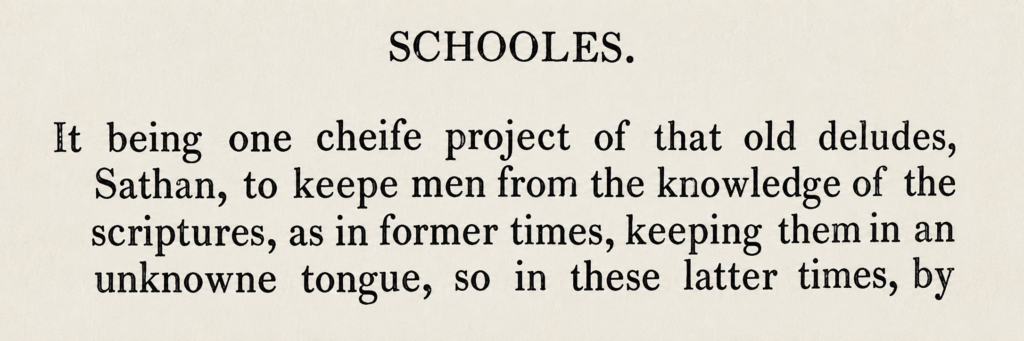
For example, the “Old Deluder Satan Act” from the Code of 1650 required towns with at least 50 households to establish a public school. According to the law, education was important because it helped ensure that the population could know the Bible rather than remain ignorant of God’s Word, like Europeans during the Dark Ages.

The Bible in Early American Classrooms

The influence of the Bible is evident in America’s earliest schoolbooks. The New England Primer, the first widely used textbook printed in the colonies, taught children to read through Bible passages, moral lessons, and shortened versions of Biblical catechisms.

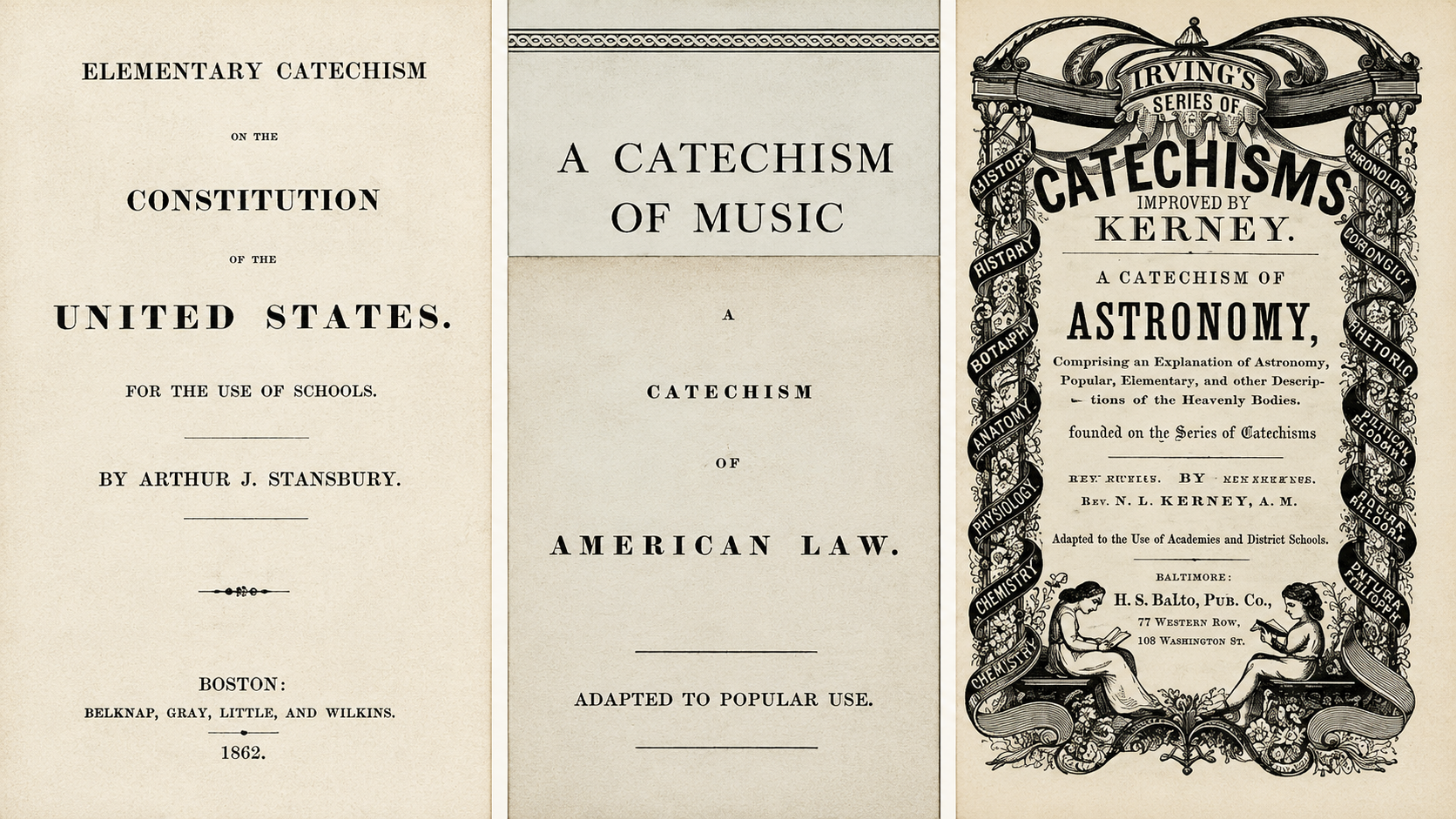
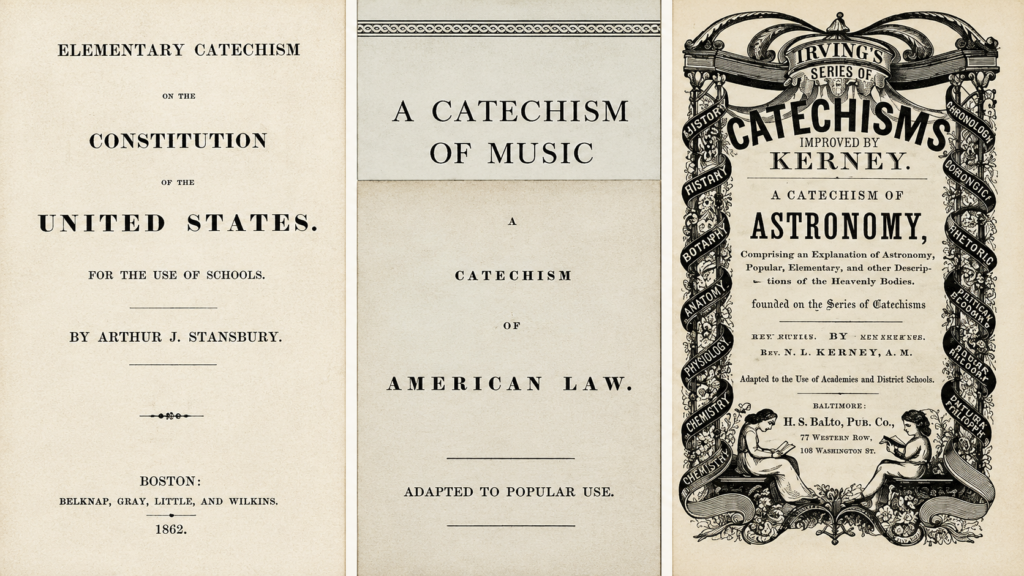
Early schools often used other catechisms—a question-and-answer method of teaching. While many catechisms focused on Biblical instruction, others taught subjects such as entomology, music, ancient history, and the US Constitution.

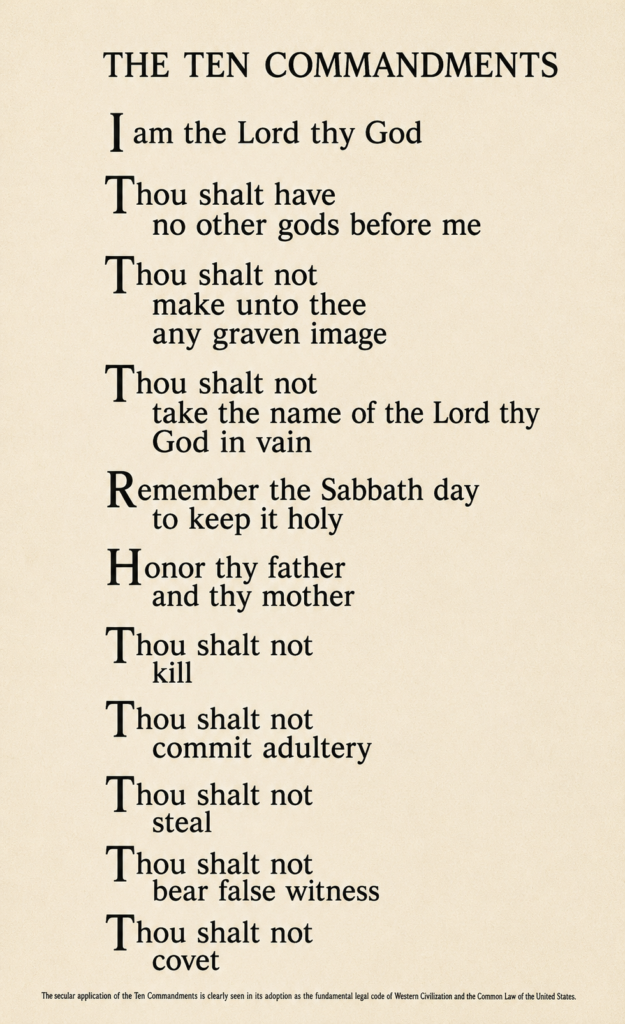
Other well-known textbooks also emphasized Biblical values. Noah Webster’s famous The American Spelling Book, often called the “Blue-Backed Speller,” included moral lessons that referenced the Ten Commandments. McGuffey’s readers, used by millions of students during the nineteenth century, combined reading instruction with the Ten Commandments and  lessons on honesty, responsibility, respect, and other virtues rooted in biblical principles.

These examples illustrate the significant role that biblical instruction and moral education played in American classrooms for many generations.

Progressive Educational Changes

During the twentieth century, the relationship between religion and public education changed through progressive policies and a series of Supreme Court decisions.

In Everson v. Board of Education (1947), the US Supreme Court misapplied Thomas Jefferson’s “a wall of separation between church and state” metaphor to its interpretation of the First Amendment. The Court not only ignored the context of Jefferson’s statement, but also neglected the broader historical context of Jefferson’s views and actions.

The Court continued in this misdirection in Lemon v. Kurtzman (1971), creating a three-part “Lemon test” to evaluate government actions involving religion. Using that framework, the Court later ruled in Stone v. Graham (1980) that Kentucky’s law requiring the posting of the Ten Commandments in public school classrooms was unconstitutional.2

In recent years, the Supreme Court has shifted away from the Lemon test. In American Legion v. American Humanist Association (2019), the Court emphasized the importance of the nation’s history and traditions when considering the relationship between the state and religion. Then, in Kennedy v. Bremerton School District (2022), the Court officially abandoned the Lemon test, directing lower courts to consider the original understanding of the First Amendment and the nation’s historical practices when deciding similar cases.

Influence Today

Today, as we look to our history and traditions—state laws encouraging Biblical literacy and textbooks that included Scripture and moral lessons—we can restore the Bible as a guide for America’s youth, just as it was in early American education.

To learn more about Christian influence in early American education, see Four Centuries of American Education. Or, own your own copy of The New England Primer and the Catechism on the Constitution.

1 For example: “The Christian religion is the most important and one of the first things in which all children under a free government ought to be instructed…. No truth is more evident to my mind than that the Christian religion must be the basis of any government intended to secure the rights and privileges of a free people.” Noah Webster, “Schoolmaster to America” (Reply to a Letter of David McClure on the Subject of the Proper Course of Study in the Girard College, October 25, 1836,” A Collection of Papers on Political, Literary, and Moral Subjects, New York: Webster and Clark, 1843, 291). “The Bible … should be read in our schools in preference to all other books.” Benjamin Rush, signer of the Declaration of Independence (“A Defense of the Use of the Bible as a School Book, Addressed to the Rev. Jeremy Belknap, of Boston,” on March 10, 1791, Essays, 94, 100). “The Bible…. [is] a necessary part of a polite education.” Henry Laurens, President of the Continental Congress (letter to James Lawrenson on August 19, 1772, Papers of Henry Laurens, George C. Rogers, Jr. and David R. Chesnutt, editors, University of South Carolina Press, 1980, VIII:426-427).

For a broader history of the “separation of church and state” phrase, see David Barton, Original Intent: The Courts, The Constitution, and Religion (Aledo, TX: WallBuilder Press, 2008).

Lexington & More: April 1775

A Midnight Ride to Lexington

The events of April 18-19, 1775 are some of the most famous in the story of how Americans won the liberty that we still enjoy today.

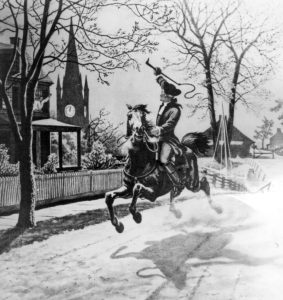
Those eventful days began on April 18, 1775 with a horseback ride by Paul Revere1 and William Dawes.2 They set out to warn militias across the Massachusetts countryside of approaching British troops,3 who were sent to Concord to confiscate the weapons there. These British troops were also dispatched to “bring back the bodies of Mess. Hancock and Adams.”4

Arriving in Lexington around midnight at the home of the Rev. Jonas Clark (where John Hancock and Samuel Adams were staying5), Revere passed on word of the British plans. Revere and Dawes then left Lexington, joined by Samuel Prescott,6 and continued their ride towards Concord. On their way, Revere and Dawes were captured by the British but Prescott escaped and alerted Concord.7

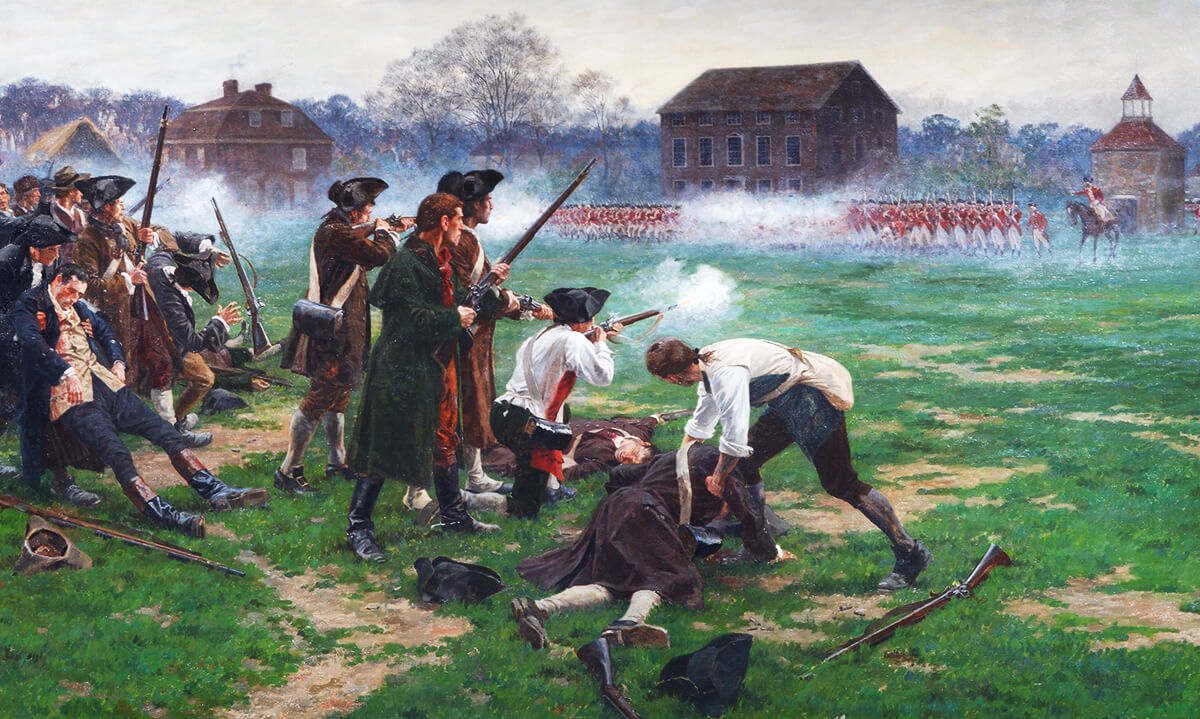
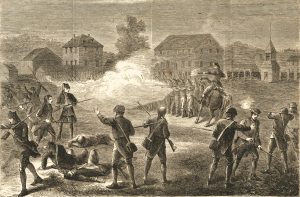
After the alert by Revere had been delivered in Lexington, the local militia (largely the men from Clark’s church) was mustered. On the morning of April 19, 1775, some 70 Americans would face about 800 British troops.8 Gunfire was exchanged — the American Revolution had begun!

As the smoke cleared, 18 Americans lay wounded or dead9 (all the casualties being from Pastor Clark’s church), including both black patriots (such as Prince Estabrook10) and white patriots (such as John Robbins11). (One of the amazing items we have in the WallBuilders library is a sermon preached by Jonas Clark on the one-year anniversary of the Battle of Lexington.)

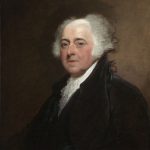
John AdamsThe much larger British force, having prevailed in that Lexington skirmish, continued their march towards Concord,12 where they would be met by the Rev. William Emerson and 400 American patriots awaiting them.13 Also involved in that Concord group was black patriot Peter Salem,14 who a few weeks later went on to become the hero of the Battle of Bunker Hill.15

As we remember the events of this time from 1775 and the liberties they eventually produced, let’s also remember the responsibility those events place upon us. As John Adams reminded us:

Posterity! You will never know how much it cost the present generation to preserve your freedom! I hope you will make a good use of it. If you do not, I shall repent in Heaven that I ever took half the pains to preserve it.16


Endnotes

1 Paul Revere, Deposition, c. 1775, Massachusetts Historical Society, detailing his ride and capture.
2 “Paul Revere, Letter to Jeremy Belknap, c. 1798, Massachusetts Historical Society; see also “William Dawes: The Forgotten Midnight Rider,” February 17, 2014 History of Massachusetts Blog.
3 See “Letter from Francis Smith, Boston, to Thomas Gage, 1775 April 22, enclosed in Gage to Dartmouth, 1775 April 22,” University of Michigan Library for the British description of their mission, and Paul Revere’s handwritten deposition, c. 1775, Massachusetts Historical Society for the American description.
4 “Attempted Capture of John Hancock and Samuel Adams,” May 29, 2023, WallBuilders; see also Paul Revere’s letters to Jeremy Belknap, c. 1798, Massachusetts Historical Society.
5 J. T. Headley, The Chaplains and Clergy of the Revolution (NY: Charles Scribner, 1864), 78.
6 See Paul Revere’s handwritten deposition, c. 1775, Massachusetts Historical Society; see also Paul Revere’s letters to Jeremy Belknap, c. 1798, Massachusetts Historical Society.
7 George Bancroft, History of the United States, from the Discovery of the American Continent (Boston: Little, Brown, and Company, 1864), VII:290; see Paul Revere’s handwritten deposition, c. 1775, Massachusetts Historical Society.
8 There is a wealth of sources relating to the numbers in the Lexington battle that often provide differing numbers, such as: “Letter from Francis Smith, Boston, to Thomas Gage, 1775 April 22, enclosed in Gage to Dartmouth, 1775 April 22,” University of Michigan Library  (British officer who states they sent “six light infantry companies” to Lexington, or 200–300 troops); Deposition #20, Edward Thoroton Gould, American History Central (British soldier who states there were 60–70 American militia); Deposition #8, Nathanael Parkhurst et al., American Battlefield Trust (who provides more details about the militia assembly at Lexington). Benson J. Lossing, A History of the United States (NY: Mason Brothers, 1860), 232, says there were 800 British troops which aligned with information stated by Jonas Clark in his sermon.
9  A soldier present at Lexington stated: “they [the British] killed eight of our company & wounded several” (Deposition #8, Nathanael Parkhurst et al., American Battlefield Trust).
10 “Historical Documents: “A List of the Names of Provincials…” 1775,” PBS, accessed April 10, 2025.
11 “Deposition of John Robbins,” April 24, 1775, DocsTeach.
12 Bancroft, History (1864), VII:297; see “Letter from Francis Smith, Boston, to Thomas Gage, 1775 April 22, enclosed in Gage to Dartmouth, 1775 April 22,” University of Michigan Library  for the British description of their march to and from Concord.
13 Deposition #17, James Barrett, April 23, 1775, American History Central (specifies 300–400 militia present at North Bridge in Concord); Bancroft, History (1864), VII:290, 299. “Letter from Francis Smith, Boston, to Thomas Gage, 1775 April 22, enclosed in Gage to Dartmouth, 1775 April 22,” University of Michigan Library provides a British perspective as he states: “On our leaving Concord to return to Boston they began to fire on us from behind the walls, ditches, trees etc., which as we marched increased to a very great degree and continued without the intermission of five minutes altogether for I believe upwards of eighteen miles, so that I can’t think but it must have been a preconcerted scheme in them to attack the King’s troops the first favourable opportunity that offered.
14 “Historical Documents: “A List of the Names of Provincials…” 1775,” PBS, accessed April 10, 2025.
15 William C. Nell, The Colored Patriots of the American Revolution (Boston: Robert F. Wallcut, 1855), 21.
16 John Adams to Abigail Adams, April 26, 1777, Letters of John Adams Addressed to His Wife, ed. Charles Francis Adams (Boston: Charles C. Little and James Brown, 1841), 218.

A Brief History of Courtroom Prayers

In 2014, Wayne Mack was elected a judge in Montgomery County, Texas. As part of his responsibilities in dealing with troubled, grieving, and distraught families, he established a program for ministers to serve as volunteer chaplains, who would make themselves available to those families. Some sixty clergy from thirty different denominations and faiths currently participate in the program. Mack has observed that the clergy represent “every mosque, temple and synagogue” in the area.1 Judge Mack also allows different clerics to open his court sessions with prayer.

The Freedom From Religion Foundation (FFRF) of Madison, Wisconsin, learned of the prayers, objected, and filed a complaint with the Texas State Commission on Judicial Conduct. This complaint was dismissed. In 2016, FFRF filed another challenge, and the Texas Attorney General issued an opinion upholding Mack’s practice as constitutional. The Wisconsin group has since found a local attorney and residents to serve as plaintiffs, and in 2019 they filed suit in federal court objecting to the prayers in Judge Mack’s courtroom. They allege a violation of the First Amendment’s declaration that “Congress shall make no law respecting an establishment of religion or prohibiting the free exercise thereof,” which they interpret as requiring a religion-free public square. FFRF claims that:

Judge Mack’s courtroom-prayer practice unambiguously and unnecessarily endorses religion in general and Christianity in particular, and places the State’s imprimatur on religion in general and Christianity in particular, in violation of the Establishment Clause of the First Amendment to the U.S. Constitution.2

Is Judge Mack’s practice of courtroom prayer a violation of the Constitution? To answer this question, we must first consider how the Constitution should be interpreted. More narrowly, we need to examine how the modern US Supreme Court has said the Establishment Clause should be interpreted.

How Should the Constitution Be Interpreted?

America’s Founders believed that the Constitution, and other laws, should be interpreted in light of their original meaning. For instance, President Thomas Jefferson recalled to Supreme Court Justice William Johnson the cardinal maxim of constitutional interpretation:

On every question of construction, carry ourselves back to the time when the Constitution was adopted, recollect the spirit manifested in the debates, and instead of trying what meaning may be squeezed out of the text or invented against it, conform to the probable one in which it was passed.3

James Madison, often called the “Father of the Constitution,” agreed:

[I] entirely concur in the propriety of resorting to the sense in which the Constitution was accepted and ratified by the nation. In that sense alone it is the legitimate Constitution.4

And James Wilson, an early Supreme Court Justice whose role in drafting the Constitution was on a par with that of Madison, likewise affirmed:

The first and governing maxim in the interpretation of a statute is to discover the meaning of those who made it.5

Justice Joseph Story concurred. The youngest Justice ever appointed to the Court, in his 34 years on the bench he authored 286 opinions, of which 94 percent were recorded as the official Court position.6 Called the “foremost of American legal writers,”7 he affirmed:

The first and fundamental rule in the interpretation of all instruments [documents] is to construe them according to the sense of the terms and the intention of the parties.8

The Supreme Court and the Establishment Clause

Numerous times throughout the modern era the US Supreme Court has stated that the First Amendment must be interpreted according to its original intent—that early historical precedent is seminal in establishing constitutional understandings. As Justice Hugo Black (writing for the majority) affirmed in Everson v. Board of Education (1947), the “meaning and scope of the First Amendment” must be understood in “light of its history and the evils it was designed forever to suppress.”9 Justice Wiley Rutledge and three others dissented from the majority’s holding in that opinion, but they, too, agreed that the First Amendment must be understood in light of the Founders’ views.10 (In subsequent Establishment Clause decisions over the past 75 years, the vast majority of justices have invoked historical arguments to support their conclusions.11)

For instance, in the Marsh v. Chambers decision upholding the constitutionality of legislative chaplains and prayer (1983), Chief Justice Burger (writing for the majority) drew from a wide range of historical documents and actions to show that legislative chaplains and prayer were widespread in the Founding Era.12 He pointed out that the Founders who drafted and approved the First Amendment had themselves approved legislative prayer and therefore hired legislative chaplains.13 He further acknowledged that the fact states also had a long tradition of engaging in these practices showed that they were “deeply embedded in the history and tradition of this country.”14

In Town of Greece v. Galloway, 572 U.S. 565 (2014), the justices considered the constitutionality of a city council’s practice of opening its meetings with prayer. In his majority opinion, Kennedy observed that the “Court’s inquiry, then, must be to determine whether the prayer practice in the town of Greece fits within the tradition long followed in Congress and the state legislatures.”15 Drawing heavily from Founding Era practices (and historical practices since then), he concluded that opening a city council meeting with prayer was constitutional. Both the concurring and dissenting16 opinions all made historical arguments to support their respective conclusions. All nine justices affirmed that that history plays a critical role in helping the Court resolve First Amendment Establishment Clause issues.

In the Supreme Court’s 2019 Establishment Clause case, American Legion v. American Humanist Association, 588 U.S. __ (2019), the justices considered the constitutionality of a military war memorial in the shape of a Latin cross.17 By a vote of 7-2, they held that it did not violate the First Amendment. Justice Alito, writing for the majority, noted that recent Establishment Clause cases “look[ed] to history for guidance,”18 specifically pointing to both the Marsh and Galloway cases. He concluded that whenever “categories of monuments, symbols, and practices with a longstanding history follow in that tradition, they are likewise constitutional.”19

A Brief History of Courtroom Prayers in America

There is no question that courtroom prayer is a practice “deeply embedded in the history and tradition of this country.”20 Significantly, America’s Founders were familiar with and supportive of courtroom prayer, and hosts of judges and courts at the state and federal levels continued their practice across subsequent generations.

Consider first the original Supreme Court. It was comprised of six justices—one Chief Justice and five Associate Justices. Three of the six had been drafters and signers of the US Constitution (James Wilson, John Rutledge, and James Blair), and five were members of state conventions that ratified the Constitution (James Iredell, William Cushing, John Jay, John Rutledge, and James Wilson). Additionally, Jay was one of the three authors of The Federalist Papers, which James Madison described as “the most authentic exposition of the heart of the federal Constitution as understood by the body which prepared and the authority which accepted it.”21 Arguably, no other Court in American history had superior constitutional scholars or was in a better position to understand the original meaning of the Constitution and Bill of Rights.

The Judiciary Act of 1789 assigned justices judicial responsibilities over a specific geographic region (circuits). They personally traveled to those areas to impanel grand juries and oversee the federal courts in each jurisdiction. In preparation for these visits, local officials would correspond with the justices to ensure that all necessary arrangements for their visit were made.

For example, on February 24, 1790, federal judge Richard Law of Connecticut inquired of Chief-Justice John Jay which judges would be coming to their region, whether there should be a parade, if special robes for the judges were desired, or “whether they would wish to have a clergyman attend” at the Court sessions.22 To the latter question, Jay responded “The custom in New England of a clergyman’s attending should in my opinion be observed and continued.”23

Prayers in the Federal Courts

Newspaper accounts of the Justices’ visits (occurring after the First Amendment and its religion clauses had been added to the Constitution) confirm that courtroom prayer was part of the official court proceedings:

After the customary proclamations were made and the Grand Jury sworn, a short (though pertinent) charge was given them by his Honor the Chief-Justice [John Jay], when the Throne of Grace was addressed by the Rev. Dr. Haven.24 PORTSMOUTH, NEW HAMPSHIRE, 1791

Court opened on Saturday, May 12, with Chief-Justice John Jay, Associate Justice William Cushing, and Judge John Lowell in attendance….The prayer was made by the Rev. Dr. Parker. His Excellency the Vice-President of the United States [John Adams] was in Court.25 BOSTON, MASSACHUSETTS, 1792

Last Wednesday, the Circuit Court of the United States opened in this town, when the Rev. Mr. Patten addressed the Throne of Grace in prayer, after which the Hon. Judge Wilson delivered to the Grand Jury a charge.26 NEWPORT, RHODE ISLAND, 1793

On Monday last, the Hon. Judge Cushing commenced the lesson of the Circuit Court in this town when he delivered to the Grand Jury an animated charge….Previous to the charge, the Throne of Mercy was addressed in prayer by the Rev. Mr. Eckley.27 BOSTON, MASSACHUSETTS, 1794

On Monday last, the Circuit Court of the United States was opened in this town. The Hon. Judge Paterson [a signer of the Constitution who joined the Court in 1793] presided….After the charge was delivered, the Rev. Mr. Alden addressed the Throne of Grace in an excellent, well adapted prayer.28 PORTSMOUTH, NEW HAMPSHIRE, 1800

Prayers in federal courts continued across the generations

After a solemn and appropriate prayer by the Rev. Mr. Baker, his honor Judge [Joseph] Story delivered to the Grand Jury a highly impressive, eloquent and learned charge.29 RICHMOND, VIRGINIA, 1819

[T]he courtroom was very much crowded at an early hour. About half past ten he [Judge Levi Woodbury] came in with Judge Sprague and took his seat on the right. The court was then opened, a prayer was offered up by the Rev. Mr. Kirk.30 BOSTON, MASSACHUSETTS, 1845

President Hayes nominated a very intelligent Christian gentleman as Judge of this district. At the opening of court at G—- R—–, he telegraphed for me to come and open the court with prayer.…Judge ——- waited for me and took me up to the court-house.… [I asked] God’s blessing upon the Judge, prosecuting attorney, jurors, their town, households, families, companions, children, and youth of the town.31 WESTERN UNITED STATES TERRITORIAL FEDERL COURT, 1877

Court convened; opened with prayer by John Reed.32 UNITED STATES COURT OF CLAIMS, 1896

Following a custom which is observed in many United States [federal] Courts, the New Jersey Circuit was opened yesterday with prayer.33 NEW JERSEY, 1908

Clearly, across the generations prayer in the courtroom was common and not viewed as a violation of any constitutional clause.

Before leaving the federal courts, it is worth noting United States Supreme Court sessions regularly begin with the prayer “God save the United States and this Honorable Court.” The first recorded instance of the Supreme Court opening with this prayer was in 1827 but, as we have seen, other federal courts were already opening with prayer well before that date.34

Prayers in State Courts

Like federal courts, state court sessions also were often opened with prayer. Here are a few representative examples from across the states and generations:

At the opening of the Supreme Court in this city on Tuesday last, the Rev. W. Taylor, pastor of the Roman Catholic Church, was requested to offer up the customary prayer.35 MASSACHUSETTS, 1823

Rev. Dr. Lamson…made the opening prayer in court.36 MASSACHUSETTS, 1846

Judge Howe of Wisconsin opens his courts with prayer.37 WINCONSIN, 1851

The first general term of the Supreme Court of Judicature of the State of Vermont…opened Tuesday morning….The six judges…stood this morning while the Rev. J. H. Worcester opened the Court with prayer.38 VERMONT, 1858

One of the learned justices of the Maine Supreme Court…was holding court at Ellsworth, and according to honored custom called in a local clergyman to open the session with a supplication to heaven.39 MAINE, 1894

[O]ne of our county courts.…employed a Methodist minister to open the court with prayer.40 VERMONT, 1897

Circuit court was opened with prayer at 10 a.m. yesterday.41 SOUTH DAKOTA, 1906

Rev. F. M. Brown, pastor of the First M. E. church will open court with prayer and Judge Howard J. Curtis of Stafford will preside.42 CONNECTICUT, 1912

Dr. R. F. Moore of Sacred Heart church has been invited by County Sheriff Simeon Pease to open with prayer the December court, which will convene at the county court house tomorrow afternoon. Judge Joel H. Reed will be on the bench.43 CONNECTICUT, 1919

Judge Pomeroy called upon the Rev. Charles C. Cole, pastor of the Methodist church, to open court with prayer. It is understood that this will be a regular practice.44 MONTANA, 1921

Dr. J. F. McClure, pastor of the Broadway Methodist church, was called upon by Judge W. F. Freeman to open court with prayer.45 OKLAHOMA, 1923

Judge Emory E. Smith.…always opens his terms of court with prayer.46 MISSOURI, 1934

[A]t Marietta, Georgia, a clergyman was asked to open court with prayer.47 GEORGIA, 1947

Ministers of the Middlesboro Ministerial Association are opening police court everyday with prayer.…Each morning a different minister is assigned.48 KENTUCKY, 1950

Judge Maupin Cummings presided, and asked the Rev. W. R. Whiddon of Huntsville to open court with a prayer.49 ARKANSAS, 1955

Judge Bundy asked clerk George C. Holland to have a minister present when court opened Monday, Feb. 4. The Judge said it was his custom to open court with a prayer.50 NORTH CAROLINA, 1963

Judge Cooper Opens Court With Prayer.…[T]he invocation was delivered by the Rev. V. E. Brown, pastor of Gethsemane Baptist Church.51 NORTH CAROLINA, 1972

Judge William O. Bivens Jr.…called on a courthouse employee, Woodrow Bailey of the Assessor’s Officer, to open court with prayer. Judge Bivens usually opens the session with prayer each day.52 WEST VIRGINIA, 1977

There are many other examples.53 In fact, the practice of courtroom prayer was so common that in 1835, a ministerial handbook provided model prayers for opening a court session,54 and a century later, a 1928 pastoral handbook listed it as one of the expected activities of a minister.55

Conclusion

The First Amendment does prohibit the creation of a national church, but contrary to the claims from Freedom From Religion Foundation, it does not require religion to be scrubbed from the public square. The Establishment Clause, as it was originally understood and subsequently applied across the generations and the centuries, did not prohibit, a judge from allowing clergy from different religions and denominations to open court sessions with prayer. Such practices are “deeply embedded in the history and tradition of this country,”56 and as Justice Alito recently observed, when this is the case, there is a “presumption of constitutionality for longstanding monuments, symbols, and practices.”57 Opening court sessions with prayer is clearly such a practice.

* This article concerns a historical topic and may not be up to date.


Endnotes

1 Debra Cassens, Weiss, “Refiled lawsuit challenges justice of the peace’s courtroom prayer program,” ABA Journal, March 30, 2019, here.

2 “Complaint for Declaratory Relief,” in Freedom from Religion Foundation, Inc. v. Judge Wayne Mack, Case No. 4:19-cv-1934 (Filed May 29, 2019), 17, here.

3 Thomas Jefferson, Memoir, Correspondence, and Miscellanies, From the Papers of Thomas Jefferson, Thomas Jefferson Randolph, editor (Boston: Gray and Bowen, 1830), IV:373, to Judge William Johnson on June 12, 1823.

4 James Madison, Letters and Other Writings of James Madison (Philadelphia: J. B. Lippincott & Co., 1865), III:443, to Henry Lee on June 25, 1824.

5 James Wilson, The Works of the Honourable James Wilson, ed. Bird Wilson (Philadelphia: Bronson and Chauncey, 1804), I:14, from “Lectures on Law Delivered in the College of Philadelphia; Introductory Lecture: Of the Study of the Law in the United States.”

6 Dictionary of American Biography (New York: Charles Scribner’s Sons, 1936), s.v. “Joseph Story.”

7 Dictionary of American Biography (New York: Charles Scribner’s Sons, 1936), s.v. “Joseph Story.”

8 Joseph Story, Commentaries on the Constitution of the United States (Boston: Hilliard, Gray, and Company, 1833), III:383, §400.

9 Everson v. Board of Education 330 U.S. 1, 14-15 (1947).

10 Everson v. Board of Education 330 U.S. 1, 33 (1947).

11 Mark David Hall, “Jeffersonian Walls and Madisonian Lines: The Supreme Court’s Use of History in Religion Clause Cases,” Oregon Law Review (2006) 85:563-613. A slightly revised version of the article was reprinted in the High Court Quarterly Review (2009), 5:109-153.

12 Marsh v. Chambers 463 U.S. 783 (1983), 786-95.

13 Marsh v. Chambers, 787-88.

14 Marsh v. Chambers, 786. To support this proposition, Burger quoted his majority opinion in Walz v. Tax Commissioner: “It is obviously correct that no one acquires a vested or protected right in violation of the Constitution by long use, even when that span of time covers our entire national existence, and indeed predates it. Yet an unbroken practice of according the exemption to churches, openly and by affirmative state action, not covertly or by state inaction, is not something to be lightly cast aside.” 397 U.S. 664, 678 (1970).

15 Town of Greece v. Galloway, 572 U.S. 565, 9 (2014) (Kennedy, J. majority opinion).

16 Town of Greece v. Galloway, 572 U.S. 565, 9 (2014) (Kagan, J. dissenting).

17 American Legion v. American Humanist Association, 88 U.S. __, 1 (2019), (Ginsburg, J., dissenting).

18 American Legion v. American Humanist Association, 588 U.S. __, 25 (2019), (Alito, J.).

19 American Legion v. American Humanist Association, 28.

20 Marsh v. Chambers, 463 U.S. 783, 786 (1983).

21 James Madison, The Writings of James Madison, ed. Gaillard Hunt (New York: G. P. Putnam’s Sons, 1910), IX:219, to Thomas Jefferson on February 8, 1825.

22 The Documentary History of the Supreme Court of the United States, 1789-1800, ed. Maeva Marcus (New York: Columbia University Press, 1988), II:11.

23 The Documentary History of the Supreme Court, II:13, from John Jay to Richard Law on March 10, 1790.

24 New Hampshire Gazette (Portsmouth), May 26, 1791; Documentary History of the Supreme Court, II:192.

25 Columbian Centinel (Boston), May 16, 1792, 74; Documentary History of the Supreme Court, II:276. For a similar report from 1790, see Boston Gazette (May 10, 1790), in Charles Warren, The Supreme Court in United States History (Boston: Little, Brown, and Company, 1924), 1:59, here.

26 The Documentary History of the Supreme Court, II:412, from the Newport Mercury (Rhode Island) of June 25, 1793.

27 Philadelphia Gazette Of The United States And Daily Evening Advertiser (June 16, 1794), 6, from Boston, June 11, 1794, here

28 United States Oracle (Portsmouth, NH), May 24, 1800; The Documentary History of the Supreme Court, III:436.

29 Richmond Enquirer (November 30, 1819), 4, here.

30 The New Era (October 22, 1845), 2, here.

31 The Presbyterian Monthly Record (Philadelphia: Presbyterian Board of Publication, January 1878), 2, here.

32 Turner v. U.S., United States Court of Claims, April 10, 1916, 51 Ct.Cl. 125, 1916 WL 1115.

33 Trenton Evening Times (April 15, 1908), 12, here.

34 Mark David Hall, Did America Have a Christian Founding: Separating Modern Myth from Historical Fact (Nashville: Nelson Books, 2019), 113.

35 American Watchman and Delaware Advertiser (November 25, 1823), 2, quoting from the Boston Galaxy of November 7, 1823, here.

36 Boston Post (September 26, 1846), 2, here.

37 The Plymouth Pilot (June 4, 1851), 2, here; see also The Southern Press (June 7, 1851), 2, here.

38 Burlington Free Press (July 30, 1858), 2, here.

39 The Barrister (Toronto: The Law Publishing Co., December 1894), 237, here. (For an example from 1882, see Tit-Bits From All The Most Interesting Books, Periodicals and Newspapers in the World No. 25, Vol. I (April 8, 1882), 12, here

40 Vermont Bar Association: Officers, Proceedings, Papers and Addresses (October 12, 1897), Vol. IV No. 3, 347-348, here.

41 Mitchel Capital (February 9, 1906), 1, here.

42 Bridgeport Evening Farmer (September 6, 1912), 2, here.

43 Bridgeport Times and Evening Farmer (December 1, 1919), 1, here.

44 Fort Benton River Press (February 2, 1921), 8, here.

45 Daily Ardmore (January 22, 1923), 1, here.

46 Cassville Republican (March 8, 1934), 1, here.

47 The Carthage Citizen (February 21, 1947), 1, here.

48 Middlesboro Daily News (February 10, 1950), 1, here.

49 Northwest Arkansas Times (March 7, 1955), 1, here. See also, Kansas City Word and Way (February 3, 1955), 2, here.

50 Gastonia Gazette (January 22, 1963), 3, here.

51 Burlington Daily Times (April 5, 1972), 4B, here.

52 Bluefield Daily Telegraph (March 3, 1977), 5, here.

53 See, for example, Philadelphia Gazette of the United States (August 3, 1791), reporting an event on June 30, here; Milwaukee Sentinel and Gazette (June 14, 1851), 2, here; The New Bloomfield Times (December 30, 1879), 4, here; The Green Bag (Boston: October 1903), Vol. XV, No. 10, 502, relating info from circa 1880, here; Quincy Daily Herald (January 26, 1881), 2, here; Indianapolis Journal (February 2, 1885), 2, here; Savannah Morning News (March 14, 1895), 6, here; Jeffersonville Evening Journal (October 29, 1896), 2, here; Columbus Daily Times (March 15, 1898), 4, here; Seymour Daily Republican (March 2, 1898), 2, here; Atlanta Constitution (November 12, 1901), 7, here; Washington Evening Journal (February 3, 1902), 1, here; The Quincy Journal (February 22, 1908), 5, here; Norwich Bulletin (June 11, 1909), 6, here; Gulfport Daily Herald (September 9, 1910), 4, here; The Jackson Herald (August 7, 1913), 1, here; Santa Anna Daily Evening Register (July 21, 1914), 1, here; Vienna News (September 16, 1915), 1, here; Bridgeport Evening Farmer (February 12, 1916), 1, here; Bridgeport Evening Farmer (October 23, 1916), 1, here; Missouri Valley Independent (January 4, 1923), 1, here; Bluefield Daily Telegraph (March 8, 1971), 11, here; Bluefield Daily Telegraph (March 20, 1988), 7-4, here; and others.

54 Alexander V. Griswold, Prayers Adapted to Various Occasions of Social Worship: For Which Provision is Not Made in the Book of Common Prayer (Philadelphia: William Marshall & Co., 1835), 149-151, here.

55 Nolan B. Harmon, Ministerial Ethics and Etiquette (Nashville: Abingdon Press, 1987, originally published 1928), 52, here.

56 Marsh v. Chambers, 463 U.S. 783, 786 (1983).

57 American Legion v. American Humanist Association, 588 U.S. __, 18 (2019), (Alito, J.).
wall builders

WallBuilders 2024 Impact Report

A LETTER FROM OUR PRESIDENT

While we understand that our reward is not in this life, God is good to give us an occasional peek into His workings here and now. WallBuilders has been blessed to share in some real victories and witness so many answers to prayer this year!

As we continue to rebuild our moral, religious, and constitutional foundation, we’ve seen reclaimed religious freedoms, with the reintroduction of Biblical content in classrooms in several states, and unapologetically Christian ads on the streets of Washington DC!

This year alone, through our Pro-Family Legislative Network, Pastors’ Briefings and Teachers Conferences, we’ve met with and fortified fellow rebuilders in almost all fifty states. In fact, in the last few months we’ve had Congressmen, congressional staffers, state legislators, school board members and numerous others, tell us they are now serving because of the influence of WallBuilders. We’ve encouraged faith leaders and emboldened church congregations to be salt and light in their communities. We also spent the several months before the election taking part in pastors’ and community events in all seven swing states. We had many reports of those pastors teaching about Christian participation and influence in the government arena, and church attendees who decided to be involved in the election process, many choosing to vote who had previously planned to abstain.

While we thank the Lord for these many victories, there is so much more to do! At this point, I feel like we’ve only won the coin-toss for possession of the ball and now the real effort begins; and there are so many opportunities in front of us. In the coming year, WallBuilders is looking to increase our outreach with expanded order fulfillment facilities and additional staff to support our mission of education and influence.

The rebuilding is ongoing and your support helps us empower many on the frontlines in school boards, state legislatures, get-out-the-vote efforts, and mobilize churches to reach their communities. We invite you to help us rebuild with a special gift today.

Now is the time to follow Nehemiah 2:18b: “Then they said, ‘Let’s arise and build.’ So they put their hands to the good work!”

Thank you for your prayers and support!

Tim Barton

Read the Full 2024 Impact Report Here

The Federalist Papers

Defending the US Constitution

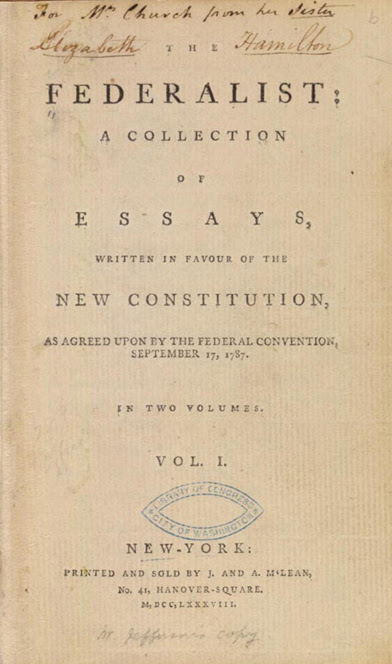
On October 27, 1787 a New York newspaper published the very first article that would come to be known as the Federalist Papers.
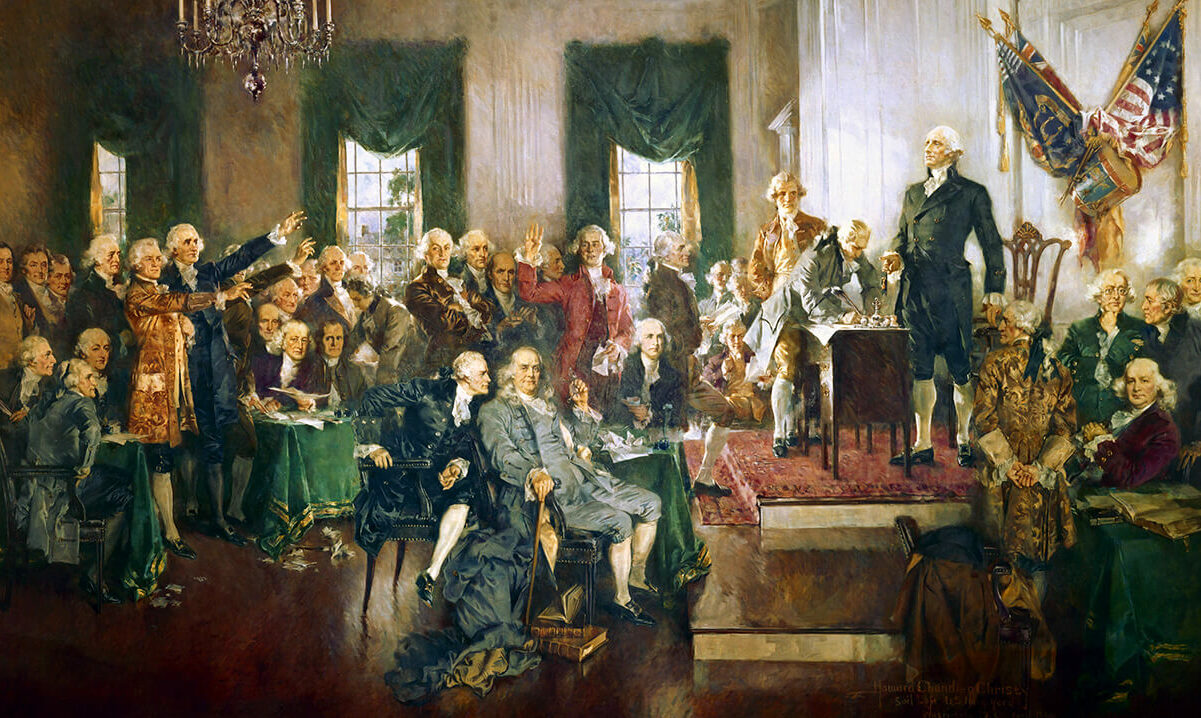
The Delegates to the Constitutional Convention signed the United States Constitution on September 17, 17871 and then sent it to the thirteen states for ratification.

During this ratification process, the states would review the proposed Constitution and either approve or reject it. A favorable vote by nine of the states would be required for the Constitution to go into effect.2

Some states gave their blessings quickly, while some, like New York, had a more difficult time with this process before casting a narrow vote in favor of the document.3 New York’s ratification convention stretched well over a month in the summer of 1788.4

In October of 1787, before the debates even started in that state, four New York newspapers began publishing articles in support of the Constitution.5 The essays appeared anonymously under the name “Publius” in these newspapers. They explained various parts of the Constitution and encouraged its adoption.

The popular essays continued through May 1788, by which time a total of 85 articles had been published.6 They were first released as The Federalist in a bound volume in January 1788,7 before all the essays had even been completed.

These essays were influential not only in the New York ratification debates, but appeared in newspapers in other states as well. It was later discovered that James Madison, John Jay, and Alexander Hamilton were the authors of what became popularly embraced as the Federalist Papers.8

James Madison described this collection as “the most authentic exposition of the text of the federal Constitution as understood by the body which prepared and the authority which accepted it.”9 Courts across America’s history have relied on the Federalist Papers for explanations of the original intent of the US Constitution.

The Federalist Papers can provide context, insight, and authority to the Constitution in an era when Americans’ desperately lack Constitutional knowledge.10 Make it a part of your study of the Constitution for a deeper insight into what this important document means to our nation!


Endnotes

1 “The Constitution: How Did it Happen?” National Archives, accessed October 25, 2024.
2 “Elliot’s Debates,” Library of Congress, accessed October 25, 2024.
3 James Caldwell, “Ratification Dates and Votes,” April 23, 2024, U.S. Constitution.net.
4 “Introductory Note: New York Ratifying Convention, [17 June–26 July 1788],” National Archives: Founders Online.
5 “Federalist 1 (1787),” National Constitution Center, accessed October 25, 2024.
6 “Federalist Papers: Primary Documents in American History,” Library of Congress, accessed October 25, 2024.
7 “Printings and Reprintings of The Federalist,” 2003, Center for the Study of the American Constitution.
8 “About the Authors,” Library of Congress, accessed October 25, 2024.
9 James Madison to Thomas Jefferson, February 8, 1825, Letters and Other Writings of James Madison (Philadelphia: J. P. Lippincott Co., 1867), III:481.
10 See information about this lack of Constitutional knowledge in WallBuilders’ Constitution Hub.

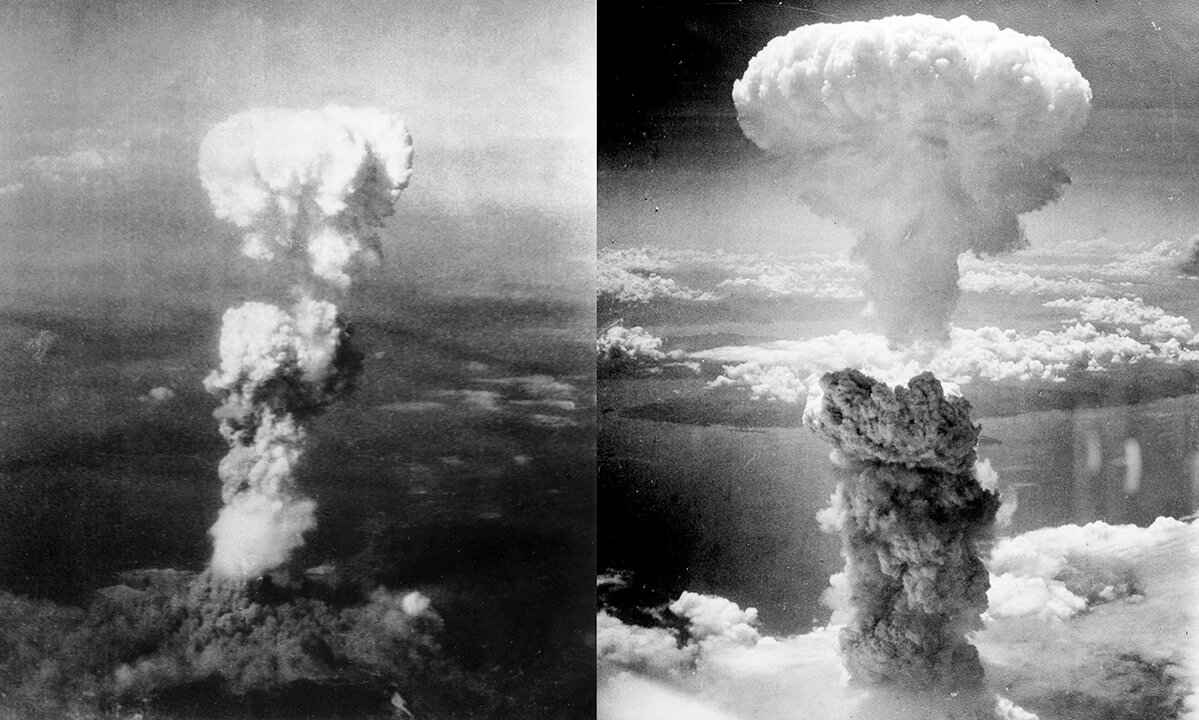
The mushroom clouds from the Hiroshima and Nagasaki atomic bombs.

Hiroshima, Obama, and American Morals

 On May 27, 2016, President Obama visited Hiroshima – the only American president to do so since the city was hit by an atomic bomb on August 6, 1945. That bomb hastened the end of World War II and helped halt further war deaths in the Pacific Theater beyond the 20 million lives already lost. 1

Both supporters and opponents scrutinized the president’s speech to see whether he would issue any direct apology for America’s having dropped atomic bombs, thereby extinguishing between 200,000 and 250,000 Japanese lives. 2 The president carefully stayed on script and delivered no overt apology, but even the mainstream media did not miss the fact that by simply appearing at Hiroshima he was issuing an indirect apology:

A majority of Japanese people view the atomic bombings as inhumane attacks — war crimes for which the United States has never been punished. . . . Hiroshima is a decidedly one-sided location; the United States dropped an atomic bomb on Japan. At this setting one country is victim, the other assailant. 3 Washington Post

No American president has visited Hiroshima or Nagasaki in the 71 years since the attacks because of concerns the trip would be perceived as an apology for the two bombings that helped bring an end to World War II. 4 ABC News

The president wrote in a Washington Post op-ed in late March, “As the only nation ever to use nuclear weapons, the United States has a moral obligation to continue to lead the way in eliminating them.” “Moral obligation”? . . . Why would America assume a “moral obligation” if not because the nation was guilty of some ill-advised, even immoral, action? 5 US News

A visit would inevitably be construed by many as a de facto U.S. apology. . . It would be seen as vindication for Japanese claims of victimization, encouraging those in Japan who still deny responsibility for a war of aggression. . . . The goal of a presidential visit to the nuclear bombing sites is to finally come to terms with the morally difficult decisions made in World War II.6 The Diplomat

A Moral Revolution?

The media recognized that the issue of morals was inseparable from any official visit to Hiroshima, and as expected, the president did address that issue in his speech. According to President Obama:

The scientific revolution that led to the splitting of an atom requires a moral revolution as well. That is why we come to this place [Hiroshima]. We stand here, in the middle of this city, and force ourselves to imagine the moment the bomb fell. We force ourselves to feel the dread of children confused by what they see. We listen to a silent cry. We remember all the innocents killed across the arc of that terrible war, and the wars that came before, and the wars that would follow. Mere words cannot give voice to such suffering, but we have a shared responsibility to look directly into the eye of history and ask what we must do differently to curb such suffering again. Someday the voices of the hibakusha [survivors of the bombings] will no longer be with us to bear witness. But the memory of the morning of August 6th, 1945 must never fade. That memory allows us to fight complacency. It fuels our moral imagination. It allows us to change. . . . We can tell our children a different story – one that describes a common humanity; one that makes war less likely and cruelty less easily accepted. We see these stories in the hibakusha [survivors of the bombings] – the woman who forgave a pilot who flew the plane that dropped the atomic bomb, because she recognized that what she really hated was war itself. 7

Notice the interesting moral perspective communicated by the president. He asks that we imagine the suffering in Hiroshima – the dread of the children; the voice from the victims of the bombings; the silent cry. He also praises the forgiveness of the Japanese woman who forgave the American pilot who dropped the bomb. All of these statements point us toward the Japanese viewpoint. Human and losses are always tragic, but viewing them with a factually-accurate perspective is crucial.

Take for example, the woman who forgave the Americans. Did she also forgive her Emperor for the treacherous and unprovoked surprise attack on Pearl Harbor that killed 2,403 Americans and wounded 1,178, 8 thus bringing America into the war? Did she forgive Japan for declaring war on America when we were working diligently to stay out of the war and be uninvolved? Did she forgive the Japanese military leaders for keeping the war against America going long after the rest of the world had surrendered? America would not have dropped atomic boms without these three Japanese-initiated events. So why are the Americans the transgressors who need to be forgiven?

And empathizing with children is important. But shouldn’t we likewise imagine the cries of the American children whose fathers were mercilessly slaughtered by the Japanese in the Bataan Death March, or killed in the many other Japanese atrocities that in both brutality and scope parallel the war crimes perpetrated by the Nazis in Europe? Throughout the War Japan engaged in active genocides, including against its Asian neighbors in Korea, Manchuria, the Philippines, and China. (It is estimated that in China alone some ten million innocents were exterminated by the Japanese. 9) Japan’s military philosophy was barbaric with no respect for human life.

For example, Japanese officers reportedly held a competition to see which officer could kill 100 people with his sword first, with a runoff to determine a winner. 10 They callously burned alive American prisoners after capture. 11 Others had their heads smashed in with sledgehammers. 12 There are always brutalities and atrocities in war. But as historian Mark Felton termed it, with the Japanese “murder [was] the rule rather than the exception.” 13 There is a reason that after the war, war-crime trials were held in Japan and not just Germany.

President Obama’s acknowledgment that Hiroshima calls for a moral revolution is a common view among Progressives, who repeatedly blame America for much of the evil in the world. Even the 2014 study guide for the Advanced Placement Test for high school U. S. History (written by the College Board, headed by Progressive educator David Coleman) told students that “the decision to drop the atomic bomb raised questions about American values.” 14 Following public outrage, the College Board modified that statement to read: “The use of atomic bombs hastened the end of the war and sparked debates about the morality of using atomic weapons.” 15 The change was an improvement, but it still preserved the view that the use of an atomic weapon was symbolic of America’s lack of morality. Other sources echo that belief:

Truman’s decision was a barbaric act that brought negative long-term consequences to the United States. 16

The . . . use of such a weapon was simply inhumane. Hundreds of thousands of civilians with no democratic rights to oppose their militarist government, including women and children, were vaporized, turned into charred blobs of carbon, horrifically burned, buried in rubble, speared by flying debris, and saturated with radiation. 17

The American government was accused [by modern Progressive writers] of racism on the grounds that such a device would never have been used against white civilians. 18

There are many similar claims. But what is missing is the compelling evidence that given what was occurring in Japan at that time, employing the atomic bomb was actually the more moral thing to do. Two categories of proof fully demonstrate this: (1) The reason the atomic bomb was used, and (2) The manner in which it was used. Consider the definitive evidence for each category.

The Reason the Atomic Bomb was dropped on Japan

Interestingly, there are many legitimate parallels between the Japanese military of World War II and ISIS more recently. In addition to the Japanese practices of open beheadings, mass executions, and other grotesque forms of torture intended to generate fear and terror among those they were seeking to subdue and control, they also specialized in suicide bombers. In fact, they leveled more than 2,000 suicide bombing attacks against Americans during the war, resulting in substantial losses of American lives. 19 Also, the Japanese military forcibly took Korean women and used them as sex slaves for their soldiers 20 in a manner similar to what ISIS terrorists do with non-Muslim women.

In World War II, America and the Allied Forces fought simultaneously on both the European and Pacific fronts. But late in the War they focused the bulk of their efforts on the European Theater until Germany and Italy finally capitulated. At that time, Japan, the remaining major Axis power, was losing battle after battle to Allied Forces in the Pacific but still refused to surrender along with their comrade nations.

With the war in Europe ended, Japan and the Pacific became the unitary focus of Allied military action. As American and Allied forces worked closer to Japan in victory after victory, they extended multiple informal opportunities to surrender to Japan before the official surrender declaration from the Potsdam Conference. But Japan rejected all offers. 21 The Allies therefore planned an assault on Japan similar to that which had ended the war in Europe.

They would conduct a D-Day style invasion followed by Allied troops incrementally fighting their way across the island until they finally took complete control, forcing the surrender that all sides knew was inevitable. Significantly, Japanese leaders fully understood that they could no longer win. But they wanted to extract as high a price as possible with their loss. Japanese leaders were defiant, determined to fight to the end regardless of the cost in human lives. As one foreign policy expert explained:

As U.S. forces in the Pacific advanced toward Japan, its people were committing suicide in hordes rather than face capture. Anticipating a land invasion, Japan’s leaders were preparing their people for a fight to the finish, conscripting boys as young as 15 and teaching them how to kill incoming U.S. troops and conduct kamikaze operations. 22

(Notice yet another similarity between the Japanese military and ISIS: training youth for suicide bombing missions.)

The Allies drew up plans for “Operation Downfall” – the code name assigned to the planned invasion of Japan. As part of the preparations, they prepared estimated casualties, calculating the probable loss of lives, both Japanese and Allied.

General Curtis Lemay, commander of the B-29 force that would be central to any invasion of Japan, was informed that the operation would result in at least 500,000 American deaths. 23 A study done for President Truman’s Secretary of War Henry Stimson estimated American casualties at 1.7 to 4 million (including up to 800,000 deaths), and from 5 to 10 million Japanese fatalities, depending on their level of determined resistance. 24 The projections included several million more casualties for other Allied Forces, which included nations such as Great Britain, China, Canada, and Australia. Evaluations thus placed the body count at around 7 million on the low side, to 14 million on the upper end.

President Truman understood the scope of the new atomic weapon at his disposal. But the other nations had no such conception for such a bomb had never been used before. Truman therefore went to extraordinary lengths to warn the Japanese of what was to come if they did not surrender (amazing details on this will be presented shortly). He finally had a choice to make. He could continue fighting with traditional weapons until the Japanese finally surrendered, which was estimated to be another half year, costing millions of lives in the process. 25 Or he could use an atomic bomb, which might result in 100,000 deaths per bomb. These deaths would be tragic but the numbers paled in comparison to the potential loss of millions of lives. The psychological shock of the use of such a weapon should rapidly push the enemy toward an immediate surrender. Given the situation, there was no moral dilemma. Truman chose to save millions of Japanese and Allied lives by using the atomic bomb.

The Manner in which the Atomic Bomb was Used on Japan

Prior to the decision to use atomic bombs, Allied Forces conducted incendiary bombings against Japanese military production areas. The Tokyo bombings of March 9-10, 1945, alone killed 100,000. 26 (Note that this death toll from traditional warfare was higher than that caused by the atomic bomb dropped on Hiroshima, or the one on Nagasaki.) Despite the high mortality numbers from traditional warfare, the Japanese not only refused to surrender but actually became more recalcitrant, preparing their people for continued fighting.

Months earlier, on June 15, 1944, the US military launched a bloody but successful weeks-long campaign to recapture the strategic island of Saipan. Located less than 1,500 miles from Tokyo, it provided a base from which Allied bombers could reach Japan and a key location from which to launch an invasion. A 50,000-watt radio station (KSAI) was also constructed there, so Allied bombers could track its radio broadcast waves as a beacon safely back to the tiny island in the middle of the Pacific.

Saipan also became the center of Allied communication. Utilizing the radio station, the US Office of War Information began broadcasting important information and messages directly to the Japanese people, bypassing their fanatical leaders. They also constructed a print shop. Prior to Allied bombings, B-29s dropped 63 million leaflets across Japan, warning citizens about the specific cities that had been targeted for bombing, and urging civilians to flee and avoid those areas. 27 However, Japanese military officials ordered the arrest of any citizen who read the leaflets, or did not turn them into local authorities.

On the other side of the world Allied leaders gathered in Potsdam, Germany, on July 26, 1945, to establish terms of surrender for Japan. The resulting Potsdam Proclamation called for “disarmament and abolition of the Japanese military; elimination of military influence in political forums; Allied occupation of Japan; liberation of Pacific territories gained by Japan since 1914; swift justice for war criminals; maintenance of non-military industries; establishment of freedom of speech, religion, and thought; and introduction of respect for fundamental human rights.” 28 If the Japanese rejected these terms, the result would be “prompt and utter destruction.” 29

The Allies knew that Japanese leaders would say nothing to their people about this offer, so the radio station on Saipan began broadcasting the Proclamation directly into Japan even before it reached Japanese leaders through official channels. And B-29s also dropped 3 million leaflets (see some of these leaflets from the WallBuilders library here) telling the people about the Proclamation. But on July 27, Japan officially rejected the proposal, thus continuing the war. 30

The next day, July 28, bombers dropped one million leaflets over the 35 Japanese cities (including Hiroshima and Nagasaki) targeted for bombing in coming days, urging citizens to evacuate those cities. That leaflet (with its picture of five B-29s releasing their cargo of bombs) specifically warned:

Read this carefully as it may save your life or the life of a relative or friend.

In the next few days, some or all of the cities named on the reverse side will be destroyed by American bombs. These cities contain military installations and workshops or factories which produce military goods. We are determined to destroy all of the tools of the military clique which they are using to prolong this useless war. But, unfortunately, bombs have no eyes.

So, in accordance with America’s humanitarian policies, the American Air Force, which does not wish to injure innocent people, now gives you warning to evacuate the cities named and save your lives. America is not fighting the Japanese people but is fighting the military clique which has enslaved the Japanese people.

The peace which America will bring will free the people from the oppression of the military clique and mean the emergence of a new and better Japan. You can restore peace by demanding new and good leaders who will end the war. We cannot promise that only these cities will be among those attacked but some or all of them will be, so heed this warning and evacuate these cities immediately. 31

Understandably, the crews scheduled to bomb those areas were concerned for their own safety, for the leaflets not only told the Japanese military exactly what was about to occur but also where. Nevertheless, humanitarian concerns for Japanese civilians remained foremost in American thinking, even jeopardizing the lives of Allied pilots and crews.

America specifically avoided bombing the Emperor’s palace or the historic temple area of Kyoto. But after days of bombings, “Japan’s Air Defense General Headquarters reported that out of 206 cities, 44 had been almost completely wiped out, while 37 others, including Tokyo, had lost over 30 percent of their built-up areas.” 32 But despite the increasingly extensive devastation, Japan still refused to surrender.

Bombings alone had proved insufficient to end the war. The only remaining traditional warfare option was a full-scale land invasion of Japan, which could produce the millions of casualties predicted in the various official reports. Facing this prospect, President Truman therefore approved the B-29 Enola Gay dropping the atomic bomb “Little Boy” over Hiroshima. The devastation that occurred is a matter of historical record.

Japan still refused to surrender. President Truman publicly and explicitly warned Japan that unless they ended the war quickly, more such bombs would be forthcoming:

We are now prepared to obliterate more rapidly and completely every productive enterprise the Japanese have above ground in any city. We shall destroy their docks, their factories, and their communications. Let there be no mistake; we shall completely destroy Japan’s power to make war. 33

B-29s then dropped five million leaflets across Japan, warning citizens:

TO THE JAPANESE PEOPLE:

America asks that you take immediate heed of what we say on this leaflet.

We are in possession of the most destructive explosive ever devised by men. A single one of our newly developed atomic bombs is actually the equivalent in explosive power to what 2000 of our giant B-29’s can carry on a single mission. This awful fact is one for you to ponder and we solemnly assure you it is grimly accurate.

We have just begun to use this weapon against your homeland. If you still have any doubt, make inquiry as to what happened to Hiroshima when just one atomic bomb fell on that city.

Before using this bomb to destroy every resource of the military by which they are prolonging this useless war, we ask that you now petition the Emperor to end the war. Our President has outlined for you the thirteen consequences of an honorable surrender. We urge that you accept these consequences and begin the work of building a new, better, and peace-loving Japan.

You should take steps now to cease military resistance. Otherwise, we shall resolutely employ this bomb and all other superior weapons to promptly and forcefully end the war.

EVACUATE YOUR CITIES 34

The radio station on Saipan also began broadcasting warnings every fifteen minutes directly to the Japanese people. America had undertaken every means possible to prevent dropping the first bomb, and did so again with the second one. Yet even days after the bomb on Hiroshima, the Japanese leadership remained unmoved. So on August 9, 1945, America dropped a second atomic bomb, “Fat Man,” over Nagasaki.

By 2AM the following morning (August 10), following extensive debates by Japanese authorities, Emperor Hirohito ordered acceptance of the surrender terms of the Potsdam Declaration. At 7AM the Japanese Cabinet transmitted word to the Allies that they accepted most of the terms, but insisted that the Emperor remain the sovereign ruler of the empire. Allied leaders tentatively agreed to this change so long as “from the moment of surrender, the authority of the Emperor and the Japanese Government to rule the state shall be subject to the Supreme Commander of the Allied powers.” 35 They awaited Japan’s official acceptance of this provision.

While awaiting the Japanese response, the Allies temporarily halted further bombing of Japan. The decision to end the war was now back in the hands of Japan’s leaders, but the people still knew nothing of Japan’s official offer of surrender. So the radio station on Saipan began announcing the news to the people, and the printing presses went into high-speed production. On August 12, B-29s dropped five million leaflets telling the Japanese:

These American planes are not dropping bombs on you today. American planes are dropping these leaflets instead because the Japanese Government has offered to surrender, and every Japanese has a right to know the terms of that offer and the reply made to it by the United States Government on behalf of itself, the British, the Chinese, and the Russians. Your government now has a chance to end the war immediately. You will see how the war can be ended by reading the two following official statements. 36

(The two statements included in the leaflet were the text of the Japanese offer to surrender, and the Allied response.)

On August 14, 1945, Japanese leaders accepted the terms and officially surrendered.

Conclusion

Neither bomb came as a surprise to the Japanese. They had been forewarned what would happen, and they chose a path of preventable destruction. Both bombs were dropped as a result of choices made by the Japanese leadership. Therefore, any “moral dilemma” that exists should center on Japanese decisions, not American ones.

By the way, Japan still has never officially apologized to America for the attack on Pearl Harbor. And Japan has other World War II skeletons in its closet that are just now being openly addressed. As one news service reported:

Japan and South Korea have only recently reached a compromise agreement to finally offer compensation and apology to the so-called “comfort women” compelled into sexual service in Japan’s wartime brothels. It remains a fragile agreement, not yet implemented, and many other wartime issues — such as the compensation for hundreds of thousands of Asians and Allied POWs dragooned into forced labor — remain unresolved. 37

Also indicative of positive American morals, after the war was over America rebuilt Japan – something it had no obligation to do. American General Douglas MacArthur guided Japan through transformational reforms in military, political, economic, and social areas. 38 An international military tribunal swiftly punished Japanese war crimes and war criminals and abolished official military Shintoism. America poured emergency food relief and economic aid into the nation, also extending $2.2 billion to Japan 39 (about $15.2 billion today). Under American leadership, the people were raised, women elevated, the economy rebuilt, and the country democratized. The transformation under American leadership was so thorough that by 1952, Japan was openly accepted back into the world community of nations.

From the American side, what happened at Hiroshima demonstrates no need for any “moral revolution,” as President Obama called it. Contrary to the claims of critics, the use of the bomb did not show a lack of morality on the part of America. On the contrary. The true immorality would have been for America to allow the war to drag on for another year, costing millions of lives, when it could have been stopped quickly, ending further deaths. No civilized person should ever want to take innocent life but rather should always seek to preserve it. The use of the atomic bomb did exactly that, saving the lives of millions, both Japanese and Allied.

Originally written Summer, 2016. Updated October, 2024. 


Endnotes

1 There was a total of 60 million casualties during WWII (45 million civilian and 15 million military deaths). See “By the Numbers: World-Wide Deaths,” National WWII Museum, accessed June 24, 2016. Chinese civilian deaths alone numbered in the millions. See Micheal Clodfelter, Warfare and Armed Conflicts Fourth Edition (Jefferson, NC: McFarland & Company Inc., 2017), 367.

2 See, for example, “Hiroshima and Nagasaki Death Toll,” UCLA, accessed June 24, 2016; “The Atomic Bombings of Hiroshima and Nagasaki: Chapter 10 – Total Casualties,” The Avalon Project, accessed June 24, 2016.

3 Jennifer Lind, “As Obama goes to Hiroshima, here are 3 principles for a successful visit (with no apologies),” Washington Post, May 26, 2016.

4 Margaret Chadbourn, “A Look at Whether Obama Should Visit Hiroshima and Nagasaki,” ABC News, May 9, 2016.

5 Lawrence J. Haas, “Don’t Apologize for Hiroshima: The president mustn’t express guilt over U.S. use of nuclear weapons during World War II,” US News, April 19, 2016.

6 Gi-Wook Shin and Daniel Sneider, “Should President Obama Visit Hiroshima?The Diplomat, April 16, 2016.

7 “Remarks by President Obama and Prime Minister Abe of Japan at Hiroshima Peace Memorial,” The White House, May 27, 2016.

8 “Pearl Harbor by the Numbers,” Pearl Harbor, May 27, 2017.

9 Professor R.J. Rummel estimates that there were over 10 million Chinese civilian casualties during the Sino-Japanese war. – R.J. Rummel, China’s Bloody Century (New Brunswick, NJ: Transaction Publishers, 1991), 103.

10 “The Contest to Cut Down 100 People,” google.com, English translations of 4 Japanese articles from 1937; see also Bob Wakabayashi, “The Nanking 100-Man Killing Contest Debate: War Guilt amid Fabricated Illusions, 1971-75,” Journal of Japanese Studies, Vol. 26, 307-340.

11 “The Palawan Massacre: The Story from One of its Few Survivors,” Warfare History Network, from an article in the WWII Quarterly, Spring 2019, Vol. 10, No. 3.

12 Michael Sturma, Surface and Destroy, The Submarine Gun War in the Pacific (University Press of Kentucky, 2011).

13 Mark Felton, The Slaughter at Sea, The Story of Japan’s Naval War Crimes (South Yorkshire, UK: Pen & Sword Books Ltd., 2007).

14 The College Board, AP United States History Course and Exam Description (September 2014), 71.

15 The College Board, AP Course and Exam Description: AP United States History (Fall 2015), 75.

16 “The Decision to Drop the Bomb,” U.S. History (accessed on June 20, 2016).

17 “Reasons Against Dropping the Atomic Bomb” History on the Net, accessed September 25, 2024.

18 “The Decision to Drop the Bomb,” U.S. History, accessed June 20, 2016.

19 Saul David, “The Divine Wind: Japan’s Kamikaze Pilots of World War II,” The National WWII Museum, May 19, 2020.

20 Comfort Women Speak: Testimony by Sex Slaves of the Japanese Military, Includes new United Nations Human Rights report, ed. Sangmie Choi Schellstede (New York: Holmes & Meier, 2000).

21 Foreign Minister Togo Shigenori, The Cause of Japan (New York: Simon and Schuster, 1956), 313.

22 Lawrence J. Haas, “Don’t Apologize for Hiroshima: The president mustn’t express guilt over U.S. use of nuclear weapons during World War II,” US News, April 19, 2016.

23 Thomas M. Coffey, Iron Eagle: The Turbulent Life of General Curtis LeMay, (New York: Crown Publishers, 1986), 147.

24 Richard B. Frank, Downfall: The End of the Imperial Japanese Empire (New York: Random House, 1999), 340; see also, Samuel J. Cox, “H-057-1: Operations Downfall and Ketsugo – November 1945,” Naval History and Heritage Command, January, 2021.

25 Reports of General MacArthur: The Campaigns of MacArthur in the Pacific, Vol. 1 (1994 Reprint), “‘Downfall’ The Plan for the Invasion of Japan.”

26 “Hellfire on Earth: Operation MEETINGHOUSE,” The National WWII Museum, March 8, 2020.

27 Richard S. R. Hubert, “The OWI Saipan Operation,” Official Report to US Information Service, Washington, 1946,  Richard S. R. Hubert Papers, Hoover Institution Library & Archives, charts pp. 88-89 .

28 Josette H. Williams, “The Information War in the Pacific, 1945,” Studies in Intelligence (2002), Vol 46, No 3, referencing “Proclamation by the Head of Governments, United States, China, and the United Kingdom,” Potsdam, Germany, July 26, 1945.

29 “Proclamation by the Head of Governments, United States, China, and the United Kingdom,” Potsdam, Germany, July 26, 1945.

30 Foreign Minister Togo Shigenori, The Cause of Japan (New York: Simon and Schuster, 1956), 313.

31 Richard S. R. Hubert, “The OWI Saipan Operation,” Official Report to US Information Service, Washington, 1946, Richard S. R. Hubert Papers, Hoover Institution Library & Archives, charts pp. 88-89, cited in Josette H. Williams, “The Information War in the Pacific, 1945,” Studies in Intelligence (2002), Vol 46, No 3. For an image of this leaflet and its translation, see “WWII Japanese Leaflets,” WallBuilders, May 29, 2023.

32 OWI [Office of War Information] Daily Digest, series 7, no. 46, 23 August 1945 cited in Josette H. Williams, “The Information War in the Pacific, 1945,” Studies in Intelligence (2002), Vol 46, No 3.

33 Harry S. Truman, “Statement by the President Announcing the Use of the A-Bomb at Hiroshima,” August 6, 1945, The American Presidency Project, accessed October 3, 2024.

34  Lilly Rothman, “See a Leaflet Dropped on Japanese Cities Right Before World War II Ended,” Time, December 14, 2015.

35 Richard B. Frank, Downfall: The End of the Imperial Japanese Empire (New York: Random House, 1999), 302.

36 Josette H. Williams, “The Information War in the Pacific, 1945,” Studies in Intelligence (2002), Vol 46, No 3.

37 Gi-Wook Shin and Daniel Sneider, “Should President Obama Visit Hiroshima?The Diplomat, April 16, 2016.

38  “Occupation and Reconstruction of Japan, 1945-52,” Department of State, accessed June 24, 2016.

39 Nina Serafino, et. al, U.S. Occupation Assistance: Iraq, Germany and Japan Compared (Congressional Research Services, 2006), 14, “Table 2. Japan: U.S. Assistance FY1946-1952.”

Christians and Voting 2024

Election Survey Information

Noted pollster George Barna conducted a study to determine Christians’ interest levels and viewpoints in the upcoming 2024 election: “A Pre-Election Survey of Self-Identified Christians Who Regularly Attend Church Services, Examining Attitudes and Behaviors Related to the 2024 Election and Church Engagement in the Election Process.” He interviewed 2,000 church-going, self-identified Christians.

Here are just a few highlights:

  • Most (57%) believe the outcome of the November 2024 election will make a big difference in their lives. While many (29%) say it will make only some difference.
  • Less than one-quarter of churched Christians (23%) identified moral decline as a defining issue in this election. Correspondingly, a startling 42% of church-going Christians supported abortion on demand.
  • On the list of issues, economic matters were identified as the top concern, especially in relation to inflation and cost of living (listed by 67%). Another top economic issue was the economy in general (64%). Other economic issues were unemployment and jobs (38%), and the federal deficit and debt (33%). A related issue, named by 43%, was addressing poverty and homelessness.
  • Abortion was the seventh-ranked issue, identified by 41% of churched Christians.
  • When asked if they would prefer that their churches be more involved or less involved in the 2024 election than they had been in other recent elections, the respondents were split. A plurality (42%) opted for the status quo, preferring the same level of involvement as in the past. The other half of the respondents were evenly divided between saying they prefer their churches to be more involved (25%) or less involved (27%).

Full Study & Supporting Documents

Complete Survey

Executive Summary

Memorandum

Talking Points

Charts & Graphs

First Prayer in Congress

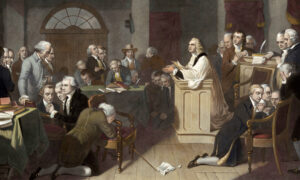
On September 5, 1774, the First Continental Congress met at Carpenters’ Hall in Philadelphia. Among the delegates who attended were George Washington, Patrick Henry, Samuel Adams, John Adams, John Jay, and many other notables.1 This meeting was important since it was the first time the colonies united on a large scale (though one colony was not represented), thus the tone it set would be crucial for America’s future. The congress had been called to address increasing British tyranny,2 including the Intolerable Acts, which had ended self-government in Massachusetts and shut down the port of Boston to commercial shipments.3

On the second day of the gathering, Congress got down to business. There was a call to open the meeting with prayer, but some delegates doubted they could pray together since there were different denominations present.4

Samuel Adams ended the debate when he announced that he was not a bigot and could “hear a prayer” from anyone “who was at the same time a friend to his country.” He then nominated Rev. Jacob Duché to conduct the prayers.5 It was amidst all these circumstances that on the third day, September 7th, the Rev. Duché led the first prayer in Congress.6

Delegate Silas Deane reported Duché prayed for a full ten minutes and then read the Scripture for the day.7

John Adams related to his wife how much this time of prayer meant for the attendees:

[Rev. Duché] read several prayers in the established form, and then read the collect for the seventh day of September, which was the thirty-fifth Psalm. You must remember, this was the next morning after we heard the horrible rumor of the cannonade of Boston. I never saw a greater effect upon an audience. It seemed as if Heaven had ordained that Psalm to be read on that morning.8

That time of prayer united the delegates despite their differences. In fact, Daniel Webster, “Defender of the Constitution,”9 later reminded the US Supreme Court of the unifying power of prayer:

Mr. Duché read the Episcopal service of the Church of England and then, as if moved by the occasion, he broke out into extemporaneous prayer. And those men who were then about to resort to force to obtain their rights, were moved to tears; and flood of tears, Mr. Adams says, ran down the cheeks of the pacific Quakers who formed part of the most interesting assembly. Depend upon it, where there is a spirit of Christianity, there is a spirit which rises above form, above forms, independent of sect or creed, and the controversies of clashing doctrines.10

It was prayer and the Scriptures that united the Founding Fathers, and they can still unite us today.


Endnotes

1 “First Continental Congress,” ushistory.org, accessed September 4, 2024, https://www.ushistory.org/declaration/related/congress.html?R6wF9AvbqY=C2A7B9B226BE11CE692F46F316C45D8F.

2 “10d. First Continental Congress,” ushistory.org, accessed September 4, 2024, https://www.ushistory.org/US/10d.asp?R6wF9AvbqY=C2A7B9B226BE11CE692F46F316C45D8F.

3 “American Revolution: The Intolerable Acts,” July 10, 2017, ThoughtCo., https://www.thoughtco.com/the-intolerable-acts-2361386.

4 John Adams to Abigail Adams, September 16, 1774, Letters of John Adams, Addressed to His Wife, ed. Charles Francis Adams (Boston: Charles C. Little and James Brown, 1841), 23.

5 Ibid.

6 “Wednesday, September 7, 1774, A.M.,” Journals of The American Congress: From 1774 to 1788 (Washington: Way and Gideon, 1823), I:8.

7 Silas Deane to Elizabeth Deane, The Deane Papers (NY: New York Historical Society, 1887), I:20.

8 John Adams to Abigail, September 16, 1774, Letters of John Adams (1841), 23-24.

9 See, for example, Daniel Webster For Young Americans: Comprising the Greatest Speeches of “The Defender of the Constitution” (Boston: Little, Brown, and Company, 1903).

10 Speech delivered in the Supreme Court on February 20, 1844, The Works of Daniel Webster (Boston: Little, Brown and Company, 1860), VI:162.

Court Orders D.C. Transit Authority to Accept and Run Unconstitutionally Rejected Ads

In December 2023, First Liberty, ACLU, and Steptoe filed a lawsuit on behalf of WallBuilders relating to ads that were rejected by the DC Transit Authority. (See more about the history of this issue here.) We now have great news!

“Judge Beryl A. Howell of the U.S. District Court for the District of Columbia ordered the Washington Metropolitan Area Transit Authority (“WMATA”) to accept and run four advertisements that it had unconstitutionally rejected. The court ruled that WMATA’s ban on issue ads violates the First Amendment’s requirement that restrictions on speech be reasonable.”

Read the full Press Release from First Liberty here.

These ads have already started to appear in Washington DC! You can follow WallBuilders’ social media accounts (Facebook, Instagram, and X) to stay updated.

The ads link to a collection of quotes by numerous Founding Fathers via our article “The Founding Fathers on Jesus, Christianity and the Bible”: https://wallbuilders.com/resource/the-founding-fathers-on-jesus-christianity-and-the-bible/.

Support WallBuilders’ Mission! Donate here!

Black Robe Regiment Hub

What Is It?

The modern National Black Robe Regiment (NBRR) is a network of national and local pastors that equips and empowers pastors to engage in their Biblical and historical role to stand boldly for righteousness and transform society through spiritual and cultural engagement.

The early American pastor had a reputation as a courageous and fearless leader, causing the British during the American Revolution to dub them “The Black Regiment,” a reference to their clerical robes. Those pastors boldly proclaimed the Word of God as it applied to everything in life, whether spiritual or temporal—about eternal life in Christ, taxes, education, public policy, good government, the military, or any other current issues that the Bible addressed.

If there is a decay of conscience, the pulpit is responsible for it…. If satan rules in our halls of legislation, the pulpit is responsible for it. If our politics become so corrupt that the very foundations of our government are ready to fall away, the pulpit is responsible for it.” – Charles Finney

Today, the struggle is for the heart and soul of America. Never before has there been such openly orchestrated frontal attacks against America’s core beliefs, including traditional morality, public religious expressions, the rights of conscience, inalienable rights, common sense economics, and limited constitutional government. An American Revolution, not with guns, but with the same pastoral fervor and leadership is needed today.

This resource is designed to help pastors fulfill that calling.


Historical Origins

Rev Frederick Muhlenberg

The Black Robed Regiment was the name that the British placed on the courageous and patriotic American clergy during the Founding Era (a backhanded reference to the black robes they wore). Significantly, the British blamed the Black Regiment for American Independence, and rightfully so, for modern historians have documented that:

There is not a right asserted in the Declaration of Independence which had not been discussed by the New England clergy before 1763.

It is strange to today’s generation to think that the rights listed in the Declaration of Independence were nothing more than a listing of sermon topics that had been preached from the pulpit in the two decades leading up to the American Revolution, but such was the case….

Read the Full Article Here!


Helpful Resources

Use these resources in your church or consider sending them to your pastor or priest adding a personal note of encouragement to not keep silent on the divisive issues facing our culture.

WallBuilders does not necessarily endorse or agree with all the information from unaffiliated organizations. Listings are provided as additional resources that may be utilized to affirm, enhance, and/or supplement Black Robe Regiment efforts.

Other Groups

http://www.blackrobereg.org/
https://www.danfisherbrr.com/

Legal Resources

ACLJ information for 501(c)(3) incorporated churches

Liberty Counsel and First Liberty have a number of very useful resources for churches and pastors to assist you in informing your church family about today’s issues. Use these resources to learn about what you can and can’t do politically.

This article and this article from the IRS lists activities that are and are not permissible for 501(c)(3) incorporated churches.
Read WallBuilders corrections to an intimidation letter from the Americans United for Separation of Church and State sent to pastors and churches in 2006 attempting to intimidating Christians and churches from being involved.

Christian Legal Organizations


Historical Resources

The sermons and proclamations listed below come from WallBuilders’ Collection. There are many more beyond this curated list available on our Resources page.

Sermons

Election Sermons

These sermons were preached to government officials at the state capitol upon the annual opening of the legislature

Governmental Sermons

Patriotic Sermons

Proclamations

The American practice of calling days of fasting or thanksgiving was so strong that by 1815, civil governments had issued at least 1,400 official prayer proclamations. Thousands more have been issued since that time—a tradition that now spans more than four centuries of the American Story, and one that continues to the present day since a 1952 federal law requires that every president issue a prayer proclamation on the National Day of Prayer, commemorated the first Thursday of every May, and observed by every president since Dwight D. Eisenhower.