united states flag

This Day in History: Star Spangled Banner

On March 3, 1931, an Act of Congress made the Star Spangled Banner America’s national anthem, but the history of that song goes back almost two centuries.

this-day-in-history-star-spangled-banner-2Following the American Revolution, Americans hoped to live in peace but France and England became engaged in a conflict that drew America back into war. The British captured American ships on the high seas and forced American sailors (around 10,000 of them) to fight for England. The United States declared war. Known as the War of 1812, it lasted until 1815.

During the war, in August 1814, England invaded Washington, D.C., setting fire to the Capitol, White House, and other government buildings. The British then marched to Baltimore, Maryland, and on September 13 began bombarding Fort McHenry.

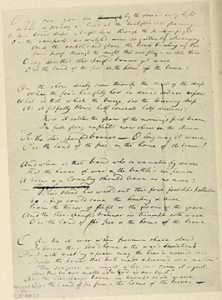
this-day-in-history-star-spangled-banner-3At that time, attorney Francis Scott Key was aboard a British ship negotiating the release of a friend. Throughout the long night, he watched the attack on Fort McHenry, fearing its fall, but when morning arrived, the American flag was still flying — the fort had survived the attack.

Inspired by these events, Francis Scott Key wrote down a few lines about the attack while still on board the ship and then wrote several more lines after reaching shore. Shortly thereafter they were published as a poem titled “Defence of Fort M’Henry.” Set to music in November of that year, it was named “The Star Spangled Banner.”

The song became popular during the Civil War and remained so well into the 20th century before finally being officially made America’s national anthem. As we celebrate its anniversary, let’s remember the many blessings God has bestowed on this nation, and the corresponding duties that we and our fellow-citizens have to preserve those blessings.


You can watch David Barton’s short history of the Star Spangled Banner, or you can purchase a high-resolution copy to show to your church, school, or other group.


A Family’s Enduring Political Legacy

a-familys-enduring-political-legacy-1

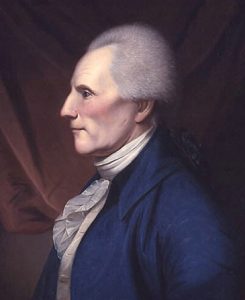
Richard Henry Lee was a prominent Founding Father whose influence helped shape several key documents that made America so distinctive among the nations of the world.

He was a signer of the Declaration of Independence and became a president of the Continental Congress. After the Constitutional Convention, he was a leading influence in the movement that led to a federal Bill of Rights to protect individual rights, and as an original US Senator from Virginia, he became an actual framer of the federal Bill of Rights (the first ten amendments to the U.S. Constitution).

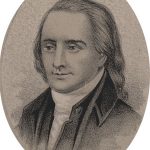
a-familys-enduring-political-legacy-2 Richard Henry Lee was part of a large family that was something of a political dynasty for the better part of two centuries. His father, Thomas, served as governor of Virginia prior to the American Revolution. His brother, Philip, served in the state legislature, and another brother, Henry, was governor of Virginia after the Revolution. Another of his brothers, Francis Lightfoot Lee (pictured to the right), was also a state legislator and he signed the Declaration of Independence along with his brother, Richard (the only pair of brothers to sign the Declaration).

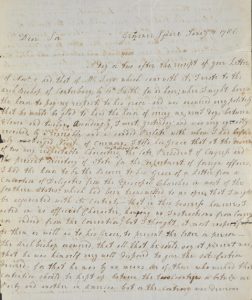
a-familys-enduring-political-legacy-3 After the American Revolution ended, and while serving as President of the Continental Congress in 1784-1785, Richard wrote to John Adams (then serving as ambassador to England), urging him to assure the Archbishop of Canterbury (the senior bishop of the state-established British Anglican church) that Episcopalian Americans would not be resistant to bishops appointed from England. This letter was enclosed with a letter sent by John Jay on November 1, 1785. On January 4, 1786, John Adams replied to John Jay with the account of his meeting with the Archbishop.

One of the many original items WallBuilders is blessed to have in our library is Richard Henry Lee’s original handwritten copy of John Adams’ January 4, 1786 letter. This letter can be viewed in its entirety on the WallBuilders website.

The national legacy of Founder Richard Henry Lee is one that has spanned the generations, and even today we still feel the positive influences from his leadership.

John Dickinson

Delegate from Pennsylvania and Delaware
Signer of the Constitution

john-dickinson-1

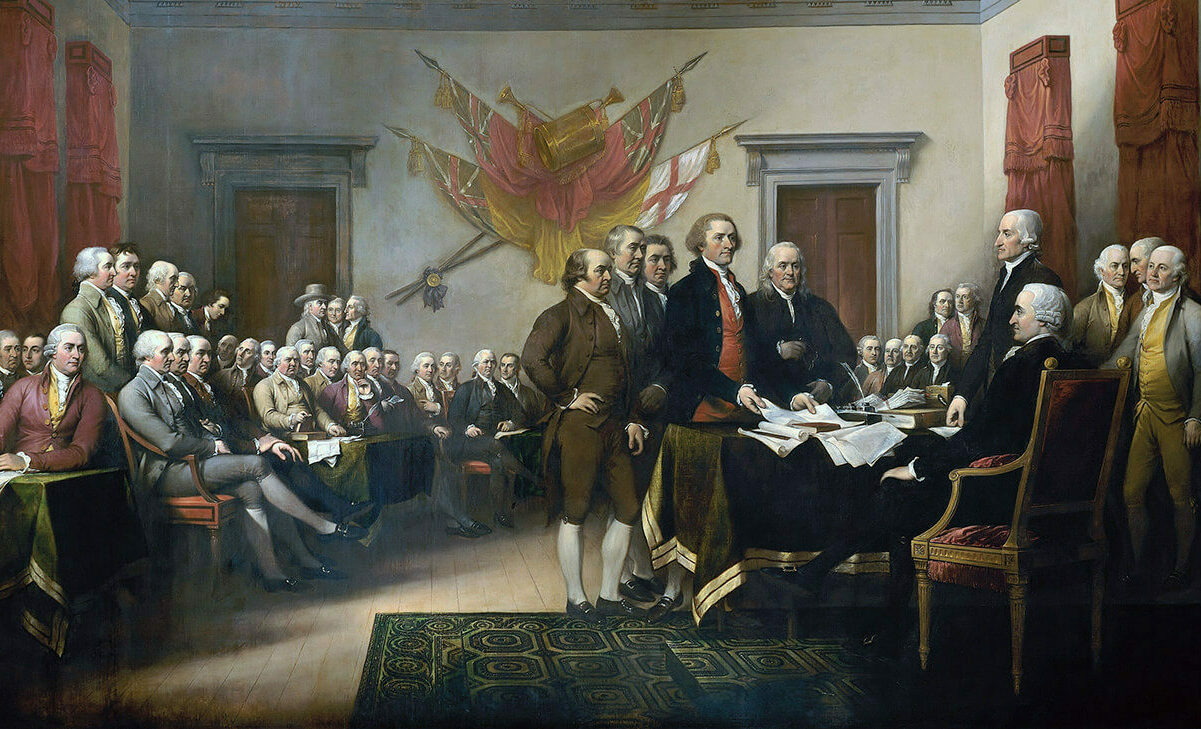
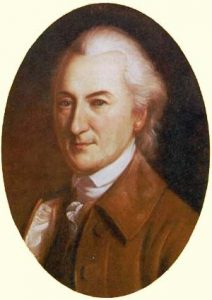
Even though John Dickinson served in the Congress that approved the Declaration, and Dickinson and James Wilson were both painted in Trumbull’s “The Declaration of Independence,” of the two, only Wilson signed the document. Dickinson refused to sign because he thought the act might be a bit hasty. Nevertheless, his contributions to the nation were significant. For example:

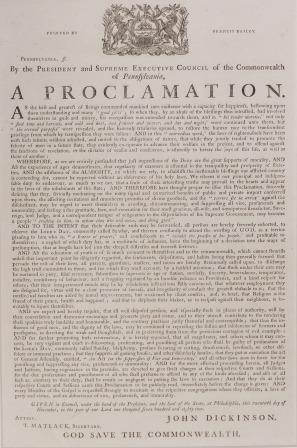
Dickinson originally represented Pennsylvania in the Continental Congress, and when he resigned his military position in Pennsylvania, he moved to Delaware, where he served that state in the Continental Congress. He also became President, or Governor, of Delaware and then held that same position in Pennsylvania. As President of Pennsylvania, he issued a proclamation asking the people to observe the Lord’s Day and remain steadfast in their worship of God.

john-dickinson-2

After the Revolution, Dickinson became chairman of the Annapolis Convention, which was the precursor to the Constitutional Convention. When the Constitution was later written, he became a signer and then wrote letters under the pen name Fabius to advocate its passage. He died in Delaware in 1808, having been a significant influence on the formation of the United States and its government.

 john-dickinson-3

The Courts and Religion: Are they Inimical?

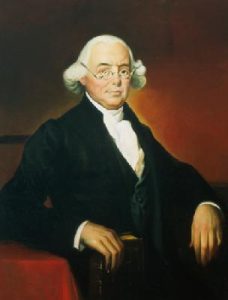
James Wilson
Signer of the Declaration of Independence, Signer of the Constitution
Original Justice of the United States Supreme Court

the-courts-and-religion-are-they-inimical-1

James Wilson had a great influence during the American Founding but has been called “the lost Founder” because of his relative modern obscurity.

He was born to a poor family in Scotland 273 years ago today (on September 14, 1742), but managed to attend universities in Glasgow, St. Andrews, and Edinburgh. [1] At the age of 21, he immigrated to America and soon began tutoring at Philadelphia College. He studied law under John Dickinson, a fellow signer of the Declaration of Independence. [2] [John Dickinson was actually a signer of the Constitution, not the Declaration of Independence. For additional information, please see our correction update.]

In 1768, he wrote a pamphlet arguing for American independence but it considered too radical for the times. When public opinion later shifted, it was finally published. Thomas Jefferson copied portions of it for his own use, and it is conceivable that parts of Wilson’s essay even influenced the language of the Declaration. Compare the similarity of Wilson’s writing with the wording of the Declaration:

“All men are by nature equal and free. No one has a right to any authority over another without his consent. All lawful government is founded on the consent of those who are subject to it. Such consent was given with a view to ensure and to increase the happiness of the governed above what they could enjoy in an independent and unconnected state of nature. The consequence is that the happiness of the society is the first law of every government.”  ~ James Wilson“We hold these truths to be self-evident: that all men are created equal, that they are endowed by their Creator with certain unalienable rights, that among these are life, liberty and the pursuit of happiness. That to secure these rights, governments are instituted among men, deriving their just powers from the consent of the governed, …” ~Declaration of Independence

the-courts-and-religion-are-they-inimical-2Wilson served as a Pennsylvania delegate to the Continental Congress, where he voted for and signed the Declaration of Independence. He later was a member of the Constitutional Convention, where he signed the Constitution. [3]

Under the new federal government, President George Washington appointed Wilson as an original justice on the U. S. Supreme Court, where he served for 9 years until his death on August 28, 1798. He was buried at Christ Church in Philadelphia. [4]

Over recent years, the federal courts have become particularly unfriendly to Christianity and religious faith, but it was not that way under Justice Wilson. In fact, Wilson started America’s first organized legal training while he served on the Court, and he told students:

Far from being rivals or enemies, religion and law are twin sisters, friends, and mutual assistants. Indeed these two sciences run into each other. . . . All [laws], however, may be arranged in two different classes. 1) Divine. 2) Human. . . . But it should always be remembered that this law, natural or revealed, made for men or for nations, flows from the same Divine source: it is the law of God. . . . Human law must rest its authority ultimately upon the authority of that law which is Divine. [5]


Endnotes

1 Nicholas Pederson, “The Lost Founder: James Wilson in American Memory,”  Yale Journal of Law & the Humanities, 22:2:3, (May 8, 2013); Robert K. Wright, Jr. and Morris J. MacGregor, Jr., “James Wilson: Pennsylvania,” Soldier-Statesmen of the Constitution (Center of Military History, Washington, D.C., 1987).
2 “James Wilson,” Signers of the Declaration of Independence (2014).
3James Wilson, Pennsylvania,” Charters of Freedom: America’s Founding Fathers (accessed September 8, 2015).
4 L. Carroll Judson, A Biography of the Signers of the Declaration of Independence (Philadelphia : J. Dobson, and Thomas, Cowperthwait & Co., 1839), 130-131; “James Wilson, Pennsylvania,” Charters of Freedom: America’s Founding Fathers (accessed September 8, 2015).
5 James Wilson, The Works of the Honourable James Wilson (Philadelphia: Bronson and Chauncey, 1804), I:106 & 103-105.

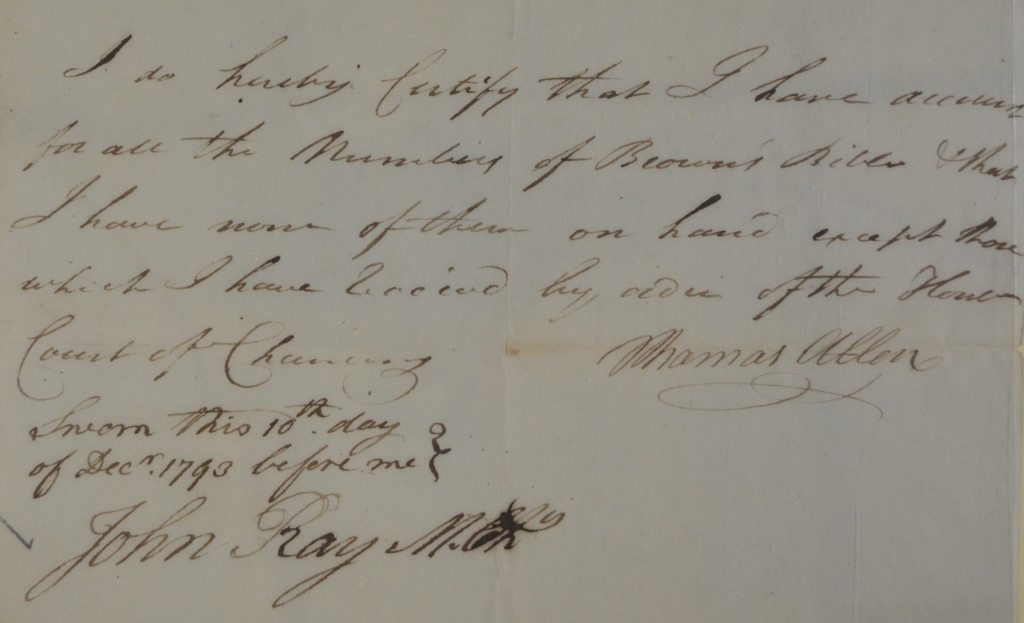
American Revolution – Letter by Rev. Thomas Allen

The Rev. Thomas Allen (1743-1810) was a minister at Pittsfield, Massachusetts and a soldier during the American Revolution. He fought in the Battle of Bennington and also served as chaplain in other battles. This letter from 1793 concerns what is called “Brown’s Bible” – an edition of the Bible printed in New York.


american-revolution-letter-by-rev-thomas-allen-1

I do hereby certify that I have accounted for all the numbers of Brown’s Bible & that I have more of them on hand except those which I have received by order of the Honb

Thomas Allen

Count of Chancery

Sworn this 10th Day

of Dec. 1793 before me

John Ray McKee

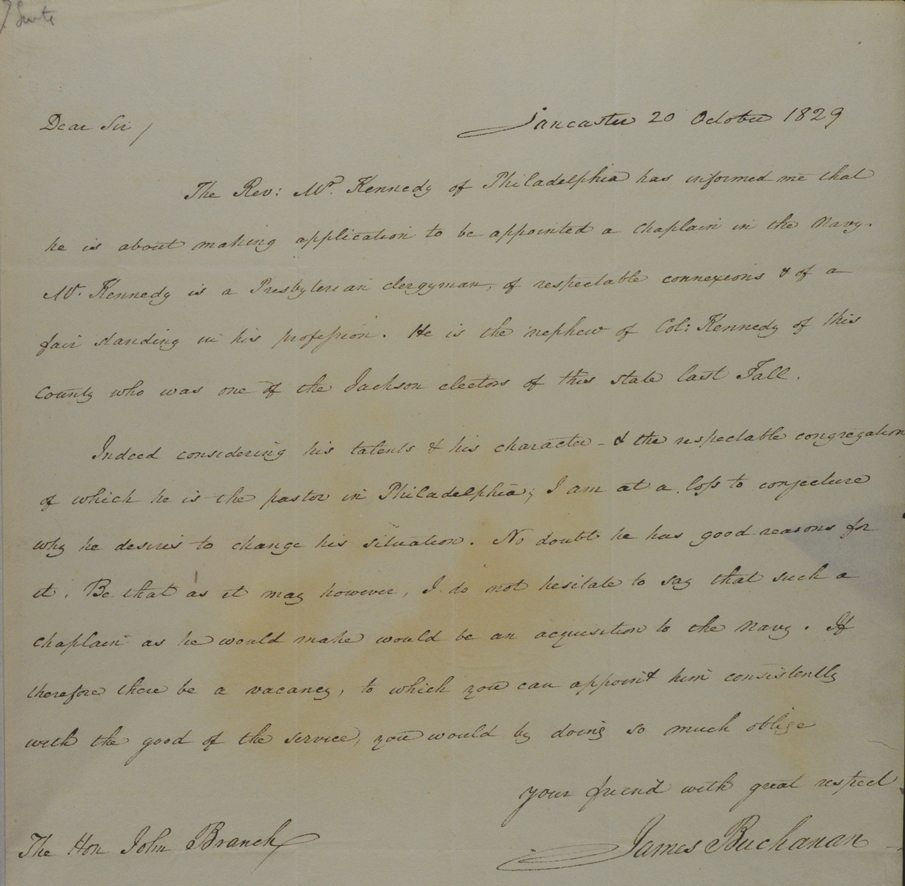
Letter by James Buchanan

During his service as a Congressman, wrote a letter to Secretary of the Navy John Branch, recommending William Kennedy, a Presbyterian minister, be considered for a Navy Chaplain position.


letter-by-james-buchanan-1

Lancaster 20, October 1829

Dear Sir,

The Rev. Wm Kennedy of Philadelphia has informed me that he is about making application to be appointed a chaplain in the Navy. W. Kennedy is a Presbyterian Clergyman of respectable connexions & of a fair standing in his profession. He is the nephew of Col. Kennedy of this County who was one of the Jackson elections of the State Const Ball.

Indeed considering his talents & his character & the respectable congregation of which he is the pastor in Philadelphia, I am at a loss to conjecture why he desires to change his situation. No doubt he has good reasons for it. Be that as it may however, I do not hesitate to say that such a chaplain as he would make would be an acquisition to the Navy. If therefore there be a vacancy, to which you can appoint him consistently with the good of the services, you would by doing so much oblige.

Your friend with great respect
James Buchanan

The Hon. John Branch

Celebrating the Constitution

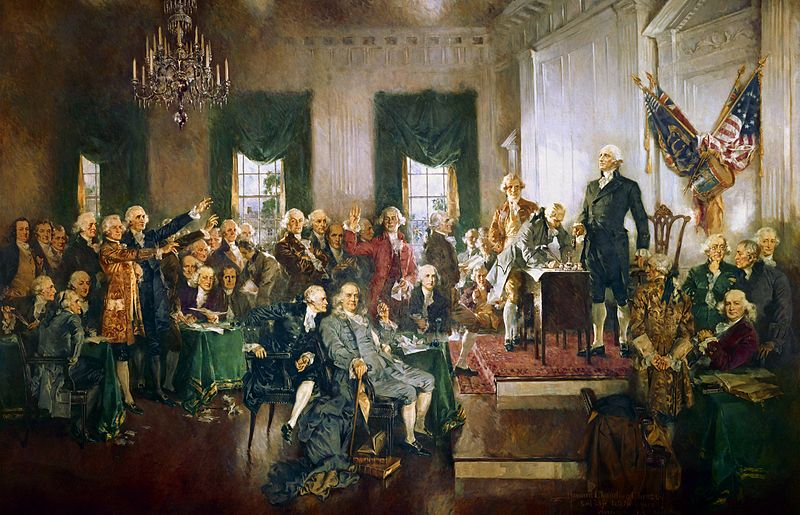
The Convention of 1787 was the capstone in a chain of events that led to the creation of the U.S. Constitution.
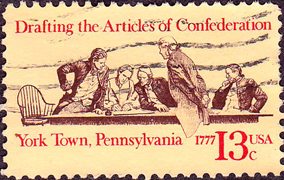
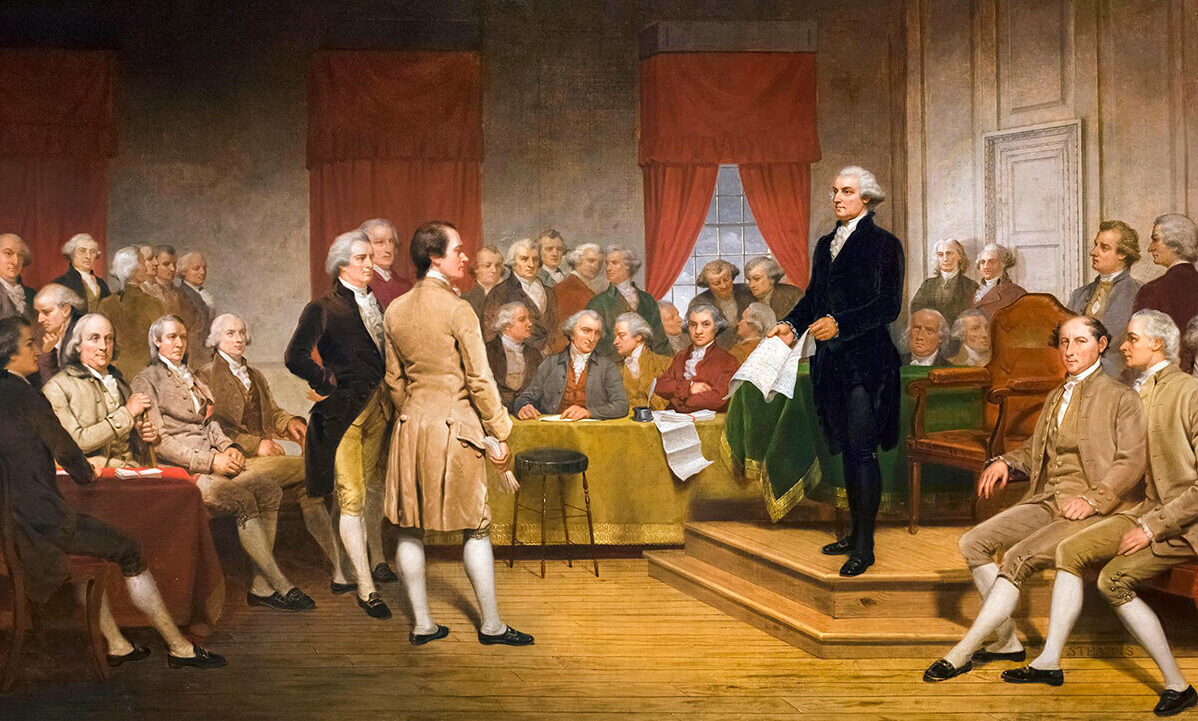
celebrating-the-constitution-1America’s first attempt at a national governing document was in 1777 with the Articles of Confederation.1 It went into effect in 1781, but its deficiencies were quickly apparent,2 so in 1786, the Annapolis Convention called for a body to assemble to address its many weaknesses.3 What is known as the Constitutional Convention then gathered in Philadelphia in 1787.4

The debates on the Constitution did not go smoothly at first. In fact, Benjamin Franklin recommended they begin daily prayers to help the process along.5 Eventually they came together to produce the Constitution — the most successful governing document in world history. It was signed on September 17, 1787,6 a day we now celebrate as “Constitution Day.” Many delegates expressed their belief that writing the Constitution would not have been possible without the Divine aid they personally witnessed and openly acknowledged. Alexander Hamilton said:

For my own part, I sincerely esteem it a system which without the finger of God never could have been suggested and agreed upon by such a diversity of interests.7

celebrating-the-constitution-2James Madison agreed:

It is impossible for the man of pious reflection not to perceive in it the finger of the Almighty Hand which has been so frequently and signally extended to our relief in the critical stages of the Revolution.8

Benjamin Franklin and George Washington also expressed similar convictions.9
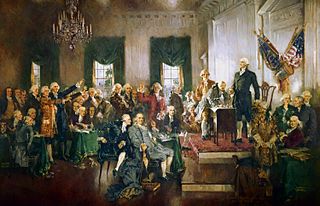
celebrating-the-constitution-3Many delegates involved with writing the Constitution were trained in theology or ministry,10 including Abraham Baldwin, James Wilson, Hugh Williamson, Oliver Ellsworth and others. The Constitution was then sent to the states to be ratified,11 and about four dozen clergymen were elected from among the various states as delegates to ratify the Constitution.12 The influence of Biblical faith on that document was apparent, and under it, Americans have been blessed!

As President Calvin Coolidge affirmed:

[T]he more I study [the Constitution], the more I have come to admire it, realizing that no other document devised by the hand of man ever brought so much progress and happiness to humanity.13 To live under the American Constitution is the greatest political privilege that has ever occurred to the human race.14

Because the Constitution is such a unique and remarkable document, federal law requires that every year on Constitution Day, all public schools must hold a special program on the Constitution.15 Sadly, few schools follow this law. But that should not keep every citizen from celebrating that document. Each of us should read and know that document, and teach it to others. So read the Constitution for yourself, and check out these resources that can be used in public schools to teach the Constitution on Constitution Day.16 Share this information with schools, educators, and students around you!


Endnotes

1 “Articles of Confederation: Primary Documents in American History,” Library of Congress, accessed December 13, 2023.
2 See, for example, “Policies and Problems of the Confederation Government,” Library of Congress, accessed December 13, 2023; “Defencies of the Confederation,” The Founders Constitution.
3 “Appendix A: The Annapolis Convention,” Soldier-Statesmen of the Constitution (Washington, DC: Center of Military History, 1987), 265.
4 “The Constitution: How Did it Happen?” National Archives, accessed December 13, 2023.
5 James Madison’s Notes on the Convention, June 28, 1787, Max Farrand, The Records of the Federal Convention of 1787 (New Haven: Yale University Press, 1911), I:450-452.
6 “Constitution of the United States: Primary Documents in American History,” Library of Congress, accessed December 13, 2023.
7 Alexander Hamilton to Mr. Childs, Wednesday, October 17, 1787, The Federalist and Other Contemporary Papers on the Constitution of the United States, ed. E.H. Scott (New York: Scott, Foresman and Company, 1894), 646.
8 James Madison, Federalist #37, Alexander Hamilton, John Jay, & James Madison, The Federalist (Philadelphia: Benjamin Warner, 1818), 194.
9 Benjamin Franklin, “A Comparison of the Conduct of the Ancient Jews and of the Anti-Federalists in the United States of America,” The Works of Benjamin Franklin, ed. Jared Sparks (Boston: Tappan, Whittemore, and Mason, 1837), V:162; George Washington to Marquis de Lafayette, February 7, 1788, The Writings of George Washington, ed. Jared Sparks (Boston: Russell, Odiorne, and Metcalf, 1835), IX:317.
10 See WallBuilders article, “No Professor Fea, the Founders Did Not Want Ministers to Stay out of Politics.”
11 “Observing Constitution Day,” National Archives, accessed December 13, 2023.
12 See WallBuilders article, “No Professor Fea, the Founders Did Not Want Ministers to Stay out of Politics.”
13 Calvin Coolidge, “Autobiography of College Days,” Hearst’s International Combined with Cosmopolitan (NY: International Magazine Company, August 1929), LXXXVII:2:37.
14 James M. Beck, “What is the Constitution?” Our World Weekly (March 16, 1925), II:7:102.
15 “Constitution Day and Citizenship Day,” US Code.
16 “Constitution Day Teacher Resources,” Library of Congress; “Teachers Guide: Commemorating Constitution Day,” National Endowment for the Humanities; “Commemorating Constitution Day and Citizenship Day,” US Department of Education.
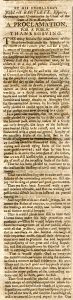
Proclamation – Thanksgiving Day – 1793, New Hampshire


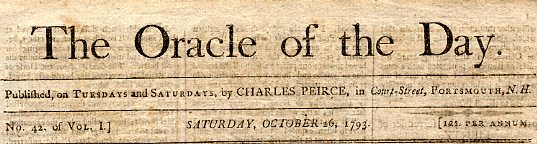
This is the text of a proclamation by Josiah Bartlett (Signer of the Declaration of Independence), governor of New Hampshire, given on October 5, 1793. It declares November 21, 1793 to be a day of Public Thanksgiving. This proclamation was published in The Oracle of the Day on October 26, 1793.


proclamation-thanksgiving-day-1793-new-hampshire-1

By His Excellency
Josiah Bartlett, Esquire,
Governor and Commander in Chief of the
State of New Hampshire.

A PROCLAMATION,
For A Public
THANKSGIVING.


proclamation-thanksgiving-day-1793-new-hampshire-2

The many favors the inhabitants of this State have been made the subjects of in the court of the current year, call for a public return of sincerer gratitude and praise to that Being from whom all our mercies flow; – And the Legislature having appointed Thursday the Twenty First day of November next, to be observed as a day of public Thanksgiving throughout this State:

I have thought fit, by and with the advice of Council, to issue this Proclamation, exhorting the people of every denomination to dedicate said day to the duties of thanksgiving and praise, and to devote a reasonable part thereof in their respective places of public worship in a social manner, with grateful hearts and united voices in returning our most humble and hearty thanks to Almighty God for the unmerited favors He has been graciously pleased to confer upon us in the course of the present year now drawing to a close.

In a particular manner, that He was graciously pleased to appear for us in the course of the summer past when, by reason of a severe and early drought, the hope of the husbandman seemed likely to be cut off and we were threatened with a great and general scarcity of the necessary fruits and of the field, that in the midst of judgment He remembered mercy and by sending plentiful showers of rain, the decaying and almost dying fruits of the earth were greatly revived; and that He has been pleased so to order the latter part of the season, that we are still blessed with a competent supply of the most of the necessary fruits of the field.

That He had been pleased to continue to us the inestimable blessings of civil and religious liberty.

That notwithstanding the tumults and confusions of the contending nations, we still enjoy the blessing of peace and good government.

That we have been favored with a general measure of health, and that no waiting and pestilential disease has been suffered to prevail among us.

And together with our thanksgiving, let us entreat the Father of Mercies, to continue us the blessings we now enjoy, and bestow upon us all further needed favors.

That it would please Him still to have these United States under His Holy protection and guidance – that He would inspire those who have the management of all our public affairs with all that wisdom, prudence and integrity that is necessary to the faithful discharge of their important trusts, that all their determinations may tend to promote the real happiness and prosperity of this great and rising Republic, and that all people may be disposed to afflict in carrying such determinations into effect.

That it would please God to over-rule the tumults and confusions among the nations, in such a manner as shall subserve to His own Glory and the best good and happiness of mankind, and that in His own due time, He would calm the angry passions of the contending nations and say to them, peace, be still.

That God would be pleased to look down with an eye of compassion upon the whole human race, and dispel those clouds of ignorance, superstition and bigotry that overspread so great a part of the world, and that the knowledge of and reverential love and regard to the One God and Father, of all, and a true benevolence and good will to their fellow men, may pervade the hearts, and influence the lives of all mankind, and all Nations, Languages and Tongues be brought to join in singing, Glory to God in the highest, on Earth Peace and good will to men.


It is recommended and expected, that all persons abstain from all servile labor and such recreations as are unbecoming the solemnity of said day.

Given at the Council Chamber in Exeter, the Fifth day of October, in the year of our Lord, one thousand, seven hundred and ninety three and of the Sovereignty and Independence of the United states of America the Eighteenth.


Josiah Bartlett.

By His Excellency’s command,
with the advice of Council,
JOSEPH PEARSON, Sec’ry.

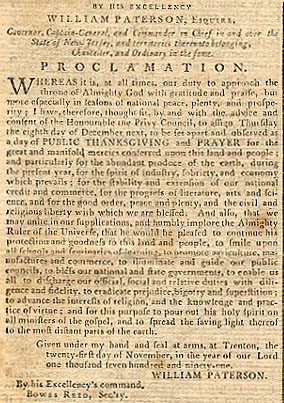
Proclamation – Thanksgiving Day – 1791, New Jersey

This is the text of the November 21, 1791 William Paterson Thanksgiving Day proclamation, as he served as governor of New Jersey; as printed in the Gazette of the United States, November 26, 1791.

proclamation-thanksgiving-day-1791-new-jersey-1

By His Excellency

William Paterson, Esquire,

Governor, Captain-General, and Commander in Chief in and over the State of New-Jersey, and territories thereunto belonging, Chanceler, and Ordinary in the same.

Proclamation.

proclamation-thanksgiving-day-1791-new-jersey-2Whereas it is, at all times, our duty to approach the throne of Almighty God with gratitude and praise, but more especially in seasons of national peace, plenty, and prosperity; I have, therefore, thought fit, by and with the advice and consent of the Honorable the Privy Council, to assign Thursday the eighth day of December next, to be set apart and observed as a day of Public Thanksgiving and Prayer for the great and manifold mercies conferred upon this land and people; and particularly for the abundant produce of the earth, during the present year, for the spirit of industry, sobriety, and economy which prevails: for the stability and extension of our national credit and commerce, for the progress of literature, arts and science, and for the good order, peace and plenty, and the civil and religious liberty with which we are blessed. And also that we may unite in our supplications, and humbly implore the Almighty Ruler of the Universe, that he would be pleased to continue his protection and goodness to this land and people, to smile upon all schools and seminaries of learning; to promote agriculture, manufactures and commerce, to illuminate and guide our public councils, to bless our national and state governments, to enable us all to discharge our official, social and relative duties with diligence and fidelity, to eradicate prejudice, bigotry and superstition; to advance the interest of religion, and the knowledge and practice of virtue; and for this purpose to pour out his holy spirit on all ministers of the gospel, and to spread the saving light thereof to the most distant parts of the earth.

Given under my hand and seal at arms, at Trenton, the twenty-first day of November, in the year of our Lord one thousand seven hundred and ninety-one.

William Patterson.

By his Excellency’s command.

Bowes Reed, Sec’ry.

Proclamation – Thanksgiving Day – 1791, Massachusetts


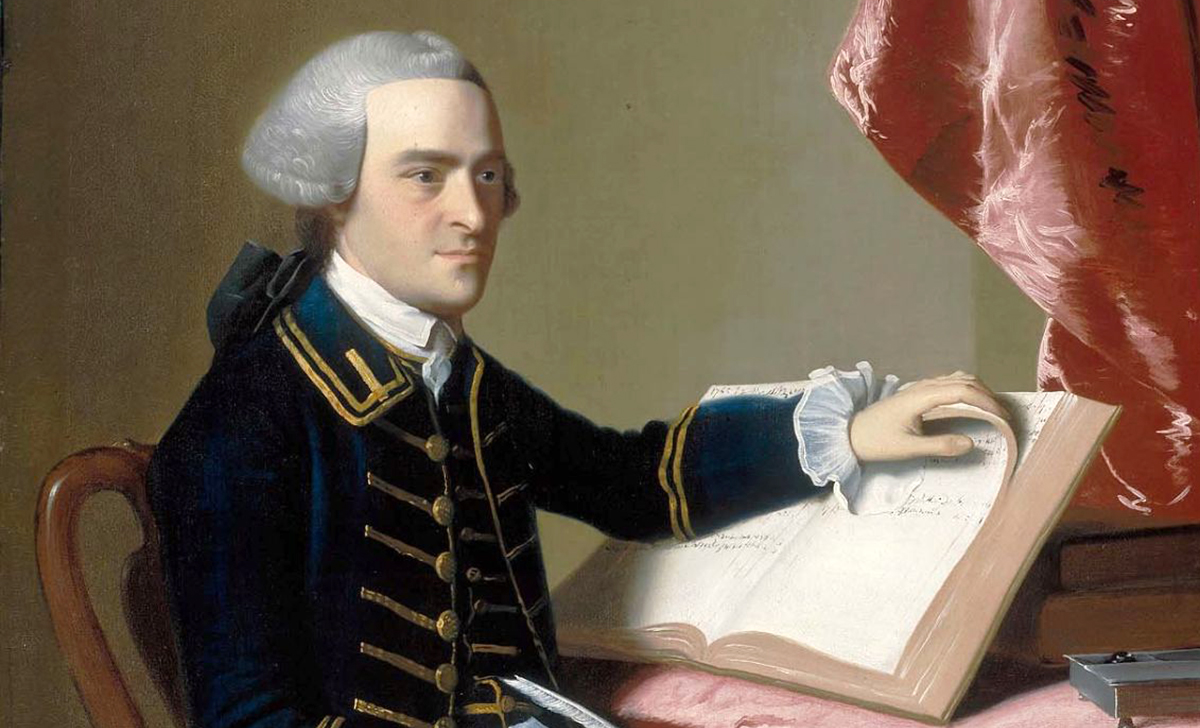
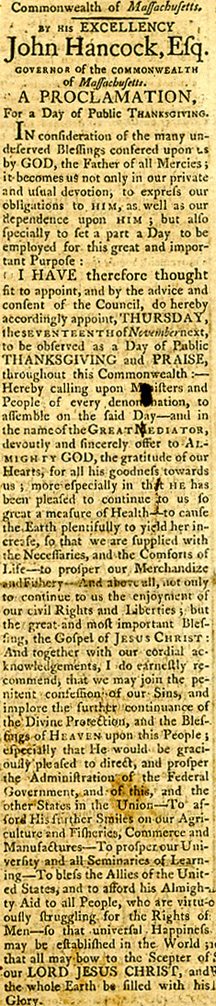
The following is the text of a Proclamation for a Day of Thanksgiving and Praise, issued by John Hancock (Signer of the Declaration of Independence), while he was serving as governor of Massachusetts. The proclamation was issued October 5, 1791 and was declaring November 17, 1791 the day of Thanksgiving.


proclamation-thanksgiving-day-1791-massachusetts-1

Commonwealth of Massachusetts.

By His EXCELLENCY
John Hancock, Esq.
GOVERNOR of the COMMONWEALTH
of Massachusetts.
A PROCLAMATION,
For a Day of Public Thanksgiving.

proclamation-thanksgiving-day-1791-massachusetts-2

In consideration of the many undeserved Blessings conferred upon us by GOD, the Father of all Mercies; it becomes us no only in our private and usual devotion, to express our obligations to Him, as well as our dependence upon Him; but also specially to set a part a Day to be employed for this great and important Purpose:

I HAVE therefore thought fit to appoint, and by the advice and consent of the Council, do hereby accordingly appoint, THURSDAY, the seventeenth of November next, to be observed as a Day of Public THANKSGIVING and PRAISE, throughout this Commonwealth:—Hereby calling upon Ministers and People of every denomination, to assemble on the said Day—and in the name of the Great Mediator, devoutly and sincerely offer to Almighty God, the gratitude of our Hearts, for all his goodness towards us; more especially in that HE has been pleased to continue to us so a great a measure of Health—to cause the Earth plentifully to yield her increase, so that we are supplied with the Necessaries, and the Comforts of Life—to prosper our Merchandise and Fishery—And above all, not only to continue to us the enjoyment of our civil Rights and Liberties; but the great and most important Blessing, the Gospel of Jesus Christ: And together with our cordial acknowledgments, I do earnestly recommend, that we may join the penitent confession of our Sins, and implore the further continuance of the Divine Protection, and Blessings of Heaven upon this People; especially that He would be graciously pleased to direct, and prosper the Administration of the Federal Government, and of this, and the other States in the Union—to afford Him further Smiles on our Agriculture and Fisheries, Commerce and Manufactures—To prosper our University and all Seminaries of Learning—To bless the virtuously struggling for the Rights of Men—so that universal Happiness may be Allies of the United States, and to afford his Almighty Aid to all People, who are established in the World; that all may bow to the Scepter of our LORD JESUS CHRIST, and the whole Earth be filled with his Glory.

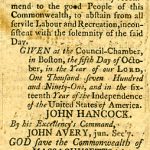
And I do also earnestly recommend to the good People of this Commonwealth, to abstain from all servile Labor and Recreation, inconsistent with the solemnity of the said day.

proclamation-thanksgiving-day-1791-massachusetts-3

Given at the Council-Chamber, in Boston, the fifth Day of October, in the Year of our Lord, One Thousand Seven Hundred and Ninety-One, and in the sixteenth Year of the Independence of the United States of America.


JOHN HANCOCK.

By his Excellency’s Command,

JOHN AVERY, jun. Sec’y

GOD save the Commonwealth of MASSACHUSETTS!!