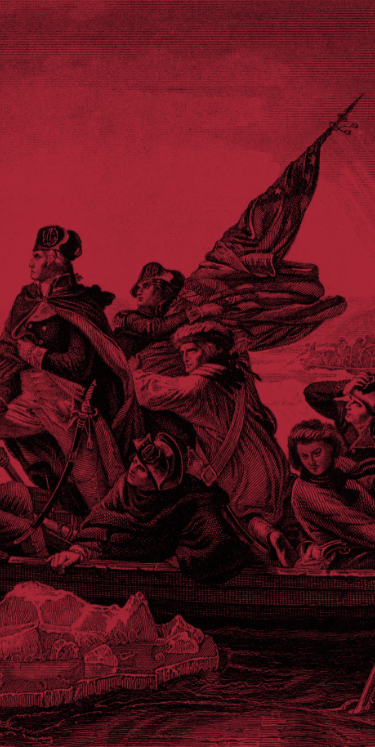
George Washington Adams was the oldest son of John Quincy Adams. He graduated from Harvard, studied law, and was a member of the Massachusetts House of Representatives. He died in 1829.
ANORATION
DELIVERED AT QUINCY,
ON THE
FIFTH OF JULY, 1824.
BY
GEORGE WASHINGTON ADAMS
ORATION.
The causes of great events, those events themselves, and their extensive consequences, are subjects worthy the attention of enlightened and intelligent minds. We have assembled, fellow citizens, to celebrate the anniversary of a day justly memorable in the records of our country’s history: a day glorious to this nation as the festival of its nativity; glorious to humanity, for the expression of principles, proportionate to its exalted privileges. It is the intention of our celebration to signify our adherence to those sublime principles, “which are not of an age but for all time,” and it is delightful to reflect upon the countless multitude of free Americans who with this purpose have watched this morning’s dawn. While we are endeavouring to pay the meed of gratitude to the memory of the past; while we are here to record our sense of our unexampled blessings, the voice of praise ascends around us in every variation of the passing wind: the time is hallowed: the Spirit of Gladness smiles on the land and her altars are adorned with thousand offerings: Genius is strewing roses over our happy clime, and Poetry is breathing forth her heaven born inspiration; throughout our wide extended territory, the day is welcomed with one burst of pleasure. Whence is this general joy? It arises from our independent freedom, which has made known to us the value of our institutions, planted by the energies, and secured to us by the virtuous efforts of our ancestors. Let their energy be to us an example, and their efforts motives for unfailing gratitude to Him who prospered them.The Declaration of Independence, was an advance in the progress of mind; a point in human history, to which the important occurrences of preceding ages led, and from which consequences of high import have proceeded.
The Christian Revelation, that mild and beautiful religion, which has taught man his duties and his hopes, is the true source of human happiness. With its establishment commenced the course of improvement, which succeeding ages and wonderful events have carried onward to our own age and time. The contemplation of the steps by which it has advanced affords much matter of instructive thought, and many reasons for just admiration. America has done and is doing her share in the great work and from the hour of the discovery up to the present moment has shown a proud example to the world.
Past history justifies the reflection that undertakings of magnitude are accomplished only through toil, and suffering, and perilous endurance. This vast continent, unknown for centuries, was discovered, from the fortunate conjecture of an enlightened mind; yet the history of its discoverer is a history of injuries; injuries during his life and neglect after his death. Born in a republic, Christopher Columbus was brought up upon the bosom of the wave and fitted for the mighty object of his life. Having conceived that object he imparted it first to the people of his native land. Censured by his own countrymen as a visionary projector; rejected by nation after nation to whom he had applied; Columbus persevered in his design, with assiduity and firmness truly admirable. At length the Spanish sovereigns risked the experiment: furnished the daring navigator with a miserable squadron, and assisted him with slight encouragement: ill appointed and badly manned, he sailed to find a world! Tried by the dangers of the ocean; distrusted by his men; conflicting twice with mutiny and rage, the promise was wrung from him that in three days if land were not discovered he would return to Spain. His life; his all was on the cast, but his own fortitude supported him. On the evening after he gave the promise, a distant light pierced the dark waste of waters; Columbus saw and marked the glimmering signal: it was a moment of intense interest: to his aspiring mind, another world was found! His triumph was complete; that little beam revived the fainting spirits of his crew, and relumed [illuminate again] the rays of Hope,
“That star on life’s tremulous ocean.”
But this is not the time, my fellow citizens, nor this the place to detail the romantic incidents in the fortunes of Columbus, however rich the theme. His discovery has been mentioned only to notice its effects. It occasioned a rapid improvement in the condition of civilized man, and we may trust that the bright beam Columbus saw, betokened to the untutored Indian, the rising of the star of Bethlehem.
The Discovery of America by Columbus in 1492, succeeded by that of a shorter passage to the East Indies in 1497 by Vasco de Gama, exposed to European avarice the sources of unlooked for wealth. From their full fountains, the Indies poured the precious metals into Europe like a flood. With them went luxury and its concomitant vices, but with them went also the means of knowledge and they aroused an ardent desire for its acquisition. Europe was astonished at these immense discoveries: Venice, the Ocean Power, saw with alarm and terror her sister nations winning all her wealth: Spain measured with enthusiasm, the vast possessions she had acquired: the avarice of England’s seventh Henry stimulated him to obtain for her some portion of this valuable territory: a succession of skilful navigators pursued the track of the great Genoese, and all conspired to increase the thirst for knowledge; mankind began to think: the Reformation followed, and this third astonishing event, rousing men’s passions as its march went on, caused a continued emigration from the old world to the new, for other purposes than those of wealth and plunder, till the poor pilgrim, crossed the deep waters to find a home where he might worship God as his own conscience taught, and where he might be free from persecuting power.
The Reformation emanating from Germany passed into England, and owing to the fortunate conjuncture of the times was there established; but it was not in the intention of her “hard ruled king” to part with his supremacy, and hence arose wide differences of opinion. Tyrant power wielded the sword and used it bloodily designing, not to silence but to extirpate religious opposition, and the sanguinary measures thence adopted, hardened the non-conformists in their faith. Persecution was opposed by bigotry; suffering was paralleled by obstinacy; till the temper of the age grew cruel, unrelenting, merciless: men’s minds were soured and all parties assuming the rigorous rule of uniformity, while they believed their own opinions right, held every departure from them, heresy and sin. In this state of things, our forefathers, tired of a fruitless struggle with the dominant power, and harassed by domestic sorrows, sought an asylum here. Heaven seems to strengthen the human faculties proportionally to the obstacles to be encountered: obstacles multiplied before our fathers, and were surmounted; Plymouth was settled and in the rock the tree of Liberty was rooted. Bound by their religious covenant, the Pilgrims bound themselves by a political constitution. By a charter to the Plymouth Council, under a royal grant, based on discovery and implied conquest, they came hither, but their best title was afterwards acquired by purchase from the natives of the soil, and subsequent efficient labour on the land. Hardly had they completed the outline of their town, before the indiscretion of their countrymen surrounded them with dangers. The Puritans in England held a reformation of the manners of the age, essential to the reformation of religion, and the sharp cruelty exercised upon them, induced them to assert this point with more than stoic rigour: this drove their opponents to the opposite extreme; they increased their luxury because it was attacked, deriding Puritan severity to cut off the growth of Puritan belief. With these opinions, some of the established church came over to New England in the first year after the Plymouth settlement commenced, and fixed themselves at Weymouth: others followed them, and chose Mount Wollaston for their plantation: their leading officers soon left them, and they, unlike their Plymouth neighbours, and unrestrained by conscientious virtue, gave themselves up to wild licentiousness. The natives, wronged by them, concerted deep laid plans for their destruction, but they, urged onward by an evil schemer, plunged deeper into reckless dissipation: gathered the flowers of spring to wreath their garlands, and like the victims of the Roman altars, knew not the fate that was impending over them: strange! That a few adventurers; on an unsettled coast; surrounded by tribes whom they had irritated; straitened for bare subsistence; and while a fearful storm was gathering, could listen to the siren voice of pleasure and drain the cup of idle wantonness: yes; on yon merry mountain the shout of revelry was heard, until the Plymouth Government, alarmed at its pernicious influence, suppressed the settlement.
History, my fellow citizens, must be impartial: if the fate of this unthinking crew awakens painful feeling, there is an honest pride in the remembrance that you are not their sons. Very different was the character of the successful founders of New England. Their energy soon settled Plymouth, and their example founded other colonies, which, under favourable charters, nourished a free and hardy population, growing and gradually spreading through this Western world. The Pilgrims of Plymouth and the primitive settlers of New England came over to enjoy unmolested, the exercise of a simple and unadulterated form of worship. To obtain this religious freedom, they left a land over which Nature has profusely scattered her most attractive graces: a land which has been beautifully called
“A precious stone set in the silver sea,”
Where were the tombs of their fathers and the homes of their kindred; where their earliest affections had grown, and their dearest recollections lingered: but it was no longer the home of Liberty; Astraea had deserted it, and left green Albion a barren waste girt with a ripple wall of regal tyranny. What was the beauty of the earth to them, deprived of liberty of conscience? For this they could forego this “Pleasant land of their nativity;” for this they could restrain those feelings which might not be entirely destroyed; estrange themselves from home, and friends and kindred to become acquainted with the rude savage of the wilderness. They brought with them the rigid principles for which they had contended, and the stern spirit which they had imbibed. Religion was the platform of their political state, and they respected its ordinances, and its ministers. These exerted a favourable influence upon the public morals, watching them with scrutinizing jealousy: the people possessed an operative suffrage in their church government, and were familiar with polemic controversy: they sifted doctrines and decided for themselves contested points: but in the innumerable differences of human opinion, it was not probable that uniformity could long exist among them. Uniformity was the rule which the opposing sects required in England before they emigrated, and their uncompromising disposition made it essential here. They had moreover, assumed mistaken definitions of religious liberty: zeal was the leading feature of the character: zeal which had induced such honourable sacrifices, impelled them to become intolerant and too uncharitable to those from whom they differed in speculative belief. This intolerance was owing to their early habits, to the partial knowledge which that age possessed, and to their danger as a community if different systems should gain ground. If there are dark shades in the portrait, they serve but to contrast its glowing colours and to enhance its general expression. It is man’s nature to mingle imperfection with his best efforts, and his past errors present an awful warning for the future.Accustomed to judge for themselves in matters of theology, they began to feel it as their right to judge in those of government. Acknowledging themselves to be English subjects, they drew nice distinctions in defining that subjection in order that it might not prejudice their privileges. With no nobility to check the growth of equal systems; no hierarchy to hold out a lure to clerical ambition, or to sustain royal pretensions to supremacy in religion; no courts supported by the forfeitures decreed by their own judges; they grew up in the enjoyment of republican rights. They constituted a republic under the jurisdiction of a magistrate, too distant to govern them effectively, and too profoundly ignorant of their importance, to straiten round them the cords of sovereignty. Their governor chosen by themselves was annually removable under the earlier plan of administration, and though afterwards lost, this right of choosing their own rulers had been exercised and was remembered. Their immediate executive was elective and thus responsible to them: indeed, the wise and virtuous men who took the lead in their affairs, encouraged the republican immunities of the people and supported the established charter rule of annual elections from their own conviction of its value; sensible
“That nobler is a limited command
“Given by the love of all your native land,
“Than a successive title, long and dark,
“Drawn from the mouldy rolls of Noah’s ark.”
To annual elections they soon added representation, and improved on the practice of the Mother Country, by equalizing the rule. This right of being represented was not granted by the first charters, but it was adopted shortly after their arrival, and in various periods of our history its value has been ascertained. Actual experience proved the necessity of distinguishing property and they fortunately held it unburthened with the incidents of feudal extortion and by admitted titles.
These rights were the elements of their high character; but there was another cause which added to their firmness and increased their privileges. From the earliest settlement, they cultivated good learning and useful science. The controversies of theology could not be maintained without sufficient learning to oppose the arguments of learned orders of the church, laboring for its preservation. Controversy had been for years familiar as the daily food of life. The reformation had in the different sides which States and Monarchs were compelled to take, opened the wide gates of speculative doubt, and proved to mankind that they could think for themselves. This point once gained, there was no limit to the interest which attended the investigation of religious questions; hence this interest extended throughout Europe, and spread itself over the whole surface of society. The study of theology became the surest path to influence and hour, and learning was sought for as a weapon of controversy. Inexpressibly anxious about their eternal welfare, our fathers taught their children to “search the scriptures,” and thus laid the corner stone of learning’s proudest temple, a reading and reflecting community. They established schools and colleges for public education. While New England was a sterile wilderness, the halls of Harvard rose to educate a line of excellent men, qualified to instruct their countrymen in wisdom: to seek her in her dearest treasuries: to dispense to mankind the inestimable benefits of knowledge and virtue.
“These are brighter, richer gems
“Than the stars of diadems.”
The collective character of a people is composed of the same mixture of differing qualities, which are discernible in individuals: it comprises the same liberality, generosity, honesty of intention, and the same stormy passions which when roused, shake the whole happiness of private life. Our forefathers were a patient and persevering people: their devotion was simple but earnest; their theories were circumscribed but conscientious; their morality was rigorous but practical. They were from necessity frugal; from their position circumspect; from their situation vigorous and hardy. Obliged alike to brave the savage and the European foe; acquainted equally with the implements of husbandry and with the weapons of war, they guarded the State till she had cleared the dangers of her infancy. Such was the early character of the people of New England. It shows a race of men fit to be free. History presents no parallel to such a people: mid all her records of blood stained laurels and successful wrong; mid all her tales of daring enterprise and reckless valour; of learned lawgivers and grasping conquerors, she shows no other state, originating in devotion and in liberty of thought; no other nation whose foundation was the pure worship of the living God.
In this character we may trace the progress of mind. Freedom opened the blossom of republican polity which was in aftertimes to ripen into admirable fruit. The early systems of elections, of representation and of property were improvements on the old modes; the former by limiting official power, increasing responsibility and equalizing popular participation in government; the latter by securing to industry, the profits it affords.
This character, which intercourse and habit, in the next generation had extended and confirmed, was not in good accordance with regal prerogative or Parliamentary supremacy. It became necessary, therefore, that the Mother Country should counteract and check it, by a plan of colonial policy.
The affairs of England claimed the whole attention of her cabinet, and these plantations were permitted to grow unmolested, until the overturn of ancient prejudices had changed the form of English government, and placed Cromwell at the helm. He first perceived the true importance of the colonies, and bent his mind upon them. The leader of the Puritans; he looked with favour on New England while ruling other colonies with rigour; but to sustain the war with Holland, he procured from Parliament the passage of the act of navigation, which formed the ground work of their future policy. After the restoration, the people lost many of their most peculiar privileges. The gloomy machinations of the last Stuarts, extended to America, and were mainly directed against the bold and independent spirit of New England. No longer empowered to elect their own executive, the colonists were holden at the mercy of the throne; a mercy, burthened with such hard conditions as completely changed its office. Violent and arbitrary maxims of government, carried into execution by rulers, strangers to the soil and its inhabitants, affecting the right of property, destroying the right of suffrage, subverting customs which had grown up with the people, were the “tender mercies,” which the “nursing mother” administered to her distressed offspring. The same eclipse which had overshadowed the Sun of British Liberty, portended total darkness to the world, but under the merciful decree of Providence it passed away, and left the orb more radiant than before. The British revolution saved mankind from projects deeply designed for their entire subjection, and forms another step in the advance of mind. During the reigns of the last Charles and James, the value of the American plantations began to be appreciated. The Mother Country framed a system of colonial policy, which depressed their energies and fettered their power. The Parliament during the Commonwealth had passed the act of navigation, and subsequently added to it acts of trade, by which the profits of the colonial commerce were made returnable through the British market. This commercial monopoly was vigorously enforced by one party and artfully evaded by the other, till at length the power of the crown extorted a partial obedience. The secret springs of the machine were avarice and fear. Profound and learned writers directed the attention of the British rulers, to the colonies. The propositions fundamental to their policy were, that plantations possessing unrestricted trade are prejudicial to the commerce of the Mother Country; and that on this principle, New England most of all obstructed English trade. It was therefore determined to check the growth and stop the progress of these provinces by means of the act of navigation, strengthened and supported by a succession of laws for regulating, or more properly, crippling the trade of the plantations by a continued chain of restrictions laid on their commerce. These restrictions were made to act equally upon the importation and the exportation of the Colonists, compelling them to purchase at a dearer rate than was primarily requisite, and to sell at a higher rate than was otherwise necessary, to prevent their underselling the English trader. The people of New England were experienced navigators, and the fisheries an unfailing school for seamen. The coast afforded large facilities for ship building, and the Colonies would assuredly improve them, whence would arise in case of insubordination, an American navy. The commercial monopoly was the instrument made use of to prevent all this danger to the “fast anchored isle.” Was it to be imagined that a people such as we have shown, habitually jealous of their liberties, would tamely and quietly submit to such restrictions? Was it to be supposed that a hardy and enterprising race of men, skilful in calculation and shrewdly sensitive to honest profit, would willingly consent to let the price of their labour, the gains of their industry slip from their hands? It would have been wholly foreign to the character of this people to have submitted without murmuring to this unfavourable scheme. They did not willingly submit: they lost the first charter for their opposition; they lost that right of choosing their own executive, which had so long protected them in freedom: they were subjected to a tyrannical governor, brought up and nourished in the Stuart projects: all this they bore, before they would submit to this restrictive plan, and when at last, they were compelled to avow obedience, it was conveyed to an act of their own legislature, which imposed the burthen. From the Restoration in 1660, this plan of curbing the Colonies was enforced by England and evaded in America, till in the course of time it became the fountain of our revolution. When the provinces had consented to it, their obedience was as literal as might have been expected, and notwithstanding its rigorous operation, they prospered, for their commodities and produce were immensely profitable to the monopolist, and thence in great demand; and this may prove the interested wisdom of the framers of this scheme; for if the sun “shorn of his beams” yet shone so brightly, his concentrated power might be dangerous. The Colonies increased and prospered, their regulation notwithstanding, but their prosperity ran counter to the fundamental proposition of English doctrines, and in consequence it became necessary to weave a net about America, which should completely foil her struggles and be sufficiently elastic to increase with her increasing strength. To effect this scheme, some genius, invented the plan for raising a revenue from America by Parliamentary taxation without representation: a revenue superadded to the restrictive, exclusive, oppressive system of commercial monopoly: an union of which the offspring was “uncompensated slavery.” My fellow citizens it was this scheme of “exquisite policy” originating either in ministerial embarrassments abroad or in high reaching ambition at home, which brought about our glorious revolution. The people saw that the point most settled in the British constitution, that taxation must not exist without representation, was annihilated by the British policy. It was this violation on the British part which caused the revolution, and was followed by the revolutionary war.
The revolution commenced with the resistance made to an order from the superior court of this province for writs of assistance to carry into execution the acts of trade. These writs of assistance indicated the first speck in the horizon, round which the clouds collected, to burst in thunder over Britain and to purify the political atmosphere of the world. The revolution, that total change in the feelings of the Colonies towards the Mother Country, was completed by the Declaration of Independence, which was ratified by a successful conflict. The Colonies together with the parent kingdom were coming out victoriously from the war with France, which had greatly added to their military glory and to the national burthens. The provinces in America had borne an active and an honourable share in the labours and successes of the war; thereby becoming more closely bound to the parent state than ever; but their success alarmed the British ministry by awakening their fears, that the checks on the free spirit of the Americans had been diminished by the destruction of the French power. They resumed their monopoly and added to it the scheme for revenue at the very moment they lessened the means of meeting their demands. Bill after bill was fulminated by Parliament with the double motive of extorting revenue to meet the pecuniary difficulties of the kingdom, and of breaking the spirit of the Americans. It is a tale of wrongs too melancholy for this hour. After long suffering, patient forbearance, and glorious resistance, America determined to be free. Passions were roused to their extremes, and British pride pledged to the contest: the ministry alarmed and angered, drew the sword upon their countrymen, resolved to strain every nerve for ultimate success.
In this situation, when the British government had decided to exert the power of the empire, and war hung lowering darkly over America; the Declaration of Independence was issued and received with acclamation throughout the Colonies.—The arm of Tyranny was palsied by the blow, it cleft his Lion helm in twain, and struck the feeble faulchion [one-handed, single-edged sword] from his hand. The Colonies had shaken off the chains by which they had been manacled, and owned no longer an imperious master; they told the world that they were free; and in the reasons they assigned for this assertion of their freedom are to be found the soundest principles of public justice, the boldest theories of human rights. These are the reasons why this sublime instrument marks an advancement of the human mind; these are the claims, which have won for this day the annual tribute of a nation’s joy; these are the sacred ties, which hold together these increasing states in the strict bonds of union and of harmony.
The effects of this Declaration were at the time when it was issued, most favourable. Other powers lent their assistance to an independent nation, contending for its existence, which they could not have done to subject colonies, conflicting with a master whom they acknowledged: at home the public resources were concentrated: an object to be gained and defined. Through fields of hard fought battle, through patient toil and painful suffering, the object has been gained: America is free: the valour of her sons, the wisdom of her statesmen, nerved by the glorious cause for which they fought, have made and kept her free.
The effects of this Declaration are now everywhere visible. Look through the country and behold our accumulated blessings: see Nature robed in beauty; fertile in rich luxuriance: see health and plenty everywhere around you: see a dense and settled population stretching from the cold regions of the North to the exuberant valleys of the South; from the prolific intervals of the East to the flourishing prairies of the West: see your shores washed by two oceans and the soil your own: Are not these motives for rejoicing? The welcome of this day throughout the land gives our reply.
But beside the general national reasons for rejoicing in the benefits resulting from this proud day, there are others, fellow citizens, which affect us peculiarly. We cannot forget that the great name, which leads the illustrious catalogue upon that venerated instrument, went forth from here. I would speak with diffidence of Mr. Hancock. Common praise would not express his virtues. His character was compounded of mingled gravity and splendor. Accustomed to the luxuries of life, Fortune clothed him with her mantle of elegant refinement and poured her gifts upon him in a golden shower. With every prospect of pre-eminence under the ancient aristocratic system, commanding influence and sure of honours, it was no common strain of patriotism that could put by the glittering bait which courted him. Dignified, graceful, affable, and eloquent, he seemed to win involuntary favour, while to these outward excellences, he added the sterner virtues which the time required. Liberal, charitable, generous, his fortune was his country’s and his wealth made for the poor. Generosity was the flower of his life, and whether actively exercised in freely bestowing or negatively in giving up emoluments it bloomed in equal brilliancy. His splendid qualities were perhaps displayed too publicly ; there might be something too shining in his mode of life; but this splendor was the growth of early habit and the overflowing of a liberal nature. It is difficult to lay aside the customs which have grown with us from childhood; self denial is a hard and trying thing; but Mr. Hancock was willing to put everything at stake: fortune, honours, safety, life itself were to him worthless in comparison with Republican Liberty. His soul was comprehensive and his spirit bold as the character which records his signature: and if persevering aid to the right cause in sickness, sorrow, sacrifice are honourable; then is Mr. Hancock’s life entitled to our highest panegyric.
While he was thus conspicuous in the front rank of the advocates of liberty and law, beside him stood a Roman patriot. Samuel Adams was certainly an extraordinary character: a man whom few resemble. We should be inclined to think him rather of the school of the younger Brutus, or bred in the faith of Cato, than an inhabitant of a modern colony; rather taught by the Scottish Covenanters than by the courtly statesmen in the reign of the third George; cotemporary rather with Standish and Carver than with Bernard and Hutchinson. There was “a daily beauty I in his life” which calls for our warmest approbation. His public course exhibited a firmness and decision which were indeed remarkable: he was no half way man; reform with him required total, final, essential, alteration. Poor as he was, it was idle to attempt to bribe such a man: to the allurements of Fortune he was blind as her own fabled divinity; but to the real charms of Liberty he paid his homage with clear unclouded vision. In private he was conciliating and benevolent; in public strenuous and severe. He could contemplate the gathering clouds with satisfaction; could see a glory in the fearful struggle; could moralize upon the day of battle: there was, it may be, something too rugged in his policy, but it was the obstinacy of masculine virtue. He was one of those men who effect great ends, and that he did contribute much to the event, which distinguishes this day, is clearly unquestionable. Differing widely in character from Mr. Hancock he was equally useful to the cause of American freedom: their names were inscribed together on the same record of proscription and glow with equal grandeur on the same scroll of fame.
There was a third citizen of this soil: alas! too quickly taken. Educated to benefit his species; gifted with the fascinating, the appalling powers of oratory; compared by those who heard his magic speech to the splendid orator of Rome:–God in his own wise designs did not permit him to see the light of that bright hour, which gave our Declaration of Independence, but “his mind’s eye” beheld it as Moses from the top of Pisgah saw the land which he might not inhabit. His life was spent in arduous professional labour, and he bore an honourable share in that decree which proved the triumph of eternal justice even in the very midst of massacre. This severe labour, added to the toils he bore to aid his country, cost Mr. Quincy life: let his memory live ever here; bloom ever in the spot which bears his name: it is not too much to say of him in the language of the poet,
“O’er him whose doom your virtues grieve,
“Aerial forms shall sit at eve
“And bend the pensive head:
“And fallen to save his injur’d land
“Immortal Honour’s awful hand
“Shall point his lonely bed.”
In attempting to award a feeble measure of justice to the memory of these eminent men, it is not designed to assign to them exclusive praise. The results of our Revolution produced a company of patriots unsurpassed in earthly annals; men wise and bold in counsel and the field. The majority of that vigorous race have gone to brighter climes; a few, alas, how few! Remain to greet this morning; blessed by the wishes of their country: blessed by the sight of national prosperity beyond their fondest hopes:–the rest we trust are joined again with Washington, above the reach of time.
The last, the best effect of this immortal instrument, has been upon the nations of the earth. The lessons which it diffuses have not been lost, have not died away unheard. Crushed, trampled on, oppressed, Liberty rises by her own resistless energy, to renew the struggle for the dearest rights of man. The herald of those rights has spoken to the world. France has heard the sound, but Despotism has benumbed her faculties and Cruelty has stained her proud escutcheon. Spain has heard the sound and tried to loose the chains of ancient days, but Superstition holds her down as with a spell of sorcery. Greece has heard the sound and sprung in armour from her slothful couch, to ring the loud larum [alarm] peal of war, and blood, and battle: yes, my fellow citizens, the subtle fluid is at work; the waters are rising, and they will pour the great tide of liberty throughout the globe: it already rolls in the Archipelago, it mingles in the billows of the mighty Amazon.
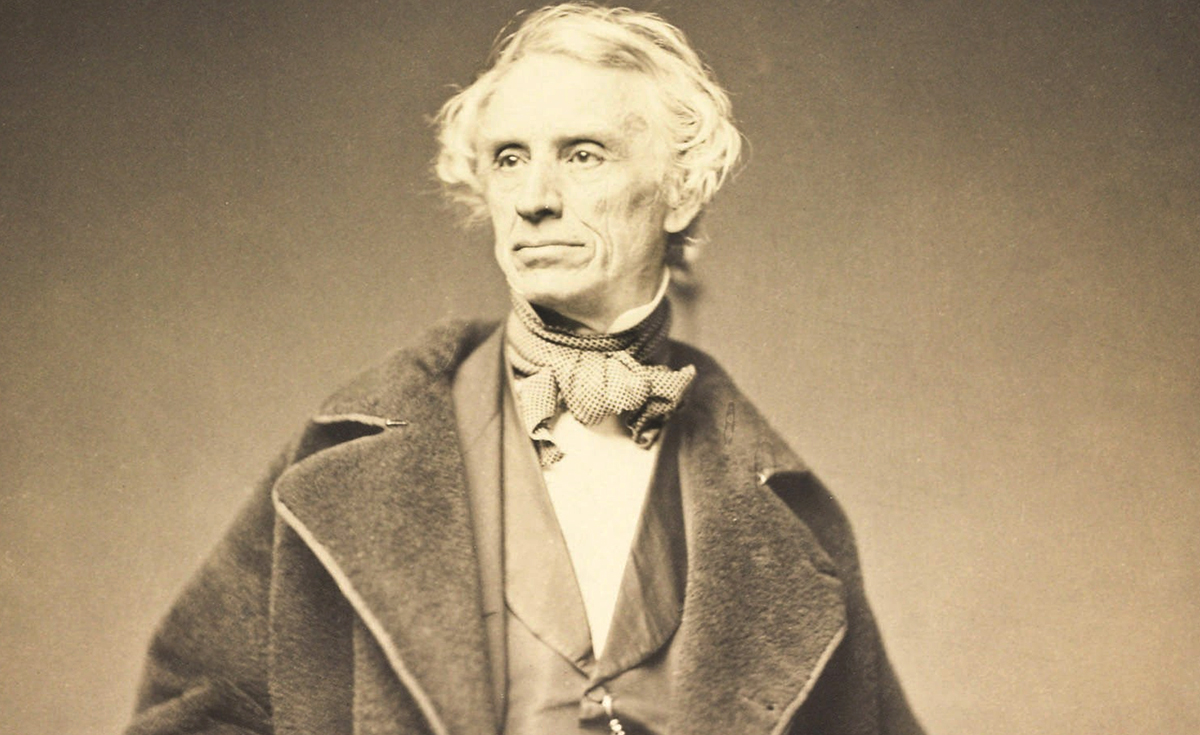
 On May 24, 1844, a seismic breakthrough occurred: the first telegraphic message was transmitted between cities. People in two separate and distant geographic locations could instantly communicate with each other!
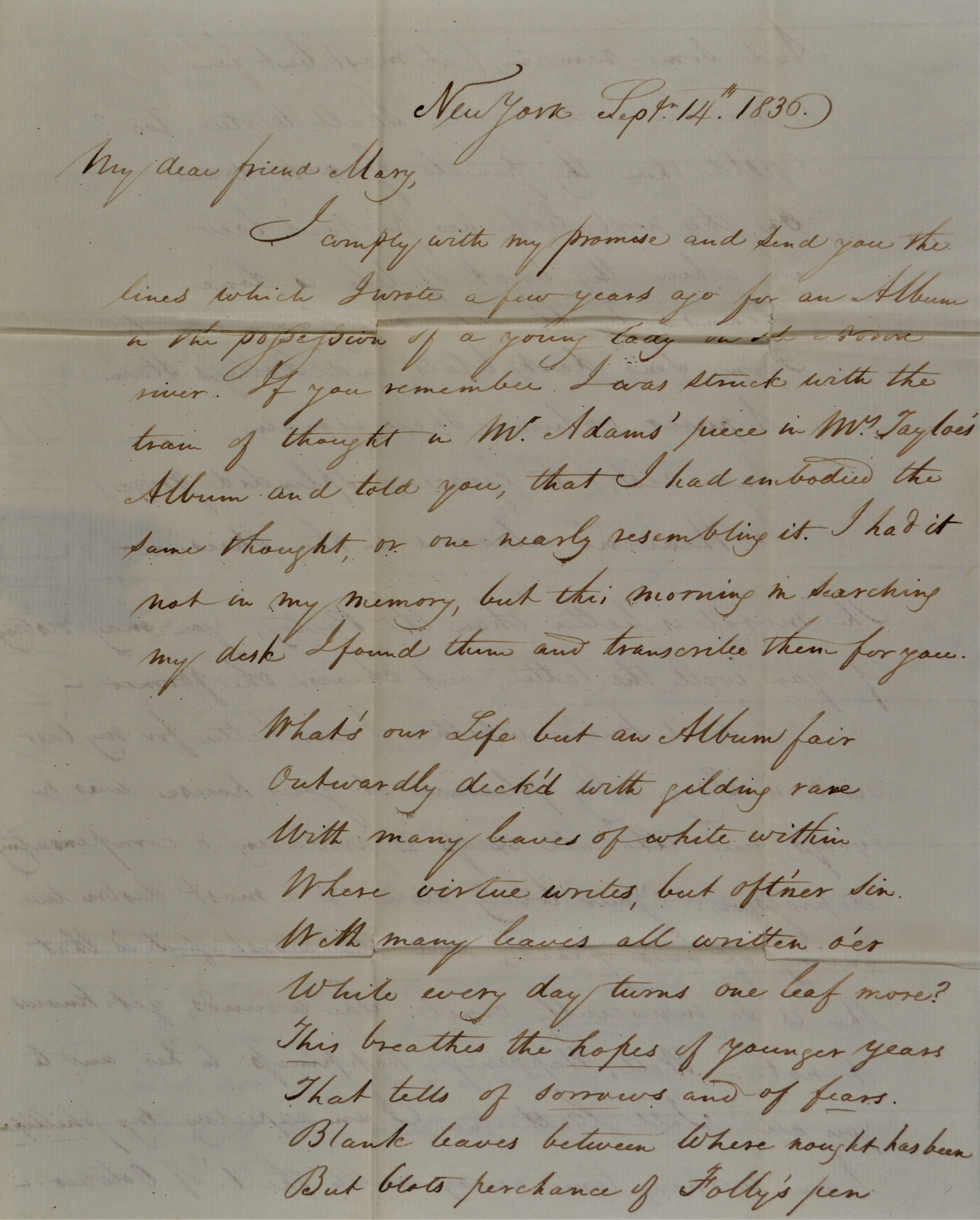
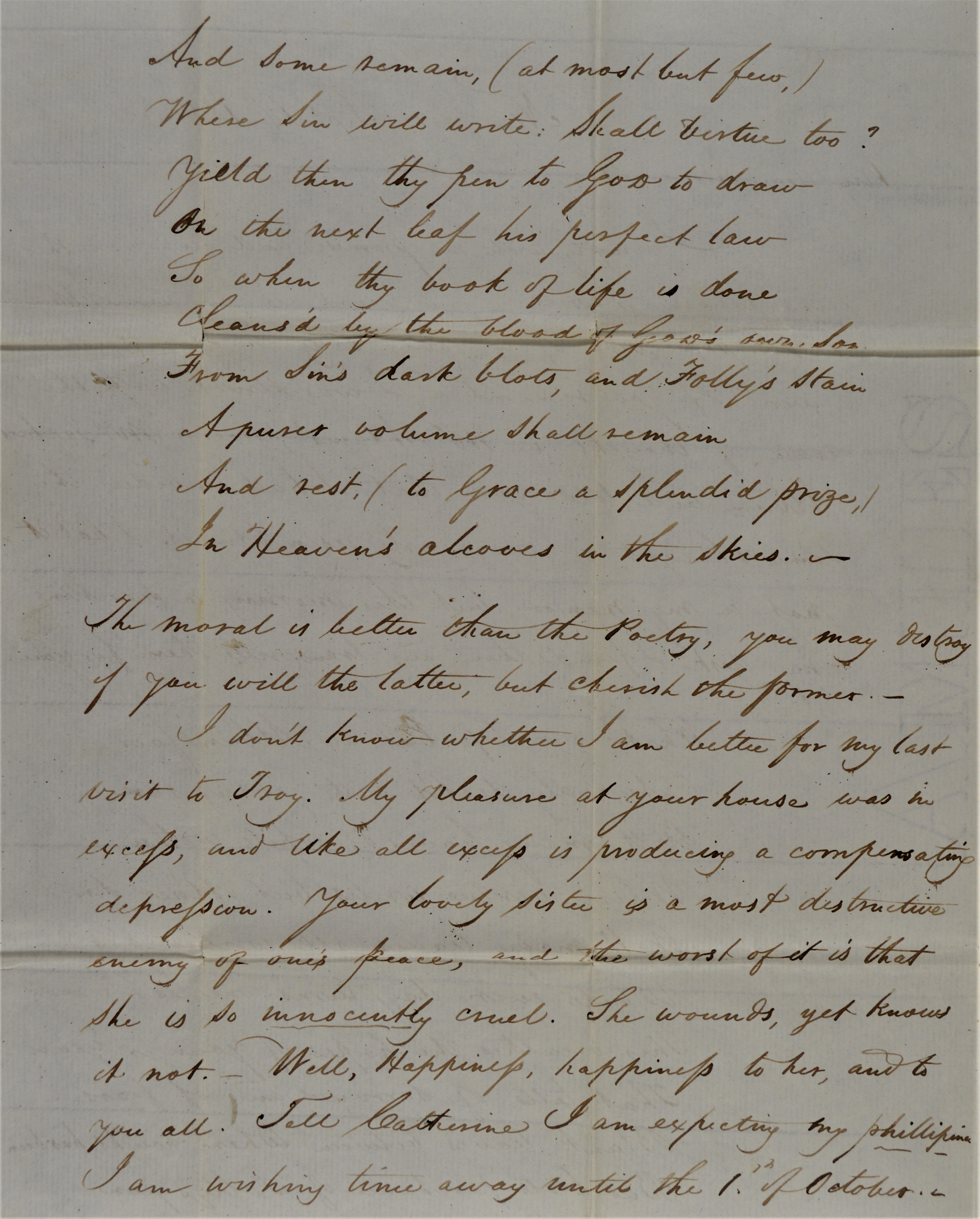
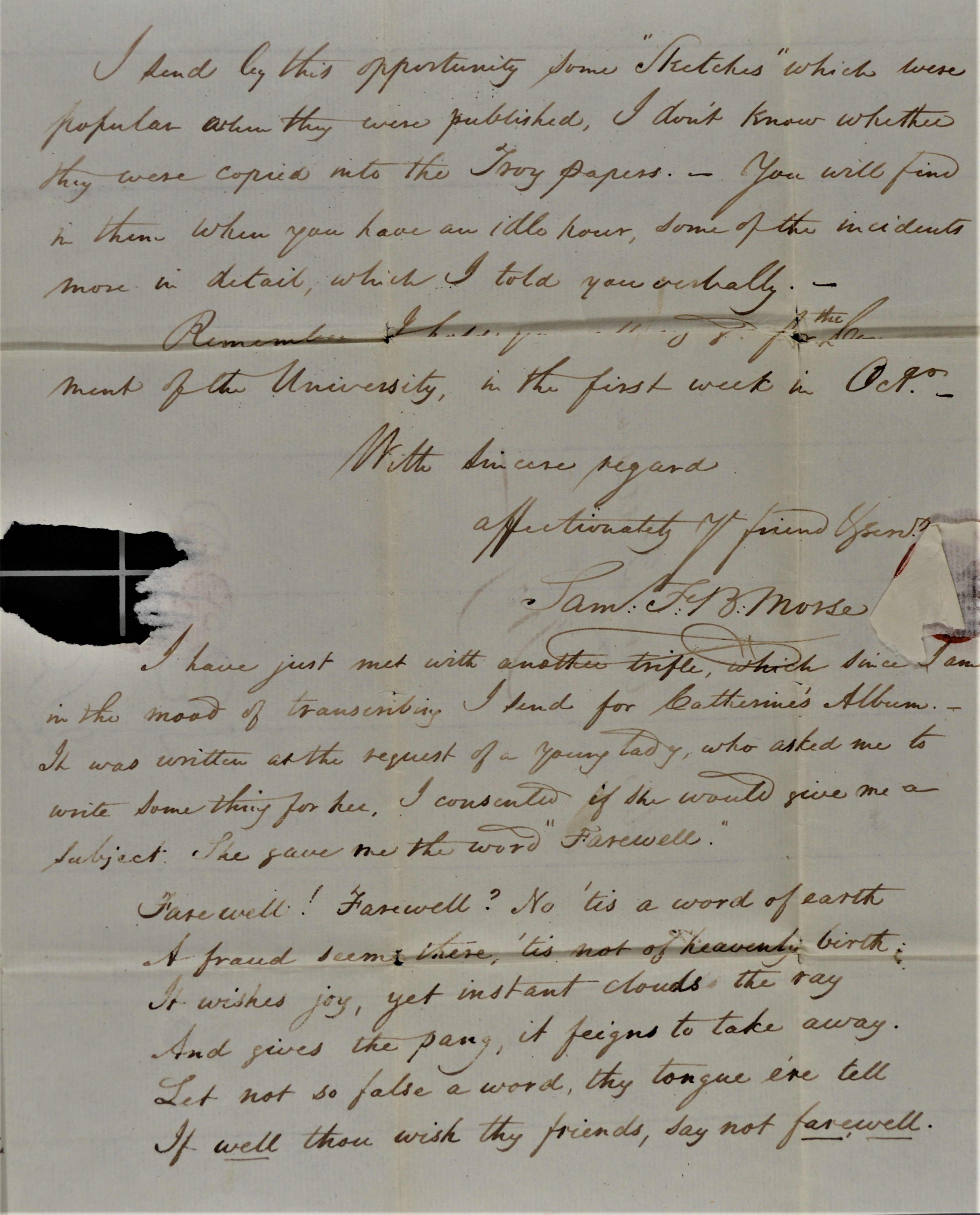
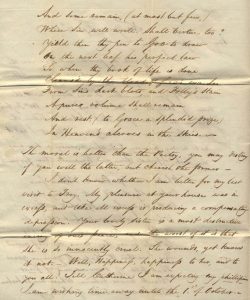 Biblical faith permeated Morse’s life. For example, in an 1830 letter (from WallBuilders’ collection, a page of which is pictured on the right), Samuel included a religious poem he had written earlier in life:
 June 14th is the birthday of the Army, created by the Continental Congress on June 14, 1775.
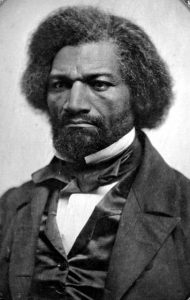 We must never forget that the loyal soldiers who rest beneath this sod flung themselves between the nation and the nation destroyers. If today we have a country not boiling in an agony of blood (like France)–if now we have a united country, no longer cursed by the hell-black system of human bondage–if the American name is no longer a by-word and a hissing to a mocking earth–if the Star-Spangled Banner floats only over free American citizens in every quarter of the land, and our country has before it a long and glorious career of justice, liberty, and civilization–we are indebted to the unselfish devotion of the noble army who rest in these honored graves all around us.
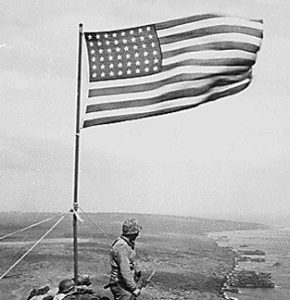 And in WWII, General George Marshall spoke about the mission of the United States: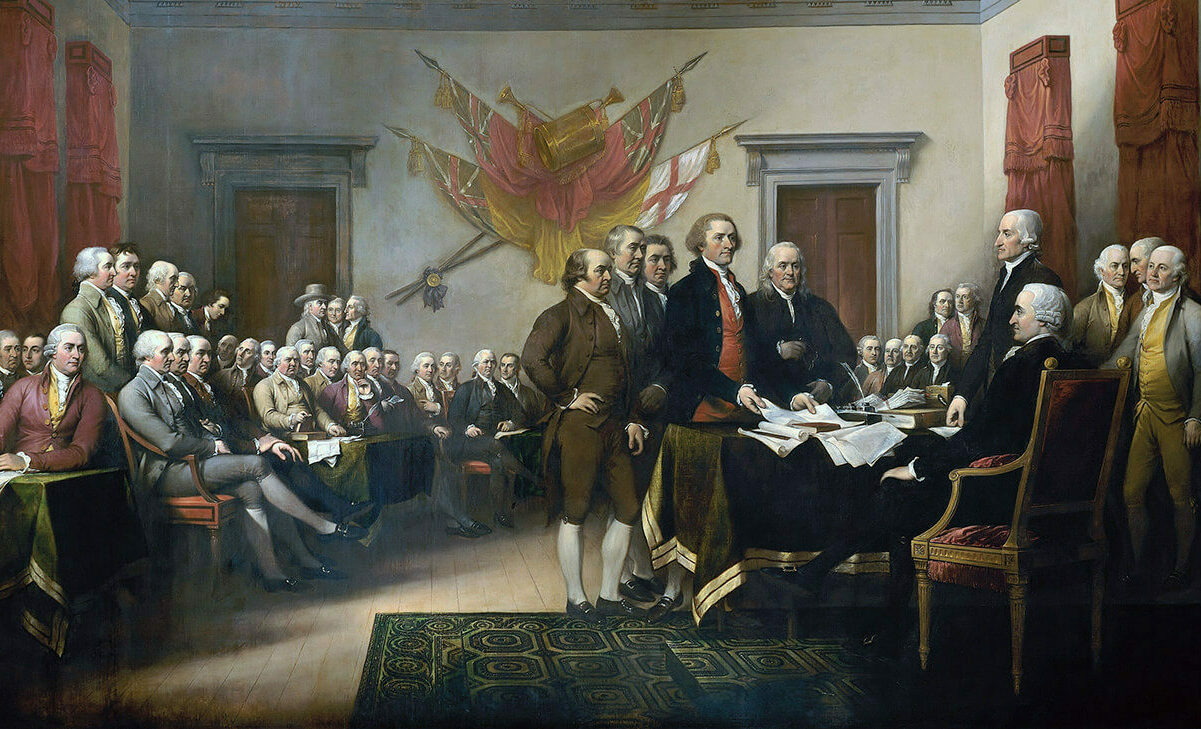
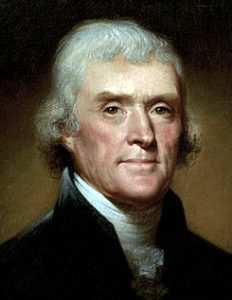 In fact, a young Daniel Webster recounted a conversation he had with an elderly Thomas Jefferson on this point. Jefferson
 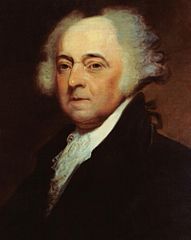 The education of our children is never out of my mind. Train them to virtue. Habituate them to industry, activity and spirit. Make them consider every vice as shameful and unmanly. Fire them with ambition to be useful. Make them disdain to be destitute of any useful or ornamental knowledge or accomplishment. Fix their ambition upon great and solid objects, and their contempt upon little, frivolous and useless ones.
 I advise you, my son, in whatever you read, and most of all in reading the Bible, to remember that it is for the purpose of making you wiser and more virtuous. I have myself, for many years, made it a practice to read through the Bible once every year. I have always endeavored to read it with the same spirit and temper of mind, which I now recommend to you: that is, with the intention and desire that it may contribute to my advancement in wisdom and virtue.
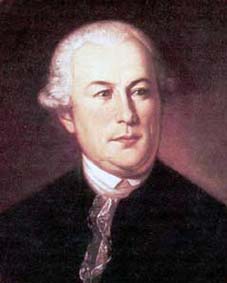 I was much mortified to find the whole force of this man’s vain genius pointed at the youth of America….This awful consequence created some alarm in my mind lest at any future day you, my beloved child, might take up this plausible address of infidelity….I have endeavored to…show his extreme ignorance of the Divine Scriptures…not knowing that “they are the power of God unto salvation, to everyone that believeth” [Romans 1:16].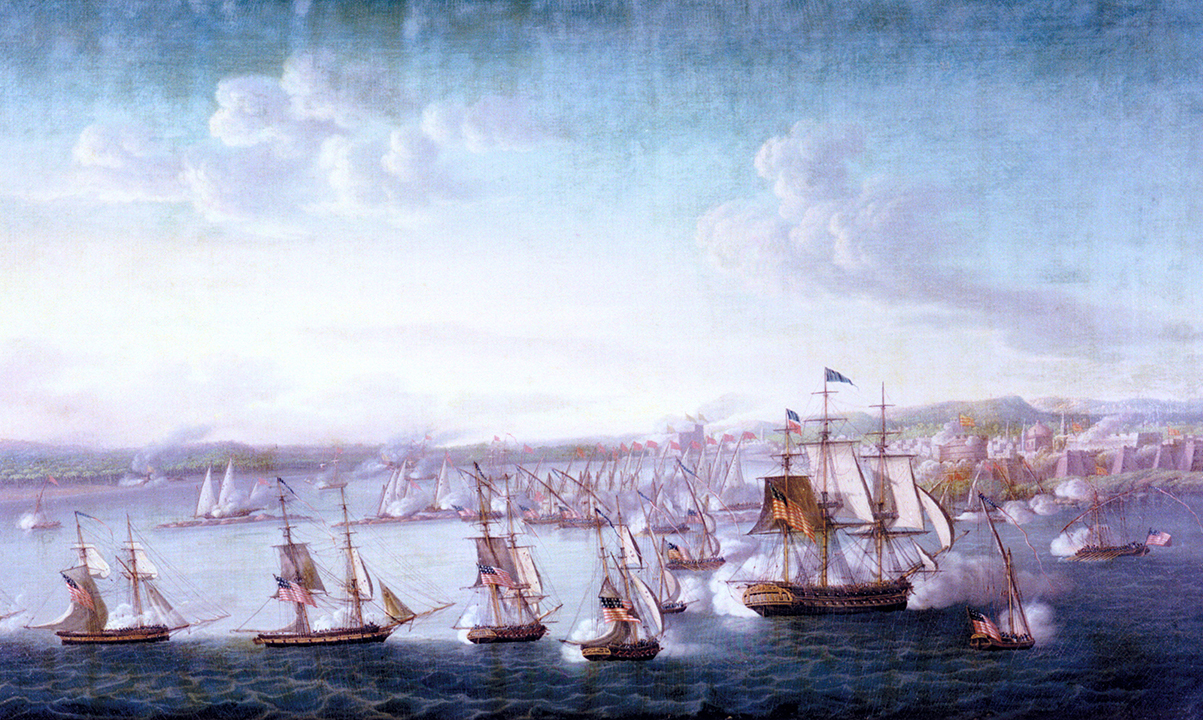
 President John Adams oversaw the construction of the Navy,
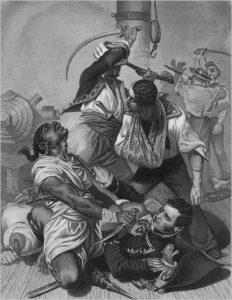
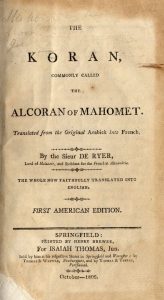 In short, if you read the Koran, you will understand their unprovoked attacks against us. But the fighting still wasn’t over. While America was engaged in the War of 1812 against Great Britain, Algiers (one of the Muslim Powers that had negotiated a peace treaty with the US in 1795
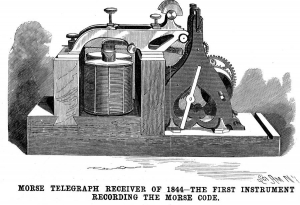 Morse’s pious character clearly exhibits itself in the historic message relayed during the public demonstration of the telegraph on May 24, 1844. Morse had promised Annie Ellsworth, the daughter of the Commissioner of Patents that she would get to decide what would be said. After talking with her mother, Annie decided to send a portion from Numbers 23:23: “What hath God wrought!”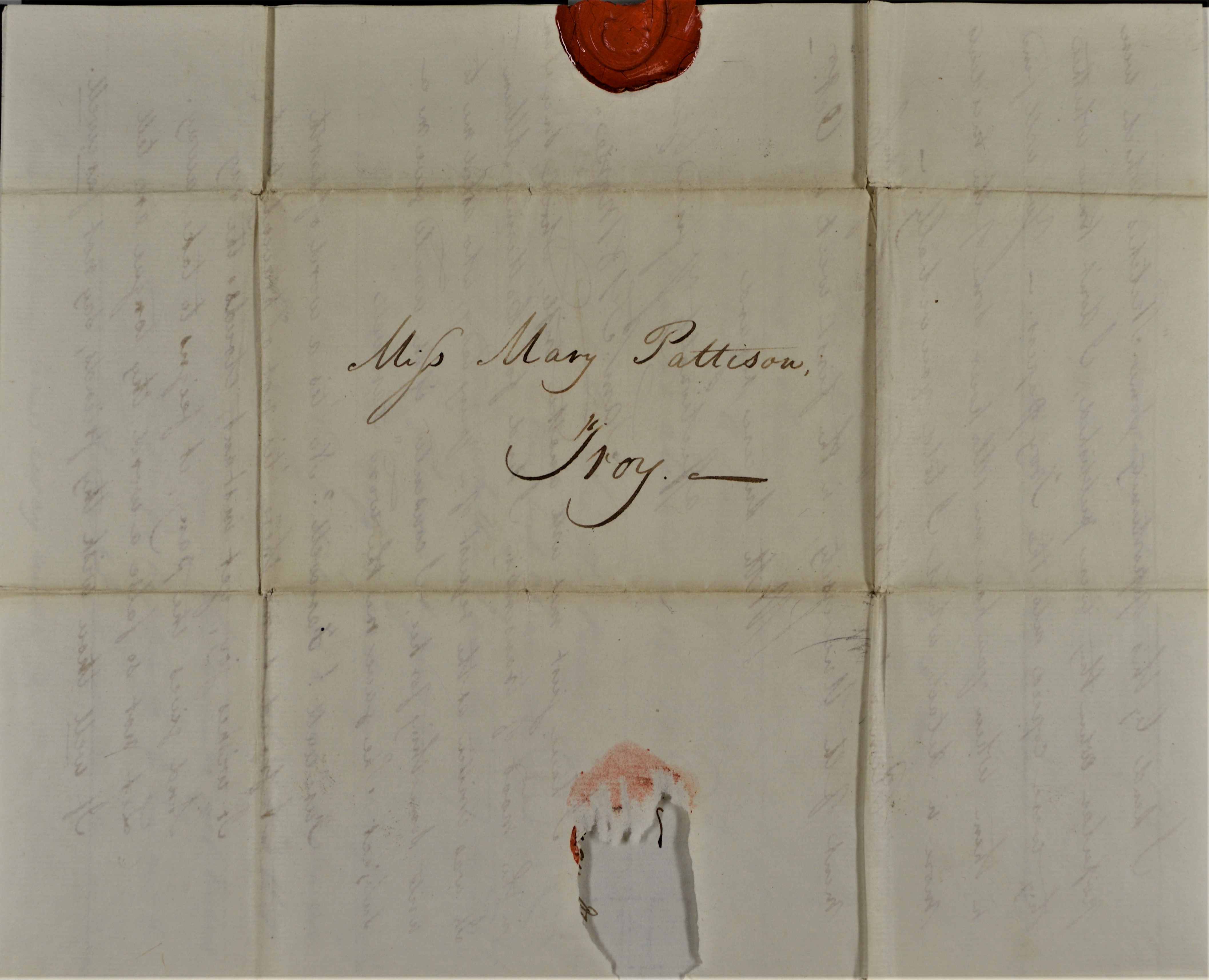

 On March 3rd, 1931, an
  At that time, attorney Francis Scott Key
 Easter is celebrated across the world as one of the most significant Christian holy days — as a time when we pause to remember the great sacrifice of Jesus on the cross as well as the ultimate triumph of His resurrection. America’s Founding Fathers often commented on Easter.
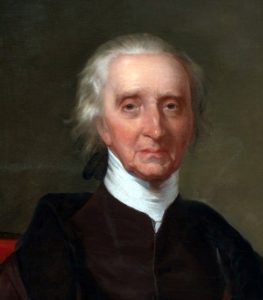 The approaching festival of Easter, and the merits and mercies of our Redeemer copiosa assudeum redemptio [with the Lord there is plentiful redemption] have lead me into this chain of meditation and reasoning, and have inspired me with the hope of finding mercy before my Judge, and of being happy in the life to come — a happiness I wish you to participate with me by infusing into your heart a similar hope.
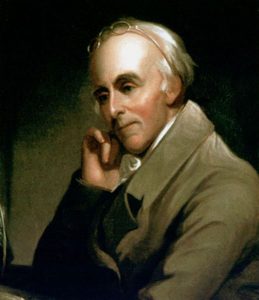 He forgave the crime of murder on His cross; and after His resurrection, He commanded His disciples to preach the gospel of forgiveness, first at Jerusalem, where He well knew His murderers still resided. These striking facts are recorded for our imitation and seem intended to show that the Son of God died, not only to reconcile God to man but to reconcile men to each other.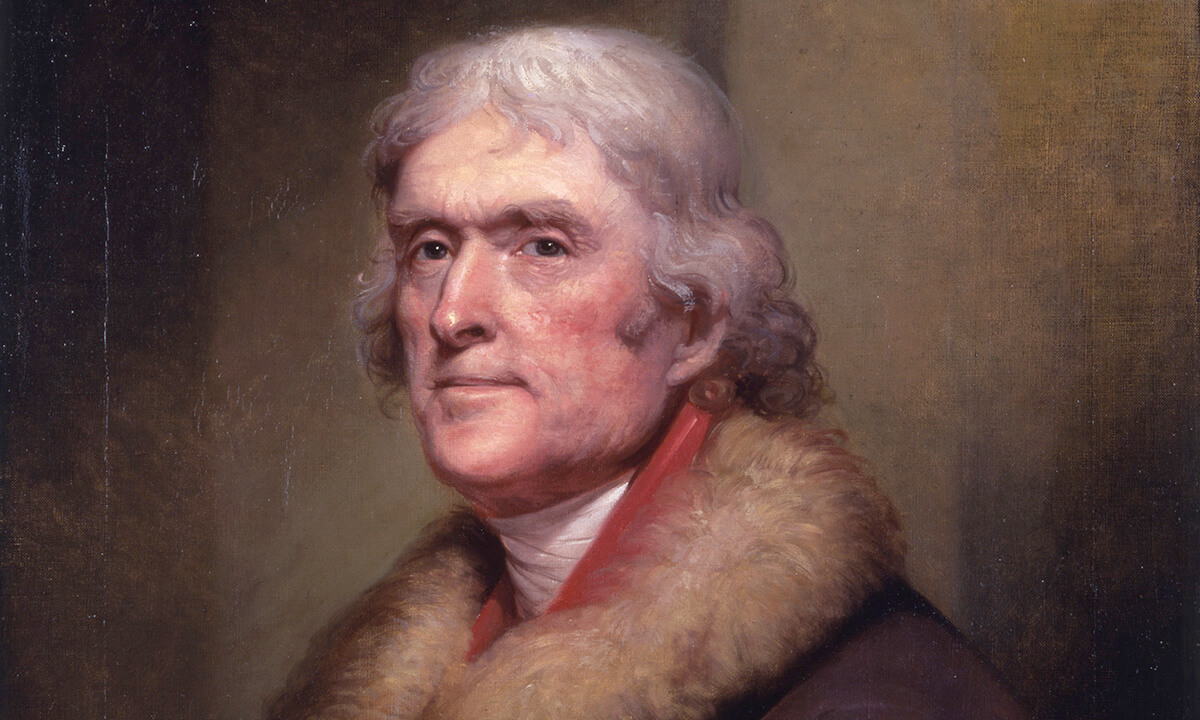
 Most Americans are very familiar with the Library of Congress and its massive collection of millions of books, documents, recordings, photographs, sheet music, and manuscripts.