America’s Birthday
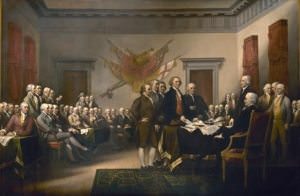 On July 4, 1776 a group of Americans approved a document declaring the United States of America free from English rule. This document was the Declaration of Independence,1 and each year on July 4th we celebrate the birthday of this courageous action!
The Declaration of Independence is the nation’s birth certificate.2 Thomas Jefferson, the primary author of the Declaration,3 outlined its purpose:
When forced, therefore, to resort to arms for redress, an appeal to the tribunal of the world was deemed proper for our justification. This was the object of the Declaration of Independence. Not to find out new principles, or new arguments, never before thought of, not merely to say things which had never been said before; but to place before mankind the common sense of the subject, in terms so plain and firm as to command their assent, and to justify ourselves in the independent stand we are compelled to take. Neither aiming at originality of principle or sentiment, nor yet copied from any particular and previous writing, it was intended to be an expression of the American mind.4
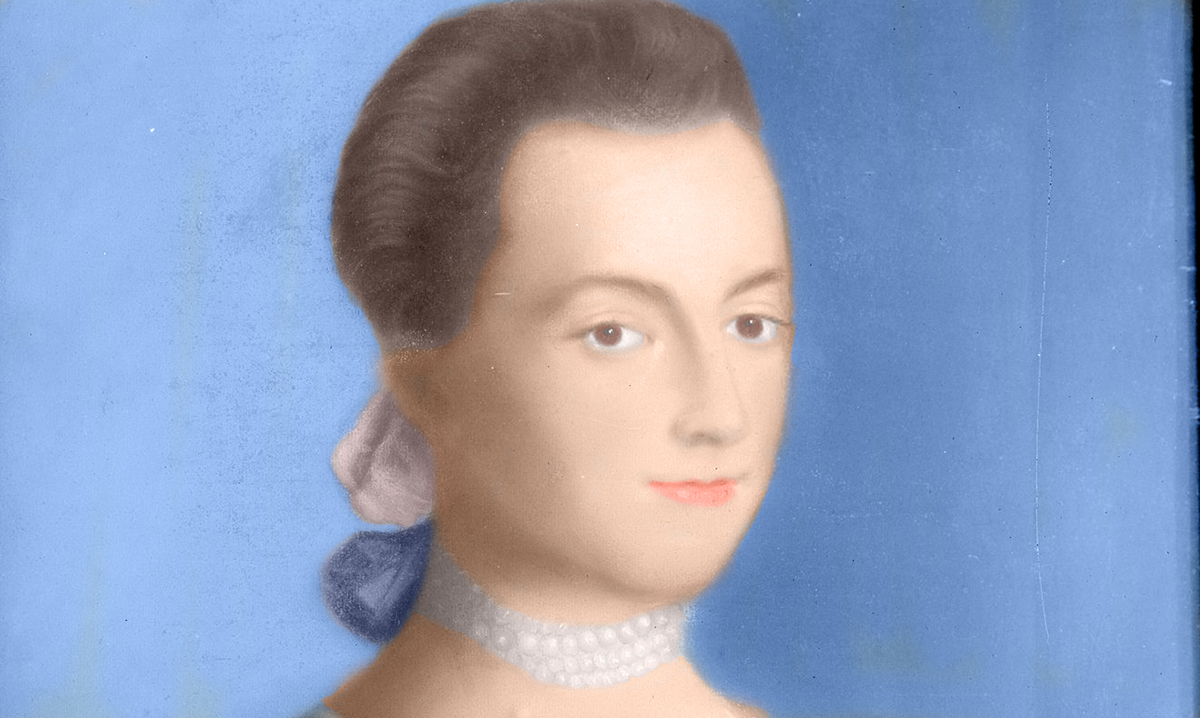
John Adams, in informing his wife, Abigail, of the events preceding the passage of the Declaration, stated:
I am well aware of the toil and blood and treasure that it will cost us to maintain this Declaration and support and defend these states. Yet through all the gloom, I can see the rays of ravishing light and glory–I can see that the end is more than worth all the means and that posterity will triumph in that day’s transaction.5
Across the generations, many others have heralded the importance of the Declaration. For example, Civil War hero Ulysses S. Grant saw it as one of the many evidences of God’s guidance:
In all these marked stages of national progress, from the Declaration of Independence to the recent amendments of the Constitution, it is impossible not to perceive a providential series and succession of events.6
And President John F. Kennedy’s words about the Declaration are as stirring today as they were when they were originally delivered decades ago:
[The] Declaration unleashed not merely a revolution against the British but a revolution in human affairs. Its authors were highly conscious of its worldwide implications. And George Washington declared that liberty and self-government everywhere were, in his words, “finally staked on the experiment entrusted to the hands of the American people.” This prophecy has been borne out….This doctrine of national independence has shaken the globe, and it remains the most powerful force anywhere in the world today.7
As we celebrate the birthday of America, don’t forget the many sacrifices made long ago by the signers of the Declaration on our behalf!
“On this special day, the birthday of our nation, in the midst of all the joyous celebrations let us take a moment to remember the debt of thanks we owe to those who came before us, to the same God who guides us all, and to the spirit of faith and patriotism which still makes America ‘the land of the free and the home of the brave’.”
Ronald Reagan8
Endnotes
1 “Declaration of Independence: Primary Documents in American History,” Library of Congress, accessed June 24, 2025.
2 “The Declaration of Independence,” National Archives, accessed June 24, 2025.
3 Thomas Jefferson to James MAdison, August 30, 1823, Memoirs, Correspondence, and Private Papers of Thomas Jefferson, ed. Thomas Jefferson Randolph (London: Henry Colburn and Richard Bentley, 1829), III:385.
4 Thomas Jefferson to Henry Lee, May 8, 1825, The Writings of Thomas Jefferson, ed. Paul Leicester Ford (New York: G. P. Putnam’s Sons, 1899), X:343.
5 John Adams to Abigail Adams, July 3, 1776, The Works of John Adams, ed. Charles Francis Adams (Boston: Little, Brown, and Company, 1856), I:232.
6 Ulysses S. Grant, “Special Message,” July 14, 1870, The American Presidency Project.
7 John F. Kennedy, “Address at Independence Hall, Philadelphia,” July 4, 1962, The American Presidency Project.
8 Ronald Reagan, “Radio Address to the Nation on the Observance of Independence Day,” July 3, 1982, The American Presidency Project.
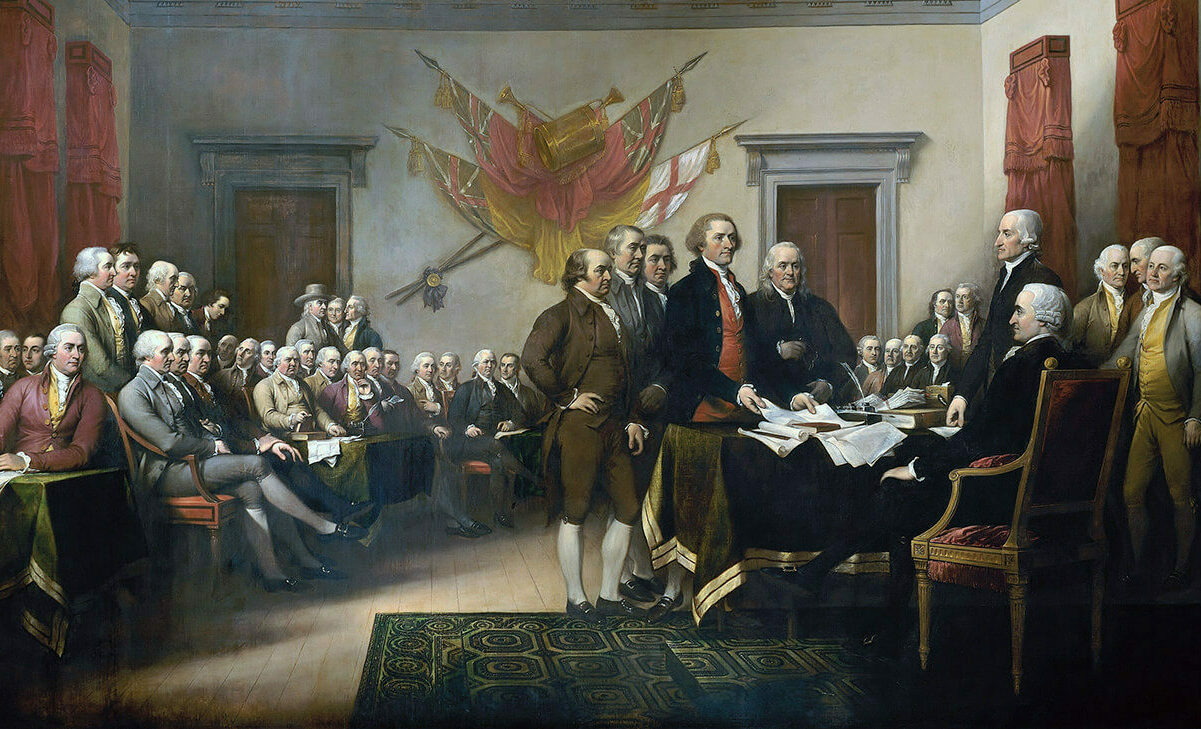
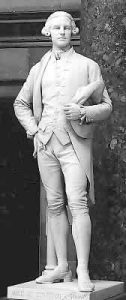 The signers of the Declaration of Independence pledged their “lives, fortunes, and sacred honor” so that they and their posterity (us!) could enjoy both spiritual and civil liberties to a degree unknown in the world at that time. That pledge literally cost many of them their lives and fortunes. Some of the 56 signers who sacrificed much include John Hancock, Robert Morris, and John Hart. Richard Stockton was another who paid a great price.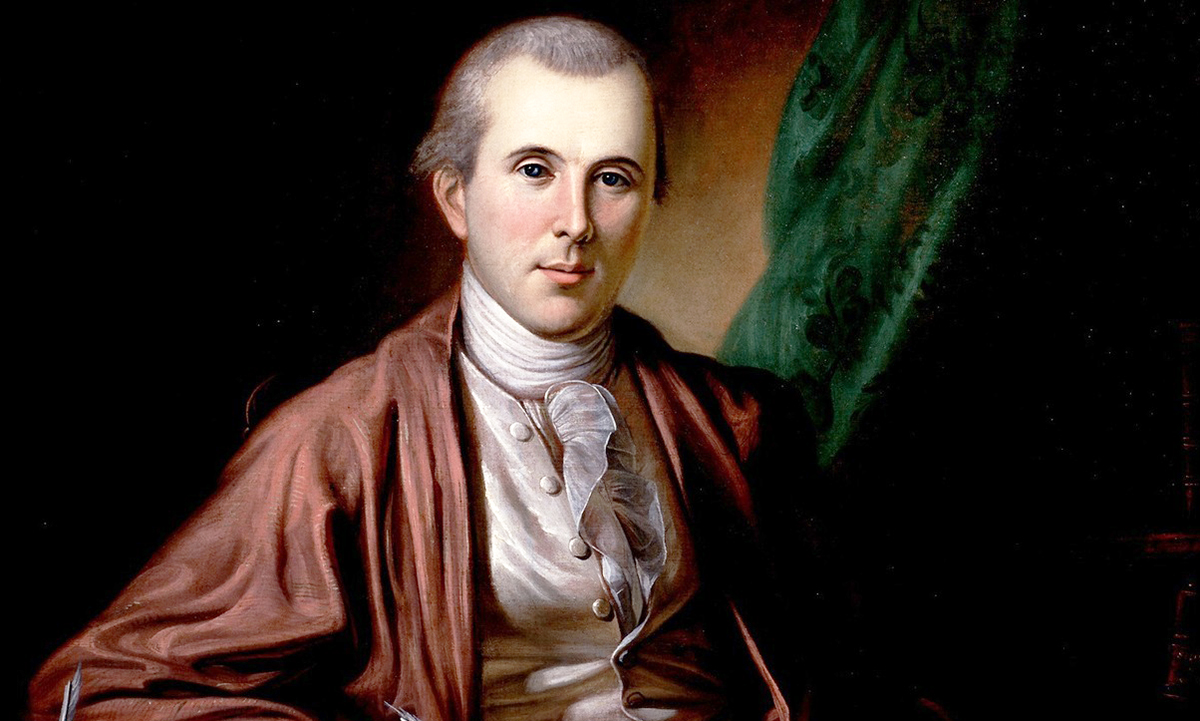
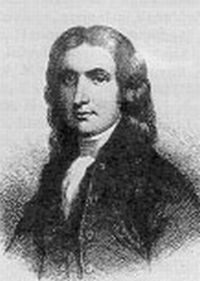

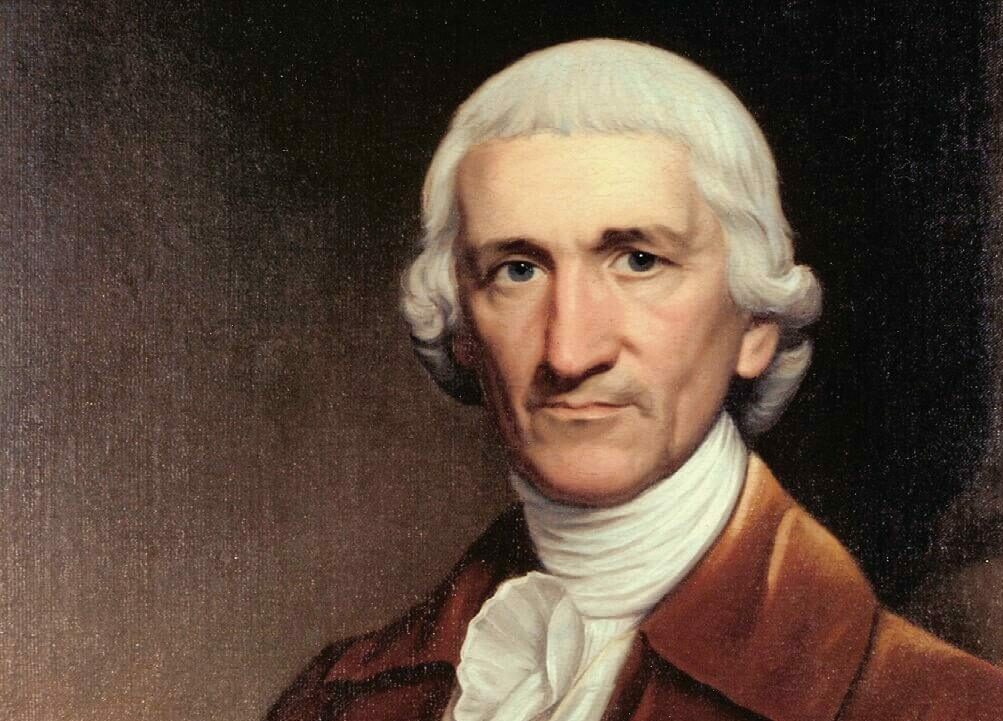
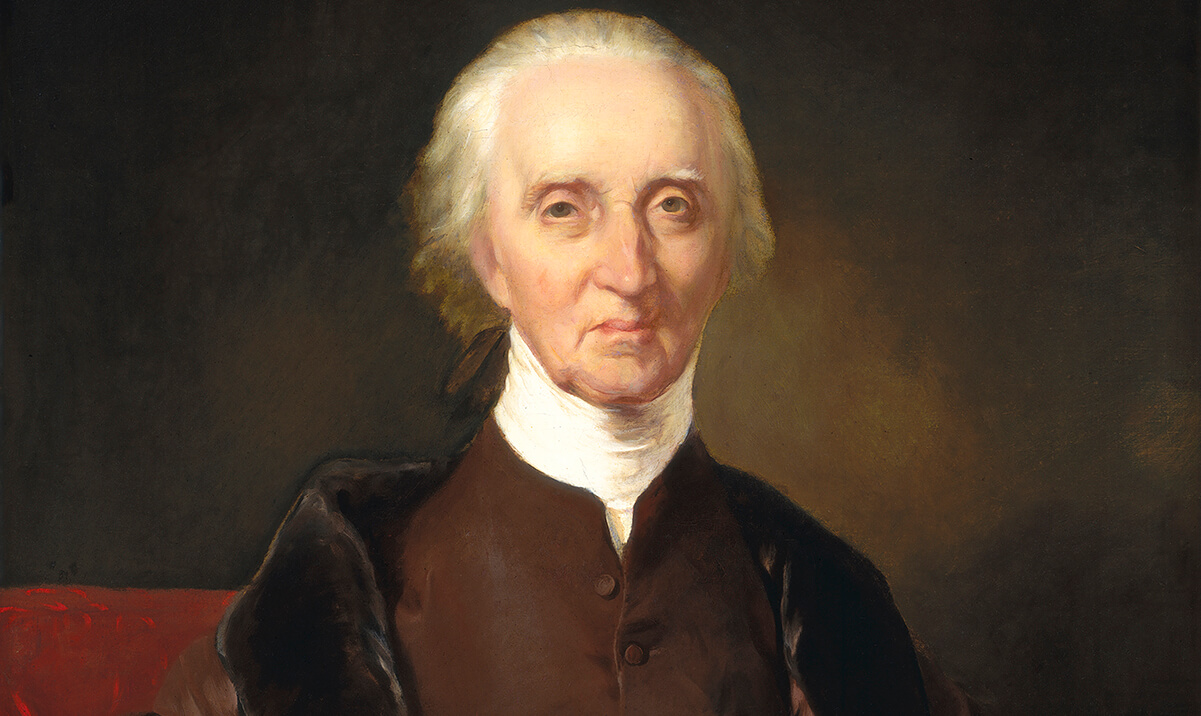
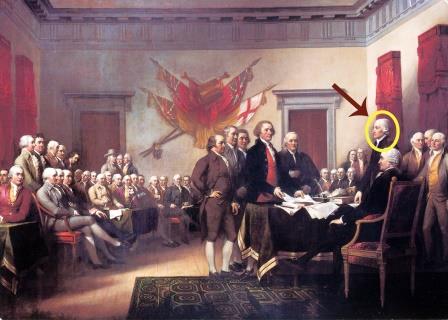 Though never a member of that august body, as Secretary of the Continental Congress for over fifteen years, Thomson had a front-row seat to the birth of the nation and his fingerprints are all over America’s establishing documents. For example, the copy of the Declaration of Independence included with the official Journals of Congress were in Thomson’s handwriting, and he was one of only two people who actually signed it on July 4th.
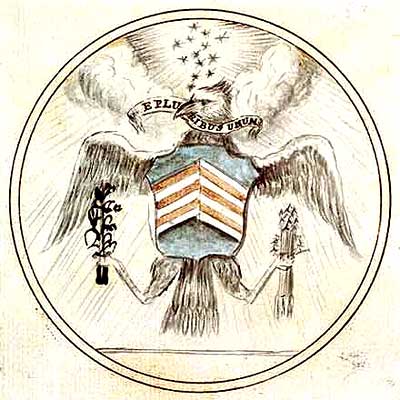 Thomson is also responsible for the Great Seal of the United States, which he prepared and Congress approved in 1782.
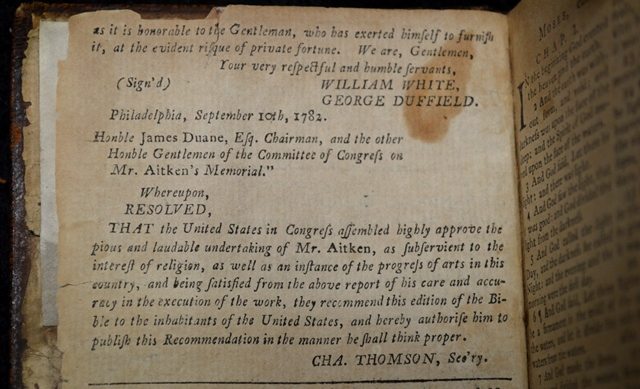 Thomson was also responsible for the first American translation of the Greek Septuagint (the full Greek Bible) into English in 1808 – a labor of love that consumed nearly two decades of his life.
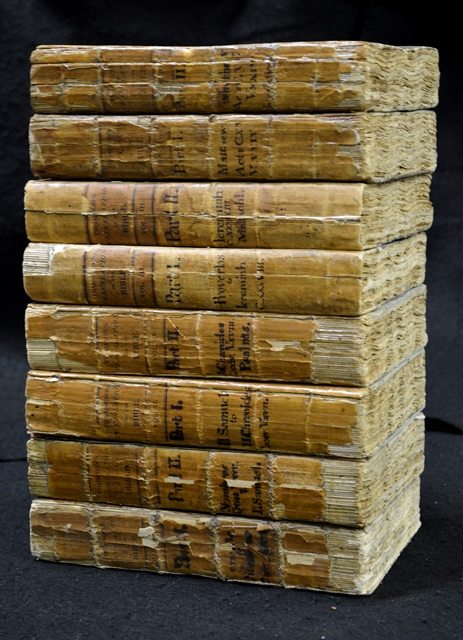 Thomson also produced an eight-volume set in which every other page was blank, thus allowing readers space to write notes on the Scriptures as they studied them.
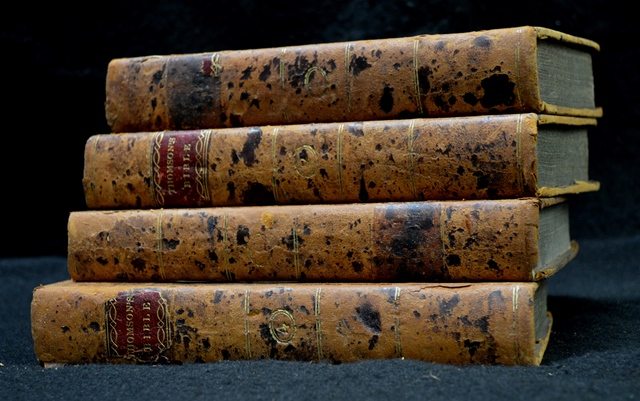 In 1815, Thomson published his famous Synopsis of the Four Evangelists, in which he took all the passages from the four Gospels and arranged them chronologically, producing something like one super long Gospel, with all Jesus’ words and acts arranged sequentially. Today, we call such a work a synoptic Gospel.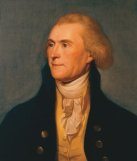
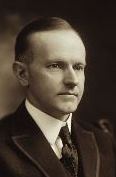 No one can examine this record and escape the conclusion that in the great outline of its principles the Declaration was the result of the religious teachings of the preceding period. . . . They are found in the texts, the sermons, and the writings of the early colonial clergy who were earnestly undertaking to instruct their congregations in the great mystery of how to live. . . . Placing every man on a plane where he acknowledged no superiors, where no one possessed any right to rule over him, he must inevitably choose his own rulers through a system of self-government.
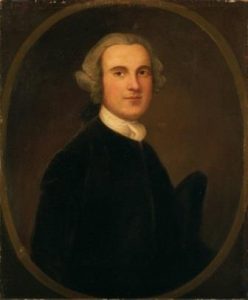 Richard Stockton was one of the 56 signers of the Declaration of Independence. He was one of those who literally gave his life for American liberty. October 1,