Summer 2005

We have closed yet another school year – America’s 363rd since the passage of its first public education law. Many changes in education have occurred over the past four centuries; this report will focus on the current state of education in America.

Americans & Education

Americans cherish education. Jesus said: “Where your treasure is, there will your heart be also” (Matthew 6:21). We spend over $470 billion each year on education; therefore, judging by the amount of “treasure” we invest in education, it must be dear to our hearts. Sadly, however, current statistics demonstrate that Americans are not getting a good return on their investment.
American students now regularly finish at the bottom in international competitions in math and science. Recent international testing found that American elementary students performed above average, junior high students at average, and high school students below average. This sequence of results prompted one observer to remark: “The longer US students stay in school, the less they seem to know.”

America’s education system has become so substandard that it actually prevents many students from entering post-graduate work. As national columnist Thomas Sowell confirms: “For years, most of the PhDs awarded by American universities in mathematics and engineering have gone to foreigners. We have the finest graduate schools in the world – so fine that our own American students have trouble getting admitted in fields that require highly trained minds.”

Despite the fact that America far outspends other nations on education, our students are outperformed by students from Poland, the Slovak Republic, Czechoslovakia, Iceland, China, Taiwan, Canada, Korea, Wales, and many other nations. America currently has one of the poorest outcomes per education dollar spent among all industrial nations.

The performance of American education is now so poor that the US Department of Education has concluded:

The educational foundations of our society are presently being eroded by a rising tide of mediocrity that threatens our very future as a Nation and a People. . . . If an unfriendly power had attempted to impose on America the mediocre educational performance that exists today, we might well have viewed it as an act of war. As it stands, we have allowed this to happen to ourselves.

What has caused the current problems with American education? Three significant factors will be examined in this report: (1) the current philosophy of education; (2) curricular content; and (3) teacher competency.

(Addressing this third category may offend some, but as Jesus noted in Luke 6:40: “Every student, when he is fully trained, will be like his teacher.” It is therefore appropriate to examine whether academic scores are falling because students are becoming like their teachers.)

Changing Philosophy of Education

Unbeknown to most Americans, in the last few years the philosophy of education has been radically transformed in basic subjects such as reading, grammar, and math.

Math

In recent months, a controversy has emerged in Massachusetts; many shocked parents have become aware that teaching math is no longer the top priority for math teachers. Written priority #1 in the new standards for math class is to teach “respect for human differences” and “live out the system-wide core value of ‘respect for human differences’ by demonstrating anti-racist/anti-bias behaviors.” Written priority #2 is “problem solving and representation – students will build new mathematical knowledge as they use a variety of techniques to investigate and represent solutions to problems.”

The primary purpose of math no longer is the teaching of math skills (i.e., learning to use fractions and integers, or doing multiplication and division); it is now viewpoint inculcation. When challenged as to the source of this new philosophy, school officials pointed to the “Principles and Standards for School Mathematics” from the National Council of Teachers of Mathematics (NCTM).

A stark example of this new math philosophy is exhibited in the recent textbook that some have dubbed “rain-forest algebra.” In that 800+ page text, not a single question on math was asked until page 107. The first 107 pages were dedicated to coverage of Maya Angelou poetry, competitive chili cook-offs, the Dogon tribe of West Africa, etc. In fact, the questions in that math book included: “What role should zoos play in today’s society?”; “What other kinds of pollution besides air pollution might threaten our planet?”; and “The topic for the essay this year is ‘Why should we save an endangered species?’”

A US Senator correctly summarized the effect of such texts: “This new mush-mush math will never produce quality engineers or mathematicians who can compete for jobs in the global market place. In Palo Alto, California, public school math students plummeted from the 86th percentile to the 56th in the first year of new math teaching. This awful textbook obviously fails to do in 812 pages what comparable Japanese textbooks do so well in 200. The average standardized math score in Japan is 80; in the United States it is 52.”

Grammar

Just as the national council of math teachers has changed its emphasis, so, too, has the National Council of English Teachers. Claiming that providing grammar instruction, and teaching fundamental skills such as diagramming sentences, only bores students and turns them off to writing, such training was dropped several years ago. The result? A recent national study revealed that a meager one-fourth of students can now write at a proficient level – and only 1 percent can write at an advanced level.

Reading

In reading, national educational groups and teaching professionals demanded that phonics be dropped and whole-language reading be adopted instead. Scores plummeted; in fact, they tumbled so far that the California Board of Education eventually took what one national newspaper described as “the drastic step” of re-adopting phonics – of going back to what had worked for generations. Reading scores have since shown some recovery, but millions of students have incurred lasting academic handicaps in the meantime.

Encouraging Achievement

The new philosophy of education also opposes any competition that recognizes student achievement. As a result, many schools no longer post honor rolls or exemplary work on bulletin boards. Also disappearing from local schools are publicly graded events such as spelling bees as well as other academic competitions. As one elementary principal explains: “I discourage competitive games at school. They just don’t fit my worldview of what a school should be.”

Many traditional educational practices no longer fit the new “worldview of what a school should be” – including homework. Education specialists amazingly claim that doing away with homework will “give kids ownership over their education.”

The use of red ink also does not fit the new educational worldview; and in schools from New York to Alaska, red ink is now on the educational blacklist. Explains a Massachusetts teacher: “If you see a whole paper of red, it looks pretty frightening. Purple stands out, but it doesn’t look as scary as red.” A Florida teacher agreed: “I do not use red; red has a negative connotation, and we want to promote self-confidence. I like purple. I use purple a lot.” Color consultants concur: “Red is a bit over-the-top in its aggression.”

Of course, that is just the opinion of teachers and educational specialists; then there is the opinion of a student who voiced the common sense that the experts seem to lack: “I hate red. But because I hate it, I want to work harder to make sure there isn’t any red on my papers.”

School Discipline

Under the new educational worldview, students with the worst behavioral problems are protected from any accountability so long as they also have certain academic so-called weaknesses. For example, a Virginia student brought a loaded gun to school – and bragged about it – but went unpunished because he had been diagnosed with a “weakness in written language skills.” Similarly, a Georgia student repeatedly urinated on his classmates, but because of a similar “diagnosis,” he could not be punished. In Pennsylvania, a student set fire to a school cafeteria; upon being disciplined, he filed and won a federal lawsuit against the school for violating his rights. And in Oklahoma, a public school suspended nearly all of the sixth-grade class for disruptions and quasi-riots. The principal ruefully estimated that teachers now “spend 85 percent of their time reprimanding students.”

Since schools cannot punish the real offenders, they apparently go after whomever they can punish. For example, a 13- year old was recently ordered suspended for 10 days from a Florida school for committing a Level 4 offense – the most serious level. The offense? He “assaulted” and threatened others with a “weapon” (he shot a rubber band). In another school, two kindergartners were sent home for “assault” with “weapons” (they had pointed their fingers at each other and said “bang!”).

Viewpoint Indoctrination

While core academics, discipline, and red ink do not fit the new “worldview of what a school should be,” viewpoint indoctrination does. For example, the largest teacher’s group in America (the National Education Association) aggressively promotes what it calls “diversity education”; it has been relatively successful in passing state laws mandating such teaching at all grade levels.

In compliance with such a law, schools in one state held a “Week of Diversity” in which outside speakers made 82 presentations to students. Of the 82 presentations, 14 were pro-homosexual; 11 were pro-left, urging support for communist Cuba, guerilla forces in Columbia, etc.; 17 promoted animal rights, vegetarianism, and radical environmentalism; and 5 were anti-law enforcement. A week of academic instruction was sacrificed in order to indoctrinate specific viewpoints.

Another clear indication of viewpoint indoctrination was evident in the NEA lesson-plan distributed nationally to teachers following the 9/11 attacks on the World Trade Center and the Pentagon. The lesson taught that no group was responsible for the attacks and that instead, teachers should discuss “historical instances of American intolerance” in order to avoid “repeating terrible mistakes.” Unfortunately, the new educational “diversity” regularly expresses itself in anti-Americanism.

Apparently, many professional educators now want to be known more for introducing something “new” or “innovative” than for the success of the students they teach. Consequently, academics take a backseat as students become classroom guinea pigs for a new generation of educrats. Peter Murphy, a New York educational consultant, properly asks: “How many more years of declining scores will it take for the school committee and state officials to put a stop to this educational malpractice on schoolchildren?”

Evangelists for a New Worldview

Who has been behind these radical changes? A new breed of professional educators – working through two primary vehicles: teachers’ colleges, and teachers’ unions.

Concerning the former, a professor writing in the Texas Education Review charges: “Schools of education have been transformed into agencies of social change with mandates to achieve equality at all costs. Colleges of education no longer believe that knowledge should be the center of the educational enterprise. Colleges of education do not serve the interests of children or parents. Instead, they serve the interests of an educational bureaucracy by pushing the growth of the profession, protecting it from competition, and discouraging outside scrutiny.”

Anyone who doubts the accuracy of these charges need only review the resolutions passed at the annual NEA conventions. Those resolutions routinely avoid academic issues and instead advocate the teaching of social positions that most Americans oppose. For example, at recent conventions, NEA educators have passed resolutions calling for schools to encourage:

• Gay, lesbian, bisexual, and transgendered people
• Globalism and nuclear disarmament
• The United Nations and the International Court of Justice
• School-based health clinics that promote abortion
• National healthcare, population control, and Earth Day
• Multi-culturalism and diversity education
• Pre-K-12 AIDS programs (yes, pre-K:
AIDS education for three and four-year-olds!)

While the NEA supports these issues, it also opposes many, including:

• Competency testing of teachers
• Standardized testing to evaluate students, teachers, or schools
• Educational choice or competition in education
• Homeschooling
• “Homophobia” (the belief that homosexuality is wrong or that marriage should
be between a man and a woman)
• A moment of silence to open the school day

Where is the emphasis on academics? Conspicuously absent. As one national columnist queried: “Since the National Education Association describes itself as ‘America’s largest organization committed to advancing the cause of public education,’ is it not fair to ask why it spends so much of its energy on political issues having little to do with education?” That point was not lost on all NEA delegates (some teachers do oppose the current direction of the NEA, but they are in a clear minority); in fact, one such delegate – after seeing the resolutions passed at the convention – lamented: “We’re the National Education Association, not the National Everything Association.”

Results of this Philosophy

The academic weaknesses of this new educational worldview are statistically measurable in a number of curricular areas.

Civics & Citizenship

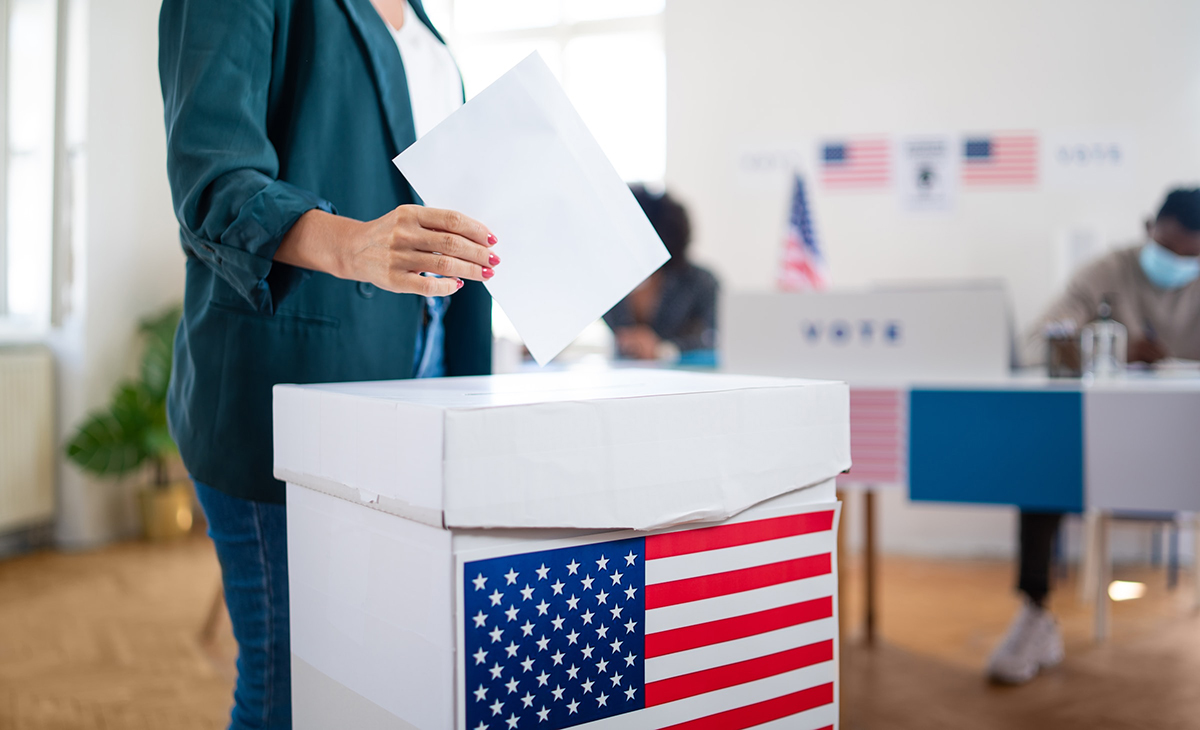
According to current studies, after twelve years of school, only a meager 26 percent of students have enough preparation in civics to make informed choices at the polls. Imagine! American education currently is producing only one in four students capable of informed voting!

Furthermore, only 9 percent can name two ways that society benefits from the active participation of its citizens. And while 80 percent of students can name the winner of “American Idol,” only half know the political affiliation of their own state governor; and less than 10 percent can name both of their US Senators. Our educational system simply no longer produces civically prepared, well-informed citizens.

Geography

Thirty-four percent of students know that the island on the “Survivor” television program was in the South Pacific, but only 30 percent can find New Jersey on a United States map; 50 percent of students cannot find New York and 30 percent cannot locate the Pacific Ocean. And although Americans have been involved in a lengthy war in Iraq, only 13 percent of students can find Iraq on a map.

Reading & Math

By the fourth grade, only 30 percent of students are competent in reading and math; the number is much lower by the eighth-grade level; and by the end of high school, less than one fourth of college-bound students have the basic academic knowledge necessary to succeed in college (one can imagine how much worse it is for non-college-bound students).

History

Only one in ten high school seniors is proficient in American history. Why? Because the new educational worldview emphasizes behavior rather than knowledge. Consequently, the recent history standards proposed by the State of New Jersey excluded the Pilgrims and the Mayflower, and George Washington, Benjamin Franklin, and Thomas Jefferson. This trend has been growing for a decade, and a number of states now teach what is called “The Twentieth Century Model” under which high school students are taught only 20th century history. According to one astute educational observer, in American schools “history is not dumbed down, but erased.”

Consequently, 70 percent of fourth-graders thought that Illinois, Texas, and California were part of the original 13 colonies; and 60 percent had no idea why the Pilgrims came to America. And when students were asked to identify “Memorial Day,” the most common answer was, “The day when the pools open.” Recent testimony before a congressional hearing correctly concluded: “We are raising a generation of people who are historically illiterate.”

Ignoring the Obvious

The above academic results have been revealed primarily through independent surveys of students rather than through academic testing conducted by educators. Why? Recall the position of the teachers’ unions? “The [NEA] opposes the use of standardized tests when . . . results are used to compare students, teachers, programs, schools, communities, and states.”

Professional educators oppose testing and argue that it is not an accurate measure of what students really know. Of course, they offer no other proposal for measuring student knowledge; they just don’t like testing that exposes academic weaknesses, and thus could lead to teacher accountability.

Despite the opposition of educators to testing, legislators are beginning to demand it – but they are not liking what they find. For example, in Virginia, students were required to pass a state exam, but when 93 percent of students failed the test, the requirement was dropped.

In other states where legislators require testing, educators find ways to evade the purpose of the tests by simply lowering the bar. For example, in Florida, 13,000 high school seniors failed to pass the state exit test. (Originally many more had failed, but the passing grade was lowered to only 40 percent to reduce the number of failures to just 13,000!) Similarly, so many students were having difficulty passing the state’s required history test that the passing score was lowered to a mere 23 out of 100 – that is, students can get three out of four history answers wrong and still pass the test!

So what do educators propose as a solution for these high failure rates? According to national columnist Thomas Sowell: “The National Education Association – the biggest teachers’ union in the country – is urging that an extra year be added to high school for those students who fail to meet the standards for graduation. In other words, when educators fail to educate for 12 years, the 13th year will be the charm.” Too many students now spend their educational career in what one commentator described as “legally enforced incarceration in government buildings that are euphemistically called schools.”

Many of the good public school educators have come to recognize that public schools are no place to educate their own children. In fact, public school teachers are twice as likely as other parents to place their own children in private schools – including 44 percent of public school teachers in Philadelphia, 41 percent in Cincinnati, 39 percent in Chicago, etc. Why do so many public school teachers place their own children in private schools? A common answer given by these educators is: “Private and religious schools impose greater discipline, achieve higher academic achievement, and offer overall a better atmosphere.”

A Call for Results – and an Unexpected Response

Educators unreasonably assert that the current problems in education can be fixed only through more money and higher teacher salaries. Most citizens see a different problem; as Star Parker of the Coalition on Urban Renewal and Education pointedly notes: “Businesses that face competition deliver more and more for less and less. Monopolies deliver less and less for more and more. What else can we expect from the NEA and government school monopoly than claims that spending is the alleged answer for everything?”

The public is starting to deafen to the incessant and unceasing clamor for more money and is instead beginning to demand more bang for the buck. As a result, laws are now being crafted at the state and federal levels that attach school funding to academic performance but because teachers’ jobs may now depend on how well they teach as measured by objective testing scores, some schools and teachers are taking unorthodox steps to ensure that scores remain high: they have resorted to cheating.

For example, on the accountability test in Texas, organized teacher-led cheating was uncovered. What initially alerted investigators to the cheating? An elementary school in Dallas in which students had previously ranked in the bottom 4th percentile in one year, suddenly finished as the second best school in the state the next year. Similar teacher-led cheating has been exposed in Nevada, Mississippi, Massachusetts, Ohio, New York, Michigan, Connecticut, Kentucky, South Carolina, Arizona, and elsewhere. In the classic “end justifies the means” mentality, teachers from the new educational worldview are simply cheating to help bolster testing scores and preserve their jobs.

One testing expert correctly notes: “When you have a system where test scores have real impact on teacher’s lives, you’re more likely to see teachers willing to cheat.” And because the problem of teacher-led cheating is growing rather than shrinking, a whole new industry has sprung up to provide monitoring of
teachers as they administer tests. Perhaps a reporter from the Indianapolis Star best summarized this new trend when he said: “I hope people are aware of the irony of the situation that America now faces. We are talking about how to keep teachers from cheating.”

Teacher Competency

Because the current rash of testing has revealed deep academic weaknesses in students, attention properly has been focused on teachers: why can’t teachers produce students with a grasp of academic basics? There may be many answers, but statistics irrefutably document that one of the causes is a widespread epidemic of academically incompetent teachers.

The federal government’s own National Center for Education Statistics (NCES) reports that college education majors have the lowest Scholastic Aptitude Test (SAT) scores of any undergraduate major. And the results of the standardized entry exam for students seeking post-graduate degrees reveals that education majors have the second-lowest scores of all majors. And if an education major decides to enter law, the LSAT (the Law School Admission Test) shows that education majors rank at the bottom – 26th out of 29 majors. This is not to suggest that all teachers lack basic academic knowledge; but the fact is undeniable that their profession ranks as one of the lowest in academic competency.

Sadly, once these low-performing education majors become teachers, states demand even less from them. For example, of the 29 states that test teachers, only one requires math teachers to attain the national average in math to be able to teach math; and no state currently requires a teacher to reach the national average in reading in order to teach reading. In many states, a teacher can score in the bottom quarter in math and reading and still be rated competent to teach those subjects. In the current system, it is relatively easy for underperforming teachers to be certified.

Once certified, many states require teachers to participate in some form of continuing education to stay certified. The concept is reasonable on paper, yet teachers in Illinois get professional development credits for taking Tai Chi classes, learning to give massages, and for gambling at racetracks. For gambling at racetracks? Reporters who investigated that class reported: “The afternoon of gambling was part of a two day, 15-credit hour class called ‘Probabilities in Gaming.’ The teachers learned how to read the racing guide and calculate the payout. Before placing their bets, they discussed betting odds and how to pick a winner, such as considering the age of the horse and the days since his last race. . . . The professor who taught this course claimed that a day at the race track gets teachers excited about math.”

Regrettably, when groups clamor for “certified” teachers, today the phrase has become relatively meaningless. In fact, home-schooled students average 30 to 37 academic points higher than their counterparts in public schools on the same academic tests, even though less than 14 percent of homeschool “teachers” (i.e., moms) are certified. Similar results are seen in private schools, where the majority of teachers are not certified yet produce academic results well above their counterparts in public schools. Public school certification is no longer any assurance of quality.

Teachers Oppose Accountability

Not only are teachers’ scores collectively among the lowest of all groups in the nation, but teachers’ groups stridently resist efforts to raise the bar. For example, in Massachusetts, suit has been filed against the testing of math teachers, claiming that such testing is “unfair, illegal and discriminatory.” As national commentator Thomas Sowell points out, teachers appear to be saying, “We know our algebra and geometry so well that we don’t want anybody testing us to find out. . . . What makes this huffy response especially ironic is that over half the applicants for teaching jobs in Massachusetts a couple of years ago failed a very simple test. Here is a chance for Massachusetts educators to vindicate themselves and prove their critics wrong. Yet somehow they are passing up this golden opportunity.”

Similarly, the Philadelphia Inquirer reports that in Philadelphia, “half of the district’s 690 middle school teachers who took exams in math, English, social studies and science in September and November failed.” Notice: half of the currently-certified teachers failed the relatively easy state teaching test but are still teaching in the classroom! Why have so few heard about this? Pennsylvania Governor Ed Rendell explains, “releasing the data could subject teachers to humiliation.” Great! – permanently impair students rather than embarrass incompetent teachers!

This “circle the wagons” mentality to defend failure is predictable, though illogical. Chester Finn of the Fordham Foundation seemed to express the thoughts of most rational Americans when he stated: “Pressure to perform is not a bad thing. Educators have been spared it for so long that they’ve forgotten that it’s part of life in almost every other line of work. I mean, bus drivers are under pressure not to crash their buses. Prison guards are under pressure not to let their prisoners escape. Doctors are under pressure not to let their patients die. Lawyers are under pressure to win their lawsuits. Everybody is under pressure
in their job. Educators have had this curious sort of charmed life in which results don’t matter. This is just nuts.”

Dismissing Incompetent Teachers

So why not just get rid of incompetent teachers? Because under the current tenure rules, getting rid of just one teacher can cost hundreds of thousands of dollars in expenses and years of time. For example, it took three years to get rid of a teacher who engaged in brawls with students, was unable to control her classrooms, and who changed her name to “God”; it took four years to get rid of a teacher who refused to follow a lesson plan and who swore at her students; it took five years to get rid of a teacher who showed first-graders a R-rated movie; and it took eight years and $300,000 to get rid of a teacher who refused to answer students’ questions in class.

In Los Angeles, it is so difficult to get rid of incompetent teachers that in that district of 35,000 teachers, over the span of a decade the district was able to get rid of only one incompetent teacher. And of the 300,000 teachers in California, only 227 were dismissed over that same decade – only one-tenth of one percent were dismissed as incompetent, despite the fact that national studies find as high as 18 percent of current teachers are incompetent. One school official lamented, “It takes longer to fire a teacher than to convict a murderer.” A state legislator agreed: “Unless you’re molesting children or robbing banks, you can’t be fired.”

The story is the same in state after state – all because of tenure. (Currently, all states provide, and about 80 percent of teachers have been awarded, tenure.) A Florida group properly notes that tenure “creates an environment where there is simply no incentive to be a good teacher. . . . Serving time is what is rewarded, not teaching excellence.” A California school board member agrees: “Good teachers do not need tenure. Poor or incompetent teachers use it to protect their jobs.”

So why do educational unions fight so hard for teacher tenure, and then fight so hard to keep incompetent teachers from being dismissed? As one Kansas legislator explained: “Unions fight for poor-performing teachers because then the schools hire more remedial teachers. More teachers equals more money for the union. . . . They want as many teachers as possible making as much money as possible. . . . It means more teachers, more pay, more money for the union.”

Summary

The successful philosophy of education that characterized America for centuries clearly has undergone a radical revolution in recent years. Many are unaware of the changes, and others are simply complacent about them. Yet, every citizen should be concerned and informed about the condition of education. As educator Noah Webster long ago warned:

The education of youth should be watched with the most scrupulous attention. . . . [I]t is much easier to introduce and establish an effectual system . . . than to correct by penal statutes the ill effects of a bad system. . . . The education of youth . . . lays the foundations on which both law and gospel rest for success.

It is our responsibility as citizens not only to protect the proven educational philosophy that made and has kept America great but also to do everything that we can to transmit a successful educational philosophy to future generations, just as our forebears did throughout the first four centuries of American education.

A Solution

What is the solution for many of the education problems that America now faces? Much of the answer may be found in a new DVD we have just introduced on the national market: Four Centuries of American Education. (This new work was entered into national competitions with works from groups such as CBS, HBO, Paramount, Fox, etc., and won the top award in its class!)

Four Centuries of American Education examines education both past and present. It presents not only many of America’s greatest textbooks but also its greatest educators from Benjamin Rush and William McGuffey to Emma Willard and Booker T. Washington. It documents what long made America a world leader in education, what caused the change, and what can be done to re-attain genuine educational achievement.

Four Centuries of American Education is an excellent tool for educating others about our educational system and is appropriate for use at home or school, or in churches or civic clubs. The remarkable information in this work will both challenge and inspire you.

Black History Issue 2003

A black civil rights leader recently told an assembly at Michigan State University that American democracy was only decades old rather than centuries- that not until the 1965 Voting Rights Act when blacks could vote did democracy truly begin. [1]

Such a declaration does not accurately portray the history of black voting in America nor does it honor the thousands of blacks who sacrificed their lives obtaining the right to vote and who exercised that right as long as two centuries ago. In fact, most today are completely unaware that it was not Democrats but was actually Republicans-” like the seven pictured on the front cover-” who not only helped achieve the passage of explicit constitutional voting rights for blacks in 1870 but who also held hundreds of elected offices during the 1800s. [2]

Black Voting in the 1700s

Acknowledgment that blacks voted long before the 1965 Voting Rights Act was provided in the infamous 1856 Dred Scott decision in which a Democratic-controlled US Supreme Court observed that blacks “had no rights which a white man was bound to respect; and that the Negro might justly and lawfully be reduced to slavery for his benefit.” [3] Non-Democrat Justice Benjamin R. Curtis, one of only two on the Court who dissented in that opinion, provided a lengthy documentary history to show that many blacks in America had often exercised the rights of citizens-” that many at the time of the American Revolution “possessed the franchise of [voters] on equal terms with other citizens.” [4]

State constitutions protecting voting rights for blacks included those of Delaware (1776), [5] Maryland (1776), [6] New Hampshire (1784), [7] and New York (1777). [8] (Constitution signer Rufus King declared that in New York, “a citizen of color was entitled to all the privileges of a citizen. . . . [and] entitled to vote.”) [9] Pennsylvania also extended such rights in her 1776 constitution, [10] as did Massachusetts in her 1780 constitution. [11] In fact, nearly a century later in 1874, US Rep. Robert Brown Elliott (a black Republican from SC) queried: “When did Massachusetts sully her proud record by placing on her statute-book any law which admitted to the ballot the white man and shut out the black man? She has never done it; she will not do it.” [12]

As a result of these provisions, early American towns such as Baltimore had more blacks than whites voting in elections; [13] and when the proposed US Constitution was placed before citizens in 1787 and 1788, it was ratified by both black and white voters in a number of States. [14]

This is not to imply that all blacks were allowed to vote; free blacks could vote (except in South Carolina) but slaves were not permitted to vote in any State. Yet in many States this was not an issue, for many worked to end slavery during and after the American Revolution. Although Great Britain had prohibited the abolition of slavery in the Colonies before the Revolution, [15] as independent States they were free to end slavery-” as occurred in Pennsylvania, Massachusetts, Connecticut, Rhode Island, Vermont, New Hampshire, and New York. [16] Additionally, blacks in many early States not only had the right to vote but also the right to hold office. [17]

Congressional Actions

In the early years of the Republic, the federal Congress also moved toward ending slavery and thus toward achieving voting rights for all blacks, not just free blacks. For example, in 1789 Congress banned slavery in any federally held territory; in 1794, [18] the exportation of slaves from any State was banned; [19] and in 1808, the importation of slaves into any State was also banned. [20] In fact, more progress was made to end slavery and achieve civil rights for blacks in America at that time than was made in any other nation in the world. [21]

In 1820, however, following the death of most of the Founding Fathers, a new generation of leaders in Congress halted and reversed this early progress through acts such as the Missouri Compromise, which permitted the admission of new slave-holding States. [22] This policy was loudly lamented and strenuously opposed by the few Founders remaining alive. Elias Boudinot-” a president of Congress during the Revolution-” warned that this new direction by Congress would bring “an end to the happiness of the United States.” [23] A frail John Adams feared that lifting the slavery prohibition would destroy America; [24] and an elderly Jefferson was appalled at the proposal, declaring, “In the gloomiest moment of the Revolutionary War, I never had any apprehensions equal to what I feel from this source.” [25] Congress also enacted the Fugitive Slave Law allowing southern slavers to go North and kidnap blacks on the spurious claim that they were runaway slaves [26] and then passed the Kansas-Nebraska Act, allowing slavery into what is now Colorado, Wyoming, Montana, Idaho, North Dakota, South Dakota, Kansas, and Nebraska. [27]

This new anti-civil rights attitude in Congress was also reflected in many of the Southern and Mid-Atlantic States. For example, in 1835 North Carolina reversed its policies and limited voting to whites only, [28] as also occurred in Maryland in 1809. [29]

Political Parties

The Democratic Party had become the dominant political party in America in the 1820s, [30] and in May 1854, in response to the strong pro-slavery positions of the Democrats, several anti-slavery Members of Congress formed an anti-slavery party-” the Republican Party. [31] It was founded upon the principles of equality originally set forth in the governing documents of the Republic. In an 1865 publication documenting the history of black voting rights, Philadelphia attorney John Hancock confirmed that the Declaration of Independence set forth “equal rights to all. It contains not a word nor a clause regarding color. Nor is there any provision of the kind to be found in the Constitution of the United States.” [32]

The original Republican platform in 1856 had only nine planks-” six of which were dedicated to ending slavery and securing equal rights for African-Americans. [33] The Democratic platform of that year took an opposite position and defended slavery, even warning that “all efforts of the abolitionists [those opposed to slavery]. . . are calculated to lead to the most alarming and dangerous consequences and . . . diminish the happiness of the people and endanger the stability and permanency of the Union.” [34] The next Democratic platform (1860) endorsed both the Fugitive Slave Law and the Dred Scott decision; [35] Democrats even distributed copies of the Dred Scott ruling to justify their anti-black positions. [36]

Specific Constitutional Rights for African-Americans

When Abraham Lincoln was elected the first Republican President in 1861 (along with the first ever Republican Congress), southern pro-slavery Democrats saw the handwriting on the wall. They left the Union and took their States with them, forming a brand new nation: the Confederate States of America, and their followers became known as Rebels. During the War, Lincoln implemented the first anti-slavery measures since the early Republic: in 1862, he abolished slavery in Washington, DC; [37] in 1863, he issued the Emancipation Proclamation, ordering slaves to be freed in southern States that had not already done so; [38] in 1864, he signed several early civil rights bills; [39] etc. After the war ended in 1865, the Republican Congress passed the 13th Amendment abolishing slavery and the 14th Amendment providing full civil rights for all blacks, thus fulfilling the original promise of the Declaration of Independence.

Most southern States ignored these new Amendments. [40] Congress therefore insisted that the southern States ratify and implement these Amendments before they could be readmitted into the United States. [41]

Until their readmission, the civil rights of the Rebels in the South-” including their right to vote in elections-” were suspended. [42] The Constitution authorizes that certain civil rights may be suspended “in cases of rebellion” or when “the public safety may require it” (Art. I, Sec. 9, cl. 2). In fact, because the Rebels had taken up arms against their own nation-” an act of treason according to the Constitution (“Treason against the United States shall consist only in levying war against them . . .” Art. III, Sec. 3, cl. 1), they could have been executed (Art. III, Sec. 3, cl. 2). Instead, amnesty was granted to the Rebels if they took an oath of fidelity to the United States, which most eventually did. (Regrettably, after their readmission, and after Democrats regained the State legislatures from Republicans, those States worked aggressively to circumvent the 14th Amendment in violation of the pledge [43] they had taken.)

Because the Rebels (who had almost exclusively been Democrats) were not allowed to vote in the early parts of Reconstruction, Republicans became the political majority in the South; and since nearly every African-American was a Republican and could now vote, most southern legislatures-” at least for a few years-” became Republican and included many black legislators. In Texas, 42 blacks were elected to the State Legislature, [44] 50 to the South Carolina Legislature, [45] 127 to Louisiana’s, [46] 99 to Alabama’s, [47] etc.-” all as Republicans. These Republican legislatures moved quickly to protect voting rights for blacks, prohibit segregation, establish public education, and open public transportation, State police, juries, and other institutions to blacks. [48] (It is noteworthy that the blacks serving both in the federal and State legislatures during that time forgivingly voted for amnesty for the Rebels. [49])

During the time when most southern Democrats had not yet signed the oath of fidelity to the United States and therefore could not vote, they still found ways to intimidate and keep blacks from voting. For example, in 1865-1866, the Ku Klux Klan was formed by Democrats to overthrow Republicans and pave the way for Democrats to regain control [50]-” as when Democrats attacked the State Republican Convention in Louisiana in 1866, killing 40 blacks, 20 whites, and wounding 150 others. [51] In addition to the use of force, southern Democrats also relied on absurd technicalities to limit blacks. In Georgia, 28 black legislators were elected as Republicans, but Democratic officials decided that even though blacks had the right to vote in Georgia, they did not have the right to hold office; the 28 black members were therefore expelled. [52]

Because of such blatant attempts to nullify the guarantees of the 14th Amendment, the Republican Congress passed the 15th Amendment to give explicit voting rights to African-Americans. Significantly, not one of the 56 Democrats serving in Congress at that time voted for the 15th Amendment. [53]

Democratic Efforts to Limit Voting Rights for Blacks

During Reconstruction (1865-1877), Republicans passed four federal civil rights bills to protect the rights of African-Americans, the fourth being passed in 1875. [54] It was nearly a century before the next civil rights bill was passed, because in 1876 Democrats regained partial control of Congress and successfully blocked further progress. As Democrats regained control of the legislatures in southern States, they began to repeal State civil rights protections and to abrogate existing federal civil rights laws. As African-American US Rep. John Roy Lynch (MS) noted, “The opposition to civil rights in the South is confined almost exclusively to States under democratic control . . .” [55]

Devious and cunning methods were required to circumvent the explicit voting protections of the 14th and 15th Amendments, and southern Democrats implemented nearly a dozen separate devices to prevent blacks from voting, including:

  • Poll taxes

  • Literacy tests

  • “Grandfather” clauses

  • Suppressive election procedures

  • Black codes and enforced segregation

  • Bizarre gerrymandering

  • White-only primaries

  • Physical intimidation and violence

  • Restrictive eligibility requirements

  • Rewriting of State constitutions

1. The poll tax

The poll tax was a fee paid by a voter before he could vote. The fee was high enough that most poor were unable to pay the tax and therefore unable to vote. Although the poll tax affected both whites and blacks, it was disproportionately hard on blacks who were just emerging from slavery, many of whom had not yet established an independent means of living. A poll tax was first proposed in Texas in 1874, right after Democrats reclaimed power from the Republicans, [56] but it was North Carolina in 1876 that became the first State to enact a poll tax, [57] and other southern States quickly followed. [58]

2. Literacy tests

Literacy tests required a voter to demonstrate a certain level of learning proficiency before he could vote. In some cases, the test was 20 pages long for blacks, and those administering the tests were white Democrats who nearly always ruled that blacks were illiterate. In Alabama, the test included questions such as, “Where do presidential electors cast ballots for president?” “Name the rights a person has after he has been indicted by a grand jury.” [59] Democrats required blacks to have an above average education before they could vote but then simultaneously opposed black education and even worked with the Ku Klux Klan to burn down schools attended by blacks. [60] Clearly, they did not intend for blacks to vote.

3. “Grandfather” clauses

“Grandfather” clauses were laws passed by Democratic legislatures allowing an individual to vote if his father or grandfather had been registered to vote prior to the passage of the 15th Amendment. [61] Since voting in the South prior to the 15th Amendment was almost completely by whites, this law ensured that poor and illiterate whites, but not blacks, could vote.

4. Suppressive election procedures

Some election procedures (such as “multiple ballots”) were intentionally made complex and misleading. For example, a Republican voter might be required to cast a ballot in up to eight separate locations-” or sometimes to cast a vote for each Republican on the ballot at a separate location-” before the ballot would be counted. Democratic officials, however, often failed to inform black voters of this complicated procedure and their ballots were therefore disqualified. [62]

5. Black codes and enforced segregation

Black Codes (later called Jim Crow laws) restricted the freedoms and economic opportunities of blacks. For example, in the four years from 1865-1869, southern Democrats passed “Black Codes” to prohibit blacks from voting, holding office, owning property, entering towns without permission, serving on juries, or racially intermarrying. [63]

National observers at that time concluded that the South was simply trying to institute a new form of slavery through these Black Codes. [64] This tactic was obvious to African-Americans, thus causing black US Rep. Joseph H. Rainey (Republican from SC) to quip: “I can only say that we love freedom more-” vastly more-” than slavery; consequently we hope to keep clear of the Democrats!” [65]

Southern Democrats went well beyond Black Codes, however, and also imposed forced racial segregation. In 1875, Tennessee became the first State to do so, [66] and by 1890 several other southern States had followed. [67] As a result, schools, hospitals, public transportation, restaurants, etc., became segregated. (Even though the Republican Congress had already passed laws banning segregation, the US Supreme Court struck down those anti-segregation laws in a series of decisions in the 1870s and 1880s. [68])

6. Bizarre gerrymandering

Once the Democrats regained State legislatures at the end of Reconstruction, they began to redraw election lines to make it impossible for Republicans to be elected, thereby preventing blacks from being elected. [69] For example, although many blacks were elected as Republicans in Texas during Reconstruction, when the last African-American left the State House in 1897, none was elected (either as a Republican or a Democrat) for the next 70 years until federal courts ordered a change in the way Texas Democrats drew voting lines. [70] Furthermore, although Republicans had been an overwhelming majority in the State legislature during Reconstruction, after Democrats redrew election lines, for several decades there were never more than two Republicans serving in the House nor one in the Senate. [71] This pattern was typical in other southern States as well.

7. White-only primaries

Another way Democrats could keep blacks from being elected was by enacting Democratic Party policies prohibiting blacks from voting in their primaries. When Texas later codified this policy into State law, the US Supreme Court struck down that Texas law in 1927, [72] but not the party policies. The Democratic Parties in Georgia, [73] Louisiana, [74] Florida, [75] Mississippi, [76] South Carolina, [77] etc., therefore continued their reliance on white-only primaries. Because Democrats solidly controlled every level of government in the South (often called the “solid Democratic South” [78]), this policy had the same effect as a State law and again ensured that no black would be elected. In 1935, the Supreme Court upheld this Democratic policy [79] but then reversed itself and finally struck it down in 1944. [80]

8. Physical intimidation and violence

In 1871, black US Rep. Robert Brown Elliott (Republican from SC) observed that: “the declared purpose [of the Democratic party is] to defeat the ballot with the bullet and other coercive means. . . . The white Republican of the South is also hunted down and murdered or scourged for his opinion’s sake, and during the past two years more than six hundred loyal [Republican] men of both races have perished in my State alone.” [81] Elliott’s term “coercive means” accurately described the lynchings as well as the cross burnings, church burnings, incarceration on trumped-up charges, beatings, rape, murder, etc.

The Ku Klux Klan was a leader in this form of violent intimidation by Democrats. As African-American US Rep. James T. Rapier (Republican from al) explained in 1874, Democrats “were hunting me down as the partridge on the mount, night and day, with their Ku Klux Klan, simply because I was a Republican and refused to bow at the foot of their Baal.” [82]

Of all forms of violent intimidation, lynchings were by far the most effective. Between 1882 and 1964, 4,743 persons were lynched-” 3,446 blacks and 1,297 whites. [83] Why were so many more blacks lynched than whites? According to African-American Rep. John R. Lynch (Republican from SC), “More colored than white men are thus persecuted simply because they constitute in larger numbers the opposition to the Democratic Party.” [84]

Republicans often led the effort to pass federal anti-lynching laws, [85] but Democrats successfully blocked every anti-lynching bill. For example, in 1921, Republican Rep. Leonidas Dyer (MO) introduced a federal anti-lynching bill in Congress, but Democrats in the Senate killed it. [86] The NAACP reported on December 17, 1921, that: “since the introduction of the Dyer Anti-Lynching Bill in Congress on April 11, 1921, there have been 28 persons murdered by lynchings in the United States.” [87] Although some Democrats introduced anti-lynching bills across the decades, their Democratic leaders killed every effort and Congress never did pass an anti-lynching bill. [88]

9. Restrictive eligibility requirements

Election policies designed to limit black voting included requirements that a voter must reside in a state for two years, his county for one year, and his ward or precinct for six months before he could vote. [89] This requirement especially limited the effect of workers seeking employment-” often blacks. After the poll tax was abolished, some States, still trying to achieve the same effect, enacted annual registration fees for voters. The lower courts struck down such fees in 1971; [90] in 1972 the Supreme Court struck down the excessive filing fees established by Democratic legislatures; [91] these fees were designed to prevent what the Supreme Court had termed the “less affluent segment of the community” [92] from participating as candidates.

10. Rewriting of State constitutions

As a part of Reconstruction, most southern States had been required to rewrite their State constitutions to add full civil rights protections. [93] However, less than two decades later, many States revised their constitutions to remove those clauses. For example, in 1868 North Carolina had rewritten its constitution to include civil rights, [94] but in 1876 it amended its constitution to exclude most blacks from voting. [95] Over the next two decades, Democrats in Mississippi, [96] South Carolina, [97] Louisiana, [98] Florida, [99] Alabama, [100] and Virginia [101] also altered their constitutions or passed laws to negate many of the rights given to blacks during Reconstruction.

11. Other requirements

Other restrictions used by Democrats to keep blacks from voting included property ownership requirements. For example, in Alabama in 1901, a voter was required to own land or property worth at least $300 before he could vote [102] (today that would equate to more than $6,500. [103]) Some States would withhold voting rights for the “commission” of a crime-” not for a serious crime or a felony but rather for violating any of a long list of petty offenses (unemployed blacks or those looking for work were often charged with vagrancy, resulting in a loss of their voting rights). [104]

An Historical Sidenote

Current writers and texts addressing the post-Civil War period often present an incomplete portrayal of that era. For example, africana.com notes: “Southerners established whites-only voting in party primaries . . . or gerrymandered electoral districts, thus diluting the strength of black voters.” [105] Although it is true that both whites and southerners were the overwhelming source of difficulties for African-Americans, it was just one type of southern whites that caused the problems: southern racist whites. There was another type of southern whites: the non-racist whites, many of whom suffered great persecutions and even loss of life for supporting blacks. These whites are often unrecognized or unacknowledged in black history and are wrongly grouped with racist whites through the use of the overly broad terms such as “southerners” or “whites.” To make an accurate portrayal of black history, a distinction must be made between types of whites.

For example, the Rev. Richard Allen (1760-1831), a founder of the AME church in America, suffered many injuries at the hands of “whites”: he was a slave, his mother and brothers were sold separately and his family was split by his master, Allen was opposed by prominent Gospel ministers, etc. Yet Allen understood that only some whites were hostile. In fact, in his own memoirs, Allen openly acknowledges whites who helped him. For example, Allen writes to other blacks: “I hope the name of Dr. Benjamin Rush [a white signer of the Declaration] and Robert Ralston [a white wealthy merchant] will never be forgotten among us. They were the first two gentlemen who espoused the cause of the oppressed and aided us in building the house of the Lord for the poor Africans to worship in.” [106] Allen also notes that in 1784 when he started his first church in Philadelphia, “there were but few colored people in the neighborhood-” the most of my congregation was white.” [107] Such positive portrayals of black/white relations are too often missing from black history pieces today; instead, “whites” are described as oppressors. Some were; some were not.

Another illustration is provided by the passage of the 13th and 14th Amendments. Constitutional amendments must be passed by a margin of two-thirds in Congress and ratified by three-fourths of the States. Those Amendments abolishing slavery and providing civil rights and voting rights for African-Americans were passed by two-thirds of the white men in Congress and by white men in the legislature of three-fourths of the States-” an overwhelming majority of these white men were Republicans and were not racists. (Among the literally hundreds of whites voting for these amendments were two African-American Republicans elected in Massachusetts in 1866. [108])

Therefore, the africana.com quote would be much more historically correct-” although more politically incorrect-” were it to read: “Democratic legislatures in the South [instead of just “southerners”] established whites-only voting in party primaries . . . ” This weakness of distinction is typical of far too many black history writings addressing the post-Reconstruction era.

An Obvious Purpose

It is clear that many southern Democrats despised blacks and Republicans and used every possible means to keep them from power. This hostility was evident in the numerous devices they used-” including violence. In fact, after examining the abundant evidence, Republican US Sen. Roscoe Conkling (nominated as a US Supreme Court Justice in 1882) concluded that the Democratic Party was determined to exterminate blacks in those States where Democratic supremacy was threatened. [109]

The Democrats’ hostility was evident not only in their actions but also in the words they used to describe blacks and Republicans. Democrats applied epithets that were at that time considered base, vulgar, and derogatory-” terms such as “scalawags” (those in the South who had opposed succession) [110] or “radicals” (early Republicans were considered radical because their party was bi-racial and because they allowed blacks to vote and participate in the political process). [111]

Clearly, because Republicans embraced and welcomed blacks as equals, Democrats abhorred and bitterly opposed them. As black US Rep. Richard H. Cain (Republican from SC) explained in 1875: “The bad blood of the South comes because the Negroes are Republicans. If they would only cease to be Republicans and vote the straight-out Democratic ticket there would be no trouble. Then the bad blood would sink entirely out of sight.” [112] Many Democrats today-” including many black Democrats-” have picked up the Democrats’ long-standing hatred for Republicans without understanding its origins. They often blame that generations-long contempt on issues other than the anti-black, anti-Republican sentiments that shaped their Party, but history is clear.

Fighting the Constitution

Decades after the passage of the 14th and 15th Amendments, many Democrats still steadfastly opposed those protections. In 1900, Democrat US Sen. Ben Tillman (SC) declared: “We made up our minds that the 14th and 15th Amendments to the Constitution were themselves null and void; that the [civil rights] acts of Congress . . . were null and void; that oaths required by such laws were null and void.” [113] Democrats such as Rep. W. Bourke Cockran (NY), Sen. John Tyler Morgan (AL), Sen. Samuel McEnery (LA), and others agreed with this position and were among the Democrats seeking a repeal of the 15th Amendment (voting rights for African-Americans). [114] In fact, Sen. McEnery even declared: “I believe . . . that not a single southern Senator would object to such a move” [115] (of the 22 southern Senators, 20 were Democrats [116]).

Effect on Black Voting

Unrelenting efforts by Democrats to suppress black voting were successful. Eventually, in Selma, Alabama, the voting rolls were 99 percent white and 1 percent black even though there were more black residents than whites in that city; [117] and in Birmingham-” a city with 18,000 blacks-” only 30 of them were eligible to vote. [118] Black voters in Alabama and Florida were reduced by nearly 90 percent, [119] and in Texas from 100,000 to only 5,000. [120] By the 1940s, only 5 percent of blacks in the south were registered to vote. [121]

More Recent Civil Rights Efforts

In the 1940s, 1950s, and 1960s, a few Democratic leaders began to oppose their own party’s policies against blacks. Democratic President Harry S. Truman from Missouri was perhaps the first and most vocal national Democratic leader to advocate strong civil rights protections, [122] yet his party rejected his efforts. [123] Reformers such as Truman learned that it was a difficult task for rank-and-file Democrats to reshape their long-held views on race.

In fact, in 1924 when Texas Democratic candidate for Governor, Ma Ferguson, ran against the Democratic Ku Klux Klan candidate in the primary, it cost her the widespread support of the Texas Democratic Party. [124] Democrat Franklin Roosevelt understood his Party, however, and in his 1932 race he made subtle overtures to blacks but avoided making any overt civil rights promises. FDR was so unsuccessful in this approach that his Republican opponent, Herbert Hoover, received over 75 percent of the black vote in that election. [125]

Unlike FDR, Harry Truman worked boldly and openly to change his party. In 1946, he became the first modern President to institute a comprehensive review of race relations and, not surprisingly, faced strenuous opposition from within his own party. In fact, Democratic Sen. Theodore Bilbo (MS) admonished every “red blooded Anglo Saxon man in Mississippi to resort to any means” to keep blacks from voting. [126] Nonetheless, Truman pushed forward and introduced an aggressive civil rights legislative package that included an anti-lynching law, an anti-poll tax law, desegregation of the military, etc., but his own party killed all of his proposals. [127]

Southern Democratic Governors, denouncing Truman’s proposals, met in Florida and proposed what they called a “southern conference of true Democrats” to plan their strategy. [128] That summer at the Democratic National Convention when Truman placed strong civil rights language in the national Democratic platform, a walkout of southern delegates resulted. Southern Democrats then formed the Dixiecrat Party and ran South Carolina Gov. Strom Thurmond as their candidate for President. [129] (It was concerning this 1948 presidential bid by Thurmond that Republican Sen. Trent Lott (MS) uttered his disgraceful comments [130] that made national news.) Thurmond’s bid was unsuccessful; he later had a change of heart on civil rights and in 1964 left the Democratic Party. In 1971, as a Republican US Senator, Thurmond became the first southern Senator to hire a black in his senatorial office. [131]

In 1954, additional civil rights progress was made when the US Supreme Court rendered its Brown v. Board of Education decision, [132] integrating public schools and ending segregation. (Significantly, the Court was only reversing its own position taken nearly sixty years earlier in the Plessy v. Ferguson decision that upheld segregation laws enacted by Democratic State legislatures.)

In 1957, and then again in 1960, Republican President Dwight D. Eisenhower made bold civil rights proposals to increase black voting rights and protections. [133] Since Congress was solidly in the hands of the Democrats, they cut the heart out of his bills before passing weak, watered-down versions of his proposals. [134] Nevertheless, to focus national attention upon the plight of blacks, Eisenhower started a civil rights commission and was the first President to appoint a black to an executive position in the White House. [135]

In 1963, following the Birmingham riots, Democratic President John F. Kennedy proposed a strong civil rights bill. Its language was taken from the wording of Eisenhower’s original civil rights bill (before it was gutted by Democrats) and from proposals made by Eisenhower’s civil rights commission. [136] Kennedy’s tragic assassination halted his bill.

In 1964, the 24th Amendment was added to the Constitution, abolishing the poll tax. Significantly, on five previous occasions the House passed a ban on the poll tax but Senate Democrats had killed the bills each time. [137] As early as 1949 (as part of Truman’s proposed civil rights package), Democratic Sen. Spessard Holland (FL) introduced a constitutional amendment to end poll taxes, but it was 1962 before it was approved by the Senate. [138] Significantly, 91 percent of the Republicans in Congress voted to end the poll tax but only 71 percent of the Democrats did so; and in the Senate, of the 16 Senators who opposed the 24th Amendment, 15 were Democrats. [139] (The 24th Amendment banned poll taxes only for federal elections; in 1966, the US Supreme Court struck down poll taxes for all elections, including local and State. [140])

In 1964, Democratic President Lyndon B. Johnson picked up the civil rights bill introduced by President Kennedy. However, even though Democrats held almost two-thirds of the seats in Congress at that time, Johnson could not garner sufficient votes from within his own party to pass the bill. (Johnson needed 269 votes from his Party to achieve passage but could garner the support of only 198 of the 315 Democrats in Congress. [141]) Johnson therefore worked with Republicans to achieve the passage of the 1964 Civil Rights Bill, followed by the 1965 Voting Rights Act. (The 1965 Voting Rights Act by Johnson was a resurrection of Eisenhower’s original language before it had been killed by Democrats. When it was finally approved under Johnson, of the 18 Senators who opposed the Voting Rights Act, 17 were Democrats. In fact, 97 percent of Republican Senators voted for the Act. [142])

The 1965 Voting Rights Act banned literacy tests and authorized the federal government to oversee voter registration and elections in counties that had used voter eligibility tests. Within a year, 450,000 new southern blacks successfully registered to vote; [143] and voter registration of African-Americans in Mississippi rose from only 5 percent in 1960 to 60 percent by 1968. [144]

The 1965 Voting Rights Act opened opportunities for African-Americans that they had not enjoyed since Republicans had been in power a century before; the laws and policies long enforced by southern Democratic legislatures had finally come to an end. As a result, the number of blacks serving in federal and State legislatures rose from 2 in 1965 to 160 in 1990. [145]

Controversies and Successes

In recent years, much national media coverage has focused on allegations of election fraud in Dade County and West Palm Beach, Florida; St. Louis, Missouri; Michigan (the buying of votes); New Mexico (the destruction of thousands of uncounted ballots); etc. Significantly, each one of these incidents occurred in an area that was overwhelmingly Democratic and where the elections had been administered by Democratic election officials. The fact that such problems occur in areas under Democratic rather than Republican control might surprise many today, but it would not have surprised African-Americans a century ago.

In 1875, African-American US Rep. Joseph H. Rainey (Republican from SC) declared: “We intend to continue to vote so long as the government gives us the right and necessary protection; and I know that right accorded to us now will never be withheld in the future if left to the Republican Party.” [146] In fact, on the floor of Congress, Rainey told Democrats: “Your votes, your actions, and the constant cultivation of your cherished prejudices prove to the Negroes of the entire country that the Democrats are in opposition to them, and if they (the Democrats) could have [their way], our race would have no foothold here. . . . The Democratic Party may woo us, they may court us and try to get us to worship at their shrine, but I will tell the gentleman that we are Republicans by instinct, and we will be Republicans so long as God will allow our proper senses to hold sway over us.” [147]

The original philosophies and actions of both major parties are vividly documented in history but are largely unreported today. And while there has been good and bad on both sides, a general pattern is clearly established: African-Americans made their most significant gains as Republicans. Even today many of those patterns still remain. It is significant that black Republican US Rep. JC Watts (OK) chaired the Republican National Convention in Philadelphia in 2000. Watts was the third African-American to chair a National Republican Convention (the first was US Rep. John Roy Lynch (MS) in 1884 and then US Sen. Edward Brooke (MA) in 1968); [148] however, no African-American has ever chaired, or even co-chaired, a Democratic National Convention. Similarly, in the 130 years that Democrats controlled Texas, only 4 minority individuals served Statewide; in the 8 years that Republicans have controlled the State, 6 minority individuals already have served Statewide. In fact, Texas just elected three African-Americans to statewide office-” all as Republicans, apparently becoming the first State in America’s history to achieve this distinction. Furthermore, Maryland and Ohio each just elected black Lt. Governors-” both as Republicans.

An important point is illustrated by these recent elections (and by scores before them): in Democratic-controlled States, rarely are African-Americans elected statewide (with the exception of US Sen. Carol Moseley-Braun (IL, 1992-1998)); and African-American Democratic Representatives to Congress usually are elected only from minority districts (districts with a majority of minority voters). Minority Republicans, on the other hand, are elected statewide in Republican States, or in congressional districts with large white majorities. [149]

Perhaps this explains why African-American abolitionist Frederick Douglass a century ago reminded blacks: “The Republican Party is the ship, all else is the sea.” [150] The history of African-American voting rights in America proves Douglass was right.

[For more information on the struggle for African American Civil Rights see our Setting the Record Straight resource (in DVD, VHS, and Book format); we have also cataloged our Black History resources here]


Endnotes

[1] The Washington Times online, Steve Miller, “Jackson dismisses Founding Fathers,” September 16, 2002 (at https://www.wa shtimes.com/national/20020916-78725174.htm).

[2] Stanford University online, Peter Kolchin, “Reconstruction,” 1997 (at https://www.stanford.edu/~paherman/reconstruction.htm).

[3] Dred Scott v. Sandford, 60 U.S. 393, 407 (1856).

[4] Dred Scott v. Sandford, 60 U.S. 393, 573 (1856), Curtis, J. (dissenting).

[5] The Constitutions of the Several Independent States of America (Boston: Norman and Bowen, 1785), p. 92, 1776 Delaware Constitution, “Declaration of Rights,” #6.

[6] Constitutions (1785), p. 104, 1776 Maryland Constitution, “Declaration of Rights,” #5.

[7] Constitutions (1785), p. 5, 1784 New Hampshire Constitution, “Bill of Rights,” #11.

[8] Constitutions (1785), p. 58, 1777 New York Constitution, “Declaration of Rights,” #7.

[9] Rufus King, The Life and Correspondence of Rufus King, Charles R. King, editor (New York: G.P. Putnam’s Sons, 1900), p. 404.

[10] Constitutions (1785), p. 78, 1776 Pennsylvania Constitution, “Declaration of Rights,” #7.

[11] Constitutions (1785), p. 8, 1780 Massachusetts Constitution, “Declaration of Rights,” #9.

[12] Carter G. Woodson, Negro Orators and Their Orations (Washington, DC: The Associated Publishers, Inc., 1925), p. 310, Rep. Robert Brown Elliott from his speech on the Civil Rights Bill on January 6, 1874.

[13] John Hancock, Essays on the Elective Franchise; or, Who Has the Right to Vote? (Philadelphia: Merrihew & Son, 1865), pp. 22-23.

[14] Hancock, Essays on the Elective Franchise, p. 27.

[15] Benson Lossing, Harpers’ Popular Cyclopedia, pp.1299-1300; W.O. Blake, History of Slavery and the Slave Trade, p. 177; Benjamin Franklin, The Works of Benjamin Franklin, Jared Sparks, editor (1839), Vol. VIII, p. 42, to the Rev. Dean Woodward on April 10, 1773; Frank Moore, Materials for History Printed From Original Manuscripts, the Correspondence of Henry Laurens of South Carolina (New York: Zenger Club, 1861), p. 20, to John Laurens on August 14, 1776; Thomas Jefferson, The Writings of Thomas Jefferson, Albert Ellery Bergh, editor (Washington, DC: Thomas Jefferson Memorial Assoc., 1903), Vol. I, p. 34.

[16] Thomas R. R. Cobb, An Inquiry into the Law of Negro Slavery in the United States of America (Philadelphia: T. & T.W. Johnson & Co., 1858), pp. 171-172; see also The Public Laws of the State of Rhode-Island and Providence Plantations, as revised by a Committee, and finally enacted by the Honorable General Assembly, at their Session in January, 1798 (Providence: Carter and Wilkinson, 1798), pp. 607-611; see also The Public Statute Laws of the State of Connecticut. Book 1. Published by Authority of the General Assembly (Hartford: Hudson and Goodwin, 1808), pp. 623-626; see also Laws of the Commonwealth of Pennsylvania, From the Fourteenth Day of October, One Thousand Seven Hundred, to the Twentieth Day of March One Thousand Eight Hundred and Ten. Published by Authority of the Legislature (Philadelphia: Jon Bioren, 1810), Vol. 1, pp. 492-497.

[17] Constitutions (1785), p. 5, 1784 New Hampshire Constitution, “Declaration of Rights,” #11; p. 8, 1780 Massachusetts Constitution, #9; p. 78, 1776 Pennsylvania Constitution, #7.

[18] Debates and Proceedings in the Congress of the United States (Washington, DC: Gales and Seaton, 1834), Vol. II, p. 2215, 1789, “An act to provide for the government of the Territory northwest of the river Ohio”; see also The Constitutions of the United States of America (Trenton: William and David Robinson, 1813), p. 366, “Northwest Ordinance,” Article #6.

[19] Debates and Proceedings (1849), p. 1425, “An act to prohibit the carrying on the slave-trade from the United States to any foreign place or country” in 1794.

[20] Debates and Proceedings (1849), p. 1266, “An act to prohibit the importation of slaves into any port or place within the jurisdiction of the United States” in 1807.

[21] Cobb, An Inquiry into the Law of Negro Slavery, pp. 153, 163, 169.

[22] Debates and Proceedings (1849), pp. 2555, 2559, “An act to authorize the people of Missouri Territory to form a constitution and state government” in 1820.

[23] George Adams Boyd, Elias Boudinot (Princeton: Princeton University Press, 1952), p. 290, in a letter to Elias Boudinot on November 27, 1819.

[24] Charles Francis Adams, The Works of John Adams, Second President of the United States (Boston: Little, Brown and Company, 1856), p. 386, in a letter to Thomas Jefferson on December 18, 1819.

[25] Thomas Jefferson, The Works of Thomas Jefferson (New York and London: G.P. Putnam’s Sons, 1905), p. 157, in a letter to Hugh Nelson on February 7, 1820.

[26] Statutes at Large and Treaties of the United States of America, from December 1, 1845, to March 3, 1851, George Minot, editor (Boston: Little, Brown and Company, 1862), 31st Congress, 1st Session, Chapter 55, September 18, 1850, Vol. 9, pp. 462-465.

[27] Statutes at Large and Treaties of the United States of America, from December 1, 1851, to March 3, 1855, George Minot, editor (Boston: Little, Brown and Company, 1855), 33rd Congress, 1st Session, Chapter 59, May 30, 1854, Vol. 10, pp. 277-290.

[28] Hancock, Essays on the Elective Franchise, p. 22.

[29] Hancock, Essays on the Elective Franchise, pp. 22-23.

[30] Thomas Hudson McKee, The National Conventions and Platforms of All Political Parties, 1789-1905 (New York: Burt Franklin, 1971), pp. 18-20; Office of the Clerk, U.S. House of Representatives online, “Party Divisions” (at ht tp://clerk.house.gov/histHigh/Congressional_History/partyDiv.php); CNN AllPolitics.com, “Democratic Party History,” August 2, 2000 (at https://www.cnn.com/ELECTION/2000/conventions/democratic/features/history/).

[31] Eugene V. Smalley, A Brief History of the Republican Party. From Its Organization to the Presidential Campaign of 1884 (New York: John Alden, Publisher, 1885), p. 30.

[32] Hancock, Essays on the Elective Franchise, pp. 32-33.

[33] McKee, National Conventions and Platforms, pp. 97-99.

[34] McKee, National Conventions and Platforms, p. 91.

[35] McKee, National Conventions and Platforms, pp. 108-109.

[36] Harper’s Weekly online, “The Dred Scott Decision” (at https://blackhistory.harpweek.com/7Illustrations/Slavery/DredScottAd.htm) , in an advertisement that appeared in Harper’s Weekly, July 23, 1859.

[37] Statutes at Large, Treaties, and Proclamation of the United States of America, from December 5, 1859, to March 3, 1863, George P. Spanger, editor (Boston: Little, Brown and Company, 1863), 37th Congress, 2nd Session, Chapter 54, April 16, 1862, Vol. 15, pp. 376-378.

[38] James D. Richardson, A Compilation of the Messages and Papers of the Presidents, 1789-1897 (Published by Authority of Congress, 1899), Vol. VI, 157-159, Proclamation by Abraham Lincoln on January 1, 1863.

[39] Statutes at Large, Treaties, and Proclamation of the United States of America, from December, 1863, to December, 1865, George P. Spanger, editor (Boston: Little, Brown and Company, 1866), 38th Congress, 1st Session, Chapter 166, June 28, 1864, Vol. 13, p. 200; 1st Session, Chapter 144, June 20, 1864, Vol. 13, p. 144-145 [equalized pay]; and 2nd Session, Chapter 90, March 3, 1865, Vol. 13, pp. 507-509.

[40] Dominicus-von-Linprun-Gymnasium online, “American History: The Past of a Nation”

(at https://www.gymnasium-viechtach.de/ushistory/2_e.htm).

[41] Statutes at Large, Treaties, and Proclamation of the United States of America, from December, 1865, to March, 1867, George P. Spanger, editor (Boston: Little, Brown and Company, 1868), 39th Congress, 2nd Session, Chapter 152, March 2, 1867, Vol. 14, pp. 428-430; Statutes, from December, 1867, to March, 1869 (Boston: Little, Brown and Company, 1869), 40th Congress, 2nd Session, Chapter 69, June 22, 1868, Vol. 15, pp. 72-74.

[42] Statutes at Large, Treaties, and Proclamation of the United States of America, from December, 1865, to March, 1867, George P. Spanger, editor (Boston: Little, Brown and Company, 1868), 39th Congress, 2nd Session, Chapter 152, March 2, 1867, Vol. 14, p. 429.

[43] Statutes at Large, Treaties, and Proclamation of the United States of America, from December, 1867, to March, 1869, George P. Spanger, editor (Boston: Little, Brown and Company, 1869), 40th Congress, 1st Session, Chapter 6, March 23, 1867, Vol. 15, pp. 2-4.

[44] The Handbook of Texas online, “African Americans and Politics” (at https://www.tsha.utexas.edu/handbok/online/articles/print/AA/wmafr.html)

[45] Langston Hughes, Milton Meltzer, and Eric C. Lincoln, A Pictorial History of Blackamericans (New York: Crown Publishers, Inc., 1983), p. 204.

[46] Hughes, Meltzer, and Lincoln, Pictorial History (1983), p. 205.

[47] Alabama Moments in American History online, “Alabama’s Black Leaders During Reconstruction” (at https://www.alabam amoments.state.al.us/sec26det.html); etc.

[48] The Handbook of Texas online, “Reconstruction” (at https://www.tsha.utexas.edu/handbook/online/articles/print/AA/wmafr.html).

[49] Woodson, Negro Orators and Their Orations, p. 291, Sen. Hiram R. Revels from his speech on the Georgia Bill on March 16, 1870; p. 337, Rep. Richard H. Cain from his speech on the Civil Rights Bill on January 10, 1874; p. 379, Rep. Joseph H. Rainey from his speech made on March 5, 1872 in reply to an attack upon the colored state legislators of South Carolina by Representative Cox of New York; etc.

[50] Smalley, Brief History of the Republican Party, pp. 49-50; see also The Handbook of Texas online, “Ku Klux Klan” (at https://www.tsha.utexas.edu/handbok/online/articles/view/KK/vek2.html).

[51] Hughes, Meltzer, and Lincoln, Pictorial History (1983), p. 199; see also The Impeachment of Andrew Johnson online, “The New Orleans Massacre” (at https://www.impeach-andrewjohnson.com/06FirstImpeachmentDiscussion s/iiib-8a.htm); and Harper’s Weekly online, “The Riot in New Orleans” (at https://www.blackhistory.harpweek.com/7Illustrations/Reco nstruction/RiotInNewOrleans.htm).

[52] Woodson, Negro Orators and Their Orations, p. 291, Sen. Hiram R. Revels from his speech on the Georgia Bill on March 16, 1870; see also National Anti-Slavery Standard, September 26, 1868, “The South. The Rebel Perfidy in the Legislature. Colored Republicans Expelled” p. 1, and Georgia Secretary of State online, “Expelled Because of their Color: African-American Legislators in Georgia” (at https://www.sos.state .ga.us/Archives/ve/1/ec1.htm).

[53] Journal of the House of Representatives of the United States (Washington, DC: Government Printing Office, 1869), 40th Congress, 3rd Session, February 25, 1869, pp. 449-450; Journal of the Senate of the United States (Washington, DC: Government Printing Office, 1869), 40th Congress, 3rd Session, February 25, 1869, p. 361.

[54] Statutes at Large, Treaties, and Proclamation of the United States of America, from December, 1865, to March, 1867, George P. Spanger, editor (Boston: Little, Brown and Company, 1868), 39th Congress, 1st Session, Chapter 31, April 9, 1866, Vol. 14, pp. 27-30; 39th Congress, 2nd Session, Chapter 153, March 2, 1867, Vol. 14, pp. 428-430; Statutes at Large, from December, 1869, to March, 1871 (Boston: Little, Brown and Company, 1871), 41st Congress, 2nd Session, Chapter 114, May 31, 1870, Vol. 16, pp. 140-146; Statutes at Large, from December, 1873, to March, 1875 (Boston: Little, Brown and Company, 1875), 43rd Congress, 2nd Session, Chapter 114, March 1, 1875, Vol. 18, Part 3, pp. 335-337.

[55] Woodson, Negro Orators and Their Orations, p. 375, Rep. John R. Lynch from his speech on the Civil Rights Bill on February 3, 1875.

[56] The Handbook of Texas online, “Constitution Proposed in 1874” (at https://www.tsha.utexas.edu/handbook/online/articles/view/CC/mhc12.html), and “Constitution of 1876” (at https://www.tsha.utexas.edu/handbook/online/articles/view/CC/mhc7.html) .

[57] The Federal and State Constitutions Colonial Charters, and Other Organic Laws of the States, Territories, and Colonies, Francis Newton Thorpe, editor (Washington, DC: Government Printing Office, 1909), pp. 2834-2835, 1876 North Carolina Constitution, Article 5, Section 1; Article 6, Section 4.

[58] Palm Beach Post online, Mark Caputo, “Black Judge’s Honor Restored in History Books,” February 27, 2002 (at https://www.myflorida.com/myflorida/governorsoffice/black_history/ju dge2.html); University of Dayton School of Law online, J. Whyatt Mondesire, “Felon Disenfranchisement: the Modern Day Poll Tax” (at https://academic .udayton.edu/race/04needs/voting06.htm).

[59] Gilder Lehrman Institute of American History online, “America in Ferment: The Tumultuous 1960s,” November 14, 2002 (at http:/ /www.gliah.uh.edu/database/article_display.cfm?HHID=369).

[60] PBS online, “The Rise and Fall of Jim Crow” (at https://www.pbs. org/wnet/jimcrow/stories_org_kkk.html); see also Cyberschool online, “African Americans Under Congressional Reconstruction” (at https://br t.uoregon.edu/cyberschool/history/ch15/rights.html); see also Hughes, Meltzer, and Lincoln, Pictorial History (1983), p. 199; etc.

[61] Ohio State University online, “Voting Restrictions: Jim Crow” (at https://1912.hist ory.ohio-state.edu/race/jimcrow.htm); see also SkyMinds.Net, “American Civilization: The Reconstruction” (at https://www.skyminds.net/ civilization/12.php).

[62] Florida: History, People & Politics online, Unit 3: Florida as a State; “Civil Rights: The Case of Florida; Black Codes” (at https://www.fcim.org/ flhistory/unit3_t4_case.htm); see also World Socialist Web Site, Jerry White, “Florida’s Legacy of Voter Disenfranchisement,” April 6, 2001, p. 2 (at https://www. wsws.org/articles/2001/apr2001/flor-a09_prn.shtml); see also Pensacola Beach Residents & Leaseholders Assn. online, “Reconstruction and Revanchism in Escambia County, 1865-1888” (at https://www.pbrla.com /hxarchive_civwar_recon.html).

[63] African-American History online, “The Black Codes of 1865” (at https:// aafroamhistory.about.com/library/weekly/aa121900a.htm); see also The Handbook of Texas online, “Black Codes,” p. 1 (at https://www.tsha.utexas.edu/handbook/online/articles/view/BB/jsb1.html) .

[64] The Handbook of Texas online, “Reconstruction” (at https://www.tsha.utexas.edu/handbook/online/articles/print/AA/wmafr.html).

[65] Woodson, Negro Orators and Their Orations, p. 305, Rep. Joseph H. Rainey, speaking on April 1, 1871, to explain how the Ku Klux Klan’s actions limit African-American people’s participation in the political process.

[66] CNN.com, “Timeline of the Civil Rights Movement, 1850-1970,” February 1, 2001 (at https://www.cnn.com/fyi/interactive/specials/bhm/story/timeline.html).

[67] African-American History online, “Creation of the Jim Crow South” (at https://a afroamhistory.about.com/library/weekly/aa010201a.htm); see also National Park Service online, “Jim Crow Laws” (at https://www.nps.go v/malu/documents/jim_crow_laws.htm); etc.

[68] Civil Rights Cases, 109 U.S. 3 (1883).

[69] United States Department of Justice, Civil Rights Division, Voting Section online, “Introduction to Federal Voting Rights Laws” (at https://www.usdoj.gov/crt/vo ting/intro.htm).

[70] The Handbook of Texas online, “African Americans and Politics,” p. 3 (at https://www.tsha.utexas.edu/handbook/online/articles/print/AA/wmafr.html) , and “Texas Legislature,” pp. 4, 6 (at https://www.tsha.utexas.edu/handbook/online/articles/print/TT/mkt2.html ).

[71] The Handbook of Texas online, “Texas Legislature,” p. 4 (at https://www.tsha.utexas.edu/handbook/online/articles/print/TT/mkt2.html ).

[72] Nixon v. Herndon, 273 U.S. 536 (1927).

[73] Our Georgian History online, Col. Samuel Taylor, “Georgia’s Gilded Age: Georgia History 101” (at https:// www.ourgeorgiahistory.com/history101/gahistory09.html).

[74] SSHA Political Network News online, J. Morgan Kousser, “H-Pol’s Online Seminar: Historical Origins of the Runoff Primary,” Fall 1996 (at https://w ww2.h-net.msu.edu/~pol/ssha/netnews/f96/kousser.htm).

[75] World Socialist Web Site, Jerry White, “Florida’s Legacy of Voter Disenfranchisement,” April 6, 2001, p. 2 (at https://www. wsws.org/articles/2001/apr2001/flor-a09_prn.shtml).

[76] Ohio State University online, “Voting Restrictions: Jim Crow” (at https://1912.hist ory.ohio-state.edu/race/jimcrow.htm).

[77] Jim Crow Guide to the USA online, Stetson Kennedy, Chapter 10 (at https:// www.stetsonkennedy.com/jim_crow_guide/chapter10_2.htm).

[78] Harvard University Press online, “The Transformation of Southern Politics,” from a book review of The Rise of Southern Politics, Earl Black and Merle Black, p. 2 (at https:// www.hup.harvard.edu/Newsroom/pr_rise_south_repubs.html); see also The Atlantic online, Grover Norquist, “Is the Party Over?,” p. 3 (at https://www .theatlantic.com/unbound/forum/gop/norquist1.htm)

[79] Grovey v. Townsend, 295 U.S. 45, 55 (1935).

[80] Smith v. Allwright, 321 U.S. 649, 658 (1944); see also The Handbook of Texas online, “White Primary” (at https://www.tsha.utexas.edu/handbook/online/articles/print/WW/wdw1.html ).

[81] Neglected Voices online, “Speeches of African-American Representatives Addressing the Ku Klux Klan Bill of 1871,” pp. 5,10, Representative Robert B. Elliot, responding on April 1, 1871 to arguments that the Bill is unconstitutional, and that Ku Klux Klan is not violent (at https://www .law.nyu.edu/davisp/neglectedvoices/ElliotR.html).

[82 Woodson, Negro Orators and Their Orations, p. 354, Rep. James T. Rapier from his speech on the Civil Rights Bill on June 9, 1874.

[83] University of Missouri-Kansas City online, statistics provided by the Archives at Tuskegee Institute, “Lynching Statistics by Year” (at https://www.law.umkc.edu/faculty/projects/ftrials/shipp/lynchingyear.html ).

[84] Woodson, Negro Orators and Their Orations, p. 276, Rep. John R. Lynch from his speech in the case of his contested election.

[85] Robert L. Zangrando, The NAACP Crusade Against Lynching, 1909-1950 (Philadelphia: Temple University Press, 1980), p. 16.

[86] Congressional Record: Proceedings and Debates in the Second Session of the 73rd Congress of the United States of America (Washington, DC: United States Government Printing Office, 1934), Vol. 78, Part 11, p. 11869, June 15, 1934.

[87] Hughes, Meltzer, and Lincoln, Pictorial History (1983), p. 269.

[88] History Matters online, “The Body Court: Lynching in Arkansas” (at https://historymatters.gmu.edu/d /5467/); see also History @ Bedford/St. Martin’s online, “Conclusion” (at https://www.bedfordstmartins.com/history/modules/mod23/mod15_frame conclusion.htm).

[89] Alabama Public Television online, Wayne Flint, “History of the 1901 Alabama Constitution” (at https://www.aptv.org/con stitution/history.html).

[90] The Handbook of Texas online, “African Americans and Politics” p. 6 at (https://www.tsha.utexas.edu/handbook/online/articles/view/AA/wmafr.html ). &nbs p;

[91] Bullock v. Carter, 405 U.S. 134 (1972).

[92] Bullock v. Carter, 405 U.S. 134, 144 (1972).

[93] Statutes at Large, Treaties, and Proclamation of the United States of America, from December, 1865, to March, 1867, George P. Spanger, editor (Boston: Little, Brown and Company, 1868), 39th Congress, 2nd Session, Chapter 152, March 2, 1867, Vol. 14, pp. 428-429.

[94] The Federal and State Constitutions (1909), Vol. V, pp. 2800-2803, 2814, 1868 North Carolina Constitution, “Declaration of Rights,” #1, #10, #33, Article 6, Section 1.

[95] The Federal and State Constitutions (1909), Vol. V, pp. 2822-2823,2834-2835, 1876 North Carolina Constitution, “Declaration of Rights,” #1, #10, Article 5, Section 1; Article 6, Section 4.

[96] The Federal and State Constitutions (1909), pp. 2067-2068, 1832 Mississippi Constitution, Amendment 13, Article VIII; see also p. 2079, 1868 Mississippi Constitution, Article 7, Section 2; pp. 2120-2121, 1890 Mississippi Constitution, Article 12, Sections 241, 243-244.

[97] The Federal and State Constitutions (1909), pp. 3276, 3279-3280, 1865 South Carolina Constitution, Article 4, Ordinance, Section 3; see also pp. 3281, 3297-3298, 1868 South Carolina Constitution, Article 1, Sections 1-2, Article 8, Sections 2, 12; see also pp. 3307-3308, 1895 South Carolina Constitution, “Declaration of Rights,” #9, “Right of Suffrage,” Sec. 3 (c).

[98] The Federal and State Constitutions (1909), pp. 1449, 1462-1463, 1868 Louisiana Constitution, “Bill of Rights,” #1-3, 98, 103; see also pp. 1471, 1502, 1879 Louisiana Constitution, “Bill of Rights,” #5, #188; see also pp. 1562-1563, 1898 Louisiana Constitution, “Bill of Rights,” #197, Sections 2-4, #198.

[99] The Federal and State Constitutions (1909), pp. 704, 719-720, 1868 Florida Constitution, Article 1, 15.

[100] The Federal and State Constitutions (1909), pp. 132, 144, 1867 Alabama Constitution, “Declaration of Rights,” #1, Article 7, Section 2; see also p. 154, 1875 Alabama Constitution, “Declaration of Rights,” #1, Article 8, Section 1; see also pp. 209-210, 215, 1901 Alabama Constitution, “Declaration of Rights,” #181, #194.

[101] The Federal and State Constitutions (1909), pp. 3873-3875, 1870 Virginia Constitution, “Bill of Rights,” #1 Article 3, Section 1; see also pp. 3904-3907, 1902 Virginia Constitution, “Bill of Rights,” #1, #18-19.

[102] The Federal and State Constitutions (1909), p. 210, 1901 Alabama Constitution, Article 8, #181.

[103] Columbia Journalism Review online, “CJR Dollar Conversion Calculator” (at https://www.cjr.org/resources/inflater.asp).

[104] Florida: History, People & Politics online, Unit 3: Florida as a State; “Civil Rights: The Case of Florida; Black Codes” (at https://www.fcim.org/ flhistory/unit3_t4_case.htm).

[105] Africana.com, “History: Fifteenth Amendment or 15th Amendment,” p. 2 (at https://www.africana.com/A rticles/tt_521.htm).

[106] Richard Allen, The Life Experience and Gospel Labors of the Rt. Rev. Richard Allen (New York, Nashville: Abingdon Press, reprint of an earlier edition, 1960), p. 26.

[107] Allen, Life Experience (1960), p. 21.

[108] Virtual Black History Museum in Louisiana online, “1800s Interactive First’s Timeline,” p. 3 (at https://www.sabine. k12.la.us/mjhs/Archives/1800.htm).

[109] A Republican Text-Book for Colored Voters online, T.H.R. Clarke, B. McKay, editors, p. 43 (at https://memory.loc.gov/cgi-bin/query/r?ammem/murray:@field(FLD001+75319795+):@@@$REF$ ).

[110] Hughes, Meltzer, and Lincoln, Pictorial History (1983), p. 202; see also “Reconstruction” (at https://www.stanfo rd.edu/paherman/reconstruction.htm).

[111] The Handbook of Texas online, “African Americans and Politics” (at https://www.tsha.utexas.edu/handbook/online/articles/print/AA/wmafr.html), and “Reconstruction” (at https://www.tsha.utexas.edu/handbook/online/articles/view/RR/mzr1.html).

[112] Neglected Voices online, Representative Richard H. Cain, responding on February 3, 1875, to arguments that the Bill would unconstitutionally infringe the rights of whites (at ht tp://www.law.nyu.edu/davidp/neglectedvoices/RaineyFeb031875.html).

[113] Library of Congress online, A Republican Text-Book for Colored Voters, p. 1 (at https://memory.loc.gov/cgi-bin/query/r?ammem/murray:@field(FL D001+75319795+):@@@$REF$).

[114] Library of Congress online, A Republican Text-Book for Colored Voters, pp. 1, 10-11, 31 (at https://memory.loc.gov/cgi-bin/query/r?ammem/murray:@field(FL D001+75319795+):@@@$REF$); see also Library of Congress online, Hon. John P. Green, Colored Men and the Democratic Party: Review of American History on This Issue (Springfield, Ohio: Springfield Publishing Company), p. 6. (at https://memory.loc.gov/cgi-bin/query/r?ammem/mur ray:@field(FLD001+91898214+):@@@$REF$).

[115] Library of Congress online, Green, Colored Men and the Democratic Party, p. 6 (at . https://memory.loc.gov/cgi-bin/query/r?ammem/murray:@field(F LD001+91898214+):@@@$REF$).

[116] Biographical Directory of the American Congress 1774-1927 (Washington, DC: United States Government Printing Office, 1928), pp. 435-444, 479-488.

[117] Gilder Lehrman Institute of American History online, “Voting Rights, Period: 1960s,” p. 1 (at http:/ /www.gliah.uh.edu/database/article_display.cfm?HHID=369).

[118] Alabama Public Television online, Wayne Flint, “History of the 1901 Alabama Constitution,” p. 5 (at https://www.aptv.org/con stitution/history.html).

[119] Alabama Public Television online, Wayne Flint, “History of the 1901 Alabama Constitution,” p. 6 (at https://www.aptv.org/con stitution/history.html); see also World Socialist Web Site, Jerry White, “Florida’s Legacy of Voter Disenfranchisement,” April 6, 2001, p. 2 (at https://www. wsws.org/articles/2001/apr2001/flor-a09.shtml).

[120] Mike Kingston, Sam Attlesey, and Mary G. Crawford, Political History of Texas (Austin: Eakin Press, 1992), p. 187.

[121] Africana.com, “History: Fifteenth Amendment or 15th Amendment,” p. 2 (at https://www.africana.com/A rticles/tt_521.htm).

[122] Democratic National Committee online, “Brief History of the Democratic Party” (at https://www.democrats.org/ about/history.html), the article states, “With the election of Harry Truman, Democrats began the fight to bring down the final barriers of race and gender.” (emphasis added).

[123] Documentary History of the Truman Presidency online, “The Truman Administration’s Civil Rights Program: The Report of the Committee on Civil Rights” and President Truman’s Message to Congress of February 2, 1948, Vol. 11, p. 3 (at https://www.lexisnexis.com/academic/2upa/Aph/truman_docs/g uide_intros/tru11.htm), and “The Truman Administration’s Civil Rights Program: President Truman’s Attempts to Put the Principles of Racial Justice into Law, 1948-1950,” Vol. 12, pp.

1-2 (at https://www.lexisnexis.com/academic/2upa/ Aph/truman_docs/guide_intros/tru11.htm).

[124] The Handbook of Texas online, “Democratic Party,” p. 2 (at https://www.tsha.utexas.edu/handbook/online/articles/print/DD/wad1.html ).

[125] Colorado College online, “A Brief History of Civil Rights in the United States of America,” p. 8 (at https://www2.coloradocollege.edu/Dept/PS/faculty/loevy/civil%20rights.h tml).

[126] Truman Presidency online, “Report of the Committee on Civil Rights,” Vol. 11, p. 3 (at https://www.lexisnexis.com/academic/2upa/Aph/truman_docs/g uide_intros/tru11.htm).

[127] United States of America Congressional Record: Proceedings and Debates in the Second Session of the Eightieth Congress Second Session (Washington, D.C.: United States Government Printing Office, 1948), Vol. 94, Part 1, p. 927 February 2, 1948; see also Truman Presidency online, “Report of the Committee on Civil Rights,” Vol. 12, p. 13, (at https://www.lexisnexis.com/academic/2upa/Aph/truman_docs/guide_intros/t ru12.htm).

[128] Truman Presidency online, “Attempts to Put the Principles of Racial Justice into Law,” Vol. 12, p. 2 (at https://www.lexisnexis.com/academic/2upa/Aph/truman_docs/gu ide_intros/tru12.htm).

[129] Truman Presidency online, “Attempts to Put the Principles of Racial Justice into Law,” Vol. 12, p. 2 (at https://www.lexisnexis.com/academic/2upa/Aph/truman_docs/gu ide_intros/tru12.htm).

[130] Time online, Karen Tumulty, “Trent Lott’s Segregationist College Days,” p. 2 (at http:/ /www.time.com/time/nation/article/0,8599,399310,00.html), Lott stated that “…if the rest of the country had followed our [Mississippi’s segregationist Dixiecrat party] lead, we wouldn’t have had all these problems over the years either.”

[131] The Washington Post Writers Group online, Ellen Goodman, “Forgiving History?,” 2002, p. 2 (at https://www.pos twritersgroup.com/archives/good1212.htm).

[132] Brown v. Board of Education, 347 U.S. 483 (1954).

[133] The Civil Rights Act of 1964: The Passage of the Low that Ended Racial Segregation, Robert D. Loevy, editor (Albany: State University of New York Press, 1997), pp. 26, 27, 33; see also Civil Rights-” 1957: Hearings Before the Subcommittee on Constitutional Rights of the Committee on the Judiciary United States Senate Eighty-Fifth Congress First Session (Washington, DC: United States Government Printing Office, 1960), pp. 125-131; Civil Rights Act of 1960: Hearings Before the Committee on the Judiciary United States Senate Eighty Sixth Congress Second Session on H.R. 8601 (Washington: United States Government Printing Office, 1960), pp. 2-7.

[134] The Civil Rights Act of 1964, pp. 26, 27, 28, 30, 31.

[135] The White House Historical Association online, “African Americans and the White House: the 1950s” (at https://www.whitehousehistory.org/04_history/subs_t imeline/c_africans/frame_c_1950.html).

[136] Civil Rights-” 1957: Hearings, Part 3, p. 131; “Civil Rights Act of 1957” online, Part 3 (at http: //www.nv.cc.va.us/home/nvsageh/Hist122/Part4/CRact57.htm); see also The Civil Rights Act of 1964, pp. 27, 30-31; civilrights.org, “Civil Rights Act of 1964,” (at https://www.civilrights.org/library/permanent_collection/resources/1964cra.html ); “Voting Rights Act of 1965,” 42 U.S.C. 1973I.

[137] United States of America Congressional Record: Proceedings and Debates of the 88th Congress (Washington, DC: United States Government Printing Office, 1963), 1st Session, Vol. 109, Part 9, June 27, 1963, pp. 11864-11865; Library of Congress online, “Today in History,” January 23, 2002, pp. 1-2 (at https://memory.loc.gov/am mem/today/jan23.html).

[138] Library of Congress online, “Today in History,” January 23, 2002, p. 2 (at https://memory.loc.gov/am mem/today/jan23.html).

[139] Congressional Quarterly (Washington, D.C.: Congressional Quarterly Service, 1962), 87th Congress, 2nd Session, 1962, Vol. 18, pp. 630, 654.

[140] Harper v. Virginia Board of Elections, 383 U.S. 663 (1966).

[141] Congressional Quarterly (Washington, D.C.: Congressional Quarterly Service, 1965), 88th Congress, 2nd Session, 1964, Vol. 20, pp. 606, 696.

[142] Congressional Quarterly (Washington, D.C.: Congressional Quarterly Service, 1966), 89th Congress, 1st Session, 1965, Vol. 21, pp. 984, 1063.

[143] Gilder Lehrman Institute of American History online, “Voting Rights, Period: 1960s,” p. 2 (at http:/ /www.gliah.uh.edu/database/article_display.cfm?HHID=369).

[144] Africana.com, “Voting Rights Acts of 1965,” Kate Tuttle, pp. 1-2 (at https://www.africana.com/A rticles/tt_393.htm).

[145] Africana.com, “Voting Rights Acts of 1965,” Kate Tuttle, p. 2 (at https://www.africana.com/A rticles/tt_393.htm).

[146] Neglected Voices online, p. 6, Representative Joseph H. Rainey, responding on February 3, 1875, to arguments that the Bill would unconstitutionally infringe on the rights of whites, p. 6 (at https://www .law.nyu.edu/davisp/neglectedvoices/ElliotR.html).

[147] Woodson, Negro Orators and Their Orations, pp. 379-380, Rep. Joseph H. Rainey from his speech made on March 5, 1872 in reply to an attack upon the colored state legislators of South Carolina by Representative Cox of New York.

[148] James Haskins, Distinguished African American Political and Governmental Leaders (Phoenix: Oryx Press, 1999), p. 155; see also USA Today online, “Conventions 2000: Rep. J.C. Watts,” p. 1 (at https://www.usato day.com/community/chat/0817watts.htm); African American Political History online (at htt p://www.garyjosejames.com/AfricanAmericanPoliticalHistory.html).

[149] Maryland State Archives online, Michael Steele,”Lieutenant Governor,” January 27, 2003 (at https://www.mdarchives.state.md.us/msa/mdmanual/08conoff/html/msa13921 .html); see also Ohio Republican Party online, “Leadership: Lt. Governor Jennette Bradley” (at https://www.ohiogop.org/Victory2002.asp?FormMod e=Candidates&CID=8&T=Lt%2E+Governor+Jennette+Bradley); see also Black News Weekly online,”Ga. Could Send 5 Blacks to Congress,” p. 2 (at https://www.blacknewsweekly.c om/210.html); see also The Weekly Standard online, Beth Henary, “Things Go Right in Texas,” November 7, 2002 (at https://www.weeklystandard.com/Content/Public/Articles/000/000/001/ 875ahmds.asp); etc.

[150] Library of Congress online, A Republican Text-Book for Colored Voters online, p. 13 (at https://memory.loc.gov/cgi-bin/query/r?ammem/murray:@field(F LD001+75319795+):@@@$REF$).


Ringing of the Liberty Bell

Ringing of the Liberty Bell


ringing-of-the-liberty-bell-1The Liberty Bell is an iconic part of America’s history.

In 1751, on the 50th anniversary of Pennsylvania’s 1701 first charter of liberties the Pennsylvania Assembly ordered a bell from London to be used as part of the commemoration festivities. It arrived on September 1, 1752 and was hung in the tower of the State House in 1753.

Sadly, the bell cracked the first time it was pealed, so the local Philadelphia foundry of Pass and Stow melted down the bell and recast it. But many citizens were displeased with the sound of the bell, so it was once again melted down, recast, and then rehung in the tower.

It was originally known as the “State House Bell.” It was some fifty years after the Revolution, in the midst of the growing national divide over the slavery issue, that abolitionists renamed it the Liberty Bell. It was called this because of the Bible inscription from Leviticus 25:10 emblazoned around the top of the bell — “Proclaim Liberty Throughout All the Land Unto All the Inhabitants thereof.” Its new name was popular among the public and became its permanent name.

Across the years, the Liberty Bell rang many times in September as part of several notable events in American history. For example:

    • September 1764 — It rang to call together the State Assembly, which voted to request that its official representative in London “use his endeavors to obtain a repeal or at least an amendment of the [Sugar Act]” — one of the underlying causes of the American War for Independence.
    • September 1765 — It rang to call together the Assembly to discuss the Stamp Act, another one of the onerous British policies that spurred independence.
    • September 1770 — It rang to assemble citizens, who passed a resolve stating that Parliament’s taxes violated the rights of Pennsylvania citizens.
    • September 1777 — It was transported by wagon to the Zion Reformed Church in Allentown to protect it from the British who, it was widely thought, would take the bell and melt it down to use for ammunition.
    • September 1824 — It rang to welcome hero Marquis de Lafayette (who was visiting America) to Independence Hall.

Of course, there were many other important times that the Liberty Bell was rung, including on July 8, 1776 to call citizens to assemble together outside the State House for a special announcement. At that time, the new Declaration of Independence was read to them by Col. John Nixon.
This month, we remember the famous Liberty Bell, named because of its Bible verse, as another example of the rich religious heritage of the United States.

Our nation’s history is full of wonderful stories like this one. At WallBuilders, we are often asked by legislators, courts, and schools to share such information about our rich moral, religious, and constitutional heritage. 

Analyzing Legislation

Overview

  • Briefly state the problem or issue addressed by this bill.
  • What relationships are affected by this bill? (e.g., parent to child, husband and wife, business to business, contracts, state to citizen, state to business, etc.)
  • Does this bill address a general and widespread problem, or is it based on a worst-case scenario? (e.g., because one homeschool parent mistreats his child, not all homeschool parents need to be regulated.)
  • What facts and what sources are documented to prove that this is a widespread, general problem warranting legislation?
  • Is this the least restrictive manner for government to address the issue?
  • What is the philosophical worldview of the bill’s chief sponsor?
  • Are there any aspects of this bill, either direct or indirect, which are addressed by the Bible? If so, does this bill contradict any Biblical teaching?

An Appropriate Function of State Government-A Recognition of Proper Jurisdictions

Acknowledging and adoring an overruling Providence, . . . with all these blessings, what more is necessary to make us a happy and prosperous people? Still one thing more, fellow-citizens-a wise and frugal government, which shall restrain men from injuring one another, which shall leave them otherwise free to regulate their own pursuits of industry and improvement, and shall not take from the mouth of labor the bread it has earned. This is the sum of good government, and this is necessary to close the circle of our felicities. THOMAS JEFFERSON1

Does this bill:

  • address an issue which falls under the unique jurisdiction of State government? If so, what is the legitimate State interest?
  • usurp power from another jurisdiction (e.g., family, church, private business, local community)?

Limited Government

Government is aptly compared to architecture; if the superstructure is too heavy for the foundation, the building totters, though assisted by outward props. BENJAMIN FRANKLIN2

Does this bill:

  • limit or expand, government size, powers, or intrusiveness?
  • provide provisions to ensure accountability and observability by the citizens?
  • micromanage the activities or establish an intrusive mandate, either funded or unfunded, on citizens, businesses, families, or communities?
  • make government a provider of goods or services or does it seek a free-market solution?

Empowering the People and Local Communities

I am not among those who fear the people. THOMAS JEFFERSON3

All political power is inherent in the people, and all free governments are founded on their authority, and instituted for their benefit. TEXAS CONSTITUTION4

I wish . . . never to see all offices transferred to [the Capitol], where, further withdrawn from the eyes of the people, they may more secretly be bought and sold as at market. THOMAS JEFFERSON5

Here, the people are masters of the government: [in other places] the government is master of the people. JAMES WILSON, U. S. Supreme Court Justice and Signer of the Declaration and the Constitution6

Does this bill:

  • take rights from the people?
  • interfere with any inalienable rights?
  • restrict the liberty of the law-abiding citizen in his peaceful pursuits?
  • assume that “everyone” is guilty, and must prove themselves innocent? (e.g., require all employers to prove that they are not hiring illegal immigrants.)
  • protect the people from themselves or their own ignorance?
  • benefit citizens in general, or just a narrow constituency?
  • promote local controls?

Spending and Taxes

I . . . place economy among the first and most important of republican virtues, and public debt as the greatest of the dangers to be feared. THOMAS JEFFERSON7

On new spending: When you incline to have new clothes, look first well over the old ones, and see if you cannot shift with them another year, either by scouring, mending, or even patching if necessary. Remember, a patch on your coat and money in your pocket is better and more creditable than a writ on your back and no money to take it off. BENJAMIN FRANKLIN8

To constrain the brute force of the people, [the European governments] deem it necessary to . . . take from them, as from bees, so much of their earnings. . . . And these earnings they apply to maintain their privileged orders in splendor and idleness, to fascinate the eyes of the people. THOMAS JEFFERSON9

On hidden taxes: Direct taxes are not . . . easily levied on the . . . inhabitants of our wide extended country; [but] what is paid in the price of merchandise is less felt by the consumer, and less the cause of complaint. BENJAMIN FRANKLIN10

Does this bill:

  • cost money or increase taxes?
  • provide a visible tax, or a tax hidden in the price or products or services?
  • establish a permanent entitlement?
  • use taxes for penalty, social control, or reform?

Business Impact

Industry and constant employment are great preservatives of the morals and virtue of a nation. BENJAMIN FRANKLIN11

America, under an efficient government, will be the most favorable country of any in the world for persons of industry and frugality. GEORGE WASHINGTON12

Does this bill:

  • discourage free enterprise?
  • discourage entrepreneurship?
  • affect the tax burden on businesses?
  • negatively impact businesses?
  • make businessmen serve as government bookkeepers or file clerks?
  • restrict the employee and employer from deciding between themselves an equitable wage and working environment?
  • restrict the employer from designing, producing, and pricing his goods or services?
  • restrict the consumer in his free choice of services or purchases?

Family Preservation and Strengthening

Marriage was not originated by human law. When God created Eve, she was a wife to Adam; they then and there occupied the status of husband to wife and wife to husband. . . .The truth is that civil government has grown out of marriage . . . which created homes, and population, and society, from which government became necessary. . . . [Marriages] will produce a home and family that will contribute to good society, to free and just government, and to the support of Christianity. . . . It would be sacrilegious to apply the designation “a civil contract” to such a marriage. It is that and more; a status ordained by God. TEXAS SUPREME COURT IN GRIGSBY V. REIB13

Whether we consult the soundest deductions of reason, or resort to the best information conveyed to us by history, or listen to the undoubted intelligence communicated in Holy Writ, we shall find that to the institution of marriage the true origin of society must be traced. By that institution the felicity of Paradise was consummated. . . . Legislators have with great [correctness]. . . provided, as far as municipal law can provide, against the violation of rights indispensably essential to the purity and harmony of [marriage]. JAMES WILSON, U. S. Supreme Court Justice and Signer of the Declaration and the Constitution14

Does this bill:

  • foster the traditional family structure?
  • strengthen, or weaken, the stability of the family and, particularly, the marital commitment?
  • interfere with the fundamental right of parents to direct the upbringing, supervision, and education of their children?
  • substitute governmental activity for a family function or responsibility?
  • increase or decrease family earnings?

Private Property and Individual Rights

[It] is not a just government, nor is property secure under it, where arbitrary restrictions . . . deny to part of its citizens [the] free use of their facilities. JAMES MADISON15

Does this bill:

  • limit, control, or destroy a person’s right to own and use his property, and that which lies above and beneath it?
  • use a citizen’s property for the government’s or someone else’s profit?

Strengthening Morality and Individual Accountability

Only a virtuous people are capable of freedom. As nations become corrupt and vicious, they have more need of masters. BENJAMIN FRANKLIN16

The great pillars of all government and of social life [are] virtue, morality, and religion. This is the armor, my friend, and this alone, that renders us invincible. PATRICK HENRY17

Does this bill:

  • strengthen or weaken traditional moral values?
  • require personal accountability for actions?
  • provide favorable treatment of one group to the detriment of another?
  • force citizens to subsidize government-financed expenditures that violate their traditional moral or religious beliefs?
  • promote a positive work ethic?

Endnotes

1 Thomas Jefferson, “Inaugural Address,” March 4, 1801, The American Presidency Project.
2 Benjamin Franklin, “On Government” in the Pennsylvania Gazette, April 1, 1736, The Works of Dr. Benjamin Franklin (Philadelphia: William Duane, 1809) IV:340.
3 Thomas Jefferson to Samuel Kerchival, July 12, 1816, National Archives.
4 Texas State Constitution Preamble, 1876, Texas Law.
5 Thomas Jefferson to William Johnson, June 12, 1823, National Archives.
6 James Wilson, The Works of James Wilson, ed. James DeWitt Andrews (Chicago: Callaghan & Company, 1896), I:384.
7 Thomas Jefferson to William Plumer, July 21, 1816, National Archives.
8 Poor Richard’s Almanac, “Plan for Saving One Hundred Thousand Pounds,” 1756, The Works of Benjamin Franklin, ed. Jared Sparks (Boston: Tappan and Dennet, 1844), II:90.
9 Thomas Jefferson to William Johnson, June 12, 1823, National Archives.
10 Benjamin Franklin to M. le Veillard, February 17, 1788, The Private Correspondence of Benjamin Franklin, ed. William Temple Franklin (London: Henry Colburn, 1818), I:235.
11 Benjamin Frnaklin, “Information to Those Who would Remove to America,” The Complete Works in Philosophy, Politics, and Morals of the Late Dr. Benjamin Franklin (London: J. Johnson, 1806), III:408.
12 George Washington to Richard Henderson, June 19, 1788, National Archives.
13 Grigsby v. Reib, 105 Tex. 597, 153 S.W. 1124 (Tex. 1913).
14 James Wilson, The Works of the Honourable James Wilson, ed. Bird Wilson (Philadelphia: Lorenzo Press, 1804), II:476.
15 James Madison, “Property” from the National Gazette, March 29, 1792, The Writings of James Madison, ed. Gaillard Hunt (New York: G. P. Puntam’s Sons, 1906), VI:102.
16 Benjamin Franklin to Abbes Chalut & Arnaud, April 17, 1787, The Works of Benjamin Franklin (MA: Hilliard, Gray & Co., 1840), X:297.
17 Patrick Henry to John Blair, January 1799, The Life of Patrick Henry of Virginia, ed. S. G. Arnold (NY: Miller, Orton, and Mulligan, 1857), 254.

Political Parties and Morality

On Saturday, December 19, 1998, President William Jefferson Clinton became only the second President in American history to be impeached. Charged by a majority of the House with the crimes of perjury before a grand jury and the abuse of power, the impeachment vote was lambasted as completely partisan and therefore meaningless, having no moral authority.

Truly, the vote was almost totally partisan; only a handful of Democrats voted for the impeachment of the President; and only a handful of Republicans voted against it. But does the impeachment vote mean less because it was partisan? Or is there, perhaps, a more important reason-a hidden message-underlying this clear division among party lines?

Despite the harsh and demeaning Democratic rhetoric against the impeachment vote, it must not be categorized as only another “partisan” political vote. Instead, it should be considered as being another vote in a long ongoing series of Congressional votes on moral issues. After all, lying under oath, and engaging in illicit sexual relations with a subordinate in the workplace, are indisputably moral concerns.

When the impeachment vote is examined as a moral vote rather than a vote of politics, it is not surprising that it should be partisan. After all, on nearly all Congressional votes on traditional moral issues in recent years, the dividing line has been almost completely partisan.

For example, on the moral issue of protecting innocent human life, it is the Democrats who have caused the continuation of partial-birth abortions and protected and defended this reprehensible moral misbehavior. (Eighty-two percent of Senate Democrats voted to allow partial-birth abortions while only eleven percent of Republicans did so.)

Similarly, votes on the moral issue of sodomy, like the impeachment vote, are usually decided along partisan lines. It is the Democrats who consistently vote for the protection of the homosexuals’ “lifestyle,” seek to reward their sexual misconduct with special benefits, and pursue the extension of this behavior throughout society. (For example, eighty-seven percent of Senate Democrats voted to increase protection for the homosexual lifestyle1 while only seventeen percent of Republicans did so.)

And on the issue of voluntary school prayer and the public acknowledgment of God, the dividing lines are almost completely partisan-as evidenced by the vote in Congress on the school prayer amendment. (Eighty-seven percent of House Democrats opposed voluntary school prayer while only twelve percent of Republicans did so.)

Similar partisan distinctions could be shown with almost every other moral issue, whether it be preserving parental rights or teaching pre-marital abstinence to young people. Clearly, the Democrats in Congress generally oppose traditional moral values and only rarely demonstrate any desire to hold individuals accountable for violating established mores. Therefore, when the vote on impeachment is considered as just another vote on a moral issue, the partisan results become completely predictable.

There truly is a difference between Congressional Republicans and Democrats, and nowhere is this difference more evident than on traditional moral values. The Democrats’ cry of “partisanship” is simply a smokescreen to divert attention from the lack of a moral compass that permeates their Party.

However, in the wake of the impeachment vote, the Democrats are finally clamoring for something that America actually does need: bi-partisanship. America does need two parties standing up for what is morally right-America does need two parties demanding accountability for the acts of all individuals regardless of their social position-America does need two parties seeking to preserve the moral foundations of the nation. Up to now, the only thing preventing this bi-partisanship is the Democrats.

The current partisanship exists only because the overwhelming majority of Democrats demand on the defense of what is morally indefensible and refuse to join with the overwhelming majority of Republicans who continue to defend what is morally right. It is time for Democrats to heed their own call and become bi-partisan, joining with the Republicans in defending America’s great moral values.

David Barton
December 21, 1998

1 The vote was recorded on ENDA-the Employment Non-Discrimination Act- which extended special protections and special status for homosexuals.

* This article concerns a historical issue and may not have updated information.

united states flag

How You Can Be Involved

The Book of Nehemiah is particularly pertinent to America because it is the only book in the Bible which shows how to take something once great, which since has been torn down, and then shows how to rebuild it,”the situation America finds itself in today. Therefore, what guidance for involvement does Nehemiah offer to the American Christian citizen?

Nehemiah sets forth three lessons to enhance our understanding of how to be involved in reforming society: (1) understanding the differing types of calling, (2) understanding the differing levels of involvement, and (3) understanding the differing spheres of involvement.

1. Differing types of calling: the book of Nehemiah, “to the surprise of many,”does not have a distinct hero; rather it has two co-heroes: Nehemiah and Ezra. These co-heroes have different ministries: Nehemiah is an activist involved in “cutting-edge” activities in the social/public arena; and Ezra is an intercessor, spending his time at the temple emphasizing spiritual activities; however, both are invaluable to the restoration effort. In recent years, these two types of Christians often confront each other, with the activists (the “Nehemiahs’) demanding that the intercessors (the “Ezras”) get involved in public arenas, or vice versa. Such demands are inappropriate, for both are needed: activists need intercessors and intercessors need to find activists for whom they can pray.

2. Differing levels of involvement: in Nehemiah, the men of Tekoa rebuilt two large sections of the wall, while others rebuilt only the section adjoining their own homes. In other words, not all will commit the same amount of energy to rebuilding. The standard of measurement should not be the quantity, but involvement; only then did the rebuilding effort succeed.

3. Differing spheres of involvement: in Nehemiah, there was much latitude for involvement. Individuals were assigned different locations to rebuild different sections. Today, some workers may labor on pro-family issues, pro-life issues, anti-porn issues, educational issues, or anti-sodomy issues, etc. It is improper for one to expect all others to join him at his location or “issue”; there is too much to rebuild for all to work on the same section or “issue.”

Understanding these principles will enhance cooperation among workers. The suggestions for involvement offered below are general because involvement will vary significantly depending upon the available time one has, and upon the particular arena into which he/she may feel “called.” However, before suggesting any activities, several correct attitudes should first be embraced.

Attitudes

All correct actions are proceeded by correct attitudes, and there are four correct attitudes which help prepare individuals for either as “Nehemiahs” or “Ezras.”

1. Learn to examine governmental actions in light of the Biblical principle of national accountability. (Deuteronomy 28; I Chronicles 21; I Kings 18) Our Founding Fathers recognized that not only does God cause nations to account for their actions, He causes them to account immediately, “not in the future:

As nations cannot be rewarded or punished in the next world, so they must be in this. By an inevitable chain of causes and effects, Providence punishes national sins by national calamities. GEORGE MASON

Indeed, I tremble for my country when I reflect that God is just and that His justice cannot sleep forever. THOMAS JEFFERSON

ABRAHAM LINCOLN once rebuffed a man who had expressed his hope that “the Lord was on our side” in the Civil War. As Lincoln correctly pointed out:

I am not at all concerned about that, for I know that the Lord is always on the side of the right. But it is my constant anxiety and prayer that I and this nation should be on the Lord’s side.

When we understand that not only does God hold America accountable for its leaders, but that His judgment on a nation affects everyone, “whether righteous or unrighteous,”we then find motivation to monitor the positions of our leaders and to become involved in national affairs.

2. We must learn about the values on which our nation was established, being convinced that this nation’s institutions must return to their Biblical foundations if we are to remain a world leader (see principles in Deuteronomy 28; Joshua 1:8; Psalm 1:1-3 for keeping God’s precepts as the foundation).

3. We must recognize that national reform occurs over a long-term period (see Deuteronomy 7:22 and Exodus 23:29-30). The current negative philosophies were introduced and strengthened across a period of decades; reversal of those changes may also require decades; and we must therefore remain faithful in our labors, not becoming impatient or discouraged. As nineteenth century historian, Elbridge Brooks stated, “Duty is ours; results are God’s.”

4. We must understand that any positive changes in national policies must be led by the church. 2 Chronicles 7:14 makes it clear that if healing comes to a nation, it comes only through the actions of God’s people. Charles Finney, “a famous American minister and revivalist of the Second Great Awakening,”stated:

The Church must take right ground in regard to politics. . . . The time has come that Christians must vote for honest men, and take consistent ground in politics or the Lord will curse them. . . . God cannot sustain this free and blessed country, which we love and pray for, unless the Church will take right ground. Politics are part of a religion in such a country as this, and Christians must do their duty to the country as a part of their duty to God. . . . [God] will bless or curse this nation, according to the course [Christians] take [in politics].

Actions for “Nehemiahs” and “Ezras”

Beyond the development of positive attitudes, here are some simple activities which can help facilitate change and should be engaged in by all Christian citizens:

Read the Constitution. Most Christian citizens are unaware and unfamiliar with the scope of the Constitution and need to see for themselves what it contains and what it doesn’t (e.g., the total lack of the phrase “separation of church and state,” the lack of any specific or implied “right of privacy” which “protects” abortions and homosexual activities, impeachment as a control on the judiciary, etc.). Develop the attitude the Bereans demonstrated in Acts 17:11: when you hear something the Constitution supposedly says or means, investigate for yourself to see if it is true.

Educate yourself on the intent of our Founders to maintain Biblical principles as the basis for public policy. Our WallBuilders website contains a wealth of information on this topic, specifically the “Resources” section. In addition, the book Original Intent, along with our DVDs are excellent tools for this purpose. For those who want to study primary sources, our Helpful Links page will assist you.

Once you begin to learn this information, share it with others. Song of Solomon 8:13 reminds us that our friends do hear our voice, and that we are therefore to speak. Educate others and pass on the information, either in one-on-one conversation or by using other methods like the letters-to-the-editor section in your local newspaper.

Stay informed about current issues of importance to Christians. Subscribe to one or more magazines/newsletters/email alerts which report on issues pertinent to Christians (e.g., Citizen Magazine, Education Reporter, American Family Journal, Washington Update, etc.). Many of these publications give in a step-by-step and timely manner what a citizen can do to make a difference on an issue or bill.

You may find it productive to recruit several of your friends or members of your Sunday School class, etc., to each sign up for a different newsletter in order to keep abreast of current issues (the abundance of legislation often makes it necessary to subscribe to more than one publication). If several individuals subscribe to different newsletters, each can glean the items of importance and report back to the group either for action or prayer.

*In addition to tithing to your local church, financially support a Christian action group, even if you are able to only give a small gift. Many Christian legal groups,”because of the financial support they receive from the Christian community-at-large,”provide their services free to Christians who stand and fight in the legal system for Christian values. Examples include: Alliance Defense Fund, American Center for Law and Justice, National Legal Foundation, Liberty Counsel, Pacific Justice Institute, First Liberty etc. These groups argue cases at the U. S. Supreme Court for the Christian community,”very expensive cases. This is why a financial gift is so important. When a Christian issue wins in the Courts, the entire American Christian community wins.

Become an active and informed voter.

An effective Christian citizen must investigate beyond the secular information which is generally broadcast to the public about an issue or a candidate. Many organizations provide voter’s guides with the candidates’ stands on issues (e.g., voter’s guides are provided by Christian Coalition, Concerned Women for America, Eagle Forum, etc.).

Sites like Project Vote Smart and iVoteValues provide a wealth of non-partisan information on voting and candidates,”including biographies, issue positions, voting records, campaign finances and interest group ratings. (Another way to access voter information for your state is to use a search engine like google or yahoo and type in “voter guide” or “voter information” along with key words like “pro-family” or “Christian” and the name of your state.)

When there are no Biblical candidates on the ballot for a specific position, determine which candidate would do the most damage, then vote against him/her. Additionally, being diligent in examining candidates will eventually improve the composition of the federal courts since federal representatives and senators first recommend and then confirm the appointment of federal judges.

Actions for “Nehemiahs”

Join one or more pro-family groups (e.g., American Family Association, Christian Coalition, Concerned Women for America, etc.) and become an active member, participating in their state and local activities.

Become active in helping good, quality candidates for public office. Although the candidate who stands for Godly values is often belittled, attacked, or ignored by the mainstream media, this is not an insurmountable problem. A candidate can overcome the media with a strong grass-roots effort. When you find a good candidate, get involved: offer whatever financial support you can, and call his/her office to volunteer some of your time, even if it is only an hour or two.

Become involved in political movements at the grass-roots level. However, recognize two things about a political party: (1) Although we may dislike them, they are necessary, for they are the mechanisms by which potential candidates are selected and offered to the public; (2) a political party is value-neutral,” it has no value of its own, but simply reflects the values of those who are involved in it and thus can change as its members change. Understanding this, choose a political party and become involved: attend the precinct meetings, become a worker, and advance in the party structure.

It is the active party workers who determine the party’s platform and who select, recruit, and provide funding for candidates. If Christians are not active at this level, then they only have the option of voting for those on the general ballot (often a case of the ungodly running against the more ungodly). By first helping recruit candidates for the party, and then by voting in the party primaries, Biblical candidates are able to advance to the general ballot, thus providing a clear choice.

However, when working for a political party, never develop a loyalty for the party itself; maintain a loyalty to proper principles, no matter in which party they appear. Benjamin Rush,” a signer of the Declaration of Independence and one of the most influential Founding Fathers,” worked for several different political parties, but held a loyalty to none. As he explained:

I have alternately been called an aristocrat and a democrat. I am neither. I am a Christocrat. I believe that all power will fail of producing order and happiness in the hands of man. He alone who created and redeemed man is qualified to govern him.

Become involved as an active worker within a party structure, but always labor for the proper principles.

Become a resource person for an elected official. Apply yourself to the study and mastery of information on an issue which an elected official may face (e.g., the effectiveness of abstinence based sex-education, the ineffectiveness of comprehensive sex-education and condom distribution, the positive benefits of obscenity enforcement, the health risks associated with homosexual behavior, etc.) and then develop a friendship with an elected official (whether on the city council, school board, state or federal legislature) so that you may become a resource for that official. This is a position of positive influence, much as Mordecai exercised with Esther.

Always be patient in such a relationship; just because you may have “seen the light” on an issue, don’t expect that official to always agree with you, even if you provided him/her with clear statistics. Always remember how much you studied, how many sermons you heard, and the number of tapes you listened to before arriving at your convictions. We often forget how long it took God to help us arrive at and form our own convictions and we unreasonably expect others to change their positions more rapidly than we ourselves changed.

Write your elected officials. Unfortunately, too few Christians communicate directly with those elected to represent them. A well-written letter can have more impact than you would imagine, and letter writing is easy and often takes much less time than imagined. Most elected officials indicate that they prefer a letter of three or so paragraphs: begin with a short, friendly greeting, then explain why you are writing and what you would like him/her to do, then offer a statement of appreciation (for his/her service, for his/her consideration of your request, etc.), and then close and ask for a response to your letter.

When writing a letter, don’t be long-winded or wordy, don’t get preachy, don’t threaten, and don’t be antagonistic, provoking, rude, or abusive. A personal letter has much more impact than a petition, form letter, or mass mailing (most Congressmen, “including those who embrace our views,”indicate that typically they discard petitions and form letters, but immediately open personal letters); for this reason, many are organizing letter writing groups (Sunday School classes, civic groups, friends, etc.).

Once you have become active as an individual, then become active in leading community change. Gather others who believe as you do and start a local group in your community. Effective change most often comes through well-organized and well-led groups representing a body of the electorate who show the ability to muster that collective strength for or against an issue or a candidate. As one Christian statesman in Washington explained, “If you want politicians to ‘see the light’ on an issue, let them feel the heat.” Well organized, reputable groups can produce a lot of heat and help many “see the light.”

Actions for “Ezras”

Pray! (see I Thessalonians 5:17, Proverbs 15:8, Colossians 4:2)

Become active in praying for leaders and officials at all levels as instructed in I Timothy 2:1-4. The first Friday of each month is a nationally designated day of prayer and fasting; on that day, groups meet together in churches across the country to intercede for the nation. Intercessors for America publishes a monthly newsletter listing specific prayer focuses involving the nation and its leaders, and this newsletter is used by many groups.

Become active in praying together as a family. In previous generations, children were exposed to prayer almost every day, not only at home, but at school. Today, students are exposed to much less prayer, and there is less impression upon them of the importance of prayer. Take time to reinforce its importance, both by example and by instruction on prayer from the Scriptures. Pray with them daily, or if you have no children or if they have already left home, develop the daily habit of praying together with the immediate family.

Pray regularly for issues, elected officials, potential candidates, court cases, the “Nehemiahs” in public arenas, pastors, spiritual leaders, other “Ezras,” etc. Much information for prayer may be gleaned from subscriptions to the newsletters/magazines suggested under “Actions for ‘Nehemiahs’ and ‘Ezras,'” and groups like Concerned Women for America even list specific prayer requests in their newsletter.

Become active in praying with others. Enlarge your sphere of influence by organizing small groups for prayer. For example, our former WallBuilders’ prayer coordinator organized and coordinated on-site prayer coverage during state legislative sessions,”prayer efforts involving scores of churches and intercessory prayer groups. She also coordinated on-site prayer at the Supreme Court during periods when significant cases involving Christian issues were being argued. While this may be more ambitious than many intercessors may desire to undertake, the same concept of prayer coordination can be applied on a local level: arrange for prayer with others to focus on or to occur during school board meetings, city council meetings, etc. The “Ezras” can be as creative in prayer as the “Nehemiahs” in action.

Further information on specific areas of action may be obtained from the article “Ten Steps To Change America” and Chapter 18 of the book Original Intent by David Barton.

Election 2004: A Moral Mandate?

Most observers were surprised by the scope of President Bush’s winning margin as well as the reasons for that margin. Few expected Bush to:

  • receive more popular votes (60.5 million) than any previous president, and almost 6 million more than Ronald Reagan received in his 1984 landslide victory;
  • become the first incumbent since FDR in 1936 to increase his own vote and the size of his majority in both the House and Senate;
  • be the first president in 16 years to win more than 50% of the popular vote.

Even those who expected President Bush to win did not expect “moral issues” to rank first among reasons for voting. Who could have imagined that moral issues would outdistance taxes, the economy, Iraq, terrorism, education, or health care?

Numerous indicators affirm that the election results were directly affected by voters’ views on basic Biblical issues. Before examining some of those significant indicators, consider the overall demographics of the election.

General 2004 Voter Demographics

118 million votes were cast in the election, up nearly 12% from the 105 million cast in 2000.

Evangelical Voters: 23% (27.1 million) of all votes cast were by evangelicals. Bush received 78% (21.2 million) of those evangelical votes, representing an amazing 35% of his total of 60.5 million votes. (In 2000, evangelicals cast 15 million votes (15% of the total) and Bush received 71 percent of those votes, representing 21 percent of his 50.5 million total votes.)

Undoubtedly, one of the reasons that moral issues ranked so high in this year’s election was the 80% increase in the number of evangelical voters from the 2000 election. (In 2000, 15 million evangelicals voted; in 2004, nearly 12 million more evangelicals voted – a total of 27.1 million). This surge was one of the factors in reelecting Bush and in increasing Republican gains in both the U. S. House and Senate.

Women Voters: The “gender gap” (first measured in the 1980 election) favors Democrats, but in this election the gap was narrowed to only 7%. Among married women, Bush received 54% of the vote to Kerry’s 45%, but Kerry won 62% of the votes of unmarried women.

Jewish Voters: Jewish voters continue to remain a loyal Democratic constituency, although President Bush expanded his support from 19% in 2000 to 25% in this election.

Catholic Voters: Catholics have been a strong Democratic constituency, but in this election, 52% of the 31 million Catholic voters supported President Bush, resulting in 3.3 million more Catholic voters for Bush than in 2000 (up from his 45% in 2000).

Hispanic Voters: Hispanics, another traditional Democratic block, accounted for 12% of the total vote with 7 million voters (1 million more than in 2000); President Bush won 44% of the Hispanic vote – the largest share for a Republican since recording began in 1972, and up from the 35% he received in 2000.

African American Voters: African Americans continue to be the Democrats’ most faithful constituency in recent elections, but President Bush increased his share of the black vote from 8% in 2000 to 11% in this election.

Urban Voters: Urban areas tend to be the most strongly-Democratic geographic regions of the nation (i.e., the blue areas on the map); yet in this election, urban support for Democrats fell from 71% in 2000 to 60%, prompting Democratic observers to lament that the blue areas on the map are becoming less blue.

Youth Voters: There were 4.6 million more youth voters (ages 18-29) in this election than in 2000. (18.4% of youth voted this year, compared with 16.4% in 2000). Youth supported Kerry by a margin of 54 to 44, but the divide was not nearly as great as predicted. The expected gains from “Rock the Vote,” “Vote for Change,” and the “Vote or Die” efforts of MTV and secular entertainment artists were largely offset by the “Redeem the Vote” efforts of Third Day and nearly three dozen other Christian bands.

General Trends: Bush did poorly among single women, the young, and those who rarely attend church, but he made considerable gains in most other areas. And while half of Kerry’s vote came from Hispanics, African Americans, and single women, Bush made gains in two of those three groups compared to his 2000 election numbers.

A Religious Divide Among Voters

Even though most election analyses examined the vote according to traditional demographics (i.e., by ethnic group, gender, age, etc.), it is probably more accurate to analyze this year’s vote according to the religious practice of voters. In fact, numerous polls leading up to the election indicated that the best predictor of how an individual would vote in this election was frequency of church attendance.

This divide first became apparent in 2000, when those who attended religious services more than once a week supported Bush by a margin of nearly 2-1 and those who never attended religious services supported Gore by the same margin. With an eye to the 2004 election, Washington Post writer Thomas Edsall reported: “Pollsters are finding that one of the best ways to discover whether a voter holds liberal or conservative value stands is to ask: How often do you go to church? Those who go often tend to be Republican, those who go rarely or not at all tend to be Democratic.”

The recent election numbers affirm that the same religious-practice divide of 2000 was again present in 2004, and that it extended across ethnic, gender, and age lines. In this election, 61% of Bush’s vote came from people from all faiths who attend services weekly (this group comprised 41% of the electorate); conversely, Kerry received the support of 62% of Americans who never attend worship (accounting for 14% of the electorate); and among occasional church goers, voters were split almost evenly between Republicans and Democrats. Among Catholics who attended Mass on a weekly basis, 56% voted for Bush, but among Catholics who did not attend Mass regularly, Kerry won. (Protestants reflected the same trend.) Ultimately, Bush received 52% of the Catholic vote, prompting AP writer Richard Ostling to observe, “The majority of Catholics preferred an anti-abortion Methodist incumbent to one of their own – underscoring that today’s religious divide cuts across denominational lines.” (The exception to this trend is among African Americans, who tend to be active church goers but who vote almost exclusively Democratic.)

State Marriage Initiatives

The most obvious indicator that Biblical issues directly affected the election results was visible in the results of the state marriage initiatives. Many liberal Democratic leaders early acknowledged that this issue might be a determining factor in this election – evidenced by their vigorous efforts to keep the marriage issue off state ballots. In state after state, if Democrats failed to kill the measure in the state legislature they turned to courts to have the issue removed from the ballot.

Democratic fears about this issue were confirmed in Missouri three months before the November election. Even though the marriage issue was placed on the primary rather than the general ballot – and despite the fact that pro-marriage advocates were outspent by a margin of 40-1 – the measure passed with 71% support amidst record voter turnout! Matt Franck of the St. Louis Post Dispatch accurately concluded, “values appeared to beat dollars at the ballot box.” (By the way, the report of this massive victory was relegated to page A-16 of the New York Times.)

If the Missouri results disturbed liberal Democrats and marriage opponents, the subsequent efforts in Ohio were even more distressing. After all, citizens there had only nine weeks to gather 323,000 signatures to place the issue on the ballot; yet at the end of those nine weeks, 557,000 signatures had been submitted – and 54,500 new voters registered to vote so they could express their political voice in support of traditional marriage.

When election night arrived, marriage proposals in 11 states had survived all legal attempts to remove the issue from the ballot, and almost 20 million Americans in those states voted on the marriage issue. Not only did the measure pass in all 11 states by an overall margin of 2-1, but support ranged from a low of 57% support in Oregon (still an impressive number) to an almost unimaginable 86% support in Mississippi. (Interestingly, the marriage measures also passed by wide margins in blue states won by Kerry, and 8 of the 11 states included a ban on civil unions as well as on same-sex marriages.)

Immediately after the results were announced, legal challenges were filed in 6 states to overturn the statewide elections on marriage. (Even if the state courts eventually uphold the election results, the votes could still be overturned by federal courts – which is why the Federal Marriage Amendment is being so vigorously pursued in Congress.) Support for marriage was also a defining issue in several U. S. Senate races – including that of Senate Minority Leader Tom Daschle, who was defeated by John Thune (the first time in 52 years that a Senate party leader has lost a re-election bid).

(The interesting counter-trend to the national pro-marriage movement was seen in Massachusetts, where all incumbent state legislators who had advocated same-sex marriage or unions were reelected.)

Clearly, the marriage issue was a powerful influence in state and federal elections; was it also influential in the presidential election? Undoubtedly. Although the mainstream media failed to report on the more than 40 major speeches that President Bush delivered on the marriage issue, voters still learned of those speeches and spoke loudly on Election Day. As Tony Perkins, head of the Family Research Council, noted: “At weddings they used to say, ‘Speak now or forever hold your peace.’ This shows that the people, when given the opportunity, speak very clearly.”

The Pro-Life Vote

In this election, 13% of all voters said they voted for pro-abortion candidates, but 25% of voters said they voted for pro-life candidates, obviously resulting in a distinct advantage for pro-life candidates.

Evidences of pro-life victories in this election are readily available. For example, the Susan B. Anthony List (an organization that endorses only pro-life candidates) placed almost $5 million into pro-life races, and Emily’s List (an organization that only endorses pro-abortion candidates) placed almost $45 million into pro-abortion races. Yet despite being outspent by more than 8-1, 80% of the candidates endorsed by Susan B. Anthony won, compared to only 39% of the candidates endorsed by Emily’s List. In fact, Susan B. Anthony candidates defeated six candidates backed by Emily’s List; 15 backed by Planned Parenthood; five by NARAL (the National Abortion Rights Action League); 11 by NOW’s PAC; and 11 by the pro-abortion Women’s Candidate Fund. (By the way, the 2002 and 2004 elections have added 19 new members to the U. S. Senate: 15 Republicans and four Democrats; all 15 Republicans are pro-life, but none of the Democrats are. The U. S. Senate has become significantly more pro-life over the last two elections.)

The pro-life as well as the marriage issue helped President Bush make significant gains in the Hispanic community. Bush ran ads on abortion and homosexual marriage in Spanish-language media and received the largest numbers of Hispanic votes ever received by a Republican president. One Hispanic voter seemed to sum up the feeling of many when he explained, “I voted for Bush based on his moral stance. Bush is pro-life, I’m pro-life. He believes marriage should be between a man and a woman, and so do I.”

(One amazing and almost inexplicable aspect of this election was the fact that 26% of those who oppose all abortions voted for Kerry – who opposes no abortions.)

The African American Vote

While the percentage increase of African Americans voting for President Bush appeared relatively small, the gain was actually much greater than it appears. While Bush received 8% support of the 10.8 million black voters in 2000 (that is, 864,000 votes), in this election he received the support of 11% of 13.2 million black voters (that is, 1.45 million votes – nearly a 70% increase in the actual number of individual African Americans voting for President Bush).

As suggested by columnist Gregory Kane of the Baltimore Sun, the cause for much of the African American increase in support for President Bush was his pro-life and pro-traditional marriage position. Just days after the election, Kane explained:

The first inkling I had that Sen. John Kerry would lose Tuesday’s election came exactly a week before, when I participated in a telephone conference call that the Massachusetts senator had with about 350 black clergy. After former President Bill Clinton introduced him, Kerry told the group that the issue of gay marriage was a red herring. “I ask you not to be diverted from the real issue in this case,” as if blowing off the moral issue that would eventually cost him the election weren’t enough, we have to look at what else was wrong with the picture: when you’re telling clergy folks that things many Christians regard as sins don’t matter, you might not want an admitted philanderer to be the guy introducing you. Earlier in the campaign, Kerry shared a stage with the Rev. Jesse Jackson, another fella not yet bitten by the monogamy bug, who [also] said moral issues in campaign 2004 were a diversion.

While overall African American support for Bush was at 11%, it was much higher in many battleground states, such as Ohio and Pennsylvania where African American support for Bush reached 16%.

The New Faces Elected

The voters’ support for life, faith, and traditional family produced an outstanding body of freshmen House and Senate members. Consider first the U. S. Senate results: nine new freshman Senators, seven of whom are pro-life (all the Republicans).

Following the election, veteran Senator Jon Kyl (R-AZ) observed, “In terms of the Republicans, with the exception of Don Nickles, every one of them is more conservative than the person they replaced.” The voting records as recorded by the American Conservative Union (ACU) confirm the truth of Kyl’s statement:

  • South Dakota: John Thune (former House Member; ACU: 92%) will replace Tom Daschle (ACU: 22%).
  • South Carolina: Jim DeMint (current House Member; ACU: 100%) will replace Fritz Hollings (ACU: 15%).
  • North Carolina: Richard Burr (current House Member; ACU: 96%) will replace John Edwards (ACU: 30%).
  • Louisiana: David Vitter (current House Member; ACU: 100%) will replace John Breaux (ACU: 42%).
  • Florida: Mel Martinez (a pro-life, pro-traditional marriage Secretary of HUD under President Bush) will replace Bob Graham (ACU: 20%).
  • Georgia: Johnny Isakson (current House Member; ACU: 96%) will replace Zell Miller (ACU: 47%)
  • Oklahoma: Tom Coburn (former House member; ACU: 97%) will replace retiring Don Nickles (ACU rating: 100%). (This is the seat in which Kyl correctly acknowledged that there would be little change.)

The new Republican Senators are not just conservative votes but rather are committed leaders. As freshman Tom Coburn expressed it:

I believe we have a deficit of moral courage in the United States Congress. We have many learned individuals who know what is right but have not the courage to stand against the moral corruption that is now attempting to undermine our republic. I believe we have lost sight of the moorings of the Constitution in that it was founded upon the principles of a Creator and that we have inalienable rights given by that Creator. We need leaders who are unashamed of their faith and understand its importance in the maintenance of a free society.

On the Democratic side, the two new freshmen Senators – Barack Obama (IL) and Ken Salazar (CO) – are both pro-abortion and both oppose marriage protection.

In the House, there are 39 new members: 23 freshman Republicans, 14 freshmen Democrats, and two undecided (two House races in Louisiana will have runoffs in December). Like the Senate, the Democratic House Members tend to be pro-abortion and the Republicans pro-life, including new pro-life and pro-family advocates Geoff Davis (KY), Bobby Jindal (LA), Patrick McHenry (NC), Virginia Foxx (NC), Jeff Fortenberry (NE), Ted Poe (TX), Kenny Marchant (TX), Louie Gohmert (TX), Michael McCaul (TX), Cathy McMorris (WA), Mike Sodrel (IN), Mike Fitzpatrick (PA), Bob Inglis (SC), Dave Reichert (WA), and many others. (Additionally, the House’s strongest pro-choice Republican was replaced by a much more conservative Member.)

Clearly, candidates embracing Biblical moral values did very well in this election as voters showed their preference for such leaders.

The Specter Response

The day following the election, when even the secular media was acknowledging a moral mandate from the election, pro-abortion Republican Senator Arlen Specterv(likely the next chairman of the Senate Judiciary Committee) appeared to issue a thinly veiled warning to the President to not send conservative pro-life judicial nominees before his committee.

Senate offices were immediately inundated with thousands of calls, asking Senators to deny Specter the committee chairmanship. That unorchestrated, spontaneous, and rapid response was in itself a major victory, demonstrating that citizens intend to remain engaged in the culture war on the policy side as well as the election side. This unexpected response from citizens has already had a profound effect inside the Senate.

As a result, Sen. Specter is rapidly backtracking. It is likely that he will publicly pledge not to oppose any of the President’s nominees, and as a result his fellow Senators may permit him to become chairman. Such a result ensures that the message delivered so clearly by citizens in the election will be paid attention to after the election.

(Interestingly, the new Senate Minority Leader for the Democrats is Sen. Harry Reid of Nevada. Reid’s pro-life record is not particularly strong, but he is one of the strongest pro-life Democratic Senators. Ironically, over the last three sessions of Congress, Reid has actually had a better pro-life voting record than Specter!)

Three Post Election Reactions

There have been three distinct visible reactions (not responses) to the election results from various groups of Democratic leaders and activists. The first reaction is reminiscent of the reaction of Democrats against Republicans 144 years ago.

The election of 1860 was characterized by a cultural divide over slavery. The upstart Republicans (having been founded only six years earlier, in 1854) had issued platforms setting forth bold declarations of equality and civil rights for all African-Americans and, condemning slavery, the Fugitive Slave Law, and the Dred Scott decision. The Democrat platforms, however, strongly defended slavery and supported both the Fugitive Slave Law and the Dred Scott decision.

When Americans in that election handed the presidency, the House, and the Senate to Republicans, it was obvious to Democrats what was about to happen: the anti-slavery and pro-civil rights positions of the Republicans were about to become reality. What was the response? Southern Democrats seceded – they left Congress and took their states with them, forming a new nation that described itself as the “slave-holding” Confederate States of America – a nation led by a Democrat U. S. Senator as its president and a Democrat U. S. Representative as its vice-president. (By the way, the fear of Democrats in that election came true: Republicans not only passed a constitutional amendment abolishing slavery while still fighting the Civil War but they also passed two dozen civil rights laws in only a decade, one of which banned all segregation; but the Supreme Court – being as out of touch with the wishes of that generation as it is with today’s – struck down that desegregation law.)

Now, a century-and-a-half later in 2004, with it being obvious to Democrats that Republicans intend to protect marriage, innocent human life, and reign in an activist judiciary, Democratic leaders such as Lawrence O’Donnell, Bob Beckel, and Geraldine Ferraro (as well as many rank-and-file Democrats) are once again making noise about secession. The proposed map they are circulating on the internet demonstrates their understanding of the cultural divide in this election: they propose that the 19 blue states won by Kerry join with Canada to form the “United States of Canada,” and that the remaining 31 red states be named “Jesusland.”

However, not all Democrats are seeking to secede; some are simply seeking psychotherapy. In fact, so many have sought help that mental health professionals have developed a new category for the disorder. According to Rob Gordon of the American Health Association, “We’re calling it ‘post-election selection trauma’.” What are the symptoms of this disorder? “They include feelings of extreme anger, despair, hopelessness, powerlessness, a failure to function behaviorally, a sense of disillusionment, of not wanting to vote anymore.” Gordon warns: “There are definitely people depressed by John Kerry’s loss, and this can easily lead to suicides like the one we saw up in New York this weekend.”

The third apparent post-election reaction is a deliberate attempt to reshape long-held definitions of established words, or doing what the dictionary describes as “new-speak” (the “deliberately ambiguous and contradictory language used to mislead and manipulate the public,” based on the term invented in the famous novel 1984). In other words, many liberals, understanding that they lost the election largely because of traditional moral values, are attempting to redefine the scope and universally understood meaning of those words. For example, the Rev. Robert Edgar, general secretary of the National Council of Churches, laments: “The religious right has successfully gotten out there shaping personal piety issues – civil unions, abortion – as almost the total content of ‘moral values.’ And yet . . . God doesn’t want 45 million Americans without health care.

Supporters of same-sex marriage are now asserting that it is “moral” to extend partnership rights to two men or two women who have “committed” themselves to each other, and pro-abortion advocates are now claiming that it is “moral” for a poor mother to have an abortion rather than bear a child she might not want. Since the election, the Left has begun chanting about “morals” and “values,” but giving those words their own new meanings.

Another frequently mentioned “moral value” involves taking care of the poor. As the Rev. Stephen Bouman explains, “One thing Jesus was absolutely clear about was helping the poor.” While it is true that the Bible does have much to say about helping the poor, it is also true that the Bible clearly prioritizes certain issues. Consider the fact that God took over 600 laws and reduced them into His “Top Ten” commandments. The protection of innocent life does make God’s Top Ten (#6), and the protection of the sanctity of marriage also makes God’s Top Ten (#7); however, taking care of the poor does not make God’s Top Ten, and to elevate that issue above what God has elevated is to usurp His authority and that of His Word.

Additionally, when George W. Bush, then Texas Governor first implemented faith-based programs in Texas, CBS News traveled to Fredericksburg, Texas, and reported that the same amount of welfare money that previously had taken care of 4 recipients in the government system was now taking care of hundreds of recipients in the faith-based welfare system. Therefore, it is apparent that the ability to better help the poor is dramatically increased by the implementation of faith-based
programs – something that most Democrats vehemently oppose and most Republicans strongly support.

Statistical indicators in the election – as well as the reactions and rhetoric of those who lost – clearly confirm that “moral issues” were a definitive and major influence in the outcome of this election. So was there a moral mandate delivered by voters on election night 2004? Many indicators would suggest that the answer may be, “Yes.”

* This article concerns a historical issue and may not have updated information.

Churches And Elections – What Is The Law?

Liberty Legal Institute

Kelly
J Shackelford
Chief Counsel
903 East 18th St., Suite 230
Plano, Texas 75074
972.423.8889 Fax: 972.423.8899
[email protected]

CHURCHES AND ELECTIONS-
WHAT IS THE LAW?

Many churches and pastors feel called by scriptureto “equip the saints” to represent Christ in all areas of our society, including the voting booth. Pastors should thus be supported in their goal of helping their members be good stewards in representing Christ in their civic duties. This is especially important in light of the fact that only 1 out of every 4 Christians in America is voting.

Unfortunately, many churches and pastors have been given false information in an attempt to scare them from acting as a pastor and impacting their culture for Christ. The law is actually very supportive of pastors and churches in fulfilling their mission to equip their saints. Even as a non-profit corporation, there is very little a church may not do.

CHURCHES MAY NOT:

1. Endorse or oppose a particular candidate.

2. Contribute to or raise $ for a candidate (including free use of church list)

CHURCHES MAY (among other activities):

1.  Register their members as voters

2. Pass out Voter’s Guides

3. Invite all candidates in a race to speak (O.K. if only one shows up)

4. Speak Directly about specific issues and legislation (abortion, marriage, etc.)

Individually, a pastor can do whatever he feels led to do-endorse, support a member’s campaign, etc. There are no limitations. The few limitations above that exist are only for the Church entity and only if the Church is a non-profit corporation.

Pastors should not be intimidated from acting as pastors, calling their people to vote and giving them info so they can best represent Christ in the voting booth.

Liberty Legal Institute (now First Liberty) is the state legal group in Texas associated with Focus on the Family. It protects churches and religious freedoms free of charge. At the time of this article, H.R. 235, the “Houses of Worship Free Speech Restoration Act,” is currently pending in Congress. This bill would amend the IRS Code of 1986 to restore the ability of churches and other houses of worship to freely participate in political campaigns.

Houses of Worship Free Speech Restoration Act

Congressman Walter Jones from North Carolina’s 3rd District has introduced H.R. 235, the “Houses of Worship  Free Speech Restoration Act.” This bill would amend the IRS Code of 1986 to restore the ability of churches and other houses of worship to freely participate in political campaigns.

According to Congressman Jones:

“In 1954, then-Senator Lyndon B. Johnson offered an amendment to a revenue bill that would permanently extend the stranglehold of the Internal Revenue Service (IRS) into our nation’s churches, synagogues and mosques. Since that time, the IRS has turned the 501(c)(3) code-section on its head in an attempt to punish pastors, priests and rabbis for nothing more than communicating the principles of faith during an election period. If passed, the Houses of Worship Political Speech Protection Act would restore the rights of all religious organizations to determine for themselves what they can and cannot teach from their pulpits, or communicate to their congregation and the public without fear that their tax status may be in jeopardy. It is time to restore freedom to our Nation’s pulpits.”

houses-of-worship-free-speech-restoration-actTo contact your Representative or Senator: From a constitutional perspective, it is unconscionable that the current policy penalizing the free speech of religious institutions has remained intact and unchallenged for this long. The government has long recognized that institutions of faith and houses of worship have provided vital services to our communities and our nation. In fact, our public policy has been to honor the valuable contributions of these organizations with an exemption from taxes both for the organizations themselves and for the individuals and groups who support them. Regrettably, because of a simple appropriations rider in 1954, our public policy changed to recognizing the valuable contributions of houses of worship only if they gave up their constitutional right to free speech. (What an amazing exchange: we will honor your charitable contributions but only if you will give up your constitutional rights!) This obviously represents bad public policy and unjustly muzzles thousands of churches across America by preventing them from exercising their fundamental right to free speech. Free speech is most valuable when it is exercised during the elections of our government leaders.
  1. If you do not know your U. S. Congressman, go to https://www.house.gov/representatives/find-your-representative and type in yo ur zip code to learn the name of your Representative.
  2. Call the U.S. Capitol at (202) 224-3121. When the Capitol switchboard operator answers, ask for your Senator or Representative by name. When that office answers, ask to speak to your Congressman or Senator. If he is available, he will speak with you; if he is unavailable, simply tell his staff your thoughts on H.R. 235 and how you would like him to vote.
  3. If you wish to write and communicate the same message, the address is:

Name of your Representative

U.S. House of Representatives

Washington, DC, 20515


Name of your Senator

U.S. Senate

Washington, DC, 20510

(To access information (bill text, sponsors, status, etc.) and track the progress of the “Houses of Worship Free Speech Restoration Act,” go to https://clerk.house.gov/Votes and type in “HR 235” to see how your Congressman voted on a similar bill on October 2, 2002, click here. WallBuilders offers The Role of Pastors and Christians in Civil Government, which documents  the historic role people of faith played in our government.)

** This is historic information and not applicable to current pieces of legislation. **

Congress, the Culture, and Christian Voting

(1992-2006)
On many current cultural and pro-family issues, polling numbers show that public support is high, but voting numbers show that the support in Congress is much lower. For example:

Prohibiting federal courts from removing “Under God” in the Pledge

  • Public support: 91%,1 thereby giving it public bi-partisan support (approximately 28% of the nation identifies as Republican, 33% as Democrat, and 38% as third-party or independent2)
  • In the vote on HR 2389 (Pledge Protection Act of 2006, introduced by Rep. Todd Akin of Missouri), only 60% of House Members voted for it3– certainly much lower than the 91% of the nation that supports it
  • In that vote, 96% of Republicans voted to preserve “under God” from the hands of activist judges, but only 19% of Democrats did so4
  • The measure passed the House but was not taken up by Senate5

Permitting public displays of the Ten Commandments

  • Public support is at 76%,6 thereby giving it public bi-partisan support
  • In the vote on The Aderholt Amendment in which Rep. Robert Aderholt’s (of Alabama) bill, HR 1501, “The Ten Commandments Defense Act,” was inserted as language within another bill, only 57% of House Members voted for it7
  • 93% of Republicans voted for the Ten Commandments amendment but only 27% of Democrats8
  • That measure passed the House but was not taken up by Senate9

Authorizing faith-based programs

  • Currently, in government-run prisons (state or federal), the average recidivism rate is 68%10 (meaning that 68% of inmates, within three years of their release from prison, will commit a crime that will place them back in prison); however, in faith-based prisons (currently operating in about a dozen states11) such as the ones in Texas, the recidivism rate is only 8%12 (a rate that is 88% lower than government-run prisons). Consider the effect of this not only in reduced spending and crime but also in strengthening the family, since an estimated 1.5 million children presently have at least one parent in prison13
  • Currently, in government-run drug rehab programs (state or federal), the average cure rate is under 20%;14 however, in faith-based drug rehab programs such as Teen Challenge, the cure rate is over 70%15
  • Public support for faith-based programs is at 75%,16 thereby giving it public bi-partisan support
  • In the vote on HR 7 (Community Solutions Act), only 54% of House Members voted for that measure17
  • 98% of Republicans voted for it but only 7% of Democrats18
  • The measure passed the House but was not taken up by the Senate19

Permitting voluntary school prayer

  • Public support is at 76%,20 thereby giving it public bi-partisan support
  • The vote on HJ Res 78 (Community Life Amendment): only 52% of House Members voted for it21
  • 87% of Republicans voted for it but only 13% of Democrats22

Defining marriage as being one man and one woman

  • Opposition to same sex marriage is at 66%,23 thereby giving public bi-partisan support in support of traditional marriage
  • In the Senate, on the vote to address The Federal Marriage Amendment (SJ Res 1) to define marriage as the union of a man and a woman, only 49% of Senators voted in support of that definition24
  • 85% of Republican Senators voted for it but only 5% of Democratic Senators25
  • In the House vote on HJ Res 88 (The Federal Marriage Amendment), only 55% of House Members voted for it26
  • 87% of House Republicans voted for it but only 16% of Democrats27

Repealing the anti-family Death Tax (also called the Estate Tax, or Inheritance Tax) (see Proverbs 13:22, Ezekiel 46:18, Proverbs 19:14, I Chronicles 28:8, Ezra 9:12, etc.)

  • Public opposition to the tax is 68%, thereby giving public bi-partisan support for its repeal
  • In the vote on HR 8 (Estate Tax Repeal Act), only 57% of voted for its repeal28
  • 96% of Republicans voted to repeal it but only 9% of Democrats29
  • The measure passed the House but30 failed in the Senate31

Repealing the Marriage Penalty Tax

  • Public support to repeal that anti-family policy is 80%,32 thereby giving public bi-partisan support to rid the nation of this onerous measure
  • In the vote on HR 4810 (Marriage Tax Penalty Relief Act), 87% of Republicans voted for it but only 16% of Democrats voted to stop penalizing marriage33

Controlling the Supreme Court

  • The Supreme Court and the federal courts in general are the primary cause for the culture war. Consider: while no legislature has passed a law permitting abortion-on-demand, it has become national policy via a Supreme Court decision;34 similarly, no legislature has prohibited voluntary school prayer but that prohibition has become national policy via Supreme Court decisions;35 the same is true on numerous other cultural issues.
  • The Supreme Court’s own Justices have described the Court as “a super board of education for every school district in the nation,”36 “a national theology board,”37 and amateur psychologists on a “psycho-journey.”38 Far too many of the nation’s current policies on criminal justice, education, morality, etc., are not the result of legislative action but rather of judicial decrees.
  • 77% of the nation thinks that courts have overreached in driving religion out of public life, and 59% believe that they have singled out Christianity for attack,39 thereby giving public bi-partisan support to efforts to restrain judicial activism
  • Two strict-constructionists, John Roberts and Samuel Alito, were nominated to the Supreme Court as part of the effort to restrain judicial activism
  • Public support for Alito’s confirmation was 54%40 and for Roberts’ was 60%,41 thereby giving them public bi-partisan support
  • The vote on Alito’s confirmation was 98% of Republicans, 9% of Democrats;42 and the vote on the Roberts confirmation was 100% of Republicans, 50% of Democrats43
  • Why is Congress so far out of step with the people on so many cultural issues, frequently demonstrating a level for those issues that is 20 to 30% lower than the public support?

President James A. Garfield (the 20th President, and a minister of the Gospel during the Second Great Awakening) answered this question in 1876:

“Now, more than ever before, the people are responsible for the character of their Congress. If that body be ignorant, reckless, and corrupt, it is because the people tolerate ignorance, recklessness, and corruption. If it be intelligent, brave, and pure, it is because the people demand these high qualities to represent them in the national legislature. . . . [I]f the next centennial does not find us a great nation . . . it will be because those who represent the enterprise, the culture, and the morality of the nation do not aid in controlling the political forces.”44

The Church probably better represents the “enterprise, the culture, and the morality of the nation” than any other group, but it has not “aided in controlling the political forces”

Christian voting

  • There are three types of Christian voters in polling
  • Christian voters – largest group; this is the group that simply self-identifies as (i.e., calls themselves) Christians
  • Born-again voters – a Christian voter who says he has had a life-changing experience with Jesus Christ;45 a smaller group than that of Christian voters
  • Evangelical voters – a born-again voter who also believes the Bible is important and who attends church, prays, and reads the Bible at least once a week;46 this is the group of Christians that take their faith most seriously

Christian voting patterns

  • 1992-1996: a 17% decrease in Christians who voted
  • 1996-2000: an additional 23% decrease in Christians who voted
  • 1992-2000: a 40% total decrease in Christians who voted
  • There are 60 million evangelicals in America47
  • Only 15 million evangelicals voted in 200048
  • Some 24 million (40%) evangelicals are not even registered to vote49

2002 efforts

  • In the 2002 election, following the dramatic drop in 1992-2000, national evangelical leaders widely urged Christians to register, vote, and vote their values
  • The national efforts resulted in 2% increase in Christian voter turnout
  • Even that percentage resulted in dramatic improvements, which were visible in exit polling on the abortion issue
  • 41% of all voters said the abortion issue impacted their vote
  • 23% said they voted a straight pro-life ticket
  • 16% said they voted a straight pro-abortion ticket
  • This resulted in a 7% advantage for a pro-life candidate (it had been some years since most federal candidates had an advantage by being openly pro-life50)
  • The results were visible in those elected to Congress
  • Of the 54 Freshmen elected to the U. S. House, 36 were pro-life – a 67% pro-life class51 (anything over 50.1% is moving forward)
  • Of 10 Freshmen elected to the U. S. Senate, 8 were pro-life – an 80% pro-life class52 (the Senate is where the help is most needed)

Legislative impact

  • Based on the logic of President Garfield (as well as that of Proverbs 29:2), if pro-life voters elect pro-life legislators, the logical result would be that they would begin to get pro-life legislation
  • Since the Roe v. Wade Court decision in 1973, Congress had not reduced the scope of abortions or the type of abortions performed but instead restricted only money
  • Congress regularly defeats the Sanchez Amendment that would fund abortions on military bases53
  • Congress regularly enacts the Hyde Amendment that prohibits federal funds from being used for abortions54
  • Congress regularly enacts the Mexico City policy that prohibits foreign aid monies from going to groups that perform abortions overseas55
  • The 2002 Congress became the first to pass not just one but three bills that protected unborn human life; all three were signed by President Bush
  • Infant Born-Alive Protection Act56
  • Unborn Victims of Violence Act57
  • Partial-Birth Abortion Ban58

2004 efforts

  • National evangelical leaders continued to widely urge voter registration, voter turnout, and Christians voting their values59
  • Those efforts resulted in a 93% increase in Christian voter turnout (28.9 million evangelicals voted,60 up 93% from the 15 million that voted in 2000; of course, 28.9 million of the 60 million still means that under half of evangelicals are voting, but this still is a dramatic increase over 2000)
  • The effect was reflected in exit polling on the abortion issue
  • 42% of all voters said the abortion issue impacted their vote61
  • 25% said they voted a straight pro-life ticket62
  • 13% said they voted a straight pro-abortion ticket63
  • This resulted in a 12% advantage for pro-life candidates
  • The results were visible in those elected to Congress
  • Of 40 Freshmen elected to the U. S. House, 25 were pro-life64 (a 63% pro-life class)
  • Of 9 Freshmen elected to the U. S. Senate, 7 were pro-life65 (a 77% pro-life class)

Overall effects of these two elections

  • Not only have a number of pro-life, pro-faith, and pro-family legislators been elected to Congress, but the change has been especially visible in the Senate
  • Over these two elections, of the 19 Freshman Senators elected, 15 have been pro-life – a 79% pro-life group
  • It has been the addition of these new pro-life Senators that has allowed the confirmation of two new pro-life Justices to the U. S. Supreme Court – something that likely would not have happened had not Christians showed up in the past two election cycles and voted their values
  • Those two new Justices have already had a significant impact on a number of Biblical and pro-family issues, including a pro-life Court ruling that ended a 1981 policy wrongly used to prosecute pro-life protestors,66 upholding the ban on partial-birth abortions,67 a refusal to hear a challenge to the Defense of Marriage Act (a federal law defining marriage as being the union of a man and a woman for federal purpose),68 and a decision to uphold a public display of the Ten Commandments69– the Court’s first favorable ruling on such displays in 27 years
  • Only one more such Justice is needed to place five solid votes on the Court, thus potentially ending the federal control of the culture war and returning it back to the people, where they can direct it through their elected officials

2006 voting efforts

  • There was a 30% decrease in Christian voter turnout, falling from 28.9 million evangelicals down to 20.5 million70
  • The result was clearly visible in the philosophy of those elected to Congress
  • Of 54 Freshmen elected to the U. S. House, only 17 were pro-life71 (a 31% pro-life class)
  • Of 10 Freshmen elected to the U. S. Senate,72 only 1 was pro-life (a 10% pro-life class), and one of those two will not vote for marriage as being only between a man and a woman
  • The Baltimore Sun described this Congress as “the most pro-choice Congress in the history of the Republic”73
  • Just as Christian voter turnout directly affects policies on life issues, so, too, on issues related to slowing the promotion of the homosexual agenda
  • The 2006 Congress has been active in promoting the homosexual agenda through its onerous homosexual hate-crimes bill as well as the Employment Non-Discrimination Act that would force employers, including churches, to hire homosexuals
  • While Evangelical voting turnout reaches only at 50% when at its highest, homosexual men vote at a rate of 92.5% and lesbian women at a rate of 91%74
  • Clearly, there is a direct correlation between Christian voter turnout and the percentage of elected leaders who embrace and reflect basic Biblical values

Challenges for Christian voter involvement

  1. The Rev. Matthias Burnet (1803)

    Finally, ye . . . whose high prerogative it is to . . . invest with office an authority or to withhold them and in whose power it is to save or destroy your country, consider well the important trust . . . which God . . . [has] put into your hands. To God and posterity you are accountable for them. . . . Let not your children have reason to curse you for giving up those rights and prostrating those institutions which your fathers delivered to you.75

  2. The Rev. Charles Finney (1830s)

    The Church must take right ground in regard to politics. . . . [T]he time has come that Christians must vote for honest men and take consistent ground in politics. . . . Christians have been exceedingly guilty in this matter. But the time has come when they must act differently. . . . God cannot sustain this free and blessed country which we love and pray for unless the Church will take right ground. . . . It seems sometimes as if the foundations of the nation are becoming rotten, and Christians seem to act as if they think God does not see what they do in politics. But I tell you He does see it, and He will bless or curse this nation according to the course [Christians] take [in politics].76

  3. The Rev. Frederick Douglass (1852)

    [I] have one great political idea. . . . That idea is an old one. It is widely and generally assented to; nevertheless, it is very generally trampled upon and disregarded. The best expression of it, I have found in the Bible. It is in substance, “Righteousness exalteth a nation; sin is a reproach to any people” [Proverbs 14:34]. . . This constitutes my politics – the negative and positive of my politics, and the whole of my politics. . . . I feel it my duty to do all in my power to infuse this idea into the public mind, that it may speedily be recognized and practiced upon by our people.77

  4. The Rev. Francis Grimke (1909)

    The Stars and Stripes – the old flag – will float . . . over all these States. . . If the time ever comes when we shall go to pieces, it will . . . be . . . from inward corruption – from the disregard of right principles . . . from losing sight of the fact that “Righteousness exalteth a nation, but that sin is a reproach to any people” [Proverbs 14:34]. . . . [T]he secession of the Southern States in 1860 was a small matter compared with the secession of the Union itself from the great principles enunciated in the Declaration of Independence, in the Golden Rule, in the Ten Commandments, in the Sermon on the Mount. Unless we hold, and hold firmly to these great fundamental principles of righteousness, . . . our Union . . . will be “only a covenant with death and an agreement with hell.” If it continues to exist, it will be a curse and not a blessing.78

– – – ◊ ◊ ◊ – – –
Many of the above statistics (and their documentation) as well as the historical quotations can be found in several articles on the WallBuilders website (www.wallbuilders.com) as well as in WallBuilders resources available from the store on our website.

WallBuilders Resources


Endnotes

1 Gallup, “Americans Indivisible on Pledge of Allegiance” (at: https://www.gallup.com/poll/11551/Americans-Indivisible-Pledge-Allegiance.aspx).

2 Gallup, “Party Affiliation” (at https://www.gallup.com/poll/15370/Party-Affiliation.aspx).

3 Library of Congress, “Final Vote Results for Roll Call 385” (at: https://clerk.house.gov/evs/2006/roll385.xml), GovTrack.us, “H.R. 2389 [109th]: Pledge Protection Act of 2005” (at https://www.govtrack.us/congress/vote.xpd?vote=h2006-385).

4 Library of Congress, “Final Vote Results for Roll Call 385” (at: https://clerk.house.gov/evs/2006/roll385.xml), GovTrack.us, “H.R. 2389 [109th]: Pledge Protection Act of 2005” (at: https://www.govtrack.us/congress/vote.xpd?vote=h2006-385).

5 Library of Congress, “H.R. 2389” (at: https://thomas.loc.gov/cgi-bin/bdquery/z?d109:HR02389:@@@L&summ2=m&), GovTrack.us, “H.R. 2389 [109th]: Pledge Protection Act of 2005” (at: https://www.govtrack.us/congress/bill.xpd?bill=h109-2389).

6 See for example: Gallup, “Americans: Thou Shalt Not Remove the Ten Commandments” (at: https://www.gallup.com/poll/15817/Americans-Thou-Shalt-Remove-Ten-Commandments.aspx).

7 Library of Congress, “Final Vote Results for Roll Call 221: Aderholt of Alabama Amendment” (at: https://clerk.house.gov/evs/1999/roll221.xml).

8 Library of Congress, “Final Vote Results for Roll Call 221: Aderholt of Alabama Amendment” (at: https://clerk.house.gov/evs/1999/roll221.xml).

9 Library of Congress, “H.R. 1501: H.AMDT.200” (at: https://thomas.loc.gov/cgi-bin/bdquery/z?d106:HR01501:@@@S).

10 U.S. Department of Justice, “Criminal Offenders Statistics” (at: https://www.ojp.usdoj.gov/bjs/crimoff.htm#recidivism).

11 FoxNews.com, “Faith-Based Prisons Multiply Across U.S.” (at: https://www.foxnews.com/story/0,2933,301600,00.html).

12 The Roundtable on Religion & Social Welfare Policy, “Unresolved Problem- Interview with Rob Boston, Mark Earley” (at: https://www.religionandsocialpolicy.org/news/article.cfm?id=423).

13 University of Pennsylvania, “Fathers in Prison: A Review of the Data” (at: https://www.ncoff.gse.upenn.edu/briefs/brennerbrief.pdf), California State Library, “Children of Incarcerated Parents” (at: https://www.library.ca.gov/crb/00/notes/V7N2.pdf).

14 Mackinac Center for Public Policy, “Teen Challenge: Kicking Two Bad Habits” (at: https://www.mackinac.org/article.asp?ID=56).

15 “Statement of the Dave Batty, Executive Director, Teen Challenge, Inc., Brooklyn, New York. Testimony Before the Subcommittee on Human Resources of the House Committee on Ways and Means,” 3.

16 PewForum, “Report: Faith-Based Funding Backed, but Church-State Doubt Abound” (at: https://pewforum.org/events/0410/report/).

17 Library of Congress, “Final Vote Results for Roll Call 254: HR 7” (at: https://clerk.house.gov/evs/2001/roll254.xml).

18 Library of Congress, “Final Vote Results for Roll Call 254: HR 7” (at: https://clerk.house.gov/evs/2001/roll254.xml).

19 Library of Congress, “HR 7: All Actions” (at: https://thomas.loc.gov/cgi-bin/bdquery/z?d107:HR00007:@@@X).

20 Gallup, “Public Favors Voluntary Prayer for Schools” (at: https://www.gallup.com/poll/18136/Public-Favors-Voluntary-Prayer-Public-Schools.aspx), August 26, 2005; Gallup, “Education: Topics A to Z” (at: https://www.gallup.com/poll/1612/Education.aspx).

21 Library of Congress, “HJ Res 78” (at: https://thomas.loc.gov/cgi-bin/bdquery/z?d105:HJ00078:@@@X), Library of Congress, “Final Results for Roll Call 201: HJ Res 78” (at: https://clerk.house.gov/evs/1998/roll201.xml).

22 Library of Congress, “Final Vote Results for Roll Call 201: HJ Res 78” (at: https://clerk.house.gov/evs/1998/roll201.xml).

23 Fox News Poll, June 18, 2004 (at: https://www.foxnews.com/story/0,2933,103756,00.html).

24 Library of Congress, “S.J. Res. 1” (at: https://thomas.loc.gov/cgi-bin/bdquery/z?d109:SJ00001:@@@X), GovTrack.us, “S.J. Res. 1 [109th]: Marriage Protection Amendment” (at: https://www.govtrack.us/congress/bill.xpd?bill=sj109-1).

25 Library of Congress, “U.S. Senate Roll Call Votes 109th Congress- 2nd Session” (at: https://www.senate.gov/legislative/LIS/roll_call_lists/roll_call_vote_cfm.cfm?congress=109&session=2&vote=00163), GovTrack.us, “Senate Vote #163 (Jun 7, 2006)” (at: https://www.govtrack.us/congress/vote.xpd?vote=s2006-163).

26 Library of Congress, “H.J. Res. 88” (at: https://thomas.loc.gov/cgi-bin/bdquery/z?d109:HJ00088:@@@X), GovTrack.us, “H.J. Res. 88 [109th]: Marriage Protection Amendment” (at: https://www.govtrack.us/congress/bill.xpd?bill=hj109-88).

27 Library of Congress, “Final Vote Results for Roll Call 378” (at: https://clerk.house.gov/evs/2006/roll378.xml), GovTrack.us, “H.J. Res. 88 [109th]: Marriage Protection Amendment (Vote on Passage)” (at: https://www.govtrack.us/congress/vote.xpd?vote=h2006-378).

28 Library of Congress, “H.R. 8” (at https://thomas.loc.gov/cgi-bin/bdquery/z?d109:HR00008:@@@X), Library of Congress, “U.S. Senate Roll Call Votes 109th Congress-2nd Session: H.R. 8” (at: https://www.senate.gov/legislative/LIS/roll_call_lists/roll_call_vote_cfm.cfm?congress=109&session=2&vote=00164).

29 Library of Congress, “U.S. Senate Roll Call Votes 109th Congress-2nd Session: H.R. 8” (at: https://www.senate.gov/legislative/LIS/roll_call_lists/roll_call_vote_cfm.cfm?congress=109&session=2&vote=00164).

30 Library of Congress, “H.R. 8” (at: https://thomas.loc.gov/cgi-bin/bdquery/z?d109:HR00008:@@@X).

31 Library of Congress, “H.R. 8” (at: https://thomas.loc.gov/cgi-bin/bdquery/z?d109:HR00008:@@@X), Library of Congress, “U.S. Senate Roll Call Votes 109th Congress-2nd Session: H.R. 8” (at: https://www.senate.gov/legislative/LIS/roll_call_lists/roll_call_vote_cfm.cfm?congress=109&session=2&vote=00164).

32 Gallup, “Broad Public Support for Variety of Economic Stimulus Proposals” (at: https://www.gallup.com/poll/7549/Broad-Public-Support-Variety-Economic-Stimulus-Proposals.aspx), January 8, 2003; see also Pew Research Center, “Public Votes for Continuity and Change in 2000” (at: https://people-press.org/reports/print.php3?PageID=330), February 25, 1999.

33 Library of Congress, “U.S. Senate Roll Call Votes 106th Congress- 2nd Session” (at: https://www.senate.gov/legislative/LIS/roll_call_lists/roll_call_vote_cfm.cfm?congress=106&session=2&vote=00226).

34 Roe v. Wade, 410 U.S. 113 (1973).

35 See for example Engel v. Vitale, 370 U.S. 421 (1962), Wallace v. Jaffree, 472 U.S. 38 (1985).

36 McCollum v. Board of Education, 333 U. S. 203, 237 (1948).

37 County of Allegheny v. American Civil Liberties Union, 106 L. Ed. 2d 472, 550 (1989), Kennedy, J. (concurring in the judgment in part and dissenting in part).

38 Lee et al. v. Weisman, 505 U.S. 577, 643 (1992).

39 Foxnews.com, “Courts Driving Religion Out of Public Life; Christianity Under Attack” (at: https://www.foxnews.com/story/0,2933,177355,00.html); see also CNSNews.com, “Most Americans Feel Religion Is ‘Under Attack,’ Poll Shows” (at: https://www.csnews.com/ViewCulture.asp?Page=Culturearchive200511CUL20051121a.html).

40 CNN-USA Today-Gallup Poll reported on January 23, 2006 (at: https://www.usatoday.com/news/washington/2006-01-23-alito-senate_x.htm).

41 CNN-USA Today-Gallup Poll reported on January 19, 2005 (at: https://www.cnn.com/2005/POLITICS/09/19/bush.poll/index.html).

42 United States Senate, “U.S. Senate Roll Call Votes 109th Congress-2nd Session” (at: https://www.senate.gov/legislative/LIS/roll_call_lists/roll_call_vote_cfm.cfm?congress=109&session=2&vote=00002).

43 United States Senate, “U.S. Senate Roll Call Votes 109th Congress-1st Session” (at: https://www.senate.gov/legislative/LIS/roll_call_lists/roll_call_vote_cfm.cfm?congress=109&session=1&vote=00245).

44 John M. Taylor, Garfield of Ohio: The Available Man (New York: W. W. Norton and Company, Inc., 1970), p. 180, quoted from “A Century of Congress,” by James A. Garfield, Atlantic, July 1877.

45 Barna Group, “Born Again Christians” (at: https://www.barna.org/FlexPage.aspx?Page=Topic&TopicID=8).

46 Wheaton College, “Defining Evangelicalism” (at: https://www.wheaton.edu/isae/defining_evangelicalism.html).

47 The Boston Globe, “Apocalyptic President?” (at: https://www.boston.com/news/globe/ideas/articles/2004/04/04/apocalyptic_president/?page=3); Reuters, “U.S. Evangelicals Eye Renewed Domestic Drive” (at: https://www.reuters.com/article/domesticNews/idUSN0741145420070207);

48 Focus on the Family, Citizen Magazine, September 2003, “Believers at the ballot box: Election 2000 by the numbers.”

49 Operation Vote.com, “More Ways Churches Can Get Involved” (at: www.kintera.org/atf/cf/%7BBA59548B-F8D6-416E-86A7-3BF0226F8467%7D/AF104-%20Planning%20Points.pdf); Summit Ministries, “Why Christians Should Vote” (at: https://summit.org/resource/tc/archive/1004/).

50 National Right to Life, “The Pro-Life Advantage for Candidates” (at: https://www.nrlc.org/EandP/profileadvantage.html).

51 Numbers provided by the House Pro-Life Caucus.

52 Statement of Carol Tobias, National Right to Life PAC Director, Post Election Press Conference, November 13, 2002, (at: http//www.nrlc.org/Election2002/tobiaspressconference111302.html).

53 American Family Association, “Loretta Sanchez of California Amendment; National Defense Authorization Act for Fiscal Year 2004,” (at: ); University of Maryland, “CRS Report for Congress: Abortion Services and Military Medical Facilities” (at: https:// www.law.umaryland.edu/marshall/crsreports/crsdocuments/95-387_F.pdf), 17-18.

54 National Women’s Health Network, “The Women’s Health Activist: The Hyde Amendment’s Prohibition of Federal Funding for Abortion- 30 Years is Enough!”; National Committee for a Human Life Amendment, “The Hyde Amendment: Fact Sheet” (at: www.nchla.org/datasource/ifactsheets/hyde8b.00.PDF).

55 Ontario Consultants on Religious Tolerance, “US ‘Mexico’ policy: Abortion funding in foreign countries,” last updated April 27, 2007 (at: https://www.religioustolerance.org/abo_wrld.htm).

56 National Right to Life, “President Bush Signs Born Alive Infants Protection Act in Pittsburgh Ceremony Attended by NRLC Officials,” (at: https://www.nrlc.org/Federal/Born_Alive_Infants/BAIPAsigned.html).

57 National Right to Life, “ President Bush Signs Unborn Victims of Violence Act into Law, After Dramatic One-vote Win in Senate,” April 6, 2004 (at: https://ww.nrlc.org/Unborn_Victims/BshsignsUVVA.html).

58 Office of the Press Secretary, “President Signs Partial-Birth Abortion Ban Act of 2003,” November 5, 2003 (at: https://www.whitehouse.gov/news/releases/2003/11/20031105-1.html).

59 Washington Post, “Evangelical Leaders Appeal to Followers to Go to Polls,” October 15, 2004, p. A06; see also Washington Post, “Evangelicals Say They Led Charge for the GOP” (at: https://www.washingtonpost.com/wp-dyn/articles/A32793-2004Nov7.html).

60 In the 2004 elections, a total of 125,736,000 votes were cast; twenty-three percent of voters were “Evangelicals,” thus translating into 28.9 million votes. See sources at New York Times, “Religious Voting Data Show Some Shift, Observers Say,” (at: https://select.nytimes.com/gst/abstract.html?res=F50F17F7355B0C7A8CDDA80994DE404482&n=Top%2fReference%2fTimes%20Topics%2fSubjects%2fE%2fEvangelical%20Movement); and U. S. Census Bureau, “Voting and Registration in the Election of November 2004” (at: https://www.census.gov/prod/2006pubs/p20-556.pdf).

61 National Right to Life, “Statement by Carol Tobias: National Right to Life Political Director, November 4, 2004” (at: https://www.nrlc.org/Post/Tobias110404.html).

62 National Right to Life, “Statement by Carol Tobias: National Right to Life Political Director, November 4, 2004” (at: https://www.nrlc.org/Post/Tobias110404.html).

63 National Right to Life, “Statement by Carol Tobias: National Right to Life Political Director, November 4, 2004” (at: https://www.nrlc.org/Post/Tobias110404.html).

64 Numbers provided by the House Pro-Life Caucus.

65 National Right to Life, “Statement by Carol Tobias: National Right to Life Political Director, November 4, 2004” (at: https://www.nrlc.org/Post/Tobias110404.html), Library of Congress, “CRS Report for Congress: Freshmen in the House of Representatives and Senate by Political Party: 1913-2005” (at: www.llsdc.org/sourcebook/docs/CRS-RS20723.pdf).

66 NOW v. Scheidler, 547 U.S. ___ (2006).

67 Gonzales v. Carhart, 550 U.S. ___ (2007).

68 Smelt v. County of Orange, 374 F. Supp. 2d 861 (C.D. Cal., 2005), aff’d in part and rev’d in part, 447 F.3d 673 (9th Cir. 2006), cert. denied, 127 S. Ct. 396 (2006).

69 Van Orden v. Perry, 545 U.S. 677 (2005).

70 In the 2006 elections, a total of 85,251,089 votes were cast; twenty-four percent of voters were “Evangelicals,” thus translating into 20.5 million votes. See sources at George Mason University, “United States Elections Project: 2006 Voting-Age and Voting-Eligible Population Estimates” (at: https://elections.gmu.edu/Voter_Turnout_2006.htm); New York Times, “Religious Voting Data Show Some Shift, Observers Say” (at: https://select.nytimes.com/gst/abstract.html?res=F50F17F7355B0C7A8CDDA80994DE404482&n=Top%2fReference%2fTimes%20Topics%2fSubjects%2fE%2fEvangelical%20Movement).

71 Numbers provided by the House Pro-Life Caucus.

72 See for example: Wikipedia.com, “List of Freshmen Class Members of the 110th United States Congress” (at: https://en.wikipedia.org/wiki/List_of_freshman_class_members_of_the_110th_United_States_Congress).

73 Thomas F. Shaller, Baltimore Sun, February 28, 2007 (at: https://www.sba-list.org/newsitems.aspx).

74 Numbers from a study by San Francisco-based Community Marketing, Inc. reported in the Los Angeles Times online blog on August 8, 2007 (at: https://latimesblogs.latimes.com/washington/2007/08/gay-power.html).

75 Matthias Burnet, An Election Sermon, Preached at Hartford, on the Day of the Anniversary Election, May 12, 1803 (Hartford: Hudson and Goodwin, 1803), 26-27.

76 Charles G. Finney, Lectures on Revivals of Religion (New York: Fleming H. Revell Company, 1868, first published in 1835), Lecture XV, 281-282.

77 Douglass, The Frederick Douglass Papers, (New Haven: Yale University Press, 1982), 2:397, from a speech delivered at Ithaca, New York, October 14, 1852.

78 Francis J. Grimke, from “Equality of Right for All Citizens, Black and White, Alike,” March 7, 1909, published in Masterpieces of Negro Eloquence, Alice Moore Dunbar, editor (New York: Dover Publications, Inc., 2000), 246-247.