Impeachment of Federal Judges

The Founders’ intent for impeachment was to protect the fundamental principle of “the consent of the governed.” The Constitution carries no title but “We the People,” and impeachment removes from office those officials who ignore that standard. (Recall that the Constitution does not guarantee a federal judge his position for life, but only for the duration of “good behavior.” Art. III, Sec. 1)

For this reason impeachment was used whenever judges disregarded public interests, affronted the will of the people, or introduced arbitrary power by seizing the role of policy-maker. Previous generations used this tool far more frequently than today’s generation; and because the grounds for impeachment were deliberately kept broad, articles of impeachment have described everything from drunkenness and profanity to judicial high-handedness and bribery as reasons for removal from the bench. (Sixty-one federal judges or Supreme Court Justices have been investigated for impeachment, of whom thirteen have been impeached and seven convicted.)

Today’s judiciary, not having experienced any serious threat of impeachment as judges in earlier generations, repeatedly flaunts its contempt for the will of the people. It recently has overturned direct elections in Washington, New York, California, Arkansas, Texas, Missouri, etc., simply because it preferred a different outcome. This is not to suggest that the results of all citizen elections are final and infallible, for it is the duty of the Court to protect the Constitution. However, the above elections violated at most the judiciary’s ideological leanings rather than any manifest provision of the Constitution (e.g., English as a State’s official language, ending government assistance for illegal immigrants, enacting term-limits, prohibiting physician-assisted suicides).

Examples of Judicial Abuses

While most are aware of the 9th Circuit’s recent decision that saying “under God” in the Pledge of Allegiance threatens our American form of government, there are numerous additional examples, some staggeringly unbelievable. For example, in Jane Doe v. Santa Fe, a federal judge ruled that graduation prayers must not include any mention of “Jesus” or other “specific deities” and that any student offering such a prayer would face immediate arrest and up to six months in jail. The judge threatened “violators” by saying they would wish they “had died as a child” once his court finished with them.

In a Texas county where conservatives narrowly won multiple seats in an election, a federal judge reversed that outcome by arbitrarily throwing out the 800 votes cast by U.S. military personnel, saying they had no right to vote in local elections.

A federal judge in Nashville reviews the verdict of any jury in Tennessee that awards the death penalty. This judge has openly declared his personal opposition to the death penalty and has set aside every jury decision on this issue, despite the Constitution’s explicit language to the contrary. The judge even allows nine years to pass, on average, before overturning the jury’s sentence, thus disregarding the Constitution’s guarantee to a speedy trial.

After citizens in a statewide election voted down a proposed tax-increase in Missouri, a federal judge, in direct violation of Article I of the Constitution, unilaterally set aside the election results and instead decreed that the tax be levied in order to finance his own personal plan for education in the State. Interestingly, this judge’s plan (which funded the “Taj Majal” of public education) proved to be a dismal failure – at the continuing economic expense of the entire State.

There are many other examples; today’s judiciary is now so arrogant that the Supreme Court’s own Justices have described it as “a super board of education for every school district in the nation,” as amateur psychologists on a “psycho-journey,” and as “a national theology board.”

The Supreme Court versus Congress

Even though the Constitution gave the lawmaking powers to the Congress, courts have become the predominant policy making body in the nation. In fact, on public tours of the Supreme Court, one often hears the ridiculous claim that “this is the building from which all the laws in the land emanate.” The Supreme Court, fully believing its own propaganda, regularly strikes down or rewrites the laws of Congress to conform to its own predilections and edicts.

For example, in 1993, Congress passed the Religious Freedom Restoration Act (RFRA) to correct an earlier Supreme Court decision that weakened a long-standing First Amendment protection for religious groups. That Congressional act reinstituted protection declaring that a government entity must not interfere with a religious body unless it had “a compelling state interest” for doing so. When a Catholic church in Boerne, Texas, sought to accommodate its burgeoning membership but was denied a building permit to expand its facilities, the church invoked relief under RFRA, claiming the city had no “compelling state interest” in denying the church expansion. The Court ruled otherwise, striking down Congress’ attempt to protect religious bodies from government intrusion. While most decried this decision for weakening the rights of religious bodies, there was a far greater question at stake.

Congress invoked Section 5 of the Fourteenth Amendment of the Constitution in passing RFRA to protect religious freedoms from further governmental encroachment. Yet even though the Congress had acted on the power explicitly given it in the Constitution, the Court struck down the law, refusing to be corrected by Congress and warning that Congress should not attempt to correct a Court ruling. Significantly, Congress cited the Constitution as its authority for passing RFRA, but the Court did not cite the Constitution as its authority for striking RFRA down. The Court instead pointed to its own previous decisions, thus elevating its rulings higher than the Constitution itself. As it explained, “Any suggestion that Congress has a substantive, non-remedial power under the Fourteenth Amendment is not supported by our case law.” The Court then rebuked Congress, warning that its judicial edicts must be treated “with the respect due them.” In short, we the Court demand that you the Congress adhere to our opinions regardless of what the Constitution says.

Obviously, the Supreme Court considers both itself and its decisions supreme over Congress. However, the Constitution disagrees – it deliberately empowers Congress with greater power. For example, the Constitution gives Congress the authority to set the salaries for judges, determine the size of the Judiciary, establish the scope of the Judiciary’s jurisdiction and the types of cases which come before it. Furthermore, judges cannot serve without the approval of Congress, and Congress may remove judges with whom it is dissatisfied. These are just some of the “constitutional arms” for Congress’ “powers of self-defense” (Federalist 73, Alexander Hamilton).

The Constitution clearly places many of the operations of the Judiciary under the oversight of Congress – a power not granted reciprocally to the Judiciary. This is made clear in the Federalist Papers (described by James Madison as “the most authentic exposition of the heart of the federal Constitution”), which confirm that subjugating the Judiciary to Congress was deliberate and intentional. Federalist #51 declares:

The legislative authority necessarily predominates.

Federalist #78 then proclaims:

The Judiciary is beyond comparison the weakest of the three departments of power.

Furthermore, Federalist #49 declares that Congress – not the Court – is “the confidential guardians of [the people’s] rights and liberties.” Why? Because the Legislature – not the unelected judiciary – is closest to the people and most responsive to them. In fact, the Court’s own history proves that it is not a proficient guardian of the people’s rights. For example, after the Civil War, Congress passed civil rights laws forbidding segregation, but the Court struck down these laws and instead instituted “separate but equal” in Plessey v. Ferguson. (While the Court eventually ended this racial segregation in Brown v. Board of Education, that decision was merely the Court’s reversal of its own segregation standard previously established in Plessey.)

Moreover, had it been up to the Court, slavery would have never ended: in 1857, the Court declared it unconstitutional for the other branches to end slavery or to free slaves. Fortunately, Congress ignored that decision by declaring freedom for slaves in 1862 and President Lincoln also ignored that decision by issuing the “Emancipation Proclamation” in 1863. All substantive progress in civil rights after the Civil War was accomplished only after Congress used Article III, Section 2 of the Constitution to remove Reconstruction issues from the Court’s reach. Indeed, history demonstrates that the Court is less than a faithful guardian of the people’s rights, violating the people’s liberties as often as it protects them. As Thomas Jefferson pointed out:

Our judges are as honest as other men and not more so. They have, with others, the same passions for party, for power, and the privilege of their corps. . . . and their power the more dangerous as they are in office for life and not responsible, as the other functionaries are, to the elective control.

Today, the Court claims that it is the only body capable of interpreting the Constitution – that Congress is incapable of determining constitutionality. However, the Founding Fathers vehemently disagreed. For example, James Madison declared:

[T]he meaning of the Constitution may as well be ascertained by the Legislative as by the Judicial authority.

Constitutional Convention delegate Luther Martin similarly attested:

A knowledge of mankind and of legislative affairs cannot be presumed to belong in a higher degree to the Judges than to the Legislature.

The Founders consistently opposed the Court being the final word on constitutionality. For example, Thomas Jefferson declared:

[T]o consider the judges as the ultimate arbiters of all constitutional questions [is] a very dangerous doctrine indeed, and one which would place us under the despotism of an oligarchy. . . . The Constitution has erected no such single tribunal.

He further explained that if the Court was left unchecked:

The Constitution . . . [would be] a mere thing of wax in the hands of the judiciary which they may twist and shape into any form they please.

Allowing the Court to enlarge its own sphere of power beyond what the Constitution authorizes, permitting the Court to usurp the powers of Congress, and tolerating the Courts’ disregard of constitutional separation of powers moves America ever further from being a representative republic and ever closer toward the oligarchy against which Jefferson warned. The Court must be resisted in these attempts.

Impeachment: The Founders’ Solution

As noted earlier, judges in previous generations who usurped powers from Congress or the people faced impeachment. But today’s critics claim that the use of impeachment would either make the judiciary a “political” branch (as if it were not already a political branch) or that it would violate the “independence of the judiciary.” Yet, as Thomas Jefferson so accurately cautioned,

It should be remembered as an axiom of eternal truth in politics that whatever power . . . is independent is absolute also. . . . Independence can be trusted nowhere but with the people in mass.

No judge should ever be so independent that he is unaccountable to the Congress, and thereby the people. As Justice James Iredell (placed on the Court by President George Washington) so clearly explained:

Every government requires it [impeachment]. Every man ought to be amenable for his conduct.

Iredell further noted that some officials will behave themselves only under “the very terror of punishment” that impeachment provides. Recent events suggest he was right.

In 1996, six members of the Supreme Court voted to overturn the Colorado election forbidding special (rather than just equal) rights for homosexuals. Following that flagrant display of contempt for the will of Colorado voters, there was a national call for the impeachment of those six Justices. After this clamor for their removal, those same six Justices suddenly became ardent defenders of the people’s elections and in a subsequent decision unexpectedly and unanimously chastised a lower court that had overturned a statewide election in Arizona. (Interestingly, Thomas Jefferson on multiple occasions called impeachment a “scarecrow” – something used to frighten predators – and the threat of impeachment certainly had that effect on the Supreme Court.)

Similarly, after a federal judge overturned a binding referendum by the voters of California (“Proposition 209”), national leaders called for the impeachment of that judge. Later, the 9th Circuit ordered the results of the election reinstated and criticized that judge for ignoring the will of the people. Yet, this same 9th Circuit Court had itself shortly before overturned at least three similar elections. Why the flip-flop? The “scarecrow” had been forcefully raised by Congress to make judges accountable for their decisions by returning to the original constitutional uses of impeachment.

It is true that impeachment is a cumbersome process, and achieving a conviction is difficult. However, on most occasions, just the threat of impeachment produces results. In fact, there are several examples of federal judges correcting their own decisions after hearing Congressional calls for their impeachment; and an actual impeachment sends an even more powerful message to all other wayward leaning judges.

Although Congress is ultimately responsible for the discipline of judges, far too many of our Congressmen (like far too many of our citizens) have no understanding of the proper use of impeachment. However, a wise political axiom declares that “Congress sees the light when it feels the heat,” and this is especially true on this issue. As citizens, we need to educate ourselves on the proper use of judicial impeachment, and then we need to educate our Representatives, reminding them of the need for judicial reform and alerting them to those judges showing a pattern of abuse. The time for encouraging judicial accountability is once again ripe. This is a golden opportunity for citizens to weigh in and make a difference.

Copyright © 2002 David Barton, WallBuilders

(An excellent tool for educating yourself and your Congressional representative is the book Restraining Judicial Activisim . This work documents both the Founders writings on this issue and how impeachment was used in America in previous generations. Get a copy for yourself and an extra copy for your Representative and Senators!)


* This article concerns a historical issue and may not have updated information.

Benjamin Rush Dream about John Adams and Thomas Jefferson

The Dream of Dr. Benjamin Rush & God’s Hand in Reconciling John Adams and Thomas Jefferson
One of the more bitter aspects of the retirement of John Adams from the presidency in 1800 was the fact that several of those with whom he had early co-labored during the Revolution had become his fervent adversaries. This was especially true in the case of Thomas Jefferson who, although serving closely with Adams during the Revolution, had become one of his chief enemies during President Washington’s administration. This feud not only deeply embittered Adams emotionally but it also troubled Dr. Rush, who was still a close friend of both Adams and Jefferson. In his concern over the relationship between these two, one night several months after Jefferson’s retirement from the Presidency in 1809, Dr. Rush had a dream about the two which he felt was important. On October 17, 1809, he wrote down an account of that dream and sent it to John Adams. In describing that dream, he related what he had seen:

“What book is that in your hands?” said I to my son Richard [who later became the Secretary of State under President James Monroe] a few nights ago in a dream. “It is the history of the United States,” said he. “Shall I read a page of it to you?” “No, no,” said I. “I believe in the truth of no history but in that which is contained in the Old and New Testaments.” “But, sir,” said my son, “this page relates to your friend Mr. Adams.” “Let me see it then,” said I. I read it with great pleasure and herewith send you a copy of it.

“1809. Among the most extraordinary events of this year was the renewal of the friendship and intercourse between Mr. John Adams and Mr. Jefferson, the two ex-Presidents of the United States. They met for the first time in the Congress of 1775. Their principles of liberty, their ardent attachment to their country. . . being exactly the same, they were strongly attracted to each other and became personal as well as political friends. . . . A difference of opinion upon the objects and issue of the French Revolution separated them during the years in which that great event interested and divided the American people. The predominance of the party which favored the French cause threw Mr. Adams out of the Chair of the United States in the year 1800 and placed Mr. Jefferson there in his stead. The former retired with resignation and dignity to his seat at Quincy, where he spent the evening of his life in literary and philosophical pursuits, surrounded by an amiable family and a few old and affectionate friends. The latter resigned the Chair of the United States in the year 1808, sick of the cares and disgusted with the intrigues of public life, and retired to his seat at Monticello, in Virginia, where he spent the remainder of his days in the cultivation of a large farm agreeably to the new system of husbandry. In the month of November 1809, Mr. Adams addressed a short letter to his friend Mr. Jefferson in which he congratulated him upon his escape to the shades of retirement and domestic happiness, and concluded it with assurances of his regard and good wishes for his welfare. This letter did great honor to Mr. Adams. It discovered a magnanimity known only to great minds. Mr. Jefferson replied to this letter and reciprocated expressions of regard and esteem. These letters were followed by a correspondence of several years in which they mutually reviewed the scenes of business in which they had been engaged, and candidly acknowledged to each other all the errors of opinion and conduct into which they had fallen during the time they filled the same station in the service of their country. Many precious aphorisms [truths], the result of observation, experience, and profound reflection, it is said, are contained in these letters. It is to be hoped the world will be favored with a sight of them. . . . These gentlemen sunk into the grave nearly at the same time, full of years and rich in the gratitude and praises of their country.”1

At the time this letter was written, Jefferson and Adams were still vehement opponents. None of what was described in this letter had begun to come to pass, nor did it seem likely that it ever would. Nevertheless, Adams received the dream from his dear friend with an open heart and candidly responded:

Your prophecy, my dear friend, has not become history as yet. I have no resentment of animosity against the gentleman [Jefferson] and abhor the idea of blackening his character or transmitting him in odious colors to posterity. But I write with difficulty and am afraid of diffusing myself in too many correspondences. If I should receive a letter from him, however, I should not fail to acknowledge and answer it.2 [To see the entire John Adams to Benjamin Rush letter click here.]

Shortly after this letter, Rush, who was also a dear friend of Jefferson, initiated a correspondence with Jefferson on the same topic, attempting to reconcile the two. Jefferson, too, listened to Rush with an open heart, and tentatively reached out to Adams with a gracious letter. Adams, as he had promised, did “not fail to acknowledge and answer the letter,” and thus began a cordial renewing of a warm and sincere friendship between the two.

In retrospect, the amazing accuracy and future fulfillment of several parts of Dr. Rush’s dream are absolutely astounding. As accurately described in his dream, Adams and Jefferson did again become close friends, and there did indeed follow the “correspondence of several years” described in the dream. Furthermore, the “world was favored with a sight of the letters” as entire volumes were eventually published which contained the letters written between those two in their latter years. Interestingly, seventeen years after his dream, they did “sink into the grave nearly at the same time” as the two men died within three hours of each other on the same day: July 4th, 1826 – the fiftieth anniversary of the Declaration of Independence! Finally, both expired “full of years and rich in the gratitude of praises of their country.” It would appear that Providence had indeed given this dream to Dr. Rush since, although extremely unlikely at the time, it all eventually came to pass. (For similar Providential involvement in dreams, see Genesis 41:25+ and Daniel 2:28+).

In 1812, some three years after Dr. Rush had related his amazing dream to John Adams, Dr. Rush gratifyingly noted that a reconciliation between the two had begun:

I rejoice in the correspondence which has taken place between you and your old friend, Mr. Jefferson. I consider you and him as the North and South Poles of the American Revolution. Some talked, some wrote, and some fought to promote and establish it, but you and Mr. Jefferson thought for us all. I never take a retrospect of the years 1775 and 1776 without associating your opinions and speeches and conversations with all great political, moral, and intellectual achievements of the Congresses of those memorable years. 3

Shortly after this letter, Dr. Rush wrote with similar excitement to Jefferson, also expressing to him his pleasure over the rekindled friendship:

In a letter which I received a few days ago from Mr. Adams, he informs me, with a kind of exultation, that after a correspondence of five or six and thirty years had been interrupted by various causes, it had been renewed, and that four letters had passed between you and him. In speaking of your letters, he says, “They are written with all the elegance, purity, and sweetness of style of his youth and middle age, and with (what I envy more) a firmness of finger and steadiness of chirography [handwriting] that to me are lost forever.” It will give me pleasure as long as I live to reflect that I [Dr. Rush] have been in any degree instrumental in effecting this reunion of two souls destined to be dear to each other and animated with the same dispositions to serve their country (though in different ways) at the expense of innumerable sacrifices of domestic ease, personal interest, and private friendships. Posterity will do you both justice for this act. If Mr. Adams’ letters to you are written in the same elevated and nervous style [at that time, the word “nervous” was defined as “possessing or manifesting vigor of mind; characterized by strength in sentiment or style”], both as to matter and language, that his letters are which he now and then addresses to me, I am sure you will be delighted with his correspondence. Some of his thoughts electrify me. I view him as a mountain with its head clear and reflecting the beams of the sun, while all below it is frost and snow. 4

On the death of Adams and Jefferson on the very same day, some 17 years after Benjamin Rush has seen that event in his dream, the Rev. Edward Everett (a U. S. Representative & Senator, Governor, Diplomat, Secretary of State, and President of Harvard) delivered an oration in remembrance of the two in which he noted the great impact on America of their dual influence, both before and after their reconciliation:

Having lived and acted and counseled and dared and risked all, and triumphed and enjoyed together, they have gone together to their great reward. . . . Forgetting the little that had divided them and cherishing the communion of service and peril and success which had united, they walked with honorable friendship the declining pathway of age; and now they have sunk down together in peace into the bosom of a redeemed and grateful country. . . . They were useful, honored, prosperous, and lovely in their lives, and in their deaths they were not divided. 5


Endnotes

1 L. H. Butterfield, editor (Princeton: The American Philosophical Society, 1951), Vol. II, pp. 1021-1022, to John Adams on October 17, 1809.

2 From a handwritten letter from John Adams to Benjamin Rush, dated from Quincy [Massachusetts], December 21, 1809, in possession of the author.

3 Benjamin Rush, Letters of Benjamin Rush, L. H. Butterfield, editor (Princeton: The American Philosophical Society, 1951), Vol. II, p. 1127, to John Adams on February 17, 1812.

4 Benjamin Rush, Letters of Benjamin Rush, L. H. Butterfield, editor (Princeton: The American Philosophical Society, 1951), Vol. II, pp. 1127-1128, to Thomas Jefferson on February [i.e., March] 3, 1812. Letter was actually received on March 19, 1812.

5 Edward Everett, An Address Delivered at Charlestown, August 1, 1826, in Commemoration of John Adams and Thomas Jefferson (Boston: William L. Lewis, 1826), pp. 8-9.

Five Judicial Myths

Talking Points About the Judiciary

Despite what we hear today . . .

1. THE JUDICIARY IS NOT A CO-EQUAL BRANCH OF GOVERNMENT

  • A. Federalist #51: “the legislative authority necessarily predominates.1
  • B. Federalist #78: “The judiciary, on the contrary, has no influence over either the sword or the purse; no direction either of the strength or of the wealth of the society; and can take no active resolution whatever. It may truly be said to have neither force nor will. . . . The judiciary, from the nature of its functions, will always be the least dangerous to the political rights of the Constitution. . . . [T]he judiciary is, beyond comparison, the weakest of the three departments of power. . . . [and] the general liberty of the people can never be endangered from that quarter.2
  • C. Congress determines the operation of the Judiciary, not vice versa (Congress sets the number of judges and courts; what issues may come before the courts; judges’ salary and compensation; how often the courts meet and the length of their sessions; and just as Congress can establish and set the number of lowers courts, so, too, can Congress also abolish them; etc.)
  • D. Robert Wright, officer in the Revolution, Maryland judge, early U. S. Senator: “[C]ongress can establish legislatively a court, and thereby create a judge; so they can legislatively abolish the court and eventually annihilate the officer…the inferior courts are creatures of the legislature, and that the creature must always be in the power of the creator – that he who createth can destroy.3
  • E. William Giles, member of the first federal Congress under the Constitution: “Is that [the Judiciary department] formed by the Constitution? It is not…It is only declared that there shall be such a department, and it is directed to be formed by the two other departments, who owe a responsibility to the people….The number of judges, the assignation of duties, the fixing of compensations, the fixing the times when, and the places where, the courts shall exercise the functions, &c., are left to the entire discretion of Congress. The spirit as well as the words of the Constitution are completely satisfied, provided one Supreme Court be established….Congress may postpone the sessions of the courts for eight or ten years, and establish others to whom they could transfer all the powers of the existing courts.4
  • F. As Rep. Steve King correctly explains, “Constitutionally, Congress can reduce the Supreme Court to nothing more than Chief Justice Roberts sitting at a card table with a candle” – a power that the Judiciary cannot reciprocally exercise over Congress.

2. THE JUDICIARY IS NOT TO BE AN INDEPENDENT BRANCH OF GOVERNMENT

  • A. John Dickinson, signer of the Constitution: “[W]hat innumerable acts of injustice may be committed – and how fatally may the principles of liberty be sapped – by a succession of judges utterly independent of the people?5
  • B. Thomas Jefferson: “It should be remembered as an axiom of eternal truth in politics that whatever power in any government is independent is absolute also; in theory only, at first, while the spirit of the people is up, but in practice as fast as that relaxes. Independence can be trusted nowhere but with the people in mass.6
  • C. Nathaniel Chipman, office in the Revolution, early Member of Congress, U. S. federal judge, Chief Justice of Vermont Supreme Court: “If the judges are made thus independent . . . they will become a dangerous body.7
  • D. Jonathan Mason, law student trained by John Adams and an early Member of Congress: “The independence of the judiciary so much desired will – if tolerated – soon become something like supremacy. They will, indeed, form the main pillar of this goodly fabric; they will soon become the only remaining pillar, and they will presently be so strong as to crush and absorb the others into their solid mass.8
  • E. Thomas Jefferson: “We think, in America, that it is necessary to introduce the people into every department of government. . . Were I called upon to decide whether the people had best be omitted in the legislative or judiciary department, I would say it is better to leave them out of the legislative. The execution of the laws is more important than the making them.9
  • F. Joseph Nicholson, early Member of Congress, successfully managed the impeachment of multiple early federal judges: “Give [judges] the powers and the independence now contended for and . . . your government becomes a despotism and they become your rulers. They are to decide upon the lives, the liberties, and the property of your citizens; they have an absolute veto upon your laws by declaring them null and void at pleasure; they are to introduce at will the laws of a foreign country…after being clothed with this arbitrary power, they are beyond the control of the nation. . . . If all this be true – if this doctrine be established in the extent which is now contended for – the Constitution is not worth the time we are now spending on it. It is – as it has been called by its enemies – mere parchment. For these judges, thus rendered omnipotent, may overleap the Constitution and trample on your laws.10

3. THE JUDICIARY IS NOT THE SOLE BRANCH CAPABLE OF DETERMINING CONSTITUTIONALITY

  • A. James Madison: “But the great objection . . . is that the Legislature itself has no right to expound the Constitution – that wherever its meaning is doubtful, you must leave it to take its course until the Judiciary is called upon the declare its meaning. . . . I beg to know upon what principle it can be contended that any one department draws from the Constitution greater powers than another in marking out the limits.11
  • B. Elbridge Gerry, signer of the Declaration and a framer of the Bill of Rights: “It was quite foreign from the nature of [the judiciary’s] office to make them judges of the policy of public measures.12
  • C. Luther Martin, framer of the Constitution and Attorney General of Maryland: “A knowledge of mankind and of legislative affairs cannot be presumed to belong in a higher degree to the Judges than to the Legislature.13
  • D. John Randolph of Roanoke: “[I]f you pass the law, the judges are to put their veto upon it by declaring it unconstitutional. Here is a new power of a dangerous and uncontrollable nature contended for…The power which has the right of passing – without appeal – on the validity of laws is your sovereign.14
  • E. Thomas Jefferson: “O]ur Constitution. . . . has given – according to this opinion – to one of [the three Branches] alone the right to prescribe rules for the government of the others – and to that one, too, which is unelected by and independent of the nation. . . . The Constitution, on this hypothesis, is a mere thing of wax in the hands of the Judiciary which they may twist and shape into any form they please.15
  • F. Rufus King, signer of the Constitution, framer of the Bill of Rights: “The judges must interpret the laws; they ought not to be legislators.16
  • G. John Randolph of Roanoke: “The decision of a constitutional question must rest somewhere. Shall it be confided to men immediately responsible to the people – the Congress, or to those who are irresponsible…the judges?….[a]re we [Congress] not as deeply interested in the true exposition of the Constitution as the judges can be? With all the deference to their talents, is not Congress as capable of forming a correct opinion as they are? Are not its members acting under a responsibility to public opinion which can, and will, check their aberrations from duty?17
  • H. Thomas Jefferson: “[T]he opinion which gives to the judges the right to decide what laws are constitutional and what not, not only for themselves in their own sphere of action, but for the Legislature and Executive also in their spheres, would make the Judiciary a despotic branch.18
  • I. James Madison: “[R]efusing or not refusing to execute a law, to stamp it with its final character. . . . makes the Judiciary department paramount in fact to the Legislature, which was never intended and can never be proper.19
  • J. Federalist #81: “[T]here is not a syllable in the plan [the Constitution] which directly empowers the national courts to construe the laws according to the spirit of the Constitution.20
  • K. Thomas Jefferson: “You seem . . . to consider the judges as the ultimate arbiters of all constitutional questions – a very dangerous doctrine indeed, and one which would place us under the despotism of an oligarchy. Our judges are as honest as other men and not more so. They have, with others, the same passions for party, for power, and the privilege of their corps. . . . [A]nd their power the more dangerous as they are in office for life and not responsible, as the other functionaries are, to the elective.21
  • L. President Andrew Jackson: “Each public officer who takes an oath to support the Constitution swears that he will support it as he understands it, and not as it is understood by others. . . . The authority of the Supreme Court must not, therefore, be permitted to control the Congress or the Executive.22
  • M. Abraham Lincoln: “I do not forget the position assumed by some that constitutional questions are to be decided by the Supreme Court. . . . At the same time, the candid citizen must confess that if the policy of the government upon vital questions affecting the whole people is to be irrevocably fixed by decisions of the Supreme Court, the instant they are made . . . the people will have ceased to be their own rulers, having . . . resigned their government into the hands of that eminent tribunal.23

4. FEDERAL JUDGES DO NOT HOLD LIFETIME APPOINTMENTS

  • A. The Constitution says that judges hold their office only during “good behavior” (Art. III, Sec. 1).
  • B. Federal judges may be removed by Congress for misbehavior, which, historically, did not include only criminal behavior but also other misbehavior.
  • C. Historically, federal judges have been removed from the bench by Congress for contradicting an order of Congress, for profanity, for rude treatment of witness in a courtroom, for drunkenness, for judicial high-handedness and a variety of other reasons.24
  • D. The Constitution provides six clauses on impeachment – the most often-mentioned subject in the Constitution.25
  • E. The Founding Fathers and early legal authorities were clear about the ground for impeachment:
    • 1. James Wilson, signer of the Constitution, original Justice on the U. S. Supreme Court: “[I]mpeachments are confined to political characters, to political crimes and misdemeanors, and to political punishments.26
    • 2. Justice Joseph Story, a “Father of American Jurisprudence” appointed to the Supreme Court by President James Madison: “The offenses to which the power of impeachment has been and is ordinarily applied as a remedy. . . . are aptly termed political offences, growing out of personal misconduct, or gross neglect, or usurpation, or habitual disregard of the public interests.27
    • 3. John Marshall, Chief Justice of the U. S. Supreme Court: “[T]he present doctrine seems to be that a Judge giving a legal opinion contrary to the opinion of the legislature is liable to impeachment.28
    • 4. George Mason, the “Father of the Bill of Rights”: “attempts to subvert the Constitution.29
    • 5. Alexander Hamilton: “the abuse or violation of some public trust. . . . [or for] injuries done immediately to the society itself.30
    • 6. George Mason, “Father of the Bill of Rights,” and Elbridge, signer of the Declaration and Framer of the Bill of Rights: “mal-administration.31
    • 7. William Rawle, legal authority and author of early constitutional commentary: “the inordinate extension of power, the influence of party and of prejudice32 as well as attempts to “infringe the rights of the people.33
    • 8. Justice Joseph Story, a “Father of American Jurisprudence” appointed to the Supreme Court by President James Madison: “unconstitutional opinions” and “attempts to subvert the fundamental laws and introduce arbitrary power.34
  • F. Federalist #65: “[T]he practice of impeachments [is] a bridle in the hands of the Legislative body.35
  • G. Justice James Iredell, a ratifier of the Constitution, placed on the Supreme Court by President Washington: “Every government requires it [impeachment]. Every man ought to be amenable for his conduct. . . . It will be not only the means of punishing misconduct but it will prevent misconduct. A man in public office who knows that there is no tribunal to punish him may be ready to deviate from his duty; but if he knows there is a tribunal for that purpose although he may be a man of no principle, the very terror of punishment will perhaps deter him.36

5. THE PURPOSE OF THE SUPREME COURT IS NOT TO PROTECT THE MINORITY FROM THE MAJORITY, AND CONGRESS IS A BETTER PROTECTOR OF MINORITY RIGHTS THAN IS THE JUDICIARY

  • A. George Washington: “[T]he fundamental principle of our Constitution… enjoins [requires] that the will of the majority shall prevail.37
  • B. Thomas Jefferson: “[T]he will of the majority [is] the natural law of every society [and] is the only sure guardian of the rights of man. Perhaps even this may sometimes err. But its errors are honest, solitary and short-lived.38
  • C. The Judiciary is now regularly anti-majoritarian.
  • D. The primary purpose of the Supreme Court is not to protect the minority from the majority.
  • E. The primary purpose of the Bill of Rights is not to protect the minority from the majority; the purpose of the Bill of Rights is to protect every citizen, whether in the minority or the majority, from the intrusion upon their rights by government.
  • F. Congress is a better guardian of the people and the minority than are the courts.
  • G. Federalist #51: “The members of the Legislative department . . . are numerous. They are distributed and dwell among the people at large. Their connections of blood, of friendship, and of acquaintance embrace a great proportion of the most influential part of the society. . . . they are more immediately the confidential guardians of their rights and liberties.39>
  • H. In 1875, Congress banned all segregation,40 but in 1882, the Supreme Court struck down that law.41 While the Court is often praised today for ending segregation in Brown v. Board of Education in 1954, what the Court actually did in that case was only to reverse its own position that had kept segregation alive 70 longer than Congress’ ban.
  • I. Thomas Jefferson: “When the Legislative or Executive functionaries act unconstitutionally, they are responsible to the people in their elective capacity. The exemption of the judges from that is quite dangerous enough. I know no safe depository of the ultimate powers of the society but the people themselves; and if we think them [the people] not enlightened enough to exercise their control with a wholesome discretion, the remedy is not to take it from them, but to inform their discretion by education. This is the true corrective of abuses of constitutional power.42

Endnotes

1 James Madison, John Jay & Alexander Hamilton, The Federalist (Philadelphia: Benjamin Warner, 1818), 281.

2 James Madison, John Jay & Alexander Hamilton, The Federalist (Philadelphia: Benjamin Warner, 1818), 419-420.

3 The Debates and Proceedings in the Congress of the United States (Washington: Gales & Seaton, 1851), 7th Cong., 1st Session, 114, January 15, 1802.

4 Debates and Proceedings (1851), 7th Cong., 1st Sess., 585-586, 593, February 18, 1802.

5 John Dickinsonn, Leters from a Farmer in Pennsylvania, to the Inhabitants of the British Colonies (New York: The Outlook Company, 1903), 92, Letter IX.

6 The Writings of Thomas Jefferson, ed. Andrew A. Lipscomb (Washington DC: The Thomas Jefferson Memorial Association, 1904), XV:137, to Spencer Roane, September 6, 1819.

7 Debates and Proceedings (1851), 7th Cong., 1st Sess., 131, January 19, 1802.

8 Debates and Proceedings (1851), 7th Cong., 1st Sess., 63, January 13, 1802.

9 The Papers of Thomas Jefferson, ed. Julian P. Boyd (Princeton: Princeton University Press, 1958), 15:283, to the Abbe Arnoux, July 19, 1789.

10 Debates and Proceedings (1851), 7th Cong., 1st Sess., 823-824, February 27, 1802.

11 Debates and Proceedings ( 1834), 1st Cong., 1st Sess., 520, June 17, 1789.

12 The Papers of James Madison, ed. Henry D. Gilpin (Washington: Langtree & O’Sullivan, 1840), II:783, “Debates in the Federal Convention,” June 4, 1787.

13 Papers of James Madison, ed. Gilpin (1840), II:1166, “Debates in the Federal Convention,” July 21, 1787.

14 Debates and Proceedings (1851), 7th Cong., 1st Sess., 661, February 20, 1802.

15 Writings of Thomas Jefferson, ed. Lipscomb (1904), XV:213, to Spencer Roane, September 6, 1819.

16 The Records of the Federal Convention of 1787, ed. Max Farrand (New Haven: Yale University Press, 1911), I:108, from Rufus King’s records of the Convention from Monday, June 4, 1787.

17 Debates and Proceedings (1851), 7th Cong., 1st Sess., 661, February 20, 1802.

18 Writings of Thomas Jefferson, ed. Lipscomb (1904), XI:51, to Mrs. John Adams, September 11, 1804.

19 James Madison, Letters and Other Writings of James Madison (New York: R. Worthington, 1884), 1:194, “Remarks on Mr. Jefferson’s Draught of a Constitution for Virginia,” October 1788.

20 James Madison, John Jay & Alexander Hamilton, The Federalist (Philadelphia: Benjamin Warner, 1818), 436.

21 Writings of Thomas Jefferson, ed. Andrew A. Lipscomb (Washington DC: The Thomas Jefferson Memorial Association, 1904), XV:277, to William Charles Jarvis, September 28, 1820.

22 James D. Richardson, A Compilation of the Messages and Papers of the Presidents (Published by Authority of Congress, 1899), III:1145, “Veto Message,” July 10, 1832.

23 The Works of Abraham Lincoln, ed. John H. Clifford (New York: The University Society Inc., 1908), V:142-143, “First Inaugural Address,” March 4, 1861.

24 Congressional Record (Washington: Government Printing Office, 1933), 76:4914-4916, Impeachment articles against Harold Louderback, district judge for northern California, February 24, 1933; Congressional Record ( 1905), XXXIX:1281-1283, Impeachment articles against Charles Swayne, district judge for northern Florida, Junary 24, 1905; Congressional Record (1912), XLVIII:9051-9053, Impeachment articles against Robert W. Archbald, third circuit judge, July 15, 1912; Congressional Record (Washington: Government Printing Office, 1926), LXVII:6585-6589, Impeachment articles against George W. English, district judge for eastern Illinois, March 30, 1926; Floyd Riddick, Procedure and Guidelines for Impeachment Trials in the United States Senate (Washington: Government Printing Office, 1974), 10-13.

25 See The Constitution of the United States of America, available online at https://www.archives.gov/national-archives-experience/charters/constitution.html; Impeachment is mentioned in the following clauses: Article I, Section 2 and Section 3, Article II, Section 2 and Section 4, Article III, Section 2.

26 The Works of the Honorable James Wilson, ed. Bird Wilson (Philadelphia: Bronson and Chauncey, 1804), II:166, “Of the Constitution of the United States and of Pennsylvania—of the Legislative Department.”

27 Joseph Story, Commentaries on the Constitution of the United States (Boston: Hilliard, Gray & Co, 1833), II:233-234, Sec. 762.

28 The Papers of John Marshall, ed. Charles F. Hobson (Chapel Hill, VA: The University of North Carolina Press, 1990), VI:347, to Samuel Chase, January 23, 1805.

29 The Papers of James Madison, ed. Henry D. Gilpin (Washington: Langtree & O’Sullivan, 1840), III:1528, “Debates in the Federal Convention, 1787.”

30 Madison, Jay & Hamilton, The Federalist (1818), 352.

31 Papers of James Madison, ed. Gilpin (1840), III:1528, “Debates in the Federal Convention, 1787.”

32 William Rawle, A View of the Constitution of the United States of America (Philadelphia: Philip H. Nicklin, 1829), 211.

33 Rawle, A View of the Constitution (1829), 210.

34 Joseph Story, Commentaries on the Constitution of the United States (Boston: Hilliard, Gray & Co, 1833), Vol. II, p. 268,

35 Madison, Jay & Hamilton, The Federalist (1818), p. 353,

36 The Debates in the Several State Conventions on the Adoption of the Federal Constitution, as Recommended by the General Convention at Philadelphia in 1787, Jonathan Elliot, editor (Washington: Printed for the Editor, 1836), IV:32, July 24, 1788.

37 Richardson, Messages and Papers of the Presidents (1899), I:156, from the “Sixth Annual Address” of November 19, 1794.

38 Papers of Thomas Jefferson, ed. Boyd (1961), XVI:179, “Response to the Citizens of Albermarle,” February 12, 1790.

39 Madison, Jay & Hamilton, The Federalist (1818), p. 275.

40 The Statutes at Large (Washington: Government Printing Office, 1875), XVIII:3:335-337, “An Act to protect all citizens in their civil and legal rights,” March 1, 1875.

41 The Civil Rights Cases, 109 U.S. 3 (1883).

42 Writings of Thomas Jefferson, ed.. Lipscomb (1904), XV:278, to William Charles Jarvis, September 28, 1820.

The Founding Fathers on Creation and Evolution

David Barton 2008

While uninformed laymen erroneously believe the theory of evolution to be a product of Charles Darwin in his first major work of 1859 (The Origin of Species), the historical records are exceedingly clear that the evolution-creation-intelligent design debate was largely formulated well before the birth of Christ. Numerous famous writings have appeared on the topic for almost two thousand years; in fact, our Founding Fathers were well-acquainted with these writings and therefore the principle theories and teachings of evolution – as well as the science and philosophy both for and against that thesis – well before Darwin synthesized those centuries-old teachings in his writings.

Nobel-Prize winner Bertrand Russell (1872-1970) explains: “The general idea of evolution is very old; it is already to be found in Anaximander (sixth century B.C.). . . . [and] Descartes [1596-1650], Kant [1724-1804], and Laplace [1749-1827] had advocated a gradual origin for the solar system in place of sudden creation.”1 Professor Henry Fairfield Osborn (1857-1935), a zoologist and paleontologist, agrees, declaring that there are “ancient pedigrees for all that we are apt to consider modern. Evolution has reached its present fullness by slow additions in twenty-four centuries.”2 He continues, “Evolution as a natural explanation of the origin of the higher forms of life . . . developed from the teaching of Thales [624-546 B.C.] and Anaximander [610-546 B.C.] into those of Aristotle [384-322 B.C.]. . . . and it is startling to find him, over two thousand years ago, clearly stating, and then rejecting, the theory of the survival of the fittest as an explanation of the evolution of adaptive structures.”3 And British anthropologist Edward Clodd (1840-1930) similarly affirms that, “The pioneers of evolution – the first on record to doubt the truth of the theory of special creation, whether as the work of departmental gods or of one Supreme Deity, matters not – lived in Greece about the time already mentioned: six centuries before Christ.”4

For example, Anaximander (610-546 B.C.) introduced the theory of spontaneous generation; Diogenes (412-323 B.C.) introduced the concept of the primordial slime; Empedocles (495-455 B.C.) introduced the theory of the survival of the fittest and of natural selection; Deomocritus (460-370 B.C.) advocated the mutability and adaptation of species; the writings of Lucretius (99-55 B.C.) announced that all life sprang from “mother earth” rather than from any specific deity; Bruno (1548-1600) published works arguing against creation and for evolution in 1584-85; Leibnitz (1646-1716) taught the theory of intermedial species; Buffon (1707-1788) taught that man was a quadruped ascended from the apes, about which Helvetius also wrote in 1758; Swedenborg (1688-1772) advocated and wrote on the nebular hypothesis (the early “big bang”) in 1734, as did Kant in 1755; etc. It is a simple fact that countless works for (and against) evolution had been written for over two millennia prior to the drafting of our governing documents and that much of today’s current phraseology surrounding the evolution debate was familiar rhetoric at the time our documents were framed.

In fact, Dr. Henry Osborn (1857-1935), curator of the American Museum of Natural History in New York City, identifies four periods of evolution: I. Greek Evolution – 640 B.C. to 1600 A.D.; II. Modern Evolution – 1600-1800 A.D.; III. Modern Inductive Evolution – 1730-1850 A.D.; and IV. Modern Inductive Evolution – 1858 to the present.5 He describes the third period in the history of evolution – the period in which our Framers lived – as a period which produced the pro-evolution writings of “Linnaeus, Buffon, E[rasmus] Darwin, Lamarck, Goethe, Treviranus, Geof. St. Hilaire, St. Vincent, Is. St. Hilaire. Miscellaneous writers: Grant, Rafinesque, Virey, Dujardin, d’Halloy, Chevreul, Godron, Leidy, Unger, Carus, Lecoq, Schaafhausen, Wolff, Meckel, Von Baer, Serres, Herbert, Buch, Wells, Matthew, Naudin, Haldeman, Spencer, Chambers, Owen.”6

The debate over the origins of man has always been between a theistic and a non-theistic approach; and among those who embrace the theistic approach have been found (and still are found) three distinct sub-approaches: (1) intelligent-design (that which exists came into being by divine guidance, but the period of time required or the specifics of the process are unsettled, possibly unprovable, and therefore remain debatable); (2) theistic evolution (that which exists came into being over a long, slow passing of time through natural laws and processes but under divine guidance); and (3) special creation (that which exists came into being in six literal days). This, then, makes four separate historic approaches to the origins of man: three theistic, and one non-theistic.

In the non-theistic camp, Empedocles (495-435 B.C.) was the father and original proponent of the evolution theory, followed by advocates such as Democritus (460-370 B.C. ), Epicurus (342-270 B.C.), Lucretius (98-55 B.C.), Abubacer (1107-1185 A.D.), Bruno (1548-1600), Buffon (1707-1788), Helvetius (1715-1771), Erasmus Darwin (1731-1802), Lamarck (1744-1829), Goethe (1749-1832), Lyell (1797-1875), etc.

In the theistic camp, Anaxigoras (500-428 B.C.) was the father of intelligent design; that same belief was also expounded by such distinguished scientists and philosophers Descartes (1596-1650), Harvey (1578-1657), Newton (1642-1727), Kant (1729-1804), Mendel (1822-1884), Cuvier (1769-1827), Agassiz (1807-1873), etc. Significantly, even Charles Darwin (1809-1882), strongly influenced by the writings of Paley (1743- 1805),7 embraced the intelligent design position at the time that he wrote his celebrated word, explaining:

Another source of conviction in the existence of God, connected with the reason and not with the feelings, impresses me as having much more weight. This follows from the extreme difficulty, or rather impossibility, of conceiving this immense and wonderful universe, including man with his capacity of looking far backwards and far into futurity, as the result of blind chance or necessity. When thus reflecting I feel compelled to look to a First Cause having an intelligent mind in some degree analogous to that of man; and I deserve to be called a Theist. This conclusion was strong in my mind about the time, as far as I can remember, when I wrote the Origin of Species.8

John Dewey, an ardent 20th century proponent of Darwinism, explained why the intelligent design position – scientifically speaking – was reasonable:

The marvelous adaptation of organisms to their environment, of organs to the organism, of unlike parts of a complex organ (like the eye) to the organ itself; the foreshadowing by lower forms of the higher; the preparation in earlier stages of growth for organs that only later had their functioning – these things are increasingly recognized with the progress of botany, zoology, paleontology, and embryology. Together, they added such prestige to the design argument that by the later eighteenth century it was, as approved by the sciences of organic life, the central point of theistic and idealistic philosophy.9

(This position of intelligent design, also called the anthropic or teleological view, is now embraced by an increasing number of contemporary distinguished scientists, non-religious though many of them claim to be.10)

The second camp within the theistic approach is theistic evolution, which was first propounded by Aristotle (384-322 B.C.). Other prominent expositors of this view included Gregory of Nyssa (331-396 A.D.), Augustine of Hippo (354-430 A.D.), St. Gregory the First (540-604 A.D.), St. Thomas Aquinas (1225-1274), Leibnitz (1646-1716), Swedenborg (1688-1772), Bonnet (1720-1793), and numerous contemporary scientists. In fact, many of Darwin’s contemporaries embraced this view, believing that “natural selection could be the means by which God has chosen to make man.”11

As confirmed by Dr. James Rachels, professor at the University of Alabama at Birmingham: Mivart [1827-1900, a professor in Belgium] became the leader of a group of dissident evolutionists who held that although man’s body might have evolved by natural selection, his rational and spiritual soul did not. At some point God had interrupted the course of human history to implant man’s soul in him, making him something more than merely a former ape. . . . Wallace [1823-1913, who advocated natural selection prior to Darwin] took a view very similar to that of Mivart: he held that the theory of natural selection applies to humans, but only up to a point. Our bodies can be explained in this way, but not our brains. Our brains, he said, have powers that far outstrip anything that could have been produced by natural selection. Thus he concluded that God had intervened in the course of human history to give man the “extra push” that would enable him to reach the pinnacle on which he now stands. . . . Natural selection, while it explained much, could not explain everything; in the end God must be brought in to complete the picture.12

In fact, Clarence Darrow himself (the lead attorney during the famous Scopes Monkey Trial in 192513), admitted during the trial that this was a prominent position of many in that day;14 and Dudley Malone, Darrow’s co-counsel, even declared:

We shall show by the testimony of men learned in science and theology that there are millions of people who believe in evolution and in the stories of creation as set forth in the Bible and who find no conflict between the two.15

Interestingly, writers who chronicle the centuries-long history of the evolution debate16 confirm that there have always been numerous evolutionists in both the theistic and the non-theistic camps, and much of the proceedings in the Scopes trial reaffirmed that a belief in evolution was not incompatible with teaching theistic origins and a belief in a divine creator.

The third camp, special (or literal) creation, was championed by Francisco Suarez (1548-1617) and later by Pasteur (1822-1895) as well as by subsequent contemporary scientists.

Significantly, then, the history of this controversy through recent years and even previous centuries makes clear that subsequent scientific discovery across the centuries has not yet significantly altered any of these four views. Therefore, it was not in the absence of knowledge about the debate over evolution but rather in its presence, that our Framers made the decision to incorporate in our governing documents the principle of a creator.

One example affirming the Framers’ view on this subject is provided by Thomas Paine.

Thomas Paine

Although Paine was the most openly and aggressively anti-religious of the Founders, in his 1787 “Discourse at the Society of Theophilanthropists in Paris,” Paine nevertheless forcefully denounced the French educational system which taught students that man was the result of prehistoric cosmic accidents, or had developed from some other species:

It has been the error of schools to teach astronomy, and all the other sciences and subjects of natural philosophy, as accomplishments only; whereas they should be taught theologically, or with reference to the Being who is the Author of them: for all the principles of science are of divine origin. Man cannot make, or invent, or contrive principles; he can only discover them, and he ought to look through the discovery to the Author.
When we examine an extraordinary piece of machinery, an astonishing pile of architecture, a well-executed statue, or a highly-finished painting where life and action are imitated, and habit only prevents our mistaking a surface of light and shade for cubical solidity, our ideas are naturally led to think of the extensive genius and talent of the artist.

When we study the elements of geometry, we think of Euclid. When we speak of gravitation, we think of Newton. How, then, is it that when we study the works of God in creation, we stop short and do not think of God? It is from the error of the schools in having taught those subjects as accomplishments only and thereby separated the study of them from the Being who is the Author of them. . . .

The evil that has resulted from the error of the schools in teaching natural philosophy as an accomplishment only has been that of generating in the pupils a species of atheism. Instead of looking through the works of creation to the Creator Himself, they stop short and employ the knowledge they acquire to create doubts of His existence. They labor with studied ingenuity to ascribe everything they behold to innate properties of matter and jump over all the rest by saying that matter is eternal.

And when we speak of looking through nature up to nature’s God, we speak philosophically the same rational language as when we speak of looking through human laws up to the power that ordained them.

God is the power of first cause, nature is the law, and matter is the subject acted upon.

But infidelity, by ascribing every phenomenon to properties of matter, conceives a system for which it cannot account and yet it pretends to demonstrate.17

Paine certainly did not advocate this position as a result of religious beliefs or of any teaching in the Bible, for he believed that “the Bible is spurious” and “a book of lies, wickedness, and blasphemy.”18 Yet, this anti-Bible founder was nevertheless a strong supporter of teaching the theistic origins of man. Many other Founding Fathers also held clear positions on this issue.

John Quincy Adams

It is so obvious to every reasonable being, that he did not make himself; and the world which he inhabits could as little make itself that the moment we begin to exercise the power of reflection, it seems impossible to escape the conviction that there is a Creator. It is equally evident that the Creator must be a spiritual and not a material being; there is also a consciousness that the thinking part of our nature is not material but spiritual – that it is not subject to the laws of matter nor perishable with it. Hence arises the belief, that we have an immortal soul; and pursuing the train of thought which the visible creation and observation upon ourselves suggest, we must soon discover that the Creator must also he the Governor of the universe – that His wisdom and His goodness must be without bounds – that He is a righteous God and loves righteousness – that mankind are bound by the laws of righteousness and are accountable to Him for their obedience to them in this life, according to their good or evil deeds.19

But the first words of the Bible are, “In the beginning God created the heavens and the earth.” The blessed and sublime idea of God as the creator of the universe – the Source of all human happiness for which all the sages and philosophers of Greece and Rome groped in darkness and never found – is recalled in the first verse of the book of Genesis. I call it the source of all human virtue and happiness because when we have attained the conception of a Being Who by the mere act of His will created the world, it would follow as an irresistible consequence (even if we were not told that the same Being must also be the governor of his own creation) that man, with all other things, was also created by Him, and must hold his felicity and virtue on the condition of obedience to His will.20

Benjamin Franklin

It might be judged an affront to your understandings should I go about to prove this first principle: the existence of a Deity and that He is the Creator of the universe; for that would suppose you ignorant of what all mankind in all ages have agreed in. I shall therefore proceed to observe that He must be a being of infinite wisdom (as appears in His admirable order and disposition of things), whether we consider the heavenly bodies, the stars and planets and their wonderful regular motions; or this earth, compounded of such an excellent mixture of all the elements; or the admirable structure of animate bodies of such infinite variety and yet every one adapted to its nature and the way of life is to be placed in, whether on earth, in the air, or in the water, and so exactly that the highest and most exquisite human reason cannot find a fault; and say this would have been better so, or in such a manner which whoever considers attentively and thoroughly will be astonished and swallowed up in admiration.21

That the Deity is a being of great goodness appears in His giving life to so many creatures, each of which acknowledges it a benefit by its unwillingness to leave it; in His providing plentiful sustenance for them all and making those things that are most useful, most common and easy to be had, such as water (necessary for almost every creature to drink); air (without which few could subsist); the inexpressible benefits of light and sunshine to almost all animals in general; and to men, the most useful vegetables, such as corn, the most useful of metals, as iron, & c.; the most useful animals as horses, oxen, and sheep, He has made easiest to raise or procure in quantity or numbers; each of which particulars, if considered seriously and carefully, would fill us with the highest love and affection. That He is a being of infinite power appears in His being able to form and compound such vast masses of matter (as this earth, and the sun, and innumerable stars and planets), and give them such prodigious motion and yet so to govern them in their greatest velocity as that they shall not fly out of their appointed bounds not dash one against another for their mutual destruction. But it is easy to conceive His power, when we are convinced of His infinite knowledge and wisdom. For, if weak and foolish creatures as we are, but knowing the nature of a few things, can produce such wonderful effects, . . . what power must He possess, Who not only knows the nature of everything in the universe but can make things of new natures with the greatest ease and at His pleasure! Agreeing, then, that the world was a first made by a Being of infinite wisdom, goodness, and power, which Being we call God.22

John Adams

When I was in England from 1785 to 1788, I may say I was intimate with Dr. Price [Richard Price was a theologian and a strong British supporter of American rights and independence, with Congress bestowing on him an American citizenship in 1778]. I had much conversation with him at his own house, at my houses, and at the house and tables of many friends. In some of our most unreserved conversations when we have been alone, he has repeatedly said to me, “I am inclined to believe that the Universe is eternal and infinite. It seems to me that an eternal and infinite effect must necessarily flow from an eternal and infinite Cause; and an infinite Wisdom, Goodness, and Power that could have been induced to produce a Universe in time must have produced it from eternity.” “It seems to me, the effect must flow from the Cause”… It has been long – very long – a settled opinion in my mind that there is now, never will be, and never was but one Being who can understand the universe, and that it is not only vain but wicked for insects [like us] to pretend to comprehend it.23

James Wilson

When we view the inanimate and irrational creation around and above us, and contemplate the beautiful order observed in all its motions and appearances, is not the supposition unnatural and improbable that the rational and moral world should be abandoned to the frolics of chance or to the ravage of disorder? What would be the fate of man and of society was every one at full liberty to do as he listed without any fixed rule or principle of conduct – without a helm to steer him, a sport of the fierce gusts of passion and the fluctuating billows of caprice?24

Daniel Webster

The belief that this globe existed from all eternity (or never had a beginning), never obtained a foothold in any part of the world or in any age. Even the infidel writer of modern times, however, in the pride of argument they may have asserted it but believed it not, for they could not help perceiving that if mankind, with their inherently intellectual powers and natural capacities for improvement, had inhabited this earth for millions of years, the present inhabitants would not only be vastly more intelligent than we now find them but there would be vestiges of the former races to be found in every inhabitable part of the globe, floods and earthquakes notwithstanding. Unless we adopt Lord Monboddo’s [1714-1799, a Scottish legal scholar and pioneer anthropologist who advocated evolution through natural selection and man’s ascent from chimps] supposition that mankind were originally monkeys, it is impossible to admit the idea that they could have existed millions of years without making more discoveries and improvements than the early histories of nations warrant us to believe they had done. The belief in an uncreated, self-existent intelligent First Cause takes possession of our minds whether we will or not, because if man could not create himself, nothing else could; and matter, if it were not external, could produce nothing but matter; it could never produce thought nor free will nor consciousness. There must have been, therefore, a time when this globe and its inhabitants did not exist. The question then arises, what gave it existence? We answer God, the great First Cause of all things. What is God? We know not. We know Him only through His creation and His revelation. What do these teach us? They teach us, first this; incomprehensible power, next His infinite mind, and lastly His universal benevolence or goodness. These terms express all that we can know or believe of Him.25

Thomas Jefferson

[W]hen we take a view of the universe in its parts, general or particular, it is impossible for the human mind not to perceive and feel a conviction of design, consummate skill, and indefinite power in every atom of its composition. The movements of the heavenly bodies, so exactly held in their course by the balance of centrifugal and centripetal forces; the structure of our earth itself, with its distribution of lands, waters, and atmosphere; animal and vegetable bodies, examined in all their minutest particles; insects, mere atoms of life, yet as perfectly organized as man or mammoth; the mineral substances, their generation and uses – it is impossible, I say, for the human mind not to believe that there is, in all this, design, cause, and effect, up to an ultimate cause, a Fabricator of all things from matter and motion, their Preserver and Regulator while permitted to exist in their present forms, and their regeneration into new and other forms. We see, too, evident proofs of the necessity of a superintending power, to maintain the universe in its course and order.26

(A longer and more extensive piece on the history of evolution and the Founding Fathers can be read in David Barton’s law review article published for Regent Lawschool on the 75th anniversary of the 1925 Scopes Monkey Trial. That piece, entitled “Evolution and the Law: A Death Struggle Between Two Civilizations,” is accessible here.)


Endnotes

1 Bertrand Russell, Human Knowledge: Its Scope and Limits (New York: Simon and Schuster, 1948), 33-34.

2 Henry Fairfield Osborn, From the Greeks to Darwin (New York: Charles Scribner’s Sons, 1924), 1.

3 Osborn, From the Greeks to Darwin (New York: Charles Scribner’s Sons, 1924), 6.

4 Edward Clodd, Pioneers of Evolution From Thales to Huxley (New York: Books for Libraries Press), 3.

5 Osborn, From the Greeks (1924), 10-11.

6 Osborn, From the Greeks (1924), 11.

7 James Rachels, Created From Animals: The Moral Implications of Darwinism (New York: Oxford University Press, 1990), 10.

8 Charles Darwin, The Autobiography of Charles Darwin, 1809-1882, ed. Nora Barlow (London: Collins, 1958), 92-93.

9 John Dewey, The Influence of Darwin on Philosophy, and Other Essays on Contemporary Thought (New York: Henry Holt and Company, 1910), p. 11.

10 Some of the contemporary academics and researchers embracing this position include Dr. Mike Behe of Lehigh University, Dr. Walter Bradley of Texas A & M, Dr. Sigrid Hartwig-Scherer of Ludwig-Maximilian University in Munich, Phillip Johnson and Dr. Jonathan Wells of the University of California at Berkeley, Dr. Robert Kaita of Princeton, Dr. Steven Meyer of Whitworth, Dr. Heinz Oberhummer of Vienna University, Dr. Siegfried Scherer of the Technical University of Munich, Dr. Jeff Schloss of Westmont, etc. There are numerous others that, to varying degrees, embrace the anthropic position, including Dr. Brandon Carter of Cambridge, Dr. Frank Tipler of Tulane, Dr. Peter Berticci of Michigan State, Dr. George Gale of University of Missouri Kansas City, Dr. John Barrow of Sussux University, Dr. John Leslie of the University of Guelph, Dr. Heinz Pagels of Rockefeller University, Dr. John Earman of University of Pittsburgh, and many others.

11 Rachels, Created From Animals (1990), 3.

12 Rachels, Created From Animals (1990),57-58.

13 Scopes v. State, 289 S. W. 363 (1927).

14 The World’s Most Famous Court Trial: Tennessee Evolution Case; A Word for Word Report of the Famous Court Test of the Tennessee Anti-Evolution Act, at Dayton, July 10 to 21, 1925 . . . (Cincinnati: National Book Company, 1925), 83-84, Clarence Darrow, July 13, 1925.

15 The World’s Most Famous Court Trial (1925), 113, Dudley Malone, July 15, 1925.

16 See Osborn, From the Greek (1924); Peter J. Bowler, Evolution: The History of an Idea (Berkeley: University of California Press, 1984); Edward Clodd, Pioneers of Evolution From Thales to Huxley (New York: Books for Libraries Press); Robert Clark, Darwin: Before and After, and Examination and Assessment (London: The Paternoster Press, 1958),

17 Thomas Paine, Life and Writings of Thomas Paine, ed. Daniel Edwin Wheeler (New York: Printed by Vincent Parke and Company, 1908), 7:2-8, “The Existence of God,” A Discourse at the Society of Theophilanthropists, Paris.

18 Paine, Life and Writings, ed. Wheeler (1908), 6:132, from his “Age of Reason Part Second,” January 27, 1794.

19 John Quincy Adams, Letters of John Quincy Adams to His Son on the Bible and Its Teachings (Auburn: James M. Alden, 1850), Letter II, 23-24.

20 Adams, Letters of John Quincy Adams (1850), Letter II, 27-28.

21 Benjamin Franklin, The Works of Benjamin Franklin, ed. Jared Sparks (Boston: Tappan, Whittemore, and Mason, 1836), II:526, “A Lecture on the Providence of God in the Government of the World.”

22 Franklin, Works, ed. Jared Sparks (1836), II:526-527, “A Lecture on the Providence of God in the Government of the World.”

23 John Adams, The Adams-Jefferson Letters, ed. Lester Cappon (North Carolina: University of North Carolina, 1959) 374-375, to Thomas Jefferson, September 14, 1813.

24 James Wilson, The Works of the Honorable James Wilson, ed. Bird Wilson (Philadelphia: Lorenzo Press, 1804), I:113-114.

25 From Daniel Webster’s 1801 Senior Oration at Dartmouth, translated from the Latin by John Andrew Murray, received by the author from the translator on February 21, 2008. The oration is titled “On the Goodness of God as manifested in His work, 1801.”

26 Thomas Jefferson, The Writings of Thomas Jefferson, ed. Andrew A. Lipscomb (Washington, D.C.: The Thomas Jefferson Memorial Association, 1904), XV:426-427, letter to John Adams, April 11, 1823.

John Adams: Was He Really an Enemy of Christians? Addressing Modern Academic Shallownes

At WallBuilders, we are truly blessed by God, owning tens of thousands of original documents from the American Founding – documents clearly demonstrating the Christian and Biblical foundations both of America and of so many of her Founding Fathers and early statesmen. We frequently post original documents on our website so that others may enjoy them and learn more about many important aspects of America’s rich moral, religious, and constitutional heritage that are widely unknown or misportrayed today.

Posted in the “Historical Documents” section of our website is a, letter from John Adams to Dr. Benjamin Rush (a close friend of Adams and a co-signer of the Declaration of Independence). That letter was Adams’ reply to a remarkable letter written him by Dr. Rush on October 17, 1809, describing a dream Rush believed God had given him about Adams. WallBuilders providentially obtained this original letter from an amazing presidential collection of a 100+ year old Floridian woman.

We often use quotes from that letter, including Adams’ bold declaration that:

The Holy Ghost carries on the whole Christian system in this Earth. Not a baptism, not a marriage, not a sacrament can be administered but by the Holy Ghost. . . . There is no authority, civil or religious – there can be no legitimate government – but that which is administered by this Holy Ghost. There can be no salvation without it. All without it is rebellion and perdition, or in more orthodox words, damnation.1

This letter certainly contains profound Christian content, but that is not particularly surprising, for Adams wrote dozens of letters with similarly powerful Christian declarations. Also not surprising is the fact that liberals and atheists have attacked this letter and its content; they dismiss it with the excuse that Adams didn’t really mean what he said in the letter, or that it was code for something different from what he actually said. But what was surprising and unexpected is that this letter and its remarkable content did not set well with some Christians, especially Chris Pinto. Pinto has produced videos claiming not only that America does not have a Biblical foundation but specifically asserting that the Founding Fathers were largely pagans who represented the spirit of the Anti-Christ. He believes that Christians should not be involved in the political arena or similar areas of culture.2

Pinto seems to have developed a fixation with WallBuilders, joining with liberals and atheists to demean it and the Founding Fathers. For example, in one video he prepared against me and the Founding Fathers, he specifically addressed the John Adams letter we posted, claiming:

Barton makes it appear as if John Adams was speaking favorably about the Holy Ghost in a letter he wrote to Benjamin Rush. In reality, Adams was mocking the idea of “Holy Ghost authority” and called Christians “dupes” for believing in it.3

Pinto concludes:

In truth, the letter Barton is presenting provides some of the most damning evidence found anywhere, and is consistent with many of the writings of the Revolutionaries, proving their contempt for Bible-based Christianity. In this letter, John Adams was not speaking in approval of the Holy Ghost, but was rather mocking the idea of it and of the faith of true Christians. . . . Adams did not believe the Holy Ghost was real, and he spoke about it in what can only be called insulting and irreverent terms.4

Normally, we simply ignore these types of absurd claims, for we believe that the truth speaks for itself and that it will always eventually prevail. In fact, this is why we post so many original and hand-written Founding documents and letters online – we want individuals to see and read them for themselves to be personally aware of what is and is not true. It is important to follow the model praised by the Apostle Paul in Acts 17:11: always check original sources to establish truth. This is why we heavily document quotes and facts back to original sources – such as our best-selling book Original Intent: it contains some 1,700 footnotes, the vast majority of which are dated to primary-source documents published while the Founders were still alive.

(By the way, a notable ACLU attorney decided he would disprove our thesis that the Founding Fathers were largely Christian. He therefore took Original Intent and undertook a project to expose what he considered to be its falsehoods; he went back and checked our quotes against the original sources cited in the book. At the end of his research, he concluded that we had understated the faith of the Founders – that there was actually much more evidence to support their Christian faith than even what we had cited. This ACLU attorney was completely converted and went on to become an eminent court of appeals judge – all because he followed Paul’s model of Acts 17:11 and checked the evidence for himself. We have numerous similar testimonials of the dramatic change that has occurred in individuals who investigated the original facts for themselves.)

So although we typically do not respond to critics such as Pinto, in this case, his videos have confused many Christians who have respectfully asked us to help them sort out the facts and discern the truth. Hence we have chosen to address Pinto’s patently false claims about John Adams.

Significantly, Pinto reached his conclusions that John Adams was mocking the Holy Spirit only by ignoring, omitting, or not understanding lengthy and important segments of Adams’ letter (which is why we posted the complete letter online: to make it much harder for individuals to twist and distort its true meaning). When the segments that Pinto ignored or did not understand are returned to the letter, it becomes obvious that his premises have been infected with three of the five historical malpractices that characterize the current study of history: Modernism, Minimalism, and Deconstructionism (the other two of the five are Poststructuralism and Academic Collectivism, which Pinto also uses in other areas of his videos).

Modernism is the practice of analyzing historical incidents and persons as if they lived now rather than in the past. Modernism separates history from its context and setting – a practice that regularly produces flawed conclusions.

An illustration of Modernism is the manner in which today’s textbooks uniformly portray the colonial Puritans as intolerant Christians because of the witch trials in which twenty-seven individuals died.5 But universally ignored is the fact that witch trials were occurring across the world at that time, not just in America; and in Europe alone, 500,000 were put to death,6 including 30,000 in England, 75,000 in France, and 100,000 in Germany.7 Additionally, the American witch trials lasted two months, but the European trials lasted for years.8 Furthermore, the Massachusetts witch trials were brought to a close when Christian leaders such as the Rev. John Wise, the Rev. Increase Mather, and Thomas Brattle challenged the trials because Biblical rules of evidence and Due Process were not being followed in the courts.9 Consequently:

The trials were stopped by Governor Phipps in October, 1692, and five years later the Massachusetts Court publicly repented and set apart a special day of fasting and prayer, that prayers might be offered, asking for forgiveness for “the late tragedy raised amongst us by Satan,” while the twelve jurors published a declaration of sorrow for accepting insufficient evidence against the accused, and Judge Sewall rose in his pew in the South Church and made public confession of his sense of guilt.10

This is no attempt to defend the inexcusable twenty-seven deaths, but it is undeniable that the so-called “intolerant” conduct of the Puritans was light-years ahead of their “enlightened” contemporaries throughout the rest of the “civilized” Old World of Europe. As early church historian Charles Galloway affirmed, when the Puritans “are compared to their brothers in England and all Europe, they stand out as reformers of the most advanced and majestic type.”11 To accurately portray historic events and individuals (whether it is the Puritans or John Adams), their words and actions must be measured not by today’s thinking and customs but rather in light of what was occurring in their own times – which is what Pinto does not do.

Let’s begin by looking at the extended portion of the letter that Pinto claims contains Adams’ alleged blasphemy against the Holy Spirit:

The Holy Ghost carries on the whole Christian system in this Earth. Not a baptism, not a marriage, not a sacrament can be administered but by the Holy Ghost, Who is transmitted from age to age by laying the hands of the Bishop on the heads of candidates for the ministry. In the same manner, as the Holy Ghost is transmitted from monarch to monarch by the holy oil in the vial at Rheims which was brought down from Heaven by a dove and by that other phial [vial] which I have seen in the Tower of London. There is no authority civil or religious, there can be no legitimate government but what is administered by this Holy Ghost. There can be no salvation without it. All without it is rebellion and perdition, or in more orthodox words, damnation. Although this is all artifice and cunning in the sacred original in the heart, yet they all believe it so sincerely that they would lay down their lives under the ax or the fiery fagot [bundle of wood used for burning individuals at the stake] for it. Alas, the poor weak ignorant dupe, human nature. There is so much king craft, priest craft, gentlemens craft, peoples craft, doctors craft, lawyers craft, merchants craft, tradesmens craft, laborers craft, and Devils craft in the world that it seems a desperate [hopeless] and impractical project to undeceive it. Do you wonder that Voltaire and Paine have made proselytes [converts]? Yet there [is] near as much subtlety, craft, and hypocrisy in Voltaire and Paine, and more, too, than in Ignatius Loyola [a Spanish knight who was a founder of the Jesuits].12

Recall from above that in Pinto’s analysis of this section he claims that Adams . . .

was mocking the idea of “Holy Ghost authority” and called Christians “dupes” for believing in it. . . . Adams was not speaking in approval of the Holy Ghost, but was rather mocking the idea of it and of the faith of true Christians. . . . Adams did not believe the Holy Ghost was real, and he spoke about it in what can only be called insulting and irreverent terms.13

Is Pinto correct? Was Adams mocking Christians and the Holy Ghost? Absolutely not – which will be irrefutably proved below. But the fact that Pinto believes that Adams is insulting Christians and the Holy Spirit demonstrates not only that he employed Modernism but also the second device of historical malpractice: Minimalism.

Minimalism is an unreasonable insistence on over-simplicity – on using simplistic platitudes to reduce everything to monolithic causes and linear effects. As an example, citizens today are regularly taught that America separated from Great Britain because of “taxation without representation,” yet that issue was only one of twenty-seven grievances listed in the Declaration of Independence – and it was actually one of the lesser complaints. While only one grievance in the Declaration addressed taxation without representation, eleven addressed the abuse of representative powers; seven the abuse of military powers; four the abuse of judicial powers; and two the stirring up of domestic insurrection. Taxation without representation was only grievance number seventeen out of the twenty-seven, listed alongside Great Britain’s suppression of immigration and her interference with our foreign trade. While the taxation issue was given little emphasis in the Declaration, Minimalism causes it to virtually be the only issue covered today, thus giving citizens a skewed view of the American Revolution and what caused it.

Minimalism is what Pinto practices in his analysis of Adams’ letter. Rather than delving into the complex areas of church history that Adams directly references several times in the letter, Pinto just dismisses them out of hand, rashly claiming that Adams was being irreverent.

Six key phrases Adams used in the letter unequivocally prove that he was not mocking the Holy Spirit or Christianity:

  • “monarch to monarch”
  • “the holy oil in the vial at Rheims”
  • “brought down from Heaven by a dove”
  • “that other phial which I have seen in the Tower of London”
  • “king craft”
  • “priest craft”

Each of these phrases is a direct reference to a particular period and a definite incident in church history – a history early set forth and ably expounded by the Rev. John Wise (1652-1725) of Massachusetts, considered by prominent historians as one of the six greatest intellectual leaders responsible for shaping American thinking.14 Wise’s works and sermons were read and widely studied across early America, including by the leading patriots and Founding Fathers. Wise divided the general history of Christianity into three epochs, and all six of Adams’ phrases refer to specific occurrences in one of those periods.

Period I includes the three centuries of Christianity immediately following the life of Christ. According to Wise, this was “the most refined and purest time, both as to faith and manners, that the Christian church has been honored with.”15 Period I is the “Period of Purity,” and Jesus’ followers throughout that time largely did just what He had taught them to do.

Period II spans the next twelve centuries, and according to Wise, it was a period that “openly proclaimed itself to the scandal of the Christian religion.”16 The State took control of the Church, with the State decreeing Christianity to be the official religion of the State and all other religions illegal.17 This was a time of “the secularization of the Church and the depravation of Christianity”18– a time when the State seized and corrupted the Church and its doctrines, wrongly asserting “that one of the chief duties of an imperial ruler was to place his sword at the service of the Church and orthodoxy.”19 Christianity became coercive through brutal civil laws attempting to enforce theological orthodoxy.

This age was characterized by autocratic leaders in both State and Church, with monarchies and theocracies (usually oppressive ones) as the primary forms of governance. The Founders frequently described Period II as a time of “kingcraft” and “priestcraft” – a time when kings and priests joined together against the people, using selfish ambition to gain personal wealth and power.20

Period II is called the “Period of Apostasy” or “Period of Corruption,” and during this time, the Church was no longer a collection of individuals joined together in a voluntary association; instead it became a civil hierarchy overseeing a massive organization and numerous facilities. The individual follower of Christ was no longer of consequence; the common man was forbidden access to the Scriptures and education; tyrannical leaders became the pinnacle of consideration. The emphasis shifted from the personal to the structural, from the individual to the institutional – an anti-Biblical paradigm that prevailed for the next twelve centuries. Nearly all the negative incidents in world history associated with Christianity (e.g., the Inquisition, wholesale murder of Jews, tortures, etc.) are almost exclusively from this period of Christian corruption.

Period III, according to Wise, is that which “began a glorious reformation.” Wise explains: “Many famous persons, memorable in ecclesiastical history, being moved by the Spirit of God and according to Holy Writ, led the way in the face of all danger . . . for the good of Christendom.”21 Early seeds of this change began with the efforts of numerous Christian leaders, including John Wycliffe (1320-1384), called the “Morning Star of the Reformation.” Nearly two dozen other Christian leaders also worked to spread Bible teachings across their respective countries, including Englishmen such as Thomas Cranmer, William Tyndale, John Rogers, and Miles Coverdale; Czechs such as John Huss and Jerome of Prague; Germans Martin Luther, Thomas Münzer, Andreas Carlstadt, and Kaspar von Schwenkfeld; Swiss Ulrich Zwingli; Frenchmen William Farel and John Calvin; Scotsmen John Knox and George Wishart; Dutchmen Jacobus Arminius, Desiderius Erasmus, and Menno Simons; and others.

This third era, called the “Period of Reformation,” emphasized a return to the Bible as the guidebook for all aspects of life and living. It therefore rekindled many of Christianity’s original teachings, including the Priesthood of the Believer (emphasizing that the individual had direct access to God without need of assistance from any official in Church or State) and Justification by Faith (emphasizing the importance of personal faith and an individual’s personal relationship with the Savior). The renewed Period III Biblical emphasis on the individual altered the way that both Church and State were viewed, thus resulting in new demands and expectations being placed upon each. Self-government and freedom of conscience were advocated for both institutions.

But such Bible teachings were not embraced by all, for they threatened the previously uncontested power of tyrants. Consequently, ruthless leaders in both State and Church initiated bloody purges, utilizing the most cruel tortures and barbaric persecutions to suppress the followers of the renewed Biblical teachings. For example, French leaders conducted the famous St. Bartholomew’s Day Massacre of September 17, 1585, eventually killing 110,000 French Reformation followers (i.e., Huguenots). Some 400,000 others fled France to avoid death and persecution, with many coming to America, especially South Carolina and New York.

Similarly, English leaders such as King Henry VIII attempted to suppress the Reformation’s individualistic teachings by public executions and burnings at the stake; and Edward VI, Mary, Elizabeth I, and subsequent monarchs continued those efforts. In fact, King James I even concocted two revolutionary new government-church “doctrines” to help him suppress the growing influence of Reformation teachings in England: the Divine Right of Kings, and Complete Submission and Non-Resistance to Authority.

Not surprisingly, Reformation followers (often known as “Dissenters” for opposing, or dissenting against, the autocratic and tyrannical practices of both State and Church) openly opposed James’ “irrational and unscriptural doctrines,”22 thus prompting him to level additional brutal persecutions against them, including mutilation, hanging, and disemboweling. The Pilgrims came to Massachusetts in 1620 to escape the hounding persecution of King James, and a decade later, 20,000 Puritans also fled England after many received life sentences (or had their noses slit, ears cut off, or a brand placed on their foreheads) for adhering to Reformation teachings.

Despite the brutal worldwide persecution, the Reformation eventually prevailed, resulting in massive changes in both State and Church, finally bringing to an end the corrupt practices of Period II Christianity. The impact of Reformation Christianity upon nations during this period was almost exclusively positive, especially in America, where Reformation teachings took root and grew more quickly than in the rest of the world, having been planted in virgin soil completely uncontaminated by the apostasy of the previous twelve centuries.

American Founding Fathers and leaders (including John Adams) made a clear distinction between America’s Period III Christianity and Europe’s Period II Christianity. For example, Noah Webster emphatically declared:

The ecclesiastical establishments of Europe which serve to support tyrannical governments are not the Christian religion, but abuses and corruptions of it.23

Daniel Webster agreed, rejoicing that American Christianity was . . .

Christianity to which the sword and the fagot [bundles of wood for burning individuals at the stake] are unknown – general tolerant Christianity is the law of the land!24

Other Founding Fathers made similar distinctions, including John Jay (the original Chief Justice of the U. S. Supreme Court and a co-author of the Federalist Papers), who declared that the Period III Christianity practiced in America was “wise and virtuous,”25 and John Quincy Adams described it as “civilized”26– terms certainly not associated with Period II Christianity.

Significantly, the six phrases identified above from Adams’ letter all refer to specific Period II perversions of orthodox Biblical teachings regarding the Holy Spirit; but Pinto, in his practice of Modernism and Minimalism, ignored all of Adams’ references to this. Consider what Pinto missed by disregarding Adams’ first three aforementioned phrases: “monarch to monarch,” “the holy oil in the vial at Rheims,” and “brought down from Heaven by a dove.”

In 496 AD in the city of Reims, Clovis was converted to Christianity and anointed King of France. Four centuries later, the Archbishop of Reims, attempting to convince the people that kings were the sovereign choice of God to rule the nation, claimed that when Clovis was about to be made king, the anointing oil could not be found. Perplexed as to what to do, the Archbishop claimed that God Himself miraculously sent from Heaven a dove (which church leaders believed to be the Holy Spirit) that carried down to earth a vial of special anointing oil.

This oil was kept in the Cathedral of Reims, and over the next millennia was used to anoint every French king (except one). Whenever the oil was moved or utilized in a coronation, it was accompanied by fifty guards, led by a high priest adorned in golden garb and jewels – reminiscent of the high priest in the Bible moving the Ark of the Covenant.

French tyrants in Church and State used this so-called “doctrine” that holy oil was carried from Heaven by the Holy Spirit to keep the people subjugated to the deplorable heresy of the Divine Right of Kings – a doctrine hated by every Reformation follower and student of the Bible. Thus Adams’ statement that “the Holy Ghost is transmitted from monarch to monarch by the holy oil in the vial at Rheims which was brought down from Heaven by a dove” is a direct reference to very specific and corrupt church doctrines of Period II.

Given the power that the oil of Reims exercised over the minds of the people, it is not surprising that monarchs in other nations, including England, wanted something similar for their own use. English king Edward II (1284-1327 AD) therefore claimed that the anointing oil he used for his coronation was given by the Virgin Mary directly to St. Thomas of Canterbury, who performed the ceremony. This vial of oil was kept safely sequestered under lock and key, to be used only for anointing new kings. This is what Adams described as “that other phial [vial] which I have seen in the Tower of London.” Adams had been America’s diplomat to France and to England, and he had first-hand knowledge of how their “holy” oil and its accompanying doctrine was used in both countries to subjugate the people under the influence of “kingcraft” and “priestcraft” – two more key phrases that Pinto also disregarded.

Adams despised the claim that either the French and British vials of oil had been brought from Heaven by the Holy Spirit. He believed that this false doctrine had caused incomparable suffering in the world. The French people finally came to the same conclusion, for following the French Revolution, they entered the Cathedral at Reims and broke the vial of oil so that it could never again be used to anoint another French tyrant to rule their nation.

Now having a general grasp of this period of both church and world history to which Adams specifically refers in his letter, reexamine his words with this background in mind.

Adams begins by first establishing the accepted doctrine of the Holy Spirit according to Period III Reformation Christianity, telling Rush:

But my friend there is something very serious in this business. The Holy Ghost carries on the whole Christian system in this Earth. Not a baptism, not a marriage, not a sacrament can be administered but by the Holy Ghost, Who is transmitted from age to age by laying the hands of the bishop on the heads of candidates for the ministry.27

This statement is sound, solid, orthodox Christian doctrine. But Adams then contrasts that positive statement about the Holy Spirit with the perverted doctrine from Period II:

In the same manner, as the Holy Ghost is transmitted from monarch to monarch by the holy oil in the vial at Rheims which was brought down from Heaven by a dove and by that other phial [vial] which I have seen in the Tower of London.28

Notice his use of the very important phrase: “In the same manner, as . . .” That is, having stated the right doctrine of the Holy Ghost, he now looks at the distortion of it – at how it was presented falsely “in the same manner,” but this time not in regards to “candidates for the ministry” (i.e., the Church, which is the proper use), but rather by wrongly teaching that the Holy Ghost is transferred from king to king (i.e., the State, which is not the proper use) by way of the oil brought from Heaven. Concerning this perverted view of the Holy Spirit from Period II, Adams laments:

Although this is all artifice and cunning in the sacred original in the heart, yet they all believe it so sincerely that they would lay down their lives under the ax or the fiery fagot [bundle of wood used for burning individuals at the stake] for it. Alas, the poor weak ignorant dupe, human nature. There is so much king craft, priest craft, gentlemens craft, peoples craft, doctors craft, lawyers craft, merchants craft, tradesmens craft, laborers craft, and Devils craft in the world that it seems a desperate [hopeless] and impractical project to undeceive it.29

Adams clearly is not condemning Christianity or Biblical doctrine regarding the Holy Ghost, but is rather reproaching its twisting during Period II, noting that those who follow the Divine Right of Kings maldoctrine are willing to die for their belief “under the ax or the fiery fagots,” and thus suffer from that “poor weak ignorant dupe, human nature” – that is, human depravity is on full display, and so thoroughly convinced of the truth of this maldoctrine were its followers that it even seemed a waste of time to Adams to try to convince them otherwise.

By the way, many today do not understand the historical use of the term “priestcraft”; it is not a derogatory term used against ministers of the Gospel. As explained by one of the most famous evangelical Christian preachers of the Founding Era, Baptist minister John Leland:

By Priest-Craft, no contempt is designed to be cast upon any of the Lord’s priest’s, from Melchizedeck to Zecharias, nor upon any of the ministers of Christ, either those who have been remarkably endowed with power from on high to work miracles, &c. or those of ordinary endowments, who have been governed by supreme love to the Savior and benevolence to mankind. These, to the world, have been like the stars of night. But by priest-craft is intended the rushing into the sacred work for the sake of ease, wealth, honor, and ecclesiastical dignity. Whether they plead lineal succession or Divine impulse, their course is directed for self-advantage. By good words and fair speeches, they deceive the simple; and [use] solemn threatening of fines, gibbets [the gallows], or the flames of hell to those who do not adhere to their institutes.30

But to Americans such as John Leland and John Adams, the possibility of government officials placing church officials over America (i.e., “kingcraft” and “priestcraft”) was not something of the ancient past – it was still a potential imminent danger to be feared and fiercely repelled. In fact, John Adams repeatedly avowed that one of the principal causes behind the American Revolution had been the possibility of having the king appoint a bishop over America.31

Adams letter to Rush merely reinforces the contempt that he and most Americans had for the autocratic Divine Right of Kings doctrine – a doctrine still believed by many at that time to have been delivered directly from Heaven by the Holy Spirit Himself. Adams saw this as a complete perversion of true Bible teachings regarding the role of the Holy Spirit. He therefore queried of Rush:

Do you wonder that Voltaire and Paine have made proselytes [converts]? Yet there [is] near as much subtlety, craft, and hypocrisy in Voltaire and Paine, and more, too, than in Ignatious Loyola [a Spanish knight who was a founder of the Jesuits].32

That is, given the bad “Christian” teachings that caused so much misery and suffering across Europe, it was not surprising that atheists and anti-religionists such as Voltaire and Paine had such a strong following. It remains an unfortunate fact to this day that non-Biblical Christianity and non-Biblical Christians still drive people away from the Christian faith rather than to it. As affirmed by the Apostle Paul in Romans 2:24, “God’s name is blasphemed among the Gentiles because of you” – that is, it is God’s people who often give God a bad name among non-believers. (The prophet Nathan stated the same message in 2 Samuel 12:24 when he said to David, “By this deed, you have given great occasion to the enemies of the Lord to blaspheme.”)

The final evidence that Adams was not being disrespectful to the Holy Ghost or Christians in his letter is seen in his closing statement to Rush that:
Your prophecy, my dear friend, has not become history as yet.33

This is a very respectful reference to the dream Rush believed that God had given him. There is nothing derogatory or scornful in Adams’ reference to “prophecy” – a direct and positive product of the Holy Spirit (2 Peter 1:21).

Chris Pinto, in his analysis of Adams letter, has managed to ignore more than a millennia of church and world history in his unreasonable attempt to brand John Adams a heretic and blasphemer of the Holy Spirit. And adding insult to his malpractice injury, he also ignored more than thirty volumes of Adams’ published writings, containing hundreds of positive letters and repeated favorable references to religion and Christianity. Thus, Pinto’s claim about Adams’ irreligion is directly refuted not only by the context of the letter itself but also by the powerful evidence of the lifelong proven faith and character of John Adams.

In fact, in the very next letter Adams wrote Rush following letter that Pinto attacks, Adams vigorously defended Christianity against the attack made upon it by Thomas Paine, telling Rush:

He [Thomas Paine] understood neither government nor religion. . . . His billingsgate [vile and vulgar attack] . . . will never discredit Christianity, which will hold its ground in some degree as long as human nature shall have anything moral or intellectual left in it. The Christian religion. . . . will last as long as the world. Neither savage nor civilized man without a revelation could ever have discovered or invented it. Ask me not, then, whether I am a Catholic or Protestant, Calvinist or Arminian. As far as they are Christians, I wish to be a fellow-disciple with them all.34

This letter certainly does not reflect either the tone or the attitude of an heretic who would attack and blaspheme the Holy Spirit. Consider some of the scores of other quotes by John Adams, and contrast them with the anti-religious image that Pinto wrongly attempts to draw of Adams:

Suppose a nation in some distant region should take the Bible for their only law book and every member should regulate his conduct by the precepts there exhibited. . . . What a Eutopia – what a Paradise would this region be!35 1756
I sat next to John Adams in Congress, and upon my whispering to him and asking him if he thought we should succeed in our struggle with Great Britain, he answered me, “Yes – if we fear God and repent of our sins.” This anecdote will, I hope, teach my boys that it is not necessary to disbelieve Christianity or to renounce morality in order to arrive at the highest political usefulness or fame.36 1777, Benjamin Rush, Reporting His Conversation with Adams

The idea of infidelity [a disbelief in the inspiration of the Scriptures or the Divine origin of Christianity37] cannot be treated with too much resentment or too much horror. The man who can think of it with patience is a traitor in his heart and ought to be execrated [denounced] as one who adds the deepest hypocrisy to the blackest treason.38 1778

[All persons elected must] make and subscribe the following declaration, viz. “I do declare that I believe the Christian religion and have firm persuasion of its truth.”39 1780, Constitution of Massachusetts (Adams wan an Author of this Clause)

On motion of the Hon. Mr. [John] Adams, Voted, That the Convention will attend morning prayers daily, and that the gentlemen of the clergy of every denomination be requested to officiate in turn.40 1788, Massachusetts Convention to Ratify the U. S. Constitution

The Christian religion is, above all the religions that ever prevailed or existed in ancient or modern times, the religion of wisdom, virtue, equity and humanity, let the blackguard [scoundrel, rogue] Paine say what he will.41 1796

As the safety and prosperity of nations ultimately and essentially depend on the protection and the blessing of Almighty God, and the national acknowledgment of this truth is not only an indispensable duty which the people owe to Him. . . . I have therefore thought fit to recommend . . . a day of solemn humiliation, fasting, and prayer that the citizens of these States . . . offer their devout addresses to the Father of Mercies.42 1798

[W]e have no government armed with power capable of contending with human passions unbridled by morality and religion. . . . Our Constitution was made only for a moral and religious people. It is wholly inadequate to the government of any other.43 1798

The Bible contains the most profound philosophy, the most perfect morality, and the most refined policy that ever was conceived upon earth. . . .The curses against fornication and adultery, and the prohibition of every wanton glance or libidinous ogle at a woman, I believe to be the only system that ever did or ever will preserve a republic in the world. . . . I say then that national morality never was and never can be preserved without the utmost purity and chastity in women; and without national morality a republican government cannot be maintained.44 1807

I think there is nothing upon this earth more sublime and affecting than the idea of a great nation all on their knees at once before their God, acknowledging their faults and imploring His blessing and protection.45 1809

[I]t is notorious enough that I have been a church-going animal for seventy-six years from the cradle.46 1811
The general principles on which the fathers achieved independence were . . . . the general principles of Christianity. . . . I will avow that I then believed (and now believe) that those general principles of Christianity are as eternal and immutable as the existence and attributes of God.47 1813

I have examined all [religions], . . . and the result is that the Bible is the best book in the world.48 1813

Without religion, this world would be something not fit to be mentioned in polite company: I mean hell.49 1817

There are numerous similar quotes by Adams. This certainly is not the profile of an individual who would blaspheme the Holy Spirit, Christianity, or religion.

One other point that illustrates the absurd results which occur under Modernism is John Adams’ request that Rush burn the letter after he reads it:

This letter is so much in the tone of my friend the Abbe Raynal [a French writer] and the grumblers of the last age, that I pray you to burn it.50

Critics also point to this phrase as yet another proof that Adams was blaspheming Christians – that he did not want his true sacrilegious opinions to be known, so he asked Rush to burn the letter. But just as Pinto apparently had no idea what Adams meant when he referenced the oil at Reims or in the Tower of London, apparently critics did not know that a request to burn letters was a common practice in that era (especially for former presidents), regardless of the topic covered in the letter.

For example, after the death of George Washington in 1799, Martha burned all of the letters that had passed between them (only three remain today).51 George also asked friends to burn letters he sent them.52

It was the same with Thomas Jefferson. Even with individuals whom he completely trusted, he would often ask his friends to return the letter after they read it,53 or else burn, destroy, or keep its contents private.54

James Madison also destroyed much of his correspondence, and Dolly Madison did the same with hers. In fact, in much of her correspondence that did survive, she often asked her recipients to burn her letter after reading it.55 Even individuals who wrote to Madison asked that he burn their letter.56

John Adams had the same practice.57

Pinto’s preposterous analysis of Adams’ letter is based on the flawed practices of Modernism and Minimalism. Unfortunately, he repeats these same practices throughout his other videos, frequently taking deep multi-faceted issues, failing to recognize or acknowledge crucial references to historical events or practices, and presenting an especially negative view of history. It is for this reason that Pinto is also a Deconstructionist.

Deconstructionism (another of the five malpractices in the modern study of history) is an approach that “tends to deemphasize or even efface the subject” – that is, to malign or smear the subject by posing “a continuous critique” to “lay low what was once high.”58 It is a steady flow of belittling and malicious portrayals of traditional heroes, beliefs, values, and institutions. Deconstructionists happily point out everything that can possibly be portrayed as a flaw, even if they have to distort information to do it; yet they remain ominously silent about the multitude of reasons to be proud of America, her many heroes, and her many successes. As a result of the work of Deconstructionists, most Americans today can recite more of what’s wrong with America and the Founding Fathers than what’s right.

It is time for Americans, and especially Christians, to become better informed about America’s remarkable moral, religious, and constitutional foundations and to reject the efforts of Deconstructionists who attempt to undermine so many positive aspects of America’s extraordinary heritage – a heritage that has provided unprecedented blessings, and a heritage for which we should be humbly grateful to Almighty God.


Endnotes

1 John Adams letter to Dr. Benjamin Rush on December 21, 1809, from an original in WallBuilders’ Collection.

2 See, for example, a series of podcasts “The Hidden Faith of the Founding Fathers,” Waking Jonah, accessed June 13, 2011.

3 Chris Pinto, “David Barton Approves of Sharia Law in America and Misleads Jon Stewart?,” Worldview Times, April 10, 2011.

4 Chris Pinto, “David Barton Approves of Sharia Law in America and Misleads Jon Stewart?,” Worldview Times, April 10, 2011.

5 Of the 27, 14 women and 5 men were tried, found guilty and hung; 1 man was tortured to death by crushing because he refused to cooperate with the court and answer their questions. To persuade him to talk they took him to a field and put a board on him with rocks, they increased the number of rocks until he would cooperate but he continued to refuse and was crushed to death. He was therefore never convicted but he is considered the 20th victim as he was on trial for being a wizard. And 7 individuals died in prison awaiting trial; one was a baby in prison with her mother, who was awaiting trial as a witch. Salem Witch Museum, January 13, 2011, per the museum’s Department of Education.

6 William Warren Sweet, The Story of Religion in America (New York: Harper & Brothers, 1950), 61.

7 Charles B. Galloway, Christianity and the American Commonwealth (Nashville: Publishing House Methodist Episcopal Church, 1898), 110.

8 Galloway, Christianity and American (1898), 110.

9 Dictionary of American Biography, s.v. “Mather, Increase” and “Brattle, Thomas.” See also “The Salem Witch Trials: Reason Returns,” Court TV: Crime Library, accessed February 3, 2011.

10 Sweet, Story of Religion (1950), 62.

11 Galloway, Christianity and American (1898), 90.

12 John Adams letter to Dr. Benjamin Rush on December 21, 1809, from an original in WallBuilders’ Collection.

13 Chris Pinto, “David Barton Approves of Sharia Law in America and Misleads Jon Stewart?,” Worldview Times, April 10, 2011.

14 Clinton Rossiter, Seedtime of the Republic: Origin of the American Tradition of Political Liberty (New York: Harcourt, Brace & Co., 1953),  2.

15 John Wise, A Vindication of the Government of New-England Churches (Boston: John Boyles, 1772), 3.

16 Wise, Vindication of the Government (1772), 5.

17 “Medieval Sourcebook: Banning of Other Religions, Theodosian Code XVI.1.2,” Fordham University.

18 Samuel Smith Harris, The Relation of Christianity to Civil Society (New York: Thomas Whittaker, 1883), 62.

19 Joseph Blötzer, transcribed by Matt Dean, “Inquisition,” The Catholic Encyclopedia (New York: Robert Appleton Company. Nihil Obstat, October 1, 1910), VIII, Remy Lafort, S.T.D., Censor. Imprimatur. +John Cardinal Farley, Archbishop of New York.

20 Noah Webster, An American Dictionary of the English Language (New Haven, 1828), s.v., “kingcraft” and “priestcraft.”

21 Wise, Vindication of the Government (1772), 6.

22 J. M. Mathews, The Bible and Civil Government, in a Course of Lectures (New York: Robert Carter & Brothers, 1851), 231.

23 Noah Webster, History of the United States (New Haven: Durrie & Peck, 1832), 339.

24 Daniel Webster, Mr. Webster’s Speech in Defense of the Christian Ministry and In favor of the Religious Instruction of the Young. Delivered in the Supreme Court of the United States, February 10, 1844, in the Case of Stephen Girard’s Will (Washington: Gales and Seaton, 1844), 52.

25 John Jay, “Charge to the Grand Jury of Ulster County,” September 9,1777, William Jay, The Life of John Jay (New York:J. &J. Harper, 1833), 80.

26 John Quincy Adams, An Oration Delivered Before the Inhabitants of the Town of Newburyport at Their Request on the Sixty-First Anniversary of the Declaration of Independence (Newburyport: Charles Whipple, 1837), 17.

27 John Adams letter to Dr. Benjamin Rush on December 21, 1809, from an original in WallBuilders’ Collection.

28 John Adams letter to Dr. Benjamin Rush on December 21, 1809, from an original in WallBuilders’ Collection.

29 John Adams letter to Dr. Benjamin Rush on December 21, 1809, from an original in WallBuilders’ Collection.

30 John Leland, The Writings of the Late Elder John Leland, Including Some Events in His Life (New York: G. W. Wood, 1845), 484.

31 John Adams to Dr. Jedediah Morse, December 2, 1815, The Works of John Adams, Second President of the United States, ed. Charles Francis Adams (Boston: Little, Brown and Company, 1856), X:185. See also letter from John Adams to Jonathan Mason, August 31, 1820, National Archives.

32 John Adams letter to Dr. Benjamin Rush on December 21, 1809, from an original in WallBuilders’ Collection.

33 John Adams letter to Dr. Benjamin Rush on December 21, 1809, from an original in WallBuilders’ Collection.

34 Adams to Benjamin Rush, January 21,1810, Works of John Adams, ed. Adams (1854), IX:626- 267.

35 Adams, diary entry for February 22, 1756, Works of John Adams, ed. Adams (1850), II:6-7.

36 Benjamin Rush to John Adams on February 24, 1790, Letters of Benjamin Rush, ed. L. H. Butterfield (NJ: American Philosophical Society, 1951), I:534.

37 Noah Webster, An American Dictionary of the English Language (1828), s.v. “infidelity.”

38 John Adams to James Warren, August 4, 1778, Papers of John Adams, ed. Robert J. Taylor (Cambridge: The Belknap Press, 1983), 6:348.

39 A Constitution or Frame of Government Agreed Upon by the Delegates of the People of the State of Massachusetts-Bay (Boston: Benjamin Edes & Sons, 1780), 44, Chapter VI, Article I.

40 The Debates in the Several Conventions, on the Adoption of the Federal Constitution, ed. Jonathan Elliot (Washington: Printed for the Editor, 1836), II:2, Massachusetts Convention, January 9, 1788.

41 John Adams diary entry for July 26, 1796, Works of John Adams, ed. Adams (1856), III:421.

42 Adams, “Proclamation for a National Fast on March 23, 1798,” Works of John Adams, ed. Adams (1854), IX:169.

43 Adams to the Officers of the First Brigade of the Third Division of the Militia of Massachusetts, October 11, 1798, Works of John Adams, ed. Adams (1854), IX:229.

44 John Adams to Benjamin Rush, February 2, 1807, Old Family Letters, ed. Alexander Biddle (Philadelphia: J. B. Lippincott Company, 1892), 127-128.

45 John Adams, Works of John Adams, ed. Adams (1854), IX:291, originally published in the Boston Patriot, 1809, Letter XIII.

46 Adams to Benjamin Rush, August 28, 1811, Works of John Adams, ed. Adams, editor (1854), IX:637.

47 John Adams to Thomas Jefferson, June 28, 1813, The Writings of Thomas Jefferson, ed. Andrew A. Lipscomb (Washington, D. C.: The Thomas Jefferson Memorial Association, 1904), XIII:293.

48 John Adams to Thomas Jefferson, December 25, 1813, Works of John Adams, ed. Adams (1856), X:85.

49 Adams to Thomas Jefferson, April 19, 1817, Works of John Adams, ed. Adams (1856), X:254.

50 John Adams letter to Dr. Benjamin Rush on December 21, 1809, from an original in WallBuilders’ Collection.

51 “Slide Four—A Family Man: A Letter to Martha,” The University of Virginia, accessed June 6, 2011.

52 See, for example, George Washington to Arthur Young, December 12, 1793, Letters from His Excellency General Washington to Arthur Young (London: B. McMillan, 1801), 159; George Washington to Clement Biddle, July 20, 1790, The Writings of George Washington, ed. Worthington Chauncey Ford (New York: G. P. Putnam’s Sons, 1891), XI:490; George Washington to George William Fairfax, June 25, 1786, The Writings of George Washington, ed. Jared Sparks (Boston: Russell, Odiorne, and Metcalf, and Hilliard, Gray, and Co., 1835), IX:175.

53 Thomas Jefferson to John Adams, August 22, 1813, Memoir, Correspondence, and Miscellanies, ed. Thomas Jefferson Randolph (Charlottesville: F. Carr, and Co., 1829), IV:206; Jefferson to F. A. Van Der Kemp, April 25, 1816, Writings of Jefferson, ed. Lipscomb (1903), XV:1.

54 See, for example, Thomas Jefferson, The Works of Thomas Jefferson, ed. Paul Leicester Ford (New York: G. P. Putnam’s Sons, 1905), IX:459, note. See also Jefferson to William Short, April 13, 1820, Memoir, ed. Randolph (1830), IV:320; Benjamin Rush to Thomas Jefferson, May 5, 1803, Letters, ed. Butterfield (1951), II:863-864; Thomas Jefferson to James Madison, May 11, 1785, The Works of Thomas Jefferson, ed. Paul Leicester Ford (New York: G. P. Putnam’s Sons, 1904), IV:413; Jefferson to Elbridge Gerry, January 26, 1799, Works of Jefferson, ed. Ford (1905), IX; Jefferson to Horatio Gates Spafford, January 10, 1816, Works of Jefferson, ed. Ford (1905), Vol. XI; Jefferson to James Cheetham, January 17, 1802, Works of Jefferson, ed. Ford (1905), IX.

55 “James Madison’s Nieces and Nephews,” University of Virginia Press, accessed June 8, 2011.

56 See, for example, James Madison to Joseph C. Cabell, September 7, 1829, The Writings of James Madison, ed. Gaillard Hunt (New York: G.P. Putnam’s Sons, 1900), IX.

57 See, for example, John Adams to John Tudor, July 23, 1774, Works of John Adams, ed. Adams (856), IX.

58 Jack M. Balkin, “Tradition, Betrayal, and the Politics of Deconstruction – Part II,” Yale University, 1998.
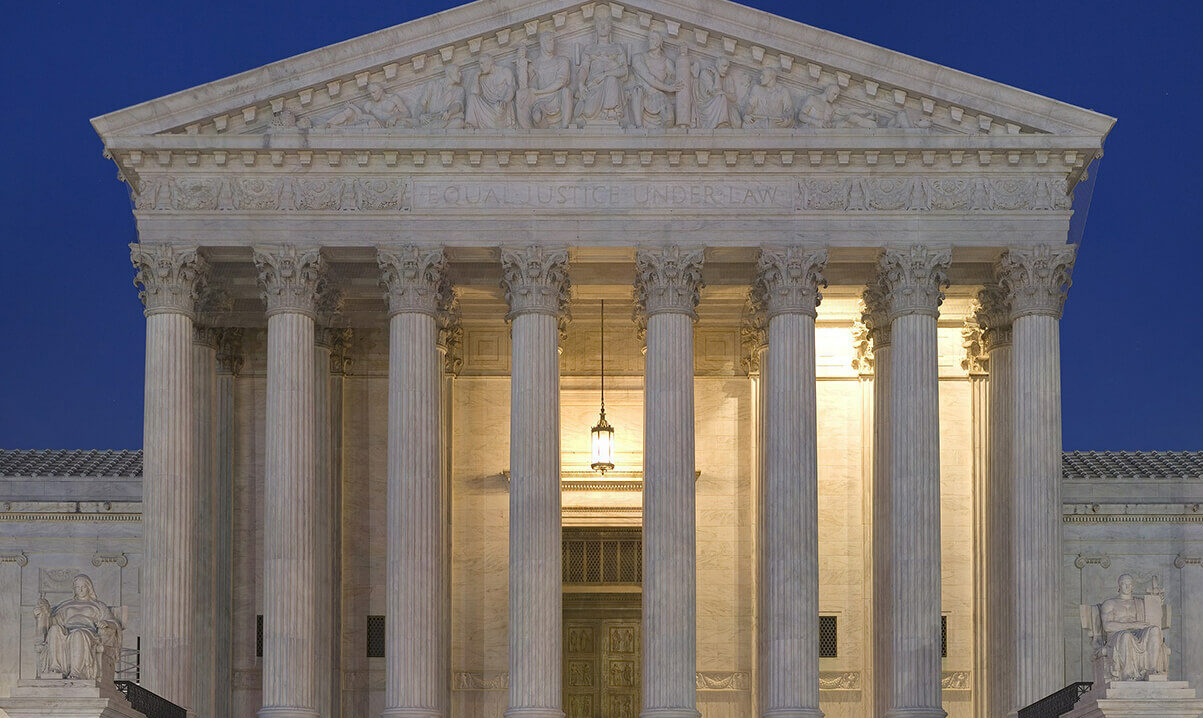
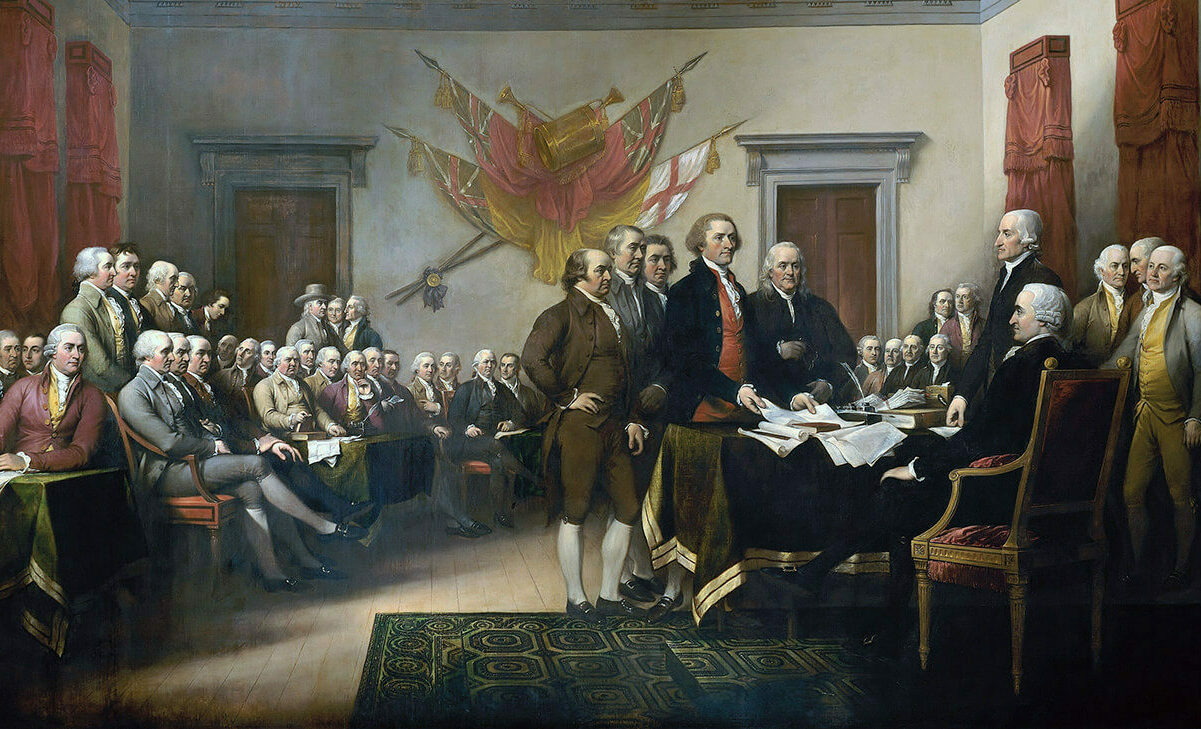
The American Revolution: Was it an Act of Biblical Rebellion?

Was the American Revolution an act of rebellion against God and the Bible? Many today claim that it was. For example, John McArthur (Pastor of Grace Community Church and host of the national radio program “Grace to You”) asserts:

People have mistakenly linked democracy and political freedom to Christianity. That’s why many contemporary evangelicals believe the American Revolution was completely justified, both politically and scripturally. They follow the arguments of the Declaration of Independence, which declares that life, liberty, and the pursuit of happiness are Divinely endowed rights. . . . But such a position is contrary to the clear teachings and commands of Romans 13:1-7. So the United States was actually born out of a violation of New Testament principles, and any blessings God has bestowed on America have come in spite of that disobedience by the Founding Fathers.1

Oklahoma church leader Albert Soto similarly claims:

The Colonists’ act of rebellion flies in the face of [Romans 13:1,2]. Did they overlook this verse? No, these were not men ignorant of Scripture. In fact, they used Scripture to support their cause in the most devious of ways. The deception that prevailed during this period of history was immense. God and Scripture was the vehicle of mobilization that unified the cause, gave it credence, and allowed the Deist leaders at the top to move the masses toward rebellion. Scripture was the Forefathers’ most useful tool of propaganda.2

Others hold the same position.3 In fact, Dr. Daryl Cornett of Mid-America Theological Seminary maintains that the American Revolution occurred because . . .

Deistic and Unitarian tendencies in regards to religion. . . . were of such strength that even orthodox Christians were swept up into rebellion against their governing authorities. . . . Those Christians who supported physical resistance against the tyranny of Britain generally turned to Enlightenment rhetoric for validation, propped up by poor exegesis and application of the Bible.

While such charges certainly reflect the personal views of these critics, they definitely do not accurately reflect the extended theological debates that occurred at the time of the American Revolution. In fact, contrary to Dr. Cornett’s claim that the Founding Fathers “turned to Enlightenment rhetoric for validation” of the American Revolution, the topic of civil disobedience and resistance to governing authorities had been a subject of serious theological inquiries for centuries before the Enlightenment. This was especially true during the Reformation, when the subject was directly addressed by theologians such as Frenchman John Calvin,4 German Martin Luther,5 Swiss Reformation leader Huldreich Zwingli,6 and numerous others.7

It was not strange that such Biblical discussions should have arisen in that period, for many tyrannical civil leaders who felt personally threatened by Biblical Reformation teachings attempted to suppress the spread of those teachings through bloody purges, brutal tortures, and barbaric persecutions – such as when French leaders conducted the famous St. Bartholomew’s Day Massacre in 1572, resulting in 110,000 Reformation followers being killed, or when Henry VIII (1491-1547) similarly utilized public executions and burnings at the stake (a practice continued by Edward VI, Mary, Elizabeth I, and subsequent monarchs). In fact, those civil leaders even deliberately enacted laws specifically prohibiting Reformation adherents from practicing their Scriptural beliefs.

Facing such civil opposition, Reformation leaders turned to the Bible and found much guidance on the subject of civil disobedience and resistance to tyrannical civil authority. In fact, numerous famous heroes of the Bible – including many of those listed in the “Faith Hall of Fame” in Hebrews 11 as well as in other passages – were accorded their special position of honor because they committed civil disobedience (e.g., Daniel, the Three Hebrew Children, the Hebrew midwives, Rahab, Moses, etc.; and the Apostles in Acts 4-5 also declared their willingness to be civilly disobedient against tyrannical commands of civil and religious rulers).

Some of the important theological works on the subject of civil disobedience and resistance published during that time included the 1556 Short Treatise of Politic Power and of the True Obedience which Subjects Owe to Kings and Other Civil Governors by Bishop John Poynet (1516-1566), and the 1579 Vindiciae Contra Tyrannos (A Defense Of Liberty Against Tyrants), published by French Reformation theologian Philippe Duplessis-Mornay (1549-1623) and French Reformation leader Hubert Languet (1518-1581) in response to the horrific St. Bartholomew Day Massacre. Both works undertook an in-depth Biblical examination of how God’s people throughout the Scriptures had responded to civil rulers, including both good and bad rulers. Those theological discussions continued in England during the brutal reign of Henry VIII (1491-1547), the repressive abuses of James I (1566-1625), and the ruthless rule of the Tudor monarchs, including that of Bloody Mary (1516-1558).

In fact, James I, in addition to using brutal persecutions and murders to help combat the theological teachings and writings leveled against him, even ordered Church leaders (recall that James I was the official head of the English Church) to concoct two new “church” doctrines: (1) the Divine Right of Kings (that kings stand in the place of God, representing Him to the people), and (2) Complete Submission and Non-Resistance to Authority (that because kings have an allegedly Divine position, they are not to be resisted – ever, for any reason). Not surprisingly, Reformation followers openly opposed James’ “irrational and unscriptural doctrines,”8 thus prompting him to level even harsher persecutions against them, including mutilation, hanging, and disemboweling.

In 1644, at a time of unlimited monarchies wherein the king was the absolute law, Scottish theologian Samuel Rutherford penned the important theological work Lex Rex, demonstrating that the law is king rather than vice versa. For asserting that Biblical position, Rutherford was eventually charged by British monarchy with high treason but died before he could be tried. Not surprisingly, Lex Rex was banned by the Crown and every person who had a copy was ordered to turn it in to a king’s official.
James II continued the persecution of believers, and not surprisingly, the theological debates also continued. For example, when clergyman Abednego Seller penned a defense of James’ reign, urging complete obedience to the Crown in his Passive Obedience Prov’d to be the Doctrine of the Church of England, from the Reformation to These Times (London, 1689), clergyman Samuel Johnson responded with An Answer to the History of Passive Obedience (London, 1689).

Significantly, the many theological writings penned during these brutal and tyrannical reigns provided the underpinning for the Glorious Revolution of 1688 in which: (1) tyrannical monarchs were set aside; (2) England made its first attempts to separate State from Church and thus end religious tyranny and murders wrongly committed in the name of Christ; and (3) representative government was instituted under William of Orange (1650-1702).

When British autocratic tyranny began to increase toward America preceding the Revolution, those ancient theological debates were renewed. The Quakers and Anglicans adopted the position set forth by King James I (and subsequently embraced by Dr. Cornett, Rev. MacArthur, and others of today’s critics), but the Presbyterians, Lutherans, Baptists, Congregationalists, and most other denominations of that day adopted the theological viewpoint presented by Luther, Calvin, Zwingli, Rutherford, Poynet, Mornay, Languet, Johnson, and other theologians across the centuries. In fact, John Adams specifically recommended the theological works of Poynet (A Short Treatise of Politic Power, 1556) and Duplessis-Mornay and (A Defense Of Liberty Against Tyrants, 1579) to readers who wanted to understand the theological thinking in the American founding.9

On the basis of those numerous historic theological writings (which, significantly, had also been regularly preached from American pulpits for decades prior to the American Revolution10), Americans embraced two specific theological positions that guided their thinking and conduct in the conflict with Great Britain.

The first was that most Christian denominations during the Founding Era held that while they were forbidden to overthrow the institution of government and live in anarchy, they were not required blindly to submit to every law and policy. Those in the Founding Era understood that the general institution of government was unequivocally ordained by God and was not to be overthrown, but that did not mean that God approved every specific government; God had ordained government in lieu of anarchy – He opposed anarchy, rebellion, lawlessness, and wickedness and wanted civil government in society. Therefore, a crucial determination in the colonists’ Biblical exegesis was whether opposition to authority was simply to resist the general institution of government (an institution ordained by God Himself), or whether it was instead to resist tyrannical leaders who had themselves rebelled against God. (The Scriptural model for this position was repeatedly validated when God Himself raised up leaders such as Gideon, Ehud, Jepthah, Samson, and Deborah to throw off tyrannical governments – leaders subsequently praised in Hebrews 11:32 for those acts of faith.) That the Founders held the view that the institution of government is not to be opposed but that tyranny is, is a position clearly evident in their writings.
For example, Founding Father James Otis explained that the only king who had a “Divine right” was God Himself; beyond that, God had ordained that power should rest with the people (c.f., Exodus 18:21, Deuteronomy 1:15-16, etc.):

Has it [government] any solid foundation? – any chief cornerstone. . . ? I think it has an everlasting foundation in the unchangeable will of God. . . . Government. . . . is by no means an arbitrary thing depending merely on compact or human will for its existence. . . . There can be no prescription old enough to supersede the law of nature and the grant of God Almighty, Who has given to all men a natural right to be free; and they have it ordinarily in their power to make themselves so if they please….If both those powers are retained in the hands of the many (where nature seems to have placed them originally), the government is a simple democracy, or a government of all over all. . . . [God is] the only monarch in the universe Who has a clear and indisputable right to absolute power because He is the only one Who is omniscient as well as omnipotent.11

Founding Father John Dickinson (a signer of the Constitution) also affirmed that spiritual view:

Kings or parliaments could not give the rights essential to happiness. . . . We claim them from a higher source – from the King of kings and Lord of all the earth. They are not annexed to us by parchments and seals. They are created in us by the decrees of Providence, which establish the laws of our nature. They are born with us, exist with us, and cannot be taken from us by any human power without taking our lives.12

In fact, Samuel Adams (the “Father of the American Revolution” and a signer of the Declaration of Independence) specifically recommended a study of the Scriptures in order to understand the basis of America’s struggle against a tyrannical king, explaining that:

The Rights of the Colonists as Christians. . . . may be best understood by reading and carefully studying the institutes of the great Law Giver and Head of the Christian Church, which are to be found clearly written and promulgated in the New Testament.13

The Founders clearly believed that they were not in rebellion to God’s ordained institution of civil government; they were only resisting tyranny and not the institution itself. In fact, Rev. Jacob Duché (a supporter of the British) argued from the Bible in favor of the American position, explaining:

Inasmuch as all rulers are in fact the servants of the public and appointed for no other purpose than to be “a terror to evil-doers and a praise to them that do well” [c.f., Rom. 13:3], whenever this Divine order is inverted – whenever these rulers abuse their sacred trust by unrighteous attempts to injure, oppress, and enslave those very persons from whom alone, under God, their power is derived – does not humanity, does not reason, does not Scripture, call upon the man, the citizen, the Christian of such a community to “stand fast in that liberty wherewith Christ….hath made them free!” [Galatians 5:1] The Apostle enjoins us to “submit to every ordinance of man for the Lord’s sake,” but surely a submission to the unrighteous ordinances of unrighteous men, cannot be “for the Lord’s sake,” for “He loveth righteousness and His countenance beholds the things that are just.”14

Despite the Americans embracing what they believed to be a fully-supported Biblical position, some British leaders nevertheless specifically accused the Americans of anarchy and rebellion – a charge to which John Quincy Adams forcefully responded:

[T]here was no anarchy. . . . [T]he people of the North American union and of its constituent states were associated bodies of civilized men and Christians in a state of nature but not of anarchy. They were bound by the laws of God (which they all) and by the laws of the Gospel (which they nearly all) acknowledged as the rules of their conduct.15 (emphasis added)

Declaration signer Francis Hopkinson (also a church musician and choir leader) agreed:

Q. It has often been said, that America is in a state of rebellion. Tell me, therefore, what is Rebellion?
A. It is when a great number of people, headed by one or more factious leaders, aim at deposing their lawful prince without any just cause of complaint in order to place another on his throne.

Q. Is this the case of the Americans?
A. Far otherwise.16

Reflective of the Founding Father’s belief that they were not rebelling against God or resisting ordained government but only tyranny was the fact that the first national motto proposed for America in August 1776 was “Rebellion to tyrants is obedience to God”17 – a summation of the famous 1750 sermon18 preached by the Rev. Dr. Jonathan Mayhew (a principle figure in the Great Awakening).

The second Scriptural viewpoint overwhelmingly embraced by most Americans during the Revolutionary Era was that God would not honor an offensive war, but that He did permit civil self-defense (e.g., Nehemiah 4:13-14 & 20-21, Zechariah 9:8, 2 Samuel 10:12, etc.). The fact that the American Revolution was an act of self-defense and was not an offensive war undertaken by the Americans remained a point of frequent spiritual appeal for the Founding Fathers. After all, Great Britain had attacked America, not vice versa; the Americans had never fired the first shot – not in the Boston Massacre of 1770, the bombing of Boston and burning of Charlestown in 1774, or in the attacks on Williamsburg, Concord, or Lexington in 1775.

Illustrative of this belief was the famous command to the Lexington Minutemen, “Don’t fire unless fired upon!” Yet, having been fired upon without having broken any law, the Americans believed they had a Biblical right to self-defense. In fact, the Rev. Peter Powers, in a famous sermon he preached in front of the Vermont Legislature in 1778,19 specifically noted that America had “taken up arms in its own defense”20 – that she had no initiated the conflict but was only defending herself after being attacked.

The Framers’ writings repeatedly emphasized this point of spiritual appeal. For example, Founding Father Francis Hopkinson made this clear in his 1777 work “A Political Catechism”:

Q. What is war?
A. The curse of mankind; the mother of famine and pestilence; the source of complicated miseries; and the undistinguishing destroyer of the human species.

Q. How is war divided?
A. Into offensive and defensive.

Q. What is the general object of an offensive war? . . .
A. [F]or the most part, it is undertaken to gratify the ambition of a prince, who wishes to subject to his arbitrary will a people whom God created free, and to gain an uncontrolled dominion over their rights and property. . . .

Q. What is defensive war?
A. It is to take up arms in opposition to the invasions of usurped power and bravely suffer present hardships and encounter present dangers, to secure the rights of humanity and the blessings of freedom to generations yet unborn.

Q. Is even defensive war justifiable in a religious view?
A. The foundation of war is laid in the wickedness of mankind . . . . God has given man wit to contrive, power to execute, and freedom of will to direct his conduct. It cannot be but that some, from a depravity of will, will abuse these privileges and exert these powers to the injury of others; and the oppressed would have no safety nor redress but by exerting the same powers in their defense and it is our duty to set a proper value upon and defend to the utmost our just rights and the blessings of life, otherwise a few miscreants [unprincipled individuals] would tyrannize over the rest of mankind, and make the passive multitude the slaves of their power. Thus it is that defensive is not only justifiable but an indispensable duty.

Q. Is it upon these principles that the people of America are resisting the arms of Great Britain, and opposing force with force?
A. Strictly so. . . . And may Heaven prosper their virtuous undertaking!21

Founding Father James Wilson (a signer of both the Declaration and the Constitution, and an original Justice on the U. S. Supreme Court) affirmed:

The defense of one’s self . . . is not, nor can it be, abrogated by any regulation of municipal law. This principle of defense is not confined merely to the person; it extends to the liberty and the property of a man. It is not confined merely to his own person; it extends to the persons of all those to whom he bears a peculiar relation – of his wife, of his parent, of his child. . . . As a man is justified in defending, so he is justified in retaking his property. . . . Man does not exist for the sake of government, but government is instituted for the sake of man.22

According to the Founders’ Biblical understanding, the fact that they were engaged in a defensive action made all the difference – they believed that they could boldly approach God and sincerely seek His aid and blessing in such a situation. In fact, so cognizant were American leaders they that they would account to God for their actions – and so convinced were they that they would be held innocent before Him – that the flag of the Massachusetts Army proclaimed “An Appeal to God,” and the flag of the Massachusetts Navy likewise declared an “Appeal to Heaven.”23

The Continental Congress also issued a manifesto reflecting a similar tone of submission to God:

We, therefore, the Congress of the United States of America, do solemnly declare and proclaim that. . . . [w]e appeal to the God Who searcheth the hearts of men for the rectitude of our intentions; and in His holy presence declare that, as we are not moved by any light or hasty suggestions of anger or revenge, so through every possible change of fortune we will adhere to this our determination.24

Believing that they were thus operating under fundamental Biblical principles, Founding Father Samuel Adams therefore boldly warned British officials:

There is One above us Who will take exemplary vengeance for every insult upon His majesty. You know that the cause of America is just. You know that she contends for that freedom to which all men are entitled – that she contends against oppression, rapine, and more than savage barbarity. The blood of the innocent is upon your hands, and all the waters of the ocean will not wash it away. We again make our solemn appeal to the God of heaven to decide between you and us. And we pray that, in the doubtful scale of battle, we may be successful as we have justice on our side, and that the merciful Savior of the world may forgive our oppressors.25

Significantly, the Americans had been militarily attacked for well over two years before they finally announced a separation; and for eleven years preceding that announcement (from 1765 to 1776), they had diligently pursued reconciliation and not conflict, offering documents such as their famous appeal of 1775 and the May 1776 “Olive Branch Petition,” each of which was submitted in a completely submissive and conciliatory tone. Reflective of this tone was the writing of Founding Father Stephen Hopkins (a signer of the Declaration and Governor of Rhode Island) in which he explained to the British:

We finally beg leave to assert that the first planters of these colonies were pious Christians – were faithful [British] subjects who, with a fortitude and perseverance little known and less considered, settled these wild countries by God’s goodness and their own amazing labors [and] thereby added a most valuable dependence to the crown of Great-Britain; were ever dutifully subservient to her interests; so taught their children that not one has been disaffected to this day but all have honestly obeyed every royal command and cheerfully submitted to every constitutional law; . . . have carefully avoided every offensive measure . . . have never been troublesome or expensive to the mother country; have kept due order and supported a regular government; have maintained peace and practiced Christianity; and in all conditions and in every relation have demeaned themselves as loyal, as dutiful, and as faithful subjects ought; and that no kingdom or state hath, or ever had, colonies more quiet, more obedient, or more profitable than these have ever been.26

The Rev. Dr. John Witherspoon (also a signer of the Declaration) also affirmed:

On the part of America, there was not the most distant thought of subverting the government or of hurting the interest of the people of Great Britain, but of defending their own privileges from unjust encroachment; there was not the least desire of withdrawing their allegiance from the common sovereign [King George III] till it became absolutely necessary – and indeed, it was his own choice.27

Significantly, as Dr. Witherspoon had correctly noted, it was Great Britain who had terminated the entreaties; in fact, during the last two years of America’s appeals, her peaceful pleas were directly met by armed military force. King George III dispatched 25,000 British troops to invade his own Colonies, enter the homes of his own citizens to take their private possessions and goods, and imprison them without trials – all in violation of his own British Common Law, English Bill of Rights, and Magna Carta (centuries old documents that formed the basis of the covenant between British rulers and citizens). Only when those governmental covenants had been broken by their rulers and America had been directly attacked did the Americans respond in self-defense.

On the basis of these two theological understandings (that God Himself had ordained the institution of civil government, and that God had explicitly authorized civil self-defense) the Founding Fathers and the majority of American Christians in that day believed that they were conducting themselves in a manner that was not in rebellion to God or the Scriptures.

Consequently, Dr. Cornett’s claim, as well as those of John MacArthur and other critics, that the Founders “generally turned to Enlightenment rhetoric for validation, propped up by poor exegesis and application of the Bible” merely reflects the side that they have taken in the historic theological debate – the same as if they had been 1776 Quakers arguing against Presbyterians, or Anglicans against Congregationalists. However, just because these modern critics may disagree with the theology of Calvin, Luther, Zwingli, Mornay, Rutherford, and other theologians does not mean that from an historical viewpoint the Americans’ approach was “propped up by poor exegesis and application of the Bible,” or that the Founders “generally turned to Enlightenment rhetoric for validation.” It simply means that today’s critics are either uninformed about the actual historical and theological writings from the Reformation through the Revolution, or that they disagree with the theological positions held by the Founding Fathers, theologians, and ministers of that era, but it does not mean that there was no Biblical basis for the American Revolution.

In fact, the spiritual nature of America’s resistance was so clear even to the British that in the British Parliament:

Sir Richard Sutton read a copy of a letter relative to the government of America from a [Crown-appointed] governor in America to the Board of Trade [in Great Britain] showing that. . . . If you ask an American, “Who is his master?” He will tell you he has none – nor any governor but Jesus Christ.28

Such spiritual declarations – confirming what was readily evident even to America’s opponents – certainly are not consistent with what critics inaccurately claim is the Unitarian, Deistic, and Secular Enlightenment rebellion basis of the American Revolution.


Endnotes

1 Dr. John MacArthur, see his declaration that “the truth of the matter is that our own nation was borne out of a violation of this biblical text.” “The Christian and Government: The Christian’s Responsibility to Government – Part 1,” January 6, 1985, Grace to You, https://www.gty.org/library/sermons-library/45-97/the-christians-responsibility-to-government-part-1.

2 Albert Soto, “The American Revolution Rebellion” A True Church

3 For example, see Dr. Jack Arnold, “Dare You Resist Your Government? Romans 13: 2-4,”IIIM [Third Millennium] Magazine Online, April 16-April 22, 2001, Vol. 3, No. 16, http://cleartheology.com/expo/45Romans/NT.Arnold.Rom.59.html; Dr. John Brug, “The Christian’s Dual Citizenship: Concerning the American Revolution”; Pastor Robert L. Deffinbaugh, “Was the American Revolution Biblically Supported?” August 8, 2008, https://www.bible.org/page.php?page_id=6084; etc.

4 John Calvin, Institutes of the Christian Religion, trans. Henry Beveridge (Edinburgh: Calvin Translation Society, 1845, the first English translation by Thomas Norton was published in London: 1561, the original Latin version was published in 1536), 4:Ch. 20, https://www.ccel.org/ccel/calvin/institutes.vi.xxi.html.

5 Martin Luther, Temporal Authority: To What Extent Should it be Obeyed? (1523), https://www.uoregon.edu/~sshoemak/323/texts/luther~1.htm.

6 Americanized Encyclopedia Britannica (Chicago: Belford-Clarke Co., 1890), 6456-6457, s.v. “Huldreich Zwingli.”

7 John Harty, The Catholic Encyclopedia. (New York: Robert Appleton Company, 1912), “Tyrannicide,” https://www.newadvent.org/cathen/15108a.htm; Rev. John C. Rager, “Catholic Sources and the Declaration of Independence,” The Catholic Mind, Vol. XXVIII, No. 13, July 8, 1930, https://www.catholiceducation.org/en/controversy/common-misconceptions/catholic-sources-and-the-declaration-of-independence.html.

8 J. M. Mathews, The Bible and Civil Government, in a Course of Lectures (New York: Robert Carter & Brothers, 1851), 231.

9 John Adams, A Defense of the Constitutions of Government of the United States of America (Philadelphia: William Young, 1797), III:210-211.

10 See, for example, numerous sermons cited in Alice M. Baldwin, The New England Clergy and the American Revolution (New York: Frederick Ungar, 1958), 22-23, 26, 27-28, 34-37, 65-68, 86-87, 89-95,101-104; sermons by Jonathan Mayhew, A Discourse Concerning the Unlimited Submission and Non-Resistance to the Higher Powers (Boston: 1750), 37-41, Jonathan Ellis, The Justice of the Present War against the French in America, and the Principles that Should Influence us in the Undertaking Asserted: A Sermon Preached to the Soldiers, Sept 22, A.D. 1755. from I Sam. Xviii. 17 (Newport: J. Franklin, 1755), John A. Lidenius, The Lawfulness of Defensive War. A Sermon Preached before the Members of the Church; at Chiechester, in the County of Chester, and Province of Pennsylvania, upon their Association for Defense, February 14, 1756 (Philadelphia: James Chattin, 1756), etc.

11 James Otis, The Rights of the British Colonies Asserted and Proved (Boston: J. Williams 1766), 11, 13, 16-18,

12 John Dickinson, The Political Writings of John Dickinson (Wilmington: Bonsal and Niles, 1801), I:111.

13 Samuel Adams, The Life and Public Services of Samuel Adams, ed. William V. Wells (Boston: Little, Brown, and Company, 1865), I:504.

14 Jacob Duche, The Duty of Standing Fast in our Spiritual and Temporal Liberties, A Sermon Preached in Christ Church, July 7, 1775. Before the First Battalion of the City and Liberties of Philadelphia (Philadelphia: James Humphreys, Jr., 1775), 13-14.

15 John Quincy Adams, An Address Delivered at the Request of the Committee of Arrangements for the Celebrating the Anniversary of Independence at the City of Washington on the Fourth of July 1821 upon the Occasion of Reading The Declaration of Independence (Cambridge: Hilliard and Metcalf, 1821), 28.

16 Francis Hopkinson, The Miscellaneous Essays and Occasional Writings of Francis Hopkinson, Esq. (Philadelphia: T. Dobson, 1792), I:115-116.

17 John Adams, Letters of John Adams, Addressed to His Wife, ed. Charles Francis Adams (Boston: Charles C. Little and James Brown, 1841), I:152, letter to Abigail Adams, August 14, 1776.

18 Jonathan Mayhew, A Discourse Concerning the Unlimited Submission and Non-Resistance to the Higher Powers (New York: Arno Press & The New York Times, 1968, originally printed in Boston: 1750), 37-41.

19 The Rev. Peter Powers, Jesus Christ the true King and Head of Government; A Sermon Preached before the General Assembly of the State of Vermont, on the Day of Their First Election, March 12, 1778 at Windsor (Newbury-Port: Printed by John Michael, 1778).

20 The Rev. Peter Powers, Jesus Christ the true King and Head of Government…..March 12, 1778, 18.

21 Francis Hopkinson, Miscellaneous Essays and Occasional Writings (1792), I:111-115.

22 James Wilson, The Works of the Honorable James Wilson, ed. Bird Wilson (Philadelphia: Bronson and Chuncey, 1804), II:496-497.

23 Journals of the House of Representatives of Massachusetts. 1776 (Watertown, MA: 1776), 51:III:196-197, April 29, 1776.

24 Samuel Adams, The Writings of Samuel Adams, ed. Harry Alonzo Cushing (New York: G. P. Putnam’s Sons, 1904), IV:86, “Manifesto of the Continental Congress,” October 30, 1778.

25 Samuel Adams, Writings, ed. Cushing (1904),  IV:38, to the Earl of Carlisle and Others, July 16, 1778.

26 Stephen Hopkins, The Grievances of the American Colonies Candidly Examined (London: J. Almon, 1766), 45-48.

27 John Witherspoon, The Works of John Witherspoon (Edinburgh: J. Ogle, 1815), IX:250, “The Druid,” Number III.

28 Hezekiah Niles, Principles and Acts of the Revolution in America (Baltimore: William Ogden Niles, 1822), 198.

Unconfirmed Quotations

confirmed

Unconfirmed Quotations
In his 1989 book Myth of Separation, WallBuilders’ founder David Barton argued that the Founding Fathers would be appalled by the government-enforced secularization of the public square that became widespread in the latter half of the twentieth-century. In the course of making his argument, he utilized a number of quotations from America’s Founders that he found in secondary sources on the subject. He carefully cited each quotation. However, he subsequently realized that some of the quotations he used for Myth of Separation came from sources other than original ones.

Scholars and popular historians routinely utilize secondary sources or take quotations from these sources,1 but when David returned to this subject for his 1996 book Original Intent, he decided to only rely on quotations that could be found in original primary source material. In an effort to be thoroughly transparent, he placed the handful of secondary quotations from Myth of Separation on an “Unconfirmed Quotations” list which he posted on WallBuilders’ website. At that time, he challenged writers on all sides of the debate over religion in the Founding Era to stop relying on secondary sources and quotations from later eras and instead to utilize original sources.

Although many people, including several respected academics, have told David that they admire his honesty and transparency, others have attempted to use this practice against him. For instance, in a recent critique of David’s work, Professor Gregg Frazer of The Master’s College writes:

Having been confronted over the use of false quotes, Barton was forced to acknowledge their illegitimacy in some way on his website. There, he describes them as “unconfirmed” – as if there is some doubt about their legitimacy. In a computer age with search capabilities, we know that these quotes are false – the fact that they are listed as “unconfirmed” reflects a stubborn attempt to hold onto them and to suggest to followers that they might be true. That is made worse by the fact that under these “unconfirmed” quotes are paragraphs maintaining that the bogus quote is something that the person might have said.2

What an interesting reward for trying to be honest and transparent.

As stated in the piece “Taking on the Critics,” David was not confronted by any individual or group about these quotes. To the contrary, he was the first to step forward and challenge all sides in the historical debate over religion in the Founding to “raise the bar” and use only quotations that could be verified by primary sources.

Calling these unconfirmed quotes “bogus” implies that they were simply made up by David. Yet each and every one of them can be found in secondary sources, which David cited in his earlier works; and many academics, especially on the secularist side, continue to rely on secondary sources for their authorities. But Frazer and others suggest that David and WallBuilders live in a fantasy world where they stubbornly engage in wishful thinking that these unconfirmed quotations are accurate. However, Frazer ignores the fact that WallBuilders has been able to confirm some quotations on our original list. The now Confirmed Quotations are listed below, followed by those that remain unconfirmed in original documents.

Original sources for these latter quotes may yet be found. After all, James Madison’s detached memoranda, much beloved by secularists, did not surface until 1946. And original letters and documents from Founders are still being discovered today in dusty archives, private estates, and other uncatalogued sources. Additionally, existing collections are still being digitized and regularly added to the web, thus steadily increasing the field of searchable materials for these unconfirmed quotes. While WallBuilders has now located original sources for several of the quotes (see below), we continue to recommend that individuals refrain from using those that still remain on the Unconfirmed list until such time that an original primary source may be found; or if using these quotes, clearly identify that they come from a secondary and not a primary source.

Confirmed Quotations
#1: Benjamin Franklin

“Whosoever shall introduce into public affairs the principles of primitive Christianity will change the face of the world.”
Benjamin Franklin

This particular quote has been used in many works since the 1970s that seek to remind Americans of our religious heritage.3 It originally appeared on WallBuilders’ “Unconfirmed” list, but we are now able to report that we have found an early primary source that attributes this message to Franklin.

In initial attempts to document this quote, David found it in George Bancroft’s 1866 History of the United States, which stated:

He [Franklin] remarked to those in Paris who learned of him the secret of statesmanship: “He who shall introduce into public affairs the principles of primitive Christianity will change the face of the world.”4

This is no insignificant source, for Bancroft is considered “The Father of American History.” He is most famous for his thorough, systematic history of the nation published in ten volumes from 1854-1878. Contrary to the claims of Gregg Frazer and other critics, David did not simply invent this quote. It appeared in one of the greatest histories of the United States ever written! But adhering to his own standards, David stopped using this quote until it could be confirmed in an original source. However, such a source was recently discovered.

Before turning to the quotation, it may be useful to provide some context. In 1776 Franklin was sent by America as an ambassador to France, a position he held until 1785. He was beloved by the French, and he offered them many useful and friendly recommendations, including political advice for those who would listen.5 Shortly after Franklin’s death in 1790, Jacques Mallet Du Pan, a French journalist and political leader, published his historical memoirs, in which he reported:

Franklin often told his disciples in Paris that whoever should introduce the principles of primitive Christianity into the political state would change the whole order of society.6

While this 1793 work does not contain the word-for-word quotation regularly cited today, its similarity is obvious and it clearly communicates the main idea in the quotation. One reason for the difference may be that because the work was written in French, there are variations in how a particular translator renders that statement into English.7

It may be objected that a second-hand account of what someone said is not as reliable as, say, a letter clearly penned by Franklin in which he writes the same quotation. We agree. And yet students of the American founding repeatedly utilize such sources. For instance, speeches made in the Federal Convention of 1787 are regularly quoted as if they were directly spoken by particular delegates, although in most (but not all) cases what is being quoted is James Madison’s notes of those speeches.

Those who wish to deny America’s Christian heritage will undoubtedly brush off Du Pan’s account of Franklin’s views. Yet those interested in an accurate account of religion in the American Founding cannot afford to be so dismissive of this important find.


Confirmed Quotations
#2: Thomas Jefferson

“I have always said and always will say that the studious perusal of the Sacred Volume will make us better citizens.”
Thomas Jefferson

This quote, also used in numerous modern works,8 appears in an 1869 book edited by Samuel W. Bailey;9 but because it did not appear in Jefferson’s works or writings, and because the occasion in which it might have been spoken by him could not be identified, it was left as unconfirmed. Its source, however, has now been found: the writings of the great Daniel Webster (1782-1852).

Webster was part of the second generation of American statesmen. Born at the end of the American Revolution, he grew up with the speeches of Presidents George Washington, John Adams, Thomas Jefferson, and James Madison. Following his own entry into politics, he became a leading national figure, serving almost a decade in the U. S. House, nearly two decades in the U. S. Senate, and being Secretary of State for three different Presidents.

Webster gained a reputation as an exceptional orator. He was considered the greatest attorney in his generation and personally argued and won numerous cases before the U. S. Supreme Court.10 His strong commitment to the principles of law and the Constitution earned him the title “The Defender of the Constitution.”

In 1852, Webster described a conversation he had with Thomas Jefferson, reporting:

Many years ago I spent a Sabbath with Thomas Jefferson at his residence in Virginia. It was in the month of June, and the weather was delightful. While engaged in discussing the beauties of the Bible, the sound of the bell broke upon our ears, when, turning to the sage of Monticello, I remarked, “How sweetly – how very sweetly sounds that Sabbath bell!” The distinguished statesman for a moment seemed lost in thought, and then replied: “Yes, my dear Webster; yes, it melts the heart, it calms the passions, and makes us boys again.” . . . “[British statesman Edmund] Burke,” said he, “never uttered a more important truth than when he exclaimed that a ‘religious education was the cheap defense of nations’.” “Raikes [the founder of the Sunday School movement in England],” said Mr. Jefferson, “has done more for our country than the present generation will acknowledge. Perhaps when I am cold, he will obtain his reward. I hope so – earnestly hope so. I am considered by many, Mr. Webster, to have little religion; but now is not the time to correct errors of this sort. I have always said, and always will say, that the studious perusal of the Sacred Volume will make better citizens, better fathers, and better husbands.”11

So, while the quote is not found in Thomas Jefferson’s personal writings, it was recorded by a respected eye-witness. Because this quote fits well with Jefferson’s numerous attempts to promote the study of the Bible (thoroughly documented in The Jefferson Lies), it seems reasonable to attribute it to him.


Confirmed Quotations
#3: John Quincy Adams

“The highest glory of the American Revolution was this: it connected, in one indissoluble bond, the principles of civil government with the principles of Christianity.”
John Quincy Adams

This quote has also had wide circulation in recent decades.12 It appeared as early as 1860 in John Wingate Thornton’s The Pulpit of the American Revolution, which reprinted a number of sermons preached during the Revolution. In that work, Thornton stated:

Thus the church polity [form of government] of New England begat like principles in the state. The pew and the pulpit had been educated to self-government. They were accustomed “TO CONSIDER.” The highest glory of the American Revolution, said John Quincy Adams, was this: it connected, in one indissoluble bond, the principles of civil government with the principles of Christianity.13

Initially, this quote was not found in any of Adams’ own writings; and it seemed unlikely that Thornton was reporting what Adams had personally told him, so we therefore placed it on the Unconfirmed list. We have now found the origin of this quote. It turns out that Thornton had simply, but accurately, summarized an opening section from one of Adams’ famous published orations: his 1837 Fourth of July address at Newburyport, Massachusetts.

Adams began that discourse by observing that Christmas and the Fourth of July were America’s two most-celebrated holidays, and that the two were connected. He queried of his audience that day:

Why is it that next to the birthday of the Savior of the World, your most joyous and most venerated festival returns on this day [July 4th]? . . . Is it not that in the chain of human events, the birthday of the nation is indissolubly linked with the birthday of the Savior? That it forms a leading event in the progress of the Gospel dispensation? Is it not that the Declaration of Independence first organized the social compact on the foundation of the Redeemer’s mission upon earth? That it laid the corner stone of human government upon the first precepts of Christianity, and gave to the world the first irrevocable pledge of the fulfillment of the prophecies, announced directly from Heaven at the birth of the Savior and predicted by the greatest of the Hebrew prophets six hundred years before?14

Comparing Adams’ original 1837 quotation with Thornton’s 1860 summation of it, one immediately sees the origin of Thornton’s statement. He had accurately related the essence of Adams’ message; and while he never presented his statement as being an exact quotation from Adams, those who used Thornton’s work in subsequent generations assumed that it was. Consequently, this Unconfirmed Quotation originally attributed to Adams can now be replaced with his exact statement as delivered in his 1837 speech.


Confirmed Quotations
#4: Supreme Court

“Our laws and our institutions must necessarily be based upon and embody the teachings of the Redeemer of mankind. It is impossible that it should be otherwise. In this sense and to this extent, our civilizations and our institutions are emphatically Christian.”
Supreme Court

This quotation, too, appeared in numerous modern works15 and was identified as being a quote from the “Supreme Court.” Those who used the quote assumed that it was from the U. S. Supreme Court, but when searching the Court’s opinions, it was not found, even though it was consistent with the tone and rhetoric of the U. S. Supreme Court’s “Christian nation” decision in Church of the Holy Trinity v. United States (1892).16 Not finding the quote in that case, the next thought was that it perhaps appeared in Supreme Court Justice David Brewer’s book subsequently written on the same subject after he had penned the language in the Court’s unanimous decision in the Holy Trinity case. While he definitely used phrases similar to this quotation,17 it did not appear in his work. But after more than a decade of searching, this quote was finally found; and it definitely was from a ruling by a “Supreme Court” – the 1883 Illinois Supreme Court!18 This quote is now authenticated and can be cited, providing that it is attributed to the proper court.


Confirmed Quotations
#5: Samuel Adams

“A general dissolution of principles and manners will more surely overthrow the liberties of America than the whole force of the common enemy. While the people are virtuous they cannot be subdued; but when once they lose their virtue they will be ready to surrender their liberties to the first external or internal invader.”
Samuel Adams

This quote was found in multiple modern works about the Founding Fathers and the Founding Era.19 But because it lacked primary source documentation, this statement was held as suspect. But eventually this exact quote was found in a letter from Samuel Adams to fellow patriot James Warren on February 12, 1779,20 and thus it has been removed from the Unconfirmed list and placed it on the Confirmed list.

Unconfirmed Quotations
#1: George Washington

“It is impossible to rightly govern the world without God and the Bible.”
George Washington

This quotation, used in numerous modern works,21 also appeared in a number of books in the 1800s and early 1900s.22 It is not found in any modern, critical edition of Washington’s writings, but it appears as early as 1835, when James K. Paulding (a Secretary of the Navy) reports Washington as saying:

It is impossible to account for the creation of the universe without the agency of a Supreme Being. It is impossible to govern the universe without the aid of a Supreme Being.23

The similarity between this and the unconfirmed quotation is obvious, and a subsequent paraphrase of these words could have generated the quote in question. It is unlikely that Paulding actually heard Washington say these words, but this early record should not be lightly dismissed. And the tone and rhetoric of this currently unconfirmed quotation is consistent with Washington’s numerous statements on religion. For an extensive selection of his religious sayings, see:

  • Maxims of Washington: Political, Social, Moral, and Religious, John F. Schroeder, editor (New York: D. Appleton and Company, 1855). This work has been reprinted multiple times since 1855, including by The Mount Vernon Ladies Association in 1942. However, due to unwise editorial changes made by the modern editor, John Riley, in the most recent edition, the current version is considered unreliable. We therefore highly recommend older versions.
  • William J. Johnson, George Washington The Christian (New York: The Abingdon Press, 1919; reprinted in 1976 by Mott Media, and in 1992 by Christian Liberty Press).
  • George Washington, The Writings of George Washington, Jared Sparks, editor (Boston: Hilliard, Gray and Co., 1837), Vol. 12, pp. 399-411, “The Religious Opinions and Habits of Washington.”

There are numerous indications of Washington’s lifelong conviction concerning the inseparability of God, and specifically Christianity, from both private and public life. Notice some of the many examples in which he expressed this belief:

To his brother-in-law:

I was favored with your epistle [letter] wrote on a certain 25th of July when you ought to have been at church, praying as becomes every good Christian man who has as much to answer for as you have. Strange it is that you will be so blind to truth that the enlightening sounds of the Gospel cannot reach your ear, nor no examples awaken you to a sense of goodness. Could you but behold with what religious zeal I hye [i.e., hie – that is, hasten] me to church on every Lord’s Day, it would do your heart good, and fill it, I hope, with equal fervency.24

To his military troops:

While we are zealously performing the duties of good citizens and soldiers, we certainly ought not to be inattentive to the higher duties of religion. To the distinguished character of Patriot, it should be our highest glory to add the more distinguished character of Christian.25>

To a church:

I readily join with you, that “while just government protects all in their religious rights, true religion affords to government its surest support.”26

To the nation:

Of all the dispositions and habits which lead to political prosperity, religion and morality are indispensable supports. In vain would that man claim the tribute of patriotism who should labor to subvert these great pillars of human happiness – these firmest props of the duties of man and citizens. The mere politician, equally with the pious man, ought to respect and to cherish them. A volume could not trace all their connections with private and public felicity.27

There is certainly abundant evidence to support thesis of the quotation in question as generally consistent with Washington’s beliefs, although the exact wording of this quotation currently remains unconfirmed.

Unconfirmed Quotations
#2: Patrick Henry

“It cannot be emphasized too strongly or too often that this great nation was founded, not by religionists, but by Christians; not on religions, but on the gospel of Jesus Christ!”
Patrick Henry

This quote, which has been utilized in numerous works over recent decades;28 seems to have first appeared in The Virginia magazine in 1956.29 Few could dispute that this quotation is consistent with Henry’s life and character.

Henry’s dedication to the Christian faith, and even his use of what today would be considered evangelical rhetoric, is seen repeatedly throughout his life. For example, on one occasion when attacked by critics who attempted to weaken his standing by publicly diminishing his religiosity, he told his daughter:

Amongt other strange things said of me, I hear it is said by the deists that I am one of their number; and, indeed, that some good people think I am no Christian. This thought gives me much more pain than the appellation of Tory [i.e., being called a traitor]; because I think religion of infinitely higher importance than politics; and I find much cause to reproach myself that I have lived so long and have given no decided and public proofs of my being a Christian. But, indeed, my dear child, this is a character which I prize far above all this world has, or can boast.30

Henry repeatedly demonstrated his firm commitment to Christianity. For example, not only did he distribute Soame Jennings’ 1776 book, View of the Internal Evidence of Christianity31 but he also made clear that he “looked to the restraining and elevating principles of Christianity as the hope of his country’s institutions.”32 And when Thomas Paine penned his Age of Reason attacking religion in general and Christianity and the Bible in particular, Henry wrote a refutation of what he described as “the puny efforts of Paine.”33 But after reading Bishop Richard Watson’s Apology for the Bible written against Paine, Henry deemed that work sufficient and decided not to publish his own.34

When Henry passed away in 1799, his personal legal documents and his will were opened and publicly read by his executors. Included with his will was an original copy of the 1765 Stamp Act Resolutions (early precursors to the American Revolution) passed by the Virginia Legislature, of which Henry had been a member. On the back of those resolutions Henry penned a handwritten message, knowing it would be read at his death. He recounted the early colonial resistance to British policy that eventually resulted in the American Revolution, and then concluded with this warning:

Whether this [the American War for Independence] will prove a blessing or a curse will depend upon the use our people make of the blessings which a gracious God hath bestowed on us. If they are wise, they will be great and happy. If they are of a contrary character, they will be miserable. Righteousness alone can exalt them as a nation [Proverbs 14:34]. Reader! – whoever thou art, remember this! – and in thy sphere practice virtue thyself and encourage it in others. P. Henry35

And in his will, after having dispersed his earthy possessions to his family, he told them:

This is all the inheritance I can give my dear family. The religion of Christ can give them one which will make them rich indeed.36

There are many similar quotes; so while the specific statement above is currently unconfirmed, it is certainly consistent with the tone and rhetoric of other of Henry’s declarations about Christianity.

Unconfirmed Quotations
#3: James Madison

“We have staked the whole future of American civilization, not upon the power of government, far from it. We have staked the future of all of our political institutions upon the capacity of each and all of us to govern ourselves . . . according to the Ten Commandments of God.”
James Madison

This quotation, like the others in this list, has been used in numerous modern works as well as works dating back to 1939.37 These words have not been found in any of Madison’s writings. However, the key thought of the necessity of individual self-government according to a Biblical standard is reflective of Madison’s expressed beliefs.

For example, in Federalist #39, Madison speaks of “that honorable determination which animates every votary of freedom to rest all our political experiments on the capacity of mankind for self-government.”38 He also spoke of Christianity as “the religion which we believe to be of Divine origin”39 and as “the best and purest religion.”40 It is consistent that he would favorably view God’s standards as the measure for the governance and guidance of society. In fact, he declared:

[T]he belief in a God All-Powerful, wise, and good is so essential to the moral order of the world and to the happiness of man that arguments which enforce it cannot be drawn from too many sources nor adapted with too much solicitude to the different characters and capacities to be impressed with it.41

Despite other quotations consistent with the emphasis of the one in question above, this specific quotation remains unconfirmed, and it should not be used unless it can be verified in an original primary source document.

Summary

Christians, of all people, should be known for their honesty. In David’s early works on religion and the Founders, he used quotations that he had every reason to believe were accurate. When he began to have questions about the validity of a few of these quotations, he publically acknowledged that they may not be accurate. Since 1996 he has been able to confirm some of these quotations, and has ceased to use those that he has not been able to confirm.

As the historical debates continue over the relation of church and state and the faith of the Founding Fathers, all involved should pursue the highest standard of scholarship. Anyone writing on this subject is encouraged to document their sources, and to always take quotations from primary rather than secondary sources.


Endnotes

1 See, for instance, Mark A. Noll, Nathan O. Hatch, and George M. Marsden, The Search for Christian America (Westchester: Crossway Books, 1983), passim and especially 73 (citing various secondary source to support the profoundly erroneous assertion that “The God of the founding fathers was a benevolent deity, not far removed from the God of eighteenth-century Deists or nineteenth century Unitarians.”); John Fea, Was America Founded as a Christian Nation: A Historical Introduction (Louisville: Westminster John Knox Press, 2011),118-19, 258 (quoting John Calvin from Gregg Frazer’s 2004 doctoral dissertation rather than the readily available Institutes of the Christian Religion); and, worst of all, Isaac Kramnick and R. Laurence Moore, The Godless Constitution: The Case Against Religious Correctness (New York: W.W. Norton, 1996) (within which the authors do not feel compelled to cite any sources whatsoever!).

2 From a hostile written review of David Barton and WallBuilders written by Gregg Frazer at the request of Jay Richards. That written critique was subsequently passed on to David Barton on August 13, 2012, by the Rev. James Robison, to whom Jay Richards had distributed it.

3 See, for example, Peter Marshall and David Manuel, The Light and the Glory (NJ: Fleming H. Revell Co., 1977), 370; Stephen McDowell, America’s Providential History (Charlottesville, VA: Providence Foundation, 1989), 1; William Federer, America’s God and Country: Encyclopedia of Quotations (Coppell, TX: Fame Publishing, Inc., 1994), 246; Martin H. Manser, Westminster Collection of Christian Quotations (Westminster: John Knox Press, 2001), 151; Classics of American Political and Constitutional Thought, Scott J. Hammond, Kevin R. Hardwick, Howard L. Lubert, editors (Indianapolis: Hackett Publishing Company, 2007), II:228.

4 George Bancroft, History of the United States, From the Discovery of the American Continent (Boston: Little, Brown and Company, 1866), IX:492.

5 See, for example, Benjamin Franklin, Two Tracts: Information to Those Who Would Remove to America. And, Remarks Concerning the Savages of North America (London: 1784), 3-24, “Information to Those Who Would Remove to America.”

6 M. Mallet Du Pan, Considerations on the Nature of the French Revolution, and on the Causes which Prolong its Duration Translated from the French (London: J. Owen, 1793), 31.

7 The original reads: “Francklin répéta plus d’une fois à ses éleves de Paris, que celui qui transporteroit dans l’état politique les principes du christianisme primitif, changeroit la face de la société.” Jacques Mallet du Pan, Considerations Sur La Nature De La Révolution De France (Londres: Chez Emm. Flon, 1793), 28.

8 See, for example, Stephen McDowell, America’s Providential History (Charlottesville, VA: Providence Foundation, 1989), 178; John Vernon McGee, Thru the Bible (Nashville, TN: Thomas Nelson, 1991; originally printed in 1975), no page number; Dag Heward-Mills, BASIC Theology (Florida: Xulon Press, 2011), 29.

9 Homage of Eminent Persons to The Book, ed. Samuel W. Bailey (New York: Rand, Avery, & Frye, 1869), 67.

10 See, for example, Joseph Banvard, Daniel Webster: His Life and Public Services (Chicago: The Werner Co, 1895), 131-132.

11 Daniel Webster, The Writings and Speeches of Daniel Webster Hitherto Uncollected (Boston: Little, Brown, & Company, 1903), IV:656-657, to Professor Pease on June 15, 1852; originally appearing in The National Magazine: Devoted to Literature, Art, and Religion. July to December, 1858, ed. James Floy (New York: Carolton & Porter, 1858), XIII:178-179, August, 1858.

12 See, for example, Stephen McDowell, America’s Providential History (Charlottesville, VA: Providence Foundation, 1989), 146; William Federer, America’s God and Country: Encyclopedia of Quotations (Coppell, TX: Fame Publishing, Inc., 1994), 18; William Federer, Treasury of Presidential Quotes (St. Louis, MO: Amerisearch, 2004), 459; D. James Kennedy and Jerry Newcombe, How Would Jesus Vote? A Christian Perspective on the Issues (New York: Random House, 2010), 28.

13 John Wingate Thornton, The Pulpit of the American Revolution (Boston: Gould And Lincoln, 1860), xxix.

14 John Quincy Adams, An Oration Delivered Before the Inhabitants of the Town of Newburyport, at Their Request, on the Sixty-first Anniversary of the Declaration of Independence, July 4th, 1837 (Newburyport: Charles Whipple, 1837), 5-6.

15 See, for example, Stephen McDowell, America’s Providential History (Charlottesville, VA: Providence Foundation, 1989), 178; William Federer, America’s God and Country: Encyclopedia of Quotations (Coppell, TX: Fame Publishing, Inc., 1994), 72; Joseph P. Hester, Ten Commandments: A Handbook of Religious, Legal and Social Issues (Jefferson, NC: McFarland & Company, 2002), 138l.

16 For example, “These, and many other matters which might be noticed, add a volume of unofficial declarations to the mass of organic utterances that this is a Christian nation.” Church of the Holy Trinity v. United States, 143 U. S. 457, 471 (1892).

17 Justice David J. Brewer, author of the 1892 Holy Trinity opinion, wrote a 1905 book, The United States: A Christian Nation. Brewer opened his work with these words: “This republic [the United States] is classified among the Christian nations of the world. It was so formally declared by the Supreme Court of the United States. . . . Nevertheless, we constantly speak of this republic as a Christian nation – in fact, as the leading Christian nation of the world.” David J. Brewer, The United States A Christian Nation (Philadelphia: John C. Winston Company, 1905), 11-12.

18 Richmond v. Moore, 107 Ill. 429, 1883 WL 10319 (Ill.), 47 Am.Rep. 445 (Ill. 1883).

19 See, for example, Stephen McDowell, America’s Providential History (Charlottesville, VA: Providence Foundation, 1989), 179; Stephen McDowell and Mark Beliles, Liberating the Nations: Biblical Principles of Government, Education, Economics, & Politics (Charlottesville, VA: Providence Foundation, 1995), 14; William Federer, America’s God and Country: Encyclopedia of Quotations (Coppell, TX: Fame Publishing, Inc., 1994), 23; Peter Marshall and David B. Manuel, Jr., The Light and the Glory: 1492-1793 (Grand Rapids, MI: Fleming H. Revell, 1977; revised 2009), 11; Ira Stoll, Samuel Adams: A Life (New York: Simon and Schuster, 2008), 203.

20 Samuel Adams, The Writings of Samuel Adams, ed. Harry Alonzo Cushing (New York: G. P. Putnam’s Sons, 1905), IV:124, to James Warren on February 12, 1779.

21 See, for example, William J. Federer, America’s God and Country: Encyclopedia of Quotations (Coppell, TX: Fame Publishing Inc., 1994), 660; Henry H. Halley, Halley’s Bible Handbook (Grand Rapids: Zondervan, 2008; originally printed 1927), 18, “Notable Sayings About the Bible”; Martin H. Manser, Westminster Collection of Christian Quotations (Westminster: John Knox Press, 2001), 152.

22 See, for example, Howard H. Russell, A Lawyer’s Examination of the Bible (New York: Fleming H. Revell, 1893), 40, The Bible in New York. A Quarterly Review of the New York Bible Society (New York: November 1910), III:9:8, “What Some Men Have Said About the Bible,” Samuel Strahl Lappin, The Training of the Church: A Series of Thirty-Five Lessons Designed to Aid Those Who Would Know More, Do More and Be More in the Services of Jesus Christ (Cincinnati: Standard Publishing Company, 1911), 26, The Bible Champion, Jay Benson Hamilton, editor (New York: Bible League of North America, 1914), XVII:2:85 February 1914; Thomas M. Iden, The Upper Room Bulleton: 1920-1921 (Ann Arbor, MI: Ann Arbor Press, 1921), VII:3:35, October 23, 1920, “United States Presidents and the Bible,” John Calvin Leonard, Herald and Presbyter (Cincinnati: 1921), XCII:38:3, September 21, 1921.

23 James K. Paulding, A Life of Washington (New York: Harper & Brothers, 1835), II:209.

24 George Washington, The Writings of George Washington, ed. John C. Fitzpatrick (Washington, D. C.: U. S. Government Printing Office, 1940), 37:484, to Burwell Bassett, August 28, 1762.

25 Washington, Writings of Washington, ed. Fitzpatrick (1934), 11:342-343, General Orders of May 2, 1778.

26 Washington, Writings of Washington, ed. Fitzpatrick (1939), 30:432 n., from his address to the Synod of the Dutch Reformed Church in North America in October, 1789.

27 George Washington, Address of George Washington, President of the United States . . . Preparatory to His Declination (Baltimore: George and Henry S. Keatinge, 1796), 22-23.

28 See, for example, Stephen McDowell, America’s Providential History (Charlottesville, VA: Providence Foundation, 1989), 184; William Federer, America’s God and Country: Encyclopedia of Quotations (Coppell, TX: Fame Publishing, Inc., 1994), 289; Joseph P. Hester, The Ten Commandments: A Handbook of Religious, Legal and Social Issues (NC: McFarland & Company, Inc., 2003), 137; Newt Gingrich, Vince Haley, A Nation Like No Other: Why American Exceptionalism Matters (Houston: Regency Publishing, 2011), 76.

29 See, for example, information at Snopes.com.

30 S. G. Arnold, The Life of Patrick Henry (Auburn: Miller, Orton & Mulligan, 1854), 250, to his daughter Betsy on August 20, 1796.

31 Patrick Henry, Life, Correspondence and Speeches, ed. William Wirt Henry (New York: Charles Scribner’s Sons, 1891), II:490.

32 Henry, Life, Correspondence, ed. Henry (1891), II:621.

33 Arnold, Life of Henry (Auburn and Buffalo: Miller, Orton and Mulligan, 1854), 250, to his daughter Betsy on August 20, 1796.

34 George Morgan, The True Patrick Henry (Philadelphia: J. B. Lippincott Company, 1907), 366 n. See also, Bishop William Meade, Old Churches, Ministers, and Families of Virginia (Philadelphia: J. B. Lippincott Company, 1857), II:12.

35 Henry, Life, Correspondence, ed. Henry (1891), I:81-82, from a handwritten endorsement on the back of the paper containing the resolutions of the Virginia Assembly in 1765 concerning the Stamp Act.

36 From a copy of Henry’s Last Will and Testament, dated November 20, 1798, obtained from Patrick Henry Memorial Foundation, Red Hill, Brookneal, VA.

37 See, for example, Harold K. Lane, Liberty! Cry Liberty! (Boston: Lamb and Lamb Tractarian Society, 1939), 32-33; Frederick Nyneyer, First Principles in Morality and Economics: Neighborly Love and Ricardo’s Law of Association (South Holland; Libertarian Press, 1958), 31; Rus Walton, Biblical Principles of Importance to Godly Christians (New Hampshire: Plymouth Rock Foundation, 1984), 361; Stephen McDowell and Mark Beliles, Principles for the Reformation of the Nations (Charlottesville: Providence Press, 1988), 102; Stephen McDowell and Mark Beliles, The Spirit of the Constitution (Charlottesville: Providence Press, n.d.); Stephen McDowell and Mark Beliles, America’s Providential History (Charlottesville: Providence Press, 1989), 263-264; William Federer, America’s God and Country: Encyclopedia of Quotations (Coppell, TX: Fame Publishing, Inc., 1994), 411; Gary DeMar, God and Government: A Biblical and Historical Study (Atlanta: American Vision Press, 1982), 1:137-138.

38 Alexander Hamilton, John Jay, and James Madison, The Federalist, on the New Constitution Written in 1788 (Philadelphia: Benjamin Warner, 1818), 203-204, James Madison, Number 39.

39 James Madison, A Memorial and Remonstrance, on the Religious Rights of Man; Written in 1784-5, At the Request of the Religious Society of Baptists in Virginia (Washington City: S. C Ustick, 1828),5-6.

40 Religion and Politics in the Early Republic: Jasper Adams and the Church-State Debate, ed. Daniel L. Dreisbach (Kentucky: University Press of Kentucky, 1996), 117, letter from James Madison, September, 1833.

41 James Madison, “The James Madison Papers,” Library of Congress, to Rev. Frederick Beasley on November 20, 1825.

Unconfirmed Quotation: Franklin Principles of Primitive Christianity

confirmed

Unconfirmed Quotation

“Whosoever shall introduce into public affairs the principles
of primitive Christianity will change the face of the world.”
– Benjamin Franklin

This particular quotation above has been used in many works since the 1970s that seek to remind Americans of our religious heritage.1 In fact, David used it in the Myth of Separation (1989), but around 1995, when he was preparing Original Intent and was unable to find this quote in any primary source, he stopped using it and WallBuilders put it on our “Unconfirmed Quotations” list. But we are now able to report that we have found an early primary source that does attribute the core of this quotation to Franklin.

Before we get to the quote, we would remind readers that in the early 1990s, David challenged historical writers on all sides of the debate over religion in the Founding Era to stop relying on secondary sources and quotations from later Eras and to instead utilize original sources. As an act of good faith, David went through his earlier works and not only removed quotations that could not be verified from original sources, he publicly announced them on WallBuilders’ website. Although many people, including several respected academics, have told him that they admire his honesty and transparency, others have attempted to use this practice against him. For instance, in a recent critique of David’s work, Professor Gregg Frazer of The Master’s College writes:

Having been confronted over the use of false quotes, Barton was forced to acknowledge their illegitimacy in some way on his website. There, he describes them as “unconfirmed” – as if there is some doubt about their legitimacy. In a computer age with search capabilities, we know that these quotes are false – the fact that they are listed as “unconfirmed” reflects a stubborn attempt to hold onto them and to suggest to followers that they might be true. That is made worse by the fact that under these “unconfirmed” quotes are paragraphs maintaining that the bogus quote is something that the person might have said.2

So much for honesty and transparency.

As we clearly state in our piece “Taking on the Critics”, we were not confronted by any individual or group about these quotes. To the contrary, we were the first to step forward and challenge all sides in the historical debate over religion in the Founding to “raise the bar” and use only quotations that could be verified by primary sources.

Calling these unconfirmed quotes “bogus” implies that they were simply made up by David. Yet each and every one of them can be found in reputable secondary sources such as George Bancroft’s A History of the United States (1866).

Frazer suggests that David and WallBuilders live in a fantasy world where they stubbornly engage in wishful thinking that these unconfirmed quotations are accurate. He ignores the fact that we have been able to confirm numerous of these quotations. We clearly list and document this fact.

With respect to the above quotation from Franklin, David originally cited it to works from the 1970s (see footnote 1 above). But in searching backwards to find a primary source, he found it in George Bancroft’s 1866 History of the United States, which stated:

He [Franklin] remarked to those in Paris who learned of him the secret of statesmanship: “He who shall introduce into public affairs the principles of primitive Christianity will change the face of the world.”3

This is no insignificant source, for Bancroft is considered “The Father of American History.” He is most famous for his thorough, systematic history of the nation published in ten volumes from 1854-1878). David did not simply make this quote up. It appeared in one of the greatest histories of the United States ever written! But, adhering to his own standards, he stopped using it until it could be confirmed in an original source. As noted, above, we have found such a source.

Here is its context: Franklin had been sent by America as an ambassador to France in 1776, a position in which he served until 1785. He was highly beloved by the French, and he offered them many useful and friendly recommendations including political advice to those who would listen.4 Shortly after Franklin’s death in 1790, Jacques Mallet Du Pan, a French journalist and leader, published his historical memoirs, in which he reported:

Franklin often told his disciples in Paris that whoever should introduce the principles of primitive Christianity into the political state would change the whole order of society.5

While this 1793 work does not contain the word for word quotation so often cited today, it clearly communicates the main ideas in the quotation. One reason for the difference may be because the work was written in French, so there may be some variations in how a particular translator renders that statement into English.6

It may be objected that a second-hand account of what someone said is not as reliable, say, a letter clearly penned by Franklin in which he writes the same quotation. We agree. And yet students of the American founding repeatedly utilize such sources. For instance, speeches made in the Federal Convention of 1787 are regularly quoted as if they were directly spoken by particular delegates, although in most (but not all) cases what is being quoted is Madison’s notes of the speeches.

Those who wish to deny America’s Christian heritage will undoubtedly brush off Du Pan’s account of Franklin’s views. Yet those interested in an accurate account of religion in the American Founding cannot afford to be so dismissive of this intriguing find.


Endnotes

1 See, for example, Peter Marshall and David Manuel, The Light and the Glory (NJ: Fleming H. Revell Co., 1977), 370; Stephen McDowell, America’s Providential History (Charlottesville, VA: Providence Foundation, 1989), 1; William Federer, America’s God and Country: Encyclopedia of Quotations (Coppell, TX: Fame Publishing, Inc., 1994), 246; Martin H. Manser, Westminster Collection of Christian Quotations (Westminster: John Knox Press, 2001), 31; Classics of American Political and Constitutional Thought, Scott J. Hammond, Kevin r. Hardwick, Howard L. Lubert, editors (Indianapolis: Hackett Publishing Company, 2007), II:228.

2 From a written review on David Barton and WallBuilders conducted by Dr. Gregg Frazer at the request of Dr. Jay Richards. That written critique was subsequently passed on to David Barton on August 13, 2012, by the Rev. James Robison, who had received it from Jay Richards.

3 George Bancroft, History of the United States, From the Discovery of the American Continent (Boston: Little, Brown and Company, 1866), IX:492.

4 See, for example, Benjamin Franklin, Two Tracts: Information to Those Who Would Remove to America. And, Remarks Concerning the Savages of North America (London: 1784), 3-24, “Information to Those Who Would Remove to America.”

5 M. Mallet Du Pan, Considerations on the Nature of the French Revolution, and on the Causes which Prolong its Duration Translated from the French (London: J. Owen, 1793), 31.

6 The original reads: “Francklin répéta plus d une fois à ses Paris que celui qui transporteroit état politique les principes du christianisme changeroit la face de la société.” Jacques Mallet du Pan, Considerations sur la nature de la revolution de France (Londres, 1793), 28.

Statement: David Barton on The Jefferson Lies

Statement: David Barton on The Jefferson Lies

The announcement that Thomas Nelson has pulled The Jefferson Lies because it has “lost confidence” in the work has become national news. However, while Thomas Nelson may have “lost confidence” in the work, others have not and thus the book has already been picked up by a much larger national publisher and distributor. Even at the time Nelson dropped the work, they admitted that it was still selling very well.

As is the case with all of our published items, we go above and beyond with original source documentation so that people can be thoroughly confident when they see the truth of history for themselves. We find it regrettable that Thomas Nelson never contacted us with even one specific area of concern before curtly notifying us they had dropped the work. Had they done so, we would have been happy to provide them with the thorough and extensive historical documentation for any question or issue they raised; they never asked. The Jefferson Lies has not been pulled from publication and it will continue to sell nationally.

The Aitken Bible and Congress

Prior to the American Revolution, the only English Bibles in the colonies were imported either from Europe or England. Publication of the Bible was regulated by the British government, and an English language Bible could not be printed without a special license from the British government; all English language Bibles had to bear the imprint of the Crown. However, other language Bibles were printed in America, including America’s first – the Eliot Bible (1661-1663), by John Eliot, the “Apostle to the Indians,” but his Bible was in the Massachusetts Indian language. Bibles could also be printed in French, Spanish, Latin, Greek, other Indian languages – just about anything but English.

Because English language Bibles could not be printed in America but had to be imported, when the Revolution began and the British began to blockade all materials coming to America, the ability to obtain such Bibles ended. Therefore, in 1777, America began experiencing a shortage of several important commodities, including Bibles. On July 7, a request was placed before Congress to print or import more, because “unless timely care be used to prevent it, we shall not have Bibles for our schools and families and for the public worship of God in our churches.”1 Congress concurred with that assessment and announced: “The Congress desire to have a Bible printed under their care and by their encouragement.”2 A special committee overseeing that project therefore recommended:

[T]he use of the Bible is so universal and its importance so great, . . . your Committee recommend that Congress will order the Committee of Commerce to import 20,000 Bibles from Holland, Scotland, or elsewhere, into the different ports of the States of the Union.3

Congress agreed with the committee’s recommendation and ordered Bibles imported.4 While those Bibles were ordered imported by Congress, there is no indication that any ever arrived.

(Interestingly, decades later in 1854, when a group claimed that the government was violating the separation of church and state by allowing government-sponsored religious activities in public, James Meacham of the House Judiciary Committee responded with a lengthy report refuting their claims. In so doing, he specifically cited that 1777 act of Congress, noting:

I do not deem it out of place to notice one act of many to show that Congress was not indifferent to the religious interests of the people and they were not peculiarly afraid of the charge of uniting Church and State. On the 11th of September, 1777, a committee having consulted with Dr. Allison [an early congressional chaplain] about printing an edition of thirty thousand Bibles, and finding that they would be compelled to send abroad for type and paper with an advance of £10,272, 10s [over $2 million in today’s currency], Congress voted to instruct the Committee on Commerce to import twenty thousand Bibles from Scotland and Holland into the different ports of the Union. The reason assigned was that the use of the book was so universal and important. Now, what was passing on that day? The army of Washington was fighting the battle of Brandywine; the gallant soldiers of the Revolution were displaying their heroic though unavailing valor; twelve hundred soldiers were stretched in death on that battlefield; Lafayette was bleeding; the booming of the cannon was heard in the hall where Congress was sitting [in Philadelphia] – in the hall from which Congress was soon to be a fugitive. At that important hour, Congress was passing an order for importing twenty thousand Bibles; and yet we have never heard that they were charged by their generation of any attempt to unite Church and State or surpassing their powers to legislate on religious matters.5)

Four years later, in January of 1781, Robert Aitken (publisher of the Pennsylvania Magazine in Philadelphia) petitioned Congress for permission to print an English-language Bible on his presses in America rather than import the Bibles. In his memorial to Congress, Aitken said “your Memorialist begs leave to, inform your Honours That he both begun and made considerable progress in a neat Edition of the Holy Scriptures for the use of schools” and went on to say “your Memorialist prays, that he may be commissioned or otherwise appointed & Authorized to print and vend Editions of, the Sacred Scriptures, in such manner and form as may best suit the wants and demands of the good people of these States.”6 Congress appointed a committee7 that was to “from time to time [attend] to his progress in the work; that they also [recommend] it to the two Chaplains of Congress to examine and give their opinion of the execution.”8 The committee, comprised of Founding Fathers James Duane, Thomas McKean, and John Witherspoon,9 reported back to Congress in September of 1782 giving its full approval. They also included assurances from the two chaplains of Congress that “Having selected and examined a variety of passages throughout the work, we are of opinion that it is executed with great accuracy as to the sense, and with as few grammatical and typographical errors as could be expected in an undertaking of such magnitude.”10 Congress gave Aitken a ringing endorsement in the form of a congressional resolution to “publish this Recommendation in the manner he shall think proper”11 to help sell and circulate the Bible. The complete text of this Congressional resolution is:

Whereupon,
RESOLVED,
THAT the United States in Congress assembled highly approve the pious and laudable undertaking of Mr. Aitken, as subservient to the interest of religion, as well as an instance of the progress of arts in this country, and being satisfied from the above report of his care and accuracy in the execution of the work, they recommend this edition of the Bible to the inhabitants of the United States, and hereby authorize him to publish this Recommendation in the manner he shall think proper.12

Robert Aitken then proceeded to print his Bible, now known as the Aitken Bible or the Bible of the Revolution. That Bible – approved by the Founding Fathers in Congress – was the first English-language Bible to be printed in America. Records show that of the 10,000 originally printed by Aitken, 30-40 total copies still exist13 (5-10 of which are in private hands); one of these existing Bibles is at WallBuilders.

(Incidentally, on May 30, 1783, the Rev. John Rodgers, a military chaplain and close friend of George Washington, suggested to his Commander-in-Chief that one of these congressionally approved Bibles be given to every member of the Continental Army. Washington was highly pleased with the suggestion but regretfully noted that Roger’s proposal had arrived too late – Congress had just disbanded the Continental Army, retaining only a skeleton force. Washington lamented:

Your proposition respecting Mr. Aitkin’s Bibles would have been particularly noticed by me – had it been suggested in season… It would have pleased me if Congress should have made such an important present to the brave fellows who have done so much for the security of their country’s rights and establishment.14)

Of this Bible, and of Congress’ direct role in its creation and distribution, one early historian observed:

Who, in view of this fact, will call in question the assertion that this is a Bible nation? Who will charge the government with indifference to religion when the first Congress of the states assumed all the rights and performed all the duties of a Bible Society long before such an institution had an existence in the world!15

You can view the Congressional actions concerning the Aitken Bible in the WallBuilders “Library” section here.


Endnotes

1 Letters of Delegates to Congress, ed. Paul H. Smith (Washington: Library of Congress, 1981), 7:311, n1.
2 Letters of Delegates, ed. Smith (1981), VII:311, “Committee on Publishing a Bible to Sundry Philadelphia Printers,” July 7, 1777.
3 Journals of the Continental Congress (Washington: Government Printing Office, 1907), VIII:734, September 11, 1777.
4 Journals of the Continental Congress (1907), VIII:735, September 11, 1777.
5 Reports of Committees of the House of Representatives, Made During the First Session of the Thirty-Third Congress (Washington: A. P. Nicholson, 1854), II:126, “Rep. No. 124: Chaplains in Congress and in the Army and Navy,” March 27, 1854.
6 The Holy Bible as Printed by Robert Aitken and Approved & Recommended by the Congress of the United States of America in 1782 (New York: Arno Press, 1968), Introduction to this Aitken Bible reprint.
7 Journals of the Continental Congress (1912), XIX:91, January 26, 1781.
8 Journals of the Continental Congress (1907), XXIII:572-573, September 12, 1782.
9 Journals of the Continental Congress (1907), XXIII:572, September 12, 1782.
10 Journals of the Continental Congress (1907), XXIII:573, September 12, 1782.
11 Journals of the Continental Congress (1907), XIII:574, September 12, 1782; The Holy Bible, Containing the Old and New Testaments (Philadelphia: Robert Aitken, 1782).
12 Journals of the Continental Congress (1907), XIII:574, September 12, 1782; The Holy Bible (1782).
13 “ The First English Language Bible Published in North America,” Library of Congress, accessed on March 29, 2012.
14 George Washington to John Rodgers on June 11, 1783, The Writings of George Washington from the Original Manuscript Sources, 1745-1799, ed. John C. Fitzpatrick (Washington: Government Printing Office, 1938), 27:1.
15 W. P. Strickland, History of the American Society from its Organization to the Present Time (New York: Harper and Brothers, 1849), 20-21.