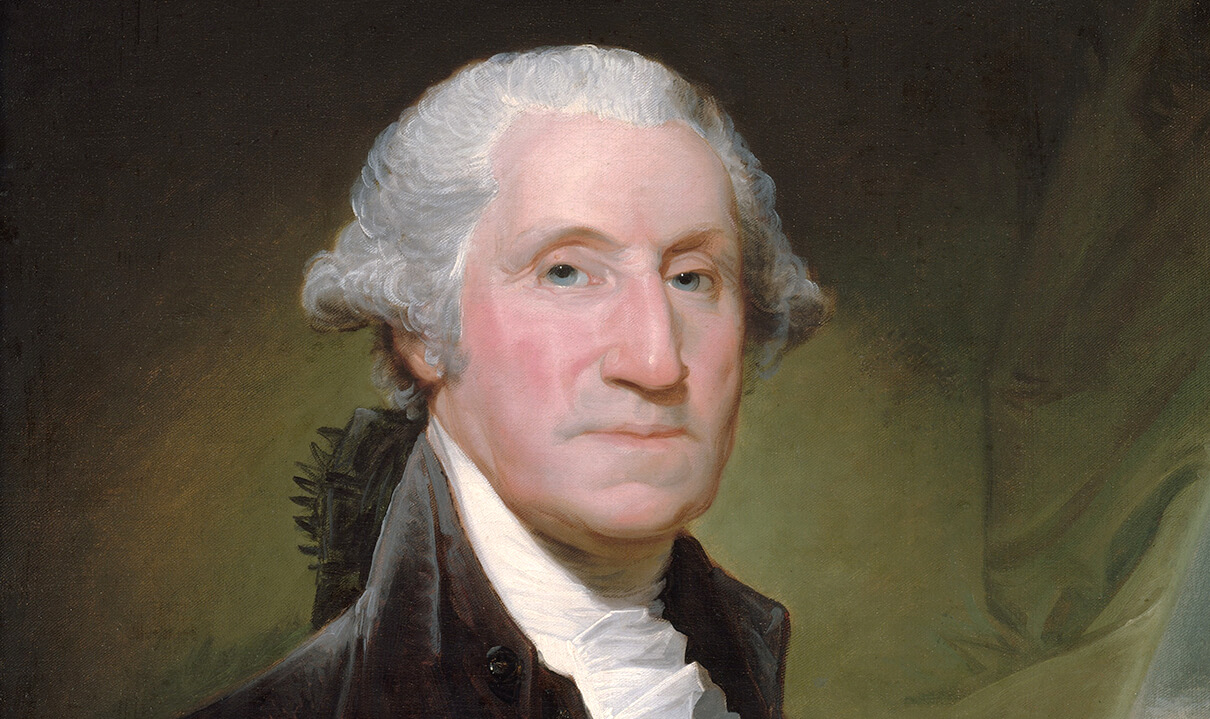
Did George Washington Actually Say “So Help Me God” During His Inauguration?

By David Barton1

In December 2008 following the election of Barack Obama as president, noted atheist Michael Newdow filed suit to prohibit religious acknowledgments or activities from being part of the inaugural ceremonies, specifically seeking to halt the inclusion of “So help me God” as part of the presidential oath as well as halt inaugural prayers by clergy.2

Newdow has an established record of bringing suits to eradicate long-standing public religious practices, including to:

  • remove “under God” from the Pledge of Allegiance3
  • eliminate “In God We Trust” (the National Motto) from coins and currency4
  • prohibit California textbooks from mentioning Biblical events found in Genesis 1-35
  • exclude clergy prayers from presidential inaugurations6
  • reverse the time-honored tax exemptions for housing provided by churches to clergy7
  • abolish chaplains hired by Congress8

Newdow insists that his quest for a completely secular public square is based on constitutional mandates, Founding Fathers’ intent, and American history. Regarding the latter, in his 2008 lawsuit, Newdow claimed that the use of the phrase “So help me God” in presidential oaths was of relatively recent origin – that George Washington had not used the phrase and that it did not become part of legal oaths, especially for presidents, until the inauguration of President Chester A. Arthur in 1881.9 Although courts and scholars have routinely rejected Newdow’s preposterous historical assertions, this specific one, for some inexplicable reason, gained traction among some media and academics, pitting them against many distinguished historical authorities.

The Chief Historian of the United States Capitol Historical Society, the Library of Congress, the U. S. Supreme Court (and numbers of its Justices), the Joint Congressional Committee on Inaugural Ceremonies, the Architect of the Capitol, and other notables have affirmed that “so help me God” is a traditional practice dating back to George Washington. Significantly, for almost two centuries, it was universally accepted that “So help me God” had actually been said as part of the official oathtaking process, but Newdow and his fellow travelers insist that everyone except themselves has been wrong for the past two centuries.10

One of those who agrees with Newdow is Matthew Goldstein, a regular writer for atheist and secularist sites. To help prove his case, he cites with approval an article by USA Today claiming that there is “no eyewitness documentation he [Washington] ever added ‘so help me God’.”11 (So USA Today is now an authoritative historical source? Really?) Other secularist voices have joined the chorus, including attorney/writer Jim Bendat, who claims that George Washington’s use of “So help me God” is a “legend”;12 Professor Peter Henriques of George Mason University calls it a “myth,” adding that any such claim to the contrary “is almost certainly false”;13 and Charles Haynes of the First Amendment Center says that not only is it a “popular myth” but also that it’s time to completely get rid of “So help me God” as part of the oath.14

What is the historical basis for claiming that George Washington did not say “So help me God” as part of the presidential oath? According to Newdow and other critics, no records of the day specifically show Washington reciting the phrase, therefore he did not say it.

Numerous historical documents and practices disproving Newdow’s claim will be shown below, but first consider the historical unreasonableness of claiming that someone did not do something unless it is specifically written that he did so. Even Wikipedia characterizes this type of logic as an “appeal to ignorance” – an approach asserting that something is false only because it has not been proven true – that the lack of evidence for one view is substitutionary proof that another view is true.15

Consider all the inaugural absurdities that can be “proven” under the approach taken by Newdow. For example, since there is no detailed record that President James Monroe did not launch into a string of profanities at his inauguration, then he certainly must have done so; and since no one wrote on Inauguration Day 1825 that the sun rose in the east and set in the west, then it must have been otherwise. These scenarios are ridiculous, but they illustrate the inherent fallacies in the methodology used by Newdow.

Three specific strands of historical evidence will be presented below that demonstrate the absurdity of the modern claims. First, at least seven different religious activities were part of the first inauguration, thus the proceedings were indisputably heavily religiously-permeated. Second, the entirety of American legal practice at that time, including the specific stipulations of statutory law, required the phrase “So help me God” be part of any oath administered by or to government officials. Third, Washington himself, and numerous other Founding Fathers, repeatedly affirmed that an oath of office was a religious act; they explicitly rejected any notion that an oath was secular.

1. RELIGIOUS ACTIVITIES AT GEORGE WASHINGTON’S INAUGURATION

Constitutional experts abounded in 1789 at America’s first presidential inauguration. Not only was the inauguree a signer of the Constitution but one fourth of the members of the Congress that organized and directed his inauguration had been delegates with him to the Constitutional Convention that produced the Constitution.16 Furthermore, this very same Congress also penned the First Amendment and its religious clauses. Because Congress, perhaps more than any other, certainly knew what was constitutional, the religious activities that were part of the first inauguration may well be said to have had the approval and imprimatur of the greatest congressional collection of constitutional experts America has ever known.

That inauguration occurred in New York City, which served as the nation’s capital during the first year of the new federal government. The preparations had been extensive; everything had been well planned.

The papers reported on the first inaugural activity:

[O]n the morning of the day on which our illustrious President will be invested with his office, the bells will ring at nine o’clock, when the people may go up to the house of God and in a solemn manner commit the new government, with its important train of consequences, to the holy protection and blessing of the Most High. An early hour is prudently fixed for this peculiar act of devotion and . . . is designed wholly for prayer.17

As subsequent activities progressed, things seemed to be proceeding smoothly, but as the parade carrying Washington by horse-drawn carriage to the swearing-in was nearing Federal Hall, it was realized that no Bible had been obtained for administering the oath, and the law required that a Bible be part of the ceremony. Parade Marshal Jacob Morton therefore hurried off and soon returned with a large 1767 King James Bible.

The ceremony was conducted on the balcony at Federal Hall; and with a huge crowd gathered below watching the proceedings, the Bible was laid upon a crimson velvet cushion held by Samuel Otis, Secretary of the Senate. New York Chancellor Robert Livingston then administered the oath of office. (He was one of the five Founders who drafted the Declaration of Independence, but had been called back to New York to help guide his state through the Revolution before he could affix his signature to the document he had helped write. Because Livingston was the highest ranking judicial official in New York, he was chosen to administer the oath of office to President Washington.)

Standing beside Livingston and Washington were many distinguished officials, including Vice President John Adams, Supreme Court Chief Justice John Jay, Generals Henry Knox and Philip Schuyler, and several others. The Bible was opened (at random) to Genesis 49;18 Washington placed his left hand upon the open Bible, raised his right, took the oath of office, then bent over and reverently kissed the Bible. Chancellor Livingston proclaimed, “It is done!” Turning to the crowd assembled below, he shouted, “Long live George Washington – the first President of the United States!” That shout was echoed and re-echoed by the crowd. Washington and the other officials then departed the balcony and went inside Federal Hall to the Senate Chamber where Washington delivered his Inaugural Address.

In that first-ever presidential address, Washington opened with a heartfelt prayer, explaining that . . .

it would be peculiarly improper to omit in this first official act my fervent supplications to that Almighty Being Who rules over the universe, Who presides in the councils of nations, and Whose providential aids can supply every human defect – that His benediction may consecrate to the liberties and happiness of the people of the United States a government instituted by themselves for these essential purposes.19

Washington’s inaugural address was strongly religious, and he called his listeners to remember and acknowledge God:

In tendering this homage [act of worship] to the Great Author of every public and private good, I assure myself that it expresses your sentiments not less than my own, nor those of my fellow-citizens at large less than either. No people can be bound to acknowledge and adore the Invisible Hand which conducts the affairs of men more than those of the United States. Every step by which they have advanced to the character of an independent nation seems to have been distinguished by some token of Providential Agency. . . . [and] we ought to be no less persuaded that the propitious [favorable] smiles of Heaven can never be expected on a nation that disregards the eternal rules of order and right which Heaven itself has ordained.20

Having finished his address, Washington offered its closing prayer:

Having thus imparted to you my sentiments as they have been awakened by the occasion which brings us together, I shall take my present leave – but not without resorting once more to the benign Parent of the Human Race in humble supplication [prayer] that . . . His Divine blessing may be equally conspicuous in the enlarged views, the temperate consultations, and the wise measures on which the success of this government must depend.21

The next inaugural activities then began – activities arranged by Congress itself when the Senate directed:

That after the oath shall have been administered to the President, he – attended by the Vice-President and members of the Senate and House of Representatives – proceed to St. Paul’s Chapel to hear Divine service.22

The House had approved the same resolution,23 so the president and Congress thus went en masse to church as an official body. As affirmed by congressional records:

The President, the Vice-President, the Senate, and House of Representatives, &c., then proceeded to St. Paul’s Chapel, where Divine Service was performed by the chaplain of Congress.24

The service at St. Paul’s was conducted by The Right Reverend Samuel Provoost – the Episcopal Bishop of New York, who had been chosen chaplain of the Senate the week preceding the inauguration.25 He performed the service according to The Book of Common Prayer, including prayers taken from Psalms 144-150 and Scripture readings and Bible lessons from the book of Acts, I Kings, and the Third Epistle of John.26

(Significantly, in his lawsuit Newdow claimed not only that “So help me God” was of recent derivation but also that the “practice of including clergy to pray at presidential inaugurations began in 1937.”27 That claim, like so many of his others, is obviously wrong: the Rev. Provoost had offered clergy-led prayers during Washington’s inaugural activities a century-and-a-half before Newdow claimed they began.)

Significantly, seven distinctly religious activities were included in this first presidential inauguration that have been repeated in whole or part in every subsequent inauguration: (1) the use of the Bible to administer the oath; (2) solemnifying the oath with multiple religious expressions (placing a hand on the Bible, saying “So help me God,” and then kissing the Bible); (3) prayers offered by the president himself; (4) religious content in the inaugural address; (5) the president calling on the people to pray or acknowledge God; (6) church inaugural worship services; and (7) clergy-led prayers.

2. THE LEGAL STATUS OF OATHS AT THE TIME OF WASHINGTON’S INAUGURATION

Significantly, long before and long after the adoption of the Constitution, the legal requirements for oathtaking specifically stipulated that “So help me God!” be part of the official oath of all legal process, whether the oaths were taken by elected officials, appointed judges, jurors, or witnesses in a court of law.

This fact is readily demonstrated by a survey of existing laws at the time – such as those of CONNECTICUT (which will be seen were reflective of what was typical in the other states). Connecticut’s original 1639 legal code governing its very first election required that elected officials were to “swear by the great and dreadful name of the everliving God . . . so help me God, in the name of the Lord Jesus Christ.”28 When new oath laws were subsequently passed in 1718, 1726, 1731, 1742, etc., all retained the same general form, including the mandatory use of “So help me God.” Those same provisions were retained long after the federal Constitution was adopted.29

GEORGIA required that elected officials, judges, jurors, and witnesses take their oath “in the presence of Almighty God . . . so help me God,” and not only that they take their oath on the Bible but specifically “on the holy evangelists of Almighty God.”30 (Like the other states, this provision was the same long before and after the adoption of the federal Constitution.)

NORTH CAROLINA required “the party to be sworn to lay his hand upon the Holy Evangelists of Almighty God . . . and after repeating the words, ‘So help me God,’ shall kiss the Holy Gospels.”31 In SOUTH CAROLINA, officials were also required to take their “oath on the Holy Evangelists of Almighty God.”32

Other states had similar requirements, but consider those in place in NEW YORK when President Washington was sworn in by the state’s top judicial official. At that time, New York law required that “the usual mode of administering oaths” be followed (i.e., “So help me God”) and that the person taking the oath place his hand upon the Gospels and then kiss the Gospels at the conclusion of the oath.33 (Like the other states, these provisions remained the legal standard long after the inauguration.34)

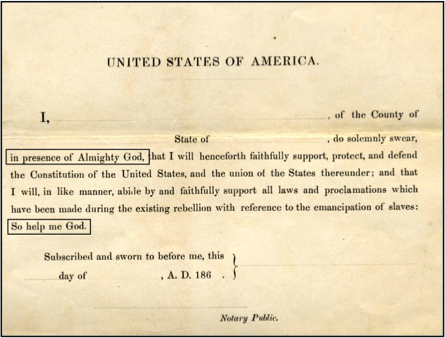
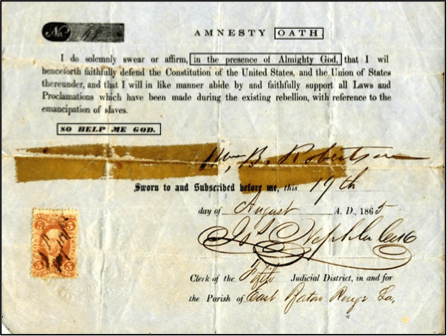
Standard oath forms, both state and federal, still in use even decades after Washington’s inauguration, retained those phrases. See some examples below – and notice that each is from a period decades prior to the time that Newdow claims the practice began:
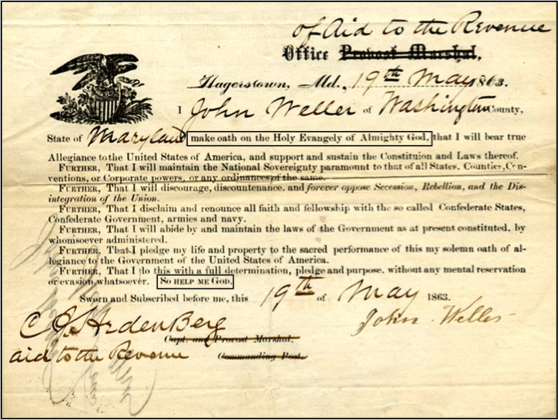
sohelpmegod1

sohelpmegod2sohelpmegod3

(These are just a few of the many original oath-related documents personally owned by the author;
countless others are found in the records of the Library of Congress)

Clearly, using the phrase “So help me God” (as well as placing one’s hand on and then kissing the Bible) was established legal practice throughout the Founding Era.

No one disputes that Washington placed his hand on the Bible or that he kissed it, so why is it now claimed that he did not say “So help me God”? Are critics saying that Washington would not have done the easiest of the three legally required parts of oathtaking? Or would they prefer that officials stop saying “So help me God” but kiss the Bible instead? Their argument is ludicrous. Furthermore, the omission of “So help me God” from the oathtaking ceremony in the Founding Era would have been a clear and obvious aberration from established legal practice of the day, therefore it is the omission of that phrase rather than its inclusion that would have been particularly noticed and commented upon by observers; but such an omission was never mentioned by any witness.

3. THE FOUNDING FATHERS’ VIEWS:
WERE OATHS INHERENTLY RELIGIOUS OR INHERENTLY SECULAR?

Five locations in the U. S. Constitution address oaths to be taken by federal officials. As has already been shown, oath clauses were not a unique or original innovation of the federal Constitution but were already in use in each of the states and the national Congress long before the Constitution was written and remained in force long thereafter.

Significantly, every existing law or legal commentary from before, during, and after the writing of the Constitution unanimously affirmed that the taking of any oath by any public official was always an inherently religious activity; and numerous Framers and early legal scholars agreed (emphasis added in each quote):

[An] oath – the strongest of religious ties.35 JAMES MADISON, SIGNER OF THE CONSTITUTION

[In o]ur laws . . . by the oath which they prescribe, we appeal to the Supreme Being so to deal with us hereafter as we observe the obligation of our oaths. The Pagan world were and are without the mighty influence of this principle which is proclaimed in the Christian system.36 RUFUS KING, SIGNER OF THE CONSTITUTION, FRAMER OF THE BILL OF RIGHTS

Oaths in this country are as yet universally considered as sacred obligations.37 JOHN ADAMS, SIGNER OF THE DECLARATION, FRAMER OF THE BILL OF RIGHTS

An oath is an appeal to God, the Searcher of Hearts, for the truth of what we say and always expresses or supposes an imprecation [calling down] of His judgment upon us if we prevaricate [lie]. An oath, therefore, implies a belief in God and His Providence and indeed is an act of worship. . . . In vows, there is no party but God and the person himself who makes the vow.38 JOHN WITHERSPOON, SIGNER OF THE DECLARATION

The Constitution enjoins an oath upon all the officers of the United States. This is a direct appeal to that God Who is the avenger of perjury. Such an appeal to Him is a full acknowledgment of His being and providence.39 OLIVER WOLCOTT, SIGNER OF THE DECLARATION, GOVERNOR

According to the modern definition [1788] of an oath, it is considered a “solemn appeal to the Supreme Being for the truth of what is said by a person who believes in the existence of a Supreme Being and in a future state of rewards and punishments . . .”40 JAMES IREDELL, RATIFIER OF THE CONSTITUTION, U. S. SUPREME COURT JUSTICE APPOINTED BY GEORGE WASHINGTON

The Constitution had provided that all the public functionaries of the Union not only of the general [federal] but of all the state governments should be under oath or affirmation for its support. The homage of religious faith was thus superadded to all the obligations of temporal law to give it strength.41 JOHN QUINCY ADAMS, PRESIDENT

“What is an oath?” . . . [I]t is founded on a degree of consciousness that there is a Power above us that will reward our virtues or punish our vices. . . . [O]ur system of oaths in all our courts, by which we hold liberty and property and all our rights, are founded on or rest on Christianity and a religious belief.42 DANIEL WEBSTER, “DEFENDER OF THE CONSTITUTION”

There are many other similar declarations.43 And America’s leading legal authorities and reference sources likewise affirmed that taking an oath was a religious activity. For example, in 1793, Zephaniah Swift, author of America’s first law book, declared:

An oath is a solemn appeal to the Supreme Being that he who takes it will speak the truth, and an imprecation of His vengeance if he swears false.44

In 1816, Chancellor James Kent, considered to be one of the two “Fathers of American Jurisprudence,” noted that an oath of office was a “religious solemnity” and that to administer an oath was “to call in the aid of religion.”45

In 1828, Founding Father Noah Webster, an attorney and a judge, defined an “oath” as:

A solemn affirmation or declaration made with an appeal to God for the truth of what is affirmed. The appeal to God in an oath implies that the person imprecates [calls down] His vengeance and renounces His favor if the declaration is false, or (if the declaration is a promise) the person invokes the vengeance of God if he should fail to fulfill it.46

In 1834, a popular judicial handbook declared:

Judges, justices of the peace, and all other persons who are or shall be empowered to administer oaths shall . . . require the party to be sworn to lay his hand upon the Holy Evangelists of Almighty God in token of his engagement to speak the truth as he hopes to be saved in the way and method of salvation pointed out in that blessed volume; and in further token that if he should swerve from the truth, he may be justly deprived of all the blessings of the Gospels and be made liable to that vengeance which he has imprecated on his own head; and after repeating the words, “So help me God,” shall kiss the holy Gospels as a scale of confirmation to said engagement.47

In 1839, Bouvier’s Law Dictionary, considered one of America’s most popular law dictionaries (and still widely used by courts even today), stated that an oath was:

[A] religious act by which the party invokes God not only to witness the truth and sincerity of his promise but also to avenge his imposture or violated faith. . . . . Oaths are taken in various forms; the most usual is upon the Gospel by taking the book [the Bible] in the hand; the words commonly used are, “You do swear that,” &c., “so help you God,” and then kissing the book. . . . Another form is by the witness or party promising, holding up his right hand while the officer repeats to him, “You do swear by Almighty God, the searcher of hearts, that,” &c., “And this as you shall answer to God at the great day.”48

In 1854, the House Judiciary Committee affirmed:

Laws will not have permanence or power without the sanction of religious sentiment – without a firm belief that there is a Power above us that will reward our virtues and punish our vices.49

Early legal historian James Tyler penned an extensive work on the historical and legal nature and form of oaths and concluded:

The object of the form of adjuration [oath] should be to point out this: to show that we are not calling the attention of God to man, but the attention of man to God. . . . [T]he mode now universally adopted among us is imprecatory – the invoking of God’s vengeance in case we do not fulfill our engagement to speak the truth, or perform the specific duty, “So help me God.”50

Significantly, courts had agreed with the conclusions of the Founding Fathers and early legal authorities, issuing numerous declarations making the same affirmations.51 Even school textbooks in that day taught students that in the American constitutional process, an oath was always a religious act.52

Additional sources could be cited, but the evidence is unequivocal that the taking of an oath was universally considered to be a religious activity. For this reason a secular oath was not admissible before a court of law,53 and well into the latter half of the twentieth century, even the U. S. Supreme Court continued to reaffirm the religious nature of oaths.54 After all, as one early court noted, to remove the religious meaning of oaths and to exclude the Bible on which they were sworn would make “an oath . . . a most idle ceremony.”55

Returning to Washington’s inauguration, he took the presidential oath of office as prescribed in Article II of the Constitution – an oath he had helped write:

I do solemnly swear (or affirm) that I will faithfully execute the office of President of the United States, and will to the best of my ability, preserve, protect and defend the Constitution of the United States.

Why was the phrase “So help me God” not specifically included in the Constitution as part of the prescribed wording? Because to have added it would have been redundant: that phrase, as well as placing one’s hand on and then kissing the Bible, was already standard legal practice; there was no reason to duplicate in the Constitution what was already universally required both by law and tradition.

Significantly, Washington was so concerned that the oathtaking process remain inherently religious that in his famous Farewell Address at the end of his presidency, he pointedly warned Americans to never let it become secular:

[W]here is the security for property, for reputation, for life, if the sense of religious obligation desert the oaths . . . ?56

— — — ◊ ◊ ◊ — — —
The evidence is clear that the legal requirements for the performance of oaths long before and after the adoption of the Constitution stipulated that “So help me God!” be part of the legal process. In the critics’ attempts to weaken the religious nature of the oath by suggesting the absence of “So help me God” from Washington’s inauguration, they have actually strengthened the case that the phrase was indeed used by providing the opportunity to unequivocally demonstrate that (1) the laws and legal practices at that time required that religious acknowledgment and phraseology be part of the oathtaking process, and (2) George Washington and the other Founders saw an oath as inherently religious and would have reprobated any attempt to make it secular.


Endnotes

1 David Barton is the President of WallBuilders, a national pro-family organization that presents America’s forgotten history and heroes, with an emphasis on our moral, religious and constitutional heritage. Barton is the author of numerous best-selling books, with the subjects being drawn largely from his massive library of tens of thousands of original writings from the Founding Era. His exhaustive research has rendered him an expert in historical and constitutional issues. He serves as a consultant to state and federal legislators, has participated in several cases at the Supreme Court, was involved in the development of History/Social Studies standards for public schools in numerous states, and has helped produce history textbooks now used in schools across the nation. David has received numerous national and international awards, including multiple Who’s Who in Education, DAR’s Medal of Honor, and the George Washington Honor Medal from the Freedoms Foundation at Valley Forge.

2 Newdow v. Roberts, 603 F.3d 1002, Ct. of Appeals, Dist. of Columbia (2010).

3 Elk Gove Unified School District v. Newdow, 542 U.S. 1 (2004).

4 Newdow v. Lefevre, 598 F.3d 638, Ct. of Appeals, 9th Cir. (2010).

5 “Michael Newdow Joins CAPEEM’s Legal Team,” December 17, 2007, Capeem.org.

6 Newdow v. Roberts, 603 F.3d 1002, Ct. of Appeals, Dist. of Columbia (2010).

7 “FFRF v. Geithner Parsonage Exemption,” Freedom from Religion Foundation, accessed on November 23, 2011.

8 Newdow v. Eagen, 309 F. Supp. 2d 29, Dist. Court of Columbia (2004).

9 See, for example, Newdow v. Roberts, Complaint 1:08-cv-02248-RBW (2008). See also Cathy Lynn Grossman, “No proof Washington said ‘so help me God’ – will Obama,” USA Today, January 9, 2009.

10 “So Help Me God in Presidential Oaths,” nonbeliever.org, accessed November 23, 2011.

11 Cathy Lynn Grossman, “No proof Washington said ‘so help me God’ — will Obama?” January 9, 2009, USA Today.

12 Jim Bendat, Democracy’s Big Day: The Inauguration of our President 1789-2009 (New York: iUniverse Star, 2008), 21.

13 Peter R. Henriques, “ ‘So Help Me God’: A George Washington Myth that Should Be Discarded,” January 12, 2009, History News Network.

14 Charles C. Haynes, “Inside the First Amendment: Are ‘so help me God,’ inaugural prayer still appropriate?” January 18, 2009, First Amendment Center.

15 “Argument from Ignorance,” Wikipedia, accessed November 23, 2011.

16 Significantly, many of the U. S. Senators at the first Inauguration had been delegates to the Constitutional Convention that framed the Constitution including William Samuel Johnson, Oliver Ellsworth, George Read, Richard Bassett, William Few, Caleb Strong, John Langdon, William Paterson, Robert Morris, and Pierce Butler; and many members of the House had been delegates to the Constitutional Convention, including Roger Sherman, Abraham Baldwin, Daniel Carroll, Elbridge Gerry, Nicholas Gilman, Hugh Williamson, George Clymer, Thomas Fitzsimmons, and James Madison.

17 The Daily Advertiser (New York: April 23, 1789), 2.

18 Clarence W. Bowen, The History of the Centennial Celebration of the Inauguration of George Washington (New York, D. Appleton & Co., 1892), 52, Illustration; “The George Washington Inaugural Bible,” National Park Service, accessed June 24, 2025.

19 The Debates and Proceedings in the Congress of the United States, ed. Joseph Gales (Washington: Gales & Seaton, 1834), I:27; George Washington, Messages and Papers of the Presidents, ed. James D. Richardson (Washington, D.C.: 1899), 1:44-45, April 30, 1789.

20 Debates and Proceedings, ed. Gales (1834), I:27-29, April 30, 1789.

21 Debates and Proceedings, ed. Gales (1834), I:27-29, April 30, 1789.

22 Debates and Proceedings, ed. Gales (1834), I:25, April 27, 1789.

23 Debates and Proceedings, ed. Gales (1834), I:241, April 29, 1789.

24 Debates and Proceedings, ed. Gales (1834), I:29, April 30, 1789.

25 Bowen, History of the Centennial (1892), 54; “About the Senate Chaplain,” United States Senate, accessed June 24, 2025.

26 Book of Common Prayer (Oxford: W. Jackson & A. Hamilton, 1784), s.v., April 30th.

27 Newdow v. Roberts, Complaint 1:08-cv-02248-RBW (2008).

28 R.R. Hinman, A.M., Letters From the English Kings and Queens, Charles II, James II, William and Mary, Anne, George II, &C., To the Governors of the Colony of Connecticut, Together With the Answers Thereto, From 1635 to 1749; And Other Original, Ancient, Literary and Curious Documents, Compiled From Files and Records in the Office of the Secretary of the State of Connecticut (Hartford: John B. Eldredge, Printer, 1836), 26-28.

29 The Public Statute Laws of the State of Connecticut (Hartford: Hudson and Goodwin, 1808), 535, Title CXXII: Oaths, Ch. 1, Sec. 6, law passed in May, 1742; 540, Title CXXII: Oaths, Ch. 1, Sec. 25, law passed in May, 1726; 541, Title CXXII: Oaths, Ch. 1, Sec. 30 & 32, law passed in May, 1718.

30 “An Act for the case of Dissenting Protestants, within this province, who may be scrupulous of taking an oath, in respect to the manner and form of administering the same,” passed December 13, 1756, Oliver H. Prince, A Digest of the Laws of the State of Georgia (Milledgeville: Grantland & Orme, 1822), 3.

31 “Oaths and Affirmations. 1777,” John Haywood, A Manual of the Laws of North Carolina (Raleigh: J. Gales, 1814), 34.

32 Joseph Brevard, An Alphabetical Digest of the Public Statue Law of South Carolina (Charleston: John Hoff, 1814), II:86, “Oaths-Affirmations.”

33 Laws of the State of New- York (New York: Thomas Greenleaf, 1798), 21, “Chap. XXV: An Act to dispense with the usual mode of administering oaths, in favor of persons having conscientious scruples respecting the same, Passed 1st of April, 1778”; James Parker, Conductor Generalis: Or the Office, Duty and Authority of the Justices of the Peace (New York: John Patterson, 1788), 302-304, “Of oaths in general.”

34 George C. Edward, A Treatise on the Powers and Duties of Justices of the Peace and Town Officers, in the State of New York (Ithaca: Mack, Andrus & Woodruff, 1836), 91, “Of the proceedings on the trial.”

35 James Madison, observations by Madison on the vices of the political system of the United States, April 23, 1787, The Writings of James Madison, ed. Gaillard Hunt (New York: G.P. Putnam’s Sons, 1901), 2:367.

36 Rufus King, October 30, 1821, Reports of the Proceedings and Debates of the Convention of 1821, Assembled for the Purpose of Amending The Constitution of the State of New York (Albany: E. and E. Hosford, 1821), 575.

37 John Adams to the Officers of the First Brigade of the Third Division of the Militia of Massachusetts, October 11, 1798, The Works of John Adams, ed. Charles Francis Adams (Boston: Little, Brown and company, 1854), IX:229.

38 John Witherspoon, “Lectures on Moral Philosophy,” The Works of John Witherspoon (Edinburgh: J. Ogle, 1815), VII:139, 142.

39 Oliver Wolcott, January 9, 1788, Jonathan Elliot, The Debates in the Several State Conventions on the Adoption of the Federal Constitution (Washington: Printed for the Editor, 1836), II:202.

40 James Iredell, July 30, 1788, Elliot, Debates (1836), IV:196.

41 John Quincy Adams, The Jubilee of the Constitution (New York: Samuel Colman, 1839), 62.

42 Daniel Webster, Mr. Webster’s Speech in Defense of the Christian Ministry and in Favor of the Religious Instruction of the Young, Delivered in the Supreme Court of the United States, February 10, 1844, in the Case of Stephen Girard’s Will (Washington: Gales and Seaton, 1844), 43, 51.

43 See, for example, Zephaniah Swift, A System of Laws of the State of Connecticut (Windham: John Byrne, 1796), II:238; Jacob Rush, Charges and Extracts of Charges on Moral and Religious Subjects (Philadelphia Geo Forman, 1804), 34-35, 37, 40; Daniel Webster, Speech in Defence of the Christian Ministry (1844), 43, 5; From an original document in our possession, executed by John Hart on March 24, 1757; Updegraph v. The Commonwealth, 11 S. & R. 394 (Sup. Ct. Pa. 1824); City Council of Charleston v. S.A. Benjamin, 2 Strob. 508, 522-524 (Sup. Ct. S.C. 1846).

44 Swift, System of Laws (1796), II:238.

45 James Kent, Memoirs and Letters of James Kent, ed. William Kent (Boston: Little, Brown, and Company, 1898), 164.

46 Noah Webster, A Dictionary of the English Language (New York: S. Converse, 1828), s.v. “oath.”

47 James Coffield Mitchell, The Tennessee Justice’s Manual and Civil Officer’s Guide (Nashville: Mitchell and C. C. Norvell, 1834), 457-458.

48 John Bouvier, A Law Dictionary Adapted to the Constitution and Laws of the United States of America, and of the Several States of the American Union (Philadelphia: T. & J. W. Johnson, 1839), s.v. “oath.”

49 “Rep. No. 124. Chaplains in Congress and in the Army and Navy,” March 27, 1854, Reports of Committees of the House of Representatives Made During the First Session of the Thirty-Third Congress (Washington: A. O. P. Nicholson, 1854), 8.

50 James Endell Tyler, Oaths; Their Origin, Nature, and History (London: John W. Parker, 1834), 14, 57.

51 See, for example, People v. Ruggles, 8 Johns 545, 546 (1811); Commonwealth v. Wolf, 3 Serg. & R. 48, 50 (1817); City Council of Charleston v. S.A. Benjamin, 2 Strob. 508, 522-524 (Sup. Ct. S.C. 1846); and many others.

52 William Sullivan, The Political Class Book (Boston: Richardson, Lord, and Holbrook, 1831), 139, §392.

53 Alexis de Tocqueville, The Republic of the United States of American and Its Political Institutions, Reviewed and Examined, trans. Henry Reeves (Garden City, NY: A. S. Barnes & Co., 1851), I:334, 344n. See also Daniel Webster, Speech in Defence of the Christian Ministry (1844), 43; Joseph Story, Life and Letters of Joseph Story, ed. William W. Story (Boston: Charles C. Little and James Brown, 1851), II:8-9; Swift, System of Laws (1796), II:238.

54 Abington v. Schempp, 374 U.S. 203 (1963).

55 Updegraph v. The Commonwealth, 11 S. & R. 394 (Sup. Ct. Pa. 1824).

56 George Washington, Address of George Washington, President of the United States . . . Preparatory to His Declination (Baltimore: George and Henry S. Keatinge, 1796), 23.
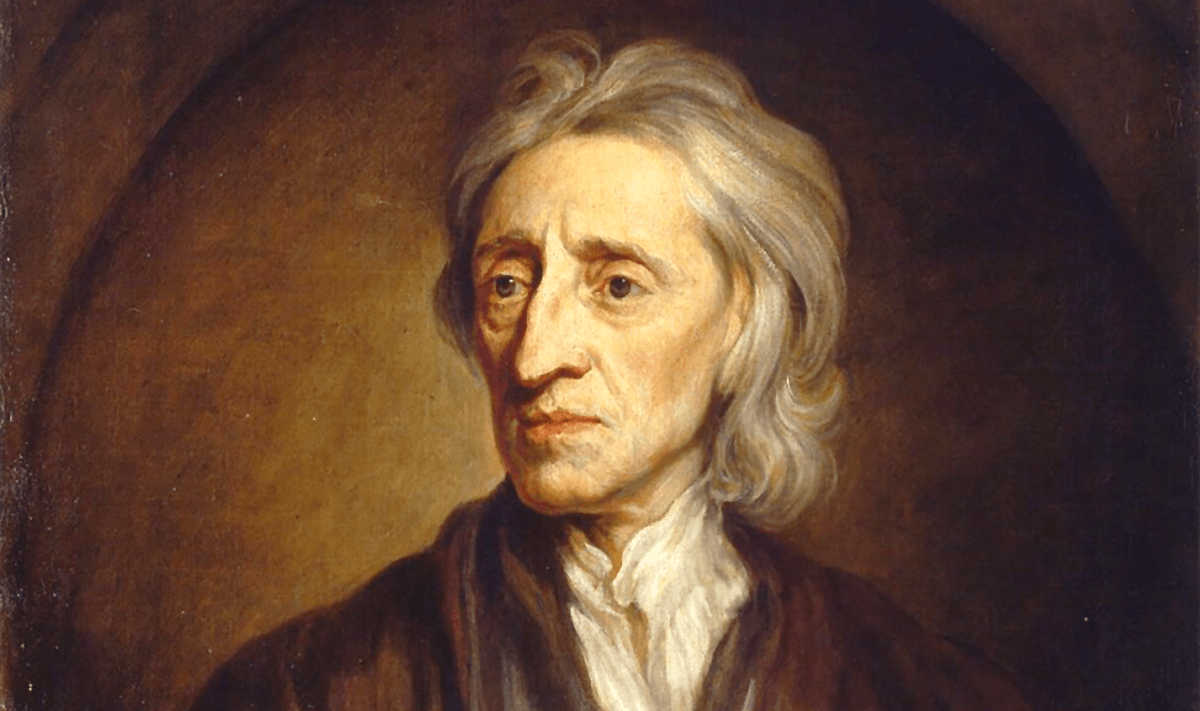
John Locke – A Philosophical Founder of America

John Locke (1632-1704) is one of the most important, but largely unknown names in American history today. A celebrated English philosopher, educator, government official, and theologian, it is not an exaggeration to say that without his substantial influence on American thinking, there might well be no United States of America today – or at the very least, America certainly would not exist with the same level of rights, stability of government, and quality of life that we have enjoyed for well over two centuries.

Historians – especially of previous generations – were understandably effusive in their praise of Locke. For example:

  • In 1833, Justice Joseph Story, author of the famed Commentaries on the Constitution, described Locke as “a most strenuous asserter of liberty”1 who helped establish in this country the sovereignty of the people over the government,2 majority rule with minority protection,3 and the rights of conscience.4
  • In 1834, George Bancroft, called the “Father of American History,” described Locke as “the rival of ‘the ancient philosophers’ to whom the world had ‘erected statues’,”5 and noted that Locke esteemed “the pursuit of truth the first object of life and . . . never sacrificed a conviction to an interest.”6
  • In 1872, historian Richard Frothingham said that Locke’s principles – principles that he said were “inspired and imbued with the Christian idea of man” – produced the “leading principle [of] republicanism” that was “summed up in the Declaration of Independence and became the American theory of government.”7
  • In the 1890s, John Fiske, the celebrated nineteenth-century historian, affirmed that Locke brought to America “the idea of complete liberty of conscience in matters of religion” allowing persons with “any sort of notion about God” to be protected “against all interference or molestation,”8 and that Locke should “be ranked in the same order with Aristotle.”9

Such acknowledgments continued across the generations; and even over the past half century, U. S. presidents have also regularly acknowledged America’s debt to John Locke:

  • President Richard Nixon affirmed that “John Locke’s concept of ‘life, liberty and property’” was the basis of “the inalienable rights of man” in the Declaration of Independence.10
  • President Gerald Ford avowed that “Our revolutionary leaders heeded John Locke’s teaching ‘Where there is no law, there is no freedom’.”11
  • President Ronald Reagan confirmed that much in America “testif[ies] to the power and the vision of free men inspired by the ideals and dedication to liberty of John Locke . . .”12
  • President Bill Clinton reminded the British Prime Minister that “Throughout our history, our peoples have reinforced each other in the living classroom of democracy. It is difficult to imagine Jefferson, for example, without John Locke before him.”13
  • President George W. Bush confessed that “We’re sometimes faulted for a naive faith that liberty can change the world, [but i]f that’s an error, it began with reading too much John Locke . . .”14

The influence of Locke on America was truly profound; he was what we now consider to be a renaissance man – an individual skilled in numerous areas and diverse subjects. He had been well-educated and received multiple degrees from some of the best institutions of his day, but he also pursued extensive self-education in the fields of religion, philosophy, education, law, and government – subjects on which he authored numerous substantial works, most of which still remain in print today more than three centuries after he published them.

In 1689, Locke penned his famous Two Treatises of Government. The first treatise (i.e., a thorough examination) was a brilliant Biblical refutation of Sir Robert Filmer’s Patriarcha in which Filmer had attempted to produce Biblical support for the errant “Divine Right of Kings” doctrine. Locke’s second treatise set forth the fundamental principles defining the proper role, function, and operation of a sound government. Significantly, Locke had ample opportunity to assert such principles, for he spent time under some of England’s worst monarchs, including Charles I, Charles II, and James II.

In 1664, Locke penned “Questions Concerning the Law of Nature” in which he asserted that human reason and Divine revelation were fully compatible and were not enemies – that the Law of Nature actually came from God Himself. (This work was not published, but many of its concepts appeared in his subsequent writings.)

In 1667, he privately penned his “Essay Concerning Toleration,” first published in 1689 as A Letter Concerning Toleration. This work, like his Two Treatises, was published anonymously, for it had placed his very life in danger by directly criticizing and challenging the frequent brutal oppression of the government-established and government-run Church of England. (Under English law, the Anglican Church and its 39 Doctrinal Articles were the measure for all religious faith in England; every citizen was required to attend an Anglican Church. Dissenters who opposed those Anglican requirements were regularly persecuted or even killed. Locke objected to the government establishing specific church doctrines by law, argued for a separation of the state from the church, and urged religious toleration for those who did not adhere to Anglican doctrines.) When Locke’s position on religious toleration was attacked by defenders of the government-run church, he responded with A Second Letter Concerning Toleration (1690), and then A Third Letter for Toleration (1692) – both also published anonymously.

In 1690, Locke published his famous Essay Concerning Human Understanding. This work resulted in his being called the “Father of Empiricism,” which is the doctrine that knowledge is derived primarily from experience. Rationalism, on the other hand, places reason above experience; and while Locke definitely did not oppose reason, his approach to learning was more focused on the practical, whereas rationalism was more focused on the theoretical.

In 1693, Locke published Some Thoughts Concerning Education. Originally a series of letters written to his friend concerning the education of a son, in them Locke suggested the best ways to educate children. He proposed a three-pronged holistic approach to education that included (1) a regimen of bodily exercise and maintenance of physical health (that there should be “a sound mind in a sound body”15), (2) the development of a virtuous character (which he considered to be the most important element of education), and (3) the training of the mind through practical and useful academic curriculum (also encouraging students to learn a practical trade). Locke believed that education made the individual – that “of all the men we meet with, nine parts of ten are what they are, good or evil, useful or not, by their education.”16 This book became a run-away best-seller, being printed in nearly every European language and going through 53 editions over the next century.

Locke’s latter writings focused primarily on theological subjects, including The Reasonableness of Christianity as Delivered in the Scriptures (1695), A Vindication of the Reasonableness of Christianity (1695), A Second Vindication of the Reasonableness of Christianity (1697), A Common-Place-Book to the Holy Bible (1697), which was a re-publication of what he called Graphautarkeia, or, The Scriptures Sufficiency Practically Demonstrated (1676), and finally A Paraphrase and Notes on the Epistles of St. Paul to the Galatians, 1 and 2 Corinthians, Romans, Ephesians (published posthumously in 1707).

In his Reasonableness of Christianity, Locke urged the Church of England to reform itself so as to allow inclusion of members from other Christian denominations – i.e., the Dissenters. He recommended that the Church place its emphasis on the major things of Christianity (such as an individual’s relationship with Jesus Christ) rather than on lesser things (such as liturgy, church hierarchy and structure, and form of discipline). That work also defended Christianity against the attacks of skeptics and secularists, who had argued that Divine revelation must be rejected because truth could be established only through reason.

(While these are some of Locke’s better known works, he also wrote on many other subjects, including poetry and literature, medicine, commerce and economics, and even agriculture.)

The impact of Locke’s writings had a direct and substantial influence on American thinking and behavior in both the religious and the civil realms – an influence especially visible in the years leading up to America’s separation from Great Britain. In fact, the Founding Fathers openly acknowledged their debt to Locke:

  • John Adams praised Locke’s Essay on Human Understanding, openly acknowledging that “Mr. Locke . . . has steered his course into the unenlightened regions of the human mind, and like Columbus, has discovered a new world.”17
  • Declaration signer Benjamin Rush said that Locke was not only “an oracle as to the principles . . . of government”18 (an “oracle” is a wise authority whose opinions are not questioned) but that in philosophy, he was also a “justly celebrated oracle, who first unfolded to us a map of the intellectual world,”19 having “cleared this sublime science of its technical rubbish and rendered it both intelligible and useful.”20
  • Benjamin Franklin said that Locke was one of “the best English authors” for the study of “history, rhetoric, logic, moral and natural philosophy.”21
  • Noah Webster, a Founding Father called the “Schoolmaster to America,” directly acknowledged Locke’s influence in establishing sound principles of education.22
  • James Wilson (a signer of the Declaration and the Constitution, and an original Justice on the U. S. Supreme Court) declared that “The doctrine of toleration in matters of religion . . . has not been long known or acknowledged. For its reception and establishment (where it has been received and established), the world has been thought to owe much to the inestimable writings of the celebrated Locke…”23
  • James Monroe, a Founding Father who became the fifth President of the United States, attributed much of our constitutional philosophy to Locke, including our belief that “the division of the powers of a government . . . into three branches (the legislative, executive, and judiciary) is absolutely necessary for the preservation of liberty.”24
  • Thomas Jefferson said that Locke was among “my trinity of the three greatest men the world had ever produced.”25

And just as the Founding Fathers regularly praised and invoked John Locke, so, too, did numerous famous American ministers in their writings and sermons.26 Locke’s influence was substantial; and significantly, the closer came the American Revolution, the more frequently he was invoked.

For example, in 1775, Alexander Hamilton recommended that anyone wanting to understand the thinking in favor of American independence should “apply yourself without delay to the study of the law of nature. I would recommend to your perusal . . . Locke.”27

And James Otis – the mentor of both Samuel Adams and John Hancock – affirmed that:

The authority of Mr. Locke has . . . been preferred to all others.28

Locke’s specific writing that most influenced the American philosophy of government was his Two Treatises of Government. In fact, signer of the Declaration Richard Henry Lee saw the Declaration of Independence as being “copied from Locke’s Treatise on Government29– and modern researchers agree, having authoritatively documented that not only was John Locke one of three most-cited political philosophers during the Founding Era30 but that he was by far the single most frequently-cited source in the years from 1760-1776 (the period leading up to the Declaration of Independence).31

Among the many ideas articulated by Locke that subsequently appeared in the Declaration was the theory of social compact, which, according to Locke, was when:

Men. . . . join and unite into a community for their comfortable, safe, and peaceable living one amongst another in a secure enjoyment of their properties and a greater security against any that are not of it.32

Of that theory, William Findley, a Revolutionary soldier and a U. S. Congressman, explained:

Men must first associate together before they can form rules for their civil government. When those rules are formed and put in operation, they have become a civil society, or organized government. For this purpose, some rights of individuals must have been given up to the society but repaid many fold by the protection of life, liberty, and property afforded by the strong arm of civil government. This progress to human happiness being agreeable to the will of God, Who loves and commands order, is the ordinance of God mentioned by the Apostle Paul and . . . the Apostle Peter.33

Locke’s theory of social compact is seen in the Declaration’s phrase that governments “derive their just powers from the consent of the governed.”

Locke also taught that government must be built firmly upon the transcendent, unchanging principles of natural law that were merely a subset of God’s greater law:

[T]he Law of Nature stands as an eternal rule to all men, legislators as well as others. The rules that they make for other men’s actions must . . . be conformable to the Law of Nature, i.e., to the will of God.34

[L]aws human must be made according to the general laws of Nature, and without contradiction to any positive law of Scripture, otherwise they are ill made.35

For obedience is due in the first place to God, and afterwards to the laws.36

The Declaration therefore acknowledges “the laws of nature and of nature’s God,” thus not separating the two but rather affirming their interdependent relationship – the dual connection between reason and revelation which Locke so often asserted.

Locke also proclaimed that certain fundamental rights should be protected by society and government, including especially those of life, liberty, and property37– three rights specifically listed as God-given inalienable rights in the Declaration. As Samuel Adams (the “Father of the American Revolution” and a signer of the Declaration) affirmed, man’s inalienable rights included “first, a right to life; secondly, to liberty; thirdly, to property”38– a repeat of Locke’s list.

Locke had also asserted that:

[T]he first and fundamental positive law of all commonwealths is the establishing of the Legislative power. . . . [and no] edict of anybody else . . . [can] have the force and obligation of a law which has not its sanction [approval] from that Legislative which the public has chosen.39

The Founders thus placed a heavy emphasis on preserving legislative powers above all others. In fact, of the 27 grievances set forth in the Declaration of Independence, 11 dealt with the abuse of legislative powers – no other topic in the Declaration received nearly as much attention. The Founders’ conviction that the Legislative Branch was above both the Executive and Judicial branches was also readily evident in the U. S. Constitution, with the Federalist Papers affirming that “the legislative authority necessarily predominates”40 and “the judiciary is beyond comparison the weakest of the three departments of power.”41

Locke also advocated the removal of a leader who failed to fulfill the basic functions of government so eloquently set forth in his Two Treatises;42 the Declaration thus declares that “whenever any form of government becomes destructive of these ends, it is the right of the people to alter or to abolish it and to institute new government.”

In short, when one studies Locke’s writings and then reads the Declaration of Independence, they will agree with John Quincy Adams’ pronouncement that:

The Declaration of Independence [was] . . . founded upon one and the same theory of government . . . expounded in the writings of Locke.43

But despite Locke’s substantial influence on America, today he is largely unknown; and his Two Treatises are no longer intimately studied in America history and government classes. Perhaps the reason for the modern dismissal of this classic work is because it was so thoroughly religious: Locke invoked the Bible in at least 1,349 references in the first treatise, and 157 times in the second44– a fact not lost on the Founders. As John Adams openly acknowledged:

The general principles on which the Fathers achieved independence. . . . were the general principles of Christianity. . . . Now I will avow that I then believed (and now believe) that those general principles of Christianity are as eternal and immutable as the existence and attributes of God. . . . In favor of these general principles in philosophy, religion, and government, I [c]ould fill sheets of quotations from . . . [philosophers including] Locke – not to mention thousands of divines and philosophers of inferior fame.45

Given the fact that previous generations so quickly recognized the Christian principles that permeated all of Locke’s diverse writings, it is not surprising that they considered him a theologian.46 Ironically, however, many of today’s writers and so-called professors and scholars specifically call Locke a deist or a forerunner of Deism.47 But since Locke included repeated references to God and the Scriptures throughout his writings, and since he wrote many works specifically in defense of religious topics, then why is he currently portrayed as being anti-religious? It is because in the past fifty-years, American education has become thoroughly infused with the dual historical malpractices of Deconstructionism and Academic Collectivism.

Deconstructionism is a philosophy that “tends to deemphasize or even efface [i.e., malign and smear] the subject” by posing “a continuous critique” to “lay low what was once high”48 and “tear down the ancient certainties upon which Western Culture is founded.”49 In other words, it is a steady flow of belittling and negative portrayals about the heroes, institutions, and values of Western civilization, especially if they reflect religious beliefs. The two regular means by which Deconstructionists accomplish this goal are (1) to make a negative exception appear to be the rule, and (2) deliberate omission.

These harmful practices of Deconstructionists are exacerbated by the malpractice of Academic Collectivism, whereby scholars quote each other and those from their group rather than original sources. Too many writers today simply repeat what other modern writers say, and this “peer-review” becomes the standard for historical truth rather than an examination of actual original documents and sources.

Reflecting these dual negative influences of Deconstructionism and Academic Collectivism in their treatment of John Locke, many of today’s “scholars” simply lift a few short excerpts from his hundreds of thousands of written words and then present those carefully selected extracts in such a way as to misconstrue his faith and make it seem that he was irreligious. Or more frequently, Locke’s works are simply omitted from academic studies, being replaced only with a professor’s often inaccurate characterization of Locke’s beliefs and writings.

Significantly, the charge that Locke is a deist and a freethinker is not new; it has been raised against him for over three centuries. It first originated when Locke advocated major reforms in the Church of England (such as the separation of the state from the church and the extension of religious toleration to other Christian denominations); Anglican apologists who stung from his biting criticism sought to malign him and minimize his influence; they thus accused him of irreligion and deism. As affirmed by early English theologian Richard Price:

[W]hen . . . Mr. Locke’s Essay on the Human Understanding was first published in Britain, the persons readiest to attend to it and to receive it were those who have never been trained in colleges, and whose minds, therefore, had never been perverted by an instruction in the jargon of the schools. [But t]o the deep professors [i.e., clergy and scholars] of the times, it appeared (like the doctrine taught in his book, on the Reasonableness of Christianity) to be a dangerous novelty and heresy; and the University of Oxford in particular [which trained only Anglicans] condemned and reprobated the author.50

The Founding Fathers were fully aware of the bigoted motives behind the attacks on Locke’s Christian beliefs, and they vigorously defended him from those false charges. For example, James Wilson (signer of the Declaration and Constitution) asserted:

I am equally far from believing that Mr. Locke was a friend to infidelity [a disbelief in the Bible and in Christianity51]. . . . The high reputation which he deservedly acquired for his enlightened attachment to the mild and tolerating doctrines of Christianity secured to him the esteem and confidence of those who were its friends. The same high and deserved reputation inspired others of very different views and characters . . . to diffuse a fascinating kind of lustre over their own tenets of a dark and sable hue. The consequence has been that the writings of Mr. Locke, one of the most able, most sincere, and most amiable assertors of Christianity and true philosophy, have been perverted to purposes which he would have deprecated and prevented [disapproved and opposed] had he discovered or foreseen them.52

Thomas Jefferson agreed. He had personally studied not only Locke’s governmental and legal writings but also his theological ones; and his summary of Locke’s views of Christianity clearly affirmed that Locke was not a deist. According to Jefferson:

Locke’s system of Christianity is this: Adam was created happy and immortal…. By sin he lost this so that he became subject to total death (like that of brutes [animals]) – to the crosses and unhappiness of this life. At the intercession, however, of the Son of God, this sentence was in part remitted…. And moreover to them who believed, their faith was to be counted for righteousness [Romans 4:3,5]. Not that faith without works was to save them; St. James, chapter 2 says expressly the contrary [James 2:14-26]…. So that a reformation of life (included under repentance) was essential, and defects in this would be made up by their faith; i. e., their faith should be counted for righteousness [Romans 4:3,5]…. The Gentiles; St. Paul says, Romans 2:13: “the Gentiles have the law written in their hearts,” [A]dding a faith in God and His attributes that on their repentance, He would pardon them; (1 John 1:9) they also would be justified (Romans 3:24). This then explains the text “there is no other name under heaven by which a man may be saved” [Acts 4:12], i. e., the defects in good works shall not be supplied by a faith in Mahomet, Fo [Buddha], or any other except Christ.53

In short, Locke was not the deist thinker that today’s shallow and often lazy academics so frequently claim him to be; and although Locke is largely ignored today, his influence both on American religious and political thinking was substantial, directly shaping key beliefs upon which America was established and under which she continues to operate and prosper.

Americans need to revive a widespread awareness of John Locke and his specific ideas that helped produce American Exceptionalism so that we can better preserve and continue the blessings of prosperity, stability, and liberty that we have enjoyed for the past several centuries.


Endnotes

1 Joseph Story, Commentaries on the Constitution of the United States (Boston: Hilliard, Gray, and Company 1833), I:299, n2.

2 Story, Commentaries (1833), II:57, n2.

3 Story, Commentaries 1833), I:293, n2; I:299, n2; I:305-306.

4 Story, Commentaries (1833), III:727.

5 George Bancroft, History of the United States of America (Boston: Little, Brown, and Company, 1858; first edition Boston: Charles Bowen, 1834), II:150.

6 Bancroft, History of the United States (1858; first edition 1834),  II:144.

7 Richard Frothingham, The Rise of the Republic of the United States (Boston: Little, Brown, and Company, 1872), 165.

8 John Fiske, Old Virginia and Her Neighbors (New York: Houghton, Mifflin and Company, 1897), II:274.

9 John Fiske, Critical Period of American History: 1783-1789 (New York: Mifflin and Company, 1896), 225.

10 Richard Nixon, “Message to the Congress Transmitting the Report of the American Revolution Bicentennial Commission,” The American Presidency Project, September 11, 1970.

11 Gerald Ford, “Address at the Yale University Law School Sesquicentennial Convocation Dinner,” The American Presidency Project, April 25, 1975.

12 Ronald Reagan, “Toasts of the President and Queen Elizabeth II of the United Kingdom at a Dinner Honoring the Queen in San Francisco, California,” The American Presidency Project, March 3, 1983.

13 William Clinton, “Remarks at the State Dinner Honoring Prime Minister Tony Blair of the United Kingdom,” The American Presidency Project, February 5, 1998.

14 George W. Bush, “Remarks at Whitehall Palace in London, United Kingdom,” The American Presidency Project, November 19, 2003.

15 John Locke, The Works of John Locke (London: Arthur Bettesworth, John Pemberton, and Edward Simon, 1722), III:1, “Some Thoughts Concerning Education.”

16 Locke, Works (1722), III:1, “Some Thoughts Concerning Education.”

17 John Adams, The Works of John Adams, ed. Charles Francis Adams (Boston: Little, Brown and Company, 1856), I:53, to Jonathan Sewall on February 1760.

18 Benjamin Rush, The Selected Writings of Benjamin Rush, ed. Dagobert D. Runes (New York: The Philosophical Library, Inc., 1947), 78, “Observations on the Government of Pennsylvania.”

19 Benjamin Rush, Medical Inquiries and Observations (Philadelphia: T. Dobson, 1793), II:17, “An Inquiry into the Influence of Physical Causes upon the Moral Faculty.”

20 Rush, Medical Inquiries (1794), I:332, “Duties of a Physician.”

21 Benjamin Franklin, The Works of Benjamin Franklin, ed. Jared Sparks (Boston: Tappan & Whittemore, 1836), II:131, “Sketch of an English School.”

22 Noah Webster, A Collection of Papers on Political, Literary and Moral Subjects (New York: Webster & Clark, 1843), 308, “Modes of Teaching the English Language.”

23 James Wilson, The Works of the Honourable James Wilson, ed. Bird Wilson (Philadelphia: Lorenzo Press, 1804), 1:6-7, “Of the Study of the Law in the United States.”

24 James Monroe, The Writings of James Monroe, ed. Stanislaus Murray Hamilton (New York: G. P. Putnam’s Sons, 1898), I:325, “Some Observations on the Constitution, &c.”

25 Thomas Jefferson, The Writings of Thomas Jefferson, ed. Henry Augustine Washington (Washington, D. C.: Taylor & Maury, 1853), V:559, to Dr. Benjamin Rush on January 16, 1811.

26 See, for example, REV. JARED ELIOT IN 1738 Jared Eliot, Give Caesar His Due. Or, Obligation that Subjects are Under to Their Civil Rulers (London: T. Green, 1738), 27, Evans # 4241. REV. ELISHA WILLIAMS IN 1744 Elisha Williams, The Essential Rights and Liberties of Protestants. A Seasonable Plea for the Liberty of Conscience, and the Right of Private Judgment, in Matters of Religion (Boston: S. Kneeland and T. Gaben, 1744), 4, Evans # 5520. Rev. JONATHAN EDWARDS IN 1754 Jonathan Edwards, A Careful and Strict Inquiry into the Modern Prevailing Notions of That Freedom of Will, which is Supposed to be Essential to Moral Agency, Virtue and Vice, Reward and Punishment, Praise and Blame (Boston: S. Kneeland, 1754), 138-140, 143, 164, 171-172, 353-354. REV. WILLIAM PATTEN, 1766 William Patten, A Discourse Delivered at Hallifax in the County of Plymouth, July 24th, 1766 (Boston: D. Kneeland, 1766), 17-18n, Evans # 10440. REV. STEPHEN JOHNSON, 1766 Stephen Johnson, Some Important Observations, Occasioned by, and Adapted to, the Publick Fast, Ordered by Authority, December 18th, A. D. 1765. On Account of the Peculiar Circumstances of the Present Day (Newport: Samuel Hall, 1766), 22n-23n, Evans # 10364. REV. JOHN TUCKER, 1771 John Tucker, A Sermon Preached at Cambridge Before His Excellency Thomas Hutchinson, Esq., Governor; His Honor Andrew Oliver, Esq., Lieutenant-Governor; the Honorable His Majesty’s Council; and the Honorable House of Representatives of the Province of the Massachusetts-Bay in New England, May 29th, 1771 (Boston: Richard Draper, 1771), 19, Evans # 12256. REV. SAMUEL STILLMAN, 1779 Samuel Stillman, A Sermon Preached before the Honourable Council and the Honourable House of Representatives of the State of Massachusetts-Bay, in New-England at Boston, May 26, 1779. Being the Anniversary for the Election of the Honorable Council (Boston: T. and J. Fleet, 1779), 22-25, and many others.

27 Alexander Hamilton, The Papers of Alexander Hamilton, ed. Harold C. Syrett (New York: Columbia University Press, 1961), I:86, from “The Farmer Refuted,” February 23, 1775.

28 James Otis, A Vindication of the Conduct of the House of Representatives of the Province on the Massachusetts-Bay: Most Particularly in the Last Session of the General Assembly (Boston: Edes & Gill, 1762), 20n.

29 Thomas Jefferson, The Writings of Thomas Jefferson, ed. Andrew A. Lipscomb (Washington, D.C.: The Thomas Jefferson Memorial Association, 1904), XV:462, to James Madison on August 30, 1823.

30 Donald S. Lutz, The Origins of American Constitutionalism (Baton Rouge: Louisiana State University Press, 1988), 143.

31 Lutz, Origins 1988), 143.

32 John Locke, Two Treatises of Government (London: A. Bettesworth, 1728), II:206-207, Ch. VIII, §95.

33 William Findley, Observations on “The Two Sons of Oil” (Pittsburgh: Patterson and Hopkins 1812), 35.

34 Locke, Two Treatises (1728), II:233, Ch. XI, §135.

35 Locke, Two Treatises (1728), II:234, Ch. XI, §135 n., quoting Hooker’s Eccl. Pol. 1. iii, sect. 9.

36 John Locke, The Works of John Locke (London: T. Davison, 1824), V:22, “A Letter Concerning Toleration.”

37 See, for example, Locke, Works (1824), V:10, “A Letter Concerning Toleration”; Locke, Two Treatises (1728), II:146, 188, 199, 232-233, passim; etc.

38 Samuel Adams, The Writings of Samuel Adams, ed. Harry Alonzo Cushing (New York: G. P. Putnam’s Sons, 1906), I:351, from “The Rights Of The Colonists, A List of Violations Of Rights and A Letter Of Correspondence, Adopted by the Town of Boston, November 20, 1772,” originally published in the Boston Record Commissioners’ Report, XVIII:94-108.

39 Locke, Two Treatises (1728), II:231,Ch. XI, §134.

40 Alexander Hamilton, John Jay, and James Madison, The Federalist, or the New Constitution Written in 1788 (Philadelphia: Benjamin Warner, 1818), 281, Federalist #51 by Alexander Hamilton.

41 Hamilton, Jay, and Madison, The Federalist (1818), 420, Federalist #78 by Alexander Hamilton.

42 Locke, Two Treatises (1728), II:271, Ch. XVI, § 192.

43 John Quincy Adams, The Jubilee of the Constitution. A Discourse Delivered at the Request of the New York Historical Society, in the City of New York, on Tuesday, the 30th of April, 1839; Being the Fiftieth Anniversary of the Inauguration of George Washington as President of the United States, on Thursday, the 30th of April, 1789 (New York: Samuel Colman, 1839), 40.

44 Locke, Two Treatises (1728), passim.

45 John Adams, The Works of John Adams, ed. Charles Francis Adams (Boston: Little, Brown and Company, 1856), X:45-46, to Thomas Jefferson on June 28, 1813.

46 See, for example, Richard Watson, Theological Institutes: Or a View of the Evidences, Doctrines, Morals, and Institutions of Christianity (New York: Carlton and Porter, 1857), I:5, where Watson includes John Locke as a theologian.

47 See, for example, Concise Oxford Dictionary of World Religions, ed. John Bowker (Oxford: Oxford University Press, 2000), 151; Franklin L. Baumer, Religion and the Use of Skepticism (New York: Harcourt, Brace, & Company), 57-59; James A. Herrick, The Radical Rhetoric of the English Deists: The Discourse of Skepticism, 1680-1750 (Columbia, SC: University of South Carolina Press, 1997), 15; Kerry S. Walters, Rational Infidels: The American Deists (Durango, CO: Longwood Academic, 1992), 24, 210; Kerry S. Walters, The American Deists: Voices of Reason and Dissent in the Early Republic (Lawrence: University Press of Kansas, 1992), 6-7; John W. Yolton, John Locke and the Way of Ideas (Oxford: Oxford University Press, 1956), 25, 115.

48 Jack M. Balkin, “Tradition, Betrayal, and the Politics of Deconstruction – Part II,” Yale University, 1998.

49 Kyle-Anne Shiver, “Deconstructing Obama,” AmericanThinker.com, July 28, 2008.

50 Richard Price, Observations on the Importance of the American Revolution and the Means of Making it a Benefit to the World (Boston: True and Weston, 1818), 24.

51 Noah Webster, An American Dictionary of the English Language (New York: S. Converse, 1828), s.v. “infidel.”

52 James Wilson, The Works of the Honourable James Wilson, ed. Bird Wilson (Philadelphia: Lorenzo Press, 1804), I:67-68, “Of the General Principles of Law and Obligation.”

53 Thomas Jefferson, The Works of Thomas Jefferson, ed. Paul Leicester Ford (New York: G. P. Putnam’s Sons, 1904), II:253-254, “Notes on Religion,” October, 1776.

The Founding Fathers and Slavery

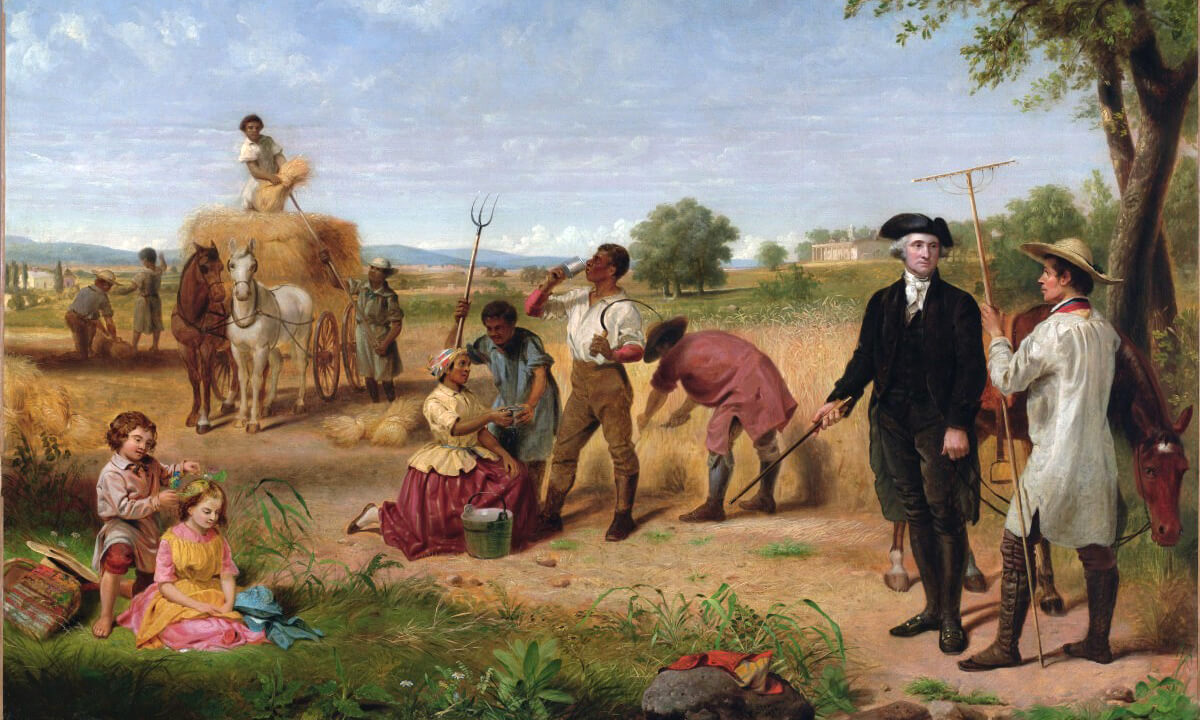
Even though the issue of slavery is often raised as a discrediting charge against the Founding Fathers, the historical fact is that slavery was not the product of, nor was it an evil introduced by, the Founding Fathers; slavery had been introduced to America nearly two centuries before the Founders. As President of Congress Henry Laurens explained:

I abhor slavery. I was born in a country where slavery had been established by British Kings and Parliaments as well as by the laws of the country ages before my existence. . . . In former days there was no combating the prejudices of men supported by interest; the day, I hope, is approaching when, from principles of gratitude as well as justice, every man will strive to be foremost in showing his readiness to comply with the Golden Rule [“do unto others as you would have them do unto you” Matthew 7:12].1

Prior to the time of the Founding Fathers, there had been few serious efforts to dismantle the institution of slavery. John Jay identified the point at which the change in attitude toward slavery began:

Prior to the great Revolution, the great majority . . . of our people had been so long accustomed to the practice and convenience of having slaves that very few among them even doubted the propriety and rectitude of it.2

The War for Independence was the turning point in the national attitude–and it was the Founding Fathers who contributed greatly to that change. In fact, many of the Founders vigorously complained against the fact that Great Britain had forcefully imposed upon the Colonies the evil of slavery. For example, Thomas Jefferson heavily criticized that British policy:

He [King George III] has waged cruel war against human nature itself, violating its most sacred rights of life and liberty in the persons of a distant people who never offended him, captivating and carrying them into slavery in another hemisphere or to incur miserable death in their transportation thither. . . . Determined to keep open a market where men should be bought and sold, he has prostituted his negative for suppressing every legislative attempt to prohibit or to restrain this execrable commerce [that is, he has opposed efforts to prohibit the slave trade].3

Benjamin Franklin, in a 1773 letter to Dean Woodward, confirmed that whenever the Americans had attempted to end slavery, the British government had indeed thwarted those attempts. Franklin explained that . . .

. . . a disposition to abolish slavery prevails in North America, that many of Pennsylvanians have set their slaves at liberty, and that even the Virginia Assembly have petitioned the King for permission to make a law for preventing the importation of more into that colony. This request, however, will probably not be granted as their former laws of that kind have always been repealed.4

Further confirmation that even the Virginia Founders were not responsible for slavery, but actually tried to dismantle the institution, was provided by John Quincy Adams (known as the “hell-hound of abolition” for his extensive efforts against that evil). Adams explained:

The inconsistency of the institution of domestic slavery with the principles of the Declaration of Independence was seen and lamented by all the southern patriots of the Revolution; by no one with deeper and more unalterable conviction than by the author of the Declaration himself [Jefferson]. No charge of insincerity or hypocrisy can be fairly laid to their charge. Never from their lips was heard one syllable of attempt to justify the institution of slavery. They universally considered it as a reproach fastened upon them by the unnatural step-mother country [Great Britain] and they saw that before the principles of the Declaration of Independence, slavery, in common with every other mode of oppression, was destined sooner or later to be banished from the earth. Such was the undoubting conviction of Jefferson to his dying day. In the Memoir of His Life, written at the age of seventy-seven, he gave to his countrymen the solemn and emphatic warning that the day was not distant when they must hear and adopt the general emancipation of their slaves.5

While Jefferson himself had introduced a bill designed to end slavery,6 not all of the southern Founders were opposed to slavery. According to the testimony of Virginians James Madison and Thomas Jefferson, it was the Founders from North Carolina, South Carolina, and Georgia who most strongly favored slavery.7

Yet, despite the support for slavery in those States, the clear majority of the Founders opposed this evil. For instance, when some of the southern pro-slavery advocates invoked the Bible in support of slavery, Elias Boudinot, President of the Continental Congress, responded:

[E]ven the sacred Scriptures had been quoted to justify this iniquitous traffic. It is true that the Egyptians held the Israelites in bondage for four hundred years, . . . but . . . gentlemen cannot forget the consequences that followed: they were delivered by a strong hand and stretched-out arm and it ought to be remembered that the Almighty Power that accomplished their deliverance is the same yesterday, today, and for ever.8

Many of the Founding Fathers who had owned slaves as British citizens released them in the years following America’s separation from Great Britain (e.g., George Washington, John Dickinson, Caesar Rodney, William Livingston, George Wythe, John Randolph of Roanoke, and others). Furthermore, many of the Founders had never owned any slaves. For example, John Adams proclaimed, “[M]y opinion against it [slavery] has always been known . . . [N]ever in my life did I own a slave.”9

Notice a few additional examples of the strong anti-slavery sentiments held by great numbers of the Founders:

[N]ever in my life did I own a slave.10 John Adams, Signer of the Declaration, one of only two signers of the Bill of Rights, U. S. President

But to the eye of reason, what can be more clear than that all men have an equal right to happiness? Nature made no other distinction than that of higher or lower degrees of power of mind and body. . . . Were the talents and virtues which Heaven has bestowed on men given merely to make them more obedient drudges? . . . No! In the judgment of heaven there is no other superiority among men than a superiority of wisdom and virtue.11 Samuel Adams, Signer of the Declaration, “Father of the American Revolution”

[W]hy keep alive the question of slavery? It is admitted by all to be a great evil.12 Charles Carroll, Signer of the Declaration

As Congress is now to legislate for our extensive territory lately acquired, I pray to Heaven that they may build up the system of the government on the broad, strong, and sound principles of freedom. Curse not the inhabitants of those regions, and of the United States in general, with a permission to introduce bondage [slavery].13 John Dickinson, Signer of the Constitution; Governor of Pennsylvania

I am glad to hear that the disposition against keeping negroes grows more general in North America. Several pieces have been lately printed here against the practice, and I hope in time it will be taken into consideration and suppressed by the legislature.14 Benjamin Franklin, Signer of the Declaration, Signer of the Constitution, President of the Pennsylvania Abolition Society

That mankind are all formed by the same Almighty Being, alike objects of his care, and equally designed for the enjoyment of happiness, the Christian religion teaches us to believe, and the political creed of Americans fully coincides with the position. . . . [We] earnestly entreat your serious attention to the subject of slavery – that you will be pleased to countenance the restoration of liberty to those unhappy men who alone in this land of freedom are degraded into perpetual bondage and who . . . are groaning in servile subjection.15 Benjamin Franklin, Signer of the Declaration, Signer of the Constitution, President of the Pennsylvania Abolition Society

That men should pray and fight for their own freedom and yet keep others in slavery is certainly acting a very inconsistent, as well as unjust and perhaps impious, part.16 John Jay, President of Continental Congress, Original Chief Justice U. S. Supreme Court

The whole commerce between master and slave is a perpetual exercise of the most boisterous passions, the most unremitting despotism on the one part, and degrading submissions on the other. . . . And with what execration [curse] should the statesman be loaded, who permitting one half the citizens thus to trample on the rights of the other. . . . And can the liberties of a nation be thought secure when we have removed their only firm basis, a conviction in the minds of the people that these liberties are of the gift of God? That they are not to be violated but with His wrath? Indeed I tremble for my country when I reflect that God is just; that his justice cannot sleep forever.17 Thomas Jefferson

Christianity, by introducing into Europe the truest principles of humanity, universal benevolence, and brotherly love, had happily abolished civil slavery. Let us who profess the same religion practice its precepts . . . by agreeing to this duty.18 Richard Henry Lee, President of Continental Congress; Signer of the Declaration

I have seen it observed by a great writer that Christianity, by introducing into Europe the truest principles of humanity, universal benevolence, and brotherly love, had happily abolished civil slavery. Let us, who profess the same religion practice its precepts, and by agreeing to this duty convince the world that we know and practice our truest interests, and that we pay a proper regard to the dictates of justice and humanity!19 Richard Henry Lee, Signer of the Declaration, Framer of the Bill of Rights

I hope we shall at last, and if it so please God I hope it may be during my life time, see this cursed thing [slavery] taken out. . . . For my part, whether in a public station or a private capacity, I shall always be prompt to contribute my assistance towards effecting so desirable an event.20 William Livingston, Signer of the Constitution; Governor of New Jersey

[I]t ought to be considered that national crimes can only be and frequently are punished in this world by national punishments; and that the continuance of the slave-trade, and thus giving it a national sanction and encouragement, ought to be considered as justly exposing us to the displeasure and vengeance of Him who is equally Lord of all and who views with equal eye the poor African slave and his American master.21 Luther Martin, Delegate at Constitution Convention

As much as I value a union of all the States, I would not admit the Southern States into the Union unless they agree to the discontinuance of this disgraceful trade [slavery].22 George Mason, Delegate at Constitutional Convention

Honored will that State be in the annals of history which shall first abolish this violation of the rights of mankind.23 Joseph Reed, Revolutionary Officer; Governor of Pennsylvania

Domestic slavery is repugnant to the principles of Christianity. . . . It is rebellion against the authority of a common Father. It is a practical denial of the extent and efficacy of the death of a common Savior. It is an usurpation of the prerogative of the great Sovereign of the universe who has solemnly claimed an exclusive property in the souls of men.24 Benjamin Rush, Signer of the Declaration

The commerce in African slaves has breathed its last in Pennsylvania. I shall send you a copy of our late law respecting that trade as soon as it is published. I am encouraged by the success that has finally attended the exertions of the friends of universal freedom and justice.25 Benjamin Rush, Signer of the Declaration, Founder of the Pennsylvania Abolition Society, President of the National Abolition Movement

Justice and humanity require it [the end of slavery]–Christianity commands it. Let every benevolent . . . pray for the glorious period when the last slave who fights for freedom shall be restored to the possession of that inestimable right.26 Noah Webster, Responsible for Article I, Section 8, of the Constitution

Slavery, or an absolute and unlimited power in the master over the life and fortune of the slave, is unauthorized by the common law. . . . The reasons which we sometimes see assigned for the origin and the continuance of slavery appear, when examined to the bottom, to be built upon a false foundation. In the enjoyment of their persons and of their property, the common law protects all.27 James Wilson, Signer of the Constitution; U. S. Supreme Court Justice

[I]t is certainly unlawful to make inroads upon others . . . and take away their liberty by no better means than superior power.28 John Witherspoon, Signer of the Declaration

For many of the Founders, their feelings against slavery went beyond words. For example, in 1774, Benjamin Franklin and Benjamin Rush founded America’s first anti-slavery society; John Jay was president of a similar society in New York. In fact, when signer of the Constitution William Livingston heard of the New York society, he, as Governor of New Jersey, wrote them, offering:

I would most ardently wish to become a member of it [the society in New York] and . . . I can safely promise them that neither my tongue, nor my pen, nor purse shall be wanting to promote the abolition of what to me appears so inconsistent with humanity and Christianity. . . . May the great and the equal Father of the human race, who has expressly declared His abhorrence of oppression, and that He is no respecter of persons, succeed a design so laudably calculated to undo the heavy burdens, to let the oppressed go free, and to break every yoke.29

Other prominent Founding Fathers who were members of societies for ending slavery included Richard Bassett, James Madison, James Monroe, Bushrod Washington, Charles Carroll, William Few, John Marshall, Richard Stockton, Zephaniah Swift, and many more. In fact, based in part on the efforts of these Founders, Pennsylvania and Massachusetts began abolishing slavery in 1780;30 Connecticut and Rhode Island did so in 1784;31 Vermont in 1786;32 New Hampshire in 1792;33 New York in 1799;34 and New Jersey did so in 1804.35

Additionally, the reason that Ohio, Indiana, Illinois, Michigan, Wisconsin, and Iowa all prohibited slavery was a Congressional act, authored by Constitution signer Rufus King36 and signed into law by President George Washington,37 which prohibited slavery in those territories.38 It is not surprising that Washington would sign such a law, for it was he who had declared:

I can only say that there is not a man living who wishes more sincerely than I do to see a plan adopted for the abolition of it [slavery].39

The truth is that it was the Founding Fathers who were responsible for planting and nurturing the first seeds for the recognition of black equality and for the eventual end of slavery. This was a fact made clear by Richard Allen.

Allen had been a slave in Pennsylvania but was freed after he converted his master to Christianity. Allen, a close friend of Benjamin Rush and several other Founding Fathers, went on to become the founder of the A.M.E. Church in America. In an early address “To the People of Color,” he explained:

Many of the white people have been instruments in the hands of God for our good, even such as have held us in captivity, [and] are now pleading our cause with earnestness and zeal.40

While much progress was made by the Founders to end the institution of slavery, unfortunately what they began was not fully achieved until generations later. Yet, despite the strenuous effort of many Founders to recognize in practice that “all men are created equal,” charges persist to the opposite. In fact, revisionists even claim that the Constitution demonstrates that the Founders considered one who was black to be only three-fifths of a person.41 This charge is yet another falsehood. The three-fifths clause was not a measurement of human worth; rather, it was an anti-slavery provision to limit the political power of slavery’s proponents. By including only three-fifths of the total number of slaves in the congressional calculations, Southern States were actually being denied additional pro-slavery representatives in Congress.

Based on the clear records of the Constitutional Convention, two prominent professors explain the meaning of the three-fifths clause:

While much progress was made by the Founders to end the institution of slavery, unfortunately what they began was not fully achieved until generations later. Yet, despite the strenuous effort of many Founders to recognize in practice that “all men are created equal,” charges persist to the opposite. In fact, revisionists even claim that the Constitution demonstrates that the Founders considered one who was black to be only three-fifths of a person. This charge is yet another falsehood. The three-fifths clause was not a measurement of human worth; rather, it was an anti-slavery provision to limit the political power of slavery’s proponents. By including only three-fifths of the total number of slaves in the congressional calculations, Southern States were actually being denied additional pro-slavery representatives in Congress.

It was slavery’s opponents who succeeded in restricting the political power of the South by allowing them to count only three-fifths of their slave population in determining the number of congressional representatives. The three-fifths of a vote provision applied only to slaves, not to free blacks in either the North or South.42 Walter Williams

Why do revisionists so often abuse and misportray the three-fifths clause? Professor Walter Williams (himself an African-American) suggested:

Politicians, news media, college professors and leftists of other stripes are selling us lies and propaganda. To lay the groundwork for their increasingly successful attack on our Constitution, they must demean and criticize its authors. As Senator Joe Biden demonstrated during the Clarence Thomas hearings, the framers’ ideas about natural law must be trivialized or they must be seen as racists.43

While this has been only a cursory examination of the Founders and slavery, it is nonetheless sufficient to demonstrate the absurdity of the insinuation that the Founders were a collective group of racists.


Endnotes

1 Henry Laurens to John Laurens on August 14, 1776, Frank Moore, Materials for History Printed From Original Manuscripts, the Correspondence of Henry Laurens of South Carolina (New York: Zenger Club, 1861), 20.

2 John Jay to the English Anti-Slavery Society, June 1788, The Correspondence and Public Papers of John Jay, ed. Henry P. Johnston (New York: G. P. Putnam’s Sons, 1891), III:342.

3 Thomas Jefferson, The Writings of Thomas Jefferson, ed. Albert Ellery Bergh (Washington, D. C.: Thomas Jefferson Memorial Association, 1903), I:34.

4 Benjamin Franklin to Rev. Dean Woodward, April 10, 1773, The Works of Benjamin Franklin, ed. Jared Sparks (Boston: Tappan, Whittemore, and Mason, 1839), VIII:42.

5 John Quincy Adams, An Oration Delivered Before the Inhabitants of the Town of Newburyport at Their Request on the Sixty-First Anniversary of the Declaration of Independence, July 4, 1837 (Newburyport: Charles Whipple, 1837), 50.

6 Jefferson, Writings of Thomas Jefferson, ed. Bergh (1903), I:4.

7 Jefferson, “Autobiography,” Writings of Thomas Jefferson, ed. Bergh (1903), I:28. See also James Madison, The Papers of James Madison (Washington: Langtree and O’Sullivan, 1840), III:1395; James Madison to Robert Walsh, November 27, 1819, The Writings of James Madison, ed. Gaillard Hunt (New York: G. P. Putnam’s Sons, 1910), IX:2.

8 The Debates and Proceedings in the Congress of the United States (Washington, D. C.: Gales and Seaton, 1834), 1st Congress, 2nd Session, 1518. See also George Adams Boyd, Elias Boudinot, Patriot and Statesman (Princeton, NJ: Princeton University Press, 1952), 182.

9 John Adams to George Churchman and Jacob Lindley, January 24, 1801, The Works of John Adams, ed. Charles Francis Adams (Boston: Little, Brown, and Company, 1854), IX:92-93.

10 John Adams to George Churchman and Jacob Lindley, January 24, 1801, Works of John Adams, ed. Adams (1854) IX:92.

11 Samuel Adams, An Oration Delivered at the State House, in Philadelphia, to a Very Numerous audience; on Thursday the 1st of August, 1776 (London: E. Johnson, 1776), 4-6.

12 Charles Carroll to Robert Goodloe Harper, April 23, 1820, Kate Mason Rowland, Life and Correspondence of Charles Carroll of Carrollton (New York: G. P. Putnam’s Sons, 1898), II:321.

13 John Dickinson to George Logan, January 30, 1804, Charles J. Stille, The Life and Times of John Dickinson(Philadelphia: J. P. Lippincott Company, 1891), 324.

14 Franklin to Mr. Anthony Benezet, August 22, 1772, Works of Benjamin Franklin, ed. Bigelow (1904), 5:356.

15 Memorial from the Pennsylvania Abolition Society, February 3, 1790, Annals of Congress, ed. Joseph Gales, Sr. (Washington: Gales and Seaton, 1834), 1:1239-1240.

16 John Jay to the Rev. Dr. Richard Price, September 27, 1785, The Life and Times of John Jay, ed. William Jay (New York: J. & S. Harper, 1833), II:174.

17 Thomas Jefferson, Notes on the State of Virginia(Philadelphia: Matthew Carey, 1794), 236-237.

18 Richard Henry Lee (Grandson), Memoir of the Life of Richard Henry Lee (Philadelphia: H. C. Carey and I. Lea, 1825), I:19.

19 Richard H. Lee (Grandson), Memoir of Richard Henry Lee (1825), 1:17-19.

20 William Livingston to James Pemberton, October 20, 1788, The Papers of William Livingston, ed. Carl E. Prince (New Brunswick: Rutgers University Press, 1988), V:358.

21 Luther Martin, The Genuine Information Delivered to the Legislature of the State of Maryland Relative to the Proceedings of the General Convention Lately Held at Philadelphia (Philadelphia: Eleazor Oswald, 1788), 57; Debates in the Several State Conventions on the Adoption of the Federal Constitution, ed. Jonathan Elliot (Washington, D. C.: 1836), I:374.

22 George Mason, June 15, 1788, Debates in the Several State Conventions on the Adoption of the Federal Constitution, ed. Jonathan Elliot (Washington, D. C.: 1836), III:452-454.

23 William Armor, Lives of the Governors of Pennsylvania (Norwich, CT: T. H. Davis & Co., 1874), 223.

24 Benjamin Rush, Minutes of the Proceedings of a Convention of Delegates from the Abolition Societies Established in Different Parts of the United States Assembled at Philadelphia (Philadelphia: Zachariah Poulson, 1794), 24.

25 Benjamin Rush to Richard Price, October 15, 1785, Letters of Benjamin Rush, ed. L. H. Butterfield (New Jersey: Princeton University Press, 1951), 1:371.

26 Noah Webster, Effect of Slavery on Morals and Industry (Hartford: Hudson and Goodwin, 1793), 48.

27 James Wilson, The Works of the Honorable James Wilson, ed. Bird Wilson (Philadelphia: Lorenzo Press, 1804), II:488.

28 John Witherspoon, The Works of John Witherspoon (Edinburgh: J. Ogle, 1815), VII:81.

29 William Livingston to the New York Manumission Society, June 26, 1786, The Papers of William Livingston, ed. Carl E. Prince (New Brunswick: Rutgers University Press, 1988), V:255.

30 A Constitution or Frame of Government Agreed Upon by the Delegates of the People of the State of Massachusetts-Bay (Boston: Benjamin Edes and Sons, 1780), 7; An Abridgement of the Laws of Pennsylvania, ed. Collinson Read (Philadelphia: 1801), 264-266.

31 The Public Statue Laws of the State of Connecticut (Hartford: Hudson and Goodwin, 1808), I:623-625; Rhode Island Session Laws (Providence: Wheeler, 1784), 7-8.

32 The Constitutions of the Sixteen States (Boston: Manning and Loring, 1797), 249, Vermont, 1786.

33 Constitutions of the Sixteen State (1797), 50, New Hampshire, 1792.

34 Laws of the State of New York, Passed at the Twenty-Second Session, Second Meeting of the Legislature (Albany: Loring Andrew, 1798), 721-723.

35 Laws of the State of New Jersey, Compiled and Published Under the Authority of the Legislature, ed. Joseph Bloomfield (Trenton: James J. Wilson, 1811), 103-105.

36 Rufus King, The Life and Correspondence of Rufus King, ed. Charles King (New York: G. P. Putnam’s Sons, 1894), I:288-289.

37 August 7, 1789, Acts Passed at a Congress of the United States of America (Hartford: Hudson and Goodwin, 1791), 104.

38 “An Ordinance for the Government of the Territory of the United States Northwest of the River Ohio,” Article VI, The Constitutions of the United States (Trenton: Moore and Lake, 1813), 366.

39 George Washington to Robert Morris, April 12, 1786, The Writings of George Washington, ed. John C. Fitzpatrick (Washington, DC: Government Printing Office, 1932), XXVIII:407-408.

40 Richard Allen, “Address to the People of Color in the United States,” The Life Experience and Gospel Labors of the Right Rev. Richard Allen (Nashville: Abingdon Press, 1983), 73.

41 Thomas G. West, “Was the American Founding Unjust? The Case of Slavery,” Principles: A Quarterly Review for Teachers of History and Social Science (Claremont, CA: The Claremont Institute Spring/Summer, 1992), 5.

42 Walter E. Williams, “Some Fathers Fought Slavery,” Creators Syndicate, Inc. (May 26, 1993).

43 Walter E. Williams, “Some Fathers Fought Slavery,” Creators Syndicate, Inc. (May 26, 1993).

“Give Me Liberty Or Give Me Death”

No man thinks more highly than I do of the patriotism, as well as abilities, of the very worthy gentlemen who have just addressed the House. But different men often see the same subject in different lights; and, therefore, I hope it will not be thought disrespectful to those gentlemen if, entertaining as I do opinions of a character very opposite to theirs, I shall speak forth my sentiments freely and without reserve. This is no time for ceremony. The questing before the House is one of awful moment to this country. For my own part, I consider it as nothing less than a question of freedom or slavery; and in proportion to the magnitude of the subject ought to be the freedom of the debate. It is only in this way that we can hope to arrive at truth, and fulfill the great responsibility which we hold to God and our country. Should I keep back my opinions at such a time, through fear of giving offense, I should consider myself as guilty of treason towards my country, and of an act of disloyalty toward the Majesty of Heaven, which I revere above all earthly kings.

Mr. President, it is natural to man to indulge in the illusions of hope. We are apt to shut our eyes against a painful truth, and listen to the song of that siren till she transforms us into beasts. Is this the part of wise men, engaged in a great and arduous struggle for liberty? Are we disposed to be of the number of those who, having eyes, see not, and, having ears, hear not [Jer. 5:21], the things which so nearly concern their temporal salvation? For my part, whatever anguish of spirit it may cost, I am willing to know the whole truth; to know the worst, and to provide for it. I have but one lamp by which my feet are guided, and that is the lamp of experience. I know of no way of judging of the future but by the past. And judging by the past, I wish to know what there has been in the conduct of the British ministry  for the last ten years to justify those hopes with which gentlemen have been pleased to solace themselves and the House. Is it that insidious smile with which our petition has been lately received? Trust it not, sir; it will prove a snare to your feet. Suffer not yourselves to be betrayed with a kiss [Matt. 26:48]. Ask yourselves how this gracious reception of our petition comports with those warlike preparations which cover our waters and darken our land. Are fleets and armies necessary to a work of love and reconciliation? Have we shown ourselves so unwilling to be reconciled that force must be called in to win back our love? Let us not deceive ourselves, sir. These are the implements of war and subjugation; the last arguments to which kings resort. I ask gentlemen, sir, what means this martial array, if its purpose be not to force us to submission? Can gentlemen assign any other possible motive for it? Has Great Britain any enemy, in this quarter of the world, to call for all this accumulation of navies and armies? No, sir, she has none. They are meant for us: they can be meant for no other. They are sent over to bind and rivet upon us those chains which the British ministry have been so long forging. And what have we to oppose to them? Shall we try argument? Sir, we have been trying that for the last ten years. Have we anything new to offer upon the subject? Nothing. We have held the subject up in every light of which it is capable; but it has been all in vain. Shall we resort to entreaty and humble supplication? What terms shall we find which have not been already exhausted? Let us not, I beseech you, sir, deceive ourselves. Sir, we have done everything that could be done to avert the storm which is now coming on. We have petitioned; we have remonstrated; we have supplicated; we have prostrated ourselves before the throne, and have implored its interposition to arrest the tyrannical hands of the ministry and Parliament. Our petitions have been slighted; our remonstrances have produced additional violence and insult; our supplications have been disregarded; and we have been spurned, with contempt, from the foot of the throne! In vain, after these things, may we indulge the fond hope of peace and reconciliation. There is no longer any room for hope. If we wish to be free– if we mean to preserve inviolate those inestimable privileges for which we have been so long contending–if we mean not basely to abandon the noble struggle in which we have been so long engaged, and which we have pledged ourselves never to abandon until the glorious object of our contest shall be obtained–we must fight! I repeat it, sir, we must fight! An appeal to arms and to the God of hosts is all that is left us!

They tell us, sir, that we are weak; unable to cope with so formidable an adversary. But when shall we be stronger? Will it be the next week, or the next year? Will it be when we are totally disarmed, and when a British guard shall be stationed in every house?  Shall we gather strength by irresolution and inaction? Shall we acquire the means of effectual resistance by lying supinely on our backs and hugging the delusive phantom of hope, until our enemies shall have bound us hand and foot?  Sir, we are not weak if we make a proper use of those means which the God of nature hath placed in our power. The millions of people, armed in the holy cause of liberty, and in such a country as that which we possess, are invincible by any force which our enemy can send against us. Besides, sir, we shall not fight our battles alone. There is a just God who presides over the destinies of nations, and who will raise up friends to fight our battles for us [2 Chron. 32:8]. The battle, sir, is not to the strong alone [Eccl. 9:11]; it is to the vigilant, the active, the brave. Besides, sir, we have no election. If we were base enough to desire it, it is now too late to retire from the contest. There is no retreat but in submission and slavery! Our chains are forged! Their clanking may be heard on the plains of Boston! The war is inevitable–and let it come! I repeat it, sir, let it come.

It is in vain, sir, to extenuate the matter. Gentlemen may cry, Peace, Peace– but there is no peace [Jer. 6:14].  The war is actually begun! The next gale that sweeps from the north will bring to our ears the clash of resounding arms! Our brethren are already in the field!  Why stand we here idle [Matt. 20:6]? What is it that gentlemen wish? What would they have? Is life so dear, or peace so sweet, as to be purchased at the price of chains and slavery? Forbid it, Almighty God! I know not what course others may take; but as for me, give me liberty or give me death!

Scripture references added. This speech can be found in William Wirt, Sketches of the Life and Character of
Patrick Henry
(James Webster: 1818), 119-123. WallBuilders offers a parchment copy of Patrick Henry’s speech on our online store.

The Importance of Voting and Christian Involvement in the Political Arena

John Adams

We electors have an important constitutional power placed in our hands; we have a check upon two branches of the legislature . . . the power I mean of electing at stated periods [each] branch. . . . It becomes necessary to every [citizen] then, to be in some degree a statesman, and to examine and judge for himself of the tendency of political principles and measures. Let us examine, then, with a sober, a manly . . . and a Christian spirit; let us neglect all party [loyalty] and advert to facts; let us believe no man to be infallible or impeccable in government any more than in religion; take no man’s word against evidence, nor implicitly adopt the sentiments of others who may be deceived themselves, or may be interested in deceiving us.1


Samuel Adams

Let each citizen remember at the moment he is offering his vote that he is not making a present or a compliment to please an individual – or at least that he ought not so to do; but that he is executing one of the most solemn trusts in human society for which he is accountable to God and his country.2

Nothing is more essential to the establishment of manners in a State than that all persons employed in places of power and trust be men of unexceptionable characters. The public cannot be too curious concerning the character of public men.3


Matthias Burnett

Consider well the important trust . . . which God . . . [has] put into your hands. . . . To God and posterity you are accountable for [your rights and your rulers]. . . . Let not your children have reason to curse you for giving up those rights and prostrating those institutions which your fathers delivered to you. . . . [L]ook well to the characters and qualifications of those you elect and raise to office and places of trust. . . . Think not that your interests will be safe in the hands of the weak and ignorant; or faithfully managed by the impious, the dissolute and the immoral. Think not that men who acknowledge not the providence of God nor regard His laws will be uncorrupt in office, firm in defense of the righteous cause against the oppressor, or resolutly oppose the torrent of iniquity. . . . Watch over your liberties and privileges – civil and religious – with a careful eye.4


Frederick Douglass

I have one great political idea. . . . That idea is an old one. It is widely and generally assented to; nevertheless, it is very generally trampled upon and disregarded. The best expression of it, I have found in the Bible. It is in substance, “Righteousness exalteth a nation; sin is a reproach to any people” [Proverbs 14:34]. This constitutes my politics – the negative and positive of my politics, and the whole of my politics. . . . I feel it my duty to do all in my power to infuse this idea into the public mind, that it may speedily be recognized and practiced upon by our people.5


Charles Finney

[T]he time has come that Christians must vote for honest men and take consistent ground in politics or the Lord will curse them. . . . Christians have been exceedingly guilty in this matter. But the time has come when they must act differently. . . . Christians seem to act as if they thought God did not see what they do in politics. But I tell you He does see it – and He will bless or curse this nation according to the course they [Christians] take [in politics].6


James Garfield

Now more than ever the people are responsible for the character of their Congress. If that body be ignorant, reckless, and corrupt, it is because the people tolerate ignorance, recklessness, and corruption. If it be intelligent, brave, and pure, it is because the people demand these high qualities to represent them in the national legislature. . . . [I]f the next centennial does not find us a great nation . . . it will be because those who represent the enterprise, the culture, and the morality of the nation do not aid in controlling the political forces.7


Francis Grimke

If the time ever comes when we shall go to pieces, it will . . . be . . . from inward corruption – from the disregard of right principles . . . from losing sight of the fact that “Righteousness exalteth a nation, but that sin is a reproach to any people” [Proverbs 14:34]. . . .[T]he secession of the Southern States in 1860 was a small matter with the secession of the Union itself from the great principles enunciated in the Declaration of Independence, in the Golden Rule, in the Ten Commandments, in the Sermon on the Mount. Unless we hold, and hold firmly to these great fundamental principles of righteousness…our Union…will be “only a covenant with death and an agreement with hell.”8


Alexander Hamilton

A share in the sovereignty of the state, which is exercised by the citizens at large, in voting at elections is one of the most important rights of the subject, and in a republic ought to stand foremost in the estimation of the law.9


John Jay

Providence has given to our people the choice of their rulers, and it is the duty, as well as the privilege and interest of our Christian nation, to select and prefer Christians for their rulers.10

The Americans are the first people whom Heaven has favored with an opportunity of deliberating upon and choosing the forms of government under which they should live.11


Thomas Jefferson

The elective franchise, if guarded as the ark of our safety, will peaceably dissipate all combinations to subvert a Constitution, dictated by the wisdom, and resting on the will of the people.12

[T]he rational and peacable instrument of reform, the suffrage of the people.13

[S]hould things go wrong at any time, the people will set them to rights by the peaceable exercise of their elective rights.14


William Paterson

When the righteous rule, the people rejoice; when the wicked rule, the people groan.15


William Penn

Governments, like clocks, go from the motion men give them; and as governments are made and moved by men, so by them they are ruined too. Wherefore governments rather depend upon men than men upon governments. Let men be good and the government cannot be bad. . . . But if men be bad, let the government be never so good, they will endeavor to warp and spoil it to their turn. . . .[T]hough
good laws do well, good men do better; for good laws may want [lack] good men and be abolished or invaded by ill men; but good men will never want good laws nor suffer [allow] ill ones.16


Daniel Webster

Impress upon children the truth that the exercise of the elective franchise is a social duty of as solemn a nature as man can be called to perform; that a man may not innocently trifle with his vote; that every elector is a trustee as well for others as himself and that every measure he supports has an important bearing on the interests of others as well as on his own.17


Noah Webster

In selecting men for office, let principle be your guide. Regard not the particular sect or denomination of the candidate – look to his character. . . . When a citizen gives his suffrage to a man of known immorality he abuses his trust; he sacrifices not only his own interest, but that of his neighbor, he betrays the interest of his country.18

When you become entitled to exercise the right of voting for public officers, let it be impressed on your mind that God commands you to choose for rulers, “just men who will rule in the fear of God.” The preservation of government depends on the faithful discharge of this duty; if the citizens neglect their duty and place unprincipled men in office, the government will soon be corrupted; laws will be made, not for the public good so much as for selfish or local purposes; corrupt or incompetent men will be appointed to execute the laws; the public revenues will be sqandered on unworthy men; and the rights of the citizens will be violated or disregarded. If a republican government fails to secure public prosperity and happiness, it must be because the citizens neglect the divine commands, and elect bad men to make and administer the laws.19


John Witherspoon

Those who wish well to the State ought to choose to places of trust men of inward principle, justified by exemplary conversation. . . .[And t]he people in general ought to have regard to the moral character of those whom they invest with authority either in the legislative, executive, or judicial branches.20


Endnotes

1 John Adams as ‘U’ to the Boston Gazette, August 29, 1763, The Papers of John Adams, ed. Robert J. Taylor (Cambridge: Belknap Press, 1977), 1:81.
2 Samuel Adams in the Boston Gazette, April 16, 1781, The Writings of Samuel Adams, ed. Harry Alonzo Cushing (New York: G.P. Putnam’s Sons, 1907), IV:256.
3 Samuel Adams to James Warren, November 4, 1775, Writings of Samuel Adams, ed. Cushing (1907), III:236-237.
4 Matthias Burnett, An Election Sermon, Preached at Hartford, on the Day of the Anniversary Election, May 12, 1803 (Hartford: Printed by Hudson & Goodwin, 1803), 27-28.
5 Frederick Douglass speech delivered at Ithaca, New York, October 14th, 1852, The Frederick Douglass Papers, ed. John Blassingame (New Haven: Yale University Press, 1982), 2:397.
6 Charles G. Finney, Lectures on Revivals of Religion (New York: Fleming H. Revell Company, 1868), 281-282.
7 James A. Garfield, “A Century of Congress,” July, 1877, The Works of James Abram Garfield, ed. Burke Hinsdale (Boston: James R. Osgood and Company, 1883), II:486, 489.
8 Rev. Francis J. Grimke, from “Equality of Right for All Citizens, Black and White, Alike,” March 7, 1909, published in Masterpieces of Negro Eloquence, ed. Alice Moore Dunbar (New York: Dover Publications, Inc., 2000), 246-247.
9 Alexander Hamilton, The Papers of Alexander Hamilton, ed. Harold C. Syrett (New York, Columbia University Press, 1962), III:544-545.
10 John Jay, The Correspondence and Public Papers of John Jay, ed. Henry P. Johnston (New York: G.P. Putnams Sons, 1890), IV:365.
11 John Jay, The Correspondence and Public Papers of John Jay, ed. Henry P. Johnston (New York: G.P. Putnams Sons, 1890), I:161.
12 Thomas Jefferson, The Writings of Thomas Jefferson, ed. Albert Bergh (Washington: Thomas Jefferson Memorial Association, 1903), 10:235.
13 Thomas Jefferson, The Works of Thomas Jefferson, ed. Paul Leicester Ford (New York: G.P. Putnam’s Sons, 1905), 12:136.
14 Thomas Jefferson, The Works of Thomas Jefferson, ed. Paul Leicester Ford (New York: G.P. Putnam’s Sons, 1905), 10:245.
15 Supreme Court Justice William Paterson reminding his fellow justices of Proverbs 29:2. United States Oracle (Portsmouth, NH), May 24, 1800.
16 William Penn quoted from: Thomas Clarkson, Memoirs of the Private and Public Life of William Penn (London: Richard Taylor and Co., 1813), I:303.
17 Daniel Webster Remarks at a Receiption to the Ladies of Richmond, Virginia, October 5, 1840, The Works of Daniel Webster (Boston: Little, Brown, and Company, 1853), II:108.
18 Noah Webster, Letters to a Young Gentleman Commencing His Education to which is subjoined a Brief History of the United States (New Haven: S. Converse, 1823), 18, 19.
19 Noah Webster, History of the United States (New Haven: Durrie & Peck, 1832), 336-337.
20 John Witherspoon, The Works of John Witherspoon (Edinburgh: J. Ogle, 1815), IV:266, 277.

Proclamation – America Seeks God in a Time of War – 1777

In light of America’s current war in Iraq and ongoing war against terrorism, the actions of our Founding Fathers in times of war are instructive. This is the text of the first national day of thanksgiving in America (set for December 18, 1777), declared by the Continental Congress on November 1, 1777:

IN CONGRESS

November 1, 1777

FORASMUCH as it is the indispensable Duty of all Men to adore the superintending Providence of Almighty God; to acknowledge with Gratitude their Obligation to him for benefits received, and to implore such farther Blessings as they stand in Need of; And it having pleased him in his abundant Mercy not only to continue to us the innumerable Bounties of his common Providence, but also to smile upon us in the Prosecution of a just and necessary War, for the Defence and Establishment of our unalienable Rights and Liberties; particularly in that he hath been pleased in so great a Measure to prosper the Means used for the Support of our Troops and to crown our Arms with most signal success:

It is therefore recommended to the legislative or executive powers of these United States, to set apart THURSDAY, the eighteenth Day of December next, for Solemn Thanksgiving and Praise; That with one Heart and one Voice the good People may express the grateful Feelings of their Hearts, and consecrate themselves to the Service of their Divine Benefactor; and that together with their sincere Acknowledgments and Offerings, they may join the penitent Confession of their manifold Sins, whereby they had forfeited every Favour, and their humble and earnest Supplication that it may please GOD, through the Merits of Jesus Christ, mercifully to forgive and blot them out of Remembrance; That it may please him graciously to afford his Blessing on the Governments of these States respectively, and prosper the public Council of the whole; to inspire our Commanders both by Land and Sea, and all under them, with that Wisdom and Fortitude which may render them fit Instruments, under the Providence of Almighty GOD, to secure for these United States the greatest of all human blessings, INDEPENDENCE and PEACE; That it may please him to prosper the Trade and Manufactures of the People and the Labour of the Husbandman, that our Land may yet yield its Increase; To take Schools and Seminaries of Education, so necessary for cultivating the Principles of true Liberty, Virtue and Piety, under his nurturing Hand, and to prosper the Means of Religion for the promotion and enlargement of that Kingdom which consisteth “in Righteousness, Peace and Joy in the Holy Ghost.”

And it is further recommended, that servile Labour, and such Recreation as, though at other Times innocent, may be unbecoming the Purpose of this Appointment, be omitted on so solemn an Occasion.

Extract from the Minutes,

Charles Thomson, Secr.

[This proclamation can be found in: Journals of the American Congress From 1774 to 1788 (Washington: Way and Gideon, 1823), Vol. II, pp. 309-310]


This is text excerpted from a national fast declared by the Continental Congress on March 16, 1776:

IN CONGRESS

In times of impending calamity and distress; when the liberties of America are imminently endangered by the secret machinations and open assaults of an insidious and vindictive administration, it becomes the indispensable duty of these hitherto free and happy colonies, with true penitence of heart, and the most reverent devotion, publickly to acknowledge the over ruling providence of God; to confess and deplore our offences against him; and to supplicate his interposition for averting the threatened danger, and prospering our strenuous efforts in the cause of freedom, virtue, and posterity. . . .

Desirous, at the same time, to have people of all ranks and degrees duly impressed with a solemn sense of God’s superintending providence, and of their duty, devoutly to rely, in all their lawful enterprizes, on his aid and direction, Do earnestly recommend, that Friday, the Seventeenth day of May next, be observed by the said colonies as a day of humiliation, fasting, and prayer; that we may, with united hearts, confess and bewail our manifold sins and transgressions, and, by a sincere repentance and amendment of life, appease his righteous displeasure, and, through the merits and mediation of Jesus Christ, obtain his pardon and forgiveness; humbly imploring his assistance to frustrate the cruel purposes
of our unnatural enemies;

. . . that it may please the Lord of Hosts, the God of Armies, to animate our officers and soldiers with invincible fortitude, to guard and protect them in the day of battle, and to crown the continental arms, by sea and land, with victory and success: Earnestly beseeching him to bless our civil rulers, and the representatives of the people, in their several assemblies and conventions; to preserve and strengthen their union, to inspire them with an ardent, disinterested love of their country; to give wisdom and stability to their counsels; and direct them to the most efficacious measures for establishing the rights of America on the most honourable and permanent basis—That he would be graciously pleased to bless all his people in these colonies with health and plenty, and grant that a spirit of incorruptible patriotism, and of pure undefiled religion, may universally prevail; and this continent be speedily restored to the blessings of peace and liberty, and enabled to transmit them inviolate to the latest posterity. And it is recommended to Christians of all denominations, to assemble for public worship, and abstain from servile labour on the said day.

[Source: Journals of the American Congress From 1774 to 1788 (Washington: Way and Gideon, 1823), Vol. I, pp. 286-287]


Biblical Christianity: The Origin of the Rights of Conscience

Overview

Significantly, 1 Timothy 1:5 declares that the goal of the entirety of everything taught in the Scriptures is threefold:

The goal of our instruction is love from a pure heart, and a good conscience, and a sincere faith.

Significantly, the three are inseparable, and without a good conscience, there will not be either a sincere faith or a pure heart. It is therefore not surprising that developing, maintaining, and living according to a good conscience is referenced more than thirty times in the New Testament (cf. Acts 24:16, 1 Timothy 1:19, 3:9, 1 Peter 3:16, 21, Romans 13:5, 2 Corinthians 4:2, etc.).

In fact, 1 Corinthians 8:4-12 flatly states that if a Christian views something as a matter of conscience – if the inner voice that God has placed within him or her tells them that something is sin to them – they are not to violate their conscience; and if anyone makes them do so, then they “sin against Christ.” (This message is repeated in Romans 1:1-23, 1 Corinthians 10:28-32, and elsewhere.) Few subjects in the Bible are stressed as strongly as that of maintaining a pure conscience – of preserving the conviction that one will answer directly to God for what his religious faith requires him to do, or refrain from doing.

Strikingly, only nations who respect Biblical teachings and traditions offer protection for the rights of religious conscience. Secular and non-Biblical nations, and those with state-established churches (such as those that predominated in England and Europe at the time of the American Founding), do not allow rights of conscience but instead demand conformity, which often requires governmental punishment coercion concerning religious beliefs, which violates the Scriptures.

Christ Himself established religious non-coercion as the standard. His approach was so voluntary that He even directed His disciples that when they presented the Gospel to others, if someone was interested, then they could stay and share the message with them; but if someone did not want to hear, then they were to leave the area and not force the issue (Luke 10:8-12). There was absolutely no coercion. It was also this way with Paul and the other Apostles: in every case; hearers then chose whether or not to follow Christianity; there was never any penalty, pressure, or force levied against them.

As John Quincy Adams noted, Jesus Christ “came to teach and not to compel. His law was a Law of Liberty. He left the human mind and human action free.”1 Two generations later, legal writer Stephen Cowell (1800-1872) similarly avowed:

Nonconformity, dissent, free inquiry, individual conviction, mental independence, are forever consecrated by the religion of the New Testament as the breath of its own life – the conditions of its own existence on the earth. The book is a direct transfer of human allegiance in things spiritual from the civil and ecclesiastical powers to the judgment and conscience of the individual.2

And several generations after that, President Franklin D. Roosevelt continued to affirm the same truth, noting: “We want to do it the voluntary way – and most human beings in all the world want to do it the voluntary way. We do not want to have the way imposed. . . . That would not follow in the footsteps of Christ.”3

From the beginning, America faithfully observed these principles, refusing to apply government coercion or conformity to the religious beliefs and practices of individuals. But today, this is dramatically and rapidly changing, with government routinely requiring people of faith to violate their religious conscience, particularly on social issues such as those surrounding aspects of sexuality, whether the taking of unborn human life, contraception, or requiring participation in homosexual nuptials, affirmation of transgenderism, and other major sexual elements of the LGBT agenda.

The American Experience on Religious Conscience

Colonial Era

Many of the early colonists who came to America were familiar with the Bible teachings on conscience and brought them to America, where they took root and grew to maturity at a rapid rate, having been planted in virgin soil completely uncontaminated by the religious apostasy and routine violations of the rights of conscience that had characterized the previous millennia. Hence, Christianity as practiced in America became the world’s single greatest historical force in securing non-coercion, religious toleration, and the rights of conscience.

For example, in 1640, the Rev. Roger Williams established Providence (the city that became the center of the Rhode Island colony), declaring:

We agree, as formerly hath been the liberties of the town, so still, to hold forth liberty of conscience.4

Similar language and protections were also included in subsequent American documents, including the 1649 Maryland “Toleration Act,”5 the 1663 charter for Rhode Island,6 the 1664 Charter for Jersey,7 the 1665 Charter for Carolina,8 the 1669 Constitutions of Carolina,9 the 1676 charter for West Jersey,10 the 1701 charter for Delaware,11 the 1682 frame of government for Pennsylvania,12 and many others. As John Quincy Adams affirmed, “The transcendent and overruling principle of the first settlers of New England was conscience.”13

Revolutionary Era

In 1775 (a year before our official separation from Great Britain), Commander-in-Chief George Washington addressed Continental soldiers and from the beginning charged them:

While we are contending for our own liberty, we should be very cautious of violating the rights of conscience in others, ever considering that God alone is the judge of the hearts of men and to Him only in this case they are answerable.14

With America’s official break from Great Britain in 1776, the states created their very first state constitutions and specifically secured the religious toleration, non-coercion, and the rights of conscience. For example, the 1776 constitution of Virginia declared:

[R]eligion . . . can be directed only by reason and conviction, not by force and violence; and therefore all men are equally entitled to the free exercise of religion according to the dictates of conscience.15

The 1776 Constitution of New Jersey similarly protected the rights of conscience,16 causing Governor William Livingston (a signer of the U. S. Constitution) to happily proclaim:

Consciences of men are not the objects of human legislation. . . . In contrast with this spiritual tyranny, how beautiful appears our catholic [expansive] constitution in disclaiming all jurisdiction over the souls of men, and securing (by a never-to-be-repealed section) the voluntary, unchecked, moral suasion of every individual – and his own self-directed intercourse with the Father of Spirits!17

When New York’s first constitution (1777) likewise protected the rights of conscience,81 Governor John Jay (an author of the Federalist Papers and the original Chief Justice of the U. S. Supreme Court) similarly rejoiced that:

Adequate security [under our constitution] is also given to the rights of conscience and private judgment. They are by nature subject to no control but that of Deity, and in that free situation they are now left. Every man is permitted to consider, to adore, and to worship his Creator in the manner most agreeable to his conscience.19

Similar clauses securing the rights of religious conscience also appeared in many other early state constitutions, including that of Delaware (1776),20 North Carolina (1776),21 Pennsylvania (1776),22 Vermont (1777),23 South Carolina (1778),24 Massachusetts (1780),25 New Hampshire (1784),26 etc. Today, the safeguards for the rights of conscience explicitly appear in forty-five state constitutions, and by inference in the other five.27

Federal Era

In 1788 following the ratification of the federal Constitution, six states submitted proposals for a Bill of Rights,28 with several specifically recommending national language that “all men have an equal, natural, and unalienable right to the free exercise of religion, according to the dictates of conscience.”29 Although the word “conscience” did not ultimately appear in the final language of the religion clauses of the First Amendment, those who framed that Amendment believed that by preventing the government from establishing a national religion and by guaranteeing to the people their “free exercise of religion,” that the rights of conscience had been fully secured30 – a fact affirmed by President Thomas Jefferson when he penned his famous letter to the Danbury Baptists assuring them that the First Amendment was an “expression of the supreme will of the nation in behalf of the rights of conscience.”31 Subsequent constitutional commentaries reiterated that the First Amendment did indeed protect the rights of conscience.32

Founding Fathers

In addition to the several Founders already mentioned, here are a few more unequivocal declarations regarding the constitutional duty of official to protect and defend the rights of religious conscience:

Government is instituted to protect property of every sort. . . . Conscience is the most sacred of all property.33 JAMES MADISON

No provision in our Constitution ought to be dearer to man than that which protects the rights of conscience against the enterprises of the civil authority.34 It behooves every man who values liberty of conscience for himself to resist invasions of it in the case of others, or their case may, by change of circumstances, become his own.35 Our rulers can have no authority over such natural rights only as we have submitted to them. The rights of conscience we never submitted – we could not submit. We are answerable for them to our God.36 THOMAS JEFFERSON

[T]he consciences of men are not the objects of human legislation. . . . For what business, in the name of common sense, has the magistrate (distinctly and singly appointed for our political and temporal happiness) with our religion, which is to secure our happiness spiritual and eternal? . . . [T]he state [does not] have any concern in the matter. For in what manner doth it affect society . . . in what outward form we think it best to pay our adoration to God?37 WILLIAM LIVINGSTON, SIGNER OF THE CONSTITUTION

Modern Era

As a result of the conscience protections long provided in American history and law, government exemptions are routinely granted to those whose religious faith requires them to participate in, or refrain from activities that violate their religious conscience. For example:

  • Pacifists and conscientious objectors are not forced to fight in wars;38
  • Jehovah’s Witnesses are not required to say the Pledge of Allegiance in public schools;39
  • The Amish are not required to complete the standard compulsory twelve years of education;40
  • Christian Scientists are not forced to have their children vaccinated or undergo medical procedures often required by state laws;41
  • Muslim and Jewish men are not required to shave their beards in jobs that otherwise require employees to be clean-shaven;42
  • Seventh-Day Adventists cannot be penalized for refusing to work at their jobs on Saturday;43

and there are additional examples.

Conclusion

Clearly, protection for the inalienable rights of religious conscience is deeply embedded into the fabric of American governmental policy. But as currently demonstrated in countless nations around the world, and now in America, when secularism or any other non-Biblical philosophy becomes dominant in its culture, a loss of legal protections for religious rights is usually one of the first casualties of the change.

Today in America, to seek to provide protection for the traditional rights of religious conscience is now regularly denounced as discriminatory.44 The LGBT movement, and those in government aligned with it, disdain the rights of religious conscience and instead use the power, penalties, and full force of the law to coerce all others to embrace and participate in affirming their views, including Christian bakers,45 florists,46 photographers,47 churches,48 homeowners,49 pastors,50 clerks,51 business owners,52 officials,53 religious schools,54 military personnel,55 sportscasters,56 and others.57

Our Framers recognized that if religious liberties and our civil liberties were inseparable – that if our religious liberties were diminished, our civil liberties would soon follow. As Joseph Story (a “Father of American Jurisprudence,” placed on the Supreme Court by President James Madison) pointed out:

There is not a truth to be gathered from history more certain or more momentous than this: that civil liberty cannot long be separated from religious liberty without danger, and ultimately without destruction to both. Wherever religious liberty exists, it will, first or last, bring in and establish political liberty.58

Signer of the Declaration John Witherspoon concurred:

There is not a single instance in history in which civil liberty was lost and religious liberty preserved entire. . . . God grant that in America true religion and civil liberty may be inseparable and that the unjust attempts to destroy the one may in the issue tend to the support and establishment of both.59

And Jedidiah Morse (a pastor, educator, and historian of the American Revolution, appointed by the federal government to document the condition of Indian affairs) agreed:

All efforts made to destroy the foundations of our Holy Religion ultimately tend to the subversion also of our political freedom and happiness. In proportion as the genuine effects of Christianity are diminished in any nation . . . in the same proportion will the people of that nation recede from the blessings of genuine freedom.60

Secularism produces an antipathy toward religion and religious rights, when ultimately diminish our civil rights. In fact, after President Obama announced that America no longer should be viewed as a Christian nation,61 he then announced that he was rescinding the traditional religious rights of conscience for those working in the medical profession.62 Historically, governmental protection for religious rights is the only sure indicator of protection for other non-religious civil rights.


Endnotes

1 John Quincy Adams, A Discourse on Education Delivered at Braintree, Thursday, October 24th, 1839 (Boston: Perkins & Marvin, 1840), 18.

2 Stephen Colwell, Politics for American Christians: A Word upon our Example as a Nation, our Labour, our Trade, Elections, Education, and Congressional Legislation (Philadelphia: Lippincott, Grambo & Co. 1852), 82, Tait’s Edinburgh Magazine, for 1844 (Edinburgh: William Tait, 1844), 752, “The Politics of the New Testament,” December 1844.

3 “Franklin D. Roosevelt, “Christmas Greeting to the Nation,” The American Presidency Project, December 24, 1940.

4 The Federal and State Constitutions, Colonial Charters and Other Organic Laws, ed. Francis Newton Thorpe (Washington: Government Printing Office, 1909), VI:3205-3207, “Plantation Agreement at Providence – August 27-September 6, 1640.”

5 William MacDonald, Select Charters and Other Documents Illustrative of American History 1606-1775 (New York: MacMillan Company, 1899), 104-106, “Maryland Toleration Act,” April 1649.

6 <a href=”https://babel.hathitrust.org/cgi/pt?id=mdp.39015001567794;view=1up;seq=27″ target=”“blank”” rel=”noopener”>Federal and State Constitutions, ed. Thorpe (1909), VI:3211, “Charter of Rhode Island and Providence Plantations-1663.”

7 Federal and State Constitutions, ed. Thorpe (1909), V:2537, “The Concession and Agreement of the Lords Proprietors of the Province of New Caesarea, or New Jersey, 1664.”

8 Federal and State Constitutions, ed. Thorpe (1909), V:2771, “Charter of Carolina – 1665.”

9 Federal and State Constitutions, ed. Thorpe (1909), V:2785, “The Fundamental Constitutions of Carolina – 1669.”

10 Federal and State Constitutions, ed. Thorpe (1909), V:2549, “The Charter or Fundamental Laws of West New Jersey, Agreed Upon – 1676.”

11 Federal and State Constitutions, ed. Thorpe (1909), I:558, “Charter of Delaware – 1701.”

12 Federal and State Constitutions, ed. Thorpe (1909), V:3063, “Frame of Government of Pennsylvania, May 5, 1682.”

13 John Quincy Adams, A Discourse on Education Delivered at Braintree, Thursday, October 24th, 1839 (Boston: Perkins & Marvin, 1840), 28.

14 George Washington, The Writings of George Washington, ed. John C. Fitzpatrick (Washington, D.C.: Government Printing Office, 1931), 3:492, to Benedict Arnold, September 14, 1775.

15 The American’s Guide: Comprising the Declaration of Independence; the Articles of Confederation; the Constitution of the United States, and the Constitutions of the Several States Composing the Union (Philadelphia: Hogan & Thompson, 1835), 180, 1776 Constitution: Bill of Rights, No. 16.

16 Federal and State Constitutions, ed. Thorpe (1909), V:2597, “Constitution of New Jersey – 1776.”

17 William Livingston, The Papers of William Livingston, ed. Carl E. Prince (Trenton: New Jersey Historical Commission, 1980), 2:235, 237, article under the name “Cato,” originally published in the New Jersey Gazette on February 18, 1778.

18 Federal and State Constitutions, ed. Thorpe (1909), V:2636-2637, “Constitution of New York – 1777.”

19 William Jay, The Life of John Jay (New York: J. & J. Harper, 1833), I:82, John Jay’s charge to the grand jury during the first term of the New York state Supreme Court.

20 Constitutions of the Several Independent States of America (New York: E. Oswald, 1786), 129.

21 Constitutions (1786), 185.

22 Constitutions (1786), 109.

23 Federal and State Constitutions, ed. Thorpe (1909), VI:3740.

24 Constitutions (1786), 215.

25 Constitutions (1786), 11-12.

26 Constitutions (1786), 4.

27 Forty-five state constitutions contain explicit language specifically singling out the rights of conscience. Five other states – Alaska, Hawaii, Louisiana, Montana, and South Carolina – use similar language to the U.S. Constitution (“make no law respecting an establishment of religion or prohibiting the free exercise thereof”). As is seen in the subsequent section, the Founding Fathers believed that this language provided specific protection for the rights of conscience.

28 Those states initially included Massachusetts, South Carolina, New Hampshire, Virginia, New York, and North Carolina; two years later in 1790, Rhode Island submitted its proposals. See Jonathan Elliot, The Debates in the Several State Conventions on the Adoption of the Federal Constitution (Washington: 1836), I:322-333.

29 Anson Phelps Stokes, Church and State in the United States (New York: Harper & Brothers, 1950), 1:600-610. New Hampshire recommended an amendment stating that “Congress shall make no law touching religion, or to infringe the rights of conscience.”

30 The Debates and Proceedings in the Congress of the United States, ed. Joseph Gales (Washington: Gales and Seaton, 1834), I:757-796, August 15, 1789 to August 21, 1789.

31 Thomas Jefferson, The Writings of Thomas Jefferson, ed. H. A. Washington (Washington D.C.: Taylor & Maury, 1854), VIII:113, “Messrs. Nehemiah Dodge, Ephraim Robbins, and Stephen S. Nelson, A Committee of the Danbury Baptist Association, in the State of Connecticut,” January 1, 1802.

32 See, for example, Joseph Story, Commentaries on the Constitution of the United States (Boston: Hilliard, Gray, and Company, 1833), I:701, § 990-991:

The rights of conscience are, indeed, beyond the just reach of any human power. They are given by God, and cannot be encroached upon by human authority, without a criminal disobedience of the precepts of natural, as well as revealed religion. The real object of the amendment was, not to countenance, much less to advance Mahometanism, or Judaism, or infidelity, by prostrating Christianity; but to exclude all rivalry among Christian sects, and to prevent any national ecclesiastical establishment, which should give to an hierarchy the exclusive patronage of the national government. It thus sought to cut off the means of religious persecution, (the vice and pest of former ages,) and the power of subverting the rights of conscience in matters of religion, which had been trampled upon almost from the days of the Apostles to the present age.

St. George Tucker, Blackstone’s Commentaries: with Notes of Reference, to the Constitution and Laws, of the Federal Government of the United States; and of the Commonwealth of Virginia (Philadelphia: William Young Birch and Abraham Small: 1803), I:489, “Appendix: Note G. Of the Right of Conscience; and Of the Freedom of Speech and Of The Press”:

Liberty of conscience in matters of religion consists in the absolute and unrestrained exercise of our religious opinion, and duties, in that mode which our own reason and conviction dictate, without the control or intervention of any human power or authority whatsoever. This liberty though made a part of our constitution, and interwoven in the nature of man by his Creator, so far as the arts of fraud and terrors of violence have been capable of abridging it, hath been the subject of coercion by human laws in all ages and in all countries as far as the annals of mankind extend.

James Wilson, Thomas McKean [Wilson and McKean both signed the Declaration of Independence, and Wilson was a signer of the Constitution and an original Justice on the U. S. Supreme Court], Commentaries on the Constitution of the United States of America (London: 1791), II:61:

In the third place we are told, that there is no security for the rights of conscience. I ask the honorable gentleman, what part of this system puts it in the power of Congress to attack those rights? When there is no power to attack, it is idle to prepare the means of defense.

And others.

33 James Madison, The Writings of James Madison, ed. Gaillard Hunt (New York: G. P. Putnam’s Sons, 1906), VI:102, “Property,” originally published in The National Gazette on March 29, 1792.

34 Thomas Jefferson, The Writings of Thomas Jefferson, ed. H. A. Washington (New York: Biker, Thorne, & Co., 1854), VIII:147, to the Society of the Methodist Episcopal Church at New London, CT on February 4, 1809.

35 Thomas Jefferson, Memoir, Correspondence, and Miscellanies, ed. Thomas Jefferson Randolph (Charlottesville: F. Carr, an Co., 1829), III:507, to Benjamin Rush on April 21, 1803.

36 Thomas Jefferson, Notes on the State of Virginia (London: John Stockdale, 1787), 265, “Query XVII: The different religions received into that state?”

37 William Livingston, Papers, ed. Prince (1980), 2:235, 237, article under the name “Cato,” originally published in the New Jersey Gazette on February 18, 1778; Hezekiah Niles, Principles and Acts of the Revolution in America: Or, An Attempt to Collect and Preserve Some of the Speeches, Orations, & Proceedings (Baltimore: William Ogden Niles, 1822), 306-307, “Remarks on liberty of conscience, ascribed to his excellency William Livingston, governor of New Jersey, 1778”; B. F. Morris, Christian Life and Character of the Civil Institutions of the United States, Developed in the Official and Historical Annals of the Republic (Philadelphia: George W. Childs, 1864), 162-163, from William Livingston.

38 United States v. Seeger, 380 U.S. 163 (1965).

39 West Virginia State Board of Education v. Barnette, 319 U.S. 624 (1943).

40 Wisconsin v. Yoder, 406 U.S. 205 (1972).

41 See, for example, “Parents claim religion to avoid vaccines for kids,” NBCNews, October 17, 2007; “Vaccination Exemptions,” College of Physicians of Philadelphia (accessed on May 9, 2016).

42 Potter v. District of Columbia, Civil Action No. 01-1189 (D.D.C. Sept. 28, 2007).

43 Hobbie v. Unemployment Appeals Commission of Florida, 480 U.S. 136 (1987); Sherbert v. Verner, 374 U.S. 398, 409 (1963).

44 See, for example, Adam Serwer, “Arizona passes law allowing discrimination,” MSNBC, February 21, 2014; Paresh Dave, “Miss. governor signs religious freedom bill; civil rights groups dismayed,” Los Angeles Times, April 4, 2014; Chris Johnson, “Georgia Senate passes religious discrimination bill,” Washington Blade, March 5, 2015; Tony Cook, “Gov. Mike Pence signs ‘religious freedom’ bill in private,” IndyStar, April 2, 2015; Monica Davey, “Indiana and Arkansas Revise Rights Bills, Seeking to Remove Divisive Parts,” The New York Times, April 2, 2015; Timothy Holbrook, “Georgia, North Carolina bills are about LGBT discrimination. Period,” CNN, March 28, 2016; Marina Fang, “Tennessee Legislature Resurrects Discriminatory Transgender Bathroom Bill,” Huffington Post, April 6, 2016.

45 See, for example, Ken Klukowski, “Baker Faces Prison for Refusing to Bake Same-Sex Wedding Cake,” Breitbart, December 12, 2013; Chris Enloe, “‘Sweet Cakes’ Owners’ Bank Accounts Seized as Damages for Refusing to Bake Wedding Cake for Lesbian Couple,” The Blaze, December 29, 2015.

46 See, for example, Danny Burk, “A florist loses religious freedom, and much more,” CNN, February 20, 2015.

47 See, for example, Ken Klukowski, “New Mexico Court: Christian Photographer Cannot Refuse Gay-Marriage Ceremony,” Breitbart, August 22, 2013; Kristine Marsh, “Gays Force San Francisco Wedding Photographers to Close Shop,” MRC NewsBusters, November 21, 2014; Samuel Smith, “Christian Videographer Faces Legal Action After Refusing to Work Lesbian Wedding, Says It’s Against Her Biblical Beliefs,” Christian Post, March 18, 2015.

48 See, for example, Molly Montag, “Group asks IRS to investigate Cornerstone Church,” Sioux City Journal, October 1, 2010; “Southern Baptists draw distance from harsh anti-gay rhetoric, yet hold to convictions,” Baptist Press, May 24, 2012.

49 See, for example, Andrea Peyser, “Couple fined for refusing to host same-sex wedding on their farm,” New York Post, November 10, 2014.

50 See, for example, Todd Starnes, “Fired for preaching: Georgia dumps doctor over church sermons,” Fox News, April 20, 2016; Natalie Jennings, “Louie Giglio pulls out of inauguration over anti-gay comments,” The Washington Post, January 10, 2013.

51 See, for example, Allan Smith, “Anti-gay-marriage Kentucky clerk jailed for refusing to issue same-sex marriage licenses,” Business Insider, September 3, 2015; Jim Douglas, “Hood County is focal point of same-sex debate,” WFAA, July 1, 2015.

52 See, for example, Katie Zezima, “Couple Sues a Vermont Inn for Rejecting Gay Wedding,” The New York Times, July 19, 2011; Billy Hallowell, “Lesbian Couple Wins Discrimination Lawsuit Against Religious Bed and Breakfast Owner Who Denied Them a Room,” The Blaze, April 16, 2013; Justin Moyer, “Kentucky T-shirt printer that wouldn’t make gay pride shirts vindicated by court,” The Washington Post, April 28, 2015; Charlie Butts, “Iowa couple fined for refusing gay wedding: ‘We are still here’,” OneNewsNow, June 3, 2015.

53 See, for example, Kathleen Gilbert, “San Diego firefighters victorious in suit against forced participation in gay pride parade,” Life Site News, January 28, 2011; Eryn Sun, “Court Affirms CDC’s Firing of Counselor Over Same-Sex Advice,” Christian Post, February 8, 2012; Ryan T. Anderson, “Atlanta Fire Chief Fired for Expressing Christian Beliefs,” The Daily Signal, January 8, 2015; “Utah officer who objected to role in gay pride parade says he was unfairly labeled a bigot,” Fox News, February 25, 2015; Randy Ludlow, “Ohio judges who perform weddings must marry same-sex couples,” The Columbus Dispatch, August 11, 2015.

54 See, for example, “Evangelical College Gay Rights Stand Causes Uproar,” NewsMax, November 2, 2014; “Gay Teacher Files Sex Discrimination Claim Against Georgia School,” NPR, July 9, 2014; “Lesbian teacher who was fired for becoming pregnant sues Catholic school for discrimination,” Daily Mail, August 22, 2014.

55 See, for example, Todd Starnes, “Fox Exclusive: Airman Faces Punishment for her Religious Beliefs,” Fox News, August 6, 2013; Kirsten Anderson, “Air Force Sergeant claims he was fired for refusing to endorse gay ‘marriage’: faces court martial,” Life Site News, September 10, 2013; “Navy Threatens To End 19-Year Career Of Decorated Chaplain Who Served Navy SEAL Teams, According To Liberty Institute,” PR Newswire, March 9, 2015.

56 See, for example, Melissa Barnhart, “Fox Sports Southwest Charged With Discrimination for Firing Craig James Over Homosexuality Remarks,” Christian Post, March 7, 2014; Ahiza Garcia, “‘I’m not transphobic,’ says ex-ESPN analyst Curt Schilling,” CNN Money, April 22, 2016.

57 See, for example, “Missouri school sued by student who refused to support gay adoptions,” USA Today, November 2, 2006; Paul Strand, “University Employee Punished over Marriage Petition,” CBN News, October 18, 2012; Billy Hallowell, “Christian Product Engineer Claims Ford Motor Fired Him for Voicing His Bible-Based Opposition to the Company’s Promotion of ‘Pro-Homosexual Ideas’ — Now He’s Fighting Back,” The Blaze, January 28, 2015.

58 Joseph Story, A Discourse Pronounced at the Request of the Essex Historical Society, on the 18th of September, 1828, in Commemoration of the First Settlement of Salem, in the State of Massachusetts (Boston: Hilliard, Gray, Little, and Wilkins, 1828), 46.

59 John Witherspoon, The Dominion of Providence over the Passions of Men. A Sermon, Preached at Princeton, on the 17th of May, 1776. Being the General Fast appointed by the Congress through the United Colonies (Philadelphia: 1777), 27-28, 38.

60 Jedidiah Morse, A Sermon, Exhibiting the Present Dangers and Consequent Duties of the Citizens of the United States of America. Delivered at Charlestown. April 25, 1799, The Day of the National Fast (MA: Printed by Samuel Etheridge, 1799), 9.

61 Aaron Klein, “Obama: America is ‘no longer Christian’,” WorldNetDaily, June 22, 2008. See also David Brody, The Brody File, “Exclusive: Barack Obama E-mails the Brody File,” CBN News, July 29, 2007; “Obama says U.S., Turkey can be model for world,” CNN, April 6, 2009.

62 See, for example, Rob Stein, “Obama Plans to Roll Back ‘Conscience’ Rule Protecting Health Workers Who Object to Some Types of Care,” The Washington Post, February 28, 2009; Saundra Young, “White House set to reverse health care conscience clause,” CNN, February 27, 2009; Rob Stein, “Obama administration replaces controversial ‘conscience’ regulation for health-care workers,” The Washington Post, February 18, 2011.

* This article concerns a historical issue and may not have updated information.

Treaty of Tripoli

Founded on the Christian Religion?

A line from this treaty embodies the counter charge most frequently invoked (and most heavily relied upon) by critics in their attempt to disprove what history overwhelmingly documents. Asserting that America never was a Christian nation, they invoke a clause from Article XI of the 1797 Treaty of Tripoli that declared:

The government of the United States is in no sense founded on the Christian religion . . .

On its face, that clause appears to be nondebatable and final, but what the critics fail to acknowledge is that they have lifted eighteen words out of a sentence that is eighty-one words long, thereby appearing to make it say something that it does not say when replaced in the full sentence. Significantly (and much to the chagrin of the critics), when the borrowed segment is placed back into the full sentence, and when the full sentence is placed back into the full treaty, and then when the circumstances that caused the writing of the 1797 Treaty of Tripoli are presented, the portion of a line that they invoke actually strengthens rather than weakens the claim that America was a Christian nation.

Barbary Powers War

The 1797 Treaty of Tripoli was one of several negotiated with during the “Barbary Powers War,” a war against Muslim terrorists that began toward the end of the Revolutionary War and continued through the Presidencies of George Washington, John Adams, Thomas Jefferson, and James Madison.1 During America’s original “War on Terror,” five Muslim countries (Tunis, Morocco, Algiers, Tripoli, and Turkey) were making indiscriminate terrorist attacks against what they claimed to be five “Christian” nations (England, France, Spain, Denmark, and the United States). The conflict so escalated that in 1801, Tripoli formally declared war against the United States,2 thus constituting America’s first official war as an established independent nation.

The Barbary Powers (called Barbary “Pirates” by most Americans) attacked American merchant ships (but not naval ships) wherever they found them. (Prior to the Revolution, American shipping had been protected by the British navy, and during the Revolution by the French navy; but after the Revolution, there was no protection, for America lacked a navy of its own.) These unprotected American merchant ships, built for carrying cargoes rather than for fighting, were easy prey for the warships of the Barbary Powers.

The cargo of these ships was seized as loot and their “Christian” seamen3 were enslaved in retaliation for what Muslims claimed that Christians had done to them (e.g., during the Crusades, Ferdinand and Isabella’s expulsion of Muslims from Granada,4 etc.). So regular were the attacks that in 1793, Algiers alone seized ten American merchant ships and enslaved more then one hundred sailors, holding them for sell or ransom.5

Barbary Powers Treaties

In an attempt to secure a release of the kidnapped seamen and a guarantee of unmolested shipping in the Mediterranean, President Washington dispatched envoys to negotiate terms with those Muslim nations.6 They reached several treaties of “Peace and Amity” with the Muslim Barbary7 powers to ensure “protection” of American commercial ships sailing in the Mediterranean,8 but because America had no navy and no threat of any power against the Muslims, the terms of the treaties were particularly unfavorable for America.

Sometimes she was required to pay hundreds of thousands of dollars (tens of millions in today’s money) of “tribute” (i.e., official extortion) to each Muslim country to receive a “guarantee” of no attacks. Sometimes the Muslims also demanded additional “considerations” – such as building and providing a warship as a “gift” to Tripoli,9 a “gift” frigate to Algiers,10 paying $525,000 to ransom captured American seamen from Algiers,11 etc.

In those treaties, America inserted various declarations attempting to convince the Muslims that as Christians, we were not pursuing a “jihad” against them – that we were engaged in a war on the basis of our religion or theirs. For example, in the 1784 treaty negotiated by Thomas Jefferson and John Adams that eventually ended Moroccan hostilities against the United States, three separate clauses acknowledged the conflict as being one between Muslim and Christian powers;12 and the 1795 Treaty with Algiers contained similar acknowledgments.13 In fact, a subsequent treaty with Algiers even stipulated what would occur if captured America (or European) Christian seamen escaped from Algiers and found refuge on any of our ships:

If . . . any Christians whatsoever, captives in Algiers, make their escape and take refuge on board any of the ships of war, they shall not be required back again nor shall the consul of the United States or commanders of said ships be required to pay anything for the said Christians. As the government of America has, in itself, no character of enmity against the laws, religion, or tranquility of any nation, and as the said states have never entered into any voluntary war or act of hostility except in defense of their just rights on the high seas, it is declared by the contracting parties that no pretext arising from religious opinions shall ever produce an interruption of the harmony between the two nations; and the consuls and agents of both nations hall have liberty to celebrate the rites of their respective religions in their own houses.1

No Enmity Against Muslims

America regularly attempted to assure the Muslims that as Christians, we had no religious hatred of them – that we had “no enmity against the laws, religion, or tranquility” of the Muslims, and that our substantial differences of “religious opinions shall [n]ever produce an interruption of the harmony between the two nations.” Furthermore, we inserted specific clauses into the treaties to ensure that our Christian diplomats in their Muslim nations could practice their Christian faith, just as their Muslim diplomats in America could practice their Muslim faith.15 Very simply, using multiple clauses, we attempted to reassure them that we were not like the Period II Christian nations that had attacked them simply because they were Muslims; America was not – and never had been – a party to any such religious war.

The 1797 treaty with Tripoli was just one of the many treaties in which each country recognized the religion of the other, and in which America invoked rhetoric designed to prevent a “Holy War” between Christians and Muslims.16 Article XI of that treaty therefore stated:

As the government of the United States of America is not in any sense founded on the Christian religion as it has in itself no character of enmity against the laws, religion or tranquility of Musselmen [Muslims] and as the said States [America] have never entered into any war or act of hostility against any Mahometan nation, it is declared by the parties that no pretext arising from religious opinions shall ever produce an interruption of the harmony existing between the two countries.17

Christian Religion Clause in 1797 Treaty

Critics end the sentence after the words “Christian religion,” thus placing a period in the middle of a sentence where no punctuation existed in the earliest copy of the treaty that was presented to Congress, stopping the sentence in mid-thought.18 However, when Article XI is read in its entirety and its thought concluded where the punctuation so indicates, then the article simply assures Tripoli that we were not one of the Christian nations with an inherent hostility against Muslims and that we would not allow differences in our “religious opinions” to lead to hostility.

(Significantly, even if Article XI contained nothing more than what the critics cite – i.e., “the government of the United States is not in any sense founded on the Christian religion” – this still would not refute America being a Christian nation since the article only refers to the federal government. Recall that while the Founders themselves openly described America as a Christian nation, they also included a constitutional prohibition against any official federal establishment of religion. Therefore, if Article XI is read as a declaration that the federal government of the United States did not establish the Christian religion, such a statement does not repudiate the fact that America was considered a Christian nation. However, the history of the Treaty, of the treaties negotiated before and after it, and the circumstances of the conflict discounts even that reading.)

Even though clauses such as Article XI in the 1797 treaty clearly demonstrate America’s efforts to distinguish itself from the historical European Christian nations that hated Muslims, the diligent diplomatic efforts proved unsuccessful – especially in the case of Tripoli (today’s Muslim Libya); terroristic attacks against American interests continued largely unabated.

Extortion Payments

The extortion payments became a significant expense for the American government. In fact, in 1795, payments to Algiers, including the ransom payment to free 115 American seamen, totaled nearly one million dollars19 – a full sixteen percent of the entire federal budget for that year!20 And Algiers was just one of the five Barbary Powers. Not surprisingly, American presidents and citizens resented remitting such extortion payments simply to enjoy rights already guaranteed them under international law. Preparations were therefore begun for a military remedy, thus embracing President George Washington’s axiom that:

To be prepared for war is onto the most effectual means of preserving peace.21

In the final year of his presidency, Washington urged Congress to undertake the construction of a U. S. Navy to defend American interests.22 President John Adams vigorously pursued those naval plans, earning him the title of “Father of the American Navy.”23 Nevertheless, Adams shied from a direct military confrontation and instead pursued a more pacific approach to the ongoing Barbary Powers encroachments.

By 1800, however, extortion payments to the Muslim terrorists accounted for twenty percent of the federal budget; so when Thomas Jefferson became President in 1801, he refused further payments and decided that it was time to take military action to end the two-decades-old terrorist attacks. Jefferson took General William Eaton (who had been appointed as “Consul to Tunis” by John Adams in 1799) and elevated Eaton to the post of “US Naval Agent to the Barbary States,” with the assignment to lead an American military expedition against Tripoli. Using the brand new American Navy to transport the U. S. Marines overseas, General Eaton led a successful campaign that freed captured American seaman and crushed the Muslim forces. After five years, in 1805 Tripoli signed a treaty on America’s terms, thus ending their aggressions.

Barbary Powers in the Early 1800s

It is from the Marine’s role in that first War on Terror that the U. S. Marines derive part of the opening line of their hymn: “From the halls of Montezuma to the shores of Tripoli . . .” Two centuries later, the Marines were again ordered into action in that same general region of the world in America’s second “War on Terror,” again fighting Muslim terrorists.

By 1807, Muslim Algiers had resumed attacks against American ships and sailors, and eventually declared war on America, but Jefferson was distracted with efforts to keep from going to war against Great Britain or France.

During the War of 1812

When President Madison took office, he, too, became rapidly preoccupied with the issues that led to the war of the War of 1812, and also was unable to respond with military force against the attacks. With the end of that War, in 1815, Madison dispatched warships and the military against three Muslim nations: Algiers, Tunis, and Tripoli. Beginning first with Algiers, America quickly subdued them and brought them to the peace table where in July 1815 they ratified a treaty that freed all Christians and ended future slavery of Christians.24

The American fleet then departed for Tunis, to deal with them; promptly after the Americans departed, Algiers renounced the peace treaty. However, two of the other Christian nations being harassed by Muslim terrorist attacks (the British and the Dutch) brought their fleets against Algiers and attacked and subdued them.

In 1816, Algiers signed a new peace treaty in which the Muslims agreed that “the practice of condemning Christian Prisoners of War to slavery is hereby and forever renounced.”25 Significantly, when the treaty was signed, it acknowledged the date according to both the Christian and Muslim calendars:

Done in duplicate, in the warlike City of Algiers, in the presence of Almighty God, the 28th day of August, in the year of Jesus Christ, 1816, and in the year of the Hegira, 1231, and the 6th day of the Moon Shawal.26

In the meantime, the American fleet and Marines had subdued Tunis, who signed a treaty ending the Christian enslavement and terrorist attacks. The Americans then signed another treaty Algiers in December 1816, replacing the one Algiers had renounced, in which the Muslims agreed to end the slavery of Christians.27 This conflict ran the course of some thirty-two years, and it involved multiple incursions of the American military into the region, remaining there almost seven years, before the attacks against America ebbed.

Parallels Between Wars on Terror

Interestingly, there are many parallels between America’s two Wars on Terror. Perhaps U. S. Army Colonel Brian Birdwell – a decorated veteran of the modern War on Terror, later crucially-burned during the terrorist attack on the Pentagon – best explained the philosophy behind both Wars on Terror. Birdwell noted that America had only two options in the terrorists war of attrition against the United States: continue to deal with the mosquitoes coming out of the Middle East swamp, or go drain the swamp and thus prevent future mosquitoes from coming out of it.

In both 1801 and 2003, America had endured two decades of mosquitoes prior to its decision to go drain the swamp. Many Americans today forget that the 2003 invasion of Afghanistan and Iraq was preceded by the 1983 Muslim terrorist attacks on the Beirut Embassy and the Marine Barracks; the 1985 Muslim terrorist attack on TWA flight 847; the 1985 attack on the Achillo Lauro cruise ship; the 1993 bombing of the World Trade Centers; the 1996 attacks on the Khobar Towers and multiple African Embassy bombings; the 2000 attack on the U. S. S. Cole, and the 9/11 attacks on the World Trade Centers and the Pentagon.

Thousands of Americans across the world had been killed in those earlier two decades of terrorist attacks before America tired of dealing with the mosquitoes and decided to drain the swamp – just as did President Jefferson in 1801 after two decades of similarly harassing attacks.

General William Eaton

Significantly, not only the numerous treaties from the Barbary Powers conflict but also all of the official correspondence from the twenty year conflict leading up first to Jefferson’s and then to Madison’s attack on the Muslim Barbary Powers affirms that it was always viewed by both sides as a conflict between Muslim nations and a Christian one. For example, the writings of General William Eaton both in his early role as a diplomatic envoy under Adams and then in his later role as military theatre commander under Jefferson provide irrefutable testimony of this fact.

Eaton, when writing to President Adam’s Secretary of State, Timothy Pickering, apprised him of why the Muslims would be such dedicated foes:

Taught by revelation that war with the Christians will guarantee the salvation of their souls, and finding so great secular advantages in the observance of this religious duty [i.e., the secular advantage of keeping captured cargoes], their [the Muslims’] inducements to desperate fighting are very powerful.28 (emphasis added)

Eaton also explained why the Muslims found American targets so inviting. For example, when the American cargo ship “Hero” arrived in Tunis, the Muslims immediately noted that the heavy-laden ship was protected by only two tiny four-pound cannons. According to Eaton:

[T]he weak, the crazy situation of the vessel and equipage [armaments] tended to confirm an opinion long since conceived and never fairly controverted among the Tunisians, that the Americans are a feeble sect of Christians.29(emphasis added)

Very simply, this type of weakness invited continued attack – and thus the need (to that point) to negotiate the often extortive treaties to keep peace. Eaton told Secretary Pickering how pleased one of the Barbary rulers had been to receive the payments promised him by America in one of the treaties:

He said, “To speak truly and candidly . . . . we must acknowledge to you that we have never received articles of the kind of so excellent a quality from any Christian nation.”30 (emphasis added)

Eaton’s Account of Battles

When John Marshall became the new Secretary of State in 1800, Eaton promptly informed him:

It is a maxim of the Barbary States that “The Christians who would be on good terms with them must fight well or pay well.”31 (emphasis added)

When General Eaton finally commenced his military action against Tripoli at Jefferson’s order, his personal journal noted:

April 8th…. We find it almost impossible to inspire these wild bigots with confidence in us or to persuade them that, being Christians, we can be otherwise than enemies to Musselmen [Muslims]. We have a difficult undertaking!32 (emphasis added)

May 23rd. Hassien Bey, the commander in chief of the enemy’s forces, has offered by private insinuation for my head six thousand dollars and double the sum for me a prisoner; and $30 per head for Christians. Why don’t he come and take it?33 (emphasis added)

Shortly after the military excursion against Tripoli was successfully terminated, its account was written and published. Even the title of the book bears witness to the nature of the conflict:

The Life of the Late Gen. William Eaton . . . commander of the Christian and Other Forces . . . which Led to the Treaty of Peace Between The United States and The Regency of Tripoli34 (emphasis added)

The numerous documents and treaties surrounding the Barbary Powers Conflict confirm that historically it was always viewed as a conflict between Christian America and Muslim nations. Furthermore, the one line from Article XI of the Treaty of Tripoli singled out by critics does not disprove that America was a Christian nation; to the contrary, when that line is reinstated back into the full sentence and its context, it proves exactly the opposite.


Endnotes

1 Naval Documents Related to the United States Wars with the Barbary Powers, ed. Claude A. Swanson (Washington: Government Printing Office, 1939), I:v.

2 History of the War Between the United States and Tripoli, and Other Barbary Powers (Salem Gazette Office, 1806), 88-89.

3 A General View of the Rise, Progress, and Brilliant Achievements of the American Navy, Down to the Present Time (Brooklyn, 1828), 70-71.

4 Glen Tucker, Dawn Like Thunder: The Barbary Wars and the Birth of the U. S. Navy (Indianapolis: Bobbs-Merrill Company, 1963), 50.

5 Naval Documents, ed. Swanson (1939), I:55.

6 President Washington selected Col. David Humphreys in 1793 as sole commissioner of Algerian affairs to negotiate treaties with Algeria, Tripoli and Tunis. He also appointed Joseph Donaldson, Jr., as Consul to Tunis and Tripoli. In February of 1796, Humphreys delegated power to Donaldson and/or Joel Barlow to form treaties. James Simpson, U. S. Consul to Gibraltar, was dispatched to renew the treaty with Morocco in 1795. On October 8, 1796, Barlow commissioned Richard O’Brien to negotiate the treaty of peace with Tripoli. See, for example, Gardner W. Allen, Our Navy and the Barbary Corsairs (Boston: Houghton, Mifflin and Company, 1905), 46, 52-56; Ray W. Irwin, The Diplomatic Relations of the United States with the Barbary Powers (Chapel Hill: The University of North Carolina Press, 1931), 84.

7 See, for example, treaties with: Morocco: ratified by the United States on July 18, 1787 (Treaties and Other International Agreements of the United States of America: 1776-1949, ed. Charles I. Bevans (Washington, D. C.: Department of State, 1976), IX:1278-1285).

Algiers: concluded September 5, 1795; ratified by the U. S. Senate March 2, 1796; “Treaty of Peace and Amity” concluded June 30 and July 6, 1815; proclaimed December 26, 1815 (Treaties and Conventions Concluded Between the United States of America and Other Powers Since July 4, 1776 (Washington, D. C.: Government Printing Office, 1889), 1-15).

Tripoli: concluded November 4, 1796; ratified June 10, 1797;  “Treaty of Peace and Amity” concluded June 4, 1805; ratification advised by the U. S. Senate April 12, 1806 (Treaties, Conventions, International Acts, Protocols and Agreements between the United States of America and Other Powers: 1776-1909, ed. William M. Malloy (Washington, D. C.: Government Printing Office, 1910), II:1785-1793).

Tunis: concluded August 1797; ratification advised by the Senate, with amendments, March 6, 1798; alterations concluded March 26, 1799; ratification again advised by the Senate December 24, 1799 (Treaties, Conventions, ed. Malloy (1910), II:1794-1799).

8 Gardner W. Allen, Our Navy and the Barbary Corsairs (Boston: Houghton, Mifflin and Company, 1905), 33, 45, 56, 60.

9 Allen, Our Navy and the Barbary Corsairs, 66.

10 Allen, Our Navy and the Barbary Corsairs, 57.

11 Allen, Our Navy and the Barbary Corsairs, 56.

12 The American Diplomatic Code, Embracing A Collection of Treaties and Conventions Between the United States and Foreign Powers from 1778 to 1834, ed. Jonathan Elliot (Washington: Jonathan Elliot, Jr., 1834), I:473-479, Articles 10, 12, & 24.

13 The American Diplomatic Code, ed. Elliot (1834), I:479-489.

14 The American Diplomatic Code, ed. Elliot (1834), I:492-493, Articles 14 & 15.

15 See, for example, The American Diplomatic Code, ed. Elliot (1834), I:493, 1815 treaty with Algiers, Article 15; Treaties, Conventions, ed. Malloy ( 1910), II:1791, 1805 treaty with Tripoli, Article XIV.

16 (See general bibliographic information from footnote 7 above for each of these references) Morocco: see Articles 10, 11, 17, and 24; Algiers: See Treaty of 1795, Article 17, and Treaty of 1815, Article 17; Tripoli: See Treaty of 1796, Article 11, and Treaty of 1805, Article 14; Tunis: See forward to Treaty.

17 Acts Passed at the First Session of the Fifth Congress of the United States of America (Philadelphia: William Ross, 1797), 43-44, “Treaty of Peace and Friendship Between the United States of America and the Bey and Subjects of Tripoli of Barbary,” signed November 4, 1796.

18 The excerpt from the Treaty of Tripoli above is from 1797, the same year that the treaty went into effect, and is thus from the earliest and most authoritative printing. Nonetheless, there are some later printings of the Treaty of Tripoli, decades later, such as that which was sanctioned by Congress in the 1832 volume set American State Papers, in which the editors of that later work inserted extra punctuation into the text not present in the first printing:

“As the government of the United States of America is not, in any sense, founded on the Christian Religion; as it has in itself no character of enmity against the laws, religion, or tranquility, of Musselmen [Muslims]; and, as the said States [America] never have entered into any war, or act of hostility against any Mehomitan nation, it is declared by the parties that no pretext arising from religious opinions, shall ever produce an interruption of the harmony existing between the two countries.”

The insertions of these semi-colons and commas do not change the meaning of the document. The latter premises (“it has in itself no character of enmity against the laws, religion, or tranquility, of Musselmen … the said States never have entered into any war, or act of hostility against any Mehomitan nation”) still contextualize the first premise (“the government of the United States of America is not, in any sense, founded on the Christian Religion”) and narrow it down from a general assertion of the United States government’s character to a niche commentary on the relationship of American Christianity to Islam.

Significantly, when one compares this singular quotation from the Treaty of Tripoli to the full Christian heritage of the United States, it quickly becomes clear that the quotation must be read in a niche context in order to make any sense.

19 George Washington, The Writings of George Washington, ed. John C Fitzpatrick (Washington: Government Printing Office, 1940), 33:385, to the Secretary of the Treasury, May 29, 1794; Gerard W. Gawalt, “America and the Barbary Pirates: An International Battle Against an Unconventional Foe,” Library of Congress.

20 U.S. Department of Commerce, Bureau of the Census, “Historical Statistics of the United States” (New York: Kraus International Publications, 1989), 2:1104.

21 Writings of George Washington, ed. Fitzpatrick, 30:491, “First Annual Address to Congress,” January 8, 1790.

22 James Fenimore Cooper, The History of the Navy of the United States of America (Philadelphia: Thomas, Cowperthwait & Co., 1847), 151. A Compilation of the Messages and Papers of the Presidents: 1789-1897, ed. James D. Richardson (Washington, D. C.: Published by Authority of Congress, 1899), I:201-202, George Washington, “Eighth Annual Address,” December 7, 1796.

23 Dictionary of American Naval Fighting Ships, (1968), III:521-523, s.v. John Adams.

24 Treaties and Conventions Concluded Between the United States of America and Other Powers Since July 4, 1776 (Washington, D. C.: Government Printing Office, 1889), 13-14, 1815 treaty with Algiers, Articles XIII, XV, and XVII.

25 A Complete Collection of the Treaties and Conventions of Reciprocal Regulations at Present Subsisting Between Great Britain and Foreign Powers, ed. Lewis Hertslet (London: Richard Clay & Sons, 1905; originally printed in 1840), I:88, “Declaration of the Dey of Algiers,” August 28, 1816.

26 Collection of the Treaties and Conventions, ed. Hertslet (1905; originally printed in 1840), I:88, “Declaration of the Dey of Algiers,” August 28, 1816.

27 “Treaty of Peace and Amity, with Article Additional and Explanatory,” The Avalon Project, December 22-23, 1816, see Articles XIV, XV, and XVII.

28 Charles Prentiss, The Life of the Late Gen. William Eaton: Several Years an Officer in the United States’ Army, Consul at the Regency of Tunis on the Coast of Barbary, and Commander of the Christian and Other Forces that Marched From Egypt Through the Desert of Barca, in 1805, and Conquered the City of Derne, Which Led to the Treaty of Peace Between the United States and the Regency of Tripoli (Brookfield: E. Merriam & Co., 1813), 92-93, from General Eaton to Timothy Pickering on June 15, 1799.

29 Prentiss, The Life of the Late Gen. William Eaton, 146, from General Eaton to Mr. Smith on June 27, 1800.

30 Prentiss, The Life of the Late Gen. William Eaton, 150, from General Eaton to Timothy Pickering on July 4, 1800.

31 Prentiss, The Life of the Late Gen. William Eaton, 185, from General Eaton to General John Marshall on September 2, 1800.

32 Prentiss, The Life of the Late Gen. William Eaton, 325, from Eaton’s journal, April 8, 1805.

33 Prentiss, The Life of the Late Gen. William Eaton, 334, from Eaton’s journal, May 23, 1805.

34 Prentiss, The Life of the Late Gen. William Eaton.

George Washington’s Farewell Address

(There is an outline and a select dictionary at the end of this Address.)

Friends and Fellow-Citizens:

The period for a new election of a citizen, to administer the Executive Government of the United States being not far distant, and the time actually arrived, when your thoughts must be employed in designating the person, who is to be clothed with that important trust, it appears to me proper, especially as it may conduce to a more distinct expression of the public voice, that I should now apprise you of the resolution I have formed to decline being considered among the number of those out of whom a choice is to be made.

I beg you at the same time to do me the justice to be assured, that this resolution has not been taken, without a strict regard to all the considerations appertaining to the relation which binds a dutiful citizen to his country; and that in withdrawing the tender of service, which silence in my situation might imply, I am influenced by no diminution of zeal for your future interest, no deficiency of grateful respect for your past kindness, but am supported by a full conviction that the step is compatible with both.

The acceptance of, and continuance hitherto in the office to which your suffrages have twice called me have been a uniform sacrifice of inclination to the opinion of duty and to a deference for what appeared to be your desire. I constantly hoped that it would have been much earlier in my power, consistently with motives which I was not at liberty to disregard, to return to that retirement from which I had been reluctantly drawn. The strength of my inclination to do this previous to the last election had even led to the preparation of an address to declare it to you; but mature reflection on the then perplexed and critical posture of our affairs with foreign nations, and the unanimous advice of persons entitled to my confidence impelled me to abandon the idea. I rejoice, that the state of your concerns, external as well
as internal, no longer renders the pursuit of inclination incompatible with the sentiment of duty, or propriety, and am persuaded, whatever partiality may be
retained for my services, that in the present circumstances of our country, you will not disapprove my determination to retire.

The impressions with which I first undertook the arduous trust were explained on the proper occasion. In the discharge of this trust, I will only say that I have, with good intentions, contributed towards the organization and administration of the government the best exertions of which a very fallible judgment was capable. Not unconscious in the outset of the inferiority of my qualifications, experience in my own eyes, perhaps still more in the eyes of others, has strengthened the motives to diffidence of myself; and every day the increasing weight of years admonishes me more and more that the shade of retirement is as necessary to me as it will be welcome. Satisfied that if any circumstances have given peculiar value to my services they were temporary, I have the consolation to believe that, while choice and prudence invite me to quit the political scene, patriotism does not forbid it.

In looking forward to the moment which is intended to terminate the career of my public life my feelings do not permit me to suspend the deep acknowledgment of that debt of gratitude, which I owe to my beloved country for the many honors it has conferred upon me; still more for the steadfast confidence with which it has supported me, and for the opportunities I have thence enjoyed of manifesting my inviolable attachment by services faithful and persevering, though in usefulness unequal to my zeal. If benefits have resulted to our country from these services, let it always be remembered to your praise and as an instructive example in our annals, that under circumstances in which the passions, agitated in every direction, were liable to mislead; amidst appearances sometimes dubious; vicissitudes of fortune often discouraging; in situations in which not unfrequently want of success has countenanced the spirit of criticism, the constancy of your support was the essential prop of the efforts and a guarantee of the plans by which they were effected. Profoundly penetrated with this idea, I shall carry it with me to my grave as a
strong incitement to unceasing vows that Heaven may continue to you the choicest tokens of its beneficence that your union and brotherly affection may be perpetual; that the free Constitution which is the work of your hands may be sacredly maintained; that its administration in every department may be stamped with wisdom and virtue; that, in fine, the happiness of the people of these States, under the auspices of liberty, may be made complete by so careful a preservation and so prudent a use of this blessing as will acquire to them the glory of recommending it to the applause, the affection, and adoption of every nation which is yet a stranger to it.

Here, perhaps, I ought to stop. But a solicitude for your welfare which cannot end but with my life, and the apprehension of danger natural to that solicitude, urge me on an occasion like the present to offer to your solemn contemplation and to recommend to your frequent review some sentiments which are the result of much reflection, of no inconsiderable observation, and which appear to me all important to the permanency of your felicity as a people. These will be offered to you with the more freedom as you can only see in them the disinterested warnings of a parting friend, who can possibly have no personal motive to bias his counsel. Nor can I forget as an encouragement to it your indulgent reception of my sentiments on a former and not dissimilar occasion.

Interwoven as is the love of liberty with every ligament of your hearts, no recommendation of mine is necessary to fortify or confirm the attachment.

The unity of government which constitutes you one people is also now dear to you. It is justly so, for it is a main pillar in the edifice of your real independence, the support of your tranquillity at home, your peace abroad, of your safety, of your prosperity, of that very liberty which you so highly prize. But as it is easy to foresee that from different causes and from different quarters much pains will be taken, many artifices employed, to weaken in your minds the conviction of this truth, as this is the point in your political fortress against which the batteries of internal and external enemies will be most constantly and actively (though often covertly and insidiously) directed, it is of infinite moment, that you should properly estimate the immense value of your national union to your collective and individual
happiness; that you should cherish a cordial, habitual, and immovable attachment to it; accustoming yourselves to think and speak of it as of the palladium of your political safety and prosperity; watching for its preservation with jealous anxiety; discountenancing whatever may suggest even a suspicion that it can in any event be abandoned, and indignantly frowning upon the first dawning of every attempt to alienate any portion of our country from the rest, or to enfeeble the sacred ties which now link together the various parts.

For this you have every inducement of sympathy and interest. Citizens by birth or choice of a common country, that country has a right to concentrate your affections. The name of American, which belongs to you in your national capacity, must always exalt the just pride of patriotism more than any appellation derived from local discriminations. With slight shades of difference, you have the same religion, manners, habits, and political principles. You have in a common cause fought and triumphed together. The independence and liberty you possess are the work of joint counsels, and joint efforts, of common dangers, sufferings, and successes.

But these considerations, however powerfully they address themselves to your sensibility, are greatly outweighed by those which apply more immediately to your interest. Here every portion of our country finds the most commanding motives for carefully guarding and preserving the union of the whole.

The North, in an unrestrained intercourse with the South, protected by the equal laws of a common government, finds in the productions of the latter great additional resources of maritime and commercial enterprise and precious materials of manufacturing industry. The South, in the same intercourse, benefiting by the same agency of the North, sees its agriculture grow and its commerce expand. Turning partly into its own channels the seamen of the North, it finds its particular navigation invigorated; and while it contributes in different ways to nourish and increase the general mass of the national navigation, it looks forward to the protection of a maritime strength to which itself is unequally adapted. The East, in a like intercourse with the West, already finds, and in the progressive improvement of interior communications by land and water will more and more find, a valuable vent for the commodities which it brings from abroad or manufactures at home. The West derives from the East supplies requisite to its growth and comfort, and what is perhaps of still greater consequence, it must of necessity owe the secure enjoyment of indispensable outlets for its own productions to the weight, influence, and the future maritime strength of the Atlantic side of the Union, directed by an indissoluble community of interest as one nation. Any other tenure by which the West can hold this essential advantage, whether derived from its own separate strength, or from an apostate and unnatural connection with any foreign power, must be intrinsically precarious.

While, then, every part of our country thus feels an immediate and particular interest in union, all the parts combined in the united mass of means and efforts cannot fail to find greater strength, greater resource, proportionately greater security from external danger, a less frequent interruption of their peace by foreign nations, and what is of inestimable value, they must derive from Union an exemption from those broils and wars between themselves which so frequently afflict neighboring countries not tied together by the same governments, which their own rivalries alone would be sufficient to produce, but which opposite foreign alliances, attachments, and intrigues would stimulate and embitter. Hence, likewise, they will avoid the necessity of those overgrown military establishments which, under any form of government, are inauspicious to liberty, and which are to be regarded as particularly hostile to republican liberty. In this sense it is, that your union ought to be considered as a main prop of your liberty, and that the love of the one ought to endear to you the preservation of the other.

These considerations speak a persuasive language to every reflecting and virtuous mind, and exhibit the continuance of the union as a primary object of patriotic desire. Is there a doubt whether a common government can embrace so large a sphere? Let experience solve it. To listen to mere speculation in such a case were criminal. We are authorized to hope that a proper organization of the whole, with the auxiliary agency of governments for the respective subdivisions, will afford a happy issue to the experiment. It is well worth a fair and full experiment. With such powerful and obvious motives to union affecting all parts of our country, while experience shall not have demonstrated its impracticability, there will always be reason to distrust the patriotism of those who in any quarter may endeavour to weaken its bands.

In contemplating the causes which may disturb our union it occurs as matter of serious concern that any ground should have been furnished for characterizing parties by geographical discriminations Northern and Southern, Atlantic and Western whence designing men may endeavor to excite a belief that there is a real difference of local interests and views. One of the expedients of party to acquire influence within particular districts is to misrepresent the opinions and aims of other districts. You cannot shield yourselves too much against the jealousies and heart burnings which spring from these misrepresentations; they tend to render alien to each other those who ought to be bound together by fraternal affection. The inhabitants of our Western country have lately had a useful lesson on this head. They have seen in the negotiation by the Executive and in the unanimous ratification by the Senate of the treaty with Spain, and in the universal satisfaction at that event
throughout the United States, a decisive proof how unfounded were the suspicions propagated among them of a policy in the General Government and in the Atlantic States unfriendly to their interests in regard to the Mississippi. They have been witnesses to the formation of two treaties – that with Great Britain and that with Spain – which secure to them everything they could desire in respect to our foreign relations towards confirming their prosperity. Will it not be their wisdom to rely for the preservation of these advantages on the union by which they were procured? Will they not henceforth be deaf to those advisers, if such there are, who would sever them from their brethren and connect them with aliens?

To the efficacy and permanency of your union a government for the whole is indispensable. No alliances, however strict, between the parts can be an adequate substitute. They must inevitably experience the infractions and interruptions which all alliances in all times have experienced. Sensible of this momentous truth, you have improved upon your first essay by the adoption of a Constitution of Government better calculated than your former for an intimate union and for the efficacious management of your common concerns. This Government, the offspring of our own choice, uninfluenced and unawed, adopted upon full investigation and mature deliberation, completely free in its principles, in the distribution of its powers, uniting security with energy, and containing within itself a provision for its own amendment, has a just claim to your confidence and your support. Respect for its authority, compliance with its laws, acquiescence in its measures, are duties enjoined by the fundamental maxims of true liberty. The basis of our political systems is the right of the people to make and to alter their constitutions of government. But the constitution which at any time exists till changed by an explicit and authentic act of the whole people is sacredly obligatory upon all. The very
idea of the power and the right of the people to establish government presupposes the duty of every individual to obey the established government.

All obstructions to the execution of the laws, all combinations and associations, under whatever plausible character, with the real design to direct, control, counteract, or awe the regular deliberation and action of the constituted authorities, are destructive of this fundamental principle and of fatal tendency. They serve to organize faction; to give it an artificial and extraordinary force; to put in the place of the delegated will of the nation the will of a party, often a small but artful and enterprising minority of the community, and, according to the alternate triumphs of different parties, to make the public administration the mirror of the ill-concerted and incongruous projects of faction rather than the organ of consistent and wholesome plans, digested by common councils and modified by mutual interests.

However combinations or associations of the above description may now and then answer popular ends, they are likely in the course of time and things to become potent engines by which cunning, ambitious, and unprincipled men will be enabled to subvert the power of the people, and to usurp for themselves the reins of government, destroying afterwards the very engines which have lifted them to unjust dominion.

Toward the preservation of your Government and the permanency of your present happy state, it is requisite not only that you steadily discountenance irregular oppositions to its acknowledged authority, but also that you resist with care the spirit of innovation upon its principles, however specious the pretexts. One method of assault may be to effect in the forms of the Constitution alterations which will impair the energy of the system, and thus to undermine what cannot be directly overthrown. In all the changes to which you may be invited remember that time and habit are at least as necessary to fix the true character of governments as of other human institutions; that experience is the surest standard by which to test the real tendency of the existing constitution of a country; that facility in changes upon the credit of mere hypothesis and opinion exposes to perpetual change, from the endless variety of hypothesis and opinion; and remember especially that for the efficient
management of your common interests in a country so extensive as ours a Government of as much vigor as is consistent with the perfect security of liberty is indispensable. Liberty itself will find in such a government, with powers properly distributed and adjusted, its surest Guardian. It is, indeed, little else than a name where the Government is too feeble to withstand the enterprises of faction, to confine each member of the society within the limits prescribed by the laws, and to maintain all in the secure and tranquil enjoyment of the rights of person and property.

I have already intimated to you the danger of parties in the State, with particular reference to the founding of them on geographical discriminations. Let me now take a more comprehensive view, and warn you in the most solemn manner against the baneful effects of the spirit of party generally.

This Spirit, unfortunately, is inseparable from our nature, having its root in the strongest passions of the human mind. It exists under different shapes in all governments, more or less stifled, controlled, or repressed; but in those of the popular form it is seen in its greatest rankness and is truly their worst enemy.

The alternate domination of one faction over another, sharpened by the spirit of revenge natural to party dissension, which in different ages and countries has perpetrated the most horrid enormities, is itself a frightful despotism. But this leads at length to a more formal and permanent despotism. The disorders and miseries which result gradually incline the minds of men to seek security and repose in the absolute power of an individual, and sooner or later the chief of some prevailing faction, more able or more fortunate than his competitors, turns this disposition to the purposes of his own elevation on the ruins of public liberty.

Without looking forward to an extremity of this kind (which nevertheless ought not to be entirely out of sight), the common and continual mischiefs of the spirit of party are sufficient to make it the interest and duty of a wise people to discourage and restrain it.

It serves always to distract the public councils, and enfeeble the public administration. It agitates the community with ill-founded jealousies and false alarms; kindles the animosity of one part against another; foments occasionally riot and insurrection. It opens the door to foreign influence and corruption, which find a facilitated access to the government itself through the channels of party passion. Thus the policy and the will of one country are subjected to the policy and will of another.

There is an opinion that parties in free countries are useful checks upon the administration of the government, and serve to keep alive the spirit of liberty. This within certain limits is probably true and in governments of a monarchical cast patriotism may look with indulgence, if not with favor, upon the spirit of party. But in those of the popular character, in governments purely elective, it is a spirit not to be encouraged. From their natural tendency it is certain there will always be enough of that spirit for every salutary purpose; and there being constant danger of excess, the effort ought to be by force of public opinion to mitigate and assuage it. A fire not to be quenched, it demands a uniform vigilance to prevent its bursting into a flame, lest, instead of warming, it should consume.

It is important, likewise, that the habits of thinking in a free country should inspire caution in those entrusted with its administration to confine themselves within their respective constitutional spheres, avoiding in the exercise of the powers of one department to encroach upon another. The spirit of encroachment tends to consolidate the powers of all the departments in one, and thus to create, whatever the form of government, a real despotism. A just estimate of that love of power and proneness to abuse it which predominates in the human heart is sufficient to satisfy us of the truth of this position. The necessity of reciprocal checks in the exercise of political power, by dividing and distributing it into different depositories, and constituting each the guardian of the public weal against invasions by the others, has been evinced by experiments ancient and modern, some of them in our country and under our own eyes. To preserve them must be as necessary as to institute them. If, in the opinion of the people, the distribution or modification of the constitutional powers be in any particular wrong, let it be corrected by an amendment in the way which the Constitution designates. But let there be no change by usurpation; for though this in one instance may be the instrument of good, it is the customary weapon by which free governments are destroyed. The precedent must always greatly overbalance in permanent evil any partial or transient benefit which the use can at any time yield.

Of all the dispositions and habits which lead to political prosperity, religion and morality are indispensable supports. In vain would that man claim the tribute of patriotism who should labor to subvert these great pillars of human happiness – these firmest props of the duties of men and citizens. The mere politician, equally with the pious man, ought to respect and to cherish them. A volume could not trace all their connections with private and public felicity. Let it simply be asked, “where is the security for property, for reputation, for life, if the sense of religious obligation desert the oaths which are the instruments of investigation in courts of justice?” And let us with caution indulge the supposition that morality can be maintained without religion. Whatever may be conceded to the influence of refined education on minds of peculiar structure, reason and experience both forbid us to expect that national morality can prevail in exclusion of religious principle.

It is substantially true that virtue or morality is a necessary spring of popular government. The rule indeed extends with more or less force to every species of free government. Who that is a sincere friend to it can look with indifference upon attempts to shake the foundation of the fabric?

Promote, then, as an object of primary importance, institutions for the general diffusion of knowledge. In proportion as the structure of a government gives force to public opinion, it is essential that public opinion should be enlightened.

As a very important source of strength and security, cherish public credit. One method of preserving it is to use it as sparingly as possible, avoiding occasions of expense by cultivating peace, but remembering also that timely disbursements to prepare for danger frequently prevent much greater disbursements to repel it; avoiding likewise the accumulation of debt, not only by shunning occasions of expense, but by vigorous exertions in times of peace to discharge the debts which unavoidable wars have occasioned, not ungenerously throwing upon posterity the burden which we ourselves ought to bear. The execution of these maxims belongs to your representatives; but it is necessary that public opinion should cooperate. To facilitate to them the performance of their duty it is essential that you should practically bear in mind that towards the payment of debts there must be revenue; that to have revenue there must be taxes; that no taxes can be devised which are not more or less inconvenient and unpleasant; that the intrinsic embarrassment inseparable from the selection of the proper objects (which is always a choice of difficulties), ought to be a decisive motive for a candid construction of the conduct of the Government in making it, and for a spirit of acquiescence in the measures for obtaining revenue which the public exigencies may at any time dictate.

Observe good faith and justice towards all nations. Cultivate peace and harmony with all. Religion and morality enjoin this conduct. And can it be that good policy does not equally enjoin it? It will be worthy of a free, enlightened, and at no distant period a great nation to give to mankind the magnanimous and too novel example of a people always guided by an exalted justice and benevolence. Who can doubt that in the course of time and things the fruits of such a plan would richly repay any temporary advantages which might be lost by a steady adherence to it? Can it be that Providence has not connected the permanent felicity of a nation with its virtue? The experiment, at least, is recommended by every sentiment which ennobles human nature. Alas! is it rendered impossible by its vices?

In the execution of such a plan nothing is more essential than that permanent, inveterate antipathies against particular nations and passionate attachments for others should be excluded, and that in place of them just and amicable feelings towards all should be cultivated. The nation which indulges towards another an habitual hatred or an habitual fondness is in some degree a slave. It is a slave to its animosity or to its affection, either of which is sufficient to lead it astray from its duty and its interest. Antipathy in one nation against another disposes each more readily to offer insult and injury, to lay hold of slight causes of umbrage, and to be haughty and intractable when accidental or trifling occasions of dispute occur. Hence frequent collisions, obstinate, envenomed, and bloody contests. The nation prompted by ill-will and resentment sometimes impels to war the government contrary to the best calculations of policy. The government sometimes participates in the national propensity, and adopts through passion what reason would reject. At other times it makes the animosity of the nation subservient to projects of hostility,
instigated by pride, ambition, and other sinister and pernicious motives. The peace often, sometimes perhaps the liberty, of nations has been the victim.

So, likewise, a passionate attachment of one nation for another produces a variety of evils. Sympathy for the favorite nation, facilitating the illusion of an imaginary common interest in cases where no real common interest exists, and infusing into one the enmities of the other, betrays the former into a participation in the quarrels and wars of the latter without adequate inducement or justification. It leads also to concessions to the favorite nation of privileges denied to others, which is apt doubly to injure the nation making the concessions by unnecessarily parting with what ought to have been retained, and by exciting jealousy, ill-will, and a disposition to retaliate in the parties from whom equal privileges are withheld; and it gives to ambitious, corrupted, or deluded citizens (who devote themselves to the favorite nation) facility to betray or sacrifice the interests of their own country without odium, sometimes even with popularity, gilding with the appearances of a virtuous sense of obligation, a commendable deference for public opinion, or a laudable zeal for public good the base or foolish compliances of ambition, corruption, or infatuation.

As avenues to foreign influence in innumerable ways, such attachments are particularly alarming to the truly enlightened and independent patriot. How many opportunities do they afford to tamper with domestic factions, to practise the arts of seduction, to mislead public opinion, to influence or awe the public councils! Such an attachment of a small or weak toward a great and powerful nation dooms the former to be the satellite of the latter. Against the insidious wiles of foreign influence (I conjure you to believe me, fellow-citizens), the jealousy of a free people ought to be constantly awake, since history and experience prove that foreign influence is one of the most baneful foes of republican government. But that jealousy, to be useful, must be impartial, else it becomes the instrument of the very influence to be avoided, instead of a defense against it. Excessive partiality for one foreign nation and excessive dislike of another cause those whom they actuate to see danger only on one side, and serve to veil and even second the arts of influence on the other. Real patriots who may resist the intrigues of the favorite are
liable to become suspected and odious, while its tools and dupes usurp the applause and confidence of the people to surrender their interests.

The great rule of conduct for us, in regard to foreign nations, is, in extending our commercial relations to have with them as little political connection as possible. So far as we have already formed engagements, let them be fulfilled with perfect good faith. Here let us stop.

Europe has a set of primary interests which to us have none or a very remote relation. Hence she must be engaged in frequent controversies, the causes of which are essentially foreign to our concerns. Hence, therefore, it must be unwise in us to implicate ourselves by artificial ties in the ordinary vicissitudes of her politics or the ordinary combinations and collisions of her friendships or enmities.

Our detached and distant situation invites and enables us to pursue a different course. If we remain one people, under an efficient government, the period is not far off when we may defy material injury from external annoyance; when we may take such an attitude as will cause the neutrality we may at any time resolve upon to be scrupulously respected; when belligerent nations, under the impossibility of making acquisitions upon us, will not lightly hazard the giving us provocation; when we may choose peace or war, as our interest, guided by our justice, shall counsel.

Why forgo the advantages of so peculiar a situation? Why quit our own to stand upon foreign ground? Why, by interweaving our destiny with that of any part of Europe, entangle our peace and prosperity in the toils of European ambition, rivalship, interest, humor, or caprice?

It is our true policy to steer clear of permanent alliances with any portion of the foreign world, so far, I mean, as we are now at liberty to do it; for let me not be understood as capable of patronizing infidelity to existing engagements. I hold the maxim no less applicable to public than to private affairs that honesty is always the best policy. I repeat, therefore, let those engagements be observed in their genuine sense. But in my opinion it is unnecessary and would be unwise to extend them.

Taking care always to keep ourselves by suitable establishments on a respectable defensive posture, we may safely trust to temporary alliances for extraordinary emergencies.

Harmony, liberal intercourse with all nations are recommended by policy, humanity, and interest. But even our commercial policy should hold an equal and impartial hand, neither seeking nor granting exclusive favors or preferences; consulting the natural course of things; diffusing and diversifying by gentle means the streams of commerce, but forcing nothing; establishing with powers so disposed, in order to give trade a stable course, to define the rights of our merchants, and to enable the Government to support them, conventional rules of intercourse, the best that present circumstances and mutual opinion will permit, but temporary and liable to be from time to time abandoned or varied as experience and circumstances shall dictate; constantly keeping in view that it is folly in one nation to look for disinterested favors from another; that it must pay with a portion of its independence for whatever it may accept under that character; that by such acceptance it may place itself in the condition of having given equivalents for nominal favors, and yet of being reproached with ingratitude for not giving more. There can be no greater error than to expect or calculate upon real favors from nation to nation. It is an illusion which experience must cure, which a just pride ought to discard.

In offering to you, my countrymen, these counsels of an old and affectionate friend I dare not hope they will make the strong and lasting impression I could wish – that they will control the usual current of the passions or prevent our nation from running the course which has hitherto marked the destiny of nations. But if I may even flatter myself that they may be productive of some partial benefit, some occasional good – that they may now and then recur to moderate the fury of party spirit, to warn against the mischiefs of foreign intrigue, to guard against the impostures of pretended patriotism – this hope will be a full recompense for the solicitude for your welfare by which they have been dictated.

How far in the discharge of my official duties I have been guided by the principles which have been delineated the public records and other evidences of my conduct must witness to you and to the world. To myself, the assurance of my own conscience is that I have at least believed myself to be guided by them.

In relation to the still subsisting war in Europe my proclamation of the 22d of April, 1793, is the index to my plan. Sanctioned by your approving voice and by that of your representatives in both Houses of Congress, the spirit of that measure has continually governed me, uninfluenced by any attempts to deter or divert me from it.

After deliberate examination, with the aid of the best lights I could obtain, I was well satisfied that our country, under all the circumstances of the case, had a right to take, and was bound in duty and interest to take, a neutral position. Having taken it, I determined as far as should depend upon me to maintain it with moderation, perseverance, and firmness.

The considerations which respect the right to hold this conduct it is not necessary on this occasion to detail. I will only observe, that, according to my understanding of the matter, that right, so far from being denied by any of the belligerent powers, has been virtually admitted by all.

The duty of holding a neutral conduct may be inferred, without any thing more, from the obligation which justice and humanity impose on every nation, in cases in which it is free to act, to maintain inviolate the relations of peace and amity towards other nations.

The inducements of interest for observing that conduct will best be referred to your own reflections and experience. With me a predominant motive has been to endeavor to gain time to our country to settle and mature its yet recent institutions, and to progress without interruption to that degree of strength and consistency which is necessary to give it, humanly speaking, the command of its own fortunes.

Though, in reviewing the incidents of my Administration, I am unconscious of intentional error, I am nevertheless too sensible of my defects not to think it probable that I may have committed many errors. Whatever they may be, I fervently beseech the Almighty to avert or mitigate the evils to which they may tend. I shall also carry with me the hope that my country will never cease to view them with indulgence, and that, after forty-five years of my life dedicated to its service with an upright zeal, the faults of incompetent abilities will be consigned to oblivion, as myself must soon be to the mansions of rest.

Relying on its kindness in this as in other things, and actuated by that fervent love toward it which is so natural to a man who views in it the native soil of himself and his progenitors for several generations, I anticipate with pleasing expectation that retreat in which I promise myself to realize without alloy the sweet enjoyment of partaking in the midst of my fellow citizens the benign influence of good laws under a free government – the ever-favorite object of my heart, and the happy reward, as I trust, of our mutual cares, labors, and dangers.

George Washington

OUTLINE

  1. Retirement from office.
    1. He realizes people must be thinking about his replacement, therefore he declines re-election.
    2. He has thought it through, and feels like it is in everyone’s best interest.
    3. He wanted to retire earlier, but foreign affairs and advice from those he respected caused him to “abandon the idea.”
    4. Now that everything is calm, he is persuaded that the people will not disapprove of this “determination to retire.”
    5. He is convinced his age forces retirement, and he welcomes the opportunity.
    6. He offers gratitude for the people’s support.
    7. He offers a blessing “that Heaven may continue to you the choicest tokens of its beneficence. . .”
  2. Scope of the Address.
    1. His sentiments are for the people’s “frequent review,” he wanted us to read and re-read the Address.
    2. His only motive was as a friend.
    3. He felt no need to recommend a love of liberty – it was already there.
  3. Unity of Government.
    1. Unity is a “main pillar” of “real independence”:
      1. for the support of “tranquility at home”
      2. for “your peace abroad”
      3. for “your safety”
      4. for “your prosperity”
      5. for “that very liberty which you so highly prize.”
    2. Common attributes of unity:
      1. same religion
      2. manners
      3. habits
      4. political principles.
    3. The most commanding motive is to preserve the “union of the whole.”
    4. The North, South, East, and West all depend on each other.
    5. Unity leads to greater strength, resources, and security.
    6. Unity will help “avoid the necessity of . . . overgrown military establishments” and will be the main “prop of your liberty.”
    7. He questions the patriotism of anyone who tries to “weaken its bands.”
    8. It was unity that brought two valuable treaties:
      1. with Great Britain
      2. with Spain.
    9. Government for the whole – via the Constitution – is indispensable; not just alliances between sections.
      1. the adoption of the Constitution was an improvement on the former “essay.”
      2. respect for its authority, compliance with its laws, and acquiescence in its measures are fundamental maxims of true liberty.
      3. the people’s right to alter constitutions is the basis of our political system.
  4. Spirit of Party.
    1. Parties are “potent engines” that men will use to take over the “reins of government.”
    2. Washington warns against parties’ “baneful effects”:
      1. leads to the absolute power of an individual
      2. “discourage and restrain” the spirit of party
      3. leads to “jealousies and false alarms”
      4. “animosity of one part against another”
      5. can lead to “riot and insurrection”
      6. opens “door to foreign influence and corruption”
      7. “it is a spirit not to be encouraged.”
  5. Spirit of Encroachment.
    1. Leads to “a real despotism.”
    2. There is a necessity of “reciprocal checks in the exercise of political power.”
    3. If a problem arises, correct it by an amendment, not by “usurpation.”
  6. Religion and Morality.
    1. Are “indispensable supports” for “political prosperity.”
    2. Are the “firmest props of the duties of Men and Country.”
    3. The oaths in our courts would be useless without “the sense of religious obligation.”
    4. “And let us with caution indulge the supposition, that morality can be maintained without religion.”
    5. “Reason and experience both forbid us to expect, that national morality can prevail in exclusion of religious principle.”
    6. “Promote, then, as an object of primary importance, institutions for the general diffusion of knowledge.”
  7. Debt.
    1. “Avoid occasions of expense by cultivating peace . . . .”
    2. “Timely disbursements to prepare for danger” are better than “greater disbursements to repel it.”
    3. Avoid debt: in time of peace, pay off debts..
    4. Public opinion should “cooperate” with their representatives to pay off debt.
    5. Some taxes are necessary even though “inconvenient and unpleasant.”
  8. Foreign Policy.
    1. We should exercise “good faith and justice towards all nations.”
      1. “religion and morality enjoin this conduct”
      2. we should be guided by “an exalted justice and benevolence.”
    2. Replace “inveterate antipathies” (hatred) and passionate attachments with “just and amicable feelings.”
      1. “passionate attachments” produce a variety of evils
      2. these attachments will lead you into “quarrels and wars”
      3. they will also lead to favoritism, conceding “privileges denied to others.”
    3. Foreign “attachments” are “alarming” because they open the door to foreigners who might:
      1. “tamper with domestic factions”
      2. “practise the arts of seduction”
      3. “mislead public opinion”
      4. influence “Public Councils.”
    4. “Foreign influence is one of the most baneful foes of Republican Government.”
    5. “The great rule of conduct for us”: “as little political connection as possible.”
      1. we should fulfill obligations, then stop
      2. we should not get involved in Europe’s affairs.
    6. Our “detached and distant situation . . . enables . . . a different course.”
    7. “Steer clear of permanent alliances with any portion of the foreign world.”
    8. However, we may have “temporary alliances, for extraordinary emergencies.”
    9. Maintain “a liberal intercourse with all nations.”
  9. Conclusion.
    1. Washington hopes his counsel will:
      1. “help moderate the fury of party spirit”
      2. “warn against the mischiefs of foreign intrigue”
      3. “guard against the impostures of pretended patriotism.”
    2. He believes himself to be guided by the “principles which have been delineated” above.
    3. A “neutral position” is the best course to take regarding the “subsisting war in Europe.”
      1. that neutrality is the right course has been “admitted by all.”
      2. our “motive has been to endeavor to gain time for our country to settle and mature” until America has “command of its own fortunes.”
    4. Washington asks “the Almighty” to correct any unintentional errors or defects from his administration.
    5. He looks forward to retiring and enjoying “good laws under a free government.”
    6. Closing words.

VOCABULARYacquiescence – agreement without protest. Consent.

actuate – put into motion. Motivate.

admonish – to counsel against. Caution.

alienate – to cause to become unfriendly. Exclude.

alliance – a formal pact between nations. Partnership.

animosity – bitter hostility. Hatred.

antipathies – strong feelings of hatred or opposition. Aversions.

apostate – abandoning one’s principles. Defective or Traitorous.

appellation – a name or title.

appertaining – relating to.

apprise – to give notice; to inform. Notify.

arduous – demanding great care, effort, or labor. Difficult.

artifices – subtle but base deceptions. Tricks.

assuage – make less burdensome or painful. Relieve.

auspice – protection or support. Authority.

auxiliary – giving assistance or support. Supplementary.

avert – to turn away. Prevent.

baneful – causing death, destruction, or ruin. Harmful.

belligerent – inclined or eager to fight. Hostile.

beneficence – a charitable act or gift. Kindness.

benevolence – an inclination to do kind or charitable acts. Goodness.

benign – tending to promote well-being. Beneficial.

beseech – to call upon earnestly. Request.

bias – to cause to have a prejudice view. Distort.

conceded – acknowledged as true, just, or proper. Given.

conjure – to call upon or entreat solemnly. Call upon.

consigned – turned over to another’s charge. Delivered.

consolation – the comforting in time of grief, defeat, or trouble. Comfort.

contemplation – thoughtful observation. Meditation.

countenanced – to give or express approval to. Approved.

covertly – concealed, hidden, or secret.

cultivate – promote the growth of. Develop.

deference – yielding to the wishes of another. Consideration.

deliberate – planned in advance. Intentional.

delineated – depicted in words or gestures. Outlined.

despotisms – political system with one man in absolute power. Oppression.

diffidence – the quality of lacking self-confidence. Humility.

diffusing – causing to spread freely. Spreading.

diffusion – the process of diffusing. Spreading.

diminution – reduction. Decrease.

disbursements – money paid out. Expenditures.

discriminations – acts based on prejudice. Prejudices.

dispositions – an habitual tendency or inclination. Tendencies.

diversifying – giving variety to. Varying.

dubious – causing doubt or uncertainty. Uncertain.

edifice – a building of imposing appearance or size. Structure.

efficacy – power to produce a desired effect. Effectiveness.

encroach – to advance beyond proper limits. Intrude.

enmities – deep-seated mutual hatred. Hostilities.

ennobles – raises in rank. Elevates.

envenomed – poisoned or embittered. Poisoned.

evinced – to show clearly or convincingly. Demonstrated.

exemption – a freedom from obligation or duty. Freedom.

exigencies – situations needing immediate attention. Necessities.

expedients – something adopted to meet an urgent need. Schemes.

facilitating – making something easier. Assisting.

fallible – capable of making an error. Imperfect.

felicity – great happiness or bliss. Happiness.

fervently – having great emotion or warmth. Earnestly.

hypothesis – something considered to be true. Assumption.

impostures – deceptions through false identities. Deceptions.

inauspicious – unfavorable.

incongruous – not consistent with what is logical, customary, or correct.
Disagreeable.

indispensable – not able to be done away with. Essential.

indissoluble – impossible to break or undo. Indestructible.

inducement – something that leads to action. Influence.

indulgent – granted as a favor or privilege. Agreeable.

inferred – figured out from evidence. Understood.

infidelity – lack of loyalty. disloyalty.

insidiously – spreading harm in a subtle way. Dishonestly.

instigated – stirred up or urged on. Aroused.

intercourse – communication between persons or groups. Business.

intimated – to announce or proclaim. Spoken.

intractable – hard to manage or govern. Stubborn.

intrigue – secret schemes or plots. Affairs.

intrinsic – having to do with the very nature of a thing. Natural.

inveterate – firmly established and deeply rooted. Established.

inviolate – not violated or changed. Unchanged.

invigorated – given strength and vitality. Energized.

inviolable – not able to be violated. Unchanging.

laudable – deserving approval. Praiseworthy.

magnanimous – noble of mind and heart. Idealistic.

maxim – fundamental principle or rule of conduct. Principle.

mitigate – to make less severe or intense. Weaken.

monarchy – a state ruled by an absolute ruler, such as a king or emperor.

obligatory – legally or morally binding. Required.

oblivion – the condition of being completely forgotten. Nonexistence.

obstinate – hard to manage, control, or subdue. Uncontrollable.

odium – a strong dislike for something. Disfavor.

pernicious – causing great harm and destruction. Destructive.

perpetrated – to be guilty of bringing something about. Committed.

perpetual – lasting for eternity. Unending.

plausible – appearing to be valid, likely, or acceptable. Believable.

posterity – future generations.

precarious – lacking in security and stability. Uncertain.

precedent – an act used as an example in future situations.

predominant – having great importance, influence, or authority. Important.

procured – obtained or acquired.

progenitors – a direct ancestor. Ancestors.

propensity – a tendency to do something. Tendency.

propagated – cause to multiply. Spread.

provocation – a reason to take action.

prudence – good judgment and common sense. Wisdom.

recompense – payment for something done. Repayment.

requisite – essential or required.

scrupulously – to do something with ethical considerations. Conscientiously.

seduction – the act of leading away from proper conduct. Misleading.

solicitude – the state of being concerned or eager. Concern.

specious – appearing to be true, but being false. Deceptive.

subservient – under the control of something. Subject.

subvert – to undermine the character, morals, or allegiance of. Overthrow.

suffrages – votes.

supposition – the idea that something is true. Idea.

tenure – the terms under which something is held. Terms.

tranquility – the state of being free from disturbance. Peace.

transient – passing away with time. Temporary.

umbrage – offense. Resentment.

usurpation – the seizing of power by force and without legal right. Overthrow.

vicissitudes – changes or variations. Changes.

vigilance – alert watchfulness. Watchfulness.

virtuous – morally excellent and righteous. Pure.

weal – the welfare of the community. Welfare.

Importance of Morality and Religion in Government

John Adams
Signer of the Declaration of Independence and Second President of the United States

[I]t is religion and morality alone which can establish the principles upon which freedom can securely stand. The only foundation of a free constitution is pure virtue.1

[W]e have no government armed with power capable of contending with human passions unbridled by morality and religion. . . . Our constitution was made only for a moral and religious people. It is wholly inadequate to the government of any other.2

The moment the idea is admitted into society, that property is not as sacred as the laws of God, and that there is not a force of law and public justice to protect it, anarchy and tyranny commence. If “Thou shalt not covet,” and “Thou shalt not steal,” were not commandments of Heaven, they must be made inviolable precepts in every society, before it can be civilized or made free.3

John Quincy Adams
Sixth President of the United States

The law given from Sinai was a civil and municipal as well as a moral and religious code; it contained many statutes . . . of universal application-laws essential to the existence of men in society, and most of which have been enacted by every nation which ever professed any code of laws.4

There are three points of doctrine the belief of which forms the foundation of all morality. The first is the existence of God; the second is the immortality of the human soul; and the third is a future state of rewards and punishments. Suppose it possible for a man to disbelieve either of these three articles of faith and that man will have no conscience, he will have no other law than that of the tiger or the shark. The laws of man may bind him in chains or may put him to death, but they never can make him wise, virtuous, or happy.5

Samuel Adams
Signer of the Declaration of Independence

[N]either the wisest constitution nor the wisest laws will secure the liberty and happiness of a people whose manners are universally corrupt.6

Fisher Ames
Framer of the First Amendment

Our liberty depends on our education, our laws, and habits . . . it is founded on morals and religion, whose authority reigns in the heart, and on the influence all these produce on public opinion before that opinion governs rulers.7

Charles Carroll of Carrollton
Signer of the Declaration of Independence

Without morals a republic cannot subsist any length of time; they therefore who are decrying the Christian religion, whose morality is so sublime & pure, [and] which denounces against the wicked eternal misery, and [which] insured to the good eternal happiness, are undermining the solid foundation of morals, the best security for the duration of free governments.8

Oliver Ellsworth
Chief-Justice of the Supreme Court

[T]he primary objects of government are the peace, order, and prosperity of society. . . . To the promotion of these objects, particularly in a republican government, good morals are essential. Institutions for the promotion of good morals are therefore objects of legislative provision and support: and among these . . . religious institutions are eminently useful and important. . . . [T]he legislature, charged with the great interests of the community, may, and ought to countenance, aid and protect religious institutions—institutions wisely calculated to direct men to the performance of all the duties arising from their connection with each other, and to prevent or repress those evils which flow from unrestrained passion.9

Benjamin Franklin
Signer of the Constitution and Declaration of Independence

[O]nly a virtuous people are capable of freedom. As nations become corrupt and vicious, they have more need of masters.10

I have lived, Sir, a long time, and the longer I live, the more convincing proofs I see of this truth, that God governs in the affairs of men. And if a sparrow cannot fall to the ground without His notice, is it probable that an empire can rise without his aid? We have been assured, Sir, in the Sacred Writings, that “except the Lord build the House, they labor in vain that build it.” I firmly believe this; and I also believe that without His concurring aid we shall succeed in this political building no better, than the Builders of Babel: We shall be divided by our partial local interests; our projects will be confounded, and we ourselves shall become a reproach and bye word down to future ages. And what is worse, mankind may hereafter from this unfortunate instance, despair of establishing governments by human wisdom and leave it to chance, war and conquest. I therefore beg leave to move that henceforth prayers imploring the assistance of Heaven, and its blessings on our deliberations be held in this Assembly every morning before we proceed to business, and that one or more of the clergy of this city be requested to officiate in that service.11

* For more details on this quote, click here.

Thomas Jefferson
Signer of the Declaration of Independence and Third President of the United States

Give up money, give up fame, give up science, give the earth itself and all it contains rather than do an immoral act. And never suppose that in any possible situation, or under any circumstances, it is best for you to do a dishonorable thing, however slightly so it may appear to you. Whenever you are to do a thing, though it can never be known but to yourself, ask yourself how you would act were all the world looking at you, and act accordingly. Encourage all your virtuous dispositions, and exercise them whenever an opportunity arises, being assured that they will gain strength by exercise, as a limb of the body does, and that exercise will make them habitual. From the practice of the purest virtue, you may be assured you will derive the most sublime comforts in every moment of life, and in the moment of death.12

The doctrines of Jesus are simple, and tend all to the happiness of mankind.13

I concur with the author in considering the moral precepts of Jesus as more pure, correct, and sublime than those of ancient philosophers.14

Richard Henry Lee
Signer of the Declaration of Independence

It is certainly true that a popular government cannot flourish without virtue in the people.15

James McHenry
Signer of the Constitution

[P]ublic utility pleads most forcibly for the general distribution of the Holy Scriptures. The doctrine they preach, the obligations they impose, the punishment they threaten, the rewards they promise, the stamp and image of divinity they bear, which produces a conviction of their truths, can alone secure to society, order and peace, and to our courts of justice and constitutions of government, purity, stability and usefulness. In vain, without the Bible, we increase penal laws and draw entrenchments around our institutions. Bibles are strong entrenchments. Where they abound, men cannot pursue wicked courses, and at the same time enjoy quiet conscience.16

Jedediah Morse
Patriot and “Father of American Geography”

To the kindly influence of Christianity we owe that degree of civil freedom, and political and social happiness which mankind now enjoys. . . . Whenever the pillars of Christianity shall be overthrown, our present republican forms of government, and all blessings which flow from them, must fall with them.17

William Penn
Founder of Pennsylvania

[I]t is impossible that any people of government should ever prosper, where men render not unto God, that which is God’s, as well as to Caesar, that which is Caesar’s.18

Pennsylvania Supreme Court

No free government now exists in the world, unless where Christianity is acknowledged, and is the religion of the country.19

Benjamin Rush
Signer of the Declaration of Independence

The only foundation for a useful education in a republic is to be laid in religion. Without this there can be no virtue, and without virtue there can be no liberty, and liberty is the object and life of all republican governments.20

We profess to be republicans, and yet we neglect the only means of establishing and perpetuating our republican forms of government, that is, the universal education of our youth in the principles of Christianity by the means of the Bible. For this Divine Book, above all others, favors that equality among mankind, that respect for just laws, and those sober and frugal virtues, which constitute the soul of republicanism.21

By renouncing the Bible, philosophers swing from their moorings upon all moral subjects. . . . It is the only correct map of the human heart that ever has been published. . . . All systems of religion, morals, and government not founded upon it [the Bible] must perish, and how consoling the thought, it will not only survive the wreck of these systems but the world itself. “The Gates of Hell shall not prevail against it.” [Matthew 1:18]22

Remember that national crimes require national punishments, and without declaring what punishment awaits this evil, you may venture to assure them that it cannot pass with impunity, unless God shall cease to be just or merciful.23

Joseph Story
Supreme Court Justice

Indeed, the right of a society or government to [participate] in matters of religion will hardly be contested by any persons who believe that piety, religion, and morality are intimately connected with the well being of the state and indispensable to the administrations of civil justice. The promulgation of the great doctrines of religion—the being, and attributes, and providence of one Almighty God; the responsibility to Him for all our actions, founded upon moral accountability; a future state of rewards and punishments; the cultivation of all the personal, social, and benevolent virtues—these never can be a matter of indifference in any well-ordered community. It is, indeed, difficult to conceive how any civilized society can well exist without them.24

George Washington
“Father of Our Country”

While just government protects all in their religious rights, true religion affords to government its surest support.25

Of all the dispositions and habits which lead to political prosperity, religion and morality are indispensable supports. In vain would that man claim the tribute of patriotism who should labor to subvert these great pillars of human happiness, these firmest props of the duties of man and citizens. The mere politician, equally with the pious man, ought to respect and to cherish them. A volume could not trace all their connexions with private and public felicity. Let it simply be asked, Where is the security for property, for reputation, for life, if the sense of religious obligation desert the oaths, which are the instruments of investigation in Courts of Justice?
And let us with caution indulge the supposition that morality can be maintained without religion. Whatever may be conceded to the influence of refined education on minds of peculiar structure, reason and experience both forbid us to expect that national morality can prevail in exclusion of religious principle. It is substantially true, that virtue or morality is a necessary spring of popular government. The rule, indeed, extends with more or less force to every species of free government. Who, that is a sincere friend to it, can look with indifference upon attempts to shake the foundation of the fabric?26

[T]he [federal] government . . . can never be in danger of degenerating into a monarchy, and oligarchy, an aristocracy, or any other despotic or oppressive form so long as there shall remain any virtue in the body of the people.27

* For the full text of Geo. Washington’s Farewell Address, click here.

Daniel Webster
Early American Jurist and Senator

[I]f we and our posterity reject religious instruction and authority, violate the rules of eternal justice, trifle with the injunctions of morality, and recklessly destroy the political constitution which holds us together, no man can tell how sudden a catastrophe may overwhelm us that shall bury all our glory in profound obscurity.28

Noah Webster
Founding Educator

The most perfect maxims and examples for regulating your social conduct and domestic economy, as well as the best rules of morality and religion, are to be found in the Bible. . . . The moral principles and precepts found in the scriptures ought to form the basis of all our civil constitutions and laws. These principles and precepts have truth, immutable truth, for their foundation. . . . All the evils which men suffer from vice, crime, ambition, injustice, oppression, slavery and war, proceed from their despising or neglecting the precepts contained in the Bible. . . . For instruction then in social, religious and civil duties resort to the scriptures for the best precepts.29

James Wilson
Signer of the Constitution

Far from being rivals or enemies, religion and law are twin sisters, friends, and mutual assistants. Indeed, these two sciences run into each other. The divine law, as discovered by reason and the moral sense, forms an essential part of both.30

Robert Winthrop
Former Speaker of the US House of Representatives

Men, in a word, must necessarily be controlled either by a power within them or by a power without them; either by the Word of God or by the strong arm of man; either by the Bible or by the bayonet.31


Endnotes

1 John Adams, The Works of John Adams, Second President of the United States, ed. Charles Francis Adams (Boston: Little, Brown, 1854), IX:401, to Zabdiel Adams on June 21, 1776.
2 John Adams, October 11, 1798, Works of Adams, ed. Adams (1854), IX:229.
3 John Adams, Works of Adams, ed. Adams (1851), VI:9.
4 John Quincy Adams, Letters of John Quincy Adams, to His Son, on the Bible and Its Teachings (Auburn: James M. Alden, 1850), 61.
5 John Quincy Adams, Letters of John Quincy (1850), 22-23.
6 Samuel Adams, The Public Advertiser, 1749, William V. Wells, The Life and Public Service of Samuel Adams (Boston: Little, Brown, & Co., 1865), I:22.
7 Fisher Ames, An Oration on the Sublime Virtues of General George Washington (Boston: Young & Minns, 1800), 23.
8 Charles Carroll to James McHenry, November 4, 1800, Bernard C. Steiner, The Life and Correspondence of James McHenry (Cleveland: The Burrows Brothers, 1907), p. 475.
9 Connecticut Courant (June 7, 1802), 3, Oliver Ellsworth, to the General Assembly of the State of Connecticut
10 Benjamin Franklin, The Writings of Benjamin Franklin, ed. Jared Sparks (Boston: Tappan, Whittemore and Mason, 1840), X:297, April 17, 1787.
11 James Madison, The Records of the Federal Convention of 1787, ed. Max Farrand (New Haven: Yale University Press, 1911), I:450-452, June 28, 1787.
12 Thomas Jefferson to his nephew Peter Carr, August 19, 1785, The Writings of Thomas Jefferson, ed. Albert Bergh (Washington, DC: Thomas Jefferson Memorial Assoc., 1903), V:82-83.
13 Thomas Jefferson, Writings of Jefferson, ed. Bergh (1904), XV:383.
14 Thomas Jefferson to Edward Dowse, April 19, 1803, Writings of Jefferson, ed. Bergh (1904), X:376-377.
15 Richard Henry Lee to Colonel Mortin Pickett, March 5, 1786, The Letters of Richard Henry Lee, ed. James Curtis Ballagh (New York: The MacMillan Company, 1914), II:411.
16 Bernard C. Steiner, One Hundred and Ten Years of Bible Society Work in Maryland, 1810-1920 (Maryland Bible Society, 1921), 14.
17 Jedidiah Morse, A Sermon, Exhibiting the Present Dangers and Consequent Duties of the Citizens of the United States of America (Hartford: Hudson and Goodwin, 1799), 9.
18 Fundamental Constitutions of Pennsylvania, 1682. Written by William Penn, founder of the colony of Pennsylvania.
19 Pennsylvania Supreme Court, 1824, Updegraph v. Commonwealth, 11 Serg. & R. 393, 406 (Sup.Ct. Penn. 1824).
20 Benjamin Rush, Essays, Literary, Moral and Philosophical (Philadelphia: Thomas and William Bradford, 1806), 8.
21 Benjamin Rush, Essays (1806), 93-94.
22 Benjamin Rush to John Adams, January 23, 1807, Letters of Benjamin Rush, ed. L. H. Butterfield (Princeton, NJ: Princeton University Press, 1951), 936.
23 Benjamin Rush, An Address to the Inhabitants of the British Settlements in America Upon Slave-Keeping (Boston: John Boyles, 1773), 30.
24 Joseph Story, A Familiar Exposition of the Constitution of the United States (New York: Harper & Brothers, 1847), 260, §442.
25 George Washington, address to the Synod of the Dutch Reformed Church in North America, October 9, 1789, The Writings of George Washington, ed. John C. Fitzpatrick (Washington, D.C.: U.S. Government Printing Office, 1932), XXX:432n.
26 George Washington, Address of George Washington, President of the United States . . . Preparatory to His Declination (Baltimore: George and Henry S. Keatinge, 1796), 22-23.
27 George Washington to Marquis De Lafayette, February 7, 1788, Writings of Washington, ed. Fitzpatrick (1939), XXIX:410.
28 Daniel Webster, “The Dignity and Importance of History,” February 23, 1852, The Writings and Speeches of Daniel Webster (Boston: Little, Brown, & Company, 1903), XIII:492.
29 Noah Webster, History of the United States, “Advice to the Young” (New Haven: Durrie & Peck, 1832), 338-340.
30 James Wilson, The Works of the Honourable James Wilson (Philadelphia: Bronson and Chauncey, 1804), I:106.
31 Robert Winthrop, “Either by the Bible or the Bayonet,” Addresses and Speeches on Various Occasions (Boston: Little, Brown & Co., 1852), 172.