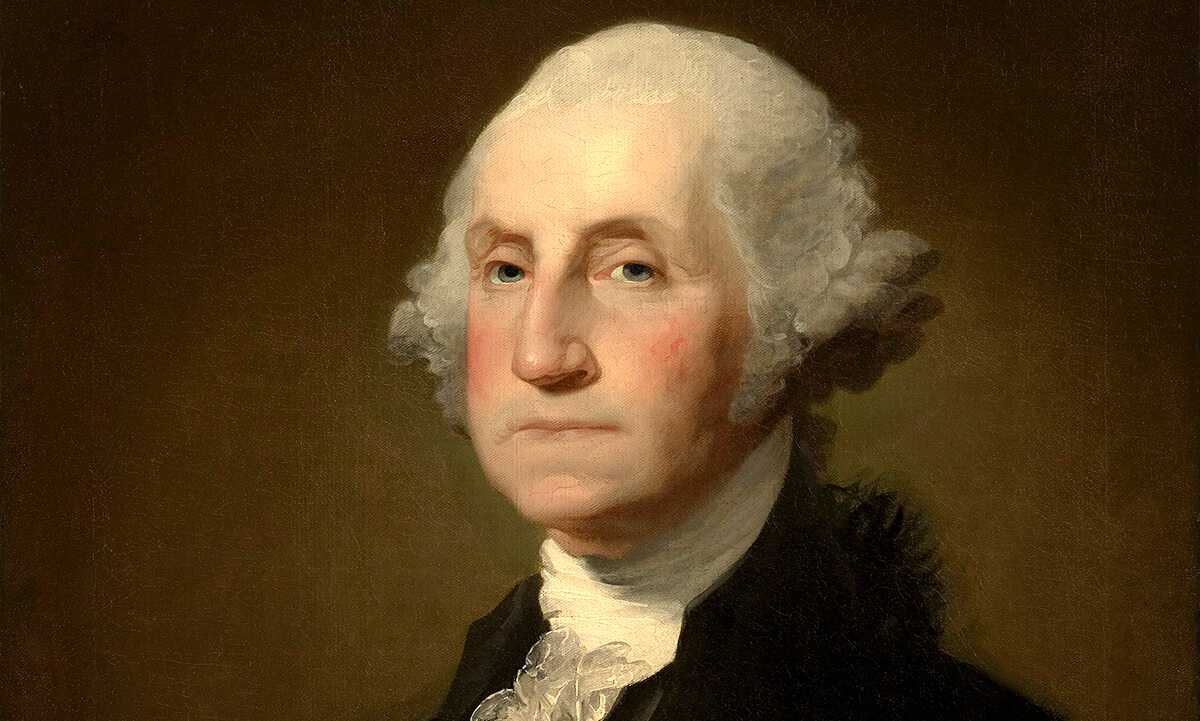
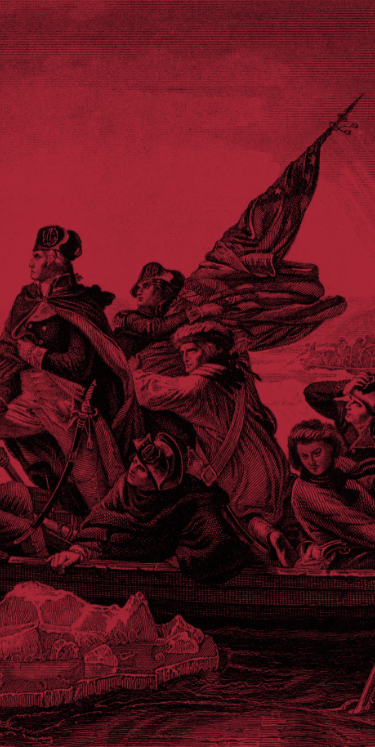
Who was known as “First in war, First in peace, First in the hearts of his countrymen”?

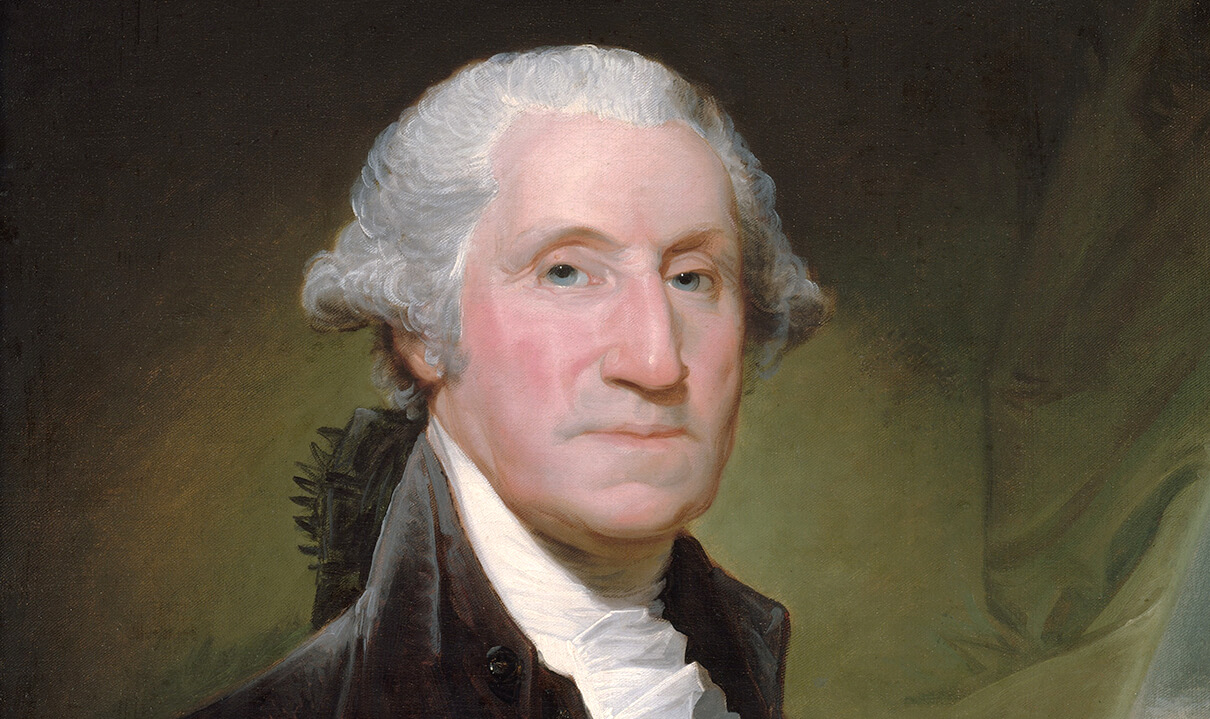
This month marks the 217th anniversary of George Washington’s famous Farewell Address ending his remarkable career of public service. To understand the impact of Washington’s unique leadership, it is worth reviewing a few incidents from his life.

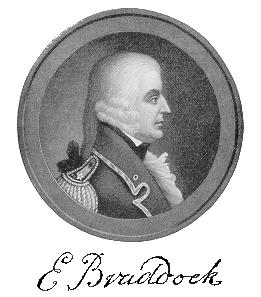
George Washington began his military career as an officer over the Virginia militia and then later as an aide-de-camp to British General Edward Braddock during the French and Indian War.1

Washington’s military advice in that War was very wise, but was rejected by the British.2 During the famous Battle of the Monongahela outside of Pittsburgh, Washington repeatedly escaped death through what he later described as miraculous intervention by God. In fact, an Indian chief who fought against him in that battle3 later traveled a long distance to meet Washington, whom he described as one who “cannot die in battle”4 because he clearly was “under the protection of the Great Spirit.”5 (For the full story of God’s Divine intervention in this battle, be sure to get the audiobook Bulletproof George Washington, read by famous Disney legend Dean Jones.)

Washington’s strong religious faith was evident on numerous occasions throughout the French and Indian War, and early artists later made lithographs capturing some of those reported incidents. One was a lithograph showing George reading the Bible to his troops, and another was Washington fulfilling the role of chaplain at the death of British commander Edward Braddock.

His firm reliance on God was evident throughout all of his endeavors, including in his General Orders to his troops during the American Revolution. And just as had occurred during the French and Indian War, God’s protection of Washington’s life was also evident during the American War for Independence.6

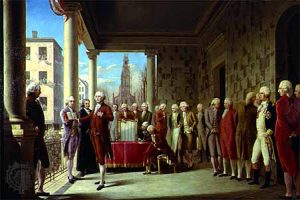
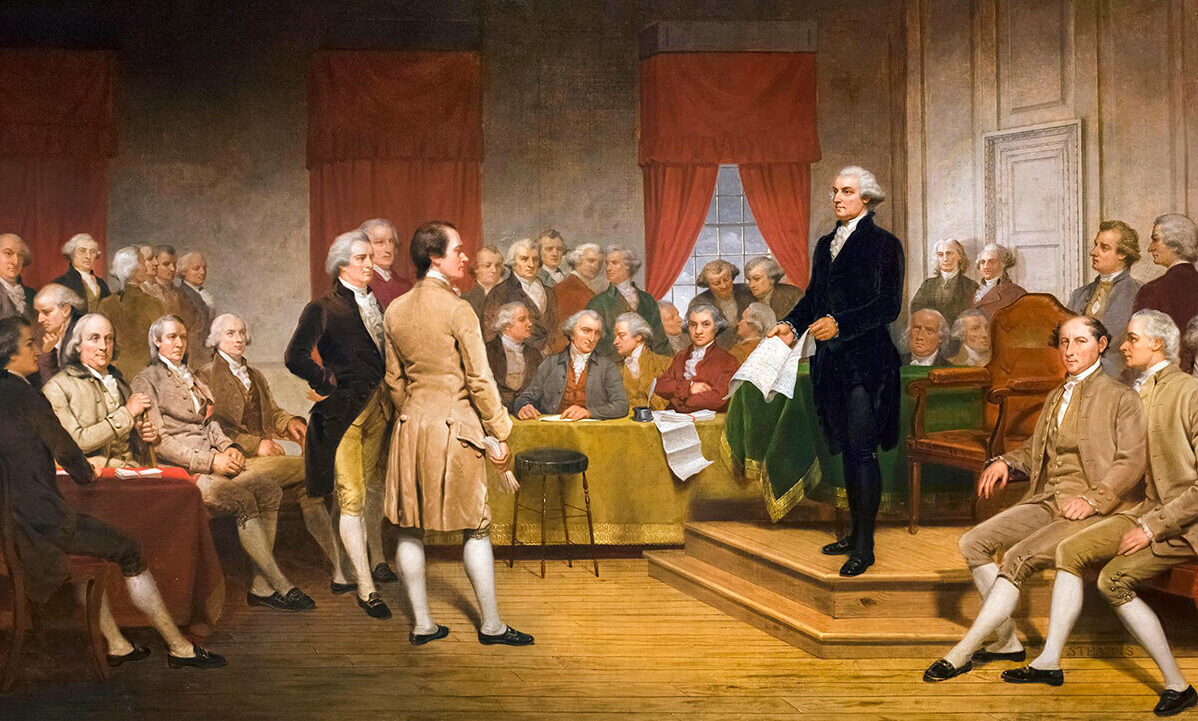
Following the end of the Revolution and the writing and adoption of the Constitution, Washington was unanimously chosen as the nation’s first President — the only president to receive a unanimous electoral college vote.7 From his inauguration (which included seven distinctly religious activities) to his retirement from public service, George Washington repeatedly demonstrated his firm reliance on God, openly acknowledging Him in public prayer proclamations (such as those of 1789 and 1795), speeches 8 and messages. 9 So well established was Washington’s Christian character, that decades after his death, sermons were still being preached to honor his life.

Washington affirmed his strong religious beliefs in his final public message to Americans: his “Farewell Address” of September 17, 1796. That message is considered to be among the most significant political speeches ever delivered by any president,10 and subsequent presidents recommended to Americans that they read and study that Address.11 (We have it available in Documents of Freedom.)

Because of his significant influence, it is no surprise that Washington was lovingly titled by his contemporaries as the man who was “First in war, First in peace, First in the hearts of his countrymen.”12


Endnotes

1 David Ramsay, The Life of George Washington (Baltimore: Joseph Jewett and Cushing & Sons, 1832), 13; John S.C. Abbott, American Pioneers and Patriots. George Washington, or Life in America One Hundred Years Ago (New York: Dodd & Mead Publishers, 1875), 82, James K. Paulding, A Life of Washington (Alberdeen: George Clark and Son, 1848), 41-42.
2 Ramsay, Life of Washington (1832), 13-14; Abbott, American Pioneers (1875), 85-86; Paulding, Life of Washington (1848), 43-44.
3 Ramsay,Life of Washington (1832), 14-15; Abbott, American Pioneers (1875), 91-93, Paulding, Life of Washington (1848), 44-45.
4 George Washington Parke Custis, Recollections and Private Memoirs of Washington by His Adopted Son (New York: Derby & Jackson, 1860), 375; Eugene Parsons, Great Americans of History George Washington: A Character Sketch (Milwaukee, WI: H.G. Campbell Publishing Company, 1898), 30-31, Washington Irving, Life of George Washington (New York: G. P. Putnam & Co., 1856), I:368.
5 Custis, Recollections (1860), 375; Irving, Life of Washington (1856), I:368; Parsons, Great Americans of History (1898), 31.
6 See for example, Jared Sparks, The Life of George Washington (Boston: Ferdinand Andrews, 1839) 205-217; Hon. J. T. Headley, The Illustrated Life of Washington (New York: G. & F. Bill, 1859) 214-216.
7 James Grant Wilson and John Fiske, Appletons’ Cyclopedia of American Biography (New York: D. Appleton and Company, 1889), 6, “Washington, George.”
8 See for example, George Washington, A Compilation of the Messages and Papers of the Presidents, ed. James D. Richardson (New York: Bureau of National Literature, Inc., 1897), I:179, Reply of the President to an Address of the Senate, December 12, 1795.
9 See for example, George Washington, Messages and Papers of the Presidents, ed. Richardson (1897), I:44., First Inaugural Address in the City of New York, April 30, 1789.
10Washington’s Farewell Address,” Library of Congress: Religion and the Founding of the American Republic, (July 23, 2012); “February 22, 1862: Washington’s Farewell Address,” United States Senate.
11 See for example, James Madison, The Writings of James Madison, Letter to Thomas Jefferson, February 8, 1825.
12 Eulogies and Orations on the Life and Death of General George Washington, First President of the United States of America (Boston: Manning & Loring, 1800), 17, “Funeral Oration on the Death of General Washington. Delivered at the Request of Congress, Dec. 26, 1799. By Major-General Henry Lee.”

Black History Issue 2003

A black civil rights leader recently told an assembly at Michigan State University that American democracy was only decades old rather than centuries- that not until the 1965 Voting Rights Act when blacks could vote did democracy truly begin. [1]

Such a declaration does not accurately portray the history of black voting in America nor does it honor the thousands of blacks who sacrificed their lives obtaining the right to vote and who exercised that right as long as two centuries ago. In fact, most today are completely unaware that it was not Democrats but was actually Republicans-” like the seven pictured on the front cover-” who not only helped achieve the passage of explicit constitutional voting rights for blacks in 1870 but who also held hundreds of elected offices during the 1800s. [2]

Black Voting in the 1700s

Acknowledgment that blacks voted long before the 1965 Voting Rights Act was provided in the infamous 1856 Dred Scott decision in which a Democratic-controlled US Supreme Court observed that blacks “had no rights which a white man was bound to respect; and that the Negro might justly and lawfully be reduced to slavery for his benefit.” [3] Non-Democrat Justice Benjamin R. Curtis, one of only two on the Court who dissented in that opinion, provided a lengthy documentary history to show that many blacks in America had often exercised the rights of citizens-” that many at the time of the American Revolution “possessed the franchise of [voters] on equal terms with other citizens.” [4]

State constitutions protecting voting rights for blacks included those of Delaware (1776), [5] Maryland (1776), [6] New Hampshire (1784), [7] and New York (1777). [8] (Constitution signer Rufus King declared that in New York, “a citizen of color was entitled to all the privileges of a citizen. . . . [and] entitled to vote.”) [9] Pennsylvania also extended such rights in her 1776 constitution, [10] as did Massachusetts in her 1780 constitution. [11] In fact, nearly a century later in 1874, US Rep. Robert Brown Elliott (a black Republican from SC) queried: “When did Massachusetts sully her proud record by placing on her statute-book any law which admitted to the ballot the white man and shut out the black man? She has never done it; she will not do it.” [12]

As a result of these provisions, early American towns such as Baltimore had more blacks than whites voting in elections; [13] and when the proposed US Constitution was placed before citizens in 1787 and 1788, it was ratified by both black and white voters in a number of States. [14]

This is not to imply that all blacks were allowed to vote; free blacks could vote (except in South Carolina) but slaves were not permitted to vote in any State. Yet in many States this was not an issue, for many worked to end slavery during and after the American Revolution. Although Great Britain had prohibited the abolition of slavery in the Colonies before the Revolution, [15] as independent States they were free to end slavery-” as occurred in Pennsylvania, Massachusetts, Connecticut, Rhode Island, Vermont, New Hampshire, and New York. [16] Additionally, blacks in many early States not only had the right to vote but also the right to hold office. [17]

Congressional Actions

In the early years of the Republic, the federal Congress also moved toward ending slavery and thus toward achieving voting rights for all blacks, not just free blacks. For example, in 1789 Congress banned slavery in any federally held territory; in 1794, [18] the exportation of slaves from any State was banned; [19] and in 1808, the importation of slaves into any State was also banned. [20] In fact, more progress was made to end slavery and achieve civil rights for blacks in America at that time than was made in any other nation in the world. [21]

In 1820, however, following the death of most of the Founding Fathers, a new generation of leaders in Congress halted and reversed this early progress through acts such as the Missouri Compromise, which permitted the admission of new slave-holding States. [22] This policy was loudly lamented and strenuously opposed by the few Founders remaining alive. Elias Boudinot-” a president of Congress during the Revolution-” warned that this new direction by Congress would bring “an end to the happiness of the United States.” [23] A frail John Adams feared that lifting the slavery prohibition would destroy America; [24] and an elderly Jefferson was appalled at the proposal, declaring, “In the gloomiest moment of the Revolutionary War, I never had any apprehensions equal to what I feel from this source.” [25] Congress also enacted the Fugitive Slave Law allowing southern slavers to go North and kidnap blacks on the spurious claim that they were runaway slaves [26] and then passed the Kansas-Nebraska Act, allowing slavery into what is now Colorado, Wyoming, Montana, Idaho, North Dakota, South Dakota, Kansas, and Nebraska. [27]

This new anti-civil rights attitude in Congress was also reflected in many of the Southern and Mid-Atlantic States. For example, in 1835 North Carolina reversed its policies and limited voting to whites only, [28] as also occurred in Maryland in 1809. [29]

Political Parties

The Democratic Party had become the dominant political party in America in the 1820s, [30] and in May 1854, in response to the strong pro-slavery positions of the Democrats, several anti-slavery Members of Congress formed an anti-slavery party-” the Republican Party. [31] It was founded upon the principles of equality originally set forth in the governing documents of the Republic. In an 1865 publication documenting the history of black voting rights, Philadelphia attorney John Hancock confirmed that the Declaration of Independence set forth “equal rights to all. It contains not a word nor a clause regarding color. Nor is there any provision of the kind to be found in the Constitution of the United States.” [32]

The original Republican platform in 1856 had only nine planks-” six of which were dedicated to ending slavery and securing equal rights for African-Americans. [33] The Democratic platform of that year took an opposite position and defended slavery, even warning that “all efforts of the abolitionists [those opposed to slavery]. . . are calculated to lead to the most alarming and dangerous consequences and . . . diminish the happiness of the people and endanger the stability and permanency of the Union.” [34] The next Democratic platform (1860) endorsed both the Fugitive Slave Law and the Dred Scott decision; [35] Democrats even distributed copies of the Dred Scott ruling to justify their anti-black positions. [36]

Specific Constitutional Rights for African-Americans

When Abraham Lincoln was elected the first Republican President in 1861 (along with the first ever Republican Congress), southern pro-slavery Democrats saw the handwriting on the wall. They left the Union and took their States with them, forming a brand new nation: the Confederate States of America, and their followers became known as Rebels. During the War, Lincoln implemented the first anti-slavery measures since the early Republic: in 1862, he abolished slavery in Washington, DC; [37] in 1863, he issued the Emancipation Proclamation, ordering slaves to be freed in southern States that had not already done so; [38] in 1864, he signed several early civil rights bills; [39] etc. After the war ended in 1865, the Republican Congress passed the 13th Amendment abolishing slavery and the 14th Amendment providing full civil rights for all blacks, thus fulfilling the original promise of the Declaration of Independence.

Most southern States ignored these new Amendments. [40] Congress therefore insisted that the southern States ratify and implement these Amendments before they could be readmitted into the United States. [41]

Until their readmission, the civil rights of the Rebels in the South-” including their right to vote in elections-” were suspended. [42] The Constitution authorizes that certain civil rights may be suspended “in cases of rebellion” or when “the public safety may require it” (Art. I, Sec. 9, cl. 2). In fact, because the Rebels had taken up arms against their own nation-” an act of treason according to the Constitution (“Treason against the United States shall consist only in levying war against them . . .” Art. III, Sec. 3, cl. 1), they could have been executed (Art. III, Sec. 3, cl. 2). Instead, amnesty was granted to the Rebels if they took an oath of fidelity to the United States, which most eventually did. (Regrettably, after their readmission, and after Democrats regained the State legislatures from Republicans, those States worked aggressively to circumvent the 14th Amendment in violation of the pledge [43] they had taken.)

Because the Rebels (who had almost exclusively been Democrats) were not allowed to vote in the early parts of Reconstruction, Republicans became the political majority in the South; and since nearly every African-American was a Republican and could now vote, most southern legislatures-” at least for a few years-” became Republican and included many black legislators. In Texas, 42 blacks were elected to the State Legislature, [44] 50 to the South Carolina Legislature, [45] 127 to Louisiana’s, [46] 99 to Alabama’s, [47] etc.-” all as Republicans. These Republican legislatures moved quickly to protect voting rights for blacks, prohibit segregation, establish public education, and open public transportation, State police, juries, and other institutions to blacks. [48] (It is noteworthy that the blacks serving both in the federal and State legislatures during that time forgivingly voted for amnesty for the Rebels. [49])

During the time when most southern Democrats had not yet signed the oath of fidelity to the United States and therefore could not vote, they still found ways to intimidate and keep blacks from voting. For example, in 1865-1866, the Ku Klux Klan was formed by Democrats to overthrow Republicans and pave the way for Democrats to regain control [50]-” as when Democrats attacked the State Republican Convention in Louisiana in 1866, killing 40 blacks, 20 whites, and wounding 150 others. [51] In addition to the use of force, southern Democrats also relied on absurd technicalities to limit blacks. In Georgia, 28 black legislators were elected as Republicans, but Democratic officials decided that even though blacks had the right to vote in Georgia, they did not have the right to hold office; the 28 black members were therefore expelled. [52]

Because of such blatant attempts to nullify the guarantees of the 14th Amendment, the Republican Congress passed the 15th Amendment to give explicit voting rights to African-Americans. Significantly, not one of the 56 Democrats serving in Congress at that time voted for the 15th Amendment. [53]

Democratic Efforts to Limit Voting Rights for Blacks

During Reconstruction (1865-1877), Republicans passed four federal civil rights bills to protect the rights of African-Americans, the fourth being passed in 1875. [54] It was nearly a century before the next civil rights bill was passed, because in 1876 Democrats regained partial control of Congress and successfully blocked further progress. As Democrats regained control of the legislatures in southern States, they began to repeal State civil rights protections and to abrogate existing federal civil rights laws. As African-American US Rep. John Roy Lynch (MS) noted, “The opposition to civil rights in the South is confined almost exclusively to States under democratic control . . .” [55]

Devious and cunning methods were required to circumvent the explicit voting protections of the 14th and 15th Amendments, and southern Democrats implemented nearly a dozen separate devices to prevent blacks from voting, including:

  • Poll taxes

  • Literacy tests

  • “Grandfather” clauses

  • Suppressive election procedures

  • Black codes and enforced segregation

  • Bizarre gerrymandering

  • White-only primaries

  • Physical intimidation and violence

  • Restrictive eligibility requirements

  • Rewriting of State constitutions

1. The poll tax

The poll tax was a fee paid by a voter before he could vote. The fee was high enough that most poor were unable to pay the tax and therefore unable to vote. Although the poll tax affected both whites and blacks, it was disproportionately hard on blacks who were just emerging from slavery, many of whom had not yet established an independent means of living. A poll tax was first proposed in Texas in 1874, right after Democrats reclaimed power from the Republicans, [56] but it was North Carolina in 1876 that became the first State to enact a poll tax, [57] and other southern States quickly followed. [58]

2. Literacy tests

Literacy tests required a voter to demonstrate a certain level of learning proficiency before he could vote. In some cases, the test was 20 pages long for blacks, and those administering the tests were white Democrats who nearly always ruled that blacks were illiterate. In Alabama, the test included questions such as, “Where do presidential electors cast ballots for president?” “Name the rights a person has after he has been indicted by a grand jury.” [59] Democrats required blacks to have an above average education before they could vote but then simultaneously opposed black education and even worked with the Ku Klux Klan to burn down schools attended by blacks. [60] Clearly, they did not intend for blacks to vote.

3. “Grandfather” clauses

“Grandfather” clauses were laws passed by Democratic legislatures allowing an individual to vote if his father or grandfather had been registered to vote prior to the passage of the 15th Amendment. [61] Since voting in the South prior to the 15th Amendment was almost completely by whites, this law ensured that poor and illiterate whites, but not blacks, could vote.

4. Suppressive election procedures

Some election procedures (such as “multiple ballots”) were intentionally made complex and misleading. For example, a Republican voter might be required to cast a ballot in up to eight separate locations-” or sometimes to cast a vote for each Republican on the ballot at a separate location-” before the ballot would be counted. Democratic officials, however, often failed to inform black voters of this complicated procedure and their ballots were therefore disqualified. [62]

5. Black codes and enforced segregation

Black Codes (later called Jim Crow laws) restricted the freedoms and economic opportunities of blacks. For example, in the four years from 1865-1869, southern Democrats passed “Black Codes” to prohibit blacks from voting, holding office, owning property, entering towns without permission, serving on juries, or racially intermarrying. [63]

National observers at that time concluded that the South was simply trying to institute a new form of slavery through these Black Codes. [64] This tactic was obvious to African-Americans, thus causing black US Rep. Joseph H. Rainey (Republican from SC) to quip: “I can only say that we love freedom more-” vastly more-” than slavery; consequently we hope to keep clear of the Democrats!” [65]

Southern Democrats went well beyond Black Codes, however, and also imposed forced racial segregation. In 1875, Tennessee became the first State to do so, [66] and by 1890 several other southern States had followed. [67] As a result, schools, hospitals, public transportation, restaurants, etc., became segregated. (Even though the Republican Congress had already passed laws banning segregation, the US Supreme Court struck down those anti-segregation laws in a series of decisions in the 1870s and 1880s. [68])

6. Bizarre gerrymandering

Once the Democrats regained State legislatures at the end of Reconstruction, they began to redraw election lines to make it impossible for Republicans to be elected, thereby preventing blacks from being elected. [69] For example, although many blacks were elected as Republicans in Texas during Reconstruction, when the last African-American left the State House in 1897, none was elected (either as a Republican or a Democrat) for the next 70 years until federal courts ordered a change in the way Texas Democrats drew voting lines. [70] Furthermore, although Republicans had been an overwhelming majority in the State legislature during Reconstruction, after Democrats redrew election lines, for several decades there were never more than two Republicans serving in the House nor one in the Senate. [71] This pattern was typical in other southern States as well.

7. White-only primaries

Another way Democrats could keep blacks from being elected was by enacting Democratic Party policies prohibiting blacks from voting in their primaries. When Texas later codified this policy into State law, the US Supreme Court struck down that Texas law in 1927, [72] but not the party policies. The Democratic Parties in Georgia, [73] Louisiana, [74] Florida, [75] Mississippi, [76] South Carolina, [77] etc., therefore continued their reliance on white-only primaries. Because Democrats solidly controlled every level of government in the South (often called the “solid Democratic South” [78]), this policy had the same effect as a State law and again ensured that no black would be elected. In 1935, the Supreme Court upheld this Democratic policy [79] but then reversed itself and finally struck it down in 1944. [80]

8. Physical intimidation and violence

In 1871, black US Rep. Robert Brown Elliott (Republican from SC) observed that: “the declared purpose [of the Democratic party is] to defeat the ballot with the bullet and other coercive means. . . . The white Republican of the South is also hunted down and murdered or scourged for his opinion’s sake, and during the past two years more than six hundred loyal [Republican] men of both races have perished in my State alone.” [81] Elliott’s term “coercive means” accurately described the lynchings as well as the cross burnings, church burnings, incarceration on trumped-up charges, beatings, rape, murder, etc.

The Ku Klux Klan was a leader in this form of violent intimidation by Democrats. As African-American US Rep. James T. Rapier (Republican from al) explained in 1874, Democrats “were hunting me down as the partridge on the mount, night and day, with their Ku Klux Klan, simply because I was a Republican and refused to bow at the foot of their Baal.” [82]

Of all forms of violent intimidation, lynchings were by far the most effective. Between 1882 and 1964, 4,743 persons were lynched-” 3,446 blacks and 1,297 whites. [83] Why were so many more blacks lynched than whites? According to African-American Rep. John R. Lynch (Republican from SC), “More colored than white men are thus persecuted simply because they constitute in larger numbers the opposition to the Democratic Party.” [84]

Republicans often led the effort to pass federal anti-lynching laws, [85] but Democrats successfully blocked every anti-lynching bill. For example, in 1921, Republican Rep. Leonidas Dyer (MO) introduced a federal anti-lynching bill in Congress, but Democrats in the Senate killed it. [86] The NAACP reported on December 17, 1921, that: “since the introduction of the Dyer Anti-Lynching Bill in Congress on April 11, 1921, there have been 28 persons murdered by lynchings in the United States.” [87] Although some Democrats introduced anti-lynching bills across the decades, their Democratic leaders killed every effort and Congress never did pass an anti-lynching bill. [88]

9. Restrictive eligibility requirements

Election policies designed to limit black voting included requirements that a voter must reside in a state for two years, his county for one year, and his ward or precinct for six months before he could vote. [89] This requirement especially limited the effect of workers seeking employment-” often blacks. After the poll tax was abolished, some States, still trying to achieve the same effect, enacted annual registration fees for voters. The lower courts struck down such fees in 1971; [90] in 1972 the Supreme Court struck down the excessive filing fees established by Democratic legislatures; [91] these fees were designed to prevent what the Supreme Court had termed the “less affluent segment of the community” [92] from participating as candidates.

10. Rewriting of State constitutions

As a part of Reconstruction, most southern States had been required to rewrite their State constitutions to add full civil rights protections. [93] However, less than two decades later, many States revised their constitutions to remove those clauses. For example, in 1868 North Carolina had rewritten its constitution to include civil rights, [94] but in 1876 it amended its constitution to exclude most blacks from voting. [95] Over the next two decades, Democrats in Mississippi, [96] South Carolina, [97] Louisiana, [98] Florida, [99] Alabama, [100] and Virginia [101] also altered their constitutions or passed laws to negate many of the rights given to blacks during Reconstruction.

11. Other requirements

Other restrictions used by Democrats to keep blacks from voting included property ownership requirements. For example, in Alabama in 1901, a voter was required to own land or property worth at least $300 before he could vote [102] (today that would equate to more than $6,500. [103]) Some States would withhold voting rights for the “commission” of a crime-” not for a serious crime or a felony but rather for violating any of a long list of petty offenses (unemployed blacks or those looking for work were often charged with vagrancy, resulting in a loss of their voting rights). [104]

An Historical Sidenote

Current writers and texts addressing the post-Civil War period often present an incomplete portrayal of that era. For example, africana.com notes: “Southerners established whites-only voting in party primaries . . . or gerrymandered electoral districts, thus diluting the strength of black voters.” [105] Although it is true that both whites and southerners were the overwhelming source of difficulties for African-Americans, it was just one type of southern whites that caused the problems: southern racist whites. There was another type of southern whites: the non-racist whites, many of whom suffered great persecutions and even loss of life for supporting blacks. These whites are often unrecognized or unacknowledged in black history and are wrongly grouped with racist whites through the use of the overly broad terms such as “southerners” or “whites.” To make an accurate portrayal of black history, a distinction must be made between types of whites.

For example, the Rev. Richard Allen (1760-1831), a founder of the AME church in America, suffered many injuries at the hands of “whites”: he was a slave, his mother and brothers were sold separately and his family was split by his master, Allen was opposed by prominent Gospel ministers, etc. Yet Allen understood that only some whites were hostile. In fact, in his own memoirs, Allen openly acknowledges whites who helped him. For example, Allen writes to other blacks: “I hope the name of Dr. Benjamin Rush [a white signer of the Declaration] and Robert Ralston [a white wealthy merchant] will never be forgotten among us. They were the first two gentlemen who espoused the cause of the oppressed and aided us in building the house of the Lord for the poor Africans to worship in.” [106] Allen also notes that in 1784 when he started his first church in Philadelphia, “there were but few colored people in the neighborhood-” the most of my congregation was white.” [107] Such positive portrayals of black/white relations are too often missing from black history pieces today; instead, “whites” are described as oppressors. Some were; some were not.

Another illustration is provided by the passage of the 13th and 14th Amendments. Constitutional amendments must be passed by a margin of two-thirds in Congress and ratified by three-fourths of the States. Those Amendments abolishing slavery and providing civil rights and voting rights for African-Americans were passed by two-thirds of the white men in Congress and by white men in the legislature of three-fourths of the States-” an overwhelming majority of these white men were Republicans and were not racists. (Among the literally hundreds of whites voting for these amendments were two African-American Republicans elected in Massachusetts in 1866. [108])

Therefore, the africana.com quote would be much more historically correct-” although more politically incorrect-” were it to read: “Democratic legislatures in the South [instead of just “southerners”] established whites-only voting in party primaries . . . ” This weakness of distinction is typical of far too many black history writings addressing the post-Reconstruction era.

An Obvious Purpose

It is clear that many southern Democrats despised blacks and Republicans and used every possible means to keep them from power. This hostility was evident in the numerous devices they used-” including violence. In fact, after examining the abundant evidence, Republican US Sen. Roscoe Conkling (nominated as a US Supreme Court Justice in 1882) concluded that the Democratic Party was determined to exterminate blacks in those States where Democratic supremacy was threatened. [109]

The Democrats’ hostility was evident not only in their actions but also in the words they used to describe blacks and Republicans. Democrats applied epithets that were at that time considered base, vulgar, and derogatory-” terms such as “scalawags” (those in the South who had opposed succession) [110] or “radicals” (early Republicans were considered radical because their party was bi-racial and because they allowed blacks to vote and participate in the political process). [111]

Clearly, because Republicans embraced and welcomed blacks as equals, Democrats abhorred and bitterly opposed them. As black US Rep. Richard H. Cain (Republican from SC) explained in 1875: “The bad blood of the South comes because the Negroes are Republicans. If they would only cease to be Republicans and vote the straight-out Democratic ticket there would be no trouble. Then the bad blood would sink entirely out of sight.” [112] Many Democrats today-” including many black Democrats-” have picked up the Democrats’ long-standing hatred for Republicans without understanding its origins. They often blame that generations-long contempt on issues other than the anti-black, anti-Republican sentiments that shaped their Party, but history is clear.

Fighting the Constitution

Decades after the passage of the 14th and 15th Amendments, many Democrats still steadfastly opposed those protections. In 1900, Democrat US Sen. Ben Tillman (SC) declared: “We made up our minds that the 14th and 15th Amendments to the Constitution were themselves null and void; that the [civil rights] acts of Congress . . . were null and void; that oaths required by such laws were null and void.” [113] Democrats such as Rep. W. Bourke Cockran (NY), Sen. John Tyler Morgan (AL), Sen. Samuel McEnery (LA), and others agreed with this position and were among the Democrats seeking a repeal of the 15th Amendment (voting rights for African-Americans). [114] In fact, Sen. McEnery even declared: “I believe . . . that not a single southern Senator would object to such a move” [115] (of the 22 southern Senators, 20 were Democrats [116]).

Effect on Black Voting

Unrelenting efforts by Democrats to suppress black voting were successful. Eventually, in Selma, Alabama, the voting rolls were 99 percent white and 1 percent black even though there were more black residents than whites in that city; [117] and in Birmingham-” a city with 18,000 blacks-” only 30 of them were eligible to vote. [118] Black voters in Alabama and Florida were reduced by nearly 90 percent, [119] and in Texas from 100,000 to only 5,000. [120] By the 1940s, only 5 percent of blacks in the south were registered to vote. [121]

More Recent Civil Rights Efforts

In the 1940s, 1950s, and 1960s, a few Democratic leaders began to oppose their own party’s policies against blacks. Democratic President Harry S. Truman from Missouri was perhaps the first and most vocal national Democratic leader to advocate strong civil rights protections, [122] yet his party rejected his efforts. [123] Reformers such as Truman learned that it was a difficult task for rank-and-file Democrats to reshape their long-held views on race.

In fact, in 1924 when Texas Democratic candidate for Governor, Ma Ferguson, ran against the Democratic Ku Klux Klan candidate in the primary, it cost her the widespread support of the Texas Democratic Party. [124] Democrat Franklin Roosevelt understood his Party, however, and in his 1932 race he made subtle overtures to blacks but avoided making any overt civil rights promises. FDR was so unsuccessful in this approach that his Republican opponent, Herbert Hoover, received over 75 percent of the black vote in that election. [125]

Unlike FDR, Harry Truman worked boldly and openly to change his party. In 1946, he became the first modern President to institute a comprehensive review of race relations and, not surprisingly, faced strenuous opposition from within his own party. In fact, Democratic Sen. Theodore Bilbo (MS) admonished every “red blooded Anglo Saxon man in Mississippi to resort to any means” to keep blacks from voting. [126] Nonetheless, Truman pushed forward and introduced an aggressive civil rights legislative package that included an anti-lynching law, an anti-poll tax law, desegregation of the military, etc., but his own party killed all of his proposals. [127]

Southern Democratic Governors, denouncing Truman’s proposals, met in Florida and proposed what they called a “southern conference of true Democrats” to plan their strategy. [128] That summer at the Democratic National Convention when Truman placed strong civil rights language in the national Democratic platform, a walkout of southern delegates resulted. Southern Democrats then formed the Dixiecrat Party and ran South Carolina Gov. Strom Thurmond as their candidate for President. [129] (It was concerning this 1948 presidential bid by Thurmond that Republican Sen. Trent Lott (MS) uttered his disgraceful comments [130] that made national news.) Thurmond’s bid was unsuccessful; he later had a change of heart on civil rights and in 1964 left the Democratic Party. In 1971, as a Republican US Senator, Thurmond became the first southern Senator to hire a black in his senatorial office. [131]

In 1954, additional civil rights progress was made when the US Supreme Court rendered its Brown v. Board of Education decision, [132] integrating public schools and ending segregation. (Significantly, the Court was only reversing its own position taken nearly sixty years earlier in the Plessy v. Ferguson decision that upheld segregation laws enacted by Democratic State legislatures.)

In 1957, and then again in 1960, Republican President Dwight D. Eisenhower made bold civil rights proposals to increase black voting rights and protections. [133] Since Congress was solidly in the hands of the Democrats, they cut the heart out of his bills before passing weak, watered-down versions of his proposals. [134] Nevertheless, to focus national attention upon the plight of blacks, Eisenhower started a civil rights commission and was the first President to appoint a black to an executive position in the White House. [135]

In 1963, following the Birmingham riots, Democratic President John F. Kennedy proposed a strong civil rights bill. Its language was taken from the wording of Eisenhower’s original civil rights bill (before it was gutted by Democrats) and from proposals made by Eisenhower’s civil rights commission. [136] Kennedy’s tragic assassination halted his bill.

In 1964, the 24th Amendment was added to the Constitution, abolishing the poll tax. Significantly, on five previous occasions the House passed a ban on the poll tax but Senate Democrats had killed the bills each time. [137] As early as 1949 (as part of Truman’s proposed civil rights package), Democratic Sen. Spessard Holland (FL) introduced a constitutional amendment to end poll taxes, but it was 1962 before it was approved by the Senate. [138] Significantly, 91 percent of the Republicans in Congress voted to end the poll tax but only 71 percent of the Democrats did so; and in the Senate, of the 16 Senators who opposed the 24th Amendment, 15 were Democrats. [139] (The 24th Amendment banned poll taxes only for federal elections; in 1966, the US Supreme Court struck down poll taxes for all elections, including local and State. [140])

In 1964, Democratic President Lyndon B. Johnson picked up the civil rights bill introduced by President Kennedy. However, even though Democrats held almost two-thirds of the seats in Congress at that time, Johnson could not garner sufficient votes from within his own party to pass the bill. (Johnson needed 269 votes from his Party to achieve passage but could garner the support of only 198 of the 315 Democrats in Congress. [141]) Johnson therefore worked with Republicans to achieve the passage of the 1964 Civil Rights Bill, followed by the 1965 Voting Rights Act. (The 1965 Voting Rights Act by Johnson was a resurrection of Eisenhower’s original language before it had been killed by Democrats. When it was finally approved under Johnson, of the 18 Senators who opposed the Voting Rights Act, 17 were Democrats. In fact, 97 percent of Republican Senators voted for the Act. [142])

The 1965 Voting Rights Act banned literacy tests and authorized the federal government to oversee voter registration and elections in counties that had used voter eligibility tests. Within a year, 450,000 new southern blacks successfully registered to vote; [143] and voter registration of African-Americans in Mississippi rose from only 5 percent in 1960 to 60 percent by 1968. [144]

The 1965 Voting Rights Act opened opportunities for African-Americans that they had not enjoyed since Republicans had been in power a century before; the laws and policies long enforced by southern Democratic legislatures had finally come to an end. As a result, the number of blacks serving in federal and State legislatures rose from 2 in 1965 to 160 in 1990. [145]

Controversies and Successes

In recent years, much national media coverage has focused on allegations of election fraud in Dade County and West Palm Beach, Florida; St. Louis, Missouri; Michigan (the buying of votes); New Mexico (the destruction of thousands of uncounted ballots); etc. Significantly, each one of these incidents occurred in an area that was overwhelmingly Democratic and where the elections had been administered by Democratic election officials. The fact that such problems occur in areas under Democratic rather than Republican control might surprise many today, but it would not have surprised African-Americans a century ago.

In 1875, African-American US Rep. Joseph H. Rainey (Republican from SC) declared: “We intend to continue to vote so long as the government gives us the right and necessary protection; and I know that right accorded to us now will never be withheld in the future if left to the Republican Party.” [146] In fact, on the floor of Congress, Rainey told Democrats: “Your votes, your actions, and the constant cultivation of your cherished prejudices prove to the Negroes of the entire country that the Democrats are in opposition to them, and if they (the Democrats) could have [their way], our race would have no foothold here. . . . The Democratic Party may woo us, they may court us and try to get us to worship at their shrine, but I will tell the gentleman that we are Republicans by instinct, and we will be Republicans so long as God will allow our proper senses to hold sway over us.” [147]

The original philosophies and actions of both major parties are vividly documented in history but are largely unreported today. And while there has been good and bad on both sides, a general pattern is clearly established: African-Americans made their most significant gains as Republicans. Even today many of those patterns still remain. It is significant that black Republican US Rep. JC Watts (OK) chaired the Republican National Convention in Philadelphia in 2000. Watts was the third African-American to chair a National Republican Convention (the first was US Rep. John Roy Lynch (MS) in 1884 and then US Sen. Edward Brooke (MA) in 1968); [148] however, no African-American has ever chaired, or even co-chaired, a Democratic National Convention. Similarly, in the 130 years that Democrats controlled Texas, only 4 minority individuals served Statewide; in the 8 years that Republicans have controlled the State, 6 minority individuals already have served Statewide. In fact, Texas just elected three African-Americans to statewide office-” all as Republicans, apparently becoming the first State in America’s history to achieve this distinction. Furthermore, Maryland and Ohio each just elected black Lt. Governors-” both as Republicans.

An important point is illustrated by these recent elections (and by scores before them): in Democratic-controlled States, rarely are African-Americans elected statewide (with the exception of US Sen. Carol Moseley-Braun (IL, 1992-1998)); and African-American Democratic Representatives to Congress usually are elected only from minority districts (districts with a majority of minority voters). Minority Republicans, on the other hand, are elected statewide in Republican States, or in congressional districts with large white majorities. [149]

Perhaps this explains why African-American abolitionist Frederick Douglass a century ago reminded blacks: “The Republican Party is the ship, all else is the sea.” [150] The history of African-American voting rights in America proves Douglass was right.

[For more information on the struggle for African American Civil Rights see our Setting the Record Straight resource (in DVD, VHS, and Book format); we have also cataloged our Black History resources here]


Endnotes

[1] The Washington Times online, Steve Miller, “Jackson dismisses Founding Fathers,” September 16, 2002 (at https://www.wa shtimes.com/national/20020916-78725174.htm).

[2] Stanford University online, Peter Kolchin, “Reconstruction,” 1997 (at https://www.stanford.edu/~paherman/reconstruction.htm).

[3] Dred Scott v. Sandford, 60 U.S. 393, 407 (1856).

[4] Dred Scott v. Sandford, 60 U.S. 393, 573 (1856), Curtis, J. (dissenting).

[5] The Constitutions of the Several Independent States of America (Boston: Norman and Bowen, 1785), p. 92, 1776 Delaware Constitution, “Declaration of Rights,” #6.

[6] Constitutions (1785), p. 104, 1776 Maryland Constitution, “Declaration of Rights,” #5.

[7] Constitutions (1785), p. 5, 1784 New Hampshire Constitution, “Bill of Rights,” #11.

[8] Constitutions (1785), p. 58, 1777 New York Constitution, “Declaration of Rights,” #7.

[9] Rufus King, The Life and Correspondence of Rufus King, Charles R. King, editor (New York: G.P. Putnam’s Sons, 1900), p. 404.

[10] Constitutions (1785), p. 78, 1776 Pennsylvania Constitution, “Declaration of Rights,” #7.

[11] Constitutions (1785), p. 8, 1780 Massachusetts Constitution, “Declaration of Rights,” #9.

[12] Carter G. Woodson, Negro Orators and Their Orations (Washington, DC: The Associated Publishers, Inc., 1925), p. 310, Rep. Robert Brown Elliott from his speech on the Civil Rights Bill on January 6, 1874.

[13] John Hancock, Essays on the Elective Franchise; or, Who Has the Right to Vote? (Philadelphia: Merrihew & Son, 1865), pp. 22-23.

[14] Hancock, Essays on the Elective Franchise, p. 27.

[15] Benson Lossing, Harpers’ Popular Cyclopedia, pp.1299-1300; W.O. Blake, History of Slavery and the Slave Trade, p. 177; Benjamin Franklin, The Works of Benjamin Franklin, Jared Sparks, editor (1839), Vol. VIII, p. 42, to the Rev. Dean Woodward on April 10, 1773; Frank Moore, Materials for History Printed From Original Manuscripts, the Correspondence of Henry Laurens of South Carolina (New York: Zenger Club, 1861), p. 20, to John Laurens on August 14, 1776; Thomas Jefferson, The Writings of Thomas Jefferson, Albert Ellery Bergh, editor (Washington, DC: Thomas Jefferson Memorial Assoc., 1903), Vol. I, p. 34.

[16] Thomas R. R. Cobb, An Inquiry into the Law of Negro Slavery in the United States of America (Philadelphia: T. & T.W. Johnson & Co., 1858), pp. 171-172; see also The Public Laws of the State of Rhode-Island and Providence Plantations, as revised by a Committee, and finally enacted by the Honorable General Assembly, at their Session in January, 1798 (Providence: Carter and Wilkinson, 1798), pp. 607-611; see also The Public Statute Laws of the State of Connecticut. Book 1. Published by Authority of the General Assembly (Hartford: Hudson and Goodwin, 1808), pp. 623-626; see also Laws of the Commonwealth of Pennsylvania, From the Fourteenth Day of October, One Thousand Seven Hundred, to the Twentieth Day of March One Thousand Eight Hundred and Ten. Published by Authority of the Legislature (Philadelphia: Jon Bioren, 1810), Vol. 1, pp. 492-497.

[17] Constitutions (1785), p. 5, 1784 New Hampshire Constitution, “Declaration of Rights,” #11; p. 8, 1780 Massachusetts Constitution, #9; p. 78, 1776 Pennsylvania Constitution, #7.

[18] Debates and Proceedings in the Congress of the United States (Washington, DC: Gales and Seaton, 1834), Vol. II, p. 2215, 1789, “An act to provide for the government of the Territory northwest of the river Ohio”; see also The Constitutions of the United States of America (Trenton: William and David Robinson, 1813), p. 366, “Northwest Ordinance,” Article #6.

[19] Debates and Proceedings (1849), p. 1425, “An act to prohibit the carrying on the slave-trade from the United States to any foreign place or country” in 1794.

[20] Debates and Proceedings (1849), p. 1266, “An act to prohibit the importation of slaves into any port or place within the jurisdiction of the United States” in 1807.

[21] Cobb, An Inquiry into the Law of Negro Slavery, pp. 153, 163, 169.

[22] Debates and Proceedings (1849), pp. 2555, 2559, “An act to authorize the people of Missouri Territory to form a constitution and state government” in 1820.

[23] George Adams Boyd, Elias Boudinot (Princeton: Princeton University Press, 1952), p. 290, in a letter to Elias Boudinot on November 27, 1819.

[24] Charles Francis Adams, The Works of John Adams, Second President of the United States (Boston: Little, Brown and Company, 1856), p. 386, in a letter to Thomas Jefferson on December 18, 1819.

[25] Thomas Jefferson, The Works of Thomas Jefferson (New York and London: G.P. Putnam’s Sons, 1905), p. 157, in a letter to Hugh Nelson on February 7, 1820.

[26] Statutes at Large and Treaties of the United States of America, from December 1, 1845, to March 3, 1851, George Minot, editor (Boston: Little, Brown and Company, 1862), 31st Congress, 1st Session, Chapter 55, September 18, 1850, Vol. 9, pp. 462-465.

[27] Statutes at Large and Treaties of the United States of America, from December 1, 1851, to March 3, 1855, George Minot, editor (Boston: Little, Brown and Company, 1855), 33rd Congress, 1st Session, Chapter 59, May 30, 1854, Vol. 10, pp. 277-290.

[28] Hancock, Essays on the Elective Franchise, p. 22.

[29] Hancock, Essays on the Elective Franchise, pp. 22-23.

[30] Thomas Hudson McKee, The National Conventions and Platforms of All Political Parties, 1789-1905 (New York: Burt Franklin, 1971), pp. 18-20; Office of the Clerk, U.S. House of Representatives online, “Party Divisions” (at ht tp://clerk.house.gov/histHigh/Congressional_History/partyDiv.php); CNN AllPolitics.com, “Democratic Party History,” August 2, 2000 (at https://www.cnn.com/ELECTION/2000/conventions/democratic/features/history/).

[31] Eugene V. Smalley, A Brief History of the Republican Party. From Its Organization to the Presidential Campaign of 1884 (New York: John Alden, Publisher, 1885), p. 30.

[32] Hancock, Essays on the Elective Franchise, pp. 32-33.

[33] McKee, National Conventions and Platforms, pp. 97-99.

[34] McKee, National Conventions and Platforms, p. 91.

[35] McKee, National Conventions and Platforms, pp. 108-109.

[36] Harper’s Weekly online, “The Dred Scott Decision” (at https://blackhistory.harpweek.com/7Illustrations/Slavery/DredScottAd.htm) , in an advertisement that appeared in Harper’s Weekly, July 23, 1859.

[37] Statutes at Large, Treaties, and Proclamation of the United States of America, from December 5, 1859, to March 3, 1863, George P. Spanger, editor (Boston: Little, Brown and Company, 1863), 37th Congress, 2nd Session, Chapter 54, April 16, 1862, Vol. 15, pp. 376-378.

[38] James D. Richardson, A Compilation of the Messages and Papers of the Presidents, 1789-1897 (Published by Authority of Congress, 1899), Vol. VI, 157-159, Proclamation by Abraham Lincoln on January 1, 1863.

[39] Statutes at Large, Treaties, and Proclamation of the United States of America, from December, 1863, to December, 1865, George P. Spanger, editor (Boston: Little, Brown and Company, 1866), 38th Congress, 1st Session, Chapter 166, June 28, 1864, Vol. 13, p. 200; 1st Session, Chapter 144, June 20, 1864, Vol. 13, p. 144-145 [equalized pay]; and 2nd Session, Chapter 90, March 3, 1865, Vol. 13, pp. 507-509.

[40] Dominicus-von-Linprun-Gymnasium online, “American History: The Past of a Nation”

(at https://www.gymnasium-viechtach.de/ushistory/2_e.htm).

[41] Statutes at Large, Treaties, and Proclamation of the United States of America, from December, 1865, to March, 1867, George P. Spanger, editor (Boston: Little, Brown and Company, 1868), 39th Congress, 2nd Session, Chapter 152, March 2, 1867, Vol. 14, pp. 428-430; Statutes, from December, 1867, to March, 1869 (Boston: Little, Brown and Company, 1869), 40th Congress, 2nd Session, Chapter 69, June 22, 1868, Vol. 15, pp. 72-74.

[42] Statutes at Large, Treaties, and Proclamation of the United States of America, from December, 1865, to March, 1867, George P. Spanger, editor (Boston: Little, Brown and Company, 1868), 39th Congress, 2nd Session, Chapter 152, March 2, 1867, Vol. 14, p. 429.

[43] Statutes at Large, Treaties, and Proclamation of the United States of America, from December, 1867, to March, 1869, George P. Spanger, editor (Boston: Little, Brown and Company, 1869), 40th Congress, 1st Session, Chapter 6, March 23, 1867, Vol. 15, pp. 2-4.

[44] The Handbook of Texas online, “African Americans and Politics” (at https://www.tsha.utexas.edu/handbok/online/articles/print/AA/wmafr.html)

[45] Langston Hughes, Milton Meltzer, and Eric C. Lincoln, A Pictorial History of Blackamericans (New York: Crown Publishers, Inc., 1983), p. 204.

[46] Hughes, Meltzer, and Lincoln, Pictorial History (1983), p. 205.

[47] Alabama Moments in American History online, “Alabama’s Black Leaders During Reconstruction” (at https://www.alabam amoments.state.al.us/sec26det.html); etc.

[48] The Handbook of Texas online, “Reconstruction” (at https://www.tsha.utexas.edu/handbook/online/articles/print/AA/wmafr.html).

[49] Woodson, Negro Orators and Their Orations, p. 291, Sen. Hiram R. Revels from his speech on the Georgia Bill on March 16, 1870; p. 337, Rep. Richard H. Cain from his speech on the Civil Rights Bill on January 10, 1874; p. 379, Rep. Joseph H. Rainey from his speech made on March 5, 1872 in reply to an attack upon the colored state legislators of South Carolina by Representative Cox of New York; etc.

[50] Smalley, Brief History of the Republican Party, pp. 49-50; see also The Handbook of Texas online, “Ku Klux Klan” (at https://www.tsha.utexas.edu/handbok/online/articles/view/KK/vek2.html).

[51] Hughes, Meltzer, and Lincoln, Pictorial History (1983), p. 199; see also The Impeachment of Andrew Johnson online, “The New Orleans Massacre” (at https://www.impeach-andrewjohnson.com/06FirstImpeachmentDiscussion s/iiib-8a.htm); and Harper’s Weekly online, “The Riot in New Orleans” (at https://www.blackhistory.harpweek.com/7Illustrations/Reco nstruction/RiotInNewOrleans.htm).

[52] Woodson, Negro Orators and Their Orations, p. 291, Sen. Hiram R. Revels from his speech on the Georgia Bill on March 16, 1870; see also National Anti-Slavery Standard, September 26, 1868, “The South. The Rebel Perfidy in the Legislature. Colored Republicans Expelled” p. 1, and Georgia Secretary of State online, “Expelled Because of their Color: African-American Legislators in Georgia” (at https://www.sos.state .ga.us/Archives/ve/1/ec1.htm).

[53] Journal of the House of Representatives of the United States (Washington, DC: Government Printing Office, 1869), 40th Congress, 3rd Session, February 25, 1869, pp. 449-450; Journal of the Senate of the United States (Washington, DC: Government Printing Office, 1869), 40th Congress, 3rd Session, February 25, 1869, p. 361.

[54] Statutes at Large, Treaties, and Proclamation of the United States of America, from December, 1865, to March, 1867, George P. Spanger, editor (Boston: Little, Brown and Company, 1868), 39th Congress, 1st Session, Chapter 31, April 9, 1866, Vol. 14, pp. 27-30; 39th Congress, 2nd Session, Chapter 153, March 2, 1867, Vol. 14, pp. 428-430; Statutes at Large, from December, 1869, to March, 1871 (Boston: Little, Brown and Company, 1871), 41st Congress, 2nd Session, Chapter 114, May 31, 1870, Vol. 16, pp. 140-146; Statutes at Large, from December, 1873, to March, 1875 (Boston: Little, Brown and Company, 1875), 43rd Congress, 2nd Session, Chapter 114, March 1, 1875, Vol. 18, Part 3, pp. 335-337.

[55] Woodson, Negro Orators and Their Orations, p. 375, Rep. John R. Lynch from his speech on the Civil Rights Bill on February 3, 1875.

[56] The Handbook of Texas online, “Constitution Proposed in 1874” (at https://www.tsha.utexas.edu/handbook/online/articles/view/CC/mhc12.html), and “Constitution of 1876” (at https://www.tsha.utexas.edu/handbook/online/articles/view/CC/mhc7.html) .

[57] The Federal and State Constitutions Colonial Charters, and Other Organic Laws of the States, Territories, and Colonies, Francis Newton Thorpe, editor (Washington, DC: Government Printing Office, 1909), pp. 2834-2835, 1876 North Carolina Constitution, Article 5, Section 1; Article 6, Section 4.

[58] Palm Beach Post online, Mark Caputo, “Black Judge’s Honor Restored in History Books,” February 27, 2002 (at https://www.myflorida.com/myflorida/governorsoffice/black_history/ju dge2.html); University of Dayton School of Law online, J. Whyatt Mondesire, “Felon Disenfranchisement: the Modern Day Poll Tax” (at https://academic .udayton.edu/race/04needs/voting06.htm).

[59] Gilder Lehrman Institute of American History online, “America in Ferment: The Tumultuous 1960s,” November 14, 2002 (at http:/ /www.gliah.uh.edu/database/article_display.cfm?HHID=369).

[60] PBS online, “The Rise and Fall of Jim Crow” (at https://www.pbs. org/wnet/jimcrow/stories_org_kkk.html); see also Cyberschool online, “African Americans Under Congressional Reconstruction” (at https://br t.uoregon.edu/cyberschool/history/ch15/rights.html); see also Hughes, Meltzer, and Lincoln, Pictorial History (1983), p. 199; etc.

[61] Ohio State University online, “Voting Restrictions: Jim Crow” (at https://1912.hist ory.ohio-state.edu/race/jimcrow.htm); see also SkyMinds.Net, “American Civilization: The Reconstruction” (at https://www.skyminds.net/ civilization/12.php).

[62] Florida: History, People & Politics online, Unit 3: Florida as a State; “Civil Rights: The Case of Florida; Black Codes” (at https://www.fcim.org/ flhistory/unit3_t4_case.htm); see also World Socialist Web Site, Jerry White, “Florida’s Legacy of Voter Disenfranchisement,” April 6, 2001, p. 2 (at https://www. wsws.org/articles/2001/apr2001/flor-a09_prn.shtml); see also Pensacola Beach Residents & Leaseholders Assn. online, “Reconstruction and Revanchism in Escambia County, 1865-1888” (at https://www.pbrla.com /hxarchive_civwar_recon.html).

[63] African-American History online, “The Black Codes of 1865” (at https:// aafroamhistory.about.com/library/weekly/aa121900a.htm); see also The Handbook of Texas online, “Black Codes,” p. 1 (at https://www.tsha.utexas.edu/handbook/online/articles/view/BB/jsb1.html) .

[64] The Handbook of Texas online, “Reconstruction” (at https://www.tsha.utexas.edu/handbook/online/articles/print/AA/wmafr.html).

[65] Woodson, Negro Orators and Their Orations, p. 305, Rep. Joseph H. Rainey, speaking on April 1, 1871, to explain how the Ku Klux Klan’s actions limit African-American people’s participation in the political process.

[66] CNN.com, “Timeline of the Civil Rights Movement, 1850-1970,” February 1, 2001 (at https://www.cnn.com/fyi/interactive/specials/bhm/story/timeline.html).

[67] African-American History online, “Creation of the Jim Crow South” (at https://a afroamhistory.about.com/library/weekly/aa010201a.htm); see also National Park Service online, “Jim Crow Laws” (at https://www.nps.go v/malu/documents/jim_crow_laws.htm); etc.

[68] Civil Rights Cases, 109 U.S. 3 (1883).

[69] United States Department of Justice, Civil Rights Division, Voting Section online, “Introduction to Federal Voting Rights Laws” (at https://www.usdoj.gov/crt/vo ting/intro.htm).

[70] The Handbook of Texas online, “African Americans and Politics,” p. 3 (at https://www.tsha.utexas.edu/handbook/online/articles/print/AA/wmafr.html) , and “Texas Legislature,” pp. 4, 6 (at https://www.tsha.utexas.edu/handbook/online/articles/print/TT/mkt2.html ).

[71] The Handbook of Texas online, “Texas Legislature,” p. 4 (at https://www.tsha.utexas.edu/handbook/online/articles/print/TT/mkt2.html ).

[72] Nixon v. Herndon, 273 U.S. 536 (1927).

[73] Our Georgian History online, Col. Samuel Taylor, “Georgia’s Gilded Age: Georgia History 101” (at https:// www.ourgeorgiahistory.com/history101/gahistory09.html).

[74] SSHA Political Network News online, J. Morgan Kousser, “H-Pol’s Online Seminar: Historical Origins of the Runoff Primary,” Fall 1996 (at https://w ww2.h-net.msu.edu/~pol/ssha/netnews/f96/kousser.htm).

[75] World Socialist Web Site, Jerry White, “Florida’s Legacy of Voter Disenfranchisement,” April 6, 2001, p. 2 (at https://www. wsws.org/articles/2001/apr2001/flor-a09_prn.shtml).

[76] Ohio State University online, “Voting Restrictions: Jim Crow” (at https://1912.hist ory.ohio-state.edu/race/jimcrow.htm).

[77] Jim Crow Guide to the USA online, Stetson Kennedy, Chapter 10 (at https:// www.stetsonkennedy.com/jim_crow_guide/chapter10_2.htm).

[78] Harvard University Press online, “The Transformation of Southern Politics,” from a book review of The Rise of Southern Politics, Earl Black and Merle Black, p. 2 (at https:// www.hup.harvard.edu/Newsroom/pr_rise_south_repubs.html); see also The Atlantic online, Grover Norquist, “Is the Party Over?,” p. 3 (at https://www .theatlantic.com/unbound/forum/gop/norquist1.htm)

[79] Grovey v. Townsend, 295 U.S. 45, 55 (1935).

[80] Smith v. Allwright, 321 U.S. 649, 658 (1944); see also The Handbook of Texas online, “White Primary” (at https://www.tsha.utexas.edu/handbook/online/articles/print/WW/wdw1.html ).

[81] Neglected Voices online, “Speeches of African-American Representatives Addressing the Ku Klux Klan Bill of 1871,” pp. 5,10, Representative Robert B. Elliot, responding on April 1, 1871 to arguments that the Bill is unconstitutional, and that Ku Klux Klan is not violent (at https://www .law.nyu.edu/davisp/neglectedvoices/ElliotR.html).

[82 Woodson, Negro Orators and Their Orations, p. 354, Rep. James T. Rapier from his speech on the Civil Rights Bill on June 9, 1874.

[83] University of Missouri-Kansas City online, statistics provided by the Archives at Tuskegee Institute, “Lynching Statistics by Year” (at https://www.law.umkc.edu/faculty/projects/ftrials/shipp/lynchingyear.html ).

[84] Woodson, Negro Orators and Their Orations, p. 276, Rep. John R. Lynch from his speech in the case of his contested election.

[85] Robert L. Zangrando, The NAACP Crusade Against Lynching, 1909-1950 (Philadelphia: Temple University Press, 1980), p. 16.

[86] Congressional Record: Proceedings and Debates in the Second Session of the 73rd Congress of the United States of America (Washington, DC: United States Government Printing Office, 1934), Vol. 78, Part 11, p. 11869, June 15, 1934.

[87] Hughes, Meltzer, and Lincoln, Pictorial History (1983), p. 269.

[88] History Matters online, “The Body Court: Lynching in Arkansas” (at https://historymatters.gmu.edu/d /5467/); see also History @ Bedford/St. Martin’s online, “Conclusion” (at https://www.bedfordstmartins.com/history/modules/mod23/mod15_frame conclusion.htm).

[89] Alabama Public Television online, Wayne Flint, “History of the 1901 Alabama Constitution” (at https://www.aptv.org/con stitution/history.html).

[90] The Handbook of Texas online, “African Americans and Politics” p. 6 at (https://www.tsha.utexas.edu/handbook/online/articles/view/AA/wmafr.html ). &nbs p;

[91] Bullock v. Carter, 405 U.S. 134 (1972).

[92] Bullock v. Carter, 405 U.S. 134, 144 (1972).

[93] Statutes at Large, Treaties, and Proclamation of the United States of America, from December, 1865, to March, 1867, George P. Spanger, editor (Boston: Little, Brown and Company, 1868), 39th Congress, 2nd Session, Chapter 152, March 2, 1867, Vol. 14, pp. 428-429.

[94] The Federal and State Constitutions (1909), Vol. V, pp. 2800-2803, 2814, 1868 North Carolina Constitution, “Declaration of Rights,” #1, #10, #33, Article 6, Section 1.

[95] The Federal and State Constitutions (1909), Vol. V, pp. 2822-2823,2834-2835, 1876 North Carolina Constitution, “Declaration of Rights,” #1, #10, Article 5, Section 1; Article 6, Section 4.

[96] The Federal and State Constitutions (1909), pp. 2067-2068, 1832 Mississippi Constitution, Amendment 13, Article VIII; see also p. 2079, 1868 Mississippi Constitution, Article 7, Section 2; pp. 2120-2121, 1890 Mississippi Constitution, Article 12, Sections 241, 243-244.

[97] The Federal and State Constitutions (1909), pp. 3276, 3279-3280, 1865 South Carolina Constitution, Article 4, Ordinance, Section 3; see also pp. 3281, 3297-3298, 1868 South Carolina Constitution, Article 1, Sections 1-2, Article 8, Sections 2, 12; see also pp. 3307-3308, 1895 South Carolina Constitution, “Declaration of Rights,” #9, “Right of Suffrage,” Sec. 3 (c).

[98] The Federal and State Constitutions (1909), pp. 1449, 1462-1463, 1868 Louisiana Constitution, “Bill of Rights,” #1-3, 98, 103; see also pp. 1471, 1502, 1879 Louisiana Constitution, “Bill of Rights,” #5, #188; see also pp. 1562-1563, 1898 Louisiana Constitution, “Bill of Rights,” #197, Sections 2-4, #198.

[99] The Federal and State Constitutions (1909), pp. 704, 719-720, 1868 Florida Constitution, Article 1, 15.

[100] The Federal and State Constitutions (1909), pp. 132, 144, 1867 Alabama Constitution, “Declaration of Rights,” #1, Article 7, Section 2; see also p. 154, 1875 Alabama Constitution, “Declaration of Rights,” #1, Article 8, Section 1; see also pp. 209-210, 215, 1901 Alabama Constitution, “Declaration of Rights,” #181, #194.

[101] The Federal and State Constitutions (1909), pp. 3873-3875, 1870 Virginia Constitution, “Bill of Rights,” #1 Article 3, Section 1; see also pp. 3904-3907, 1902 Virginia Constitution, “Bill of Rights,” #1, #18-19.

[102] The Federal and State Constitutions (1909), p. 210, 1901 Alabama Constitution, Article 8, #181.

[103] Columbia Journalism Review online, “CJR Dollar Conversion Calculator” (at https://www.cjr.org/resources/inflater.asp).

[104] Florida: History, People & Politics online, Unit 3: Florida as a State; “Civil Rights: The Case of Florida; Black Codes” (at https://www.fcim.org/ flhistory/unit3_t4_case.htm).

[105] Africana.com, “History: Fifteenth Amendment or 15th Amendment,” p. 2 (at https://www.africana.com/A rticles/tt_521.htm).

[106] Richard Allen, The Life Experience and Gospel Labors of the Rt. Rev. Richard Allen (New York, Nashville: Abingdon Press, reprint of an earlier edition, 1960), p. 26.

[107] Allen, Life Experience (1960), p. 21.

[108] Virtual Black History Museum in Louisiana online, “1800s Interactive First’s Timeline,” p. 3 (at https://www.sabine. k12.la.us/mjhs/Archives/1800.htm).

[109] A Republican Text-Book for Colored Voters online, T.H.R. Clarke, B. McKay, editors, p. 43 (at https://memory.loc.gov/cgi-bin/query/r?ammem/murray:@field(FLD001+75319795+):@@@$REF$ ).

[110] Hughes, Meltzer, and Lincoln, Pictorial History (1983), p. 202; see also “Reconstruction” (at https://www.stanfo rd.edu/paherman/reconstruction.htm).

[111] The Handbook of Texas online, “African Americans and Politics” (at https://www.tsha.utexas.edu/handbook/online/articles/print/AA/wmafr.html), and “Reconstruction” (at https://www.tsha.utexas.edu/handbook/online/articles/view/RR/mzr1.html).

[112] Neglected Voices online, Representative Richard H. Cain, responding on February 3, 1875, to arguments that the Bill would unconstitutionally infringe the rights of whites (at ht tp://www.law.nyu.edu/davidp/neglectedvoices/RaineyFeb031875.html).

[113] Library of Congress online, A Republican Text-Book for Colored Voters, p. 1 (at https://memory.loc.gov/cgi-bin/query/r?ammem/murray:@field(FL D001+75319795+):@@@$REF$).

[114] Library of Congress online, A Republican Text-Book for Colored Voters, pp. 1, 10-11, 31 (at https://memory.loc.gov/cgi-bin/query/r?ammem/murray:@field(FL D001+75319795+):@@@$REF$); see also Library of Congress online, Hon. John P. Green, Colored Men and the Democratic Party: Review of American History on This Issue (Springfield, Ohio: Springfield Publishing Company), p. 6. (at https://memory.loc.gov/cgi-bin/query/r?ammem/mur ray:@field(FLD001+91898214+):@@@$REF$).

[115] Library of Congress online, Green, Colored Men and the Democratic Party, p. 6 (at . https://memory.loc.gov/cgi-bin/query/r?ammem/murray:@field(F LD001+91898214+):@@@$REF$).

[116] Biographical Directory of the American Congress 1774-1927 (Washington, DC: United States Government Printing Office, 1928), pp. 435-444, 479-488.

[117] Gilder Lehrman Institute of American History online, “Voting Rights, Period: 1960s,” p. 1 (at http:/ /www.gliah.uh.edu/database/article_display.cfm?HHID=369).

[118] Alabama Public Television online, Wayne Flint, “History of the 1901 Alabama Constitution,” p. 5 (at https://www.aptv.org/con stitution/history.html).

[119] Alabama Public Television online, Wayne Flint, “History of the 1901 Alabama Constitution,” p. 6 (at https://www.aptv.org/con stitution/history.html); see also World Socialist Web Site, Jerry White, “Florida’s Legacy of Voter Disenfranchisement,” April 6, 2001, p. 2 (at https://www. wsws.org/articles/2001/apr2001/flor-a09.shtml).

[120] Mike Kingston, Sam Attlesey, and Mary G. Crawford, Political History of Texas (Austin: Eakin Press, 1992), p. 187.

[121] Africana.com, “History: Fifteenth Amendment or 15th Amendment,” p. 2 (at https://www.africana.com/A rticles/tt_521.htm).

[122] Democratic National Committee online, “Brief History of the Democratic Party” (at https://www.democrats.org/ about/history.html), the article states, “With the election of Harry Truman, Democrats began the fight to bring down the final barriers of race and gender.” (emphasis added).

[123] Documentary History of the Truman Presidency online, “The Truman Administration’s Civil Rights Program: The Report of the Committee on Civil Rights” and President Truman’s Message to Congress of February 2, 1948, Vol. 11, p. 3 (at https://www.lexisnexis.com/academic/2upa/Aph/truman_docs/g uide_intros/tru11.htm), and “The Truman Administration’s Civil Rights Program: President Truman’s Attempts to Put the Principles of Racial Justice into Law, 1948-1950,” Vol. 12, pp.

1-2 (at https://www.lexisnexis.com/academic/2upa/ Aph/truman_docs/guide_intros/tru11.htm).

[124] The Handbook of Texas online, “Democratic Party,” p. 2 (at https://www.tsha.utexas.edu/handbook/online/articles/print/DD/wad1.html ).

[125] Colorado College online, “A Brief History of Civil Rights in the United States of America,” p. 8 (at https://www2.coloradocollege.edu/Dept/PS/faculty/loevy/civil%20rights.h tml).

[126] Truman Presidency online, “Report of the Committee on Civil Rights,” Vol. 11, p. 3 (at https://www.lexisnexis.com/academic/2upa/Aph/truman_docs/g uide_intros/tru11.htm).

[127] United States of America Congressional Record: Proceedings and Debates in the Second Session of the Eightieth Congress Second Session (Washington, D.C.: United States Government Printing Office, 1948), Vol. 94, Part 1, p. 927 February 2, 1948; see also Truman Presidency online, “Report of the Committee on Civil Rights,” Vol. 12, p. 13, (at https://www.lexisnexis.com/academic/2upa/Aph/truman_docs/guide_intros/t ru12.htm).

[128] Truman Presidency online, “Attempts to Put the Principles of Racial Justice into Law,” Vol. 12, p. 2 (at https://www.lexisnexis.com/academic/2upa/Aph/truman_docs/gu ide_intros/tru12.htm).

[129] Truman Presidency online, “Attempts to Put the Principles of Racial Justice into Law,” Vol. 12, p. 2 (at https://www.lexisnexis.com/academic/2upa/Aph/truman_docs/gu ide_intros/tru12.htm).

[130] Time online, Karen Tumulty, “Trent Lott’s Segregationist College Days,” p. 2 (at http:/ /www.time.com/time/nation/article/0,8599,399310,00.html), Lott stated that “…if the rest of the country had followed our [Mississippi’s segregationist Dixiecrat party] lead, we wouldn’t have had all these problems over the years either.”

[131] The Washington Post Writers Group online, Ellen Goodman, “Forgiving History?,” 2002, p. 2 (at https://www.pos twritersgroup.com/archives/good1212.htm).

[132] Brown v. Board of Education, 347 U.S. 483 (1954).

[133] The Civil Rights Act of 1964: The Passage of the Low that Ended Racial Segregation, Robert D. Loevy, editor (Albany: State University of New York Press, 1997), pp. 26, 27, 33; see also Civil Rights-” 1957: Hearings Before the Subcommittee on Constitutional Rights of the Committee on the Judiciary United States Senate Eighty-Fifth Congress First Session (Washington, DC: United States Government Printing Office, 1960), pp. 125-131; Civil Rights Act of 1960: Hearings Before the Committee on the Judiciary United States Senate Eighty Sixth Congress Second Session on H.R. 8601 (Washington: United States Government Printing Office, 1960), pp. 2-7.

[134] The Civil Rights Act of 1964, pp. 26, 27, 28, 30, 31.

[135] The White House Historical Association online, “African Americans and the White House: the 1950s” (at https://www.whitehousehistory.org/04_history/subs_t imeline/c_africans/frame_c_1950.html).

[136] Civil Rights-” 1957: Hearings, Part 3, p. 131; “Civil Rights Act of 1957” online, Part 3 (at http: //www.nv.cc.va.us/home/nvsageh/Hist122/Part4/CRact57.htm); see also The Civil Rights Act of 1964, pp. 27, 30-31; civilrights.org, “Civil Rights Act of 1964,” (at https://www.civilrights.org/library/permanent_collection/resources/1964cra.html ); “Voting Rights Act of 1965,” 42 U.S.C. 1973I.

[137] United States of America Congressional Record: Proceedings and Debates of the 88th Congress (Washington, DC: United States Government Printing Office, 1963), 1st Session, Vol. 109, Part 9, June 27, 1963, pp. 11864-11865; Library of Congress online, “Today in History,” January 23, 2002, pp. 1-2 (at https://memory.loc.gov/am mem/today/jan23.html).

[138] Library of Congress online, “Today in History,” January 23, 2002, p. 2 (at https://memory.loc.gov/am mem/today/jan23.html).

[139] Congressional Quarterly (Washington, D.C.: Congressional Quarterly Service, 1962), 87th Congress, 2nd Session, 1962, Vol. 18, pp. 630, 654.

[140] Harper v. Virginia Board of Elections, 383 U.S. 663 (1966).

[141] Congressional Quarterly (Washington, D.C.: Congressional Quarterly Service, 1965), 88th Congress, 2nd Session, 1964, Vol. 20, pp. 606, 696.

[142] Congressional Quarterly (Washington, D.C.: Congressional Quarterly Service, 1966), 89th Congress, 1st Session, 1965, Vol. 21, pp. 984, 1063.

[143] Gilder Lehrman Institute of American History online, “Voting Rights, Period: 1960s,” p. 2 (at http:/ /www.gliah.uh.edu/database/article_display.cfm?HHID=369).

[144] Africana.com, “Voting Rights Acts of 1965,” Kate Tuttle, pp. 1-2 (at https://www.africana.com/A rticles/tt_393.htm).

[145] Africana.com, “Voting Rights Acts of 1965,” Kate Tuttle, p. 2 (at https://www.africana.com/A rticles/tt_393.htm).

[146] Neglected Voices online, p. 6, Representative Joseph H. Rainey, responding on February 3, 1875, to arguments that the Bill would unconstitutionally infringe on the rights of whites, p. 6 (at https://www .law.nyu.edu/davisp/neglectedvoices/ElliotR.html).

[147] Woodson, Negro Orators and Their Orations, pp. 379-380, Rep. Joseph H. Rainey from his speech made on March 5, 1872 in reply to an attack upon the colored state legislators of South Carolina by Representative Cox of New York.

[148] James Haskins, Distinguished African American Political and Governmental Leaders (Phoenix: Oryx Press, 1999), p. 155; see also USA Today online, “Conventions 2000: Rep. J.C. Watts,” p. 1 (at https://www.usato day.com/community/chat/0817watts.htm); African American Political History online (at htt p://www.garyjosejames.com/AfricanAmericanPoliticalHistory.html).

[149] Maryland State Archives online, Michael Steele,”Lieutenant Governor,” January 27, 2003 (at https://www.mdarchives.state.md.us/msa/mdmanual/08conoff/html/msa13921 .html); see also Ohio Republican Party online, “Leadership: Lt. Governor Jennette Bradley” (at https://www.ohiogop.org/Victory2002.asp?FormMod e=Candidates&CID=8&T=Lt%2E+Governor+Jennette+Bradley); see also Black News Weekly online,”Ga. Could Send 5 Blacks to Congress,” p. 2 (at https://www.blacknewsweekly.c om/210.html); see also The Weekly Standard online, Beth Henary, “Things Go Right in Texas,” November 7, 2002 (at https://www.weeklystandard.com/Content/Public/Articles/000/000/001/ 875ahmds.asp); etc.

[150] Library of Congress online, A Republican Text-Book for Colored Voters online, p. 13 (at https://memory.loc.gov/cgi-bin/query/r?ammem/murray:@field(F LD001+75319795+):@@@$REF$).


Statement on the Supreme Court Decision

The Supreme Court decision in Obergefell v. Hodges that established homosexual marriage as national policy is unambiguously wrong on at least three crucial levels: Moral, Constitutional, and Structural.

On the Moral Level

The Court’s decision violates the moral standards specifically enumerated in our founding documents. The Declaration of Independence sets forth the fundamental principles and values of American government, and the Constitution provides the specifics of how government will operate within those principles. As the U. S. Supreme Court has correctly acknowledged:

The latter [Constitution] is but the body and the letter of which the former [Declaration of Independence] is the thought and the spirit, and it is always safe to read the letter of the Constitution in the spirit of the Declaration of Independence. 1

The Declaration first officially acknowledges a Divine Creator and then declares that America will operate under the general values set forth in “the laws of nature and of nature’s God.”  The framers of our documents called this the Moral Law, and in the Western World it became known as the Common Law. This was directly incorporated into the American legal system while the colonies were still part of England. 2

Following independence, the Common Law was then reincorporated into the legal system of all the new states to ensure its uninterrupted operation. 3 And under the federal Constitution, its continued use was acknowledged by means of the Seventh Amendment in the Bill of Rights.

Numerous Founding Fathers and legal authorities, including the U. S. Supreme Court, affirmed that the Constitution is based on the Common Law, 4 which incorporated God’s will as expressed through “the laws of nature and of nature’s God.” 5

Those constitutional moral standards placed the definition of marriage outside the scope of government. As acknowledged in a 1913 case:

Marriage was not originated by human law. When God created Eve, she was a wife to Adam; they then and there occupied the status of husband to wife and wife to husband. . . . It would be sacrilegious to apply the designation “a civil contract” to such a marriage. It is that and more – a status ordained by God. 6

Because marriage “was not originated by human law,” then civil government had no authority to redefine it. The Supreme Court’s decision on marriage repudiates the fixed moral standards established by our founding documents and specifically incorporated into the Constitution.

On the Constitutional Level

The Constitution establishes both federalism and a limited American government by first enumerating only seventeen areas in which the federal government is authorized to operate, 7 and then by explicitly declaring that everything else is to be determined exclusively by the People and the States (the Ninth and Tenth Amendments).

Thomas Jefferson thus described the overall scope of federal powers by explaining that “the States can best govern our home concerns and the general [federal] government our foreign ones.” 8 He warned that “taking from the States the moral rule of their citizens and subordinating it to the general authority [federal government] . . . . would . . . break up the foundations of the Union.” 9 The issue of marriage is clearly a “domestic” and not a “foreign” issue, and one that directly pertains to the State’s “moral rule of their citizens.” But the Supreme Court rejected these limits on its jurisdiction, and America now experiences what Jefferson feared:

[W]hen all government, domestic and foreign, in little as in great things, shall be drawn to Washington as the center of all power, it will render powerless the checks provided of one government on another. 10

By taking control of issues specifically delegated to the States, the Court has disregarded explicit constitutional limitations and directly attacked constitutional federalism.

On the Structural Level

The Constitution stipulates that “The United States shall guarantee to every State in this Union a republican form of government” (Article IV, Section 4). A republican form of government is one in which the people elect leaders to make public policy, with those leaders being directly accountable to the people. More than thirty States, by their republican form of government, had established a definition of marriage for their State. The Supreme Court decision directly abridges the constitutional mandate to secure to every state a republican form of government.

To believe that the Judiciary is an independent and neutral arbiter without a political agenda is ludicrous. As Thomas Jefferson long ago observed:

Our judges are as honest as other men and not more so. They have, with others, the same passions for party, for power, and the privilege of their corps. 11

Judges definitely do have political views and personal agendas; they therefore were given no authority to make public policy. The perils from their doing were too great. As Jefferson affirmed, the judges’ “power [is] the more dangerous as they are in office for life and not responsible, as the other functionaries are, to the elective control.” 12 He therefore warned:

[T]o consider the judges as the ultimate arbiters of all constitutional questions [is] a very dangerous doctrine indeed, and one which would place us under the despotism of an oligarchy. . . . The Constitution has erected no such single tribunal. 13The Constitution, on this hypothesis, is a mere thing of wax in the hands of the Judiciary which they may twist and shape into any form they please. 14

The Supreme Court’s decision is a direct assault on the republican form of government that the Constitution requires be guaranteed to every State.

The Road Ahead

The Supreme Courts decree on marriage will become a club to bludgeon the sincerely-held rights of religious conscience, especially of those in the several dozen States who, through their republican form of government, had enacted public policies that conformed to both the Moral Law and the traditional Common Law.

While the Supreme Court decision paid lip service to the rights of religious people to disagree with its marriage decision, history shows that not only does this acknowledgment mean little but also that it will be openly disregarded and ignored, particularly at the local level. After all, there are numerous Supreme Court decisions currently on the books – including unanimous Court decisions – protecting the rights of religious expression in public, including for students. Yet such faith expressions continue to be relentlessly attacked by school and city officials at the local and city levels. (See www.religioushostility.org for thousands of such recent examples.)

Even before this decision was handed down, numerous States were already punishing dissenting people of faith, levying heavy fines on them or closing their businesses – not because those individuals attacked gay marriage but rather because they refused to personally participate in its rites. These governmental actions were initiated by complaints of homosexuals filed with civil rights commissions – and all of this was already occurring without a Supreme Court decision on which they could rely. Now that such a decision does exist, expect a tsunami of additional complaints to be filed against Christian business owners, and both the frequency and the intensity of the penalties to be increased.

This is the time to display stand-alone courage on the issue of marriage as well as the judicial activism of the Court – now is the time to stand up and be counted, regardless of whether anyone else stands with you. It is the time for individuals to broadly voice support for traditional marriage (which will likely cause you to be verbally berated or attacked by its opponents) as well as for the rights of religious conscience of dissenters (which will cause you to be charged with defending bigots and haters). Good people can no longer be silent and allow themselves to be intimidated by the mean-spirited attacks that occur when you begin to speak out on this issue.

It will soon become obvious that this decision opened a Pandora’s Box that will initiate a series of policy changes affecting everything from hiring practices to college athletics, from non-profit tax-exempt status to professional licensing standards. So the battle is not over; it is literally just beginning. We have a duty to let our voice be heard.

Strikingly, duty was the character trait of Jesus. He loved us because it was the right thing to do; He went to the cross because it was the right thing to do; He forgave us because it was the right thing to do. It was His duty. Our Founders repeatedly praised that character trait, and noted the numerous spiritual blessings that came from its performance:

The man who is conscientiously doing his duty will ever be protected by that Righteous and All-Powerful Being, and when he has finished his work, he will receive an ample reward.15Samuel Adams, signer of the declaration

All that the best men can do is to persevere in doing their duty . . . and leave the consequences to Him who made it their duty, being neither elated by success (however great) nor discouraged by disappointment (however frequent and mortifying). 16 John Jay, original chief justice of the u. s. supreme court, author of the federalist papers

The sum of the whole is that the blessing of God is only to be looked for by those who are not wanting in the discharge of their own duty. 17 John Witherspoon, Signer of the Declaration

People of faith need to regain the concept of duty, and we would do well to adopt the motto that characterized the efforts of Founding Father John Quincy Adams: “Duty is ours, results are God’s.” 18 Now is the time for people of faith to be silent no more.


Endnotes

1Gulf, Colorado and Santa Fe Railway Company v. Ellis, 165 U. S. 150, 160 (1897).

2 Zephaniah Swift, A System of the Laws of the State of Connecticut (Windham: John Byrne, 1795), Vol. I, pp. 1-2, “Of Law and Government;” Henry Campbell Black, A Law Dictionary Containing Definition of the Terms and Phrases of American and English Jurisprudence, Ancient and Modern (St. Paul: West Publishing Co., 1910), pp. 226-227, s.v. “common law;” John Bouvier, Law Dictionary, Adapted to the Constitution and Laws of the United States of America, and of the Several States of the American Union (Philadelphia: J.B. Lippincott, 1892), Vol. I, pp. 348-349; Alexander M. Burrill, A Law Dictionary and Glossary (New York: Baker, Voorhis & Co., 1867), Vol. I, pp. 324-326.

3 Zephaniah Swift, A System of the Laws of the State of Connecticut (Windham: John Byrne, 1795), Vol. I, pp. 1-2, “Of Law and Government;” Henry Campbell Black, A Law Dictionary Containing Definition of the Terms and Phrases of American and English Jurisprudence, Ancient and Modern (St. Paul: West Publishing Co., 1910), pp. 227-227, s.v. “common law;” John Bouvier, Law Dictionary, Adapted to the Constitution and Laws of the United States of America, and of the Several States of the American Union (Philadelphia: J.B. Lippincott, 1892), Vol. I, pp. 348-349; Alexander M. Burrill, A Law Dictionary and Glossary (New York: Baker, Voorhis & Co., 1867), Vol. I, pp. 324-326.

4 See, for example, U.S. v. Coolidge, 1 Gall. 488 (1813); U.S. v. Wonson, 1 Gall. 5 (1812). Robinson v. Campbell, 16 U.S. 3 Wheat. 212 (1818). Alexander M. Burrill, A Law Dictionary and Glossary (New York: Baker, Voorhis & Co., 1871),  I:324-326; “The Formation and Amendment of State Constitutions,” Thomas M. Cooley, A Treatise on the Constitutional Limitations which Rest Upon the Legislative Power of the States of the American Union (Boston: Little, Brown, and Company, 1871), 21-25. “common law,” Theron Metcalf & Jonathan Perkins, Digest of the Decisions of the Courts of Common Law and Admiralty in the United States (Boston: Charles C. Little and James Brown, 1860), I:532. John Bouvier, Law Dictionary, Adapted to the Constitution and Laws of the United States of America, and of the Several States of the American Union (Philadelphia: J.B. Lippincott, 1892), I:348-349.

5 See, for example, Alexander M. Burrill, A Law Dictionary and Glossary (New York: Baker, Voorhis & Co., 1867), Vol. I, p. 325; A. J. Dallas, Reports of Cases Ruled and Adjudged in the Several Courts of the United States and of Pennsylvania Held at the Seat of the Federal Government (Philadelphia: J. Ormrod, 1799), Vol. III, p. 139, Talbot, Appellant, versus Janson, Appellee, et al. which says: “But the abstract right of individuals to withdraw from the society of which they are members, is recognized by an uncommon coincidence of opinion – by every writer, ancient and modern; by the civilian, as well as by the common-law layer; by the philosopher, as well as the poet: It is the law of nature, and of nature’s god, pointing to ‘the wide world before us, where to chuse our place of rest, and providence our guide’.” Giles Jacob, A New Law Dictionary (New York: Frederick C. Brightly, 1905), s.v. “Common Law” which says: “The common law is grounded upon the general customs of the realm; and includes in it the Law of Nature, the Law of God, and the Principles and Maxims of the Law: It is founded upon Reasons; and is said to be perfection of reason, acquired by long study, observation and experience, and refined by learned men in all ages.” Giles Jacob & T. E. Tomlins, The Law-Dictionary: Explaining the Rise, Progress, and Present State of the English Law (Philadelphia: Fry and Kammerer, 1811), Vol. IV, p. 89, s.v. “law” which says: “The law of nature is that which God at mans’ creation infused into him, for his preservation and direction; and this is lex eterna and may not be changed: and no laws shall be made or kept, that are expressly against the Law of god, written in his Scripture; as to forbid what he commandeth, & c. 2 Shep. Abr. 356.” William Nicholson, American Edition of the British Encyclopedia or Dictionary of Arts and Sciences (Philadelphia: Mitchell, Ames, and White, 1821), Vol. VII, s.v. “Law” which says “But this large division may be reduced to the common division; and all is founded on the law of nature and reason, and the revealed law of God, as all other laws ought to be.” Joseph Story, Commentaries on the Constitution of the United States (Boston: Hillard, Gray, and Company, 1833), Vol. III, p. 724, § 1867. Testimony of Distinguished Laymen to the Value of the Sacred Scriptures (New York: American Bible Society, 1854), pp. 51-53, Justice John McLean, November 4, 1852. See also Samuel W. Bailey, Homage of Eminent Persons to the Book (New York, 1869), p. 54, Joseph  Hornblower, chief justice of New Jersey. Updegraph v. The Commonwealth, 11 S. & R. 394, 399 (Sup. Ct. Pa. 1824); Richmond v. Moore, 107 Ill. 429, 1883 WL 10319 (Ill.), 47 Am.Rep. 445 (Ill. 1883); State v. Mockus, 14 ALR 871, 874 (Maine Sup. Jud. Ct., 1921); Cason v. Baskin, 20 So.2d 243, 247 (Fla. 1944) (en banc); Stollenwerck v. State, 77 So. 52, 54 (Ala. Ct. App. 1917) (Brown, P. J. concurring); Gillooley v. Vaughn, 110 So. 653, 655 (Fla. 1926), citing Theisen v. McDavid, 16 So. 321, 323 (Fla. 1894); Rogers v. State, 4 S.E.2d 918, 919 (Ga. Ct. App. 1939); Brimhall v. Van Campen, 8 Minn. 1 (1858); City of Ames v. Gerbracht, 189 N.W. 729, 733 (Iowa 1922); Ruiz v. Clancy, 157 So. 737, 738 (La. Ct. App. 1934), citing Caldwell v. Henmen, 5 Rob. 20; Beaty v. McGoldrick, 121 N.Y.S.2d 431, 432 (N.Y. Sup. Ct. 1953); Ex parte Mei, 192 A. 80, 82 (N.J. 1937); State v. Donaldson, 99 P. 447, 449 (Utah 1909); De Rinzie v. People, 138 P. 1009, 1010 (Colo. 1913); Addison v. State, 116 So. 629 (Fla. 1928); State v. Gould, 46 S.W.2d 886, 889-890 (Mo. 1932); Doll v. Bender, 47 S.E. 293, 300 (W.Va. 1904) (Dent, J. concurring); and many others. See also, Joseph Story, A Discourse Pronounced upon the Inauguration of the Author, as Dane Professor of Law in Harvard University, on the Twenty-Fifth Day of August, 1829 (Boston: Hilliard, Gray, Little, and Wilkins, 1829), pp. 20-21. John Adams, The Works of John Adams, Charles Francis Adams, editor (Boston: Charles C. Little and James Brown, 1851), Vol. III, p. 439, “On Private Revenge,” originally published in the Boston Gazette, September 5, 1763. James Wilson, The Works of the Honourable James Wilson, Bird Wilson, editor (Philadelphia: Lorenzo Press, 1804), Vol. I, p. 104, “Of the General Principles of Law and Obligation.” Church of the Holy Trinity v. United States, 143 U.S. 457, 470-471 (1892); Shover v. State, 10 Ark. 259, 263 (1850); People v. Ruggles, 8 Johns 225 (1811). Reports of the Proceedings and Debates of the Convention of 1821, assembled for the purpose of amending the Constitution of the State of New York, Nathaniel H. Carter and William L. Stone, reporters (Albany: E. and E. Hosford, 1821), p. 576, October 31, 1821. Charles B. Galloway, Christianity and the American Commonwealth (Nashville: Publishing House Methodist Episcopal Church, 1898), pp. 170-171. Lindenmuller v. The People, 33 Barb 548, 560-564, 567 (Sup. Ct. NY 1861); Strauss v. Strauss, 148 Fla. 23, 3 So.2d 727 (Sup.Ct.Fla. 1941). And many others.

6Grigsby v. Reib, 153 S.W. 1124, 1129-30 (Tex.Sup.Ct. 1913).

7 Article I, Section 8 lists fifteen powers permissible to the federal government; two additional federal powers are added through constitutional amendments, thus bringing the total number of constitutionally-authorized federal jurisdictions to seventeen.

8 Thomas Jefferson, Memoir, Correspondence, and Miscellanies, From the Papers of Thomas Jefferson, Thomas Jefferson Randolph, editor (Boston: Gray and Bowen, 1830), Vol. IV, p. 374, to Judge William Johnson on June 12, 1823.

9 Thomas Jefferson, Memoir, Correspondence, and Miscellanies, From the Papers of Thomas Jefferson, Thomas Jefferson Randolph, editor (Boston: Gray and Bowen, 1830), Vol. IV, p. 374, to Judge William Johnson on June 12, 1823.

10 Thomas Jefferson, Writings of Thomas Jefferson, Albert Ellery Bergh, editor (Washington D. C.: Thomas Jefferson Memorial Association, 1904), Vol. XV, p. 332, to Charles Hammond on August 18, 1821.

11 Jefferson, Writings of Thomas Jefferson, Albert Ellery Bergh, editor (Washington D. C.: Thomas Jefferson Memorial Association, 1904), Vol. XV, p. 277, to William Charles Jarvis on September 28, 1820.

12 Jefferson, Writings of Thomas Jefferson, Albert Ellery Bergh, editor (Washington D. C.: Thomas Jefferson Memorial Association, 1904), Vol. XV, p. 277, to William Charles Jarvis on September 28, 1820.

13 Jefferson, Writings of Thomas Jefferson, Albert Ellery Bergh, editor (Washington D. C.: Thomas Jefferson Memorial Association, 1904), Vol. XV, p. 277, to William Charles Jarvis on September 28, 1820.

14 Thomas Jefferson, Writings of Thomas Jefferson, Albert Ellery Bergh, editor (Washington D. C.: Thomas Jefferson Memorial Association, 1904), Vol. XV, p. 215, to Judge Spencer Roane on September 6, 1819.

15 Samuel Adams, The Writings of Samuel Adams, Harry Alonzo Cushing, editor (New York: G. P. Putnam’s Sons, 1907), Vol. III, to Mrs. Adams on January 29, 1777.

16 John Jay, The Life of John Jay: With Selections from His Correspondence and Miscellaneous Papers, William Jay, editor (New York: J & J Harper, 1833), Vol. II, p. 174, to the Reverend Richard Price on September 27, 1785.

17 John Witherspoon, Dominion of Providence Over the Passions of Men. A Sermon Preached at Princeton on the 17th of May, 1776. Being the General Fast Appointed by the Congress Through the United Colonies (Philadelphia: 1777), p. 32.

18 Elbridge S. Brooks, Historic Americans: Sketches of the Lives and Characters of Certain Famous Americans (New York: Thomas Y. Crowell & Company, 1899), p. 209.


* This article concerns a historical issue and may not have updated information.

It Happened in March

There are two specific March “firsts” from American history that center on presidential appointments.
it-happened-in-march-1

On March 22, 1790, Thomas Jefferson began serving as America’s first Secretary of State under the Constitution. This appointment had been made by President George Washington and approved by the U. S. Senate in September of 1789.1 As the Secretary of State, Jefferson’s primary job to be “the president’s chief foreign affairs adviser.”2 He also took on other major responsibilities as well — such as laying out the grounds for the brand new federal capital that was to be build in Washington, DC.
it-happened-in-march-2On March 18, 1877, Frederick Douglass became the first African American confirmed by the U. S. Senate to serve in a presidential appointment.3 He had been selected by President Rutherford B. Hayes to be the Marshal of Washington, D.C  — a position established to “support the federal courts.”4 His responsibilities included serving “the subpoenas, summonses, writs, warrants and other process issued by the courts, [making] all the arrests and [handling] all the prisoners.”5 Prior to this appointment, Douglass had held various positions under previous presidents, but none had required Senate confirmation. In all, Douglass served under four Republican presidents.6


Endnotes

1 Thomas Jefferson Papers, “The Early Republic, 1784-1789,” Library of Congress, accessed on March 18, 2015; “Former Secretaries of State,” U.S. Department of State (accessed on March 18, 2015); Office of the Historian, “A Short History of the Department of State,” U.S. Department of State, accessed on March 18, 2015.
2Duties of the Secretary of State,” U.S. Department of State, January 20, 2009.
3Frederick Douglass,” White House Historical Association, accessed on March 18, 2015.
4History – Broad Range of Authority,” U.S. Marshals Service, accessed on March 18, 2015.
5History – Broad Range of Authority,” U.S. Marshals Service, accessed on March 18, 2015.
6People: Frederick Douglass,” National Park Service, accessed on March 18, 2015.

Religious Freedom Sunday

religious-freedom-sunday-1January 16, 1786, was the day that the Virginia Assembly adopted the Act for Establishing Religious Freedom, finally ending the official state-established church in Virginia. It provided that (1) all individuals would be free from any punishment for not conforming to state-established religious mandates, and (2) one’s religious affiliation would no longer affect the civil privileges he could enjoy 1. In short, in Virginia it legally secured religious toleration and protection for the right of religious conscience.

The Virginia Act, drafted by Thomas Jefferson in 1777, originally failed to pass when brought before the State Assembly in religious-freedom-sunday-21779 2. James Madison later reintroduced the measure, and it was finally enacted in 1786. Jefferson considered it one of his three greatest achievements, ranking it along with penning the Declaration of Independence and establishing the University of Virginia.

This act was reflective of the attitude that had developed across much of America toward securing full religious liberty for all — an attitude later embodied in the federal Bill of Rights’ 1st Amendment to the Constitution.

Each year, in commemoration of religious freedom (one of the most important of our freedoms), the President proclaims January 16th to be Religious Freedom Day 3. Religious Freedom Sunday is commemorated the Sunday before Religious Freedom Day, and this year, Religious Freedom Sunday falls on January 11th.

Gateways to Better Education have teamed up to provide ways for Christians and churches to celebrate this important day and to participate in encouraging the free exercise of religion. But don’t stop with just celebrating Religious Freedom Day at your church, make sure the schools in your area also recognize this special holiday. (Gateways to Better Education has a guidebook to help you enlighten those in the education system about this important day.)

Happy Religious Freedom Sunday!


Endnotes

1 https://www.virginiamemory.com/docs/ReligiousFree.pdf
2 https://www.virginiamemory.com/online_classroom/shaping_the_constitution/doc/religious_freedom
3 https://religiousfreedomday.com/. See, for example, proclamations by George H.W. Bush in 1992 (https://www.presidency.ucsb.edu/node/268664); William Clinton in 1996 (https://www.presidency.ucsb.edu/node/222064); George W. Bush in 2003 (https://www.presidency.ucsb.edu/node/212361); and Barack Obama in 2011 (https://www.presidency.ucsb.edu/node/289040).

Republic v. Democracy

Founders & Democracy

We have grown accustomed to hearing that we are a democracy; such was never the intent. The form of government entrusted to us by our Founders was a republic, not a democracy. 1 Our Founders had an opportunity to establish a democracy in America and chose not to. In fact, the Founders made clear that we were not, and were never to become, a democracy:

[D]emocracies have ever been spectacles of turbulence and contention; have ever been found incompatible with personal security, or the rights of property; and have, in general, been as short in their lives as they have been violent in their deaths. 2 James Madison

Remember, democracy never lasts long. It soon wastes, exhausts, and murders itself. There never was a democracy yet that did not commit suicide. 3 John Adams

A democracy is a volcano which conceals the fiery materials of its own destruction. These will produce an eruption and carry desolation in their way. 4 The known propensity of a democracy is to licentiousness [excessive license] which the ambitious call, and ignorant believe to be liberty. 5 Fisher Ames, Author of the House Language for the First Amendment

We have seen the tumult of democracy terminate . . . as [it has] everywhere terminated, in despotism. . . . Democracy! savage and wild. Thou who wouldst bring down the virtuous and wise to thy level of folly and guilt. 6 Gouverneur Morris, Signer and Penman of the Constitution

[T]he experience of all former ages had shown that of all human governments, democracy was the most unstable, fluctuating and short-lived. 7 John Quincy Adams

A simple democracy . . . is one of the greatest of evils. 8 Benjamin Rush, Signer of the Declaration

In democracy . . . there are commonly tumults and disorders. . . . Therefore a pure democracy is generally a very bad government. It is often the most tyrannical government on earth. 9 Noah Webster

Pure democracy cannot subsist long nor be carried far into the departments of state, it is very subject to caprice and the madness of popular rage. 10 John Witherspoon, Signer of the Declaration

It may generally be remarked that the more a government resembles a pure democracy the more they abound with disorder and confusion. 11 Zephaniah Swift, Author of America’s First Legal Text

Many Americans today seem to be unable to define the difference between the two, but there is a difference, a big difference. That difference rests in the source of authority.

Democracy & Republic Definitions

A pure democracy operates by direct majority vote of the people. When an issue is to be decided, the entire population votes on it; the majority wins and rules.

A republic differs in that the general population elects representatives who then pass laws to govern the nation.

A democracy is the rule by majority feeling (what the Founders described as a “mobocracy” 12). A republic is rule by law.

If the source of law for a democracy is the popular feeling of the people, then what is the source of law for the American republic? According to Founder Noah Webster:

[O]ur citizens should early understand that the genuine source of correct republican principles is the Bible, particularly the New Testament, or the Christian religion. 13

The American Republic

The transcendent values of Biblical natural law were the foundation of the American republic. Consider the stability this provides: in our republic, murder will always be a crime, for it is always a crime according to the Word of God. however, in a democracy, if majority of the people decide that murder is no longer a crime, murder will no longer be a crime.

America’s immutable principles of right and wrong were not based on the rapidly fluctuating feelings and emotions of the people but rather on what Montesquieu identified as the “principles that do not change.” 14

Benjamin Rush similarly observed:

[W]here there is no law, there is no liberty; and nothing deserves the name of law but that which is certain and universal in its operation upon all the members of the community. 15

In the American republic, the “principles which did not change” and which were “certain and universal in their operation upon all the members of the community” were the principles of Biblical natural law. In fact, so firmly were these principles ensconced in the American republic that early law books taught that government was free to set its own policy only if God had not ruled in an area. For example, Blackstone’s Commentaries explained:

To instance in the case of murder: this is expressly forbidden by the Divine. . . . If any human law should allow or enjoin us to commit it we are bound to transgress that human law. . . . But, with regard to matters that are . . . not commanded or forbidden by those superior laws such, for instance, as exporting of wool into foreign countries; here the . . . legislature has scope and opportunity to interpose. 16

The Founders echoed that theme:

All [laws], however, may be arranged in two different classes. 1) Divine. 2) Human. . . . But it should always be remembered that this law, natural or revealed, made for men or for nations, flows from the same Divine source: it is the law of God. . . . Human law must rest its authority ultimately upon the authority of that law which is Divine. 17 James Wilson, Signer of the Constitution; U. S. Supreme Court Justice

[T]he law . . . dictated by God Himself is, of course, superior in obligation to any other. It is binding over all the globe, in all countries, and at all times. No human laws are of any validity if contrary to this. 18Alexander Hamilton, Signer of the Constitution

[T]he . . . law established by the Creator . . . extends over the whole globe, is everywhere and at all times binding upon mankind. . . . [This] is the law of God by which he makes his way known to man and is paramount to all human control. 19 Rufus King, Signer of the Constitution

Conclusion

The Founders understood that Biblical values formed the basis of the republic and that the republic would be destroyed if the people’s knowledge of those values should ever be lost.

A republic is the highest form of government devised by man, but it also requires the greatest amount of human care and maintenance. If neglected, it can deteriorate into a variety of lesser forms, including a democracy (a government conducted by popular feeling); anarchy (a system in which each person determines his own rules and standards); oligarchy (a government run by a small council or a group of elite individuals): or dictatorship (a government run by a single individual). As John Adams explained:

[D]emocracy will soon degenerate into an anarchy; such an anarchy that every man will do what is right in his own eyes and no man’s life or property or reputation or liberty will be secure, and every one of these will soon mould itself into a system of subordination of all the moral virtues and intellectual abilities, all the powers of wealth, beauty, wit, and science, to the wanton pleasures, the capricious will, and the execrable [abominable] cruelty of one or a very few. 20

Understanding the foundation of the American republic is a vital key toward protecting it.


Endnotes

1 An example of this is demonstrated in the anecdote where, having concluded their work on the Constitution, Benjamin Franklin walked outside and seated himself on a public bench. A woman approached him and inquired, “Well, Dr. Franklin, what have you done for us?” Franklin quickly responded, “My dear lady, we have given to you a republic–if you can keep it.” Taken from “America’s Bill of Rights at 200 Years,” by former Chief Justice Warren E. Burger, printed in Presidential
Studies Quarterly
(Summer 1991), XXI:3:457. This anecdote appears in numerous other works as well.

2 Alexander Hamilton, John Jay, James Madison, The Federalist on the New Constitution (Philadelphia: Benjamin Warner, 1818), 53, #10, James Madison.

3 John Adams to John Taylor, April 15, 1814, The Works of John Adams, ed. Charles Francis Adams (Boston: Charles C. Little and James Brown, 1850), VI:484.

4 Fisher Ames, Speech on Biennial Elections, delivered January, 1788, Works of Fisher Ames (Boston: T. B. Wait & Co., 1809), 24.

5 Ames, “The Dangers of American Liberty,” February 1805, Works (1809), 384.

6 Gouverneur Morris, An Oration Delivered on Wednesday, June 29, 1814, at the Request of a Number of Citizens of New-York, in Celebration of the Recent Deliverance of Europe from the Yoke of Military Despotism (New York: Van Winkle and Wiley, 1814), 10, 22.

7 John Quincy Adams, The Jubilee of the Constitution. A Discourse Delivered at the Request of the New York Historical Society, in the City of New York on Tuesday, the 30th of April 1839; Being the Fiftieth Anniversary of the Inauguration of George Washington as President of the United States, on Thursday, the 30th of April, 1789 (New York: Samuel Colman, 1839), 53.

8 Benjamin Rush to John Adams, July 21, 1789, The Letters of Benjamin Rush, ed. L. H. Butterfield (Princeton: Princeton University Press for the American Philosophical Society, 1951), I:523.

9 Noah Webster, The American Spelling Book: Containing an Easy Standard of Pronunciation: Being the First Part of a Grammatical Institute of the English Language, To Which is Added, an Appendix, Containing a Moral Catechism and a Federal Catechism (Boston: Isaiah Thomas and Ebenezer T. Andrews, 1801), 103-104.

10 John Witherspoon, Lecture 12 on Civil Society, The Works of John Witherspoon (Edinburgh: J. Ogle, 1815), VII:101.

11 Zephaniah Swift, A System of the Laws of the State of Connecticut (Windham: John Byrne, 1795), I:19.

12 See, for example, Benjamin Rush to John Adams, January 22, 1789, Letters, ed. Butterfield (1951), I:498.

13 Noah Webster, History of the United States (New Haven: Durrie & Peck, 1832), 6.

14 George Bancroft, History of the United States from the Discovery of the American Continent (Boston: Little, Brown & Co., 1859), V:24; Baron Charles Secondat de Montesquieu, Spirit of the Laws (Philadelphia: Isaiah Thomas, 1802), I:17-23, and ad passim.

15 Rush to David Ramsay, March or April 1788, Letters, ed. Butterfield (1951), I:454.

16 William Blackstone, Commentaries on the Laws of England (Philadelphia: Robert Bell, 1771), I:42-43.

17 James Wilson, “Of the General Principles of Law and Obligation,” The Works of the Honorable James Wilson, ed. Bird Wilson (Philadelphia: Lorenzo Press, 1804), I:103-105.

18 Alexander Hamilton, The Papers of Alexander Hamilton, ed. Harold C. Syrett (New York: Columbia University Press, 1961), I:87, February 23, 1775, quoting Blackstone, Commentaries (1771), I:41.

19 Rufus King to C. Gore, February 17, 1820, The Life and Correspondence of Rufus King, ed. Charles R. King (New York: G. P. Putnam’s Sons, 1900), VI:276.

20 John Adams, The Papers of John Adams, ed. Robert J. Taylor (Cambridge: Belknap Press, 1977), I:83, from “An Essay on Man’s Lust for Power, with the Author’s Comment in 1807,” written on August 29, 1763, but first published by John Adams in 1807.

Was George Washington a Christian?

This is a question often asked today, and it arises from the efforts of those who seek to impeach Washington’s character by portraying him as irreligious. Interestingly, Washington’s own contemporaries did not question his Christianity but were thoroughly convinced of his devout faith–a fact made evident in the first-ever compilation of the The Writings of George Washington, published in the 1830s.

That compilation of Washington’s writings was prepared and published by Jared Sparks (1789-1866), a noted writer and historian. Sparks’ herculean historical productions included not only the writings of George Washington (12 volumes) but also Benjamin Franklin (10 volumes) and Constitution signer Gouverneur Morris (3 volumes). Additionally, Sparks compiled the Library of American Biography (25 volumes), The Diplomatic Correspondence of the American Revolution (12 volumes), and the Correspondence of the American Revolution (4 volumes). In all, Sparks was responsible for some 100 historical volumes. Additionally, Sparks was America’s first professor of history–other than ecclesiastical history–to teach at the college level in the United States, and he was later chosen president of Harvard.

Jared Sparks’ decision to compile George Washington’s works is described by The Dictionary of American Biography. It details that Sparks began . . .

. . . what was destined to be his greatest life work, the publication of the writings of George Washington. [Supreme Court] Justice Bushrod Washington, [the nephew of George Washington, the executor of the Washington estate, and] the owner of the Washington manuscripts, was won over by an offer to share the profits, through the friendly mediation of Chief Justice [of the Supreme Court, John] Marshall [who from 1804-1807 had written a popular five volume biography of George Washington], who also consented to take an equal share, twenty-five per cent, with the owner. In January 1827, Sparks found himself alone at Mount Vernon with the manuscripts. An examination of them extending over three months showed that years would be required for the undertaking; and with the owner’s consent, Sparks carried off the entire collection, eight large boxes, picking up on the way to Boston a box of diplomatic correspondence from the Department of State, and the [General Horatio] Gates manuscripts from the New York Historical Society. Not content with these, he searched or caused to be searched public and private archives for material, questioned survivors of the Revolution, visited and mapped historic sites. In 1830, for instance, he followed [Benedict] Arnold’s [1775] route to Quebec. The first of the twelve volumes of The Writings of George Washington to be published (vol. II) appeared in 1834 and the last (vol. I, containing the biography) in 1837.

In Volume XII of these writings, Jared Sparks delved into the religious character of George Washington, and included numerous letters written by the friends, associates, and family of Washington which testified of his religious character. Based on that extensive evidence, Sparks concluded:

To say that he [George Washington] was not a Christian would be to impeach his sincerity and honesty. Of all men in the world, Washington was certainly the last whom any one would charge with dissimulation or indirectness [hypocrisies and evasiveness]; and if he was so scrupulous in avoiding even a shadow of these faults in every known act of his life, [regardless of] however unimportant, is it likely, is it credible, that in a matter of the highest and most serious importance [his religious faith, that] he should practice through a long series of years a deliberate deception upon his friends and the public? It is neither credible nor possible.

One of the letters Sparks used to arrive at his conclusion was from Nelly Custis-Lewis. While Nelly technically was the granddaughter of the Washingtons, in reality she was much more.

When Martha [Custis] married George, she was a widow and brought two young children (John and Martha–also called Patsy) from her first marriage into her marriage with George. The two were carefully raised by George and Martha, later married, and each had children of their own. Unfortunately, tragedy struck, and both John and Patsy died early (by 1781). John left behind his widow and four young children ranging in age from infancy to six years old.

At the time, Washington was still deeply involved in guiding the American Revolution and tried unsuccessfully to convince Martha’s brother to raise the children. The young widow of John was unable to raise all four, so George and Martha adopted the two younger children: Nelly Parke Custis and George Washington Parke Custis, both of whom already were living at Mount Vernon.

Nelly lived with the Washingtons for twenty years, from the time of her birth in 1779 until 1799, the year of her marriage and of George Washington’s untimely death. She called George and Martha her “beloved parents whom I loved with so much devotion, to whose unceasing tenderness I was indebted for every good I possessed.”

Nelly was ten years old when Washington was called to the Presidency, and she grew to maturity during his two terms. During that time, she traveled with Washington and walked amidst the great foreign and domestic names of the day. On Washington’s retirement, she returned with the family to Mount Vernon. Nelly was energetic, spry, and lively, and was the joy of George Washington’s life. She served as a gracious hostess and entertained the frequent guests to Mount Vernon who visited the former President.

On Washington’s birthday in 1799, Nelly married Washington’s private secretary, Lawrence Lewis. They spent several months on an extended honeymoon, visiting friends and family across the country. On their return to Mount Vernon, she was pregnant and late that year gave birth to a daughter. A short few weeks later, on December 14, General Washington was taken seriously ill and died.

Clearly, Nelly was someone who knew the private and public life of her “father” very well. Therefore, Jared Sparks, in searching for information on Washington’s religious habits, dispatched a letter to Nelly, asking if she knew for sure whether George Washington indeed was a Christian. Within a week, she had replied to Sparks, and Sparks included her letter in Volume XII of Washington’s writings in the lengthy section on Washington’s religious habits. Of that specific letter, Jared Sparks explained:

I shall here insert a letter on this subject, written to me by a lady who lived twenty years in Washington’s family and who was his adopted daughter, and the granddaughter of Mrs. Washington. The testimony it affords, and the hints it contains respecting the domestic habits of Washington, are interesting and valuable.”

Woodlawn, 26 February, 1833.

Sir,

I received your favor of the 20th instant last evening, and hasten to give you the information, which you desire.

Truro [Episcopal] Parish is the one in which Mount Vernon, Pohick Church [the church where George Washington served as a vestryman], and Woodlawn [the home of Nelly and Lawrence Lewis] are situated. Fairfax Parish is now Alexandria. Before the Federal District was ceded to Congress, Alexandria was in Fairfax County. General Washington had a pew in Pohick Church, and one in Christ Church at Alexandria. He was very instrumental in establishing Pohick Church, and I believe subscribed [supported and contributed to] largely. His pew was near the pulpit. I have a perfect recollection of being there, before his election to the presidency, with him and my grandmother. It was a beautiful church, and had a large, respectable, and wealthy congregation, who were regular attendants.

He attended the church at Alexandria when the weather and roads permitted a ride of ten miles [a one-way journey of 2-3 hours by horse or carriage]. In New York and Philadelphia he never omitted attendance at church in the morning, unless detained by indisposition [sickness]. The afternoon was spent in his own room at home; the evening with his family, and without company. Sometimes an old and intimate friend called to see us for an hour or two; but visiting and visitors were prohibited for that day [Sunday]. No one in church attended to the services with more reverential respect. My grandmother, who was eminently pious, never deviated from her early habits. She always knelt. The General, as was then the custom, stood during the devotional parts of the service. On communion Sundays, he left the church with me, after the blessing, and returned home, and we sent the carriage back for my grandmother.

It was his custom to retire to his library at nine or ten o’clock where he remained an hour before he went to his chamber. He always rose before the sun and remained in his library until called to breakfast. I never witnessed his private devotions. I never inquired about them. I should have thought it the greatest heresy to doubt his firm belief in Christianity. His life, his writings, prove that he was a Christian. He was not one of those who act or pray, “that they may be seen of men” [Matthew 6:5]. He communed with his God in secret [Matthew 6:6].

My mother [Eleanor Calvert-Lewis] resided two years at Mount Vernon after her marriage [in 1774] with John Parke Custis, the only son of Mrs. Washington. I have heard her say that General Washington always received the sacrament with my grandmother before the revolution. When my aunt, Miss Custis [Martha’s daughter] died suddenly at Mount Vernon, before they could realize the event [before they understood she was dead], he [General Washington] knelt by her and prayed most fervently, most affectingly, for her recovery. Of this I was assured by Judge [Bushrod] Washington’s mother and other witnesses.

He was a silent, thoughtful man. He spoke little generally; never of himself. I never heard him relate a single act of his life during the war. I have often seen him perfectly abstracted, his lips moving, but no sound was perceptible. I have sometimes made him laugh most heartily from sympathy with my joyous and extravagant spirits. I was, probably, one of the last persons on earth to whom he would have addressed serious conversation, particularly when he knew that I had the most perfect model of female excellence [Martha Washington] ever with me as my monitress, who acted the part of a tender and devoted parent, loving me as only a mother can love, and never extenuating [tolerating] or approving in me what she disapproved of others. She never omitted her private devotions, or her public duties; and she and her husband were so perfectly united and happy that he must have been a Christian. She had no doubts, no fears for him. After forty years of devoted affection and uninterrupted happiness, she resigned him without a murmur into the arms of his Savior and his God, with the assured hope of his eternal felicity [happiness in Heaven]. Is it necessary that any one should certify, “General Washington avowed himself to me a believer in Christianity?” As well may we question his patriotism, his heroic, disinterested devotion to his country. His mottos were, “Deeds, not Words”; and, “For God and my Country.”

With sentiments of esteem,

I am, Nelly Custis-Lewis

George Washington’s adopted daughter, having spent twenty years of her life in his presence, declared that one might as well question Washington’s patriotism as question his Christianity. Certainly, no one questions his patriotism; so is it not rather ridiculous to question his Christianity? George Washington was a devout Episcopalian; and although as an Episcopalian he would not be classified as an outspoken and extrovert “evangelical” Founder as were Founding Fathers like Benjamin Rush, Roger Sherman, and Thomas McKean, nevertheless, being an Episcopalian makes George Washington no less of a Christian. Yet for the current revisionists who have made it their goal to assert that America was founded as a secular nation by secular individuals and that the only hope for America’s longevity rests in her continued secularism, George Washington’s faith must be sacrificed on the altar of their secularist agenda.

For much more on George Washington and the evidences of his strong faith, examine the following sources:

  • George Washington, The Writings of George Washington, Jared Sparks, editor (Boston: Ferdinand Andrews, Publisher, 1838), Vol. XII, pp. 399-411.
  • George Washington, The Religious Opinions of Washington, E. C. M’Guire, editor (New York: Harper & Brothers, 1836).
  • William Johnson, George Washington The Christian (1917).
  • William Jackson Johnstone, How Washington Prayed (New York: The Abingdon Press, 1932).
  • The Messages and Papers of the Presidents, James D. Richardson, editor (Published by the Authority of Congress, 1899), Vol. I, pp. 51-57 (1789), 64 (1789), 213-224 (1796), etc.
  • George Washington, Address of George Washington, President of the United States, Late Commander in Chief of the American Army, to the People of the United States, Preparatory to his Declination (Baltimore: George & Henry S. Keatinge, 1796), pp. 22-23.
  • George Washington, The Maxims of Washington (New York: D. Appleton and Co., 1855).

* Originally Posted: Dec. 31, 2016.

Houses of Worship Free Speech Restoration Act

Congressman Walter Jones from North Carolina’s 3rd District has introduced H.R. 235, the “Houses of Worship  Free Speech Restoration Act.” This bill would amend the IRS Code of 1986 to restore the ability of churches and other houses of worship to freely participate in political campaigns.

According to Congressman Jones:

“In 1954, then-Senator Lyndon B. Johnson offered an amendment to a revenue bill that would permanently extend the stranglehold of the Internal Revenue Service (IRS) into our nation’s churches, synagogues and mosques. Since that time, the IRS has turned the 501(c)(3) code-section on its head in an attempt to punish pastors, priests and rabbis for nothing more than communicating the principles of faith during an election period. If passed, the Houses of Worship Political Speech Protection Act would restore the rights of all religious organizations to determine for themselves what they can and cannot teach from their pulpits, or communicate to their congregation and the public without fear that their tax status may be in jeopardy. It is time to restore freedom to our Nation’s pulpits.”

houses-of-worship-free-speech-restoration-actTo contact your Representative or Senator: From a constitutional perspective, it is unconscionable that the current policy penalizing the free speech of religious institutions has remained intact and unchallenged for this long. The government has long recognized that institutions of faith and houses of worship have provided vital services to our communities and our nation. In fact, our public policy has been to honor the valuable contributions of these organizations with an exemption from taxes both for the organizations themselves and for the individuals and groups who support them. Regrettably, because of a simple appropriations rider in 1954, our public policy changed to recognizing the valuable contributions of houses of worship only if they gave up their constitutional right to free speech. (What an amazing exchange: we will honor your charitable contributions but only if you will give up your constitutional rights!) This obviously represents bad public policy and unjustly muzzles thousands of churches across America by preventing them from exercising their fundamental right to free speech. Free speech is most valuable when it is exercised during the elections of our government leaders.

  1. If you do not know your U. S. Congressman, go to https://www.house.gov/representatives/find-your-representative and type in yo ur zip code to learn the name of your Representative.
  2. Call the U.S. Capitol at (202) 224-3121. When the Capitol switchboard operator answers, ask for your Senator or Representative by name. When that office answers, ask to speak to your Congressman or Senator. If he is available, he will speak with you; if he is unavailable, simply tell his staff your thoughts on H.R. 235 and how you would like him to vote.
  3. If you wish to write and communicate the same message, the address is:

Name of your Representative

U.S. House of Representatives

Washington, DC, 20515


Name of your Senator

U.S. Senate

Washington, DC, 20510

(To access information (bill text, sponsors, status, etc.) and track the progress of the “Houses of Worship Free Speech Restoration Act,” go to https://clerk.house.gov/Votes and type in “HR 235” to see how your Congressman voted on a similar bill on October 2, 2002, click here. WallBuilders offers The Role of Pastors and Christians in Civil Government, which documents  the historic role people of faith played in our government.)

** This is historic information and not applicable to current pieces of legislation. **

Affidavit in Support of the Ten Commandments

UNITED STATES DISTRICT COURT

EASTERN DISTRICT OF KENTUCKY

LONDON DIVISION


SARAH DOE and THOMAS DOE, on behalf of themselves and their minor child, JAN DOE Plaintiffs,

v

Civil Action No. 99-508 HARLAN COUNTY SCHOOL DISTRICT; DON MUSSELMAN, in his official capacity

as Superintendent of the Harlan Country School District, Defendents.


Upon being duly sworn by the undersigned officer empowered to administer and attest to oaths, the Affiant, David Barton, testifies as follows:

  1. I am a recognized authority in American history, particularly concerning the Colonial, Revolutionary, and Federal Eras.
  2. I personally own a vast collection of thousands of documents of American history predating 1812, including handwritten works of the signers of the Declaration and the Constitution.
  3. As a result of my expertise, I work as a consultant to national history textbook publishers and have been appointed by the State Boards of Education in States such as California and Texas to help write the American history and government standards for students in those States. Additionally, I consult with Governors and State Boards of Education in several other States and have testified in numerous State Legislatures on American history.
  4. I am the recipient of several national and international awards, including the George Washington Honor Medal, the Daughters of the American Revolution Medal of Honor, Who’s Who in America (1997, 1999), Who’s Who in the World (1996, 1999), Who’s Who in American Education (1996, 1997), International Who’s Who of Professionals (1996), Two Thousand Notable American Men Hall of Fame (1995), Who’s Who in the South and Southwest (1995, 1999), Who’s Who Among Outstanding Americans (1994), Outstanding Young Men in America (1990), and numerous other awards.
  5. I have also written and published numbers of books and articles on American history and its related issues. (Original Intent, 1996; Bulletproof George Washington, 1990; Ethics: An Early American Handbook, 1999; Lives of the Signers of the Declaration of Independence, 1995, and many others).
  6. I offer the following opinion regarding whether the Ten Commandments are a historical document in America’s civil and judicial history based upon my expertise and study in the areas of American history and the forces and ideas that formed the basis for our system of laws and government.

INTRODUCTION

  1. Opponents to the public display of the Ten Commandments offer several grounds for their objections, including that “there is no ‘standard version’ of the Ten Commandments”;1 that “there is not agreement on exactly what constitutes the Ten Commandments”;2 and that “the Ten Commandments are not a ‘secular’ moral code that everyone can agree on”3 and therefore are not appropriate to be included in a display of documents that have helped shape America’s history. In fact, these groups warn that “if the Decalog [sic] was publicly displayed” it “could create religious friction, leading to feelings of anger and of marginalization” and that “these emotions are precisely the root causes of the Columbine High School tragedy.”4
  2. The Decalogue addresses what were long considered to be man’s vertical and horizontal duties. Noah Webster, the man personally responsible for Art. I, Sec. 8, ¶ 8, of the U. S. Constitution, explained two centuries ago:

The duties of men are summarily comprised in the Ten Commandments, consisting of two tables; one comprehending the duties which we owe immediately to God— the other, the duties we owe to our fellow men.5

  1. Modern critics, while conceding “six or five Commandments are moral and ethical rules governing behavior,”6 also point out that because the remaining “four of the Ten Commandments are specifically religious in nature,”7 that this fact alone should disqualify their display. They assert that only one of the two “tablets” of the Ten Commandments is appropriate for public display.8
  2. In an effort to substantiate this position historically, critics often point to the Rhode Island Colony under Roger Williams and its lack of civil laws on the first four commandments to “prove” that American society was traditionally governed without the first “tablet.”9 However, they fail to mention that the Rhode Island Colony was the only one of the thirteen colonies that did not have civil laws derived from the first four divine laws10—the so-called first “tablet.” Significantly, every other early American colony incorporated the entire Decalogue into its own civil code of laws.
  3. This affidavit will demonstrate that, historically speaking, neither courts nor civil officers were confused or distracted by the so-called “various versions” of the Decalogue and that each of the Ten Commandments became deeply embedded in both American law and jurisprudence. This affidavit will establish that a contemporary display of the Ten Commandments is the display of a legal and historical document that dramatically impacted American law and culture with a force similar only to that of the Declaration of Independence, the Constitution, and the Bill of Rights.

THE INCORPORATION OF DIVINE LAW INTO AMERICAN COLONIAL LAW

  1. The Ten Commandments are a smaller part of the larger body of divine law recognized and early incorporated into America’s civil documents. For example, the Fundamental Orders of Connecticut—established in 1638-39 as the first written constitution in America and considered as the direct predecessor of the U. S. Constitution11—declared that the Governor and his council of six elected officials would “have power to administer justice according to the laws here established; and for want thereof according to the rule of the word of God.”12
  2. Also in 1638, the Rhode Island government adopted “all those perfect and most absolute laws of His, given us in His holy word of truth, to be guided and judged thereby. Exod. 24. 3, 4; 2 Chron. II. 3; 2 Kings. II. 17.”13
  3. The following year, 1639, the New Haven Colony adopted its “Fundamental Articles” for the governance of that Colony, and when the question was placed before the colonists:

Whether the Scriptures do hold forth a perfect rule for the direction and government of all men in all dut[ies] which they are to perform to God and men as well in the government of families and commonwealths as in matters of the church, this was assented unto by all, no man dissenting as was expressed by holding up of hands.14

  1. In 1672, Connecticut revised its laws and reaffirmed its civil adherence to the laws established in the Scriptures, declaring:

The serious consideration of the necessity of the establishment of wholesome laws for the regulating of each body politic hath inclined us mainly in obedience unto Jehovah the Great Lawgiver, Who hath been pleased to set down a Divine platform not only of the moral but also of judicial laws suitable for the people of Israel; as . .. laws and constitutions suiting our State.15

  1. Significantly, those same legal codes delineated their capital laws in a separate section, and following each capital law was given the Bible verse on which that law was based16 because:

No man’s life shall be taken away . . . unless it be by the virtue or equity of some express law of the country warranting the same, established by a general court and sufficiently published, or in case of the defect of a law, in any particular case, by the Word of God.17 (emphasis added)

  1. There are other similar examples, but it is a matter of historical fact that the early colonies adopted the greater body of divine laws as the overall basis of their civil laws. Subsequent to the adoption of that general standard, however, the specifics of the Decalogue were then incorporated into the civil statutes.

WHICH ARE THE TEN COMMANDMENTS?

  1. In order to avoid the alleged misunderstanding that critics claim accompanies the reading of the Decalogue, for the purposes of this affidavit, these Commandments as listed in the Bible in Exodus 20:3-17 and Deuteronomy 5:7-21 (and in a shortened version in Exodus 34:14-28) will be summarized as:

Have no other gods.

Have no idols.

Honor God’s name.

Honor the Sabbath day.

Honor your parents.

Do not murder.

Do not commit adultery.

Do not steal.

Do not perjure yourself.

Do not covet.

  1. The following sections will fully demonstrate that each of these commandments was individually encoded in the civil laws, and consequently became a part of the common law of the various colonies.

HOW THE TEN COMMANDMENTS ARE EXPRESSED IN CIVIL LAW IN AMERICAN HISTORY

Have no other gods.

  1. This first commandment of the Decalogue is incorporated into the very first written code of laws enacted in America, those of the Virginia Colony. In 1610, in a law enacted by the Colony leaders, it was declared:

[S]ince we owe our highest and supreme duty, our greatest and all our allegiance to Him from whom all power and authority is derived, and flows as from the first and only fountain, and being especially soldiers impressed in this sacred cause, we must alone expect our success from Him who is only the blesser of all good attempts, the King of kings, the Commander of commanders, and Lord of hosts, I do strictly command and charge all Captains and Officers of what quality or nature soever, whether commanders in the field, or in town or towns, forts or fortresses, to have a care that the Almighty God be duly and daily served, and that they call upon their people to hear sermons, as that also they diligently frequent morning and evening prayer themselves by their own example and daily life and duties herein, encouraging others thereunto.18

  1. A subsequent 1641 Massachusetts legal code also incorporated the thrust of this command of the Decalogue into its statutes. Significantly, the very first law in that State code was based on the very first command of the Decalogue, declaring:
  2. If any man after legal conviction shall have or worship any other god but the Lord God, he shall be put to death. Deut. 13.6, 10, Deut. 17.2, 6, Ex. 22.20.19
  3. The 1642 Connecticut law code also made this command of the Decalogue its first civil law, declaring:
  4. If any man after legal conviction shall have or worship any other god but the Lord God, he shall be put to death (Duet. 13.6 and 17.2, Ex. 22.20).20
  5. There are numerous other examples affirming that the first commandment of the Decalogue indeed formed an historical part of American civil law.

Have no idols.

  1. Typical of the civil laws prohibiting idolatry was a 1680 New Hampshire idolatry law that declared:

Idolatry. It is enacted by ye Assembly and ye authority thereof, yet if any person having had the knowledge of the true God openly and manifestly have or worship any other god but the Lord God, he shall be put to death. Ex. 22.20, Deut. 13.6 and 10.21

  1. Additional examples from colonial codes demonstrate that the second commandment also was historically a part of American civil law.

Honor God’s name.

  1. Civil laws enacted to observe this commandment were divided into two categories: laws prohibiting blasphemy and laws prohibiting swearing and profanity. Noah Webster, an American legislator and judge, affirms that both of these categories of laws were derived from the third commandment of the Decalogue:

When in obedience to the third commandment of the Decalogue you would avoid profane swearing, you are to remember that this alone is not a full compliance with the prohibition which [also] comprehends all irreverent words or actions and whatever tends to cast contempt on the Supreme Being or on His word and ordinances [i.e., blasphemy].22

  1. Reflecting the civil enactment of these two categories embodying the third commandment, a 1610 Virginia law declared:
  2. That no man speak impiously or maliciously against the holy and blessed Trinity or any of the three persons . . . upon pain of death. 3. That no man blaspheme God’s holy name upon the pain of death.23
  3. A 1639 law of Connecticut similarly declared:

If any person shall blaspheme the name of God the Father, Son, or Holy Ghost, with direct, express, presumptuous or high-handed blasphemy, or shall curse in the like manner, he shall be put to death. Lev. 24.15, 16.24

  1. Similar laws can be found in Massachusetts in 1641,25 Connecticut in 1642,26 New Hampshire in 1680,27 Pennsylvania in 1682,28 1700,29 and 1741,30 South Carolina in 1695,31 North Carolina in 1741,32 etc. Additionally, prominent Framers also enforced the Decalogue’s third command.
  2. For example, Commander-in-Chief George Washington issued numerous military orders during the American Revolution that first prohibited swearing and then ordered an attendance on Divine worship, thus relating the prohibition against profanity to a religious duty. Typical of these orders, on July 4, 1775, Washington declared:

The General most earnestly requires and expects a due observance of those articles of war established for the government of the army which forbid profane cursing, swearing, and drunkenness; and in like manner requires and expects of all officers and soldiers not engaged on actual duty, a punctual attendance on Divine Service to implore the blessings of Heaven upon the means used for our safety and defense.33

  1. Washington began issuing such orders to his troops as early as 1756 during the French and Indian War,34 and continued the practice throughout the American Revolution, issuing similar orders in 1776,35 1777,36 1778,37 etc.
  2. This civil prohibition against blasphemy and profanity drawn from the Decalogue continued well beyond the Founding Era. It subsequently appeared in the 1784 laws in Connecticut,38 the 1791 laws of New Hampshire,39 the 1791 laws of Vermont,40 the 1792 laws of Virginia,41 the 1794 laws of Pennsylvania,42 the 1821 laws of Maine,43 the 1834 laws of Tennessee,44 the 1835 laws of Massachusetts,45 the 1836 laws of New York,46 etc.
  3. Judge Zephaniah Swift, author in 1796 of the first legal text published in America, explained why civil authorities enforced the Decalogue prohibition against blasphemy and profane swearing:

Crimes of this description are not punishable by the civil arm merely because they are against religion. Bold and presumptuous must he be who would attempt to wrest the thunder of heaven from the hand of God and direct the bolts of vengeance where to fall. The Supreme Deity is capable of maintaining the dignity of His moral government and avenging the violations of His holy laws. His omniscient mind estimates every act by the standard of perfect truth and His impartial justice inflicts punishments that are accurately proportioned to the crimes. But shortsighted mortals cannot search the heart and punish according to the intent. They can only judge by overt acts and punish them as they respect the peace and happiness of civil society. This is the rule to estimate all crimes against civil law and is the standard of all human punishments. It is on this ground only that civil tribunals are authorized to punish offences against religion.47

  1. In 1824, the Supreme Court of Pennsylvania (in a decision subsequently invoked authoritatively and endorsed by the U. S. Supreme Court48) reaffirmed that the civil laws against blasphemy were derived from divine law:

The true principles of natural religion are part of the common law; the essential principles of revealed religion are part of the common law; so that a person vilifying, subverting or ridiculing them may be prosecuted at common law.49

The court then noted that its State’s laws against blasphemy had been drawn up by James Wilson, a signer of the Constitution and original Justice on the U. S. Supreme Court:

The late Judge Wilson, of the Supreme Court of the United States, Professor of Law in the College in Philadelphia, was appointed in 1791, unanimously by the House of Representatives of this State to “revise and digest the laws of this commonwealth. . . . ” He had just risen from his seat in the Convention which formed the Constitution of the United States, and of this State; and it is well known that for our present form of government we are greatly indebted to his exertions and influence. With his fresh recollection of both constitutions, in his course of Lectures (3d vol. of his works, 112), he states that profaneness and blasphemy are offences punishable by fine and imprisonment, and that Christianity is part of the common law. It is vain to object that the law is obsolete; this is not so; it has seldom been called into operation because this, like some other offences, has been rare. It has been retained in our recollection of laws now in force, made by the direction of the legislature, and it has not been a dead letter.50

  1. The Decalogue’s influence on profanity and blasphemy laws was reaffirmed by subsequent courts, such as the 1921 Supreme Court of Maine,51 the 1944 Supreme Court of Florida,52 and others.53
  2. Many additional sources may be cited, but it is clear that the civil laws against both profanity and blasphemy—many of which are still in force today—were originally derived from the divine law and the Ten Commandments. These examples unquestionably demonstrate that the third commandment of the Decalogue was an historical part of American civil law and jurisprudence.

Honor the Sabbath day.

  1. The civil laws enacted to uphold this injunction are legion and are far too numerous for any exhaustive listing to be included in this brief affidavit. While a representative sampling will be presented below, there are three points that clearly establish the effect of the fourth commandment of the Decalogue on American law.
  2. First is the inclusion in the U. S. Constitution of the recognition of the Sabbath in Art. I, Sec. 7, ¶ 2, stipulating that the President has 10 days to sign a law, “Sundays excepted.” The “Sundays excepted” clause had previously appeared in the individual State constitutions of that day, and therefore, when incorporated into the U. S. Constitution, carried the same meaning that had been established by traditional usage in the States. That meaning was then imparted into the constitutions of the various States admitted into the Union subsequent to the adoption of the federal Constitution. The historical understanding of this clause was summarized in 1912 by the Supreme Court of Missouri which, expounding on the meaning of this provision in its own State constitution and in the U. S. Constitution, declared:

It is provided that if the Governor does not return a bill within 10 days (Sundays excepted), it shall become a law without his signature. Although it may be said that this provision leaves it optional with the Governor whether he will consider bills or not on Sunday, yet, regard being had to the circumstances under which it was inserted, can any impartial mind deny that it contains a recognition of the Lord’s Day as a day exempted by law from all worldly pursuits? The framers of the Constitution, then, recognized Sunday as a day to be observed, acting themselves under a law which exacted a compulsive observance of it. If a compulsive observance of the Lord’s Day as a day of rest had been deemed inconsistent with the principles contained in the Constitution, can anything be clearer than, as the matter was so plainly and palpably before the Convention, a specific condemnation of the Sunday law would have been engrafted upon it? So far from it, Sunday was recognized as a day of rest.54

  1. The second point establishing the impact of the fourth commandment of the Decalogue on American law is seen in the civil process clauses of the early State legal codes which forbade legal action on the Sabbath. For example, an 1830 New York law declared:

Civil process cannot, by statute, be executed on Sunday, and a service of such process on Sunday is utterly void and subjects the officer to damages.55

  1. Similar laws may be found in Pennsylvania in 168256 and 1705,57 Vermont in 1787,58 Connecticut in 1796,59 New Jersey in 1798,60 etc.
  2. The third point establishing the long-standing effect of the fourth commandment on American law and jurisprudence is demonstrated by the fact that Sabbath laws remain constitutional today,61 and many communities still practice and enforce those laws.
  3. Examples of the early implementation of this fourth commandment into civil law are seen in the Virginia laws of 1610,62 the New Haven laws of 1653,63 the New Hampshire laws of 1680,64 the Pennsylvania laws of 168265 and 1705,66 the South Carolina laws of 1712,67 the North Carolina laws of 1741,68 the Connecticut laws of 1751,69 etc.
  4. In 1775, and throughout the American Revolution, Commander-in-Chief George Washington issued military orders directing that the Sabbath be observed. His order of May 2, 1778, at Valley Forge was typical:

The Commander in Chief directs that divine service be performed every Sunday at 11 o’clock in those brigades to which there are chaplains; those which have none to attend the places of worship nearest to them. It is expected that officers of all ranks will by their attendance set an example to their men.70

Washington issued numerous similar orders throughout the Revolution.71

  1. In the Federal Era and well beyond, states continued to enact and reenact Sabbath laws. In fact, the States went to impressive lengths to uphold the Sabbath. For example, in 1787, Vermont enacted a ten-part law to preserve the Sabbath;72 in 1791, Massachusetts enacted an eleven-part law;73 in 1792, Virginia enacted an extensive eight part law74—a law written by Thomas Jefferson and sponsored by James Madison;75 in 1798, New Jersey enacted a twenty-one-part law;76 in 1799, New Hampshire enacted a fourteen-part law;77 in 1821, Maine enacted a thirteen-part law;78 etc.79
  2. These Sabbath laws—and scores of others like them—were nothing less than the enactment of the fourth commandment in the Decalogue. In fact, in 1967, the Supreme Court of Pennsylvania provided a thorough historical exegesis of those laws and concluded:

“Remember the Sabbath day to keep it holy; six days shalt thou labor and do all thy work; but the seventh day is the Sabbath of the Lord thy God. In it thou shalt not do any work.” This divine pronouncement became part of the Common Law inherited by the thirteen American colonies and by the sovereign States of the American union.80

  1. In 1950, the Supreme Court of Mississippi had similarly declared:

The Sunday laws have a divine origin. Blackstone (Cooley’s) Par. 42, page 36. After the six days of creation, the Creator Himself rested on the Seventh. Genesis, Chapter 2, verses 2 and 3. Thus, the Sabbath was instituted, as a day of rest. The original example was later confirmed as a commandment when the law was handed down from Mt. Sinai: “Remember the Sabbath day, to keep it holy.”1

  1. Similar declarations may be found in the courts of numerous other States, including New York,82 Alabama,83 Florida, Oregon, and Kentucky,84 Georgia,85 Minnesota,86 etc.
  2. However, before any of these contemporary courts had acknowledged that the Sabbath laws were derived from the Decalogue, John Jay, the original Chief Justice of the U. S. Supreme Court, had confirmed that the source of civil Sabbath laws were the divine commands. As he explained:

There were several divine, positive ordinances . . . of universal obligation, as the Sabbath.87

  1. There are numerous other examples demonstrating that the fourth commandment of the Decalogue played an important historical role in American civil law.
  2. While contemporary critics argue that the first four commands of the Decalogue were inconsequential in our history or that they should not be publicly displayed today, the facts prove that they exerted a substantial influence on American law and jurisprudence. In fact, the 1922 Iowa Supreme Court rejected the assertion that only one side of the Decalogue was important to American law, declaring:

The observance of Sunday is one of our established customs. It has come down to us from the same Decalogue that prohibited murder, adultery, perjury, and theft. It is more ancient than our common law or our form of government. It is recognized by Constitutions and legislative enactments, both State and federal. On this day Legislatures adjourn, courts cease to function, business is suspended, and nationwide our citizens cease from labor.88

  1. Whether individuals today agree with those early laws based on the first four commandments in the Decalogue in no manner lessens their historical impact.

Honor your parents.

  1. This fifth command begins the so-called second “tablet” of the Decalogue—the section addressing “civil” behavior that even critics acknowledge to be appropriate for public display.89 This portion of the Decalogue formed the basis of many of our current criminal laws and modern courts are not reticent to acknowledge and enforce these commandments. As the Supreme Court of Indiana declared in 1974:

Virtually all criminal laws are in one way or another the progeny of Judeo-Christian ethics. We have no intention to overrule the Ten Commandments.90

  1. Yet the mandates of the Decalogue currently embodied in our criminal laws are no less religiously-based than were the first four commandments. For example, a 1642 Connecticut law addressing the fifth commandment specifically cited both the Decalogue and additional Bible verses as the basis for its civil laws related to honoring parents:

If any child or children above sixteen years old, and of sufficient understanding shall curse or smite their normal father or mother, he or they shall be put to death; unless it can be sufficiently testified that the parents have been very unchristianly negligent in the education of such children, or so provoke them by extreme and cruel correction that they have been forced thereunto to preserve themselves from death [or] maiming. Ex. 21:17, Lev. 20, Ex. 20:15.91

This law also appears in other State codes as well.92

  1. Even three centuries after these early legal codes, this commandment was still influencing civil laws—as confirmed in 1934 by a Louisiana appeals court that cited the fifth commandment of the Decalogue as the basis of civil policy between parents and children:

“ ‘Honor thy father and thy mother,’ is as much a command of the municipal law as it is a part of the Decalogue, regarded as holy by every Christian people. ‘A child,’ says the code, ‘whatever be his age, owes honor and respect to his father and mother.’ ”93

  1. Other courts have made similar declarations,94 all confirming that the fifth commandment of the Decalogue was an historical part of American civil law and jurisprudence.

Do not murder.

  1. The next several commands form much of the heart of our criminal laws, and, as noted by Noah Webster, one of the first founders to call for the Constitutional Convention, the divine law is the original source of several of those criminal laws:

The opinion that human reason left without the constant control of Divine laws and commands will . . . give duration to a popular government is as chimerical as the most extravagant ideas that enter the head of a maniac. . . . Where will you find any code of laws among civilized men in which the commands and prohibitions are not founded on Christian principles? I need not specify the prohibition of murder, robbery, theft, [and] trespass.95

  1. The early civil laws against murder substantiate the influence of the Decalogue and divine laws on American criminal laws. For example, a 1641 Massachusetts law declared:
  2. Ex. 21.12, Numb. 35.13, 14, 30, 31. If any person commit any willful murder, which is manslaughter committed upon premeditated malice, hatred, or cruelty, not in a man’s necessary and just defense nor by mere casualty against his will, he shall be put to death.
  3. Numb. 25.20, 21. Lev. 24.17. If any person slayeth another suddenly in his anger or cruelty of passion, he shall be put to death.
  4. Ex. 21.14. If any person shall slay another through guile, either by poisoning or other such devilish practice, he shall be put to death.96
  5. Perhaps the point is too obvious to belabor, but similar provisions can be found in the Connecticut laws of 1642,97 the New Hampshire laws of 1680,98 etc.
  6. Courts, too, have been very candid in tracing civil murder laws back to the Decalogue. For example, a 1932 Kentucky appeals court declared:

The rights of society as well as those of appellant are involved and are also to be protected, and to that end all forms of governments following the promulgation of Moses at Mt. Sinai has required of each and every one of its citizens that “Thou shalt not murder.” If that law is violated, the one guilty of it has no right to demand more than a fair trial, and if, as a result thereof, the severest punishment for the crime is visited upon him, he has no one to blame but himself.99

  1. Even the “severest punishment for the crime” is traced back to divine laws. As first Chief Justice John Jay explained:

There were several divine, positive ordinances . . . of universal obligation, as . . . the particular punishment for murder.100

  1. There certainly exist more than sufficient cases101 with declarations similar to that made by the Kentucky court above to demonstrate that the sixth commandment of the Decalogue exerted substantial force on American civil law and jurisprudence.

Do not commit adultery.

  1. Directly citing the Decalogue, a 1641 Massachusetts law declared:

If any person committeth adultery with a married or espoused wife, the adulterer and adulteresses shall surely be put to death. Ex. 20.14.102

  1. Other States had similar laws, such as Connecticut in 1642,103 Rhode Island in 1647,104 New Hampshire in 1680,105 Pennsylvania in 1705,106 etc. In fact, in 1787, nearly a century-and-a-half after the earliest colonial laws, Vermont enacted an adultery law, declaring that it was based on divine law:

Whereas the violation of the marriage covenant is contrary to the command of God and destructive to the peace of families: be it therefore enacted by the general assembly of the State of Vermont that if any man be found in bed with another man’s wife, or woman with another’s husband, . . . &c.107

  1. Subsequent civil laws on adultery passed in other States used the same basis for their own laws.108
  2. Two-and-a-half centuries later, courts were still using divine laws and the Decalogue as the basis for the enforcement of their own State statutes on the subject. For example, in 1898, the highest criminal court in Texas declared that its State laws on adultery were derived from the Decalogue:

The accused would insist upon the defense that the female consented. The state would reply that she could not consent. Why? Because the law prohibits, with a penalty, the completed act. “Thou shalt not commit adultery” is our law as well as the law of the Bible.109

  1. Half-a-century later in 1955, the Washington Supreme Court declared that the Decalogue was the basis of its State laws against adultery:

Adultery, whether promiscuous or not, violates one of the Ten Commandments and the statutes of this State.110

  1. Other courts made similar declarations.111 These and numerous additional examples demonstrate that the seventh commandment of the Decalogue was an historical part of American civil law and jurisprudence.

Do not steal.

  1. The laws regarding theft that indicate their reliance on divine law and the Decalogue are far too numerous even to begin listing. Perhaps the simplest summation is given by Chancellor James Kent, who is considered, along with Justice Joseph Story, as one of the two “Fathers of American Jurisprudence.” In his classic 1826 Commentaries on American Law, Kent confirmed that the prohibitions against theft were found in divine law:

To overturn justice by plundering others tended to destroy civil society, to violate the law of nature, and the institutions of Heaven.112

  1. Subsequent to James Kent, numerous other legal sources have reaffirmed the divine origin of the prohibition against theft. For example, in 1951, the Louisiana Supreme Court acknowledged the Decalogue as the basis for the unchanging civil laws against theft:

In the Ten Commandments, the basic law of all Christian countries, is found the admonition “Thou shalt not steal.”113

  1. In 1940, the Supreme Court of California had made a similar acknowledgment:

Defendant did not acknowledge the dominance of a fundamental precept of honesty and fair dealing enjoined by the Decalogue and supported by prevailing moral concepts. “Thou shalt not steal” applies with equal force and propriety to the industrialist of a complex civilization as to the simple herdsman of ancient Israel.114

  1. Significantly, other courts acknowledged the same, including the Utah Supreme Court,115 the Colorado Supreme Court,116 the Florida Supreme Court,117 the Missouri Supreme Court,118 etc.
  2. However, the eighth commandment of the Decalogue provided the foundation for civil laws other than just those against theft. For example, in 1904, an Appeals Court in West Virginia cited the eighth commandment of the Decalogue as the basis for laws protecting the integrity of elections:

[T]here are some people who at least profess to believe that elections, being human institutions, are governed solely by human inclinations, and are not subject to the supervision or control of that moral code of ethics promulgated by God through the greatest of all human law-givers from Sinai’s hoary summit. This, however, is a great and grievous error, for the eighth commandment, “Thou shalt not steal,” forbids not only larceny as defined in the Criminal Code, but also the unjust deprivation of every person’s civil, religious, political, and personal rights of life, liberty, reputation, and property—even though done under the sanction of legal procedure.119

  1. And in 1914, a federal court acknowledged that the Constitution’s “takings clause” was an embodiment of the Decalogue’s eighth commandment:

Bared to nakedness, the facts show that the Rochester Company simply coveted and desired its neighbor’s property, and to make this covetous purpose effective it seeks to violate, not only the act of congress, which says, “But this shall not be construed as requiring any such common carrier to give the use of its tracks or terminal facilities to another carrier engaged in like business,” but that constitutional provision which in effect but restates another of the Decalogue when it provides, “Nor shall private property be taken for public use without just compensation.”120

  1. There are numerous other examples demonstrating that the eighth commandment of the Decalogue was an historical part of American civil law and jurisprudence.

Do not perjure yourself.

  1. A 1642 Connecticut law against perjury acknowledged its basis to be in divine law, declaring:

If any man rise up by false witness, wittingly and of purpose, to take away any man’s life, he shall be put to death. Deut. 19:16, 18, 19.121

  1. Similar laws on perjury declaring their basis to be in divine law and the Decalogue may be found in Massachusetts in 1641,122 Rhode Island in 1647,123 New Hampshire in 1680,124 Connecticut in 1808,125 etc.
  2. Courts were also open in acknowledging their indebtedness to the Decalogue for the civil perjury laws. For example, 1924, the Oregon Supreme Court declared:

No official is above the law. “Thou shalt not bear false witness” is a command of the Decalogue, and that forbidden act is denounced by statute as a felony.126

  1. And in 1988, the Supreme Court of Mississippi, citing the Decalogue, reproached a prosecutor for introducing accusations during cross-examination of a defendant for which the prosecutor had no evidence:

When the State or any party states or suggests the existence of certain damaging facts and offers no proof whatever to substantiate the allegations, a golden opportunity is afforded the opposing counsel in closing argument to appeal to the Ninth Commandment. “Thou shalt not bear false witness . . . ” Exodus 20:16.127

  1. Numerous other courts have cited the Decalogue as the source of the laws on perjury, including courts in Missouri,128 California,129 Florida,130 etc. These and many other examples demonstrate that the ninth commandment of the Decalogue was incorporated into American civil law and jurisprudence.

Do not covet.

  1. This tenth commandment in the Decalogue actually forms the basis for many of the prohibitions found in the other commandments. That is, a violation of this commandment frequently precedes a violation of the other commandments. As William Penn, the framer of the original laws of Pennsylvania, declared:

[H]e that covets can no more be a moral man than he that steals since he does so in his mind. Nor can he be one that robs his neighbor of his credit, or that craftily undermines him of his trade or office.131

  1. John Adams, one of only two individuals who signed the Bill of Rights, also acknowledged the importance of this commandment, declaring:

The moment the idea is admitted into society that property is not as sacred as the laws of God, and that there is not a force of law and public justice to protect it, anarchy and tyranny commence. If “Thou shalt not covet” and “Thou shalt not steal” were not commandments of Heaven, they must be made inviolable precepts in every society before it can be civilized or made free.132

  1. Many courts have also acknowledged the importance of this provision of the Decalogue. For example, in 1895, the California Supreme Court cited this prohibition as the basis of civil laws against defamation.133 In 1904, the Court of Appeals in West Virginia cited it as the basis of laws preventing election fraud.134 In 1958, a Florida appeals court cited it as the basis of laws targeting white-collar crime.135 And in 1951, the Oregon Supreme Court cited this Decalogue prohibition as the basis of civil laws against modern forms of cattle rustling.136 There are numerous other examples that all affirm that the tenth commandment of the Decalogue did indeed form an historical part of American civil law and jurisprudence.

OPINIONS OF THE FRAMERS OF OUR GOVERNMENT

  1. The Colonial, Revolutionary, and Federalist Era laws, as well as contemporary court decisions,137 provide two authoritative voices establishing that the Decalogue formed the historical basis for civil laws and jurisprudence in America. As a third authoritative voice, the Framers themselves endorsed those commandments, both specifically and generally.
  2. In addition to the approbation already given throughout this affidavit by John Adams, John Jay, Noah Webster, et. al, there are many other specific declarations, including that of William Findley, a soldier in the Revolution and a U. S. Congressman, who declared:

[I]t pleased God to deliver on Mount Sinai a compendium of His holy law and to write it with His own hand on durable tables of stone. This law, which is commonly called the Ten  Commandments or Decalogue, . . . is immutable and universally obligatory. . . . [and] was incorporated in the judicial law.138

  1. Additionally, John Quincy Adams, who bore arms during the Revolution, served under four Presidents and became a President, and who was nominated (but declined) a position on the U. S. Supreme Court under President Madison, similarly declared:

The law given from Sinai was a civil and municipal as well as a moral and religious code; it contained many statutes . . . of universal application—laws essential to the existence of men in society, and most of which have been enacted by every nation which ever professed any code of laws. . . . Vain, indeed, would be the search among the writings of profane antiquity . . . to find so broad, so complete and so solid a basis for morality as this Decalogue lays down.139

  1. However, in addition to their specific references to the Decalogue, the Framers also used other terms to describe that code of laws—terms such as the “moral law.” For example, John Witherspoon, President of Princeton and signer of the Declaration, declared:

[T]he Ten Commandments . . . are the sum of the moral law.140

  1. Thomas Jefferson agreed, declaring that “the moral law” is that law “to which man has been subjected by his creator.”141
  2. The Framers also used a third descriptive term synonymous with the Decalogue and the moral law: the natural law. As Chief Justice John Jay, an author of the Federalist Papers, explained:

The moral, or natural law, was given by the sovereign of the universe to all mankind.142

  1. The Framers’ understanding of natural law must not be confused with the secular view of natural law embraced in Europe at that time. The American view of natural law was not secular—a fact made exceptionally clear by Justice James Wilson, a signer of the Constitution and the father of the first organized legal training in America. As Wilson explained:

As promulgated by reason and the moral sense, it has been called natural; as promulgated by the Holy Scriptures, it has been called revealed law. As addressed to men, it has been denominated the law of nature; as addressed to political societies, it has been denominated the law of nations. But it should always be remembered that this law, natural or revealed, made for men or for nations, flows from the same divine source; it is the law of God. . . . What we do, indeed, must be founded on what He has done; and the deficiencies of our laws must be supplied by the perfections of His. Human law must rest its authority ultimately upon the authority of that law which is divine. . . . Far from being rivals or enemies, religion and law are twin sisters, friends, and mutual assistants. Indeed, these two sciences run into each other. The divine law as discovered by reason and moral sense forms an essential part of both.143 The moral precepts delivered in the sacred oracles form part of the law of nature, are of the same origin and of the same obligation, operating universally and perpetually.144

  1. Notice additional evidence that the Framers considered “natural law” as a synonym for divine law:

In the supposed state of nature, all men are equally bound by the laws of nature, or to speak more properly, the laws of the Creator.145 Samuel Adams, Father of the American Revolution, Signer of the Declaration

[T]he laws of nature . . . of course presupposes the existence of a God, the moral ruler of the universe, and a rule of right and wrong, of just and unjust, binding upon man, preceding all institutions of human society and government.146 John Quincy Adams

The law of nature, “which, being coeval with mankind and dictated by God Himself, is, of course, superior in obligation to any other. It is binding over all the globe, in all countries, and at all times. No human laws are of any validity, if contrary to this.”147 Alexander Hamilton, Signer of the Constitution

The “law of nature” is a rule of conduct arising out of the natural relations of human beings established by the Creator and existing prior to any positive precept. . . . [These] have been established by the Creator, and are, with a peculiar felicity of expression, denominated in Scripture, “ordinances of heaven.”148 Noah Webster,Judge and Legislator

The law of nature being coeval with mankind, and dictated by God Himself, is of course superior to and the foundation of all other laws. . . . No human laws are of any validity if they are contrary to it; and such of them as are of any validity, derive all their force and all their authority, mediately or immediately, from their original.149 William Findley, Revolutionary Soldier, Member of Congress

[The] law established by the Creator, which has existed from the beginning, extends over the whole globe, is everywhere and at all times binding upon mankind. . . . [This] is the law of God by which He makes His way known to man and is paramount to all human control.150 Rufus King, Signer of the Constitution, Framer of the Bill of Rights

God . . . is the promulgator as well as the author of natural law.151 James Wilson, Signer of the Declaration and the Constitution, Original Justice on the U. Supreme Court

The transcendent excellence and boundless power of the Supreme Deity . . . [has] impressed upon them those general and immutable laws that will regulate their operation through the endless ages of eternity. . . . These general laws . . . are denominated the laws of nature.152 Zephaniah Swift, Author of America’s First Legal Text

  1. The Framers clearly considered that the natural law and the moral law, of which the Decalogue was a major component, provided the basis for our civil laws and jurisprudence.
  2. However, even if it should be argued that the Decalogue is nothing more than the embodiment of a religious rather than a secular code, even this, in the views of the Framers, would be insufficient grounds for its exclusion from the public arena. For example, Justice William Paterson, a signer of the Constitution placed on the Supreme Court by President George Washington, declared:

Religion and morality . . . [are] necessary to good government, good order, and good laws.153

  1. Justice Joseph Story, later appointed to the Supreme Court by President James Madison, similarly declared:

I verily believe Christianity necessary to the support of civil society.154 One of the beautiful boasts of our municipal jurisprudence is that Christianity is a part of the Common Law. . . . There never has been a period in which the Common Law did not recognize Christianity as lying its foundations.155 (emphasis added)

  1. John Adams, an accomplished attorney and an author of a commentary on the Constitution of the United States, similarly declared:

The study and practice of law . . . does not dissolve the obligations of morality or religion.156

  1. Dewitt Clinton, the Framer who introduced the 12th Amendment, also declared:

The laws which regulate our conduct are the laws of man and the laws of God. . . .The sanctions of the Divine law . . . cover the whole area of human action.157

  1. Perhaps the best reflection of the collective belief of the Framers that religion was not to be excluded from civil society is enactment of the Northwest Ordinance, one of the four organic laws of the United States.158 That law, passed in 1789 by the same Congress that framed the Bill of Rights, declared:

Religion, morality, and knowledge, being necessary to good government and the happiness of mankind, schools and the means of education shall forever be encouraged.159

  1. This federal law declares that “religion, morality, and knowledge” are necessary for “good government.” Expounding on the reasoning behind this belief, signer of the Declaration John Witherspoon, who served on over 100 committees while in Congress, declared:

[T]o promote true religion is the best and most effectual way of making a virtuous and regular people. Love to God and love to man is the substance of religion; when these prevail, civil laws will have little to do.160

  1. However, the Decalogue clearly is more than just a religious code. It—in its entirety—provides the base for much of America’s common law. As the Supreme Court of North Carolina declared in 1917:

Our laws are founded upon the Decalogue, not that every case can be exactly decided according to what is there enjoined, but we can never safely depart from this short, but great, declaration of moral principles, without founding the law upon the sand instead of upon the eternal rock of justice and equity.161

  1. In 1950, the Florida Supreme Court similarly declared:

A people unschooled about the sovereignty of God, the Ten Commandments, and the ethics of Jesus, could never have evolved the Bill of Rights, the Declaration of Independence, and the Constitution. There is not one solitary fundamental principle of our democratic policy that did not stem directly from the basic moral concepts as embodied in the Decalogue.162

CIVIL DISPLAYS

  1. Significantly, Americans seem to recognize the important contributions made to our society by the Decalogue. Consequently, there is a centuries old American propensity to honor both the Ten Commandments and Moses, the deliverer of the Decalogue.
  2. For example, in 1776 immediately following America’s separation from Great Britain, Thomas Jefferson and Benjamin Franklin were placed on a committee to design a seal for the new United States.163 Both of them separately proposed featuring Moses prominently in the symbol of the new nation. Franklin proposed “Moses lifting his wand and dividing the Red Sea”164 while Jefferson proposed “the children of Israel in the wilderness, led by a cloud by day and a pillar of fire by night.”165
  3. A further indication of this American proclivity to honor Moses, the deliverer of the Ten Commandments, is seen in the U. S. Capitol. Adorning the top of the walls around the House Chamber are the side-view profile reliefs of 23 great lawgivers, including Hammurabi, Justinian, John Locke, Thomas Jefferson, William Blackstone, Hugo Grotius, George Mason, and 16 others. Significantly, there is only one relief of the 23 that is full faced rather than in profile, and that one relief is placed where it looks directly down onto the House Speaker’s rostrum, symbolically overseeing the proceedings of the lawmakers. That relief is of Moses.
  4. Not only Moses but also depictions of the Ten Commandments adorn several of the more important government buildings in the nation’s capitol. For example, every visitor that enters the National Archives to view the original Constitution and Declaration of Independence (and other official documents of American government) must first pass by the Ten Commandments embedded in the entryway to the Archives. Additionally, in the U. S. Supreme Court are displayed two depictions of the Ten Commandments. One is on the entry into the Chamber, where, engraved on the lower half of the two large oak doors, are the Ten Commandments. The other display of the commandments is in the Chamber itself on a marble frieze carved above the Justices’ heads. As Chief Justice Warren Burger noted in Lynch v. Donnelly:

The very chamber in which oral arguments on this case were heard is decorated with a notable and permanent—not seasonal—symbol of religion: Moses with the Ten Commandments.166

  1. Other prominent buildings where large displays of the Ten Commandments may be viewed include the Texas State Capitol, the chambers of the Pennsylvania Supreme Court, and scores of other legislatures, courthouses, and public buildings across America. In fact, the Ten Commandments are more easily found in America’s government buildings than in her religious buildings, thus demonstrating the understanding by generations of Americans from coast to coast that the Ten Commandments formed the basis of America’s civil laws.

SUMMARY

  1. Historical evidence, drawn from civil law codes, judicial decisions, and declarations of great American lawgivers, affirms and reaffirms that the entire Decalogue has made a seminal contribution to the early common law and still continues today to make a significant contribution to the modern common law.
  2. The fact that some may not agree with all of the commandments of the Decalogue does not mean it should be prohibited from display any more than does the fact that not everyone agrees with all of the protections in the Bill of Rights requires that the Bill of Rights should not be displayed—or that because not everyone agrees with what the American flag represents requires the flag should not be displayed. Even though some may wish that the American ensign was the Stars & Bars rather than the Stars & Stripes, the reality is otherwise—and the reality is also that all ten of the commandments in the Decalogue had a unique, distinct, and significant impact on both American law and jurisprudence.
  3. To prohibit the display of the Decalogue simply because the first four commandments are more religious in nature than are the other six is like permitting the display of George Washington’s “Farewell Address” or Patrick Henry’s “Liberty or Death” speech or the “Mayflower Compact” only if each document is displayed without its religious portions. In a display of any of the aforementioned works, it is not the advocation of religion that is occurring but rather the recognition of a significant historical contribution made to America that also happens to include religion.
  4. Aside from the Declaration, the Constitution, and the Bill of Rights, it is difficult to argue that there is any single work that has had a greater or more far-reaching impact on four centuries of American life, law, and culture than the Decalogue. For this reason alone, the Decalogue merits display.

Footnotes

1 Americans United Statement in Response to the Family Research Council’s “Hang Ten” Campaign (November 4, 1999). Americans United for Separation of Church and State ; B. A. Robinson (July 1999). Posting of the Decalogue (Ten Commandments) in U. S. Courtrooms, Public Schools, Government Offices, etc. Religious Tolerance.org.

2 Marc D. Stern, The Ten Commandments: Innocent Display or Weapon in a Religious War? (January 1999). American Jewish Congress; the articles cited supra note 1.

3 Americans United, supra note 1.

4 B. A. Robinson, Religious Tolerance, supra note 1.

5 Noah Webster, Letters to a Young Gentleman Commencing His Education: To Which is Subjoined A Brief History of the United States (New Haven: S. Converse, 1823), 7; Noah Webster, A Collection of Papers on Political, Literary, and Moral Subjects (New York: Webster & Clark, 1843), 296.

6 B. A. Robinson, Religious Tolerance, supra note 1.

7 Americans United, supra note 1.

8 B. A. Robinson, Religious Tolerance, supra note 1.

9 Isaac Kramnick and Laurence Moore, The Godless Constitution (New York: W. W. Norton & Company, 1996), 58-60 and passim.

10 Alvin W. Johnson, Sunday Legislation, XXIII Ky.L.J. 131, n 1 (1934-1935).

11 John Fiske, The Beginnings of New England (Boston: Houghton, Mifflin and Company, 1898), 127-128.

12 Select Charters and Other Documents Illustrative of American History, 1606-1775, William MacDonald, editor (New York: The Macmillan Company, 1899), 61, “Fundamental Orders of Connecticut” (1638-1639).

13 Colonial Origins, 163, “Government of Pocasset” (Rhode Island, 1638).

14 Select Charters, 68, “Fundamental Articles of New Haven” (1639).

15 Colonial Origins of the American Constitution: A Documentary History, Donald S. Lutz, editor (Indianapolis: Liberty Fund, 1998),  250, “Preface to the General Laws and Liberties of Connecticut Colony” (1672).

16 The Code of 1650, Being a Compilation of the Earliest Laws and Orders of the General Court of Connecticut: Also, the Constitution, or Civil Compact, Entered into and Adopted by the Towns of Windsor, Hartford, and Wethersfield in 1638-9. To Which is Added Some Extracts from the Laws and Judicial Proceedings of New-Haven Colony Commonly Called Blue Laws (Hartford: Silas Andrus, 1825), pp. 28-29, “Capital Laws”; see also Select Charters, 87-88, “Massachusetts Body Of Liberties” (1641), “Capital Laws”; Colonial Origins, pp. 102-103, “The Laws and Liberties of Massachusetts” (1647), “Capital Laws.”

17 The Code of 1650, 19; Select Charters, 73-74, “Massachusetts Body Of Liberties” (1641); Colonial Origins, 71, “The Massachusetts Body of Liberties, 1641.”

18 Colonial Origins, 315-316, “Articles, Laws, and Orders, Divine, Politic and Martial for the Colony of Virginia” (1610-1611).

19 Colonial Origins, 83, “Massachusetts Body Of Liberties” (1641).

20 Colonial Origins, 229, “Capital Laws of Connecticut” (1642); The Code of 1650, 28.

21 Colonial Origins, 6, “General Laws and Liberties of New Hampshire” (1680).

22 Noah Webster, Letters to a Young Gentleman, 8; Noah Webster, A Collection of Papers, 296.

23 Colonial Origins, 316, “Articles, Laws, and Orders, Divine, Politic and Martial for the Colony of Virginia” (1610-1611).

24 The Code of 1650, 28-29.

25 Select Charters, 87, “Massachusetts Body Of Liberties” (1641).

26 Colonial Origins, 230, “Capital Laws of Connecticut” (1642).

27 Colonial Origins, 6, “General Laws and Liberties of New Hampshire” (1680).

28 Colonial Origins, 289, “An Act for Freedom of Conscience” (Pennsylvania, 1682).

29 An Abridgement of the Laws of Pennsylvania, Collinson Read, editor (Philadelphia: 1801), p. 32; see also Laws of the Commonwealth of Pennsylvania, from the Fourteenth Day of October, One Thousand Seven Hundred, to the Twentieth Day of March, One Thousand Eight Hundred and Ten (Philadelphia: John Bioren, 1810), 7, “An Act for the Prevention of Vice and Immorality, and of Unlawful Gaming, and to Restrain Disorderly Sports and Dissipation, Passed April 22, 1794.”

30 Laws of the Commonwealth of Pennsylvania (1810), I:7, “An Act to Prevent the Grievous Sins of Cursing and Swearing within this Province and Territories.”

31 Alphabetical Digest of the Public Statute of South Carolina, Joseph Brevard, editor (Charleston: John Hoff, 1814), I:87-88, “Blasphemy-Profaneness” (1695).

32 A Manual of The Laws of North Carolina, Arranged Under Distinct Heads, In Alphabetical Order, John Haywood, editor (Raleigh: J. Gales, 1814), 264, “Vice and Immorality” (1741).

33 George Washington, The Writings of George Washington, John C. Fitzpatrick, editor (Washington: U. S. Government Printing Office, 1931), Vol. III, 309, General Orders, Head-Quarters, Cambridge, July 4, 1775.

34 George Washington, The Writings of George Washington, Jared Sparks, editor (Boston: Ferdinand Andrews, 1836), II:167, n, from his “Orderly Book,” an undated order issued between June 25 and August 4, 1756.

35 Washington, Writings (1932), V:367, General Orders, Head-Quarters, New York, August 3, 1776.

36 Washington, Writings (1933), VIII:152-53, General Orders, Head-Quarters, Middle-Brook, May 31, 1777.

37 Washington, Writings (1936), XIII:118-19, General Orders, Head-Quarters, Fredericksburg, October 21, 1778.

38 The Public Statute Laws of the State of Connecticut, Book I (Hartford: Hudson and Goodwin, 1808), pp. 295-296, “An Act for the Punishment of divers Capital and other Felonies.”

39 The Laws of the State of New Hampshire, the Constitution of the State of New Hampshire, and the Constitution of the United States, with its Proposed Amendments (Portsmouth: John Melcher, 1797), pp. 280-281, “An Act for the Punishment of Profane Cursing and Swearing,” passed February 6, 1791, and pp. 286-287, a separate act passed February 10, 1791; see also Constitution and Laws of the State of New-Hampshire; Together with the Constitution of the United States (Dover: Samuel Bragg, 1805), p. 277, “An Act for the Punishment of Certain Crimes not Capital,” passed February 16, 1791.

40 Statutes of the State of Vermont (Bennington: Anthony Haswell, 1791), p. 51, “An Act for the Punishment of Drunkenness, Gaming, and Profane Swearing,” passed February 28, 1787, and p. 75, “An Act for the Punishment of Divers Capital and other Felonies,” passed March 8, 1787.

41 A Digest of the Laws of Virginia, which are of a Permanent Character and General Operation, Joseph Tate, editor (Richmond: Shepherd and Pollard, 1823) pp. 453-454; see also, The Revised Code of the Laws of Virginia: Being A Collection of all such Acts of the General Assembly, of a Public and Permanent Nature as are now in Force (Richmond: Thomas Ritchie, 1819), Vol. I, pp. 554-556, “An Act for the Effectual Suppression of Vice, and Punishing the Disturbers of Religious Worship and Sabbath Breakers.”

42 An Abridgment of the Laws of Pennsylvania (1801), p. 380, Act of April 22, 1794.

43 Jeremiah Perley, The Maine Justice; Containing the Laws Relative to the Powers and Duties of Justices of the Peace (Hallowell: Goodale, Glazier, & Co., 1823), pp. 7, 236; see also Laws of the State of Maine (Hallowell: Goodale, Glazier & Co., 1822), pp. 66-67, “An Act Against Blasphemy and Profane Cursing and Swearing,” passed February 24, 1821.

44 James Coffield Mitchell, The Tennessee Justice’s Manual and Civil Officer’s Guide (Nashville: J. C. Mitchell and C. C. Norvell, 1834), p. 428, “ Breaking the Sabbath.”

45 The Revised Statutes of the Commonwealth of Massachusetts, Passed November 4, 1835 (Boston: Dutton & Wentworth, 1836), p. 185, “Title VII: Of Towns and Town Officers,” Section 76.

46 George C. Edwards, Treatise of the Powers and Duties of the Justices of the Peace and the Town Officers in the State of New York (Ithaca: Mack, Andrus, & Woodruff, 1836), pp. 379-380, “Of Profane Cursing and Swearing,” Rev. Stat. 673, Art. 6.

47 Zephaniah Swift, A System of the Laws of the State of Connecticut (Windham: John Byrne, 1796), Vol. II, p. 320.

48 Church of the Holy Trinity v. U. S., 143 U. S. 457, 470-471 (1892).

49 Updegraph v. Commonwealth, 11 Serg. & Rawle 393, 401 (Penn. 1824).

50 Updegraph v. Commonwealth, 11 Serg. & Rawle 393, 403 (Penn. 1824).

51 State v. Mockus, 14 ALR 871, 874 (Maine Sup. Jud. Ct., 1921).

52 Cason v. Baskin, 20 So.2d 243, 247 (Fla. 1944) (en banc).

53 Jaqueth v. Town of Guilford School District, 189 A.2d 558, 563 (Vt. 1963), (Shangraw, J. dissenting).

54 State v. Chicago, B. & Q. R. Co., 143 S.W. 785, 803 (Mo. 1912).

55 Edwards, Justices of the Peace . . . in the State of New York, p. 38, “General Rules Applicable to a Summons, Warrant of Attachment,” Rev. Stat. 675.

56 Colonial Origins, p. 281, “Charter of Liberties and Frame of Government of the Province of Pennsylvania in America” (1682).

57 Laws of the Commonwealth of Pennsylvania (1810), Vol. I, p. 25, “An Act to Restrain People from Labor on the First Day of the Week,” passed October 14, 1705.

58 Statutes of the State of Vermont (1791), p. 157, “An Act for the Due Observation of the Sabbath,” passed March 9, 1787.

59 Swift, A System of the Laws, Vol. II, p. 326, “Of Crimes Against Religion.”

60 Laws of the State of New Jersey, Revised and Published Under the Authority of the Legislature, William Paterson, editor (New Brunswick: Abraham Blauvelt, 1800), pp. 329-330, “An Act for Suppressing Vice and Immorality,” passed March 16, 1798.

61 McGowan v. Maryland, 366 U.S. 420 (1961).

62 Colonial Origins, pp. 316-317, “Articles, Laws, and Orders, Divine, Politic and Martial for the Colony of Virginia” (1610-1611).

63 Charles J. Hoadly, Records of the Colony or Jurisdiction of New Haven, From May, 1653, to the Union, Together With the New Haven Code of 1656 (Lockwood and Company, 1858), p. 605.

64 Colonial Origins, pp. 10-11, “General Laws and Liberties of New Hampshire” (1680).

65 Colonial Origins, p. 288, “An Act for Freedom of Conscience” (Pennsylvania, 1682).

66 Laws of the Commonwealth of Pennsylvania, (1810), Vol. I, p. 25-26, “An Act to Restrain People from Labor on the First Day of the Week,” passed October 4,1705; see also Abridgement of the Laws of Pennsylvania (1801), p. 362.

67 Alphabetical Digest of the Public Statute Law of South Carolina (1814), Vol. II, pp. 272-275, “Title 160: Sunday.”

68 A Manual of The Laws of North Carolina (1814), p. 264, “Vice and Immorality” (1741).

69 The Public Statute Laws of the State of Connecticut (Hartford: Hudson and Goodwin, 1808), Vol. I, pp. 577-578, “An Act for the Due Observation of the Sabbath, or Lord’s Day”; see also Swift, A System of the Laws, Vol. II, pp. 325-326.

70 Washington, Writings (1934), Vol. XI, p. 342, General Orders, Head-Quarters, Valley Forge, Saturday, May 2, 1778.

71 Washington, Writings (1931), Vol. III, p. 402-403, General Orders, Cambridge, August 5, 1775; Vol. VII, p. 407, General Orders, Head-Quarters, Morristown, April 12, 1777; Vol. VIII, p. 77, General Orders, Head-Quarters, Morristown, May 17, 1777; Vol. VIII, p. 114, General Orders, Head-Quarters, Morristown, May 24, 1777; Vol. VIII, p. 153, General Orders, Head-Quarters, Middle Brook, May 31, 1777; Vol. VIII, p. 308, General Orders, Head-Quarters, Middle Brook, June 28, 1777; Vol. IX, p. 275, General Orders, Head-Quarters, Pennybecker’s Mills, September 27, 1777; Vol. IX, p. 329, General Orders, Head-Quarters, Perkiomy, October 7, 1777; etc.

72 Statutes of the State of Vermont (1791), pp. 155-157, “An Act for the Due Observation of the Sabbath,” passed March 9, 1787.

73 The Revised Statutes of the Commonwealth of Massachusetts, Passed November 4, 1835 (1836), pp. 385-386, “Of the Observance of the Lord’s Day and the Prevention and Punishment of Immorality.”

74 The Revised Code of the Laws of Virginia (1819), Vol. I, pp. 554-556, “An Act for the Effectual Suppression of Vice, and Punishing the Disturbers of Religious Worship, and Sabbath Breakers,” passed December 26, 1792; see also A Digest of the Laws of Virginia (1823), pp. 453-454.

75 James Madison, The Papers of James Madison, Robert A. Rutland, editor (Chicago: University of Chicago Press, 1973), Vol. VIII, pp. 391-396, “Bills for a Revised State Code of Laws,” and Thomas Jefferson, The Papers of Thomas Jefferson, Julian P. Boyd, editor (Princeton: Princeton University Press, 1950), Vol. II, p. 322, “The Revisal of the Laws, 1776-1786.”

76 Laws of the State of New Jersey (1800), pp. 329-333, “An Act for Suppressing Vice and Immorality,” passed March 16, 1798.

77 Constitution and Laws of the State of New Hampshire (1805), pp. 290-293, “An Act for the Better Observation of the Lord’s Day, and for Repealing All the Laws Heretofore Made for that Purpose,” passed December 24, 1799.

78 Laws of the State of Maine (1822), pp. 67-71, “An Act Providing for the Due Observation of the Lord’s Day.”

79 See, for example, William Waller Hening, The Virginia Justice, Comprising the Office and Authority of the Justice of the Peace in the Commonwealth of Virginia (Richmond: Shepherd & Pollard, 1825), p. 612, “Sabbath Breakers”; see also Coffield, The Tennessee Justices’ Manual (1834), pp. 427-428; see also Edwards, Justices of the Peace . . . in the State of New York (1836), pp. 386-387; etc.

80 Bertera’s Hopewell Foodland, Inc. v. Masters, 236 A.2d 197, 200-201 (Pa. 1967).

81 Paramount-Richards Theatres v. City of Hattiesburg, 49 So.2d 574, 577 (Miss. 1950).

82 People v. Rubenstein, 182 N.Y.S.2d 548, 550 (N.Y. Ct. Sp. Sess. 1959).

83 Stollenwerck v. State, 77 So. 52, 54 (Ala. Ct. App. 1917) (Brown, P. J. concurring).

84 Gillooley v. Vaughn, 110 So. 653, 655 (Fla. 1926), citing Theisen v. McDavid, 16 So. 321, 323 (Fla. 1894), citing cases in Oregon and Kentucky.

85 Rogers v. State, 4 S.E.2d 918, 919 (Ga. Ct. App. 1939).

86 Brimhall v. Van Campen, 8 Minn. 1 (1858), cited in Kentucky Law Journal, Vol. XXIII, 1934-1935, Alvin W. Johnson, “Sunday Legislation,” p. 140.

87 John Jay, The Correspondence and Public Papers of John Jay, Henry P. Johnston, editor (New York: G. P. Putnam’s Sons, 1893), Vol. IV, pp. 403, to John Murray Jr., on April 15, 1818.

88 City of Ames v. Gerbracht, 189 N.W. 729, 733 (Iowa 1922).

89 B. A. Robinson, Religious Tolerance, supra note 1.

90 Sumpter v. State, 261 Ind. 471, 306 N.E.2d 95, 101 (Ind. 1974); see also State v. Schultz, 582 N.W.2d 113, 117 (Wis. Ct. App. 1998).

91 The Code of 1650, p. 29; see also Colonial Origins, p. 230, “Capital Laws of Connecticut” (1642).

92 See, for example, Colonial Origins, p. 7, “General Laws and Liberties of New Hampshire” (1680); and p. 103, “The Laws and Liberties of Massachusetts” (1647); etc.

93 Ruiz v. Clancy, 157 So. 737, 738 (La. Ct. App. 1934), citing Caldwell v. Henmen, 5 Rob. 20.

94 See, for example, Pierce v. Yerkovich, 363 N.Y.S.2d 403, 414 (N.Y. Fam. Ct. 1974); see also Mileski v. Locker, 178 N.Y.S.2d 911, 916 (N.Y. Sup. Ct. 1958); see also Beaty v. McGoldrick, 121 N.Y.S.2d 431, 432 (N.Y. Sup. Ct. 1953).

95 Noah Webster, Letters of Noah Webster, Harry R. Warfel, editor (New York: Library Publishers, 1953), pp. 453-454, to David McClure on October 25, 1836.

96 Select Charters, pp. 87-88, “Massachusetts Body Of Liberties” (1641); see also Colonial Origins, pp. 83-84, “Massachusetts Body Of Liberties” (1641).

97 Colonial Origins, p. 230, “Capital Laws of Connecticut” (1642).

98 Constitution and Laws of the State of New-Hampshire; Together with the Constitution of the United States (Dover: Samuel Bragg, 1805), p. 267; see also Colonial Origins, p. 7, “General Laws and Liberties of New Hampshire” (1680).

99 Young v. Commonwealth, 53 S.W. 963, 966 (Ky. Ct. App. 1932).

100 John Jay, Correspondence, Vol. IV, pp. 403-404, to John Murray Jr., on April 15, 1818.

101 See, for example, Matter of Storar, 434 N.Y.S.2d 46, 48 (N.Y. App. Div. 1980) (Cardamone, J. dissenting); see also Ex parte Mei, 192 A. 80, 82 (N.J. 1937); etc.

102 Colonial Origins, p. 84, “Massachusetts Body Of Liberties” (1641).

103 The Code of 1650, pp. 28-29; see also Colonial Origins, p. 230, “Capital Laws of Connecticut” (1642).

104 Colonial Origins, pp. 189-190, “Acts and Orders of 1647” (Rhode Island).

105 Colonial Origins, pp. 8-9, “General Laws and Liberties of New Hampshire” (1680).

106 Laws of the Commonwealth of Pennsylvania (1810), Vol. I, pp. 25-27, “An Act Against Adultery and Fornication,” passed in 1705.

107 Statutes of the State of Vermont (1791), pp. 16-17, “An Act Against Adultery, Polygamy, and Fornication,” passed March 8, 1787.

108 See, for example, Swift, A System of the Laws, Vol. II, pp. 327-328; see also Constitution and Laws of the State of New Hampshire (1805), pp. 278-279, “An Act for the Punishment of Lewdness, Adultery, and Polygamy”; see also Perley, The Maine Justice (1823), p. 6; etc.

109 Hardin v. State, 46 S.W. 803, 808 (Tex. Crim. App. 1898).

110 Schreifels v. Schreifels, 287 P.2d 1001, 1005 (Wash. 1955).

111 See, for example, Barbour v. Barbour, 330 P.2d 1093, 1098 (Mont. 1958); see also Petition of Smith, 71 F.Supp. 968, 972 (D.N.J. 1947); see also S.B. v. S.J.B., 609 A.2d 124, 125 (N.J. Super. Ct. Ch. Div. 1992); etc.

112 James Kent, Commentaries on American Law (New York: O. Halsted, 1826), Vol. I, p. 7.

113 Succession of Onorato, 51 So.2d 804, 810 (La. 1951).

114 Hollywood Motion Picture Equipment Co. v. Furer, 105 P.2d 299, 301 (Cal. 1940).

115 State v. Donaldson, 99 P. 447, 449 (Utah 1909).

116 De Rinzie v. People, 138 P. 1009, 1010 (Colo. 1913).

117 Addison v. State, 116 So. 629 (Fla. 1928) and Anderson v. Maddox, 65 So.2d 299, 301-302 (Fla. 1953).

118  State v. Gould, 46 S.W.2d 886, 889-890 (Mo. 1932).

119 Doll v. Bender, 47 S.E. 293, 300 (W.Va. 1904) (Dent, J. concurring).

120 Pennsylvania Co. v. United States, 214 F. 445, 455 (W.D.Pa. 1914).

121 The Code of 1650, pp. 28-29; see also Colonial Origins, p. 230, “Capital Laws of Connecticut” (1642).

122 Colonial Origins, p. 84, “Massachusetts Body Of Liberties” (1641); see also, Select Charters, p. 88.

123 Colonial Origins, pp. 190-191, “Acts and Orders of 1647,” (Rhode Island).

124 Colonial Origins, p. 7, “General Laws and Liberties of New Hampshire” (1680).

125 The Public Statute Laws of the State of Connecticut (Hartford: Hudson and Goodwin, 1808), p. 295, “An Act for the Punishment of Divers Capital and Other Felonies.”

126 Watts v. Gerking, 228 P. 135, 141 (Or. 1924).

127 Hosford v. State, 525 So.2d 789, 799 (Miss. 1988).

128 L——— v. N———, 326 S.W.2d 751, 755-756 (Mo. Ct. App. 1959).

129 People v. Rosen, 20 Cal.App.2d 445, 448-449, 66 P.2d 1208 (1937).

130 Pullum v. Johnson, 647 So.2d 254, 256 (Fla. Dist. Ct. App. 1994).

131 William Penn, Fruits of Solitude, In Reflections and Maxims Relating To The Conduct of Human Life (London: James Phillips, 1790), p. 132.

132 John Adams, The Works of John Adams, Second President of the United States, Charles Francis Adams, editor (Boston: Charles C. Little and James Brown, 1851), Vol. VI, p. 9, “A Defense of the Constitutions of Government of the United States of America.”

133 Weinstock, Lubin & Co. v. Marks, 42 P. 142, 145 (Cal. 1895).

134 Doll v. Bender, 47 S.E. 293, 300-01 (W.Va. 1904) (Dent, J. concurring).

135 Chisman v. Moylan, 105 So.2d 186, 189 (Fla. Dist. Ct. App. 1958).

136 Swift & Co. v. Peterson, 233 P.2d 216, 231 (Or. 1951).

137 A search of court decisions just from 1880 to 1975 records that the Decalogue was cited authoritatively and approvingly in well over five hundred cases.

138 William Findley, Observations on “The Two Sons of Oil” (Pittsburgh: Patterson & Hopkins, 1812), pp. 22-23, 36.

139 John Quincy Adams, Letters of John Quincy Adams, to His Son, on the Bible and Its Teachings (Auburn: James M. Alden, 1850), pp. 61, 70-71.

140 John Witherspoon, The Works of John Witherspoon (Edinburgh: J. Ogle, 1815), Vol. IV, p. 95, “Seasonable Advice to Young Persons,” February 21, 1762.

141 Thomas Jefferson, The Writings of Thomas Jefferson, Albert Ellery Bergh, editor (Washington, D. C.: The Thomas Jefferson Memorial Association, 1903), Vol. III, p. 228, from his “Opinion on the Question whether the United States have a Right to Renounce their Treaties with France or to Hold them Suspended till the Government of that Country shall be Established,” on April 28, 1793.

142 John Jay, The Correspondence and Public Papers of John Jay, Henry P. Johnston, editor (New York: G. P. Putnam’s Sons, 1893), Vol. IV, p. 403, letter to John Murray Jr. on April 15, 1818.

143 James Wilson, The Works of the Honorable James Wilson, Bird Wilson, editor (Philadelphia: Lorenzo Press, 1804), Vol. I, pp. 104-106, “Of the General Principles of Law and Obligation.”

144 Wilson, Works, p. 138, “Of the Laws of Nature.”

145 Samuel Adams, The Writings of Samuel Adams, Harry Alonzo Cushing, editor (New York: G. P. Putnam’s Sons, 1908), Vol. IV, p. 356, To the Legislature of Massachusetts on January 17, 1794.

146 John Quincy Adams, The Jubilee of the Constitution (New York: Samuel Colman, 1839), pp. 13-14.

147 Alexander Hamilton, The Papers of Alexander Hamilton, 1768-1778, Harold C. Syrett, editor (New York: Columbia University Press, 1961), Vol. I, p. 87, from “The Farmer Refuted,” February 23, 1775, quoting from Blackstone.

148 Noah Webster, An American Dictionary of the English Language (New York: S. Converse, 1828), s.v. “law,” definitions #3 and #6.

149 Findley, Observations on “The Two Sons of Oil,” pp. 33-34.

150 Rufus King, The Life and Correspondence of Rufus King, Charles R. King, editor (New York: G. P. Putnam’s Sons, 1900), Vol. VI, p. 276, to C. Gore on February 17, 1820.

151 Wilson, Works, Vol. I, p. 64, “Of the General Principles of Law and Obligation.”

152 Swift, A System of the Laws, Vol. I, pp. 6-7.

153 William Paterson, United States Oracle (Portsmouth, NH), May 24, 1800; see also The Documentary History of the Supreme Court of the United States, 1789-1800, Maeva Marcus, editor (New York: Columbia University Press, 1990), Vol. III, p. 436.

154 Joseph Story, Life and Letters of Joseph Story, William W. Story, editor (Boston: Charles C. Little, and James Brown, 1851), Vol. I, p. 92, in a letter on March 24, 1801.

155 Story, Life and Letters, Vol. II, p. 8.

156 John Adams, The Works of John Adams, Second President of the United States, Charles Francis Adams, editor (Boston: Charles C. Little and James Brown, 1850), Vol. II, p. 31, from his diary entry for Sunday, August 22, 1756.

157 William W. Campbell, The Life and Writings of De Witt Clinton (New York: Baker and Scribner, 1849), pp. 305, 307.

158 United States Code Annotated (St. Paul: West Publishing Co., 1987), “The Organic Laws of the United States of America,” p. 1. This work lists America’s four fundamental laws as the Articles of Confederation, the Declaration of Independence, the Constitution, and the Northwest Ordinance.

159 The Constitutions of the United States of America With the Latest Amendments (New York: Evert Duyckinck, 1813), p. 375, “An Ordinance of the Territory of the United States Northwest of the River Ohio,” Article III.

160 John Witherspoon, The Works of John Witherspoon (Edinburgh: J. Ogle, 1815), Vol. VII, pp. 118-119, Lecture XIV, “Jurisprudence.”

161 Commissioners of Johnston County v. Lacy, 93 S.E. 482, 487 (N.C. 1917).

162 State v. City of Tampa, 48 So.2d 78, 79 (Fla. 1950).

163 B. J. Cigrand, Story of the Great Seal of the United States (Chicago: Cameron, Amberg & Co, 1892), pp. 103-147.

164 John Adams, Letters of John Adams Addressed to His Wife, Charles Francis Adams, editor (Boston: Charles C. Little and James Brown, 1841), Vol. I, p. 152, letter to Abigail Adams on August 14, 1776.

165 Adams, Letters, Vol. I, p. 152, letter to Abigail Adams on August 14, 1776.

166 166 Lynch v. Donnelly, 465 U. S. 668, 677 (1984).

* This article concerns a historical issue and may not have updated information.
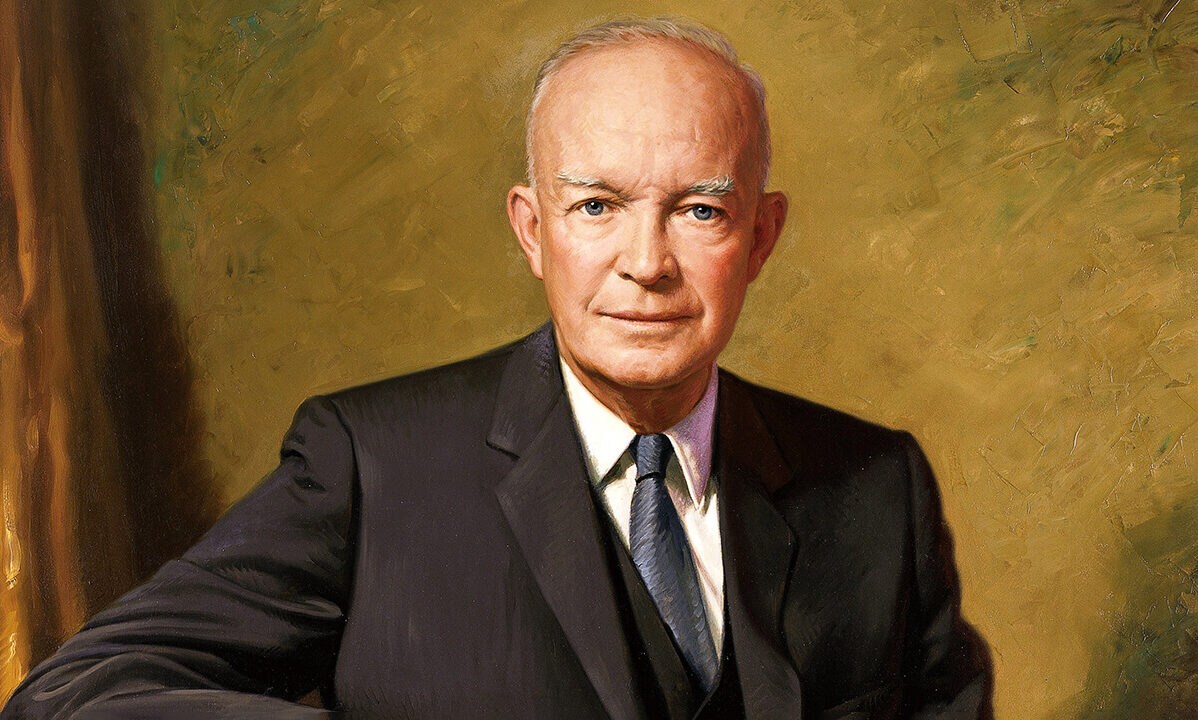
A Tale of Two Constitutions

(First published in the October 2004 issue of The American Legion magazine)

The subject of constitutional interpretation may seem like a topic best fitted for an ivory-tower debate, but it actually has a very real and dramatic impact on daily life (as will be demonstrated shortly). In recent years, two competing viewpoints have emerged.

Probably the first exposure most citizens had to the two views came during the 2000 presidential debates. When asked what type of judges should be placed on the bench, candidate Bush responded: “I believe that the judges ought not to take the place of the legislative branch of government . . . and that they ought to look at the Constitution as sacred. . . . I don’t believe in liberal, activist judges; I believe in strict constructionists.”1 Candidate Gore countered, “The Constitution ought to be interpreted as a document that grows.”2 Gore later stated, “I believe the Constitution is a living and breathing document. . . . We have interpreted our founding charter over the years, and found deeper meanings in it in light of the subsequent experience in American life.”3 So, the two choices are . . . follow original intent, or construct a living constitution.

Proponents of a living constitution believe that we should not be bound by what dead white guys wrote two centuries ago when slavery was legal, women could not vote, and horses were the fastest means of transportation. Instead, we should live under a constitution that is alive and vibrant, reflecting today’s values and beliefs.

Such rhetoric makes a living constitution sound appealing, but it is actually a complete misportrayal of the difference between the two philosophies. In reality, both accommodate an evolving society; in fact, under the strict construction (or originalist) viewpoint, Article V of the Constitution requires that the Constitution be a living document. The real difference between the two approaches is not whether the Constitution should evolve,
but rather how those changes should occur – and whoshould make them.

Under the living constitution approach, history and precedent are largely irrelevant; instead, unelected judges create policy to reflect modern needs through the constitution they themselves write. As explained by Chief Justice Charles Evans Hughes:

We are under a constitution, but the constitution is what the judges say it is.4

Ironically, under this modern approach, judicial policy-makers are regularly out of step with modern society. For example, although 80 percent of the nation currently opposes flag desecration, living constitution judges have ruled that the people are wrong on this issue and that the flag cannot be protected. Similarly, 90 percent of citizens in the federal Ninth Circuit supported keeping “under God” in the Pledge of Allegiance, but their living constitution judges pronounced them wrong.

Equally striking is the number of recent occasions in which living constitution judges have overturned statewide votes wherein the People clearly expressed their will (e.g., striking down votes in New York and Washington that banned physician-assisted suicides; in Arkansas and Washington that enacted term limits; in Missouri that rejected a tax increase; etc.).

Each of these popular votes would be valid under original intent because in that approach, the People — not unelected judges — determine their policies and values. And whenever the People want a change, they do not rely on a judge to make it; instead, they update their Constitution to reflect their views — as they have done on over two-dozen occasions. Samuel Adams pointed out the strength of this approach:

[T]he people alone have an incontestable, unalienable, and indefeasible right to institute government and to reform, alter, or totally change the same when their protection, safety, prosperity, and happiness require it. And the federal Constitution — according to the mode prescribed therein [Article V] – has already undergone such amendments in several parts of it as from experience has been judged necessary.5(emphasis added)

This unique American guiding principle made its appearance in the Declaration of Independence as “the consent of the governed.” The State constitutions penned after the Declaration reiterated this precept — as, for example, in Massachusetts in 1780:

All power residing originally in the people and being derived from them, the several magistrates and officers of government vested with authority — whether Legislative, Executive, or Judicial — are their substitutes and agents and are at all times accountable to them.6

The same axiom was then established in the Constitution through the three-word phrase that begins its text: “We The People.”

Today’s living document proponents decry this approach as majoritarianism – the so-called “tyranny of the majority.” Perhaps, but what is the alternative? Minoritarism? That a small group should be able to annul the will of the People and enforce its own desires upon the masses? Such an option is unacceptable under original intent. As explained by George Washington:

The fundamental principle of our Constitution . . . enjoins [requires] that the will of the majority shall prevail.7

Thomas Jefferson agreed:

The will of the majority [is] the natural law of every society [and] is the only sure guardian of the rights of man. Perhaps even this may sometimes err. But its errors are honest, solitary and short-lived.8

Does this original principle therefore mean that minorities are to be disregarded or trodden upon? Of course not. As Jefferson further explained:

Though the will of the majority is in all cases to prevail, that will to be rightful must be reasonable — the minority possess their equal rights which equal law must protect.9

While the minority is not to prevail, with its constitutional guarantee of “free speech,” it does have the “equal right” to attempt to persuade the majority to its point of view. The minority does have equal rights, but equal right is not the same as equal power; the minority is never the equivalent of the majority and should never exercise control over it.

Living constitution judges, however, view the majority as inherently wicked and depraved — always seeking deliberately to violate the rights of the minority with only judges standing between the minority and total annihilation. Therefore, under this anti-majoritarian view, the greater the public support for a position, the more likely a living constitution judge is to strike it down.

Yet American history has proven that the best protector of minority rights is not the courts but rather the People. For example, former slaves received their constitutional rights not from the courts but by the majority consent of non-slaves; women were similarly accorded the constitutional right to vote not by the courts but by the majority approval of men; the constitutional rights accorded to the poor by the abolition of the poll tax came at the majority approval of those who were not poor; and the constitutional right allowing eighteen-year-olds to vote was given by the majority approval of voters not eighteen-years-old.

Additionally, all of the constitutional protections for individuals and minorities established in the original Bill of Rights (e.g., speech, religion, petition, assembly, bearing of arms, etc.) were also enacted by majority consent. In other words, all minority rights in the Constitution have in all cases been established by majority consent.

In fact, the courts have a very poor record of protecting minority rights. Although living constitution proponents love to point to the 1954 Brown v. Board of Education decision that ended segregation as proof that the courts protects minority rights, they conveniently forget to tell the rest of the story. In 1875, Congress — by majority vote — banned racial segregation, but in 1882, the unelected Supreme Court struck down that anti-segregation law; in 1896, the Supreme Court reaffirmed its pro-segregation position; but in 1954, the Court finally reversed itself and struck down segregation – eighty years after “We The People” had abolished segregation.

It is not surprising that judges are fallible, for as Jefferson pointed out:

Our judges are as honest as other men, and not more so. They have — with others — the same passions for party, for power, and the privilege of their corps. . . . And their power the more dangerous as they are in office for life and not responsible — as the other functionaries are — to the elective control.10

Certainly, the majority will sometimes err, but as Jefferson observed, “its errors are honest, solitary, and short-lived” and can be remedied by “elective control.” However, the errors created by judicial decisions are more severe and long-lasting.

While living document enthusiasts disparage strict constructionists as being narrow or restrictive, Justice Antonin Scalia counters:

Don’t think the originalist interpretation constrains you. To the contrary, my [originalist] Constitution is a very flexible Constitution. You want a right to abortion? Create it the way all rights are created in a democracy: pass a law. The death penalty? Pass a law. That’s flexibility. 11

Scalia points out that it is just the opposite with living constitution judges:

They want the whole country to do it their way, from coast to coast. They want to drive one issue after another off the stage of political debate. 12

In short, then, the living constitution approach empowers an unaccountable elite to make decisions on behalf of the People; original intent empowers the People themselves.


Endnotes

1 Commission on Presidential Debates, “October 3, 2000 Debate Transcript,” https://www.debates.org/index.php?page=october-3-2000-transcript.
2 Commission on Presidential Debates, “October 3, 2000 Debate Transcript,” https://www.debates.org/index.php?page=october-3-2000-transcript.
3 PBS.org, “Online News Hour: Al Gore,” March 14, 2000.
4 Charles Evans Hughes, speech at Elmira on May 3, 1907, The Autobiographical Notes of Charles Evans Hughes, eds. David J. Danelski and Joseph S. Tulchin (Cambridge: Harvard University Press, 1973), 144.
5 Samuel Adams to the Legislature of Massachusetts, January 19, 1796, The Writings of Samuel Adams, ed. Harry Alonzo Cushing (New York: G. P. Putnam’s Sons, 1904), IV:388.
6 A Constitution or Frame of Government Agreed Upon by the Delegates of the People of the State of Massachusetts-Bay (Boston: Benjamin Edes & Sons, 1780), 9, Part I, Article V.
7 George Washington, “Sixth Annual Address,” November 19, 1794, A Compilation of the Messages and Papers of the Presidents, 1789-1897, ed. James D. Richardson (Published by Authority of Congress, 1899), I:164.
8 Thomas Jefferson, “Response to the Citizens of Albermarle,” February 12, 1790, The Papers of Thomas Jefferson, ed. Julian P. Boyd (NJ: Princeton University Press, 1961), XVI:179.
9 Thomas Jefferson, “First Inaugural Address,” March 11, 1801, A Compilation of the Messages and Papers of the Presidents, 1789-1897, ed. James D. Richardson (Published by Authority of Congress, 1899), I:322.
10 Thomas Jefferson to William Charles Jarvis, September 28, 1820, Writings of Thomas Jefferson, ed. Albert Ellery Bergh (Washington D. C.: Thomas Jefferson Memorial Association, 1904), XV:277.
11 “Justice Scalia speaks on constitutional interpretation,” Princeton, February 24, 2001, https://www.princeton.edu/news/2001/02/24/justice-scalia-speaks-constitutional-interpretation.
12 “Justice Scalia speaks on constitutional interpretation,” Princeton, February 24, 2001, https://www.princeton.edu/news/2001/02/24/justice-scalia-speaks-constitutional-interpretation.

* This article concerns a historical issue and may not have updated information.