Daniel Webster – Vidal v. Girard’s Executors

In the last year of his life Daniel Webster (1782-1852) stood before the New York Historical Society and declared:

That if we, and our posterity, shall be true to the Christian religion, if we shall respect his commandments, if we, and they, shall maintain just, moral sentiments, and such conscientious convictions of duty as shall control the heart and life, we may have the highest hopes of the future fortunes of this country.1

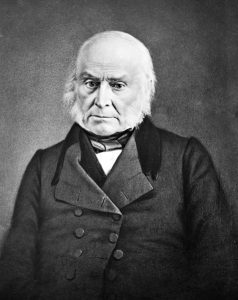
Daniel Webster

Such a stance was, however, not a rarity for Daniel Webster who regularly defended the Christianity throughout his life. One example was in 1844, when Webster rose for the final summation in the case of Vidal v. Girard’s Executors and “delivered one of the most beautiful and powerful arguments in defense of the Christian religion ever uttered.”2

The case concerned the legality of the will of Stephan Girard. In his will Girard had set aside a trust of two million dollars3 for the formation of a college for the education of “as many poor white male orphans, between the ages of six and ten years, as the said income shall be adequate to maintain.”4 The executors of his will, and specifically of the construction and maintenance of the college, were declared the Mayor, Aldermen, and Citizens of Pennsylvania.5 After proceeding through many of the details concerning the organization of the school, Girard lists several “conditions on which my bequest for said college is made and to be enjoyed.”6 The second of these restrictions dictated stipulations regarding the teachers to be employed:

I enjoin and require, that, no ecclesiastic, missionary, or minister of any sect whatsoever, shall ever gold or exercise any station or duty whatever in the said college, nor shall any person ever be admitted for any purpose or as visitor, within the premises appropriated for the purposes of said college.7

After making such a striking demand, Girard attempted to explain and justify this action writing:

In making this restriction, I do not mean to cast any reflection upon any sect or person whatsoever; but as there is such a multitude of sects, and such a diversity of opinion amongst them, I devise to keep the tender minds of the orphans, who are to derive advantage from this bequest, free from the excitements which clashing doctrines and sectarian controversy are so apt to produce.8

The familial heirs of Girard, however, contested the viability the bequest by saying that these sections of the will rendered it void. The plaintiff’s case was argued by Daniel Webster and another preeminent advocate of the day, Walter Jones. The attorneys submitted two main objections to the will. The Court summarized these two objections, writing that:

The principle questions, to which the arguments at the bar have been mainly addressed, are; First, whether the corporation of the city of Philadelphia is capable of taking the bequest of the real and personal estate for the erection and support of a college upon the trusts and for the uses designated in the will: Secondly, whether these uses are charitable uses valid in their nature and capable of being carried into effect consistently with the laws of Pennsylvania.9

The second of these issues addressed whether or not the will was valid according to the laws of Pennsylvania. Webster submitted two reasons why it would be unacceptable. He first argued that the beneficiaries of the bequest (i.e. the “poor white male orphans”) were a category:

So loose a description, that no one can bring himself within the terms of the bequest, so as to say that it was made in his favor. No individual can acquire any right, or interest; nobody, therefore, can come forward as a party, in a court of law, to claim participation in the gift.10

The second objection Webster offers (which takes up the vast majority of his speech) is that the will is invalid due to the breach of the common law by being averse to Christian education. He declares that:

In the view of a court of equity this devise is no charity at all. It is no charity, because the plan of education proposed by Mr. Girard is derogatory to the Christian religion; tends to weakens men’s reverence for that religion, and their conviction of its authority and importance; and therefore, in its general character, tends to mischievous, and not to useful ends.11

Webster argues at length that due to the will banning the presence of any ecclesiastic from ever entering the college compound, Mr. Girard attacks Christianity to such an extent that it will substantially harm the community; thus creating a breach of both the common law of America and the general interests of Philadelphia.12 To show this he questions the Court asking:

Did the man ever live that had a respect for the Christian religion, and yet had no regard for any of its ministers? Did that system of instruction ever exist, which denounced the whole body of Christian teachers, and yet called itself a system of Christianity?13

Pressing further against anti-religious intention he found apparent in Girard’s will, Webster denounces its claim to charity by explaining that any charity which excludes Christ fails to even meet the definition of charity.

No, sir! No, sir! If charity denies its birth and parentage—if it turns infidel to the great doctrines of the Christian religion—if it turns unbeliever—it is no longer charity! There is no longer charity, either in a Christian sense, or in the sense of jurisprudence; for it separates itself from the fountain of its own creation.14

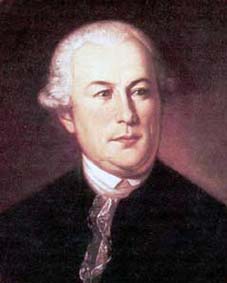
Stephan Girard

Webster, understanding that the will did not explicitly exclude all Christian teaching, next argues that any attempt to declare the will allows for lay-teaching of religion would be completely antithetical to the spirit and intention of the will—thus rendering the trust equally void. Webster submits that if Girard’s desire was to prevent all conflict concerning the Christian faith from arising and splitting apart the contingent of young scholars, then any religious education would lead to differences of opinion, especially if the students were taught by lay ministers. He inquires:

Now, are not laymen equally sectarian in their views as clergymen? And would it not be just as easy to prevent sectarian doctrines from being preached by a clergyman as being taught by a layman? It is idle, therefore, to speak of lay preaching. … Everyone knows that laymen are as violent controversialists as clergymen, and the less informed the more violent.15

Next Webster takes on the premise of Girard’s exclusion itself. He derides the reasoning of Girard, declaring:

But this objection to the multitude and differences of sects is but the old story—the old infidel argument. It is notorious that there are certain great religious truths which are admitted and believed by all Christians. All believe in the existence of a God. All believe in the immortality of the soul. All believe in the responsibility, in another world, for our conduct in this. All believe in the divine authority of the New Testament. … And cannot all these great truths be taught to children without their minds being perplexed with clashing doctrines and sectarian controversies? Most certainly they can.16

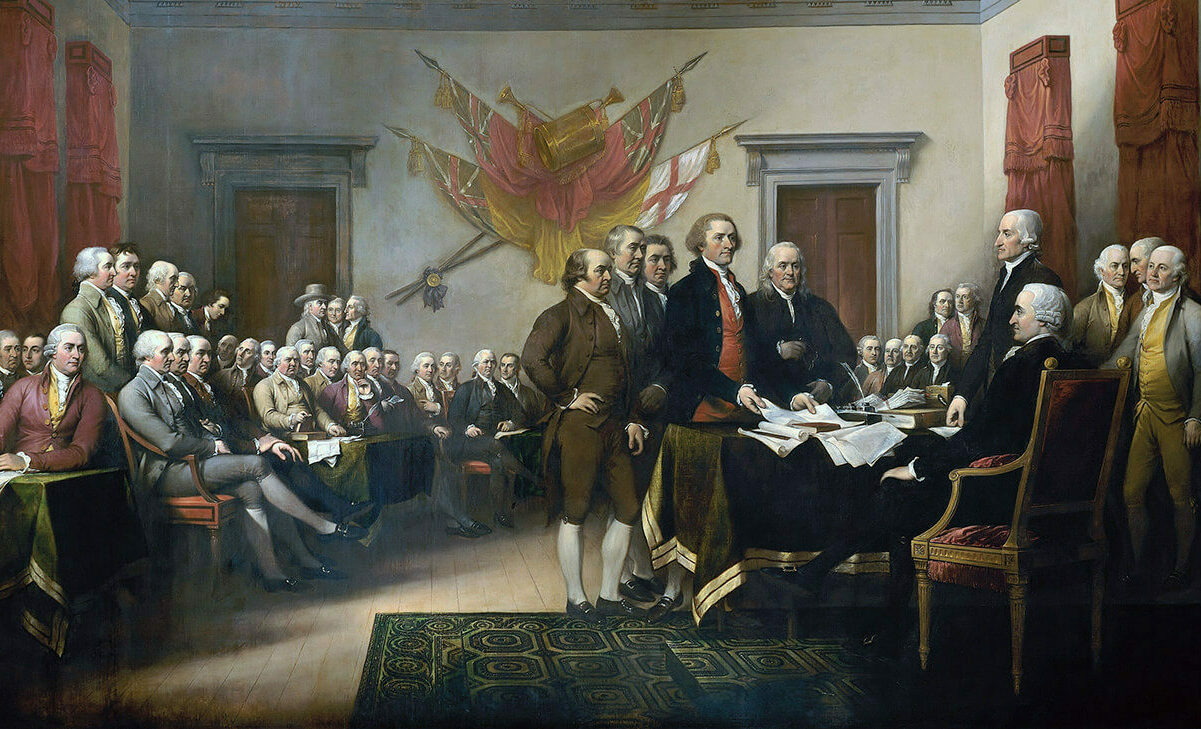
To give an example of how all the various sects and denominations can work, Webster refers the Court to the example the Founding Father’s established in the first Continental Congress. There, setting aside all differences in religious opinions, they came together to pray and ask God’s help in the War for Independence, Webster reminded the Court that many of the delegates doubted the propriety of praying together due to their differences but Samuel admonished them:

It did not become men, professing to be Christian men, who had come together for solemn deliberation in the hour of their extremity, to say that there was so wide a difference in their religious belief, that they could not, as one man, bow the knee in prayer to the Almighty, whose advice and assistance they hoped to obtain.17

Justice Joseph Story

Building upon that image of the Founders on their knees in prayer, Webster closes his case by clearly defining the two positions on the issue of Girard’s will. On the one side, there are “those who really value Christianity,” and who “plainly see its foundation, and its main pillars… [who] wish its general principles, and all its truths, to be spread over the whole earth.”18 On the other side, however, are those who do not value Christianity, and thus, “cavil about sects and schisms, and ring monotonous changes upon the shallow and so often refuted objections.”19 With that dichotomy, Webster charged the Court to likewise defend the Christian faith and preserve American society.

Although a unanimous decision for Girard’s executors, the Court, in its written opinion, agreed with all of Webster’s arguments concerning the breach of common law arising from flagrant attacks upon Christianity. Justice Joseph Story, author of the opinion, confirms Webster’s understanding of the law’s relationship to the Christian religion:

It is said, and truly, that the Christian religion is a part of the common law of Pennsylvania.20

We are compelled to admit that although Christianity be a part of the common law of the state, yet it is so in this qualified sense, that its divine origin and truth are admitted, and therefore it is not to be maliciously and openly reviled and blasphemed against, to the annoyance of believers or the injury of the public.21

Such a case is not to be presumed to exist in a Christian country. … There must be plain, positive, and express provisions, demonstrating not only that Christianity is not to be taught; but that it is to be impugned or repudiated.22

In the areas pertaining to Christianity and the common law Webster and the Court concurred. The difference did not come from a disagreement concerning the interpretation of the law, but rather the interpretation of the will. Webster held that where the letter of the will may not have openly assailed Christianity, the spirit of the will clearly did. The Court, however, rejected this interpretation, insisting instead that the exclusion of Christian pastors from the school on the grounds of sectarian conflict did not necessitate exclusion of Christian education in general. Story explains:

But the objection itself assumes the proposition that Christianity is not to be taught, because ecclesiastics are not to be instructors or officers. But this is by no means a necessary or legitimate inference from the premises. Why may not laymen instruct in the general principles of Christianity as well as ecclesiastics. There is no restriction as to the religious opinions of the instructors and officers. … Why may not the Bible, and especially the New Testament, without note or comment, be read and taught as a divine revelation in the college — its general precepts expounded, its evidences explained, and its glorious principles of morality inculcated? What is there to prevent a work, not sectarian, upon the general evidences of Christianity, from being read and taught in the college by lay-teachers? Certainly there is nothing in the will, that proscribes such studies.23

So the Court dismissed Webster’s argument that the will was hostile to Christianity, thus deciding the trust to be valid. Even though the Court differed from Webster’s reading of the will, this case provides an interesting view into the mindset of this early Supreme Court regarding the freedom of religion in American schools. Both Webster and Story advocated clearly for the important role of the Bible in education.


Endnotes

1 Daniel Webster, An Address Delivered before the New York Historical Society (New York: New York Historical Society, 1852), 47.
2 Fanny Lee Jones, “Walter Jones and His Times,” Records of the Columbia Historical Society Vol. V (Washington: Columbia Historical Society, 1902), 144.
3 The Will of the late Stephan Girard (Philadelphia: Thomas Silver, 1848), 16.
4 The Will (1848), 21.
5 The Will (1848), et al.
6 The Will (1848), 22.
7 The Will (1848), 22-23.
8 The Will (1848), 23.
9 Vidal et al. v. Girard’s Executors, 43 US 127, 186 (1844).
10 Daniel Webster, In Defense of the Christian Ministry, and in Favor of the Religious Instruction of the Young (Washington: Gales and Seaton, 1844), 10.
11 Webster, In Defense of the Christian Ministry (1844), 10.
12 Webster, In Defense of the Christian Ministry (1844), 11.
13 Webster, In Defense of the Christian Ministry (1844), 13.
14 Webster, In Defense of the Christian Ministry (1844), 16.
15 Webster, In Defense of the Christian Ministry (1844), 21.
16 Webster, In Defense of the Christian Ministry (1844), 35.
17 Webster, In Defense of the Christian Ministry (1844), 36.
18 Webster, In Defense of the Christian Ministry (1844), 37.
19 Webster, In Defense of the Christian Ministry (1844), 37.
20 Vidal et al. v. Girard’s Executors, 43 US 127, 198 (1844).
21 Vidal et al. v. Girard’s Executors, 43 US 127, 198 (1844).
22 Vidal et al. v. Girard’s Executors, 43 US 127, 198 (1844).
23 Vidal et al. v. Girard’s Executors, 43 US 127, 200 (1844).

What Hath God Wrought

On May 24, 1844, a seismic breakthrough occurred: the first telegraphic message was transmitted between cities. People in two separate and distant geographic locations could instantly communicate with each other!

What was that first message? It was a Bible verse: Numbers 23:23 “What hath God wrought!” Such a message today likely would be met with much criticism, but for most of history–especially most of American history–religion was not seen as a hindrance to scientific thought but rather just the opposite.

This particular scientific breakthrough came at the hands of dedicated Christian inventor Samuel F. B. Morse. Morse (developer of the famous Morse Code) was also a celebrated painter, and while painting a portrait in Washington, D.C. in 1825, he received word that his wife in New England was seriously ill. He quickly returned home but found his wife had not only died but had already been buried.

Frustrated at the length of time it had taken the message to reach him, he sought a better and faster method of long distance communication. Morse initially developed a single strand telegraph which could transmit messages only over a short distance. He continued to perfect his invention until finally developing a means of transmitting magnetic signals over long distances.

Morse demonstrated his invention at the U. S. Capitol, and in 1843 Congress appropriated money to construct a telegraph line between the Capitol and Baltimore. That first telegraphic message (pictured below) from Numbers 23 was sent from the basement of the U.S. Capitol the following year. (That message had been suggested by the daughter of a friend.)

Many years later, looking back over that invention, Morse reflected:

If not a sparrow falls to the ground without a definite purpose in the plans of infinite wisdom [Matthew 10:29], can the creation of the instrumentality so vitally affecting the interests of the whole human race have an origin less humble than the Father of every good and perfect gift [James 1:17]? . . . I use the words of inspiration [that is, the Bible] in ascribing honor and praise to Him to Whom first of all and most of all it is pre-eminently due. “Not unto us, not unto us, but to God be all the glory” [Psalm 115:1]. Not what hath man, but “What hath God wrought!” [Numbers 23:23]

(You can read more about Samuel F. B. Morse’s invention in the Numbers 23 article in The Founders Bible.)

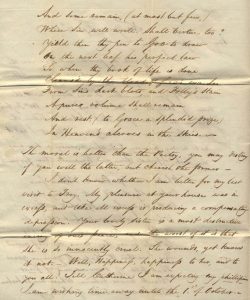
Biblical faith permeated Morse’s life. For example, in an 1830 letter (from WallBuilders’ collection, a page of which is pictured on the right), Samuel included a religious poem he had written earlier in life:

Yield then thy pen to God to draw
On the next leaf His perfect law
So when thy book of life is done
Cleans’d by the blood of God’s own Son.
From sin’s dark blots and folly’s stain
A purer volume shall remain
And rest (to grace a splendid prize)
In Heaven’s alcoves in the skies.

The use of Morse’s telegraphic invention grew rapidly and expanded not only across America but also the globe. (See, for example, an 1858 sermon from WallBuilders’ library, The Atlantic Telegraph: As Illustrating the Providence and Benevolent Designs of God, was preached after the laying of a trans-Atlantic telegraph cable.) Today we enjoy the modern technological blessings that sprang from what Christian inventor Samuel F. B. Morse began on May 24, 1844.

Fathers & Education

Let’s take a look at some of the men in America’s history–including our Founders, most of whom were fathers. Their writings reveal that they believed a knowledge of and reliance on the Scriptures was an important part of being a father.

In fact, a young Daniel Webster recounted a conversation he had with an elderly Thomas Jefferson on this point. Jefferson told him:

I have always said, and always will say, that the studious perusal of the Sacred Volume will make better citizens, better fathers, and better husbands.

The Founders believed that it was their duty not only to rely on the Bible but also to teach it to their children. For example, John Adams (who spent a good portion of the War for Independence away from his family) outlined to his precious wife, Abigail, the education their children should receive:

The education of our children is never out of my mind. Train them to virtue. Habituate them to industry, activity and spirit. Make them consider every vice as shameful and unmanly. Fire them with ambition to be useful. Make them disdain to be destitute of any useful or ornamental knowledge or accomplishment. Fix their ambition upon great and solid objects, and their contempt upon little, frivolous and useless ones.

John Quincy Adams took the lessons he learned from his own parents to heart and later encouraged his own son to read the Bible for the wisdom and virtue it encourages:

I advise you, my son, in whatever you read, and most of all in reading the Bible, to remember that it is for the purpose of making you wiser and more virtuous. I have myself, for many years, made it a practice to read through the Bible once every year. I have always endeavored to read it with the same spirit and temper of mind, which I now recommend to you: that is, with the intention and desire that it may contribute to my advancement in wisdom and virtue.

And after Thomas Paine penned his Age of Reason attacking Christianity and the Bible, Founding Father Elias Boudinot wrote a book to refute Paine, dedicating that book to his daughter, Susan, telling her:

I was much mortified to find the whole force of this man’s vain genius pointed at the youth of America….This awful consequence created some alarm in my mind lest at any future day you, my beloved child, might take up this plausible address of infidelity….I have endeavored to…show his extreme ignorance of the Divine Scriptures…not knowing that “they are the power of God unto salvation, to everyone that believeth” [Romans 1:16].

Clearly, our Founders who were fathers considered the Bible to be indispensable for their own lives, and strongly inculcated its use in their children. This is an excellent lesson for us to pass on to our children.

Barbary Powers

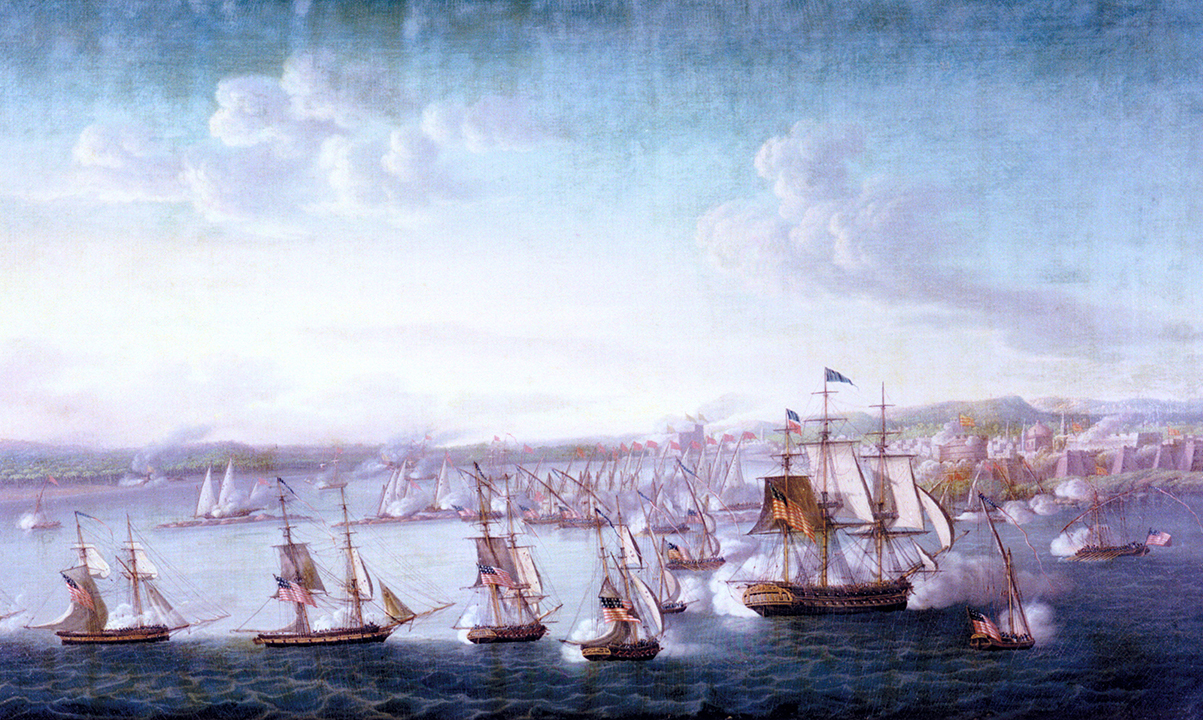
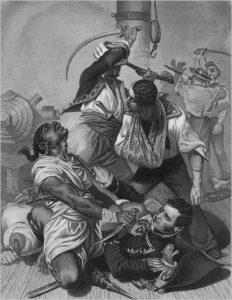
On August 3rd, more than two centuries ago in 1804, America was at war, engaged in the midst of conflict that lasted for more than three decades between Americans and Muslim Islamicists/terrorists, now known as the Barbary Powers War. Five Muslim nations in North Africa and the Middle East1 (a region that was the home to the Berber people,2 resulting in the name Barbary Powers) regularly attacked American ships and citizens traveling in the Mediterranean region.

Seeking an end to those unprovoked attacks, in 1784 Congress dispatched Thomas Jefferson, John Adams, and Benjamin Franklin to negotiate with those terrorists.3 At that time, America lacked a military capable of protecting Americans overseas, so the only solution was marking large “payments” (that is, paying extortion money) to those Muslim nations in exchange for safe passage for American ships and citizens. Those payments rose to fifteen percent of the federal budget, and President George Washington requested that Congress fund a permanent navy to protect Americans overseas.4

President John Adams oversaw the construction of the Navy,5 and when Thomas Jefferson became president in 1801, he ordered a stop to any further extortion payments.6 Tripoli (now Libya, the home of Benghazi) officially declared war on America. Jefferson dispatched the Navy and Marines to the region, and on August 3, 1804, Commodore Edward Preble and General William Eaton began attacking Tripoli,7 eventually bringing them to the peace table in 1805.8

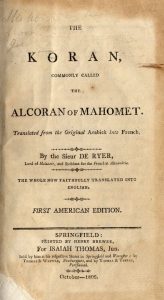
The following year, the first American edition of The Koran was published (the title page for this Koran, from the WallBuilders collection, is pictured on the right). Americans were encouraged to see for themselves what the Koran actually taught so they would understand why we had been attacked and forced into a war. Significantly, the editor’s preface told readers:

Thou wilt wonder that such absurdities have infected the better part of the world and wilt avouch, that the knowledge of what is contained in this book, will render that [Sharia] law contemptible.9

In short, if you read the Koran, you will understand their unprovoked attacks against us. But the fighting still wasn’t over. While America was engaged in the War of 1812 against Great Britain, Algiers (one of the Muslim Powers that had negotiated a peace treaty with the US in 179510) declared war on the United States. President Madison was unable to take any action until the war was concluded in 1815, at which time he dispatched the American Navy back to North Africa, where it easily achieved victory over Algiers.11 Tunis and Tripoli also agreed to American demands for peace treaties,12 thus finally ending a conflict with Muslims that had spanned more than three decades and involved America’s first four presidents.

The Bible reminds us in Ecclesiastes 1:9 that “There is nothing new under the sun.” Technology may change from generation to generation, but human nature stays the same; and this has certainly been the case with centuries of unprovoked Muslim attacks against Americans. May our American service members experience the blessing that King David announced over his troops long ago:

Through God we will do valiantly,
For it is He who shall tread down our enemies.
Psalm 60:12


Endnotes

1 “Barbary Pirates,” The Encyclopedia Britannica (New York: The Encyclopedia Britannica Co., 1910), III:383-384.
2 “Berber people,” Britannica, accessed Nov. 30, 2023, https://www.britannica.com/topic/Berber.
3 Thomas Jefferson to William Carmichael, November 4, 1785, The Writings of Thomas Jefferson, ed. William Ellery Bergh (Washington, DC: The Thomas Jefferson Memorial Association, 1903), V:195.
4 George Washington, “Eighth Annual Address,” December 7, 1796, A Compilation of the Messages and Papers of the Presidents (Bureau of National Literature, 1897), I:193.
5 “John Adams,” Dictionary of American Naval Fighting Ships (Washington, DC: Navy Department, 1968), III:521-523.
6 “Jefferson, Thomas,” Dictionary of American Biography, ed. Dumas Malone (New York: Charles Scribner’s Sons, 1933), 10:30.
7 “Prebble, Edward,” Dictionary of American Biography, ed. Malone (1935), 15:182-183. See also The Life of the Late Gen. William Eaton (Brookfield: E. Merriam & Co., 1813).
8 “Treaty of Peace and Amity, Signed at Tripoli,” June 4, 1805, The Avalon Project, https://avalon.law.yale.edu/19th_century/bar1805t.asp.
9 The Koran: Commonly Called the Alcoran of Mahomet. First American Edition (Springfield: Henry Brewer, 1806), iv.
10 “Treaty of Peace and Amity, Signed at Algiers,” September 5, 1795, The Avalon Project, https://avalon.law.yale.edu/18th_century/bar1795t.asp.
11 James Madison, “Seventh Annual Message,” December 5, 1815, The Writings of James Madison, ed. Gaillard Hunt (New York: G. P. Putnam’s Sons, 1908), VIII:335.
12 “The Barbary Treaties: 1786-1836,” The Avalon Project, https://avalon.law.yale.edu/subject_menus/barmenu.asp.

Laura Bridgman Letter

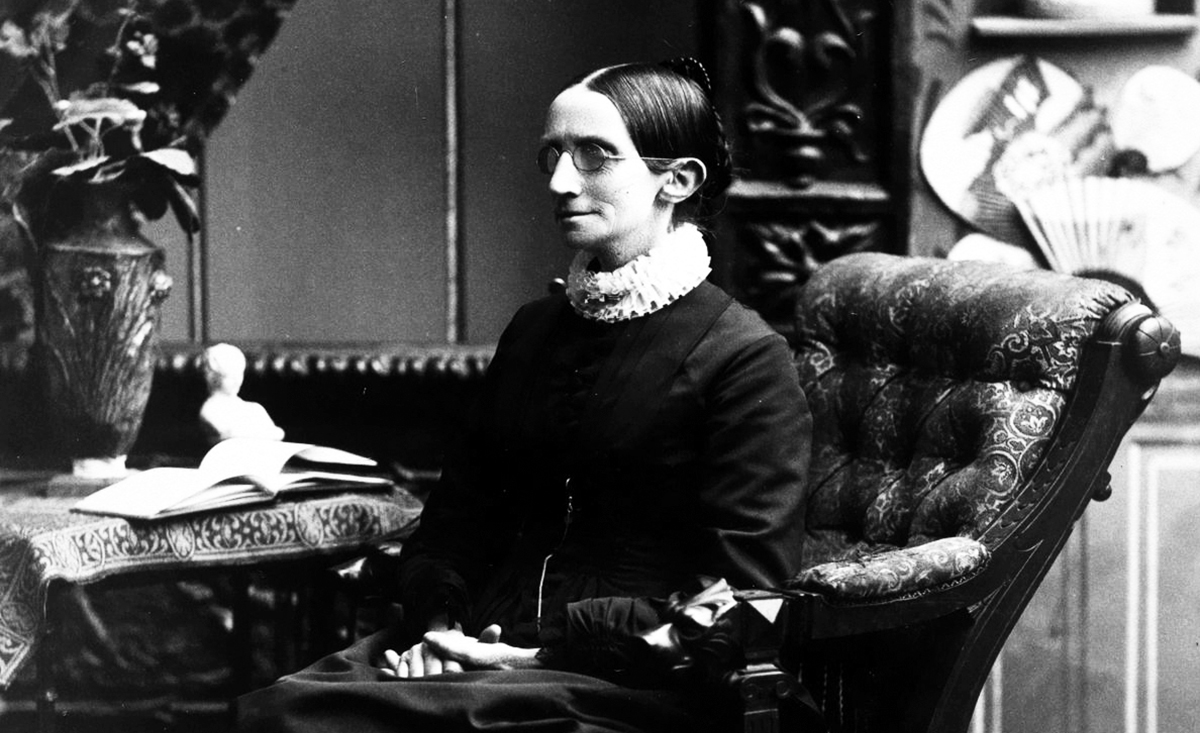
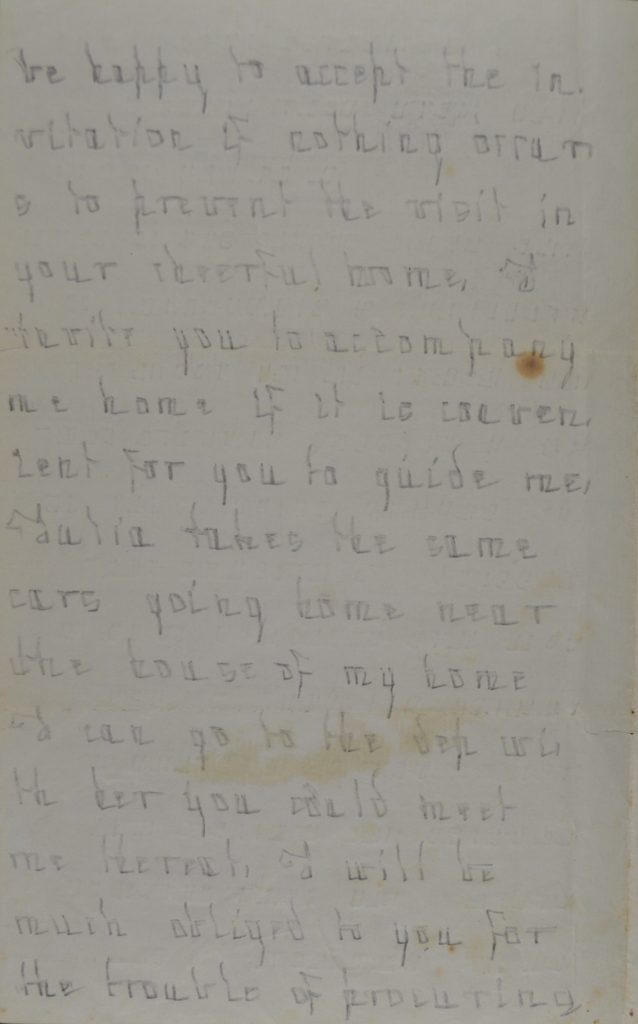
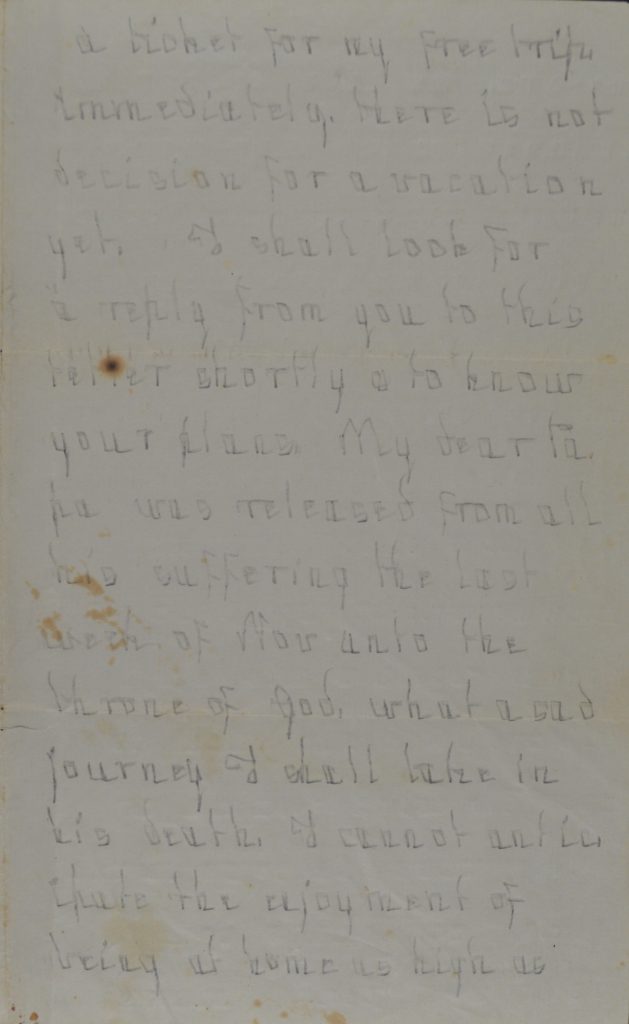
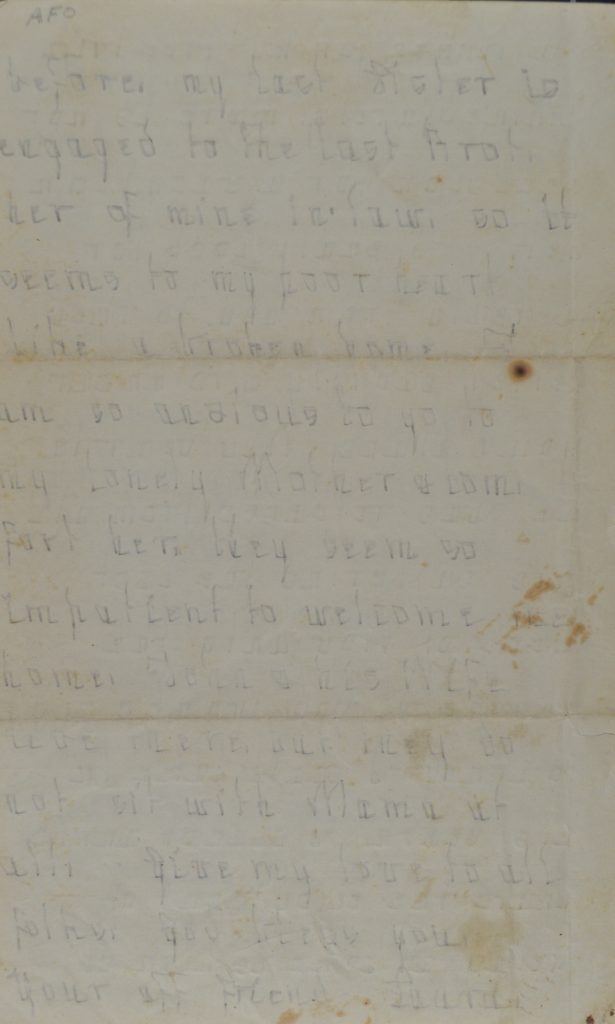
Laura Bridgman (1829-1889) was a blind and deaf student under Samuel G. Howe at the Perkins School for the Blind during the middle of the 1800’s.1 (The school was originally chartered in 1829 and opened in 1832 by Dr. John Fisher and Howe with the support of Col. Thomas Perkins. It sought to enable the blind to live a full life through a holistic curriculum.2)

Laura Bridgman’s incredible success helped illustrate the school’s mission by being the first person with her disabilities to receive a high degree of education and the ability to communicate in the English language, paving the way for others such as Helen Keller. During her life she became widely known not only in American, but in England as well due mostly to the extensive treatment she received in Charles Dickens’ book American Notes.

During his visit to the school in 1842 Dickens describes seeing her write, saying

In doing so, I observed that she kept her left hand always touching, and following up, her right, in which, of course, she held the pen. No line was indicated by any contrivance, but she wrote straight and freely.3

At the time of his visit, Dickens also explains that Dr. Howe, “is occupied now, in devising means of imparting to her, higher knowledge; and of conveying to her some adequate idea of the Great Creator of that universe in which, dark and silent and scentless though it be to her, she has such deep delight and glad enjoyment.” 4

Years later Laura herself described her salvation to her minister writing:

In June, I heard Jesus speak down from his throne into my heart, before and after meeting an humble, devoted and Christian woman, in Vermont [Mrs. Palmer] for whom I had a glow of respect and love, because she appeared to have love to God and Jesus and was rich in faith.…My heart was opened by the hand of Jesus, and He illumined my heart with glory and light and grace. I beheld his face boldly, granting his Holy Word I felt my soul fall into his hands. My feelings were governed by the Spirit of God, and Jesus Christ. God taught me to pray and guided my heart in his way.5

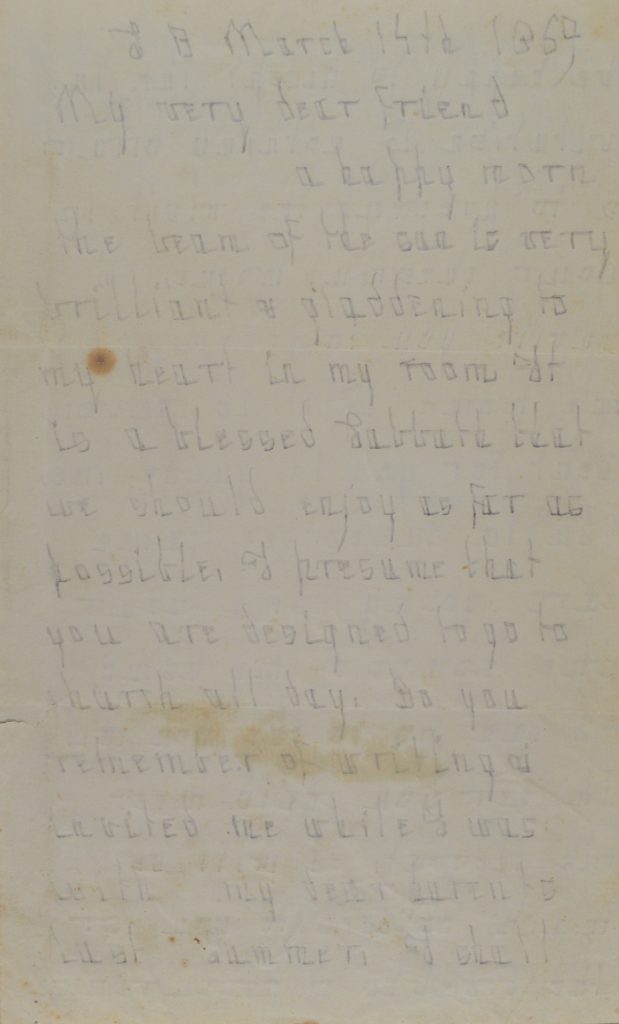
This letter, written by Laura when she was 39, discusses the passing of her father, Daniel Bridgman, which occurred towards the end of November in 1868.


Page 1
Page 2
Page 3
Page 4

L.B. March 14th 1869

My very dear friend

A happy morn the beam of the sun is very brilliant & gladdening to my heart in my room. It is a blessed Sabbath that we should enjoy as far as possible. I presume that you are designed to go to church all day. Do you remember of writing & invited me while I was with my dear parents last summer. I shall be happy to accept the invitation if nothing occurs to prevent the visit in your cheerful home. I invite you to accompany me home if it is convenient for you to guide me. Julia takes the same cars going home near the house of my home I can go to the dep. with her you could meet me thereat. I will be much obliged to you for the trouble of procuring a ticket for my free trip immediately. There is not decision for a vacation yet. I shall look for a reply from you to this rather shortly & to know your plans. My dear Papa was released from all his suffering the last week of Nov. unto the throne of God. What a sad journey I shall take in his death. I cannot anticipate the enjoyment of being at home as high as before. My last sister is engaged to the last Brother of mine in law. So it seems to my poor heart like a broken home I am so anxious to go to my lonely Mother & comfort her. They seem so impatient to welcome her home. John & his wife live there. But they do not sit with Mama at all. Give my love to all folks. God bless you.

Your aff. friend, Laura


Endnotes

1 “Laura Bridgman,” Perkins School for the Blind, accessed December 8, 2023.
2 “Perkins Founding,” Perkins School for the Blind, accessed December 8, 2023.
3 Charles Dickens, American Notes (New York: John W. Lovell Company, 1883), 622.
4 Dickens, American Notes (1883), 625-626.
5 Maud Howe, Laura Bridgman: Dr. Howe’s Famous Pupil and What He Taught Her (Boston: Little, Brown and Company, 1903), 283.

Samuel F.B. Morse – “What Hath God Wrought!”

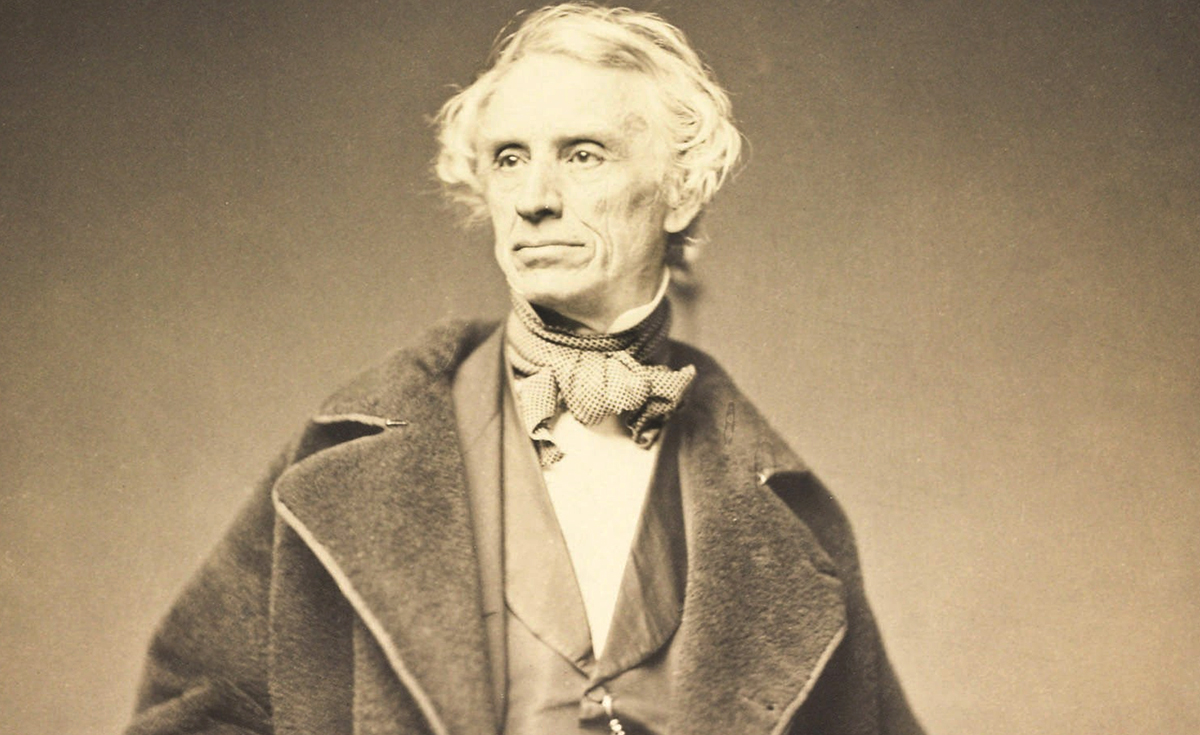
Samuel Finley Breese (F.B.) Morse (1791-1872) is best remembered for being the inventor of the American telegraph system and the Morse Code alphabet which is still widely used today. It was his development and perfection of an instantaneous method of electronic communication over long distances which contributed to the rapid expansion of the West during the late 1800’s and laid the groundwork for today’s 24/7 mass media culture.

Something which history widely forgets today about Morse’s great inventions, however, is the role God played throughout the process. Educated on religious matters from birth by his father, the notable Rev. Jedidiah Morse, Samuel developed a deep and sincere faith in God. In the two volume work, Samuel F.B. Morse: His Letters and Journals, his own son describes the inventor’s character:

The dominant note was an almost childlike religious faith; a triumphant trust in the goodness of God even when his hand was wielding the rod; a sincere belief in the literal truth of the Bible, which may seem strange to us of the twentieth century; a conviction that he was destined in some way to accomplish a great good for his fellow men.

Next to love of God came love of country. He was patriotic in the best sense of the word. While abroad he stoutly upheld the honor of his native land, and at home he threw himself with vigor into the political discussions of the day, fighting stoutly for what he considered the right….

A favorite Bible quotation of his was “Woe unto you when all men shall speak well of you.” He deeply deplored the necessity of making enemies, but he early in his career became convinced that no man could accomplish anything of value in this world without running counter either to the opinions of honest men, who were as sincere as he, or to the self-seeking of the dishonest and the unscrupulous.1
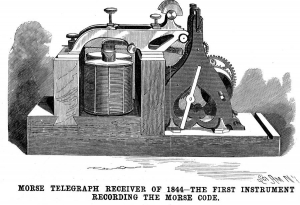
Morse’s pious character clearly exhibits itself in the historic message relayed during the public demonstration of the telegraph on May 24, 1844. Morse had promised Annie Ellsworth, the daughter of the Commissioner of Patents that she would get to decide what would be said. After talking with her mother, Annie decided to send a portion from Numbers 23:23: “What hath God wrought!”

Early that morning, Morse and his guests gathered in the chamber of the Supreme Court while his assistant prepared to receive the fateful transmission in Baltimore. Then, at 8:45 a.m. on May 24, 1844, the electricity flowed through the line:

| . – – | . . . . | . – | – |
|   W       H      A    T |

| . . . . | . – | – | . . . . |
|   H      A    T     H   |

| – – . | . . | – . . |
|   G     O     D    |

| . – – | . . . | . . | . . – | – – . | . . . . | – |
|    W       R     O    U       G       H     T |

That message inaugurated the beginning of electronic media in America, setting off a chain of technological advancements which continues to this day nearly two-hundred years later. From the telegraph to the telephone to the internet, we all have good reason to declare, “What hath God wrought!”

Samuel Morse never forgot the role that God had in the development and success of the telegraph, always bearing in mind the powerful phrase selected by Annie Ellsworth. Later in life Morse explained that the telegraph was not merely an example of American ingenuity, but rather an example of God’s gracious providence:

Yet in tracing the birth and pedigree of the modern Telegraph, ‘American’ is not the highest term of the series that connects the past with the present; there is at least one higher term, the highest of all, which cannot and must not be ignored. If not a sparrow falls to the ground without a definite purpose in the plans of infinite wisdom, can the creation of an instrumentality so vitally affecting the interests of the whole human race have an origin less humble than the Father of every good and perfect gift?

I am sure I have the sympathy of such an assembly as is here gathered if, in all humility and in the sincerity of a grateful heart, I use the words of inspiration in ascribing honor and praise to Him whom first of all and most of all it is preeminently due. ‘Not unto us, not unto us, but to God be all the glory.’ Not what hath man, but ‘What hath God wrought?’2

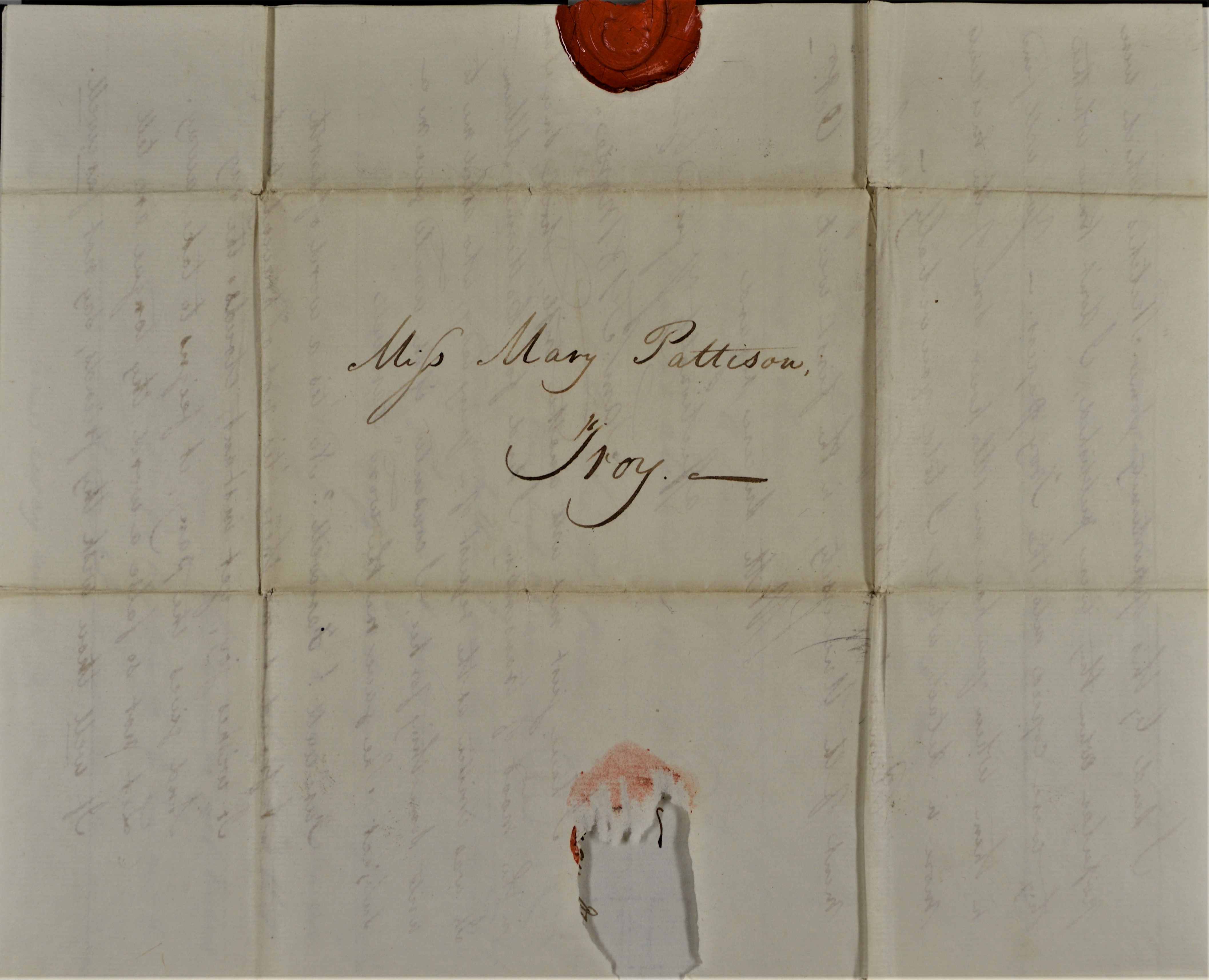
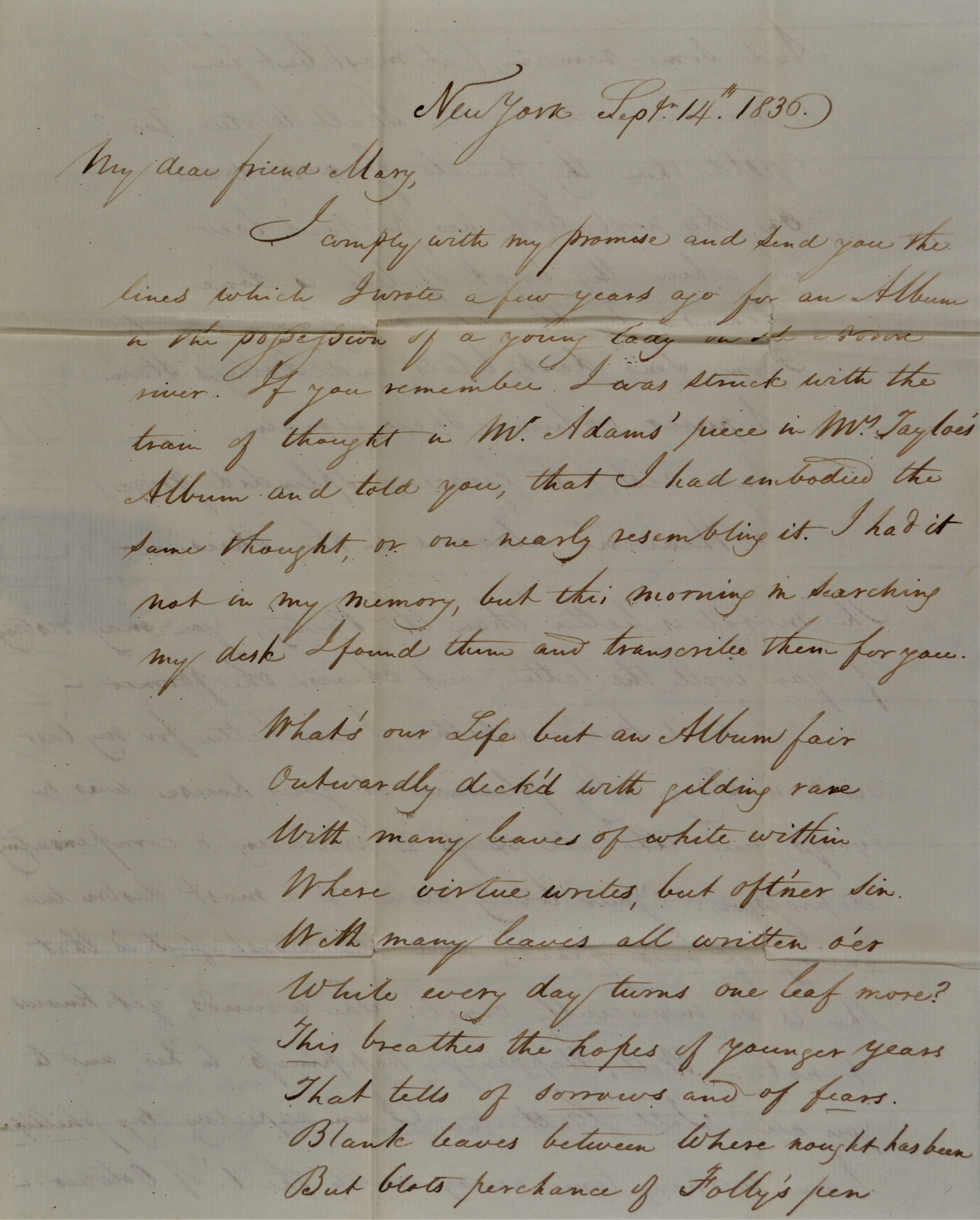
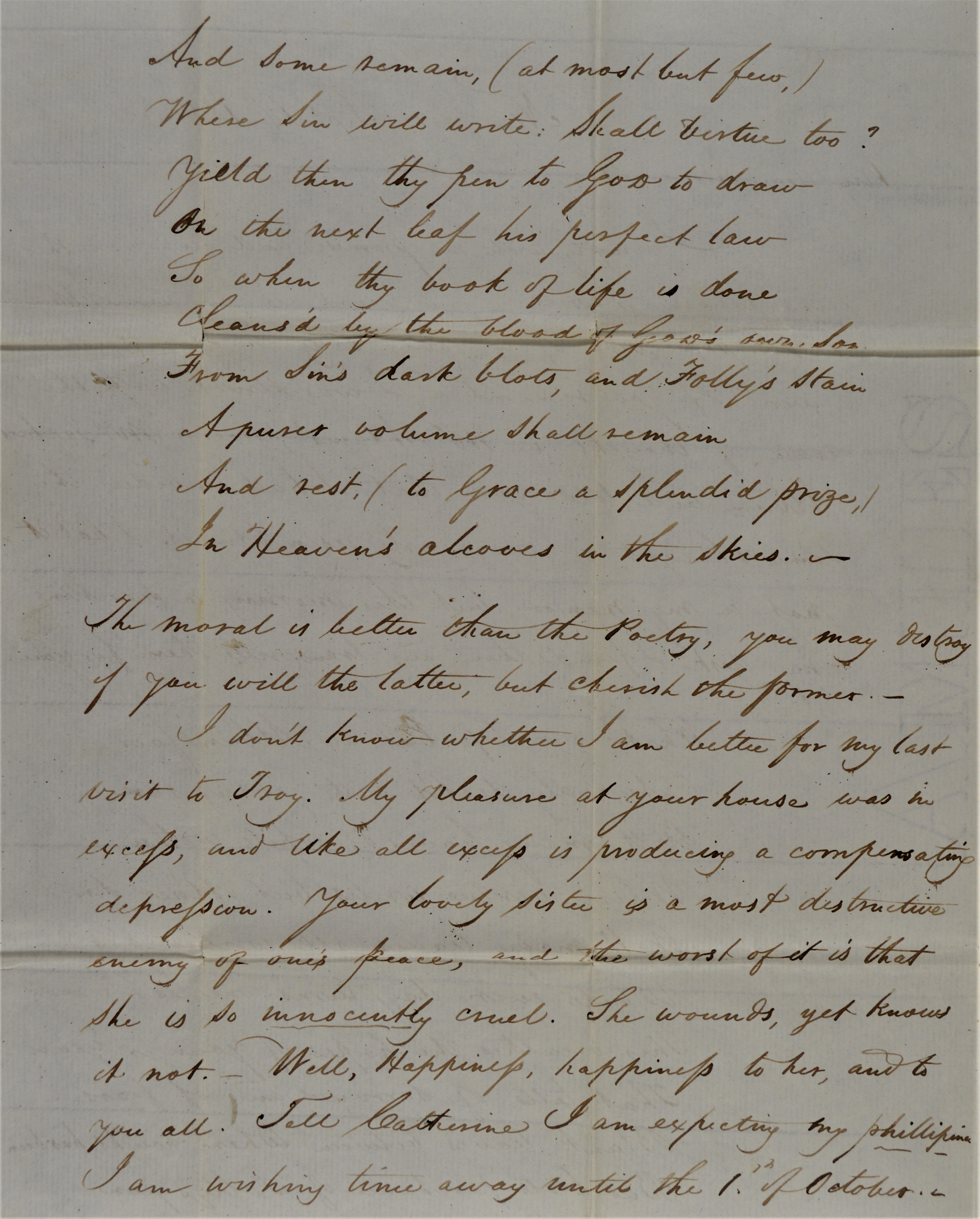
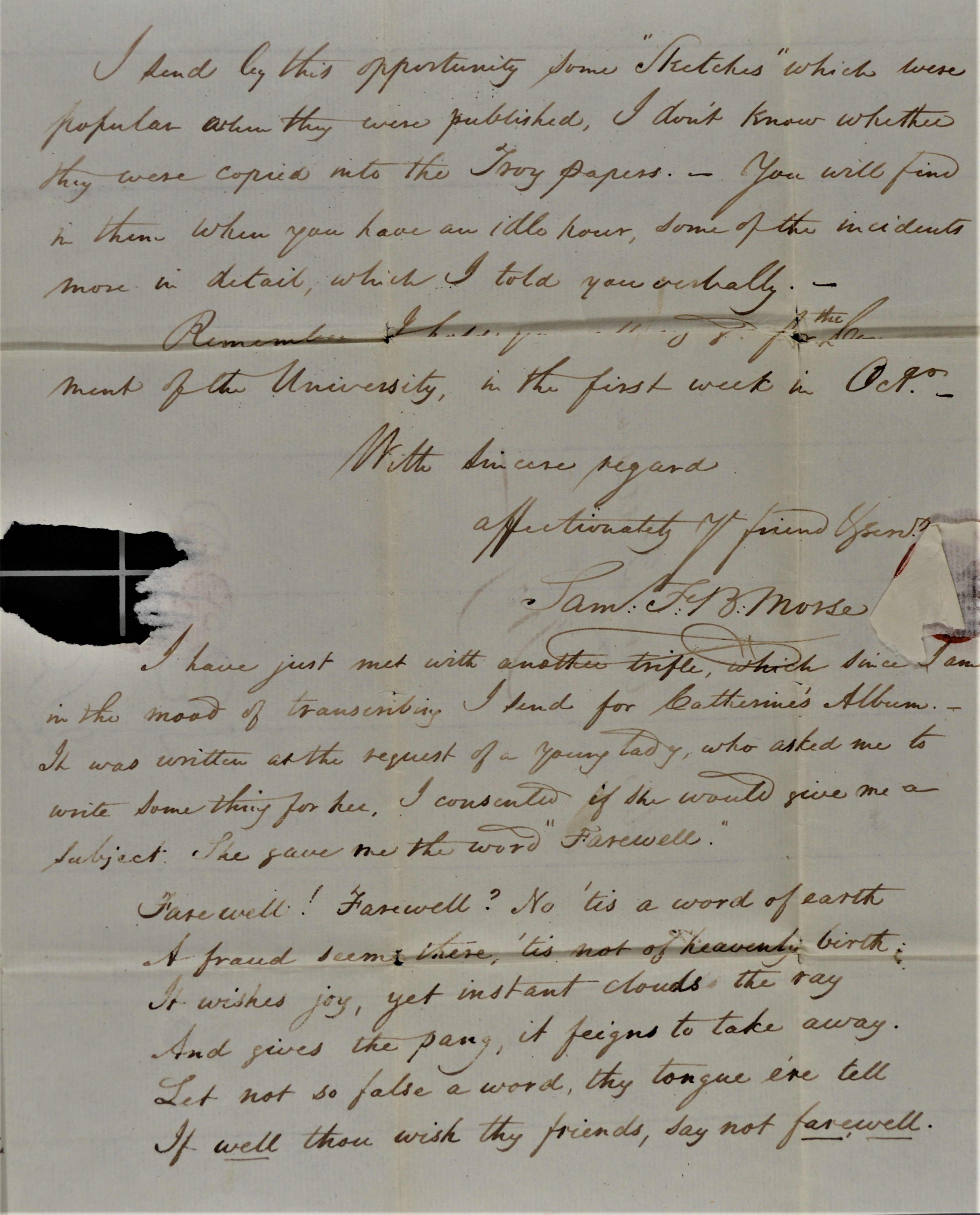
The WallBuilders’ Library is home to a handwritten letter from Samuel Morse composed in 1836, a full eight years before the triumph of the telegraph. In this personal letter to Miss Mary Pattison we get a glimpse into artistic side Morse’s mind through the portions of poetry he records, which also exhibit his deep devotion to God. Below is the transcript of the WallBuilders’ letter followed by pictures of the document itself.


Miss Mary Pattison, Troy

New York, Sept. 14th, 1836

My dear friend Mary,

I comply with my promise and send you the lines which I wrote a few years ago for an Album in the possession of a young lady on the North river. If you remember I was struck with the train of thought a Mr. Adams’ piece in Mr. Taylor’s Album, and told you, that I had embodied the same thought, or nearly resembling it. I had it not in my memory, but this morning in searching my desk I found them and transcribe them for you.

What’s our Life but an Album fair
Outwardly deck’d with gilding name
With many leaves of white within
Where virtue writes, but oft’mes sin
With many leaves all written o’er
While every day turns one leaf more?
This breathes the hopes of younger years
That tells of sorrows and of fears.
Black eaves between Where naught has been
But blots perchance of Folly’s pen
And some remain, (at most but few,)
Where Sin will write: Shall Virtue too?
Yield then thy pen to God to draw
On the next leaf his perfect law
To when thy book of life is done
Cleans’d by the blood of God’s own son
From Sin’s dark blots, and Folly’s stain
A purer volume shall remain
And rest, (to Grace a splendid prize,)
In Heaven’s alcoves in the skies.

The moral is better than the poetry, you may destroy if you will the latter, but cherish the former.

I don’t know whether I am better for my last visit to Troy. My pleasure of your house was in excess, and like all excess is producing a corresponding depression. Your lovely sister is a most destructive enemy of one’s peace, and the worst of it is that she is innocently cruel. She wounds, yet knows it not. Well, Happiness, happiness to her, and to you all. Tell Catharine I am expecting my Philippina. I am wishing time away until the 1st of October.

I send by this opportunity some “Sketches” which were popular when they were published, I don’t know whether they were copied into the Troy papers. You will find in them where you have an idle hour, some of the incidents more in detail, which I told you verbally.

Remember I hold you all engaged for the Commencement of the University, in the first week of October.

With sincere regard,
Affectionately your friend & servant
Sam. F.B. Morse

I have just met with another trifle, which since I am in the mood of transcribing I send for Catherine’s album. It was written at the request of a young lady, who asked me to write something for her. I consented if she would give me a subject. She gave me the word “Farewell.”

Farewell! Farewell? No ‘tis a word of earth
A fraud seen there, ‘tis not of heavenly birth.
It wishes joy, yet instant clouds the ray
And give the pang, it feigns to take away.
Let not so false a word, thy tongue ‘ere tell
If well then wish thy friends, say not farewell.
1 Edward Lind Morse, Samuel F.B. Morse: His Letters and Journals (Boston: Houghton Mifflin Company, 1914), I:438-439.

2 Edward Lind Morse, Samuel F.B. Morse: His Letters and Journals (Boston: Houghton Mifflin Company, 1914), Vol. II, 472.
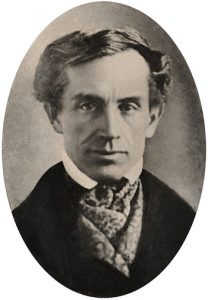
An Historic Debate

From the time before the American War for Independence, black Americans served as elected officials in local politics. Following the Civil War, hundreds more were elected to state and federal office.
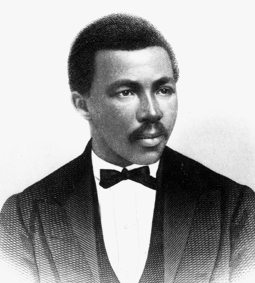
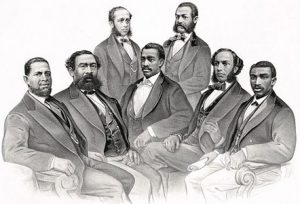
For example, at the national level, in 1871, Robert Brown Elliott was elected to the US House of Representatives — one of the first blacks elected to national office (the picture on the left shows the first seven blacks elected to Congress, including Elliott; all seven were Republicans). Originally from England, Elliott came to the U.S. in 1867 and quickly became influential in South Carolina, being one of 78 black delegates to the 1868 state constitutional convention, and placing second in the vote to be speaker of the state house.

Shortly after his election to the US House, Republican Elliott faced off in a debate over a civil rights bill against three pro-slavery Democrats: Alexander Hamilton Stephens of Georgia (the former Vice-President of the Confederate States of America, elected as a Democrat to Congress after the Civil War), James Beck of Kentucky (elected in 1867), and John Thomas Harris of Virginia (elected in 1871). After those three Democrats attacked the civil rights bill that protected the constitutional rights of black Americans, Elliott (pictured below) rose and responded:

[I]t is a matter of regret to me that it is necessary at this day that I should rise in the presence of an American Congress to advocate a bill which simply asserts rights and equal privileges for all classes of American citizens. I regret, sir, that the dark hue of my skin may lend a color to the imputation that I am controlled by motives personal to myself in my advocacy of this great measure of natural justice. Sir, the motive that impels me is restricted by no such narrow boundary but is as broad as the Constitution.
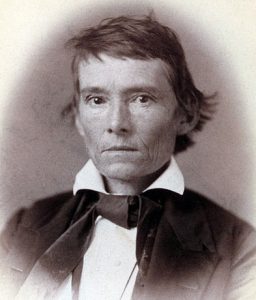
Elliott then went on to recount how African-Americans had fought for America during the War for Independence, the War of 1812, and the recent Civil War. He concluded with a stiff rebuke against the racist Democrat Stephens:

He [Stephens — pictured on the right] offers his government (which he has done his utmost to destroy) a very poor return for its magnanimous treatment, to come here to seek to continue, by the assertion of doctrines obnoxious to the true principles of our government, the burdens and oppressions which rest upon five millions of his countrymen [slaves] who never failed to lift their earnest prayers for the success of this government when the gentleman [Stephens] was asking to break up the Union of these States and to blot the American Republic from the galaxy of nations.

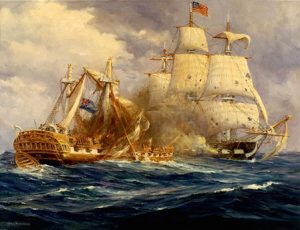
Elliott’s powerful and eloquent arguments embarrassed his opponents. The Democrats were incensed, but their replies were shallow at best. As the American Methodist Episcopal Church Review reported:

Mr. Beck of Kentucky, and other Democratic members of the House who had felt the force of Mr. Elliott’s rhetoric to their discomfiture, could not deny the merit of his speeches, so they denied his authorship of them. . . . The charge of non-authorship was made by Democrats upon the general principle that the Negro, of himself, could accomplish nothing of literary excellence.

In short, Democrats claimed that no black was smart enough to make such arguments as Elliott had, so he must have plagiarized them from someone else!

Elliott served in the House of Representatives until 1874 when he resigned and returned to South Carolina politics. Forced out of office with the resurgence of the Democratic Party in the south (1877), he became a customs inspector for the federal Treasury Department (1879-1882) and then ran a law practice before his death in 1884.

The courageous efforts for freedom and equality made by Elliott and other Americans throughout history should never be forgotten.

united states flag

America’s National Anthem

On March 3rd, 1931, an Act of Congress made the Star Spangled Banner America’s national anthem. So, in celebration of this important event, we invite you to study the song and the reason it was written.

Following the American Revolution, Americans hoped to live in peace but France and England became engaged in a conflict that drew America back into war. The British captured American ships on the high seas and forced American sailors (around 10,000 of them) to fight for England. The United States declared war. Known as the War of 1812, it lasted until 1815.

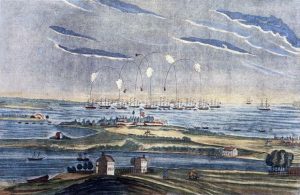
In August 1814, England invaded Washington, D.C., setting fire to the Capitol, White House, and other government buildings. The British then marched to Baltimore, Maryland, and on September 13 began bombarding Fort McHenry.

At that time, attorney Francis Scott Key was aboard a British ship negotiating the release of a friend. Throughout the long night, he watched the attack on Fort McHenry, fearing its fall, but when morning arrived, the American flag was still flying — the fort had survived the attack.
Inspired by these events, Francis Scott Key wrote down a few lines about the attack while still on board the ship and then wrote several more lines after reaching shore. Shortly thereafter they were published as a poem titled “Defence of Fort M’Henry.” Set to music in November of that year, it was named “The Star Spangled Banner.”

Americans know the first verse of this song as it’s what we sing at sporting events or important occasions, but there is religious content that few know about. Notice especially the fourth verse:

O thus be it ever when freemen shall stand
Between their lov’d home and the war’s desolation!
Blest with vict’ry and peace may the heav’n rescued land
Praise the power that hath made and preserv’d us a nation!
Then conquer we must, when our cause it is just,
And this be our motto – “In God is our trust,”
And the star-spangled banner in triumph shall wave
O’er the land of the free and the home of the brave.

Today, let’s celebrate our national anthem in its entirety — an anthem that shows America’s strong foundation of religious faith and something we should all be proud to remember!

* You can watch David Barton’s short history of the Star Spangled Banner or you can purchase a high resolution copy to show to your church, school, or other group!

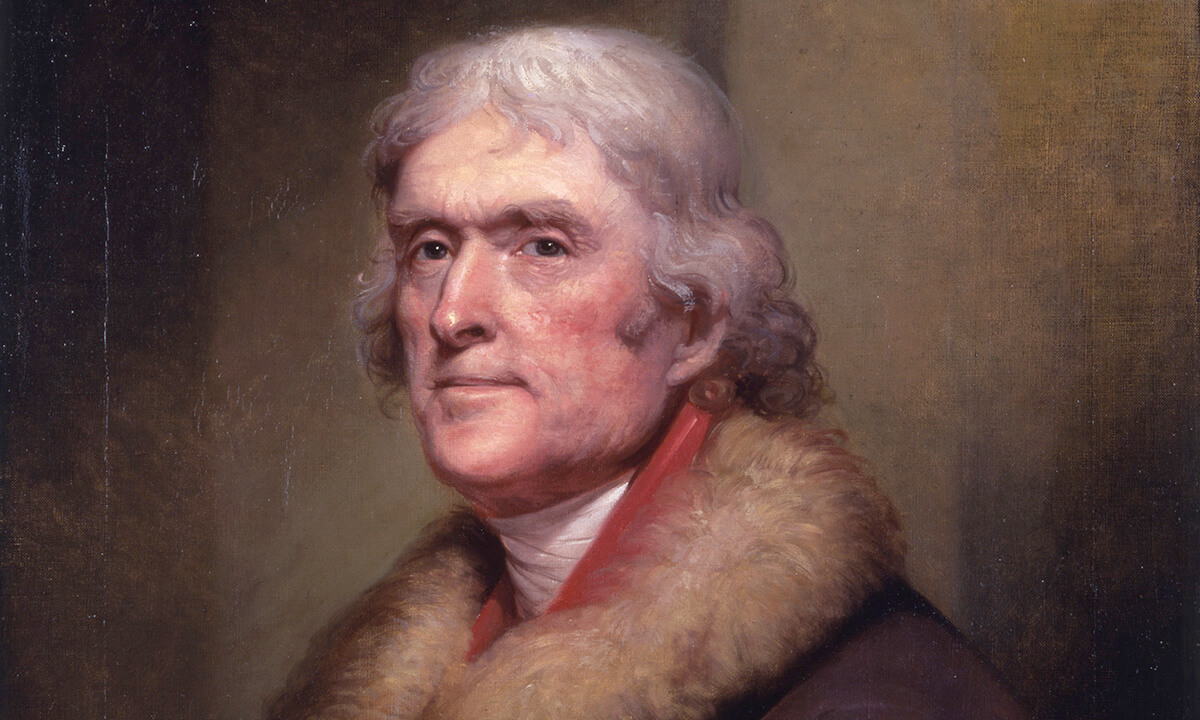
Jefferson and Library of Congress

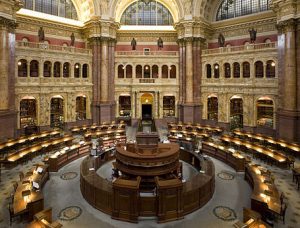
Most Americans are very familiar with the Library of Congress and its massive collection of millions of books, documents, recordings, photographs, sheet music, and manuscripts.1 But few know how Thomas Jefferson is connected to the library.
On April 24, 1800, Congress approved moving the federal government to Washington DC and granted resources for a congressional library:

That for the purchase of such books as may be necessary for the use of Congress at the said city of Washington, and for fitting up a suitable apartment for containing them and for placing them therein, the sum of five thousand dollars shall be, and hereby is appropriated.2

The books purchased for that library were originally kept in the Capitol building.3 But when the British invaded and set fire to the Capitol during the War of 1812,4 this collection was destroyed. This is where Jefferson comes in.

He offered to sell his collection of books (nearly 6,500) to Congress to replace the books that had been burned.5 His offer was accepted and nearly $24,000 (over $300,000 in today’s money) was set aside to purchase his books.6

Unfortunately, almost two-thirds of his collection was destroyed in another fire in 1851,7 but Jefferson’s library was a springboard from which the Library of Congress would continue to grow. Next time you visit the Library of Congress, remember one of the reasons this collection is so impressive is due to Thomas Jefferson’s influence.


Endnotes

1 “Fascinating Facts,” Library of Congress, accessed January 17, 2024.
2 “An Act to make further provision for the removal and accommodation of the Government of the United States,” April 24, 1800, The Public Statutes at Large of the United States of America, ed. Richard Peters (Boston: Charles C. Little and James Brown, 1845), II:56.
3 “History of the Library of Congress,” Library of Congress, accessed January 17, 2024.
4 “A Most Magnificent Ruin: The Burning of the Capitol during the War of 1812,” Architect of the Capitol, August 1, 2023.
5 Thomas Jefferson to Samuel H. Smith, September 21, 1814, The Writings of Thomas Jefferson, ed. H.A. Washington (Washington: Taylor & Maury, 1854), VI:383-385; “Sale of Books to the Library of Congress (1815),” Monticello, accessed January 17, 2024.
6 Samuel H. Smith to Thomas Jefferson, February 15, 1815, Founders Online.
7 “Thomas Jefferson: Jefferson’s Library,” Library of Congress, accessed January 17, 2024.

Pony Express Artifacts

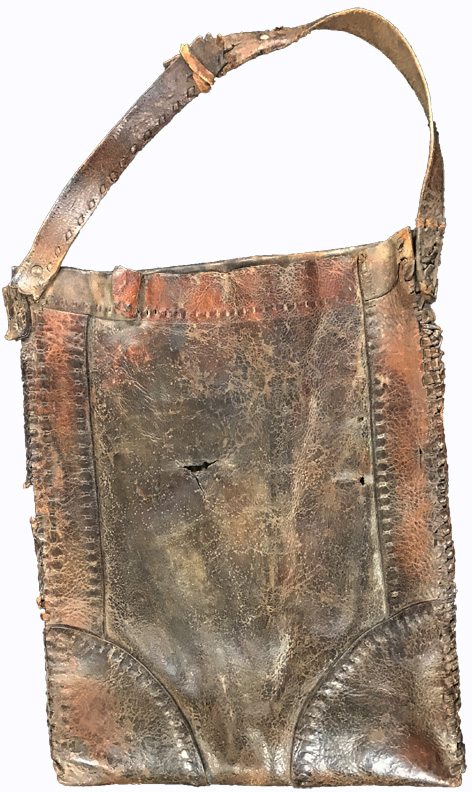
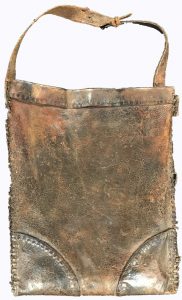
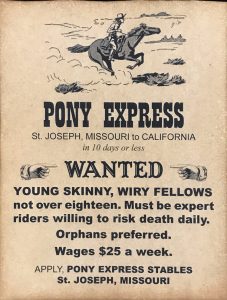
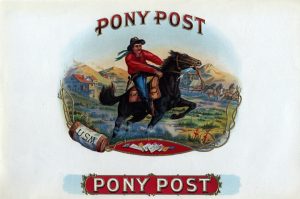
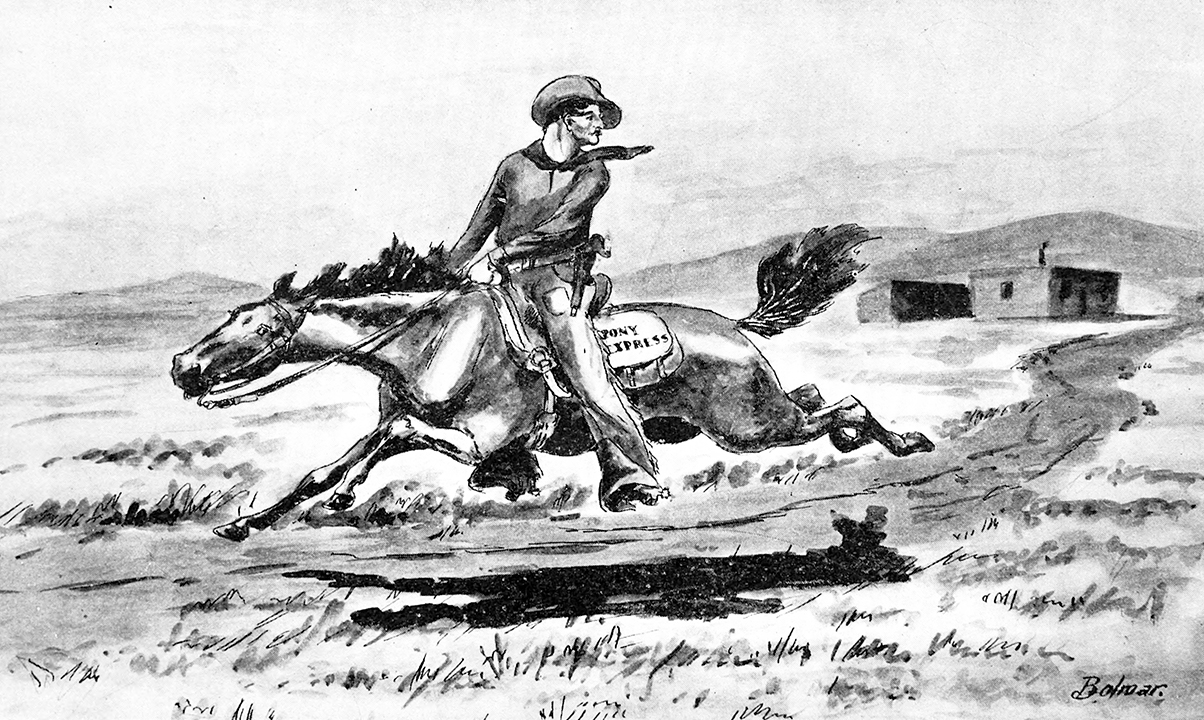
The Pony Express lasted only nineteen months during 1860/ 1861. During that time about 200 riders covered over 600,000 miles carrying the mail from Missouri to points West (such as California). Below, see some artifacts from the WallBuilders library relating to the Pony Express, and you can also see a Pony Express Bible from our collection.


Here is an original Pony Express mail bag pouch.


This is a copy of a “Wanted” poster that outlines the qualifications needed to work for the Pony Express.


This is a cigar box label of a Pony Express rider (these types of images were placed on the inside of cigar boxes in the late 1800s & early 1900s).